


Striking the 
Right Balance 
DISTRICT LEADERSHIP 
THAT WORKS 
Robert J. Marzano /Timothy Waters
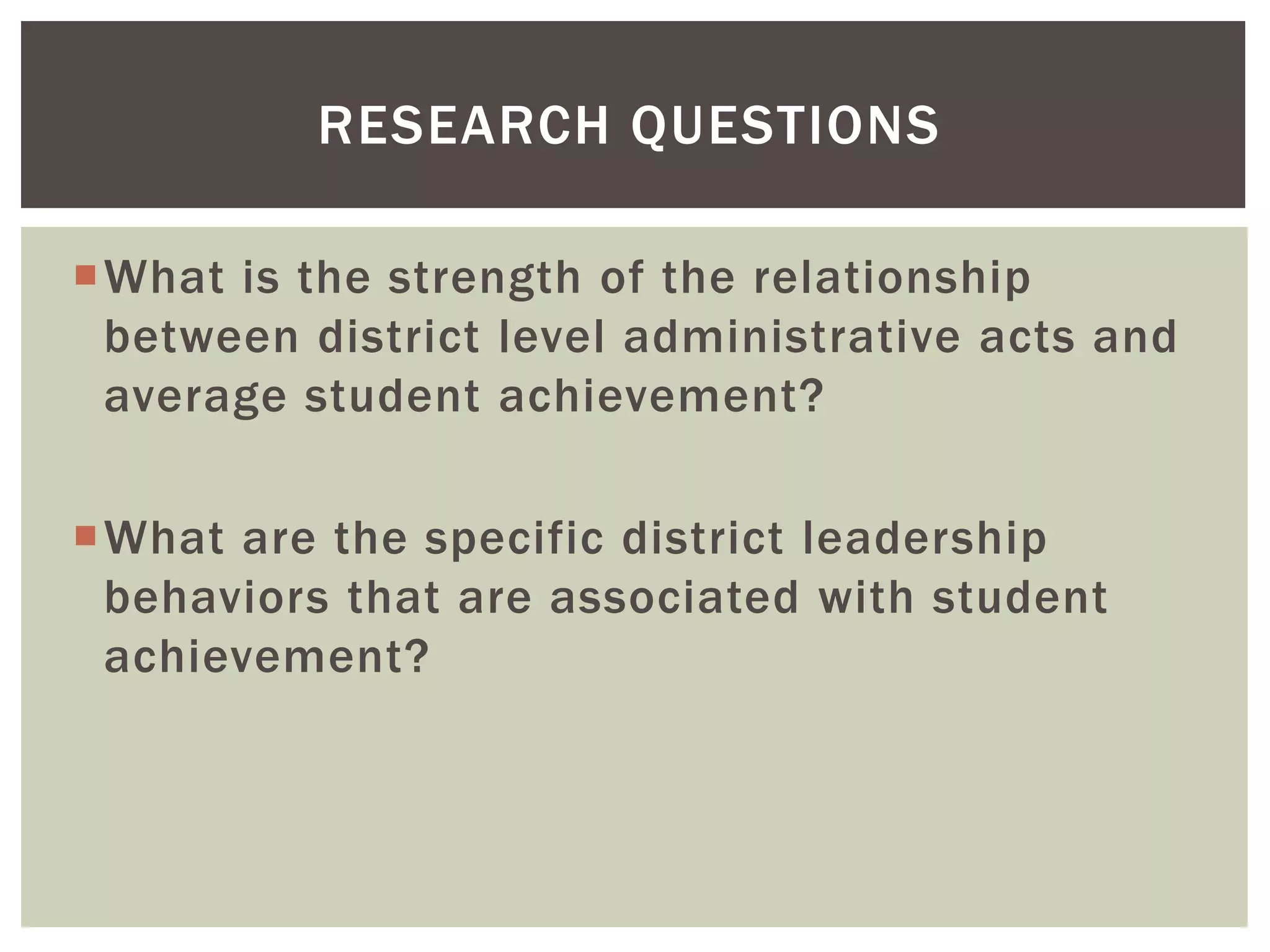
RESEARCH QUESTIONS 
What is the strength of the relationship 
between district level administrative acts and 
average student achievement? 
What are the specific district leadership 
behaviors that are associated with student 
achievement?
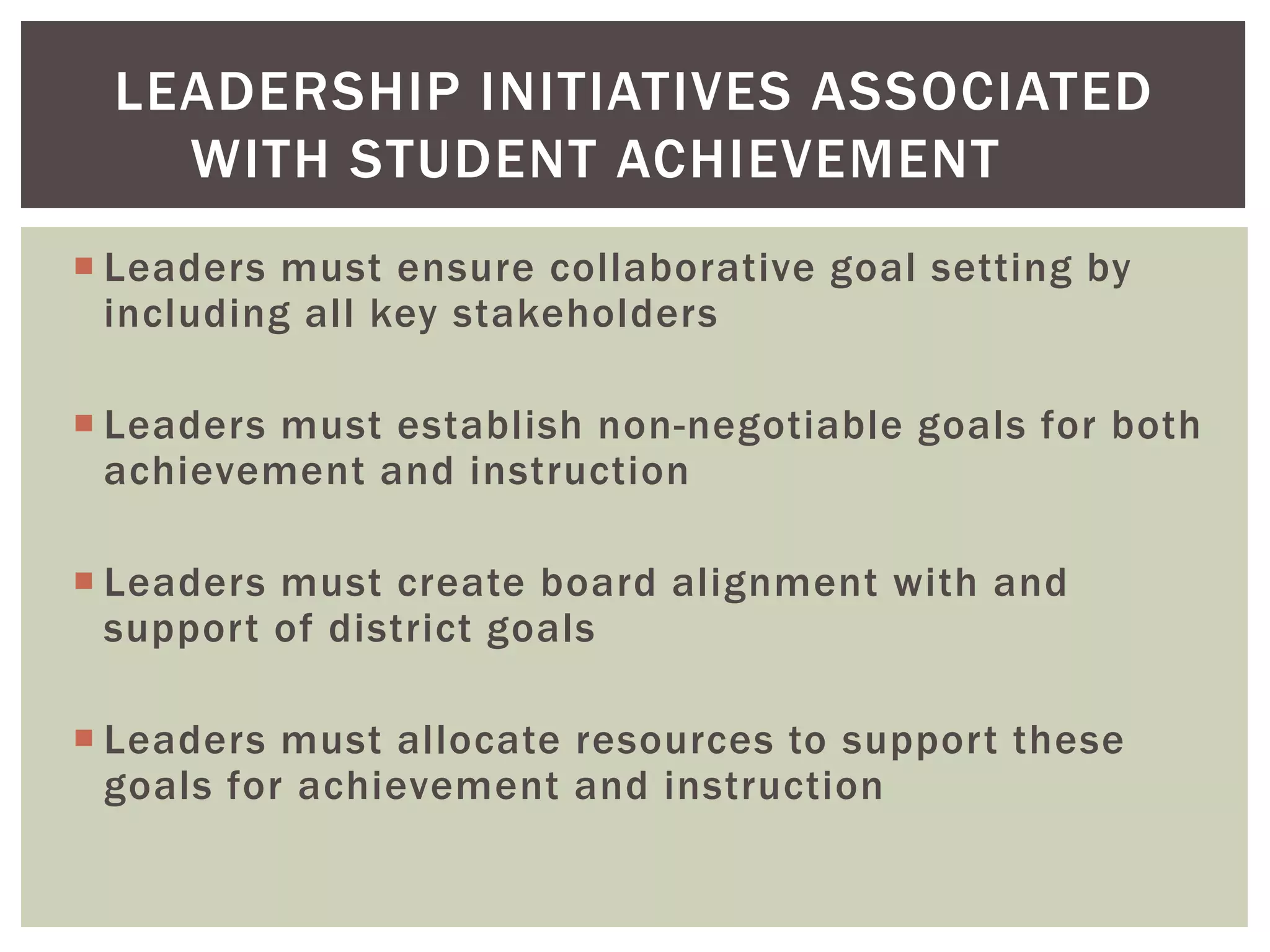
LEADERSHIP INITIATIVES ASSOCIATED 
WITH STUDENT ACHIEVEMENT 
 Leaders must ensure collaborative goal setting by 
including all key stakeholders 
 Leaders must establish non-negotiable goals for both 
achievement and instruction 
 Leaders must create board alignment with and 
suppor t of district goals 
 Leaders must allocate resources to suppor t these 
goals for achievement and instruction
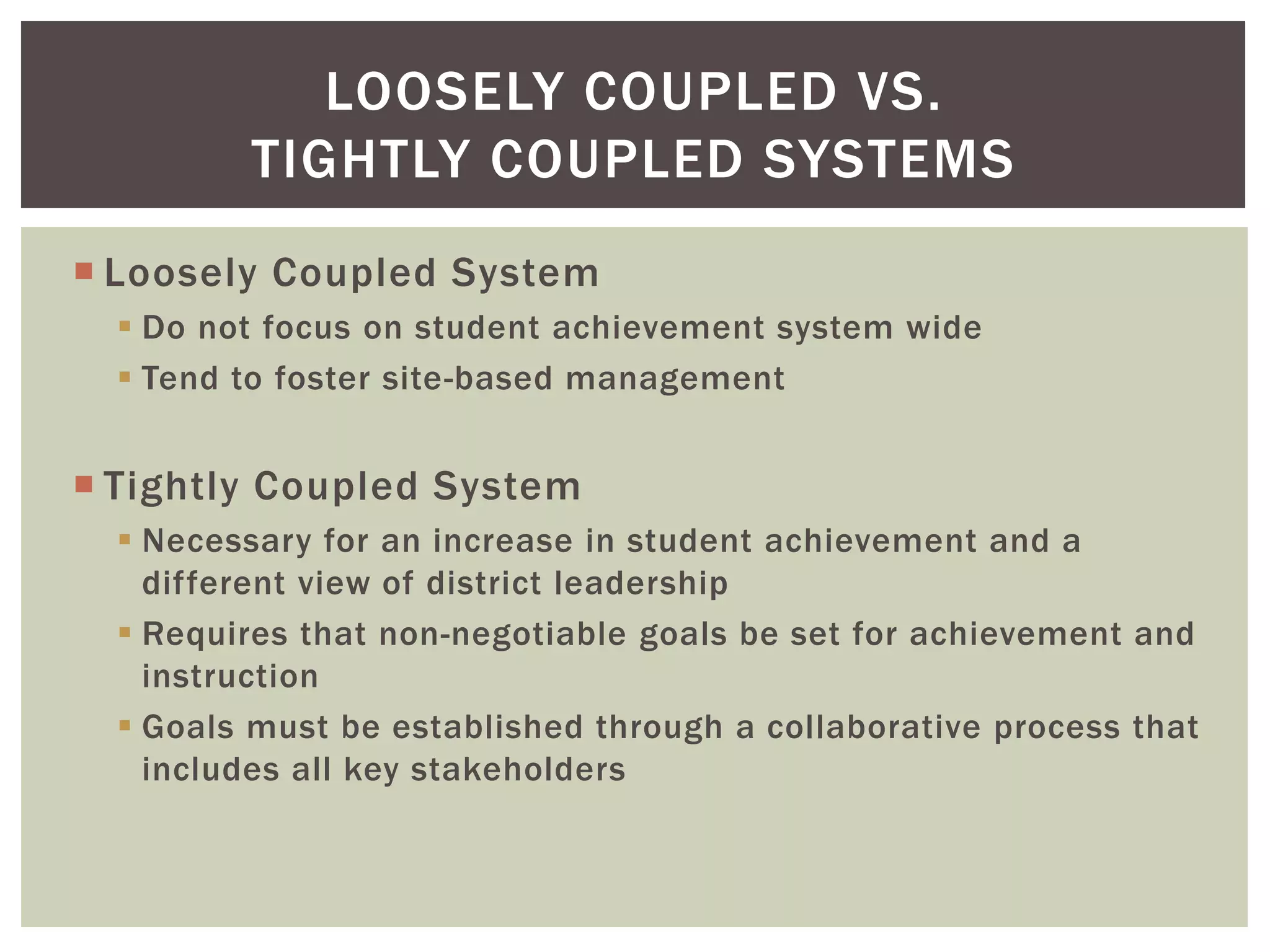
LOOSELY COUPLED VS. 
TIGHTLY COUPLED SYSTEMS 
 Loosely Coupled System 
 Do not focus on student achievement system wide 
 Tend to foster site-based management 
 Tightly Coupled System 
 Necessary for an increase in student achievement and a 
different view of district leadership 
 Requires that non-negotiable goals be set for achievement and 
instruction 
 Goals must be established through a collaborative process that 
includes all key stakeholders
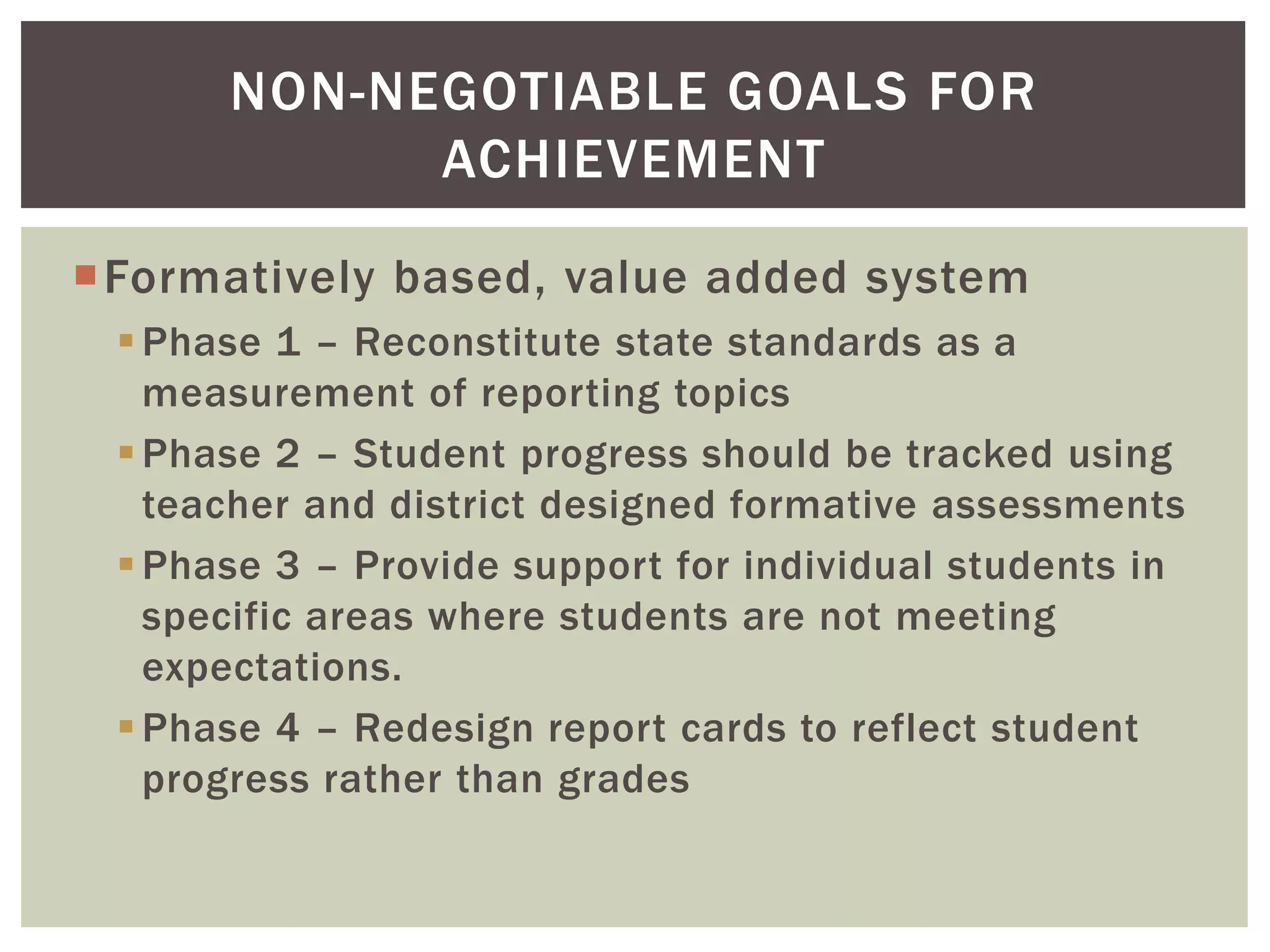
NON-NEGOTIABLE GOALS FOR 
ACHIEVEMENT 
Formatively based, value added system 
Phase 1 – Reconstitute state standards as a 
measurement of reporting topics 
Phase 2 – Student progress should be tracked using 
teacher and district designed formative assessments 
Phase 3 – Provide support for individual students in 
specific areas where students are not meeting 
expectations. 
Phase 4 – Redesign report cards to reflect student 
progress rather than grades
NON NEGOTIABLE GOALS FOR 
INSTRUCTION 
 Highly qualified teachers 
 Pedagogy 
 Phase 1 – Teachers systematically explore and examine 
instructional strategies 
 Phase 2 – The district must design a language of instruction 
that allows for campuses to make their own adaptions 
 Phase 3 – Teachers must systematically interact about the 
language of construction 
 Phase 4 – Teachers must observe one another 
 Phase 5 – Monitor the effectiveness of individual teaching 
styles
COLLABORATIVE GOAL SETTING 
Collaborative Goal Setting 
Board Alignment and Support 
Allocation of Resources
DEFINED AUTONOMY HIGH RELIABILITY 
ORGANIZATIONS 
School leadership for defined autonomy 
 Ensure collaborative goal setting 
 Establish non-negotiable goals for achievement and 
instruction 
Create board alignment and support 
Monitor non-negotiable goals 
Allocate Resources 
Principals must operate within the confines of 
the non-negotiable, pre-established district 
goals
FIRST ORDER VS 
SECOND ORDER CHANGE 
 First Order Change 
 Perceived as extension of 
the past 
 Fits with existing paradigms 
 Consistent with prevailing 
values and norms 
 Can be implemented with 
existing knowledge and 
skills 
 Requires resources currently 
available 
 May be accepted because of 
common agreement that 
innovation is necessary 
 Second Order Change 
 Perceived as a break with 
the past 
 Lies outside the existing 
paradigm 
 Conflicts with prevailing 
values and norms 
 Requires new knowledge 
and skills 
 Requires resources currently 
NOT available 
 May be resisted because 
only those who have a broad 
perspective of the school 
see innovation as necessary
ADVICE FOR DISTRICT LEADERS 
Know the implications of your initiative 
Maintain an unified front 
Keep the big Ideas in the forefront 
Use what is known about acceptance of new 
ideas 
 Communicate with “Sticky Messages” 
Manage personal transitions 
Purpose 
Picture 
Plan 
Part
DR ROBERT MARZANO

District Leadership That Works

  • 1.
    Striking the RightBalance DISTRICT LEADERSHIP THAT WORKS Robert J. Marzano /Timothy Waters
  • 2.
    RESEARCH QUESTIONS Whatis the strength of the relationship between district level administrative acts and average student achievement? What are the specific district leadership behaviors that are associated with student achievement?
  • 3.
    LEADERSHIP INITIATIVES ASSOCIATED WITH STUDENT ACHIEVEMENT  Leaders must ensure collaborative goal setting by including all key stakeholders  Leaders must establish non-negotiable goals for both achievement and instruction  Leaders must create board alignment with and suppor t of district goals  Leaders must allocate resources to suppor t these goals for achievement and instruction
  • 4.
    LOOSELY COUPLED VS. TIGHTLY COUPLED SYSTEMS  Loosely Coupled System  Do not focus on student achievement system wide  Tend to foster site-based management  Tightly Coupled System  Necessary for an increase in student achievement and a different view of district leadership  Requires that non-negotiable goals be set for achievement and instruction  Goals must be established through a collaborative process that includes all key stakeholders
  • 5.
    NON-NEGOTIABLE GOALS FOR ACHIEVEMENT Formatively based, value added system Phase 1 – Reconstitute state standards as a measurement of reporting topics Phase 2 – Student progress should be tracked using teacher and district designed formative assessments Phase 3 – Provide support for individual students in specific areas where students are not meeting expectations. Phase 4 – Redesign report cards to reflect student progress rather than grades
  • 6.
    NON NEGOTIABLE GOALSFOR INSTRUCTION  Highly qualified teachers  Pedagogy  Phase 1 – Teachers systematically explore and examine instructional strategies  Phase 2 – The district must design a language of instruction that allows for campuses to make their own adaptions  Phase 3 – Teachers must systematically interact about the language of construction  Phase 4 – Teachers must observe one another  Phase 5 – Monitor the effectiveness of individual teaching styles
  • 7.
    COLLABORATIVE GOAL SETTING Collaborative Goal Setting Board Alignment and Support Allocation of Resources
  • 8.
    DEFINED AUTONOMY HIGHRELIABILITY ORGANIZATIONS School leadership for defined autonomy  Ensure collaborative goal setting  Establish non-negotiable goals for achievement and instruction Create board alignment and support Monitor non-negotiable goals Allocate Resources Principals must operate within the confines of the non-negotiable, pre-established district goals
  • 9.
    FIRST ORDER VS SECOND ORDER CHANGE  First Order Change  Perceived as extension of the past  Fits with existing paradigms  Consistent with prevailing values and norms  Can be implemented with existing knowledge and skills  Requires resources currently available  May be accepted because of common agreement that innovation is necessary  Second Order Change  Perceived as a break with the past  Lies outside the existing paradigm  Conflicts with prevailing values and norms  Requires new knowledge and skills  Requires resources currently NOT available  May be resisted because only those who have a broad perspective of the school see innovation as necessary
  • 10.
    ADVICE FOR DISTRICTLEADERS Know the implications of your initiative Maintain an unified front Keep the big Ideas in the forefront Use what is known about acceptance of new ideas  Communicate with “Sticky Messages” Manage personal transitions Purpose Picture Plan Part
  • 11.