Fractions lesson 10
MULTIPLYING FRACTIONS
Quick Review
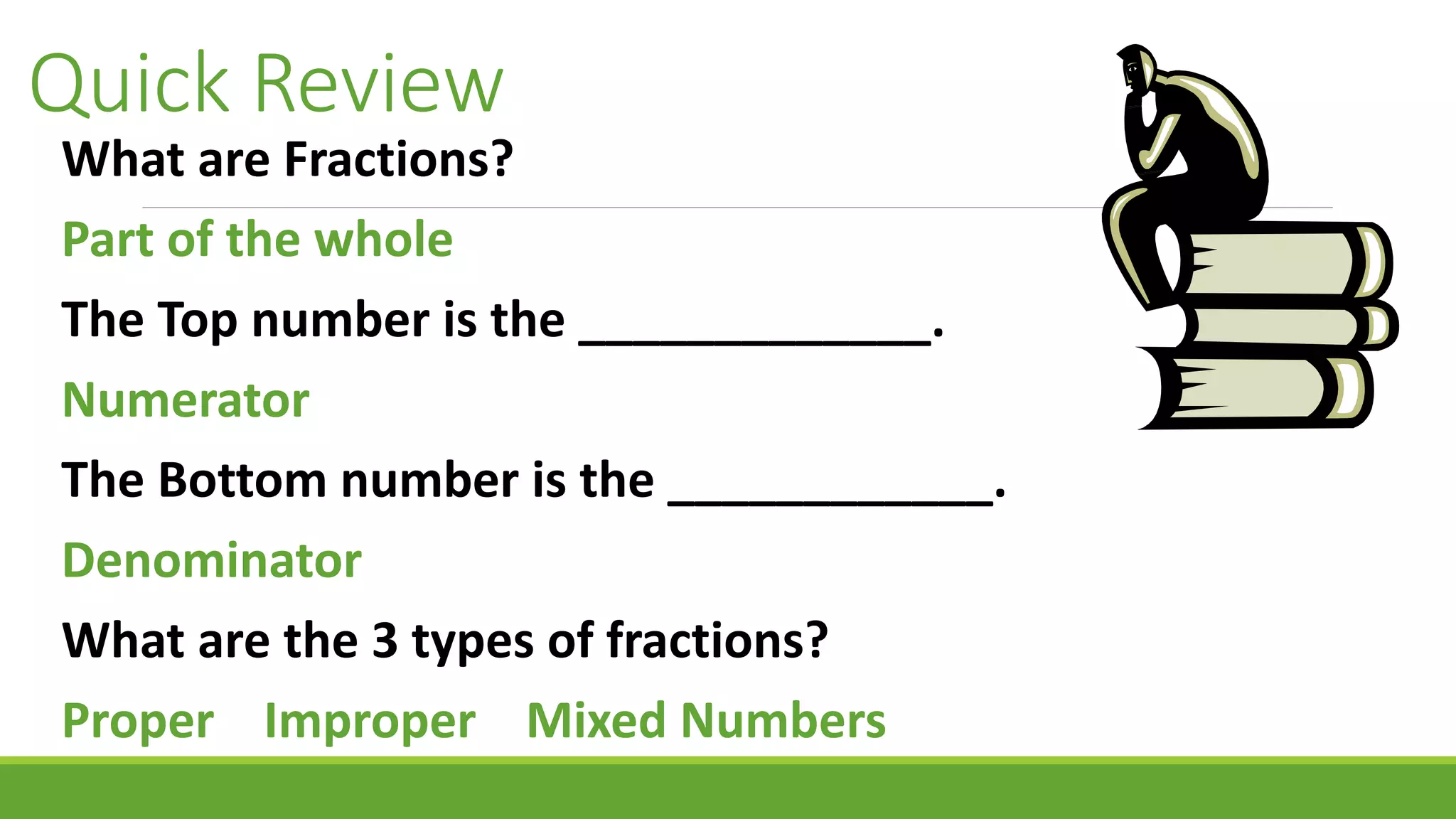
What are Fractions?
Part of the whole
The Top number is the _____________.
Numerator
The Bottom number is the ____________.
Denominator
What are the 3 types of fractions?
Proper Improper Mixed Numbers
Quick Review
What information does the denominator
give?
The number of parts that the whole is
divided into!
What information does the numerator
give?
The number of parts from the whole
Quick Review
What is the difference between a mixed
number and an improper fraction?
A mixed number is a number whose value is
greater than 1 made up of a whole part and a
fraction part and an improper fraction is a
fraction whose value is greater than or equal
to 1 (numerator greater than or equal to
denominator)
Quick ReviewDoes anyone know how to convert from a mixed number
to an improper fraction?
Multiply the whole number times the denominator. Add
your answer to the numerator. Put your new number over
the denominator.
Does anyone know how to convert from an improper
fraction to a mixed number ?
Divide the numerator by the denominator. The dividend
becomes the whole number part. Put your remainder over
the denominator, which will make up the fraction part.
Quick Review
What are the three steps to reading fractions on a
number line?
Step 1: Count the spaces in between the whole numbers
where the fraction is placed. That is your denominator.
Step 2: Count the sticks, starting at the first stick after
the whole number. Stop at the point you are naming.
This is the Numerator
Step 3: Write the whole number as a whole number
beside the fraction
Quick Review
What is an equivalent fraction?
They are fractions that have the same
value!
How do you make equivalent fractions?
You multiply or divide the numerator and
the denominator by the same number!
Quick Review
How do you reduce or simplify
fractions?
Divide both the numerator and the
denominator by the GCF!
How do you compare fractions?
You use bottoms up
Quick Review
What are like and unlike fractions??
Like fractions are fractions with the same denominators
and unlike fractions are fractions with different
denominators!
How do you compare like fractions?
By comparing their numerators
How do you compare unlike fractions?
By using bottoms up!
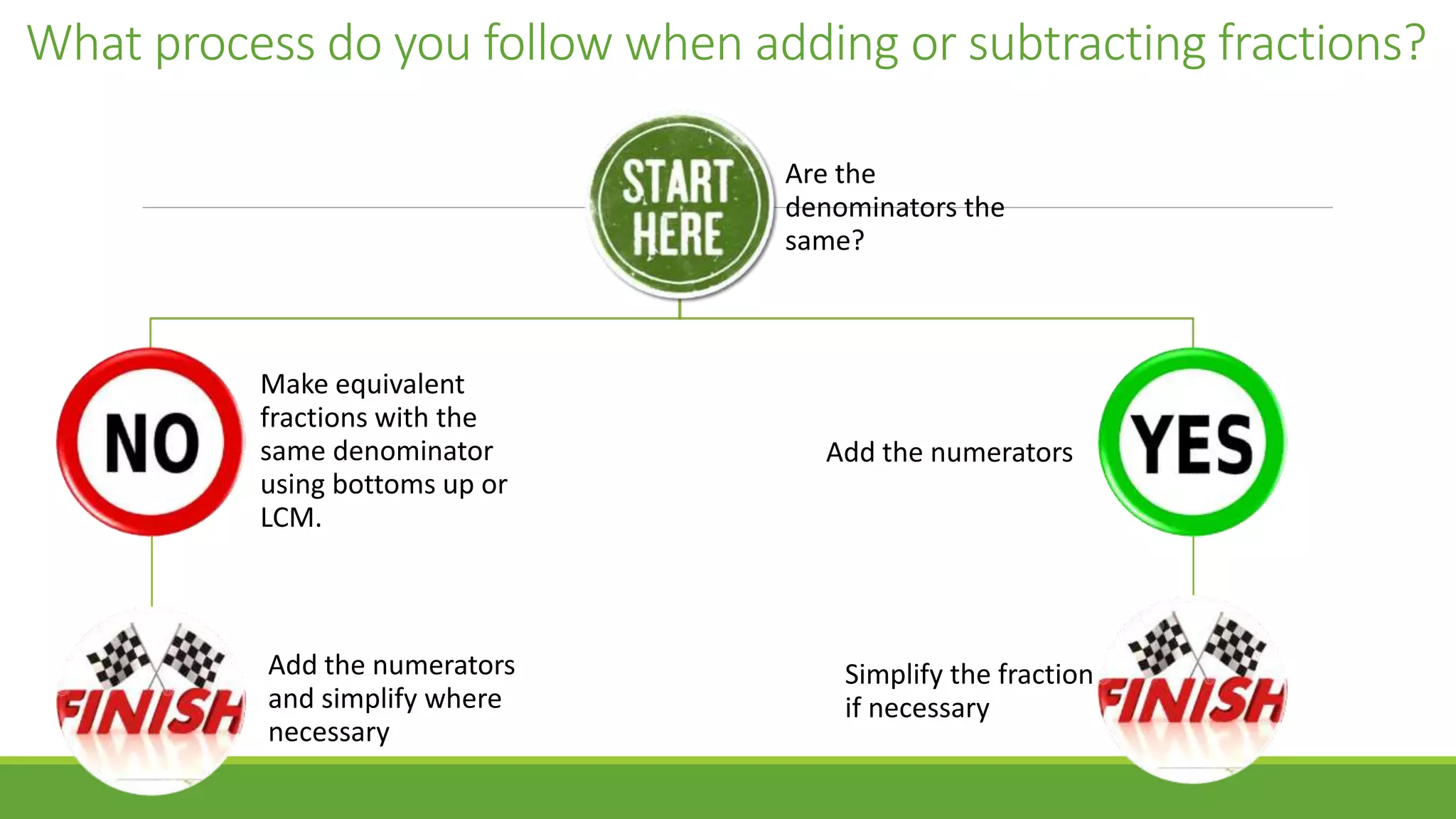
What process do you follow when adding or subtracting fractions?
Are the
denominators the
same?
Make equivalent
fractions with the
same denominator
using bottoms up or
LCM.
Add the numerators
and simplify where
necessary
Add the numerators
Simplify the fraction
if necessary
Quick Review
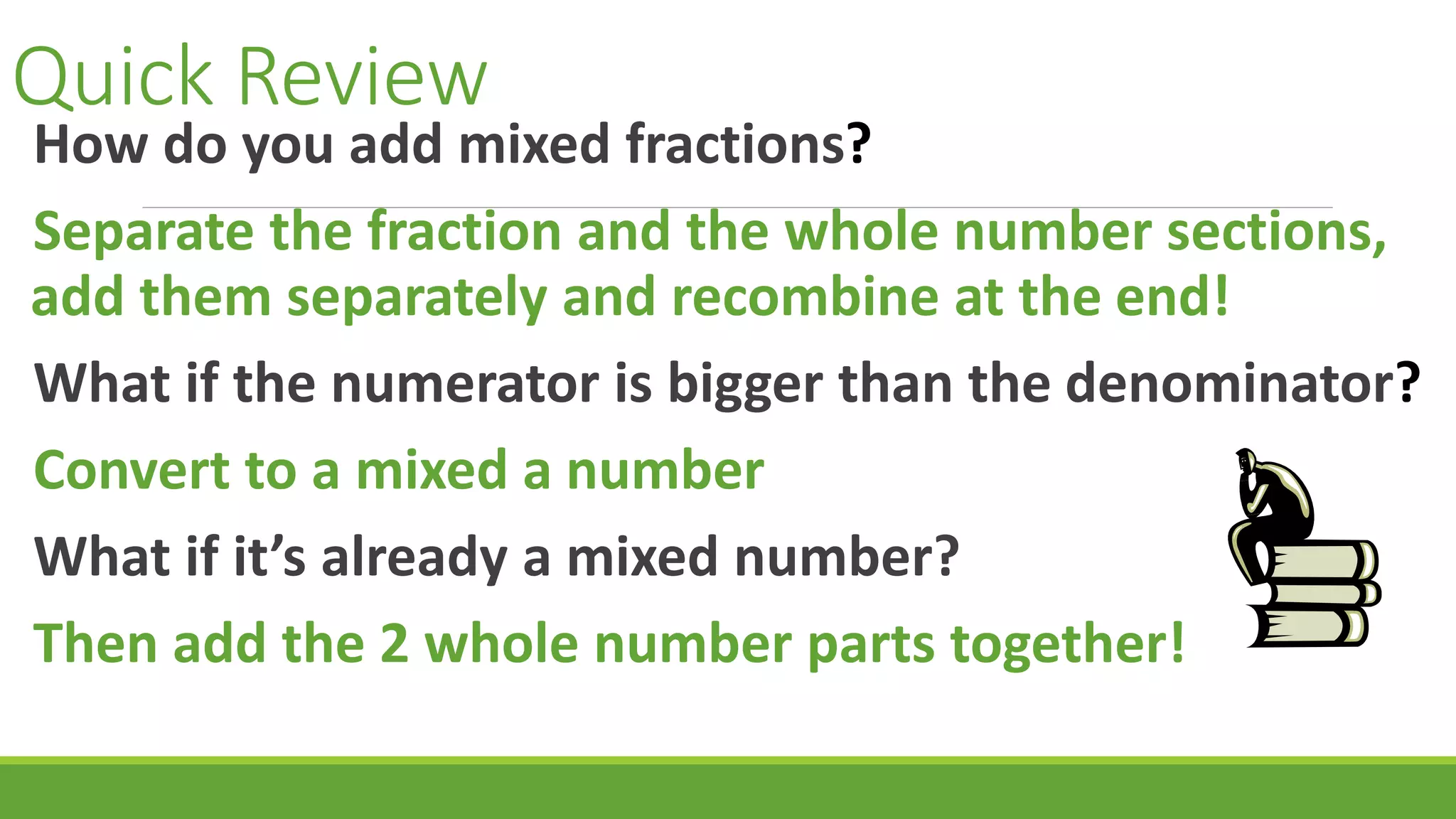
How do you add mixed fractions?
Separate the fraction and the whole number sections,
add them separately and recombine at the end!
What if the numerator is bigger than the denominator?
Convert to a mixed a number
What if it’s already a mixed number?
Then add the 2 whole number parts together!
Quick Review
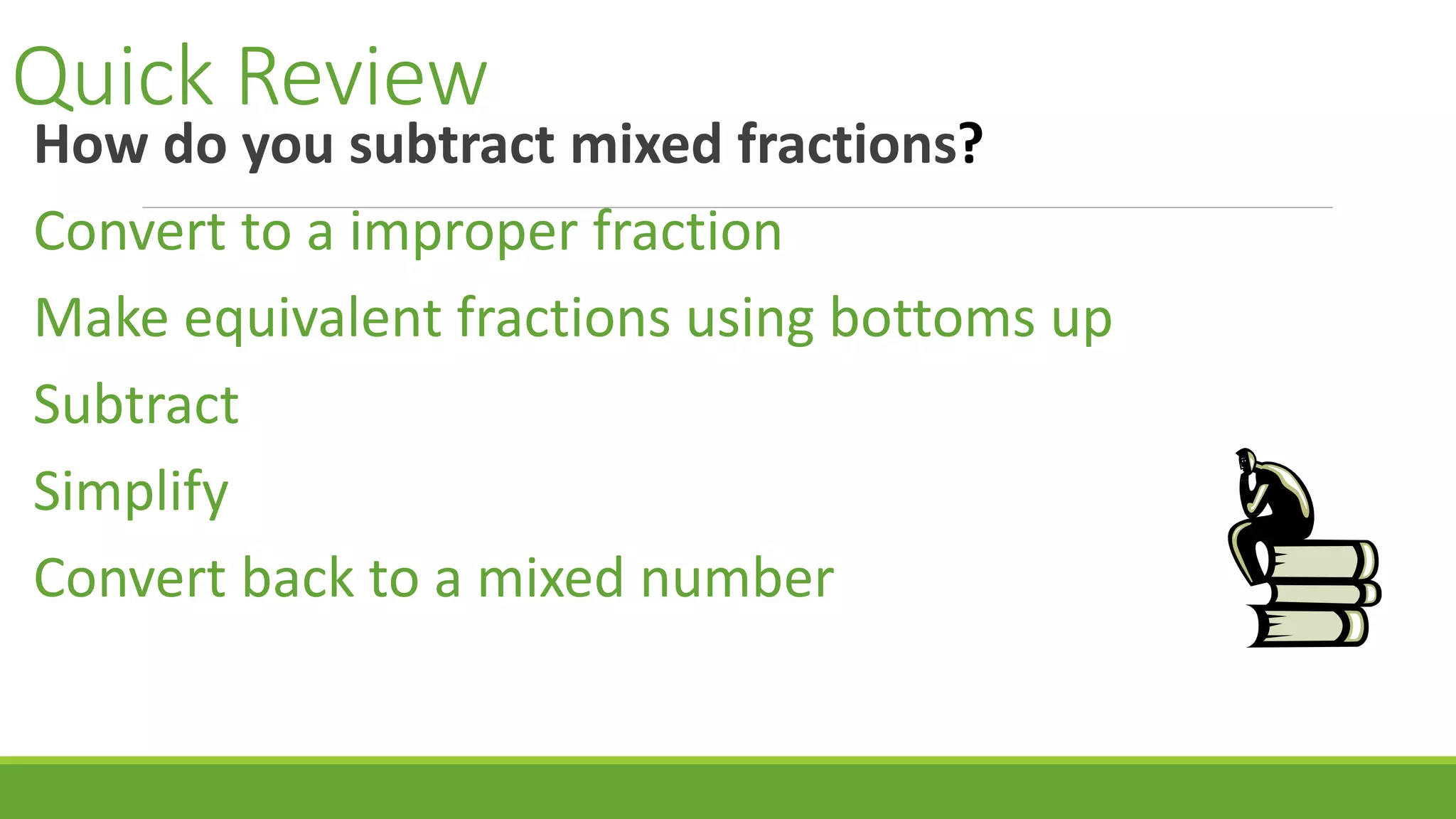
How do you subtract mixed fractions?
Convert to a improper fraction
Make equivalent fractions using bottoms up
Subtract
Simplify
Convert back to a mixed number
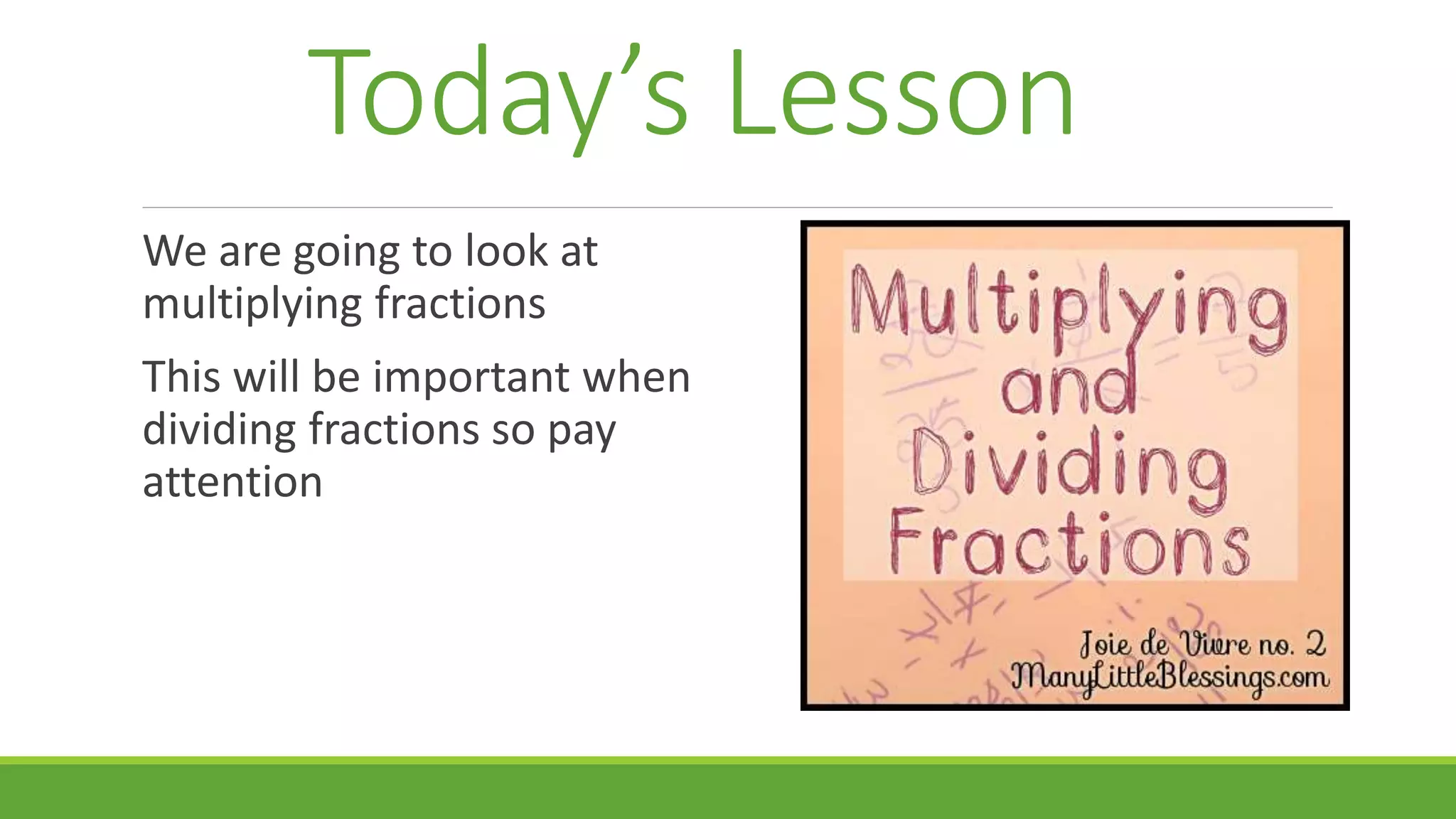
Today’s Lesson
We are going to look at
multiplying fractions
This will be important when
dividing fractions so pay
attention
What is Multiplication?
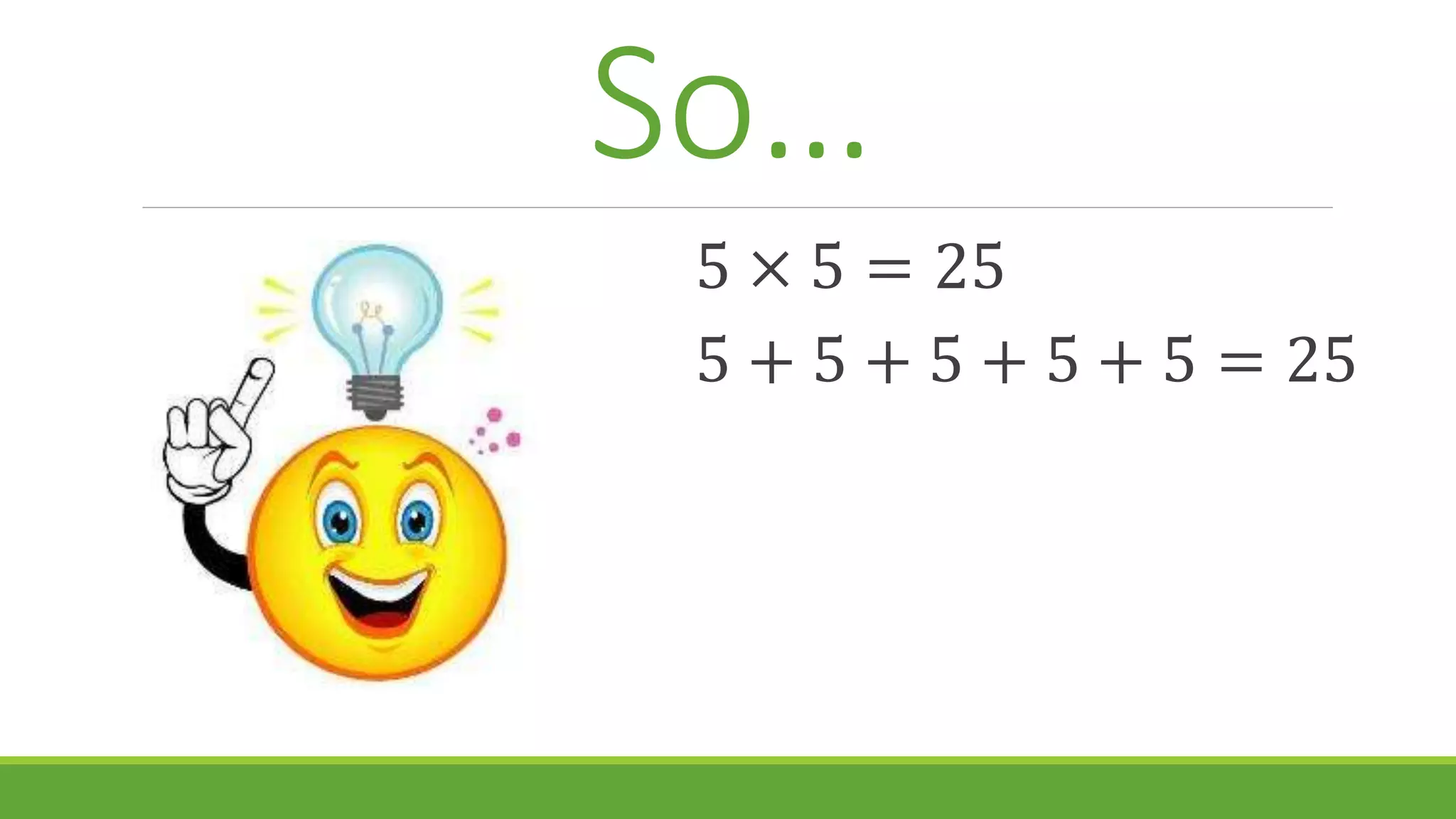
It is repeated addition!
So…
5 × 5 = 25
5 + 5 + 5 + 5 + 5 = 25
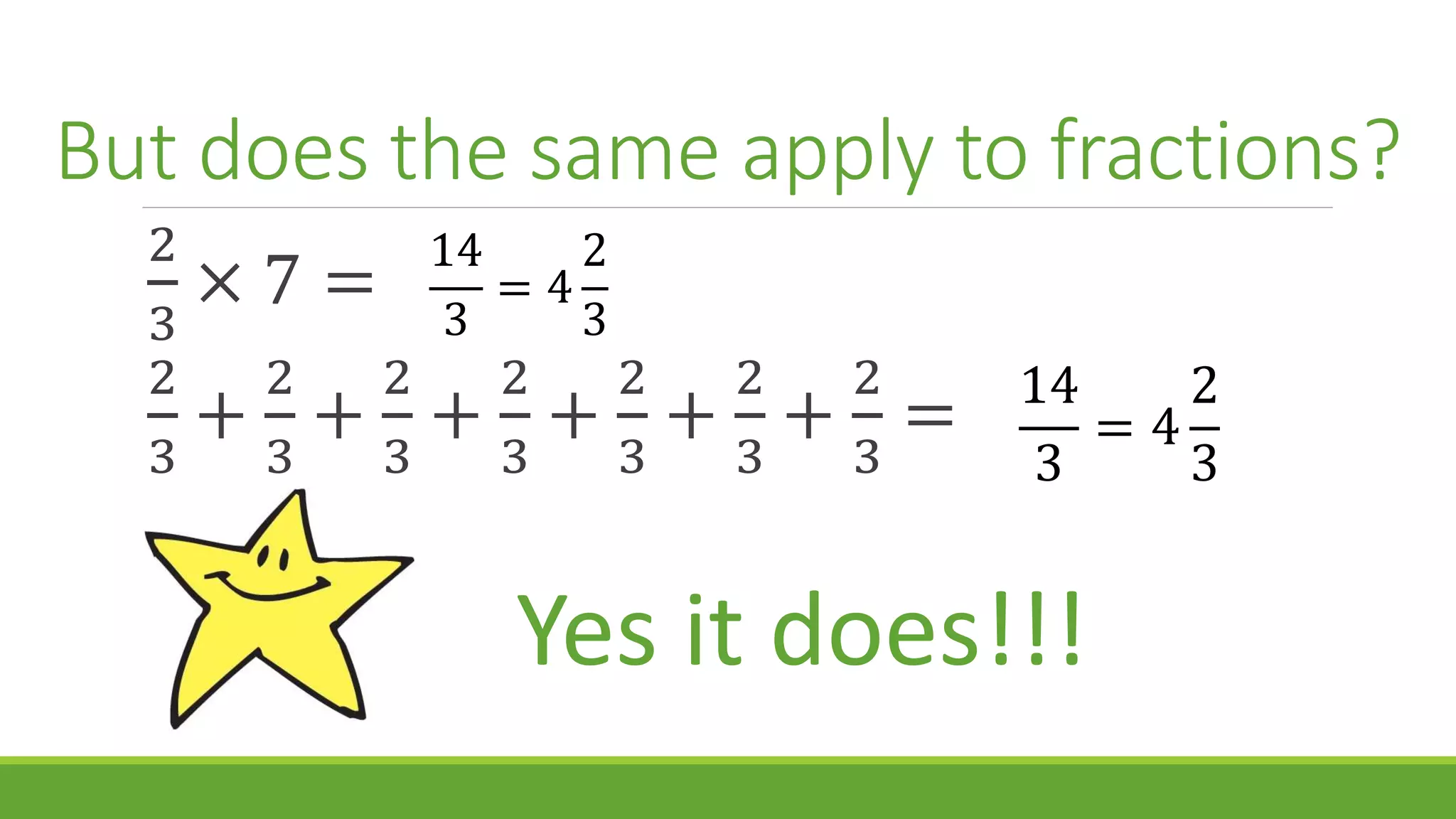
But does the same apply to fractions?
2
3
× 7 =
2
3
+
2
3
+
2
3
+
2
3
+
2
3
+
2
3
+
2
3
=
14
3
= 4
2
3
14
3
= 4
2
3
Yes it does!!!
But what about multiplying fractions
with fractions…?
That’s easy…
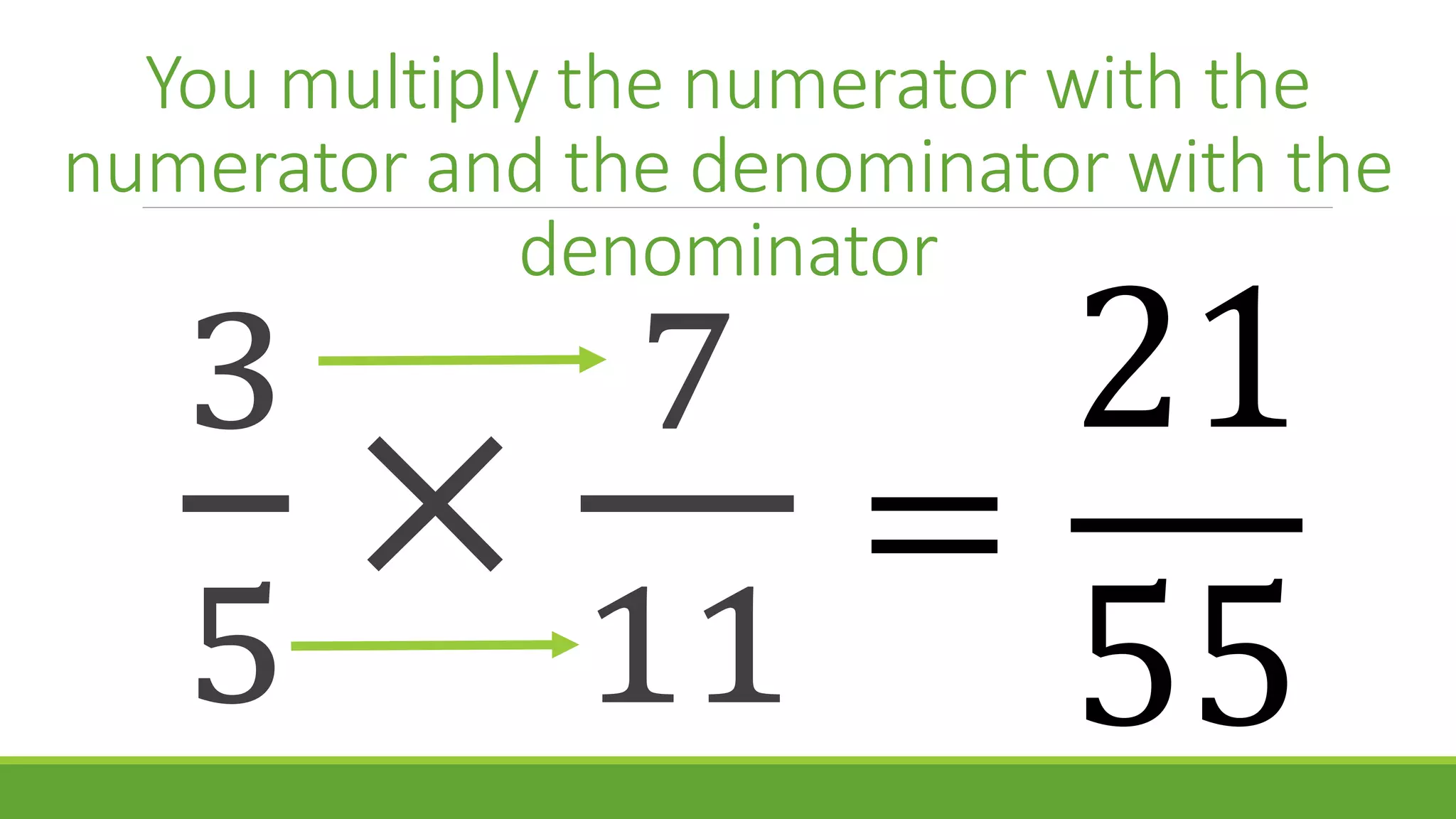
You multiply the numerator with the
numerator and the denominator with the
denominator
3
5
×
7
11
=
21
55
But what does that even
mean?
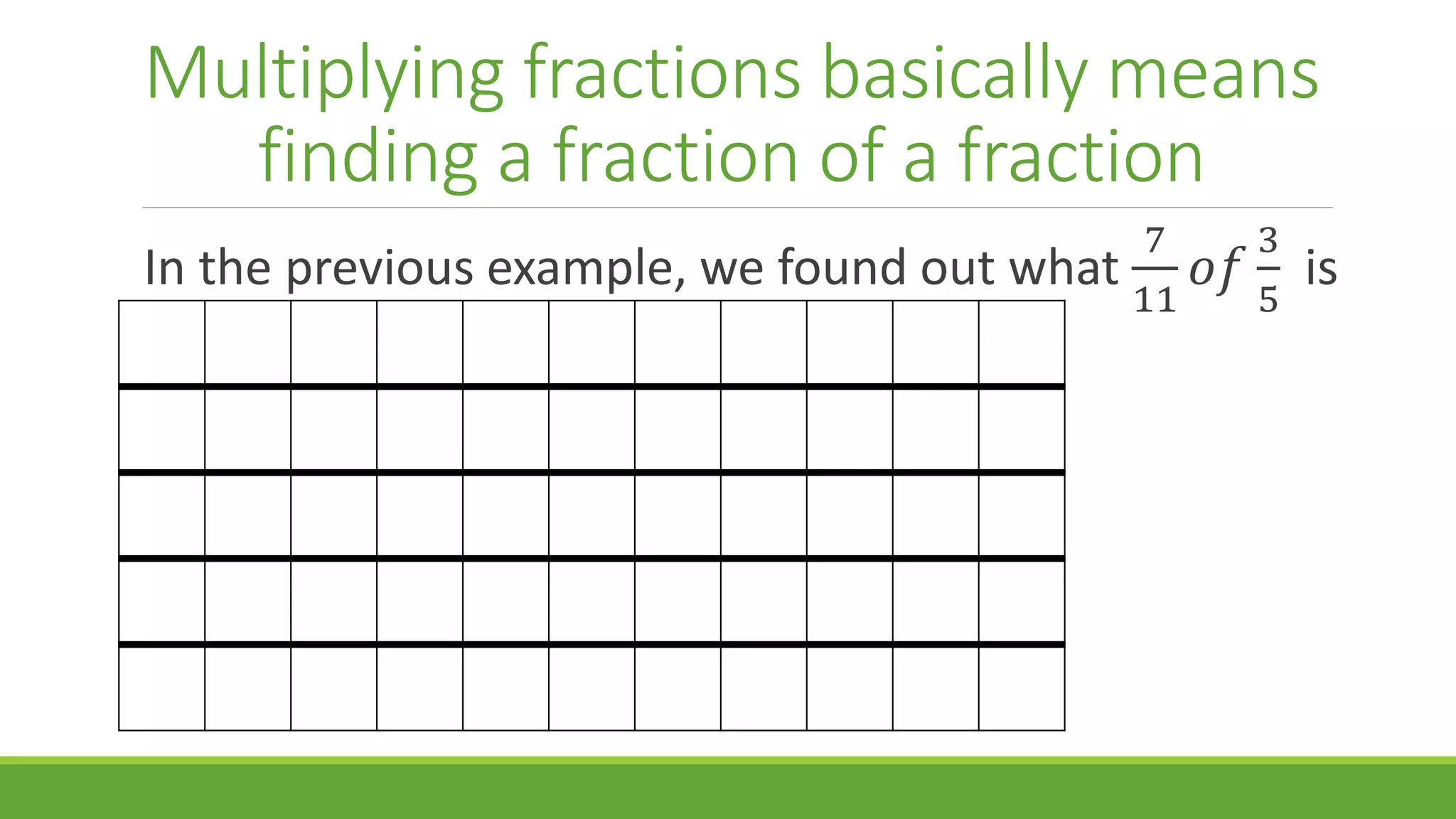
Multiplying fractions basically means
finding a fraction of a fraction
In the previous example, we found out what
7
11
𝑜𝑓
3
5
is
Multiplying fractions basically means
finding a fraction of a fraction
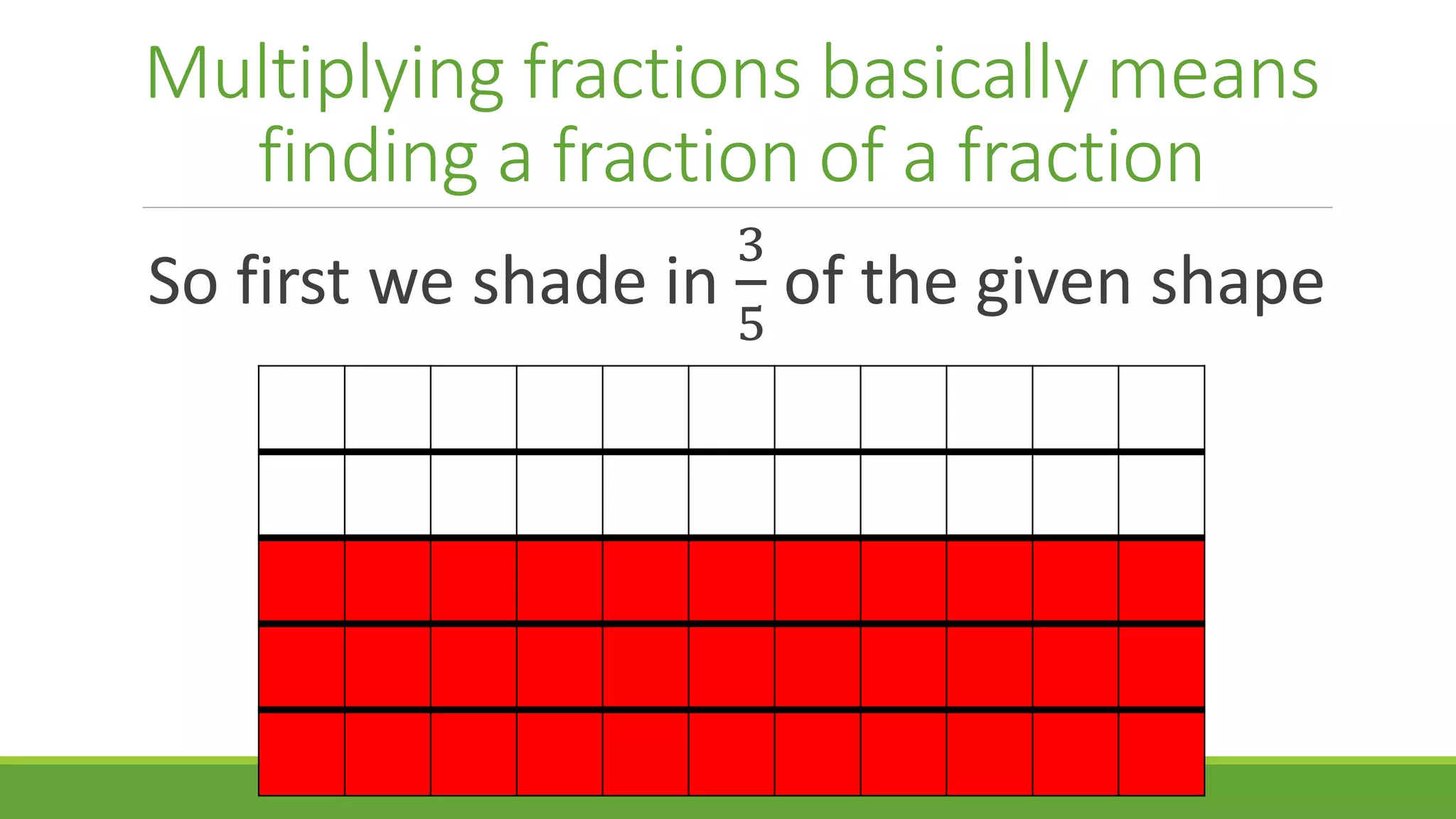
So first we shade in
3
5
of the given shape
Multiplying fractions basically means
finding a fraction of a fraction
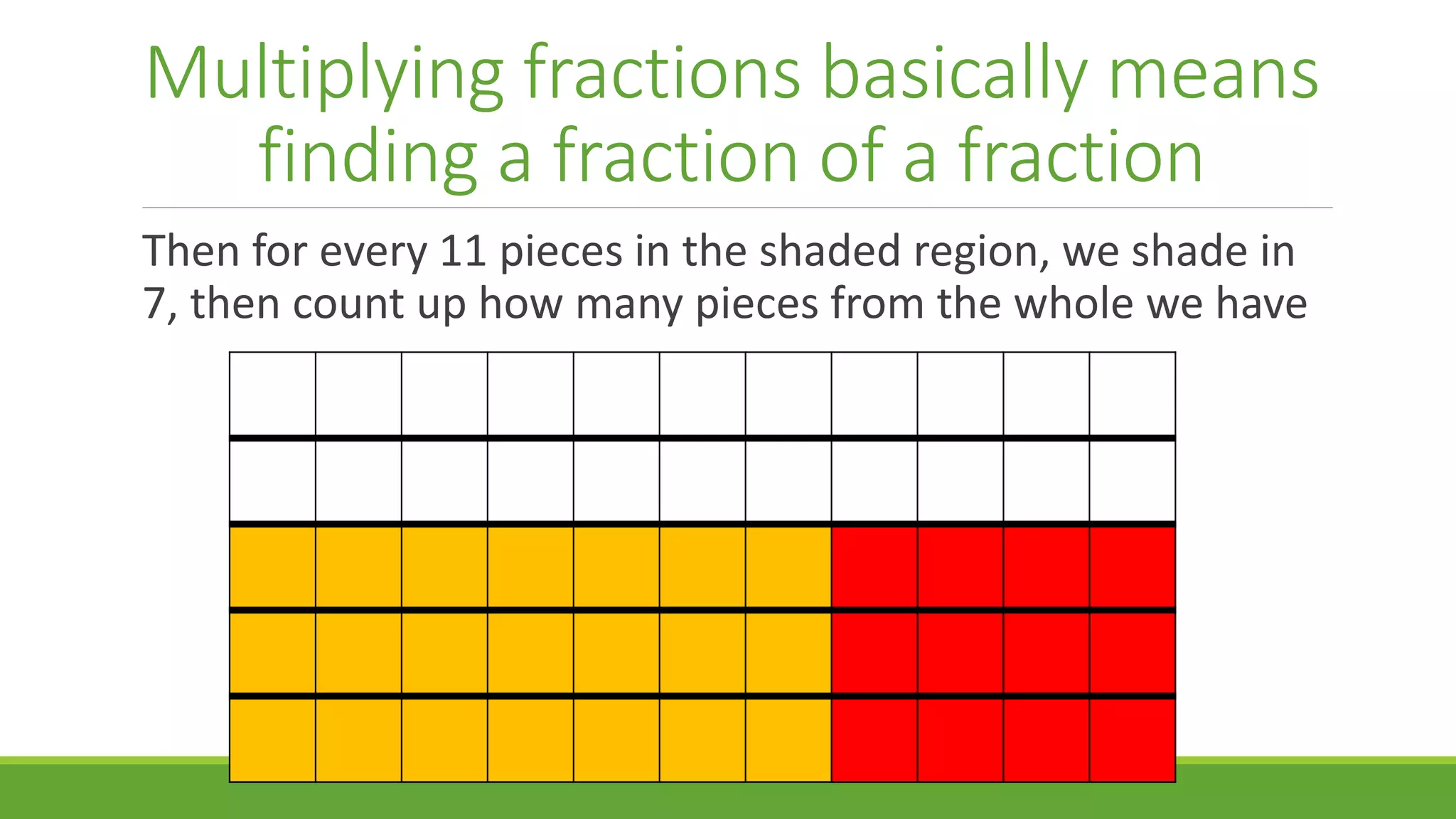
Then for every 11 pieces in the shaded region, we shade in
7, then count up how many pieces from the whole we have
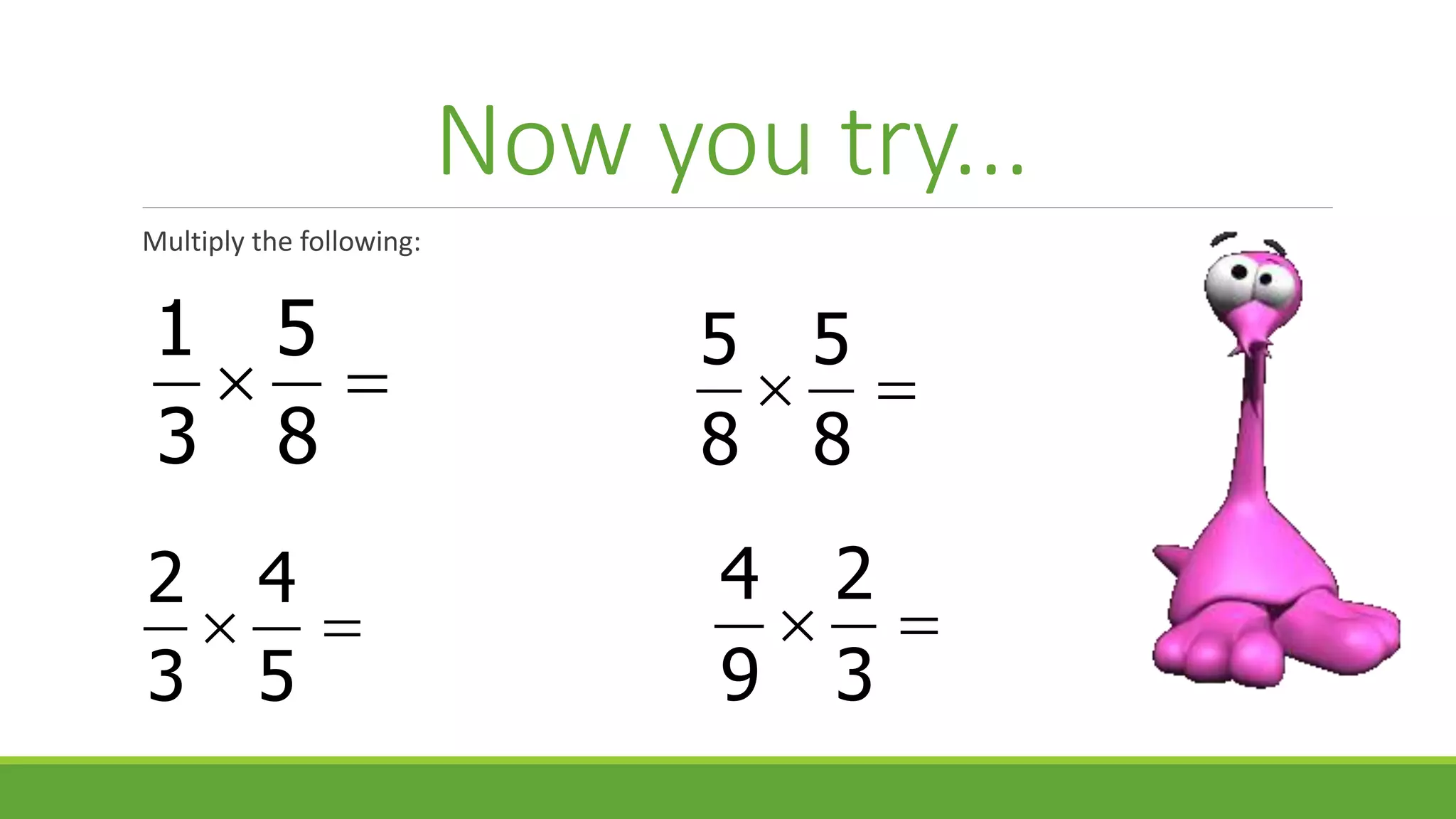
Now you try...
Multiply the following:
4 2
9 3
 
1 5
3 8
 
2 4
3 5
 
5 5
8 8
 
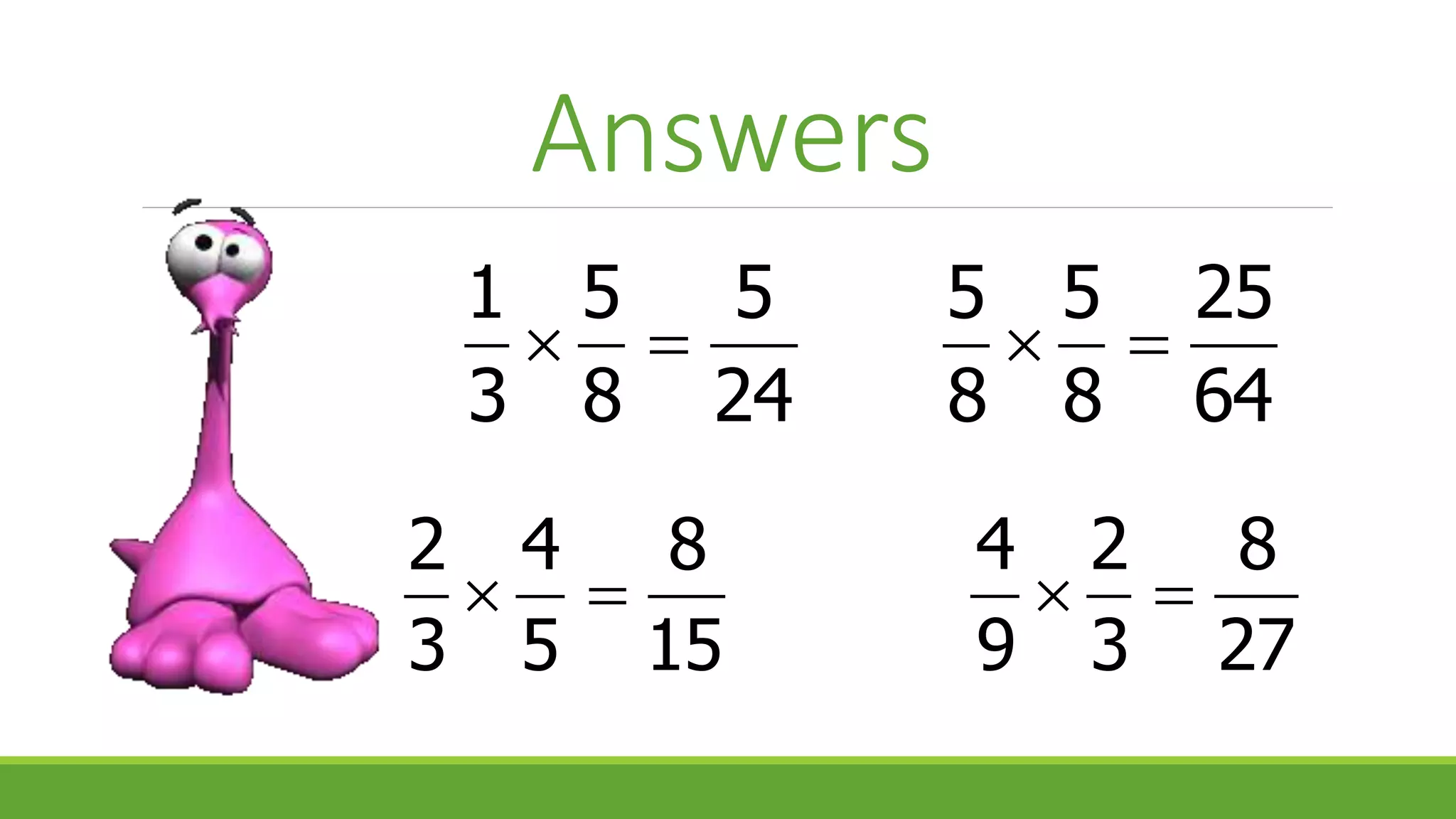
Answers
4 2 8
9 3 27
 
1 5 5
3 8 24
 
2 4 8
3 5 15
 
5 5 25
8 8 64
 
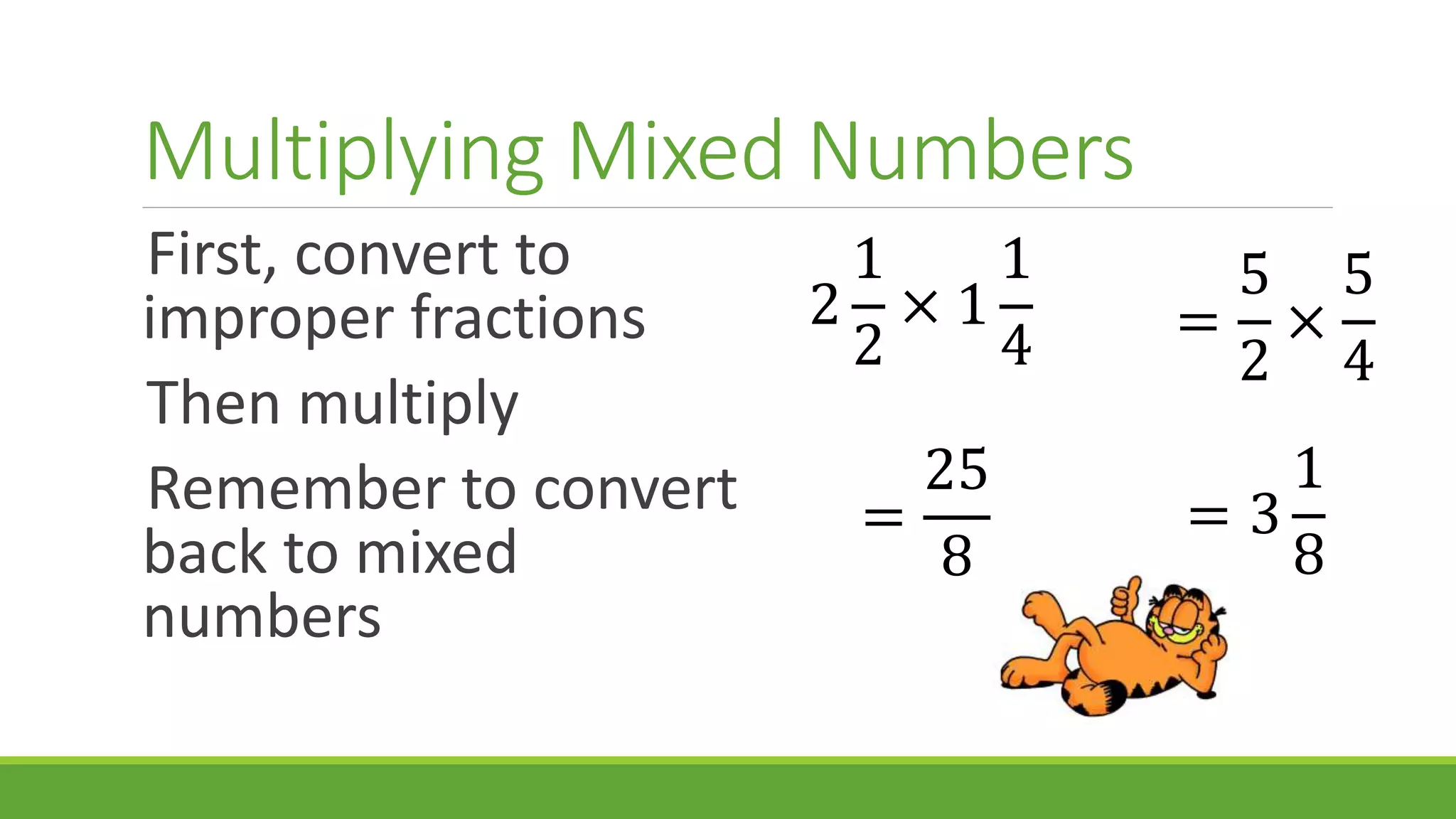
Multiplying Mixed Numbers
First, convert to
improper fractions
Then multiply
Remember to convert
back to mixed
numbers
2
1
2
× 1
1
4 =
5
2
×
5
4
=
25
8
= 3
1
8
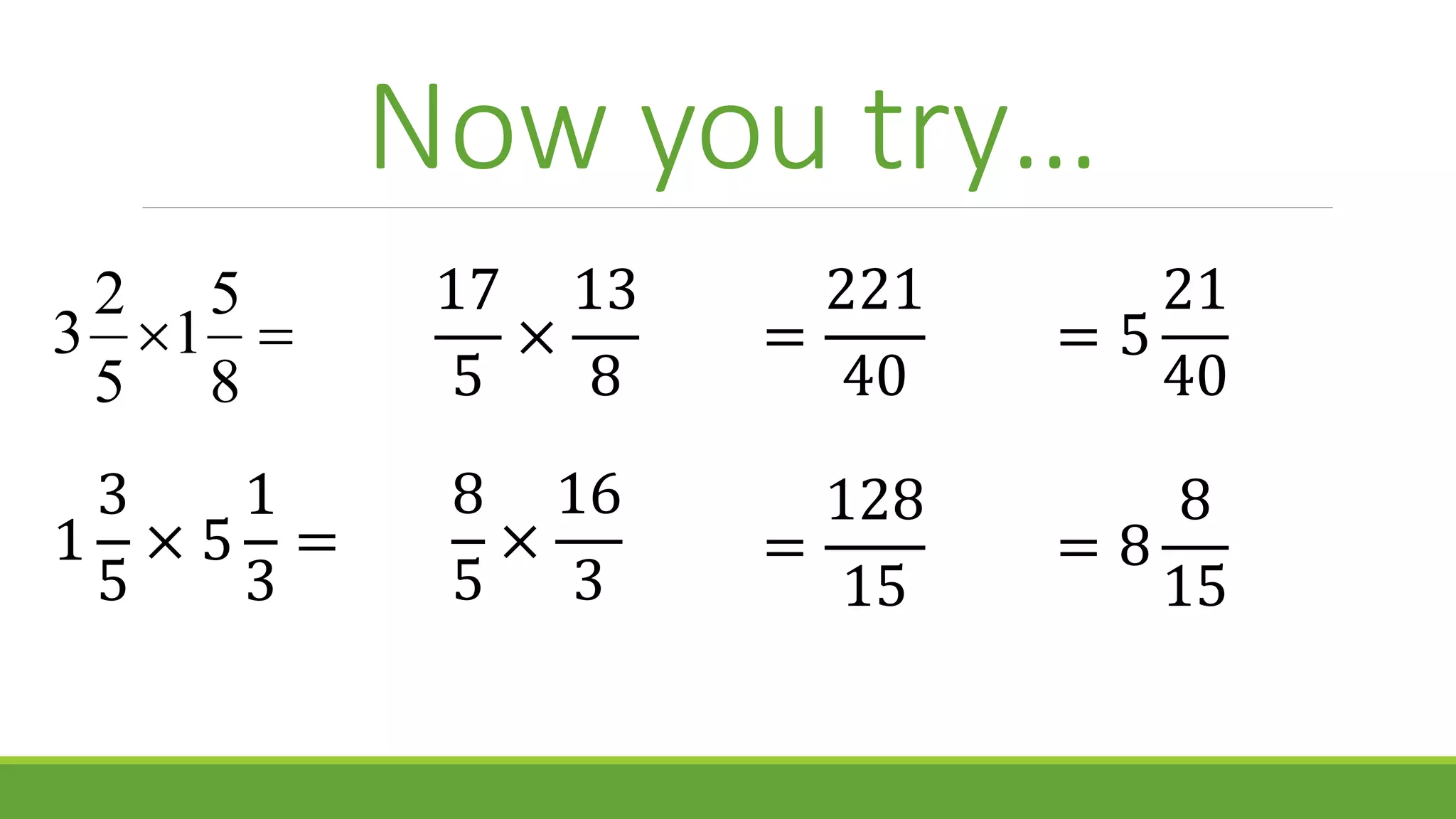
Now you try…

8
5
1
5
2
3
1
3
5
× 5
1
3
=
17
5
×
13
8
8
5
×
16
3
=
128
15
=
221
40
= 5
21
40
= 8
8
15
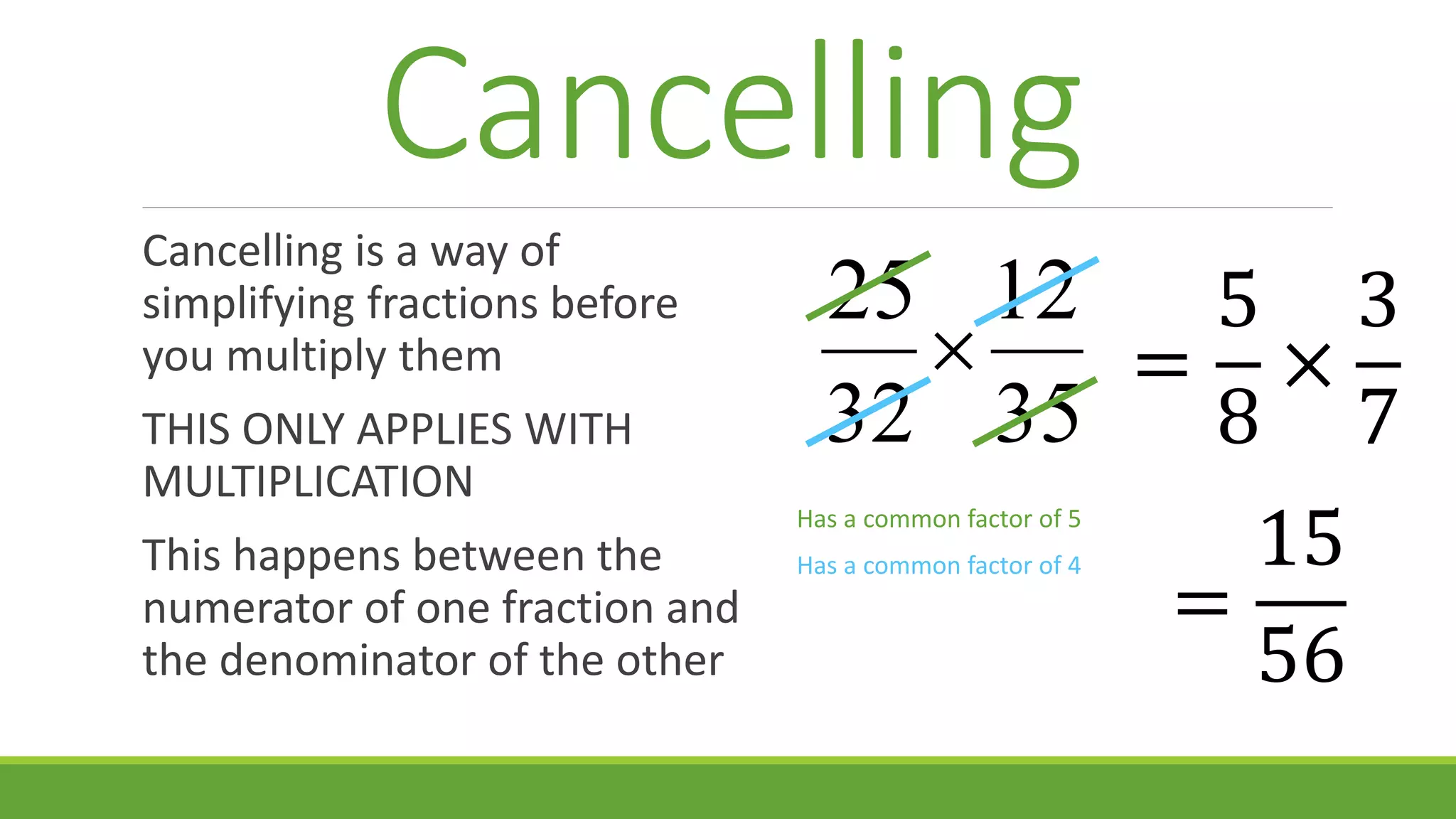
Cancelling
Cancelling is a way of
simplifying fractions before
you multiply them
THIS ONLY APPLIES WITH
MULTIPLICATION
This happens between the
numerator of one fraction and
the denominator of the other
1120
300
35
12
32
25

Has a common factor of 5
Has a common factor of 4
=
5
8
×
3
7
=
15
56
Now you try…
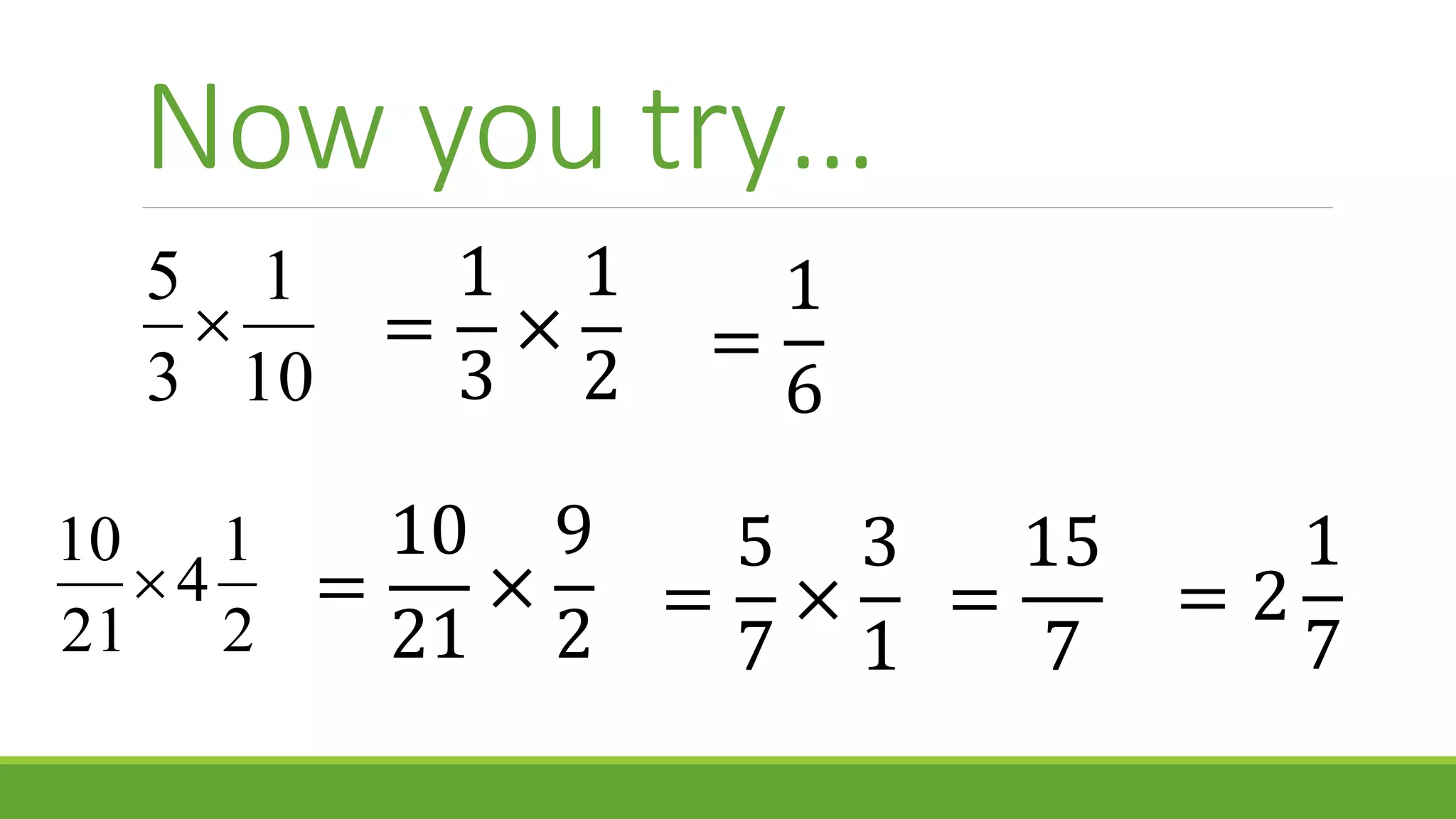
10
1
3
5

4
15
14
2
1
4
21
10

=
1
3
×
1
2
=
10
21
×
9
2
=
5
7
×
3
1
=
1
6
=
15
7
= 2
1
7
Classwork and Homework
Classwork pages 34 and 35
Homework pages 43
If you are finished, come get
worksheets from me

Fractions lesson 10

  • 1.
  • 2.
    Quick Review What areFractions? Part of the whole The Top number is the _____________. Numerator The Bottom number is the ____________. Denominator What are the 3 types of fractions? Proper Improper Mixed Numbers
  • 3.
    Quick Review What informationdoes the denominator give? The number of parts that the whole is divided into! What information does the numerator give? The number of parts from the whole
  • 4.
    Quick Review What isthe difference between a mixed number and an improper fraction? A mixed number is a number whose value is greater than 1 made up of a whole part and a fraction part and an improper fraction is a fraction whose value is greater than or equal to 1 (numerator greater than or equal to denominator)
  • 5.
    Quick ReviewDoes anyoneknow how to convert from a mixed number to an improper fraction? Multiply the whole number times the denominator. Add your answer to the numerator. Put your new number over the denominator. Does anyone know how to convert from an improper fraction to a mixed number ? Divide the numerator by the denominator. The dividend becomes the whole number part. Put your remainder over the denominator, which will make up the fraction part.
  • 6.
    Quick Review What arethe three steps to reading fractions on a number line? Step 1: Count the spaces in between the whole numbers where the fraction is placed. That is your denominator. Step 2: Count the sticks, starting at the first stick after the whole number. Stop at the point you are naming. This is the Numerator Step 3: Write the whole number as a whole number beside the fraction
  • 7.
    Quick Review What isan equivalent fraction? They are fractions that have the same value! How do you make equivalent fractions? You multiply or divide the numerator and the denominator by the same number!
  • 8.
    Quick Review How doyou reduce or simplify fractions? Divide both the numerator and the denominator by the GCF! How do you compare fractions? You use bottoms up
  • 9.
    Quick Review What arelike and unlike fractions?? Like fractions are fractions with the same denominators and unlike fractions are fractions with different denominators! How do you compare like fractions? By comparing their numerators How do you compare unlike fractions? By using bottoms up!
  • 10.
    What process doyou follow when adding or subtracting fractions? Are the denominators the same? Make equivalent fractions with the same denominator using bottoms up or LCM. Add the numerators and simplify where necessary Add the numerators Simplify the fraction if necessary
  • 11.
    Quick Review How doyou add mixed fractions? Separate the fraction and the whole number sections, add them separately and recombine at the end! What if the numerator is bigger than the denominator? Convert to a mixed a number What if it’s already a mixed number? Then add the 2 whole number parts together!
  • 12.
    Quick Review How doyou subtract mixed fractions? Convert to a improper fraction Make equivalent fractions using bottoms up Subtract Simplify Convert back to a mixed number
  • 13.
    Today’s Lesson We aregoing to look at multiplying fractions This will be important when dividing fractions so pay attention
  • 14.
  • 15.
    It is repeatedaddition!
  • 16.
    So… 5 × 5= 25 5 + 5 + 5 + 5 + 5 = 25
  • 17.
    But does thesame apply to fractions? 2 3 × 7 = 2 3 + 2 3 + 2 3 + 2 3 + 2 3 + 2 3 + 2 3 = 14 3 = 4 2 3 14 3 = 4 2 3 Yes it does!!!
  • 18.
    But what aboutmultiplying fractions with fractions…?
  • 19.
  • 20.
    You multiply thenumerator with the numerator and the denominator with the denominator 3 5 × 7 11 = 21 55
  • 21.
    But what doesthat even mean?
  • 22.
    Multiplying fractions basicallymeans finding a fraction of a fraction In the previous example, we found out what 7 11 𝑜𝑓 3 5 is
  • 23.
    Multiplying fractions basicallymeans finding a fraction of a fraction So first we shade in 3 5 of the given shape
  • 24.
    Multiplying fractions basicallymeans finding a fraction of a fraction Then for every 11 pieces in the shaded region, we shade in 7, then count up how many pieces from the whole we have
  • 25.
    Now you try... Multiplythe following: 4 2 9 3   1 5 3 8   2 4 3 5   5 5 8 8  
  • 26.
    Answers 4 2 8 93 27   1 5 5 3 8 24   2 4 8 3 5 15   5 5 25 8 8 64  
  • 27.
    Multiplying Mixed Numbers First,convert to improper fractions Then multiply Remember to convert back to mixed numbers 2 1 2 × 1 1 4 = 5 2 × 5 4 = 25 8 = 3 1 8
  • 28.
    Now you try…  8 5 1 5 2 3 1 3 5 ×5 1 3 = 17 5 × 13 8 8 5 × 16 3 = 128 15 = 221 40 = 5 21 40 = 8 8 15
  • 29.
    Cancelling Cancelling is away of simplifying fractions before you multiply them THIS ONLY APPLIES WITH MULTIPLICATION This happens between the numerator of one fraction and the denominator of the other 1120 300 35 12 32 25  Has a common factor of 5 Has a common factor of 4 = 5 8 × 3 7 = 15 56
  • 30.
  • 31.
    Classwork and Homework Classworkpages 34 and 35 Homework pages 43 If you are finished, come get worksheets from me