MECHANICAL
CIRCULATORY SUPPORT
DURABLE LV ASSIST
DEVICE
VISHAL VANANI
8 Aug 2016
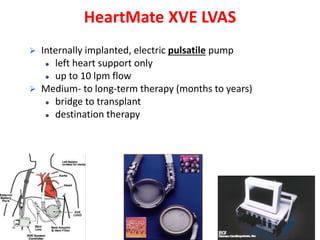
HeartMate XVE LVAS
 Internally implanted, electric pulsatile pump
 left heart support only
 up to 10 lpm flow
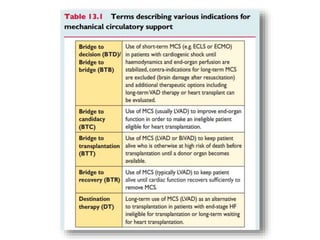
 Medium- to long-term therapy (months to years)
 bridge to transplant
 destination therapy
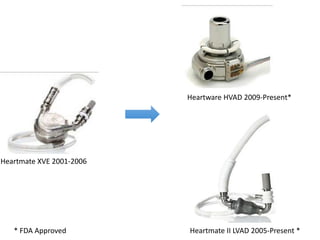
Heartmate XVE 2001-2006
Heartware HVAD 2009-Present*
Heartmate II LVAD 2005-Present ** FDA Approved
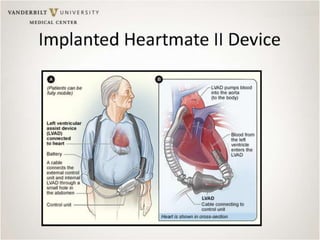
• Durable VADs with intracorporeal pumps provide longterm
support to ambulatory patients.
• Multiple LVADs have received the European CE mark, but
here we focus on the two with CE and United States Food
and Drug Administration (FDA) approval—
• HeartMate II (Thoratec, Pleasanton, California, USA) and
• HeartWare Ventricular Assist System (HVAS) (Heartware,
Framingham, Massachusetts, USA).
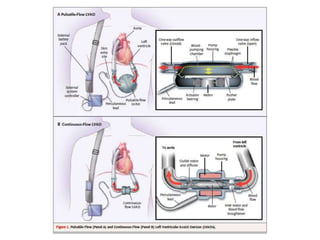
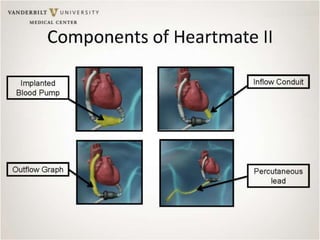
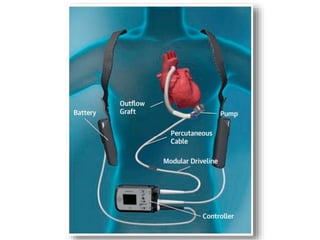
• Both systems consist of a continuous flow pump, an inflow
cannula, an outflow conduit, a drive line, a controller and
batteries.
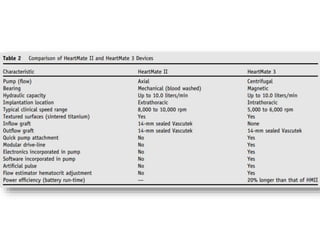
• The HeartMate II (HMII) pump is a propeller ('axial flow').
• The HVAS employs a rotating disc ('centrifugal flow').
• Both draw blood from an inflow cannula in the LV apex and accelerate it
through an outflow graft into the ascending aorta.
• The output changes with the speed of rotation of the propeller or the
disc (rpm).
• Because the flow is continuous, there is no need for valves, and the
output depends on preload in the LV and afterload in the ascending
aorta, in addition to speed.
• Nonetheless, the output is usually pulsatile, reflecting residual
ventricular contraction.
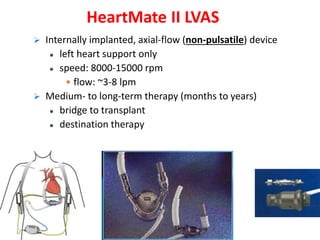
HeartMate II LVAS
 Internally implanted, axial-flow (non-pulsatile) device
 left heart support only
 speed: 8000-15000 rpm
• flow: ~3-8 lpm
 Medium- to long-term therapy (months to years)
 bridge to transplant
 destination therapy
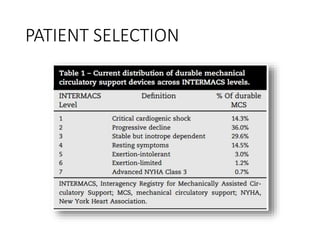
PATIENT SELECTION
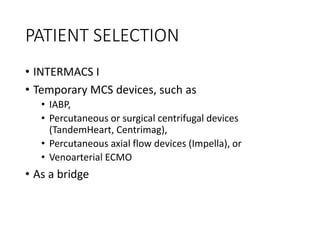
PATIENT SELECTION
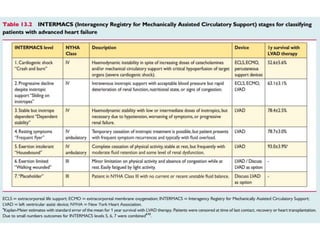
• INTERMACS I
• Temporary MCS devices, such as
• IABP,
• Percutaneous or surgical centrifugal devices
(TandemHeart, Centrimag),
• Percutaneous axial flow devices (Impella), or
• Venoarterial ECMO
• As a bridge
• Patients with cardiogenic shock (INTERMAC I)
• Who can be stabilized with bridge therapy – candidates
for a durable LVAD,
• Who suffer from irreversible end-organ dysfunction
(renal, hepatic, neurologic, etc.) or refractory shock
despite temporary MCS – higher risk suboptimal
candidates for LVAD.
Inotropic therapy dependent
(INTERMACS levels 2 and 3)
• Most appropriate use of the LVADs.
• They have very poor prognosis with medical
therapy alone.
• REMATCH trial
• Of the 61 patients in the medical therapy arm,
• Survival at 1 year – 25%,
• At 2 years – 8%.
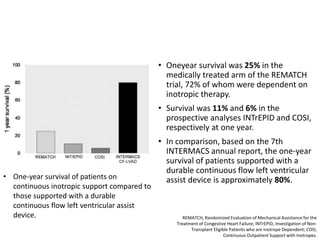
• Oneyear survival was 25% in the
medically treated arm of the REMATCH
trial, 72% of whom were dependent on
inotropic therapy.
• Survival was 11% and 6% in the
prospective analyses INTrEPID and COSI,
respectively at one year.
• In comparison, based on the 7th
INTERMACS annual report, the one-year
survival of patients supported with a
durable continuous flow left ventricular
assist device is approximately 80%.• One-year survival of patients on
continuous inotropic support compared to
those supported with a durable
continuous flow left ventricular assist
device. REMATCH, Randomized Evaluation of Mechanical Assistance for the
Treatment of Congestive Heart Failure; INTrEPID, Investigation of Non-
Transplant Eligible Patients who are Inotrope Dependent; COSI,
Continuous Outpatient Support with Inotropes.
INTERMACS levels 4 to 7
• Advanced heart failure but are not inotrope
dependent.
• INTERMACS 4 profile is increasingly gaining
acceptance as an appropriate candidate group.
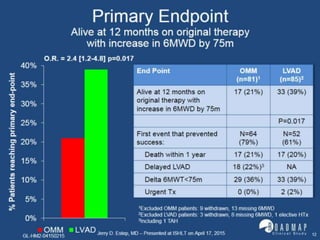
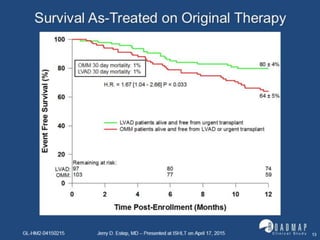
ROADMAP trial
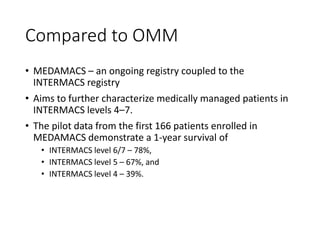
Compared to OMM
• MEDAMACS – an ongoing registry coupled to the
INTERMACS registry
• Aims to further characterize medically managed patients in
INTERMACS levels 4–7.
• The pilot data from the first 166 patients enrolled in
MEDAMACS demonstrate a 1-year survival of
• INTERMACS level 6/7 – 78%,
• INTERMACS level 5 – 67%, and
• INTERMACS level 4 – 39%.
INTERMACS 4 patients
• A decision to implant a durable MCS device in INTERMACS 4
patients should be based on the potential benefit in
functional capacity and quality of life versus the risks
(namely stroke, hemorrhage, thrombosis, and infection)
associated with durable MCS therapy.
INTERMACS levels 6 or 7
• Too well to benefit substantially
• Implantation in them is likely to be too early.
The role of heart failure
phenotype
• The likelihood of spontaneous recovery
• Those likely to benefit from valve surgery or
revascularization
• It is prudent to evaluate a patient fully for
candidacy of LVAD therapy
• CRT in inotrope dependent patients – associated
with poor outcomes.
• May only cause delays in LVAD implantation risking
further end-organ dysfunction or death.
• LV morphology – cannula placement
• Typically – dilated left ventricle
• Those with a restrictive or hypertrophic
cardiomyopathy – technical challenge
• Recent MI involving the LV apex
• Valvular pathologies
• Continuous flow LVAD – AV opens infrequently
• Continuous flow LVAD – AR often worsens
(closure, oversewing, or replacement of the aortic
valve)
• Mitral regurgitation – improves in most of the
patients
• Significant mitral stenosis – requires replacement
• Atrial septal defects and patent foramen ovale
Assessment of the right ventricle
• RV dysfunction – limitation to functional capacity and impair
end-organ function.
• Increases the risk of death
• May require implantation of a RV mechanical support device
or prolonged continuous IV inotropes.
• Currently, RV mechanical support is only available to those
patients who are listed for cardiac transplantation (since
discharge to home is often difficult).
• LVAD not only unmasks pre-existing RVD, but may
further impact RV performance.
• Ischemic injury at CPB.
• Increased systemic venous return + septal shift
toward the LV – RV dilation and TR, decreased
septal contribution to RV forward output.
Assessment of right ventricular
function
• Imaging findings (RV contractility and diastolic
compliance)
• Hemodynamics (systemic elevation of filling
pressures and contractile insufficiency)
• Biochemical data (hepatorenal end-organ
perfusion).
Risk factors for postoperative RV
failure
• Preoperative severe RVD by echocardiography
• Inability to decrease the RAP to <15 mmHg with
OMM
• A low RV stroke work index,
• Low RA to PA pulse pressure ratio,
• High RA to PA wedge pressure ratio, and
• Persistent high creatinine, bilirubin, and INR
Arrhythmia burden
• Significant ventricular arrhythmias may result in a
hemodynamic embarrassment in patients with isolated LV
MCS
• Strong consideration should be given to biventricular MCS in
patients with very frequent or refractory ventricular
arrhythmia.
Estimating the impact of
comorbid conditions
• Advanced age
• Patients with hypercoagulable disorders or
coagulopathies
• Renal and hepatic dysfunction
• Patients on hemodialysis
• The presence of peripheral arterial disease
• Significant disease of the ascending aorta
Estimating the impact of
comorbid conditions
• Psychosocial barriers
• Inadequate social support,
• Substance abuse, and
• Medical noncompliance
• Poor nutritional status and frailty
• A 6-second ‘‘shuttle’’ test – if the patient can
walk 5 meters
• Assessment of hand grip strength (<20th
percentile for age and gender)
• Neuropsychological evaluation of cognitive function
PROGNOSIS
• The greatest risk of death in 3 months postoperatively.
• Factors affecting mortality rate
• Age,
• Female sex,
• Prior stroke,
• Mechanical ventilation,
• INTERMACS level 1 or 2,
• LVAD for destination therapy,
• Hepatic or renal dysfunction,
• RV dysfunction or
• Need for RV mechanical support,
• Prior or other concurrent cardiac surgery.
Quality of Life
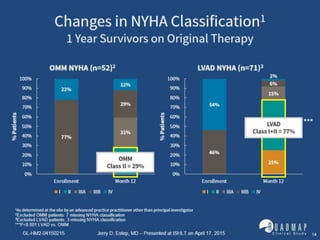
• In the HeartMate II destination therapy trial
• At the start of the trial – NYHA class III or IV
• By the end – 80% of those had NYHA class I or II.
• Also showed meaningful improvements in the
Minnesota Living with Heart Failure questionnaire
and Kansas City Cardiomyopathy questionnaire.
• And a significant increase in a 6-min walk distance
by 12 months.
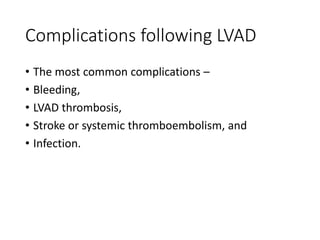
Complications following LVAD
• The most common complications –
• Bleeding,
• LVAD thrombosis,
• Stroke or systemic thromboembolism, and
• Infection.
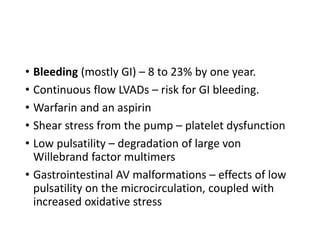
• Bleeding (mostly GI) – 8 to 23% by one year.
• Continuous flow LVADs – risk for GI bleeding.
• Warfarin and an aspirin
• Shear stress from the pump – platelet dysfunction
• Low pulsatility – degradation of large von
Willebrand factor multimers
• Gastrointestinal AV malformations – effects of low
pulsatility on the microcirculation, coupled with
increased oxidative stress
• Pump thrombosis – annual incidence of 6 – 12%
• Associated with an increase in neurologic events and a
higher rate of mortality.
• Biochemical evidence of hemolysis caused by turbulent VAD
flow or elevation in the device power;
• Later, signs include an inability to unload the left ventricle
by noninvasive imaging or invasive hemodynamic study,
decompensated heart failure, and possibly hemodynamic
compromise.
• Reoperation (pump exchange) – 6.5% perioperative
mortality risk and a 65% 2-year survival.
• Infection – 20% of patients following LVAD implantation,
• Sepsis or
• Driveline infection.
• Infection and its inflammatory sequelae – predispose to a
prothrombotic milieu.
• Strokes – 6% annually.
• More common with certain devices
• HVAD (HeartWare) – 29% at 2 years,
• In women, and in those with a pre-implant history of stroke
or atrial fibrillation.
• A complex weave of stroke-related events in the setting of
infection or with pump thrombosis has been observed.
MONITORING
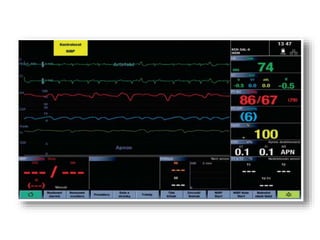
• The LVAD controller tracks power and flow,
• Power is directly measured in watts,
• Flow is calculated based on speed and power.
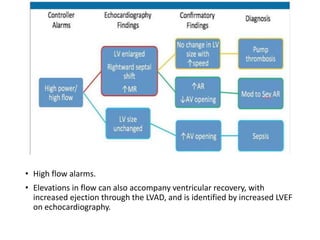
• High flow and low flow alarms signal one of many
complications.
• Echocardiography
• High flow alarms.
• Elevations in flow can also accompany ventricular recovery, with
increased ejection through the LVAD, and is identified by increased LVEF
on echocardiography.
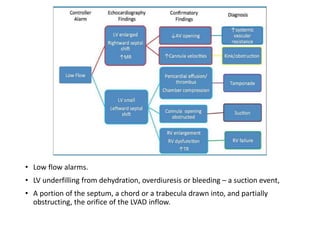
• Low flow alarms.
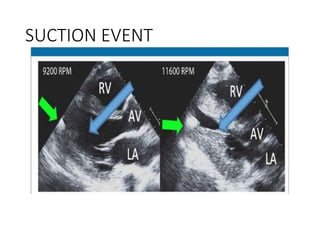
• LV underfilling from dehydration, overdiuresis or bleeding – a suction event,
• A portion of the septum, a chord or a trabecula drawn into, and partially
obstructing, the orifice of the LVAD inflow.
SUCTION EVENT
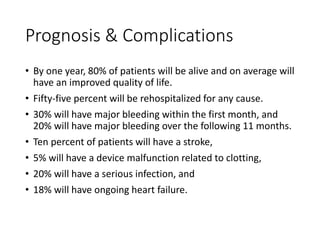
Prognosis & Complications
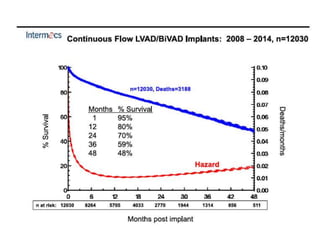
• By one year, 80% of patients will be alive and on average will
have an improved quality of life.
• Fifty-five percent will be rehospitalized for any cause.
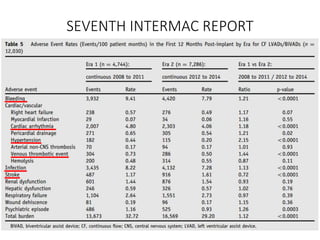
• 30% will have major bleeding within the first month, and
20% will have major bleeding over the following 11 months.
• Ten percent of patients will have a stroke,
• 5% will have a device malfunction related to clotting,
• 20% will have a serious infection, and
• 18% will have ongoing heart failure.
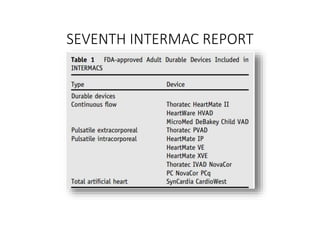
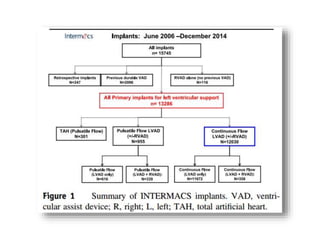
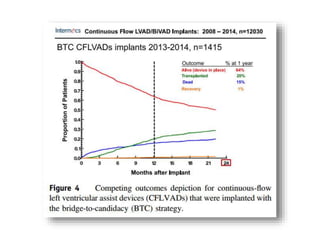
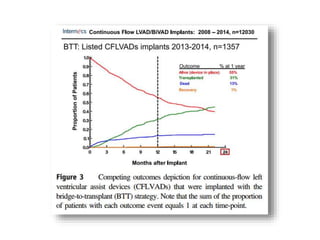
SEVENTH INTERMAC REPORT
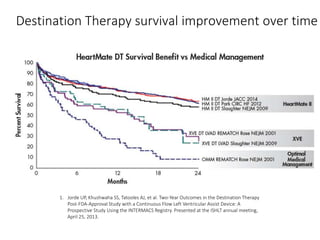
Destination Therapy survival improvement over time
1. Jorde UP, Khushwaha SS, Tatooles AJ, et al. Two-Year Outcomes in the Destination Therapy
Post-FDA-Approval Study with a Continuous Flow Left Ventricular Assist Device: A
Prospective Study Using the INTERMACS Registry. Presented at the ISHLT annual meeting,
April 25, 2013.
SEVENTH INTERMAC REPORT
INDIAN DATA
• 11 patients implanted with LVAD
between Nov 2012 and Dec
2014.
• 8 males and 3 females, age from
26 to 51 years (mean – 47 years).
• 2 models of LVADs –
• HEARTMATE–II in 3,
• HEARTWARE in 8 patients.
• INTERMAC Level –
• INTERMACS category 2 – 7,
• INTERMACS category 3 – 3,
• INTERMACS category 4 – 1.
• Indications –
• Ischemic cardiomyopathy – 4
• Recent anterior MI with
recurrent VT and LV
dysfunction – 1
• Severe valvular aortic
stenosis with severe LV
dysfunction – 1
• Dilated cardiomyopathy with
severe heart failure – 3
• Restrictive cardiomyopathy
with cardiogenic shock – 1
• DCM secondary to cobalt
poisoning – 1.
Results
• 9 patients were discharged successfully from the hospital.
• Hospital mortality –
• Sepsis and intracerebral haemorrhage – 1.
• Severe right heart failure and liver failure – 1.
• 7 patients are doing well with good pump parameters and
no signs of heart failure after a minimum of 4 months and
maximum of 3 years follow-up
• There was one late mortality 18 months post LVAD due to
fulminant hepatic failure.
• There was no incidence of CVA or significant aortic leak.
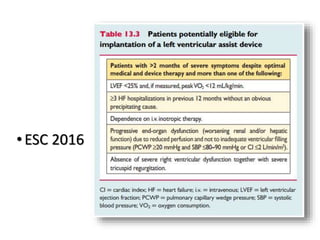
•ESC 2016
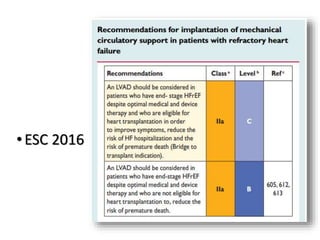
•ESC 2016
CONTRAINDICATIONS
• CLINICAL
• Active systemic infection
• Clotting or bleeding diathesis
• Irreversible hepatic disease
• Malnutrition
• Significant cognitive dysfunction
• Severe psychiatric disease
• Addiction
CONTRAINDICATIONS
• ECHOCARDIOGRAPHIC
• >Mild aortic regurgitation
• >Moderate tricuspid regurgitation
• Ventricular septal defect
• Atrial septal defect/patent foramen ovale
• Severe RV dysfunction
• Aortopathy
Aneurysm, severe plaque in ascending aorta
complicates placement of outflow conduit.
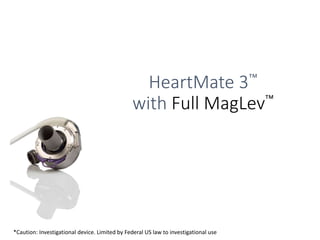
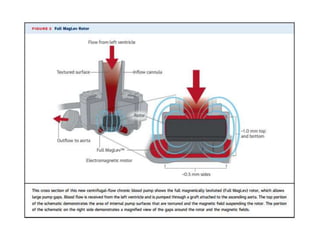
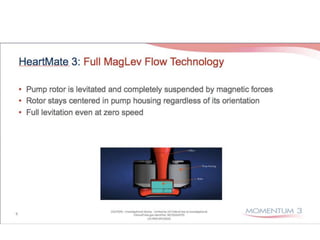
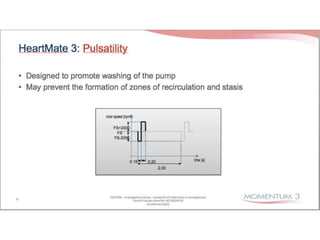
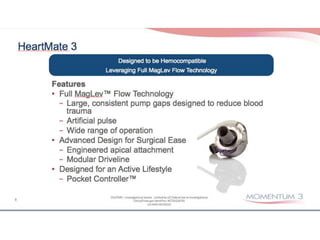
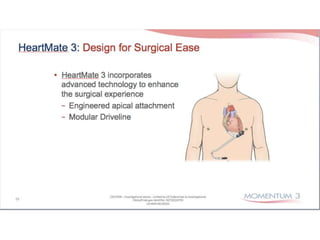
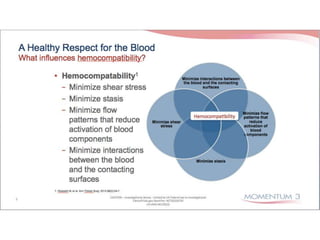
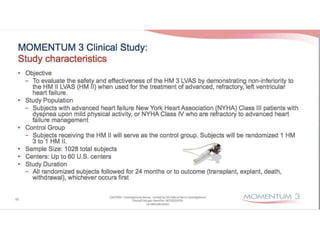
HeartMate 3™
with Full MagLev™
Designed with a Healthy Respect for the Blood
*Caution: Investigational device. Limited by Federal US law to investigational use
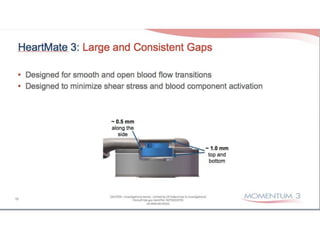
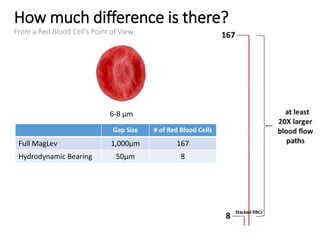
How much difference is there?
From a Red Blood Cell’s Point of View
Gap Size # of Red Blood Cells
Full MagLev 1,000μm 167
Hydrodynamic Bearing 50μm 8
6-8 μm
Stacked RBCs
HEARTMATE 3
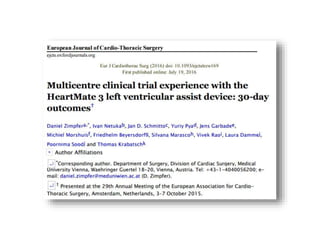
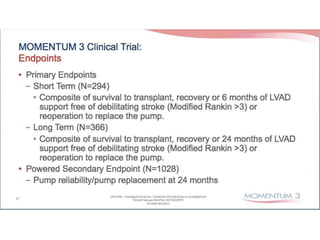
• Fifty patients at 10 centres in 6 countries.
• 30 day data of CE mark trial published.
• Participants enrolled between June and November 2014.
• All of the patients (90% men; mean age 59 years) were in
• NYHA class 3B or 4 or
• ACC/AHA stage D and
• Had an LVEF ≤25%;
• INTERMACS
• grade 3 or 4 – 82%,
• grade 2 – 10%
• grade 5 or 6 – 8%
• BTT patients – 27
• DT patients – 23.
• Only three of the patients had transplants by the end of 12
months.
The 30-day data –
• Survival rate – 98%
• The median operative time – 200 (range: 95–585) min
• Cardiopulmonary bypass time – 84 (range: 47–250) min
• Six patients (12%) required reoperation for postoperative
bleeding.
• The median intensive care time – 6 days (range: 1–112 days)
• Total hospital stay – 28 days (range: 14–116 days).
• The most common adverse events were
• Bleeding (15, 30%),
• Arrhythmia (14, 28%)
• Infection (10, 20%)
• Stroke (2, 4%).
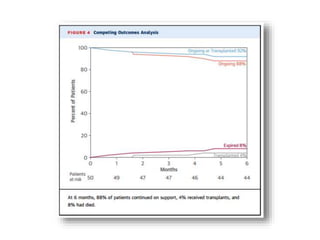
• HeartMate 3 CE Mark Trial: 80% Survival, No Pump
Thrombosis at 1 Year
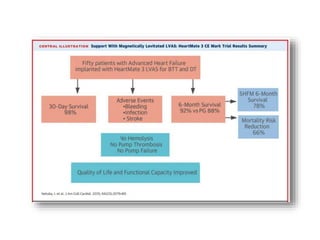
• Survival rate at 6 months – 92%
• European CE Mark approval in October 2015.
• Survival rate at 1 year – 80%
[combining destinationtherapy (DT) and bridgetotransplant (BTT)]
• There were no occurrences of pump thrombosis, malfunctions, or
hemolysis.
• Both gastrointestinal (GI) bleeding and strokes were reduced by 50%
between the 6month and 1year assessment points.
• There were four GI events during the first 6 months, but only two
additional events occurred in the second 6 months.
• Six strokes of any type occurred during the first 6 months vs three
additional strokes during the second.
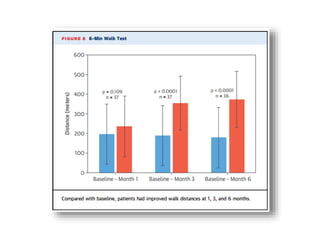
• The 6minute walk test increased significantly from baseline, as did
quality of life scores (both comparisons, P<0.0001).
Krabatsch T, Schmitto JD, Pya Y, et al. HeartMate 3 fully magnetically levitated left ventricular assist device for the treatment of advanced HF—1year
results from the CE Mark Trial. International Society for Heart and Lung Transplantation 2016 Scientific Sessions; April 28, 2016; Washington, DC
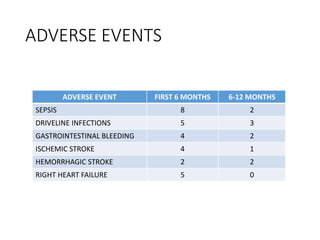
ADVERSE EVENTS
ADVERSE EVENT FIRST 6 MONTHS 6-12 MONTHS
SEPSIS 8 2
DRIVELINE INFECTIONS 5 3
GASTROINTESTINAL BLEEDING 4 2
ISCHEMIC STROKE 4 1
HEMORRHAGIC STROKE 2 2
RIGHT HEART FAILURE 5 0
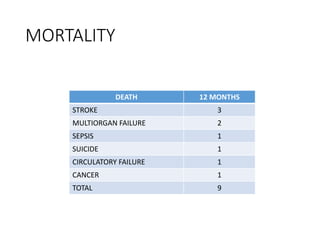
MORTALITY
DEATH 12 MONTHS
STROKE 3
MULTIORGAN FAILURE 2
SEPSIS 1
SUICIDE 1
CIRCULATORY FAILURE 1
CANCER 1
TOTAL 9
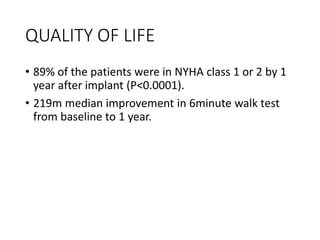
QUALITY OF LIFE
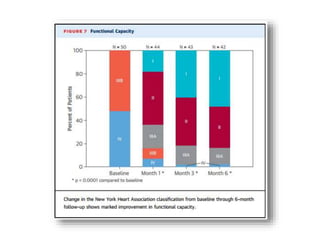
• 89% of the patients were in NYHA class 1 or 2 by 1
year after implant (P<0.0001).
• 219m median improvement in 6minute walk test
from baseline to 1 year.
THANK YOU

LVAD - Left Ventricular Assist Device

  • 1.
    MECHANICAL CIRCULATORY SUPPORT DURABLE LVASSIST DEVICE VISHAL VANANI 8 Aug 2016
  • 2.
    HeartMate XVE LVAS Internally implanted, electric pulsatile pump  left heart support only  up to 10 lpm flow  Medium- to long-term therapy (months to years)  bridge to transplant  destination therapy
  • 4.
    Heartmate XVE 2001-2006 HeartwareHVAD 2009-Present* Heartmate II LVAD 2005-Present ** FDA Approved
  • 7.
    • Durable VADswith intracorporeal pumps provide longterm support to ambulatory patients. • Multiple LVADs have received the European CE mark, but here we focus on the two with CE and United States Food and Drug Administration (FDA) approval— • HeartMate II (Thoratec, Pleasanton, California, USA) and • HeartWare Ventricular Assist System (HVAS) (Heartware, Framingham, Massachusetts, USA). • Both systems consist of a continuous flow pump, an inflow cannula, an outflow conduit, a drive line, a controller and batteries.
  • 8.
    • The HeartMateII (HMII) pump is a propeller ('axial flow'). • The HVAS employs a rotating disc ('centrifugal flow'). • Both draw blood from an inflow cannula in the LV apex and accelerate it through an outflow graft into the ascending aorta. • The output changes with the speed of rotation of the propeller or the disc (rpm). • Because the flow is continuous, there is no need for valves, and the output depends on preload in the LV and afterload in the ascending aorta, in addition to speed. • Nonetheless, the output is usually pulsatile, reflecting residual ventricular contraction.
  • 9.
    HeartMate II LVAS Internally implanted, axial-flow (non-pulsatile) device  left heart support only  speed: 8000-15000 rpm • flow: ~3-8 lpm  Medium- to long-term therapy (months to years)  bridge to transplant  destination therapy
  • 11.
  • 12.
    PATIENT SELECTION • INTERMACSI • Temporary MCS devices, such as • IABP, • Percutaneous or surgical centrifugal devices (TandemHeart, Centrimag), • Percutaneous axial flow devices (Impella), or • Venoarterial ECMO • As a bridge
  • 13.
    • Patients withcardiogenic shock (INTERMAC I) • Who can be stabilized with bridge therapy – candidates for a durable LVAD, • Who suffer from irreversible end-organ dysfunction (renal, hepatic, neurologic, etc.) or refractory shock despite temporary MCS – higher risk suboptimal candidates for LVAD.
  • 14.
    Inotropic therapy dependent (INTERMACSlevels 2 and 3) • Most appropriate use of the LVADs. • They have very poor prognosis with medical therapy alone. • REMATCH trial • Of the 61 patients in the medical therapy arm, • Survival at 1 year – 25%, • At 2 years – 8%.
  • 15.
    • Oneyear survivalwas 25% in the medically treated arm of the REMATCH trial, 72% of whom were dependent on inotropic therapy. • Survival was 11% and 6% in the prospective analyses INTrEPID and COSI, respectively at one year. • In comparison, based on the 7th INTERMACS annual report, the one-year survival of patients supported with a durable continuous flow left ventricular assist device is approximately 80%.• One-year survival of patients on continuous inotropic support compared to those supported with a durable continuous flow left ventricular assist device. REMATCH, Randomized Evaluation of Mechanical Assistance for the Treatment of Congestive Heart Failure; INTrEPID, Investigation of Non- Transplant Eligible Patients who are Inotrope Dependent; COSI, Continuous Outpatient Support with Inotropes.
  • 16.
    INTERMACS levels 4to 7 • Advanced heart failure but are not inotrope dependent. • INTERMACS 4 profile is increasingly gaining acceptance as an appropriate candidate group. ROADMAP trial
  • 20.
    Compared to OMM •MEDAMACS – an ongoing registry coupled to the INTERMACS registry • Aims to further characterize medically managed patients in INTERMACS levels 4–7. • The pilot data from the first 166 patients enrolled in MEDAMACS demonstrate a 1-year survival of • INTERMACS level 6/7 – 78%, • INTERMACS level 5 – 67%, and • INTERMACS level 4 – 39%.
  • 21.
    INTERMACS 4 patients •A decision to implant a durable MCS device in INTERMACS 4 patients should be based on the potential benefit in functional capacity and quality of life versus the risks (namely stroke, hemorrhage, thrombosis, and infection) associated with durable MCS therapy.
  • 22.
    INTERMACS levels 6or 7 • Too well to benefit substantially • Implantation in them is likely to be too early.
  • 23.
    The role ofheart failure phenotype • The likelihood of spontaneous recovery • Those likely to benefit from valve surgery or revascularization • It is prudent to evaluate a patient fully for candidacy of LVAD therapy
  • 24.
    • CRT ininotrope dependent patients – associated with poor outcomes. • May only cause delays in LVAD implantation risking further end-organ dysfunction or death.
  • 25.
    • LV morphology– cannula placement • Typically – dilated left ventricle • Those with a restrictive or hypertrophic cardiomyopathy – technical challenge
  • 26.
    • Recent MIinvolving the LV apex • Valvular pathologies • Continuous flow LVAD – AV opens infrequently • Continuous flow LVAD – AR often worsens (closure, oversewing, or replacement of the aortic valve)
  • 27.
    • Mitral regurgitation– improves in most of the patients • Significant mitral stenosis – requires replacement • Atrial septal defects and patent foramen ovale
  • 28.
    Assessment of theright ventricle • RV dysfunction – limitation to functional capacity and impair end-organ function. • Increases the risk of death • May require implantation of a RV mechanical support device or prolonged continuous IV inotropes. • Currently, RV mechanical support is only available to those patients who are listed for cardiac transplantation (since discharge to home is often difficult).
  • 29.
    • LVAD notonly unmasks pre-existing RVD, but may further impact RV performance. • Ischemic injury at CPB. • Increased systemic venous return + septal shift toward the LV – RV dilation and TR, decreased septal contribution to RV forward output.
  • 30.
    Assessment of rightventricular function • Imaging findings (RV contractility and diastolic compliance) • Hemodynamics (systemic elevation of filling pressures and contractile insufficiency) • Biochemical data (hepatorenal end-organ perfusion).
  • 31.
    Risk factors forpostoperative RV failure • Preoperative severe RVD by echocardiography • Inability to decrease the RAP to <15 mmHg with OMM • A low RV stroke work index, • Low RA to PA pulse pressure ratio, • High RA to PA wedge pressure ratio, and • Persistent high creatinine, bilirubin, and INR
  • 32.
    Arrhythmia burden • Significantventricular arrhythmias may result in a hemodynamic embarrassment in patients with isolated LV MCS • Strong consideration should be given to biventricular MCS in patients with very frequent or refractory ventricular arrhythmia.
  • 33.
    Estimating the impactof comorbid conditions • Advanced age • Patients with hypercoagulable disorders or coagulopathies • Renal and hepatic dysfunction • Patients on hemodialysis • The presence of peripheral arterial disease • Significant disease of the ascending aorta
  • 34.
    Estimating the impactof comorbid conditions • Psychosocial barriers • Inadequate social support, • Substance abuse, and • Medical noncompliance • Poor nutritional status and frailty • A 6-second ‘‘shuttle’’ test – if the patient can walk 5 meters • Assessment of hand grip strength (<20th percentile for age and gender) • Neuropsychological evaluation of cognitive function
  • 35.
    PROGNOSIS • The greatestrisk of death in 3 months postoperatively. • Factors affecting mortality rate • Age, • Female sex, • Prior stroke, • Mechanical ventilation, • INTERMACS level 1 or 2, • LVAD for destination therapy, • Hepatic or renal dysfunction, • RV dysfunction or • Need for RV mechanical support, • Prior or other concurrent cardiac surgery.
  • 36.
    Quality of Life •In the HeartMate II destination therapy trial • At the start of the trial – NYHA class III or IV • By the end – 80% of those had NYHA class I or II. • Also showed meaningful improvements in the Minnesota Living with Heart Failure questionnaire and Kansas City Cardiomyopathy questionnaire. • And a significant increase in a 6-min walk distance by 12 months.
  • 37.
    Complications following LVAD •The most common complications – • Bleeding, • LVAD thrombosis, • Stroke or systemic thromboembolism, and • Infection.
  • 38.
    • Bleeding (mostlyGI) – 8 to 23% by one year. • Continuous flow LVADs – risk for GI bleeding. • Warfarin and an aspirin • Shear stress from the pump – platelet dysfunction • Low pulsatility – degradation of large von Willebrand factor multimers • Gastrointestinal AV malformations – effects of low pulsatility on the microcirculation, coupled with increased oxidative stress
  • 39.
    • Pump thrombosis– annual incidence of 6 – 12% • Associated with an increase in neurologic events and a higher rate of mortality. • Biochemical evidence of hemolysis caused by turbulent VAD flow or elevation in the device power; • Later, signs include an inability to unload the left ventricle by noninvasive imaging or invasive hemodynamic study, decompensated heart failure, and possibly hemodynamic compromise. • Reoperation (pump exchange) – 6.5% perioperative mortality risk and a 65% 2-year survival.
  • 40.
    • Infection –20% of patients following LVAD implantation, • Sepsis or • Driveline infection. • Infection and its inflammatory sequelae – predispose to a prothrombotic milieu.
  • 41.
    • Strokes –6% annually. • More common with certain devices • HVAD (HeartWare) – 29% at 2 years, • In women, and in those with a pre-implant history of stroke or atrial fibrillation. • A complex weave of stroke-related events in the setting of infection or with pump thrombosis has been observed.
  • 42.
    MONITORING • The LVADcontroller tracks power and flow, • Power is directly measured in watts, • Flow is calculated based on speed and power. • High flow and low flow alarms signal one of many complications. • Echocardiography
  • 43.
    • High flowalarms. • Elevations in flow can also accompany ventricular recovery, with increased ejection through the LVAD, and is identified by increased LVEF on echocardiography.
  • 44.
    • Low flowalarms. • LV underfilling from dehydration, overdiuresis or bleeding – a suction event, • A portion of the septum, a chord or a trabecula drawn into, and partially obstructing, the orifice of the LVAD inflow.
  • 45.
  • 46.
    Prognosis & Complications •By one year, 80% of patients will be alive and on average will have an improved quality of life. • Fifty-five percent will be rehospitalized for any cause. • 30% will have major bleeding within the first month, and 20% will have major bleeding over the following 11 months. • Ten percent of patients will have a stroke, • 5% will have a device malfunction related to clotting, • 20% will have a serious infection, and • 18% will have ongoing heart failure.
  • 48.
  • 53.
    Destination Therapy survivalimprovement over time 1. Jorde UP, Khushwaha SS, Tatooles AJ, et al. Two-Year Outcomes in the Destination Therapy Post-FDA-Approval Study with a Continuous Flow Left Ventricular Assist Device: A Prospective Study Using the INTERMACS Registry. Presented at the ISHLT annual meeting, April 25, 2013.
  • 54.
  • 55.
  • 57.
    • 11 patientsimplanted with LVAD between Nov 2012 and Dec 2014. • 8 males and 3 females, age from 26 to 51 years (mean – 47 years). • 2 models of LVADs – • HEARTMATE–II in 3, • HEARTWARE in 8 patients. • INTERMAC Level – • INTERMACS category 2 – 7, • INTERMACS category 3 – 3, • INTERMACS category 4 – 1. • Indications – • Ischemic cardiomyopathy – 4 • Recent anterior MI with recurrent VT and LV dysfunction – 1 • Severe valvular aortic stenosis with severe LV dysfunction – 1 • Dilated cardiomyopathy with severe heart failure – 3 • Restrictive cardiomyopathy with cardiogenic shock – 1 • DCM secondary to cobalt poisoning – 1.
  • 58.
    Results • 9 patientswere discharged successfully from the hospital. • Hospital mortality – • Sepsis and intracerebral haemorrhage – 1. • Severe right heart failure and liver failure – 1. • 7 patients are doing well with good pump parameters and no signs of heart failure after a minimum of 4 months and maximum of 3 years follow-up • There was one late mortality 18 months post LVAD due to fulminant hepatic failure. • There was no incidence of CVA or significant aortic leak.
  • 59.
  • 60.
  • 61.
    CONTRAINDICATIONS • CLINICAL • Activesystemic infection • Clotting or bleeding diathesis • Irreversible hepatic disease • Malnutrition • Significant cognitive dysfunction • Severe psychiatric disease • Addiction
  • 62.
    CONTRAINDICATIONS • ECHOCARDIOGRAPHIC • >Mildaortic regurgitation • >Moderate tricuspid regurgitation • Ventricular septal defect • Atrial septal defect/patent foramen ovale • Severe RV dysfunction • Aortopathy Aneurysm, severe plaque in ascending aorta complicates placement of outflow conduit.
  • 63.
    HeartMate 3™ with FullMagLev™ Designed with a Healthy Respect for the Blood *Caution: Investigational device. Limited by Federal US law to investigational use
  • 69.
    How much differenceis there? From a Red Blood Cell’s Point of View Gap Size # of Red Blood Cells Full MagLev 1,000μm 167 Hydrodynamic Bearing 50μm 8 6-8 μm Stacked RBCs
  • 76.
    HEARTMATE 3 • Fiftypatients at 10 centres in 6 countries. • 30 day data of CE mark trial published.
  • 77.
    • Participants enrolledbetween June and November 2014. • All of the patients (90% men; mean age 59 years) were in • NYHA class 3B or 4 or • ACC/AHA stage D and • Had an LVEF ≤25%; • INTERMACS • grade 3 or 4 – 82%, • grade 2 – 10% • grade 5 or 6 – 8% • BTT patients – 27 • DT patients – 23. • Only three of the patients had transplants by the end of 12 months.
  • 78.
    The 30-day data– • Survival rate – 98% • The median operative time – 200 (range: 95–585) min • Cardiopulmonary bypass time – 84 (range: 47–250) min • Six patients (12%) required reoperation for postoperative bleeding. • The median intensive care time – 6 days (range: 1–112 days) • Total hospital stay – 28 days (range: 14–116 days). • The most common adverse events were • Bleeding (15, 30%), • Arrhythmia (14, 28%) • Infection (10, 20%) • Stroke (2, 4%).
  • 84.
    • HeartMate 3CE Mark Trial: 80% Survival, No Pump Thrombosis at 1 Year
  • 85.
    • Survival rateat 6 months – 92% • European CE Mark approval in October 2015. • Survival rate at 1 year – 80% [combining destinationtherapy (DT) and bridgetotransplant (BTT)] • There were no occurrences of pump thrombosis, malfunctions, or hemolysis. • Both gastrointestinal (GI) bleeding and strokes were reduced by 50% between the 6month and 1year assessment points. • There were four GI events during the first 6 months, but only two additional events occurred in the second 6 months. • Six strokes of any type occurred during the first 6 months vs three additional strokes during the second. • The 6minute walk test increased significantly from baseline, as did quality of life scores (both comparisons, P<0.0001). Krabatsch T, Schmitto JD, Pya Y, et al. HeartMate 3 fully magnetically levitated left ventricular assist device for the treatment of advanced HF—1year results from the CE Mark Trial. International Society for Heart and Lung Transplantation 2016 Scientific Sessions; April 28, 2016; Washington, DC
  • 86.
    ADVERSE EVENTS ADVERSE EVENTFIRST 6 MONTHS 6-12 MONTHS SEPSIS 8 2 DRIVELINE INFECTIONS 5 3 GASTROINTESTINAL BLEEDING 4 2 ISCHEMIC STROKE 4 1 HEMORRHAGIC STROKE 2 2 RIGHT HEART FAILURE 5 0
  • 87.
    MORTALITY DEATH 12 MONTHS STROKE3 MULTIORGAN FAILURE 2 SEPSIS 1 SUICIDE 1 CIRCULATORY FAILURE 1 CANCER 1 TOTAL 9
  • 88.
    QUALITY OF LIFE •89% of the patients were in NYHA class 1 or 2 by 1 year after implant (P<0.0001). • 219m median improvement in 6minute walk test from baseline to 1 year.
  • 92.