Downloaded 300 times
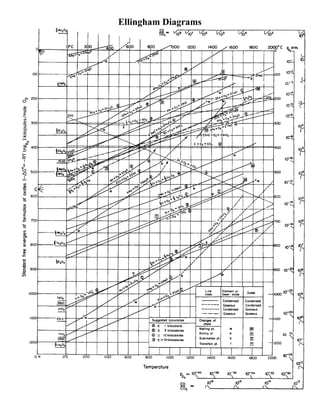
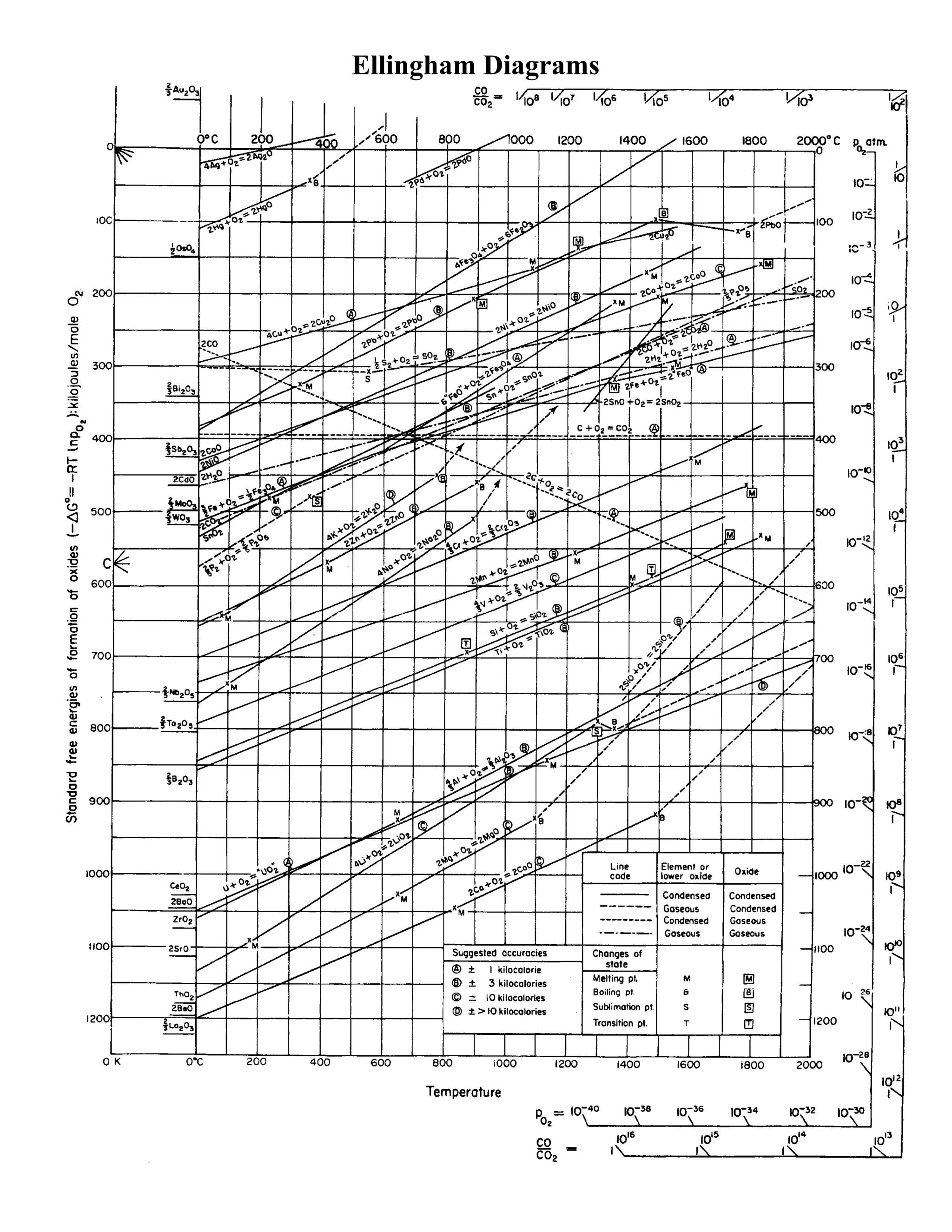
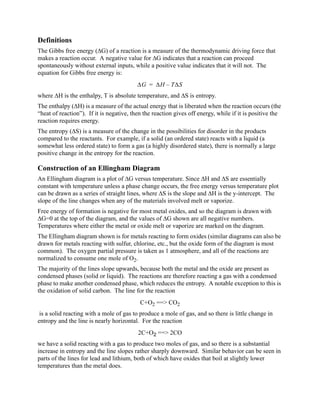
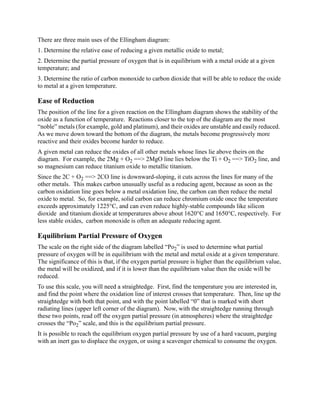

An Ellingham diagram plots the change in Gibbs free energy (ΔG) versus temperature for reactions where metals form oxides. It shows the relative stability of metal oxides through their position - oxides higher on the diagram are more easily reduced. The diagram is used to determine: 1. The ease of reducing a metal oxide to the metal based on its position relative to other metal oxides. 2. The equilibrium partial pressure of oxygen that can exist with a metal oxide at a given temperature. 3. The minimum ratio of carbon monoxide to carbon dioxide needed to reduce an oxide at a temperature.


![Getting Started with Apache Spark: Big Data Made Simple [Free Meetup]](https://cdn.slidesharecdn.com/ss_thumbnails/apachesparkgettingstarted-260203175547-8361bcc3-thumbnail.jpg?width=640&height=640&fit=bounds)


