Lecture 13: Higher Brain FunctionsLecture 13: Higher Brain Functions
Reading: review chapter 5 sections on cerebral cortex
and subcortical structures
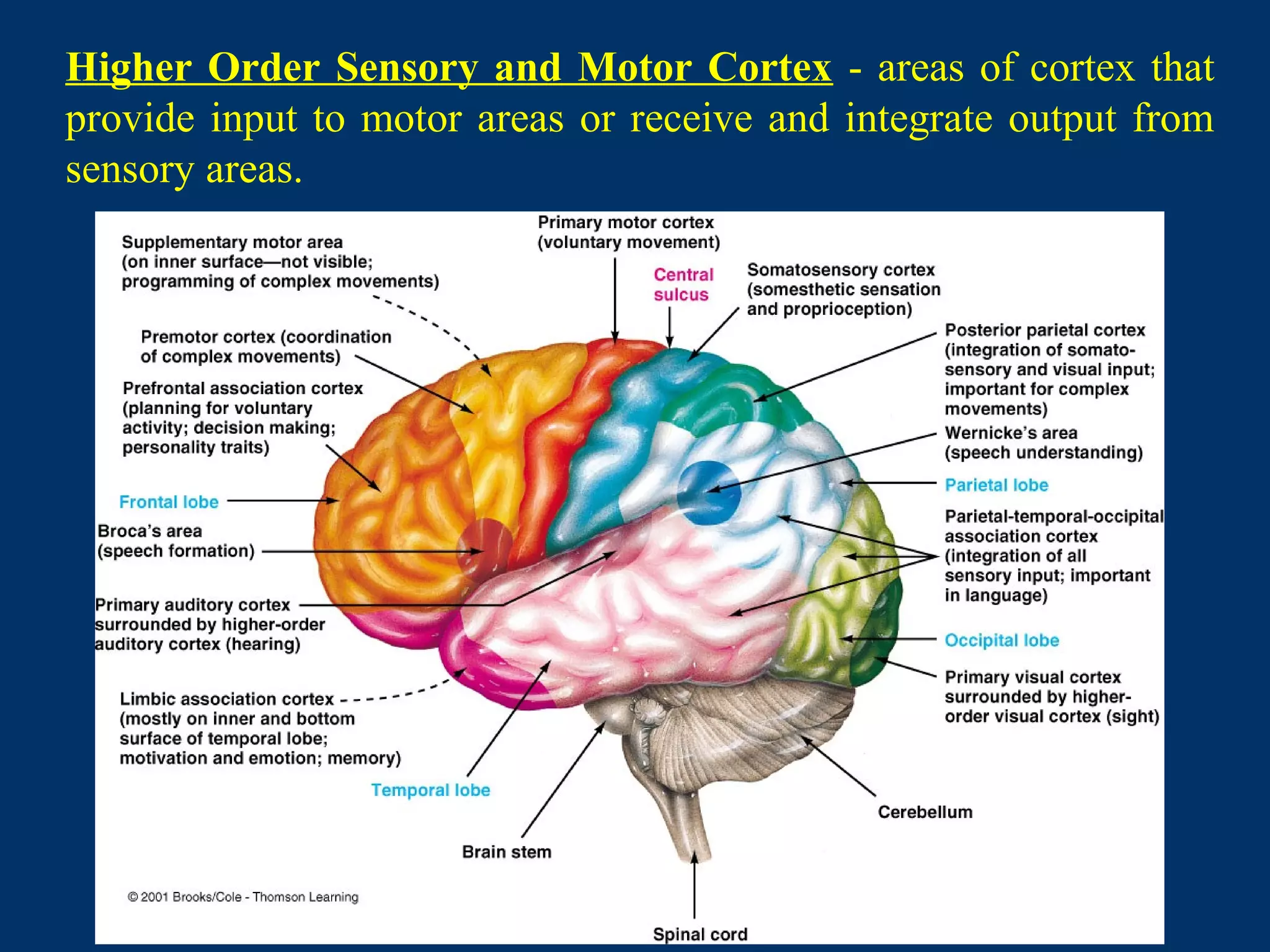
Higher Order Sensory and Motor Cortex - areas of cortex that
provide input to motor areas or receive and integrate output from
sensory areas.
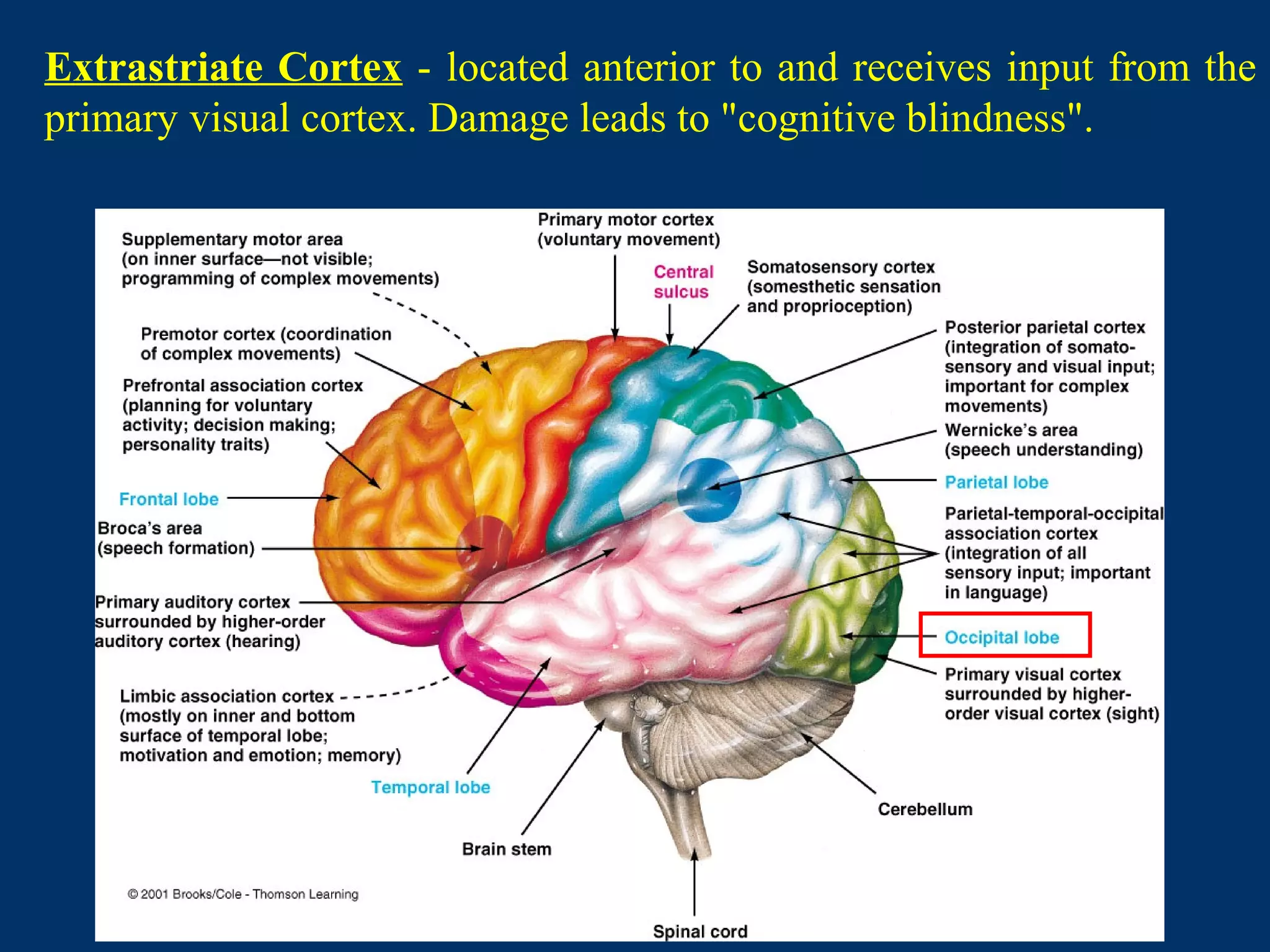
Extrastriate Cortex - located anterior to and receives input from the
primary visual cortex. Damage leads to "cognitive blindness".
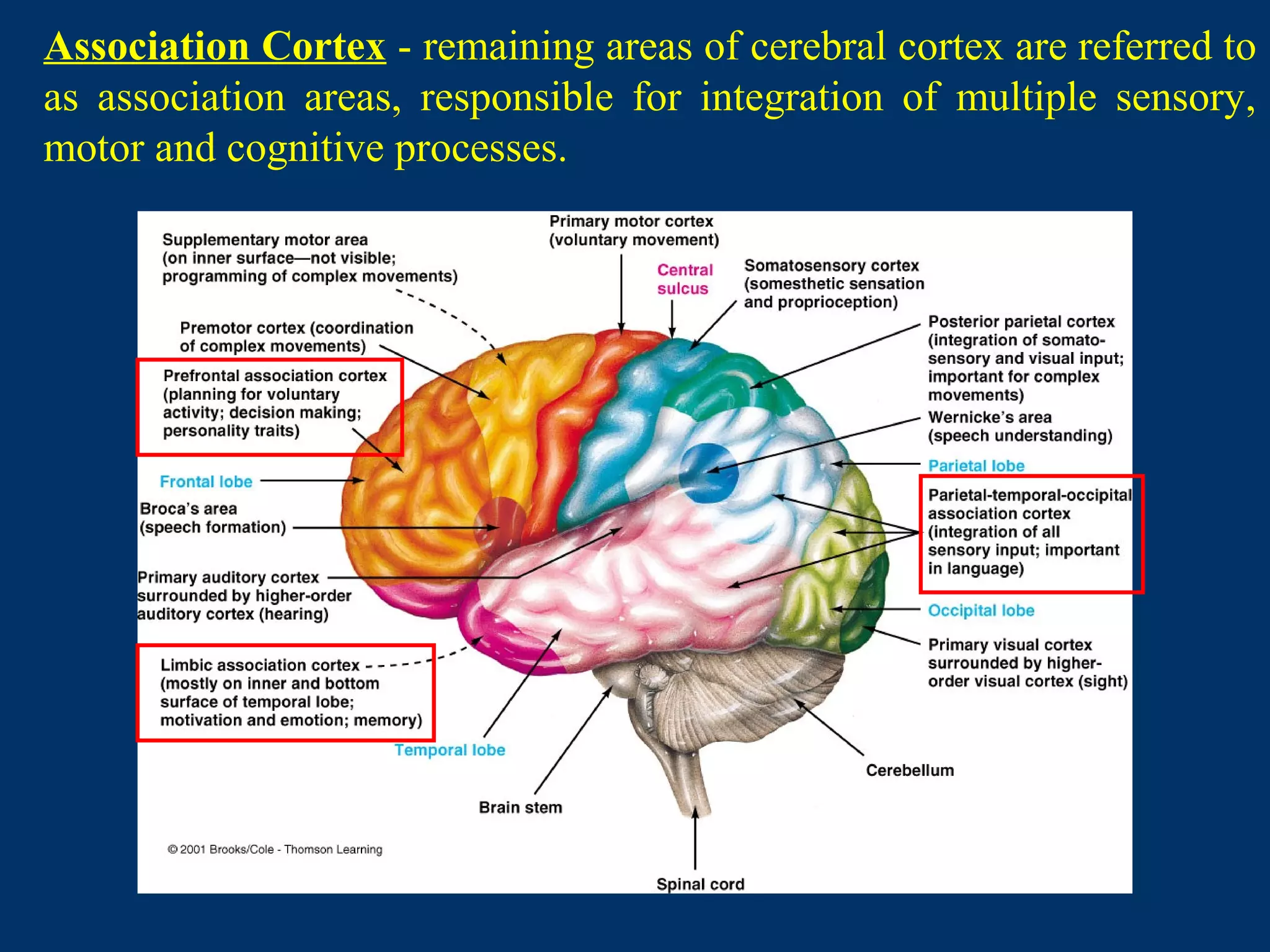
Association Cortex - remaining areas of cerebral cortex are referred to
as association areas, responsible for integration of multiple sensory,
motor and cognitive processes.
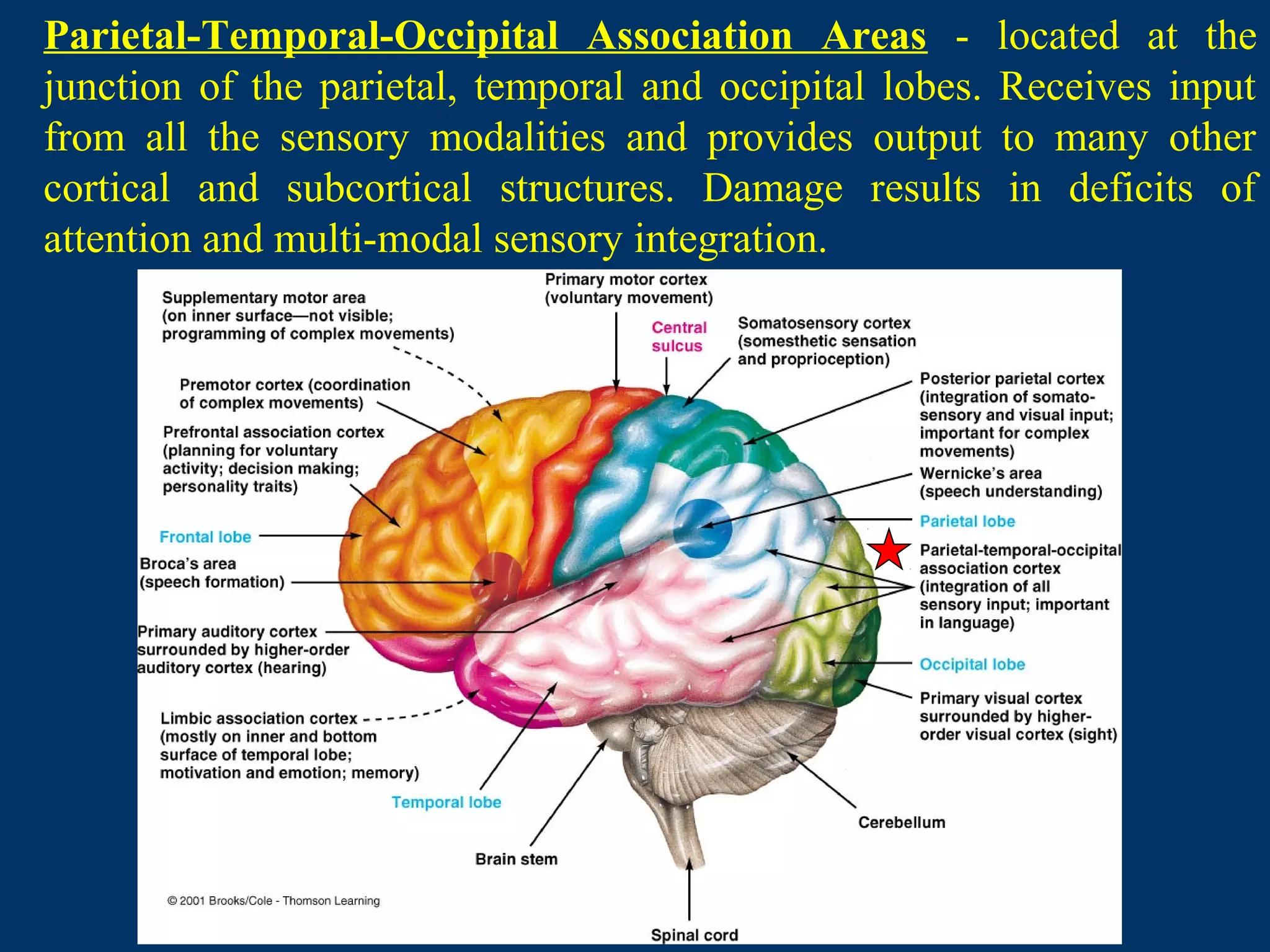
Parietal-Temporal-Occipital Association Areas - located at the
junction of the parietal, temporal and occipital lobes. Receives input
from all the sensory modalities and provides output to many other
cortical and subcortical structures. Damage results in deficits of
attention and multi-modal sensory integration.
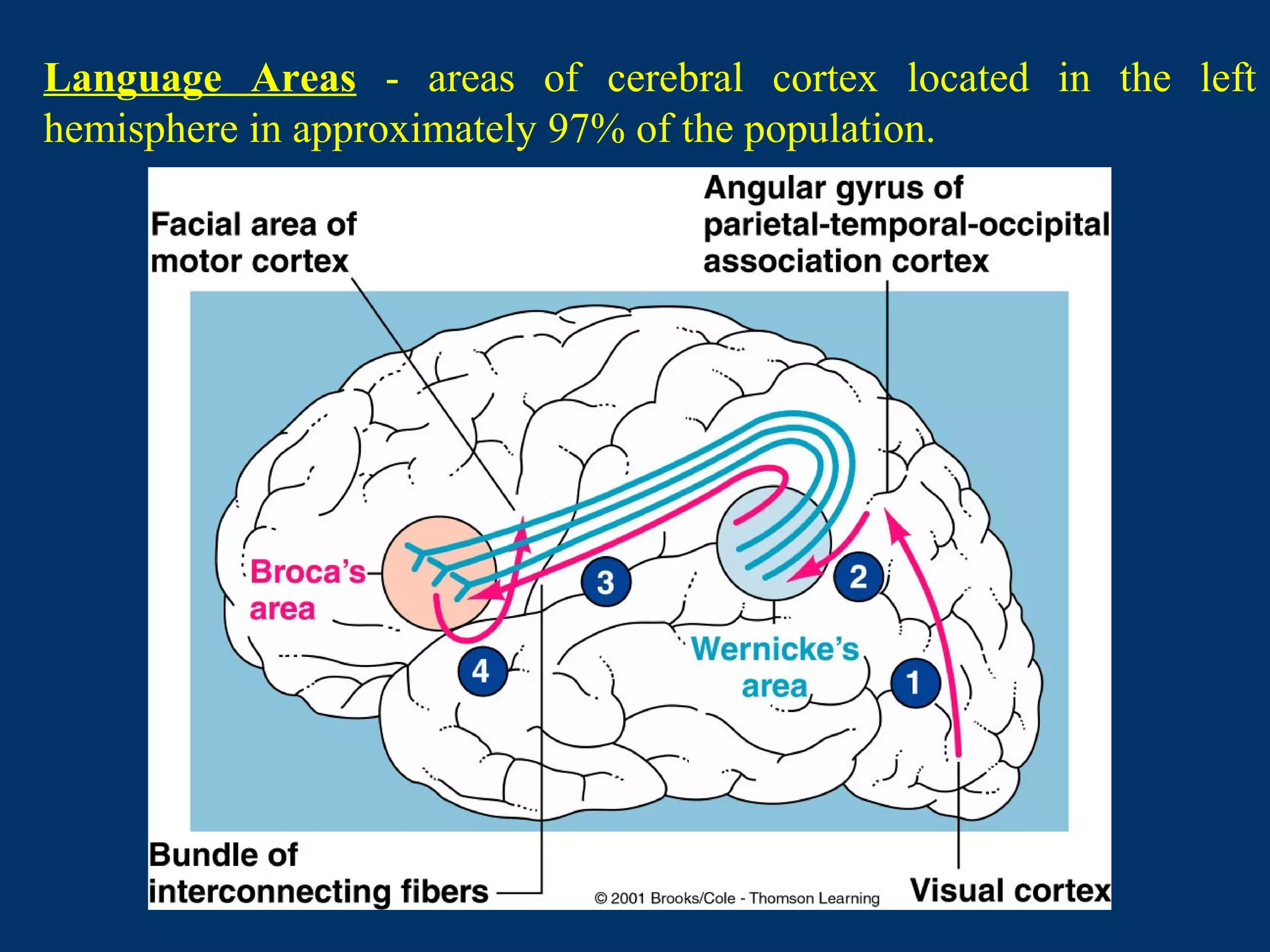
Language Areas - areas of cerebral cortex located in the left
hemisphere in approximately 97% of the population.
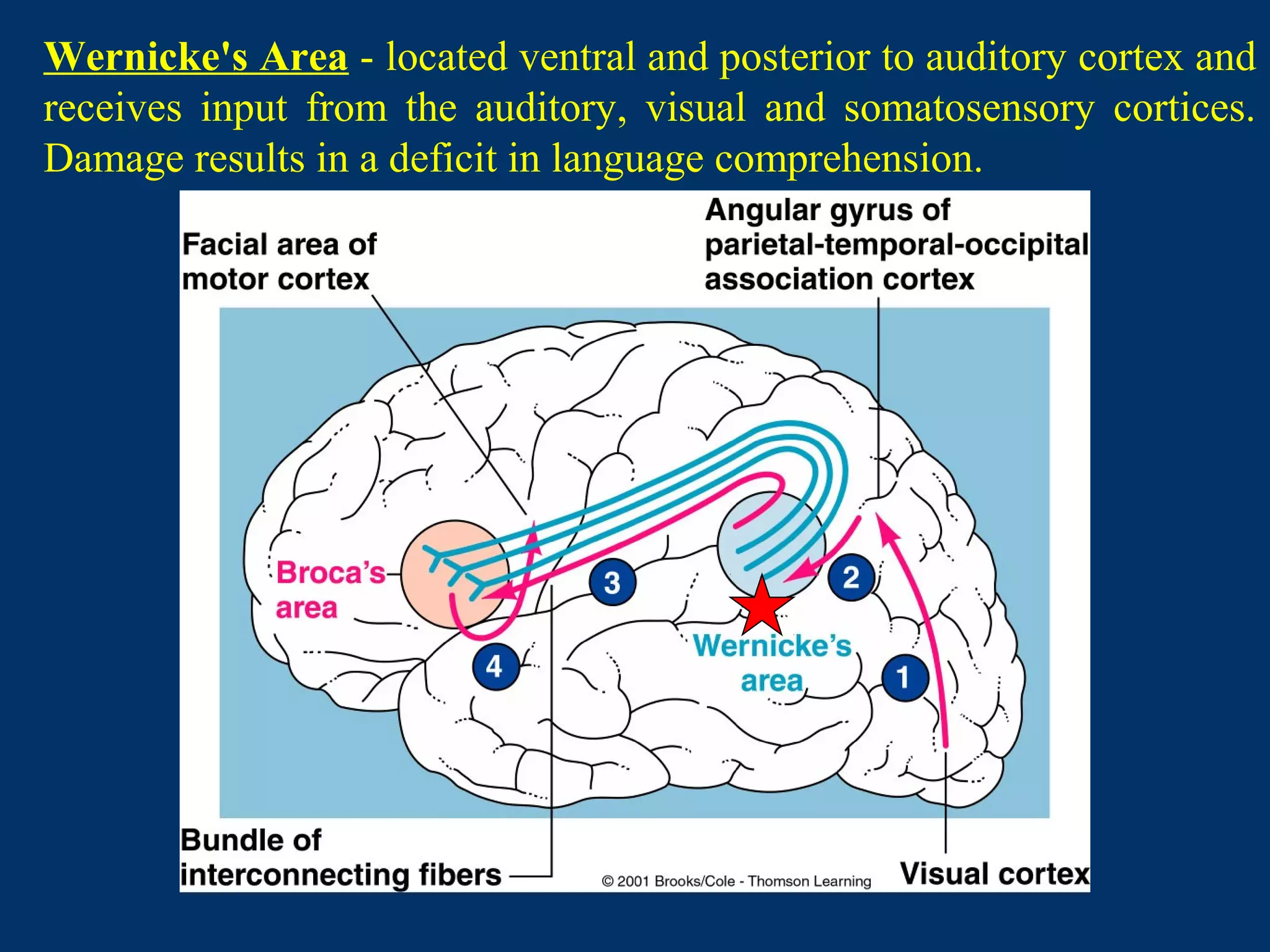
Wernicke's Area - located ventral and posterior to auditory cortex and
receives input from the auditory, visual and somatosensory cortices.
Damage results in a deficit in language comprehension.
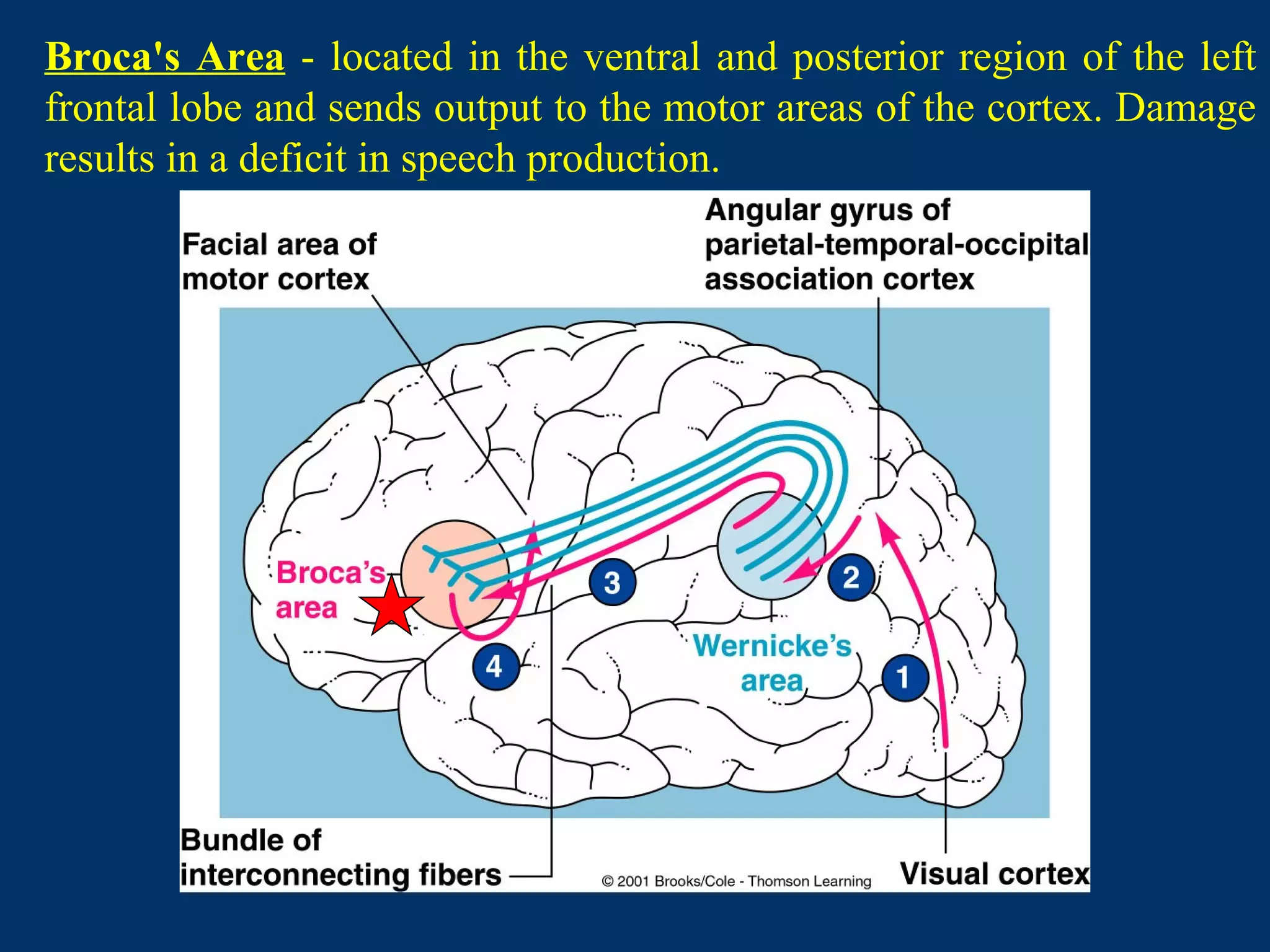
Broca's Area - located in the ventral and posterior region of the left
frontal lobe and sends output to the motor areas of the cortex. Damage
results in a deficit in speech production.
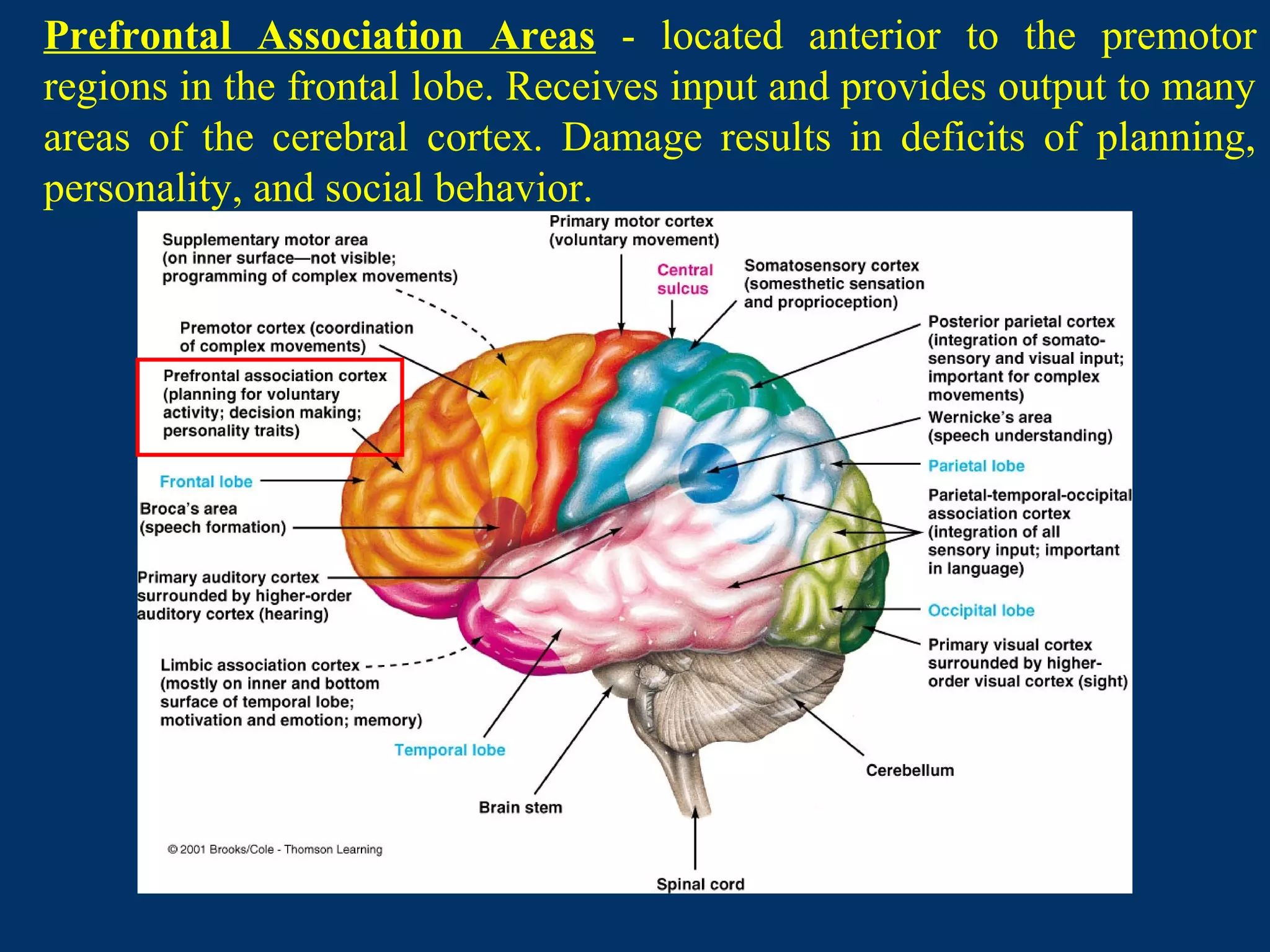
Prefrontal Association Areas - located anterior to the premotor
regions in the frontal lobe. Receives input and provides output to many
areas of the cerebral cortex. Damage results in deficits of planning,
personality, and social behavior.
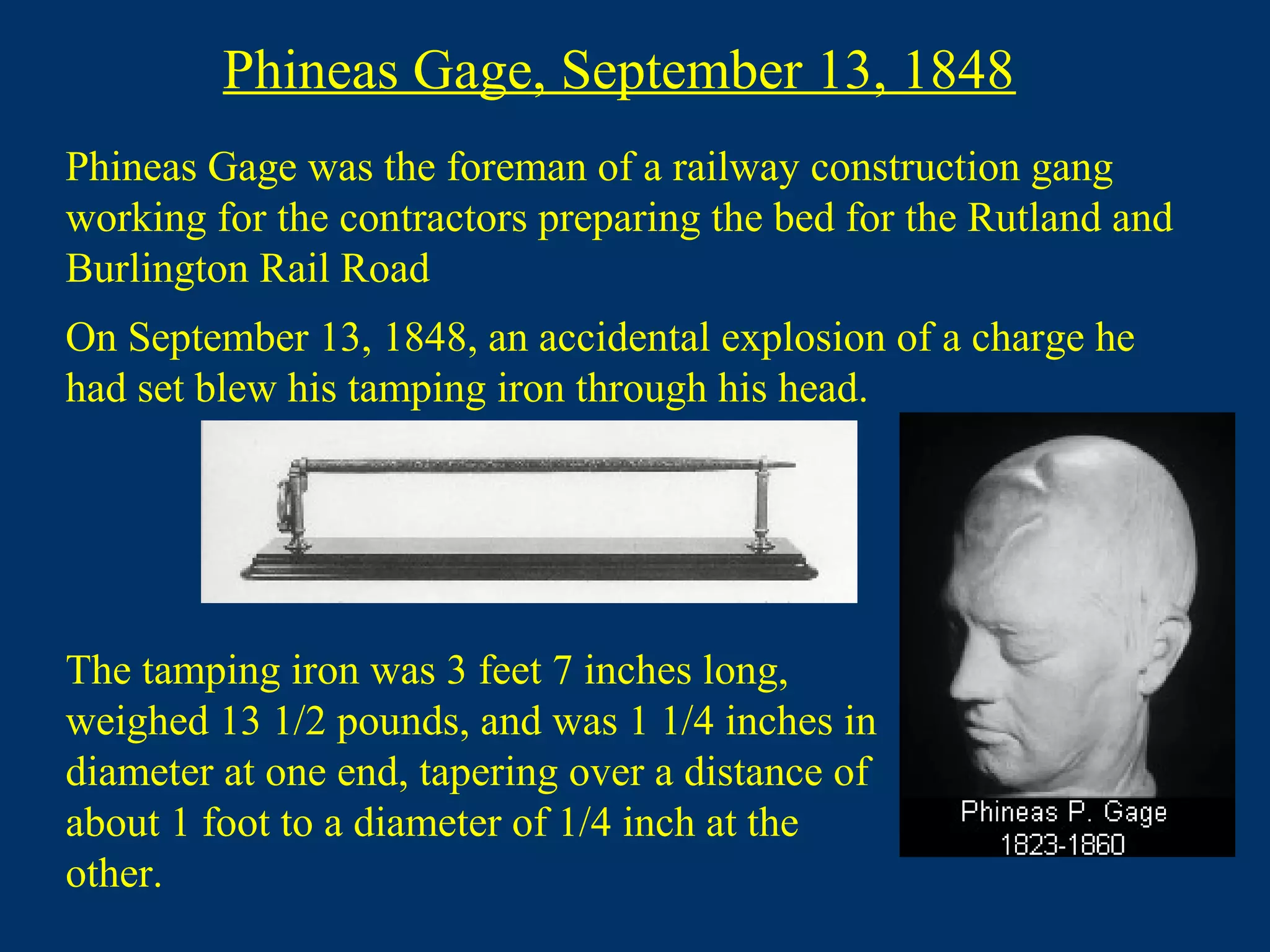
Phineas Gage was the foreman of a railway construction gang
working for the contractors preparing the bed for the Rutland and
Burlington Rail Road
The tamping iron was 3 feet 7 inches long,
weighed 13 1/2 pounds, and was 1 1/4 inches in
diameter at one end, tapering over a distance of
about 1 foot to a diameter of 1/4 inch at the
other.
Phineas Gage, September 13, 1848
On September 13, 1848, an accidental explosion of a charge he
had set blew his tamping iron through his head.
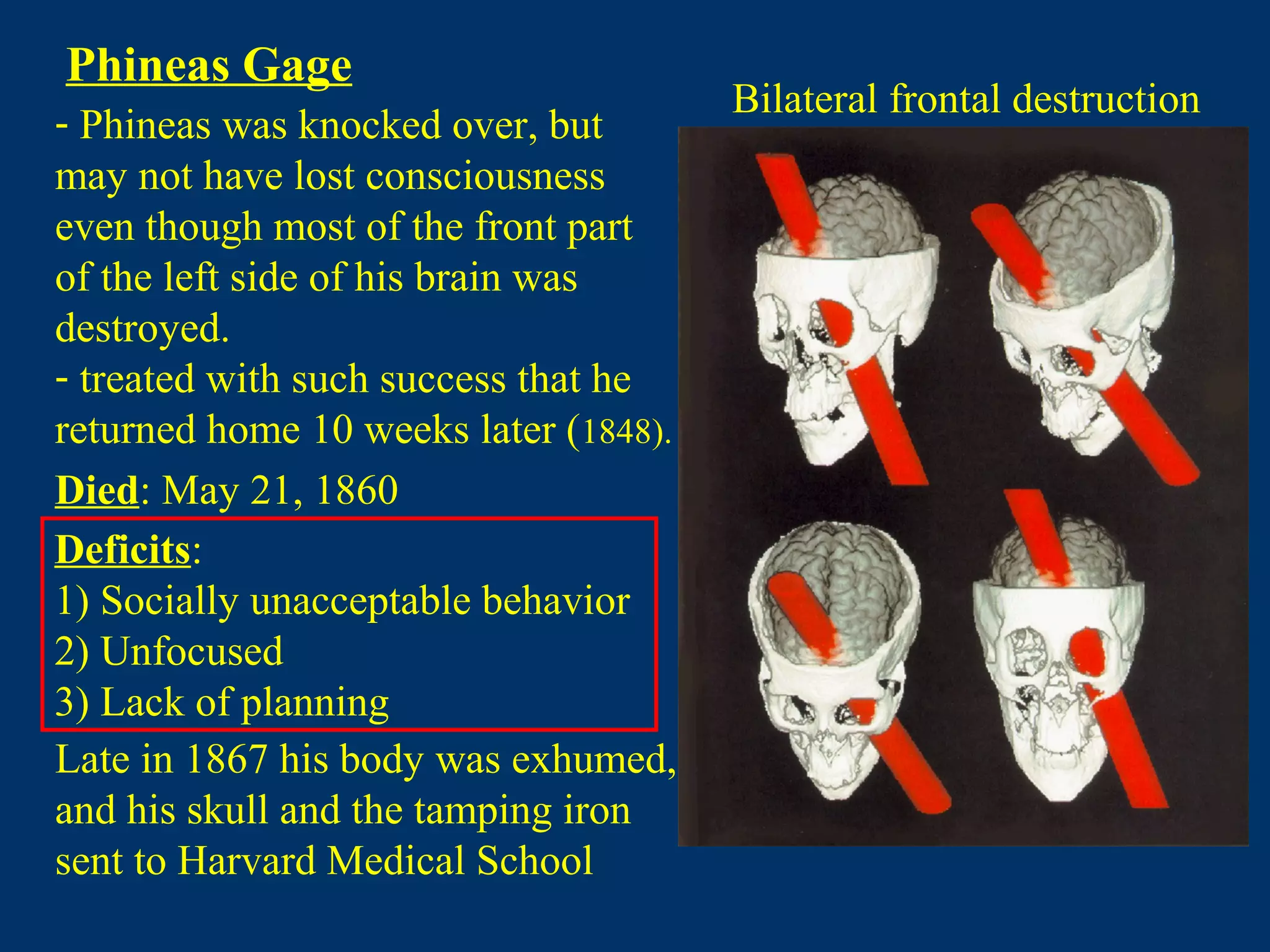
Died: May 21, 1860
Late in 1867 his body was exhumed,
and his skull and the tamping iron
sent to Harvard Medical School
Phineas Gage
Bilateral frontal destruction
Deficits:
1) Socially unacceptable behavior
2) Unfocused
3) Lack of planning
- Phineas was knocked over, but
may not have lost consciousness
even though most of the front part
of the left side of his brain was
destroyed.
- treated with such success that he
returned home 10 weeks later (1848).
“I’d rather have a bottle in front of me,
than a frontal lobotomy”
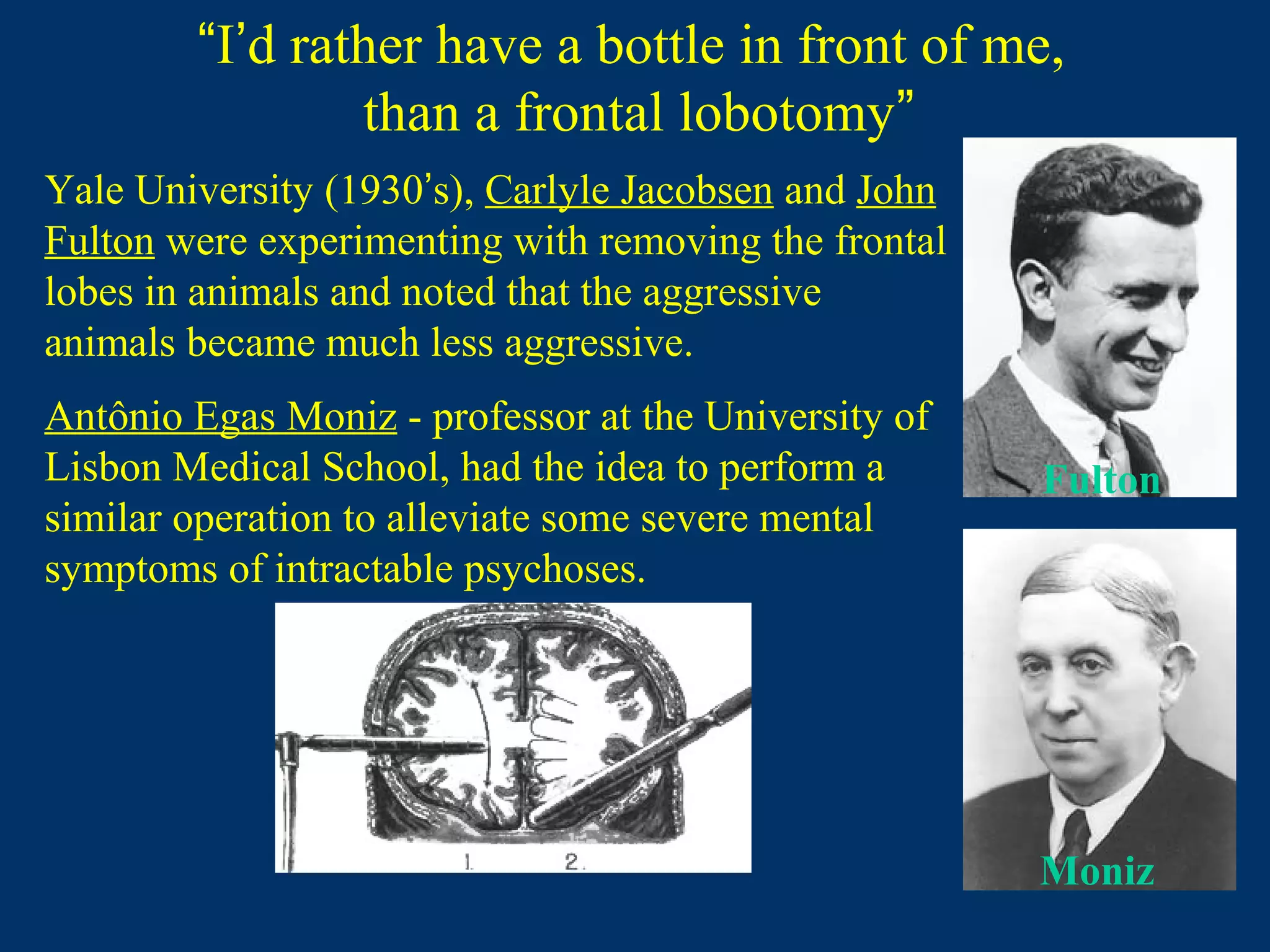
Antônio Egas Moniz - professor at the University of
Lisbon Medical School, had the idea to perform a
similar operation to alleviate some severe mental
symptoms of intractable psychoses.
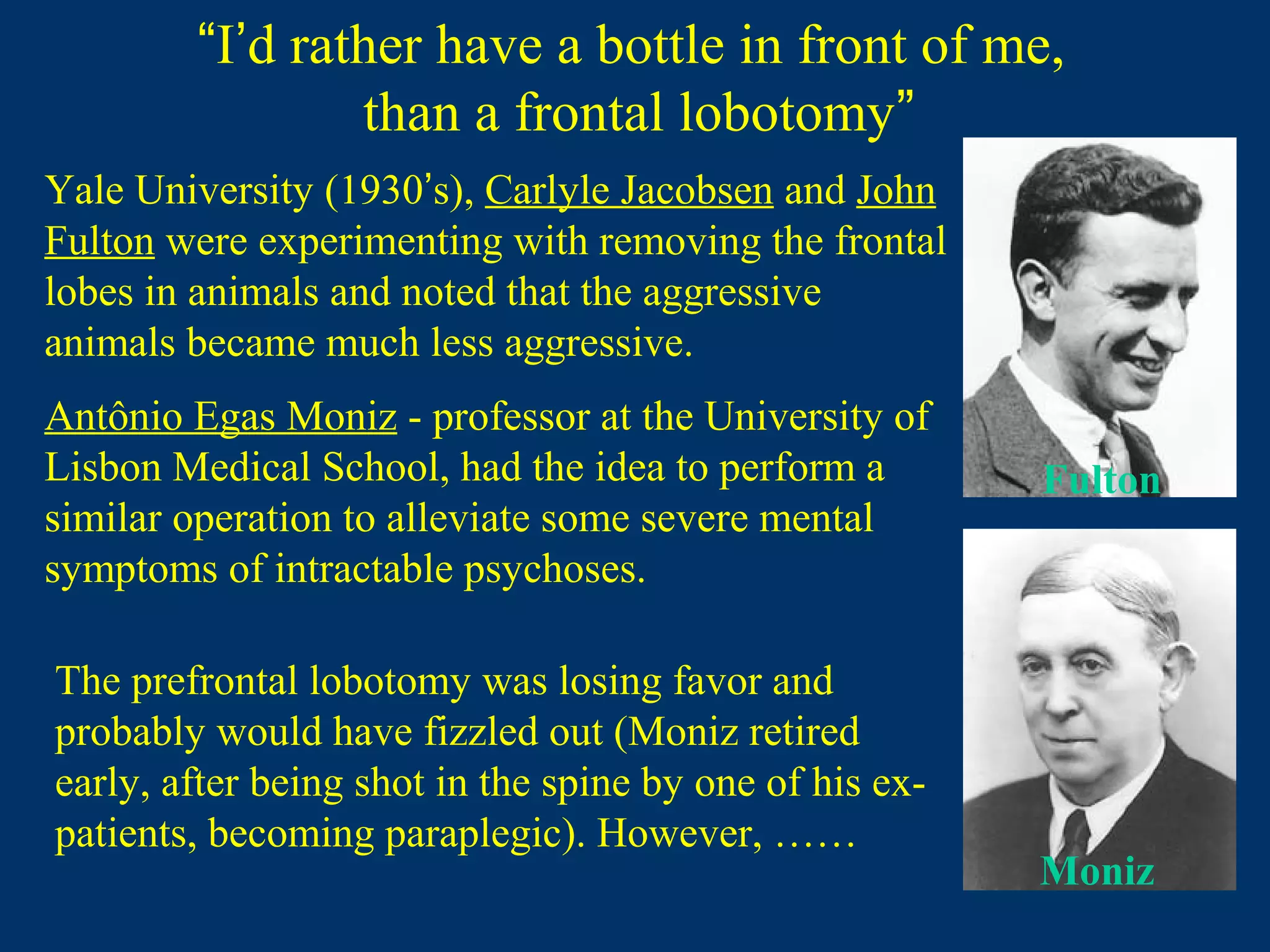
Yale University (1930’s), Carlyle Jacobsen and John
Fulton were experimenting with removing the frontal
lobes in animals and noted that the aggressive
animals became much less aggressive.
Fulton
Moniz
“I’d rather have a bottle in front of me,
than a frontal lobotomy”
Antônio Egas Moniz - professor at the University of
Lisbon Medical School, had the idea to perform a
similar operation to alleviate some severe mental
symptoms of intractable psychoses.
Yale University (1930’s), Carlyle Jacobsen and John
Fulton were experimenting with removing the frontal
lobes in animals and noted that the aggressive
animals became much less aggressive.
Fulton
Moniz
The prefrontal lobotomy was losing favor and
probably would have fizzled out (Moniz retired
early, after being shot in the spine by one of his ex-
patients, becoming paraplegic). However, ……
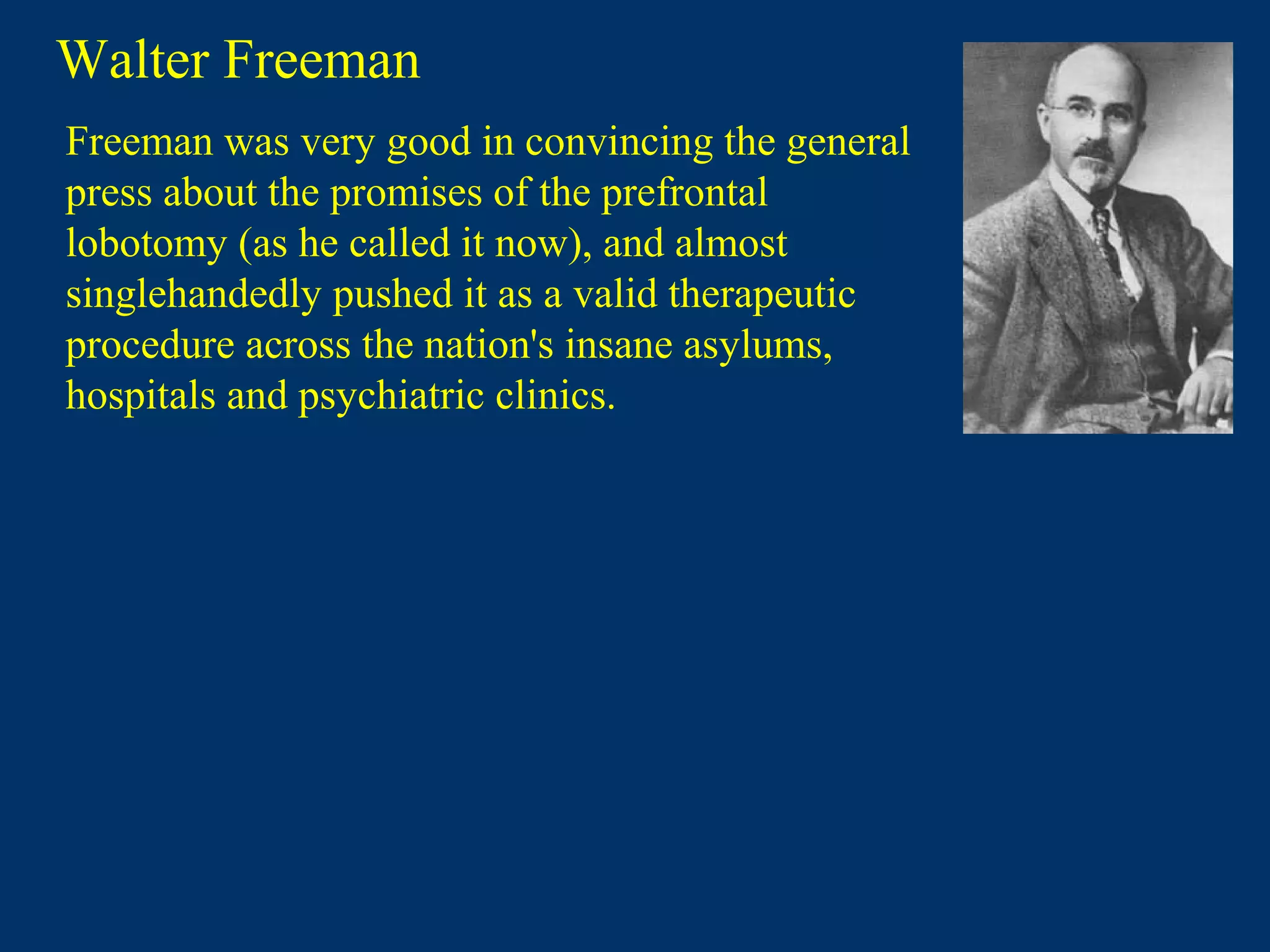
Walter Freeman
Freeman was very good in convincing the general
press about the promises of the prefrontal
lobotomy (as he called it now), and almost
singlehandedly pushed it as a valid therapeutic
procedure across the nation's insane asylums,
hospitals and psychiatric clinics.
Walter Freeman
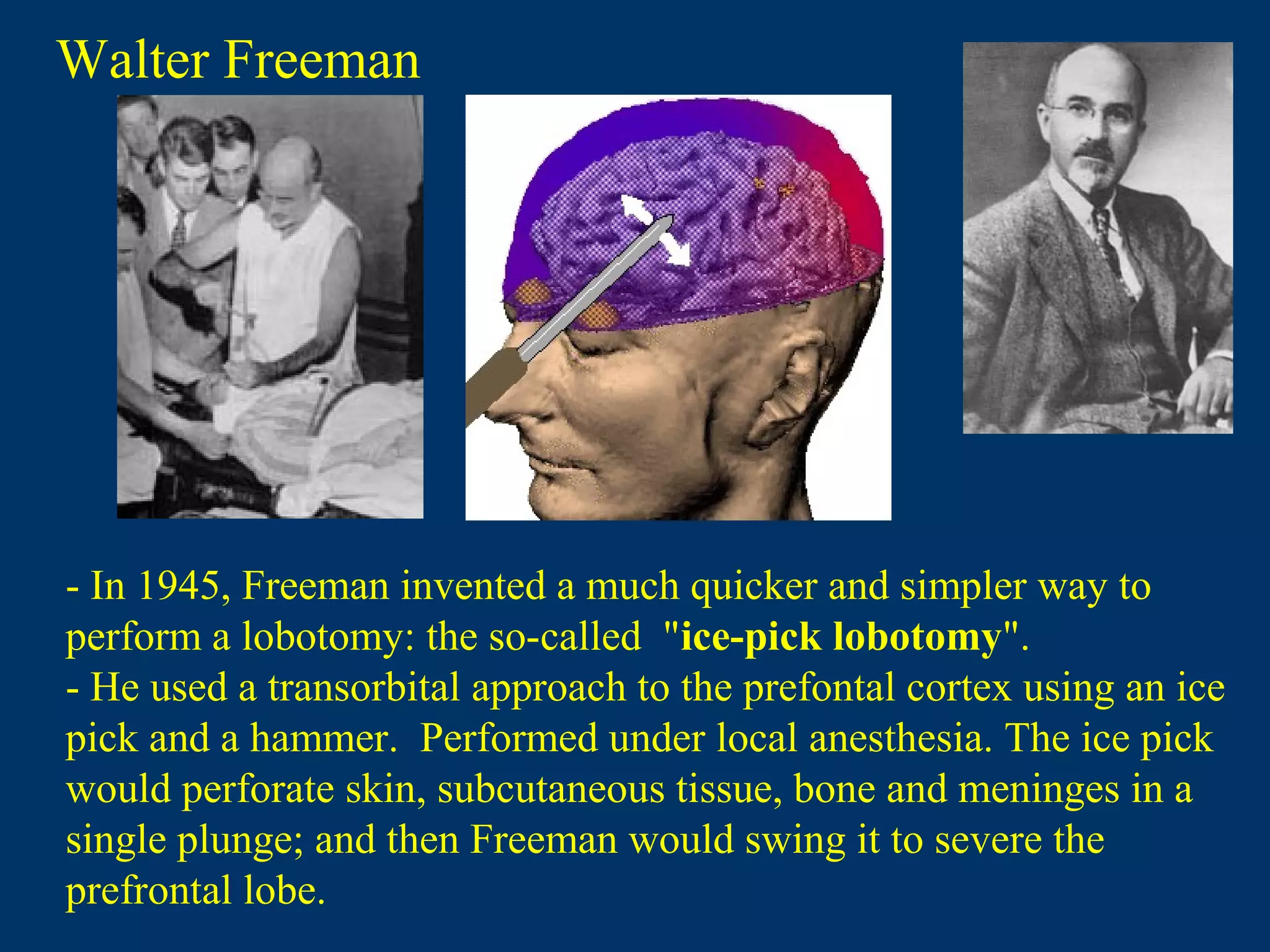
- In 1945, Freeman invented a much quicker and simpler way to
perform a lobotomy: the so-called "ice-pick lobotomy".
- He used a transorbital approach to the prefontal cortex using an ice
pick and a hammer. Performed under local anesthesia. The ice pick
would perforate skin, subcutaneous tissue, bone and meninges in a
single plunge; and then Freeman would swing it to severe the
prefrontal lobe.
With the advent of drugs such as thorazine to control
some personalities disorders, in combination with a
growing realization that prefrontal lobotomy was not
a humane method of treatment, the procedure was
largely abandoned by the late 1950s.
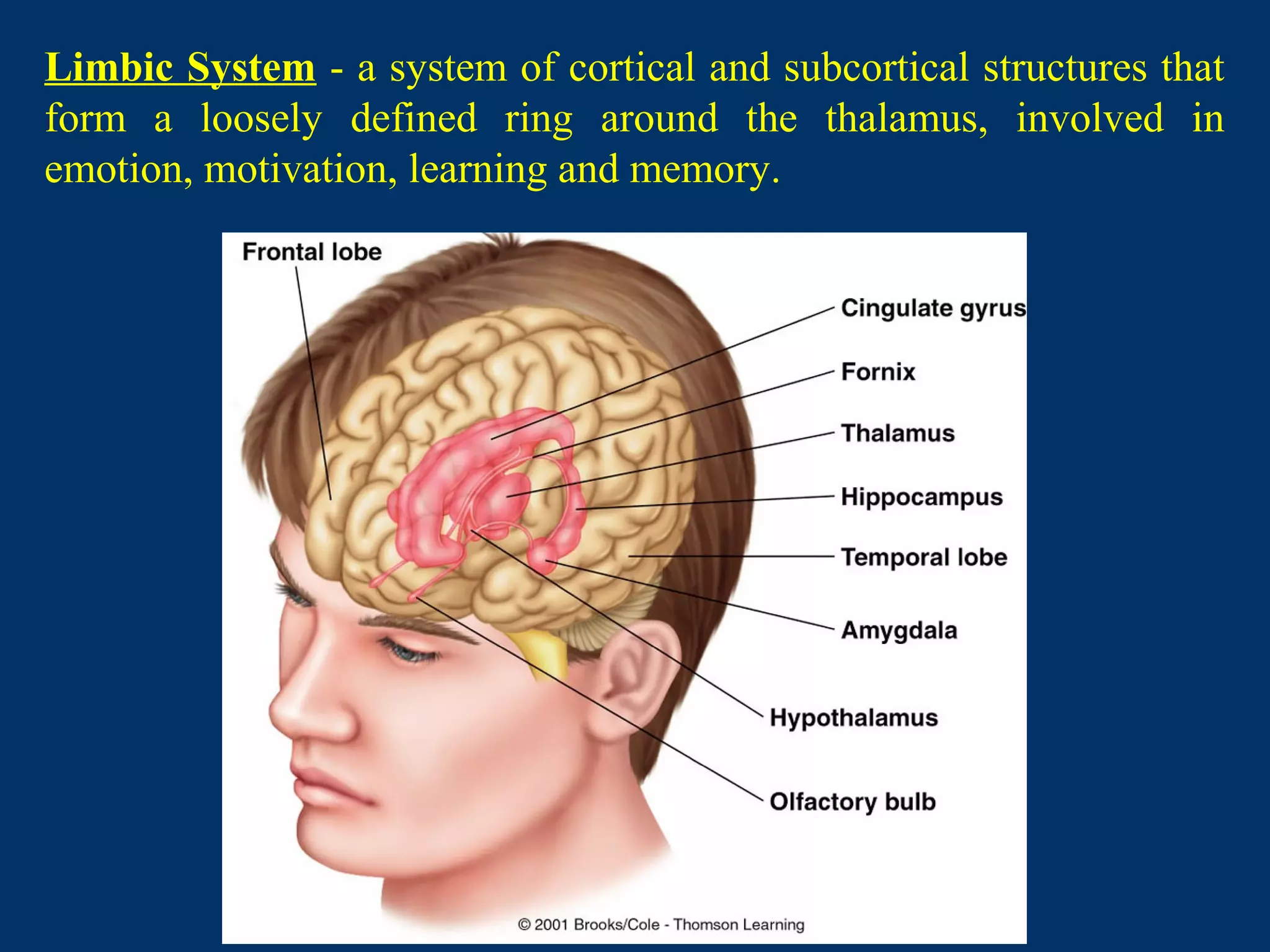
Limbic System - a system of cortical and subcortical structures that
form a loosely defined ring around the thalamus, involved in
emotion, motivation, learning and memory.
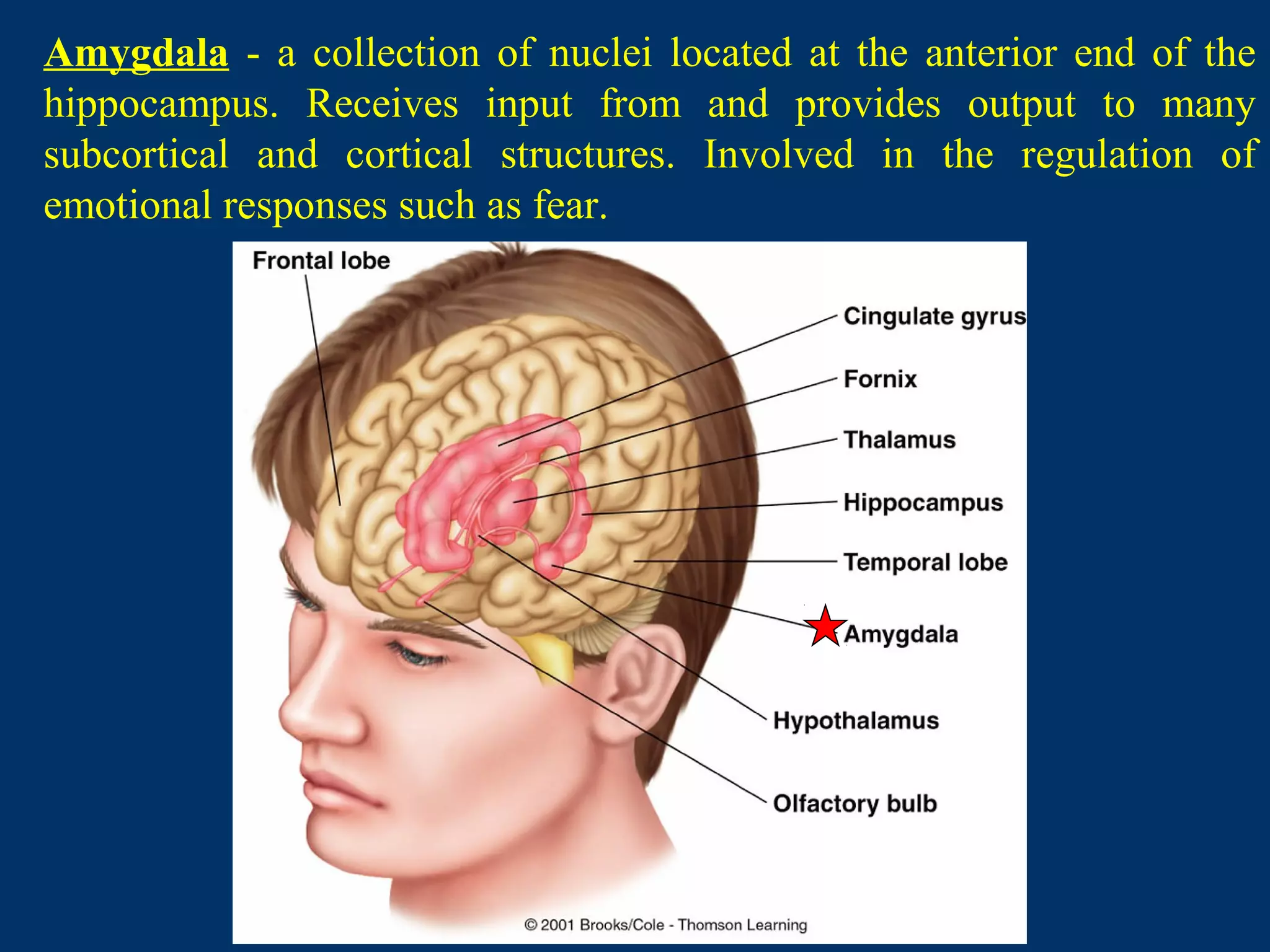
Amygdala - a collection of nuclei located at the anterior end of the
hippocampus. Receives input from and provides output to many
subcortical and cortical structures. Involved in the regulation of
emotional responses such as fear.
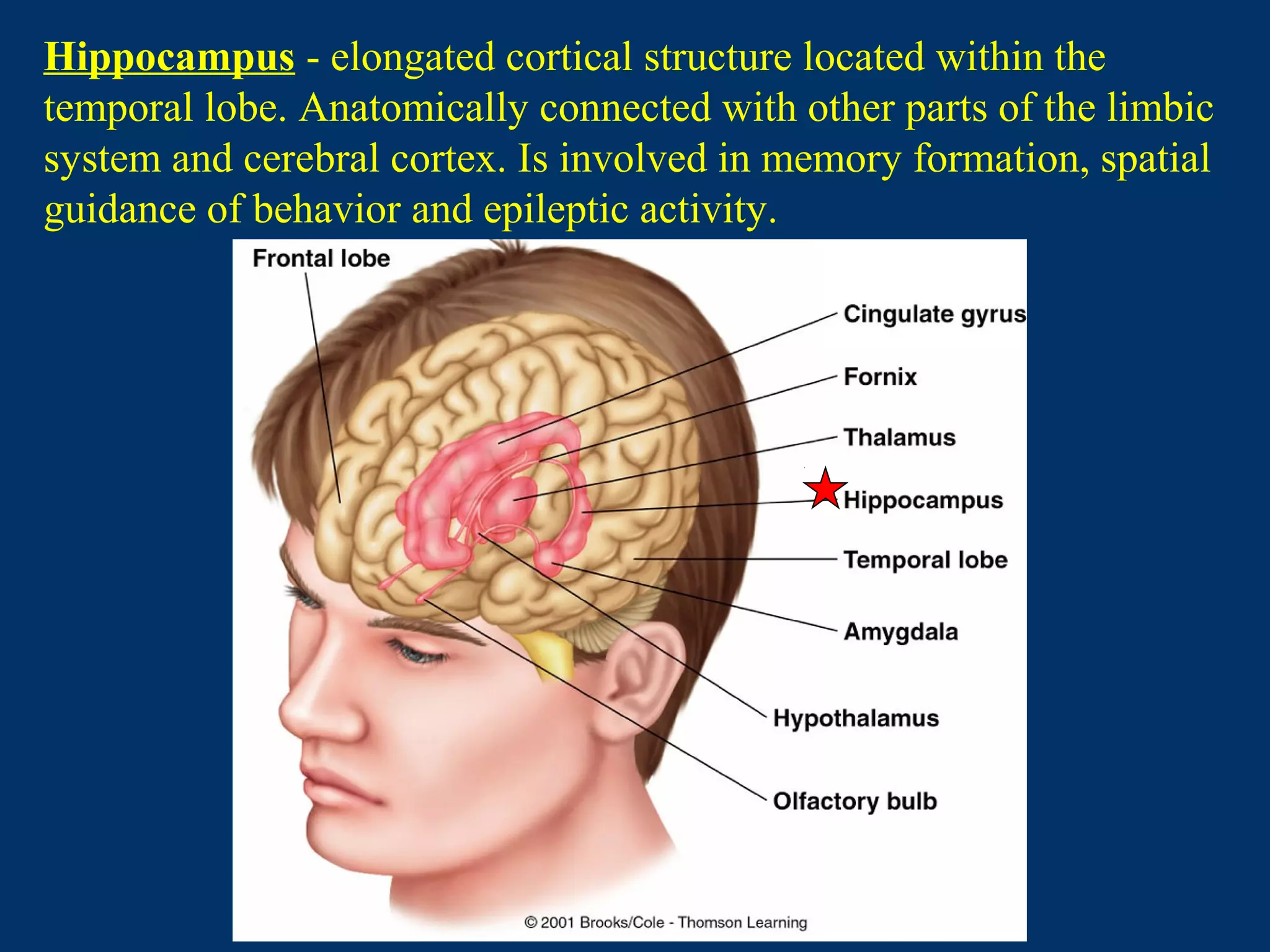
Hippocampus - elongated cortical structure located within the
temporal lobe. Anatomically connected with other parts of the limbic
system and cerebral cortex. Is involved in memory formation, spatial
guidance of behavior and epileptic activity.
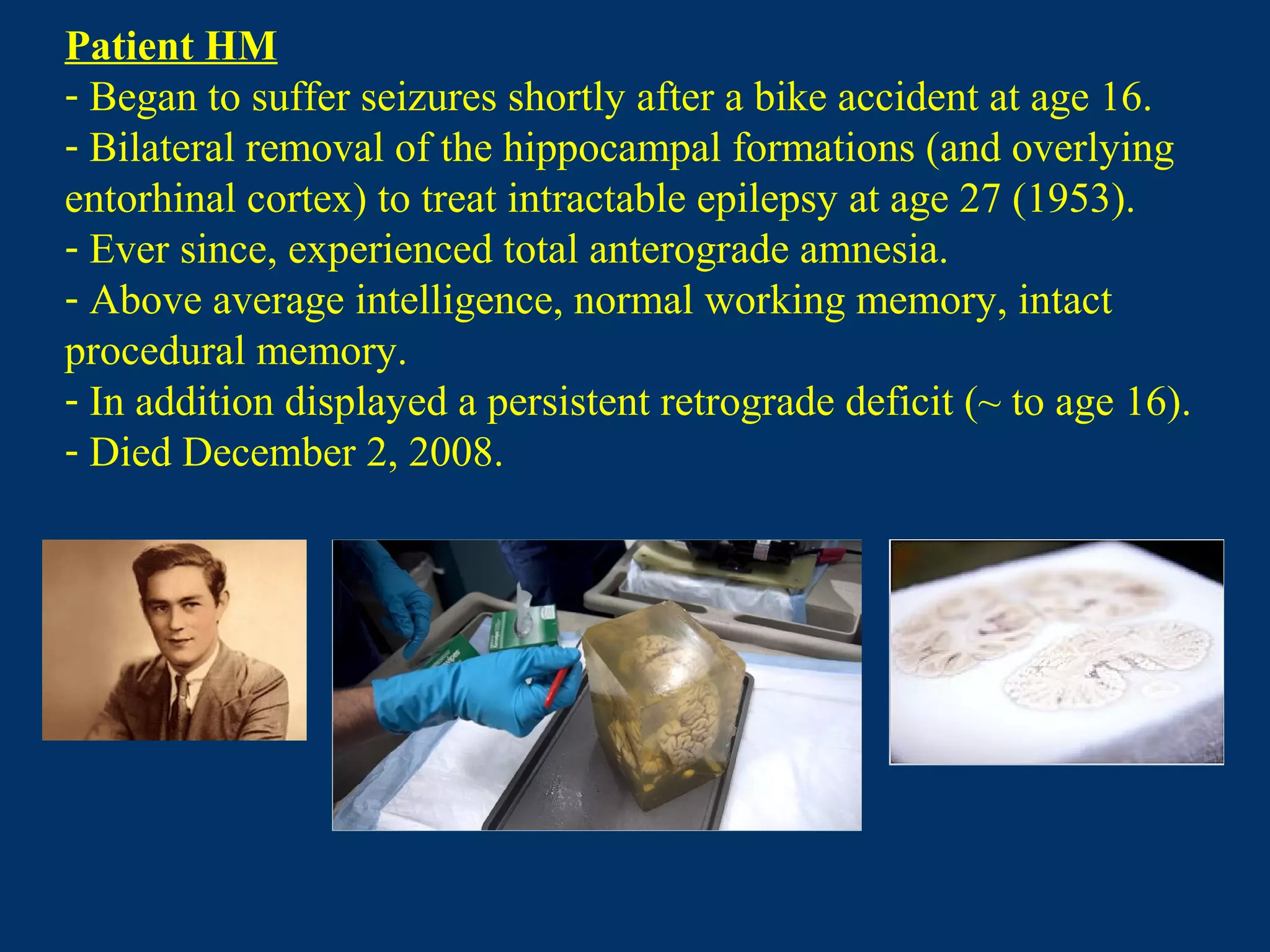
Patient HM
- Began to suffer seizures shortly after a bike accident at age 16.
- Bilateral removal of the hippocampal formations (and overlying
entorhinal cortex) to treat intractable epilepsy at age 27 (1953).
- Ever since, experienced total anterograde amnesia.
- Above average intelligence, normal working memory, intact
procedural memory.
- In addition displayed a persistent retrograde deficit (~ to age 16).
- Died December 2, 2008.
Summary
1) Higher order sensory and motor cortex
2) Parietal-temporal-occipital association cortex
and language areas:
a) Broca’s area
b) Wernicke’s area
3) Prefrontal association cortex and Phineas Gage
4) Limbic system, fear, memory and patient HM.
Good luck on the midterm

Lecture13

  • 1.
    Lecture 13: HigherBrain FunctionsLecture 13: Higher Brain Functions Reading: review chapter 5 sections on cerebral cortex and subcortical structures
  • 2.
    Higher Order Sensoryand Motor Cortex - areas of cortex that provide input to motor areas or receive and integrate output from sensory areas.
  • 3.
    Extrastriate Cortex -located anterior to and receives input from the primary visual cortex. Damage leads to "cognitive blindness".
  • 4.
    Association Cortex -remaining areas of cerebral cortex are referred to as association areas, responsible for integration of multiple sensory, motor and cognitive processes.
  • 5.
    Parietal-Temporal-Occipital Association Areas- located at the junction of the parietal, temporal and occipital lobes. Receives input from all the sensory modalities and provides output to many other cortical and subcortical structures. Damage results in deficits of attention and multi-modal sensory integration.
  • 6.
    Language Areas -areas of cerebral cortex located in the left hemisphere in approximately 97% of the population.
  • 7.
    Wernicke's Area -located ventral and posterior to auditory cortex and receives input from the auditory, visual and somatosensory cortices. Damage results in a deficit in language comprehension.
  • 8.
    Broca's Area -located in the ventral and posterior region of the left frontal lobe and sends output to the motor areas of the cortex. Damage results in a deficit in speech production.
  • 9.
    Prefrontal Association Areas- located anterior to the premotor regions in the frontal lobe. Receives input and provides output to many areas of the cerebral cortex. Damage results in deficits of planning, personality, and social behavior.
  • 10.
    Phineas Gage wasthe foreman of a railway construction gang working for the contractors preparing the bed for the Rutland and Burlington Rail Road The tamping iron was 3 feet 7 inches long, weighed 13 1/2 pounds, and was 1 1/4 inches in diameter at one end, tapering over a distance of about 1 foot to a diameter of 1/4 inch at the other. Phineas Gage, September 13, 1848 On September 13, 1848, an accidental explosion of a charge he had set blew his tamping iron through his head.
  • 11.
    Died: May 21,1860 Late in 1867 his body was exhumed, and his skull and the tamping iron sent to Harvard Medical School Phineas Gage Bilateral frontal destruction Deficits: 1) Socially unacceptable behavior 2) Unfocused 3) Lack of planning - Phineas was knocked over, but may not have lost consciousness even though most of the front part of the left side of his brain was destroyed. - treated with such success that he returned home 10 weeks later (1848).
  • 12.
    “I’d rather havea bottle in front of me, than a frontal lobotomy” Antônio Egas Moniz - professor at the University of Lisbon Medical School, had the idea to perform a similar operation to alleviate some severe mental symptoms of intractable psychoses. Yale University (1930’s), Carlyle Jacobsen and John Fulton were experimenting with removing the frontal lobes in animals and noted that the aggressive animals became much less aggressive. Fulton Moniz
  • 13.
    “I’d rather havea bottle in front of me, than a frontal lobotomy” Antônio Egas Moniz - professor at the University of Lisbon Medical School, had the idea to perform a similar operation to alleviate some severe mental symptoms of intractable psychoses. Yale University (1930’s), Carlyle Jacobsen and John Fulton were experimenting with removing the frontal lobes in animals and noted that the aggressive animals became much less aggressive. Fulton Moniz The prefrontal lobotomy was losing favor and probably would have fizzled out (Moniz retired early, after being shot in the spine by one of his ex- patients, becoming paraplegic). However, ……
  • 14.
    Walter Freeman Freeman wasvery good in convincing the general press about the promises of the prefrontal lobotomy (as he called it now), and almost singlehandedly pushed it as a valid therapeutic procedure across the nation's insane asylums, hospitals and psychiatric clinics.
  • 15.
    Walter Freeman - In1945, Freeman invented a much quicker and simpler way to perform a lobotomy: the so-called "ice-pick lobotomy". - He used a transorbital approach to the prefontal cortex using an ice pick and a hammer. Performed under local anesthesia. The ice pick would perforate skin, subcutaneous tissue, bone and meninges in a single plunge; and then Freeman would swing it to severe the prefrontal lobe.
  • 16.
    With the adventof drugs such as thorazine to control some personalities disorders, in combination with a growing realization that prefrontal lobotomy was not a humane method of treatment, the procedure was largely abandoned by the late 1950s.
  • 17.
    Limbic System -a system of cortical and subcortical structures that form a loosely defined ring around the thalamus, involved in emotion, motivation, learning and memory.
  • 18.
    Amygdala - acollection of nuclei located at the anterior end of the hippocampus. Receives input from and provides output to many subcortical and cortical structures. Involved in the regulation of emotional responses such as fear.
  • 19.
    Hippocampus - elongatedcortical structure located within the temporal lobe. Anatomically connected with other parts of the limbic system and cerebral cortex. Is involved in memory formation, spatial guidance of behavior and epileptic activity.
  • 20.
    Patient HM - Beganto suffer seizures shortly after a bike accident at age 16. - Bilateral removal of the hippocampal formations (and overlying entorhinal cortex) to treat intractable epilepsy at age 27 (1953). - Ever since, experienced total anterograde amnesia. - Above average intelligence, normal working memory, intact procedural memory. - In addition displayed a persistent retrograde deficit (~ to age 16). - Died December 2, 2008.
  • 21.
    Summary 1) Higher ordersensory and motor cortex 2) Parietal-temporal-occipital association cortex and language areas: a) Broca’s area b) Wernicke’s area 3) Prefrontal association cortex and Phineas Gage 4) Limbic system, fear, memory and patient HM. Good luck on the midterm