


Obtaining
Finance for a
New Business
Why finance matters
• A start-up can’t survive without
  sufficient finance
• There are various sources of finance
  available for new businesses
• However, many start-ups struggle to
  raise finance until the business is
  established
• Finance provided from the personal
  sources of the entrepreneur is very
  important
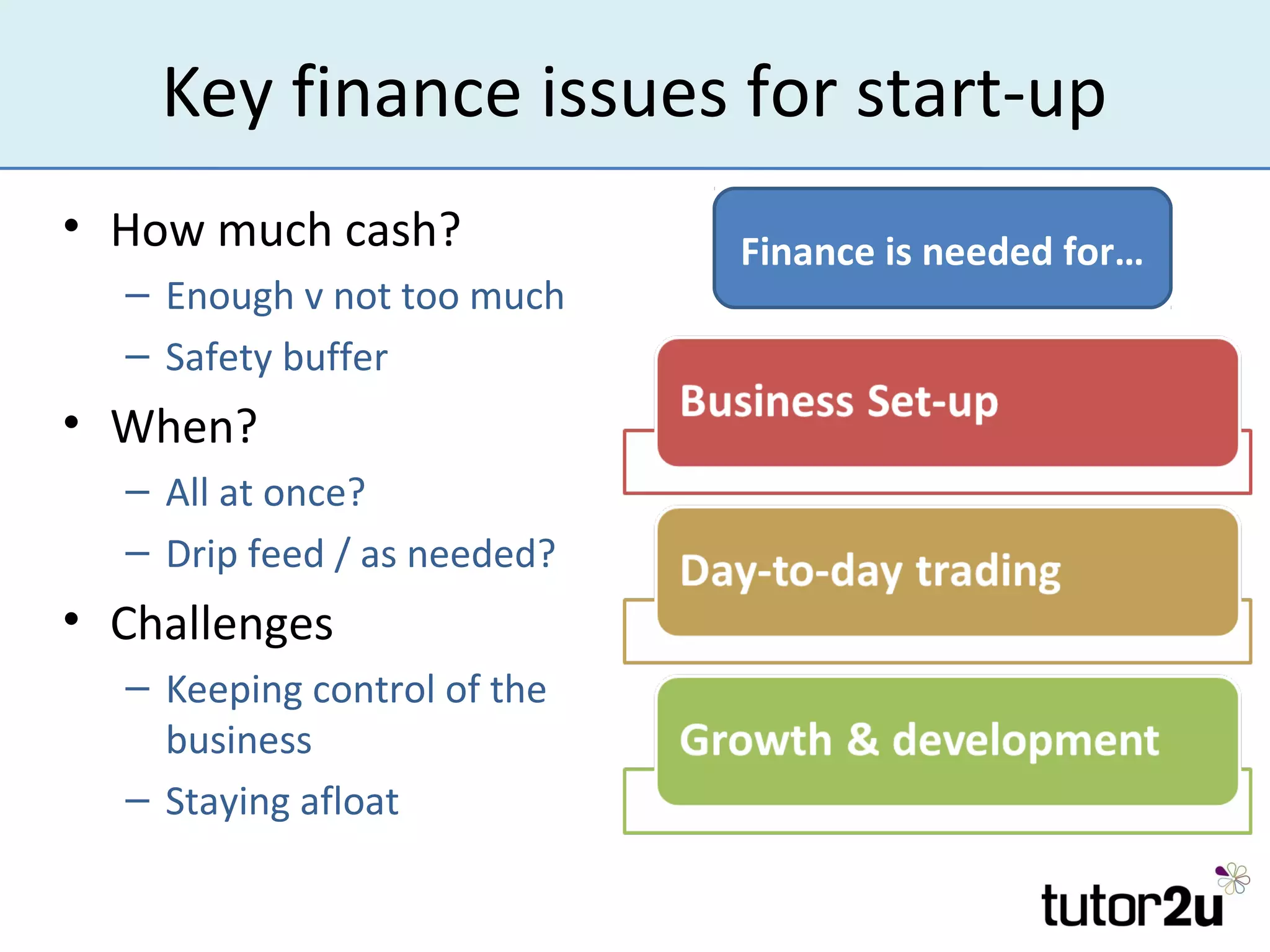
Key finance issues for start-up
• How much cash?             Finance is needed for…
  – Enough v not too much
  – Safety buffer
• When?
  – All at once?
  – Drip feed / as needed?
• Challenges
  – Keeping control of the
    business
  – Staying afloat
Key considerations
• How much finance is required?
• When and how long the finance is
  needed for? (this links in with cash flow
  forecasting)
• What security (if any) has to be
  provided?
• Whether the entrepreneur is prepared
  to give up some control (ownership) of
  the start-up in return for investment?
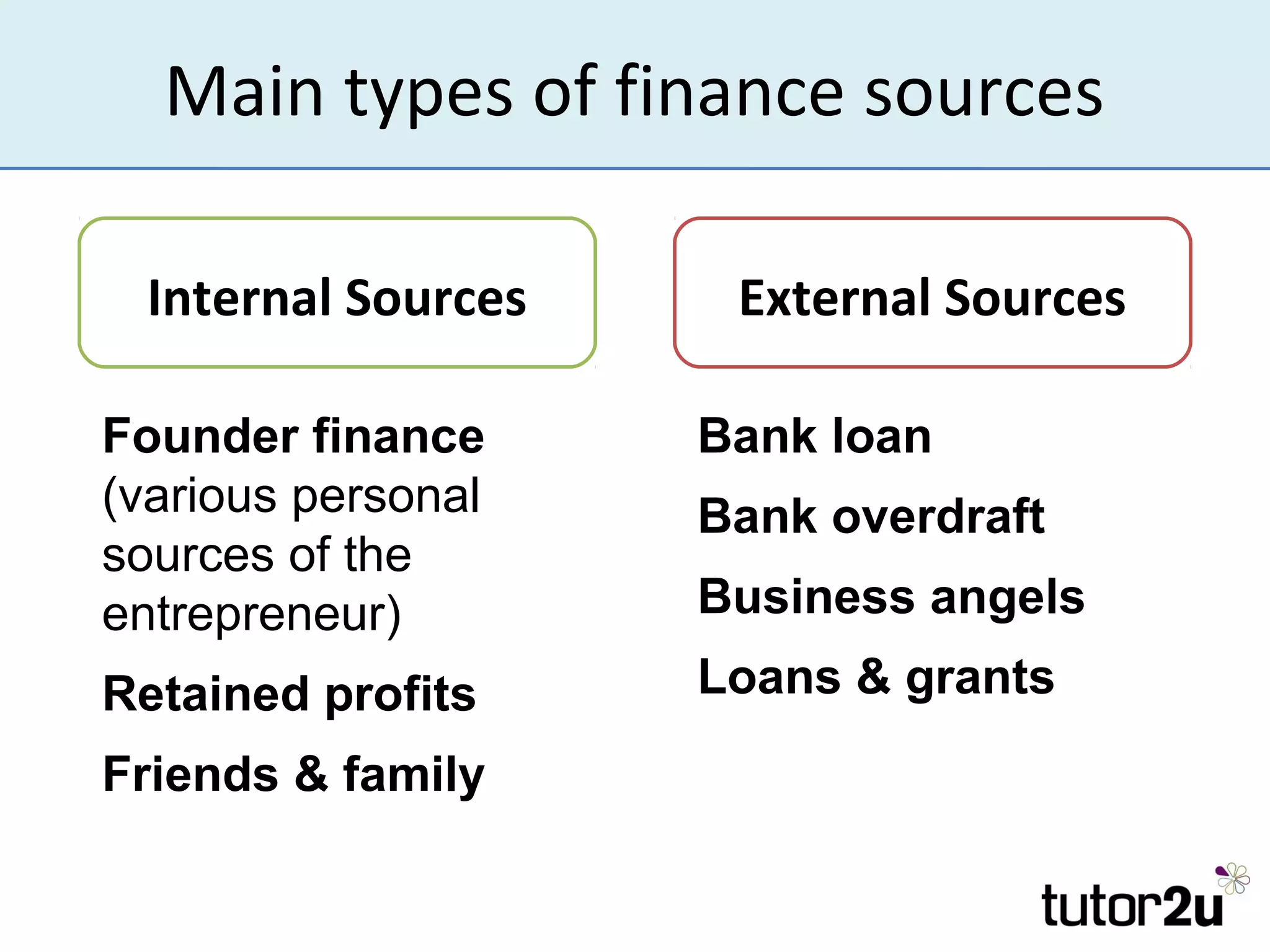
Main types of finance sources

  Internal Sources    External Sources

Founder finance      Bank loan
(various personal    Bank overdraft
sources of the
entrepreneur)        Business angels
Retained profits     Loans & grants
Friends & family
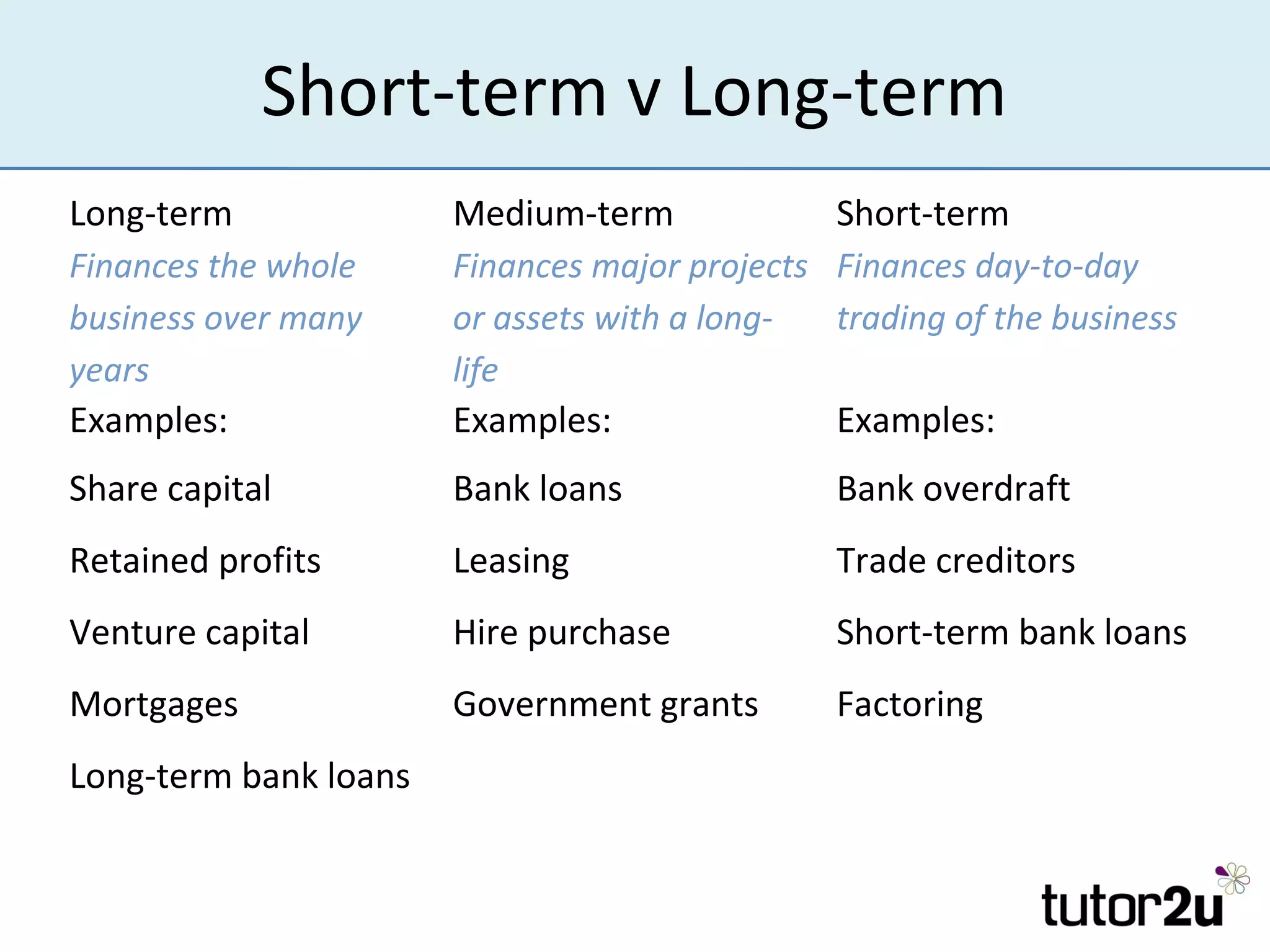
Short-term v Long-term
Long-term              Medium-term               Short-term
Finances the whole     Finances major projects   Finances day-to-day
business over many     or assets with a long-    trading of the business
years                  life
Examples:              Examples:                 Examples:
Share capital          Bank loans                Bank overdraft
Retained profits       Leasing                   Trade creditors
Venture capital        Hire purchase             Short-term bank loans
Mortgages              Government grants         Factoring
Long-term bank loans
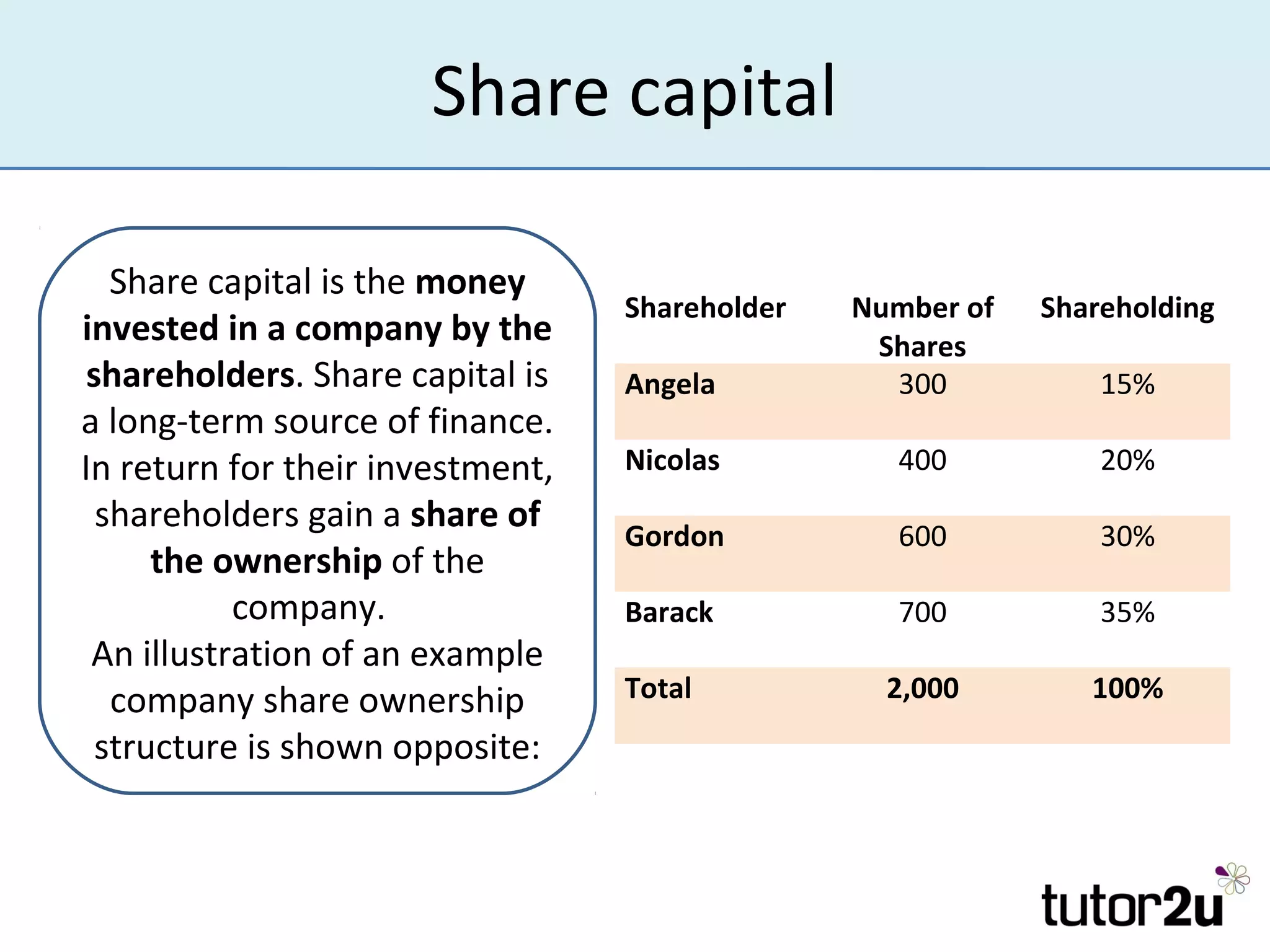
Share capital

   Share capital is the money
                                  Shareholder   Number of   Shareholding
invested in a company by the                     Shares
 shareholders. Share capital is   Angela          300           15%
a long-term source of finance.
In return for their investment,   Nicolas         400           20%
  shareholders gain a share of
                                  Gordon          600           30%
      the ownership of the
           company.               Barack          700           35%
 An illustration of an example
   company share ownership        Total           2,000        100%
  structure is shown opposite:
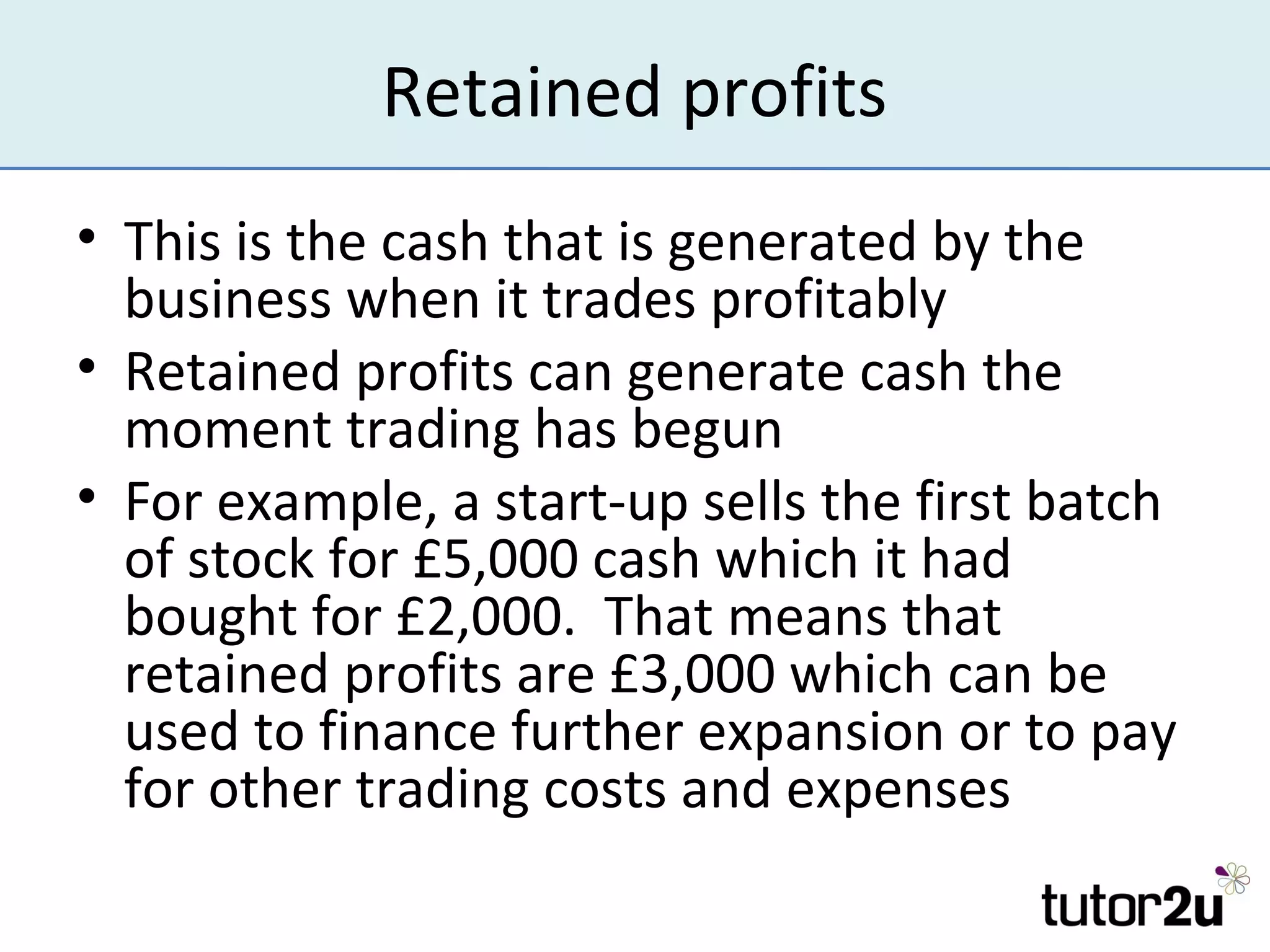
Retained profits
• This is the cash that is generated by the
  business when it trades profitably
• Retained profits can generate cash the
  moment trading has begun
• For example, a start-up sells the first batch
  of stock for £5,000 cash which it had
  bought for £2,000. That means that
  retained profits are £3,000 which can be
  used to finance further expansion or to pay
  for other trading costs and expenses
Personal sources of the entrepreneur

• Entrepreneurs find various personal
  sources to finance their start-ups: e.g.
• Cash and investments
• Redundancy payments
• Inheritances
• Personal credit cards
• Re-mortgaging
• Putting time into the business for free
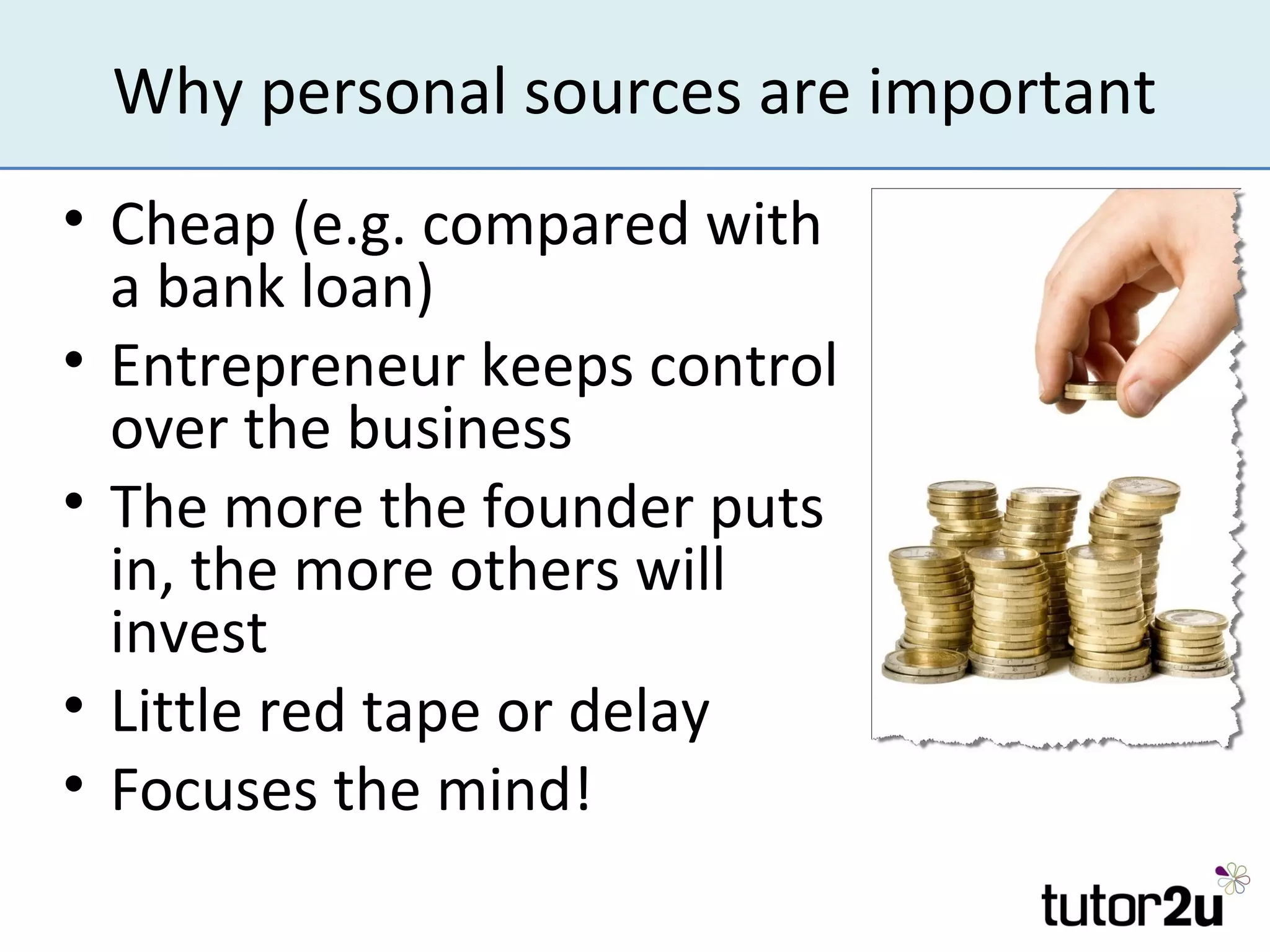
Why personal sources are important
• Cheap (e.g. compared with
  a bank loan)
• Entrepreneur keeps control
  over the business
• The more the founder puts
  in, the more others will
  invest
• Little red tape or delay
• Focuses the mind!
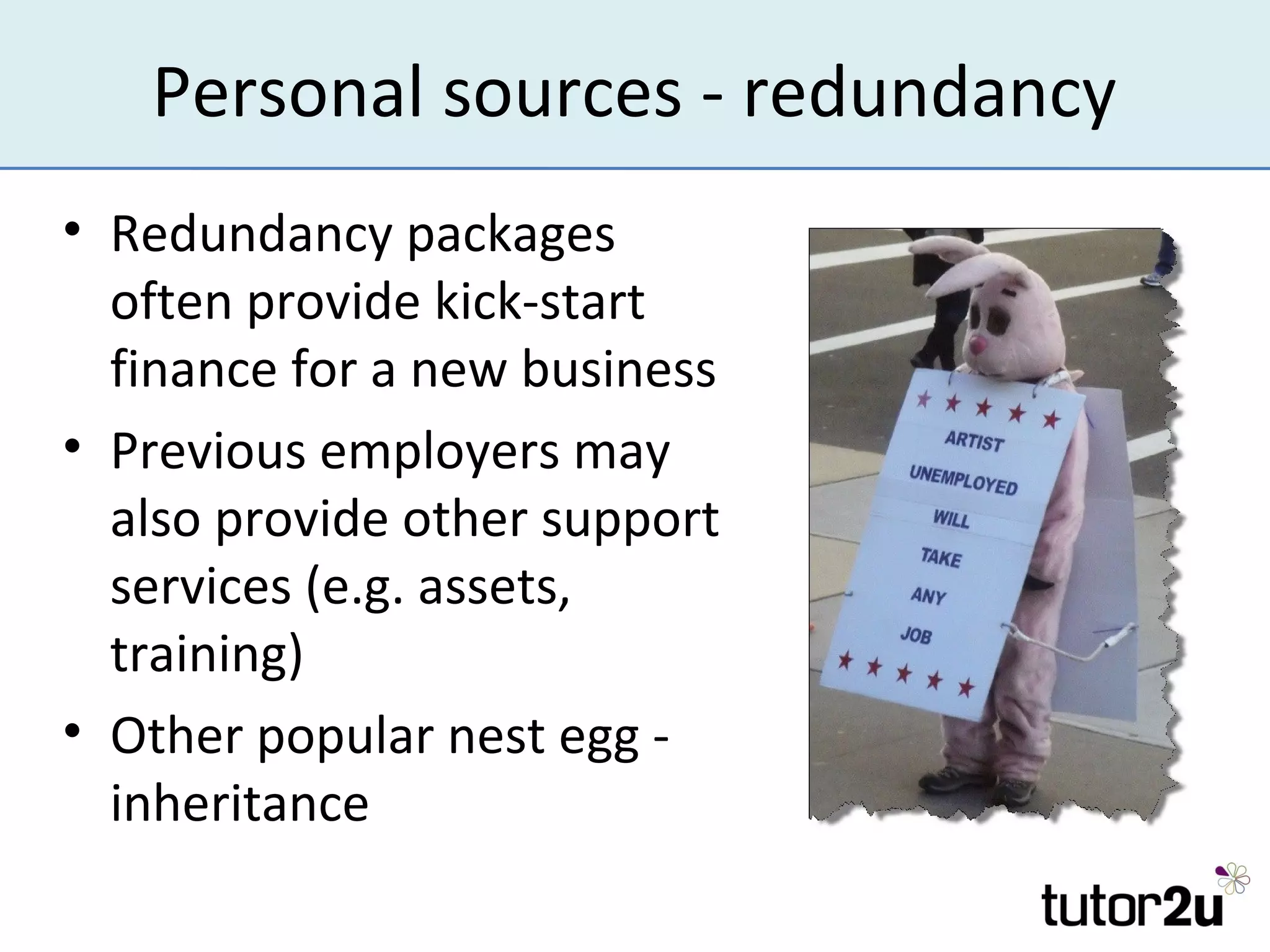
Personal sources - redundancy
• Redundancy packages
  often provide kick-start
  finance for a new business
• Previous employers may
  also provide other support
  services (e.g. assets,
  training)
• Other popular nest egg -
  inheritance
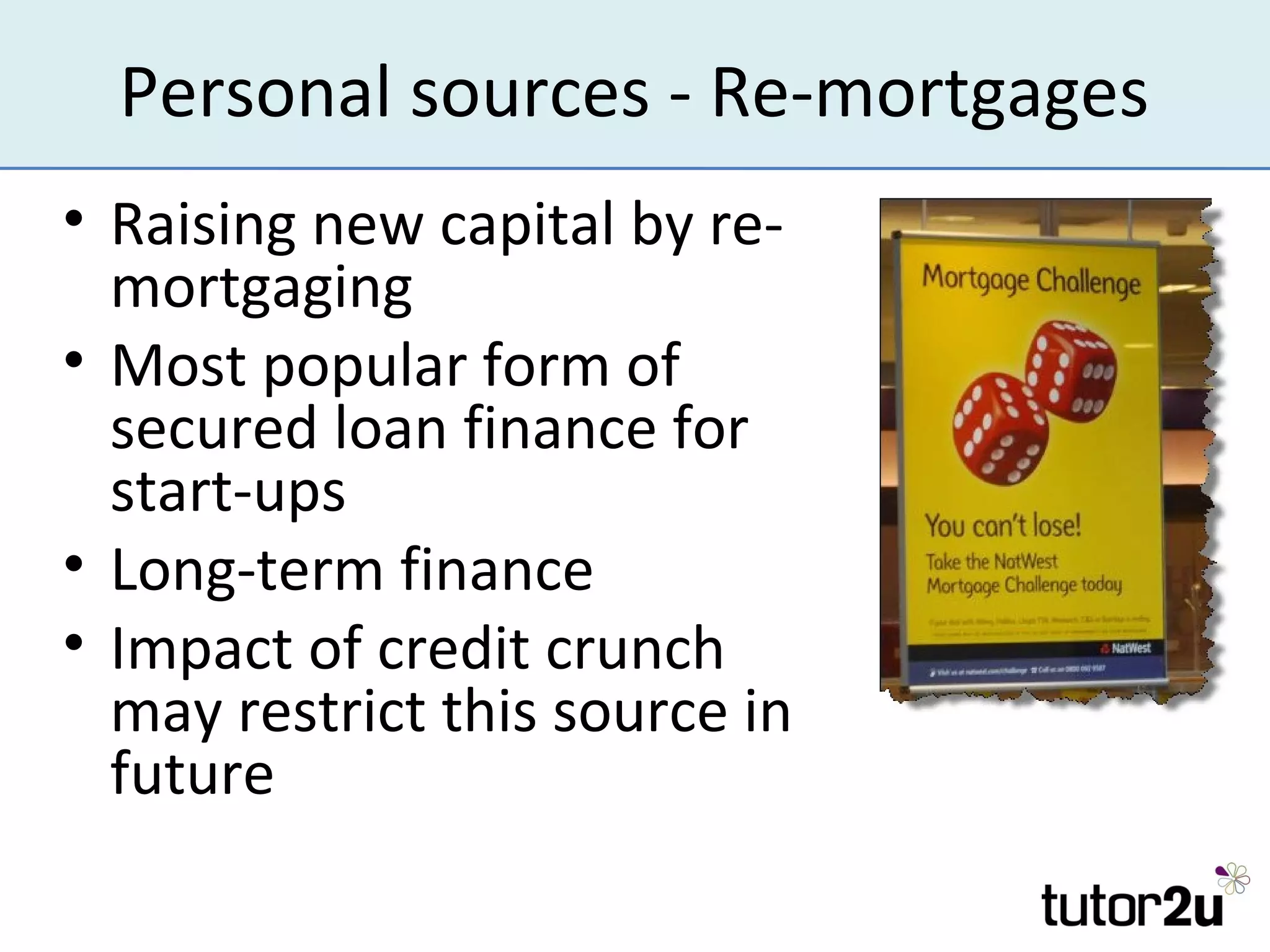
Personal sources - Re-mortgages
• Raising new capital by re-
  mortgaging
• Most popular form of
  secured loan finance for
  start-ups
• Long-term finance
• Impact of credit crunch
  may restrict this source in
  future
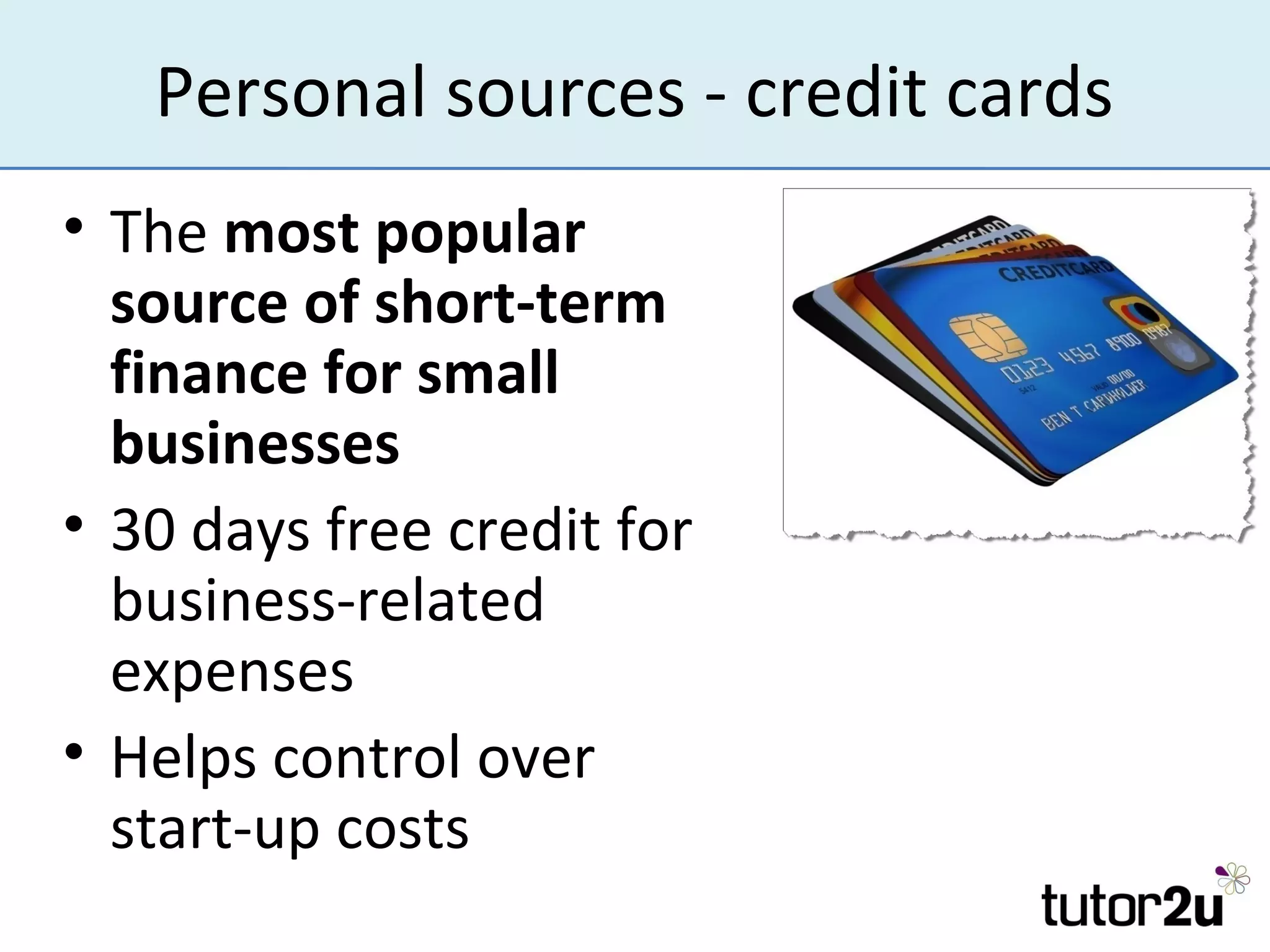
Personal sources - credit cards
• The most popular
  source of short-term
  finance for small
  businesses
• 30 days free credit for
  business-related
  expenses
• Helps control over
  start-up costs
Putting time in for free
• The entrepreneur works
  for nothing (or very little)
• Entrepreneurs multi-task
  until the start-up can
  afford staff
• 18 hour-days by the
  entrepreneur are cheaper
  than an overdraft!
Bank loans
• Long-term finance
  –   Loan provided over fixed period
  –   Rate of interest either fixed or variable
  –   Timing and amount of repayments are set
  –   Start-up provide some security for the loan
• Good for financing investment in production
  capacity (e.g. buildings, equipment)
• Generally at a lower rate of interest that a bank
  overdraft
• But, don’t provide much flexibility
• Harder to get because of the credit crunch
Bank overdrafts
• Short-term finance, widely used by start-ups and
  small businesses.
• An overdraft is really a loan facility – the bank lets
  the business “owe it money” when the bank balance
  goes below zero, in return for charging a high rate of
  interest.
• A flexible source of finance, in the sense that it is
  only used when needed
• Bank overdrafts are excellent for helping a business
  handle seasonal fluctuations in cash flow or when
  the business runs into short-term cash flow problems
  (e.g. a major customer fails to pay on time)
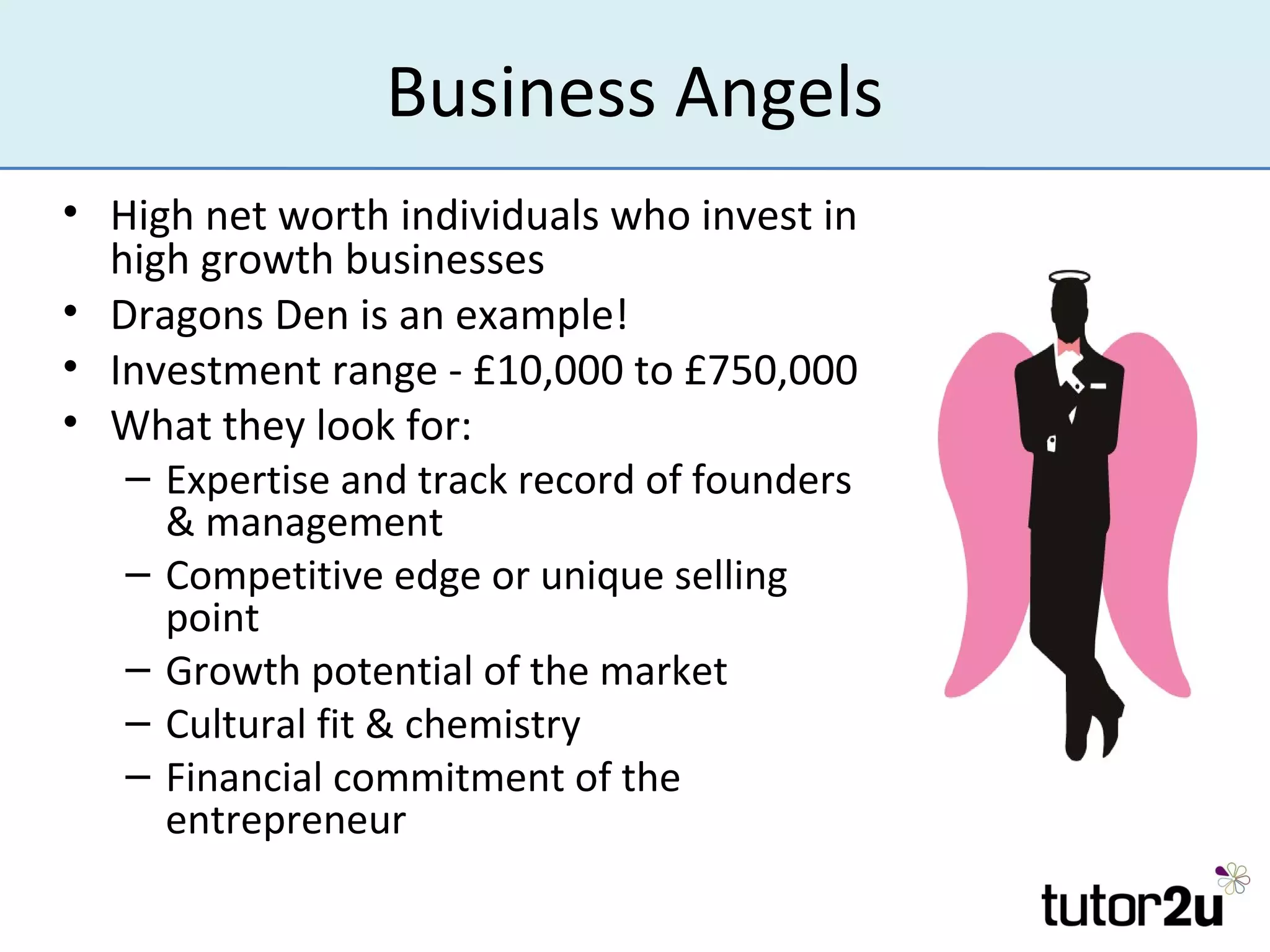
Business Angels
• High net worth individuals who invest in
  high growth businesses
• Dragons Den is an example!
• Investment range - £10,000 to £750,000
• What they look for:
   – Expertise and track record of founders
     & management
   – Competitive edge or unique selling
     point
   – Growth potential of the market
   – Cultural fit & chemistry
   – Financial commitment of the
     entrepreneur
Trade credit
• Amounts owed to suppliers for goods
  supplied on credit and not yet paid for
• Delayed payment means that the business
  retains cash longer
• Have to be careful not to damage firm’s
  credit reputation and rating
• Some firms habitually delay payment to
  creditors in order to enhance their cash
  flow - a short sighted policy and raises
  ethical issues
A couple of others
Princes Trust               Small Firms LGS
• Lender of last resort     • Loan guarantee scheme
• Targeted at under 30’s    • Popular support for
• Offers more than the        SMEs
  money                     • Great for start-ups that
• Other lenders may           struggle to offer banks
  come on board once          security for loans
  accepted
• However, bigger profile
  than reality
Follow tutor2u on Twitter


tutor2u      tutor2u_econ
Become a fan of tutor2u on
      Facebook!


   tutor2u on Facebook
Keep up-to-date with business
stories, resources, quizzes and
 worksheets for your business
    course. Click the logo!

Sources of Finance for a Startup

  • 1.
  • 2.
    Why finance matters •A start-up can’t survive without sufficient finance • There are various sources of finance available for new businesses • However, many start-ups struggle to raise finance until the business is established • Finance provided from the personal sources of the entrepreneur is very important
  • 3.
    Key finance issuesfor start-up • How much cash? Finance is needed for… – Enough v not too much – Safety buffer • When? – All at once? – Drip feed / as needed? • Challenges – Keeping control of the business – Staying afloat
  • 4.
    Key considerations • Howmuch finance is required? • When and how long the finance is needed for? (this links in with cash flow forecasting) • What security (if any) has to be provided? • Whether the entrepreneur is prepared to give up some control (ownership) of the start-up in return for investment?
  • 5.
    Main types offinance sources Internal Sources External Sources Founder finance Bank loan (various personal Bank overdraft sources of the entrepreneur) Business angels Retained profits Loans & grants Friends & family
  • 6.
    Short-term v Long-term Long-term Medium-term Short-term Finances the whole Finances major projects Finances day-to-day business over many or assets with a long- trading of the business years life Examples: Examples: Examples: Share capital Bank loans Bank overdraft Retained profits Leasing Trade creditors Venture capital Hire purchase Short-term bank loans Mortgages Government grants Factoring Long-term bank loans
  • 7.
    Share capital Share capital is the money Shareholder Number of Shareholding invested in a company by the Shares shareholders. Share capital is Angela 300 15% a long-term source of finance. In return for their investment, Nicolas 400 20% shareholders gain a share of Gordon 600 30% the ownership of the company. Barack 700 35% An illustration of an example company share ownership Total 2,000 100% structure is shown opposite:
  • 8.
    Retained profits • Thisis the cash that is generated by the business when it trades profitably • Retained profits can generate cash the moment trading has begun • For example, a start-up sells the first batch of stock for £5,000 cash which it had bought for £2,000. That means that retained profits are £3,000 which can be used to finance further expansion or to pay for other trading costs and expenses
  • 9.
    Personal sources ofthe entrepreneur • Entrepreneurs find various personal sources to finance their start-ups: e.g. • Cash and investments • Redundancy payments • Inheritances • Personal credit cards • Re-mortgaging • Putting time into the business for free
  • 10.
    Why personal sourcesare important • Cheap (e.g. compared with a bank loan) • Entrepreneur keeps control over the business • The more the founder puts in, the more others will invest • Little red tape or delay • Focuses the mind!
  • 11.
    Personal sources -redundancy • Redundancy packages often provide kick-start finance for a new business • Previous employers may also provide other support services (e.g. assets, training) • Other popular nest egg - inheritance
  • 12.
    Personal sources -Re-mortgages • Raising new capital by re- mortgaging • Most popular form of secured loan finance for start-ups • Long-term finance • Impact of credit crunch may restrict this source in future
  • 13.
    Personal sources -credit cards • The most popular source of short-term finance for small businesses • 30 days free credit for business-related expenses • Helps control over start-up costs
  • 14.
    Putting time infor free • The entrepreneur works for nothing (or very little) • Entrepreneurs multi-task until the start-up can afford staff • 18 hour-days by the entrepreneur are cheaper than an overdraft!
  • 15.
    Bank loans • Long-termfinance – Loan provided over fixed period – Rate of interest either fixed or variable – Timing and amount of repayments are set – Start-up provide some security for the loan • Good for financing investment in production capacity (e.g. buildings, equipment) • Generally at a lower rate of interest that a bank overdraft • But, don’t provide much flexibility • Harder to get because of the credit crunch
  • 16.
    Bank overdrafts • Short-termfinance, widely used by start-ups and small businesses. • An overdraft is really a loan facility – the bank lets the business “owe it money” when the bank balance goes below zero, in return for charging a high rate of interest. • A flexible source of finance, in the sense that it is only used when needed • Bank overdrafts are excellent for helping a business handle seasonal fluctuations in cash flow or when the business runs into short-term cash flow problems (e.g. a major customer fails to pay on time)
  • 17.
    Business Angels • Highnet worth individuals who invest in high growth businesses • Dragons Den is an example! • Investment range - £10,000 to £750,000 • What they look for: – Expertise and track record of founders & management – Competitive edge or unique selling point – Growth potential of the market – Cultural fit & chemistry – Financial commitment of the entrepreneur
  • 18.
    Trade credit • Amountsowed to suppliers for goods supplied on credit and not yet paid for • Delayed payment means that the business retains cash longer • Have to be careful not to damage firm’s credit reputation and rating • Some firms habitually delay payment to creditors in order to enhance their cash flow - a short sighted policy and raises ethical issues
  • 19.
    A couple ofothers Princes Trust Small Firms LGS • Lender of last resort • Loan guarantee scheme • Targeted at under 30’s • Popular support for • Offers more than the SMEs money • Great for start-ups that • Other lenders may struggle to offer banks come on board once security for loans accepted • However, bigger profile than reality
  • 20.
    Follow tutor2u onTwitter tutor2u tutor2u_econ
  • 21.
    Become a fanof tutor2u on Facebook! tutor2u on Facebook
  • 22.
    Keep up-to-date withbusiness stories, resources, quizzes and worksheets for your business course. Click the logo!