
MEGAEVENTS
in place branding
Dr hab. Magdalena Florek
2
megaevents
•described as ‘MEGA’ by virtue of their size
in terms of attendance, target market,
level of public financial involvement,
political effects, extent of media
coverage, construction of facilities, and
impact on economic and social fabric
of the host community (Hall, 1997),
•substantially increase the destination’s
capacity and attractiveness.
Megaevents features
• Events so large that they affect whole
economy
• Are reported in the global media
• Highly prestigious
• Can have major impacts, both positive
and negative
Among worldwide events that attract milions of
participants and generate huge economic
and noneconomic benefits,
the most powerful are (IBnGR 2006):
• EXPO exhibitions
• Miss World contest
• FIFA World Cup
• Olympic Games
Event v. place image
Image effects of the hosted event
depend on the link and compatibility
of features of the destination and the
event’s characteristics.
(Chalip & McGuirty 2004; Chalip et al. 2003).
The effects might be mutual: the
destination and the event may benefit
from each other depending on their
image congruence.
“It is reasonable to expect that the
particular effect of the image of events
destination hosts will depend on the
images that are compatible
(or incompatible) with the event.”
Chalip & Green (2001)
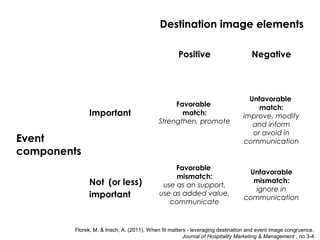
Destination image elements
Positive Negative
Event
components
Important
Favorable
match:
Strengthen, promote
Unfavorable
match:
improve, modify
and inform
or avoid in
communication
Not (or less)
important
Favorable
mismatch:
use as an support,
use as added value,
communicate
Unfavorable
mismatch:
ignore in
communication
Florek, M. & Insch, A. (2011), When fit matters - leveraging destination and event image congruence,
Journal of Hospitality Marketing & Management , no 3-4.
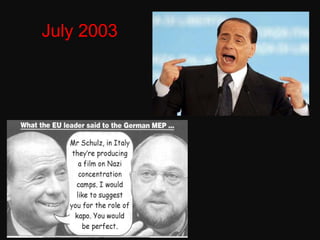
July 2003
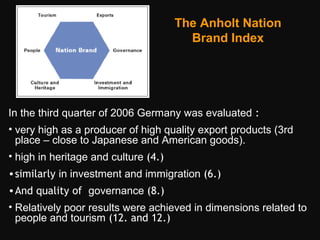
The Anholt Nation
Brand Index
In the third quarter of 2006 Germany was evaluated :
• very high as a producer of high quality export products (3rd
place – close to Japanese and American goods).
• high in heritage and culture (4.)
•similarly in investment and immigration (6.)
•And quality of governance (8.)
• Relatively poor results were achieved in dimensions related to
people and tourism (12. and 12.)
World Cup 2006
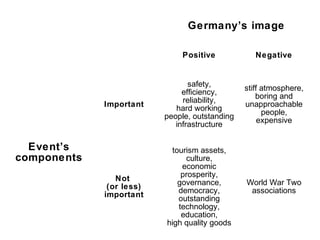
Germany’s image
Positive Negative
Event’s
components
Important
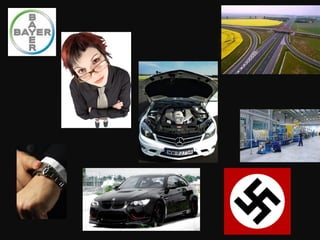
safety,
efficiency,
reliability,
hard working
people, outstanding
infrastructure
stiff atmosphere,
boring and
unapproachable
people,
expensive
Not
(or less)
important
tourism assets,
culture,
economic
prosperity,
governance,
democracy,
outstanding
technology,
education,
high quality goods
World War Two
associations
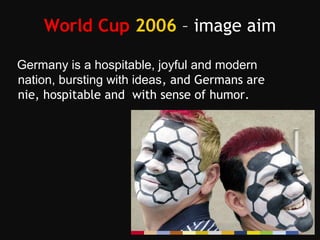
World Cup 2006 – image aim
Germany is a hospitable, joyful and modern
nation, bursting with ideas, and Germans are
nie, hospitable and with sense of humor.
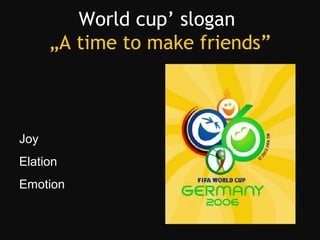
World cup’ slogan
„A time to make friends”
Joy
Elation
Emotion
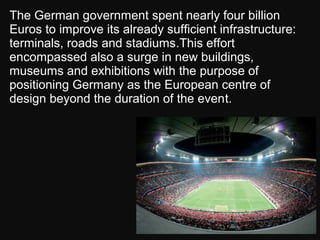
The German government spent nearly four billion
Euros to improve its already sufficient infrastructure:
terminals, roads and stadiums.This effort
encompassed also a surge in new buildings,
museums and exhibitions with the purpose of
positioning Germany as the European centre of
design beyond the duration of the event.
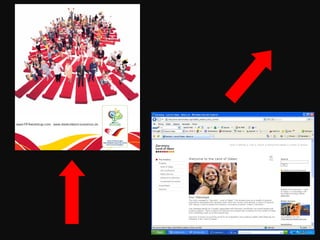
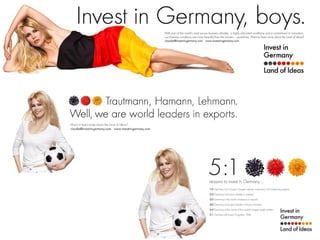
• The initiative ‘Land of Ideas’ accompanied the sport
event and targeted two groups: prospective tourist
and TV audiences to enhance the image of Germany
as an open and friendly country; and potential
investors to strengthen Germany’s past
accomplishments, innovation, performance and
competitive potential.
• The initiative’s tone was light and dynamic, with the
help of German celebrities, to show a German sense
of humour.
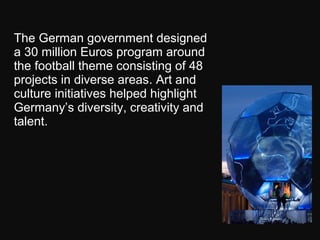
The German government designed
a 30 million Euros program around
the football theme consisting of 48
projects in diverse areas. Art and
culture initiatives helped highlight
Germany’s diversity, creativity and
talent.
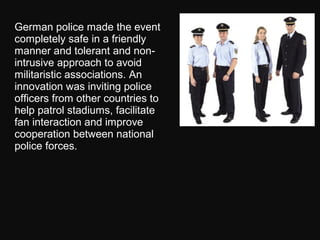
German police made the event
completely safe in a friendly
manner and tolerant and non-
intrusive approach to avoid
militaristic associations. An
innovation was inviting police
officers from other countries to
help patrol stadiums, facilitate
fan interaction and improve
cooperation between national
police forces.
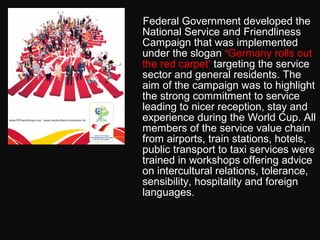
Federal Government developed the
National Service and Friendliness
Campaign that was implemented
under the slogan ‘Germany rolls out
the red carpet’ targeting the service
sector and general residents. The
aim of the campaign was to highlight
the strong commitment to service
leading to nicer reception, stay and
experience during the World Cup. All
members of the service value chain
from airports, train stations, hotels,
public transport to taxi services were
trained in workshops offering advice
on intercultural relations, tolerance,
sensibility, hospitality and foreign
languages.
effects
effects
TNS Infratest (November 2005 v. September 2006):
- Cosmopolitan and hospitable (increase of 5-20%)
- Ideal host country (increase of 7-12%)
- Place for vacation (increase of 11%)
- Exciting nightlife (increase of 7%)
TNS Infratest (January 2008)
- interesting historical attractions (63%)
- attractive destination for city breaks (60%)
- excellent shopping opportunities, cosmopolitan and
friendly country
effects
According to sounding done in February
2009 by British radio station BBC in 21
counries, Germany has the best image in
world - 61% positive assessments.
effects
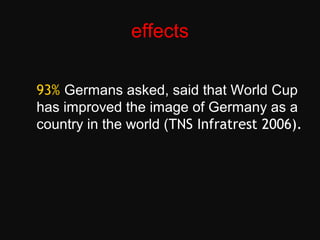
93% Germans asked, said that World Cup
has improved the image of Germany as a
country in the world (TNS Infratrest 2006).
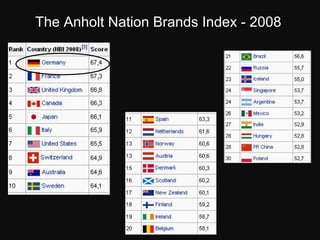
The Anholt Nation Brands Index - 2008
summary
• Understanding the favorable and unfavorable
matches or mismatches, similarly to product-country
relations (Roth & Romeo, 1992), is vital for event organizers
and destination brand managers.
• The interrelationships and interdependencies
between the two overlapping sets of images are
the ingredients from which impressions are formed,
revised or reinforced.
Thank you
m.florek@ue.poznan.pl

MEGAEVENTS in place branding

  • 1.
    MEGAEVENTS in place branding Drhab. Magdalena Florek
  • 2.
    2 megaevents •described as ‘MEGA’by virtue of their size in terms of attendance, target market, level of public financial involvement, political effects, extent of media coverage, construction of facilities, and impact on economic and social fabric of the host community (Hall, 1997), •substantially increase the destination’s capacity and attractiveness.
  • 3.
    Megaevents features • Eventsso large that they affect whole economy • Are reported in the global media • Highly prestigious • Can have major impacts, both positive and negative
  • 4.
    Among worldwide eventsthat attract milions of participants and generate huge economic and noneconomic benefits, the most powerful are (IBnGR 2006): • EXPO exhibitions • Miss World contest • FIFA World Cup • Olympic Games
  • 5.
  • 6.
    Image effects ofthe hosted event depend on the link and compatibility of features of the destination and the event’s characteristics. (Chalip & McGuirty 2004; Chalip et al. 2003). The effects might be mutual: the destination and the event may benefit from each other depending on their image congruence.
  • 7.
    “It is reasonableto expect that the particular effect of the image of events destination hosts will depend on the images that are compatible (or incompatible) with the event.” Chalip & Green (2001)
  • 8.
    Destination image elements PositiveNegative Event components Important Favorable match: Strengthen, promote Unfavorable match: improve, modify and inform or avoid in communication Not (or less) important Favorable mismatch: use as an support, use as added value, communicate Unfavorable mismatch: ignore in communication Florek, M. & Insch, A. (2011), When fit matters - leveraging destination and event image congruence, Journal of Hospitality Marketing & Management , no 3-4.
  • 10.
  • 11.
    The Anholt Nation BrandIndex In the third quarter of 2006 Germany was evaluated : • very high as a producer of high quality export products (3rd place – close to Japanese and American goods). • high in heritage and culture (4.) •similarly in investment and immigration (6.) •And quality of governance (8.) • Relatively poor results were achieved in dimensions related to people and tourism (12. and 12.)
  • 12.
  • 13.
    Germany’s image Positive Negative Event’s components Important safety, efficiency, reliability, hardworking people, outstanding infrastructure stiff atmosphere, boring and unapproachable people, expensive Not (or less) important tourism assets, culture, economic prosperity, governance, democracy, outstanding technology, education, high quality goods World War Two associations
  • 14.
    World Cup 2006– image aim Germany is a hospitable, joyful and modern nation, bursting with ideas, and Germans are nie, hospitable and with sense of humor.
  • 15.
    World cup’ slogan „Atime to make friends” Joy Elation Emotion
  • 17.
    The German governmentspent nearly four billion Euros to improve its already sufficient infrastructure: terminals, roads and stadiums.This effort encompassed also a surge in new buildings, museums and exhibitions with the purpose of positioning Germany as the European centre of design beyond the duration of the event.
  • 18.
    • The initiative‘Land of Ideas’ accompanied the sport event and targeted two groups: prospective tourist and TV audiences to enhance the image of Germany as an open and friendly country; and potential investors to strengthen Germany’s past accomplishments, innovation, performance and competitive potential. • The initiative’s tone was light and dynamic, with the help of German celebrities, to show a German sense of humour.
  • 20.
    The German governmentdesigned a 30 million Euros program around the football theme consisting of 48 projects in diverse areas. Art and culture initiatives helped highlight Germany’s diversity, creativity and talent.
  • 21.
    German police madethe event completely safe in a friendly manner and tolerant and non- intrusive approach to avoid militaristic associations. An innovation was inviting police officers from other countries to help patrol stadiums, facilitate fan interaction and improve cooperation between national police forces.
  • 22.
    Federal Government developedthe National Service and Friendliness Campaign that was implemented under the slogan ‘Germany rolls out the red carpet’ targeting the service sector and general residents. The aim of the campaign was to highlight the strong commitment to service leading to nicer reception, stay and experience during the World Cup. All members of the service value chain from airports, train stations, hotels, public transport to taxi services were trained in workshops offering advice on intercultural relations, tolerance, sensibility, hospitality and foreign languages.
  • 23.
  • 24.
    effects TNS Infratest (November2005 v. September 2006): - Cosmopolitan and hospitable (increase of 5-20%) - Ideal host country (increase of 7-12%) - Place for vacation (increase of 11%) - Exciting nightlife (increase of 7%) TNS Infratest (January 2008) - interesting historical attractions (63%) - attractive destination for city breaks (60%) - excellent shopping opportunities, cosmopolitan and friendly country
  • 25.
    effects According to soundingdone in February 2009 by British radio station BBC in 21 counries, Germany has the best image in world - 61% positive assessments.
  • 26.
    effects 93% Germans asked,said that World Cup has improved the image of Germany as a country in the world (TNS Infratrest 2006).
  • 27.
    The Anholt NationBrands Index - 2008
  • 29.
    summary • Understanding thefavorable and unfavorable matches or mismatches, similarly to product-country relations (Roth & Romeo, 1992), is vital for event organizers and destination brand managers. • The interrelationships and interdependencies between the two overlapping sets of images are the ingredients from which impressions are formed, revised or reinforced.
  • 30.

Editor's Notes