Team A ContributersTimothy Babcock
Melissa Davis
Will Buckner
Lorraine Styler
Chasity Cowan
Leeroy B. Strack
James Brown
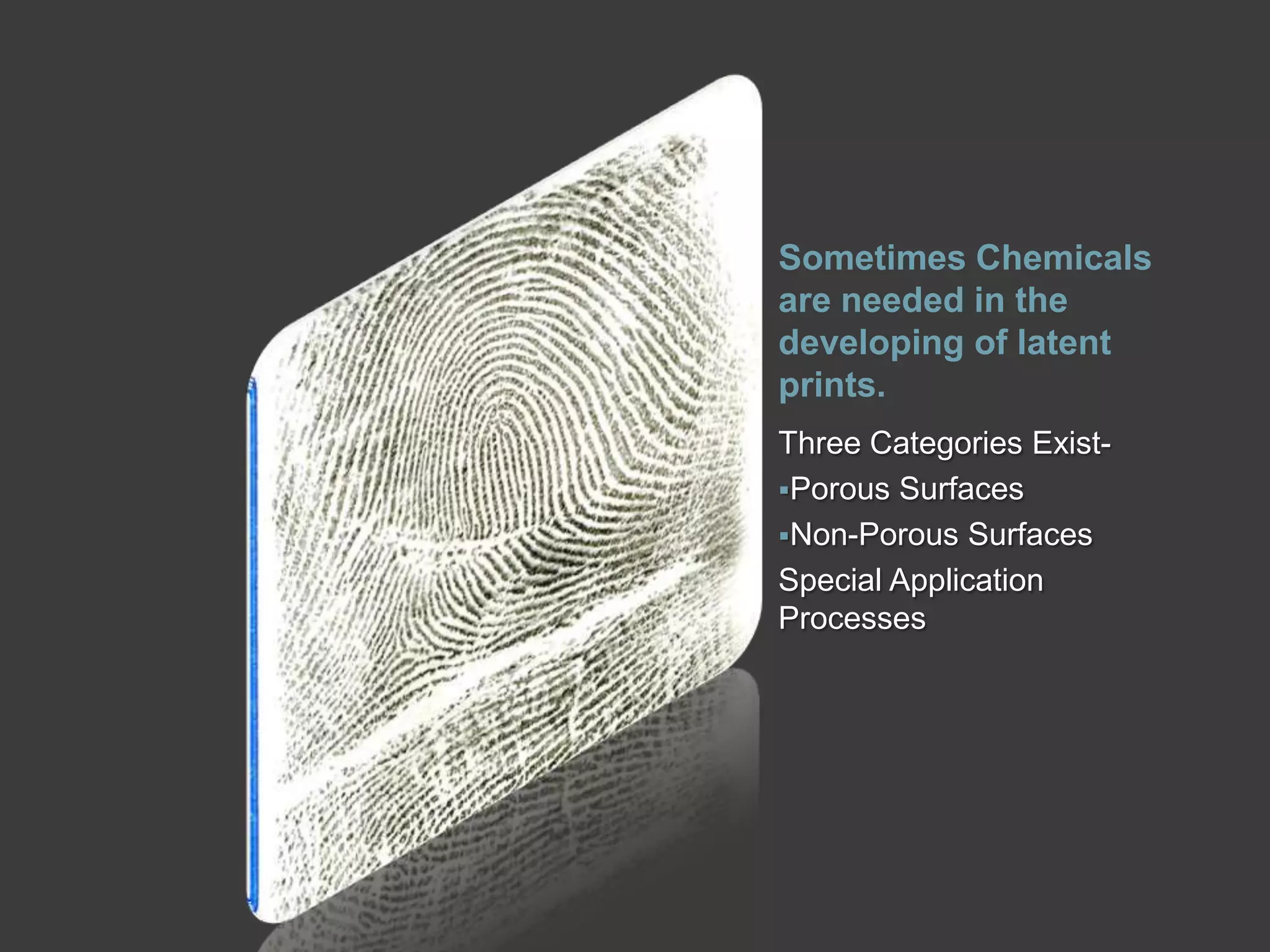
Sometimes Chemicals
are needed in the
developing of latent
prints.
Three Categories ExistPorous Surfaces
Non-Porous Surfaces
Special Application
Processes
Cyanoacrylate-(Super Glue)
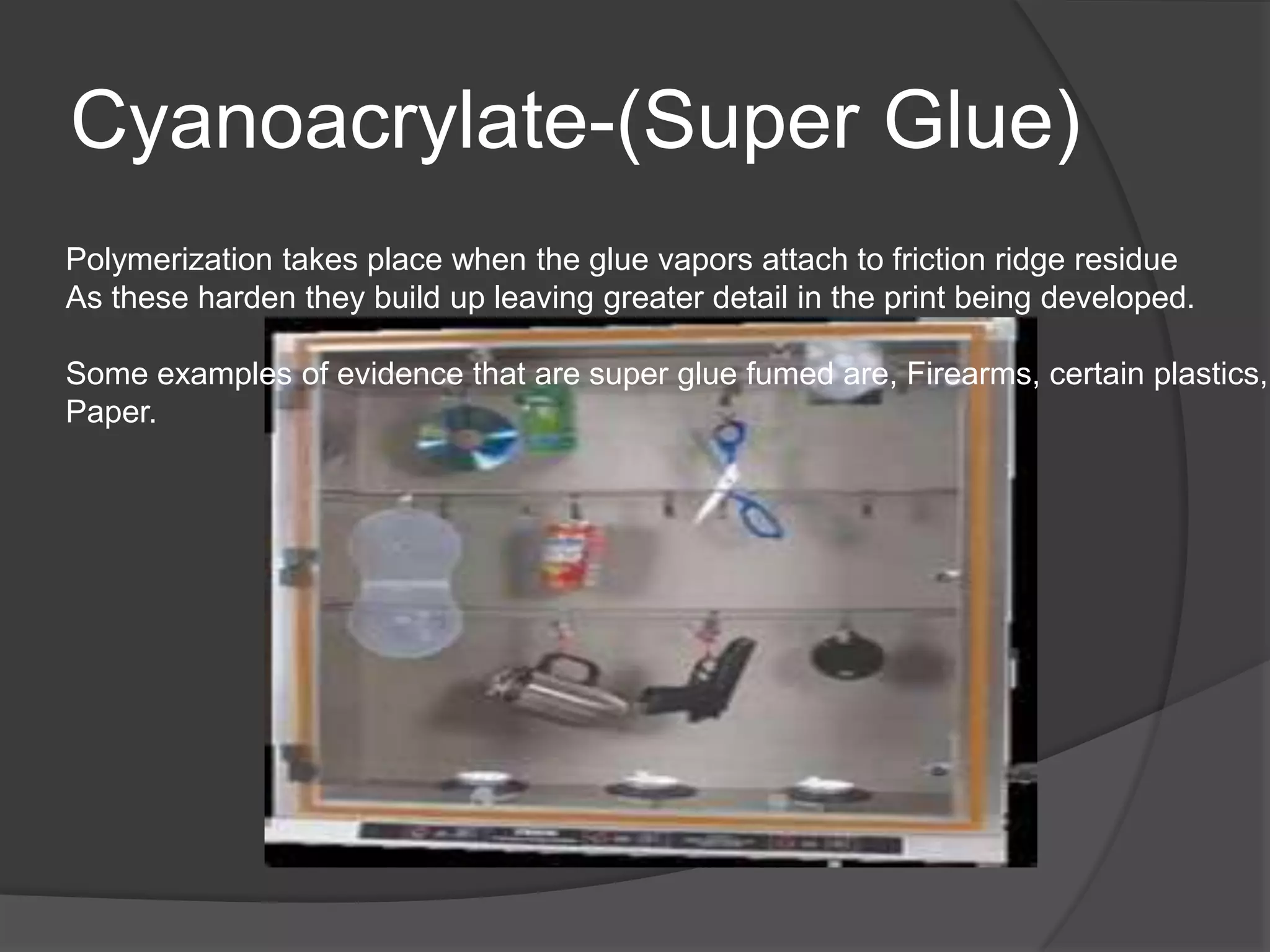
Polymerization takes place when the glue vapors attach to friction ridge residue
As these harden they build up leaving greater detail in the print being developed.
Some examples of evidence that are super glue fumed are, Firearms, certain plastics,
Paper.
Atmpospheric Super Glue MethodCoffee Can Fuming- Place ten to twelve drops of glue into
The can, exhale into the can and then seal the can with its lid.
Allow 30 minutes for the fuming process to complete.
-Will Buckner
Resource info- http://www.crimeandclues.com/index.php/
Forensic-science-a-csi/fingerprints/12-atmospheric-superglue-method

The super glue method must be executed in gaseous form, the glue
In it’s liquid form must reach a boiling temperature of 100 to 150 degrees.
The glue then begins to vaporize and these vapors begin to attach to items
It comes in contact with.
-Lorraine Styler
Resource info- www.ccs.edu/home/forensic/cyanoacrylate
Article Author; Brown, W. Eric
Silver Nitrate Method
-James Brown

This method is best on porous objects, and is most effective
On paper. Silver nitrate is a safe process because of it’s low
Toxicity. Silver nitrate can be applied to paper by spraying,
dipping, or brushing. Silver nitrate processes are fairly easy
And the results are fast.
Resource info;
(2004. Leo,. “Fingerprint Identification” )
(2012. Penven, D. “Chemical Development of Latent Prints.)
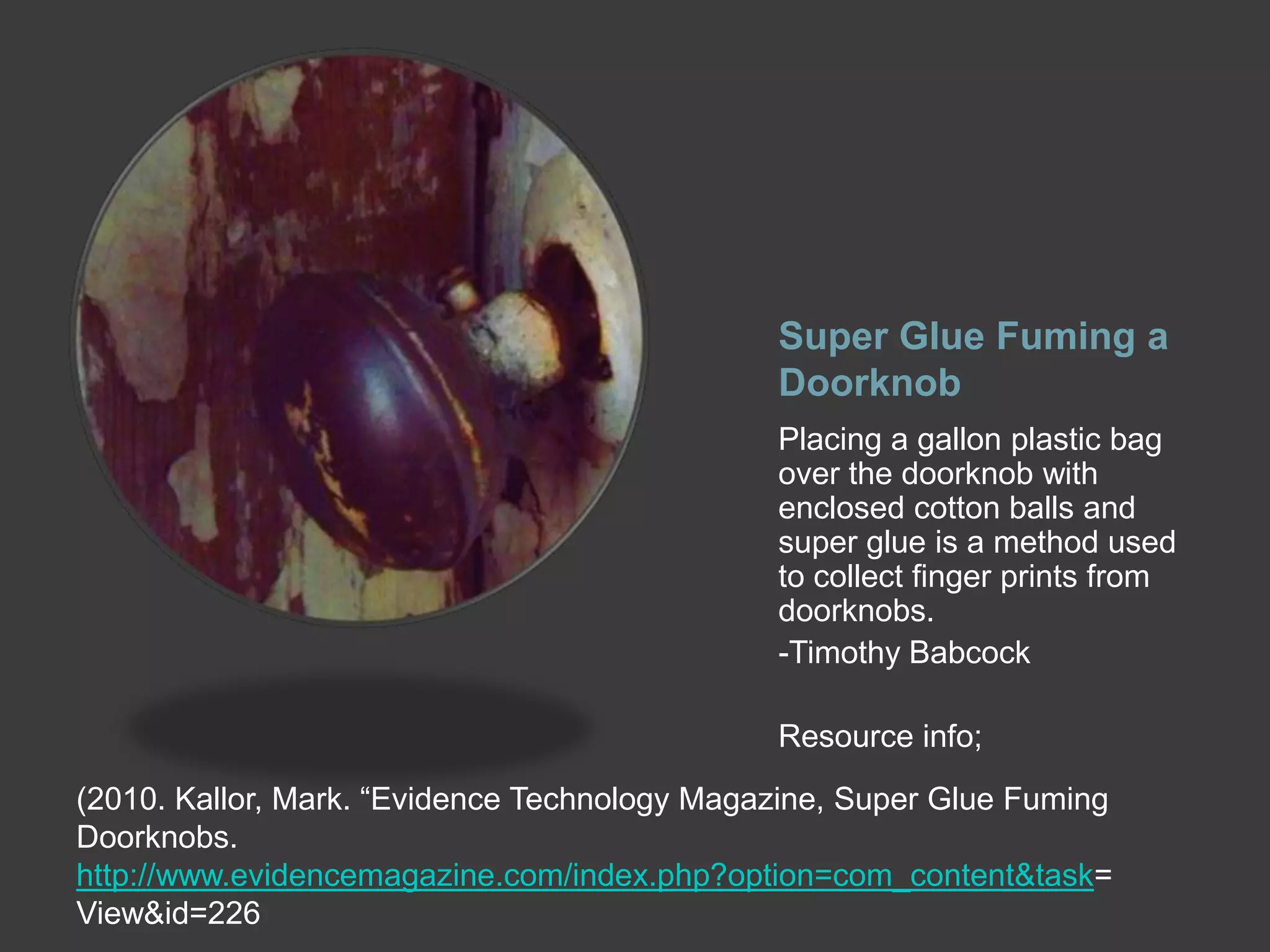
Super Glue Fuming a
Doorknob
Placing a gallon plastic bag
over the doorknob with
enclosed cotton balls and
super glue is a method used
to collect finger prints from
doorknobs.
-Timothy Babcock
Resource info;
(2010. Kallor, Mark. “Evidence Technology Magazine, Super Glue Fuming
Doorknobs.
http://www.evidencemagazine.com/index.php?option=com_content&task=
View&id=226
Other Chemicals and Reagents
Eosin Technique is used to develop prints with a pink appearance on
White non-colored paper. In this process iodine attaches to calcium in
Sweat. Latent prints that are a few weeks to months old can be
Developed using this process. –Melissa Davis
Ninhydrin is a chemical that reacts to amino acids in sweat and can
be sprayed, or brushed on an object. Moist heat is applied by using a
steam iron or humidity chamber –Chasity Cowen
Resources(2004. Leo, W. “Fingerprint Identification.)
(2002. Ahmad, Umi K, Musa Afizah. Super Glue Fuming for the Chemical
Enhancement of Latent Fingerprints.)

Super Glue Enhancement Techniques-Fingerprint Evidence.

  • 1.
    Team A ContributersTimothyBabcock Melissa Davis Will Buckner Lorraine Styler Chasity Cowan Leeroy B. Strack James Brown
  • 2.
    Sometimes Chemicals are neededin the developing of latent prints. Three Categories ExistPorous Surfaces Non-Porous Surfaces Special Application Processes
  • 3.
    Cyanoacrylate-(Super Glue) Polymerization takesplace when the glue vapors attach to friction ridge residue As these harden they build up leaving greater detail in the print being developed. Some examples of evidence that are super glue fumed are, Firearms, certain plastics, Paper.
  • 4.
    Atmpospheric Super GlueMethodCoffee Can Fuming- Place ten to twelve drops of glue into The can, exhale into the can and then seal the can with its lid. Allow 30 minutes for the fuming process to complete. -Will Buckner Resource info- http://www.crimeandclues.com/index.php/ Forensic-science-a-csi/fingerprints/12-atmospheric-superglue-method The super glue method must be executed in gaseous form, the glue In it’s liquid form must reach a boiling temperature of 100 to 150 degrees. The glue then begins to vaporize and these vapors begin to attach to items It comes in contact with. -Lorraine Styler Resource info- www.ccs.edu/home/forensic/cyanoacrylate Article Author; Brown, W. Eric
  • 5.
    Silver Nitrate Method -JamesBrown This method is best on porous objects, and is most effective On paper. Silver nitrate is a safe process because of it’s low Toxicity. Silver nitrate can be applied to paper by spraying, dipping, or brushing. Silver nitrate processes are fairly easy And the results are fast. Resource info; (2004. Leo,. “Fingerprint Identification” ) (2012. Penven, D. “Chemical Development of Latent Prints.)
  • 6.
    Super Glue Fuminga Doorknob Placing a gallon plastic bag over the doorknob with enclosed cotton balls and super glue is a method used to collect finger prints from doorknobs. -Timothy Babcock Resource info; (2010. Kallor, Mark. “Evidence Technology Magazine, Super Glue Fuming Doorknobs. http://www.evidencemagazine.com/index.php?option=com_content&task= View&id=226
  • 7.
    Other Chemicals andReagents Eosin Technique is used to develop prints with a pink appearance on White non-colored paper. In this process iodine attaches to calcium in Sweat. Latent prints that are a few weeks to months old can be Developed using this process. –Melissa Davis Ninhydrin is a chemical that reacts to amino acids in sweat and can be sprayed, or brushed on an object. Moist heat is applied by using a steam iron or humidity chamber –Chasity Cowen Resources(2004. Leo, W. “Fingerprint Identification.) (2002. Ahmad, Umi K, Musa Afizah. Super Glue Fuming for the Chemical Enhancement of Latent Fingerprints.)