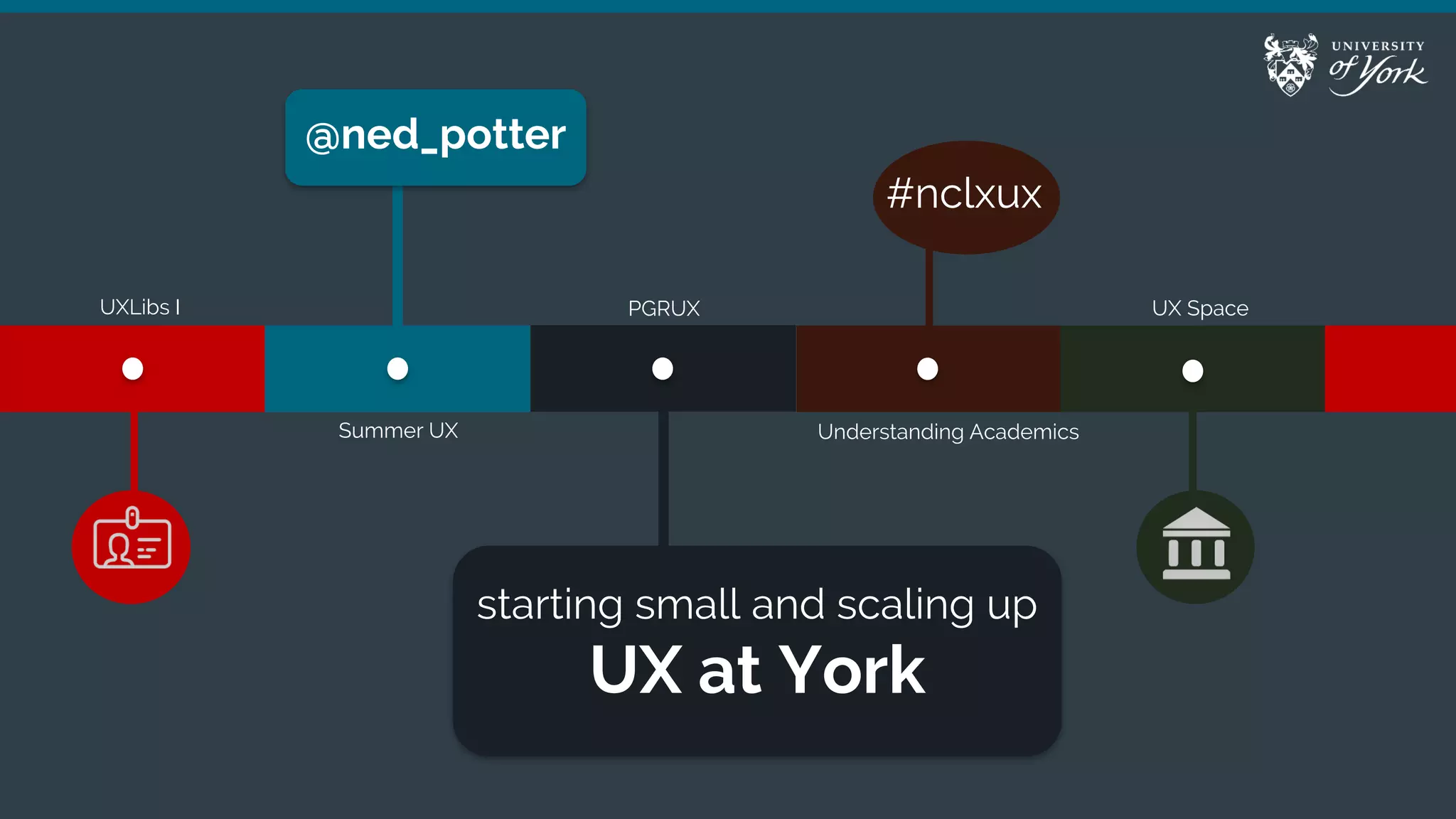
starting small and scaling up
UX at York
UXLibs I
Summer UX
PGRUX
Understanding Academics
UX Space
@ned_potter
#nclxux
UXLibs I
The adventure begins at
the first User Experience in
Libraries Conference, 2015
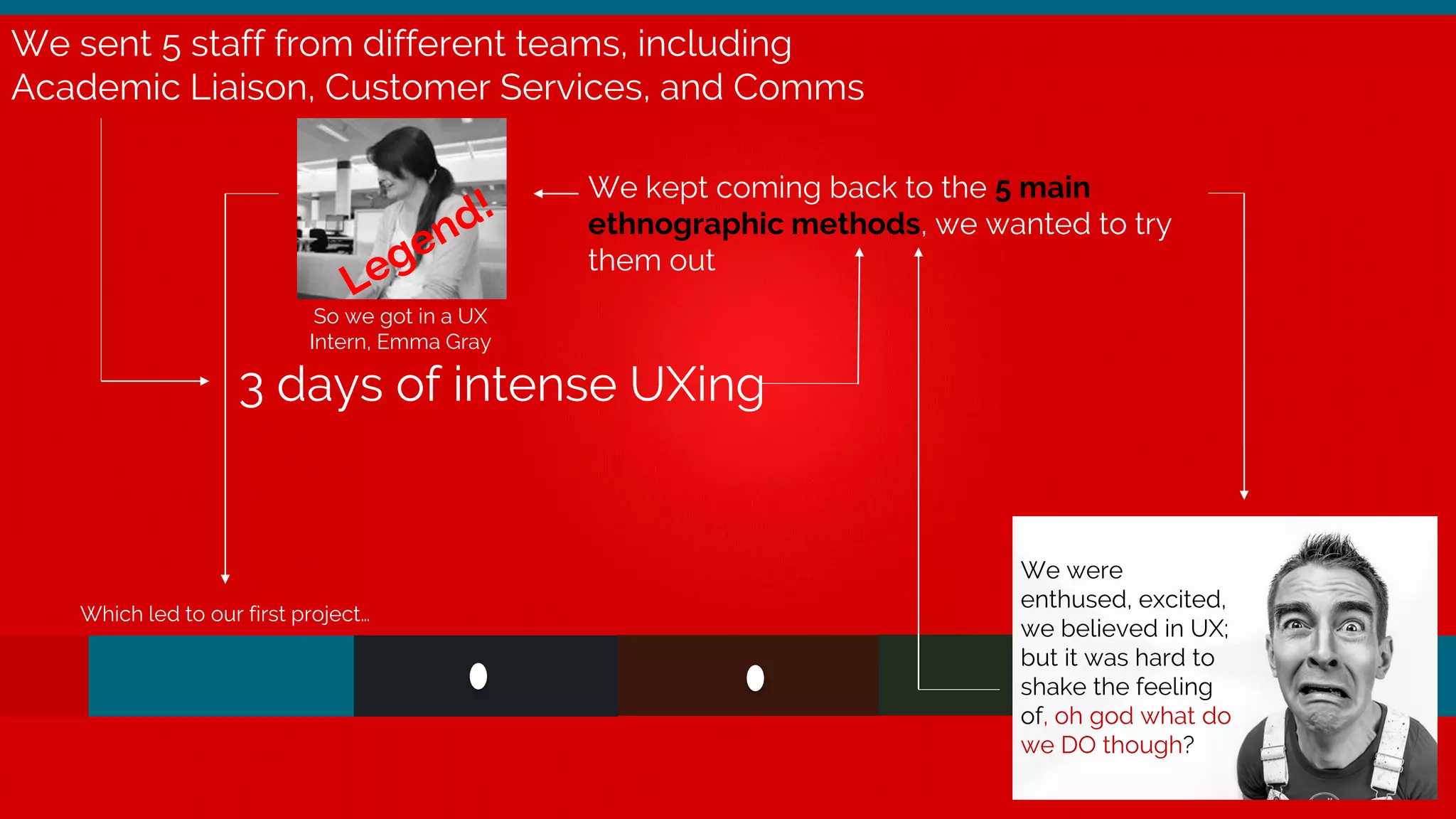
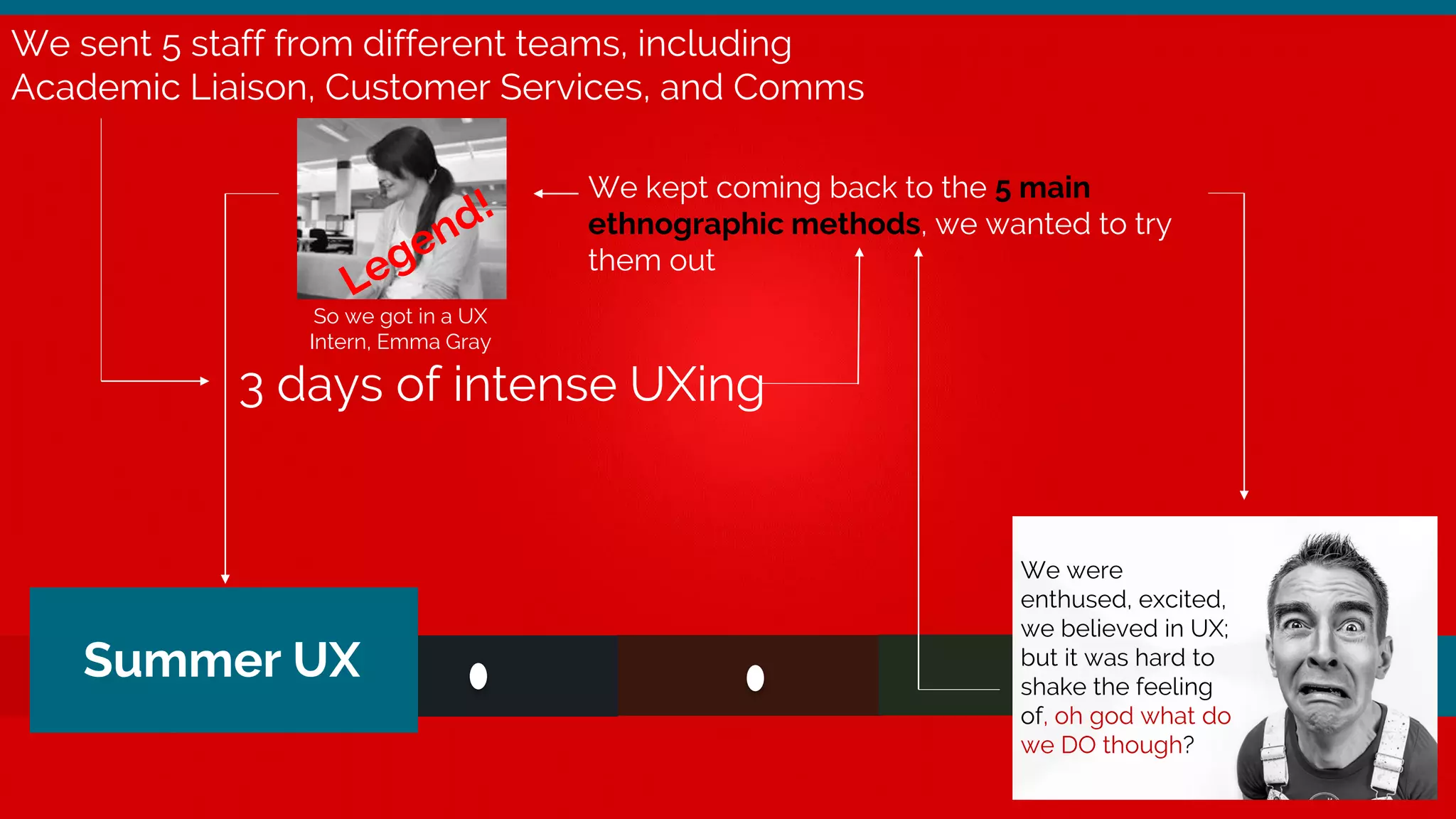
We sent 5 staff from different teams, including
Academic Liaison, Customer Services, and Comms
We sent 5 staff from different teams, including
Academic Liaison, Customer Services, and Comms
3 days of intense UXing
We sent 5 staff from different teams, including
Academic Liaison, Customer Services, and Comms
3 days of intense UXing
We came away with a lot but uppermost
in our minds were the 5 main ethnographic
methods
We sent 5 staff from different teams, including
Academic Liaison, Customer Services, and Comms
3 days of intense UXing
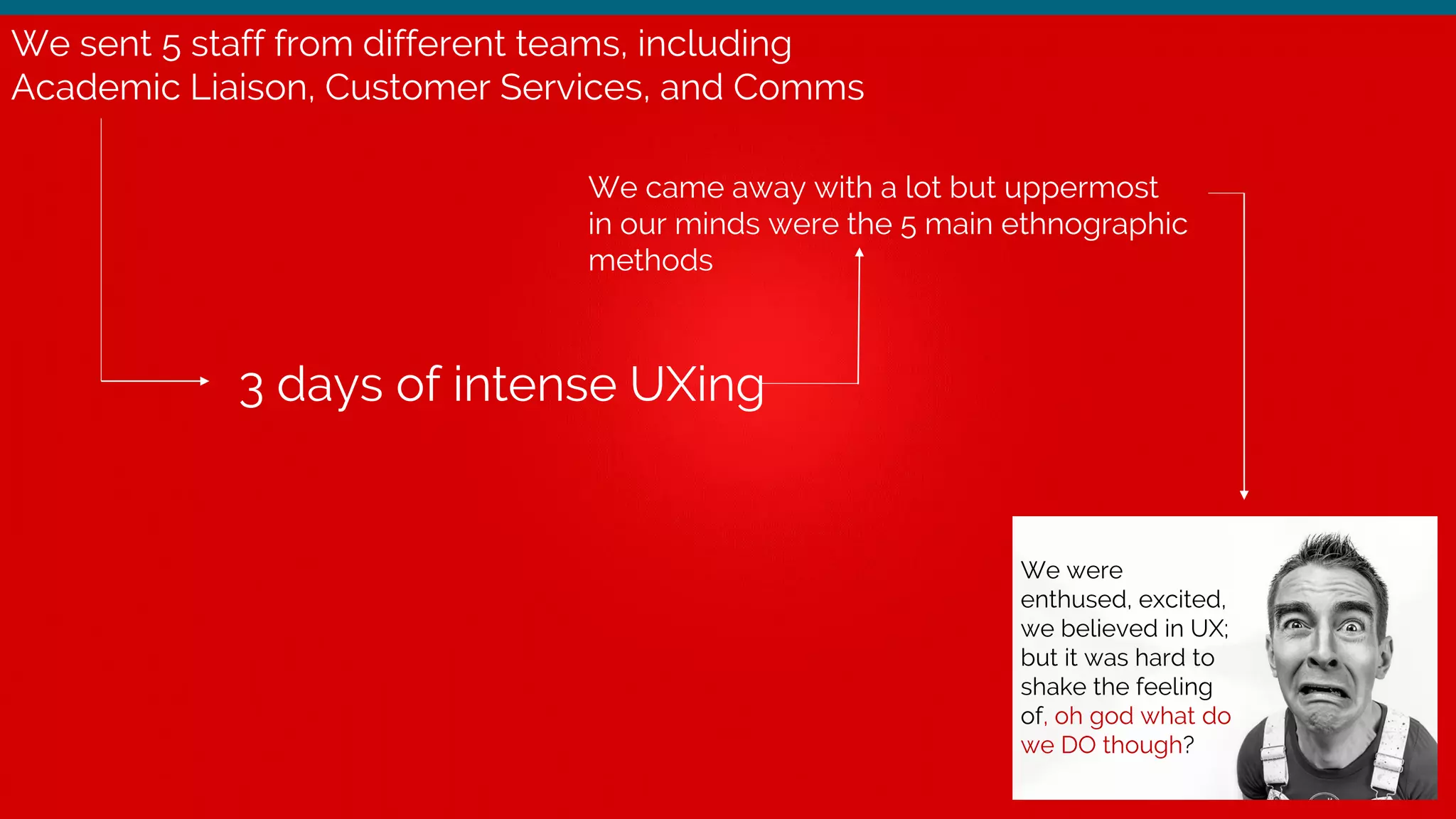
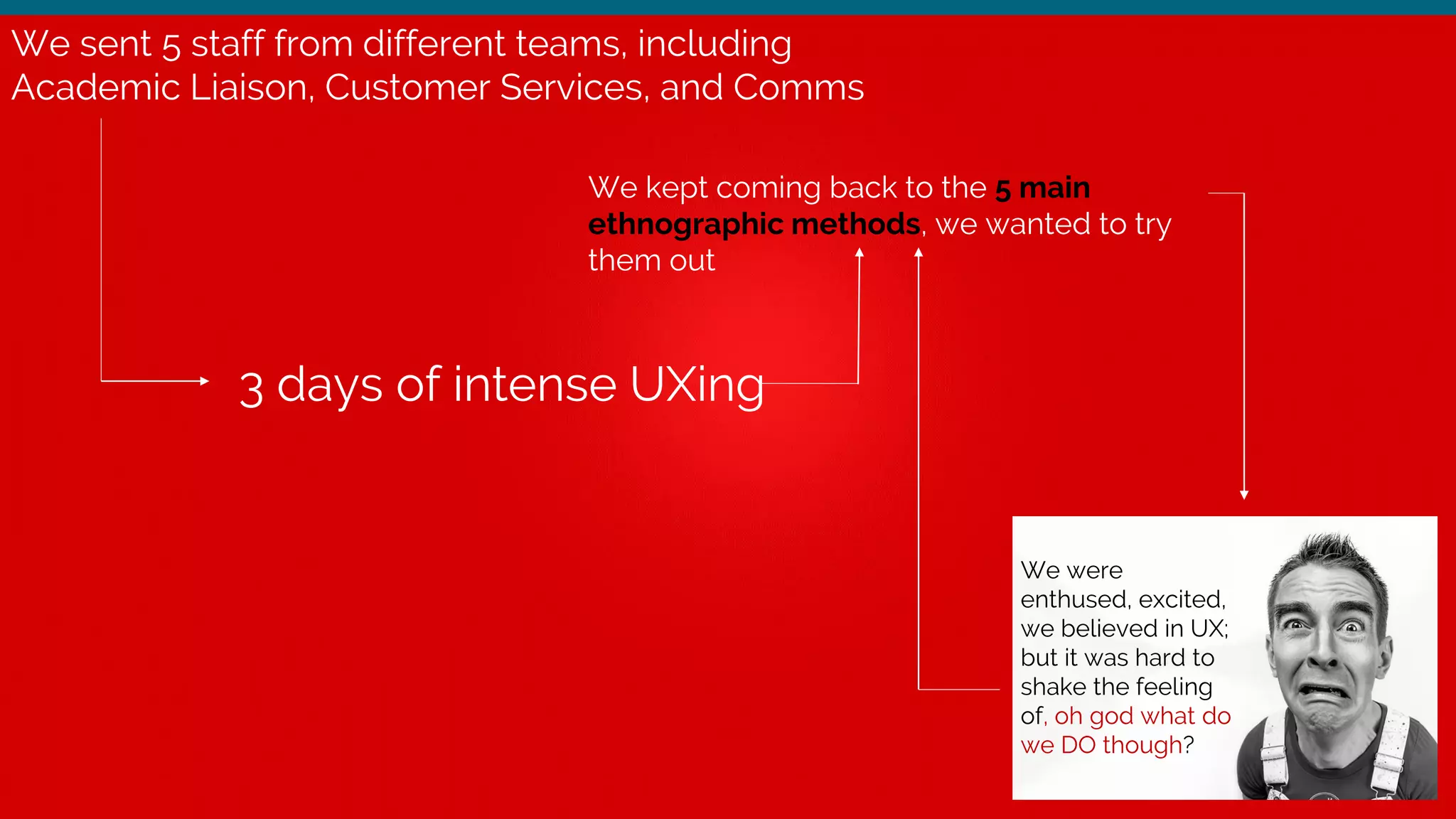
We were
enthused, excited,
we believed in UX;
but it was hard to
shake the feeling
of, oh god what do
we DO though?
We came away with a lot but uppermost
in our minds were the 5 main ethnographic
methods
We sent 5 staff from different teams, including
Academic Liaison, Customer Services, and Comms
3 days of intense UXing
We were
enthused, excited,
we believed in UX;
but it was hard to
shake the feeling
of, oh god what do
we DO though?
We came away with a lot but uppermost
in our minds were the 5 main ethnographic
methods
We sent 5 staff from different teams, including
Academic Liaison, Customer Services, and Comms
3 days of intense UXing
We kept coming back to the 5 main
ethnographic methods, we wanted to try
them out
We were
enthused, excited,
we believed in UX;
but it was hard to
shake the feeling
of, oh god what do
we DO though?
We sent 5 staff from different teams, including
Academic Liaison, Customer Services, and Comms
3 days of intense UXing
We kept coming back to the 5 main
ethnographic methods, we wanted to try
them out
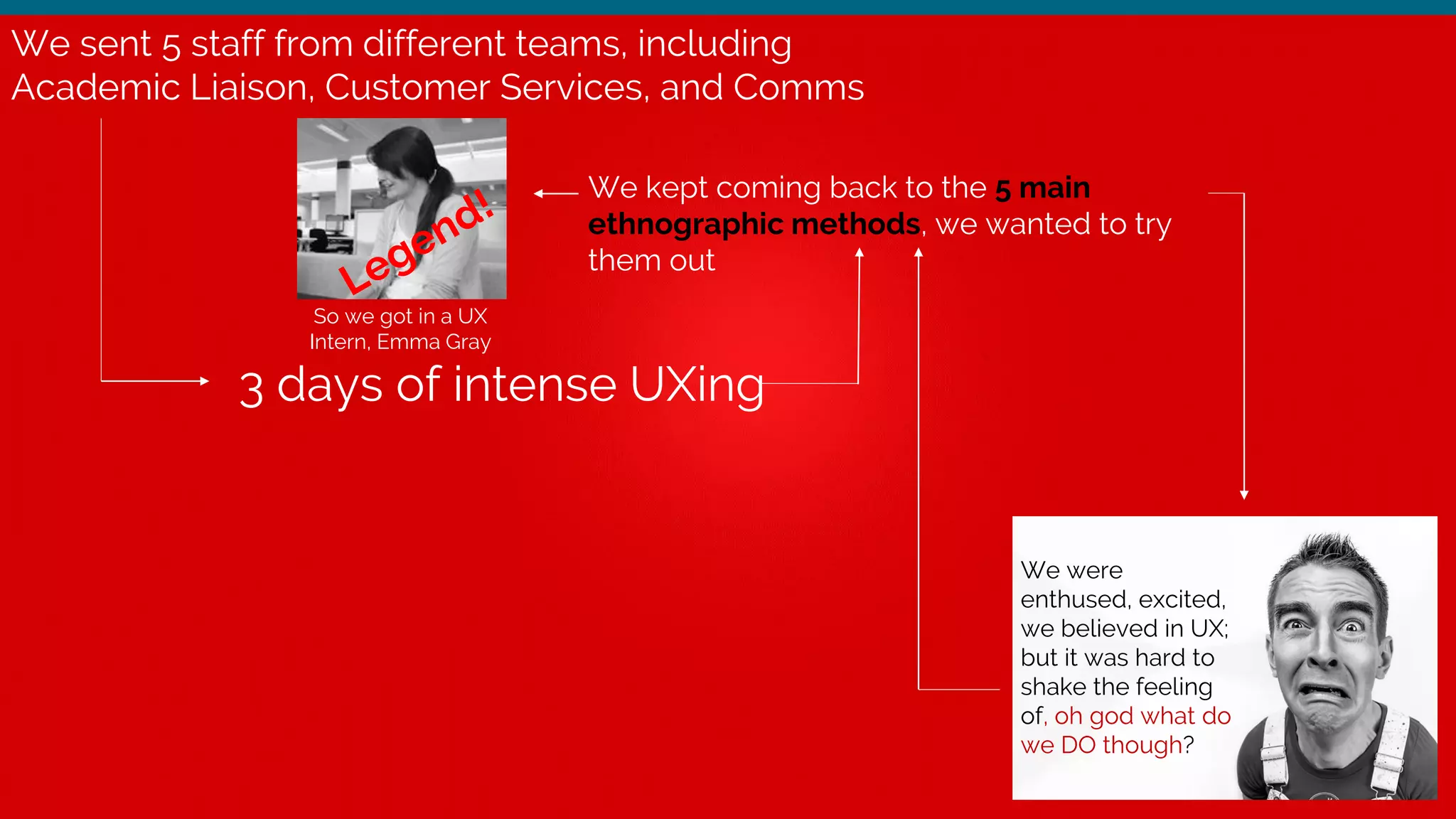
So we got in a UX
Intern, Emma Gray
We were
enthused, excited,
we believed in UX;
but it was hard to
shake the feeling
of, oh god what do
we DO though?
We sent 5 staff from different teams, including
Academic Liaison, Customer Services, and Comms
3 days of intense UXing
We kept coming back to the 5 main
ethnographic methods, we wanted to try
them out
So we got in a UX
Intern, Emma Gray
We were
enthused, excited,
we believed in UX;
but it was hard to
shake the feeling
of, oh god what do
we DO though?
Which led to our first project…
We sent 5 staff from different teams, including
Academic Liaison, Customer Services, and Comms
3 days of intense UXing
We kept coming back to the 5 main
ethnographic methods, we wanted to try
them out
So we got in a UX
Intern, Emma Gray
We were
enthused, excited,
we believed in UX;
but it was hard to
shake the feeling
of, oh god what do
we DO though?
Summer UX
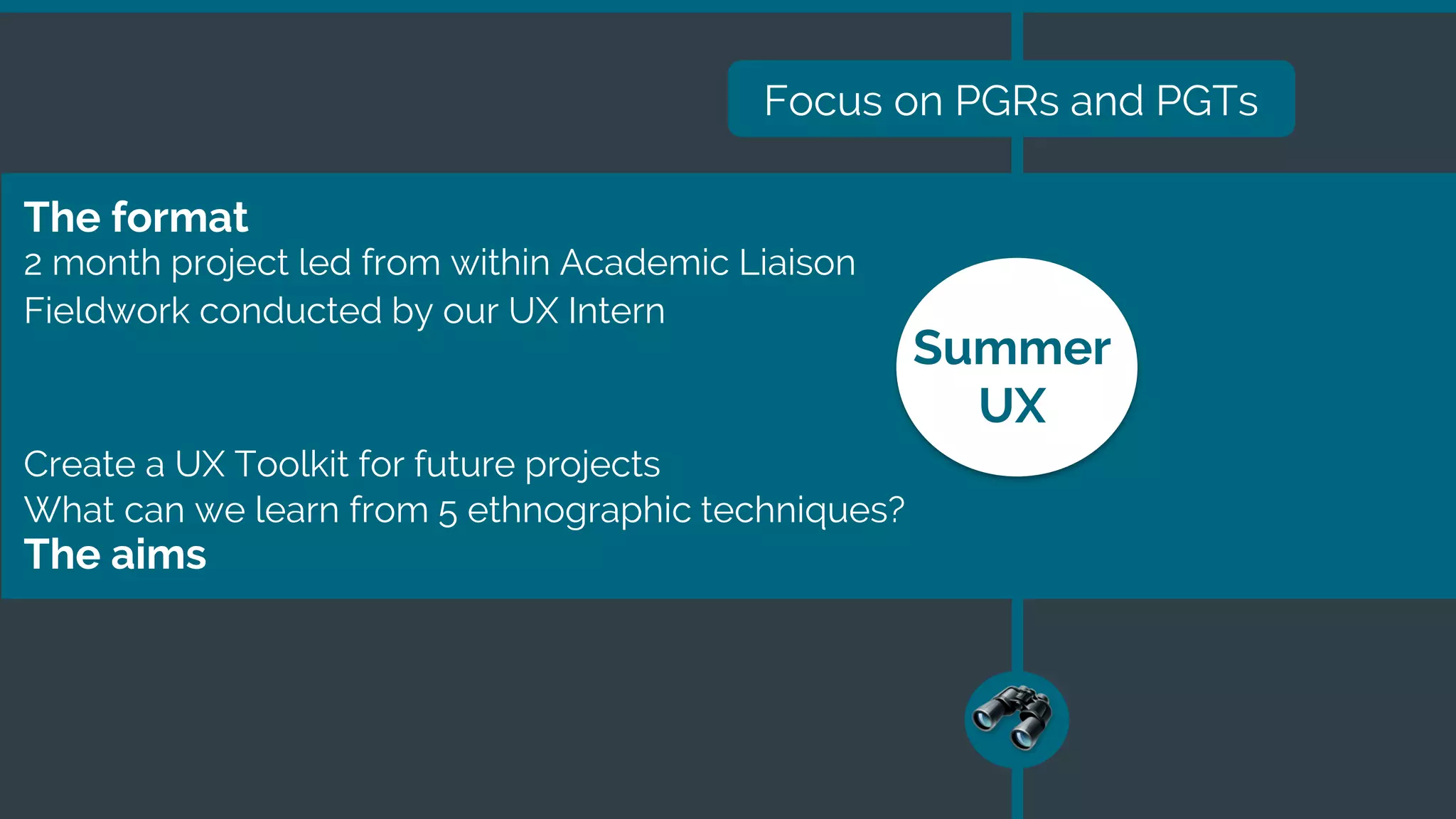
Summer
UX
2 month project led from within Academic Liaison
Fieldwork conducted by our UX Intern
What can we learn from 5 ethnographic techniques?
The format
The aims
Create a UX Toolkit for future projects
Focus on PGRs and PGTs
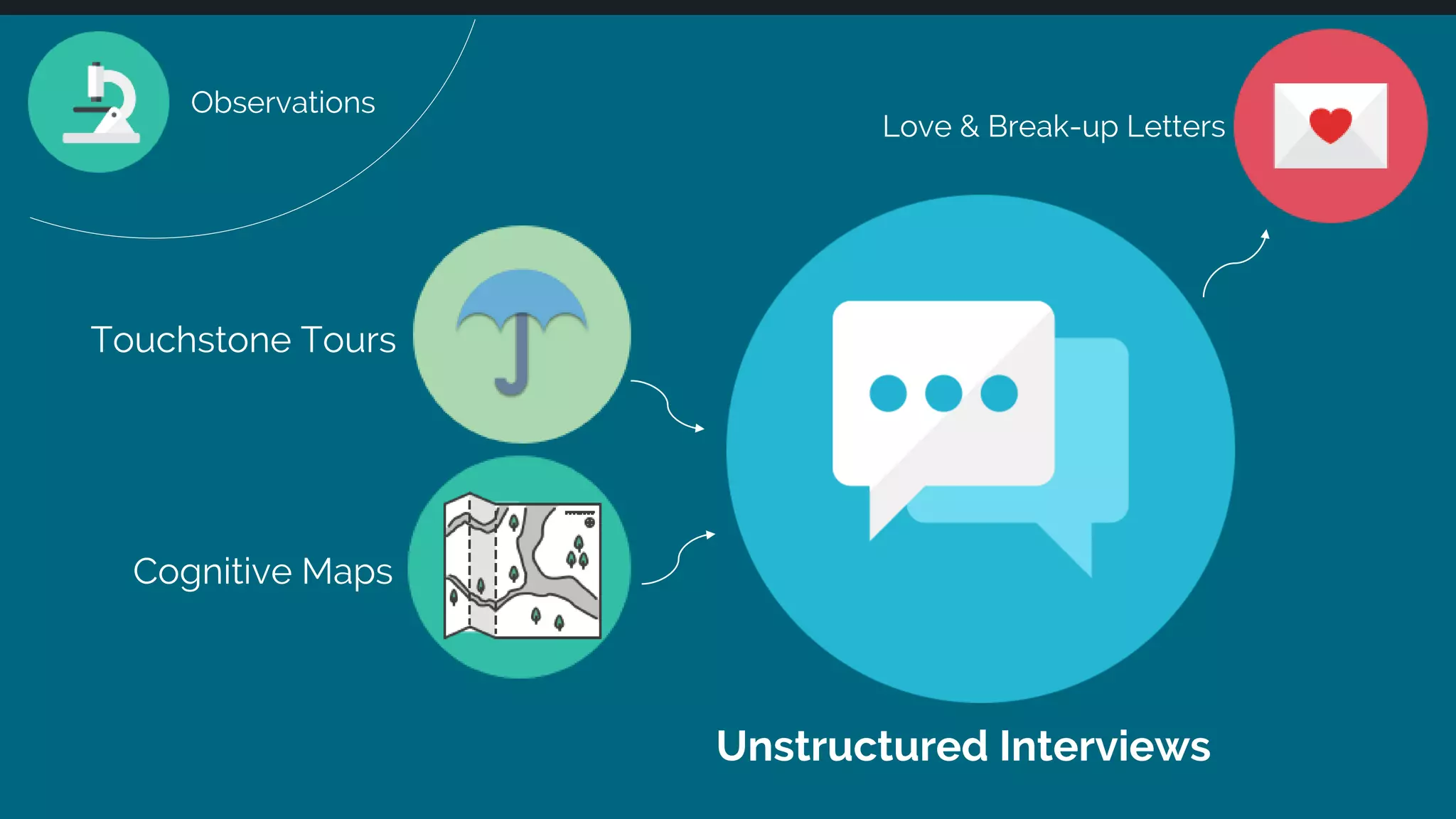
Observations
Touchstone Tours
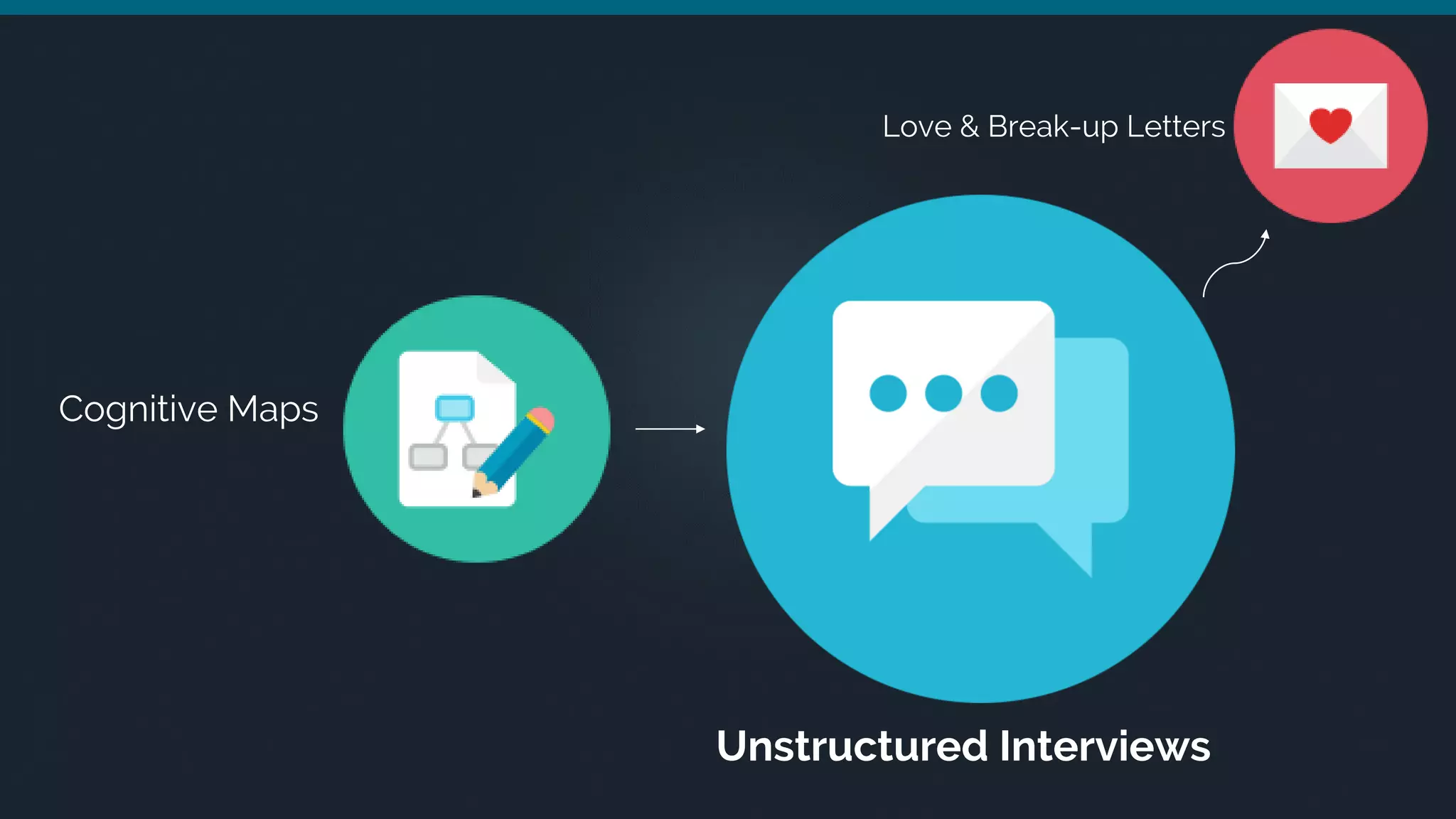
Cognitive Maps
Love & Break-up Letters
Unstructured Interviews
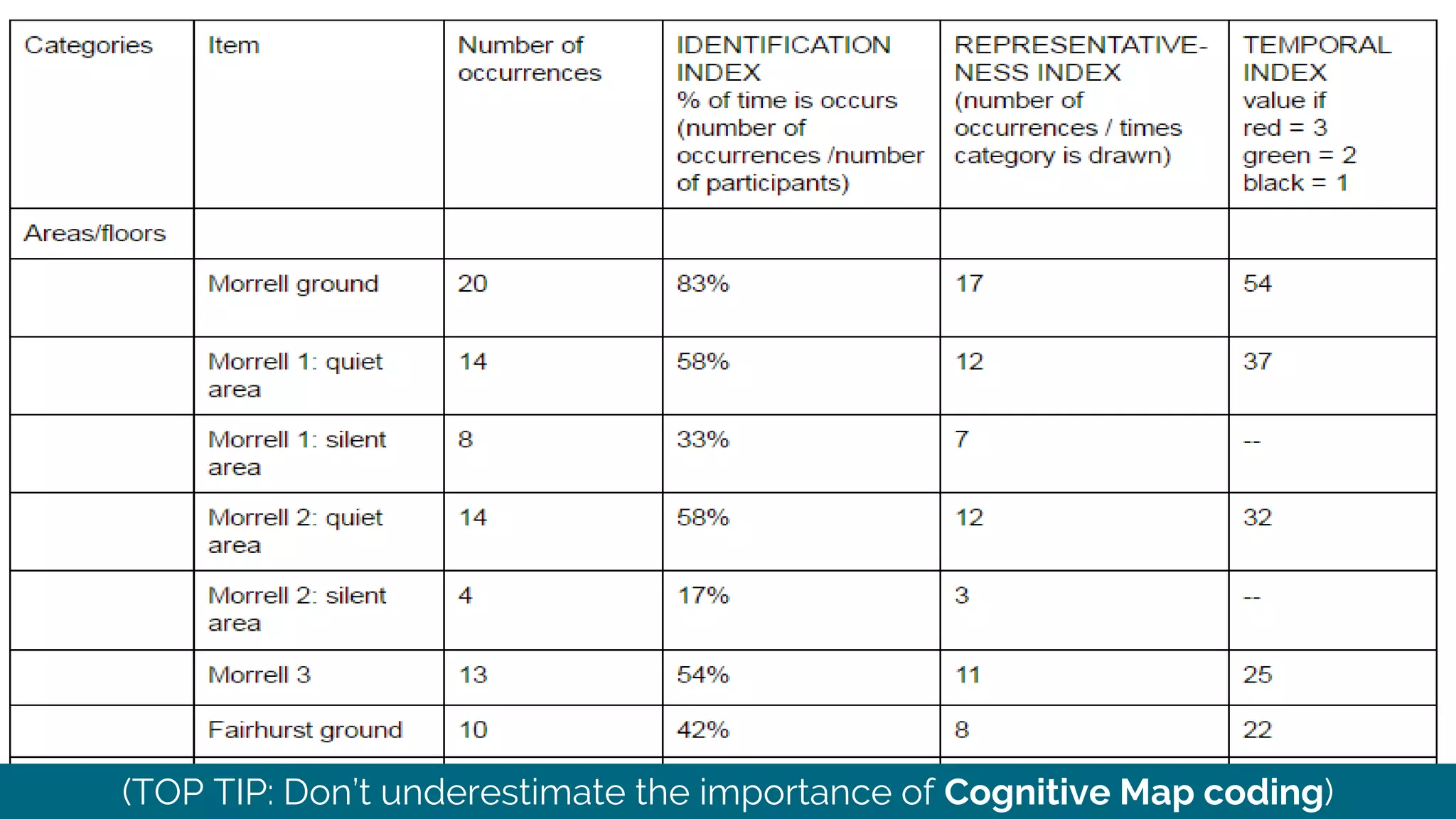
(TOP TIP: Don’t underestimate the importance of Cognitive Map coding)
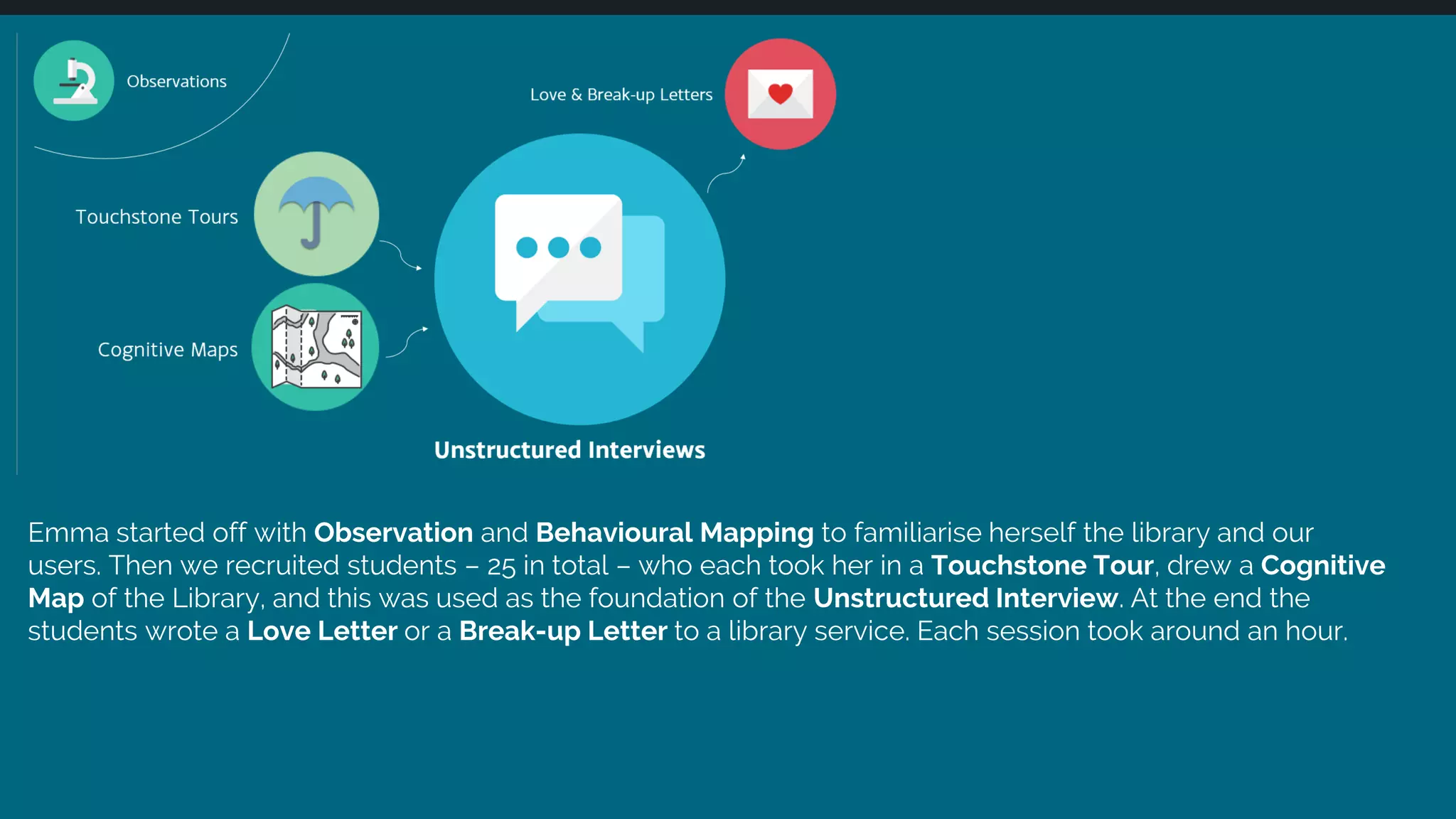
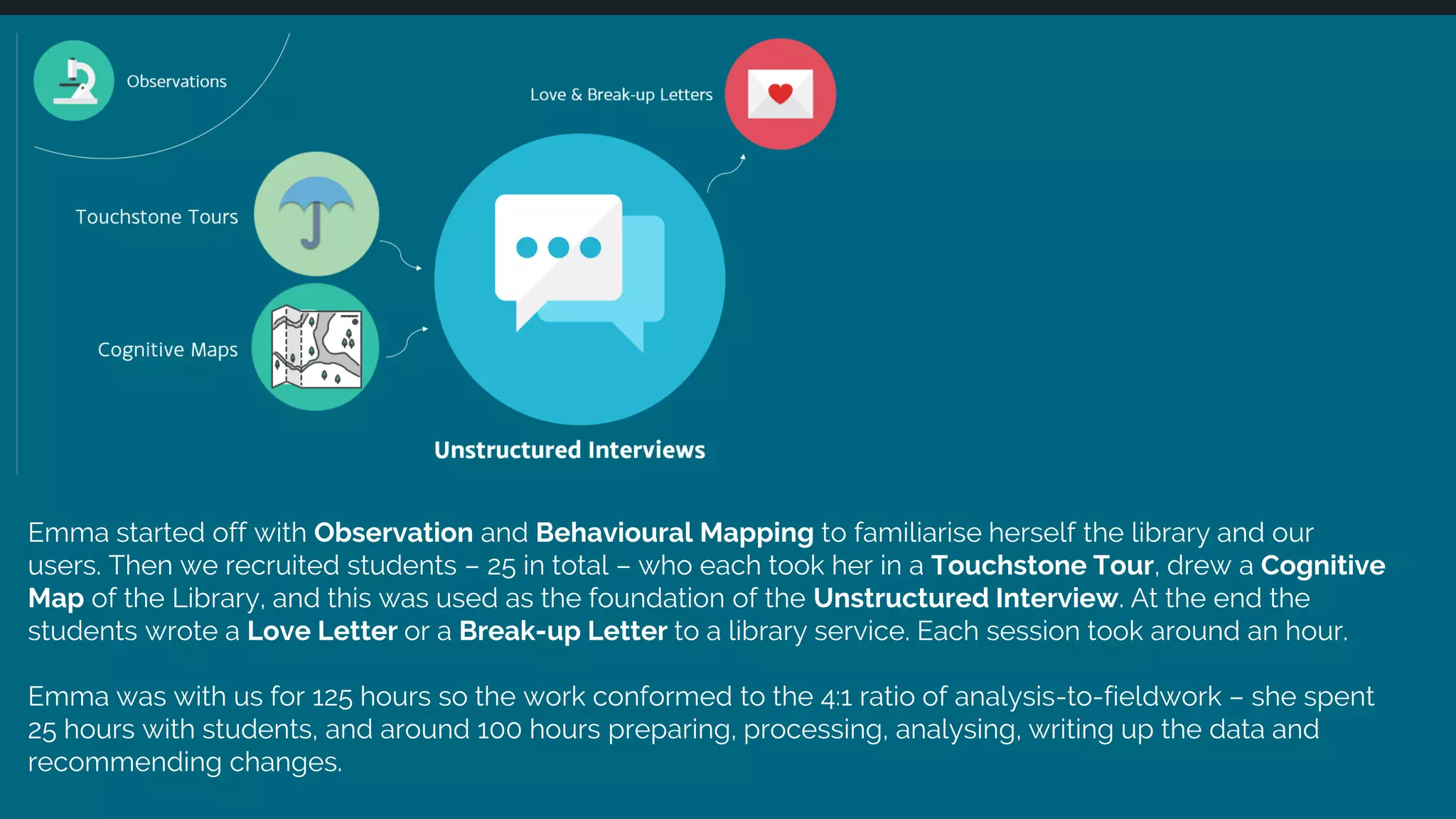
Emma started off with Observation and Behavioural Mapping to familiarise herself the library and our
users. Then we recruited students – 25 in total – who each took her in a Touchstone Tour, drew a Cognitive
Map of the Library, and this was used as the foundation of the Unstructured Interview. At the end the
students wrote a Love Letter or a Break-up Letter to a library service. Each session took around an hour.
Emma started off with Observation and Behavioural Mapping to familiarise herself the library and our
users. Then we recruited students – 25 in total – who each took her in a Touchstone Tour, drew a Cognitive
Map of the Library, and this was used as the foundation of the Unstructured Interview. At the end the
students wrote a Love Letter or a Break-up Letter to a library service. Each session took around an hour.
Emma was with us for 125 hours so the work conformed to the 4:1 ratio of analysis-to-fieldwork – she spent
25 hours with students, and around 100 hours preparing, processing, analysing, writing up the data and
recommending changes.
Emma also created a UX Toolkit to help us with future projects. This was a Google Drive folder which
included, for each technique: examples, consent forms, her experiences and recommendations, what
worked and what didn’t, and further reading she recommended or found particularly useful.
If you’re interested click here to see the structured introduction we put together to introduce our
interns to Library UX – this contains presentations, blogposts, articles, and books.
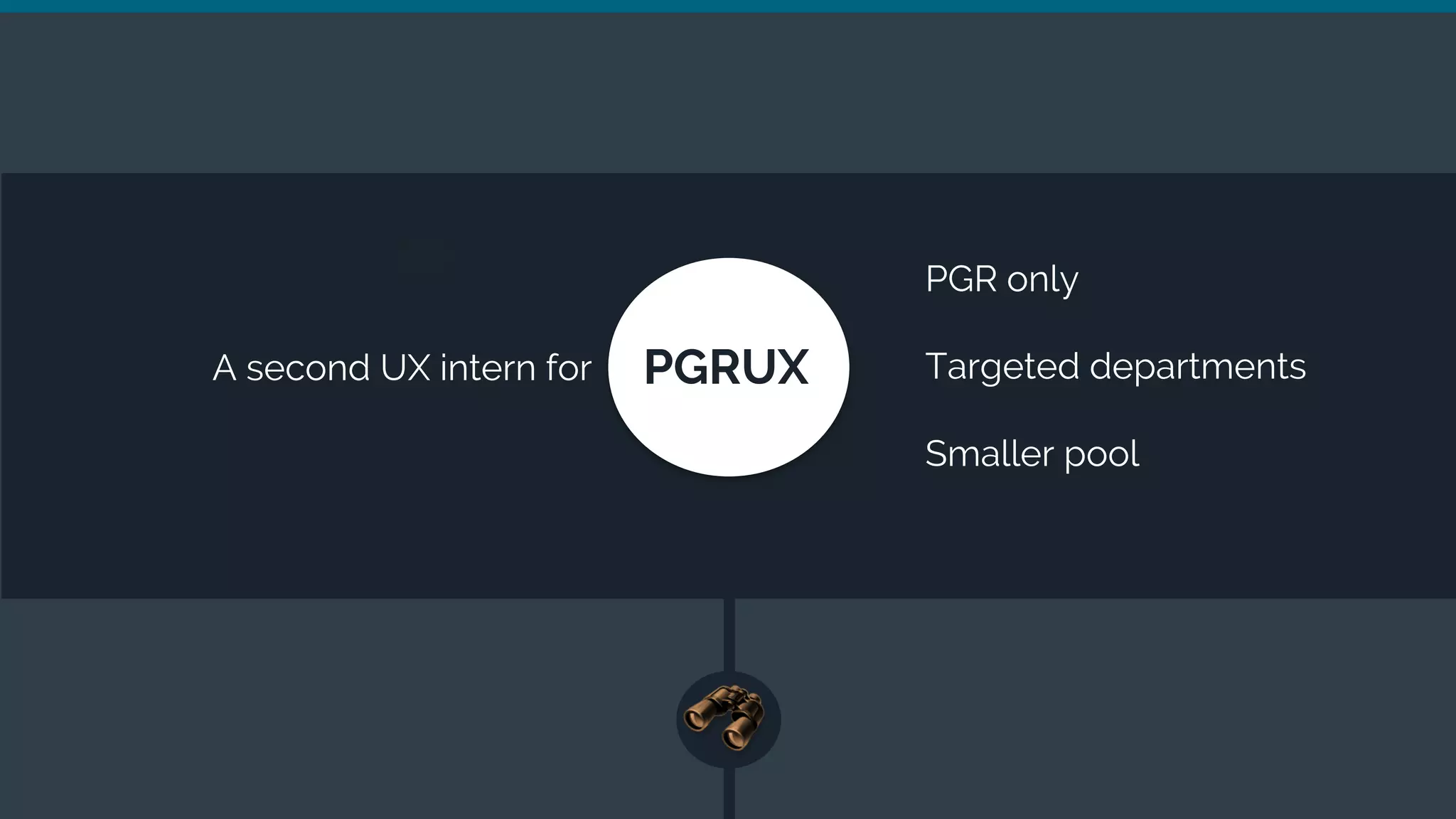
PGRUXA second UX intern for
PGR only
Targeted departments
Smaller pool
Love & Break-up Letters
Unstructured Interviews
Cognitive Maps
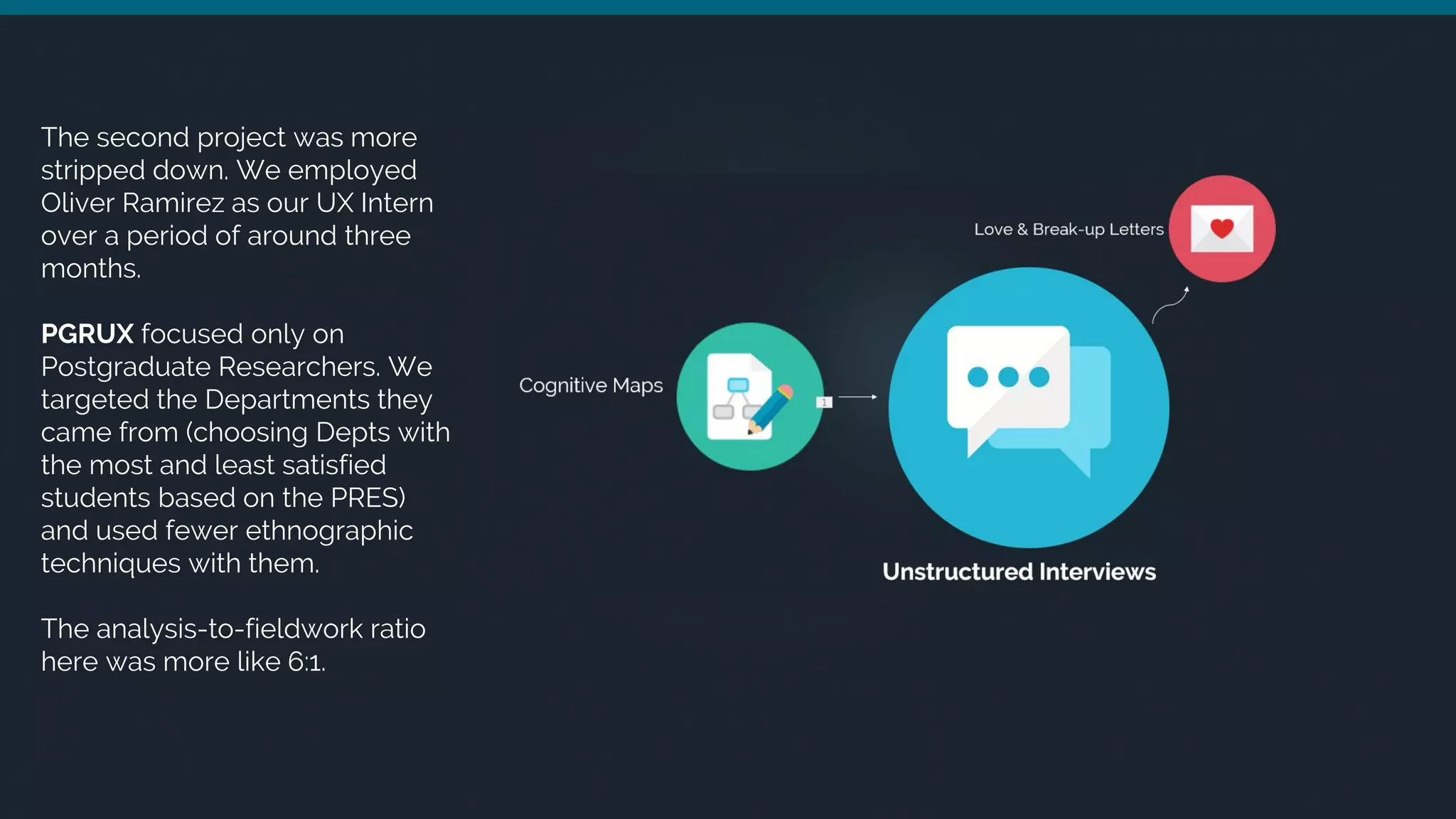
The second project was more
stripped down. We employed
Oliver Ramirez as our UX Intern
over a period of around three
months.
PGRUX focused only on
Postgraduate Researchers. We
targeted the Departments they
came from (choosing Depts with
the most and least satisfied
students based on the PRES)
and used fewer ethnographic
techniques with them.
The analysis-to-fieldwork ratio
here was more like 6:1.
Service tweaks
Service tweaks
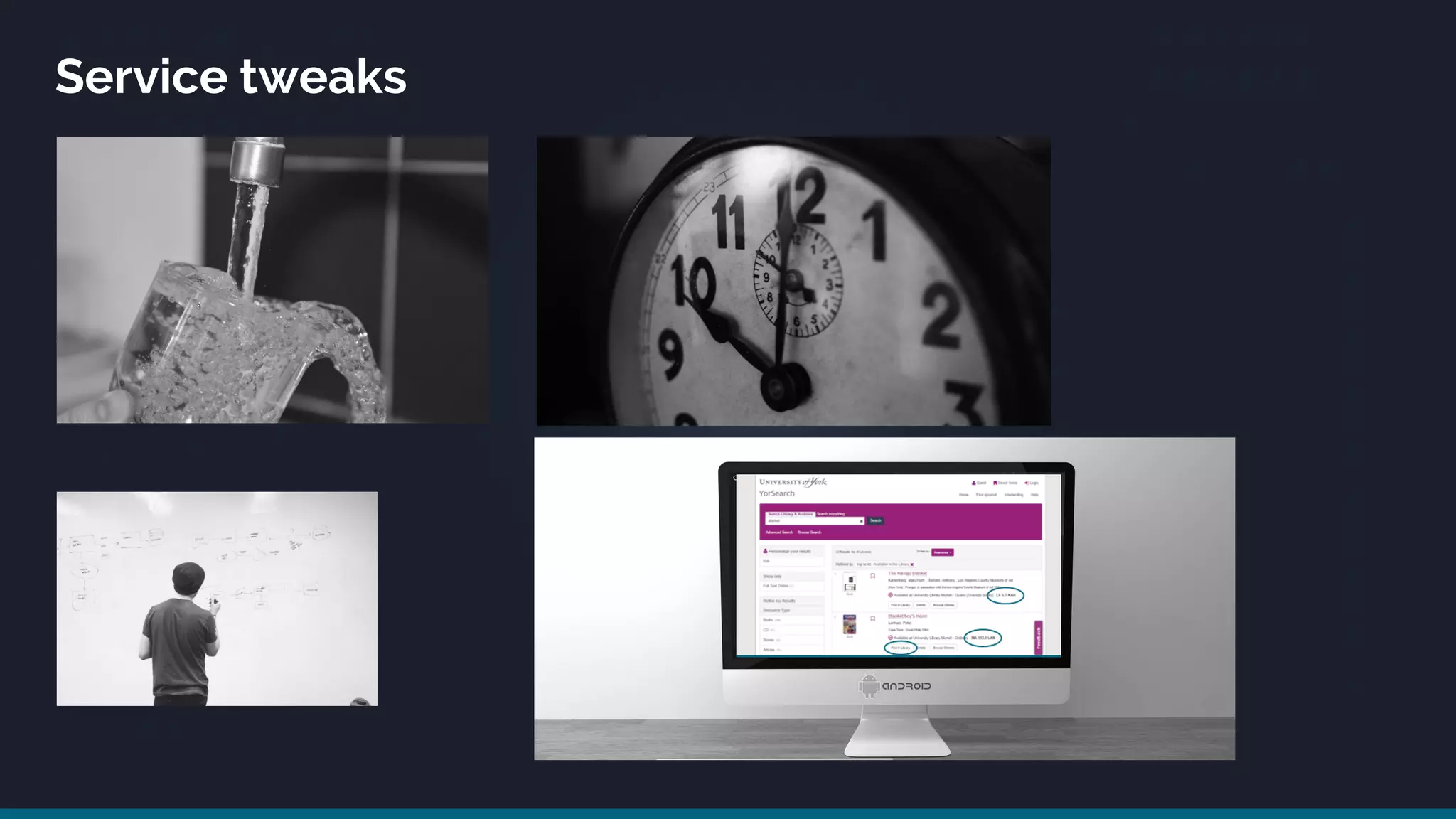
We added a hot water drinking tap
We put some whiteboards in a new
PGR space to help foster community
One area of the library used to
close at 10pm which put people
off using it – we made it 24hrs
access in line with the rest of the
building.
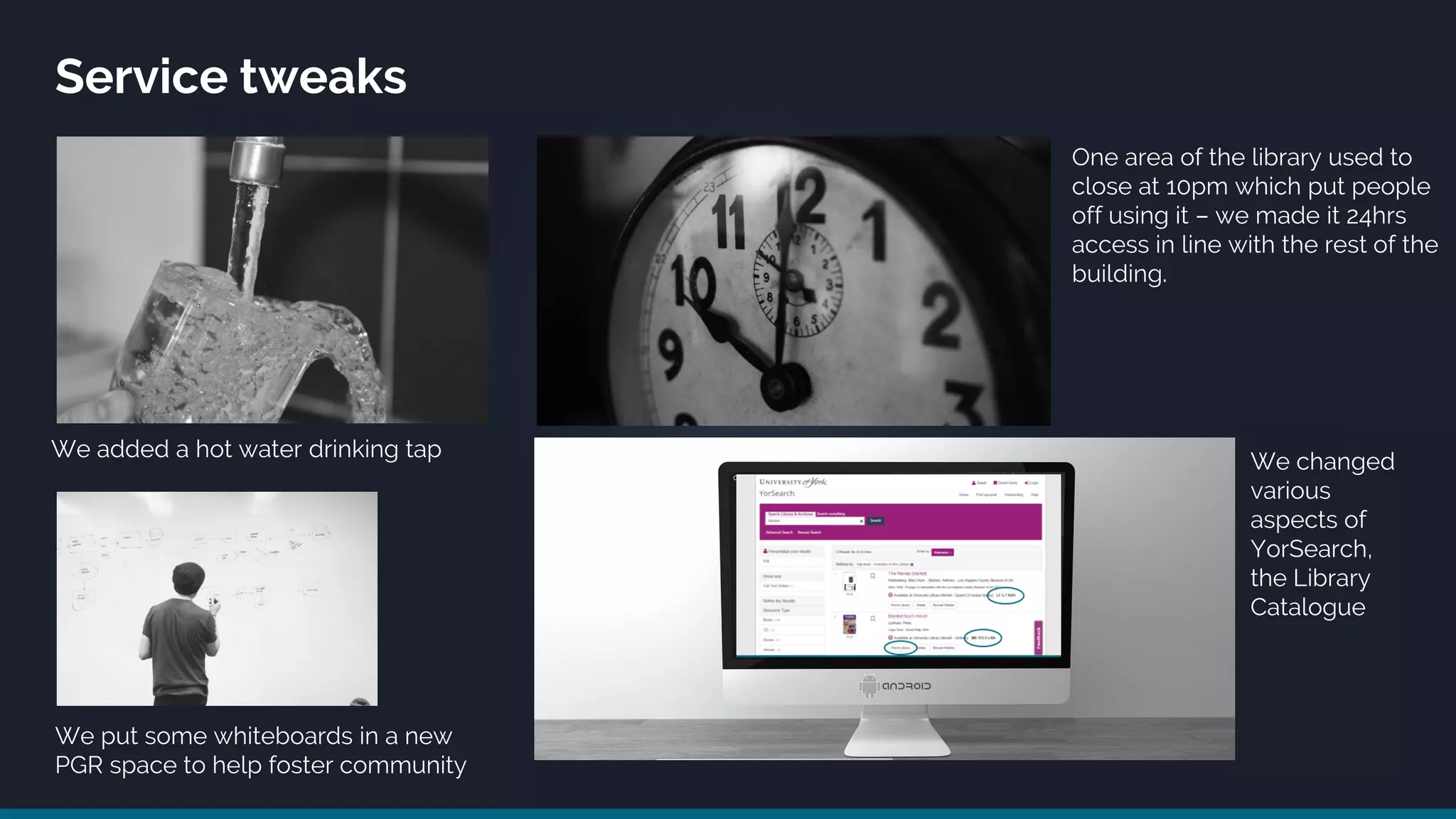
We changed
various
aspects of
YorSearch,
the Library
Catalogue
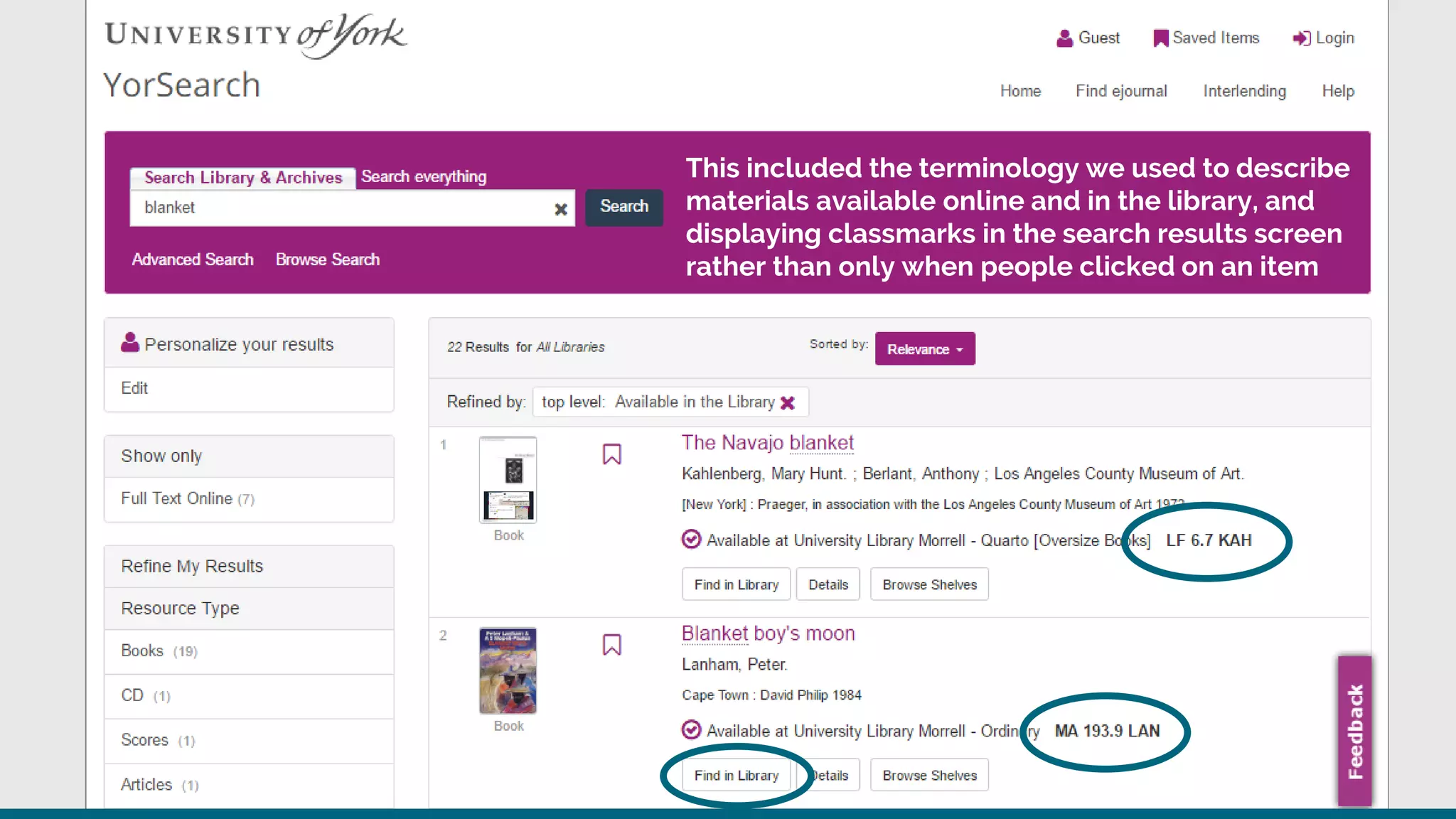
This included the terminology we used to describe
materials available online and in the library, and
displaying classmarks in the search results screen
rather than only when people clicked on an item
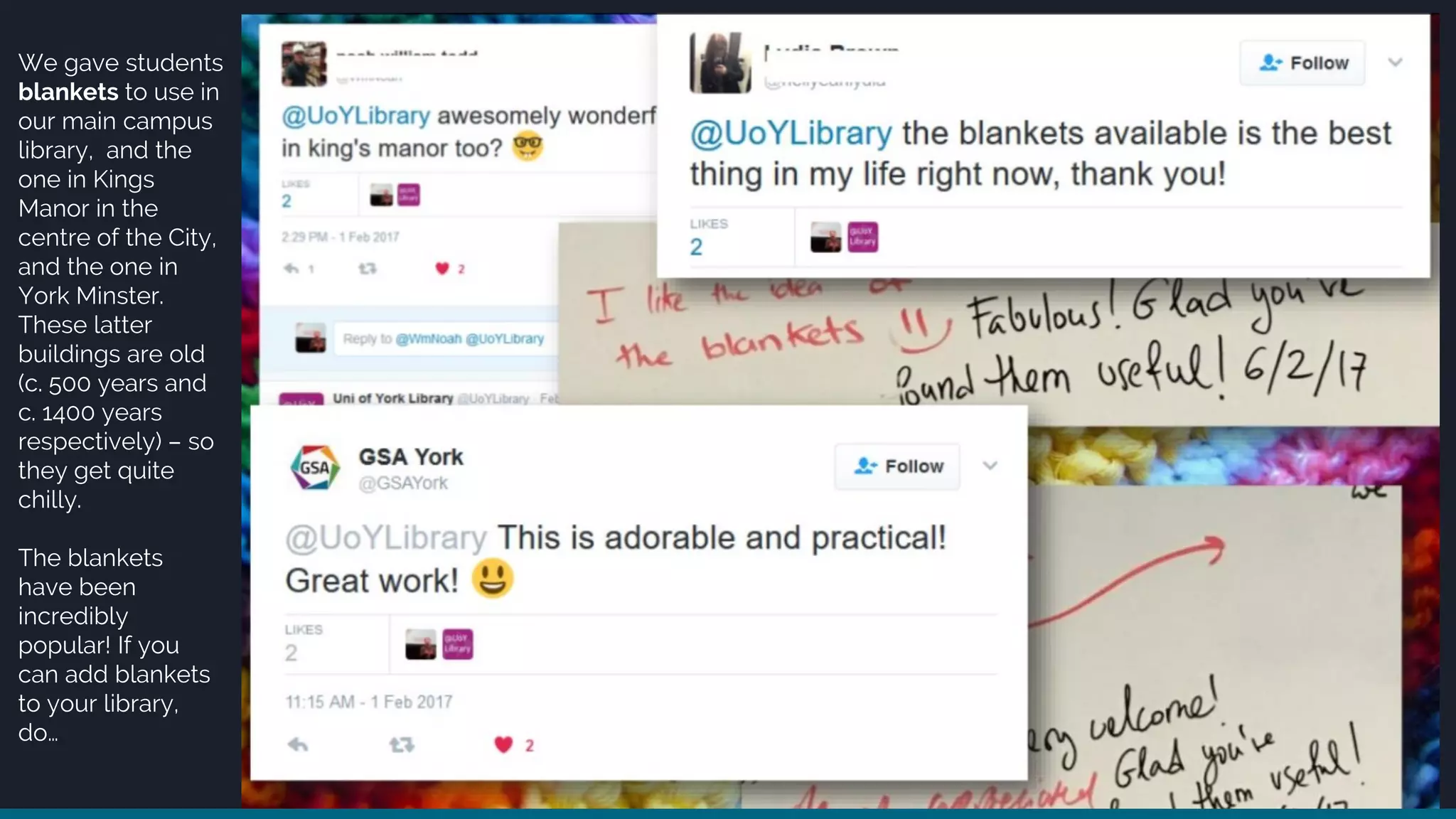
We gave students
blankets to use in
our main campus
library, and the
one in Kings
Manor in the
centre of the City,
and the one in
York Minster.
These latter
buildings are old
(c. 500 years and
c. 1400 years
respectively) – so
they get quite
chilly.
The blankets
have been
incredibly
popular! If you
can add blankets
to your library,
do…
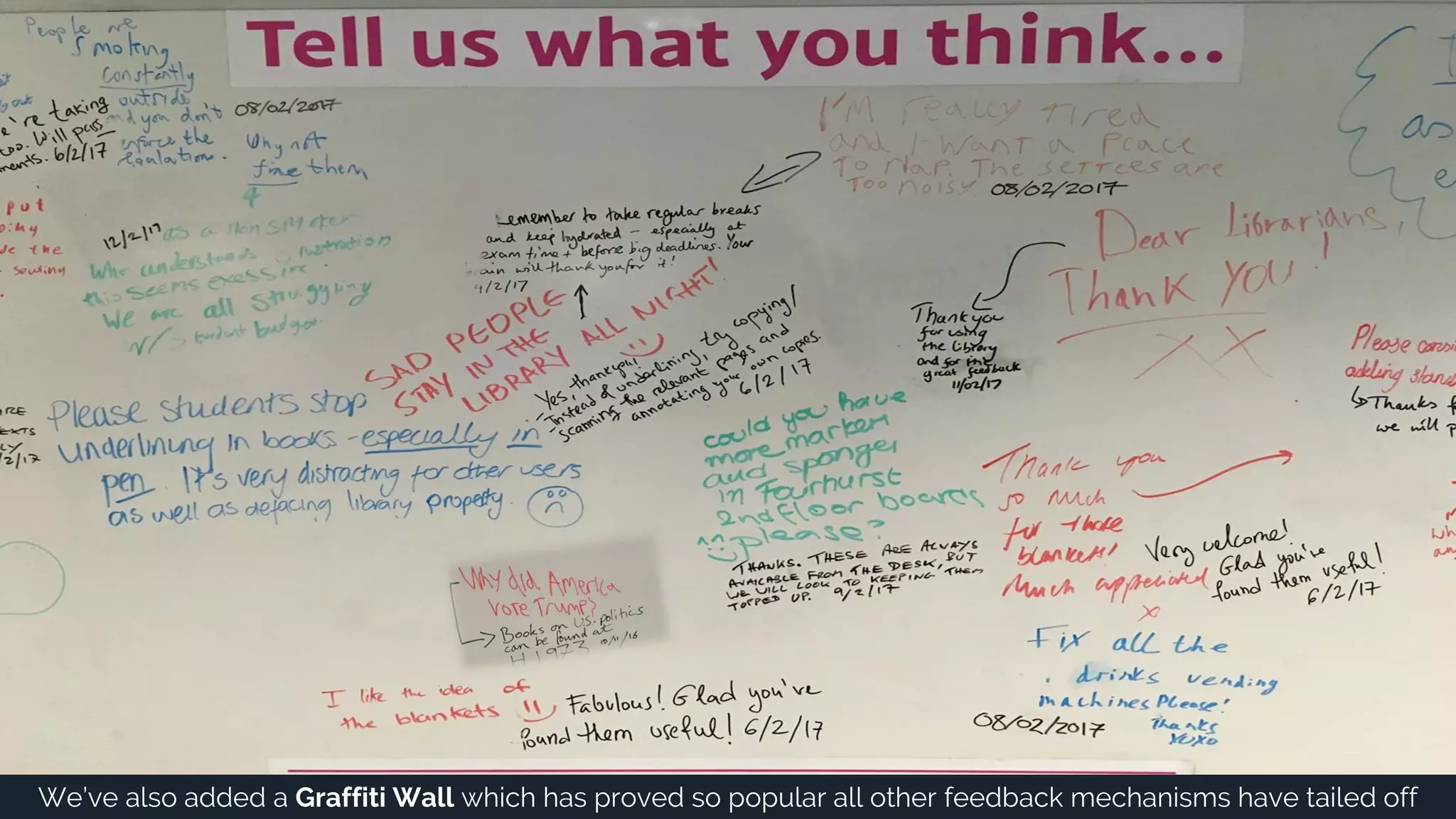
We’ve also added a Graffiti Wall which has proved so popular all other feedback mechanisms have tailed off
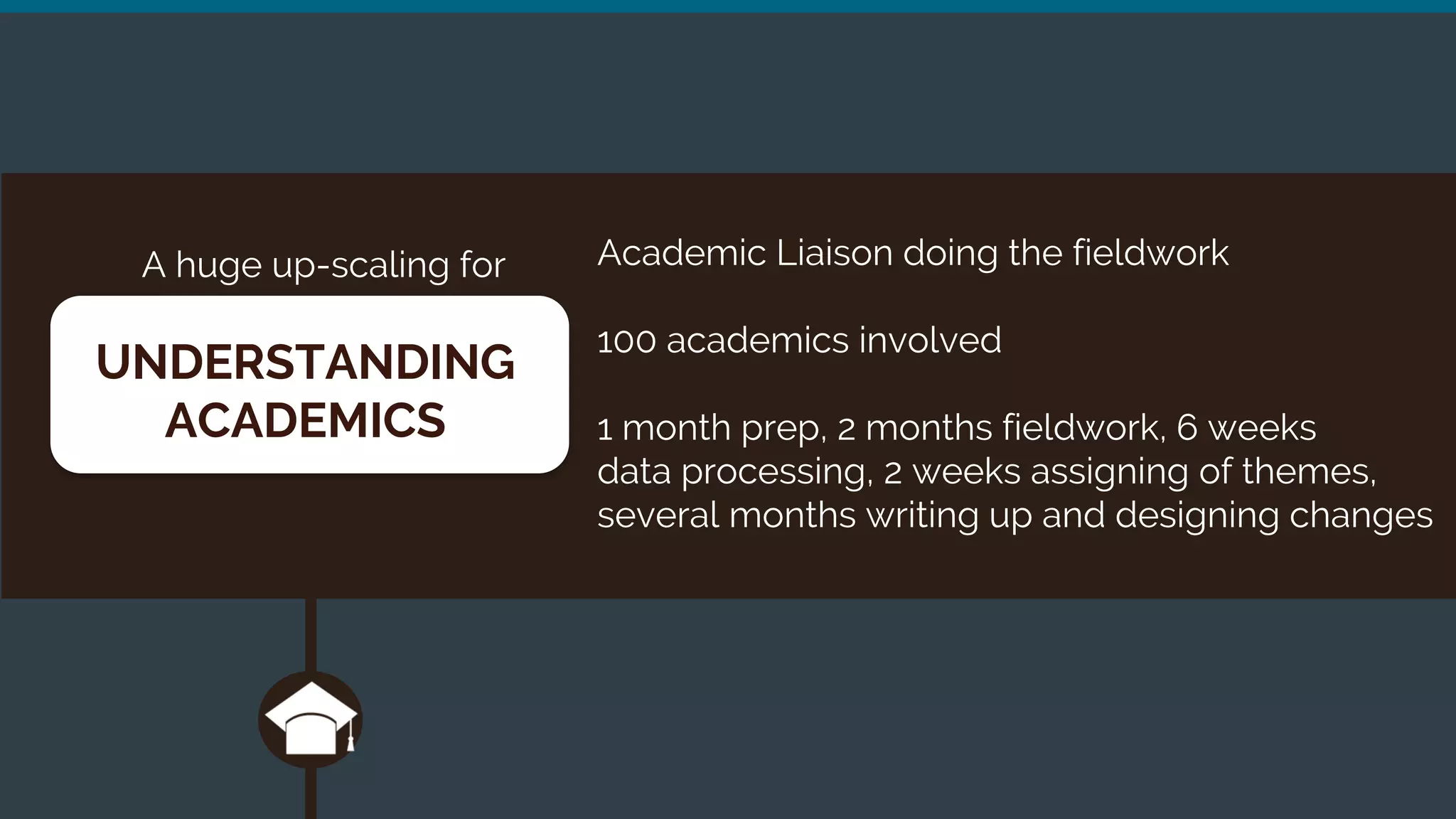
UNDERSTANDING
ACADEMICS
A huge up-scaling for Academic Liaison doing the fieldwork
100 academics involved
1 month prep, 2 months fieldwork, 6 weeks
data processing, 2 weeks assigning of themes,
several months writing up and designing changes
Cognitive Maps
Semi-structured Interviews
This project was by far the
biggest we’ve done.
We asked academics to draw
cognitive maps that were not
geographical but process based:
a map of their process for
creating a new module, or
running a research project.
After they’d drawn the maps
they talked us through their
process – this usually took
around 15 minutes and was
hugely revealing. That then
formed the basis of the interview
which followed.
We learned so much that
analysis and improvements are
still emerging and being
implemented now.
Service tweaks
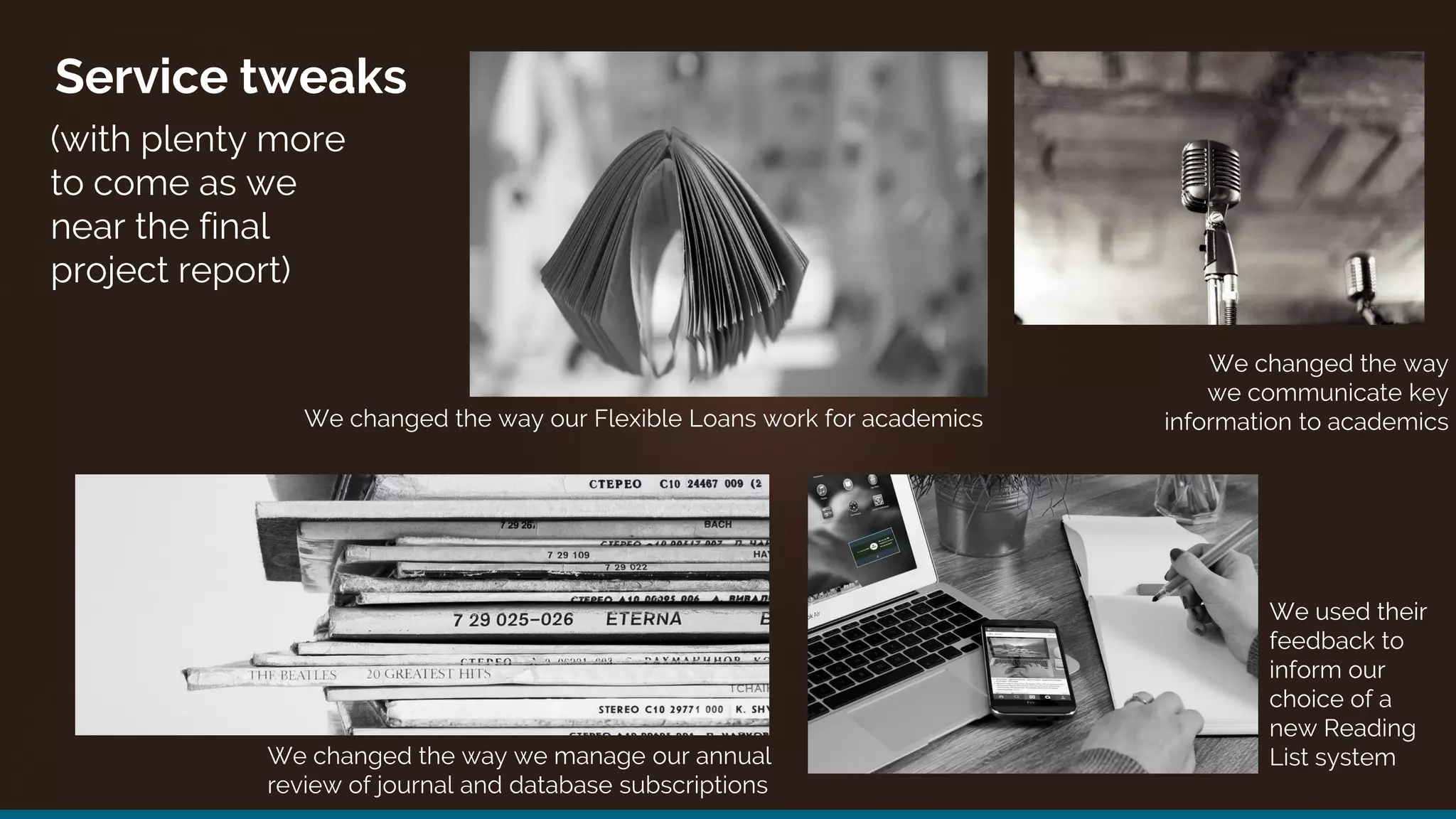
Service tweaks
(with plenty more
to come as we
near the final
project report)
We changed the way our Flexible Loans work for academics
We used their
feedback to
inform our
choice of a
new Reading
List system
We changed the way
we communicate key
information to academics
We changed the way we manage our annual
review of journal and database subscriptions
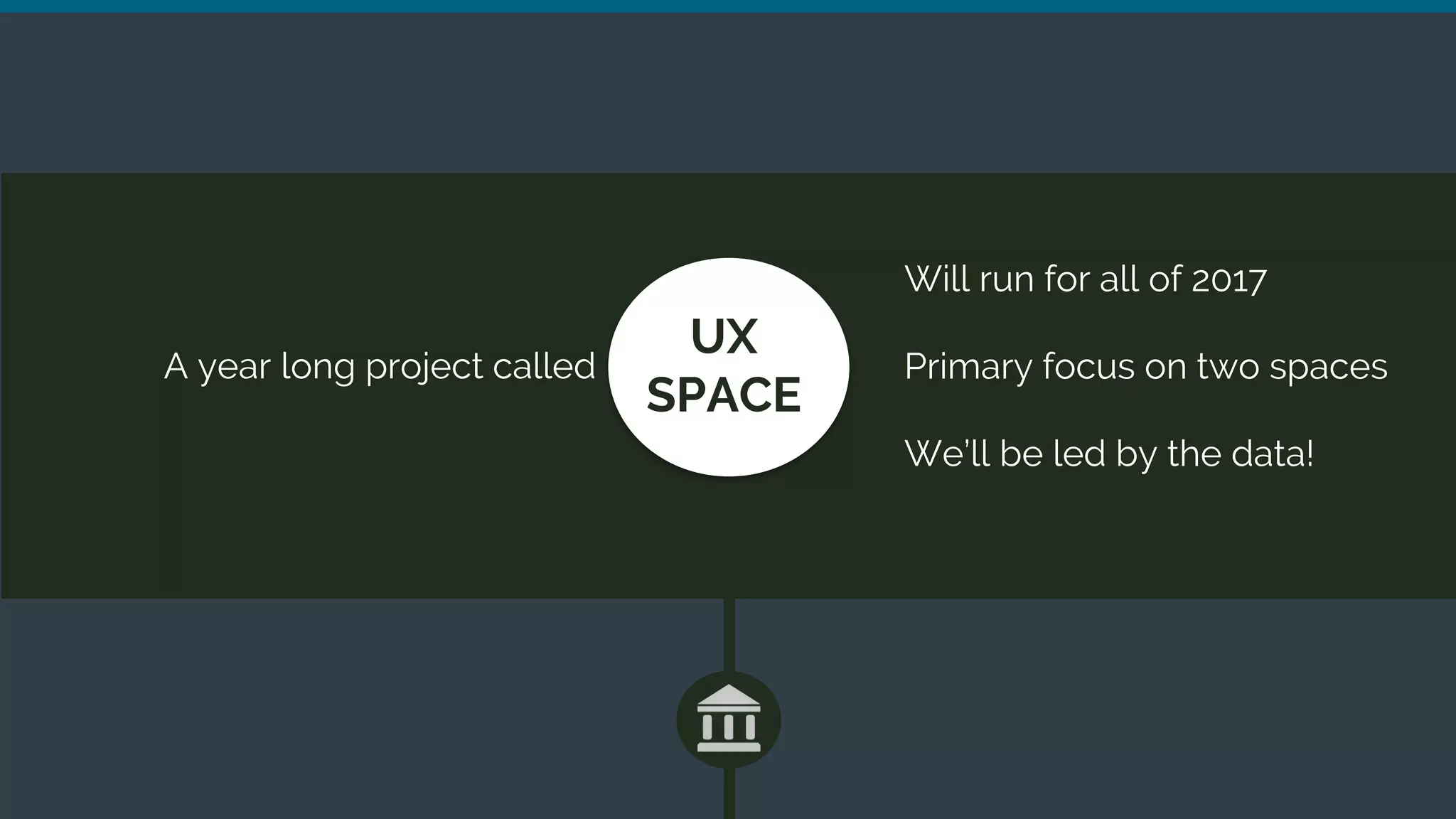
UX
SPACE
A year long project called
Will run for all of 2017
Primary focus on two spaces
We’ll be led by the data!
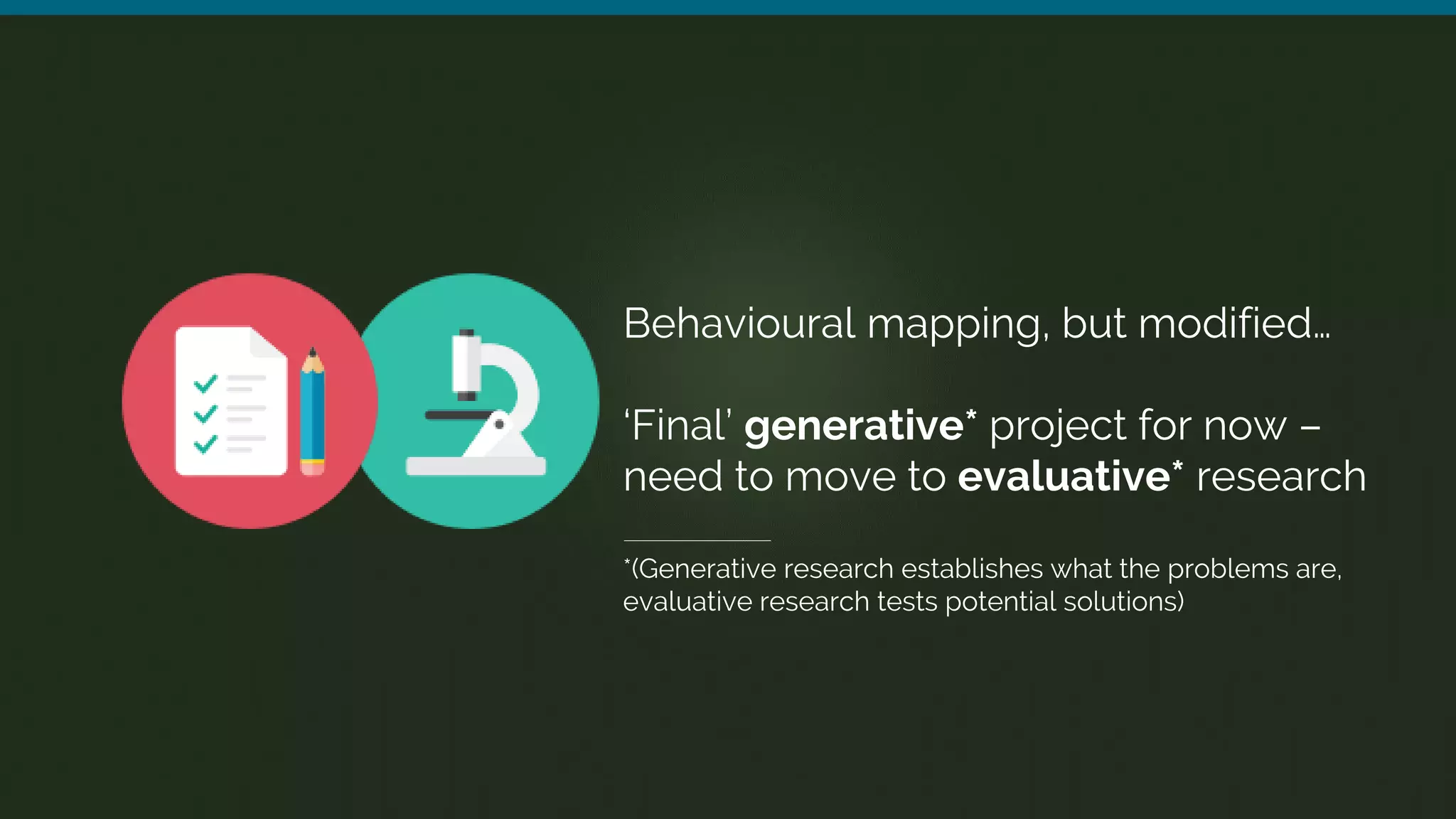
Behavioural mapping, but modified…
‘Final’ generative* project for now –
need to move to evaluative* research
*(Generative research establishes what the problems are,
evaluative research tests potential solutions)
[Internal] [Library industry] [Lib UX Community] [Specialists] [Outside HE] [Anyone]
We’ve tried to share as much as possible about our work with as many different
types of audience as possible. From internal reports to regular blogposts to talks
like this one for a library UX community to presentations entirely outside the world
of libraries. We also try really hard with the slides in case they get picked up by
Slideshare and featured on their homepage, which can exponentially amplify how
far you reach. User Experience in libraries is still a relatively new field, so it’s
important that we all share our experiences and our impact.
A strategic approach to dissemination
[Internal] [Library industry] [Lib UX Community] [Specialists] [Outside HE] [Anyone]
A strategic approach to dissemination
[Internal] [Library industry] [Lib UX Community] [Specialists] [Outside HE] [Anyone]
A strategic approach to dissemination
[Internal] [Library industry] [Lib UX Community] [Specialists] [Outside HE] [Anyone]
A strategic approach to dissemination
[Internal] [Library industry] [Lib UX Community] [Specialists] [Outside HE] [Anyone]
A strategic approach to dissemination
[Internal] [Library industry] [Lib UX Community] [Specialists] [Outside HE] [Anyone!]
A strategic approach to dissemination
[Internal] [Library industry] [Lib UX Community] [Specialists] [Outside HE] [Anyone!]
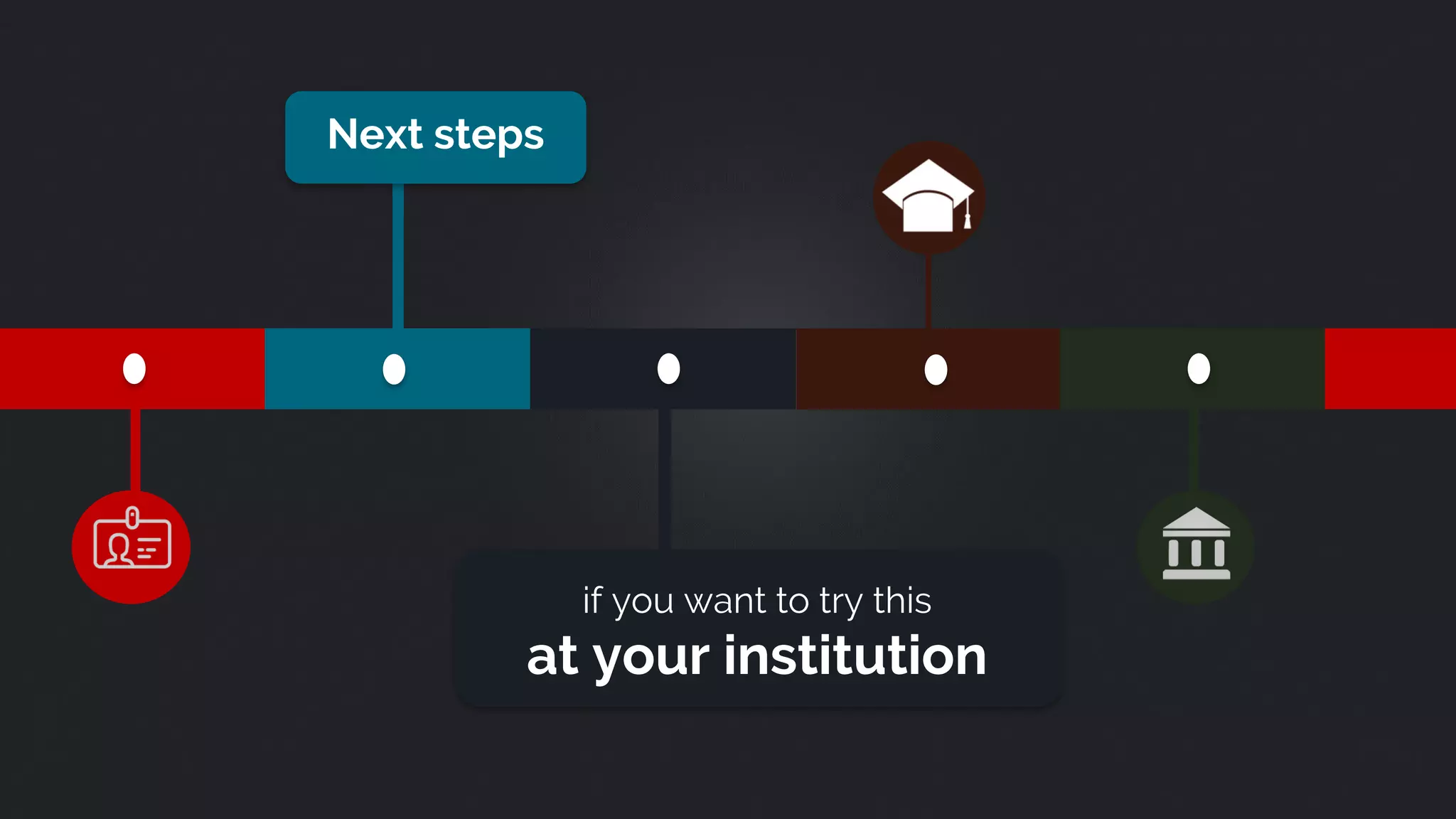
if you want to try this
at your institution
Next steps
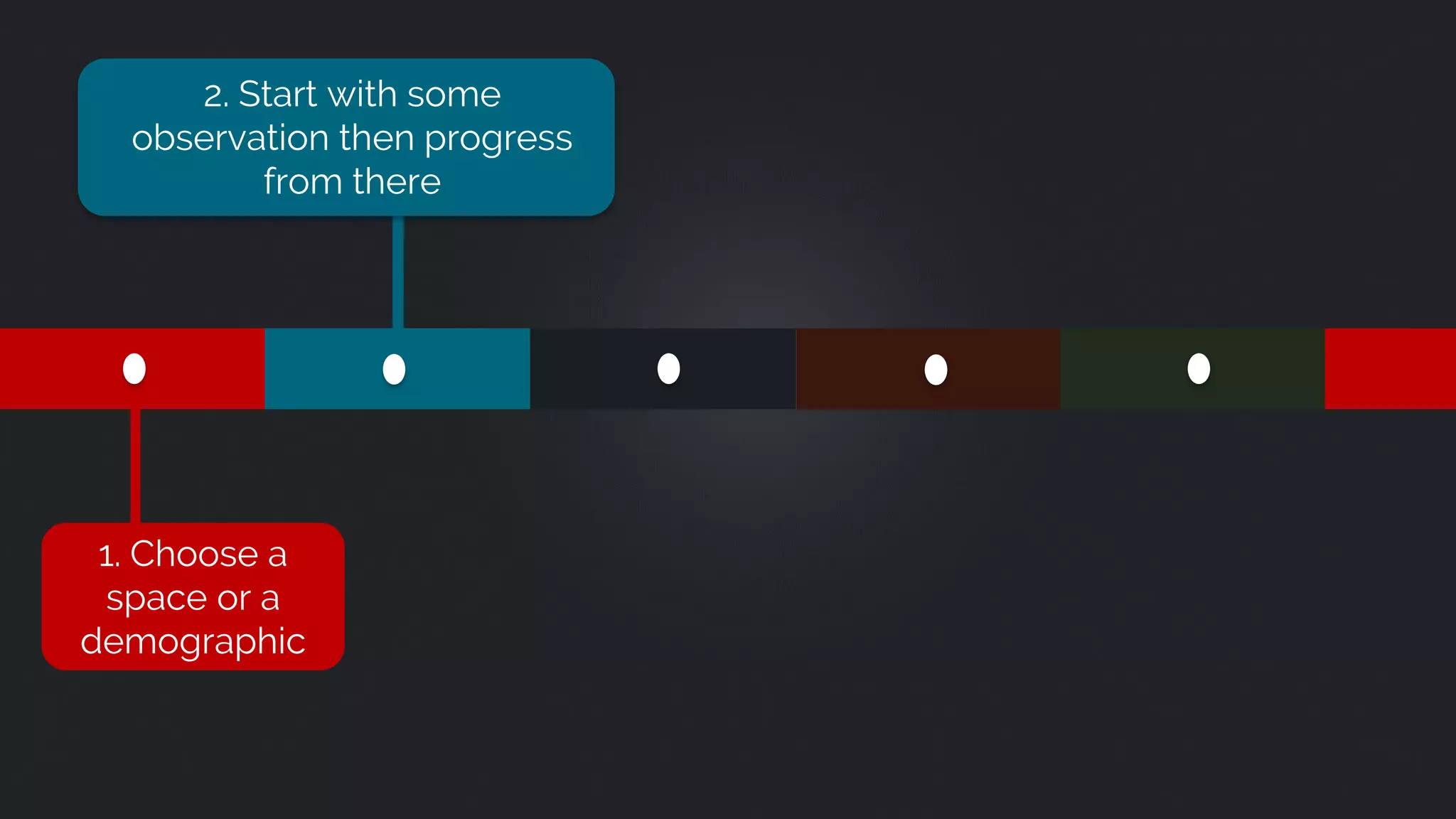
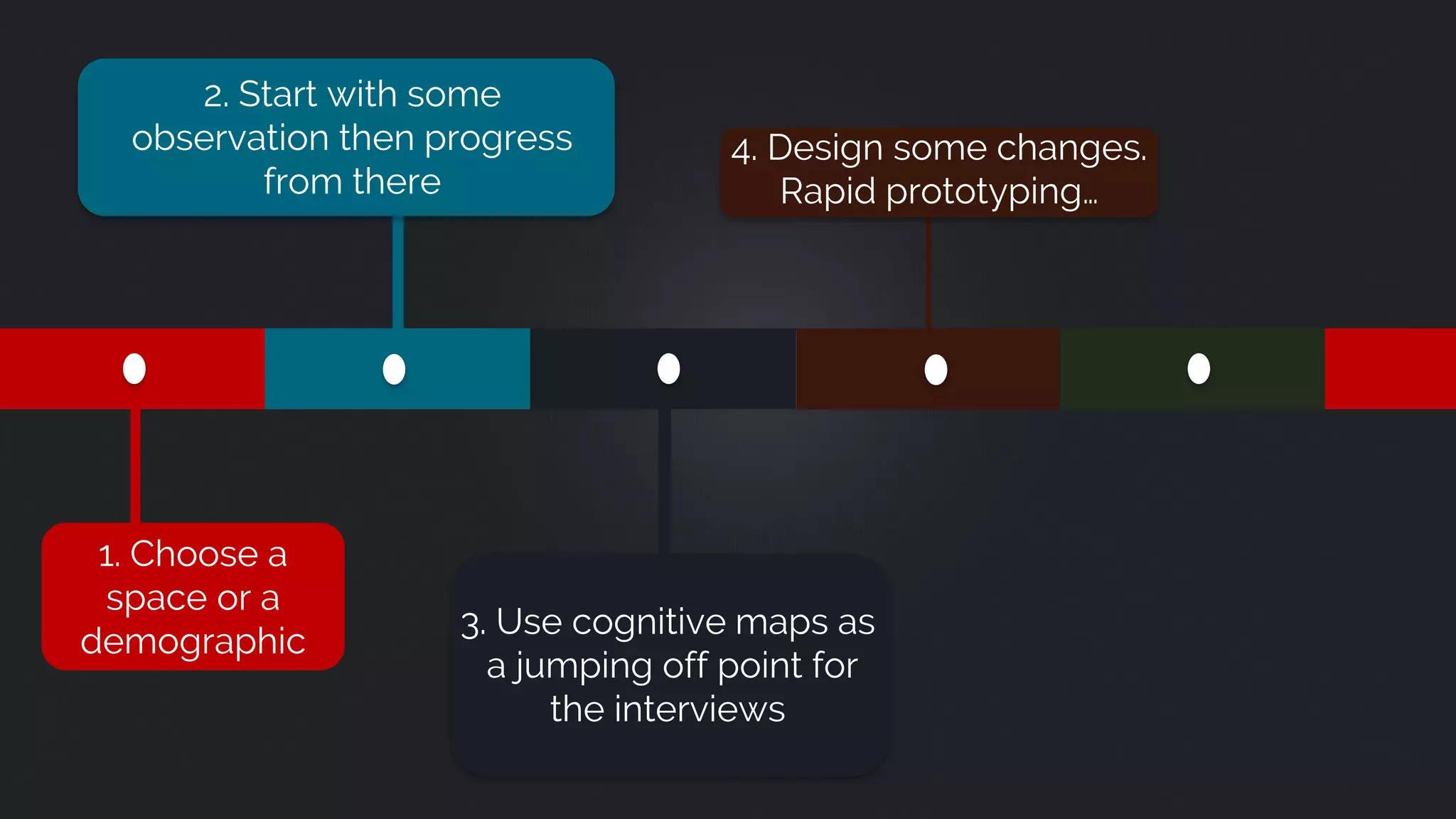
1. Choose a
space or a
demographic
2. Start with some
observation then progress
from there
1. Choose a
space or a
demographic
2. Start with some
observation then progress
from there
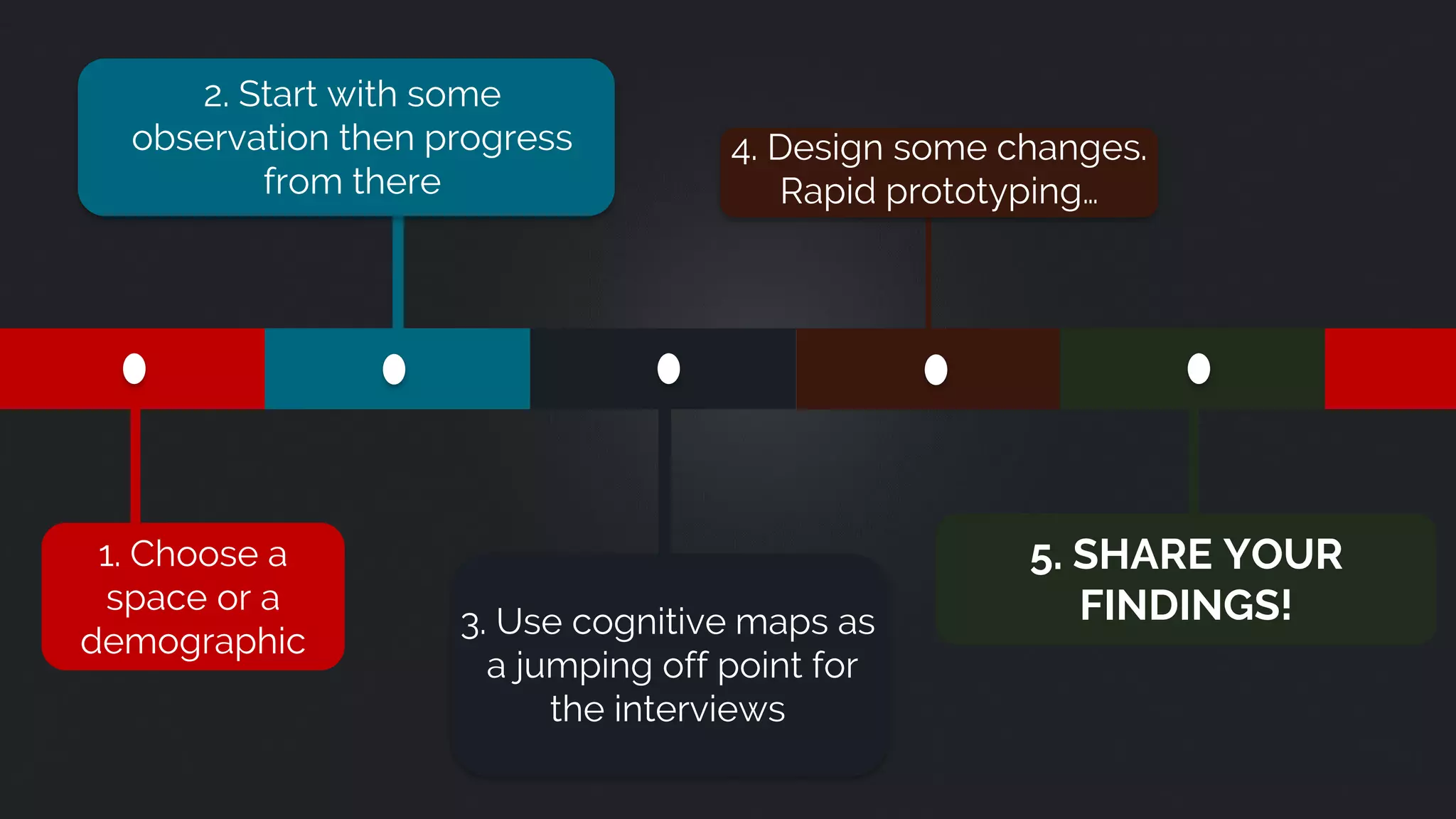
3. Use cognitive maps as
a jumping off point for
the interviews
4. Design some changes.
Rapid prototyping…
1. Choose a
space or a
demographic
2. Start with some
observation then progress
from there
3. Use cognitive maps as
a jumping off point for
the interviews
4. Design some changes.
Rapid prototyping…
5. SHARE YOUR
FINDINGS!
you can read about all our UX work
at York on the Lib-Innovation blog:
libinnovation.blogspot.com
@ned_potter
thanks for watching
With the exceptions of the screenshots and screengrabs captured for this presentation,
the images in these slides are CC0, sourced via iconfinder, pixabay and pexels
credits

UX at York: starting small and scaling up (#nclxux)

  • 1.
    starting small andscaling up UX at York UXLibs I Summer UX PGRUX Understanding Academics UX Space @ned_potter #nclxux
  • 2.
    UXLibs I The adventurebegins at the first User Experience in Libraries Conference, 2015
  • 3.
    We sent 5staff from different teams, including Academic Liaison, Customer Services, and Comms
  • 4.
    We sent 5staff from different teams, including Academic Liaison, Customer Services, and Comms 3 days of intense UXing
  • 5.
    We sent 5staff from different teams, including Academic Liaison, Customer Services, and Comms 3 days of intense UXing We came away with a lot but uppermost in our minds were the 5 main ethnographic methods
  • 6.
    We sent 5staff from different teams, including Academic Liaison, Customer Services, and Comms 3 days of intense UXing We were enthused, excited, we believed in UX; but it was hard to shake the feeling of, oh god what do we DO though? We came away with a lot but uppermost in our minds were the 5 main ethnographic methods
  • 7.
    We sent 5staff from different teams, including Academic Liaison, Customer Services, and Comms 3 days of intense UXing We were enthused, excited, we believed in UX; but it was hard to shake the feeling of, oh god what do we DO though? We came away with a lot but uppermost in our minds were the 5 main ethnographic methods
  • 8.
    We sent 5staff from different teams, including Academic Liaison, Customer Services, and Comms 3 days of intense UXing We kept coming back to the 5 main ethnographic methods, we wanted to try them out We were enthused, excited, we believed in UX; but it was hard to shake the feeling of, oh god what do we DO though?
  • 9.
    We sent 5staff from different teams, including Academic Liaison, Customer Services, and Comms 3 days of intense UXing We kept coming back to the 5 main ethnographic methods, we wanted to try them out So we got in a UX Intern, Emma Gray We were enthused, excited, we believed in UX; but it was hard to shake the feeling of, oh god what do we DO though?
  • 10.
    We sent 5staff from different teams, including Academic Liaison, Customer Services, and Comms 3 days of intense UXing We kept coming back to the 5 main ethnographic methods, we wanted to try them out So we got in a UX Intern, Emma Gray We were enthused, excited, we believed in UX; but it was hard to shake the feeling of, oh god what do we DO though? Which led to our first project…
  • 11.
    We sent 5staff from different teams, including Academic Liaison, Customer Services, and Comms 3 days of intense UXing We kept coming back to the 5 main ethnographic methods, we wanted to try them out So we got in a UX Intern, Emma Gray We were enthused, excited, we believed in UX; but it was hard to shake the feeling of, oh god what do we DO though? Summer UX
  • 12.
    Summer UX 2 month projectled from within Academic Liaison Fieldwork conducted by our UX Intern What can we learn from 5 ethnographic techniques? The format The aims Create a UX Toolkit for future projects Focus on PGRs and PGTs
  • 13.
    Observations Touchstone Tours Cognitive Maps Love& Break-up Letters Unstructured Interviews
  • 14.
    (TOP TIP: Don’tunderestimate the importance of Cognitive Map coding)
  • 15.
    Emma started offwith Observation and Behavioural Mapping to familiarise herself the library and our users. Then we recruited students – 25 in total – who each took her in a Touchstone Tour, drew a Cognitive Map of the Library, and this was used as the foundation of the Unstructured Interview. At the end the students wrote a Love Letter or a Break-up Letter to a library service. Each session took around an hour.
  • 16.
    Emma started offwith Observation and Behavioural Mapping to familiarise herself the library and our users. Then we recruited students – 25 in total – who each took her in a Touchstone Tour, drew a Cognitive Map of the Library, and this was used as the foundation of the Unstructured Interview. At the end the students wrote a Love Letter or a Break-up Letter to a library service. Each session took around an hour. Emma was with us for 125 hours so the work conformed to the 4:1 ratio of analysis-to-fieldwork – she spent 25 hours with students, and around 100 hours preparing, processing, analysing, writing up the data and recommending changes.
  • 17.
    Emma also createda UX Toolkit to help us with future projects. This was a Google Drive folder which included, for each technique: examples, consent forms, her experiences and recommendations, what worked and what didn’t, and further reading she recommended or found particularly useful. If you’re interested click here to see the structured introduction we put together to introduce our interns to Library UX – this contains presentations, blogposts, articles, and books.
  • 18.
    PGRUXA second UXintern for PGR only Targeted departments Smaller pool
  • 19.
    Love & Break-upLetters Unstructured Interviews Cognitive Maps
  • 20.
    The second projectwas more stripped down. We employed Oliver Ramirez as our UX Intern over a period of around three months. PGRUX focused only on Postgraduate Researchers. We targeted the Departments they came from (choosing Depts with the most and least satisfied students based on the PRES) and used fewer ethnographic techniques with them. The analysis-to-fieldwork ratio here was more like 6:1.
  • 21.
  • 22.
    Service tweaks We addeda hot water drinking tap We put some whiteboards in a new PGR space to help foster community One area of the library used to close at 10pm which put people off using it – we made it 24hrs access in line with the rest of the building. We changed various aspects of YorSearch, the Library Catalogue
  • 23.
    This included theterminology we used to describe materials available online and in the library, and displaying classmarks in the search results screen rather than only when people clicked on an item
  • 24.
    We gave students blanketsto use in our main campus library, and the one in Kings Manor in the centre of the City, and the one in York Minster. These latter buildings are old (c. 500 years and c. 1400 years respectively) – so they get quite chilly. The blankets have been incredibly popular! If you can add blankets to your library, do…
  • 25.
    We’ve also addeda Graffiti Wall which has proved so popular all other feedback mechanisms have tailed off
  • 26.
    UNDERSTANDING ACADEMICS A huge up-scalingfor Academic Liaison doing the fieldwork 100 academics involved 1 month prep, 2 months fieldwork, 6 weeks data processing, 2 weeks assigning of themes, several months writing up and designing changes
  • 27.
  • 28.
    This project wasby far the biggest we’ve done. We asked academics to draw cognitive maps that were not geographical but process based: a map of their process for creating a new module, or running a research project. After they’d drawn the maps they talked us through their process – this usually took around 15 minutes and was hugely revealing. That then formed the basis of the interview which followed. We learned so much that analysis and improvements are still emerging and being implemented now.
  • 29.
  • 30.
    Service tweaks (with plentymore to come as we near the final project report) We changed the way our Flexible Loans work for academics We used their feedback to inform our choice of a new Reading List system We changed the way we communicate key information to academics We changed the way we manage our annual review of journal and database subscriptions
  • 31.
    UX SPACE A year longproject called Will run for all of 2017 Primary focus on two spaces We’ll be led by the data!
  • 32.
    Behavioural mapping, butmodified… ‘Final’ generative* project for now – need to move to evaluative* research *(Generative research establishes what the problems are, evaluative research tests potential solutions)
  • 33.
    [Internal] [Library industry][Lib UX Community] [Specialists] [Outside HE] [Anyone] We’ve tried to share as much as possible about our work with as many different types of audience as possible. From internal reports to regular blogposts to talks like this one for a library UX community to presentations entirely outside the world of libraries. We also try really hard with the slides in case they get picked up by Slideshare and featured on their homepage, which can exponentially amplify how far you reach. User Experience in libraries is still a relatively new field, so it’s important that we all share our experiences and our impact. A strategic approach to dissemination
  • 34.
    A strategic approachto dissemination [Internal] [Library industry] [Lib UX Community] [Specialists] [Outside HE] [Anyone]
  • 35.
    A strategic approachto dissemination [Internal] [Library industry] [Lib UX Community] [Specialists] [Outside HE] [Anyone]
  • 36.
    A strategic approachto dissemination [Internal] [Library industry] [Lib UX Community] [Specialists] [Outside HE] [Anyone]
  • 37.
    A strategic approachto dissemination [Internal] [Library industry] [Lib UX Community] [Specialists] [Outside HE] [Anyone]
  • 38.
    A strategic approachto dissemination [Internal] [Library industry] [Lib UX Community] [Specialists] [Outside HE] [Anyone!]
  • 39.
    A strategic approachto dissemination [Internal] [Library industry] [Lib UX Community] [Specialists] [Outside HE] [Anyone!]
  • 40.
    if you wantto try this at your institution Next steps
  • 41.
    1. Choose a spaceor a demographic 2. Start with some observation then progress from there
  • 42.
    1. Choose a spaceor a demographic 2. Start with some observation then progress from there 3. Use cognitive maps as a jumping off point for the interviews 4. Design some changes. Rapid prototyping…
  • 43.
    1. Choose a spaceor a demographic 2. Start with some observation then progress from there 3. Use cognitive maps as a jumping off point for the interviews 4. Design some changes. Rapid prototyping… 5. SHARE YOUR FINDINGS!
  • 44.
    you can readabout all our UX work at York on the Lib-Innovation blog: libinnovation.blogspot.com @ned_potter thanks for watching
  • 45.
    With the exceptionsof the screenshots and screengrabs captured for this presentation, the images in these slides are CC0, sourced via iconfinder, pixabay and pexels credits