Cosmic Anomalies
Peter Coles
(University of Sussex)
Kobayashi-Maskawa Institute, Nagoya
Thursday 16th January 2014
The Meaning of Inflation (OED)
1. The action of inflating or distending with air or
gas
2. The condition of being inflated with air or gas,
or being distended or swollen as if with air
3. The condition of being puffed up with vanity,
pride or baseless notions
4. The quality of language or style when it is
swollen with big or pompous words; turgidity,
bombast
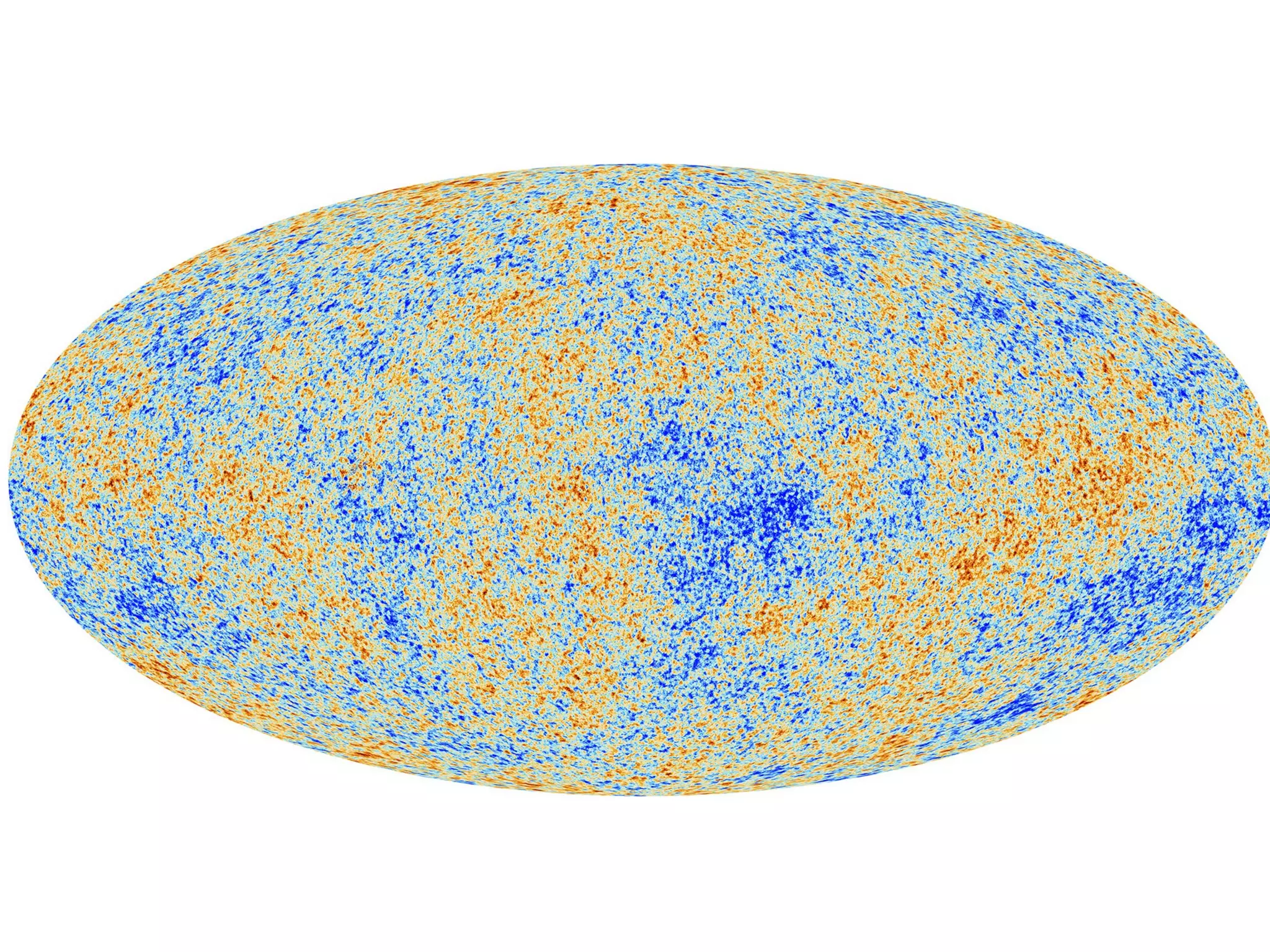
“CONCORDANCE”
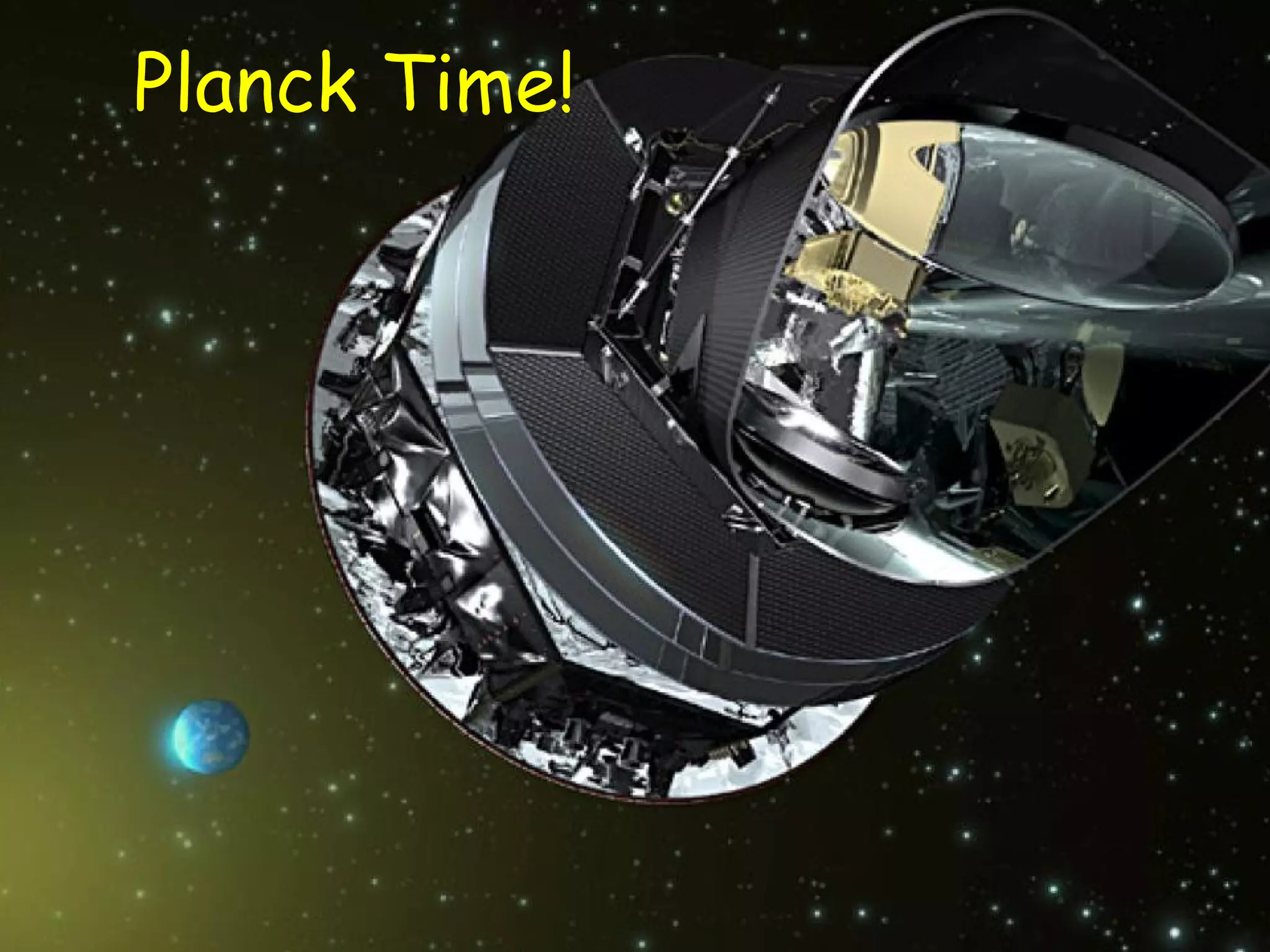
Planck Time!
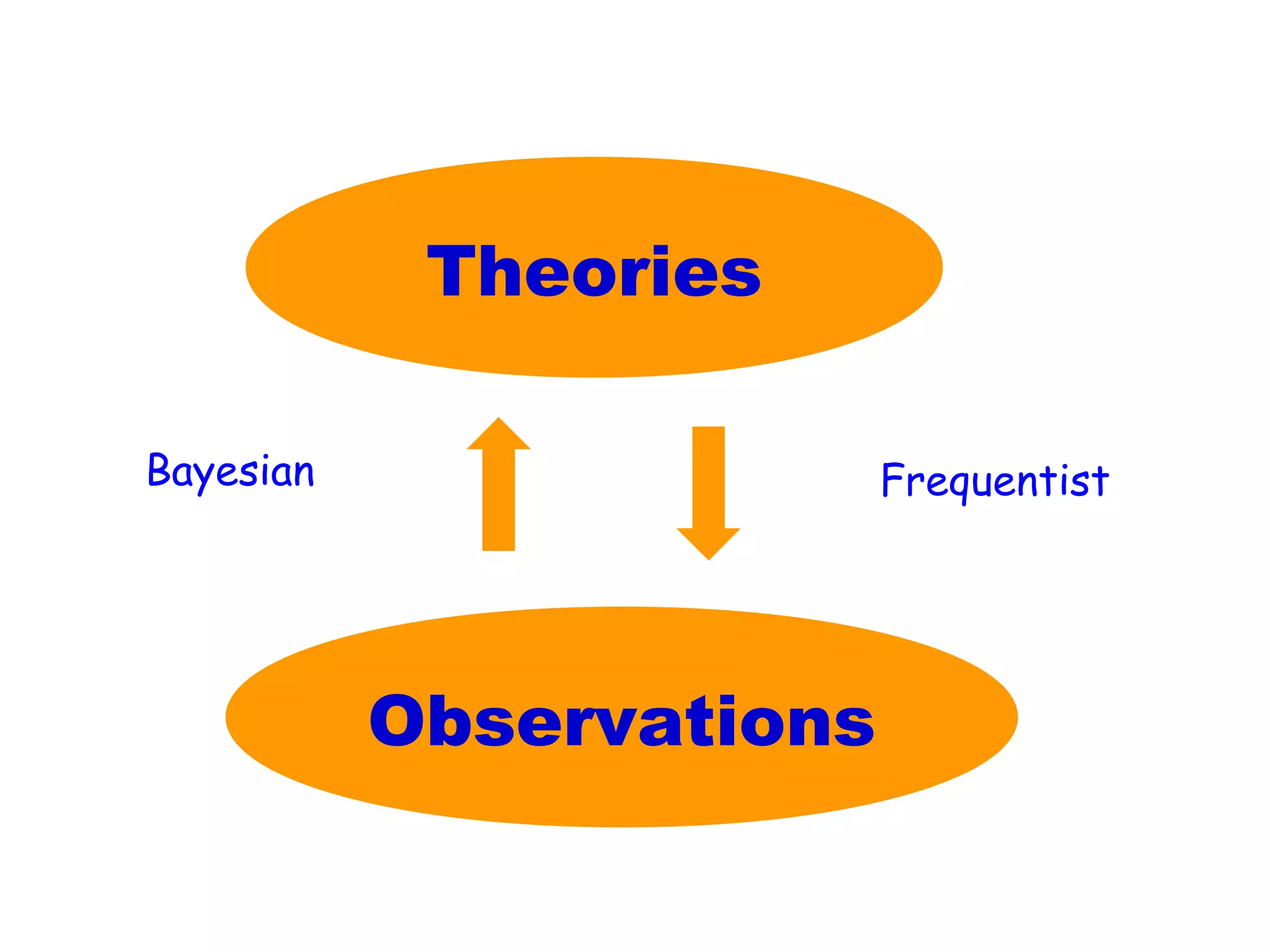
Theories
Bayesian

Frequentist

Observations
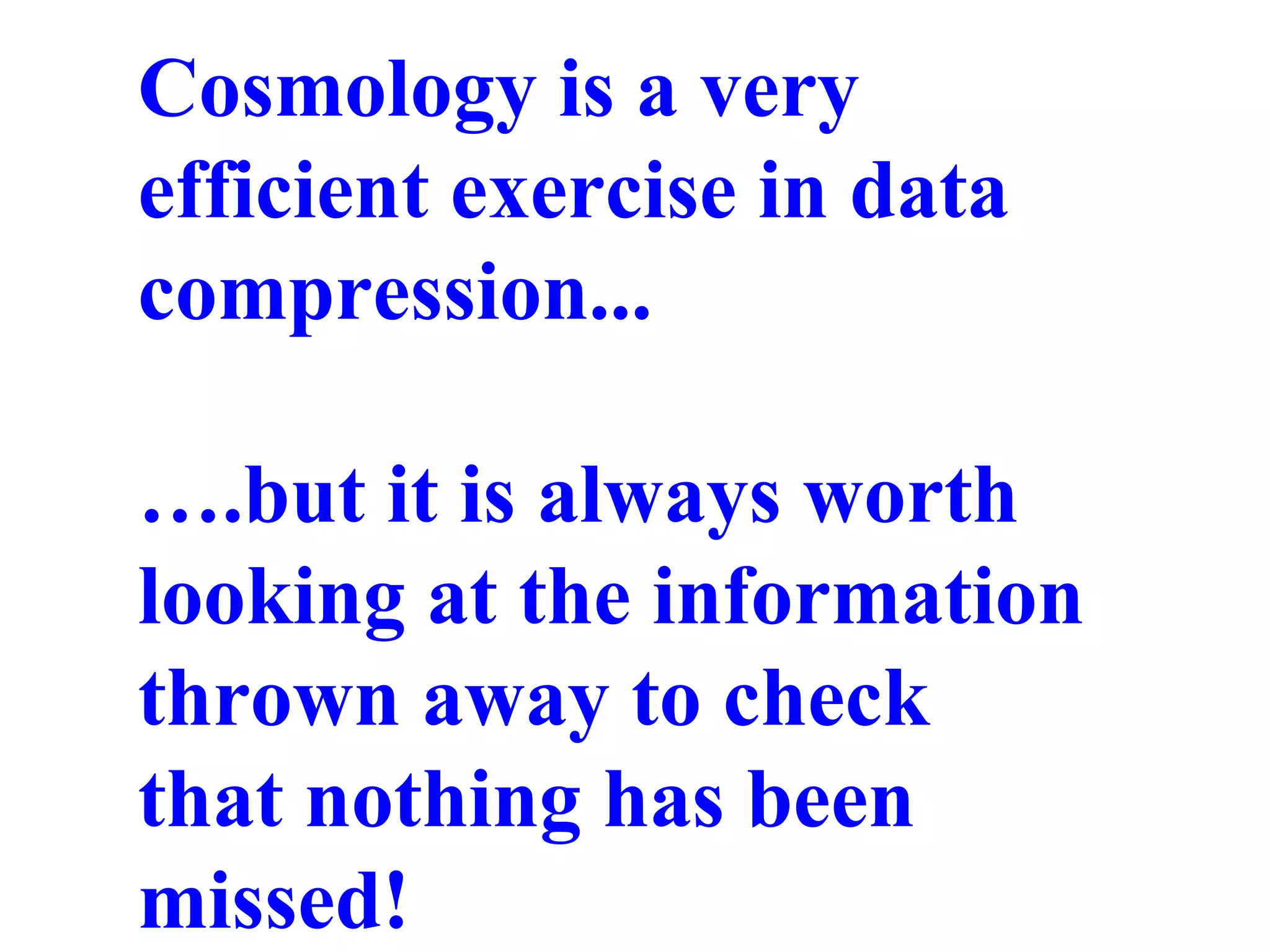
Cosmology is a very
efficient exercise in data
compression...
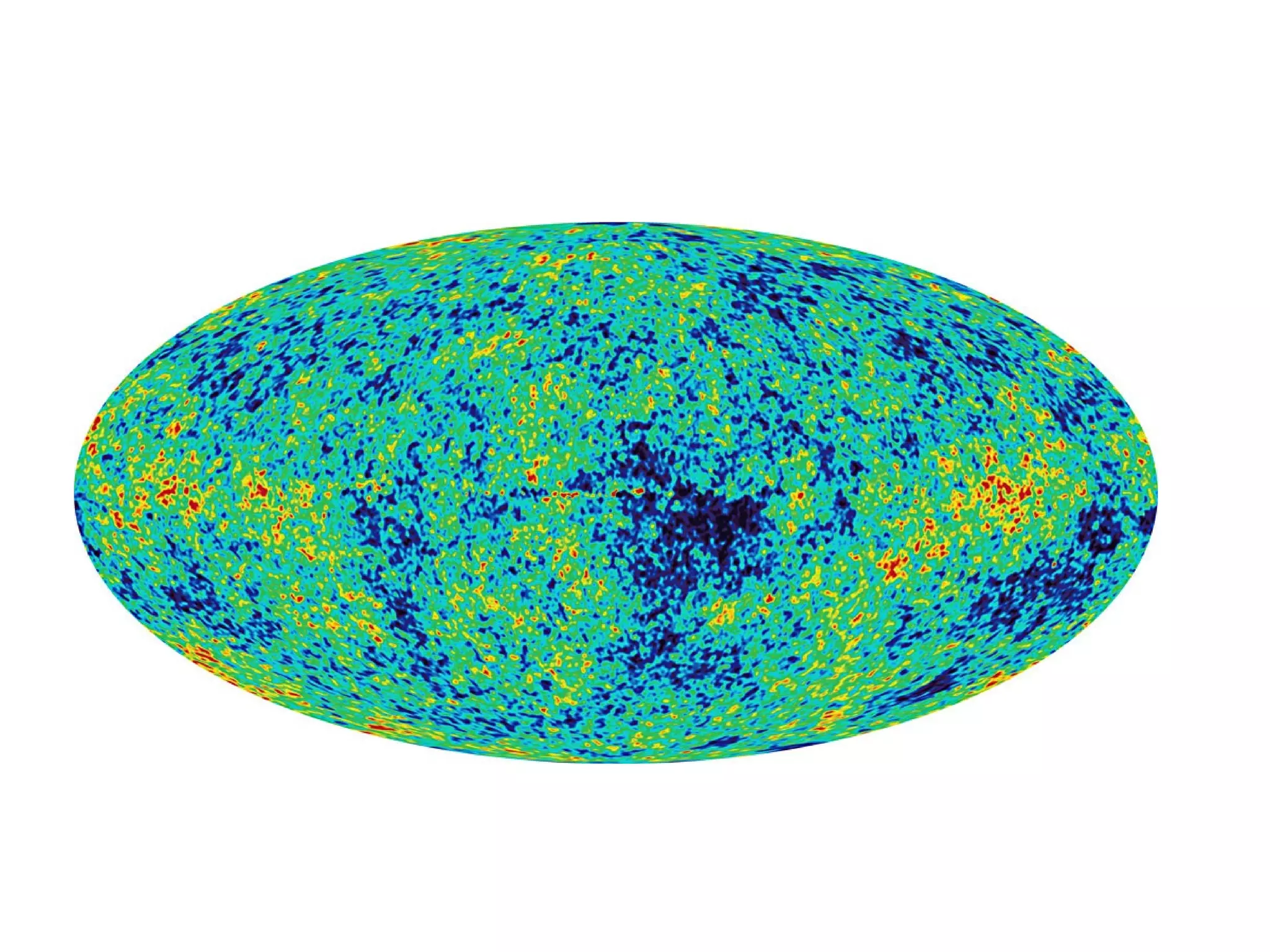
Cosmology is an exercise in data compression

….but it is always worth
looking at the information
thrown away to check
that nothing has been
missed!
Precision Cosmology
“…as we know, there are known knowns;
there are things we know we know. We
also know there are known unknowns;
that is to say we know there are some
things we do not know. But there are
also unknown unknowns -- the ones we
don't know we don't know.”
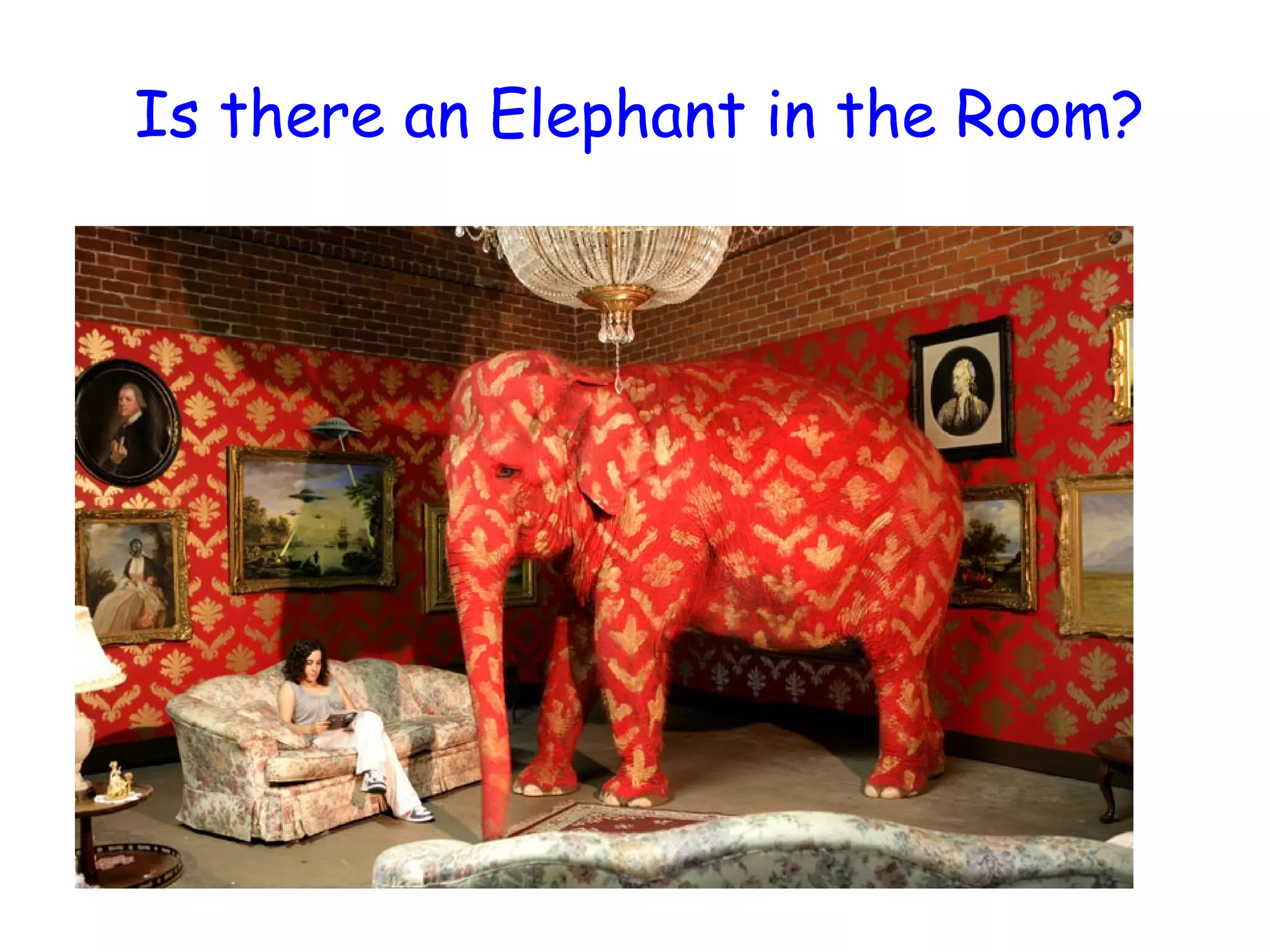
Is there an Elephant in the Room?
How Weird is the Universe?
• The (zero-th order) starting point is
FLRW.
• The concordance cosmology is a “firstorder” perturbation to this
• In it (and other “first-order” models), the
initial fluctuations were a statistically
homogeneous and isotropic Gaussian
Random Field (GRF)
• These are the “maximum entropy” initial
conditions having “random phases”
motivated by inflation.
• Anything else would be weird….
Precision Cosmology
“…as we know, there are known knowns;
there are things we know we know. We
also know there are known unknowns;
that is to say we know there are some
things we do not know. But there are
also unknown unknowns -- the ones we
don't know we don't know.”
There are many ways of
being weird!
• Initial Perturbations:

[

2
2
Φ=Φ L +f NL Φ L −〈Φ L 〉

]

• Non-stationary fluctuations, e.g.
statistical anisotropy from a vector
field?
• Global inhomogeneity or anisotropy
• Non-trivial topology, etc…
Weird Topology
• GR is a local theory
• Simplest topology
chosen in standard
models, e.g sphere.
• Small universes
suppress power on
large scales…but
introduce phase
correlations (Dineen,
Rocha & Coles,
MNRAS, 358, 1285)
Fourier Phases
δ ( x )=∑ δ( k )exp (ik⋅x )
• The usual thing
k
δ (k )=∣δ (k )∣exp [ iϕk ]
• where
• In a homogeneous and isotropic GRF then
the phases
are ϕ
random...
✳
• ..apart from
δ (k )=δ(−k )
ϕ k −ϕ k
• ..as are differences, e.g.
• The power spectrum
2
1

2

P( k)∝〈∣δ( k)∣ 〉
The Bispectrum
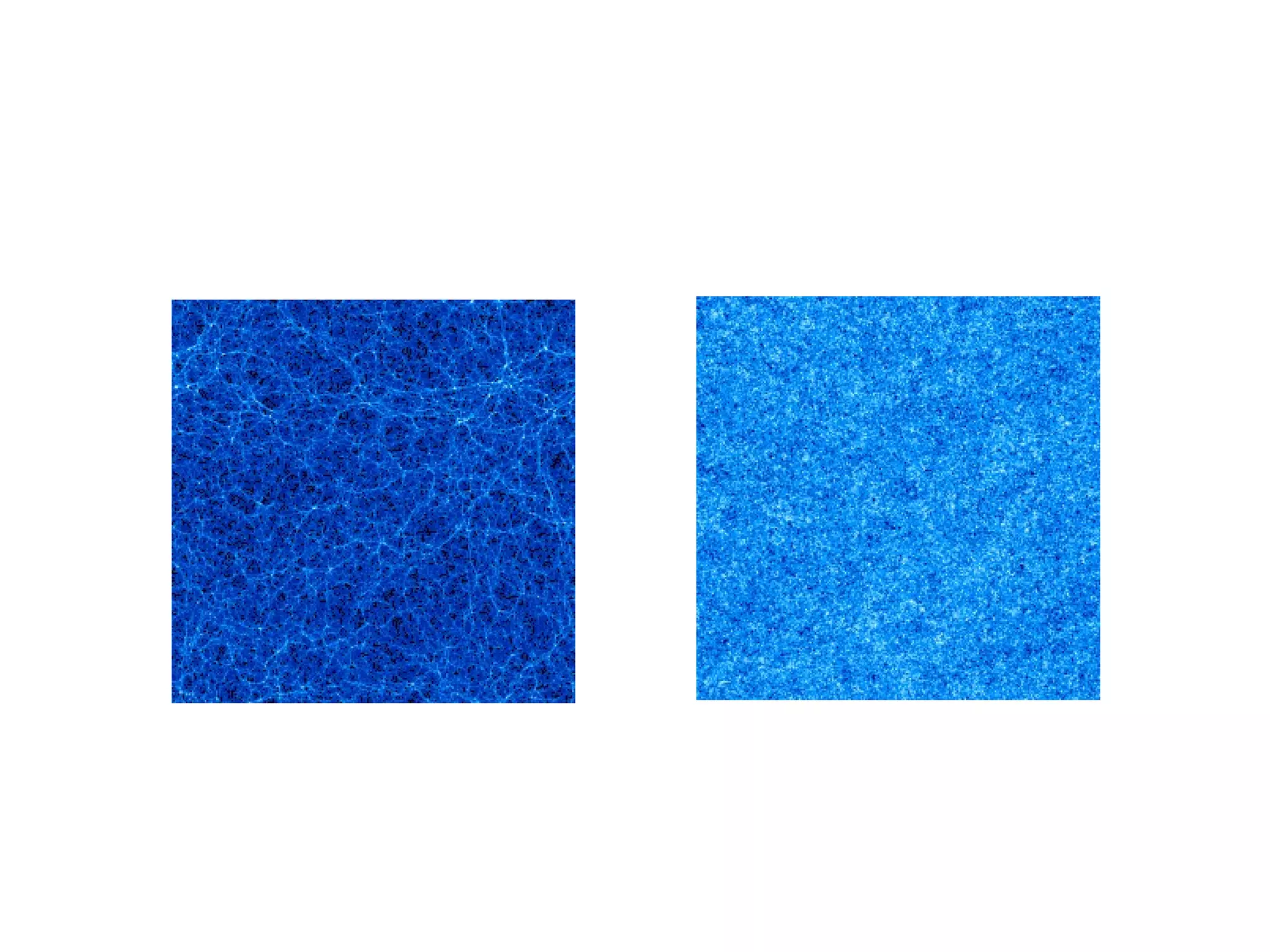
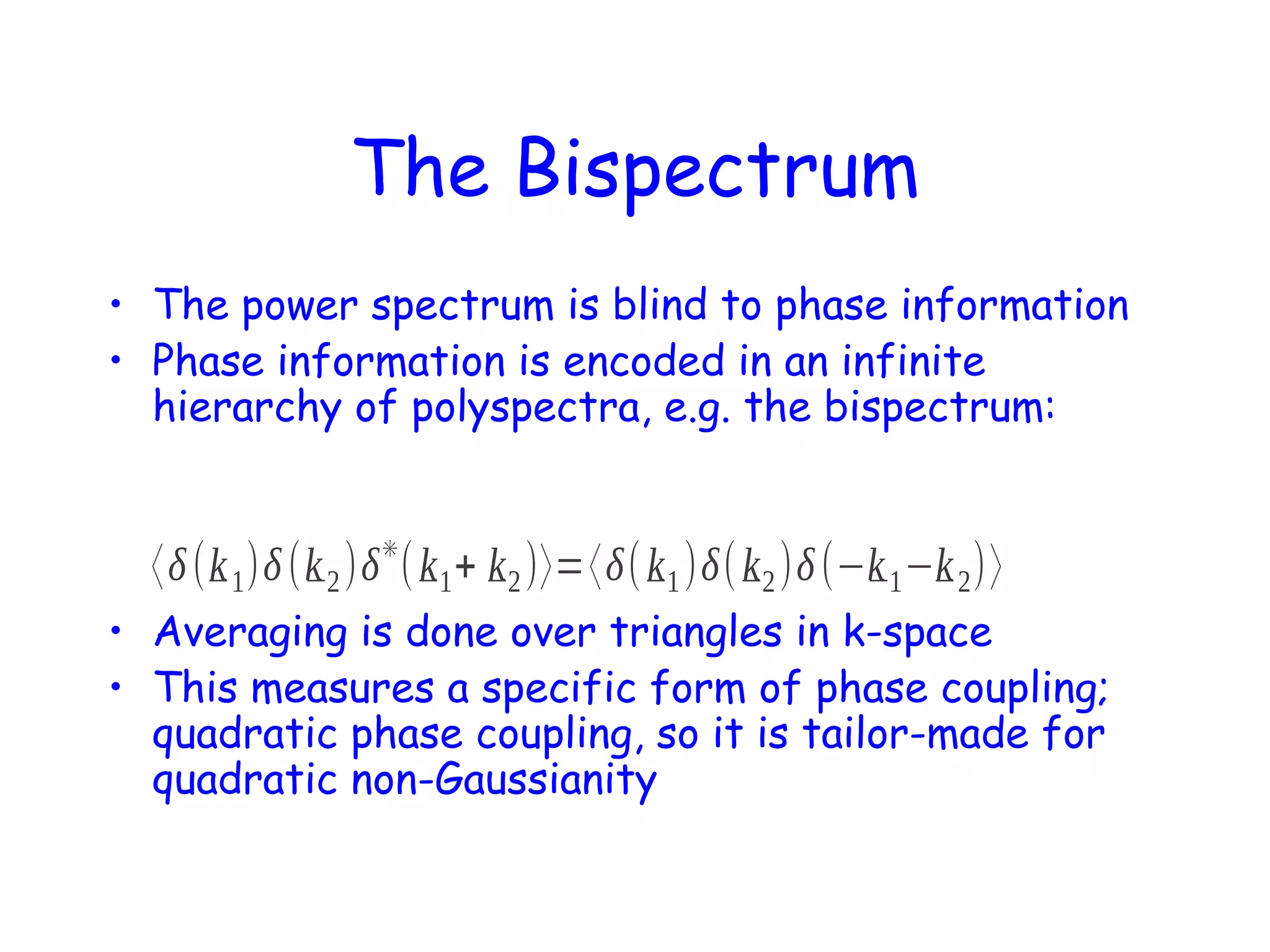
• The power spectrum is blind to phase information
• Phase information is encoded in an infinite
hierarchy of polyspectra, e.g. the bispectrum:
✳

〈δ (k 1 )δ (k 2 )δ ( k 1 + k 2 )〉=〈δ( k 1 )δ( k 2 )δ (−k 1 −k 2 )〉
• Averaging is done over triangles in k-space
• This measures a specific form of phase coupling;
quadratic phase coupling, so it is tailor-made for
quadratic non-Gaussianity
Quadratic Phase Coupling
k2

k1

−( k 1 + k 2 )

δ 1 =exp(i k 1⋅x +φ 1 )⇒( k 1 ,φ 1 )
δ 2 =exp(i k 2⋅x +φ2 )⇒( k 2 ,φ 2 )

2

(δ 1 +δ 2 ) ⇒(2 k 1 , 2φ1 )+ (2 k 2 , 2φ 2 )+ ( k 1 + k 2, φ 1 +φ2 )

arg ( δ 1 δ 2 δ −( 1+ 2 ) )=φ1 +φ 2 −φ1+ 2
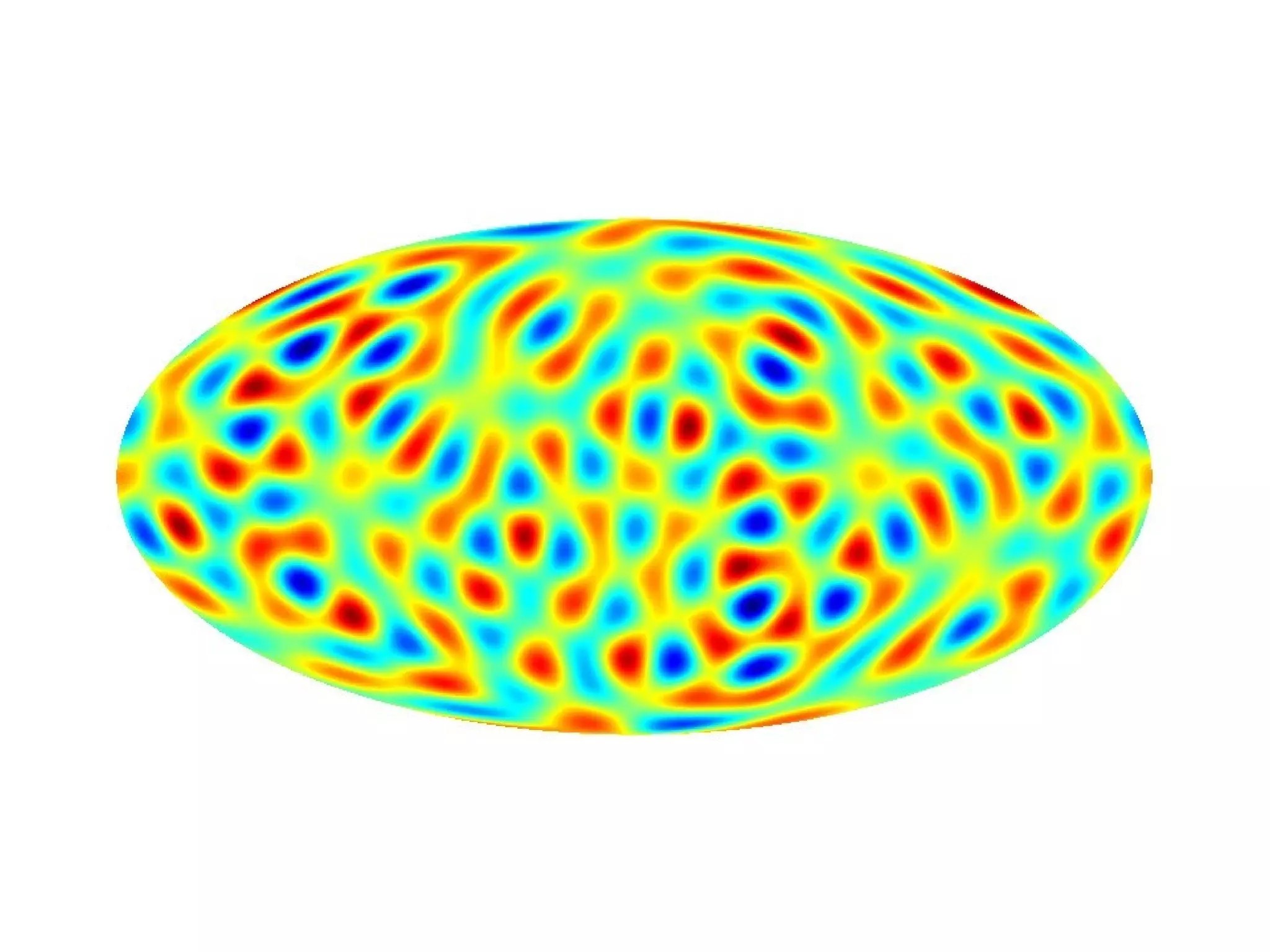
Weirdness in Phases
ΔT ( θ,φ )
=∑ ∑ a l,m Y lm ( θ,φ)
T
a l,m =∣al,m∣exp [ iϕl,m ]
For a homogeneous and isotropic Gaussian random field
(on the sphere) the phases are independent and
uniformly distributed. Non-random phases therefore
indicate weirdness..
Spherical Harmonic Phases
• The

•
•
•
•

ΔT ( θ,φ )
=∑ ∑ a l,m Y lm ( θ,φ)
T

usual thing
where a l,m =∣al,m∣exp [ iϕl,m ]
If the fluctuations are a homogeneous
and isotropic GRF then the phases
are random... ϕl,m
..apart from a ✳ =al,−m
lm
ϕ l,m −ϕ l,m−1
..as are differences, e.g.
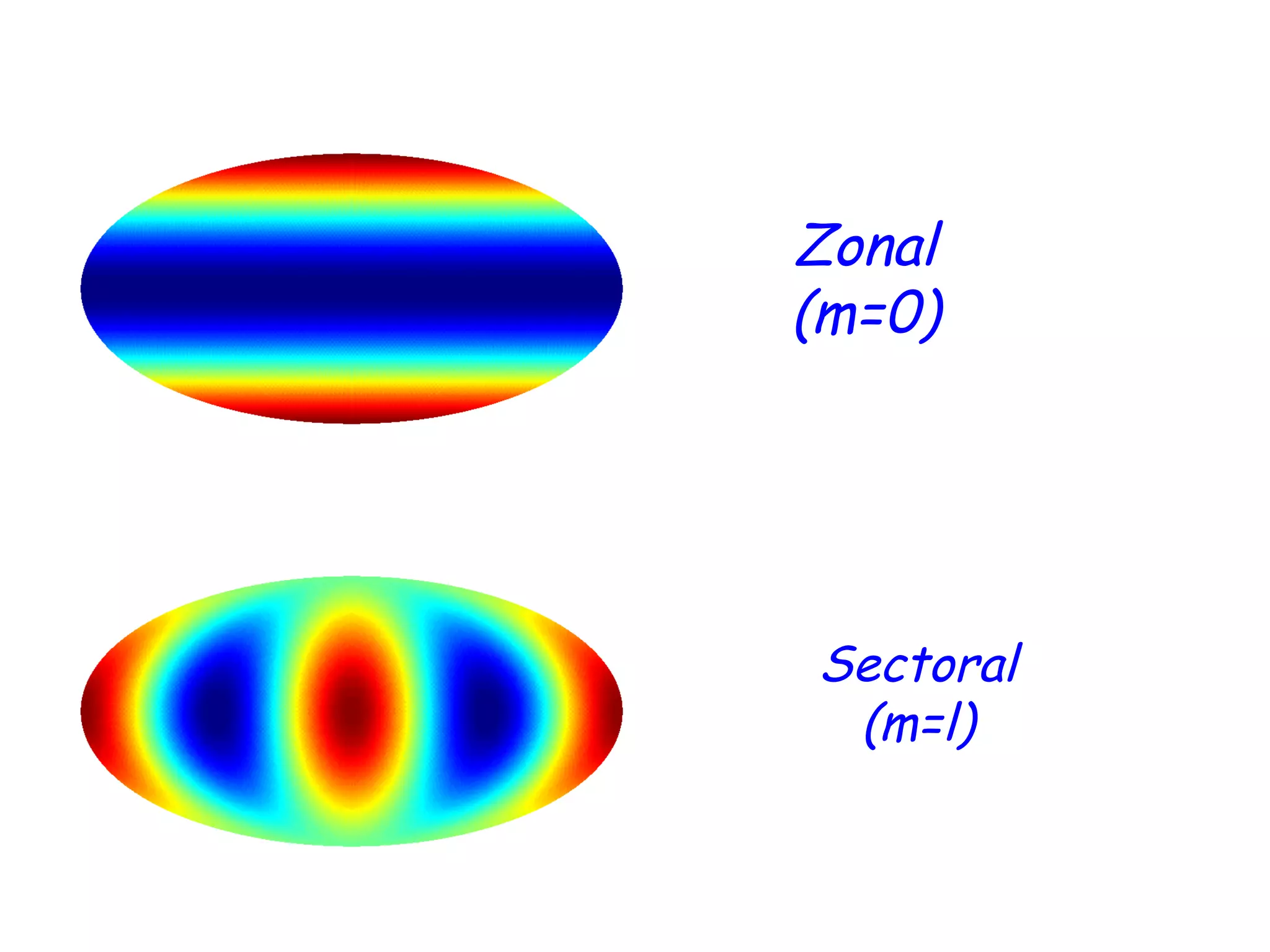
Zonal
(m=0)

Sectoral
(m=l)
Theories
Bayesian

Frequentist

Observations
Suspects

Evidence
Beware the Prosecutor’s
Fallacy!

P( A∣M )≠P ( M∣A )!
“If tortured sufficiently, data
will confess to almost
anything”
Fred Menger
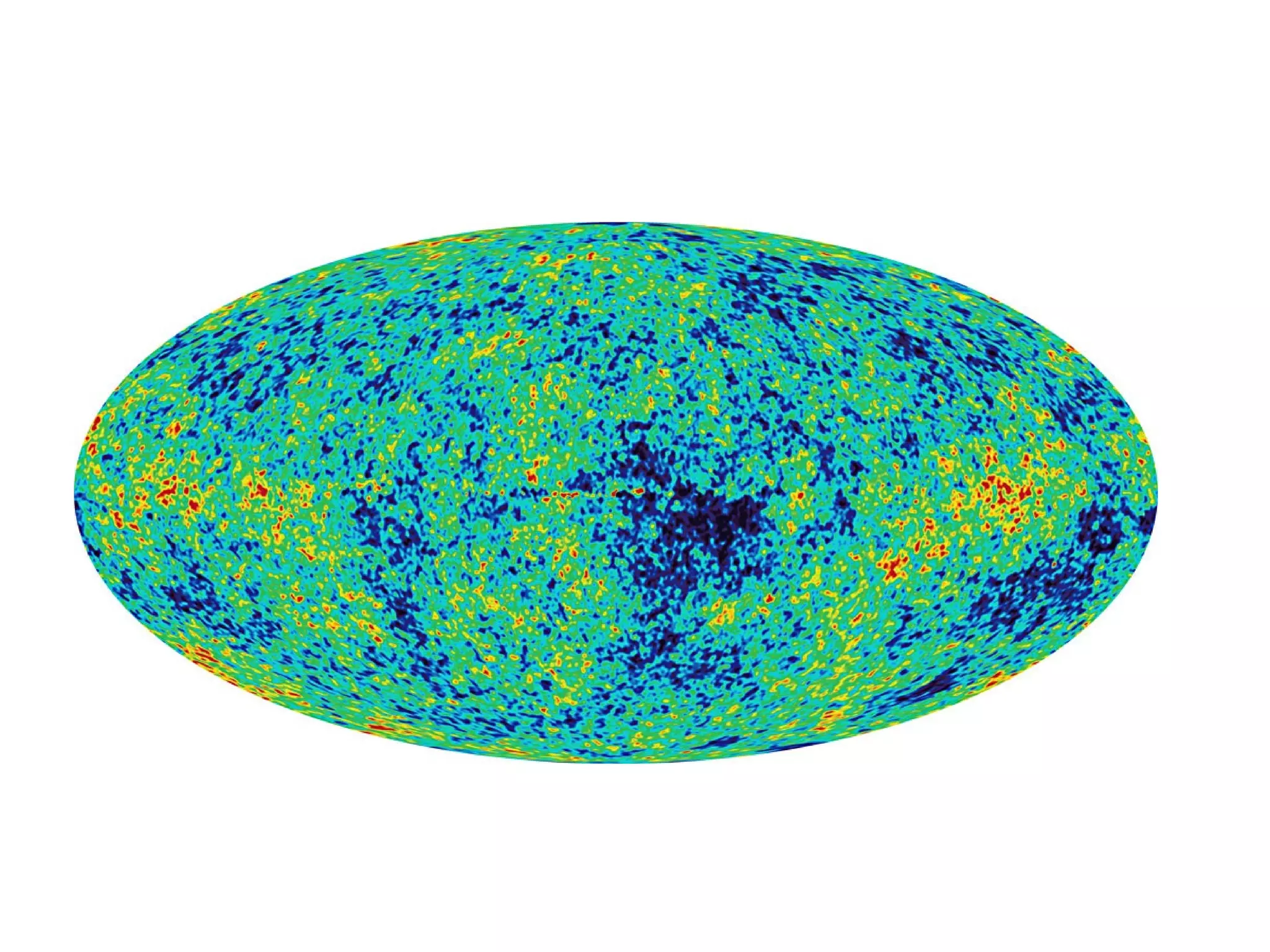
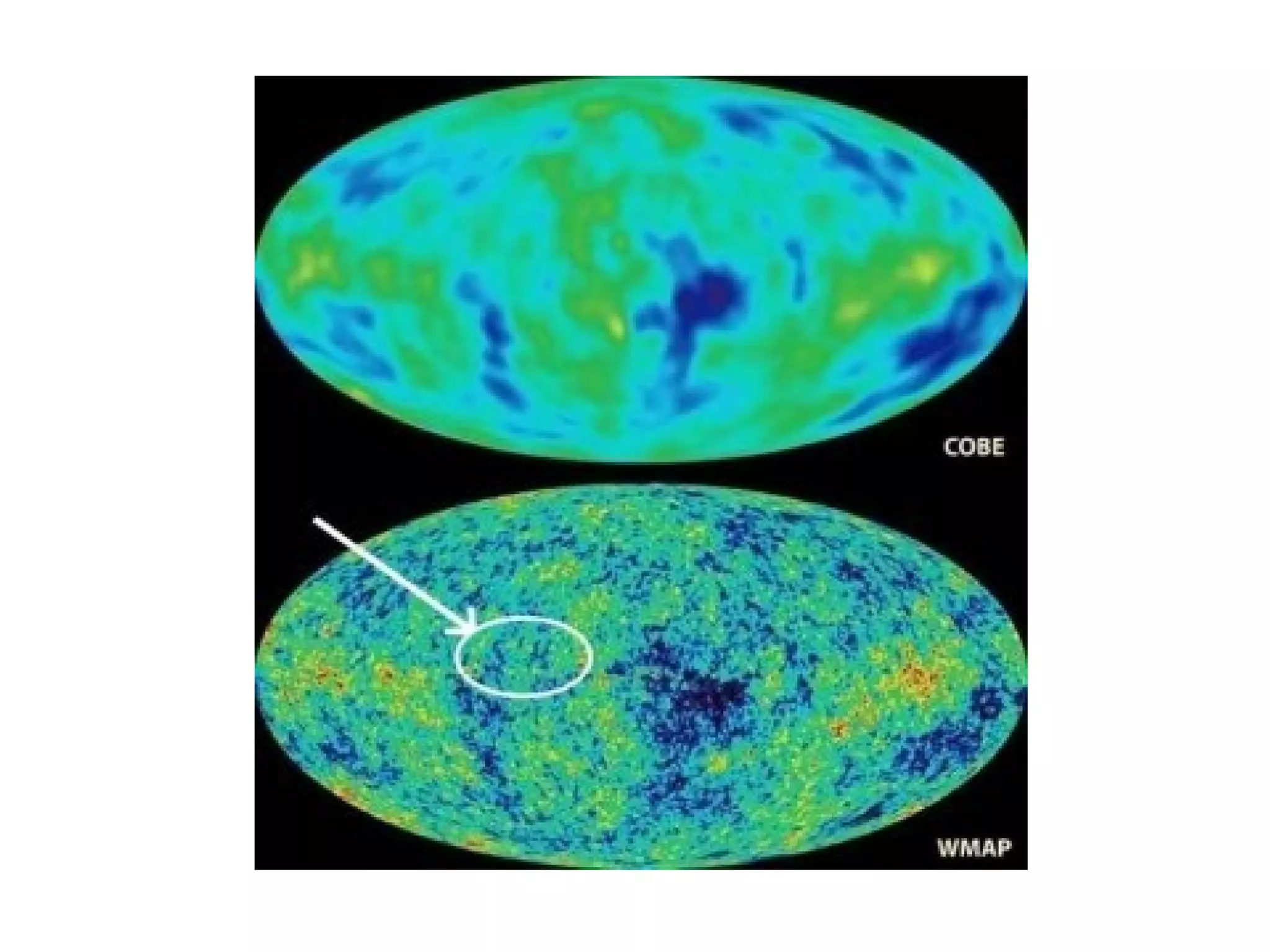
Types of CMB Anomalies
• Type I – obvious problems with data
(e.g. foregrounds)
• Type II – anisotropies and alignments
(North-South, Axis of Evil..)
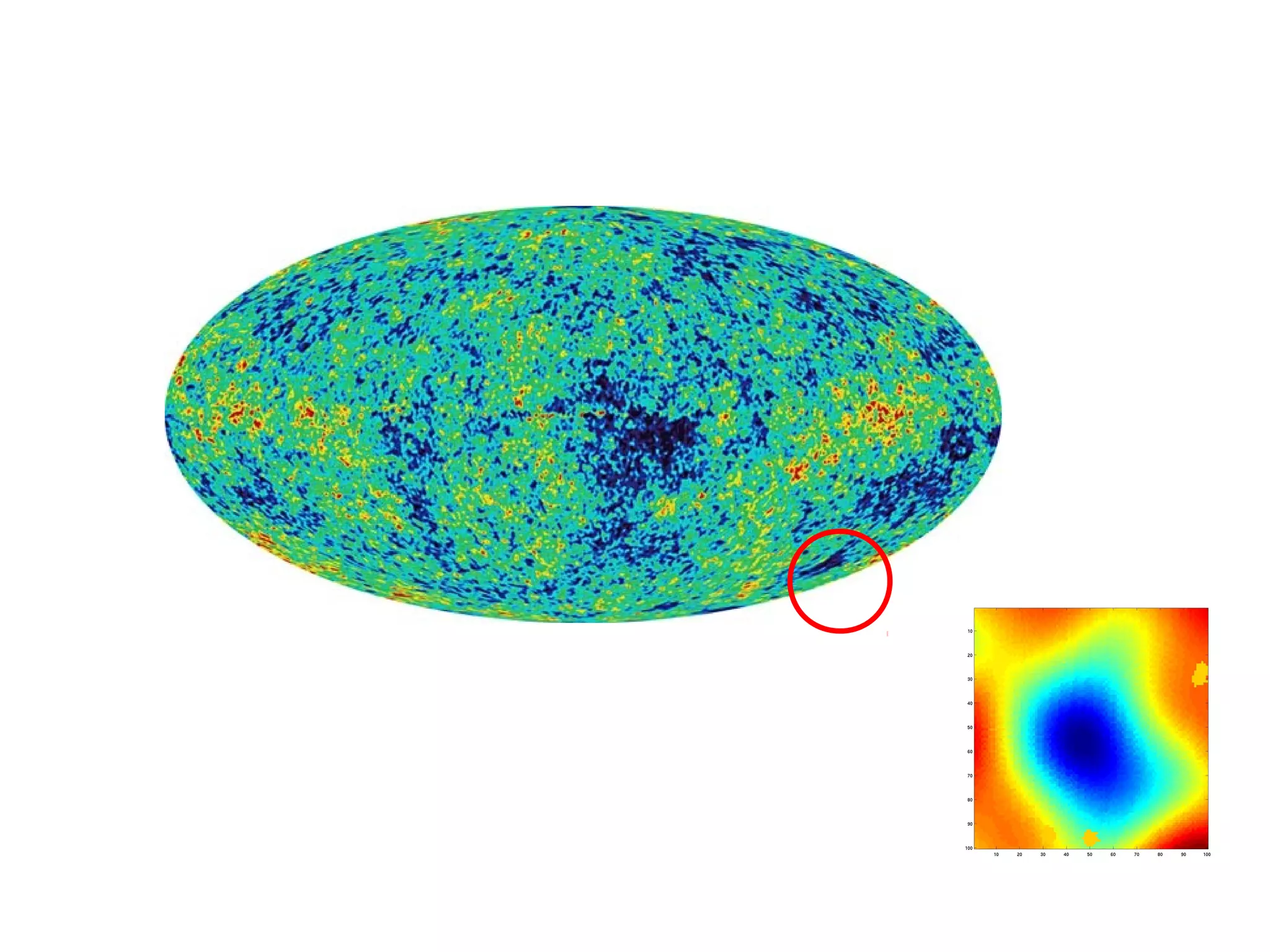
• Type III – localized features, e.g. “The
Cold Spot”
• Type IV – Something else (even/odd
multipoles, magnetic fields, ?)
m

l
Low Quadrupole?
Parity Violation?
(from Hansen et al. 2004)
(from Copi et al. 2005)
Hanson & Lewis, arXiv:0908.0963
Global Asymmetry?
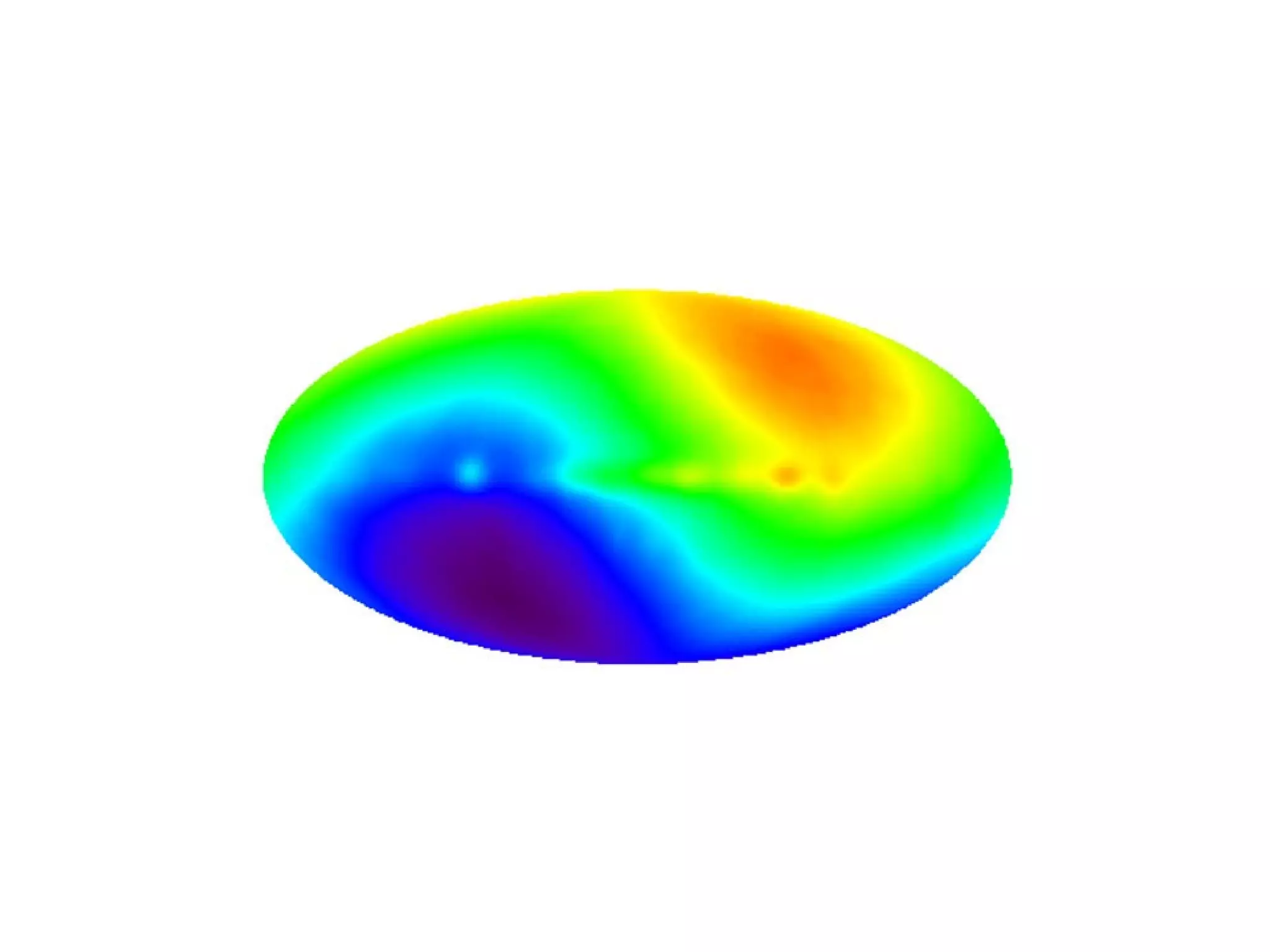
• It has been suggested that the answer may
be departure from FRW cosmology, e.g.
Bianchi (homogenous but anisotropic)
• This can trivially solve the quadrupole
problem (e.g. Bianchi I is a pure quadrupole)
• Such models produce a specific polarization
pattern which is set by the temperature
pattern.
• These (almost) inevitably have a large Bmode…
(Pontzen & Challinor 2007; Pontzen 2009; Sung & Coles
2009; Sung & Coles 2010)
Friedman-Robertson-Walker
Temperature

Bianchi vectors
Scalar curvature

Bianchi I

a =0, ni =0
R =0
Temperature

Bianchi vectors
Scalar curvature

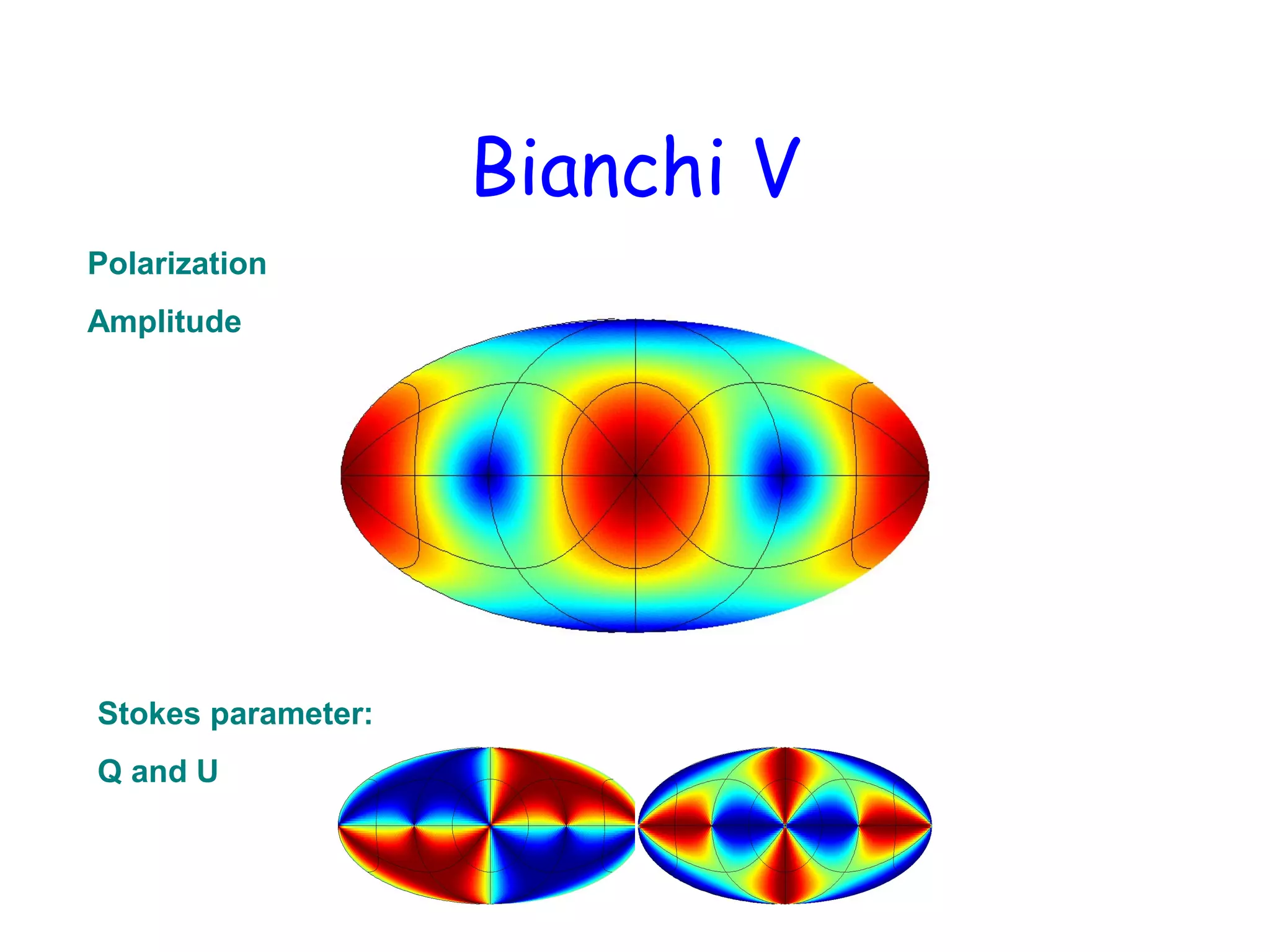
Bianchi V

a ≠ 0, ni = 0
R = −6a 2
Bianchi V
Polarization
Amplitude

Stokes parameter:
Q and U
Temperature

Bianchi vectors
Scalar curvature

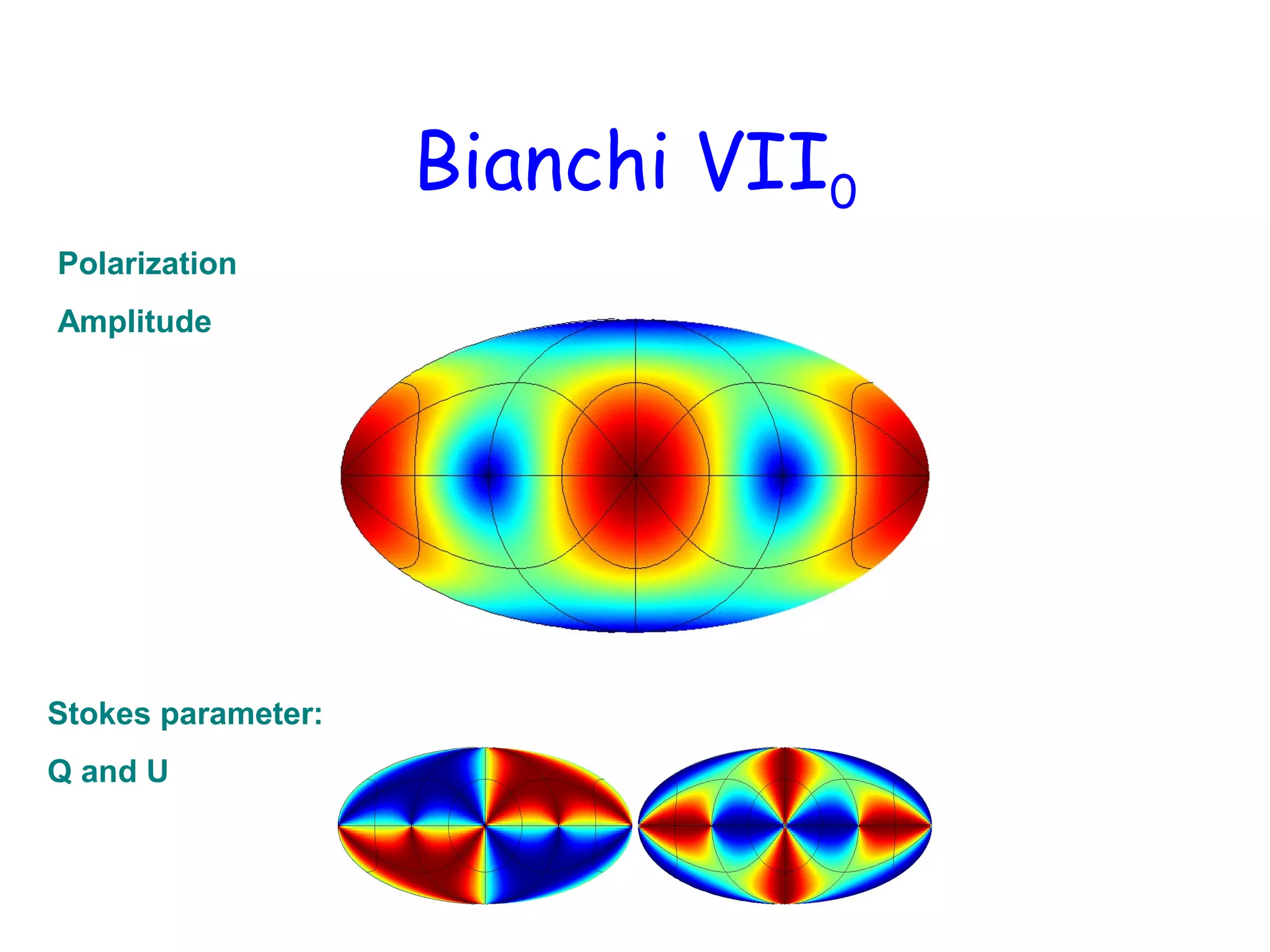
Bianchi VII0

a = 0, n1 = 0, n2 = n3 ≠ 0
R=0
Bianchi VII0
Polarization
Amplitude

Stokes parameter:
Q and U
Temperature

Bianchi vectors
Scalar curvature

Bianchi VIIh

a ≠ 0, n1 = 0, n2 = n3 ≠ 0
R = −6 a 2
Bianchi VIIh
Polarization
Amplitude

Stokes parameter:
Q and U
Temperature

Bianchi vectors
Scalar curvature

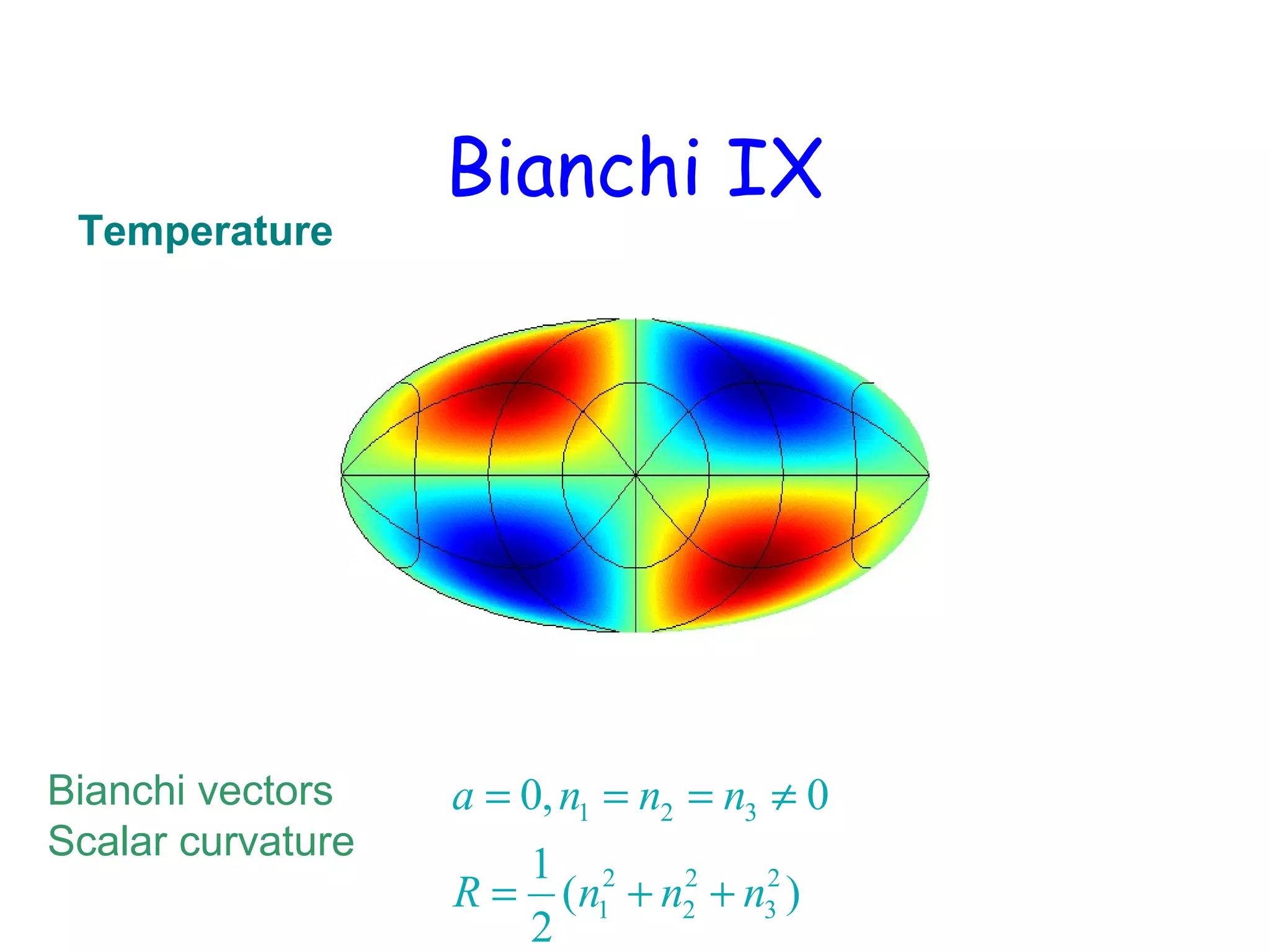
Bianchi IX

a = 0, n1 = n2 = n3 ≠ 0
1 2
2
2
R = (n1 + n2 + n3 )
2
Bianchi IX
Polarization
Amplitude

Stokes parameter:
Q and U
Wise Words from WMAP (7)
arXiv:1001.4758
In this paper we examine potential anomalies and
present analyses and assessments of their
significance. In most cases we find that claimed
anomalies depend on posterior selection of
some aspect or subset of the data. Compared with
sky simulations based on the best fit model, one
can select for low probability features of the WMAP
data. Low probability features are expected, but it
is not usually straightforward to determine whether
any particular low probability feature is the result of
the a posteriori selection or of non-standard
cosmology…..We conclude that there is no
compelling evidence for deviations from the
LCDM model, which is generally an acceptable
statistical fit to WMAP and other cosmological
data.
Summary
• The concordance cosmology has had many
successes, but that doesn’t make it the
Gospel truth.
• There is intriguing evidence suggesting
that the Universe might be more
interesting than we thought..
• Focussing exclusively on measuring
parameters of the standard model may
result in us missing the Elephant in the
Room.
A. There’s no problem at all
with ΛCDM…
B. There are interesting
indications…
C. There’s definitely
evidence of new physics

Talk given at Kobayashi-Maskawa Institute, Nagoya University, Japan.

  • 1.
    Cosmic Anomalies Peter Coles (Universityof Sussex) Kobayashi-Maskawa Institute, Nagoya Thursday 16th January 2014
  • 8.
    The Meaning of Inflation (OED) 1. The actionof inflating or distending with air or gas 2. The condition of being inflated with air or gas, or being distended or swollen as if with air 3. The condition of being puffed up with vanity, pride or baseless notions 4. The quality of language or style when it is swollen with big or pompous words; turgidity, bombast
  • 9.
  • 11.
  • 14.
  • 15.
    Cosmology is avery efficient exercise in data compression... Cosmology is an exercise in data compression ….but it is always worth looking at the information thrown away to check that nothing has been missed!
  • 16.
    Precision Cosmology “…as weknow, there are known knowns; there are things we know we know. We also know there are known unknowns; that is to say we know there are some things we do not know. But there are also unknown unknowns -- the ones we don't know we don't know.”
  • 17.
    Is there anElephant in the Room?
  • 18.
    How Weird isthe Universe? • The (zero-th order) starting point is FLRW. • The concordance cosmology is a “firstorder” perturbation to this • In it (and other “first-order” models), the initial fluctuations were a statistically homogeneous and isotropic Gaussian Random Field (GRF) • These are the “maximum entropy” initial conditions having “random phases” motivated by inflation. • Anything else would be weird….
  • 19.
    Precision Cosmology “…as weknow, there are known knowns; there are things we know we know. We also know there are known unknowns; that is to say we know there are some things we do not know. But there are also unknown unknowns -- the ones we don't know we don't know.”
  • 20.
    There are manyways of being weird! • Initial Perturbations: [ 2 2 Φ=Φ L +f NL Φ L −〈Φ L 〉 ] • Non-stationary fluctuations, e.g. statistical anisotropy from a vector field? • Global inhomogeneity or anisotropy • Non-trivial topology, etc…
  • 21.
    Weird Topology • GRis a local theory • Simplest topology chosen in standard models, e.g sphere. • Small universes suppress power on large scales…but introduce phase correlations (Dineen, Rocha & Coles, MNRAS, 358, 1285)
  • 22.
    Fourier Phases δ (x )=∑ δ( k )exp (ik⋅x ) • The usual thing k δ (k )=∣δ (k )∣exp [ iϕk ] • where • In a homogeneous and isotropic GRF then the phases are ϕ random... ✳ • ..apart from δ (k )=δ(−k ) ϕ k −ϕ k • ..as are differences, e.g. • The power spectrum 2 1 2 P( k)∝〈∣δ( k)∣ 〉
  • 24.
    The Bispectrum • Thepower spectrum is blind to phase information • Phase information is encoded in an infinite hierarchy of polyspectra, e.g. the bispectrum: ✳ 〈δ (k 1 )δ (k 2 )δ ( k 1 + k 2 )〉=〈δ( k 1 )δ( k 2 )δ (−k 1 −k 2 )〉 • Averaging is done over triangles in k-space • This measures a specific form of phase coupling; quadratic phase coupling, so it is tailor-made for quadratic non-Gaussianity
  • 25.
    Quadratic Phase Coupling k2 k1 −(k 1 + k 2 ) δ 1 =exp(i k 1⋅x +φ 1 )⇒( k 1 ,φ 1 ) δ 2 =exp(i k 2⋅x +φ2 )⇒( k 2 ,φ 2 ) 2 (δ 1 +δ 2 ) ⇒(2 k 1 , 2φ1 )+ (2 k 2 , 2φ 2 )+ ( k 1 + k 2, φ 1 +φ2 ) arg ( δ 1 δ 2 δ −( 1+ 2 ) )=φ1 +φ 2 −φ1+ 2
  • 27.
    Weirdness in Phases ΔT( θ,φ ) =∑ ∑ a l,m Y lm ( θ,φ) T a l,m =∣al,m∣exp [ iϕl,m ] For a homogeneous and isotropic Gaussian random field (on the sphere) the phases are independent and uniformly distributed. Non-random phases therefore indicate weirdness..
  • 28.
    Spherical Harmonic Phases •The • • • • ΔT ( θ,φ ) =∑ ∑ a l,m Y lm ( θ,φ) T usual thing where a l,m =∣al,m∣exp [ iϕl,m ] If the fluctuations are a homogeneous and isotropic GRF then the phases are random... ϕl,m ..apart from a ✳ =al,−m lm ϕ l,m −ϕ l,m−1 ..as are differences, e.g.
  • 29.
  • 36.
  • 37.
  • 38.
  • 39.
    “If tortured sufficiently,data will confess to almost anything” Fred Menger
  • 41.
    Types of CMBAnomalies • Type I – obvious problems with data (e.g. foregrounds) • Type II – anisotropies and alignments (North-South, Axis of Evil..) • Type III – localized features, e.g. “The Cold Spot” • Type IV – Something else (even/odd multipoles, magnetic fields, ?)
  • 45.
  • 48.
  • 50.
  • 51.
    (from Hansen etal. 2004)
  • 52.
    (from Copi etal. 2005)
  • 54.
    Hanson & Lewis,arXiv:0908.0963
  • 57.
    Global Asymmetry? • Ithas been suggested that the answer may be departure from FRW cosmology, e.g. Bianchi (homogenous but anisotropic) • This can trivially solve the quadrupole problem (e.g. Bianchi I is a pure quadrupole) • Such models produce a specific polarization pattern which is set by the temperature pattern. • These (almost) inevitably have a large Bmode… (Pontzen & Challinor 2007; Pontzen 2009; Sung & Coles 2009; Sung & Coles 2010)
  • 58.
  • 59.
  • 60.
  • 61.
  • 62.
    Temperature Bianchi vectors Scalar curvature BianchiVII0 a = 0, n1 = 0, n2 = n3 ≠ 0 R=0
  • 63.
  • 64.
    Temperature Bianchi vectors Scalar curvature BianchiVIIh a ≠ 0, n1 = 0, n2 = n3 ≠ 0 R = −6 a 2
  • 65.
  • 66.
    Temperature Bianchi vectors Scalar curvature BianchiIX a = 0, n1 = n2 = n3 ≠ 0 1 2 2 2 R = (n1 + n2 + n3 ) 2
  • 67.
  • 70.
    Wise Words fromWMAP (7) arXiv:1001.4758 In this paper we examine potential anomalies and present analyses and assessments of their significance. In most cases we find that claimed anomalies depend on posterior selection of some aspect or subset of the data. Compared with sky simulations based on the best fit model, one can select for low probability features of the WMAP data. Low probability features are expected, but it is not usually straightforward to determine whether any particular low probability feature is the result of the a posteriori selection or of non-standard cosmology…..We conclude that there is no compelling evidence for deviations from the LCDM model, which is generally an acceptable statistical fit to WMAP and other cosmological data.
  • 71.
    Summary • The concordancecosmology has had many successes, but that doesn’t make it the Gospel truth. • There is intriguing evidence suggesting that the Universe might be more interesting than we thought.. • Focussing exclusively on measuring parameters of the standard model may result in us missing the Elephant in the Room.
  • 72.
    A. There’s noproblem at all with ΛCDM… B. There are interesting indications… C. There’s definitely evidence of new physics