Core Vocabulary Learning Book
        First 30 Words

 With Symbols from Arasaac, SymbolStix
  and Picture Communication Symbols
 and color coded using the Fitzgerald Key
         By Kate Ahern, M.S.Ed.
Core Vocabulary Learning Book
  Directions
• Print one copy or one copy per student on cardstock and bind, laminate if
  needed but be aware of glare
• Print multiple of extra book and cut out the picture symbols (use the printer
  set up page to limit the pages you print) and laminate for sentence building
  activities)
• Teach one to two words a week lessons should include:
    – Activation of prior knowledge such as find words around the room and on
      communication devices
    – Comparing and contrasting the various symbols for the word
    – Acting out all verbs
    – A lesson which demonstrates the meaning of the word such as a game of “stop/go”
      (aka red/light green/light) for those words
    – Reading a story with uses the word frequently and cheering or otherwise indicating
      when the target word is heard
    – Continuing to cheer and give praise every time the target word is uses during the
      week
    – And art project involving the word such as a collage of magazine pictures or a
      photography project about me or you
    – Make sentences or write journal entries with the words you have taught so far
Purpose
• Students will be taught 30 core vocabulary
  words to increase their communication skills
• Students will be exposed to three symbol sets
  to support different AAC systems and devices
  and improve the understand of word meaning
• Students will complete activities that instruct
  word/symbol relationships and word means as
  independently as possible
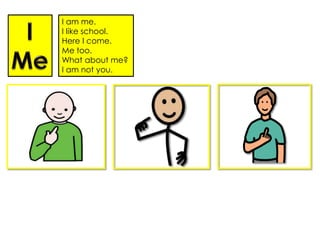
I am me.
I like school.
Here I come.
Me too.
What about me?
I am not you.
You are ready.
I like you.
What are you doing?
It is big.
I want it.
Help me with it.
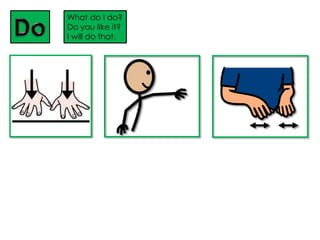
What do I do?
Do you like it?
I will do that.
Not that.
Do not go.
Not again!
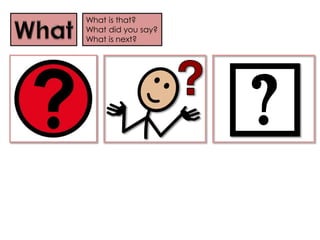
What is that?
What did you say?
What is next?
Do it again.
Will you tell me again?
Not again!
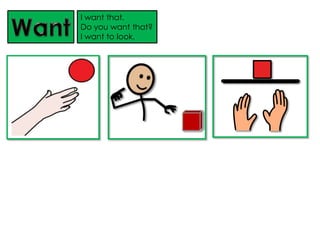
I want that.
Do you want that?
I want to look.
Come here.
Will you come?
Come away with me.
Don’t stop!
Stop it now.
Will you stop.
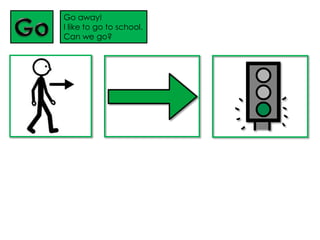
Go away!
I like to go to school.
Can we go?
Go away!
She is away today.
Do I put it away?
I am all done.
Lunch is all done.
Are we all done?
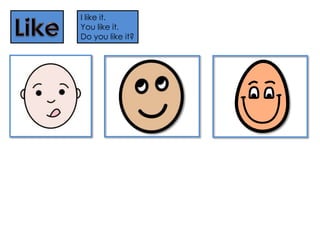
I like it.
You like it.
Do you like it?
I am ready.
When will you be ready?
Do I have to get ready?
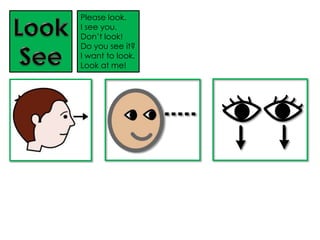
Please look.
I see you.
Don’t look!
Do you see it?
I want to look.
Look at me!
I like this.
This is for you.
What is this?
That is mine.
I am doing that.
What is that?
Please get me that.
I’m gonna get you!
What did you get?
I want a drink.
I like to drink juice.
Do you want a drink?
I want to eat.
I like to eat yogurt.
Do you want to eat?
I want more.
Give me more.
Do you want more?
It is all gone.
When will it be all gone?
Is it all gone?
I need help.
Will you help me?
I can help you.
That is good.
Good morning to you.
Have you been good?
That is bad.
What is bad?
Look it is bad.
It is big.
I want that big one.
What is big?
It is little.
You are small.
I want the little one.
I want a small.
What is small?
Will you get me a small?
I want a different one.
That is too different.
What makes it different?
Person   Action
Person   Action   Object
Person   Action   Describer   Object
Describer   Person   Action


Describer   Object
Cut out the symbols and use with the Venn Diagram on the next page to compare
and contrast the symbols that mean the same thing. If this is too difficult for some
students then use these symbols and the Venn diagram to illustrate to them how the
symbols are the same and difference, highlighting the meaning of the symbols.


         Hand      Face               Square        Line


         Hand      Face               Square        Line


         Hand      Face               Square        Line
Core Vocabulary Learning Bookby Kate Ahern, M.S.Ed. is licensed under a Creative Commons Attribution-Noncommercial-
No Derivative Works 3.0 United States License.

The Picture Communication Symbols ©1981–2011 by Mayer-Johnson LLC. All Rights Reserved Worldwide. Used with permission.
Boardmaker® is a trademark of Mayer-Johnson LLC. DynaVox Mayer-Johnson
2100 Wharton Street
Suite 400
Pittsburgh, PA 15203
Phone: 800-588-4548
Fax: 866-585-62620
Email: mayer-johnson.usa@mayer-johnson.com
Web site: www.mayer-johnson.com


ARASAAC Picture Symbols
© 2011 ARASAAC - Augmentative and Alternative Communication (AAC)
Used under Creative Commons License CC (BY-NC-SA)

SymbolStix Symbols
From News-to-You and Unique Learning Program
© News-2-You, 2011
Used with permission

Core Vocabulary was chosen from multiple sources including Pixons and work by Janice Light.

Core vocabulary learning book

  • 1.
    Core Vocabulary LearningBook First 30 Words With Symbols from Arasaac, SymbolStix and Picture Communication Symbols and color coded using the Fitzgerald Key By Kate Ahern, M.S.Ed.
  • 2.
    Core Vocabulary LearningBook Directions • Print one copy or one copy per student on cardstock and bind, laminate if needed but be aware of glare • Print multiple of extra book and cut out the picture symbols (use the printer set up page to limit the pages you print) and laminate for sentence building activities) • Teach one to two words a week lessons should include: – Activation of prior knowledge such as find words around the room and on communication devices – Comparing and contrasting the various symbols for the word – Acting out all verbs – A lesson which demonstrates the meaning of the word such as a game of “stop/go” (aka red/light green/light) for those words – Reading a story with uses the word frequently and cheering or otherwise indicating when the target word is heard – Continuing to cheer and give praise every time the target word is uses during the week – And art project involving the word such as a collage of magazine pictures or a photography project about me or you – Make sentences or write journal entries with the words you have taught so far
  • 3.
    Purpose • Students willbe taught 30 core vocabulary words to increase their communication skills • Students will be exposed to three symbol sets to support different AAC systems and devices and improve the understand of word meaning • Students will complete activities that instruct word/symbol relationships and word means as independently as possible
  • 4.
    I am me. Ilike school. Here I come. Me too. What about me? I am not you.
  • 5.
    You are ready. Ilike you. What are you doing?
  • 6.
    It is big. Iwant it. Help me with it.
  • 7.
    What do Ido? Do you like it? I will do that.
  • 8.
    Not that. Do notgo. Not again!
  • 9.
    What is that? Whatdid you say? What is next?
  • 10.
    Do it again. Willyou tell me again? Not again!
  • 11.
    I want that. Doyou want that? I want to look.
  • 12.
    Come here. Will youcome? Come away with me.
  • 13.
    Don’t stop! Stop itnow. Will you stop.
  • 14.
    Go away! I liketo go to school. Can we go?
  • 15.
    Go away! She isaway today. Do I put it away?
  • 16.
    I am alldone. Lunch is all done. Are we all done?
  • 17.
    I like it. Youlike it. Do you like it?
  • 18.
    I am ready. Whenwill you be ready? Do I have to get ready?
  • 19.
    Please look. I seeyou. Don’t look! Do you see it? I want to look. Look at me!
  • 20.
    I like this. Thisis for you. What is this?
  • 21.
    That is mine. Iam doing that. What is that?
  • 22.
    Please get methat. I’m gonna get you! What did you get?
  • 23.
    I want adrink. I like to drink juice. Do you want a drink?
  • 24.
    I want toeat. I like to eat yogurt. Do you want to eat?
  • 25.
    I want more. Giveme more. Do you want more?
  • 26.
    It is allgone. When will it be all gone? Is it all gone?
  • 27.
    I need help. Willyou help me? I can help you.
  • 28.
    That is good. Goodmorning to you. Have you been good?
  • 29.
    That is bad. Whatis bad? Look it is bad.
  • 30.
    It is big. Iwant that big one. What is big?
  • 31.
    It is little. Youare small. I want the little one. I want a small. What is small? Will you get me a small?
  • 32.
    I want adifferent one. That is too different. What makes it different?
  • 33.
    Person Action
  • 34.
    Person Action Object
  • 35.
    Person Action Describer Object
  • 36.
    Describer Person Action Describer Object
  • 37.
    Cut out thesymbols and use with the Venn Diagram on the next page to compare and contrast the symbols that mean the same thing. If this is too difficult for some students then use these symbols and the Venn diagram to illustrate to them how the symbols are the same and difference, highlighting the meaning of the symbols. Hand Face Square Line Hand Face Square Line Hand Face Square Line
  • 39.
    Core Vocabulary LearningBookby Kate Ahern, M.S.Ed. is licensed under a Creative Commons Attribution-Noncommercial- No Derivative Works 3.0 United States License. The Picture Communication Symbols ©1981–2011 by Mayer-Johnson LLC. All Rights Reserved Worldwide. Used with permission. Boardmaker® is a trademark of Mayer-Johnson LLC. DynaVox Mayer-Johnson 2100 Wharton Street Suite 400 Pittsburgh, PA 15203 Phone: 800-588-4548 Fax: 866-585-62620 Email: mayer-johnson.usa@mayer-johnson.com Web site: www.mayer-johnson.com ARASAAC Picture Symbols © 2011 ARASAAC - Augmentative and Alternative Communication (AAC) Used under Creative Commons License CC (BY-NC-SA) SymbolStix Symbols From News-to-You and Unique Learning Program © News-2-You, 2011 Used with permission Core Vocabulary was chosen from multiple sources including Pixons and work by Janice Light.