Cognitive Re-Scaling with
Assistive Technology
Kate Ahern, M.S.Ed.
Easter Seals MA
Cognitive Re-Scaling
"as a process of altering the cognitive
difficulty of information“ Edyburn,
2002
Traditional Approach to Assistive
Technology for Reading
• Focuses on decoding
• Replaces reading with listening
• Audiobooks
• Text-to-Speech
• Adult or peer reader

• Necessary but not sufficient for many learners
Cognitive Re-Scaling
• Grade level text may be inaccessible for
multiple reasons
• Reading level too high
• Student is unable to decode
• Student is has difficulty with the complexity of the text

• Vocabulary level too difficult
• Student does not have the pre-requisite
background knowledge
• Student needs visual/graphical support
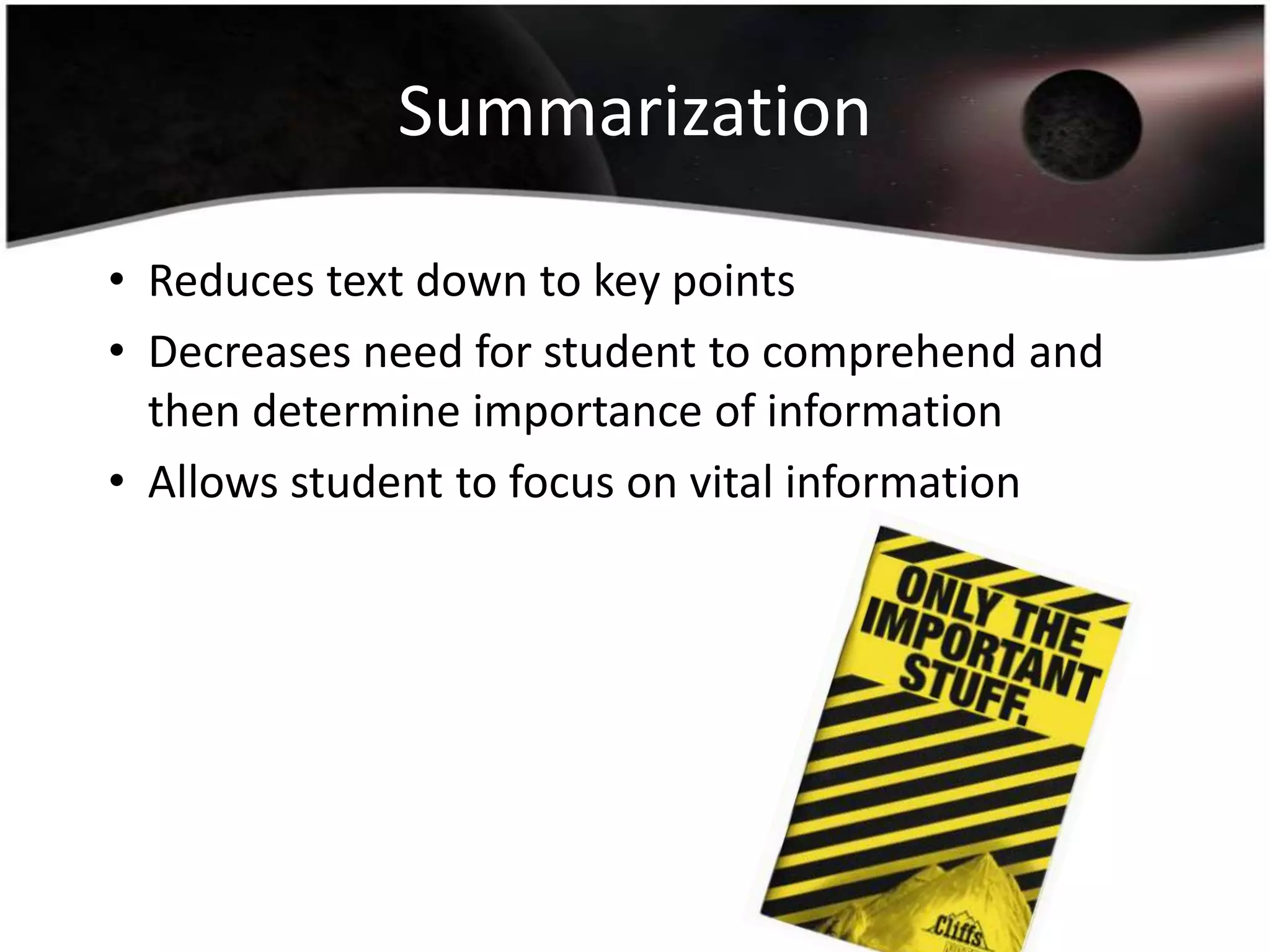
Summarization
• Reduces text down to key points
• Decreases need for student to comprehend and
then determine importance of information
• Allows student to focus on vital information
Summarizing Tools
• Summarizer
– http://www.tools4noobs.com/summari
ze/

• SMMRY
– http://smmry.com/

• Free Summarizer
– http://freesummarizer.com/

• Text Compactor
– http://textcompactor.com/
Supporting Vocabulary
• Vocabulary knowledge correlates strongly with
reading (and oral) comprehension. – (Hirsch,
2003)
• About 2000 words make up 90% of words in
novels for teenagers (Hirsch and Nation, 1992)
• Decreasing vocabulary complexity increases
readability and comprehension for students who
need it
• Pre-teaching difficult vocabulary which must be
retained for meaning increases understanding
Vocabulary Tools
• Up Goer Five
– http://splasho.com/upgoer5/

• Rewordify
– http://rewordify.com/

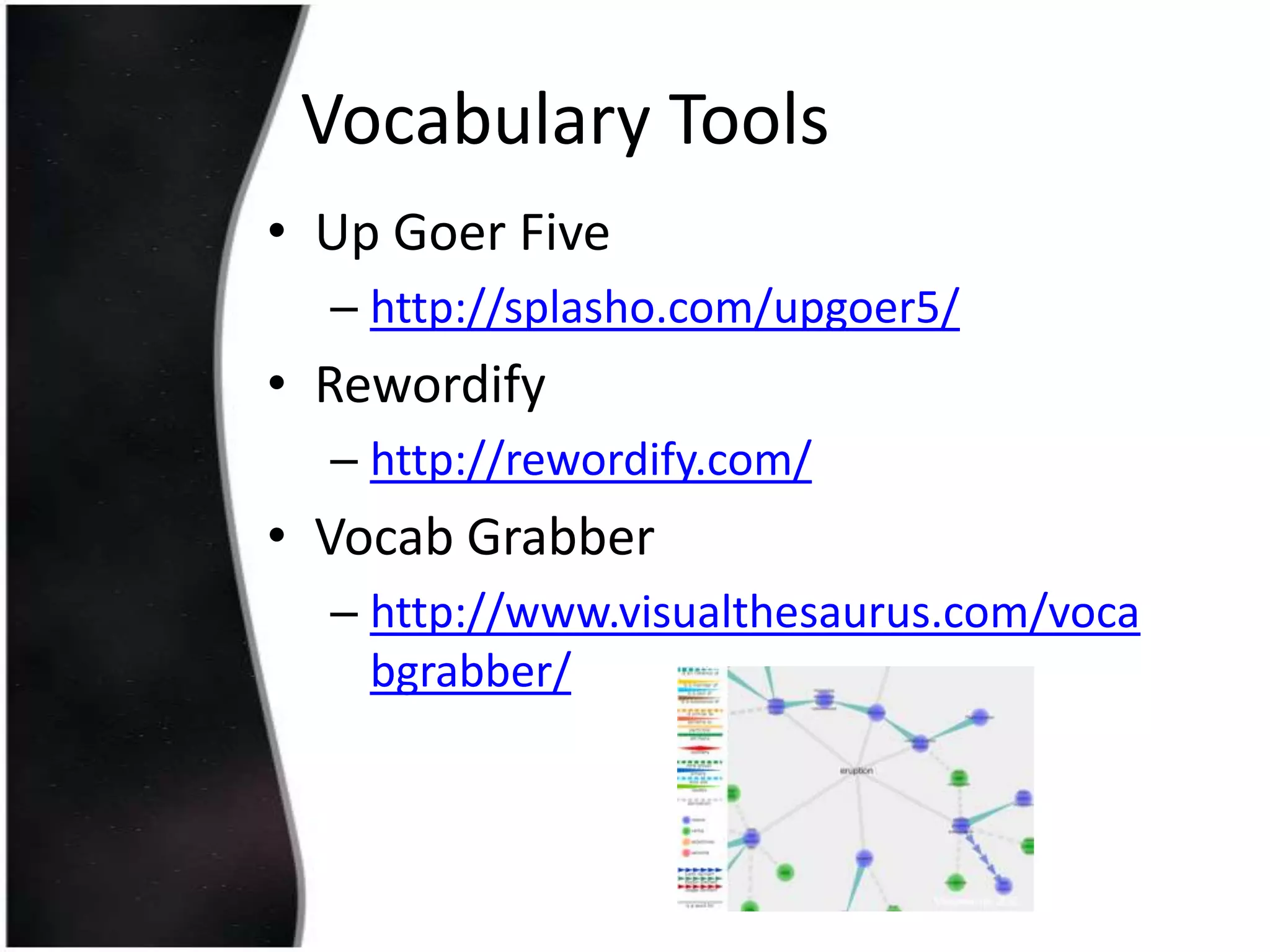
• Vocab Grabber
– http://www.visualthesaurus.com/voca
bgrabber/
Make it Visual
• About 65% of people are visual learners
• Graphics, especially infographics, help
students breakdown information
• Non-language based information (colors,
shapes, arrows) help organize language based
information (words)
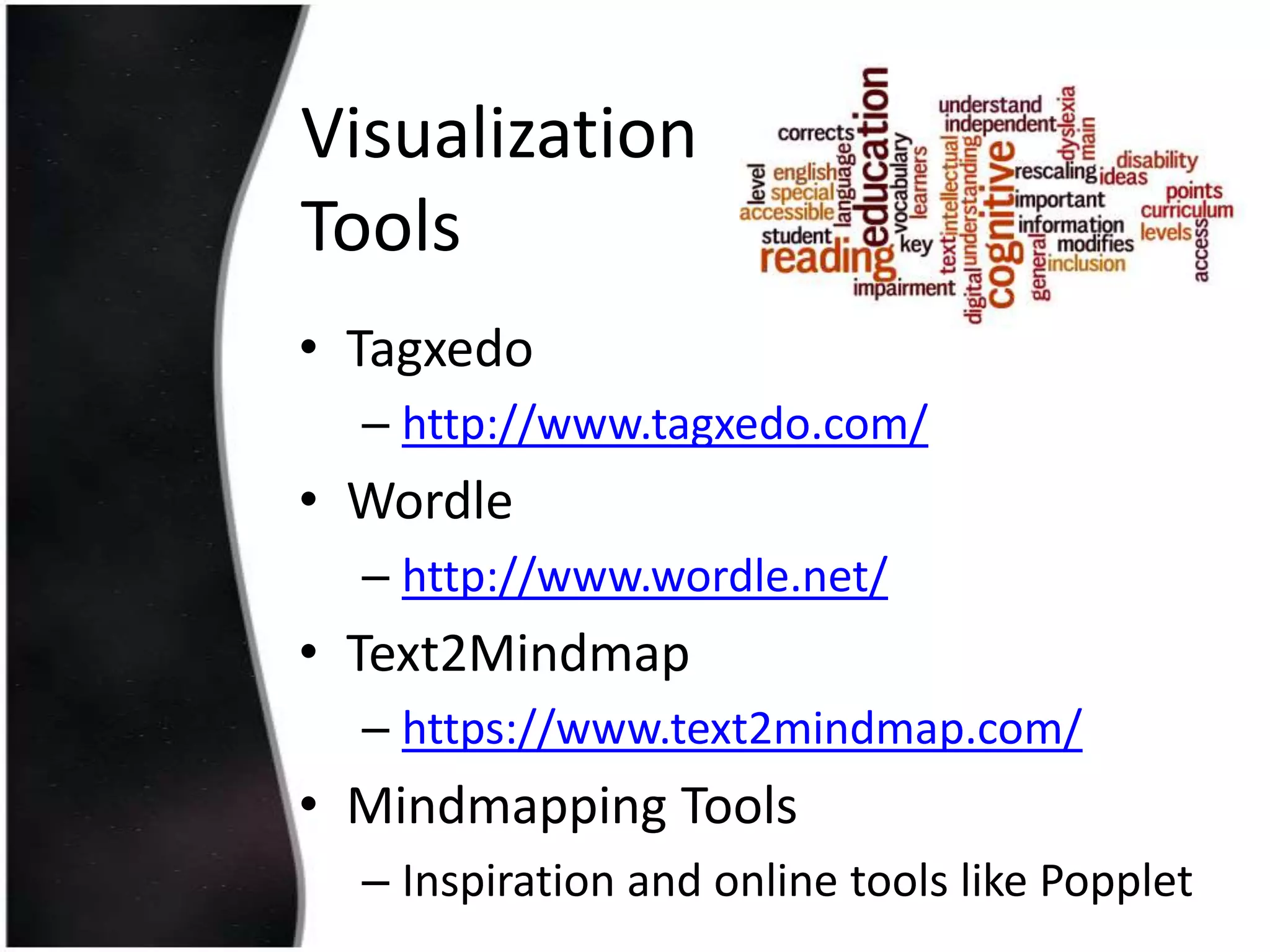
Visualization
Tools
• Tagxedo
– http://www.tagxedo.com/

• Wordle
– http://www.wordle.net/

• Text2Mindmap
– https://www.text2mindmap.com/

• Mindmapping Tools
– Inspiration and online tools like Popplet

Cognitive re scaling with assistive technology

  • 1.
    Cognitive Re-Scaling with AssistiveTechnology Kate Ahern, M.S.Ed. Easter Seals MA
  • 2.
    Cognitive Re-Scaling "as aprocess of altering the cognitive difficulty of information“ Edyburn, 2002
  • 3.
    Traditional Approach toAssistive Technology for Reading • Focuses on decoding • Replaces reading with listening • Audiobooks • Text-to-Speech • Adult or peer reader • Necessary but not sufficient for many learners
  • 4.
    Cognitive Re-Scaling • Gradelevel text may be inaccessible for multiple reasons • Reading level too high • Student is unable to decode • Student is has difficulty with the complexity of the text • Vocabulary level too difficult • Student does not have the pre-requisite background knowledge • Student needs visual/graphical support
  • 5.
    Summarization • Reduces textdown to key points • Decreases need for student to comprehend and then determine importance of information • Allows student to focus on vital information
  • 6.
    Summarizing Tools • Summarizer –http://www.tools4noobs.com/summari ze/ • SMMRY – http://smmry.com/ • Free Summarizer – http://freesummarizer.com/ • Text Compactor – http://textcompactor.com/
  • 7.
    Supporting Vocabulary • Vocabularyknowledge correlates strongly with reading (and oral) comprehension. – (Hirsch, 2003) • About 2000 words make up 90% of words in novels for teenagers (Hirsch and Nation, 1992) • Decreasing vocabulary complexity increases readability and comprehension for students who need it • Pre-teaching difficult vocabulary which must be retained for meaning increases understanding
  • 8.
    Vocabulary Tools • UpGoer Five – http://splasho.com/upgoer5/ • Rewordify – http://rewordify.com/ • Vocab Grabber – http://www.visualthesaurus.com/voca bgrabber/
  • 9.
    Make it Visual •About 65% of people are visual learners • Graphics, especially infographics, help students breakdown information • Non-language based information (colors, shapes, arrows) help organize language based information (words)
  • 10.
    Visualization Tools • Tagxedo – http://www.tagxedo.com/ •Wordle – http://www.wordle.net/ • Text2Mindmap – https://www.text2mindmap.com/ • Mindmapping Tools – Inspiration and online tools like Popplet