
Information and
Computer
Research
TECK L. TAN
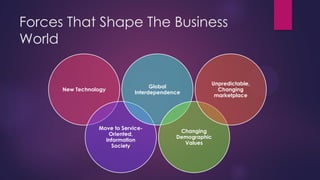
Forces That Shape The Business
World

New Technology

Global
Interdependence

Move to ServiceOriented,
Information
Society

Unpredictable,
Changing
marketplace

Changing
Demographic
Values
Labour Market Trends


Shift to non-standard employment – part-time,
temporary, contractual, multiple sources
income



Lifelong learning – commitment to a life of
upgrading skills and learning new ones



Technology – continually upgrading workrelated skills



Growth of small business



Industrial shift – from good-producing to
service –providing industries



Globalization – outsourcing



Demographics – factors include age of
population, gender, ethnicity, settlement,
immigration
Factors for Successful in the New
Labour Market
Adapt to change
Flexible

Creating your own
jobs

Self-promotion &
networking

Assume
responsibility for
own lives and
financial planning

Knowledge in new
economy

Self-awareness
Creativity
Self-esteem

Proactive career
planning

Life-long learning
Constant retraining
Learn new tech

Teamwork
Skills
Industry Groupings
GoodsProducing

• Manufacturing
• Mining
• Construction
• Agriculture
• Forestry
• Fishing

ServiceProducing

• Transportation, communication & utilities
• Trade
• Health, social & education
• Finance, insurance & real estate
• Government services
• Business & retail services
• Accommodation, food & beverage services
Range of Service Sector
Dynamic service
industries

• Include the more knowledgeintensive or high tech services,
e.g. telecommunications and
business services

Traditional
services

• Refer to services directed
toward meeting the needs of
consumers, e.g. retail trade,
personal services and tourism

Non-market
services

• Include health, education and
government
Primary and Secondary Job
Markets
Primary Market

Secondary
Market

Freelance

Managers, professionals
and skilled trade workers

Small and Medium-Sized
Firms

Independent
marketplace for skills and
expertise

Healthy salaries and
benefits

Struggling to remain
viable and profitable

Opportunities for
advancement

Operate on tight money
and lower profit margins

High level of job
satisfaction

Workplace of choice for
mothers, immigrants and
disabled workers

Market

Demands both skills and
experience

Holds a lot of
opportunities
Labour Market Information
Components
Employment and Unemployment Rates

Job Openings – Employment Prospects - now and in the future
Employment Sectors
Wages – per hour and salary
Skills Needed – Essential Skills
Job Descriptions
Education and other Training Requirements
Tips On Becoming LMI Savvy
Be curious

Ask
Questions

Get
Informed

Question
Information
Get
Connected
Questions and Search
Keywords
Questions

• What kind of employers seem to always be
hiring?
• Who’s making the big money
• How did those people get those jobs?
• What education do they have?

Search
Keywords

• Labour market information
• Economy
• Employment prospects
• In demand jobs
• Hot jobs
• Hot industries
Self-management
skills
Use to code with
environments
transferable
e.g. assertiveness,
cooperation,
diplomacy…

Developed by
learning
Generally not
transferable unless
related field

Acquired on the job
Also acquired by
training in institute
Also developed in
spare-time hobbies

Rooted in aptitudes

Functional Skills

Rooted in
temperament/
Personality traits/soft
skills

Work Content Skills

Adaptive Skills

Types of Skills
Use to carry on
activities in the work
setting in dealing
with people, data, or
things
how we function on
the job in specific
tasks
Transferable skills;
each person has 500700 functional skills
Soft Skills vs Hard Skills
Hard skills can get you an interview

But you need soft kills to get and keep the job
Soft Skills:

Optimism, common sense, responsibility, a sense of humour, integrity, empathy,
teamwork, leadership, communication, good manners, negotiations, sociability, the
ability to teach, remain calm under pressure…
Hard Skills:

MS Office, typing, software applications, operating machines, software development,
speaking foreign language…
Essential Skills


The foundation skills use to carry out the work task, learning and life



The building blocks used to learn new ones



Allow people to grow with their jobs and adapt to changes in the workplace
1.

Reading

2.

Document Use

3.

Numeracy

4.

Writing

5.

Oral Communication

6.

Working with Others

7.

Thinking

8.

Computer Use

9.

Continuous Learning

Sources: Guide to essential skills - HRSDC
What’s Important to the Clients
Empower clients
to do job search
on their own

Clients be willing
to change,
learn & flexible

Match the
personality with
job

Arrange
informational
interview

Get a mentor

Be polite
persistence

Adhere to work
ethic
Networking
What is Networking?


Networking is getting out and meeting people either formally or informally, in groups or
one-on-one



It s a chance to get to know other people and let them know something about you

Why
Network?

•Obtain information and build personal contacts
•Gain first hand knowledge into the hidden market
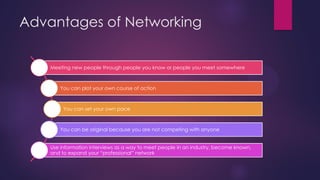
Advantages of Networking
Meeting new people through people you know or people you meet somewhere

You can plot your own course of action

You can set your own pace

You can be original because you are not competing with anyone
Use information interviews as a way to meet people in an industry, become known,
and to expand your “professional” network
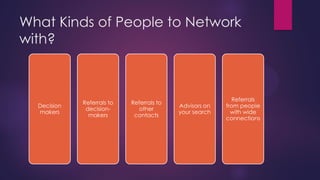
What Kinds of People to Network
with?

Decision
makers

Referrals to
decisionmakers

Referrals to
other
contacts

Advisors on
your search

Referrals
from people
with wide
connections
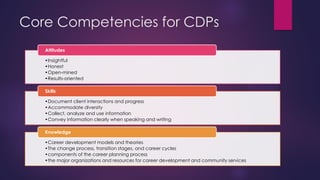
Core Competencies for CDPs
Attitudes
•Insightful
•Honest
•Open-mined
•Results-oriented
Skills
•Document client interactions and progress
•Accommodate diversity
•Collect, analyze and use information
•Convey information clearly when speaking and writing
Knowledge
•Career development models and theories
•The change process, transition stages, and career cycles
•components of the career planning process
•the major organizations and resources for career development and community services
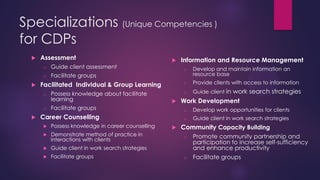
Specializations (Unique Competencies )
for CDPs


Assessment
o

o



Guide client assessment

Information and Resource Management

Facilitate groups

o

o

Possess knowledge about facilitate
learning
Facilitate groups
Possess knowledge in career counselling



Demonstrate method of practice in
interactions with clients



Facilitate groups

Work Development
Develop work opportunities for clients

o

Guide client in work search strategies

Guide client in work search strategies



Guide client in work search strategies

o

Career Counselling


Provide clients with access to information

o



Develop and maintain information an
resource base

o

Facilitated Individual & Group Learning
o







Community Capacity Building
o

Promote community partnership and
participation to increase self-sufficiency
and enhance productivity

o

Facilitate groups

Information and Computer Research

  • 1.
  • 2.
    Forces That ShapeThe Business World New Technology Global Interdependence Move to ServiceOriented, Information Society Unpredictable, Changing marketplace Changing Demographic Values
  • 3.
    Labour Market Trends  Shiftto non-standard employment – part-time, temporary, contractual, multiple sources income  Lifelong learning – commitment to a life of upgrading skills and learning new ones  Technology – continually upgrading workrelated skills  Growth of small business  Industrial shift – from good-producing to service –providing industries  Globalization – outsourcing  Demographics – factors include age of population, gender, ethnicity, settlement, immigration
  • 4.
    Factors for Successfulin the New Labour Market Adapt to change Flexible Creating your own jobs Self-promotion & networking Assume responsibility for own lives and financial planning Knowledge in new economy Self-awareness Creativity Self-esteem Proactive career planning Life-long learning Constant retraining Learn new tech Teamwork Skills
  • 5.
    Industry Groupings GoodsProducing • Manufacturing •Mining • Construction • Agriculture • Forestry • Fishing ServiceProducing • Transportation, communication & utilities • Trade • Health, social & education • Finance, insurance & real estate • Government services • Business & retail services • Accommodation, food & beverage services
  • 6.
    Range of ServiceSector Dynamic service industries • Include the more knowledgeintensive or high tech services, e.g. telecommunications and business services Traditional services • Refer to services directed toward meeting the needs of consumers, e.g. retail trade, personal services and tourism Non-market services • Include health, education and government
  • 7.
    Primary and SecondaryJob Markets Primary Market Secondary Market Freelance Managers, professionals and skilled trade workers Small and Medium-Sized Firms Independent marketplace for skills and expertise Healthy salaries and benefits Struggling to remain viable and profitable Opportunities for advancement Operate on tight money and lower profit margins High level of job satisfaction Workplace of choice for mothers, immigrants and disabled workers Market Demands both skills and experience Holds a lot of opportunities
  • 8.
    Labour Market Information Components Employmentand Unemployment Rates Job Openings – Employment Prospects - now and in the future Employment Sectors Wages – per hour and salary Skills Needed – Essential Skills Job Descriptions Education and other Training Requirements
  • 9.
    Tips On BecomingLMI Savvy Be curious Ask Questions Get Informed Question Information Get Connected
  • 10.
    Questions and Search Keywords Questions •What kind of employers seem to always be hiring? • Who’s making the big money • How did those people get those jobs? • What education do they have? Search Keywords • Labour market information • Economy • Employment prospects • In demand jobs • Hot jobs • Hot industries
  • 11.
    Self-management skills Use to codewith environments transferable e.g. assertiveness, cooperation, diplomacy… Developed by learning Generally not transferable unless related field Acquired on the job Also acquired by training in institute Also developed in spare-time hobbies Rooted in aptitudes Functional Skills Rooted in temperament/ Personality traits/soft skills Work Content Skills Adaptive Skills Types of Skills Use to carry on activities in the work setting in dealing with people, data, or things how we function on the job in specific tasks Transferable skills; each person has 500700 functional skills
  • 12.
    Soft Skills vsHard Skills Hard skills can get you an interview But you need soft kills to get and keep the job Soft Skills: Optimism, common sense, responsibility, a sense of humour, integrity, empathy, teamwork, leadership, communication, good manners, negotiations, sociability, the ability to teach, remain calm under pressure… Hard Skills: MS Office, typing, software applications, operating machines, software development, speaking foreign language…
  • 13.
    Essential Skills  The foundationskills use to carry out the work task, learning and life  The building blocks used to learn new ones  Allow people to grow with their jobs and adapt to changes in the workplace 1. Reading 2. Document Use 3. Numeracy 4. Writing 5. Oral Communication 6. Working with Others 7. Thinking 8. Computer Use 9. Continuous Learning Sources: Guide to essential skills - HRSDC
  • 14.
    What’s Important tothe Clients Empower clients to do job search on their own Clients be willing to change, learn & flexible Match the personality with job Arrange informational interview Get a mentor Be polite persistence Adhere to work ethic
  • 15.
    Networking What is Networking?  Networkingis getting out and meeting people either formally or informally, in groups or one-on-one  It s a chance to get to know other people and let them know something about you Why Network? •Obtain information and build personal contacts •Gain first hand knowledge into the hidden market
  • 16.
    Advantages of Networking Meetingnew people through people you know or people you meet somewhere You can plot your own course of action You can set your own pace You can be original because you are not competing with anyone Use information interviews as a way to meet people in an industry, become known, and to expand your “professional” network
  • 17.
    What Kinds ofPeople to Network with? Decision makers Referrals to decisionmakers Referrals to other contacts Advisors on your search Referrals from people with wide connections
  • 18.
    Core Competencies forCDPs Attitudes •Insightful •Honest •Open-mined •Results-oriented Skills •Document client interactions and progress •Accommodate diversity •Collect, analyze and use information •Convey information clearly when speaking and writing Knowledge •Career development models and theories •The change process, transition stages, and career cycles •components of the career planning process •the major organizations and resources for career development and community services
  • 19.
    Specializations (Unique Competencies) for CDPs  Assessment o o  Guide client assessment Information and Resource Management Facilitate groups o o Possess knowledge about facilitate learning Facilitate groups Possess knowledge in career counselling  Demonstrate method of practice in interactions with clients  Facilitate groups Work Development Develop work opportunities for clients o Guide client in work search strategies Guide client in work search strategies  Guide client in work search strategies o Career Counselling  Provide clients with access to information o  Develop and maintain information an resource base o Facilitated Individual & Group Learning o    Community Capacity Building o Promote community partnership and participation to increase self-sufficiency and enhance productivity o Facilitate groups