Introduction
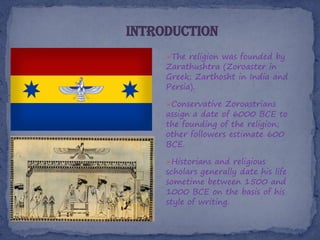
     The religion was founded by
     Zarathushtra (Zoroaster in
     Greek; Zarthosht in India and
     Persia).

     Conservative Zoroastrians
     assign a date of 6000 BCE to
     the founding of the religion;
     other followers estimate 600
     BCE.

     Historians and religious
     scholars generally date his life
     sometime between 1500 and
     1000 BCE on the basis of his
     style of writing.
"We have survived as a very close community
only because we refused to assimilate in the ethnic
sense.“

It is one of the oldest religions still in existence.

It may have been the first monotheistic religion.
They do not generally accept converts nor do they
proselytize.

A person has to be born into the religion. This practice
is criticized by some members.

Jehan Bagli, a retired chemist in Toronto who is a
mobed (priest), and served as president of the North
American Mobed Council from 2002 to 2008.
The Canadian 1991 census counted 3,190
Zoroastrians in that country.

The actual number is believed to be much higher.

There are fewer than 200,000 Zoroastrians in the
world today. In spite of its relatively few members, its
importance to humanity is much greater than its
current numbers might suggest.

It is one of the oldest religions still in existence, it may
have been the first monotheistic religion.
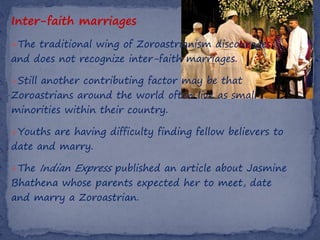
Inter-faith marriages
The traditional wing of Zoroastrianism discourages
and does not recognize inter-faith marriages.

Still another contributing factor may be that
Zoroastrians around the world often live as small
minorities within their country.

Youths are having difficulty finding fellow believers to
date and marry.

The   Indian Express published an article about Jasmine
Bhathena whose parents expected her to meet, date
and marry a Zoroastrian.
Zoroastrianism

Zoroastrianism

  • 2.
    Introduction The religion was founded by Zarathushtra (Zoroaster in Greek; Zarthosht in India and Persia). Conservative Zoroastrians assign a date of 6000 BCE to the founding of the religion; other followers estimate 600 BCE. Historians and religious scholars generally date his life sometime between 1500 and 1000 BCE on the basis of his style of writing.
  • 3.
    "We have survivedas a very close community only because we refused to assimilate in the ethnic sense.“ It is one of the oldest religions still in existence. It may have been the first monotheistic religion.
  • 5.
    They do notgenerally accept converts nor do they proselytize. A person has to be born into the religion. This practice is criticized by some members. Jehan Bagli, a retired chemist in Toronto who is a mobed (priest), and served as president of the North American Mobed Council from 2002 to 2008.
  • 6.
    The Canadian 1991census counted 3,190 Zoroastrians in that country. The actual number is believed to be much higher. There are fewer than 200,000 Zoroastrians in the world today. In spite of its relatively few members, its importance to humanity is much greater than its current numbers might suggest. It is one of the oldest religions still in existence, it may have been the first monotheistic religion.
  • 7.
    Inter-faith marriages The traditionalwing of Zoroastrianism discourages and does not recognize inter-faith marriages. Still another contributing factor may be that Zoroastrians around the world often live as small minorities within their country. Youths are having difficulty finding fellow believers to date and marry. The Indian Express published an article about Jasmine Bhathena whose parents expected her to meet, date and marry a Zoroastrian.