Application of Computing in Yoga Science
Dr. Shamik Tiawari, Dr. Lalit Kane, Mr. Varun Sapra
School of Computer Science
University of Petroleum and Energy Studies, Dehradun
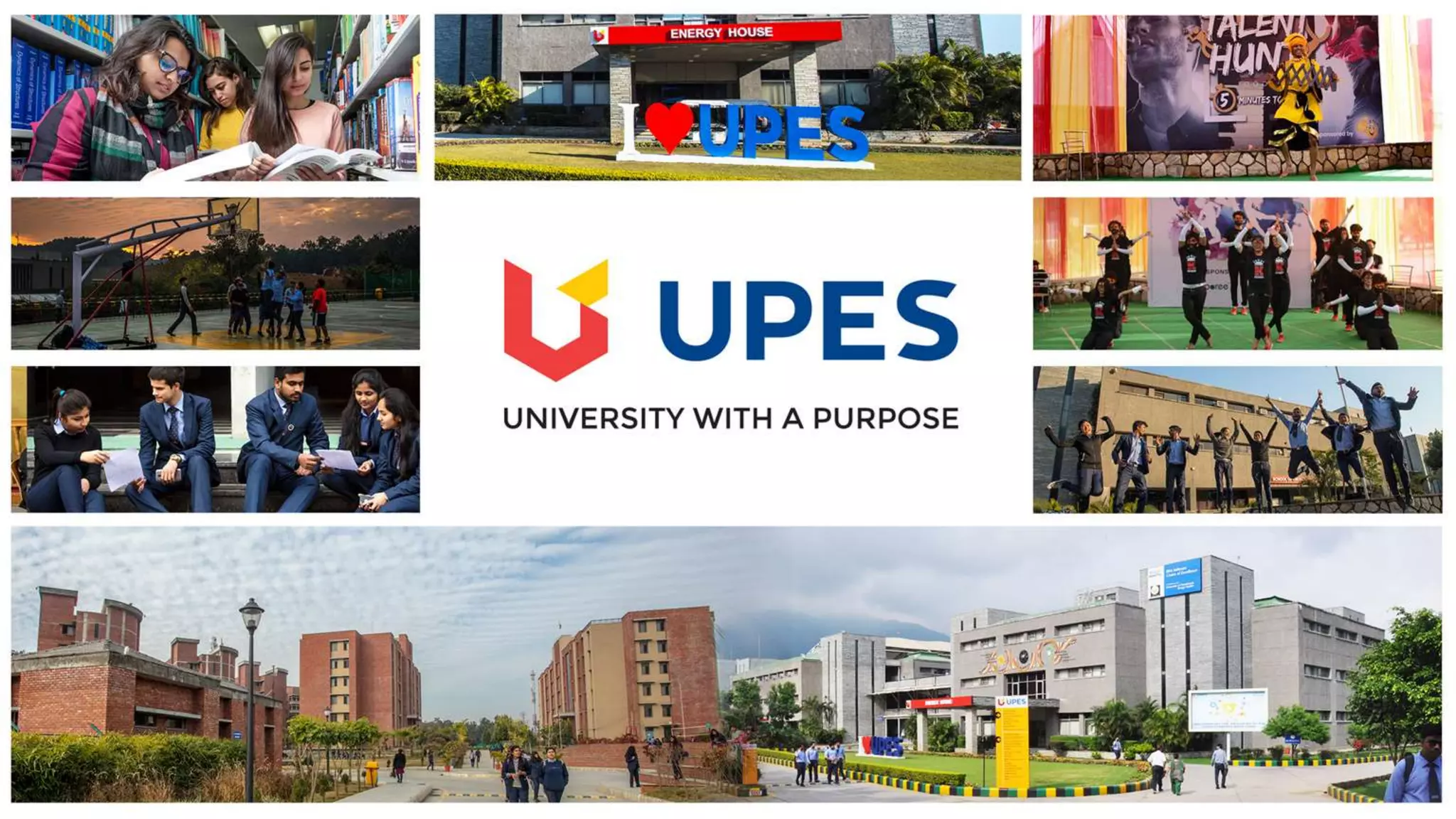
UPES
Founded in 2003, the University of Petroleum and Energy Studies (UPES) has
become the leading institution for over 9000 students pursuing energy,
infrastructure, transportation and information technology programs at the
undergraduate and postgraduate degree level.
The University of Petroleum and Energy Studies (UPES) delivers undergraduate
and graduate degree programs through its six schools:
• School of Engineering
• School of Management and Economic Studies
• School of Legal Studies
• School of Design
• School of Health Sciences
• School of Computer Science
School of Computer Science (SoCS)
• Cloud Computing & Virtualization Technology
• Open Source & Open Standards
• Big Data
• AI & Machine Learning
• DevOps
• Mobile Application Development
• Cyber Security and Forensics
• E-Commerce
• Business Analytics and Optimization
• Mainframe Technology
• Oil & Gas Informatics
• IT Infrastructure
• Banking, Financial Services and Insurance
• Graphics and Gaming
• Internet of Things and Smart Cities
• Healthcare Informatics
• Manufacturing Systems
• Telecom Informatics
• Mobile Computing
• Blockchain Technology
• Computational Sustainability
Other courses
• BCA with specialization in Banking, Financial
Services and Insurance
• BCA with specialization in Internet of Things
• M.Tech. (CSE)
B.Tech. Computer Science & Engineering with Specialization in
140 faculty members with 54 Ph.D.
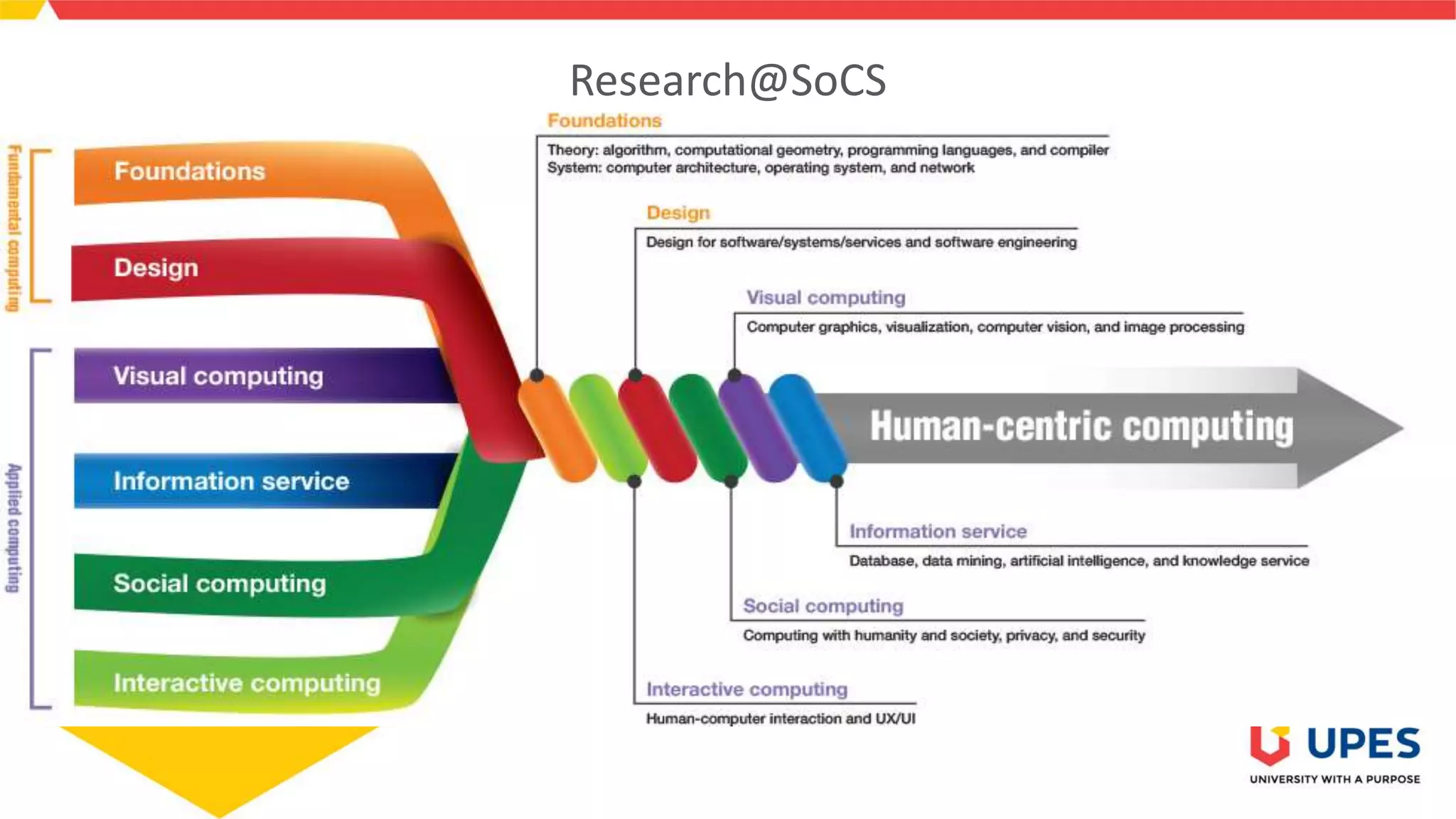
Research@SoCS
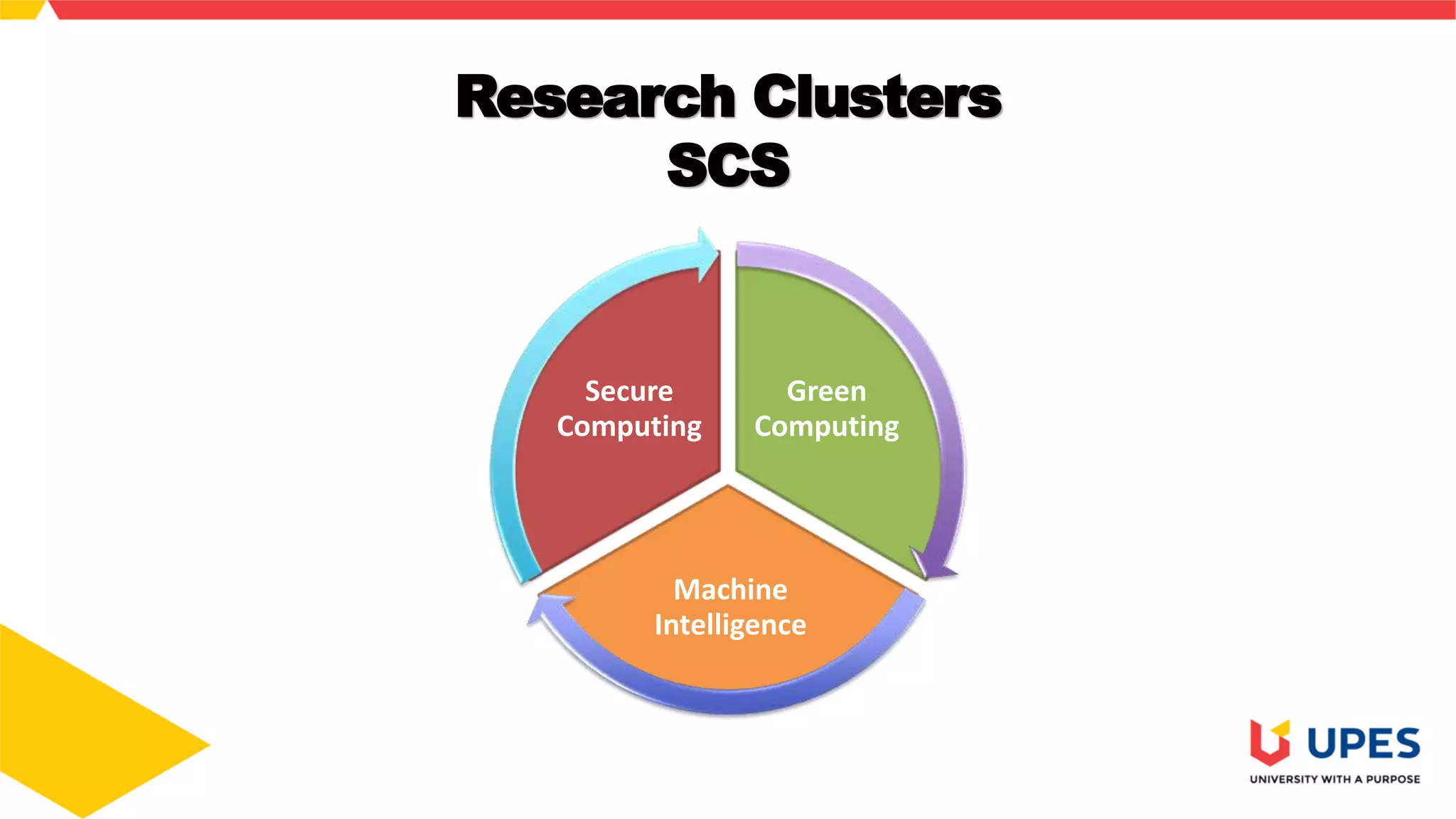
Research Clusters
SCS
Green
Computing
Machine
Intelligence
Secure
Computing
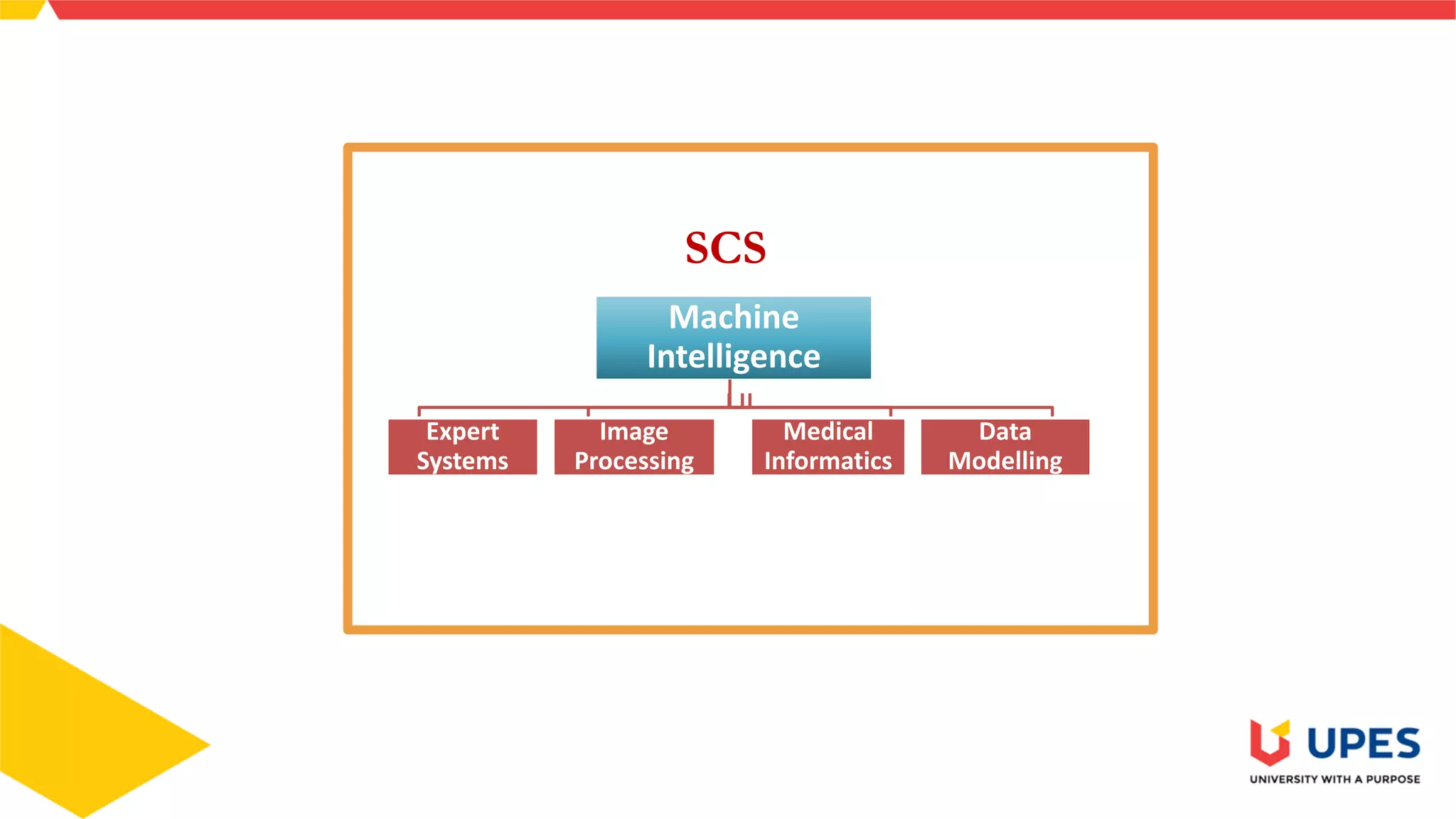
SCS
Machine
Intelligence
Expert
Systems
Image
Processing
Medical
Informatics
Data
Modelling
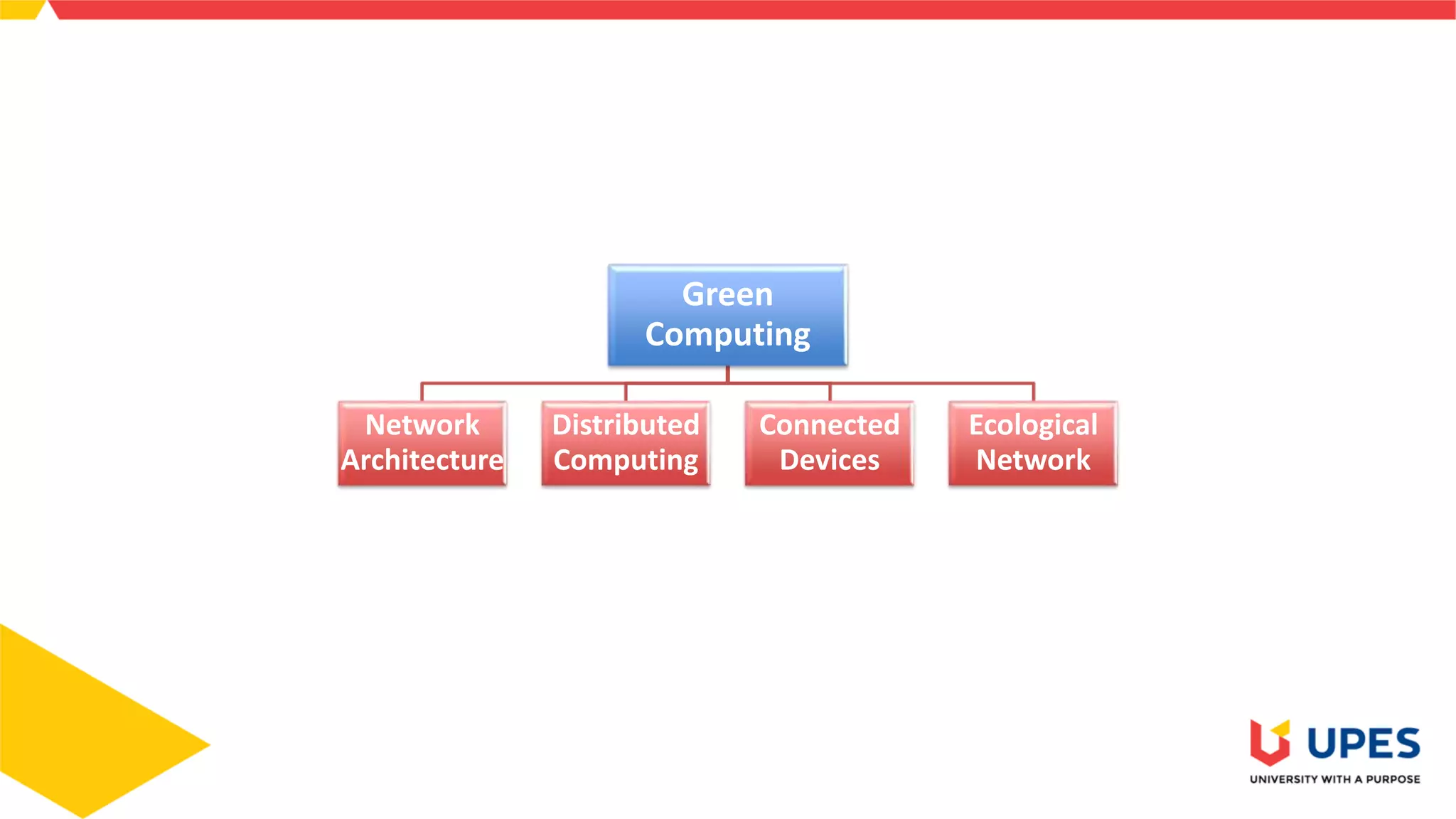
Green
Computing
Network
Architecture
Distributed
Computing
Connected
Devices
Ecological
Network
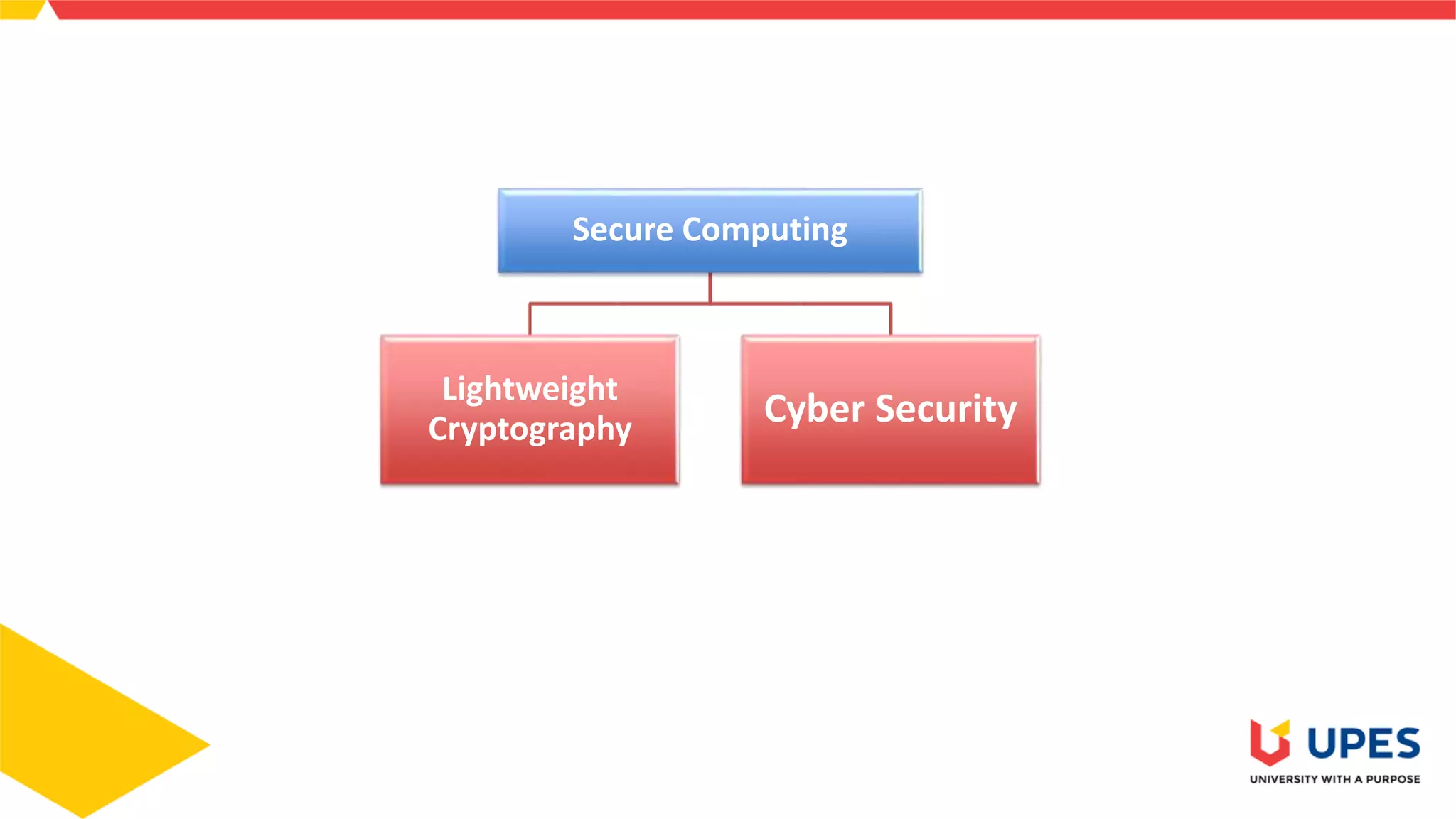
Secure Computing
Lightweight
Cryptography
Cyber Security
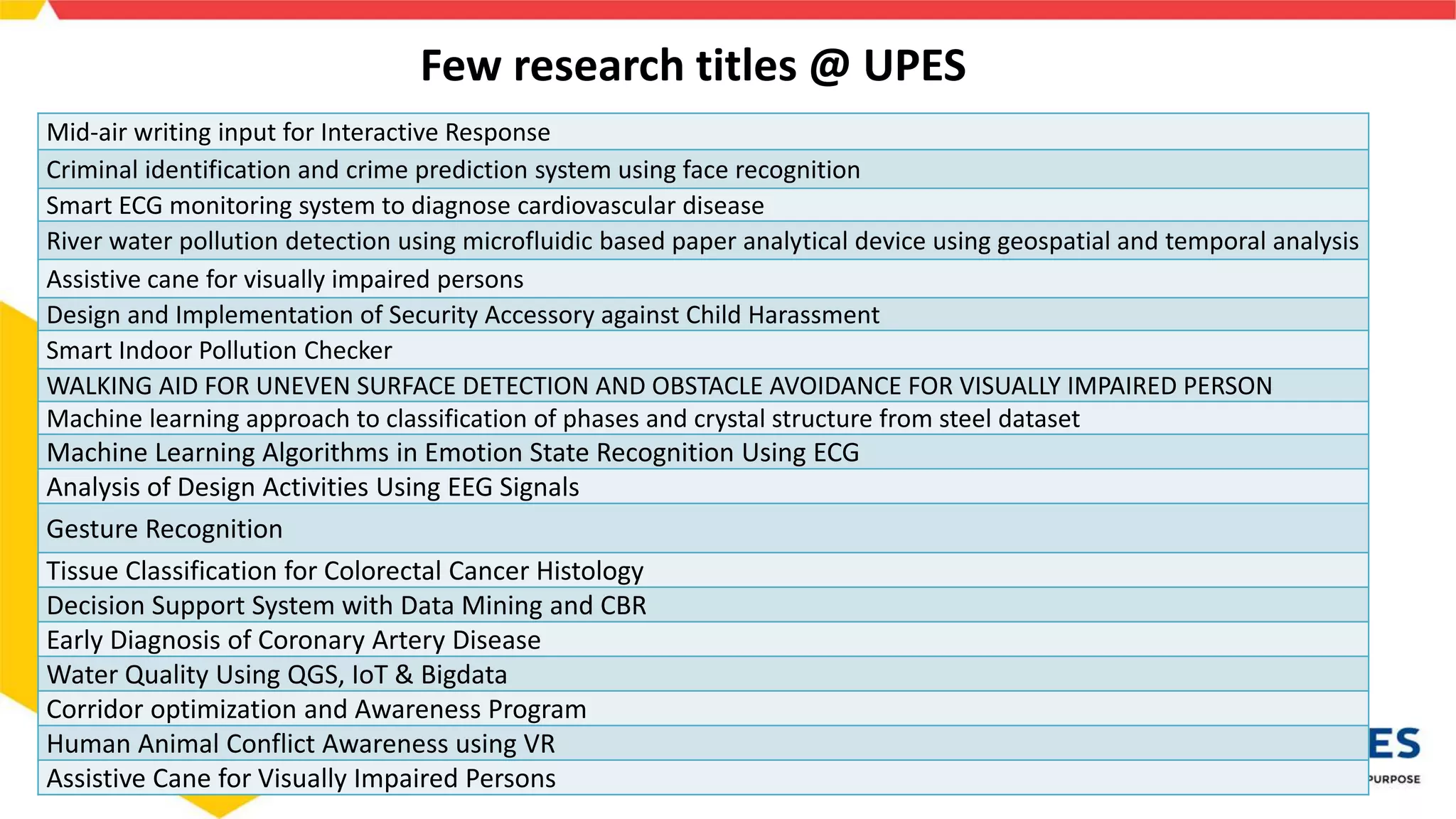
Few research titles @ UPES
Mid-air writing input for Interactive Response
Criminal identification and crime prediction system using face recognition
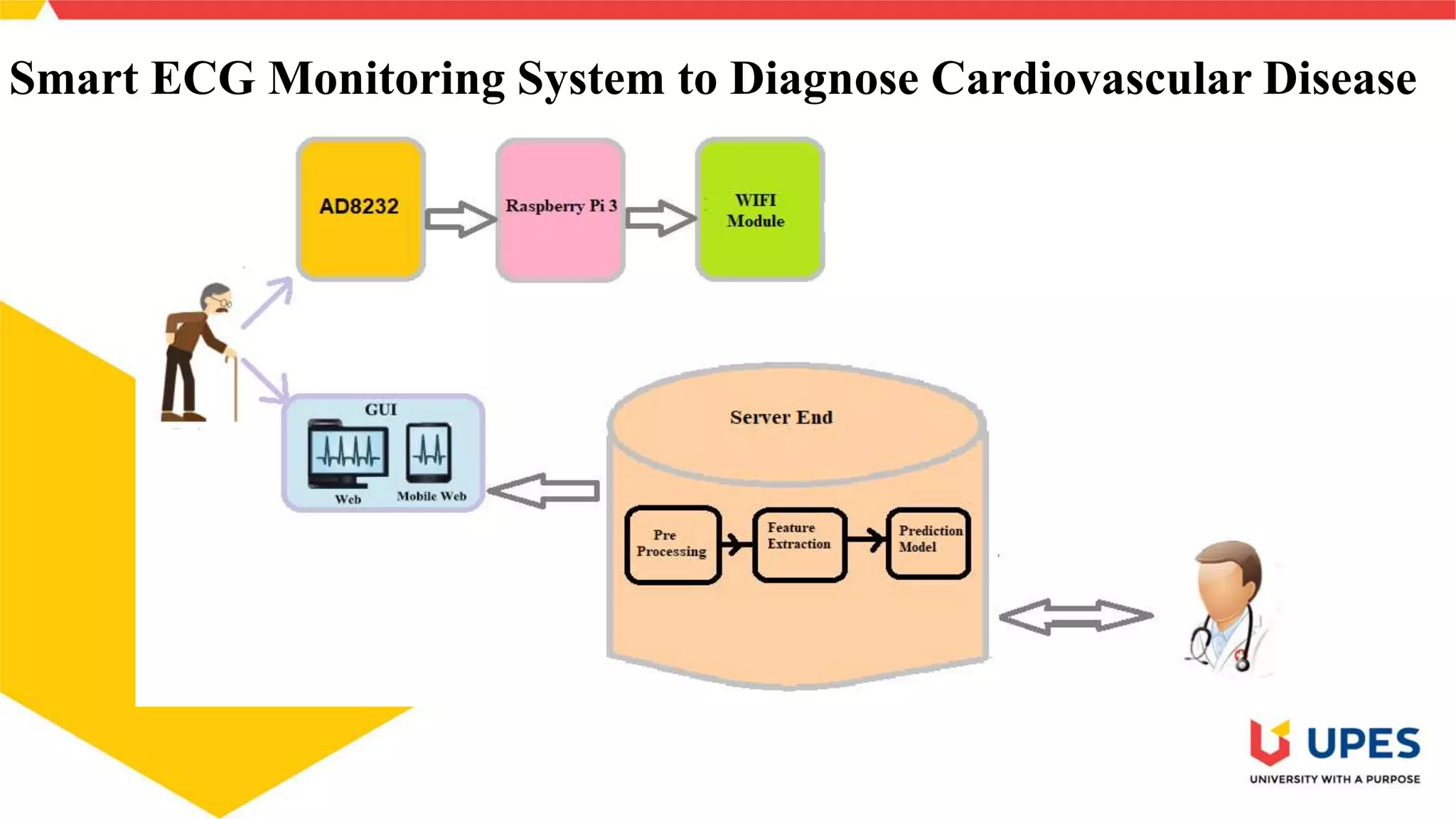
Smart ECG monitoring system to diagnose cardiovascular disease
River water pollution detection using microfluidic based paper analytical device using geospatial and temporal analysis
Assistive cane for visually impaired persons
Design and Implementation of Security Accessory against Child Harassment
Smart Indoor Pollution Checker
WALKING AID FOR UNEVEN SURFACE DETECTION AND OBSTACLE AVOIDANCE FOR VISUALLY IMPAIRED PERSON
Machine learning approach to classification of phases and crystal structure from steel dataset
Machine Learning Algorithms in Emotion State Recognition Using ECG
Analysis of Design Activities Using EEG Signals
Gesture Recognition
Tissue Classification for Colorectal Cancer Histology
Decision Support System with Data Mining and CBR
Early Diagnosis of Coronary Artery Disease
Water Quality Using QGS, IoT & Bigdata
Corridor optimization and Awareness Program
Human Animal Conflict Awareness using VR
Assistive Cane for Visually Impaired Persons
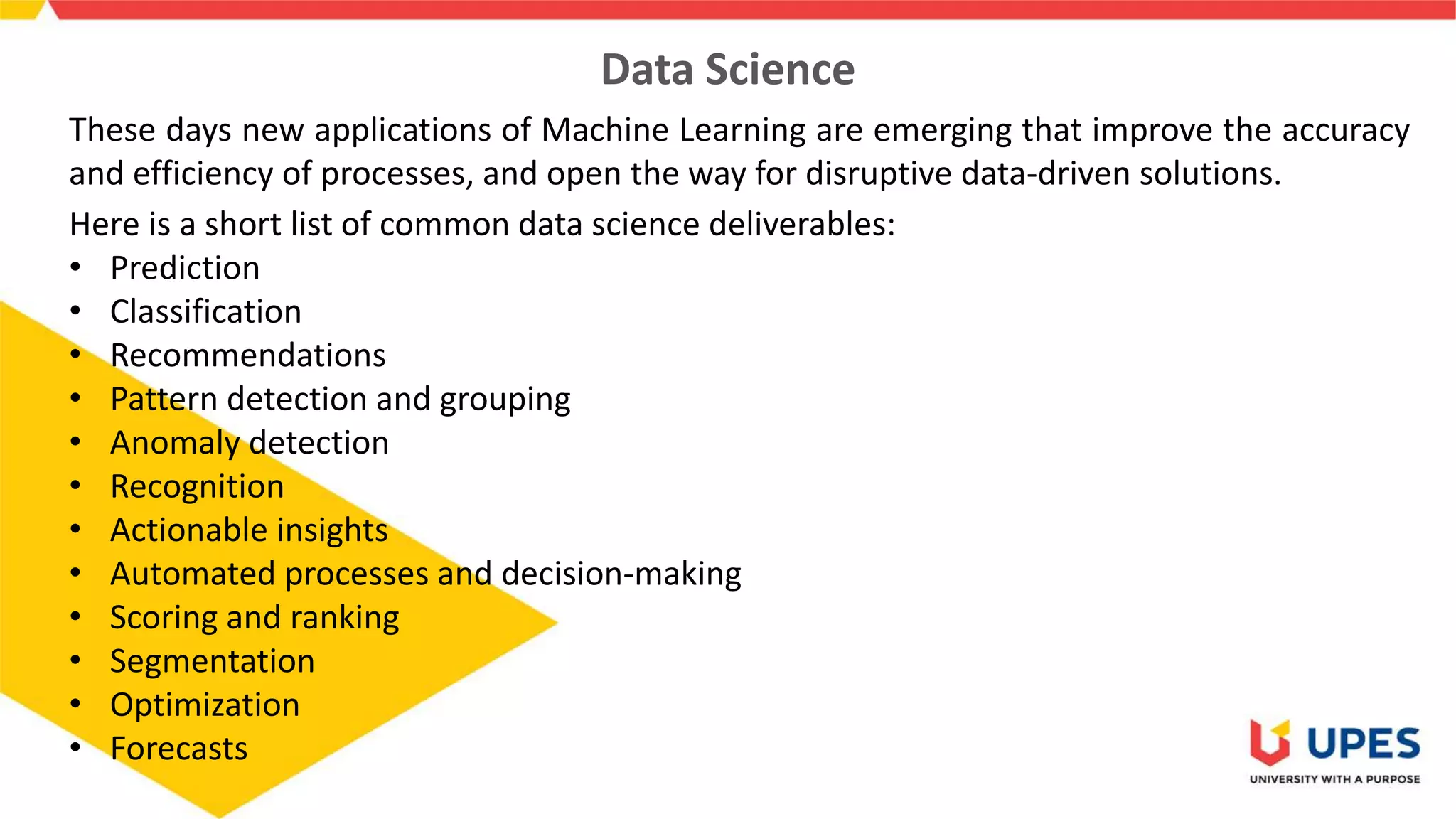
Data Science
These days new applications of Machine Learning are emerging that improve the accuracy
and efficiency of processes, and open the way for disruptive data-driven solutions.
Here is a short list of common data science deliverables:
• Prediction
• Classification
• Recommendations
• Pattern detection and grouping
• Anomaly detection
• Recognition
• Actionable insights
• Automated processes and decision-making
• Scoring and ranking
• Segmentation
• Optimization
• Forecasts
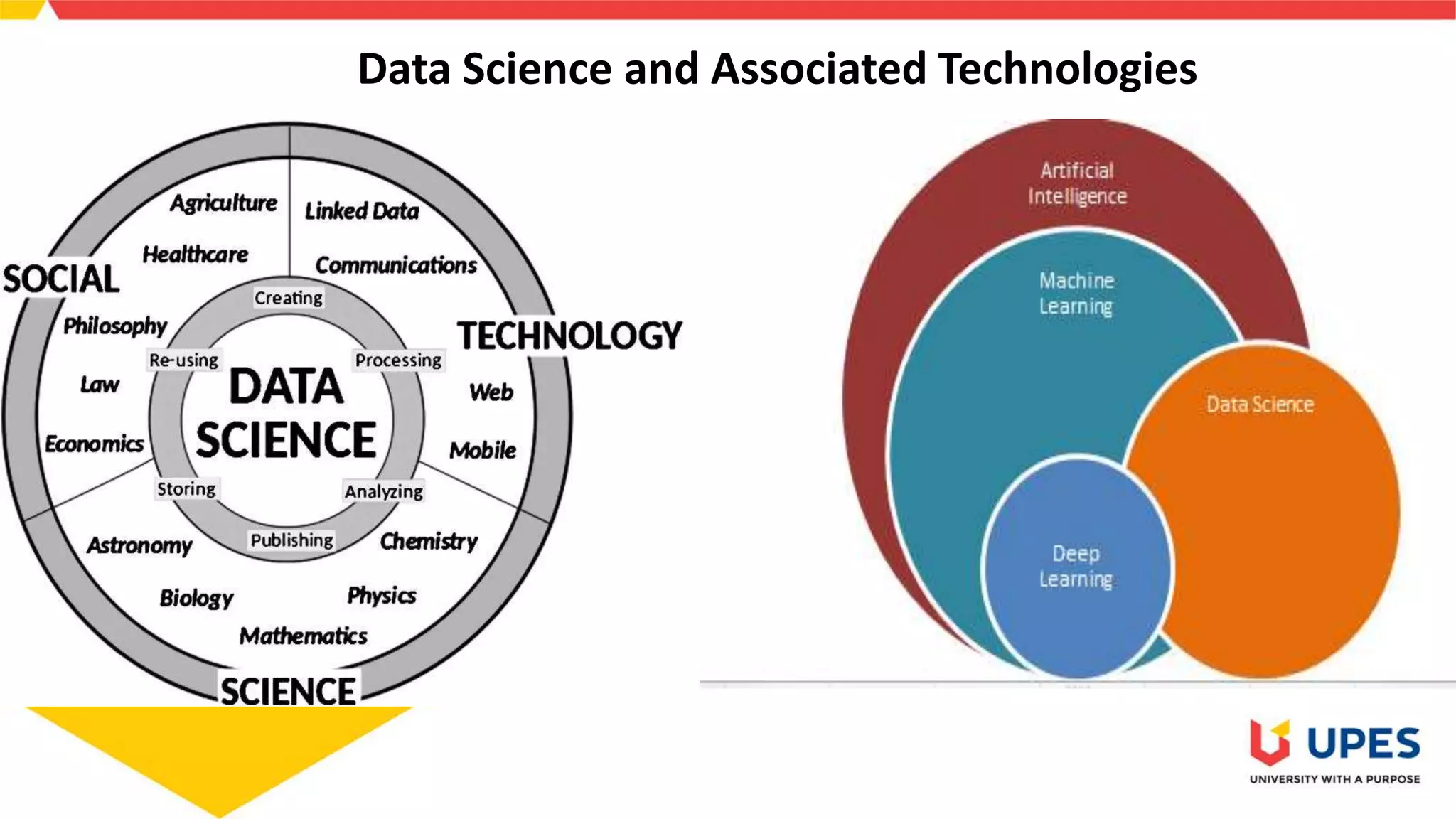
Data Science and Associated Technologies
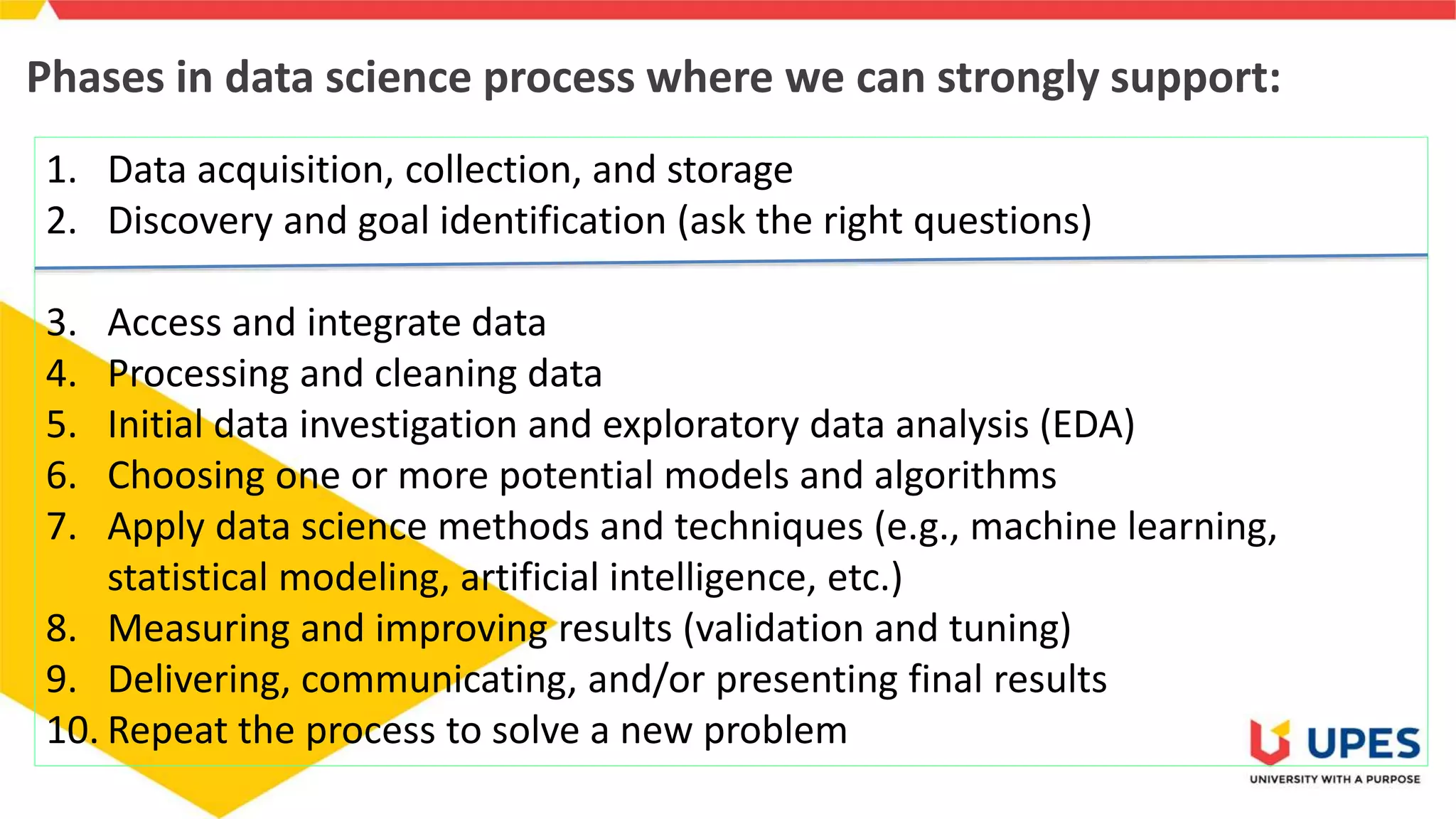
Phases in data science process where we can strongly support:
1. Data acquisition, collection, and storage
2. Discovery and goal identification (ask the right questions)
3. Access and integrate data
4. Processing and cleaning data
5. Initial data investigation and exploratory data analysis (EDA)
6. Choosing one or more potential models and algorithms
7. Apply data science methods and techniques (e.g., machine learning,
statistical modeling, artificial intelligence, etc.)
8. Measuring and improving results (validation and tuning)
9. Delivering, communicating, and/or presenting final results
10. Repeat the process to solve a new problem
Smart ECG Monitoring System to Diagnose Cardiovascular Disease
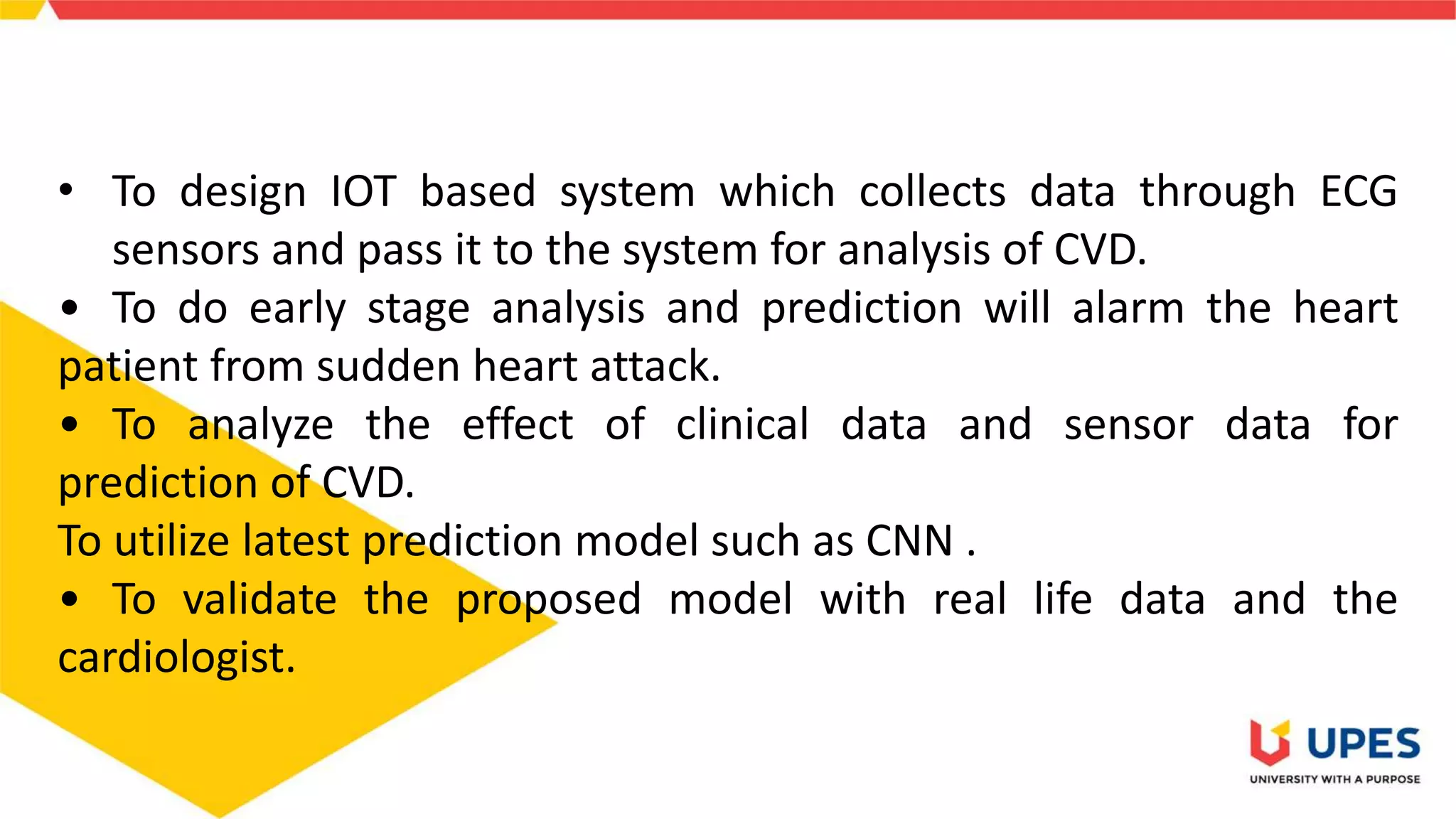
• To design IOT based system which collects data through ECG
sensors and pass it to the system for analysis of CVD.
• To do early stage analysis and prediction will alarm the heart
patient from sudden heart attack.
• To analyze the effect of clinical data and sensor data for
prediction of CVD.
To utilize latest prediction model such as CNN .
• To validate the proposed model with real life data and the
cardiologist.
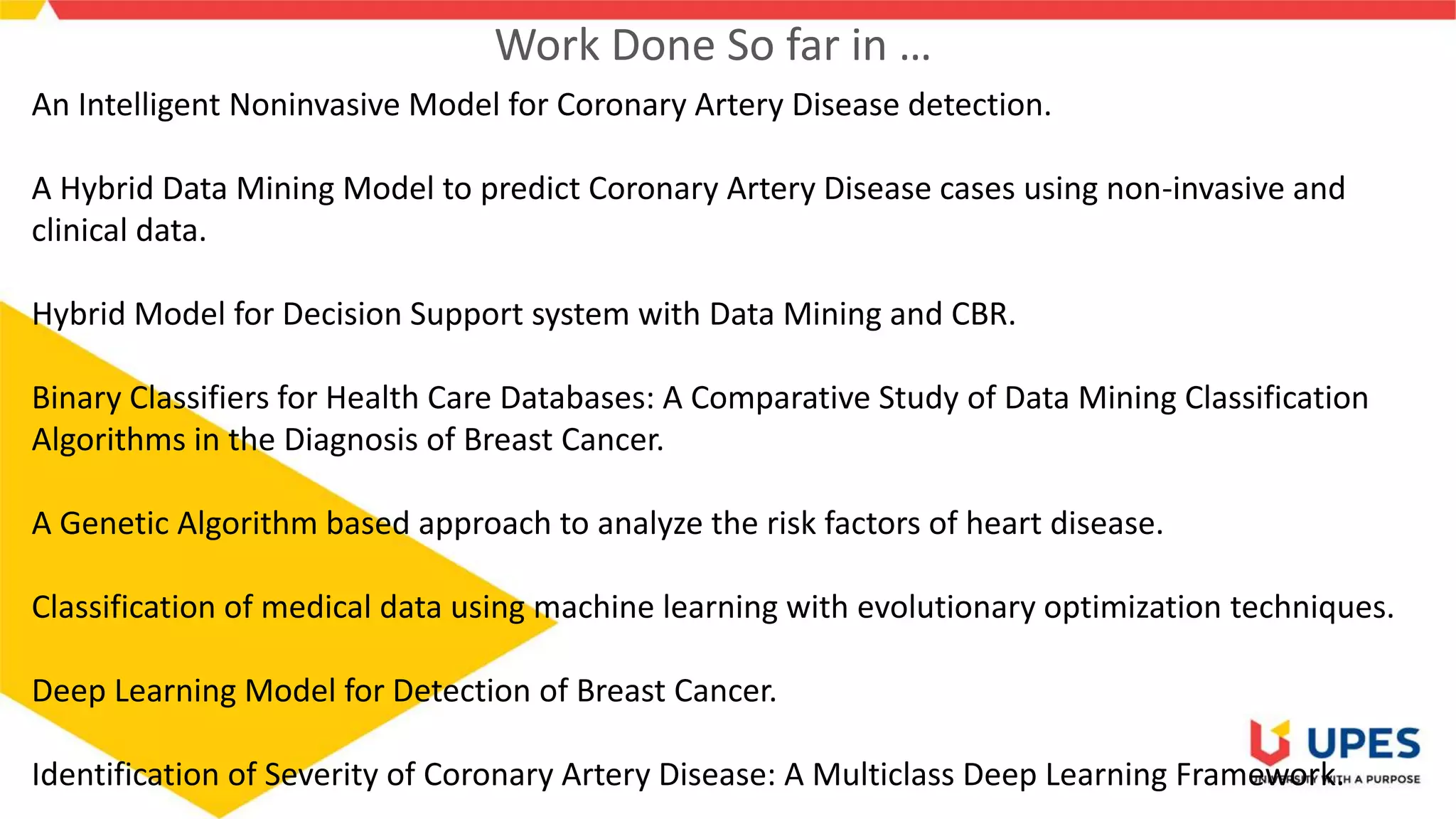
Work Done So far in …
An Intelligent Noninvasive Model for Coronary Artery Disease detection.
A Hybrid Data Mining Model to predict Coronary Artery Disease cases using non-invasive and
clinical data.
Hybrid Model for Decision Support system with Data Mining and CBR.
Binary Classifiers for Health Care Databases: A Comparative Study of Data Mining Classification
Algorithms in the Diagnosis of Breast Cancer.
A Genetic Algorithm based approach to analyze the risk factors of heart disease.
Classification of medical data using machine learning with evolutionary optimization techniques.
Deep Learning Model for Detection of Breast Cancer.
Identification of Severity of Coronary Artery Disease: A Multiclass Deep Learning Framework.
Some areas where we can assist yoga science!
• Noise Filtering of ECG (Electrocardiogram), EEG ( electroencephalogram (EEG)) and
EMG (Electromyogram)
• Frequency domain analysis of ECG, EEG and EMG signals
• Multiresolution analysis of bio-signals using Wavelet, Curvelet, Ridgelet and other
transformations
• Separation of EMG Signals from the Mixture of ECG-EMG Signals
• Classification of electrocardiogram (ECG) signals
• Neurofeedback Using a Personal EEG Device (IOT) for Meditation Training
• Gesture analysis of yoga for training
धन्यवाद

Yoga_anddatascience

  • 2.
    Application of Computingin Yoga Science Dr. Shamik Tiawari, Dr. Lalit Kane, Mr. Varun Sapra School of Computer Science University of Petroleum and Energy Studies, Dehradun
  • 3.
    UPES Founded in 2003,the University of Petroleum and Energy Studies (UPES) has become the leading institution for over 9000 students pursuing energy, infrastructure, transportation and information technology programs at the undergraduate and postgraduate degree level. The University of Petroleum and Energy Studies (UPES) delivers undergraduate and graduate degree programs through its six schools: • School of Engineering • School of Management and Economic Studies • School of Legal Studies • School of Design • School of Health Sciences • School of Computer Science
  • 4.
    School of ComputerScience (SoCS) • Cloud Computing & Virtualization Technology • Open Source & Open Standards • Big Data • AI & Machine Learning • DevOps • Mobile Application Development • Cyber Security and Forensics • E-Commerce • Business Analytics and Optimization • Mainframe Technology • Oil & Gas Informatics • IT Infrastructure • Banking, Financial Services and Insurance • Graphics and Gaming • Internet of Things and Smart Cities • Healthcare Informatics • Manufacturing Systems • Telecom Informatics • Mobile Computing • Blockchain Technology • Computational Sustainability Other courses • BCA with specialization in Banking, Financial Services and Insurance • BCA with specialization in Internet of Things • M.Tech. (CSE) B.Tech. Computer Science & Engineering with Specialization in 140 faculty members with 54 Ph.D.
  • 5.
  • 6.
  • 7.
  • 8.
  • 9.
  • 10.
    Few research titles@ UPES Mid-air writing input for Interactive Response Criminal identification and crime prediction system using face recognition Smart ECG monitoring system to diagnose cardiovascular disease River water pollution detection using microfluidic based paper analytical device using geospatial and temporal analysis Assistive cane for visually impaired persons Design and Implementation of Security Accessory against Child Harassment Smart Indoor Pollution Checker WALKING AID FOR UNEVEN SURFACE DETECTION AND OBSTACLE AVOIDANCE FOR VISUALLY IMPAIRED PERSON Machine learning approach to classification of phases and crystal structure from steel dataset Machine Learning Algorithms in Emotion State Recognition Using ECG Analysis of Design Activities Using EEG Signals Gesture Recognition Tissue Classification for Colorectal Cancer Histology Decision Support System with Data Mining and CBR Early Diagnosis of Coronary Artery Disease Water Quality Using QGS, IoT & Bigdata Corridor optimization and Awareness Program Human Animal Conflict Awareness using VR Assistive Cane for Visually Impaired Persons
  • 11.
    Data Science These daysnew applications of Machine Learning are emerging that improve the accuracy and efficiency of processes, and open the way for disruptive data-driven solutions. Here is a short list of common data science deliverables: • Prediction • Classification • Recommendations • Pattern detection and grouping • Anomaly detection • Recognition • Actionable insights • Automated processes and decision-making • Scoring and ranking • Segmentation • Optimization • Forecasts
  • 12.
    Data Science andAssociated Technologies
  • 13.
    Phases in datascience process where we can strongly support: 1. Data acquisition, collection, and storage 2. Discovery and goal identification (ask the right questions) 3. Access and integrate data 4. Processing and cleaning data 5. Initial data investigation and exploratory data analysis (EDA) 6. Choosing one or more potential models and algorithms 7. Apply data science methods and techniques (e.g., machine learning, statistical modeling, artificial intelligence, etc.) 8. Measuring and improving results (validation and tuning) 9. Delivering, communicating, and/or presenting final results 10. Repeat the process to solve a new problem
  • 14.
    Smart ECG MonitoringSystem to Diagnose Cardiovascular Disease
  • 15.
    • To designIOT based system which collects data through ECG sensors and pass it to the system for analysis of CVD. • To do early stage analysis and prediction will alarm the heart patient from sudden heart attack. • To analyze the effect of clinical data and sensor data for prediction of CVD. To utilize latest prediction model such as CNN . • To validate the proposed model with real life data and the cardiologist.
  • 16.
    Work Done Sofar in … An Intelligent Noninvasive Model for Coronary Artery Disease detection. A Hybrid Data Mining Model to predict Coronary Artery Disease cases using non-invasive and clinical data. Hybrid Model for Decision Support system with Data Mining and CBR. Binary Classifiers for Health Care Databases: A Comparative Study of Data Mining Classification Algorithms in the Diagnosis of Breast Cancer. A Genetic Algorithm based approach to analyze the risk factors of heart disease. Classification of medical data using machine learning with evolutionary optimization techniques. Deep Learning Model for Detection of Breast Cancer. Identification of Severity of Coronary Artery Disease: A Multiclass Deep Learning Framework.
  • 17.
    Some areas wherewe can assist yoga science! • Noise Filtering of ECG (Electrocardiogram), EEG ( electroencephalogram (EEG)) and EMG (Electromyogram) • Frequency domain analysis of ECG, EEG and EMG signals • Multiresolution analysis of bio-signals using Wavelet, Curvelet, Ridgelet and other transformations • Separation of EMG Signals from the Mixture of ECG-EMG Signals • Classification of electrocardiogram (ECG) signals • Neurofeedback Using a Personal EEG Device (IOT) for Meditation Training • Gesture analysis of yoga for training
  • 18.

Editor's Notes

  • #8 Vision: to create a strong workforce in the area of machine learning that can develop solutions for potential problems 1.