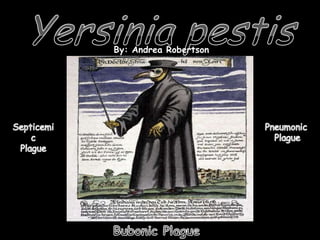
Yersinia pestis is a bacterium that causes bubonic plague, septicemic plague, and pneumonic plague. It is typically transmitted via the bite of an infected flea and causes swelling of lymph nodes called buboes. Bubonic plague is the most common form. If left untreated, it can spread to the bloodstream, causing septicemic plague, or to the lungs, causing pneumonic plague. Throughout history, plague pandemics have killed millions of people. Modern treatment involves antibiotics, but prevention through avoiding contact with infected animals and their fleas is important.