RESEARCH
“True scholarship consists in knowing not what things exist, but
what they mean; it is not memory but judgment.”
~ James Russell Lowell
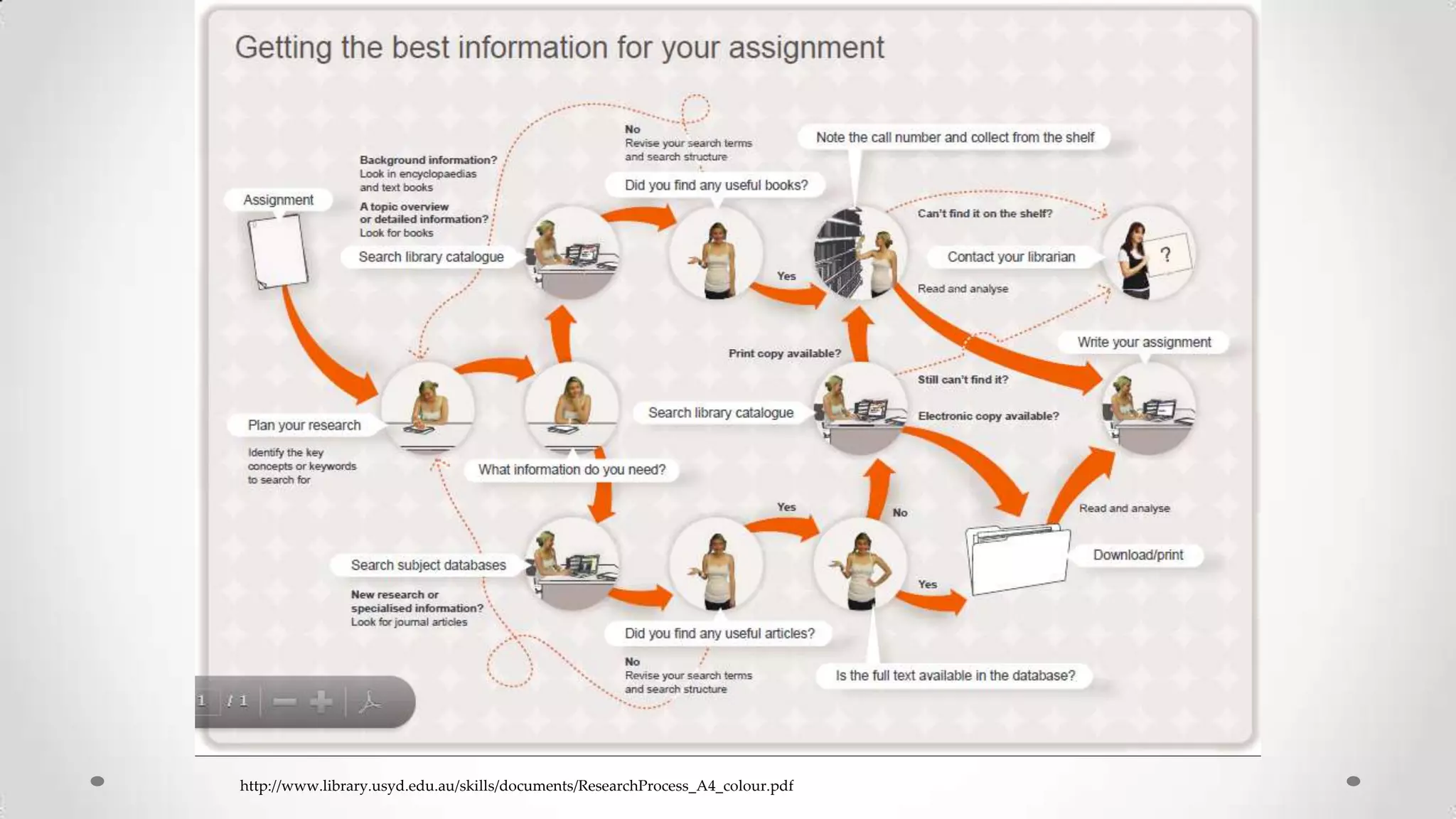
http://www.library.usyd.edu.au/skills/documents/ResearchProcess_A4_colour.pdf
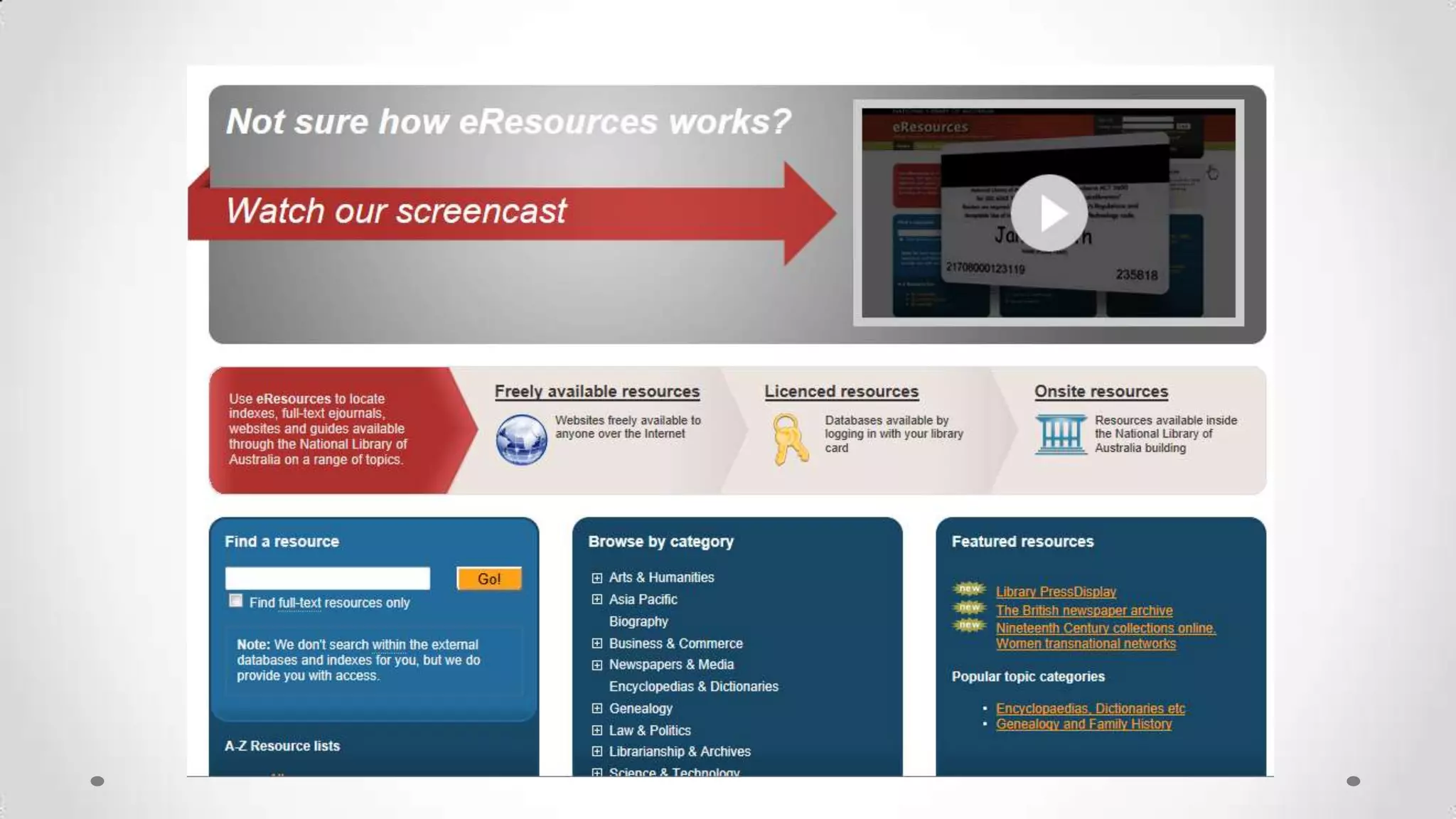
Join
• State Library of NSW

• National Library of
Australia
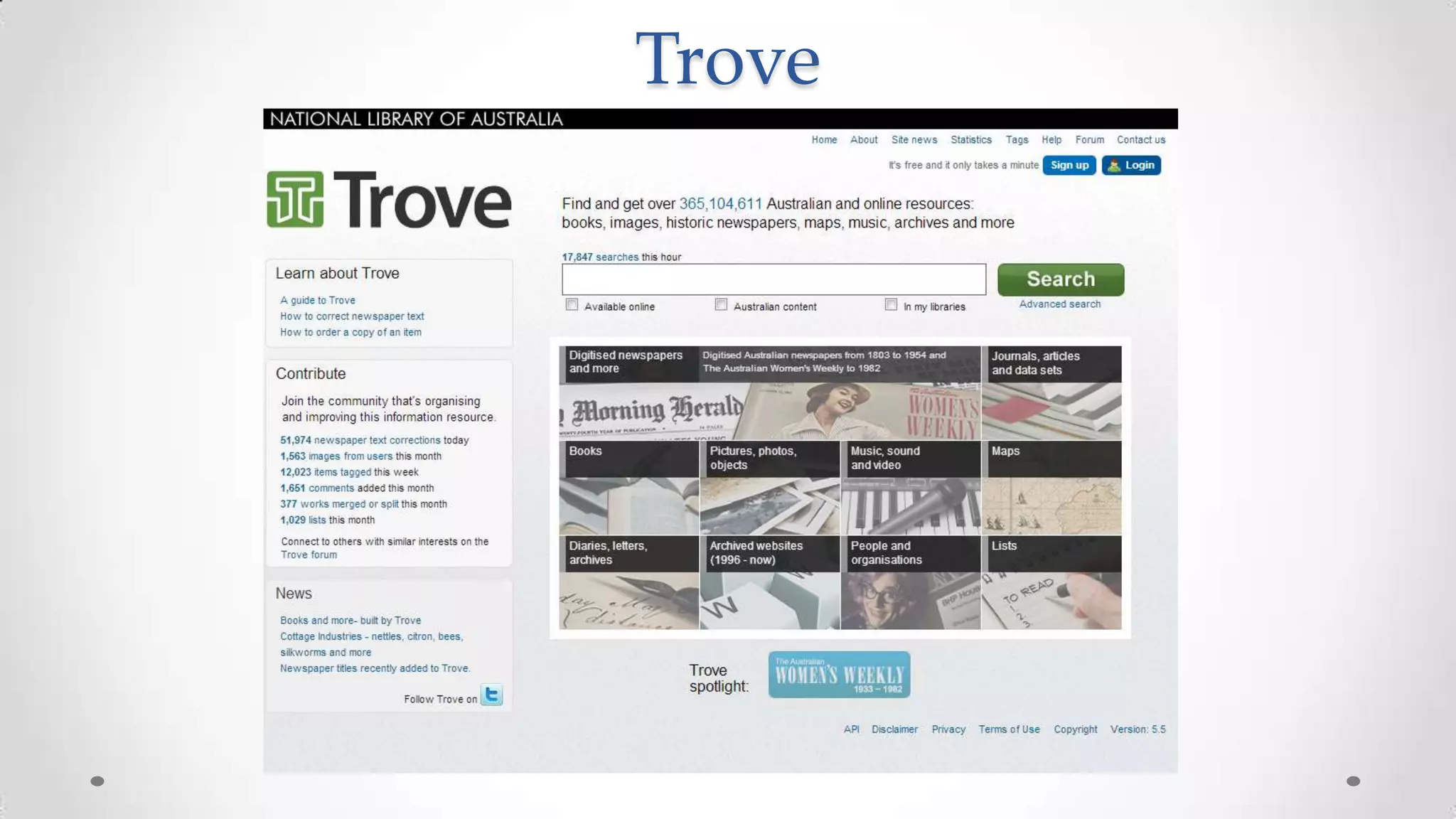
Trove
• Google.com indexes 40 billion public web pages.
• 100+ billion static web pages are publicly-available. These pages can
easily be found by Google and other search engines

• 11+ billion static pages are hidden from the public. As private intranet
content, these are the corporate pages that are only open to
employees of specific companies.
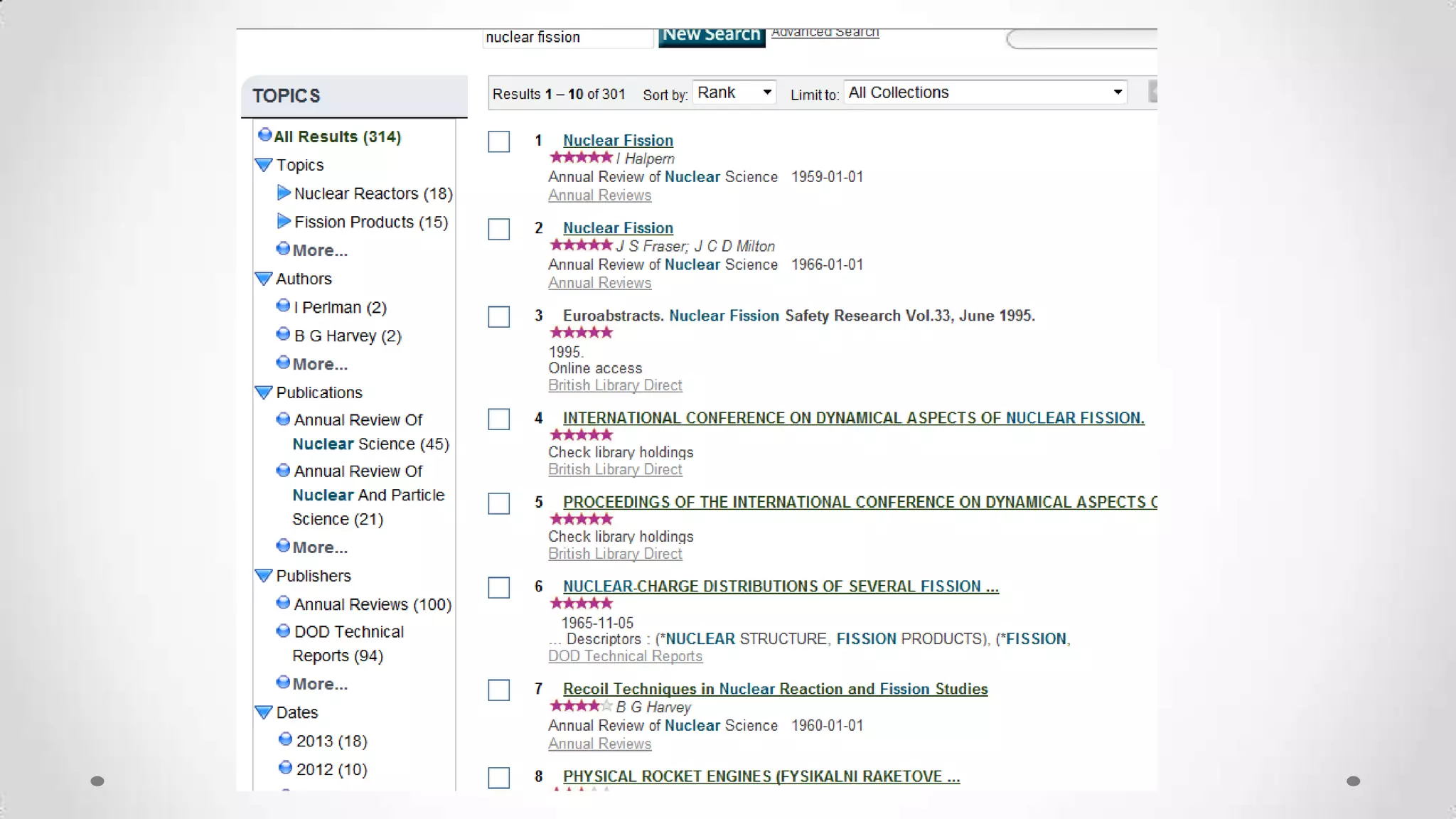
• 450+ billion database-driven pages are completely invisible to
Google.
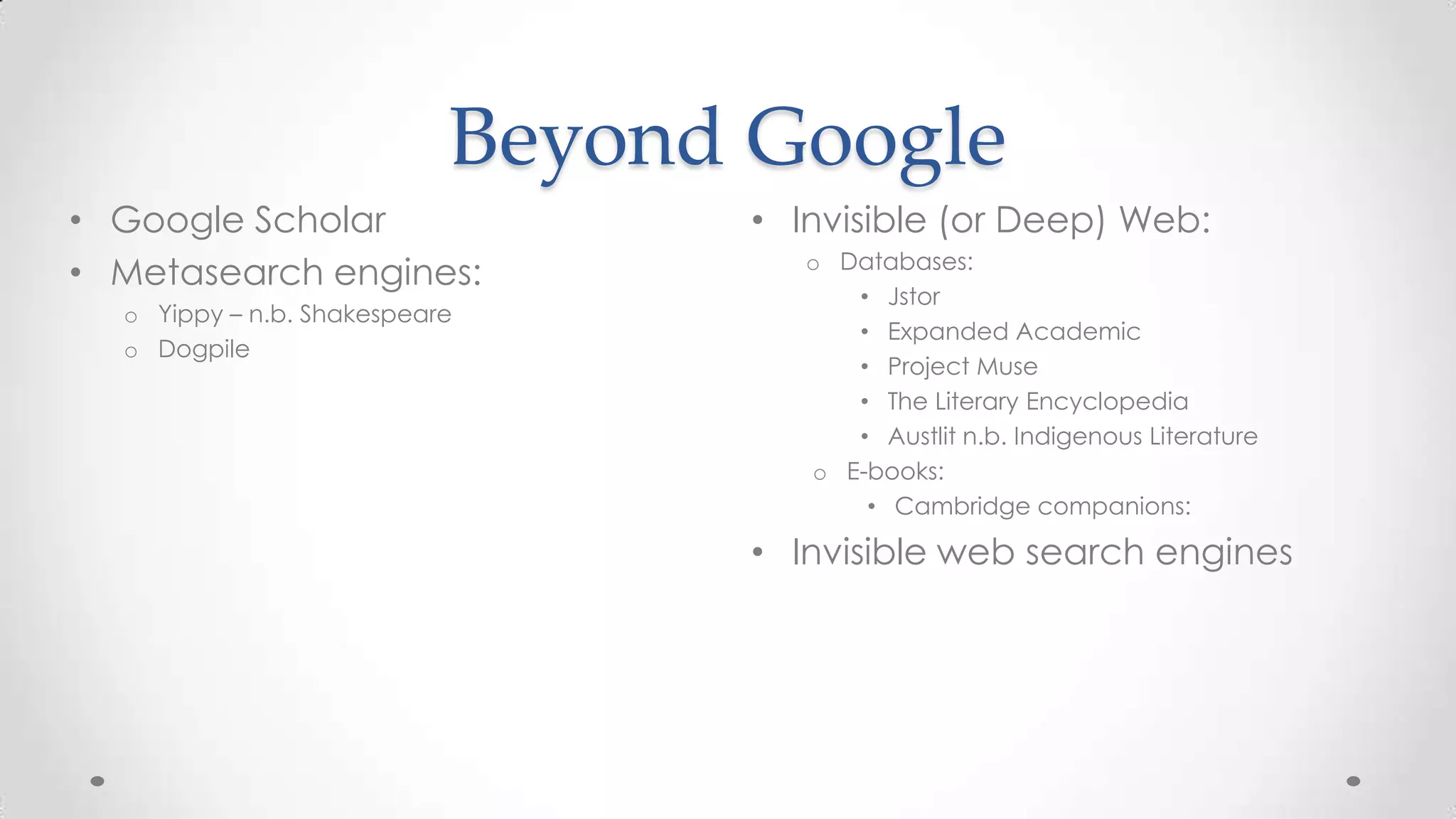
Beyond Google
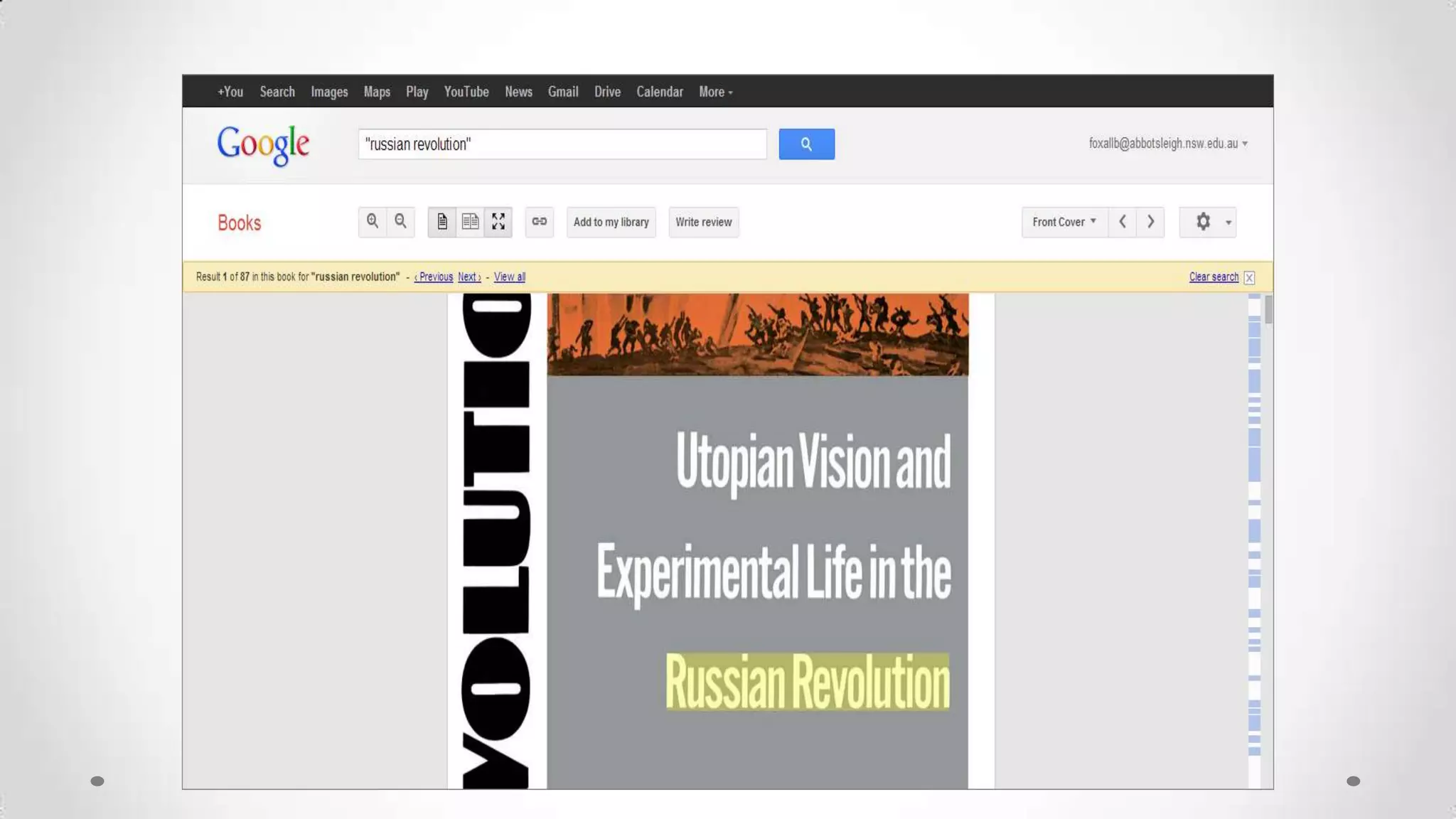
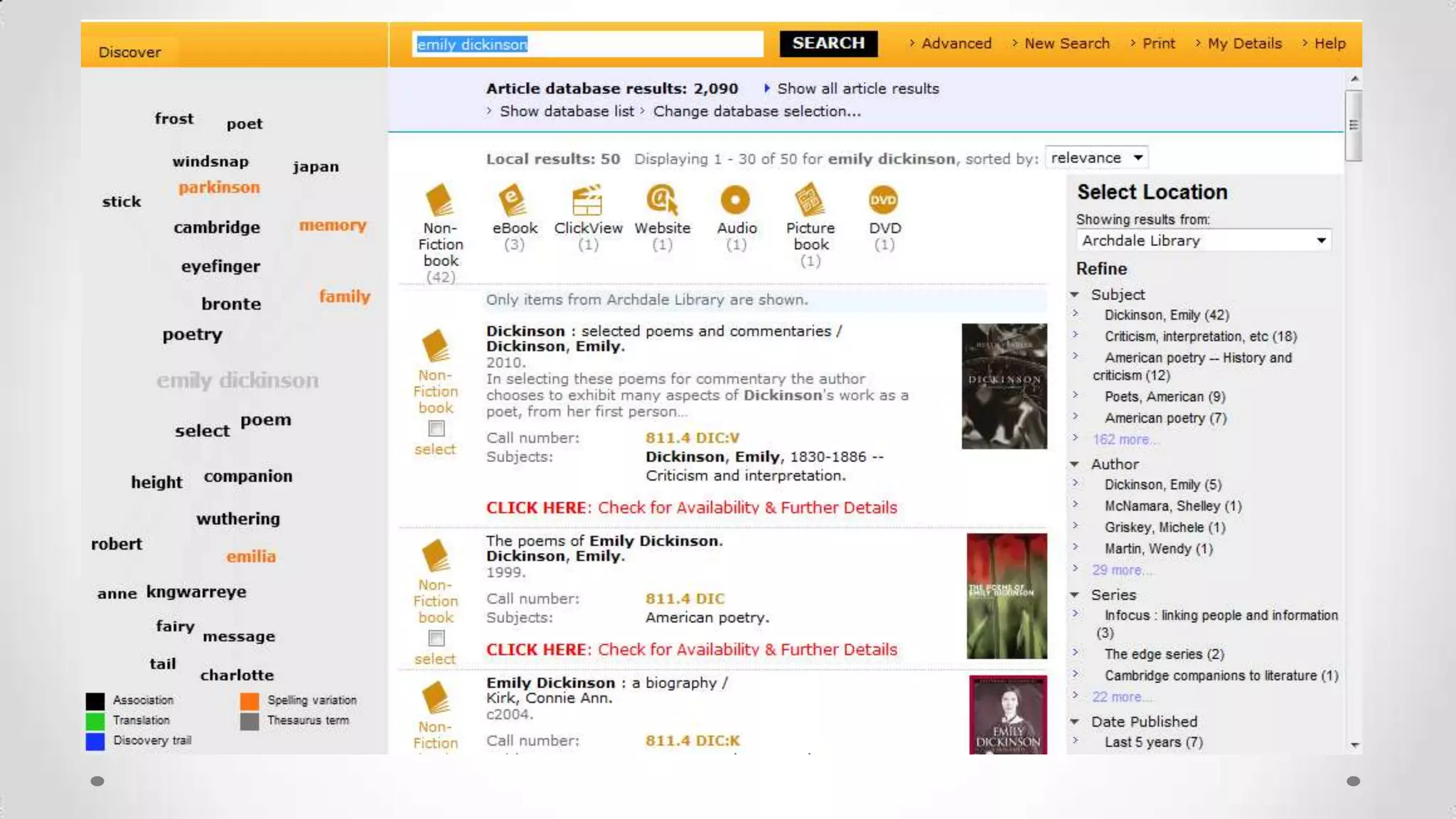
• Google Scholar
• Metasearch engines:
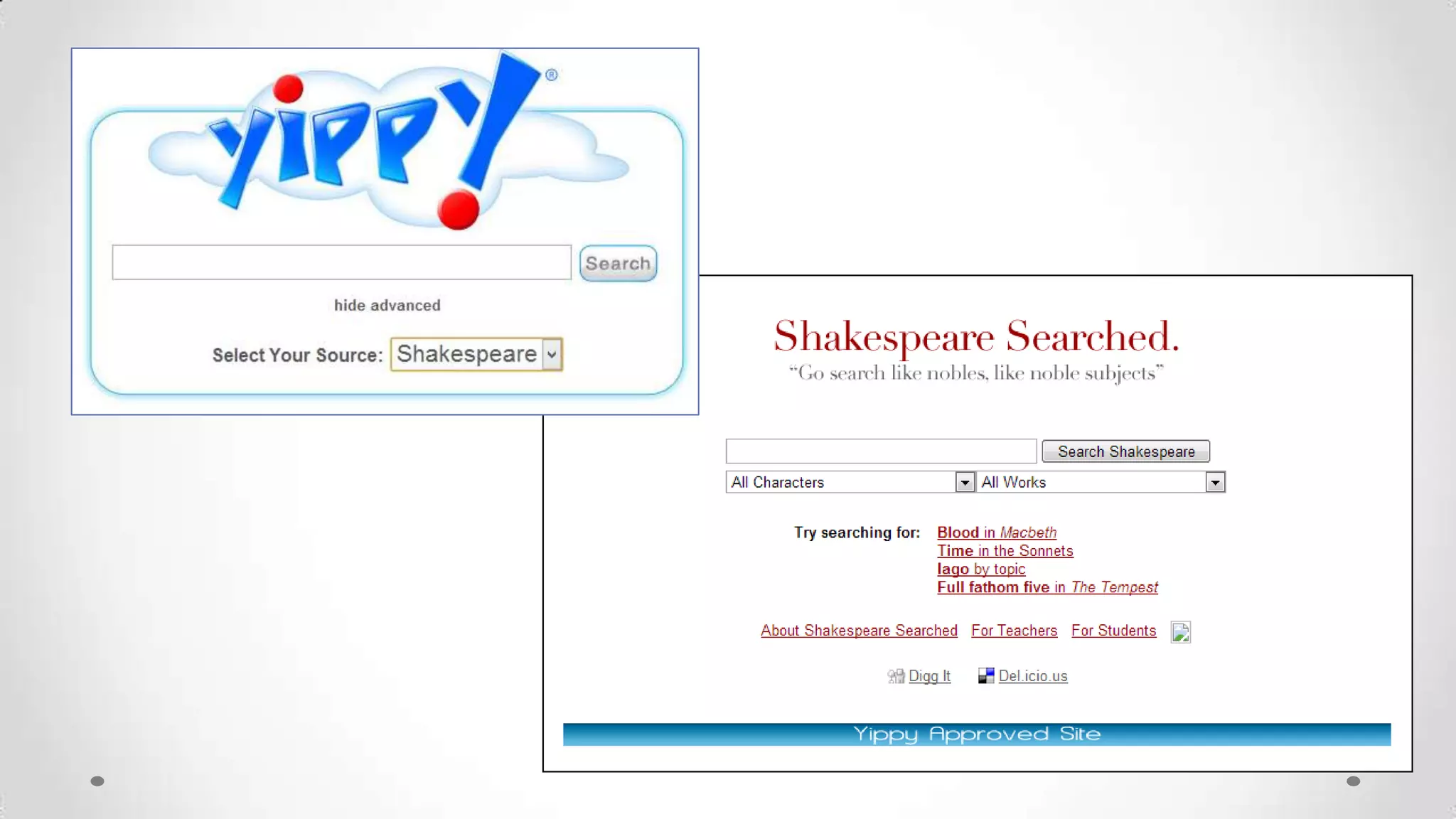
o Yippy – n.b. Shakespeare
o Dogpile

• Invisible (or Deep) Web:
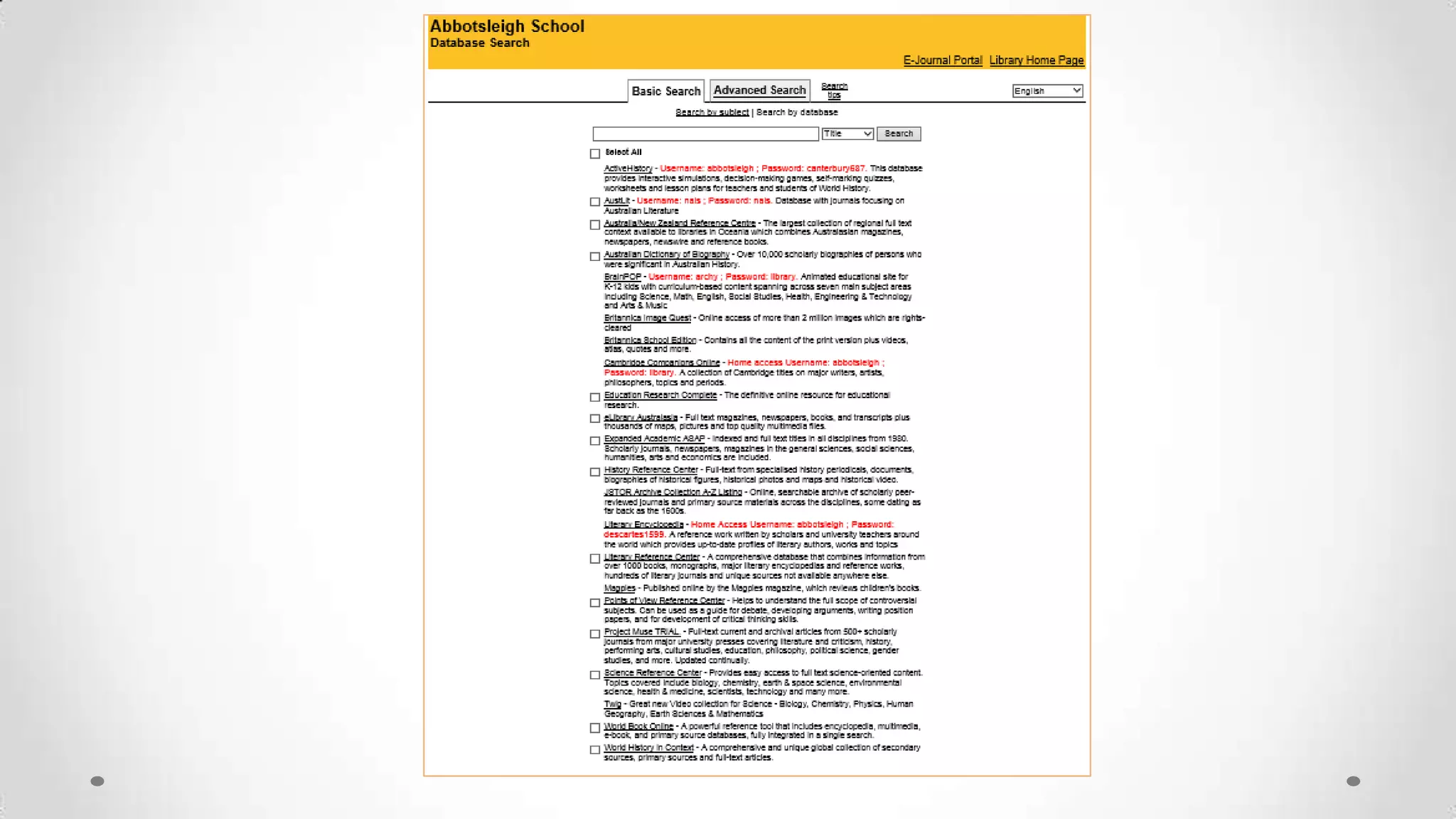
o Databases:
• Jstor
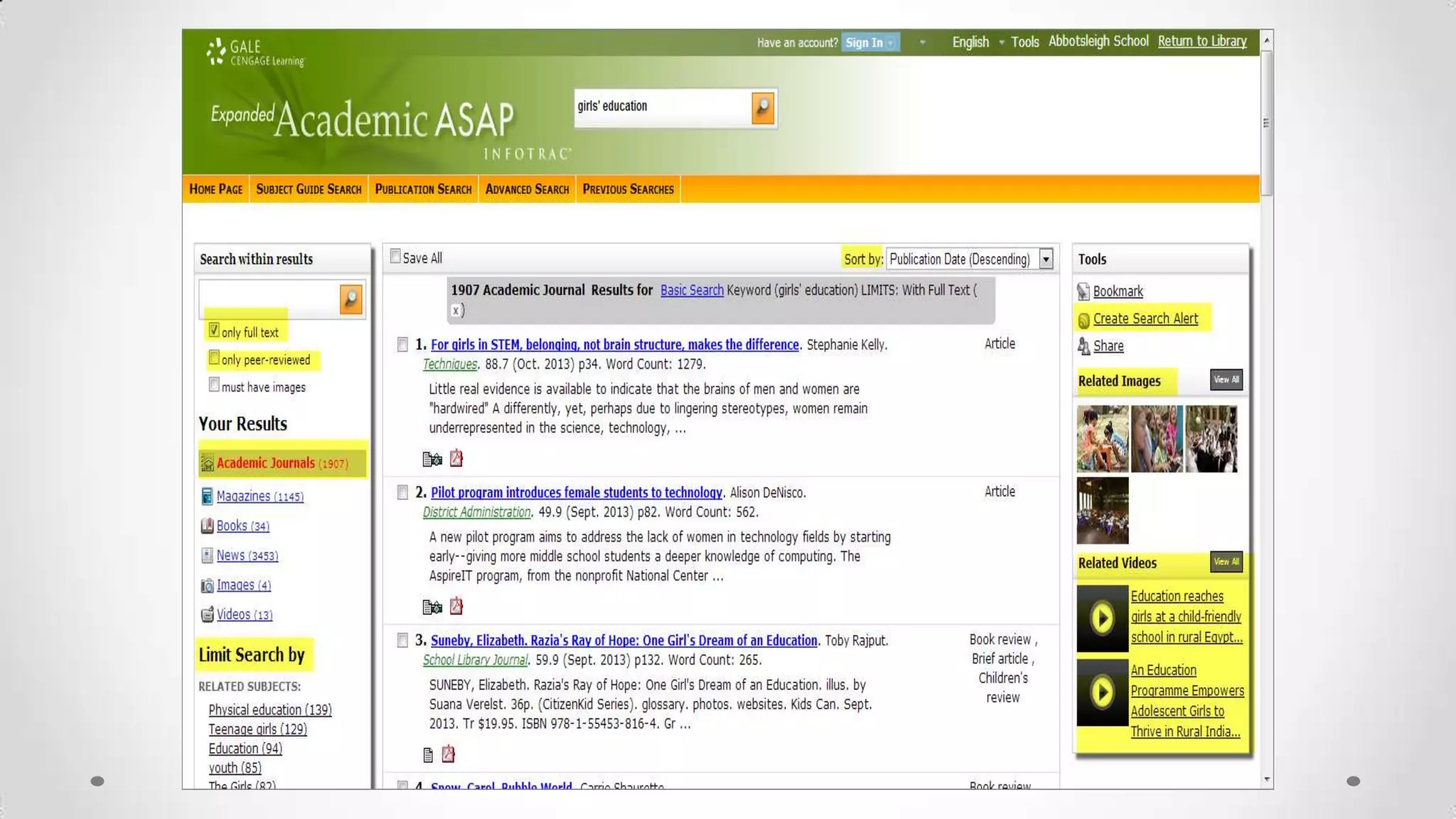
• Expanded Academic
• Project Muse
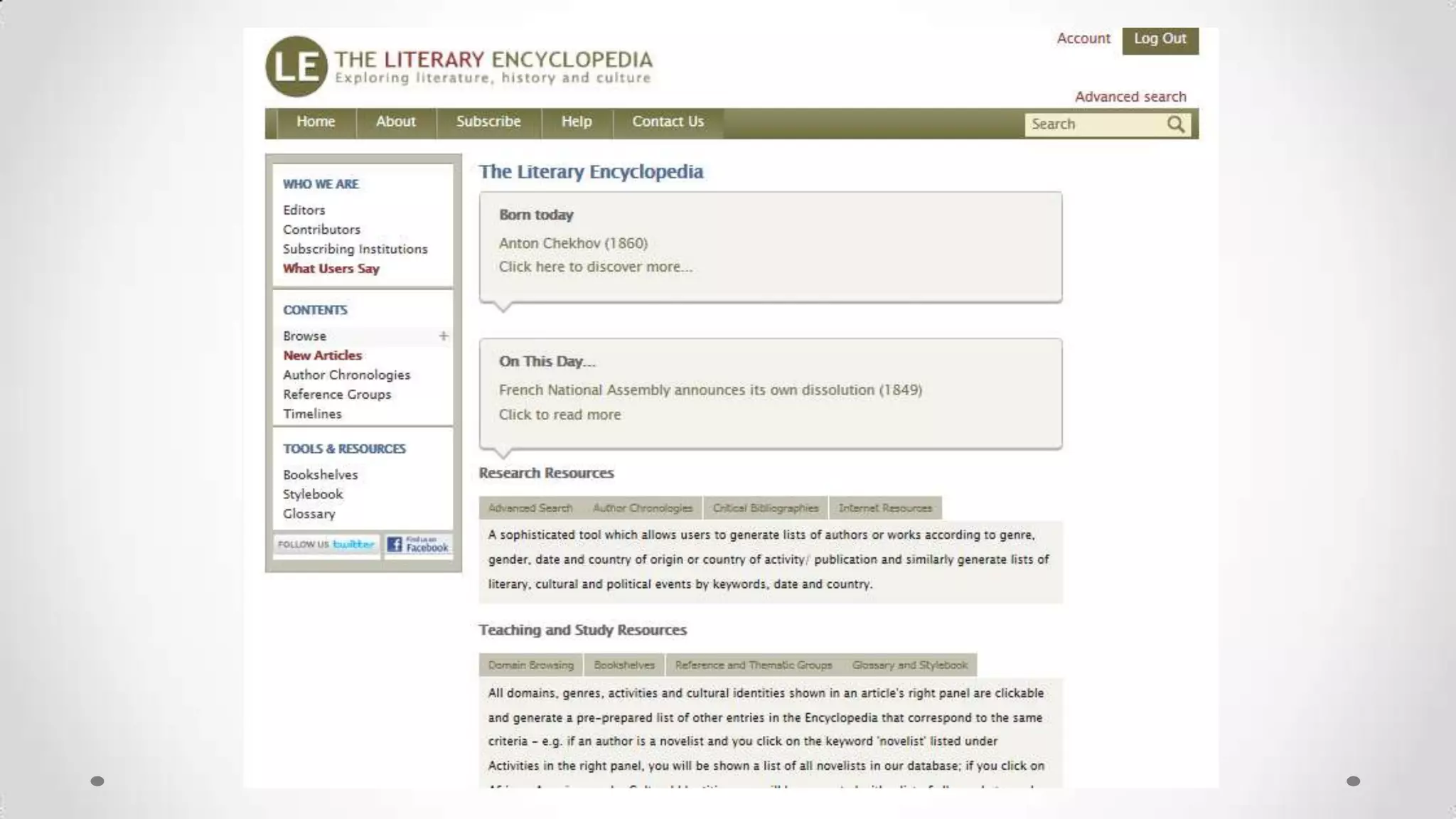
• The Literary Encyclopedia
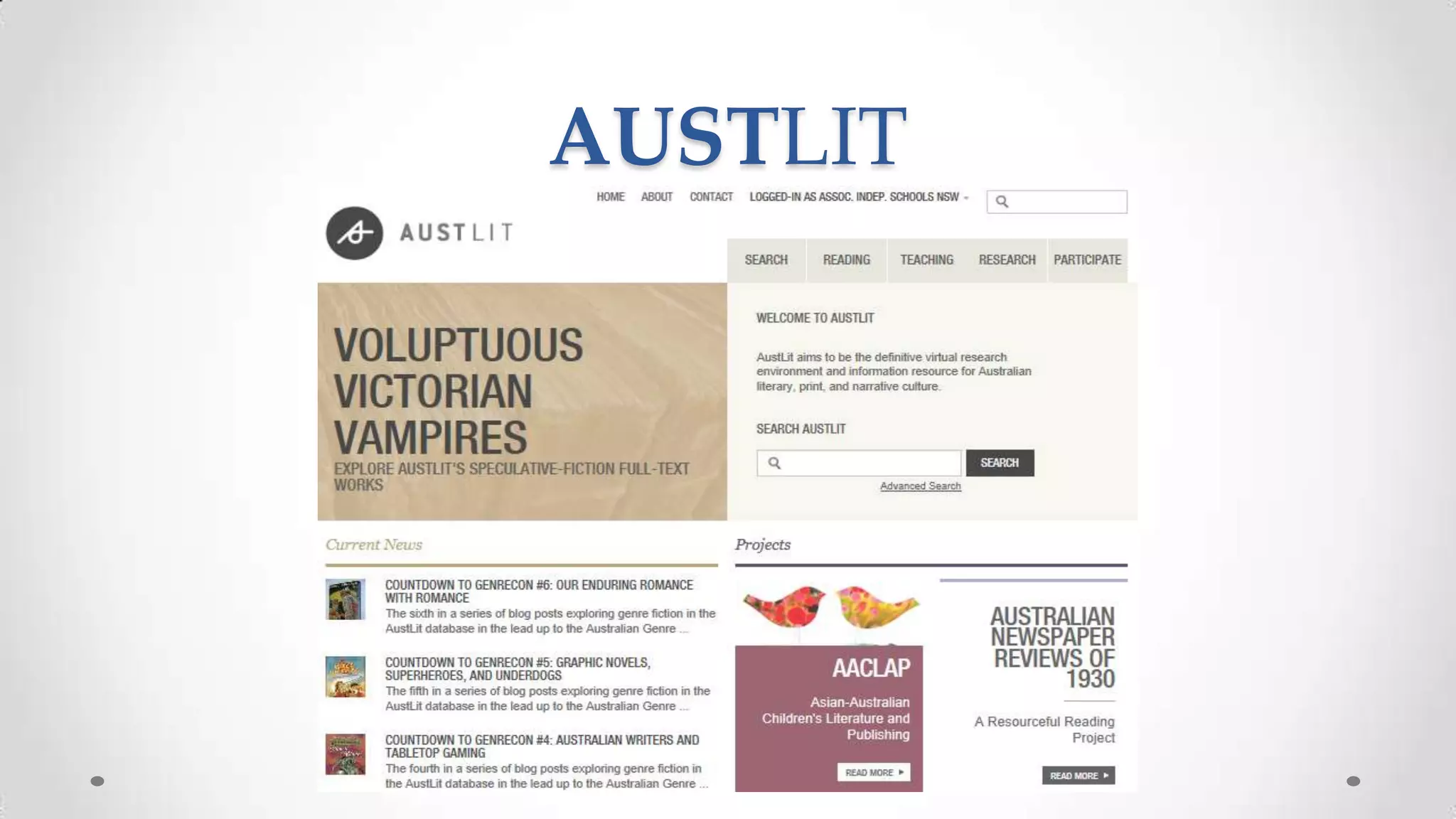
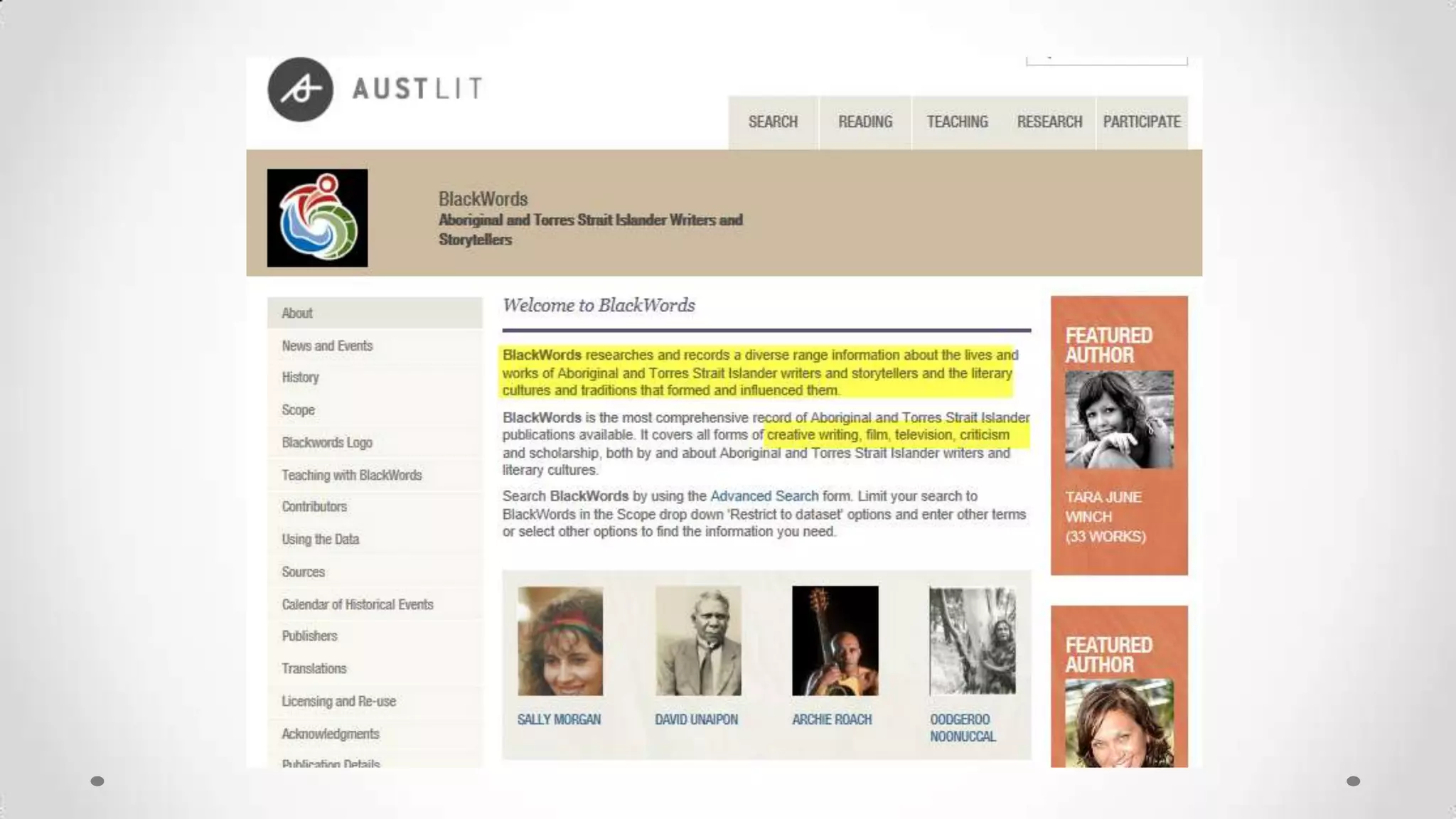
• Austlit n.b. Indigenous Literature
o E-books:
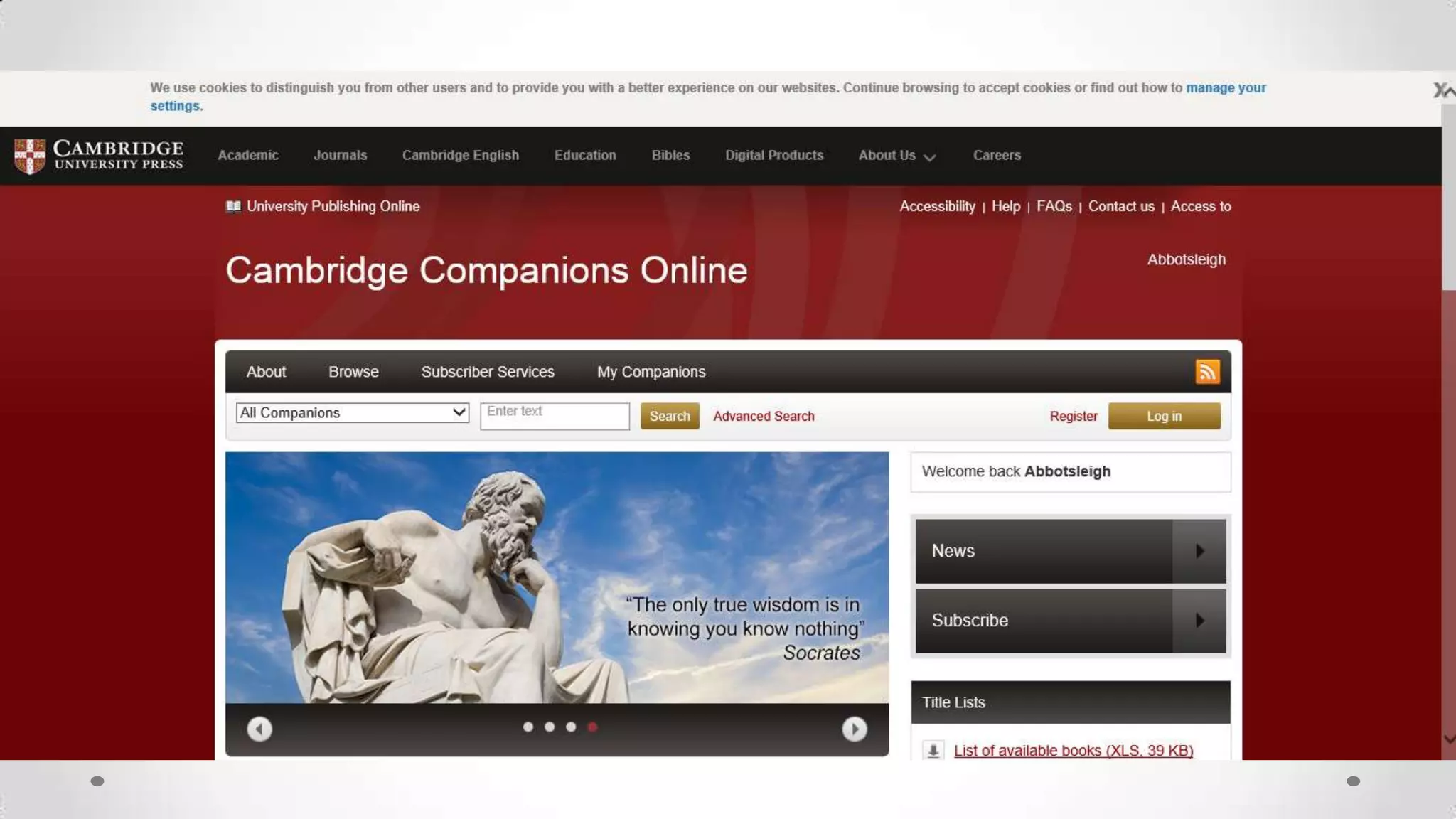
• Cambridge companions:

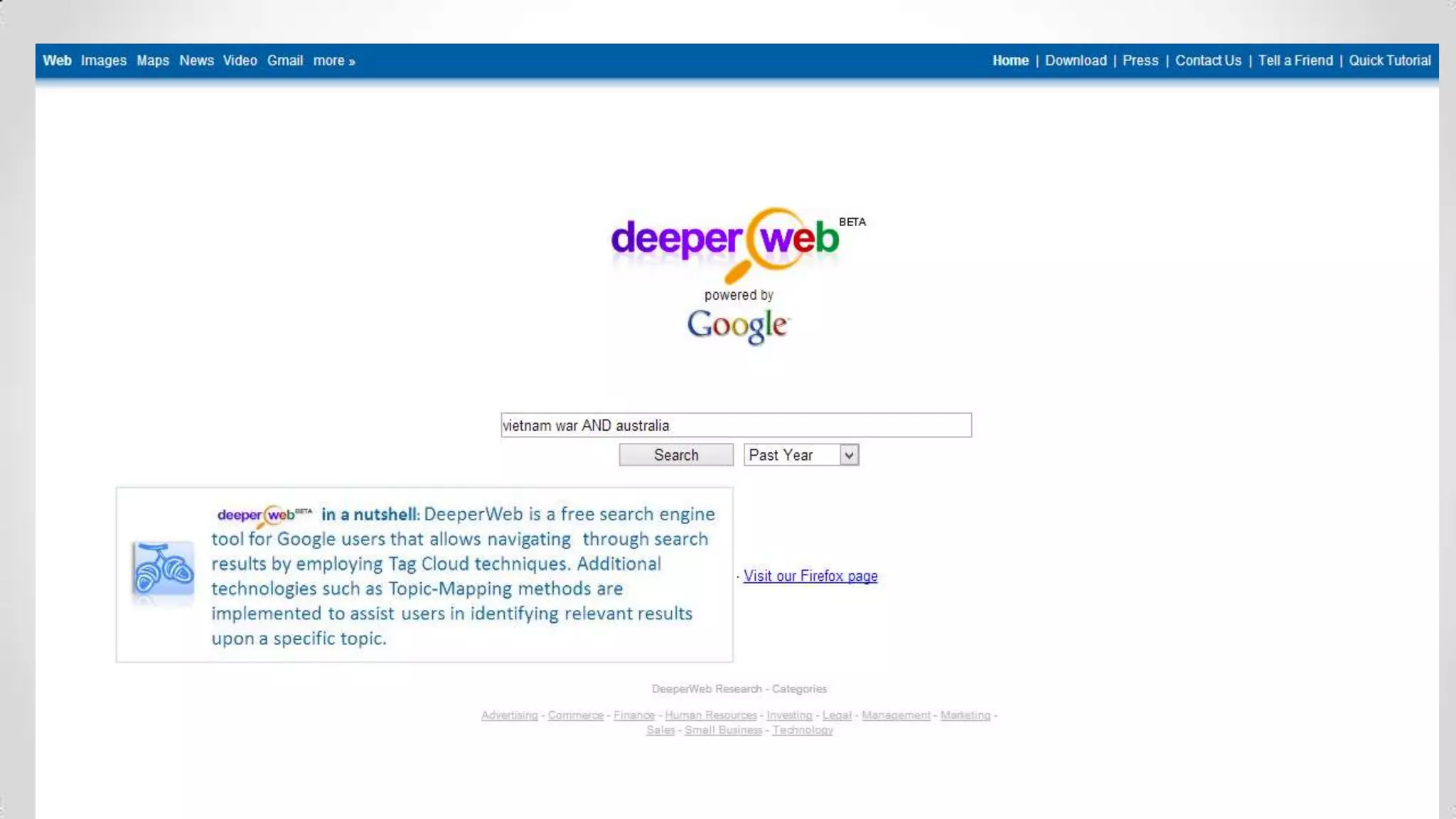
• Invisible web search engines
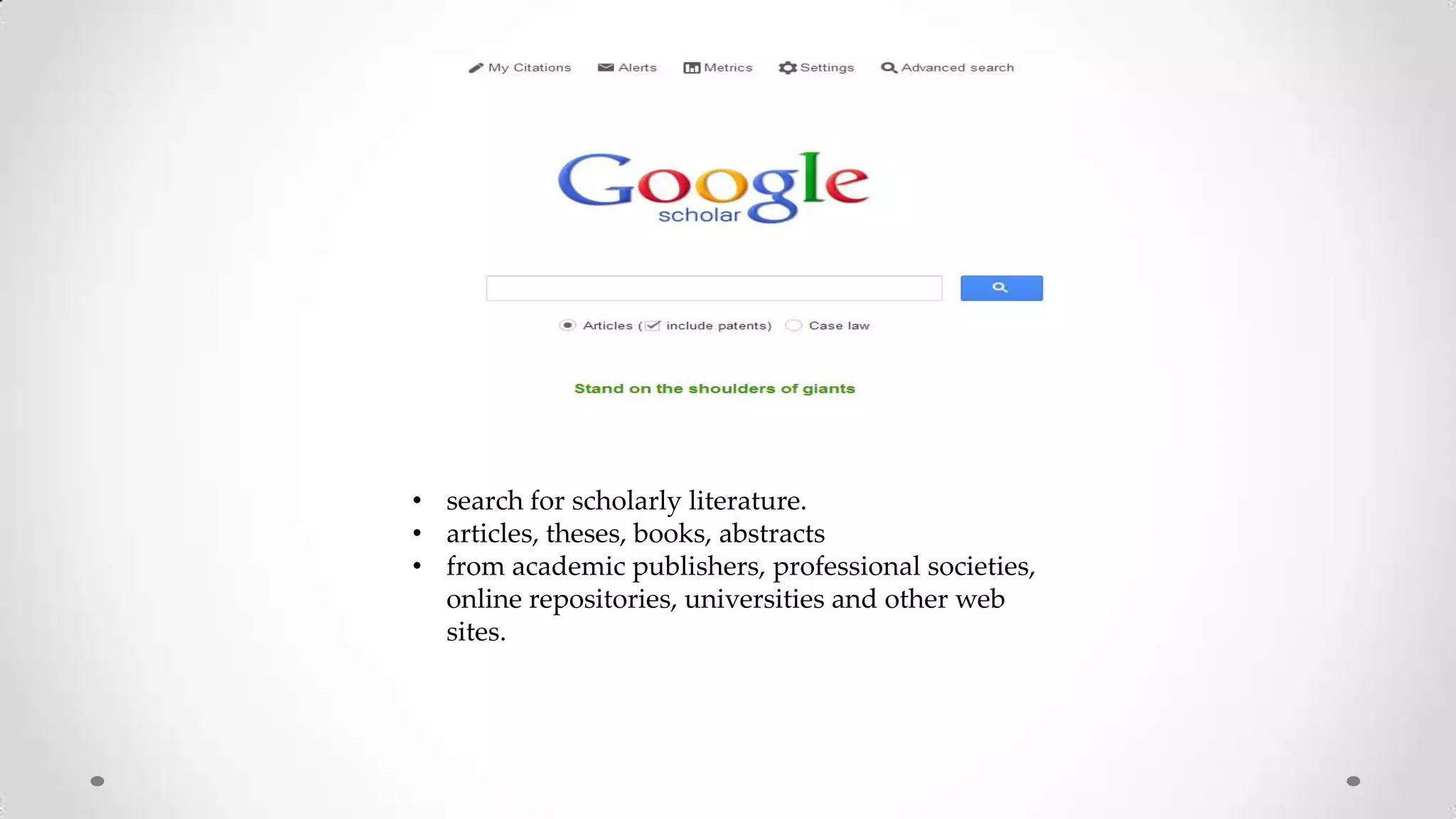
• search for scholarly literature.
• articles, theses, books, abstracts
• from academic publishers, professional societies,
online repositories, universities and other web
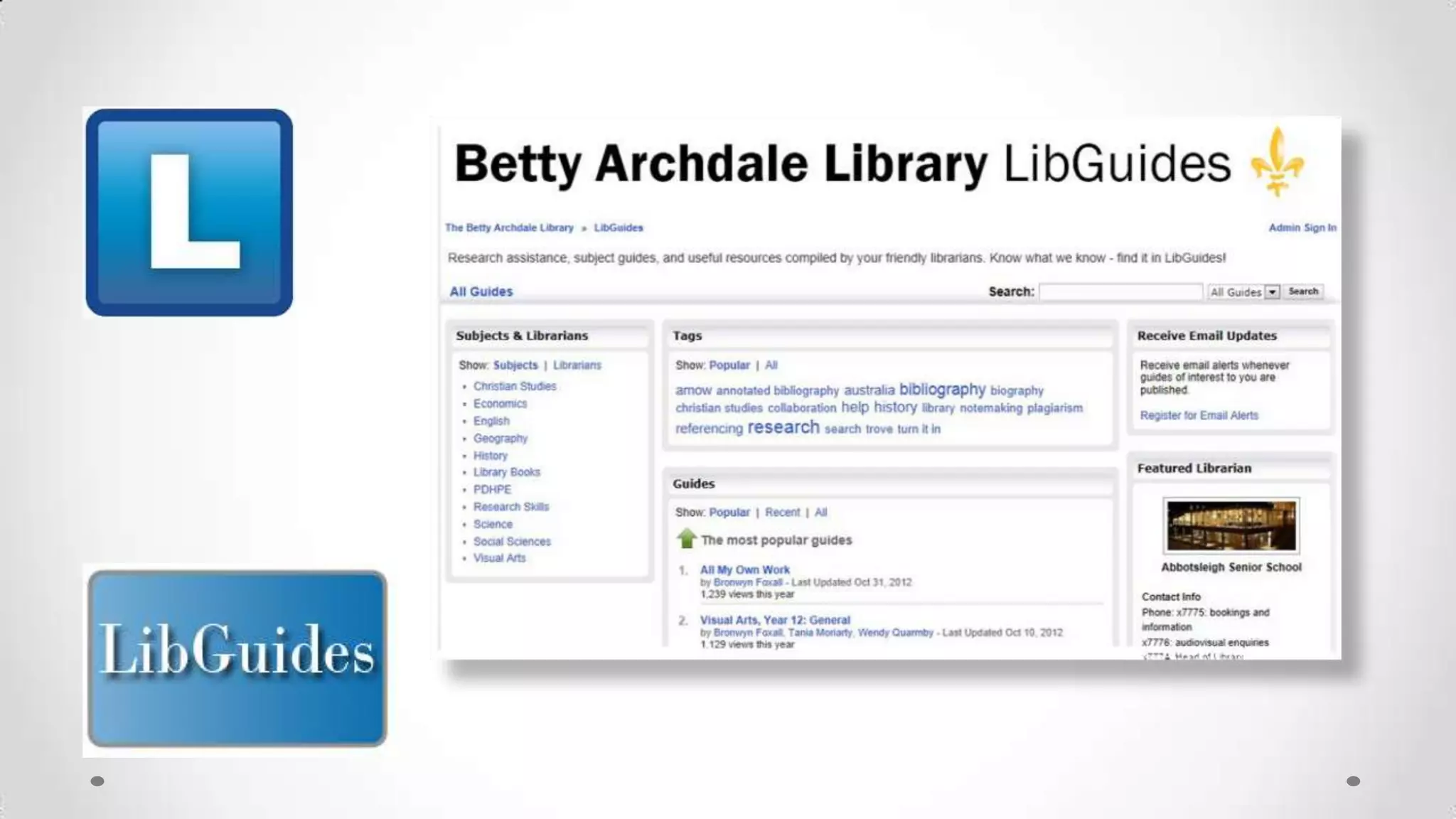
sites.
Metasearch Engines
Search beyond Google
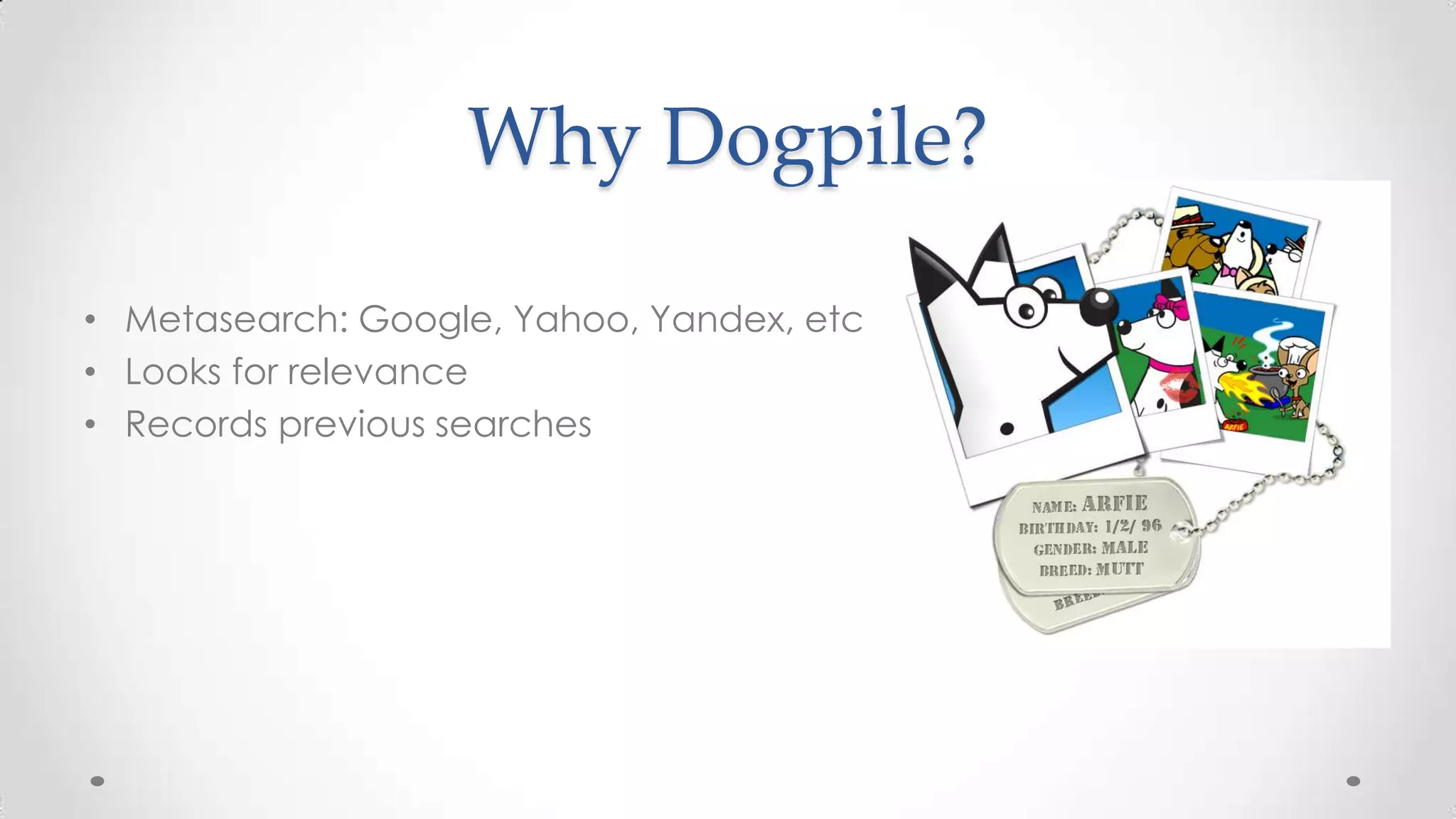
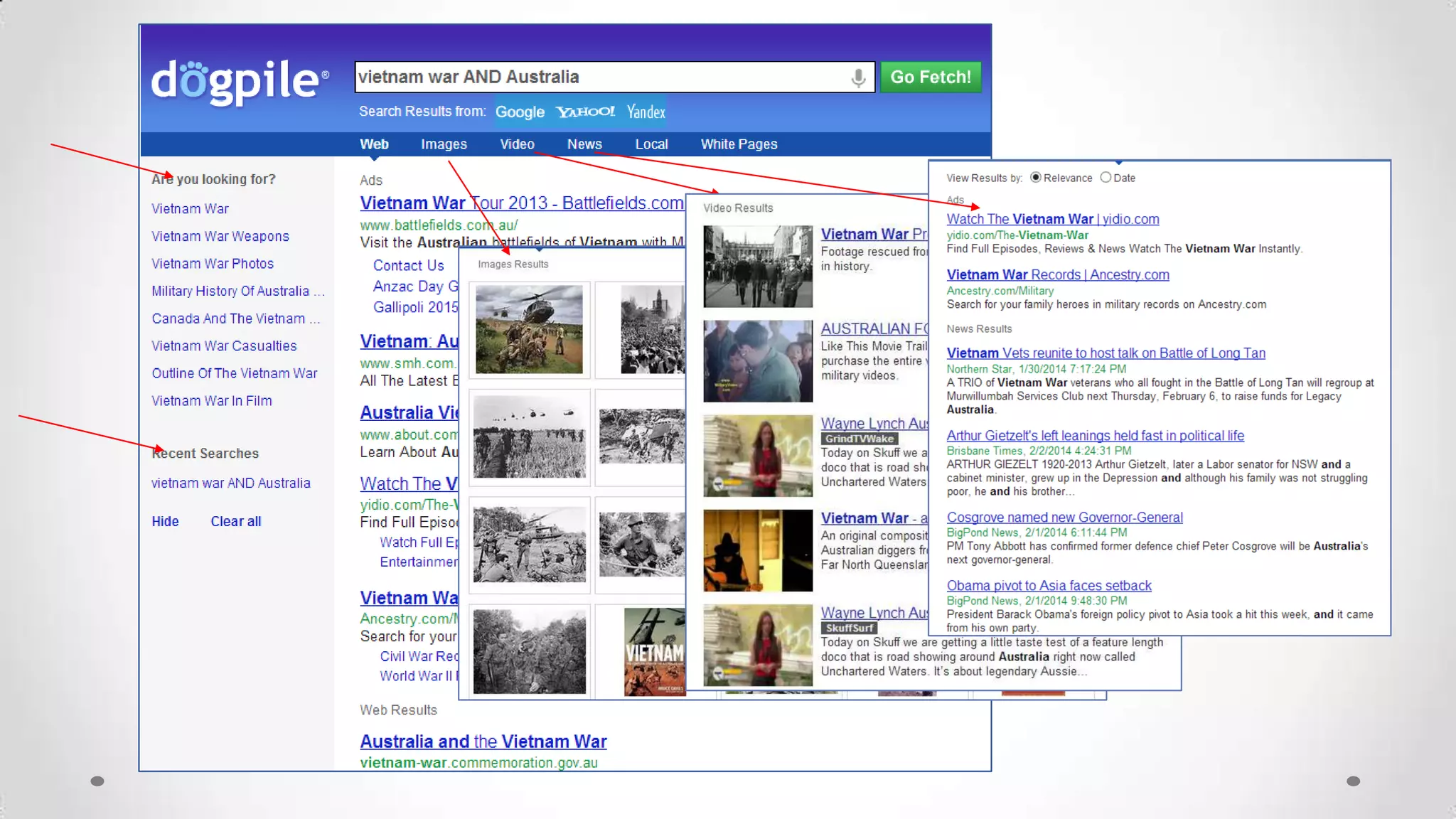
Why Dogpile?
• Metasearch: Google, Yahoo, Yandex, etc
• Looks for relevance
• Records previous searches
Why Yippy?
•
•
•
•
•

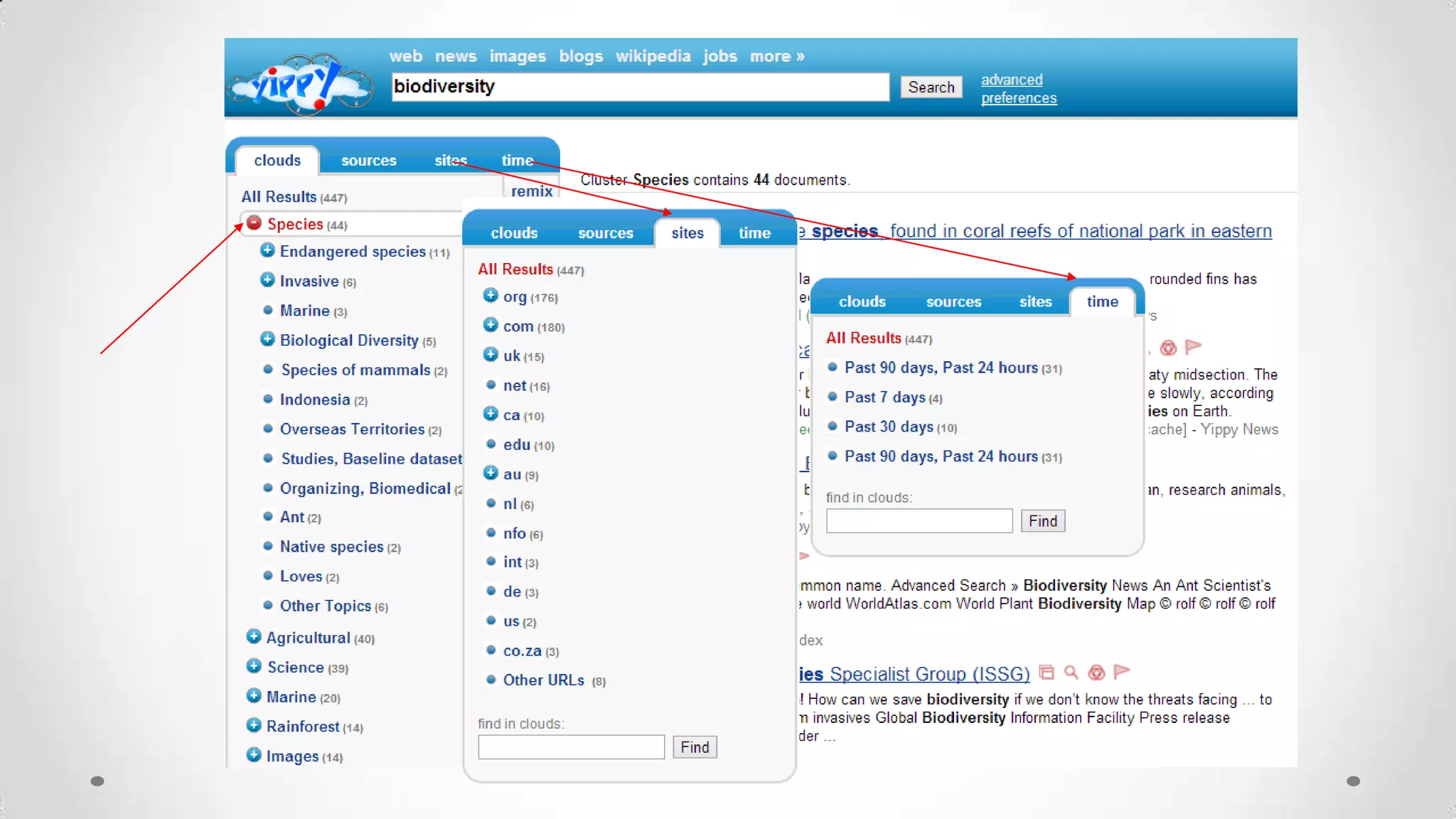
Metasearch: Searches several top search engines
Combines results based on comparative ranking
Best results go to the top
‘Clouds’, group similar results
Yippy does not track or sell your personal information
Domain names
.ac = academic
.au = Australia
.com = commercial
.edu = educational institution
.edu.au
.gov = government
.org = organisation eg Association of Professional Engineers, Scientists and
Managers, Australia

.uk = UK
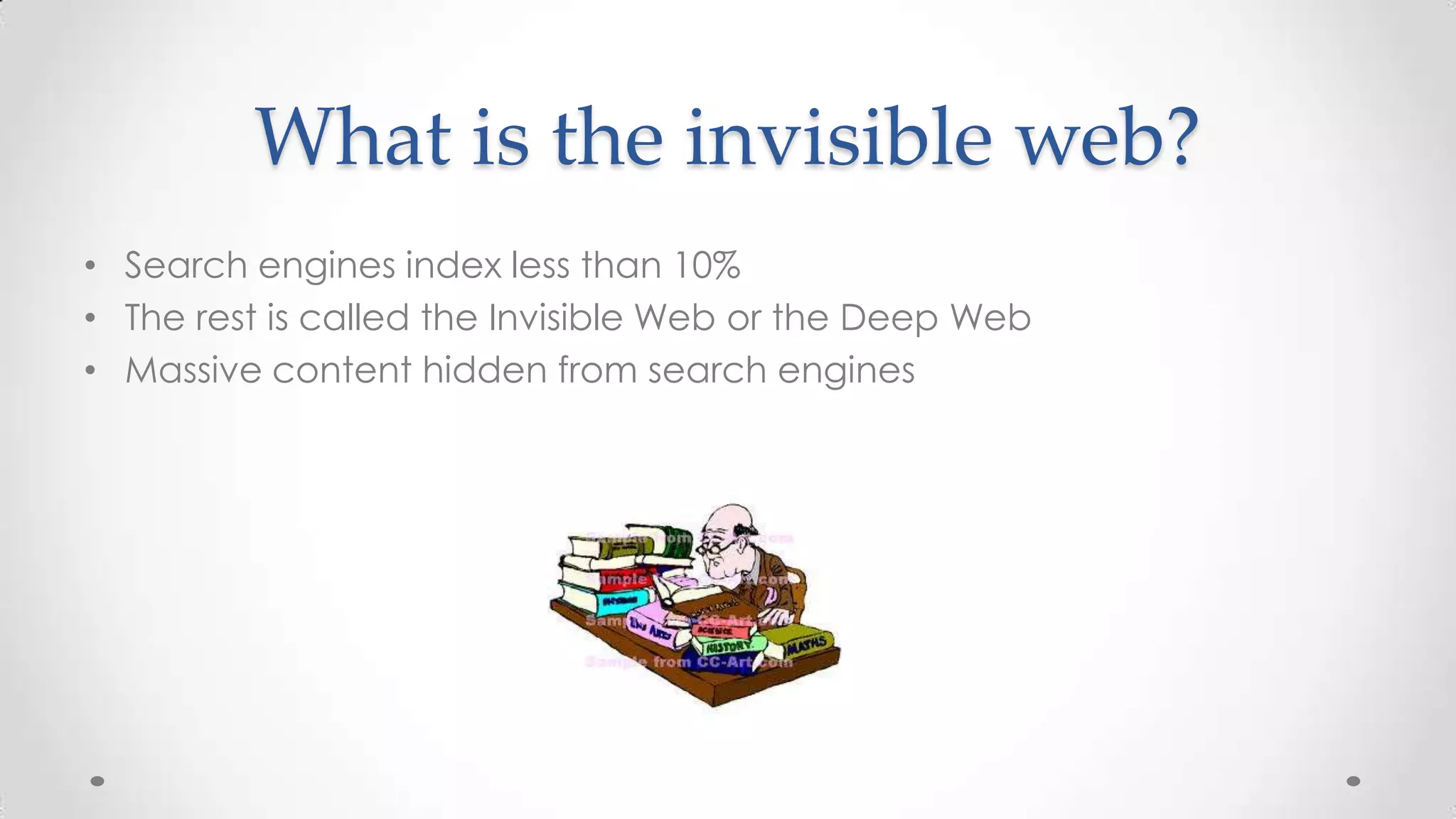
What is the invisible web?
• Search engines index less than 10%
• The rest is called the Invisible Web or the Deep Web
• Massive content hidden from search engines
Invisible (Deep) Web
• Library databases:
o
o
o
o

Austlit
JSTOR
Expanded Academic ASAP
Project Muse

• E-books:
o Cambridge Companions Online

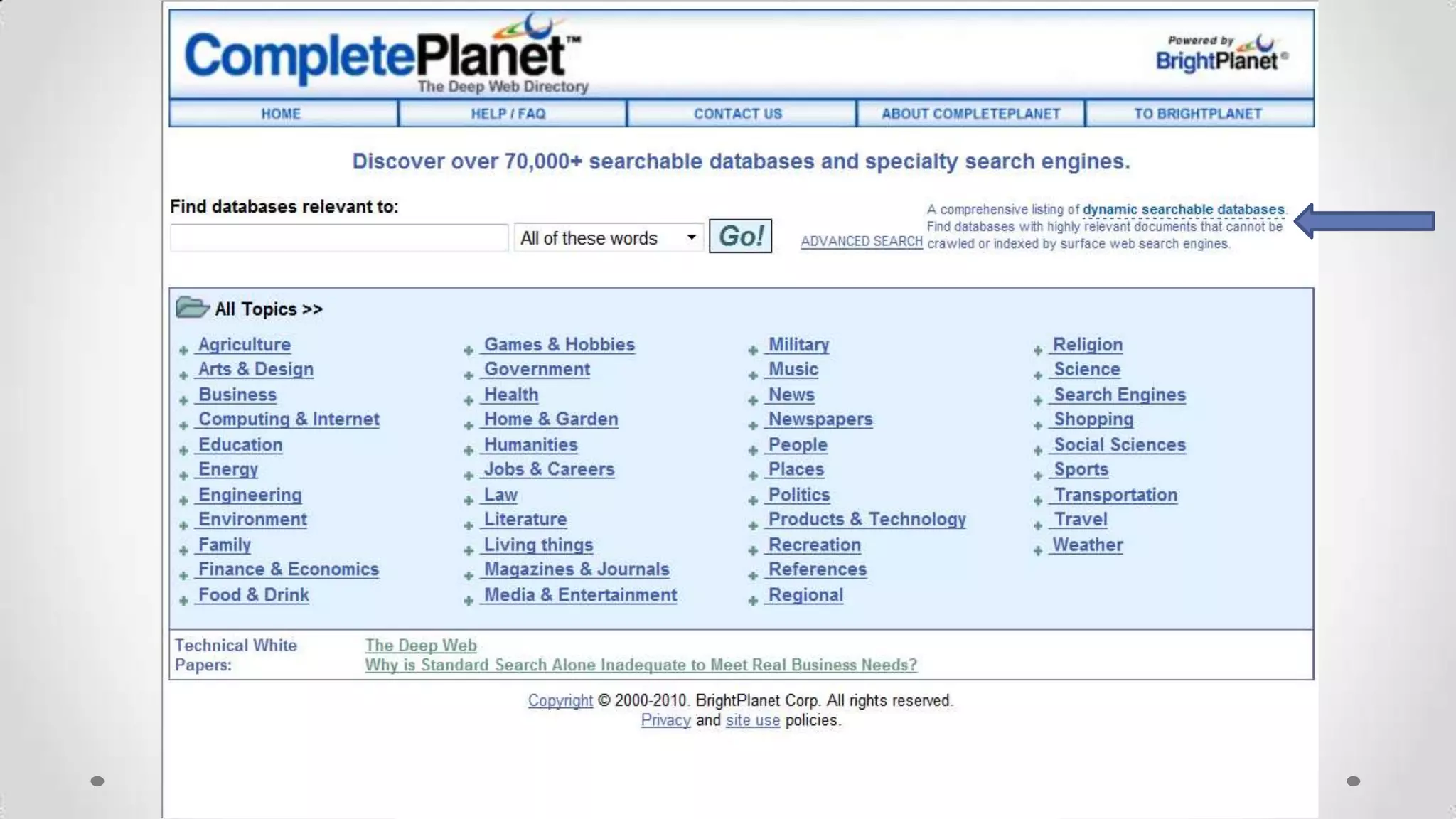
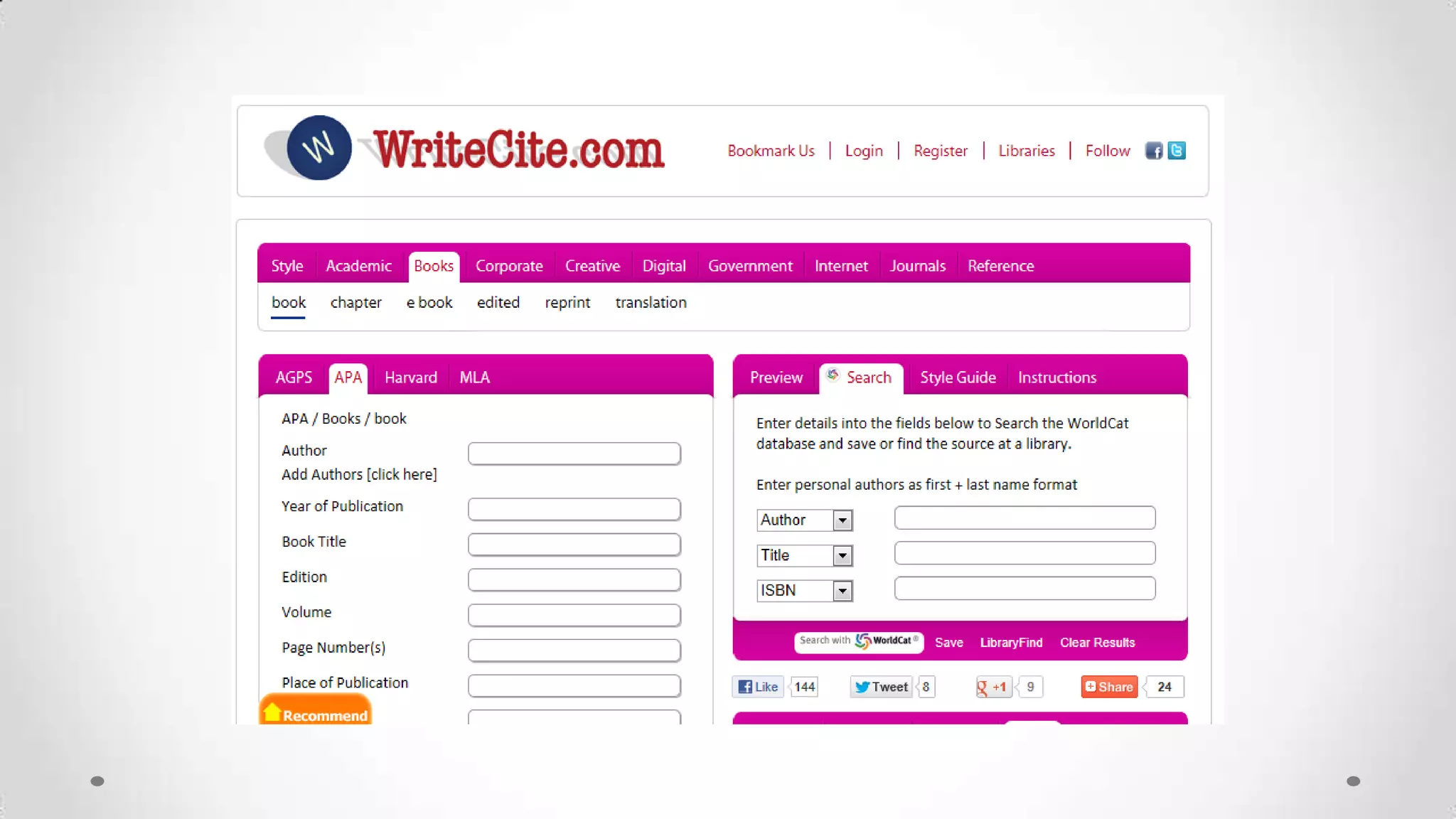
• Invisible Web search engines:
o Complete Planet
o ScienceResearch.com
•
•
•
•

Scholarly journals, news magazines & newspapers
All academic disciplines
25,152,618 articles as at 24/10/13
All published between 1980 - 2013
AUSTLIT
Searching the Invisible Web
“One Search. Superior Science.”
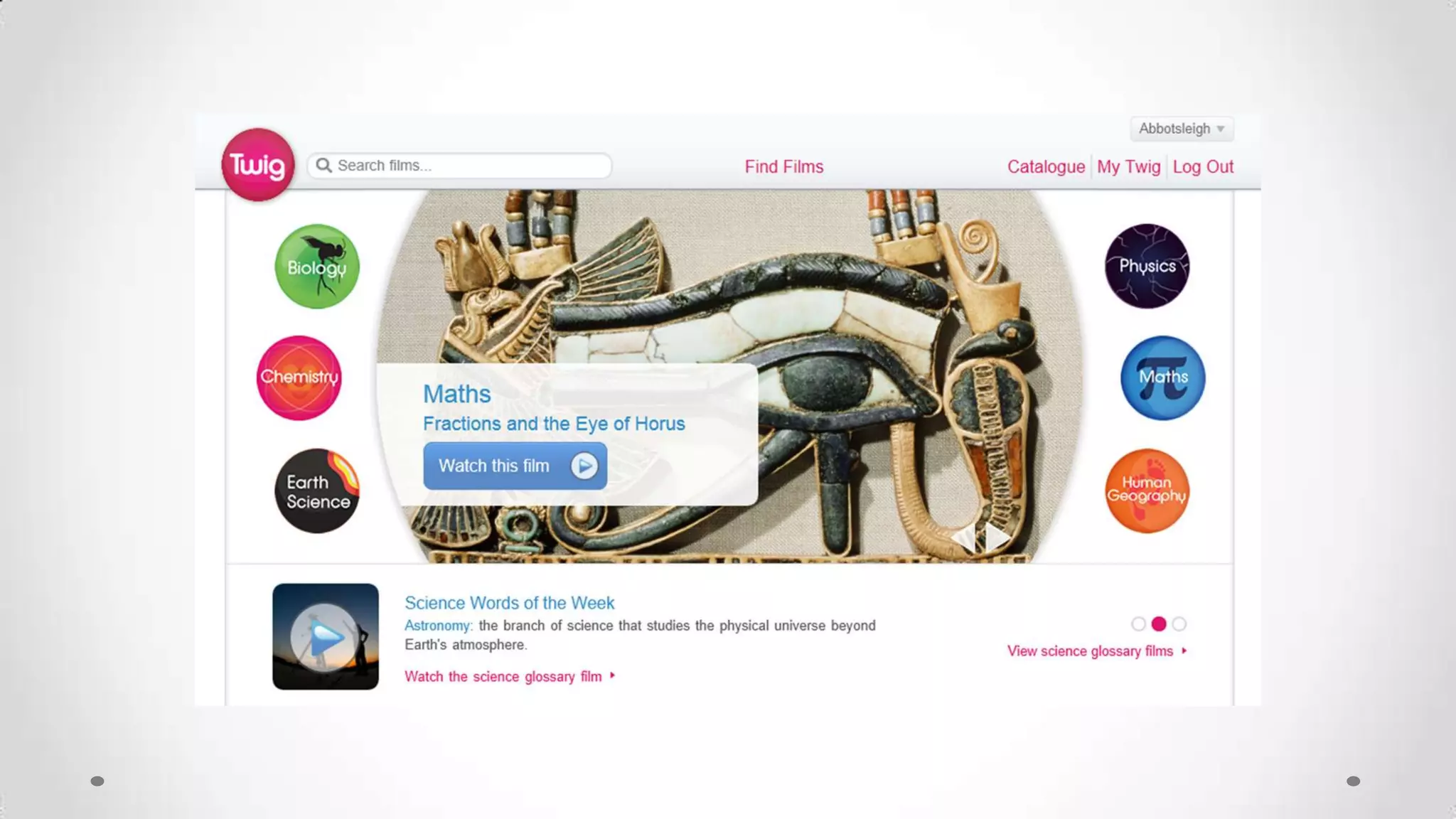
• High quality results from the Deep Web
• Slower than Google because
• It searches several search engines, + collates and
ranks results
• For science and technology
Turn It In – for every assignment
Access Videos, anytime, anywhere
The code to the Year 12 Room

Year 12 presentation: Tips for better researching

  • 1.
    RESEARCH “True scholarship consistsin knowing not what things exist, but what they mean; it is not memory but judgment.” ~ James Russell Lowell
  • 2.
  • 3.
    Join • State Libraryof NSW • National Library of Australia
  • 5.
  • 6.
    • Google.com indexes40 billion public web pages. • 100+ billion static web pages are publicly-available. These pages can easily be found by Google and other search engines • 11+ billion static pages are hidden from the public. As private intranet content, these are the corporate pages that are only open to employees of specific companies. • 450+ billion database-driven pages are completely invisible to Google.
  • 7.
    Beyond Google • GoogleScholar • Metasearch engines: o Yippy – n.b. Shakespeare o Dogpile • Invisible (or Deep) Web: o Databases: • Jstor • Expanded Academic • Project Muse • The Literary Encyclopedia • Austlit n.b. Indigenous Literature o E-books: • Cambridge companions: • Invisible web search engines
  • 8.
    • search forscholarly literature. • articles, theses, books, abstracts • from academic publishers, professional societies, online repositories, universities and other web sites.
  • 10.
  • 11.
    Why Dogpile? • Metasearch:Google, Yahoo, Yandex, etc • Looks for relevance • Records previous searches
  • 13.
    Why Yippy? • • • • • Metasearch: Searchesseveral top search engines Combines results based on comparative ranking Best results go to the top ‘Clouds’, group similar results Yippy does not track or sell your personal information
  • 15.
    Domain names .ac =academic .au = Australia .com = commercial .edu = educational institution .edu.au .gov = government .org = organisation eg Association of Professional Engineers, Scientists and Managers, Australia .uk = UK
  • 17.
    What is theinvisible web? • Search engines index less than 10% • The rest is called the Invisible Web or the Deep Web • Massive content hidden from search engines
  • 18.
    Invisible (Deep) Web •Library databases: o o o o Austlit JSTOR Expanded Academic ASAP Project Muse • E-books: o Cambridge Companions Online • Invisible Web search engines: o Complete Planet o ScienceResearch.com
  • 21.
    • • • • Scholarly journals, newsmagazines & newspapers All academic disciplines 25,152,618 articles as at 24/10/13 All published between 1980 - 2013
  • 24.
  • 28.
  • 29.
    “One Search. SuperiorScience.” • High quality results from the Deep Web • Slower than Google because • It searches several search engines, + collates and ranks results • For science and technology
  • 35.
    Turn It In– for every assignment
  • 37.
  • 42.
    The code tothe Year 12 Room

Editor's Notes

  • #3 According to Eric Schmidt of Google, every two days now the human race creates as much information as we did from the dawn of civilisation until 2003. That's about five exobytes of data a day, for those of you keeping score. The challenge becomes, not finding that scarce plant growing in the desert, but finding a specific plant growing in a jungle. We are going to need help navigating that information to find the thing we actually need.