Year 8
Music revision
Your music exam will be next lesson. It
will be a listening exam, where you
are played music and asked questions
about them. It will cover all the topics
you have done this year, plus some
general music questions.
There is a copy of this powerpoint
on the VLE, in Music KS3, and on
NUMU in Projects. Use it to revise!
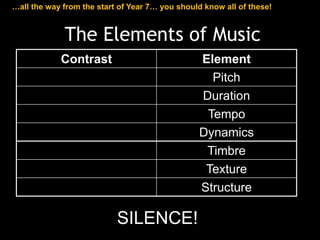
The Elements of Music
Contrast Element
Pitch
Duration
Tempo
Dynamics
Timbre
Texture
Structure
SILENCE!
…all the way from the start of Year 7… you should know all of these!
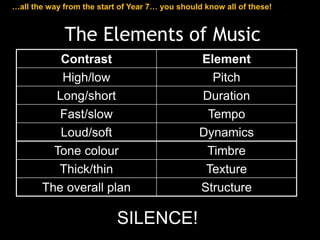
The Elements of Music
Contrast Element
High/low Pitch
Long/short Duration
Fast/slow Tempo
Loud/soft Dynamics
Tone colour Timbre
Thick/thin Texture
The overall plan Structure
SILENCE!
…all the way from the start of Year 7… you should know all of these!
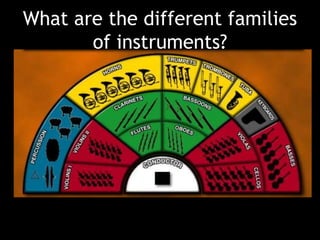
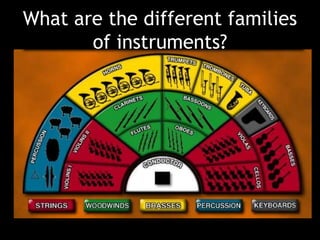
What are the different families
of instruments?
What are the different families
of instruments?
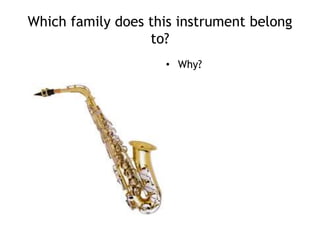
Which family does this instrument belong
to?
• Why?
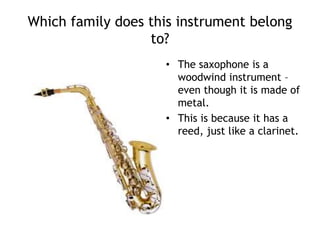
Which family does this instrument belong
to?
• The saxophone is a
woodwind instrument –
even though it is made of
metal.
• This is because it has a
reed, just like a clarinet.
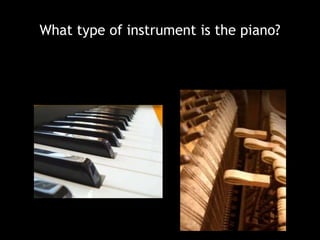
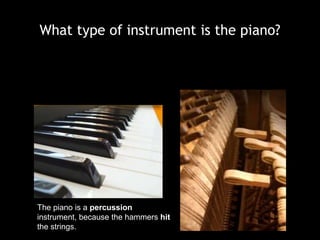
What type of instrument is the piano?
The piano is a percussion
instrument, because the hammers hit
the strings.
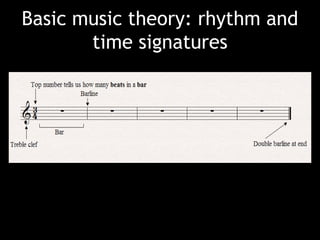
Basic music theory: rhythm and
time signatures
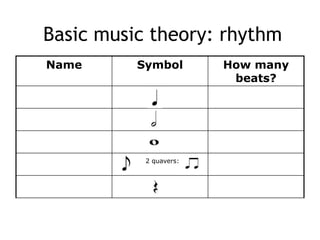
Basic music theory: rhythm
Name Symbol How many
beats?
2 quavers:
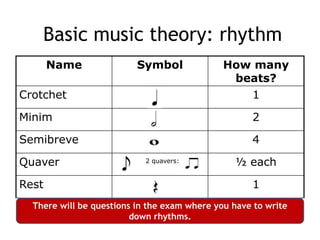
Basic music theory: rhythm
Name Symbol How many
beats?
Crotchet 1
Minim 2
Semibreve 4
Quaver ½ each
Rest 1
2 quavers:
There will be questions in the exam where you have to write
down rhythms.
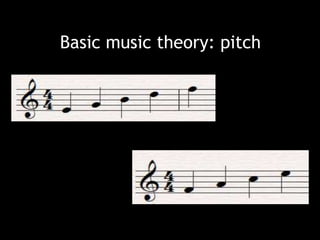
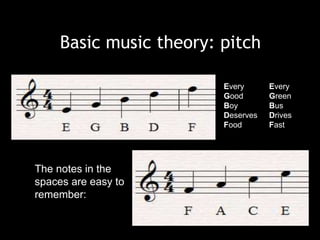
Basic music theory: pitch
The notes in the
spaces are easy to
remember:
Every
Good
Boy
Deserves
Food
Every
Green
Bus
Drives
Fast
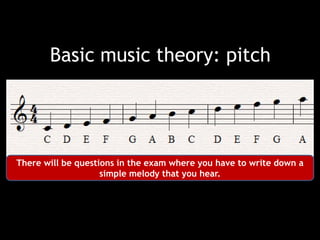
Basic music theory: pitch
There will be questions in the exam where you have to write down a
simple melody that you hear.
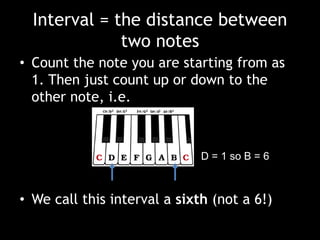
Interval = the distance between
two notes
• Count the note you are starting from as
1. Then just count up or down to the
other note, i.e.
• We call this interval a sixth (not a 6!)
D = 1 so B = 6
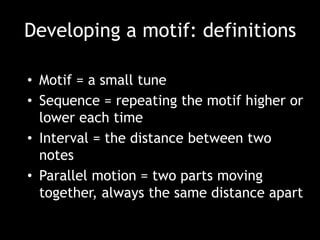
Developing a motif: definitions
• Motif = a small tune
• Sequence = repeating the motif higher or
lower each time
• Interval = the distance between two
notes
• Parallel motion = two parts moving
together, always the same distance apart
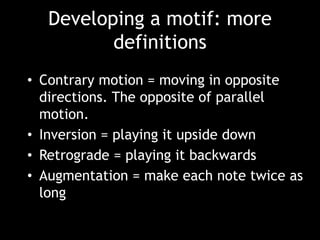
Developing a motif: more
definitions
• Contrary motion = moving in opposite
directions. The opposite of parallel
motion.
• Inversion = playing it upside down
• Retrograde = playing it backwards
• Augmentation = make each note twice as
long
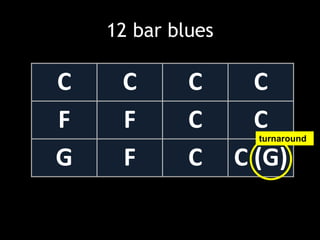
12 bar blues
C C C C
F F C C
G F C C (G)
turnaround
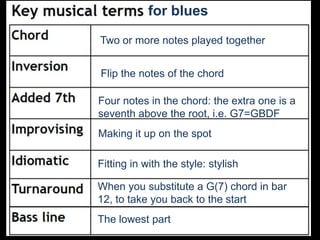
Two or more notes played together
Flip the notes of the chord
Four notes in the chord: the extra one is a
seventh above the root, i.e. G7=GBDF
Making it up on the spot
Fitting in with the style: stylish
When you substitute a G(7) chord in bar
12, to take you back to the start
The lowest part
for blues
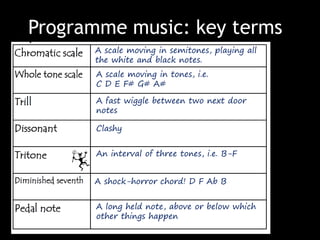
Programme music: key terms
A scale moving in semitones, playing all
the white and black notes.
A scale moving in tones, i.e.
C D E F# G# A#
A fast wiggle between two next door
notes
Clashy
An interval of three tones, i.e. B-F
A shock-horror chord! D F Ab B
A long held note, above or below which
other things happen

Y8 revision

  • 1.
    Year 8 Music revision Yourmusic exam will be next lesson. It will be a listening exam, where you are played music and asked questions about them. It will cover all the topics you have done this year, plus some general music questions. There is a copy of this powerpoint on the VLE, in Music KS3, and on NUMU in Projects. Use it to revise!
  • 2.
    The Elements ofMusic Contrast Element Pitch Duration Tempo Dynamics Timbre Texture Structure SILENCE! …all the way from the start of Year 7… you should know all of these!
  • 3.
    The Elements ofMusic Contrast Element High/low Pitch Long/short Duration Fast/slow Tempo Loud/soft Dynamics Tone colour Timbre Thick/thin Texture The overall plan Structure SILENCE! …all the way from the start of Year 7… you should know all of these!
  • 4.
    What are thedifferent families of instruments?
  • 5.
    What are thedifferent families of instruments?
  • 6.
    Which family doesthis instrument belong to? • Why?
  • 7.
    Which family doesthis instrument belong to? • The saxophone is a woodwind instrument – even though it is made of metal. • This is because it has a reed, just like a clarinet.
  • 8.
    What type ofinstrument is the piano?
  • 9.
    What type ofinstrument is the piano? The piano is a percussion instrument, because the hammers hit the strings.
  • 10.
    Basic music theory:rhythm and time signatures
  • 11.
    Basic music theory:rhythm Name Symbol How many beats? 2 quavers:
  • 12.
    Basic music theory:rhythm Name Symbol How many beats? Crotchet 1 Minim 2 Semibreve 4 Quaver ½ each Rest 1 2 quavers: There will be questions in the exam where you have to write down rhythms.
  • 13.
  • 14.
    Basic music theory:pitch The notes in the spaces are easy to remember: Every Good Boy Deserves Food Every Green Bus Drives Fast
  • 15.
    Basic music theory:pitch There will be questions in the exam where you have to write down a simple melody that you hear.
  • 16.
    Interval = thedistance between two notes • Count the note you are starting from as 1. Then just count up or down to the other note, i.e. • We call this interval a sixth (not a 6!) D = 1 so B = 6
  • 17.
    Developing a motif:definitions • Motif = a small tune • Sequence = repeating the motif higher or lower each time • Interval = the distance between two notes • Parallel motion = two parts moving together, always the same distance apart
  • 18.
    Developing a motif:more definitions • Contrary motion = moving in opposite directions. The opposite of parallel motion. • Inversion = playing it upside down • Retrograde = playing it backwards • Augmentation = make each note twice as long
  • 19.
    12 bar blues CC C C F F C C G F C C (G) turnaround
  • 20.
    Two or morenotes played together Flip the notes of the chord Four notes in the chord: the extra one is a seventh above the root, i.e. G7=GBDF Making it up on the spot Fitting in with the style: stylish When you substitute a G(7) chord in bar 12, to take you back to the start The lowest part for blues
  • 21.
    Programme music: keyterms A scale moving in semitones, playing all the white and black notes. A scale moving in tones, i.e. C D E F# G# A# A fast wiggle between two next door notes Clashy An interval of three tones, i.e. B-F A shock-horror chord! D F Ab B A long held note, above or below which other things happen