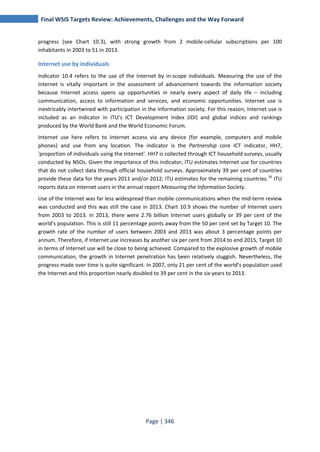
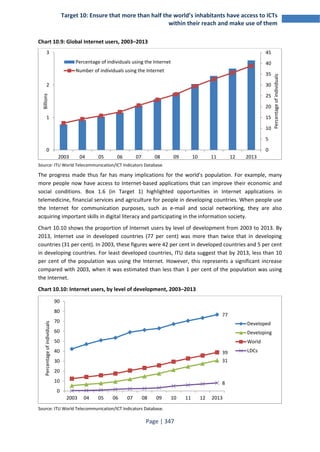
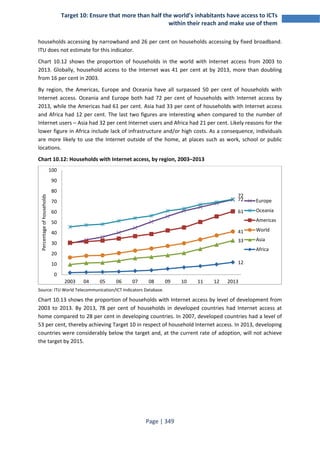
P A R T N E R S H I P O N M E A S U R I N G I C T F O R D E V E L O P M E N T 
FINAL WSIS TARGETS REVIEW 
ACHIEVEMENTS, CHALLENGES AND 
THE WAY FORWARD
P A R T N E R S H I P O N M E A S U R I N G I C T F O R D E V E L O P M E N T 
FINAL WSIS TARGETS REVIEW 
ACHIEVEMENTS, CHALLENGES AND 
THE WAY FORWARD
© 2014 ITU 
International Telecommunication Union 
Place des Nations 
CH-1211 Geneva Switzerland 
Original language of publication: English. 
All rights reserved. No part of this publication may be reproduced, stored in a retrieval system, 
or transmitted in any form or by any means, electronic, mechanical, photocopying, recording, 
or otherwise, without the prior permission of the International Telecommunication Union. 
Page | ii
Page | iii 
Forewords 
“Over the last decade, ICTs have fundamentally improved the way we live, 
work and communicate. The achievements made since the World Summit 
on the Information Society are many. This report highlights the 
importance of providing universal and affordable access to ICTs to enable 
and accelerate economic, social and sustainable growth and development 
for everyone. ITU remains committed to connecting the world and to 
helping track achievements, monitor challenges and identify forward-looking 
targets for a better world.” 
Dr Hamadoun I. Touré 
Secretary-General 
International Telecommunication Union 
“Education stands at the heart of the global development agenda – it is 
also the focus of two of the 10 WSIS targets. At this time of change, when 
all societies are seeking new sources of dynamism, we must harness the 
power of new information and communication technologies to reach the 
unreached and to enhance the quality of learning, inside and outside the 
classroom and throughout life. Building inclusive knowledge societies 
requires crafting the right ecosystems for making the most of new 
technologies, through teacher training, through media literacy, and 
through a focus on new skills and competencies.” 
Irina Bokova 
Director-General 
United Nations Educational, Scientific and Cultural Organization 
“The demand for data on the information economy continues to expand 
as countries seek to leverage new information and communications 
technologies for their economic and social development. UNCTAD is proud 
of being a founding member of the Partnership on Measuring ICT for 
Development, and is committed to contributing to the further 
improvement of the availability of internationally comparable data in this 
area. This publication makes a valuable assessment of the current state of 
play with regard to the measurement of the progress towards the targets 
set by world leaders at the World Summit on the Information Society. It is 
hoped that the recommendations made will provide a sound basis for 
future advancements in ICT measurement.” 
Mukhisa Kituyi 
Secretary-General 
United Nations Conference on Trade and Development
Page | v 
Forewords 
“Latin America and the Caribbean have made clear commitments to 
reducing the digital divide and fostering an inclusive information society. 
Although we have achieved several economic and social improvements in 
the last decade, sustaining these improvements poses major challenges to 
reorienting our development agenda. ICTs play a major role within this 
context and could help us achieve our goals for greater equality, social 
inclusion, economic development and environmental sustainability.” 
Alicia Bárcena 
Executive Secretary 
Economic Commission for Latin America and the Caribbean 
“Reaching all people with high-quality, affordable health services is our 
aim, and ICT is critical in this effort. The connected world has already 
brought profound changes to the health sector, even as a new era of 
services, such as mobile health, is emerging. And it is clear that although 
countries have made impressive advances in eHealth, much work remains. 
WHO is pleased to join forces with ITU, governments and other 
stakeholders to address the challenges ahead.” 
Dr Margaret Chan 
Director-General 
World Health Organization 
“The deadlines for achieving the MDGs and the WSIS targets are 
approaching, and it will be important to seek closer integration of ICT and 
development issues in the post-2015 development agenda. This should 
focus on utilizing ICT in service of sustainable development, for instance by 
transforming governance to better serve public policy through policy-driven 
electronic governance (EGOV). It should also ensure that extensive 
use of ICT does not hinder progress towards these goals, for instance 
through promoting the sustainable production and environmentally-sound 
recycling and management of e-waste. UNU is committed to supporting 
the UN system on e-waste, EGOV, and other critical ICT issues in the post- 
2015 era through policy-focused research and capacity development.” 
Dr David M. Malone 
Rector 
United Nations University 
and 
Under-Secretary-General 
United Nations
Page | vii 
Acknowledgements 
The report Final WSIS Targets Review – Achievements, challenges and the way forward was prepared 
by the Partnership and its Task Group on WSIS (TG-WSIS), under the coordination of the International 
Telecommunication Union. 
The members of the Partnership are the International Telecommunication Union (ITU), the 
Organisation for Economic Co-Operation and Development (OECD), the United Nations Conference on 
Trade and Development (UNCTAD), the United Nations Department of Economic and Social Affairs 
(UNDESA), the United Nations Educational, Scientific and Cultural Organization (UNESCO) Institute for 
Statistics (UIS), the United Nations Environment Programme (UNEP) Secretariat of the Basel 
Convention (SBC), the United Nations University Institute for the Advanced Study of Sustainability 
(UNU-IAS), the UN Economic Commission for Africa (UNECA), the UN Economic Commission for Latin 
America and the Caribbean (UNECLAC), the UN Economic and Social Commission for Asia and the 
Pacific (UNESCAP), the UN Economic and Social Commission for Western Asia (UNESCWA), Eurostat, 
and the World Bank. 
The members of the Partnership TG-WSIS are the DEN Foundation, ITU, MAAYA, OECD, UIS, UNCTAD, 
UNDESA, UNECA, UNECLAC, UNESCAP, UNESCWA, United Nations University (UNU), UPU and the 
World Health Organization (WHO). 
The lead contributing agencies of the report are: 
• UNECLAC – Introduction 
• ITU – Chapters on targets 1, 3, 4, 8, 9 and 10 
• UIS – Chapters on targets 2 and 7 
• WHO – Chapter on Target 5 
• UNDESA – Chapter on Target 6 
• UNCTAD – Chapter on ICTs in businesses (proposed Target 11) 
• Center for Electronic Governance, UNU-IIST – Conclusions and way forward. 
The Partnership is grateful to a large number of contributors from within and outside the TG-WSIS who 
have collaborated in the preparation of this report: 
The introduction was prepared by Jorge Patino from UNECLAC. The chapters on targets 1, 3, 8 and 10 
were prepared by Han Ei Chew, consultant to ITU, with input from Tiziana Bonapace and Remi Lang 
(UNESCAP) on targets 1 and 3. The chapters on targets 2 and 7 were authored by Peter Wallet (UIS) 
with the statistical support of Beatriz Valdez Melgar (UIS). Substantive inputs and comments were also 
provided by Martin Schaaper (UIS). The chapter on Target 4 was prepared by Lisa Kreuzenbeck (ITU), 
Jose Anson and Paul Donohoe (Universal Postal Union, UPU), Stuart Hamilton (the International 
Federation of Library Associations and Institutions, IFLA), Marco de Niet and Gerhard Jan Nauta (DEN 
Foundation), with input from Makane Faye (UNECA). The chapter on Target 5 was prepared by WHO, in 
particular Misha Kay, with input from Joan Dzenowagis (WHO) and Elettra Ronchi (OECD). The chapter 
on Target 6 was prepared by Seema Hafeez from UNDESA. The chapter on Target 9 was prepared by 
David Souter, consultant to ITU, with input from Matthew Zook of ZookNIC. The chapter on ICTs in 
businesses was prepared by Scarlett Fondeur-Gil (UNCTAD) and the last chapter, Conclusions and way
forward, was prepared by Elsa Estevez and Tomasz Janowski (Center for Electronic Governance, UNU-IIST), 
with input from Vanessa Gray (ITU). In addition, Vanessa Gray, Susan Teltscher, Lisa Kreuzenbeck, 
Ivan Vallejo and Esperanza Magpantay from ITU provided substantive input and comments on the 
entire report. 
The preparation of the report was coordinated by Vanessa Gray, ITU ICT Data and Statistics Division, 
under the supervision of Susan Teltscher, Head, ICT Data and Statistics Division. ITU’s contribution was 
carried out under the overall direction of Cosmas Zavazava, Chief, Project Support and Knowledge 
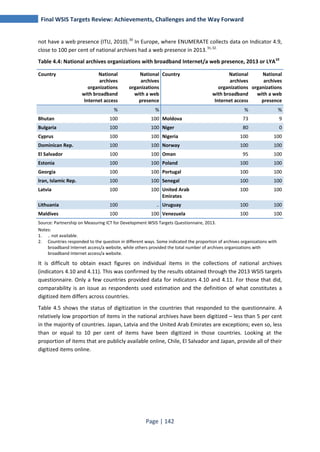
Management Department, Telecommunication Development Bureau. 
The report was substantively edited by Sheridan Roberts, consultant to ITU. 
The cover was designed by Aram Melikyan from ITU. 
The report features data collected by the Partnership TG-WSIS in 2013 through its 2013 WSIS targets 
questionnaire. The following agencies participated in the data collection: Eurostat, OECD, UNCTAD, 
UNECA, UNECLAC, UNESCAP and UNESCWA. The Partnership also appreciates the cooperation of those 
countries that responded to the questionnaire: Australia, Azerbaijan, Bangladesh, Bhutan, Brazil, 
Bulgaria, Burundi, Cambodia, Canada, Chile, Colombia, Congo, Cyprus, Czech Republic, Denmark, 
Dominican Republic, Ecuador, El Salvador, Estonia, Fiji, Finland, Gambia, Georgia, Iran (I.R.), Israel, 
Japan, Jordan, Kazakhstan, Lao P.D.R., Latvia, Lebanon, Lesotho, Lithuania, Maldives, Mexico, Moldova, 
Nauru, Nepal, Niger, Nigeria, Norway, Oman, Peru, Philippines, Portugal, Romania, Senegal, Serbia, 
Singapore, Slovenia, Spain, Switzerland, Thailand, Turkey, United Arab Emirates, Uruguay, Venezuela, 
Viet Nam and Yemen. 
Page | viii
Page | ix 
Table of contents 
Foreword ................................................................................................................................................... iii 
Acknowledgements .................................................................................................................................. vii 
Table of contents ....................................................................................................................................... ix 
List of boxes .............................................................................................................................................. xiii 
List of charts .............................................................................................................................................. xv 
List of figures .......................................................................................................................................... xviii 
List of tables ............................................................................................................................................. xix 
Introduction ................................................................................................................................................ 1 
Background on the WSIS and the WSIS targets ..................................................................................... 1 
WSIS monitoring and evaluation ........................................................................................................... 2 
About the final quantitative assessment report on the WSIS targets ................................................... 4 
List of references .................................................................................................................................... 7 
Endnotes ................................................................................................................................................ 7 
Target 1: Connect all villages with ICTs and establish community access points ...................................... 9 
Executive summary ................................................................................................................................ 9 
Introduction ......................................................................................................................................... 11 
Data availability and scope .................................................................................................................. 13 
Re-thinking the 'build-it-and-they-will-come' assumption .................................................................. 16 
Indicators to track WSIS Target 1 ......................................................................................................... 17 
Achievements against Target 1 ............................................................................................................ 18 
Conclusions and recommendations ..................................................................................................... 42 
List of references .................................................................................................................................. 46 
Endnotes .............................................................................................................................................. 48 
Target 2: Connect all secondary schools and primary schools with ICTs ................................................. 51 
Executive summary .............................................................................................................................. 51 
Introduction ......................................................................................................................................... 53 
Data availability and scope .................................................................................................................. 54 
Indicators to track WSIS Target 2 ......................................................................................................... 56 
Achievements against Target 2 ............................................................................................................ 58 
Conclusions and recommendations ..................................................................................................... 74 
List of references .................................................................................................................................. 78 
Endnotes .............................................................................................................................................. 81 
Target 3: Connect all scientific and research centres with ICTs ............................................................... 83 
Executive summary .............................................................................................................................. 83
Introduction ......................................................................................................................................... 85 
Data availability and scope .................................................................................................................. 90 
Achievements against Target 3 ............................................................................................................ 91 
Conclusions and recommendations ................................................................................................... 106 
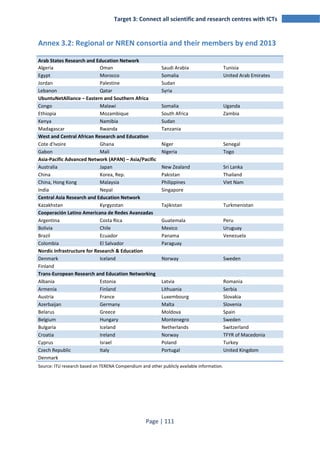
Annex 3.1: List of known NRENs by end 2013 ................................................................................... 109 
Annex 3.2: Regional or NREN consortia and their members by end 2013 ........................................ 111 
List of references ................................................................................................................................ 112 
Target 4: Connect all public libraries, museums, post offices and national archives with ICTs ............. 117 
Executive summary ............................................................................................................................ 117 
Introduction ....................................................................................................................................... 118 
Achievements against Target 4 .......................................................................................................... 120 
Conclusions and recommendations ................................................................................................... 143 
List of references ................................................................................................................................ 146 
Endnotes ............................................................................................................................................ 148 
Target 5: Connect all health centres and hospitals with ICTs ................................................................ 151 
Executive summary ............................................................................................................................ 151 
Introduction ....................................................................................................................................... 153 
Availability of data and scope ............................................................................................................ 155 
Achievements against Target 5 .......................................................................................................... 156 
Alternative approaches to measurement of Target 5 ....................................................................... 159 
Extending our understanding of eHealth ........................................................................................... 164 
Conclusions and recommendations ................................................................................................... 167 
List of references ................................................................................................................................ 170 
Endnotes ............................................................................................................................................ 171 
Target 6: Connect all central government departments and establish websites .................................. 173 
Executive summary ............................................................................................................................ 173 
Introduction ....................................................................................................................................... 175 
WSIS Target 6: framework and scope of review ................................................................................ 176 
Data availability and scope ................................................................................................................ 180 
Achievements against Target 6 .......................................................................................................... 181 
Conclusions and recommendations ................................................................................................... 196 
List of references ................................................................................................................................ 198 
Endnotes ............................................................................................................................................ 199 
Target 7: Adapt all primary and secondary school curricula to meet the challenges of the information 
society, taking into account national circumstances ............................................................................. 201 
Executive summary ............................................................................................................................ 201 
Introduction ....................................................................................................................................... 204 
Relating WSIS action lines to other international frameworks .......................................................... 205 
Page | x
Data availability and scope ................................................................................................................ 207 
Indicators to track WSIS Target 7 ....................................................................................................... 211 
Achievements against Target 7 .......................................................................................................... 212 
Conclusions and recommendations ................................................................................................... 229 
List of references ................................................................................................................................ 233 
Endnotes ............................................................................................................................................ 235 
Target 8: Ensure that all of the world’s population has access to television and radio services ........... 237 
Executive summary ............................................................................................................................ 237 
Introduction ....................................................................................................................................... 239 
Availability of data and scope ............................................................................................................ 241 
Evolving definitions for Target 8 ........................................................................................................ 242 
Achievements against Target 8 .......................................................................................................... 244 
Conclusions and recommendations ................................................................................................... 263 
List of references ................................................................................................................................ 266 
Endnotes ............................................................................................................................................ 268 
Target 9: Encourage the development of content and put in place technical conditions in order to 
facilitate the presence and use of all world languages on the Internet ................................................ 271 
Executive summary ............................................................................................................................ 271 
Introduction ....................................................................................................................................... 273 
Definitions and challenges of measurement ..................................................................................... 276 
Developments since WSIS .................................................................................................................. 279 
Data availability and scope ................................................................................................................ 282 
Achievements against Target 9 .......................................................................................................... 285 
Conclusions and recommendations ................................................................................................... 314 
List of references ................................................................................................................................ 319 
Endnotes ............................................................................................................................................ 321 
Target 10: Ensure that more than half the world’s inhabitants have access to ICTs within their reach 
and make use of them ............................................................................................................................ 327 
Executive summary ............................................................................................................................ 327 
Introduction ....................................................................................................................................... 329 
Data availability and scope ................................................................................................................ 332 
Achievements against Target 10 ........................................................................................................ 333 
Conclusions and recommendations ................................................................................................... 355 
List of references ................................................................................................................................ 358 
Endnotes ............................................................................................................................................ 360 
Proposed Target 11: Connect all businesses with ICTs .......................................................................... 363 
Executive summary ............................................................................................................................ 363 
Introduction ....................................................................................................................................... 365 
Page | xi
Data availability and scope ................................................................................................................ 368 
Achievements against proposed Target 11 ....................................................................................... 369 
Conclusions and recommendations ................................................................................................... 373 
List of references ................................................................................................................................ 375 
Endnotes ............................................................................................................................................ 376 
Conclusions and way forward ................................................................................................................ 377 
Executive summary ............................................................................................................................ 377 
Introduction ....................................................................................................................................... 381 
ICT4D – policy, research and impact .................................................................................................. 381 
Measuring WSIS targets ..................................................................................................................... 388 
ICT4D, WSIS and post-2015 development ......................................................................................... 396 
List of references ................................................................................................................................ 405 
Endnotes ............................................................................................................................................ 409 
Page | xii
Page | xiii 
List of boxes 
Box 0.1: Amended WSIS targets ......................................................................................................................... 2 
Box 0.2: Call for follow-up process in WSIS documents ..................................................................................... 3 
Box 1.1: Users of rural public access centres – a case from Bangladesh ......................................................... 14 
Box 1.2: Infolady – a women-centred programme to deliver information services in rural Bangladesh ........ 15 
Box 1.3: The Mexican village that got itself talking .......................................................................................... 16 
Box 1.4: An Information-communication revolution in the Pacific .................................................................. 20 
Box 1.5: Emerging technologies provide mobile coverage in rural Congo ...................................................... 24 
Box 1.6: Internet-based applications for rural populations in Africa ............................................................... 34 
Box 2.1: Setting targets for integrating ICT in education – regional and national level examples .................. 58 
Box 2.2: Connecting schools through interactive TV-assisted instruction in a remote state in Brazil ............. 60 
Box 2.3. Implementing 1:1 computing through low cost laptops and tablets – costs versus benefits ............ 65 
Box 2.4: Progress towards increasing access to ICT in Colombia ..................................................................... 68 
Box 2.5: Georgia improves access to digital technology – the Deer Leap programme .................................... 69 
Box 2.6: Partnering to connect schools in Chile: The Enlaces initiative ........................................................... 74 
Box 3.1: World's first intercontinental 100 Gbit/s link for R&E demonstrated ............................................... 89 
Box 3.2: Research and education networks in Asia and the Pacific ................................................................. 97 
Box 3.3: AfricaConnect – a regional Internet network for research and education in Africa ........................ 100 
Box 3.4: CamREN – Connecting Cambodian researchers to the rest of the world ........................................ 101 
Box 3.5: Caribbean NRENs and tertiary education ......................................................................................... 105 
Box 4.1: The Economic Commission for Africa’s digital institutional repository ........................................... 121 
Box 4.2: Global Libraries program .................................................................................................................. 126 
Box 4.3: Red de Bibliotecas project in Medellín, Colombia ........................................................................... 127 
Box 4.4: Connecting cultural heritage across countries and continents ........................................................ 133 
Box 4.5: Kitsong centres offering access to ICTs in Botswana ....................................................................... 140 
Box 5.1: Use of ICT for women’s and children’s health – CoIA recommendations and key findings ............. 165 
Box 6.1: The Task Group on e-Government (TGEG) ....................................................................................... 177 
Box 6.2: Developing indicators for the WSIS target on e-government .......................................................... 178 
Box 6.3: Electronic governance for sustainable development research ........................................................ 179 
Box 6.4: Stages of e-government in the UN E-Government Readiness Survey .............................................. 191 
Box 7.1: The six Education for All (EFA) goals ................................................................................................. 206 
Box 7.2: Singapore’s Third Masterplan for ICT in Education (MP3) ............................................................... 207 
Box 7.3: The disconnection between ICT policy, infrastructure and use – evidence from PISA, 2009 .......... 209 
Box 7.4: Monitoring targets for adapting school curricula to the information society – Asia ....................... 212 
Box 7.5: Increasing ICT skills among teachers in Oman to match evolving curricula ..................................... 216
Box 7.6: Training teachers to be effective change agents – the VLE in Malaysian schools ........................... 218 
Box 7.7: Enhancing teaching and learning using computer-assisted instruction in Bangladesh ................... 224 
Box 7.8: Uruguay’s El Ceibal Project – Internet-assisted instruction using mobile XO laptop computers .... 227 
Box 7.9: The Jordan Education Initiative (JEI) – Preparing learners for the information society ................... 229 
Box 8.1: Community radio and development ................................................................................................ 241 
Box 8.2: Community radio and the preservation of culture .......................................................................... 247 
Box 8.3: How television is improving literacy through same-language-subtitling ......................................... 249 
Box 8.4: Means of receiving TV in the European Union, 2006–2013 ............................................................. 254 
Box 10.1: Use is just as important as access – a case study from the OLPC program .................................... 330 
Box 10.2: Limitations of data on mobile-cellular telephone subscriptions .................................................... 335 
Box 10.3: Mobile phones in the Pacific Islands developing countries ........................................................... 339 
Box 10.4: Access to mobile phones can improve governance ....................................................................... 340 
Box 10.5: Decline in fixed-telephone subscriptions ....................................................................................... 344 
Box 10.6: Growth of mobile Internet in Zimbabwe ....................................................................................... 353 
Box 11.1: The C7 action line business components ....................................................................................... 365 
Box 11.2: ICT and business statistics in UNCTAD ........................................................................................... 367 
Box 11.3. The case for data on business mobile phone use – mobile money in the EAC .............................. 373 
Box 12.1: Joint Statement – UNGIS on Post-2015 Development Agenda ...................................................... 383 
Box 12.2: Analysis of ICT4D research ............................................................................................................. 385 
Box 12.3: Examples of ICT contributions to MDGs ......................................................................................... 387 
Box 12.4: Learning from the MDGs and the Sustainable Development Agenda ........................................... 393 
Box 12.5: Open Working Group on the Sustainable Development Goals ...................................................... 398 
Page | xiv
Page | xv 
List of charts 
Chart 1.1: Rural population covered by a mobile cellular signal, by region, 2003–2012 ................................. 19 
Chart 1.2: Rural population covered by a 3G mobile cellular signal, 2009–2012 ............................................ 22 
Chart 1.3: Households with any telephone access, by rural/urban difference, 2012/2011 ............................ 25 
Chart 1.4: Households with fixed phone only, by rural/urban difference, 2012/2011 .................................... 26 
Chart 1.5: Households with mobile telephone only, by rural/urban difference, 2012/2011 .......................... 28 
Chart 1.6: Rural households by fixed phone only and mobile phone only, 2012/2011 ................................... 29 
Chart 1.7: Households with both fixed and mobile telephone by rural/urban difference, 2012/2011 ........... 30 
Chart 1.8: Households with any Internet access by rural/urban difference, 2012/2011 ................................ 32 
Chart 1.9: Households with narrowband access by rural/urban difference, 2012/2011 ................................ 35 
Chart 1.10: Households with fixed broadband access by rural/urban difference, 2012/2011 ........................ 36 
Chart 1.11: Households with mobile broadband access by rural/urban difference, 2012/2011 .................... 37 
Chart 1.12: Individuals using the Internet by rural/urban difference, 2012/2011 .......................................... 39 
Chart 2.1: Schools with radio/television used for educational purposes, 2012 or LYA ................................... 62 
Chart 2.2: Learner-to-computer ratios, national aggregate/schools with CAI, 2012 or LYA............................ 66 
Chart 2.3: Schools with total and fixed broadband Internet, 2012 or LYA ...................................................... 72 
Chart 3.1: Status of national broadband plans and NRENs, 2013 .................................................................. 106 
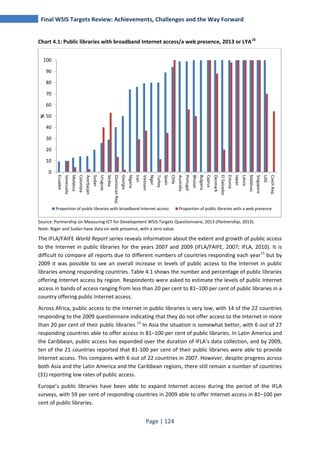
Chart 4.1: Public libraries with broadband Internet access/a web presence, 2013 or LYA ........................... 124 
Chart 4.2: Museums with broadband Internet access/a web presence, 2013 or LYA ................................... 129 
Chart 4.3: Accessibility of digital objects in museums, selected access channels, Europe, 2013 .................. 131 
Chart 4.4: Post offices providing Internet/with broadband Internet, by level of development, 2012 .......... 134 
Chart 4.5: Post offices with broadband Internet access, by country, 2012 ................................................... 135 
Chart 4.6: Post offices providing public Internet access, by country, 2012 ................................................... 136 
Chart 4.7: Post offices providing public Internet access, by region, 2005–07 and 2010–12 ......................... 138 
Chart 4.8: Post offices providing Internet access, top performing countries, 2005–07 and 2010–12 .......... 139 
Chart 5.1: Hospitals with Internet access, by quartile, 2013 ......................................................................... 156 
Chart 5.2: Public health centres with Internet access, by quartile, 2013 ...................................................... 158 
Chart 5.3: Health-related institutions, access to HINARI, low income countries ........................................... 161 
Chart 5.4: Health-related institutions, access to HINARI, low–middle income countries .............................. 162 
Chart 5.5: Growth in number of HINARI institutions, 2003–2013 ................................................................. 163 
Chart 6.1: Countries without a central government web presence, 2003–2014 ........................................... 186 
Chart 6.2: National website links to regional/local governments, by region, 2014 ....................................... 187 
Chart 6.3: Official website scores, largest city, top 100 most wired countries, 2003–2011 .......................... 188 
Chart 6.4: Nigeria, e-government at the state level, 2013 ............................................................................. 189
Chart 6.5: Trends in progress in e-government development, 2003–2014 ................................................... 190 
Chart 6.6: Countries providing information by e-mail or RSS, and SMS, 2014 .............................................. 192 
Chart 6.7: Integrated approaches in e-government, 2003–2012 .................................................................. 193 
Chart 6.8: Countries providing transactional e-services, 2014 ...................................................................... 195 
Chart 6.9: Connected e-services, 2014 ........................................................................................................... 196 
Chart 7.1: ICT-qualified teachers versus those trained to teach using ICT, 2012 or LYA ............................... 215 
Chart 7.2: Teachers trained to teach using ICT versus those teaching using ICT, 2012 or LYA ...................... 217 
Chart 7.3: Schools with computer-assisted instruction (CAI) and computer labs, 2012 or LYA .................... 222 
Chart 7.4: Schools with Internet-assisted instruction (IAI) versus Internet access, 2012 or LYA ................... 226 
Chart 8.1: Households with radio, 2012 or 2011 ........................................................................................... 245 
Chart 8.2: Households with a TV, by region, 2008–2012 ............................................................................... 248 
Chart 8.3: Households with a TV, by level of development, 2008–2012 ....................................................... 249 
Chart 8.4: Households with multichannel television, by region, 2008–2012 ................................................ 252 
Chart 8.5: Households with multichannel TV, by technology, 2008–2012 .................................................... 253 
Chart 8.6: Households with digital CATV, by region, 2008–2012 .................................................................. 256 
Chart 8.7: Households with analogue CATV, by region, 2008–2012 .............................................................. 257 
Chart 8.8: Households with DTH satellite TV, by region, 2008–2012 ............................................................ 258 
Chart 8.9: Households with IPTV, by region, 2008–2012 ............................................................................... 260 
Chart 8.10: Households with only DTT, by region, 2008–2012 ...................................................................... 262 
Chart 9.1: Netcraft estimates, total websites, millions of hostnames and active sites, 1995–2013 ............. 280 
Chart 9.2: Individuals using the Internet, 2000–2012, percentage ................................................................ 286 
Chart 9.3: Estimated online language populations, percentage of global online population ........................ 288 
Chart 9.4: Growth in daily Google searches, 2007–2013, millions of searches ............................................. 290 
Chart 9.5: The balance between gTLD and ccTLD registrations in world regions, 2013 ................................ 292 
Chart 9.6: Total domain registrations (thousands), 2003–2013, leading Internet countries ........................ 295 
Chart 9.7: Total domain registrations (thousands), 2003–2013, developing countries ................................ 295 
Chart 9.8: Types of IDN, 2010–2013, registrations, thousands...................................................................... 299 
Chart 9.9: Number and type of IDN, leading countries, 2013, thousands ..................................................... 299 
Chart 9.10: Wikipedia articles – total and English language, 2003–2013, thousand articles ........................ 301 
Chart 9.11: Distribution of Wikipedia articles by language, 2003–2013 ........................................................ 302 
Chart 9.12: Linguistic density of Wikipedia contributors, December 2013 ................................................... 303 
Chart 9.13: Wikipedia unique visitors by country/region, 2008–2013, million pageviews ........................... 304 
Chart 9.14: Wikipedia monthly pageviews (millions), leading languages, December 2013 .......................... 304 
Chart 9.15: Wikipedia contributors, articles and pageviews, leading languages, December 2013 ............... 305 
Chart 9.16: Wikipedia monthly pageviews per person/per Internet user, by region, Jan–Mar 2014 ........... 306 
Chart 9.17: Wikipedia monthly pageviews per person/per Internet user, countries, Jan–Mar 2014 ........... 306 
Chart 9.18: Growth in Facebook monthly active users, 2004–2013, millions of users .................................. 311 
Page | xvi
Chart 9.19: Geocoded origin of a sample of 2 billion tweets, 2013, million tweets ...................................... 313 
Chart 10.1: Global ICT development, 2003–2013 .......................................................................................... 334 
Chart 10.2: Global mobile-cellular subscriptions, 2003–2013 ....................................................................... 336 
Chart 10.3: Mobile-cellular subscriptions, by level of development, 2003–2013 ......................................... 337 
Chart 10.4: Number of mobile-cellular subscriptions, by region, 2003–2013 ............................................... 338 
Chart 10.5: Mobile-cellular penetration, by region, 2003–2013 ................................................................... 340 
Chart 10.6: Households with any telephone access, 2012 or 2011 ............................................................... 342 
Chart 10.7: Households by type of phone access, 2012 or 2011 ................................................................... 343 
Chart 10.8: Mobile telephone users versus mobile-cellular subscriptions, 2012 or 2011 ............................. 345 
Chart 10.9: Global Internet users, 2003–2013 ............................................................................................... 347 
Chart 10.10: Internet users, by level of development, 2003–2013 ............................................................... 347 
Chart 10.11: Internet users, by region, 2003–2013 ....................................................................................... 348 
Chart 10.12: Households with Internet access, by region, 2003–2013.......................................................... 349 
Chart 10.13: Households with Internet access, by level of development, 2003–2013 .................................. 350 
Chart 10.14: Households with access to the Internet, by type of access, 2012 or 2011 ............................... 351 
Chart 10.15: Fixed (wired)-broadband subscriptions, 2003–2013 ................................................................. 352 
Chart 10.16: Wireless-broadband subscriptions, 2007–2013 ........................................................................ 352 
Chart 10.17: Fixed (wired)-broadband subscriptions, by level of development, 2003–2013 ........................ 354 
Chart 10.18: Wireless broadband penetration, by level of development, 2007–2013 ................................. 354 
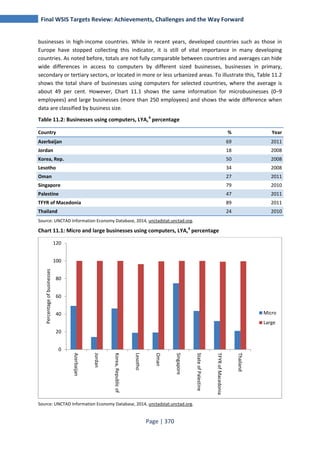
Chart 11.1: Micro and large businesses using computers, LYA, percentage .................................................. 370 
Chart 11.2: Growth in fixed broadband access by businesses using the Internet, percentage ..................... 371 
Page | xvii
Page | xviii 
List of figures 
Figure 0.1: WSIS monitoring process ................................................................................................................. 4 
Figure 1.1: Relevance of Target 1 to WSIS action lines .................................................................................... 12 
Figure 2.1: Relevance of Target 2 to WSIS action lines .................................................................................... 54 
Figure 2.2: Information needs at different levels of ICT penetration in educational systems ......................... 56 
Figure 3.1: Relevance of Target 3 to other WSIS action lines and targets ....................................................... 86 
Figure 3.2: Countries with a national research and education network, 2005 and 2013 ................................ 93 
Figure 3.3: Timeline of starting year for regional NRENs and NREN consortia ................................................ 98 
Figure 3.4: Coverage of regional or NREN consortia, 2013 .............................................................................. 99 
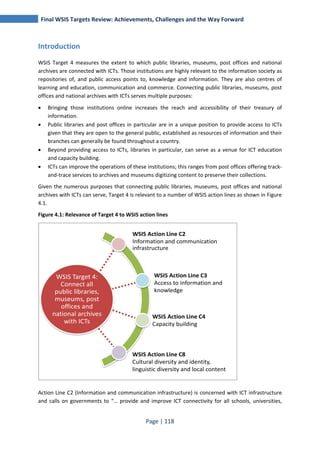
Figure 4.1: Relevance of Target 4 to WSIS action lines .................................................................................. 118 
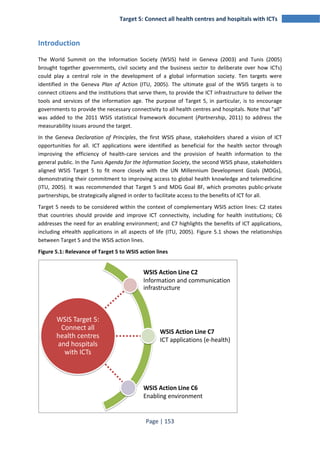
Figure 5.1: Relevance of Target 5 to WSIS action lines .................................................................................. 153 
Figure 5.2: Types of health facilities by country administrative levels .......................................................... 154 
Figure 6.1: Relevance of Target 6 to WSIS action lines .................................................................................. 176 
Figure 7.1: Relevance of Target 7 to WSIS action lines .................................................................................. 205 
Figure 8.1: Relevance of Target 8 to WSIS action lines .................................................................................. 239 
Figure 8.2: Electrification and television ownership in rural areas ................................................................ 250 
Figure 8.3: Main TV-distribution technologies ............................................................................................... 251 
Figure 9.1: Relevance of Target 9 to WSIS action lines .................................................................................. 276 
Figure 10.1: Relevance of Target 10 to WSIS action lines .............................................................................. 331 
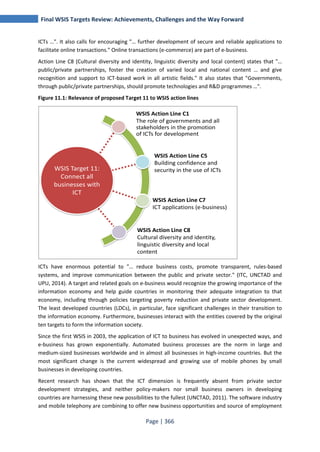
Figure 11.1: Relevance of proposed Target 11 to WSIS action lines .............................................................. 366
Page | xix 
List of tables 
Table 1.1: Data sources for indicators for measuring Target 1 ........................................................................ 18 
Table 1.2: Rural population covered by a mobile cellular signal, 2012 ............................................................ 19 
Table 1.3: Households with any phone access, by rural/urban difference, 2009–2012, percentage .............. 25 
Table 1.4: Households with fixed phone only, by rural/urban difference, 2009–2012, percentage ............... 27 
Table 1.5: Households with mobile phone only, by rural/urban difference, 2009–2012, percentage ............ 29 
Table 1.6: Households with any Internet access, by rural/urban difference, 2009–2012, percentage ........... 33 
Table 1.7: Individuals using the Internet, by rural/urban difference, 2009–2012, percentage ....................... 40 
Table 1.8: Internet use by rural/urban and location of use, 2012/2011, percentage of Internet users .......... 41 
Table 3.1: Data sources for indicators for measuring Target 3 ........................................................................ 91 
Table 3.2: Proportion of public scientific and research centres with broadband Internet access ................... 92 
Table 3.3: Bandwidth of selected NRENs, 2013/2012 ...................................................................................... 95 
Table 3.4: Regional or NREN consortia and regions served ............................................................................. 96 
Table 3.5: Public scientific and research centres with Internet access to a NREN ......................................... 102 
Table 3.6: NRENs and connectivity to institutions ......................................................................................... 103 
Table 4.1: Public libraries offering public Internet access, by region, 2007 and 2009 ................................... 125 
Table 4.2: Museums with a web presence, Europe, 2012 ............................................................................. 130 
Table 4.3: Museum visits onsite, online (2011), Facebook 'likes' and Twitter followers (2014) ................... 132 
Table 4.4: National archives organizations with broadband Internet/a web presence, 2013 or LYA............ 142 
Table 4.5: Digitization and online availability of items in the national archives, 2013 or LYA ....................... 143 
Table 5.1: Internet connectivity in public hospitals, by country .................................................................... 157 
Table 5.2: Internet connectivity in public health centres, by country ........................................................... 159 
Table 5.3: Sample of international sources of ICT and health data ............................................................... 167 
Table 6.1: Data availability on use of ICT in government ............................................................................... 180 
Table 6.2: Persons employed in central government routinely using computers, 2013 or LYA .................... 182 
Table 6.3: Persons employed in central government routinely using Internet, 2013 or LYA ........................ 183 
Table 6.4: Central government organizations with a LAN, 2013 or LYA ........................................................ 183 
Table 6.5: Central government organizations with an intranet, 2013 or LYA ................................................ 184 
Table 6.6: Central government organizations with Internet access, by type, 2013 or LYA ........................... 185 
Table 6.7: Central government web presence 2003–2014 ............................................................................ 186 
Table 6.8: National website links to local/regional government agencies .................................................... 187 
Table 6.9: Cities offering official websites 2005–2011 ................................................................................... 188 
Table 6.10: Provision of archived information by region, 2014 ..................................................................... 194 
Table 8.1: Data sources for indicators for measuring Target 8 ...................................................................... 244
Table 8.2: Households with a radio, 2009–2012 ............................................................................................ 246 
Table 8.3: Analogue switch-off dates, selected countries that have completed the DTT transition ............. 262 
Table 9.1: Distribution of world languages by area of origin ......................................................................... 274 
Table 9.2: Distribution of world languages by number of first language speakers ........................................ 275 
Table 9.3: Global Internet users by main global languages, IWS estimates, 2011 ......................................... 288 
Table 9.4: Total registrations by world region, 2003–2013 ........................................................................... 294 
Table 9.5: Persons per ccTLD and TLD registration, world regions, 2003–2013 ............................................ 296 
Table 9.6: Internet users per ccTLD and TLD registration, world regions, 2003–2013 .................................. 296 
Table 9.7: Gross and Internet-user population per domain registration, 2012/2013 ................................... 297 
Table 9.8: Wikipedia articles by language, 2003–2013, thousand articles .................................................... 301 
Table 9.9: Website popularity, global and selected countries, 2014 ............................................................. 309 
Table 9.10: Website popularity, computer and mobile platforms ................................................................. 309 
Table 10.1: Data sources for indicators for measuring Target 10 .................................................................. 332 
Table 11.1: Data sources for e-business indicators, 2008–2012 .................................................................... 369 
Table 11.2: Businesses using computers, LYA, percentage ............................................................................ 370 
Table 11.3: Share of businesses using mobile phones, LYA, percentage ....................................................... 372 
Page | xx
Page | 1 
Introduction 
Introduction 
The World Summit on the Information Society (WSIS) recognized information and communication 
Technologies (ICTs) as transformational technologies and as important enablers for social and 
economic development. Besides representing an important sector, ICTs enable economic growth and 
have strategic spillover effects on other sectors. They create jobs and foster innovation, empower 
people through new and faster communication channels, and help create greater access to 
education, healthcare and public services. While ICTs have grown tremendously and an increasing 
number of people are joining the global information society, major differences in ICT uptake and use 
persist – the digital divide therefore remains a key impediment to development. 
To enhance the development of a global information society, increased attention has been given to 
the importance of tracking, monitoring and addressing the digital divide. The Partnership for 
Measuring ICT for Development (the Partnership) has been leading this task within the framework of 
the WSIS, since 2004. The Partnership’s efforts have improved the quality and quantity of ICT 
statistics worldwide, helped develop better tools to support countries to collect ICT data, and raised 
awareness about the importance of measurement. The Partnership has also contributed to the 
follow-up and implementation of the outcomes of the WSIS, and has taken on responsibility for 
tracking the WSIS targets. 
The main objective of this report, Final WSIS Targets Review. Achievements, Challenges and the Way 
Forward, is to provide policy-makers with a comprehensive evaluation of the implementation of the 
WSIS commitments, and in particular the WSIS targets. It emphasizes the importance of ICTs for 
development, and the need to track these. The report is expected to highlight the lessons learnt from 
the WSIS monitoring process and to deliver an input to the debate on the post-2015 agenda, 
including discussion of possible targets and future indicators. 
Background on the WSIS and the WSIS targets 
The first two phases of the WSIS were held in 2003 in Geneva, Switzerland and in 2005 in Tunis, 
Tunisia. They brought together governments, private sector, civil society and international 
organizations from around the globe to set a common vision for building an inclusive information 
society. In accordance with the Millennium Development Goals (MDGs), the Geneva phase agreed on 
a Declaration of Principles and a Plan of Action, with ten targets and several action lines to be 
achieved by 2015. In Tunis, major stakeholders reaffirmed their support for the outcomes of the first 
phase of the WSIS and approved the Tunis Commitment and Agenda, along with the establishment of 
the Internet Governance Forum (IGF). 
The Geneva Plan of Action promotes the use of ICTs for the achievement of internationally agreed 
development goals and targets. With special attention to developing countries, the ten targets of the 
Plan of Action had the following goals: 
• encouraging connectivity – in villages, educational institutions, scientific and research centres, 
public libraries, cultural centres, museums, post offices, archives, health centres, hospitals and 
government departments;
Final WSIS Targets Review: Achievements, Challenges and the Way Forward 
• adapting primary and secondary school curricula to meet the challenges of the information 
Page | 2 
society; 
• ensuring access by the world's population to ICTs, including television and radio; 
• supporting the development of content and facilitating the presence and use of all world 
languages on the Internet. 
The ITU World Telecommunication/ICT Development Report 2010: Monitoring the WSIS Targets, A 
mid‐term review (WTDR) (ITU, 2010) recommended that a new target “Connect all businesses with 
ICTs” should be added to the WSIS targets; three indicators were identified by the Partnership to 
track such a target (see Measuring the WSIS Targets. A statistical framework, Partnership, 2011). At 
the same time, the Partnership recommended some changes to the wording of the targets, mainly in 
order to improve their measurability (see Box 0.1). 
The WSIS targets have served as global reference for improving global access and use of ICTs and 
have provided benchmark indicators for the evaluation of the overall objectives of the information 
society. In addition, the WSIS targets were intended to inspire particular targets at national level 
based on local characteristics, e-strategies and development policies. 
Box 0.1: Amended WSIS targets1 
Target 1. Connect all villages with ICTs and establish community access points; 
Target 2. Connect all secondary schools and primary schools with ICTs; 
Target 3. Connect all scientific and research centres with ICTs; 
Target 4. Connect all public libraries, museums, post offices and national archives with ICTs; 
Target 5. Connect all health centres and hospitals with ICTs; 
Target 6. Connect all central government departments and establish websites; 
Target 7. Adapt all primary and secondary school curricula to meet the challenges of the information society, 
taking into account national circumstances; 
Target 8. Ensure that all of the world’s population has access to television and radio services; 
Target 9. Encourage the development of content and put in place technical conditions in order to facilitate 
the presence and use of all world languages on the Internet; 
Target 10. Ensure that more than half the world’s inhabitants have access to ICTs within their reach and 
make use of them; 
Proposed Target 11: Connect all businesses with ICTs. 
Source: Partnership on Measuring ICT for Development (2011). 
WSIS monitoring and evaluation 
WSIS highlighted the importance of internationally comparable ICT statistics to benchmark and 
monitor the progress made towards creating a global information society. It made specific reference 
to a follow-up mechanism and appropriate indicators to track global progress in the use of ICT (see 
Box 0.2).
Page | 3 
Introduction 
Box 0.2: Call for follow-up process in WSIS documents 
Geneva Plan of Action (2003), paragraph 28 
“A realistic international performance evaluation and benchmarking (both qualitative and quantitative), 
through comparable statistical indicators and research results, should be developed to follow up the 
implementation of the objectives, goals and targets in the Plan of Action, taking into account different 
national circumstances.” 
Tunis Agenda (2005), Paragraph 113 
“Appropriate indicators and benchmarking, including community connectivity indicators, should clarify the 
magnitude of the digital divide, in both its domestic and international dimensions, and keep it under regular 
assessment, and track global progress in the use of ICTs to achieve internationally agreed development goals 
and objectives, including the Millennium Development Goals.” 
Source: WSIS Geneva Plan of Action and WSIS Tunis Agenda for the Information Society (see ITU, 2005). 
The Tunis Agenda requested the United Nations General Assembly to make an overall review of the 
implementation of the WSIS in 2015. In 2006, the United Nations General Assembly resolved 
(60/252) to conduct an overall review of the implementation of the WSIS outcomes in 2015. 
Consequently, in 2011, the United Nations Chief Executives Board (CEB) tasked the United Nations 
Group on the Information Society, under ITU leadership, to prepare, on the basis of an open 
consultation, a Plan of Action for the WSIS Overall Review (WSIS+10). In April 2012, during the CEB 
spring session, the plan was approved (ITU, 2013). 
As a response to the request made by the WSIS to produce official statistics to monitor the 
information society, in 2004, the Partnership on Measuring ICT for Development was established at 
the UNCTAD XI in Brazil, as a multistakeholder initiative for the coordination of activities carried out 
by international and regional organizations involved in ICT measurement. Its current members are: 
International Telecommunication Union (ITU), Organisation for Economic Co-operation and 
Development (OECD), Statistical Office of the European Communities (Eurostat), United Nations 
Conference on Trade and Development (UNCTAD), United Nations Department of Economic and 
Social Affairs (UNDESA), United Nations Economic Commission for Africa (UNECA), United Nations 
Economic Commission for Latin America and the Caribbean (UNECLAC), United Nations Economic and 
Social Commission for Asia and the Pacific (UNESCAP), United Nations Economic and Social 
Commission for Western Asia (UNESCWA), UNESCO Institute for Statistics (UIS), United Nations 
Environment Programme/Secretariat of the Basel Convention (UNEP/SBC), United Nations University 
Institute for Sustainability and Peace (UNU-ISP) and the World Bank. 
The Partnership has successfully defined a core list of ICT indicators to help developing countries 
produce official ICT statistics. The core list has been updated regularly since its first publication in 
2005. It was endorsed by the United Nations Statistical Commission (UNSC) at its 38th session in 
2007; two revised and extended core lists were endorsed by the UNSC in 2012 (43rd session) and 
2014 (45th session). The core list has served as the basis for the collection of internationally 
comparable ICT statistics since about 2005. The latest core list of indicators includes 58 indicators 
and covers the following areas: ICT infrastructure and access; access and use of ICT by households 
and individuals; use of ICT by businesses; the ICT sector; trade in ICT goods; ICT in education; and e-government. 
2 
Following the publication of the WTDR 2010, the Partnership also took the lead role in monitoring 
the WSIS targets. The WTDR 2010, which was produced in cooperation with several members of the 
Partnership, presented the first comprehensive quantitative assessment of the WSIS targets. The
Final WSIS Targets Review: Achievements, Challenges and the Way Forward 
report highlighted the need for a formal monitoring progress towards measuring the WSIS targets 
and suggested a set of indicators to guide countries in their monitoring efforts of the WSIS targets. 
After the launch of the WTDR 2010, the Partnership established a Task Group on Measuring the WSIS 
Targets (TG-WSIS). This group presented its first results at the 8th World Telecommunication/ICT 
Indicators Meeting (WTIM) in November 2010. In 2011, the Partnership published Measuring the 
WSIS Targets. A statistical framework. This framework identified 523 measurable indicators to help 
monitor progress towards the WSIS targets. The framework further provided: 
• definitions of each target indicator, including the terms used 
• derivation of indicators (for example, use of appropriate denominators for proportions) 
• classifications to be applied to measure the indicators 
• scope of populations of units 
• statistical units. 
As recommended by the WTDR 2010, and based on the acknowledgment of the importance of 
businesses in the information society and the digital economy, the 2011 WSIS statistical framework 
suggested adding a target to measure business connectivity. 
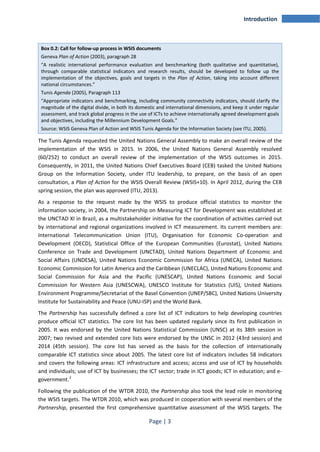
The WSIS monitoring process is shown in Figure 0.1. 
Figure 0.1: WSIS monitoring process 
WSIS 
Cluster 
Page | 4 
2003 2004 2005 2007 
WSIS first 
phase 
Geneva 
WSIS second 
phase 
Tunisia 
Partnership 
on 
Measuring 
ICT for 
Development 
Core ICT 
indicators list 
WSIS 
Cluster 
Core ICT 
indicators list 
endorsed by 
UNSC 
2010 
World 
Telecommuni 
cation/ICT 
Development 
Report 
WTDR 
2011 
Measuring 
the WSIS 
targets - A 
statistical 
framework 
2014 
WSIS Forum 
Final WSIS 
Targets 
Review report 
WSIS Forum 
2013 
WSIS Forum 
WSIS Targets 
questionnaire 
Revised Core 
ICT 
indicators list 
2008 
The Global 
Information 
Society: 
a Statistical 
View 
2012 
Metadata 
Questionnaire 
on the WSIS 
Target 
Indicators 
Revised and 
extended 
Core List of 
ICT 
Indicators, 
endorsed by 
UNSC 
Revised Core 
List of ICT 
Indicators, 
endorsed by 
UNSC 
2009 
WSIS Forum 
2006 
WSIS WSIS +10 
Cluster 
WSIS Forum WSIS Forum 
About the final quantitative assessment report on the WSIS targets 
In line with the Millennium Development Goals (MDGs), the year 2015 marks the endpoint for 
achieving the targets of the WSIS. The Partnership has prepared this report – through the Task Group 
on Measuring the WSIS Targets − with the purpose of elaborating a quantitative assessment of WSIS 
outcomes within the framework of the Plan of Action for the WSIS overall review (WSIS+10). It has 
been prepared specifically for the WSIS+10 High Level Event, which is “… designed to review the 
progress made in the implementation of the WSIS outcomes under the mandates of participating 
agencies, and to take stock of achievements in the last ten years … The event will review the WSIS
Page | 5 
Introduction 
Outcomes (2003 and 2005) related to the WSIS action lines with the view of developing proposals on 
a new vision beyond 2015, potentially including new targets ...”4 
It should be noted that the WSIS targets were not framed with measurement in mind and were 
developed without prior consultation with the statistical community. Therefore, the indicators that 
the Partnership identified in 2011 were developed based on the interpretation of each target and 
developed to ‘best fit’ their scope and to reflect their essence. This process included inputs and 
consultation with key international and regional players and experts on topics of the WSIS targets. 
The list of indicators that was identified to evaluate the WSIS targets was thus developed to capture 
developments and measure progress over time, and to ensure data quality and international 
comparability, taking into account international standards. 
Several members and non-members of the Partnership have collaborated in drafting this report. 
These are ITU (targets 1, 3, 4, 8, 9 and 10), UIS (targets 2 and 7), WHO (Target 5), UNDESA (Target 6), 
UNCTAD (proposed Target 11), the Center for Electronic Governance at UNU-IIST (Conclusions and 
the way forward) and UNECLAC (Introduction). Other contributing authors have been the Universal 
Postal Union (UPU), the International Federation of Library Associations and Institutions (IFLA), the 
DEN Foundation and the OECD. 
This report reviews progress made since 2003 on the 10+1 WSIS targets. The analysis of the 
achievements are based on internationally comparable data made available by partners and the non-members 
listed above, extensive research (including secondary sources), and responses to the 
Partnership on Measuring ICT for Development WSIS Targets Questionnaire, 2013. 
The 2013 WSIS targets questionnaire was sent to WSIS focal points in 195 member states, between 
November and December 2013. It requested quantitative information on each of the indicators. The 
questionnaire was prepared by the TG-WSIS and distributed by the four UN Regional Commissions 
(UNECLAC, UNESCWA, UNESCAP and UNECA), OECD, Eurostat and UNCTAD. The global response rate 
of the survey was 30 per cent, but not all countries that responded to the questionnaire completed 
it. The level of response draws attention to a lack of availability of official ICT statistics. While there 
are examples of the efforts made by the international community and countries to advance the 
implementation of ICT policies and their evaluation, countries have not been able to provide a 
complete assessment of their progress made towards the WSIS targets, based on the indicators 
identified by the Partnership. 
The national coordination of the production and the collection of ICT statistics has also proven to be 
challenging, given the cross-cutting nature of ICTs. While some of the indicators are collected 
through national statistical offices (NSOs), usually through household surveys or population 
censuses, other indicators can be derived from administrative data sources, either by line ministries 
or other government agencies. A third set of indicators are collected, or derived by specialized 
(research or analysis) organisations. While at the international level a number of indicators for the 
WSIS targets (especially for targets 1, 2, 7, 8, 10 and the proposed target 11) are collected by 
different international agencies, through regular data collections, other indicators are not regularly 
collected. Data for these kinds of indicators are therefore less available and generally not 
internationally comparable. 
This report is structured along 13 chapters (including this introduction) reviewing each one of the 
WSIS targets and the way forward post-2015. Each chapter on the WSIS targets includes:
Final WSIS Targets Review: Achievements, Challenges and the Way Forward 
• an introduction to the target 
• a discussion on the indicators that were identified to track the targets and data availability 
• a discussion on the achievement of the targets, with presentation of available data for the 
indicators; where possible, information is provided for different countries, regions and levels of 
development (classifications for the last two are based on the United Nations Statistics Division 
M49 classifications5); for some indicators, time series data are shown, thus highlighting progress 
made over time 
• a set of conclusions and recommendations for each target, highlighting the key findings on the 
progress made. Recommendations are made on the relevance of the targets, and the availability 
of the indicators and their ability to track the target. Depending on the target and indicators, 
more appropriate targets and indicators, in particular in the context of the post-2015 
development agenda and possible ICT monitoring framework, are proposed and discussed. 
Page | 6
Page | 7 
Introduction 
List of references 
ITU (International Telecommunication Union) (2005), World Summit on the Information Society 
Outcome Documents: Geneva 2003 - Tunis 2005, http://www.itu.int/wsis/outcome/booklet.pdf. 
ITU (2010), World Telecommunication/ICT Development Report 2010: Monitoring the WSIS Targets, A 
mid-term review, http://www.itu.int/en/ITU-D/Statistics/Pages/publications/wtdr2010.aspx. 
ITU (2013), Report on the WSIS Stocktaking 2013, http://www.itu.int/dms_pub/itu-s/opb/pol/S-POL-WSIS. 
REP-2013-E07-PDF-E.pdf. 
Partnership on Measuring ICT for Development (2010), Core ICT Indicators, 
http://www.itu.int/en/ITU-D/Statistics/Pages/coreindicators/default.aspx. 
Partnership on Measuring ICT for Development (2011), Measuring the WSIS Targets: A statistical 
framework, http://www.itu.int/en/ITU-D/Statistics/Pages/publications/wsistargets2011.aspx. 
Endnotes 
1 The Partnership suggested changes in the wording of the WSIS targets (amended WSIS targets), mainly to 
improve the measurability to make them more feasible, and to add a target on ICTs in businesses. See 
Partnership (2011) for details. 
2 See http://www.itu.int/en/ITU-D/Statistics/Pages/coreindicators/default.aspx. 
3 This includes three indicators to track an additional target on ICTs in businesses. 
4 See http://www.itu.int/wsis/implementation/2014/forum/. 
5 See http://unstats.un.org/unsd/methods/m49/m49regin.htm.
CONNECT ALL VILLAGES 
WITH ICTs AND 
ESTABLISH COMMUNITY 
ACCESS POINTS
Target 1: Connect all villages with ICTs and establish community access points 
Target 1: Connect all villages with ICTs and 
establish community access points1 
Page | 9 
Executive summary 
Despite the seeming ubiquity of ICTs, their benefits are not uniformly experienced by the 7.1 billion 
people in the world. According to recent estimates, over 4 billion people are not yet connected to the 
Internet (ITU, 2013a). The majority of those unconnected people are the main target group for the 
Millennium Development Goals (MDGs), and are also people for whom ICTs potentially have a great 
development impact. Communities living in rural and remote areas stand to benefit particularly from 
greater connectivity to telephones and the Internet, to be able to receive information and services 
that can improve their economic and social condition. In a broader context, the achievement of 
Target 1 would help developing countries make progress towards the MDGs. 
Target 1 distinguishes rural and urban populations and is tracked using four indicators identified by 
the Partnership on Measuring ICT for Development. The indicators cover mobile cellular network 
coverage (Indicator 1.1), household access to telephones and the Internet (indicators 1.2 and 1.3), 
and use of the Internet by individuals (Indicator 1.4). Progress made towards Target 1 has been 
mixed. On the one hand, the last decade has shown much faster than anticipated growth in mobile-cellular 
telephony, with consequent changes in the provision of access to basic communication 
services. In particular, significant progress has been made in increasing mobile cellular coverage for 
rural populations. Currently available data suggest that in 2013, almost 90 per cent of the world’s 
rural inhabitants were covered by a 2G mobile cellular signal. By 2015, all rural communities around 
the world are likely to be covered if the current rate is sustained. On the other hand, rural population 
coverage of a 3G mobile cellular signal was comparatively low in 2013. Household access to any type 
of phone service (fixed or mobile) has grown rapidly, largely fuelled by increased access to mobile 
phones due to falling prices and growing popularity of prepaid SIM cards. 
In terms of Internet access and use, Target 1 is unlikely to be achieved by 2015 and currently 
available data suggest a pronounced rural-urban divide. Access to the Internet in any form 
(narrowband or broadband, fixed or wireless) is extremely low for rural households in developing 
countries, while in developed countries, rural households appear to enjoy comparable access to their 
urban counterparts, albeit with slight variations in type of access and (usually) a small lag in levels of 
penetration. 
Nevertheless, currently available data on Internet access offer some cause for optimism. Access to 
the Internet using mobile networks appears to be a growing trend. In fact, there are indications that 
rural residents are now adopting mobile Internet, because fixed-line connection tends to be 
unavailable in rural areas. Broadband wireless networks are also growing in developing countries. 
These adoption patterns should offer telecommunication operators some assurance that rural 
households are a viable market, especially for wireless broadband. Another incentive for using 
wireless broadband to connect rural communities is that the installation of wireless broadband 
equipment generally requires less investment than wired infrastructure. To further facilitate the 
development of wireless broadband, policy-makers should provide incentives for rural deployment.
Final WSIS Targets Review: Achievements, Challenges and the Way Forward 
Based on the findings of this report, and given the limited achievements made on Target 1, the 
following recommendations are made should there be a post-WSIS target dealing with rural 
connectivity: 
• Future tracking should focus on fewer indicators, in particular, changing subindicators of 
Indicator 1.2 (proportion of households with telephone, by type of network) and supplementing 
Indicator 1.3 with data from operators on the number of subscriptions according to types of 
access. 
• Attention should shift towards measuring quality of access, which is partly covered by Indicator 
1.3 (proportion of households with Internet access, by type of access). Data analyses for Target 1 
suggest that while coverage was a primary goal for 2015, quality of access is likely to become the 
key distinction between rural and urban households. Quality of access entails a broader 
definition of ICT connectivity and further work on such indicators is recommended. 
• The issue of rurally-relevant applications and content needs to be addressed alongside the issue 
of connectivity. For rural households to bridge the knowledge divide and access public services, 
they need to have access to relevant information and applications. This issue is further discussed 
in Chapter 9, which discusses WSIS Target 9 on content and language. Several cases presented in 
this chapter suggest that demand for content and communication could drive ICT adoption. 
• Finally, in terms of connecting rural communities, more public-private partnerships should be 
formed. Governments play a critical role in setting the right regulatory framework to foster 
development of ICTs in rural areas. Lessons from countries that have made greater progress 
towards Target 1 can be adapted for countries that are lagging. Two specific strategies are 
offered: (1) market liberalization to introduce more competition in the mobile sector, and (2) 
introduce conditional licensing by setting targets in licence agreements for the percentage of the 
rural population covered by a mobile cellular network. 
Page | 10
Target 1: Connect all villages with ICTs and establish community access points 
Page | 11 
Introduction 
At the end of 2013, there were an estimated 2.7 billion people using the Internet worldwide and 
approximately 6.8 billion mobile phones. Despite the apparent ubiquity of ICTs, their benefits are not 
uniformly experienced by the 7.1 billion people in the world. According to latest estimates, over 
4 billion people are not yet online (ITU, 2013) and the majority of those are the main target groups of 
the Millennium Development Goals (MDGs) and any post-2015 development goals. ICTs potentially 
have a great development impact for this group – communities living in remote areas, in particular, 
stand to benefit greatly from connectivity because ICTs can deliver health, education and other 
services that may be otherwise unavailable. 
The guiding principles for rural access were embodied in the 2003 WSIS Declaration of Principles that 
declared a “… common desire and commitment to build a people-centred, inclusive and 
development-oriented Information Society, where everyone can create, access, utilize and share 
information and knowledge, enabling individuals, communities and peoples to achieve their full 
potential in promoting their sustainable development and improving their quality of life, premised on 
the purposes and principles of the Charter of the United Nations and respecting fully and upholding 
the Universal Declaration of Human Rights.”2 (ITU, 2005) 
Target 1 focuses on connecting all villages with ICTs and establishing community access points. For 
rural residents, especially in developing countries, the costs of digital exclusion are profound. When 
urban residents in developing countries get Internet access, they also enjoy greater opportunities to 
improve their economic and social condition. With the Internet, they can access more information, 
economic opportunities, and essential health and public services. When rural residents are left 
unconnected, they remain trapped in a self-perpetuating cycle of existing conditions and are caught 
on the wrong side of the Matthew Effect3 (those who have get more; and those who do not have get 
less). Target 1 is important in its recognition that connecting rural residents to ICTs will grant them 
access to opportunities that can better their lives and, at the broader level, help developing countries 
make progress towards the MDGs. 
The challenge of connecting rural residents with ICT is non-trivial; even developed countries like the 
United Kingdom (Warman, 2013) and United States (NTIA, 2013) struggle to provide all their rural 
residents with Internet access that is comparable to that of their urban counterparts. The situation is 
understandably more dire in developing countries. Assessing the extent of access in rural 
communities is itself challenging because measuring the penetration and use of ICT is optimally 
conducted in a context of connectivity and basic infrastructure such as electricity – amenities that 
rural communities in developing countries often lack. Such communities are thus doubly 
disadvantaged because without robust assessment of connectivity, appropriate measures cannot be 
taken to address lack of access 
Target 1 is related to all the WSIS action lines (ITU, 2010). In particular, there are direct linkages to 
action lines C2, C3 and C4 (see Figure 1.1).
Final WSIS Targets Review: Achievements, Challenges and the Way Forward 
Figure 1.1: Relevance of Target 1 to WSIS action lines 
Action Line C2 (Information and communication infrastructure: an essential foundation for the 
information society) highlights that “Infrastructure is central in achieving the goal of digital inclusion, 
enabling universal, sustainable, ubiquitous and affordable access to ICTs by all … to provide 
sustainable connectivity and access to remote and marginalized areas at national and regional 
levels.” (ITU, 2005). This action line also calls on governments to provide ICT connectivity for schools, 
libraries, post offices, community centres and other institutions accessible to the public. The action 
line further calls for strengthening national broadband network infrastructure, which is critical for 
rolling out high-speed Internet access to rural areas. It also advocates national e-strategies to cater 
for disadvantaged and vulnerable groups, who are often found in rural areas, and refers to unused 
wireless capacity, including satellite, for providing access in those areas. 
Action Line C3 (Access to information and knowledge) is directly linked to Target 1 as it states that 
“Governments, and other stakeholders, should establish sustainable multipurpose community public 
access points, providing affordable or free-of-charge access for their citizens to the various 
communication resources, notably the Internet. These access points should, to the extent possible, 
have sufficient capacity to provide assistance to users, in libraries, educational institutions, public 
administrations, post offices or other public places, with special emphasis on rural and underserved 
areas ...” (ITU, 2005). 
Action Line C4 (Capacity building) is directly linked to Target 1, in that basic ICT literacy skills are 
essential for making use of the connectivity supplied to villages and via community access. Indeed, C4 
explicitly refers to this potential: “Promote e-literacy skills for all ... taking advantage of existing 
facilities such as libraries, multipurpose community centres, public access points …” It also calls for 
the empowerment of “local communities, especially those in rural and underserved areas, in ICT use 
and promote the production of useful and socially meaningful content for the benefit of all.” (ITU, 
2005). 
Page | 12 
WSIS Target 1: 
Connect all 
villages with ICTs 
and establish 
community 
access points 
WSIS Action Line C2 
Information and communication 
infrastructure 
WSIS Action Line C3 
Access to information and 
knowledge 
WSIS Action Line C4 
Capacity building
Target 1: Connect all villages with ICTs and establish community access points 
Another important issue is to ensure that once villages are connected with ICTs, relevant applications 
and content are delivered to their inhabitants. The availability of relevant applications and content is 
addressed in action lines C7 (ICT applications), C8 (Cultural diversity and identity, linguistic diversity 
and local content) and C9 (Media) (ITU, 2005). 
Data availability and scope 
Target 1 comprises two objectives: 1) connecting all villages with ICTs and 2) establishing community 
access points. 
Villages have been interpreted as referring to rural areas and reflect the focus on addressing the 
information gap between rural and urban areas (ITU, 2010). However, there is no internationally 
agreed geographic classification that defines rural areas and distinguishes them from urban areas. 
Nor is there a standard for defining villages (Partnership, 2011). This chapter uses the urban and rural 
splits provided by countries. The United Nations Statistics Division (UNSD, 2013) recognizes that 
definitions will vary between countries but states the importance of providing the urban and rural 
split: 
"Because of national differences in the characteristics that distinguish 
urban from rural areas, the distinction between the urban and the rural 
population is not yet amenable to a single definition that would be 
applicable to all countries or, for the most part, even to the countries within 
a region. Where there are no regional recommendations on the matter, 
countries must establish their own definitions in accordance with their own 
needs … traditional urban-rural dichotomy is still needed, classification by 
size of locality can usefully supplement the dichotomy or even replace it 
where the major concern is with characteristics related only to density 
along the continuum from the most sparsely settled areas to the most 
densely built-up localities." 
Connectivity is focused on the Internet (narrowband and broadband) and both fixed and mobile 
phones. Connectivity by radio and television is covered in Target 8. 
In ITU’s first attempt to track the WSIS targets (World Telecommunication/ICT Development Report 
2010, ITU, 2010), Community access points were interpreted as equivalent to Internet use locations 
community Internet access facilities and commercial Internet access facilities.4 Tracking community 
access points was initially proposed as a WSIS target indictor, 'percentage of localities with public 
Internet access centres (PIACs)', broken down by size of locality, or by urban/rural. This indicator was 
removed from the list of WSIS target indicators for feasibility reasons and for lack of data 
(Partnership, 2011). Community access points are now tracked through the Partnership core 
indicator ‘location of individual use of the Internet in the last 12 months' (Partnership, 2010).5 The 
breakdown by location includes the two subcategories: 'Community Internet access facility' and 
'Commercial Internet access facility'. Community access points play a vitally-important role in 
connecting people who lack access to ICTs. Box 1.1 presents a case study of rural public access 
centres in Bangladesh from the Global Impact Study of Public Access to ICTs (Sey et al., 2013). 
Findings from the study, which lasted from 2007 to 2012, provide cause for optimism about the 
impact that rural public access centres are making. One particularly interesting finding was that when 
computer experiences were taken into consideration, there was little difference between rural and 
urban users in their rate of use and perceived positive impact. This suggests that geography is not 
Page | 13
Final WSIS Targets Review: Achievements, Challenges and the Way Forward 
necessarily limiting for rural residents – with the right training and access to ICTs, they are also able 
to make use of the opportunities afforded by ICTs to improve their economic and social condition. 
This is also demonstrated by the Infolady programme in rural Bangladesh (Box 1.2). 
Box 1.1: Users of rural public access centres – a case from Bangladesh 
The Global Impact Study of Public Access to ICTs (Sey et al., 2013) was a five-year project (2007–2012) aimed 
at generating evidence about the character and impacts of public access to ICTs in eight countries: 
Bangladesh, Botswana, Brazil, Chile, Ghana, Lithuania, the Philippines and South Africa. Across all countries, 
the study found that overall, rural users had lower usage rates than urban users. However, controlling for 
level of computer experience, usage frequency and venue type, rural users mostly experienced positive 
impacts in similar proportions to urban users. 
In the case of Bangladesh, the study estimated that about 46 per cent of users of public access facilities 
(telecentres, libraries, and cybercafés) live in rural areas. The study found several noteworthy differences 
between rural and urban users. Rural users most commonly accessed the Internet for communication and 
leisure, education, employment, and culture and language, although their use trails their urban counterparts 
in these areas. Another difference is type of access venue. Rural users largely visited telecentres, while urban 
users frequented cybercafés, presumably due to the respective availability of these facilities in their locality. 
In general, telecentre users tended to report lower usage, as well as lower levels of positive impacts, than 
cybercafé users. 
One key finding from the study is that when computer experiences were taken into consideration, there was 
little difference between rural and urban users in their rate of use and perceived impact. Hence, it seems 
likely that the level of computer experience contributes to the observed rural/urban differences. Rural users, 
who are more likely to be inexperienced telecentre users, offer fewer reports of positive impacts compared 
with more experienced urban cybercafé users. This finding is consistent with the notion that access to ICTs is 
a necessary but not sufficient condition for inclusion in the information society. Other conditions, such as 
digital literacy, also need to be in place so that those who are least connected do not continue to be 
excluded. 
Another finding from the Global Impact Study was that rural users consistently reported lower positive 
impacts in communication when compared to urban users, regardless of their computer experiences. These 
impacts relate to communication with family and friends, pursuing interests and hobbies, meeting new 
people and pursuing other leisure activities. These urban-rural differences can be attributed to different 
preferences for modes of communication and leisure activities. Urban residents appear to use ICTs for 
leisure and to maintain and expand their social networks. 
In this regard, rural residents may be missing the opportunities afforded by ICTs to increase their social 
capital.6 Rural residents with fewer social ties may thus be deprived of novel information and be confined to 
the provincial news of their close friends (Granovetter, 1983). Their smaller social networks can also limit 
their awareness of available employment and other economic opportunities. 
Source: Global Impact Study, Technology & Social Change Group. 
The World Telecommunication/ICT Development Report 2010: Monitoring the WSIS Targets, A mid‐term 
review (WTDR) (ITU, 2010) concluded that community access points constitute one of the most 
practical methods of providing ICTs in rural areas in many developing countries. Reasons given were 
that incomes tend to be lower in rural locations compared to urban areas, and many rural 
households simply cannot afford ICTs; shared access is therefore a cost-effective means of providing 
rural connectivity. Box 1.1 suggests that community access points are still relevant for rural 
communities. However, in recent years, the price of handsets and mobile services has fallen to levels 
where basic services are more affordable in rural areas in the form of pre- or post-paid SIM cards. 
Given the trend in declining telecommunications costs, it is an opportune time to consider modes of 
providing access to rural communities in addition to community access points. Libraries and post 
offices (discussed in Target 4), schools (discussed in Target 2) and retail environments, such as coffee 
Page | 14
Target 1: Connect all villages with ICTs and establish community access points 
shops, can also serve as community access points. The challenge for policy-makers and other 
stakeholders is finding modalities that work best in rural areas. 
As ITU’s first exercise demonstrated (ITU, 2010), assessing the impact of community access points is a 
challenging task, particularly from the supply side. One way of capturing the uptake and importance 
of community access from the demand side is through the Partnership’s core indicator HH8 ‘Location 
of individual use of the Internet in the last 12 months'5 (Partnership, 2010). The indicator is collected 
through household surveys and includes information on locations of Internet use, including 
community and commercial Internet access facilities. 
Box 1.2: Infolady – a women-centred programme to deliver information services in rural Bangladesh 
The Infolady programme7 offers information, communication and ancillary services to rural disadvantaged 
dwellers, mostly women. In line with WSIS target 1, the programme provides rural communities with access 
points to the Internet and other communication services. In particular, it provides ICT access and locally 
relevant content to those members of the population who tend to be most digitally excluded, namely rural 
women of poor communities. 
The services are provided by specifically trained women – the infoladies – who travel between villages on 
bicycles and are equipped with laptops, webcams, mobile phones, printers and Internet connectivity. 
Beneficiaries are met both in groups and at their homes, and are offered affordable services that would 
otherwise not be readily available. The services offered by infoladies include: 
• communication services such as writing messages or VoiP telephone interactions between villagers and 
their spouses, or other relatives, who often have to migrate to find employment, 
• basic health services, such as blood pressure measurement, blood testing for diabetes, 
• reproductive health information and services such as pregnancy tests, 
• advice on farming issues, using ICT to access and share relevant information, 
• legal advice and assistance in interactions with administrations, for example, obtaining relevant 
Page | 15 
information online or claiming benefits, 
• buying and selling from villagers to enhance their access to markets and provide them with new 
opportunities. 
An infolady typically listens to a villager’s livelihood problems and assists them with Internet services or 
preloaded offline audio-visual livelihood content in the local Bangla language. The programme provides the 
infoladies with specific training, and a loan to purchase a bicycle and ICT equipment. They are able to 
generate a significant and steady income for themselves through the services they sell and the products they 
trade. The programme associates each infolady with an Infolady HUB, a local organization that provides 
security, training, logistical and technical support, and credibility. In return, infoladies buy products from the 
HUB and sell them to their beneficiaries. They can also buy products from their clients and sell them to the 
HUB, which the HUB then sells to retailers. 
The model was launched in April 2010 by D.Net and is being scaled up nationwide in Bangladesh. D.Net is 
seeking to expand and increase the number of infoladies to 12 000 by the year 2017. Bangladesh Bank (the 
central bank of Bangladesh) recently allotted a facility of approximately USD 1.2 million to facilitate the 
availability of low-interest loans to infoladies. The fund is disbursed by the National Bank Limited (NBL), a 
private bank. This model has already created more than 50 women entrepreneurs in Bangladesh who earn 
approximately USD 150 per month. These entrepreneurs have reached over 300 000 rural citizens to date. 
The model has had positive impact on the rural population’s wellbeing by addressing issues such as family 
planning, hygiene, healthcare during pregnancy, agriculture, education and entertainment. 
Over the years, the Infolady programme has received multiple awards for being a unique model of 
disseminating information. By providing relevant, useful and localised content to rural women, the 
programme contributes to the objectives of WSIS Target 1 in a least developed country context. It is a 
practical, low-cost and viable model for connecting rural people and facilitating the creation of knowledge 
networks in rural Bangladesh. At the same time, it offers new technology-based self-employment 
opportunities for educated rural women. 
Source: UNESCAP, Infolady.
Final WSIS Targets Review: Achievements, Challenges and the Way Forward 
Re-thinking the 'build-it-and-they-will-come' assumption 
Action lines C2 and C3 focus on the provision of services by governments and stakeholders, with the 
underlying assumption that once infrastructure and access is provided, rural residents will move into 
the digital society. This assumption is reminiscent of the telecentres era in the 1990s and early 2000s. 
Large investments were made to establish telecentres in rural villages in developing countries, with 
the hopes of bridging the digital divide for rural populations. The assumption then was that access to 
infrastructure and information would accelerate development in impoverished areas. Since then, 
most telecentres have been found to have limited effects in reducing poverty and tend to be 
financially unsustainable (Best and Kumar, 2008; Gurstein, 2011). As the WSIS targets and action lines 
are being reviewed, this is an appropriate time to consider the validity of the assumption of 'access 
equals development'. Would rural populations subscribe to Internet plans and use public access 
points if these were available? What other conditions need to be in place for the needs of rural 
populations to be addressed? 
Another point of consideration arising from the relevant action lines is the implicit order in the 
delivery of connectivity and content. As the action lines are currently framed, connectivity precedes 
content. The pipelines must be present before content can be delivered. This logical linear order 
enables rollout of infrastructure installation in distinct phases, from a project management 
perspective. However, as the village of Talea (Box 1.3) demonstrates, there are alternatives to this 
modality. In the case of Talea in rural Mexico, the community created a mobile phone network of 
their own, and redefined traditional notions of community access. In this case, there was first the 
need for information exchange between the villagers and other people in their networks, and then 
came the construction of home-grown infrastructure that addressed those communication needs. 
Box 1.3: The Mexican village that got itself talking 
In the tiny coffee-producing village of Talea de Castro in Mexico, residents are unserved by any of the main 
telecommunications operators. For years, the locals have asked the main networks in Mexico to install a 
mobile phone antenna in the village. They kept getting the same answer: it was not worth sending an 
engineer into the remote mountains of Oaxaca for fewer than 10 000 customers. Villagers said that the 
phone companies wanted other infrastructure built before they would provide coverage. According to the 
community leaders, the phone companies wanted electricity lines and a new road built to the site where the 
antenna would be erected, involving significant cost and red tape for the local people. 
Faced with intransigence from big business, the 2 500 villagers of Talea decided to do something for 
themselves. They launched a mobile phone network of their own. Using technology from a US-based 
company and expertise from a non-profit organisation, Rhizomatica, the villagers installed an antenna on the 
roof of a strategically-placed private residence to provide maximum coverage to Talea. Experts from 
Rhizomatica worked with the community using local structures and local capacity in order to provide 
equipment and services at costs that the community could afford. 
Calls and texts within the village are free and calls to areas outside are significantly cheaper than they would 
be using the big telecom companies. Residents report that a five-minute call to the United States only cost 
30 cents, which is about ten times cheaper than using a landline. Other residents have boosted their income 
by carrying a phone. Taxi drivers could get work through their mobile phones rather than driving around the 
streets looking for work. The impact is not just economic in nature. When newcomers arrive in the village, 
they automatically receive a message telling them to go to the local radio station to register their phone. 
Their phones can then be used to get help in a medical emergency or when flooding occurs. 
Since its initial launch, calls had been restricted to five minutes to avoid saturating the system's capacity. 
Residents have now installed a more permanent antenna on top of a specially built phone mast to provide 
more lines and wider coverage. 
Source: BBC Latin American news, 14 October 2013.8 
Page | 16
Target 1: Connect all villages with ICTs and establish community access points 
The rest of this chapter reviews the indicators for Target 1, data availability to track the indicators 
and reports the progress towards the achievement of this target since the 2010 review. It further 
discusses the importance of staying committed to the target, while taking a more integrated 
approach to connecting rural populations to ICTs. 
Indicators to track WSIS Target 1 
The following four indicators were identified to track Target 1: 
Indicator 1.1: Proportion of rural population covered by a mobile cellular telephone 
network, by type of mobile cellular telephone technology 
Indicator 1.2: Proportion of households with telephone, by type of network, by 
urban/rural 
Indicator 1.3: Proportion of households with Internet access, by type of access, by 
urban/rural 
Indicator 1.4: Proportion of individuals using the Internet, by location, by urban/rural. 
Indicator 1.1 refers to the percentage of a country’s inhabitants that live within rural areas and are 
served by a mobile telephone signal, irrespective of whether they use the service – either as a 
subscriber or a user who is not a subscriber. The indicator measures the theoretical ability to use 
mobile cellular services, not the actual use or level of subscription. 
Indicator 1.2 refers to phone access at home by in-scope urban and rural households. The indicator is 
further split into four parts based on the type of phone access. This indicator measures phone access 
at home and reflects the shared nature of the phone use at home regardless of who the subscriber is. 
Indicator 1.3 refers to Internet access at home by in-scope urban and rural households and by type of 
Internet access services they have. As with Indicator 1.2, this indicator assumes that once a 
household has an Internet subscription, family members will be able to use online services regardless 
of who the subscriber is. The indicator does not measure actual use. 
Indicator 1.4 refers to the use of the Internet by in-scope9 urban and rural individuals and the 
location of their Internet use. This indicator focuses on Internet use rather than access, which is 
covered by Indicator 1.3. Locations of use include community and commercial Internet access 
facilities. 
Table 1.1 presents the data sources used in this report for measuring Target 1. For Indicator 1.1, the 
original data sources are telecommunications operators. In almost all countries, data are aggregated 
at the national level by telecommunication/ICT regulators and ministries, which provide information 
annually to ITU. The indicator is a further disaggregation of the Partnership core ICT indicator, A7. 
The split of the indicator into urban and rural is not collected by most countries and was estimated 
from urban and rural classifications in population censuses. For indicators 1.2 to 1.4, the data are 
collected by ICT household surveys, usually conducted by national statistical offices (NSOs). 
Page | 17
Final WSIS Targets Review: Achievements, Challenges and the Way Forward 
Table 1.1: Data sources for indicators for measuring Target 1 
Indicators Partnership 
core indicator 
Page | 18 
Data availability (2012 or 2011) 
1.1 Proportion of rural population covered 
by a mobile cellular telephone network, 
by type of mobile cellular telephone 
technology 
A7 High – based on country data for mobile-population 
coverage and rural population 
data; estimated from ITU data covering 177 
countries. 
1.2 Proportion of households with 
telephone, by type of network, by 
urban/rural 
HH3 Low – Fewer than 19 countries had data by 
urban/rural and type of network. 
1.3 Proportion of households with Internet 
access, by type of access, by urban/rural 
HH6, HH11 Low – 21 countries had data by urban/rural; 
data availability is lower when disaggregated 
by type of access. 
1.4 Proportion of individuals using the 
Internet, by location, by urban/rural 
HH7, HH8 Low – 19 countries had data by urban/rural 
split and 16 countries had data by locations of 
use. 
Source: ITU. 
The indicators used for the current review are from Partnership (2010). Changes to the household 
indicators were finalized in 2013, with some changes to HH3, HH11 and HH8. Changes to the 
indicators on ICT infrastructure and access were also finalized in 2013, with A7 becoming A6 and 
being limited to 3G mobile networks. See ITU (2014) for more information. 
Achievements against Target 1 
Rural population covered by a mobile phone network 
This is measured by Indicator 1.1 and is Partnership core indicator A7. It refers to the proportions of 
rural populations covered by a mobile cellular telephone network. Indicator 1.1 is disaggregated by 
mobile phone technology, as follow: 
• 2G mobile communication network (providing download speeds of below 256 kbit/s) 
• mobile broadband signal (providing download speeds of at least 256 kbit/s).10 
Considerable progress has been made in Indicator 1.1 in terms of mobile-cellular coverage for rural 
populations since 2003. Based on the latest statistics, only about one in eight rural residents is out of 
range of a mobile signal (see Table 1.2); this compares to one in four in 2008 and about one in two in 
2003. By the end of 2012, 87 per cent of the world's rural population, or 2.9 billion people, were 
covered by a mobile cellular signal. In 2008, it was 76 per cent (2.5 billion people) and in 2003, 45 per 
cent (1.5 billion people). The number of rural residents not covered decreased from 800 million in 
2008 to 451 million by the end of 2012. Progress made by regions from 2003 to 2012 is shown in 
Chart 1.1.
Target 1: Connect all villages with ICTs and establish community access points 
Table 1.2: Rural population covered by a mobile cellular signal,11 2012 
Region Overall mobile 
2003 04 05 06 07 08 09 10 11 2012 
Page | 19 
cellular coverage 
Rural population 
covered 
Rural population 
covered 
Rural population 
not covered 
% % millions millions 
Africa 88 79 498 129 
Americas 99 96 171 9 
Asia 92 87 2 017 309 
Europe 100 98 196 3 
Oceania 98 84 3 0.6 
World 93 87 2 886 451 
Source: ITU estimate. 
Chart 1.1: Rural population covered by a mobile cellular signal, by region, 2003–2012 
98 
96 
87 
87 
84 
79 
100 
90 
80 
70 
60 
50 
40 
30 
20 
10 
0 
Percentage of rural population covered 
Europe 
Americas 
Asia 
WORLD 
Oceania 
Africa 
Source: ITU estimate. 
In 2003, only 23 per cent of rural populations in Africa were covered by a mobile cellular signal; this 
coverage had improved to 79 per cent by the end of 2012. Mobile cellular coverage in Asia nearly 
doubled from 45 per cent in 2003 to 87 per cent by the end of 2012. Even in Oceania where some of 
the most remote countries in the world are located, 84 per cent of rural populations were covered by 
a mobile cellular signal by the end of 2012, up from 60 per cent in 2003.12 While this is still below the 
87 per cent global coverage, the increase in connectivity has helped many rural citizens in small 
island states of Oceania to connect to information and services previously lacking in their locality 
(Box 1.4 describes the information-communication revolution in the Pacific). European countries 
connected a further 7 per cent of their rural populations between 2003 and 2012, with many 
countries in Europe now reporting 100 per cent mobile cellular coverage for their rural populations. 
At the end of 2012, the Americas had rural connectivity comparable to Europe (96 per cent of rural 
population).
Final WSIS Targets Review: Achievements, Challenges and the Way Forward 
Box 1.4: An Information-communication revolution in the Pacific 
Oceania is a region comprised of some 9 000 islands spread across a vast ocean, making them among the 
most remote in the world (with the exception of Australia and New Zealand). This is also a region where ICT 
outreach is rapidly developing. More than two million people in Papua New Guinea and the Pacific Islands 
gained access to mobile phones over the last six years. Access to mobile networks and devices has reduced 
isolation, made it easier and cheaper to do business, and increased government options for service delivery. 
In Papua New Guinea and the Pacific Islands, villagers who for years had made three-hour long boat trips to 
make a simple phone call to the capital, are now calling and texting family in other provinces and even other 
countries. Government and business transaction costs are also decreasing as connectivity improves. The 
benefits have been felt right across Papua New Guinea, Samoa, Solomon Islands, Tonga and Vanuatu, and 
are now stretching into the North Pacific. The telecommunications revolution is also creating jobs where 
they are needed most: directly creating livelihoods for at least 30 000 people in Papua New Guinea alone. 
Mobile phones are just the beginning. High-speed broadband is the next step to help overcome the 
challenges related to remoteness. Currently, most Pacific Island countries still depend on costly satellite links 
with limited bandwidth, and Internet connectivity costs are among the highest in the world. A 256 kbit/s 
broadband Internet connection costs around USD 650 per month in Palau. In Kiribati, one of the poorest 
countries in the region, it would cost USD 430. Such high rates are common across the Pacific. As a result, 
less than 1 per cent of the region’s population typically has access to a reliable Internet connection. Where 
the Internet exists, access speeds are often slow and connectivity sporadic. Outside the main towns, people 
are still more likely to communicate with letters transported by ship than by e-mail. 
The situation is expected to improve in 2014 with the arrival of broadband. Through a project funded by the 
World Bank and Asian Development Bank, an 830 km fibre-optic cable will be installed underwater to 
connect Tonga, a country made up of 176 islands spread across 700 000 square kilometres of ocean, to the 
Southern Cross Landing Station in Fiji, and onwards to global broadband networks. 
Source: adapted from World Bank (2013). 
This optimistic evaluation and outlook for rural mobile cellular availability has two caveats. First, 
indicator 1.1 focuses on the proportion of inhabitants that are within range of a mobile cellular 
signal, irrespective of whether or not they are subscribers. The numbers presented above are not 
equivalent to mobile subscription density or mobile usage. Second, data were not available for many 
developing countries that presumably have lower cellular signal availability. In Oceania, nine out of 
the nineteen countries in the region had no data about mobile coverage. 
Turning to the indicator on rural populations covered by a 3G mobile cellular network, data 
availability was considerably lower. Chart 1.2 shows the proportion of rural populations covered by a 
3G mobile cellular signal for countries that reported non-zero data for 2012.13 A 3G mobile cellular 
signal is least available in African countries, with many sub-Saharan countries reporting no 3G mobile 
cellular coverage for their rural populations. While Chart 1.1 demonstrates tremendous progress in 
closing the digital divide in terms of mobile cellular signal availability to rural populations, Chart 1.2 
demonstrates that there is still a considerable gap between developed and developing countries in 
terms of 3G cellular coverage. However, this gap is expected to close rapidly in the next few years – 
especially if current growth in mobile ownership is sustained. To provide better signal coverage to 
their subscribers, operators are likely to upgrade existing infrastructure to 3G or better, or install 
new infrastructure that would be faster than 2G. 
3G mobile cellular coverage of rural populations ranged from highs of over 90 per cent in several 
developed countries to 100 per cent in the United Arab Emirates and Bahrain. Among developing 
countries, Fiji has done noticeably well in making 3G mobile cellular coverage available to rural 
residents. This progress was recognized in ITU's Measuring the Information Society 2012 (ITU, 2012). 
Page | 20
Target 1: Connect all villages with ICTs and establish community access points 
Fiji tied for the third largest improvement of any country, moving up five places to 88th from 2010 to 
2011. In the 2012 report, ITU attributed Fiji's high ranking to strong growth in mobile-broadband 
penetration, extension of 3G coverage, and the development of Fiji's, and the Pacific's, first national 
broadband plan. The country is ranked 82nd in the 2013 report (ITU, 2013). 
The rural populations of a number of African countries do not have 3G mobile cellular coverage. This 
lack of access means that mobile services are mainly limited to basic telephony like phone calls and 
text messages. Public services that require a 3G connection are still unable to reach the populations 
who are likely to benefit most from using such services. 
Page | 21
Final WSIS Targets Review: Achievements, Challenges and the Way Forward 
Chart 1.2: Rural population covered by a 3G mobile cellular signal,14 2009–2012 
32 
32 
36 
Page | 22 
1 
United Arab Emirates 
Bahrain 
United Kingdom 
Greece 
Canada 
Netherlands 
Korea (Rep. of) 
Sweden 
Armenia 
Bulgaria 
Australia 
Estonia 
Romania 
Fiji 
Israel 
Austria 
Ireland 
France 
Taiwan, China 
Egypt 
Slovenia 
Seychelles 
Spain 
Azerbaijan 
New Zealand 
Switzerland 
Finland 
Albania 
Czech Republic 
Saudi Arabia 
Andorra 
Portugal 
Belarus 
Maldives 
Croatia 
Poland 
Swaziland 
Cyprus 
Tunisia 
Serbia 
Bosnia and Herzegovina 
Morocco 
Philippines 
Slovak Republic 
Iceland 
French Polynesia 
Malaysia 
Ecuador 
Uganda 
Sudan 
Namibia 
Source: ITU estimate. 
Note: The country of Sudan split in 2011. 
13 
11 
31 
34 
38 
42 
42 
41 
46 
50 
50 
50 
55 
55 
60 
58 
63 
61 
65 
70 
69 
69 
68 
78 
77 
77 
77 
81 
95 
95 
94 
94 
93 
92 
90 
90 
89 
88 
88 
86 
86 
84 
87 
89 
93 
96 
0 10 20 30 40 50 60 70 80 90 100 
Zambia 
Percentage of rural population 
covered by a 3G mobile cellular 
telephone network 2012 or 2011 
Percentage of rural population 
covered by a 3G mobile cellular 
telephone network 2010 
Percentage of rural population 
covered by a 3G mobile cellular 
telephone network 2009
Target 1: Connect all villages with ICTs and establish community access points 
Indicator 1.1 provides contrasting results on progress made towards connecting rural populations to 
ICT and these have implications for how the digital divide is defined post-2015. As shown above, 
progress in 2G mobile cellular coverage has been impressive, while progress in 3G mobile cellular 
coverage has been modest – at least for most developing countries. However, 3G is a fairly new 
technology and many countries are just starting to deploy 3G or LTE Advanced technology.15 Global 
coverage patterns could therefore change rapidly in the coming years, with 3G perhaps taking a 
shorter time than 2G to achieve near global coverage. As countries move to deploy 3G or LTE 
Advanced infrastructure, the issue of spectrum allocation could also become more salient. To meet 
the increase in demand for radio spectrum, it is important to have agreement on uniform and 
coordinated strategies both within countries and between neighbouring countries.16 If the current 
growth trends continue, the mobile digital divide may soon be less about a dichotomy of haves and 
have-nots for a basic mobile signal, and more about the quality of connectivity. The scarcity of 3G 
mobile cellular coverage for rural populations, especially in developing countries, suggests that 
quality of access will be a key dimension of the digital divide post-2015. The amount of information 
and services that can be accessed on a smartphone with a 3G or 4G connection is significantly 
greater than that available on a basic mobile phone on a 2G network. 
The issue of the quality of access is relevant, even in developed countries. A recent study released by 
the Pew Research Center’s Internet Project17 found that 63 per cent of American adult mobile phone 
owners in the United States now use their phones to go online, a figure that has doubled since the 
Pew Research Center first started tracking Internet usage on mobile phones in 2009. For many, such 
as younger adults or lower-income Americans, mobile phones are often a primary device for 
accessing online content; 21 per cent of all adult mobile phone owners now do most of their online 
browsing using their mobile phone rather than a computer. However, screens are considerably 
smaller on mobile devices and the data connection is usually of a lower speed and often more 
expensive than a fixed-line connection. In addition, fixed-broadband packages often provide 
unlimited data allowances, while mobile-broadband packages are capped. Finally, the quality of 
mobile broadband networks depends on the number of people using the network at the same time. 
While mobile devices appear to be the future of Internet access, these factors relating to quality of 
access need to be considered. 
If trends for growing 3G mobile Internet occur in developing countries, the availability of basic 2G 
mobile networks would not be able to meet the communication needs of their populations – and 
even more so for rural residents. One way of meeting this challenge is to look for cost-effective ways 
of ensuring coverage that will give telecom operators an incentive to serve rural populations. Box 1.5 
highlights emerging technologies that provide mobile coverage for remote parts of Congo without 
the installation of costly cell towers. 
Page | 23
Final WSIS Targets Review: Achievements, Challenges and the Way Forward 
Box 1.5: Emerging technologies provide mobile coverage in rural Congo 
Emerging technologies in the form of picocells may soon provide mobile coverage to the remote parts of 
Congo. In 2012, the Pan-African telecom provider RascomStar-QAF, Viasat and UK-based ip.access 
announced plans to use small access nodes called picocells to provide coverage even in Congo's rainforests. 
Picocells have a range of hundreds of metres compared to the tens of metres range of femtocells that are 
typically used to deliver a private signal to homes outside of the coverage area. 
The RASCOM-QAF satellite is the first satellite entirely dedicated to the African continent. When it was 
launched in 2010, one of the goals was to provide the African continent with mobile network coverage. 
However, in many remote and rural parts, people are still unable to use mobile phones simply because of 
the lack of necessary infrastructure, particularly telecommunications towers. 
To address the lack of cell towers, the partnership will install 50 picocells mini base stations around Congo to 
provide mobile coverage to remote rural communities. UK-based company ip.access will supply picocells 
around Congo, with one gateway in the capital, Brazzaville. Each cell will then create a private wireless 
network in a particular area. A picocell is easy to use and the company says that it could be put up by 
someone with basic technical knowledge. Therefore, the picocell solution would be much simpler and 
cheaper than building new towers and expensive base stations. The partnership believes that this solution 
will provide affordable universal telephony access to previously unconnected parts of the world at an 
affordable price. 
Source: ITU research based on BBC News (5 June 2012). 
Proportion of households with telephone 
This is measured by Indicator 1.2 and is Partnership core indicator HH3. It refers to phone access at 
home by in-scope urban and rural households.18 The indicator is split into four parts, as follows: 
Proportion of households with any telephone access 
Proportion of households with fixed telephone only 
Proportion of households with mobile cellular telephone only 
Proportion of households with both fixed and mobile cellular telephone. 
The data for Indicator 1.2 are collected by ICT household surveys, usually conducted by NSOs. Data 
for the indicator split by rural/urban breakdown were very limited and only a handful of countries 
(17–20) reported data for the years 2011 or 2012. One reason for the scarcity is that many developed 
countries have stopped tracking fixed-line phone subscriptions at the household level; data were also 
very limited for the least developed countries. 
Chart 1.3 uses available data to show the proportions of households with any phone access, 
disaggregated by urban and rural populations, and showing the differences between levels of urban 
and rural access. Overall, access to phone services was high for rural households in countries for 
which data were available, except for Malawi (30 per cent) and Guatemala (3 per cent). For the other 
countries, penetration of phone access for rural households was high, ranging from 72 to 100 per 
cent for 2012. Not surprisingly, for most countries, urban households had greater access to phone 
than rural households. Rural/urban differences were largest in Malawi (43 percentage points), 
Panama (24 percentage points), and Guatemala (21 percentage points). 
Page | 24
Target 1: Connect all villages with ICTs and establish community access points 
Chart 1.3: Households with any telephone access, by rural/urban difference, 2012/2011 
100 
80 
60 
40 
20 
0 
-20 
-40 
Source: ITU. 
Table 1.3 presents multi-year data for rural/urban differences for households with any phone access, 
for selected countries. Only nine countries had multi-year data for the time period 2009 to 2012. In 
Japan and the Republic of Korea, rural and urban access was consistently high (99–100 per cent). The 
other countries have been making steady progress at narrowing the gap between rural and urban 
populations. Georgia for instance, had a rural/urban gap of 55 percentage points in 2010 and this 
narrowed to 18 percentage points in 2012; rural penetration improved from 18 to 77 per cent in the 
same period. 
Table 1.3: Households with any phone access, by rural/urban difference, 2009–2012, percentage 
Country 2009 2010 2011 2012 
Rural Urban Diff. Rural Urban Diff. Rural Urban Diff. Rural Urban Diff. 
Georgia .. .. .. 18 73 -55 .. .. .. 77 96 -18 
Azerbaijan 47 85 -38 82 91 -9 .. .. .. 86 99 -13 
Paraguay 79 92 -13 76 93 -17 84 95 -12 88 97 -10 
Thailand 87 95 -8 .. .. .. 91 96 -5 91 96 -5 
Turkey 94 96 -2 94 97 -3 93 97 -4 93 97 -4 
Costa Rica 79 92 -13 81 93 -12 91 97 -6 95 98 -3 
El Salvador 77 90 -13 84 92 -9 86 93 -7 88 91 -3 
Japan 100 100 0 99 99 0 100 100 0 99 100 0 
Korea, Rep. 100 100 0 .. .. .. 100 100 0 100 100 0 
Source: ITU. 
Note: .. not available. 
Turning to proportions of households with fixed phone only, the statistics suggest the decreased 
importance of the fixed phone line (Chart 1.4). In almost all 17 countries with data available, with the 
exceptions of Canada and Ecuador, the proportion of rural households with fixed phone only was less 
than 10 per cent in 2012. These figures are consistent with dipping global trends in fixed phone 
subscription rates (ITU, 2013a). Fixed-telephone networks are often limited to urban areas, 
Page | 25 
-60 
Malawi 
Panama 
Guatemala 
Georgia 
Azerbaijan 
Paraguay 
Colombia 
Thailand 
Turkey 
Costa Rica 
El Salvador 
Morocco 
Japan 
Canada 
Korea (Rep.) 
Montenegro 
% rural households with any phone access % urban households with any phone access Rural/urban difference
Final WSIS Targets Review: Achievements, Challenges and the Way Forward 
particularly in developing countries. In rural areas, many people are getting connected with mobile 
phones instead of fixed phone because mobile cellular prices have been dropping rapidly to the 
extent that low-income groups can afford connectivity. 
Chart 1.4: Households with fixed phone only, by rural/urban difference, 2012/2011 
60 
40 
20 
0 
-20 
-40 
Korea (Rep.) % rural households with fixed phone only % urban households with fixed phone only Rural/urban difference 
Source: ITU. 
In terms of the rural/urban differences, rural households lag urban households in most countries for 
which data are available. The largest differences were in Ecuador (39 percentage points) and Panama 
(35 percentage points). Several countries reported higher access figures for rural households, though 
the differences were small in all cases. In those cases, the difference is likely due to rural households 
retaining their fixed-line subscriptions and not adopting mobile phones. This observation is 
consistent with demographically older rural populations who tend to be later adopters of mobile 
technology (Bond et al., 2007). 
Table 1.4 shows multi-year data for the proportion of households with fixed phone only, by 
rural/urban differences, from 2009 to 2012. Only nine countries had multi-year data for this time 
period. In most of these countries, the proportion of both rural and urban households with fixed 
phone only decreased over the time period. 
Page | 26 
-60 
Ecuador 
Panama 
Guatemala 
Georgia 
Malawi 
Azerbaijan 
Colombia 
Costa Rica 
El Salvador 
Thailand 
Egypt 
Montenegro 
Japan 
Palestine (State of) 
Canada 
Turkey
Target 1: Connect all villages with ICTs and establish community access points 
Table 1.4: Households with fixed phone only, by rural/urban difference, 2009–2012, percentage 
Country 2009 2010 2011 2012 
Rural Urban Diff. Rural Urban Diff. Rural Urban Diff. Rural Urban Diff. 
Georgia .. .. .. 18 73 -55 .. .. .. 2 6 -3 
Azerbaijan 6 9 -2 6 9 -3 .. .. .. 5 8 -3 
El Salvador 2 7 -4 2 3 -2 1 3 -2 1 2 -2 
Thailand 1 3 -1 1 2 -1 1 2 -1 0 1 -1 
Costa Rica 20 16 4 19 13 6 10 8 2 5 6 0 
Egypt 6 9 -3 .. .. .. 2 3 -1 1 1 0 
Japan 3 4 0 7 5 2 6 4 1 5 4 1 
Turkey 11 6 5 4 2 2 6 3 3 5 2 4 
Korea, Rep. 9 3 6 .. .. .. 6 2 4 6 2 4 
Source: ITU. 
Note: .. not available. 
The third component of Indicator 1.2 is proportions of households with mobile phone only. Overall, 
mobile phones appear to be playing an increasingly significant role in connecting rural households. 
Proportions of rural households with mobile phone only ranged from 2 per cent in Guatemala to 85 
per cent in Paraguay. In 11 of the 19 countries with available data, this proportion was over 50 per 
cent. This is significantly higher than the corresponding figures for fixed phone only. 
For access by mobile phone only, there was a higher proportion of rural households than urban 
households in 12 countries out of 19 countries with available data. This is likely to be a function of 
rural households having limited access to fixed phone services. 
Page | 27
Final WSIS Targets Review: Achievements, Challenges and the Way Forward 
Chart 1.5: Households with mobile telephone only, by rural/urban difference, 2012/2011 
100 
80 
60 
40 
20 
0 
-20 
-40 
Georgia % rural households with mobile phone only % urban households with mobile phone only Rural/urban difference 
Source: ITU. 
Table 1.5 shows multi-year data for the proportion of households with mobile phone only, by 
rural/urban differences, from 2009 to 2012. In seven of the nine countries with data available, the 
proportion of rural households with mobile phone only increased significantly. For instance, in 
Azerbaijan, the proportion of rural households with mobile phone only more than doubled from 14 
per cent in 2009 to 38 per cent by 2012. In Costa Rica, the proportion nearly doubled, from 25 per 
cent in 2009 to 48 per cent by 2012. 
Page | 28 
-60 
Malawi 
Ecuador 
Panama 
Japan 
Canada 
Korea (Rep.) 
Guatemala 
Palestine (State of) 
Costa Rica 
Thailand 
Paraguay 
Turkey 
Egypt 
Azerbaijan 
Montenegro 
Morocco 
El Salvador 
Colombia
Target 1: Connect all villages with ICTs and establish community access points 
Table 1.5: Households with mobile phone only, by rural/urban difference, 2009–2012, percentage 
Country 2009 2010 2011 2012 
Rural Urban Diff. Rural Urban Diff. Rural Urban Diff. Rural Urban Diff. 
Japan 9 7 2 10 19 -8 13 20 -8 15 26 -11 
Korea, Rep. 14 21 -6 .. .. .. 5 6 -1 4 7 -2 
Costa Rica 25 18 7 28 23 5 41 29 12 48 34 15 
Thailand 75 54 21 78 56 22 82 60 21 83 67 16 
Paraguay 76 61 15 76 63 13 81 62 19 85 67 19 
Turkey 35 33 2 45 38 7 51 42 9 37 18 19 
Egypt 49 34 15 .. .. .. 58 40 18 61 42 19 
Azerbaijan 14 18 -4 40 18 22 .. .. .. 38 16 22 
El Salvador 65 45 21 74 54 20 78 59 19 80 56 24 
Source: ITU. 
Note: .. not available. 
Chart 1.6 shows a comparison of rural households by the two modes of access. In Colombia, Egypt, El 
Salvador and Thailand, less than 1 per cent of rural households have fixed phone only, while values 
for mobile phones only range from 61 per cent (Egypt) to 84 per cent for Colombia. The chart 
underscores the earlier point made about the phenomenal role that mobile phones have played in 
recent years to connect rural residents in developing countries. 
Chart 1.6: Rural households by fixed phone only and mobile phone only, 2012/2011 
100 
90 
80 
70 
60 
50 
40 
30 
20 
10 
0 
Source: ITU. 
With regard to proportions of households with both fixed and mobile phone, the data are consistent 
with the trends discussed earlier (Chart 1.7). In seven of the 17 countries for which data are 
available, the proportion of rural households with both fixed and mobile phone was below ten per 
cent. Given that fixed phones are less likely to be available to rural households, there would naturally 
be a lower proportion of rural households that have access to both fixed and mobile phone. The 
Republic of Korea, Canada and Japan have some of the smallest rural/urban differences in terms of 
connectivity to both fixed and mobile phone. Rural and urban residents in these three countries were 
as likely to have high access to both types of telephony. In Guatemala, less than 1 per cent of both 
urban and rural households had fixed and mobile phone. In the State of Palestine, about two in five 
Page | 29 
Korea 
(Rep.) Japan Azer-baijan 
Costa 
Rica Turkey Egypt Georgia Panama El Salv-ador 
Thai-land 
Colom-bia 
% rural households 
with fixed phone only 6 5 5 5 6 1 2 9 1 0 0 
% rural households 
with mobile phone only 4 15 38 48 53 61 67 71 80 83 84
Final WSIS Targets Review: Achievements, Challenges and the Way Forward 
households (both urban and rural) had fixed and mobile phone. The largest rural/urban differences 
were in Georgia, Columbia and Panama (60, 39 and 33 percentage points respectively). 
Chart 1.7: Households with both fixed and mobile telephone by rural/urban difference, 2012/2011 
100 
80 
60 
40 
20 
0 
-20 
-40 
-60 
Source: ITU. 
Overall, Target 1 has not been achieved in respect of telephone connectivity, although significant 
progress has been made. For most of the countries for which data are available, over 70 per cent of 
rural households have phone access of some type. The proportion is likely to be lower for least 
developed countries, most of which do not collect data on ICT access. 
Although data availability was generally low for Indicator 1.2, three trends are evident: 
• Mobile telephony is providing connectivity to rural populations who had been largely excluded 
from the diffusion of fixed-line telephony. 
• Rural populations are tending to connect via mobile telephony only – whether from lack of 
choice and/or because mobile phones offer other advantages. 
• Although telephone signal coverage is widespread, there are still rural populations who are 
unconnected. When they are connected, the next digital divide is likely to be one of quality of 
access, as evident from the low availability of 3G signals for rural populations in Indicator 1.1. 
Proportion of households with Internet access 
This is measured by Indicator 1.3 and uses the Partnership core indicators HH6 and HH11. It refers to 
the proportion of households with Internet access, by type of access, by urban/rural. Indicator 1.3 is 
split into two parts, as follows: 
• Proportion of households with any Internet access, by urban/rural 
• Proportion of households with Internet access, by type of access, by urban/rural. 
Indicator 1.3 deals with Internet access for rural households. Measuring rural household access to 
the Internet, and especially broadband Internet, is important for understanding how well connected 
Page | 30 
-80 
Georgia 
Colombia 
Panama 
Azerbaijan 
Paraguay 
El Salvador 
Egypt 
Morocco 
Thailand 
Montenegro 
Costa Rica 
Turkey 
Palestinian 
(State of) 
Korea (Rep.) 
Guatemala 
Canada 
Japan 
% rural households with fixed and mobile phone % urban households with fixed and mobile phone Rural/urban difference
Target 1: Connect all villages with ICTs and establish community access points 
rural households are. ICTs in the home represent a fundamental measure of accessibility, as residents 
can access the Internet within the privacy of their home and have more control on the duration and 
purpose of use. Household access also monitors shared access to ICTs. Residents in rural 
communities in many developing countries cannot afford personal ICTs – unlike their counterparts in 
developed countries. Therefore, shared access in the home may be their only means of being 
connected. The measurement of household access enables policy-makers to make evidence-based 
policy decisions, especially where access is low. From a measurement perspective, household access 
is an unambiguous measurement, as a household is a well-defined statistical concept and the 
maximum penetration level is 100 per cent (ITU, 2010). The limitation to measurement of household 
Internet access is that access outside the home is not captured. Indicator 1.4 provides information on 
use of the Internet at locations other than home. 
Chart 1.8 shows the proportion of households with any Internet access by rural/urban differences, in 
2012 and 2011. Only 21 countries had data on household Internet access dissected by rural/urban. 
As with other household indicators, very little data are available from least developed countries. 
Rural household penetration ranged from 1 per cent in Guatemala and El Salvador to 94 per cent in 
the Republic of Korea. Of the 21 countries, seven had rural household penetration of less than 10 per 
cent and ten had penetration between 10 per cent and 50 per cent. Only four countries had rural 
household penetration rates of above 50 per cent. 
Page | 31
Final WSIS Targets Review: Achievements, Challenges and the Way Forward 
Chart 1.8: Households with any Internet access by rural/urban difference, 2012/2011 
100 
80 
60 
40 
20 
0 
-20 
-40 
Source: ITU World Telecommunication/ICT Indicators Database. 
Rural/urban differences, especially in developing countries, show clearly that rural households are 
being left behind. In Guatemala, urban households are 12 times more likely to be connected to the 
Internet than rural households. In Georgia, the ratio is ten times. Even for several countries with 
relatively high GNI per capita, rural/urban differences are noticeably large. In Morocco, the 
difference in rural and urban household connectivity was 36 percentage points, in Ukraine 32 
percentage points and in Turkey 28 percentage points. 
Table 1.6 shows the proportion of households with Internet access, by rural/urban differences, from 
2009 to 2012. In respect of the 12 countries that had data for this indicator, rural household 
penetration of the Internet is growing, but generally at a slow rate. Nevertheless, several countries 
have done very well in ensuring that rural households are connected to the Internet. In Azerbaijan, 
rural household penetration more than doubled from 21 per cent in 2009 to 45 per cent in 2012. In 
Costa Rica, penetration quadrupled, from 8 per cent in 2009 to 33 per cent in 2012. 
Page | 32 
-60 
Georgia 
Morocco 
Colombia 
Azerbaijan 
Panama 
Ukraine 
Paraguay 
Belarus 
Turkey 
Montenegro 
Costa Rica 
Thailand 
Ecuador 
El Salvador 
Guatemala 
Egypt 
Palestine (State of) 
Canada 
Japan 
Korea (Rep.) 
Australia 
% rural households with any Internet access % urban households with any Internet access Rural/urban difference
Target 1: Connect all villages with ICTs and establish community access points 
Table 1.6: Households with any Internet access, by rural/urban difference, 2009–2012, percentage 
Country 2009 2010 2011 2012 
Rural Urban Diff. Rural Urban Diff. Rural Urban Diff. Rural Urban Diff. 
Colombia 1 19 -18 2 24 -23 2 29 -27 5 40 -35 
Azerbaijan 21 42 -21 29 58 -29 .. .. .. 45 80 -34 
Ukraine .. .. .. 6 30 -24 10 38 -28 14 45 -32 
Paraguay 3 17 -14 2 21 -19 6 32 -26 6 38 -31 
Belarus 10 31 -21 13 38 -25 21 47 -26 27 57 -30 
Turkey 16 36 -20 24 49 -25 23 51 -28 27 55 -28 
Costa Rica 8 26 -19 11 32 -21 18 43 -25 33 56 -22 
Thailand 4 21 -17 5 24 -18 6 26 -19 11 32 -21 
El Salvador 0 9 -9 1 12 -11 2 17 -15 1 17 -16 
Egypt 19 33 -15 .. .. .. .. .. .. 26 40 -14 
Japan 81 84 -3 79 85 -6 84 89 -6 84 89 -4 
Korea, Rep. 91 97 -6 .. .. .. 94 98 -4 94 98 -4 
Source: ITU World Telecommunication/ICT Indicators Database. 
Note: .. not available. 
Despite the progress made in some countries, the overall trend of a widening gap between rural and 
urban households is clear. In Colombia, the rural/urban difference doubled from 18 to 35 percentage 
points between 2009 and 2012. In Azerbaijan, the difference increased from 21 to 34 percentage 
points. Given that Internet infrastructure is typically rolled out first in urban areas, the trend 
observed is unsurprising. Nevertheless, the growing gaps deserve attention so that rural households 
do not fall too far behind. For areas where access is limited, efforts should be made to improve 
connectivity so that rural households can start to experience the benefits of the Internet as many of 
their urban counterparts are already doing. 
Box 1.6 highlights ways in which the Internet and mobile phones are improving the reach and 
effectiveness of health, economic and agricultural programmes in Africa. 
Page | 33
Final WSIS Targets Review: Achievements, Challenges and the Way Forward 
Box 1.6: Internet-based applications for rural populations in Africa 
A recent report by the McKinsey Global Institute identified several opportunities for Internet-driven growth 
and productivity in several sectors including health, financial services and agriculture. Three opportunities in 
these sectors that are specific to rural populations are highlighted below: 
Health 
Remote diagnostics and telemedicine could address 80 per cent of the health issues of patients in rural 
clinics, thereby revolutionising health care for large portions of the population, while reducing costs and 
travel time. Internet access could enable widespread automation and centralisation of patient admissions, 
health records and supply chains in public health systems and private hospitals. It also paves the way for 
advances in practitioner education and training. 
Telemedicine can also be used to promote health education and ensure that patients follow through on 
treatment regimes. Uganda’s Text to Change project aims to increase public knowledge of HIV/AIDS 
prevention through text messaging, using a multiple-choice quiz for Celtel mobile subscribers in the rural 
region of Mbarara. At the end of the quiz, a final text message is sent to encourage participants to go for 
voluntary testing and counselling at the local health centre. This project led to an increase of nearly 40 per 
cent in the number of people coming in for free HIV/AIDS screening. In a scheme in Mozambique, 
tuberculosis patients receive daily SMS reminders to remind them to take their medication; this has raised 
compliance rates considerably. 
Financial Services 
The Ethiopia Commodity Exchange (ECX) provides a virtual marketplace and is accessible online, by phone 
and SMS. It improves transparency on supply, demand and prices, and increases farmers’ share of revenue. 
The ECX receives more than one million requests per month for market information, with 80 per cent 
coming from rural areas. As the Internet brings greater transparency, producers are able to see price 
differences between different grades and commodities. They are therefore able to make more informed 
decisions on what to plant and can see the quality premium and discount associated with post-harvest 
production. Likewise, the Agricultural Commodity Exchange in Malawi allows farmers to submit bids and 
offers online. The East Africa Exchange goes one step further, providing a virtual trading platform, building a 
regional market and improving price transparency for farmers across six countries. It also provides support 
services such as warehousing, logistics and market intelligence on stockpiles and expected yields of key 
crops. 
Agriculture 
Internet-based agriculture platforms also have the potential to drive up demand for web access, and thus 
support infrastructure rollout in rural areas. This is exactly the effect that the Senegal-based Manobi had on 
mobile networks. The initiative, which provides weather and pricing information to fishermen via SMS and 
WAP, has directly assisted with extending network coverage to remote areas. Technology-driven agricultural 
services have already shown their ability to improve crop yield, expand access to markets and boost revenue 
for farmers – thus improving livelihoods and boosting the broader economy. Such services could also create 
a valuable market in and of themselves, growing to some USD 3 billion a year across Africa by 2025. 
Source: adapted from McKinsey Global Institute (2013). 
More than just showcasing Internet-based applications for rural populations, Box 1.6 advances the 
notion that emphasis on Internet connectivity for rural populations can enhance the ways in which 
development programmes reach the populations that can benefit the most. Furthermore, uptake of 
the applications could lend strength to infrastructure rollout in rural areas by driving up demand for 
web services, as in the case of the Senegalese Internet-based agricultural platforms. 
Charts 1.9 to 1.11 present the proportion of households with Internet, by type of access and by 
rural/urban differences. The different types of access shown are narrowband, fixed (wired) 
broadband and wireless broadband. 
Chart 1.9 shows the proportion of households with narrowband access by rural/urban differences in 
2012 or 2011. Narrowband includes analogue modem (dial-up via standard phone line), ISDN 
Page | 34
Target 1: Connect all villages with ICTs and establish community access points 
(Integrated Services Digital Network), DSL at advertised download speeds below 256 kbit/s, and 
mobile phone and other forms of access with an advertised download speed of less than 256 kbit/s. 
Narrowband mobile phone access services include CDMA 1x (Release 0), GPRS, WAP and i-mode 
(Partnership, 2011). 
Only 12 countries had data on narrowband access split by rural/urban. For most countries shown, the 
proportion of rural households with narrowband access is low (below 10 per cent), with the 
exception of Japan, where the proportion was 18 per cent in 2012. Even for urban households, the 
proportions are low, with Japan showing the highest penetration at 16 per cent. Because household 
penetration rates were generally low, the differences between rural and urban household 
penetration were also small (less than 10 percentage points in all cases). 
Chart 1.9: Households with narrowband access by rural/urban difference, 2012/2011 
25 
20 
15 
10 
5 
0 
-5 
-10 
Source: ITU. 
Chart 1.10 shows the proportion of households with fixed broadband access by rural/urban 
differences in 2012 or 2011. Fixed broadband refers to fixed (wired) high-speed access to the public 
Internet (a TCP/IP connection) at downstream speeds of at least 256 kbit/s. This can include cable 
modem, DSL and fibre-to-the-home/building (Partnership, 2011). 
Thirteen countries had data available for this part of Indicator 1.3. Rural household penetration 
varied considerably across countries and ranged from a low of 1 per cent in Morocco and Ecuador to 
a high of 94 per cent in the Republic of Korea. Rural household penetration of fixed broadband was 
generally higher than narrowband but five developing countries had penetration rates of less than or 
equal to 10 per cent of households. For developed countries with data available, rural household 
penetration was about 50 per cent or more. The rural/urban gap was highest in Azerbaijan where 
urban households were four times more likely to have fixed broadband access than rural households. 
The gap was smallest in the Republic of Korea where rural households enjoy a level of connectivity 
similar to their urban counterparts (94 and 98 per cent respectively in 2012). 
Page | 35 
-15 
Ecuador 
Costa Rica 
Egypt 
Panama 
Thailand 
Palestine 
(State of) 
Turkey 
Azerbaijan 
Japan 
Australia 
Canada 
% rural households with narrowband access % urban households with narrowband access Rural/urban difference
Final WSIS Targets Review: Achievements, Challenges and the Way Forward 
Chart 1.10: Households with fixed broadband access by rural/urban difference, 2012/2011 
100 
80 
60 
40 
20 
0 
-20 
-40 
Source: ITU. 
The third part of Indicator 1.3 focuses on the proportion of rural households with wireless broadband 
access. Wireless broadband refers to wireless high-speed access to the public Internet (a TCP/IP 
connection) at downstream speeds of at least 256 kbit/s. This can include satellite Internet, 
terrestrial fixed wireless and fixed WiMax. It also includes broadband terrestrial mobile wireless 
access, which includes the following two types of subscriptions: 
• standard mobile subscriptions with active use only, which include mobile subscriptions with 
advertised data speeds of at least 256 kbit/s and which have been used to make an Internet data 
connection via IP in the previous three months; 
• subscriptions to dedicated data services over a mobile network that are purchased separately 
from voice services either as a stand-alone service (modem/dongle) or as an add-on data 
package to voice services, which requires an additional subscription. 
Chart 1.11 shows the proportion of households with mobile broadband19 access by rural/urban 
differences in 2012 or 2011. Twelve countries had data available for this part of Indicator 1.3. Rural 
household penetration of mobile broadband access ranged from less than 1 per cent in Ecuador and 
Egypt to 94 per cent in the Republic of Korea. 
Page | 36 
-60 
Azerbaijan 
Panama 
Turkey 
Canada 
Costa Rica 
Thailand 
Morocco 
Egypt 
Ecuador 
Japan 
Palestine 
(State of) 
Australia 
Korea (Rep.) 
% rural households with fixed broadband access % urban households with fixed broadband access 
Rural/urban difference
Target 1: Connect all villages with ICTs and establish community access points 
Chart 1.11: Households with mobile broadband access by rural/urban difference, 2012/2011 
100 
80 
60 
40 
20 
0 
-20 
-40 
Source: ITU. 
The figures from Azerbaijan and Costa Rica reflect the opportunity of mobile broadband for 
connecting rural households. For both countries, the proportion of rural households with mobile 
access was higher than fixed broadband access. It is possible that rural households in these countries 
could be skipping the wait for rural broadband connections and adopting mobile broadband. For this 
adoption trend to gain traction, cost is a key barrier to be overcome. Even in developed countries, 
the cost of mobile broadband can still be prohibitively high for the average household. In rural areas 
of least developed countries, the cost is likely to be out of reach for most residents. 
In 2012, rural households connected to the Internet were most likely to have broadband access. At 
least for countries with available data, narrowband Internet does not seem to be playing a large role 
in connecting rural households. Mobile broadband has the potential to connect rural households, as 
mobile infrastructure requires a lower investment by operators. Mobile broadband is a fairly new 
technology and as it develops in the next few years, subscription costs could be lowered to a level 
where low income households can afford it. However, to formulate the appropriate policies to 
connect rural households, policy-makers need to know the extent of connectedness and, as the 
preceding sections show, this information is scarce for the countries and regions that are the least 
connected. 
In terms of progress made towards Target 1, Indicator 1.3 is still far from being achieved. In 2010, the 
WTDR reported that Internet access in rural households was very limited in developing countries and 
broadband access did not exceed 10 per cent of rural households in any developing country for 
which data were available. Current data indicate that little progress has been made with regard to 
connecting rural households to the Internet. Even if substantial efforts are made in the time 
remaining, it is highly unlikely that all rural populations could be connected to the Internet by 2015. 
For full access to the possible economic and social benefits afforded by ICTs, the Internet needs to be 
made available to rural residents who are already struggling with difficult geographic and 
demographic conditions. 
The failure to adequately connect rural households calls to attention the need to rejuvenate efforts 
to this endeavour in the time remaining and also post-2015. This is not to say that Internet access 
Page | 37 
-60 
Morocco 
Panama 
Turkey 
Korea (Rep.) 
Egypt 
Thailand 
Ecuador 
Palestine 
(State of) 
Azerbaijan 
Australia 
Costa Rica 
Canada 
% rural households with mobile broadband access % urban households with mobile broadband access Rural/urban difference
Final WSIS Targets Review: Achievements, Challenges and the Way Forward 
should take precedence over other development goals like poverty reduction and improvement of 
health. However, there is a growing awareness that ICTs can greatly accelerate the speed at which 
innovations are diffused and applied. 
Proportion of individuals using the Internet 
This is measured by Indicator 1.4 and uses Partnership core indicators HH7 and HH8. It refers to the 
proportion of individuals using the Internet, by location and by rural/urban. This indicator is split into 
two parts, as follows: 
• Proportion of all individuals using the Internet at any location in the previous 12 months 
• Proportion of Internet users using the Internet at each location (namely home, work, place of 
education, another person’s home, community Internet access facility, commercial Internet 
access facility, any place via a mobile cellular telephone, and any place via other mobile access 
devices) (Partnership, 2011). 
This indicator focuses on use rather than access, which is covered by Indicator 1.3. 
Globally, about two in every five persons (39 per cent of the world’s population) were estimated to 
have used the Internet in 2013. The global estimate of Internet users has increased at the rate of 
about 3 percentage points per annum since 2006. The percentages of Internet users in Africa and 
Asia have been below global averages since 2006. Only one in five persons living in Africa (21 per 
cent) and one in three in Asia (32 per cent) accessed the Internet in 2013. These global estimates do 
not differentiate between rural and urban areas; in cases where data by rural/urban splits are 
available, the rural residents in Africa, and to a large extent Asia, are far below global averages in 
terms of Internet use. 
Chart 1.12 shows the proportion of Internet users by rural/urban differences in 2012 or 2011. 
Nineteen countries had data available and country data for rural individuals ranged from 7 per cent 
in El Salvador to 85 per cent in Israel and Switzerland. 
Given that the estimated global average proportion of individuals using the Internet was 36 per cent 
in 2012, Chart 1.12 depicts a scenario of relatively low connectedness for rural populations in 
developing countries. While the percentages of urban Internet users in developing countries 
generally exceed the global average, the percentages of rural Internet users in most developing 
countries are well below 36 per cent. In countries like El Salvador and Paraguay, fewer than 10 per 
cent of rural residents used the Internet. 
Page | 38
Target 1: Connect all villages with ICTs and establish community access points 
Chart 1.12: Individuals using the Internet by rural/urban difference, 2012/2011 
100 
80 
60 
40 
20 
0 
-20 
-40 
Source: ITU World Telecommunication/ICT Indicators Database. 
For all but one of the countries (Israel) shown in Chart 1.12, rural residents trailed urban residents in 
terms of Internet use. Developed countries generally had much smaller rural/urban differences than 
developing countries. Israel was the only country where the proportion of rural users outnumbered 
urban users (by 14 percentage points).20 Switzerland had the smallest gap of (less than 1 percentage 
point). At the other end of the spectrum, Azerbaijan had the largest gap, with 38 percentage points. 
In 2012, 88 per cent of urban residents in Azerbaijan accessed the Internet compared to only 50 per 
cent of rural residents. Among developing countries, the State of Palestine has a relatively small 
rural/urban gap but the country also has low overall proportions of residents using the Internet. 
Table 1.7 shows the proportion of individuals using the Internet, by rural/urban differences, from 
2009 to 2012, for the 15 countries with multi-year data. Similar to the proportions of households 
with Internet access shown in Table 1.6, the rural/urban gap appears to be widening in developing 
countries, while most developed countries have a small or reducing gap. 
Page | 39 
-60 
Azerbaijan 
Panama 
Colombia 
Paraguay 
Turkey 
Morocco 
Ukraine 
Belarus 
Ecuador 
Montenegro 
El Salvador 
Costa Rica 
Thailand 
Korea (Rep.) 
Japan 
Australia 
Palestine 
(State of) 
Switzerland 
Israel 
% rural individuals using the Internet % urban individuals using the Internet Rural/urban difference
Final WSIS Targets Review: Achievements, Challenges and the Way Forward 
Table 1.7: Individuals using the Internet, by rural/urban difference, 2009–2012, percentage 
Country 2009 2010 2011 2012 
Rural Urban Diff. Rural Urban Diff. Rural Urban Diff. Rural Urban Diff. 
Colombia 10 36 -26 .. .. .. 17 48 -31 23 56 -33 
Azerbaijan 14 39 -25 32 58 -26 .. .. .. 50 88 -38 
Turkey 19 44 -24 22 47 -25 24 51 -27 24 54 -30 
Ecuador 9 32 -23 12 38 -26 15 40 -25 .. .. .. 
Paraguay 5 28 -22 5 30 -25 7 36 -29 10 42 -32 
Belarus 12 33 -21 15 38 -23 23 46 -23 27 54 -27 
Thailand 15 33 -18 17 35 -19 17 36 -19 21 38 -17 
Ukraine 5 21 -15 8 29 -21 .. .. .. 16 44 -28 
Korea, Rep. 69 84 -15 .. .. .. 72 86 -14 73 87 -14 
El Salvador 3 17 -14 3 19 -15 5 24 -19 7 28 -20 
Australia 69 77 -8 .. .. .. 75 80 -5 .. .. .. 
Palestine 28 34 -6 .. .. .. 36 40 -5 .. .. .. 
Japan 76 81 -5 76 83 -7 75 87 -12 76 85 -9 
Switzerland 79 82 -3 82 84 -2 .. .. .. 85 85 0 
Israel 76 62 14 83 66 16 .. .. .. 84 70 14 
Source: ITU World Telecommunication/ICT Indicators Database. 
Note: .. not available. 
Comparing the proportion of Internet users (Table 1.7) with the proportion of households with 
Internet access (Table 1.6) demonstrates the value of collecting both types of data. In some 
countries, actual use exceeds household access. For instance, in El Salvador, in 2012, only 1 per cent 
of rural households had Internet access but 7 per cent of rural individuals are using the Internet, 
indicating that the Internet is being accessed outside the home. This suggests that in countries where 
access lags use, efforts should be made towards improving infrastructure and increasing the 
availability of the Internet in the home. Policy-makers and other stakeholders would need to tailor a 
mix of actions that suit the contexts in which they operate. 
Indicator 1.4 also tracks the proportion of Internet users by locations of use (Table 1.8). 
Page | 40
Target 1: Connect all villages with ICTs and establish community access points 
Table 1.8: Internet use by rural/urban and location of use, 2012/2011, percentage of Internet users 
Country Home Work Place 
Page | 41 
of 
education 
Another 
person's 
home 
Community 
Internet 
facility 
Commercial 
Internet 
facility 
Any 
place via 
mobile 
phone 
Any 
place via 
other 
mobile 
devices 
Rur. Urb. Rur. Urb. Rur. Urb. Rur. Urb. Rur. Urb. Rur. Urb. Rur. Urb. Rur. Urb. 
Australia 93 95 40 50 16 21 31 37 13 13 14 18 .. .. .. .. 
Belarus 89 90 4 5 0 0 1 1 .. .. 0 0 4 3 2 1 
Colombia 16 57 4 21 51 21 6 7 1 2 41 29 .. .. .. .. 
Costa Rica 40 53 9 17 11 8 3 2 0 0 8 7 .. .. 27 11 
Ecuador 14 43 7 10 42 18 1 1 .. .. 35 27 .. .. .. .. 
El Salvador 12 46 3 7 9 5 4 3 0 0 50 23 3 2 19 14 
Israel 98 98 65 62 .. .. .. .. .. .. .. .. 29 36 
Japan 84 86 34 39 8 8 .. .. 6 6 3 4 68 71 .. .. 
Korea, Rep. 96 98 36 43 21 22 4 4 3 3 10 11 50 55 3 4 
Morocco 72 75 11 19 5 5 37 20 9 6 62 21 14 13 11 11 
Panama 25 59 15 32 39 21 8 7 8 7 12 4 7 9 0 0 
Paraguay 39 61 5 11 2 .. 3 .. .. 9 7 37 16 .. .. 
Switzerland 96 96 42 45 8 8 16 21 6 7 .. .. .. .. 40 48 
Thailand 38 64 24 37 57 37 14 14 4 3 31 21 3 4 10 17 
Turkey 50 69 24 34 6 7 16 17 0 0 28 18 18 23 0 1 
Ukraine 66 91 12 11 17 5 25 8 2 0 6 1 9 3 0 0 
Source: ITU World Telecommunication/ICT Indicators Database. 
Notes: 
1. Rur.=Rural; Urb.=Urban. 
2. .. not available. 
3. As many individuals use the Internet at more than one location, at country level, the split by location of use will add up 
to more than 100 per cent. 
4. The two most common locations of access (for urban and rural Internet users) are shown in bold. 
5. Country age scope varies, therefore data comparability between countries may be affected to the extent that different 
subpopulations are included in the data. 
In 2012, urban Internet users in all countries most commonly accessed the Internet at home. Rural 
Internet users also most commonly accessed the Internet at home except in Colombia, Ecuador and 
El Salvador, where the most common locations of access were instead places of education and 
commercial Internet facilities. In fact, outside of the home, workplace and place of education, 
commercial Internet facilities appear to be an important location of access for rural Internet users for 
six of the 16 countries with available data. In contrast, community Internet facilities were not 
commonly accessed by either rural or urban Internet users. In this context, it should be noted that of 
course the popularity of community access centres – where access is typically free – depends on their 
availability. If there are no public or private initiatives to provide such community access, people will 
be not able to use them. This, and the limited data availability, do not allow for generalization to 
other countries but highlights the importance of places of education and commercial Internet 
facilities in providing access for rural Internet users. This is an important consideration as Internet 
use at these locations can be a stepping stone for the adoption of Internet at home (Coward et al., 
2013; Larose et al., 2012). In the case of commercial Internet facilities, the fact that rural Internet 
users are willing to pay for their services is an indication of the value that they attach to these 
resources (Coward et al., 2013). Policy-makers could partner with the private sector in this regard to
Final WSIS Targets Review: Achievements, Challenges and the Way Forward 
look for viable modalities that can improve rural connectivity for areas that are unserved or 
underserved. 
Conclusions and recommendations 
Progress made towards Target 1 has been considerable according to some indicators but modest for 
others. The last decade has shown much faster than anticipated growth in mobile-cellular telephony. 
Significant progress has been made in terms of increasing mobile cellular coverage and access to 
phones for rural populations. Current data suggest that by 2013, almost 90 per cent of the world’s 
rural inhabitants were covered by a 2G mobile cellular signal. By 2015, all rural communities around 
the world are likely to be covered. In this regard, Target 1 has been achieved. However, coverage of 
the 3G mobile cellular signal was comparatively low in rural communities in 2012 – although this 
could change rapidly as 3G is a fairly recent technology. 
With respect to telephone access for rural households, Target 1 has not been achieved, although 
significant progress has been made in those countries for which data are available. For most of those 
countries, over 75 per cent of rural households have phone access of some type. The proportion is 
likely to be lower for the least developed countries, most of which do not collect data on ICT access. 
In terms of Internet access and use, Target 1 is unlikely to be achieved by 2015 and there is 
pronounced rural-urban divide in terms of Internet access. Available data indicate that access to the 
Internet in any form (narrowband or broadband, fixed or wireless) was extremely low for rural 
households in developing countries in 2012. On the other hand, in developed countries, rural 
households are more likely to have comparable access to their urban counterparts, with slight 
variations in modes of access and (usually) a small lag in levels of penetration. Available data also 
indicate that use of the Internet by individuals in developing countries was low, especially in rural 
areas. 
Three conclusions can be drawn from examination of currently available data: 
1. Despite the progress that has been made in expanding mobile network coverage to rural areas, 
Target 1 will not be achieved by the end of 2015 in terms of Internet access and use for rural 
areas. 
2. The widest rural/urban digital divide is in broadband access; mobile broadband offers one 
modality for connecting rural communities. 
3. Measurement and tracking rural access to, and use of, ICTs is vitally important but data 
availability is low, reflecting the high cost of collecting data using household surveys. 
Rural households in developing countries seem to be twice disadvantaged – first, by their remote 
geography and secondly, by the developmental status of their nations. Measuring the Information 
Society 2013 (ITU, 2013) estimated that for the world’s least developed countries (LDCs), fewer than 
one in ten people would be using the Internet by the end of 2013. On the basis of the target set by 
the Broadband Commission for Digital Development, at least 60 per cent of the world's population 
should be online by 2015, including 50 per cent in developing countries and 15 per cent in LDCs. This 
target is also unlikely to be achieved at the current growth rates. Given that Internet access will offer 
greater functionality and more public services for rural communities compared to basic telephony, 
policy-makers and other stakeholders need to continue to strive to make Internet services available 
and affordable to rural residents. 
Page | 42
Target 1: Connect all villages with ICTs and establish community access points 
Currently available data do offer some cause for reasoned optimism. Access to the Internet using 
mobile phones appears to be a growing trend. In fact, there are indications that rural residents are 
adopting mobile broadband Internet rather than fixed-line connections (because the fixed line tends 
to be unavailable in rural areas). Other types of broadband wireless networks are also growing in 
developing countries. These adoption patterns should offer telecommunication operators some 
assurance that rural households can be a viable market, especially for mobile broadband. 
The availability of household survey data for rural households was very low, as is evident from the 
data presented. Data availability for the least developed countries was particularly limited. Although 
the original intent of the full set of Target 1 indicators was to provide an in-depth assessment of ICT 
access and use, few countries have been able to provide relevant data, especially time-series data 
and data split by urban and rural areas. Should there be a post-WSIS target on rural connectivity, it is 
recommended that future tracking be focused on fewer indicators that would provide concise 
insights into the information lives of rural households. 
Household-level data relating to Indicator 1.2 may become more difficult to interpret as fixed lines 
decrease in importance globally. A useful modification post-2015 would be to measure the 
proportion of households with any mobile phone (regardless of whether they also have a fixed 
phone) and possibly the proportion of households with any fixed phone (regardless of whether they 
also have a mobile phone). Those two indicators, together with the existing indicator on the 
proportion of households with any telephone access, should provide a more meaningful picture of 
rural connectivity. All these indicators are included in the ITU household questionnaire and are 
collected by a few countries. 
Indicator 1.3 could be supplemented with data from operators on the number of subscriptions 
according to types of access. This is contingent on the ability of operators to break down residential 
subscriptions by rural/urban. 
Data collection on locations of use for Indicator 1.4 has yielded very limited information but when 
available, the data can provide useful insights. 
In terms of definitions, a challenge remains on how to identify rural populations (and distinguish 
them from urban populations) in a manner that is both meaningful and comparable across countries. 
It is suggested that attention should shift towards quality of access data post-2015. Analyses for 
Target 1 suggest that while coverage was the primary goal for 2015, quality of access is becoming the 
key digital divide between rural and urban households. The current indicators address quality of 
access through the type of mobile telephone coverage and the type of Internet access. However, 
quality of access can be more broadly defined. Other measurables include speed and reliability of 
networks (data that are available from telecommunications companies) and the accompanying skills 
to use ICTs (perhaps as a component of WSIS Action Line C4). Quality of access to ICT and ICT 
capabilities cannot be decoupled because the benefits that rural households can garner from good 
quality access may be limited by poor ICT skills. Governments working on improving the quality of ICT 
access should monitor some of the quality of service (QoS) indicators that ITU collects and introduce 
policies to improve ICT skills in order for rural households to realize the full potential of ICTs. 
Measures of actual usage and QoS entail a broader definition of ICT connectivity that goes beyond 
the 'haves and have-nots' type of analysis. Such measures could better capture the digital divide in 
the post-2015 information society (ITU, 2012). The ITU Expert Group on Telecommunication/ICT 
Page | 43
Final WSIS Targets Review: Achievements, Challenges and the Way Forward 
Indicators (EGTI21) discussed the topic of QoS indicators from 2009 to 2012, and concluded that it 
was not possible to collect a comprehensive set of QoS indicators for mobile- and fixed-broadband 
services at the international level. However, given the importance of these data, further work should 
be carried out on such indicators. The main issues identified by the EGTI were lack of country-level 
data and differing methodological approaches that did not enable international comparison. 
It is suggested that any future indicators on rural connectivity address the issue of rurally relevant 
applications and content. Demand for, and use of, ICTs, such as applications on commodity prices or 
transport schedules delivered via text messaging, can help to drive demand for better phone and 
Internet connectivity. It may seem logical to deliver connectivity first and then content but 
development outcomes are realized only when the content is put to use. For rural households to 
bridge the knowledge divide and access public services, they need to be connected to the relevant 
information services and applications (action lines C7 and C8). In fact, several cases presented in this 
chapter suggest that demand for content and communication can drive ICT adoption. Just as the 
introduction of this chapter suggested rethinking the 'build-it-and-they-will-come' paradigm, the 
conclusion suggests the parallel approach of identifying the information needs of rural households so 
that efforts at increasing the availability of ICT can meet those needs. 
The underachievement of Target 1, especially in Internet access, highlights the magnitude of the 
challenges to be overcome in order to connect people living in rural areas with ICTs. The challenges 
include remote geography, perceived low demand and high costs of service delivery. Affordability 
and availability of telecommunications services generally work against people living outside major 
urban centres. Vast distances between rural villages can make the rollout of ICT infrastructure 
prohibitively costly for private investors as multiple cell towers have to be set up to reach relatively 
small numbers of clients. Understandably, telecommunication companies have pursued the 'low-hanging 
fruit' of urban populations, where incomes are higher and potential clients are concentrated 
in a relatively small geographic area. There is also a perception that rural residents spend less on 
their telecommunication needs because, on average, they generally have lower discretionary 
income. 
It is recommended that more public-private partnerships be created in order to accelerate progress 
towards the achievement of Target 1. The past decade has shown that it is overly-optimistic to leave 
the task of connecting rural residents to the private sector. Private investors are not in the business 
of bridging the digital divide – they are ultimately accountable to their shareholders and have to 
remain financially viable. In this context, governments play a critical role in setting the right 
regulatory framework to foster development of ICTs in rural areas. The task of connecting rural 
residents should therefore be undertaken by a specialized team of stakeholders, from both the 
private and public sectors, possibly also including international agencies, national coordinating 
agencies and experts. This team should formulate and implement national ICT plans to ensure that 
rural residents will not continue to be excluded from the information society. 
There are two specific strategies that governments can implement with respect to the 
telecommunications sector. These were recommended in the WTDR 2010 and are still relevant: 
• Market liberalization. Introduce as much competition in the mobile sector as possible. The more 
operators the better, since they will compete to gain incremental customers and hence extend 
coverage into rural areas. In order to make services more affordable and increase the spread of 
the Internet and broadband, governments need to encourage greater liberalization in the 
Page | 44
Target 1: Connect all villages with ICTs and establish community access points 
Internet market. For example, while many countries have encouraged the entry of Internet cafés 
or ISPs, true competition is constrained due to high prices for essential backbone infrastructure 
such as international gateways and leased lines. There are many rural households that miss out 
on Internet connectivity because of a lack of options and high prices. 
• Conditional licensing. Set targets in licences for the percentage of the rural population to be 
covered by mobile cellular networks. Some countries have not exploited the regulatory tool of 
imposing licence conditions on operators in order to expand coverage. This can be rectified when 
licences come up for renewal or when additional or new spectrum is awarded. Some countries 
have also been lax in enforcing coverage requirements, even though enforcement costs are far 
less than what it would cost to extend access through universal service funding schemes. 
Page | 45
Final WSIS Targets Review: Achievements, Challenges and the Way Forward 
Page | 46 
List of references 
Best, M. L. and Kumar, R. (2008), Sustainability Failures of Rural Telecenters: Challenges from the 
Sustainable Access in Rural India (SARI) Project, Information Technologies & International 
Development, 4(4), http://itidjournal.org/itid/article/viewFile/309/141. 
Bond, J., Peace, S., Dittmann-Kohli, F. and Westerhof, G. (2007), Ageing in Society. 
BBC Latin America & Caribbean News (14 October 2013), The Mexican Village that got itself talking, 
http://www.bbc.co.uk/news/world-latin-america-24450542. 
BBC Technology News (5 June 2012), Remote parts of Congo may soon get mobile coverage, 
http://www.bbc.co.uk/news/technology-18333727. 
Duggan, M. and Smith, A. (September 16, 2013), Cell Internet Use 2013, 
http://pewinternet.org/Reports/2013/Cell-Internet.aspx. 
Granovetter, M. (1983), The strength of weak ties: A network theory revisited, Sociological theory, 
1(1), 201-233. 
Gurstein, M. (May 18, 2011), Telecentres are not "Sustainable": Get Over It!, 
http://gurstein.wordpress.com/2011/05/18/telecentres-or-community-access-centres-or-public-interest- 
access-centres-or-community-technology-centres-etc-etc-are-not- 
%E2%80%9Csustainable%E2%80%9D-get-over-it/. 
ITU (International Telecommunication Union) (2005), World Summit on the Information Society 
Outcome Documents: Geneva 2003 - Tunis 2005, http://www.itu.int/wsis/outcome/booklet.pdf. 
ITU (2006), Estimated spectrum bandwidth requirements for the future development of IMT-2000 and 
IMT-Advanced, Report M.2078-0, http://www.itu.int/pub/R-REP-M.2078/en. 
ITU (2008), Quality of telecommunication services: concepts, models, objectives and dependability 
planning - Terms and definitions related to the quality of telecommunication services, 
https://www.itu.int/rec/dologin_pub.asp?lang=e&id=T-REC-E.800-200809-I!!PDF-E&type=items. 
ITU (2010), World Telecommunication/ICT Development Report 2010: Monitoring the WSIS Targets, A 
mid-term review, http://www.itu.int/en/ITU-D/Statistics/Pages/publications/wtdr2010.aspx. 
ITU (2012), Measuring the Information Society 2012, http://www.itu.int/ITU-D/ 
ict/publications/idi/index.html. 
ITU (2013a), Measuring the Information Society 2013, http://www.itu.int/en/ITU-D/ 
Statistics/Pages/publications/mis2013.aspx. 
ITU (2013b), Mobile overtakes fixed: Implications for policy and regulation, 
http://www.itu.int/osg/spu/ni/mobileovertakes/Resources/Mobileovertakes_Paper.pdf. 
ITU (2013c), World Telecommunication/ICT Indicators database 2013, 17th edition, 
http://www.itu.int/ITU-D/ict/publications/world/world.html. 
LaRose, R., DeMaagd, K., Chew, H., Tsai, H.-y., Steinfield, C., Wildman, S. and Bauer, J. (2012), 
Measuring Sustainable Broadband Adoption: An Innovative Approach to Understanding Broadband 
Adoption and Use, International Journal of Communication, 6, 2576-2600, 
http://ijoc.org/ojs/index.php/ijoc/article/view/1776. 
McKinsey Global Institute (2013), Lions go digital: The Internet's transformative potential in Africa, 
http://www.mckinsey.com/insights/high_tech_telecoms_internet/lions_go_digital_the_internets_tr 
ansformative_potential_in_africa.
Target 1: Connect all villages with ICTs and establish community access points 
NTIA (National Telecommunications and Information Agency) (2013), U.S. Broadband availability: 
June 2010 - June 2012. A Broadband Brief, 
http://www.ntia.doc.gov/files/ntia/publications/usbb_avail_report_05102013.pdf. 
Partnership on Measuring ICT for Development (2010), Core ICT Indicators, 
http://www.itu.int/en/ITU-D/Statistics/Pages/coreindicators/default.aspx. 
Partnership on Measuring ICT for Development (2011), Measuring the WSIS Targets: A statistical 
framework, http://www.itu.int/en/ITU-D/Statistics/Pages/publications/wsistargets2011.aspx. 
Putnam, R. (1995), Bowling alone: America's declining social capital, Journal of democracy, 6(1). 
Sey, A., Coward, C., Bar, F., Sciadas, G., Rothschild, C. and Koepke, L. (2013), Connecting people for 
development: Why public access ICTs matter, Technology & Social Change Group, University of 
Washington Information School, http://tascha.uw.edu/publications/connecting-people-for-development. 
UNSD (United Nations Statistics Division) (2013), Population density and urbanization, 
http://unstats.un.org/unsd/demographic/sconcerns/densurb/densurbmethods.htm#B. 
Warman, M. (7 Aug 2013), Broadband divide widens: rural areas lag further behind cities, The 
Telegraph, http://www.telegraph.co.uk/technology/broadband/10227999/Broadband-divide-widens- 
rural-areas-lag-further-behind-cities.html. 
World Bank (2011), What is Social Capital?, http://go.worldbank.org/K4LUMW43B0. 
World Bank (2013), An Information-communication Revolution in the Pacific, 
http://www.worldbank.org/en/news/feature/2013/05/17/information-communication-revolution-in- 
the-pacific. 
Page | 47
Final WSIS Targets Review: Achievements, Challenges and the Way Forward 
Page | 48 
Endnotes 
1 The original WSIS indicator was worded slightly differently “Connect villages with ICTs and establish 
community access points”. In this report, villages are also referred to as "rural areas". 
2 These Principles have also been institutionalized in several countries either as part of a National 
ICT/Broadband Plan or some form of a universal access policy. These plans are discussed in greater detail in 
Chapter 10. 
3 Also commonly known as “the rich get richer and the poor get poorer” phenomenon. 
4 As defined by the Partnership (2010). 
5 Note the change in the reference period in ITU (2014) to three months. 
6 Social capital is a set of associations between people, consisting of social networks and associated norms that 
have an effect on community productivity and well-being. Social capital facilitates coordination and 
cooperation (World Bank, 2011). 
7 See: https://www.youtube.com/watch?v=zhAUeIfGwA8&list=PL95853B5AE338A359, official website: 
http://infolady.com.bd. 
8 See http://www.bbc.co.uk/news/world-latin-america-24450542. 
9 Country age scope varies, therefore data comparability between countries may be affected to the extent that 
different subpopulations are included. 
10 Mobile broadband coverage is defined as at least 3G for the purposes of this report. 
11 Mobile phone coverage is defined as at least 2G for the purposes of this report. 
12 Though note that in Oceania, nine out of the 19 countries in the region had no data about mobile coverage. 
13 A small number of developing countries in Africa and the Americas reported zero coverage for 2012. 
14 Defined as at least 3G for the purposes of this report. 
15 LTE refers to Long Term Evolution, a high-speed cellular data transmission network that provides download 
speeds of at least 100 Mbit/s and upload speeds of at least 50 Mbit/s. LTE Advanced is one on the technology 
families recognized as IMT-Advanced, as defined in ITU Standards. For more information, see, for example: 
http://www.3gpp.org/technologies/keywords-acronyms. 
16 The ITU Radiocommunication Report for Mobile, Radiodetermination, Amateur and Related Satellite Services 
2078 (ITU-R M. 2078) establishes recommendations for the allocation of sufficient radio spectrum to allow for 
the proper development of advanced networks. See http://www.itu.int/pub/R-REP-M.2078/en. 
17 See http://pewinternet.org/Reports/2013/Cell-Internet.aspx. 
18 Countries apply different concepts in measuring ICT household access. Some countries consider a household 
to have access to ICTs if any (individual) member has access to ICTs. Other countries apply the traditional 
concept established in household surveys about household goods availability and would only consider a 
household as having access to ICTs if they are generally available for use by all members of the household at 
any time. The latter is the concept recommended by the ITU Manual for Measuring ICT Access and Use by 
Households and Individuals (ITU, 2014). Because two different approaches are applied in measuring ICT 
household access, data are not always comparable between countries. 
19 Mobile broadband is a sub-category of wireless broadband, which is the sum of: mobile-broadband plus 
satellite plus fixed wireless (Wimax).
Target 1: Connect all villages with ICTs and establish community access points 
20 Israel has a relatively small rural population, with only around 8 per cent of the population living in rural 
areas. 
21 See work of the ITU Expert Group on Telecommunication/ICT Indicators, http://www.itu.int/en/ITU-D/ 
Statistics/Pages/definitions/default.aspx. 
Page | 49
CONNECT ALL 
SECONDARY SCHOOLS AND 
PRIMARY SCHOOLS 
WITH ICTs
Target 2: Connect all secondary schools and primary schools with ICTs 
Target 2: Connect all secondary schools and 
primary schools with ICTs1 
Page | 51 
Executive summary 
Target 2 reflects the importance of connecting all schools with ICTs. ICT connectivity in schools 
provides pupils with new resources and pedagogical tools, allows them to acquire the skills required 
for the information society, improves administrative processes and supports teacher training. 
Outside school hours, connected schools can provide access to ICTs for the community, including 
marginalized groups. 
Target 2 is tracked using four indicators, which address both newer and older types of ICT. Radio and 
television, including both broadcast and ad hoc modes of delivery, represent traditional forms of ICT 
that nevertheless remain key for connecting schools in both developed and developing countries. 
This is particularly so in rural and remote areas, where financial resources and/or human resources 
are often lacking. In areas where electrical infrastructure is absent, radio has the added advantage 
that it only requires batteries. 
The first two indicators – 'proportion of schools with a radio used for educational purposes' and 
'proportion of schools with a television used for educational purposes' – show varying levels of 
achievement amongst countries. Penetration of radio and television for educational purposes has 
been universally achieved in a number of developed and developing countries, while they lag in a 
number of others. More importantly, the availability of radio and television frequently remains very 
low in a number of developing countries despite the fact they can play an important role in 
connecting schools, especially where more advanced forms of ICT are absent. While radio and 
television are known to be increasing in some countries to fill connectivity gaps, they are decreasing 
in others, particularly where the emphasis is shifting towards more advanced forms of ICT including 
computers and the Internet. 
Despite such challenges and consistent with the evolving information society, schools in a large 
proportion of countries (both developed and developing) are progressing towards increased use of 
computers – albeit at very different speeds. The third indicator, the 'learners-to-computer ratio' 
(LCR), tracks general access to computers. Tracking the LCR is important since its value is inversely 
proportional to time on task. In other words, the greater the number of learners sharing a single 
computer device, the less time overall that pupils can use computers during class time. LCRs vary 
substantially between regions and countries. They are lowest in Europe and other OECD countries, 
typically below 10:1, while they are relatively high in developing countries. LCRs are highest in a 
number of least developed countries (LDCs) in Asia and Africa, where computers are unevenly 
distributed across the education system, resulting in a lack of availability for the majority of students. 
While progress has been difficult to measure conclusively in most regions and countries, data show 
that LCRs are falling in a number of countries. This is particularly so in developing countries that have 
implemented strong policy initiatives and programmes with high-level governmental support and a 
sector-wide approach. The adoption of low cost laptops and tablets has been relatively effective to 
rapidly decrease LCRs in a number of countries.
Final WSIS Targets Review: Achievements, Challenges and the Way Forward 
The fourth indicator, the 'proportion of schools with Internet access, by type of access', shows that 
while Internet access has been universally achieved in the majority of European and other OCED 
countries, Internet connectivity is lagging behind in most developing countries. It remains under 10 
per cent in some countries from all developing regions, including Latin America and the Caribbean, 
Asia and Africa. Data on Internet access are the most frequently available for all the indicators used 
to track Target 2. However, collecting data on schools with broadband Internet access is more 
challenging. Where available, data show that the availability of broadband Internet varies. In many 
European and other OECD countries, broadband Internet is universally available, while this is also 
true for some developing countries with strong ICT in education initiatives. In some developing 
countries, all schools with Internet are connected using broadband – suggesting that a leapfrogging 
phenomenon may be occurring, with schools bypassing the use of older forms of Internet access such 
as narrowband. 
Significant progress has been achieved connecting schools with ICTs during the ten years since the 
Geneva phase of the WSIS. However, progress has not been uniform across countries and regions. As 
universal connectivity remains elusive for many countries, a post-2015 ICT monitoring framework 
should continue to track ICT connectivity in schools. Based on current analysis, and considering the 
rapidly evolving ICT landscape, some additional indicators for monitoring ICT in education during the 
post-2015 agenda could include an additional version of the 'learner-to-computer ratio' that includes 
only schools with computer-assisted instruction (CAI). This indicator would shed light on the actual 
level of computer access available in schools, particularly in developing countries where access is 
unevenly distributed. Additionally, the 'learner-to-computer connected to the Internet ratio' (LCCIR), 
would provide information on the technological capacity of computers and other digital devices. 
Analysis has shown that while countries may have some success in building a computer 
infrastructure, connecting these devices to the Internet may lag behind. While data on LCCIR have 
been somewhat more challenging to obtain, particularly in developing countries, they would shed 
additional light on the relative connectivity of schools, as indicators 2.3 (LCR) and 2.4 (proportion of 
schools with Internet access) do not capture the full extent to which all computers in schools are 
connected. 
The UIS regularly collects the relevant data to calculate both these indicators. While data will not be 
universally available in the post-2015 environment, increased capacity building in countries will 
contribute to improvements of ICT in education statistics over time. 
Finally, this report offers some policy recommendations for connecting all schools with ICTs: 
• Strengthen existing electrical infrastructure. 
• Recognise the potential of fixed broadband, WiMax, and mobile broadband (3G and 4G) Internet 
for equipping schools with high-speed Internet. 
• In countries with difficult terrain, consider building a combination of wireless and satellite-based 
telecommunications with low-cost Very Small Aperture Terminal (VSAT) apparatus for downlink 
of data and images. 
• Consider the use of both radios and televisions to connect schools in situations where more 
advanced forms of ICT are not feasible or available. 
• Low cost computers are an effective strategy to rapidly increase the computer resources in a 
country, but this policy option should be weighed against other educational priorities. 
Page | 52
Target 2: Connect all secondary schools and primary schools with ICTs 
• Recognise the role of community media centres to play a role in extending the reach of ICT to 
pupils when ICTs are not available in schools. 
• Establish partnerships with multiple levels of government and the private sector, particularly 
with telecommunications companies, to negotiate low cost access to Internet services. 
• In countries where universal Internet service is not feasible, governments should promote the 
installation of public Internet facilities in rural areas. 
Introduction 
The advent of the knowledge economy and global economic competition compel governments to 
prioritise educational quality, lifelong learning, and the provision of educational opportunities for all. 
Policy-makers widely accept that access to information and communication technology (ICT) in 
education can help individuals to compete in a global economy by creating a skilled work force and 
facilitating social mobility. They emphasise that ICT in education has a multiplier effect throughout 
the education system, by: 
• enhancing learning and providing students with new sets of skills 
• reaching students with poor or no access (especially in rural and remote regions) 
• facilitating and improving the training of teachers 
• minimising costs associated with the delivery of traditional instruction 
• improving the administration of schools in order to enhance the quality and efficiency of service 
Page | 53 
delivery. 
Outside official school hours, schools with ICT may also be used to provide learning opportunities for 
the community, including marginalized groups, such as the elderly, minorities, the unemployed and 
people with disabilities.2 
However, beyond the rhetoric, and of equal importance to policy-makers, are basic questions related 
to the measurement of ICT in education, such as connectivity, participation, usage and outcomes, 
including retention and learning achievement. While some of these dimensions are difficult to 
measure, Target 2 indicators measure basic components of ICT connectivity in primary and secondary 
schools. 
As illustrated in Figure 2.1, WSIS Target 2 is closely related to three WSIS action lines. For example, 
Action Line C2 (Information and communication infrastructure) states that: 
“In the context of national e-strategies, provide and improve ICT 
connectivity for all schools, universities, health institutions, libraries, post 
offices, community centres, museums and other institutions accessible to 
the public, in line with the indicative targets.” (ITU, 2005) 
Target 2 is also significant in the context of Action Line C7, in respect of promoting e-learning, and 
Action Line C4 (Capacity building), which enumerates a number of policies such as integrating ICT in 
education and promoting e-literacy skills for all: 
“Everyone should have the necessary skills to benefit fully from the 
information society. Therefore capacity building and ICT literacy are 
essential. ICT can contribute to achieving universal education worldwide, 
through delivery of education and training of teachers, and offering 
improved conditions for lifelong learning, encompassing people that are
Final WSIS Targets Review: Achievements, Challenges and the Way Forward 
outside the formal education process, and improving professional skills.” 
(ITU, 2005 
Figure 2.1: Relevance of Target 2 to WSIS action lines 
WSIS Action Line C2 
Information and communication 
infrastructure 
WSIS Action Line C4 
Capacity building 
WSIS Action Line C7 
ICT applications (e-learning) 
Page | 54 
WSIS Target 2: 
Connect all 
secondary 
schools and 
primary schools 
with ICTs 
Data availability and scope 
Despite the growing demand for ICT in education statistics, there have been few global initiatives to 
identify indicators or to provide data on ICT in education. Periodic surveys on schools have been 
carried out in Europe, usually under a project of the European Commission (European Schoolnet, 
2013) as well as in a number of regions, including Latin America and the Caribbean (Hinostroza and 
Labbé, 2011), and Asia (World Bank, 2010; ADB, 2012). However, data on ICT in education are 
generally not comparable across countries and are based on different sets of indicators and 
definitions. Despite its limitations in terms of geographical coverage, the OECD’s Programme for 
International Student Assessment (PISA) dataset has been a relatively reliable source of information 
on access, use and outcomes regarding ICT in education (OECD, 2011; Scheuermann et al., 2009). 
The Partnership on Measuring ICT for Development is mandated to establish internationally 
comparable statistical indicators and associated standards for monitoring of the information society. 
However, in order to monitor ICT in education from an international perspective, it is necessary to 
build consensus on a conceptual framework. Under the auspices of the Partnership, the UNESCO 
Institute for Statistics (UIS), in 2009, led a process for the development and pilot testing of 
internationally comparable core indicators of ICT for education (ICT4E). These were a subset of the 
indicators described in the UIS Guide to Measuring Information and Communication Technologies 
(ICT) in Education (UNESCO-UIS, 2009a). Since the release of the UIS Guide in 2009, the approach has 
emphasized that schools are the main units of data collection, with aggregation at the country level.
Target 2: Connect all secondary schools and primary schools with ICTs 
A set of core 'ICT in education' indicators that measure aspects of e-readiness and access to ICT in 
education systems were submitted by the Partnership to the United Nations Statistical Commission 
(UNSC) at its 40th session in February 2009 (Partnership, 2010). As a response to the need to expand 
the initial core list, UIS established the international Working Group for ICT Statistics in Education 
(WISE). The purpose of the working group was to bring together statisticians (as national focal points) 
from ministries of education (or national statistical offices) from 25 countries to pilot the 
international Questionnaire on Statistics of ICT in Education (UNESCO-UIS, 2009b). The four indicators 
identified to monitor Target 2 in the following sections result from this initiative. 
While the results of the UIS surveys presented in this chapter provide important insights into the 
status of ICT in education in both developed and developing countries, the survey has not yet been 
disseminated globally and this chapter is therefore limited to 1183 countries from various data 
collections. Initially, data were collected from 25 countries using the pilot questionnaire (UNESCO-UIS, 
2009b); those data were analysed and included in the World Telecommunication/ICT 
Development Report 2010: Monitoring the WSIS Targets, A mid‐term review (WTDR) (ITU, 2010). 
Since then, UIS has conducted regional data collections and released reports for Latin America and 
the Caribbean (UNESCO-UIS, 2012), Arab States (UNESCO-UIS, 2013) and Asia (UNESCO-UIS, 2014). 
UIS began collecting ICT in education statistics in sub-Saharan Africa in late 2013. Since several 
countries have yet to complete the UIS survey, data in this chapter are complemented with 
indicators collected using the Partnership on Measuring ICT for Development WSIS Targets 
Questionnaire, 2013 (Partnership, 2013) as well as from other regional or national sources. 
At an individual country level, the most appropriate indicators to measure Target 2 depend on a 
country’s development status and the penetration of ICT in education. Thus, the concerns of policy-makers 
and their information needs will shift over time. Countries that are in the early stages of 
introducing ICTs (e-readiness stage) have different information needs than countries that have longer 
experience with technology. For instance, in the initial stages, countries require information on 
underlying infrastructure to support ICT, including electricity and Internet connections; on access to 
different types of ICT-assisted instruction; and, on training for teachers to give them basic ICT skills. 
During the second stage (e-intensity stage), the underlying infrastructure has been established, thus 
facilitating the rapid uptake of ICT in education. This results in changing information needs, including 
those related to the management of pedagogical innovation, adaptive and inclusive curricula, 
organizational change, sustainable technical support and continued staff development. Finally, 
countries in the most advanced stage of ICT use in education (e-impact stage) require information on 
enhancing student outcomes and the effects on economic productivity (see Figure 2.2). 
Page | 55
Final WSIS Targets Review: Achievements, Challenges and the Way Forward 
Figure 2.2: Information needs at different levels of ICT penetration in educational systems 
Page | 56 
Source: UIS, adapted from (UNTAD, 2007). 
Indicators to track WSIS Target 2 
While Target 2 promotes connection of all primary and secondary schools with ICTs, it does not 
specifically state which ICTs should be used (Partnership, 2011). Clearly ICT-assisted instruction must 
encompass technologies that are consistent with national circumstances and realities. In this sense, 
technologies and supporting infrastructure may include 'older' or more traditional ICTs, such as radio 
and television broadcasts (live and off-air), as well as more recent digital technologies, such as 
broadband Internet, cloud (distributed) computing, computer e-learning software and mobile 
learning models. 
The following four indicators were defined in the 2011 WSIS statistical framework (Partnership, 2011) 
to track Target 2:4 
Indicator 2.1: Proportion of schools with a radio used for educational purposes 
Indicator 2.2: Proportion of schools with a television used for educational purposes 
Indicator 2.3: Learners-to-computer ratio
Target 2: Connect all secondary schools and primary schools with ICTs 
Indicator 2.4. Proportion of schools with Internet access, by type of access (broadband, 
narrowband). 
Indicator 2.1 refers to the proportion of a country’s primary and secondary schools that have at least 
one radio that is used for educational purposes. The indicator measures the potential use of radio(s) 
by teachers and pupils in education, but not the quality nor actual use. The indicator is the 
Partnership core ICT indicator, ED1 (Partnership, 2010). 
Indicator 2.2 refers to the proportion of a country’s primary and secondary schools that have at least 
one television that is used for educational purposes. The indicator measures the potential use of 
television(s) by teachers and pupils in education, but not the quality nor actual use. The indicator is 
the Partnership core ICT indicator, ED2 (Partnership, 2010). 
Indicator 2.3 refers to the number of pupils on average sharing a computer. The indicator measures 
the potential access to computers by pupils and teachers, but not the quality nor actual use. It can be 
calculated in two different ways: 
1. the average number of all pupils nationally sharing a single computer 
2. the average number of pupils in schools that have computers for educational purposes, sharing a 
single computer (Partnership core ICT indicator, ED4 (Partnership, 2010)). 
While Indicator 2.3 in the 2011 WSIS statistical framework is defined per the first form of the 
indicator, the second form is a useful complementary indicator and is therefore included in this 
chapter. 
Indicator 2.4 refers to the proportion of a country’s primary and secondary schools that have 
Internet access, as well as the proportion with various types of access, in particular fixed broadband. 
The indicator measures the extent of Internet access among schools, but does not measure the 
degree to which it is used for educational purposes, as many schools in developing countries reserve 
Internet for administration. Moreover, the indicators do not measure the quality or speed of Internet 
connectivity, which is known to vary significantly between countries. The indicator is the Partnership 
core ICT indicator, ED5 (Partnership, 2010). 
All of the Target 2 indicators are in the Partnership's core list of ICT indicators and, at the 
international level, are collected and published by UIS. While relatively few have done so, a number 
of countries and regions have set specific targets on ICT in education (see Box 2.1) that can be 
monitored by the Partnership's indicators. 
Page | 57
Final WSIS Targets Review: Achievements, Challenges and the Way Forward 
Box 2.1: Setting targets for integrating ICT in education – regional and national level examples 
While Target 2 does not specify the proportion of schools that should be connected to ICT, some regions and 
countries have set their own targets: 
In Latin America and the Caribbean, eLAC 2015 set the goal of connecting all educational establishments to 
broadband and increasing computer density, while promoting the use of convergent educational resources 
such as mobile phones, video games and open interactive digital television (UNECLAC, 2010). 
In Georgia, the Deer Leap Programme was established to facilitate the modernization of the education 
system by creating a country-wide, school-based ICT infrastructure and building capacity in modern 
information technology. One of its goals was to provide access to computers and the Internet in all schools 
by 2008 (Ministry of Education and Science, 2007). While this was not achieved, the government programme 
2008–2012, ‘Georgia without Poverty’, reaffirmed its pledge to modernize all public schools and implement 
the Deer Leap Programme successfully, equipping schools with computers and connecting them to the 
Internet.5 
In 2009, Australia committed funding to provide 90 per cent of all schools with optical fibre progressively 
over the next eight years and to achieve a 1:1 learner-to-computer ratio (LCR) for secondary schools by 
2011. Schools connected will have access to broadband speeds of up to 100 Mbit/s (Department of 
Broadband, Communications and the Digital Economy, 2009). 
In South Africa, the Department of Communications developed a draft national broadband policy, which 
restated its vision for broadband for all South Africans by 2030. From baseline data, which states that there 
were 25 per cent of schools connected to the Internet via broadband in 2013, 50 per cent of schools will be 
connected by 10 Mbit/s in 2016, and all schools will be connected by broadband in 2020 (Department of 
Communications, 2013). 
Achievements against Target 2 
Proportion of schools with a radio/a television used for educational purposes 
Considered 'older' more traditional forms of ICT, radio and television have been used in education 
since the 1920s and 1950s, respectively. Experience has shown that radio and television represent 
effective solutions for delivering educational content, by expanding access on a large scale and at a 
low cost. Strategies include: targeting of young adults who have left primary or secondary schools 
before graduation, allowing them to follow curricula from a distance; and providing otherwise 
unavailable instruction in sparsely settled rural and remote areas (Haddad et al., 2007; Trucano, 
2010; World Bank, 2010). 
While there are numerous benefits to be gained from connecting schools using computers and the 
Internet, many developing countries continue to see broadcast technologies as a viable alternative. 
Live radio broadcasts and off-air audio-assisted technologies as well as television broadcasts and off-air 
video-assisted technologies are still considered valid modes of education delivery. Radio-assisted 
instruction (RAI), in particular, has an added advantage in rural and remote areas where there may 
be little or no access to electricity and devices can be operated using batteries. Addressing the 
perceived lack of interactivity of radio broadcast technologies in delivering educational content, 
interactive radio instruction (IRI) requires that pupils react to questions and exercises through verbal 
responses to programme contributors during broadcast. This technology might alleviate some of the 
concerns of educators and learners alike (Trucano, 2010). 
For the purposes of measuring radio-assisted instruction, a radio is defined as being a stand-alone 
device (in working condition) capable of receiving broadcast radio signals, using popular frequencies 
(such as FM, AM, LW and SW). Radio-assisted instruction includes both radio broadcast education 
Page | 58
Target 2: Connect all secondary schools and primary schools with ICTs 
and interactive radio instruction. Radio broadcast education may also be an audio lecture or lesson, 
with printed material for learners to follow. Any teacher who is not qualified in the subject matter, 
can use the radio broadcast as a primary instructional source. Broadcast programmes follow the 
traditional model of education and can cover every subject in many different languages, depending 
on the target audience. 
For the purposes of measuring television-assisted instruction, a television is defined as a stand-alone 
device (in working condition) capable of receiving broadcast television signals using popular access 
means (such as over-the-air, cable and satellite). Television-assisted instruction is similar to radio-assisted 
instruction, with the additional benefit of video. It helps to bring abstract concepts to life 
through clips, animations, simulations, visual effects and dramatization. While television-assisted 
instruction can connect a classroom to the world, it shares the same rigid scheduling and lack of 
interactivity as radio broadcast education. 
Chart 2.1 shows indicators 2.1 and 2.2: the proportion of schools that have a radio for educational 
purposes and the proportion of schools that have a television for educational purposes. Of the Target 
2 indicators, 2.1 and 2.2 are more difficult to assess due to lack of available data. The data show that 
there are countries in each region that do, and do not, use radio- and television-assisted instruction. 
In fact, a number of developing countries that do not provide televisions and radios universally for 
educational purposes may benefit significantly, especially where computers and Internet connectivity 
are absent (see Box 2.2). 
Page | 59
Final WSIS Targets Review: Achievements, Challenges and the Way Forward 
Box 2.2: Connecting schools through interactive TV-assisted instruction in a remote state in Brazil 
Faced with a significant deficit of qualified teachers, especially in remote regions and in subjects like 
mathematics, science and foreign languages, several countries are engaged in long-term efforts to recruit 
and train additional teachers, as well as upgrade the knowledge and skills of those already in their education 
systems. Where there are pressing needs for teachers that cannot be met through conventional approaches 
or according to the traditional timelines dictated by the capacity and effectiveness of teacher training 
institutes, educational authorities are looking to see how ICT can be leveraged to help reach students in 
schools without qualified teachers – or in some cases, without any teachers at all (Trucano, 2014). 
In Amazonas, which is Brazil’s largest state by area, significant logistical challenges exist in the deployment of 
quality education. For example, there are 6 100 rural/riverside communities outside the capital city of 
Manaus, which is home to about half of the state's 3.8 million residents. The main forms of transportation 
are by air or river. Suffering from remoteness, pupils have lower completion rates compared to the national 
average, and a high number of overage students in a total student population of 864 000. To extend 
educational opportunity and enhance the quality of teaching, educational authorities in the state are 
promoting the widespread use of interactive educational television through public media centres (Centro de 
Mídias do Amazonas) (IDB, 2014). 
This programme utilizes satellite television in the service of what is essentially multi-point videoconferencing 
(and thus interactive). Classes are taught remotely by teachers in Manaus and lessons are broadcast to 
students in schools in rural communities, who are supported by a professional face-to-face tutor in their 
classrooms. One lesson is typically shared by multiple municipal schools simultaneously. These municipal 
schools serve as primary schools in the morning, and then older students come to school in the afternoon 
for the educational TV offerings. Each class is mediated by an onsite tutor, who coordinates the questions 
and answers, provides further explanations and directions, and helps support the equipment to ensure that 
the experience is as interactive as possible. Students have access to textbooks and other educational 
resources (both paper-based and via the Internet). Students in these settings follow the same curriculum as 
other schools across the state, but on a block schedule, whereby (for example) students have three 
consecutive weeks of mathematics, then four weeks of biology, followed by three weeks of English, instead 
of studying multiple subjects simultaneously as in a typical school (Trucano, 2014). 
The initiative grew substantially between 2007 and 2013, quadrupling the number of pupils exposed, 
doubling the number of schools, and serving seven times more communities (Box Table 2.2). While there are 
plans to expand coverage substantially (for example, increase the number of schools covered to 960), it is 
not easy to deploy satellite antennas in these rural, remote communities. A rigorous evaluation agenda has 
been proposed, looking at project impact, for example, on academic performance, dropout and repetition 
rates (IDB, 2013). 
Box Table 2.2: Measuring interactive educational television in amazonas 
2007 2013 Future Goals 
Pupils 10,000 38,000 53,000 
Classrooms 260 1,809 not available 
Schools 200 400 960 
Communities 334 2,400 3,900 
Source: Trucano, 2014. 
In Latin America and the Caribbean, radio(s) and television(s) are universally available for educational 
purposes in a number of small island countries including Anguilla, Bahamas, Barbados, Saint Lucia, 
Saint Kitts and Nevis, Saint Vincent and the Grenadines, and Trinidad and Tobago. In contrast, in 2010 
just 1 per cent of private schools in the Dominican Republic provided radio for educational purposes 
through the private sector rural community education and development programme, Escuelas 
radiofónicas, while televisions were available in 15 per cent of all schools. Radio and television were 
also poorly integrated in a number of other Latin American and Caribbean countries including 
Page | 60
Target 2: Connect all secondary schools and primary schools with ICTs 
Antigua and Barbuda, British Virgin Islands, Costa Rica, Ecuador, Guatemala, Sint Maarten, Venezuela 
and Mexico. 
Mexico, where 14 per cent of schools had televisions used for educational purposes in 2009,6 
represents one of the best known television-assisted initiatives in the region. Commonly known as 
Telesecundaria, this initiative was launched in 1968 as a means of using television to extend lower 
secondary education to remote and small communities, at a lower cost than establishing 
conventional schools. The early model included lessons transmitted live through open public 
channels to television sets placed in remote classrooms, where students listened and took notes in 
the presence of a teacher. Each hour of class was made up of the television broadcast itself, followed 
by a discussion with the teacher of what had been seen. More recent versions of the programme 
include additional interactivity. The system was inexpensive because public networks donated 
airtime to the Ministry of Education and because it required fewer teachers than traditional 
schooling (Hinostroza and Labbé, 2011; UNESCO, 2012). 
Asia demonstrates a similar pattern where radios and televisions are not evenly available. Radio and 
television are universally available in China, Hong Kong; Bahrain; and the Republic of Korea, but were 
only available in a minority of schools in Myanmar7 (13 per cent and 5 per cent) in 2012, Yemen (37 
per cent and 11 per cent) in 2013, and Azerbaijan (5 per cent and 36 per cent) in 2012. In Palestine, 
where Internet access was available in less than a third of schools, radios were universally available 
and televisions were present in 77 per cent of schools in 2012 (UIS, 2013). 
In Jordan, the integration of radio and television for educational purposes (94 and 59 per cent, 
respectively) is decreasing given the discontinuation of radio broadcasts in 2009 and television 
broadcasts in 2002. Broadcasts have been replaced by an ad hoc approach using existing hardware in 
schools for instruction. For example, radios/recorders are used for English language and Islamic 
education, while televisions continue to be used to view educational video tapes (Ministry of 
Education, 2013a). Similarly, policies shifting away from the use of conventional radio in Oman 
resulted in a decrease in the proportion of schools with a radio from about 100 per cent in 2008 to 
55 per cent in 2013, while the use of televisions decreased from 100 per cent to 80 per cent. 
Similar patterns are evident in Eastern Asia. For instance, radio(s) and television(s) for educational 
purposes are decreasing in Thailand, having been available in 72 per cent and 100 per cent 
(respectively) of schools in 2008 compared to 29 and 30 per cent (respectively) in 2012. Radio access 
also decreased in Malaysian schools from 100 per cent in 2008 to 27 per cent in 2011, while 
television access remained universal (100 per cent). 
In Africa, basic electrical infrastructure lags behind most other regions, strengthening the rationale 
for extending the use of conventional ICTs, particularly radio. However, while few data are available 
in Africa, evidence suggests that significant disparities exist. For example, as far back as 2008/2009, 
schools in Botswana and Mauritius had high proportions of radio(s) – 77 per cent and 93 per cent, 
respectively – while most schools also had television(s) – 100 per cent and 97 per cent. In contrast, 
just 58 per cent and 23 per cent of schools in Lesotho had radio(s) and television(s) for educational 
purposes, respectively, in 2009. Moreover, despite its role in filling gaps in connecting schools to 
ICTs, only one third of schools (35 per cent) in Ethiopia had television(s) for educational purposes in 
2008. 
Similarly, radio and television are also not prioritised in schools in Egypt, even though large 
populations live in rural areas, where radios could serve a useful function. Radios were available in 46 
Page | 61
Final WSIS Targets Review: Achievements, Challenges and the Way Forward 
per cent of schools in 2010, while televisions were available in 64 per cent of schools. Television 
connection is often through the use of mobile technology equipped with transmission receivers to 
the Egyptian Satellite (Nile Sat) television broadcasts, which air educational programmes for children 
and general literacy programmes (UIS, 2013). 
Finally, many countries in Europe no longer collect data on radios and televisions in school. However, 
for countries with available data, radios and televisions for educational purposes are generally 
provided in schools. They are available in all schools in Croatia, Finland, Sweden and the United 
Kingdom. In contrast, they are least available in Bosnia and Herzegovina, where 9 per cent and 75 per 
cent of schools had radio(s) and/or television(s) for educational purposes, respectively in 2008. 
Chart 2.1: Schools with radio/television used for educational purposes, 2012 or LYA8 
Page | 62 
4 
0 3 1 
47 
9 
75 78 
88 
20 
0 
58 
46 
93 
77 
1 2 3 
8 11 14 15 
21 
45 
69 
74 
80 80 
94 
23 
35 
64 
97 
100 
90 
80 
70 
60 
50 
40 
30 
20 
10 
0 
Nicaragua 
Antigua and Barbuda 
Guatemala 
Venezuela 
Costa Rica 
Mexico 
Dominican Republic 
Panama 
Dominica 
Brazil 
Cayman Islands 
Grenada 
Turks and Caicos Is 
Uruguay 
Montserrat 
Jamaica 
Cuba 
Anguilla 
Saint Kitts and Nevis 
Saint Lucia 
St Vincent & the Grenadines 
Trinidad and Tobago 
Bahamas 
Barbados 
Lesotho 
Ethiopia 
Egypt 
Mauritius 
Botswana 
Percentage of schools 
Radio-assisted instruction Television-assisted instruction 
Americas Africa
Target 2: Connect all secondary schools and primary schools with ICTs 
Chart 2.1: Schools with radio/television used for educational purposes, 2012 or LYA (cont.) 
11 
28 
30 
36 
43 
59 
77 80 
10 
75 
100 
90 
80 
70 
60 
50 
40 
30 
20 
10 
Source: UIS database, Partnership on Measuring ICT for Development WSIS Targets Questionnaire, 2013 (Partnership, 
2013). 
Notes: 
1. Reference years range from 2008 to 2013 (2008 to 2012 for the Americas, 2008 to 2010 for Africa, 2008 to 2013 for 
Asia and 2008 to 2009 for Europe). Full details can be found on the UIS website, 
http://www.uis.unesco.org/Communication/Documents/wsis-tables-2014.pdf. 
2. Data on televisions in Mexico refer to primary and lower secondary education, in Panama to lower secondary 
education, and in Dominican Republic and Jamaica to upper secondary. Data on radios for Myanmar refer to secondary 
only. Data for Nicaragua refer to primary and lower secondary only. Data for Uruguay refer to primary education only. 
Data on televisions for Antigua and Barbuda, Barbados, Costa Rica, Dominican Republic, Mexico, Uruguay and 
Venezuela, reflect public schools only. Data on radios for Thailand and China, Hong Kong refer to public schools. Data 
for Azerbaijan, Bahamas, Jamaica, Malaysia and Nicaragua refer to public schools only. Data on radios for Dominican 
Republic refer to private schools only. Data for Palestine refer to West Bank schools only. 
Learners-to-computer ratio 
In order to provide advanced forms of ICT-assisted instruction, including computer-assisted 
instruction (CAI) and Internet-assisted instruction (IAI)9 (see Target 7), ICT resources must be 
available and able to keep pace with demand and technological evolution. 
Depending on the measurement objective, Indicator 2.3, 'learners-to-computer ratio' (LCR), 
measures access in two different ways. The most basic method refers to the mean number of 
learners sharing a single computer available for educational use. It is calculated by dividing the total 
number of learners in a country by the total number of computers available for educational purposes 
in all primary and secondary schools. A high value for this ratio depicts a situation where, on average, 
there are many learners nationally for each available computer. However, the national aggregate 
level LCR is rather a gross measure of computer use for educational purposes, as CAI might not be 
available in all schools in a given country. In order to shed light on access for pupils enrolled in 
schools that actually offer CAI, UIS also calculates the complementary indicator, 'learners-to-computer 
ratio in schools with CAI'. A high value for this indicator suggests that not only is there 
strain on computer resources across the entire education system, but more specifically that this 
strain also exists in schools equipped with computers. In many developing countries, such as India, 
where computers may be shared with the general community, available resources are even more 
Page | 63 
13 
37 
0 
29 
5 4 
94 
55 
27 
5 9 
0 
Myanmar 
Yemen 
Sri Lanka 
Thailand 
Azerbaijan 
Kazakhstan 
Jordan 
Palestine 
Oman 
Malaysia 
China, Hong Kong 
Bahrain 
Korea, Rep. 
Brunei Darussalam 
Andorra 
Bosnia & Herzegovina 
Croatia 
Finland 
Sweden 
United Kingdom 
Malta 
Percentage of schools 
Asia Europe
Final WSIS Targets Review: Achievements, Challenges and the Way Forward 
strained, unless scheduling is established to prioritise pupils (Department of School Education and 
Literacy Ministry of Human Resource Development, 2012). 
In the absence of an international target or national norms, a ratio of one learner to one computer 
may seem to suggest that computer provision is adequate. However, since countries vary in their 
curricula and levels of financial resources, the sharing of school-owned computers might reflect 
pedagogical as well as cost-efficiency decisions (see Box 2.3). It is noteworthy that in many countries 
not all educational levels nor curricular subjects require the support of computers in all classes. 
Additionally, this indicator should be analysed in the context of parallel use of other, non-computer 
ICTs in schools – especially radio and television. 
Where national standards exist, an aggregate LCR higher than the official norms implies that more 
efforts are required from policy-makers to equip schools with computers in order to ensure equitable 
opportunity for all learners across the country. In contrast, a LCR lower than the norm suggests that 
additional resources might be reallocated to schools where resources are scarce. By frequently 
updating this indicator, countries can monitor the LCR and ensure that all schools meet the required 
standard. 
The LCR is an aggregate measure of the digital divide, irrespective of the type of school. Chart 2.2 
shows the highly variable LCR values across regions and countries. In countries where the basic LCR is 
greater than 100:1, computer resources are greatly overstretched. This is the case for a number of 
countries from all regions except Europe. In Latin America and the Caribbean, 122 pupils on average 
shared a computer in the Dominican Republic in 2010, while in Asia, there has been a considerable 
lack of computers in Yemen, Indonesia and Philippines, where national level LCRs were 376:1, 136:1 
and 128:1, respectively, in 2012. The lack of computers is even greater in Nepal and Cambodia, 
where nationally at least 500 primary and secondary pupils share a computer.10 Computer resources 
are also greatly overstretched in Africa. For example, approximately 500 pupils or more shared a 
computer in Niger and Principe and Zambia in 2013, while in Ghana and Morocco, national LCRs were 
117:1 in 2009 and 174:1 in 2008, respectively. In Sao Tome and Principe, computers at the primary 
level are only used for administrative purposes, resulting in a secondary level LCR of 158:1 in 2013. 
Where enrolment data in programmes offering CAI are available, the calculation of the 'learner-to-computer 
ratio in schools with computer-assisted instruction' (LCR in schools with CAI) sheds light on 
how computer resources are distributed amongst schools that have computers for educational 
purposes. Generally, the larger the difference between the LCR and the LCR in schools with CAI, the 
smaller the proportion of pupils nationally that have access to computers for learning. Chart 2.2 
shows that while computer resources may be strained at the national level in many countries, the 
LCRs in schools with CAI in the same countries reveal a distribution pattern that is more conducive to 
learning. For example, while 33 pupils shared one computer on average in Iran (Islamic Republic of) 
in 2012, there were just 11 pupils on average sharing a computer in schools with CAI. Similarly, in 
Latin America and the Caribbean, there were 75 pupils, on average, sharing a single computer in 
Paraguay in 2010, compared to 22 in the schools with CAI. 
In some countries, not only are computers strained nationally, but they are also strained in the 
schools where they are available. In Asia, 128 and 98 pupils shared a computer at the national level 
in the Philippines in 2012 and in Sri Lanka in 2011, respectively, compared to 69 and 55 in schools 
with CAI. 
Page | 64
Target 2: Connect all secondary schools and primary schools with ICTs 
Box 2.3. Implementing 1:1 computing through low cost laptops and tablets – costs versus benefits 
Few, if any, national ICT in education policies provide a rationale for specified learners-to-computer ratios 
(LCRs), nor do they suggest how these ratios relate to achievement in curriculum outcomes, student 
performance, skills development, classroom methodologies or levels of usage. Given the apparent lack of 
any informed policy rationale, there is indeed a strong feeling that a clearer vision is required (Camfield et 
al., 2007). 
Nonetheless, one-to-one computing, which is being introduced in several countries has demonstrated itself 
as an effective ICT model to decrease LCRs. The two most common initiatives include One Laptop Per Child 
(OLPC), which manufactures the XO laptop computer specifically designed for children in developing 
countries, and the similar INTEL Classmate PC laptop computer. The advantage of these laptops is their low 
cost, durability and low energy requirements – they use significantly less electricity than standard laptops. 
One-to-one computing has been most prevalent in Latin America and the Caribbean, with some of the 
largest deployments of XO computers in Uruguay (510 000 laptops) and Peru (860 000 laptops) (OLPC, 2014), 
and Classmate computers in Argentina (projected 3 million laptops) and Venezuela (almost 2 million laptops 
since 2009) (Reardon, 2010; Robertson, 2012). 
One-to-one computing is also seen in Asia. For example, Thailand adopted the One Tablet per Child (OTPC) 
scheme, distributing one device per child in grade 1, beginning in 2012. Given that each year, every new 
grade 1 cohort is given a tablet, all primary pupils will have their own tablet by approximately 2018. In 2014, 
this scheme will also be extended to cover secondary grade 7 pupils to achieve one-to-one computing in 
secondary education (Ministry of Education, 2013b). Turkey, under its Fatih national programme, is 
introducing tablets across its educational system (Fatih, 2014). Meanwhile, smaller OLPC deployments are 
also occurring in Nepal (6 000 laptops) and Mongolia (14 500 laptops) (OLPC, 2014). In Africa, Rwanda has 
deployed 110 000 laptops nationally. 
The financial implications of one-to-one computing are potentially significant, particularly for many 
developing countries. In some cases, the cost could have a considerable impact on other areas of education 
provision, especially in countries where more classrooms and teachers are urgently needed. For example, 
India opted not to expand their one-to-one computing project beyond a pilot phase because of such 
considerations (Kraemer et al., 2009). 
In addition to financial barriers, operational challenges also exist. Teachers need to be trained to use 
computers and servicing and maintenance facilities for the laptops need to be made available. In the 
programme conducted in Uruguay (El Ceibal), repairs have been the responsibility of the family, which has 
led to complaints that poorer families are at a disadvantage, thus contradicting the notion that the laptops 
help to eliminate the domestic digital divide (OLPC News, 2010). 
The impacts of one-to-one computing in developed countries are mixed. In the United States, one-to-one 
laptop projects in primary schools did not lead to measurable improvements in reading or writing skills – but 
nor did they harm them (Camfield, 2007). Results such as this can be interpreted in two ways – either 
technology does not improve learning, or standardized tests failed to measure the skills learned using 
technology. The study did find that laptop programmes improved students’ abilities to deal with information 
and to collaborate. More recently, a report on one-to-one learning initiatives in 19 countries in Europe 
carried out by European Schoolnet (EUN), on behalf of the Institute for Prospective Technological Studies 
(JRC-IPTS), provided preliminary evidence of a variety of impacts that ICT may have in education. In addition 
to enhancing learning outcomes, ICT might beneficially affect students’ motivation, foster student-centred 
learning behaviours, diversify teaching and learning practices, and improve parents’ attitudes (Balanskat et 
al., 2013). 
However, less is known about the effects of the OLPC and other similar initiatives in developing countries. In 
Peru, which has the largest deployment of XO computers globally, the expansion in access translated into 
substantial increases in computer use both at school and at home. While there was no evidence of positive 
impacts on enrolment or test scores in mathematics and languages, some positive effects were found in 
general cognitive skills (Cristia et al., 2012). 
Source: UIS research. 
LCRs are relatively low in most developed countries for which data are available. In Europe, for 
example, most countries have a LCR of 10:1 or less. LCRs are lowest in Sweden (2:1), with Denmark, 
Page | 65
Final WSIS Targets Review: Achievements, Challenges and the Way Forward 
Estonia, Norway and Spain at 3:1. In contrast, LCRs were relatively high in some Eastern European 
countries, including Albania, and Bosnia and Herzegovina where the LCRs were 32:1 in 2009 and 30:1 
in 2008, respectively. 
A number of developing countries have been very effective in reducing LCRs across their educational 
systems. For instance Uruguay’s El Ceibal initiative, which partners with the One Laptop per Child 
(OLPC) project, has acquired low cost highly durable XO computers and is a pioneering country in 
achieving one-to-one computing (a LCR of 1:1). In Asia, Thailand is also in the process of 
implementing its One Tablet per Child initiative (OTPC), and as a result the LCR decreased from 25:1 
in 2008 to 14:1 in 2012 (Thailand, 2013). 
Even though not participating in one of the well-known one-to-one computing initiatives, Colombia 
and Georgia have made substantial progress in building their educational computer resources by 
obtaining financial support from different levels of government, local communities and businesses. 
For example, between 2002 and 2013, the LCR in Colombia decreased from 142:1 to 13:1 (see Box 
2.4), while in Georgia it decreased from more than 200:1 in 2004 to 7:1 in 2012 (see Box 2.5). Finally, 
while the Dominican Republic also reduced its LCR in primary and secondary schools from 179:1 in 
2008 to 122:1 by 2010, the average number of pupils sharing a single device remained high (UIS, 
2012). 
Chart 2.2: Learner-to-computer ratios, national aggregate/schools with CAI, 2012 or LYA8 
> 500 >500 LCR LCR in schools with CAI 
Page | 66 
376 
136 128 
98 89 79 
57 52 
33 33 28 25 23 18 17 17 14 13 13 12 9 9 7 7 7 6 5 4 
69 
55 
11 20 16 10 6 
400 
350 
300 
250 
200 
150 
100 
50 
0 
Nepal 
Cambodia 
Yemen 
Indonesia 
Philippines 
Sri Lanka 
India 
Bhutan 
Kyrgyzstan 
Maldives 
Azerbaijan 
Iran, Islamic Rep. 
Palestine 
Armenia 
Turkey 
Kazakhstan 
Mongolia 
Jordan 
Thailand 
China 
Malaysia 
Oman 
China, Hong Kong 
Qatar 
Georgia 
Japan 
United Arab Emirates 
Bahrain 
Korea, Rep. 
Singapore 
Ratio 
Asia
Target 2: Connect all secondary schools and primary schools with ICTs 
Chart 2.2: Learner-to-computer ratios, national aggregate/schools with CAI, or LYA (cont.) 
200 
180 
160 
140 
120 
100 
80 
60 
40 
20 
60 
50 
40 
30 
20 
10 
Africa Americas 
Source: UIS database, Partnership on Measuring ICT for Development WSIS Targets Questionnaire, 2013. 
Notes: 
1. Reference years range from 2007 to 2013 (2009 to 2013 for the Americas; 2008 to 2013 for Africa, Asia and Europe; 
and 2007 to 2012 for Oceania). Full details can be found on the UIS website, 
http://www.uis.unesco.org/Communication/Documents/wsis-tables-2014.pdf. 
2. Data for Cambodia refer to secondary schools only. Secondary data for Nicaragua, China and Philippines do not include 
upper secondary. Data for Saint Lucia and Uruguay refer to primary schools only. Data for European countries refer to 
lower secondary. Data for India do not include independent secondary schools. Data for Morocco, Tunisia, Dominican 
Republic, Guatemala, Nicaragua, Montserrat, Saint Lucia, Trinidad and Tobago, Anguilla, Philippines, Sri Lanka, 
Kazakhstan, Malaysia, Qatar, Japan, Singapore, Belarus and Russian Federation refer to public schools. Data for 
Palestine refer to West Bank schools only. 
Page | 67 
174 
158 
117 
71 
48 
30 
20 
122 
95 
76 75 
56 
40 38 33 30 29 27 23 20 20 19 18 18 17 15 13 10 10 10 9 4 2 1 
44 
15 22 32 31 27 20 9 14 10 15 
17 15 
0 5 9 1 
Niger 
Zambia 
Morocco 
Sao Tome and Principe 
Ghana 
South Africa 
Egypt 
Tunisia 
Mauritius 
Dominican Republic 
Guatemala 
Nicaragua 
Paraguay 
Bolivia 
Brazil 
Grenada 
El Salvador 
St Vincent & the Grenadines 
Montserrat 
Cuba 
Ecuador 
Panama 
Argentina 
Saint Lucia 
Costa Rica 
Dominica 
Saint Kitts and Nevis 
Chile 
Aruba 
Venezuela 
Colombia 
British Virgin Is 
Trinidad and Tobago 
Anguilla 
Turks and Caicos Is 
Barbados 
Cayman Islands 
Uruguay 
Ratio 
> 500 > 500 LCR LCR in schools with CAI 
56 
19 
2 
32 30 
23 21 
15 13 12 11 9 9 8 8 7 7 7 6 6 6 6 5 5 5 5 5 4 4 3 3 3 3 2 
0 
Samoa 
Nauru 
Australia 
Albania 
Bosnia & Herzegovina 
Belarus 
Greece 
Russian Federation 
Romania 
Italy 
Bulgaria 
Croatia 
Andorra 
Slovenia 
Poland 
Malta 
Latvia 
Slovakia 
Portugal 
Lithuania 
Hungary 
Czech Republic 
United Kingdom 
Ireland 
France 
Finland 
Austria 
Cyprus 
Belgium 
Norway 
Estonia 
Denmark 
Spain 
Sweden 
Ratio 
LCR 
Oceania Europe
Final WSIS Targets Review: Achievements, Challenges and the Way Forward 
Box 2.4: Progress towards increasing access to ICT in Colombia 
In Colombia, ICT has amplified educational opportunities by: 
• engendering new approaches to teaching and learning (Piscitelli, 2012) 
• contributing to increasing student retention 
• improving learning outcomes and the pursuit of higher education (Rodriguez et al., 2011) 
• allowing the acquisition of technological skills needed in the information society (Ananiadou and Claro, 
Page | 68 
2009) 
• facilitating the inclusion of ethnic minority groups, people with disabilities and students of low academic 
achievement (Castellanos, 2012) 
• opening doors to tertiary education, free of charge, to anyone connected to the Internet. 
Acknowledging current challenges, the ICT Ministry of Colombia since 2000 has endorsed the Computers for 
Education, or Computadores para Educar programme (CPE), which comprises an association of public 
entities that helps realise development opportunities for children and youth by improving the quality of 
education through ICT. As the main state mechanism for bringing technology to educational institutions, CPE 
contributes to lowering the national LCR. In 2002, the programme supplied schools with approximately 11 
000 units of computer equipment resulting in a ratio of 142:1. Having secured a supply of 70 000 computers 
for educational institutions four years later, the ratio decreased to 46:1 in 2006. Most recently, with total 
computer assets totalling 760 000 in 2013, a ratio of 13:1 has been achieved. 
CPE is innovative in its approach to computer provision, taking into account trends towards mobility and 
versatility, the needs of students and school budgets. For example, desktop computers provided in 2002 
were upgraded in 2006, while more recent computer deployments introduced laptops in 2009 and tablets in 
2012. 
Nevertheless, the implementation of CPE has met a number of challenges, including lacks in adequate 
financial resources to safely store equipment, poor electricity supply, and minimal teacher training on how 
to use ICT in the classroom. In order to deal with these challenges and ensure successful implementation of 
CPE, Colombia has: 
• involved local communities, businesses and government to increase funding 
• negotiated greater electrical supply from power plants and sought donations for solar panels 
• negotiated flexible teaching schedules with educational administrators to allow teachers to meet the 150 
hours of required training. 
While results are preliminary, an internal impact assessment of the programme showed that dropout rates 
decreased by 4 per cent. There was also a 2 per cent improvement in the national examination, and a 5 per 
cent increased probability of pursuing higher education. 
Source: Ministry of Information Technologies and Communications, 2014.
Target 2: Connect all secondary schools and primary schools with ICTs 
Box 2.5: Georgia improves access to digital technology – the Deer Leap programme 
To counter a lack of ICT resources and Internet connectivity in schools, Georgia’s Ministry of Education and 
Science launched an ambitious national programme in 2005, known as Deer Leap, for integrating ICT into 
teaching and learning in schools. The project had several aims including: 
• providing every school with computers, Internet access, educational software and ICT support services 
• upgrading the ICT skills of teachers and students 
• integrating ICT into the curriculum through computer-assisted instruction in a wide range of subjects 
• computerization of the Education Management Information System (EMIS) at school, local and national 
Page | 69 
levels. 
With Estonia’s assistance, the programme was provided with a total budget of just over USD 14 million 
(GRID, 2014). 
The four-year program (2005–2009) was modelled on the Estonian Tiger Leap programme and was managed 
by a board consisting of representatives of government, Parliament, civil society, business associations, 
university academics and teachers. The task of the programme was especially challenging, given that in 2004 
before the program started, the LCR in schools was over 200:1 and Internet connections in schools were rare 
(as well as slow and costly). While Internet Informatics was a compulsory subject in all secondary schools, 
the content of this subject – which was programming – was frequently taught without computers. 
Moreover, ICT was rarely used in other subjects or in school management. 
By the end of 2008, the Deer Leap programme had resulted in increased ICT infrastructure in schools, 
including more than 26 520 new computers. The LCR had decreased from 250:1 in 2004 to 22:1. All 
computers were equipped with the Linux operating system and a set of open-source software applications. 
Internet connectivity was provided to more than 300 schools, so that 60 per cent of all primary and 
secondary pupils could have access to Internet at school. A web-based collaboration environment for 
educational projects was also developed and integrated with a portal to support authoring and sharing 
learning objects, including participation in international projects and collaborative learning between 
Georgian and Estonian schools. Finally, administrative support in the form of IT managers hired in most 
schools and the training of teachers, helped to support the ongoing modernization and computerization of 
the Georgian education system. 
The goal of integrating at least one computer in each school by 2008 was not achieved. However, Georgia 
reaffirmed its commitment through the Georgia without Poverty Programme (2008–2012) and pledged to 
modernize all public schools and implement the Deer Leap programme successfully. By 2012, Georgia had 
met its target of having at least one computer in all schools, with a LCR for combined primary and secondary 
schools of 7:1. Internet connectivity was also installed in all Georgian schools, one third (29 per cent) of 
which had a fixed broadband connection by 2012. 
Source: UIS research. 
Proportion of schools with Internet access 
The proportion of schools with Internet access is measured by Indicator 2.4. It is central to 
understanding connectivity at the primary and secondary level – and hence to assessing Target 2. The 
indicator measures the overall level of access to Internet in schools, not the intensity of use nor the 
actual amount of time that learners spend on the Internet for educational purposes. Access may be 
through any wired or wireless device (PCs, laptops, PDAs, tablets, smartphones etc.) using fixed 
broadband, fixed narrowband or mobile broadband connections. Private Internet connectivity within 
schools via mobile phone networks is excluded. 
At the most basic level, electrification is a key concern for countries where many schools may not be 
connected to a reliable source. However, even where there is an electricity supply, ministries of 
education in some countries often have little or no control over Internet connectivity in schools, 
which depends on the national telecommunications infrastructure (World Bank, 2010). In some
Final WSIS Targets Review: Achievements, Challenges and the Way Forward 
countries, Internet service providers (ISPs) are unwilling to operate in difficult geographic terrain or 
in rural areas with low population density (ADB, 2012). 
Given the vital importance of broadband access, connectivity is also measured according to the type 
of Internet connection. The proportion of schools with fixed broadband Internet access provides a 
good indicator of the quality of Internet connections and the potential to use ICTs for educational 
purposes.11 
Fixed broadband Internet refers to high-speed connectivity for public use of at least 256 Kbit/s in one 
or both directions (downloading and uploading). It includes cable modem Internet connections, DSL 
Internet connections of at least 256 Kbit/s, fibre and other fixed broadband technology connections 
(such as satellite broadband Internet, Ethernet LANs, fixed-wireless access, Wireless Local Area 
Network and WiMAX).12 
Recognizing the importance of broadband Internet to effectively access online resources, the 
Broadband Commission for Digital Development, whose membership includes UNESCO, ITU and 
private industry, recently adopted the goal of Broadband for All, particularly for women, girls and 
marginalized groups. By defining practical ways in which countries, at all stages of development, can 
achieve broadband connectivity in cooperation with the private sector, the Broadband Commission 
for Digital Development promotes the importance of universal broadband on the international policy 
agenda to accelerate progress towards achieving the MDGs by 2015 (Broadband Commission for 
Digital Development, 2013). 
Information on the type of Internet access can inform policies and decisions to expand and/or 
upgrade Internet connections in schools. Data to monitor the availability of general Internet and 
fixed broadband access in schools exist for a reasonable number of developed and developing 
countries. Chart 2.3 shows that, by 2012, the vast majority of schools in developed countries were 
connected to the Internet. In fact, many developed countries had stopped tracking some aspects of 
ICT infrastructure in schools, because connectivity (usually fixed broadband) was approaching 100 
per cent. For instance, according to a report released by the European Union in 2006, the vast 
majority of schools in Europe already had Internet access. Similarly, all public schools in the United 
States were connected to the Internet as of 2006 and 97 per cent had a broadband connection, while 
in Canada, 97 per cent of schools were connected to the Internet as early as 2004. 
Chart 2.3 demonstrates that in the majority of European countries with data (that is, in 20 out of 23 
countries), more than 95 per cent of schools have an Internet connection. In contrast, 81 per cent of 
schools in Poland had Internet in 2012, while the Russian Federation and Belarus had 80 per cent and 
61 per cent of schools, respectively, with Internet connectivity in 2008. According to Chart 2.3, fixed 
broadband was already universally available in Andorra, Croatia, Czech Republic, Malta and the 
United Kingdom in 2009, and in Sweden and Bosnia and Herzegovina in 2008. In contrast, it was 
available in about two thirds of schools in Slovakia (66 per cent) in 2009, less than half of schools in 
the Russian Federation (43 per cent) and only 7 per cent of schools in Belarus in 2008. 
By comparison, the proportion of schools with Internet connectivity is relatively low in most 
countries in Latin America and the Caribbean. In fact, the proportion of schools with Internet 
connectivity was less than 15 per cent in a number of South and Central American countries, 
including Dominican Republic (12 per cent) in 2013, Guyana (4 per cent), Nicaragua (6 per cent) and 
Paraguay (9 per cent) in 2010 and Suriname (6 per cent) in 2009. Some countries that had low levels 
of school connectivity appear to be 'leapfrogging' directly to broadband Internet connectivity and 
Page | 70
Target 2: Connect all secondary schools and primary schools with ICTs 
bypassing the use of narrowband. For example, in Nicaragua and El Salvador where approximately 6 
per cent and 24 per cent of schools had Internet connections, respectively, all were via fixed 
broadband. 
There is an advanced state of Internet connectivity in a number of Caribbean island countries where 
100 per cent of schools in Anguilla, Aruba, Barbados, British Virgin Islands, Saint Kitts and Nevis, Saint 
Lucia and Sint Maarten were connected to the Internet by 2010 – all using fixed broadband. 
Opposing the trend, Saint Vincent and the Grenadines demonstrates the coexistence of broadband 
and other types of Internet connection. For example, of the 68 per cent of schools with Internet, half 
(34 per cent) had fixed broadband. 
Fixed broadband connectivity in schools presents a challenge for several large South American 
countries, with a substantial urban-rural divide. Brazil and Argentina, for example, show that both 
fixed broadband and other types of connectivity coexist. For example, while 46 per cent and 36 per 
cent of schools were connected to the Internet in Brazil and Argentina, respectively in 2010, 38 per 
cent and 22 per cent were connected via fixed broadband. Bandwidth constraint is particularly 
challenging in Colombia where only 8 per cent of a total of 71 per cent of connected schools had a 
broadband connection in 2011. 
Uruguay, on the other hand, with its ambitious country driven El Ceibal project, provides an example 
of a middle income country that has been able to achieve a relatively high level of connectivity in 
schools. By 2009, it was able to provide fixed broadband to 96 per cent of schools, including both 
urban and rural subregions. Yet, while Uruguay demonstrates substantial progress, central 
authorities have reported that for 70 per cent of primary schools, school Internet connections were 
such that only half of all laptop computers could be online at the same time. Meanwhile, Chile’s 
Enlaces initiative, which partners with the private sector, has also been very effective in improving 
connectivity rates among schools. The result is that 78 per cent of schools were connected to the 
Internet in 2013, compared to just 44 per cent in 2009 (see Box 2.6). 
A number of economies in Eastern Asia and South Eastern Asia display high levels of school 
connectivity, with all or most schools having fixed broadband Internet access in Brunei Darussalam; 
China, Hong Kong; the Republic of Korea; Singapore and Thailand. Other Asian countries with high 
levels of Internet connectivity included Kazakhstan (97 per cent) in Central Asia, and Armenia, 
Georgia and Bahrain in Western Asia (100 per cent) in 2012. While fixed broadband Internet was 
universal in Bahrain, about one third (29 per cent) and half (50 per cent) of all schools in Georgia and 
Kazakhstan, respectively, were connected via fixed broadband. Having invested heavily in e-materials, 
there is an ongoing recognition in Kazakhstan of a lack of efficiency resulting from 
problems in bandwidth, particularly in rural areas (ADB, 2012). Oman provides an example of a 
country that has shown significant progress in connecting its schools to the Internet, increasing from 
62 per cent in 2008 to 90 per cent in 2013. 
Mongolia, a country with one of the lowest population densities in Asia, has also made considerable 
efforts and has connected 91 per cent of its primary and secondary schools to the Internet – with 40 
per cent having a fixed broadband connection in 2012. In addition to school connections, Mongolia 
also provides Internet access to pupils through fixed and mobile community centres (ADB, 2012). Yet 
despite this positive trend, some schools in Mongolia have terminated Internet access voluntarily 
due to high costs. To resolve this situation, Mongolia’s Ministry of Education, Culture and Science has 
Page | 71
Final WSIS Targets Review: Achievements, Challenges and the Way Forward 
attempted to meet schools’ Internet costs from central budget funds to ensure continued 
connectivity. 
Internet connectivity in schools has been particularly scarce in a number of developing countries 
across Asia. In 2011, it was available in less than 10 per cent of schools in Nepal (5 per cent); while in 
2012, Internet connectivity was also scarce in Kyrgyzstan (6 per cent), Cambodia (7 per cent), and in 
Bangladesh (5 per cent). Unfortunately, data on Internet connectivity in schools are lacking for India 
and China, the two most populated nations in Asia. 
Internet data are unavailable for most countries in Oceania. In Australia, where almost all schools 
had achieved full Internet connectivity by 2003 and 97 per cent had fixed broadband by 2010, the 
National Broadband Network is building a national fibre-optic data network that will connect 90 per 
cent of schools with speeds up to 100 Mbit/s.13 
Data on Internet connectivity are also reasonably scarce in Africa and the data that do exist suggest 
that there is much room for improvement. For example, 10 per cent or fewer schools were 
connected in Ethiopia (2 per cent), Morocco (3 per cent) and Senegal (5 per cent) in 2008, Lesotho 
(10 per cent) in 2009, and Sudan (4 per cent) in 2013. In contrast, the proportion rises to 81 per cent 
and 85 per cent of schools in Tunisia and Mauritius, respectively, in 2008. Data on fixed broadband 
Internet for Africa are scarce; Chart 2.3 shows that 2 per cent of schools were connected via fixed 
broadband in Morocco in 2008, compared to 75 per cent of schools in Mauritius. In Botswana, where 
about one quarter of schools had an Internet connection (23 per cent) by 2009, all connections were 
via fixed broadband. 
Chart 2.3: Schools with total and fixed broadband Internet, 2012 or LYA8 
Internet Fixed broadband Internet 
Page | 72 
4 6 6 
9 12 
17 
22 22 24 
35 36 
39 
46 
54 56 
60 61 
68 71 71 
78 79 
88 
96 
22 
38 
34 
8 
100 
90 
80 
70 
60 
50 
40 
30 
20 
10 
0 
Guyana 
Suriname 
Nicaragua 
Paraguay 
Dominican Republic 
Venezuela 
Ecuador 
Panama 
El Salvador 
Mexico 
Argentina 
Costa Rica 
Brazil 
Turks and Caicos Is 
Trinidad and Tobago 
Montserrat 
Grenada 
Saint Vincent & Grenadines 
Colombia 
Dominica 
Chile 
Cayman Islands 
Antigua and Barbuda 
Uruguay 
Anguilla 
Aruba 
Barbados 
British Virgin Is 
Saint Kitts and Nevis 
Saint Lucia 
Sint Maarten 
Percentage of schools 
Americas
Target 2: Connect all secondary schools and primary schools with ICTs 
Chart 2.3: Schools with total and fixed broadband Internet, 2012 or LYA (cont.) 
100 
90 
80 
70 
60 
50 
40 
30 
20 
10 
Internet Fixed broadband Internet 
100 
90 
80 
70 
60 
50 
40 
30 
20 
10 
Internet Fixed broadband Internet 
Source: UIS database, Partnership on Measuring ICT for Development WSIS Targets Questionnaire, 2013. 
Notes: 
1. Reference years range from 2008 to 2013 (2009 to 2013 for the Americas; 2008 to 2013 for Africa, Asia and Europe; 
and 2010 for Australia). Full details can be found on the UIS website, 
http://www.uis.unesco.org/Communication/Documents/wsis-tables-2014.pdf. 
2. Data for Nicaragua, Philippines and Indonesia do not include upper secondary. Data for Jamaica refer to upper 
secondary only. Data for Costa Rica and Mexico refer to lower secondary. Data for Guyana, Nicaragua and Indonesia 
refer to primary and lower secondary. Data for Cambodia include pre-primary schools. Data for Anguilla, Barbados, 
Chile, Colombia, Dominican Republic, Guyana, Jamaica, Mexico, Montserrat, Nicaragua, Sint Maarten, Trinidad and 
Tobago, Azerbaijan, Bangladesh, Bhutan, Cambodia, Kazakhstan, Malaysia, Maldives, Morocco, Philippines, Sri Lanka, 
Singapore, Tunisia, Belarus and Russian Federation refer to public schools. Data for Palestine refer to West Bank 
schools only. 
Page | 73 
5 5 6 7 
12 
18 
27 
30 
42 43 
53 
80 
85 86 87 
90 91 91 
97 99 
2 3 4 5 
10 
23 
49 
53 
81 
85 
1 
5 
1 
55 
72 
40 
50 
98 
29 
47 
2 
75 
0 
Bangladesh 
Nepal 
Kyrgyzstan 
Cambodia 
Philippines 
Sri Lanka 
Azerbaijan 
Palestine 
Indonesia 
Bhutan 
Qatar 
Saudi Arabia 
Jordan 
Turkey 
Iran, Islamic Rep. 
Oman 
Malaysia 
Mongolia 
Kazakhstan 
Thailand 
Japan 
Armenia 
Georgia 
Maldives 
Bahrain 
Brunei Darussalam 
China, Hong Kong 
Korea, Rep. 
Singapore 
Ethiopia 
Morocco 
Sudan 
Senegal 
Lesotho 
Botswana 
Egypt 
Algeria 
Tunisia 
Mauritius 
Percentage of schools 
Asia 
Africa 
61 
80 81 
96 99 99 
7 
43 
66 
85 
92 
97 
0 
Belarus 
Russian Federation 
Poland 
Albania 
Estonia 
Hungary 
Slovakia 
Finland 
Lithuania 
Andorra 
Bosnia & Herzegovina 
Croatia 
Czech Republic 
Malta 
Sweden 
United Kingdom 
Austria 
Belgium 
Cyprus 
Denmark 
Latvia 
Norway 
Spain 
Australia 
Percentage of schools 
Europe 
Oceania
Final WSIS Targets Review: Achievements, Challenges and the Way Forward 
Box 2.6: Partnering to connect schools in Chile: The Enlaces initiative 
In the early 1990s, Chile initiated educational reform of its primary and secondary system to adjust to the 
information society, by incorporating ICTs into schools. The initial vision for the reform was built around the 
construction of a National Educational Network, also known as Enlaces, through which teachers and 
students could develop professional and pedagogical communities. 
Like many national ICT in education programmes, Enlaces began as a connectivity pilot project. However, 
unlike other programmes, Enlaces established strong links with universities from the outset to help ensure 
the inclusion of components that focus on teacher professional development and digital content. This 
contrasts with many other middle income countries where the focus was on the technology itself and the 
importance of maintaining a holistic perspective was not appreciated. 
The education system in Chile is decentralized between public schools, which are managed by municipal 
governments, and private schools. Each sector is responsible for most of its own administrative and 
financing aspects. Enlaces only applies to municipal subsidized schools; however, the size of the private 
sector is large, accounting for 43 per cent of primary and secondary students.14 With the support of Enlaces, 
Chile extended Internet connectivity to about three quarters (75 per cent) of primary and secondary schools 
under the Enlaces banner by 2009, resulting in a connection rate of approximately 55 per cent of all schools 
in Chile. However, since then, the proportion of schools (public and private) with an Internet connection 
increased to 70 per cent by 2012 and 78 per cent by 2013. 
From the point of view of middle income countries, implementing a national connectivity initiative of this 
magnitude can be costly. A crucial step in the development of Enlaces was the agreement that the Ministry 
of Education negotiated with one of the largest telephone companies in the country – Telefonica CTC Chile. 
The company agreed to provide telephone lines, e-mail accounts and dialup Internet at no cost for a period 
of ten years to all the schools in the regions where the company had a telephone network (this covered the 
majority of the Chilean Schools). Moreover, a focus from an early stage was on connecting rural schools. For 
example, it was decided to begin the rural Enlaces component with a focus on the pedagogical use of 
technology inside the classroom – even if the schools did not yet have Internet access. In parallel, there was 
a task team designing a national solution for providing sustainable Internet access to all the rural schools – 
and communities – in the following years. 
As part of its efforts to promote broadband connectivity, since 2004 Enlaces has attempted to reach 
agreements with multiple operators to offer preferential fees to educational facilities. Enlaces also 
established a fund through which schools could apply for a subsidy equal to 50–100 per cent of the 
broadband connection fee. More recently, Enlaces has worked with the Fondo de Desarrollo de 
Telecomunicaciones, the country’s universal service fund, to roll out fibre optic cable to Chile’s largest 
schools (Ministerio de Educación, 2008). 
The success of the Enlaces pilot led to its formal acknowledgement as the national education technology 
programme for Chile. A decade later it was officially absorbed within the Ministry of Education. This 
evolution – from pilot to national programme to becoming part of the MOE – established a model that was 
realized later in many other middle income and developing countries. 
Source: UIS research. 
Conclusions and recommendations 
Evidence suggests that in a number of countries progress is being made towards the achievement of 
Target 2. Yet, despite this, it is still not possible to provide a comprehensive review. For example, 
while data have been collected for an increasing number of countries since the launch of the UIS 
international data collection on ICT in education (that is, 118 countries by the year 2014), data are 
still missing for many developing countries, particularly in Asia, Africa and Oceania. Moreover, 
demonstrating progress is further complicated by a lack of time series data for the majority of 
countries, thus preventing reliable measurements of change over time. However, the situation 
should improve as the UIS is currently conducting statistical capacity-building activities in Africa, to 
Page | 74
Target 2: Connect all secondary schools and primary schools with ICTs 
be followed by data collections. More generally, the UIS is moving towards conducting a biennial 
global data collection on ICT in education beginning in 2015. 
Setting targets and measuring progress in the area of ICTs in education involves a balancing act 
between identifying quantifiable information to monitor international goals and taking into account 
the diversity of circumstances among countries in terms of stage of development, infrastructure, 
income and socio-economic factors. The four indicators identified to monitor Target 2 attempt to 
reconcile these two conflicting aspects by monitoring both old and new technologies, which may be 
found to varying degrees in both developing and developed countries. 
However, it is possible to draw some conclusions in respect of both developed and developing 
countries and regions, especially in terms of LCRs and Internet access in schools – the two indicators 
that are currently tracked by the greatest number of countries. Existing data on the LCR show that 
there are sizeable variations between countries, with relatively high levels of computer access in 
most developed and high-income economies and lower ratios in the developing world, particularly in 
low income countries. While in general it must be seen as advantageous to have more computers for 
fewer students, it is not clear what the ideal ratio might be. This will depend a lot on national 
circumstances and on how computers are used; it is suggested that more research be conducted in 
respect of this indicator. 
Since time series data are scarce, interpreting change requires caution. Nevertheless, evidence shows 
that LCRs are generally decreasing across many countries, while school Internet rates are increasing – 
both generally and for fixed broadband specifically. However, change is not uniform and occurs at 
different rates in different countries. Typically, countries that have strong policies and set targets for 
ICT in education with high-level government and sector-wide support show the most rapid change. 
This is true for a number of countries including Colombia, Chile and especially Uruguay in Latin 
America, as well as for Oman, Jordan, Thailand and Georgia in Asia. 
The data presented in this chapter also highlight that schools in developed countries, especially in 
Europe and in high income countries in East Asia and the Caribbean, are almost universally 
connected, typically to high-speed broadband networks, and have relatively low LCRs. While 
countries will differ on policy related to LCR targets, given the ubiquity of ICT in education in these 
countries, little further progress can be expected based on the current indicators. 
At the opposite end of the continuum, while some progress has been made in a number of 
developing countries, LCRs frequently remain too high and school Internet connectivity rates too low 
to provide pupils with access to advanced forms of ICT in education. This is true of some countries in 
Latin America and the Caribbean, and especially so for many countries in Asia and Africa, where the 
minority of schools have Internet connections and where LCRs are too high to provide pupils with 
meaningful learning opportunities. Since LCRs can mask disparities between those schools with many 
computers, those with few, and those with none, it is difficult to shed light on the extent of disparity 
within countries. 
Only relatively few countries collect data on the proportion of schools with older ICTs, namely radios 
and televisions. Penetration levels vary between developed and developing countries, but also 
among countries within each category, suggesting that national policies and objectives vary. While 
some countries may try to achieve full penetration for both older and newer ICTs, others may see 
broadcasting technologies, or ad hoc use of radios and televisions, as a relevant alternative only if 
newer technologies are not available or affordable. Bringing radios and TVs into schools could 
Page | 75
Final WSIS Targets Review: Achievements, Challenges and the Way Forward 
therefore be understood as a short- to medium-term target that should be complemented, or 
replaced by, Internet access in the long term. There is some evidence for a small number of countries 
that the use of radios and televisions for education is decreasing, while for others it is increasing. 
Given the enormous potential for radio and television in some of the world’s least developed 
countries, monitoring these indicators in conjunction with the LCR and Internet connectivity is the 
most reasonable way forward. 
As stated in the mid-term report (ITU, 2010), to make Target 2 as concrete and measurable as 
possible, it was suggested that the word “all” be included in order to seek to connect 100 per cent of 
schools to either old or to new ICTs (or both) depending on national circumstances. Given that 
universal connectivity remains elusive for many middle and low income countries, it is recommended 
that Target 2 retains its current form for the post-2015 monitoring period. 
Based on current analysis, and considering the rapidly evolving ICT landscape, some additional 
indicators may be important for effectively monitoring Target 2 during the post-2015 agenda. The 
'Learner-to-computer ratio in schools with computer-assisted instruction', which is also a core 
Partnership ICT in education indicator, would shed additional light on the actual level of computer 
access available in schools and would be particularly useful for developing countries, where many 
schools do not yet have computers and other similar devices. 
Additionally, the 'Learner-to-computer connected to the Internet ratio' (LCCIR), would provide 
additional information on the degree of school connectivity by shedding light on capacity to interface 
with the Internet and the multitude of educational resources available online. Previous analysis has 
indicated that while countries may have some success in building a computer infrastructure, 
connecting schools to the Internet may lag behind. While these data have been somewhat more 
challenging to obtain, particularly in developing countries, the LCCIR would nevertheless shed 
additional light on the relative connectivity of schools since indicators 2.3 (LCR) and 2.4 (proportion 
of schools with Internet access) do not capture the full extent to which all computers in schools are 
connected. 
The UIS regularly collects the relevant data to calculate both these additional indicators. While data 
will not be universally available in the post-2015 environment, increased capacity building in 
countries will contribute to improvements of ICT in education statistics over time. 
Several recommendations are made concerning actions that governments can take to improve ICT 
connectivity in schools. They are: 
• Strengthen existing electrical infrastructure. A lack of electricity is arguably the biggest barrier to 
extending access to ICTs, including the Internet. 
• Recognise the potential of fixed broadband, WiMax, and mobile broadband (3G and 4G) Internet, 
and aim to equip all schools (including in rural areas) with high-speed Internet. 
• In countries with difficult terrain (for example, mountainous), consider building a combination of 
wireless and satellite-based telecommunications with low-cost Very Small Aperture Terminal 
(VSAT) apparatus for downlink of data and images. 
• Consider the use of both radios and televisions to connect schools in situations where more 
advanced forms of ICT are not feasible or available. 
Page | 76
Target 2: Connect all secondary schools and primary schools with ICTs 
• Low cost computers are an effective strategy to rapidly increase the computer resources in a 
country, but this policy option should be weighed carefully against other educational priorities, 
including building schools and hiring and training teachers. 
• Recognise the role of community media centres to play a role in extending the reach of ICT to 
pupils when ICTs are not available in schools. Negotiate schedules and form partnerships with 
public and private partners (for example, Internet cafés) in order to access ICTs. 
• Establish partnerships with multiple levels of government and the private sector, particularly 
with telecommunications companies, to negotiate low cost access to Internet services. 
• In countries where universal Internet service is not feasible, governments need to promote the 
installation of public Internet facilities in rural areas. These can be financed through universal 
access contributions or licence conditions. 
Page | 77
Final WSIS Targets Review: Achievements, Challenges and the Way Forward 
Page | 78 
List of references 
Ananiadou, K. and Claro, Y.M. (2009), 21st Century Skills and Competences for New Millennium 
Learners in OECD Countries, OECD Education Working Papers, No. 41. 
ADB (Asian Development Bank) (2012), ICT in Education in Central and West Asia. 
Balanskat, A., Bannister, D., Hertz, B., Sigillo, E. and Vuorikari R. (2013), Overview and analysis of 1:1 
learning initiatives in Europe, European Union. 
Broadband Commission for Digital Development (2013), Technology, broadband and education: 
Advancing the Education for All Agenda, A report by the Working Group on Education, 
http://www.broadbandcommission.org/work/working-groups/education.aspx. 
Camfield, J., Kobulsky, A. and Paris, J. (2007), A Report Card for One Laptop Per Child. Closing the 
Digital Divide via ICTs and Education: Successes and Failures, IAFF 229: Multidisciplinary Seminar in 
Science Technology and Global Affairs. 
http://www.joncamfield.com/essays/Camfield_Report_Card_for_OLPC.pdf. 
Castellanos, M. (2012), La formación de los docentes en TIC, casos exitosos de Computadores para 
Educar, Bogota: Ministerio de Tecnologías de la Información y las Comunicaciones, ISBN: 978-958- 
57617-0-4. 
Cristia, J.P., Ibarraran, P., Cueto, S., Santiago, A. and Severin, E. (2012), Technology and Child 
Development: Evidence from the One Laptop per Child Program, Inter-American Development Bank. 
Department of Broadband Communications and the Digital Economy (Australia) (2009), Australia's 
Digital Economy: Future Directions, 
http://www.archive.dbcde.gov.au/__data/assets/pdf_file/0006/117681/DIGITAL_ECONOMY_FUTUR 
E_DIRECTIONS_FINAL_REPORT.pdf. 
Department of Communications (South Africa) (2013), South Africa Connect: Creating opportunities 
ensuring inclusion. South Africa's Broadband Policy, http://www.doc.gov.za/documents-publications/ 
broadband.html. 
Department of School Education and Literacy Ministry of Human Resource Development (India) 
(2012), National policy on information and communication technology (ICT) in school education. 
European Schoolnet (2013), Survey of Schools: ICT in Education. Benchmarking access, use and 
attitudes to technology in Europe's schools, European Union. 
Fatih (2014), http://fatihprojesi.meb.gov.tr/tr/english.php. 
GRID (Global Resource and Information Directory) (2014), Georgia: Country Profile, 
http://www.fosigrid.org/europe/georgia-europe. 
Haddad, G., Trucano, M. and Wacholz, C. (2007), ICT-in-Education Toolkit for policymakers, planners, 
and practitioners, UNESCO and World Bank-InfoDev, http://www.ictinedtoolkit.org/usere/login.php. 
Hinostroza, J. E. and Labbé, C. (2011), Policies and practices for the use of information and 
communications technologies (ICTs) in education in Latin America and the Caribbean, Santiago de 
Chile, Economic Commission for Latin America and the Caribbean. 
IDB (Inter-American Development Bank) (2013), IDB approves loan to increase coverage and quality 
of education in the state of Amazonas, http://www.iadb.org/en/news/news-releases/2013-09- 
25/improved-education-in-brazils-state-of-amazonas,10585.html. 
IDB (2014), Interactive education using technology in Amazonas, Brazil: Expanding coverage of high 
quality education to remote areas, EDU BBL's seminar, 
http://events.iadb.org/calendar/eventDetail.aspx?lang=En&id=4344.
Target 2: Connect all secondary schools and primary schools with ICTs 
ITU (International Telecommunication Union) (2005), World Summit on the Information Society 
Outcome Documents: Geneva 2003 - Tunis 2005, http://www.itu.int/wsis/outcome/booklet.pdf. 
ITU (2010), World Telecommunication/ICT Development Report 2010: Monitoring the WSIS Targets, A 
mid-term review, http://www.itu.int/en/ITU-D/Statistics/Pages/publications/wtdr2010.aspx. 
Kraemer, K.L., Dedrick, J. and Sharma, P. (2009), One laptop per child: Vision vs. reality, 
Communications of the ACM, Vol. 52, No. 6. 
Ministerio de Educación (Chile) (2008), 15 anos integrando tecnologías a la educación Chilena, 
http://www.enlaces.cl/tp_enlaces/portales/tpee371c23bs52/uploadImg/File/libro_enlaces.pdf. 
Ministry of Education (Jordan) (2013), Country communication. 
Ministry of Education (Thailand) (2013), Teacher training and support on mobile learning: How Thai 
teachers can cope with the unknown terrain, Office of the Education Council. 
Ministry of Education and Science (Georgia) (2007), Consolidated education strategy and action plan 
(2007-2011), Ministry of Education and Science. 
Ministry of Information Technologies and Communications (Colombia) (2014), WSIS 2014: Colombia 
country case study, UIS. 
OLPC News (2010), Plan Ceibal: A Better Designed and Supported XO Laptop Implementation 
Program, http://www.olpcnews.com/countries/uruguay/plan_ceibal_a_better_designed.html. 
OLPC (2014), One laptop per child, http://laptop.org/en/children/countries/mideast.shtml. 
OECD (Organisation for Economic Co-operation and Development) (2011), PISA 2009 Results: 
Students On Line. Digital Technologies and Performance. 
Partnership on Measuring ICT for Development (2010), Core ICT Indicators, 
http://www.itu.int/en/ITU-D/Statistics/Pages/coreindicators/default.aspx. 
Partnership on Measuring ICT for Development (2011), Measuring the WSIS Targets: A statistical 
framework, http://www.itu.int/en/ITU-D/Statistics/Pages/publications/wsistargets2011.aspx. 
Partnership on Measuring ICT for Development (2013), Partnership on Measuring ICT for 
Development WSIS Targets Questionnaire, 2013, http://www.itu.int/en/ITU-D/ 
Statistics/Pages/intlcoop/partnership/followup.aspx. 
Piscitelli, A. (2012), Retos y perspectivas de las TIC en la Educación, En J.J. Briceño (Eds.), Formación 
de Docentes en TIC para el mejoramiento de la calidad educativa, Computadores para Educar, 
Colombia. 
Reardon, J. (2010), Venezuelan Government Begins Distribution of 350,000 Laptop Computers to 
School Children, Venezuelanalysis.com, http://venezuelanalysis.com/news/5792. 
Robertson, E. (2010), New Study Says Venezuela is a World Leader in Increasing Internet Usage, 
Venezuelanalysis.com, http://venezuelanalysis.com/news/7169. 
Rodríguez, K., Sachez, F. and Maquez, J. (2011), Impacto del Programa "Computadores para Educar" 
en la deserción estudiantil, el logro escolar y el ingreso a la educación superior, Documento CEDE, 
2011-15, ISSN 1657-5334. 
Scheuermann, F., Pedró, F. and European Commission, Joint Research Centre (2009), Assessing the 
effects of ICT in education: indicators, criteria and benchmarks for international comparisons, 
Publications Office of the European Union; OECD. 
Trucano, M. (2010), Interactive Radio Instruction: A successful permanent pilot project?, 
http://blogs.worldbank.org/edutech/iri. 
Page | 79
Final WSIS Targets Review: Achievements, Challenges and the Way Forward 
Trucano, M. (2014), Interactive Educational Television in the Amazon, World Bank, 
http://blogs.worldbank.org/edutech/interactive-educational-television-amazon. 
UNECLAC (UN Economic Commission for Latin America and the Caribbean) (2010), Plan of Action for 
the Information and Knowledge Society in Latin America and the Caribbean (eLAC2015), Third 
Ministerial Conference on the Information Society in Latin America and the Caribbean, Santiago de 
Chile. 
UNESCO-UIS (UNESCO Institute for Statistics) (1996), International Standard Classification of 
Education ISCED 1997, http://www.uis.unesco.org/Library/Documents/isced97-en.pdf. 
UNESCO-UIS (2009a), Guide to Measuring Information and Communication Technologies (ICT) in 
Education, 
http://www.uis.unesco.org/Library/Pages/DocumentMorePage.aspx?docIdValue=460&docIdFld=ID. 
UNESCO-UIS (2009b), Pilot Questionnaire on Statistics of ICT in Education. 
UNESCO-UIS (2012), ICT in education in Latin America and the Caribbean: A regional analysis of ICT 
integration and e-readiness. 
UNESCO-UIS (2013), Information and communication technology (ICT) in education in five Arab 
states: A comparative analysis of ICT integration and e-readiness in schools in Egypt, Jordan, Oman, 
Palestine and Qatar. 
UNESCO-UIS (2014), ICT in education in Asia: A regional analysis of ICT integration and e-readiness. 
World Bank (2010), Information and Communication Technology for Education in India and South 
Asia, Volume 1, Extended Summary, infoDev and Price Waterhouse Coopers. 
Page | 80
Target 2: Connect all secondary schools and primary schools with ICTs 
Page | 81 
Endnotes 
1 The original WSIS indicator was worded slightly differently “Connect universities, colleges, secondary schools 
and primary schools with ICTs”. 
2 There are a number of examples of schools that provide access to the Internet for the general community 
after school hours. ITU’s Connect a School, Connect a Community initiative (http://www.itu.int/ITU-D/ 
connect/flagship_initiatives/connecting_children/index.html) is an example of an effort to benefit both 
students and the communities in which they live, by promoting broadband access in schools. 
3 This figure represents the number of countries for which data for any of the four indicators are available. 
4 The scope of all the indicators is ISCED levels 1–3, that is, public and private schools from primary to upper 
secondary education unless otherwise stated. The International Standard Classification of Education (ISCED) is a 
classification system for education statistics. The data collected for this report refer to ISCED97 whereby ISCED 
1, ISCED 2 and ISCED 3 refer to primary, lower secondary and upper secondary education levels, respectively. 
5 See GRID: http://www.fosigrid.org/europe/georgia-europe. 
6 The use of televisions is negligible in primary and upper secondary institutions, compared to 57 per cent of 
lower secondary institutions that use televisions for educational purposes. 
7 In Myanmar, data for radios only cover secondary schools. 
8 Latest year available. Notes on reference years are under the chart. 
9 These refer to computer and Internet use for educational purposes respectively (indicators 7.3 and 7.4 in 
Target 7). 
10 LCR values in Cambodia reflect secondary education only. Data to calculate the primary LCR are unavailable. 
11 Note that the original indicator 2.4 included other forms of Internet access, such as narrowband and mobile 
broadband. 
12 Fixed broadband is considered to be the most effective method for connecting to the Internet. UIS data have 
focused on general ('any') Internet access as well as fixed broadband Internet access. The definitions used 
differ somewhat from those in the WSIS framework document (Partnership, 2011). That document 
distinguished i) broadband Internet, which included both fixed (wired) and wireless broadband (for example, 
satellite, terrestrial fixed wireless, fixed WIMAX, terrestrial mobile wireless access) and ii) fixed narrowband. 
13 See Joint Media Release by the Prime Minister, the Treasurer, and the Ministers for Finance and for 
Broadband, 7 April 2009, Canberra, http://www.minister.dbcde.gov.au/media/media_releases/2009/022. 
14 See http://www.chile-usa.org/education.html.
CONNECT ALL 
SCIENTIFIC AND 
RESEARCH CENTRES 
WITH ICTs
Target 3: Connect all scientific and research centres with ICTs 
Target 3: Connect all scientific and research 
centres with ICTs1 
Page | 83 
Executive summary 
In today’s information society, the ways in which knowledge is created, processed, diffused and 
applied have been revolutionized – in part through rapid developments in ICTs (UNESCO, 2013). 
While the ICT revolution has not occurred at a uniform pace in all regions, to a large extent it has led 
to the creation of dynamic networks, cross‐border collaborative processes, and internationalization 
of research and higher education. In line with the goal of making the benefits of ICTs available for all, 
Target 3 aims to connect all scientific and research centres with ICTs. The ICTs defined by the Target 
3 indicators include broadband Internet2 and connections to national research and education 
networks (NRENs). Data from multiple sources indicate that the target of “all” scientific and research 
centres has not been achieved, although significant progress has been made according to the three 
indicators for Target 3. 
Indicator 3.1 focuses on connecting scientific and research centres with broadband Internet. Where 
data were available, connectivity was found to be high – typically 100 per cent – but there were a 
few countries that have yet to achieve this target. The conclusions that can be drawn from Indicator 
3.1 were limited because of the low data availability and it is recommended that this indicator be 
removed. Indicator 3.2 measures whether a country has one or more NRENs and what their 
bandwidth is. Significant progress has been made in increasing the total number of NRENs, regional 
NRENs and countries with a NREN. Bandwidth has also increased considerably from megabit capacity 
to gigabit capacity. Progress was particularly noteworthy in Africa where the number of regional 
NRENs increased from none before 2006 to three by the end of 2013. Should there be tracking of 
Target 3 post-WSIS, it is recommended that monitoring of Indicator 3.2 be continued, with the 
possible addition of connectivity to NREN consortia, as regional NRENs will play a pivotal role in 
facilitating international research collaboration. Indicator 3.3 measures the proportion of public 
scientific and research centres that have direct or indirect broadband Internet access to a NREN, 
where at least one exists in the country. In most countries for which data are available, the majority 
of universities and research centres are connected to a NREN. On the other hand, very few 
government departments engaged in research and development (R&D) are connected to NRENs, 
suggesting that this is one area for greater collaboration between policy-makers, and scientific and 
research centres. 
Target 3 indicators focus on infrastructure (connection to broadband Internet and NRENs) as a 
reflection of a country’s ability to participate in international research. In the current review of the 
indicators, it is obvious that a focus on advanced infrastructure will not be sufficient post-2015, given 
the current and emerging needs of a dynamic research milieu. Should there be a post-WSIS target on 
technology and scientific research, it could consider the nature of information and knowledge that 
are shared, such as: different software models, innovative forms of networking, ways of adapting ICT 
infrastructure, software tools and applications, and international R&D efforts. An issue of interest 
would be open access to scientific publications and data. Open access is gaining traction with both
Final WSIS Targets Review: Achievements, Challenges and the Way Forward 
funding organizations and the scientific community. It was endorsed in 2013 as a principle for sharing 
research funded by the European Commission.3 Open access to scientific publications and data 
would also address the current inequality in access to scientific information and knowledge in the 
world. Developing countries, particularly least developed countries (LDCs), continue to lag behind in 
access to scientific information and knowledge, as well as the benefits of science and technology. 
Easier access to knowledge and information should help to narrow the gap. As a way of moving 
forward, tracking the availability of open access scientific knowledge could be linked to WSIS Target 9 
– Encourage the development of content. 
Finally, the current review makes a strong recommendation for the intensification of global 
multistakeholder partnerships. The role of scientists and academics is essential in endeavours to 
share the benefits of technology and innovation; open access to data and knowledge is a key means 
for achieving this goal. To facilitate the achievement of a target on technology and scientific 
research, a conducive policy environment for sharing scientific knowledge will be fundamental in 
coming years. 
Page | 84
Target 3: Connect all scientific and research centres with ICTs 
Page | 85 
Introduction 
Historically, universities and other research centres have been at the forefront of scientific discovery. 
Many of the world's major technology companies began their life in universities and research 
institutions: Facebook was conceived at Harvard, Google at Stanford, Philips at the Eindhoven 
University of Technology, and Lenovo at the Chinese Academy of Sciences (Lambert, 2013). In each of 
these cases, a university or research centre played a pivotal role in incubating innovation. 
International collaboration has brought together scientific groups that work on major challenges in 
areas such as health, climate change and renewable energy. In the area of technology, international 
research programmes are focusing on 3D imaging techniques, big data visualization, cybersecurity 
and mobile cloud computing, among others. The importance of science, technology and innovation, 
knowledge-sharing and capacity building for eradicating poverty and achieving sustainable 
development was confirmed at the Rio+20 Conference and the 2013 ECOSOC4 Annual Ministerial 
Review (UNESCO, 2013). In order to make progress towards the Millennium Development Goals 
(MDGs) and other major global challenges, access to high-speed Internet is vitally important to 
enable researchers to connect with scientific communities around the world. When researchers can 
connect with their colleagues, they are better able to gain access to broader technical perspectives, 
pool their knowledge with others so as to advance their scientific disciplines, respond to changing 
patterns of scientific funding, and fulfil escalating demands for the rationalisation of scientific 
investment (Katz and Martin, 1997). In this sense, connectivity is an important prerequisite for the 
social and economic transformations that enable sustainable economic growth, human development 
and poverty eradication. Without connectivity, knowledge advancement and the impact of new 
discoveries could be limited. 
Target 3 is to “connect all scientific and research centres with ICTs.” Connectivity has been 
interpreted as meaning high‐speed Internet connection (ITU, 2010).This chapter focuses on public 
entities in the government and higher education sectors. Business enterprises and private non-profit 
sector entities are excluded for practical reasons (see Partnership, 2011). While the focus on public 
entities provides a feasible means for data collection, one limitation it poses is that private entities in 
the higher education sector are not covered by the target. 
Other than WSIS Action Line C7 that defines its scope, Target 3 is also related to: 
• WSIS Target 2: Connect all secondary schools and primary schools with ICTs (which originally 
included connecting universities) 
• Action Line C2 (Information and communication infrastructure) 
• Action Line C3 (Access to information and knowledge). 
Figure 3.1 illustrates the relevance of Target 3 to other WSIS action lines and to Target 2.
Final WSIS Targets Review: Achievements, Challenges and the Way Forward 
Figure 3.1: Relevance of Target 3 to other WSIS action lines and targets 
WSIS Target 3: 
Connect all 
scientific and 
research centres 
Action Line C7 focuses on ICT applications, including e-science. It states that stakeholders should 
"Promote affordable and reliable high-speed Internet connection for all universities and research 
institutions to support their critical role in information and knowledge production, education and 
training, and to support the establishment of partnerships, cooperation and networking between 
these institutions." (ITU, 2005) The focus on improving access to ICTs addresses an important 
challenge for researchers in developing countries who face high access costs for scientific journals 
and poor Internet connections.5 
WSIS Target 2 originally included connecting universities and colleges with ICTs and was amended to 
track the availability of ICTs in primary and secondary schools only. Monitoring basic ICT 
infrastructure was deemed to be less relevant for higher-education institutions, since they are 
expected to have basic access to radios, televisions and computers (ITU, 2010). Post-WSIS, countries 
could consider examining targets 2 and 3 together in order to evaluate the overall status of ICT 
access in their educational institutions. Target 2 covers ISCED6 levels 1 to 3, while Target 3 covers 
ISCED levels 5 and 6. Note that ISCED level 4, Post-secondary non-tertiary education, is not tracked in 
either Target 2 or 3 and the two targets focus on different types of ICT (Target 2 on basic ICT access 
and Target 3 on high-speed Internet connectivity). 
Action Line C2 emphasizes the centrality of information and communication infrastructure in 
achieving the goal of digital inclusion (ITU, 2005). In relation to this, the achievement of Target 3 (as 
currently defined) implicitly involves the establishment of broadband network infrastructure in order 
to provide high-speed Internet connectivity to scientific and research centres. Action Line C2 also 
states the need to optimize connectivity between major information networks by: 
• encouraging the creation and development of regional ICT backbones and Internet exchange 
Page | 86 
points 
with ICTs 
WSIS Action Line C7 
ICT applications (e-science) 
WSIS Target 2 
Connect all secondary schools 
and primary schools with ICTs 
WSIS Action Line C2 
Information and 
communication infrastructure 
WSIS Action Line C3 
Access to information and 
knowledge
Target 3: Connect all scientific and research centres with ICTs 
• reducing interconnection costs 
• broadening network access. 
As national, regional and international broadband network infrastructure strengthens, connectivity 
among scientific and research centres should also improve. 
Action Line C3 focuses on the role of ICTs in allowing people around the world to access information 
and knowledge (ITU, 2005). In relation to Target 3, Action Line C3 specifically refers to facilitating 
access to journals and books, and archives of scientific information – to be achieved by connecting 
scientific and research centres with high-speed Internet. Action Line C3 also includes other objectives 
pertaining to scientific research, including: 
• Encourage research and promote awareness of different software models. 
• Encourage research on the information society, including on innovative forms of networking, 
adaptation of ICT infrastructure, tools and applications. 
• Undertake international R&D efforts aimed at making available adequate and affordable ICT 
Page | 87 
equipment for end users. 
These objectives are currently not covered by Target 3 and could be the focus of possible future 
targets on scientific research. 
Scientific and research centres 
Target 3 focuses on connectivity between scientific and research centres, which can be seen as an 
indication of a country’s capacity to participate in international research. Scientific and research 
centres play a critical role in coping with emerging challenges, such as sustainable development and 
rising demographic pressures. For individual countries, the vitality of scientific research centres can 
be tied to the sustainability and growth of their economies. For example, through their R&D efforts, 
scientific and research centres generate intellectual capital that can be used in business innovation. 
Intellectual capital generates a knowledge base that can be mobilised for coping with major 
challenges and stimulating private sector entrepreneurship. To deal with the complex problems in 
the world today, scientific and research centres increasingly need to connect with one another to 
share resources and leverage the domain knowledge of other experts. Where technology gaps are 
evident, efforts should be made to close the gap so that the outcomes of scientific research can 
benefit all, including the most vulnerable and marginalized. 
For an accurate assessment of Target 3, it is first important to identify the scientific and research 
centres within a country. This report initially adopted the recommendation of the 2011 WSIS 
statistical framework (Partnership, 2011) to use definitions from the UIS and OECD manuals.7 Based 
on the two manuals (OECD, 2002; UIS, 2010a), the scope of scientific and research centres is all R&D-performing 
higher education and government organizations, defined according to the UIS manual but 
excluding units covered by other sectors, as follows: 
• The higher education sector is composed of all universities, colleges of technology and other 
institutions providing tertiary education at International Standard Classification of Education 
(ISCED8) levels 5 and 6, whatever their source of finance or legal status. It also includes all 
research units, experimental stations and clinics operating under the direct control of, or 
associated with, higher education institutions. The treatment of borderline cases is discussed in 
the Frascati manual (OECD, 2002).
Final WSIS Targets Review: Achievements, Challenges and the Way Forward 
• The government sector is composed of all departments, offices and other bodies that furnish, but 
do not normally sell to the community, those common services, other than higher education, 
which cannot otherwise be conveniently and economically provided, as well as those that 
administer the state and the economic and social policy of the community. (Public business 
enterprises mainly engaged in market production and sale of goods and services are included in 
the business enterprise sector.) Non‐profit institutions controlled and mainly financed by 
government, but not administered by the higher education sector, are also included. 
Government organizations include all levels of administration, that is: central or federal, state or 
provincial, and local or municipal. 
The 2011 WSIS statistical framework also made recommendations for allocating units to business 
sectors and maintaining homogeneity across countries. However, it acknowledged that the 
homogeneity of units is likely to be impossible to achieve in the government sector and difficult for 
the higher education sector. More detailed discussions follow in the assessment of the individual 
indicators. 
National research and education networks (NRENs) 
As research and scientific challenges become more complex, research institutes need to connect with 
one another to share resources and develop cohesive solutions. In this chapter, ICT connectivity 
within the research community is defined as the existence of a national research and education 
network (NREN),9 and is tracked by indicators 3.2 and 3.3. According to the 2011 WSIS statistical 
framework (Partnership, 2011), a NREN is: 
“…a specialized Internet service provider dedicated to supporting the needs 
of the research and education communities within a country. It usually 
administers and supports a high-speed backbone network; often offering 
dedicated channels for individual research projects” (p.24). 
NRENs provide connectivity and services to higher education establishments (typically universities) 
and research institutes, but can also support schools, further education colleges, libraries and other 
public institutes. In some cases, services may be provided to government and healthcare sectors as 
well. There is usually only one recognised NREN in each country, although some countries may have 
separate networking organisations for different research and educational sectors. Where there is 
more than one networking organisation though, it is usual for international connectivity to be 
arranged through one of these organisations, or alternatively an umbrella organisation, which then 
becomes the de-facto NREN. In larger countries, it is also common to have separate regional or 
metropolitan networks interconnected by the NREN. 
When NRENs were first highlighted by the World Telecommunication/ICT Development Report 2010: 
Monitoring the WSIS Targets, A mid‐term review (WTDR) (ITU, 2010), they were introduced as high-capacity 
networks with three common characteristics: 
• They are Internet Service Providers that are closely identified with the respective networks. 
• They are a mix of dedicated channels and public Internet access, often through a combination of 
dedicated backbones, leased lines or private sector operators. 
• They connect a range of different institutions, often with different needs. 
Similarly, Europe’s Delivery of Advanced Network Technology to Europe (DANTE)10 notes that NRENs 
act as high-capacity ICT infrastructures to support the work of researchers, promote collaboration, 
Page | 88
Target 3: Connect all scientific and research centres with ICTs 
transfer data and share information or confirm experiments. In addition, it notes that NRENs can 
facilitate new research in their own right, by providing platforms and experimental test-beds for 
testing new services and advanced networking technologies. 
NREN version 2 (NREN v2) 
As testimony to the global progress in NRENs, there is already international discussion for NREN 
version 2 (NREN v2), which is envisioned as more than just networks. Instead of being specialized 
regional ISPs, version 2 NRENs will be essential global platforms for research and education 
institutions. On NREN v2 platforms, research institutes will be able to develop new technologies, 
solve common challenges, and develop common solutions in a collaborative environment – all of 
which are goals that go beyond connectivity. 
Other proposed changes to transform NREN to NREN v2 include: from knowledge carrier to 
knowledge multiplier, from neutral collaboration connection to collaboration enabler, and from 
disinterested community service to community developer. With NREN v2, research and education 
institutes would be able to work in distributed laboratory environments, gain remote access to rare 
scientific instruments, and conduct large-scale computation. Box 3.1 describes the launch of the 
world’s first intercontinental 100 Gbit/s link, called the Advanced North Atlantic 100G (ANA-100G), 
which will enable these collaborative research efforts. 
Box 3.1: World's first intercontinental 100 Gbit/s link for R&E demonstrated 
TERENA is the Trans-European Research and Education Networking Association. During the TERENA 
Networking Conference held in the Netherlands in 2013, six of the world’s leading research and education 
(R&E) networks11 demonstrated the world’s first transatlantic 100 gigabits per second (Gbit/s or one billion 
bits per second) transmission link for research and education between North America and Europe. 
The intercontinental 100 Gbit/s link, called the Advanced North Atlantic 100G Pilot Project (ANA-100G), will 
be used for engineering and testing the new transmission link, applications, resources, monitoring 
techniques and advanced technologies such as software-defined networking. According to SURFnet (the 
NREN of The Netherlands), the 100 Gbit/s Transatlantic connection reflects two trends in scientific research: 
science is increasingly data driven with datasets from large-scale experiments at the tera-scale level, and 
these experiments are increasingly carried out by international collaborations in which researchers around 
the globe expect immediate access to the datasets. The operation of this ultra high-speed link across the 
Atlantic Ocean also illustrates how the close collaboration between research and education networks and 
the commercial sector continues to evolve, with the ongoing deployment of cutting-edge networking 
technologies that underpin groundbreaking, globally collaborative science and discovery. 
Demonstrations of the intercontinental 100 Gbit/s link included large data transfers between Maastricht and 
Chicago that took a few minutes, compared with many hours over the public Internet. The Transatlantic link 
will also advance high-end projects such as the experiments at the Large Hadron Collider in Switzerland, the 
ITER fusion reactor in France and similar international programs. 
Source: SURFnet (2013). 
Even as network administrators explore modalities to transform NREN to NREN v2, the fundamental 
intent of Target 3 remains relevant and that is to track a country’s ability to participate in 
international research. Given the complexity of today’s scientific challenges, demands on 
computation power will only increase; therefore research centres will increasingly look to NRENs as 
dedicated platforms for scientific advancements. Connectivity to NRENs and the degree of 
connectivity could be indicative of an economy's stock of intellectual capital. In fact, more fine- 
Page | 89
Final WSIS Targets Review: Achievements, Challenges and the Way Forward 
grained measurement of NRENs would be possible as the number of countries with a NREN increases 
and connectivity between NRENs improves. 
The rest of this chapter reviews the indicators for Target 3, reports the strong progress made 
towards the achievement of this target, since the 2010 mid-term review (ITU, 2010), and highlights 
pathways to accelerate progress for countries that are unlikely to achieve the target. Limitations, 
recommendations and conclusions are provided at the end of the chapter. 
Data availability and scope 
The following three indicators were identified in the 2011 WSIS statistical framework to track WSIS 
Target 3: 
Indicator 3.1: Proportion of public scientific and research centres with broadband 
Internet access 
Indicator 3.2: Presence of a national research and education network (NREN), by 
bandwidth (Mbit/s) 
Indicator 3.3: Proportion of public scientific and research centres with Internet access to 
a NREN. 
Indicator 3.1 measures the proportion of public scientific and research centres with broadband 
Internet access. The indicator is focused on connectivity and does not provide any information on 
what the access is used for. Although broadband is of interest here, the rate of data transfer and 
processing required for some scientific research may far exceed broadband speeds currently 
available to the average consumer. 
Indicator 3.2 measures whether a country has one or more NRENs and what their bandwidth is. The 
presence of a NREN indicates a country’s ability to participate in national and international research. 
Bandwidth refers to the total capacity of NRENs in mega bits per second (Mbit/s).12 Bandwidth 
determines the speed at which data are delivered to, and sent from, Internet users. It is measured in 
the number of bits that can be transferred per second. 
Indicator 3.3 measures the proportion of public scientific and research centres that have direct or 
indirect broadband Internet access to a NREN, where at least one exists in the country. Table 3.1 
presents the data sources used for measuring Target 3. 
Page | 90
Target 3: Connect all scientific and research centres with ICTs 
Table 3.1: Data sources for indicators for measuring Target 3 
Indicator Data source Data availability 
Page | 91 
3.1 Proportion of public scientific and 
research centres with broadband 
Internet access 
Partnership on Measuring ICT 
for Development 2013 WSIS 
targets questionnaire 
Very low. Only 16 countries 
provided data through the 2013 
WSIS targets questionnaire. In 
the 2009 questionnaire, 24 
countries provided data. 
3.2 Presence of a national research and 
education network (NREN) by 
bandwidth (Mbit/s). 
Partnership 2013 WSIS targets 
questionnaire, TERENA, NREN 
websites 
Very low for questionnaire. Only 
12 countries provided data 
through the 2013 WSIS targets 
questionnaire. TERENA had 59 
countries with data available by 
end 2013. 
3.3 Proportion of public scientific and 
research centres with Internet 
access to a NREN 
Partnership 2013 WSIS targets 
questionnaire, TERENA 
Very low for questionnaire. Only 
15 countries provided data 
through the 2013 WSIS targets 
questionnaire. TERENA had 55 
countries with data available by 
end 2013. 
Source: ITU. 
Indicators 3.1 and 3.3 are not collected on a regular basis by countries. Data for indicators 3.1, 3.2 
and 3.3 were collected by the Partnership on Measuring ICT for Development WSIS Targets 
Questionnaire, 2013 (Partnership, 2013). Of the 55 countries that responded to the survey at the 
time of writing, 14 to 16 had data available for Target 3. For indicators 3.2 and 3.3, the annual survey 
of NRENs conducted by the Trans-European and Education Networking Association (TERENA, 2013) 
served as the primary source of information for European and other responding countries. 
Achievements against Target 3 
Overall, significant progress has been made in terms of connecting scientific and research centres 
with ICTs. The target of “all” public scientific and research centres has not been achieved but there is 
evidence to suggest that steady progress has been made since 2003. Data availability has improved 
significantly in recent years as more NRENs are established and make their information publicly 
available (however, data availability remains a challenge for Indicator 3.1). One major sign of 
progress is that connection speeds have improved to the extent that data were reported in 2013 
using giga bits per second (Gbit/s)13 rather than mega bits per second (Mbit/s) as determined by the 
2011 WSIS statistical framework. 
Public scientific and research centres with broadband Internet access 
Indicator 3.1 measures the proportion of public scientific and research centres with broadband 
Internet access. Table 3.2 shows the results from the 2013 WSIS targets questionnaire. Sixteen 
countries had data available and 13 reported that all public scientific and research centres had 
broadband Internet access. Uruguay reported 63 per cent, Republic of Congo 70 per cent and 
Dominican Republic 91 per cent. In the 2009 WSIS targets questionnaire, 15 out of 16 countries 
reported 100 per cent broadband Internet access for public scientific and research centres. With the 
exception of Bhutan, Bulgaria and Singapore (which reported 100 per cent in both surveys), countries 
that participated in the 2013 survey were different from those that participated in the 2009 survey.
Final WSIS Targets Review: Achievements, Challenges and the Way Forward 
Table 3.2: Proportion of public scientific and research centres with broadband Internet access 
2013 WSIS targets questionnaire 2009 WSIS targets questionnaire 
Country Proportion of public scientific 
and research centres with 
broadband Internet access 
Country Proportion of public 
Page | 92 
scientific and research 
centres with broadband 
Internet access 
% % 
Azerbaijan 100 Albania 96 
Bhutan 100 Andorra 100 
Bulgaria 100 Bhutan 100 
Congo 70 Bosnia & Herzegovina 100 
Dominican Republic 91 Botswana 100 
Estonia 100 Bulgaria 100 
Finland 100 Croatia 100 
Iran, Islamic Rep. 100 Denmark 100 
Lithuania 100 Djibouti 100 
Maldives 100 Egypt 100 
Moldova 100 Hungary 100 
Serbia 100 Korea, Rep. 100 
Singapore 100 Latvia 100 
United Arab Emirates 100 Morocco 100 
Uruguay 63 Netherlands 100 
Viet Nam 100 Singapore 100 
Source: ITU and Partnership on Measuring ICT for Development (2009 and 2013 WSIS targets questionnaires). 
Given the low data availability for Indicator 3.1, the disaggregations by type and size of organizations 
recommended by the 2011 WSIS statistical framework were not tenable. As with many other 
indicators in this report, data from least developed countries (LDCs) were not available. This poses a 
major challenge for assessing the technology gap between LDCs, developing and developed 
countries. 
Where data are available, broadband Internet access was high but comparisons between countries 
and over time was not possible. Furthermore, this indicator is not tracked at the international level 
by any organization and this makes monitoring very challenging. Given these limitations, it is 
recommended that the indicator be dropped from any possible future monitoring post-WSIS. 
Countries with a national research and education network (NREN) 
Indicator 3.2 measures whether a country has one or more NRENs and what their bandwidth is. The 
presence of a NREN indicates a country’s ability to participate in national and international research. 
In 2013, there were 170 known NRENs in 137 countries (out of a total of 206 countries tracked) (see 
Annex 3.1). Therefore, about two-thirds of countries tracked had at least one known NREN. By 
comparison, in 2009, 121 countries had at least one NREN and in 2005, an estimated 98 countries 
had at least one NREN (see Figure 3.2 for countries connected by at least one NREN in 2005 and 2013 
respectively).
Target 3: Connect all scientific and research centres with ICTs 
In terms of NRENs by region, in Europe, there were 39 countries with at least one known NREN in 
2013, compared with 41 in Asia, 28 in the Americas, 26 in Africa and 3 in Oceania. In relative terms, 
89 per cent of countries in Europe had at least one NREN, 80 per cent in Asia, 74 per cent in the 
Americas, 48 per cent in Africa and 16 per cent in Oceania (see Chart 3.1). 
Figure 3.2: Countries with a national research and education network, 2005 and 2013 
Source: ITU research based on TERENA Compendium and other publicly available information (see also Annex 3.1). 
Substantial regional disparities still exist, with African and Oceanic countries lagging behind the rest 
of the world. Of the 19 countries in Oceania, only Australia, New Zealand and Papua New Guinea had 
a NREN in 2013; the other 16 countries had no known NREN. In Africa, 26 out of 54 countries had a 
NREN. Only 14 of the 34 LDCs in Africa had a NREN. 
Data over time were not consistently available over the monitoring period. The most consistent data 
source was the Trans-European Research and Education Networking Association (TERENA). TERENA 
publishes the TERENA Compendium14 that provides a reference source of research and education 
Page | 93
Final WSIS Targets Review: Achievements, Challenges and the Way Forward 
networking in Europe (and beyond) since 2001. Of the 54 countries tracked by the Compendium, a 
record high of 59 NRENs responded to the 2013 TERENA questionnaire. This number has varied 
between 41 and 53 from 2003–2012. 
At the time of writing, the concept of a NREN appears to be very well established and the 
identification of NRENs was fairly easy. Measurement of NREN bandwidth was less straightforward, 
as different data sources had slightly different interpretations of the term. 
Bandwidth is defined in the 2011 WSIS statistical framework as the total capacity of NRENs in mega 
bits per second (Mbit/s). Bandwidth determines the speed at which data are delivered to, and sent 
from, Internet users. It is measured in the number of bits that can be transferred per second. TERENA 
adopts the concept of typical core usable backbone capacity on the network, meaning typical core 
capacity of the linked nodes in the core. The term "usable" is included because some NRENs have 
unused dark fibre with a very high theoretical capacity. For networks that do not have a core 
backbone (for example, because they have a star topology), TERENA asks for the maximum capacity 
into the central node of the network (TERENA, 2013). This definition is in line with the ITU definition 
of Internet bandwidth (ITU, 2011). 
The TERENA Compendium also collects data on bandwidth of NRENs in its annual survey. Table 3.3 
shows the bandwidth of the 65 NRENs that provided bandwidth information between 2012 and 
2013. Fifty-nine NRENs provided data for the TERENA Compendium, six countries responded to the 
2013 WSIS targets questionnaire and six countries responded to both questionnaires. Five NRENs 
reported core usable capacity below 1 giga bits per second (Gbit/s) – ASNET-AM (Armenia), GRENA 
(Georgia), KazRENA (Kazakhstan), SudREN (Sudan) and RAU2 (Uruguay). The highest core usable 
bandwidths of 100 Gbit/s were reported by DFN (Germany) and Internet2 (United States). Other 
NRENs that reported high bandwidths were mostly located in Europe; the highest of these was 
RENATAR (France) with 60 Gbit/s. CANARIE (Canada) had a bandwidth of 50 Gbit/s. 
Only six NRENs based in African countries provided information about their bandwidth: CERIST 
(Algeria), Eeb@le (Democratic Republic of Congo), EUN (Egypt), MAREN (Malawi), MARWAN 
(Morocco) and SudREN (Sudan). All six had bandwidths less than or equal to 5 Gbit/s. 
Page | 94
Target 3: Connect all scientific and research centres with ICTs 
Table 3.3: Bandwidth of selected NRENs, 2013/2012 
Country NREN TERENA/Partnersh 
ip* bandwidth 
Country NREN TERENA/Partners 
Page | 95 
hip* bandwidth 
Albania ANA 10 Gbit/s Korea, Rep. KREONET 10 Gbit/s 
Algeria CERIST 1.2 Gbit/s Latvia SigmaNet 1 Gbit/s 
Armenia ASNET-AM 0.2 Gbit/s Lithuania LITNET 10 Gbit/s (10 
Gbit/s*) 
Australia AARNet 20 Gbit/s Luxembourg RESTENA 1 Gbit/s 
Austria ACOnet 10 Gbit/s Malawi MAREN 1 Gbit/s 
Azerbaijan AzScienceNet 1 Gbit/s Malta UoM/RicerkaNet 10 Gbit/s 
Belarus BASNET 10 Gbit/s Moldova RENAM 1 Gbit/s (10 
Gbit/s*) 
Belgium BELNET 20 Gbit/s Montenegro MREN 1 Gbit/s 
Bosnia & 
Herzegovina 
SARNET 1 Gbit/s Morocco MARWAN 1 Gbit/s 
Brazil RNP 10 Gbit/s Netherlands SURFnet 20 Gbit/s 
Bulgaria BREN 2 Gbit/s (1 Gbit/s*) New Zealand REANNZ 10 Gbit/s 
Canada CANARIE 50 Gbit/s Norway UNINETT 10 Gbit/s 
Chile REUNA 2.5 Gbit/s* Poland PIONIER 40 Gbit/s 
Congo (Dem. Rep.) Eeb@le 100 Mbit/s* Portugal FCCN 20 Gbit/s 
Croatia CARNet 10 Gbit/s Romania RoEduNet 10 Gbit/s 
Cyprus CyNET 1 Gbit/s Russia e-ARENA 20 Gbit/s 
Czech Republic CESNET 10 Gbit/s Serbia AMRES 1 Gbit/s (1 
Denmark DeIC; UNI-C 10 Gbit/s Singapore SingAREN 15 Gbit/s 
Egypt EUN 5 Gbit/s Slovak 
Republic 
SANET 10 Gbit/s 
Estonia EENet 10 Gbit/s (12 
Gbit/s*) 
Slovenia ARNES 10 Gbit/s 
Finland Funet 10 Gbit/s Spain RedIRIS 40 Gbit/s 
France RENATAR 60 Gbit/s Sudan SudREN 0.3 Gbit/s 
Georgia GRENA 0.5 Gbit/s Switzerland SWITCH 10 Gbit/s 
Germany DFN 100 Gbit/s T.F.Y.R. 
Macedonia 
MARnet 1 Gbit/s 
Greece GRNET S.A. 1.5 Gbit/s Thailand ThaiREN; Uninet 51 Gbit/s* 
Hungary NIIF/HUNGA 
RNET 
20 Gbit/s Turkey ULAKBIM 10 Gbit/s 
Iceland RHNet 10 Gbit/s Ukraine URAN 10 Gbit/s 
Iran, Islamic Rep. IRANET/IPM 1 Gbit/s* UAE ANKABUT 10 Gbit/s* 
Ireland HEAnet 30 Gbit/s UK Janet 40 Gbit/s 
Israel IUCC 10 Gbit/s United States Internet2 100 Gbit/s 
Italy GARR 10 Gbit/s Uruguay RAU2 155 Mbit/s* 
Japan NII 20 Gbit/s (82 
Gbit/s*) 
Kazakhstan KazRENA 165 Mbit/s 
Source: TERENA Compendium 2013 and 2012; Partnership on Measuring ICT for Development WSIS Targets Questionnaire, 
2013 (Partnership data are indicated by *).
Final WSIS Targets Review: Achievements, Challenges and the Way Forward 
TERENA (2008) noted that NREN bandwidth increased from megabit capacity in 2003 to gigabit 
capacity in 2008. This trend has continued and the number of countries with capacity of 10 Gbit/s or 
above has grown from 14 in 2008 to 40 in 2013. 
Regional or NREN consortia15 
Although Indicator 3.2 did not specify the monitoring of regional NRENs or NREN consortia, scientific 
networking has been developing in this direction in recent years. This section uses available data to 
describe regional or NREN consortia. Table 3.4 lists regional or NREN consortia and regions served, 
while Figure 3.3 shows a timeline of the starting year of operations. Figure 3.4 from GÉANT shows 
the geographic coverage of the regional or NREN consortia. Before 2003, there were seven regional 
NRENs, and by 2010, there were 12. RedCLARA covered Latin America, GÉANT covered Europe, 
EUMEDCONNECT the Mediterranean, CAREN Central Asia, and TEIN and APAN the Asia-Pacific. 
CANARIE covered Canada and Internet2 the United States. Both CANARIE and Internet2 are NRENs 
but have wide geographical reach and provide pan-network connectivity to the other regional 
NRENs. 
Table 3.4: Regional or NREN consortia and regions served 
Regional or NREN consortia Region 
AfricaConnect Sub-Saharan Africa 
Asia-Pacific Advanced Network (APAN) Asia-Pacific 
Arab States Research and Education Network Arab States 
Central Asian Research and Education Network Central Asia 
Canada's Advanced Research and Innovation Network North America 
Caribbean Knowledge and Learning Network Caribbean 
EUMEDCONNECT3 Southern and eastern Mediterranean 
GÉANT network Europe 
Internet2 North America 
Nordic Infrastructure for Research & Education Nordic countries 
Cooperación Latino Americana de Redes Avanzadas 
Latin America 
Trans-Eurasia Information Network (TEIN) Asia-Pacific 
UbuntuNetAlliance Eastern and Southern Africa 
West and Central African Research and Education Network Western and Central Africa 
Source: ITU Research. 
Note: See Annex 3.2 for a list of regional or NREN consortia and their members. 
Box 3.2 discusses the networks, TEIN and CAREN, in the Asia-Pacific region. 
Page | 96
Target 3: Connect all scientific and research centres with ICTs 
Box 3.2: Research and education networks in Asia and the Pacific 
In the Asia-Pacific region, several policy initiatives are contributing to Target 3 – connect all scientific and 
research centre with ICTs. The Trans-Eurasia Information Network (TEIN), and the Central Asian Research 
and Education Network (CAREN) provide good illustrations of the efforts of the region to connect its 
education and research networks. 
The Trans-Eurasia Information Network Initiative (TEIN) 
Endorsed by the ASEM-3 Summit (October 2000, Seoul), the Trans-Eurasia Information Network (TEIN) 
Initiative seeks to connect research networks in Asia and Europe in order to promote information exchanges 
in research and education. The ASEM leaders emphasized the need to establish information and research 
networks between the two regions and among ASEM partners in order to facilitate the flow of knowledge 
and information. The TEIN network allows for high speed and high volume exchange of data and information 
between research and education centres. It facilitates a wide range of applications to enhance research and 
education, including e-learning, videoconferences and online research collaboration. TEIN supports 
collaboration across disciplines including medicine, climate and environmental monitoring, high energy 
physics and agriculture. In 2012, the Medical Tele Collaboration project was implemented with ten TEIN 
partners to perform live surgeries. 
The TEIN initiative was unveiled in several stages. The first stage created a Paris-Seoul connection on 
December 2001. The second phase of the Trans-Eurasia Information Network programme (TEIN2) was 
launched in May 2004 and raised the initiative’s ambition and coverage with the involvement nine Asian 
partners, of which six were significant beneficiaries of European Commission financing (China, Indonesia, 
Malaysia, Philippines, Thailand and Viet Nam) with three Asian partners participating at their own cost 
(Japan, Singapore and the Republic of Korea), and in some cases making in-kind or financial contributions to 
the TEIN2 programme. Australia was also connected to the TEIN2 network at its own cost. The TEIN2 
programme was managed by DANTE (Delivery of Advanced Network Technology to Europe), in cooperation 
with Asian partners. 
The third phase of the Trans-Eurasia Information Network programme (TEIN3) further developed the 
electronic network infrastructure for Asian research and education by reaching South Asia and included 
Bangladesh, Bhutan, India, Nepal, Pakistan, Sri Lanka, Cambodia and Laos. The management responsibility of 
the network was transferred from DANTE to Asia. The fourth phase of the Trans-Eurasia Information 
Network programme (TEIN4) and the establishment of TEIN*CC (Trans-Eurasia Information Network-star 
Cooperation Center) in the Republic of Korea was endorsed at the 8th ASEM in Brussels on October 2010. 
The Central Asian Research and Education Network and cooperation with TEIN 
The Central Asian Research and Education Network (CAREN) provides over 500 universities and research 
centres across Central Asia with high speed broadband Internet connection. In January 2009, the CAREN 
regional network was launched to connect the academic communities of Central Asia to GÉANT (the 
research and education networking project serving Europe) through fibre optic connections. CAREN replaced 
the previous Virtual Silk Highway project. 
The CAREN project is coordinated by DANTE and currently involves the national research and education 
networks (NRENs) in Kazakhstan, Kyrgyzstan, Tajikistan and Turkmenistan. Uzbekistan is expected to join the 
project in due course. 
A memorandum of Understanding between the Trans-Eurasia Information Network (TEIN4) and the NRENs 
of Kazakhstan Kyrgyzstan, Tajikistan and Turkmenistan was signed in April 2013 in Ashgabat (Turkmenistan). 
It is expected to stimulate the development of joint applications and to foster the exchange of know-how 
and resources to promote cooperation between the scientific and educational communities of the two 
networks. 
This agreement will allow universities, research institutes, medical centres and libraries of Central Asian 
countries to work more closely with its partners in the rest of Asia as well as in Europe. Through the TEIN-CAREN 
network, research and education network users will be able to access digital libraries, utilize a variety 
of online databases, and quickly and securely exchange large amounts of data around the world. 
Source: UNESCAP, TEIN. 
Page | 97
Final WSIS Targets Review: Achievements, Challenges and the Way Forward 
Figure 3.3: Timeline of starting year for regional NRENs and NREN consortia 
CANARIE 
Canada's Advanced 
Research and Innovation 
Network 
1986 1989 1993 1996 1997 2000 2001 2003 2004 2006 2006 2009 2010 2011 2013 
INTERNET2 
TEIN 
Trans-Eurasia 
EUMEDCONNECT 
Connecting 
southern and 
eastern 
Mediterranean 
Information Network 
Arab States Research 
and Education Network 
WACREN 
West and 
Central African 
Research and Education 
Network 
ASREN 
C@RIBNET 
Caribbean 
Knowledge 
and Learning 
Network 
Source: ITU Research. 
Note: Starting year indicates publicly available official launch dates. However, regional NRENs typically take years to plan, 
test and implement so the definition of “starting year” varies from network to network. Networks may also have been 
implemented in phases. For instance, EUMEDCONNECT3 began as EUMEDCONNECT in 2001. 
Page | 98 
TERENA 
Trans-European 
Research and Education 
Networking 
Association 
NORDUNET 
Nordic Infrastructure for 
Research & Education 
APAN 
Asia-Pacific 
Advanced Network 
GÉANT 
Pan-European 
research 
and education 
network 
REDCLARA 
Cooperación Latino 
Americana de Redes 
Avanzadas (Association 
of Latin American 
NRENs) 
UBUNTUNET 
Research and Education 
Network of Eastern and 
Southern Africa 
CAREN 
Central Asian 
Research 
and Education 
Network 
AFRICACONNECT 
Connecting 
Sub-Saharan 
Africa
Target 3: Connect all scientific and research centres with ICTs 
Figure 3.4: Coverage of regional or NREN consortia, 2013 
Source: GÉANT (2013). 
Since the WTDR 2010, three more regional NRENs have started operations: ASREN now serves the 
Arab states, AfricaConnect serves sub-Saharan Africa and C@ribNET serves the Caribbean countries. 
In Africa, network administrators now have access to not just one but several regional NRENs, 
namely AfricaConnect, UbuntuNet and WACREN (see Box 3.3). AfricaConnect serves sub-Saharan 
African countries; UbuntuNet serves Eastern and Southern African countries; and WACREN serves 
Western and Central African countries. In the Americas, network administrators from the Caribbean 
countries are organizing themselves to form the Caribbean Knowledge and Learning Network, 
C@ribNET. Thus, all five world regions (Africa, Americas, Asia, Europe and Oceania) are now covered 
by at least one regional NREN. 
Page | 99
Final WSIS Targets Review: Achievements, Challenges and the Way Forward 
Box 3.3: AfricaConnect – a regional Internet network for research and education in Africa 
The AfricaConnect project is an initiative between the African Caribbean Pacific Islands (ACP) Secretariat and 
the European Commission (DEVCO). Its aim is to establish a high-capacity Internet network for research and 
education in Southern and Eastern Africa, thus providing the region with a gateway to global research 
collaboration (AfricaConnect, 2013). The project will support the data communications needs of the research 
and education community in the region by providing dedicated high speed data communications 
infrastructure that will connect African NRENs – both to each other and to other regional research and 
education networks worldwide. The project is expected to last four years and began in May 2011. It project 
comprises 20 project partners, including 15 African NRENS, 5 European NRENS and the UbuntuNet Alliance. 
The objectives of AfricaConnect include: 
• Foster the development of cooperative research programmes between European and the African 
Page | 100 
research and education communities. 
• Provide infrastructure that supports the development and deployment of the applications exploiting 
work done in Europe regarding the information society. 
• Support the fulfilment of the region’s Millennium Development Goals. 
• Develop staff capacity at all levels in the existing African NRENs, taking into account their immediate 
needs. Due to low Internet penetration in the region, there is a lack of skilled technical, operational and 
managerial staff. 
• Open up the research activities in the region and build cooperation with researchers in the rest of the 
world. Specific research application areas cover the fields of: health, climate, agriculture, education and 
environment. 
Source: www.AfricaConnect.eu. 
Work is currently in progress to develop connections between and among the regional NRENs. For 
instance, the ORIENTplus project connects the research and education communities of Europe and 
China. It links the Chinese NRENs, CERNET (China Education and Research Network) and CSTNET 
(China Science and Technology Network), with the 50 million users of the pan European GÉANT 
network via super-fast connectivity between Beijing and London (DANTE, 2013). 
Impact of connectivity on increasing capacity for scientific research 
In order to address challenges such as climate change, sustainable development, conflicts, human 
rights, rising inequality and demographic pressures, scientists and researchers increasingly have to 
work with colleagues in the rest of the world to develop integrated solutions. Regional NRENs and 
NREN consortia facilitate intra-region collaboration as well as connections to other regional NRENs. 
Connectivity to more advanced NREN consortia offers positive spillovers in technical expertise and 
experience. Very often, the availability of a regional NREN prompts countries that do not have NRENs 
to establish their own in order to join more advanced networks. Box 3.4 describes how 35 000 
Cambodian researchers were connected with the rest of the world through the Trans-Eurasia 
Information Network (TEIN3). The connection to the high capacity regional network not only 
improved access to locally-relevant computing applications; it is also prompting universities and 
research centres to improve their infrastructure so that they can connect to the network and to 
other universities.
Target 3: Connect all scientific and research centres with ICTs 
Box 3.4: CamREN – Connecting Cambodian researchers to the rest of the world 
In April 2012, Cambodia became the most recent country to connect to the Trans-Eurasia Information 
Network (TEIN3). The new link initially connects to the Institute of Technology of Cambodia (ITC) in Phnom 
Penh and aims to connect Cambodia’s 35 000 researchers with scientists around the world. The anticipated 
outcomes of this connection include improving the quality and quantity of research conducted in 
Cambodia’s higher education institutes and research centres. Applications using the network include climate 
research and meteorology, food security and health programmes. 
Initially, researchers connected to CamREN were invited to ITC as a pilot experience to get international data 
and documents. CamREN is the NREN of Cambodia and is a network of five leading universities in Cambodia: 
Institute of Technology of Cambodia (ITC), Royal University of Phnom Penh (RUPP), Royal University of Law 
and Economy (RULE), University of Health Science (UHS) and National Institute of Education (NIE). CamREN’s 
mission is to facilitate the connection of all the other universities and research centres. In a second step, all 
universities will provide the same services in their own libraries. In the final step, other universities (public 
and private) in Cambodia will be invited to join the network according to their interest and development of 
their research activities. 
The development of CamREN will be boosted by its link to TEIN3, as it works to strengthen national and 
international research collaboration. To achieve the physical connection, CamREN worked closely with 
VinaREN, the NREN of neighbouring Viet Nam. VinaREN arranged a dedicated link from its network in Hanoi 
to ITC and provided access to its existing TEIN3 connection. The TEIN3 network extends to the South Asian 
sub-continent, serving over 45 million users in more than 8 000 academic institutions and research centres 
across Asia. Starting with a single circuit between France and the Republic of Korea in 2001, TEIN3, the third 
generation of the project, now links 17 countries in the region to each other and to the global research 
community. 
Source: TEIN3 (2013). 
While Indicator 3.2 shows that Target 3 has not been achieved, significant progress has been made in 
increasing the total number of NRENs, regional NRENs and countries with a NREN. Bandwidth has 
also increased considerably from megabit capacity to gigabit capacity. Looking forward, the demand 
for information-sharing and digitally-driven data collection will only intensify. NRENs and regional 
NRENs help to meet these demands by improving access to, and use of, information and knowledge 
that will facilitate the achievement of the MDGs. To maintain the current momentum in the progress 
made according to Indicator 3.2, stakeholders can look into improving the policy environment, 
redesigning infrastructure investment and investing in higher education so that the full potential of 
NRENs can be realized. 
Should there be a post-WSIS target related to scientific research, tracking should include connectivity 
to NREN consortia because regional NRENS will undoubtedly play a central role in enabling 
interconnectivity and collaboration with other regional NRENs. Given that Target 3 measures the 
capacity of a country to participate in international research, connectivity to a regional NREN would 
add another dimension to the measurement of that capacity. 
Public scientific and research centres with Internet access to a NREN 
Indicator 3.3 measures the proportion of public scientific and research centres that have direct or 
indirect Internet access to a NREN, where at least one exists in the country. This indicator monitors 
the extent of connectedness of public scientific and research centres to NREN(s) and, like indicators 
3.1 and 3.2, focuses on infrastructure. Indicator 3.3 can also serve as a proxy indicator for the 
collective research capacity of public scientific and research centres in a country. However, the 
indicator does not monitor the quantity or quality of scientific research that results from the 
connectivity. 
Page | 101
Final WSIS Targets Review: Achievements, Challenges and the Way Forward 
Data for indicator 3.3 were collected by the 2013 WSIS targets questionnaire, in a survey conducted 
by the Partnership in 2013. Data connectivity and bandwidth are also collected by TERENA for 
European Union countries (and other countries that respond to their annual survey). Table 3.5 shows 
information collected by the WSIS targets questionnaire on the proportion of public scientific and 
research centres with Internet access to NRENs. Data availability was low, with only 15 countries 
providing data for this indicator. The values of Indicator 3.3 varied greatly between countries, ranging 
from zero in Bhutan (which is planning to implement its NREN – DrukREN) to 100 per cent in Bulgaria, 
Estonia, Japan, Lithuania and Singapore. 
Table 3.5: Public scientific and research centres with Internet access to a NREN 
Country Percentage Country Percentage 
Bhutan 0 Moldova 89 
Bulgaria 100 Serbia 59 
Chile 27 Singapore 100 
Congo 90 Thailand 90 
Estonia 100 United Arab Emirates 19 
Iran, Islamic Rep. 4 Uruguay 63 
Japan 100 Venezuela 32 
Lithuania 100 
Source: Partnership on Measuring ICT for Development WSIS Targets Questionnaire, 2013. 
TERENA also collects data on connectivity and bandwidth, by types of institutions for European Union 
countries and some other countries that respond to their annual survey. The TERENA data deviate 
from the guidelines in the 2011 WSIS statistical framework in two ways. First, Indicator 3.3 (and 3.1) 
refer to ‘proportions of entities with ICT’ and recommended the following disaggregations: 
• type of organization (higher education and government) 
• size of organization in ranges of persons employed: 1-9, 10-49, 50-249 and 250 or more 
• type of government organizations (if possible). 
The suggested size classifications were not used by TERENA. Also, TERENA collects data 
disaggregated by types of institutions and the extent of coverage in ranges (greater than 80 per cent 
being most extensive and less than 20 per cent being least extensive). Table 3.6 shows NRENs and 
connectivity to institutes based on data from the TERENA Compendium 2012.16 
Page | 102
Target 3: Connect all scientific and research centres with ICTs 
Table 3.6: NRENs and connectivity to institutions 
Country NREN Universities Research 
Page | 103 
Institutes 
Institutes of 
further education 
Government 
departments17 
Algeria ARN; CERIST; CNTI 57 (over 80%) 25 (over 80%) 34 (over 80%) 4 (20%–40%) 
Armenia ASNET-AM 2 (20%–40%) 35 (over 80%) .. .. (60%–80%) 
Australia AARNet 41 (over 80%) 24 (40%–60%) 13 (20%–40%) 1 .. 
Austria ACOnet 36 (over 80%) 29 (20%–40%) 1 (over 80%) 35 (20%–40%) 
Azerbaijan AzRENA; 
AzScienceNet 
.. 30 (over 80%) .. .. 
Belarus BASNET 10 (20%–40%) 57 (20%–40%) .. 8 (under 20%) 
Belgium BELNET 65 (over 80%) 37 (over 80%) 6 (under 20%) 50 (20%–40%) 
Bosnia & 
SARNET 25 (60%–80%) 1 (20%–40%) 1 (20%–40%) .. 
Herzegovina 
Bulgaria BREN 22 .. 50 .. 2 .. .. 
Canada CANARIE 89 .. 70 .. 184 .. 50 .. 
Croatia CARNet 141 (over 80%) 36 (over 80%) 46 (over 80%) 9 (under 20%) 
Cyprus CyNET 6 (over 80%) 2 (under 20%) 3 (20%–40%) .. 
Czech Republic CESNET 26 (over 80%) 25 (40–60%) 10 (20%–40%) 39 (20%–40%) 
Denmark DeIC; UNI-C 8 (over 80%) 12 (20%–40%) 7 (20%–40%) 4 (under 20%) 
Estonia EENet 21 (over 80%) 21 (over 80%) 16 (20%–40%) 3 (20%–40%) 
Finland Funet 51 (over 80%) 12 (40%–60%) .. 8 (under 20%) 
France RENATAR 445 (over 80%) 368 (over 80%) 335 (60%–80%) 20 (under 20%) 
Georgia GRENA 10 (20%–40%) 5 (20%–40%) 18 (20%–40%) 2 (under 20%) 
Germany DFN .. (over 80%) .. (60%–80%) .. (over 80%) .. (under 20%) 
Greece GRNET S.A.; Ariadnet 43 (over 80%) 28 (over 80%) 146 (60%–80%) 727 (20%–40%) 
Hungary NIIF/HUNGARNET 25 (over 80%) 73 (over 80%) 28 (over 80%) 4 (20%–40%) 
Iceland RHNet 9 (over 80%) 11 (60%–80%) 2 (under 20%) .. 
Ireland HEAnet 25 (over 80%) 10 (60%–80%) 10 (over 80%) 8 (under 20%) 
Israel IUCC 12 .. 5 .. .. .. 
Italy GARR; INFN 139 (over 80%) 203 (over 80%) 0 (under 20%) 5 (under 20%) 
Kazakhstan KazRENA 51 .. 7 .. .. 2 .. 
Korea, Rep. KOREN; KREONET 51 (20%–40%) 61 (60%–80%) .. 18 (20%–40%) 
Kyrgyzstan KRENA-AKNET 27 (40%–60%) 17 (20%–40%) .. (20%–40% 1 (under 20%) 
Latvia SigmaNet 15 (40%–60%) 13 (20%–40%) 4 (under 20%) 0 (under 20%) 
Lithuania LITNET 42 (over 80%) 31 (over 80%) 55 (40%–60%) 35 (under 20%) 
Luxembourg RESTENA 6 (over 80%) 22 (over 80%) 1 (over 80%) 14 (under 20%) 
Malta UoM/RicerkaNet 1 (over 80%) 3 (40%–60%) 2 (40%–60%) .. (under 20%) 
Moldova RENAM 5 (over 80%) 36 (60%–80%) 1 (under 20%) 1 (under 20%) 
Montenegro MREN 19 (over 80%) 2 (60%–80%) 1 (over 80%) 1 (20%–40%) 
Morocco MARWAN 15 (over 80%) 8 (40%–60%) 80 (over 80%) 2 (under 20%) 
Netherlands SURFnet 14 (over 80%) 32 (over 80%) 64 (over 80%) .. 
New Zealand KAREN; REANNZ 8 (over 80%) 13 (over 80%) 13 (60%–80%) 2 (under 20%) 
Norway UNINETT 8 (over 80%) 81 (40%–60%) 56 (over 80%) .. 
Poland PSNC; PIONIER 180 (over 80%) 194 (over 80%) .. (under 20%) .. (under 20%) 
Portugal FCCN 42 (over 80%) 12 (over 80%) .. 13 (20%–40%) 
Romania RoEduNet 50 (over 80%) 55 (over 80%) 10 (60%–80%) 30 (under 20%) 
Russia e-ARENA; RUNNet/ 
RBNet; FREEnet 
250 (60%–80%) 240 (40%–60%) .. (20%–40%) .. (under 20%)
Final WSIS Targets Review: Achievements, Challenges and the Way Forward 
Country NREN Universities Research 
Page | 104 
Institutes 
Institutes of 
further education 
Government 
departments17 
Serbia AMRES 87 (40%–60%) 41 (20%–40%) 9 (under 20%) 2 (under 20%) 
Singapore SingAREN 4 (20%–40%) 2 (20%–40%) .. (under 20%) 1 (under 20%) 
Slovak Republic SANET 38 (over 80%) 20 (40%–60%) 7 (20%–40%) .. (under 20%) 
Slovenia ARNES 4 (over 80%) 54 (over 80%) 20 (over 80%) 18 (under 20%) 
Spain RedIRIS 90 (over 80%) 170 (over 80%) 0 (under 20%) 75 (under 20%) 
Sweden SUNET 30 (over 80%) 4 (60%–80%) 9 (60%–80%) 20 (under 20%) 
Switzerland SWITCH 43 (over 80%) 10 (20%–40%) 3 (under 20%) 6 (under 20%) 
T.F.Y.R. 
MARnet 19 (20%–40%) 5 (40%–60%) .. 1 (under 20%) 
Macedonia 
Tanzania TERNET 4 (under 20%) 1 (under 20%) 4 (under 20%) .. 
Turkey ULAKBIM 89 (over 80%) 18 (20%–40%) .. (over 80%) 6 (under 20%) 
Ukraine URAN; UNREN; 
UARNet 
64 (over 80%) 16 .. .. 1 (under 20%) 
United 
Kingdom 
Janet 200 (over 80%) 35 (over 80%) 550 (over 80%) 6 (20%–40%) 
Source: TERENA Compendium 2012, Table 2.2.1. 
Note: .. not available. 
Table 3.6 shows that in most countries, the majority of universities and research centres are 
connected to a NREN. Three in four countries (37 out of 50) had more than 80 per cent of universities 
connected by the NREN(s). Russia, and Bosnia and Herzegovina had between 60 to 80 per cent of 
universities connected by NREN(s) and remaining countries had a lower level of connection or had 
data missing. The data are consistent with the overall results from Table 3.5 above that suggest that 
universities and research centres are connected to a large extent. 
However, Table 3.6 also shows that very few government departments engaged in R&D are 
connected to NRENs. Two in three countries (31 out of 43) had fewer than 20 per cent of their 
government departments engaged in R&D connected to NRENs. This suggests missed opportunities 
as government departments implement far-reaching policies that can advance progress made 
towards the MDGs; such efforts are likely to be strengthened by stronger connections to scientific 
research through NRENs. Government departments also determine the extent of resources that can 
be mobilized for the development of NRENs; NREN administrators could therefore do more to reach 
out to government departments engaged in R&D. For NRENs to be sustainable, the commitment of 
all major stakeholders is required. For research centres and universities, having direct access to 
government departments means potentially gaining access to large data sets that can enrich their 
research. Without strong links to government departments, NRENs may not be fully realizing their 
potential for enabling policy-relevant research and innovation. Even as Table 3.6 shows good 
connectivity between NRENs and universities and research centres, it also suggests that there is 
room for greater collaboration between policy-makers, and scientists and academics. 
On the other hand, TERENA (2013) noted that NRENs may be advantaged if they can operate 
independently of government, with advantages including easier decision-making processes and the 
ability to recruit and retain suitably-qualified staff. There is of course no 'one-size-fits-all' model for 
the establishment and development of NRENs, and their future development at country level 
depends on factors such as the priority given to R&D.
Target 3: Connect all scientific and research centres with ICTs 
Besides facilitating innovation and collaboration, NRENs also serve the important function of making 
the delivery of tertiary education viable for developing countries. Box 3.5 describes the challenges 
that Caribbean tertiary institutions face and the role that NRENs play in meeting those challenges. 
This case study also illustrates why the consideration of local context is important in implementing 
NREN development plans. 
Box 3.5: Caribbean NRENs and tertiary education 
Tertiary institutions in the Caribbean face a number of challenges with regard to the quality of education 
they can offer.18 Apart from the University of the West Indies, which had a student population of 48 000 in 
2012, most colleges and universities are relatively small and offer a narrow range of programmes. Because 
of their size, institutions do not have the critical mass required to offer all the programmes needed to satisfy 
the demand for skilled professionals in the Caribbean. These smaller universities and colleges are also unable 
to individually afford the cost of infrastructure and resources required to adequately deliver courses to 
students. There are only a few institutions offering programmes in the areas of critical need such as science 
and technology; this situation is exacerbated by a lack of qualified lecturers in mathematics and science 
subjects. 
Without the prospect of quality education, young and talented Caribbean citizens are leaving their home 
countries in order to complete their education. In Jamaica, roughly 80 per cent of the potential number of 
tertiary graduates has left the country. The resulting 'brain drain' is likely to hold back the development of 
Caribbean countries. 
One way that Caribbean universities can improve their capacity to deliver higher quality education is to work 
in networks. By establishing a NREN and connecting it to the regional NREN (C@ribNET), universities can 
improve the viability of their education and research efforts. In November 2013, UWI conducted its first 
telemedicine transmission from its campus in Jamaica to medical students and staff in Trinidad and Tobago, 
and Barbados, using C@ribNET. This was a demonstration of how a regional NREN can “enable much greater 
teaching and learning possibilities and reach the thousands of students that matriculate annually but are not 
afforded tertiary education due to lack of space” said Mr Ken Sylvester, CEO of the Caribbean Knowledge 
and Learning Network, CKLN. 
About C@ribNET 
The aim of C@ribNET is to bridge the digital divide in the region and achieve social cohesion of Caribbean 
people through digital inclusion. The Caribbean was, until recently, one of the few regions of the world 
without a regional research and education network. Through C@ribNET, communities of interest are now 
being organised to implement priority applications such as a digital library, a shared student information 
system for tertiary institutions, and applications supporting issues such as climate change, disaster 
management, crime and security, telehealth and culture. 
Source: www.ckln.org. 
NRENs and national broadband plans 
Ideally, the development of national broadband plans would bring together policy-makers and NREN 
administrators. Research conducted by the Broadband Commission for Digital Development 
(Broadband Commission for Digital Development, 2013) suggests that the introduction or adoption 
of a national broadband plan is associated with, on average, 2.5 per cent higher fixed broadband 
penetration and 7.4 per cent higher mobile-broadband penetration. This improvement is a logical 
consequence of the focusing of policies and efforts that is associated with development of a national 
broadband plan. 
This section examines the relationship between the presence of a national broadband plan and a 
NREN. Chart 3.1 illustrates the status of national broadband plans and NRENs in the 193 countries 
that provided information to the Broadband Commission for Digital Development (2013).19 The chart 
Page | 105
Final WSIS Targets Review: Achievements, Challenges and the Way Forward 
shows that countries that had a national broadband plan in 2013 were much more likely to also have 
a NREN. Of the 193 countries for which data are available, 135 had broadband plans and 79 per cent 
of these countries had at least one NREN. Of the 46 countries with no national broadband plan, 
slightly over half had at least one NREN. Of the 12 countries reporting that they were in the planning 
phase of a national broadband plan, five had a NREN and seven did not. 
Chart 3.1: Status of national broadband plans and NRENs, 2013 
100% 
90% 
80% 
70% 
60% 
50% 
40% 
30% 
20% 
10% 
Source: ITU research. 
National agencies that implement a national broadband plan and NREN in tandem could benefit from 
synergies between the two sets of activities, in the form of streamlined processes and resulting cost 
savings. Formulating national broadband plans that encompass the implementation of NRENs would 
allow countries to incorporate the infrastructure needs of scientific and research institutes. 
Conclusions and recommendations 
In the information society, the ways in which knowledge is created, processed, diffused and applied 
have been revolutionized – in part through rapid developments in ICT (UNESCO, 2013). Sophisticated 
ICTs can facilitate the creation of dynamic networks, cross‐border collaborative processes and 
internationalization of research and higher education. In line with the goal of making the benefits of 
ICT available for all, the aim of Target 3 is to connect all scientific and research centres with ICTs. The 
indicators defined by Target 3 include broadband Internet and connections to NRENs. Data from the 
three indicators for Target 3 indicate that the target of “all” scientific and research centres has not 
been achieved, but that significant progress has been made. 
Indicator 3.1 focuses on connecting scientific and research centres with broadband Internet. Where 
data were available, connectivity was high – typically 100 per cent – but there were a few countries 
that had yet to achieve this target. Unfortunately, the conclusions that can be drawn from Indicator 
3.1 are limited because of very low data availability. Should there be tracking post-WSIS, it is 
recommended that Indicator 3.1 be dropped because lack of data results in a limited and 
unrepresentative picture of the connection of scientific and research centres with broadband 
Internet. In addition, there is no international organization collecting data for Indicator 3.1, therefore 
making it difficult to update. 
Page | 106 
79% 
52% 
21% 
48% 
0% 
Has National Broadband Plan No National Broadband Plan 
Proportion of countries 
No NREN 
NREN
Target 3: Connect all scientific and research centres with ICTs 
Indicator 3.2 measures whether a country has one or more NRENs and what their bandwidth is. For 
this report, Indicator 3.2 was extended to include monitoring of regional NRENs and NREN consortia. 
Significant progress has been made in increasing the total number of NRENs, regional NRENs and 
countries with a NREN. Bandwidth has also increased considerably from megabit capacity to gigabit 
capacity. Progress was particularly noteworthy in Africa, where the number of regional NRENs 
increased from none in 2010 to three by the end of 2012. Looking forward, it is recommended that 
monitoring of this indicator be continued, with the addition of monitoring of regional NRENs and 
NREN consortia. 
Indicator 3.3 measures the proportion of public scientific and research centres that have direct or 
indirect broadband Internet access to a NREN, where at least one exists in the country. In most 
countries for which data are available, the majority of universities and research centres are 
connected to a NREN. On the other hand, very few government departments engaged in R&D are 
connected to a NREN, suggesting that this is an area requiring greater collaboration between policy-makers, 
Page | 107 
and scientific and research centres. 
As the requirements of research and education continue to evolve, any effort to track progress 
should keep pace with technological developments. The current indicators focus on infrastructure 
(connection to broadband Internet and NRENs) as a reflection of a country’s ability to participate in 
international research. Indeed, the three action lines that inform Target 3 emphasize the role of ICTs 
in networking of research institutions and thereby supporting access to, and production of, 
information and knowledge. Should there be future monitoring of this area post-WSIS, a revised 
target could include the means of sharing information and knowledge, including different software 
models, innovative forms of networking, ways of adapting ICT infrastructure, and software tools and 
applications. 
To mobilize resources required to continue the development of NRENs and regional NRENs, network 
administrators are increasingly engaging other stakeholders, such as government departments. 
NRENs may offer a variety of services and activities beyond infrastructural connectivity. As an 
example, a paper produced by NORDUnet on the role of NRENs in 2020 (NORDUnet, 2013) proposes 
that NRENs should adopt a user-centric approach that integrates the following concepts of NRENs: 
1. as global network service providers 
2. as community service providers 
3. as e-science enablers 
4. as e-education enablers 
5. as innovative framework providers. 
The preceding discussion suggests three possible areas related to science and research in the 
information society that could be tracked post-2015. 
First, in order to ensure that developing countries that are just beginning to establish their NRENs are 
not left behind, it is important to monitor the presence of a NREN in the country. 
Second, researchers will find that global partnerships and major research programs will offer 
resources and capabilities that are beyond those that can be mustered by a single country. Thus, the 
linkages between the national NREN to regional NRENs should also be tracked to reflect the trend in 
global collaborative research.
Final WSIS Targets Review: Achievements, Challenges and the Way Forward 
Third, Target 3 should evolve from measuring infrastructure to measuring impacts and outputs of the 
infrastructure. As scientific and research centres around the world become increasingly inter-connected, 
attention should also turn to the impact of NRENs in terms of generating and sharing 
scientific knowledge. Developing countries, particularly LDCs, continue to lag behind in access to 
scientific information and knowledge and open access to research articles and data would help to 
narrow the gap. Open access has reached a 'tipping point' according to the European Commission 
(2013). Following recommendations arising from three studies, the European Commission has 
mandated open access for scientific publications that are produced with funding from Horizon 2020, 
the EU's Research and Innovation funding programme for 2014–2020.20 The articles produced from 
Horizon 2020-funded research will either immediately be made accessible online by the publisher, or 
researchers will make their articles available through an open access repository no later than six 
months (12 months for articles in the fields of social sciences and humanities) after publication. 
As a way of moving forward, tracking the availability of open access scientific knowledge could be 
linked to WSIS Target 9 (Encourage the development of content). Tracking of the other suggested 
indicators could be done in collaboration with TERENA and other regional NRENs, given their 
increasing reach. The key challenges here are the standardization of statistical units and harmonizing 
efforts so that data collected are compatible and collection efforts are not duplicated. 
Finally, one recommendation made earlier was that global multistakeholder partnerships need to be 
intensified. The role of scientists and academics is essential in the endeavour to share the benefits of 
technology and innovation. Open access to data and knowledge is a key means of achieving this goal 
and a conducive policy environment for sharing scientific knowledge would be fundamental to the 
achievement of a target on technology and scientific research. 
Page | 108
Target 3: Connect all scientific and research centres with ICTs 
Annex 3.1: List of known NRENs by end 2013 
Country NREN Country NREN 
Afghanistan AFRENA Lithuania LITNET 
Albania ANA Luxembourg RESTENA 
Algeria ARN; CERIST; CNTI Madagascar iRENALA 
Argentina Innova-Red; RETINA Malawi MAREN 
Armenia ASNET-AM Malaysia MYREN 
Australia AARNet Mali MaliREN 
Austria ACOnet Malta UoM/RicerkaNet 
Azerbaijan AzRENA; AzScienceNet Mexico CUDI 
Bahamas BAHAREN Moldova RENAM 
Bangladesh BDREN Montenegro MREN 
Barbados BREN Morocco MARWAN 
Belarus BASNET Mozambique MoRENet 
Belgium BELNET Namibia X-net 
Belize BELREN Nepal NREN 
Bhutan DrukREN Netherlands SURFnet 
Bolivia BOLNET; ADSIB New Zealand KAREN; REANNZ 
Bosnia and Herzegovina SARNET Nicaragua RENIA 
Brazil RNP Nigeria ngREN 
Brunei Darussalam BRUNET Norway UNINETT 
Bulgaria BREN Oman OMREN 
Cambodia ITC Pakistan PERN 
Cameroon CameroonianNRET Palestinian Authority PALNREN; GCC; PAD12 
Canada CANARIE Panama RedCyT 
Chile REUNA Papua New Guinea PNGARNet 
China CERNET; CSTNET Paraguay ARANDU 
China, Hong Kong HARNET Tajikistan TARENA 
Colombia RENATA Peru RAP 
Congo (Democratic 
Eeb@le Philippines PREGINET; ASTI 
Republic of the) 
Costa Rica RedCONARE Poland PSNC; PIONIER 
Cote d'Ivoire RITER Portugal FCCN 
Croatia CARNet Qatar Qatar Foundation 
Cuba RedUniv Romania RoEduNet 
Cyprus CyNET Russia e-ARENA; RUNNet/RBNet; 
Page | 109 
FREEnet 
Czech Republic CESNET Rwanda Rwednet 
Denmark DeIC; UNI-C Saudi Arabia Sarinet; ISU 
Dominican Rep. RADEI Senegal snRER 
Ecuador CEDIA Serbia AMRES 
Egypt EUN Singapore SingAREN
Final WSIS Targets Review: Achievements, Challenges and the Way Forward 
Country NREN Country NREN 
El Salvador RAICES Slovak Republic SANET 
Estonia EENet Slovenia ARNES 
Ethiopia EthERNet Somalia SomaliREN 
Finland Funet South Africa TENET; SANReN 
France RENATAR Spain RedIRIS 
Gabon GabonREN Sri Lanka LEARN 
Georgia GRENA Sudan SudREN; SUIN 
Germany DFN Suriname SUREN 
Ghana GARNET Sweden SUNET 
Greece GRNET S.A.; Ariadnet Switzerland SWITCH 
Guatemala RAGIE Syria HIAST; SHERN 
Haiti CORPUHA T.F.Y.R. Macedonia MARnet 
Honduras UNITEC Tanzania TERNET 
Hungary NIIF/HUNGARNET Thailand ThaiREN; Uninet 
Iceland RHNet Togo TogoREN 
India ERNET; NKN Trinidad and Tobago TTRENT 
Indonesia INHERENT-DIKTI Tunisia CCK; RNRST 
Iran, Islamic Rep. IRANET/IPM Turkey ULAKBIM 
Ireland HEAnet Turkmenistan TuRENA 
Israel IUCC Uganda RENU 
Italy GARR; INFN Ukraine URAN; UNREN; UARNet 
Jamaica JREN United Arab Emirates ANKABUT 
Japan SINET; JGN2plus; MAFFIN, 
Page | 110 
NII 
United Kingdom Janet 
Jordan JUNet/UniCo United States Internet2; NLR; CalREN 
Kazakhstan KazRENA Uruguay RAU2 
Kenya KENET Uzbekistan UzSciNet 
Korea, Rep. KOREN; KREONET Venezuela REACCIUN 
Kyrgyzstan KRENA-AKNET Viet Nam VinaREN; NACESTI 
Lao P.D.R. LERNET Zambia ZAMREN 
Latvia SigmaNet 
Lebanon CNRS 
Source: ITU research based on TERENA Compendium and other publicly available information.
Target 3: Connect all scientific and research centres with ICTs 
Annex 3.2: Regional or NREN consortia and their members by end 2013 
Arab States Research and Education Network 
Algeria Oman Saudi Arabia Tunisia 
Egypt Morocco Somalia United Arab Emirates 
Jordan Palestine Sudan 
Lebanon Qatar Syria 
UbuntuNetAlliance – Eastern and Southern Africa 
Congo Malawi Somalia Uganda 
Ethiopia Mozambique South Africa Zambia 
Kenya Namibia Sudan 
Madagascar Rwanda Tanzania 
West and Central African Research and Education 
Cote d'Ivoire Ghana Niger Senegal 
Gabon Mali Nigeria Togo 
Asia-Pacific Advanced Network (APAN) – Asia/Pacific 
Australia Japan New Zealand Sri Lanka 
China Korea, Rep. Pakistan Thailand 
China, Hong Kong Malaysia Philippines Viet Nam 
India Nepal Singapore 
Central Asia Research and Education Network 
Kazakhstan Kyrgyzstan Tajikistan Turkmenistan 
Cooperación Latino Americana de Redes Avanzadas 
Argentina Costa Rica Guatemala Peru 
Bolivia Chile Mexico Uruguay 
Brazil Ecuador Panama Venezuela 
Colombia El Salvador Paraguay 
Nordic Infrastructure for Research & Education 
Denmark Iceland Norway Sweden 
Finland 
Trans-European Research and Education Networking 
Albania Estonia Latvia Romania 
Armenia Finland Lithuania Serbia 
Austria France Luxembourg Slovakia 
Azerbaijan Germany Malta Slovenia 
Belarus Greece Moldova Spain 
Belgium Hungary Montenegro Sweden 
Bulgaria Iceland Netherlands Switzerland 
Croatia Ireland Norway TFYR of Macedonia 
Cyprus Israel Poland Turkey 
Czech Republic Italy Portugal United Kingdom 
Denmark 
Source: ITU research based on TERENA Compendium and other publicly available information. 
Page | 111
Final WSIS Targets Review: Achievements, Challenges and the Way Forward 
Page | 112 
List of references 
AfricaConnect (2013), Connecting research communities across Sub-Saharan Africa, 
http://www.africaconnect.eu/Pages/home.aspx. 
Broadband Commission for Digital Development (2013), Planning for Progress: Why National 
Broadband Plans Matter, http://www.broadbandcommission.org/documents/reportNBP2013.pdf. 
Caribbean Knowledge and Learning Network (2012), NRENs in the Caribbean, presented at the 
Special Interest Group meeting on Emerging NRENs at the Internet 2 Fall Meeting, Philadelphia, 
http://www.ckln.org/home/sites/default/files/CKLN%20Presentation%20- 
%20Emerging%20NRENs%20Fall%202012%20-%20CWS%20small_1.pdf. 
DANTE (2013), ORIENTplus, 
http://www.dante.net/DANTE_Network_Projects/ORIENTplus/Pages/Home.aspx. 
European Commission (August 21, 2013), Open access to research publications reaching 'tipping 
point', press release, http://europa.eu/rapid/press-release_IP-13-786_en.htm. 
GÉANT (2013), Global connectivity map, 
http://www.geant.net/Resources/Media_Library/PublishingImages/maps/1142Global%20Connectivi 
tyApril192013HR.jpg. 
ITU (International Telecommunication Union) (2005), World Summit on the Information Society 
Outcome Documents: Geneva 2003 - Tunis 2005, http://www.itu.int/wsis/outcome/booklet.pdf. 
ITU (2010), World Telecommunication/ICT Development Report 2010: Monitoring the WSIS Targets, A 
mid-term review, http://www.itu.int/en/ITU-D/Statistics/Pages/publications/wtdr2010.aspx. 
ITU (2011), Handbook for the Collection of Administrative Data on Telecommunications/ICT 2011, 
http://www.itu.int/en/ITU-D/Statistics/Pages/publications/handbook.aspx. 
Katz, J. and Martin, B. (1997), What is research collaboration?, Research Policy, 26, 1-18. 
Lambert, D. (2013), It's an NREN World, so…what's an NREN these days?, presented at the 2013 
TERENA Networking Conference, Maastricht, Netherlands, 
http://www.internet2.edu/presentations/2013/20130604-lambert-its-an-nren-world.pdf. 
NORDUnet (2013), The Role of NREN's in 2020, 
http://www.nordu.net/ndnweb/news___events_attchmt/NORDUnet%20NREN%202020%20Inspirati 
on%20Paper.pdf. 
OECD (Organisation for Economic Co-operation and Development) (2002), Frascati Manual: Proposed 
Standard Practice for Surveys on Research and Experimental Development, http://www.oecd-ilibrary. 
org/docserver/download/9202081e.pdf?expires=1398929330&id=id&accname=ocid195767& 
checksum=33AA66EBC833CF2849571752254AC22B. 
Partnership on Measuring ICT for Development (2011), Measuring the WSIS Targets: A statistical 
framework, http://www.itu.int/en/ITU-D/Statistics/Pages/publications/wsistargets2011.aspx. 
Partnership on Measuring ICT for Development (2013), Partnership on Measuring ICT for 
Development WSIS Targets Questionnaire, 2013, http://www.itu.int/en/ITU-D/ 
Statistics/Pages/intlcoop/partnership/followup.aspx. 
SURFurfnet (2013), World's First Intercontinental 100 Gbps Link for Research and Education 
Demonstrated at TERENA Networking Conference in The Netherlands, 
http://www.surf.nl/en/news/2013/06/worlds-first-intercontinental-100-gbps-link-for-research-and-education- 
demonstrated-at-terena-networking-conference-in-the-neth.html.
Target 3: Connect all scientific and research centres with ICTs 
TEIN3 (2013), Cambodia's scientists take major digital step, 
http://www.tein3.net/Media_Centre/Pages/Major_digital_step.aspx. 
TERENA (Trans-European Research and Education Networking Association) (2008), TERENA 
Compendium of National Research and Education Networks in Europe 2008, 
http://www.terena.org/activities/compendium. 
TERENA (2013), TERENA Compendium of National Research and Education Networks in Europe 2013, 
http://www.terena.org/activities/compendium. 
UNESCO (2013), TST Issues Brief: Science, Technology and Innovation, Knowledge-sharing and 
Capacity-building, 
http://sustainabledevelopment.un.org/content/documents/2081ST%20Issues%20Brief_Final_25_No 
v_edits.pdf. 
UNESCO-UIS (UNESCO Institute for Statistics) (1996), International Standard Classification of 
Education ISCED 1997, http://www.uis.unesco.org/Library/Documents/isced97-en.pdf. 
UNESCO-UIS (2010a), Instruction Manual for Completing the Questionnaire on Statistics of Science 
and Technology (S&T), 
http://www.uis.unesco.org/UISQuestionnaires/Documents/UIS_ST_2010M_EN.pdf. 
UNESCO-UIS (2010b), Questionnaire on Statistics of Science and Technology (S&T), 
http://www.unesco.org/new/fileadmin/MULTIMEDIA/HQ/SC/pdf/sc_workshop_bamako-may2010_ 
Page | 113 
UIS_Questionnaire_en.pdf.
Final WSIS Targets Review: Achievements, Challenges and the Way Forward 
Page | 114 
Endnotes 
1 The original WSIS indicator was worded slightly differently “Connect scientific and research centres with 
ICTs”. Note that universities have been included in this target and removed from Target 2. 
2 Refers to high-speed access to the public Internet (a TCP/IP connection), at downstream speeds equal to, or 
greater than, 256 kbit/s (Partnership, 2011). 
3 Open Access policy for FP7 research has been endorsed since 2008, http://ec.europa.eu/research/science-society/ 
index.cfm?fuseaction=public.topic&id=1300&lang=1. 
4 United Nations Economic and Social Council. 
5 See http://www.unesco.org/new/en/communication-and-information/flagship-project-activities/unesco-and-wsis/ 
implementation-and-follow-up/unesco-and-wsis-action-lines/c7-e-science/. 
6 International Standard Classification of Education. 
7 WTDR 2010 used definitions from UNESCO’s “Questionnaire on Statistics of Science and Technology” (UIS, 
2010b). Scientific and technical research is defined as including “fundamental research, applied research (in 
such fields as agriculture, medicine, industrial chemistry etc.) and development work leading to new devices, 
products or processes”. It includes research related to economics or sociology, but excludes routine testing, 
censuses and market studies. 
8 See the International Standard Classification of Education (UNESCO, 1997) at 
http://www.unesco.org/education/information/nfsunesco/doc/isced_1997.htm. 
9 The term “NREN” was originally a service mark of the U.S. government but the term is now applied to national 
research and education networks more widely. 
10 DANTE (Delivery of Advanced Network Technology to Europe) plans, builds and operates networks for 
research and education. It is owned by European NRENs and works in partnership with them and the European 
Commission. 
11 Internet2, NORDUnet, ESnet, SURFnet, CANARIE, and GÉANT. 
12 However, note that this report also uses the unit Gbit/s to describe this indicator. 
13 1 Gbit/s = 1024 Mbit/s. 
14 See http://www.terena.org/activities/compendium/. 
15 At a regional level, NRENs join together to form regional research and education (R&E) networks, greatly 
enhancing the opportunities for working together on issues of concern to more than just one country. NREN 
consortia can comprise research institutes within a country, for example, Consortium GARR in Italy, or between 
countries, for example, the GÉANT consortium that comprises NRENs from over 65 countries, see 
http://www.dante.net/Research_Networking/Pages/Home.aspx. 
16 The 2013 TERENA Compendium has been made available after this chapter was completed 
(http://www.terena.org/activities/compendium/index.php?showyear=2013). 
17 Refers to government departments involved in research and development. 
18 See NRENs in the Caribbean at http://www.ckln.org/home/content/publications.
Target 3: Connect all scientific and research centres with ICTs 
19 Of those countries, 12 reported that they were in the planning phase of a national broadband plan. Those 
countries are excluded from Chart 3.1. 
20 See http://ec.europa.eu/research/science-society/index.cfm?fuseaction=public.topic&id=1294&lang=1. 
Page | 115
CONNECT ALL 
PUBLIC LIBRARIES, 
MUSEUMS, POST OFFICES AND 
NATIONAL ARCHIVES 
WITH ICTs
Target 4: Connect all public libraries, museums, post offices and national archives with ICTs 
Target 4: Connect all public libraries, 
museums, post offices and national archives 
with ICTs1 
Page | 117 
Executive summary 
WSIS Target 4 measures the extent to which public libraries, museums, post offices and national 
archives are connected with ICT. Those institutions are highly relevant to the information society as 
repositories of, and public access points to, knowledge and information. They are also centres of 
learning and education, communication and commerce. Connecting public libraries, museums, post 
offices and national archives with ICT serves multiple purposes: 
• Bringing those institutions online increases the reach and accessibility of their holdings. 
• Public libraries and post offices are in a unique position to provide access to ICTs. 
• Beyond providing access to ICTs, libraries can serve as a venue for ICT education and capacity 
building. 
• ICTs can improve the operations of these institutions. 
The tracking of each of the subtargets of Target 4 is hampered by a lack of comprehensive and 
internationally comparable data. Available data suggest that many libraries, museums, post offices 
and archives had a broadband Internet connection and some sort of web presence by 2013 (or latest 
year for which data are available). Even less information is available on the extent of digitization, but 
available data suggest that a lot remains to be done in terms of digitizing cultural heritage and 
making it available online. With regards to public libraries and post offices as providers of public 
Internet access, available data show that while some progress has been made, libraries and post 
offices remain largely untapped as public access venues. 
Moving forward, post-2015 discussions should distinguish between public access to ICTs and online 
content related to culture, in particular: 
1. Despite the continuous growth in Internet access, there will continue to be a need for public 
access to the Internet for the foreseeable future – in particular for poor and underserved rural 
communities in developing countries. Public libraries and post offices are in a unique position to 
provide public access to ICTs: they are open to the public, their branches are widely spread and 
they constitute an established source of information. 
2. Libraries, museums and archives are repositories of knowledge and information. They present an 
authoritative source of content and can put information into context. By digitizing books, 
documents and objects and making them available online, libraries, museums and archives are 
major providers of online cultural content. 
Future tracking of the ICT-connectedness of libraries, museums, post offices and archives could thus 
be divided into two parts and merged with possible post-2015 targets focusing on online content 
creation and connecting people with ICTs.
Final WSIS Targets Review: Achievements, Challenges and the Way Forward 
WSIS Action Line C2 
Information and communication 
infrastructure 
WSIS Action Line C3 
Access to information and 
knowledge 
WSIS Action Line C4 
Capacity building 
WSIS Action Line C8 
Cultural diversity and identity, 
linguistic diversity and local content 
Page | 118 
Introduction 
WSIS Target 4 measures the extent to which public libraries, museums, post offices and national 
archives are connected with ICTs. Those institutions are highly relevant to the information society as 
repositories of, and public access points to, knowledge and information. They are also centres of 
learning and education, communication and commerce. Connecting public libraries, museums, post 
offices and national archives with ICTs serves multiple purposes: 
• Bringing those institutions online increases the reach and accessibility of their treasury of 
information. 
• Public libraries and post offices in particular are in a unique position to provide access to ICTs 
given that they are open to the general public, established as resources of information and their 
branches can generally be found throughout a country. 
• Beyond providing access to ICTs, libraries in particular, can serve as a venue for ICT education 
and capacity building. 
• ICTs can improve the operations of these institutions; this ranges from post offices offering track-and- 
trace services to archives and museums digitizing content to preserve their collections. 
Given the numerous purposes that connecting public libraries, museums, post offices and national 
archives with ICTs can serve, Target 4 is relevant to a number of WSIS action lines as shown in Figure 
4.1. 
Figure 4.1: Relevance of Target 4 to WSIS action lines 
WSIS Target 4: 
Connect all 
public libraries, 
museums, post 
offices and 
national archives 
with ICTs 
Action Line C2 (Information and communication infrastructure) is concerned with ICT infrastructure 
and calls on governments to “… provide and improve ICT connectivity for all schools, universities,
Target 4: Connect all public libraries, museums, post offices and national archives with ICTs 
health institutions, libraries, post offices, community centres, museums and other institutions 
accessible to the public … in the context of national e-strategies.” (ITU, 2005) 
Action Line C3 (Access to information and knowledge) includes several calls for action with regards to 
public libraries and archives. In particular, it calls for the “… creation and development of a digital 
public library and archive services … including reviewing national library strategies and legislation, 
developing a global understanding of the need for “hybrid libraries”,2 and fostering worldwide 
cooperation between libraries.” Furthermore, Action Line C3 supports open access to information by 
stating that “Encourage initiatives to facilitate access, including free and affordable access to open 
access journals and books, and open archives for scientific information.” Action Line C3 calls on 
governments to “… establish sustainable multipurpose community public access points. These access 
points should, to the extent possible, have sufficient capacity to provide assistance to users, in 
libraries, educational institutions, public administrations, post offices or other public places, with 
special emphasis on rural and underserved areas ...”. 
Action line C4 (capacity building) relates, among other things, to the capacity building potential of 
public libraries and post offices and calls on governments to “Promote e-literacy skills for all, for 
example by designing and offering courses for public administration, taking advantage of existing 
facilities such as libraries, multipurpose community centres, public access points and by establishing 
local ICT training centres with the cooperation of all stakeholders.” Action Line C4 furthermore 
underlines the importance of designing “… specific training programmes in the use of ICTs in order to 
meet the educational needs of information professionals, such as postal workers and other relevant 
professional groups.” 
Finally, Action Line C8 (Cultural diversity and identity, linguistic diversity and local content) is 
concerned with public libraries, archives and museums as generators of content and stewards of a 
country’s cultural heritage. In particular, it calls on countries to “Develop national policies and laws 
to ensure that libraries, archives, museums and other cultural institutions can play their full role of 
content, including traditional knowledge providers in the Information Society, more particularly by 
providing continued access to recorded information.” Furthermore, it calls on countries to “Support 
efforts to develop and use ICTs for the preservation of natural and cultural heritage, keeping it 
accessible as a living part of today’s culture. This includes developing systems for ensuring continued 
access to archived digital information and multimedia content in digital repositories, and support 
archives, cultural collections and libraries as the memory of humankind." Action Line C8 also includes 
a call to “Support local content development, translation and adaptation, digital archives, and diverse 
forms of digital and traditional media by local authorities.” 
Target 4 is furthermore linked to Target 1. Post offices and libraries can serve rural communities as 
public Internet access venues and thus contribute to the achievement of Target 1 (Connect all 
villages with ICTs and establish community access points). Post offices and libraries are also 
important providers of online content, and in particular local content, and are thus highly relevant to 
Target 9 (Encourage the development of content and put in place technical conditions in order to 
facilitate the presence and use of all world languages on the Internet). 
While Target 4 is highly relevant to different WSIS action lines, there are serious limitations regarding 
the availability of data for this target. General statistics on public libraries, museums and national 
archives at the international level are lacking, let alone, statistics on ICTs. Ad hoc data collection 
exercises have found that definitions, functions and organizational structures of these institutions 
Page | 119
Final WSIS Targets Review: Achievements, Challenges and the Way Forward 
vary across countries, thus adding to the challenge of producing internationally comparable data. 
Post office statistics are an exception, as data are regularly collected by the Universal Postal Union 
(UPU) following well-established definitions. 
This chapter will provide an analysis of data availability based on the indicators as defined in the 
2011 WSIS statistical framework (Partnership, 2011) and a discussion on the achievement of the 
target for each of the institutions covered by WSIS Target 4, namely public libraries, museums, post 
offices and national archives. The conclusion will summarize the progress made in connecting these 
institutions with ICTs and provide recommendations for the way forward. 
Achievements against Target 4 
Public libraries 
While access to the Internet continues to expand, it is still not available to the majority of the world’s 
population. In 2013, 39 per cent of the world’s population was using the Internet. In developing 
countries, the percentage was lower at 31 per cent and in least developed countries only 8 percent 
of individuals were Internet users. Millions of people around the world rely on public access venues, 
such as public libraries, to go online.3 The library is often the only place in many communities where 
people can use ICTs to access information that will help them to improve their education, develop 
new skills, find jobs, build businesses, make informed agricultural and health decisions, or gain 
insights into environmental issues (Sey et al., 2013). Data from the International Federation of Library 
Associations and Institutions (IFLA) show that globally there are more than 330 000 public libraries, 
of which 73 per cent are located in developing and transitioning countries.4 Public libraries reach 
populations underserved by other institutions, and they come with the support of library staff who 
are on hand to offer advice and training. As part of many countries’ existing infrastructure, and often 
a key component of a country’s cultural heritage, public libraries are known and respected 
institutions, in many cases established and maintained by governments. 
A five-year research project (2007–2012) – the Global Impact Study of Public Access to Information & 
Communication Technologies – carried out by the Technology & Social Change (TASCHA) group at the 
University of Washington Information School, showed that public libraries play a critical role in 
extending the benefits of ICTs to a diverse range of people worldwide. The results show that a central 
impact of public libraries is promoting digital inclusion, information access and development of ICT 
skills through technology provision, particularly for marginalized populations and those who face 
challenges using and benefiting from computers and the Internet (Sey et al., 2013). 
In the United States, public libraries have successfully made the transition from a traditional depot of 
books to also opening access to the web’s almost endless wealth of information. A 2010 study, How 
the American Public Benefits from Internet Access at U.S. Libraries (Becker et al., 2010), shows that in 
US libraries “Internet access is now one of the most sought after public library services, and it is used 
by nearly half of all visitors.” Research from the Pew Research Center confirms these findings: in a 
national survey conducted in 2012, it was found that 77 per cent of Americans say that free access to 
computers and the Internet is a “very important” service of libraries. This compares to 80 per cent of 
Americans saying that borrowing books – a traditional service offered by libraries – is a “very 
important” service (Zickuhr et al., 2013). 
Page | 120
Target 4: Connect all public libraries, museums, post offices and national archives with ICTs 
Apart from providing public access to the Internet, libraries are repositories of knowledge and 
information. They provide a venue in which to read and study as well as a collection of books, 
journals and other resources to the general public. The continuing growth of the information society 
has a direct and important impact on libraries, with more and more books, documents, journals and 
other resources available and accessed online. As the media that libraries are offering are evolving, 
the role of libraries is changing as well. 
Box 4.1: The Economic Commission for Africa’s digital institutional repository 
In its over 50 years of existence, the United Nations Economic Commission for Africa (UNECA) has created 
and holds a vast quantity of information and knowledge in a variety of formats, including printed and 
electronic. These represent the corporate memory, providing historical evidence of its actions and decisions. 
Begun in 1959 as a traditional document repository accessed by a card catalogue, the UNECA library has 
adapted over time to provide its material in a digital format so that knowledge organizations and individuals 
can access it around the world. The information resources include published materials such as flagship 
publications, journal articles, conference proceedings, technical and annual reports, working papers, policy 
briefs, speeches, UN resolutions and various multimedia products, all which include information and 
research on economic and social developments in Africa. 
In 2008, a proposal was brought forward to develop an institutional repository (IR) that would provide an 
online mechanism for collecting, preserving and disseminating all UNECA publications and other information 
resources in a digital format. Other overarching objectives were to establish and endorse an institutional 
framework, including policies and guidelines that promote proper development, the management and 
preservation of UNECA intellectual output, and the digitization and online dissemination of all print 
collections. 
The IR hosts over 19 000 documents grouped into 13 categories, including amongst others, economic 
development, gender issues, political and legal questions, as well as transport and communications. The 
usage statistics indicate that the repository is widely accessed, with on average 200 000 hits and 100 000 
documents downloaded per month by users from all over the globe (see table below). 
UNECA institutional repository, number of views, top ten countries, 2013 
Country Views 
United States 91,870 
Korea, Rep. 5,077 
Italy 4,583 
China 2,072 
Nigeria 1,726 
France 849 
Ireland 848 
Ethiopia 573 
United Kingdom 539 
Ukraine 534 
Today, the wealth of knowledge generated by UNECA since 1958 is well organized, preserved and widely 
accessible worldwide over the Internet. Furthermore, the IR activities have been streamlined with the 
regular knowledge and library services activities. Its activities are linked to the Access to Scientific and Socio-economic 
Knowledge in Africa (ASKIA) online portal, which was developed as a federated search engine to 
be a one-stop-shop able to meet the demand for knowledge from Africa and beyond. The first phase of the 
UNECA IR project was completed in 2011 and the second phase of sustaining the growth of the repository 
has continued since then. In 2014, the inclusion of multimedia resources such as videos, photos, speeches 
and press releases started, hence ensuring that all types of the Commission’s information resources are 
captured in the UNECA IR. 
Source: UNECA. 
Page | 121
Final WSIS Targets Review: Achievements, Challenges and the Way Forward 
By digitizing their rich repository and making it available online, libraries can significantly extend their 
reach, facilitate access to information and better serve their users (see Box 4.1). The digitized library 
refers to everything from the offering of e-books, e-journals and other electronic resources, to the 
digitization of key national heritage documents or the availability of a digital card catalogue. By 
creating digital public libraries and providing free or affordable access to open access journals and 
books, libraries make an important contribution in promoting the information society. 
Indicators for measuring the subtarget 
Indicators 4.1 and 4.3 of Target 4 address the ICT connectivity of public libraries worldwide, and are 
designed to support the measurement of progress in the WSIS action lines whose goals indicate a 
requirement for high-speed Internet connectivity. Indicator 4.2 tracks public libraries as providers of 
public Internet access. 
Indicator 4.1: Proportion of public libraries with broadband Internet access 
Indicator 4.2: Proportion of public libraries providing public Internet access 
Indicator 4.3: Proportion of public libraries with a web presence. 
The choice of indicators acknowledges the diverse functions of libraries. Indicator 4.1 measures how 
far libraries themselves are connected to the Internet, which is of course the foundation for 
integrating ICTs in their work. Indicator 4.2 is concerned with how libraries are providers of Internet 
access to the general public. The third indicator (4.3), measures how far libraries are represented on 
the web – with a website/homepage or presence on another entity’s website. The information made 
available on a library's webpage will vary considerably, thus a limitation of the indicator is that a web 
presence per se does not reveal anything about the quality of information. 
Unfortunately, the availability of data for each of the indicators is variable at best. A 2007 library pilot 
survey, conducted by the UNESCO Institute for Statistics (UIS) in Latin America and the Caribbean, 
collected information on the number of public libraries with websites but it currently has no plans to 
resume its library survey in the short‐term.5 
The largest data collection exercise in relation to the indicators was undertaken by IFLA during the 
period 2005–2009 when it surveyed its member countries regarding the extent to which libraries are 
providing public Internet access across different library types, including public libraries.6 These 
surveys provide some data for Indicator 4.2. The IFLA World Report 2010 (IFLA, 2010) includes data 
from 122 countries. 
A number of countries collect data on the ICT characteristics of their national public library networks. 
For example, in Australia, National and State Libraries Australasia (NSLA) published a statistical report 
on public libraries, including data on the 'number of service points with public access Internet 
terminals' and 'public use computer terminals' for the year 2011–12 (State Library of Queensland, 
2013). In Europe, the Conference of National Librarians (CENL) has a Working Group on Performance 
Evaluation, which has defined indicators for measuring digital services by national libraries. Results 
are published in the national reports to CENL.7 The Institute of Museum and Library Services carries 
out an annual data collection on public libraries in the United States. The survey measures 'usage 
sessions on public access Internet computers at public libraries' and the number of 'public access 
Internet computers available at public libraries'.8 
Page | 122
Target 4: Connect all public libraries, museums, post offices and national archives with ICTs 
Apart from a lack of globally available and comparable data on libraries and ICTs at the global level, 
monitoring the subtarget is further complicated by issues concerning the definition of public libraries. 
In some countries, public libraries are centrally administered while in others, the system is 
decentralized. Therefore, it might not always be clear whether surveys capture all relevant public 
library units. Furthermore, how a public library is defined might differ as well.9 For example, a study 
conducted by the University of Washington’s TASCHA group revealed that “despite the information 
in many administrative sources, the majority of public libraries in the core research countries did not 
in fact meet the [study’s] definition of public access” (Sey et al., 2013). 
Status of the subtarget 
The 2013 Partnership on Measuring ICT for Development WSIS Targets Questionnaire, 2013 
(Partnership, 2013) collected information on the extent of ICT connectivity of public libraries. 
However, given the very low response rate, the results do not allow for conclusions at the global or 
regional level. Chart 4.1 shows that in 13 out of 30 countries that provided data on the proportion of 
public libraries with broadband Internet access, all (or nearly all) public libraries were connected in 
2013. This includes mostly developed countries such as Denmark, Estonia, Japan and Latvia, but also 
some developing countries such as Bhutan, El Salvador and the Maldives. 
The proportion of public libraries with a web presence is generally much lower, with only 7 out of 26 
countries reporting that all (or nearly all) of their public libraries had a web presence. In half of those 
countries (13 out of 26), less than 50 per cent of the countries’ public libraries had a web presence. In 
two countries, Niger and Sudan, no public library had a web presence and in Azerbaijan and Georgia 
very few (under 3 per cent) public libraries had a web presence. A comparison over time regarding 
the ICT connectivity of public libraries is very difficult to make, as the countries responding to the 
2013 and 2009 WSIS targets questionnaires are almost completely different. Of the few countries 
that responded in both years, Denmark, Latvia and Singapore already had connected all public 
libraries by 2009. In the Czech Republic, the proportion of public libraries with a web presence 
almost doubled from 30 per cent in 2009 to 54 per cent in 2012. Turkey also made good progress and 
in 2013, 12 per cent of public libraries had a web presence, compared to only 3 per cent in 2009. 
Page | 123
Final WSIS Targets Review: Achievements, Challenges and the Way Forward 
Chart 4.1: Public libraries with broadband Internet access/a web presence, 2013 or LYA10 
100 
90 
80 
70 
60 
50 
40 
30 
20 
10 
Source: Partnership on Measuring ICT for Development WSIS Targets Questionnaire, 2013 (Partnership, 2013). 
Note: Niger and Sudan have data on web presence, with a zero value. 
The IFLA/FAIFE World Report series reveals information about the extent and growth of public access 
to the Internet in public libraries for the years 2007 and 2009 (IFLA/FAIFE, 2007; IFLA, 2010). It is 
difficult to compare all reports due to different numbers of countries responding each year11 but by 
2009 it was possible to see an overall increase in levels of public access to the Internet in public 
libraries among responding countries. Table 4.1 shows the number and percentage of public libraries 
offering Internet access by region. Respondents were asked to estimate the levels of public Internet 
access in bands of access ranging from less than 20 per cent to 81–100 per cent of public libraries in a 
country offering public Internet access. 
Across Africa, public access to the Internet in public libraries is very low, with 14 of the 22 countries 
responding to the 2009 questionnaire indicating that they do not offer access to the Internet in more 
than 20 per cent of their public libraries.12 In Asia the situation is somewhat better, with 6 out of 27 
responding countries able to offer access in 81–100 per cent of public libraries. In Latin America and 
the Caribbean, public access has expanded over the duration of IFLA’s data collection, and by 2009, 
ten of the 21 countries reported that 81‐100 per cent of their public libraries were able to provide 
Internet access. This compares with 6 out of 22 countries in 2007. However, despite progress across 
both Asia and the Latin America and the Caribbean regions, there still remain a number of countries 
(31) reporting low rates of public access. 
Europe’s public libraries have been able to expand Internet access during the period of the IFLA 
surveys, with 59 per cent of responding countries in 2009 able to offer Internet access in 81–100 per 
cent of public libraries. 
Page | 124 
0 
Ecuador 
Venezuela 
Moldova 
Colombia 
Azerbaijan 
Sudan 
Uruguay 
Serbia 
Dominican Rep. 
Georgia 
Nigeria 
Iran 
Vietnam 
Niger 
Turkey 
Spain 
Chile 
Australia 
Portugal 
Bhutan 
Bulgaria 
Cyprus 
Denmark 
El Salvador 
Estonia 
Japan 
Latvia 
Maldives 
Singapore 
UAE 
Czech Rep. 
% 
Proportion of public libraries with broadband Internet access Proportion of public libraries with a web presence
Target 4: Connect all public libraries, museums, post offices and national archives with ICTs 
Overall, the 2009 IFLA results show an improvement over 2007, which in turn was an improvement 
on 2005. However, improvements in providing public Internet access in public libraries have not been 
evident everywhere, and four of the six countries that have reported less than 20 per cent access in 
2007 or earlier (Moldova, Romania, Russia and Ukraine) were still at this level in 2009. In every 
contribution to the IFLA/FAIFE World Report series the United States, Canada, New Zealand and 
Australia all reported that 81–100 per cent of their public libraries offer Internet access. 
The World Report series shows that there are significant differences between developed and 
developing countries in terms of providing public Internet access in public libraries. The necessary 
infrastructure to access the Internet, costs related to Internet access and the implied financial 
burdens are all factors that play an important role in the limited access to the Internet in public 
libraries of the developing world. From the overall statistics, it is evident that (Western) Europe, 
North America, Australia and New Zealand have the best Internet access in all categories, whereas 
Africa has the lowest. 
Table 4.1: Public libraries offering public Internet access, by region, 2007 and 2009 
In your estimate, what percentage of all public libraries in your country offers Internet access to users? 
Africa Asia Europe Latin 
America & 
Caribbean 
Page | 125 
North 
America 
Oceania Total 
Percentage Year No. % No. % No. % No. % No. % No. % No. % 
81–100% 2009 1 5 6 22 20 59 10 48 2 67 2 67 41 37 
2007 2 7 4 20 16 47 6 27 2 67 4 50 34 30 
61–80% 2009 1 5 1 4 5 15 3 14 0 0 0 0 10 9 
2007 1 4 1 5 3 9 4 18 0 0 0 0 9 8 
41–60% 2009 2 9 10 37 4 12 4 19 0 0 0 0 20 18 
2007 2 7 4 20 8 24 1 5 0 0 1 13 16 14 
21–40% 2009 4 18 1 4 1 3 1 5 1 33 0 0 8 7 
2007 3 11 3 15 1 3 3 14 1 33 0 0 11 10 
≤20% 2009 14 64 9 33 4 12 3 14 0 0 1 33 31 28 
2007 20 71 8 40 6 18 8 36 0 0 3 38 45 39 
Total (N=) 2009 22 27 34 21 3 3 110 
2007 28 20 34 22 3 8 115 
No data/ 
unknown 
2009 4 5 0 1 0 2 12 
2007 0 1 0 0 0 0 1 
Source: IFLA. 
In a number of countries, the Bill and Melinda Gates Foundation’s Global Libraries program has 
worked towards connecting more libraries with ICTs and has installed public access work stations and 
trained library workers (see Box 4.2). In Medellín (Colombia), the Red de Bibliotecas project has been 
successful in bringing Internet to the city’s libraries (see Box 4.3).
Final WSIS Targets Review: Achievements, Challenges and the Way Forward 
Box 4.2: Global Libraries program 
Since 2001, when it awarded its first country grant to the Government of Chile, the Global Libraries program 
of the Bill and Melinda Gates Foundation has leveraged over USD 260 million to connect 15 025 public 
libraries to the Internet in communities that serve almost 100 million people across 16 countries: Botswana, 
Bulgaria, Chile, Colombia, Indonesia, Jamaica, Latvia, Lithuania, Mexico, Moldova, Poland, Romania, South 
Africa, Turkey, Ukraine and Viet Nam. With more than 50 000 workstations installed and 20 000 library 
workers trained, this is the single largest multi-country philanthropic investment in public libraries. 
The BiblioRedes program in Chile presents a successful country example. Established in 2002 in poor and 
isolated communities throughout Chile, the program provides access to computers and the Internet through 
libraries. Up until 2013, through a network of 412 public libraries and 18 regional training labs with 
computers and Internet access, a quarter of a million Chileans had been trained in digital literacy. The 
program was initiated with the support of the Bill and Melinda Gates Foundation but is now supported 
through government and municipal funding. 
Source: Bill and Melinda Gates Foundation. 
Page | 126
Target 4: Connect all public libraries, museums, post offices and national archives with ICTs 
Box 4.3: Red de Bibliotecas project in Medellín, Colombia 
In Medellín, Colombia, public and private sector organizations decided to bring Internet-connected 
computers to the metropolitan region ́s libraries in 2006 through the Red de Bibliotecas project. By 2014, the 
Medellín metropolitan area hosted 63 libraries that all provide free ICT access to citizens. The project is 
being expanded to the rest of the state of Antioquia to reach 44 additional libraries. The project has 
encouraged public policies favouring the development of libraries equipped with ICTs and has trained 
librarians. Libraries have become integrated centres relied on by citizens for community participation, as 
well as training on a variety of topics and youth engagement. 
Source: Red de Bibliotecas. 
Museums 
Museums play a crucially important role in society: they not only conserve the heritage of humanity, 
they are also charged with communicating this heritage to the wider public. Furthermore, museums 
function as fora on culture and history – and are also places of learning and education. ICTs can 
support museums in fulfilling these functions. An online exhibition, while it cannot replace a physical 
museum visit, can reach wider and new audiences. It also provides the possibility of connecting 
different collections across museums, countries and continents (see Box 4.4). Furthermore, the 
largest part of a museum’s collection is not on regular display at exhibitions, thus ICTs can play an 
important role in opening up collections by making them available online. Apart from bringing 
collections and exhibitions online, ICTs can also enrich museum visits. Integrating ICTs into 
exhibitions can help make them more interactive and provide a complementary source of 
information to visitors. ICTs can thus add value to museum collections and increase their visibility 
and usability. Museums can furthermore profit from use of ICTs in their work of cataloguing and 
preserving objects. 
Indicators for measuring the subtarget 
Two indicators have been identified to track this subtarget of Target 4. 
Indicator 4.4: Proportion of museums with broadband Internet access 
Indicator 4.5: Proportion of museums with a web presence. 
Indicator 4.4 measures the proportion of museums that have access to broadband Internet. 
Broadband Internet access facilitates the work of museums and constitutes the foundation for 
museums to make further use of ICTs. 
Indicator 4.5 tracks the proportion of museums with a web presence. This can include a website, 
home page or presence on another entity’s website.13 With the help of a web presence, museums 
can provide practical information (such as directions and opening hours) as well as information on 
exhibitions to potential visitors. Museum websites can also go much further and host virtual 
exhibitions, provide additional information and material on ongoing exhibitions, or offer access to 
collection databases and digital materials. The information made available on a webpage will vary 
considerably, thus a limitation of the indicator is that a museum's web presence per se does not 
reveal anything about the quality of information. 
The International Council of Museums (ICOM) defines a museum as “a non-profit, permanent 
institution in the service of society and its development, open to the public, which acquires, 
conserves, researches, communicates and exhibits the tangible and intangible heritage of humanity 
Page | 127
Final WSIS Targets Review: Achievements, Challenges and the Way Forward 
and its environment for the purposes of education, study and enjoyment”.14 The 2009 UNESCO 
Framework for Cultural Statistics (FCS) provides further details on the institutions to be included 
(UNESCO Institute for Statistics, 2009).15 
At the international level, no organization is compiling statistics on museums. In Europe, the 
European Group on Museums Statistics (EGMUS) is working on the collection and harmonization of 
Europe-wide museum statistics. EGMUS provides statistics going back to 1998 on a variety of 
indicators on museums, including some with high relevance to the subtarget.16 They are: 
• number of museums possessing a website 
• number of museums connected to a museum portal 
• number of museums making use of computers: 
o for administrative purpose 
o for visitor's information purposes (for example, interactive gallery system) 
o for having a database for electronic inventory 
o for having Internet access. 
In addition, the European Commission funded project, ENUMERATE, carried out a series of surveys 
on digitization in European cultural heritage institutions, including museums, libraries, archives and 
institutes of archaeology and monument conservation, during the years 2012 to 2014. The topics 
covered are: collection size and growth; use of/access to digital collections; the cost of digital 
collections; and digital preservation.17 
Status of the subtarget 
Chart 4.2 presents the results of the 2013 WSIS targets questionnaire on the indicators relevant to 
this subtarget. The results show that in the majority of the 25 countries that provided data, at least 
90 per cent of museums had broadband Internet access. Very few countries had only a small 
proportion of museums connected to broadband Internet. They were: Yemen (5 per cent), Azerbaijan 
(9 per cent) and Ecuador (17 per cent). Furthermore, Chart 4.3 illustrates that, for most countries, 
the levels of broadband Internet access and web presence are related. Exceptions include El Salvador 
and Turkey, where a very high proportion (94–100 per cent) of museums had broadband Internet 
access but a small proportion (9 and 25 per cent respectively) had a web presence. 
There are substantial differences between countries regarding the number of museums. This can 
both be explained by the simple fact that some countries have more museums than others as well as 
to different definitions of museums being applied. This limits the comparability of data: countries 
with just a few museums located in cities will be more likely to be connected to ICT than countries 
with museums spread throughout their territory.18 In addition, where there are a small number of 
museums, it is possible that they are relatively large and therefore more likely to be connected. 
Page | 128
Target 4: Connect all public libraries, museums, post offices and national archives with ICTs 
Chart 4.2: Museums with broadband Internet access/a web presence, 2013 or LYA10 
100 
90 
80 
70 
60 
50 
40 
30 
20 
10 
Source: Partnership on Measuring ICT for Development WSIS Targets Questionnaire, 2013. 
Notes: 
1. * estimate. 
2. Colombia: Refers to museums under the Programa Fortalecimiento de Museos. 
The ENUMERATE survey measures the extent to which European museums are connected with ICTs. 
The proportion of museums with a web presence was measured indirectly: institutions were asked to 
provide the address of their main website that is accessible for the general public.19 As shown in 
Table 4.2, almost all European museums covered by the ENUMERATE survey had a web presence in 
2012. 
Page | 129 
0 
Yemen 
Azerbaijan 
Ecuador 
Serbia 
Uruguay 
Iran 
Colombia 
Lebanon 
Moldova 
Georgia 
Turkey 
Bulgaria 
Vietnam 
Chile 
El Salvador 
Domincan Rep. 
Venezuela 
Bhutan 
Maldvies 
Singapore 
Oman 
UAE* 
Cyprus 
Japan 
Latvia 
% 
Proportion of museums with broadband Internet access. 
Proportion of museums with a web presence
Final WSIS Targets Review: Achievements, Challenges and the Way Forward 
Table 4.2: Museums with a web presence, Europe, 2012 
Country Number of 
Page | 130 
museums 
Percentage with 
a web presence 
Country Number of 
museums 
Percentage with 
a web presence 
Austria 59 100 Lithuania 20 90 
Belgium 27 100 Luxembourg 14 100 
Cyprus 5 100 Malta 1 100 
Czech Republic 73 97 Netherlands 93 100 
Denmark 37 100 Poland 7 100 
Estonia 6 100 Portugal 27 93 
Finland 61 98 Romania 22 95 
Germany 94 99 Slovakia 37 89 
Greece 20 100 Slovenia 25 100 
Hungary 14 86 Spain 87 89 
Ireland 6 83 Sweden 17 100 
Italy 18 100 Switzerland 58 91 
Latvia 6 100 United Kingdom 28 96 
Liechtenstein 2 50 
Source: ENUMERATE Core Survey 1, 2012.20 
Apart from websites that are essentially initiated and maintained by individual museums, a growing 
number of institutions are involved in projects that aggregate digital collections on a national or 
international scale. In Europe, the Europeana portal is a major example of this initiative (see Box 4.4). 
The ENUMERATE survey also included a question on the proportion of museum collections that are, 
and will be, available through a number of popular access channels. Offline access (48 per cent) and 
the institutional website (24 per cent) are widely used as a means to offer access to collections. An 
increase in the future is expected for access through the institutional website, national aggregator 
and Europeana (see Chart 4.3).
Target 4: Connect all public libraries, museums, post offices and national archives with ICTs 
Chart 4.3: Accessibility of digital objects in museums, selected access channels, Europe, 2013 
4 
3 
3 
3 
2 
3 
1 
1 
2 
6 
6 
6 
6 
14 
17 
36 
48 
48 
10 
24 
% of digital objects in the digital 
collections of museums 
currently accessible 
% of digital objects in the digital 
collections of museums 
accessible two years from now 
0 20 40 60 
Offline 
Institutional website 
National aggregator† 
Europeana 
Institutional API‡ 
Other aggregator† 
3rd party API* 
Other social media platforms 
like Flickr, Youtube, Facebook 
Wikipedia 
Other access channels 
Source: ENUMERATE Core Survey 2, 2013.21 
Notes: 
1. Sample size is 317 museums. 
2. †Organizations that compile and collect data from a group of data providers. National aggregators are organizations 
that collect data from cultural heritage institutions in a given country.22 
3. ‡Software solution managed by the heritage institution to enable open access to the collection data. 
4. *Software solution managed by third parties (for example, a commercial service provider) to enable open access to the 
Page | 131 
collection data of the cultural heritage institution. 
Museums are increasingly making use of social media to promote their collections and exhibitions as 
well as to engage in exchanges with visitors and online audiences. Through social media, museums 
can increase their visibility and encourage the virtual sharing of content. Table 4.3 shows the number 
of visits, both online and onsite, as well as the number of Facebook page 'likes' and Twitter followers 
for selected museums. The data illustrate that museum websites can greatly increase the reach of 
the institution. For example, New York’s Metropolitan Museum of Art attracted 5.2 million onsite 
visitors in 2011, while almost ten times as many – 47 million visits – were made to the museum’s 
website. The Metropolitan Museum of Art has over one million Facebook fans and close to 700 000 
followers on twitter.
Final WSIS Targets Review: Achievements, Challenges and the Way Forward 
Table 4.3: Museum visits onsite, online (2011), Facebook 'likes' and Twitter followers (2014) 
Institution Location Onsite 
Page | 132 
(2011) 
Online 
(2011) 
Facebook 
likes 
(2014) 
Twitter 
followers 
(2014) 
Number Number Number Number 
Musée du Louvre Paris, France 8,500,000 .. 1,219,483 82,381 
British Museum London, United Kingdom 5,842,138 8,700,000 505,055 271,798 
Metropolitan Museum of Art New York, United States 5,216,988 47,000,000 1,064,773 686,020 
Tate London, United Kingdom 5,061,172 17,887,851 646,145 1,045,360 
National Gallery London, United Kingdom 4,954,914 4,500,000 312,997 200,662 
National Gallery of Art Washington DC, US 4,775,114 .. 145,906 43,996 
Natural History Museum, London London, United Kingdom 4,647,613 .. 244,436 493,947 
Museum of Modern Art New York, United States 3,131,238 19,300,000 1,547,153 1,649,731 
Centre Pompidou Paris, France 3,130,000 .. 380,234 100,426 
National Museum of Korea Seoul, Korea, Rep. 3,067,909 7,799,124 8,844 .. 
State Hermitage Museum St. Petersburg, Russian 
Federation 
2,490,387 .. 19,864 131,792 
Centro Cultural Banco do Brasil Rio de Janeiro, Brazil 2,317,772 5,883,055 193,538 99,736 
Museo UPR San Juan, Puerto Rico 13,900 .. 2,868 1,551 
Centro Cultural Palacio La Moneda Santiago, Chile .. .. 26,003 30,587 
Museo Nacional de Colombia Bogotá, Colombia .. .. 32,590 85,001 
National Museums of Kenya Nairobi, Kenya .. .. 3,023 245 
MALI – Museo de Arte de Lima Lima, Peru .. .. 144,173 15,028 
The Mind Museum Taguig, Philippines .. .. 115,948 3,213 
Museum of Islamic Art Ad Doha, Qatar .. .. 792,379 29,982 
Source: Museum Analytics.23 
Note: .. not available.
Target 4: Connect all public libraries, museums, post offices and national archives with ICTs 
Box 4.4: Connecting cultural heritage across countries and continents 
Europeana: 
The Europeana portal brings together millions of digitized items – including images, text, sound and video – 
from more than 2 300 European galleries, libraries, archives and museums. Europeana was launched in 2008 
and is co-funded by the European Union. The content available on Europeana also gets showcased in the 
form of virtual exhibitions themed around pan-European history from the Napoleonic wars to The Euro. 
Europeana exhibitions feature items found in collections across the continent and provide visitors with 
extensive curatorial information. A special online collection – Europeana 1914–1918 – is dedicated to the 
“untold stories and official histories of WW1” and combines items from libraries and archives across the 
globe with memories and memorabilia contributed by families throughout Europe. The collection includes a 
multitude of digitized items, such as 400 000 rare documents, 660 hours of unique film material and 90 000 
personal papers and memorabilia. Europeana aims to give access to Europe’s entire digitized cultural 
heritage by 2025. 
Virtual Collection of Asian Masterpieces (VCM): 
The Asia Europe Museum Network (ASEMUS) initiated the virtual collection of Asian Masterpieces in 2007. 
More than 120 museums contributed objects from their collections, which are exhibited on the VCM 
website. Those include major museums such as the British Museum, the Tokyo National Museum and the 
National Museum of Korea, but also smaller local museums like the Traditional Arts and Ethnology Centre in 
Luang Prabang, Laos and the Didrichsen Art Museum in Helsinki, Finland. The participating museums share 2 
200 masterpieces of Asian culture online. This virtual collection brings together objects that are physically 
separated across museums and collections in Europe and Asia. 
Source: Europeana24 and Virtual Collection of Asian Masterpieces.25 
Post offices 
With over 640 000 post offices worldwide and almost half a million in developing countries, the 
postal network offers a unique physical network to provide better Internet connectivity to 
unconnected communities. 
In outlying areas, post offices are often the only public service available and in many cases, they 
constitute a vital channel to communicate, and to exchange goods and services, between 
communities. Billions of people visit post offices every year for one reason or another. They send and 
receive mail, packages or money orders. They can also get access to government and related 
community services, as well as more sophisticated services such as account-based financial services 
or IT-based services. 
Post offices themselves are important users of ICT in order to provide public Internet access points, 
new ICT-based postal services, improving their operations and for providing visibility of mail and 
packages for their customers (track-and-trace services) for which they rely on Internet access. 
Indicators for measuring the subtarget 
This section analyses the connectivity of post offices and the contribution of post offices in providing 
public access to the Internet. Two indicators were defined for this purpose: 
Indicator 4.6: Proportion of post offices with broadband Internet access 
Indicator 4.7: Proportion of post offices providing public Internet access. 
Whilst data on post offices providing public Internet access has been regularly collected by the UPU 
since 2005, data on post offices with broadband Internet access were only collected for the first time 
in 2013. In 2013, 81 countries (62 developing countries) provided data related to post offices 
Page | 133
Final WSIS Targets Review: Achievements, Challenges and the Way Forward 
providing public Internet access and 74 (54 developing countries) provided data on post offices with 
broadband Internet access. 
Status of the subtarget 
The actual achievements in expanding broadband access to post offices do not always match the 
potential of the postal network for providing Internet access to the public. As shown by Chart 4.4, at 
2012 there was a significant difference between the availability of broadband Internet access in post 
offices and the provision of public Internet access. While 59 per cent of post offices in developed 
countries and 21 per cent in developing countries were equipped with broadband access 
technologies, only 19 per cent of post offices in developed countries, and 9 per cent in developing 
countries, offered public Internet access to their customers 
Chart 4.4: Post offices providing Internet/with broadband Internet, by level of development, 2012 
Proportion of post offices providing 
public Internet access 
Source: UPU. 
Note: Data are calculated as a simple average. 
Charts 4.5 and 4.6 illustrate the untapped potential of post offices to provide public access to the 
Internet. While the proportion of post offices with broadband Internet access reached high levels in a 
significant number of countries in 2012 (Chart 4.5), only 12 countries offered public access to the 
Internet in 20 per cent or more of their post offices (Chart 4.6). In 16 countries out of 74 countries 
that provided data on the number of post offices with broadband Internet access, 90 per cent or 
more of all post offices were connected. This includes Brunei, Darussalam, Estonia, Italy, Lebanon, 
Netherlands and Spain, where all post offices had broadband Internet access. 
Page | 134 
59% 
19% 
21% 
9% 
31% 
10% 
0% 20% 40% 60% 80% 
Proportion of post offices with 
broadband Internet access 
World 
Developing countries 
Developed countries
Target 4: Connect all public libraries, museums, post offices and national archives with ICTs 
Chart 4.5: Post offices with broadband Internet access, by country, 2012 
0% 10% 20% 30% 40% 50% 60% 70% 80% 90% 100% 
Estonia 
Lebanon 
Brunei Darussalam 
Spain 
Netherlands 
Italy 
Israel 
Latvia 
Malta 
Norway 
Comoros 
Slovenia 
New Caledonia 
Djibouti 
Costa Rica 
Mauritius 
Finland 
Bermuda 
Poland 
Singapore 
Colombia 
Swaziland 
Angola 
Greece 
Malawi 
Thailand 
Canada 
Uruguay 
Niger 
Cambodia 
Ireland 
Ecuador 
Romania 
Ukraine 
Tonga 
Tanzania 
Armenia 
Bhutan 
Guatemala 
Libya 
Benin 
Malaysia 
Moldova 
Lesotho 
Maldives 
Jamaica 
Philippines 
Namibia 
Cyprus 
Mexico 
Argentina 
Myanmar 
Oman 
Nepal 
Source: UPU. 
Note: The following countries had zero values (that is, no post offices in that country had broadband Internet access in 
2012): Afghanistan, Albania, Belarus, Dominica, Georgia, Guinea, Jordan, Kenya, Kiribati, Mauritania, Nicaragua, Panama, 
Papua New Guinea, Senegal, Seychelles, South Africa, Suriname, Uzbekistan and Zimbabwe. 
Page | 135 
Pakistan
Final WSIS Targets Review: Achievements, Challenges and the Way Forward 
Chart 4.6: Post offices providing public Internet access, by country, 2012 
0% 10% 20% 30% 40% 50% 60% 70% 80% 90% 100% 
Albania 
Mauritius 
Russia 
Korea (Rep.) 
Bermuda 
Angola 
Bhutan 
Belarus 
Burkina Faso 
Tunisia 
Botswana 
French Polynesia 
Guinea 
Tonga 
Comoros 
Armenia 
Iceland 
Finland 
Saint Christopher (St. Kitts) and Nevis 
Viet Nam 
Norway 
Portugal 
Uganda 
Djibouti 
Jamaica 
Togo 
Liechtenstein 
Grenada 
Tanzania 
Solomon Islands 
Barbados 
Cayman Islands 
Ecuador 
Israel 
Mali 
Burundi 
Malawi 
Namibia 
Swaziland 
Qatar 
Lesotho 
Kyrgyzstan 
Zambia 
Benin 
Moldova 
Niger 
Sierra Leone 
Gabon 
New Caledonia 
Cambodia 
Singapore 
Zimbabwe 
Uzbekistan 
Lithuania 
Côte d'Ivoire 
Eritrea 
Nicaragua 
Guatemala 
Indonesia 
Ethiopia 
Madagascar 
Syria 
Ghana 
Poland 
Bosnia and Herzegovina 
Azerbaijan 
Ukraine 
Sri Lanka 
Italy 
Myanmar 
Bangladesh 
Nigeria 
Source: UPU. 
Note: The following countries had zero values (that is, no post offices in that country provided public Internet access in 
2012): Guyana, Iraq, Ireland, Lebanon, Malaysia, Oman, South Africa and Thailand. 
Overall, 42 per cent of responding countries were equipped with broadband Internet in at least 20 
per cent of their post offices (Chart 4.5). 
Beyond providing public access to basic Internet services, expanding access to broadband Internet in 
post offices is critical in order to support financial and digital inclusion for underserved communities. 
The development of access to financial services through the postal network, either provided directly 
Page | 136 
Nepal
Target 4: Connect all public libraries, museums, post offices and national archives with ICTs 
by the latter or in partnership with other financial institutions, is a vital element of economic 
development and inclusion of low-income people. 
Broadband Internet access via the postal network in rural and underserved communities provides 
opportunities for small and medium business enterprises (SMEs) to participate in e-commerce 
opportunities, for example, selling their goods to more affluent urban or overseas markets, while 
using the post office as a facilitator for the exchange of goods, payments and related services. A 
connected post office network is also an important asset for governments to increase democracy and 
social inclusion via the provision of e-government services such as identity, registrations, licenses and 
social services (UPU, 2012). 
A recent UPU study indicated that 20 per cent of post offices of surveyed communities in 25 sub- 
Saharan African countries were located in the three main urban areas of each country. This pattern 
was also found in a research project analysing the location of post offices in the postal network in 
Brazil. The rest of the post office network was evenly distributed across small- and medium-size 
towns and rural areas.26 Anecdotal evidence suggests that post offices in other developing (as well as 
developed) countries have approximately the same urban/rural distribution. Assuming that to be the 
case, if public Internet access is initially offered in a country's three main urban centres, that would 
equate to around 20 per cent of all post offices in the country offering public Internet access. Where 
the proportion of post offices offering public Internet access is above 20 per cent, that would imply 
that some rural areas and small towns have public Internet access via post offices. A proportion 
above 45 per cent would imply that up to a third of all rural areas and small towns have public access 
to the Internet, while a proportion of 60 per cent would correspond to half of rural areas and small 
towns being connected. By 2012, the majority of countries had not reached the critical 20 per cent 
threshold for the provision of public Internet access through their post offices (Chart 4.6). 
Post offices also contribute in other ways to improved Internet connectivity for underserved 
communities by providing enhanced Internet-based services such as secure Internet domain access 
e-commerce webshops for SMEs and e-payment facilities under post top level domain. Although this 
is not directly reflected by the two indicators defined above, these enhanced services are often 
mentioned as key factors in the sustainable success of connectivity investments (for example, see 
ICTs, new services and transformation of the Post, UPU and ITU, 2010). 
Chart 4.7 compares the evolution of public access to the Internet through post offices in different 
regions of the world since 2005. While provision of Internet access through the postal network 
increased in Africa, the Americas and Europe between 2005 and 2012, it decreased for Asia and 
Oceania.27 For instance, India only started connecting 10 per cent of its 155 000 post offices to the 
Internet recently. No region reaches the critical average threshold of 20 per cent of post offices 
providing public Internet access, at which point rural and small towns are likely to benefit from an 
increased public access to the Internet through the postal network. The most significant increases 
were found in a small number of developing countries, shown in Chart 4.8, and in an even smaller 
number of developed countries. The top performers, with an improvement of over 20 percentage 
points, were Albania, Mauritius, Angola, Belarus and Botswana (see Box 4.5). These countries have 
contributed to a substantial improvement of public access to the Internet by leveraging the reach of 
their postal networks. 
Page | 137
Final WSIS Targets Review: Achievements, Challenges and the Way Forward 
Chart 4.7: Post offices providing public Internet access, by region, 2005–07 and 2010–12 
11% 
Page | 138 
5% 
6% 
Oceania 
Asia 
Europe 
Africa 
Source: UPU. 
Note: Data are calculated as a simple average. 
7% 
9% 
11% 
12% 
17% 
7% 
10% 
0% 5% 10% 15% 20% 
Americas 
2010–12 
2005–07
Target 4: Connect all public libraries, museums, post offices and national archives with ICTs 
Chart 4.8: Post offices providing Internet access, top performing countries, 2005–07 and 2010–12 
6% 
4% 
4% 
4% 
3% 
1% 
1% 
1% 
0% 
0% 
15% 
14% 
Russia 
Bhutan 
Mauritius 
Belarus 
Burkina Faso 
Angola 
Tunisia 
Togo 
Comoros 
Solomon Islands 
Botswana 
Tanzania 
Malawi 
Uganda 
Zimbabwe 
Albania 
Jamaica 
Source: UPU. 
The results for indicators 4.6 and 4.7 indicate only a partial achievement of the objectives outlined in 
the WSIS outcome documents. In the development of the post-2015 agenda for the information 
society, stakeholders should increase their efforts to realize the potential of an ICT-enabled post 
office network as a facilitator of social and economic development. 
Page | 139 
0% 
4% 
9% 
12% 
30% 
44% 
2% 
8% 
89% 
2% 
10% 
4% 
7% 
24% 
6% 
17% 
8% 
25% 
42% 
26% 
37% 
81% 
38% 
57% 
0% 20% 40% 60% 80% 100% 
Moldova 
2010–12 
2005–07
Final WSIS Targets Review: Achievements, Challenges and the Way Forward 
Box 4.5: Kitsong centres offering access to ICTs in Botswana 
In the urban areas of Botswana, access to ICT for people without computers or Internet connections at home 
is provided mainly by privately operated Internet cafés. Rural and remote areas have generally lacked such 
access, because of private operators’ concerns about financial viability. 
Botswana has one of the lowest population densities in the world. Delivering any type of universal service to 
such a sparse and widespread population presents enormous challenges to the government. Delivering ICT 
services where electricity and Internet connectivity are intermittent is even more challenging. 
In 2016, Botswana will celebrate its 50th anniversary of independence. The Botswana Vision 2016 is the 
government’s strategy to transform the country into a competitive and prosperous nation. Kitsong 
(knowledge) centres, offering access to information and communication facilities, are the means by which 
the Government of Botswana is narrowing the digital divide between urban and rural communities. 
Botswana Post, with its countrywide network of 192 postal facilities, was the natural choice to provide such 
centres. The government and Botswana Post had installed 49 Kitsong centres by 2009, with five more due to 
open in 2010. 
Besides Internet access, Kitsong centres offer fax, photocopying, desktop publishing, printing and digital 
photography services. They also provide local content, such as agricultural information. 
The number of people using Kitsong centres is growing, and the income of post offices with Kitsong facilities 
increased by an average of 25 per cent, compared to the situation in post offices without Kitsong centres 
(2006), reflecting the use of the new services. Clearly, if the number of customers is growing, there must be 
a perceived benefit to each individual using the centre. This may be for business reasons in obtaining 
information about markets; it may be for educational reasons with e-learning programmes; or it may simply 
be for social reasons, such as chatting or gaming. 
The project has also led to greater computer literacy because these centres provide training in the use of 
computers. The government is pleased with the results achieved so far, seeing these centres as helping to 
meet its national objectives and its commitment to the United Nations Millennium Development Goals. 
Botswana Post has also benefited from hosting the Kitsong centres. Besides contributing to increased 
revenue, Kitsong facilities have “revitalized Botswana Post by providing an injection of new technology 
based services“. 
Source: UPU/ITU. 
Archives 
The International Council on Archives defines archives as “the documentary by-product of human 
activity and … an irreplaceable witness to past events, underpinning democracy, the identity of 
individuals and communities, and human rights.”28 Connecting archives with ICTs is important, 
because it increases their reach and provides more people with access to the wealth of information 
preserved in their collections. Furthermore, ICTs can facilitate the archiving and improve the 
preservation of documents through digitization. 
Indicators for measuring the subtarget 
The indicators designated to track this subtarget reflect the different ways in which ICTs can serve 
archives and the different levels of connectedness. 
Indicator 4.8: National archives organizations with broadband Internet access 
Indicator 4.9: National archives organizations with a web presence 
Indicator 4.10: Proportion of items in the national archives that have been digitized 
Indicator 4.11: Proportion of digitized items in the national archives that are publicly 
available online. 
Page | 140
Target 4: Connect all public libraries, museums, post offices and national archives with ICTs 
Indicator 4.8 tracks whether national archives organizations have broadband Internet access. 
Broadband Internet access can facilitate the work of archivists and is likely to be a prerequisite for a 
web presence and the digitization of items. 
Indicator 4.9 ascertains whether the national archives organization has a web presence. A web 
presence includes a website, home page or presence on another entity’s website. Archives with a 
web presence can provide practical information to the public (such as opening hours or access to the 
archives) as well as information about their collection. The information made available on a webpage 
will vary considerably, thus a limitation of the indicator is that a web presence per se does not reveal 
anything about the quality of information. 
Indicator 4.10 measures the proportion of items held in the national archives that have been 
digitized and can therefore be preserved and shared in digital format. The indicator refers to the 
proportion of the total number of catalogued items held in the national archives. By digitizing an 
item, the original object is protected from use, which should increase its lifespan. The unit 'digitized 
item' may be interpreted differently, for example, archives might define catalogued items in different 
ways. It is usually not known how many individual items there are in archival collections: archives 
typically measure their analogue collections in terms of shelf length needed to store the materials or 
in terms of the number of textual records created to enable access to the archival materials. 
Furthermore, the way in which an item has been digitized will vary, for example, the quality of 
digitization and the information associated with a digitized item will have an impact on its usability. 
Indicator 4.11 measures the proportion of digitized items in the national archives that are publicly 
available online. Thus, this indicator goes one step further than Indicator 4.10 and tracks the 
proportion of items that are actually accessible. The same limitations with regards to the definition of 
'digitized item' as well as the quality of digitization apply to Indicator 4.11. Furthermore, there might 
be considerable differences regarding the way in which the digitized item is presented online and 
thus accessible to the public. 
Any type of organization that is engaged in archiving could be considered to be an archive. However, 
the scope of this subtarget is limited to national government archives, which allows for more 
comparability of data. Furthermore, the focus on national archives narrows data collection to one (or 
in some cases few) organization(s) per country. Some countries do not have national archives 
organizations. For those countries, no data on the connectivity of national archives with ICTs can be 
collected. Other countries have a decentralized archives systems with (several) sub-branches. For 
those countries, results for all sub-branches should be shown. 
Despite the fact that national government archives are relatively well defined and limited in scope, 
no internationally coordinated data collection for this subtarget of WSIS Target 4 exists. In Europe, 
the European Commission funded project ENUMERATE, carried out two surveys (in 2012 and 2013) 
in order to monitor the progress on digitization of cultural heritage across the region, including in 
national archives. The ENUMERATE data covers 46 national archives in 17 European countries.29 
Status of the subtarget 
Responses to the 2013 WSIS targets questionnaire on indicators 4.8 and 4.9 revealed that in almost 
all countries, national archives organizations had broadband Internet access. Furthermore, of those 
national archives organizations with broadband Internet access, all had a web presence (see Table 
4.4). This is an improvement on the situation in 2009, when archives in some developed countries did 
Page | 141
Final WSIS Targets Review: Achievements, Challenges and the Way Forward 
not have a web presence (ITU, 2010).30 In Europe, where ENUMERATE collects data on Indicator 4.9, 
close to 100 per cent of national archives had a web presence in 2013.31,32. 
Table 4.4: National archives organizations with broadband Internet/a web presence, 2013 or LYA10 
Country National 
Page | 142 
archives 
organizations 
with broadband 
Internet access 
National 
archives 
organizations 
with a web 
presence 
Country National 
archives 
organizations 
with broadband 
Internet access 
National 
archives 
organizations 
with a web 
presence 
% % % % 
Bhutan 100 100 Moldova 73 9 
Bulgaria 100 100 Niger 80 0 
Cyprus 100 100 Nigeria 100 100 
Dominican Rep. 100 100 Norway 100 100 
El Salvador 100 100 Oman 95 100 
Estonia 100 100 Poland 100 100 
Georgia 100 100 Portugal 100 100 
Iran, Islamic Rep. 100 100 Senegal 100 100 
Latvia 100 100 United Arab 
Emirates 
100 100 
Lithuania 100 .. Uruguay 100 100 
Maldives 100 100 Venezuela 100 100 
Source: Partnership on Measuring ICT for Development WSIS Targets Questionnaire, 2013. 
Notes: 
1. .. not available. 
2. Countries responded to the question in different ways. Some indicated the proportion of archives organizations with 
broadband Internet access/a website, while others provided the total number of archives organizations with 
broadband Internet access/a website. 
It is difficult to obtain exact figures on individual items in the collections of national archives 
(indicators 4.10 and 4.11). This was confirmed by the results obtained through the 2013 WSIS targets 
questionnaire. Only a few countries provided data for indicators 4.10 and 4.11. For those that did, 
comparability is an issue as respondents used estimation and the definition of what constitutes a 
digitized item differs across countries. 
Table 4.5 shows the status of digitization in the countries that responded to the questionnaire. A 
relatively low proportion of items in the national archives have been digitized – less than 5 per cent 
in the majority of countries. Japan, Latvia and the United Arab Emirates are exceptions; even so, less 
than or equal to 10 per cent of items have been digitized in those countries. Looking at the 
proportion of items that are publicly available online, Chile, El Salvador and Japan, provide all of their 
digitized items online.
Target 4: Connect all public libraries, museums, post offices and national archives with ICTs 
Table 4.5: Digitization and online availability of items in the national archives, 2013 or LYA10 
Country Proportion of items in the 
national archives that have been 
digitized 
Proportion of digitized items in the national archives 
Page | 143 
that are publicly available online 
% % 
Azerbaijan 5.0 .. 
Bulgaria 4.5 4.4 
Chile .. 100 
Cyprus 0.2 0.0 
Dominican Rep. .. 70 
El Salvador .. 100 
Estonia approx. 2–3 .. 
Georgia 0.1 0.001 
Japan 8.5 100 
Latvia 10.0 10 
Lithuania .. 1.1 
Niger 0.01 0.0 
Portugal 1.6 1.5 
Sudan 0.1 0.0 
UAE 8.0 0.0 
Uruguay 1.0 .. 
Venezuela 1.8 39 
Source: Partnership on Measuring ICT for Development WSIS Targets Questionnaire, 2013. 
Notes: 
1. Chile (2 727 535 documents) and El Salvador (225 documents) provided absolute values for the number of documents 
in the archives that had been digitized. All digitized documents were available online. 
2. .. not available. 
In the ENUMERATE surveys, respondents were asked to estimate the percentage of their analogue 
heritage collections that has already been digitally reproduced. Across Europe, the average 
percentage of the analogue heritage collections that have been digitally reproduced stands at 9 per 
cent in 2013. Taking into consideration the size of these institutions, the overall proportion in Europe 
is about 6 per cent.33 The proportion of digitized items in the national archives that are publicly 
available online (Indicator 4.11) stands at 42 per cent (unweighted). If organization size is taken into 
account, this percentage is higher (53 per cent). 
Conclusions and recommendations 
The tracking of each of the subtargets of Target 4 over the period 2005 to 2015 is hampered by a lack 
of comprehensive and internationally comparable data. The available data do not allow for 
conclusions to be drawn on the ICT connectivity of public libraries, museums and national archives at 
the global or regional level. For post offices, there are more data available, enabling aggregation for 
developed and developing countries. 
In almost half of countries – 13 out of 30 (43 per cent) that provided data, all (or nearly all) public 
libraries had broadband Internet access in 2013. The number of public libraries with a web presence
Final WSIS Targets Review: Achievements, Challenges and the Way Forward 
is generally much lower, with only 7 out of 26 countries (27 per cent) reporting that all (or nearly all) 
of their public libraries had a web presence. 
A higher proportion of countries that provided data (15 out of 25 countries, or 60 per cent) reported 
that all (or nearly all) museums were connected to broadband Internet. In the majority of those 
countries, at least 90 per cent of museums had broadband Internet access. Only seven (out of 22 
countries) reported that all (or nearly all) museums had a web presence. Additional data from 
ENUMERATE show that almost all European museums had a web presence. 
Data on post offices with broadband Internet access show that in 16 out of 74 countries that 
provided data on the number of post offices with broadband Internet access, 90 per cent or more of 
all post offices had broadband Internet access.34 
Almost all countries (20 of 22 countries for Indicator 4.8 and 19 out of 21 for Indicator 4.9) that 
provided data on the connectivity of national archives organizations reported that all (or nearly all) 
archives had access to broadband Internet and a web presence.35 
Even less information is available on the extent of digitization, but data suggest that a lot remains to 
be done in terms of digitizing cultural heritage and making it available online. Only 17 countries 
provided data on digitization by national archives organizations. These data show that a relatively 
low proportion of items has been digitized – less than 5 per cent in the majority of countries. 
Regarding the proportion of digitized items that are publicly available online, only three countries – 
Chile, El Salvador and Japan – provide all of their digitized items online. Additional data from Europe 
show that the average percentage of items in national archives that have been digitized is about 6 
per cent of which 53 per cent are publicly available online. 
Looking at public libraries and post offices as providers of public Internet access, available data show 
that while some progress has been made, libraries and post offices remain largely untapped as public 
access venues. The IFLA/FAIFE World Report provides data on public libraries as providers of public 
Internet access for the years 2007 and 2009 and found that by 2009 there was an overall increase in 
levels of public access to the Internet. However, there are significant differences between developed 
and developing countries in terms of providing public Internet access in public libraries. Data show 
that (Western) Europe, North America, Australia and New Zealand have the best Internet access in all 
categories, whereas Africa has the lowest. While provision of public access to the Internet through 
the postal network increased moderately in Africa, the Americas and Europe between 2005 and 
2012, it decreased for Asia and Oceania. The most significant increases were found in a very limited 
number of developing countries. The proportion of post offices providing public Internet access was 
highest in Europe (17 per cent) in 2012. 
The tracking of indicators 4.1 (proportion of public libraries with broadband Internet access), 4.4 
(proportion of museums with broadband Internet access), 4.6 (proportion of post offices with 
broadband Internet access) and 4.8 (proportion of archives organizations with broadband Internet 
access) should be discontinued. These indicators, with the exception of Indicator 4.6, are not part of 
a regular data collection and, with growing connectivity, measuring access to broadband Internet by 
public institutions will become less relevant. 
Moving forward, the attention should shift from access to ICTs to libraries, museums, post offices 
and archives as online content providers and public Internet access venues. Post-2015 discussions 
should distinguish between public access to ICTs and online content related to culture. 
Page | 144
Target 4: Connect all public libraries, museums, post offices and national archives with ICTs 
Despite growth in Internet access, there will continue to be a need for public access to the Internet 
for the foreseeable future – particularly for poor and underserved rural communities in developing 
countries. Research carried out by the TASCHA group reported in 2013 that while public ICT access 
can function as a (sometimes temporary) substitute for private access, it also acts as a (potentially 
permanent) complement to private access (Sey et al., 2013). The study concluded that it may take 
decades for some countries to reach high levels of quality home connectivity; therefore public ICT 
access will remain a critically important service that is likely to be relevant even when higher 
connectivity has been achieved. Public libraries and post offices are in a very good position to provide 
public access to ICTs: they are open to the public, their branches are widely distributed and they 
constitute an established source of information. Therefore, Target 4 indicators on public access to 
the Internet (indicators 4.2 and 4.7) could be measures for a possible future target that focuses on 
connecting people with ICTs. While Indicator 4.7 is collected by UPU through its regular data 
collection, Indicator 4.2 can only be retained if a robust data collection can be assured. 
Libraries, museums and archives are important providers of online content related to culture. They 
present an authoritative source of content and can put information into context. By digitizing books, 
documents and (images of) objects and making them available online, these institutions are major 
providers of online cultural content. Apart from digitizing analogue material, libraries, museums and 
archives are also putting born-digital material, such as videos, e-books and electronic records online. 
Material may be made available through an institutional website, regional or international 
aggregator or social media. Unfortunately no data are being regularly collected on the extent of 
digitization in cultural heritage institutions, with the exception of data collected on European 
museums and national archives organizations by ENUMERATE. 
Page | 145
Final WSIS Targets Review: Achievements, Challenges and the Way Forward 
Page | 146 
List of references 
Becker, S., Crandall, M. D., Fisher, K.E., Kinney, B., Landry, C. and Rocha, A. (2010), Opportunity for 
All: How the American Public Benefits from Internet Access at U.S. Libraries, (IMLS-2010-RES-01), 
Institute of Museum and Library Services, 
http://impact.ischool.washington.edu/documents/OPP4ALL_FinalReport.pdf. 
IFLA (International Federation of Library Associations and Institutions) (2010), World Report 2010, 
http://www.ifla-world-report.org/. 
IFLA/FAIFE (2005), World Report. Libraries, National Security, Freedom of Information Laws and Social 
Responsibilities, http://www.ifla.org/files/assets/faife/publications/world-report-2005.pdf. 
IFLA/FAIFE (2007), World Report 2007. Access to Libraries and Information: Towards a fairer world, 
http://www.ifla.org/files/assets/faife/ifla-faife_world_report_series_vii.pdf. 
ITU (International Telecommunication Union) (2005), World Summit on the Information Society 
Outcome Documents: Geneva 2003 - Tunis 2005, http://www.itu.int/wsis/outcome/booklet.pdf. 
ITU (2010), World Telecommunication/ICT Development Report 2010: Monitoring the WSIS Targets, 
A mid-term review, http://www.itu.int/en/ITU-D/Statistics/Pages/publications/wtdr2010.aspx. 
Partnership on Measuring ICT for Development (2011), Measuring the WSIS Targets: A statistical 
framework, http://www.itu.int/en/ITU-D/Statistics/Pages/publications/wsistargets2011.aspx. 
Partnership on Measuring ICT for Development (2013), Partnership on Measuring ICT for 
Development WSIS Targets Questionnaire, 2013, http://www.itu.int/en/ITU-D/ 
Statistics/Pages/intlcoop/partnership/followup.aspx. 
Sey, A., Coward, C., Bar, F., Sciadas, G., Rothschild, C. and Koepke, L. (2013), Connecting people for 
development: Why public access ICTs matter, Technology & Social Change Group, University of 
Washington Information School, http://tascha.uw.edu/publications/connecting-people-for-development. 
State Library of Queensland (2013), Regional Access and Public Libraries, Australian Public Libraries 
Statistical Report 2011-2012, 
http://nsla.org.au/sites/www.nsla.org.au/files/publications/NSLA.public_library_stats_2011- 
12_0.pdf. 
UNESCO-UIS (UNESCO Institute for Statistics) (2009), The 2009 UNESCO Framework for Cultural 
Statistics (FCS), http://www.uis.unesco.org/culture/Documents/framework-cultural-statistics-culture- 
2009-en.pdf. 
UPU (Universal Postal Union) (2012), Measuring Postal e-services Development - A global Perspective. 
UPU (2014), Development Strategies for the Postal sector: An Economic Perspective, 
http://www.upu.int/uploads/tx_sbdownloader/publicationTrendsDevelopmentStrategiesForThePost 
alSectorEn.pdf.
Target 4: Connect all public libraries, museums, post offices and national archives with ICTs 
Zickuhr, K., Rainie, L. and Purcell, K. (2013), Library services in the digital age, Pew Research Center's 
Internet and American Life Project, http://libraries.pewinternet.org/files/legacy-pdf/ 
Page | 147 
PIP_Library%20services_Report.pdf.
Final WSIS Targets Review: Achievements, Challenges and the Way Forward 
Page | 148 
Endnotes 
1 The original WSIS indicator was worded “Connect public libraries, cultural centres, museums, post offices and 
archives with ICTs”. 
2 The hybrid library is on the continuum between the conventional and digital library, where electronic and 
paper-based information sources are used alongside each other. See 
http://www.dlib.org/dlib/october98/10pinfield.html. 
3 Compare Becker et al. (2010) and Sey et al. (2013). 
4 See http://beyondaccess.net/wp-content/uploads/2013/07/Beyond-Access_Library_Map_EN_201304.png. 
5 See http://www.ifla.org/files/assets/statistics-and-evaluation/ 
publications/Report_UNESCO_IFLA_GlobalLibStat_pretest.pdf. 
6 The IFLA statistical unit (public library service point) used in these surveys, which formed part of the IFLA 
World Report in 2005, 2007 and 2010, is consistent with the unit recommendation for Indicator 4.2. 
7 See www.cenl.org/members.php. 
8 See http://www.imls.gov/research/public_libraries_in_the_us_fy_2011_report.aspx and 
http://www.imls.gov/assets/1/AssetManager/Fast_Facts_PLS_FY2011.pdf. 
9 The UNESCO’s Framework for Cultural Statistics, includes a definition of libraries, but not public libraries 
(http://www.uis.unesco.org/culture/Documents/framework-cultural-statistics-culture-2009-en.pdf). The 2011 
WSIS statistical framework adopted the definition of public library used by a UIS pilot survey of libraries. 
10 Latest year available. 
11 Number of responding countries: 88 (2003); 84 (2005); 116 (2007); 122 (2009). 
12 Bands of access were allocated as 81–100 per cent of libraries; 61–80 per cent; 41–60 per cent; 21–40 per 
cent; less than 20 per cent. 
13 Including a related entity's website. It excludes inclusion in an online directory and any other webpages 
where the library does not have control over the content of the page. 
14 See http://icom.museum/the-vision/museum-definition/. 
15 Another classification that can be applied is ISIC Rev 4 Class 9102 “Museum activities and operations of 
historical sites and buildings” and Class 9103 “Botanical and zoological gardens and nature reserves activities”, 
which is similar in scope to the FCS definition. 
16 See http://www.egmus.eu/en/statistics/choose_by_topic/. 
17 See http://www.enumerate.eu/en/surveys/. 
18 For example, the Maldives and Bhutan reported having only one and two museums, respectively. 
19 See http://www.enumerate.eu/en/surveys/core_survey_1/. 
20 See http://www.enumerate.eu/en/surveys/core_survey_1/. 
21 See http://www.enumerate.eu/en/surveys/core_survey_2/. 
22 See http://www.pro.europeana.eu/web/guest/aggregators-and-providers. 
23 Museum Analytics is an online platform featuring an online tool that collects information about more than 3 
000 museums and galleries. The information is automatically collected or contributed by organizations. See 
http://www.museum-analytics.org/.
Target 4: Connect all public libraries, museums, post offices and national archives with ICTs 
24 See http://www.europeana.eu/. 
25 See http://masterpieces.asemus.museum/index.nhn. 
26 As illustrated in chapters 4 and 6 of Universal Postal Union (2014). 
27 The same countries in each region were used for the four-year comparison. 
28 See http://www.ica.org/125/about-records-archives-and-the-profession/discover-archives-and-our-profession. 
Page | 149 
html. 
29 The following countries (number of national archives organizations shown in brackets) were included in the 
survey: Austria (1), Czech Republic (1), Denmark (1), Estonia (1), Finland (1), Germany (1), Greece (3), Hungary 
(9), Italy (5), Latvia (1), Liechtenstein (1), Luxembourg (1), Malta (1), Portugal (1), Slovenia (2), Spain (12), 
Sweden (4). 
30 See page 90 in: http://www.uis.unesco.org/Communication/Documents/WTDR2010_e.pdf. 
31 See http://www.enumerate.eu/en/surveys/core_survey_1/. 
32 In the ENUMERATE Core Surveys (2012 and 2013), the proportion of national archives with a web presence 
was measured in an indirect way: institutions were asked to provide “the address of your institution’s main 
website that is accessible for the general public”. 
33 The weighing by size of the National archives was performed according to their total annual budget. See: 
http://www.enumerate.eu/en/surveys/core_survey_2/. 
34 Data are not comparable across different institutions, as different number and set of countries provided data 
on specific indicator. 
35 It should be noted that in many countries there is only one national archive organization. Thus, Indicator 4.4 
cannot be compared with the other indicators on access to broadband Internet as they measure the 
connectivity of a significantly higher number of institutions.
CONNET ALL 
HEALTH CENTRES 
AND HOSPITALS 
WITH ICTs
Target 5: Connect all health centres and hospitals with ICTs 
Target 5: Connect all health centres and 
hospitals with ICTs1 
Page | 151 
Executive summary 
In 2003, the World Summit on the Information Society (WSIS) brought together key players from 
around the globe to begin deliberations on how to bridge the digital divide that separates rich from 
poor countries. The ambitious mission included a target to connect health centres and hospitals. The 
health sector is recognised as information intensive; processing the vast volumes of data generated 
can no longer efficiently be done manually. Today, ICT is becoming central to the effective operation 
of health systems and services, although progress is uneven. 
The first challenge to the measurement of Target 5 is the lack of globally accepted definitions for 
health system facilities, including hospitals and health centres. Facilities can vary within and between 
countries, thus making standardization of measurement difficult. Another important factor is that 
technology is in a constant state of development, therefore measurements made today may not be 
relevant in five years’ time. 
This chapter builds a picture of progress in health sector connectivity since 2003 by using the limited 
data available. Data from the ITU survey on the 2013 WSIS targets questionnaire (Partnership, 2013) 
show promising progress in connectivity trends for health centres and hospitals. Results show that 
almost 80 per cent of responding countries have connected 75–100 per cent of their hospitals. The 
connectivity figures are not quite as high for health centres, with 65 per cent of countries having 
connected 75–100 per cent. However, this is still an indication of good progress for those countries 
that responded. Patient information data are less conclusive. 
This chapter explores alternative approaches to measuring Target 5, including the use of proxy data 
for the uptake of an online knowledge service providing scientific journals to health institutions 
(HINARI)2 and the adoption of eHealth strategies by countries. The first approach is proposed as a 
reliable measurement of health facility connectivity as it is only available to health institutions with 
Internet access in developing countries. The data are collected by the World Health Organization 
(WHO) annually and show solid and linear growth over the period 2003–2013. The growth of the 
number of connected institutions has grown an impressive 600 per cent from an original baseline in 
2003 of 792 connected institutions to 5 584 at the end of 2013. The monitoring of the adoption of 
eHealth strategies is proposed as another data source. An eHealth strategy can be a good indication 
of a government’s view of the importance of eHealth and the role it will play in strengthening the 
health sector, including the building of connectivity. WHO actively supports the development of 
eHealth strategies in countries and reports on their adoption. The WHO Global Observatory for 
eHealth reports that the number of countries with eHealth strategies is showing a steady rise. In 
2009, 55 countries indicated that they had eHealth strategies and in 2013 this number had grown to 
85. 
The limitations of relying on country connectivity data for measuring eHealth progress are 
highlighted. It is proposed that the eHealth domain is better understood through extending studies
Final WSIS Targets Review: Achievements, Challenges and the Way Forward 
to include surveys. WHO, through its Global Observatory for eHealth (GOe), conducts global and 
thematic eHealth surveys. The Organisation for Economic Co-operation and Development (OECD) is 
spearheading the use in countries of a model survey, particularly in the area of electronic health 
records. 
WSIS +10 is a catalyst for all stakeholders to review progress in health sector connectivity since 2003 
and to plan for the way forward. This chapter recognises the strengths and limitations of the current 
approach and makes two recommendations for future monitoring: 
• data on connectivity for Target 5, as well as the measurement of growth in access to the world’s 
medical knowledge, be provided by the WHO Global Observatory for eHealth (GOe) through an 
analysis of enhanced WHO HINARI programme records 
• data on the development and implementation of national eHealth strategies and their content 
be reported for Target 5 by the GOe as an indicator of eHealth uptake in countries. 
Page | 152
Target 5: Connect all health centres and hospitals with ICTs 
Page | 153 
Introduction 
The World Summit on the Information Society (WSIS) held in Geneva (2003) and Tunis (2005) 
brought together governments, civil society and the business sector to deliberate over how ICTs) 
could play a central role in the development of a global information society. Ten targets were 
identified in the Geneva Plan of Action (ITU, 2005). The ultimate goal of the WSIS targets is to 
connect citizens and the institutions that serve them, to provide the ICT infrastructure to deliver the 
tools and services of the information age. The purpose of Target 5, in particular, is to encourage 
governments to provide the necessary connectivity to all health centres and hospitals. Note that "all" 
was added to the 2011 WSIS statistical framework document (Partnership, 2011) to address the 
measurability issues around the target. 
In the Geneva Declaration of Principles, the first WSIS phase, stakeholders shared a vision of ICT 
opportunities for all. ICT applications were identified as beneficial for the health sector through 
improving the efficiency of health-care services and the provision of health information to the 
general public. In the Tunis Agenda for the Information Society, the second WSIS phase, stakeholders 
aligned WSIS Target 5 to fit more closely with the UN Millennium Development Goals (MDGs), 
demonstrating their commitment to improving access to global health knowledge and telemedicine 
(ITU, 2005). It was recommended that Target 5 and MDG Goal 8F, which promotes public-private 
partnerships, be strategically aligned in order to facilitate access to the benefits of ICT for all. 
Target 5 needs to be considered within the context of complementary WSIS action lines: C2 states 
that countries should provide and improve ICT connectivity, including for health institutions; C6 
addresses the need for an enabling environment; and C7 highlights the benefits of ICT applications, 
including eHealth applications in all aspects of life (ITU, 2005). Figure 5.1 shows the relationships 
between Target 5 and the WSIS action lines. 
Figure 5.1: Relevance of Target 5 to WSIS action lines 
WSIS Target 5: 
Connect all 
health centres 
and hospitals 
with ICTs 
WSIS Action Line C2 
Information and communication 
infrastructure 
WSIS Action Line C7 
ICT applications (e-health) 
WSIS Action Line C6 
Enabling environment
Final WSIS Targets Review: Achievements, Challenges and the Way Forward 
The World Health Organization (WHO) broadly defines eHealth as the “use of ICT for health” (WHO, 
2009). The use of eHealth is an effective tool for supporting health-care service delivery and 
increasing health system efficiency. Public health services in countries are undergoing major 
transformation with the adoption of eHealth. Examples of some uses of eHealth include: 
• Telehealth: The delivery of health care services where distance is a critical factor. This is done 
through the use of ICT for the exchange of valid information for diagnosis, treatment and 
prevention of disease and injuries, research and evaluation, and for the continuing education of 
health care providers (WHO, 2008). 
• Mobile health (mHealth): A medical and public health practice supported by mobile devices, 
such as mobile phones, patient monitoring devices, personal digital assistants (PDAs) and other 
wireless devices (WHO, 2011a). 
• Electronic Health Records (EHR): Provider-centric electronic records used by healthcare 
professionals to store and manage patient health information and data, and include 
functionalities that directly support the care delivery process. 
• Decision-support systems (DSS): The use of online information resources for clinical decision-making. 
• E-learning for health: The use of ICT for educating and training health-care professionals and 
Page | 154 
students. 
• E-journals: The use of ICT to create and store electronic journals for widespread distribution 
across the Internet or through CDs/DVDs if online connectivity is unavailable. 
A fundamental challenge to the measurement of Target 5 is the definition of health facilities. 
Hospitals and health centres need to be measured for connectivity; however, health systems and 
their facilities differ significantly within and between countries. There is currently no universal 
definition for health facilities. Another important factor is the lack of data concerning the total 
number of each type of facility (see Figure 5.2) by country. This makes estimating the degree of 
uptake of ICT connectivity by facility type a further challenge. 
Figure 5.2: Types of health facilities by country administrative levels 
Source: WHO/eHealth. 
National level: 
Referral hospitals, 
laboratories and health institutes 
(mainly public, but also private) 
Intermediate level, covering district or provincial 
facilities: 
Public, private for-profit and private not-for profit (e.g. 
religious) hospitals and health centres 
Local or peripheral level: 
Health posts, health centres providing basic level of care
Target 5: Connect all health centres and hospitals with ICTs 
Figure 5.2 is a pyramid showing three geographic and administrative layers within most country 
healthcare systems including national, intermediate and local levels. At the national level, the health 
facilities usually include hospitals that provide tertiary care. This is health care provided by specialists 
after referral from primary or secondary care. These hospitals are generally public, although, some 
may be privately funded. Research institutes and diagnostic laboratories may also operate at the 
national level and sometimes at the intermediate level. 
The intermediate level describes district or provincial services that offer health care through 
hospitals or health centres. Hospitals at this level generally offer secondary care or specialist care 
referred from a primary care centre. They can be public, private, or special hospitals founded by 
religious orders. The local level is where most people seek care first. It consists of primary health 
services in the local community, usually provided by a general practitioner or practice nurse. In rural 
areas, these services are often provided by health posts. 
The pyramid shows the diversity and complexity of health systems and the numerous options for 
point of care where access to the Internet could be required. It illustrates that the number of health 
facilities is greatest at the local level, decreasing at the intermediate level and further at the national 
level. 
Another aspect to consider regarding measurement is the technology itself. Technology, by its nature 
is in a state of constant evolution, therefore the measurement of one kind of ICT used for a specific 
function in one year may not be relevant in another year. The Organisation for Economic Co-operation 
and Development (OECD) proposes a practical way of dealing with this through its model 
survey approach. The OECD's model survey method is characterised by a series of discrete, self-contained 
modules that ensure flexibility and adaptability in rapidly changing environments. The 
approach focuses on developing indicators using a functionality-based method. Importantly, it 
supports technology-neutrality in that the questions neither require nor assume utilisation of a 
particular technology (OECD, 2010). 
During the 2010 review of the WSIS targets, analysis of Target 5 highlighted that there were 
substantial efforts required in order to achieve the goals proposed by the WSIS stakeholders (ITU, 
2010). Many countries were already in the process of introducing ICT in hospitals and health centres. 
However, as mentioned, there is no agreed international definition for the description, and therefore 
measurement, of 'health facilities'. The closest established indicator is the number of hospital beds 
per 10 000 population. This is published annually by WHO in the World Statistics Database.3 
Unfortunately, this indicator does not assist with the number and type of hospitals in a country. 
In summary, the measurement of the number and type of healthcare facilities is problematic due to 
issues of definition as well as the difficulty in accessing accurate country records. 
Availability of data and scope 
ITU and the Partnership on Measuring ICT for Development sent out WSIS targets questionnaires in 
2009 (ITU) and 2013 (Partnership) in an attempt to measure progress in achieving the WSIS targets, 
based on the following indicators identified in the 2011 WSIS statistical framework: 
Indicator 5.1: Proportion of public hospitals with Internet access, by type of access 
Indicator 5.2: Proportion of public health centres with Internet access, by type of access 
Page | 155
Final WSIS Targets Review: Achievements, Challenges and the Way Forward 
Indicator 5.3: Level of use of computers and the Internet to manage individual patient 
information. 
All three indicators present statistical challenges. In particular, for indicators 5.1 and 5.2, the 
definitions of public hospitals and public health centres, respectively, are unlikely to be comparable 
across countries. See Partnership (2011) for a more complete discussion of this issue. 
The 2013 WSIS targets questionnaire was sent to 195 countries and 59 responded (30 per cent 
overall response rate). Of the responding countries, 33 (17 per cent) answered question 5.1, 23 (12 
per cent) answered 5.2 and 13 (7 per cent) answered question 5.3. Regarding comparative data 
between the first and second surveys, there were insufficient numbers to make statistically valid 
comparisons (9 countries for 5.1, 4 for 5.2 and 3 for 5.3). However, general observations were made 
relating to 5.1. 
It should be noted that the WHO GOe does not compile indicators 5.1 to 5.3, nor does any other 
international organization. 
Achievements against Target 5 
Public hospitals Internet access 
Chart 5.1 shows the breakdown of public hospital access to the Internet by responding countries. The 
percentage of hospitals with access was broken down into quartiles to facilitate analysis and 
visualization. Quartiles are as follows: 0–24 per cent of hospitals with Internet connectivity – quartile 
1; 25–49 per cent – quartile 2; 50–74 per cent – quartile 3; 75–100 per cent – quartile 4. The question 
also asked countries to specify the type of Internet access, such as broadband, narrowband, mobile 
broadband etc. As only a few countries provided this information, without data to the contrary, it is 
assumed that the type of access is broadband. The chart shows that the majority of responding 
countries (79 per cent) have between 75–100 per cent of their public hospitals connected to the 
Internet. The figures are much lower for hospitals in the first and third quartiles, with only 9 per cent 
and 12 per cent of responding countries, respectively, offering Internet access. 
Chart 5.1: Hospitals with Internet access, by quartile, 2013 
90 
80 
70 
60 
50 
40 
30 
20 
10 
Source: Partnership on Measuring ICT for Development WSIS Targets Questionnaire, 2013 (Partnership, 2013). 
Page | 156 
9 
0 
12 
79 
0 
1 (lowest) 2 3 4 (highest) 
Percentage of countries in each quartile 
Quartile
Target 5: Connect all health centres and hospitals with ICTs 
Table 5.1 shows public hospital connectivity data for individual countries between 2009/2010 and 
2013. It shows that by the end of 2013, all public hospitals had Internet connectivity in two-thirds of 
responding countries. Growth patterns since the previous survey in 2009/2010 are not possible to 
ascertain as the sample size from the previous survey is too small. By individual country, there was 
particularly impressive growth in the examples of Georgia (from 20 to 100 per cent), Jordan (from 10 
to 100 per cent) and Venezuela (from 2 to 73 per cent). The results from responding countries are 
encouraging, though it is not possible to determine whether this is a global trend. The sample is also 
possibly biased in that it may have attracted countries that had relatively positive results to report. 
Table 5.1: Internet connectivity in public hospitals, by country 
Country 2013 
Page | 157 
% of public hospitals 
connected to the Internet 
2009/2010* 
% of public hospitals 
connected to the Internet 
Azerbaijan 57 18* 
Bhutan 100 
Bulgaria 65 
Burundi 0 
Colombia 100 
Congo 80 
Czech Republic 100 70 
Denmark 100 
Dominican Republic 80 
El Salvador 100 
Estonia 100 
Finland 100 100 
Georgia 100 20* 
Iran, Islamic Rep. 100 
Japan 100 
Jordan 100 10* 
Latvia 100 100* 
Lebanon 100 
Lesotho 67 
Lithuania 100 100 
Maldives 100 
Mexico 85 
Nauru 100 100* 
Nigeria 10 
Portugal 100 98* 
Spain 100 100* 
Thailand 100 
Turkey 100 100* 
United Arab Emirates 100 
Uruguay 100 
Venezuela, Bolivarian Republic of 73 2* 
Viet Nam 98 
Yemen 24 
Source: Partnership on Measuring ICT for Development WSIS Targets Questionnaire, 2013. 
Note: * represents 2010 data provided in the 2013 survey.
Final WSIS Targets Review: Achievements, Challenges and the Way Forward 
Health centres Internet access 
Chart 5.2 shows the breakdown of public health centre access to the Internet by responding 
countries. As with Indicator 5.1, without data to the contrary it is assumed that the type of Internet 
access provided to health centres is broadband. The chart shows that the majority of responding 
countries (65 per cent) have between 75–100 per cent of their health centres connected to the 
Internet. The figures are much lower for health centres in the first and third quartiles, with only 22 
per cent and 13 per cent of countries, respectively, offering Internet access. 
Chart 5.2: Public health centres with Internet access, by quartile, 2013 
70 
60 
50 
40 
30 
20 
10 
Source: Partnership on Measuring ICT for Development WSIS Targets Questionnaire, 2013. 
Table 5.2 shows that by the end of 2013, all public health centres had Internet connectivity in two-fifths 
of responding countries. Growth patterns since the previous survey in 2009/2010 are not 
possible to determine as the sample size from that survey is too small. Compared with hospital 
connectivity, there is a lower proportion of countries with all health centres connected. Additionally, 
in countries without universal coverage, the proportions tend to be lower than for hospitals. This is 
most probably due to operational differences between health centres and hospitals. Connecting 
hospitals is likely to be a higher priority for governments as there is generally a greater volume of 
data collection, processing and transmission in hospitals compared to health centres. 
The results from responding countries are moderately encouraging but it is clear there is much work 
to be done before all public health centres are connected. 
Page | 158 
22 
0 
13 
65 
0 
1 (Lowest) 2 3 4 (Highest) 
Percentage of countries in each quartile 
Quartiles
Target 5: Connect all health centres and hospitals with ICTs 
Table 5.2: Internet connectivity in public health centres, by country 
Country 2013 
Page | 159 
% of health centres 
connected to the 
Internet 
2009/2010 
% of health centres 
connected to the 
Internet 
Azerbaijan 100 100 
Bhutan 8 
Bulgaria 35 
Congo 80 
Czech Republic 82 
Denmark 100 
Dominican Republic 68 
El Salvador 12 
Estonia 100 
Finland 100 
Georgia 100 
Iran, Islamic Rep. 90 
Jordan 70 
Lebanon 100 
Lesotho 1 
Lithuania 99 
Maldives 98 
Mexico 10 
Nauru 100 100 
Thailand 100 
Turkey 100 
United Arab Emirates 58 
Venezuela, Bolivarian Republic of 20 1 
Viet Nam 97 
Source: Partnership on Measuring ICT for Development WSIS Targets Questionnaire, 2013. 
Use of computers and the Internet to manage individual patient information 
Indicator 5.3 is level of use of computers and the Internet to manage individual patient information. 
Unfortunately, there are no existing data sources to adequately measure this indicator. The 2011 
WSIS statistical framework suggested the use of data from Global Observatory for eHealth survey. 
However, there are no relevant data available from that source. 
Alternative approaches to measurement of Target 5 
Indicators 5.1, 5.2 and 5.3 pose several challenges that make their collection and reporting difficult. It 
is clear that there is an overall lack of global data on these indicators, primarily because neither 
governments nor international agencies are collecting and reporting on these indicators. Secondly, 
there are also major issues concerning indicator definitions as there are no commonly agreed upon 
definitions for these indicators. This is a particular problem for defining statistical units, 'public
Final WSIS Targets Review: Achievements, Challenges and the Way Forward 
hospitals' and 'public health centres' (see the 2011 WSIS statistical framework) for a fuller 
discussion). It is therefore suggested that other indicators be found which can reflect developments 
in connectivity as well as the uptake of eHealth by countries. 
The following section discusses alternative approaches to measuring progress on Target 5. The 
monitoring of these indicators will be more achievable and the information gained likely to have 
broader value in the overall context of eHealth development in countries. 
The proposed indicators are: 
• the uptake of HINARI 
• the adoption of eHealth strategies. 
HINARI – connectivity driven by the need for content 
A potential proxy indicator on connectivity of public sector health-related institutions is the uptake of 
an online knowledge service made available to health facilities in developing countries. This service is 
HINARI (Health InterNetwork Access to Research Initiative) and it can only be accessed if there is 
Internet connectivity within the institution. In collaboration with its publishing partners, WHO 
provides access to up to 13 000 online biomedical journals in hospitals, research institutions and 
health centres. HINARI is offered at no, or very low, cost depending on the country. Countries are 
assessed for eligibility based on four factors: total GNI (World Bank figures), GNI per capita (World 
Bank figures), United Nations least developed country (LDC) status and the Human Development 
Index (HDI).4 
To gain access to HINARI, institutions must complete a subscription form and, if required, pay the 
annual fee. The subscription form does not ask the institution to specify whether it is a hospital, 
health centre or research institution, so analysis by these categories is currently not possible. It also 
does not ask the institution whether it has narrowband or broadband access. 
The number of HINARI institutions in a country is a direct reflection of the number of health-related 
institutions with access to the service and therefore with Internet connectivity. It follows that an 
indicator based on HINARI would provide reliable information on country level connectivity. 
More specifically, HINARI data could be used as a data source for indicators 5.1 and 5.2 if: 
• data were split by type of institution and 
• supplementary data on the number of public hospitals and health centres in countries were 
Page | 160 
available. 
In this case, the percentage of connected institutions, by type, could be calculated for countries 
participating in HINARI. 
Access to HINARI would be only one of the Internet-based services that hospitals and other health-related 
institutions would use. Other benefits from Internet access would include communication by 
health professionals via e-mail as well as the possibility of using electronic health records (EHR) if 
available. Once connected to the Internet, hospitals could consider offering Telehealth services to 
isolated patients. 
Chart 5.3 shows growth in the number of connected health-related institutions5 in low-income 
countries from 2003 to 2013. Some countries show more growth than others, with particularly strong 
growth in Kenya, Nepal and Viet Nam.
Target 5: Connect all health centres and hospitals with ICTs 
Chart 5.3: Health-related institutions, access to HINARI, low income countries 
0 20 40 60 80 100 120 140 
Source: HINARI project files, 2014. 
Chart 5.4 shows that many low to middle income countries display substantial growth in the number 
of HINARI institutions. Of particular note is the growth in countries such as Bolivia, Ecuador, Iraq, 
Nigeria and Ukraine. 
Page | 161 
1 
3 
1 
3 
1 
6 
3 
4 
2 
5 
2 
2 
2 
2 
14 
2 
1 
2 
1 
1 
2 
13 
3 
1 
16 
21 
21 
28 
6 
27 
15 
43 
7 
10 
17 
9 
20 
24 
60 
31 
11 
11 
2 
23 
10 
116 
34 
21 
Burkina Faso 
Cambodia 
D. R. of the Congo 
Ethiopia 
Gambia 
Ghana 
Haiti 
Kenya 
Lao P. D. R. 
Madagascar 
Malawi 
Mali 
Mozambique 
Myanmar 
Nepal 
Rwanda 
Senegal 
Somalia 
Tajikistan 
Tanzania 
Uzbekistan 
Viet Nam 
Yemen 
Zambia 
Number of institutions 
2003 
2013
Final WSIS Targets Review: Achievements, Challenges and the Way Forward 
Chart 5.4: Health-related institutions, access to HINARI, low–middle income countries 
0 20 40 60 80 100 120 140 
Source: HINARI project files, 2014. 
Note: The country of Sudan split in 2011. 
Chart 5.5 shows the strong growth in the number of HINARI institutions, from an original baseline in 
2003 of 792 connected institutions. By 2010, the number had increased by 440 per cent to 4 274. At 
the end of 2013, the number of institutions reached 5 584, representing growth of over 600 per cent 
from 2003. 
Page | 162 
4 
1 
6 
1 
2 
9 
1 
0 
0 
1 
9 
4 
4 
2 
1 
4 
1 
6 
0 
0 
1 
0 
0 
1 
1 
5 
18 
1 
1 
2 
1 
0 
4 
1 
3 
0 
2 
2 
12 
0 
12 
13 
19 
5 
5 
35 
17 
5 
7 
8 
35 
9 
15 
17 
5 
21 
69 
16 
1 
6 
4 
1 
1 
14 
15 
26 
127 
23 
10 
16 
3 
8 
30 
3 
20 
5 
8 
3 
42 
1 
Albania 
Angola 
Armenia 
Azerbaijan 
Bhutan 
Bolivia 
Cameroon 
Cabo Verde 
Congo 
Côte d'Ivoire 
Ecuador 
El Salvador 
Georgia 
Guatemala 
Guyana 
Honduras 
Iraq 
Jordan 
Kiribati 
Lesotho 
Maldives 
Marshall Islands 
Micronesia 
Mongolia 
Morocco 
Nicaragua 
Nigeria 
Papua New Guinea 
Paraguay 
Republic of Moldova 
Solomon Islands 
Sri Lanka 
Sudan 
Swaziland 
Syrian Arab Republic 
Timor-Leste 
Tunisia 
Turkmenistan 
Ukraine 
Vanuatu 
Number of institutions 
2003 
2013
Target 5: Connect all health centres and hospitals with ICTs 
Chart 5.5: Growth in number of HINARI institutions, 2003–2013 
6000 
5000 
4000 
3000 
2000 
1000 
Source: HINARI project files, 2014 
Adoption of eHealth strategies 
A current priority area for WHO, based on the expressed needs of many member states, is to offer 
support for the development of national eHealth strategies. The strategic introduction of ICT to 
support the health sector is complex and requires both careful planning and multi-sectoral 
collaboration. An effective eHealth strategy should present the strategic context for the introduction 
of eHealth and the eHealth components required to meet national eHealth objectives. Central to 
developing a sound eHealth strategy is the recognition that eHealth represents a collaborative effort 
between the health, information technology and telecommunications sectors, as well as requiring 
active involvement from both the public and private sectors. 
The existence of an eHealth strategy can be a good indication that a national government recognises 
the significance and role that eHealth can play in the health sector. The proposed indicator for this 
measure is the percentage of countries with an eHealth strategy, with the target being 100 per cent 
of countries by 2020. This is currently one of the main indicators used by WHO to assess the extent of 
its work with member states in the eHealth domain. 
The WHO Global Observatory for eHealth closely monitors the development and adoption of eHealth 
strategies by countries. A dedicated directory has been created on the Observatory’s website6 to list 
countries with national eHealth strategies, as well as making available the details of the strategy. The 
baseline for the number of national strategies in 2009 was 55; this had grown to 85 by the end of 
2013 and represents growth from 28 per cent to 44 per cent of all WHO member states. However, 
the result shows that much remains to be done before all member states have an eHealth strategy to 
guide their eHealth implementation. 
However, the existence of a strategy is not enough to make a broad assessment as to the state of 
eHealth in countries. Other factors should also be considered, such as the extent of its 
implementation and the scope of eHealth solutions proposed. 
Page | 163 
792 
4274 
5584 
0 
2003 
2004 
2005 
2006 
2007 
2008 
2009 
2010 
2011 
2012 
2013 
Number 
HINARI Institutions
Final WSIS Targets Review: Achievements, Challenges and the Way Forward 
WHO is working with ITU to support countries in the development of eHealth strategies. For the first 
time, member states have access to a comprehensive and expert guide, the National eHealth 
Strategy Toolkit (WHO and ITU, 2012) as well as intensive training workshops for stakeholders. A 
national eHealth strategy supports the achievement of Target 5 through: 
• planning for government funding and policy support for funding connectivity in healthcare 
Page | 164 
facilities 
• creating an enabling environment to support connectivity and eHealth approaches 
• the collaboration of ministries of health, communications and finance for eHealth governance 
and strategic planning 
• providing funding for its sustainability. 
Extending our understanding of eHealth 
In the previous section, two alternative methods were proposed for measuring progress in Target 5. 
This section explores the use of other relevant indicators to provide a more comprehensive overview 
of the uptake of eHealth in countries. All of these sources are complementary in that they study the 
use of ICT for health but in different ways. Together they give a richer view of the status of eHealth in 
countries. 
Sources include: 
• thematic surveys – topic specific and targeting a subset of member states 
• comprehensive and high-level global surveys – covering key eHealth themes and targeted at all 
member states 
• model surveys – flexible in design and approach. 
Innovation and eHealth for women’s and children’s health 
This is a good example of the use of a thematic survey concerning the application of eHealth for 
women’s and children’s health in developing countries. The 75 countries targeted were identified by 
the UN Commission on Information and Accountability for Women’s and Children’s Health.7 The 
respondents were specialists in women’s and children’s health and ICT. In mid-2013, GOe conducted 
a survey of countries with the greatest need and least available resources (WHO, 2011) to establish a 
baseline for the use of ICT to support the health of women and children. Sixty-four countries 
responded, a response rate of 85 per cent, reflecting strong country interest. The survey investigated 
areas such as the use of ICT in health monitoring and surveillance, registration of vital events, 
monitoring indicators and electronic health information systems. 
The results are reported in a joint WHO–ITU publication, Innovation and eHealth for women’s and 
children’s health (WHO, 2014) It shows the vital role played by ICT in helping achieve the MDGs and 
how innovations in eHealth are saving the lives of women and their children in some of the most 
vulnerable populations around the world.
Target 5: Connect all health centres and hospitals with ICTs 
Box 5.1: Use of ICT for women’s and children’s health – CoIA recommendations and key findings 
Coordinated inter-sectoral planning: Well-coordinated inter-sectoral planning is fundamental to limiting the 
proliferation of pilot projects, recognizing the role of standards and interoperability, and building capacity of 
the health workforce. 
• Recommendation: Ministries of health and their partner organizations should foster inter-sectoral 
collaboration in planning and implementing eHealth services and information systems. 
Moving to electronic data collection: The current situation in most countries is a blend of paper and 
electronic systems. Moving to electronic formats is intended to improve reliability, accuracy, timeliness, 
cost-effectiveness and reporting. 
• Recommendation: Coordinate the collection of indicators via electronic means as part of an integrated 
plan for implementing eHealth services for women’s and children’s health. 
• Recommendation: Support the adoption of district web-based reporting initiatives with the goal of 
integrating health information systems for reproductive, maternal, newborn and child health (RMNC). 
• Recommendation: Identify and adopt ICT-enabled RMNCH resource tracking systems in alignment with 
other public expenditure information management systems. 
eHealth strategy: Most countries reported having a women’s and children’s health policy or strategy 
referring to eHealth, and a far lesser number refer to eHealth within their RMNCH strategies. These two 
policies should be complementary. 
• Recommendation: RMNCH policies need to recognize the importance of eHealth to support their goals, 
and concurrently, national eHealth strategies should promote the use of eHealth for RMNCH. 
eHealth initiatives knowledge base: A global inventory of eHealth initiatives (including mHealth and social 
media) is a valuable planning resource for countries to learn from each other’s experiences. 
• Recommendation: To promote knowledge sharing, countries are encouraged to regularly contribute their 
eHealth initiatives to the WHO global eHealth database. 
Electronic RMNCH content: As Internet connectivity and services become more established, so do the 
opportunities for improving access to information for citizens and health-care professionals. Simultaneously, 
the use of social media, the development of websites providing RMNCH information, or decision support 
systems for health-care professionals are all contributing to eHealth services being provided. 
• Recommendation: Improve the quality and scope of electronic RMNCH information for both citizens and 
health-care professionals for delivery in available and appropriate e-formats. 
Enabling eHealth programmes 
ICT training: The fundamental challenge of building human capacity for health is clear. While those with 
training may now have the skills to learn online, many professionals still do not know how to acquire the ICT 
capabilities they need to access knowledge and training online. 
• Recommendation: Enable online learning for health-care professionals using affordable ICT solutions and 
training approaches appropriate to the local context. 
Privacy: Governance and policy at the national level must strive to find the right balance between measures 
to safeguard privacy, confidentiality and security while enabling the management of data sources to support 
research and decision-making. 
• Recommendation: National information policy should address the privacy and accountability implications 
of using eHealth, including in the provision of RMNCH services. 
Source: WHO (2014) Global Observatory for eHealth, Innovation and eHealth for women’s and children’s 
health. 
Global eHealth surveys 
Global eHealth surveys are conducted periodically by the WHO GOe. The first two surveys in 2005 
and 2009/2010 established baseline figures. The third survey will be conducted during 2014 and will 
focus on the role of eHealth in member states’ efforts towards universal health coverage. The aim of 
universal health coverage is for all people to receive quality health services that meet their needs, 
Page | 165
Final WSIS Targets Review: Achievements, Challenges and the Way Forward 
without exposing them to financial hardship. The survey will explore how the following thematic 
areas can contribute to the goal of universal health coverage: 
• uptake of eHealth foundation policies and strategies 
• deployment of mHealth initiatives in countries 
• application of telehealth solutions 
• adoption of e-earning for health professionals and students 
• legal and ethical frameworks for electronic patient information 
• legislation and initiatives concerning online child safety, Internet pharmacies and health 
Page | 166 
information on the Internet 
• governance and organization of eHealth in countries. 
The strength of global surveys is that they provide data from a large number of countries with 
varying economic situations and health priorities, thereby providing a comprehensive picture of the 
eHealth landscape. However, a disadvantage is that they are normally carried out at the national 
level and therefore only provide national data. 
The OECD model survey 
Model surveys offer flexibility while maintaining comparability. The OECD model survey functionality 
approach has been endorsed by the European Commission (EC) and WHO. One of the prime 
challenges of a model survey is to ensure that the terminology has comparable meaning across 
countries. This means that when changes to questions are made by individual countries, they are 
done in ways that maintain comparability. For example, for many countries, the terms electronic 
medical record (EMR) and electronic health record (EHR) have different meanings. These differences 
in interpretation and approaches across countries impede meaningful benchmarking. To avoid such 
issues, OECD has chosen to focus on developing a model survey using indicators that reflect 
functionality. 
The model survey uses three broad categories of contextual indicators including: 
• availability and use of electronic records and health information exchange 
• availability and use of functionalities that support patient engagement with electronic records 
• availability and use of telecommunications technologies to support health care delivery. 
Importantly, this approach also supports technology-neutrality which means the questions neither 
require nor assume a particular technology. This is forward-looking in that it does not hinder the 
future use, or development, of technologies. The OECD approach was adopted by the European 
Commission in 2013 to benchmark deployment of eHealth among general practitioners in the 
European Union (EU) and more recently by Brazil.8 The Working Group on ICT measurement of the 
Statistical Conference of the Americas, coordinated by the National Statistics Office of the Dominican 
Republic and Economic Commission for Latin America and the Caribbean is adapting the OECD model 
survey for use in Latin America. 
Sample of international data sources 
The number of international agencies currently contributing data to the pool of eHealth knowledge is 
limited and includes those shown in Table 5.3. What is clear from the table is that the nature and 
scope of data collected by these organizations is a distinct reflection of their mandates. The GOe of
Target 5: Connect all health centres and hospitals with ICTs 
the World Health Organization, established in 2005, is the only observatory to specialise in the 
collection and analysis of data on trends and developments in eHealth worldwide.9 The OECD collects 
selected health and ICT-related data; however, coverage is primarily of OECD member countries, 
with the exception of a few observer countries (Argentina, Brazil, China, Egypt and South Africa). The 
Health care Information and Management Systems Society (HIMSS) is a global not-for-profit 
organization that focuses on achieving better health through use of information technology. It is well 
established in North America and is now expanding in Europe, Asia and the Middle East.10 
Table 5.3: Sample of international sources of ICT and health data 
Key areas studied and indicators Strengths Limitations 
World Health Organization, Global Observatory for eHealth (GOe) 
• global survey data on eHealth from 
over 110 countries every 4 years 
• data on the uptake of eHealth 
technologies and related policies 
• all 194 WHO member states are 
invited to participate 
• data focusing on the adoption of 
eHealth policies and other supporting 
actions that provide an enabling 
environment for growth of eHealth in 
countries 
• eHealth country profiles for all 
participating WHO member states 
• data collected on a regular basis 
• special theme surveys conducted in 
addition to global surveys 
Page | 167 
• data collected at national level 
therefore information at regional 
or local level not available 
• survey results based on self-reporting 
by eHealth experts in 
country 
• expert informants often change 
from survey to survey 
Organisation for Economic Co-operation and Development (OECD) 
• data on ICT and health at the country 
level 
• literature reviews and case studies of 
ICTs for health in OECD countries 
• data available for the 34 OECD 
countries and now working with most 
BRIC countries 
• a range of ICT indicators as well as 
health-system indicators for OECD 
countries 
• case studies on eHealth in OECD 
countries 
• selective data on ICT and health 
Health care Information and Management Systems Society (HIMSS) 
• detailed information on ICT usage at 
the health-facility level, including the 
type of network connection and 
service provider, for over 5 100 
hospitals and 32 000 medical facilities 
in the US and Canada 
• now expanding operations to Europe, 
Asia and Middle East 
• EMR adoption model – scores 
hospitals based on their level of EMR 
adoption 
• hospital benchmark reports 
• continuously updated data based on 
annual survey of health facilities 
• established data quality assurance 
procedures, HIMSS peer-reviewed 
research analysis 
• data available for health facilities 
in the US and Canada, although 
coverage spreading 
Source: WHO/eHealth. 
Conclusions and recommendations 
The results for Indicator 5.1 show that by the end of 2013 all public hospitals had Internet 
connectivity in two-thirds of responding countries. This is a good indication that solid progress is 
being made in those countries. Results for Indicator 5.2 show that there has been less progress in
Final WSIS Targets Review: Achievements, Challenges and the Way Forward 
health centre connectivity; by the end of 2013, all public health centres had Internet connectivity in 
two-fifths of responding countries. HINARI data provide reliable information on the number of 
connected health-related institutions in low and low-middle income countries. In the ten years, 2003 
to 2013, the number of connected institutions across all HINARI countries grew significantly, from 
792 to 5 584. No results are shown for Indicator 5.3 as there were insufficient data for a meaningful 
analysis. 
Measurement of progress against Target 5 has significant challenges due to the overall lack of 
systematically collected data. The Partnership surveys are currently the sole source of data for all 
three indicators. The WSIS + 10 review provides an ideal opportunity to reassess the existing WSIS 
targets and review what is being measured, by whom and for what purpose. This chapter has shown 
that the extent of connectivity of hospitals and health centres to the Internet is difficult to measure 
globally. Although having this data would indeed be useful for planning and funding purposes, there 
is more value in trying to understand how eHealth systems are emerging, what they do, and how 
they are transforming health care delivery. The Global Observatory for eHealth, through its periodic 
global surveys, attempts to study the uptake of eHealth based on quantitative and qualitative 
descriptions of eHealth systems and services, as well as important enabling factors such as the policy 
and legal environments. It is proposed that Target 5 connectivity indicators be revised with the aim 
of making the data more applicable in the broader global context of eHealth. 
Country connectivity data broken down by hospitals and health centres is challenging for any agency 
to collect. However, similar data collected by the WHO HINARI programme is more readily available 
and could be collected and reported at regular intervals. Not only does it provide a reliable indication 
concerning connectivity of health facilities, but it also allows for reporting in another important WSIS 
area – enabling access to the world’s medical knowledge. Data collected through HINARI could be 
enhanced by asking subscribing institutions additional questions, such as type of institution and level 
of connectivity. This information could be used in conjunction with data on the number of public 
hospitals/health centres in countries to derive data for indicators 5.1 and 5.2 for those countries 
participating in HINARI. 
It is recommended that from 2015, data on connectivity for Target 5, as well as the measurement of 
growth in access to the world’s medical knowledge, be provided through an analysis of enhanced 
WHO HINARI programme records. The target will be set to 100 per cent of countries to provide 
Internet connectivity to health facilities by 2020. 
As part of its vision, WSIS recognises the vital importance for countries to develop and implement 
eHealth strategies that support the strategic use of ICT within the health sector. The existence of a 
national eHealth strategy that has been implemented is a good indicator of progress in the uptake of 
eHealth in countries. WHO considers this a priority area for its activities and is currently working with 
ITU to ensure that member states are given guidance and support in developing their national 
eHealth strategies. 
WHO, through the GOe surveys, will continue to monitor and report on the progress of member 
states in the development and implementation of eHealth strategies. In addition to data already 
collected, it is proposed that the scope of the policy content be recorded so as to provide a more 
complete description of the trends in eHealth development. 
It is recommended that from 2015, data on the development and implementation of national 
eHealth strategies and their content be reported for Target 5 as an indicator of eHealth uptake in 
Page | 168
Target 5: Connect all health centres and hospitals with ICTs 
countries. The target for the proposed indicator is to have 100 per cent of countries with an eHealth 
strategy by 2020. 
Page | 169
Final WSIS Targets Review: Achievements, Challenges and the Way Forward 
Page | 170 
List of references 
ITU (International Telecommunication Union) (2005), World Summit on the Information Society 
Outcome Documents: Geneva 2003 - Tunis 2005, http://www.itu.int/wsis/outcome/booklet.pdf. 
ITU (2010), World Telecommunication/ICT Development Report 2010: Monitoring the WSIS Targets, A 
mid-term review, http://www.itu.int/en/ITU-D/Statistics/Pages/publications/wtdr2010.aspx. 
OECD (Organisation for Economic Co-operation and Development) (2010) Improving Health Sector 
Efficiency: The Role of Information and Communication Technologies, 2010, 
http://ec.europa.eu/health/eu_world/docs/oecd_ict_en.pdf. 
Partnership on Measuring ICT for Development (2011), Measuring the WSIS Targets: A statistical 
framework, http://www.itu.int/en/ITU-D/Statistics/Pages/publications/wsistargets2011.aspx. 
Partnership on Measuring ICT for Development (2013), Partnership on Measuring ICT for 
Development WSIS Targets Questionnaire, 2013, http://www.itu.int/en/ITU-D/ 
Statistics/Pages/intlcoop/partnership/followup.aspx. 
WHO (World Health Organization) (1998), A health telematics policy in support of WHO's Health-For- 
All strategy for global health development: report of the WHO group consultation on health 
telematics, 11-16 December, 1997. 
WHO (2009), Global Observatory for eHealth, 2009, http://www.who.int/goe/data/global_e-health_ 
survey_2009_en.pdf. 
WHO (2011a), Global Observatory for eHealth, mHealth: New horizons for health through mobile 
technologies, http://whqlibdoc.who.int/publications/2011/9789241564250_eng.pdf?ua=1. 
WHO (2011b), Keeping Promises, Measuring Results, Commission on information and accountability 
for Women’s and Children’s Health, 
http://www.who.int/topics/millennium_development_goals/accountability_commission/Commissio 
n_Report_advance_copy.pdf. 
WHO (2014), Global Observatory for eHealth Innovation and eHealth for women's and children's 
health, 2014, http://who.int/goe/publications/baseline_fullreport/en/. 
WHO and ITU (2012), National eHealth Strategy Toolkit, Overview, 
http://www.who.int/ehealth/publications/overview.pdf.
Target 5: Connect all health centres and hospitals with ICTs 
Page | 171 
Endnotes 
1 The original WSIS indicator was worded slightly differently “Connect health centres and hospitals with ICTs”. 
2 Health InterNetwork Access to Research Initiative, http://www.who.int/hinari/en/. 
3 WHO (2013) World Statistics Database, 2013, 
http://www.who.int/gho/publications/world_health_statistics/en/. 
4 WHO HINARI access to research in health programme, 2014, http://www.who.int/hinari/en/. 
5 Although some health-related research institutions are included in the programme, the prime targets are 
health care institutions. 
6 See GOe website, www.who.int/goe. 
7 WHO (2012) Accountability for Women’s and Children’s Health, 
http://www.who.int/woman_child_accountability/countries/en/. 
8 Cristiano Codagnone & Francisco Lupiañez-Villanueva (2013) Benchmarking deployment of ehealth among 
general practitioners. European Commission DG Communications Network, http://www.nic.br/imprensa/. 
9 WHO Global Observatory for eHealth, www.who.int/goe. 
10 Health care Information and Management Systems Society, http://www.himss.org/.
CONNET ALL 
CENTRAL GOVERNMENT 
DEPARTMENTS AND 
ESTABLISH WEBSITES
Target 6: Connect all central government departments and establish websites 
Target 6: Connect all central government 
departments and establish websites1 
Page | 173 
Executive summary 
Target 6 reflects the growing importance of e-government in terms of connecting government 
departments and equipping them with a web presence. The Geneva Plan of Action (ITU, 2005) called 
for developing national e-government initiatives and services to achieve greater transparency and 
accountability at all levels of government for better service delivery. E-government as a tool for 
public sector reform and development enables better inter-organizational linkages and consolidation 
of government systems, improvements in service delivery and efficacy in government functioning.2 
Governments are increasingly looking towards e-government to achieve maximum cost savings and 
improved service delivery, by focusing on the provision of services at the front end supported by 
integration, consolidation and innovation in back-end processes and systems. While many countries 
have initiated public administration reform through e-government by strengthening infrastructure 
and enhancing online service delivery in support of socio economic development goals, disparities 
remain in the use of ICT in government across countries, thus contributing to a global digital divide 
that is expected to diminish slowly over time. 
Target 6 is assessed by seven indicators falling into two categories: use of technology by government 
employees and organizations, and e-services to citizens. A review of this target indicates that, for 
most of the indicators, progress is not uniform across regions and countries, with many countries still 
not utilizing the full potential of ICT in government. 
Data on the use of ICT in government also remains scarce because either countries do not collect 
data on the use of ICT in government as a matter of routine, or because of rapid advances in 
technology, the type of data collected becomes obsolete. This makes quantitative assessment on the 
achievements of much of Target 6 challenging. 
An assessment of the self-reported national level data, where available, indicates disparities between 
developed and developing countries. Whereas the majority of developed countries (75–100 per cent) 
indicated routine use of computers and the Internet by government employees, the same was at 
times less than 50 per cent in some developing countries. A similar pattern was observed in the 
availability of local area networks (LANs) and the Internet, with the majority of developed countries 
reporting 80–100 per cent availability and developing countries reporting much lower levels. 
However, in terms of e-services, countries have addressed a wide array of issues in the last ten years. 
These include provision of more public services online and meeting the growing demands of citizens 
for e-participation in public policy decision-making. Considerable progress has been made globally on 
establishing government agencies' websites, with all countries having a government web presence in 
2014. Countries also advanced further in interactive, transactional and connected services to citizens. 
These indicators assess different types of services including: 
• online documents on laws, policies etc.
Final WSIS Targets Review: Achievements, Challenges and the Way Forward 
• public services such as taxes, fines, licences, which comprise transactional services 
• e-participation information and services, which assess the level of inclusion by the government in 
public policy and are termed "connected services". 
Online information and services on government website portals increased threefold in the last 
decade, with 70 per cent of countries providing a one-stop shop portal in 2012, compared to 26 per 
cent in 2003. By 2014, almost all of the countries of Europe, and the majority in the Americas and 
Asia, provided information on education, health, finance, social welfare, labour and environment. 
The proportion was less in other regions, such as countries in Africa, which ranged from 31 per cent 
in social welfare to much higher at 65 per cent in finance. In terms of transactional services in 2014, 
about half the countries of the world provided for creation of a personal online account and in 73 
countries (38 per cent) income taxes could be paid online. 
Notwithstanding progress, considerable disparities remain between developed and developing 
countries. It appears that governments that have benefited most from the opportunities offered by 
ICT are those that have successfully addressed the issues of development priorities, including 
resource availability, regulatory frameworks and human and technological infrastructure. 
To adequately assess future progress, it is recommended that the target on e-government be 
retained, as most countries are far from fully utilizing the benefits of ICT in government. However 
there is a need to address the scarcity of global comparable data. In this context, there may be a 
need to revisit the indicators on access to, and use of, ICT in government for a post-WSIS target. 
Some specific recommendations are: 
• Governments need to address challenges in capturing data on use of ICT in government. 
• Development of a secondary set of e-government indicators may help to broaden the scope of 
Page | 174 
monitoring and feedback. 
• Review the framework for supporting and monitoring e-government at the global level. 
Develop a strategic framework for how ICT can be better utilized by governments.
Target 6: Connect all central government departments and establish websites 
Page | 175 
Introduction 
The use of ICT in government – e-government – is a key tool for effective functioning of government. 
Many countries are adopting a greater use of ICT in government as advances in technology and the 
changing world environment enable them to exploit synergies between e-government and public 
sector efficiency. Acceptance is gaining ground among policy-makers that e-government can 
effectively contribute to improving efficiency in government, along with greater public service 
delivery. 
ICTs can enhance and streamline processes across government agencies, thereby improving public 
administration. Use of ICT in government also serves to improve the internal workings of the public 
sector by reducing financial costs and transaction times, and strengthening linkages between 
different government agencies, the private sector and the civil society. 
Recognition of the important role of e-government has led many countries to reform, modernise and 
augment the use of ICT in public administration systems. This includes strengthening the ICT 
infrastructure that enables online service delivery in support of socio economic development goals, 
including the millennium development goals. Nevertheless, huge disparities remain in the use of ICT 
in government across countries, thus contributing to a global digital divide that is expected to 
diminish slowly over time. 
Governments can contribute to an open environment by sharing previously ‘locked-up’ data sets, a 
trend that is increasingly being adopted in both developed and developing countries. By opening up 
their information, government present opportunities for everyone (including scientific and research 
centres) to use the raw information, repurpose it, or integrate economic, social and environmental 
data to advance sustainable development (UNDESA, 2012). 
The United Nations has been central in promoting multistakeholder cooperation and the 
development of e-government across regions – including, through lessons of experience in the use of 
ICT by governments and the development of global information repositories and databases. 
Discussions of concepts and good practices have contributed to the development of innovative 
solutions in many countries of the world and have advanced the vision and concrete agenda set by 
the WSIS. 
The United Nations Department of Economic and Social Affairs (UNDESA) is the leading agency in 
international e-government benchmarking of e-government services. UNDESA has had an important 
role in implementation of the Geneva Plan of Action and the Agenda of the WSIS (ITU, 2005) as the 
focal point for implementation and follow-up of the following action lines: 
• C1: The role of public governance authorities and all stakeholders in the promotion of ICTs for 
development 
• C7: ICT applications: benefits in all aspects of life – focusing on e-Government 
• C11: International and regional cooperation.
Final WSIS Targets Review: Achievements, Challenges and the Way Forward 
Figure 6.1: Relevance of Target 6 to WSIS action lines 
WSIS Target 6: framework and scope of review 
Policy-makers at the WSIS in 2003 had already recognized that the use of ICT in government is crucial 
for development. The WSIS Geneva Plan of Action stated that "ICT applications can support 
sustainable development, in the fields of public administration, business, education and training, 
health, employment, environment, agriculture and science within the framework of national e-strategies" 
and in respect of e-government called on governments to: 
"(a) Implement e-government strategies focusing on applications aimed at innovating and promoting 
transparency in public administrations and democratic processes, improving efficiency and 
strengthening relations with citizens. 
(b) Develop national e-government initiatives and services, at all levels, adapted to the needs of 
citizens and business, to achieve a more efficient allocation of resources and public goods. 
(c) Support international cooperation initiatives in the field of e-government, in order to enhance 
transparency, accountability and efficiency at all levels of government." (Action Line C7, ITU, 2005) 
Within this framework, the WSIS set targets to measure progress in the use of ICT by governments. 
For the advancement of e-government, the Geneva Plan of Action identified a target to "Connect all 
local and central government departments and establish websites and email addresses". In 
constituting the WSIS target for e-government, it was deemed important that national and 
local/municipal governments and departments be connected online. 
Page | 176 
WSIS Target 6: 
Connect all central 
government 
departments and 
establish websites 
WSIS Action Line C1 
The role of governments and all 
stakeholders in the promotion of 
ICTs for development 
WSIS Action Line C3 
Access to information and 
knowledge 
WSIS Action Line C7 
ICT applications (e-government)
Target 6: Connect all central government departments and establish websites 
Box 6.1: The Task Group on e-Government (TGEG) 
The Task Group on E-government (TGEG) was established in 2006 by the Partnership on Measuring ICT for 
Development. The United Nations Statistical Commission (UNSC), at its 2007 meeting, asked the Partnership 
to extend the core list of ICT indicators to include indicators on ICT use in government (UNSC, 2007). 
The TGEG has been working on the development of consistent, sound, relevant e-government development 
indicators for cross-country comparisons. It has developed a core list of e-government indicators, which 
were endorsed by the UN Statistical Commission in its forty-third session. For the work of TGEG, see the 
World Telecommunication/ICT Development Report (ITU, 2010) and the Framework for a set of e-government 
core indicators (Partnership and UNECA, 2012). A training manual on the use of the e-government 
indicators has also been developed (Partnership and UNECA, 2013) and will be translated from 
English to French for dissemination. 
The members of the Task Group are UNECA (coordinator), UNECLAC, UNESCAP, UNESCWA, Eurostat, ITU, 
OECD, UNCTAD, UNDESA and the World Bank. Among its terms of reference were development and 
recommendation of a core set of statistical indicators which can be collected by countries. 
In 2009, ITU, along with UNDESA, UIS and WHO, initiated a quantitative mid-term review of the WSIS 
targets to identify the challenges in measuring ICT, including e-government, and to ascertain whether 
a review of the scope of the WSIS targets was required in light of the rapid advancements in the 
adoption of ICT use. To ensure a globally consistent approach for review and assessment, the WSIS e-government 
target, "Connect all local and central government departments and establish websites 
and email addresses", was clarified and interpreted as comprising three distinct goals: 
1. Connect central and local government departments. 
2. Establish websites for central and local government departments. 
3. Establish e-mail addresses for central and local government departments. 
The wording of the target was changed for measurability purposes in the 2011 WSIS statistical 
framework (Partnership, 2011). The scope was changed from the original "local and central 
government" to "central government" and the reference to "e-mail addresses" was dropped. 
Notwithstanding the revisions to the target in 2011, it still poses considerable measurement 
challenges. The WTDR 2010 noted that the term “connect” in reference to governments or “establish 
a website” could be open to interpretation as government offices could have Internet access and/or 
an established website of varying degrees of sophistication. Access to the Internet or availability of 
computers does not automatically imply that all offices and staff in the departments are fully 
equipped with ICTs, or that links have been established between different government entities. The 
lack of effective and integrated use of ICT by government departments and entities would have 
implications for the effectiveness of public administration and public sector service delivery. Other 
measurement challenges include the heterogeneity of government departments; this is further 
discussed below. 
In response to a UNSC request to extend the core list of ICT indicators to include indicators on ICT use 
in government (see Box 6.1), the Partnership, through its Task Group on e-Government (TGEG), 
prepared a set of measurable e-government indicators to help monitor progress towards achieving 
Target 6. These were presented in the publications: Monitoring the WSIS Targets, A mid‐term review 
(ITU, 2010) and Measuring the WSIS Targets. A statistical framework (Partnership, 2011). They were 
subsequently elaborated in Framework for a set of e-government core indicators (Partnership and 
UNECA, 2012), which proposes a set of seven globally comparative e-government core indicators, 
Page | 177
Final WSIS Targets Review: Achievements, Challenges and the Way Forward 
along with their associated statistical standards and definitions. The set of indicators was endorsed 
by the UNSC in its forty-third session in 2012 (UNSC, 2012). 
Significant challenges were encountered in the development of the e-government indicators in terms 
of statistical feasibility, cross-country comparability, data collection costs and burden on countries. 
The scope and statistical units for the indicators, that is, what units of government they encompass 
and how these are to be defined, pose a particular challenge – as government statistical units are 
heterogeneous and are therefore not easily defined in a way that can be applied uniformly across all 
countries. In addition, the functions of central government will vary across countries, thus 
compounding comparability problems. For example, in some countries, schools, hospitals, health 
centres, museums, police stations or post offices could be under the control of central government, 
while in others these may be controlled by provincial/state, or even local, authorities. To overcome 
these challenges, the E-government framework recommends that indicators be classified and 
weighted by size of central government organization, thus enabling comparison of similarly sized 
units across countries. 
The detailed measurement framework served the purpose of defining the parameters of the 
quantitative assessment of the progress made on e-government for the WSIS +10 review and has 
formed the basis for national and international data collection with respect to the monitoring of the 
WSIS targets. 
Progress against Target 6 is tracked by the seven indicators, which are presented in Box 6.2. All but 
one of them (6.7) are core e-government indicators of the Partnership. 
Box 6.2: Developing indicators for the WSIS target on e-government 
Target 6 
WSIS Target 6 (2003): Connect all local and central government departments and establish websites and e-mail 
Page | 178 
addresses. 
WSIS Target 6 (revised, 2011): Connect all central government departments and establish websites. 
A set of e-government indicators to measure the revised target: 
EG13–6.1 Proportion of persons employed in central government organizations routinely using computers 
EG2–6.2 Proportion of persons employed in central government organizations routinely using the Internet 
EG3–6.3 Proportion of central government organizations with a local area network (LAN) 
EG4–6.4 Proportion of central government organizations with an intranet 
EG5–6.5 Proportion of central government organizations with Internet access, by type of access 
EG6–6.6 Proportion of central government organizations with a web presence 
6.7 Level of development of online service delivery by national governments 
(EG7 is Selected Internet-based services available to citizens, by level of sophistication of service.) 
The WSIS Geneva Plan of Action stated in Action Line C7 that "ICT applications can support 
sustainable development, in the fields of public administration …". Box 6.3 describes research on 
electronic governance for sustainable development.
Target 6: Connect all central government departments and establish websites 
Box 6.3: Electronic governance for sustainable development research 
Governments formulate and implement public policies that provide security, generate economic growth, 
deliver public services and generally advance socio-economic development. Given this role, the use of ICT by 
governments is not only a matter of improving their internal performance, but also determining the 
effectiveness of development policies in general. Governments have diverse objectives in using ICTs, 
including: improving internal government operations and delivering better public services; supporting 
institutional and administrative reforms; engaging citizens and other non-state actors in government 
decision-making processes; and directly contributing to policy and development goals in areas such as 
health, education, economy and the environment. The use of ICT by government has evolved over time and 
four phases are recognized: technology in government, electronic government, electronic governance and 
policy-driven electronic governance. Each phase is characterized by three binary variables: whether ICT 
development is accompanied by government transformation; whether this transformation is internal to 
government or also affects its relationships with citizens, businesses and other non-state actors; and 
whether this transformation is context-independent or dependent on different locations or sectors. 
The following table (Janowski, 2014) depicts the incremental nature of these phases and how they are 
characterized: 
Phases Variables 
Transformation 
of government? 
Page | 179 
Includes non-state 
actors? 
Location- and 
sector-specific? 
1 Technology in government no no no 
2 Electronic government yes no no 
3 Electronic governance (EGOV) yes yes no 
4 Policy-driven electronic governance yes yes yes 
In particular, electronic governance for sustainable development (EGOV4SD) is an instance of policy-driven 
electronic governance, which entails transformational use of ICT by governments to improve internally and 
in relation to citizens and the public, while ensuring and advancing sustainable development goals. The 
EGOV4SD domain can be defined at the non-symmetric intersection of the electronic governance (EGOV) 
and sustainable development (SD) domains. The assessment of 417 research papers published during 2011 
and 2012, including EGOV papers contributing to SD goals or SD papers applying EGOV to further such goals, 
found that: 
• EGOV4SD research problems are distributed across the social (33 percent), institutional (28 percent), 
economic (20 percent) and environmental (19 percent) dimensions of SD. 
• Under half (41 per cent) of the papers address internal government issues and 41 per cent address its 
relationships with society. 
• Many papers (42 percent) lack theoretical foundations and the remaining ones rely on models (16 
percent), frameworks (12 percent), concepts (12 percent), categories (12 percent) or theories (5 
percent). 
• Most of the papers (62 percent) have no theoretical contribution while 15 per cent contribute to theory 
through models. 
• Nearly half of the papers (49 percent) contribute to practice through capacity-building and nearly one-third 
(31 percent) through policy recommendations. 
Typical areas for EGOV4SD research include: policy, planning, monitoring, urban and community issues, 
governance, services, agreements, geographic information systems, value, access, inclusion, development, 
taxes, emissions, waste reductions, and prevention and protection measures. Typical problems addressed by 
such research include: delivering public services, particularly to vulnerable groups; delivering basic services 
like water, electricity, housing and waste management; providing access and reducing digital divide; 
developing infrastructure; promoting governance at the local, regional, national and international levels; 
assessing community needs to determine areas for policy intervention; prioritizing and raising awareness 
about environmental issues; promoting innovation; planning urban systems; creating value; and monitoring 
and enforcing regulations. 
Source: Janowski (2014), Estevez & Janowski (2013).There are no sources in the current document.
Final WSIS Targets Review: Achievements, Challenges and the Way Forward 
Page | 180 
Data availability and scope 
Data on the use of ICT in government remains sparse, with most countries not routinely collecting 
these data. This makes quantitative assessment of Target 6 particularly challenging. 
For the current review, the Partnership sent out the Partnership on Measuring ICT for Development 
WSIS Targets Questionnaire, 2013 (Partnership, 2013) to 195 countries requesting information on 
each of the WSIS target indicators, including the seven e-government indicators identified by the 
2011 WSIS statistical framework. A total of 30 countries responded to the questions on e-government, 
which is about 13 per cent of all UN regional commission member states. Table 6.1 
shows the composition of responses received. 
Table 6.1: Data availability on use of ICT in government 
Countries in 
Regional commission4 Countries 
the region 
responding 
to survey 
Countries responding 
with e-govt data 
% response 
with e-govt 
data 
% of total regional 
commission 
countries 
44 UNECLAC 10 5 50 11 
53 UNECA 5 3 60 6 
53 UNESCAP 10 8 80 15 
17 UNESCWA 5 2 40 12 
56 UNECE 22 12 55 21 
223* 52 30 58 13 
Source: Partnership on Measuring ICT for Development WSIS Targets Questionnaire, 2013 (Partnership, 2013). 
Note: * The total exceeds 193 countries as a few countries are not UN member states (for example, Palestinian Territories), 
while some may belong to more than one regional commission. Sri Lanka is not included as its data were obtained from 
external sources. 
Not all of countries shown in Table 6.1 provided information on all seven e-government indicators. 
An analysis of the results of the questionnaire indicates that the number of replies per e-government 
indicator 6.1 to 6.5 varied from between 3 in UNECA to 12 in the UNECE. In particular, the majority of 
countries either did not respond on indicator 6.5 'Proportion of central government organizations 
with Internet access, by type of access', or did not provide the appropriate breakdown by type of 
access, that is, fixed broadband, narrowband, mobile broadband etc. No country in the Partnership 
survey reported on 6.6 and 6.7, which have therefore been compiled using data from the UNDESA E-Government 
Survey. 
In addition, the latest year of data provided by countries ranged from 2004 to 2013, making direct 
comparability difficult. Caution should therefore be exercised when using the data presented in this 
report. 
One of the reasons for the low response rate on e-government is that not many countries are 
measuring it. There are various reasons for this but they include the fact that the field of e-government 
measurement is young compared to established socio-economic indicators, and that 
rapid advances in the field of ICT, and the adoption of new technologies by governments, have 
rendered some of the indicators obsolete. 
Finally, it is important to note that the data are self-reported by countries. It is not clear whether 
definitions, scope and the suggested parameters of each indicator were followed. For example, for 
some countries it is not clear if the data refer to the reporting agency or were being reported by the
Target 6: Connect all central government departments and establish websites 
agency for the entire central government (for example, Sudan). In the case of others (for example, 
Nigeria) only state level data are reported. As such, data on indicators 6.1 to 6.5 may not be 
statistically consistent and comparable across countries. 
For measurement of e-government services, the United Nations Department of Economic and Social 
Affairs (UNDESA) is the lead agency in international e-government benchmarking. In this report, UN 
E-Government Survey data, from 2003 to 2014, are used for analysis of indicator 6.6 'proportion of 
central government organizations with a web presence' and 6.7 'level of development of online 
service delivery by national governments'. Since 2003, UNDESA has tracked and monitored e-government 
development through the United Nations E-Government Survey, now in its 7th edition 
(UNDESA, 2014). The survey covers all United Nations member states and is carried out by the 
UNDESA Division for Public Administration and Development Management (DPADM). 
The E-Government Survey assesses government websites based on a quantitative multi-stage model 
of a country’s online presence. For countries that have established an online presence, the model 
defines stages of e-government development according to a scale of progressively sophisticated 
public services. 
Achievements against Target 6 
A review of the WSIS targets on the use of ICT in government shows that much progress has been 
made since 2003. However, progress is not uniform across regions and countries, with many still not 
utilizing the full potential of ICT in government. 
Persons employed in central government organizations routinely using computers 
One of the most important areas of e-government has been to utilize ICTs to improve the internal 
workings of the public sector. Benefits include reduction of costs and transaction time, and better 
management of work flows and processes. Access by government employees to computers has 
spread in recent years, thus improving institutional linkages between government agencies and 
enabling efficiency in public administration. Some countries in the vanguard of e-government 
adopted practices for public administration streamlining early on. For example, by the year 2000, in 
the Republic of Korea, more than 80 per cent of the central Government’s documents had been 
computerized and 55 per cent of the government’s documents were handled electronically.5 
Because of lack of data, there is very limited information on the extent to which countries have 
deployed computers to public sector employees. The self-reported data available for the few 
countries shown in Table 6.2 indicate a disparity among countries, with persons employed in central 
government in the developed countries having 80 to 100 per cent access, compared to less than 50 
per cent in some developing countries. Access in Europe was the highest, with Estonia and Moldova, 
along with some developing countries, such as Azerbaijan, reporting full access. The proportion was 
much less in the Americas and Africa, with El Salvador, Burundi and Gambia at 35, 40 and 45 per cent 
respectively. 
Page | 181
Final WSIS Targets Review: Achievements, Challenges and the Way Forward 
Table 6.2: Persons employed in central government routinely using computers, 2013 or LYA6 
Asia % Americas % Africa % Arab States % Europe % 
Azerbaijan 99 Colombia 50 Burundi 40 Oman 51 Estonia 100 
Bhutan 87 El Salvador 35 Gambia 45 Lithuania 80 
Iran, Islamic Rep. > 73 Uruguay 43 Moldova 100 
Japan 100 Spain 80 
Nauru 95 
Thailand 49 
Source: Partnership on Measuring ICT for Development WSIS Targets Questionnaire, 2013. 
Access to computers by government employees does not guarantee their effective use. In addition to 
access to computers, an appropriate level of skill in using the equipment is a critical requirement. 
Further, while e-literacy will enable employees to use computers, it will not ensure optimal use. 
In many developing countries, effective use may be a function of several factors including access, 
skills, level of the person, job description, culture and attitudes. For example, one survey conducted 
in 2007 in Sri Lanka, before it undertook a program of modernizing ICT use in government, indicated 
that despite adequate e-literacy, there was a significant difference in the provision as well as the use 
of ICT facilities between the executive and non-executive ranks of government employees. Two-thirds 
of executive officers had access to ICT facilities compared to only around one-fifth of non-executives. 
However, the pattern of use of ICT was the opposite – with around one-fifth of the 
executives using the available facilities compared to three-fifths of non-executives (ICTA, 2008). 
Persons employed in central government organizations routinely using the Internet 
A similar picture merges with respect to the use of Internet by government employees. Table 6.3 
presents the percentage of government employees routinely using the Internet in 2013 (or latest 
year available). The developed countries that provided data indicated that 70 to 100 per cent of 
employees in the central government routinely used the Internet in the reference year. Among the 
regions, Europe had the highest proportion, while the Americas had the lowest. In Asia, Singapore 
had 100 per cent of government employees routinely using the Internet, followed by Nauru, 
Azerbaijan and Bhutan. Lowest in Asia was the Philippines, reporting only 15 per cent. 
Page | 182
Target 6: Connect all central government departments and establish websites 
Table 6.3: Persons employed in central government routinely using Internet, 2013 or LYA6 
Asia % Americas % Africa % Arab States % Europe % 
Azerbaijan 91 Colombia 39 Burundi 70 Oman 29 Bulgaria 100 
Bhutan 87 El Salvador 22 Gambia 53 Estonia 100 
Iran, Islamic 
> 60 Uruguay 43 Lithuania 71 
Rep. 
Japan 100 Moldova 100 
Nauru 95 Spain 70 
Philippines 15 
Singapore 100 
Thailand 51 
Source: Partnership on Measuring ICT for Development WSIS Targets Questionnaire, 2013. 
Central government organizations with a local area network (LAN) 
A local area network was defined in the 2011 WSIS statistical framework as "… a network connecting 
computers within a localized area such as a single building, department or site; it may be wireless." 
Table 6.4 indicates that the majority of countries reported high usage of LANs in central government 
agencies. In Europe, Portugal was lowest at 85 per cent. The results were similar in Asia, with only 
the Philippines and Sri Lanka not reporting almost universal access to LANs. However, for Sri Lanka 
some progress should be noted; under the e-Sri Lanka Development Project the Information and 
Communication Technology Agency of Sri Lanka (ICTA) has undertaken programs to increase the use 
of ICT in government. As a result, the proportion of government institutions with corporate networks 
(LAN, intranet, extranet) went from 24 per cent in 2007 to 69 per cent in 2010 (ICTA, 2011). 
Table 6.4: Central government organizations with a LAN, 2013 or LYA6 
Asia % Americas % Africa % Europe % 
Azerbaijan 100 Chile 100 Burundi 90 Bulgaria 99 
Bhutan 100 Colombia 98 Gambia 86 Cyprus 100 
Iran, Islamic Rep. 100 El Salvador 100 Sudan 100 Czech Republic 99 
Japan 100 Uruguay 100 Estonia 100 
Nauru 100 Moldova 100 
Philippines 85 Poland 100 
Singapore 100 Portugal 85 
Sri Lanka 69 
Thailand 96 
Source: Partnership on Measuring ICT for Development WSIS Targets Questionnaire, 2013; Sri Lanka data, ICTA (2011). 
Central government organizations with an intranet 
Access to an intranet by central government employees is reflective of the ability of government 
organizations to share information, operational systems or computing services within the 
organization. 
Page | 183
Final WSIS Targets Review: Achievements, Challenges and the Way Forward 
Intranet was defined in the 2011 WSIS statistical framework as "... an internal communications 
network using Internet protocols and allowing communication within an organization (and to other 
authorized persons). It is typically set up behind a firewall to control access." 
As shown in Table 6.5, access to an intranet was low among some developing countries, in particular 
Gambia at 20 per cent and Yemen at under 1 per cent. 
In most of the countries of Europe that provided data, the proportion of central government 
organizations with an intranet in the reference year was 100 per cent, the exceptions being Portugal 
(83 per cent), the Czech Republic (82 per cent) and Poland (80 per cent). Of the Asian countries 
reporting data, all had 100 per cent access, except for Nauru, the Philippines and Thailand. 
Table 6.5: Central government organizations with an intranet, 2013 or LYA6 
Asia % Americas % Africa % Arab States % Europe % 
Azerbaijan 100 Chile 98 Burundi 90 Oman 85 Cyprus 100 
Bhutan 100 Colombia 79 Gambia 20 Yemen < 1 Czech 
82 
Iran, Islamic Rep. 100 El Salvador 71 Sudan Estonia 100 
Japan 100 Moldova 100 
Nauru 50 Poland 80 
Philippines 55 Portugal 83 
Singapore 100 Spain 100 
Thailand 85 
Viet Nam 100 
Source: Partnership on Measuring ICT for Development WSIS Targets Questionnaire, 2013. 
Central government organizations with Internet access 
Internationally comparable data on the type of government connection (broadband or other) is 
particularly scarce. Table 6.6 presents the percentage of government entities with Internet access in 
2013 for those countries that responded to the survey. Most of these reported close to 100 per cent 
of government entities with Internet access. This held true across all regions of the world. 
However, the majority did not provide a breakdown by type of Internet access. It is likely that most 
developed countries, including those shown in Table 6.6, have broadband access in most or all of 
their government organizations. In the developing world, Bhutan, Colombia and Uruguay have a high 
level of broadband connectivity. 
The provision of high speed Internet by the developing countries is evidence of the recognition of the 
role of ICT by government in improving efficiency and effectiveness. Some have made considerable 
progress in the last few years, perhaps partly due to a drop in broadband prices. Analysis of trends in 
broadband pricing in more than 160 countries shows that, in the four years between 2008 and 2012, 
fixed-broadband prices fell by 82 per cent overall, from 115 per cent of average monthly income per 
capita (GNI p.c.) in 2008 to 22 per cent in 2012, with the biggest drop occurring in developing 
countries, where fixed-broadband prices fell by an average of 30 per cent each year between 2008 
and 2011.7 
Many developing countries have taken advantage of this price fall. In Sri Lanka by 2010, 93 per cent 
of all ministries and 92 per cent of all departments were utilizing some form of broadband 
connectivity and the per cent of government institutions with different types of access to the 
Internet had gone up from ADSL (at 512 kbit/s 29 per cent; 2 Mbit/s 29 per cent) in 2007 to ADSL 
Page | 184
Target 6: Connect all central government departments and establish websites 
(512 kbit/s 36 per cent; 2 Mbit/s 27 per cent; 62 kbit/s 3 per cent) by 2010 (ICTA, 2011). Despite a 
drop in price, provision of the Internet via fixed broadband was a challenge for other developing 
countries in the reference year, including Yemen (22 per cent). 
Table 6.6: Central government organizations with Internet access, by type, 2013 or LYA6 
Asia % Americas % Africa % Arab 
Page | 185 
States 
% Europe % 
Azerbaijan 100 Chile 100 Burundi 90 Yemen 22 Cyprus 100 
Bhutan(1) 100 Colombia(2) Note(2) Gambia 100 Czech Republic(3) 100 
Iran, Islamic Rep. 100 El Salvador 81 Sudan 100 Denmark 100 
Japan 100 Uruguay(4) 100 Estonia 100 
Nauru 100 Lithuania(5) 100 
Philippines 99 Moldova 100 
Singapore 100 Poland(6) 100 
Sri Lanka(7) Note(7) Portugal(8) 99 
Thailand 96 Romania 100 
Viet Nam 100 Spain 100 
Source: Partnership on Measuring ICT for Development WSIS Targets Questionnaire, 2013. 
Notes: 
1. 100% fixed broadband. 
2. < 1 Mbit/s 10%; >= 1 Mbit/s 91%; mobile broadband 19%. 
3. 98% broadband (>= 256 kbit/s). 
4. 100% broadband. 
5. Narrowband 12%; fixed broadband 91%; wireless broadband 39%. 
6. 100% broadband (>= 2 Mbit/s). 
7. ADSL (512 Kbit/s 36%; 2 Mbit/s 27%; 62 Kbit/s 3%). Data for Sri Lanka are from ICTA (2011). 
8. Narrowband 34%; fixed broadband 95%; mobile broadband 62%. 
Central government organizations with a web presence 
The WSIS target indicator to '… establish websites' for central government departments was 
reformulated as 6.6, 'proportion of central government organizations with a web presence'. 
The capabilities of governments are changing with the adoption and use of ICT. Many countries of 
the world have found that increasing use of ICT to provide timely and relevant public services has led 
to a growing interest by citizens for governments to provide online services across sectors such as 
education, health and finance. In the advanced countries, where access to networks is more widely 
diffused, there is a growing number of experiments with ICT applications to support government 
activities. 
The UN E-Government Survey tracks web presence on a range of services, including a national portal 
or an official home page; links to regional/local governments; current and archived information, such 
as policies, laws and regulation, and newsletters; and more sophisticated interactive, transactional 
services and networked services. As such, the UN E-Government Survey provides key benchmarking 
data for the current review (see tables 6.7 and 6.8).
Final WSIS Targets Review: Achievements, Challenges and the Way Forward 
Table 6.7: Central government web presence 2003–2014 
2003 2004 2005 2008 2010 2012 2014 
Countries without a central 
government web presence 
3 3 3 
20 
18 
16 
14 
12 
10 
8 
6 
4 
2 
0 0 
2003 2004 2005 2008 2010 2012 2014 
Page | 186 
Number 
Countries with an established central 
government web presence 
173 178 179 189 189 190 193 
Countries without an established central 
government web presence 
18 13 12 3 3 3 0 
Total UN member states 191 191 191 192* 192 193* 193 
Source: UNDESA, based on UN E-Government Survey data, various editions. 
Note: * On 28 June 2006, Montenegro was accepted as a United Nations member state; in 2011, South Sudan became the 
193rd UN member state. 
During the last decade, member states have made steady progress in establishing a web presence. In 
2003, when the UN began tracking online government service provision, 18 countries did not have a 
central government web presence. By 2010, nine more countries had established a central 
government web presence and by 2012, only three countries – the Central African Republic, Guinea 
and Libya – did not have a web presence (see Chart 6.1). 
Chart 6.1: Countries without a central government web presence, 2003–2014 
18 
13 
12 
Number of countries 
Source: UNDESA, based on UN E-Government Survey data, various editions. 
Increasingly, central governments are linking to lower administrative tiers of government. In 2014, 
105 countries (54 per cent) provided links to regional and/or local governments on their national 
website. This compared with 97 countries in 2012 (Table 6.8). The 105 countries that offered such 
links comprised around three-quarters of all countries in Europe, three-quarters of Asian countries, 
nearly half of the countries in the Americas, and about one-third of countries in Africa and Oceania.
Target 6: Connect all central government departments and establish websites 
Table 6.8: National website links to local/regional government agencies 
74 74 
Europe 
Page | 187 
2014 2012 
No of countries 105 97 
% of countries 54 50 
Source: UNDESA, UN E-Government Survey data 2012 and 2014, forthcoming. 
Chart 6.2 shows the proportion of countries in each region where the national website links to 
regional and/or local governments. The lowest proportion of countries in 2014 was in Oceania (29 
per cent) and the highest in Asia and Europe (both 74 per cent). 
Chart 6.2: National website links to regional/local governments, by region, 2014 
29 
33 
46 
54 
80 
70 
60 
50 
40 
30 
20 
10 
0 
Oceania 
Africa 
Americas 
World 
Asia 
Percentage of countries 
Countries in region with national 
website links to local/regional 
government agencies 
Source: UNDESA. Data from United Nations E-Government Survey 2014, forthcoming. 
By 2014, the specific target of WSIS on establishing central government websites can be largely 
considered met. However progress on connecting the lower administrative tier to central 
government lags behind. 
Lower levels of government 
While levels of government below central government are out of scope of the revised Target 6, they 
were included in the original WSIS target. A few studies exist at the regional or local administrative 
level assessing some aspects of ICT use. The Digital Governance in Municipalities Worldwide Survey 
(Holzer and Manoharan, 2012) assessed the official websites of the largest city (by population) of the 
top 100 "most wired" countries as at 2011 (Chart 6.3). They analysed: privacy/security, usability, 
content of websites, the type of online services offered, and citizen response and participation. The 
overall score of a city level government is the weighted average of scores in the above five 
categories. To date, there have been five surveys – in 2003, 2005, 2007, 2009 and 2011. In 2011, of 
the 100 cities selected, 92 were found to have official websites (Table 6.9). Based on the 2011 
evaluation, the top city level services were offered by Seoul, Republic of Korea (score 82) followed by 
Toronto, Canada (score 64); Madrid, Spain (score 64); Prague, Czech Republic (score 62) and China,
Final WSIS Targets Review: Achievements, Challenges and the Way Forward 
Hong Kong (score 61). By comparison, in 2005, 81 of the largest cities belonging to the top 100 most 
wired countries had their own websites. 
Chart 6.3: Official website scores, largest city, top 100 most wired countries, 2003–2011 
2003 2005 2007 2009 2011 
Page | 188 
60 
50 
40 
30 
20 
10 
0 
Average score 
Source: Holzer and Manoharan (2012). 
Table 6.9: Cities offering official websites 2005–2011 
Number 
2005 2007 2009 2011 
81 86 87 92 
Source: Holzer and Manoharan (2012). 
Africa 
Asia 
Europe 
North America 
Oceania 
South America 
While there appears to be progress in putting local governments online, much of this progress is 
limited to developed countries and large cities in developing countries. Smaller cities or lower tier 
administrations are likely to have fewer resources or a lack of integration with central government, 
both of which lead to with slow adoption. The disparity at the regional level within one country is 
illustrated by varying rates of utilization of ICT in the four states of Nigeria. As Chart 6.4 shows, 
Nigeria Edo State was more advanced in the provision of Internet, and connection of state 
organisations with LAN and intranet, than other regions in the country.
Target 6: Connect all central government departments and establish websites 
Chart 6.4: Nigeria, e-government at the state level, 2013 
70 
60 
50 
40 
30 
20 
10 
Source: Nigeria Government response to the Partnership survey, data are in respect of 2013. 
Notwithstanding challenges at the local level, the overall assessment of how e-government has fared 
in the last decade indicates progress. UNDESA tracks overall e-government development through its 
E-government Development Index (EGDI), which is a composite benchmarking indicator based on a 
direct assessment of the state of national online services, telecommunications infrastructure and 
human capital. Progress in e-government development for the period 2003 to 2014 can be gauged by 
the upward trend in the EGDI as shown in Chart 6.5. E-government development as a whole is 
highest in Europe, followed by the Americas. Asia, which started out below the world average in 
2003, achieved higher than world average growth in e-government development and was closer to 
the Americas by 2014. Progress in Africa has been relatively slow. 
Page | 189 
0 
Employees using 
computers 
Employees using 
Internet 
Organizations 
with LAN 
Organizations 
with intranet 
Organizations with 
web presence 
Percentage 
Nigeria Akwa Iboom State 
Nigeria Edo State 
Nigeria Kaduna State 
Nigeria Nasarawa State
Final WSIS Targets Review: Achievements, Challenges and the Way Forward 
Chart 6.5: Trends in progress in e-government development, 2003–2014 
0.8 
0.7 
0.6 
0.5 
0.4 
0.3 
0.2 
0.1 
Source: UNDESA. Data from United Nations E-Government Survey, forthcoming. 
Level of development of online service delivery by national governments 
Indicator 6.7 has been reformulated to encompass several aspects of e-service delivery as follows: 
• interactive services 
• transactional services 
• connected services. 
The UN E-Government Survey provides consistent data for a comparative assessment on the 
provision of e-services by government. It monitors the progress of countries in a four-stage model as 
they move towards higher levels of service delivery. 
The model is ascending in nature and builds upon the previous level of sophistication of a country's 
online presence. For countries that have established an online presence, the model defines stages of 
e readiness according to a scale of progressively sophisticated citizen services. Countries are ranked 
according to what they provide online, as described in Box 6.4. 
Page | 190 
0 
2002 2004 2006 2008 2010 2012 2014 
EGDI 
Africa 
Americas 
Asia 
Europe 
Oceania 
World 
Linear (Africa) 
Linear (Americas) 
Linear (Asia) 
Linear (Europe) 
Linear (Oceania) 
Linear (World)
Target 6: Connect all central government departments and establish websites 
Box 6.4: Stages of e-government in the UN E-Government Readiness Survey 
Stage 1. Emerging information services: Government websites provide information on public policy, 
governance, laws, regulations, relevant documentation and types of government services provided. They 
have links to ministries, departments and other branches of government. Citizens are easily able to obtain 
information on what is new in the national government and ministries and can follow links to archived 
information. 
Stage 2. Enhanced information services: Government websites deliver enhanced one-way or simple two-way 
e-communication between government and citizen, such as downloadable forms for government services 
and applications. The sites have audio and video capabilities and are multi-lingual, among others. 
Stage 3. Transactional services: Government websites engage in two-way communication with their citizens, 
including requesting and receiving inputs on government policies, programmes, regulations, etc. Some form 
of electronic authentication of the citizen’s identity is required to successfully complete the exchange. 
Government websites process non-financial transactions, for example, e-voting, downloading and uploading 
forms, filing taxes online or applying for certificates, licenses and permits. They also handle financial 
transactions, that is, where money is transferred on a secure network to government. 
Stage 4. Connected services: Government websites have changed the way governments communicate with 
their citizens. They are proactive in requesting information and opinions from the citizens using Web 2.0 and 
other interactive tools. E-services and e-solutions cut across the departments and ministries in a seamless 
manner. Information, data and knowledge are transferred from government agencies through integrated 
applications. Governments have moved from a government-centric to a citizen-centric approach, where e-services 
are targeted to citizens through life cycle events and segmented groups to provide tailor-made 
services. Governments create an environment that empowers citizens to be more involved with government 
activities so as to have a voice in decision-making. 
Source: UNDESA. UN E-Government Survey, 2012, pp 123–124, 
http://www.un.org/en/development/desa/publications/connecting-governments-to-citizens.html. 
Within the four stages, the UN E-Government Survey assesses different types of services, including: 
• Information such as documents on laws, policies etc. across sectors of education, health, finance, 
social welfare and labour, which together, would be of relevance to the citizen. These fall under 
interactive services for the purposes of this chapter. 
• Public services such as taxes, fines, licenses, which comprise transactional services. 
• E-participation services, which assess the level of inclusion by the government in public policy 
and are grouped under stage 4 (connected services). 
• Technical features (audio, video, RSS, etc.), which provide a conduit for free flow of information 
and services between the government and the citizen. 
An assessment of these services is grouped into interactive, transactional and connected services. 
Page | 191
Final WSIS Targets Review: Achievements, Challenges and the Way Forward 
Interactive e-services offered by governments 
It is notable that many countries have not only established websites, but have advanced further in 
providing interactive services for citizens. These comprise provision of information and a few services 
but remain one-way, that is, largely 'G-to-C' services. As seen in Chart 6.6, governments were fairly 
advanced in providing information via e-mail and RSS on education, health, finance, social welfare 
labour and environment – but considerably less advanced in providing information via SMS. 
Chart 6.6: Countries providing information by e-mail or RSS, and SMS, 2014 
0 20 40 60 80 100 120 
Source: UNDESA. Data from United Nations E-Government Survey, forthcoming. 
Advancement in the concept of interactive services was witnessed in the form of integration of 
government websites providing information. By 2014, many countries had moved from a 
decentralized single-purpose organizational model towards connecting departments and divisions in 
a centralized single portal, where citizens could access all government-supplied services irrespective 
of which government authority provided them (see Chart 6.7). Integration of online information and 
services on portals increased threefold between 2003 and 2012, with 70 per cent of countries 
providing a one-stop shop portal in 2012, compared with 26 per cent in 2003. Among the developed 
and developing countries which had integrated portals were: Australia, Belize, Bhutan, Egypt, El 
Salvador, Greece, Grenada, Portugal, Qatar, Republic of Korea and Mongolia. 
This whole-of-government approach is based on a philosophy of interconnected departments and 
divisions to improve efficiency and effectiveness. For example, the official gateway of Qatar Hukoomi 
(http://portal.www.gov.qa/wps/portal/frontpage) integrates government services, programs and 
initiatives to improve efficiency, responsiveness to users and accessibility. It also integrates back-office 
processes to allow easy access to over a 100 topics and articles with detailed information 
about Qatari law and society (UNDESA, 2012). Other examples are the U.S. FirstGov portal 
(http://www.usa.gov/) and Singapore (http://www.gov.sg/); they provide an integrated portal as the 
main gateway, with links to other service delivery portals aimed at different users. 
Page | 192 
85 
13 
71 
9 
74 
11 
70 
8 
72 
8 
67 
3 
111 
17 
Education - updates via email, RSS 
Education - updates via SMS 
Health - updates via email, RSS 
Health - updates via SMS 
Finance - updates via email, RSS 
Finance - updates via SMS 
Social welfare - updates via email, RSS 
Social welfare - updates via SMS 
Labour - updates via email, RSS 
Labour - updates via SMS 
Environment - updates via email, RSS 
Environment - updates via SMS 
Other sectors - updates via email, RSS 
Other sectors - updates via SMS 
Number of countries
Target 6: Connect all central government departments and establish websites 
Chart 6.7: Integrated approaches in e-government, 2003–2012 
100 
90 
80 
70 
60 
50 
40 
30 
20 
10 
Source: UNDESA. Based on UN E-Government Survey data, various editions. 
Note: The decline in aggregate values in 2008 is attributable to the slight change in the types of services as more innovative 
services were brought into the assessment methodology. The catch-up by 2012 is notable. 
Recent advances in technology, coupled with the need to devise innovative ways to meet the 
development challenges facing national governments, are affecting the ICT models in government. In 
many countries, these have led to governments putting information online, simplifying 
administrative procedures, streamlining bureaucratic functions and increasingly providing open 
government data. 
In 2014, some countries took this further and were providing various types of archival information 
via links to the central government website (see Table 6.10). Around three-quarters of all 
governments provided information on education and health; 82 per cent provided information on 
finance and about two-thirds on each of social welfare, labour and environment. 
Almost all of the countries of Europe and the majority in the Americas and Asia provided information 
in respect of all these sectors. Examples of developing countries that offered archived information on 
education and/or health are: Bangladesh, Bosnia and Herzegovina, China, Colombia, Gambia, India, 
Lebanon, Mozambique, Suriname, Togo and Uruguay. Among those offering information on finance 
were Botswana, Comoros, Djibouti, Lithuania, Mali, Senegal, Serbia, Viet Nam and Zambia. 
Page | 193 
26 
35 
47 
36 
66 
70 
90 92 
95 
80 
86 
93 
0 
2003 2004 2005 2008 2010 2012 
Percentage of countries 
one stop shop portal 
sources of archived 
information
Final WSIS Targets Review: Achievements, Challenges and the Way Forward 
Table 6.10: Provision of archived information by region, 2014 
Education Health Finance Social welfare Labour Environment 
Percentage of countries in the region 
World 76 78 82 64 68 67 
Africa 52 61 65 31 41 43 
Americas 86 86 89 69 77 69 
Asia 87 85 94 77 74 79 
Europe 98 95 95 95 98 98 
Oceania 36 50 57 36 43 29 
Source: UNDESA. Data from United Nation E-Government Survey 2014, forthcoming. 
Transactional e-services offered by governments 
In order to make governing more effective, inclusive and service-oriented, governments are 
providing an increasing number of public services online. Previously, mature services were mostly 
limited to developed countries; however, more and more developing countries are now putting basic 
transactional services online. 
In 2004, transactional services were limited to those few countries where financial and banking 
systems were developed enough to allow for basic transactions, including payments, to be made 
online. Since then, considerable progress has been made in all regions of the world. In 2014, about 
half of the countries in the world provided for the creation of a personal online account and in 73 
countries (38 per cent) income taxes could be paid online. Sixty countries allowed for online business 
registration and in 40 countries environmental permits could be sought over the Internet (see Chart 
6.8). Countries of Europe are in the vanguard in providing transactional services. Among those 
countries that allow online income tax payments are: Belgium, Denmark, Estonia, Finland, Germany, 
Hungary, Iceland, Italy and the United Kingdom. 
Page | 194
Target 6: Connect all central government departments and establish websites 
Chart 6.8: Countries providing transactional e-services, 2014 
0 20 40 60 80 100 120 
Source: UNDESA. Data from United Nation E-Government Survey 2014, forthcoming. 
Developing countries have not been left out of these advances. In Kazakhstan, for instance, the use 
of ICT for the reform of administrative systems has led to more than 1 300 codes, laws, decrees, 
orders etc. being integrated into the national portal. Each e-service has several icons stating whether 
this service can be paid online/or can be obtained through electronic signature.8 
Part of the progress in this area can be attributed to other technology advances, especially in mobile 
banking, which has allowed many developing countries to overcome the barriers of security and 
financial system development. This is evidenced in initiatives such as M-Pesa, a mobile phone based 
money transfer service operating in Kenya and Tanzania, which provides e-services involving 
payments to government agencies or receipt of social welfare entitlements (UNDESA, 2014). 
Connected e-services offered by governments 
It is not so long ago that new technologies, notably the Internet, enabled e-participation by providing 
citizens with the opportunity to make decisions that were otherwise the domain of their 
representatives. 
National governments around the world have been increasingly reaching out and giving people 
access to information on how their government operates and how they can participate in 
government – to improve their own lives and take part in change processes. 
Provision of connected e-services is steadily increasing. In 2014, around one-fifth of member states 
provided information on e-participation activities on their websites, including how to participate 
(Chart 6.9). In addition, 39 per cent of member states worldwide had an official e-participation policy 
on the central government website (or a link to it). 
Page | 195 
101 
73 
60 
46 
44 
42 
41 
40 
39 
33 
29 
27 
76 
Create a personal online account 
Submit income taxes 
Register a business 
Apply for social security benefits 
Apply for a birth certificate 
Pay fines 
Pay for utilities 
Apply for environmental permits 
Apply for a marriage certificate 
Register a motor vehicle 
Apply for a driver's licence 
Apply for a personal identity card 
Other online services 
Number of countries
Final WSIS Targets Review: Achievements, Challenges and the Way Forward 
Africa Americas Asia Europe Oceania 
Page | 196 
Chart 6.9: Connected e-services, 2014 
70 
60 
50 
40 
30 
20 
10 
0 
Percentage of countries 
Source: UNDESA. Data from United Nation E-Government Survey 2014, forthcoming. 
Conclusions and recommendations 
Central govt portal 
providing e-participation 
policy/mission statement 
Central govt portal 
providing information on 
e-participation activities 
The ten-year review of the WSIS Plan of Action and implementation on e-government indicates that 
much progress has been made since 2003. Countries have moved far beyond the WSIS original e-government 
target of ‘Connect all local and central government departments and establish websites 
and e-mail addresses’ to wider applications of e-government. However, progress has been uneven. 
Data are lacking for indicators 6.1 to 6.5, on access to, and use of, ICT in government by persons and 
organizations. Very few countries are tracking these e-government indicators and data that are 
available are generally not statistically consistent for cross-country monitoring. Based on the data 
that are available, it appears that progress is uneven across countries. Many of the advanced 
countries could be considered to have met the WSIS targets; however, for most developing 
countries, use of ICT by government employees and organizations may be low or restricted to basic 
functions. 
The specific target of WSIS as revised ‘Connect all central government departments and establish 
websites' is considered to be met inasmuch as all countries had a functioning central government 
website by 2014 (Indicator 6.6). However, progress on connecting the lower administrative tiers of 
government lags behind. 
Service delivery (Indicator 6.7) has seen significant progress, with most governments offering 
information and transactional services online. Central government websites indicate innovative 
models encompassing varied services across sectors in most countries, including developing 
countries. However, wide differences remain in the extent of such offerings and target achievement 
cannot be considered complete.
Target 6: Connect all central government departments and establish websites 
To adequately assess future progress, it is recommended that a target on e-government be retained 
post-WSIS – as most countries are far from fully utilizing the benefits of ICT in government. However, 
there is a need to address the scarcity of globally comparable data. It is recommended that 
governments identify and address challenges in monitoring the use of ICT in governments more 
energetically. The UN Statistical Commission has endorsed a set of seven core e-government 
indicators developed by the Partnership on Measuring ICT for Development. These correspond with 
the indicators used in this report and are obvious candidates for international benchmarking 
(Partnership and UNECA, 2012 and 2013). 
Parallel efforts are required to extend the initial set of seven core e-government indicators. As 
governments move from deployment of basic technology to more complex e-government solutions, 
a secondary set of e-government indicators may help to improve the relevance of monitoring efforts. 
Though much progress is observed in e-government since WSIS Geneva and Tunis laid out a plan of 
vision for the use of ICT, much still remains to be done. Some broad conclusions emerge from the 
current review. 
First, use of ICT has come to dominate the government sector in the last decade. It is no longer a 
question of whether to use ICT to further government functioning and operations, but a question of 
which is the most effective way for ICTs to help in the delivery of development objectives. Progress 
on the use of ICT in government is evident in all regions of the world and across all countries. 
Second, under the banner of e-government, in the last ten years, countries have addressed a wide 
array of issues. These include promoting accessibility of ICT for government employees, but have 
gone beyond this to address increasing efficiency and effectiveness of departmental operations, 
provision of more public services online and meeting the growing demand of citizens for e-participation 
in public policy decision-making. Innovative models of the use of ICT in government 
have emerged, with the aim of addressing national and local challenges. A particular development is 
the use of ICT by government for greater service delivery and public value. 
Third, despite this progress, wide disparities remain across, and between, countries of the world. It 
appears that governments that have benefited most from the opportunities offered by ICT for 
development are generally the early adopters of ICT. A major global challenge in the utilization of e-government 
for economic and social development is the inequitable access to, and use of, ICT. In 
some cases, the digital divide between those who have fully benefited from the use of ICT in 
government and those who have not, remains wide and is perhaps increasing, in many parts of the 
world. 
A large part of the divergent pattern of the use of ICT in governments can be explained by varying 
levels of investment in the sector. However, a closer look reveals that the models of e-government 
reflect, among other things, economic and social systems, resource availability, institutional 
frameworks, political ideologies and cultural attitudes. 
Given the global disparity in use of ICT by governments, it is imperative that the UN and the 
international community continue to support country efforts to enhance ICT use by governments. It 
is suggested that the international community focuses on developing a strategic framework for how 
ICT can be better utilized by governments in the context of the forthcoming post-2015 development 
agenda. Countries may look to holistic approaches to integrating ICT to support sectors, such as 
education, health, commerce, industry, law enforcement and security. 
Page | 197
Final WSIS Targets Review: Achievements, Challenges and the Way Forward 
Page | 198 
List of references 
Estevez, E. and Janowski, T. (2013), Electronic Governance for Sustainable Development — 
Conceptual Framework and State of Research, Government Information Quarterly 30(1):S94–S109. 
Holzer, M. and Manoharan, A. (2012), Digital Governance in Municipalities Worldwide (2011-12), 
Fifth Global E-Governance Survey: A Longitudinal Assessment of Municipal Websites Throughout the 
World, http://spaa.newark.rutgers.edu/sites/default/files/files/EGov/Publications/Digital- 
Governance-Municipalities-Worldwide-2012.pdf. 
ICTA (Information & Communication Technology Agency of Sri Lanka) (2008), Government 
Organizations Employees Survey. 
ICTA (2011), ICT Usage in Government Organizations Survey (ICTUGS), RFP No.: 
ICTA/CON/QBS/P1/359. 
ITU (International Telecommunication Union) (2003), World Summit on the Information Society. The 
Geneva Declaration of Principles and Plan of Action, 
https://www.itu.int/wsis/docs/promotional/brochure-dop-poa.pdf. 
ITU (2005), World Summit on the Information Society Outcome Documents: Geneva 2003 - Tunis 
2005, http://www.itu.int/wsis/outcome/booklet.pdf. 
ITU (2010), World Telecommunication/ICT Development Report 2010: Monitoring the WSIS Targets, A 
mid-term review, http://www.itu.int/en/ITU-D/Statistics/Pages/publications/wtdr2010.aspx. 
Janowski, T. (2014), From Electronic Governance to Policy-Driven Electronic Governance – Evolution of 
Technology Adoption in Government, Communication and Technology, Handbooks of Communication 
Science, Volume 5, edited by L. Cantoni and J. Danowski. 
Partnership on Measuring ICT for Development (2011), Measuring the WSIS Targets: A statistical 
framework, http://www.itu.int/en/ITU-D/Statistics/Pages/publications/wsistargets2011.aspx. 
Partnership on Measuring ICT for Development (2013), Partnership on Measuring ICT for 
Development WSIS Targets Questionnaire, 2013, http://www.itu.int/en/ITU-D/ 
Statistics/Pages/intlcoop/partnership/followup.aspx. 
Partnership on Measuring ICT for Development and the UN Economic Commission for Africa (2012), 
Framework for a set of e-government core indicators, 
http://www.uneca.org/publications/framework-set-e-government-core-indicators. 
Partnership on Measuring ICT for Development and the Economic Commission for Africa (2013), 
Manual for measuring e-government (forthcoming). 
UNDESA (United Nations Department of Economic and Social Affairs) (2003), United Nations Global 
E-Government Survey 2003, 
http://unpan1.un.org/intradoc/groups/public/documents/un/unpan016066.pdf. 
UNDESA (2004), United Nations Global E-Government Readiness Report 2004: Towards Access for 
Opportunity, http://unpan1.un.org/intradoc/groups/public/documents/un/unpan019207.pdf. 
UNDESA (2005), United Nations Global E-Government Readiness Report 2005: From E-Government to 
E-inclusion, http://unpan1.un.org/intradoc/groups/public/documents/un/unpan021888.pdf. 
UNDESA (2007), United Nations E-Government Survey 2008: From E-Government to Connected 
Governance, http://unpan1.un.org/intradoc/groups/public/documents/un/unpan028607.pdf. 
UNDESA (2010), United Nations E-Government Survey 2010: Leveraging E-government at a Time of 
Financial and Economic Crisis, 
http://unpan1.un.org/intradoc/groups/public/documents/un/unpan038851.pdf.
Target 6: Connect all central government departments and establish websites 
UNDESA (2012), United Nations E-Government Survey 2012: E-Government for the People, 
http://unpan1.un.org/intradoc/groups/public/documents/un/unpan048065.pdf. 
UNDESA (2014), United Nations E-Government Survey, 2014 (forthcoming). 
UNDESA and American Society for Public Administration (2003), Benchmarking E-government: A 
Global Perspective: Assessing the Progress of the UN Member States, 
http://unpan1.un.org/intradoc/groups/public/documents/un/unpan021547.pdf. 
UNSC (United Nations Statistical Commission) (2007), Report on the thirty-eighth session (27 
February to 2 March 2007), E/2007/24 and E/CN.3/2007/30, 
http://unstats.un.org/unsd/statcom/doc07/FinalReport-Unedited.pdf. 
UNSC (2012), Report on the forty-third session (28 February-2 March 2012), E/2012/24 and 
E/CN.3/2012/34, http://unstats.un.org/unsd/statcom/doc12/2012-Report-E.pdf. 
Page | 199 
Endnotes 
1 The original WSIS indicator was worded somewhat differently “Connect all local and central government 
departments and establish websites and email addresses”. 
2 World Summit on the Information Society. The Geneva Declaration of Principles and Plan of Action. December 
2003, https://www.itu.int/wsis/docs/promotional/brochure-dop-poa.pdf. 
3 The EG indicators refer to the Partnership's names for the core e-government indicators. 
4 United Nations Economic Commission for Africa (UNECA); United Nations Economic and Social Commission 
for Asia and the Pacific (UNESCAP); United Nations Economic Commission for Europe (UNECE); United Nations 
Economic Commission for Latin America and the Caribbean (UNECLAC); United Nations Economic and Social 
Commission for Western Asia (UNESCWA). 
5 See http://www.itu.int/ITU-D/ict_stories/themes/e-government.html. 
6 Latest year available. All data refer to 2013 except for the following countries for which data are for the year 
cited: Philippines 2004; Nauru 2013 estimate; Thailand 2012; Viet Nam 2011; Lithuania 2012; Portugal 2012; 
Bulgaria 2012; Romania 2011; Poland 2008, 2010 and 2011. 
7 See http://www.itu.int/net/pressoffice/press_releases/2013/41.aspx#.UsjBlE2A1Dw. 
8 There are other convenient sites, such as http://www.epay.gov.kz and http://www.elicense.kz, where one 
can access specific services, payments (UNDESA, 2012, 2014).
ADAPT ALL PRIMARY AND 
SECONDARY SCHOOL CURRICULA TO 
MEET THE CHALLENGES OF THE 
INFORMATION SOCIETY, 
TAKING INTO ACCOUNT 
NATIONAL CIRCUMSTANCES
Target 7: Adapt all primary and secondary school curricula to meet the challenges of the 
information society, taking into account national circumstances 
Target 7: Adapt all primary and secondary 
school curricula to meet the challenges of 
the information society, taking into account 
national circumstances 
Page | 201 
Executive summary 
Moving beyond connecting schools with ICT, Target 7 reflects the need for countries to invest in 
human resources and provide adequate training to ensure that teachers have an appropriate skill set 
to adapt national curricula to ICT-assisted instruction. It also reflects the general shift amongst both 
developed and developing countries from using older forms of ICT-assisted instruction (for example, 
radio and television broadcasts) to newer more interactive forms of ICT-assisted instruction that rely 
on computers and the Internet. As the second target (besides Target2) to focus on schools, Target 7 
highlights the importance of teachers and educational institutions to ensure educational quality as 
well as broadening equal opportunities for all, including traditionally underserved or marginalized 
groups. 
The first two indicators – 'proportion of ICT-qualified teachers in schools' and 'proportion of teachers 
trained to teach subjects using ICT' – show varying levels of achievement amongst countries. 
Although developed countries typically have greater proportions of trained teachers than developing 
countries, most countries, regardless of economic position, have trained 10 per cent or fewer 
teachers to be ICT-qualified for delivering basic computer skills or computing courses. However, 
considering the overall proportion of time spent in specific computer skills classes, this may be 
sufficient in a number of countries. Rather, given the emphasis in many countries to integrate ICT 
skills learning into other subjects, measuring the proportions of teachers trained to teach other 
subjects using ICT in the classroom is equally if not more important. The proportion of teachers 
trained to teach using ICT varies much more widely. In developed countries, which have a relatively 
strong policy environment regarding ICT in education and the essential school infrastructure, there 
are relatively high proportions of teachers trained to teach subjects using ICT. In comparison, many 
low income countries, particularly least developed countries (LDCs),1 are particularly challenged in 
guaranteeing an adequate supply of trained teachers. In both developed and developing countries, a 
lack of trained teachers presents significant challenges in terms of adapting national curricula to 
meet the challenges of the information society. 
Given many countries’ shift towards more advanced forms of ICT-assisted instruction in the 
classroom, the third indicator, 'proportion of schools with computer-assisted instruction (CAI)’ is 
important to demonstrate the general availability of computers for teaching and learning in schools. 
Results show substantial disparity amongst developed and developing countries. For example, while 
several high income and OECD countries in Europe, Eastern Asia and the Caribbean have integrated 
CAI adapted curricula in all schools, fewer schools have done so in developing countries in Latin 
America and Asia. Data are largely unavailable for most countries in Africa and Oceania.
Final WSIS Targets Review: Achievements, Challenges and the Way Forward 
Typically, countries that have strong policies and plans that set targets for ICT in education have also 
shown the most rapid change amongst developing countries. This is true for a number of countries 
including Chile, Colombia and Uruguay in Latin America, as well as Oman, Jordan, Thailand and 
Georgia in Asia. 
The fourth indicator, 'proportion of schools with Internet-assisted instruction (IAI)’, shows that in 
general the level of IAI is somewhat lower than the level of CAI, suggesting that access to the 
Internet, which requires the availability of at least basic telecommunications/ICT infrastructure, may 
be a barrier. Moreover, the data show that in some countries the Internet is not fully exploited by all 
schools – in many it may be reserved for administrative purposes. In terms of disparities, OECD and 
other high income countries are more likely to have IAI than developing countries, particularly for a 
number of countries in Asia and Africa. 
Countries that have adopted full scale implementation of CAI and IAI in their schools also typically 
have a relatively high proportion of trained teachers, compared to those that are still in the early 
stages of implementation. Looking at the gap observed, albeit across the limited number of countries 
with available data, countries that are in the earlier stages of e-readiness can propel their progress by 
seizing opportunities to determine what activities or conditions are necessary. It is hoped that they 
can learn from more advanced countries that have employed effective models and policies for 
integrating ICTs into their curricula. 
While progress has been achieved adapting primary and secondary school curricula to meet the 
challenges of the information society in the last ten years, the level of progress has varied across 
countries. Since adapting all curricula for primary and secondary schools to meet the challenges of 
the information society has not been achieved in many countries, particularly middle and low income 
economies, a post-2015 ICT monitoring framework should continue to track Target 7. Based on 
current analysis, and considering the rapidly evolving policy-driven data needs, some additional 
indicators for effectively monitoring the adaptation of curriculum during the post-2015 agenda may 
be needed. For example, calculating new indicators on proportions of schools with computers in 
laboratories versus classrooms and other locations sheds light on ICT usage and reflect evolving 
information requirements as countries move from a phase of building infrastructure for ICT in 
education (e-readiness) to more focused usage of different ICTs (e-intensity). Another possible 
inclusion may be enrolment rates (by sex) in programmes offering CAI and/or IAI in order to get more 
insight into the participation of pupils in such programmes. In addition to illuminating the digital 
divide between the sexes, this indicator, which is currently collected by the UIS, would also provide 
information on usage in schools. 
In order to improve international comparability of teacher training indicators, the UIS should 
consider an alternative measure, given the wide variety in the nature of how teachers are prepared. 
For example, insight into the educational level of the training and/or the length would shed 
additional light on the quality of training that teachers acquire. 
Finally, this report offers some policy recommendations for adapting curricula to meet the challenges 
of the information society: 
• To adapt school curricula to meet the challenges of the information society, policies must go 
beyond mere capital investments in ICT-related infrastructure. It is imperative that initiatives also 
develop ICT-skills amongst the teaching force, so that the knowledge and skills can be effectively 
transferred to students. 
Page | 202
Target 7: Adapt all primary and secondary school curricula to meet the challenges of the 
information society, taking into account national circumstances 
o As courses in basic computer skills and more advanced courses in computing require teachers 
with specific ICT qualifications, countries need to ensure they train an adequate number of 
teachers to effectively deliver these courses in all schools. 
o Because ICT plays a role in the instruction of various curricular subjects, an adequate number 
of teachers should be trained to teach subjects using ICT in order to effectively adapt 
curriculum to ICT-assisted instruction. 
• Where resources permit, countries should increase the number of devices per school and 
connect them to the Internet to ensure a critical mass of ICT is available to provide sufficient 
access to computer-assisted and Internet-assisted instruction. 
• Where resources permit, countries should allocate desktops, laptops tablets and other computer 
devices to classrooms, computer laboratories, libraries and other locations around the school to 
provide pupils multiple access points. 
• Increase access to online free and open-source software (FOSS) as well as other open educational 
resources (OER), to improve the quality of CAI and IAI, at relatively low cost. 
• Recognise the role of community media centres, to play a role in extending the reach of 
computer-assisted and Internet-assisted instruction to pupils when ICT is not available in schools. 
Page | 203
Final WSIS Targets Review: Achievements, Challenges and the Way Forward 
Page | 204 
Introduction 
The direction in which information societies are evolving reveals a picture of education moving 
rapidly away from traditional practices. Information and communication technology (ICT) has had a 
significant impact on education in recent years – in terms both of the pressure on decision-makers to 
acquire new technologies, and for effective content development, management and delivery. In 
order to make informed decisions, a critical examination of national policies, past and present, as 
well as of national circumstances is critical to successfully integrate ICT in education. In the simplest 
terms, a review of what education is aiming to achieve is required prior to articulating how ICT may 
best be utilized. 
School connectivity2 is a crucial precursor to the uptake of ICT in education; however, it is insufficient 
to ensure that ICTs are used effectively in schools, classrooms, or in education in general. Policy-makers 
in many countries previously believed that simply equipping schools with PCs would prepare 
pupils for the demands of the 21st century. However, they are increasingly aware that simply 
providing access to ICT will not necessarily result in improvements to the education system. Instead, 
thoughtful planning and effective execution are required to reap the benefits of ICT in education. 
More specifically, policies are needed that will enable pupils, through the acquisition of appropriate 
skills, to effectively participate in a globally competitive workplace. 
The action lines in the WSIS Geneva Plan of Action (ITU, 2005) express a clear need for capacity 
building and skills development in order to reap the full benefits of the information society. Teachers 
who are formally trained in the fields of ICT literacy and computing are best positioned to deliver ICT-adapted 
curricula that build on the development of basic computer skills in preparation for advanced 
studies and the labour market. As illustrated in Figure 7.1, WSIS Target 7 is closely related to three 
specific WSIS action lines. As stated in WSIS Action Line C4, capacity building through e-learning 
initiatives (that is, WSIS Action Line C7) will be an important precondition for the development of 
skills in the information society: 
“Everyone should have the necessary skills to benefit fully from the 
information society. Therefore capacity building and ICT literacy are 
essential. ICTs can contribute to achieving universal education worldwide, 
through delivery of education and training of teachers, and offering 
improved conditions for lifelong learning, encompassing people that are 
outside the formal education process, and improving professional skills.” 
(ITU, 2005) 
The key points within Action Line C4 pertaining to teacher training and ICT-adapted curricula are as 
follows: 
• "Develop domestic policies to ensure that ICTs are fully integrated in education and training at all 
levels, including in curriculum development, teacher training, institutional administration and 
management, and in support of the concept of lifelong learning." 
• "Work on removing the gender barriers to ICT education and training and promoting equal 
training opportunities in ICT-related fields for women and girls. Early intervention programmes in 
science and technology should target young girls with the aim of increasing the number of 
women in ICT careers. Promote the exchange of best practices on the integration of gender 
perspectives in ICT education."
Target 7: Adapt all primary and secondary school curricula to meet the challenges of the 
information society, taking into account national circumstances 
• "Design specific training programmes in the use of ICTs in order to meet the educational needs of 
information professionals, such as archivists, librarians, museum professionals, scientists, 
teachers, journalists, postal workers and other relevant professional groups. Training of 
information professionals should focus not only on new methods and techniques for the 
development and provision of information and communication services, but also on relevant 
management skills to ensure the best use of technologies. Training of teachers should focus on 
the technical aspects of ICTs, on development of content, and on the potential possibilities and 
challenges of ICTs." (ITU, 2005) 
Action line 7 (ICT applications: benefits in all aspects of life), particularly the subcomponent e-learning, 
also has direct relevance for Target 7. Content for the e-learning subcomponent is 
elucidated above within Action Line C4 (Capacity building). 
More indirectly, Action Line C8 (Cultural diversity and identity, linguistic diversity and local content) 
also has relevance to Target 7, particularly to build girls’ and women’s ICT capacity. 
"Strengthen programmes focused on gender-sensitive curricula in formal 
and non-formal education for all and enhancing communication and media 
literacy for women with a view to building the capacity of girls and women 
to understand and to develop ICT content." (ITU, 2005) 
Figure 7.1: Relevance of Target 7 to WSIS action lines 
Relating WSIS action lines to other international frameworks 
Apart from the WSIS Geneva Plan of Action, two other global movements calling for equal 
educational opportunities are the Millennium Development Goals (MDGs) and the Education for All 
(EFA) goals. The eight MDGs, which were agreed upon in 2000, form a developmental blueprint for 
all the world’s countries and leading development institutions. In particular, the MDGs have 
Page | 205 
WSIS Target 7: 
Adapt all primary and 
secondary school 
curricula to meet the 
challenges of the 
information society, 
taking into account 
national 
circumstances 
WSIS Action Line C4 
Capacity building 
WSIS Action Line C7 
ICT applications (e-learning) 
WSIS Action Line C8 
Cultural diversity and identity, 
linguistic diversity and local 
content
Final WSIS Targets Review: Achievements, Challenges and the Way Forward 
galvanized efforts to meet the education, health, gender equality, environmental, economic and 
other developmental needs of the world’s poorest. Meanwhile, the Education for All (EFA) goals, 
which were also agreed to in 2000, include six education-specific targets to increase participation in 
education by broadening access and eliminating exclusion; to improve equity and quality in schooling 
and lifelong learning for all; and to diversify youth’s skill set to match the demands of the information 
society (see Box 7.1). 
While it is important that all MDGs and EFA goals be achieved, the emphasis on the universalisation 
of education stated in WSIS action lines 4, 7 and 8 also have relevance for MDG Target 2.A and Target 
3A, respectively: 
“Ensure that, by 2015, children everywhere, boys and girls alike, will be able 
to complete a full course of primary schooling”, and 
“Eliminate gender disparity in primary and secondary education, preferably 
by 2005, and in all levels of education no later than 2015”. (United Nations, 
2012) 
The substance of MDG targets 2.A and 3.A are reflected in EFA goals 2 and 5, respectively (see Box 
7.1), nonetheless, WSIS action lines 4 and 7 also are also related to EFA Goal 3, which aims to 
enhance skills, and to EFA Goal 6, which aims to enhance the quality of education, particularly 
through teacher training on ICTs and the incorporation of ICT-assisted instruction (UNESCO, 2000). 
Box 7.1: The six Education for All (EFA) goals 
Goal 1: Expanding and improving comprehensive early childhood care and education, especially for the most 
vulnerable and disadvantaged children. 
Goal 2: Ensuring that by 2015 all children, particularly girls, children in difficult circumstances and those 
belonging to ethnic minorities, have access to, and complete, free and compulsory primary education of 
good quality. 
Goal 3: Ensuring that the learning needs of all young people and adults are met through equitable access to 
appropriate learning and life-skills programmes. 
Goal 4: Achieving a 50 per cent improvement in levels of adult literacy by 2015, especially for women, and 
equitable access to basic and continuing education for all adults. 
Goal 5: Eliminating gender disparities in primary and secondary education by 2005, and achieving gender 
equality in education by 2015, with a focus in ensuring girls’ full and equal access to and achievement in 
basic education of good quality. 
Goal 6: Improving all aspects of the quality of education and ensuring excellence of all so that recognized 
and measurable learning outcomes are achieved by all, especially in literacy, numeracy and essential life 
skills. 
Source: The Dakar Framework for Action (UNESCO, 2000). 
The notion that adapting school curricula can help expand educational opportunities as well as 
enhance quality towards meeting the challenges of the information society, is an important stepping 
stone towards achieving Target 7 of the WSIS Plan of Action as well as the education-related MDGs 
and EFA goals. However, in view of the challenges faced, the sole reliance on conventional delivery 
mechanisms will be inadequate to provide affordable and sustainable education opportunities for all 
by 2015. For example, one of the greatest challenges for many education systems is to be able to 
offer learning, training and general educational opportunities to traditionally underserved or 
marginalized groups. This includes girls and women who face barriers to schooling; rural populations 
that are too dispersed to populate schools with reasonable class sizes; children from families in 
Page | 206
Target 7: Adapt all primary and secondary school curricula to meet the challenges of the 
information society, taking into account national circumstances 
extreme poverty; and special needs groups or persons with disabilities who have no access to 
learning centres. While the lack of ICT infrastructure remains a major constraint for many developing 
countries, some have made significant progress beyond connecting schools, particularly when 
countries set specific targets and have high government and sector-wide level support (see Chapter 
2). Developed countries also face challenges integrating ICT in education; however, unlike developing 
countries, policy development focuses less on connectivity and more on how to enhance educational 
quality through the use of ICT, thus ensuring that sound pedagogy is central to the adaptation of 
school curriculum. Given ever-evolving technologies and pedagogies, exemplary policy initiatives are 
being taken by governments that address the multi-faceted challenges of adapting curricula in 
primary and secondary schools to meet the challenges of the information society (see Box 7.2). 
Box 7.2: Singapore’s Third Masterplan for ICT in Education (MP3) 
In 2008, Singapore’s Third Masterplan for ICT in Education (MP3) was launched to work towards the vision of 
“Harnessing ICT for Future Learning.” MP3 follows two previous masterplans, the first (MP1) running from 
1997 to 2002, focusing on equipping schools with basic ICT infrastructure and in training teachers, while the 
second (MP2), which ran from 2003 to 2008, focused on effective and pervasive use of ICT in education by 
sowing innovation in schools. MP3 continues the vision of MP1 and MP2 to enrich and transform the 
learning environments of students and equip them with the critical competencies to succeed in the 
information society. 
The four MP3 goals are: 
(1) Students possess competencies for self-directed and collaborative learning through the effective use of 
ICT. 
(2) Teachers have the capacity to tailor and deliver ICT-enabled learning experiences for students to develop 
these competencies. 
(3) School leaders provide the direction and create the conditions to harness ICT for teaching and learning. 
(4) ICT infrastructure supports teaching and learning anywhere, anytime. 
The key focus of MP3 is on self-directed learning (SDL) and collaborative learning (CoL) with ICT. It is believed 
that engaging students in SDL and CoL with ICT could better prepare Singaporean students to meet the 
challenges of the 21st century. The Ministry of Education (MoE) considers students to be engaged in SDL if 
there is some demonstration of ownership of learning, management and monitoring of one’s own learning, 
and/or extension of this learning. Collaborative learning is where students work in pairs or groups to solve a 
problem or to achieve a common learning objective. Students engaged in collaborative learning are 
expected to develop effective group processes, and individual and group accountability of learning. 
MoE supports schools to be innovative in the use of ICT and facilitates the sharing of good practices among 
schools through several programmes, including the FutureSchools@Singapore and LEAD ICT@Schools. 
Working closely with the MoE and the Infocomm Development Authority (IDA), the 
FutureSchools@Singapore initiative was launched in 2007 to support a small number of schools to become 
technology-enabled by focusing on innovative teaching approaches that fully leverage ICT and innovative 
infrastructure designs to bring about more engaged learning for students. 
Source: Ministry of Education, 2014, http://ictconnection.moe.edu.sg/masterplan-3/mp3-vision-and-goals. 
Data availability and scope 
Monitoring the adaptation of curricula at the international level in relation to Target 7 can be 
understood from two distinct perspectives. On the one hand, monitoring Target 7 could include 
tracking outputs of ICT-adapted curricula. Currently, the greatest source of existing internationally 
comparable data on outputs derives from sample-based international assessments that rely on direct 
measurement of ICT use and curricula. The most commonly known examples include the 
International Association for the Evaluation of Educational Achievement (IEA) assessments, which 
Page | 207
Final WSIS Targets Review: Achievements, Challenges and the Way Forward 
focus on measuring student achievement in mathematics, science and reading. Respectively known 
as Progress in International Reading Literacy (PIRLS) and Trends in International Mathematics and 
Science Study (TIMSS), both studies include modules on ICT use by students and teachers as part of 
the curriculum. Another well-known assessment is the Organisation for Economic Co-operation and 
Development (OECD) Programme for International Student Assessment (PISA), which is a 
standardized international study targeting the performance of 15-year old pupils (see Box 7.3). 
Page | 208
Target 7: Adapt all primary and secondary school curricula to meet the challenges of the 
information society, taking into account national circumstances 
Box 7.3: The disconnection between ICT policy, infrastructure and use – evidence from PISA, 20093 
International survey data from the Programme for International Student Assessment (PISA) shed light on the 
use of ICT by 15-year old pupils in both OECD and participating non-OECD countries. Box Chart 7.3 shows the 
proportion of pupils using computers during school lessons by level of duration: high (>60 min per week), 
moderate (31–60 min per week), low (<30 min per week) or no time using computers, in 19 selected 
developed and developing countries.4 Separate data are available for three subjects: language of 
instruction,5 mathematics and science. Based on available data, there is evidence of an ongoing 
disconnection between national policy, existing infrastructure available to support ICT-assisted instruction, 
and use, by pupils. Box Chart 7.3 shows that in all countries represented, more than half of all 15-year old 
pupils do not use a computer during a typical week in mathematics lessons, while this is also true of the vast 
majority of countries in language of instruction lessons (16 of 19) and science lessons (18 of 19). 
Weekly computer usage is lowest in Japan (below 5 per cent) for all three subjects even though the country 
has an ICT in education policy and supporting infrastructure providing access (that is, learner-to-computer 
ratio is 9:1) (see Chapter 2). Also in Asia, usage is higher and approximating the OECD average in Singapore, 
which implemented its third consecutive ICT in education policy in 2008 to progressively strengthen and 
reaffirm the use of technology in teaching and learning and where there is also a relatively low learner-computer 
Language of instruction 
Page | 209 
ratio of 4:1. 
Box Chart 7.3: Computer usage in language of instruction, mathematics and science, by frequency, 2009 
100% 
90% 
80% 
70% 
60% 
50% 
40% 
30% 
20% 
10% 
0% 
Japan 
Uruguay 
Hungary 
Trinidad and Tobago 
China, Hong Kong 
Qatar 
Thailand 
Bulgaria 
Panama 
Singapore 
China, Macao 
Jordan 
Russian Rederation 
Turkey 
Australia 
Norway 
Denmark 
No time 0–30 minutes 31–60 minutes More than 60 minutes 
Percentage of students 
100% 
90% 
80% 
70% 
60% 
50% 
40% 
30% 
20% 
10% 
0% 
Japan 
Hungary 
Uruguay 
Trinidad and Tobago 
China, Macao 
China, Hong Kong 
Thailand 
Singapore 
Bulgaria 
Qatar 
Panama 
Australia 
Turkey 
Russian Rederation 
Jordan 
Denmark 
Norway 
No time 0–30 minutes 31–60 minutes More than 60 minutes 
Percentage of students 
Mathematics
Final WSIS Targets Review: Achievements, Challenges and the Way Forward 
Box 7.3: The disconnection between ICT policy, infrastructure and use – evidence from PISA, 2009 (cont.) 
100% 
90% 
80% 
70% 
60% 
50% 
40% 
30% 
20% 
10% 
Computer use is highest in the Scandinavian countries Denmark and Sweden in all three subjects: around 70 
per cent of 15-year old pupils or more use a computer during a typical week in language of instruction 
classes, compared to 40 to 50 per cent in mathematics and science classes. Somewhat less frequently, but 
higher than the OECD average, slightly more than half of pupils (54 per cent) also use a computer in 
language of instruction in Australia, compared to 26 per cent and 46 per cent in mathematics and science 
lessons. 
While computer use is low to absent in some developed countries that have ICT in education policy and 
strong infrastructure, use is found to be higher than the OECD average in others, including Turkey and 
Jordan, which both actively promote educational reform that makes significant use of ICT in education. In 
Jordan, for instance, 31 per cent, 36 per cent and 40 per cent of pupils use a computer in language of 
instruction, mathematics and science classes, respectively, on a weekly basis. As per mathematics education, 
not only is Jordan becoming a pioneer in the region in the use of e-content under the Jordan Education 
Initiative, but compared to OECD countries, only Denmark and Norway surpass it for computer use. 
Source: OECD, 2011. 
On the other hand, and of prime importance for Target 7, monitoring must also focus on measuring 
the inputs required in order to gear curricula to the needs of the information society. An evaluation 
over time of the requisite human and physical capital resources, as well as effectively linking ICT 
usage to sound pedagogy, are essential since these constitute the foundation for curricula that meet 
the changing needs of the information society. 
The Partnership on Measuring ICT for Development is mandated to establish international standards, 
indicators and benchmarks for statistical monitoring of the WSIS global policy goals. Under the 
auspices of the Partnership, the UNESCO Institute for Statistics (UIS), in 2009, led a process for the 
development and pilot testing of internationally comparable core indicators on ICT in education 
leading to an international framework. 
A set of core ICT in education indicators that measure inputs of e-readiness and access to ICT in 
education systems was submitted by the Partnership to the United Nations Statistical Commission 
(UNSC) at its 40th session in February 2009 (Partnership, 2010). As a response to the need to expand 
the initial core list, UIS established the international Working Group for ICT Statistics in Education 
(WISE). The purpose of the working group was to bring together statisticians (national focal points) 
from ministries of education (or national statistical offices) from 25 countries around the world to 
Page | 210 
0% 
Japan 
Hungary 
Uruguay 
Trinidad and Tobago 
Singapore 
China, Hong Kong 
Thailand 
Bulgaria 
Qatar 
Turkey 
China, Macao 
Panama 
Jordan 
Russian Rederation 
Norway 
Australia 
Denmark 
No time 0–30 minutes 31–60 minutes More than 60 minutes 
Percentage of students 
Science
Target 7: Adapt all primary and secondary school curricula to meet the challenges of the 
information society, taking into account national circumstances 
pilot the international Questionnaire on Statistics of ICT in Education. The four indicators identified 
to monitor Target 7 in the following sections are the result of this initiative (UNESCO-UIS, 2009a). 
While the results of the UIS survey presented in this chapter provide important insights into the 
status of ICT in education in both developed and developing countries, the survey has not yet been 
disseminated globally and this chapter is therefore limited to 80 countries from various data 
collections. Initially, data were collected from 25 countries using the pilot questionnaire; these were 
analysed and included in the World Telecommunication/ICT Development Report 2010: Monitoring 
the WSIS Targets, A mid‐term review (WTDR) (ITU, 2010). Since then, UIS has conducted regional 
data collections and released reports for Latin America and the Caribbean (UNESCO-UIS, 2012), Arab 
States (UNESCO-UIS, 2013) and Asia (UNESCO-UIS, 2014). UIS began collecting ICT in education 
statistics in sub-Saharan Africa in late 2013. As several countries have yet to complete the UIS survey, 
data in this chapter are complemented with information collected using the 2013 WSIS targets 
questionnaire (Partnership, 2013) as well as from other regional or national sources. 
Indicators to track WSIS Target 7 
While Target 7 promotes adapting all primary and secondary school curricula to meet the challenges 
of the information society, it does not specifically provide information on how this will be 
accomplished (Partnership, 2011). Adapting curricula effectively to meet the challenges of the 
information society requires two key elements. Firstly, teachers need to be trained not only how to 
teach students to use ICT, but teachers themselves need to be trained in effective use of ICT in the 
classroom. Secondly, integrating ICT-assisted instructional environments using the latest 
technologies (for example, computers, tablets, broadband Internet) provides schools with the 
optimal context for adapting curriculum to meet the challenges of the information society and thus 
help pupils to acquire the knowledge and skills to successfully compete in an ever more globalized 
economy. 
The following four indicators were defined in the 2011 WSIS statistical framework (Partnership, 2011) 
to track Target 7:6 
Indicator 7.1: Proportion of ICT-qualified teachers7 in schools 
Indicator 7.2: Proportion of teachers trained to teach subjects using ICT 
Indicator 7.3: Proportion of schools with computer-assisted instruction 
Indicator 7:4: Proportion of schools with Internet-assisted instruction 
Indicator 7.1 refers to the percentage of primary and secondary teachers trained to teach basic 
computer skills (or computing) in schools. It the only one of the four indicators that is in the 
Partnership’s core list of ICT indicators (Indicator ED8). The indicator measures the magnitude of the 
teaching workforce qualified to deliver curriculum related to basic computer training and computing. 
It does not measure the proportion of teachers actually teaching computing, nor does it measure 
quality – as training modalities vary substantially between countries. 
Indicator 7.2 refers to the percentage of primary and secondary teachers trained to effectively use 
ICT to enhance their teaching of different subjects within the official curriculum. The indicator does 
not measure the proportion of teachers actually using ICT in their teaching, nor does it measure 
quality – as training modalities vary substantially between countries. 
Page | 211
Final WSIS Targets Review: Achievements, Challenges and the Way Forward 
Indicator 7.3 refers to the percentage of primary and secondary schools offering computer-assisted 
instruction (CAI). In other words, it measures the availability of computers allocated for pedagogical 
purposes amongst educational institutions. The indicator does not measure the intensity or quality of 
use. 
Indicator 7.4 refers to the percentage of primary and secondary schools offering Internet-assisted 
instruction (IAI). In other words, it measures the availability of the Internet allocated for pedagogical 
purposes amongst educational institutions. The indicator does not measure the intensity or quality of 
use. 
All four indicators are collected and published at the international level by UIS. While relatively few 
have done so, a number of countries have set specific targets on adapting school curricula to meet 
the challenges of the information society (see Box 7.4), which can be monitored by these four 
indicators. 
Box 7.4: Monitoring targets for adapting school curricula to the information society – Asia 
While target 7 does not specify the percentage of teachers that should be trained in relation to ICTs, nor the 
percentage of schools that should offer advanced forms of ICT-assisted instruction including CAI and IAI, 
countries can monitor progress against a backdrop of significant ICT in education initiatives. 
• In Thailand, where education authorities are systematically implementing a one learner to one tablet 
computer model annually for all Grade 1 and Grade 7 pupils, training teachers in advance to use these 
devices effectively will play a vital role not only to ensure better educational outcomes (Viriyapong and 
Harfield, 2013), but more fundamentally to ensure that teachers feel confident in their use. 
• Consistent with its considerable reliance on the use of e-materials, Kazakhstan intends to supply 48 per 
cent of schools (4 120) with interactive whiteboards by 2014. To meet the challenges of adapting existing 
curricula, Kazakhstan has a cross-curricular ICT policy, which states that all teachers will require some 
level of ICT competence (ADB, 2012). 
• Azerbaijan, where computer-assisted instruction (CAI) was available in 84 per cent of schools in 2012, 
aims to provide a computer classroom to every school (that is, CAI in 100 per cent of schools). In 
addition, each class is to be supplied with uninterruptible power supply, networking equipment (switch, 
cables and connectors) and a laser printer (ADB, 2012). 
• In Turkey, the Movement of Enhancing Opportunities and Improving Technology, known as Fatih, is 
among Turkey’s most significant educational investments and advocates the establishment of a Smart 
Class in all schools. Turkey aims to equip 42 000 schools and 570 000 classes with the latest ICTs (that is, 
computers, tablets and LCD interactive boards) (Fatih, 2013). Between 2003 and 2010, over 844 000 
computers had been allocated to schools and by 2013, more than 97 per cent of schools were connected 
to the Internet (World Bank, 2013). 
These indicators measure the inputs or determinants required for the effective delivery of ICT-adapted 
curricula. Inputs in this instance refer specifically to trained teachers as well as the required 
conditions for the delivery of enhanced forms of ICT-assisted instruction; they serve as the 
foundation for the integration of ICT in education systems. The indicators that monitor these inputs 
are statistically comparable internationally, and aim to track progress towards Target 7 and the 
corresponding WSIS action lines identified above. 
Achievements against Target 7 
Training teachers for ICT in education 
The stock of available human resources for teaching is seen as the hallmark for the effective delivery 
of any curriculum, including those that use ICT-assisted instruction. The latter may include any 
Page | 212
Target 7: Adapt all primary and secondary school curricula to meet the challenges of the 
information society, taking into account national circumstances 
combination of the following: radio, television, computer and Internet-assisted instruction. Teachers 
are frequently considered the most important influence on classroom learning and therefore play an 
invaluable role in ensuring that pupils use ICT effectively, both inside and outside of school. However, 
to date, consensus is limited on how much teacher training is required to build a teaching workforce 
that is motivated to use ICT in the classroom in the context of new pedagogical frameworks and 
curricula. Other considerations for teacher training are: how often it should take place, what kind of 
training is most effective and what the training content should be. 
Complicating matters, the integration of ICT into education is frequently resisted by teachers and 
their unions, particularly in countries with an ageing, underpaid teaching workforce, and where there 
has been inadequate training and preparation. In such circumstances, a lack of motivation to learn 
new skills, and teaching and learning methodologies, can occur and can even be compounded if 
teachers feel threatened by newer forms of ICT that students might understand better than them. 
For example, because of the high proportion of older teachers in the last quartile of their teaching 
career in Kazakhstan, concerns about a general lack of efficiency in the use of e-curriculum – an 
important focus of their education system – has been officially recognised by the Ministry of 
Education (ADB, 2012). 
Proportion of ICT-qualified teachers 
One useful measure in monitoring the stock of human capital for Target 7 is Indicator 7.1, 'Proportion 
of ICT-qualified teachers in schools' (that is, teachers trained to teach basic computer skills or 
computing). The qualification is based on a nationally defined qualification in the core disciplines of 
ICT or a qualification to teach basic computer skills or computing (in secondary education). Where a 
country has a high percentage of ICT-qualified teachers among the overall teaching staff in primary 
and secondary schools, this suggests that the country is aiming to provide learners with basic ICT 
skills and to meet emerging and evolving skills requirements in the information society. This does not 
necessarily mean that those basic ICT skills are taught by teaching staff who have received the 
requisite formal training. 
Besides its use for international comparison, Indicator 7.1 can also be calculated and analysed at 
national and subnational levels (by education level and grade, geographical region, urban/rural area 
and public/private school) in order to design tailored policies and help implement training initiatives 
and deploy adequate numbers of ICT-qualified teachers in schools. 
Proportion of teachers trained to teach subjects using ICT 
A second approach to measuring the available human capital stock is via Indicator 7.2, 'Proportion of 
teachers trained to teach subjects using ICT'. The indicator refers to teachers who have received a 
nationally defined minimum formal training to teach one or more subjects at the relevant level(s) 
using ICT to support instruction. Where a country has a high percentage of teachers that are trained 
to teach subject(s) using ICT, this can be interpreted as an appropriate measure of e-readiness. When 
calculated by education level, geographical region, urban/rural area and individual educational 
institution, and analysed in conjunction with other indicators (for example ‘proportion of schools 
with computer-assisted instruction’), this indicator can highlight discrepancies. Appropriate policy 
decisions can then be taken to reassign trained teachers more effectively and to provide additional 
training. 
Page | 213
Final WSIS Targets Review: Achievements, Challenges and the Way Forward 
Training required to become ICT-qualified or to teach subjects using ICT may be completed either in a 
preservice teacher training programme, or during in-service professional development courses. 
Furthermore, it is possible that recurring training in a variety of formats may be required to match 
evolving technologies and related skills. At secondary education levels, teachers trained to teach 
computer skills or computing would typically have an accredited academic qualification in an ICT-related 
Page | 214 
field such as computer science. 
Chart 7.1 shows the proportion of ICT-qualified teachers (teachers trained to teach basic computer 
skills or computing) versus the proportion of teachers trained to teach subject(s) using ICT in 
combined primary and secondary education amongst the 33 countries for which data are available. 
The most apparent trend is that for the majority of countries, there appears to be more emphasis on 
training teachers to teach using ICT than on training teachers to teach basic computer skills or 
computing (that is, ICT-qualified). This finding is consistent with contemporary situated learning 
theory, which, at its simplest, stresses that learning that takes place in the same context in which it is 
applied. Lave and Wenger (1991), for example, have argued that learning should not be viewed as 
simply the transmission of abstract and decontextualized knowledge from one individual to another, 
but a social process whereby knowledge is co-constructed in a specific context and embedded within 
a particular social and physical environment. Extending this theoretical model to teacher training 
leads to the conclusion that teachers who have been trained how to integrate ICT into various 
learning contexts are more pertinent for overall learning than those specifically trained to pass along 
decontextualized computer skills.8 
Representing different regions and national income levels, less than 10 per cent of the national 
teaching workforce was trained to teach basic computer skills or computing (ICT-qualified) in 
2011/2012 in the vast majority of countries represented in Chart 7.1. In contrast, approximately 50 
per cent of teachers or more were ICT-qualified in Oman (51 per cent), Azerbaijan (73 per cent), 
Thailand (88 per cent) and Singapore (100 per cent). This wide range can partly be explained by the 
fact that nationally defined standards to be ICT-qualified vary. In Jordan, for example, where 9 per 
cent of teachers are considered ICT-qualified, the training standard in the public education system is 
a tertiary level qualification in computer science (Ministry of Education, 2010). Meanwhile, the 
standard in many countries is likely to be lower, requiring only a single course during an entire 
teaching course or covered during short intensive in-service programmes. In Singapore, where 100 
per cent of teachers are ICT-qualified, the same course requirements as teachers trained to teach 
subjects using ICT apply. Additional metadata on teacher training programmes would be required to 
make firmer statements about the quality of training between countries. 
Compared with ICT-qualified teachers, the range of the proportion of teachers trained to teach using 
ICT was much wider. For example, 20 per cent or fewer teachers were trained to teach using ICT in 
Argentina (20 per cent) and Tunisia (13 per cent) in 2009, Saint Lucia (8 per cent) and Turks and 
Caicos Islands (16 per cent) in 2010, Philippines (2 per cent) in 2012 and Chile (17 per cent) in 2013. 
In contrast, between 80 and 100 per cent of teachers were trained to teach using ICT in Bahrain (97 
per cent) in 2008, Anguilla (95 per cent) and Cayman Islands (90 per cent) in 2010, Jordan (88 per 
cent) in 2011 and Lithuania (84 per cent) in 2012. Extending training even further, 100 per cent of 
teachers were trained to teach other subjects using ICT in Singapore by 2009, Cuba and Montserrat 
by 2010, and China, Hong Kong by 2012.
Target 7: Adapt all primary and secondary school curricula to meet the challenges of the 
information society, taking into account national circumstances 
Teacher capacity to effectively deliver ICT-assisted instruction is expected to be most effective in 
countries where high proportions of teachers are both ICT-qualified and trained to teach subjects 
using ICT. In Singapore, where all preservice teachers have had to undertake a module on the 
instructional uses of technology since the 1990s – complemented by additional professional 
development for in-service teachers – 100 per cent of teachers are both ICT-qualified and trained to 
teach using ICT. Relatively high proportions of teachers are also ICT-qualified and trained to teach 
using ICT in Azerbaijan, Thailand and Oman (see Box 7.5). 
Concurrent to the implementation of Thailand’s One Tablet per Child, the proportion of teachers 
trained to teach using ICT increased from 66 per cent in 2008 to 79 per cent in 2012. Uruguay has 
also successfully increased the proportion teachers that are ICT-qualified and trained to teach using 
ICT to 37 per cent and 63 per cent, respectively by 2009. 
Chart 7.1: ICT-qualified teachers versus those trained to teach using ICT, 2012 or LYA9 
Montserrat 
Asia Africa Americas Europe 
China, Hong Kong Malaysia 
Iran, Islamic Rep. 
Qatar 
Sri Lanka Venezuela 
Turks and Caicos Is 
100 
90 
80 
70 
60 
50 
40 
30 
20 
10 
Source: UIS database, Partnership on Measuring ICT for Development WSIS Targets Questionnaire, 2013 (Partnership, 
2013). 
Notes: 
1. Reference years range from2008 to 2013 (2008 to 2010 for Africa; 2008 to 2013 for the Americas; 2008 to 2013 for 
Asia; and 2008 to 2013 for Europe). Full details can be found on the UIS website, 
http://www.uis.unesco.org/Communication/Documents/wsis-tables-2014.pdf. 
2. All data for Montserrat and Saint Lucia refer to secondary only. Data for Philippines refer to primary and lower 
secondary only. Data for teachers trained to teach using ICT for Venezuela refer to primary only. All data for Anguilla, 
Azerbaijan, Barbados, Jordan, Singapore, Trinidad and Tobago, Uruguay, Philippines and Sri Lanka refer to public 
schools only. For Egypt, data on teachers trained to teach subjects using ICT refer to public schools. Data for Palestine 
refer to West Bank schools only. 
Page | 215 
Anguilla 
Argentina 
Azerbaijan 
Bahrain 
BelarusBarbados 
Cayman Islands 
Chile 
Cuba 
Egypt 
Jordan 
Lithuania 
Morocco 
Oman 
Palestine 
Saint Kitts and Nevis 
Saint Lucia 
St Vincent/Grenadines 
Singapore 
Thailand 
Trinidad and Tobago 
Tunisia 
Uruguay 
Colombia 
Philippines 
0 
0 10 20 30 40 50 60 70 80 90 100 
Percentage of teachers trained to teach subjects using ICT 
Percentage of ICT-qualified teachers trained to teach basic computer skills (or computing)
Final WSIS Targets Review: Achievements, Challenges and the Way Forward 
Box 7.5: Increasing ICT skills among teachers in Oman to match evolving curricula 
The development of Oman’s education system mirrors its rapid emergence, both economically and socially. 
From only one all boys’ school in 1970, Oman today has about 1 043 schools catering to both girls and boys. 
Responding to the global knowledge revolution and emerging information society, the education system of 
Oman is evolving rapidly to ensure that young Omanis are prepared to compete in a global economy by 
creating a skilled work force. 
Information Technology (IT) is now taught in all schools as a separate subject from Grade 1 to Grade 10, 
while in Grade 11, the ICDL (International Computer Driving License) is a required course. Additionally, there 
are units in several other subjects that require the application of IT throughout. In 2007, the Ministry of 
Education (MoE) launched the Education Portal, which is an umbrella initiative to collate all IT initiatives and 
services within the MoE IT Master Plan. This web-based application is tied to a centralized database, which 
enables a single entry point for users within the MoE. The Education Portal provides users with the following 
applications: 
• Learning Management System (LMS), which handles all educational aspects publishing e-learning 
content like digital text, e-books, audio and video materials to present the subject in an appealing way 
for teachers and students; 
• Documents Management System (DMS), which tracks and archives electronic documents sent by users; 
Page | 216 
and 
• School Management System (SMS), which transforms all administrative work in schools into electronic 
form. 
As of late 2013, usage of the portal had increased to include 43 000 teachers, 27 000 administrators and 550 
000 students in 1 040 schools. Close to 400 000 parents connect to the system to carry out daily 
transactions. 
With the rapid evolution of ICT in education in Oman, the MoE recognized the importance of training to 
enhance teacher capacity through the acquisition of new skills and reduce internal resistance. Supported by 
influential private sector partners, and a training budget that was tripled from the 2010 level, the MoE 
embarked upon several initiatives to train teachers in the effective use of ICT in the classroom. In particular, 
in-service training was identified as an effective solution to bridge the skills gap occurring from rapid 
development of curriculum and the introduction of ICTs. Moreover, there is effective coordination between 
educational colleges in Oman and the MoE to ensure preservice and in-service training are aligned so that 
teachers are prepared and trained when programmes are implemented. Based on available statistics, Oman 
has been particularly successful in delivering training to its teacher workforce. Between 2010 and 2013, 
Oman increased the proportion of ICT-qualified teachers and those trained to teach subjects using ICT from 
15 per cent and 37 per cent, respectively, to 51 per cent and 91 per cent. 
Source: Information Technology Authority & Ministry of Education, 2014. 
It is difficult to identify an ideal proportion of teachers who should be ICT-qualified or trained to 
teach subjects using ICT. Much will depend on the level of integration of ICT into the curriculum as 
well as how many children are enrolled in programmes that use various ICTs. Having ascertained the 
stock of teachers that are ICT-qualified or are trained to teach subjects using ICT according to 
national standards, it would also be useful to determine the proportion of teachers who actually use 
the relevant training in their teaching. One hypothesis is that there would be a one-to-one 
relationship between the two groups. 
In terms of teachers trained to teach subject(s) using ICTs, Chart 7.2 shows that there is evidence of a 
perfect match in many countries. Countries such as Tunisia in 2009, Sri Lanka, Colombia and Qatar in 
2011 and Thailand in 2012 displayed perfect proportionality (that is, a one-to-one ratio) between 
those trained to teach using ICTs and those engaged in teaching using ICTs. Moreover, there was 
significant variation amongst countries ranging from 1 per cent in Nicaragua in 2010 and 2 per cent in 
Philippines in 2012 to 100 per cent in China, Hong Kong in 2012; Malaysia and Singapore in 2011;
Target 7: Adapt all primary and secondary school curricula to meet the challenges of the 
information society, taking into account national circumstances 
Cuba and Montserrat in 2010; and the United Kingdom in 2008. The high levels in these countries 
reflect active policies to fully integrate ICT into curricula and training programmes (see Box 7.6). 
In contrast, Uruguay had a relatively high proportion of teachers trained to teach subjects using ICT 
(63 per cent) as against a smaller proportion of teachers actually teaching using ICTs (37 per cent) in 
2009. This high level of trained teachers can likely be attributed to the El Ceibal project that is 
implementing one-to-one computing for all children (particularly in primary schools) and which was 
responsible for the training of 17 000 teachers. More recently, data show that by 2012, 100 per cent 
of primary teachers were trained to teach using ICT. Palestine, on the other hand, displayed a 
different type of gap between teacher resources and current practice, where as many as 73 per cent 
of teachers were teaching subjects using ICTs in 2012 compared to just 50 per cent who were 
trained. 
Chart 7.2: Teachers trained to teach using ICT versus those teaching using ICT, 2012 or LYA9 
Philippines 
St Vincent/Grenadines 
Palestine 
Venezuela 
Malaysia 
China, Hong Kong 
Cayman Islands 
Montserrat 
Singapore 
100 
90 
80 
70 
60 
50 
40 
30 
20 
10 
Source: UIS database, Partnership on Measuring ICT for Development WSIS Targets Questionnaire, 2013. 
Notes: 
1. Reference years range from2008 to 2013 (2008 to 2010 for Africa; 2008 to 2013 for the Americas; 2008 to 2013 for 
Asia; and 2008 to 2013 for Europe). Full details can be found on the UIS website, 
http://www.uis.unesco.org/Communication/Documents/wsis-tables-2014.pdf. 
2. Data for Montserrat and Saint Lucia refer to secondary. Data for Philippines refer to primary and lower secondary only. 
Data for Nicaragua and Venezuela refer to primary. Data for Philippines, Sri Lanka, Palestine, Barbados, Uruguay, 
Anguilla, Singapore and the United Kingdom refer to public schools. Data for Palestine refer to West Bank schools only. 
Page | 217 
Nicaragua 
Tunisia 
Saint Lucia 
Turks and Caicos Is 
Sri Lanka 
Colombia 
Barbados 
Qatar 
Uruguay 
Thailand 
Anguilla 
Cuba 
United Kingdom 
0 
0 10 20 30 40 50 60 70 80 90 100 
Percentage of teachers currently teaching subject(s) using ICT 
Percentage of teachers trained to teach subject(s) using ICT
Final WSIS Targets Review: Achievements, Challenges and the Way Forward 
Box 7.6: Training teachers to be effective change agents – the VLE in Malaysian schools 
Experienced in the implementation of computer- and Internet-assisted instruction educational solutions, 
Malaysia is currently implementing the Frog Virtual Learning Environment (VLE) as a platform for teaching 
and learning in all primary and secondary schools. Part of the broader 1BestariNet initiative under the 
Malaysia Education Blueprint, 2013 –2025, VLE is geared towards ensuring that students learn how to use 
ICT as well as how to leverage it to enhance other areas of knowledge. To achieve this, all 10 013 schools in 
Malaysia will be provided with broadband access through either a 4–10 Mbit/s bandwidth using wireless 4G 
technology, or 2–4 Mbit/s bandwidth in rural and remote schools, requiring the use of Very Small Aperture 
Terminals (VSAT). 
Nevertheless, several challenges confront the nationwide implementation of VLE including: adequate 
supporting infrastructure, universal access among stakeholders, availability of quality VLE resources, and 
continuous monitoring and evaluation. However, the most significant challenge has been undertaking the 
training of principals, Malaysia’s 450 000 teachers and pupils. To ensure that all teachers are trained, a 
cascading model, whereby at least one teacher per school receives formal training, which they in turn 
disseminate to other teachers in their respective schools, has been employed. Since its implementation in 
2012, approximately 17 000 school principals and teachers have been trained on the use of VLE in teaching 
and learning, while a substantial number of students have also been trained. 
To facilitate implementation, the Ministry of Education (MOE) also created 451 Champion Schools 
throughout Malaysia to serve as test schools; these schools offer three levels of teacher training to 
progressively develop basic to advanced skills in the use of VLE. Training is geared towards the development 
of Communities of Practice, whereby school teachers are encouraged to develop instructional materials in 
the form of learning sites for their own use and to be shared with other teachers and students. Currently, a 
total of 4 000 learning sites have been developed by teachers. To ensure consistency in the quality of these 
learning sites, a special committee comprising inter-divisional members was created. 
To further support teacher training, 367 district level Teacher Activity Centres (TACs) across Malaysia are 
actively involved in providing training and support services to schools. These TACs are in turn monitored by 
the 15 State Education Technology Centres and the Educational Technology Division of the Ministry of 
Education. A recent evaluation of teachers’ skills based on a sample revealed that about 70 per cent have 
moderate to high levels of skills in using the VLE, while 55 per cent were of the opinion that the VLE 
motivated teachers in teaching and learning. Similarly, about 77 per cent of the students were of the opinion 
that the VLE increased students’ interest in learning. 
Source: Ministry of Education, Educational Technology Division, 2014. 
Adapting curricula to computer and Internet-assisted instructional environments 
Developing an informed assessment of primary and secondary curricula to meet the changing needs 
of the information society entails multiple dimensions. While policies for the recommended use of 
ICT in curricula and for human capital formation (that is, of teachers) are vital to this assessment, 
other dimensions are required in order to monitor progress towards achieving WSIS Target 7. In 
tandem with teacher training, indicators that measure the actual proportion of primary and 
secondary schools that offer computer-assisted instruction (CAI) and/or Internet-assisted instruction 
(IAI) provide policy-makers with a sense of the magnitude of advanced forms of ICT use across 
schools. Indicators 7.3 and 7.4 are 'Proportion of schools with computer-assisted instruction' and 
'Proportion of schools with Internet-assisted instruction' respectively. It should be noted that these 
indicators do not provide insight on quantitative or qualitative aspects of usage – that is, frequency 
and types of activities that pupils are engaged in. 
The history of computer-assisted instruction (CAI) and Internet-assisted instruction (IAI) is much 
more recent than the use of radio and television for pedagogical purposes. However, their evolution 
and diversification have been exponential and they are increasingly merging with older ICTs to create 
Page | 218
Target 7: Adapt all primary and secondary school curricula to meet the challenges of the 
information society, taking into account national circumstances 
new platforms for teaching and learning. In the 1970s, the approach of CAI was based on 
programmed learning or 'drill and practice' software, whereas both the software and hardware have 
since evolved. Various devices are well suited to this form of instruction (for example, desktops, 
laptops and tablets) or even specifically designed for learning and teaching (for example, interactive 
whiteboards). IAI, in comparison, can be defined as an interactive learning method using content 
from the World Wide Web (WWW) for pedagogical purposes. While IAI may often be thought of as 
CAI with the addition of Internet access, new models of instruction using tablets and mobile phones, 
especially smart phones, have introduced new and diverging forms of IAI. 
One of the hallmarks of both CAI and IAI is the increased opportunity for interactivity with teachers 
and other learners, compared with older forms of one-way broadcasts delivered by radio or 
television. On the other hand, because of the increased level of technical sophistication of CAI and 
IAI, their start-up and maintenance costs are substantially higher than for older technologies. More 
recently low cost laptops and tablets are helping to reduce these costs; moreover some countries 
have been successful in negotiating preferential Internet rates for schools to ensure that IAI is 
sustainable. 
Proportion of schools with computer-assisted instruction 
Computer-assisted instruction (CAI) is defined as an interactive learning model in which a computer 
is used by teachers or pupils to present instructional material, perform learning-oriented tasks and 
help in selecting and accessing pedagogical content (UNESCO-UIS, 2009b). However, for CAI to be 
delivered effectively in schools, a critical mass of computers is needed to provide sufficient access. 
The learner-to-computer ratio (LCR) is one indicator that can play an important role in assessing this 
critical mass (see Target 2). In a number of countries, one-to-one computing models, where students 
are given their own laptop or tablet computer, represent an ideal for educational planners. One-to-one 
computing has become policy in Uruguay (see Box 7.8) (Martínez, Díaz and Alonso, 2009), 
Thailand (Ministry of Education, 2013) and Turkey (World Bank, 2013). In contrast, the current 
inadequacy of school budgets in most developing countries hinders CAI provision beyond a limited 
number of devices. 
To be delivered effectively, CAI requires more than a simple haphazard system for distributing 
computers across schools. CAI policies focus on a variety of options as the most effective way to 
deliver CAI, including the establishment and maintenance of computer laboratories, as well as 
promoting ICT in classrooms, libraries and other designated locations. While the installation of 
computer laboratories is considered an important upgrade compared to one desktop computer 
placed at the back of the classroom, labs have been the subject of increasing criticism. Educational 
technologists argue that computer laboratories are becoming obsolete for delivering CAI and may in 
fact provide a disservice. Given the multitude of both school- and personally-owned devices 
(including laptops, tablets and mobile devices), detractors argue that labs imply a separation 
between computing as a subject and the general curriculum. Instead, they argue that computers and 
other devices should be primarily located in classrooms, to help build stronger links between ICT and 
curriculum, thus facilitating the development of ‘higher order’ skills (Pedro, 2012; Trucano, 2005; 
UNESCO, 2011a). 
Chart 7.3 shows the proportion of schools that offer computer-assisted instruction (CAI). While the 
available data demonstrate the availability of CAI, they do not shed light on the intensity or type of 
Page | 219
Final WSIS Targets Review: Achievements, Challenges and the Way Forward 
usage by students or teachers. Given the increasing attention on where computers are located in 
schools in the support of curriculum, Chart 7.3 also shows data on the proportion of schools with 
computer laboratories. For countries where the proportion of schools offering CAI is greater than 
those with computer laboratories, CAI is thus also delivered in alternative locations including 
classrooms, libraries and other locations. 
In several countries in Asia, CAI and computer labs were offered in 100 per cent of schools in Oman 
in 2013, China, Hong Kong and Georgia in 2012, and Singapore in 2011. In contrast, the provision of 
CAI was uncommon in some developing countries in Asia, including Nepal, Cambodia and Myanmar, 
representing 5 per cent or fewer of all primary and secondary institutions in 2012. The proportion of 
schools in Bangladesh with CAI is not known; however, due in part to newly emerging programmes 
such as multi-media classrooms, 14 per cent of schools had a computer lab in 2013 (see Box 7.7). 
Bangladesh struggles with basic infrastructure including electrification; therefore to further support 
the introduction of CAI, 17 mobile ICT labs containing laptop computers, wireless Internet modems, 
digital cameras, multimedia projectors, webcams and other e-learning facilities were introduced. 
Mobile labs move around and cover more than 1 000 schools in remote areas, with support from the 
non-governmental development organisation BRAC (World Bank, 2010). While data for CAI are 
unavailable for Bangladesh, computer labs are now present in 14 per cent of primary and secondary 
schools, where newly emerging programmes are under development (see Box 7.7). 
In many developing countries, CAI frequently tends to be concentrated through the establishment of 
computer laboratories, due to limited computer resources (World Bank, 2010; ADB, 2012). In 
Armenia and Mongolia, where CAI is universally available, 91 and 92 per cent of schools respectively 
centralised CAI through computer laboratories in 2012. Similarly, CAI tended to be delivered through 
laboratories in Kyrgyzstan (86 per cent), Azerbaijan (84 per cent) and Maldives (40 per cent). 
Countries where the proportion of schools with CAI is much greater than those with computer labs 
demonstrate greater capacity to provide a mixed model for delivering CAI in multiple locations. In 
Asia, a mixed model was present in Iran (Islamic Republic of) in 2012, where 74 per cent of schools 
offered CAI, compared to 38 per cent of schools with computer laboratories. Similarly, CAI was 
present in 100 per cent and 60 per cent of schools in Malaysia and Sri Lanka, respectively, in 2011, 
and computer laboratories were present in 72 per cent and 34 per cent of schools In Latin America 
and the Caribbean, considerable disparity in the availability of CAI is also present between countries. 
CAI was integrated in all primary and secondary education institutions in many Caribbean countries 
by 2010, as well as in Uruguay (see Box 7.8) by 2009 where national policies, with strong Presidential 
support, played a significant role in ensuring widespread availability of computers through the One 
Laptop per Child (OLPC) initiative under the aegis of El Ceibal (Martínez, Díaz and Alonso, 2009). 
Similarly, Chile under its Enlaces initiative, has increased the availability of CAI amongst schools 
during a relatively short time period, being available in approximately 58 per cent of schools in 2010 
to 82 per cent by 2013. In contrast, CAI was present in less than one-quarter of schools in countries 
with relatively weaker electrical infrastructure including Guyana (15 per cent), Nicaragua (10 per 
cent) and Paraguay (16 per cent) in 2010, and Dominican Republic (18 per cent) in 2013. 
The proportion of schools offering CAI in Colombia increased substantially to 88 per cent by 2011, 
partly due to the consolidation of existing schools and the closure of schools where ICT infrastructure 
was scarce. Beginning in 2003, Colombia had decreased the total number of schools from over 56 
000 to less than 23 000 by 2013 – a decrease of approximately 60 per cent of all schools over the 
Page | 220
Target 7: Adapt all primary and secondary school curricula to meet the challenges of the 
information society, taking into account national circumstances 
decade (Ministerio de Educación Nacional, 2014). In Colombia, computer labs are present in the vast 
majority of schools offering CAI (that is 85 per cent), suggesting they play an important role in the 
delivery of CAI. Labs are very common in the majority of countries in the region for which data are 
available. Irrespective of the proportion of schools offering CAI in countries in Latin America and the 
Caribbean, those demonstrating a mixed delivery model of CAI include El Salvador, Grenada, Turks 
and Caicos Islands, and Saint Vincent and the Grenadines. 
Data on the proportion of schools with CAI are currently unavailable for most African countries.10 
Amongst those countries with data, CAI was offered in 98 per cent of schools in Egypt in 2010 and in 
99 per cent of schools in Mauritius in 2008. It is noteworthy that this indicator sheds little light 
neither on the quality of CAI, nor on the intensity of its use. For example, the number of computers 
available in Egyptian schools was not keeping pace with enrolment since 48 pupils on average shared 
a single computer. In contrast, time using CAI in Mauritius is likely greater because there were 
approximately 20 students on average sharing a single computer.11 CAI was available in less than a 
third of schools in South Africa (30 per cent) in 2012 and in just 11 per cent of schools in both Zambia 
in 2012 and Sao Tome and Principe in 2013. 
CAI is relatively common in Europe and has been universally available in Andorra and Croatia since 
2009, and Finland, Sweden, and the United Kingdom since 2008. However, the availability of CAI in 
schools has lagged in some Eastern Europe countries. For instance, while almost all schools in 
Lithuania (97 per cent) have had CAI from 2009, CAI was available in only 69 per cent of schools in 
Poland in 2008 and 86 per cent in Albania in 2009. 
Page | 221
Final WSIS Targets Review: Achievements, Challenges and the Way Forward 
Chart 7.3: Schools with computer-assisted instruction (CAI) and computer labs, 2012 or LYA9 
Schools with CAI Computer labs 
Page | 222 
3 3 5 
40 
49 
54 
60 64 66 
74 
84 86 89 
98 
14 21 
3 
34 
66 
38 
85 
72 
91 92 
100 
90 
80 
70 
60 
50 
40 
30 
20 
10 
0 
Cambodia 
Nepal 
Myanmar 
Bangladesh 
Maldives 
Philippines 
Qatar 
Sri Lanka 
Palestine 
Bhutan 
Iran, Islamic Rep. 
Azerbaijan 
Kyrgyzstan 
Jordan 
Thailand 
Malaysia 
Armenia 
Mongolia 
China, Hong Kong 
Georgia 
Singapore 
Oman 
Bahrain 
Brunei Darussalam 
Kazakhstan 
Korea, Rep. 
Percentage of schools 
Asia 
3 
10 15 16 18 
23 
45 46 49 54 
60 61 64 67 71 75 77 79 82 
88 
9 12 
30 
19 
38 41 40 
38 
61 
23 
85 
54 
73 
100 
90 
80 
70 
60 
50 
40 
30 
20 
10 
0 
Guatemala 
Nicaragua 
Guyana 
Paraguay 
Dominican Republic 
Suriname 
Costa Rica 
Argentina 
Brazil 
Venezuela 
Ecuador 
Montserrat 
El Salvador 
Saint Lucia 
Grenada 
Mexico 
Dominica 
Trinidad and Tobago 
Cayman Islands 
Chile 
Colombia 
Turks and Caicos Is 
Saint Vincent/Grenadines 
Uruguay 
Antigua and Barbuda 
Anguilla 
Aruba 
Barbados 
British Virgin Is 
Cuba 
Saint Kitts and Nevis 
Sint Maarten 
Percentage of schools 
Americas
Target 7: Adapt all primary and secondary school curricula to meet the challenges of the 
information society, taking into account national circumstances 
Chart 7.3: Schools with computer-assisted instruction (CAI) and computer labs, 2012 or LYA (cont.) 
100 
90 
80 
70 
60 
50 
40 
30 
20 
10 
Source: UIS database, Partnership on Measuring ICT for Development WSIS Targets Questionnaire, 2013. 
Notes: 
1. The first chart shows countries in Asia, the second in the Americas and the third in Europe and Africa. 
2. Reference years range from2008 to 2013 (2008 to 2013 for Africa; 2008 to 2013 for the Americas; 2008 to 2013 for 
Asia; and 2008 to 2012 for Europe). Full details can be found on the UIS website, 
http://www.uis.unesco.org/Communication/Documents/wsis-tables-2014.pdf. 
3. CAI data for Colombia refer to 2011 and for Chile to 2013, while computer lab data refer to 2010 and 2009 
respectively. Data for Bhutan and Saint Vincent and the Grenadines refer to secondary schools. Data for Philippines 
and Nicaragua do not include upper secondary. Data for Costa Rica refer to primary school. Data for Cambodia, 
Maldives, Philippines, Sri Lanka, Bhutan, Azerbaijan, Iran (Islamic Republic of), Kyrgyzstan, Malaysia, Singapore, 
Guyana, Dominican Republic, Costa Rica, Saint Lucia, Trinidad and Tobago, Chile, Colombia, Antigua and Barbuda, 
Anguilla, Barbados, Sint Maarten and Belarus refer to public schools. In Suriname, there are no private schools in upper 
secondary. Data for Palestine refer to West Bank schools only. 
Page | 223 
69 
86 
92 
97 
11 11 
30 
84 
98 99 
8 
27 
0 
Poland 
Albania 
Belarus 
Lithuania 
Andorra 
Croatia 
Finland 
Sweden 
United Kingdom 
Sao Tome and Principe 
Zambia 
South Africa 
Tunisia 
Egypt 
Mauritius 
Percentage of schools 
Europe Africa
Final WSIS Targets Review: Achievements, Challenges and the Way Forward 
Box 7.7: Enhancing teaching and learning using computer-assisted instruction in Bangladesh 
Considering ICT as a driving tool for socio-economic development, Bangladesh is undertaking a series of 
measures to promote expansion of ICT across society. BRAC, formerly known as the Bangladesh Rural 
Advancement Committee, is one of the largest non-governmental development organisations in the world 
and works in collaboration with the Directorate of Secondary and Higher Education of the Bangladesh 
Ministry of Education to improve quality in education and attain Education for All. Supporting 3 989 
secondary schools in rural areas, BRAC is increasingly playing a significant role in broadening the reach of ICT 
in education including support to the 20 500 and 1 503 multimedia classrooms established in secondary 
schools and primary schools, respectively (Ministry of Education, 2014). For girls and children from lower 
socio-economic levels who are generally deprived of access to ICT due to social barriers, the provision of CAI 
in the school environment plays a significant role in reducing the digital divide. 
While teaching and learning in rural schools in Bangladesh has been based on a traditional didactic paradigm 
where teachers are active and students are passive, BRAC advocates for the augmentation of ICT in the 
classroom to make teaching and learning more effective. As part of its efforts, BRAC introduced a CAI 
programme in 2005 with the objective to make classes more enjoyable for the students, as well as rewarding 
and motivating for teachers. The programme concentrated on the development of interactive educational 
software, based on national curriculum, using animated content and games for English, mathematics, and 
science that require practice, in pairs, groups and individually. The CAI contents are disseminated in the form 
of CDs and through a website12 at no cost to users. 
Anecdotal experience suggests that CAI has brought far-reaching changes to pilot schools. Teachers remark 
that students’ attendance has increased and that they seem more motivated and engaged. Moreover, 
internal monitoring shows that not only have drop-out rates declined in pilot schools, but the Secondary 
School Certificate (SSC) examination results have also improved since the programme began. Some also 
suggest that CAI has been particularly useful as the content helps compensate for the shortage of expert 
teachers, while others note that CAI allows teachers to use their time more efficiently, particularly in the 
management of large class sizes. 
While some challenges regarding teacher training and professional development in the use of unfamiliar 
technology were encountered, teachers increasingly accept the use of computers in classrooms. Moreover, 
the success of this CAI programme inspired BRAC to expand ICT to other components of its secondary 
intervention. BRAC has extended the reach of ICT services not only at school level but also at the community 
level through multipurpose community learning centres, which offer low cost computer training to people of 
different age groups. Students can also access the Internet in Gonokendros, of which 250 were newly 
established in 2014. 
Source: BRAC, 2014. 
Proportion of schools with Internet-assisted instruction (IAI) 
Internet-assisted instruction (IAI) refers to an interactive learning method using content from the 
Internet and the WWW for pedagogical purposes. It can be argued that instruction employing the 
seemingly infinite resources of the Internet should have a profound impact on the nature of 
education by facilitating its transformation from a teacher-centred to student-centred process. 
Programmes that employ mobile forms of IAI (for example, assisted by laptops, tablets and mobile 
phones) increasingly facilitate student access to various learning platforms throughout, as well as 
outside, the physical school environment. In countries where Internet access has traditionally been 
limited, mobile learning forms of IAI may ultimately have a multiplier effect throughout the family 
and community (see Box 7.8). 
In most countries, the pace of integration of IAI typically lags behind CAI, as some schools have 
computers, which are not connected to the Internet. While Internet connectivity is essential to 
provide IAI, its mere existence is insufficient. In order for IAI to be viable, the following are required: 
• formal commitments for integrating ICT in education (for example, policy) 
Page | 224
Target 7: Adapt all primary and secondary school curricula to meet the challenges of the 
information society, taking into account national circumstances 
• curricula adapted to using the Internet 
• supporting infrastructure (for example, an adequate number of devices, adequate 
Page | 225 
connectivity) 
• effective teacher training. 
Chart 7.4 shows the proportion of primary and secondary schools that have IAI in 49 countries across 
Asia, Europe, Latin America and the Caribbean, and Africa. While the data provide insight on the 
availability of IAI amongst schools, they do not shed light on intensity of use or the ways that 
students engage with IAI. Chart 7.4 also provides data on proportions of schools with an Internet 
connection, to show the differences between the availability of Internet connectivity and the 
provision of IAI. 
IAI was universally available in a number of Eastern Asian and South-Eastern Asian countries 
including China, Hong Kong and Republic of Korea in 2012, Singapore in 2011, Brunei Darussalam in 
2009, and the majority of schools in Thailand (98 per cent) in 2012, and Malaysia (91 per cent) in 
2011. In Western Asia, Georgia, Jordan (see Box 7.9) and Oman have made significant strides 
increasing the availability of IAI in schools. IAI was universal amongst schools in Georgia, whereas 73 
per cent of primary and secondary schools combined offered IAI by 2011 in Jordan. Similarly, Oman 
has increased the proportion of schools with IAI from 62 per cent in 2008 to 77 per cent by 2011. 
Despite universal electrification of schools in Kyrgyzstan and Azerbaijan, in 2012, IAI was available in 
just 6 per cent and 27 per cent of schools, respectively, due to the lack of Internet service providers 
(ISPs), high connectivity costs and/or the under resourcing of school budgets (ADB, 2012). Lastly, IAI 
was also uncommon in the Philippines (8 per cent in 2012) and Sri Lanka (18 per cent in 2011). 
In Latin America and the Caribbean, IAI was universally available in a number of Caribbean countries 
including Anguilla, British Virgin Islands and Saint Kitts and Nevis in 2010, and Barbados and Trinidad 
and Tobago in 2009. In Uruguay, under the El Ceibal/OLPC project, it was available in 96 per cent of 
schools by 2009. In contrast, IAI was uncommon in Dominican Republic (12 per cent) in 2013, 
Ecuador (18 per cent), Guyana (13 per cent) and Turks and Caicos Islands (7 per cent) in 2010, as well 
as Mexico (12 per cent) in 2009. Chile, under its Enlaces project, has made significant progress in 
terms of offering IAI in its schools. While 45 per cent of public schools offered some kind of IAI in 
2009, the proportion of schools using the Internet for pedagogical purposes increased to 70 per cent 
by 2013. 
In countries where IAI is frequently unavailable, other forms of ICT-assisted instruction may be 
alternatively used to fill in gaps. For example, due to a lack of budgetary funds and a reliance on 
community donations in Palestine (West Bank) (Pacetti, 2008), Internet and IAI, which was in 30 per 
cent and 21 per cent of schools, respectively (in 2012) was bolstered by the use of radio and 
television, which were present in 100 per cent and 77 per cent of schools respectively (see Chapter 
2). 
In a number of countries, Internet connections in schools are not exploited for the provision of IAI, 
and instead are used for administrative purposes. For example, in Iran (Islamic Republic of), just 32 
per cent of educational institutions offered IAI out of 87 per cent that are connected to the Internet 
in 2012; the other schools use the Internet principally for administrative purposes (UIS, 2014). Also in 
Asia, just 40 per cent of schools in Maldives offered IAI in 2012 despite universal Internet 
connectivity. The Internet is also less than fully exploited for teaching and learning in some other 
Latin American and Caribbean countries. For example, while IAI was offered in just 7 per cent of
Final WSIS Targets Review: Achievements, Challenges and the Way Forward 
schools in Turks and Caicos Islands in 2010, Internet connectivity was available in 54 per cent of 
schools. While not as substantial, Internet was also less than fully used in Argentina and Brazil, where 
23 per cent and 38 per cent of schools, respectively, offered IAI in 2009 and 2010, compared to 36 
per cent and 46 per cent that had an Internet connection. 
Few data are currently available for Africa; however, according to Chart 7.4, IAI was rare in Ethiopia 
in 2008, occurring in just 2 per cent of schools, while it was relatively common in Tunisia and in 
Mauritius, being offered by 81 per cent and 85 per cent of schools, respectively. 
IAI has been universal in a number of European countries, including Andorra and Croatia, since 2009, 
and Finland, Sweden, and the United Kingdom since 2008. In contrast, just 45 per cent and 65 per 
cent of schools offered some form of IAI in Belarus and Poland in 2008, respectively, out of 61 per 
cent and 93 per cent of schools with Internet connections. 
Chart 7.4: Schools with Internet-assisted instruction (IAI) versus Internet access, 2012 or LYA9 
Page | 226 
6 
12 18 
30 27 
87 
53 
66 
85 
77 
91 
98 
61 
93 96 
8 
21 
32 
40 
73 
45 
65 
86 
100 
90 
80 
70 
60 
50 
40 
30 
20 
10 
0 
Kyrgyzstan 
Philippines 
Sri Lanka 
Palestine 
Azerbaijan 
Iran, Islamic Rep. 
Maldives 
Qatar 
Bhutan 
Jordan 
Oman 
Malaysia 
Thailand 
Bahrain 
Brunei Darussalam 
China, Hong Kong 
Georgia 
Korea, Rep. 
Singapore 
Belarus 
Poland 
Albania 
Lithuania 
Andorra 
Croatia 
Finland 
Sweden 
United Kingdom 
Percentage of schools 
Internet IAI 
Asia Europe
Target 7: Adapt all primary and secondary school curricula to meet the challenges of the 
information society, taking into account national circumstances 
Chart 7.4: Schools with IAI versus Internet access, 2012 or LYA (cont.) 
100 
90 
80 
70 
60 
50 
40 
30 
20 
10 
Source: UIS database, Partnership on Measuring ICT for Development WSIS Targets Questionnaire, 2013. 
Notes: 
1. The first chart shows countries in Asia and Europe, and the second in the Americas and Africa 
2. Reference years range from2008 to 2013 (2008 to 2013 for Africa; 2009 to 2013 for the Americas; 2008 to 2012 for 
Asia; and 2008 to 2012 for Europe). Full details can be found on the UIS website, 
http://www.uis.unesco.org/Communication/Documents/wsis-tables-2014.pdf. 
3. Data for Bhutan, and Trinidad and Tobago, refer to secondary schools. Data for Guyana and Mexico refer to lower 
secondary schools. Data for the Philippines refer to primary and lower secondary. Data for Philippines; Azerbaijan; 
Maldives; Bhutan; China, Hong Kong; Singapore; Belarus; Guyana; Mexico; Trinidad and Tobago; Chile; Barbados and 
Cayman Islands refer to public schools. Data for Palestine refer to West Bank schools only. 
Box 7.8: Uruguay’s El Ceibal Project – Internet-assisted instruction using mobile XO laptop computers 
Education in Uruguay has long been regarded as the cornerstone to foster social integration and 
mobilization. El Ceibal is a socio-educational project focusing on social and technological inclusion 
established in 2007 by presidential decree. Its main pillars are: equipment distribution (laptops and tablets); 
connectivity in schools and public spaces; teacher training and support; user services; and training and 
support to families. El Ceibal positioned Uruguay as the first country in the world to implement the One 
Laptop Per Child (OLPC) model in public primary and lower secondary education (general and technical and 
vocational programmes), providing free Internet connections to educational institutions, as well as to a great 
diversity of public spaces. Laptops were also given universally to teachers. 
Since 2007, El Ceibal has expanded sustainably, resulting in universal availability of Internet-assisted 
instruction in schools benefitting more than 630 000 users by the end of 2013. Moreover, a learner-to-computer 
ratio of 1:1 has been achieved in public primary and lower secondary education, in upper 
secondary technical and vocational (TVET) and professional programmes, as well as in semi-professional 
programmes taught at the Universidad del Trabajo. In terms of Internet connectivity, 96 per cent of schools 
have been connected. Concurrently, a total of 911 schools have been migrated to fibre optics and 312 rural 
schools are connected via 3G. In addition, the El Ceibal network is offered in more than 200 public spaces in 
prioritized neighbourhoods to ensure additional access. 
Page | 227 
16 12 
22 
36 
46 
60 
68 
78 79 81 85 
7 
13 
12 
18 
23 
38 
58 
70 
96 
2 6 
81 85 
0 
Turks and Caicos Is 
Guyana 
Dominican Republic 
Mexico 
Ecuador 
Argentina 
Brazil 
Saint Lucia 
Montserrat 
Saint Vincent/Grenadines 
Chile 
Cayman Islands 
Uruguay 
Anguilla 
Barbados 
British Virgin Is 
Saint Kitts and Nevis 
Trinidad and Tobago 
Eithiopia 
Sao Tome and Principe 
Tunisia 
Mauritius 
Percentage of schools 
Americas Africa
Final WSIS Targets Review: Achievements, Challenges and the Way Forward 
Box 7.8: Uruguay’s El Ceibal Project (cont.) 
El Ceibal has resulted in a number of additional measures including the development of: 
• content management systems to facilitate and promote the use of digital resources in the classroom 
• videoconferencing solutions in 61 per cent of urban schools 
• expansion of the educational robotics programme to rural schools 
• online courses 
• the training of 17 000 teachers 
• an online evaluation covering all students from grade 3 to 6 
• advising and collaborating with various countries inside and outside the region to replicate the 
Page | 228 
Uruguayan experience. 
The ceibailitas (that is, XO laptop computers) have changed both the urban and rural landscape in Uruguay 
by providing its target population more possibilities for new practices and forms of social interaction. As a 
consequence, it is commonplace to see children in parks and malls with their computer equipment taking 
pictures, recording videos, searching information on the Internet and sharing their knowledge with the 
elderly. In terms of access to technologies, El Ceibal has significantly contributed to decreasing the digital 
divide across Uruguay. For example, in 2006, only 5 per cent of the poorest households had a computer 
compared to 47 per cent of the richest households; however, by 2012, the proportion of poorest and richest 
households with a computer had increased to 62 and 75 per cent, respectively, thus, decreasing the gap to 
13 percentage points between poorest and richest quintiles (see Box Chart 7.8). 
Box Chart 7.8: Households with computers, by income quintiles, 2006–2012 
5 
100% 
90% 
80% 
70% 
60% 
50% 
40% 
30% 
20% 
10% 
Source: Departamento de Monitoreo y Evaluacion Plan Ceibal, 2014. 
62 
11 
56 
19 
59 
29 
66 
47 
75 
0% 
2006 2007 2008 2009 2010 2011 2012 
1st quintile 
2nd quintile 
3rd quintile 
4th quintile 
5th quintile
Target 7: Adapt all primary and secondary school curricula to meet the challenges of the 
information society, taking into account national circumstances 
Box 7.9: The Jordan Education Initiative (JEI) – Preparing learners for the information society 
In response to Jordan’s slow GDP growth, young population and concerns over rising rates of 
unemployment, Jordan, implemented the Educational Reform for a Knowledge Economy (ERfKE) in 2003 to 
create the knowledge, skills and attitudes needed for the global market and the information society. The 
programme’s objectives included curriculum reform, teacher training, adoption of ICT as an enabler of 
learning, and upgrading existing school infrastructure. 
Driven by the private sector’s goal to create a high-quality education programme that would harness ICT to 
reduce the gap between developed and developing countries, Jordan was identified as an appropriate 
candidate at the World Economic Forum in 2003 due to its committed, clear and aggressive strategy for 
reform. The Jordan Education Initiative (JEI) thus was born as a public-private partnership involving the 
Government of Jordan, the international private sector (for example, Cisco, Microsoft, Intel, SMART 
Technologies, Hitachi and IBM), the local private sector, NGOs and donors, under the auspices of the World 
Economic Forum’s Global Education Initiative. 
Designed as a pilot project to leapfrog education reform, the JEI aims to: 
• Improve the delivery of education through public-private partnerships. 
• Unleash the innovation of teachers and students through the effective use of ICT. 
• Build the capacity of the local information technology industry. 
• Create a model of reform that can be used by other countries. 
In order to review and evaluate Jordan’s policy for educational change, JEI selected 100 Discovery schools, 
covering grades 1–12 amongst existing boys and girls schools from different socio-economic classes to 
inform future nationwide programmes. Discovery schools are equipped with computer labs, networks 
including LAN, WAN, 3G connectivity and cloud computing, to allow teachers and students alike to more 
freely access the educational platform in the school environment. Teachers were given laptops and 
projectors to practise new learning strategies that rely on a blended learning approach, where ICT tools may 
play a significant role in facilitating interaction between teachers. To facilitate the aims of the ERfKE and JEI, 
the government also installed the National Broadband Learning and Research Network to connect schools, 
colleges and universities, and community centres via fibre optics. 
E-curricular development strategy is a main focus for JEI and is centred on improving the quality of 
education through interactive, media-rich content in several subjects including English, mathematics, ICT, 
Arabic, science and civics. The JEI pedagogical approach is based on collaborative learning models, while ICT 
is to be integrated throughout the teaching and learning process. Teacher-led learning in the classroom, 
supported by teacher laptops and data projectors, enable technology to support 80 per cent of student 
learning time. 
Under the scope of Discovery schools, by 2013, the JEI had had an impact on more than 80 000 students and 
3 000 teachers. In addition, the JEI has been successful in accelerating the deployment of computers and 
Internet connectivity in schools: the proportions of schools offering some type of computer-assisted 
instruction (CAI) and Internet-assisted instruction (IAI) by 2011 were 88 and 73 per cent, respectively. 
However, others note that the teaching model employed by the majority continues to be teacher-centred, 
which is considered to be inconsistent with the proposed model for ICT-assisted instruction being developed 
in discovery schools. Therefore, despite the fact that 88 per cent of teachers were considered trained to 
teach using ICT in 2011, according to some, the need to reinforce teaching capacity remains, in order to 
facilitate the evolution of more student-centred teaching and collaborative learning approaches. 
Source: UIS research from Ministry of Information and Communication Technology, 2012; Light et al., 2008; 
McKinsey and Company, 2005. 
Conclusions and recommendations 
Under the right conditions, it is believed that ICTs can have a significant impact on the expansion of 
learning opportunities to greater and more diverse populations, beyond cultural barriers, and outside 
the confines of traditional educational institutions or geographical boundaries (Haddad and Draxler, 
2002). Indeed, ICT can also play a role in improving the teaching and learning process by reforming 
Page | 229
Final WSIS Targets Review: Achievements, Challenges and the Way Forward 
conventional delivery systems to meet the educational needs of primary and secondary pupils. 
However, ICTs by themselves cannot provide the education that learners need to become productive 
citizens in society and to contribute to the economic, social and political life of their countries. 
Rather, ICT enhances the quality of learning and facilitates state-of-the-art skills formation best when 
pedagogical principles are adequately adhered to and implemented in the reformulation of 
education delivery. Moreover, to ensure sustainability of education provision, national circumstances 
including current policy environment, infrastructure and economic factors need to be considered and 
taken into account. 
For Target 7, indicators to measure the adaptation of curricula such as 'proportion of schools with 
CAI' and 'proportion of schools with IAI' are relatively difficult to collect (compared with those for 
Target 2). For the limited sample of countries for which data are available, the variation across 
countries is striking. While a number of developed and high income countries show evidence of an 
ICT-adapted curriculum in all or a majority of their primary and secondary schools, only a small 
proportion of schools in many developing countries have the requisite inputs to effectively adapt 
curriculum using ICT to meet the challenges of the information society. Typically, countries that have 
strong policies and plans that set targets for ICT in education with high-level government and sector-wide 
support have also shown the most rapid change amongst developing countries. This is true for a 
number of countries including Chile, Colombia and Uruguay in Latin America, as well as for Oman, 
Jordan, Thailand and Georgia in Asia. 
Countries that have adopted full scale implementation of CAI and IAI in their schools also typically 
have a relatively high proportion of trained teachers, compared to those that are still in the early 
stages of implementation. Looking at the gap observed, albeit across the limited number of countries 
with available data, countries in the earlier stages of e-readiness can propel their progress by seizing 
opportunities to determine what activities or conditions are necessary, learning from more advanced 
countries that have employed effective models and policies for integrating ICTs in their curricula. 
While evidence suggests that in a number of countries progress is being made towards the 
achievement of Target 7, it is still not possible to give a comprehensive review of achievements 
against Target 7. For example, while data have been collected for an increasing number of countries 
since the launch of the UIS international data collection on ICT in education (80 by the year 2013), 
data are still missing for many developing countries, particularly in Africa, Asia and Oceania. 
Moreover, demonstrating progress is further complicated by a lack of time series data for the 
majority of countries to permit reliable measurement. However, the situation should improve since 
UIS is currently conducting statistical capacity-building activities in Africa to be followed by data 
collections, and is moving towards conducting a biennial global data collection on ICT for education 
beginning in 2015. 
Nevertheless, it is possible to draw some conclusions related to the training of teachers and the 
provision of advanced forms of ICT-assisted instruction for both developed and developing countries. 
While an adequate pool of trained teachers is arguably required to effectively adapt curricula to 
meet the needs of the information society, guaranteeing an adequate supply remains a challenge 
confronting many developed and developing countries. Although developed countries typically have 
greater proportions of trained teachers than developing countries, most countries, regardless of 
economic position, have trained 10 per cent or fewer teachers to be ICT-qualified for delivering basic 
computer skills or computing courses. In contrast, the proportions of teachers trained to teach other 
Page | 230
Target 7: Adapt all primary and secondary school curricula to meet the challenges of the 
information society, taking into account national circumstances 
subjects using ICT in the classroom varies widely. For instance, developed countries, which have a 
relatively strong policy environment regarding the integration of ICT in education as well as the 
essential school infrastructure, have relatively high proportions of trained teachers compared to 
many low income countries, particularly least developed countries (LDCs) where very few teachers 
are trained. Data for many countries in Asia, Africa and Oceania remain unavailable. In Europe where 
most teachers are trained at the tertiary level, data are also unavailable due to a lack of monitoring. 
In a general sense, adapting curricula means modifying the ways that content is presented and 
delivered. It means adjusting curricula to ensure that all ICT-mediated content is accessible to all 
students. Adapting curricula to integrate ICTs requires emphasis on design, development and 
implementation of instructional approaches that provide multiple means of representation and 
multiple means of student engagement. The inclusion of computer-assisted instruction (CAI) and 
Internet-assisted instruction (IAI) in curriculum design means that more flexibility is required in order 
to be able to adjust to learners. 
Building upon Target 2, which addresses school connectivity, the current target 7 reflects the 
importance of enabling schools to benefit from ICT. It focuses on teacher training as well as the use 
of advanced forms of ICT-assisted instruction. Increasingly reliant on ICT, schools are important for 
providing students with the essential skills needed to effectively succeed in the information society. 
Given the continued relevance of Target 7, it is recommended that it remain consistent during the 
post-2015 monitoring period. Nevertheless, some consideration to the indicators may be required. 
The key limitation of the teacher training on ICT indicators is the variability existing in terms of how 
teachers are trained from country to country. Since each of these concepts will vary widely from a 
few days of in-service training to formal qualifications acquired in tertiary level preservice training 
programmes, these indicators may ultimately be more useful in terms of demonstrating a country’s 
own progress to meet their own objectives to train teachers, than providing information on the 
relative capacity of teachers to instruct on the use of ICTs or to be able to use them in their general 
teaching of curricula. Despite this shortcoming, indicators 7.1, 'proportion of ICT-qualified teachers' 
and 7.2, 'proportion of teachers trained to teach subjects using ICT', should be retained in the post- 
2015 environment as they provide valuable information on the readiness of the teaching workforce 
to use ICT in the adaptation of curricula to meet the needs of the emerging information society. 
However, UIS should consider collecting additional metadata on teacher training, and/or using other 
available data to further contextualize the training of teachers relative to ICT in education. 
Meanwhile, the key limitation of indicators 7.3, 'proportion of schools with CAI' and 7.4, 'proportion 
of schools with IAI', is the lack of information related to ICT usage, which is increasingly in strong 
demand from policy-makers. However, given the slow progress amongst many countries across Asia, 
the Americas, Africa and presumably Oceania13 to implement CAI and IAI, and the relative availability 
of indicators 7.3 and 7.4, they should be retained in the post-2015 environment to measure 
achievement towards Target 7. Given the perceived disconnect between policy and practice in many 
countries, possible additional indicators to measure achievements against Target 7 could include 
disaggregated data for proportions of schools with CAI and IAI by school location. Collecting new 
indicators on proportions of schools with computers in classrooms versus schools with computers in 
laboratories and other locations provide some information on ICT usage and reflect the evolution of 
demand for information as countries move from a phase of building infrastructure for ICT in 
education (e-readiness) to more focused usage of different ICTs (e-intensity). Other possible 
Page | 231
Final WSIS Targets Review: Achievements, Challenges and the Way Forward 
additions would be participation indicators, the ‘proportion of pupils enrolled in programmes 
offering CAI and IAI, by sex’ since these provide proxies for usage of ICT in education and meet the 
measurements needs of other international frameworks that include objectives for eliminating 
gender gaps in access, participation and educational quality. 
Specific recommendations to countries are: 
• To adapt school curricula to meet the challenges of the information society, policies must go 
beyond mere capital investment in ICT-related infrastructure. It is imperative that initiatives also 
develop ICT skills amongst the teaching workforce, so that their knowledge and skills can be 
effectively transferred to students. While it is difficult to determine the ideal proportions of 
teachers that require training, national circumstances should inform objectives. For example, 
countries with greater levels of ICT integration in national curricula would require greater 
proportions of trained teachers than those that do not. 
• In most developed and developing countries, just 1 to 10 per cent of teachers are trained to 
teach basic computer skills and computing (that is, ICT-qualified). Since courses in basic computer 
skills and more advanced courses in computing require teachers with specific ICT qualifications, 
countries need to ensure that they train an adequate number of teachers to effectively deliver 
these courses in all schools or as per curriculum (for example, primary versus secondary schools). 
• Beyond basic computer skills and computing courses, ICT may play a role in the instruction of 
various other curricular subjects. Therefore, an adequate number of teachers should also be 
trained to teach subjects using ICT in order to adapt curriculum effectively to ICT-assisted 
instruction. Where ICT is widely integrated across all, or many, curricular subjects, teachers 
trained to teach subjects using ICT in the classroom may be more essential than ICT-qualified 
teachers. 
• Where resources permit, countries should increase the number of devices per school and 
connect them to the Internet to ensure that a critical mass of ICT is available to provide sufficient 
access to computer-assisted and Internet-assisted instruction. 
• Where resources permit, countries should allocate desktops, laptops tablets and other computer 
devices to classrooms, computer laboratories, libraries and other school locations in order to 
provide pupils with multiple access points. 
• In order to firmly ground schools in the information society, countries could consider increasing 
access to online free and open-source software (FOSS) as well as other open educational 
resources (OER), in order to improve the quality of CAI and IAI, at relatively low cost,. 
• Countries should recognise the role of community media centres (or similar) to play a role in 
extending the reach of computer-assisted and Internet-assisted instruction to pupils where ICT is 
not available in schools. This may involve negotiation of schedules and formation of partnerships 
with public and private entities (for example, Internet cafés). 
Page | 232
Target 7: Adapt all primary and secondary school curricula to meet the challenges of the 
information society, taking into account national circumstances 
Page | 233 
List of references 
Asian Development Bank (2012), ICT in Education in Central and West Asia. 
BRAC (2014), Country case study for final WSIS outcomes report. 
Departamento de Monitoreo y Evaluacion Plan Ceibal (Uruguay) (2014), Country case study for final 
WSIS outcomes report. 
Fatih (2013), http://fatihprojesi.meb.gov.tr/tr/english.php. 
Haddad, W.D. and Draxler, A. (eds.) (2002), Technologies for Education: Potentials, Parameters and 
Prospects, UNESCO and the Academy for Educational Development (AED). 
Information Technology Authority & Ministry of Education (Oman) (2014), Country case study for 
final WSIS outcomes report. 
ITU (International Telecommunication Union) (2005), World Summit on the Information Society 
Outcome Documents: Geneva 2003 - Tunis 2005, http://www.itu.int/wsis/outcome/booklet.pdf. 
ITU (2010), World Telecommunication/ICT Development Report 2010: Monitoring the WSIS Targets, A 
mid-term review, http://www.itu.int/en/ITU-D/Statistics/Pages/publications/wtdr2010.aspx. 
Jordan Education Initiative (2010), Annual Report 2010. 
Lave, J. and Wenger, E. (1991), Situated Learning. Legitimate peripheral participation, University of 
Cambridge Press. 
Light, D., Method, F., Rockman C., Cressman, G. and Daly J. (2008), Synthesis Report: Overview and 
Recommendations to the Jordan Education Initiative, Education Development Center/RTI 
International/USAID. 
Martínez, A. Díaz, D. and Alonso, S. (2009), Primer informe nacional de monitoreo y evaluación de 
impacto social del Plan Ceibal, 2009, Área de Monitoreo y Evaluación de Impacto Social del Plan 
Ceibal. 
McKinsey and Company (2005), Building effective public-private partnerships: Lessons learnt from the 
Jordan Education Initiative, An initiative of the World Economic Forum and Government of Indonesia. 
Ministerio de Educación Nacional (Colombia) (2014), MEN-Sistema Nacional de Información de 
Educación Básica, Directorio Único de Establecimientos educativos - DUE, 
http://menweb.mineducacion.gov.co/seguimiento/estadisticas/principal.php?begin=1&seccion=1&i 
d_categoria=2. 
Ministry of Education (Bangladesh) (2014), ICT in education, 
http://www.moedu.gov.bd/index.php?option=com_content&task=view&id=716&Itemid=400. 
Ministry of Education (Jordan) (2010), Personal communication. 
Ministry of Education (Malaysia) (2014), Case study for final WSIS outcomes report, Educational 
Technology Division. 
Ministry of Education (Singapore) (2014), The ICT connection: Harnessing ICT, transforming learners. 
Mp3 vision and goals, http://ictconnection.moe.edu.sg/masterplan-3/mp3-vision-and-goals. 
Ministry of Education (Thailand) (2013), Teacher training and support on mobile learning: How Thai 
teachers can cope with the unknown terrain, Office of the Education Council. 
Ministry of Information and Communications Technology (Jordan) (2012), ICT use and diffusion in 
schools in Jordan.
Final WSIS Targets Review: Achievements, Challenges and the Way Forward 
OECD (Organisation for Economic Co-operation and Development) (2011), PISA 2009 Results: 
Students On Line. Digital Technologies and Performance. 
Pacetti, E. (2008), Improving the quality of education in Palestine through e-learning and ICT: the 
bottom-up approach for a sustainable pedagogy, CEUR Workshop Proceedings, 398, pp. 81-87. 
http://ceur-ws.org/Vol-398/S3_Pacetti.pdf. 
Partnership on Measuring ICT for Development (2010), Core ICT Indicators, 
http://www.itu.int/en/ITU-D/Statistics/Pages/coreindicators/default.aspx. 
Partnership on Measuring ICT for Development (2011), Measuring the WSIS Targets: A statistical 
framework, http://www.itu.int/en/ITU-D/Statistics/Pages/publications/wsistargets2011.aspx. 
Partnership on Measuring ICT for Development (2013), Partnership on Measuring ICT for 
Development WSIS Targets Questionnaire, 2013, http://www.itu.int/en/ITU-D/ 
Statistics/Pages/intlcoop/partnership/followup.aspx. 
United Nations (2000), United Nations Millennium Declaration. United Nations General Assembly, 
Resolution A/RES/55/2, 18 September 2000. 
United Nations (2012), Millennium Development Goals, 
http://www.un.org/millenniumgoals/global.shtml. 
UNESCO (United Nations Educational, Scientific and Cultural Organization) (2000), The Dakar 
Framework for Action. 
UNESCO (2011), Transforming Education: The Power of ICT Policies. 
UNESCO-UIS (UNESCO Institute for Statistics) (1996), International Standard Classification of 
Education ISCED 1997, http://www.uis.unesco.org/Library/Documents/isced97-en.pdf. 
UNESCO-UIS (2009a), Pilot Questionnaire on Statistics of ICT in Education. 
UNESCO-UIS (2009b), Guide to Measuring Information and Communication Technologies (ICT) in 
Education, 
http://www.uis.unesco.org/Library/Pages/DocumentMorePage.aspx?docIdValue=460&docIdFld=ID. 
UNESCO-UIS (2012), ICT in education in Latin America and the Caribbean: A regional analysis of ICT 
integration and e-readiness. 
UNESCO-UIS (2013), Information and communication technology (ICT) in education in five Arab 
states: A comparative analysis of ICT integration and e-readiness in Egypt, Jordan, Oman, Palestine 
and Qatar. 
UNESCO-UIS (2014), Information and communication technology (ICT) in education in Asia: A 
comparative analysis of ICT integration and e-readiness in schools across Asia. 
Viriyapong, R. and Harfield, A. (2013), Facing the challenges of the One-Tablet-Per-Child policy in Thai 
primary school education, International Journal of Advanced Computer Science and Applications, Vol. 
4, No. 9. 
World Bank (2010), Information and Communication Technology for Education in India and South 
Asia, Volume 1, Extended Summary, infoDev and Price Waterhouse Coopers. 
World Bank (2013), Promoting Excellence in Turkey's Schools. 
Page | 234
Target 7: Adapt all primary and secondary school curricula to meet the challenges of the 
information society, taking into account national circumstances 
Page | 235 
Endnotes 
1 UN list of least developed countries (LDCs): 
http://unctad.org/en/pages/aldc/Least%20Developed%20Countries/UN-list-of-Least-Developed- 
Countries.aspx. 
2 See Chapter 2 in this report. 
3 Source: OECD. 2011. PISA 2009 Results: Students on line: Digital Technologies and performance (Volume VI). 
Paris: OECD, Table VI.5.19, page 321. 
4 Data are available for 45 countries, including 29 OECD countries and 16 partner countries. Countries were 
selected to represent a combination of both developed and developing countries from different regions. 
5 Language of instruction refers to reading, writing and literature in the main language of instruction in schools, 
which may or may not be pupils’ mother tongue. 
6 The scope of all the indicators is ISCED levels 1–3, that is, public and private schools from primary to upper 
secondary education unless otherwise stated. The International Standard Classification of Education (ISCED) is a 
classification system for education statistics. The data collected for this report refer to ISCED97 whereby ISCED 
1, ISCED 2 and ISCED 3 refer to primary, lower secondary and upper secondary education levels, respectively. 
7 UIS defines teachers as persons employed full-time or part-time in an official capacity to guide and direct the 
learning experience of pupils and students, irrespective of their qualifications or the delivery mechanism, that 
is, face-to-face and/or at a distance. This definition excludes educational personnel who have no active 
teaching duties (for example, headmasters, headmistresses or principals who do not teach) or who work 
occasionally or in a voluntary capacity in educational institutions. Teacher numbers reflect total teacher 
headcounts, which include both full-time and part-time teachers. 
8 While the Lave and Wenger (1991) theoretical model for situated learning may have relevance for the data 
presented in Chart 7.1, it is impossible to state whether this model has been systematically applied in countries 
in relation to an overall teacher training strategy. 
9 Latest year available. Notes on reference years are under the chart. 
10 UIS is conducting a data collection across Africa during 2014–2015. 
11 For a fuller discussion of learner-to-computer ratios, please see Chapter 2. 
12 See http://e-education.brac.net. 
13 There are no current data for Indicators 7.3 and 7.4 from countries in Oceania.
ENSURE THAT ALL 
OF THE WORLD’S POPULATION 
HAS ACCESS TO TELEVISION AND 
RADIO SERVICES
Target 8: Ensure that all of the world’s population has access to TV and radio services 
Target 8: Ensure that all of the world’s 
population has access to television and radio 
services 
Page | 237 
Executive summary 
Target 8 reflects the importance of providing the world’s population with television and radio access. 
While analogue TV and radio are usually described as older media, they nevertheless remain very 
important for providing information to people in both developed and developing countries. Access to 
these traditional ICT services is still relevant in the information society as they can enhance the 
achievement of development goals such as education, preserving local heritage and the promotion of 
cultural diversity. In developed countries, television and radio broadcasters are using newer 
technologies, such as digital TV, to create better audience experiences. Developing countries are also 
adopting these technologies, although analogue TV and radio continue to play important roles in 
development – especially in remote and rural areas where access to new ICT services is limited. For 
citizens who lack literacy skills, TV and radio serve as important sources of news and information. For 
these and other reasons, tracking access to all radio and TV services remains an important task, 
especially for developing countries. 
Target 8 is tracked using three indicators. The first two indicators – proportion of households with 
access to radio and television (respectively) – show that, while the target has not been universally 
achieved, access levels are reasonably high in developing countries and can be considered as 
achieved in developed countries (that is, households that want these services have access to them). 
Of developing countries with available data, most have at least 50 per cent of households with access 
to radio. About 72 per cent of households in developing countries had a television at the end of 
2012, though this target remains largely unmet in Africa, with only 42 per cent of households having 
television. The target for television access is also unmet in least developed countries (LDCs), with 
only 35 per cent of households having a TV in 2012. 
The third indicator for Target 8 tracks access to multichannel television services. Adoption of 
multichannel television has been growing rapidly and a little over half of the world's households (or 
71 per cent of households with television) had access to one or more multichannel services by the 
end of 2012. The switch-over to digital television is the most far-reaching development in 
multichannel television in recent years. Given the increasing demand for limited radio-frequency 
resources, digital transition is a critical issue for policy-makers, regulators, broadcasters and other 
stakeholders (ITU, 2010a). Most developed countries have completed, or are on track to complete, 
the transition to digital television, while developing countries have begun, or are committed to, the 
transition (ITU, 2013a). As the digital switch-over will be of major policy concern in developing 
countries in the near future, an additional indicator tracking digital transition could be considered. 
The benefits of other multichannel television technologies are more likely to be gained by developed 
countries and affluent households in developing countries. However, multichannel television does
Final WSIS Targets Review: Achievements, Challenges and the Way Forward 
offer opportunities for the less affluent. Compared to terrestrial broadcasting, satellite TV is a cost-effective 
way to improve coverage for communities currently without television access. 
Should there be a post-WSIS target related to broadcasting, it is recommended that indicators 8.1 
and 8.2 be retained,1 as developing countries still have considerable room for progress towards 
Target 8. Monitoring Indicator 8.3 should also be continued in order to provide insights into the role 
of different TV-distribution technologies in providing TV services to the world’s population. New 
areas of measurement are suggested to move from the demand focus of the current indicators to the 
supply of radio and TV services (in terms of the availability and quality of content). The Media 
development indicators framework (UNESCO, 2010) and pilot study could serve as the groundwork 
for such new indicators. 
Finally, this report offers some recommendations for increasing access to TV services: 
• Provide state assistance for low-income households in order to make TV sets and decoders more 
affordable and thus help increase household TV penetration. 
• Increase the availability of relevant local content as this could also help boost household TV 
uptake. Appropriate tracking of the availability of content should be an important focus of Target 
8 post-2015. 
• Encourage more broadcasting stations and multichannel TV operators to offer services in order 
to increase content variety and competition. 
• Countries with a low proportion of households with multichannel television could consider 
satellite technology as a cost-effective way of increasing coverage to remote and other unserved 
areas. 
• Developing countries in the early stages of digital transition could learn from developed 
countries that have completed the digital transition. 
• Countries with too small a market to justify a national multichannel TV system could take 
Page | 238 
advantage of existing regional systems.
Target 8: Ensure that all of the world’s population has access to TV and radio services 
WSIS Action Line C2 
Information and communication 
infrastructure 
WSIS Action Line C3 
Access to information and 
knowledge 
WSIS Action Line C8 
Cultural diversity and identity, 
linguistic diversity and local 
content 
WSIS Action Line C9 
Media 
Page | 239 
Introduction 
Target 8 reflects the importance of providing television and radio access to the world’s population. 
Television and radio, along with fixed telephony, have formed the trifecta of traditional ICT services 
in the home for several decades. While TV and radio are older media, they nevertheless remain very 
important for providing information to people in both developed and developing countries. Even 
with the rapid adoption of new ICTs, such as the Internet, TV and radio have stayed relevant to their 
audiences. Programmes can now be delivered via a range of devices and platforms, in addition to 
traditional analogue stand-alone radio and TV sets. In developing countries, TV and radio continue to 
play important roles in development – especially in remote and rural areas, where access to new ICT 
services may be limited. In times of crises and emergencies, TV and radio play the critical role of 
conveying vital information to citizens. They also provide information, allow citizens to express 
national identity, act as vehicles for domestic content and fulfil educational purposes (Partnership, 
2011). For citizens who lack literacy skills, TV and radio serve as important sources of news and 
information. 
Target 8 is related to WSIS action lines C2, C3, C8 and C9 (see Figure 8.1). Given that Target 8 focuses 
on television and radio services, its relation to WSIS action lines primarily concerns broadcast 
infrastructure, media and content. 
Figure 8.1: Relevance of Target 8 to WSIS action lines 
WSIS Target 8: 
Ensure that all of 
the world’s 
population has 
access to 
television and 
radio services 
Target 8 is relevant to Action Line C2 (Information and communication infrastructure), since 
broadcasting constitutes an important part of ICT infrastructure and widespread access to 
broadcasting services is fundamental for reducing the digital divide. Broadcasting is also related to 
aspects of this action line that concern the availability of adequate and affordable ICT equipment, 
given that radio and TV sets are needed in order to use broadcasting services. Action Line C2 calls, 
moreover, for encouraging and promoting traditional media.
Final WSIS Targets Review: Achievements, Challenges and the Way Forward 
Target 8 is also relevant to Action Line C3 (Access to information and knowledge). This action line 
explicitly mentions the Internet, but newer TV transmission technologies such as digital terrestrial TV 
(DTT) can also significantly increase access to information and knowledge. DTT is not yet deployed in 
most developing countries, but there is little doubt that it will play a central role in fulfilling some of 
the public services related to communications. Indeed, broadcasting technologies, both traditional 
and new, are important for disseminating information and knowledge almost instantaneously – 
especially for people who are illiterate or have limited access to new media. 
Broadcasting can provide content relevant to local cultures and languages, thus linking Target 8 to 
Action Line C8 (Cultural diversity and identity, linguistic diversity and local content), one element of 
which is also to “Give support to media based in local communities and support projects combining 
the use of traditional media and new technologies for their role in facilitating the use of local 
languages, for documenting and preserving local heritage ... and as a means to reach rural and 
isolated and nomadic communities ... Enhance the capacity of indigenous peoples to develop content 
in their own languages.” (ITU, 2010b). Broadcasting is arguably better placed than newer media to 
fulfil these roles, in view of the still wider availability of broadcast devices in developing countries 
compared to devices required for Internet access. 
Broadcasting is referred to in WSIS Action Line C9 (Media). This action line recognizes that the media 
have an essential role in the development of the information society and are important contributors 
to freedom of expression and plurality of information. One of the elements of Action Line C9 is to 
“Encourage traditional media to bridge the knowledge divide and to facilitate the flow of cultural 
content, particularly in rural areas.” (ITU, 2010b). Traditional media are essential for promoting 
linguistic diversity and cultural identity, given their relatively high prevalence. In order to take full 
advantage of the media, it is important to “Encourage the development of domestic legislation that 
guarantees the independence and diversity of the media" and "Reduce international imbalances 
affecting the media, particularly as regards infrastructure, technical resources and the development 
of human skills ...” (Geneva Plan of Action, ITU, 2005). 
TV and radio are particularly important where other information sources, such as newspapers and 
the Internet, are not widely accessible. For some rural and remote communities, broadcasts by 
community radio stations are sometimes their only means of accessing news and locally-relevant 
content. Community radio also has a special place in programmes of the Communication and 
Information Sector at UNESCO2 and is often set up to address crucial social issues at a community 
level (such as poverty and social exclusion), to empower marginalized rural groups and to catalyse 
democratic processes and development efforts. Box 8.1 looks at community radio and its role in 
development for marginalized communities. 
Page | 240
Target 8: Ensure that all of the world’s population has access to TV and radio services 
Box 8.1: Community radio and development 
Community radio has played an important development role for vulnerable communities in the past two 
decades. Involvement with community radio can occur in two directions: (1) pushing information to the 
community and (2) bringing together residents. In the first function, community radio delivers locally-relevant 
content to its listeners. In rural and remote regions, community radio can share timely and relevant 
information on development issues, opportunities, experiences, life skills and public interests (Da Costa, 
2013). In the second function, community leaders use the platform to engage other locals in communal 
activities. Community radio gives citizens the means to make their views known on decisions that concern 
them and allows them to express and enrich their identities (Myers, 2011). Consequently, some advocates of 
community radio have attributed the medium with the ability to democratize and empower the 
marginalized (Conrad, 2011). The following list illustrates the role that community radio plays in four 
different areas – new technology, public services, food security and human rights: 
Introducing new technology. In the early 2000s, community radio was recognized as an important catalyst 
for rural communities to be introduced to the Internet. UNESCO’s Radio browsing the Internet program 
allowed community broadcasters to discuss website information in the local language and adapt the 
information to local interests.3 Listeners can request information on specific topics, such as market trends, 
agriculture, health or life skills for poverty alleviation. The broadcasters search the web for the requested 
information and put the results on air. They can also arrange for online discussions between health workers, 
agricultural extension workers or other individuals with technical experts to discuss a particular problem and 
broadcast the results. 
Improving public services. Community radio can act as a rallying point for community projects to improve 
public services, such as the provision of electricity, building of a community school or neighbourhood clean-up 
efforts. For example, in Budikote, India, broken pipes for the village water supply were promptly mended 
by the local authorities when Namma Dhwani Community Media Centre radio recorded and aired the 
complaints of local women.4 
Enhancing food security. Community radio can enhance food security in farming communities by 
disseminating information about new agricultural practices. Research conducted by the African Farm Radio 
Research Initiative (AFRRI) in five African countries found that farmers who listened more frequently to radio 
programs had better knowledge of agricultural improvement practices and were more likely to adopt the 
promoted practices. 
Campaigning for human rights. Another impact of community radio is its ability to campaign for human 
rights in its various forms. For instance, in South Africa, Soweto’s Jozi FM has been involved with the Gay and 
Lesbian Organisation (GLO) over the years to put gay and lesbian rights issues in the public domain. The 
collaboration has helped GLO to dispel some of the homophobic stereotypes and myths prevalent in society 
at large and has provided a platform for gays and lesbians to discuss their own rights. In Nepal, the Supreme 
Court of Nepal ruled in 2003 that the state should provide free education to people with disabilities, but 
many disabled people did not know their rights. Radio Swargadwari raised the issue frequently, informing 
and educating the disabled about these rights and also campaigning for local districts that were neglecting 
their responsibility. 
While community radio can give local voices access to media and provide an alternative to mainstream 
broadcasters, the medium has developed at different paces in different countries. Political considerations, it 
seems, are major factors governing the development of community radio. Some governments have a more 
open attitude towards community radio, while others have been more restrictive. New ICTs also challenge 
community radio stations to stay relevant and rethink how to run programming in the new media landscape. 
Source: ITU research. 
Availability of data and scope 
The purpose of Target 8 is to track access to television and radio services. The term "access" can be 
interpreted in a number of ways – from signal coverage, to device availability to actual use. Current 
satellite technology provides coverage to the whole world so theoretically, access to TV and radio 
signals is complete. However, it is more useful to know the extent to which the world’s population 
Page | 241
Final WSIS Targets Review: Achievements, Challenges and the Way Forward 
makes use of devices to receive the broadcasting signal. In service to this goal, the Partnership on 
Measuring ICT for Development (Partnership, 2011) proposed three indicators for Target 8: 
Indicator 8.1: Proportion of households with a radio 
Indicator 8.2: Proportion of households with a television 
Indicator 8.3: Proportion of households with multichannel television service, by type of 
service. 
The indicators focus on households as the unit of measurement. This focus acknowledges that 
broadcasting is often a shared experience among family and friends. Furthermore, the existence of a 
broadcast receiver in a household suggests that different family members have access to it. The 
three indicators refer to household access to the relevant ICT equipment or service, not to use of 
those products by individual household members. Household data for indicators 8.1 to 8.3 are 
available through censuses and household surveys containing questions on access to TV and radio. 
Increasingly, the patterns of ICT ownership are shifting from shared access at home to individual 
access by various devices. The next section discusses the impact of these trends in terms of 
measuring Target 8. 
Evolving definitions for Target 8 
The current review of Target 8 was undertaken in a time of flux when the indicators were being 
updated to reflect changes in the ICT landscape. More than a decade has passed since 2003, when 
the WSIS targets were first established and ten years is a very long time in the ICT domain; just 
consider the phenomenal diffusion of mobile telephony between then and now. In terms of 
evaluating Target 8, Internet-enabled devices are redefining traditional notions of TV and radio and 
add complexity to measurement. At the first meeting5 of the ITU Expert Group on ICT Household 
Indicators (EGH)6 at São Paulo, Brazil in 2013, the EGH reviewed, among others, two core indicators 
on ICT household access pertaining to Target 8. The purpose of the revision is to keep up to date with 
the evolution of technologies and services.7 The substantive revisions proposed to the relevant 
indicators are underlined: 
HH1 – Proportion of households with a radio. A radio is defined as a device capable of 
receiving broadcast radio signals, using common frequencies, such as FM, AM, LW and 
SW. A radio may be a stand-alone device, or it may be integrated with another device, 
such as an alarm clock, an audio player, a mobile telephone or a computer. 
HH2 – Proportion of households with a TV. A TV (television) is defined as a device 
capable of receiving broadcast television signals, using popular access means such as 
over-the-air, cable and satellite. A television set is typically a standalone device, but it 
may also be integrated with another device, such as a computer or a mobile telephone. 
The revisions were endorsed at the 11th World Telecommunication/ICT Indicators Symposium 
(WTIS)8 and the final definitions were released in the 2014 Manual for Measuring ICT Access and Use 
by Households and Individuals (ITU, 2014). The definitions of radio and television generally applying 
for the current review are from Partnership (2010) and are: 
A radio is a device capable of receiving broadcast radio signals, using popular 
frequencies, such as FM, AM, LW and SW. It includes a radio set integrated in a car or an 
alarm clock and digital audio player (MP3 player) but excludes radios integrated with a 
mobile phone or in a computer. 
Page | 242
Target 8: Ensure that all of the world’s population has access to TV and radio services 
A TV (television) is a stand-alone device capable of receiving broadcast television signals, 
using popular access means such as over-the-air, cable and satellite. It excludes TV 
functionality integrated with another device, such as a computer or a mobile phone. 
Some countries do not comply with the Partnership definitions and may, for instance, apply a 
narrower definition of radio (for example, excluding radios integrated with all other devices). 
Consequently, data reported on households with a radio are not always comparable and penetration 
rates will depend on the definitions applied. 
Although the definitions used in the current report exclude radio and TV functionality in computers 
and mobile phones, it is unlikely that the separation will be maintained post-2015. Many mobile 
phones now have a FM antenna that makes it possible to listen to radio. This is probably the most 
common case today of radio usage through mobile phones in developing countries. In developed 
countries, Internet-enabled electronic devices are allowing more audiences to stream radio and TV 
programs, but this use has yet to gain traction in developing countries, where mobile broadband 
uptake is limited. Radio and TV streaming through the Internet (for long periods) may consume 
considerable data (about 1 Mb per minute for medium quality voice), and are likely to be costly for 
audiences in both developed and developing countries. Given the trends in convergence of consumer 
devices, the 2013 revisions to HH1 and HH2 were necessary for measurement to keep pace with 
technological advances. 
Ensuring that ICT definitions are updated is important for clarifying the objective of measurement. 
The 2010 definitions generally applying for this report focus more on stand-alone devices than the 
updated definitions. However, Target 8 does not cover the quality and availability of radio and TV 
programmes, which will be important considerations for the post-2015 agenda (this is discussed in 
greater detail in Conclusions and recommendations). 
In addition to the basic TV and radio indicators, HH1 and HH2, in 2013, EGH discussed and agreed on 
a new indicator HH13 to measure the 'proportion of households with multichannel television, by 
type'. 
Data on multichannel TV subscriptions are also collected from administrative sources by ITU. The 
World Telecommunication/ICT Indicators Symposium 2013, held in Mexico in December 2013, 
endorsed the proposal of the Expert Group on Telecommunication/ICT Indicators (EGTI) to review 
the definitions of the indicators on TV broadcasting, and to add the indicator 'TV broadcasting 
subscriptions' to the list of core indicators on ICT infrastructure and access of the Partnership.9 The 
inclusion of HH13 in the Partnership's core indicators will encourage countries to collect data on 
household access to multichannel TV from household surveys. Data should be broken down by the 
type of multichannel technology: cable TV, satellite (direct-to-home) TV, Internet-protocol TV and 
digital terrestrial TV. This information will contribute to better monitoring of access to multichannel 
TV services and thus complement the indicator on TV access. 
Table 8.1 presents the data sources for measuring Target 8. Data for indicators 8.1 and 8.2 are 
collected by ITU annually. Radio and TV data are becoming scarcer because many developed 
countries have stopped tracking these indicators. Data for Indicator 8.3 were estimated based on 
administrative data collected by ITU on the number of multichannel TV subscriptions. The addition of 
the indicator 'proportion of households with multichannel television' to the Partnership's list of core 
ICT indicators should make it possible to provide more accurate figures for Indicator 8.3 in the future. 
Page | 243
Final WSIS Targets Review: Achievements, Challenges and the Way Forward 
Table 8.1: Data sources for indicators for measuring Target 8 
Indicator Partnership core indicator or data 
Page | 244 
source 
Data availability10 
8.1 Proportion of households with a 
radio 
HH1 Proportion of households 
with a radio 
Country data are available for 24 
countries for at least one year in 
the period 2008 to 2012 
8.2 Proportion of households with a 
TV 
HH2 Proportion of households 
with a TV 
Country data are available for 78 
countries for at least one year in 
the period 2008 to 2012. ITU 
estimates are available for an 
additional 24 countries.* 
8.3 Proportion of households with 
multichannel television service, 
by type of service 
Administrative data 
sources 
Data are estimated for 140 
countries based on ITU 
administrative indicators 
'Terrestrial multichannel TV 
subscriptions' and 'Direct-to-home 
(DTH) satellite antenna 
subscriptions', as well as other 
administrative data sources. 
Source: ITU. 
Note: * Available data series show that the proportion of households with a TV changes very slowly over time, even in those 
regions with low TV penetration levels. It is therefore possible to estimate the current proportion of households with a TV 
without the need for complete country data for each year. 
Achievements against Target 8 
Current satellite technologies enable TV and radio signals to be received all around the globe and 
thus coverage of the world’s population is complete. At the end of 2012, almost 80 per cent of 
households worldwide had a TV (ITU, 2013c), making the medium still one of the most pervasive ICTs 
among the world’s population. Penetration across regions is not uniformly high; only two in five 
households in Africa had a TV at the end of 2012. Globally, household radio access has seen a decline 
in recent years that has coincided with the diffusion of new media. However, it remains relevant as a 
source of entertainment and as a means of disseminating information to mass audiences. 
Households with a radio 
This is measured by Indicator 8.1 and is Partnership core indicator HH1. It refers to radio access at 
home by in-scope households. 
Household penetration levels are generally high but the target of “all of the world’s population” has 
not been achieved. Data availability was low for this indicator, with only 22 countries having recent 
(and reasonably comparable) data. Of the countries with available data, 15 had household 
penetration rates of over 50 per cent (Chart 8.1). The majority of developed countries have either 
never compiled this statistic or have stopped compiling it because penetration levels are very high.
Target 8: Ensure that all of the world’s population has access to TV and radio services 
Chart 8.1: Households with radio, 2012 or 2011 
100 
90 
80 
70 
60 
50 
40 
30 
20 
10 
Source: ITU World Telecommunication/ICT Indicators Database. 
Note: * Refers to transistor radios only. 
Table 8.2 shows the proportion of households with a radio from 2009–2012 for the small number of 
countries that provided multi-year data. In nearly all countries for which data are available, the 
proportion of households with a radio has decreased or remained about the same. The largest 
decline was in Egypt (a 28 percentage point decrease from 2009 to 2012), while Montenegro bucked 
the trend and reported an increase of 32 percentage points from 2009 to 2011. Overall, the data 
indicate a global trend of decreasing radio access. 
In the 1990s, it was said that radio was the medium of the developing world: “In the developing 
world, radio is a conveniently cheap and portable medium ... It is also a conveniently oral medium 
wherever literacy is low" (Hendy, 2013). Radio "remains the world's most ubiquitous medium, 
certainly the one with the widest reach and greatest penetration" (Pease and Dennis, 1993). Just two 
decades later, one would only have to replace the instances where “radio” appeared above with 
“mobile phones” for a fairly accurate assessment of the state of ICT ownership in the world today. 
Mobile phones are the technology of the times but even though the radio has diminished in 
importance, it remains relevant to the achievement of developmental goals. As an example, in Benin, 
households with greater radio access understood the hazards of malaria better, and were more likely 
to invest their own resources on bed nets (Keefer and Khemani, 2012) and the education of their 
children (Keefer and Khemani, (2011). 
The statistics that reflect the decline of radio in households need to be reconciled with the 
development potential of community radio programmes (discussed in boxes 8.1 and 8.2). While radio 
access may be declining in importance in developed and developing countries with higher GNI per 
capita, in other developing countries, the radio is still relevant to many countries because it is 
affordable and can be battery-operated. In the absence of electricity and the ability to afford more 
costly ICTs, radios remain the most accessible ICT medium for many rural populations. In fact, new 
ways of engaging rural radio audiences have been created with the increasing penetration of basic 
Page | 245 
0 
India* 
Bahrain 
Zimbabwe 
Ecuador 
El Salvador 
Malawi 
Egypt 
Palestine (State of) 
Congo 
Thailand 
Tanzania 
Tokelau 
Guatemala 
Venezuela 
Costa Rica 
Panama 
Bolivia 
Montenegro 
Mexico 
Paraguay 
Uruguay 
Azerbaijan 
Percentage of households with radio
Final WSIS Targets Review: Achievements, Challenges and the Way Forward 
mobile phones. For instance, in rural Zambia and Malawi, the Centre for Development Informatics 
and the International Development Research Centre are combining local radio and basic mobile 
phones to promote engagement in climate change issues.11 The project helps community radio 
stations to deliver accurate and relevant information on topics such as deforestation, clean cook 
stoves and climate change. To enhance engagement and create a participatory media environment, 
text messages (SMS) are used to facilitate interaction between radio stations and listeners about the 
climate change programmes. Early results include pledges from local leaders to begin reforesting 
depleted forests. Box 8.2 describes how another community radio station in Zambia is helping to 
preserve traditions and create a sense of inclusion among the elderly. 
Table 8.2: Households with a radio, 2009–2012 
Country 2009 2010 2011 2012 
Percentage of households with a radio 
Azerbaijan 100 99 100 100 
Bahrain .. .. 23 23 
Bolivia 77 .. .. 75 
Brazil 86 86 .. .. 
Congo 62 58 54 .. 
Costa Rica 78 77 76 73 
Ecuador 40 38 38 .. 
Egypt 77 69 55 49 
El Salvador 43 43 42 39 
Jamaica 86 85 .. .. 
Malawi .. 53 46 .. 
Mexico 83 83 81 79 
Montenegro 45 .. 77 .. 
Paraguay 83 82 85 81 
Senegal 80 79 .. .. 
Thailand 58 66 58 .. 
United Arab Emirates .. 49 .. 53 
Uruguay 93 92 92 91 
Source: ITU World Telecommunication/ICT Indicators Database. 
Note: .. not available. 
Page | 246
Target 8: Ensure that all of the world’s population has access to TV and radio services 
Box 8.2: Community radio and the preservation of culture 
Macha is a rural chiefdom, based in Zambia's Southern Province. The environment is a typical resource-limited 
rural setting. Members live in scattered homesteads, with very little infrastructure and have a 
subsistence lifestyle. The local culture is governed through traditional structures, involving community 
leaders as chiefs, (senior) head men and others. 
The idea for a community radio station in Macha was first conceived in 2003. The Government of the 
Republic of Zambia later granted a permit in 2005 and Vision Community Radio Macha received an official 
broadcast license in 2011. The radio signal currently reaches an area with a diameter of about 140 
kilometres, covering at least four chiefdoms and reaching a potential 150 000 people. 
One of the most popular programmes on Radio Macha is “Butonga Tutabusowi”, which means “We do not 
have to forget Tonga traditions”. The program is put together by village elders, who organized themselves to 
produce weekly broadcasts that last about half an hour each. Content focuses on culture and heritage in the 
local community. Aired programmes feature topics such as courting, marriage, funerals, bathing, rituals and 
clothing. Interactivity is achieved using very basic technology: one of the radio presenters would give his/her 
mobile phone number and read received SMS text messages on the air. The messages contain inquiries or 
additional information and sometimes initiate debate. 
The elderly people who are involved in the programmes mention that without the radio station it would not 
be possible to have their voices widely heard. They add that the radio programme “makes them feel 
included, part of the community, and part of the modern world”. The radio has provided them with a unique 
and complementary platform to be able to share the rich knowledge that they possess. Their involvement in 
the community radio station has made them feel included in education and modern culture. 
Source: van Stam and Mweetwa (2012). 
Available household level data suggest that broad access to radio has not been achieved, especially 
for developing countries. Developed countries have achieved the target and most do not track this 
indicator. Looking ahead, the definition of radio applying to Indicator 8.1 will become broader 
following the 2013 revision of HH1, with the inclusion of radios integrated with mobile telephones 
and computers. Monitoring access to radio services (as opposed to devices) is more complex. While 
household penetration of radio receivers is generally decreasing, this decline does not necessarily 
result in people being cut off from radio programmes. Radio content can be accessed from different 
devices and information can be acquired in alternative ways using mobile phones or web-browsing in 
Internet cafes. Given the relevance of radio in the development context, it is recommended that 
monitoring of access to radio services be continued post-2015 with the updated definitions. The 
scope of the indicator could be broadened to include the quality and availability of radio 
programmes in addition to tracking of radio equipment. 
Households with a TV 
This is measured by Indicator 8.2 and is Partnership core indicator HH2. It refers to television access 
at home by in-scope households. Data were estimated by ITU using survey data, with additional 
information provided by Digital TV Research. 
Compared to radio data, TV data are more widely available. At the end of 2012, ITU estimated that 
there were 1.4 billion households with at least one TV set globally, corresponding to 79 per cent of all 
households. Household penetration rates are generally high, though there are few countries with 
100 per cent access. While this target has not quite been achieved, steady progress has been made, 
with around 95 million new households acquiring a TV between 2008 and 2012 – outpacing global 
growth in the number of households during the same period (66 million). In contrast to the decline in 
the reach of radio reported for Indicator 8.1, TV reach is increasing. Chart 8.2 shows the proportion 
Page | 247
Final WSIS Targets Review: Achievements, Challenges and the Way Forward 
of households with a TV by region. Asia and Africa both trail the global average in household 
penetration of TV. At the end of 2012, Asia had a penetration rate of 76 per cent and in Africa, only 
42 per cent of households had access to a TV. 
Chart 8.2: Households with a TV, by region, 2008–2012 
98 98 
95 96 
100 
95 
90 
85 
80 
75 
70 
65 
60 
55 
50 
45 
40 
Source: Estimated based on Digital TV Research12 and ITU World Telecommunication/ICT Indicators Database. 
Notes: 
1. Data cover 140 countries, accounting for 98 per cent of all households in the world. 
2. Data for Oceania include only Australia and New Zealand. 
Chart 8.3 shows the proportion of households with a TV, by level of development, from 2008 to 
2012. The data show that developing countries are catching up with developed ones in terms of 
household access to TV. In developing countries, 69 per cent of households had a TV in 2008 and this 
increased to 72 per cent in 2012, representing an addition of 87 million households with a TV in the 
developing world. In the developed world, nearly all households had a TV by 2008 (98 per cent). This 
figure remained constant during the four-year period 2008 to 2012. However, a much lower 
proportion of households in least developed countries (LDCs) have access to TV, with 32 per cent of 
households having a TV in 2008 and 35 per cent in 2012. 
Page | 248 
77 
79 
72 
76 
41 42 
35 
2008 2009 2010 2011 2012 
Percentage of households with a TV 
Oceania 
Europe 
Americas 
World 
Asia 
Africa
Target 8: Ensure that all of the world’s population has access to TV and radio services 
Chart 8.3: Households with a TV, by level of development, 2008–2012 
98 98 
77 79 
69 
100 
90 
80 
70 
60 
50 
40 
30 
Source: Estimated based on Digital TV Research and ITU World Telecommunication/ICT Indicators Database. 
Note: Data cover 140 countries, accounting for 98 per cent of all households in the world. 
The stable TV reach in developed countries and growth in developing countries suggest that 
television remains an integral part of the information lives of people around the world. Alternative 
modes of accessing TV programmes are still not widespread. In 2013, only four per cent of 
households in European countries received their television programmes over the Internet (European 
Commission13). In France (13 per cent) and Sweden (11 per cent), at least one in ten households 
accessed television programmes over the Internet. These relatively low numbers suggest that 
accessing television programmes via the Internet has yet to gain traction, even in countries with a 
high penetration of both TV and broadband Internet. At least in the immediate future, the 
standalone TV will remain relevant in today’s information society. Access to television opens up 
opportunities for information, entertainment and education. Box 8.3 describes Same Language 
Subtitling (SLS), a television-based innovation that is improving literacy in India. The innovation is the 
winner of the International Prize for Literacy (2013) from the Library of Congress (LOC, 2013). 
Box 8.3: How television is improving literacy through same-language-subtitling 
Same Language Subtitling (SLS) is the idea of subtitling the lyrics of television and video in the same 
language, providing viewers with both auditory and visual recognition of words to increase reading 
comprehension. SLS has been implemented on several popular Bollywood films’ songs on Indian television in 
ten languages. The subtitles are designed to change the colour of every word in time with the song to 
provide reading practice to weak readers (USAID, 2013). 
The innovation was first implemented on Indian national television in 1999 and reaches more than 200 
million weak readers every week, in a country with 300 million weak readers. In a country that produces 
more than 1 000 movies and more than 5 000 music videos every year, SLS has great potential to improve 
literacy in a way that fits into peoples’ media routines. In 2009, former US President Bill Clinton said “Same 
Language Subtitling doubles the number of functional readers among primary school children. A small thing 
that has a staggering impact on people’s lives.” 
Source: Planet Read. 
Despite television’s potential to help achieve developmental goals, it is still out of reach of many 
households in developing countries. Around 349 million households in developing countries did not 
Page | 249 
72 
32 
35 
20 
2008 2009 2010 2011 2012 
Percentage of households with a TV 
Developed 
World 
Developing 
LDCs
Final WSIS Targets Review: Achievements, Challenges and the Way Forward 
have a TV by the end of 2012 and therefore the total number of people who cannot watch TV at 
home is still fairly significant in the developing world (ITU, 2013c). In Africa, only 42 per cent of 
households had a TV by the end of 2012,14 compared with 84 per cent in the rest of the world. Low 
household electrification is one of the main reasons for the relatively weak TV penetration in Africa. 
Fewer than 25 per cent of households in Sub-Saharan Africa have access to electricity (AFREA, 2012). 
Indeed, research from the World Bank indicates that lighting and TV account for at least 80 per cent 
of rural electricity consumption and thus the bulk of the benefits delivered by electrification (World 
Bank, 2011). Between 2008 and 2012, the African region experienced a one percentage point 
increase in households with TV but household penetration is expected to further increase as national 
electrification plans improve access to electricity. The relationship between TV ownership and the 
extent of household electrification is shown in Figure 8.2. 
Figure 8.2: Electrification and television ownership in rural areas15 
Source: World Bank. 
Households with multichannel TV access 
This is measured by Indicator 8.3 and refers to multichannel television access at home by in-scope 
households. It excludes analogue terrestrial broadcasting. Data were estimated by ITU using 
subscription data. Additional information was provided by Digital TV Research. Multichannel 
television refers to services that provide additional TV programming beyond the free-to-air analogue 
terrestrial channels. Multichannel TV services include cable TV, direct-to-home satellite services, 
Internet-protocol TV and digital terrestrial TV. They may or may not be subscription-based, and may 
Page | 250
Target 8: Ensure that all of the world’s population has access to TV and radio services 
be analogue or digital. Multichannel television services are defined as follows in the 2011 WSIS 
statistical framework (Partnership, 2011): 
• cable television (CATV) – multichannel programming delivered over a coaxial cable for viewing on 
Page | 251 
television sets 
• direct-to-home (DTH) satellite – received via a satellite dish capable of receiving satellite 
television broadcasts 
• Internet-protocol (IPTV) – multimedia services such as television/video/audio/text/graphics/data 
delivered over an IP-based network managed to support the required level of quality of service, 
quality of experience, security, interactivity and reliability, it does not include video accessed 
over the public Internet, for example, by streaming. IPTV services are also generally aimed at 
viewing over a television set rather than a personal computer 
• digital terrestrial television (DTT) – the technological evolution from analogue terrestrial 
television, which broadcasts land-based (terrestrial) signals. 
Figure 8.3 shows the main TV-distribution technologies described above (ITU, 2013c). As shown in 
the figure, CATV can be analogue or digital. Terrestrial TV is transmitted with radio waves and does 
not involve extensive cabling or satellites. Terrestrial TV signals can also be analogue or digital. 
Indicator 8.3 focuses on multichannel television, which includes all the different TV-distribution 
technologies below except for analogue terrestrial broadcasting. 
Figure 8.3: Main TV-distribution technologies 
Source: ITU (2013c). 
Indicator 8.3 is split into two parts: 
• Proportion of households with access to any multichannel television service 
• Proportion of households with access to multichannel television, by type of service/s. 
Data for Indicator 8.3 are adapted from Measuring the Information Society 2013 (ITU, 2013c). 
Estimates were based on Digital TV Research and ITU data. Data cover 140 countries, accounting for 
98 per cent of all households in the world. Of total households in the world, 56 per cent had access 
to multichannel television service by the end of 2012. Of households with a TV, 71 per cent had 
access to multichannel television by the end of 2012. Chart 8.4 shows households with multichannel 
television service by region from 2008 to 2012.16 The total proportion of households with TV that 
also had access to multichannel TV increased from 54 per cent to 71 per cent between 2008 and
Final WSIS Targets Review: Achievements, Challenges and the Way Forward 
2012. The increase was most significant in Oceania (Australia and New Zealand, for the purposes of 
this report). The number of households in Oceania with access to multichannel TV doubled from 
2008 to 2012, mostly due to the DTT transition. By 2012, nearly half of households in Africa that had 
a TV set also had access to multichannel TV. 
Chart 8.4: Households with multichannel television, by region, 2008–2012 
92 
87 
75 
71 
65 
100 
90 
80 
70 
60 
50 
40 
30 
20 
10 
Source: Estimated based on Digital TV Research and ITU World Telecommunication/ICT Indicators Database. 
Note: Data cover 140 countries, accounting for 98 per cent of all households in the world. 
In terms of access to multichannel television by type of service,17 48 per cent of households with 
multichannel TV had CATV (26 per cent had digital CATV), 31 per cent had DTH, 7 per cent had IPTV 
and 14 per cent received DTT as their primary means of television access.16 Chart 8.5 shows the 
proportion of households with multichannel TV, by technology from 2008 to 2012. Globally, the 
number of households with analogue CATV declined by 89 million (from 305 million in 2008 to 216 
million in 2012), while the number of households with digital CATV increased by 137 million (from 
114 million to 251 million in the same period). The numbers suggest that growth comes from 
households switching over from analogue to digital CATV as well as new households subscribing to 
digital CATV. 
Page | 252 
49 
0 
2008 2009 2010 2011 2012 
As a percentage of households with a TV 
Africa 
Americas 
Asia 
Europe 
Oceania 
World
Target 8: Ensure that all of the world’s population has access to TV and radio services 
Chart 8.5: Households with multichannel TV, by technology, 2008–2012 
17 19 22 24 26 
44 38 32 27 22 
29 29 30 31 31 
8 10 12 13 14 
100 
90 
80 
70 
60 
50 
40 
30 
20 
10 
Source: Estimated based on Digital TV Research and ITU World Telecommunication/ICT Indicators Database. 
Note: Data cover 140 countries, accounting for 98 per cent of all households in the world 
Box 8.4 shows the means of receiving TV for countries in Europe from 2006 to 2013, based on 
Eurobarometer (European Commission, 2013). In these more mature markets, subscriptions for CATV 
and DTH are reasonably stable. The growth reported earlier is mainly fuelled by developing 
countries, as discussed later in this chapter. 
Page | 253 
2 
4 5 6 7 
0 
2008 2009 2010 2011 2012 
As a percentage of households with 
multichannel TV 
Digital CATV 
Analog CATV 
IPTV 
DTH 
Primary DTT
Final WSIS Targets Review: Achievements, Challenges and the Way Forward 
Box 8.4: Means of receiving TV in the European Union, 2006–2013 
Chart Box 8.4 shows the means of receiving television in the EU based on data from Eurobarometer from 
2006 to 2013. Over this period, Cable TV’s household penetration18 has been relatively stable and ranged 
from 30–35 per cent. Satellite TV’s household penetration has also been stable at an average of 20 per cent. 
In addition, the statistics clearly show the inverse relationship between analogue and digital TV penetration. 
As household penetration of analogue TV ("aerial" in the figure) fell from 50 to 6 per cent, the household 
penetration of digital TV increased from 5 to 40 per cent. The trend is a direct consequence of the switch 
over from analogue to digital TV signals in recent years. Nearly all European countries have switched over to 
digital TV signals and stopped transmitting analogue terrestrial signals by 2013. Bulgaria terminated its signal 
on September 30, 2013 and Hungary terminated its signal on October 31, 2013. 
Chart Box 8.4: Means of receiving television in the EU 
Source: Eurobarometer. 
Note: “telephone network + modem” refers to television services that are delivered through the telephone 
network and decoders. TV via the Internet is monitored separately. 
Cable television (CATV) 
Of total households with multichannel TV, nearly half (48 per cent) had a CATV subscription at the 
end of 2012. This translates to 467 million households, up from 420 million at the end of 2008. Since 
the mid-term review in 2010 (ITU, 2010b), CATV has remained the leading multichannel service 
around the world. China is currently the largest CATV market, with 175 million households and India 
Page | 254
Target 8: Ensure that all of the world’s population has access to TV and radio services 
is second, with 62 million households. By the end of 2012, 45 per cent of all households in China 
received cable TV and 27 per cent in India. CATV penetration was higher in several developed 
countries, such as Belgium (68 per cent), Canada (59 per cent), Luxembourg (68 per cent), 
Netherlands (65 per cent) and Switzerland (65 per cent). In general, CATV has remained strong in 
these developed countries, where CATV services are often included as part of household rent. 
One caveat to the high penetration of CATV is that in some countries, the technology is used to 
retransmit terrestrial channels without adding new programming. In India, most cable subscribers 
are still on basic analogue cable networks that carry less programming. In countries such as the 
United States, CATV providers are required to retransmit public-service broadcasters under must-carry 
schemes (FCC, 2013) for reasons such as avoiding signal interference. 
CATV is well developed in the Americas, Asia and Europe regions, but virtually non-existent in 
Western Asia (Arab States) and Africa. There is scarce incentive to invest in new cable television 
networks in Western Asia and Africa, given the high cost and the success of DTH satellite TV in those 
regions. 
Digital cable TV 
Of households with CATV, over half globally (251 million) had digital cable (26 per cent of households 
with multichannel TV). This was an increase from 114 million households in 2008 (17 per cent of 
households with multichannel TV). The most dynamic region in terms of digital cable uptake was 
Asia, where the percentage of households with multichannel TV that subscribed to digital cable 
doubled between 2008 and 2012 (see Chart 8.6). Europe also experienced strong growth, while the 
Americas retained first position as the region with the highest share of digital cable subscriptions in 
households with multichannel TV. The level of digital cable as a share of multichannel TV was 
negligible in the Africa region. A decline in Oceania (Australia and New Zealand) was most likely due 
to subscribers opting for other TV distribution technologies. 
Page | 255
Final WSIS Targets Review: Achievements, Challenges and the Way Forward 
Chart 8.6: Households with digital CATV, by region, 2008–2012 
35 
30 
25 
20 
15 
10 
5 
Source: Estimated based on Digital TV Research and ITU World Telecommunication/ICT Indicators Database. 
Note: Data cover 140 countries, accounting for 98 per cent of all households in the world. 
In terms of countries leading in digital cable TV subscriptions, China had an estimated 113 million 
digital cable TV subscriptions by the end of 2012, up by 18 million on the previous year and up by 77 
million since 2008. China accounted for 45 per cent of the world’s digital cable TV subscriptions by 
the end of 2012. In relative terms, more than half of all households received digital cable TV in 
Denmark (51 per cent), Finland (54 per cent), Luxembourg (51 per cent) and Malta (53 per cent). 
In 2012, the global number of digital cable subscriptions overtook analogue cable total due to the 
strong digital CATV growth in Asian countries such as China and India, and a decline in analogue CATV 
subscriptions in developed countries (ITU, 2013c). The number of subscriptions to digital cable TV in 
developing countries overtook the developed countries’ total in 2010. By the end of 2012, 
developing countries accounted for 57 per cent of the world total. Countries in the Asia region 
accounted for more than half the global digital CATV subscriptions by 2012. 
Analogue cable TV 
The number of analogue cable (CATV) subscriptions fell by 89 million between 2008 and 2012, 
because of the conversion of subscriptions to digital CATV. This translates to a 50 per cent decrease 
of household subscriptions to analogue CATV from 2008 to 2012 (from 44 per cent of households 
with multichannel TV in 2008 to 22 per cent in 2012). Chart 8.7 shows the proportion of multichannel 
TV households with analogue CATV, by region from 2008 to 2012. Although Asia advanced 
considerably in the conversion, there were still more analogue than digital CATV subscriptions in the 
region at the end of 2012 and Asia accounted for almost three-quarters of all analogue cable 
subscriptions. In China and India, cable switch-over to digital CATV remains a challenge and there 
Page | 256 
0 
2008 9 10 11 2012 
As a percentage of households with multichannel TV 
Africa 
Americas 
Asia 
Europe 
Oceania
Target 8: Ensure that all of the world’s population has access to TV and radio services 
were still 62 and 54 million homes (respectively) receiving analogue cable TV at the end of 2012 (ITU, 
2013c).19 
Chart 8.7: Households with analogue CATV, by region, 2008–2012 
70 
60 
50 
40 
30 
20 
10 
Source: Estimated based on Digital TV Research and ITU World Telecommunication/ICT Indicators Database. 
Note: Data cover 140 countries, accounting for 98 per cent of all households in the world. 
Monitoring the conversion from analogue to digital CATV is an important step in making sure that 
people have access to high quality TV services. Importantly, digital CATV networks can deliver 
broadband Internet and fixed telephony as well as TV services; operators can therefore compete 
directly with telecommunication operators. In countries where public policy permits such inter-modal 
competition, the availability of digital CATV should result in lower prices for consumers – as 
service providers will have to compete both within and between modes of TV distribution. For these 
reasons, monitoring of digital conversion, especially for developing countries, is recommended as a 
new indicator for Target 8 (this is also discussed in the later section on DTT). 
Direct-to-home (DTH) satellite 
Digital satellite broadcasting offers more channels, better quality and increased functionality 
compared to analogue cable. A major advantage of satellite TV over cable and IPTV is its low initial 
infrastructure costs relative to the large coverage it can achieve as soon as it starts operations. DTH 
satellite TV thus offers the possibility for both developing and developed countries to provide 
nationwide high-quality broadcasting. DTH can be used to reach remote areas that tend to have 
lower population densities, because it is faster to deploy DTH to cover a large area than to build a 
wired network. Pan-regional satellite services are developing across the world and may help to 
achieve economies of scale as well as channels for local content. DTH subscribers only need a 
Page | 257 
0 
2008 9 10 11 2012 
As a percentage of households with multichannel TV 
Africa 
Americas 
Asia 
Europe 
Oceania
Final WSIS Targets Review: Achievements, Challenges and the Way Forward 
satellite dish and a set-top box (the latter costing an estimated USD 50 for basic equipment to USD 
300 for a box that can record HDTV signals) (Digital Landing, 2012). 
DTH satellite broadcasting covers the world and is growing rapidly in popularity. By the end of 2012, 
301 million homes (31 per cent of households with multichannel TV) watched TV via a satellite dish, 
up from 198 million at the end of 2008. The developing country total climbed to 164 million by the 
end of 2012, 80 million up on the total at the end of 2008. Chart 8.8 shows households with DTH 
satellite TV, by region, from 2008 to 2012. In Africa, the share of multichannel TV households with 
DTH fell from 98 per cent in 2008 to 85 per cent in 2012. This decrease was mainly due to the 
increase in the share of DTT-only households. In absolute terms, this was an increase of nearly 8 
million (from just under 27 million households in 2008 to just over 34 million households in 2012). 
Chart 8.8: Households with DTH satellite TV, by region, 2008–2012 
100 
90 
80 
70 
60 
50 
40 
30 
20 
10 
Source: Estimated based on Digital TV Research and ITU World Telecommunication/ICT Indicators Database. 
Note: Data cover 140 countries, accounting for 98 per cent of all households in the world. 
The overall increasing importance of DTH satellite TV is noteworthy: in all regions the number of 
households subscribing to DTH satellite TV grew between 2008 and 2012. Growth was most 
significant in the Americas, where the total number of households with DTH satellite TV grew from 
44 million to 65 million (31 per cent of households with multichannel TV). Satellite TV is playing a 
pivotal role in delivering TV services in Africa and will continue to fill the TV coverage gap in Africa. In 
South Africa, for instance, 50 of the 55 television channels were transmitted by satellite only in 2011 
(UIS, 2013). When satellite-TV platforms were first launched, many observers believed that uptake 
would be restricted to rural areas outside the coverage of the fixed terrestrial networks. However, 
because it often provides hundreds of channels, satellite TV appealed to city dwellers too, especially 
because cable networks were slow to convert to digital. Free-to-air satellite television (such as 
Freesat in the United Kingdom and Tivusat in Italy) has been utilized by several governments to 
Page | 258 
0 
2008 9 10 11 2012 
As a percentage of households with multichannel TV 
Africa 
Americas 
Asia 
Europe 
Oceania
Target 8: Ensure that all of the world’s population has access to TV and radio services 
ensure that every home (including those in remote areas not covered by the digital terrestrial TV 
network) can receive digital television signals (ITU, 2013c). This is one strategy that could be pursued 
by countries in Africa to provide access to TV services for their population. 
The technology is particularly important in India, the satellite-TV world leader at the end of 2012, 
with 42 million homes receiving satellite-TV signals (or 40 per cent households with multichannel TV). 
The United States followed with 37 million, corresponding to 30 per cent of all households with 
multichannel TV. In the Western Asia and Northern Africa sub-regions (Algeria, Bahrain,20 Jordan, 
Kuwait, Morocco, Saudi Arabia and Tunisia), penetration of DTH satellite TV was more than 80 per 
cent of households with multichannel TV by the end of 2012. This is likely to be a result of the 
relatively low coverage of alternative multichannel platforms (DTT, CATV and IPTV) and the large 
number of channels offered through free-to air satellite transmissions (ITU, 2012). The high 
penetration contrasts with 31 per cent of households with multichannel TV in both Europe and the 
Americas. In Asia, analogue terrestrial broadcasting still has the highest household penetration 
followed by CATV. In India, DTH services were introduced in 2003 and operators were able to attract 
household subscriptions by adding value added services (VAS) and interactive services, including 
movies on demand, gaming and shopping.21 
In terms of level of development, the most rapid growth of DTH has been in developing nations, 
where terrestrial channels are limited and cable TV is non-existent, or where cable systems are 
antiquated, with limited channels and features. In developing countries, the share of DTH among 
households with multichannel TV increased from 23 per cent in 2008 to 29 per cent in 2012. In 
developed countries, the share remained fairly stable from 35 per cent in 2008 to 33 per cent in 
2012. 
Internet-protocol TV 
Internet-protocol TV (IPTV) is typically delivered over a high-speed fixed ADSL or fibre-optic 
connection and is provided by broadband operators, directly to consumers. IPTV is a managed 
service and is generally aimed at viewing over a television set, making the quality of experience 
comparable with that of other TV platforms (ITU, 2013c). Thus, IPTV is considered as a substitute for 
cable, satellite or terrestrial broadcasting TV. IPTV should not be confused with over-the-top (OTT) or 
online TV and video, which is delivered via the Internet. 
Compared to the other TV distribution technologies, IPTV has the lowest share of households, only 5 
per cent of total households with TV and 7 per cent of households with multichannel TV at the end of 
2012. Global IPTV subscriptions reached 72 million by the end of 2012, up by 17 million from the 
previous year and more than four times the total recorded in 2008. IPTV penetration (as a 
percentage of total households with multichannel TV) in developed countries stood at 10 per cent by 
the end of 2012, compared with 4 per cent in 2008. In developing countries, 5 per cent of households 
with multichannel TV received IPTV by the end of 2012, up from 1 per cent at the end of 2008. Chart 
8.9 shows households with IPTV, by region, from 2008 to 2012. 
Page | 259
Final WSIS Targets Review: Achievements, Challenges and the Way Forward 
Chart 8.9: Households with IPTV, by region, 2008–2012 
12 
10 
8 
6 
4 
2 
Source: Estimated based on Digital TV Research and ITU World Telecommunication/ICT Indicators Database. 
Note: Data cover 140 countries, accounting for 98 per cent of all households in the world. 
At the end of 2012, most IPTV subscriptions were in Europe (28 million), China (19 million) and the 
United States (11 million), altogether accounting for over three-quarters of the world’s IPTV 
subscriptions. The percentage of households with a TV that subscribed to IPTV was almost 10 per 
cent in Europe in 2012. France was the leading country in Europe, with 12 million IPTV subscribers by 
the end of 2012. In relative terms, China, Hong Kong was the world leader by the end of 2012 in 
terms of IPTV subscriptions as a percentage of households with TV (48 per cent), ahead of France (47 
per cent), Singapore (35 per cent), Slovenia (32 per cent) and the United Arab Emirates (30 per cent). 
As noted in Measuring the Information Society 2013 (ITU, 2013c), IPTV penetration has been limited 
thus far because of three factors: low broadband infrastructure, affordability of communication 
service packages and restrictive telecommunication policy. IPTV has had low penetration in countries 
that typically have low broadband infrastructure and a low number of fixed broadband subscriptions. 
In the European Union, high rates of fixed high-speed broadband penetration and the popularity of 
bundled ICT services are enabling factors for IPTV reception at home. In terms of affordability, many 
operators only provide IPTV services as part of a bundle, which requires a substantial economic 
commitment on the part of the subscriber and is thus beyond the means of a large proportion of the 
population in the developing world. In contrast, an estimated 45 per cent of households in Europe 
purchased a bundle of communication services from the same provider at the end of 2012, a two 
percentage point increase over December 2011. Households from Luxembourg (68 per cent), the 
Netherlands (66 per cent) and Slovenia (63 per cent) were most likely to have purchased a 
communication service bundle (European Commission, 2013). The third factor for the limited 
penetration of IPTV is that some countries do not allow telecommunication operators to enter the TV 
market through IPTV. This is changing with convergence, as the regulatory trend is to foster cross- 
Page | 260 
0 
2008 9 10 11 2012 
Africa 
Americas 
Asia 
Europe 
Oceania 
As a percentage of households with multichannel TV
Target 8: Ensure that all of the world’s population has access to TV and radio services 
competition between TV and telecommunication operators, including the authorization of IPTV 
services where they are still prohibited (ITU, 2013c). 
Digital terrestrial television 
There are many advantages that digital terrestrial television (DTT) offers over analogue terrestrial 
television. DTT offers: 
• a wider choice of programmes from a greater number of TV channels and radio stations 
• improved flexibility of use due to better portable and mobile reception 
• services that are more interactive 
• the potential to contribute to serving the specific needs of the elderly or disabled by providing 
them with services such as better subtitling, audio commentaries or signing (Europa, 2006). 
For many households, DTT is a low-cost investment, as the set-top boxes are relatively cheap and 
most of the channels on offer are free-to-air. Depending on the technology involved, most boxes 
retail at USD 15 to USD 60. Many governments have subsidized or given away set-top boxes for 
lower-income homes. In addition, most new sets are built with integrated DTT receivers, and in 
several developed countries this has become a legal requirement for authorized product 
manufacturers (DigiTAG, 2013). As a result, digital TV tuners are becoming more commonplace on all 
TV sets within a household – not just the main set. 
DTT has experienced substantial growth over the last five years, as governments aim to meet the 
targets set nationally and internationally for the digital switch-over. Globally, there were 142 million 
households with only DTT22 (10 per cent of households with TV; 14 per cent of households with 
multichannel TV) by the end of 2012, up by 24 million from a year earlier and 86 million from 2008. In 
contrast, the proportion of households with a TV receiving only analogue terrestrial TV broadcasts 
(not multichannel by definition) fell from 46 per cent in 2008 to 29 per cent in 2012. Chart 8.10 
shows households with only DTT, by region, from 2008 to 2012. 
Page | 261
Final WSIS Targets Review: Achievements, Challenges and the Way Forward 
Chart 8.10: Households with only DTT, by region, 2008–2012 
70 
60 
50 
40 
30 
20 
10 
Source: Estimated based on Digital TV Research and ITU World Telecommunication/ICT Indicators Database. 
Note: Data cover 140 countries, accounting for 98 per cent of all households in the world. 
As expected, growth in households with only DTT was strongest in regions with the highest rate of 
switch-over and modest in Africa and Asia where many countries have yet to make the switch. At the 
2006 ITU Regional Radiocommunication Conference (RRC-06), 107 countries from Europe, Africa, 
Central Asia and the Middle East, as well as Iran (Islamic Republic of), adopted the GE06 Agreement23 
with a view to phase-in digital broadcasting. The switch-off began in 2006, with the Netherlands the 
first country to switch to digital-only broadcasting on December 11, 2006.24 Another point of 
agreement was that analogue signals would no longer by protected from interference by digital 
signals in 2015. Table 8.3 shows analogue switch-off dates of selected countries that have completed 
the DTT transition. 
Table 8.3: Analogue switch-off dates, selected countries that have completed the DTT transition 
Country Date Country Date Country Date 
Australia 2013 Korea, Rep. of 2012 Sweden 2007 
Czech Republic 2011 Latvia 2010 Tanzania 2012 
Estonia 2010 Netherlands 2006 Uganda 2012 
Finland 2007 New Zealand 2013 United Kingdom 2012 
Germany 2008 Norway 2009 United States 2009 
Ireland 2012 Poland 2013 
Italy 2012 South Africa 2013 
Japan 2012 Spain 2010 
Source: DigiTag, 2013. 
Page | 262 
0 
2008 9 10 11 2012 
As a percentage of households with multichannel TV 
Africa 
Americas 
Asia 
Europe 
Oceania
Target 8: Ensure that all of the world’s population has access to TV and radio services 
To date, the digital switch-over is most advanced in Europe, where at least 13 countries have 
switched off analogue terrestrial broadcasting. The region has the highest DTT household 
penetration, being home to 47 per cent of global primary DTT households by the end of 2012. In the 
Americas, the first DTT switch-over milestone was in 2009, with the analogue switch-off in the United 
States. Other large countries in the region, such as Brazil, are in the process of switching over. The 
Africa and Asia regions started to make some progress in the transition to DTT in 2012, while 
Australia and New Zealand (in Oceania) made the switch in 2013. As Chart 8.10 shows, the share of 
DTT-only households in Africa surpassed that of Asia in 2011. In terms of the absolute number of 
households, Italy had 17 million primary DTT households at the end of 2012, followed by the United 
States (16 million) and China (14 million). In relative terms, the proportion of primary DTT homes to 
households with a TV was highest in Spain (76 per cent), followed by Italy (73 per cent) and Australia 
(62 per cent). 
Digital switch-over is likely to be complex – and costly – in countries where the analogue network is 
most developed. Therefore, some African countries have found digital switch-over to be a relatively 
easy task, since it is a simple matter of replacing a single analogue transmitter with a more powerful 
and efficient digital one, even though this may also imply that further efforts are necessary to extend 
terrestrial broadcasting network coverage (ITU, 2013c). Given that the DTT switch-over is still 
pending in most developing countries, it is one of the main areas of policy attention in the near 
future. Since it is a relevant challenge in terms of delivering radio and television services to the 
world’s population, the switch-over could be added as an indicator for Target 8. 
Conclusions and recommendations 
The objective of Target 8 is to ensure that all of the world’s population has access to television and 
radio services. Access to the traditional ICT services of radio and TV is still relevant in the information 
society. They are critical for reaching out to remote or displaced communities and can enhance the 
achievement of development goals such as education, preserving local heritage and fostering the 
promotion of cultural diversity. Widespread adoption of these basic ICT services could spur demand 
for more high-end content and services, and ultimately give rise to more competitive 
telecommunications markets. Several constraints pose challenges to a more complete achievement 
of Target 8. Economic constraints remain significant for some households in developing countries – 
for instance, many rural households in these countries can hardly afford proper nutrition, let alone 
pay for a radio or TV set. Even if the poor could afford and are willing to pay for the devices, 
infrastructure constraints such as the lack of electricity and terrestrial coverage in rural areas still 
limit household access to radio and TV services. 
Target 8 is tracked by three indicators and all three are focused on equipment. The first two 
indicators for measuring Target 8 — household access to radio and household access to TV —provide 
a picture of fairly widespread access. In developed countries, most households are able to access 
radio and TV. In most developing countries for which data are available, at least 50 per cent of 
households had access to radio by the end of 2012. About 80 per cent of households globally had at 
least one television set by the end of 2012. However, the target for television access remains largely 
unmet in Africa, with only 42 per cent of households in Africa having a television set by the end of 
2012. The target for television access is also unmet in least developed countries, with only 35 per 
cent of households having a TV in 2012. 
Page | 263
Final WSIS Targets Review: Achievements, Challenges and the Way Forward 
Although an overall decline in households with radio sets was observed, other evidence suggests that 
there is considerable value in pursuing Target 8 in respect of radio. For least developed countries and 
many countries in the African region, traditional mass media are still important tools for accessing 
information and opportunities that ICTs can provide. For example, the World Health Organization 
disseminates health information to refugees and displaced persons through 'low cost, low-technology' 
communication systems such as community radio and battery-operated public address 
systems (WHO, 2009). Even as households around the world switch over to digital transmission and 
adopt multichannel television, it bears remembering that there are significant numbers of poor or 
displaced communities that still have inadequate or no access to basic radio and television services. 
For them, access to these services could be their only means of accessing public services and 
receiving essential relief items. 
Turning to Indicator 8.3, adoption of multichannel television has been growing rapidly and slightly 
more than half of all households (or 71 per cent of households with television) had access to 
multichannel services by 2012, compared to two in five in 2008. The impact of multichannel 
television is technology- and region-specific. The switch-over to digital television is the most far-reaching 
development in multichannel television in recent years. Most developed countries have 
completed, or are on track to complete, the transition to digital television, while developing 
countries have begun or are committed to the transition. However, the transition does not guarantee 
an improvement in coverage, which is still a challenge – especially in developing countries. In most 
cases, service providers would just be switching over to digital transmission without building new 
infrastructure to improve coverage (ITU, 2010b). 
The benefits of other multichannel technologies (CATV, DTH satellite and IPTV) are more likely to be 
felt by developed countries and affluent households in developing countries. According to 
commercial research conducted by CASBAA (2014), the growth of multichannel (non-terrestrial) 
television is greatest in the Asia-Pacific region, which has about 468 million households with 
multichannel TV (489 million in total for Asia and Oceania in this report).25 The CASBAA report 
highlights the rise of the middle class in the region that is fuelling the growth of multichannel TV. In 
particular, higher-than-average penetration rates were reported among affluent households. For 
households that can afford these services, multichannel television offers more varied content and 
value-added services like time-shifts and programmes on-demand. 
Should there be a post-WSIS target related to broadcasting, it is recommended that indicators 8.1 
and 8.2 be retained (and updated with the 2013 definitions) since most developing countries still 
have considerable room for progress towards these targets. A more thorough evaluation of Target 8 
could be made if data collection efforts in the least developed countries were intensified. 
Monitoring Indicator 8.3 by technology should be continued in order to provide insights into the role 
of different TV-distribution technologies in providing TV services to the world’s population. 
Future indicators could address the missing supply-side of radio and television services by measuring 
media regulation aspects that help understand the global environment in which media operate and 
the availability and quality of domestic broadcast services. Broadcast content is often of interest to 
populations when it is available in a language they understand or there is local content. The Media 
development indicators framework first published by UNESCO in 2008 could serve as a basis and 
groundwork for future indicators on availability and quality of radio and television content. The 
framework has been endorsed by member states of the International Programme for Development 
Page | 264
Target 8: Ensure that all of the world’s population has access to TV and radio services 
of Communication (IPDC). The UIS has also developed and pilot-tested a questionnaire on media 
statistics in 2012; a guidebook of indicators was published in 2013.26 Data from the survey will 
substantially fill the gap for Target 8 indicators. 
Since digital switch-over will be of major policy concern in developing countries in the near future, an 
additional indicator tracking digital transition is recommended. 
New indicators on multichannel TV could focus on demand-side data such as distribution of 
television channels by transmission signals, ownership and geographic coverage. The pilot study 
conducted by UIS collected some of these data from 60 countries in 2012. 
In service to making further progress towards Target 8, several recommendations specific to 
increasing access to TV services are offered. Countries with low household penetration of TV can 
consider initiatives that increase both demand and supply. In terms of increasing demand, state 
assistance for low-income households in order to make TV sets and decoders more affordable could 
help increase household TV penetration. 
Initiatives to increase the availability of relevant local content should be promoted and could also 
help boost household TV uptake. Appropriate monitoring of access to local and relevant content 
should also be implemented (the aforementioned UIS questionnaire collected data on community 
radio and television). To achieve these ends, countries could consider allowing more broadcasting 
stations to operate in order to increase content variety and encourage more competition among 
operators. The principles of plurality and media diversity are also endorsed in the UNESCO 
framework (UNESCO, 2010). 
With regard to increasing supply, the digital switch-over presents an opportunity to expand the reach 
of free-to-air multichannel TV, and satellite technology could be a complementary cost-effective way 
of extending coverage to remote and unconnected areas. Countries could allow more providers to 
operate to increase competition and lower the costs of existing multichannel services for consumers. 
The current digital switch-over offers an unprecedented opportunity for developing countries to 
provide TV services to previously underserved communities.27 Lessons learned by developed 
countries that have completed the transition could help developing countries in the early stages of 
the transition to make significant progress towards achieving Target 8. 
It should be noted that multichannel television offers opportunities for the less affluent. Satellite TV 
is a cost-effective infrastructure to build for remote areas compared to terrestrial broadcasting and is 
thus a viable means of implementing nationwide broadcasting. Countries with too small a market to 
justify a national system could take advantage of existing regional systems, or national broadcasters 
could arrange to have their channels made free-to-air via DTH (Partnership, 2010). 
Page | 265
Final WSIS Targets Review: Achievements, Challenges and the Way Forward 
Page | 266 
List of references 
AFREA (Africa Renewable Energy Access Program) (2012), Institutional Approaches to Electrification. 
The Experience of Rural Energy Agencies/Rural Energy Funds in Sub-Saharan Africa, The World Bank 
Group, http://siteresources.worldbank.org/EXTAFRREGTOPENERGY/Resources/717305- 
1327690230600/8397692-1327690360341/AEI_Dakar_Workshop_Proceedings_As_of_7-30-12.pdf. 
CASBAA (2014), Asia Pacific Multichannel TV Advertising 2014, 
http://issuu.com/casbaahk/docs/casbaa_asia_pacific_multichannel_tv. 
Conrad, D. (2011), Lost in the Shadows of the Radio Tower: A Return to the Roots of Community Radio 
Ownership in Kenya, Uganda and Tanzania (Doctoral dissertation, Ohio University). 
Da Costa, P. (2013), The growing pains of community radio in Africa. Emerging lessons towards 
sustainability, Nordicom Review, 33 (Special Issue), 135-147. DOI: 10.2478/nor-2013-0031. 
DigiTAG (2013), DigiTAG guide to digital switchover, Digital Terrestrial Television Action Group, 
http://www.digitag.org/Guide_to_Digital_Switchover_v1.0.pdf. 
Digital Landing (2012), 20 Questions and 20 Answers: Cable vs Satellite TV, 
http://www.digitallanding.com/20-questions-cable-vs-satellite-tv/. 
Europa (2006), Switchover from analogue to digital broadcasting, 
http://europa.eu/legislation_summaries/audiovisual_and_media/l24223a_en.htm. 
European Commission (2013), Special Eurobarometer 396 - e-Communications Household Survey, 
http://ec.europa.eu/digital-agenda/en/news/special-eurobarometer-396-e-communications-household- 
survey. 
Farm Radio International (2011), The new age of radio. How ICTs are changing rural radio in Africa, 
http://solutionscenter.nethope.org/assets/collaterals/farmradio-ictreport2011.pdf. 
Federal Communications Commission (2013), Cable Carriage of Broadcast Stations, 
http://www.fcc.gov/guides/cable-carriage-broadcast-stations. 
Girard, B. (2007), Empowering Radio - Good practices in development and operation of community 
radio: issues important to its effectiveness, report prepared for the Programme on Civil Engagement, 
Empowerment and Respect for Diversity, World Bank Institute (WBI), 
http://comunica.org/pubs/cr5cs.pdf. 
Hendy, D. (2013), Radio in the global age, John Wiley and Sons. 
ITU (International Telecommunication Union) (2005), World Summit on the Information Society 
Outcome Documents: Geneva 2003 - Tunis 2005, http://www.itu.int/wsis/outcome/booklet.pdf. 
ITU (2010a), World Telecommunication Development Conference (WTDC-10): Final Report, 
http://www.itu.int/pub/D-TDC-WTDC-2010. 
ITU (2010b), World Telecommunication/ICT Development Report 2010: Monitoring the WSIS Targets, 
A mid-term review, http://www.itu.int/en/ITU-D/Statistics/Pages/publications/wtdr2010.aspx. 
ITU (2012), ICT adoption and prospects in the Arab region, http://www.itu.int/ITU-D/ 
ict/publications/arab/2012/index.html. 
ITU (2013a), Trends in Broadcasting, http://www.itu.int/en/ITU-D/ 
Technology/Documents/Broadcasting/TrendsinBroadcasting.pdf. 
ITU (2013b), 1st Meeting of the ITU Expert Group on ICT Household Indicators (EGH) - Final Report, 
http://www.itu.int/en/ITU-D/Statistics/Documents/events/brazil2013/Final_report_EGH.pdf.
Target 8: Ensure that all of the world’s population has access to TV and radio services 
ITU (2013c), Measuring the Information Society 2013, http://www.itu.int/en/ITU-D/ 
Statistics/Pages/publications/mis2013.aspx. 
ITU (2013d), World Telecommunication/ICT Indicators database 2013, 17th edition, 
http://www.itu.int/ITU-D/ict/publications/world/world.html. 
ITU (2014), Manual for Measuring ICT Access and Use by Households and Individuals, 2014 edition, 
http://www.itu.int/en/ITU-D/Statistics/Pages/publications/manual2014.aspx. 
Jones, R. and Simering, B. (2012), Combining local radio and mobile phones to promote climate 
stewardship, 
http://www.niccd.org/sites/default/files/NICCD_Mitigation_Case_Study_Cookstoves.pdf. 
Keefer, P. and Khemani, S. (2011), Mass Media and Public Services: The Effects of Radio Access on 
Public Education in Benin, World Bank, https://openknowledge.worldbank.org/handle/10986/3697. 
Keefer, P. and Khemani, S. (2012), Do Informed Citizens Receive More…or Pay More? The Impact of 
Radio on the Government Distribution of Public Health Benefits, World Bank, 
https://openknowledge.worldbank.org/handle/10986/3236. 
Library of Congress (September 22, 2013), First Winners of Library of Congress Literacy Awards 
Announced, http://www.loc.gov/today/pr/2013/13-168.html. 
Magpanthong, C. and McDaniel, D. (2011), Media Democratization at the Crossroads: Community 
Radio in Thailand and Malaysia, Journal of Radio & Audio Media, 18(1). 
Myers, M. (2011) Voices from Villages: Community Radio in the Developing World. A report to the 
Center for International Media Assistance, 
http://www.marysophiamyers.org/pdfs%20of%20my%20publications/1%20Voices.pdf. 
OECD (Organisation for Economic Co-operation and Development) (2013), Global Forum on 
Competition - Competition issues in television and broadcasting. Contribution from India, 
DAF/COMP/GF/WD(2013)43, 
http://search.oecd.org/officialdocuments/publicdisplaydocumentpdf/?cote=DAF/COMP/GF/WD%28 
2013%2943&docLanguage=En. 
Partnership on Measuring ICT for Development (2010), Core ICT Indicators, 
http://www.itu.int/en/ITU-D/Statistics/Pages/coreindicators/default.aspx. 
Partnership on Measuring ICT for Development (2011), Measuring the WSIS Targets: A statistical 
framework, http://www.itu.int/en/ITU-D/Statistics/Pages/publications/wsistargets2011.aspx. 
Pease, E. and Dennis, E. (1993), Radio: The Forgotten Medium, Media Studies Journal, 7(3). 
Tabing, L. (2002), How to do community radio. A primer for community radio operators, UNESCO, 
http://portal.unesco.org/ci/en/files/17593/11014593681Com_radio.pdf/Com_radio.pdf. 
UNESCO (United Nations Educational, Scientific and Cultural Organization) (2001), Namma Dhwani 
community radio, http://www.unesco-ci.org/ipdcprojects/content/namma-dhwani-community-radio. 
UNESCO (2010), Media development indicators: a framework for assessing media development, 
http://www.unesco.org/new/en/communication-and-information/resources/publications-and-communication- 
materials/publications/full-list/media-development-indicators-a-framework-for-assessing- 
Page | 267 
media-development/. 
UNESCO-UIS (UNESCO Institute for Statistics) (2013), The media landscape in 54 countries - Country 
profiles from the 2011 and 2012 UIS pilot surveys, 
http://www.uis.unesco.org/Communication/Documents/Media-statistics-pilot-survey-country-profiles. 
pdf.
Final WSIS Targets Review: Achievements, Challenges and the Way Forward 
USAID (2013), The Catalog version 1.0, 
http://www.planetread.org/pdf/USAID_The_Catalog_Version_EDITED.pdf. 
van Stam, G. and Mweetwa, F. (2012), Community Radio Provides Elderly a Platform to Have Their 
Voices Heard in rural Macha, Zambia, The Journal Of Community Informatics, 8(1), http://www.ci-journal. 
net/index.php/ciej/article/view/870/832. 
World Bank (2011), The Welfare Impact of Rural Electrification, 
http://go.worldbank.org/CBT6X32PL0. 
World Health Organization (2009), Are we reaching refugees and internally displaced persons?, 
Bulletin of the World Health Organization, http://www.who.int/bulletin/volumes/87/8/08- 
060806/en/. 
Page | 268 
Endnotes 
1 And updated with the definitions revised by ITU in 2013 (ITU, 2014). 
2 See http://www.unesco.org/new/en/communication-and-information. 
3 See http://portal.unesco.org/ci/en/files/17593/11014593681Com_radio.pdf/Com_radio.pdf. 
4 See http://www.unesco.org/new/en/communication-and-information/intergovernmental-programmes/ 
ipdc/priorities/developing-community-media/namma-dhwani-community-media-centre/. 
5 See http://www.itu.int/en/ITU-D/Statistics/Pages/events/brazil2013/default.aspx. 
6 EGH is ITU’s expert group to review the statistical indicators for measuring ICT access and use by households 
and individuals. ITU's Expert Group on Telecommunication/ICT Indicators (EGTI) has the mandate to revise the 
list of ITU supply-side indicators (that is, data collected from operators), as well as to discuss outstanding 
methodological issues and new indicators. For more information on the ITU expert groups on ICT indicators, 
see http://www.itu.int/en/ITU-D/Statistics/Pages/definitions/default.aspx. 
7 See http://www.itu.int/en/ITU-D/Statistics/Documents/events/brazil2013/Final_report_EGH.pdf. 
8 See http://www.itu.int/en/ITU-D/Statistics/Documents/events/wtis2013/WTIS13_final_report.pdf. 
9 For more information on the Partnership on Measuring ICT for Development, see http://www.itu.int/en/ITU-D/ 
Statistics/Pages/intlcoop/partnership/default.aspx. 
10 Includes ITU member states with available data for the years 2011 or 2012. Estimations are either done by 
countries or ITU. 
11 See http://www.niccd.org/sites/default/files/NICCD_Mitigation_Case_Study_Cookstoves.pdf. 
12 See http://www.digitaltvresearch.com/. 
13 See http://ec.europa.eu/public_opinion/archives/ebs/ebs_396_en.pdf. 
14 MIS 2013 (ITU, 2013c) reported that only about one-third of households in Africa had access to TV. The 
figures in the current report are not identical as different regional classifications were used. In this report, the 
UN M49 classification was used. 
15 Figure 8.2. The World Bank used data for 53 countries, several with data from more than one survey, giving a 
sample of 113 observations. The graph plots the percentage of people in rural areas owning television against 
the rural electrification rate.
Target 8: Ensure that all of the world’s population has access to TV and radio services 
16 Estimates presented in this section refer to TV distribution technology on the primary TV set in order to avoid 
double counting. 
17 The proportion of households with access to multichannel television, by type of service is calculated by 
dividing the number of in-scope households with each type of multichannel television service by the number of 
households with any multichannel television service. The results are then multiplied by 100 to be expressed as 
a percentage. Since these estimates only refer to TV-distribution technology on the primary TV set, the sum of 
percentages is 100. 
18 The Eurobarometer reports different types of TV distribution technology for households and percentages add 
up to more than 100 per cent. ITU reports TV distribution technology on the primary TV set in order to avoid 
double counting towards the overall household penetration. 
19 Chapter 5 of MIS 2013 (ITU, 2013c) provides a detailed description of public policy aimed at the conversion 
and how the industry has reacted. 
20 The dominance of DTH satellite TV in Jordan is consistent with data from the Media Statistics Survey 
conducted by the UNESCO Institute for Statistics.25 In Jordan, 45 out of the 47 television channels were offered 
only via satellite in 2011. 
21 See 
http://search.oecd.org/officialdocuments/publicdisplaydocumentpdf/?cote=DAF/COMP/GF/WD%282013%294 
3&docLanguage=En. 
22 "households with only DTT" means that the household has digital TV but does not have a pay-TV 
subscription. It is assumed that the household watches only DTT. 
23 For more information on GE06, see http://www.itu.int/ITU-D/asp/CMS/Events/2011/ITU-ANFR/ 
Page | 269 
ITU_GE06.pdf. 
24 See http://radio-tv-nederland.nl/historie/analogetv/kranten_artikelen.html. 
25 The difference in the numbers is due to different regional classification for countries. 
26 See http://stats.uis.unesco.org/unesco/ReportFolders/ReportFolders.aspx 
27 Chapter 5 in MIS 2013 (ITU, 2013c) offers detailed recommendations for countries that are still in the early 
stages of the transition to DTT.
ENCOURAGE THE DEVELOPMENT 
OF CONTENT AND PUT IN PLACE 
TECHNICAL CONDITIONS IN ORDER TO 
FACILITATE THE PRESENCE AND 
USE OF ALL WORLD LANGUAGES 
ON THE INTERNET
Target 9: Encourage the development of content and put in place technical conditions in 
order to facilitate the presence and use of all world languages on the Internet 
Target 9: Encourage the development of 
content and put in place technical conditions 
in order to facilitate the presence and use of 
all world languages on the Internet 
Page | 271 
Executive summary 
The emergence of an information society requires more than access to infrastructure, equipment 
and services. For users, infrastructure, equipment and services are important because they provide 
access to information – or content – that they can use in order to pursue their objectives (as 
governments, businesses, organisations or individuals) and can share with others. They need to be 
able to find content that is affordable, relevant to their needs and circumstances, and available in 
languages that they can understand, with formats they can use. 
Target 9 deals with the development of content and the technical means required to facilitate 
linguistic diversity. While these are critical aspects of the information society, quantitative 
measurement of content and language is challenging both because of limited data and rapid 
developments in content provision and platforms on which content is accessed. Major developments 
in these areas since WSIS include the rapid growth of user-generated content, including online social 
networks; the emergence of mobile apps; and the growing significance of cloud computing models of 
content storage and access. The opportunities arising from automated translation are now having 
significant impact on availability of content by language, while the period since WSIS has also seen 
the introduction of top level Internationalised Domain Names. 
Five indicators were selected for monitoring Target 9 (Partnership, 2011). Four of these are 
concerned primarily with language, while one seeks to provide a proxy for local content. 
The first two indicators – the proportion of Internet users by language, at country and global levels – 
have proved extremely difficult to measure because of severe data limitations. Few countries have so 
far included sufficient questions on Internet usage and language in national censuses and household 
surveys to enable assessment of Internet user numbers by language, while global estimates currently 
available are out-of-date and of questionable statistical value. There are also statistical challenges in 
identifying the language characteristics of national populations. However, it is clear from the 
evidence that is available that the linguistic diversity of Internet users has increased since WSIS. The 
proportion of Internet users whose primary language is English has fallen significantly as access to 
the Internet has become more widespread, from an estimated 80 per cent in the mid-1990s to less 
than 30 per cent in 2011. More than 300 languages are now available on Wikipedia and more than 
100 on major social networks. There has been particularly strong growth in the number of Chinese 
speakers online. 
No satisfactory data are currently available to measure the third indicator selected in 2010 – the 
number of webpages by language. Comprehensive analysis of this indicator requires a combination
Final WSIS Targets Review: Achievements, Challenges and the Way Forward 
of web-crawling and language identification techniques that has not been undertaken by 
independent research institutes since 2007. Only very limited data are available from commercial 
sources. What is available suggests that there is growing linguistic diversity in web content, although 
English remains the most widely used language on websites. Wider linguistic diversity is likely to be 
found in user-generated content on social networking and other sites. 
The fourth indicator – the number of domain name registrations for each country code top level 
domain (ccTLD), weighted by population – was selected to serve as a proxy for local content, that is, 
for content created within each country. The value of this indicator can be improved by including 
geolocated registrations of global top level domains (gTLDs) within countries and by comparing 
findings with the number of Internet users as well as total population. Data made available for this 
report show that the number of domains registered per head of population has been falling by 
almost three-quarters worldwide since WSIS, but is still much lower in developed countries (18 
ccTLDs or 6 TLDs p.c.) than in developing countries (241 ccTLDs or 131 TLDs). The number of Internet 
users per TLD is falling in developed countries but growing in developing countries because of their 
high rate of growth in Internet usage. 
The fifth indicator – the number and share of Wikipedia articles by language – serves as a proxy for 
user-generated content online. Extensive data published by the Wikimedia Foundation show that 
there has been a marked decline in the proportion of articles in English, from 46 per cent of all 
articles in 2003 to 15 per cent in 2013, and a corresponding increase in the proportion of articles in 
languages that are not among the ten most-used international languages (from 26 per cent to 58 per 
cent). However, corresponding data on pageviews show that there is a higher level of linguistic 
concentration in access and use of Wikipedia content. 
The chapter also includes some available data on website usage and on user-generated and social 
media. 
The quantitative measurement of content and language is challenging. Should there be a post-WSIS 
target related to content and language, it is recommended that indicator 9.1 be retained but 
suspended until there is more widespread collection of data on Internet usage cross-classified by 
language spoken (for example, collected by national statistical offices in population censuses); that 
indicator 9.4 should be retained following revision to include gTLDs and IDNs as well as ccTLDs; and 
that indicator 9.5 should also be retained but extended to include Wikimedia data on content 
creators and pageviews. It is recommended that indicators 9.2 and 9.3 should be withdrawn because 
no satisfactory data are likely to become available for these, but that consideration should be given 
to including indicators related to online social networks and mobile apps. The possibility is also 
suggested of incorporating qualitative data in the monitoring of content and language, and of 
building a more comprehensive portfolio of quantitative and qualitative data for selected 
representative countries. 
Page | 272
Target 9: Encourage the development of content and put in place technical conditions in 
order to facilitate the presence and use of all world languages on the Internet 
Page | 273 
Introduction 
Eight of the ten targets that were adopted in the WSIS Geneva Plan of Action are concerned primarily 
with access to infrastructure and to facilities that enable effective use of access. However, access to 
physical infrastructure and facilities is only one aspect of the enabling environment for the effective 
use of Internet and other online services. Other factors that are essential in enabling the 
development potential of ICTs to be fulfilled include: the affordability of access; the presence of 
relevant skills among potential users (including literacy, computer literacy and research and 
analytical skills); and the availability of relevant content that is readily accessible to users. 
Accessibility, in this context, is highly dependent on the language(s) in which content is available. 
WSIS Target 9 addresses these issues. It has two distinct but interlinked concerns: 
• to encourage the development of content online and 
• to put in place technical conditions that facilitate the presence and use of all world languages1 on 
the Internet. 
The availability of content and linguistic diversity are not new issues for the information society, but 
have been critical to the dissemination of information and knowledge in earlier communications 
media, including speech, print and broadcasting. Access to information and, thereby, knowledge is a 
principal factor in enabling individuals to maximise economic opportunity and social networks; in 
spreading knowledge of health and other social issues; in facilitating business innovation; and in 
enabling governments to develop policies and programmes that effectively address the social and 
economic needs of their societies. It is at the heart, therefore, of sustainable development, a primary 
focus of the post-2015 development agenda, as well as of progress towards the information society. 
Two aspects of this are equally important: 
• the publication of information or content and 
• the ability of people and organisations to access content and interact by sharing information with 
others through communications platforms. 
These can be described as the supply and demand sides of content. 
Innovations in information and communication technologies and markets before and since WSIS 
have greatly extended access to both information and interactive communications, creating the 
opportunity for individuals, organisations, businesses and governments to make more effective use 
of information in enhancing development outcomes. In particular: 
• The Internet has greatly extended the amount of content that is published or made publicly 
accessible, particularly through the WWW, and greatly extended the reach of that content to 
much wider groups of potential users. Subject to restrictions in some countries, Internet users 
anywhere in the world can access the great majority of content that is published online. Access 
can be easily shared through e-mail, instant messaging and other online platforms as well as 
offline networks. 
• Since WSIS, interactive services such as online social networks, blogs, microblogs, and audio and 
video file-sharing services – sometimes referred to as Web 2.0 services – have expanded greatly, 
facilitating enormous growth in publication of user-generated content and interactive 
information-sharing amongst Internet users.
Final WSIS Targets Review: Achievements, Challenges and the Way Forward 
• Also since WSIS, mobile telephones have evolved from voice telephony devices into 
multipurpose digital devices that are widely used to share audio, image and video content and to 
access the Internet as well as for voice and text communications. A new content market has 
emerged around smartphone applications (mobile apps), overlapping with and supplementing 
online content accessed through the Internet. The number of apps available for Apple iPhones 
was reported to have exceeded 1 million in October 2013,2 while the number of Android apps 
was reported to have exceeded 1.1 million by February 2014.3 
Access to information depends on the affordability, availability and accessibility of content as well as 
connectivity. These different factors are interlinked. A study published jointly by the OECD, UNESCO 
and the Internet Society (2011) found that there was both "… a strong correlation between the 
development of network infrastructure and the growth of local content" and "… a significant 
relationship between the development of international bandwidth and the price of local Internet 
access," suggesting a virtuous circle between infrastructure, affordability and content production. 
The availability of relevant skills is also critical to individuals’ and organisations’ ability to make use of 
content. UNESCO has developed a set of largely qualitative indicators that can be used to monitor 
the extent of media and information literacy within different societies, including the quality of 
national ICT environments, content access, the availability of analytical capabilities and content 
generation.4 
Literacy is obviously important in enabling access to content. Some 775 million adults worldwide are 
estimated to be illiterate, over 10 per cent of the world’s population, the majority of them in 
developing countries.5 
The languages in which content is available are equally important in determining its accessibility to 
potential users. There are a little over 7 000 languages in use worldwide today, whose primary 
speakers are distributed as set out in Table 9.1. 
Table 9.1: Distribution of world languages by area of origin 
Region of origin of language Living languages Number of speakers 
Count Percentage Millions Percentage 
Africa 2,146 30 789 13 
Americas 1,060 15 51 1 
Asia 2,304 32 3,743 60 
Europe 284 4 1,647 26 
Pacific 1,311 19 7 0.1 
Totals 7,105 100 6,236 100 
Source: Ethnologue, http://www.ethnologue.com/statistics, viewed 4 March 2014. 
Note: speakers of a language in this table are not necessarily located in their primary language’s region of origin. 
Of these, at least 24 have more than 50 million and 85 more than 10 million first language speakers, 
some of these distributed amongst numerous versions or dialects. However, almost 50 per cent of 
living world languages have fewer than 10 000 first language speakers and many of these do not 
have written form. Some countries have especially large numbers of languages, most notably Papua 
New Guinea whose seven million inhabitants share 836 different tongues.6 Estimated language 
distribution by speaker numbers is set out in Table 9.2. 
Page | 274
Target 9: Encourage the development of content and put in place technical conditions in 
order to facilitate the presence and use of all world languages on the Internet 
Table 9.2: Distribution of world languages by number of first language speakers 
Population range Living languages Number of speakers 
Count Percentage Millions Percentage 
100 million to 1 billion 8 0.1 2,528 41 
10 million to 100 million 77 1 2,382 38 
1 million to 10 million 308 4 963 15 
100,000 to 1 million 928 13 295 5 
10,000 to 100,000 1,798 25 61 1 
1,000 to 10,000 1,984 28 8 0.1 
Fewer than 1,000 2,002 28 0.5 0 
Totals 7,105 100 6,236 100 
Source: Ethnologue, http://www.ethnologue.com/statistics/size, viewed 4 March 2014. 
The majority of published content has always, therefore, only been available in a limited range of 
languages that are much more widely used, particularly languages that have widespread 
international reach (such as Arabic, French, Portuguese, Spanish and English) and/or are the principal 
languages in countries with large populations and diasporas (such as Russian and Chinese). This has 
continued to be the case with professionally published content on the Internet, such as webpages, 
though minority languages appear to be more widely used in interactive and user-generated content 
(such as e-mail, instant messaging and social networks), as in voice telephony. 
This imbalance in favour of content in a small number of languages has resulted in concern, reflected 
in this target, over the need for greater linguistic diversity online in order to ensure that all people 
are able to access content that is relevant to them in a language that is accessible to them, 
particularly their mother tongue. In 2003, UNESCO adopted a recommendation concerning the 
Promotion and Use of Multilingualism and Universal Access to Cyberspace.7 
Particular attention has been paid by UNESCO and other agencies to the survival of threatened 
languages, including those spoken by indigenous peoples, and to the preservation of information and 
knowledge expressed in those languages, in line with the United Nations Declaration on the Rights of 
Indigenous Peoples8 and other international instruments. 
The principal WSIS Action Line that is concerned with content and language is Action Line C8, whose 
remit covers "… cultural diversity and identity, linguistic diversity and local content" and which is 
facilitated by UNESCO. Its priorities include: 
• the development and implementation of policies that "… preserve, affirm and promote diversity 
of cultural expression and indigenous knowledge and traditions" 
• support for "… local content development, translation and adaptation" 
• the provision of "… content that is relevant to the cultures and languages of individuals," 
including marginalised groups such as those who are not literate 
• the promotion of software in local languages 
• the promotion of technologies and research in areas such as translation, voice-assisted software, 
multilingual search engines and internationalised domain names, which have the potential to 
increase the accessibility of content to those who do not have requisite language skills.9 
Page | 275
Final WSIS Targets Review: Achievements, Challenges and the Way Forward 
Other WSIS action lines are also relevant to content development, access and usage, in particular: 
• Action Line C3 encourages governments to promote access to content, including public domain 
WSIS Action Line C8 
Cultural diversity and identity, 
linguistic diversity and local content 
WSIS Action Line C3 
Access to information and 
knowledge 
WSIS Action Line C4 
Capacity building 
WSIS Action Line C9 
Media 
Page | 276 
information. 
• Action Line C4 is concerned with capacity building, including the eradication of illiteracy, and 
developing the capabilities of marginalised communities to generate local content. 
• Action Line C9 is concerned with media. 
This is illustrated in Figure 9.1. 
Figure 9.1: Relevance of Target 9 to WSIS action lines 
WSIS Target 9: 
Encourage the 
development of content 
and put in place technical 
conditions in order to 
facilitate the presence 
and use of all world 
languages on the 
Internet 
Definitions and challenges of measurement 
As noted above, Target 9 is concerned with both: 
• online content and 
• linguistic diversity online. 
The following paragraphs define these terms and discuss the principal difficulties affecting 
measurement. 
Content 
The term "content" (or "digital content") is usually used, in the context of ICTs, to include all 
information and data that are available through digital platforms and services. This includes content 
on broadcasting platforms, in SMS messages and in mobile apps, as well as content on the Internet. 
The term "online content" has generally been used more narrowly to refer to content available 
through the Internet, including webpages; content on social media platforms; and downloadable
Target 9: Encourage the development of content and put in place technical conditions in 
order to facilitate the presence and use of all world languages on the Internet 
material in text, audio, video and other formats. However, these definitions are neither precise nor 
fixed and need to evolve over time as ICT technology and markets change. 
WSIS Target 9 has generally been understood to refer primarily to content on the Internet, and this 
understanding remains valid for this report. Assessing the target in 2010, the World 
Telecommunication/ICT Development Report 2010: Monitoring the WSIS Targets, A mid‐term review 
(WTDR 2010) defined ‘content on the Internet’ for this purpose as "… any information (webpages, 
messages, software …) that is available for retrieval by the user, in any format (for example, text, 
image, audio, video)."10 
Although ‘local content’ is not explicitly addressed by the target, it is substantially addressed in the 
associated WSIS Action Line. There is no generally agreed definition of local content, which has both 
geographic and linguistic resonance. Some use the term narrowly to refer to information that is 
specifically and directly relevant to local communities. In 2011, UNESCO, the OECD and the Internet 
Society defined it, more widely, to include "… all digital content created for an end user who speaks 
the same language as the author."11 Others, including the Partnership on Measuring ICT for 
Development, have sought to use content published on ccTLDs (country code top level domains) as a 
proxy for local content (see discussion of Indicator 9.4 below). However, these latter approaches are 
likely to include much content that is global rather than local in character – for example video 
material distributed by local online broadcasters or content aggregators – and to exclude much that 
is local rather than global – for example content posted on global social media platforms such as 
Facebook, Twitter and YouTube. 
There are several points along the value chain at which content can, and arguably should, be 
measured. UNESCO, the OECD and the Internet Society identified four stages of content production 
and dissemination in their 2011 analysis of the relationship between infrastructure, affordability and 
local content:12 
• content creation – the production of content intended for distribution online and the 
preparation of other content for online distribution 
• content preservation – including the hosting of content 
• content dissemination – the publication of content, and enabling of access to content, on 
websites, social media platforms, mobile apps and through other online media 
• content utilisation – the extent to which content is accessed by online users and the extent to 
which content is then used to achieve wider objectives – whether the personal objectives of 
individual users, the commercial objectives of businesses, or the development objectives of 
governments and other stakeholders. 
Less attention was paid to these content dimensions than to language aspects in the selection of 
Indicators for Target 9 set out in the Measuring the WSIS Targets: A statistical framework 
(Partnership, 2011). Ways of addressing these content dimensions more effectively in future are 
discussed later in this chapter. 
Language 
The range and diversity of languages across the world were briefly summarised in the introduction to 
this chapter. The importance and challenges of measuring linguistic diversity on the Internet arise 
particularly in two parts of the content value chain: 
Page | 277
Final WSIS Targets Review: Achievements, Challenges and the Way Forward 
• content creation and publication (the supply of content) 
• content access and usage (demand for content). 
A number of challenges constrain the measurement of content creation and publication. The 
technical structure of the Internet is based on generic and geographic domains rather than on 
languages. Content can be published by any Internet user, through websites or social media 
platforms, and is not formally categorised by language when posted. Script recognition algorithms 
can be used to identify scripts used in posted text, but many of these are shared by several languages 
– in the case of Latin script, by hundreds. Language recognition algorithms have been developed that 
can be applied to text and these can be particularly valuable in distinguishing between major 
languages. However, text analysis does not cover audio, image and video content. 
In any event, the size of the World Wide Web (WWW) is now so great that the web in its entirety can 
no longer be readily analysed through web crawlers (indexation programmes such as those used by 
search engines). Random samples of web content could be gathered by web crawlers for language 
analysis, but very large samples would be required to make this statistically viable, which would be 
expensive. Analyses prepared by Internet companies for business development purposes are unlikely 
to be made available because of commercial confidentiality. 
It is equally difficult to measure content access and usage by language. Almost all countries are to 
some extent multilingual: 
• Some countries have several official languages that are used as primary languages by substantial 
groups within the population. South Africa, for example, has 11 official languages, including one 
global language (English) and ten that are spoken predominantly within the country or shared 
with one of its neighbours, as well as a number of other mother tongues not designated as 
official languages.13 
• Many countries designate a global language such as English or French as an official language, 
even though it is spoken by only a minority of citizens. Some countries, equally, have a lingua 
franca – for example Hindi or Kiswahili – that is widely used alongside both local mother tongues 
and global languages like French and English. It is estimated that the number of people who 
understand English may be around 15 per cent of world population: a significant proportion but 
still relatively low compared to the overall population of Internet users.14 
• Only two territories are identified by Ethnologue as being monolingual.15 Most countries have 
substantial linguistic minorities, with a range of secondary language capabilities, whose Internet 
access may be better or worse than that of other linguistic groups, on linguistic or other grounds. 
Examples include speakers of global languages within national minorities, such as Spanish 
speakers in the United States and Chinese speakers in Malaysia, as well as speakers of local 
minority languages. 
For these reasons, it is misleading to attribute a single language to a country when assessing 
linguistic diversity. 
Secondly, a large proportion of individuals are multilingual, to greater or lesser degree, the extent of 
multilingualism often (but not necessarily) being associated with higher educational attainment. In 
Tanzania, for example, while a family may speak a local mother tongue at home, primary education is 
delivered in Kiswahili and secondary education in English. Many people in countries in West Africa 
speak French or English, and one or more local languages. Hindi is spoken by many people in India as 
Page | 278
Target 9: Encourage the development of content and put in place technical conditions in 
order to facilitate the presence and use of all world languages on the Internet 
a second language, alongside their mother tongue, while English is also spoken or understood by a 
significant proportion of the population. 
For these reasons, it is problematic to associate individuals’ ability to access content with the 
availability of content in their mother tongue. This is particularly so where mother tongues have 
small speaker communities or where speakers have almost universal familiarity with other languages 
(for example because these are the languages of primary education). At the same time, it should be 
recognised that the availability of content in local languages is important for sustaining cultural 
identity, particularly for minority communities and indigenous peoples, and should not be judged 
solely as a route to information. 
Thirdly, the extent to which a language is present online is not a simple binary question. The WTDR 
2010 identified 12 factors that contribute to the online presence of a language, as well as content 
itself, including: 
• a written form for the language 
• codification of its script, alphabet and suitable fonts 
• the availability of suitable hardware, such as keyboards 
• linguistic software (such as word processing and browsing programmes, spell checkers and 
dictionaries) that enable content to be developed and viewed in the language concerned 
• an informed user community driving content production in the educational and creative sectors 
Page | 279 
and the media 
• the availability of automated translation enabling access to content published in other languages 
• indexation of content by search engines and other intermediaries.16 
Developments since WSIS 
Major developments have taken place in the environment for online content and language since the 
World Summit. As with other WSIS targets, these affect both what is and should be measured in 
relation to Target 9, and the potential for successful measurement. 
Content 
The total volume of recorded data, including both published and unpublished data, is estimated to be 
doubling every two years.17 At this rate of growth, the volume of data recorded in 2025 will be more 
than a thousand times greater than that in 2005. This growth is driven by the rapidly expanding 
capacity of both computing and communications networks and devices, and by technical 
developments such as cloud computing, which allows very large data volumes to be hosted and 
accessed through clusters of data centres rather than requiring storage on users’ own devices. 
Greater network capacity, including the growth of broadband networks, has enabled tremendous 
growth in the volume of video data downloaded or streamed across the Internet. By 2012, Cisco 
estimated, video already accounted for 57 per cent of Internet traffic by volume, excluding peer-to-peer 
file-sharing; with that included, Cisco expected the figure to rise above 80 per cent by 2017 
(Cisco, 2013). 
Data volumes will increase further as a result of the Internet of things (IoT), which will make many 
objects, as well as people and organisations, active participants in data generation. As with earlier 
phases of ICT development, the Internet of things is likely to be adopted earlier in developed
Final WSIS Targets Review: Achievements, Challenges and the Way Forward 
countries than developing countries, because their communications networks generally have higher 
specifications and because users in developed countries have more financial resources to buy IoT-enabled 
1995199619971998199920002001200220032004200520062007200820092010201120122013 
Hostnames Active sites 
Page | 280 
devices. 
The number of websites and webpages has become increasingly difficult to measure since 2005, 
especially as search engines no longer crawl the entire web when compiling search results. Netcraft’s 
January 2014 website survey identified over 850 million hostnames and approximately 185 million 
active sites.18 Given the difficulties of identifying the number of websites overall, or in the indexable 
web, trends in website growth may be more useful. The growth of websites since 1995, as assessed 
by Netcraft, is illustrated in Chart 9.1. 
Chart 9.1: Netcraft estimates, total websites, millions of hostnames and active sites, 1995–2013 
900 
800 
700 
600 
500 
400 
300 
200 
100 
0 
Source: adapted from data in Netcraft, January 2014 Web Server Survey, data from December of each year, 
http://news.netcraft.com/archives/2014/01/03/january-2014-web-server-survey.html, accessed 6 March 2014. 
Some information concerning the popularity and growth of specific web services is included later in 
this chapter. 
The nature of published online information has diversified considerably since WSIS as a result of the 
growth in network and device capacity and the emergence of new services, particularly those 
associated with user-generated content, transactions, and audio and video content enabled by much 
greater bandwidth. 
Social media websites have largely emerged since WSIS and now form an important part of the 
Internet experience for most users, in developing as well as developed countries. A number of 
specific social media sites, including those identified below, are now among the most accessed 
websites in a majority of countries where Internet activity is regularly measured. However, local 
alternatives are more significant in some markets, notably China. 
• The number of monthly active users of Facebook, the leading international social network, which 
was founded in 2004, has grown from almost zero at the time of WSIS to 1.2 billion in 2013. 
Although the two are not directly comparable, as some Facebook accounts are held by 
organisations and individuals may have more than one Facebook account, this figure is 
equivalent to 45 per cent of that for individuals using the Internet worldwide, as estimated by 
ITU.19
Target 9: Encourage the development of content and put in place technical conditions in 
order to facilitate the presence and use of all world languages on the Internet 
• The number of monthly active subscriptions to Twitter, the leading international microblogging 
service, which was founded in 2007, has grown to 241 million in 2013. About 500 million tweets 
were posted daily by the end of 2013.20 A further 507 million people subscribed to the Chinese 
microblog service Tencent Weibo, out of an estimated 582 million Chinese Internet subscribers.21 
• By the end of 2013, as many as 100 hours of video content were reported as being uploaded 
every minute to YouTube, the leading international video-file sharing site, with more than six 
billion hours of video being watched each month.22 
Content on user-generated sites such as these now amplifies the total volume of content available. 
Much of this can be regarded as local content, in that it is generated by individual users and most 
likely to be accessed by others within their geographical, occupational or personal communities. 
User-generated content also offers more scope for publication in local languages. However, data on 
social media usage are limited because of commercial confidentiality. Data availability is discussed 
further elsewhere in this chapter. 
Another important development in content since WSIS has been the growth in open data, that is, the 
publication of data gathered and analysed by governments and other public bodies so that this can 
be used by citizens and third party organisations as well as by official analysts. The growth of open 
data has been driven by freedom of information legislation, and is more advanced in developed than 
developing countries, though significant steps have also been taken by a number of developing 
country governments.23 Although the total volume of information made available in this way is small 
compared with the growth of social media and video content, it has particular relevance to the 
developmental outcomes sought by WSIS. 
Language 
There have been four significant changes in the relationship between the Internet and language since 
WSIS. 
First, the language in which computers and the Internet are developed has a significant bearing on 
the development of a multilingual Internet. Computer code and programming were initially 
dominated by the English language, which influenced the evolution of online systems, for example 
the use of Latin characters and the ASCII24 character set in the domain name system. User software 
was also initially concentrated on a small number of European languages, but has since diversified. 
The operating system Windows 2000, for example, supported 16 languages, but 45 were available in 
Windows 2003 and 95 language packs are listed as being available for Windows 7. The number of 
language packs available for Microsoft Office has likewise grown from 33 in Office 2003 to 65 in 
Office 2013.25 Internet browsers are essential portals for users of the WWW, and they too have 
become more multilingual. Internet Explorer now offers 119 languages, including a number in 
different dialect forms, while Firefox offers 107 and Google Chrome 117.26 
Secondly, the widespread use of social media and user-generated platforms on the Internet (and of 
mobile apps) means that a much higher proportion of content is now generated by individuals, often 
for small user groups with shared characteristics. Major social media sites support a wide range of 
languages, enabling individuals to generate content in the language of their choice, subject to the 
technical limitations of the devices they are using. By December 2013, for example, it was reported 
that 34 per cent of Twitter tweets were in English, with the next most popular languages being 
Japanese (16 per cent), Spanish (12 per cent) and Malay (8 per cent).27 There is anecdotal evidence of 
Page | 281
Final WSIS Targets Review: Achievements, Challenges and the Way Forward 
linguistic adaptation in some languages, for example of users adopting Latin characters when 
communicating in languages that have different character sets such as Russian and Greek. 
The third important development has been the introduction of internationalised domain names 
(IDNs). A major constraint on the domain name system, until 2010, was that only Latin characters 
within the standard ASCII character set could be used in top level domains (TLDs), preventing the 
provision of these in languages using non-Latin scripts. ICANN approved procedures that implement 
top level IDNs by proxying non-Latin scripts against ASCII characters in 2009, and the first IDN TLDs 
became available during 2010. UNESCO and the European domain registry EURid reported in 2013 
that just over 5 million IDNs had been allocated globally, though these represented less than 2 per 
cent of domains in use worldwide, while more than 90 per cent of the most popular websites did not 
yet recognise IDNs in URL links (UNESCO and EURid 2013). More information about the development 
of IDNs can be found in the third part of the chapter. 
The fourth development of significance for language on the Internet concerns automated translation. 
The enormous quantity of content that is available online cannot be translated manually into all 
languages, or indeed into any specific language – nor is there significant demand for the translation 
of much online content, for example tweets or Weibo posts. Automated translation programmes 
offer the only realistic way of enabling translation that responds to demand from online users. The 
first automated translation programmes were developed in the 1950s; there has been considerable 
improvement in their performance since the emergence of the Internet, though problems of quality 
assurance and reliability remain significant, while reliable translation is least available for languages 
with limited user numbers. The most widely used online translation service, Google Translate, is 
currently available in 80 languages.28 Further discussion of automated translation can be found later 
in the chapter. 
Data availability and scope 
The Partnership on Measuring ICT for Development adopted five indicators for Target 9 in its 2011 
WSIS statistical framework. The indicators are as follows: 
Indicator 9.1: The proportion of Internet users by language, country level 
Indicator 9.2: The proportion of Internet users by language, top ten languages, global 
level 
Indicator 9.3: The proportion of webpages, by language 
Indicator 9.4: The number of domain name registrations for each country code top level 
domain (ccTLD), weighted by population 
Indicator 9.5: The number and share of Wikipedia articles by language. 
This section of the chapter considers the appropriateness and measurability of Target 9; discusses 
the overall scope and suitability of the five indicators currently selected; summarizes the availability 
of data envisaged for these indicators in the 2011 WSIS statistical framework; and recommends ways 
in which, should the target be retained, the portfolio of indicators might be adapted for future 
monitoring and measurement. Available data for individual indicators are discussed in more detail 
below. 
Page | 282
Target 9: Encourage the development of content and put in place technical conditions in 
order to facilitate the presence and use of all world languages on the Internet 
Access to content and the skills to make use of it, including language, are critically important to the 
emergence of an inclusive information society. There is, therefore, a powerful case for including 
measurement of them in the monitoring and measurement of WSIS outcomes. However, the 
principal challenge of Target 9 concerns the difficulty of defining quantifiable goals against which 
progress can be measured. There is no obvious upper limit for either content or linguistic diversity. 
The supply of content – the volume of online information – is growing extremely rapidly, while the 
range of platforms through which content can be accessed is also broadening. Measures of content 
that are based around particular forms of content (such as webpages), particular media (such as the 
Internet) or particular platforms (such as mobile apps) are likely to remain relevant only for short 
periods of time. One of the principal factors determining linguistic diversity in future is automated 
translation, the extent and impact of which will also be very difficult to measure. 
These factors illustrate the challenges involved in identifying appropriate ways of assessing content 
and language within the WSIS outcome framework. 
The purpose of measuring content and language, like other WSIS targets, is essentially twofold: 
• to monitor progress towards the development of an information society, in which there is 
universal access to the networks, services and content that are required by people, whatever 
their needs, wherever they live and 
• to identify constraints and limitations on this development that can be addressed by 
governments and other stakeholders in order to accelerate progress and reduce the digital 
divide. 
To have value, indicators for monitoring and measuring progress must enable: 
• comparisons to be made at a particular point in time between circumstances in different 
countries and other relevant categories, such as gender and language groups and 
• trends over time to be measured both globally and in individual countries and language groups, 
also allowing disaggregation where possible by gender, age, disability and other demographic 
categories. 
Data for these indicators must also be relatively easy to gather in the wide range of national contexts 
concerned, and should be accurate, reliable and timely. 
The portfolio of indicators that was selected in 2011 has three main limitations when set against 
these criteria. 
The first concerns the scope of the indicators chosen in relation to the target as a whole. Although 
the target is concerned with both content and language, the five selected indicators focus 
predominantly on language. Only one indicator – 9.4 – is concerned primarily with the availability of 
content, and it is concerned only with the supply side of content (content creation). None of the 
indicators in the 2011 framework is concerned with the demand side of content (access and use). 
The second limitation concerns data availability. Very few data are available for three of the selected 
indicators (9.1, 9.2 and 9.3), with the result that it is not currently possible to use these as effective 
measures of either content or language. Reasons for this are discussed below. Data relating to 
indicator 9.4 are generated by domain name registries and other Internet entities, though these are 
not widely published or collected. Information derived from historic data sets relating to this 
indicator has been generously made available and collated for this report through the cooperation 
Page | 283
Final WSIS Targets Review: Achievements, Challenges and the Way Forward 
and support of a specialist research consultancy, ZookNIC. Data are readily available for indicator 9.5, 
thanks to the transparent publication of data-sets by the Wikimedia Foundation and community. 
The third limitation is that the selected indicators do not include measurement of the very significant 
developments in content that have taken place since 2003, especially online social media and mobile 
apps. Only indicator 9.5 derives data from a social media platform, Wikipedia, but this is an unusual 
social media platform because content creation in its case involves a much smaller group of people 
than those that access content. The burgeoning significance of social networks, microblogs and audio 
and video file-sharing sites in content creation and access is therefore inadequately included in the 
current portfolio of indicators for this target, distorting the overall picture of content creation and 
access emerging from assessment over the period since WSIS. The same point can be made 
concerning mobile apps. 
Available data concerning content and language on these new media platforms are very limited. 
Most popular social media platforms are offered by Online Service Providers (OSPs) free to end-users 
through a business model that uses data-mining techniques in order to target advertising. While 
OSPs themselves have extensive data on the geographic, linguistic and other characteristics of 
content carried on their services, these data have considerable commercial value, not least for 
targeted advertising and for ‘big data’ analysis. Little information from them is made publicly 
available because of their high commercial value and commercial confidentiality. The Wikimedia 
Foundation, which is a non-commercial enterprise, is an exception to this model and publishes 
extensive data that are used in the assessment of indicator 9.5 below. 
The implications of these challenges for each of the five selected indicators are discussed below. In 
summary, this section recommends that, if the present target is to be retained: 
• Indicator 9.1 should be retained, but suspended until data of sufficient quality become more 
comprehensively available as a result of national statistical offices incorporating relevant data 
collection into national censuses and household surveys. 
• Indicators 9.2 and 9.3 should be withdrawn as it is not currently possible to obtain reliable data, 
and unlikely that this situation will change at least in the short or medium term. 
• Indicator 9.4 should be retained in revised form, including gTLDs and IDNs as well as ccTLDs in 
national counts of domain names, and subject to mechanisms being put in place to secure access 
to comprehensive data sets from either national registries or independent analysts. 
• Indicator 9.5 should be retained but developed to include Wikipedia contributors (content 
creation) and page views (access and use) as well as articles. 
• Additional indicators should be developed to replace indicators 9.2 and 9.3. These should be 
concerned with measuring the volume and linguistic diversity of content on one or more social 
networks and on mobile apps. 
This final recommendation recognises that the pace of change in available platforms since WSIS has 
been such that an emphasis on webpages is no longer sufficient to measure online content. It is 
important to recognise that the emergence of further new platforms for content creation, 
dissemination and access could also render the indicators recommended here outdated during the 
next decade. 
An alternative or supplement to quantitative monitoring and measurement, of the kind envisaged in 
the 2011 WSIS statistical framework, would be to gather a wider variety of quantitative and 
Page | 284
Target 9: Encourage the development of content and put in place technical conditions in 
order to facilitate the presence and use of all world languages on the Internet 
qualitative data on a specified number of countries and territories that are selected to be 
representative of the world community. While this would not have the same statistical value as 
monitoring of other WSIS targets, it would enable a more substantive qualitative assessment to be 
made of trends that are taking place in content and language, alongside those statistical indicators 
that do prove to be viable. Additional statistical evidence from diverse sources could also be 
incorporated in monitoring and measurement. 
The periodic publication of time series data in tables and charts is only one way of illustrating the 
spread of online content and language. A number of research institutes and other data analysts have 
developed considerable expertise in the use of mapping techniques to illustrate trends in online 
activity, including content and language.29 Consideration could be given to the potential of 
techniques such as these for adding insight to those data that are available in this area of WSIS 
outcomes. 
Achievements against Target 9 
This section of the chapter considers data availability for the five indicators for Target 9 in more 
detail, and summarises findings and achievements that can be derived from available data. It 
supplements these findings with further information, including additional evidence related to these 
indicators and additional sources concerning social media. The discussion in this section also draws 
attention to evidence from five selected countries: Brazil, India, Indonesia, Kenya and South Africa. 
Consideration of each indicator includes a brief assessment of its appropriateness for future 
monitoring and assessment of Target 9, in the context of the discussion above. 
Proportion of Internet users by language, country level 
This is measured by Indicator 9.1, which is a measure of the use of the Internet by individuals, 
classified by language, within each country.30 Use of the Internet, for this indicator, was intended to 
include use by an individual within a twelve month period from any location, using any device 
(including mobile devices). The intention was to calculate this indicator in two forms: 
• the proportion of speakers of each language in each country who are using the Internet and 
• the proportion of Internet users in each country who are speakers of a particular language. 
The attribution of language established for this indicator was to be the ‘usual language’ or ‘mother 
tongue’ for each individual, as identified in national census or household survey data. The UN 
Statistical Division defines usual language to mean "… the language currently spoken, or most often 
spoken, by the individual in his or her present home" and mother tongue to mean "… the language 
currently spoken in the individual’s home in his or her early childhood".31 The problems associated 
with allocating a single language to an individual in either of these ways have been discussed above. 
This indicator was developed on the basis of one of the set of ICT core indicators that were agreed by 
the Partnership following WSIS and, which it was hoped, would be included in national population 
censuses and household surveys conducted by national statistical offices (Partnership, 2010). Core 
indicator HH7 in this set sought to establish the proportion of individuals who had used the Internet 
in the previous twelve months (since adjusted to three months, see ITU, 2014). The intention was to 
assess findings from this indicator alongside data concerning individuals’ mother tongues or language 
preferences collected in the same censuses and surveys. 
Page | 285
Final WSIS Targets Review: Achievements, Challenges and the Way Forward 
Data for this indicator are not, therefore, available unless they have been collected in national 
censuses or household surveys. A model questionnaire and notes for the collection of relevant data 
in such surveys have been published by the Partnership. In 2010, the Partnership reported that only 
35 developing countries were then collecting data concerning Internet usage (HH7), but no analysis 
was made of the number of these countries that also collected language data or of analyses of survey 
outcomes that juxtaposed Internet and language findings.32 A selective review of national census 
forms confirms that there is to date limited adoption of the range of questions that could enable 
assessment as envisaged in the 2011 WSIS statistical framework.33 
This indicator could have value for assessing access to content by language if this situation changes in 
the future. It should therefore be retained, but suspended until data of sufficient quality become 
more comprehensively available as a result of national statistical offices incorporating relevant data 
collection into national censuses and household surveys. 
Findings 
No reliable data are available for this indicator at present from the sources identified in the 2011 
WSIS statistical framework. 
Estimates for the overall adoption and use of the Internet in different countries are compiled by the 
ITU. These are reported in other chapters of this report, which are concerned with access to, and use 
of, ICT. 
Chart 9.2 illustrates the growth in the percentage of Internet users for the five countries that were 
selected as example countries for this chapter, using ITU estimates. It shows the variable growth 
rates in Internet use that have been experienced in different developing countries. These have 
consequential impacts on access to content and the development of content in different languages. 
Chart 9.2: Individuals using the Internet, 2000–2012, percentage 
60 
50 
40 
30 
20 
10 
Source: ITU World Telecommunication/ICT Indicators Database. 
Page | 286 
0 
2000 2001 2002 2003 2004 2005 2006 2007 2008 2009 2010 2011 2012 
Brazil South Africa Kenya Indonesia India
Target 9: Encourage the development of content and put in place technical conditions in 
order to facilitate the presence and use of all world languages on the Internet 
Supplementary data that shed light on Internet adoption and use in different countries are available 
from some other sources, and these may begin to shed more light on access by language groups. 
Household surveys were conducted, for example, by the research institute Research ICT Africa (RIA) 
in some twelve African countries during 2011. These included a question on main household 
language and extensive questions about language preferences online, as well as more general 
Internet use.34 Data from surveys such as this should in time shed further light on variations in 
Internet access by language group in selected countries at the time that they were taken. 
The proportion of Internet users by language, top ten languages, global level 
This is measured by Indicator 9.2, which concerns the proportion of Internet users accessing content 
through the top ten languages in global use (identified in the 2011 WSIS statistical framework as 
being (in alphabetical order) Arabic, Chinese, English, French, German, Japanese, Korean, 
Portuguese, Russian and Spanish).35 It was hoped that this could be reported in two forms: 
• the proportion of worldwide speakers of each language who use the Internet and 
• the proportion of global Internet users distributed by language. 
Some estimates of the proportion of Internet users falling within different language groups have 
been made at different stages in the development of the Internet. The source identified for this 
indicator in the 2011 WSIS statistical framework was the Internet data website Internet World 
Statistics (IWS), which published a calculation for this indicator using data from 2009. These data 
were derived from a number of sources including ITU and the US Bureau of the Census. IWS has since 
published an updated tabulation using estimates for Internet use and population for 2011. 
As discussed earlier, there are significant statistical challenges involved in estimating the number of 
speakers using global languages. In making its calculation, IWS states that it allocated a single 
language to each individual, excluding secondary languages, though it is unclear what methodology 
was used to select this language in countries where a high proportion of the population is bilingual or 
multilingual. Other statistical challenges to which IWS drew attention included the need to make 
adjustments in the data for variable rates of infancy and illiteracy. These challenges, particularly 
those concerned with language attribution, are sufficient to make it inadvisable to draw strong 
conclusions from this indicator. 
As things stand, there is no realistic prospect of sufficient data becoming available to allow 
substantive findings to emerge from indicator 9.2. It does not therefore provide a suitable basis for 
future assessment of Target 9 in the context of the discussion above, and should be discontinued. 
Findings 
As noted above, some earlier estimates for this indicator were made before IWS published its 
calculation in 2009. The five-year review of this target, published in 2010, suggested that the 
proportion of English speakers online in 1996 was as high as 80 per cent.36 Subsequent estimates 
were made by Globalstat until around 2005, which found that the proportion of English speakers had 
fallen to 35 per cent by September 2004.37 
The 2011 estimates published by Internet World Statistics for this indicator are set out in Table 9.3. 
Chart 9.3 juxtaposes these 2011 data above with findings from the only Globalstat report, from 
September 2004, which is still available online. It is unclear how far these two data sets are 
Page | 287
Final WSIS Targets Review: Achievements, Challenges and the Way Forward 
compatible in terms of sourcing and methodology,38 but they may provide a rough guide to shifts in 
the proportion of language speakers online. They suggest a decline during the period in the 
proportion of Internet users who are speakers of English, other European languages and languages 
from highly developed Asian economies (including Japanese and Korean), and a corresponding 
growth in the proportion speaking Russian, Chinese and other languages. 
Table 9.3: Global Internet users by main global languages, IWS estimates, 2011 
Language Language speakers Internet users Internet penetration 
0% 5% 10% 15% 20% 25% 30% 35% 40% 
2004 2011 
Page | 288 
by language 
Language users as 
percentage of total 
Internet users 
English 1,302,275,670 565,004,126 43% 27% 
Chinese 1,372,226,042 509,965,013 37% 24% 
Spanish 423,085,806 164,968,742 39% 8% 
Japanese 126,475,664 99,182,000 78% 5% 
Portuguese 253,947,594 82,586,600 33% 4% 
German 94,842,656 75,422,674 80% 4% 
Arabic 347,002,991 65,365,400 19% 3% 
French 347,932,305 59,779,525 17% 3% 
Russian 139,390,205 59,700,000 43% 3% 
Korean 71,393,343 39,440,000 55% 2% 
Other 2,403,553,891 350,557,483 15% 18% 
Total 6,930,055,154 2,099,926,965 30% 100% 
Source: Internet World Statistics, http://www.internetworldstats.com/stats7.htm. 
Chart 9.3: Estimated online language populations, percentage of global online population 
English 
Chinese 
Spanish 
Japanese 
Portuguese 
German 
Arabic 
French 
Russian 
Korean 
Other 
Source: Internet World Statistics, http://www.internetworldstats.com/stats7.htm; Globalstat, 
http://web.archive.org/web/20041019013615/www.global-reach.biz/globstats/index.php3.
Target 9: Encourage the development of content and put in place technical conditions in 
order to facilitate the presence and use of all world languages on the Internet 
The proportion of webpages by language 
This is measured by Indicator 9.3, which concerns the proportion of webpages accessible on the 
WWW that are available in different languages. This was intended to act as a proxy for online 
content creation by language.39 
The 2011 WSIS statistical framework recognised that this indicator would be very difficult and 
expensive to measure because of the size and continued growth of the WWW, and that analysis 
would require enormous computing resources. Analysts today regard it as highly problematic to 
estimate the total number of webpages on the Internet, particularly since the volume of the web 
became so large that search engines ceased to index it as a whole. Netcraft estimated the size of the 
web in January 2014 at over 850 million hostnames and about 185 million active sites.40 It was still 
estimated in early 2014 that 56 per cent of the top ten million websites used English as at least one 
of their content languages (though this does not mean that English was necessarily the site’s 
predominant language).41 While broadly representing the overall scale of accessible web content, 
such numbers can be misleading: for example, they include many pages that do not contain 
substantive content, while also under-representing the growth in user-generated content such as 
that on microblogs. 
Measurement of this indicator, as defined, would require the systematic and comprehensive use of 
two complex and expensive sources and methodologies: 
• web-crawling programmes, which comprehensively browse the WWW for indexing purposes and 
• script and language identification programmes, which can analyse web content to establish the 
language in which it is written (bearing in mind that an unknown proportion of websites are 
themselves multilingual). 
In the period between WSIS and adoption of this indicator, some relevant data were compiled by an 
international academic consortium, the Language Observatory Project (LOP).42 This used a web 
crawler to search top level domains in a limited range of countries in Africa and Asia. Because of the 
high resource and financial costs involved, the project was confined to smaller countries, with 
relatively low content volumes, and to content hosted on ccTLDs, which may be differently 
distributed by language from that hosted on gTLDs (see Indicator 9.4 below). 
However, this project has not reported data since 2007 and does not therefore provide a viable 
source for this indicator today. While a number of other projects have sought funding for similar 
work, these have not been successful to date.43 Therefore, as with indicators 9.1 and 9.2, there are 
no substantive data available with which to assess progress on this indicator. It would not be feasible 
for the Partnership itself to initiate monitoring of this indicator because of the very high costs 
involved. 
As with indicator 9.2, there is at present no realistic prospect of sufficient data becoming available to 
allow substantive findings to arise from Indicator 9.3, and it should therefore be discontinued. It may 
be possible in future to develop an approach that combines random sampling of webpages through a 
web crawling programme together with language recognition software. For this to be statistically 
valid, large samples of webpages would be required, and the technique would be expensive. It is 
therefore only likely to be viable if an independent research institute obtains funding to undertake 
the work. 
Page | 289
Final WSIS Targets Review: Achievements, Challenges and the Way Forward 
A potential alternative source of data concerning content and language across the WWW would be 
search engines, whose business consists of indexing the web and facilitating access to specific 
content by end users. These no longer index the entirety of the web, as this is now too large for 
comprehensive indexing to be effective, but they are likely to have more credible evidence 
concerning this indicator than other potential sources. However, search engines are commercial 
businesses. Data concerning content, language and search activity represent an important part of 
their business model, and are not therefore available for external analysis. 
Findings 
There are no satisfactory data that can be derived from the source originally anticipated for this 
indicator, and no substantive alternative data are publicly available. 
Some estimates have been made of web content by language in particular regions. In 2013, the UN 
Regional Commission for Western Asia published data concerning the proportion of websites 
registered to ccTLD addresses from different Arabic-speaking countries that were in Arabic or 
English. These data need to be interpreted carefully as only a small proportion of domain 
registrations in Arabic-speaking countries are ccTLDs (18 per cent in 201344), and because French 
rather than English is the predominant secondary language in some of them. However, among 
countries in which English is the prevalent secondary language, the proportion of webpages in Arabic 
from ccTLD domains varied from less than 17 per cent in Lebanon to more than 50 per cent in Saudi 
Arabia and Sudan.45 
Some data have been published on the number of searches that are made using Google search, the 
leading search engine in most national markets, often with over 90 per cent of the search market, 
though not (according to 2010 data) predominant in China, Russia, Japan or the Republic of Korea.46 
The number of searches made through Google in 2013 exceeded 2 trillion, amounting to more than 5 
billion searches daily. Growth in the number of Google searches daily is illustrated in Chart 9.4. 
Chart 9.4: Growth in daily Google searches, 2007–2013, millions of searches 
0 1,000 2,000 3,000 4,000 5,000 6,000 7,000 
2007 
2008 
2009 
2010 
2011 
2012 
Source: http://www.statisticbrain.com/google-searches/. 
With the caveats above concerning particular countries in mind, this can be taken as a useful proxy of 
the growth of Internet activity and content access in most countries. However, it has not been 
Page | 290 
2013
Target 9: Encourage the development of content and put in place technical conditions in 
order to facilitate the presence and use of all world languages on the Internet 
possible to obtain more detailed information disaggregating search data by country of origin or 
language. 
The number of domain name registrations for each country code top level domain (ccTLD), 
weighted by population47 
This is measured by Indicator 9.4. The 2011 WSIS statistical framework selected the number of ccTLD 
registrations, weighted by population, as a proxy indicator for the amount of content created within 
a country. This is the only indicator selected within Target 9 that focuses on content by country 
rather than by language.48 
Each online content publisher requires at least one Internet domain, which provides it with a Unique 
Resource Locator (URL, for example, www.itu.int) on the WWW. The Internet domain name system 
(DNS), which allocates and manages domains, includes two main types of top level domain: 
• Country code top level domains (ccTLDs), such as .uk in the United Kingdom and .za in South 
Africa, are administered by national ccTLD registries. There is one registry per country code. 
• Global top level domains (gTLDs) are administered by a number of international businesses and 
organisations. The large majority of gTLD registrations are currently for .com (commercial) 
domains, with a further four gTLDs (.net, .org, .info and .biz) accounting for most of the 
remainder. The number of different gTLDs available is being greatly expanded following 
agreement in the Internet Corporation for Assigned Names and Numbers (ICANN), which 
oversees the domain name system. A substantial number of new gTLDs will therefore enter the 
market in the near future, some of which are likely to compete significantly with ccTLDs. 
Internet users may obtain a relevant domain that is registered by either a gTLD registry (such as 
Verisign for .com or the Internet Society’s Public Interest Registry for .org), or a ccTLD registry (such 
as Nominet for .uk or ZADNA for .za).49 Many of these fall within subdomains that identify the type of 
content publisher involved (for example, .ac.uk for an academic entity in the UK; .co.za for a business 
in South Africa). These subdomains are administered through the relevant top level registry. There 
are also a small number of sponsored top level domains (sTLDs) that are used by particular 
communities, such as .aero (reserved for aviation). 
Until 2010, top level domains were only available in Latin characters (though it was possible before 
then to obtain domains that used non-Latin characters in earlier parts of the domain name). Since 
2010, ICANN has authorised a number of top level domains that use non-Latin characters 
(Internationalised Domain Names or IDNs). Languages that have seen significant use of these top 
level IDNs include Arabic, Chinese, Korean, Persian, Russian, Thai and a variety of languages in South 
Asia. 
As at March 2014, there were approximately 148 million gTLD registrations worldwide (including a 
little over 1 million sTLDs), representing 54 per cent of the global market, alongside approximately 
125 million ccTLD registrations (including a little over 1 million ccTLD IDNs).50 
Domain registrations are a relatively good proxy for the number of publishers generating content on 
the Internet within a country because they have to be unique to a particular content source. No two 
domain names can be identical. The primary source of information for ccTLD registrations is the 
national ccTLD registry, of which there is generally51 only one per country. Some, but not many, 
registries publish data on the number of registrations within their national domain (including 
Page | 291
Final WSIS Targets Review: Achievements, Challenges and the Way Forward 
subdomains). Where these data are not published, it may be possible to obtain them through direct 
enquiry or through the use of network utility tools. Most national registries belong to one of four 
regional associations, some of which also publish data across their regions.52 
While ccTLD registrations appear at first sight to be a good proxy for local content generation, they 
have a number of serious limitations and need to be used with caution. 
Internet users within a country can choose either a gTLD or a ccTLD registration (or one or more of 
each). The ratio between gTLD and ccTLD registrations in different countries varies considerably as a 
result of a number of factors, including the relative cost of registration, the relative complexity and 
time required for registration processes, and the brand value associated with different national 
domains. In some countries, for example, the cost of a ccTLD registration is much higher than that for 
a gTLD. In some, a ccTLD registration may be viewed more positively by a business’s customers, 
because it represents local identity, while in others a gTLD registration may be preferred because it 
appears to represent global reach and scale. The introduction of many new gTLDs over the next few 
years could also significantly affect the balance between gTLD and ccTLD registrations. Many of the 
new gTLDs are designed to appeal to economic, social and cultural sectors or identities, and so offer 
an alternative option to the geographic branding offered by ccTLDs. 
Fortunately, it is possible to use geolocation techniques to identify the country of origin of gTLD 
registrations, and current data concerning this are published by the Internet domain search database 
WHOIS.53 
The balance between gTLD and ccTLD registrations in world regions in December 2013 is illustrated in 
Chart 9.5. (Data for this Chart include the six leading gTLDs,54 which account for over 99 per cent of 
gTLD domains. They exclude 15 ccTLDs that function as virtual gTLDs (see below). IDNs are included 
as ‘Other domains' rather than as ccTLDs or gTLDs.)55 
Chart 9.5: The balance between gTLD and ccTLD registrations in world regions, 2013 
0% 10% 20% 30% 40% 50% 60% 70% 80% 90% 100% 
Source: Data supplied by ZookNIC, compiled from ccTLD, Whois and other sources. 
Page | 292 
World 
Developed 
Developing 
Africa 
Americas 
Asia 
Europe 
Oceania 
ccTLD 
gTLD 
Other
Target 9: Encourage the development of content and put in place technical conditions in 
order to facilitate the presence and use of all world languages on the Internet 
Chart 9.5 shows that ccTLD registrations are a minority of total registrations worldwide. In addition, 
there are considerable variations in the ratio between gTLD and ccTLD registrations in different world 
regions. Country code registrations are least common in the Americas, because gTLDs have always 
been the norm in the United States. They are also particularly uncommon in the Arabic-speaking 
region. Country code top level domain (ccTLD) registrations make up a significant majority of 
registrations in Europe and are also particularly common in the CIS region. This degree of variation 
makes ccTLDs alone an unreliable proxy for local content. 
The overall balance between gTLD and ccTLD registrations has been relatively stable over the period 
since WSIS. The proportion of ccTLDs among total registrations worldwide was between 38 per cent 
and 39 per cent in each of the three years assessed for this report (2003, 2008 and 2013), though 
there has been a small increase in the proportion of ccTLD registrations in developed countries since 
2008 and a more significant decrease (from 60 per cent to 54 per cent) in the proportion in 
developing countries.56 
A further complication arises from the fact that not all ccTLD registrations represent local content or 
local registrants. Some, but not all, ccTLD registries accept registrations from non-domestic users. 
Some 15 ccTLDs with suitable domain extensions have been marketed or used as, in effect, virtual 
gTLDs. Examples of these include .me (Montenegro; used for personal websites), .co (Colombia, used 
as an alternative to .com for business registrations), .nu (Niue; used for various meanings in different 
languages), .tv and .fm (Tuvalu and the Federated States of Micronesia, both used by broadcasters).57 
The most extreme example of a ccTLD outreaching its domestic market is .tk, the ccTLD for the New 
Zealand dependency of Tokelau that has some 1 200 inhabitants but makes domain registration 
available free of charge and was responsible for more than 20 million ccTLD registrations by 
December 2013 – more than any gTLD other than .com, and 5 million more than the next highest 
ccTLD, Germany.58 The 15 ccTLDs that act as virtual gTLDs have been excluded from the analysis in 
this section of the chapter, leaving a total of approximately 96 million ccTLDs under discussion. 
Large businesses and other organisations often have multiple registrations. Global businesses such as 
Google and Amazon, for example, make use of ccTLDs in many countries as well as their global .com 
domains (and are in the process of setting up new gTLDs with their own identities). Google can be 
accessed through some 200 national domains as well as through google.com.59 Some traditional 
businesses and organisations also procure a number of domains from both gTLDs and ccTLDs, so that 
they can visibly provide tailored services in particular countries and also in order to protect 
trademarks, brand identities etc. These multiple registrations may be more common in larger than in 
smaller countries because of the greater number of large businesses and organisations in those 
countries. 
The factors discussed above suggest that, rather than using ccTLD registrations alone as a proxy for 
local content creation, it would be preferable to include both ccTLD registrations and gTLD domains 
that are registered from within the same national territory, as identified through geolocation. If 
indicator 9.4 is to be retained, therefore, it should be revised to include both ccTLD and gTLD data, 
and to incorporate IDNs. 
Data required for this indicator are difficult to collate, particularly longitudinal data. The analysis 
below would not have been possible without the assistance of the consultancy ZookNIC, which has 
maintained historic data on registrations throughout the period since WSIS. The future viability of 
this indicator is dependent on access to comparable data being available. 
Page | 293
Final WSIS Targets Review: Achievements, Challenges and the Way Forward 
Findings 
Domain name data for both gTLDs and ccTLDs are compiled regularly by the consultancy ZookNIC.60 
These data are derived from a number of sources, including published ccTLD registry reports, analysis 
of TLD root zone files, network utility tools and direct correspondence with registry operators. 
Historic data from these sources illustrate the growth of registrations within each country or territory 
over time. The following paragraphs present findings concerning both ccTLD registrations (the 
existing indicator) and total registrations (ccTLD plus gTLD and other registrations) in different 
countries and territories over the period since WSIS. 
The data and analysis in this section have been prepared in collaboration with ZookNIC, using data 
from its comprehensive database of domain name registrations, which have been generously made 
available for this purpose. As indicated above, the data raise a number of interpretation challenges. 
In addition to the balance between gTLD and ccTLD registrations and the incidence of virtual gTLDs, 
there are definitional differences between registries concerning what to include in domain counts – 
for example, some registries may not include inactive domains. A number of registry policies – such 
as pricing, limits on the number of domains a single entity can register, and identification or 
residency requirements – also complicate direct comparisons between registries. 
It is clear, too, that content made available through local domains is not necessarily local in nature, 
while a good deal of content that is local in nature is generated on social media sites and therefore 
not reflected in domain counts. However, the data summarised below, particularly those for ccTLD 
and gTLD registrations together, do represent a worthwhile proxy for web content that is generated 
by country and add significantly to our knowledge of relevant trends. 
Table 9.4 shows the overall numbers and proportions of registrations by region – and for developed 
and developing countries as defined by ITU – for each of the three years 2003, 2008 and 2013. 
Table 9.4: Total registrations by world region, 2003–2013 
2003 2008 2013 
Millions Percentage Millions Percentage Millions Percentage 
World 59.7 100% 173.4 100% 245.2 100% 
Developed 49.6 83% 135.9 78% 197.4 81% 
Developing 7.1 12% 34.7 20% 45.0 18% 
Other/Unknown 3.1 5% 2.8 2% 2.7 1% 
Africa 0.3 0.5% 1.0 0.6% 2.3 0.9% 
Americas 23.9 40% 71.8 41% 98.9 40% 
Asia 5.3 9% 29.8 17% 36.9 15% 
Europe 25.8 43% 63.7 37% 98.0 40% 
Oceania 1.2 2% 4.2 2% 6.4 3% 
Source: Data supplied by ZookNIC, compiled from ccTLD and other sources (see above). 
Note: Figures exclude 15 ccTLDs that act as virtual gTLDs. 
This table shows that the Internet has continued to be dominated by content providers in Europe 
and the Americas throughout this period. The proportions of domain registrations from these two 
continents are very substantially greater than that from Asia, which has a substantially higher 
Page | 294
Target 9: Encourage the development of content and put in place technical conditions in 
order to facilitate the presence and use of all world languages on the Internet 
population. The proportion of registrations from Africa remains below 1 per cent, while the continent 
has a little less than 15 per cent of world population. 
Charts 9.6 and 9.7 show the trend in the development of ccTLD and total registrations for selected 
countries – including five leading Internet user countries (Chart 9.6) and the five developing countries 
selected for review in this chapter (Chart 9.7) – year-on-year since 2003. 
Chart 9.6: Total domain registrations (thousands), 2003–2013, leading Internet countries 
25000 
20000 
15000 
10000 
5000 
Source: Data supplied by ZookNIC, compiled from ccTLD, Whois and other sources (see below). 
Note: Figures exclude 15 ccTLDs that act as virtual gTLDs. 
Chart 9.7: Total domain registrations (thousands), 2003–2013, developing countries 
4500 
4000 
3500 
3000 
2500 
2000 
1500 
1000 
500 
Source: Data supplied by ZookNIC, compiled from ccTLD, Whois and other sources (see below). 
Note: Figures exclude 15 ccTLDs that act as virtual gTLDs. 
Page | 295 
0 
2003 2004 2005 2006 2007 2008 2009 2010 2011 2012 2013 
Germany UK China Russia Korea, Rep. of 
0 
2003 2004 2005 2006 2007 2008 2009 2010 2011 2012 2013 
Brazil India S Africa Indonesia Kenya
Final WSIS Targets Review: Achievements, Challenges and the Way Forward 
These illustrate steady rates of growth in registrations, with more rapid growth in Brazil and India 
than in other developing countries illustrated. The number of registrations in Kenya is still low, but 
has also grown steadily, from 12 000 in 2003 to 80 000 in 2013. The rapid growth, decline and return 
to growth in China, illustrated in Chart 9.6, resulted from a period of aggressive price competition for 
registrations in the middle years of the decade, followed by a return to more normal registration 
pricing.61 
Indicator 9.4, which was adopted in the 2011 WSIS statistical framework, proposed to measure the 
number of ccTLD registrations per head of population. This indicator can also be calculated as a 
proportion of the number of Internet users in a country as estimated by ITU. The same calculations 
can be made for total registrations, including both ccTLDs and gTLDs. Table 9.5 sets out the numbers 
of people per ccTLD and per TLD registration in world regions for the three years 2003, 2008 and 
2013, while Table 9.6 sets out the numbers of Internet users per ccTLD and per TLD for the same 
three years. 
Table 9.5: Persons per ccTLD and TLD registration, world regions, 2003–2013 
2003 2008 2013 
per ccTLD per TLD per ccTLD per TLD per ccTLD per TLD 
World 278 106 101 39 75 29 
Developed 62 24 27 9 18 6 
Developing 1518 727 264 159 241 131 
Africa 5103 2859 1839 933 1053 492 
Americas 329 36 137 13 80 10 
Asia 1804 723 238 137 260 117 
Europe 42 28 18 12 12 8 
Oceania 51 27 21 9 12 6 
Source: Data supplied by ZookNIC, compiled from ccTLD, Whois and other sources (see below). 
Note: Figures exclude 15 ccTLDs that act as virtual gTLDs. 
Table 9.6: Internet users per ccTLD and TLD registration, world regions, 2003–2013 
2003 2008 2013 
per ccTLD per TLD per ccTLD per TLD per ccTLD per TLD 
World 34 13 23 9 29 11 
Developed 26 10 16 6 14 5 
Developing 83 40 39 23 74 40 
Africa 82 46 151 76 221 103 
Americas 99 11 61 6 49 6 
Asia 124 50 39 23 84 38 
Europe 14 9 9 6 9 5 
Oceania 22 12 12 5 8 4 
Source: Data supplied by ZookNIC, compiled from ccTLD, Whois and other sources (see below). 
Note: Figures exclude 15 ccTLDs that act as virtual gTLDs. 
Page | 296
Target 9: Encourage the development of content and put in place technical conditions in 
order to facilitate the presence and use of all world languages on the Internet 
Table 9.7 presents the gross and Internet-user populations per ccTLD and TLD registration for a 
selection of countries in 2012/2013, including the leading Internet and developing countries included 
in charts 9.6 and 9.7, and other countries representing different economic groupings. 
Table 9.7: Gross and Internet-user population per domain registration, 2012/2013 
Country Persons Internet users 
per ccTLD per registration 
(total registrations) 
Page | 297 
per ccTLD per registration 
(total registrations) 
Germany 5.1 3.4 4.3 2.8 
UK 5.8 3.6 5.0 3.1 
China 144.2 91.8 61.0 38.8 
Russia 29.1 21.6 15.5 11.5 
Korea, Rep. 49.8 25.4 41.9 21.3 
Brazil 60.7 51.4 30.2 25.6 
India 730.1 323.2 91.85 40.7 
Indonesia 2434.3 330.3 373.9 50.7 
Kenya 1449.8 555.8 465.4 178.4 
South Africa 59.4 44.2 24.4 18.1 
Australia 8.5 4.2 7.0 3.5 
Spain 26.4 11.9 19.0 8.6 
Chile 38.7 32.4 23.8 19.9 
Venezuela 123.8 89.1 54.5 39.3 
Iran, Islamic Rep. 166.1 104.9 43.2 27.3 
Thailand 1053.7 84.8 279.2 22.5 
Viet Nam 204.3 123.8 80.7 48.9 
Mozambique 6457.5 3697.4 313.2 179.3 
Niger 119664.4 4766.1 1687.3 67.2 
Burkina Faso 201547.6 15197.5 7517.7 566.9 
Source: Data supplied by ZookNIC, compiled from ccTLD, Whois and other sources. 
Note: Population data are 2013 estimates; Internet user data are 2012 estimates. 
While there are limits to the extent to which ccTLD and TLD registrations can be seen as proxies for 
local content creation, these data clearly show that there is still very considerable diversity in the 
extent to which the Internet has become pervasive in different countries, and the extent to which 
content is being published on the web by content providers in different types of country. In 
particular: 
• Developed countries, which have very high rates of Internet access and use, typically also have 
high numbers of TLD registrations, with the result that, in many cases, they record fewer than 
ten people and fewer than five Internet users per TLD. 
• Middle income developing countries, most of which have rapidly rising Internet user rates, have 
higher numbers of citizens and Internet users per registration, often with between 30 and 100 
citizens (or between 20 and 50 Internet users) per registration. 
• Least developed countries are likely to have much lower levels of registration density, as 
indicated by the figures for Mozambique, Niger and Burkina Faso in Table 9.7.
Final WSIS Targets Review: Achievements, Challenges and the Way Forward 
As expected, there appears from this evidence to be a broad association between the density of TLD 
registrations and levels of economic development. However, these are clearly not the only factors 
involved. Within Europe, for example, significantly more citizens and Internet users are recorded per 
registration in Spain than in Germany or the United Kingdom. Within West Africa, Burkina Faso has a 
much lower density of both ccTLD and TLD registrations than its neighbour Niger, which has a 
comparable level of GDP and a comparable Human Development Index ranking. 
One additional finding from these data that is worth noting is the relationship between growth rates 
of Internet use and registration density. The data in Table 9.6 show that the number of Internet users 
per registration has fallen over the past five years in the Americas, Europe and Oceania, where 
Internet usage levels are generally high (and therefore no longer growing at a significant rate relative 
to population). The number of Internet users per registration rose over the period 2008–2013 in 
Africa and Asia, because they have higher growth rates in Internet usage than in registrations. Where 
Internet usage levels are relatively low, it is these rather than registration levels that are likely to be 
the primary determinants of registration density. Measuring registrations against population is 
therefore a more reliable proxy for local content generation than measuring them against Internet 
users. 
There is considerable scope for further analysis of data concerning registrations, which could shed 
further light on patterns in the national and international development of the Internet. 
Internationalised Domain Names (IDNs) 
Internationalised Domain Names can be registered in three different ways: 
• through a non-ASCII TLD (such as .中国 for China or .СРБ for Serbia (which can accommodate 
either ASCII or non-ASCII characters at lower levels (that is, ‘before the dot’) (IDN TLD) 
• by using non-ASCII characters ‘before the dot’, combined with an ASCII character ccTLD 
Page | 298 
(IDN.ccTLD) 
• by using non-ASCII characters ‘before the dot’, combined with an ASCII character gTLD 
(IDN.gTLD). 
A full range of IDNs became available in 2010, when the first IDN TLDs were authorised. However, 
IDN.ccTLDs have been available since 2004, while IDN.gTLDs first became available within .com and 
.net before then. 
Findings 
By late 2013, there were 44 IDN TLDs available, including 41 IDN ccTLDs, representing 31 countries 
(there were seven representing different language scripts in India), and three IDN gTLDs (one in 
Japanese and two in Chinese).62 
Data for IDNs have been kindly provided by ZookNIC for the period since the introduction of IDN TLDs 
in 2010. Chart 9.8 illustrates the total number of IDN domains extant in December of each year since 
then. 
Chart 9.9 illustrates the preponderance of leading countries within each type of domain.
Target 9: Encourage the development of content and put in place technical conditions in 
order to facilitate the presence and use of all world languages on the Internet 
Chart 9.8: Types of IDN, 2010–2013, registrations, thousands 
2000 
1800 
1600 
1400 
1200 
1000 
800 
600 
400 
200 
Source: Data from ZookNIC, compiled from ccTLD, Whois and other sources. 
Chart 9.9: Number and type of IDN, leading countries, 2013, thousands 
900 
800 
700 
600 
500 
400 
300 
200 
100 
Source: Data from ZookNIC, compiled from ccTLD, Whois and other sources. 
These data show that there has been only modest uptake of IDNs in recent years. Following an initial 
surge, since 2011 there has been a decline in the number of registrations with IDN TLDs and only 
modest growth in the total number of IDN registrations, to stand at just over 4 million in December 
2013, according to ZookNIC’s data. (This compares with a figure of 5 million cited by the .eu registry 
EURid and UNESCO in their annual report on world deployment of IDNs for 2013 (UNESCO and 
EURid, 2013). The difference between these figures probably results from different counting norms 
Page | 299 
0 
Dec10 Dec11 Dec12 Dec13 
IDN.ccTLD IDN.gTLD IDN TLD 
0 
Russia Germany China Japan Korea 
IDN TLD IDN.ccTLD IDN.gTLD
Final WSIS Targets Review: Achievements, Challenges and the Way Forward 
concerning unused registrations.63) IDNs remain a small proportion of global registrations and this 
proportion is not growing rapidly at present. 
The number and share of Wikipedia articles by language64 
This is measured by Indicator 9.5, which is concerned with the number of Wikipedia articles by 
language. It seeks to observe this over time, as a proxy for user-generated online content creation, 
using data published by the Wikimedia Foundation.65 
Wikipedia is the largest and most widely used online encyclopaedia. Founded in 2001, its content is 
created by an online community of independent contributors and editors. Although the most 
substantial volume of Wikipedia content is in English, by the end of 2013 content was available 
online in 287 languages. However, 162 of these are listed as having fewer than 1 000, and 63 as 
having fewer than 100, articles.66 According to Alexa’s rankings, which are derived from selective 
toolbar-based monitoring, Wikipedia is one of the ten most visited WWW sites, both worldwide and 
in the majority of the 126 countries on which it publishes data, though it is likely to rank lower than 
this on pageviews. By February 2014, it received more than 20 billion page views per month, 
accessing more than 30 million pages of content. In only a few countries – including China – was it 
not the predominant reference site.67 
Wikipedia and its related sites (such as Wiktionary and Wikinews) are coordinated by the Wikimedia 
Foundation, a non-profit organisation that publishes wide-ranging statistical information about its 
content and other aspects of performance.68 Although indicator 9.5 is specifically concerned with the 
language distribution of Wikipedia content (articles), publication of these data also allows analysis of 
content creation and content access/usage by language. These related aspects of Wikipedia content 
are also discussed below. 
Wikipedia data provide an illustration of trends in online content and language from a website that 
has a high level of popularity across the globe – though one that is less widely used in some 
substantial Internet markets, such as China, Russia and the Republic of Korea, than it is in others. 
Wikipedia is also to some extent a proxy for the development of user-generated content. However, 
while its content is user-generated, the ratio between content creation and content access on 
Wikipedia – between contributors/editors and users/readers – is very different from that on social 
networking and microblogging platforms, where the majority of users both create and access 
content. Some information on other social media platforms is therefore included later in this 
chapter. 
Indicator 9.5 has value as a proxy indicator for changes in Internet content by language, though it has 
significant limitations and its representativeness should not be assumed. Wikipedia is, at present, a 
major Internet presence in most countries and territories, but reliance on it as a proxy for content by 
language will lead to under-representation of languages where it is not the primary reference site 
(particularly Chinese). Furthermore, Wikipedia content is not necessarily representative of other 
Internet content (or of social media content), nor can Wikipedia’s continued pre-eminence as a 
reference tool be assumed. Nevertheless, much more extensive data are publicly available on 
Wikipedia content than on other comparable platforms. If the target is retained, therefore, indicator 
9.5 should be retained, and extended to include data concerning the languages of 
contributors/editors (content creation) and page views (content access/usage) as well as articles 
Page | 300
Target 9: Encourage the development of content and put in place technical conditions in 
order to facilitate the presence and use of all world languages on the Internet 
(content created). The treatment of bot-generated and automatically translated articles within 
analysis (see below) should be reviewed, in conjunction with the Wikimedia Foundation. 
Findings 
The total number of Wikipedia articles has risen from 398 000 at the end of December 2003 to 30 
500 000 in December 2013. The proportion of articles written in English has declined during this 
period fell from 46 per cent to 15 per cent. These trends are illustrated in Chart 9.10. 
Chart 9.10: Wikipedia articles – total and English language, 2003–2013, thousand articles 
35000 
30000 
25000 
20000 
15000 
10000 
5000 
Source: Wikipedia statistics at http://stats.wikimedia.org/EN/TablesArticlesTotal.htm. 
Data for the number of articles in each language available on Wikipedia are published in time series 
dating back to 2003. The number of articles by language recorded by Wikimedia at December in each 
of these years, for the ten languages identified in indicator 9.2, and for all other languages, is set out 
in Table 9.8. 
Table 9.8: Wikipedia articles by language, 2003–2013, thousand articles 
Year Arabic Chinese English French German Japanese Korean Portuguese Russian Spanish Other 
2013 250 733 4500 1500 1600 895 262 810 1100 1100 17748 
2012 204 610 4200 1300 1500 843 228 760 946 964 12541 
2011 160 382 3800 1200 1400 788 186 710 801 870 10501 
2010 135 329 3500 1000 1200 726 151 659 638 701 8359 
2009 112 279 3100 886 1100 644 119 528 474 550 6807 
2008 80 207 2600 738 897 552 83 443 343 431 5526 
2007 49 158 2100 592 732 452 49 340 223 310 4095 
2006 22 106 1400 410 557 310 30 206 118 178 2463 
2005 11 51 837 212 349 175 16 91 46 80 1129 
2004 2 17 422 71 186 95 5 28 10 35 429 
2003 1 3 184 22 44 25 0 1 1 13 105 
Source: Wikipedia statistics at http://stats.wikimedia.org/EN/TablesArticlesTotal.htm, accessed 11 April 2014. 
Page | 301 
0 
2003 2004 2005 2006 2007 2008 2009 2010 2011 2012 2013 
Total English
Final WSIS Targets Review: Achievements, Challenges and the Way Forward 
The distribution of articles by language for the ten years since 2003, revealed in Table 9.8, is 
illustrated in Chart 9.11. This also sets this distribution against the distribution of languages spoken 
by the population as a whole and by Internet users resulting from the IWS data for 2011 presented 
under Indicator 9.2. 
Chart 9.11: Distribution of Wikipedia articles by language, 2003–2013 
100% 
90% 
80% 
70% 
60% 
50% 
40% 
30% 
20% 
10% 
Source: Wikipedia statistics at http://stats.wikimedia.org/EN/TablesArticlesTotal.htm, data for December each year. 
Chart 9.11 shows that there has been a strong reduction in the proportion of Wikipedia articles that 
are in English, which has fallen from 46 per cent in 2003 to 15 per cent in 2013; and a corresponding 
increase in the proportion of articles that are in languages other than the ten most-used 
international languages, up from 26 per cent in 2003 to 58 per cent in 2013. In fact, several languages 
that are not in the top ten most popular languages, as identified in indicator 9.2, have substantially 
higher numbers of articles on Wikipedia than some of those included in this chart. These include 
several European languages. Dutch, Italian, Polish and Swedish all accounted for more than 1 million 
articles in 2013, some four times or more than the figure for Arabic or Korean; while Ukrainian and 
Catalan accounted for just under half a million each. There were also high numbers of articles in 
some non-European languages, including just under a million in Vietnamese.69 
These article counts need to be interpreted with care. 
• Different language groups in the Wikipedia community take different views of the 
appropriateness of bot-generated content and automated translation. These differences account 
for the rapid growth of content in some languages, for example the seventyfold and 20-fold 
growth in content in the Filipino languages Waray-Waray and Cebuano during 2013. There are 
even 119 000 articles in the artificial language Volapuk, almost all created in or before 2008. 
These differences in Wikipedia practice by language community exaggerate the growth in 
content in ‘Other languages' overall.70 
• Articles also vary in length and depth. Wikipedia did not at the time of writing publish 
comprehensive data on the number of words by language in Wikipedia content, or on the 
number of longer articles by language against which the variation in length and depth of 
Page | 302 
0% 
Population 
Internet users 
2013 
2012 
2011 
2010 
2009 
2008 
2007 
2006 
2005 
2004 
2003 
Other 
Spanish 
Russian 
Portuguese 
Korean 
Japanese 
German 
French 
English 
Chinese 
Arabic
Target 9: Encourage the development of content and put in place technical conditions in 
order to facilitate the presence and use of all world languages on the Internet 
language can be assessed. However, comprehensive datasets for these indicators, covering all 
languages, should be available from the latter half of 2014.71 
• As well as considering the language in which content is written, it is also useful to consider the 
cultural diversity of article content. To do so goes beyond the remit of this report, but some 
statistical research has been undertaken using articles concerned with geographic locations.72 
Suitable measures of the range of content could be included in future monitoring and 
measurement. 
Regardless of these caveats, the data presented above suggest a strong current of diversification in 
the languages in which Wikipedia content is available. These can be juxtaposed to some extent with 
data representing content creation and content access/use. 
Chart 9.12 illustrates the proportion of Wikipedia contributors (those who have contributed ten edits 
or more throughout the life of Wikipedia), active contributors (those who contribute five or more 
edits per month) and very active contributors (those contributing more than 100 edits per month), in 
the different language groups. (Figures for contributors therefore include historic contributors who 
no longer participate, while the other columns include only those who are currently active.) It shows 
a significantly higher predominance of content creation by contributors writing in English than is 
suggested by the proportion of articles in Chart 9.11. The higher proportion of minority language 
users among very active contributors suggests that contributions in those languages may tend to 
come from a small number of enthusiasts rather than a wider circle of occasional contributors. 
Chart 9.12: Linguistic density of Wikipedia contributors, December 2013 
100% 
90% 
80% 
70% 
60% 
50% 
40% 
30% 
20% 
10% 
Source: Wikipedia statistics accessed via http://stats.wikimedia.org/EN/Sitemap.htm, accessed 11 April 2014. 
The growth of Wikipedia monthly unique visitors by country/region, derived from Comscore’s 
sampling methodology rather than from Wikimedia data, is illustrated in Chart 9.13. 
Page | 303 
0% 
Population Internet 
users 
Contributors Active 
Wikipedians 
Very active 
Wikipedians 
Other 
Spanish 
Russian 
Portuguese 
Korean 
Japanese 
German 
French 
English 
Chinese 
Arabic
Final WSIS Targets Review: Achievements, Challenges and the Way Forward 
Chart 9.13: Wikipedia unique visitors by country/region, 2008–2013, million pageviews 
250 
200 
150 
100 
50 
Source: Wikimedia data at http://reportcard.wmflabs.org/#, derived from Comscore, viewed 10 March 2014. 
The distribution of monthly pageviews by language, as at December 2013, is set out in Chart 9.14. 
Chart 9.14: Wikipedia monthly pageviews (millions), leading languages, December 2013 
9000 
8000 
7000 
6000 
5000 
4000 
3000 
2000 
1000 
Source: Wikimedia data accessed via http://stats.wikimedia.org/EN/TablesPageViewsMonthlyCombined.htm. 
These measures of content creation, content itself and content access can be drawn together as in 
Chart 9.15. 
Page | 304 
0 
Jan-08 
May-08 
Sep-08 
Jan-09 
May-09 
Sep-09 
Jan-10 
May-10 
Sep-10 
Jan-11 
May-11 
Sep-11 
Jan-12 
May-12 
Sep-12 
Jan-13 
May-13 
Sep-13 
Jan-14 
Europe 
Asia Pacific 
North America 
Latin America 
Middle East/Africa 
India 
China 
0 
English Japanese Spanish German Russian French
Target 9: Encourage the development of content and put in place technical conditions in 
order to facilitate the presence and use of all world languages on the Internet 
Chart 9.15: Wikipedia contributors, articles and pageviews, leading languages, December 2013 
100% 
90% 
80% 
70% 
60% 
50% 
40% 
30% 
20% 
10% 
Source: Wikimedia data accessed via http://stats.wikimedia.org/EN/Sitemap.htm, accessed 11 April 2014. 
Chart 9.15 illustrates that, while the proportion of English language articles on Wikipedia has 
declined, English has remained the predominant language for access by Wikipedia users. 
As noted above, Wikimedia data allow comparisons to be drawn between different regions and 
countries, including the five countries selected for specific attention in this chapter. The distribution 
of Wikipedia pageviews between different world regions, averaging monthly page views in the first 
three months of 2014, is set out in Chart 9.16. (Regions used by Wikipedia may differ slightly here 
from those used elsewhere in this report. Data for global population and estimates of Internet users 
are also higher than those used elsewhere in this report, but differences in the data sets do not allow 
these to be adjusted more precisely.) Comparable data for selected leading Internet using countries 
and for the five countries selected for this chapter are set out in Chart 9.17. 
Page | 305 
0% 
Population Internet 
users 
Articles Contributors Pageviews 
Other 
Spanish 
Russian 
Portuguese 
Korean 
Japanese 
German 
French 
English 
Chinese 
Arabic
Final WSIS Targets Review: Achievements, Challenges and the Way Forward 
Chart 9.16: Wikipedia monthly pageviews per person/per Internet user, by region, Jan–Mar 2014 
14 
12 
10 
8 
6 
4 
2 
Source: Wikimedia data at Wikipedia data at 
http://stats.wikimedia.org/wikimedia/squids/SquidReportPageViewsPerCountryOverview.htm. 
Chart 9.17: Wikipedia monthly pageviews per person/per Internet user, countries, Jan–Mar 2014 
14 
12 
10 
8 
6 
4 
2 
Source: Wikimedia data at http://stats.wikimedia.org/wikimedia/squids/SquidReportPageViewsPerCountryOverview.htm. 
Other data published by Wikimedia show that significant proportions of users in most countries use 
English or, to a lesser extent, other international languages when accessing Wikipedia content. In 
many countries, the proportion of page views in English is around 10 per cent of the total.73 This 
Page | 306 
0 
World Africa Americas Asia Europe Oceania 
per person per user 
0 
United 
States 
Germany Japan United 
Kingdom 
Russia Brazil India Indonesia Kenya South 
Africa 
per person per user
Target 9: Encourage the development of content and put in place technical conditions in 
order to facilitate the presence and use of all world languages on the Internet 
could be due to an expectation among users that English language content on most subjects will be 
more extensive than that in other languages. 
In some countries, the proportion of page views in English is very much higher than that in local 
languages: in Pakistan, for example, in the first three months of 2014, 95 per cent of pageviews were 
in English, with only 1 per cent in Urdu; in India 74 per cent were in English; in Malaysia 73 per cent 
were in English, with 13 per cent in Chinese and 6 per cent in Malay; in Ethiopia 91 per cent were in 
English and only 2 per cent in Amharic; in Tanzania 88 per cent were in English and only 3 per cent in 
Swahili. French is similarly dominant in Francophone Africa, accounting for 77 per cent of pageviews 
in Senegal and 77 per cent in Mali, while a further 16 per cent and 14 per cent respectively were in 
English.74 
Additional evidence concerning content and language 
As discussed above, the five Indicators that were selected for Target 9 in 2011 can provide only a 
partial account of the development of content and language online since WSIS. 
• There are severe limitations to the availability of data, particularly for Indicators 9.1, 9.2 and 9.3. 
• Indicator 9.4, as adjusted above, provides useful data concerning the publication of online web 
content, but not of access to or usage of web content, nor of the publication, access and use of 
content on social media sites. 
• Indicator 9.5 provides comprehensive data concerning content, content creation and usage for 
one specific form of user-generated content, but does not provide evidence concerning other, 
more common, forms of social media where content is generated by wider user groups. 
The following paragraphs supplement information derived from the indicators above concerning two 
important aspects of the overall environment for online content and language as it has evolved since 
WSIS – access and use of websites, and access and use of social media platforms. 
Website usage 
A number of sources are available that identify the most accessed websites in different countries. 
The Internet analysis companies Alexa and Comscore research the use of websites globally and in 
particular countries in order to provide advisory services to online businesses and organisations. Both 
make use of user samples that provide data through monitoring software (in Alexa’s case, a toolbar) 
together with weighting adjustments. They are not therefore comprehensive and the reliability of 
their results cannot be guaranteed. 
More data are made publicly available by Alexa, which reports on the use of websites in 126 
countries.75 However, Alexa data do not include access through mobile devices,76 and this is likely 
significantly to affect findings in countries, such as most of those in Africa, where mobile devices 
have become the primary platform for Internet access. Some corrective to this can be found in data 
from the browser company Opera, which monitors access to websites on its mobile browser Opera 
Mini. However, this browser accounts for a small proportion of the mobile browser market and is 
particularly popular in certain countries, and so may also be unrepresentative.77 
Page | 307
Final WSIS Targets Review: Achievements, Challenges and the Way Forward 
Nevertheless, data from Comscore and Alexa are widely used within the industry. Alexa’s published 
findings illustrate in particular: 
• the preponderance of a small number of global sites, particularly those providing search and 
social media content, in the majority of countries surveyed and 
• variations between countries in the significance of local websites and sites in local languages. 
Table 9.9 lists the most popular websites globally and in a number of leading world countries in early 
2014, using visitor data from Alexa. Table 9.10 adds equivalent data for the five countries selected 
for special observation in this chapter, together with November 2010 data (the latest available) for 
Opera users in those countries. 
Page | 308
Target 9: Encourage the development of content and put in place technical conditions in 
order to facilitate the presence and use of all world languages on the Internet 
Table 9.9: Website popularity, global and selected countries, 2014 
Global USA Germany UK Spain China Japan Korea, Rep. Russia 
1 Google Google Google.de Google.uk Google.es Baidu Yahoo.jp Google Yandex 
2 Facebook Facebook Facebook Google.com Google.com QQ Google.jp Facebook VK 
3 YouTube YouTube Google.com Facebook Facebook Taobao Amazon.jp Naver Google.ru 
4 Yahoo Yahoo YouTube YouTube YouTube Sina.com Google.com YouTube Google.com 
5 Baidu Amazon Ebay BBC Blogspot.es Hao123 YouTube Google.kr Mail.ru 
6 Wikipedia Wikipedia Amazon.de Ebay Twitter Weibo FC2 Baidu YouTube 
7 QQ LinkedIn Wikipedia Yahoo Live.com Tmall Facebook Daum Odnoklassniki 
8 Twitter Ebay Spiegel Amazon Wikipedia Sohu Rakuten QQ Facebook 
9 Live.com Twitter Bild Wikipedia Yahoo 360.cn Wikipedia Yahoo Wikipedia 
10 LinkedIn CraigsList Yahoo LinkedIn LinkedIn 163.com Ameblo Taobao LiveInternet 
11 Taobao Bing Web.de Live.com Marca Soso Livedoor Tistory LiveJournal 
12 Amazon Pinterest GMX Twitter Wordpress gmw.cn Nicovideo Blogspot.kr Avito 
13 Google.in Blogspot T-Online Daily Mail El Mundo ifeng goo.ne.jp Wikipedia Rambler 
14 Sina.com Go.com Xing Paypal El Pais Xinhuanet Naver nate.com rbc.ru 
15 Blogspot CNN Uimserv Guardian Amazon.es Google.hk Twitter sinacom.cn Twitter 
16 Hao123 Live.com Blogspot Wordpress Milanuncios Alipay dmm.co.jp gmarket RuTracker 
17 Weibo Paypal Gutefrage Amazon Lacaixa People.com.cn msn.com ask.com ucoz.ru 
18 Wordpress Instagram Chip.de Pinterest Pinterest China.com xvideos hao.123 sberbank.ru 
19 Yahoo.jp Tumblr xhamster Tumblr Ebay.es Youku Kakaku blog.me AliExpress 
20 vk.com ESPN focus.de Telegraph as.com Sogou Baidu ecplaza lenta.ru 
Source: http://www.alexa.com/topsites, accessed 9 April 2014. 
Table 9.10: Website popularity, computer and mobile platforms 
Brazil India Indonesia Kenya South Africa 
Page | 309 
Alexa 
2013 
Opera 
2010 
Alexa 
2013 
Opera 
2010 
Alexa 
2013 
Opera 
2010 
Alexa 
2013 
Opera 
2010 
Alexa 
2013 
Opera 
2010 
1 Google.br Google Google.in Google Google.com Facebook Google.com Facebook Google.za Facebook 
2 Facebook Orkut Google.com Facebook Facebook Google Facebook Google Google.com Google 
3 Google.com Live.com Facebook Orkut Blogspot Detik YouTube Wikipedia Facebook Mxit 
4 YouTube YouTube YouTube YouTube YouTube YouTube Yahoo Wapdam YouTube YouTube 
5 UOL Globo Yahoo Getjar Yahoo Yahoo Google.ke YouTube Yahoo Wikipedia 
6 Globo Twitter Blogspot.in Zedge Google.id Wapdam StandardMedia Yahoo Gumtree Mygamma 
7 Yahoo MSN Wikipedia Yahoo Kaskus Twitter Twitter BBC LinkedIn Getjar 
8 Live.com Facebook LinkedIn Songs.pk Wordpress Wikipedia Wikipedia Getjar Wikipedia Thumbtribe 
9 Blogspot.br uol.com.br IndiaTimes Wikipedia Detik Getjar Nation My Opera News24 Zamob 
10 Mercadolivre 4shared.com Flipkart Vuclip Twitter Vivanews Blogspot Reference.com FNB Yahoo 
Source: http://www.alexa.com/topsites, accessed 9 April 2014; Opera, State of the Mobile Web, November 2010, 
http://www.operasoftware.com/archive/smw/2010/11/index.html. 
These data, while imprecise for reasons described above, illustrate a number of important points 
concerning the development of content since 2003. 
• A small number of international websites account for a high proportion of web access both 
globally and in the majority of countries. These sites include search engines (particularly Google
Final WSIS Targets Review: Achievements, Challenges and the Way Forward 
and Yahoo, which have become the principal conduits or portals for Internet users seeking 
content, often used now as a substitute for entering URLs as well as for pure search), online 
social networks (particularly Facebook), blog sites (particularly Blogspot and Wordpress), 
microblogs (particularly Twitter and, in China, Weibo), video file-sharing sites (specifically 
YouTube), and online reference sites (particularly Wikipedia). In a high proportion of countries 
monitored by Alexa, Google, Facebook and YouTube feature in the top five positions in the 
rankings, in some cases through ccTLD rather than gTLD domains. Some additional data on social 
media websites can be found below. 
• There are a small number of countries in which these global sites are not predominant or not so 
predominant, usually because of the presence of local (or local language) alternatives. This is 
particularly the case in four countries with large populations, whose languages use non-Latin 
alphabets – China, Japan, Republic of Korea and Russia. The preponderance of Chinese 
alternatives to international search and social networking sites is so strong that three of these 
feature among Alexa’s top ten global websites.78 
• In most countries, some local sites also have audiences within the top ten and certainly within 
the top 20 websites. As well as social networks, these include e-commerce sites (such as Taobao 
in China and Mercadolive in Brazil) and mainstream national media (such as the BBC and several 
newspaper websites in the UK, Der Spiegel and Bild in Germany, and the East African Standard 
and Daily Nation in Kenya). 
• Some differences are suggested between computer and mobile access, though data here are 
unreliable because of the different dates involved and the limited market share of the Opera 
browser. Nevertheless, mobile usage illustrates the popularity of content platforms that are 
specific to mobile devices, such as the South African instant messaging service Mxit and the 
mobile app store Getjar. More analysis is needed of the differential use of content between 
computer and mobile platforms. 
Social media usage 
As noted above, social media and other sites offering user-generated content have become very 
prominent in Internet usage since 2003, and must be included in any current or future assessment of 
online content and language. These sites include social networks such as Facebook, LinkedIn and 
RenRen; blog sites such as Blogspot and Wordpress; microblogs such as Twitter and Tencent Weibo; 
messaging and VoIP sites such as Yahoo Messenger and Skype; and audio, image and video 
filesharing sites such as Flickr, Instagram and YouTube. They provide new spaces for content 
creation, sharing and usage, including content intended for both general and specific readerships. As 
social media content is user-generated, it may be more likely than other online content to be written 
in users’ primary languages, though this is difficult to assess with the limited data that are available 
at present. 
While this chapter is concerned with content on the Internet, it should also be recognised that there 
has been a correspondingly rapid growth in the volume of content that is specific to mobile phones, 
originally including SMS messages but more recently including content accessed and shared through 
mobile apps. Much of this content is also user-generated. While these mobile content platforms have 
not been discussed in this chapter, they should be included in future assessments of trends in 
content and language that measure outcomes relating to WSIS Target 9. 
Page | 310
Target 9: Encourage the development of content and put in place technical conditions in 
order to facilitate the presence and use of all world languages on the Internet 
Most prominent social media sites are commercial businesses, whose business models rely on data 
mining to target advertising at site users. As a result, while they collect extensive data about their 
users (content creators and readers) and the content they create and access, these data are 
commercially confidential and not available for public analysis. The following paragraphs provide 
some information, derived from published sources, which address the impact of these sites on 
content and language. 
It is important when analysing data concerning global social media platforms to remember that they 
are not universally predominant. Alternative services are popular in a number of countries, including 
China, Russia, Republic of Korea and Japan. In particular, global social media platforms such as 
Facebook, Twitter and YouTube are not generally available in China. A report published in 2013 
estimated that over 90 per cent of Chinese Internet users then had at least one social media account, 
with the most popular platforms including Qzone (blogs and photo-sharing), Tencent Weibo 
(microblog), Sina Weibo (microblog and social network), Wechat (messaging), PengYou and RenRen 
(social networking) and 51.com (gaming).79 
The most prominent social network in most countries, but not in China, is Facebook, which was 
established in 2004. By the end of 2013, Facebook was clearly established as the predominant social 
network worldwide, dominating the market for social media in most countries and identified as one 
of the two most popular websites in a substantial majority of countries in Alexa counts of web usage. 
By the end of 2013, it registered more than 1.3 billion monthly and 757 million daily active users, was 
available in 70 languages and was accessed by as many as 40 per cent of active Internet users daily. 
Some ten billion Facebook messages were said to be posted daily.80 
Detailed (for example, country-level) information on the growth of Facebook is not readily available, 
but some general data have been published. The growth in the number of those using Facebook at 
least monthly is illustrated in Chart 9.18. 
Chart 9.18: Growth in Facebook monthly active users, 2004–2013, millions of users 
0 200 400 600 800 1000 1200 1400 
Source: The Guardian newspaper website, http://www.theguardian.com/news/datablog/2014/feb/04/facebook-in-numbers- 
statistics, accessed 6 March 2014. Data sourced from Facebook. 
Page | 311 
2004 
2005 
2006 
2007 
2008 
2009 
2010 
2011 
2012 
2013
Final WSIS Targets Review: Achievements, Challenges and the Way Forward 
Data published in 2012 showed that the countries with most Facebook users, after the United States, 
were Brazil and India (with over 50 million users each), followed by Indonesia and Mexico. The most 
popular languages after English were Spanish (with around 80 million users), followed by Portuguese 
(principally because of users in Brazil), French, Indonesian and Turkish. The fastest growing languages 
between May 2010 and November 2012 were Portuguese and Arabic.81 
However, as with Wikipedia data (above), there were substantial differences between language 
behaviour in different countries. Data have also been published showing that, while more than 96 
per cent of Brazilian Facebook users chose Portuguese as their default language in 2012, almost all of 
those in India chose English with less than 1 per cent selecting Hindi.82 
Differences in user behaviour on Facebook are well-illustrated by data on the language distribution 
of Facebook use in Arabic-speaking countries published by the UN Economic and Social Commission 
for Western Asia in 2013 (UNESCWA, 2013).83 These showed the preponderance of Arabic use on 
Facebook varying from 81 per cent in Yemen to just 4 per cent in Tunisia. English was the 
predominant user language in six, and French in three, Arabic-speaking countries. The incidence of 
Arabic usage on Facebook had increased since 2011 in a number of countries in the region, including 
Iraq, Egypt and Jordan, while significant use in languages other than Arabic, English and French was 
evident in those countries with large expatriate populations. 
Further country and language data are available on commercial terms from Facebook but have not 
been reviewed for this report.84 
The most prominent microblog in most countries, though not in China, is Twitter, which had built a 
user community of some 646 million between its establishment in 2006 and January 2014, 115 
million of whom were active at least once a month.85 The number of ‘tweets’ – messages of up to 
140 characters – posted daily by Twitter users was approximately 58 million. Around 60 per cent of 
users published tweets, according to published data, the remaining 40 per cent being passive 
readers. 
The DOLLY project86 at the University of Kentucky measures those tweets that can be geolocated 
because of settings that have been enabled by terminal users – a total of between 1 per cent and 2 
per cent of tweets, mostly created on mobile devices. While not random and so not necessarily 
representative, this provides a sample of over 2 billion tweets posted during 2013. Chart 9.19 
illustrates the geographic distribution of tweets originating in the 20 most popular countries within 
this sample, using data kindly provided by the project. 
Page | 312
Target 9: Encourage the development of content and put in place technical conditions in 
order to facilitate the presence and use of all world languages on the Internet 
Chart 9.19: Geocoded origin of a sample of 2 billion tweets, 2013, million tweets 
51 
58 
Source: data supplied by the DOLLY project, University of Kentucky.87 
Some analysis has also been undertaken of tweets by language. Researchers who analysed 380 
million geolocated tweets posted from 191 countries between October 2010 and May 2012 
identified at least 78 languages within their dataset, the leading languages being English (by a very 
substantial margin), Spanish, Malay and Indonesian. As with the data reported above, it is unclear if 
geolocated tweets are representative of tweets in general. English was used in 10 per cent or more 
of tweets within this dataset that were posted from other leading European countries (France, Italy 
and the Netherlands), and in 5 to 10 per cent of those from a number of other countries (including 
Turkey, Chile and Venezuela).88 A separate study of over 6 million Twitter users from 246 countries 
and territories, undertaken in 2010, also found that English was predominant, accounting for 53 per 
cent of tweets in total, for more than 10 per cent of those from the Netherlands, Indonesia and 
Mexico, and 9 per cent of those from Brazil (Poblete et al., 2011). As Twitter is a form of publication, 
this may represent users seeking to maximise their global readership. This linguistic pattern may also 
have changed significantly since 2010, because of the high rate of growth in the number of Twitter 
accounts worldwide. 
The most prominent video filesharing site in most countries is YouTube, which is owned by Google. 
YouTube reported in February 2014 that its content receives more than 1 billion unique visitors 
Page | 313 
591 
268 
127 250 
103 
83 
83 
68 
224 
United States of America 
Indonesia 
Brazil 
United Kingdom 
Turkey 
France 
Spain 
Malaysia 
Japan 
Mexico 
Saudi Arabia 
Russia 
Philippines 
Argentina 
Thailand 
Italy 
Canada 
Colombia 
Netherlands 
Chile 
Other
Final WSIS Targets Review: Achievements, Challenges and the Way Forward 
monthly, those visitors watching approximately six billion hours of content. Its service is localised in 
61 countries and available in 61 languages.89 
There has been similarly strong growth in the posting of image content. It is difficult to confirm the 
reliability of data, but in March 2014, it was estimated that 200 million users of the photo-sharing 
website Instagram were adding 60 million items daily to a total already exceeding 20 billion.90 Flickr 
was estimated in 2013 to have 87 million users, posting more than 3.5 million images daily to a total 
exceeding 8 billion.91 
E-commerce sites and Internet banking represent other forms of content that are local or user-specific 
in character, access to which should be considered when reviewing content availability and 
access. Available evidence suggests that participation in e-commerce and Internet banking varies 
considerably between countries, as a result of economic conditions as well as online behaviour. The 
Internet research company Comscore found that 29 per cent of Internet users worldwide made use 
of Internet banking in April 2012, for example, including 45 per cent of Internet users in North 
America but less than 9 per cent of those in the Middle East and Africa.92 
Conclusions and recommendations 
The measurement of online content and language is far from easy. Nevertheless, it is clear from the 
evidence presented in this chapter that there has been tremendous growth in the creation, sharing 
and access of online content in the decade since WSIS, and that there has been growing diversity in 
the range of languages used for both content creation and content access. While there is still a long 
way to go before content and language are equally available to all, the trends described in this 
chapter are broadly positive. 
• On the supply side, the number of websites (calculated as the number of allocated URLs) has 
grown enormously between 2003 and 2013, and the number of webpages even more 
substantially. Traditional websites have been supplemented by new forms of user-generated 
content, which are extensively used by individuals, businesses and organisations. Social media 
such as Facebook, Twitter and Weibo have expanded the range of content available, including 
local content, and have provided new platforms for both content creation and content access. 
The volume of video content uploaded to YouTube has also grown enormously since 2003, 
exemplifying growth in non-text content that is facilitated by the increasingly widespread 
availability of broadband networks. 
• Alongside the Internet, mobile apps have added new opportunities for content creation and 
access since they first became available in 2008. The number of apps available for Apple iPhones 
was reported to have exceeded 1 million in October 2013,93 while the number of Android apps 
was reported to have exceeded 1 million by February 2014.94 
• The growth in demand for Internet content has also increased enormously. The number of 
Internet users has risen from an estimated 1.02 billion in 2003 to an estimated 2.75 billion in 
2013, from 16 per cent to 39 per cent of world population.95 The pace of growth during this 
period has been particularly marked in developing countries, which accounted for an estimated 
31 per cent of total Internet users by 2013.96 
There has therefore been exceptional growth since 2003 in the volume of content generated, in the 
numbers of people, businesses and organisations engaged in content creation, in the number of 
Page | 314
Target 9: Encourage the development of content and put in place technical conditions in 
order to facilitate the presence and use of all world languages on the Internet 
people accessing content, and in the volume of content accessed. There is also now much greater 
diversity in the range of online content, thanks to the emergence of social media and mobile 
applications and to the spread of electronic commerce. The availability of development-related 
content has been facilitated by the emergence of open data and the spread of electronic government 
and transactions. 
In spite of this, the evidence presented in this chapter shows that there remains a powerful digital 
divide in both content creation and content access between developed and developing countries. 
Developed countries in Europe, the Americas and parts of Asia continue to generate the majority of 
web content. Evidence from the registration of TLDs suggests that there is a broad, but by no means 
precise, association between measures of development (such as GDP per capita and HDI) and 
Internet content generation. Low-income developing countries tend to have particularly low levels of 
TLD registration as well as Internet usage. 
It is difficult to assess the developmental impact of digital divides in content creation and access, not 
least because overall data volumes are distorted by the high demands on bandwidth generated by 
video content, the majority of which is likely to be for entertainment use. However, the evidence in 
this chapter tends to confirm the finding of UNESCO, the OECD and the Internet Society that there is 
a virtuous circle between infrastructure supply, affordability of access and the development and use 
of local content. Societies that enjoy high quality broadband access at low prices are likely to see 
greater Internet use, increasing demand for local content that is then supplied by governments, 
businesses, independent organisations and individual users of the Internet exploiting the potential of 
social media platforms. 
An important policy implication of this is that one of the ways in which governments can most 
effectively stimulate the market for local content is through the enabling environment for 
investment in communications networks and services. However, infrastructure is insufficient to 
address all of the disadvantages that affect content creation and access in developing countries. A 
number of international reports have addressed aspects of the social and economic context in 
developing countries that also inhibit content production and use. 
On the supply side, these include the small size of many developing country content markets for 
information and cultural goods, the existence of global services (such as search engines and social 
media platforms) that facilitate free access to information and information sharing that might 
otherwise provide a basis for local service development, and complex arrangements for the 
registration of new businesses, which inhibit service innovation. The growth of cloud computing may 
reduce some of the financial and administrative costs involved in innovation, encouraging more 
diverse content generation at local level, but evidence on this is not yet clear.97 
On the demand side, as well as limited infrastructure capacity and cost, access and use of content are 
constrained by illiteracy and the lack of media and information literacy skills. 
Governments can stimulate content generation and access to content by addressing these 
constraints. Government websites and open data policies provide an example to other potential 
content providers as well as offering content that is of direct relevance to local users. Governments 
can also use social media platforms to disseminate public information, though this should not 
diminish the use of traditional media. In the longer term, efforts by governments to address media 
and information literacy, through education and lifelong learning, should raise the proportion of 
Page | 315
Final WSIS Targets Review: Achievements, Challenges and the Way Forward 
citizens with the skills and confidence needed to access and exploit the online content resources 
available to them. 
Language is a critical dimension of this. As this chapter has emphasised, it is very difficult reliably to 
measure online content and access to that content by language, though it is possible to establish 
trends in language use of online services such as Wikipedia, where data are published. Other online 
service providers gather comparable data for use in their commercial development but these are not 
available for independent analysis. The following conclusions are suggested by the evidence: 
• There is increasing diversity in the range of languages available and used online. The 
predominance of English, which was very pronounced in the early period of the Internet, has 
now reduced, though it is still estimated that more than half of the top ten million websites use 
English as at least one of their content languages.98 There has been a marked increase in the web 
presence of some languages using non-Latin scripts, especially Chinese, though South Asian 
languages and Arabic have shown less dynamic growth. 
• Language is less of a constraint on social media sites, where content is user-generated, than it is 
on conventional websites. The number of languages available on social media sites has grown 
significantly, with almost 300 now available on Wikipedia and around 100 each on Google and 
Facebook. Users are able to post information in the language of their choice, which may or may 
not be their primary language, though this will be partly determined by the audience they seek to 
reach as well as by personal language preferences and capabilities. Unfortunately, very little 
statistical information is publicly available about the languages used in social media and how 
these are changing over time. 
• It is too early at present to assess how much impact the introduction of IDNs will have on 
linguistic diversity on the Internet, though early evidence suggests that this has not been as 
significant as had been anticipated. The role of IDNs should continue to be monitored. 
• It is clear that there is still a long way to go before content is as readily available in national and 
local languages as it is in global languages, particularly English. The clearest exception to the 
continued leading presence of English online is the Chinese Internet market, which is dominated 
by Chinese language sites that have benefited from constraints on access to global social media 
platforms in their primary market. In some developing countries, Wikipedia evidence suggests 
that existing Internet users are more likely to access content in English than in local languages, 
though this is partly because Internet access has not yet penetrated deeply into social groups 
that do not have English as a secondary language. 
The most significant emerging trend in this field concerns automated translation. Although there will 
always be quality and reliability challenges, this has the potential to allow end-users to access 
content written in languages with which they are unfamiliar, when that content would otherwise be 
inaccessible to them. While the challenge of automated or machine translation has been addressed 
by computer scientists and linguists since the 1950s, the search for effective and reliable translation 
mechanisms has become more substantial since the Internet became widespread, focusing on 
statistical and example-based methodologies. However, dependence on analysis of existing manual 
translations in developing translation algorithms means that automated translation is likely to be 
more successful between major languages and offers less of a solution for minority languages that 
are rarely translated or written. Translation between languages with very different structures and 
characteristics, such as Latin languages and Chinese, is also problematic. 
Page | 316
Target 9: Encourage the development of content and put in place technical conditions in 
order to facilitate the presence and use of all world languages on the Internet 
By 2013, the leading online translation service Google Translate was available in 80 languages, with a 
free plug-in in 60 languages available to content developers.99 The capabilities of Google Translate, 
Bing Translator and similar services will be enhanced by the growth of capacity in cloud data centres 
that have the computing power to explore very large sets of manually-translated originals. Continued 
efforts to improve translation capabilities will be the most effective way in which computing and 
Internet professionals can advance linguistic diversity on the Internet, particularly in facilitating the 
reach of content into minority language communities.100 
The growth in content, including local content, over the past decade, which is described above, and 
the related spread of language diversity online have resulted primarily from developments in the 
communications market rather than from interventions by governments and international agencies. 
Increased access to the Internet, the increased capacity of networks to carry high content volumes, 
and the low cost of publication online have accelerated the growth in web content, while new 
platforms such as social media and microblogs have enabled all Internet users to contribute their 
own content at minimal cost and inconvenience. 
Internet businesses have responded to this growth in content by providing new platforms for content 
distribution and extending the range of languages in which content can readily be published. 
Governments have supported content growth by facilitating the enabling environment for Internet 
investment and services, while, in most countries, imposing few restrictions on content access. 
The Internet professional community has contributed to greater linguistic diversity by enabling IDNs 
and fostering the development of automated translation software and services. 
The spread of online content and linguistic diversity are critical aspects of the "… people-centred, 
inclusive and development-oriented Information Society" envisaged in the WSIS outcome 
documents. It is therefore important to understand trends in both of these aspects of WSIS 
implementation. However, it is difficult to establish quantitative targets for them, both because 
there is no stable or finite limit to their potential achievement, and because of severe limitations in 
the data sets that are currently available. If the target is to be retained for measurement post-2015, 
revisions will need to be made in the current indicators, and these will need to be supplemented by a 
wider range of evidence in order to achieve a representative understanding of relevant trends and 
developments in different countries and regions. The recommended changes are as follows: 
• Indicator 9.1 should be retained, but suspended until data of sufficient quality become more 
comprehensively available as a result of national statistical offices incorporating relevant data 
collection into national censuses and household surveys. 
• Indicators 9.2 and 9.3 should be withdrawn as it is not currently possible to obtain reliable data, 
and unlikely that this situation will change at least in the short or medium term. 
• Indicator 9.4 should be retained in revised form, including gTLDs and IDNs as well as ccTLDs in 
national counts of domain names, and subject to mechanisms being put in place to secure access 
to comprehensive data sets from either national registries or independent analysts. 
• Indicator 9.5 should be retained but developed to include Wikipedia contributors (content 
creation) and pageviews (access and use) as well as articles. 
• Additional indicators should be developed to replace indicators 9.2 and 9.3. These should be 
concerned with measuring the volume and linguistic diversity of content on one or more social 
Page | 317
Final WSIS Targets Review: Achievements, Challenges and the Way Forward 
networks and on mobile apps. The emergence of further new platforms for content creation, 
dissemination and access may require further adjustments to indicators in due course. 
An alternative or supplementary approach would involve gathering a wider variety of quantitative 
and qualitative data on a number of specific countries and territories that are selected to be 
representative of the world community. While this would not have the same statistical value as 
monitoring of other WSIS targets, it would enable a more substantive qualitative assessment to be 
made of trends that are taking place in content and language, alongside those statistical indicators 
that do prove to be viable. Additional statistical evidence from diverse sources could be incorporated 
in this monitoring and measurement, along the lines suggested in this chapter. 
The periodic publication of time series data in tables and figures is only one way of illustrating the 
spread of online content and language. Consideration could be given to the potential of mapping and 
other techniques to add insight to those data that are available in this area of WSIS outcomes. 
Page | 318
Target 9: Encourage the development of content and put in place technical conditions in 
order to facilitate the presence and use of all world languages on the Internet 
Page | 319 
List of references 
CISCO (2013), Cisco Visual Networking Index: Forecast and Methodology, 2012-2017, 
http://www.cisco.com/c/en/us/solutions/collateral/service-provider/ip-ngn-ip-next-generation-network/ 
white_paper_c11-481360.pdf. 
Dubai School of Government (2011), Civil Movements: the Impact of Facebook and Twitter, Arab 
Social Media Report 1-2, 2011, http://www.dsg.ae/portals/0/ASMR2.pdf. 
Gantz, J. and Reisel, D. (2011), Extracting Value from Chaos, International Data Corporation, 
http://uk.emc.com/collateral/analyst-reports/idc-extracting-value-from-chaos-ar.pdf. 
ITU (International Telecommunication Union) (2005), World Summit on the Information Society 
Outcome Documents: Geneva 2003 - Tunis 2005, http://www.itu.int/wsis/outcome/booklet.pdf. 
ITU (2010), World Telecommunication/ICT Development Report 2010: Monitoring the WSIS Targets, A 
mid-term review, http://www.itu.int/en/ITU-D/Statistics/Pages/publications/wtdr2010.aspx. 
ITU (2013), World Telecommunication/ICT Indicators database 2013, 17th edition, 
http://www.itu.int/ITU-D/ict/publications/world/world.html. 
ITU (2014), Manual for Measuring ICT Access and Use by Households and Individuals, 2014 edition, 
http://www.itu.int/en/ITU-D/Statistics/Pages/publications/manual2014.aspx. 
Mocanu, D. et al. (2013), The Twitter of Babel: Mapping World Languages through Microblogging 
Platforms, PLOS ONE, 
http://www.plosone.org/article/info%3Adoi%2F10.1371%2Fjournal.pone.0061981. 
OECD (Organisation for Economic Co-Operation and Development), UNESCO and the Internet Society 
(2011), The Relationship between Local Content, Internet Development and Access Prices, 
http://www.unesco.org/new/fileadmin/MULTIMEDIA/HQ/CI/CI/pdf/local_content_study.pdf. 
Partnership on Measuring ICT for Development (2010), Core ICT Indicators, 
http://www.itu.int/en/ITU-D/Statistics/Pages/coreindicators/default.aspx. 
Partnership on Measuring ICT for Development (2011), Measuring the WSIS Targets: A statistical 
framework, http://www.itu.int/en/ITU-D/Statistics/Pages/publications/wsistargets2011.aspx. 
Poblete, B. et al. (2011), Do All Birds Tweet the Same?: Characterizing Twitter Around the World, 
paper delivered at the ACM Conference on Information and Knowledge Management, Glasgow, 
2011, http://www.ruthygarcia.com/papers/cikm2011.pdf. 
UNCTAD (United Nations Conference on Trade and Development) (2013), Information Economy 
Report 2013: The Cloud Economy and Developing Countries, 
http://unctad.org/en/PublicationsLibrary/ier2013_en.pdf. 
UNESCWA (UN Economic and Social Commission for Western Asia) (2013), Regional Profile of the 
Information Society in the Arab Region, 2013, 
http://www.escwa.un.org/information/pubaction.asp?PubID=1492. 
UNESCO (United Nations Educational, Scientific and Cultural Organization) (2003), Recommendation 
concerning the Promotion and Use of Multilingualism and Universal Access to Cyberspace, 2003, 
http://portal.unesco.org/en/ev.php-URL_ID=17717&URL_DO=DO_TOPIC&URL_SECTION=201.html. 
UNESCO (2013), Global media and information literacy assessment framework: country readiness and 
competencies, 2013, http://unesdoc.unesco.org/images/0022/002246/224655e.pdf. 
UNESCO (2014), Education for All Global Monitoring Report 2013/4, 
http://unesdoc.unesco.org/images/0022/002256/225660e.pdf.
Final WSIS Targets Review: Achievements, Challenges and the Way Forward 
UNESCO and EURid (2013), World Report on IDN Deployment 2013, 
http://www.eurid.eu/files/publ/insights_2013_idnreport.pdf. 
Page | 320
Target 9: Encourage the development of content and put in place technical conditions in 
order to facilitate the presence and use of all world languages on the Internet 
Page | 321 
Endnotes 
1 The term ‘world languages’ is understood here to mean all languages used in the world today, rather than the 
small number of languages which are extensively used worldwide. 
2 Sam Costello, ‘How Many Apps Are in the iPhone App Store’, 
http://ipod.about.com/od/iphonesoftwareterms/qt/apps-in-app-store.htm, accessed 5 March 2014. 
3 See http://www.appbrain.com/stats/number-of-android-apps, accessed 5 March 2014. 
4 UNESCO, 2013,. "Digital literacy" is defined in WTDR 2010, p.190 as "… equipping people with ICT concepts, 
methods and skills to enable them to use and exploit ICTs"; "information literacy" as "… providing people with 
concepts and training in order to process data and transform them into information, knowledge and decisions" 
including "methods to search and evaluate information, elements of information culture and its ethical aspects, 
as well as methodological and ethical aspects for communication in the digital world." 
5 UNESCO, 2014, p. 70. 
6 Data from Ethnologue, http://www.ethnologue.com/statistics/size; http://www.ethnologue.com/country/PG. 
7 See http://www.unesco.org/new/fileadmin/MULTIMEDIA/HQ/CI/CI/pdf/official_documents/Eng%20- 
%20Recommendation%20concerning%20the%20Promotion%20and%20Use%20of%20Multilingualism%20and 
%20Universal%20Access%20to%20Cyberspace.pdf. 
8 The text of the Declaration can be found at http://www.itu.int/dms_pub/itu-s/md/03/wsis/doc/S03-WSIS-DOC- 
0005!!PDF-E.pdf. 
9 The full remit for Action Line C8 can be found in World Summit on the Information Society, Geneva Plan of 
Action, 2003, para. 23, http://www.itu.int/dms_pub/itu-s/md/03/wsis/doc/S03-WSIS-DOC-0005!!PDF-E.pdf. 
10 WTDR, 2010, p. 189, http://www.itu.int/en/ITU-D/Statistics/Pages/publications/wtdr2010.aspx. 
11 UNESCO, OECD and ISOC, op. cit., p. 36. 
12 ibid, pp. 12–13. 
13 See, for example, http://www.southafrica.info/about/people/language.htm#.UxXAtf3iufk. 
14 WTDR 2010, p. xxxi. 
15 These are the Democratic People’s Republic of Korea and the British Indian Ocean Territory: see 
http://www.ethnologue.com/statistics/country. 
16 WTDR 2010, p. 178. 
17 For example, by the market research firm the International Data Corporation – see John Gantz and David 
Reinsel, 2011. 
18 A note on Netcraft’s methodology can be found at http://www.netcraft.com/active-sites/. 
19 Data sourced from Facebook, published at 
http://www.theguardian.com/news/datablog/2014/feb/04/facebook-in-numbers-statistics. Data sourced from 
Facebook. 
20 Twitter data at https://about.twitter.com/company, accessed 6 March 2014; Tencent Weibo data from Data 
from http://www.go-globe.com/blog/social-media-china/. 
21 See http://www.go-globe.com/blog/social-media-china/; http://www.techinasia.com/social-media-and-social- 
marketing-china-stats-2013/.
Final WSIS Targets Review: Achievements, Challenges and the Way Forward 
22 YouTube data at http://www.youtube.com/yt/press/statistics.html. 
23 Kenya’s Open Data Initiative, supported by the World Bank, is described at https://opendata.go.ke/. 
24 American Standard Code for Information Interchange. 
25 Microsoft information at http://support.microsoft.com/kb/292246 and http://windows.microsoft.com/en- 
GB/windows/language-packs#lptabs=win7. 
26 Information from browser websites. 
27 Twitter data reported at http://mashable.com/2013/12/17/twitter-popular-languages, accessed 6 March 
2014. 
28 Information on Google Translate from http://translate.google.co.uk/about/intl/en_ALL/ and 
http://translate.google.com/manager/website/?hl=en. 
29 Examples of this kind of work at the Oxford Internet Institute can be found at http://geography.oii.ox.ac.uk. 
30 For details of the indicator as planned, see Partnership (2011), p. 82. 
31 ibid. 
32 Report (to ECOSOC) of the Partnership on Measuring Information and Communication Technologies for 
Development, March 2012, para. 28, http://unstats.un.org/unsd/statcom/doc12/2012-12-ICT-E.pdf. 
33 National census forms are collected at 
http://unstats.un.org/unsd/demographic/sources/census/censusquest.htm. 
34 The questionnaire can be found at http://www.researchictafrica.net/docs/HH_Master_Questionnaire.pdf. 
35 This indicator is summarized in the 2011 WSIS statistical framework, p. 83. 
36 WTDR 2010, p. xxxi; source unidentified. 
37 The Globalstat data set for this date is still available online, at 
http://web.archive.org/web/20041019013615/www.global-reach.biz/globstats/index.php3. 
38 Brief discussions of the sources and methodologies used can be found with the data at online locations cited 
above. 
39 This indicator is summarized in the 2011 WSIS statistical framework, p. 83. 
40 Netcraft, January 2014 Web Server Survey, http://news.netcraft.com/archives/2014/01/03/january-2014- 
web-server-survey.html, accessed 6 March 2014. 
41 Data from the web technology analyst Web3Tech, covering the top ten million websites, reported at 
http://w3techs.com/technologies/overview/content_language/all, viewed 7 April 2014. The methodology 
behind this and other language figures reported is unclear. 
42 This was initiated and coordinated by the University of Technology in Nagaoka, Japan, see 
http://gii2.nagaokaut.ac.jp/gii/blog/lopdiary.php/lopdiary.php?catid=109&blogid=8. 
43 Information from Daniel Pimienta. 
44 Data from ZookNIC, see below. 
45 UNESCWA, 2013, p. 106. 
46 As reported at 
http://ptgmedia.pearsoncmg.com/images/9780789747884/supplements/9780789747884_appC.pdf. Data 
from June 2010. 
Page | 322
Target 9: Encourage the development of content and put in place technical conditions in 
order to facilitate the presence and use of all world languages on the Internet 
47 This section of the chapter has been written in conjunction with Matthew Zook of ZookNIC. 
48 Details of this indicator can be found in the 2011 WSIS statistical framework, p. 84. 
49 The registration process is often conducted though intermediary organisations or businesses known as 
registrars, which are accredited by the relevant registry. 
50 Data from CENTR, Domain Wire, edition 6, December 2013, available at 
https://centr.org/system/files/agenda/attachment/domainwire_stat_report_2013_3_0.pdf. 
51 Not always as some countries have both Latin and IDN ccTLDs. 
52 These are AfTLD (Africa), APTLD (the Asia-Pacific region), CENTR (Europe), LACTLD (Latin America and the 
Caribbean). 
53 Current data are published at http://www.whois.sc/internet-statistics/country-ip-counts/. 
54 These are .com, .net, .org, .biz, .info and .mobi. 
55 Data for this chart have been supplied by ZookNIC, compiled from ccTLD, Whois and other sources. 
56 ibid. 
57 A list of other ccTLDs marketed in this way can be found in http://geography.oii.ox.ac.uk/#geography-of-top-level- 
Page | 323 
domain-names. 
58 CENTR, op. cit. 
59 These are listed at http://en.wikipedia.org/wiki/List_of_Google_domains. 
60 ZookNIC’s published data can be found at http://www.zooknic.com/. 
61 Information from ZookNIC. 
62 See http://en.wikipedia.org/wiki/List_of_Internet_top-level_domains. 
63 Information from ZookNIC. 
64 The assistance of Erik Zachte and Tilman Bayer, Data Analyst and Senior Operations Analyst, respectively, for 
the Wikimedia Foundation, is acknowledged in the preparation of this subsection. 
65 The indicator is described in the 2011 WSIS statistical framework, p. 85. 
66 These are listed, with approximate numbers of articles at March 2014, at 
http://meta.wikimedia.org/wiki/List_of_Wikipedias. 
67 See http://stats.wikimedia.org/EN/TablesPageViewsMonthlyCombined.htm and 
http://stats.wikimedia.org/EN/TablesArticlesTotal.htm. Data on the popularity of websites globally and by 
country are published by the web information company Alexa at http://www.alexa.com/topsites/global and 
http://www.alexa.com/topsites/countries. Alexa uses a selective toolbar-based methodology for data-gathering 
which has significant limitations. 
68 This information is available on a variety of sites, a useful portal being 
http://stats.wikimedia.org/EN/Sitemap.htm. 
69 The most recent data can be found at http://meta.wikimedia.org/wiki/List_of_Wikipedias. The figures in this 
paragraph were viewed on 19 March 2014. 
70 Other data sets published by the Wikimedia Foundation may allow some adjustments to be made, though it 
will be difficult entirely to remove bot-generated content.
Final WSIS Targets Review: Achievements, Challenges and the Way Forward 
71 Data up to 2010 for all languages and up to date for the majority of languages can be found at 
http://stats.wikimedia.org/EN/TablesDatabaseWords.htm. 
72 This research is reported at http://www.tracemedia.co.uk/terra/. 
73 Data by country are published at 
http://stats.wikimedia.org/wikimedia/squids/SquidReportPageViewsPerCountryBreakdown.htm. 
74 Wikipedia data from 
http://stats.wikimedia.org/wikimedia/squids/SquidReportPageViewsPerCountryOverview.htm. 
75 Alexa publishes these data at www.alexa.com/topsites. A list of countries can be found at 
http://www.alexa.com/topsites/countries. Historic data are available on commercial terms but have not been 
accessed for this report. 
76 Information confirmed in correspondence with Alexa. 
77 Mobile browser market shares are reported at http://www.netmarketshare.com/browser-market-share. 
aspx?qprid=0&qpcustomd=1, viewed 19 March 2014. Opera Mini is particularly popular in India, 
Indonesia, Russia, China and Brazil: see http://www.buzzom.com/2012/06/opera-mini-7-browser-now-launched- 
on-feature-phones-and-blackberry-devices/. 
78 These are the search engine Baidu, the messaging and multipurpose site QQ and the online marketplace 
Taobao. 
79 See http://www.go-globe.com/blog/social-media-china/, viewed 7 April 2014. 
80 See Alexa data at http://www.alexa.com/topsites/countries; http://www.statisticbrain.com/facebook-statistics/; 
http://expandedramblings.com/index.php/by-the-numbers-17-amazing-facebook-stats/#.Uw- 
G0Pl_vNk. 
81 See http://www.oneskyapp.com/blog/top-10-languages-with-most-users-on-facebook/ and 
http://www.socialbakers.com/blog/1064-top-10-fastest-growing-facebook-languages. Data sources 
unspecified. 
82 See http://www.oneskyapp.com/blog/language-breakdown-for-the-top-5-facebook-countries-outside-us/. 
Data source unspecified. 
83 The report derives reported findings from Dubai School of Government, 2011, p.15. 
84 See http://www.insidefacebook.com/2010/05/26/facebooks-latest-language-data-country-by-country/. 
85 Data in this paragraph are from http://www.statisticbrain.com/twitter-statistics/. 
86 Digital OnLine Life and You. 
87 Some data from the DOLLY project are published at http://www.floatingsheep.org/p/dolly.html. 
88 Delia Mocanu et al., ‘The Twitter of Babel: Mapping World Languages through Microblogging Platforms’, 
PLOS ONE, available at http://www.plosone.org/article/info%3Adoi%2F10.1371%2Fjournal.pone.0061981. 
89 See https://www.youtube.com/yt/press/en-GB/statistics.html. 
90 See http://expandedramblings.com/index.php/important-instagram-stats/#.Uw-IiPl_vNk, viewed 7 April 
2014. 
91 See http://www.theverge.com/2013/3/20/4121574/flickr-chief-markus-spiering-talks-photos-and-marissa-mayer. 
Page | 324
Target 9: Encourage the development of content and put in place technical conditions in 
order to facilitate the presence and use of all world languages on the Internet 
92 Data from Comscore at http://www.comscoredatamine.com/2012/06/1-in-4-internet-users-access-banking-sites- 
globally/. Usage rates for the total population are, therefore, even lower in the Middle East and Africa 
than in North America and Europe because of the lower proportions of the total population in the former 
regions that are currently online. 
93 Sam Costello, ‘How Many Apps Are in the iPhone App Store’, 
http://ipod.about.com/od/iphonesoftwareterms/qt/apps-in-app-store.htm, accessed 5 March 2014. 
94 See http://www.appbrain.com/stats/number-of-android-apps, accessed 5 March 2014. 
95 ITU statistics at http://www.itu.int/en/ITU-D/Statistics/Documents/statistics/2013/ITU_Key_2005- 
2013_ICT_data.xls. 
96 ibid. 
97 For a discussion of this, see UNCTAD, 2013. 
98 Data from the web technology analyst Web3Tech, covering the top ten million websites, reported at 
http://w3techs.com/technologies/overview/content_language/all. The methodology behind this and other 
language figures reported is unclear. 
99 Information on Google Translate from http://translate.google.co.uk/about/intl/en_ALL/ and 
http://translate.google.com/manager/website/?hl=en. 
100 As automated translation becomes more widespread, increased care will be needed to ensure that 
algorithms do not treat existing automated translations as equivalent source material to manual translations. 
Page | 325
ENSURE THAT MORE THAN HALF 
THE WORLD’S INHABITANTS HAVE 
ACCESS TO ICTs 
WITHIN THEIR REACH AND 
MAKE USE OF THEM
Target 10: Ensure that more than half the world’s inhabitants have access to ICTs 
within their reach and make use of them 
Target 10: Ensure that more than half the 
world’s inhabitants have access to ICTs 
within their reach and make use of them1 
Page | 327 
Executive summary 
Target 10 is the only (original) WSIS target with a numerical objective and arguably offers the most 
objective and quantifiable indication of progress towards a global information society. It is clear that 
significant progress has been made towards achieving Target 10 and the main agent for growth is the 
mobile cellular telephone, the penetration of which has increased phenomenally. In this respect, 
Target 10 has been achieved – and surpassed – in most countries. In terms of access to, and use of, 
the Internet, the target has not been achieved. Although significant progress has been made in the 
last decade or so, there is an important digital divide in terms of Internet access and use. 
The five indicators for Target 10 are focused on two ICTs – telephones (both fixed and mobile) and 
the Internet. The word “access” in the wording of the target is not quite clear and leaves room for 
ambiguity. The current indicators focus on mobile-cellular subscriptions2 per 100 inhabitants, 
household access to telephones and the Internet and individuals' use of mobile telephones and the 
Internet. In respect of mobile-cellular penetration, the target has been achieved and surpassed, with 
global mobile-cellular penetration of 96 subscriptions per 100 inhabitants by 2013. This equates to 
nearly one subscription for every inhabitant of the world (though it does not mean that 96 per cent 
of the world's inhabitants have, or use, a mobile phone). Indicator 10.2 measures the proportion of 
households with telephone and suffers from limited data. For most countries for which data are 
available, the target has been reached, with at least 50 per cent (and generally over 80 per cent) of 
households having access to telephone (fixed or mobile). Indicator 10.3 measures the proportion of 
individuals using a mobile phone. While data are also limited for this indicator, all countries with 
available data reported that at least 50 per cent (and generally over 80 per cent) of individuals are 
using a mobile phone. A caveat on this optimistic assessment of Target 10 is that household survey 
data on telephone access and individual phone use were not available for the large majority of the 
least developed countries (LDCs) and for many other developing countries. Nevertheless, mobile-cellular 
subscription data from LDCs and developing countries suggest that substantial progress has 
been made and that Target 10 has been (or is being) swiftly achieved. 
The proportion of individuals using the Internet (Indicator 10.4) was estimated to be 39 per cent 
globally by 2013 but with differences between countries and regions. In developing countries, only 
one in three people were online and, in LDCs, only about one in twelve people were using the 
Internet. While growth was slower than the growth in mobile phone subscriptions, the proportion of 
individuals using the Internet still more than doubled between 2003 and 2013. Indicator 10.5 covers 
the proportion of households with access to the Internet, by type of access. This indicator was not 
achieved globally by 2013, with household access to the Internet estimated to be 41 per cent. 
However, growth has been reasonably impressive, with the proportion more than doubling from 16 
per cent in 2003. By 2013, 78 per cent of households in developed countries had Internet access at
Final WSIS Targets Review: Achievements, Challenges and the Way Forward 
home compared to 28 per cent in developing countries. The number of Internet subscriptions offers 
another way of viewing household access to the Internet. In terms of broadband penetration by 
access type, global wireless broadband penetration stood at 30 subscriptions per 100 inhabitants, 
while fixed broadband penetration was 10 by the end of 2013. Global wireless broadband 
penetration (in terms of number of subscriptions) overtook fixed broadband penetration in 2008. 
To accelerate progress towards Target 10, two sets of recommendations are offered – the first 
pertains to possible types of indicators for a target on access to, and use of, ICTs post-WSIS and the 
second pertains to intensifying public-private sector partnerships and increasing demand for ICT 
services. 
Should there be a target on access to, and use of, ICTs post-WSIS, the current indicators should be 
retained as they track access to mobile phones – by now the most diffused communication tool – and 
to the Internet – a technology that potentially enables full participation in the information society. 
Additionally, the current indicators are collected by ITU and their availability is increasing. However, 
Indicator 10.3 could be amended to 'individuals who own a mobile phone' as current trends are 
moving from usage to ownership. Additions to the current set of indicators could include measures 
of the quality of access (such as broadband speed) and more use indicators such as tracking mobile 
phone and Internet activities, and equality of ICT use (perhaps including barriers to Internet use). 
The second set of recommendations pertains to policy responses through expanding infrastructure, 
market liberalization and helping citizens move into the information society. First, attention could be 
directed to bringing basic mobile telephony to the inhabitants of the LDCs. Regulators could provide 
private operators with subsidies through universal access funds or through licence conditions, with 
the goal of providing the unserved and underserved segments of their populations with mobile 
phone access. Second, ensuring more market competition is a key way of narrowing the connectivity 
gap for mobiles. The relatively high cost of Internet access in developing countries should also be 
addressed. Appropriate regulatory remedies need to be adopted when there is significant market 
power over key facilities. Work to improve cross-border infrastructure should be undertaken, where 
appropriate, to deliver better quality of service and meet growing consumer demand. 
Finally, efforts can also be made to increase demand for ICT services. More opportunities to 
experience the Internet can be offered in schools (targets 2 and 7) and public access locations 
(targets 1 and 4). At the same time, digital literacy skills can be taught in schools for both school-age 
and adult learners to enable full participation in the information society (Target 7). For the benefits 
of these efforts to be fully realized, there should also be relevant content and services that citizens 
want to access digitally. As such, provision of public and social services online (Target 6) is important 
and should lead to an increase in the demand for broadband services. In terms of content, global 
demand for Internet video has been growing substantially and could drive broadband uptake, 
especially if there is relevant local content that citizens want to access (Target 9). 
Page | 328
Target 10: Ensure that more than half the world’s inhabitants have access to ICTs 
within their reach and make use of them 
Page | 329 
Introduction 
Target 10 tracks the extent to which the world’s inhabitants have access to ICTs and use them. Target 
10 is the only (original) WSIS target with a numerical objective3 and arguably the most objective and 
quantifiable measure of progress made towards a global information society. This chapter will report 
the significant progress that has been made towards the achievement of this objective. Indeed, for 
mobile phones, and particular countries and regions, Target 10 has already been achieved. The 
progress made thus far provides cause for optimism that the target could be entirely achieved in the 
near future, if current momentum is sustained and more efforts are channelled to countries and 
regions that are lagging behind. 
Target 10 did not originally include the phrase “and make use of them”. It is clear that the benefits of 
having ICTs within reach will only be realized if they are used and the target was reworded by the 
Partnership on Measuring ICT for Development to include actual use of ICT. Two indicators 
measuring ICT use were accordingly added to the 2011 WSIS statistical framework (Partnership, 
2011). 
The target does not specify ICTs and the 2011 WSIS statistical framework recommended focusing on 
telephones (mobiles and fixed) and the Internet. Access to radio and TVs are covered by Target 8. 
Computers have not been included as they typically need an Internet connection for full functionality 
and the Internet is increasingly being accessed through mobile phones (Partnership, 2011). Five 
indicators were suggested for the measurement of Target 10 and all are based on existing core ICT 
indicators developed and implemented by the Partnership. The indicators are: 
Indicator 10.1: Mobile-cellular telephone subscriptions per 100 inhabitants 
Indicator 10.2: Proportion of households with telephone, by type of network 
Indicator 10.3: Proportion of individuals using a mobile cellular telephone 
Indicator 10.4: Proportion of individuals using the Internet 
Indicator 10.5: Proportion of households with Internet access, by type of access. 
Of the five indicators used to assess Target 10, two (10.2 and 10.4) are Millennium Development 
Goal (MDG) indicators. They are included in MDG Goal 8 (Develop a global partnership for 
development), Target 8F (In cooperation with the private sector, make available the benefits of new 
technologies, especially information and communications).4 
Three of the five indicators (10.1, 10.2 and 10.5) track ICT access and two track ICT use. Taken 
together, the indicators reflect two important dimensions of an information society that are 
articulated in the target – ICT access and ICT use. Both dimensions are critical for participation in the 
information society. 
Box 10.1 presents an evaluation of the One Laptop Per Child program and highlights two relevant 
considerations: 
• Why tracking actual use is so important. 
• Access without other enabling conditions, such as digital literacy and training, limits the benefits 
that intended audiences will gain from mere access to ICTs.
Final WSIS Targets Review: Achievements, Challenges and the Way Forward 
Box 10.1: Use is just as important as access – a case study from the OLPC program 
The One Laptop per Child (OLPC) program is one of the most ambitious educational reform initiatives to 
date. The program aims to provide laptops to millions of children around the world, including those in the 
most impoverished nations. The OLPC developed its own laptop called the XO which had its own software 
interface. Over two million children and teachers in 42 countries are reported to be using the XO laptops 
today (OLPC, 2013). Uptake is strongest in Latin America, with the largest national partners being Uruguay 
(the first country in the world to provide every elementary school child with a laptop), Peru, Argentina and 
Mexico. 
An evaluation of the program published in the Journal of International Affairs in 2010 (Warschauer and 
Ames, 2010) presented a wide-ranging critique of the OLPC initiative. In one case study, the evaluation of 
the program in Peru carried out by the Inter-American Development Bank (IDB) (Santiago et al., 2010) in 
2010 reported that the OLPC program had encountered initial infrastructure difficulties. A number of the 
country's rural schools lacked electricity and those that did have electricity typically had only one outlet in 
the principal's office, making charging the laptops a barrier to use. Most schools lacked Internet access, 
further limiting how the laptops could be used. Only one in ten teachers received technical support and even 
fewer received pedagogical support for use of the laptops. The lack of teacher training also meant that 
access to the XO laptops did not translate to use because there were mismatches between the laptops and 
the school curriculum, pedagogy and assessment. The evaluation concluded that middle- and high-income 
countries may benefit from educational use of laptops if they devote substantial effort and funding to areas 
such as teacher training, curriculum development, assessment reform and formative evaluation (that is, 
ongoing assessment during the learning process so that teaching activities can be adjusted to improve 
learning outcomes). Clearly, access to laptops without meaningful use of them cannot secure the 
educational and social futures of children in the poorest countries. 
These evaluation's findings resonate with the addition of actual ICT use to Target 10. Both emphasize that 
the benefits of ICTs can only be fully realized when people are using them. While beyond the scope of the 
current report, the purposes for which citizens are using ICTs and the subsequent social and economic 
outcomes of that use are of much interest to policy-makers and ICT champions around the world. 
Source: ITU research. 
Target 10 is related to all of the WSIS action lines as access and use of ICTs are the foundations of 
building an information society. In particular, Figure 10.1 illustrates the direct linkages to action lines 
C2, C3 and C6. 
Page | 330
Target 10: Ensure that more than half the world’s inhabitants have access to ICTs 
within their reach and make use of them 
Figure 10.1: Relevance of Target 10 to WSIS action lines 
Action Line C2 (Information and communication infrastructure) is a basic requirement for providing 
access to ICTs. Action Line C2 emphasizes that “Infrastructure is central in achieving the goal of 
digital inclusion, enabling universal, sustainable, ubiquitous and affordable access to ICTs by all ...” 
This principle highlights the importance of infrastructure to the goal of ensuring that half the world’s 
inhabitants have access to ICTs. Action Line C2 also addresses the usage dimension by emphasizing 
the need to "Encourage and promote joint use of traditional media and new technologies." 
Action Line C3 (Access to information and knowledge) is highly relevant to Target 10, as access to 
ICTs is a prerequisite for “... people, anywhere in the world, to access information and knowledge 
almost instantaneously. Individuals, organizations and communities should benefit from access to 
knowledge and information.” Action Line C3 also emphasizes actual ICT use in its recommendation 
that “Governments should actively promote the use of ICTs as a fundamental working tool by their 
citizens and local authorities.” 
Action Line C6 (Enabling environment) recommends that “Governments should foster a supportive, 
transparent, pro-competitive and predictable policy, legal and regulatory framework, which provides 
the appropriate incentives to investment and community development in the Information Society." 
Action Line C6 has a significant bearing on Target 10, insofar as a suitable regulatory environment 
can encourage investment in the telecommunication sector and lead to more infrastructure 
availability. Universal service/access regulations can also assist in extending access to more people. 
In order to make use ICTs, people need to have the necessary skills, confidence and incentives. As 
such, Target 10 is also related to action lines C4 (Capacity building), C5 (Building confidence and 
security in the use of ICTs) and C8 (Cultural diversity and identity, linguistic diversity and local 
content). Efforts channelled towards these action lines will also enhance progress made towards the 
achievement of Target 10. 
Page | 331 
WSIS Target 10: 
Ensure that more 
than half the 
world’s inhabitants 
have access to ICTs 
within their reach 
and make use of 
them 
WSIS Action Line C2 
Information and communication 
infrastructure 
WSIS Action Line C3 
Access to information and 
knowledge 
WSIS Action Line C6 
Enabling environment
Final WSIS Targets Review: Achievements, Challenges and the Way Forward 
Page | 332 
Data availability and scope 
The World Telecommunication/ICT Development Report 2010: Monitoring the WSIS Targets, A mid‐term 
review (WTDR) (ITU, 2010) noted that the wording of Target 10 is vague in that it calls for 
populations to have ICTs “within their reach”. The concept of “within reach” is subjective and cannot 
be defined in absolute terms of distance or time. For instance, a public access computer in the local 
library can be a short walk away for an urban resident but a cyber café may be many kilometres away 
for a rural resident. In both cases, the Internet is arguably “within reach” but the investment in time 
to access the facilities varies considerably. Thus far, there is no way to track the target in absolute 
terms of time and distance as countries typically do not measure this. The indicators presented in 
this chapter have operationalized “within reach” in terms of household access, and subscriptions, to 
ICTs. 
Target 10 indicators are all Partnership core ICT indicators, for which comprehensive statistical 
standards and established data collection practices exist (Partnership, 2010). Table 10.1 maps Target 
10 indicators to their respective core indicator/s and presents the data sources used in this report for 
measuring Target 10. For Indicator 10.1, the original data sources are telecommunications operators. 
In almost all countries, data are aggregated at the national level by telecommunication/ICT 
regulators and ministries, which provide information annually to ITU. For indicators 10.2 to 10.5, the 
data are collected by ICT household surveys, usually conducted by national statistical offices (NSOs). 
Indicator 10.4 is supplemented with ITU estimates. 
Table 10.1: Data sources for indicators for measuring Target 10 
Indicators Partnership 
core indicator 
Data availability5 
10.1 Mobile-cellular telephone subscriptions 
per 100 inhabitants 
A2 Very high data availability (90 per cent of 
countries provide data for this indicator; 
ITU estimated data for a further 8 per 
cent of countries). 
10.2 Proportion of households with 
telephone, by type of network 
HH3 Low data availability (14 per cent of 
countries). 
10.3 Proportion of individuals using a mobile 
cellular telephone 
HH10 Relatively low data availability (23 per 
cent of countries). 
10.4 Proportion of individuals using the 
Internet 
HH7 High data availability (39 per cent of 
countries provide these data) Estimates 
are included for the remaining countries.6 
10.5 Proportion of households with Internet 
access, by type of access 
HH6 Very high data availability (48 per cent of 
countries). 
HH11 Low to very low data availability (9 per 
cent of countries provide data on 
households accessing the Internet by 
mobile broadband, 23 per cent on 
households accessing by narrowband and 
26 per cent on households accessing by 
fixed broadband). 
Source: ITU. 
The indicators used for the current review are Partnership core ICT indicators (described in 
Partnership, 2010). Revisions of the household indicators were finalized in 2013, with some changes
Target 10: Ensure that more than half the world’s inhabitants have access to ICTs 
within their reach and make use of them 
to HH3, HH10 and HH11. Changes to the indicators on ICT infrastructure and access were also 
finalized in 2013, with no changes to A2. See ITU (2014) for more information. 
Achievements against Target 10 
The trends reported in the WTDR 2010 have persisted in the years since it was published. Since the 
mid-term review, overall penetration of ICT services has continued to grow (see Chart 10.1). The 
most significant area of growth was in mobile-cellular phone subscriptions, where penetration has 
increased phenomenally. At the end of 2013, there was nearly one mobile-cellular subscription for 
every person in the world and an estimated four in every ten people (39 per cent) had used the 
Internet. The proportion of households with broadband (fixed or mobile) had increased to about four 
in ten (41 per cent) These trends show that more people are using ICTs and thus participating in the 
information society. 
The rest of this section will provide detailed analysis of the five indicators measuring progress for 
Target 10. 
Page | 333
Final WSIS Targets Review: Achievements, Challenges and the Way Forward 
Chart 10.1: Global ICT development, 2003–20137 
100 
90 
80 
70 
60 
50 
40 
30 
20 
10 
Source: ITU World Telecommunication/ICT Indicators Database. 
Note: Global ICT data are published on the ITU website, http://www.itu.int/en/ITU-D/Statistics/Pages/stat/default.aspx. 
Mobile-cellular subscriptions 
Indicator 10.1 refers to the number of mobile-cellular phone subscriptions in a country for each 100 
inhabitants. This indicator has the advantage over signal coverage indicators (see Target 1) that it 
provides information on the reach of the mobile phone in terms of subscriptions. (The reach of 
coverage indicators refer to radio signals that may or may not be picked up by people depending on 
whether they have the means.) Furthermore, up-to-date mobile-cellular subscription data are widely 
available for nearly all countries in the world. In particular, data from least developed countries 
(LDCs), which are typically scarce, are more available for this indicator, compared to the others (see 
Chart 10.3). Box 10.2 shows the methodological limitations of data on mobile-cellular subscriptions. 
Page | 334 
96 
41 
39 
0 
2003 04 05 06 07 08 09 10 11 12 2013 
Subscriptions per 100 inhabitants/% of households/individuals 
Mobile-cellular telephone 
subscriptions 
Households with Internet access 
Individuals using the Internet
Target 10: Ensure that more than half the world’s inhabitants have access to ICTs 
within their reach and make use of them 
Box 10.2: Limitations of data on mobile-cellular telephone subscriptions 
The WTDR 2010 noted two methodological limitations with mobile-cellular subscriptions – over-estimation 
due to duplicate subscriptions and underestimation because of shared access to mobile phones: 
• Over-estimation due to duplicate subscriptions: mobile phone users can have more than one 
subscription for different reasons. They might have different numbers for work and for personal life; they 
might use different SIM cards to obtain full network coverage; or they may wish to optimize tariffs from 
different operators. Mobile phones with dual or multi-SIM functions also fuel this trend towards multiple 
subscriptions. In fact, all countries (both developed and developing) for which there are available data 
have more subscribers than users (see Chart 10.8). This trend was highlighted in the mid-term review 
and, at the end of 2013, appeared to be more pronounced. The WTDR 2010 also discusses inactive 
subscriptions, which contribute to the over-estimation of mobile-cellular penetration. 
• Under-estimation due to sharing of mobile phones: an underestimation occurs when one subscription is 
shared by more than one individual, as is the case in many developing countries. For instance, in Malawi, 
subscription penetration was 26 per cent at the end of 2011 and household access was 36 per cent. This 
suggests that people in Malawi may have been sharing their mobile phones with other family members. 
The Grameen Village Phone Project (Grameenphone, 2010) in the late 1990s is an example of shared 
access and shows how the reach of the mobile phone can be underestimated when only subscriptions 
are considered. In the case of the Grameen Village Phone Project based in Bangladesh, women 
entrepreneurs purchased GSM mobile phones using microcredit and sold airtime to villagers who did not 
have a mobile-cellular subscription. 
Page | 335 
Source: WTDR 2010 (ITU, 2010). 
In terms of mobile-cellular penetration, Target 10 was achieved by 2008 (see Chart 10.2). With a 
penetration rate of 96 subscriptions per 100 inhabitants by 2013, the mobile-cellular phone 
epitomizes an ICT that is “within reach”. By comparison, in 2003, there was about one mobile-cellular 
subscription for every five inhabitants and by 2009, there were slightly over two mobile-cellular 
subscriptions for every three people. In 2013, there were 6.8 billion subscriptions for the world’s 
population of 7.1 billion people.
Final WSIS Targets Review: Achievements, Challenges and the Way Forward 
Chart 10.2: Global mobile-cellular subscriptions, 2003–2013 
100 
90 
80 
70 
60 
50 
40 
30 
20 
10 
7 
6 
5 
4 
3 
2 
1 
Source: ITU World Telecommunication/ICT Indicators Database. 
Chart 10.3 shows global mobile-cellular subscriptions by level of development from 2003 to 2013. 
Developed countries had an estimated penetration rate of 128 mobile-cellular subscriptions per 100 
inhabitants by the end of 2013. Developed countries had achieved Target 10 in respect of mobile-cellular 
penetration by 2003, while developing countries achieved it by 2009 (58 subscriptions per 
Page | 336 
100 inhabitants).8 
0 
0 
2003 04 05 06 07 08 09 10 11 12 2013 
Per 100 inhabitants 
Billions 
Number of mobile-cellular subscriptions 
Mobile-cellular penetration
Target 10: Ensure that more than half the world’s inhabitants have access to ICTs 
within their reach and make use of them 
Chart 10.3: Mobile-cellular subscriptions, by level of development, 2003–2013 
96 
120 
100 
80 
60 
40 
20 
Source: ITU World Telecommunication/ICT Indicators Database. 
Chart 10.4 shows the number of mobile-cellular subscriptions by region, while Chart 10.5 shows 
mobile-cellular penetration (subscriptions per 100 inhabitants) by region. With its high population, 
Asia accounts for more than half of the mobile-cellular subscriptions globally at the end of 2013 (3.9 
billion out of 6.8 billion subscriptions globally). China and India together accounted for about half of 
the subscriptions in Asia by 2013; India’s share was 860 million and China’s share 1.1 billion. In 
contrast, Oceania accounted for about 8 per cent of global subscriptions. 
Page | 337 
128 
89 
51 
0 
2003 04 05 06 07 08 09 10 11 12 2013 
Per 100 inhabitants 
Developed 
Developing 
World 
LDCs
Final WSIS Targets Review: Achievements, Challenges and the Way Forward 
Chart 10.4: Number of mobile-cellular subscriptions, by region, 2003–2013 
4,500 
4,000 
3,500 
3,000 
2,500 
2,000 
1,500 
1,000 
500 
Source: ITU World Telecommunication/ICT Indicators Database. 
It is evident from Chart 10.4 that growth in global mobile-cellular subscriptions was mainly fuelled by 
Asia. Growth in Europe slowed between 2003 and 2013, reflecting the high level of penetration. The 
Americas and Europe each had about one billion subscriptions by the end of 2013 but it is likely that 
the Americas will overtake Europe in absolute numbers, given that the region has a larger population 
and current growth rates are higher. 
By the end of 2013, the Americas and Europe had surpassed the mobile-cellular penetration rate of 
100 subscriptions per 100 inhabitants (Chart 10.5). Oceania (91) and Asia (90) were slightly below the 
global rate of 96, while Africa had the lowest penetration, at 72 subscriptions per 100 inhabitants. 
Chart 10.5 shows increases in penetration rates across all regions. While the regional penetration 
rate in Oceania is comparable to that in Asia, this figure is skewed because of the contributions of 
Australia and New Zealand. Many of the small island developing countries in Oceania still lag in 
mobile-cellular penetration, though there has been some improvement, with monopolistic markets 
in countries like Samoa and Vanuatu opening up to competition and the successful implementation 
of universal access policies.9 Box 10.3 presents a summary of the growth of mobile phone ownership 
and the significant progress made by the Pacific Island nations in Oceania. 
Page | 338 
3,859 
1,081 
1,052 
789 
0 54 
2003 04 05 06 07 08 09 10 11 12 2013 
Millions 
Asia 
Europe 
Americas 
Africa 
Oceania
Target 10: Ensure that more than half the world’s inhabitants have access to ICTs 
within their reach and make use of them 
Box 10.3: Mobile phones in the Pacific Islands developing countries 
Although the mobile-cellular penetration rate in Oceania was 91 subscriptions per 100 inhabitants by the 
end of 2013, Australia and New Zealand accounted for most of the subscriptions. Many of the Pacific Island 
developing countries still reported fewer than 60 subscriptions per 100 inhabitants. For instance, mobile-cellular 
penetration was about 53 in the Solomon Islands. This number, while below the global and Oceania 
average, is noteworthy given that penetration rates were under 20 subscriptions per 100 inhabitants in 
2008. 
A report by the Lowy Institute for International Policy identified a number of factors that are driving this 
growth. The Pacific Islands’ telecommunications sectors have undergone deregulation and reform, driving 
down prices and fuelling a boom in mobile phone use. The growth is also a reflection of the region’s 
demographic profile – one fifth of the Pacific Islands’ population, approximately two million people, is aged 
15 to 24. As in other parts of the world, youth now are typically 'digital natives',10 who are early adopters of 
technologies. 
The increase in mobile uptake is helping the inhabitants of the region overcome some of the geographic and 
economic challenges of the Pacific Islands. The region comprises remote and small economies dispersed 
across a large geographical area. Many countries within the region, particularly those in Melanesia (Papua 
New Guinea, Fiji, Solomon Islands, Vanuatu and New Caledonia), suffer high unemployment and a lack of 
basic education and health services. 
Mobile phones are now being used to access the Internet, listen to radio, receive SMS text information 
services, take and send photos and video, access social networking sites, download music and even watch 
television. A June 2012 study, undertaken by ABC International and Intermedia, showed that 53 per cent of 
Papua New Guineans who accessed radio do so by listening via their mobile phones. 
Mobile phones are also used for 'mobile money'. The mobile money market is relatively developed in the 
Pacific Islands and major mobile phone providers and banking institutions offer mobile banking options. For 
example, Digicel’s Mobile Money service offers customers a range of mobile financial services, including the 
ability to transfer money to friends and family nationwide and pay utility bills through mobile phones. First 
launched in Fiji in July 2010, Mobile Money has now expanded to Tonga, Samoa, Papua New Guinea and 
Vanuatu. In Samoa, Fiji and Tonga, an international service has been added, which Digicel claims has slashed 
the cost of inter-country remittances. 
Nevertheless, the Lowy study concluded that apart from mobile banking, mobile application options are still 
very limited and more could be done to use ICT as a key tool for the development, governance and 
sustainable livelihood of the people of the Pacific. To fully realize the potential of ICTs, a more focused effort 
and greater resources are required from governments, donors and the private sector. 
Source: Lowy Institute for International Policy (2012). 
Page | 339
Final WSIS Targets Review: Achievements, Challenges and the Way Forward 
Chart 10.5: Mobile-cellular penetration, by region, 2003–2013 
150 
140 
130 
120 
110 
100 
90 
80 
70 
60 
50 
40 
30 
20 
10 
Source: ITU World Telecommunication/ICT Indicators Database. 
Box 10.4 highlights another motivation for extending the reach of mobile phones – that of increasing 
transparency and accountability in governance. 
Box 10.4: Access to mobile phones can improve governance 
Increasingly, governments and private organizations are recognizing the role of mobile phones and other 
technology in improving governance. Government systems can be made more open and transactions more 
efficient in a number of ways. Governments make information available so that citizens can retrieve the 
information relevant to them using mobile phones or the Internet. Citizens can in turn participate in the 
system by reporting and adding to the information that is publicly available. Three such systems from India, 
Kenya and Zimbabwe are described below. 
In India, mobile phones systems are improving the delivery of public services. The use of mobiles improves 
the citizen-government interface and helps government agencies serve the people by, for instance, holding 
government auctions online or offering telemedicine services. In many states, emergency response systems 
based on mobile technologies are used to provide rescue and relief. The Indian Ministry of Communications 
and Information Technology has attributed the saving of lives in natural disasters to mobile connectivity. 
When Cyclone Phailin hit Odisha on the east coast of India in October 2013, hundreds of thousands of 
people were saved because people had access to mobile phones and therefore the government was able to 
quickly provide them with information.11 
In Kenya, the Kenyan Budget Tracking Tool has been implemented by various ministries to put budgetary 
data online in a way that would be useful for citizens. The Budget Tracking Tool also has a script to handle 
simple SMS queries, so that anyone with a mobile phone can text in and find out how much money has been 
allocated for various projects in their area. The system currently gets between 4 000 and 4 500 queries per 
month (Sasaki, 2010). In the case of the Kenyan Budget Tracking Tool, ministries were willing to make their 
data accessible but lacked the necessary technical skills to make their databases navigable until the 
developers of the tool provided the technical expertise. 
Transparency International Zimbabwe (TI-Zimbabwe) harnesses SMS to solicit citizen reports of experiences 
with corruption. According to the organization, witnesses of corruption send text messages to the SMS 
platform to report cases of bribery and cheating. The information received is used to help craft anti-corruption 
strategies and provide assistance for witnesses and victims.12 
Page | 340 
Source: ITU Research. 
146 
109 
96 
91 
90 
72 
0 
2003 04 05 06 07 08 09 10 11 12 2013 
Subscriptions per 100 inhabitants 
Europe 
Americas 
World 
Oceania 
Asia 
Africa
Target 10: Ensure that more than half the world’s inhabitants have access to ICTs 
within their reach and make use of them 
Overall, Indicator 10.1 shows the tremendous progress made in the achievement of Target 10. There 
was nearly one mobile-cellular subscription for every person in the world by the end of 2013. In 
developing countries, the penetration rate was close to 90 subscriptions per 100 inhabitants and, in 
LDCs, penetration was 51 subscriptions per 100 inhabitants. However, on its own, the indicator does 
not provide a complete assessment of Target 10 with respect to mobile phones, given the statistical 
limitations described in Box 10.2. Analysis of Indicator 10.1 by region indicates that there is still much 
to be done in terms of extending the reach of mobile phones to people in Africa and Asia. 
Households with telephone 
Indicator 10.2 refers to telephone access at home by in-scope households. The indicator is split into 
four parts: 
• Proportion of households with any telephone access 
• Proportion of households with fixed telephone only 
• Proportion of households with mobile cellular telephone only 
• Proportion of households with both fixed and mobile cellular telephone. 
Household access to telephony takes into account shared access to devices that coverage or 
subscription indicators cannot capture. Information on household access is collected through 
national household surveys, usually conducted by national statistical offices (NSOs). Although data 
availability has increased since the mid-term review in 2010, the information is far from complete 
and data availability is not sufficient to enable regional or global estimates. 
It is important to note that countries apply different concepts in measuring ICT household access. 
Some countries consider a household to have access to ICTs if any (individual) member has access to 
ICTs. Other countries apply the ‘traditional’ concept established in household surveys about 
household goods availability and would generally consider a household as having access to ICTs if 
these ICTs are generally available for use by all members of the household at any time. The latter is 
the concept recommended by the 2014 ITU Manual for Measuring ICT Access and Use by Households 
and Individuals. Because two different approaches are applied in measuring ICT household access, 
data are not always comparable between countries (ITU, 2014). 
Chart 10.6 shows the proportion of households with any telephone access (fixed or mobile) for the 
27 countries with available data in 2012 or 2011. The percentage of households with any telephone 
access ranged from 14 per cent in Guatemala to over 90 per cent in most other countries. 
Developing countries in the Americas performed well for this indicator; Colombia, Costa Rica, 
Suriname and Uruguay all had telephone penetration of 95 per cent or more. Two countries had 
telephone penetration that was below 50 per cent. Malawi had a penetration of 36 per cent and was 
the only least developed country (LDC) with data available. It is likely that other LDCs, if they had 
data available, would also show low household penetration rates. Guatemala had the lowest 
telephone penetration of 14 per cent. Overall, data that are available for Indicator 10.2 are 
consistent with Indicator 10.1 with regard to the significant progress made towards Target 10. 
However, this optimistic view of progress needs to be considered in the context of poor data 
availability. 
Page | 341
Final WSIS Targets Review: Achievements, Challenges and the Way Forward 
Chart 10.6: Households with any telephone access, 2012 or 201113 
100 
90 
80 
70 
60 
50 
40 
30 
20 
10 
Source: ITU World Telecommunication/ICT Indicators Database. 
Chart 10.7 shows the proportion of households by the different types of telephone access for 28 
countries. This chart provides insights that corroborate other observations made in this chapter. The 
chart breaks down household telephone access by households with: mobile phone only, fixed 
telephone only, both mobile and fixed, and no access. Broadly, two groups of countries emerge from 
this chart – countries with households that are highly-connected (access to both fixed and mobile 
phone), and countries with predominantly mobile phone access only. Of the 28 countries with 
available data, 11 had 50 per cent or more of their households with both fixed and mobile phone 
access. Countries that fall into this group include Azerbaijan, Bahrain, Canada, Costa Rica, Japan, 
Republic of Korea, Mauritius, Montenegro, Qatar, Singapore and Uruguay. Eight countries had 50 per 
cent or more of their households with mobile phone access only: Colombia, Egypt, El Salvador, 
Morocco, the State of Palestine, Paraguay, Thailand and the United Arab Emirates. Connectivity 
levels were low in Guatemala, Malawi, Turkey and Venezuela, at between 31 and 86 per cent of 
households having no telephone access. 
Page | 342 
0 
Guatemala 
Malawi 
India 
Venezuela 
Turkey 
Mexico 
Georgia 
Panama 
El Salvador 
Thailand 
Azerbaijan 
Paraguay 
Ukraine 
Colombia 
Montenegro 
Uruguay 
Costa Rica 
Mauritius 
Suriname 
United Arab Emirates 
Japan 
Canada 
Morocco 
Singapore 
Bahrain 
Qatar 
Korea (Rep.) 
Percentage of households
Target 10: Ensure that more than half the world’s inhabitants have access to ICTs 
within their reach and make use of them 
Chart 10.7: Households by type of phone access, 2012 or 2011 
100% 
90% 
80% 
70% 
60% 
50% 
40% 
30% 
20% 
10% 
Source: ITU. 
Overall, the results of Indicator 10.2 are promising for most of the countries with available data. For 
the majority of those countries, household access was more likely to be through mobile phone only 
or both fixed and mobile phone. For most countries, the proportion of households with access via 
fixed phone only was relatively small. This observation is consistent with the global decline in fixed 
phone subscriptions described in Box 10.5. The caveat to the optimistic evaluation based on Indicator 
10.2 is that fewer than 30 countries had data available in 2012 or 2011 and that the LDCs are all but 
absent from the analysis. It is likely that household penetration for these countries is lower than 
those covered in the current review of Indicator 10.2. 
Page | 343 
0% 
Morocco 
Qatar 
Thailand 
Egypt 
Malawi 
Bahrain 
Paraguay 
United Arab Emirates 
Colombia 
State of Palestine 
El Salvador 
Singapore 
Turkey 
Korea (Rep.) 
Montenegro 
Ukraine 
Suriname 
Georgia 
Japan 
Costa Rica 
Mauritius 
Azerbaijan 
Mexico 
Uruguay 
Guatemala 
Canada 
Venezuela 
%HH with fixed telephone only % HH with mobile only %HH with both fixed and mobile No access
Final WSIS Targets Review: Achievements, Challenges and the Way Forward 
Box 10.5: Decline in fixed-telephone subscriptions 
The different components of Indicator 10.2 provide insights about the two modes of telephone access (fixed 
and mobile) and their respective reach at the household level. In terms of penetration rates, two trends are 
evident from the data over time. One is the increasing penetration of mobile-cellular phones discussed 
earlier; the other is that fixed-telephone subscriptions have been on a steady decline (see Chart Box 10.5). 
Since 2003, global fixed-telephone penetration has declined from 18 subscriptions per 100 inhabitants to 16 
at the end of 2013. The greatest changes were in Oceania, the Americas and Europe, which showed declines 
of 7, 6 and 3 subscriptions per 100 inhabitants, respectively. Fixed-telephone penetration in Africa and Asia 
has been relatively stable over the period, at 3 and 13 subscriptions per 100 inhabitants, respectively. 
According to the Federal Communications Commission (FCC), in the United States, fixed-telephone 
subscriptions decreased from 133 million in 2009 to 101 million in 2012 (FCC, 2013). The FCC noted that the 
decline in subscribers to traditional wired telephone services corresponded with a growth in subscribers to 
both mobile telephony services and Voice over Internet Protocol (VoIP).14 
Chart Box 10.5: Fixed-telephone subscriptions (per 100 inhabitants), by region, 2003–2013 
45 
40 
35 
30 
25 
20 
15 
10 
5 
Source: ITU World Telecommunication/ICT Indicators Database. 
Market research has suggested that more users around the world are adopting VoIP. For example, research 
conducted by Infonetics (Infonetics Research, 2013) found that residential and business adoption of VoIP 
grew by about 3 per cent in the first quarter of 2013 and is expected to continue rising. The research by 
Infonetics also found that residential VoIP subscriptions topped 203 million worldwide in the same period. 
Although VoIP is not a new technology, it has been growing steadily over time and now constitutes a 
relevant share of access to telephone services. 
Source: ITU research. 
Mobile cellular telephone users 
Indicator 10.3 refers to mobile cellular telephone use by in-scope individuals. The indicator tracks use 
of telephone services at the individual level, regardless of whether the user owns a phone or pays for 
the services. The mobile phone may be available through work, a friend or family member. It may be 
owned collectively by several individuals or the use could be purchased from a public telephone call 
service (Partnership, 2011). 
Indicator 10.3 is collected through ICT household surveys, usually conducted by NSOs and compiled 
at the international level by ITU. Data availability was slightly better than for Indicator 10.2, with 44 
Page | 344 
39 
32 
28 
16 
13 
3 
0 
2003 04 05 06 07 08 09 10 11 12 2013 
Per 100 inhabitants 
Europe 
Oceania 
Americas 
World 
Asia 
Africa
Target 10: Ensure that more than half the world’s inhabitants have access to ICTs 
within their reach and make use of them 
countries having data available in either/both 2012 or 2011. However, as for Indicator 10.2, few LDCs 
had data on Indicator 10.3; it is presumed that these economies have lower penetration rates. 
Chart 10.8 shows the 'proportion of individuals using a mobile cellular telephone' and 'mobile-cellular 
subscriptions per 100 inhabitants', for the subset of countries with both indicators available 
in the same year. In terms of progress made towards Target 10, for all 44 countries with available 
data, over 50 per cent of individuals were using a mobile phone.15 This figure was over 90 per cent 
for half of the countries. Mexico had the lowest proportion of users at 55 per cent in 2011, while two 
countries (Qatar and United Arab Emirates) reported that 100 per cent of individuals used a mobile 
phone. 
Chart 10.8 clearly shows the difference between mobile phone usage rates and penetration rates 
(Indicator 10.1). For all countries shown, the number of subscriptions per 100 inhabitants exceeds 
the proportion of individuals using a mobile phone. The reasons for this were explored in Box 10.2. 
For some countries, the differences were particularly high, with six countries showing a difference of 
over 70. The highest difference was in Panama, where mobile-cellular penetration was 187 per 100 
inhabitants and the proportion of mobile users was 76 per cent, meaning that nearly a quarter of 
inhabitants did not use a mobile phone despite the high subscription numbers. 
Chart 10.8: Mobile telephone users versus mobile-cellular subscriptions, 2012 or 2011 
200 
150 
100 
50 
Source: ITU World Telecommunication/ICT Indicators Database. 
Indicators 10.1, 10.2 and 10.3 focus on access to, and use of, the telephone. Collectively, available 
data for the three indicators show that Target 10 has been achieved for almost all countries. 
However, it should be emphasized that data from LDCs and most other developing countries were 
very limited for indicators 10.2 and 10.3. Data for Indicator 10.1 show that LDCs are making good 
Page | 345 
0 
Mexico 
Thailand 
El Salvador 
Egypt 
Mauritius 
Italy 
Estonia 
Poland 
Latvia 
Bahrain 
Germany 
France 
Belgium 
Austria 
Ireland 
United Kingdom 
Spain 
Luxembourg 
Cyprus 
Denmark 
Finland 
Qatar 
Percentage of individuals using a mobile phone 
Mobile phone subscriptions per 100 inhabitants
Final WSIS Targets Review: Achievements, Challenges and the Way Forward 
progress (see Chart 10.3), with strong growth from 2 mobile-cellular subscriptions per 100 
inhabitants in 2003 to 51 in 2013. 
Internet use by individuals 
Indicator 10.4 refers to the use of the Internet by in-scope individuals. Measuring the use of the 
Internet is vitally important in the assessment of advancement towards the information society 
because Internet access opens up opportunities in nearly every aspect of daily life – including 
communication, access to information and services, and economic opportunities. Internet use is 
inextricably intertwined with participation in the information society. For this reason, Internet use is 
included as an indicator in ITU’s ICT Development Index (IDI) and global indices and rankings 
produced by the World Bank and the World Economic Forum. 
Internet use here refers to Internet access via any device (for example, computers and mobile 
phones) and use from any location. The indicator is the Partnership core ICT indicator, HH7, 
'proportion of individuals using the Internet'. HH7 is collected through ICT household surveys, usually 
conducted by NSOs. Given the importance of this indicator, ITU estimates Internet use for countries 
that do not collect data through official household surveys. Approximately 39 per cent of countries 
provide these data for the years 2011 and/or 2012; ITU estimates for the remaining countries.16 ITU 
reports data on Internet users in the annual report Measuring the Information Society. 
Use of the Internet was far less widespread than mobile communications when the mid-term review 
was conducted and this was still the case in 2013. Chart 10.9 shows the number of Internet users 
from 2003 to 2013. In 2013, there were 2.76 billion Internet users globally or 39 per cent of the 
world’s population. This is still 11 percentage points away from the 50 per cent set by Target 10. The 
growth rate of the number of users between 2003 and 2013 was about 3 percentage points per 
annum. Therefore, if Internet use increases by another six per cent from 2014 to end 2015, Target 10 
in terms of Internet use will be close to being achieved. Compared to the explosive growth of mobile 
communication, the growth in Internet penetration has been relatively sluggish. Nevertheless, the 
progress made over time is quite significant. In 2007, only 21 per cent of the world’s population used 
the Internet and this proportion nearly doubled to 39 per cent in the six years to 2013. 
Page | 346
Target 10: Ensure that more than half the world’s inhabitants have access to ICTs 
within their reach and make use of them 
Chart 10.9: Global Internet users, 2003–2013 
45 
40 
35 
30 
25 
20 
15 
10 
5 
3 
2 
1 
Source: ITU World Telecommunication/ICT Indicators Database. 
The progress made thus far has many implications for the world's population. For example, many 
more people now have access to Internet-based applications that can improve their economic and 
social conditions. Box 1.6 (in Target 1) highlighted opportunities in Internet applications in 
telemedicine, financial services and agriculture for people in developing countries. When people use 
the Internet for communication purposes, such as e-mail and social networking, they are also 
acquiring important skills in digital literacy and participating in the information society. 
Chart 10.10 shows the proportion of Internet users by level of development from 2003 to 2013. By 
2013, Internet use in developed countries (77 per cent) was more than twice that in developing 
countries (31 per cent). In 2003, these figures were 42 per cent in developed countries and 5 per cent 
in developing countries. For least developed countries, ITU data suggest that by 2013, less than 10 
per cent of the population was using the Internet. However, this represents a significant increase 
compared with 2003, when it was estimated than less than 1 per cent of the population was using 
the Internet. 
Chart 10.10: Internet users, by level of development, 2003–2013 
90 
80 
70 
60 
50 
40 
30 
20 
10 
Source: ITU World Telecommunication/ICT Indicators Database. 
Page | 347 
0 
0 
2003 04 05 06 07 08 09 10 11 12 2013 
Percentage of individuals 
Billions 
Percentage of individuals using the Internet 
Number of individuals using the Internet 
77 
39 
31 
8 
0 
2003 04 05 06 07 08 09 10 11 12 2013 
Percentage of individuals 
Developed 
Developing 
World 
LDCs
Final WSIS Targets Review: Achievements, Challenges and the Way Forward 
Chart 10.11 shows Internet users by region. Three regions have already achieved Target 10 in respect 
of Indicator 10.4. Europe achieved the target by 2009 and the Americas were on the cusp of reaching 
the target in 2009. By 2013, penetration in Europe had increased to 72 per cent, Oceania 66 per cent 
and the Americas 61 per cent. Asia was close to the global average at 32 per cent and Africa was 
lagging at 21 per cent. 
Chart 10.11: Internet users, by region, 2003–2013 
100 
90 
80 
70 
60 
50 
40 
30 
20 
10 
Source: ITU World Telecommunication/ICT Indicators Database. 
Overall, Target 10 in terms of individuals using the Internet has not been achieved for either the 
developing world or globally. At 2013, an estimated 31 per cent of individuals in developing countries 
were using the Internet. Globally, it was 39 per cent of individuals – still 11 percentage points away 
from the 2015 target of “half the world’s inhabitants”. 
Households with Internet access 
Indicator 10.5 refers to access to the Internet at home by in-scope households and the types of 
Internet access service/s they have. Tracking household Internet access is important because one 
Internet subscription to the home can be shared among all household members, allowing the entire 
household to access information and digital services. Home Internet access is usually more available 
than public access, which may offer limited access time and be inconveniently located. 
Indicator 10.5 consists of the Partnership core ICT indicators, HH6, 'proportion of households with 
Internet access' and HH11, 'proportion of households with access to the Internet by type of access'. 
Data for these indicators are typically collected by NSOs through household ICT surveys. As with 
Indicator 10.4, ITU estimates household Internet access for countries that do not collect data through 
official household surveys. For the proportion of households with Internet access (HH6), about 48 per 
cent of countries provide data to ITU. In terms of the type of Internet access (HH11), only 9 per cent 
of countries provide data on households accessing the Internet by mobile broadband, 23 per cent on 
Page | 348 
72 
66 
61 
39 
32 
21 
0 
2003 04 05 06 07 08 09 10 11 12 2013 
Percentage of individuals 
Europe 
Oceania 
Americas 
World 
Asia 
Africa
Target 10: Ensure that more than half the world’s inhabitants have access to ICTs 
within their reach and make use of them 
households accessing by narrowband and 26 per cent on households accessing by fixed broadband. 
ITU does not estimate for this indicator. 
Chart 10.12 shows the proportion of households in the world with Internet access from 2003 to 
2013. Globally, household access to the Internet was 41 per cent at by 2013, more than doubling 
from 16 per cent in 2003. 
By region, the Americas, Europe and Oceania have all surpassed 50 per cent of households with 
Internet access. Oceania and Europe both had 72 per cent of households with Internet access by 
2013, while the Americas had 61 per cent. Asia had 33 per cent of households with Internet access 
and Africa had 12 per cent. The last two figures are interesting when compared to the number of 
Internet users – Asia had 32 per cent Internet users and Africa had 21 per cent. Likely reasons for the 
lower figure in Africa include lack of infrastructure and/or high costs. As a consequence, individuals 
are more likely to use the Internet outside of the home, at places such as work, school or public 
locations. 
Chart 10.12: Households with Internet access, by region, 2003–2013 
100 
90 
80 
70 
60 
50 
40 
30 
20 
10 
Source: ITU World Telecommunication/ICT Indicators Database. 
Chart 10.13 shows the proportion of households with Internet access by level of development from 
2003 to 2013. By 2013, 78 per cent of households in developed countries had Internet access at 
home compared to 28 per cent in developing countries. In 2007, developed countries had a level of 
53 per cent, thereby achieving Target 10 in respect of household Internet access. In 2013, developing 
countries were considerably below the target and, at the current rate of adoption, will not achieve 
the target by 2015. 
Page | 349 
72 
72 
61 
41 
33 
12 
0 
2003 04 05 06 07 08 09 10 11 12 2013 
Percentage of households 
Europe 
Oceania 
Americas 
World 
Asia 
Africa
Final WSIS Targets Review: Achievements, Challenges and the Way Forward 
Chart 10.13: Households with Internet access, by level of development, 2003–2013 
90 
80 
70 
60 
50 
40 
30 
20 
10 
Source: ITU World Telecommunication/ICT Indicators Database. 
Chart 10.14 disaggregates the proportions of households with Internet access by different types of 
access – narrowband, fixed broadband and wireless broadband. Data availability for the 
disaggregation was lower than for any Internet access, with 49 countries having some data available 
on types of Internet access. The different types of access are defined (Partnership, 2011) as follows: 
• Narrowband includes analogue modem (dial-up via standard phone line), ISDN (Integrated 
Services Digital Network), DSL at advertised download speeds below 256 kbit/s, and mobile 
phone and other forms of access with an advertised download speed of less than 256 kbit/s. 
Narrowband mobile phone access services include CDMA 1x (Release 0), GPRS, WAP and i-mode. 
• Fixed broadband refers to fixed (wired) high-speed access to the public Internet (a TCP/IP 
connection) at downstream speeds of at least 256 kbit/s. This can include cable modem, DSL and 
fibre-to-the-home/building. 
• Wireless broadband refers to wireless high-speed access to the public Internet (a TCP/IP 
connection) at downstream speeds of at least 256 kbit/s. This can include satellite Internet, 
terrestrial fixed wireless and fixed WiMax. It also includes broadband terrestrial mobile wireless 
access, which includes the following two types of subscriptions: 
o Standard mobile subscriptions with active use only, which includes mobile-cellular 
subscriptions with advertised data speeds of at least 256 kbit/s and which have been used to 
make an Internet data connection via IP in the previous three months. 
o Subscriptions to dedicated data services over a mobile network that are purchased separately 
from voice services either as a stand-alone service (modem/dongle) or as an add-on data 
package to voice services, which requires an additional subscription. 
It is clear from Chart 10.14 that household access to the Internet is predominantly by fixed 
broadband. Of the 49 countries, with data on the type of Internet access, 35 reported that at least 50 
per cent of households had fixed broadband. In terms of wireless broadband, four countries reported 
household access levels of 50 per cent or above. The Republic of Korea reported that 97 per cent of 
households had wireless broadband and 97 per cent of households had fixed broadband. The highest 
level of narrowband access reported was 17 per cent (by both Japan and Luxembourg). 
Page | 350 
78 
41 
28 
0 
2003 04 05 06 07 08 09 10 11 12 2013 
Percentage of households 
Developed 
World 
Developing
Target 10: Ensure that more than half the world’s inhabitants have access to ICTs 
within their reach and make use of them 
The caveat to the conclusions drawn from these observations is that the Africa region was only 
represented by Morocco and Mauritius. In the case of Morocco, household access to Internet was 
mostly via wireless broadband. Fixed- and mobile-broadband subscription numbers for African 
countries suggest that the situation in Morocco could apply to many African countries – that is, that 
primary access to broadband Internet is by wireless (specifically mobile) broadband rather than fixed 
line. Thus, if data were available from these countries, Chart 10.14 would look very different from 
what is presented here. 
Chart 10.14: Households with access to the Internet, by type of access, 2012 or 2011 
100 
90 
80 
70 
60 
50 
40 
30 
20 
10 
Source: ITU. 
The number of Internet subscriptions offers another way of looking at household access to the 
Internet. While subscriptions data are not equivalent to usage data, information on the number of 
Internet subscriptions is more widely available and thus useful for tracking global trends on Internet 
access. Charts 10.15 and 10.16 show trends in global fixed-wired broadband penetration and global 
wireless broadband penetration, respectively. Globally, the penetration of fixed broadband was 
about 10 subscriptions per 100 inhabitants at the end of 2013. It has increased slowly but steadily 
since 2003, when it was 1.6 subscriptions per 100 inhabitants. There are several reasons for the slow 
growth rate. More mature markets such as North America and Europe have reached market 
saturation for Internet subscriptions. In developing countries, limited competition and scarce 
international Internet bandwidth often keep prices high and therefore unaffordable to large 
segments of the population. Also, using the Internet requires more literacy skills (both traditional and 
digital) than using the mobile phone. 
The penetration of wireless broadband services was about 30 subscriptions per 100 inhabitants at 
the end of 2013 compared to 10 for fixed broadband, even though wireless broadband is a more 
recent technology. Growth rates for wireless broadband have varied from 2 to 7 subscriptions per 
100 inhabitants per annum since 200717 when it was at 4 subscriptions per 100 inhabitants. Mobile 
Page | 351 
0 
Ecuador 
Thailand 
Palestine (State of) 
Costa Rica 
Mauritius 
Turkey 
Italy 
Greece 
Lithuania 
Japan 
Croatia 
Poland 
Czech Republic 
Australia 
Spain 
Slovak Republic 
Estonia 
Luxembourg 
Slovenia 
France 
Norway 
Qatar 
Denmark 
Netherlands 
Korea (Rep.) 
Percentage of households 
Narrowband 
Fixed broadband 
Wireless broadband
Final WSIS Targets Review: Achievements, Challenges and the Way Forward 
Internet appears to be doing a better job connecting individuals to web-based services than fixed-line 
connections, although it should be noted that mobile broadband is typically for personal use and one 
person may have several subscriptions, whereas fixed broadband connections are often shared and a 
single subscription may have several users. In 2009, wireless broadband penetration (9 subscriptions 
per 100 inhabitants) overtook fixed broadband penetration (7 subscriptions per 100 inhabitants). The 
future of growth in broadband penetration appears to be in wireless access. Indeed, a Cisco report18 
forecast that Internet traffic from wireless and mobile devices will exceed traffic from wired devices 
by 2016, with the growth appearing to be largely fuelled by Internet videos. If Target 10 is to be 
brought back on track, it would most likely be through growth in mobile Internet. Box 10.6 describes 
the growth of mobile Internet in Zimbabwe, one of the most dynamic countries in the ICT 
Development Index 2012 (see ITU, 2013a). 
Chart 10.15: Fixed (wired)-broadband subscriptions, 2003–2013 
800 
700 
600 
500 
400 
300 
200 
100 
Source: ITU World Telecommunication/ICT Indicators Database. 
Chart 10.16: Wireless-broadband subscriptions, 2007–2013 
2,500 
2,000 
1,500 
1,000 
500 
Source: ITU World Telecommunication/ICT Indicators Database. 
Page | 352 
12 
10 
8 
6 
4 
2 
0 
- 
2003 04 05 06 07 08 09 10 11 12 2013 
Per 100 inhabitants 
Millions 
Subscriptions per 100 inhabitants 
Number 
35 
30 
25 
20 
15 
10 
5 
0 
- 
2007 08 09 10 11 12 2013 
Per 100 inhabitants 
Millions 
Subscriptions per 100 inhabitants 
Number
Target 10: Ensure that more than half the world’s inhabitants have access to ICTs 
within their reach and make use of them 
Box 10.6: Growth of mobile Internet in Zimbabwe 
According to the ICT Development Index 2012, published by ITU (2013a), Zimbabwe is a dynamic country, 
moving up four places in the overall IDI ranking, to 115th position. The country made significant progress on 
both the access and the use sub-indices of the IDI. Most progress was made in mobile and wireless 
indicators. In terms of wireless broadband, penetration doubled from 15 subscriptions per 100 inhabitants in 
2011 to 30 in 2012. By the end of 2012, Zimbabwe had the second-highest mobile-cellular penetration rate 
in Africa, just after Ghana (34 subscriptions per 100 inhabitants). Two developments are contributing to the 
increase in penetration rates: competition among Internet operators and a conducive regulatory 
environment. 
Broadband service providers in Zimbabwe have been offering more affordable packages in recent years. In 
2013, Zimbabwe’s largest provider of telecommunications services, Econet, relaunched its mobile WiMAX 
broadband services with a reduced price of USD 45 for the WiMAX USB modem and Internet access for USD 
0.025 per MB. The previous price for the same modem was USD 175 two years ago (with a cost per MB of 
USD 0.15).19 In 2013, another broadband provider, Dandemutande (Utande/uMAX), announced the 
introduction of a monthly 20 GB data bundle for USD 75 inclusive of setup equipment fee, with actual 
download speed of 1 Mbit/s. The new subscription plan is roughly 30 per cent of the cost of the 12 GB plan 
offered previously at USD 240.20 
Other developments in telecommunication policy in Zimbabwe might also contribute to the increase in 
broadband penetration if they come to fruition. According to the country’s regulator, Postal and 
Telecommunications Regulatory Authority (POTRAZ), new stipulations for telecommunications licenses are 
planned so as to allow operators to diversify their products. Amendments to the Postal and 
Telecommunications Act are also planned to include the compulsory sharing of infrastructure between 
operators in order to produce cost savings for both the operators themselves and for consumers.21 
More affordable mobile broadband plans have provided many benefits to Zimbabweans. Mobile Internet 
has enabled subscribers to stay in touch with family and friends, and has been especially important for 
staying connected with Zimbabwe’s diaspora (AudienceScapes, 2011). Mobile data plans also come bundled 
with apps such as m-health and mobile money transfer, making it easy for subscribers to access these 
services. 
Source: ITU research. 
Chart 10.17 shows fixed (wired)-broadband penetration by level of development from 2003 to 2013. 
As expected, developed countries had a much higher penetration than developing countries. At the 
end of 2013, fixed (wired)-broadband penetration was 27 subscriptions per 100 inhabitants in 
developed countries compared to 6 in developing countries, a difference of 21. Chart 10.18 shows 
wireless-broadband penetration by level of development, from 2007 to 2013. In developed 
countries, wireless-broadband penetration was 75 subscriptions per 100 inhabitants by the end of 
2013, compared with 20 in developing countries, a difference of 55. 
Page | 353
Final WSIS Targets Review: Achievements, Challenges and the Way Forward 
Chart 10.17: Fixed (wired)-broadband subscriptions, by level of development, 2003–2013 
30 
25 
20 
15 
10 
5 
Source: ITU World Telecommunication/ICT Indicators Database. 
Chart 10.18: Wireless broadband penetration, by level of development, 2007–2013 
80 
70 
60 
50 
40 
30 
20 
10 
Source: ITU World Telecommunication/ICT Indicators Database. 
Overall, data show that Target 10 has not been achieved in respect of household Internet access. 
Currently, 41 per cent of households globally are estimated to have Internet access. Developed 
countries surpassed this component of Target 10 in 2007, while developing countries are still a 
considerable way from achieving it (28 per cent in 2013). In respect of countries with available data, 
Page | 354 
27 
10 
6 
0 
2003 04 05 06 07 08 09 10 11 12 2013 
Per 100 inhabitants 
Developed 
World 
Developing 
75 
30 
20 
0 
07 08 09 10 11 12 2013 
Per 100 inhabitants 
Developed 
World 
Developing
Target 10: Ensure that more than half the world’s inhabitants have access to ICTs 
within their reach and make use of them 
household access to the Internet was mainly through fixed broadband. However, it should be noted 
that data from LDCs on the type of Internet access were scarce and that the types of access may be 
different for African countries (noting the case of Morocco, described above). The number of 
Internet subscriptions offers another way of measuring household access to the Internet. Data on the 
number of Internet subscriptions at the national level are widely available and are thus useful for 
aggregating and tracking global Internet access. Data on Internet subscriptions show that wireless 
broadband is playing a bigger role in connecting subscribers to the Internet than fixed (wired) 
broadband. 
Conclusions and recommendations 
Target 10 is the only (original) WSIS Target that has a quantifiable goal, although the term “access” is 
not quite clear and leaves room for ambiguity. The five indicators recommended in the 2011 WSIS 
statistical framework provided a variety of ways to assess progress made towards Target 10. Two 
specific ICTs are tracked by Target 10 – telephones and the Internet. The indicators were for the most 
part relevant and appropriate to the task. Limitations in data availability were evident for survey-based 
Page | 355 
household indicators. 
The first indicator for Target 10 is 'mobile-cellular telephone subscriptions per 100 inhabitants'. It has 
already been achieved and surpassed, with global mobile-cellular penetration at 96 subscriptions per 
100 inhabitants by the end of 2013. This is nearly one subscription for every person in the world. 
Both developed and developing countries have achieved this indicator, although the level for least 
developed countries is considerably lower, at an estimated 51 subscriptions per 100 inhabitants by 
the end of 2013. Data for the second indicator, 'proportion of households with telephone', are 
promising for most countries with available data. Household access was more likely to be through 
mobile phone only or through both fixed and mobile phone. This figure does not reflect the 
proportion of individuals actually using mobile phones, which is the focus of the third indicator, 
'proportion of individuals using a mobile cellular telephone'. For all countries with available data, 
mobile subscriptions exceed mobile phone users. Nevertheless, for most countries with available 
data, more than 80 per cent of individuals used a mobile phone during the reference period. 
It can be argued that for full participation in the information society, individuals need to be using the 
Internet. In terms of Internet penetration, Target 10 is unlikely to be achieved; the fourth indicator 
focuses on the proportion of individuals using the Internet, which globally stood at 39 per cent by 
2013. Growth was slower than the growth in mobile phone users, though the proportion of 
individuals using the Internet more than doubled between 2003 and 2013. The Americas, Europe, 
and Oceania have reached 50 per cent penetration; Asia and Africa are lagging behind. While 
developed countries have easily surpassed the target, only one in three persons in developing 
countries was online by 2013. For LDCs, the figure was much lower – about one in twelve. 
The fifth indicator focuses on the proportion of households with access to the Internet by type of 
access. The indicator measures the uptake of broadband Internet access, which is essential for 
people to benefit fully from the opportunities the Internet offers. In terms of household access to the 
Internet, Target 10 has not yet been achieved. Globally, household access to the Internet was 41 per 
cent at the end of 2013, more than doubling from 16 per cent in 2003. For countries with data 
available, the most common means of access was generally fixed broadband. By 2013, an estimated
Final WSIS Targets Review: Achievements, Challenges and the Way Forward 
78 per cent of households in developed countries had Internet access at home compared to 28 per 
cent in developing countries. 
The number of Internet subscriptions offers another way of viewing trends in household access to 
the Internet. In terms of broadband penetration by access type, globally, wireless broadband 
penetration stood at 30 per cent while fixed broadband penetration was 10 per cent by the end of 
2013. Global wireless broadband penetration (in terms of the number of subscriptions) overtook 
fixed broadband penetration by 2008. To accelerate progress towards Target 10, more effort needs 
to be made in terms of connecting households with Internet. 
Looking forward, any future ICT monitoring framework should include a target on access to ICTs and 
the current indicators could be retained as they track access to mobile-cellular phones – historically 
the most-diffused ICT – and to the Internet – the ICT that enables full participation to the information 
society. The five indicators on access to, and use of, ICT are tracked by ITU. More specifically, 
Indicator 10.3 could be amended to 'individuals who own a mobile phone' since current 
measurement trends are moving from usage to ownership (Hafkin, 2013). Additions to current 
indicators could include measuring the quality of access (such as broadband speeds). New indicator 
types could include tracking mobile phone and Internet activities as well as equality of ICT use 
(perhaps tracking household barriers to Internet use). 
Beyond measurement, several specific policy recommendations can be made to further expand 
access to ICTs in the future. First, more efforts need to be made to expand telecommunication 
infrastructure. 
At the time of writing, the government of the Republic of Korea has just announced plans22 for 
investing USD 1.5 billion in a 5G network that will make mobile communications in the country 1 000 
times faster than 4G technology. Even as highly-connected countries, such as the Republic of Korea, 
expand their infrastructure, attention could be directed to bringing basic mobile telephony to the 
inhabitants of the LDCs. In these countries, building telecommunications infrastructure is a vital task 
and requires concerted efforts by both regulators and the private sector. Regulators can provide 
incentives to private operators, with subsidies through universal access funds or through licence 
conditions, with the goal of providing the unserved and underserved segments of their populations 
with mobile phone access. Where building out last-mile wired-broadband infrastructure is not viable, 
national ICT champions could consider wireless options like WiMAX to deliver broadband into 
remote homes. Recommendations made for Target 1 – Connect all villages with ICTs and establish 
community access points – would be relevant here. 
A second recommendation concerns market liberalization. The mobile phone is the main agent for 
the tremendous progress made towards the achievement of Target 10. Success factors for countries 
that have achieved the target include robust market competition, affordable pricing, liberalized 
regulation and bottom-up innovation. Taking a lesson from successful countries that tend to have 
these market conditions, encouraging more competition is one key way of narrowing the 
connectivity gap for mobile services. 
Compared to the declining cost of mobile services, broadband uptake has generally been held back 
by high consumer costs in many developing countries. More competition in the telecommunications 
markets would help lower the cost of broadband access,23 which is still prohibitively high in 
monopolistic or duopolistic markets in some of the LDCs. Countries that have yet to allocate 
spectrum could consider auctioning the spectrum to new operators in order to increase competition. 
Page | 356
Target 10: Ensure that more than half the world’s inhabitants have access to ICTs 
within their reach and make use of them 
The relatively high cost of Internet access in developing countries (ITU, 2013a) should also be 
addressed. In many developing countries, the only comprehensive fixed-wired broadband 
infrastructure is owned by incumbent operators and infrastructure sharing is seldom regulated. As 
such, Internet service providers are simple resellers with little margin for real competition. Another 
bottleneck to Internet connectivity in many developing countries is in wholesale provision, such as 
access to international connectivity where competition is less prevalent. The cost of international 
bandwidth is one of the main underlying causes of high Internet (especially broadband Internet) 
prices in developing countries and needs to be reduced through greater competition in wholesale 
markets. When there is significant market power over key facilities such as submarine fibre-optic 
landing stations, appropriate regulatory remedies need to be adopted. Work to improve cross-border 
infrastructure, like international optical fibre networks should be undertaken, where appropriate, to 
deliver better quality of service and meet growing consumer demand. 
The first two recommendations focused on improving supply of mobile and Internet services to 
unserved and underserved populations. Efforts can also be made to increase demand for ICT 
services. Academic research has found that prior Internet experience provides impetus for 
subsequent broadband adoption and use (LaRose et al., 2012). As such, national ICT champions can 
look into creating opportunities for citizens to experience the Internet, on the assumption that once 
citizens try it, they are more likely to subscribe to it. Opportunities to experience the Internet can be 
offered in schools (targets 2 and 7) and public access locations (targets 1 and 4). At the same time, 
digital literacy skills can be taught in schools for both youth of school age and adult learners, thus 
enabling full participation in the information society. This is related to Target 7, which focuses on 
adapting school curricula to meet the challenges of the information society. Opportunities to 
experience the Internet and acquire digital literacy skills can also be offered via public access 
computers in public libraries, post offices and other public locations (Target 4). For the benefits of 
these efforts to be fully realized, there should also be relevant content and services that citizens 
want to access digitally. As such, provision of public and social services online (Target 6) is important 
and should lead to an increase in the demand for broadband services. In terms of content, global 
demand for internet videos has been growing substantially12 and could drive broadband uptake, 
especially if there is relevant local content that citizens want to access (Target 9). 
Page | 357
Final WSIS Targets Review: Achievements, Challenges and the Way Forward 
Page | 358 
List of references 
AudienceScapes (2011), Mobile grows big in Zimbabwe, http://www.audiencescapes.org/mobile-grows- 
big-zimbabwe-ict4d-m4d-fiber-optics-internet-madeinChina-nokia-gTide-Freedom-Fone-kubatana. 
CISCO (2013), Cisco Visual Networking Index: Forecast and Methodology, 2012-2017, 
http://www.cisco.com/c/en/us/solutions/collateral/service-provider/ip-ngn-ip-next-generation-network/ 
white_paper_c11-481360.pdf. 
Federal Communications Commission (2013), Local telephone competition: Status as of June 30, 
2012, http://hraunfoss.fcc.gov/edocs_public/attachmatch/DOC-321568A1.pdf. 
Grameenphone (2010), The Village Phone Program, http://www.grameenphone.com/about-us/ 
corporate-information/social-initiatives/village-phone. 
Hafkin, N. (2013), Measuring Gender and ICT, Contribution to the World Telecommunications/ICT 
Symposium, 5 December, 2013, Mexico City, http://www.itu.int/en/ITU-D/ 
Statistics/Documents/events/wtis2013/014_E_doc.pdf. 
Infonetics Research (2013), Cloud unified communications, SIP trunking fuel growth in VoIP services 
market, http://www.infonetics.com/pr/2013/1h13-VoIP-UC-Services-Market-Highlights.asp. 
Inter-American Development Bank (IDB) (2010), Experimental Assessment of The Program "One 
Laptop Per Child" in Peru, http://www.iadb.org/document.cfm?id=35370099. 
ITU (International Telecommunication Union) (2000), IP Telephony Workshop - Background issues 
paper IPTEL/03, www.itu.int/osg/spu/ni/iptel/workshop/iptel.doc. 
ITU (2010), World Telecommunication/ICT Development Report 2010: Monitoring the WSIS Targets, A 
mid-term review, http://www.itu.int/en/ITU-D/Statistics/Pages/publications/wtdr2010.aspx. 
ITU (2011), The role of ICT in advancing growth in Least Developed Countries - Trends, challenges, and 
opportunities, http://www.itu.int/ITU-D/ 
ldc/turkey/docs/The_Role_of_ICT_in_Advancing_Growth_in_LDCs_Trends_Challenges_and_Oppo 
rtunities.pdf. 
ITU (2013a), Measuring the Information Society 2013, http://www.itu.int/en/ITU-D/ 
Statistics/Pages/publications/mis2013.aspx. 
ITU (2013b), World Telecommunication/ICT Indicators database 2013, 17th edition, 
http://www.itu.int/ITU-D/ict/publications/world/world.html. 
ITU (2014), Manual for Measuring ICT Access and Use by Households and Individuals, 2014 edition, 
http://www.itu.int/en/ITU-D/Statistics/Pages/publications/manual2014.aspx. 
LaRose, R., De Maagd, K., Chew, H., Tsai, H., Steinfield, C., Wildman, S. and Bauer, J. (2012), 
Measuring sustainable broadband adoption: an innovative approach to understanding broadband 
adoption and use, International Journal of Communication. 
Lowy Institute for International Policy (2012), Digital Islands: How the Pacific's ICT revolution is 
transforming the region, http://www.lowyinstitute.org/publications/digital-islands-how-pacifics-ict-revolution- 
transforming-region. 
OLPC (2013), One laptop per child - countries, http://one.laptop.org/about/countries. 
Partnership on Measuring ICT for Development (2010), Core ICT Indicators, 
http://www.itu.int/en/ITU-D/Statistics/Pages/coreindicators/default.aspx. 
Partnership on Measuring ICT for Development (2011), Measuring the WSIS Targets: A statistical 
framework, http://www.itu.int/en/ITU-D/Statistics/Pages/publications/wsistargets2011.aspx.
Target 10: Ensure that more than half the world’s inhabitants have access to ICTs 
within their reach and make use of them 
Santiago et al., (2010), Evaluación experimental del programa 'Una Laptop por Niño' en Perú, Banco 
Interamericano de Desarrollo, Washington, DC, http://www.iadb.org/document.cfm?id=35370099. 
Sasaki, D. (Ed.) (2010), Technology for transparency. The role of technology and citizen media in 
promoting transparency, accountability, and civic participation, Technology for transparency 
network, http://globalvoicesonline.org/wp-content/uploads/2010/05/Technology-For- 
Transparency.pdf. 
Warschauer, M. and Ames, M. (2010), Can One Laptop per Child Save the World's Poor?, Journal of 
International Affairs, 64(1). 
Page | 359
Final WSIS Targets Review: Achievements, Challenges and the Way Forward 
Page | 360 
Endnotes 
1 The original WSIS indicator was worded somewhat differently “Ensure that more than half the world’s 
inhabitants have access to ICTs within their reach”. 
2 Mobile phone subscriptions. 
3 In 2011, the Partnership on Measuring ICT for Development amended the WSIS targets and added the word 
“all” to several targets including Targets 1, 2, 3, 4 and 5. The word “all” was already in the original Targets 6, 7 
and 8. 
4 See http://www.itu.int/en/ITU-D/Statistics/Pages/intlcoop/mdg/default.aspx. 
5 Includes ITU member states with available data for the years 2011 or 2012. Estimations are either done by 
countries or ITU. 
6 In the absence of official household surveys, ITU estimates the percentage of individuals using the Internet 
(Internet users as a percentage of total population) using hot-deck imputation. Hot-deck imputation uses data 
from countries with 'similar' characteristics, such as GNI per capita and geographic location. In some cases, 
when it is not possible to find an adequate imputation based on similar cases, regression models based on a set 
of countries with relatively similar characteristics are applied. 
7 Chart 10.1 illustrates Indicators 10.2, 10.3 and 10.4 in the same figure (10.1 and 10.5 are household 
indicators). 
8 Though it should be noted that these data refer to subscriptions, not users. 
9 For countries with data available, the most common means of access was fixed broadband. 
10 Chapter 4 of Measuring the Information Society 2013 (ITU, 2013) focuses on measuring the world’s digital 
natives. 
11 See http://articles.economictimes.indiatimes.com/2013-10-17/news/43144239_1_icann-assigned-names-internet- 
corporation. 
12 See https://www.theengineroom.org/11-new-initiatives-using-technology-to-advocate-for-greater-transparency- 
accountability/. 
13 Countries with available data for 2012 or 2011. 
14 VoIP is different from Internet Telephony. VoIP is Internet Protocol telephony which the principal 
transmission network or networks are private, managed IP-based networks (of any type). Internet Telephony is 
Internet Protocol telephony in which the principal transmission network is the public Internet (examples 
include Skype and VoIP buster). See www.itu.int/osg/spu/ni/iptel/workshop/iptel.doc . 
15 Country age scope varies, therefore data comparability between countries may be affected to the extent that 
different subpopulations behave differently. 
16 ITU produces aggregate-level estimates using survey data and estimates. 
17 Data for wireless broadband penetration were only available from 2007 onwards. 
18 See http://www.cisco.com/en/US/solutions/collateral/ns341/ns525/ns537/ns705/ns827/white_paper_c11- 
481360.pdf. 
19 See http://www.telegeography.com/products/commsupdate/articles/2012/07/16/econet-relaunches-mobile- 
wimax/.
Target 10: Ensure that more than half the world’s inhabitants have access to ICTs 
within their reach and make use of them 
20 See http://www.telegeography.com/products/commsupdate/articles/2013/04/26/umax-becomes-zimbabwes- 
Page | 361 
lowest-priced-broadband-isp/. 
21 See http://www.telegeography.com/products/commsupdate/articles/2013/03/05/potraz-plans-universal-service- 
licence-and-shared-infrastructure/. 
22 See http://edition.cnn.com/2014/01/22/tech/mobile/south-korea-5g/. 
23 Chapter 3 of MIS (ITU, 2013) focuses on measuring the cost and affordability of broadband. The ICT Price 
Basket in 2013 focuses on fixed-broadband and mobile-broadband prices in response to current demand for 
data and benchmarks to support evidence-based policies and regulatory decisions concerning broadband 
prices.
CONNECT ALL 
BUSINESSES 
WITH ICTs
Proposed Target 11: Connect all businesses with ICTs 
Proposed Target 11: Connect all businesses 
with ICTs 
Page | 363 
Executive summary 
Since 2003, the application of ICT to business has evolved in unexpected ways, and e-business has 
grown exponentially. The use of ICT in the business sector has become vital to developing the 
information society. Despite this fact, the WSIS Geneva Plan of Action does not have any targets 
related to ICT and businesses. On the other hand, the use of ICTs by businesses is addressed in WSIS 
Action Line C7 (ICT applications: benefits in all aspects of life), which discusses the importance of 
businesses as providers and users of ICT and “calls upon governments to promote the use of e-business, 
especially in developing countries” (ITU, 2005). 
In addition to Action Line C7, the private sector and public/private partnerships are explicitly 
mentioned in six other action lines. This report therefore proposes that a new target be added: 
“Connect all businesses with ICTs” (proposed Target 11). Data on ICT use by businesses can support 
policy measures to promote ICT for development, build confidence in the use of ICT and encourage 
the creation of local content. 
The proposed Target 11 can be tracked by three indicators to measure use of ICTs by business, 
namely through their use of computers, Internet (by type of access) and mobile telephony. Use of 
computers and Internet are already collected by UNCTAD as part of the compilation of the 
Partnership’s core ICT indicators. The use of mobile phones as an indicator has been proposed in 
response to the growing importance of mobile phones in developing countries, in particular their use 
by microbusinesses and small and medium-sized businesses. 
While there has been undoubted progress in worldwide business connectivity, the progress in its 
measurement has been mixed. Unfortunately, there is little internationally comparable data, 
especially for indicators 11.1 and 11.3. 
The use of computers by businesses, particularly in developing countries, can indicate the level of 
informatization of the business sector. The computer is still one of the main devices to access and 
use the Internet, particularly in a business setting, where more advanced applications and services 
are typically needed. However, data on this basic connectivity measure are not available for most 
developing countries. 
In terms of use of the Internet by type of access, there is a growing divide in broadband access 
between businesses in developed and developing countries. Business size, economic activity and 
location determine the extent to which businesses use broadband Internet. This affects the way that 
businesses can benefit from applications and systems. Broadband can enhance communication in 
supply chains and between businesses, customers and government. It is also a critical enabler of 
cloud computing solutions, which can reduce operating costs for businesses. However, several 
developing countries are still unable to produce data by type of access, or data collection is so recent 
that there are no time series. The official threshold for defining broadband speeds (256 kbit/s or 
more) has also been largely overcome by the realities of the technology.
Final WSIS Targets Review: Achievements, Challenges and the Way Forward 
While there are almost no internationally comparable data on the use of mobile phones by 
businesses in developing countries, studies show that mobile phones have become the most 
commonly used ICT tool among micro and small businesses, and in the informal sector. Mobile 
phones are increasingly leveraged by businesses in low-income countries for non-voice uses, such as 
text and picture messaging, Internet access and mobile money. 
This report shows that despite growth in worldwide business connectivity, data on business 
connectivity from developing countries are still insufficient to guide policy-making to bridge the 
digital divide. Given the limited achievements made on measuring proposed Target 11, the following 
recommendations are made should there be a post-WSIS target dealing with e-business: 
1. To include appropriate targets related to e-business in any action plans beyond 2015, and to 
define relevant indicators for monitoring. In addition to basic connectivity, the ways that businesses 
use ICT could be considered. Other relevant indicators for monitoring progress towards e-business 
related targets could refer to e-commerce, the ICT sector, or gender aspects of the information 
economy. 
2. The Partnership on Measuring ICT for Development should support monitoring efforts in the 
framework of continued methodological work to define and collect data on the core indicators on ICT 
use by businesses. 
3. Policy-makers and the statistical community should work together to ensure the integration of 
data collection on ICT use by businesses into national statistical plans, while considering international 
comparability. Firm-level data provide more meaningful information for designing and evaluating 
information economy policy. 
Page | 364
Proposed Target 11: Connect all businesses with ICTs 
Page | 365 
Introduction 
Despite the fact that the use of ICT in the business sector is vital to developing the information 
society, the WSIS Geneva Plan of Action does not have any targets related to ICT and businesses. 
However, the use of ICTs by businesses is addressed in WSIS Action Line C7 (ICT applications: benefits 
in all aspects of life), which discusses the importance of businesses as providers and users of ICT and 
“calls upon governments to promote the use of e-business, especially in developing countries” (ITU, 
2005). 
The Action Line C7 e-business component was co-facilitated by ITC, UNCTAD and UPU, who organized 
several facilitation meetings at the WSIS Forum (see Box 11.1).1 One of the challenges faced in 
facilitating the action line on e-business was a lack of a relevant target. 
Box 11.1: The C7 action line business components 
The C7 action line refers to E-business as follows: 
"a) Governments, international organizations, and the private sector are encouraged to promote the 
benefits of international trade and the use of e-business, and promote the use of e-business models in 
developing countries and countries with economies in transition. 
b) Through the adoption of an enabling environment, and based on widely available Internet access, 
governments should seek to stimulate private sector investment, foster new applications, content 
development and public/private partnerships. 
c) Government policies should favour assistance to, and growth of SMMEs, in the ICT industry, as well as 
their entry into e-business, to stimulate economic growth and job creation as an element of a strategy for 
poverty reduction through wealth creation." 
Several action line events related to e-business have taken place in the framework of the WSIS Forum: 
2006: E-Business and E-employment (with e-employment action line) 
2007: ICTs, Global Supply Chains and Development (with e-employment action line) 
2008: E-Commerce as a Key Facilitator for SME Competitiveness 
2009: E-Business and Poverty Alleviation 
2010: ICT and Rural Enterprise (with e-agriculture action line) 
2011: The Promise of Mobile Technology (with e-agriculture action line) 
2012: Promoting the Domestic ICT Sector 
2013: E-Commerce and Development 
Source: ITC, UNCTAD and UPU, 2014. 
In addition to Action Line C7, the private sector (that is, businesses) and public/private partnerships 
are explicitly mentioned in action lines C1, C2, C5, C6, C8 and C11. This report therefore proposes 
that a new target be added: “Connect all businesses with ICTs.” A target on connecting businesses to 
ICT could be mapped as per Figure 11.1, with direct linkages to action lines C1, C5, C7 and C8. For the 
purposes of this report, such a target is being called proposed Target 11. 
Action Line C1 states that "The private sector should be engaged in concrete projects to develop the 
Information Society at local, regional and national levels." The use of ICT by businesses can indicate 
the level of informatization of an economy that will enable its businesses to engage in such projects. 
Action Line C5 (Building confidence and security in the use of ICTs) calls for Governments, in 
cooperation with the private sector, to "… prevent, detect and respond to cyber-crime and misuse of
Final WSIS Targets Review: Achievements, Challenges and the Way Forward 
ICTs …". It also calls for encouraging "… further development of secure and reliable applications to 
facilitate online transactions." Online transactions (e-commerce) are part of e-business. 
Action Line C8 (Cultural diversity and identity, linguistic diversity and local content) states that "… 
public/private partnerships, foster the creation of varied local and national content … and give 
recognition and support to ICT-based work in all artistic fields." It also states that "Governments, 
through public/private partnerships, should promote technologies and R&D programmes …". 
Figure 11.1: Relevance of proposed Target 11 to WSIS action lines 
ICTs have enormous potential to "… reduce business costs, promote transparent, rules-based 
systems, and improve communication between the public and private sector." (ITC, UNCTAD and 
UPU, 2014). A target and related goals on e-business would recognize the growing importance of the 
information economy and help guide countries in monitoring their adequate integration to that 
economy, including through policies targeting poverty reduction and private sector development. 
The least developed countries (LDCs), in particular, face significant challenges in their transition to 
the information economy. Furthermore, businesses interact with the entities covered by the original 
ten targets to form the information society. 
Since the first WSIS in 2003, the application of ICT to business has evolved in unexpected ways, and 
e-business has grown exponentially. Automated business processes are the norm in large and 
medium-sized businesses worldwide and in almost all businesses in high-income countries. But the 
most significant change is the current widespread and growing use of mobile phones by small 
businesses in developing countries. 
Recent research has shown that the ICT dimension is frequently absent from private sector 
development strategies, and neither policy-makers nor small business owners in developing 
countries are harnessing these new possibilities to the fullest (UNCTAD, 2011). The software industry 
and mobile telephony are combining to offer new business opportunities and source of employment 
Page | 366 
WSIS Target 11: 
Connect all 
businesses with 
ICT 
WSIS Action Line C1 
The role of governments and all 
stakeholders in the promotion 
of ICTs for development 
WSIS Action Line C5 
Building confidence and 
security in the use of ICTs 
WSIS Action Line C7 
ICT applications (e-business) 
WSIS Action Line C8 
Cultural diversity and identity, 
linguistic diversity and local 
content
Proposed Target 11: Connect all businesses with ICTs 
in developing countries (UNCTAD, 2012a). Cloud computing is the newest manifestation of how ICTs 
can change the game plan for businesses in countries at all levels of development. Moreover, ICTs 
offer women new opportunities to start and grow businesses (UNCTAD, 2014). 
The World Telecommunication/ICT Development Report 2010: Monitoring the WSIS Targets, A mid‐term 
review (WTDR) (ITU, 2010) proposed that a new target to “Connect all businesses with ICTs” be 
added, while the Framework (Partnership, 2011) proposed three indicators, the purpose of which is 
track access to ICT by businesses (level of connectivity); the indicators are: 2 
Indicator 11.1: Proportion of businesses using computers 
Indicator 11.2: Proportion of businesses using the Internet, by type of access 
(narrowband and broadband) 
Indicator 11.3: Proportion of businesses using mobile cellular telephones. 
These are 'e-business' indicators in so far as they show the use of ICT by businesses for business 
purposes. The first two of indicators are already collected by UNCTAD as part of the Partnership’s 
core ICT indicators (see Box 11.2), and the third one had been proposed by UNCTAD (UNCTAD, 2009) 
in response to the growing importance of mobile phones in developing countries, in particular their 
use by micro, small and medium-sized businesses. The unit of measurement is the business 
(enterprise), and the data are usually available through business surveys containing questions on use 
of ICT. 
Box 11.2: ICT and business statistics in UNCTAD 
Since 2004, UNCTAD has collected data from developing countries on the use of ICT by businesses and on 
the ICT (producing) sector, based on the core list of ICT indicators. Within the framework of the Partnership, 
UNCTAD has contributed to the development of the core list of ICT indicators and is currently responsible for 
the global collection of data on the information economy: 
• ICT use by businesses 
• the ICT sector and 
• international trade in ICT goods. 
The results from UNCTAD's annual data collection are used in their research and analysis, such as the 
Information Economy Report series (http://unctad.org/ier), and are published through its statistics portal 
(http://unctadstat.unctad.org/). The UNCTAD Manual for the Production of Statistics on the Information 
Economy (UNCTAD, 2009) provides guidance to countries on how to produce the core ICT business 
indicators. UNCTAD provides technical assistance to developing countries also in the form of training courses 
and advisory services. Since 2013, it has started work to develop indicators on trade in ICT services, and 
gender-related ICT indicators. More information on UNCTAD's work on ICT for development is available at 
http://unctad.org/ict4d. 
Source: UNCTAD. 
In order to ensure comparability and a harmonized understanding within the Partnership, the 
definitions of computers, Internet by type of access, and mobile cellular telephones underlying the 
indicators correspond to the same definitions of technology used for the core household indicators. 
While ITU published a recently revised definition of computer that includes tablets (ITU, 2014), this 
chapter refers to data and indicators that used the previous definition. 
The choice of indicators for the proposed new target aims at measuring the basic requirements for a 
business to use and benefit from ICT. A basic list of indicators also facilitates the production of 
internationally comparable data by countries at all levels of development. 
Page | 367
Final WSIS Targets Review: Achievements, Challenges and the Way Forward 
For indicator 11.1, a computer remains one of the main devices to access and use the Internet, in 
particular in a business setting, where more advanced applications and services are typically needed. 
Classificatory variables such as business size (micro, small, medium, large) and economic activity 
(based on the ISIC classification) can help guide targeted policies to increase connectivity and ICT 
skills, and to enhance use. 
For indicator 11.2, information on whether businesses use the Internet, and what type of access they 
have, allows monitoring of broadband uptake. The connection quality and speed determine the types 
of activities that businesses can carry out and the applications or systems they can implement. For 
example, it can improve the efficiency of the supply chain, enable businesses to better plan 
resources, and enhance the interaction of businesses with consumers and government. Broadband is 
a critical enabler of cloud computing solutions, which can reduce operating costs for businesses. 
UNCTAD has noted that cloud computing accentuates the quality dimension of the digital divide 
when it comes to broadband services (UNCTAD, 2013). In addition, broadband access has been 
recognized as a vital element of new sustainable development goals (Broadband Commission for 
Digital Development, 2013). 
Finally, indicator 11.3 responds to the astounding progress in mobile telephone connectivity that has 
transformed the livelihoods of millions of people in the developing world in the past ten years. The 
use of mobile phones is increasingly changing the way that small businesses in developing countries 
are conducting their operations, in particular when fixed telephone lines are not available. Although 
collecting indicators on mobile phone use by businesses is a new area that is so far untested by most 
national statistical offices, the potential impact of mobile phones on business performance cannot be 
ignored and should be monitored. Available information suggests that mobile phones have become 
the most commonly used ICT tool among micro and small businesses in low-income countries. The 
level of use has been found to be consistently high also in the informal sector. 
Data availability and scope 
The nature of ICT is cross-cutting and it is important to ensure that all producers of data on ICT use 
by businesses work in coordination, including the focal points for the WSIS process as well as national 
statistical offices and other relevant stakeholders. Data availability on ICT use by businesses is patchy 
at best, but the methodological framework to guide data production on ICT use by businesses has 
come a long way since 2003. 
The Partnership has made available core indicators and associated statistical standards on ICT use by 
businesses, on the ICT sector and on international trade in ICT goods. It has carried out statistical 
capacity building, and obtained the endorsement of the highest statistical body of the international 
community, the UN Statistical Commission. Developing countries have started to collect and publish 
the data, and most importantly use it to evaluate their ICT policies. However, time series still need to 
be established and good practices need to be shared, such as the case of Brazil, which has now the 
benefit of several years of data. 
Table 11.1 presents the data sources for the e-business indicators. Data for indicators 11.1 and 11.2 
are already collected by UNCTAD annually. Computer use data are scarcer in recent years because 
many developed countries have stopped tracking that indicator. Data for indicator 11.3 are not yet 
available from most developing countries. Developed countries such as in Europe have now some 
Page | 368
Proposed Target 11: Connect all businesses with ICTs 
data on mobile connectivity for businesses but that is not comparable to 11.3 (Eurostat collects data 
related to business enterprises using a mobile connection rather than a mobile phone, and on 
businesses providing staff with portable devices for business use). 
The use of mobile phones by small businesses in developing countries is now widespread and 
continues to expand, but the use of computers and the Internet remains more limited, especially in 
microbusinesses. Available data show that levels of ICT use vary widely depending on business size 
and on economic activity, and in some cases on geographic location. This means that international 
comparability of totals is problematic, mostly due to the composition of the sample or population 
surveyed. These indicators are best analysed by disaggregating data further by business size and 
economic activity, and sometimes geographical location. For indicators 11.1 and 11.2, this 
information is available in the UNCTAD Statistics Portal.3 
Table 11.1: Data sources for e-business indicators, 2008–2012 
Indicators Data sources Data availability 
11.1 Proportion of businesses 
using computers 
Partnership core indicator B1, reported 
by national statistical offices and 
sometimes by ministries of 
telecommunications. Collected through 
dedicated ICT business surveys, ICT 
questions in existing business surveys, or 
economic censuses. 
Page | 369 
Data are available for 64 countries 
for at least one year between 2008 
and 2012. 
11.2 Proportion of businesses 
using the Internet, by type of 
access (narrowband and 
broadband) 
Partnership core indicators B3 and B9, 
reported by national statistical offices 
and sometimes by ministries of 
telecommunications. Collected through 
dedicated ICT business surveys, ICT 
questions in existing business surveys, or 
economic censuses. Some data reported 
by ministries of telecommunications. 
Data are available for 67 countries 
for at least one year. However, 
some countries collect data only on 
the use of Internet, and not on the 
type of access disaggregated by 
narrowband and broadband. 
11.3 Proportion of businesses 
using mobile cellular 
telephones 
Proposed new indicator. Could be 
collected through business surveys. 
Data are available for 11 countries 
that responded to the Partnership's 
2013 WSIS targets questionnaire, 
for at least one year. 
Source: UNCTAD. 
To improve data availability in the future, WSIS stakeholders and the Partnership must continue 
raising awareness of the importance of firm-level data on use of ICT to obtain statistics that are 
meaningful for policies to develop the information economy. In particular, encouraging national 
statistical offices to carry out surveys and governments to provide the necessary resources to those 
entities. Statistics on ICT use by businesses need to be included in national statistical plans and 
agencies should take international comparability into account, including by making use of the 
methodological guidance provided by the Partnership. 
Achievements against proposed Target 11 
Use of computers by businesses 
Indicator 11.1 refers to the use of computers by businesses. Since 2003, computerization of business 
administration is now the norm in large and medium-sized businesses worldwide and in almost all
Final WSIS Targets Review: Achievements, Challenges and the Way Forward 
businesses in high-income countries. While in recent years, developed countries such as those in 
Europe have stopped collecting this indicator, it is still of vital importance in many developing 
countries. As noted before, totals are not fully comparable between countries and averages can hide 
wide differences in access to computers by different sized businesses, businesses in primary, 
secondary or tertiary sectors, or located in more or less urbanized areas. To illustrate this, Table 11.2 
shows the total share of businesses using computers for selected countries, where the average is 
about 49 per cent. However, Chart 11.1 shows the same information for microbusinesses (0–9 
employees) and large businesses (more than 250 employees) and shows the wide difference when 
data are classified by business size. 
Table 11.2: Businesses using computers, LYA,4 percentage 
Country % Year 
Azerbaijan 69 2011 
Jordan 18 2008 
Korea, Rep. 50 2008 
Lesotho 34 2008 
Oman 27 2011 
Singapore 79 2010 
Palestine 47 2011 
TFYR of Macedonia 89 2011 
Thailand 24 2010 
Source: UNCTAD Information Economy Database, 2014, unctadstat.unctad.org. 
Chart 11.1: Micro and large businesses using computers, LYA,4 percentage 
120 
100 
80 
60 
40 
20 
Source: UNCTAD Information Economy Database, 2014, unctadstat.unctad.org. 
Page | 370 
0 
Azerbaijan 
Jordan 
Korea, Republic of 
Lesotho 
Oman 
Singapore 
State of Palestine 
TFYR of Macedonia 
Thailand 
Percentage of businesses 
Micro 
Large
Proposed Target 11: Connect all businesses with ICTs 
Use of Internet by businesses, by type of access 
Indicator 11.2 refers to the use of Internet by businesses, by type of access (narrowband and 
broadband). As with indicator 11.1, the extent to which businesses in selected countries are using 
the Internet varies greatly according to t
FINAL WSIS TARGETS REVIEW ACHIEVEMENTS, CHALLENGES AND THE WAY FORWARD

FINAL WSIS TARGETS REVIEW ACHIEVEMENTS, CHALLENGES AND THE WAY FORWARD

  • 1.
    P A RT N E R S H I P O N M E A S U R I N G I C T F O R D E V E L O P M E N T FINAL WSIS TARGETS REVIEW ACHIEVEMENTS, CHALLENGES AND THE WAY FORWARD
  • 3.
    P A RT N E R S H I P O N M E A S U R I N G I C T F O R D E V E L O P M E N T FINAL WSIS TARGETS REVIEW ACHIEVEMENTS, CHALLENGES AND THE WAY FORWARD
  • 4.
    © 2014 ITU International Telecommunication Union Place des Nations CH-1211 Geneva Switzerland Original language of publication: English. All rights reserved. No part of this publication may be reproduced, stored in a retrieval system, or transmitted in any form or by any means, electronic, mechanical, photocopying, recording, or otherwise, without the prior permission of the International Telecommunication Union. Page | ii
  • 5.
    Page | iii Forewords “Over the last decade, ICTs have fundamentally improved the way we live, work and communicate. The achievements made since the World Summit on the Information Society are many. This report highlights the importance of providing universal and affordable access to ICTs to enable and accelerate economic, social and sustainable growth and development for everyone. ITU remains committed to connecting the world and to helping track achievements, monitor challenges and identify forward-looking targets for a better world.” Dr Hamadoun I. Touré Secretary-General International Telecommunication Union “Education stands at the heart of the global development agenda – it is also the focus of two of the 10 WSIS targets. At this time of change, when all societies are seeking new sources of dynamism, we must harness the power of new information and communication technologies to reach the unreached and to enhance the quality of learning, inside and outside the classroom and throughout life. Building inclusive knowledge societies requires crafting the right ecosystems for making the most of new technologies, through teacher training, through media literacy, and through a focus on new skills and competencies.” Irina Bokova Director-General United Nations Educational, Scientific and Cultural Organization “The demand for data on the information economy continues to expand as countries seek to leverage new information and communications technologies for their economic and social development. UNCTAD is proud of being a founding member of the Partnership on Measuring ICT for Development, and is committed to contributing to the further improvement of the availability of internationally comparable data in this area. This publication makes a valuable assessment of the current state of play with regard to the measurement of the progress towards the targets set by world leaders at the World Summit on the Information Society. It is hoped that the recommendations made will provide a sound basis for future advancements in ICT measurement.” Mukhisa Kituyi Secretary-General United Nations Conference on Trade and Development
  • 7.
    Page | v Forewords “Latin America and the Caribbean have made clear commitments to reducing the digital divide and fostering an inclusive information society. Although we have achieved several economic and social improvements in the last decade, sustaining these improvements poses major challenges to reorienting our development agenda. ICTs play a major role within this context and could help us achieve our goals for greater equality, social inclusion, economic development and environmental sustainability.” Alicia Bárcena Executive Secretary Economic Commission for Latin America and the Caribbean “Reaching all people with high-quality, affordable health services is our aim, and ICT is critical in this effort. The connected world has already brought profound changes to the health sector, even as a new era of services, such as mobile health, is emerging. And it is clear that although countries have made impressive advances in eHealth, much work remains. WHO is pleased to join forces with ITU, governments and other stakeholders to address the challenges ahead.” Dr Margaret Chan Director-General World Health Organization “The deadlines for achieving the MDGs and the WSIS targets are approaching, and it will be important to seek closer integration of ICT and development issues in the post-2015 development agenda. This should focus on utilizing ICT in service of sustainable development, for instance by transforming governance to better serve public policy through policy-driven electronic governance (EGOV). It should also ensure that extensive use of ICT does not hinder progress towards these goals, for instance through promoting the sustainable production and environmentally-sound recycling and management of e-waste. UNU is committed to supporting the UN system on e-waste, EGOV, and other critical ICT issues in the post- 2015 era through policy-focused research and capacity development.” Dr David M. Malone Rector United Nations University and Under-Secretary-General United Nations
  • 9.
    Page | vii Acknowledgements The report Final WSIS Targets Review – Achievements, challenges and the way forward was prepared by the Partnership and its Task Group on WSIS (TG-WSIS), under the coordination of the International Telecommunication Union. The members of the Partnership are the International Telecommunication Union (ITU), the Organisation for Economic Co-Operation and Development (OECD), the United Nations Conference on Trade and Development (UNCTAD), the United Nations Department of Economic and Social Affairs (UNDESA), the United Nations Educational, Scientific and Cultural Organization (UNESCO) Institute for Statistics (UIS), the United Nations Environment Programme (UNEP) Secretariat of the Basel Convention (SBC), the United Nations University Institute for the Advanced Study of Sustainability (UNU-IAS), the UN Economic Commission for Africa (UNECA), the UN Economic Commission for Latin America and the Caribbean (UNECLAC), the UN Economic and Social Commission for Asia and the Pacific (UNESCAP), the UN Economic and Social Commission for Western Asia (UNESCWA), Eurostat, and the World Bank. The members of the Partnership TG-WSIS are the DEN Foundation, ITU, MAAYA, OECD, UIS, UNCTAD, UNDESA, UNECA, UNECLAC, UNESCAP, UNESCWA, United Nations University (UNU), UPU and the World Health Organization (WHO). The lead contributing agencies of the report are: • UNECLAC – Introduction • ITU – Chapters on targets 1, 3, 4, 8, 9 and 10 • UIS – Chapters on targets 2 and 7 • WHO – Chapter on Target 5 • UNDESA – Chapter on Target 6 • UNCTAD – Chapter on ICTs in businesses (proposed Target 11) • Center for Electronic Governance, UNU-IIST – Conclusions and way forward. The Partnership is grateful to a large number of contributors from within and outside the TG-WSIS who have collaborated in the preparation of this report: The introduction was prepared by Jorge Patino from UNECLAC. The chapters on targets 1, 3, 8 and 10 were prepared by Han Ei Chew, consultant to ITU, with input from Tiziana Bonapace and Remi Lang (UNESCAP) on targets 1 and 3. The chapters on targets 2 and 7 were authored by Peter Wallet (UIS) with the statistical support of Beatriz Valdez Melgar (UIS). Substantive inputs and comments were also provided by Martin Schaaper (UIS). The chapter on Target 4 was prepared by Lisa Kreuzenbeck (ITU), Jose Anson and Paul Donohoe (Universal Postal Union, UPU), Stuart Hamilton (the International Federation of Library Associations and Institutions, IFLA), Marco de Niet and Gerhard Jan Nauta (DEN Foundation), with input from Makane Faye (UNECA). The chapter on Target 5 was prepared by WHO, in particular Misha Kay, with input from Joan Dzenowagis (WHO) and Elettra Ronchi (OECD). The chapter on Target 6 was prepared by Seema Hafeez from UNDESA. The chapter on Target 9 was prepared by David Souter, consultant to ITU, with input from Matthew Zook of ZookNIC. The chapter on ICTs in businesses was prepared by Scarlett Fondeur-Gil (UNCTAD) and the last chapter, Conclusions and way
  • 10.
    forward, was preparedby Elsa Estevez and Tomasz Janowski (Center for Electronic Governance, UNU-IIST), with input from Vanessa Gray (ITU). In addition, Vanessa Gray, Susan Teltscher, Lisa Kreuzenbeck, Ivan Vallejo and Esperanza Magpantay from ITU provided substantive input and comments on the entire report. The preparation of the report was coordinated by Vanessa Gray, ITU ICT Data and Statistics Division, under the supervision of Susan Teltscher, Head, ICT Data and Statistics Division. ITU’s contribution was carried out under the overall direction of Cosmas Zavazava, Chief, Project Support and Knowledge Management Department, Telecommunication Development Bureau. The report was substantively edited by Sheridan Roberts, consultant to ITU. The cover was designed by Aram Melikyan from ITU. The report features data collected by the Partnership TG-WSIS in 2013 through its 2013 WSIS targets questionnaire. The following agencies participated in the data collection: Eurostat, OECD, UNCTAD, UNECA, UNECLAC, UNESCAP and UNESCWA. The Partnership also appreciates the cooperation of those countries that responded to the questionnaire: Australia, Azerbaijan, Bangladesh, Bhutan, Brazil, Bulgaria, Burundi, Cambodia, Canada, Chile, Colombia, Congo, Cyprus, Czech Republic, Denmark, Dominican Republic, Ecuador, El Salvador, Estonia, Fiji, Finland, Gambia, Georgia, Iran (I.R.), Israel, Japan, Jordan, Kazakhstan, Lao P.D.R., Latvia, Lebanon, Lesotho, Lithuania, Maldives, Mexico, Moldova, Nauru, Nepal, Niger, Nigeria, Norway, Oman, Peru, Philippines, Portugal, Romania, Senegal, Serbia, Singapore, Slovenia, Spain, Switzerland, Thailand, Turkey, United Arab Emirates, Uruguay, Venezuela, Viet Nam and Yemen. Page | viii
  • 11.
    Page | ix Table of contents Foreword ................................................................................................................................................... iii Acknowledgements .................................................................................................................................. vii Table of contents ....................................................................................................................................... ix List of boxes .............................................................................................................................................. xiii List of charts .............................................................................................................................................. xv List of figures .......................................................................................................................................... xviii List of tables ............................................................................................................................................. xix Introduction ................................................................................................................................................ 1 Background on the WSIS and the WSIS targets ..................................................................................... 1 WSIS monitoring and evaluation ........................................................................................................... 2 About the final quantitative assessment report on the WSIS targets ................................................... 4 List of references .................................................................................................................................... 7 Endnotes ................................................................................................................................................ 7 Target 1: Connect all villages with ICTs and establish community access points ...................................... 9 Executive summary ................................................................................................................................ 9 Introduction ......................................................................................................................................... 11 Data availability and scope .................................................................................................................. 13 Re-thinking the 'build-it-and-they-will-come' assumption .................................................................. 16 Indicators to track WSIS Target 1 ......................................................................................................... 17 Achievements against Target 1 ............................................................................................................ 18 Conclusions and recommendations ..................................................................................................... 42 List of references .................................................................................................................................. 46 Endnotes .............................................................................................................................................. 48 Target 2: Connect all secondary schools and primary schools with ICTs ................................................. 51 Executive summary .............................................................................................................................. 51 Introduction ......................................................................................................................................... 53 Data availability and scope .................................................................................................................. 54 Indicators to track WSIS Target 2 ......................................................................................................... 56 Achievements against Target 2 ............................................................................................................ 58 Conclusions and recommendations ..................................................................................................... 74 List of references .................................................................................................................................. 78 Endnotes .............................................................................................................................................. 81 Target 3: Connect all scientific and research centres with ICTs ............................................................... 83 Executive summary .............................................................................................................................. 83
  • 12.
    Introduction ......................................................................................................................................... 85 Data availability and scope .................................................................................................................. 90 Achievements against Target 3 ............................................................................................................ 91 Conclusions and recommendations ................................................................................................... 106 Annex 3.1: List of known NRENs by end 2013 ................................................................................... 109 Annex 3.2: Regional or NREN consortia and their members by end 2013 ........................................ 111 List of references ................................................................................................................................ 112 Target 4: Connect all public libraries, museums, post offices and national archives with ICTs ............. 117 Executive summary ............................................................................................................................ 117 Introduction ....................................................................................................................................... 118 Achievements against Target 4 .......................................................................................................... 120 Conclusions and recommendations ................................................................................................... 143 List of references ................................................................................................................................ 146 Endnotes ............................................................................................................................................ 148 Target 5: Connect all health centres and hospitals with ICTs ................................................................ 151 Executive summary ............................................................................................................................ 151 Introduction ....................................................................................................................................... 153 Availability of data and scope ............................................................................................................ 155 Achievements against Target 5 .......................................................................................................... 156 Alternative approaches to measurement of Target 5 ....................................................................... 159 Extending our understanding of eHealth ........................................................................................... 164 Conclusions and recommendations ................................................................................................... 167 List of references ................................................................................................................................ 170 Endnotes ............................................................................................................................................ 171 Target 6: Connect all central government departments and establish websites .................................. 173 Executive summary ............................................................................................................................ 173 Introduction ....................................................................................................................................... 175 WSIS Target 6: framework and scope of review ................................................................................ 176 Data availability and scope ................................................................................................................ 180 Achievements against Target 6 .......................................................................................................... 181 Conclusions and recommendations ................................................................................................... 196 List of references ................................................................................................................................ 198 Endnotes ............................................................................................................................................ 199 Target 7: Adapt all primary and secondary school curricula to meet the challenges of the information society, taking into account national circumstances ............................................................................. 201 Executive summary ............................................................................................................................ 201 Introduction ....................................................................................................................................... 204 Relating WSIS action lines to other international frameworks .......................................................... 205 Page | x
  • 13.
    Data availability andscope ................................................................................................................ 207 Indicators to track WSIS Target 7 ....................................................................................................... 211 Achievements against Target 7 .......................................................................................................... 212 Conclusions and recommendations ................................................................................................... 229 List of references ................................................................................................................................ 233 Endnotes ............................................................................................................................................ 235 Target 8: Ensure that all of the world’s population has access to television and radio services ........... 237 Executive summary ............................................................................................................................ 237 Introduction ....................................................................................................................................... 239 Availability of data and scope ............................................................................................................ 241 Evolving definitions for Target 8 ........................................................................................................ 242 Achievements against Target 8 .......................................................................................................... 244 Conclusions and recommendations ................................................................................................... 263 List of references ................................................................................................................................ 266 Endnotes ............................................................................................................................................ 268 Target 9: Encourage the development of content and put in place technical conditions in order to facilitate the presence and use of all world languages on the Internet ................................................ 271 Executive summary ............................................................................................................................ 271 Introduction ....................................................................................................................................... 273 Definitions and challenges of measurement ..................................................................................... 276 Developments since WSIS .................................................................................................................. 279 Data availability and scope ................................................................................................................ 282 Achievements against Target 9 .......................................................................................................... 285 Conclusions and recommendations ................................................................................................... 314 List of references ................................................................................................................................ 319 Endnotes ............................................................................................................................................ 321 Target 10: Ensure that more than half the world’s inhabitants have access to ICTs within their reach and make use of them ............................................................................................................................ 327 Executive summary ............................................................................................................................ 327 Introduction ....................................................................................................................................... 329 Data availability and scope ................................................................................................................ 332 Achievements against Target 10 ........................................................................................................ 333 Conclusions and recommendations ................................................................................................... 355 List of references ................................................................................................................................ 358 Endnotes ............................................................................................................................................ 360 Proposed Target 11: Connect all businesses with ICTs .......................................................................... 363 Executive summary ............................................................................................................................ 363 Introduction ....................................................................................................................................... 365 Page | xi
  • 14.
    Data availability andscope ................................................................................................................ 368 Achievements against proposed Target 11 ....................................................................................... 369 Conclusions and recommendations ................................................................................................... 373 List of references ................................................................................................................................ 375 Endnotes ............................................................................................................................................ 376 Conclusions and way forward ................................................................................................................ 377 Executive summary ............................................................................................................................ 377 Introduction ....................................................................................................................................... 381 ICT4D – policy, research and impact .................................................................................................. 381 Measuring WSIS targets ..................................................................................................................... 388 ICT4D, WSIS and post-2015 development ......................................................................................... 396 List of references ................................................................................................................................ 405 Endnotes ............................................................................................................................................ 409 Page | xii
  • 15.
    Page | xiii List of boxes Box 0.1: Amended WSIS targets ......................................................................................................................... 2 Box 0.2: Call for follow-up process in WSIS documents ..................................................................................... 3 Box 1.1: Users of rural public access centres – a case from Bangladesh ......................................................... 14 Box 1.2: Infolady – a women-centred programme to deliver information services in rural Bangladesh ........ 15 Box 1.3: The Mexican village that got itself talking .......................................................................................... 16 Box 1.4: An Information-communication revolution in the Pacific .................................................................. 20 Box 1.5: Emerging technologies provide mobile coverage in rural Congo ...................................................... 24 Box 1.6: Internet-based applications for rural populations in Africa ............................................................... 34 Box 2.1: Setting targets for integrating ICT in education – regional and national level examples .................. 58 Box 2.2: Connecting schools through interactive TV-assisted instruction in a remote state in Brazil ............. 60 Box 2.3. Implementing 1:1 computing through low cost laptops and tablets – costs versus benefits ............ 65 Box 2.4: Progress towards increasing access to ICT in Colombia ..................................................................... 68 Box 2.5: Georgia improves access to digital technology – the Deer Leap programme .................................... 69 Box 2.6: Partnering to connect schools in Chile: The Enlaces initiative ........................................................... 74 Box 3.1: World's first intercontinental 100 Gbit/s link for R&E demonstrated ............................................... 89 Box 3.2: Research and education networks in Asia and the Pacific ................................................................. 97 Box 3.3: AfricaConnect – a regional Internet network for research and education in Africa ........................ 100 Box 3.4: CamREN – Connecting Cambodian researchers to the rest of the world ........................................ 101 Box 3.5: Caribbean NRENs and tertiary education ......................................................................................... 105 Box 4.1: The Economic Commission for Africa’s digital institutional repository ........................................... 121 Box 4.2: Global Libraries program .................................................................................................................. 126 Box 4.3: Red de Bibliotecas project in Medellín, Colombia ........................................................................... 127 Box 4.4: Connecting cultural heritage across countries and continents ........................................................ 133 Box 4.5: Kitsong centres offering access to ICTs in Botswana ....................................................................... 140 Box 5.1: Use of ICT for women’s and children’s health – CoIA recommendations and key findings ............. 165 Box 6.1: The Task Group on e-Government (TGEG) ....................................................................................... 177 Box 6.2: Developing indicators for the WSIS target on e-government .......................................................... 178 Box 6.3: Electronic governance for sustainable development research ........................................................ 179 Box 6.4: Stages of e-government in the UN E-Government Readiness Survey .............................................. 191 Box 7.1: The six Education for All (EFA) goals ................................................................................................. 206 Box 7.2: Singapore’s Third Masterplan for ICT in Education (MP3) ............................................................... 207 Box 7.3: The disconnection between ICT policy, infrastructure and use – evidence from PISA, 2009 .......... 209 Box 7.4: Monitoring targets for adapting school curricula to the information society – Asia ....................... 212 Box 7.5: Increasing ICT skills among teachers in Oman to match evolving curricula ..................................... 216
  • 16.
    Box 7.6: Trainingteachers to be effective change agents – the VLE in Malaysian schools ........................... 218 Box 7.7: Enhancing teaching and learning using computer-assisted instruction in Bangladesh ................... 224 Box 7.8: Uruguay’s El Ceibal Project – Internet-assisted instruction using mobile XO laptop computers .... 227 Box 7.9: The Jordan Education Initiative (JEI) – Preparing learners for the information society ................... 229 Box 8.1: Community radio and development ................................................................................................ 241 Box 8.2: Community radio and the preservation of culture .......................................................................... 247 Box 8.3: How television is improving literacy through same-language-subtitling ......................................... 249 Box 8.4: Means of receiving TV in the European Union, 2006–2013 ............................................................. 254 Box 10.1: Use is just as important as access – a case study from the OLPC program .................................... 330 Box 10.2: Limitations of data on mobile-cellular telephone subscriptions .................................................... 335 Box 10.3: Mobile phones in the Pacific Islands developing countries ........................................................... 339 Box 10.4: Access to mobile phones can improve governance ....................................................................... 340 Box 10.5: Decline in fixed-telephone subscriptions ....................................................................................... 344 Box 10.6: Growth of mobile Internet in Zimbabwe ....................................................................................... 353 Box 11.1: The C7 action line business components ....................................................................................... 365 Box 11.2: ICT and business statistics in UNCTAD ........................................................................................... 367 Box 11.3. The case for data on business mobile phone use – mobile money in the EAC .............................. 373 Box 12.1: Joint Statement – UNGIS on Post-2015 Development Agenda ...................................................... 383 Box 12.2: Analysis of ICT4D research ............................................................................................................. 385 Box 12.3: Examples of ICT contributions to MDGs ......................................................................................... 387 Box 12.4: Learning from the MDGs and the Sustainable Development Agenda ........................................... 393 Box 12.5: Open Working Group on the Sustainable Development Goals ...................................................... 398 Page | xiv
  • 17.
    Page | xv List of charts Chart 1.1: Rural population covered by a mobile cellular signal, by region, 2003–2012 ................................. 19 Chart 1.2: Rural population covered by a 3G mobile cellular signal, 2009–2012 ............................................ 22 Chart 1.3: Households with any telephone access, by rural/urban difference, 2012/2011 ............................ 25 Chart 1.4: Households with fixed phone only, by rural/urban difference, 2012/2011 .................................... 26 Chart 1.5: Households with mobile telephone only, by rural/urban difference, 2012/2011 .......................... 28 Chart 1.6: Rural households by fixed phone only and mobile phone only, 2012/2011 ................................... 29 Chart 1.7: Households with both fixed and mobile telephone by rural/urban difference, 2012/2011 ........... 30 Chart 1.8: Households with any Internet access by rural/urban difference, 2012/2011 ................................ 32 Chart 1.9: Households with narrowband access by rural/urban difference, 2012/2011 ................................ 35 Chart 1.10: Households with fixed broadband access by rural/urban difference, 2012/2011 ........................ 36 Chart 1.11: Households with mobile broadband access by rural/urban difference, 2012/2011 .................... 37 Chart 1.12: Individuals using the Internet by rural/urban difference, 2012/2011 .......................................... 39 Chart 2.1: Schools with radio/television used for educational purposes, 2012 or LYA ................................... 62 Chart 2.2: Learner-to-computer ratios, national aggregate/schools with CAI, 2012 or LYA............................ 66 Chart 2.3: Schools with total and fixed broadband Internet, 2012 or LYA ...................................................... 72 Chart 3.1: Status of national broadband plans and NRENs, 2013 .................................................................. 106 Chart 4.1: Public libraries with broadband Internet access/a web presence, 2013 or LYA ........................... 124 Chart 4.2: Museums with broadband Internet access/a web presence, 2013 or LYA ................................... 129 Chart 4.3: Accessibility of digital objects in museums, selected access channels, Europe, 2013 .................. 131 Chart 4.4: Post offices providing Internet/with broadband Internet, by level of development, 2012 .......... 134 Chart 4.5: Post offices with broadband Internet access, by country, 2012 ................................................... 135 Chart 4.6: Post offices providing public Internet access, by country, 2012 ................................................... 136 Chart 4.7: Post offices providing public Internet access, by region, 2005–07 and 2010–12 ......................... 138 Chart 4.8: Post offices providing Internet access, top performing countries, 2005–07 and 2010–12 .......... 139 Chart 5.1: Hospitals with Internet access, by quartile, 2013 ......................................................................... 156 Chart 5.2: Public health centres with Internet access, by quartile, 2013 ...................................................... 158 Chart 5.3: Health-related institutions, access to HINARI, low income countries ........................................... 161 Chart 5.4: Health-related institutions, access to HINARI, low–middle income countries .............................. 162 Chart 5.5: Growth in number of HINARI institutions, 2003–2013 ................................................................. 163 Chart 6.1: Countries without a central government web presence, 2003–2014 ........................................... 186 Chart 6.2: National website links to regional/local governments, by region, 2014 ....................................... 187 Chart 6.3: Official website scores, largest city, top 100 most wired countries, 2003–2011 .......................... 188 Chart 6.4: Nigeria, e-government at the state level, 2013 ............................................................................. 189
  • 18.
    Chart 6.5: Trendsin progress in e-government development, 2003–2014 ................................................... 190 Chart 6.6: Countries providing information by e-mail or RSS, and SMS, 2014 .............................................. 192 Chart 6.7: Integrated approaches in e-government, 2003–2012 .................................................................. 193 Chart 6.8: Countries providing transactional e-services, 2014 ...................................................................... 195 Chart 6.9: Connected e-services, 2014 ........................................................................................................... 196 Chart 7.1: ICT-qualified teachers versus those trained to teach using ICT, 2012 or LYA ............................... 215 Chart 7.2: Teachers trained to teach using ICT versus those teaching using ICT, 2012 or LYA ...................... 217 Chart 7.3: Schools with computer-assisted instruction (CAI) and computer labs, 2012 or LYA .................... 222 Chart 7.4: Schools with Internet-assisted instruction (IAI) versus Internet access, 2012 or LYA ................... 226 Chart 8.1: Households with radio, 2012 or 2011 ........................................................................................... 245 Chart 8.2: Households with a TV, by region, 2008–2012 ............................................................................... 248 Chart 8.3: Households with a TV, by level of development, 2008–2012 ....................................................... 249 Chart 8.4: Households with multichannel television, by region, 2008–2012 ................................................ 252 Chart 8.5: Households with multichannel TV, by technology, 2008–2012 .................................................... 253 Chart 8.6: Households with digital CATV, by region, 2008–2012 .................................................................. 256 Chart 8.7: Households with analogue CATV, by region, 2008–2012 .............................................................. 257 Chart 8.8: Households with DTH satellite TV, by region, 2008–2012 ............................................................ 258 Chart 8.9: Households with IPTV, by region, 2008–2012 ............................................................................... 260 Chart 8.10: Households with only DTT, by region, 2008–2012 ...................................................................... 262 Chart 9.1: Netcraft estimates, total websites, millions of hostnames and active sites, 1995–2013 ............. 280 Chart 9.2: Individuals using the Internet, 2000–2012, percentage ................................................................ 286 Chart 9.3: Estimated online language populations, percentage of global online population ........................ 288 Chart 9.4: Growth in daily Google searches, 2007–2013, millions of searches ............................................. 290 Chart 9.5: The balance between gTLD and ccTLD registrations in world regions, 2013 ................................ 292 Chart 9.6: Total domain registrations (thousands), 2003–2013, leading Internet countries ........................ 295 Chart 9.7: Total domain registrations (thousands), 2003–2013, developing countries ................................ 295 Chart 9.8: Types of IDN, 2010–2013, registrations, thousands...................................................................... 299 Chart 9.9: Number and type of IDN, leading countries, 2013, thousands ..................................................... 299 Chart 9.10: Wikipedia articles – total and English language, 2003–2013, thousand articles ........................ 301 Chart 9.11: Distribution of Wikipedia articles by language, 2003–2013 ........................................................ 302 Chart 9.12: Linguistic density of Wikipedia contributors, December 2013 ................................................... 303 Chart 9.13: Wikipedia unique visitors by country/region, 2008–2013, million pageviews ........................... 304 Chart 9.14: Wikipedia monthly pageviews (millions), leading languages, December 2013 .......................... 304 Chart 9.15: Wikipedia contributors, articles and pageviews, leading languages, December 2013 ............... 305 Chart 9.16: Wikipedia monthly pageviews per person/per Internet user, by region, Jan–Mar 2014 ........... 306 Chart 9.17: Wikipedia monthly pageviews per person/per Internet user, countries, Jan–Mar 2014 ........... 306 Chart 9.18: Growth in Facebook monthly active users, 2004–2013, millions of users .................................. 311 Page | xvi
  • 19.
    Chart 9.19: Geocodedorigin of a sample of 2 billion tweets, 2013, million tweets ...................................... 313 Chart 10.1: Global ICT development, 2003–2013 .......................................................................................... 334 Chart 10.2: Global mobile-cellular subscriptions, 2003–2013 ....................................................................... 336 Chart 10.3: Mobile-cellular subscriptions, by level of development, 2003–2013 ......................................... 337 Chart 10.4: Number of mobile-cellular subscriptions, by region, 2003–2013 ............................................... 338 Chart 10.5: Mobile-cellular penetration, by region, 2003–2013 ................................................................... 340 Chart 10.6: Households with any telephone access, 2012 or 2011 ............................................................... 342 Chart 10.7: Households by type of phone access, 2012 or 2011 ................................................................... 343 Chart 10.8: Mobile telephone users versus mobile-cellular subscriptions, 2012 or 2011 ............................. 345 Chart 10.9: Global Internet users, 2003–2013 ............................................................................................... 347 Chart 10.10: Internet users, by level of development, 2003–2013 ............................................................... 347 Chart 10.11: Internet users, by region, 2003–2013 ....................................................................................... 348 Chart 10.12: Households with Internet access, by region, 2003–2013.......................................................... 349 Chart 10.13: Households with Internet access, by level of development, 2003–2013 .................................. 350 Chart 10.14: Households with access to the Internet, by type of access, 2012 or 2011 ............................... 351 Chart 10.15: Fixed (wired)-broadband subscriptions, 2003–2013 ................................................................. 352 Chart 10.16: Wireless-broadband subscriptions, 2007–2013 ........................................................................ 352 Chart 10.17: Fixed (wired)-broadband subscriptions, by level of development, 2003–2013 ........................ 354 Chart 10.18: Wireless broadband penetration, by level of development, 2007–2013 ................................. 354 Chart 11.1: Micro and large businesses using computers, LYA, percentage .................................................. 370 Chart 11.2: Growth in fixed broadband access by businesses using the Internet, percentage ..................... 371 Page | xvii
  • 20.
    Page | xviii List of figures Figure 0.1: WSIS monitoring process ................................................................................................................. 4 Figure 1.1: Relevance of Target 1 to WSIS action lines .................................................................................... 12 Figure 2.1: Relevance of Target 2 to WSIS action lines .................................................................................... 54 Figure 2.2: Information needs at different levels of ICT penetration in educational systems ......................... 56 Figure 3.1: Relevance of Target 3 to other WSIS action lines and targets ....................................................... 86 Figure 3.2: Countries with a national research and education network, 2005 and 2013 ................................ 93 Figure 3.3: Timeline of starting year for regional NRENs and NREN consortia ................................................ 98 Figure 3.4: Coverage of regional or NREN consortia, 2013 .............................................................................. 99 Figure 4.1: Relevance of Target 4 to WSIS action lines .................................................................................. 118 Figure 5.1: Relevance of Target 5 to WSIS action lines .................................................................................. 153 Figure 5.2: Types of health facilities by country administrative levels .......................................................... 154 Figure 6.1: Relevance of Target 6 to WSIS action lines .................................................................................. 176 Figure 7.1: Relevance of Target 7 to WSIS action lines .................................................................................. 205 Figure 8.1: Relevance of Target 8 to WSIS action lines .................................................................................. 239 Figure 8.2: Electrification and television ownership in rural areas ................................................................ 250 Figure 8.3: Main TV-distribution technologies ............................................................................................... 251 Figure 9.1: Relevance of Target 9 to WSIS action lines .................................................................................. 276 Figure 10.1: Relevance of Target 10 to WSIS action lines .............................................................................. 331 Figure 11.1: Relevance of proposed Target 11 to WSIS action lines .............................................................. 366
  • 21.
    Page | xix List of tables Table 1.1: Data sources for indicators for measuring Target 1 ........................................................................ 18 Table 1.2: Rural population covered by a mobile cellular signal, 2012 ............................................................ 19 Table 1.3: Households with any phone access, by rural/urban difference, 2009–2012, percentage .............. 25 Table 1.4: Households with fixed phone only, by rural/urban difference, 2009–2012, percentage ............... 27 Table 1.5: Households with mobile phone only, by rural/urban difference, 2009–2012, percentage ............ 29 Table 1.6: Households with any Internet access, by rural/urban difference, 2009–2012, percentage ........... 33 Table 1.7: Individuals using the Internet, by rural/urban difference, 2009–2012, percentage ....................... 40 Table 1.8: Internet use by rural/urban and location of use, 2012/2011, percentage of Internet users .......... 41 Table 3.1: Data sources for indicators for measuring Target 3 ........................................................................ 91 Table 3.2: Proportion of public scientific and research centres with broadband Internet access ................... 92 Table 3.3: Bandwidth of selected NRENs, 2013/2012 ...................................................................................... 95 Table 3.4: Regional or NREN consortia and regions served ............................................................................. 96 Table 3.5: Public scientific and research centres with Internet access to a NREN ......................................... 102 Table 3.6: NRENs and connectivity to institutions ......................................................................................... 103 Table 4.1: Public libraries offering public Internet access, by region, 2007 and 2009 ................................... 125 Table 4.2: Museums with a web presence, Europe, 2012 ............................................................................. 130 Table 4.3: Museum visits onsite, online (2011), Facebook 'likes' and Twitter followers (2014) ................... 132 Table 4.4: National archives organizations with broadband Internet/a web presence, 2013 or LYA............ 142 Table 4.5: Digitization and online availability of items in the national archives, 2013 or LYA ....................... 143 Table 5.1: Internet connectivity in public hospitals, by country .................................................................... 157 Table 5.2: Internet connectivity in public health centres, by country ........................................................... 159 Table 5.3: Sample of international sources of ICT and health data ............................................................... 167 Table 6.1: Data availability on use of ICT in government ............................................................................... 180 Table 6.2: Persons employed in central government routinely using computers, 2013 or LYA .................... 182 Table 6.3: Persons employed in central government routinely using Internet, 2013 or LYA ........................ 183 Table 6.4: Central government organizations with a LAN, 2013 or LYA ........................................................ 183 Table 6.5: Central government organizations with an intranet, 2013 or LYA ................................................ 184 Table 6.6: Central government organizations with Internet access, by type, 2013 or LYA ........................... 185 Table 6.7: Central government web presence 2003–2014 ............................................................................ 186 Table 6.8: National website links to local/regional government agencies .................................................... 187 Table 6.9: Cities offering official websites 2005–2011 ................................................................................... 188 Table 6.10: Provision of archived information by region, 2014 ..................................................................... 194 Table 8.1: Data sources for indicators for measuring Target 8 ...................................................................... 244
  • 22.
    Table 8.2: Householdswith a radio, 2009–2012 ............................................................................................ 246 Table 8.3: Analogue switch-off dates, selected countries that have completed the DTT transition ............. 262 Table 9.1: Distribution of world languages by area of origin ......................................................................... 274 Table 9.2: Distribution of world languages by number of first language speakers ........................................ 275 Table 9.3: Global Internet users by main global languages, IWS estimates, 2011 ......................................... 288 Table 9.4: Total registrations by world region, 2003–2013 ........................................................................... 294 Table 9.5: Persons per ccTLD and TLD registration, world regions, 2003–2013 ............................................ 296 Table 9.6: Internet users per ccTLD and TLD registration, world regions, 2003–2013 .................................. 296 Table 9.7: Gross and Internet-user population per domain registration, 2012/2013 ................................... 297 Table 9.8: Wikipedia articles by language, 2003–2013, thousand articles .................................................... 301 Table 9.9: Website popularity, global and selected countries, 2014 ............................................................. 309 Table 9.10: Website popularity, computer and mobile platforms ................................................................. 309 Table 10.1: Data sources for indicators for measuring Target 10 .................................................................. 332 Table 11.1: Data sources for e-business indicators, 2008–2012 .................................................................... 369 Table 11.2: Businesses using computers, LYA, percentage ............................................................................ 370 Table 11.3: Share of businesses using mobile phones, LYA, percentage ....................................................... 372 Page | xx
  • 23.
    Page | 1 Introduction Introduction The World Summit on the Information Society (WSIS) recognized information and communication Technologies (ICTs) as transformational technologies and as important enablers for social and economic development. Besides representing an important sector, ICTs enable economic growth and have strategic spillover effects on other sectors. They create jobs and foster innovation, empower people through new and faster communication channels, and help create greater access to education, healthcare and public services. While ICTs have grown tremendously and an increasing number of people are joining the global information society, major differences in ICT uptake and use persist – the digital divide therefore remains a key impediment to development. To enhance the development of a global information society, increased attention has been given to the importance of tracking, monitoring and addressing the digital divide. The Partnership for Measuring ICT for Development (the Partnership) has been leading this task within the framework of the WSIS, since 2004. The Partnership’s efforts have improved the quality and quantity of ICT statistics worldwide, helped develop better tools to support countries to collect ICT data, and raised awareness about the importance of measurement. The Partnership has also contributed to the follow-up and implementation of the outcomes of the WSIS, and has taken on responsibility for tracking the WSIS targets. The main objective of this report, Final WSIS Targets Review. Achievements, Challenges and the Way Forward, is to provide policy-makers with a comprehensive evaluation of the implementation of the WSIS commitments, and in particular the WSIS targets. It emphasizes the importance of ICTs for development, and the need to track these. The report is expected to highlight the lessons learnt from the WSIS monitoring process and to deliver an input to the debate on the post-2015 agenda, including discussion of possible targets and future indicators. Background on the WSIS and the WSIS targets The first two phases of the WSIS were held in 2003 in Geneva, Switzerland and in 2005 in Tunis, Tunisia. They brought together governments, private sector, civil society and international organizations from around the globe to set a common vision for building an inclusive information society. In accordance with the Millennium Development Goals (MDGs), the Geneva phase agreed on a Declaration of Principles and a Plan of Action, with ten targets and several action lines to be achieved by 2015. In Tunis, major stakeholders reaffirmed their support for the outcomes of the first phase of the WSIS and approved the Tunis Commitment and Agenda, along with the establishment of the Internet Governance Forum (IGF). The Geneva Plan of Action promotes the use of ICTs for the achievement of internationally agreed development goals and targets. With special attention to developing countries, the ten targets of the Plan of Action had the following goals: • encouraging connectivity – in villages, educational institutions, scientific and research centres, public libraries, cultural centres, museums, post offices, archives, health centres, hospitals and government departments;
  • 24.
    Final WSIS TargetsReview: Achievements, Challenges and the Way Forward • adapting primary and secondary school curricula to meet the challenges of the information Page | 2 society; • ensuring access by the world's population to ICTs, including television and radio; • supporting the development of content and facilitating the presence and use of all world languages on the Internet. The ITU World Telecommunication/ICT Development Report 2010: Monitoring the WSIS Targets, A mid‐term review (WTDR) (ITU, 2010) recommended that a new target “Connect all businesses with ICTs” should be added to the WSIS targets; three indicators were identified by the Partnership to track such a target (see Measuring the WSIS Targets. A statistical framework, Partnership, 2011). At the same time, the Partnership recommended some changes to the wording of the targets, mainly in order to improve their measurability (see Box 0.1). The WSIS targets have served as global reference for improving global access and use of ICTs and have provided benchmark indicators for the evaluation of the overall objectives of the information society. In addition, the WSIS targets were intended to inspire particular targets at national level based on local characteristics, e-strategies and development policies. Box 0.1: Amended WSIS targets1 Target 1. Connect all villages with ICTs and establish community access points; Target 2. Connect all secondary schools and primary schools with ICTs; Target 3. Connect all scientific and research centres with ICTs; Target 4. Connect all public libraries, museums, post offices and national archives with ICTs; Target 5. Connect all health centres and hospitals with ICTs; Target 6. Connect all central government departments and establish websites; Target 7. Adapt all primary and secondary school curricula to meet the challenges of the information society, taking into account national circumstances; Target 8. Ensure that all of the world’s population has access to television and radio services; Target 9. Encourage the development of content and put in place technical conditions in order to facilitate the presence and use of all world languages on the Internet; Target 10. Ensure that more than half the world’s inhabitants have access to ICTs within their reach and make use of them; Proposed Target 11: Connect all businesses with ICTs. Source: Partnership on Measuring ICT for Development (2011). WSIS monitoring and evaluation WSIS highlighted the importance of internationally comparable ICT statistics to benchmark and monitor the progress made towards creating a global information society. It made specific reference to a follow-up mechanism and appropriate indicators to track global progress in the use of ICT (see Box 0.2).
  • 25.
    Page | 3 Introduction Box 0.2: Call for follow-up process in WSIS documents Geneva Plan of Action (2003), paragraph 28 “A realistic international performance evaluation and benchmarking (both qualitative and quantitative), through comparable statistical indicators and research results, should be developed to follow up the implementation of the objectives, goals and targets in the Plan of Action, taking into account different national circumstances.” Tunis Agenda (2005), Paragraph 113 “Appropriate indicators and benchmarking, including community connectivity indicators, should clarify the magnitude of the digital divide, in both its domestic and international dimensions, and keep it under regular assessment, and track global progress in the use of ICTs to achieve internationally agreed development goals and objectives, including the Millennium Development Goals.” Source: WSIS Geneva Plan of Action and WSIS Tunis Agenda for the Information Society (see ITU, 2005). The Tunis Agenda requested the United Nations General Assembly to make an overall review of the implementation of the WSIS in 2015. In 2006, the United Nations General Assembly resolved (60/252) to conduct an overall review of the implementation of the WSIS outcomes in 2015. Consequently, in 2011, the United Nations Chief Executives Board (CEB) tasked the United Nations Group on the Information Society, under ITU leadership, to prepare, on the basis of an open consultation, a Plan of Action for the WSIS Overall Review (WSIS+10). In April 2012, during the CEB spring session, the plan was approved (ITU, 2013). As a response to the request made by the WSIS to produce official statistics to monitor the information society, in 2004, the Partnership on Measuring ICT for Development was established at the UNCTAD XI in Brazil, as a multistakeholder initiative for the coordination of activities carried out by international and regional organizations involved in ICT measurement. Its current members are: International Telecommunication Union (ITU), Organisation for Economic Co-operation and Development (OECD), Statistical Office of the European Communities (Eurostat), United Nations Conference on Trade and Development (UNCTAD), United Nations Department of Economic and Social Affairs (UNDESA), United Nations Economic Commission for Africa (UNECA), United Nations Economic Commission for Latin America and the Caribbean (UNECLAC), United Nations Economic and Social Commission for Asia and the Pacific (UNESCAP), United Nations Economic and Social Commission for Western Asia (UNESCWA), UNESCO Institute for Statistics (UIS), United Nations Environment Programme/Secretariat of the Basel Convention (UNEP/SBC), United Nations University Institute for Sustainability and Peace (UNU-ISP) and the World Bank. The Partnership has successfully defined a core list of ICT indicators to help developing countries produce official ICT statistics. The core list has been updated regularly since its first publication in 2005. It was endorsed by the United Nations Statistical Commission (UNSC) at its 38th session in 2007; two revised and extended core lists were endorsed by the UNSC in 2012 (43rd session) and 2014 (45th session). The core list has served as the basis for the collection of internationally comparable ICT statistics since about 2005. The latest core list of indicators includes 58 indicators and covers the following areas: ICT infrastructure and access; access and use of ICT by households and individuals; use of ICT by businesses; the ICT sector; trade in ICT goods; ICT in education; and e-government. 2 Following the publication of the WTDR 2010, the Partnership also took the lead role in monitoring the WSIS targets. The WTDR 2010, which was produced in cooperation with several members of the Partnership, presented the first comprehensive quantitative assessment of the WSIS targets. The
  • 26.
    Final WSIS TargetsReview: Achievements, Challenges and the Way Forward report highlighted the need for a formal monitoring progress towards measuring the WSIS targets and suggested a set of indicators to guide countries in their monitoring efforts of the WSIS targets. After the launch of the WTDR 2010, the Partnership established a Task Group on Measuring the WSIS Targets (TG-WSIS). This group presented its first results at the 8th World Telecommunication/ICT Indicators Meeting (WTIM) in November 2010. In 2011, the Partnership published Measuring the WSIS Targets. A statistical framework. This framework identified 523 measurable indicators to help monitor progress towards the WSIS targets. The framework further provided: • definitions of each target indicator, including the terms used • derivation of indicators (for example, use of appropriate denominators for proportions) • classifications to be applied to measure the indicators • scope of populations of units • statistical units. As recommended by the WTDR 2010, and based on the acknowledgment of the importance of businesses in the information society and the digital economy, the 2011 WSIS statistical framework suggested adding a target to measure business connectivity. The WSIS monitoring process is shown in Figure 0.1. Figure 0.1: WSIS monitoring process WSIS Cluster Page | 4 2003 2004 2005 2007 WSIS first phase Geneva WSIS second phase Tunisia Partnership on Measuring ICT for Development Core ICT indicators list WSIS Cluster Core ICT indicators list endorsed by UNSC 2010 World Telecommuni cation/ICT Development Report WTDR 2011 Measuring the WSIS targets - A statistical framework 2014 WSIS Forum Final WSIS Targets Review report WSIS Forum 2013 WSIS Forum WSIS Targets questionnaire Revised Core ICT indicators list 2008 The Global Information Society: a Statistical View 2012 Metadata Questionnaire on the WSIS Target Indicators Revised and extended Core List of ICT Indicators, endorsed by UNSC Revised Core List of ICT Indicators, endorsed by UNSC 2009 WSIS Forum 2006 WSIS WSIS +10 Cluster WSIS Forum WSIS Forum About the final quantitative assessment report on the WSIS targets In line with the Millennium Development Goals (MDGs), the year 2015 marks the endpoint for achieving the targets of the WSIS. The Partnership has prepared this report – through the Task Group on Measuring the WSIS Targets − with the purpose of elaborating a quantitative assessment of WSIS outcomes within the framework of the Plan of Action for the WSIS overall review (WSIS+10). It has been prepared specifically for the WSIS+10 High Level Event, which is “… designed to review the progress made in the implementation of the WSIS outcomes under the mandates of participating agencies, and to take stock of achievements in the last ten years … The event will review the WSIS
  • 27.
    Page | 5 Introduction Outcomes (2003 and 2005) related to the WSIS action lines with the view of developing proposals on a new vision beyond 2015, potentially including new targets ...”4 It should be noted that the WSIS targets were not framed with measurement in mind and were developed without prior consultation with the statistical community. Therefore, the indicators that the Partnership identified in 2011 were developed based on the interpretation of each target and developed to ‘best fit’ their scope and to reflect their essence. This process included inputs and consultation with key international and regional players and experts on topics of the WSIS targets. The list of indicators that was identified to evaluate the WSIS targets was thus developed to capture developments and measure progress over time, and to ensure data quality and international comparability, taking into account international standards. Several members and non-members of the Partnership have collaborated in drafting this report. These are ITU (targets 1, 3, 4, 8, 9 and 10), UIS (targets 2 and 7), WHO (Target 5), UNDESA (Target 6), UNCTAD (proposed Target 11), the Center for Electronic Governance at UNU-IIST (Conclusions and the way forward) and UNECLAC (Introduction). Other contributing authors have been the Universal Postal Union (UPU), the International Federation of Library Associations and Institutions (IFLA), the DEN Foundation and the OECD. This report reviews progress made since 2003 on the 10+1 WSIS targets. The analysis of the achievements are based on internationally comparable data made available by partners and the non-members listed above, extensive research (including secondary sources), and responses to the Partnership on Measuring ICT for Development WSIS Targets Questionnaire, 2013. The 2013 WSIS targets questionnaire was sent to WSIS focal points in 195 member states, between November and December 2013. It requested quantitative information on each of the indicators. The questionnaire was prepared by the TG-WSIS and distributed by the four UN Regional Commissions (UNECLAC, UNESCWA, UNESCAP and UNECA), OECD, Eurostat and UNCTAD. The global response rate of the survey was 30 per cent, but not all countries that responded to the questionnaire completed it. The level of response draws attention to a lack of availability of official ICT statistics. While there are examples of the efforts made by the international community and countries to advance the implementation of ICT policies and their evaluation, countries have not been able to provide a complete assessment of their progress made towards the WSIS targets, based on the indicators identified by the Partnership. The national coordination of the production and the collection of ICT statistics has also proven to be challenging, given the cross-cutting nature of ICTs. While some of the indicators are collected through national statistical offices (NSOs), usually through household surveys or population censuses, other indicators can be derived from administrative data sources, either by line ministries or other government agencies. A third set of indicators are collected, or derived by specialized (research or analysis) organisations. While at the international level a number of indicators for the WSIS targets (especially for targets 1, 2, 7, 8, 10 and the proposed target 11) are collected by different international agencies, through regular data collections, other indicators are not regularly collected. Data for these kinds of indicators are therefore less available and generally not internationally comparable. This report is structured along 13 chapters (including this introduction) reviewing each one of the WSIS targets and the way forward post-2015. Each chapter on the WSIS targets includes:
  • 28.
    Final WSIS TargetsReview: Achievements, Challenges and the Way Forward • an introduction to the target • a discussion on the indicators that were identified to track the targets and data availability • a discussion on the achievement of the targets, with presentation of available data for the indicators; where possible, information is provided for different countries, regions and levels of development (classifications for the last two are based on the United Nations Statistics Division M49 classifications5); for some indicators, time series data are shown, thus highlighting progress made over time • a set of conclusions and recommendations for each target, highlighting the key findings on the progress made. Recommendations are made on the relevance of the targets, and the availability of the indicators and their ability to track the target. Depending on the target and indicators, more appropriate targets and indicators, in particular in the context of the post-2015 development agenda and possible ICT monitoring framework, are proposed and discussed. Page | 6
  • 29.
    Page | 7 Introduction List of references ITU (International Telecommunication Union) (2005), World Summit on the Information Society Outcome Documents: Geneva 2003 - Tunis 2005, http://www.itu.int/wsis/outcome/booklet.pdf. ITU (2010), World Telecommunication/ICT Development Report 2010: Monitoring the WSIS Targets, A mid-term review, http://www.itu.int/en/ITU-D/Statistics/Pages/publications/wtdr2010.aspx. ITU (2013), Report on the WSIS Stocktaking 2013, http://www.itu.int/dms_pub/itu-s/opb/pol/S-POL-WSIS. REP-2013-E07-PDF-E.pdf. Partnership on Measuring ICT for Development (2010), Core ICT Indicators, http://www.itu.int/en/ITU-D/Statistics/Pages/coreindicators/default.aspx. Partnership on Measuring ICT for Development (2011), Measuring the WSIS Targets: A statistical framework, http://www.itu.int/en/ITU-D/Statistics/Pages/publications/wsistargets2011.aspx. Endnotes 1 The Partnership suggested changes in the wording of the WSIS targets (amended WSIS targets), mainly to improve the measurability to make them more feasible, and to add a target on ICTs in businesses. See Partnership (2011) for details. 2 See http://www.itu.int/en/ITU-D/Statistics/Pages/coreindicators/default.aspx. 3 This includes three indicators to track an additional target on ICTs in businesses. 4 See http://www.itu.int/wsis/implementation/2014/forum/. 5 See http://unstats.un.org/unsd/methods/m49/m49regin.htm.
  • 30.
    CONNECT ALL VILLAGES WITH ICTs AND ESTABLISH COMMUNITY ACCESS POINTS
  • 31.
    Target 1: Connectall villages with ICTs and establish community access points Target 1: Connect all villages with ICTs and establish community access points1 Page | 9 Executive summary Despite the seeming ubiquity of ICTs, their benefits are not uniformly experienced by the 7.1 billion people in the world. According to recent estimates, over 4 billion people are not yet connected to the Internet (ITU, 2013a). The majority of those unconnected people are the main target group for the Millennium Development Goals (MDGs), and are also people for whom ICTs potentially have a great development impact. Communities living in rural and remote areas stand to benefit particularly from greater connectivity to telephones and the Internet, to be able to receive information and services that can improve their economic and social condition. In a broader context, the achievement of Target 1 would help developing countries make progress towards the MDGs. Target 1 distinguishes rural and urban populations and is tracked using four indicators identified by the Partnership on Measuring ICT for Development. The indicators cover mobile cellular network coverage (Indicator 1.1), household access to telephones and the Internet (indicators 1.2 and 1.3), and use of the Internet by individuals (Indicator 1.4). Progress made towards Target 1 has been mixed. On the one hand, the last decade has shown much faster than anticipated growth in mobile-cellular telephony, with consequent changes in the provision of access to basic communication services. In particular, significant progress has been made in increasing mobile cellular coverage for rural populations. Currently available data suggest that in 2013, almost 90 per cent of the world’s rural inhabitants were covered by a 2G mobile cellular signal. By 2015, all rural communities around the world are likely to be covered if the current rate is sustained. On the other hand, rural population coverage of a 3G mobile cellular signal was comparatively low in 2013. Household access to any type of phone service (fixed or mobile) has grown rapidly, largely fuelled by increased access to mobile phones due to falling prices and growing popularity of prepaid SIM cards. In terms of Internet access and use, Target 1 is unlikely to be achieved by 2015 and currently available data suggest a pronounced rural-urban divide. Access to the Internet in any form (narrowband or broadband, fixed or wireless) is extremely low for rural households in developing countries, while in developed countries, rural households appear to enjoy comparable access to their urban counterparts, albeit with slight variations in type of access and (usually) a small lag in levels of penetration. Nevertheless, currently available data on Internet access offer some cause for optimism. Access to the Internet using mobile networks appears to be a growing trend. In fact, there are indications that rural residents are now adopting mobile Internet, because fixed-line connection tends to be unavailable in rural areas. Broadband wireless networks are also growing in developing countries. These adoption patterns should offer telecommunication operators some assurance that rural households are a viable market, especially for wireless broadband. Another incentive for using wireless broadband to connect rural communities is that the installation of wireless broadband equipment generally requires less investment than wired infrastructure. To further facilitate the development of wireless broadband, policy-makers should provide incentives for rural deployment.
  • 32.
    Final WSIS TargetsReview: Achievements, Challenges and the Way Forward Based on the findings of this report, and given the limited achievements made on Target 1, the following recommendations are made should there be a post-WSIS target dealing with rural connectivity: • Future tracking should focus on fewer indicators, in particular, changing subindicators of Indicator 1.2 (proportion of households with telephone, by type of network) and supplementing Indicator 1.3 with data from operators on the number of subscriptions according to types of access. • Attention should shift towards measuring quality of access, which is partly covered by Indicator 1.3 (proportion of households with Internet access, by type of access). Data analyses for Target 1 suggest that while coverage was a primary goal for 2015, quality of access is likely to become the key distinction between rural and urban households. Quality of access entails a broader definition of ICT connectivity and further work on such indicators is recommended. • The issue of rurally-relevant applications and content needs to be addressed alongside the issue of connectivity. For rural households to bridge the knowledge divide and access public services, they need to have access to relevant information and applications. This issue is further discussed in Chapter 9, which discusses WSIS Target 9 on content and language. Several cases presented in this chapter suggest that demand for content and communication could drive ICT adoption. • Finally, in terms of connecting rural communities, more public-private partnerships should be formed. Governments play a critical role in setting the right regulatory framework to foster development of ICTs in rural areas. Lessons from countries that have made greater progress towards Target 1 can be adapted for countries that are lagging. Two specific strategies are offered: (1) market liberalization to introduce more competition in the mobile sector, and (2) introduce conditional licensing by setting targets in licence agreements for the percentage of the rural population covered by a mobile cellular network. Page | 10
  • 33.
    Target 1: Connectall villages with ICTs and establish community access points Page | 11 Introduction At the end of 2013, there were an estimated 2.7 billion people using the Internet worldwide and approximately 6.8 billion mobile phones. Despite the apparent ubiquity of ICTs, their benefits are not uniformly experienced by the 7.1 billion people in the world. According to latest estimates, over 4 billion people are not yet online (ITU, 2013) and the majority of those are the main target groups of the Millennium Development Goals (MDGs) and any post-2015 development goals. ICTs potentially have a great development impact for this group – communities living in remote areas, in particular, stand to benefit greatly from connectivity because ICTs can deliver health, education and other services that may be otherwise unavailable. The guiding principles for rural access were embodied in the 2003 WSIS Declaration of Principles that declared a “… common desire and commitment to build a people-centred, inclusive and development-oriented Information Society, where everyone can create, access, utilize and share information and knowledge, enabling individuals, communities and peoples to achieve their full potential in promoting their sustainable development and improving their quality of life, premised on the purposes and principles of the Charter of the United Nations and respecting fully and upholding the Universal Declaration of Human Rights.”2 (ITU, 2005) Target 1 focuses on connecting all villages with ICTs and establishing community access points. For rural residents, especially in developing countries, the costs of digital exclusion are profound. When urban residents in developing countries get Internet access, they also enjoy greater opportunities to improve their economic and social condition. With the Internet, they can access more information, economic opportunities, and essential health and public services. When rural residents are left unconnected, they remain trapped in a self-perpetuating cycle of existing conditions and are caught on the wrong side of the Matthew Effect3 (those who have get more; and those who do not have get less). Target 1 is important in its recognition that connecting rural residents to ICTs will grant them access to opportunities that can better their lives and, at the broader level, help developing countries make progress towards the MDGs. The challenge of connecting rural residents with ICT is non-trivial; even developed countries like the United Kingdom (Warman, 2013) and United States (NTIA, 2013) struggle to provide all their rural residents with Internet access that is comparable to that of their urban counterparts. The situation is understandably more dire in developing countries. Assessing the extent of access in rural communities is itself challenging because measuring the penetration and use of ICT is optimally conducted in a context of connectivity and basic infrastructure such as electricity – amenities that rural communities in developing countries often lack. Such communities are thus doubly disadvantaged because without robust assessment of connectivity, appropriate measures cannot be taken to address lack of access Target 1 is related to all the WSIS action lines (ITU, 2010). In particular, there are direct linkages to action lines C2, C3 and C4 (see Figure 1.1).
  • 34.
    Final WSIS TargetsReview: Achievements, Challenges and the Way Forward Figure 1.1: Relevance of Target 1 to WSIS action lines Action Line C2 (Information and communication infrastructure: an essential foundation for the information society) highlights that “Infrastructure is central in achieving the goal of digital inclusion, enabling universal, sustainable, ubiquitous and affordable access to ICTs by all … to provide sustainable connectivity and access to remote and marginalized areas at national and regional levels.” (ITU, 2005). This action line also calls on governments to provide ICT connectivity for schools, libraries, post offices, community centres and other institutions accessible to the public. The action line further calls for strengthening national broadband network infrastructure, which is critical for rolling out high-speed Internet access to rural areas. It also advocates national e-strategies to cater for disadvantaged and vulnerable groups, who are often found in rural areas, and refers to unused wireless capacity, including satellite, for providing access in those areas. Action Line C3 (Access to information and knowledge) is directly linked to Target 1 as it states that “Governments, and other stakeholders, should establish sustainable multipurpose community public access points, providing affordable or free-of-charge access for their citizens to the various communication resources, notably the Internet. These access points should, to the extent possible, have sufficient capacity to provide assistance to users, in libraries, educational institutions, public administrations, post offices or other public places, with special emphasis on rural and underserved areas ...” (ITU, 2005). Action Line C4 (Capacity building) is directly linked to Target 1, in that basic ICT literacy skills are essential for making use of the connectivity supplied to villages and via community access. Indeed, C4 explicitly refers to this potential: “Promote e-literacy skills for all ... taking advantage of existing facilities such as libraries, multipurpose community centres, public access points …” It also calls for the empowerment of “local communities, especially those in rural and underserved areas, in ICT use and promote the production of useful and socially meaningful content for the benefit of all.” (ITU, 2005). Page | 12 WSIS Target 1: Connect all villages with ICTs and establish community access points WSIS Action Line C2 Information and communication infrastructure WSIS Action Line C3 Access to information and knowledge WSIS Action Line C4 Capacity building
  • 35.
    Target 1: Connectall villages with ICTs and establish community access points Another important issue is to ensure that once villages are connected with ICTs, relevant applications and content are delivered to their inhabitants. The availability of relevant applications and content is addressed in action lines C7 (ICT applications), C8 (Cultural diversity and identity, linguistic diversity and local content) and C9 (Media) (ITU, 2005). Data availability and scope Target 1 comprises two objectives: 1) connecting all villages with ICTs and 2) establishing community access points. Villages have been interpreted as referring to rural areas and reflect the focus on addressing the information gap between rural and urban areas (ITU, 2010). However, there is no internationally agreed geographic classification that defines rural areas and distinguishes them from urban areas. Nor is there a standard for defining villages (Partnership, 2011). This chapter uses the urban and rural splits provided by countries. The United Nations Statistics Division (UNSD, 2013) recognizes that definitions will vary between countries but states the importance of providing the urban and rural split: "Because of national differences in the characteristics that distinguish urban from rural areas, the distinction between the urban and the rural population is not yet amenable to a single definition that would be applicable to all countries or, for the most part, even to the countries within a region. Where there are no regional recommendations on the matter, countries must establish their own definitions in accordance with their own needs … traditional urban-rural dichotomy is still needed, classification by size of locality can usefully supplement the dichotomy or even replace it where the major concern is with characteristics related only to density along the continuum from the most sparsely settled areas to the most densely built-up localities." Connectivity is focused on the Internet (narrowband and broadband) and both fixed and mobile phones. Connectivity by radio and television is covered in Target 8. In ITU’s first attempt to track the WSIS targets (World Telecommunication/ICT Development Report 2010, ITU, 2010), Community access points were interpreted as equivalent to Internet use locations community Internet access facilities and commercial Internet access facilities.4 Tracking community access points was initially proposed as a WSIS target indictor, 'percentage of localities with public Internet access centres (PIACs)', broken down by size of locality, or by urban/rural. This indicator was removed from the list of WSIS target indicators for feasibility reasons and for lack of data (Partnership, 2011). Community access points are now tracked through the Partnership core indicator ‘location of individual use of the Internet in the last 12 months' (Partnership, 2010).5 The breakdown by location includes the two subcategories: 'Community Internet access facility' and 'Commercial Internet access facility'. Community access points play a vitally-important role in connecting people who lack access to ICTs. Box 1.1 presents a case study of rural public access centres in Bangladesh from the Global Impact Study of Public Access to ICTs (Sey et al., 2013). Findings from the study, which lasted from 2007 to 2012, provide cause for optimism about the impact that rural public access centres are making. One particularly interesting finding was that when computer experiences were taken into consideration, there was little difference between rural and urban users in their rate of use and perceived positive impact. This suggests that geography is not Page | 13
  • 36.
    Final WSIS TargetsReview: Achievements, Challenges and the Way Forward necessarily limiting for rural residents – with the right training and access to ICTs, they are also able to make use of the opportunities afforded by ICTs to improve their economic and social condition. This is also demonstrated by the Infolady programme in rural Bangladesh (Box 1.2). Box 1.1: Users of rural public access centres – a case from Bangladesh The Global Impact Study of Public Access to ICTs (Sey et al., 2013) was a five-year project (2007–2012) aimed at generating evidence about the character and impacts of public access to ICTs in eight countries: Bangladesh, Botswana, Brazil, Chile, Ghana, Lithuania, the Philippines and South Africa. Across all countries, the study found that overall, rural users had lower usage rates than urban users. However, controlling for level of computer experience, usage frequency and venue type, rural users mostly experienced positive impacts in similar proportions to urban users. In the case of Bangladesh, the study estimated that about 46 per cent of users of public access facilities (telecentres, libraries, and cybercafés) live in rural areas. The study found several noteworthy differences between rural and urban users. Rural users most commonly accessed the Internet for communication and leisure, education, employment, and culture and language, although their use trails their urban counterparts in these areas. Another difference is type of access venue. Rural users largely visited telecentres, while urban users frequented cybercafés, presumably due to the respective availability of these facilities in their locality. In general, telecentre users tended to report lower usage, as well as lower levels of positive impacts, than cybercafé users. One key finding from the study is that when computer experiences were taken into consideration, there was little difference between rural and urban users in their rate of use and perceived impact. Hence, it seems likely that the level of computer experience contributes to the observed rural/urban differences. Rural users, who are more likely to be inexperienced telecentre users, offer fewer reports of positive impacts compared with more experienced urban cybercafé users. This finding is consistent with the notion that access to ICTs is a necessary but not sufficient condition for inclusion in the information society. Other conditions, such as digital literacy, also need to be in place so that those who are least connected do not continue to be excluded. Another finding from the Global Impact Study was that rural users consistently reported lower positive impacts in communication when compared to urban users, regardless of their computer experiences. These impacts relate to communication with family and friends, pursuing interests and hobbies, meeting new people and pursuing other leisure activities. These urban-rural differences can be attributed to different preferences for modes of communication and leisure activities. Urban residents appear to use ICTs for leisure and to maintain and expand their social networks. In this regard, rural residents may be missing the opportunities afforded by ICTs to increase their social capital.6 Rural residents with fewer social ties may thus be deprived of novel information and be confined to the provincial news of their close friends (Granovetter, 1983). Their smaller social networks can also limit their awareness of available employment and other economic opportunities. Source: Global Impact Study, Technology & Social Change Group. The World Telecommunication/ICT Development Report 2010: Monitoring the WSIS Targets, A mid‐term review (WTDR) (ITU, 2010) concluded that community access points constitute one of the most practical methods of providing ICTs in rural areas in many developing countries. Reasons given were that incomes tend to be lower in rural locations compared to urban areas, and many rural households simply cannot afford ICTs; shared access is therefore a cost-effective means of providing rural connectivity. Box 1.1 suggests that community access points are still relevant for rural communities. However, in recent years, the price of handsets and mobile services has fallen to levels where basic services are more affordable in rural areas in the form of pre- or post-paid SIM cards. Given the trend in declining telecommunications costs, it is an opportune time to consider modes of providing access to rural communities in addition to community access points. Libraries and post offices (discussed in Target 4), schools (discussed in Target 2) and retail environments, such as coffee Page | 14
  • 37.
    Target 1: Connectall villages with ICTs and establish community access points shops, can also serve as community access points. The challenge for policy-makers and other stakeholders is finding modalities that work best in rural areas. As ITU’s first exercise demonstrated (ITU, 2010), assessing the impact of community access points is a challenging task, particularly from the supply side. One way of capturing the uptake and importance of community access from the demand side is through the Partnership’s core indicator HH8 ‘Location of individual use of the Internet in the last 12 months'5 (Partnership, 2010). The indicator is collected through household surveys and includes information on locations of Internet use, including community and commercial Internet access facilities. Box 1.2: Infolady – a women-centred programme to deliver information services in rural Bangladesh The Infolady programme7 offers information, communication and ancillary services to rural disadvantaged dwellers, mostly women. In line with WSIS target 1, the programme provides rural communities with access points to the Internet and other communication services. In particular, it provides ICT access and locally relevant content to those members of the population who tend to be most digitally excluded, namely rural women of poor communities. The services are provided by specifically trained women – the infoladies – who travel between villages on bicycles and are equipped with laptops, webcams, mobile phones, printers and Internet connectivity. Beneficiaries are met both in groups and at their homes, and are offered affordable services that would otherwise not be readily available. The services offered by infoladies include: • communication services such as writing messages or VoiP telephone interactions between villagers and their spouses, or other relatives, who often have to migrate to find employment, • basic health services, such as blood pressure measurement, blood testing for diabetes, • reproductive health information and services such as pregnancy tests, • advice on farming issues, using ICT to access and share relevant information, • legal advice and assistance in interactions with administrations, for example, obtaining relevant Page | 15 information online or claiming benefits, • buying and selling from villagers to enhance their access to markets and provide them with new opportunities. An infolady typically listens to a villager’s livelihood problems and assists them with Internet services or preloaded offline audio-visual livelihood content in the local Bangla language. The programme provides the infoladies with specific training, and a loan to purchase a bicycle and ICT equipment. They are able to generate a significant and steady income for themselves through the services they sell and the products they trade. The programme associates each infolady with an Infolady HUB, a local organization that provides security, training, logistical and technical support, and credibility. In return, infoladies buy products from the HUB and sell them to their beneficiaries. They can also buy products from their clients and sell them to the HUB, which the HUB then sells to retailers. The model was launched in April 2010 by D.Net and is being scaled up nationwide in Bangladesh. D.Net is seeking to expand and increase the number of infoladies to 12 000 by the year 2017. Bangladesh Bank (the central bank of Bangladesh) recently allotted a facility of approximately USD 1.2 million to facilitate the availability of low-interest loans to infoladies. The fund is disbursed by the National Bank Limited (NBL), a private bank. This model has already created more than 50 women entrepreneurs in Bangladesh who earn approximately USD 150 per month. These entrepreneurs have reached over 300 000 rural citizens to date. The model has had positive impact on the rural population’s wellbeing by addressing issues such as family planning, hygiene, healthcare during pregnancy, agriculture, education and entertainment. Over the years, the Infolady programme has received multiple awards for being a unique model of disseminating information. By providing relevant, useful and localised content to rural women, the programme contributes to the objectives of WSIS Target 1 in a least developed country context. It is a practical, low-cost and viable model for connecting rural people and facilitating the creation of knowledge networks in rural Bangladesh. At the same time, it offers new technology-based self-employment opportunities for educated rural women. Source: UNESCAP, Infolady.
  • 38.
    Final WSIS TargetsReview: Achievements, Challenges and the Way Forward Re-thinking the 'build-it-and-they-will-come' assumption Action lines C2 and C3 focus on the provision of services by governments and stakeholders, with the underlying assumption that once infrastructure and access is provided, rural residents will move into the digital society. This assumption is reminiscent of the telecentres era in the 1990s and early 2000s. Large investments were made to establish telecentres in rural villages in developing countries, with the hopes of bridging the digital divide for rural populations. The assumption then was that access to infrastructure and information would accelerate development in impoverished areas. Since then, most telecentres have been found to have limited effects in reducing poverty and tend to be financially unsustainable (Best and Kumar, 2008; Gurstein, 2011). As the WSIS targets and action lines are being reviewed, this is an appropriate time to consider the validity of the assumption of 'access equals development'. Would rural populations subscribe to Internet plans and use public access points if these were available? What other conditions need to be in place for the needs of rural populations to be addressed? Another point of consideration arising from the relevant action lines is the implicit order in the delivery of connectivity and content. As the action lines are currently framed, connectivity precedes content. The pipelines must be present before content can be delivered. This logical linear order enables rollout of infrastructure installation in distinct phases, from a project management perspective. However, as the village of Talea (Box 1.3) demonstrates, there are alternatives to this modality. In the case of Talea in rural Mexico, the community created a mobile phone network of their own, and redefined traditional notions of community access. In this case, there was first the need for information exchange between the villagers and other people in their networks, and then came the construction of home-grown infrastructure that addressed those communication needs. Box 1.3: The Mexican village that got itself talking In the tiny coffee-producing village of Talea de Castro in Mexico, residents are unserved by any of the main telecommunications operators. For years, the locals have asked the main networks in Mexico to install a mobile phone antenna in the village. They kept getting the same answer: it was not worth sending an engineer into the remote mountains of Oaxaca for fewer than 10 000 customers. Villagers said that the phone companies wanted other infrastructure built before they would provide coverage. According to the community leaders, the phone companies wanted electricity lines and a new road built to the site where the antenna would be erected, involving significant cost and red tape for the local people. Faced with intransigence from big business, the 2 500 villagers of Talea decided to do something for themselves. They launched a mobile phone network of their own. Using technology from a US-based company and expertise from a non-profit organisation, Rhizomatica, the villagers installed an antenna on the roof of a strategically-placed private residence to provide maximum coverage to Talea. Experts from Rhizomatica worked with the community using local structures and local capacity in order to provide equipment and services at costs that the community could afford. Calls and texts within the village are free and calls to areas outside are significantly cheaper than they would be using the big telecom companies. Residents report that a five-minute call to the United States only cost 30 cents, which is about ten times cheaper than using a landline. Other residents have boosted their income by carrying a phone. Taxi drivers could get work through their mobile phones rather than driving around the streets looking for work. The impact is not just economic in nature. When newcomers arrive in the village, they automatically receive a message telling them to go to the local radio station to register their phone. Their phones can then be used to get help in a medical emergency or when flooding occurs. Since its initial launch, calls had been restricted to five minutes to avoid saturating the system's capacity. Residents have now installed a more permanent antenna on top of a specially built phone mast to provide more lines and wider coverage. Source: BBC Latin American news, 14 October 2013.8 Page | 16
  • 39.
    Target 1: Connectall villages with ICTs and establish community access points The rest of this chapter reviews the indicators for Target 1, data availability to track the indicators and reports the progress towards the achievement of this target since the 2010 review. It further discusses the importance of staying committed to the target, while taking a more integrated approach to connecting rural populations to ICTs. Indicators to track WSIS Target 1 The following four indicators were identified to track Target 1: Indicator 1.1: Proportion of rural population covered by a mobile cellular telephone network, by type of mobile cellular telephone technology Indicator 1.2: Proportion of households with telephone, by type of network, by urban/rural Indicator 1.3: Proportion of households with Internet access, by type of access, by urban/rural Indicator 1.4: Proportion of individuals using the Internet, by location, by urban/rural. Indicator 1.1 refers to the percentage of a country’s inhabitants that live within rural areas and are served by a mobile telephone signal, irrespective of whether they use the service – either as a subscriber or a user who is not a subscriber. The indicator measures the theoretical ability to use mobile cellular services, not the actual use or level of subscription. Indicator 1.2 refers to phone access at home by in-scope urban and rural households. The indicator is further split into four parts based on the type of phone access. This indicator measures phone access at home and reflects the shared nature of the phone use at home regardless of who the subscriber is. Indicator 1.3 refers to Internet access at home by in-scope urban and rural households and by type of Internet access services they have. As with Indicator 1.2, this indicator assumes that once a household has an Internet subscription, family members will be able to use online services regardless of who the subscriber is. The indicator does not measure actual use. Indicator 1.4 refers to the use of the Internet by in-scope9 urban and rural individuals and the location of their Internet use. This indicator focuses on Internet use rather than access, which is covered by Indicator 1.3. Locations of use include community and commercial Internet access facilities. Table 1.1 presents the data sources used in this report for measuring Target 1. For Indicator 1.1, the original data sources are telecommunications operators. In almost all countries, data are aggregated at the national level by telecommunication/ICT regulators and ministries, which provide information annually to ITU. The indicator is a further disaggregation of the Partnership core ICT indicator, A7. The split of the indicator into urban and rural is not collected by most countries and was estimated from urban and rural classifications in population censuses. For indicators 1.2 to 1.4, the data are collected by ICT household surveys, usually conducted by national statistical offices (NSOs). Page | 17
  • 40.
    Final WSIS TargetsReview: Achievements, Challenges and the Way Forward Table 1.1: Data sources for indicators for measuring Target 1 Indicators Partnership core indicator Page | 18 Data availability (2012 or 2011) 1.1 Proportion of rural population covered by a mobile cellular telephone network, by type of mobile cellular telephone technology A7 High – based on country data for mobile-population coverage and rural population data; estimated from ITU data covering 177 countries. 1.2 Proportion of households with telephone, by type of network, by urban/rural HH3 Low – Fewer than 19 countries had data by urban/rural and type of network. 1.3 Proportion of households with Internet access, by type of access, by urban/rural HH6, HH11 Low – 21 countries had data by urban/rural; data availability is lower when disaggregated by type of access. 1.4 Proportion of individuals using the Internet, by location, by urban/rural HH7, HH8 Low – 19 countries had data by urban/rural split and 16 countries had data by locations of use. Source: ITU. The indicators used for the current review are from Partnership (2010). Changes to the household indicators were finalized in 2013, with some changes to HH3, HH11 and HH8. Changes to the indicators on ICT infrastructure and access were also finalized in 2013, with A7 becoming A6 and being limited to 3G mobile networks. See ITU (2014) for more information. Achievements against Target 1 Rural population covered by a mobile phone network This is measured by Indicator 1.1 and is Partnership core indicator A7. It refers to the proportions of rural populations covered by a mobile cellular telephone network. Indicator 1.1 is disaggregated by mobile phone technology, as follow: • 2G mobile communication network (providing download speeds of below 256 kbit/s) • mobile broadband signal (providing download speeds of at least 256 kbit/s).10 Considerable progress has been made in Indicator 1.1 in terms of mobile-cellular coverage for rural populations since 2003. Based on the latest statistics, only about one in eight rural residents is out of range of a mobile signal (see Table 1.2); this compares to one in four in 2008 and about one in two in 2003. By the end of 2012, 87 per cent of the world's rural population, or 2.9 billion people, were covered by a mobile cellular signal. In 2008, it was 76 per cent (2.5 billion people) and in 2003, 45 per cent (1.5 billion people). The number of rural residents not covered decreased from 800 million in 2008 to 451 million by the end of 2012. Progress made by regions from 2003 to 2012 is shown in Chart 1.1.
  • 41.
    Target 1: Connectall villages with ICTs and establish community access points Table 1.2: Rural population covered by a mobile cellular signal,11 2012 Region Overall mobile 2003 04 05 06 07 08 09 10 11 2012 Page | 19 cellular coverage Rural population covered Rural population covered Rural population not covered % % millions millions Africa 88 79 498 129 Americas 99 96 171 9 Asia 92 87 2 017 309 Europe 100 98 196 3 Oceania 98 84 3 0.6 World 93 87 2 886 451 Source: ITU estimate. Chart 1.1: Rural population covered by a mobile cellular signal, by region, 2003–2012 98 96 87 87 84 79 100 90 80 70 60 50 40 30 20 10 0 Percentage of rural population covered Europe Americas Asia WORLD Oceania Africa Source: ITU estimate. In 2003, only 23 per cent of rural populations in Africa were covered by a mobile cellular signal; this coverage had improved to 79 per cent by the end of 2012. Mobile cellular coverage in Asia nearly doubled from 45 per cent in 2003 to 87 per cent by the end of 2012. Even in Oceania where some of the most remote countries in the world are located, 84 per cent of rural populations were covered by a mobile cellular signal by the end of 2012, up from 60 per cent in 2003.12 While this is still below the 87 per cent global coverage, the increase in connectivity has helped many rural citizens in small island states of Oceania to connect to information and services previously lacking in their locality (Box 1.4 describes the information-communication revolution in the Pacific). European countries connected a further 7 per cent of their rural populations between 2003 and 2012, with many countries in Europe now reporting 100 per cent mobile cellular coverage for their rural populations. At the end of 2012, the Americas had rural connectivity comparable to Europe (96 per cent of rural population).
  • 42.
    Final WSIS TargetsReview: Achievements, Challenges and the Way Forward Box 1.4: An Information-communication revolution in the Pacific Oceania is a region comprised of some 9 000 islands spread across a vast ocean, making them among the most remote in the world (with the exception of Australia and New Zealand). This is also a region where ICT outreach is rapidly developing. More than two million people in Papua New Guinea and the Pacific Islands gained access to mobile phones over the last six years. Access to mobile networks and devices has reduced isolation, made it easier and cheaper to do business, and increased government options for service delivery. In Papua New Guinea and the Pacific Islands, villagers who for years had made three-hour long boat trips to make a simple phone call to the capital, are now calling and texting family in other provinces and even other countries. Government and business transaction costs are also decreasing as connectivity improves. The benefits have been felt right across Papua New Guinea, Samoa, Solomon Islands, Tonga and Vanuatu, and are now stretching into the North Pacific. The telecommunications revolution is also creating jobs where they are needed most: directly creating livelihoods for at least 30 000 people in Papua New Guinea alone. Mobile phones are just the beginning. High-speed broadband is the next step to help overcome the challenges related to remoteness. Currently, most Pacific Island countries still depend on costly satellite links with limited bandwidth, and Internet connectivity costs are among the highest in the world. A 256 kbit/s broadband Internet connection costs around USD 650 per month in Palau. In Kiribati, one of the poorest countries in the region, it would cost USD 430. Such high rates are common across the Pacific. As a result, less than 1 per cent of the region’s population typically has access to a reliable Internet connection. Where the Internet exists, access speeds are often slow and connectivity sporadic. Outside the main towns, people are still more likely to communicate with letters transported by ship than by e-mail. The situation is expected to improve in 2014 with the arrival of broadband. Through a project funded by the World Bank and Asian Development Bank, an 830 km fibre-optic cable will be installed underwater to connect Tonga, a country made up of 176 islands spread across 700 000 square kilometres of ocean, to the Southern Cross Landing Station in Fiji, and onwards to global broadband networks. Source: adapted from World Bank (2013). This optimistic evaluation and outlook for rural mobile cellular availability has two caveats. First, indicator 1.1 focuses on the proportion of inhabitants that are within range of a mobile cellular signal, irrespective of whether or not they are subscribers. The numbers presented above are not equivalent to mobile subscription density or mobile usage. Second, data were not available for many developing countries that presumably have lower cellular signal availability. In Oceania, nine out of the nineteen countries in the region had no data about mobile coverage. Turning to the indicator on rural populations covered by a 3G mobile cellular network, data availability was considerably lower. Chart 1.2 shows the proportion of rural populations covered by a 3G mobile cellular signal for countries that reported non-zero data for 2012.13 A 3G mobile cellular signal is least available in African countries, with many sub-Saharan countries reporting no 3G mobile cellular coverage for their rural populations. While Chart 1.1 demonstrates tremendous progress in closing the digital divide in terms of mobile cellular signal availability to rural populations, Chart 1.2 demonstrates that there is still a considerable gap between developed and developing countries in terms of 3G cellular coverage. However, this gap is expected to close rapidly in the next few years – especially if current growth in mobile ownership is sustained. To provide better signal coverage to their subscribers, operators are likely to upgrade existing infrastructure to 3G or better, or install new infrastructure that would be faster than 2G. 3G mobile cellular coverage of rural populations ranged from highs of over 90 per cent in several developed countries to 100 per cent in the United Arab Emirates and Bahrain. Among developing countries, Fiji has done noticeably well in making 3G mobile cellular coverage available to rural residents. This progress was recognized in ITU's Measuring the Information Society 2012 (ITU, 2012). Page | 20
  • 43.
    Target 1: Connectall villages with ICTs and establish community access points Fiji tied for the third largest improvement of any country, moving up five places to 88th from 2010 to 2011. In the 2012 report, ITU attributed Fiji's high ranking to strong growth in mobile-broadband penetration, extension of 3G coverage, and the development of Fiji's, and the Pacific's, first national broadband plan. The country is ranked 82nd in the 2013 report (ITU, 2013). The rural populations of a number of African countries do not have 3G mobile cellular coverage. This lack of access means that mobile services are mainly limited to basic telephony like phone calls and text messages. Public services that require a 3G connection are still unable to reach the populations who are likely to benefit most from using such services. Page | 21
  • 44.
    Final WSIS TargetsReview: Achievements, Challenges and the Way Forward Chart 1.2: Rural population covered by a 3G mobile cellular signal,14 2009–2012 32 32 36 Page | 22 1 United Arab Emirates Bahrain United Kingdom Greece Canada Netherlands Korea (Rep. of) Sweden Armenia Bulgaria Australia Estonia Romania Fiji Israel Austria Ireland France Taiwan, China Egypt Slovenia Seychelles Spain Azerbaijan New Zealand Switzerland Finland Albania Czech Republic Saudi Arabia Andorra Portugal Belarus Maldives Croatia Poland Swaziland Cyprus Tunisia Serbia Bosnia and Herzegovina Morocco Philippines Slovak Republic Iceland French Polynesia Malaysia Ecuador Uganda Sudan Namibia Source: ITU estimate. Note: The country of Sudan split in 2011. 13 11 31 34 38 42 42 41 46 50 50 50 55 55 60 58 63 61 65 70 69 69 68 78 77 77 77 81 95 95 94 94 93 92 90 90 89 88 88 86 86 84 87 89 93 96 0 10 20 30 40 50 60 70 80 90 100 Zambia Percentage of rural population covered by a 3G mobile cellular telephone network 2012 or 2011 Percentage of rural population covered by a 3G mobile cellular telephone network 2010 Percentage of rural population covered by a 3G mobile cellular telephone network 2009
  • 45.
    Target 1: Connectall villages with ICTs and establish community access points Indicator 1.1 provides contrasting results on progress made towards connecting rural populations to ICT and these have implications for how the digital divide is defined post-2015. As shown above, progress in 2G mobile cellular coverage has been impressive, while progress in 3G mobile cellular coverage has been modest – at least for most developing countries. However, 3G is a fairly new technology and many countries are just starting to deploy 3G or LTE Advanced technology.15 Global coverage patterns could therefore change rapidly in the coming years, with 3G perhaps taking a shorter time than 2G to achieve near global coverage. As countries move to deploy 3G or LTE Advanced infrastructure, the issue of spectrum allocation could also become more salient. To meet the increase in demand for radio spectrum, it is important to have agreement on uniform and coordinated strategies both within countries and between neighbouring countries.16 If the current growth trends continue, the mobile digital divide may soon be less about a dichotomy of haves and have-nots for a basic mobile signal, and more about the quality of connectivity. The scarcity of 3G mobile cellular coverage for rural populations, especially in developing countries, suggests that quality of access will be a key dimension of the digital divide post-2015. The amount of information and services that can be accessed on a smartphone with a 3G or 4G connection is significantly greater than that available on a basic mobile phone on a 2G network. The issue of the quality of access is relevant, even in developed countries. A recent study released by the Pew Research Center’s Internet Project17 found that 63 per cent of American adult mobile phone owners in the United States now use their phones to go online, a figure that has doubled since the Pew Research Center first started tracking Internet usage on mobile phones in 2009. For many, such as younger adults or lower-income Americans, mobile phones are often a primary device for accessing online content; 21 per cent of all adult mobile phone owners now do most of their online browsing using their mobile phone rather than a computer. However, screens are considerably smaller on mobile devices and the data connection is usually of a lower speed and often more expensive than a fixed-line connection. In addition, fixed-broadband packages often provide unlimited data allowances, while mobile-broadband packages are capped. Finally, the quality of mobile broadband networks depends on the number of people using the network at the same time. While mobile devices appear to be the future of Internet access, these factors relating to quality of access need to be considered. If trends for growing 3G mobile Internet occur in developing countries, the availability of basic 2G mobile networks would not be able to meet the communication needs of their populations – and even more so for rural residents. One way of meeting this challenge is to look for cost-effective ways of ensuring coverage that will give telecom operators an incentive to serve rural populations. Box 1.5 highlights emerging technologies that provide mobile coverage for remote parts of Congo without the installation of costly cell towers. Page | 23
  • 46.
    Final WSIS TargetsReview: Achievements, Challenges and the Way Forward Box 1.5: Emerging technologies provide mobile coverage in rural Congo Emerging technologies in the form of picocells may soon provide mobile coverage to the remote parts of Congo. In 2012, the Pan-African telecom provider RascomStar-QAF, Viasat and UK-based ip.access announced plans to use small access nodes called picocells to provide coverage even in Congo's rainforests. Picocells have a range of hundreds of metres compared to the tens of metres range of femtocells that are typically used to deliver a private signal to homes outside of the coverage area. The RASCOM-QAF satellite is the first satellite entirely dedicated to the African continent. When it was launched in 2010, one of the goals was to provide the African continent with mobile network coverage. However, in many remote and rural parts, people are still unable to use mobile phones simply because of the lack of necessary infrastructure, particularly telecommunications towers. To address the lack of cell towers, the partnership will install 50 picocells mini base stations around Congo to provide mobile coverage to remote rural communities. UK-based company ip.access will supply picocells around Congo, with one gateway in the capital, Brazzaville. Each cell will then create a private wireless network in a particular area. A picocell is easy to use and the company says that it could be put up by someone with basic technical knowledge. Therefore, the picocell solution would be much simpler and cheaper than building new towers and expensive base stations. The partnership believes that this solution will provide affordable universal telephony access to previously unconnected parts of the world at an affordable price. Source: ITU research based on BBC News (5 June 2012). Proportion of households with telephone This is measured by Indicator 1.2 and is Partnership core indicator HH3. It refers to phone access at home by in-scope urban and rural households.18 The indicator is split into four parts, as follows: Proportion of households with any telephone access Proportion of households with fixed telephone only Proportion of households with mobile cellular telephone only Proportion of households with both fixed and mobile cellular telephone. The data for Indicator 1.2 are collected by ICT household surveys, usually conducted by NSOs. Data for the indicator split by rural/urban breakdown were very limited and only a handful of countries (17–20) reported data for the years 2011 or 2012. One reason for the scarcity is that many developed countries have stopped tracking fixed-line phone subscriptions at the household level; data were also very limited for the least developed countries. Chart 1.3 uses available data to show the proportions of households with any phone access, disaggregated by urban and rural populations, and showing the differences between levels of urban and rural access. Overall, access to phone services was high for rural households in countries for which data were available, except for Malawi (30 per cent) and Guatemala (3 per cent). For the other countries, penetration of phone access for rural households was high, ranging from 72 to 100 per cent for 2012. Not surprisingly, for most countries, urban households had greater access to phone than rural households. Rural/urban differences were largest in Malawi (43 percentage points), Panama (24 percentage points), and Guatemala (21 percentage points). Page | 24
  • 47.
    Target 1: Connectall villages with ICTs and establish community access points Chart 1.3: Households with any telephone access, by rural/urban difference, 2012/2011 100 80 60 40 20 0 -20 -40 Source: ITU. Table 1.3 presents multi-year data for rural/urban differences for households with any phone access, for selected countries. Only nine countries had multi-year data for the time period 2009 to 2012. In Japan and the Republic of Korea, rural and urban access was consistently high (99–100 per cent). The other countries have been making steady progress at narrowing the gap between rural and urban populations. Georgia for instance, had a rural/urban gap of 55 percentage points in 2010 and this narrowed to 18 percentage points in 2012; rural penetration improved from 18 to 77 per cent in the same period. Table 1.3: Households with any phone access, by rural/urban difference, 2009–2012, percentage Country 2009 2010 2011 2012 Rural Urban Diff. Rural Urban Diff. Rural Urban Diff. Rural Urban Diff. Georgia .. .. .. 18 73 -55 .. .. .. 77 96 -18 Azerbaijan 47 85 -38 82 91 -9 .. .. .. 86 99 -13 Paraguay 79 92 -13 76 93 -17 84 95 -12 88 97 -10 Thailand 87 95 -8 .. .. .. 91 96 -5 91 96 -5 Turkey 94 96 -2 94 97 -3 93 97 -4 93 97 -4 Costa Rica 79 92 -13 81 93 -12 91 97 -6 95 98 -3 El Salvador 77 90 -13 84 92 -9 86 93 -7 88 91 -3 Japan 100 100 0 99 99 0 100 100 0 99 100 0 Korea, Rep. 100 100 0 .. .. .. 100 100 0 100 100 0 Source: ITU. Note: .. not available. Turning to proportions of households with fixed phone only, the statistics suggest the decreased importance of the fixed phone line (Chart 1.4). In almost all 17 countries with data available, with the exceptions of Canada and Ecuador, the proportion of rural households with fixed phone only was less than 10 per cent in 2012. These figures are consistent with dipping global trends in fixed phone subscription rates (ITU, 2013a). Fixed-telephone networks are often limited to urban areas, Page | 25 -60 Malawi Panama Guatemala Georgia Azerbaijan Paraguay Colombia Thailand Turkey Costa Rica El Salvador Morocco Japan Canada Korea (Rep.) Montenegro % rural households with any phone access % urban households with any phone access Rural/urban difference
  • 48.
    Final WSIS TargetsReview: Achievements, Challenges and the Way Forward particularly in developing countries. In rural areas, many people are getting connected with mobile phones instead of fixed phone because mobile cellular prices have been dropping rapidly to the extent that low-income groups can afford connectivity. Chart 1.4: Households with fixed phone only, by rural/urban difference, 2012/2011 60 40 20 0 -20 -40 Korea (Rep.) % rural households with fixed phone only % urban households with fixed phone only Rural/urban difference Source: ITU. In terms of the rural/urban differences, rural households lag urban households in most countries for which data are available. The largest differences were in Ecuador (39 percentage points) and Panama (35 percentage points). Several countries reported higher access figures for rural households, though the differences were small in all cases. In those cases, the difference is likely due to rural households retaining their fixed-line subscriptions and not adopting mobile phones. This observation is consistent with demographically older rural populations who tend to be later adopters of mobile technology (Bond et al., 2007). Table 1.4 shows multi-year data for the proportion of households with fixed phone only, by rural/urban differences, from 2009 to 2012. Only nine countries had multi-year data for this time period. In most of these countries, the proportion of both rural and urban households with fixed phone only decreased over the time period. Page | 26 -60 Ecuador Panama Guatemala Georgia Malawi Azerbaijan Colombia Costa Rica El Salvador Thailand Egypt Montenegro Japan Palestine (State of) Canada Turkey
  • 49.
    Target 1: Connectall villages with ICTs and establish community access points Table 1.4: Households with fixed phone only, by rural/urban difference, 2009–2012, percentage Country 2009 2010 2011 2012 Rural Urban Diff. Rural Urban Diff. Rural Urban Diff. Rural Urban Diff. Georgia .. .. .. 18 73 -55 .. .. .. 2 6 -3 Azerbaijan 6 9 -2 6 9 -3 .. .. .. 5 8 -3 El Salvador 2 7 -4 2 3 -2 1 3 -2 1 2 -2 Thailand 1 3 -1 1 2 -1 1 2 -1 0 1 -1 Costa Rica 20 16 4 19 13 6 10 8 2 5 6 0 Egypt 6 9 -3 .. .. .. 2 3 -1 1 1 0 Japan 3 4 0 7 5 2 6 4 1 5 4 1 Turkey 11 6 5 4 2 2 6 3 3 5 2 4 Korea, Rep. 9 3 6 .. .. .. 6 2 4 6 2 4 Source: ITU. Note: .. not available. The third component of Indicator 1.2 is proportions of households with mobile phone only. Overall, mobile phones appear to be playing an increasingly significant role in connecting rural households. Proportions of rural households with mobile phone only ranged from 2 per cent in Guatemala to 85 per cent in Paraguay. In 11 of the 19 countries with available data, this proportion was over 50 per cent. This is significantly higher than the corresponding figures for fixed phone only. For access by mobile phone only, there was a higher proportion of rural households than urban households in 12 countries out of 19 countries with available data. This is likely to be a function of rural households having limited access to fixed phone services. Page | 27
  • 50.
    Final WSIS TargetsReview: Achievements, Challenges and the Way Forward Chart 1.5: Households with mobile telephone only, by rural/urban difference, 2012/2011 100 80 60 40 20 0 -20 -40 Georgia % rural households with mobile phone only % urban households with mobile phone only Rural/urban difference Source: ITU. Table 1.5 shows multi-year data for the proportion of households with mobile phone only, by rural/urban differences, from 2009 to 2012. In seven of the nine countries with data available, the proportion of rural households with mobile phone only increased significantly. For instance, in Azerbaijan, the proportion of rural households with mobile phone only more than doubled from 14 per cent in 2009 to 38 per cent by 2012. In Costa Rica, the proportion nearly doubled, from 25 per cent in 2009 to 48 per cent by 2012. Page | 28 -60 Malawi Ecuador Panama Japan Canada Korea (Rep.) Guatemala Palestine (State of) Costa Rica Thailand Paraguay Turkey Egypt Azerbaijan Montenegro Morocco El Salvador Colombia
  • 51.
    Target 1: Connectall villages with ICTs and establish community access points Table 1.5: Households with mobile phone only, by rural/urban difference, 2009–2012, percentage Country 2009 2010 2011 2012 Rural Urban Diff. Rural Urban Diff. Rural Urban Diff. Rural Urban Diff. Japan 9 7 2 10 19 -8 13 20 -8 15 26 -11 Korea, Rep. 14 21 -6 .. .. .. 5 6 -1 4 7 -2 Costa Rica 25 18 7 28 23 5 41 29 12 48 34 15 Thailand 75 54 21 78 56 22 82 60 21 83 67 16 Paraguay 76 61 15 76 63 13 81 62 19 85 67 19 Turkey 35 33 2 45 38 7 51 42 9 37 18 19 Egypt 49 34 15 .. .. .. 58 40 18 61 42 19 Azerbaijan 14 18 -4 40 18 22 .. .. .. 38 16 22 El Salvador 65 45 21 74 54 20 78 59 19 80 56 24 Source: ITU. Note: .. not available. Chart 1.6 shows a comparison of rural households by the two modes of access. In Colombia, Egypt, El Salvador and Thailand, less than 1 per cent of rural households have fixed phone only, while values for mobile phones only range from 61 per cent (Egypt) to 84 per cent for Colombia. The chart underscores the earlier point made about the phenomenal role that mobile phones have played in recent years to connect rural residents in developing countries. Chart 1.6: Rural households by fixed phone only and mobile phone only, 2012/2011 100 90 80 70 60 50 40 30 20 10 0 Source: ITU. With regard to proportions of households with both fixed and mobile phone, the data are consistent with the trends discussed earlier (Chart 1.7). In seven of the 17 countries for which data are available, the proportion of rural households with both fixed and mobile phone was below ten per cent. Given that fixed phones are less likely to be available to rural households, there would naturally be a lower proportion of rural households that have access to both fixed and mobile phone. The Republic of Korea, Canada and Japan have some of the smallest rural/urban differences in terms of connectivity to both fixed and mobile phone. Rural and urban residents in these three countries were as likely to have high access to both types of telephony. In Guatemala, less than 1 per cent of both urban and rural households had fixed and mobile phone. In the State of Palestine, about two in five Page | 29 Korea (Rep.) Japan Azer-baijan Costa Rica Turkey Egypt Georgia Panama El Salv-ador Thai-land Colom-bia % rural households with fixed phone only 6 5 5 5 6 1 2 9 1 0 0 % rural households with mobile phone only 4 15 38 48 53 61 67 71 80 83 84
  • 52.
    Final WSIS TargetsReview: Achievements, Challenges and the Way Forward households (both urban and rural) had fixed and mobile phone. The largest rural/urban differences were in Georgia, Columbia and Panama (60, 39 and 33 percentage points respectively). Chart 1.7: Households with both fixed and mobile telephone by rural/urban difference, 2012/2011 100 80 60 40 20 0 -20 -40 -60 Source: ITU. Overall, Target 1 has not been achieved in respect of telephone connectivity, although significant progress has been made. For most of the countries for which data are available, over 70 per cent of rural households have phone access of some type. The proportion is likely to be lower for least developed countries, most of which do not collect data on ICT access. Although data availability was generally low for Indicator 1.2, three trends are evident: • Mobile telephony is providing connectivity to rural populations who had been largely excluded from the diffusion of fixed-line telephony. • Rural populations are tending to connect via mobile telephony only – whether from lack of choice and/or because mobile phones offer other advantages. • Although telephone signal coverage is widespread, there are still rural populations who are unconnected. When they are connected, the next digital divide is likely to be one of quality of access, as evident from the low availability of 3G signals for rural populations in Indicator 1.1. Proportion of households with Internet access This is measured by Indicator 1.3 and uses the Partnership core indicators HH6 and HH11. It refers to the proportion of households with Internet access, by type of access, by urban/rural. Indicator 1.3 is split into two parts, as follows: • Proportion of households with any Internet access, by urban/rural • Proportion of households with Internet access, by type of access, by urban/rural. Indicator 1.3 deals with Internet access for rural households. Measuring rural household access to the Internet, and especially broadband Internet, is important for understanding how well connected Page | 30 -80 Georgia Colombia Panama Azerbaijan Paraguay El Salvador Egypt Morocco Thailand Montenegro Costa Rica Turkey Palestinian (State of) Korea (Rep.) Guatemala Canada Japan % rural households with fixed and mobile phone % urban households with fixed and mobile phone Rural/urban difference
  • 53.
    Target 1: Connectall villages with ICTs and establish community access points rural households are. ICTs in the home represent a fundamental measure of accessibility, as residents can access the Internet within the privacy of their home and have more control on the duration and purpose of use. Household access also monitors shared access to ICTs. Residents in rural communities in many developing countries cannot afford personal ICTs – unlike their counterparts in developed countries. Therefore, shared access in the home may be their only means of being connected. The measurement of household access enables policy-makers to make evidence-based policy decisions, especially where access is low. From a measurement perspective, household access is an unambiguous measurement, as a household is a well-defined statistical concept and the maximum penetration level is 100 per cent (ITU, 2010). The limitation to measurement of household Internet access is that access outside the home is not captured. Indicator 1.4 provides information on use of the Internet at locations other than home. Chart 1.8 shows the proportion of households with any Internet access by rural/urban differences, in 2012 and 2011. Only 21 countries had data on household Internet access dissected by rural/urban. As with other household indicators, very little data are available from least developed countries. Rural household penetration ranged from 1 per cent in Guatemala and El Salvador to 94 per cent in the Republic of Korea. Of the 21 countries, seven had rural household penetration of less than 10 per cent and ten had penetration between 10 per cent and 50 per cent. Only four countries had rural household penetration rates of above 50 per cent. Page | 31
  • 54.
    Final WSIS TargetsReview: Achievements, Challenges and the Way Forward Chart 1.8: Households with any Internet access by rural/urban difference, 2012/2011 100 80 60 40 20 0 -20 -40 Source: ITU World Telecommunication/ICT Indicators Database. Rural/urban differences, especially in developing countries, show clearly that rural households are being left behind. In Guatemala, urban households are 12 times more likely to be connected to the Internet than rural households. In Georgia, the ratio is ten times. Even for several countries with relatively high GNI per capita, rural/urban differences are noticeably large. In Morocco, the difference in rural and urban household connectivity was 36 percentage points, in Ukraine 32 percentage points and in Turkey 28 percentage points. Table 1.6 shows the proportion of households with Internet access, by rural/urban differences, from 2009 to 2012. In respect of the 12 countries that had data for this indicator, rural household penetration of the Internet is growing, but generally at a slow rate. Nevertheless, several countries have done very well in ensuring that rural households are connected to the Internet. In Azerbaijan, rural household penetration more than doubled from 21 per cent in 2009 to 45 per cent in 2012. In Costa Rica, penetration quadrupled, from 8 per cent in 2009 to 33 per cent in 2012. Page | 32 -60 Georgia Morocco Colombia Azerbaijan Panama Ukraine Paraguay Belarus Turkey Montenegro Costa Rica Thailand Ecuador El Salvador Guatemala Egypt Palestine (State of) Canada Japan Korea (Rep.) Australia % rural households with any Internet access % urban households with any Internet access Rural/urban difference
  • 55.
    Target 1: Connectall villages with ICTs and establish community access points Table 1.6: Households with any Internet access, by rural/urban difference, 2009–2012, percentage Country 2009 2010 2011 2012 Rural Urban Diff. Rural Urban Diff. Rural Urban Diff. Rural Urban Diff. Colombia 1 19 -18 2 24 -23 2 29 -27 5 40 -35 Azerbaijan 21 42 -21 29 58 -29 .. .. .. 45 80 -34 Ukraine .. .. .. 6 30 -24 10 38 -28 14 45 -32 Paraguay 3 17 -14 2 21 -19 6 32 -26 6 38 -31 Belarus 10 31 -21 13 38 -25 21 47 -26 27 57 -30 Turkey 16 36 -20 24 49 -25 23 51 -28 27 55 -28 Costa Rica 8 26 -19 11 32 -21 18 43 -25 33 56 -22 Thailand 4 21 -17 5 24 -18 6 26 -19 11 32 -21 El Salvador 0 9 -9 1 12 -11 2 17 -15 1 17 -16 Egypt 19 33 -15 .. .. .. .. .. .. 26 40 -14 Japan 81 84 -3 79 85 -6 84 89 -6 84 89 -4 Korea, Rep. 91 97 -6 .. .. .. 94 98 -4 94 98 -4 Source: ITU World Telecommunication/ICT Indicators Database. Note: .. not available. Despite the progress made in some countries, the overall trend of a widening gap between rural and urban households is clear. In Colombia, the rural/urban difference doubled from 18 to 35 percentage points between 2009 and 2012. In Azerbaijan, the difference increased from 21 to 34 percentage points. Given that Internet infrastructure is typically rolled out first in urban areas, the trend observed is unsurprising. Nevertheless, the growing gaps deserve attention so that rural households do not fall too far behind. For areas where access is limited, efforts should be made to improve connectivity so that rural households can start to experience the benefits of the Internet as many of their urban counterparts are already doing. Box 1.6 highlights ways in which the Internet and mobile phones are improving the reach and effectiveness of health, economic and agricultural programmes in Africa. Page | 33
  • 56.
    Final WSIS TargetsReview: Achievements, Challenges and the Way Forward Box 1.6: Internet-based applications for rural populations in Africa A recent report by the McKinsey Global Institute identified several opportunities for Internet-driven growth and productivity in several sectors including health, financial services and agriculture. Three opportunities in these sectors that are specific to rural populations are highlighted below: Health Remote diagnostics and telemedicine could address 80 per cent of the health issues of patients in rural clinics, thereby revolutionising health care for large portions of the population, while reducing costs and travel time. Internet access could enable widespread automation and centralisation of patient admissions, health records and supply chains in public health systems and private hospitals. It also paves the way for advances in practitioner education and training. Telemedicine can also be used to promote health education and ensure that patients follow through on treatment regimes. Uganda’s Text to Change project aims to increase public knowledge of HIV/AIDS prevention through text messaging, using a multiple-choice quiz for Celtel mobile subscribers in the rural region of Mbarara. At the end of the quiz, a final text message is sent to encourage participants to go for voluntary testing and counselling at the local health centre. This project led to an increase of nearly 40 per cent in the number of people coming in for free HIV/AIDS screening. In a scheme in Mozambique, tuberculosis patients receive daily SMS reminders to remind them to take their medication; this has raised compliance rates considerably. Financial Services The Ethiopia Commodity Exchange (ECX) provides a virtual marketplace and is accessible online, by phone and SMS. It improves transparency on supply, demand and prices, and increases farmers’ share of revenue. The ECX receives more than one million requests per month for market information, with 80 per cent coming from rural areas. As the Internet brings greater transparency, producers are able to see price differences between different grades and commodities. They are therefore able to make more informed decisions on what to plant and can see the quality premium and discount associated with post-harvest production. Likewise, the Agricultural Commodity Exchange in Malawi allows farmers to submit bids and offers online. The East Africa Exchange goes one step further, providing a virtual trading platform, building a regional market and improving price transparency for farmers across six countries. It also provides support services such as warehousing, logistics and market intelligence on stockpiles and expected yields of key crops. Agriculture Internet-based agriculture platforms also have the potential to drive up demand for web access, and thus support infrastructure rollout in rural areas. This is exactly the effect that the Senegal-based Manobi had on mobile networks. The initiative, which provides weather and pricing information to fishermen via SMS and WAP, has directly assisted with extending network coverage to remote areas. Technology-driven agricultural services have already shown their ability to improve crop yield, expand access to markets and boost revenue for farmers – thus improving livelihoods and boosting the broader economy. Such services could also create a valuable market in and of themselves, growing to some USD 3 billion a year across Africa by 2025. Source: adapted from McKinsey Global Institute (2013). More than just showcasing Internet-based applications for rural populations, Box 1.6 advances the notion that emphasis on Internet connectivity for rural populations can enhance the ways in which development programmes reach the populations that can benefit the most. Furthermore, uptake of the applications could lend strength to infrastructure rollout in rural areas by driving up demand for web services, as in the case of the Senegalese Internet-based agricultural platforms. Charts 1.9 to 1.11 present the proportion of households with Internet, by type of access and by rural/urban differences. The different types of access shown are narrowband, fixed (wired) broadband and wireless broadband. Chart 1.9 shows the proportion of households with narrowband access by rural/urban differences in 2012 or 2011. Narrowband includes analogue modem (dial-up via standard phone line), ISDN Page | 34
  • 57.
    Target 1: Connectall villages with ICTs and establish community access points (Integrated Services Digital Network), DSL at advertised download speeds below 256 kbit/s, and mobile phone and other forms of access with an advertised download speed of less than 256 kbit/s. Narrowband mobile phone access services include CDMA 1x (Release 0), GPRS, WAP and i-mode (Partnership, 2011). Only 12 countries had data on narrowband access split by rural/urban. For most countries shown, the proportion of rural households with narrowband access is low (below 10 per cent), with the exception of Japan, where the proportion was 18 per cent in 2012. Even for urban households, the proportions are low, with Japan showing the highest penetration at 16 per cent. Because household penetration rates were generally low, the differences between rural and urban household penetration were also small (less than 10 percentage points in all cases). Chart 1.9: Households with narrowband access by rural/urban difference, 2012/2011 25 20 15 10 5 0 -5 -10 Source: ITU. Chart 1.10 shows the proportion of households with fixed broadband access by rural/urban differences in 2012 or 2011. Fixed broadband refers to fixed (wired) high-speed access to the public Internet (a TCP/IP connection) at downstream speeds of at least 256 kbit/s. This can include cable modem, DSL and fibre-to-the-home/building (Partnership, 2011). Thirteen countries had data available for this part of Indicator 1.3. Rural household penetration varied considerably across countries and ranged from a low of 1 per cent in Morocco and Ecuador to a high of 94 per cent in the Republic of Korea. Rural household penetration of fixed broadband was generally higher than narrowband but five developing countries had penetration rates of less than or equal to 10 per cent of households. For developed countries with data available, rural household penetration was about 50 per cent or more. The rural/urban gap was highest in Azerbaijan where urban households were four times more likely to have fixed broadband access than rural households. The gap was smallest in the Republic of Korea where rural households enjoy a level of connectivity similar to their urban counterparts (94 and 98 per cent respectively in 2012). Page | 35 -15 Ecuador Costa Rica Egypt Panama Thailand Palestine (State of) Turkey Azerbaijan Japan Australia Canada % rural households with narrowband access % urban households with narrowband access Rural/urban difference
  • 58.
    Final WSIS TargetsReview: Achievements, Challenges and the Way Forward Chart 1.10: Households with fixed broadband access by rural/urban difference, 2012/2011 100 80 60 40 20 0 -20 -40 Source: ITU. The third part of Indicator 1.3 focuses on the proportion of rural households with wireless broadband access. Wireless broadband refers to wireless high-speed access to the public Internet (a TCP/IP connection) at downstream speeds of at least 256 kbit/s. This can include satellite Internet, terrestrial fixed wireless and fixed WiMax. It also includes broadband terrestrial mobile wireless access, which includes the following two types of subscriptions: • standard mobile subscriptions with active use only, which include mobile subscriptions with advertised data speeds of at least 256 kbit/s and which have been used to make an Internet data connection via IP in the previous three months; • subscriptions to dedicated data services over a mobile network that are purchased separately from voice services either as a stand-alone service (modem/dongle) or as an add-on data package to voice services, which requires an additional subscription. Chart 1.11 shows the proportion of households with mobile broadband19 access by rural/urban differences in 2012 or 2011. Twelve countries had data available for this part of Indicator 1.3. Rural household penetration of mobile broadband access ranged from less than 1 per cent in Ecuador and Egypt to 94 per cent in the Republic of Korea. Page | 36 -60 Azerbaijan Panama Turkey Canada Costa Rica Thailand Morocco Egypt Ecuador Japan Palestine (State of) Australia Korea (Rep.) % rural households with fixed broadband access % urban households with fixed broadband access Rural/urban difference
  • 59.
    Target 1: Connectall villages with ICTs and establish community access points Chart 1.11: Households with mobile broadband access by rural/urban difference, 2012/2011 100 80 60 40 20 0 -20 -40 Source: ITU. The figures from Azerbaijan and Costa Rica reflect the opportunity of mobile broadband for connecting rural households. For both countries, the proportion of rural households with mobile access was higher than fixed broadband access. It is possible that rural households in these countries could be skipping the wait for rural broadband connections and adopting mobile broadband. For this adoption trend to gain traction, cost is a key barrier to be overcome. Even in developed countries, the cost of mobile broadband can still be prohibitively high for the average household. In rural areas of least developed countries, the cost is likely to be out of reach for most residents. In 2012, rural households connected to the Internet were most likely to have broadband access. At least for countries with available data, narrowband Internet does not seem to be playing a large role in connecting rural households. Mobile broadband has the potential to connect rural households, as mobile infrastructure requires a lower investment by operators. Mobile broadband is a fairly new technology and as it develops in the next few years, subscription costs could be lowered to a level where low income households can afford it. However, to formulate the appropriate policies to connect rural households, policy-makers need to know the extent of connectedness and, as the preceding sections show, this information is scarce for the countries and regions that are the least connected. In terms of progress made towards Target 1, Indicator 1.3 is still far from being achieved. In 2010, the WTDR reported that Internet access in rural households was very limited in developing countries and broadband access did not exceed 10 per cent of rural households in any developing country for which data were available. Current data indicate that little progress has been made with regard to connecting rural households to the Internet. Even if substantial efforts are made in the time remaining, it is highly unlikely that all rural populations could be connected to the Internet by 2015. For full access to the possible economic and social benefits afforded by ICTs, the Internet needs to be made available to rural residents who are already struggling with difficult geographic and demographic conditions. The failure to adequately connect rural households calls to attention the need to rejuvenate efforts to this endeavour in the time remaining and also post-2015. This is not to say that Internet access Page | 37 -60 Morocco Panama Turkey Korea (Rep.) Egypt Thailand Ecuador Palestine (State of) Azerbaijan Australia Costa Rica Canada % rural households with mobile broadband access % urban households with mobile broadband access Rural/urban difference
  • 60.
    Final WSIS TargetsReview: Achievements, Challenges and the Way Forward should take precedence over other development goals like poverty reduction and improvement of health. However, there is a growing awareness that ICTs can greatly accelerate the speed at which innovations are diffused and applied. Proportion of individuals using the Internet This is measured by Indicator 1.4 and uses Partnership core indicators HH7 and HH8. It refers to the proportion of individuals using the Internet, by location and by rural/urban. This indicator is split into two parts, as follows: • Proportion of all individuals using the Internet at any location in the previous 12 months • Proportion of Internet users using the Internet at each location (namely home, work, place of education, another person’s home, community Internet access facility, commercial Internet access facility, any place via a mobile cellular telephone, and any place via other mobile access devices) (Partnership, 2011). This indicator focuses on use rather than access, which is covered by Indicator 1.3. Globally, about two in every five persons (39 per cent of the world’s population) were estimated to have used the Internet in 2013. The global estimate of Internet users has increased at the rate of about 3 percentage points per annum since 2006. The percentages of Internet users in Africa and Asia have been below global averages since 2006. Only one in five persons living in Africa (21 per cent) and one in three in Asia (32 per cent) accessed the Internet in 2013. These global estimates do not differentiate between rural and urban areas; in cases where data by rural/urban splits are available, the rural residents in Africa, and to a large extent Asia, are far below global averages in terms of Internet use. Chart 1.12 shows the proportion of Internet users by rural/urban differences in 2012 or 2011. Nineteen countries had data available and country data for rural individuals ranged from 7 per cent in El Salvador to 85 per cent in Israel and Switzerland. Given that the estimated global average proportion of individuals using the Internet was 36 per cent in 2012, Chart 1.12 depicts a scenario of relatively low connectedness for rural populations in developing countries. While the percentages of urban Internet users in developing countries generally exceed the global average, the percentages of rural Internet users in most developing countries are well below 36 per cent. In countries like El Salvador and Paraguay, fewer than 10 per cent of rural residents used the Internet. Page | 38
  • 61.
    Target 1: Connectall villages with ICTs and establish community access points Chart 1.12: Individuals using the Internet by rural/urban difference, 2012/2011 100 80 60 40 20 0 -20 -40 Source: ITU World Telecommunication/ICT Indicators Database. For all but one of the countries (Israel) shown in Chart 1.12, rural residents trailed urban residents in terms of Internet use. Developed countries generally had much smaller rural/urban differences than developing countries. Israel was the only country where the proportion of rural users outnumbered urban users (by 14 percentage points).20 Switzerland had the smallest gap of (less than 1 percentage point). At the other end of the spectrum, Azerbaijan had the largest gap, with 38 percentage points. In 2012, 88 per cent of urban residents in Azerbaijan accessed the Internet compared to only 50 per cent of rural residents. Among developing countries, the State of Palestine has a relatively small rural/urban gap but the country also has low overall proportions of residents using the Internet. Table 1.7 shows the proportion of individuals using the Internet, by rural/urban differences, from 2009 to 2012, for the 15 countries with multi-year data. Similar to the proportions of households with Internet access shown in Table 1.6, the rural/urban gap appears to be widening in developing countries, while most developed countries have a small or reducing gap. Page | 39 -60 Azerbaijan Panama Colombia Paraguay Turkey Morocco Ukraine Belarus Ecuador Montenegro El Salvador Costa Rica Thailand Korea (Rep.) Japan Australia Palestine (State of) Switzerland Israel % rural individuals using the Internet % urban individuals using the Internet Rural/urban difference
  • 62.
    Final WSIS TargetsReview: Achievements, Challenges and the Way Forward Table 1.7: Individuals using the Internet, by rural/urban difference, 2009–2012, percentage Country 2009 2010 2011 2012 Rural Urban Diff. Rural Urban Diff. Rural Urban Diff. Rural Urban Diff. Colombia 10 36 -26 .. .. .. 17 48 -31 23 56 -33 Azerbaijan 14 39 -25 32 58 -26 .. .. .. 50 88 -38 Turkey 19 44 -24 22 47 -25 24 51 -27 24 54 -30 Ecuador 9 32 -23 12 38 -26 15 40 -25 .. .. .. Paraguay 5 28 -22 5 30 -25 7 36 -29 10 42 -32 Belarus 12 33 -21 15 38 -23 23 46 -23 27 54 -27 Thailand 15 33 -18 17 35 -19 17 36 -19 21 38 -17 Ukraine 5 21 -15 8 29 -21 .. .. .. 16 44 -28 Korea, Rep. 69 84 -15 .. .. .. 72 86 -14 73 87 -14 El Salvador 3 17 -14 3 19 -15 5 24 -19 7 28 -20 Australia 69 77 -8 .. .. .. 75 80 -5 .. .. .. Palestine 28 34 -6 .. .. .. 36 40 -5 .. .. .. Japan 76 81 -5 76 83 -7 75 87 -12 76 85 -9 Switzerland 79 82 -3 82 84 -2 .. .. .. 85 85 0 Israel 76 62 14 83 66 16 .. .. .. 84 70 14 Source: ITU World Telecommunication/ICT Indicators Database. Note: .. not available. Comparing the proportion of Internet users (Table 1.7) with the proportion of households with Internet access (Table 1.6) demonstrates the value of collecting both types of data. In some countries, actual use exceeds household access. For instance, in El Salvador, in 2012, only 1 per cent of rural households had Internet access but 7 per cent of rural individuals are using the Internet, indicating that the Internet is being accessed outside the home. This suggests that in countries where access lags use, efforts should be made towards improving infrastructure and increasing the availability of the Internet in the home. Policy-makers and other stakeholders would need to tailor a mix of actions that suit the contexts in which they operate. Indicator 1.4 also tracks the proportion of Internet users by locations of use (Table 1.8). Page | 40
  • 63.
    Target 1: Connectall villages with ICTs and establish community access points Table 1.8: Internet use by rural/urban and location of use, 2012/2011, percentage of Internet users Country Home Work Place Page | 41 of education Another person's home Community Internet facility Commercial Internet facility Any place via mobile phone Any place via other mobile devices Rur. Urb. Rur. Urb. Rur. Urb. Rur. Urb. Rur. Urb. Rur. Urb. Rur. Urb. Rur. Urb. Australia 93 95 40 50 16 21 31 37 13 13 14 18 .. .. .. .. Belarus 89 90 4 5 0 0 1 1 .. .. 0 0 4 3 2 1 Colombia 16 57 4 21 51 21 6 7 1 2 41 29 .. .. .. .. Costa Rica 40 53 9 17 11 8 3 2 0 0 8 7 .. .. 27 11 Ecuador 14 43 7 10 42 18 1 1 .. .. 35 27 .. .. .. .. El Salvador 12 46 3 7 9 5 4 3 0 0 50 23 3 2 19 14 Israel 98 98 65 62 .. .. .. .. .. .. .. .. 29 36 Japan 84 86 34 39 8 8 .. .. 6 6 3 4 68 71 .. .. Korea, Rep. 96 98 36 43 21 22 4 4 3 3 10 11 50 55 3 4 Morocco 72 75 11 19 5 5 37 20 9 6 62 21 14 13 11 11 Panama 25 59 15 32 39 21 8 7 8 7 12 4 7 9 0 0 Paraguay 39 61 5 11 2 .. 3 .. .. 9 7 37 16 .. .. Switzerland 96 96 42 45 8 8 16 21 6 7 .. .. .. .. 40 48 Thailand 38 64 24 37 57 37 14 14 4 3 31 21 3 4 10 17 Turkey 50 69 24 34 6 7 16 17 0 0 28 18 18 23 0 1 Ukraine 66 91 12 11 17 5 25 8 2 0 6 1 9 3 0 0 Source: ITU World Telecommunication/ICT Indicators Database. Notes: 1. Rur.=Rural; Urb.=Urban. 2. .. not available. 3. As many individuals use the Internet at more than one location, at country level, the split by location of use will add up to more than 100 per cent. 4. The two most common locations of access (for urban and rural Internet users) are shown in bold. 5. Country age scope varies, therefore data comparability between countries may be affected to the extent that different subpopulations are included in the data. In 2012, urban Internet users in all countries most commonly accessed the Internet at home. Rural Internet users also most commonly accessed the Internet at home except in Colombia, Ecuador and El Salvador, where the most common locations of access were instead places of education and commercial Internet facilities. In fact, outside of the home, workplace and place of education, commercial Internet facilities appear to be an important location of access for rural Internet users for six of the 16 countries with available data. In contrast, community Internet facilities were not commonly accessed by either rural or urban Internet users. In this context, it should be noted that of course the popularity of community access centres – where access is typically free – depends on their availability. If there are no public or private initiatives to provide such community access, people will be not able to use them. This, and the limited data availability, do not allow for generalization to other countries but highlights the importance of places of education and commercial Internet facilities in providing access for rural Internet users. This is an important consideration as Internet use at these locations can be a stepping stone for the adoption of Internet at home (Coward et al., 2013; Larose et al., 2012). In the case of commercial Internet facilities, the fact that rural Internet users are willing to pay for their services is an indication of the value that they attach to these resources (Coward et al., 2013). Policy-makers could partner with the private sector in this regard to
  • 64.
    Final WSIS TargetsReview: Achievements, Challenges and the Way Forward look for viable modalities that can improve rural connectivity for areas that are unserved or underserved. Conclusions and recommendations Progress made towards Target 1 has been considerable according to some indicators but modest for others. The last decade has shown much faster than anticipated growth in mobile-cellular telephony. Significant progress has been made in terms of increasing mobile cellular coverage and access to phones for rural populations. Current data suggest that by 2013, almost 90 per cent of the world’s rural inhabitants were covered by a 2G mobile cellular signal. By 2015, all rural communities around the world are likely to be covered. In this regard, Target 1 has been achieved. However, coverage of the 3G mobile cellular signal was comparatively low in rural communities in 2012 – although this could change rapidly as 3G is a fairly recent technology. With respect to telephone access for rural households, Target 1 has not been achieved, although significant progress has been made in those countries for which data are available. For most of those countries, over 75 per cent of rural households have phone access of some type. The proportion is likely to be lower for the least developed countries, most of which do not collect data on ICT access. In terms of Internet access and use, Target 1 is unlikely to be achieved by 2015 and there is pronounced rural-urban divide in terms of Internet access. Available data indicate that access to the Internet in any form (narrowband or broadband, fixed or wireless) was extremely low for rural households in developing countries in 2012. On the other hand, in developed countries, rural households are more likely to have comparable access to their urban counterparts, with slight variations in modes of access and (usually) a small lag in levels of penetration. Available data also indicate that use of the Internet by individuals in developing countries was low, especially in rural areas. Three conclusions can be drawn from examination of currently available data: 1. Despite the progress that has been made in expanding mobile network coverage to rural areas, Target 1 will not be achieved by the end of 2015 in terms of Internet access and use for rural areas. 2. The widest rural/urban digital divide is in broadband access; mobile broadband offers one modality for connecting rural communities. 3. Measurement and tracking rural access to, and use of, ICTs is vitally important but data availability is low, reflecting the high cost of collecting data using household surveys. Rural households in developing countries seem to be twice disadvantaged – first, by their remote geography and secondly, by the developmental status of their nations. Measuring the Information Society 2013 (ITU, 2013) estimated that for the world’s least developed countries (LDCs), fewer than one in ten people would be using the Internet by the end of 2013. On the basis of the target set by the Broadband Commission for Digital Development, at least 60 per cent of the world's population should be online by 2015, including 50 per cent in developing countries and 15 per cent in LDCs. This target is also unlikely to be achieved at the current growth rates. Given that Internet access will offer greater functionality and more public services for rural communities compared to basic telephony, policy-makers and other stakeholders need to continue to strive to make Internet services available and affordable to rural residents. Page | 42
  • 65.
    Target 1: Connectall villages with ICTs and establish community access points Currently available data do offer some cause for reasoned optimism. Access to the Internet using mobile phones appears to be a growing trend. In fact, there are indications that rural residents are adopting mobile broadband Internet rather than fixed-line connections (because the fixed line tends to be unavailable in rural areas). Other types of broadband wireless networks are also growing in developing countries. These adoption patterns should offer telecommunication operators some assurance that rural households can be a viable market, especially for mobile broadband. The availability of household survey data for rural households was very low, as is evident from the data presented. Data availability for the least developed countries was particularly limited. Although the original intent of the full set of Target 1 indicators was to provide an in-depth assessment of ICT access and use, few countries have been able to provide relevant data, especially time-series data and data split by urban and rural areas. Should there be a post-WSIS target on rural connectivity, it is recommended that future tracking be focused on fewer indicators that would provide concise insights into the information lives of rural households. Household-level data relating to Indicator 1.2 may become more difficult to interpret as fixed lines decrease in importance globally. A useful modification post-2015 would be to measure the proportion of households with any mobile phone (regardless of whether they also have a fixed phone) and possibly the proportion of households with any fixed phone (regardless of whether they also have a mobile phone). Those two indicators, together with the existing indicator on the proportion of households with any telephone access, should provide a more meaningful picture of rural connectivity. All these indicators are included in the ITU household questionnaire and are collected by a few countries. Indicator 1.3 could be supplemented with data from operators on the number of subscriptions according to types of access. This is contingent on the ability of operators to break down residential subscriptions by rural/urban. Data collection on locations of use for Indicator 1.4 has yielded very limited information but when available, the data can provide useful insights. In terms of definitions, a challenge remains on how to identify rural populations (and distinguish them from urban populations) in a manner that is both meaningful and comparable across countries. It is suggested that attention should shift towards quality of access data post-2015. Analyses for Target 1 suggest that while coverage was the primary goal for 2015, quality of access is becoming the key digital divide between rural and urban households. The current indicators address quality of access through the type of mobile telephone coverage and the type of Internet access. However, quality of access can be more broadly defined. Other measurables include speed and reliability of networks (data that are available from telecommunications companies) and the accompanying skills to use ICTs (perhaps as a component of WSIS Action Line C4). Quality of access to ICT and ICT capabilities cannot be decoupled because the benefits that rural households can garner from good quality access may be limited by poor ICT skills. Governments working on improving the quality of ICT access should monitor some of the quality of service (QoS) indicators that ITU collects and introduce policies to improve ICT skills in order for rural households to realize the full potential of ICTs. Measures of actual usage and QoS entail a broader definition of ICT connectivity that goes beyond the 'haves and have-nots' type of analysis. Such measures could better capture the digital divide in the post-2015 information society (ITU, 2012). The ITU Expert Group on Telecommunication/ICT Page | 43
  • 66.
    Final WSIS TargetsReview: Achievements, Challenges and the Way Forward Indicators (EGTI21) discussed the topic of QoS indicators from 2009 to 2012, and concluded that it was not possible to collect a comprehensive set of QoS indicators for mobile- and fixed-broadband services at the international level. However, given the importance of these data, further work should be carried out on such indicators. The main issues identified by the EGTI were lack of country-level data and differing methodological approaches that did not enable international comparison. It is suggested that any future indicators on rural connectivity address the issue of rurally relevant applications and content. Demand for, and use of, ICTs, such as applications on commodity prices or transport schedules delivered via text messaging, can help to drive demand for better phone and Internet connectivity. It may seem logical to deliver connectivity first and then content but development outcomes are realized only when the content is put to use. For rural households to bridge the knowledge divide and access public services, they need to be connected to the relevant information services and applications (action lines C7 and C8). In fact, several cases presented in this chapter suggest that demand for content and communication can drive ICT adoption. Just as the introduction of this chapter suggested rethinking the 'build-it-and-they-will-come' paradigm, the conclusion suggests the parallel approach of identifying the information needs of rural households so that efforts at increasing the availability of ICT can meet those needs. The underachievement of Target 1, especially in Internet access, highlights the magnitude of the challenges to be overcome in order to connect people living in rural areas with ICTs. The challenges include remote geography, perceived low demand and high costs of service delivery. Affordability and availability of telecommunications services generally work against people living outside major urban centres. Vast distances between rural villages can make the rollout of ICT infrastructure prohibitively costly for private investors as multiple cell towers have to be set up to reach relatively small numbers of clients. Understandably, telecommunication companies have pursued the 'low-hanging fruit' of urban populations, where incomes are higher and potential clients are concentrated in a relatively small geographic area. There is also a perception that rural residents spend less on their telecommunication needs because, on average, they generally have lower discretionary income. It is recommended that more public-private partnerships be created in order to accelerate progress towards the achievement of Target 1. The past decade has shown that it is overly-optimistic to leave the task of connecting rural residents to the private sector. Private investors are not in the business of bridging the digital divide – they are ultimately accountable to their shareholders and have to remain financially viable. In this context, governments play a critical role in setting the right regulatory framework to foster development of ICTs in rural areas. The task of connecting rural residents should therefore be undertaken by a specialized team of stakeholders, from both the private and public sectors, possibly also including international agencies, national coordinating agencies and experts. This team should formulate and implement national ICT plans to ensure that rural residents will not continue to be excluded from the information society. There are two specific strategies that governments can implement with respect to the telecommunications sector. These were recommended in the WTDR 2010 and are still relevant: • Market liberalization. Introduce as much competition in the mobile sector as possible. The more operators the better, since they will compete to gain incremental customers and hence extend coverage into rural areas. In order to make services more affordable and increase the spread of the Internet and broadband, governments need to encourage greater liberalization in the Page | 44
  • 67.
    Target 1: Connectall villages with ICTs and establish community access points Internet market. For example, while many countries have encouraged the entry of Internet cafés or ISPs, true competition is constrained due to high prices for essential backbone infrastructure such as international gateways and leased lines. There are many rural households that miss out on Internet connectivity because of a lack of options and high prices. • Conditional licensing. Set targets in licences for the percentage of the rural population to be covered by mobile cellular networks. Some countries have not exploited the regulatory tool of imposing licence conditions on operators in order to expand coverage. This can be rectified when licences come up for renewal or when additional or new spectrum is awarded. Some countries have also been lax in enforcing coverage requirements, even though enforcement costs are far less than what it would cost to extend access through universal service funding schemes. Page | 45
  • 68.
    Final WSIS TargetsReview: Achievements, Challenges and the Way Forward Page | 46 List of references Best, M. L. and Kumar, R. (2008), Sustainability Failures of Rural Telecenters: Challenges from the Sustainable Access in Rural India (SARI) Project, Information Technologies & International Development, 4(4), http://itidjournal.org/itid/article/viewFile/309/141. Bond, J., Peace, S., Dittmann-Kohli, F. and Westerhof, G. (2007), Ageing in Society. BBC Latin America & Caribbean News (14 October 2013), The Mexican Village that got itself talking, http://www.bbc.co.uk/news/world-latin-america-24450542. BBC Technology News (5 June 2012), Remote parts of Congo may soon get mobile coverage, http://www.bbc.co.uk/news/technology-18333727. Duggan, M. and Smith, A. (September 16, 2013), Cell Internet Use 2013, http://pewinternet.org/Reports/2013/Cell-Internet.aspx. Granovetter, M. (1983), The strength of weak ties: A network theory revisited, Sociological theory, 1(1), 201-233. Gurstein, M. (May 18, 2011), Telecentres are not "Sustainable": Get Over It!, http://gurstein.wordpress.com/2011/05/18/telecentres-or-community-access-centres-or-public-interest- access-centres-or-community-technology-centres-etc-etc-are-not- %E2%80%9Csustainable%E2%80%9D-get-over-it/. ITU (International Telecommunication Union) (2005), World Summit on the Information Society Outcome Documents: Geneva 2003 - Tunis 2005, http://www.itu.int/wsis/outcome/booklet.pdf. ITU (2006), Estimated spectrum bandwidth requirements for the future development of IMT-2000 and IMT-Advanced, Report M.2078-0, http://www.itu.int/pub/R-REP-M.2078/en. ITU (2008), Quality of telecommunication services: concepts, models, objectives and dependability planning - Terms and definitions related to the quality of telecommunication services, https://www.itu.int/rec/dologin_pub.asp?lang=e&id=T-REC-E.800-200809-I!!PDF-E&type=items. ITU (2010), World Telecommunication/ICT Development Report 2010: Monitoring the WSIS Targets, A mid-term review, http://www.itu.int/en/ITU-D/Statistics/Pages/publications/wtdr2010.aspx. ITU (2012), Measuring the Information Society 2012, http://www.itu.int/ITU-D/ ict/publications/idi/index.html. ITU (2013a), Measuring the Information Society 2013, http://www.itu.int/en/ITU-D/ Statistics/Pages/publications/mis2013.aspx. ITU (2013b), Mobile overtakes fixed: Implications for policy and regulation, http://www.itu.int/osg/spu/ni/mobileovertakes/Resources/Mobileovertakes_Paper.pdf. ITU (2013c), World Telecommunication/ICT Indicators database 2013, 17th edition, http://www.itu.int/ITU-D/ict/publications/world/world.html. LaRose, R., DeMaagd, K., Chew, H., Tsai, H.-y., Steinfield, C., Wildman, S. and Bauer, J. (2012), Measuring Sustainable Broadband Adoption: An Innovative Approach to Understanding Broadband Adoption and Use, International Journal of Communication, 6, 2576-2600, http://ijoc.org/ojs/index.php/ijoc/article/view/1776. McKinsey Global Institute (2013), Lions go digital: The Internet's transformative potential in Africa, http://www.mckinsey.com/insights/high_tech_telecoms_internet/lions_go_digital_the_internets_tr ansformative_potential_in_africa.
  • 69.
    Target 1: Connectall villages with ICTs and establish community access points NTIA (National Telecommunications and Information Agency) (2013), U.S. Broadband availability: June 2010 - June 2012. A Broadband Brief, http://www.ntia.doc.gov/files/ntia/publications/usbb_avail_report_05102013.pdf. Partnership on Measuring ICT for Development (2010), Core ICT Indicators, http://www.itu.int/en/ITU-D/Statistics/Pages/coreindicators/default.aspx. Partnership on Measuring ICT for Development (2011), Measuring the WSIS Targets: A statistical framework, http://www.itu.int/en/ITU-D/Statistics/Pages/publications/wsistargets2011.aspx. Putnam, R. (1995), Bowling alone: America's declining social capital, Journal of democracy, 6(1). Sey, A., Coward, C., Bar, F., Sciadas, G., Rothschild, C. and Koepke, L. (2013), Connecting people for development: Why public access ICTs matter, Technology & Social Change Group, University of Washington Information School, http://tascha.uw.edu/publications/connecting-people-for-development. UNSD (United Nations Statistics Division) (2013), Population density and urbanization, http://unstats.un.org/unsd/demographic/sconcerns/densurb/densurbmethods.htm#B. Warman, M. (7 Aug 2013), Broadband divide widens: rural areas lag further behind cities, The Telegraph, http://www.telegraph.co.uk/technology/broadband/10227999/Broadband-divide-widens- rural-areas-lag-further-behind-cities.html. World Bank (2011), What is Social Capital?, http://go.worldbank.org/K4LUMW43B0. World Bank (2013), An Information-communication Revolution in the Pacific, http://www.worldbank.org/en/news/feature/2013/05/17/information-communication-revolution-in- the-pacific. Page | 47
  • 70.
    Final WSIS TargetsReview: Achievements, Challenges and the Way Forward Page | 48 Endnotes 1 The original WSIS indicator was worded slightly differently “Connect villages with ICTs and establish community access points”. In this report, villages are also referred to as "rural areas". 2 These Principles have also been institutionalized in several countries either as part of a National ICT/Broadband Plan or some form of a universal access policy. These plans are discussed in greater detail in Chapter 10. 3 Also commonly known as “the rich get richer and the poor get poorer” phenomenon. 4 As defined by the Partnership (2010). 5 Note the change in the reference period in ITU (2014) to three months. 6 Social capital is a set of associations between people, consisting of social networks and associated norms that have an effect on community productivity and well-being. Social capital facilitates coordination and cooperation (World Bank, 2011). 7 See: https://www.youtube.com/watch?v=zhAUeIfGwA8&list=PL95853B5AE338A359, official website: http://infolady.com.bd. 8 See http://www.bbc.co.uk/news/world-latin-america-24450542. 9 Country age scope varies, therefore data comparability between countries may be affected to the extent that different subpopulations are included. 10 Mobile broadband coverage is defined as at least 3G for the purposes of this report. 11 Mobile phone coverage is defined as at least 2G for the purposes of this report. 12 Though note that in Oceania, nine out of the 19 countries in the region had no data about mobile coverage. 13 A small number of developing countries in Africa and the Americas reported zero coverage for 2012. 14 Defined as at least 3G for the purposes of this report. 15 LTE refers to Long Term Evolution, a high-speed cellular data transmission network that provides download speeds of at least 100 Mbit/s and upload speeds of at least 50 Mbit/s. LTE Advanced is one on the technology families recognized as IMT-Advanced, as defined in ITU Standards. For more information, see, for example: http://www.3gpp.org/technologies/keywords-acronyms. 16 The ITU Radiocommunication Report for Mobile, Radiodetermination, Amateur and Related Satellite Services 2078 (ITU-R M. 2078) establishes recommendations for the allocation of sufficient radio spectrum to allow for the proper development of advanced networks. See http://www.itu.int/pub/R-REP-M.2078/en. 17 See http://pewinternet.org/Reports/2013/Cell-Internet.aspx. 18 Countries apply different concepts in measuring ICT household access. Some countries consider a household to have access to ICTs if any (individual) member has access to ICTs. Other countries apply the traditional concept established in household surveys about household goods availability and would only consider a household as having access to ICTs if they are generally available for use by all members of the household at any time. The latter is the concept recommended by the ITU Manual for Measuring ICT Access and Use by Households and Individuals (ITU, 2014). Because two different approaches are applied in measuring ICT household access, data are not always comparable between countries. 19 Mobile broadband is a sub-category of wireless broadband, which is the sum of: mobile-broadband plus satellite plus fixed wireless (Wimax).
  • 71.
    Target 1: Connectall villages with ICTs and establish community access points 20 Israel has a relatively small rural population, with only around 8 per cent of the population living in rural areas. 21 See work of the ITU Expert Group on Telecommunication/ICT Indicators, http://www.itu.int/en/ITU-D/ Statistics/Pages/definitions/default.aspx. Page | 49
  • 72.
    CONNECT ALL SECONDARYSCHOOLS AND PRIMARY SCHOOLS WITH ICTs
  • 73.
    Target 2: Connectall secondary schools and primary schools with ICTs Target 2: Connect all secondary schools and primary schools with ICTs1 Page | 51 Executive summary Target 2 reflects the importance of connecting all schools with ICTs. ICT connectivity in schools provides pupils with new resources and pedagogical tools, allows them to acquire the skills required for the information society, improves administrative processes and supports teacher training. Outside school hours, connected schools can provide access to ICTs for the community, including marginalized groups. Target 2 is tracked using four indicators, which address both newer and older types of ICT. Radio and television, including both broadcast and ad hoc modes of delivery, represent traditional forms of ICT that nevertheless remain key for connecting schools in both developed and developing countries. This is particularly so in rural and remote areas, where financial resources and/or human resources are often lacking. In areas where electrical infrastructure is absent, radio has the added advantage that it only requires batteries. The first two indicators – 'proportion of schools with a radio used for educational purposes' and 'proportion of schools with a television used for educational purposes' – show varying levels of achievement amongst countries. Penetration of radio and television for educational purposes has been universally achieved in a number of developed and developing countries, while they lag in a number of others. More importantly, the availability of radio and television frequently remains very low in a number of developing countries despite the fact they can play an important role in connecting schools, especially where more advanced forms of ICT are absent. While radio and television are known to be increasing in some countries to fill connectivity gaps, they are decreasing in others, particularly where the emphasis is shifting towards more advanced forms of ICT including computers and the Internet. Despite such challenges and consistent with the evolving information society, schools in a large proportion of countries (both developed and developing) are progressing towards increased use of computers – albeit at very different speeds. The third indicator, the 'learners-to-computer ratio' (LCR), tracks general access to computers. Tracking the LCR is important since its value is inversely proportional to time on task. In other words, the greater the number of learners sharing a single computer device, the less time overall that pupils can use computers during class time. LCRs vary substantially between regions and countries. They are lowest in Europe and other OECD countries, typically below 10:1, while they are relatively high in developing countries. LCRs are highest in a number of least developed countries (LDCs) in Asia and Africa, where computers are unevenly distributed across the education system, resulting in a lack of availability for the majority of students. While progress has been difficult to measure conclusively in most regions and countries, data show that LCRs are falling in a number of countries. This is particularly so in developing countries that have implemented strong policy initiatives and programmes with high-level governmental support and a sector-wide approach. The adoption of low cost laptops and tablets has been relatively effective to rapidly decrease LCRs in a number of countries.
  • 74.
    Final WSIS TargetsReview: Achievements, Challenges and the Way Forward The fourth indicator, the 'proportion of schools with Internet access, by type of access', shows that while Internet access has been universally achieved in the majority of European and other OCED countries, Internet connectivity is lagging behind in most developing countries. It remains under 10 per cent in some countries from all developing regions, including Latin America and the Caribbean, Asia and Africa. Data on Internet access are the most frequently available for all the indicators used to track Target 2. However, collecting data on schools with broadband Internet access is more challenging. Where available, data show that the availability of broadband Internet varies. In many European and other OECD countries, broadband Internet is universally available, while this is also true for some developing countries with strong ICT in education initiatives. In some developing countries, all schools with Internet are connected using broadband – suggesting that a leapfrogging phenomenon may be occurring, with schools bypassing the use of older forms of Internet access such as narrowband. Significant progress has been achieved connecting schools with ICTs during the ten years since the Geneva phase of the WSIS. However, progress has not been uniform across countries and regions. As universal connectivity remains elusive for many countries, a post-2015 ICT monitoring framework should continue to track ICT connectivity in schools. Based on current analysis, and considering the rapidly evolving ICT landscape, some additional indicators for monitoring ICT in education during the post-2015 agenda could include an additional version of the 'learner-to-computer ratio' that includes only schools with computer-assisted instruction (CAI). This indicator would shed light on the actual level of computer access available in schools, particularly in developing countries where access is unevenly distributed. Additionally, the 'learner-to-computer connected to the Internet ratio' (LCCIR), would provide information on the technological capacity of computers and other digital devices. Analysis has shown that while countries may have some success in building a computer infrastructure, connecting these devices to the Internet may lag behind. While data on LCCIR have been somewhat more challenging to obtain, particularly in developing countries, they would shed additional light on the relative connectivity of schools, as indicators 2.3 (LCR) and 2.4 (proportion of schools with Internet access) do not capture the full extent to which all computers in schools are connected. The UIS regularly collects the relevant data to calculate both these indicators. While data will not be universally available in the post-2015 environment, increased capacity building in countries will contribute to improvements of ICT in education statistics over time. Finally, this report offers some policy recommendations for connecting all schools with ICTs: • Strengthen existing electrical infrastructure. • Recognise the potential of fixed broadband, WiMax, and mobile broadband (3G and 4G) Internet for equipping schools with high-speed Internet. • In countries with difficult terrain, consider building a combination of wireless and satellite-based telecommunications with low-cost Very Small Aperture Terminal (VSAT) apparatus for downlink of data and images. • Consider the use of both radios and televisions to connect schools in situations where more advanced forms of ICT are not feasible or available. • Low cost computers are an effective strategy to rapidly increase the computer resources in a country, but this policy option should be weighed against other educational priorities. Page | 52
  • 75.
    Target 2: Connectall secondary schools and primary schools with ICTs • Recognise the role of community media centres to play a role in extending the reach of ICT to pupils when ICTs are not available in schools. • Establish partnerships with multiple levels of government and the private sector, particularly with telecommunications companies, to negotiate low cost access to Internet services. • In countries where universal Internet service is not feasible, governments should promote the installation of public Internet facilities in rural areas. Introduction The advent of the knowledge economy and global economic competition compel governments to prioritise educational quality, lifelong learning, and the provision of educational opportunities for all. Policy-makers widely accept that access to information and communication technology (ICT) in education can help individuals to compete in a global economy by creating a skilled work force and facilitating social mobility. They emphasise that ICT in education has a multiplier effect throughout the education system, by: • enhancing learning and providing students with new sets of skills • reaching students with poor or no access (especially in rural and remote regions) • facilitating and improving the training of teachers • minimising costs associated with the delivery of traditional instruction • improving the administration of schools in order to enhance the quality and efficiency of service Page | 53 delivery. Outside official school hours, schools with ICT may also be used to provide learning opportunities for the community, including marginalized groups, such as the elderly, minorities, the unemployed and people with disabilities.2 However, beyond the rhetoric, and of equal importance to policy-makers, are basic questions related to the measurement of ICT in education, such as connectivity, participation, usage and outcomes, including retention and learning achievement. While some of these dimensions are difficult to measure, Target 2 indicators measure basic components of ICT connectivity in primary and secondary schools. As illustrated in Figure 2.1, WSIS Target 2 is closely related to three WSIS action lines. For example, Action Line C2 (Information and communication infrastructure) states that: “In the context of national e-strategies, provide and improve ICT connectivity for all schools, universities, health institutions, libraries, post offices, community centres, museums and other institutions accessible to the public, in line with the indicative targets.” (ITU, 2005) Target 2 is also significant in the context of Action Line C7, in respect of promoting e-learning, and Action Line C4 (Capacity building), which enumerates a number of policies such as integrating ICT in education and promoting e-literacy skills for all: “Everyone should have the necessary skills to benefit fully from the information society. Therefore capacity building and ICT literacy are essential. ICT can contribute to achieving universal education worldwide, through delivery of education and training of teachers, and offering improved conditions for lifelong learning, encompassing people that are
  • 76.
    Final WSIS TargetsReview: Achievements, Challenges and the Way Forward outside the formal education process, and improving professional skills.” (ITU, 2005 Figure 2.1: Relevance of Target 2 to WSIS action lines WSIS Action Line C2 Information and communication infrastructure WSIS Action Line C4 Capacity building WSIS Action Line C7 ICT applications (e-learning) Page | 54 WSIS Target 2: Connect all secondary schools and primary schools with ICTs Data availability and scope Despite the growing demand for ICT in education statistics, there have been few global initiatives to identify indicators or to provide data on ICT in education. Periodic surveys on schools have been carried out in Europe, usually under a project of the European Commission (European Schoolnet, 2013) as well as in a number of regions, including Latin America and the Caribbean (Hinostroza and Labbé, 2011), and Asia (World Bank, 2010; ADB, 2012). However, data on ICT in education are generally not comparable across countries and are based on different sets of indicators and definitions. Despite its limitations in terms of geographical coverage, the OECD’s Programme for International Student Assessment (PISA) dataset has been a relatively reliable source of information on access, use and outcomes regarding ICT in education (OECD, 2011; Scheuermann et al., 2009). The Partnership on Measuring ICT for Development is mandated to establish internationally comparable statistical indicators and associated standards for monitoring of the information society. However, in order to monitor ICT in education from an international perspective, it is necessary to build consensus on a conceptual framework. Under the auspices of the Partnership, the UNESCO Institute for Statistics (UIS), in 2009, led a process for the development and pilot testing of internationally comparable core indicators of ICT for education (ICT4E). These were a subset of the indicators described in the UIS Guide to Measuring Information and Communication Technologies (ICT) in Education (UNESCO-UIS, 2009a). Since the release of the UIS Guide in 2009, the approach has emphasized that schools are the main units of data collection, with aggregation at the country level.
  • 77.
    Target 2: Connectall secondary schools and primary schools with ICTs A set of core 'ICT in education' indicators that measure aspects of e-readiness and access to ICT in education systems were submitted by the Partnership to the United Nations Statistical Commission (UNSC) at its 40th session in February 2009 (Partnership, 2010). As a response to the need to expand the initial core list, UIS established the international Working Group for ICT Statistics in Education (WISE). The purpose of the working group was to bring together statisticians (as national focal points) from ministries of education (or national statistical offices) from 25 countries to pilot the international Questionnaire on Statistics of ICT in Education (UNESCO-UIS, 2009b). The four indicators identified to monitor Target 2 in the following sections result from this initiative. While the results of the UIS surveys presented in this chapter provide important insights into the status of ICT in education in both developed and developing countries, the survey has not yet been disseminated globally and this chapter is therefore limited to 1183 countries from various data collections. Initially, data were collected from 25 countries using the pilot questionnaire (UNESCO-UIS, 2009b); those data were analysed and included in the World Telecommunication/ICT Development Report 2010: Monitoring the WSIS Targets, A mid‐term review (WTDR) (ITU, 2010). Since then, UIS has conducted regional data collections and released reports for Latin America and the Caribbean (UNESCO-UIS, 2012), Arab States (UNESCO-UIS, 2013) and Asia (UNESCO-UIS, 2014). UIS began collecting ICT in education statistics in sub-Saharan Africa in late 2013. Since several countries have yet to complete the UIS survey, data in this chapter are complemented with indicators collected using the Partnership on Measuring ICT for Development WSIS Targets Questionnaire, 2013 (Partnership, 2013) as well as from other regional or national sources. At an individual country level, the most appropriate indicators to measure Target 2 depend on a country’s development status and the penetration of ICT in education. Thus, the concerns of policy-makers and their information needs will shift over time. Countries that are in the early stages of introducing ICTs (e-readiness stage) have different information needs than countries that have longer experience with technology. For instance, in the initial stages, countries require information on underlying infrastructure to support ICT, including electricity and Internet connections; on access to different types of ICT-assisted instruction; and, on training for teachers to give them basic ICT skills. During the second stage (e-intensity stage), the underlying infrastructure has been established, thus facilitating the rapid uptake of ICT in education. This results in changing information needs, including those related to the management of pedagogical innovation, adaptive and inclusive curricula, organizational change, sustainable technical support and continued staff development. Finally, countries in the most advanced stage of ICT use in education (e-impact stage) require information on enhancing student outcomes and the effects on economic productivity (see Figure 2.2). Page | 55
  • 78.
    Final WSIS TargetsReview: Achievements, Challenges and the Way Forward Figure 2.2: Information needs at different levels of ICT penetration in educational systems Page | 56 Source: UIS, adapted from (UNTAD, 2007). Indicators to track WSIS Target 2 While Target 2 promotes connection of all primary and secondary schools with ICTs, it does not specifically state which ICTs should be used (Partnership, 2011). Clearly ICT-assisted instruction must encompass technologies that are consistent with national circumstances and realities. In this sense, technologies and supporting infrastructure may include 'older' or more traditional ICTs, such as radio and television broadcasts (live and off-air), as well as more recent digital technologies, such as broadband Internet, cloud (distributed) computing, computer e-learning software and mobile learning models. The following four indicators were defined in the 2011 WSIS statistical framework (Partnership, 2011) to track Target 2:4 Indicator 2.1: Proportion of schools with a radio used for educational purposes Indicator 2.2: Proportion of schools with a television used for educational purposes Indicator 2.3: Learners-to-computer ratio
  • 79.
    Target 2: Connectall secondary schools and primary schools with ICTs Indicator 2.4. Proportion of schools with Internet access, by type of access (broadband, narrowband). Indicator 2.1 refers to the proportion of a country’s primary and secondary schools that have at least one radio that is used for educational purposes. The indicator measures the potential use of radio(s) by teachers and pupils in education, but not the quality nor actual use. The indicator is the Partnership core ICT indicator, ED1 (Partnership, 2010). Indicator 2.2 refers to the proportion of a country’s primary and secondary schools that have at least one television that is used for educational purposes. The indicator measures the potential use of television(s) by teachers and pupils in education, but not the quality nor actual use. The indicator is the Partnership core ICT indicator, ED2 (Partnership, 2010). Indicator 2.3 refers to the number of pupils on average sharing a computer. The indicator measures the potential access to computers by pupils and teachers, but not the quality nor actual use. It can be calculated in two different ways: 1. the average number of all pupils nationally sharing a single computer 2. the average number of pupils in schools that have computers for educational purposes, sharing a single computer (Partnership core ICT indicator, ED4 (Partnership, 2010)). While Indicator 2.3 in the 2011 WSIS statistical framework is defined per the first form of the indicator, the second form is a useful complementary indicator and is therefore included in this chapter. Indicator 2.4 refers to the proportion of a country’s primary and secondary schools that have Internet access, as well as the proportion with various types of access, in particular fixed broadband. The indicator measures the extent of Internet access among schools, but does not measure the degree to which it is used for educational purposes, as many schools in developing countries reserve Internet for administration. Moreover, the indicators do not measure the quality or speed of Internet connectivity, which is known to vary significantly between countries. The indicator is the Partnership core ICT indicator, ED5 (Partnership, 2010). All of the Target 2 indicators are in the Partnership's core list of ICT indicators and, at the international level, are collected and published by UIS. While relatively few have done so, a number of countries and regions have set specific targets on ICT in education (see Box 2.1) that can be monitored by the Partnership's indicators. Page | 57
  • 80.
    Final WSIS TargetsReview: Achievements, Challenges and the Way Forward Box 2.1: Setting targets for integrating ICT in education – regional and national level examples While Target 2 does not specify the proportion of schools that should be connected to ICT, some regions and countries have set their own targets: In Latin America and the Caribbean, eLAC 2015 set the goal of connecting all educational establishments to broadband and increasing computer density, while promoting the use of convergent educational resources such as mobile phones, video games and open interactive digital television (UNECLAC, 2010). In Georgia, the Deer Leap Programme was established to facilitate the modernization of the education system by creating a country-wide, school-based ICT infrastructure and building capacity in modern information technology. One of its goals was to provide access to computers and the Internet in all schools by 2008 (Ministry of Education and Science, 2007). While this was not achieved, the government programme 2008–2012, ‘Georgia without Poverty’, reaffirmed its pledge to modernize all public schools and implement the Deer Leap Programme successfully, equipping schools with computers and connecting them to the Internet.5 In 2009, Australia committed funding to provide 90 per cent of all schools with optical fibre progressively over the next eight years and to achieve a 1:1 learner-to-computer ratio (LCR) for secondary schools by 2011. Schools connected will have access to broadband speeds of up to 100 Mbit/s (Department of Broadband, Communications and the Digital Economy, 2009). In South Africa, the Department of Communications developed a draft national broadband policy, which restated its vision for broadband for all South Africans by 2030. From baseline data, which states that there were 25 per cent of schools connected to the Internet via broadband in 2013, 50 per cent of schools will be connected by 10 Mbit/s in 2016, and all schools will be connected by broadband in 2020 (Department of Communications, 2013). Achievements against Target 2 Proportion of schools with a radio/a television used for educational purposes Considered 'older' more traditional forms of ICT, radio and television have been used in education since the 1920s and 1950s, respectively. Experience has shown that radio and television represent effective solutions for delivering educational content, by expanding access on a large scale and at a low cost. Strategies include: targeting of young adults who have left primary or secondary schools before graduation, allowing them to follow curricula from a distance; and providing otherwise unavailable instruction in sparsely settled rural and remote areas (Haddad et al., 2007; Trucano, 2010; World Bank, 2010). While there are numerous benefits to be gained from connecting schools using computers and the Internet, many developing countries continue to see broadcast technologies as a viable alternative. Live radio broadcasts and off-air audio-assisted technologies as well as television broadcasts and off-air video-assisted technologies are still considered valid modes of education delivery. Radio-assisted instruction (RAI), in particular, has an added advantage in rural and remote areas where there may be little or no access to electricity and devices can be operated using batteries. Addressing the perceived lack of interactivity of radio broadcast technologies in delivering educational content, interactive radio instruction (IRI) requires that pupils react to questions and exercises through verbal responses to programme contributors during broadcast. This technology might alleviate some of the concerns of educators and learners alike (Trucano, 2010). For the purposes of measuring radio-assisted instruction, a radio is defined as being a stand-alone device (in working condition) capable of receiving broadcast radio signals, using popular frequencies (such as FM, AM, LW and SW). Radio-assisted instruction includes both radio broadcast education Page | 58
  • 81.
    Target 2: Connectall secondary schools and primary schools with ICTs and interactive radio instruction. Radio broadcast education may also be an audio lecture or lesson, with printed material for learners to follow. Any teacher who is not qualified in the subject matter, can use the radio broadcast as a primary instructional source. Broadcast programmes follow the traditional model of education and can cover every subject in many different languages, depending on the target audience. For the purposes of measuring television-assisted instruction, a television is defined as a stand-alone device (in working condition) capable of receiving broadcast television signals using popular access means (such as over-the-air, cable and satellite). Television-assisted instruction is similar to radio-assisted instruction, with the additional benefit of video. It helps to bring abstract concepts to life through clips, animations, simulations, visual effects and dramatization. While television-assisted instruction can connect a classroom to the world, it shares the same rigid scheduling and lack of interactivity as radio broadcast education. Chart 2.1 shows indicators 2.1 and 2.2: the proportion of schools that have a radio for educational purposes and the proportion of schools that have a television for educational purposes. Of the Target 2 indicators, 2.1 and 2.2 are more difficult to assess due to lack of available data. The data show that there are countries in each region that do, and do not, use radio- and television-assisted instruction. In fact, a number of developing countries that do not provide televisions and radios universally for educational purposes may benefit significantly, especially where computers and Internet connectivity are absent (see Box 2.2). Page | 59
  • 82.
    Final WSIS TargetsReview: Achievements, Challenges and the Way Forward Box 2.2: Connecting schools through interactive TV-assisted instruction in a remote state in Brazil Faced with a significant deficit of qualified teachers, especially in remote regions and in subjects like mathematics, science and foreign languages, several countries are engaged in long-term efforts to recruit and train additional teachers, as well as upgrade the knowledge and skills of those already in their education systems. Where there are pressing needs for teachers that cannot be met through conventional approaches or according to the traditional timelines dictated by the capacity and effectiveness of teacher training institutes, educational authorities are looking to see how ICT can be leveraged to help reach students in schools without qualified teachers – or in some cases, without any teachers at all (Trucano, 2014). In Amazonas, which is Brazil’s largest state by area, significant logistical challenges exist in the deployment of quality education. For example, there are 6 100 rural/riverside communities outside the capital city of Manaus, which is home to about half of the state's 3.8 million residents. The main forms of transportation are by air or river. Suffering from remoteness, pupils have lower completion rates compared to the national average, and a high number of overage students in a total student population of 864 000. To extend educational opportunity and enhance the quality of teaching, educational authorities in the state are promoting the widespread use of interactive educational television through public media centres (Centro de Mídias do Amazonas) (IDB, 2014). This programme utilizes satellite television in the service of what is essentially multi-point videoconferencing (and thus interactive). Classes are taught remotely by teachers in Manaus and lessons are broadcast to students in schools in rural communities, who are supported by a professional face-to-face tutor in their classrooms. One lesson is typically shared by multiple municipal schools simultaneously. These municipal schools serve as primary schools in the morning, and then older students come to school in the afternoon for the educational TV offerings. Each class is mediated by an onsite tutor, who coordinates the questions and answers, provides further explanations and directions, and helps support the equipment to ensure that the experience is as interactive as possible. Students have access to textbooks and other educational resources (both paper-based and via the Internet). Students in these settings follow the same curriculum as other schools across the state, but on a block schedule, whereby (for example) students have three consecutive weeks of mathematics, then four weeks of biology, followed by three weeks of English, instead of studying multiple subjects simultaneously as in a typical school (Trucano, 2014). The initiative grew substantially between 2007 and 2013, quadrupling the number of pupils exposed, doubling the number of schools, and serving seven times more communities (Box Table 2.2). While there are plans to expand coverage substantially (for example, increase the number of schools covered to 960), it is not easy to deploy satellite antennas in these rural, remote communities. A rigorous evaluation agenda has been proposed, looking at project impact, for example, on academic performance, dropout and repetition rates (IDB, 2013). Box Table 2.2: Measuring interactive educational television in amazonas 2007 2013 Future Goals Pupils 10,000 38,000 53,000 Classrooms 260 1,809 not available Schools 200 400 960 Communities 334 2,400 3,900 Source: Trucano, 2014. In Latin America and the Caribbean, radio(s) and television(s) are universally available for educational purposes in a number of small island countries including Anguilla, Bahamas, Barbados, Saint Lucia, Saint Kitts and Nevis, Saint Vincent and the Grenadines, and Trinidad and Tobago. In contrast, in 2010 just 1 per cent of private schools in the Dominican Republic provided radio for educational purposes through the private sector rural community education and development programme, Escuelas radiofónicas, while televisions were available in 15 per cent of all schools. Radio and television were also poorly integrated in a number of other Latin American and Caribbean countries including Page | 60
  • 83.
    Target 2: Connectall secondary schools and primary schools with ICTs Antigua and Barbuda, British Virgin Islands, Costa Rica, Ecuador, Guatemala, Sint Maarten, Venezuela and Mexico. Mexico, where 14 per cent of schools had televisions used for educational purposes in 2009,6 represents one of the best known television-assisted initiatives in the region. Commonly known as Telesecundaria, this initiative was launched in 1968 as a means of using television to extend lower secondary education to remote and small communities, at a lower cost than establishing conventional schools. The early model included lessons transmitted live through open public channels to television sets placed in remote classrooms, where students listened and took notes in the presence of a teacher. Each hour of class was made up of the television broadcast itself, followed by a discussion with the teacher of what had been seen. More recent versions of the programme include additional interactivity. The system was inexpensive because public networks donated airtime to the Ministry of Education and because it required fewer teachers than traditional schooling (Hinostroza and Labbé, 2011; UNESCO, 2012). Asia demonstrates a similar pattern where radios and televisions are not evenly available. Radio and television are universally available in China, Hong Kong; Bahrain; and the Republic of Korea, but were only available in a minority of schools in Myanmar7 (13 per cent and 5 per cent) in 2012, Yemen (37 per cent and 11 per cent) in 2013, and Azerbaijan (5 per cent and 36 per cent) in 2012. In Palestine, where Internet access was available in less than a third of schools, radios were universally available and televisions were present in 77 per cent of schools in 2012 (UIS, 2013). In Jordan, the integration of radio and television for educational purposes (94 and 59 per cent, respectively) is decreasing given the discontinuation of radio broadcasts in 2009 and television broadcasts in 2002. Broadcasts have been replaced by an ad hoc approach using existing hardware in schools for instruction. For example, radios/recorders are used for English language and Islamic education, while televisions continue to be used to view educational video tapes (Ministry of Education, 2013a). Similarly, policies shifting away from the use of conventional radio in Oman resulted in a decrease in the proportion of schools with a radio from about 100 per cent in 2008 to 55 per cent in 2013, while the use of televisions decreased from 100 per cent to 80 per cent. Similar patterns are evident in Eastern Asia. For instance, radio(s) and television(s) for educational purposes are decreasing in Thailand, having been available in 72 per cent and 100 per cent (respectively) of schools in 2008 compared to 29 and 30 per cent (respectively) in 2012. Radio access also decreased in Malaysian schools from 100 per cent in 2008 to 27 per cent in 2011, while television access remained universal (100 per cent). In Africa, basic electrical infrastructure lags behind most other regions, strengthening the rationale for extending the use of conventional ICTs, particularly radio. However, while few data are available in Africa, evidence suggests that significant disparities exist. For example, as far back as 2008/2009, schools in Botswana and Mauritius had high proportions of radio(s) – 77 per cent and 93 per cent, respectively – while most schools also had television(s) – 100 per cent and 97 per cent. In contrast, just 58 per cent and 23 per cent of schools in Lesotho had radio(s) and television(s) for educational purposes, respectively, in 2009. Moreover, despite its role in filling gaps in connecting schools to ICTs, only one third of schools (35 per cent) in Ethiopia had television(s) for educational purposes in 2008. Similarly, radio and television are also not prioritised in schools in Egypt, even though large populations live in rural areas, where radios could serve a useful function. Radios were available in 46 Page | 61
  • 84.
    Final WSIS TargetsReview: Achievements, Challenges and the Way Forward per cent of schools in 2010, while televisions were available in 64 per cent of schools. Television connection is often through the use of mobile technology equipped with transmission receivers to the Egyptian Satellite (Nile Sat) television broadcasts, which air educational programmes for children and general literacy programmes (UIS, 2013). Finally, many countries in Europe no longer collect data on radios and televisions in school. However, for countries with available data, radios and televisions for educational purposes are generally provided in schools. They are available in all schools in Croatia, Finland, Sweden and the United Kingdom. In contrast, they are least available in Bosnia and Herzegovina, where 9 per cent and 75 per cent of schools had radio(s) and/or television(s) for educational purposes, respectively in 2008. Chart 2.1: Schools with radio/television used for educational purposes, 2012 or LYA8 Page | 62 4 0 3 1 47 9 75 78 88 20 0 58 46 93 77 1 2 3 8 11 14 15 21 45 69 74 80 80 94 23 35 64 97 100 90 80 70 60 50 40 30 20 10 0 Nicaragua Antigua and Barbuda Guatemala Venezuela Costa Rica Mexico Dominican Republic Panama Dominica Brazil Cayman Islands Grenada Turks and Caicos Is Uruguay Montserrat Jamaica Cuba Anguilla Saint Kitts and Nevis Saint Lucia St Vincent & the Grenadines Trinidad and Tobago Bahamas Barbados Lesotho Ethiopia Egypt Mauritius Botswana Percentage of schools Radio-assisted instruction Television-assisted instruction Americas Africa
  • 85.
    Target 2: Connectall secondary schools and primary schools with ICTs Chart 2.1: Schools with radio/television used for educational purposes, 2012 or LYA (cont.) 11 28 30 36 43 59 77 80 10 75 100 90 80 70 60 50 40 30 20 10 Source: UIS database, Partnership on Measuring ICT for Development WSIS Targets Questionnaire, 2013 (Partnership, 2013). Notes: 1. Reference years range from 2008 to 2013 (2008 to 2012 for the Americas, 2008 to 2010 for Africa, 2008 to 2013 for Asia and 2008 to 2009 for Europe). Full details can be found on the UIS website, http://www.uis.unesco.org/Communication/Documents/wsis-tables-2014.pdf. 2. Data on televisions in Mexico refer to primary and lower secondary education, in Panama to lower secondary education, and in Dominican Republic and Jamaica to upper secondary. Data on radios for Myanmar refer to secondary only. Data for Nicaragua refer to primary and lower secondary only. Data for Uruguay refer to primary education only. Data on televisions for Antigua and Barbuda, Barbados, Costa Rica, Dominican Republic, Mexico, Uruguay and Venezuela, reflect public schools only. Data on radios for Thailand and China, Hong Kong refer to public schools. Data for Azerbaijan, Bahamas, Jamaica, Malaysia and Nicaragua refer to public schools only. Data on radios for Dominican Republic refer to private schools only. Data for Palestine refer to West Bank schools only. Learners-to-computer ratio In order to provide advanced forms of ICT-assisted instruction, including computer-assisted instruction (CAI) and Internet-assisted instruction (IAI)9 (see Target 7), ICT resources must be available and able to keep pace with demand and technological evolution. Depending on the measurement objective, Indicator 2.3, 'learners-to-computer ratio' (LCR), measures access in two different ways. The most basic method refers to the mean number of learners sharing a single computer available for educational use. It is calculated by dividing the total number of learners in a country by the total number of computers available for educational purposes in all primary and secondary schools. A high value for this ratio depicts a situation where, on average, there are many learners nationally for each available computer. However, the national aggregate level LCR is rather a gross measure of computer use for educational purposes, as CAI might not be available in all schools in a given country. In order to shed light on access for pupils enrolled in schools that actually offer CAI, UIS also calculates the complementary indicator, 'learners-to-computer ratio in schools with CAI'. A high value for this indicator suggests that not only is there strain on computer resources across the entire education system, but more specifically that this strain also exists in schools equipped with computers. In many developing countries, such as India, where computers may be shared with the general community, available resources are even more Page | 63 13 37 0 29 5 4 94 55 27 5 9 0 Myanmar Yemen Sri Lanka Thailand Azerbaijan Kazakhstan Jordan Palestine Oman Malaysia China, Hong Kong Bahrain Korea, Rep. Brunei Darussalam Andorra Bosnia & Herzegovina Croatia Finland Sweden United Kingdom Malta Percentage of schools Asia Europe
  • 86.
    Final WSIS TargetsReview: Achievements, Challenges and the Way Forward strained, unless scheduling is established to prioritise pupils (Department of School Education and Literacy Ministry of Human Resource Development, 2012). In the absence of an international target or national norms, a ratio of one learner to one computer may seem to suggest that computer provision is adequate. However, since countries vary in their curricula and levels of financial resources, the sharing of school-owned computers might reflect pedagogical as well as cost-efficiency decisions (see Box 2.3). It is noteworthy that in many countries not all educational levels nor curricular subjects require the support of computers in all classes. Additionally, this indicator should be analysed in the context of parallel use of other, non-computer ICTs in schools – especially radio and television. Where national standards exist, an aggregate LCR higher than the official norms implies that more efforts are required from policy-makers to equip schools with computers in order to ensure equitable opportunity for all learners across the country. In contrast, a LCR lower than the norm suggests that additional resources might be reallocated to schools where resources are scarce. By frequently updating this indicator, countries can monitor the LCR and ensure that all schools meet the required standard. The LCR is an aggregate measure of the digital divide, irrespective of the type of school. Chart 2.2 shows the highly variable LCR values across regions and countries. In countries where the basic LCR is greater than 100:1, computer resources are greatly overstretched. This is the case for a number of countries from all regions except Europe. In Latin America and the Caribbean, 122 pupils on average shared a computer in the Dominican Republic in 2010, while in Asia, there has been a considerable lack of computers in Yemen, Indonesia and Philippines, where national level LCRs were 376:1, 136:1 and 128:1, respectively, in 2012. The lack of computers is even greater in Nepal and Cambodia, where nationally at least 500 primary and secondary pupils share a computer.10 Computer resources are also greatly overstretched in Africa. For example, approximately 500 pupils or more shared a computer in Niger and Principe and Zambia in 2013, while in Ghana and Morocco, national LCRs were 117:1 in 2009 and 174:1 in 2008, respectively. In Sao Tome and Principe, computers at the primary level are only used for administrative purposes, resulting in a secondary level LCR of 158:1 in 2013. Where enrolment data in programmes offering CAI are available, the calculation of the 'learner-to-computer ratio in schools with computer-assisted instruction' (LCR in schools with CAI) sheds light on how computer resources are distributed amongst schools that have computers for educational purposes. Generally, the larger the difference between the LCR and the LCR in schools with CAI, the smaller the proportion of pupils nationally that have access to computers for learning. Chart 2.2 shows that while computer resources may be strained at the national level in many countries, the LCRs in schools with CAI in the same countries reveal a distribution pattern that is more conducive to learning. For example, while 33 pupils shared one computer on average in Iran (Islamic Republic of) in 2012, there were just 11 pupils on average sharing a computer in schools with CAI. Similarly, in Latin America and the Caribbean, there were 75 pupils, on average, sharing a single computer in Paraguay in 2010, compared to 22 in the schools with CAI. In some countries, not only are computers strained nationally, but they are also strained in the schools where they are available. In Asia, 128 and 98 pupils shared a computer at the national level in the Philippines in 2012 and in Sri Lanka in 2011, respectively, compared to 69 and 55 in schools with CAI. Page | 64
  • 87.
    Target 2: Connectall secondary schools and primary schools with ICTs Box 2.3. Implementing 1:1 computing through low cost laptops and tablets – costs versus benefits Few, if any, national ICT in education policies provide a rationale for specified learners-to-computer ratios (LCRs), nor do they suggest how these ratios relate to achievement in curriculum outcomes, student performance, skills development, classroom methodologies or levels of usage. Given the apparent lack of any informed policy rationale, there is indeed a strong feeling that a clearer vision is required (Camfield et al., 2007). Nonetheless, one-to-one computing, which is being introduced in several countries has demonstrated itself as an effective ICT model to decrease LCRs. The two most common initiatives include One Laptop Per Child (OLPC), which manufactures the XO laptop computer specifically designed for children in developing countries, and the similar INTEL Classmate PC laptop computer. The advantage of these laptops is their low cost, durability and low energy requirements – they use significantly less electricity than standard laptops. One-to-one computing has been most prevalent in Latin America and the Caribbean, with some of the largest deployments of XO computers in Uruguay (510 000 laptops) and Peru (860 000 laptops) (OLPC, 2014), and Classmate computers in Argentina (projected 3 million laptops) and Venezuela (almost 2 million laptops since 2009) (Reardon, 2010; Robertson, 2012). One-to-one computing is also seen in Asia. For example, Thailand adopted the One Tablet per Child (OTPC) scheme, distributing one device per child in grade 1, beginning in 2012. Given that each year, every new grade 1 cohort is given a tablet, all primary pupils will have their own tablet by approximately 2018. In 2014, this scheme will also be extended to cover secondary grade 7 pupils to achieve one-to-one computing in secondary education (Ministry of Education, 2013b). Turkey, under its Fatih national programme, is introducing tablets across its educational system (Fatih, 2014). Meanwhile, smaller OLPC deployments are also occurring in Nepal (6 000 laptops) and Mongolia (14 500 laptops) (OLPC, 2014). In Africa, Rwanda has deployed 110 000 laptops nationally. The financial implications of one-to-one computing are potentially significant, particularly for many developing countries. In some cases, the cost could have a considerable impact on other areas of education provision, especially in countries where more classrooms and teachers are urgently needed. For example, India opted not to expand their one-to-one computing project beyond a pilot phase because of such considerations (Kraemer et al., 2009). In addition to financial barriers, operational challenges also exist. Teachers need to be trained to use computers and servicing and maintenance facilities for the laptops need to be made available. In the programme conducted in Uruguay (El Ceibal), repairs have been the responsibility of the family, which has led to complaints that poorer families are at a disadvantage, thus contradicting the notion that the laptops help to eliminate the domestic digital divide (OLPC News, 2010). The impacts of one-to-one computing in developed countries are mixed. In the United States, one-to-one laptop projects in primary schools did not lead to measurable improvements in reading or writing skills – but nor did they harm them (Camfield, 2007). Results such as this can be interpreted in two ways – either technology does not improve learning, or standardized tests failed to measure the skills learned using technology. The study did find that laptop programmes improved students’ abilities to deal with information and to collaborate. More recently, a report on one-to-one learning initiatives in 19 countries in Europe carried out by European Schoolnet (EUN), on behalf of the Institute for Prospective Technological Studies (JRC-IPTS), provided preliminary evidence of a variety of impacts that ICT may have in education. In addition to enhancing learning outcomes, ICT might beneficially affect students’ motivation, foster student-centred learning behaviours, diversify teaching and learning practices, and improve parents’ attitudes (Balanskat et al., 2013). However, less is known about the effects of the OLPC and other similar initiatives in developing countries. In Peru, which has the largest deployment of XO computers globally, the expansion in access translated into substantial increases in computer use both at school and at home. While there was no evidence of positive impacts on enrolment or test scores in mathematics and languages, some positive effects were found in general cognitive skills (Cristia et al., 2012). Source: UIS research. LCRs are relatively low in most developed countries for which data are available. In Europe, for example, most countries have a LCR of 10:1 or less. LCRs are lowest in Sweden (2:1), with Denmark, Page | 65
  • 88.
    Final WSIS TargetsReview: Achievements, Challenges and the Way Forward Estonia, Norway and Spain at 3:1. In contrast, LCRs were relatively high in some Eastern European countries, including Albania, and Bosnia and Herzegovina where the LCRs were 32:1 in 2009 and 30:1 in 2008, respectively. A number of developing countries have been very effective in reducing LCRs across their educational systems. For instance Uruguay’s El Ceibal initiative, which partners with the One Laptop per Child (OLPC) project, has acquired low cost highly durable XO computers and is a pioneering country in achieving one-to-one computing (a LCR of 1:1). In Asia, Thailand is also in the process of implementing its One Tablet per Child initiative (OTPC), and as a result the LCR decreased from 25:1 in 2008 to 14:1 in 2012 (Thailand, 2013). Even though not participating in one of the well-known one-to-one computing initiatives, Colombia and Georgia have made substantial progress in building their educational computer resources by obtaining financial support from different levels of government, local communities and businesses. For example, between 2002 and 2013, the LCR in Colombia decreased from 142:1 to 13:1 (see Box 2.4), while in Georgia it decreased from more than 200:1 in 2004 to 7:1 in 2012 (see Box 2.5). Finally, while the Dominican Republic also reduced its LCR in primary and secondary schools from 179:1 in 2008 to 122:1 by 2010, the average number of pupils sharing a single device remained high (UIS, 2012). Chart 2.2: Learner-to-computer ratios, national aggregate/schools with CAI, 2012 or LYA8 > 500 >500 LCR LCR in schools with CAI Page | 66 376 136 128 98 89 79 57 52 33 33 28 25 23 18 17 17 14 13 13 12 9 9 7 7 7 6 5 4 69 55 11 20 16 10 6 400 350 300 250 200 150 100 50 0 Nepal Cambodia Yemen Indonesia Philippines Sri Lanka India Bhutan Kyrgyzstan Maldives Azerbaijan Iran, Islamic Rep. Palestine Armenia Turkey Kazakhstan Mongolia Jordan Thailand China Malaysia Oman China, Hong Kong Qatar Georgia Japan United Arab Emirates Bahrain Korea, Rep. Singapore Ratio Asia
  • 89.
    Target 2: Connectall secondary schools and primary schools with ICTs Chart 2.2: Learner-to-computer ratios, national aggregate/schools with CAI, or LYA (cont.) 200 180 160 140 120 100 80 60 40 20 60 50 40 30 20 10 Africa Americas Source: UIS database, Partnership on Measuring ICT for Development WSIS Targets Questionnaire, 2013. Notes: 1. Reference years range from 2007 to 2013 (2009 to 2013 for the Americas; 2008 to 2013 for Africa, Asia and Europe; and 2007 to 2012 for Oceania). Full details can be found on the UIS website, http://www.uis.unesco.org/Communication/Documents/wsis-tables-2014.pdf. 2. Data for Cambodia refer to secondary schools only. Secondary data for Nicaragua, China and Philippines do not include upper secondary. Data for Saint Lucia and Uruguay refer to primary schools only. Data for European countries refer to lower secondary. Data for India do not include independent secondary schools. Data for Morocco, Tunisia, Dominican Republic, Guatemala, Nicaragua, Montserrat, Saint Lucia, Trinidad and Tobago, Anguilla, Philippines, Sri Lanka, Kazakhstan, Malaysia, Qatar, Japan, Singapore, Belarus and Russian Federation refer to public schools. Data for Palestine refer to West Bank schools only. Page | 67 174 158 117 71 48 30 20 122 95 76 75 56 40 38 33 30 29 27 23 20 20 19 18 18 17 15 13 10 10 10 9 4 2 1 44 15 22 32 31 27 20 9 14 10 15 17 15 0 5 9 1 Niger Zambia Morocco Sao Tome and Principe Ghana South Africa Egypt Tunisia Mauritius Dominican Republic Guatemala Nicaragua Paraguay Bolivia Brazil Grenada El Salvador St Vincent & the Grenadines Montserrat Cuba Ecuador Panama Argentina Saint Lucia Costa Rica Dominica Saint Kitts and Nevis Chile Aruba Venezuela Colombia British Virgin Is Trinidad and Tobago Anguilla Turks and Caicos Is Barbados Cayman Islands Uruguay Ratio > 500 > 500 LCR LCR in schools with CAI 56 19 2 32 30 23 21 15 13 12 11 9 9 8 8 7 7 7 6 6 6 6 5 5 5 5 5 4 4 3 3 3 3 2 0 Samoa Nauru Australia Albania Bosnia & Herzegovina Belarus Greece Russian Federation Romania Italy Bulgaria Croatia Andorra Slovenia Poland Malta Latvia Slovakia Portugal Lithuania Hungary Czech Republic United Kingdom Ireland France Finland Austria Cyprus Belgium Norway Estonia Denmark Spain Sweden Ratio LCR Oceania Europe
  • 90.
    Final WSIS TargetsReview: Achievements, Challenges and the Way Forward Box 2.4: Progress towards increasing access to ICT in Colombia In Colombia, ICT has amplified educational opportunities by: • engendering new approaches to teaching and learning (Piscitelli, 2012) • contributing to increasing student retention • improving learning outcomes and the pursuit of higher education (Rodriguez et al., 2011) • allowing the acquisition of technological skills needed in the information society (Ananiadou and Claro, Page | 68 2009) • facilitating the inclusion of ethnic minority groups, people with disabilities and students of low academic achievement (Castellanos, 2012) • opening doors to tertiary education, free of charge, to anyone connected to the Internet. Acknowledging current challenges, the ICT Ministry of Colombia since 2000 has endorsed the Computers for Education, or Computadores para Educar programme (CPE), which comprises an association of public entities that helps realise development opportunities for children and youth by improving the quality of education through ICT. As the main state mechanism for bringing technology to educational institutions, CPE contributes to lowering the national LCR. In 2002, the programme supplied schools with approximately 11 000 units of computer equipment resulting in a ratio of 142:1. Having secured a supply of 70 000 computers for educational institutions four years later, the ratio decreased to 46:1 in 2006. Most recently, with total computer assets totalling 760 000 in 2013, a ratio of 13:1 has been achieved. CPE is innovative in its approach to computer provision, taking into account trends towards mobility and versatility, the needs of students and school budgets. For example, desktop computers provided in 2002 were upgraded in 2006, while more recent computer deployments introduced laptops in 2009 and tablets in 2012. Nevertheless, the implementation of CPE has met a number of challenges, including lacks in adequate financial resources to safely store equipment, poor electricity supply, and minimal teacher training on how to use ICT in the classroom. In order to deal with these challenges and ensure successful implementation of CPE, Colombia has: • involved local communities, businesses and government to increase funding • negotiated greater electrical supply from power plants and sought donations for solar panels • negotiated flexible teaching schedules with educational administrators to allow teachers to meet the 150 hours of required training. While results are preliminary, an internal impact assessment of the programme showed that dropout rates decreased by 4 per cent. There was also a 2 per cent improvement in the national examination, and a 5 per cent increased probability of pursuing higher education. Source: Ministry of Information Technologies and Communications, 2014.
  • 91.
    Target 2: Connectall secondary schools and primary schools with ICTs Box 2.5: Georgia improves access to digital technology – the Deer Leap programme To counter a lack of ICT resources and Internet connectivity in schools, Georgia’s Ministry of Education and Science launched an ambitious national programme in 2005, known as Deer Leap, for integrating ICT into teaching and learning in schools. The project had several aims including: • providing every school with computers, Internet access, educational software and ICT support services • upgrading the ICT skills of teachers and students • integrating ICT into the curriculum through computer-assisted instruction in a wide range of subjects • computerization of the Education Management Information System (EMIS) at school, local and national Page | 69 levels. With Estonia’s assistance, the programme was provided with a total budget of just over USD 14 million (GRID, 2014). The four-year program (2005–2009) was modelled on the Estonian Tiger Leap programme and was managed by a board consisting of representatives of government, Parliament, civil society, business associations, university academics and teachers. The task of the programme was especially challenging, given that in 2004 before the program started, the LCR in schools was over 200:1 and Internet connections in schools were rare (as well as slow and costly). While Internet Informatics was a compulsory subject in all secondary schools, the content of this subject – which was programming – was frequently taught without computers. Moreover, ICT was rarely used in other subjects or in school management. By the end of 2008, the Deer Leap programme had resulted in increased ICT infrastructure in schools, including more than 26 520 new computers. The LCR had decreased from 250:1 in 2004 to 22:1. All computers were equipped with the Linux operating system and a set of open-source software applications. Internet connectivity was provided to more than 300 schools, so that 60 per cent of all primary and secondary pupils could have access to Internet at school. A web-based collaboration environment for educational projects was also developed and integrated with a portal to support authoring and sharing learning objects, including participation in international projects and collaborative learning between Georgian and Estonian schools. Finally, administrative support in the form of IT managers hired in most schools and the training of teachers, helped to support the ongoing modernization and computerization of the Georgian education system. The goal of integrating at least one computer in each school by 2008 was not achieved. However, Georgia reaffirmed its commitment through the Georgia without Poverty Programme (2008–2012) and pledged to modernize all public schools and implement the Deer Leap programme successfully. By 2012, Georgia had met its target of having at least one computer in all schools, with a LCR for combined primary and secondary schools of 7:1. Internet connectivity was also installed in all Georgian schools, one third (29 per cent) of which had a fixed broadband connection by 2012. Source: UIS research. Proportion of schools with Internet access The proportion of schools with Internet access is measured by Indicator 2.4. It is central to understanding connectivity at the primary and secondary level – and hence to assessing Target 2. The indicator measures the overall level of access to Internet in schools, not the intensity of use nor the actual amount of time that learners spend on the Internet for educational purposes. Access may be through any wired or wireless device (PCs, laptops, PDAs, tablets, smartphones etc.) using fixed broadband, fixed narrowband or mobile broadband connections. Private Internet connectivity within schools via mobile phone networks is excluded. At the most basic level, electrification is a key concern for countries where many schools may not be connected to a reliable source. However, even where there is an electricity supply, ministries of education in some countries often have little or no control over Internet connectivity in schools, which depends on the national telecommunications infrastructure (World Bank, 2010). In some
  • 92.
    Final WSIS TargetsReview: Achievements, Challenges and the Way Forward countries, Internet service providers (ISPs) are unwilling to operate in difficult geographic terrain or in rural areas with low population density (ADB, 2012). Given the vital importance of broadband access, connectivity is also measured according to the type of Internet connection. The proportion of schools with fixed broadband Internet access provides a good indicator of the quality of Internet connections and the potential to use ICTs for educational purposes.11 Fixed broadband Internet refers to high-speed connectivity for public use of at least 256 Kbit/s in one or both directions (downloading and uploading). It includes cable modem Internet connections, DSL Internet connections of at least 256 Kbit/s, fibre and other fixed broadband technology connections (such as satellite broadband Internet, Ethernet LANs, fixed-wireless access, Wireless Local Area Network and WiMAX).12 Recognizing the importance of broadband Internet to effectively access online resources, the Broadband Commission for Digital Development, whose membership includes UNESCO, ITU and private industry, recently adopted the goal of Broadband for All, particularly for women, girls and marginalized groups. By defining practical ways in which countries, at all stages of development, can achieve broadband connectivity in cooperation with the private sector, the Broadband Commission for Digital Development promotes the importance of universal broadband on the international policy agenda to accelerate progress towards achieving the MDGs by 2015 (Broadband Commission for Digital Development, 2013). Information on the type of Internet access can inform policies and decisions to expand and/or upgrade Internet connections in schools. Data to monitor the availability of general Internet and fixed broadband access in schools exist for a reasonable number of developed and developing countries. Chart 2.3 shows that, by 2012, the vast majority of schools in developed countries were connected to the Internet. In fact, many developed countries had stopped tracking some aspects of ICT infrastructure in schools, because connectivity (usually fixed broadband) was approaching 100 per cent. For instance, according to a report released by the European Union in 2006, the vast majority of schools in Europe already had Internet access. Similarly, all public schools in the United States were connected to the Internet as of 2006 and 97 per cent had a broadband connection, while in Canada, 97 per cent of schools were connected to the Internet as early as 2004. Chart 2.3 demonstrates that in the majority of European countries with data (that is, in 20 out of 23 countries), more than 95 per cent of schools have an Internet connection. In contrast, 81 per cent of schools in Poland had Internet in 2012, while the Russian Federation and Belarus had 80 per cent and 61 per cent of schools, respectively, with Internet connectivity in 2008. According to Chart 2.3, fixed broadband was already universally available in Andorra, Croatia, Czech Republic, Malta and the United Kingdom in 2009, and in Sweden and Bosnia and Herzegovina in 2008. In contrast, it was available in about two thirds of schools in Slovakia (66 per cent) in 2009, less than half of schools in the Russian Federation (43 per cent) and only 7 per cent of schools in Belarus in 2008. By comparison, the proportion of schools with Internet connectivity is relatively low in most countries in Latin America and the Caribbean. In fact, the proportion of schools with Internet connectivity was less than 15 per cent in a number of South and Central American countries, including Dominican Republic (12 per cent) in 2013, Guyana (4 per cent), Nicaragua (6 per cent) and Paraguay (9 per cent) in 2010 and Suriname (6 per cent) in 2009. Some countries that had low levels of school connectivity appear to be 'leapfrogging' directly to broadband Internet connectivity and Page | 70
  • 93.
    Target 2: Connectall secondary schools and primary schools with ICTs bypassing the use of narrowband. For example, in Nicaragua and El Salvador where approximately 6 per cent and 24 per cent of schools had Internet connections, respectively, all were via fixed broadband. There is an advanced state of Internet connectivity in a number of Caribbean island countries where 100 per cent of schools in Anguilla, Aruba, Barbados, British Virgin Islands, Saint Kitts and Nevis, Saint Lucia and Sint Maarten were connected to the Internet by 2010 – all using fixed broadband. Opposing the trend, Saint Vincent and the Grenadines demonstrates the coexistence of broadband and other types of Internet connection. For example, of the 68 per cent of schools with Internet, half (34 per cent) had fixed broadband. Fixed broadband connectivity in schools presents a challenge for several large South American countries, with a substantial urban-rural divide. Brazil and Argentina, for example, show that both fixed broadband and other types of connectivity coexist. For example, while 46 per cent and 36 per cent of schools were connected to the Internet in Brazil and Argentina, respectively in 2010, 38 per cent and 22 per cent were connected via fixed broadband. Bandwidth constraint is particularly challenging in Colombia where only 8 per cent of a total of 71 per cent of connected schools had a broadband connection in 2011. Uruguay, on the other hand, with its ambitious country driven El Ceibal project, provides an example of a middle income country that has been able to achieve a relatively high level of connectivity in schools. By 2009, it was able to provide fixed broadband to 96 per cent of schools, including both urban and rural subregions. Yet, while Uruguay demonstrates substantial progress, central authorities have reported that for 70 per cent of primary schools, school Internet connections were such that only half of all laptop computers could be online at the same time. Meanwhile, Chile’s Enlaces initiative, which partners with the private sector, has also been very effective in improving connectivity rates among schools. The result is that 78 per cent of schools were connected to the Internet in 2013, compared to just 44 per cent in 2009 (see Box 2.6). A number of economies in Eastern Asia and South Eastern Asia display high levels of school connectivity, with all or most schools having fixed broadband Internet access in Brunei Darussalam; China, Hong Kong; the Republic of Korea; Singapore and Thailand. Other Asian countries with high levels of Internet connectivity included Kazakhstan (97 per cent) in Central Asia, and Armenia, Georgia and Bahrain in Western Asia (100 per cent) in 2012. While fixed broadband Internet was universal in Bahrain, about one third (29 per cent) and half (50 per cent) of all schools in Georgia and Kazakhstan, respectively, were connected via fixed broadband. Having invested heavily in e-materials, there is an ongoing recognition in Kazakhstan of a lack of efficiency resulting from problems in bandwidth, particularly in rural areas (ADB, 2012). Oman provides an example of a country that has shown significant progress in connecting its schools to the Internet, increasing from 62 per cent in 2008 to 90 per cent in 2013. Mongolia, a country with one of the lowest population densities in Asia, has also made considerable efforts and has connected 91 per cent of its primary and secondary schools to the Internet – with 40 per cent having a fixed broadband connection in 2012. In addition to school connections, Mongolia also provides Internet access to pupils through fixed and mobile community centres (ADB, 2012). Yet despite this positive trend, some schools in Mongolia have terminated Internet access voluntarily due to high costs. To resolve this situation, Mongolia’s Ministry of Education, Culture and Science has Page | 71
  • 94.
    Final WSIS TargetsReview: Achievements, Challenges and the Way Forward attempted to meet schools’ Internet costs from central budget funds to ensure continued connectivity. Internet connectivity in schools has been particularly scarce in a number of developing countries across Asia. In 2011, it was available in less than 10 per cent of schools in Nepal (5 per cent); while in 2012, Internet connectivity was also scarce in Kyrgyzstan (6 per cent), Cambodia (7 per cent), and in Bangladesh (5 per cent). Unfortunately, data on Internet connectivity in schools are lacking for India and China, the two most populated nations in Asia. Internet data are unavailable for most countries in Oceania. In Australia, where almost all schools had achieved full Internet connectivity by 2003 and 97 per cent had fixed broadband by 2010, the National Broadband Network is building a national fibre-optic data network that will connect 90 per cent of schools with speeds up to 100 Mbit/s.13 Data on Internet connectivity are also reasonably scarce in Africa and the data that do exist suggest that there is much room for improvement. For example, 10 per cent or fewer schools were connected in Ethiopia (2 per cent), Morocco (3 per cent) and Senegal (5 per cent) in 2008, Lesotho (10 per cent) in 2009, and Sudan (4 per cent) in 2013. In contrast, the proportion rises to 81 per cent and 85 per cent of schools in Tunisia and Mauritius, respectively, in 2008. Data on fixed broadband Internet for Africa are scarce; Chart 2.3 shows that 2 per cent of schools were connected via fixed broadband in Morocco in 2008, compared to 75 per cent of schools in Mauritius. In Botswana, where about one quarter of schools had an Internet connection (23 per cent) by 2009, all connections were via fixed broadband. Chart 2.3: Schools with total and fixed broadband Internet, 2012 or LYA8 Internet Fixed broadband Internet Page | 72 4 6 6 9 12 17 22 22 24 35 36 39 46 54 56 60 61 68 71 71 78 79 88 96 22 38 34 8 100 90 80 70 60 50 40 30 20 10 0 Guyana Suriname Nicaragua Paraguay Dominican Republic Venezuela Ecuador Panama El Salvador Mexico Argentina Costa Rica Brazil Turks and Caicos Is Trinidad and Tobago Montserrat Grenada Saint Vincent & Grenadines Colombia Dominica Chile Cayman Islands Antigua and Barbuda Uruguay Anguilla Aruba Barbados British Virgin Is Saint Kitts and Nevis Saint Lucia Sint Maarten Percentage of schools Americas
  • 95.
    Target 2: Connectall secondary schools and primary schools with ICTs Chart 2.3: Schools with total and fixed broadband Internet, 2012 or LYA (cont.) 100 90 80 70 60 50 40 30 20 10 Internet Fixed broadband Internet 100 90 80 70 60 50 40 30 20 10 Internet Fixed broadband Internet Source: UIS database, Partnership on Measuring ICT for Development WSIS Targets Questionnaire, 2013. Notes: 1. Reference years range from 2008 to 2013 (2009 to 2013 for the Americas; 2008 to 2013 for Africa, Asia and Europe; and 2010 for Australia). Full details can be found on the UIS website, http://www.uis.unesco.org/Communication/Documents/wsis-tables-2014.pdf. 2. Data for Nicaragua, Philippines and Indonesia do not include upper secondary. Data for Jamaica refer to upper secondary only. Data for Costa Rica and Mexico refer to lower secondary. Data for Guyana, Nicaragua and Indonesia refer to primary and lower secondary. Data for Cambodia include pre-primary schools. Data for Anguilla, Barbados, Chile, Colombia, Dominican Republic, Guyana, Jamaica, Mexico, Montserrat, Nicaragua, Sint Maarten, Trinidad and Tobago, Azerbaijan, Bangladesh, Bhutan, Cambodia, Kazakhstan, Malaysia, Maldives, Morocco, Philippines, Sri Lanka, Singapore, Tunisia, Belarus and Russian Federation refer to public schools. Data for Palestine refer to West Bank schools only. Page | 73 5 5 6 7 12 18 27 30 42 43 53 80 85 86 87 90 91 91 97 99 2 3 4 5 10 23 49 53 81 85 1 5 1 55 72 40 50 98 29 47 2 75 0 Bangladesh Nepal Kyrgyzstan Cambodia Philippines Sri Lanka Azerbaijan Palestine Indonesia Bhutan Qatar Saudi Arabia Jordan Turkey Iran, Islamic Rep. Oman Malaysia Mongolia Kazakhstan Thailand Japan Armenia Georgia Maldives Bahrain Brunei Darussalam China, Hong Kong Korea, Rep. Singapore Ethiopia Morocco Sudan Senegal Lesotho Botswana Egypt Algeria Tunisia Mauritius Percentage of schools Asia Africa 61 80 81 96 99 99 7 43 66 85 92 97 0 Belarus Russian Federation Poland Albania Estonia Hungary Slovakia Finland Lithuania Andorra Bosnia & Herzegovina Croatia Czech Republic Malta Sweden United Kingdom Austria Belgium Cyprus Denmark Latvia Norway Spain Australia Percentage of schools Europe Oceania
  • 96.
    Final WSIS TargetsReview: Achievements, Challenges and the Way Forward Box 2.6: Partnering to connect schools in Chile: The Enlaces initiative In the early 1990s, Chile initiated educational reform of its primary and secondary system to adjust to the information society, by incorporating ICTs into schools. The initial vision for the reform was built around the construction of a National Educational Network, also known as Enlaces, through which teachers and students could develop professional and pedagogical communities. Like many national ICT in education programmes, Enlaces began as a connectivity pilot project. However, unlike other programmes, Enlaces established strong links with universities from the outset to help ensure the inclusion of components that focus on teacher professional development and digital content. This contrasts with many other middle income countries where the focus was on the technology itself and the importance of maintaining a holistic perspective was not appreciated. The education system in Chile is decentralized between public schools, which are managed by municipal governments, and private schools. Each sector is responsible for most of its own administrative and financing aspects. Enlaces only applies to municipal subsidized schools; however, the size of the private sector is large, accounting for 43 per cent of primary and secondary students.14 With the support of Enlaces, Chile extended Internet connectivity to about three quarters (75 per cent) of primary and secondary schools under the Enlaces banner by 2009, resulting in a connection rate of approximately 55 per cent of all schools in Chile. However, since then, the proportion of schools (public and private) with an Internet connection increased to 70 per cent by 2012 and 78 per cent by 2013. From the point of view of middle income countries, implementing a national connectivity initiative of this magnitude can be costly. A crucial step in the development of Enlaces was the agreement that the Ministry of Education negotiated with one of the largest telephone companies in the country – Telefonica CTC Chile. The company agreed to provide telephone lines, e-mail accounts and dialup Internet at no cost for a period of ten years to all the schools in the regions where the company had a telephone network (this covered the majority of the Chilean Schools). Moreover, a focus from an early stage was on connecting rural schools. For example, it was decided to begin the rural Enlaces component with a focus on the pedagogical use of technology inside the classroom – even if the schools did not yet have Internet access. In parallel, there was a task team designing a national solution for providing sustainable Internet access to all the rural schools – and communities – in the following years. As part of its efforts to promote broadband connectivity, since 2004 Enlaces has attempted to reach agreements with multiple operators to offer preferential fees to educational facilities. Enlaces also established a fund through which schools could apply for a subsidy equal to 50–100 per cent of the broadband connection fee. More recently, Enlaces has worked with the Fondo de Desarrollo de Telecomunicaciones, the country’s universal service fund, to roll out fibre optic cable to Chile’s largest schools (Ministerio de Educación, 2008). The success of the Enlaces pilot led to its formal acknowledgement as the national education technology programme for Chile. A decade later it was officially absorbed within the Ministry of Education. This evolution – from pilot to national programme to becoming part of the MOE – established a model that was realized later in many other middle income and developing countries. Source: UIS research. Conclusions and recommendations Evidence suggests that in a number of countries progress is being made towards the achievement of Target 2. Yet, despite this, it is still not possible to provide a comprehensive review. For example, while data have been collected for an increasing number of countries since the launch of the UIS international data collection on ICT in education (that is, 118 countries by the year 2014), data are still missing for many developing countries, particularly in Asia, Africa and Oceania. Moreover, demonstrating progress is further complicated by a lack of time series data for the majority of countries, thus preventing reliable measurements of change over time. However, the situation should improve as the UIS is currently conducting statistical capacity-building activities in Africa, to Page | 74
  • 97.
    Target 2: Connectall secondary schools and primary schools with ICTs be followed by data collections. More generally, the UIS is moving towards conducting a biennial global data collection on ICT in education beginning in 2015. Setting targets and measuring progress in the area of ICTs in education involves a balancing act between identifying quantifiable information to monitor international goals and taking into account the diversity of circumstances among countries in terms of stage of development, infrastructure, income and socio-economic factors. The four indicators identified to monitor Target 2 attempt to reconcile these two conflicting aspects by monitoring both old and new technologies, which may be found to varying degrees in both developing and developed countries. However, it is possible to draw some conclusions in respect of both developed and developing countries and regions, especially in terms of LCRs and Internet access in schools – the two indicators that are currently tracked by the greatest number of countries. Existing data on the LCR show that there are sizeable variations between countries, with relatively high levels of computer access in most developed and high-income economies and lower ratios in the developing world, particularly in low income countries. While in general it must be seen as advantageous to have more computers for fewer students, it is not clear what the ideal ratio might be. This will depend a lot on national circumstances and on how computers are used; it is suggested that more research be conducted in respect of this indicator. Since time series data are scarce, interpreting change requires caution. Nevertheless, evidence shows that LCRs are generally decreasing across many countries, while school Internet rates are increasing – both generally and for fixed broadband specifically. However, change is not uniform and occurs at different rates in different countries. Typically, countries that have strong policies and set targets for ICT in education with high-level government and sector-wide support show the most rapid change. This is true for a number of countries including Colombia, Chile and especially Uruguay in Latin America, as well as for Oman, Jordan, Thailand and Georgia in Asia. The data presented in this chapter also highlight that schools in developed countries, especially in Europe and in high income countries in East Asia and the Caribbean, are almost universally connected, typically to high-speed broadband networks, and have relatively low LCRs. While countries will differ on policy related to LCR targets, given the ubiquity of ICT in education in these countries, little further progress can be expected based on the current indicators. At the opposite end of the continuum, while some progress has been made in a number of developing countries, LCRs frequently remain too high and school Internet connectivity rates too low to provide pupils with access to advanced forms of ICT in education. This is true of some countries in Latin America and the Caribbean, and especially so for many countries in Asia and Africa, where the minority of schools have Internet connections and where LCRs are too high to provide pupils with meaningful learning opportunities. Since LCRs can mask disparities between those schools with many computers, those with few, and those with none, it is difficult to shed light on the extent of disparity within countries. Only relatively few countries collect data on the proportion of schools with older ICTs, namely radios and televisions. Penetration levels vary between developed and developing countries, but also among countries within each category, suggesting that national policies and objectives vary. While some countries may try to achieve full penetration for both older and newer ICTs, others may see broadcasting technologies, or ad hoc use of radios and televisions, as a relevant alternative only if newer technologies are not available or affordable. Bringing radios and TVs into schools could Page | 75
  • 98.
    Final WSIS TargetsReview: Achievements, Challenges and the Way Forward therefore be understood as a short- to medium-term target that should be complemented, or replaced by, Internet access in the long term. There is some evidence for a small number of countries that the use of radios and televisions for education is decreasing, while for others it is increasing. Given the enormous potential for radio and television in some of the world’s least developed countries, monitoring these indicators in conjunction with the LCR and Internet connectivity is the most reasonable way forward. As stated in the mid-term report (ITU, 2010), to make Target 2 as concrete and measurable as possible, it was suggested that the word “all” be included in order to seek to connect 100 per cent of schools to either old or to new ICTs (or both) depending on national circumstances. Given that universal connectivity remains elusive for many middle and low income countries, it is recommended that Target 2 retains its current form for the post-2015 monitoring period. Based on current analysis, and considering the rapidly evolving ICT landscape, some additional indicators may be important for effectively monitoring Target 2 during the post-2015 agenda. The 'Learner-to-computer ratio in schools with computer-assisted instruction', which is also a core Partnership ICT in education indicator, would shed additional light on the actual level of computer access available in schools and would be particularly useful for developing countries, where many schools do not yet have computers and other similar devices. Additionally, the 'Learner-to-computer connected to the Internet ratio' (LCCIR), would provide additional information on the degree of school connectivity by shedding light on capacity to interface with the Internet and the multitude of educational resources available online. Previous analysis has indicated that while countries may have some success in building a computer infrastructure, connecting schools to the Internet may lag behind. While these data have been somewhat more challenging to obtain, particularly in developing countries, the LCCIR would nevertheless shed additional light on the relative connectivity of schools since indicators 2.3 (LCR) and 2.4 (proportion of schools with Internet access) do not capture the full extent to which all computers in schools are connected. The UIS regularly collects the relevant data to calculate both these additional indicators. While data will not be universally available in the post-2015 environment, increased capacity building in countries will contribute to improvements of ICT in education statistics over time. Several recommendations are made concerning actions that governments can take to improve ICT connectivity in schools. They are: • Strengthen existing electrical infrastructure. A lack of electricity is arguably the biggest barrier to extending access to ICTs, including the Internet. • Recognise the potential of fixed broadband, WiMax, and mobile broadband (3G and 4G) Internet, and aim to equip all schools (including in rural areas) with high-speed Internet. • In countries with difficult terrain (for example, mountainous), consider building a combination of wireless and satellite-based telecommunications with low-cost Very Small Aperture Terminal (VSAT) apparatus for downlink of data and images. • Consider the use of both radios and televisions to connect schools in situations where more advanced forms of ICT are not feasible or available. Page | 76
  • 99.
    Target 2: Connectall secondary schools and primary schools with ICTs • Low cost computers are an effective strategy to rapidly increase the computer resources in a country, but this policy option should be weighed carefully against other educational priorities, including building schools and hiring and training teachers. • Recognise the role of community media centres to play a role in extending the reach of ICT to pupils when ICTs are not available in schools. Negotiate schedules and form partnerships with public and private partners (for example, Internet cafés) in order to access ICTs. • Establish partnerships with multiple levels of government and the private sector, particularly with telecommunications companies, to negotiate low cost access to Internet services. • In countries where universal Internet service is not feasible, governments need to promote the installation of public Internet facilities in rural areas. These can be financed through universal access contributions or licence conditions. Page | 77
  • 100.
    Final WSIS TargetsReview: Achievements, Challenges and the Way Forward Page | 78 List of references Ananiadou, K. and Claro, Y.M. (2009), 21st Century Skills and Competences for New Millennium Learners in OECD Countries, OECD Education Working Papers, No. 41. ADB (Asian Development Bank) (2012), ICT in Education in Central and West Asia. Balanskat, A., Bannister, D., Hertz, B., Sigillo, E. and Vuorikari R. (2013), Overview and analysis of 1:1 learning initiatives in Europe, European Union. Broadband Commission for Digital Development (2013), Technology, broadband and education: Advancing the Education for All Agenda, A report by the Working Group on Education, http://www.broadbandcommission.org/work/working-groups/education.aspx. Camfield, J., Kobulsky, A. and Paris, J. (2007), A Report Card for One Laptop Per Child. Closing the Digital Divide via ICTs and Education: Successes and Failures, IAFF 229: Multidisciplinary Seminar in Science Technology and Global Affairs. http://www.joncamfield.com/essays/Camfield_Report_Card_for_OLPC.pdf. Castellanos, M. (2012), La formación de los docentes en TIC, casos exitosos de Computadores para Educar, Bogota: Ministerio de Tecnologías de la Información y las Comunicaciones, ISBN: 978-958- 57617-0-4. Cristia, J.P., Ibarraran, P., Cueto, S., Santiago, A. and Severin, E. (2012), Technology and Child Development: Evidence from the One Laptop per Child Program, Inter-American Development Bank. Department of Broadband Communications and the Digital Economy (Australia) (2009), Australia's Digital Economy: Future Directions, http://www.archive.dbcde.gov.au/__data/assets/pdf_file/0006/117681/DIGITAL_ECONOMY_FUTUR E_DIRECTIONS_FINAL_REPORT.pdf. Department of Communications (South Africa) (2013), South Africa Connect: Creating opportunities ensuring inclusion. South Africa's Broadband Policy, http://www.doc.gov.za/documents-publications/ broadband.html. Department of School Education and Literacy Ministry of Human Resource Development (India) (2012), National policy on information and communication technology (ICT) in school education. European Schoolnet (2013), Survey of Schools: ICT in Education. Benchmarking access, use and attitudes to technology in Europe's schools, European Union. Fatih (2014), http://fatihprojesi.meb.gov.tr/tr/english.php. GRID (Global Resource and Information Directory) (2014), Georgia: Country Profile, http://www.fosigrid.org/europe/georgia-europe. Haddad, G., Trucano, M. and Wacholz, C. (2007), ICT-in-Education Toolkit for policymakers, planners, and practitioners, UNESCO and World Bank-InfoDev, http://www.ictinedtoolkit.org/usere/login.php. Hinostroza, J. E. and Labbé, C. (2011), Policies and practices for the use of information and communications technologies (ICTs) in education in Latin America and the Caribbean, Santiago de Chile, Economic Commission for Latin America and the Caribbean. IDB (Inter-American Development Bank) (2013), IDB approves loan to increase coverage and quality of education in the state of Amazonas, http://www.iadb.org/en/news/news-releases/2013-09- 25/improved-education-in-brazils-state-of-amazonas,10585.html. IDB (2014), Interactive education using technology in Amazonas, Brazil: Expanding coverage of high quality education to remote areas, EDU BBL's seminar, http://events.iadb.org/calendar/eventDetail.aspx?lang=En&id=4344.
  • 101.
    Target 2: Connectall secondary schools and primary schools with ICTs ITU (International Telecommunication Union) (2005), World Summit on the Information Society Outcome Documents: Geneva 2003 - Tunis 2005, http://www.itu.int/wsis/outcome/booklet.pdf. ITU (2010), World Telecommunication/ICT Development Report 2010: Monitoring the WSIS Targets, A mid-term review, http://www.itu.int/en/ITU-D/Statistics/Pages/publications/wtdr2010.aspx. Kraemer, K.L., Dedrick, J. and Sharma, P. (2009), One laptop per child: Vision vs. reality, Communications of the ACM, Vol. 52, No. 6. Ministerio de Educación (Chile) (2008), 15 anos integrando tecnologías a la educación Chilena, http://www.enlaces.cl/tp_enlaces/portales/tpee371c23bs52/uploadImg/File/libro_enlaces.pdf. Ministry of Education (Jordan) (2013), Country communication. Ministry of Education (Thailand) (2013), Teacher training and support on mobile learning: How Thai teachers can cope with the unknown terrain, Office of the Education Council. Ministry of Education and Science (Georgia) (2007), Consolidated education strategy and action plan (2007-2011), Ministry of Education and Science. Ministry of Information Technologies and Communications (Colombia) (2014), WSIS 2014: Colombia country case study, UIS. OLPC News (2010), Plan Ceibal: A Better Designed and Supported XO Laptop Implementation Program, http://www.olpcnews.com/countries/uruguay/plan_ceibal_a_better_designed.html. OLPC (2014), One laptop per child, http://laptop.org/en/children/countries/mideast.shtml. OECD (Organisation for Economic Co-operation and Development) (2011), PISA 2009 Results: Students On Line. Digital Technologies and Performance. Partnership on Measuring ICT for Development (2010), Core ICT Indicators, http://www.itu.int/en/ITU-D/Statistics/Pages/coreindicators/default.aspx. Partnership on Measuring ICT for Development (2011), Measuring the WSIS Targets: A statistical framework, http://www.itu.int/en/ITU-D/Statistics/Pages/publications/wsistargets2011.aspx. Partnership on Measuring ICT for Development (2013), Partnership on Measuring ICT for Development WSIS Targets Questionnaire, 2013, http://www.itu.int/en/ITU-D/ Statistics/Pages/intlcoop/partnership/followup.aspx. Piscitelli, A. (2012), Retos y perspectivas de las TIC en la Educación, En J.J. Briceño (Eds.), Formación de Docentes en TIC para el mejoramiento de la calidad educativa, Computadores para Educar, Colombia. Reardon, J. (2010), Venezuelan Government Begins Distribution of 350,000 Laptop Computers to School Children, Venezuelanalysis.com, http://venezuelanalysis.com/news/5792. Robertson, E. (2010), New Study Says Venezuela is a World Leader in Increasing Internet Usage, Venezuelanalysis.com, http://venezuelanalysis.com/news/7169. Rodríguez, K., Sachez, F. and Maquez, J. (2011), Impacto del Programa "Computadores para Educar" en la deserción estudiantil, el logro escolar y el ingreso a la educación superior, Documento CEDE, 2011-15, ISSN 1657-5334. Scheuermann, F., Pedró, F. and European Commission, Joint Research Centre (2009), Assessing the effects of ICT in education: indicators, criteria and benchmarks for international comparisons, Publications Office of the European Union; OECD. Trucano, M. (2010), Interactive Radio Instruction: A successful permanent pilot project?, http://blogs.worldbank.org/edutech/iri. Page | 79
  • 102.
    Final WSIS TargetsReview: Achievements, Challenges and the Way Forward Trucano, M. (2014), Interactive Educational Television in the Amazon, World Bank, http://blogs.worldbank.org/edutech/interactive-educational-television-amazon. UNECLAC (UN Economic Commission for Latin America and the Caribbean) (2010), Plan of Action for the Information and Knowledge Society in Latin America and the Caribbean (eLAC2015), Third Ministerial Conference on the Information Society in Latin America and the Caribbean, Santiago de Chile. UNESCO-UIS (UNESCO Institute for Statistics) (1996), International Standard Classification of Education ISCED 1997, http://www.uis.unesco.org/Library/Documents/isced97-en.pdf. UNESCO-UIS (2009a), Guide to Measuring Information and Communication Technologies (ICT) in Education, http://www.uis.unesco.org/Library/Pages/DocumentMorePage.aspx?docIdValue=460&docIdFld=ID. UNESCO-UIS (2009b), Pilot Questionnaire on Statistics of ICT in Education. UNESCO-UIS (2012), ICT in education in Latin America and the Caribbean: A regional analysis of ICT integration and e-readiness. UNESCO-UIS (2013), Information and communication technology (ICT) in education in five Arab states: A comparative analysis of ICT integration and e-readiness in schools in Egypt, Jordan, Oman, Palestine and Qatar. UNESCO-UIS (2014), ICT in education in Asia: A regional analysis of ICT integration and e-readiness. World Bank (2010), Information and Communication Technology for Education in India and South Asia, Volume 1, Extended Summary, infoDev and Price Waterhouse Coopers. Page | 80
  • 103.
    Target 2: Connectall secondary schools and primary schools with ICTs Page | 81 Endnotes 1 The original WSIS indicator was worded slightly differently “Connect universities, colleges, secondary schools and primary schools with ICTs”. 2 There are a number of examples of schools that provide access to the Internet for the general community after school hours. ITU’s Connect a School, Connect a Community initiative (http://www.itu.int/ITU-D/ connect/flagship_initiatives/connecting_children/index.html) is an example of an effort to benefit both students and the communities in which they live, by promoting broadband access in schools. 3 This figure represents the number of countries for which data for any of the four indicators are available. 4 The scope of all the indicators is ISCED levels 1–3, that is, public and private schools from primary to upper secondary education unless otherwise stated. The International Standard Classification of Education (ISCED) is a classification system for education statistics. The data collected for this report refer to ISCED97 whereby ISCED 1, ISCED 2 and ISCED 3 refer to primary, lower secondary and upper secondary education levels, respectively. 5 See GRID: http://www.fosigrid.org/europe/georgia-europe. 6 The use of televisions is negligible in primary and upper secondary institutions, compared to 57 per cent of lower secondary institutions that use televisions for educational purposes. 7 In Myanmar, data for radios only cover secondary schools. 8 Latest year available. Notes on reference years are under the chart. 9 These refer to computer and Internet use for educational purposes respectively (indicators 7.3 and 7.4 in Target 7). 10 LCR values in Cambodia reflect secondary education only. Data to calculate the primary LCR are unavailable. 11 Note that the original indicator 2.4 included other forms of Internet access, such as narrowband and mobile broadband. 12 Fixed broadband is considered to be the most effective method for connecting to the Internet. UIS data have focused on general ('any') Internet access as well as fixed broadband Internet access. The definitions used differ somewhat from those in the WSIS framework document (Partnership, 2011). That document distinguished i) broadband Internet, which included both fixed (wired) and wireless broadband (for example, satellite, terrestrial fixed wireless, fixed WIMAX, terrestrial mobile wireless access) and ii) fixed narrowband. 13 See Joint Media Release by the Prime Minister, the Treasurer, and the Ministers for Finance and for Broadband, 7 April 2009, Canberra, http://www.minister.dbcde.gov.au/media/media_releases/2009/022. 14 See http://www.chile-usa.org/education.html.
  • 104.
    CONNECT ALL SCIENTIFICAND RESEARCH CENTRES WITH ICTs
  • 105.
    Target 3: Connectall scientific and research centres with ICTs Target 3: Connect all scientific and research centres with ICTs1 Page | 83 Executive summary In today’s information society, the ways in which knowledge is created, processed, diffused and applied have been revolutionized – in part through rapid developments in ICTs (UNESCO, 2013). While the ICT revolution has not occurred at a uniform pace in all regions, to a large extent it has led to the creation of dynamic networks, cross‐border collaborative processes, and internationalization of research and higher education. In line with the goal of making the benefits of ICTs available for all, Target 3 aims to connect all scientific and research centres with ICTs. The ICTs defined by the Target 3 indicators include broadband Internet2 and connections to national research and education networks (NRENs). Data from multiple sources indicate that the target of “all” scientific and research centres has not been achieved, although significant progress has been made according to the three indicators for Target 3. Indicator 3.1 focuses on connecting scientific and research centres with broadband Internet. Where data were available, connectivity was found to be high – typically 100 per cent – but there were a few countries that have yet to achieve this target. The conclusions that can be drawn from Indicator 3.1 were limited because of the low data availability and it is recommended that this indicator be removed. Indicator 3.2 measures whether a country has one or more NRENs and what their bandwidth is. Significant progress has been made in increasing the total number of NRENs, regional NRENs and countries with a NREN. Bandwidth has also increased considerably from megabit capacity to gigabit capacity. Progress was particularly noteworthy in Africa where the number of regional NRENs increased from none before 2006 to three by the end of 2013. Should there be tracking of Target 3 post-WSIS, it is recommended that monitoring of Indicator 3.2 be continued, with the possible addition of connectivity to NREN consortia, as regional NRENs will play a pivotal role in facilitating international research collaboration. Indicator 3.3 measures the proportion of public scientific and research centres that have direct or indirect broadband Internet access to a NREN, where at least one exists in the country. In most countries for which data are available, the majority of universities and research centres are connected to a NREN. On the other hand, very few government departments engaged in research and development (R&D) are connected to NRENs, suggesting that this is one area for greater collaboration between policy-makers, and scientific and research centres. Target 3 indicators focus on infrastructure (connection to broadband Internet and NRENs) as a reflection of a country’s ability to participate in international research. In the current review of the indicators, it is obvious that a focus on advanced infrastructure will not be sufficient post-2015, given the current and emerging needs of a dynamic research milieu. Should there be a post-WSIS target on technology and scientific research, it could consider the nature of information and knowledge that are shared, such as: different software models, innovative forms of networking, ways of adapting ICT infrastructure, software tools and applications, and international R&D efforts. An issue of interest would be open access to scientific publications and data. Open access is gaining traction with both
  • 106.
    Final WSIS TargetsReview: Achievements, Challenges and the Way Forward funding organizations and the scientific community. It was endorsed in 2013 as a principle for sharing research funded by the European Commission.3 Open access to scientific publications and data would also address the current inequality in access to scientific information and knowledge in the world. Developing countries, particularly least developed countries (LDCs), continue to lag behind in access to scientific information and knowledge, as well as the benefits of science and technology. Easier access to knowledge and information should help to narrow the gap. As a way of moving forward, tracking the availability of open access scientific knowledge could be linked to WSIS Target 9 – Encourage the development of content. Finally, the current review makes a strong recommendation for the intensification of global multistakeholder partnerships. The role of scientists and academics is essential in endeavours to share the benefits of technology and innovation; open access to data and knowledge is a key means for achieving this goal. To facilitate the achievement of a target on technology and scientific research, a conducive policy environment for sharing scientific knowledge will be fundamental in coming years. Page | 84
  • 107.
    Target 3: Connectall scientific and research centres with ICTs Page | 85 Introduction Historically, universities and other research centres have been at the forefront of scientific discovery. Many of the world's major technology companies began their life in universities and research institutions: Facebook was conceived at Harvard, Google at Stanford, Philips at the Eindhoven University of Technology, and Lenovo at the Chinese Academy of Sciences (Lambert, 2013). In each of these cases, a university or research centre played a pivotal role in incubating innovation. International collaboration has brought together scientific groups that work on major challenges in areas such as health, climate change and renewable energy. In the area of technology, international research programmes are focusing on 3D imaging techniques, big data visualization, cybersecurity and mobile cloud computing, among others. The importance of science, technology and innovation, knowledge-sharing and capacity building for eradicating poverty and achieving sustainable development was confirmed at the Rio+20 Conference and the 2013 ECOSOC4 Annual Ministerial Review (UNESCO, 2013). In order to make progress towards the Millennium Development Goals (MDGs) and other major global challenges, access to high-speed Internet is vitally important to enable researchers to connect with scientific communities around the world. When researchers can connect with their colleagues, they are better able to gain access to broader technical perspectives, pool their knowledge with others so as to advance their scientific disciplines, respond to changing patterns of scientific funding, and fulfil escalating demands for the rationalisation of scientific investment (Katz and Martin, 1997). In this sense, connectivity is an important prerequisite for the social and economic transformations that enable sustainable economic growth, human development and poverty eradication. Without connectivity, knowledge advancement and the impact of new discoveries could be limited. Target 3 is to “connect all scientific and research centres with ICTs.” Connectivity has been interpreted as meaning high‐speed Internet connection (ITU, 2010).This chapter focuses on public entities in the government and higher education sectors. Business enterprises and private non-profit sector entities are excluded for practical reasons (see Partnership, 2011). While the focus on public entities provides a feasible means for data collection, one limitation it poses is that private entities in the higher education sector are not covered by the target. Other than WSIS Action Line C7 that defines its scope, Target 3 is also related to: • WSIS Target 2: Connect all secondary schools and primary schools with ICTs (which originally included connecting universities) • Action Line C2 (Information and communication infrastructure) • Action Line C3 (Access to information and knowledge). Figure 3.1 illustrates the relevance of Target 3 to other WSIS action lines and to Target 2.
  • 108.
    Final WSIS TargetsReview: Achievements, Challenges and the Way Forward Figure 3.1: Relevance of Target 3 to other WSIS action lines and targets WSIS Target 3: Connect all scientific and research centres Action Line C7 focuses on ICT applications, including e-science. It states that stakeholders should "Promote affordable and reliable high-speed Internet connection for all universities and research institutions to support their critical role in information and knowledge production, education and training, and to support the establishment of partnerships, cooperation and networking between these institutions." (ITU, 2005) The focus on improving access to ICTs addresses an important challenge for researchers in developing countries who face high access costs for scientific journals and poor Internet connections.5 WSIS Target 2 originally included connecting universities and colleges with ICTs and was amended to track the availability of ICTs in primary and secondary schools only. Monitoring basic ICT infrastructure was deemed to be less relevant for higher-education institutions, since they are expected to have basic access to radios, televisions and computers (ITU, 2010). Post-WSIS, countries could consider examining targets 2 and 3 together in order to evaluate the overall status of ICT access in their educational institutions. Target 2 covers ISCED6 levels 1 to 3, while Target 3 covers ISCED levels 5 and 6. Note that ISCED level 4, Post-secondary non-tertiary education, is not tracked in either Target 2 or 3 and the two targets focus on different types of ICT (Target 2 on basic ICT access and Target 3 on high-speed Internet connectivity). Action Line C2 emphasizes the centrality of information and communication infrastructure in achieving the goal of digital inclusion (ITU, 2005). In relation to this, the achievement of Target 3 (as currently defined) implicitly involves the establishment of broadband network infrastructure in order to provide high-speed Internet connectivity to scientific and research centres. Action Line C2 also states the need to optimize connectivity between major information networks by: • encouraging the creation and development of regional ICT backbones and Internet exchange Page | 86 points with ICTs WSIS Action Line C7 ICT applications (e-science) WSIS Target 2 Connect all secondary schools and primary schools with ICTs WSIS Action Line C2 Information and communication infrastructure WSIS Action Line C3 Access to information and knowledge
  • 109.
    Target 3: Connectall scientific and research centres with ICTs • reducing interconnection costs • broadening network access. As national, regional and international broadband network infrastructure strengthens, connectivity among scientific and research centres should also improve. Action Line C3 focuses on the role of ICTs in allowing people around the world to access information and knowledge (ITU, 2005). In relation to Target 3, Action Line C3 specifically refers to facilitating access to journals and books, and archives of scientific information – to be achieved by connecting scientific and research centres with high-speed Internet. Action Line C3 also includes other objectives pertaining to scientific research, including: • Encourage research and promote awareness of different software models. • Encourage research on the information society, including on innovative forms of networking, adaptation of ICT infrastructure, tools and applications. • Undertake international R&D efforts aimed at making available adequate and affordable ICT Page | 87 equipment for end users. These objectives are currently not covered by Target 3 and could be the focus of possible future targets on scientific research. Scientific and research centres Target 3 focuses on connectivity between scientific and research centres, which can be seen as an indication of a country’s capacity to participate in international research. Scientific and research centres play a critical role in coping with emerging challenges, such as sustainable development and rising demographic pressures. For individual countries, the vitality of scientific research centres can be tied to the sustainability and growth of their economies. For example, through their R&D efforts, scientific and research centres generate intellectual capital that can be used in business innovation. Intellectual capital generates a knowledge base that can be mobilised for coping with major challenges and stimulating private sector entrepreneurship. To deal with the complex problems in the world today, scientific and research centres increasingly need to connect with one another to share resources and leverage the domain knowledge of other experts. Where technology gaps are evident, efforts should be made to close the gap so that the outcomes of scientific research can benefit all, including the most vulnerable and marginalized. For an accurate assessment of Target 3, it is first important to identify the scientific and research centres within a country. This report initially adopted the recommendation of the 2011 WSIS statistical framework (Partnership, 2011) to use definitions from the UIS and OECD manuals.7 Based on the two manuals (OECD, 2002; UIS, 2010a), the scope of scientific and research centres is all R&D-performing higher education and government organizations, defined according to the UIS manual but excluding units covered by other sectors, as follows: • The higher education sector is composed of all universities, colleges of technology and other institutions providing tertiary education at International Standard Classification of Education (ISCED8) levels 5 and 6, whatever their source of finance or legal status. It also includes all research units, experimental stations and clinics operating under the direct control of, or associated with, higher education institutions. The treatment of borderline cases is discussed in the Frascati manual (OECD, 2002).
  • 110.
    Final WSIS TargetsReview: Achievements, Challenges and the Way Forward • The government sector is composed of all departments, offices and other bodies that furnish, but do not normally sell to the community, those common services, other than higher education, which cannot otherwise be conveniently and economically provided, as well as those that administer the state and the economic and social policy of the community. (Public business enterprises mainly engaged in market production and sale of goods and services are included in the business enterprise sector.) Non‐profit institutions controlled and mainly financed by government, but not administered by the higher education sector, are also included. Government organizations include all levels of administration, that is: central or federal, state or provincial, and local or municipal. The 2011 WSIS statistical framework also made recommendations for allocating units to business sectors and maintaining homogeneity across countries. However, it acknowledged that the homogeneity of units is likely to be impossible to achieve in the government sector and difficult for the higher education sector. More detailed discussions follow in the assessment of the individual indicators. National research and education networks (NRENs) As research and scientific challenges become more complex, research institutes need to connect with one another to share resources and develop cohesive solutions. In this chapter, ICT connectivity within the research community is defined as the existence of a national research and education network (NREN),9 and is tracked by indicators 3.2 and 3.3. According to the 2011 WSIS statistical framework (Partnership, 2011), a NREN is: “…a specialized Internet service provider dedicated to supporting the needs of the research and education communities within a country. It usually administers and supports a high-speed backbone network; often offering dedicated channels for individual research projects” (p.24). NRENs provide connectivity and services to higher education establishments (typically universities) and research institutes, but can also support schools, further education colleges, libraries and other public institutes. In some cases, services may be provided to government and healthcare sectors as well. There is usually only one recognised NREN in each country, although some countries may have separate networking organisations for different research and educational sectors. Where there is more than one networking organisation though, it is usual for international connectivity to be arranged through one of these organisations, or alternatively an umbrella organisation, which then becomes the de-facto NREN. In larger countries, it is also common to have separate regional or metropolitan networks interconnected by the NREN. When NRENs were first highlighted by the World Telecommunication/ICT Development Report 2010: Monitoring the WSIS Targets, A mid‐term review (WTDR) (ITU, 2010), they were introduced as high-capacity networks with three common characteristics: • They are Internet Service Providers that are closely identified with the respective networks. • They are a mix of dedicated channels and public Internet access, often through a combination of dedicated backbones, leased lines or private sector operators. • They connect a range of different institutions, often with different needs. Similarly, Europe’s Delivery of Advanced Network Technology to Europe (DANTE)10 notes that NRENs act as high-capacity ICT infrastructures to support the work of researchers, promote collaboration, Page | 88
  • 111.
    Target 3: Connectall scientific and research centres with ICTs transfer data and share information or confirm experiments. In addition, it notes that NRENs can facilitate new research in their own right, by providing platforms and experimental test-beds for testing new services and advanced networking technologies. NREN version 2 (NREN v2) As testimony to the global progress in NRENs, there is already international discussion for NREN version 2 (NREN v2), which is envisioned as more than just networks. Instead of being specialized regional ISPs, version 2 NRENs will be essential global platforms for research and education institutions. On NREN v2 platforms, research institutes will be able to develop new technologies, solve common challenges, and develop common solutions in a collaborative environment – all of which are goals that go beyond connectivity. Other proposed changes to transform NREN to NREN v2 include: from knowledge carrier to knowledge multiplier, from neutral collaboration connection to collaboration enabler, and from disinterested community service to community developer. With NREN v2, research and education institutes would be able to work in distributed laboratory environments, gain remote access to rare scientific instruments, and conduct large-scale computation. Box 3.1 describes the launch of the world’s first intercontinental 100 Gbit/s link, called the Advanced North Atlantic 100G (ANA-100G), which will enable these collaborative research efforts. Box 3.1: World's first intercontinental 100 Gbit/s link for R&E demonstrated TERENA is the Trans-European Research and Education Networking Association. During the TERENA Networking Conference held in the Netherlands in 2013, six of the world’s leading research and education (R&E) networks11 demonstrated the world’s first transatlantic 100 gigabits per second (Gbit/s or one billion bits per second) transmission link for research and education between North America and Europe. The intercontinental 100 Gbit/s link, called the Advanced North Atlantic 100G Pilot Project (ANA-100G), will be used for engineering and testing the new transmission link, applications, resources, monitoring techniques and advanced technologies such as software-defined networking. According to SURFnet (the NREN of The Netherlands), the 100 Gbit/s Transatlantic connection reflects two trends in scientific research: science is increasingly data driven with datasets from large-scale experiments at the tera-scale level, and these experiments are increasingly carried out by international collaborations in which researchers around the globe expect immediate access to the datasets. The operation of this ultra high-speed link across the Atlantic Ocean also illustrates how the close collaboration between research and education networks and the commercial sector continues to evolve, with the ongoing deployment of cutting-edge networking technologies that underpin groundbreaking, globally collaborative science and discovery. Demonstrations of the intercontinental 100 Gbit/s link included large data transfers between Maastricht and Chicago that took a few minutes, compared with many hours over the public Internet. The Transatlantic link will also advance high-end projects such as the experiments at the Large Hadron Collider in Switzerland, the ITER fusion reactor in France and similar international programs. Source: SURFnet (2013). Even as network administrators explore modalities to transform NREN to NREN v2, the fundamental intent of Target 3 remains relevant and that is to track a country’s ability to participate in international research. Given the complexity of today’s scientific challenges, demands on computation power will only increase; therefore research centres will increasingly look to NRENs as dedicated platforms for scientific advancements. Connectivity to NRENs and the degree of connectivity could be indicative of an economy's stock of intellectual capital. In fact, more fine- Page | 89
  • 112.
    Final WSIS TargetsReview: Achievements, Challenges and the Way Forward grained measurement of NRENs would be possible as the number of countries with a NREN increases and connectivity between NRENs improves. The rest of this chapter reviews the indicators for Target 3, reports the strong progress made towards the achievement of this target, since the 2010 mid-term review (ITU, 2010), and highlights pathways to accelerate progress for countries that are unlikely to achieve the target. Limitations, recommendations and conclusions are provided at the end of the chapter. Data availability and scope The following three indicators were identified in the 2011 WSIS statistical framework to track WSIS Target 3: Indicator 3.1: Proportion of public scientific and research centres with broadband Internet access Indicator 3.2: Presence of a national research and education network (NREN), by bandwidth (Mbit/s) Indicator 3.3: Proportion of public scientific and research centres with Internet access to a NREN. Indicator 3.1 measures the proportion of public scientific and research centres with broadband Internet access. The indicator is focused on connectivity and does not provide any information on what the access is used for. Although broadband is of interest here, the rate of data transfer and processing required for some scientific research may far exceed broadband speeds currently available to the average consumer. Indicator 3.2 measures whether a country has one or more NRENs and what their bandwidth is. The presence of a NREN indicates a country’s ability to participate in national and international research. Bandwidth refers to the total capacity of NRENs in mega bits per second (Mbit/s).12 Bandwidth determines the speed at which data are delivered to, and sent from, Internet users. It is measured in the number of bits that can be transferred per second. Indicator 3.3 measures the proportion of public scientific and research centres that have direct or indirect broadband Internet access to a NREN, where at least one exists in the country. Table 3.1 presents the data sources used for measuring Target 3. Page | 90
  • 113.
    Target 3: Connectall scientific and research centres with ICTs Table 3.1: Data sources for indicators for measuring Target 3 Indicator Data source Data availability Page | 91 3.1 Proportion of public scientific and research centres with broadband Internet access Partnership on Measuring ICT for Development 2013 WSIS targets questionnaire Very low. Only 16 countries provided data through the 2013 WSIS targets questionnaire. In the 2009 questionnaire, 24 countries provided data. 3.2 Presence of a national research and education network (NREN) by bandwidth (Mbit/s). Partnership 2013 WSIS targets questionnaire, TERENA, NREN websites Very low for questionnaire. Only 12 countries provided data through the 2013 WSIS targets questionnaire. TERENA had 59 countries with data available by end 2013. 3.3 Proportion of public scientific and research centres with Internet access to a NREN Partnership 2013 WSIS targets questionnaire, TERENA Very low for questionnaire. Only 15 countries provided data through the 2013 WSIS targets questionnaire. TERENA had 55 countries with data available by end 2013. Source: ITU. Indicators 3.1 and 3.3 are not collected on a regular basis by countries. Data for indicators 3.1, 3.2 and 3.3 were collected by the Partnership on Measuring ICT for Development WSIS Targets Questionnaire, 2013 (Partnership, 2013). Of the 55 countries that responded to the survey at the time of writing, 14 to 16 had data available for Target 3. For indicators 3.2 and 3.3, the annual survey of NRENs conducted by the Trans-European and Education Networking Association (TERENA, 2013) served as the primary source of information for European and other responding countries. Achievements against Target 3 Overall, significant progress has been made in terms of connecting scientific and research centres with ICTs. The target of “all” public scientific and research centres has not been achieved but there is evidence to suggest that steady progress has been made since 2003. Data availability has improved significantly in recent years as more NRENs are established and make their information publicly available (however, data availability remains a challenge for Indicator 3.1). One major sign of progress is that connection speeds have improved to the extent that data were reported in 2013 using giga bits per second (Gbit/s)13 rather than mega bits per second (Mbit/s) as determined by the 2011 WSIS statistical framework. Public scientific and research centres with broadband Internet access Indicator 3.1 measures the proportion of public scientific and research centres with broadband Internet access. Table 3.2 shows the results from the 2013 WSIS targets questionnaire. Sixteen countries had data available and 13 reported that all public scientific and research centres had broadband Internet access. Uruguay reported 63 per cent, Republic of Congo 70 per cent and Dominican Republic 91 per cent. In the 2009 WSIS targets questionnaire, 15 out of 16 countries reported 100 per cent broadband Internet access for public scientific and research centres. With the exception of Bhutan, Bulgaria and Singapore (which reported 100 per cent in both surveys), countries that participated in the 2013 survey were different from those that participated in the 2009 survey.
  • 114.
    Final WSIS TargetsReview: Achievements, Challenges and the Way Forward Table 3.2: Proportion of public scientific and research centres with broadband Internet access 2013 WSIS targets questionnaire 2009 WSIS targets questionnaire Country Proportion of public scientific and research centres with broadband Internet access Country Proportion of public Page | 92 scientific and research centres with broadband Internet access % % Azerbaijan 100 Albania 96 Bhutan 100 Andorra 100 Bulgaria 100 Bhutan 100 Congo 70 Bosnia & Herzegovina 100 Dominican Republic 91 Botswana 100 Estonia 100 Bulgaria 100 Finland 100 Croatia 100 Iran, Islamic Rep. 100 Denmark 100 Lithuania 100 Djibouti 100 Maldives 100 Egypt 100 Moldova 100 Hungary 100 Serbia 100 Korea, Rep. 100 Singapore 100 Latvia 100 United Arab Emirates 100 Morocco 100 Uruguay 63 Netherlands 100 Viet Nam 100 Singapore 100 Source: ITU and Partnership on Measuring ICT for Development (2009 and 2013 WSIS targets questionnaires). Given the low data availability for Indicator 3.1, the disaggregations by type and size of organizations recommended by the 2011 WSIS statistical framework were not tenable. As with many other indicators in this report, data from least developed countries (LDCs) were not available. This poses a major challenge for assessing the technology gap between LDCs, developing and developed countries. Where data are available, broadband Internet access was high but comparisons between countries and over time was not possible. Furthermore, this indicator is not tracked at the international level by any organization and this makes monitoring very challenging. Given these limitations, it is recommended that the indicator be dropped from any possible future monitoring post-WSIS. Countries with a national research and education network (NREN) Indicator 3.2 measures whether a country has one or more NRENs and what their bandwidth is. The presence of a NREN indicates a country’s ability to participate in national and international research. In 2013, there were 170 known NRENs in 137 countries (out of a total of 206 countries tracked) (see Annex 3.1). Therefore, about two-thirds of countries tracked had at least one known NREN. By comparison, in 2009, 121 countries had at least one NREN and in 2005, an estimated 98 countries had at least one NREN (see Figure 3.2 for countries connected by at least one NREN in 2005 and 2013 respectively).
  • 115.
    Target 3: Connectall scientific and research centres with ICTs In terms of NRENs by region, in Europe, there were 39 countries with at least one known NREN in 2013, compared with 41 in Asia, 28 in the Americas, 26 in Africa and 3 in Oceania. In relative terms, 89 per cent of countries in Europe had at least one NREN, 80 per cent in Asia, 74 per cent in the Americas, 48 per cent in Africa and 16 per cent in Oceania (see Chart 3.1). Figure 3.2: Countries with a national research and education network, 2005 and 2013 Source: ITU research based on TERENA Compendium and other publicly available information (see also Annex 3.1). Substantial regional disparities still exist, with African and Oceanic countries lagging behind the rest of the world. Of the 19 countries in Oceania, only Australia, New Zealand and Papua New Guinea had a NREN in 2013; the other 16 countries had no known NREN. In Africa, 26 out of 54 countries had a NREN. Only 14 of the 34 LDCs in Africa had a NREN. Data over time were not consistently available over the monitoring period. The most consistent data source was the Trans-European Research and Education Networking Association (TERENA). TERENA publishes the TERENA Compendium14 that provides a reference source of research and education Page | 93
  • 116.
    Final WSIS TargetsReview: Achievements, Challenges and the Way Forward networking in Europe (and beyond) since 2001. Of the 54 countries tracked by the Compendium, a record high of 59 NRENs responded to the 2013 TERENA questionnaire. This number has varied between 41 and 53 from 2003–2012. At the time of writing, the concept of a NREN appears to be very well established and the identification of NRENs was fairly easy. Measurement of NREN bandwidth was less straightforward, as different data sources had slightly different interpretations of the term. Bandwidth is defined in the 2011 WSIS statistical framework as the total capacity of NRENs in mega bits per second (Mbit/s). Bandwidth determines the speed at which data are delivered to, and sent from, Internet users. It is measured in the number of bits that can be transferred per second. TERENA adopts the concept of typical core usable backbone capacity on the network, meaning typical core capacity of the linked nodes in the core. The term "usable" is included because some NRENs have unused dark fibre with a very high theoretical capacity. For networks that do not have a core backbone (for example, because they have a star topology), TERENA asks for the maximum capacity into the central node of the network (TERENA, 2013). This definition is in line with the ITU definition of Internet bandwidth (ITU, 2011). The TERENA Compendium also collects data on bandwidth of NRENs in its annual survey. Table 3.3 shows the bandwidth of the 65 NRENs that provided bandwidth information between 2012 and 2013. Fifty-nine NRENs provided data for the TERENA Compendium, six countries responded to the 2013 WSIS targets questionnaire and six countries responded to both questionnaires. Five NRENs reported core usable capacity below 1 giga bits per second (Gbit/s) – ASNET-AM (Armenia), GRENA (Georgia), KazRENA (Kazakhstan), SudREN (Sudan) and RAU2 (Uruguay). The highest core usable bandwidths of 100 Gbit/s were reported by DFN (Germany) and Internet2 (United States). Other NRENs that reported high bandwidths were mostly located in Europe; the highest of these was RENATAR (France) with 60 Gbit/s. CANARIE (Canada) had a bandwidth of 50 Gbit/s. Only six NRENs based in African countries provided information about their bandwidth: CERIST (Algeria), Eeb@le (Democratic Republic of Congo), EUN (Egypt), MAREN (Malawi), MARWAN (Morocco) and SudREN (Sudan). All six had bandwidths less than or equal to 5 Gbit/s. Page | 94
  • 117.
    Target 3: Connectall scientific and research centres with ICTs Table 3.3: Bandwidth of selected NRENs, 2013/2012 Country NREN TERENA/Partnersh ip* bandwidth Country NREN TERENA/Partners Page | 95 hip* bandwidth Albania ANA 10 Gbit/s Korea, Rep. KREONET 10 Gbit/s Algeria CERIST 1.2 Gbit/s Latvia SigmaNet 1 Gbit/s Armenia ASNET-AM 0.2 Gbit/s Lithuania LITNET 10 Gbit/s (10 Gbit/s*) Australia AARNet 20 Gbit/s Luxembourg RESTENA 1 Gbit/s Austria ACOnet 10 Gbit/s Malawi MAREN 1 Gbit/s Azerbaijan AzScienceNet 1 Gbit/s Malta UoM/RicerkaNet 10 Gbit/s Belarus BASNET 10 Gbit/s Moldova RENAM 1 Gbit/s (10 Gbit/s*) Belgium BELNET 20 Gbit/s Montenegro MREN 1 Gbit/s Bosnia & Herzegovina SARNET 1 Gbit/s Morocco MARWAN 1 Gbit/s Brazil RNP 10 Gbit/s Netherlands SURFnet 20 Gbit/s Bulgaria BREN 2 Gbit/s (1 Gbit/s*) New Zealand REANNZ 10 Gbit/s Canada CANARIE 50 Gbit/s Norway UNINETT 10 Gbit/s Chile REUNA 2.5 Gbit/s* Poland PIONIER 40 Gbit/s Congo (Dem. Rep.) Eeb@le 100 Mbit/s* Portugal FCCN 20 Gbit/s Croatia CARNet 10 Gbit/s Romania RoEduNet 10 Gbit/s Cyprus CyNET 1 Gbit/s Russia e-ARENA 20 Gbit/s Czech Republic CESNET 10 Gbit/s Serbia AMRES 1 Gbit/s (1 Denmark DeIC; UNI-C 10 Gbit/s Singapore SingAREN 15 Gbit/s Egypt EUN 5 Gbit/s Slovak Republic SANET 10 Gbit/s Estonia EENet 10 Gbit/s (12 Gbit/s*) Slovenia ARNES 10 Gbit/s Finland Funet 10 Gbit/s Spain RedIRIS 40 Gbit/s France RENATAR 60 Gbit/s Sudan SudREN 0.3 Gbit/s Georgia GRENA 0.5 Gbit/s Switzerland SWITCH 10 Gbit/s Germany DFN 100 Gbit/s T.F.Y.R. Macedonia MARnet 1 Gbit/s Greece GRNET S.A. 1.5 Gbit/s Thailand ThaiREN; Uninet 51 Gbit/s* Hungary NIIF/HUNGA RNET 20 Gbit/s Turkey ULAKBIM 10 Gbit/s Iceland RHNet 10 Gbit/s Ukraine URAN 10 Gbit/s Iran, Islamic Rep. IRANET/IPM 1 Gbit/s* UAE ANKABUT 10 Gbit/s* Ireland HEAnet 30 Gbit/s UK Janet 40 Gbit/s Israel IUCC 10 Gbit/s United States Internet2 100 Gbit/s Italy GARR 10 Gbit/s Uruguay RAU2 155 Mbit/s* Japan NII 20 Gbit/s (82 Gbit/s*) Kazakhstan KazRENA 165 Mbit/s Source: TERENA Compendium 2013 and 2012; Partnership on Measuring ICT for Development WSIS Targets Questionnaire, 2013 (Partnership data are indicated by *).
  • 118.
    Final WSIS TargetsReview: Achievements, Challenges and the Way Forward TERENA (2008) noted that NREN bandwidth increased from megabit capacity in 2003 to gigabit capacity in 2008. This trend has continued and the number of countries with capacity of 10 Gbit/s or above has grown from 14 in 2008 to 40 in 2013. Regional or NREN consortia15 Although Indicator 3.2 did not specify the monitoring of regional NRENs or NREN consortia, scientific networking has been developing in this direction in recent years. This section uses available data to describe regional or NREN consortia. Table 3.4 lists regional or NREN consortia and regions served, while Figure 3.3 shows a timeline of the starting year of operations. Figure 3.4 from GÉANT shows the geographic coverage of the regional or NREN consortia. Before 2003, there were seven regional NRENs, and by 2010, there were 12. RedCLARA covered Latin America, GÉANT covered Europe, EUMEDCONNECT the Mediterranean, CAREN Central Asia, and TEIN and APAN the Asia-Pacific. CANARIE covered Canada and Internet2 the United States. Both CANARIE and Internet2 are NRENs but have wide geographical reach and provide pan-network connectivity to the other regional NRENs. Table 3.4: Regional or NREN consortia and regions served Regional or NREN consortia Region AfricaConnect Sub-Saharan Africa Asia-Pacific Advanced Network (APAN) Asia-Pacific Arab States Research and Education Network Arab States Central Asian Research and Education Network Central Asia Canada's Advanced Research and Innovation Network North America Caribbean Knowledge and Learning Network Caribbean EUMEDCONNECT3 Southern and eastern Mediterranean GÉANT network Europe Internet2 North America Nordic Infrastructure for Research & Education Nordic countries Cooperación Latino Americana de Redes Avanzadas Latin America Trans-Eurasia Information Network (TEIN) Asia-Pacific UbuntuNetAlliance Eastern and Southern Africa West and Central African Research and Education Network Western and Central Africa Source: ITU Research. Note: See Annex 3.2 for a list of regional or NREN consortia and their members. Box 3.2 discusses the networks, TEIN and CAREN, in the Asia-Pacific region. Page | 96
  • 119.
    Target 3: Connectall scientific and research centres with ICTs Box 3.2: Research and education networks in Asia and the Pacific In the Asia-Pacific region, several policy initiatives are contributing to Target 3 – connect all scientific and research centre with ICTs. The Trans-Eurasia Information Network (TEIN), and the Central Asian Research and Education Network (CAREN) provide good illustrations of the efforts of the region to connect its education and research networks. The Trans-Eurasia Information Network Initiative (TEIN) Endorsed by the ASEM-3 Summit (October 2000, Seoul), the Trans-Eurasia Information Network (TEIN) Initiative seeks to connect research networks in Asia and Europe in order to promote information exchanges in research and education. The ASEM leaders emphasized the need to establish information and research networks between the two regions and among ASEM partners in order to facilitate the flow of knowledge and information. The TEIN network allows for high speed and high volume exchange of data and information between research and education centres. It facilitates a wide range of applications to enhance research and education, including e-learning, videoconferences and online research collaboration. TEIN supports collaboration across disciplines including medicine, climate and environmental monitoring, high energy physics and agriculture. In 2012, the Medical Tele Collaboration project was implemented with ten TEIN partners to perform live surgeries. The TEIN initiative was unveiled in several stages. The first stage created a Paris-Seoul connection on December 2001. The second phase of the Trans-Eurasia Information Network programme (TEIN2) was launched in May 2004 and raised the initiative’s ambition and coverage with the involvement nine Asian partners, of which six were significant beneficiaries of European Commission financing (China, Indonesia, Malaysia, Philippines, Thailand and Viet Nam) with three Asian partners participating at their own cost (Japan, Singapore and the Republic of Korea), and in some cases making in-kind or financial contributions to the TEIN2 programme. Australia was also connected to the TEIN2 network at its own cost. The TEIN2 programme was managed by DANTE (Delivery of Advanced Network Technology to Europe), in cooperation with Asian partners. The third phase of the Trans-Eurasia Information Network programme (TEIN3) further developed the electronic network infrastructure for Asian research and education by reaching South Asia and included Bangladesh, Bhutan, India, Nepal, Pakistan, Sri Lanka, Cambodia and Laos. The management responsibility of the network was transferred from DANTE to Asia. The fourth phase of the Trans-Eurasia Information Network programme (TEIN4) and the establishment of TEIN*CC (Trans-Eurasia Information Network-star Cooperation Center) in the Republic of Korea was endorsed at the 8th ASEM in Brussels on October 2010. The Central Asian Research and Education Network and cooperation with TEIN The Central Asian Research and Education Network (CAREN) provides over 500 universities and research centres across Central Asia with high speed broadband Internet connection. In January 2009, the CAREN regional network was launched to connect the academic communities of Central Asia to GÉANT (the research and education networking project serving Europe) through fibre optic connections. CAREN replaced the previous Virtual Silk Highway project. The CAREN project is coordinated by DANTE and currently involves the national research and education networks (NRENs) in Kazakhstan, Kyrgyzstan, Tajikistan and Turkmenistan. Uzbekistan is expected to join the project in due course. A memorandum of Understanding between the Trans-Eurasia Information Network (TEIN4) and the NRENs of Kazakhstan Kyrgyzstan, Tajikistan and Turkmenistan was signed in April 2013 in Ashgabat (Turkmenistan). It is expected to stimulate the development of joint applications and to foster the exchange of know-how and resources to promote cooperation between the scientific and educational communities of the two networks. This agreement will allow universities, research institutes, medical centres and libraries of Central Asian countries to work more closely with its partners in the rest of Asia as well as in Europe. Through the TEIN-CAREN network, research and education network users will be able to access digital libraries, utilize a variety of online databases, and quickly and securely exchange large amounts of data around the world. Source: UNESCAP, TEIN. Page | 97
  • 120.
    Final WSIS TargetsReview: Achievements, Challenges and the Way Forward Figure 3.3: Timeline of starting year for regional NRENs and NREN consortia CANARIE Canada's Advanced Research and Innovation Network 1986 1989 1993 1996 1997 2000 2001 2003 2004 2006 2006 2009 2010 2011 2013 INTERNET2 TEIN Trans-Eurasia EUMEDCONNECT Connecting southern and eastern Mediterranean Information Network Arab States Research and Education Network WACREN West and Central African Research and Education Network ASREN C@RIBNET Caribbean Knowledge and Learning Network Source: ITU Research. Note: Starting year indicates publicly available official launch dates. However, regional NRENs typically take years to plan, test and implement so the definition of “starting year” varies from network to network. Networks may also have been implemented in phases. For instance, EUMEDCONNECT3 began as EUMEDCONNECT in 2001. Page | 98 TERENA Trans-European Research and Education Networking Association NORDUNET Nordic Infrastructure for Research & Education APAN Asia-Pacific Advanced Network GÉANT Pan-European research and education network REDCLARA Cooperación Latino Americana de Redes Avanzadas (Association of Latin American NRENs) UBUNTUNET Research and Education Network of Eastern and Southern Africa CAREN Central Asian Research and Education Network AFRICACONNECT Connecting Sub-Saharan Africa
  • 121.
    Target 3: Connectall scientific and research centres with ICTs Figure 3.4: Coverage of regional or NREN consortia, 2013 Source: GÉANT (2013). Since the WTDR 2010, three more regional NRENs have started operations: ASREN now serves the Arab states, AfricaConnect serves sub-Saharan Africa and C@ribNET serves the Caribbean countries. In Africa, network administrators now have access to not just one but several regional NRENs, namely AfricaConnect, UbuntuNet and WACREN (see Box 3.3). AfricaConnect serves sub-Saharan African countries; UbuntuNet serves Eastern and Southern African countries; and WACREN serves Western and Central African countries. In the Americas, network administrators from the Caribbean countries are organizing themselves to form the Caribbean Knowledge and Learning Network, C@ribNET. Thus, all five world regions (Africa, Americas, Asia, Europe and Oceania) are now covered by at least one regional NREN. Page | 99
  • 122.
    Final WSIS TargetsReview: Achievements, Challenges and the Way Forward Box 3.3: AfricaConnect – a regional Internet network for research and education in Africa The AfricaConnect project is an initiative between the African Caribbean Pacific Islands (ACP) Secretariat and the European Commission (DEVCO). Its aim is to establish a high-capacity Internet network for research and education in Southern and Eastern Africa, thus providing the region with a gateway to global research collaboration (AfricaConnect, 2013). The project will support the data communications needs of the research and education community in the region by providing dedicated high speed data communications infrastructure that will connect African NRENs – both to each other and to other regional research and education networks worldwide. The project is expected to last four years and began in May 2011. It project comprises 20 project partners, including 15 African NRENS, 5 European NRENS and the UbuntuNet Alliance. The objectives of AfricaConnect include: • Foster the development of cooperative research programmes between European and the African Page | 100 research and education communities. • Provide infrastructure that supports the development and deployment of the applications exploiting work done in Europe regarding the information society. • Support the fulfilment of the region’s Millennium Development Goals. • Develop staff capacity at all levels in the existing African NRENs, taking into account their immediate needs. Due to low Internet penetration in the region, there is a lack of skilled technical, operational and managerial staff. • Open up the research activities in the region and build cooperation with researchers in the rest of the world. Specific research application areas cover the fields of: health, climate, agriculture, education and environment. Source: www.AfricaConnect.eu. Work is currently in progress to develop connections between and among the regional NRENs. For instance, the ORIENTplus project connects the research and education communities of Europe and China. It links the Chinese NRENs, CERNET (China Education and Research Network) and CSTNET (China Science and Technology Network), with the 50 million users of the pan European GÉANT network via super-fast connectivity between Beijing and London (DANTE, 2013). Impact of connectivity on increasing capacity for scientific research In order to address challenges such as climate change, sustainable development, conflicts, human rights, rising inequality and demographic pressures, scientists and researchers increasingly have to work with colleagues in the rest of the world to develop integrated solutions. Regional NRENs and NREN consortia facilitate intra-region collaboration as well as connections to other regional NRENs. Connectivity to more advanced NREN consortia offers positive spillovers in technical expertise and experience. Very often, the availability of a regional NREN prompts countries that do not have NRENs to establish their own in order to join more advanced networks. Box 3.4 describes how 35 000 Cambodian researchers were connected with the rest of the world through the Trans-Eurasia Information Network (TEIN3). The connection to the high capacity regional network not only improved access to locally-relevant computing applications; it is also prompting universities and research centres to improve their infrastructure so that they can connect to the network and to other universities.
  • 123.
    Target 3: Connectall scientific and research centres with ICTs Box 3.4: CamREN – Connecting Cambodian researchers to the rest of the world In April 2012, Cambodia became the most recent country to connect to the Trans-Eurasia Information Network (TEIN3). The new link initially connects to the Institute of Technology of Cambodia (ITC) in Phnom Penh and aims to connect Cambodia’s 35 000 researchers with scientists around the world. The anticipated outcomes of this connection include improving the quality and quantity of research conducted in Cambodia’s higher education institutes and research centres. Applications using the network include climate research and meteorology, food security and health programmes. Initially, researchers connected to CamREN were invited to ITC as a pilot experience to get international data and documents. CamREN is the NREN of Cambodia and is a network of five leading universities in Cambodia: Institute of Technology of Cambodia (ITC), Royal University of Phnom Penh (RUPP), Royal University of Law and Economy (RULE), University of Health Science (UHS) and National Institute of Education (NIE). CamREN’s mission is to facilitate the connection of all the other universities and research centres. In a second step, all universities will provide the same services in their own libraries. In the final step, other universities (public and private) in Cambodia will be invited to join the network according to their interest and development of their research activities. The development of CamREN will be boosted by its link to TEIN3, as it works to strengthen national and international research collaboration. To achieve the physical connection, CamREN worked closely with VinaREN, the NREN of neighbouring Viet Nam. VinaREN arranged a dedicated link from its network in Hanoi to ITC and provided access to its existing TEIN3 connection. The TEIN3 network extends to the South Asian sub-continent, serving over 45 million users in more than 8 000 academic institutions and research centres across Asia. Starting with a single circuit between France and the Republic of Korea in 2001, TEIN3, the third generation of the project, now links 17 countries in the region to each other and to the global research community. Source: TEIN3 (2013). While Indicator 3.2 shows that Target 3 has not been achieved, significant progress has been made in increasing the total number of NRENs, regional NRENs and countries with a NREN. Bandwidth has also increased considerably from megabit capacity to gigabit capacity. Looking forward, the demand for information-sharing and digitally-driven data collection will only intensify. NRENs and regional NRENs help to meet these demands by improving access to, and use of, information and knowledge that will facilitate the achievement of the MDGs. To maintain the current momentum in the progress made according to Indicator 3.2, stakeholders can look into improving the policy environment, redesigning infrastructure investment and investing in higher education so that the full potential of NRENs can be realized. Should there be a post-WSIS target related to scientific research, tracking should include connectivity to NREN consortia because regional NRENS will undoubtedly play a central role in enabling interconnectivity and collaboration with other regional NRENs. Given that Target 3 measures the capacity of a country to participate in international research, connectivity to a regional NREN would add another dimension to the measurement of that capacity. Public scientific and research centres with Internet access to a NREN Indicator 3.3 measures the proportion of public scientific and research centres that have direct or indirect Internet access to a NREN, where at least one exists in the country. This indicator monitors the extent of connectedness of public scientific and research centres to NREN(s) and, like indicators 3.1 and 3.2, focuses on infrastructure. Indicator 3.3 can also serve as a proxy indicator for the collective research capacity of public scientific and research centres in a country. However, the indicator does not monitor the quantity or quality of scientific research that results from the connectivity. Page | 101
  • 124.
    Final WSIS TargetsReview: Achievements, Challenges and the Way Forward Data for indicator 3.3 were collected by the 2013 WSIS targets questionnaire, in a survey conducted by the Partnership in 2013. Data connectivity and bandwidth are also collected by TERENA for European Union countries (and other countries that respond to their annual survey). Table 3.5 shows information collected by the WSIS targets questionnaire on the proportion of public scientific and research centres with Internet access to NRENs. Data availability was low, with only 15 countries providing data for this indicator. The values of Indicator 3.3 varied greatly between countries, ranging from zero in Bhutan (which is planning to implement its NREN – DrukREN) to 100 per cent in Bulgaria, Estonia, Japan, Lithuania and Singapore. Table 3.5: Public scientific and research centres with Internet access to a NREN Country Percentage Country Percentage Bhutan 0 Moldova 89 Bulgaria 100 Serbia 59 Chile 27 Singapore 100 Congo 90 Thailand 90 Estonia 100 United Arab Emirates 19 Iran, Islamic Rep. 4 Uruguay 63 Japan 100 Venezuela 32 Lithuania 100 Source: Partnership on Measuring ICT for Development WSIS Targets Questionnaire, 2013. TERENA also collects data on connectivity and bandwidth, by types of institutions for European Union countries and some other countries that respond to their annual survey. The TERENA data deviate from the guidelines in the 2011 WSIS statistical framework in two ways. First, Indicator 3.3 (and 3.1) refer to ‘proportions of entities with ICT’ and recommended the following disaggregations: • type of organization (higher education and government) • size of organization in ranges of persons employed: 1-9, 10-49, 50-249 and 250 or more • type of government organizations (if possible). The suggested size classifications were not used by TERENA. Also, TERENA collects data disaggregated by types of institutions and the extent of coverage in ranges (greater than 80 per cent being most extensive and less than 20 per cent being least extensive). Table 3.6 shows NRENs and connectivity to institutes based on data from the TERENA Compendium 2012.16 Page | 102
  • 125.
    Target 3: Connectall scientific and research centres with ICTs Table 3.6: NRENs and connectivity to institutions Country NREN Universities Research Page | 103 Institutes Institutes of further education Government departments17 Algeria ARN; CERIST; CNTI 57 (over 80%) 25 (over 80%) 34 (over 80%) 4 (20%–40%) Armenia ASNET-AM 2 (20%–40%) 35 (over 80%) .. .. (60%–80%) Australia AARNet 41 (over 80%) 24 (40%–60%) 13 (20%–40%) 1 .. Austria ACOnet 36 (over 80%) 29 (20%–40%) 1 (over 80%) 35 (20%–40%) Azerbaijan AzRENA; AzScienceNet .. 30 (over 80%) .. .. Belarus BASNET 10 (20%–40%) 57 (20%–40%) .. 8 (under 20%) Belgium BELNET 65 (over 80%) 37 (over 80%) 6 (under 20%) 50 (20%–40%) Bosnia & SARNET 25 (60%–80%) 1 (20%–40%) 1 (20%–40%) .. Herzegovina Bulgaria BREN 22 .. 50 .. 2 .. .. Canada CANARIE 89 .. 70 .. 184 .. 50 .. Croatia CARNet 141 (over 80%) 36 (over 80%) 46 (over 80%) 9 (under 20%) Cyprus CyNET 6 (over 80%) 2 (under 20%) 3 (20%–40%) .. Czech Republic CESNET 26 (over 80%) 25 (40–60%) 10 (20%–40%) 39 (20%–40%) Denmark DeIC; UNI-C 8 (over 80%) 12 (20%–40%) 7 (20%–40%) 4 (under 20%) Estonia EENet 21 (over 80%) 21 (over 80%) 16 (20%–40%) 3 (20%–40%) Finland Funet 51 (over 80%) 12 (40%–60%) .. 8 (under 20%) France RENATAR 445 (over 80%) 368 (over 80%) 335 (60%–80%) 20 (under 20%) Georgia GRENA 10 (20%–40%) 5 (20%–40%) 18 (20%–40%) 2 (under 20%) Germany DFN .. (over 80%) .. (60%–80%) .. (over 80%) .. (under 20%) Greece GRNET S.A.; Ariadnet 43 (over 80%) 28 (over 80%) 146 (60%–80%) 727 (20%–40%) Hungary NIIF/HUNGARNET 25 (over 80%) 73 (over 80%) 28 (over 80%) 4 (20%–40%) Iceland RHNet 9 (over 80%) 11 (60%–80%) 2 (under 20%) .. Ireland HEAnet 25 (over 80%) 10 (60%–80%) 10 (over 80%) 8 (under 20%) Israel IUCC 12 .. 5 .. .. .. Italy GARR; INFN 139 (over 80%) 203 (over 80%) 0 (under 20%) 5 (under 20%) Kazakhstan KazRENA 51 .. 7 .. .. 2 .. Korea, Rep. KOREN; KREONET 51 (20%–40%) 61 (60%–80%) .. 18 (20%–40%) Kyrgyzstan KRENA-AKNET 27 (40%–60%) 17 (20%–40%) .. (20%–40% 1 (under 20%) Latvia SigmaNet 15 (40%–60%) 13 (20%–40%) 4 (under 20%) 0 (under 20%) Lithuania LITNET 42 (over 80%) 31 (over 80%) 55 (40%–60%) 35 (under 20%) Luxembourg RESTENA 6 (over 80%) 22 (over 80%) 1 (over 80%) 14 (under 20%) Malta UoM/RicerkaNet 1 (over 80%) 3 (40%–60%) 2 (40%–60%) .. (under 20%) Moldova RENAM 5 (over 80%) 36 (60%–80%) 1 (under 20%) 1 (under 20%) Montenegro MREN 19 (over 80%) 2 (60%–80%) 1 (over 80%) 1 (20%–40%) Morocco MARWAN 15 (over 80%) 8 (40%–60%) 80 (over 80%) 2 (under 20%) Netherlands SURFnet 14 (over 80%) 32 (over 80%) 64 (over 80%) .. New Zealand KAREN; REANNZ 8 (over 80%) 13 (over 80%) 13 (60%–80%) 2 (under 20%) Norway UNINETT 8 (over 80%) 81 (40%–60%) 56 (over 80%) .. Poland PSNC; PIONIER 180 (over 80%) 194 (over 80%) .. (under 20%) .. (under 20%) Portugal FCCN 42 (over 80%) 12 (over 80%) .. 13 (20%–40%) Romania RoEduNet 50 (over 80%) 55 (over 80%) 10 (60%–80%) 30 (under 20%) Russia e-ARENA; RUNNet/ RBNet; FREEnet 250 (60%–80%) 240 (40%–60%) .. (20%–40%) .. (under 20%)
  • 126.
    Final WSIS TargetsReview: Achievements, Challenges and the Way Forward Country NREN Universities Research Page | 104 Institutes Institutes of further education Government departments17 Serbia AMRES 87 (40%–60%) 41 (20%–40%) 9 (under 20%) 2 (under 20%) Singapore SingAREN 4 (20%–40%) 2 (20%–40%) .. (under 20%) 1 (under 20%) Slovak Republic SANET 38 (over 80%) 20 (40%–60%) 7 (20%–40%) .. (under 20%) Slovenia ARNES 4 (over 80%) 54 (over 80%) 20 (over 80%) 18 (under 20%) Spain RedIRIS 90 (over 80%) 170 (over 80%) 0 (under 20%) 75 (under 20%) Sweden SUNET 30 (over 80%) 4 (60%–80%) 9 (60%–80%) 20 (under 20%) Switzerland SWITCH 43 (over 80%) 10 (20%–40%) 3 (under 20%) 6 (under 20%) T.F.Y.R. MARnet 19 (20%–40%) 5 (40%–60%) .. 1 (under 20%) Macedonia Tanzania TERNET 4 (under 20%) 1 (under 20%) 4 (under 20%) .. Turkey ULAKBIM 89 (over 80%) 18 (20%–40%) .. (over 80%) 6 (under 20%) Ukraine URAN; UNREN; UARNet 64 (over 80%) 16 .. .. 1 (under 20%) United Kingdom Janet 200 (over 80%) 35 (over 80%) 550 (over 80%) 6 (20%–40%) Source: TERENA Compendium 2012, Table 2.2.1. Note: .. not available. Table 3.6 shows that in most countries, the majority of universities and research centres are connected to a NREN. Three in four countries (37 out of 50) had more than 80 per cent of universities connected by the NREN(s). Russia, and Bosnia and Herzegovina had between 60 to 80 per cent of universities connected by NREN(s) and remaining countries had a lower level of connection or had data missing. The data are consistent with the overall results from Table 3.5 above that suggest that universities and research centres are connected to a large extent. However, Table 3.6 also shows that very few government departments engaged in R&D are connected to NRENs. Two in three countries (31 out of 43) had fewer than 20 per cent of their government departments engaged in R&D connected to NRENs. This suggests missed opportunities as government departments implement far-reaching policies that can advance progress made towards the MDGs; such efforts are likely to be strengthened by stronger connections to scientific research through NRENs. Government departments also determine the extent of resources that can be mobilized for the development of NRENs; NREN administrators could therefore do more to reach out to government departments engaged in R&D. For NRENs to be sustainable, the commitment of all major stakeholders is required. For research centres and universities, having direct access to government departments means potentially gaining access to large data sets that can enrich their research. Without strong links to government departments, NRENs may not be fully realizing their potential for enabling policy-relevant research and innovation. Even as Table 3.6 shows good connectivity between NRENs and universities and research centres, it also suggests that there is room for greater collaboration between policy-makers, and scientists and academics. On the other hand, TERENA (2013) noted that NRENs may be advantaged if they can operate independently of government, with advantages including easier decision-making processes and the ability to recruit and retain suitably-qualified staff. There is of course no 'one-size-fits-all' model for the establishment and development of NRENs, and their future development at country level depends on factors such as the priority given to R&D.
  • 127.
    Target 3: Connectall scientific and research centres with ICTs Besides facilitating innovation and collaboration, NRENs also serve the important function of making the delivery of tertiary education viable for developing countries. Box 3.5 describes the challenges that Caribbean tertiary institutions face and the role that NRENs play in meeting those challenges. This case study also illustrates why the consideration of local context is important in implementing NREN development plans. Box 3.5: Caribbean NRENs and tertiary education Tertiary institutions in the Caribbean face a number of challenges with regard to the quality of education they can offer.18 Apart from the University of the West Indies, which had a student population of 48 000 in 2012, most colleges and universities are relatively small and offer a narrow range of programmes. Because of their size, institutions do not have the critical mass required to offer all the programmes needed to satisfy the demand for skilled professionals in the Caribbean. These smaller universities and colleges are also unable to individually afford the cost of infrastructure and resources required to adequately deliver courses to students. There are only a few institutions offering programmes in the areas of critical need such as science and technology; this situation is exacerbated by a lack of qualified lecturers in mathematics and science subjects. Without the prospect of quality education, young and talented Caribbean citizens are leaving their home countries in order to complete their education. In Jamaica, roughly 80 per cent of the potential number of tertiary graduates has left the country. The resulting 'brain drain' is likely to hold back the development of Caribbean countries. One way that Caribbean universities can improve their capacity to deliver higher quality education is to work in networks. By establishing a NREN and connecting it to the regional NREN (C@ribNET), universities can improve the viability of their education and research efforts. In November 2013, UWI conducted its first telemedicine transmission from its campus in Jamaica to medical students and staff in Trinidad and Tobago, and Barbados, using C@ribNET. This was a demonstration of how a regional NREN can “enable much greater teaching and learning possibilities and reach the thousands of students that matriculate annually but are not afforded tertiary education due to lack of space” said Mr Ken Sylvester, CEO of the Caribbean Knowledge and Learning Network, CKLN. About C@ribNET The aim of C@ribNET is to bridge the digital divide in the region and achieve social cohesion of Caribbean people through digital inclusion. The Caribbean was, until recently, one of the few regions of the world without a regional research and education network. Through C@ribNET, communities of interest are now being organised to implement priority applications such as a digital library, a shared student information system for tertiary institutions, and applications supporting issues such as climate change, disaster management, crime and security, telehealth and culture. Source: www.ckln.org. NRENs and national broadband plans Ideally, the development of national broadband plans would bring together policy-makers and NREN administrators. Research conducted by the Broadband Commission for Digital Development (Broadband Commission for Digital Development, 2013) suggests that the introduction or adoption of a national broadband plan is associated with, on average, 2.5 per cent higher fixed broadband penetration and 7.4 per cent higher mobile-broadband penetration. This improvement is a logical consequence of the focusing of policies and efforts that is associated with development of a national broadband plan. This section examines the relationship between the presence of a national broadband plan and a NREN. Chart 3.1 illustrates the status of national broadband plans and NRENs in the 193 countries that provided information to the Broadband Commission for Digital Development (2013).19 The chart Page | 105
  • 128.
    Final WSIS TargetsReview: Achievements, Challenges and the Way Forward shows that countries that had a national broadband plan in 2013 were much more likely to also have a NREN. Of the 193 countries for which data are available, 135 had broadband plans and 79 per cent of these countries had at least one NREN. Of the 46 countries with no national broadband plan, slightly over half had at least one NREN. Of the 12 countries reporting that they were in the planning phase of a national broadband plan, five had a NREN and seven did not. Chart 3.1: Status of national broadband plans and NRENs, 2013 100% 90% 80% 70% 60% 50% 40% 30% 20% 10% Source: ITU research. National agencies that implement a national broadband plan and NREN in tandem could benefit from synergies between the two sets of activities, in the form of streamlined processes and resulting cost savings. Formulating national broadband plans that encompass the implementation of NRENs would allow countries to incorporate the infrastructure needs of scientific and research institutes. Conclusions and recommendations In the information society, the ways in which knowledge is created, processed, diffused and applied have been revolutionized – in part through rapid developments in ICT (UNESCO, 2013). Sophisticated ICTs can facilitate the creation of dynamic networks, cross‐border collaborative processes and internationalization of research and higher education. In line with the goal of making the benefits of ICT available for all, the aim of Target 3 is to connect all scientific and research centres with ICTs. The indicators defined by Target 3 include broadband Internet and connections to NRENs. Data from the three indicators for Target 3 indicate that the target of “all” scientific and research centres has not been achieved, but that significant progress has been made. Indicator 3.1 focuses on connecting scientific and research centres with broadband Internet. Where data were available, connectivity was high – typically 100 per cent – but there were a few countries that had yet to achieve this target. Unfortunately, the conclusions that can be drawn from Indicator 3.1 are limited because of very low data availability. Should there be tracking post-WSIS, it is recommended that Indicator 3.1 be dropped because lack of data results in a limited and unrepresentative picture of the connection of scientific and research centres with broadband Internet. In addition, there is no international organization collecting data for Indicator 3.1, therefore making it difficult to update. Page | 106 79% 52% 21% 48% 0% Has National Broadband Plan No National Broadband Plan Proportion of countries No NREN NREN
  • 129.
    Target 3: Connectall scientific and research centres with ICTs Indicator 3.2 measures whether a country has one or more NRENs and what their bandwidth is. For this report, Indicator 3.2 was extended to include monitoring of regional NRENs and NREN consortia. Significant progress has been made in increasing the total number of NRENs, regional NRENs and countries with a NREN. Bandwidth has also increased considerably from megabit capacity to gigabit capacity. Progress was particularly noteworthy in Africa, where the number of regional NRENs increased from none in 2010 to three by the end of 2012. Looking forward, it is recommended that monitoring of this indicator be continued, with the addition of monitoring of regional NRENs and NREN consortia. Indicator 3.3 measures the proportion of public scientific and research centres that have direct or indirect broadband Internet access to a NREN, where at least one exists in the country. In most countries for which data are available, the majority of universities and research centres are connected to a NREN. On the other hand, very few government departments engaged in R&D are connected to a NREN, suggesting that this is an area requiring greater collaboration between policy-makers, Page | 107 and scientific and research centres. As the requirements of research and education continue to evolve, any effort to track progress should keep pace with technological developments. The current indicators focus on infrastructure (connection to broadband Internet and NRENs) as a reflection of a country’s ability to participate in international research. Indeed, the three action lines that inform Target 3 emphasize the role of ICTs in networking of research institutions and thereby supporting access to, and production of, information and knowledge. Should there be future monitoring of this area post-WSIS, a revised target could include the means of sharing information and knowledge, including different software models, innovative forms of networking, ways of adapting ICT infrastructure, and software tools and applications. To mobilize resources required to continue the development of NRENs and regional NRENs, network administrators are increasingly engaging other stakeholders, such as government departments. NRENs may offer a variety of services and activities beyond infrastructural connectivity. As an example, a paper produced by NORDUnet on the role of NRENs in 2020 (NORDUnet, 2013) proposes that NRENs should adopt a user-centric approach that integrates the following concepts of NRENs: 1. as global network service providers 2. as community service providers 3. as e-science enablers 4. as e-education enablers 5. as innovative framework providers. The preceding discussion suggests three possible areas related to science and research in the information society that could be tracked post-2015. First, in order to ensure that developing countries that are just beginning to establish their NRENs are not left behind, it is important to monitor the presence of a NREN in the country. Second, researchers will find that global partnerships and major research programs will offer resources and capabilities that are beyond those that can be mustered by a single country. Thus, the linkages between the national NREN to regional NRENs should also be tracked to reflect the trend in global collaborative research.
  • 130.
    Final WSIS TargetsReview: Achievements, Challenges and the Way Forward Third, Target 3 should evolve from measuring infrastructure to measuring impacts and outputs of the infrastructure. As scientific and research centres around the world become increasingly inter-connected, attention should also turn to the impact of NRENs in terms of generating and sharing scientific knowledge. Developing countries, particularly LDCs, continue to lag behind in access to scientific information and knowledge and open access to research articles and data would help to narrow the gap. Open access has reached a 'tipping point' according to the European Commission (2013). Following recommendations arising from three studies, the European Commission has mandated open access for scientific publications that are produced with funding from Horizon 2020, the EU's Research and Innovation funding programme for 2014–2020.20 The articles produced from Horizon 2020-funded research will either immediately be made accessible online by the publisher, or researchers will make their articles available through an open access repository no later than six months (12 months for articles in the fields of social sciences and humanities) after publication. As a way of moving forward, tracking the availability of open access scientific knowledge could be linked to WSIS Target 9 (Encourage the development of content). Tracking of the other suggested indicators could be done in collaboration with TERENA and other regional NRENs, given their increasing reach. The key challenges here are the standardization of statistical units and harmonizing efforts so that data collected are compatible and collection efforts are not duplicated. Finally, one recommendation made earlier was that global multistakeholder partnerships need to be intensified. The role of scientists and academics is essential in the endeavour to share the benefits of technology and innovation. Open access to data and knowledge is a key means of achieving this goal and a conducive policy environment for sharing scientific knowledge would be fundamental to the achievement of a target on technology and scientific research. Page | 108
  • 131.
    Target 3: Connectall scientific and research centres with ICTs Annex 3.1: List of known NRENs by end 2013 Country NREN Country NREN Afghanistan AFRENA Lithuania LITNET Albania ANA Luxembourg RESTENA Algeria ARN; CERIST; CNTI Madagascar iRENALA Argentina Innova-Red; RETINA Malawi MAREN Armenia ASNET-AM Malaysia MYREN Australia AARNet Mali MaliREN Austria ACOnet Malta UoM/RicerkaNet Azerbaijan AzRENA; AzScienceNet Mexico CUDI Bahamas BAHAREN Moldova RENAM Bangladesh BDREN Montenegro MREN Barbados BREN Morocco MARWAN Belarus BASNET Mozambique MoRENet Belgium BELNET Namibia X-net Belize BELREN Nepal NREN Bhutan DrukREN Netherlands SURFnet Bolivia BOLNET; ADSIB New Zealand KAREN; REANNZ Bosnia and Herzegovina SARNET Nicaragua RENIA Brazil RNP Nigeria ngREN Brunei Darussalam BRUNET Norway UNINETT Bulgaria BREN Oman OMREN Cambodia ITC Pakistan PERN Cameroon CameroonianNRET Palestinian Authority PALNREN; GCC; PAD12 Canada CANARIE Panama RedCyT Chile REUNA Papua New Guinea PNGARNet China CERNET; CSTNET Paraguay ARANDU China, Hong Kong HARNET Tajikistan TARENA Colombia RENATA Peru RAP Congo (Democratic Eeb@le Philippines PREGINET; ASTI Republic of the) Costa Rica RedCONARE Poland PSNC; PIONIER Cote d'Ivoire RITER Portugal FCCN Croatia CARNet Qatar Qatar Foundation Cuba RedUniv Romania RoEduNet Cyprus CyNET Russia e-ARENA; RUNNet/RBNet; Page | 109 FREEnet Czech Republic CESNET Rwanda Rwednet Denmark DeIC; UNI-C Saudi Arabia Sarinet; ISU Dominican Rep. RADEI Senegal snRER Ecuador CEDIA Serbia AMRES Egypt EUN Singapore SingAREN
  • 132.
    Final WSIS TargetsReview: Achievements, Challenges and the Way Forward Country NREN Country NREN El Salvador RAICES Slovak Republic SANET Estonia EENet Slovenia ARNES Ethiopia EthERNet Somalia SomaliREN Finland Funet South Africa TENET; SANReN France RENATAR Spain RedIRIS Gabon GabonREN Sri Lanka LEARN Georgia GRENA Sudan SudREN; SUIN Germany DFN Suriname SUREN Ghana GARNET Sweden SUNET Greece GRNET S.A.; Ariadnet Switzerland SWITCH Guatemala RAGIE Syria HIAST; SHERN Haiti CORPUHA T.F.Y.R. Macedonia MARnet Honduras UNITEC Tanzania TERNET Hungary NIIF/HUNGARNET Thailand ThaiREN; Uninet Iceland RHNet Togo TogoREN India ERNET; NKN Trinidad and Tobago TTRENT Indonesia INHERENT-DIKTI Tunisia CCK; RNRST Iran, Islamic Rep. IRANET/IPM Turkey ULAKBIM Ireland HEAnet Turkmenistan TuRENA Israel IUCC Uganda RENU Italy GARR; INFN Ukraine URAN; UNREN; UARNet Jamaica JREN United Arab Emirates ANKABUT Japan SINET; JGN2plus; MAFFIN, Page | 110 NII United Kingdom Janet Jordan JUNet/UniCo United States Internet2; NLR; CalREN Kazakhstan KazRENA Uruguay RAU2 Kenya KENET Uzbekistan UzSciNet Korea, Rep. KOREN; KREONET Venezuela REACCIUN Kyrgyzstan KRENA-AKNET Viet Nam VinaREN; NACESTI Lao P.D.R. LERNET Zambia ZAMREN Latvia SigmaNet Lebanon CNRS Source: ITU research based on TERENA Compendium and other publicly available information.
  • 133.
    Target 3: Connectall scientific and research centres with ICTs Annex 3.2: Regional or NREN consortia and their members by end 2013 Arab States Research and Education Network Algeria Oman Saudi Arabia Tunisia Egypt Morocco Somalia United Arab Emirates Jordan Palestine Sudan Lebanon Qatar Syria UbuntuNetAlliance – Eastern and Southern Africa Congo Malawi Somalia Uganda Ethiopia Mozambique South Africa Zambia Kenya Namibia Sudan Madagascar Rwanda Tanzania West and Central African Research and Education Cote d'Ivoire Ghana Niger Senegal Gabon Mali Nigeria Togo Asia-Pacific Advanced Network (APAN) – Asia/Pacific Australia Japan New Zealand Sri Lanka China Korea, Rep. Pakistan Thailand China, Hong Kong Malaysia Philippines Viet Nam India Nepal Singapore Central Asia Research and Education Network Kazakhstan Kyrgyzstan Tajikistan Turkmenistan Cooperación Latino Americana de Redes Avanzadas Argentina Costa Rica Guatemala Peru Bolivia Chile Mexico Uruguay Brazil Ecuador Panama Venezuela Colombia El Salvador Paraguay Nordic Infrastructure for Research & Education Denmark Iceland Norway Sweden Finland Trans-European Research and Education Networking Albania Estonia Latvia Romania Armenia Finland Lithuania Serbia Austria France Luxembourg Slovakia Azerbaijan Germany Malta Slovenia Belarus Greece Moldova Spain Belgium Hungary Montenegro Sweden Bulgaria Iceland Netherlands Switzerland Croatia Ireland Norway TFYR of Macedonia Cyprus Israel Poland Turkey Czech Republic Italy Portugal United Kingdom Denmark Source: ITU research based on TERENA Compendium and other publicly available information. Page | 111
  • 134.
    Final WSIS TargetsReview: Achievements, Challenges and the Way Forward Page | 112 List of references AfricaConnect (2013), Connecting research communities across Sub-Saharan Africa, http://www.africaconnect.eu/Pages/home.aspx. Broadband Commission for Digital Development (2013), Planning for Progress: Why National Broadband Plans Matter, http://www.broadbandcommission.org/documents/reportNBP2013.pdf. Caribbean Knowledge and Learning Network (2012), NRENs in the Caribbean, presented at the Special Interest Group meeting on Emerging NRENs at the Internet 2 Fall Meeting, Philadelphia, http://www.ckln.org/home/sites/default/files/CKLN%20Presentation%20- %20Emerging%20NRENs%20Fall%202012%20-%20CWS%20small_1.pdf. DANTE (2013), ORIENTplus, http://www.dante.net/DANTE_Network_Projects/ORIENTplus/Pages/Home.aspx. European Commission (August 21, 2013), Open access to research publications reaching 'tipping point', press release, http://europa.eu/rapid/press-release_IP-13-786_en.htm. GÉANT (2013), Global connectivity map, http://www.geant.net/Resources/Media_Library/PublishingImages/maps/1142Global%20Connectivi tyApril192013HR.jpg. ITU (International Telecommunication Union) (2005), World Summit on the Information Society Outcome Documents: Geneva 2003 - Tunis 2005, http://www.itu.int/wsis/outcome/booklet.pdf. ITU (2010), World Telecommunication/ICT Development Report 2010: Monitoring the WSIS Targets, A mid-term review, http://www.itu.int/en/ITU-D/Statistics/Pages/publications/wtdr2010.aspx. ITU (2011), Handbook for the Collection of Administrative Data on Telecommunications/ICT 2011, http://www.itu.int/en/ITU-D/Statistics/Pages/publications/handbook.aspx. Katz, J. and Martin, B. (1997), What is research collaboration?, Research Policy, 26, 1-18. Lambert, D. (2013), It's an NREN World, so…what's an NREN these days?, presented at the 2013 TERENA Networking Conference, Maastricht, Netherlands, http://www.internet2.edu/presentations/2013/20130604-lambert-its-an-nren-world.pdf. NORDUnet (2013), The Role of NREN's in 2020, http://www.nordu.net/ndnweb/news___events_attchmt/NORDUnet%20NREN%202020%20Inspirati on%20Paper.pdf. OECD (Organisation for Economic Co-operation and Development) (2002), Frascati Manual: Proposed Standard Practice for Surveys on Research and Experimental Development, http://www.oecd-ilibrary. org/docserver/download/9202081e.pdf?expires=1398929330&id=id&accname=ocid195767& checksum=33AA66EBC833CF2849571752254AC22B. Partnership on Measuring ICT for Development (2011), Measuring the WSIS Targets: A statistical framework, http://www.itu.int/en/ITU-D/Statistics/Pages/publications/wsistargets2011.aspx. Partnership on Measuring ICT for Development (2013), Partnership on Measuring ICT for Development WSIS Targets Questionnaire, 2013, http://www.itu.int/en/ITU-D/ Statistics/Pages/intlcoop/partnership/followup.aspx. SURFurfnet (2013), World's First Intercontinental 100 Gbps Link for Research and Education Demonstrated at TERENA Networking Conference in The Netherlands, http://www.surf.nl/en/news/2013/06/worlds-first-intercontinental-100-gbps-link-for-research-and-education- demonstrated-at-terena-networking-conference-in-the-neth.html.
  • 135.
    Target 3: Connectall scientific and research centres with ICTs TEIN3 (2013), Cambodia's scientists take major digital step, http://www.tein3.net/Media_Centre/Pages/Major_digital_step.aspx. TERENA (Trans-European Research and Education Networking Association) (2008), TERENA Compendium of National Research and Education Networks in Europe 2008, http://www.terena.org/activities/compendium. TERENA (2013), TERENA Compendium of National Research and Education Networks in Europe 2013, http://www.terena.org/activities/compendium. UNESCO (2013), TST Issues Brief: Science, Technology and Innovation, Knowledge-sharing and Capacity-building, http://sustainabledevelopment.un.org/content/documents/2081ST%20Issues%20Brief_Final_25_No v_edits.pdf. UNESCO-UIS (UNESCO Institute for Statistics) (1996), International Standard Classification of Education ISCED 1997, http://www.uis.unesco.org/Library/Documents/isced97-en.pdf. UNESCO-UIS (2010a), Instruction Manual for Completing the Questionnaire on Statistics of Science and Technology (S&T), http://www.uis.unesco.org/UISQuestionnaires/Documents/UIS_ST_2010M_EN.pdf. UNESCO-UIS (2010b), Questionnaire on Statistics of Science and Technology (S&T), http://www.unesco.org/new/fileadmin/MULTIMEDIA/HQ/SC/pdf/sc_workshop_bamako-may2010_ Page | 113 UIS_Questionnaire_en.pdf.
  • 136.
    Final WSIS TargetsReview: Achievements, Challenges and the Way Forward Page | 114 Endnotes 1 The original WSIS indicator was worded slightly differently “Connect scientific and research centres with ICTs”. Note that universities have been included in this target and removed from Target 2. 2 Refers to high-speed access to the public Internet (a TCP/IP connection), at downstream speeds equal to, or greater than, 256 kbit/s (Partnership, 2011). 3 Open Access policy for FP7 research has been endorsed since 2008, http://ec.europa.eu/research/science-society/ index.cfm?fuseaction=public.topic&id=1300&lang=1. 4 United Nations Economic and Social Council. 5 See http://www.unesco.org/new/en/communication-and-information/flagship-project-activities/unesco-and-wsis/ implementation-and-follow-up/unesco-and-wsis-action-lines/c7-e-science/. 6 International Standard Classification of Education. 7 WTDR 2010 used definitions from UNESCO’s “Questionnaire on Statistics of Science and Technology” (UIS, 2010b). Scientific and technical research is defined as including “fundamental research, applied research (in such fields as agriculture, medicine, industrial chemistry etc.) and development work leading to new devices, products or processes”. It includes research related to economics or sociology, but excludes routine testing, censuses and market studies. 8 See the International Standard Classification of Education (UNESCO, 1997) at http://www.unesco.org/education/information/nfsunesco/doc/isced_1997.htm. 9 The term “NREN” was originally a service mark of the U.S. government but the term is now applied to national research and education networks more widely. 10 DANTE (Delivery of Advanced Network Technology to Europe) plans, builds and operates networks for research and education. It is owned by European NRENs and works in partnership with them and the European Commission. 11 Internet2, NORDUnet, ESnet, SURFnet, CANARIE, and GÉANT. 12 However, note that this report also uses the unit Gbit/s to describe this indicator. 13 1 Gbit/s = 1024 Mbit/s. 14 See http://www.terena.org/activities/compendium/. 15 At a regional level, NRENs join together to form regional research and education (R&E) networks, greatly enhancing the opportunities for working together on issues of concern to more than just one country. NREN consortia can comprise research institutes within a country, for example, Consortium GARR in Italy, or between countries, for example, the GÉANT consortium that comprises NRENs from over 65 countries, see http://www.dante.net/Research_Networking/Pages/Home.aspx. 16 The 2013 TERENA Compendium has been made available after this chapter was completed (http://www.terena.org/activities/compendium/index.php?showyear=2013). 17 Refers to government departments involved in research and development. 18 See NRENs in the Caribbean at http://www.ckln.org/home/content/publications.
  • 137.
    Target 3: Connectall scientific and research centres with ICTs 19 Of those countries, 12 reported that they were in the planning phase of a national broadband plan. Those countries are excluded from Chart 3.1. 20 See http://ec.europa.eu/research/science-society/index.cfm?fuseaction=public.topic&id=1294&lang=1. Page | 115
  • 138.
    CONNECT ALL PUBLICLIBRARIES, MUSEUMS, POST OFFICES AND NATIONAL ARCHIVES WITH ICTs
  • 139.
    Target 4: Connectall public libraries, museums, post offices and national archives with ICTs Target 4: Connect all public libraries, museums, post offices and national archives with ICTs1 Page | 117 Executive summary WSIS Target 4 measures the extent to which public libraries, museums, post offices and national archives are connected with ICT. Those institutions are highly relevant to the information society as repositories of, and public access points to, knowledge and information. They are also centres of learning and education, communication and commerce. Connecting public libraries, museums, post offices and national archives with ICT serves multiple purposes: • Bringing those institutions online increases the reach and accessibility of their holdings. • Public libraries and post offices are in a unique position to provide access to ICTs. • Beyond providing access to ICTs, libraries can serve as a venue for ICT education and capacity building. • ICTs can improve the operations of these institutions. The tracking of each of the subtargets of Target 4 is hampered by a lack of comprehensive and internationally comparable data. Available data suggest that many libraries, museums, post offices and archives had a broadband Internet connection and some sort of web presence by 2013 (or latest year for which data are available). Even less information is available on the extent of digitization, but available data suggest that a lot remains to be done in terms of digitizing cultural heritage and making it available online. With regards to public libraries and post offices as providers of public Internet access, available data show that while some progress has been made, libraries and post offices remain largely untapped as public access venues. Moving forward, post-2015 discussions should distinguish between public access to ICTs and online content related to culture, in particular: 1. Despite the continuous growth in Internet access, there will continue to be a need for public access to the Internet for the foreseeable future – in particular for poor and underserved rural communities in developing countries. Public libraries and post offices are in a unique position to provide public access to ICTs: they are open to the public, their branches are widely spread and they constitute an established source of information. 2. Libraries, museums and archives are repositories of knowledge and information. They present an authoritative source of content and can put information into context. By digitizing books, documents and objects and making them available online, libraries, museums and archives are major providers of online cultural content. Future tracking of the ICT-connectedness of libraries, museums, post offices and archives could thus be divided into two parts and merged with possible post-2015 targets focusing on online content creation and connecting people with ICTs.
  • 140.
    Final WSIS TargetsReview: Achievements, Challenges and the Way Forward WSIS Action Line C2 Information and communication infrastructure WSIS Action Line C3 Access to information and knowledge WSIS Action Line C4 Capacity building WSIS Action Line C8 Cultural diversity and identity, linguistic diversity and local content Page | 118 Introduction WSIS Target 4 measures the extent to which public libraries, museums, post offices and national archives are connected with ICTs. Those institutions are highly relevant to the information society as repositories of, and public access points to, knowledge and information. They are also centres of learning and education, communication and commerce. Connecting public libraries, museums, post offices and national archives with ICTs serves multiple purposes: • Bringing those institutions online increases the reach and accessibility of their treasury of information. • Public libraries and post offices in particular are in a unique position to provide access to ICTs given that they are open to the general public, established as resources of information and their branches can generally be found throughout a country. • Beyond providing access to ICTs, libraries in particular, can serve as a venue for ICT education and capacity building. • ICTs can improve the operations of these institutions; this ranges from post offices offering track-and- trace services to archives and museums digitizing content to preserve their collections. Given the numerous purposes that connecting public libraries, museums, post offices and national archives with ICTs can serve, Target 4 is relevant to a number of WSIS action lines as shown in Figure 4.1. Figure 4.1: Relevance of Target 4 to WSIS action lines WSIS Target 4: Connect all public libraries, museums, post offices and national archives with ICTs Action Line C2 (Information and communication infrastructure) is concerned with ICT infrastructure and calls on governments to “… provide and improve ICT connectivity for all schools, universities,
  • 141.
    Target 4: Connectall public libraries, museums, post offices and national archives with ICTs health institutions, libraries, post offices, community centres, museums and other institutions accessible to the public … in the context of national e-strategies.” (ITU, 2005) Action Line C3 (Access to information and knowledge) includes several calls for action with regards to public libraries and archives. In particular, it calls for the “… creation and development of a digital public library and archive services … including reviewing national library strategies and legislation, developing a global understanding of the need for “hybrid libraries”,2 and fostering worldwide cooperation between libraries.” Furthermore, Action Line C3 supports open access to information by stating that “Encourage initiatives to facilitate access, including free and affordable access to open access journals and books, and open archives for scientific information.” Action Line C3 calls on governments to “… establish sustainable multipurpose community public access points. These access points should, to the extent possible, have sufficient capacity to provide assistance to users, in libraries, educational institutions, public administrations, post offices or other public places, with special emphasis on rural and underserved areas ...”. Action line C4 (capacity building) relates, among other things, to the capacity building potential of public libraries and post offices and calls on governments to “Promote e-literacy skills for all, for example by designing and offering courses for public administration, taking advantage of existing facilities such as libraries, multipurpose community centres, public access points and by establishing local ICT training centres with the cooperation of all stakeholders.” Action Line C4 furthermore underlines the importance of designing “… specific training programmes in the use of ICTs in order to meet the educational needs of information professionals, such as postal workers and other relevant professional groups.” Finally, Action Line C8 (Cultural diversity and identity, linguistic diversity and local content) is concerned with public libraries, archives and museums as generators of content and stewards of a country’s cultural heritage. In particular, it calls on countries to “Develop national policies and laws to ensure that libraries, archives, museums and other cultural institutions can play their full role of content, including traditional knowledge providers in the Information Society, more particularly by providing continued access to recorded information.” Furthermore, it calls on countries to “Support efforts to develop and use ICTs for the preservation of natural and cultural heritage, keeping it accessible as a living part of today’s culture. This includes developing systems for ensuring continued access to archived digital information and multimedia content in digital repositories, and support archives, cultural collections and libraries as the memory of humankind." Action Line C8 also includes a call to “Support local content development, translation and adaptation, digital archives, and diverse forms of digital and traditional media by local authorities.” Target 4 is furthermore linked to Target 1. Post offices and libraries can serve rural communities as public Internet access venues and thus contribute to the achievement of Target 1 (Connect all villages with ICTs and establish community access points). Post offices and libraries are also important providers of online content, and in particular local content, and are thus highly relevant to Target 9 (Encourage the development of content and put in place technical conditions in order to facilitate the presence and use of all world languages on the Internet). While Target 4 is highly relevant to different WSIS action lines, there are serious limitations regarding the availability of data for this target. General statistics on public libraries, museums and national archives at the international level are lacking, let alone, statistics on ICTs. Ad hoc data collection exercises have found that definitions, functions and organizational structures of these institutions Page | 119
  • 142.
    Final WSIS TargetsReview: Achievements, Challenges and the Way Forward vary across countries, thus adding to the challenge of producing internationally comparable data. Post office statistics are an exception, as data are regularly collected by the Universal Postal Union (UPU) following well-established definitions. This chapter will provide an analysis of data availability based on the indicators as defined in the 2011 WSIS statistical framework (Partnership, 2011) and a discussion on the achievement of the target for each of the institutions covered by WSIS Target 4, namely public libraries, museums, post offices and national archives. The conclusion will summarize the progress made in connecting these institutions with ICTs and provide recommendations for the way forward. Achievements against Target 4 Public libraries While access to the Internet continues to expand, it is still not available to the majority of the world’s population. In 2013, 39 per cent of the world’s population was using the Internet. In developing countries, the percentage was lower at 31 per cent and in least developed countries only 8 percent of individuals were Internet users. Millions of people around the world rely on public access venues, such as public libraries, to go online.3 The library is often the only place in many communities where people can use ICTs to access information that will help them to improve their education, develop new skills, find jobs, build businesses, make informed agricultural and health decisions, or gain insights into environmental issues (Sey et al., 2013). Data from the International Federation of Library Associations and Institutions (IFLA) show that globally there are more than 330 000 public libraries, of which 73 per cent are located in developing and transitioning countries.4 Public libraries reach populations underserved by other institutions, and they come with the support of library staff who are on hand to offer advice and training. As part of many countries’ existing infrastructure, and often a key component of a country’s cultural heritage, public libraries are known and respected institutions, in many cases established and maintained by governments. A five-year research project (2007–2012) – the Global Impact Study of Public Access to Information & Communication Technologies – carried out by the Technology & Social Change (TASCHA) group at the University of Washington Information School, showed that public libraries play a critical role in extending the benefits of ICTs to a diverse range of people worldwide. The results show that a central impact of public libraries is promoting digital inclusion, information access and development of ICT skills through technology provision, particularly for marginalized populations and those who face challenges using and benefiting from computers and the Internet (Sey et al., 2013). In the United States, public libraries have successfully made the transition from a traditional depot of books to also opening access to the web’s almost endless wealth of information. A 2010 study, How the American Public Benefits from Internet Access at U.S. Libraries (Becker et al., 2010), shows that in US libraries “Internet access is now one of the most sought after public library services, and it is used by nearly half of all visitors.” Research from the Pew Research Center confirms these findings: in a national survey conducted in 2012, it was found that 77 per cent of Americans say that free access to computers and the Internet is a “very important” service of libraries. This compares to 80 per cent of Americans saying that borrowing books – a traditional service offered by libraries – is a “very important” service (Zickuhr et al., 2013). Page | 120
  • 143.
    Target 4: Connectall public libraries, museums, post offices and national archives with ICTs Apart from providing public access to the Internet, libraries are repositories of knowledge and information. They provide a venue in which to read and study as well as a collection of books, journals and other resources to the general public. The continuing growth of the information society has a direct and important impact on libraries, with more and more books, documents, journals and other resources available and accessed online. As the media that libraries are offering are evolving, the role of libraries is changing as well. Box 4.1: The Economic Commission for Africa’s digital institutional repository In its over 50 years of existence, the United Nations Economic Commission for Africa (UNECA) has created and holds a vast quantity of information and knowledge in a variety of formats, including printed and electronic. These represent the corporate memory, providing historical evidence of its actions and decisions. Begun in 1959 as a traditional document repository accessed by a card catalogue, the UNECA library has adapted over time to provide its material in a digital format so that knowledge organizations and individuals can access it around the world. The information resources include published materials such as flagship publications, journal articles, conference proceedings, technical and annual reports, working papers, policy briefs, speeches, UN resolutions and various multimedia products, all which include information and research on economic and social developments in Africa. In 2008, a proposal was brought forward to develop an institutional repository (IR) that would provide an online mechanism for collecting, preserving and disseminating all UNECA publications and other information resources in a digital format. Other overarching objectives were to establish and endorse an institutional framework, including policies and guidelines that promote proper development, the management and preservation of UNECA intellectual output, and the digitization and online dissemination of all print collections. The IR hosts over 19 000 documents grouped into 13 categories, including amongst others, economic development, gender issues, political and legal questions, as well as transport and communications. The usage statistics indicate that the repository is widely accessed, with on average 200 000 hits and 100 000 documents downloaded per month by users from all over the globe (see table below). UNECA institutional repository, number of views, top ten countries, 2013 Country Views United States 91,870 Korea, Rep. 5,077 Italy 4,583 China 2,072 Nigeria 1,726 France 849 Ireland 848 Ethiopia 573 United Kingdom 539 Ukraine 534 Today, the wealth of knowledge generated by UNECA since 1958 is well organized, preserved and widely accessible worldwide over the Internet. Furthermore, the IR activities have been streamlined with the regular knowledge and library services activities. Its activities are linked to the Access to Scientific and Socio-economic Knowledge in Africa (ASKIA) online portal, which was developed as a federated search engine to be a one-stop-shop able to meet the demand for knowledge from Africa and beyond. The first phase of the UNECA IR project was completed in 2011 and the second phase of sustaining the growth of the repository has continued since then. In 2014, the inclusion of multimedia resources such as videos, photos, speeches and press releases started, hence ensuring that all types of the Commission’s information resources are captured in the UNECA IR. Source: UNECA. Page | 121
  • 144.
    Final WSIS TargetsReview: Achievements, Challenges and the Way Forward By digitizing their rich repository and making it available online, libraries can significantly extend their reach, facilitate access to information and better serve their users (see Box 4.1). The digitized library refers to everything from the offering of e-books, e-journals and other electronic resources, to the digitization of key national heritage documents or the availability of a digital card catalogue. By creating digital public libraries and providing free or affordable access to open access journals and books, libraries make an important contribution in promoting the information society. Indicators for measuring the subtarget Indicators 4.1 and 4.3 of Target 4 address the ICT connectivity of public libraries worldwide, and are designed to support the measurement of progress in the WSIS action lines whose goals indicate a requirement for high-speed Internet connectivity. Indicator 4.2 tracks public libraries as providers of public Internet access. Indicator 4.1: Proportion of public libraries with broadband Internet access Indicator 4.2: Proportion of public libraries providing public Internet access Indicator 4.3: Proportion of public libraries with a web presence. The choice of indicators acknowledges the diverse functions of libraries. Indicator 4.1 measures how far libraries themselves are connected to the Internet, which is of course the foundation for integrating ICTs in their work. Indicator 4.2 is concerned with how libraries are providers of Internet access to the general public. The third indicator (4.3), measures how far libraries are represented on the web – with a website/homepage or presence on another entity’s website. The information made available on a library's webpage will vary considerably, thus a limitation of the indicator is that a web presence per se does not reveal anything about the quality of information. Unfortunately, the availability of data for each of the indicators is variable at best. A 2007 library pilot survey, conducted by the UNESCO Institute for Statistics (UIS) in Latin America and the Caribbean, collected information on the number of public libraries with websites but it currently has no plans to resume its library survey in the short‐term.5 The largest data collection exercise in relation to the indicators was undertaken by IFLA during the period 2005–2009 when it surveyed its member countries regarding the extent to which libraries are providing public Internet access across different library types, including public libraries.6 These surveys provide some data for Indicator 4.2. The IFLA World Report 2010 (IFLA, 2010) includes data from 122 countries. A number of countries collect data on the ICT characteristics of their national public library networks. For example, in Australia, National and State Libraries Australasia (NSLA) published a statistical report on public libraries, including data on the 'number of service points with public access Internet terminals' and 'public use computer terminals' for the year 2011–12 (State Library of Queensland, 2013). In Europe, the Conference of National Librarians (CENL) has a Working Group on Performance Evaluation, which has defined indicators for measuring digital services by national libraries. Results are published in the national reports to CENL.7 The Institute of Museum and Library Services carries out an annual data collection on public libraries in the United States. The survey measures 'usage sessions on public access Internet computers at public libraries' and the number of 'public access Internet computers available at public libraries'.8 Page | 122
  • 145.
    Target 4: Connectall public libraries, museums, post offices and national archives with ICTs Apart from a lack of globally available and comparable data on libraries and ICTs at the global level, monitoring the subtarget is further complicated by issues concerning the definition of public libraries. In some countries, public libraries are centrally administered while in others, the system is decentralized. Therefore, it might not always be clear whether surveys capture all relevant public library units. Furthermore, how a public library is defined might differ as well.9 For example, a study conducted by the University of Washington’s TASCHA group revealed that “despite the information in many administrative sources, the majority of public libraries in the core research countries did not in fact meet the [study’s] definition of public access” (Sey et al., 2013). Status of the subtarget The 2013 Partnership on Measuring ICT for Development WSIS Targets Questionnaire, 2013 (Partnership, 2013) collected information on the extent of ICT connectivity of public libraries. However, given the very low response rate, the results do not allow for conclusions at the global or regional level. Chart 4.1 shows that in 13 out of 30 countries that provided data on the proportion of public libraries with broadband Internet access, all (or nearly all) public libraries were connected in 2013. This includes mostly developed countries such as Denmark, Estonia, Japan and Latvia, but also some developing countries such as Bhutan, El Salvador and the Maldives. The proportion of public libraries with a web presence is generally much lower, with only 7 out of 26 countries reporting that all (or nearly all) of their public libraries had a web presence. In half of those countries (13 out of 26), less than 50 per cent of the countries’ public libraries had a web presence. In two countries, Niger and Sudan, no public library had a web presence and in Azerbaijan and Georgia very few (under 3 per cent) public libraries had a web presence. A comparison over time regarding the ICT connectivity of public libraries is very difficult to make, as the countries responding to the 2013 and 2009 WSIS targets questionnaires are almost completely different. Of the few countries that responded in both years, Denmark, Latvia and Singapore already had connected all public libraries by 2009. In the Czech Republic, the proportion of public libraries with a web presence almost doubled from 30 per cent in 2009 to 54 per cent in 2012. Turkey also made good progress and in 2013, 12 per cent of public libraries had a web presence, compared to only 3 per cent in 2009. Page | 123
  • 146.
    Final WSIS TargetsReview: Achievements, Challenges and the Way Forward Chart 4.1: Public libraries with broadband Internet access/a web presence, 2013 or LYA10 100 90 80 70 60 50 40 30 20 10 Source: Partnership on Measuring ICT for Development WSIS Targets Questionnaire, 2013 (Partnership, 2013). Note: Niger and Sudan have data on web presence, with a zero value. The IFLA/FAIFE World Report series reveals information about the extent and growth of public access to the Internet in public libraries for the years 2007 and 2009 (IFLA/FAIFE, 2007; IFLA, 2010). It is difficult to compare all reports due to different numbers of countries responding each year11 but by 2009 it was possible to see an overall increase in levels of public access to the Internet in public libraries among responding countries. Table 4.1 shows the number and percentage of public libraries offering Internet access by region. Respondents were asked to estimate the levels of public Internet access in bands of access ranging from less than 20 per cent to 81–100 per cent of public libraries in a country offering public Internet access. Across Africa, public access to the Internet in public libraries is very low, with 14 of the 22 countries responding to the 2009 questionnaire indicating that they do not offer access to the Internet in more than 20 per cent of their public libraries.12 In Asia the situation is somewhat better, with 6 out of 27 responding countries able to offer access in 81–100 per cent of public libraries. In Latin America and the Caribbean, public access has expanded over the duration of IFLA’s data collection, and by 2009, ten of the 21 countries reported that 81‐100 per cent of their public libraries were able to provide Internet access. This compares with 6 out of 22 countries in 2007. However, despite progress across both Asia and the Latin America and the Caribbean regions, there still remain a number of countries (31) reporting low rates of public access. Europe’s public libraries have been able to expand Internet access during the period of the IFLA surveys, with 59 per cent of responding countries in 2009 able to offer Internet access in 81–100 per cent of public libraries. Page | 124 0 Ecuador Venezuela Moldova Colombia Azerbaijan Sudan Uruguay Serbia Dominican Rep. Georgia Nigeria Iran Vietnam Niger Turkey Spain Chile Australia Portugal Bhutan Bulgaria Cyprus Denmark El Salvador Estonia Japan Latvia Maldives Singapore UAE Czech Rep. % Proportion of public libraries with broadband Internet access Proportion of public libraries with a web presence
  • 147.
    Target 4: Connectall public libraries, museums, post offices and national archives with ICTs Overall, the 2009 IFLA results show an improvement over 2007, which in turn was an improvement on 2005. However, improvements in providing public Internet access in public libraries have not been evident everywhere, and four of the six countries that have reported less than 20 per cent access in 2007 or earlier (Moldova, Romania, Russia and Ukraine) were still at this level in 2009. In every contribution to the IFLA/FAIFE World Report series the United States, Canada, New Zealand and Australia all reported that 81–100 per cent of their public libraries offer Internet access. The World Report series shows that there are significant differences between developed and developing countries in terms of providing public Internet access in public libraries. The necessary infrastructure to access the Internet, costs related to Internet access and the implied financial burdens are all factors that play an important role in the limited access to the Internet in public libraries of the developing world. From the overall statistics, it is evident that (Western) Europe, North America, Australia and New Zealand have the best Internet access in all categories, whereas Africa has the lowest. Table 4.1: Public libraries offering public Internet access, by region, 2007 and 2009 In your estimate, what percentage of all public libraries in your country offers Internet access to users? Africa Asia Europe Latin America & Caribbean Page | 125 North America Oceania Total Percentage Year No. % No. % No. % No. % No. % No. % No. % 81–100% 2009 1 5 6 22 20 59 10 48 2 67 2 67 41 37 2007 2 7 4 20 16 47 6 27 2 67 4 50 34 30 61–80% 2009 1 5 1 4 5 15 3 14 0 0 0 0 10 9 2007 1 4 1 5 3 9 4 18 0 0 0 0 9 8 41–60% 2009 2 9 10 37 4 12 4 19 0 0 0 0 20 18 2007 2 7 4 20 8 24 1 5 0 0 1 13 16 14 21–40% 2009 4 18 1 4 1 3 1 5 1 33 0 0 8 7 2007 3 11 3 15 1 3 3 14 1 33 0 0 11 10 ≤20% 2009 14 64 9 33 4 12 3 14 0 0 1 33 31 28 2007 20 71 8 40 6 18 8 36 0 0 3 38 45 39 Total (N=) 2009 22 27 34 21 3 3 110 2007 28 20 34 22 3 8 115 No data/ unknown 2009 4 5 0 1 0 2 12 2007 0 1 0 0 0 0 1 Source: IFLA. In a number of countries, the Bill and Melinda Gates Foundation’s Global Libraries program has worked towards connecting more libraries with ICTs and has installed public access work stations and trained library workers (see Box 4.2). In Medellín (Colombia), the Red de Bibliotecas project has been successful in bringing Internet to the city’s libraries (see Box 4.3).
  • 148.
    Final WSIS TargetsReview: Achievements, Challenges and the Way Forward Box 4.2: Global Libraries program Since 2001, when it awarded its first country grant to the Government of Chile, the Global Libraries program of the Bill and Melinda Gates Foundation has leveraged over USD 260 million to connect 15 025 public libraries to the Internet in communities that serve almost 100 million people across 16 countries: Botswana, Bulgaria, Chile, Colombia, Indonesia, Jamaica, Latvia, Lithuania, Mexico, Moldova, Poland, Romania, South Africa, Turkey, Ukraine and Viet Nam. With more than 50 000 workstations installed and 20 000 library workers trained, this is the single largest multi-country philanthropic investment in public libraries. The BiblioRedes program in Chile presents a successful country example. Established in 2002 in poor and isolated communities throughout Chile, the program provides access to computers and the Internet through libraries. Up until 2013, through a network of 412 public libraries and 18 regional training labs with computers and Internet access, a quarter of a million Chileans had been trained in digital literacy. The program was initiated with the support of the Bill and Melinda Gates Foundation but is now supported through government and municipal funding. Source: Bill and Melinda Gates Foundation. Page | 126
  • 149.
    Target 4: Connectall public libraries, museums, post offices and national archives with ICTs Box 4.3: Red de Bibliotecas project in Medellín, Colombia In Medellín, Colombia, public and private sector organizations decided to bring Internet-connected computers to the metropolitan region ́s libraries in 2006 through the Red de Bibliotecas project. By 2014, the Medellín metropolitan area hosted 63 libraries that all provide free ICT access to citizens. The project is being expanded to the rest of the state of Antioquia to reach 44 additional libraries. The project has encouraged public policies favouring the development of libraries equipped with ICTs and has trained librarians. Libraries have become integrated centres relied on by citizens for community participation, as well as training on a variety of topics and youth engagement. Source: Red de Bibliotecas. Museums Museums play a crucially important role in society: they not only conserve the heritage of humanity, they are also charged with communicating this heritage to the wider public. Furthermore, museums function as fora on culture and history – and are also places of learning and education. ICTs can support museums in fulfilling these functions. An online exhibition, while it cannot replace a physical museum visit, can reach wider and new audiences. It also provides the possibility of connecting different collections across museums, countries and continents (see Box 4.4). Furthermore, the largest part of a museum’s collection is not on regular display at exhibitions, thus ICTs can play an important role in opening up collections by making them available online. Apart from bringing collections and exhibitions online, ICTs can also enrich museum visits. Integrating ICTs into exhibitions can help make them more interactive and provide a complementary source of information to visitors. ICTs can thus add value to museum collections and increase their visibility and usability. Museums can furthermore profit from use of ICTs in their work of cataloguing and preserving objects. Indicators for measuring the subtarget Two indicators have been identified to track this subtarget of Target 4. Indicator 4.4: Proportion of museums with broadband Internet access Indicator 4.5: Proportion of museums with a web presence. Indicator 4.4 measures the proportion of museums that have access to broadband Internet. Broadband Internet access facilitates the work of museums and constitutes the foundation for museums to make further use of ICTs. Indicator 4.5 tracks the proportion of museums with a web presence. This can include a website, home page or presence on another entity’s website.13 With the help of a web presence, museums can provide practical information (such as directions and opening hours) as well as information on exhibitions to potential visitors. Museum websites can also go much further and host virtual exhibitions, provide additional information and material on ongoing exhibitions, or offer access to collection databases and digital materials. The information made available on a webpage will vary considerably, thus a limitation of the indicator is that a museum's web presence per se does not reveal anything about the quality of information. The International Council of Museums (ICOM) defines a museum as “a non-profit, permanent institution in the service of society and its development, open to the public, which acquires, conserves, researches, communicates and exhibits the tangible and intangible heritage of humanity Page | 127
  • 150.
    Final WSIS TargetsReview: Achievements, Challenges and the Way Forward and its environment for the purposes of education, study and enjoyment”.14 The 2009 UNESCO Framework for Cultural Statistics (FCS) provides further details on the institutions to be included (UNESCO Institute for Statistics, 2009).15 At the international level, no organization is compiling statistics on museums. In Europe, the European Group on Museums Statistics (EGMUS) is working on the collection and harmonization of Europe-wide museum statistics. EGMUS provides statistics going back to 1998 on a variety of indicators on museums, including some with high relevance to the subtarget.16 They are: • number of museums possessing a website • number of museums connected to a museum portal • number of museums making use of computers: o for administrative purpose o for visitor's information purposes (for example, interactive gallery system) o for having a database for electronic inventory o for having Internet access. In addition, the European Commission funded project, ENUMERATE, carried out a series of surveys on digitization in European cultural heritage institutions, including museums, libraries, archives and institutes of archaeology and monument conservation, during the years 2012 to 2014. The topics covered are: collection size and growth; use of/access to digital collections; the cost of digital collections; and digital preservation.17 Status of the subtarget Chart 4.2 presents the results of the 2013 WSIS targets questionnaire on the indicators relevant to this subtarget. The results show that in the majority of the 25 countries that provided data, at least 90 per cent of museums had broadband Internet access. Very few countries had only a small proportion of museums connected to broadband Internet. They were: Yemen (5 per cent), Azerbaijan (9 per cent) and Ecuador (17 per cent). Furthermore, Chart 4.3 illustrates that, for most countries, the levels of broadband Internet access and web presence are related. Exceptions include El Salvador and Turkey, where a very high proportion (94–100 per cent) of museums had broadband Internet access but a small proportion (9 and 25 per cent respectively) had a web presence. There are substantial differences between countries regarding the number of museums. This can both be explained by the simple fact that some countries have more museums than others as well as to different definitions of museums being applied. This limits the comparability of data: countries with just a few museums located in cities will be more likely to be connected to ICT than countries with museums spread throughout their territory.18 In addition, where there are a small number of museums, it is possible that they are relatively large and therefore more likely to be connected. Page | 128
  • 151.
    Target 4: Connectall public libraries, museums, post offices and national archives with ICTs Chart 4.2: Museums with broadband Internet access/a web presence, 2013 or LYA10 100 90 80 70 60 50 40 30 20 10 Source: Partnership on Measuring ICT for Development WSIS Targets Questionnaire, 2013. Notes: 1. * estimate. 2. Colombia: Refers to museums under the Programa Fortalecimiento de Museos. The ENUMERATE survey measures the extent to which European museums are connected with ICTs. The proportion of museums with a web presence was measured indirectly: institutions were asked to provide the address of their main website that is accessible for the general public.19 As shown in Table 4.2, almost all European museums covered by the ENUMERATE survey had a web presence in 2012. Page | 129 0 Yemen Azerbaijan Ecuador Serbia Uruguay Iran Colombia Lebanon Moldova Georgia Turkey Bulgaria Vietnam Chile El Salvador Domincan Rep. Venezuela Bhutan Maldvies Singapore Oman UAE* Cyprus Japan Latvia % Proportion of museums with broadband Internet access. Proportion of museums with a web presence
  • 152.
    Final WSIS TargetsReview: Achievements, Challenges and the Way Forward Table 4.2: Museums with a web presence, Europe, 2012 Country Number of Page | 130 museums Percentage with a web presence Country Number of museums Percentage with a web presence Austria 59 100 Lithuania 20 90 Belgium 27 100 Luxembourg 14 100 Cyprus 5 100 Malta 1 100 Czech Republic 73 97 Netherlands 93 100 Denmark 37 100 Poland 7 100 Estonia 6 100 Portugal 27 93 Finland 61 98 Romania 22 95 Germany 94 99 Slovakia 37 89 Greece 20 100 Slovenia 25 100 Hungary 14 86 Spain 87 89 Ireland 6 83 Sweden 17 100 Italy 18 100 Switzerland 58 91 Latvia 6 100 United Kingdom 28 96 Liechtenstein 2 50 Source: ENUMERATE Core Survey 1, 2012.20 Apart from websites that are essentially initiated and maintained by individual museums, a growing number of institutions are involved in projects that aggregate digital collections on a national or international scale. In Europe, the Europeana portal is a major example of this initiative (see Box 4.4). The ENUMERATE survey also included a question on the proportion of museum collections that are, and will be, available through a number of popular access channels. Offline access (48 per cent) and the institutional website (24 per cent) are widely used as a means to offer access to collections. An increase in the future is expected for access through the institutional website, national aggregator and Europeana (see Chart 4.3).
  • 153.
    Target 4: Connectall public libraries, museums, post offices and national archives with ICTs Chart 4.3: Accessibility of digital objects in museums, selected access channels, Europe, 2013 4 3 3 3 2 3 1 1 2 6 6 6 6 14 17 36 48 48 10 24 % of digital objects in the digital collections of museums currently accessible % of digital objects in the digital collections of museums accessible two years from now 0 20 40 60 Offline Institutional website National aggregator† Europeana Institutional API‡ Other aggregator† 3rd party API* Other social media platforms like Flickr, Youtube, Facebook Wikipedia Other access channels Source: ENUMERATE Core Survey 2, 2013.21 Notes: 1. Sample size is 317 museums. 2. †Organizations that compile and collect data from a group of data providers. National aggregators are organizations that collect data from cultural heritage institutions in a given country.22 3. ‡Software solution managed by the heritage institution to enable open access to the collection data. 4. *Software solution managed by third parties (for example, a commercial service provider) to enable open access to the Page | 131 collection data of the cultural heritage institution. Museums are increasingly making use of social media to promote their collections and exhibitions as well as to engage in exchanges with visitors and online audiences. Through social media, museums can increase their visibility and encourage the virtual sharing of content. Table 4.3 shows the number of visits, both online and onsite, as well as the number of Facebook page 'likes' and Twitter followers for selected museums. The data illustrate that museum websites can greatly increase the reach of the institution. For example, New York’s Metropolitan Museum of Art attracted 5.2 million onsite visitors in 2011, while almost ten times as many – 47 million visits – were made to the museum’s website. The Metropolitan Museum of Art has over one million Facebook fans and close to 700 000 followers on twitter.
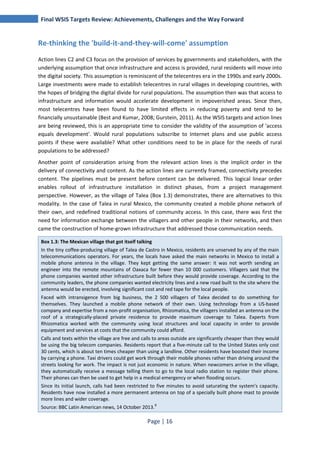
  • 154.
    Final WSIS TargetsReview: Achievements, Challenges and the Way Forward Table 4.3: Museum visits onsite, online (2011), Facebook 'likes' and Twitter followers (2014) Institution Location Onsite Page | 132 (2011) Online (2011) Facebook likes (2014) Twitter followers (2014) Number Number Number Number Musée du Louvre Paris, France 8,500,000 .. 1,219,483 82,381 British Museum London, United Kingdom 5,842,138 8,700,000 505,055 271,798 Metropolitan Museum of Art New York, United States 5,216,988 47,000,000 1,064,773 686,020 Tate London, United Kingdom 5,061,172 17,887,851 646,145 1,045,360 National Gallery London, United Kingdom 4,954,914 4,500,000 312,997 200,662 National Gallery of Art Washington DC, US 4,775,114 .. 145,906 43,996 Natural History Museum, London London, United Kingdom 4,647,613 .. 244,436 493,947 Museum of Modern Art New York, United States 3,131,238 19,300,000 1,547,153 1,649,731 Centre Pompidou Paris, France 3,130,000 .. 380,234 100,426 National Museum of Korea Seoul, Korea, Rep. 3,067,909 7,799,124 8,844 .. State Hermitage Museum St. Petersburg, Russian Federation 2,490,387 .. 19,864 131,792 Centro Cultural Banco do Brasil Rio de Janeiro, Brazil 2,317,772 5,883,055 193,538 99,736 Museo UPR San Juan, Puerto Rico 13,900 .. 2,868 1,551 Centro Cultural Palacio La Moneda Santiago, Chile .. .. 26,003 30,587 Museo Nacional de Colombia Bogotá, Colombia .. .. 32,590 85,001 National Museums of Kenya Nairobi, Kenya .. .. 3,023 245 MALI – Museo de Arte de Lima Lima, Peru .. .. 144,173 15,028 The Mind Museum Taguig, Philippines .. .. 115,948 3,213 Museum of Islamic Art Ad Doha, Qatar .. .. 792,379 29,982 Source: Museum Analytics.23 Note: .. not available.
  • 155.
    Target 4: Connectall public libraries, museums, post offices and national archives with ICTs Box 4.4: Connecting cultural heritage across countries and continents Europeana: The Europeana portal brings together millions of digitized items – including images, text, sound and video – from more than 2 300 European galleries, libraries, archives and museums. Europeana was launched in 2008 and is co-funded by the European Union. The content available on Europeana also gets showcased in the form of virtual exhibitions themed around pan-European history from the Napoleonic wars to The Euro. Europeana exhibitions feature items found in collections across the continent and provide visitors with extensive curatorial information. A special online collection – Europeana 1914–1918 – is dedicated to the “untold stories and official histories of WW1” and combines items from libraries and archives across the globe with memories and memorabilia contributed by families throughout Europe. The collection includes a multitude of digitized items, such as 400 000 rare documents, 660 hours of unique film material and 90 000 personal papers and memorabilia. Europeana aims to give access to Europe’s entire digitized cultural heritage by 2025. Virtual Collection of Asian Masterpieces (VCM): The Asia Europe Museum Network (ASEMUS) initiated the virtual collection of Asian Masterpieces in 2007. More than 120 museums contributed objects from their collections, which are exhibited on the VCM website. Those include major museums such as the British Museum, the Tokyo National Museum and the National Museum of Korea, but also smaller local museums like the Traditional Arts and Ethnology Centre in Luang Prabang, Laos and the Didrichsen Art Museum in Helsinki, Finland. The participating museums share 2 200 masterpieces of Asian culture online. This virtual collection brings together objects that are physically separated across museums and collections in Europe and Asia. Source: Europeana24 and Virtual Collection of Asian Masterpieces.25 Post offices With over 640 000 post offices worldwide and almost half a million in developing countries, the postal network offers a unique physical network to provide better Internet connectivity to unconnected communities. In outlying areas, post offices are often the only public service available and in many cases, they constitute a vital channel to communicate, and to exchange goods and services, between communities. Billions of people visit post offices every year for one reason or another. They send and receive mail, packages or money orders. They can also get access to government and related community services, as well as more sophisticated services such as account-based financial services or IT-based services. Post offices themselves are important users of ICT in order to provide public Internet access points, new ICT-based postal services, improving their operations and for providing visibility of mail and packages for their customers (track-and-trace services) for which they rely on Internet access. Indicators for measuring the subtarget This section analyses the connectivity of post offices and the contribution of post offices in providing public access to the Internet. Two indicators were defined for this purpose: Indicator 4.6: Proportion of post offices with broadband Internet access Indicator 4.7: Proportion of post offices providing public Internet access. Whilst data on post offices providing public Internet access has been regularly collected by the UPU since 2005, data on post offices with broadband Internet access were only collected for the first time in 2013. In 2013, 81 countries (62 developing countries) provided data related to post offices Page | 133
  • 156.
    Final WSIS TargetsReview: Achievements, Challenges and the Way Forward providing public Internet access and 74 (54 developing countries) provided data on post offices with broadband Internet access. Status of the subtarget The actual achievements in expanding broadband access to post offices do not always match the potential of the postal network for providing Internet access to the public. As shown by Chart 4.4, at 2012 there was a significant difference between the availability of broadband Internet access in post offices and the provision of public Internet access. While 59 per cent of post offices in developed countries and 21 per cent in developing countries were equipped with broadband access technologies, only 19 per cent of post offices in developed countries, and 9 per cent in developing countries, offered public Internet access to their customers Chart 4.4: Post offices providing Internet/with broadband Internet, by level of development, 2012 Proportion of post offices providing public Internet access Source: UPU. Note: Data are calculated as a simple average. Charts 4.5 and 4.6 illustrate the untapped potential of post offices to provide public access to the Internet. While the proportion of post offices with broadband Internet access reached high levels in a significant number of countries in 2012 (Chart 4.5), only 12 countries offered public access to the Internet in 20 per cent or more of their post offices (Chart 4.6). In 16 countries out of 74 countries that provided data on the number of post offices with broadband Internet access, 90 per cent or more of all post offices were connected. This includes Brunei, Darussalam, Estonia, Italy, Lebanon, Netherlands and Spain, where all post offices had broadband Internet access. Page | 134 59% 19% 21% 9% 31% 10% 0% 20% 40% 60% 80% Proportion of post offices with broadband Internet access World Developing countries Developed countries
  • 157.
    Target 4: Connectall public libraries, museums, post offices and national archives with ICTs Chart 4.5: Post offices with broadband Internet access, by country, 2012 0% 10% 20% 30% 40% 50% 60% 70% 80% 90% 100% Estonia Lebanon Brunei Darussalam Spain Netherlands Italy Israel Latvia Malta Norway Comoros Slovenia New Caledonia Djibouti Costa Rica Mauritius Finland Bermuda Poland Singapore Colombia Swaziland Angola Greece Malawi Thailand Canada Uruguay Niger Cambodia Ireland Ecuador Romania Ukraine Tonga Tanzania Armenia Bhutan Guatemala Libya Benin Malaysia Moldova Lesotho Maldives Jamaica Philippines Namibia Cyprus Mexico Argentina Myanmar Oman Nepal Source: UPU. Note: The following countries had zero values (that is, no post offices in that country had broadband Internet access in 2012): Afghanistan, Albania, Belarus, Dominica, Georgia, Guinea, Jordan, Kenya, Kiribati, Mauritania, Nicaragua, Panama, Papua New Guinea, Senegal, Seychelles, South Africa, Suriname, Uzbekistan and Zimbabwe. Page | 135 Pakistan
  • 158.
    Final WSIS TargetsReview: Achievements, Challenges and the Way Forward Chart 4.6: Post offices providing public Internet access, by country, 2012 0% 10% 20% 30% 40% 50% 60% 70% 80% 90% 100% Albania Mauritius Russia Korea (Rep.) Bermuda Angola Bhutan Belarus Burkina Faso Tunisia Botswana French Polynesia Guinea Tonga Comoros Armenia Iceland Finland Saint Christopher (St. Kitts) and Nevis Viet Nam Norway Portugal Uganda Djibouti Jamaica Togo Liechtenstein Grenada Tanzania Solomon Islands Barbados Cayman Islands Ecuador Israel Mali Burundi Malawi Namibia Swaziland Qatar Lesotho Kyrgyzstan Zambia Benin Moldova Niger Sierra Leone Gabon New Caledonia Cambodia Singapore Zimbabwe Uzbekistan Lithuania Côte d'Ivoire Eritrea Nicaragua Guatemala Indonesia Ethiopia Madagascar Syria Ghana Poland Bosnia and Herzegovina Azerbaijan Ukraine Sri Lanka Italy Myanmar Bangladesh Nigeria Source: UPU. Note: The following countries had zero values (that is, no post offices in that country provided public Internet access in 2012): Guyana, Iraq, Ireland, Lebanon, Malaysia, Oman, South Africa and Thailand. Overall, 42 per cent of responding countries were equipped with broadband Internet in at least 20 per cent of their post offices (Chart 4.5). Beyond providing public access to basic Internet services, expanding access to broadband Internet in post offices is critical in order to support financial and digital inclusion for underserved communities. The development of access to financial services through the postal network, either provided directly Page | 136 Nepal
  • 159.
    Target 4: Connectall public libraries, museums, post offices and national archives with ICTs by the latter or in partnership with other financial institutions, is a vital element of economic development and inclusion of low-income people. Broadband Internet access via the postal network in rural and underserved communities provides opportunities for small and medium business enterprises (SMEs) to participate in e-commerce opportunities, for example, selling their goods to more affluent urban or overseas markets, while using the post office as a facilitator for the exchange of goods, payments and related services. A connected post office network is also an important asset for governments to increase democracy and social inclusion via the provision of e-government services such as identity, registrations, licenses and social services (UPU, 2012). A recent UPU study indicated that 20 per cent of post offices of surveyed communities in 25 sub- Saharan African countries were located in the three main urban areas of each country. This pattern was also found in a research project analysing the location of post offices in the postal network in Brazil. The rest of the post office network was evenly distributed across small- and medium-size towns and rural areas.26 Anecdotal evidence suggests that post offices in other developing (as well as developed) countries have approximately the same urban/rural distribution. Assuming that to be the case, if public Internet access is initially offered in a country's three main urban centres, that would equate to around 20 per cent of all post offices in the country offering public Internet access. Where the proportion of post offices offering public Internet access is above 20 per cent, that would imply that some rural areas and small towns have public Internet access via post offices. A proportion above 45 per cent would imply that up to a third of all rural areas and small towns have public access to the Internet, while a proportion of 60 per cent would correspond to half of rural areas and small towns being connected. By 2012, the majority of countries had not reached the critical 20 per cent threshold for the provision of public Internet access through their post offices (Chart 4.6). Post offices also contribute in other ways to improved Internet connectivity for underserved communities by providing enhanced Internet-based services such as secure Internet domain access e-commerce webshops for SMEs and e-payment facilities under post top level domain. Although this is not directly reflected by the two indicators defined above, these enhanced services are often mentioned as key factors in the sustainable success of connectivity investments (for example, see ICTs, new services and transformation of the Post, UPU and ITU, 2010). Chart 4.7 compares the evolution of public access to the Internet through post offices in different regions of the world since 2005. While provision of Internet access through the postal network increased in Africa, the Americas and Europe between 2005 and 2012, it decreased for Asia and Oceania.27 For instance, India only started connecting 10 per cent of its 155 000 post offices to the Internet recently. No region reaches the critical average threshold of 20 per cent of post offices providing public Internet access, at which point rural and small towns are likely to benefit from an increased public access to the Internet through the postal network. The most significant increases were found in a small number of developing countries, shown in Chart 4.8, and in an even smaller number of developed countries. The top performers, with an improvement of over 20 percentage points, were Albania, Mauritius, Angola, Belarus and Botswana (see Box 4.5). These countries have contributed to a substantial improvement of public access to the Internet by leveraging the reach of their postal networks. Page | 137
  • 160.
    Final WSIS TargetsReview: Achievements, Challenges and the Way Forward Chart 4.7: Post offices providing public Internet access, by region, 2005–07 and 2010–12 11% Page | 138 5% 6% Oceania Asia Europe Africa Source: UPU. Note: Data are calculated as a simple average. 7% 9% 11% 12% 17% 7% 10% 0% 5% 10% 15% 20% Americas 2010–12 2005–07
  • 161.
    Target 4: Connectall public libraries, museums, post offices and national archives with ICTs Chart 4.8: Post offices providing Internet access, top performing countries, 2005–07 and 2010–12 6% 4% 4% 4% 3% 1% 1% 1% 0% 0% 15% 14% Russia Bhutan Mauritius Belarus Burkina Faso Angola Tunisia Togo Comoros Solomon Islands Botswana Tanzania Malawi Uganda Zimbabwe Albania Jamaica Source: UPU. The results for indicators 4.6 and 4.7 indicate only a partial achievement of the objectives outlined in the WSIS outcome documents. In the development of the post-2015 agenda for the information society, stakeholders should increase their efforts to realize the potential of an ICT-enabled post office network as a facilitator of social and economic development. Page | 139 0% 4% 9% 12% 30% 44% 2% 8% 89% 2% 10% 4% 7% 24% 6% 17% 8% 25% 42% 26% 37% 81% 38% 57% 0% 20% 40% 60% 80% 100% Moldova 2010–12 2005–07
  • 162.
    Final WSIS TargetsReview: Achievements, Challenges and the Way Forward Box 4.5: Kitsong centres offering access to ICTs in Botswana In the urban areas of Botswana, access to ICT for people without computers or Internet connections at home is provided mainly by privately operated Internet cafés. Rural and remote areas have generally lacked such access, because of private operators’ concerns about financial viability. Botswana has one of the lowest population densities in the world. Delivering any type of universal service to such a sparse and widespread population presents enormous challenges to the government. Delivering ICT services where electricity and Internet connectivity are intermittent is even more challenging. In 2016, Botswana will celebrate its 50th anniversary of independence. The Botswana Vision 2016 is the government’s strategy to transform the country into a competitive and prosperous nation. Kitsong (knowledge) centres, offering access to information and communication facilities, are the means by which the Government of Botswana is narrowing the digital divide between urban and rural communities. Botswana Post, with its countrywide network of 192 postal facilities, was the natural choice to provide such centres. The government and Botswana Post had installed 49 Kitsong centres by 2009, with five more due to open in 2010. Besides Internet access, Kitsong centres offer fax, photocopying, desktop publishing, printing and digital photography services. They also provide local content, such as agricultural information. The number of people using Kitsong centres is growing, and the income of post offices with Kitsong facilities increased by an average of 25 per cent, compared to the situation in post offices without Kitsong centres (2006), reflecting the use of the new services. Clearly, if the number of customers is growing, there must be a perceived benefit to each individual using the centre. This may be for business reasons in obtaining information about markets; it may be for educational reasons with e-learning programmes; or it may simply be for social reasons, such as chatting or gaming. The project has also led to greater computer literacy because these centres provide training in the use of computers. The government is pleased with the results achieved so far, seeing these centres as helping to meet its national objectives and its commitment to the United Nations Millennium Development Goals. Botswana Post has also benefited from hosting the Kitsong centres. Besides contributing to increased revenue, Kitsong facilities have “revitalized Botswana Post by providing an injection of new technology based services“. Source: UPU/ITU. Archives The International Council on Archives defines archives as “the documentary by-product of human activity and … an irreplaceable witness to past events, underpinning democracy, the identity of individuals and communities, and human rights.”28 Connecting archives with ICTs is important, because it increases their reach and provides more people with access to the wealth of information preserved in their collections. Furthermore, ICTs can facilitate the archiving and improve the preservation of documents through digitization. Indicators for measuring the subtarget The indicators designated to track this subtarget reflect the different ways in which ICTs can serve archives and the different levels of connectedness. Indicator 4.8: National archives organizations with broadband Internet access Indicator 4.9: National archives organizations with a web presence Indicator 4.10: Proportion of items in the national archives that have been digitized Indicator 4.11: Proportion of digitized items in the national archives that are publicly available online. Page | 140
  • 163.
    Target 4: Connectall public libraries, museums, post offices and national archives with ICTs Indicator 4.8 tracks whether national archives organizations have broadband Internet access. Broadband Internet access can facilitate the work of archivists and is likely to be a prerequisite for a web presence and the digitization of items. Indicator 4.9 ascertains whether the national archives organization has a web presence. A web presence includes a website, home page or presence on another entity’s website. Archives with a web presence can provide practical information to the public (such as opening hours or access to the archives) as well as information about their collection. The information made available on a webpage will vary considerably, thus a limitation of the indicator is that a web presence per se does not reveal anything about the quality of information. Indicator 4.10 measures the proportion of items held in the national archives that have been digitized and can therefore be preserved and shared in digital format. The indicator refers to the proportion of the total number of catalogued items held in the national archives. By digitizing an item, the original object is protected from use, which should increase its lifespan. The unit 'digitized item' may be interpreted differently, for example, archives might define catalogued items in different ways. It is usually not known how many individual items there are in archival collections: archives typically measure their analogue collections in terms of shelf length needed to store the materials or in terms of the number of textual records created to enable access to the archival materials. Furthermore, the way in which an item has been digitized will vary, for example, the quality of digitization and the information associated with a digitized item will have an impact on its usability. Indicator 4.11 measures the proportion of digitized items in the national archives that are publicly available online. Thus, this indicator goes one step further than Indicator 4.10 and tracks the proportion of items that are actually accessible. The same limitations with regards to the definition of 'digitized item' as well as the quality of digitization apply to Indicator 4.11. Furthermore, there might be considerable differences regarding the way in which the digitized item is presented online and thus accessible to the public. Any type of organization that is engaged in archiving could be considered to be an archive. However, the scope of this subtarget is limited to national government archives, which allows for more comparability of data. Furthermore, the focus on national archives narrows data collection to one (or in some cases few) organization(s) per country. Some countries do not have national archives organizations. For those countries, no data on the connectivity of national archives with ICTs can be collected. Other countries have a decentralized archives systems with (several) sub-branches. For those countries, results for all sub-branches should be shown. Despite the fact that national government archives are relatively well defined and limited in scope, no internationally coordinated data collection for this subtarget of WSIS Target 4 exists. In Europe, the European Commission funded project ENUMERATE, carried out two surveys (in 2012 and 2013) in order to monitor the progress on digitization of cultural heritage across the region, including in national archives. The ENUMERATE data covers 46 national archives in 17 European countries.29 Status of the subtarget Responses to the 2013 WSIS targets questionnaire on indicators 4.8 and 4.9 revealed that in almost all countries, national archives organizations had broadband Internet access. Furthermore, of those national archives organizations with broadband Internet access, all had a web presence (see Table 4.4). This is an improvement on the situation in 2009, when archives in some developed countries did Page | 141
  • 164.
    Final WSIS TargetsReview: Achievements, Challenges and the Way Forward not have a web presence (ITU, 2010).30 In Europe, where ENUMERATE collects data on Indicator 4.9, close to 100 per cent of national archives had a web presence in 2013.31,32. Table 4.4: National archives organizations with broadband Internet/a web presence, 2013 or LYA10 Country National Page | 142 archives organizations with broadband Internet access National archives organizations with a web presence Country National archives organizations with broadband Internet access National archives organizations with a web presence % % % % Bhutan 100 100 Moldova 73 9 Bulgaria 100 100 Niger 80 0 Cyprus 100 100 Nigeria 100 100 Dominican Rep. 100 100 Norway 100 100 El Salvador 100 100 Oman 95 100 Estonia 100 100 Poland 100 100 Georgia 100 100 Portugal 100 100 Iran, Islamic Rep. 100 100 Senegal 100 100 Latvia 100 100 United Arab Emirates 100 100 Lithuania 100 .. Uruguay 100 100 Maldives 100 100 Venezuela 100 100 Source: Partnership on Measuring ICT for Development WSIS Targets Questionnaire, 2013. Notes: 1. .. not available. 2. Countries responded to the question in different ways. Some indicated the proportion of archives organizations with broadband Internet access/a website, while others provided the total number of archives organizations with broadband Internet access/a website. It is difficult to obtain exact figures on individual items in the collections of national archives (indicators 4.10 and 4.11). This was confirmed by the results obtained through the 2013 WSIS targets questionnaire. Only a few countries provided data for indicators 4.10 and 4.11. For those that did, comparability is an issue as respondents used estimation and the definition of what constitutes a digitized item differs across countries. Table 4.5 shows the status of digitization in the countries that responded to the questionnaire. A relatively low proportion of items in the national archives have been digitized – less than 5 per cent in the majority of countries. Japan, Latvia and the United Arab Emirates are exceptions; even so, less than or equal to 10 per cent of items have been digitized in those countries. Looking at the proportion of items that are publicly available online, Chile, El Salvador and Japan, provide all of their digitized items online.
  • 165.
    Target 4: Connectall public libraries, museums, post offices and national archives with ICTs Table 4.5: Digitization and online availability of items in the national archives, 2013 or LYA10 Country Proportion of items in the national archives that have been digitized Proportion of digitized items in the national archives Page | 143 that are publicly available online % % Azerbaijan 5.0 .. Bulgaria 4.5 4.4 Chile .. 100 Cyprus 0.2 0.0 Dominican Rep. .. 70 El Salvador .. 100 Estonia approx. 2–3 .. Georgia 0.1 0.001 Japan 8.5 100 Latvia 10.0 10 Lithuania .. 1.1 Niger 0.01 0.0 Portugal 1.6 1.5 Sudan 0.1 0.0 UAE 8.0 0.0 Uruguay 1.0 .. Venezuela 1.8 39 Source: Partnership on Measuring ICT for Development WSIS Targets Questionnaire, 2013. Notes: 1. Chile (2 727 535 documents) and El Salvador (225 documents) provided absolute values for the number of documents in the archives that had been digitized. All digitized documents were available online. 2. .. not available. In the ENUMERATE surveys, respondents were asked to estimate the percentage of their analogue heritage collections that has already been digitally reproduced. Across Europe, the average percentage of the analogue heritage collections that have been digitally reproduced stands at 9 per cent in 2013. Taking into consideration the size of these institutions, the overall proportion in Europe is about 6 per cent.33 The proportion of digitized items in the national archives that are publicly available online (Indicator 4.11) stands at 42 per cent (unweighted). If organization size is taken into account, this percentage is higher (53 per cent). Conclusions and recommendations The tracking of each of the subtargets of Target 4 over the period 2005 to 2015 is hampered by a lack of comprehensive and internationally comparable data. The available data do not allow for conclusions to be drawn on the ICT connectivity of public libraries, museums and national archives at the global or regional level. For post offices, there are more data available, enabling aggregation for developed and developing countries. In almost half of countries – 13 out of 30 (43 per cent) that provided data, all (or nearly all) public libraries had broadband Internet access in 2013. The number of public libraries with a web presence
  • 166.
    Final WSIS TargetsReview: Achievements, Challenges and the Way Forward is generally much lower, with only 7 out of 26 countries (27 per cent) reporting that all (or nearly all) of their public libraries had a web presence. A higher proportion of countries that provided data (15 out of 25 countries, or 60 per cent) reported that all (or nearly all) museums were connected to broadband Internet. In the majority of those countries, at least 90 per cent of museums had broadband Internet access. Only seven (out of 22 countries) reported that all (or nearly all) museums had a web presence. Additional data from ENUMERATE show that almost all European museums had a web presence. Data on post offices with broadband Internet access show that in 16 out of 74 countries that provided data on the number of post offices with broadband Internet access, 90 per cent or more of all post offices had broadband Internet access.34 Almost all countries (20 of 22 countries for Indicator 4.8 and 19 out of 21 for Indicator 4.9) that provided data on the connectivity of national archives organizations reported that all (or nearly all) archives had access to broadband Internet and a web presence.35 Even less information is available on the extent of digitization, but data suggest that a lot remains to be done in terms of digitizing cultural heritage and making it available online. Only 17 countries provided data on digitization by national archives organizations. These data show that a relatively low proportion of items has been digitized – less than 5 per cent in the majority of countries. Regarding the proportion of digitized items that are publicly available online, only three countries – Chile, El Salvador and Japan – provide all of their digitized items online. Additional data from Europe show that the average percentage of items in national archives that have been digitized is about 6 per cent of which 53 per cent are publicly available online. Looking at public libraries and post offices as providers of public Internet access, available data show that while some progress has been made, libraries and post offices remain largely untapped as public access venues. The IFLA/FAIFE World Report provides data on public libraries as providers of public Internet access for the years 2007 and 2009 and found that by 2009 there was an overall increase in levels of public access to the Internet. However, there are significant differences between developed and developing countries in terms of providing public Internet access in public libraries. Data show that (Western) Europe, North America, Australia and New Zealand have the best Internet access in all categories, whereas Africa has the lowest. While provision of public access to the Internet through the postal network increased moderately in Africa, the Americas and Europe between 2005 and 2012, it decreased for Asia and Oceania. The most significant increases were found in a very limited number of developing countries. The proportion of post offices providing public Internet access was highest in Europe (17 per cent) in 2012. The tracking of indicators 4.1 (proportion of public libraries with broadband Internet access), 4.4 (proportion of museums with broadband Internet access), 4.6 (proportion of post offices with broadband Internet access) and 4.8 (proportion of archives organizations with broadband Internet access) should be discontinued. These indicators, with the exception of Indicator 4.6, are not part of a regular data collection and, with growing connectivity, measuring access to broadband Internet by public institutions will become less relevant. Moving forward, the attention should shift from access to ICTs to libraries, museums, post offices and archives as online content providers and public Internet access venues. Post-2015 discussions should distinguish between public access to ICTs and online content related to culture. Page | 144
  • 167.
    Target 4: Connectall public libraries, museums, post offices and national archives with ICTs Despite growth in Internet access, there will continue to be a need for public access to the Internet for the foreseeable future – particularly for poor and underserved rural communities in developing countries. Research carried out by the TASCHA group reported in 2013 that while public ICT access can function as a (sometimes temporary) substitute for private access, it also acts as a (potentially permanent) complement to private access (Sey et al., 2013). The study concluded that it may take decades for some countries to reach high levels of quality home connectivity; therefore public ICT access will remain a critically important service that is likely to be relevant even when higher connectivity has been achieved. Public libraries and post offices are in a very good position to provide public access to ICTs: they are open to the public, their branches are widely distributed and they constitute an established source of information. Therefore, Target 4 indicators on public access to the Internet (indicators 4.2 and 4.7) could be measures for a possible future target that focuses on connecting people with ICTs. While Indicator 4.7 is collected by UPU through its regular data collection, Indicator 4.2 can only be retained if a robust data collection can be assured. Libraries, museums and archives are important providers of online content related to culture. They present an authoritative source of content and can put information into context. By digitizing books, documents and (images of) objects and making them available online, these institutions are major providers of online cultural content. Apart from digitizing analogue material, libraries, museums and archives are also putting born-digital material, such as videos, e-books and electronic records online. Material may be made available through an institutional website, regional or international aggregator or social media. Unfortunately no data are being regularly collected on the extent of digitization in cultural heritage institutions, with the exception of data collected on European museums and national archives organizations by ENUMERATE. Page | 145
  • 168.
    Final WSIS TargetsReview: Achievements, Challenges and the Way Forward Page | 146 List of references Becker, S., Crandall, M. D., Fisher, K.E., Kinney, B., Landry, C. and Rocha, A. (2010), Opportunity for All: How the American Public Benefits from Internet Access at U.S. Libraries, (IMLS-2010-RES-01), Institute of Museum and Library Services, http://impact.ischool.washington.edu/documents/OPP4ALL_FinalReport.pdf. IFLA (International Federation of Library Associations and Institutions) (2010), World Report 2010, http://www.ifla-world-report.org/. IFLA/FAIFE (2005), World Report. Libraries, National Security, Freedom of Information Laws and Social Responsibilities, http://www.ifla.org/files/assets/faife/publications/world-report-2005.pdf. IFLA/FAIFE (2007), World Report 2007. Access to Libraries and Information: Towards a fairer world, http://www.ifla.org/files/assets/faife/ifla-faife_world_report_series_vii.pdf. ITU (International Telecommunication Union) (2005), World Summit on the Information Society Outcome Documents: Geneva 2003 - Tunis 2005, http://www.itu.int/wsis/outcome/booklet.pdf. ITU (2010), World Telecommunication/ICT Development Report 2010: Monitoring the WSIS Targets, A mid-term review, http://www.itu.int/en/ITU-D/Statistics/Pages/publications/wtdr2010.aspx. Partnership on Measuring ICT for Development (2011), Measuring the WSIS Targets: A statistical framework, http://www.itu.int/en/ITU-D/Statistics/Pages/publications/wsistargets2011.aspx. Partnership on Measuring ICT for Development (2013), Partnership on Measuring ICT for Development WSIS Targets Questionnaire, 2013, http://www.itu.int/en/ITU-D/ Statistics/Pages/intlcoop/partnership/followup.aspx. Sey, A., Coward, C., Bar, F., Sciadas, G., Rothschild, C. and Koepke, L. (2013), Connecting people for development: Why public access ICTs matter, Technology & Social Change Group, University of Washington Information School, http://tascha.uw.edu/publications/connecting-people-for-development. State Library of Queensland (2013), Regional Access and Public Libraries, Australian Public Libraries Statistical Report 2011-2012, http://nsla.org.au/sites/www.nsla.org.au/files/publications/NSLA.public_library_stats_2011- 12_0.pdf. UNESCO-UIS (UNESCO Institute for Statistics) (2009), The 2009 UNESCO Framework for Cultural Statistics (FCS), http://www.uis.unesco.org/culture/Documents/framework-cultural-statistics-culture- 2009-en.pdf. UPU (Universal Postal Union) (2012), Measuring Postal e-services Development - A global Perspective. UPU (2014), Development Strategies for the Postal sector: An Economic Perspective, http://www.upu.int/uploads/tx_sbdownloader/publicationTrendsDevelopmentStrategiesForThePost alSectorEn.pdf.
  • 169.
    Target 4: Connectall public libraries, museums, post offices and national archives with ICTs Zickuhr, K., Rainie, L. and Purcell, K. (2013), Library services in the digital age, Pew Research Center's Internet and American Life Project, http://libraries.pewinternet.org/files/legacy-pdf/ Page | 147 PIP_Library%20services_Report.pdf.
  • 170.
    Final WSIS TargetsReview: Achievements, Challenges and the Way Forward Page | 148 Endnotes 1 The original WSIS indicator was worded “Connect public libraries, cultural centres, museums, post offices and archives with ICTs”. 2 The hybrid library is on the continuum between the conventional and digital library, where electronic and paper-based information sources are used alongside each other. See http://www.dlib.org/dlib/october98/10pinfield.html. 3 Compare Becker et al. (2010) and Sey et al. (2013). 4 See http://beyondaccess.net/wp-content/uploads/2013/07/Beyond-Access_Library_Map_EN_201304.png. 5 See http://www.ifla.org/files/assets/statistics-and-evaluation/ publications/Report_UNESCO_IFLA_GlobalLibStat_pretest.pdf. 6 The IFLA statistical unit (public library service point) used in these surveys, which formed part of the IFLA World Report in 2005, 2007 and 2010, is consistent with the unit recommendation for Indicator 4.2. 7 See www.cenl.org/members.php. 8 See http://www.imls.gov/research/public_libraries_in_the_us_fy_2011_report.aspx and http://www.imls.gov/assets/1/AssetManager/Fast_Facts_PLS_FY2011.pdf. 9 The UNESCO’s Framework for Cultural Statistics, includes a definition of libraries, but not public libraries (http://www.uis.unesco.org/culture/Documents/framework-cultural-statistics-culture-2009-en.pdf). The 2011 WSIS statistical framework adopted the definition of public library used by a UIS pilot survey of libraries. 10 Latest year available. 11 Number of responding countries: 88 (2003); 84 (2005); 116 (2007); 122 (2009). 12 Bands of access were allocated as 81–100 per cent of libraries; 61–80 per cent; 41–60 per cent; 21–40 per cent; less than 20 per cent. 13 Including a related entity's website. It excludes inclusion in an online directory and any other webpages where the library does not have control over the content of the page. 14 See http://icom.museum/the-vision/museum-definition/. 15 Another classification that can be applied is ISIC Rev 4 Class 9102 “Museum activities and operations of historical sites and buildings” and Class 9103 “Botanical and zoological gardens and nature reserves activities”, which is similar in scope to the FCS definition. 16 See http://www.egmus.eu/en/statistics/choose_by_topic/. 17 See http://www.enumerate.eu/en/surveys/. 18 For example, the Maldives and Bhutan reported having only one and two museums, respectively. 19 See http://www.enumerate.eu/en/surveys/core_survey_1/. 20 See http://www.enumerate.eu/en/surveys/core_survey_1/. 21 See http://www.enumerate.eu/en/surveys/core_survey_2/. 22 See http://www.pro.europeana.eu/web/guest/aggregators-and-providers. 23 Museum Analytics is an online platform featuring an online tool that collects information about more than 3 000 museums and galleries. The information is automatically collected or contributed by organizations. See http://www.museum-analytics.org/.
  • 171.
    Target 4: Connectall public libraries, museums, post offices and national archives with ICTs 24 See http://www.europeana.eu/. 25 See http://masterpieces.asemus.museum/index.nhn. 26 As illustrated in chapters 4 and 6 of Universal Postal Union (2014). 27 The same countries in each region were used for the four-year comparison. 28 See http://www.ica.org/125/about-records-archives-and-the-profession/discover-archives-and-our-profession. Page | 149 html. 29 The following countries (number of national archives organizations shown in brackets) were included in the survey: Austria (1), Czech Republic (1), Denmark (1), Estonia (1), Finland (1), Germany (1), Greece (3), Hungary (9), Italy (5), Latvia (1), Liechtenstein (1), Luxembourg (1), Malta (1), Portugal (1), Slovenia (2), Spain (12), Sweden (4). 30 See page 90 in: http://www.uis.unesco.org/Communication/Documents/WTDR2010_e.pdf. 31 See http://www.enumerate.eu/en/surveys/core_survey_1/. 32 In the ENUMERATE Core Surveys (2012 and 2013), the proportion of national archives with a web presence was measured in an indirect way: institutions were asked to provide “the address of your institution’s main website that is accessible for the general public”. 33 The weighing by size of the National archives was performed according to their total annual budget. See: http://www.enumerate.eu/en/surveys/core_survey_2/. 34 Data are not comparable across different institutions, as different number and set of countries provided data on specific indicator. 35 It should be noted that in many countries there is only one national archive organization. Thus, Indicator 4.4 cannot be compared with the other indicators on access to broadband Internet as they measure the connectivity of a significantly higher number of institutions.
  • 172.
    CONNET ALL HEALTHCENTRES AND HOSPITALS WITH ICTs
  • 173.
    Target 5: Connectall health centres and hospitals with ICTs Target 5: Connect all health centres and hospitals with ICTs1 Page | 151 Executive summary In 2003, the World Summit on the Information Society (WSIS) brought together key players from around the globe to begin deliberations on how to bridge the digital divide that separates rich from poor countries. The ambitious mission included a target to connect health centres and hospitals. The health sector is recognised as information intensive; processing the vast volumes of data generated can no longer efficiently be done manually. Today, ICT is becoming central to the effective operation of health systems and services, although progress is uneven. The first challenge to the measurement of Target 5 is the lack of globally accepted definitions for health system facilities, including hospitals and health centres. Facilities can vary within and between countries, thus making standardization of measurement difficult. Another important factor is that technology is in a constant state of development, therefore measurements made today may not be relevant in five years’ time. This chapter builds a picture of progress in health sector connectivity since 2003 by using the limited data available. Data from the ITU survey on the 2013 WSIS targets questionnaire (Partnership, 2013) show promising progress in connectivity trends for health centres and hospitals. Results show that almost 80 per cent of responding countries have connected 75–100 per cent of their hospitals. The connectivity figures are not quite as high for health centres, with 65 per cent of countries having connected 75–100 per cent. However, this is still an indication of good progress for those countries that responded. Patient information data are less conclusive. This chapter explores alternative approaches to measuring Target 5, including the use of proxy data for the uptake of an online knowledge service providing scientific journals to health institutions (HINARI)2 and the adoption of eHealth strategies by countries. The first approach is proposed as a reliable measurement of health facility connectivity as it is only available to health institutions with Internet access in developing countries. The data are collected by the World Health Organization (WHO) annually and show solid and linear growth over the period 2003–2013. The growth of the number of connected institutions has grown an impressive 600 per cent from an original baseline in 2003 of 792 connected institutions to 5 584 at the end of 2013. The monitoring of the adoption of eHealth strategies is proposed as another data source. An eHealth strategy can be a good indication of a government’s view of the importance of eHealth and the role it will play in strengthening the health sector, including the building of connectivity. WHO actively supports the development of eHealth strategies in countries and reports on their adoption. The WHO Global Observatory for eHealth reports that the number of countries with eHealth strategies is showing a steady rise. In 2009, 55 countries indicated that they had eHealth strategies and in 2013 this number had grown to 85. The limitations of relying on country connectivity data for measuring eHealth progress are highlighted. It is proposed that the eHealth domain is better understood through extending studies
  • 174.
    Final WSIS TargetsReview: Achievements, Challenges and the Way Forward to include surveys. WHO, through its Global Observatory for eHealth (GOe), conducts global and thematic eHealth surveys. The Organisation for Economic Co-operation and Development (OECD) is spearheading the use in countries of a model survey, particularly in the area of electronic health records. WSIS +10 is a catalyst for all stakeholders to review progress in health sector connectivity since 2003 and to plan for the way forward. This chapter recognises the strengths and limitations of the current approach and makes two recommendations for future monitoring: • data on connectivity for Target 5, as well as the measurement of growth in access to the world’s medical knowledge, be provided by the WHO Global Observatory for eHealth (GOe) through an analysis of enhanced WHO HINARI programme records • data on the development and implementation of national eHealth strategies and their content be reported for Target 5 by the GOe as an indicator of eHealth uptake in countries. Page | 152
  • 175.
    Target 5: Connectall health centres and hospitals with ICTs Page | 153 Introduction The World Summit on the Information Society (WSIS) held in Geneva (2003) and Tunis (2005) brought together governments, civil society and the business sector to deliberate over how ICTs) could play a central role in the development of a global information society. Ten targets were identified in the Geneva Plan of Action (ITU, 2005). The ultimate goal of the WSIS targets is to connect citizens and the institutions that serve them, to provide the ICT infrastructure to deliver the tools and services of the information age. The purpose of Target 5, in particular, is to encourage governments to provide the necessary connectivity to all health centres and hospitals. Note that "all" was added to the 2011 WSIS statistical framework document (Partnership, 2011) to address the measurability issues around the target. In the Geneva Declaration of Principles, the first WSIS phase, stakeholders shared a vision of ICT opportunities for all. ICT applications were identified as beneficial for the health sector through improving the efficiency of health-care services and the provision of health information to the general public. In the Tunis Agenda for the Information Society, the second WSIS phase, stakeholders aligned WSIS Target 5 to fit more closely with the UN Millennium Development Goals (MDGs), demonstrating their commitment to improving access to global health knowledge and telemedicine (ITU, 2005). It was recommended that Target 5 and MDG Goal 8F, which promotes public-private partnerships, be strategically aligned in order to facilitate access to the benefits of ICT for all. Target 5 needs to be considered within the context of complementary WSIS action lines: C2 states that countries should provide and improve ICT connectivity, including for health institutions; C6 addresses the need for an enabling environment; and C7 highlights the benefits of ICT applications, including eHealth applications in all aspects of life (ITU, 2005). Figure 5.1 shows the relationships between Target 5 and the WSIS action lines. Figure 5.1: Relevance of Target 5 to WSIS action lines WSIS Target 5: Connect all health centres and hospitals with ICTs WSIS Action Line C2 Information and communication infrastructure WSIS Action Line C7 ICT applications (e-health) WSIS Action Line C6 Enabling environment
  • 176.
    Final WSIS TargetsReview: Achievements, Challenges and the Way Forward The World Health Organization (WHO) broadly defines eHealth as the “use of ICT for health” (WHO, 2009). The use of eHealth is an effective tool for supporting health-care service delivery and increasing health system efficiency. Public health services in countries are undergoing major transformation with the adoption of eHealth. Examples of some uses of eHealth include: • Telehealth: The delivery of health care services where distance is a critical factor. This is done through the use of ICT for the exchange of valid information for diagnosis, treatment and prevention of disease and injuries, research and evaluation, and for the continuing education of health care providers (WHO, 2008). • Mobile health (mHealth): A medical and public health practice supported by mobile devices, such as mobile phones, patient monitoring devices, personal digital assistants (PDAs) and other wireless devices (WHO, 2011a). • Electronic Health Records (EHR): Provider-centric electronic records used by healthcare professionals to store and manage patient health information and data, and include functionalities that directly support the care delivery process. • Decision-support systems (DSS): The use of online information resources for clinical decision-making. • E-learning for health: The use of ICT for educating and training health-care professionals and Page | 154 students. • E-journals: The use of ICT to create and store electronic journals for widespread distribution across the Internet or through CDs/DVDs if online connectivity is unavailable. A fundamental challenge to the measurement of Target 5 is the definition of health facilities. Hospitals and health centres need to be measured for connectivity; however, health systems and their facilities differ significantly within and between countries. There is currently no universal definition for health facilities. Another important factor is the lack of data concerning the total number of each type of facility (see Figure 5.2) by country. This makes estimating the degree of uptake of ICT connectivity by facility type a further challenge. Figure 5.2: Types of health facilities by country administrative levels Source: WHO/eHealth. National level: Referral hospitals, laboratories and health institutes (mainly public, but also private) Intermediate level, covering district or provincial facilities: Public, private for-profit and private not-for profit (e.g. religious) hospitals and health centres Local or peripheral level: Health posts, health centres providing basic level of care
  • 177.
    Target 5: Connectall health centres and hospitals with ICTs Figure 5.2 is a pyramid showing three geographic and administrative layers within most country healthcare systems including national, intermediate and local levels. At the national level, the health facilities usually include hospitals that provide tertiary care. This is health care provided by specialists after referral from primary or secondary care. These hospitals are generally public, although, some may be privately funded. Research institutes and diagnostic laboratories may also operate at the national level and sometimes at the intermediate level. The intermediate level describes district or provincial services that offer health care through hospitals or health centres. Hospitals at this level generally offer secondary care or specialist care referred from a primary care centre. They can be public, private, or special hospitals founded by religious orders. The local level is where most people seek care first. It consists of primary health services in the local community, usually provided by a general practitioner or practice nurse. In rural areas, these services are often provided by health posts. The pyramid shows the diversity and complexity of health systems and the numerous options for point of care where access to the Internet could be required. It illustrates that the number of health facilities is greatest at the local level, decreasing at the intermediate level and further at the national level. Another aspect to consider regarding measurement is the technology itself. Technology, by its nature is in a state of constant evolution, therefore the measurement of one kind of ICT used for a specific function in one year may not be relevant in another year. The Organisation for Economic Co-operation and Development (OECD) proposes a practical way of dealing with this through its model survey approach. The OECD's model survey method is characterised by a series of discrete, self-contained modules that ensure flexibility and adaptability in rapidly changing environments. The approach focuses on developing indicators using a functionality-based method. Importantly, it supports technology-neutrality in that the questions neither require nor assume utilisation of a particular technology (OECD, 2010). During the 2010 review of the WSIS targets, analysis of Target 5 highlighted that there were substantial efforts required in order to achieve the goals proposed by the WSIS stakeholders (ITU, 2010). Many countries were already in the process of introducing ICT in hospitals and health centres. However, as mentioned, there is no agreed international definition for the description, and therefore measurement, of 'health facilities'. The closest established indicator is the number of hospital beds per 10 000 population. This is published annually by WHO in the World Statistics Database.3 Unfortunately, this indicator does not assist with the number and type of hospitals in a country. In summary, the measurement of the number and type of healthcare facilities is problematic due to issues of definition as well as the difficulty in accessing accurate country records. Availability of data and scope ITU and the Partnership on Measuring ICT for Development sent out WSIS targets questionnaires in 2009 (ITU) and 2013 (Partnership) in an attempt to measure progress in achieving the WSIS targets, based on the following indicators identified in the 2011 WSIS statistical framework: Indicator 5.1: Proportion of public hospitals with Internet access, by type of access Indicator 5.2: Proportion of public health centres with Internet access, by type of access Page | 155
  • 178.
    Final WSIS TargetsReview: Achievements, Challenges and the Way Forward Indicator 5.3: Level of use of computers and the Internet to manage individual patient information. All three indicators present statistical challenges. In particular, for indicators 5.1 and 5.2, the definitions of public hospitals and public health centres, respectively, are unlikely to be comparable across countries. See Partnership (2011) for a more complete discussion of this issue. The 2013 WSIS targets questionnaire was sent to 195 countries and 59 responded (30 per cent overall response rate). Of the responding countries, 33 (17 per cent) answered question 5.1, 23 (12 per cent) answered 5.2 and 13 (7 per cent) answered question 5.3. Regarding comparative data between the first and second surveys, there were insufficient numbers to make statistically valid comparisons (9 countries for 5.1, 4 for 5.2 and 3 for 5.3). However, general observations were made relating to 5.1. It should be noted that the WHO GOe does not compile indicators 5.1 to 5.3, nor does any other international organization. Achievements against Target 5 Public hospitals Internet access Chart 5.1 shows the breakdown of public hospital access to the Internet by responding countries. The percentage of hospitals with access was broken down into quartiles to facilitate analysis and visualization. Quartiles are as follows: 0–24 per cent of hospitals with Internet connectivity – quartile 1; 25–49 per cent – quartile 2; 50–74 per cent – quartile 3; 75–100 per cent – quartile 4. The question also asked countries to specify the type of Internet access, such as broadband, narrowband, mobile broadband etc. As only a few countries provided this information, without data to the contrary, it is assumed that the type of access is broadband. The chart shows that the majority of responding countries (79 per cent) have between 75–100 per cent of their public hospitals connected to the Internet. The figures are much lower for hospitals in the first and third quartiles, with only 9 per cent and 12 per cent of responding countries, respectively, offering Internet access. Chart 5.1: Hospitals with Internet access, by quartile, 2013 90 80 70 60 50 40 30 20 10 Source: Partnership on Measuring ICT for Development WSIS Targets Questionnaire, 2013 (Partnership, 2013). Page | 156 9 0 12 79 0 1 (lowest) 2 3 4 (highest) Percentage of countries in each quartile Quartile
  • 179.
    Target 5: Connectall health centres and hospitals with ICTs Table 5.1 shows public hospital connectivity data for individual countries between 2009/2010 and 2013. It shows that by the end of 2013, all public hospitals had Internet connectivity in two-thirds of responding countries. Growth patterns since the previous survey in 2009/2010 are not possible to ascertain as the sample size from the previous survey is too small. By individual country, there was particularly impressive growth in the examples of Georgia (from 20 to 100 per cent), Jordan (from 10 to 100 per cent) and Venezuela (from 2 to 73 per cent). The results from responding countries are encouraging, though it is not possible to determine whether this is a global trend. The sample is also possibly biased in that it may have attracted countries that had relatively positive results to report. Table 5.1: Internet connectivity in public hospitals, by country Country 2013 Page | 157 % of public hospitals connected to the Internet 2009/2010* % of public hospitals connected to the Internet Azerbaijan 57 18* Bhutan 100 Bulgaria 65 Burundi 0 Colombia 100 Congo 80 Czech Republic 100 70 Denmark 100 Dominican Republic 80 El Salvador 100 Estonia 100 Finland 100 100 Georgia 100 20* Iran, Islamic Rep. 100 Japan 100 Jordan 100 10* Latvia 100 100* Lebanon 100 Lesotho 67 Lithuania 100 100 Maldives 100 Mexico 85 Nauru 100 100* Nigeria 10 Portugal 100 98* Spain 100 100* Thailand 100 Turkey 100 100* United Arab Emirates 100 Uruguay 100 Venezuela, Bolivarian Republic of 73 2* Viet Nam 98 Yemen 24 Source: Partnership on Measuring ICT for Development WSIS Targets Questionnaire, 2013. Note: * represents 2010 data provided in the 2013 survey.
  • 180.
    Final WSIS TargetsReview: Achievements, Challenges and the Way Forward Health centres Internet access Chart 5.2 shows the breakdown of public health centre access to the Internet by responding countries. As with Indicator 5.1, without data to the contrary it is assumed that the type of Internet access provided to health centres is broadband. The chart shows that the majority of responding countries (65 per cent) have between 75–100 per cent of their health centres connected to the Internet. The figures are much lower for health centres in the first and third quartiles, with only 22 per cent and 13 per cent of countries, respectively, offering Internet access. Chart 5.2: Public health centres with Internet access, by quartile, 2013 70 60 50 40 30 20 10 Source: Partnership on Measuring ICT for Development WSIS Targets Questionnaire, 2013. Table 5.2 shows that by the end of 2013, all public health centres had Internet connectivity in two-fifths of responding countries. Growth patterns since the previous survey in 2009/2010 are not possible to determine as the sample size from that survey is too small. Compared with hospital connectivity, there is a lower proportion of countries with all health centres connected. Additionally, in countries without universal coverage, the proportions tend to be lower than for hospitals. This is most probably due to operational differences between health centres and hospitals. Connecting hospitals is likely to be a higher priority for governments as there is generally a greater volume of data collection, processing and transmission in hospitals compared to health centres. The results from responding countries are moderately encouraging but it is clear there is much work to be done before all public health centres are connected. Page | 158 22 0 13 65 0 1 (Lowest) 2 3 4 (Highest) Percentage of countries in each quartile Quartiles
  • 181.
    Target 5: Connectall health centres and hospitals with ICTs Table 5.2: Internet connectivity in public health centres, by country Country 2013 Page | 159 % of health centres connected to the Internet 2009/2010 % of health centres connected to the Internet Azerbaijan 100 100 Bhutan 8 Bulgaria 35 Congo 80 Czech Republic 82 Denmark 100 Dominican Republic 68 El Salvador 12 Estonia 100 Finland 100 Georgia 100 Iran, Islamic Rep. 90 Jordan 70 Lebanon 100 Lesotho 1 Lithuania 99 Maldives 98 Mexico 10 Nauru 100 100 Thailand 100 Turkey 100 United Arab Emirates 58 Venezuela, Bolivarian Republic of 20 1 Viet Nam 97 Source: Partnership on Measuring ICT for Development WSIS Targets Questionnaire, 2013. Use of computers and the Internet to manage individual patient information Indicator 5.3 is level of use of computers and the Internet to manage individual patient information. Unfortunately, there are no existing data sources to adequately measure this indicator. The 2011 WSIS statistical framework suggested the use of data from Global Observatory for eHealth survey. However, there are no relevant data available from that source. Alternative approaches to measurement of Target 5 Indicators 5.1, 5.2 and 5.3 pose several challenges that make their collection and reporting difficult. It is clear that there is an overall lack of global data on these indicators, primarily because neither governments nor international agencies are collecting and reporting on these indicators. Secondly, there are also major issues concerning indicator definitions as there are no commonly agreed upon definitions for these indicators. This is a particular problem for defining statistical units, 'public
  • 182.
    Final WSIS TargetsReview: Achievements, Challenges and the Way Forward hospitals' and 'public health centres' (see the 2011 WSIS statistical framework) for a fuller discussion). It is therefore suggested that other indicators be found which can reflect developments in connectivity as well as the uptake of eHealth by countries. The following section discusses alternative approaches to measuring progress on Target 5. The monitoring of these indicators will be more achievable and the information gained likely to have broader value in the overall context of eHealth development in countries. The proposed indicators are: • the uptake of HINARI • the adoption of eHealth strategies. HINARI – connectivity driven by the need for content A potential proxy indicator on connectivity of public sector health-related institutions is the uptake of an online knowledge service made available to health facilities in developing countries. This service is HINARI (Health InterNetwork Access to Research Initiative) and it can only be accessed if there is Internet connectivity within the institution. In collaboration with its publishing partners, WHO provides access to up to 13 000 online biomedical journals in hospitals, research institutions and health centres. HINARI is offered at no, or very low, cost depending on the country. Countries are assessed for eligibility based on four factors: total GNI (World Bank figures), GNI per capita (World Bank figures), United Nations least developed country (LDC) status and the Human Development Index (HDI).4 To gain access to HINARI, institutions must complete a subscription form and, if required, pay the annual fee. The subscription form does not ask the institution to specify whether it is a hospital, health centre or research institution, so analysis by these categories is currently not possible. It also does not ask the institution whether it has narrowband or broadband access. The number of HINARI institutions in a country is a direct reflection of the number of health-related institutions with access to the service and therefore with Internet connectivity. It follows that an indicator based on HINARI would provide reliable information on country level connectivity. More specifically, HINARI data could be used as a data source for indicators 5.1 and 5.2 if: • data were split by type of institution and • supplementary data on the number of public hospitals and health centres in countries were Page | 160 available. In this case, the percentage of connected institutions, by type, could be calculated for countries participating in HINARI. Access to HINARI would be only one of the Internet-based services that hospitals and other health-related institutions would use. Other benefits from Internet access would include communication by health professionals via e-mail as well as the possibility of using electronic health records (EHR) if available. Once connected to the Internet, hospitals could consider offering Telehealth services to isolated patients. Chart 5.3 shows growth in the number of connected health-related institutions5 in low-income countries from 2003 to 2013. Some countries show more growth than others, with particularly strong growth in Kenya, Nepal and Viet Nam.
  • 183.
    Target 5: Connectall health centres and hospitals with ICTs Chart 5.3: Health-related institutions, access to HINARI, low income countries 0 20 40 60 80 100 120 140 Source: HINARI project files, 2014. Chart 5.4 shows that many low to middle income countries display substantial growth in the number of HINARI institutions. Of particular note is the growth in countries such as Bolivia, Ecuador, Iraq, Nigeria and Ukraine. Page | 161 1 3 1 3 1 6 3 4 2 5 2 2 2 2 14 2 1 2 1 1 2 13 3 1 16 21 21 28 6 27 15 43 7 10 17 9 20 24 60 31 11 11 2 23 10 116 34 21 Burkina Faso Cambodia D. R. of the Congo Ethiopia Gambia Ghana Haiti Kenya Lao P. D. R. Madagascar Malawi Mali Mozambique Myanmar Nepal Rwanda Senegal Somalia Tajikistan Tanzania Uzbekistan Viet Nam Yemen Zambia Number of institutions 2003 2013
  • 184.
    Final WSIS TargetsReview: Achievements, Challenges and the Way Forward Chart 5.4: Health-related institutions, access to HINARI, low–middle income countries 0 20 40 60 80 100 120 140 Source: HINARI project files, 2014. Note: The country of Sudan split in 2011. Chart 5.5 shows the strong growth in the number of HINARI institutions, from an original baseline in 2003 of 792 connected institutions. By 2010, the number had increased by 440 per cent to 4 274. At the end of 2013, the number of institutions reached 5 584, representing growth of over 600 per cent from 2003. Page | 162 4 1 6 1 2 9 1 0 0 1 9 4 4 2 1 4 1 6 0 0 1 0 0 1 1 5 18 1 1 2 1 0 4 1 3 0 2 2 12 0 12 13 19 5 5 35 17 5 7 8 35 9 15 17 5 21 69 16 1 6 4 1 1 14 15 26 127 23 10 16 3 8 30 3 20 5 8 3 42 1 Albania Angola Armenia Azerbaijan Bhutan Bolivia Cameroon Cabo Verde Congo Côte d'Ivoire Ecuador El Salvador Georgia Guatemala Guyana Honduras Iraq Jordan Kiribati Lesotho Maldives Marshall Islands Micronesia Mongolia Morocco Nicaragua Nigeria Papua New Guinea Paraguay Republic of Moldova Solomon Islands Sri Lanka Sudan Swaziland Syrian Arab Republic Timor-Leste Tunisia Turkmenistan Ukraine Vanuatu Number of institutions 2003 2013
  • 185.
    Target 5: Connectall health centres and hospitals with ICTs Chart 5.5: Growth in number of HINARI institutions, 2003–2013 6000 5000 4000 3000 2000 1000 Source: HINARI project files, 2014 Adoption of eHealth strategies A current priority area for WHO, based on the expressed needs of many member states, is to offer support for the development of national eHealth strategies. The strategic introduction of ICT to support the health sector is complex and requires both careful planning and multi-sectoral collaboration. An effective eHealth strategy should present the strategic context for the introduction of eHealth and the eHealth components required to meet national eHealth objectives. Central to developing a sound eHealth strategy is the recognition that eHealth represents a collaborative effort between the health, information technology and telecommunications sectors, as well as requiring active involvement from both the public and private sectors. The existence of an eHealth strategy can be a good indication that a national government recognises the significance and role that eHealth can play in the health sector. The proposed indicator for this measure is the percentage of countries with an eHealth strategy, with the target being 100 per cent of countries by 2020. This is currently one of the main indicators used by WHO to assess the extent of its work with member states in the eHealth domain. The WHO Global Observatory for eHealth closely monitors the development and adoption of eHealth strategies by countries. A dedicated directory has been created on the Observatory’s website6 to list countries with national eHealth strategies, as well as making available the details of the strategy. The baseline for the number of national strategies in 2009 was 55; this had grown to 85 by the end of 2013 and represents growth from 28 per cent to 44 per cent of all WHO member states. However, the result shows that much remains to be done before all member states have an eHealth strategy to guide their eHealth implementation. However, the existence of a strategy is not enough to make a broad assessment as to the state of eHealth in countries. Other factors should also be considered, such as the extent of its implementation and the scope of eHealth solutions proposed. Page | 163 792 4274 5584 0 2003 2004 2005 2006 2007 2008 2009 2010 2011 2012 2013 Number HINARI Institutions
  • 186.
    Final WSIS TargetsReview: Achievements, Challenges and the Way Forward WHO is working with ITU to support countries in the development of eHealth strategies. For the first time, member states have access to a comprehensive and expert guide, the National eHealth Strategy Toolkit (WHO and ITU, 2012) as well as intensive training workshops for stakeholders. A national eHealth strategy supports the achievement of Target 5 through: • planning for government funding and policy support for funding connectivity in healthcare Page | 164 facilities • creating an enabling environment to support connectivity and eHealth approaches • the collaboration of ministries of health, communications and finance for eHealth governance and strategic planning • providing funding for its sustainability. Extending our understanding of eHealth In the previous section, two alternative methods were proposed for measuring progress in Target 5. This section explores the use of other relevant indicators to provide a more comprehensive overview of the uptake of eHealth in countries. All of these sources are complementary in that they study the use of ICT for health but in different ways. Together they give a richer view of the status of eHealth in countries. Sources include: • thematic surveys – topic specific and targeting a subset of member states • comprehensive and high-level global surveys – covering key eHealth themes and targeted at all member states • model surveys – flexible in design and approach. Innovation and eHealth for women’s and children’s health This is a good example of the use of a thematic survey concerning the application of eHealth for women’s and children’s health in developing countries. The 75 countries targeted were identified by the UN Commission on Information and Accountability for Women’s and Children’s Health.7 The respondents were specialists in women’s and children’s health and ICT. In mid-2013, GOe conducted a survey of countries with the greatest need and least available resources (WHO, 2011) to establish a baseline for the use of ICT to support the health of women and children. Sixty-four countries responded, a response rate of 85 per cent, reflecting strong country interest. The survey investigated areas such as the use of ICT in health monitoring and surveillance, registration of vital events, monitoring indicators and electronic health information systems. The results are reported in a joint WHO–ITU publication, Innovation and eHealth for women’s and children’s health (WHO, 2014) It shows the vital role played by ICT in helping achieve the MDGs and how innovations in eHealth are saving the lives of women and their children in some of the most vulnerable populations around the world.
  • 187.
    Target 5: Connectall health centres and hospitals with ICTs Box 5.1: Use of ICT for women’s and children’s health – CoIA recommendations and key findings Coordinated inter-sectoral planning: Well-coordinated inter-sectoral planning is fundamental to limiting the proliferation of pilot projects, recognizing the role of standards and interoperability, and building capacity of the health workforce. • Recommendation: Ministries of health and their partner organizations should foster inter-sectoral collaboration in planning and implementing eHealth services and information systems. Moving to electronic data collection: The current situation in most countries is a blend of paper and electronic systems. Moving to electronic formats is intended to improve reliability, accuracy, timeliness, cost-effectiveness and reporting. • Recommendation: Coordinate the collection of indicators via electronic means as part of an integrated plan for implementing eHealth services for women’s and children’s health. • Recommendation: Support the adoption of district web-based reporting initiatives with the goal of integrating health information systems for reproductive, maternal, newborn and child health (RMNC). • Recommendation: Identify and adopt ICT-enabled RMNCH resource tracking systems in alignment with other public expenditure information management systems. eHealth strategy: Most countries reported having a women’s and children’s health policy or strategy referring to eHealth, and a far lesser number refer to eHealth within their RMNCH strategies. These two policies should be complementary. • Recommendation: RMNCH policies need to recognize the importance of eHealth to support their goals, and concurrently, national eHealth strategies should promote the use of eHealth for RMNCH. eHealth initiatives knowledge base: A global inventory of eHealth initiatives (including mHealth and social media) is a valuable planning resource for countries to learn from each other’s experiences. • Recommendation: To promote knowledge sharing, countries are encouraged to regularly contribute their eHealth initiatives to the WHO global eHealth database. Electronic RMNCH content: As Internet connectivity and services become more established, so do the opportunities for improving access to information for citizens and health-care professionals. Simultaneously, the use of social media, the development of websites providing RMNCH information, or decision support systems for health-care professionals are all contributing to eHealth services being provided. • Recommendation: Improve the quality and scope of electronic RMNCH information for both citizens and health-care professionals for delivery in available and appropriate e-formats. Enabling eHealth programmes ICT training: The fundamental challenge of building human capacity for health is clear. While those with training may now have the skills to learn online, many professionals still do not know how to acquire the ICT capabilities they need to access knowledge and training online. • Recommendation: Enable online learning for health-care professionals using affordable ICT solutions and training approaches appropriate to the local context. Privacy: Governance and policy at the national level must strive to find the right balance between measures to safeguard privacy, confidentiality and security while enabling the management of data sources to support research and decision-making. • Recommendation: National information policy should address the privacy and accountability implications of using eHealth, including in the provision of RMNCH services. Source: WHO (2014) Global Observatory for eHealth, Innovation and eHealth for women’s and children’s health. Global eHealth surveys Global eHealth surveys are conducted periodically by the WHO GOe. The first two surveys in 2005 and 2009/2010 established baseline figures. The third survey will be conducted during 2014 and will focus on the role of eHealth in member states’ efforts towards universal health coverage. The aim of universal health coverage is for all people to receive quality health services that meet their needs, Page | 165
  • 188.
    Final WSIS TargetsReview: Achievements, Challenges and the Way Forward without exposing them to financial hardship. The survey will explore how the following thematic areas can contribute to the goal of universal health coverage: • uptake of eHealth foundation policies and strategies • deployment of mHealth initiatives in countries • application of telehealth solutions • adoption of e-earning for health professionals and students • legal and ethical frameworks for electronic patient information • legislation and initiatives concerning online child safety, Internet pharmacies and health Page | 166 information on the Internet • governance and organization of eHealth in countries. The strength of global surveys is that they provide data from a large number of countries with varying economic situations and health priorities, thereby providing a comprehensive picture of the eHealth landscape. However, a disadvantage is that they are normally carried out at the national level and therefore only provide national data. The OECD model survey Model surveys offer flexibility while maintaining comparability. The OECD model survey functionality approach has been endorsed by the European Commission (EC) and WHO. One of the prime challenges of a model survey is to ensure that the terminology has comparable meaning across countries. This means that when changes to questions are made by individual countries, they are done in ways that maintain comparability. For example, for many countries, the terms electronic medical record (EMR) and electronic health record (EHR) have different meanings. These differences in interpretation and approaches across countries impede meaningful benchmarking. To avoid such issues, OECD has chosen to focus on developing a model survey using indicators that reflect functionality. The model survey uses three broad categories of contextual indicators including: • availability and use of electronic records and health information exchange • availability and use of functionalities that support patient engagement with electronic records • availability and use of telecommunications technologies to support health care delivery. Importantly, this approach also supports technology-neutrality which means the questions neither require nor assume a particular technology. This is forward-looking in that it does not hinder the future use, or development, of technologies. The OECD approach was adopted by the European Commission in 2013 to benchmark deployment of eHealth among general practitioners in the European Union (EU) and more recently by Brazil.8 The Working Group on ICT measurement of the Statistical Conference of the Americas, coordinated by the National Statistics Office of the Dominican Republic and Economic Commission for Latin America and the Caribbean is adapting the OECD model survey for use in Latin America. Sample of international data sources The number of international agencies currently contributing data to the pool of eHealth knowledge is limited and includes those shown in Table 5.3. What is clear from the table is that the nature and scope of data collected by these organizations is a distinct reflection of their mandates. The GOe of
  • 189.
    Target 5: Connectall health centres and hospitals with ICTs the World Health Organization, established in 2005, is the only observatory to specialise in the collection and analysis of data on trends and developments in eHealth worldwide.9 The OECD collects selected health and ICT-related data; however, coverage is primarily of OECD member countries, with the exception of a few observer countries (Argentina, Brazil, China, Egypt and South Africa). The Health care Information and Management Systems Society (HIMSS) is a global not-for-profit organization that focuses on achieving better health through use of information technology. It is well established in North America and is now expanding in Europe, Asia and the Middle East.10 Table 5.3: Sample of international sources of ICT and health data Key areas studied and indicators Strengths Limitations World Health Organization, Global Observatory for eHealth (GOe) • global survey data on eHealth from over 110 countries every 4 years • data on the uptake of eHealth technologies and related policies • all 194 WHO member states are invited to participate • data focusing on the adoption of eHealth policies and other supporting actions that provide an enabling environment for growth of eHealth in countries • eHealth country profiles for all participating WHO member states • data collected on a regular basis • special theme surveys conducted in addition to global surveys Page | 167 • data collected at national level therefore information at regional or local level not available • survey results based on self-reporting by eHealth experts in country • expert informants often change from survey to survey Organisation for Economic Co-operation and Development (OECD) • data on ICT and health at the country level • literature reviews and case studies of ICTs for health in OECD countries • data available for the 34 OECD countries and now working with most BRIC countries • a range of ICT indicators as well as health-system indicators for OECD countries • case studies on eHealth in OECD countries • selective data on ICT and health Health care Information and Management Systems Society (HIMSS) • detailed information on ICT usage at the health-facility level, including the type of network connection and service provider, for over 5 100 hospitals and 32 000 medical facilities in the US and Canada • now expanding operations to Europe, Asia and Middle East • EMR adoption model – scores hospitals based on their level of EMR adoption • hospital benchmark reports • continuously updated data based on annual survey of health facilities • established data quality assurance procedures, HIMSS peer-reviewed research analysis • data available for health facilities in the US and Canada, although coverage spreading Source: WHO/eHealth. Conclusions and recommendations The results for Indicator 5.1 show that by the end of 2013 all public hospitals had Internet connectivity in two-thirds of responding countries. This is a good indication that solid progress is being made in those countries. Results for Indicator 5.2 show that there has been less progress in
  • 190.
    Final WSIS TargetsReview: Achievements, Challenges and the Way Forward health centre connectivity; by the end of 2013, all public health centres had Internet connectivity in two-fifths of responding countries. HINARI data provide reliable information on the number of connected health-related institutions in low and low-middle income countries. In the ten years, 2003 to 2013, the number of connected institutions across all HINARI countries grew significantly, from 792 to 5 584. No results are shown for Indicator 5.3 as there were insufficient data for a meaningful analysis. Measurement of progress against Target 5 has significant challenges due to the overall lack of systematically collected data. The Partnership surveys are currently the sole source of data for all three indicators. The WSIS + 10 review provides an ideal opportunity to reassess the existing WSIS targets and review what is being measured, by whom and for what purpose. This chapter has shown that the extent of connectivity of hospitals and health centres to the Internet is difficult to measure globally. Although having this data would indeed be useful for planning and funding purposes, there is more value in trying to understand how eHealth systems are emerging, what they do, and how they are transforming health care delivery. The Global Observatory for eHealth, through its periodic global surveys, attempts to study the uptake of eHealth based on quantitative and qualitative descriptions of eHealth systems and services, as well as important enabling factors such as the policy and legal environments. It is proposed that Target 5 connectivity indicators be revised with the aim of making the data more applicable in the broader global context of eHealth. Country connectivity data broken down by hospitals and health centres is challenging for any agency to collect. However, similar data collected by the WHO HINARI programme is more readily available and could be collected and reported at regular intervals. Not only does it provide a reliable indication concerning connectivity of health facilities, but it also allows for reporting in another important WSIS area – enabling access to the world’s medical knowledge. Data collected through HINARI could be enhanced by asking subscribing institutions additional questions, such as type of institution and level of connectivity. This information could be used in conjunction with data on the number of public hospitals/health centres in countries to derive data for indicators 5.1 and 5.2 for those countries participating in HINARI. It is recommended that from 2015, data on connectivity for Target 5, as well as the measurement of growth in access to the world’s medical knowledge, be provided through an analysis of enhanced WHO HINARI programme records. The target will be set to 100 per cent of countries to provide Internet connectivity to health facilities by 2020. As part of its vision, WSIS recognises the vital importance for countries to develop and implement eHealth strategies that support the strategic use of ICT within the health sector. The existence of a national eHealth strategy that has been implemented is a good indicator of progress in the uptake of eHealth in countries. WHO considers this a priority area for its activities and is currently working with ITU to ensure that member states are given guidance and support in developing their national eHealth strategies. WHO, through the GOe surveys, will continue to monitor and report on the progress of member states in the development and implementation of eHealth strategies. In addition to data already collected, it is proposed that the scope of the policy content be recorded so as to provide a more complete description of the trends in eHealth development. It is recommended that from 2015, data on the development and implementation of national eHealth strategies and their content be reported for Target 5 as an indicator of eHealth uptake in Page | 168
  • 191.
    Target 5: Connectall health centres and hospitals with ICTs countries. The target for the proposed indicator is to have 100 per cent of countries with an eHealth strategy by 2020. Page | 169
  • 192.
    Final WSIS TargetsReview: Achievements, Challenges and the Way Forward Page | 170 List of references ITU (International Telecommunication Union) (2005), World Summit on the Information Society Outcome Documents: Geneva 2003 - Tunis 2005, http://www.itu.int/wsis/outcome/booklet.pdf. ITU (2010), World Telecommunication/ICT Development Report 2010: Monitoring the WSIS Targets, A mid-term review, http://www.itu.int/en/ITU-D/Statistics/Pages/publications/wtdr2010.aspx. OECD (Organisation for Economic Co-operation and Development) (2010) Improving Health Sector Efficiency: The Role of Information and Communication Technologies, 2010, http://ec.europa.eu/health/eu_world/docs/oecd_ict_en.pdf. Partnership on Measuring ICT for Development (2011), Measuring the WSIS Targets: A statistical framework, http://www.itu.int/en/ITU-D/Statistics/Pages/publications/wsistargets2011.aspx. Partnership on Measuring ICT for Development (2013), Partnership on Measuring ICT for Development WSIS Targets Questionnaire, 2013, http://www.itu.int/en/ITU-D/ Statistics/Pages/intlcoop/partnership/followup.aspx. WHO (World Health Organization) (1998), A health telematics policy in support of WHO's Health-For- All strategy for global health development: report of the WHO group consultation on health telematics, 11-16 December, 1997. WHO (2009), Global Observatory for eHealth, 2009, http://www.who.int/goe/data/global_e-health_ survey_2009_en.pdf. WHO (2011a), Global Observatory for eHealth, mHealth: New horizons for health through mobile technologies, http://whqlibdoc.who.int/publications/2011/9789241564250_eng.pdf?ua=1. WHO (2011b), Keeping Promises, Measuring Results, Commission on information and accountability for Women’s and Children’s Health, http://www.who.int/topics/millennium_development_goals/accountability_commission/Commissio n_Report_advance_copy.pdf. WHO (2014), Global Observatory for eHealth Innovation and eHealth for women's and children's health, 2014, http://who.int/goe/publications/baseline_fullreport/en/. WHO and ITU (2012), National eHealth Strategy Toolkit, Overview, http://www.who.int/ehealth/publications/overview.pdf.
  • 193.
    Target 5: Connectall health centres and hospitals with ICTs Page | 171 Endnotes 1 The original WSIS indicator was worded slightly differently “Connect health centres and hospitals with ICTs”. 2 Health InterNetwork Access to Research Initiative, http://www.who.int/hinari/en/. 3 WHO (2013) World Statistics Database, 2013, http://www.who.int/gho/publications/world_health_statistics/en/. 4 WHO HINARI access to research in health programme, 2014, http://www.who.int/hinari/en/. 5 Although some health-related research institutions are included in the programme, the prime targets are health care institutions. 6 See GOe website, www.who.int/goe. 7 WHO (2012) Accountability for Women’s and Children’s Health, http://www.who.int/woman_child_accountability/countries/en/. 8 Cristiano Codagnone & Francisco Lupiañez-Villanueva (2013) Benchmarking deployment of ehealth among general practitioners. European Commission DG Communications Network, http://www.nic.br/imprensa/. 9 WHO Global Observatory for eHealth, www.who.int/goe. 10 Health care Information and Management Systems Society, http://www.himss.org/.
  • 194.
    CONNET ALL CENTRALGOVERNMENT DEPARTMENTS AND ESTABLISH WEBSITES
  • 195.
    Target 6: Connectall central government departments and establish websites Target 6: Connect all central government departments and establish websites1 Page | 173 Executive summary Target 6 reflects the growing importance of e-government in terms of connecting government departments and equipping them with a web presence. The Geneva Plan of Action (ITU, 2005) called for developing national e-government initiatives and services to achieve greater transparency and accountability at all levels of government for better service delivery. E-government as a tool for public sector reform and development enables better inter-organizational linkages and consolidation of government systems, improvements in service delivery and efficacy in government functioning.2 Governments are increasingly looking towards e-government to achieve maximum cost savings and improved service delivery, by focusing on the provision of services at the front end supported by integration, consolidation and innovation in back-end processes and systems. While many countries have initiated public administration reform through e-government by strengthening infrastructure and enhancing online service delivery in support of socio economic development goals, disparities remain in the use of ICT in government across countries, thus contributing to a global digital divide that is expected to diminish slowly over time. Target 6 is assessed by seven indicators falling into two categories: use of technology by government employees and organizations, and e-services to citizens. A review of this target indicates that, for most of the indicators, progress is not uniform across regions and countries, with many countries still not utilizing the full potential of ICT in government. Data on the use of ICT in government also remains scarce because either countries do not collect data on the use of ICT in government as a matter of routine, or because of rapid advances in technology, the type of data collected becomes obsolete. This makes quantitative assessment on the achievements of much of Target 6 challenging. An assessment of the self-reported national level data, where available, indicates disparities between developed and developing countries. Whereas the majority of developed countries (75–100 per cent) indicated routine use of computers and the Internet by government employees, the same was at times less than 50 per cent in some developing countries. A similar pattern was observed in the availability of local area networks (LANs) and the Internet, with the majority of developed countries reporting 80–100 per cent availability and developing countries reporting much lower levels. However, in terms of e-services, countries have addressed a wide array of issues in the last ten years. These include provision of more public services online and meeting the growing demands of citizens for e-participation in public policy decision-making. Considerable progress has been made globally on establishing government agencies' websites, with all countries having a government web presence in 2014. Countries also advanced further in interactive, transactional and connected services to citizens. These indicators assess different types of services including: • online documents on laws, policies etc.
  • 196.
    Final WSIS TargetsReview: Achievements, Challenges and the Way Forward • public services such as taxes, fines, licences, which comprise transactional services • e-participation information and services, which assess the level of inclusion by the government in public policy and are termed "connected services". Online information and services on government website portals increased threefold in the last decade, with 70 per cent of countries providing a one-stop shop portal in 2012, compared to 26 per cent in 2003. By 2014, almost all of the countries of Europe, and the majority in the Americas and Asia, provided information on education, health, finance, social welfare, labour and environment. The proportion was less in other regions, such as countries in Africa, which ranged from 31 per cent in social welfare to much higher at 65 per cent in finance. In terms of transactional services in 2014, about half the countries of the world provided for creation of a personal online account and in 73 countries (38 per cent) income taxes could be paid online. Notwithstanding progress, considerable disparities remain between developed and developing countries. It appears that governments that have benefited most from the opportunities offered by ICT are those that have successfully addressed the issues of development priorities, including resource availability, regulatory frameworks and human and technological infrastructure. To adequately assess future progress, it is recommended that the target on e-government be retained, as most countries are far from fully utilizing the benefits of ICT in government. However there is a need to address the scarcity of global comparable data. In this context, there may be a need to revisit the indicators on access to, and use of, ICT in government for a post-WSIS target. Some specific recommendations are: • Governments need to address challenges in capturing data on use of ICT in government. • Development of a secondary set of e-government indicators may help to broaden the scope of Page | 174 monitoring and feedback. • Review the framework for supporting and monitoring e-government at the global level. Develop a strategic framework for how ICT can be better utilized by governments.
  • 197.
    Target 6: Connectall central government departments and establish websites Page | 175 Introduction The use of ICT in government – e-government – is a key tool for effective functioning of government. Many countries are adopting a greater use of ICT in government as advances in technology and the changing world environment enable them to exploit synergies between e-government and public sector efficiency. Acceptance is gaining ground among policy-makers that e-government can effectively contribute to improving efficiency in government, along with greater public service delivery. ICTs can enhance and streamline processes across government agencies, thereby improving public administration. Use of ICT in government also serves to improve the internal workings of the public sector by reducing financial costs and transaction times, and strengthening linkages between different government agencies, the private sector and the civil society. Recognition of the important role of e-government has led many countries to reform, modernise and augment the use of ICT in public administration systems. This includes strengthening the ICT infrastructure that enables online service delivery in support of socio economic development goals, including the millennium development goals. Nevertheless, huge disparities remain in the use of ICT in government across countries, thus contributing to a global digital divide that is expected to diminish slowly over time. Governments can contribute to an open environment by sharing previously ‘locked-up’ data sets, a trend that is increasingly being adopted in both developed and developing countries. By opening up their information, government present opportunities for everyone (including scientific and research centres) to use the raw information, repurpose it, or integrate economic, social and environmental data to advance sustainable development (UNDESA, 2012). The United Nations has been central in promoting multistakeholder cooperation and the development of e-government across regions – including, through lessons of experience in the use of ICT by governments and the development of global information repositories and databases. Discussions of concepts and good practices have contributed to the development of innovative solutions in many countries of the world and have advanced the vision and concrete agenda set by the WSIS. The United Nations Department of Economic and Social Affairs (UNDESA) is the leading agency in international e-government benchmarking of e-government services. UNDESA has had an important role in implementation of the Geneva Plan of Action and the Agenda of the WSIS (ITU, 2005) as the focal point for implementation and follow-up of the following action lines: • C1: The role of public governance authorities and all stakeholders in the promotion of ICTs for development • C7: ICT applications: benefits in all aspects of life – focusing on e-Government • C11: International and regional cooperation.
  • 198.
    Final WSIS TargetsReview: Achievements, Challenges and the Way Forward Figure 6.1: Relevance of Target 6 to WSIS action lines WSIS Target 6: framework and scope of review Policy-makers at the WSIS in 2003 had already recognized that the use of ICT in government is crucial for development. The WSIS Geneva Plan of Action stated that "ICT applications can support sustainable development, in the fields of public administration, business, education and training, health, employment, environment, agriculture and science within the framework of national e-strategies" and in respect of e-government called on governments to: "(a) Implement e-government strategies focusing on applications aimed at innovating and promoting transparency in public administrations and democratic processes, improving efficiency and strengthening relations with citizens. (b) Develop national e-government initiatives and services, at all levels, adapted to the needs of citizens and business, to achieve a more efficient allocation of resources and public goods. (c) Support international cooperation initiatives in the field of e-government, in order to enhance transparency, accountability and efficiency at all levels of government." (Action Line C7, ITU, 2005) Within this framework, the WSIS set targets to measure progress in the use of ICT by governments. For the advancement of e-government, the Geneva Plan of Action identified a target to "Connect all local and central government departments and establish websites and email addresses". In constituting the WSIS target for e-government, it was deemed important that national and local/municipal governments and departments be connected online. Page | 176 WSIS Target 6: Connect all central government departments and establish websites WSIS Action Line C1 The role of governments and all stakeholders in the promotion of ICTs for development WSIS Action Line C3 Access to information and knowledge WSIS Action Line C7 ICT applications (e-government)
  • 199.
    Target 6: Connectall central government departments and establish websites Box 6.1: The Task Group on e-Government (TGEG) The Task Group on E-government (TGEG) was established in 2006 by the Partnership on Measuring ICT for Development. The United Nations Statistical Commission (UNSC), at its 2007 meeting, asked the Partnership to extend the core list of ICT indicators to include indicators on ICT use in government (UNSC, 2007). The TGEG has been working on the development of consistent, sound, relevant e-government development indicators for cross-country comparisons. It has developed a core list of e-government indicators, which were endorsed by the UN Statistical Commission in its forty-third session. For the work of TGEG, see the World Telecommunication/ICT Development Report (ITU, 2010) and the Framework for a set of e-government core indicators (Partnership and UNECA, 2012). A training manual on the use of the e-government indicators has also been developed (Partnership and UNECA, 2013) and will be translated from English to French for dissemination. The members of the Task Group are UNECA (coordinator), UNECLAC, UNESCAP, UNESCWA, Eurostat, ITU, OECD, UNCTAD, UNDESA and the World Bank. Among its terms of reference were development and recommendation of a core set of statistical indicators which can be collected by countries. In 2009, ITU, along with UNDESA, UIS and WHO, initiated a quantitative mid-term review of the WSIS targets to identify the challenges in measuring ICT, including e-government, and to ascertain whether a review of the scope of the WSIS targets was required in light of the rapid advancements in the adoption of ICT use. To ensure a globally consistent approach for review and assessment, the WSIS e-government target, "Connect all local and central government departments and establish websites and email addresses", was clarified and interpreted as comprising three distinct goals: 1. Connect central and local government departments. 2. Establish websites for central and local government departments. 3. Establish e-mail addresses for central and local government departments. The wording of the target was changed for measurability purposes in the 2011 WSIS statistical framework (Partnership, 2011). The scope was changed from the original "local and central government" to "central government" and the reference to "e-mail addresses" was dropped. Notwithstanding the revisions to the target in 2011, it still poses considerable measurement challenges. The WTDR 2010 noted that the term “connect” in reference to governments or “establish a website” could be open to interpretation as government offices could have Internet access and/or an established website of varying degrees of sophistication. Access to the Internet or availability of computers does not automatically imply that all offices and staff in the departments are fully equipped with ICTs, or that links have been established between different government entities. The lack of effective and integrated use of ICT by government departments and entities would have implications for the effectiveness of public administration and public sector service delivery. Other measurement challenges include the heterogeneity of government departments; this is further discussed below. In response to a UNSC request to extend the core list of ICT indicators to include indicators on ICT use in government (see Box 6.1), the Partnership, through its Task Group on e-Government (TGEG), prepared a set of measurable e-government indicators to help monitor progress towards achieving Target 6. These were presented in the publications: Monitoring the WSIS Targets, A mid‐term review (ITU, 2010) and Measuring the WSIS Targets. A statistical framework (Partnership, 2011). They were subsequently elaborated in Framework for a set of e-government core indicators (Partnership and UNECA, 2012), which proposes a set of seven globally comparative e-government core indicators, Page | 177
  • 200.
    Final WSIS TargetsReview: Achievements, Challenges and the Way Forward along with their associated statistical standards and definitions. The set of indicators was endorsed by the UNSC in its forty-third session in 2012 (UNSC, 2012). Significant challenges were encountered in the development of the e-government indicators in terms of statistical feasibility, cross-country comparability, data collection costs and burden on countries. The scope and statistical units for the indicators, that is, what units of government they encompass and how these are to be defined, pose a particular challenge – as government statistical units are heterogeneous and are therefore not easily defined in a way that can be applied uniformly across all countries. In addition, the functions of central government will vary across countries, thus compounding comparability problems. For example, in some countries, schools, hospitals, health centres, museums, police stations or post offices could be under the control of central government, while in others these may be controlled by provincial/state, or even local, authorities. To overcome these challenges, the E-government framework recommends that indicators be classified and weighted by size of central government organization, thus enabling comparison of similarly sized units across countries. The detailed measurement framework served the purpose of defining the parameters of the quantitative assessment of the progress made on e-government for the WSIS +10 review and has formed the basis for national and international data collection with respect to the monitoring of the WSIS targets. Progress against Target 6 is tracked by the seven indicators, which are presented in Box 6.2. All but one of them (6.7) are core e-government indicators of the Partnership. Box 6.2: Developing indicators for the WSIS target on e-government Target 6 WSIS Target 6 (2003): Connect all local and central government departments and establish websites and e-mail Page | 178 addresses. WSIS Target 6 (revised, 2011): Connect all central government departments and establish websites. A set of e-government indicators to measure the revised target: EG13–6.1 Proportion of persons employed in central government organizations routinely using computers EG2–6.2 Proportion of persons employed in central government organizations routinely using the Internet EG3–6.3 Proportion of central government organizations with a local area network (LAN) EG4–6.4 Proportion of central government organizations with an intranet EG5–6.5 Proportion of central government organizations with Internet access, by type of access EG6–6.6 Proportion of central government organizations with a web presence 6.7 Level of development of online service delivery by national governments (EG7 is Selected Internet-based services available to citizens, by level of sophistication of service.) The WSIS Geneva Plan of Action stated in Action Line C7 that "ICT applications can support sustainable development, in the fields of public administration …". Box 6.3 describes research on electronic governance for sustainable development.
  • 201.
    Target 6: Connectall central government departments and establish websites Box 6.3: Electronic governance for sustainable development research Governments formulate and implement public policies that provide security, generate economic growth, deliver public services and generally advance socio-economic development. Given this role, the use of ICT by governments is not only a matter of improving their internal performance, but also determining the effectiveness of development policies in general. Governments have diverse objectives in using ICTs, including: improving internal government operations and delivering better public services; supporting institutional and administrative reforms; engaging citizens and other non-state actors in government decision-making processes; and directly contributing to policy and development goals in areas such as health, education, economy and the environment. The use of ICT by government has evolved over time and four phases are recognized: technology in government, electronic government, electronic governance and policy-driven electronic governance. Each phase is characterized by three binary variables: whether ICT development is accompanied by government transformation; whether this transformation is internal to government or also affects its relationships with citizens, businesses and other non-state actors; and whether this transformation is context-independent or dependent on different locations or sectors. The following table (Janowski, 2014) depicts the incremental nature of these phases and how they are characterized: Phases Variables Transformation of government? Page | 179 Includes non-state actors? Location- and sector-specific? 1 Technology in government no no no 2 Electronic government yes no no 3 Electronic governance (EGOV) yes yes no 4 Policy-driven electronic governance yes yes yes In particular, electronic governance for sustainable development (EGOV4SD) is an instance of policy-driven electronic governance, which entails transformational use of ICT by governments to improve internally and in relation to citizens and the public, while ensuring and advancing sustainable development goals. The EGOV4SD domain can be defined at the non-symmetric intersection of the electronic governance (EGOV) and sustainable development (SD) domains. The assessment of 417 research papers published during 2011 and 2012, including EGOV papers contributing to SD goals or SD papers applying EGOV to further such goals, found that: • EGOV4SD research problems are distributed across the social (33 percent), institutional (28 percent), economic (20 percent) and environmental (19 percent) dimensions of SD. • Under half (41 per cent) of the papers address internal government issues and 41 per cent address its relationships with society. • Many papers (42 percent) lack theoretical foundations and the remaining ones rely on models (16 percent), frameworks (12 percent), concepts (12 percent), categories (12 percent) or theories (5 percent). • Most of the papers (62 percent) have no theoretical contribution while 15 per cent contribute to theory through models. • Nearly half of the papers (49 percent) contribute to practice through capacity-building and nearly one-third (31 percent) through policy recommendations. Typical areas for EGOV4SD research include: policy, planning, monitoring, urban and community issues, governance, services, agreements, geographic information systems, value, access, inclusion, development, taxes, emissions, waste reductions, and prevention and protection measures. Typical problems addressed by such research include: delivering public services, particularly to vulnerable groups; delivering basic services like water, electricity, housing and waste management; providing access and reducing digital divide; developing infrastructure; promoting governance at the local, regional, national and international levels; assessing community needs to determine areas for policy intervention; prioritizing and raising awareness about environmental issues; promoting innovation; planning urban systems; creating value; and monitoring and enforcing regulations. Source: Janowski (2014), Estevez & Janowski (2013).There are no sources in the current document.
  • 202.
    Final WSIS TargetsReview: Achievements, Challenges and the Way Forward Page | 180 Data availability and scope Data on the use of ICT in government remains sparse, with most countries not routinely collecting these data. This makes quantitative assessment of Target 6 particularly challenging. For the current review, the Partnership sent out the Partnership on Measuring ICT for Development WSIS Targets Questionnaire, 2013 (Partnership, 2013) to 195 countries requesting information on each of the WSIS target indicators, including the seven e-government indicators identified by the 2011 WSIS statistical framework. A total of 30 countries responded to the questions on e-government, which is about 13 per cent of all UN regional commission member states. Table 6.1 shows the composition of responses received. Table 6.1: Data availability on use of ICT in government Countries in Regional commission4 Countries the region responding to survey Countries responding with e-govt data % response with e-govt data % of total regional commission countries 44 UNECLAC 10 5 50 11 53 UNECA 5 3 60 6 53 UNESCAP 10 8 80 15 17 UNESCWA 5 2 40 12 56 UNECE 22 12 55 21 223* 52 30 58 13 Source: Partnership on Measuring ICT for Development WSIS Targets Questionnaire, 2013 (Partnership, 2013). Note: * The total exceeds 193 countries as a few countries are not UN member states (for example, Palestinian Territories), while some may belong to more than one regional commission. Sri Lanka is not included as its data were obtained from external sources. Not all of countries shown in Table 6.1 provided information on all seven e-government indicators. An analysis of the results of the questionnaire indicates that the number of replies per e-government indicator 6.1 to 6.5 varied from between 3 in UNECA to 12 in the UNECE. In particular, the majority of countries either did not respond on indicator 6.5 'Proportion of central government organizations with Internet access, by type of access', or did not provide the appropriate breakdown by type of access, that is, fixed broadband, narrowband, mobile broadband etc. No country in the Partnership survey reported on 6.6 and 6.7, which have therefore been compiled using data from the UNDESA E-Government Survey. In addition, the latest year of data provided by countries ranged from 2004 to 2013, making direct comparability difficult. Caution should therefore be exercised when using the data presented in this report. One of the reasons for the low response rate on e-government is that not many countries are measuring it. There are various reasons for this but they include the fact that the field of e-government measurement is young compared to established socio-economic indicators, and that rapid advances in the field of ICT, and the adoption of new technologies by governments, have rendered some of the indicators obsolete. Finally, it is important to note that the data are self-reported by countries. It is not clear whether definitions, scope and the suggested parameters of each indicator were followed. For example, for some countries it is not clear if the data refer to the reporting agency or were being reported by the
  • 203.
    Target 6: Connectall central government departments and establish websites agency for the entire central government (for example, Sudan). In the case of others (for example, Nigeria) only state level data are reported. As such, data on indicators 6.1 to 6.5 may not be statistically consistent and comparable across countries. For measurement of e-government services, the United Nations Department of Economic and Social Affairs (UNDESA) is the lead agency in international e-government benchmarking. In this report, UN E-Government Survey data, from 2003 to 2014, are used for analysis of indicator 6.6 'proportion of central government organizations with a web presence' and 6.7 'level of development of online service delivery by national governments'. Since 2003, UNDESA has tracked and monitored e-government development through the United Nations E-Government Survey, now in its 7th edition (UNDESA, 2014). The survey covers all United Nations member states and is carried out by the UNDESA Division for Public Administration and Development Management (DPADM). The E-Government Survey assesses government websites based on a quantitative multi-stage model of a country’s online presence. For countries that have established an online presence, the model defines stages of e-government development according to a scale of progressively sophisticated public services. Achievements against Target 6 A review of the WSIS targets on the use of ICT in government shows that much progress has been made since 2003. However, progress is not uniform across regions and countries, with many still not utilizing the full potential of ICT in government. Persons employed in central government organizations routinely using computers One of the most important areas of e-government has been to utilize ICTs to improve the internal workings of the public sector. Benefits include reduction of costs and transaction time, and better management of work flows and processes. Access by government employees to computers has spread in recent years, thus improving institutional linkages between government agencies and enabling efficiency in public administration. Some countries in the vanguard of e-government adopted practices for public administration streamlining early on. For example, by the year 2000, in the Republic of Korea, more than 80 per cent of the central Government’s documents had been computerized and 55 per cent of the government’s documents were handled electronically.5 Because of lack of data, there is very limited information on the extent to which countries have deployed computers to public sector employees. The self-reported data available for the few countries shown in Table 6.2 indicate a disparity among countries, with persons employed in central government in the developed countries having 80 to 100 per cent access, compared to less than 50 per cent in some developing countries. Access in Europe was the highest, with Estonia and Moldova, along with some developing countries, such as Azerbaijan, reporting full access. The proportion was much less in the Americas and Africa, with El Salvador, Burundi and Gambia at 35, 40 and 45 per cent respectively. Page | 181
  • 204.
    Final WSIS TargetsReview: Achievements, Challenges and the Way Forward Table 6.2: Persons employed in central government routinely using computers, 2013 or LYA6 Asia % Americas % Africa % Arab States % Europe % Azerbaijan 99 Colombia 50 Burundi 40 Oman 51 Estonia 100 Bhutan 87 El Salvador 35 Gambia 45 Lithuania 80 Iran, Islamic Rep. > 73 Uruguay 43 Moldova 100 Japan 100 Spain 80 Nauru 95 Thailand 49 Source: Partnership on Measuring ICT for Development WSIS Targets Questionnaire, 2013. Access to computers by government employees does not guarantee their effective use. In addition to access to computers, an appropriate level of skill in using the equipment is a critical requirement. Further, while e-literacy will enable employees to use computers, it will not ensure optimal use. In many developing countries, effective use may be a function of several factors including access, skills, level of the person, job description, culture and attitudes. For example, one survey conducted in 2007 in Sri Lanka, before it undertook a program of modernizing ICT use in government, indicated that despite adequate e-literacy, there was a significant difference in the provision as well as the use of ICT facilities between the executive and non-executive ranks of government employees. Two-thirds of executive officers had access to ICT facilities compared to only around one-fifth of non-executives. However, the pattern of use of ICT was the opposite – with around one-fifth of the executives using the available facilities compared to three-fifths of non-executives (ICTA, 2008). Persons employed in central government organizations routinely using the Internet A similar picture merges with respect to the use of Internet by government employees. Table 6.3 presents the percentage of government employees routinely using the Internet in 2013 (or latest year available). The developed countries that provided data indicated that 70 to 100 per cent of employees in the central government routinely used the Internet in the reference year. Among the regions, Europe had the highest proportion, while the Americas had the lowest. In Asia, Singapore had 100 per cent of government employees routinely using the Internet, followed by Nauru, Azerbaijan and Bhutan. Lowest in Asia was the Philippines, reporting only 15 per cent. Page | 182
  • 205.
    Target 6: Connectall central government departments and establish websites Table 6.3: Persons employed in central government routinely using Internet, 2013 or LYA6 Asia % Americas % Africa % Arab States % Europe % Azerbaijan 91 Colombia 39 Burundi 70 Oman 29 Bulgaria 100 Bhutan 87 El Salvador 22 Gambia 53 Estonia 100 Iran, Islamic > 60 Uruguay 43 Lithuania 71 Rep. Japan 100 Moldova 100 Nauru 95 Spain 70 Philippines 15 Singapore 100 Thailand 51 Source: Partnership on Measuring ICT for Development WSIS Targets Questionnaire, 2013. Central government organizations with a local area network (LAN) A local area network was defined in the 2011 WSIS statistical framework as "… a network connecting computers within a localized area such as a single building, department or site; it may be wireless." Table 6.4 indicates that the majority of countries reported high usage of LANs in central government agencies. In Europe, Portugal was lowest at 85 per cent. The results were similar in Asia, with only the Philippines and Sri Lanka not reporting almost universal access to LANs. However, for Sri Lanka some progress should be noted; under the e-Sri Lanka Development Project the Information and Communication Technology Agency of Sri Lanka (ICTA) has undertaken programs to increase the use of ICT in government. As a result, the proportion of government institutions with corporate networks (LAN, intranet, extranet) went from 24 per cent in 2007 to 69 per cent in 2010 (ICTA, 2011). Table 6.4: Central government organizations with a LAN, 2013 or LYA6 Asia % Americas % Africa % Europe % Azerbaijan 100 Chile 100 Burundi 90 Bulgaria 99 Bhutan 100 Colombia 98 Gambia 86 Cyprus 100 Iran, Islamic Rep. 100 El Salvador 100 Sudan 100 Czech Republic 99 Japan 100 Uruguay 100 Estonia 100 Nauru 100 Moldova 100 Philippines 85 Poland 100 Singapore 100 Portugal 85 Sri Lanka 69 Thailand 96 Source: Partnership on Measuring ICT for Development WSIS Targets Questionnaire, 2013; Sri Lanka data, ICTA (2011). Central government organizations with an intranet Access to an intranet by central government employees is reflective of the ability of government organizations to share information, operational systems or computing services within the organization. Page | 183
  • 206.
    Final WSIS TargetsReview: Achievements, Challenges and the Way Forward Intranet was defined in the 2011 WSIS statistical framework as "... an internal communications network using Internet protocols and allowing communication within an organization (and to other authorized persons). It is typically set up behind a firewall to control access." As shown in Table 6.5, access to an intranet was low among some developing countries, in particular Gambia at 20 per cent and Yemen at under 1 per cent. In most of the countries of Europe that provided data, the proportion of central government organizations with an intranet in the reference year was 100 per cent, the exceptions being Portugal (83 per cent), the Czech Republic (82 per cent) and Poland (80 per cent). Of the Asian countries reporting data, all had 100 per cent access, except for Nauru, the Philippines and Thailand. Table 6.5: Central government organizations with an intranet, 2013 or LYA6 Asia % Americas % Africa % Arab States % Europe % Azerbaijan 100 Chile 98 Burundi 90 Oman 85 Cyprus 100 Bhutan 100 Colombia 79 Gambia 20 Yemen < 1 Czech 82 Iran, Islamic Rep. 100 El Salvador 71 Sudan Estonia 100 Japan 100 Moldova 100 Nauru 50 Poland 80 Philippines 55 Portugal 83 Singapore 100 Spain 100 Thailand 85 Viet Nam 100 Source: Partnership on Measuring ICT for Development WSIS Targets Questionnaire, 2013. Central government organizations with Internet access Internationally comparable data on the type of government connection (broadband or other) is particularly scarce. Table 6.6 presents the percentage of government entities with Internet access in 2013 for those countries that responded to the survey. Most of these reported close to 100 per cent of government entities with Internet access. This held true across all regions of the world. However, the majority did not provide a breakdown by type of Internet access. It is likely that most developed countries, including those shown in Table 6.6, have broadband access in most or all of their government organizations. In the developing world, Bhutan, Colombia and Uruguay have a high level of broadband connectivity. The provision of high speed Internet by the developing countries is evidence of the recognition of the role of ICT by government in improving efficiency and effectiveness. Some have made considerable progress in the last few years, perhaps partly due to a drop in broadband prices. Analysis of trends in broadband pricing in more than 160 countries shows that, in the four years between 2008 and 2012, fixed-broadband prices fell by 82 per cent overall, from 115 per cent of average monthly income per capita (GNI p.c.) in 2008 to 22 per cent in 2012, with the biggest drop occurring in developing countries, where fixed-broadband prices fell by an average of 30 per cent each year between 2008 and 2011.7 Many developing countries have taken advantage of this price fall. In Sri Lanka by 2010, 93 per cent of all ministries and 92 per cent of all departments were utilizing some form of broadband connectivity and the per cent of government institutions with different types of access to the Internet had gone up from ADSL (at 512 kbit/s 29 per cent; 2 Mbit/s 29 per cent) in 2007 to ADSL Page | 184
  • 207.
    Target 6: Connectall central government departments and establish websites (512 kbit/s 36 per cent; 2 Mbit/s 27 per cent; 62 kbit/s 3 per cent) by 2010 (ICTA, 2011). Despite a drop in price, provision of the Internet via fixed broadband was a challenge for other developing countries in the reference year, including Yemen (22 per cent). Table 6.6: Central government organizations with Internet access, by type, 2013 or LYA6 Asia % Americas % Africa % Arab Page | 185 States % Europe % Azerbaijan 100 Chile 100 Burundi 90 Yemen 22 Cyprus 100 Bhutan(1) 100 Colombia(2) Note(2) Gambia 100 Czech Republic(3) 100 Iran, Islamic Rep. 100 El Salvador 81 Sudan 100 Denmark 100 Japan 100 Uruguay(4) 100 Estonia 100 Nauru 100 Lithuania(5) 100 Philippines 99 Moldova 100 Singapore 100 Poland(6) 100 Sri Lanka(7) Note(7) Portugal(8) 99 Thailand 96 Romania 100 Viet Nam 100 Spain 100 Source: Partnership on Measuring ICT for Development WSIS Targets Questionnaire, 2013. Notes: 1. 100% fixed broadband. 2. < 1 Mbit/s 10%; >= 1 Mbit/s 91%; mobile broadband 19%. 3. 98% broadband (>= 256 kbit/s). 4. 100% broadband. 5. Narrowband 12%; fixed broadband 91%; wireless broadband 39%. 6. 100% broadband (>= 2 Mbit/s). 7. ADSL (512 Kbit/s 36%; 2 Mbit/s 27%; 62 Kbit/s 3%). Data for Sri Lanka are from ICTA (2011). 8. Narrowband 34%; fixed broadband 95%; mobile broadband 62%. Central government organizations with a web presence The WSIS target indicator to '… establish websites' for central government departments was reformulated as 6.6, 'proportion of central government organizations with a web presence'. The capabilities of governments are changing with the adoption and use of ICT. Many countries of the world have found that increasing use of ICT to provide timely and relevant public services has led to a growing interest by citizens for governments to provide online services across sectors such as education, health and finance. In the advanced countries, where access to networks is more widely diffused, there is a growing number of experiments with ICT applications to support government activities. The UN E-Government Survey tracks web presence on a range of services, including a national portal or an official home page; links to regional/local governments; current and archived information, such as policies, laws and regulation, and newsletters; and more sophisticated interactive, transactional services and networked services. As such, the UN E-Government Survey provides key benchmarking data for the current review (see tables 6.7 and 6.8).
  • 208.
    Final WSIS TargetsReview: Achievements, Challenges and the Way Forward Table 6.7: Central government web presence 2003–2014 2003 2004 2005 2008 2010 2012 2014 Countries without a central government web presence 3 3 3 20 18 16 14 12 10 8 6 4 2 0 0 2003 2004 2005 2008 2010 2012 2014 Page | 186 Number Countries with an established central government web presence 173 178 179 189 189 190 193 Countries without an established central government web presence 18 13 12 3 3 3 0 Total UN member states 191 191 191 192* 192 193* 193 Source: UNDESA, based on UN E-Government Survey data, various editions. Note: * On 28 June 2006, Montenegro was accepted as a United Nations member state; in 2011, South Sudan became the 193rd UN member state. During the last decade, member states have made steady progress in establishing a web presence. In 2003, when the UN began tracking online government service provision, 18 countries did not have a central government web presence. By 2010, nine more countries had established a central government web presence and by 2012, only three countries – the Central African Republic, Guinea and Libya – did not have a web presence (see Chart 6.1). Chart 6.1: Countries without a central government web presence, 2003–2014 18 13 12 Number of countries Source: UNDESA, based on UN E-Government Survey data, various editions. Increasingly, central governments are linking to lower administrative tiers of government. In 2014, 105 countries (54 per cent) provided links to regional and/or local governments on their national website. This compared with 97 countries in 2012 (Table 6.8). The 105 countries that offered such links comprised around three-quarters of all countries in Europe, three-quarters of Asian countries, nearly half of the countries in the Americas, and about one-third of countries in Africa and Oceania.
  • 209.
    Target 6: Connectall central government departments and establish websites Table 6.8: National website links to local/regional government agencies 74 74 Europe Page | 187 2014 2012 No of countries 105 97 % of countries 54 50 Source: UNDESA, UN E-Government Survey data 2012 and 2014, forthcoming. Chart 6.2 shows the proportion of countries in each region where the national website links to regional and/or local governments. The lowest proportion of countries in 2014 was in Oceania (29 per cent) and the highest in Asia and Europe (both 74 per cent). Chart 6.2: National website links to regional/local governments, by region, 2014 29 33 46 54 80 70 60 50 40 30 20 10 0 Oceania Africa Americas World Asia Percentage of countries Countries in region with national website links to local/regional government agencies Source: UNDESA. Data from United Nations E-Government Survey 2014, forthcoming. By 2014, the specific target of WSIS on establishing central government websites can be largely considered met. However progress on connecting the lower administrative tier to central government lags behind. Lower levels of government While levels of government below central government are out of scope of the revised Target 6, they were included in the original WSIS target. A few studies exist at the regional or local administrative level assessing some aspects of ICT use. The Digital Governance in Municipalities Worldwide Survey (Holzer and Manoharan, 2012) assessed the official websites of the largest city (by population) of the top 100 "most wired" countries as at 2011 (Chart 6.3). They analysed: privacy/security, usability, content of websites, the type of online services offered, and citizen response and participation. The overall score of a city level government is the weighted average of scores in the above five categories. To date, there have been five surveys – in 2003, 2005, 2007, 2009 and 2011. In 2011, of the 100 cities selected, 92 were found to have official websites (Table 6.9). Based on the 2011 evaluation, the top city level services were offered by Seoul, Republic of Korea (score 82) followed by Toronto, Canada (score 64); Madrid, Spain (score 64); Prague, Czech Republic (score 62) and China,
  • 210.
    Final WSIS TargetsReview: Achievements, Challenges and the Way Forward Hong Kong (score 61). By comparison, in 2005, 81 of the largest cities belonging to the top 100 most wired countries had their own websites. Chart 6.3: Official website scores, largest city, top 100 most wired countries, 2003–2011 2003 2005 2007 2009 2011 Page | 188 60 50 40 30 20 10 0 Average score Source: Holzer and Manoharan (2012). Table 6.9: Cities offering official websites 2005–2011 Number 2005 2007 2009 2011 81 86 87 92 Source: Holzer and Manoharan (2012). Africa Asia Europe North America Oceania South America While there appears to be progress in putting local governments online, much of this progress is limited to developed countries and large cities in developing countries. Smaller cities or lower tier administrations are likely to have fewer resources or a lack of integration with central government, both of which lead to with slow adoption. The disparity at the regional level within one country is illustrated by varying rates of utilization of ICT in the four states of Nigeria. As Chart 6.4 shows, Nigeria Edo State was more advanced in the provision of Internet, and connection of state organisations with LAN and intranet, than other regions in the country.
  • 211.
    Target 6: Connectall central government departments and establish websites Chart 6.4: Nigeria, e-government at the state level, 2013 70 60 50 40 30 20 10 Source: Nigeria Government response to the Partnership survey, data are in respect of 2013. Notwithstanding challenges at the local level, the overall assessment of how e-government has fared in the last decade indicates progress. UNDESA tracks overall e-government development through its E-government Development Index (EGDI), which is a composite benchmarking indicator based on a direct assessment of the state of national online services, telecommunications infrastructure and human capital. Progress in e-government development for the period 2003 to 2014 can be gauged by the upward trend in the EGDI as shown in Chart 6.5. E-government development as a whole is highest in Europe, followed by the Americas. Asia, which started out below the world average in 2003, achieved higher than world average growth in e-government development and was closer to the Americas by 2014. Progress in Africa has been relatively slow. Page | 189 0 Employees using computers Employees using Internet Organizations with LAN Organizations with intranet Organizations with web presence Percentage Nigeria Akwa Iboom State Nigeria Edo State Nigeria Kaduna State Nigeria Nasarawa State
  • 212.
    Final WSIS TargetsReview: Achievements, Challenges and the Way Forward Chart 6.5: Trends in progress in e-government development, 2003–2014 0.8 0.7 0.6 0.5 0.4 0.3 0.2 0.1 Source: UNDESA. Data from United Nations E-Government Survey, forthcoming. Level of development of online service delivery by national governments Indicator 6.7 has been reformulated to encompass several aspects of e-service delivery as follows: • interactive services • transactional services • connected services. The UN E-Government Survey provides consistent data for a comparative assessment on the provision of e-services by government. It monitors the progress of countries in a four-stage model as they move towards higher levels of service delivery. The model is ascending in nature and builds upon the previous level of sophistication of a country's online presence. For countries that have established an online presence, the model defines stages of e readiness according to a scale of progressively sophisticated citizen services. Countries are ranked according to what they provide online, as described in Box 6.4. Page | 190 0 2002 2004 2006 2008 2010 2012 2014 EGDI Africa Americas Asia Europe Oceania World Linear (Africa) Linear (Americas) Linear (Asia) Linear (Europe) Linear (Oceania) Linear (World)
  • 213.
    Target 6: Connectall central government departments and establish websites Box 6.4: Stages of e-government in the UN E-Government Readiness Survey Stage 1. Emerging information services: Government websites provide information on public policy, governance, laws, regulations, relevant documentation and types of government services provided. They have links to ministries, departments and other branches of government. Citizens are easily able to obtain information on what is new in the national government and ministries and can follow links to archived information. Stage 2. Enhanced information services: Government websites deliver enhanced one-way or simple two-way e-communication between government and citizen, such as downloadable forms for government services and applications. The sites have audio and video capabilities and are multi-lingual, among others. Stage 3. Transactional services: Government websites engage in two-way communication with their citizens, including requesting and receiving inputs on government policies, programmes, regulations, etc. Some form of electronic authentication of the citizen’s identity is required to successfully complete the exchange. Government websites process non-financial transactions, for example, e-voting, downloading and uploading forms, filing taxes online or applying for certificates, licenses and permits. They also handle financial transactions, that is, where money is transferred on a secure network to government. Stage 4. Connected services: Government websites have changed the way governments communicate with their citizens. They are proactive in requesting information and opinions from the citizens using Web 2.0 and other interactive tools. E-services and e-solutions cut across the departments and ministries in a seamless manner. Information, data and knowledge are transferred from government agencies through integrated applications. Governments have moved from a government-centric to a citizen-centric approach, where e-services are targeted to citizens through life cycle events and segmented groups to provide tailor-made services. Governments create an environment that empowers citizens to be more involved with government activities so as to have a voice in decision-making. Source: UNDESA. UN E-Government Survey, 2012, pp 123–124, http://www.un.org/en/development/desa/publications/connecting-governments-to-citizens.html. Within the four stages, the UN E-Government Survey assesses different types of services, including: • Information such as documents on laws, policies etc. across sectors of education, health, finance, social welfare and labour, which together, would be of relevance to the citizen. These fall under interactive services for the purposes of this chapter. • Public services such as taxes, fines, licenses, which comprise transactional services. • E-participation services, which assess the level of inclusion by the government in public policy and are grouped under stage 4 (connected services). • Technical features (audio, video, RSS, etc.), which provide a conduit for free flow of information and services between the government and the citizen. An assessment of these services is grouped into interactive, transactional and connected services. Page | 191
  • 214.
    Final WSIS TargetsReview: Achievements, Challenges and the Way Forward Interactive e-services offered by governments It is notable that many countries have not only established websites, but have advanced further in providing interactive services for citizens. These comprise provision of information and a few services but remain one-way, that is, largely 'G-to-C' services. As seen in Chart 6.6, governments were fairly advanced in providing information via e-mail and RSS on education, health, finance, social welfare labour and environment – but considerably less advanced in providing information via SMS. Chart 6.6: Countries providing information by e-mail or RSS, and SMS, 2014 0 20 40 60 80 100 120 Source: UNDESA. Data from United Nations E-Government Survey, forthcoming. Advancement in the concept of interactive services was witnessed in the form of integration of government websites providing information. By 2014, many countries had moved from a decentralized single-purpose organizational model towards connecting departments and divisions in a centralized single portal, where citizens could access all government-supplied services irrespective of which government authority provided them (see Chart 6.7). Integration of online information and services on portals increased threefold between 2003 and 2012, with 70 per cent of countries providing a one-stop shop portal in 2012, compared with 26 per cent in 2003. Among the developed and developing countries which had integrated portals were: Australia, Belize, Bhutan, Egypt, El Salvador, Greece, Grenada, Portugal, Qatar, Republic of Korea and Mongolia. This whole-of-government approach is based on a philosophy of interconnected departments and divisions to improve efficiency and effectiveness. For example, the official gateway of Qatar Hukoomi (http://portal.www.gov.qa/wps/portal/frontpage) integrates government services, programs and initiatives to improve efficiency, responsiveness to users and accessibility. It also integrates back-office processes to allow easy access to over a 100 topics and articles with detailed information about Qatari law and society (UNDESA, 2012). Other examples are the U.S. FirstGov portal (http://www.usa.gov/) and Singapore (http://www.gov.sg/); they provide an integrated portal as the main gateway, with links to other service delivery portals aimed at different users. Page | 192 85 13 71 9 74 11 70 8 72 8 67 3 111 17 Education - updates via email, RSS Education - updates via SMS Health - updates via email, RSS Health - updates via SMS Finance - updates via email, RSS Finance - updates via SMS Social welfare - updates via email, RSS Social welfare - updates via SMS Labour - updates via email, RSS Labour - updates via SMS Environment - updates via email, RSS Environment - updates via SMS Other sectors - updates via email, RSS Other sectors - updates via SMS Number of countries
  • 215.
    Target 6: Connectall central government departments and establish websites Chart 6.7: Integrated approaches in e-government, 2003–2012 100 90 80 70 60 50 40 30 20 10 Source: UNDESA. Based on UN E-Government Survey data, various editions. Note: The decline in aggregate values in 2008 is attributable to the slight change in the types of services as more innovative services were brought into the assessment methodology. The catch-up by 2012 is notable. Recent advances in technology, coupled with the need to devise innovative ways to meet the development challenges facing national governments, are affecting the ICT models in government. In many countries, these have led to governments putting information online, simplifying administrative procedures, streamlining bureaucratic functions and increasingly providing open government data. In 2014, some countries took this further and were providing various types of archival information via links to the central government website (see Table 6.10). Around three-quarters of all governments provided information on education and health; 82 per cent provided information on finance and about two-thirds on each of social welfare, labour and environment. Almost all of the countries of Europe and the majority in the Americas and Asia provided information in respect of all these sectors. Examples of developing countries that offered archived information on education and/or health are: Bangladesh, Bosnia and Herzegovina, China, Colombia, Gambia, India, Lebanon, Mozambique, Suriname, Togo and Uruguay. Among those offering information on finance were Botswana, Comoros, Djibouti, Lithuania, Mali, Senegal, Serbia, Viet Nam and Zambia. Page | 193 26 35 47 36 66 70 90 92 95 80 86 93 0 2003 2004 2005 2008 2010 2012 Percentage of countries one stop shop portal sources of archived information
  • 216.
    Final WSIS TargetsReview: Achievements, Challenges and the Way Forward Table 6.10: Provision of archived information by region, 2014 Education Health Finance Social welfare Labour Environment Percentage of countries in the region World 76 78 82 64 68 67 Africa 52 61 65 31 41 43 Americas 86 86 89 69 77 69 Asia 87 85 94 77 74 79 Europe 98 95 95 95 98 98 Oceania 36 50 57 36 43 29 Source: UNDESA. Data from United Nation E-Government Survey 2014, forthcoming. Transactional e-services offered by governments In order to make governing more effective, inclusive and service-oriented, governments are providing an increasing number of public services online. Previously, mature services were mostly limited to developed countries; however, more and more developing countries are now putting basic transactional services online. In 2004, transactional services were limited to those few countries where financial and banking systems were developed enough to allow for basic transactions, including payments, to be made online. Since then, considerable progress has been made in all regions of the world. In 2014, about half of the countries in the world provided for the creation of a personal online account and in 73 countries (38 per cent) income taxes could be paid online. Sixty countries allowed for online business registration and in 40 countries environmental permits could be sought over the Internet (see Chart 6.8). Countries of Europe are in the vanguard in providing transactional services. Among those countries that allow online income tax payments are: Belgium, Denmark, Estonia, Finland, Germany, Hungary, Iceland, Italy and the United Kingdom. Page | 194
  • 217.
    Target 6: Connectall central government departments and establish websites Chart 6.8: Countries providing transactional e-services, 2014 0 20 40 60 80 100 120 Source: UNDESA. Data from United Nation E-Government Survey 2014, forthcoming. Developing countries have not been left out of these advances. In Kazakhstan, for instance, the use of ICT for the reform of administrative systems has led to more than 1 300 codes, laws, decrees, orders etc. being integrated into the national portal. Each e-service has several icons stating whether this service can be paid online/or can be obtained through electronic signature.8 Part of the progress in this area can be attributed to other technology advances, especially in mobile banking, which has allowed many developing countries to overcome the barriers of security and financial system development. This is evidenced in initiatives such as M-Pesa, a mobile phone based money transfer service operating in Kenya and Tanzania, which provides e-services involving payments to government agencies or receipt of social welfare entitlements (UNDESA, 2014). Connected e-services offered by governments It is not so long ago that new technologies, notably the Internet, enabled e-participation by providing citizens with the opportunity to make decisions that were otherwise the domain of their representatives. National governments around the world have been increasingly reaching out and giving people access to information on how their government operates and how they can participate in government – to improve their own lives and take part in change processes. Provision of connected e-services is steadily increasing. In 2014, around one-fifth of member states provided information on e-participation activities on their websites, including how to participate (Chart 6.9). In addition, 39 per cent of member states worldwide had an official e-participation policy on the central government website (or a link to it). Page | 195 101 73 60 46 44 42 41 40 39 33 29 27 76 Create a personal online account Submit income taxes Register a business Apply for social security benefits Apply for a birth certificate Pay fines Pay for utilities Apply for environmental permits Apply for a marriage certificate Register a motor vehicle Apply for a driver's licence Apply for a personal identity card Other online services Number of countries
  • 218.
    Final WSIS TargetsReview: Achievements, Challenges and the Way Forward Africa Americas Asia Europe Oceania Page | 196 Chart 6.9: Connected e-services, 2014 70 60 50 40 30 20 10 0 Percentage of countries Source: UNDESA. Data from United Nation E-Government Survey 2014, forthcoming. Conclusions and recommendations Central govt portal providing e-participation policy/mission statement Central govt portal providing information on e-participation activities The ten-year review of the WSIS Plan of Action and implementation on e-government indicates that much progress has been made since 2003. Countries have moved far beyond the WSIS original e-government target of ‘Connect all local and central government departments and establish websites and e-mail addresses’ to wider applications of e-government. However, progress has been uneven. Data are lacking for indicators 6.1 to 6.5, on access to, and use of, ICT in government by persons and organizations. Very few countries are tracking these e-government indicators and data that are available are generally not statistically consistent for cross-country monitoring. Based on the data that are available, it appears that progress is uneven across countries. Many of the advanced countries could be considered to have met the WSIS targets; however, for most developing countries, use of ICT by government employees and organizations may be low or restricted to basic functions. The specific target of WSIS as revised ‘Connect all central government departments and establish websites' is considered to be met inasmuch as all countries had a functioning central government website by 2014 (Indicator 6.6). However, progress on connecting the lower administrative tiers of government lags behind. Service delivery (Indicator 6.7) has seen significant progress, with most governments offering information and transactional services online. Central government websites indicate innovative models encompassing varied services across sectors in most countries, including developing countries. However, wide differences remain in the extent of such offerings and target achievement cannot be considered complete.
  • 219.
    Target 6: Connectall central government departments and establish websites To adequately assess future progress, it is recommended that a target on e-government be retained post-WSIS – as most countries are far from fully utilizing the benefits of ICT in government. However, there is a need to address the scarcity of globally comparable data. It is recommended that governments identify and address challenges in monitoring the use of ICT in governments more energetically. The UN Statistical Commission has endorsed a set of seven core e-government indicators developed by the Partnership on Measuring ICT for Development. These correspond with the indicators used in this report and are obvious candidates for international benchmarking (Partnership and UNECA, 2012 and 2013). Parallel efforts are required to extend the initial set of seven core e-government indicators. As governments move from deployment of basic technology to more complex e-government solutions, a secondary set of e-government indicators may help to improve the relevance of monitoring efforts. Though much progress is observed in e-government since WSIS Geneva and Tunis laid out a plan of vision for the use of ICT, much still remains to be done. Some broad conclusions emerge from the current review. First, use of ICT has come to dominate the government sector in the last decade. It is no longer a question of whether to use ICT to further government functioning and operations, but a question of which is the most effective way for ICTs to help in the delivery of development objectives. Progress on the use of ICT in government is evident in all regions of the world and across all countries. Second, under the banner of e-government, in the last ten years, countries have addressed a wide array of issues. These include promoting accessibility of ICT for government employees, but have gone beyond this to address increasing efficiency and effectiveness of departmental operations, provision of more public services online and meeting the growing demand of citizens for e-participation in public policy decision-making. Innovative models of the use of ICT in government have emerged, with the aim of addressing national and local challenges. A particular development is the use of ICT by government for greater service delivery and public value. Third, despite this progress, wide disparities remain across, and between, countries of the world. It appears that governments that have benefited most from the opportunities offered by ICT for development are generally the early adopters of ICT. A major global challenge in the utilization of e-government for economic and social development is the inequitable access to, and use of, ICT. In some cases, the digital divide between those who have fully benefited from the use of ICT in government and those who have not, remains wide and is perhaps increasing, in many parts of the world. A large part of the divergent pattern of the use of ICT in governments can be explained by varying levels of investment in the sector. However, a closer look reveals that the models of e-government reflect, among other things, economic and social systems, resource availability, institutional frameworks, political ideologies and cultural attitudes. Given the global disparity in use of ICT by governments, it is imperative that the UN and the international community continue to support country efforts to enhance ICT use by governments. It is suggested that the international community focuses on developing a strategic framework for how ICT can be better utilized by governments in the context of the forthcoming post-2015 development agenda. Countries may look to holistic approaches to integrating ICT to support sectors, such as education, health, commerce, industry, law enforcement and security. Page | 197
  • 220.
    Final WSIS TargetsReview: Achievements, Challenges and the Way Forward Page | 198 List of references Estevez, E. and Janowski, T. (2013), Electronic Governance for Sustainable Development — Conceptual Framework and State of Research, Government Information Quarterly 30(1):S94–S109. Holzer, M. and Manoharan, A. (2012), Digital Governance in Municipalities Worldwide (2011-12), Fifth Global E-Governance Survey: A Longitudinal Assessment of Municipal Websites Throughout the World, http://spaa.newark.rutgers.edu/sites/default/files/files/EGov/Publications/Digital- Governance-Municipalities-Worldwide-2012.pdf. ICTA (Information & Communication Technology Agency of Sri Lanka) (2008), Government Organizations Employees Survey. ICTA (2011), ICT Usage in Government Organizations Survey (ICTUGS), RFP No.: ICTA/CON/QBS/P1/359. ITU (International Telecommunication Union) (2003), World Summit on the Information Society. The Geneva Declaration of Principles and Plan of Action, https://www.itu.int/wsis/docs/promotional/brochure-dop-poa.pdf. ITU (2005), World Summit on the Information Society Outcome Documents: Geneva 2003 - Tunis 2005, http://www.itu.int/wsis/outcome/booklet.pdf. ITU (2010), World Telecommunication/ICT Development Report 2010: Monitoring the WSIS Targets, A mid-term review, http://www.itu.int/en/ITU-D/Statistics/Pages/publications/wtdr2010.aspx. Janowski, T. (2014), From Electronic Governance to Policy-Driven Electronic Governance – Evolution of Technology Adoption in Government, Communication and Technology, Handbooks of Communication Science, Volume 5, edited by L. Cantoni and J. Danowski. Partnership on Measuring ICT for Development (2011), Measuring the WSIS Targets: A statistical framework, http://www.itu.int/en/ITU-D/Statistics/Pages/publications/wsistargets2011.aspx. Partnership on Measuring ICT for Development (2013), Partnership on Measuring ICT for Development WSIS Targets Questionnaire, 2013, http://www.itu.int/en/ITU-D/ Statistics/Pages/intlcoop/partnership/followup.aspx. Partnership on Measuring ICT for Development and the UN Economic Commission for Africa (2012), Framework for a set of e-government core indicators, http://www.uneca.org/publications/framework-set-e-government-core-indicators. Partnership on Measuring ICT for Development and the Economic Commission for Africa (2013), Manual for measuring e-government (forthcoming). UNDESA (United Nations Department of Economic and Social Affairs) (2003), United Nations Global E-Government Survey 2003, http://unpan1.un.org/intradoc/groups/public/documents/un/unpan016066.pdf. UNDESA (2004), United Nations Global E-Government Readiness Report 2004: Towards Access for Opportunity, http://unpan1.un.org/intradoc/groups/public/documents/un/unpan019207.pdf. UNDESA (2005), United Nations Global E-Government Readiness Report 2005: From E-Government to E-inclusion, http://unpan1.un.org/intradoc/groups/public/documents/un/unpan021888.pdf. UNDESA (2007), United Nations E-Government Survey 2008: From E-Government to Connected Governance, http://unpan1.un.org/intradoc/groups/public/documents/un/unpan028607.pdf. UNDESA (2010), United Nations E-Government Survey 2010: Leveraging E-government at a Time of Financial and Economic Crisis, http://unpan1.un.org/intradoc/groups/public/documents/un/unpan038851.pdf.
  • 221.
    Target 6: Connectall central government departments and establish websites UNDESA (2012), United Nations E-Government Survey 2012: E-Government for the People, http://unpan1.un.org/intradoc/groups/public/documents/un/unpan048065.pdf. UNDESA (2014), United Nations E-Government Survey, 2014 (forthcoming). UNDESA and American Society for Public Administration (2003), Benchmarking E-government: A Global Perspective: Assessing the Progress of the UN Member States, http://unpan1.un.org/intradoc/groups/public/documents/un/unpan021547.pdf. UNSC (United Nations Statistical Commission) (2007), Report on the thirty-eighth session (27 February to 2 March 2007), E/2007/24 and E/CN.3/2007/30, http://unstats.un.org/unsd/statcom/doc07/FinalReport-Unedited.pdf. UNSC (2012), Report on the forty-third session (28 February-2 March 2012), E/2012/24 and E/CN.3/2012/34, http://unstats.un.org/unsd/statcom/doc12/2012-Report-E.pdf. Page | 199 Endnotes 1 The original WSIS indicator was worded somewhat differently “Connect all local and central government departments and establish websites and email addresses”. 2 World Summit on the Information Society. The Geneva Declaration of Principles and Plan of Action. December 2003, https://www.itu.int/wsis/docs/promotional/brochure-dop-poa.pdf. 3 The EG indicators refer to the Partnership's names for the core e-government indicators. 4 United Nations Economic Commission for Africa (UNECA); United Nations Economic and Social Commission for Asia and the Pacific (UNESCAP); United Nations Economic Commission for Europe (UNECE); United Nations Economic Commission for Latin America and the Caribbean (UNECLAC); United Nations Economic and Social Commission for Western Asia (UNESCWA). 5 See http://www.itu.int/ITU-D/ict_stories/themes/e-government.html. 6 Latest year available. All data refer to 2013 except for the following countries for which data are for the year cited: Philippines 2004; Nauru 2013 estimate; Thailand 2012; Viet Nam 2011; Lithuania 2012; Portugal 2012; Bulgaria 2012; Romania 2011; Poland 2008, 2010 and 2011. 7 See http://www.itu.int/net/pressoffice/press_releases/2013/41.aspx#.UsjBlE2A1Dw. 8 There are other convenient sites, such as http://www.epay.gov.kz and http://www.elicense.kz, where one can access specific services, payments (UNDESA, 2012, 2014).
  • 222.
    ADAPT ALL PRIMARYAND SECONDARY SCHOOL CURRICULA TO MEET THE CHALLENGES OF THE INFORMATION SOCIETY, TAKING INTO ACCOUNT NATIONAL CIRCUMSTANCES
  • 223.
    Target 7: Adaptall primary and secondary school curricula to meet the challenges of the information society, taking into account national circumstances Target 7: Adapt all primary and secondary school curricula to meet the challenges of the information society, taking into account national circumstances Page | 201 Executive summary Moving beyond connecting schools with ICT, Target 7 reflects the need for countries to invest in human resources and provide adequate training to ensure that teachers have an appropriate skill set to adapt national curricula to ICT-assisted instruction. It also reflects the general shift amongst both developed and developing countries from using older forms of ICT-assisted instruction (for example, radio and television broadcasts) to newer more interactive forms of ICT-assisted instruction that rely on computers and the Internet. As the second target (besides Target2) to focus on schools, Target 7 highlights the importance of teachers and educational institutions to ensure educational quality as well as broadening equal opportunities for all, including traditionally underserved or marginalized groups. The first two indicators – 'proportion of ICT-qualified teachers in schools' and 'proportion of teachers trained to teach subjects using ICT' – show varying levels of achievement amongst countries. Although developed countries typically have greater proportions of trained teachers than developing countries, most countries, regardless of economic position, have trained 10 per cent or fewer teachers to be ICT-qualified for delivering basic computer skills or computing courses. However, considering the overall proportion of time spent in specific computer skills classes, this may be sufficient in a number of countries. Rather, given the emphasis in many countries to integrate ICT skills learning into other subjects, measuring the proportions of teachers trained to teach other subjects using ICT in the classroom is equally if not more important. The proportion of teachers trained to teach using ICT varies much more widely. In developed countries, which have a relatively strong policy environment regarding ICT in education and the essential school infrastructure, there are relatively high proportions of teachers trained to teach subjects using ICT. In comparison, many low income countries, particularly least developed countries (LDCs),1 are particularly challenged in guaranteeing an adequate supply of trained teachers. In both developed and developing countries, a lack of trained teachers presents significant challenges in terms of adapting national curricula to meet the challenges of the information society. Given many countries’ shift towards more advanced forms of ICT-assisted instruction in the classroom, the third indicator, 'proportion of schools with computer-assisted instruction (CAI)’ is important to demonstrate the general availability of computers for teaching and learning in schools. Results show substantial disparity amongst developed and developing countries. For example, while several high income and OECD countries in Europe, Eastern Asia and the Caribbean have integrated CAI adapted curricula in all schools, fewer schools have done so in developing countries in Latin America and Asia. Data are largely unavailable for most countries in Africa and Oceania.
  • 224.
    Final WSIS TargetsReview: Achievements, Challenges and the Way Forward Typically, countries that have strong policies and plans that set targets for ICT in education have also shown the most rapid change amongst developing countries. This is true for a number of countries including Chile, Colombia and Uruguay in Latin America, as well as Oman, Jordan, Thailand and Georgia in Asia. The fourth indicator, 'proportion of schools with Internet-assisted instruction (IAI)’, shows that in general the level of IAI is somewhat lower than the level of CAI, suggesting that access to the Internet, which requires the availability of at least basic telecommunications/ICT infrastructure, may be a barrier. Moreover, the data show that in some countries the Internet is not fully exploited by all schools – in many it may be reserved for administrative purposes. In terms of disparities, OECD and other high income countries are more likely to have IAI than developing countries, particularly for a number of countries in Asia and Africa. Countries that have adopted full scale implementation of CAI and IAI in their schools also typically have a relatively high proportion of trained teachers, compared to those that are still in the early stages of implementation. Looking at the gap observed, albeit across the limited number of countries with available data, countries that are in the earlier stages of e-readiness can propel their progress by seizing opportunities to determine what activities or conditions are necessary. It is hoped that they can learn from more advanced countries that have employed effective models and policies for integrating ICTs into their curricula. While progress has been achieved adapting primary and secondary school curricula to meet the challenges of the information society in the last ten years, the level of progress has varied across countries. Since adapting all curricula for primary and secondary schools to meet the challenges of the information society has not been achieved in many countries, particularly middle and low income economies, a post-2015 ICT monitoring framework should continue to track Target 7. Based on current analysis, and considering the rapidly evolving policy-driven data needs, some additional indicators for effectively monitoring the adaptation of curriculum during the post-2015 agenda may be needed. For example, calculating new indicators on proportions of schools with computers in laboratories versus classrooms and other locations sheds light on ICT usage and reflect evolving information requirements as countries move from a phase of building infrastructure for ICT in education (e-readiness) to more focused usage of different ICTs (e-intensity). Another possible inclusion may be enrolment rates (by sex) in programmes offering CAI and/or IAI in order to get more insight into the participation of pupils in such programmes. In addition to illuminating the digital divide between the sexes, this indicator, which is currently collected by the UIS, would also provide information on usage in schools. In order to improve international comparability of teacher training indicators, the UIS should consider an alternative measure, given the wide variety in the nature of how teachers are prepared. For example, insight into the educational level of the training and/or the length would shed additional light on the quality of training that teachers acquire. Finally, this report offers some policy recommendations for adapting curricula to meet the challenges of the information society: • To adapt school curricula to meet the challenges of the information society, policies must go beyond mere capital investments in ICT-related infrastructure. It is imperative that initiatives also develop ICT-skills amongst the teaching force, so that the knowledge and skills can be effectively transferred to students. Page | 202
  • 225.
    Target 7: Adaptall primary and secondary school curricula to meet the challenges of the information society, taking into account national circumstances o As courses in basic computer skills and more advanced courses in computing require teachers with specific ICT qualifications, countries need to ensure they train an adequate number of teachers to effectively deliver these courses in all schools. o Because ICT plays a role in the instruction of various curricular subjects, an adequate number of teachers should be trained to teach subjects using ICT in order to effectively adapt curriculum to ICT-assisted instruction. • Where resources permit, countries should increase the number of devices per school and connect them to the Internet to ensure a critical mass of ICT is available to provide sufficient access to computer-assisted and Internet-assisted instruction. • Where resources permit, countries should allocate desktops, laptops tablets and other computer devices to classrooms, computer laboratories, libraries and other locations around the school to provide pupils multiple access points. • Increase access to online free and open-source software (FOSS) as well as other open educational resources (OER), to improve the quality of CAI and IAI, at relatively low cost. • Recognise the role of community media centres, to play a role in extending the reach of computer-assisted and Internet-assisted instruction to pupils when ICT is not available in schools. Page | 203
  • 226.
    Final WSIS TargetsReview: Achievements, Challenges and the Way Forward Page | 204 Introduction The direction in which information societies are evolving reveals a picture of education moving rapidly away from traditional practices. Information and communication technology (ICT) has had a significant impact on education in recent years – in terms both of the pressure on decision-makers to acquire new technologies, and for effective content development, management and delivery. In order to make informed decisions, a critical examination of national policies, past and present, as well as of national circumstances is critical to successfully integrate ICT in education. In the simplest terms, a review of what education is aiming to achieve is required prior to articulating how ICT may best be utilized. School connectivity2 is a crucial precursor to the uptake of ICT in education; however, it is insufficient to ensure that ICTs are used effectively in schools, classrooms, or in education in general. Policy-makers in many countries previously believed that simply equipping schools with PCs would prepare pupils for the demands of the 21st century. However, they are increasingly aware that simply providing access to ICT will not necessarily result in improvements to the education system. Instead, thoughtful planning and effective execution are required to reap the benefits of ICT in education. More specifically, policies are needed that will enable pupils, through the acquisition of appropriate skills, to effectively participate in a globally competitive workplace. The action lines in the WSIS Geneva Plan of Action (ITU, 2005) express a clear need for capacity building and skills development in order to reap the full benefits of the information society. Teachers who are formally trained in the fields of ICT literacy and computing are best positioned to deliver ICT-adapted curricula that build on the development of basic computer skills in preparation for advanced studies and the labour market. As illustrated in Figure 7.1, WSIS Target 7 is closely related to three specific WSIS action lines. As stated in WSIS Action Line C4, capacity building through e-learning initiatives (that is, WSIS Action Line C7) will be an important precondition for the development of skills in the information society: “Everyone should have the necessary skills to benefit fully from the information society. Therefore capacity building and ICT literacy are essential. ICTs can contribute to achieving universal education worldwide, through delivery of education and training of teachers, and offering improved conditions for lifelong learning, encompassing people that are outside the formal education process, and improving professional skills.” (ITU, 2005) The key points within Action Line C4 pertaining to teacher training and ICT-adapted curricula are as follows: • "Develop domestic policies to ensure that ICTs are fully integrated in education and training at all levels, including in curriculum development, teacher training, institutional administration and management, and in support of the concept of lifelong learning." • "Work on removing the gender barriers to ICT education and training and promoting equal training opportunities in ICT-related fields for women and girls. Early intervention programmes in science and technology should target young girls with the aim of increasing the number of women in ICT careers. Promote the exchange of best practices on the integration of gender perspectives in ICT education."
  • 227.
    Target 7: Adaptall primary and secondary school curricula to meet the challenges of the information society, taking into account national circumstances • "Design specific training programmes in the use of ICTs in order to meet the educational needs of information professionals, such as archivists, librarians, museum professionals, scientists, teachers, journalists, postal workers and other relevant professional groups. Training of information professionals should focus not only on new methods and techniques for the development and provision of information and communication services, but also on relevant management skills to ensure the best use of technologies. Training of teachers should focus on the technical aspects of ICTs, on development of content, and on the potential possibilities and challenges of ICTs." (ITU, 2005) Action line 7 (ICT applications: benefits in all aspects of life), particularly the subcomponent e-learning, also has direct relevance for Target 7. Content for the e-learning subcomponent is elucidated above within Action Line C4 (Capacity building). More indirectly, Action Line C8 (Cultural diversity and identity, linguistic diversity and local content) also has relevance to Target 7, particularly to build girls’ and women’s ICT capacity. "Strengthen programmes focused on gender-sensitive curricula in formal and non-formal education for all and enhancing communication and media literacy for women with a view to building the capacity of girls and women to understand and to develop ICT content." (ITU, 2005) Figure 7.1: Relevance of Target 7 to WSIS action lines Relating WSIS action lines to other international frameworks Apart from the WSIS Geneva Plan of Action, two other global movements calling for equal educational opportunities are the Millennium Development Goals (MDGs) and the Education for All (EFA) goals. The eight MDGs, which were agreed upon in 2000, form a developmental blueprint for all the world’s countries and leading development institutions. In particular, the MDGs have Page | 205 WSIS Target 7: Adapt all primary and secondary school curricula to meet the challenges of the information society, taking into account national circumstances WSIS Action Line C4 Capacity building WSIS Action Line C7 ICT applications (e-learning) WSIS Action Line C8 Cultural diversity and identity, linguistic diversity and local content
  • 228.
    Final WSIS TargetsReview: Achievements, Challenges and the Way Forward galvanized efforts to meet the education, health, gender equality, environmental, economic and other developmental needs of the world’s poorest. Meanwhile, the Education for All (EFA) goals, which were also agreed to in 2000, include six education-specific targets to increase participation in education by broadening access and eliminating exclusion; to improve equity and quality in schooling and lifelong learning for all; and to diversify youth’s skill set to match the demands of the information society (see Box 7.1). While it is important that all MDGs and EFA goals be achieved, the emphasis on the universalisation of education stated in WSIS action lines 4, 7 and 8 also have relevance for MDG Target 2.A and Target 3A, respectively: “Ensure that, by 2015, children everywhere, boys and girls alike, will be able to complete a full course of primary schooling”, and “Eliminate gender disparity in primary and secondary education, preferably by 2005, and in all levels of education no later than 2015”. (United Nations, 2012) The substance of MDG targets 2.A and 3.A are reflected in EFA goals 2 and 5, respectively (see Box 7.1), nonetheless, WSIS action lines 4 and 7 also are also related to EFA Goal 3, which aims to enhance skills, and to EFA Goal 6, which aims to enhance the quality of education, particularly through teacher training on ICTs and the incorporation of ICT-assisted instruction (UNESCO, 2000). Box 7.1: The six Education for All (EFA) goals Goal 1: Expanding and improving comprehensive early childhood care and education, especially for the most vulnerable and disadvantaged children. Goal 2: Ensuring that by 2015 all children, particularly girls, children in difficult circumstances and those belonging to ethnic minorities, have access to, and complete, free and compulsory primary education of good quality. Goal 3: Ensuring that the learning needs of all young people and adults are met through equitable access to appropriate learning and life-skills programmes. Goal 4: Achieving a 50 per cent improvement in levels of adult literacy by 2015, especially for women, and equitable access to basic and continuing education for all adults. Goal 5: Eliminating gender disparities in primary and secondary education by 2005, and achieving gender equality in education by 2015, with a focus in ensuring girls’ full and equal access to and achievement in basic education of good quality. Goal 6: Improving all aspects of the quality of education and ensuring excellence of all so that recognized and measurable learning outcomes are achieved by all, especially in literacy, numeracy and essential life skills. Source: The Dakar Framework for Action (UNESCO, 2000). The notion that adapting school curricula can help expand educational opportunities as well as enhance quality towards meeting the challenges of the information society, is an important stepping stone towards achieving Target 7 of the WSIS Plan of Action as well as the education-related MDGs and EFA goals. However, in view of the challenges faced, the sole reliance on conventional delivery mechanisms will be inadequate to provide affordable and sustainable education opportunities for all by 2015. For example, one of the greatest challenges for many education systems is to be able to offer learning, training and general educational opportunities to traditionally underserved or marginalized groups. This includes girls and women who face barriers to schooling; rural populations that are too dispersed to populate schools with reasonable class sizes; children from families in Page | 206
  • 229.
    Target 7: Adaptall primary and secondary school curricula to meet the challenges of the information society, taking into account national circumstances extreme poverty; and special needs groups or persons with disabilities who have no access to learning centres. While the lack of ICT infrastructure remains a major constraint for many developing countries, some have made significant progress beyond connecting schools, particularly when countries set specific targets and have high government and sector-wide level support (see Chapter 2). Developed countries also face challenges integrating ICT in education; however, unlike developing countries, policy development focuses less on connectivity and more on how to enhance educational quality through the use of ICT, thus ensuring that sound pedagogy is central to the adaptation of school curriculum. Given ever-evolving technologies and pedagogies, exemplary policy initiatives are being taken by governments that address the multi-faceted challenges of adapting curricula in primary and secondary schools to meet the challenges of the information society (see Box 7.2). Box 7.2: Singapore’s Third Masterplan for ICT in Education (MP3) In 2008, Singapore’s Third Masterplan for ICT in Education (MP3) was launched to work towards the vision of “Harnessing ICT for Future Learning.” MP3 follows two previous masterplans, the first (MP1) running from 1997 to 2002, focusing on equipping schools with basic ICT infrastructure and in training teachers, while the second (MP2), which ran from 2003 to 2008, focused on effective and pervasive use of ICT in education by sowing innovation in schools. MP3 continues the vision of MP1 and MP2 to enrich and transform the learning environments of students and equip them with the critical competencies to succeed in the information society. The four MP3 goals are: (1) Students possess competencies for self-directed and collaborative learning through the effective use of ICT. (2) Teachers have the capacity to tailor and deliver ICT-enabled learning experiences for students to develop these competencies. (3) School leaders provide the direction and create the conditions to harness ICT for teaching and learning. (4) ICT infrastructure supports teaching and learning anywhere, anytime. The key focus of MP3 is on self-directed learning (SDL) and collaborative learning (CoL) with ICT. It is believed that engaging students in SDL and CoL with ICT could better prepare Singaporean students to meet the challenges of the 21st century. The Ministry of Education (MoE) considers students to be engaged in SDL if there is some demonstration of ownership of learning, management and monitoring of one’s own learning, and/or extension of this learning. Collaborative learning is where students work in pairs or groups to solve a problem or to achieve a common learning objective. Students engaged in collaborative learning are expected to develop effective group processes, and individual and group accountability of learning. MoE supports schools to be innovative in the use of ICT and facilitates the sharing of good practices among schools through several programmes, including the FutureSchools@Singapore and LEAD ICT@Schools. Working closely with the MoE and the Infocomm Development Authority (IDA), the FutureSchools@Singapore initiative was launched in 2007 to support a small number of schools to become technology-enabled by focusing on innovative teaching approaches that fully leverage ICT and innovative infrastructure designs to bring about more engaged learning for students. Source: Ministry of Education, 2014, http://ictconnection.moe.edu.sg/masterplan-3/mp3-vision-and-goals. Data availability and scope Monitoring the adaptation of curricula at the international level in relation to Target 7 can be understood from two distinct perspectives. On the one hand, monitoring Target 7 could include tracking outputs of ICT-adapted curricula. Currently, the greatest source of existing internationally comparable data on outputs derives from sample-based international assessments that rely on direct measurement of ICT use and curricula. The most commonly known examples include the International Association for the Evaluation of Educational Achievement (IEA) assessments, which Page | 207
  • 230.
    Final WSIS TargetsReview: Achievements, Challenges and the Way Forward focus on measuring student achievement in mathematics, science and reading. Respectively known as Progress in International Reading Literacy (PIRLS) and Trends in International Mathematics and Science Study (TIMSS), both studies include modules on ICT use by students and teachers as part of the curriculum. Another well-known assessment is the Organisation for Economic Co-operation and Development (OECD) Programme for International Student Assessment (PISA), which is a standardized international study targeting the performance of 15-year old pupils (see Box 7.3). Page | 208
  • 231.
    Target 7: Adaptall primary and secondary school curricula to meet the challenges of the information society, taking into account national circumstances Box 7.3: The disconnection between ICT policy, infrastructure and use – evidence from PISA, 20093 International survey data from the Programme for International Student Assessment (PISA) shed light on the use of ICT by 15-year old pupils in both OECD and participating non-OECD countries. Box Chart 7.3 shows the proportion of pupils using computers during school lessons by level of duration: high (>60 min per week), moderate (31–60 min per week), low (<30 min per week) or no time using computers, in 19 selected developed and developing countries.4 Separate data are available for three subjects: language of instruction,5 mathematics and science. Based on available data, there is evidence of an ongoing disconnection between national policy, existing infrastructure available to support ICT-assisted instruction, and use, by pupils. Box Chart 7.3 shows that in all countries represented, more than half of all 15-year old pupils do not use a computer during a typical week in mathematics lessons, while this is also true of the vast majority of countries in language of instruction lessons (16 of 19) and science lessons (18 of 19). Weekly computer usage is lowest in Japan (below 5 per cent) for all three subjects even though the country has an ICT in education policy and supporting infrastructure providing access (that is, learner-to-computer ratio is 9:1) (see Chapter 2). Also in Asia, usage is higher and approximating the OECD average in Singapore, which implemented its third consecutive ICT in education policy in 2008 to progressively strengthen and reaffirm the use of technology in teaching and learning and where there is also a relatively low learner-computer Language of instruction Page | 209 ratio of 4:1. Box Chart 7.3: Computer usage in language of instruction, mathematics and science, by frequency, 2009 100% 90% 80% 70% 60% 50% 40% 30% 20% 10% 0% Japan Uruguay Hungary Trinidad and Tobago China, Hong Kong Qatar Thailand Bulgaria Panama Singapore China, Macao Jordan Russian Rederation Turkey Australia Norway Denmark No time 0–30 minutes 31–60 minutes More than 60 minutes Percentage of students 100% 90% 80% 70% 60% 50% 40% 30% 20% 10% 0% Japan Hungary Uruguay Trinidad and Tobago China, Macao China, Hong Kong Thailand Singapore Bulgaria Qatar Panama Australia Turkey Russian Rederation Jordan Denmark Norway No time 0–30 minutes 31–60 minutes More than 60 minutes Percentage of students Mathematics
  • 232.
    Final WSIS TargetsReview: Achievements, Challenges and the Way Forward Box 7.3: The disconnection between ICT policy, infrastructure and use – evidence from PISA, 2009 (cont.) 100% 90% 80% 70% 60% 50% 40% 30% 20% 10% Computer use is highest in the Scandinavian countries Denmark and Sweden in all three subjects: around 70 per cent of 15-year old pupils or more use a computer during a typical week in language of instruction classes, compared to 40 to 50 per cent in mathematics and science classes. Somewhat less frequently, but higher than the OECD average, slightly more than half of pupils (54 per cent) also use a computer in language of instruction in Australia, compared to 26 per cent and 46 per cent in mathematics and science lessons. While computer use is low to absent in some developed countries that have ICT in education policy and strong infrastructure, use is found to be higher than the OECD average in others, including Turkey and Jordan, which both actively promote educational reform that makes significant use of ICT in education. In Jordan, for instance, 31 per cent, 36 per cent and 40 per cent of pupils use a computer in language of instruction, mathematics and science classes, respectively, on a weekly basis. As per mathematics education, not only is Jordan becoming a pioneer in the region in the use of e-content under the Jordan Education Initiative, but compared to OECD countries, only Denmark and Norway surpass it for computer use. Source: OECD, 2011. On the other hand, and of prime importance for Target 7, monitoring must also focus on measuring the inputs required in order to gear curricula to the needs of the information society. An evaluation over time of the requisite human and physical capital resources, as well as effectively linking ICT usage to sound pedagogy, are essential since these constitute the foundation for curricula that meet the changing needs of the information society. The Partnership on Measuring ICT for Development is mandated to establish international standards, indicators and benchmarks for statistical monitoring of the WSIS global policy goals. Under the auspices of the Partnership, the UNESCO Institute for Statistics (UIS), in 2009, led a process for the development and pilot testing of internationally comparable core indicators on ICT in education leading to an international framework. A set of core ICT in education indicators that measure inputs of e-readiness and access to ICT in education systems was submitted by the Partnership to the United Nations Statistical Commission (UNSC) at its 40th session in February 2009 (Partnership, 2010). As a response to the need to expand the initial core list, UIS established the international Working Group for ICT Statistics in Education (WISE). The purpose of the working group was to bring together statisticians (national focal points) from ministries of education (or national statistical offices) from 25 countries around the world to Page | 210 0% Japan Hungary Uruguay Trinidad and Tobago Singapore China, Hong Kong Thailand Bulgaria Qatar Turkey China, Macao Panama Jordan Russian Rederation Norway Australia Denmark No time 0–30 minutes 31–60 minutes More than 60 minutes Percentage of students Science
  • 233.
    Target 7: Adaptall primary and secondary school curricula to meet the challenges of the information society, taking into account national circumstances pilot the international Questionnaire on Statistics of ICT in Education. The four indicators identified to monitor Target 7 in the following sections are the result of this initiative (UNESCO-UIS, 2009a). While the results of the UIS survey presented in this chapter provide important insights into the status of ICT in education in both developed and developing countries, the survey has not yet been disseminated globally and this chapter is therefore limited to 80 countries from various data collections. Initially, data were collected from 25 countries using the pilot questionnaire; these were analysed and included in the World Telecommunication/ICT Development Report 2010: Monitoring the WSIS Targets, A mid‐term review (WTDR) (ITU, 2010). Since then, UIS has conducted regional data collections and released reports for Latin America and the Caribbean (UNESCO-UIS, 2012), Arab States (UNESCO-UIS, 2013) and Asia (UNESCO-UIS, 2014). UIS began collecting ICT in education statistics in sub-Saharan Africa in late 2013. As several countries have yet to complete the UIS survey, data in this chapter are complemented with information collected using the 2013 WSIS targets questionnaire (Partnership, 2013) as well as from other regional or national sources. Indicators to track WSIS Target 7 While Target 7 promotes adapting all primary and secondary school curricula to meet the challenges of the information society, it does not specifically provide information on how this will be accomplished (Partnership, 2011). Adapting curricula effectively to meet the challenges of the information society requires two key elements. Firstly, teachers need to be trained not only how to teach students to use ICT, but teachers themselves need to be trained in effective use of ICT in the classroom. Secondly, integrating ICT-assisted instructional environments using the latest technologies (for example, computers, tablets, broadband Internet) provides schools with the optimal context for adapting curriculum to meet the challenges of the information society and thus help pupils to acquire the knowledge and skills to successfully compete in an ever more globalized economy. The following four indicators were defined in the 2011 WSIS statistical framework (Partnership, 2011) to track Target 7:6 Indicator 7.1: Proportion of ICT-qualified teachers7 in schools Indicator 7.2: Proportion of teachers trained to teach subjects using ICT Indicator 7.3: Proportion of schools with computer-assisted instruction Indicator 7:4: Proportion of schools with Internet-assisted instruction Indicator 7.1 refers to the percentage of primary and secondary teachers trained to teach basic computer skills (or computing) in schools. It the only one of the four indicators that is in the Partnership’s core list of ICT indicators (Indicator ED8). The indicator measures the magnitude of the teaching workforce qualified to deliver curriculum related to basic computer training and computing. It does not measure the proportion of teachers actually teaching computing, nor does it measure quality – as training modalities vary substantially between countries. Indicator 7.2 refers to the percentage of primary and secondary teachers trained to effectively use ICT to enhance their teaching of different subjects within the official curriculum. The indicator does not measure the proportion of teachers actually using ICT in their teaching, nor does it measure quality – as training modalities vary substantially between countries. Page | 211
  • 234.
    Final WSIS TargetsReview: Achievements, Challenges and the Way Forward Indicator 7.3 refers to the percentage of primary and secondary schools offering computer-assisted instruction (CAI). In other words, it measures the availability of computers allocated for pedagogical purposes amongst educational institutions. The indicator does not measure the intensity or quality of use. Indicator 7.4 refers to the percentage of primary and secondary schools offering Internet-assisted instruction (IAI). In other words, it measures the availability of the Internet allocated for pedagogical purposes amongst educational institutions. The indicator does not measure the intensity or quality of use. All four indicators are collected and published at the international level by UIS. While relatively few have done so, a number of countries have set specific targets on adapting school curricula to meet the challenges of the information society (see Box 7.4), which can be monitored by these four indicators. Box 7.4: Monitoring targets for adapting school curricula to the information society – Asia While target 7 does not specify the percentage of teachers that should be trained in relation to ICTs, nor the percentage of schools that should offer advanced forms of ICT-assisted instruction including CAI and IAI, countries can monitor progress against a backdrop of significant ICT in education initiatives. • In Thailand, where education authorities are systematically implementing a one learner to one tablet computer model annually for all Grade 1 and Grade 7 pupils, training teachers in advance to use these devices effectively will play a vital role not only to ensure better educational outcomes (Viriyapong and Harfield, 2013), but more fundamentally to ensure that teachers feel confident in their use. • Consistent with its considerable reliance on the use of e-materials, Kazakhstan intends to supply 48 per cent of schools (4 120) with interactive whiteboards by 2014. To meet the challenges of adapting existing curricula, Kazakhstan has a cross-curricular ICT policy, which states that all teachers will require some level of ICT competence (ADB, 2012). • Azerbaijan, where computer-assisted instruction (CAI) was available in 84 per cent of schools in 2012, aims to provide a computer classroom to every school (that is, CAI in 100 per cent of schools). In addition, each class is to be supplied with uninterruptible power supply, networking equipment (switch, cables and connectors) and a laser printer (ADB, 2012). • In Turkey, the Movement of Enhancing Opportunities and Improving Technology, known as Fatih, is among Turkey’s most significant educational investments and advocates the establishment of a Smart Class in all schools. Turkey aims to equip 42 000 schools and 570 000 classes with the latest ICTs (that is, computers, tablets and LCD interactive boards) (Fatih, 2013). Between 2003 and 2010, over 844 000 computers had been allocated to schools and by 2013, more than 97 per cent of schools were connected to the Internet (World Bank, 2013). These indicators measure the inputs or determinants required for the effective delivery of ICT-adapted curricula. Inputs in this instance refer specifically to trained teachers as well as the required conditions for the delivery of enhanced forms of ICT-assisted instruction; they serve as the foundation for the integration of ICT in education systems. The indicators that monitor these inputs are statistically comparable internationally, and aim to track progress towards Target 7 and the corresponding WSIS action lines identified above. Achievements against Target 7 Training teachers for ICT in education The stock of available human resources for teaching is seen as the hallmark for the effective delivery of any curriculum, including those that use ICT-assisted instruction. The latter may include any Page | 212
  • 235.
    Target 7: Adaptall primary and secondary school curricula to meet the challenges of the information society, taking into account national circumstances combination of the following: radio, television, computer and Internet-assisted instruction. Teachers are frequently considered the most important influence on classroom learning and therefore play an invaluable role in ensuring that pupils use ICT effectively, both inside and outside of school. However, to date, consensus is limited on how much teacher training is required to build a teaching workforce that is motivated to use ICT in the classroom in the context of new pedagogical frameworks and curricula. Other considerations for teacher training are: how often it should take place, what kind of training is most effective and what the training content should be. Complicating matters, the integration of ICT into education is frequently resisted by teachers and their unions, particularly in countries with an ageing, underpaid teaching workforce, and where there has been inadequate training and preparation. In such circumstances, a lack of motivation to learn new skills, and teaching and learning methodologies, can occur and can even be compounded if teachers feel threatened by newer forms of ICT that students might understand better than them. For example, because of the high proportion of older teachers in the last quartile of their teaching career in Kazakhstan, concerns about a general lack of efficiency in the use of e-curriculum – an important focus of their education system – has been officially recognised by the Ministry of Education (ADB, 2012). Proportion of ICT-qualified teachers One useful measure in monitoring the stock of human capital for Target 7 is Indicator 7.1, 'Proportion of ICT-qualified teachers in schools' (that is, teachers trained to teach basic computer skills or computing). The qualification is based on a nationally defined qualification in the core disciplines of ICT or a qualification to teach basic computer skills or computing (in secondary education). Where a country has a high percentage of ICT-qualified teachers among the overall teaching staff in primary and secondary schools, this suggests that the country is aiming to provide learners with basic ICT skills and to meet emerging and evolving skills requirements in the information society. This does not necessarily mean that those basic ICT skills are taught by teaching staff who have received the requisite formal training. Besides its use for international comparison, Indicator 7.1 can also be calculated and analysed at national and subnational levels (by education level and grade, geographical region, urban/rural area and public/private school) in order to design tailored policies and help implement training initiatives and deploy adequate numbers of ICT-qualified teachers in schools. Proportion of teachers trained to teach subjects using ICT A second approach to measuring the available human capital stock is via Indicator 7.2, 'Proportion of teachers trained to teach subjects using ICT'. The indicator refers to teachers who have received a nationally defined minimum formal training to teach one or more subjects at the relevant level(s) using ICT to support instruction. Where a country has a high percentage of teachers that are trained to teach subject(s) using ICT, this can be interpreted as an appropriate measure of e-readiness. When calculated by education level, geographical region, urban/rural area and individual educational institution, and analysed in conjunction with other indicators (for example ‘proportion of schools with computer-assisted instruction’), this indicator can highlight discrepancies. Appropriate policy decisions can then be taken to reassign trained teachers more effectively and to provide additional training. Page | 213
  • 236.
    Final WSIS TargetsReview: Achievements, Challenges and the Way Forward Training required to become ICT-qualified or to teach subjects using ICT may be completed either in a preservice teacher training programme, or during in-service professional development courses. Furthermore, it is possible that recurring training in a variety of formats may be required to match evolving technologies and related skills. At secondary education levels, teachers trained to teach computer skills or computing would typically have an accredited academic qualification in an ICT-related Page | 214 field such as computer science. Chart 7.1 shows the proportion of ICT-qualified teachers (teachers trained to teach basic computer skills or computing) versus the proportion of teachers trained to teach subject(s) using ICT in combined primary and secondary education amongst the 33 countries for which data are available. The most apparent trend is that for the majority of countries, there appears to be more emphasis on training teachers to teach using ICT than on training teachers to teach basic computer skills or computing (that is, ICT-qualified). This finding is consistent with contemporary situated learning theory, which, at its simplest, stresses that learning that takes place in the same context in which it is applied. Lave and Wenger (1991), for example, have argued that learning should not be viewed as simply the transmission of abstract and decontextualized knowledge from one individual to another, but a social process whereby knowledge is co-constructed in a specific context and embedded within a particular social and physical environment. Extending this theoretical model to teacher training leads to the conclusion that teachers who have been trained how to integrate ICT into various learning contexts are more pertinent for overall learning than those specifically trained to pass along decontextualized computer skills.8 Representing different regions and national income levels, less than 10 per cent of the national teaching workforce was trained to teach basic computer skills or computing (ICT-qualified) in 2011/2012 in the vast majority of countries represented in Chart 7.1. In contrast, approximately 50 per cent of teachers or more were ICT-qualified in Oman (51 per cent), Azerbaijan (73 per cent), Thailand (88 per cent) and Singapore (100 per cent). This wide range can partly be explained by the fact that nationally defined standards to be ICT-qualified vary. In Jordan, for example, where 9 per cent of teachers are considered ICT-qualified, the training standard in the public education system is a tertiary level qualification in computer science (Ministry of Education, 2010). Meanwhile, the standard in many countries is likely to be lower, requiring only a single course during an entire teaching course or covered during short intensive in-service programmes. In Singapore, where 100 per cent of teachers are ICT-qualified, the same course requirements as teachers trained to teach subjects using ICT apply. Additional metadata on teacher training programmes would be required to make firmer statements about the quality of training between countries. Compared with ICT-qualified teachers, the range of the proportion of teachers trained to teach using ICT was much wider. For example, 20 per cent or fewer teachers were trained to teach using ICT in Argentina (20 per cent) and Tunisia (13 per cent) in 2009, Saint Lucia (8 per cent) and Turks and Caicos Islands (16 per cent) in 2010, Philippines (2 per cent) in 2012 and Chile (17 per cent) in 2013. In contrast, between 80 and 100 per cent of teachers were trained to teach using ICT in Bahrain (97 per cent) in 2008, Anguilla (95 per cent) and Cayman Islands (90 per cent) in 2010, Jordan (88 per cent) in 2011 and Lithuania (84 per cent) in 2012. Extending training even further, 100 per cent of teachers were trained to teach other subjects using ICT in Singapore by 2009, Cuba and Montserrat by 2010, and China, Hong Kong by 2012.
  • 237.
    Target 7: Adaptall primary and secondary school curricula to meet the challenges of the information society, taking into account national circumstances Teacher capacity to effectively deliver ICT-assisted instruction is expected to be most effective in countries where high proportions of teachers are both ICT-qualified and trained to teach subjects using ICT. In Singapore, where all preservice teachers have had to undertake a module on the instructional uses of technology since the 1990s – complemented by additional professional development for in-service teachers – 100 per cent of teachers are both ICT-qualified and trained to teach using ICT. Relatively high proportions of teachers are also ICT-qualified and trained to teach using ICT in Azerbaijan, Thailand and Oman (see Box 7.5). Concurrent to the implementation of Thailand’s One Tablet per Child, the proportion of teachers trained to teach using ICT increased from 66 per cent in 2008 to 79 per cent in 2012. Uruguay has also successfully increased the proportion teachers that are ICT-qualified and trained to teach using ICT to 37 per cent and 63 per cent, respectively by 2009. Chart 7.1: ICT-qualified teachers versus those trained to teach using ICT, 2012 or LYA9 Montserrat Asia Africa Americas Europe China, Hong Kong Malaysia Iran, Islamic Rep. Qatar Sri Lanka Venezuela Turks and Caicos Is 100 90 80 70 60 50 40 30 20 10 Source: UIS database, Partnership on Measuring ICT for Development WSIS Targets Questionnaire, 2013 (Partnership, 2013). Notes: 1. Reference years range from2008 to 2013 (2008 to 2010 for Africa; 2008 to 2013 for the Americas; 2008 to 2013 for Asia; and 2008 to 2013 for Europe). Full details can be found on the UIS website, http://www.uis.unesco.org/Communication/Documents/wsis-tables-2014.pdf. 2. All data for Montserrat and Saint Lucia refer to secondary only. Data for Philippines refer to primary and lower secondary only. Data for teachers trained to teach using ICT for Venezuela refer to primary only. All data for Anguilla, Azerbaijan, Barbados, Jordan, Singapore, Trinidad and Tobago, Uruguay, Philippines and Sri Lanka refer to public schools only. For Egypt, data on teachers trained to teach subjects using ICT refer to public schools. Data for Palestine refer to West Bank schools only. Page | 215 Anguilla Argentina Azerbaijan Bahrain BelarusBarbados Cayman Islands Chile Cuba Egypt Jordan Lithuania Morocco Oman Palestine Saint Kitts and Nevis Saint Lucia St Vincent/Grenadines Singapore Thailand Trinidad and Tobago Tunisia Uruguay Colombia Philippines 0 0 10 20 30 40 50 60 70 80 90 100 Percentage of teachers trained to teach subjects using ICT Percentage of ICT-qualified teachers trained to teach basic computer skills (or computing)
  • 238.
    Final WSIS TargetsReview: Achievements, Challenges and the Way Forward Box 7.5: Increasing ICT skills among teachers in Oman to match evolving curricula The development of Oman’s education system mirrors its rapid emergence, both economically and socially. From only one all boys’ school in 1970, Oman today has about 1 043 schools catering to both girls and boys. Responding to the global knowledge revolution and emerging information society, the education system of Oman is evolving rapidly to ensure that young Omanis are prepared to compete in a global economy by creating a skilled work force. Information Technology (IT) is now taught in all schools as a separate subject from Grade 1 to Grade 10, while in Grade 11, the ICDL (International Computer Driving License) is a required course. Additionally, there are units in several other subjects that require the application of IT throughout. In 2007, the Ministry of Education (MoE) launched the Education Portal, which is an umbrella initiative to collate all IT initiatives and services within the MoE IT Master Plan. This web-based application is tied to a centralized database, which enables a single entry point for users within the MoE. The Education Portal provides users with the following applications: • Learning Management System (LMS), which handles all educational aspects publishing e-learning content like digital text, e-books, audio and video materials to present the subject in an appealing way for teachers and students; • Documents Management System (DMS), which tracks and archives electronic documents sent by users; Page | 216 and • School Management System (SMS), which transforms all administrative work in schools into electronic form. As of late 2013, usage of the portal had increased to include 43 000 teachers, 27 000 administrators and 550 000 students in 1 040 schools. Close to 400 000 parents connect to the system to carry out daily transactions. With the rapid evolution of ICT in education in Oman, the MoE recognized the importance of training to enhance teacher capacity through the acquisition of new skills and reduce internal resistance. Supported by influential private sector partners, and a training budget that was tripled from the 2010 level, the MoE embarked upon several initiatives to train teachers in the effective use of ICT in the classroom. In particular, in-service training was identified as an effective solution to bridge the skills gap occurring from rapid development of curriculum and the introduction of ICTs. Moreover, there is effective coordination between educational colleges in Oman and the MoE to ensure preservice and in-service training are aligned so that teachers are prepared and trained when programmes are implemented. Based on available statistics, Oman has been particularly successful in delivering training to its teacher workforce. Between 2010 and 2013, Oman increased the proportion of ICT-qualified teachers and those trained to teach subjects using ICT from 15 per cent and 37 per cent, respectively, to 51 per cent and 91 per cent. Source: Information Technology Authority & Ministry of Education, 2014. It is difficult to identify an ideal proportion of teachers who should be ICT-qualified or trained to teach subjects using ICT. Much will depend on the level of integration of ICT into the curriculum as well as how many children are enrolled in programmes that use various ICTs. Having ascertained the stock of teachers that are ICT-qualified or are trained to teach subjects using ICT according to national standards, it would also be useful to determine the proportion of teachers who actually use the relevant training in their teaching. One hypothesis is that there would be a one-to-one relationship between the two groups. In terms of teachers trained to teach subject(s) using ICTs, Chart 7.2 shows that there is evidence of a perfect match in many countries. Countries such as Tunisia in 2009, Sri Lanka, Colombia and Qatar in 2011 and Thailand in 2012 displayed perfect proportionality (that is, a one-to-one ratio) between those trained to teach using ICTs and those engaged in teaching using ICTs. Moreover, there was significant variation amongst countries ranging from 1 per cent in Nicaragua in 2010 and 2 per cent in Philippines in 2012 to 100 per cent in China, Hong Kong in 2012; Malaysia and Singapore in 2011;
  • 239.
    Target 7: Adaptall primary and secondary school curricula to meet the challenges of the information society, taking into account national circumstances Cuba and Montserrat in 2010; and the United Kingdom in 2008. The high levels in these countries reflect active policies to fully integrate ICT into curricula and training programmes (see Box 7.6). In contrast, Uruguay had a relatively high proportion of teachers trained to teach subjects using ICT (63 per cent) as against a smaller proportion of teachers actually teaching using ICTs (37 per cent) in 2009. This high level of trained teachers can likely be attributed to the El Ceibal project that is implementing one-to-one computing for all children (particularly in primary schools) and which was responsible for the training of 17 000 teachers. More recently, data show that by 2012, 100 per cent of primary teachers were trained to teach using ICT. Palestine, on the other hand, displayed a different type of gap between teacher resources and current practice, where as many as 73 per cent of teachers were teaching subjects using ICTs in 2012 compared to just 50 per cent who were trained. Chart 7.2: Teachers trained to teach using ICT versus those teaching using ICT, 2012 or LYA9 Philippines St Vincent/Grenadines Palestine Venezuela Malaysia China, Hong Kong Cayman Islands Montserrat Singapore 100 90 80 70 60 50 40 30 20 10 Source: UIS database, Partnership on Measuring ICT for Development WSIS Targets Questionnaire, 2013. Notes: 1. Reference years range from2008 to 2013 (2008 to 2010 for Africa; 2008 to 2013 for the Americas; 2008 to 2013 for Asia; and 2008 to 2013 for Europe). Full details can be found on the UIS website, http://www.uis.unesco.org/Communication/Documents/wsis-tables-2014.pdf. 2. Data for Montserrat and Saint Lucia refer to secondary. Data for Philippines refer to primary and lower secondary only. Data for Nicaragua and Venezuela refer to primary. Data for Philippines, Sri Lanka, Palestine, Barbados, Uruguay, Anguilla, Singapore and the United Kingdom refer to public schools. Data for Palestine refer to West Bank schools only. Page | 217 Nicaragua Tunisia Saint Lucia Turks and Caicos Is Sri Lanka Colombia Barbados Qatar Uruguay Thailand Anguilla Cuba United Kingdom 0 0 10 20 30 40 50 60 70 80 90 100 Percentage of teachers currently teaching subject(s) using ICT Percentage of teachers trained to teach subject(s) using ICT
  • 240.
    Final WSIS TargetsReview: Achievements, Challenges and the Way Forward Box 7.6: Training teachers to be effective change agents – the VLE in Malaysian schools Experienced in the implementation of computer- and Internet-assisted instruction educational solutions, Malaysia is currently implementing the Frog Virtual Learning Environment (VLE) as a platform for teaching and learning in all primary and secondary schools. Part of the broader 1BestariNet initiative under the Malaysia Education Blueprint, 2013 –2025, VLE is geared towards ensuring that students learn how to use ICT as well as how to leverage it to enhance other areas of knowledge. To achieve this, all 10 013 schools in Malaysia will be provided with broadband access through either a 4–10 Mbit/s bandwidth using wireless 4G technology, or 2–4 Mbit/s bandwidth in rural and remote schools, requiring the use of Very Small Aperture Terminals (VSAT). Nevertheless, several challenges confront the nationwide implementation of VLE including: adequate supporting infrastructure, universal access among stakeholders, availability of quality VLE resources, and continuous monitoring and evaluation. However, the most significant challenge has been undertaking the training of principals, Malaysia’s 450 000 teachers and pupils. To ensure that all teachers are trained, a cascading model, whereby at least one teacher per school receives formal training, which they in turn disseminate to other teachers in their respective schools, has been employed. Since its implementation in 2012, approximately 17 000 school principals and teachers have been trained on the use of VLE in teaching and learning, while a substantial number of students have also been trained. To facilitate implementation, the Ministry of Education (MOE) also created 451 Champion Schools throughout Malaysia to serve as test schools; these schools offer three levels of teacher training to progressively develop basic to advanced skills in the use of VLE. Training is geared towards the development of Communities of Practice, whereby school teachers are encouraged to develop instructional materials in the form of learning sites for their own use and to be shared with other teachers and students. Currently, a total of 4 000 learning sites have been developed by teachers. To ensure consistency in the quality of these learning sites, a special committee comprising inter-divisional members was created. To further support teacher training, 367 district level Teacher Activity Centres (TACs) across Malaysia are actively involved in providing training and support services to schools. These TACs are in turn monitored by the 15 State Education Technology Centres and the Educational Technology Division of the Ministry of Education. A recent evaluation of teachers’ skills based on a sample revealed that about 70 per cent have moderate to high levels of skills in using the VLE, while 55 per cent were of the opinion that the VLE motivated teachers in teaching and learning. Similarly, about 77 per cent of the students were of the opinion that the VLE increased students’ interest in learning. Source: Ministry of Education, Educational Technology Division, 2014. Adapting curricula to computer and Internet-assisted instructional environments Developing an informed assessment of primary and secondary curricula to meet the changing needs of the information society entails multiple dimensions. While policies for the recommended use of ICT in curricula and for human capital formation (that is, of teachers) are vital to this assessment, other dimensions are required in order to monitor progress towards achieving WSIS Target 7. In tandem with teacher training, indicators that measure the actual proportion of primary and secondary schools that offer computer-assisted instruction (CAI) and/or Internet-assisted instruction (IAI) provide policy-makers with a sense of the magnitude of advanced forms of ICT use across schools. Indicators 7.3 and 7.4 are 'Proportion of schools with computer-assisted instruction' and 'Proportion of schools with Internet-assisted instruction' respectively. It should be noted that these indicators do not provide insight on quantitative or qualitative aspects of usage – that is, frequency and types of activities that pupils are engaged in. The history of computer-assisted instruction (CAI) and Internet-assisted instruction (IAI) is much more recent than the use of radio and television for pedagogical purposes. However, their evolution and diversification have been exponential and they are increasingly merging with older ICTs to create Page | 218
  • 241.
    Target 7: Adaptall primary and secondary school curricula to meet the challenges of the information society, taking into account national circumstances new platforms for teaching and learning. In the 1970s, the approach of CAI was based on programmed learning or 'drill and practice' software, whereas both the software and hardware have since evolved. Various devices are well suited to this form of instruction (for example, desktops, laptops and tablets) or even specifically designed for learning and teaching (for example, interactive whiteboards). IAI, in comparison, can be defined as an interactive learning method using content from the World Wide Web (WWW) for pedagogical purposes. While IAI may often be thought of as CAI with the addition of Internet access, new models of instruction using tablets and mobile phones, especially smart phones, have introduced new and diverging forms of IAI. One of the hallmarks of both CAI and IAI is the increased opportunity for interactivity with teachers and other learners, compared with older forms of one-way broadcasts delivered by radio or television. On the other hand, because of the increased level of technical sophistication of CAI and IAI, their start-up and maintenance costs are substantially higher than for older technologies. More recently low cost laptops and tablets are helping to reduce these costs; moreover some countries have been successful in negotiating preferential Internet rates for schools to ensure that IAI is sustainable. Proportion of schools with computer-assisted instruction Computer-assisted instruction (CAI) is defined as an interactive learning model in which a computer is used by teachers or pupils to present instructional material, perform learning-oriented tasks and help in selecting and accessing pedagogical content (UNESCO-UIS, 2009b). However, for CAI to be delivered effectively in schools, a critical mass of computers is needed to provide sufficient access. The learner-to-computer ratio (LCR) is one indicator that can play an important role in assessing this critical mass (see Target 2). In a number of countries, one-to-one computing models, where students are given their own laptop or tablet computer, represent an ideal for educational planners. One-to-one computing has become policy in Uruguay (see Box 7.8) (Martínez, Díaz and Alonso, 2009), Thailand (Ministry of Education, 2013) and Turkey (World Bank, 2013). In contrast, the current inadequacy of school budgets in most developing countries hinders CAI provision beyond a limited number of devices. To be delivered effectively, CAI requires more than a simple haphazard system for distributing computers across schools. CAI policies focus on a variety of options as the most effective way to deliver CAI, including the establishment and maintenance of computer laboratories, as well as promoting ICT in classrooms, libraries and other designated locations. While the installation of computer laboratories is considered an important upgrade compared to one desktop computer placed at the back of the classroom, labs have been the subject of increasing criticism. Educational technologists argue that computer laboratories are becoming obsolete for delivering CAI and may in fact provide a disservice. Given the multitude of both school- and personally-owned devices (including laptops, tablets and mobile devices), detractors argue that labs imply a separation between computing as a subject and the general curriculum. Instead, they argue that computers and other devices should be primarily located in classrooms, to help build stronger links between ICT and curriculum, thus facilitating the development of ‘higher order’ skills (Pedro, 2012; Trucano, 2005; UNESCO, 2011a). Chart 7.3 shows the proportion of schools that offer computer-assisted instruction (CAI). While the available data demonstrate the availability of CAI, they do not shed light on the intensity or type of Page | 219
  • 242.
    Final WSIS TargetsReview: Achievements, Challenges and the Way Forward usage by students or teachers. Given the increasing attention on where computers are located in schools in the support of curriculum, Chart 7.3 also shows data on the proportion of schools with computer laboratories. For countries where the proportion of schools offering CAI is greater than those with computer laboratories, CAI is thus also delivered in alternative locations including classrooms, libraries and other locations. In several countries in Asia, CAI and computer labs were offered in 100 per cent of schools in Oman in 2013, China, Hong Kong and Georgia in 2012, and Singapore in 2011. In contrast, the provision of CAI was uncommon in some developing countries in Asia, including Nepal, Cambodia and Myanmar, representing 5 per cent or fewer of all primary and secondary institutions in 2012. The proportion of schools in Bangladesh with CAI is not known; however, due in part to newly emerging programmes such as multi-media classrooms, 14 per cent of schools had a computer lab in 2013 (see Box 7.7). Bangladesh struggles with basic infrastructure including electrification; therefore to further support the introduction of CAI, 17 mobile ICT labs containing laptop computers, wireless Internet modems, digital cameras, multimedia projectors, webcams and other e-learning facilities were introduced. Mobile labs move around and cover more than 1 000 schools in remote areas, with support from the non-governmental development organisation BRAC (World Bank, 2010). While data for CAI are unavailable for Bangladesh, computer labs are now present in 14 per cent of primary and secondary schools, where newly emerging programmes are under development (see Box 7.7). In many developing countries, CAI frequently tends to be concentrated through the establishment of computer laboratories, due to limited computer resources (World Bank, 2010; ADB, 2012). In Armenia and Mongolia, where CAI is universally available, 91 and 92 per cent of schools respectively centralised CAI through computer laboratories in 2012. Similarly, CAI tended to be delivered through laboratories in Kyrgyzstan (86 per cent), Azerbaijan (84 per cent) and Maldives (40 per cent). Countries where the proportion of schools with CAI is much greater than those with computer labs demonstrate greater capacity to provide a mixed model for delivering CAI in multiple locations. In Asia, a mixed model was present in Iran (Islamic Republic of) in 2012, where 74 per cent of schools offered CAI, compared to 38 per cent of schools with computer laboratories. Similarly, CAI was present in 100 per cent and 60 per cent of schools in Malaysia and Sri Lanka, respectively, in 2011, and computer laboratories were present in 72 per cent and 34 per cent of schools In Latin America and the Caribbean, considerable disparity in the availability of CAI is also present between countries. CAI was integrated in all primary and secondary education institutions in many Caribbean countries by 2010, as well as in Uruguay (see Box 7.8) by 2009 where national policies, with strong Presidential support, played a significant role in ensuring widespread availability of computers through the One Laptop per Child (OLPC) initiative under the aegis of El Ceibal (Martínez, Díaz and Alonso, 2009). Similarly, Chile under its Enlaces initiative, has increased the availability of CAI amongst schools during a relatively short time period, being available in approximately 58 per cent of schools in 2010 to 82 per cent by 2013. In contrast, CAI was present in less than one-quarter of schools in countries with relatively weaker electrical infrastructure including Guyana (15 per cent), Nicaragua (10 per cent) and Paraguay (16 per cent) in 2010, and Dominican Republic (18 per cent) in 2013. The proportion of schools offering CAI in Colombia increased substantially to 88 per cent by 2011, partly due to the consolidation of existing schools and the closure of schools where ICT infrastructure was scarce. Beginning in 2003, Colombia had decreased the total number of schools from over 56 000 to less than 23 000 by 2013 – a decrease of approximately 60 per cent of all schools over the Page | 220
  • 243.
    Target 7: Adaptall primary and secondary school curricula to meet the challenges of the information society, taking into account national circumstances decade (Ministerio de Educación Nacional, 2014). In Colombia, computer labs are present in the vast majority of schools offering CAI (that is 85 per cent), suggesting they play an important role in the delivery of CAI. Labs are very common in the majority of countries in the region for which data are available. Irrespective of the proportion of schools offering CAI in countries in Latin America and the Caribbean, those demonstrating a mixed delivery model of CAI include El Salvador, Grenada, Turks and Caicos Islands, and Saint Vincent and the Grenadines. Data on the proportion of schools with CAI are currently unavailable for most African countries.10 Amongst those countries with data, CAI was offered in 98 per cent of schools in Egypt in 2010 and in 99 per cent of schools in Mauritius in 2008. It is noteworthy that this indicator sheds little light neither on the quality of CAI, nor on the intensity of its use. For example, the number of computers available in Egyptian schools was not keeping pace with enrolment since 48 pupils on average shared a single computer. In contrast, time using CAI in Mauritius is likely greater because there were approximately 20 students on average sharing a single computer.11 CAI was available in less than a third of schools in South Africa (30 per cent) in 2012 and in just 11 per cent of schools in both Zambia in 2012 and Sao Tome and Principe in 2013. CAI is relatively common in Europe and has been universally available in Andorra and Croatia since 2009, and Finland, Sweden, and the United Kingdom since 2008. However, the availability of CAI in schools has lagged in some Eastern Europe countries. For instance, while almost all schools in Lithuania (97 per cent) have had CAI from 2009, CAI was available in only 69 per cent of schools in Poland in 2008 and 86 per cent in Albania in 2009. Page | 221
  • 244.
    Final WSIS TargetsReview: Achievements, Challenges and the Way Forward Chart 7.3: Schools with computer-assisted instruction (CAI) and computer labs, 2012 or LYA9 Schools with CAI Computer labs Page | 222 3 3 5 40 49 54 60 64 66 74 84 86 89 98 14 21 3 34 66 38 85 72 91 92 100 90 80 70 60 50 40 30 20 10 0 Cambodia Nepal Myanmar Bangladesh Maldives Philippines Qatar Sri Lanka Palestine Bhutan Iran, Islamic Rep. Azerbaijan Kyrgyzstan Jordan Thailand Malaysia Armenia Mongolia China, Hong Kong Georgia Singapore Oman Bahrain Brunei Darussalam Kazakhstan Korea, Rep. Percentage of schools Asia 3 10 15 16 18 23 45 46 49 54 60 61 64 67 71 75 77 79 82 88 9 12 30 19 38 41 40 38 61 23 85 54 73 100 90 80 70 60 50 40 30 20 10 0 Guatemala Nicaragua Guyana Paraguay Dominican Republic Suriname Costa Rica Argentina Brazil Venezuela Ecuador Montserrat El Salvador Saint Lucia Grenada Mexico Dominica Trinidad and Tobago Cayman Islands Chile Colombia Turks and Caicos Is Saint Vincent/Grenadines Uruguay Antigua and Barbuda Anguilla Aruba Barbados British Virgin Is Cuba Saint Kitts and Nevis Sint Maarten Percentage of schools Americas
  • 245.
    Target 7: Adaptall primary and secondary school curricula to meet the challenges of the information society, taking into account national circumstances Chart 7.3: Schools with computer-assisted instruction (CAI) and computer labs, 2012 or LYA (cont.) 100 90 80 70 60 50 40 30 20 10 Source: UIS database, Partnership on Measuring ICT for Development WSIS Targets Questionnaire, 2013. Notes: 1. The first chart shows countries in Asia, the second in the Americas and the third in Europe and Africa. 2. Reference years range from2008 to 2013 (2008 to 2013 for Africa; 2008 to 2013 for the Americas; 2008 to 2013 for Asia; and 2008 to 2012 for Europe). Full details can be found on the UIS website, http://www.uis.unesco.org/Communication/Documents/wsis-tables-2014.pdf. 3. CAI data for Colombia refer to 2011 and for Chile to 2013, while computer lab data refer to 2010 and 2009 respectively. Data for Bhutan and Saint Vincent and the Grenadines refer to secondary schools. Data for Philippines and Nicaragua do not include upper secondary. Data for Costa Rica refer to primary school. Data for Cambodia, Maldives, Philippines, Sri Lanka, Bhutan, Azerbaijan, Iran (Islamic Republic of), Kyrgyzstan, Malaysia, Singapore, Guyana, Dominican Republic, Costa Rica, Saint Lucia, Trinidad and Tobago, Chile, Colombia, Antigua and Barbuda, Anguilla, Barbados, Sint Maarten and Belarus refer to public schools. In Suriname, there are no private schools in upper secondary. Data for Palestine refer to West Bank schools only. Page | 223 69 86 92 97 11 11 30 84 98 99 8 27 0 Poland Albania Belarus Lithuania Andorra Croatia Finland Sweden United Kingdom Sao Tome and Principe Zambia South Africa Tunisia Egypt Mauritius Percentage of schools Europe Africa
  • 246.
    Final WSIS TargetsReview: Achievements, Challenges and the Way Forward Box 7.7: Enhancing teaching and learning using computer-assisted instruction in Bangladesh Considering ICT as a driving tool for socio-economic development, Bangladesh is undertaking a series of measures to promote expansion of ICT across society. BRAC, formerly known as the Bangladesh Rural Advancement Committee, is one of the largest non-governmental development organisations in the world and works in collaboration with the Directorate of Secondary and Higher Education of the Bangladesh Ministry of Education to improve quality in education and attain Education for All. Supporting 3 989 secondary schools in rural areas, BRAC is increasingly playing a significant role in broadening the reach of ICT in education including support to the 20 500 and 1 503 multimedia classrooms established in secondary schools and primary schools, respectively (Ministry of Education, 2014). For girls and children from lower socio-economic levels who are generally deprived of access to ICT due to social barriers, the provision of CAI in the school environment plays a significant role in reducing the digital divide. While teaching and learning in rural schools in Bangladesh has been based on a traditional didactic paradigm where teachers are active and students are passive, BRAC advocates for the augmentation of ICT in the classroom to make teaching and learning more effective. As part of its efforts, BRAC introduced a CAI programme in 2005 with the objective to make classes more enjoyable for the students, as well as rewarding and motivating for teachers. The programme concentrated on the development of interactive educational software, based on national curriculum, using animated content and games for English, mathematics, and science that require practice, in pairs, groups and individually. The CAI contents are disseminated in the form of CDs and through a website12 at no cost to users. Anecdotal experience suggests that CAI has brought far-reaching changes to pilot schools. Teachers remark that students’ attendance has increased and that they seem more motivated and engaged. Moreover, internal monitoring shows that not only have drop-out rates declined in pilot schools, but the Secondary School Certificate (SSC) examination results have also improved since the programme began. Some also suggest that CAI has been particularly useful as the content helps compensate for the shortage of expert teachers, while others note that CAI allows teachers to use their time more efficiently, particularly in the management of large class sizes. While some challenges regarding teacher training and professional development in the use of unfamiliar technology were encountered, teachers increasingly accept the use of computers in classrooms. Moreover, the success of this CAI programme inspired BRAC to expand ICT to other components of its secondary intervention. BRAC has extended the reach of ICT services not only at school level but also at the community level through multipurpose community learning centres, which offer low cost computer training to people of different age groups. Students can also access the Internet in Gonokendros, of which 250 were newly established in 2014. Source: BRAC, 2014. Proportion of schools with Internet-assisted instruction (IAI) Internet-assisted instruction (IAI) refers to an interactive learning method using content from the Internet and the WWW for pedagogical purposes. It can be argued that instruction employing the seemingly infinite resources of the Internet should have a profound impact on the nature of education by facilitating its transformation from a teacher-centred to student-centred process. Programmes that employ mobile forms of IAI (for example, assisted by laptops, tablets and mobile phones) increasingly facilitate student access to various learning platforms throughout, as well as outside, the physical school environment. In countries where Internet access has traditionally been limited, mobile learning forms of IAI may ultimately have a multiplier effect throughout the family and community (see Box 7.8). In most countries, the pace of integration of IAI typically lags behind CAI, as some schools have computers, which are not connected to the Internet. While Internet connectivity is essential to provide IAI, its mere existence is insufficient. In order for IAI to be viable, the following are required: • formal commitments for integrating ICT in education (for example, policy) Page | 224
  • 247.
    Target 7: Adaptall primary and secondary school curricula to meet the challenges of the information society, taking into account national circumstances • curricula adapted to using the Internet • supporting infrastructure (for example, an adequate number of devices, adequate Page | 225 connectivity) • effective teacher training. Chart 7.4 shows the proportion of primary and secondary schools that have IAI in 49 countries across Asia, Europe, Latin America and the Caribbean, and Africa. While the data provide insight on the availability of IAI amongst schools, they do not shed light on intensity of use or the ways that students engage with IAI. Chart 7.4 also provides data on proportions of schools with an Internet connection, to show the differences between the availability of Internet connectivity and the provision of IAI. IAI was universally available in a number of Eastern Asian and South-Eastern Asian countries including China, Hong Kong and Republic of Korea in 2012, Singapore in 2011, Brunei Darussalam in 2009, and the majority of schools in Thailand (98 per cent) in 2012, and Malaysia (91 per cent) in 2011. In Western Asia, Georgia, Jordan (see Box 7.9) and Oman have made significant strides increasing the availability of IAI in schools. IAI was universal amongst schools in Georgia, whereas 73 per cent of primary and secondary schools combined offered IAI by 2011 in Jordan. Similarly, Oman has increased the proportion of schools with IAI from 62 per cent in 2008 to 77 per cent by 2011. Despite universal electrification of schools in Kyrgyzstan and Azerbaijan, in 2012, IAI was available in just 6 per cent and 27 per cent of schools, respectively, due to the lack of Internet service providers (ISPs), high connectivity costs and/or the under resourcing of school budgets (ADB, 2012). Lastly, IAI was also uncommon in the Philippines (8 per cent in 2012) and Sri Lanka (18 per cent in 2011). In Latin America and the Caribbean, IAI was universally available in a number of Caribbean countries including Anguilla, British Virgin Islands and Saint Kitts and Nevis in 2010, and Barbados and Trinidad and Tobago in 2009. In Uruguay, under the El Ceibal/OLPC project, it was available in 96 per cent of schools by 2009. In contrast, IAI was uncommon in Dominican Republic (12 per cent) in 2013, Ecuador (18 per cent), Guyana (13 per cent) and Turks and Caicos Islands (7 per cent) in 2010, as well as Mexico (12 per cent) in 2009. Chile, under its Enlaces project, has made significant progress in terms of offering IAI in its schools. While 45 per cent of public schools offered some kind of IAI in 2009, the proportion of schools using the Internet for pedagogical purposes increased to 70 per cent by 2013. In countries where IAI is frequently unavailable, other forms of ICT-assisted instruction may be alternatively used to fill in gaps. For example, due to a lack of budgetary funds and a reliance on community donations in Palestine (West Bank) (Pacetti, 2008), Internet and IAI, which was in 30 per cent and 21 per cent of schools, respectively (in 2012) was bolstered by the use of radio and television, which were present in 100 per cent and 77 per cent of schools respectively (see Chapter 2). In a number of countries, Internet connections in schools are not exploited for the provision of IAI, and instead are used for administrative purposes. For example, in Iran (Islamic Republic of), just 32 per cent of educational institutions offered IAI out of 87 per cent that are connected to the Internet in 2012; the other schools use the Internet principally for administrative purposes (UIS, 2014). Also in Asia, just 40 per cent of schools in Maldives offered IAI in 2012 despite universal Internet connectivity. The Internet is also less than fully exploited for teaching and learning in some other Latin American and Caribbean countries. For example, while IAI was offered in just 7 per cent of
  • 248.
    Final WSIS TargetsReview: Achievements, Challenges and the Way Forward schools in Turks and Caicos Islands in 2010, Internet connectivity was available in 54 per cent of schools. While not as substantial, Internet was also less than fully used in Argentina and Brazil, where 23 per cent and 38 per cent of schools, respectively, offered IAI in 2009 and 2010, compared to 36 per cent and 46 per cent that had an Internet connection. Few data are currently available for Africa; however, according to Chart 7.4, IAI was rare in Ethiopia in 2008, occurring in just 2 per cent of schools, while it was relatively common in Tunisia and in Mauritius, being offered by 81 per cent and 85 per cent of schools, respectively. IAI has been universal in a number of European countries, including Andorra and Croatia, since 2009, and Finland, Sweden, and the United Kingdom since 2008. In contrast, just 45 per cent and 65 per cent of schools offered some form of IAI in Belarus and Poland in 2008, respectively, out of 61 per cent and 93 per cent of schools with Internet connections. Chart 7.4: Schools with Internet-assisted instruction (IAI) versus Internet access, 2012 or LYA9 Page | 226 6 12 18 30 27 87 53 66 85 77 91 98 61 93 96 8 21 32 40 73 45 65 86 100 90 80 70 60 50 40 30 20 10 0 Kyrgyzstan Philippines Sri Lanka Palestine Azerbaijan Iran, Islamic Rep. Maldives Qatar Bhutan Jordan Oman Malaysia Thailand Bahrain Brunei Darussalam China, Hong Kong Georgia Korea, Rep. Singapore Belarus Poland Albania Lithuania Andorra Croatia Finland Sweden United Kingdom Percentage of schools Internet IAI Asia Europe
  • 249.
    Target 7: Adaptall primary and secondary school curricula to meet the challenges of the information society, taking into account national circumstances Chart 7.4: Schools with IAI versus Internet access, 2012 or LYA (cont.) 100 90 80 70 60 50 40 30 20 10 Source: UIS database, Partnership on Measuring ICT for Development WSIS Targets Questionnaire, 2013. Notes: 1. The first chart shows countries in Asia and Europe, and the second in the Americas and Africa 2. Reference years range from2008 to 2013 (2008 to 2013 for Africa; 2009 to 2013 for the Americas; 2008 to 2012 for Asia; and 2008 to 2012 for Europe). Full details can be found on the UIS website, http://www.uis.unesco.org/Communication/Documents/wsis-tables-2014.pdf. 3. Data for Bhutan, and Trinidad and Tobago, refer to secondary schools. Data for Guyana and Mexico refer to lower secondary schools. Data for the Philippines refer to primary and lower secondary. Data for Philippines; Azerbaijan; Maldives; Bhutan; China, Hong Kong; Singapore; Belarus; Guyana; Mexico; Trinidad and Tobago; Chile; Barbados and Cayman Islands refer to public schools. Data for Palestine refer to West Bank schools only. Box 7.8: Uruguay’s El Ceibal Project – Internet-assisted instruction using mobile XO laptop computers Education in Uruguay has long been regarded as the cornerstone to foster social integration and mobilization. El Ceibal is a socio-educational project focusing on social and technological inclusion established in 2007 by presidential decree. Its main pillars are: equipment distribution (laptops and tablets); connectivity in schools and public spaces; teacher training and support; user services; and training and support to families. El Ceibal positioned Uruguay as the first country in the world to implement the One Laptop Per Child (OLPC) model in public primary and lower secondary education (general and technical and vocational programmes), providing free Internet connections to educational institutions, as well as to a great diversity of public spaces. Laptops were also given universally to teachers. Since 2007, El Ceibal has expanded sustainably, resulting in universal availability of Internet-assisted instruction in schools benefitting more than 630 000 users by the end of 2013. Moreover, a learner-to-computer ratio of 1:1 has been achieved in public primary and lower secondary education, in upper secondary technical and vocational (TVET) and professional programmes, as well as in semi-professional programmes taught at the Universidad del Trabajo. In terms of Internet connectivity, 96 per cent of schools have been connected. Concurrently, a total of 911 schools have been migrated to fibre optics and 312 rural schools are connected via 3G. In addition, the El Ceibal network is offered in more than 200 public spaces in prioritized neighbourhoods to ensure additional access. Page | 227 16 12 22 36 46 60 68 78 79 81 85 7 13 12 18 23 38 58 70 96 2 6 81 85 0 Turks and Caicos Is Guyana Dominican Republic Mexico Ecuador Argentina Brazil Saint Lucia Montserrat Saint Vincent/Grenadines Chile Cayman Islands Uruguay Anguilla Barbados British Virgin Is Saint Kitts and Nevis Trinidad and Tobago Eithiopia Sao Tome and Principe Tunisia Mauritius Percentage of schools Americas Africa
  • 250.
    Final WSIS TargetsReview: Achievements, Challenges and the Way Forward Box 7.8: Uruguay’s El Ceibal Project (cont.) El Ceibal has resulted in a number of additional measures including the development of: • content management systems to facilitate and promote the use of digital resources in the classroom • videoconferencing solutions in 61 per cent of urban schools • expansion of the educational robotics programme to rural schools • online courses • the training of 17 000 teachers • an online evaluation covering all students from grade 3 to 6 • advising and collaborating with various countries inside and outside the region to replicate the Page | 228 Uruguayan experience. The ceibailitas (that is, XO laptop computers) have changed both the urban and rural landscape in Uruguay by providing its target population more possibilities for new practices and forms of social interaction. As a consequence, it is commonplace to see children in parks and malls with their computer equipment taking pictures, recording videos, searching information on the Internet and sharing their knowledge with the elderly. In terms of access to technologies, El Ceibal has significantly contributed to decreasing the digital divide across Uruguay. For example, in 2006, only 5 per cent of the poorest households had a computer compared to 47 per cent of the richest households; however, by 2012, the proportion of poorest and richest households with a computer had increased to 62 and 75 per cent, respectively, thus, decreasing the gap to 13 percentage points between poorest and richest quintiles (see Box Chart 7.8). Box Chart 7.8: Households with computers, by income quintiles, 2006–2012 5 100% 90% 80% 70% 60% 50% 40% 30% 20% 10% Source: Departamento de Monitoreo y Evaluacion Plan Ceibal, 2014. 62 11 56 19 59 29 66 47 75 0% 2006 2007 2008 2009 2010 2011 2012 1st quintile 2nd quintile 3rd quintile 4th quintile 5th quintile
  • 251.
    Target 7: Adaptall primary and secondary school curricula to meet the challenges of the information society, taking into account national circumstances Box 7.9: The Jordan Education Initiative (JEI) – Preparing learners for the information society In response to Jordan’s slow GDP growth, young population and concerns over rising rates of unemployment, Jordan, implemented the Educational Reform for a Knowledge Economy (ERfKE) in 2003 to create the knowledge, skills and attitudes needed for the global market and the information society. The programme’s objectives included curriculum reform, teacher training, adoption of ICT as an enabler of learning, and upgrading existing school infrastructure. Driven by the private sector’s goal to create a high-quality education programme that would harness ICT to reduce the gap between developed and developing countries, Jordan was identified as an appropriate candidate at the World Economic Forum in 2003 due to its committed, clear and aggressive strategy for reform. The Jordan Education Initiative (JEI) thus was born as a public-private partnership involving the Government of Jordan, the international private sector (for example, Cisco, Microsoft, Intel, SMART Technologies, Hitachi and IBM), the local private sector, NGOs and donors, under the auspices of the World Economic Forum’s Global Education Initiative. Designed as a pilot project to leapfrog education reform, the JEI aims to: • Improve the delivery of education through public-private partnerships. • Unleash the innovation of teachers and students through the effective use of ICT. • Build the capacity of the local information technology industry. • Create a model of reform that can be used by other countries. In order to review and evaluate Jordan’s policy for educational change, JEI selected 100 Discovery schools, covering grades 1–12 amongst existing boys and girls schools from different socio-economic classes to inform future nationwide programmes. Discovery schools are equipped with computer labs, networks including LAN, WAN, 3G connectivity and cloud computing, to allow teachers and students alike to more freely access the educational platform in the school environment. Teachers were given laptops and projectors to practise new learning strategies that rely on a blended learning approach, where ICT tools may play a significant role in facilitating interaction between teachers. To facilitate the aims of the ERfKE and JEI, the government also installed the National Broadband Learning and Research Network to connect schools, colleges and universities, and community centres via fibre optics. E-curricular development strategy is a main focus for JEI and is centred on improving the quality of education through interactive, media-rich content in several subjects including English, mathematics, ICT, Arabic, science and civics. The JEI pedagogical approach is based on collaborative learning models, while ICT is to be integrated throughout the teaching and learning process. Teacher-led learning in the classroom, supported by teacher laptops and data projectors, enable technology to support 80 per cent of student learning time. Under the scope of Discovery schools, by 2013, the JEI had had an impact on more than 80 000 students and 3 000 teachers. In addition, the JEI has been successful in accelerating the deployment of computers and Internet connectivity in schools: the proportions of schools offering some type of computer-assisted instruction (CAI) and Internet-assisted instruction (IAI) by 2011 were 88 and 73 per cent, respectively. However, others note that the teaching model employed by the majority continues to be teacher-centred, which is considered to be inconsistent with the proposed model for ICT-assisted instruction being developed in discovery schools. Therefore, despite the fact that 88 per cent of teachers were considered trained to teach using ICT in 2011, according to some, the need to reinforce teaching capacity remains, in order to facilitate the evolution of more student-centred teaching and collaborative learning approaches. Source: UIS research from Ministry of Information and Communication Technology, 2012; Light et al., 2008; McKinsey and Company, 2005. Conclusions and recommendations Under the right conditions, it is believed that ICTs can have a significant impact on the expansion of learning opportunities to greater and more diverse populations, beyond cultural barriers, and outside the confines of traditional educational institutions or geographical boundaries (Haddad and Draxler, 2002). Indeed, ICT can also play a role in improving the teaching and learning process by reforming Page | 229
  • 252.
    Final WSIS TargetsReview: Achievements, Challenges and the Way Forward conventional delivery systems to meet the educational needs of primary and secondary pupils. However, ICTs by themselves cannot provide the education that learners need to become productive citizens in society and to contribute to the economic, social and political life of their countries. Rather, ICT enhances the quality of learning and facilitates state-of-the-art skills formation best when pedagogical principles are adequately adhered to and implemented in the reformulation of education delivery. Moreover, to ensure sustainability of education provision, national circumstances including current policy environment, infrastructure and economic factors need to be considered and taken into account. For Target 7, indicators to measure the adaptation of curricula such as 'proportion of schools with CAI' and 'proportion of schools with IAI' are relatively difficult to collect (compared with those for Target 2). For the limited sample of countries for which data are available, the variation across countries is striking. While a number of developed and high income countries show evidence of an ICT-adapted curriculum in all or a majority of their primary and secondary schools, only a small proportion of schools in many developing countries have the requisite inputs to effectively adapt curriculum using ICT to meet the challenges of the information society. Typically, countries that have strong policies and plans that set targets for ICT in education with high-level government and sector-wide support have also shown the most rapid change amongst developing countries. This is true for a number of countries including Chile, Colombia and Uruguay in Latin America, as well as for Oman, Jordan, Thailand and Georgia in Asia. Countries that have adopted full scale implementation of CAI and IAI in their schools also typically have a relatively high proportion of trained teachers, compared to those that are still in the early stages of implementation. Looking at the gap observed, albeit across the limited number of countries with available data, countries in the earlier stages of e-readiness can propel their progress by seizing opportunities to determine what activities or conditions are necessary, learning from more advanced countries that have employed effective models and policies for integrating ICTs in their curricula. While evidence suggests that in a number of countries progress is being made towards the achievement of Target 7, it is still not possible to give a comprehensive review of achievements against Target 7. For example, while data have been collected for an increasing number of countries since the launch of the UIS international data collection on ICT in education (80 by the year 2013), data are still missing for many developing countries, particularly in Africa, Asia and Oceania. Moreover, demonstrating progress is further complicated by a lack of time series data for the majority of countries to permit reliable measurement. However, the situation should improve since UIS is currently conducting statistical capacity-building activities in Africa to be followed by data collections, and is moving towards conducting a biennial global data collection on ICT for education beginning in 2015. Nevertheless, it is possible to draw some conclusions related to the training of teachers and the provision of advanced forms of ICT-assisted instruction for both developed and developing countries. While an adequate pool of trained teachers is arguably required to effectively adapt curricula to meet the needs of the information society, guaranteeing an adequate supply remains a challenge confronting many developed and developing countries. Although developed countries typically have greater proportions of trained teachers than developing countries, most countries, regardless of economic position, have trained 10 per cent or fewer teachers to be ICT-qualified for delivering basic computer skills or computing courses. In contrast, the proportions of teachers trained to teach other Page | 230
  • 253.
    Target 7: Adaptall primary and secondary school curricula to meet the challenges of the information society, taking into account national circumstances subjects using ICT in the classroom varies widely. For instance, developed countries, which have a relatively strong policy environment regarding the integration of ICT in education as well as the essential school infrastructure, have relatively high proportions of trained teachers compared to many low income countries, particularly least developed countries (LDCs) where very few teachers are trained. Data for many countries in Asia, Africa and Oceania remain unavailable. In Europe where most teachers are trained at the tertiary level, data are also unavailable due to a lack of monitoring. In a general sense, adapting curricula means modifying the ways that content is presented and delivered. It means adjusting curricula to ensure that all ICT-mediated content is accessible to all students. Adapting curricula to integrate ICTs requires emphasis on design, development and implementation of instructional approaches that provide multiple means of representation and multiple means of student engagement. The inclusion of computer-assisted instruction (CAI) and Internet-assisted instruction (IAI) in curriculum design means that more flexibility is required in order to be able to adjust to learners. Building upon Target 2, which addresses school connectivity, the current target 7 reflects the importance of enabling schools to benefit from ICT. It focuses on teacher training as well as the use of advanced forms of ICT-assisted instruction. Increasingly reliant on ICT, schools are important for providing students with the essential skills needed to effectively succeed in the information society. Given the continued relevance of Target 7, it is recommended that it remain consistent during the post-2015 monitoring period. Nevertheless, some consideration to the indicators may be required. The key limitation of the teacher training on ICT indicators is the variability existing in terms of how teachers are trained from country to country. Since each of these concepts will vary widely from a few days of in-service training to formal qualifications acquired in tertiary level preservice training programmes, these indicators may ultimately be more useful in terms of demonstrating a country’s own progress to meet their own objectives to train teachers, than providing information on the relative capacity of teachers to instruct on the use of ICTs or to be able to use them in their general teaching of curricula. Despite this shortcoming, indicators 7.1, 'proportion of ICT-qualified teachers' and 7.2, 'proportion of teachers trained to teach subjects using ICT', should be retained in the post- 2015 environment as they provide valuable information on the readiness of the teaching workforce to use ICT in the adaptation of curricula to meet the needs of the emerging information society. However, UIS should consider collecting additional metadata on teacher training, and/or using other available data to further contextualize the training of teachers relative to ICT in education. Meanwhile, the key limitation of indicators 7.3, 'proportion of schools with CAI' and 7.4, 'proportion of schools with IAI', is the lack of information related to ICT usage, which is increasingly in strong demand from policy-makers. However, given the slow progress amongst many countries across Asia, the Americas, Africa and presumably Oceania13 to implement CAI and IAI, and the relative availability of indicators 7.3 and 7.4, they should be retained in the post-2015 environment to measure achievement towards Target 7. Given the perceived disconnect between policy and practice in many countries, possible additional indicators to measure achievements against Target 7 could include disaggregated data for proportions of schools with CAI and IAI by school location. Collecting new indicators on proportions of schools with computers in classrooms versus schools with computers in laboratories and other locations provide some information on ICT usage and reflect the evolution of demand for information as countries move from a phase of building infrastructure for ICT in education (e-readiness) to more focused usage of different ICTs (e-intensity). Other possible Page | 231
  • 254.
    Final WSIS TargetsReview: Achievements, Challenges and the Way Forward additions would be participation indicators, the ‘proportion of pupils enrolled in programmes offering CAI and IAI, by sex’ since these provide proxies for usage of ICT in education and meet the measurements needs of other international frameworks that include objectives for eliminating gender gaps in access, participation and educational quality. Specific recommendations to countries are: • To adapt school curricula to meet the challenges of the information society, policies must go beyond mere capital investment in ICT-related infrastructure. It is imperative that initiatives also develop ICT skills amongst the teaching workforce, so that their knowledge and skills can be effectively transferred to students. While it is difficult to determine the ideal proportions of teachers that require training, national circumstances should inform objectives. For example, countries with greater levels of ICT integration in national curricula would require greater proportions of trained teachers than those that do not. • In most developed and developing countries, just 1 to 10 per cent of teachers are trained to teach basic computer skills and computing (that is, ICT-qualified). Since courses in basic computer skills and more advanced courses in computing require teachers with specific ICT qualifications, countries need to ensure that they train an adequate number of teachers to effectively deliver these courses in all schools or as per curriculum (for example, primary versus secondary schools). • Beyond basic computer skills and computing courses, ICT may play a role in the instruction of various other curricular subjects. Therefore, an adequate number of teachers should also be trained to teach subjects using ICT in order to adapt curriculum effectively to ICT-assisted instruction. Where ICT is widely integrated across all, or many, curricular subjects, teachers trained to teach subjects using ICT in the classroom may be more essential than ICT-qualified teachers. • Where resources permit, countries should increase the number of devices per school and connect them to the Internet to ensure that a critical mass of ICT is available to provide sufficient access to computer-assisted and Internet-assisted instruction. • Where resources permit, countries should allocate desktops, laptops tablets and other computer devices to classrooms, computer laboratories, libraries and other school locations in order to provide pupils with multiple access points. • In order to firmly ground schools in the information society, countries could consider increasing access to online free and open-source software (FOSS) as well as other open educational resources (OER), in order to improve the quality of CAI and IAI, at relatively low cost,. • Countries should recognise the role of community media centres (or similar) to play a role in extending the reach of computer-assisted and Internet-assisted instruction to pupils where ICT is not available in schools. This may involve negotiation of schedules and formation of partnerships with public and private entities (for example, Internet cafés). Page | 232
  • 255.
    Target 7: Adaptall primary and secondary school curricula to meet the challenges of the information society, taking into account national circumstances Page | 233 List of references Asian Development Bank (2012), ICT in Education in Central and West Asia. BRAC (2014), Country case study for final WSIS outcomes report. Departamento de Monitoreo y Evaluacion Plan Ceibal (Uruguay) (2014), Country case study for final WSIS outcomes report. Fatih (2013), http://fatihprojesi.meb.gov.tr/tr/english.php. Haddad, W.D. and Draxler, A. (eds.) (2002), Technologies for Education: Potentials, Parameters and Prospects, UNESCO and the Academy for Educational Development (AED). Information Technology Authority & Ministry of Education (Oman) (2014), Country case study for final WSIS outcomes report. ITU (International Telecommunication Union) (2005), World Summit on the Information Society Outcome Documents: Geneva 2003 - Tunis 2005, http://www.itu.int/wsis/outcome/booklet.pdf. ITU (2010), World Telecommunication/ICT Development Report 2010: Monitoring the WSIS Targets, A mid-term review, http://www.itu.int/en/ITU-D/Statistics/Pages/publications/wtdr2010.aspx. Jordan Education Initiative (2010), Annual Report 2010. Lave, J. and Wenger, E. (1991), Situated Learning. Legitimate peripheral participation, University of Cambridge Press. Light, D., Method, F., Rockman C., Cressman, G. and Daly J. (2008), Synthesis Report: Overview and Recommendations to the Jordan Education Initiative, Education Development Center/RTI International/USAID. Martínez, A. Díaz, D. and Alonso, S. (2009), Primer informe nacional de monitoreo y evaluación de impacto social del Plan Ceibal, 2009, Área de Monitoreo y Evaluación de Impacto Social del Plan Ceibal. McKinsey and Company (2005), Building effective public-private partnerships: Lessons learnt from the Jordan Education Initiative, An initiative of the World Economic Forum and Government of Indonesia. Ministerio de Educación Nacional (Colombia) (2014), MEN-Sistema Nacional de Información de Educación Básica, Directorio Único de Establecimientos educativos - DUE, http://menweb.mineducacion.gov.co/seguimiento/estadisticas/principal.php?begin=1&seccion=1&i d_categoria=2. Ministry of Education (Bangladesh) (2014), ICT in education, http://www.moedu.gov.bd/index.php?option=com_content&task=view&id=716&Itemid=400. Ministry of Education (Jordan) (2010), Personal communication. Ministry of Education (Malaysia) (2014), Case study for final WSIS outcomes report, Educational Technology Division. Ministry of Education (Singapore) (2014), The ICT connection: Harnessing ICT, transforming learners. Mp3 vision and goals, http://ictconnection.moe.edu.sg/masterplan-3/mp3-vision-and-goals. Ministry of Education (Thailand) (2013), Teacher training and support on mobile learning: How Thai teachers can cope with the unknown terrain, Office of the Education Council. Ministry of Information and Communications Technology (Jordan) (2012), ICT use and diffusion in schools in Jordan.
  • 256.
    Final WSIS TargetsReview: Achievements, Challenges and the Way Forward OECD (Organisation for Economic Co-operation and Development) (2011), PISA 2009 Results: Students On Line. Digital Technologies and Performance. Pacetti, E. (2008), Improving the quality of education in Palestine through e-learning and ICT: the bottom-up approach for a sustainable pedagogy, CEUR Workshop Proceedings, 398, pp. 81-87. http://ceur-ws.org/Vol-398/S3_Pacetti.pdf. Partnership on Measuring ICT for Development (2010), Core ICT Indicators, http://www.itu.int/en/ITU-D/Statistics/Pages/coreindicators/default.aspx. Partnership on Measuring ICT for Development (2011), Measuring the WSIS Targets: A statistical framework, http://www.itu.int/en/ITU-D/Statistics/Pages/publications/wsistargets2011.aspx. Partnership on Measuring ICT for Development (2013), Partnership on Measuring ICT for Development WSIS Targets Questionnaire, 2013, http://www.itu.int/en/ITU-D/ Statistics/Pages/intlcoop/partnership/followup.aspx. United Nations (2000), United Nations Millennium Declaration. United Nations General Assembly, Resolution A/RES/55/2, 18 September 2000. United Nations (2012), Millennium Development Goals, http://www.un.org/millenniumgoals/global.shtml. UNESCO (United Nations Educational, Scientific and Cultural Organization) (2000), The Dakar Framework for Action. UNESCO (2011), Transforming Education: The Power of ICT Policies. UNESCO-UIS (UNESCO Institute for Statistics) (1996), International Standard Classification of Education ISCED 1997, http://www.uis.unesco.org/Library/Documents/isced97-en.pdf. UNESCO-UIS (2009a), Pilot Questionnaire on Statistics of ICT in Education. UNESCO-UIS (2009b), Guide to Measuring Information and Communication Technologies (ICT) in Education, http://www.uis.unesco.org/Library/Pages/DocumentMorePage.aspx?docIdValue=460&docIdFld=ID. UNESCO-UIS (2012), ICT in education in Latin America and the Caribbean: A regional analysis of ICT integration and e-readiness. UNESCO-UIS (2013), Information and communication technology (ICT) in education in five Arab states: A comparative analysis of ICT integration and e-readiness in Egypt, Jordan, Oman, Palestine and Qatar. UNESCO-UIS (2014), Information and communication technology (ICT) in education in Asia: A comparative analysis of ICT integration and e-readiness in schools across Asia. Viriyapong, R. and Harfield, A. (2013), Facing the challenges of the One-Tablet-Per-Child policy in Thai primary school education, International Journal of Advanced Computer Science and Applications, Vol. 4, No. 9. World Bank (2010), Information and Communication Technology for Education in India and South Asia, Volume 1, Extended Summary, infoDev and Price Waterhouse Coopers. World Bank (2013), Promoting Excellence in Turkey's Schools. Page | 234
  • 257.
    Target 7: Adaptall primary and secondary school curricula to meet the challenges of the information society, taking into account national circumstances Page | 235 Endnotes 1 UN list of least developed countries (LDCs): http://unctad.org/en/pages/aldc/Least%20Developed%20Countries/UN-list-of-Least-Developed- Countries.aspx. 2 See Chapter 2 in this report. 3 Source: OECD. 2011. PISA 2009 Results: Students on line: Digital Technologies and performance (Volume VI). Paris: OECD, Table VI.5.19, page 321. 4 Data are available for 45 countries, including 29 OECD countries and 16 partner countries. Countries were selected to represent a combination of both developed and developing countries from different regions. 5 Language of instruction refers to reading, writing and literature in the main language of instruction in schools, which may or may not be pupils’ mother tongue. 6 The scope of all the indicators is ISCED levels 1–3, that is, public and private schools from primary to upper secondary education unless otherwise stated. The International Standard Classification of Education (ISCED) is a classification system for education statistics. The data collected for this report refer to ISCED97 whereby ISCED 1, ISCED 2 and ISCED 3 refer to primary, lower secondary and upper secondary education levels, respectively. 7 UIS defines teachers as persons employed full-time or part-time in an official capacity to guide and direct the learning experience of pupils and students, irrespective of their qualifications or the delivery mechanism, that is, face-to-face and/or at a distance. This definition excludes educational personnel who have no active teaching duties (for example, headmasters, headmistresses or principals who do not teach) or who work occasionally or in a voluntary capacity in educational institutions. Teacher numbers reflect total teacher headcounts, which include both full-time and part-time teachers. 8 While the Lave and Wenger (1991) theoretical model for situated learning may have relevance for the data presented in Chart 7.1, it is impossible to state whether this model has been systematically applied in countries in relation to an overall teacher training strategy. 9 Latest year available. Notes on reference years are under the chart. 10 UIS is conducting a data collection across Africa during 2014–2015. 11 For a fuller discussion of learner-to-computer ratios, please see Chapter 2. 12 See http://e-education.brac.net. 13 There are no current data for Indicators 7.3 and 7.4 from countries in Oceania.
  • 258.
    ENSURE THAT ALL OF THE WORLD’S POPULATION HAS ACCESS TO TELEVISION AND RADIO SERVICES
  • 259.
    Target 8: Ensurethat all of the world’s population has access to TV and radio services Target 8: Ensure that all of the world’s population has access to television and radio services Page | 237 Executive summary Target 8 reflects the importance of providing the world’s population with television and radio access. While analogue TV and radio are usually described as older media, they nevertheless remain very important for providing information to people in both developed and developing countries. Access to these traditional ICT services is still relevant in the information society as they can enhance the achievement of development goals such as education, preserving local heritage and the promotion of cultural diversity. In developed countries, television and radio broadcasters are using newer technologies, such as digital TV, to create better audience experiences. Developing countries are also adopting these technologies, although analogue TV and radio continue to play important roles in development – especially in remote and rural areas where access to new ICT services is limited. For citizens who lack literacy skills, TV and radio serve as important sources of news and information. For these and other reasons, tracking access to all radio and TV services remains an important task, especially for developing countries. Target 8 is tracked using three indicators. The first two indicators – proportion of households with access to radio and television (respectively) – show that, while the target has not been universally achieved, access levels are reasonably high in developing countries and can be considered as achieved in developed countries (that is, households that want these services have access to them). Of developing countries with available data, most have at least 50 per cent of households with access to radio. About 72 per cent of households in developing countries had a television at the end of 2012, though this target remains largely unmet in Africa, with only 42 per cent of households having television. The target for television access is also unmet in least developed countries (LDCs), with only 35 per cent of households having a TV in 2012. The third indicator for Target 8 tracks access to multichannel television services. Adoption of multichannel television has been growing rapidly and a little over half of the world's households (or 71 per cent of households with television) had access to one or more multichannel services by the end of 2012. The switch-over to digital television is the most far-reaching development in multichannel television in recent years. Given the increasing demand for limited radio-frequency resources, digital transition is a critical issue for policy-makers, regulators, broadcasters and other stakeholders (ITU, 2010a). Most developed countries have completed, or are on track to complete, the transition to digital television, while developing countries have begun, or are committed to, the transition (ITU, 2013a). As the digital switch-over will be of major policy concern in developing countries in the near future, an additional indicator tracking digital transition could be considered. The benefits of other multichannel television technologies are more likely to be gained by developed countries and affluent households in developing countries. However, multichannel television does
  • 260.
    Final WSIS TargetsReview: Achievements, Challenges and the Way Forward offer opportunities for the less affluent. Compared to terrestrial broadcasting, satellite TV is a cost-effective way to improve coverage for communities currently without television access. Should there be a post-WSIS target related to broadcasting, it is recommended that indicators 8.1 and 8.2 be retained,1 as developing countries still have considerable room for progress towards Target 8. Monitoring Indicator 8.3 should also be continued in order to provide insights into the role of different TV-distribution technologies in providing TV services to the world’s population. New areas of measurement are suggested to move from the demand focus of the current indicators to the supply of radio and TV services (in terms of the availability and quality of content). The Media development indicators framework (UNESCO, 2010) and pilot study could serve as the groundwork for such new indicators. Finally, this report offers some recommendations for increasing access to TV services: • Provide state assistance for low-income households in order to make TV sets and decoders more affordable and thus help increase household TV penetration. • Increase the availability of relevant local content as this could also help boost household TV uptake. Appropriate tracking of the availability of content should be an important focus of Target 8 post-2015. • Encourage more broadcasting stations and multichannel TV operators to offer services in order to increase content variety and competition. • Countries with a low proportion of households with multichannel television could consider satellite technology as a cost-effective way of increasing coverage to remote and other unserved areas. • Developing countries in the early stages of digital transition could learn from developed countries that have completed the digital transition. • Countries with too small a market to justify a national multichannel TV system could take Page | 238 advantage of existing regional systems.
  • 261.
    Target 8: Ensurethat all of the world’s population has access to TV and radio services WSIS Action Line C2 Information and communication infrastructure WSIS Action Line C3 Access to information and knowledge WSIS Action Line C8 Cultural diversity and identity, linguistic diversity and local content WSIS Action Line C9 Media Page | 239 Introduction Target 8 reflects the importance of providing television and radio access to the world’s population. Television and radio, along with fixed telephony, have formed the trifecta of traditional ICT services in the home for several decades. While TV and radio are older media, they nevertheless remain very important for providing information to people in both developed and developing countries. Even with the rapid adoption of new ICTs, such as the Internet, TV and radio have stayed relevant to their audiences. Programmes can now be delivered via a range of devices and platforms, in addition to traditional analogue stand-alone radio and TV sets. In developing countries, TV and radio continue to play important roles in development – especially in remote and rural areas, where access to new ICT services may be limited. In times of crises and emergencies, TV and radio play the critical role of conveying vital information to citizens. They also provide information, allow citizens to express national identity, act as vehicles for domestic content and fulfil educational purposes (Partnership, 2011). For citizens who lack literacy skills, TV and radio serve as important sources of news and information. Target 8 is related to WSIS action lines C2, C3, C8 and C9 (see Figure 8.1). Given that Target 8 focuses on television and radio services, its relation to WSIS action lines primarily concerns broadcast infrastructure, media and content. Figure 8.1: Relevance of Target 8 to WSIS action lines WSIS Target 8: Ensure that all of the world’s population has access to television and radio services Target 8 is relevant to Action Line C2 (Information and communication infrastructure), since broadcasting constitutes an important part of ICT infrastructure and widespread access to broadcasting services is fundamental for reducing the digital divide. Broadcasting is also related to aspects of this action line that concern the availability of adequate and affordable ICT equipment, given that radio and TV sets are needed in order to use broadcasting services. Action Line C2 calls, moreover, for encouraging and promoting traditional media.
  • 262.
    Final WSIS TargetsReview: Achievements, Challenges and the Way Forward Target 8 is also relevant to Action Line C3 (Access to information and knowledge). This action line explicitly mentions the Internet, but newer TV transmission technologies such as digital terrestrial TV (DTT) can also significantly increase access to information and knowledge. DTT is not yet deployed in most developing countries, but there is little doubt that it will play a central role in fulfilling some of the public services related to communications. Indeed, broadcasting technologies, both traditional and new, are important for disseminating information and knowledge almost instantaneously – especially for people who are illiterate or have limited access to new media. Broadcasting can provide content relevant to local cultures and languages, thus linking Target 8 to Action Line C8 (Cultural diversity and identity, linguistic diversity and local content), one element of which is also to “Give support to media based in local communities and support projects combining the use of traditional media and new technologies for their role in facilitating the use of local languages, for documenting and preserving local heritage ... and as a means to reach rural and isolated and nomadic communities ... Enhance the capacity of indigenous peoples to develop content in their own languages.” (ITU, 2010b). Broadcasting is arguably better placed than newer media to fulfil these roles, in view of the still wider availability of broadcast devices in developing countries compared to devices required for Internet access. Broadcasting is referred to in WSIS Action Line C9 (Media). This action line recognizes that the media have an essential role in the development of the information society and are important contributors to freedom of expression and plurality of information. One of the elements of Action Line C9 is to “Encourage traditional media to bridge the knowledge divide and to facilitate the flow of cultural content, particularly in rural areas.” (ITU, 2010b). Traditional media are essential for promoting linguistic diversity and cultural identity, given their relatively high prevalence. In order to take full advantage of the media, it is important to “Encourage the development of domestic legislation that guarantees the independence and diversity of the media" and "Reduce international imbalances affecting the media, particularly as regards infrastructure, technical resources and the development of human skills ...” (Geneva Plan of Action, ITU, 2005). TV and radio are particularly important where other information sources, such as newspapers and the Internet, are not widely accessible. For some rural and remote communities, broadcasts by community radio stations are sometimes their only means of accessing news and locally-relevant content. Community radio also has a special place in programmes of the Communication and Information Sector at UNESCO2 and is often set up to address crucial social issues at a community level (such as poverty and social exclusion), to empower marginalized rural groups and to catalyse democratic processes and development efforts. Box 8.1 looks at community radio and its role in development for marginalized communities. Page | 240
  • 263.
    Target 8: Ensurethat all of the world’s population has access to TV and radio services Box 8.1: Community radio and development Community radio has played an important development role for vulnerable communities in the past two decades. Involvement with community radio can occur in two directions: (1) pushing information to the community and (2) bringing together residents. In the first function, community radio delivers locally-relevant content to its listeners. In rural and remote regions, community radio can share timely and relevant information on development issues, opportunities, experiences, life skills and public interests (Da Costa, 2013). In the second function, community leaders use the platform to engage other locals in communal activities. Community radio gives citizens the means to make their views known on decisions that concern them and allows them to express and enrich their identities (Myers, 2011). Consequently, some advocates of community radio have attributed the medium with the ability to democratize and empower the marginalized (Conrad, 2011). The following list illustrates the role that community radio plays in four different areas – new technology, public services, food security and human rights: Introducing new technology. In the early 2000s, community radio was recognized as an important catalyst for rural communities to be introduced to the Internet. UNESCO’s Radio browsing the Internet program allowed community broadcasters to discuss website information in the local language and adapt the information to local interests.3 Listeners can request information on specific topics, such as market trends, agriculture, health or life skills for poverty alleviation. The broadcasters search the web for the requested information and put the results on air. They can also arrange for online discussions between health workers, agricultural extension workers or other individuals with technical experts to discuss a particular problem and broadcast the results. Improving public services. Community radio can act as a rallying point for community projects to improve public services, such as the provision of electricity, building of a community school or neighbourhood clean-up efforts. For example, in Budikote, India, broken pipes for the village water supply were promptly mended by the local authorities when Namma Dhwani Community Media Centre radio recorded and aired the complaints of local women.4 Enhancing food security. Community radio can enhance food security in farming communities by disseminating information about new agricultural practices. Research conducted by the African Farm Radio Research Initiative (AFRRI) in five African countries found that farmers who listened more frequently to radio programs had better knowledge of agricultural improvement practices and were more likely to adopt the promoted practices. Campaigning for human rights. Another impact of community radio is its ability to campaign for human rights in its various forms. For instance, in South Africa, Soweto’s Jozi FM has been involved with the Gay and Lesbian Organisation (GLO) over the years to put gay and lesbian rights issues in the public domain. The collaboration has helped GLO to dispel some of the homophobic stereotypes and myths prevalent in society at large and has provided a platform for gays and lesbians to discuss their own rights. In Nepal, the Supreme Court of Nepal ruled in 2003 that the state should provide free education to people with disabilities, but many disabled people did not know their rights. Radio Swargadwari raised the issue frequently, informing and educating the disabled about these rights and also campaigning for local districts that were neglecting their responsibility. While community radio can give local voices access to media and provide an alternative to mainstream broadcasters, the medium has developed at different paces in different countries. Political considerations, it seems, are major factors governing the development of community radio. Some governments have a more open attitude towards community radio, while others have been more restrictive. New ICTs also challenge community radio stations to stay relevant and rethink how to run programming in the new media landscape. Source: ITU research. Availability of data and scope The purpose of Target 8 is to track access to television and radio services. The term "access" can be interpreted in a number of ways – from signal coverage, to device availability to actual use. Current satellite technology provides coverage to the whole world so theoretically, access to TV and radio signals is complete. However, it is more useful to know the extent to which the world’s population Page | 241
  • 264.
    Final WSIS TargetsReview: Achievements, Challenges and the Way Forward makes use of devices to receive the broadcasting signal. In service to this goal, the Partnership on Measuring ICT for Development (Partnership, 2011) proposed three indicators for Target 8: Indicator 8.1: Proportion of households with a radio Indicator 8.2: Proportion of households with a television Indicator 8.3: Proportion of households with multichannel television service, by type of service. The indicators focus on households as the unit of measurement. This focus acknowledges that broadcasting is often a shared experience among family and friends. Furthermore, the existence of a broadcast receiver in a household suggests that different family members have access to it. The three indicators refer to household access to the relevant ICT equipment or service, not to use of those products by individual household members. Household data for indicators 8.1 to 8.3 are available through censuses and household surveys containing questions on access to TV and radio. Increasingly, the patterns of ICT ownership are shifting from shared access at home to individual access by various devices. The next section discusses the impact of these trends in terms of measuring Target 8. Evolving definitions for Target 8 The current review of Target 8 was undertaken in a time of flux when the indicators were being updated to reflect changes in the ICT landscape. More than a decade has passed since 2003, when the WSIS targets were first established and ten years is a very long time in the ICT domain; just consider the phenomenal diffusion of mobile telephony between then and now. In terms of evaluating Target 8, Internet-enabled devices are redefining traditional notions of TV and radio and add complexity to measurement. At the first meeting5 of the ITU Expert Group on ICT Household Indicators (EGH)6 at São Paulo, Brazil in 2013, the EGH reviewed, among others, two core indicators on ICT household access pertaining to Target 8. The purpose of the revision is to keep up to date with the evolution of technologies and services.7 The substantive revisions proposed to the relevant indicators are underlined: HH1 – Proportion of households with a radio. A radio is defined as a device capable of receiving broadcast radio signals, using common frequencies, such as FM, AM, LW and SW. A radio may be a stand-alone device, or it may be integrated with another device, such as an alarm clock, an audio player, a mobile telephone or a computer. HH2 – Proportion of households with a TV. A TV (television) is defined as a device capable of receiving broadcast television signals, using popular access means such as over-the-air, cable and satellite. A television set is typically a standalone device, but it may also be integrated with another device, such as a computer or a mobile telephone. The revisions were endorsed at the 11th World Telecommunication/ICT Indicators Symposium (WTIS)8 and the final definitions were released in the 2014 Manual for Measuring ICT Access and Use by Households and Individuals (ITU, 2014). The definitions of radio and television generally applying for the current review are from Partnership (2010) and are: A radio is a device capable of receiving broadcast radio signals, using popular frequencies, such as FM, AM, LW and SW. It includes a radio set integrated in a car or an alarm clock and digital audio player (MP3 player) but excludes radios integrated with a mobile phone or in a computer. Page | 242
  • 265.
    Target 8: Ensurethat all of the world’s population has access to TV and radio services A TV (television) is a stand-alone device capable of receiving broadcast television signals, using popular access means such as over-the-air, cable and satellite. It excludes TV functionality integrated with another device, such as a computer or a mobile phone. Some countries do not comply with the Partnership definitions and may, for instance, apply a narrower definition of radio (for example, excluding radios integrated with all other devices). Consequently, data reported on households with a radio are not always comparable and penetration rates will depend on the definitions applied. Although the definitions used in the current report exclude radio and TV functionality in computers and mobile phones, it is unlikely that the separation will be maintained post-2015. Many mobile phones now have a FM antenna that makes it possible to listen to radio. This is probably the most common case today of radio usage through mobile phones in developing countries. In developed countries, Internet-enabled electronic devices are allowing more audiences to stream radio and TV programs, but this use has yet to gain traction in developing countries, where mobile broadband uptake is limited. Radio and TV streaming through the Internet (for long periods) may consume considerable data (about 1 Mb per minute for medium quality voice), and are likely to be costly for audiences in both developed and developing countries. Given the trends in convergence of consumer devices, the 2013 revisions to HH1 and HH2 were necessary for measurement to keep pace with technological advances. Ensuring that ICT definitions are updated is important for clarifying the objective of measurement. The 2010 definitions generally applying for this report focus more on stand-alone devices than the updated definitions. However, Target 8 does not cover the quality and availability of radio and TV programmes, which will be important considerations for the post-2015 agenda (this is discussed in greater detail in Conclusions and recommendations). In addition to the basic TV and radio indicators, HH1 and HH2, in 2013, EGH discussed and agreed on a new indicator HH13 to measure the 'proportion of households with multichannel television, by type'. Data on multichannel TV subscriptions are also collected from administrative sources by ITU. The World Telecommunication/ICT Indicators Symposium 2013, held in Mexico in December 2013, endorsed the proposal of the Expert Group on Telecommunication/ICT Indicators (EGTI) to review the definitions of the indicators on TV broadcasting, and to add the indicator 'TV broadcasting subscriptions' to the list of core indicators on ICT infrastructure and access of the Partnership.9 The inclusion of HH13 in the Partnership's core indicators will encourage countries to collect data on household access to multichannel TV from household surveys. Data should be broken down by the type of multichannel technology: cable TV, satellite (direct-to-home) TV, Internet-protocol TV and digital terrestrial TV. This information will contribute to better monitoring of access to multichannel TV services and thus complement the indicator on TV access. Table 8.1 presents the data sources for measuring Target 8. Data for indicators 8.1 and 8.2 are collected by ITU annually. Radio and TV data are becoming scarcer because many developed countries have stopped tracking these indicators. Data for Indicator 8.3 were estimated based on administrative data collected by ITU on the number of multichannel TV subscriptions. The addition of the indicator 'proportion of households with multichannel television' to the Partnership's list of core ICT indicators should make it possible to provide more accurate figures for Indicator 8.3 in the future. Page | 243
  • 266.
    Final WSIS TargetsReview: Achievements, Challenges and the Way Forward Table 8.1: Data sources for indicators for measuring Target 8 Indicator Partnership core indicator or data Page | 244 source Data availability10 8.1 Proportion of households with a radio HH1 Proportion of households with a radio Country data are available for 24 countries for at least one year in the period 2008 to 2012 8.2 Proportion of households with a TV HH2 Proportion of households with a TV Country data are available for 78 countries for at least one year in the period 2008 to 2012. ITU estimates are available for an additional 24 countries.* 8.3 Proportion of households with multichannel television service, by type of service Administrative data sources Data are estimated for 140 countries based on ITU administrative indicators 'Terrestrial multichannel TV subscriptions' and 'Direct-to-home (DTH) satellite antenna subscriptions', as well as other administrative data sources. Source: ITU. Note: * Available data series show that the proportion of households with a TV changes very slowly over time, even in those regions with low TV penetration levels. It is therefore possible to estimate the current proportion of households with a TV without the need for complete country data for each year. Achievements against Target 8 Current satellite technologies enable TV and radio signals to be received all around the globe and thus coverage of the world’s population is complete. At the end of 2012, almost 80 per cent of households worldwide had a TV (ITU, 2013c), making the medium still one of the most pervasive ICTs among the world’s population. Penetration across regions is not uniformly high; only two in five households in Africa had a TV at the end of 2012. Globally, household radio access has seen a decline in recent years that has coincided with the diffusion of new media. However, it remains relevant as a source of entertainment and as a means of disseminating information to mass audiences. Households with a radio This is measured by Indicator 8.1 and is Partnership core indicator HH1. It refers to radio access at home by in-scope households. Household penetration levels are generally high but the target of “all of the world’s population” has not been achieved. Data availability was low for this indicator, with only 22 countries having recent (and reasonably comparable) data. Of the countries with available data, 15 had household penetration rates of over 50 per cent (Chart 8.1). The majority of developed countries have either never compiled this statistic or have stopped compiling it because penetration levels are very high.
  • 267.
    Target 8: Ensurethat all of the world’s population has access to TV and radio services Chart 8.1: Households with radio, 2012 or 2011 100 90 80 70 60 50 40 30 20 10 Source: ITU World Telecommunication/ICT Indicators Database. Note: * Refers to transistor radios only. Table 8.2 shows the proportion of households with a radio from 2009–2012 for the small number of countries that provided multi-year data. In nearly all countries for which data are available, the proportion of households with a radio has decreased or remained about the same. The largest decline was in Egypt (a 28 percentage point decrease from 2009 to 2012), while Montenegro bucked the trend and reported an increase of 32 percentage points from 2009 to 2011. Overall, the data indicate a global trend of decreasing radio access. In the 1990s, it was said that radio was the medium of the developing world: “In the developing world, radio is a conveniently cheap and portable medium ... It is also a conveniently oral medium wherever literacy is low" (Hendy, 2013). Radio "remains the world's most ubiquitous medium, certainly the one with the widest reach and greatest penetration" (Pease and Dennis, 1993). Just two decades later, one would only have to replace the instances where “radio” appeared above with “mobile phones” for a fairly accurate assessment of the state of ICT ownership in the world today. Mobile phones are the technology of the times but even though the radio has diminished in importance, it remains relevant to the achievement of developmental goals. As an example, in Benin, households with greater radio access understood the hazards of malaria better, and were more likely to invest their own resources on bed nets (Keefer and Khemani, 2012) and the education of their children (Keefer and Khemani, (2011). The statistics that reflect the decline of radio in households need to be reconciled with the development potential of community radio programmes (discussed in boxes 8.1 and 8.2). While radio access may be declining in importance in developed and developing countries with higher GNI per capita, in other developing countries, the radio is still relevant to many countries because it is affordable and can be battery-operated. In the absence of electricity and the ability to afford more costly ICTs, radios remain the most accessible ICT medium for many rural populations. In fact, new ways of engaging rural radio audiences have been created with the increasing penetration of basic Page | 245 0 India* Bahrain Zimbabwe Ecuador El Salvador Malawi Egypt Palestine (State of) Congo Thailand Tanzania Tokelau Guatemala Venezuela Costa Rica Panama Bolivia Montenegro Mexico Paraguay Uruguay Azerbaijan Percentage of households with radio
  • 268.
    Final WSIS TargetsReview: Achievements, Challenges and the Way Forward mobile phones. For instance, in rural Zambia and Malawi, the Centre for Development Informatics and the International Development Research Centre are combining local radio and basic mobile phones to promote engagement in climate change issues.11 The project helps community radio stations to deliver accurate and relevant information on topics such as deforestation, clean cook stoves and climate change. To enhance engagement and create a participatory media environment, text messages (SMS) are used to facilitate interaction between radio stations and listeners about the climate change programmes. Early results include pledges from local leaders to begin reforesting depleted forests. Box 8.2 describes how another community radio station in Zambia is helping to preserve traditions and create a sense of inclusion among the elderly. Table 8.2: Households with a radio, 2009–2012 Country 2009 2010 2011 2012 Percentage of households with a radio Azerbaijan 100 99 100 100 Bahrain .. .. 23 23 Bolivia 77 .. .. 75 Brazil 86 86 .. .. Congo 62 58 54 .. Costa Rica 78 77 76 73 Ecuador 40 38 38 .. Egypt 77 69 55 49 El Salvador 43 43 42 39 Jamaica 86 85 .. .. Malawi .. 53 46 .. Mexico 83 83 81 79 Montenegro 45 .. 77 .. Paraguay 83 82 85 81 Senegal 80 79 .. .. Thailand 58 66 58 .. United Arab Emirates .. 49 .. 53 Uruguay 93 92 92 91 Source: ITU World Telecommunication/ICT Indicators Database. Note: .. not available. Page | 246
  • 269.
    Target 8: Ensurethat all of the world’s population has access to TV and radio services Box 8.2: Community radio and the preservation of culture Macha is a rural chiefdom, based in Zambia's Southern Province. The environment is a typical resource-limited rural setting. Members live in scattered homesteads, with very little infrastructure and have a subsistence lifestyle. The local culture is governed through traditional structures, involving community leaders as chiefs, (senior) head men and others. The idea for a community radio station in Macha was first conceived in 2003. The Government of the Republic of Zambia later granted a permit in 2005 and Vision Community Radio Macha received an official broadcast license in 2011. The radio signal currently reaches an area with a diameter of about 140 kilometres, covering at least four chiefdoms and reaching a potential 150 000 people. One of the most popular programmes on Radio Macha is “Butonga Tutabusowi”, which means “We do not have to forget Tonga traditions”. The program is put together by village elders, who organized themselves to produce weekly broadcasts that last about half an hour each. Content focuses on culture and heritage in the local community. Aired programmes feature topics such as courting, marriage, funerals, bathing, rituals and clothing. Interactivity is achieved using very basic technology: one of the radio presenters would give his/her mobile phone number and read received SMS text messages on the air. The messages contain inquiries or additional information and sometimes initiate debate. The elderly people who are involved in the programmes mention that without the radio station it would not be possible to have their voices widely heard. They add that the radio programme “makes them feel included, part of the community, and part of the modern world”. The radio has provided them with a unique and complementary platform to be able to share the rich knowledge that they possess. Their involvement in the community radio station has made them feel included in education and modern culture. Source: van Stam and Mweetwa (2012). Available household level data suggest that broad access to radio has not been achieved, especially for developing countries. Developed countries have achieved the target and most do not track this indicator. Looking ahead, the definition of radio applying to Indicator 8.1 will become broader following the 2013 revision of HH1, with the inclusion of radios integrated with mobile telephones and computers. Monitoring access to radio services (as opposed to devices) is more complex. While household penetration of radio receivers is generally decreasing, this decline does not necessarily result in people being cut off from radio programmes. Radio content can be accessed from different devices and information can be acquired in alternative ways using mobile phones or web-browsing in Internet cafes. Given the relevance of radio in the development context, it is recommended that monitoring of access to radio services be continued post-2015 with the updated definitions. The scope of the indicator could be broadened to include the quality and availability of radio programmes in addition to tracking of radio equipment. Households with a TV This is measured by Indicator 8.2 and is Partnership core indicator HH2. It refers to television access at home by in-scope households. Data were estimated by ITU using survey data, with additional information provided by Digital TV Research. Compared to radio data, TV data are more widely available. At the end of 2012, ITU estimated that there were 1.4 billion households with at least one TV set globally, corresponding to 79 per cent of all households. Household penetration rates are generally high, though there are few countries with 100 per cent access. While this target has not quite been achieved, steady progress has been made, with around 95 million new households acquiring a TV between 2008 and 2012 – outpacing global growth in the number of households during the same period (66 million). In contrast to the decline in the reach of radio reported for Indicator 8.1, TV reach is increasing. Chart 8.2 shows the proportion Page | 247
  • 270.
    Final WSIS TargetsReview: Achievements, Challenges and the Way Forward of households with a TV by region. Asia and Africa both trail the global average in household penetration of TV. At the end of 2012, Asia had a penetration rate of 76 per cent and in Africa, only 42 per cent of households had access to a TV. Chart 8.2: Households with a TV, by region, 2008–2012 98 98 95 96 100 95 90 85 80 75 70 65 60 55 50 45 40 Source: Estimated based on Digital TV Research12 and ITU World Telecommunication/ICT Indicators Database. Notes: 1. Data cover 140 countries, accounting for 98 per cent of all households in the world. 2. Data for Oceania include only Australia and New Zealand. Chart 8.3 shows the proportion of households with a TV, by level of development, from 2008 to 2012. The data show that developing countries are catching up with developed ones in terms of household access to TV. In developing countries, 69 per cent of households had a TV in 2008 and this increased to 72 per cent in 2012, representing an addition of 87 million households with a TV in the developing world. In the developed world, nearly all households had a TV by 2008 (98 per cent). This figure remained constant during the four-year period 2008 to 2012. However, a much lower proportion of households in least developed countries (LDCs) have access to TV, with 32 per cent of households having a TV in 2008 and 35 per cent in 2012. Page | 248 77 79 72 76 41 42 35 2008 2009 2010 2011 2012 Percentage of households with a TV Oceania Europe Americas World Asia Africa
  • 271.
    Target 8: Ensurethat all of the world’s population has access to TV and radio services Chart 8.3: Households with a TV, by level of development, 2008–2012 98 98 77 79 69 100 90 80 70 60 50 40 30 Source: Estimated based on Digital TV Research and ITU World Telecommunication/ICT Indicators Database. Note: Data cover 140 countries, accounting for 98 per cent of all households in the world. The stable TV reach in developed countries and growth in developing countries suggest that television remains an integral part of the information lives of people around the world. Alternative modes of accessing TV programmes are still not widespread. In 2013, only four per cent of households in European countries received their television programmes over the Internet (European Commission13). In France (13 per cent) and Sweden (11 per cent), at least one in ten households accessed television programmes over the Internet. These relatively low numbers suggest that accessing television programmes via the Internet has yet to gain traction, even in countries with a high penetration of both TV and broadband Internet. At least in the immediate future, the standalone TV will remain relevant in today’s information society. Access to television opens up opportunities for information, entertainment and education. Box 8.3 describes Same Language Subtitling (SLS), a television-based innovation that is improving literacy in India. The innovation is the winner of the International Prize for Literacy (2013) from the Library of Congress (LOC, 2013). Box 8.3: How television is improving literacy through same-language-subtitling Same Language Subtitling (SLS) is the idea of subtitling the lyrics of television and video in the same language, providing viewers with both auditory and visual recognition of words to increase reading comprehension. SLS has been implemented on several popular Bollywood films’ songs on Indian television in ten languages. The subtitles are designed to change the colour of every word in time with the song to provide reading practice to weak readers (USAID, 2013). The innovation was first implemented on Indian national television in 1999 and reaches more than 200 million weak readers every week, in a country with 300 million weak readers. In a country that produces more than 1 000 movies and more than 5 000 music videos every year, SLS has great potential to improve literacy in a way that fits into peoples’ media routines. In 2009, former US President Bill Clinton said “Same Language Subtitling doubles the number of functional readers among primary school children. A small thing that has a staggering impact on people’s lives.” Source: Planet Read. Despite television’s potential to help achieve developmental goals, it is still out of reach of many households in developing countries. Around 349 million households in developing countries did not Page | 249 72 32 35 20 2008 2009 2010 2011 2012 Percentage of households with a TV Developed World Developing LDCs
  • 272.
    Final WSIS TargetsReview: Achievements, Challenges and the Way Forward have a TV by the end of 2012 and therefore the total number of people who cannot watch TV at home is still fairly significant in the developing world (ITU, 2013c). In Africa, only 42 per cent of households had a TV by the end of 2012,14 compared with 84 per cent in the rest of the world. Low household electrification is one of the main reasons for the relatively weak TV penetration in Africa. Fewer than 25 per cent of households in Sub-Saharan Africa have access to electricity (AFREA, 2012). Indeed, research from the World Bank indicates that lighting and TV account for at least 80 per cent of rural electricity consumption and thus the bulk of the benefits delivered by electrification (World Bank, 2011). Between 2008 and 2012, the African region experienced a one percentage point increase in households with TV but household penetration is expected to further increase as national electrification plans improve access to electricity. The relationship between TV ownership and the extent of household electrification is shown in Figure 8.2. Figure 8.2: Electrification and television ownership in rural areas15 Source: World Bank. Households with multichannel TV access This is measured by Indicator 8.3 and refers to multichannel television access at home by in-scope households. It excludes analogue terrestrial broadcasting. Data were estimated by ITU using subscription data. Additional information was provided by Digital TV Research. Multichannel television refers to services that provide additional TV programming beyond the free-to-air analogue terrestrial channels. Multichannel TV services include cable TV, direct-to-home satellite services, Internet-protocol TV and digital terrestrial TV. They may or may not be subscription-based, and may Page | 250
  • 273.
    Target 8: Ensurethat all of the world’s population has access to TV and radio services be analogue or digital. Multichannel television services are defined as follows in the 2011 WSIS statistical framework (Partnership, 2011): • cable television (CATV) – multichannel programming delivered over a coaxial cable for viewing on Page | 251 television sets • direct-to-home (DTH) satellite – received via a satellite dish capable of receiving satellite television broadcasts • Internet-protocol (IPTV) – multimedia services such as television/video/audio/text/graphics/data delivered over an IP-based network managed to support the required level of quality of service, quality of experience, security, interactivity and reliability, it does not include video accessed over the public Internet, for example, by streaming. IPTV services are also generally aimed at viewing over a television set rather than a personal computer • digital terrestrial television (DTT) – the technological evolution from analogue terrestrial television, which broadcasts land-based (terrestrial) signals. Figure 8.3 shows the main TV-distribution technologies described above (ITU, 2013c). As shown in the figure, CATV can be analogue or digital. Terrestrial TV is transmitted with radio waves and does not involve extensive cabling or satellites. Terrestrial TV signals can also be analogue or digital. Indicator 8.3 focuses on multichannel television, which includes all the different TV-distribution technologies below except for analogue terrestrial broadcasting. Figure 8.3: Main TV-distribution technologies Source: ITU (2013c). Indicator 8.3 is split into two parts: • Proportion of households with access to any multichannel television service • Proportion of households with access to multichannel television, by type of service/s. Data for Indicator 8.3 are adapted from Measuring the Information Society 2013 (ITU, 2013c). Estimates were based on Digital TV Research and ITU data. Data cover 140 countries, accounting for 98 per cent of all households in the world. Of total households in the world, 56 per cent had access to multichannel television service by the end of 2012. Of households with a TV, 71 per cent had access to multichannel television by the end of 2012. Chart 8.4 shows households with multichannel television service by region from 2008 to 2012.16 The total proportion of households with TV that also had access to multichannel TV increased from 54 per cent to 71 per cent between 2008 and
  • 274.
    Final WSIS TargetsReview: Achievements, Challenges and the Way Forward 2012. The increase was most significant in Oceania (Australia and New Zealand, for the purposes of this report). The number of households in Oceania with access to multichannel TV doubled from 2008 to 2012, mostly due to the DTT transition. By 2012, nearly half of households in Africa that had a TV set also had access to multichannel TV. Chart 8.4: Households with multichannel television, by region, 2008–2012 92 87 75 71 65 100 90 80 70 60 50 40 30 20 10 Source: Estimated based on Digital TV Research and ITU World Telecommunication/ICT Indicators Database. Note: Data cover 140 countries, accounting for 98 per cent of all households in the world. In terms of access to multichannel television by type of service,17 48 per cent of households with multichannel TV had CATV (26 per cent had digital CATV), 31 per cent had DTH, 7 per cent had IPTV and 14 per cent received DTT as their primary means of television access.16 Chart 8.5 shows the proportion of households with multichannel TV, by technology from 2008 to 2012. Globally, the number of households with analogue CATV declined by 89 million (from 305 million in 2008 to 216 million in 2012), while the number of households with digital CATV increased by 137 million (from 114 million to 251 million in the same period). The numbers suggest that growth comes from households switching over from analogue to digital CATV as well as new households subscribing to digital CATV. Page | 252 49 0 2008 2009 2010 2011 2012 As a percentage of households with a TV Africa Americas Asia Europe Oceania World
  • 275.
    Target 8: Ensurethat all of the world’s population has access to TV and radio services Chart 8.5: Households with multichannel TV, by technology, 2008–2012 17 19 22 24 26 44 38 32 27 22 29 29 30 31 31 8 10 12 13 14 100 90 80 70 60 50 40 30 20 10 Source: Estimated based on Digital TV Research and ITU World Telecommunication/ICT Indicators Database. Note: Data cover 140 countries, accounting for 98 per cent of all households in the world Box 8.4 shows the means of receiving TV for countries in Europe from 2006 to 2013, based on Eurobarometer (European Commission, 2013). In these more mature markets, subscriptions for CATV and DTH are reasonably stable. The growth reported earlier is mainly fuelled by developing countries, as discussed later in this chapter. Page | 253 2 4 5 6 7 0 2008 2009 2010 2011 2012 As a percentage of households with multichannel TV Digital CATV Analog CATV IPTV DTH Primary DTT
  • 276.
    Final WSIS TargetsReview: Achievements, Challenges and the Way Forward Box 8.4: Means of receiving TV in the European Union, 2006–2013 Chart Box 8.4 shows the means of receiving television in the EU based on data from Eurobarometer from 2006 to 2013. Over this period, Cable TV’s household penetration18 has been relatively stable and ranged from 30–35 per cent. Satellite TV’s household penetration has also been stable at an average of 20 per cent. In addition, the statistics clearly show the inverse relationship between analogue and digital TV penetration. As household penetration of analogue TV ("aerial" in the figure) fell from 50 to 6 per cent, the household penetration of digital TV increased from 5 to 40 per cent. The trend is a direct consequence of the switch over from analogue to digital TV signals in recent years. Nearly all European countries have switched over to digital TV signals and stopped transmitting analogue terrestrial signals by 2013. Bulgaria terminated its signal on September 30, 2013 and Hungary terminated its signal on October 31, 2013. Chart Box 8.4: Means of receiving television in the EU Source: Eurobarometer. Note: “telephone network + modem” refers to television services that are delivered through the telephone network and decoders. TV via the Internet is monitored separately. Cable television (CATV) Of total households with multichannel TV, nearly half (48 per cent) had a CATV subscription at the end of 2012. This translates to 467 million households, up from 420 million at the end of 2008. Since the mid-term review in 2010 (ITU, 2010b), CATV has remained the leading multichannel service around the world. China is currently the largest CATV market, with 175 million households and India Page | 254
  • 277.
    Target 8: Ensurethat all of the world’s population has access to TV and radio services is second, with 62 million households. By the end of 2012, 45 per cent of all households in China received cable TV and 27 per cent in India. CATV penetration was higher in several developed countries, such as Belgium (68 per cent), Canada (59 per cent), Luxembourg (68 per cent), Netherlands (65 per cent) and Switzerland (65 per cent). In general, CATV has remained strong in these developed countries, where CATV services are often included as part of household rent. One caveat to the high penetration of CATV is that in some countries, the technology is used to retransmit terrestrial channels without adding new programming. In India, most cable subscribers are still on basic analogue cable networks that carry less programming. In countries such as the United States, CATV providers are required to retransmit public-service broadcasters under must-carry schemes (FCC, 2013) for reasons such as avoiding signal interference. CATV is well developed in the Americas, Asia and Europe regions, but virtually non-existent in Western Asia (Arab States) and Africa. There is scarce incentive to invest in new cable television networks in Western Asia and Africa, given the high cost and the success of DTH satellite TV in those regions. Digital cable TV Of households with CATV, over half globally (251 million) had digital cable (26 per cent of households with multichannel TV). This was an increase from 114 million households in 2008 (17 per cent of households with multichannel TV). The most dynamic region in terms of digital cable uptake was Asia, where the percentage of households with multichannel TV that subscribed to digital cable doubled between 2008 and 2012 (see Chart 8.6). Europe also experienced strong growth, while the Americas retained first position as the region with the highest share of digital cable subscriptions in households with multichannel TV. The level of digital cable as a share of multichannel TV was negligible in the Africa region. A decline in Oceania (Australia and New Zealand) was most likely due to subscribers opting for other TV distribution technologies. Page | 255
  • 278.
    Final WSIS TargetsReview: Achievements, Challenges and the Way Forward Chart 8.6: Households with digital CATV, by region, 2008–2012 35 30 25 20 15 10 5 Source: Estimated based on Digital TV Research and ITU World Telecommunication/ICT Indicators Database. Note: Data cover 140 countries, accounting for 98 per cent of all households in the world. In terms of countries leading in digital cable TV subscriptions, China had an estimated 113 million digital cable TV subscriptions by the end of 2012, up by 18 million on the previous year and up by 77 million since 2008. China accounted for 45 per cent of the world’s digital cable TV subscriptions by the end of 2012. In relative terms, more than half of all households received digital cable TV in Denmark (51 per cent), Finland (54 per cent), Luxembourg (51 per cent) and Malta (53 per cent). In 2012, the global number of digital cable subscriptions overtook analogue cable total due to the strong digital CATV growth in Asian countries such as China and India, and a decline in analogue CATV subscriptions in developed countries (ITU, 2013c). The number of subscriptions to digital cable TV in developing countries overtook the developed countries’ total in 2010. By the end of 2012, developing countries accounted for 57 per cent of the world total. Countries in the Asia region accounted for more than half the global digital CATV subscriptions by 2012. Analogue cable TV The number of analogue cable (CATV) subscriptions fell by 89 million between 2008 and 2012, because of the conversion of subscriptions to digital CATV. This translates to a 50 per cent decrease of household subscriptions to analogue CATV from 2008 to 2012 (from 44 per cent of households with multichannel TV in 2008 to 22 per cent in 2012). Chart 8.7 shows the proportion of multichannel TV households with analogue CATV, by region from 2008 to 2012. Although Asia advanced considerably in the conversion, there were still more analogue than digital CATV subscriptions in the region at the end of 2012 and Asia accounted for almost three-quarters of all analogue cable subscriptions. In China and India, cable switch-over to digital CATV remains a challenge and there Page | 256 0 2008 9 10 11 2012 As a percentage of households with multichannel TV Africa Americas Asia Europe Oceania
  • 279.
    Target 8: Ensurethat all of the world’s population has access to TV and radio services were still 62 and 54 million homes (respectively) receiving analogue cable TV at the end of 2012 (ITU, 2013c).19 Chart 8.7: Households with analogue CATV, by region, 2008–2012 70 60 50 40 30 20 10 Source: Estimated based on Digital TV Research and ITU World Telecommunication/ICT Indicators Database. Note: Data cover 140 countries, accounting for 98 per cent of all households in the world. Monitoring the conversion from analogue to digital CATV is an important step in making sure that people have access to high quality TV services. Importantly, digital CATV networks can deliver broadband Internet and fixed telephony as well as TV services; operators can therefore compete directly with telecommunication operators. In countries where public policy permits such inter-modal competition, the availability of digital CATV should result in lower prices for consumers – as service providers will have to compete both within and between modes of TV distribution. For these reasons, monitoring of digital conversion, especially for developing countries, is recommended as a new indicator for Target 8 (this is also discussed in the later section on DTT). Direct-to-home (DTH) satellite Digital satellite broadcasting offers more channels, better quality and increased functionality compared to analogue cable. A major advantage of satellite TV over cable and IPTV is its low initial infrastructure costs relative to the large coverage it can achieve as soon as it starts operations. DTH satellite TV thus offers the possibility for both developing and developed countries to provide nationwide high-quality broadcasting. DTH can be used to reach remote areas that tend to have lower population densities, because it is faster to deploy DTH to cover a large area than to build a wired network. Pan-regional satellite services are developing across the world and may help to achieve economies of scale as well as channels for local content. DTH subscribers only need a Page | 257 0 2008 9 10 11 2012 As a percentage of households with multichannel TV Africa Americas Asia Europe Oceania
  • 280.
    Final WSIS TargetsReview: Achievements, Challenges and the Way Forward satellite dish and a set-top box (the latter costing an estimated USD 50 for basic equipment to USD 300 for a box that can record HDTV signals) (Digital Landing, 2012). DTH satellite broadcasting covers the world and is growing rapidly in popularity. By the end of 2012, 301 million homes (31 per cent of households with multichannel TV) watched TV via a satellite dish, up from 198 million at the end of 2008. The developing country total climbed to 164 million by the end of 2012, 80 million up on the total at the end of 2008. Chart 8.8 shows households with DTH satellite TV, by region, from 2008 to 2012. In Africa, the share of multichannel TV households with DTH fell from 98 per cent in 2008 to 85 per cent in 2012. This decrease was mainly due to the increase in the share of DTT-only households. In absolute terms, this was an increase of nearly 8 million (from just under 27 million households in 2008 to just over 34 million households in 2012). Chart 8.8: Households with DTH satellite TV, by region, 2008–2012 100 90 80 70 60 50 40 30 20 10 Source: Estimated based on Digital TV Research and ITU World Telecommunication/ICT Indicators Database. Note: Data cover 140 countries, accounting for 98 per cent of all households in the world. The overall increasing importance of DTH satellite TV is noteworthy: in all regions the number of households subscribing to DTH satellite TV grew between 2008 and 2012. Growth was most significant in the Americas, where the total number of households with DTH satellite TV grew from 44 million to 65 million (31 per cent of households with multichannel TV). Satellite TV is playing a pivotal role in delivering TV services in Africa and will continue to fill the TV coverage gap in Africa. In South Africa, for instance, 50 of the 55 television channels were transmitted by satellite only in 2011 (UIS, 2013). When satellite-TV platforms were first launched, many observers believed that uptake would be restricted to rural areas outside the coverage of the fixed terrestrial networks. However, because it often provides hundreds of channels, satellite TV appealed to city dwellers too, especially because cable networks were slow to convert to digital. Free-to-air satellite television (such as Freesat in the United Kingdom and Tivusat in Italy) has been utilized by several governments to Page | 258 0 2008 9 10 11 2012 As a percentage of households with multichannel TV Africa Americas Asia Europe Oceania
  • 281.
    Target 8: Ensurethat all of the world’s population has access to TV and radio services ensure that every home (including those in remote areas not covered by the digital terrestrial TV network) can receive digital television signals (ITU, 2013c). This is one strategy that could be pursued by countries in Africa to provide access to TV services for their population. The technology is particularly important in India, the satellite-TV world leader at the end of 2012, with 42 million homes receiving satellite-TV signals (or 40 per cent households with multichannel TV). The United States followed with 37 million, corresponding to 30 per cent of all households with multichannel TV. In the Western Asia and Northern Africa sub-regions (Algeria, Bahrain,20 Jordan, Kuwait, Morocco, Saudi Arabia and Tunisia), penetration of DTH satellite TV was more than 80 per cent of households with multichannel TV by the end of 2012. This is likely to be a result of the relatively low coverage of alternative multichannel platforms (DTT, CATV and IPTV) and the large number of channels offered through free-to air satellite transmissions (ITU, 2012). The high penetration contrasts with 31 per cent of households with multichannel TV in both Europe and the Americas. In Asia, analogue terrestrial broadcasting still has the highest household penetration followed by CATV. In India, DTH services were introduced in 2003 and operators were able to attract household subscriptions by adding value added services (VAS) and interactive services, including movies on demand, gaming and shopping.21 In terms of level of development, the most rapid growth of DTH has been in developing nations, where terrestrial channels are limited and cable TV is non-existent, or where cable systems are antiquated, with limited channels and features. In developing countries, the share of DTH among households with multichannel TV increased from 23 per cent in 2008 to 29 per cent in 2012. In developed countries, the share remained fairly stable from 35 per cent in 2008 to 33 per cent in 2012. Internet-protocol TV Internet-protocol TV (IPTV) is typically delivered over a high-speed fixed ADSL or fibre-optic connection and is provided by broadband operators, directly to consumers. IPTV is a managed service and is generally aimed at viewing over a television set, making the quality of experience comparable with that of other TV platforms (ITU, 2013c). Thus, IPTV is considered as a substitute for cable, satellite or terrestrial broadcasting TV. IPTV should not be confused with over-the-top (OTT) or online TV and video, which is delivered via the Internet. Compared to the other TV distribution technologies, IPTV has the lowest share of households, only 5 per cent of total households with TV and 7 per cent of households with multichannel TV at the end of 2012. Global IPTV subscriptions reached 72 million by the end of 2012, up by 17 million from the previous year and more than four times the total recorded in 2008. IPTV penetration (as a percentage of total households with multichannel TV) in developed countries stood at 10 per cent by the end of 2012, compared with 4 per cent in 2008. In developing countries, 5 per cent of households with multichannel TV received IPTV by the end of 2012, up from 1 per cent at the end of 2008. Chart 8.9 shows households with IPTV, by region, from 2008 to 2012. Page | 259
  • 282.
    Final WSIS TargetsReview: Achievements, Challenges and the Way Forward Chart 8.9: Households with IPTV, by region, 2008–2012 12 10 8 6 4 2 Source: Estimated based on Digital TV Research and ITU World Telecommunication/ICT Indicators Database. Note: Data cover 140 countries, accounting for 98 per cent of all households in the world. At the end of 2012, most IPTV subscriptions were in Europe (28 million), China (19 million) and the United States (11 million), altogether accounting for over three-quarters of the world’s IPTV subscriptions. The percentage of households with a TV that subscribed to IPTV was almost 10 per cent in Europe in 2012. France was the leading country in Europe, with 12 million IPTV subscribers by the end of 2012. In relative terms, China, Hong Kong was the world leader by the end of 2012 in terms of IPTV subscriptions as a percentage of households with TV (48 per cent), ahead of France (47 per cent), Singapore (35 per cent), Slovenia (32 per cent) and the United Arab Emirates (30 per cent). As noted in Measuring the Information Society 2013 (ITU, 2013c), IPTV penetration has been limited thus far because of three factors: low broadband infrastructure, affordability of communication service packages and restrictive telecommunication policy. IPTV has had low penetration in countries that typically have low broadband infrastructure and a low number of fixed broadband subscriptions. In the European Union, high rates of fixed high-speed broadband penetration and the popularity of bundled ICT services are enabling factors for IPTV reception at home. In terms of affordability, many operators only provide IPTV services as part of a bundle, which requires a substantial economic commitment on the part of the subscriber and is thus beyond the means of a large proportion of the population in the developing world. In contrast, an estimated 45 per cent of households in Europe purchased a bundle of communication services from the same provider at the end of 2012, a two percentage point increase over December 2011. Households from Luxembourg (68 per cent), the Netherlands (66 per cent) and Slovenia (63 per cent) were most likely to have purchased a communication service bundle (European Commission, 2013). The third factor for the limited penetration of IPTV is that some countries do not allow telecommunication operators to enter the TV market through IPTV. This is changing with convergence, as the regulatory trend is to foster cross- Page | 260 0 2008 9 10 11 2012 Africa Americas Asia Europe Oceania As a percentage of households with multichannel TV
  • 283.
    Target 8: Ensurethat all of the world’s population has access to TV and radio services competition between TV and telecommunication operators, including the authorization of IPTV services where they are still prohibited (ITU, 2013c). Digital terrestrial television There are many advantages that digital terrestrial television (DTT) offers over analogue terrestrial television. DTT offers: • a wider choice of programmes from a greater number of TV channels and radio stations • improved flexibility of use due to better portable and mobile reception • services that are more interactive • the potential to contribute to serving the specific needs of the elderly or disabled by providing them with services such as better subtitling, audio commentaries or signing (Europa, 2006). For many households, DTT is a low-cost investment, as the set-top boxes are relatively cheap and most of the channels on offer are free-to-air. Depending on the technology involved, most boxes retail at USD 15 to USD 60. Many governments have subsidized or given away set-top boxes for lower-income homes. In addition, most new sets are built with integrated DTT receivers, and in several developed countries this has become a legal requirement for authorized product manufacturers (DigiTAG, 2013). As a result, digital TV tuners are becoming more commonplace on all TV sets within a household – not just the main set. DTT has experienced substantial growth over the last five years, as governments aim to meet the targets set nationally and internationally for the digital switch-over. Globally, there were 142 million households with only DTT22 (10 per cent of households with TV; 14 per cent of households with multichannel TV) by the end of 2012, up by 24 million from a year earlier and 86 million from 2008. In contrast, the proportion of households with a TV receiving only analogue terrestrial TV broadcasts (not multichannel by definition) fell from 46 per cent in 2008 to 29 per cent in 2012. Chart 8.10 shows households with only DTT, by region, from 2008 to 2012. Page | 261
  • 284.
    Final WSIS TargetsReview: Achievements, Challenges and the Way Forward Chart 8.10: Households with only DTT, by region, 2008–2012 70 60 50 40 30 20 10 Source: Estimated based on Digital TV Research and ITU World Telecommunication/ICT Indicators Database. Note: Data cover 140 countries, accounting for 98 per cent of all households in the world. As expected, growth in households with only DTT was strongest in regions with the highest rate of switch-over and modest in Africa and Asia where many countries have yet to make the switch. At the 2006 ITU Regional Radiocommunication Conference (RRC-06), 107 countries from Europe, Africa, Central Asia and the Middle East, as well as Iran (Islamic Republic of), adopted the GE06 Agreement23 with a view to phase-in digital broadcasting. The switch-off began in 2006, with the Netherlands the first country to switch to digital-only broadcasting on December 11, 2006.24 Another point of agreement was that analogue signals would no longer by protected from interference by digital signals in 2015. Table 8.3 shows analogue switch-off dates of selected countries that have completed the DTT transition. Table 8.3: Analogue switch-off dates, selected countries that have completed the DTT transition Country Date Country Date Country Date Australia 2013 Korea, Rep. of 2012 Sweden 2007 Czech Republic 2011 Latvia 2010 Tanzania 2012 Estonia 2010 Netherlands 2006 Uganda 2012 Finland 2007 New Zealand 2013 United Kingdom 2012 Germany 2008 Norway 2009 United States 2009 Ireland 2012 Poland 2013 Italy 2012 South Africa 2013 Japan 2012 Spain 2010 Source: DigiTag, 2013. Page | 262 0 2008 9 10 11 2012 As a percentage of households with multichannel TV Africa Americas Asia Europe Oceania
  • 285.
    Target 8: Ensurethat all of the world’s population has access to TV and radio services To date, the digital switch-over is most advanced in Europe, where at least 13 countries have switched off analogue terrestrial broadcasting. The region has the highest DTT household penetration, being home to 47 per cent of global primary DTT households by the end of 2012. In the Americas, the first DTT switch-over milestone was in 2009, with the analogue switch-off in the United States. Other large countries in the region, such as Brazil, are in the process of switching over. The Africa and Asia regions started to make some progress in the transition to DTT in 2012, while Australia and New Zealand (in Oceania) made the switch in 2013. As Chart 8.10 shows, the share of DTT-only households in Africa surpassed that of Asia in 2011. In terms of the absolute number of households, Italy had 17 million primary DTT households at the end of 2012, followed by the United States (16 million) and China (14 million). In relative terms, the proportion of primary DTT homes to households with a TV was highest in Spain (76 per cent), followed by Italy (73 per cent) and Australia (62 per cent). Digital switch-over is likely to be complex – and costly – in countries where the analogue network is most developed. Therefore, some African countries have found digital switch-over to be a relatively easy task, since it is a simple matter of replacing a single analogue transmitter with a more powerful and efficient digital one, even though this may also imply that further efforts are necessary to extend terrestrial broadcasting network coverage (ITU, 2013c). Given that the DTT switch-over is still pending in most developing countries, it is one of the main areas of policy attention in the near future. Since it is a relevant challenge in terms of delivering radio and television services to the world’s population, the switch-over could be added as an indicator for Target 8. Conclusions and recommendations The objective of Target 8 is to ensure that all of the world’s population has access to television and radio services. Access to the traditional ICT services of radio and TV is still relevant in the information society. They are critical for reaching out to remote or displaced communities and can enhance the achievement of development goals such as education, preserving local heritage and fostering the promotion of cultural diversity. Widespread adoption of these basic ICT services could spur demand for more high-end content and services, and ultimately give rise to more competitive telecommunications markets. Several constraints pose challenges to a more complete achievement of Target 8. Economic constraints remain significant for some households in developing countries – for instance, many rural households in these countries can hardly afford proper nutrition, let alone pay for a radio or TV set. Even if the poor could afford and are willing to pay for the devices, infrastructure constraints such as the lack of electricity and terrestrial coverage in rural areas still limit household access to radio and TV services. Target 8 is tracked by three indicators and all three are focused on equipment. The first two indicators for measuring Target 8 — household access to radio and household access to TV —provide a picture of fairly widespread access. In developed countries, most households are able to access radio and TV. In most developing countries for which data are available, at least 50 per cent of households had access to radio by the end of 2012. About 80 per cent of households globally had at least one television set by the end of 2012. However, the target for television access remains largely unmet in Africa, with only 42 per cent of households in Africa having a television set by the end of 2012. The target for television access is also unmet in least developed countries, with only 35 per cent of households having a TV in 2012. Page | 263
  • 286.
    Final WSIS TargetsReview: Achievements, Challenges and the Way Forward Although an overall decline in households with radio sets was observed, other evidence suggests that there is considerable value in pursuing Target 8 in respect of radio. For least developed countries and many countries in the African region, traditional mass media are still important tools for accessing information and opportunities that ICTs can provide. For example, the World Health Organization disseminates health information to refugees and displaced persons through 'low cost, low-technology' communication systems such as community radio and battery-operated public address systems (WHO, 2009). Even as households around the world switch over to digital transmission and adopt multichannel television, it bears remembering that there are significant numbers of poor or displaced communities that still have inadequate or no access to basic radio and television services. For them, access to these services could be their only means of accessing public services and receiving essential relief items. Turning to Indicator 8.3, adoption of multichannel television has been growing rapidly and slightly more than half of all households (or 71 per cent of households with television) had access to multichannel services by 2012, compared to two in five in 2008. The impact of multichannel television is technology- and region-specific. The switch-over to digital television is the most far-reaching development in multichannel television in recent years. Most developed countries have completed, or are on track to complete, the transition to digital television, while developing countries have begun or are committed to the transition. However, the transition does not guarantee an improvement in coverage, which is still a challenge – especially in developing countries. In most cases, service providers would just be switching over to digital transmission without building new infrastructure to improve coverage (ITU, 2010b). The benefits of other multichannel technologies (CATV, DTH satellite and IPTV) are more likely to be felt by developed countries and affluent households in developing countries. According to commercial research conducted by CASBAA (2014), the growth of multichannel (non-terrestrial) television is greatest in the Asia-Pacific region, which has about 468 million households with multichannel TV (489 million in total for Asia and Oceania in this report).25 The CASBAA report highlights the rise of the middle class in the region that is fuelling the growth of multichannel TV. In particular, higher-than-average penetration rates were reported among affluent households. For households that can afford these services, multichannel television offers more varied content and value-added services like time-shifts and programmes on-demand. Should there be a post-WSIS target related to broadcasting, it is recommended that indicators 8.1 and 8.2 be retained (and updated with the 2013 definitions) since most developing countries still have considerable room for progress towards these targets. A more thorough evaluation of Target 8 could be made if data collection efforts in the least developed countries were intensified. Monitoring Indicator 8.3 by technology should be continued in order to provide insights into the role of different TV-distribution technologies in providing TV services to the world’s population. Future indicators could address the missing supply-side of radio and television services by measuring media regulation aspects that help understand the global environment in which media operate and the availability and quality of domestic broadcast services. Broadcast content is often of interest to populations when it is available in a language they understand or there is local content. The Media development indicators framework first published by UNESCO in 2008 could serve as a basis and groundwork for future indicators on availability and quality of radio and television content. The framework has been endorsed by member states of the International Programme for Development Page | 264
  • 287.
    Target 8: Ensurethat all of the world’s population has access to TV and radio services of Communication (IPDC). The UIS has also developed and pilot-tested a questionnaire on media statistics in 2012; a guidebook of indicators was published in 2013.26 Data from the survey will substantially fill the gap for Target 8 indicators. Since digital switch-over will be of major policy concern in developing countries in the near future, an additional indicator tracking digital transition is recommended. New indicators on multichannel TV could focus on demand-side data such as distribution of television channels by transmission signals, ownership and geographic coverage. The pilot study conducted by UIS collected some of these data from 60 countries in 2012. In service to making further progress towards Target 8, several recommendations specific to increasing access to TV services are offered. Countries with low household penetration of TV can consider initiatives that increase both demand and supply. In terms of increasing demand, state assistance for low-income households in order to make TV sets and decoders more affordable could help increase household TV penetration. Initiatives to increase the availability of relevant local content should be promoted and could also help boost household TV uptake. Appropriate monitoring of access to local and relevant content should also be implemented (the aforementioned UIS questionnaire collected data on community radio and television). To achieve these ends, countries could consider allowing more broadcasting stations to operate in order to increase content variety and encourage more competition among operators. The principles of plurality and media diversity are also endorsed in the UNESCO framework (UNESCO, 2010). With regard to increasing supply, the digital switch-over presents an opportunity to expand the reach of free-to-air multichannel TV, and satellite technology could be a complementary cost-effective way of extending coverage to remote and unconnected areas. Countries could allow more providers to operate to increase competition and lower the costs of existing multichannel services for consumers. The current digital switch-over offers an unprecedented opportunity for developing countries to provide TV services to previously underserved communities.27 Lessons learned by developed countries that have completed the transition could help developing countries in the early stages of the transition to make significant progress towards achieving Target 8. It should be noted that multichannel television offers opportunities for the less affluent. Satellite TV is a cost-effective infrastructure to build for remote areas compared to terrestrial broadcasting and is thus a viable means of implementing nationwide broadcasting. Countries with too small a market to justify a national system could take advantage of existing regional systems, or national broadcasters could arrange to have their channels made free-to-air via DTH (Partnership, 2010). Page | 265
  • 288.
    Final WSIS TargetsReview: Achievements, Challenges and the Way Forward Page | 266 List of references AFREA (Africa Renewable Energy Access Program) (2012), Institutional Approaches to Electrification. The Experience of Rural Energy Agencies/Rural Energy Funds in Sub-Saharan Africa, The World Bank Group, http://siteresources.worldbank.org/EXTAFRREGTOPENERGY/Resources/717305- 1327690230600/8397692-1327690360341/AEI_Dakar_Workshop_Proceedings_As_of_7-30-12.pdf. CASBAA (2014), Asia Pacific Multichannel TV Advertising 2014, http://issuu.com/casbaahk/docs/casbaa_asia_pacific_multichannel_tv. Conrad, D. (2011), Lost in the Shadows of the Radio Tower: A Return to the Roots of Community Radio Ownership in Kenya, Uganda and Tanzania (Doctoral dissertation, Ohio University). Da Costa, P. (2013), The growing pains of community radio in Africa. Emerging lessons towards sustainability, Nordicom Review, 33 (Special Issue), 135-147. DOI: 10.2478/nor-2013-0031. DigiTAG (2013), DigiTAG guide to digital switchover, Digital Terrestrial Television Action Group, http://www.digitag.org/Guide_to_Digital_Switchover_v1.0.pdf. Digital Landing (2012), 20 Questions and 20 Answers: Cable vs Satellite TV, http://www.digitallanding.com/20-questions-cable-vs-satellite-tv/. Europa (2006), Switchover from analogue to digital broadcasting, http://europa.eu/legislation_summaries/audiovisual_and_media/l24223a_en.htm. European Commission (2013), Special Eurobarometer 396 - e-Communications Household Survey, http://ec.europa.eu/digital-agenda/en/news/special-eurobarometer-396-e-communications-household- survey. Farm Radio International (2011), The new age of radio. How ICTs are changing rural radio in Africa, http://solutionscenter.nethope.org/assets/collaterals/farmradio-ictreport2011.pdf. Federal Communications Commission (2013), Cable Carriage of Broadcast Stations, http://www.fcc.gov/guides/cable-carriage-broadcast-stations. Girard, B. (2007), Empowering Radio - Good practices in development and operation of community radio: issues important to its effectiveness, report prepared for the Programme on Civil Engagement, Empowerment and Respect for Diversity, World Bank Institute (WBI), http://comunica.org/pubs/cr5cs.pdf. Hendy, D. (2013), Radio in the global age, John Wiley and Sons. ITU (International Telecommunication Union) (2005), World Summit on the Information Society Outcome Documents: Geneva 2003 - Tunis 2005, http://www.itu.int/wsis/outcome/booklet.pdf. ITU (2010a), World Telecommunication Development Conference (WTDC-10): Final Report, http://www.itu.int/pub/D-TDC-WTDC-2010. ITU (2010b), World Telecommunication/ICT Development Report 2010: Monitoring the WSIS Targets, A mid-term review, http://www.itu.int/en/ITU-D/Statistics/Pages/publications/wtdr2010.aspx. ITU (2012), ICT adoption and prospects in the Arab region, http://www.itu.int/ITU-D/ ict/publications/arab/2012/index.html. ITU (2013a), Trends in Broadcasting, http://www.itu.int/en/ITU-D/ Technology/Documents/Broadcasting/TrendsinBroadcasting.pdf. ITU (2013b), 1st Meeting of the ITU Expert Group on ICT Household Indicators (EGH) - Final Report, http://www.itu.int/en/ITU-D/Statistics/Documents/events/brazil2013/Final_report_EGH.pdf.
  • 289.
    Target 8: Ensurethat all of the world’s population has access to TV and radio services ITU (2013c), Measuring the Information Society 2013, http://www.itu.int/en/ITU-D/ Statistics/Pages/publications/mis2013.aspx. ITU (2013d), World Telecommunication/ICT Indicators database 2013, 17th edition, http://www.itu.int/ITU-D/ict/publications/world/world.html. ITU (2014), Manual for Measuring ICT Access and Use by Households and Individuals, 2014 edition, http://www.itu.int/en/ITU-D/Statistics/Pages/publications/manual2014.aspx. Jones, R. and Simering, B. (2012), Combining local radio and mobile phones to promote climate stewardship, http://www.niccd.org/sites/default/files/NICCD_Mitigation_Case_Study_Cookstoves.pdf. Keefer, P. and Khemani, S. (2011), Mass Media and Public Services: The Effects of Radio Access on Public Education in Benin, World Bank, https://openknowledge.worldbank.org/handle/10986/3697. Keefer, P. and Khemani, S. (2012), Do Informed Citizens Receive More…or Pay More? The Impact of Radio on the Government Distribution of Public Health Benefits, World Bank, https://openknowledge.worldbank.org/handle/10986/3236. Library of Congress (September 22, 2013), First Winners of Library of Congress Literacy Awards Announced, http://www.loc.gov/today/pr/2013/13-168.html. Magpanthong, C. and McDaniel, D. (2011), Media Democratization at the Crossroads: Community Radio in Thailand and Malaysia, Journal of Radio & Audio Media, 18(1). Myers, M. (2011) Voices from Villages: Community Radio in the Developing World. A report to the Center for International Media Assistance, http://www.marysophiamyers.org/pdfs%20of%20my%20publications/1%20Voices.pdf. OECD (Organisation for Economic Co-operation and Development) (2013), Global Forum on Competition - Competition issues in television and broadcasting. Contribution from India, DAF/COMP/GF/WD(2013)43, http://search.oecd.org/officialdocuments/publicdisplaydocumentpdf/?cote=DAF/COMP/GF/WD%28 2013%2943&docLanguage=En. Partnership on Measuring ICT for Development (2010), Core ICT Indicators, http://www.itu.int/en/ITU-D/Statistics/Pages/coreindicators/default.aspx. Partnership on Measuring ICT for Development (2011), Measuring the WSIS Targets: A statistical framework, http://www.itu.int/en/ITU-D/Statistics/Pages/publications/wsistargets2011.aspx. Pease, E. and Dennis, E. (1993), Radio: The Forgotten Medium, Media Studies Journal, 7(3). Tabing, L. (2002), How to do community radio. A primer for community radio operators, UNESCO, http://portal.unesco.org/ci/en/files/17593/11014593681Com_radio.pdf/Com_radio.pdf. UNESCO (United Nations Educational, Scientific and Cultural Organization) (2001), Namma Dhwani community radio, http://www.unesco-ci.org/ipdcprojects/content/namma-dhwani-community-radio. UNESCO (2010), Media development indicators: a framework for assessing media development, http://www.unesco.org/new/en/communication-and-information/resources/publications-and-communication- materials/publications/full-list/media-development-indicators-a-framework-for-assessing- Page | 267 media-development/. UNESCO-UIS (UNESCO Institute for Statistics) (2013), The media landscape in 54 countries - Country profiles from the 2011 and 2012 UIS pilot surveys, http://www.uis.unesco.org/Communication/Documents/Media-statistics-pilot-survey-country-profiles. pdf.
  • 290.
    Final WSIS TargetsReview: Achievements, Challenges and the Way Forward USAID (2013), The Catalog version 1.0, http://www.planetread.org/pdf/USAID_The_Catalog_Version_EDITED.pdf. van Stam, G. and Mweetwa, F. (2012), Community Radio Provides Elderly a Platform to Have Their Voices Heard in rural Macha, Zambia, The Journal Of Community Informatics, 8(1), http://www.ci-journal. net/index.php/ciej/article/view/870/832. World Bank (2011), The Welfare Impact of Rural Electrification, http://go.worldbank.org/CBT6X32PL0. World Health Organization (2009), Are we reaching refugees and internally displaced persons?, Bulletin of the World Health Organization, http://www.who.int/bulletin/volumes/87/8/08- 060806/en/. Page | 268 Endnotes 1 And updated with the definitions revised by ITU in 2013 (ITU, 2014). 2 See http://www.unesco.org/new/en/communication-and-information. 3 See http://portal.unesco.org/ci/en/files/17593/11014593681Com_radio.pdf/Com_radio.pdf. 4 See http://www.unesco.org/new/en/communication-and-information/intergovernmental-programmes/ ipdc/priorities/developing-community-media/namma-dhwani-community-media-centre/. 5 See http://www.itu.int/en/ITU-D/Statistics/Pages/events/brazil2013/default.aspx. 6 EGH is ITU’s expert group to review the statistical indicators for measuring ICT access and use by households and individuals. ITU's Expert Group on Telecommunication/ICT Indicators (EGTI) has the mandate to revise the list of ITU supply-side indicators (that is, data collected from operators), as well as to discuss outstanding methodological issues and new indicators. For more information on the ITU expert groups on ICT indicators, see http://www.itu.int/en/ITU-D/Statistics/Pages/definitions/default.aspx. 7 See http://www.itu.int/en/ITU-D/Statistics/Documents/events/brazil2013/Final_report_EGH.pdf. 8 See http://www.itu.int/en/ITU-D/Statistics/Documents/events/wtis2013/WTIS13_final_report.pdf. 9 For more information on the Partnership on Measuring ICT for Development, see http://www.itu.int/en/ITU-D/ Statistics/Pages/intlcoop/partnership/default.aspx. 10 Includes ITU member states with available data for the years 2011 or 2012. Estimations are either done by countries or ITU. 11 See http://www.niccd.org/sites/default/files/NICCD_Mitigation_Case_Study_Cookstoves.pdf. 12 See http://www.digitaltvresearch.com/. 13 See http://ec.europa.eu/public_opinion/archives/ebs/ebs_396_en.pdf. 14 MIS 2013 (ITU, 2013c) reported that only about one-third of households in Africa had access to TV. The figures in the current report are not identical as different regional classifications were used. In this report, the UN M49 classification was used. 15 Figure 8.2. The World Bank used data for 53 countries, several with data from more than one survey, giving a sample of 113 observations. The graph plots the percentage of people in rural areas owning television against the rural electrification rate.
  • 291.
    Target 8: Ensurethat all of the world’s population has access to TV and radio services 16 Estimates presented in this section refer to TV distribution technology on the primary TV set in order to avoid double counting. 17 The proportion of households with access to multichannel television, by type of service is calculated by dividing the number of in-scope households with each type of multichannel television service by the number of households with any multichannel television service. The results are then multiplied by 100 to be expressed as a percentage. Since these estimates only refer to TV-distribution technology on the primary TV set, the sum of percentages is 100. 18 The Eurobarometer reports different types of TV distribution technology for households and percentages add up to more than 100 per cent. ITU reports TV distribution technology on the primary TV set in order to avoid double counting towards the overall household penetration. 19 Chapter 5 of MIS 2013 (ITU, 2013c) provides a detailed description of public policy aimed at the conversion and how the industry has reacted. 20 The dominance of DTH satellite TV in Jordan is consistent with data from the Media Statistics Survey conducted by the UNESCO Institute for Statistics.25 In Jordan, 45 out of the 47 television channels were offered only via satellite in 2011. 21 See http://search.oecd.org/officialdocuments/publicdisplaydocumentpdf/?cote=DAF/COMP/GF/WD%282013%294 3&docLanguage=En. 22 "households with only DTT" means that the household has digital TV but does not have a pay-TV subscription. It is assumed that the household watches only DTT. 23 For more information on GE06, see http://www.itu.int/ITU-D/asp/CMS/Events/2011/ITU-ANFR/ Page | 269 ITU_GE06.pdf. 24 See http://radio-tv-nederland.nl/historie/analogetv/kranten_artikelen.html. 25 The difference in the numbers is due to different regional classification for countries. 26 See http://stats.uis.unesco.org/unesco/ReportFolders/ReportFolders.aspx 27 Chapter 5 in MIS 2013 (ITU, 2013c) offers detailed recommendations for countries that are still in the early stages of the transition to DTT.
  • 292.
    ENCOURAGE THE DEVELOPMENT OF CONTENT AND PUT IN PLACE TECHNICAL CONDITIONS IN ORDER TO FACILITATE THE PRESENCE AND USE OF ALL WORLD LANGUAGES ON THE INTERNET
  • 293.
    Target 9: Encouragethe development of content and put in place technical conditions in order to facilitate the presence and use of all world languages on the Internet Target 9: Encourage the development of content and put in place technical conditions in order to facilitate the presence and use of all world languages on the Internet Page | 271 Executive summary The emergence of an information society requires more than access to infrastructure, equipment and services. For users, infrastructure, equipment and services are important because they provide access to information – or content – that they can use in order to pursue their objectives (as governments, businesses, organisations or individuals) and can share with others. They need to be able to find content that is affordable, relevant to their needs and circumstances, and available in languages that they can understand, with formats they can use. Target 9 deals with the development of content and the technical means required to facilitate linguistic diversity. While these are critical aspects of the information society, quantitative measurement of content and language is challenging both because of limited data and rapid developments in content provision and platforms on which content is accessed. Major developments in these areas since WSIS include the rapid growth of user-generated content, including online social networks; the emergence of mobile apps; and the growing significance of cloud computing models of content storage and access. The opportunities arising from automated translation are now having significant impact on availability of content by language, while the period since WSIS has also seen the introduction of top level Internationalised Domain Names. Five indicators were selected for monitoring Target 9 (Partnership, 2011). Four of these are concerned primarily with language, while one seeks to provide a proxy for local content. The first two indicators – the proportion of Internet users by language, at country and global levels – have proved extremely difficult to measure because of severe data limitations. Few countries have so far included sufficient questions on Internet usage and language in national censuses and household surveys to enable assessment of Internet user numbers by language, while global estimates currently available are out-of-date and of questionable statistical value. There are also statistical challenges in identifying the language characteristics of national populations. However, it is clear from the evidence that is available that the linguistic diversity of Internet users has increased since WSIS. The proportion of Internet users whose primary language is English has fallen significantly as access to the Internet has become more widespread, from an estimated 80 per cent in the mid-1990s to less than 30 per cent in 2011. More than 300 languages are now available on Wikipedia and more than 100 on major social networks. There has been particularly strong growth in the number of Chinese speakers online. No satisfactory data are currently available to measure the third indicator selected in 2010 – the number of webpages by language. Comprehensive analysis of this indicator requires a combination
  • 294.
    Final WSIS TargetsReview: Achievements, Challenges and the Way Forward of web-crawling and language identification techniques that has not been undertaken by independent research institutes since 2007. Only very limited data are available from commercial sources. What is available suggests that there is growing linguistic diversity in web content, although English remains the most widely used language on websites. Wider linguistic diversity is likely to be found in user-generated content on social networking and other sites. The fourth indicator – the number of domain name registrations for each country code top level domain (ccTLD), weighted by population – was selected to serve as a proxy for local content, that is, for content created within each country. The value of this indicator can be improved by including geolocated registrations of global top level domains (gTLDs) within countries and by comparing findings with the number of Internet users as well as total population. Data made available for this report show that the number of domains registered per head of population has been falling by almost three-quarters worldwide since WSIS, but is still much lower in developed countries (18 ccTLDs or 6 TLDs p.c.) than in developing countries (241 ccTLDs or 131 TLDs). The number of Internet users per TLD is falling in developed countries but growing in developing countries because of their high rate of growth in Internet usage. The fifth indicator – the number and share of Wikipedia articles by language – serves as a proxy for user-generated content online. Extensive data published by the Wikimedia Foundation show that there has been a marked decline in the proportion of articles in English, from 46 per cent of all articles in 2003 to 15 per cent in 2013, and a corresponding increase in the proportion of articles in languages that are not among the ten most-used international languages (from 26 per cent to 58 per cent). However, corresponding data on pageviews show that there is a higher level of linguistic concentration in access and use of Wikipedia content. The chapter also includes some available data on website usage and on user-generated and social media. The quantitative measurement of content and language is challenging. Should there be a post-WSIS target related to content and language, it is recommended that indicator 9.1 be retained but suspended until there is more widespread collection of data on Internet usage cross-classified by language spoken (for example, collected by national statistical offices in population censuses); that indicator 9.4 should be retained following revision to include gTLDs and IDNs as well as ccTLDs; and that indicator 9.5 should also be retained but extended to include Wikimedia data on content creators and pageviews. It is recommended that indicators 9.2 and 9.3 should be withdrawn because no satisfactory data are likely to become available for these, but that consideration should be given to including indicators related to online social networks and mobile apps. The possibility is also suggested of incorporating qualitative data in the monitoring of content and language, and of building a more comprehensive portfolio of quantitative and qualitative data for selected representative countries. Page | 272
  • 295.
    Target 9: Encouragethe development of content and put in place technical conditions in order to facilitate the presence and use of all world languages on the Internet Page | 273 Introduction Eight of the ten targets that were adopted in the WSIS Geneva Plan of Action are concerned primarily with access to infrastructure and to facilities that enable effective use of access. However, access to physical infrastructure and facilities is only one aspect of the enabling environment for the effective use of Internet and other online services. Other factors that are essential in enabling the development potential of ICTs to be fulfilled include: the affordability of access; the presence of relevant skills among potential users (including literacy, computer literacy and research and analytical skills); and the availability of relevant content that is readily accessible to users. Accessibility, in this context, is highly dependent on the language(s) in which content is available. WSIS Target 9 addresses these issues. It has two distinct but interlinked concerns: • to encourage the development of content online and • to put in place technical conditions that facilitate the presence and use of all world languages1 on the Internet. The availability of content and linguistic diversity are not new issues for the information society, but have been critical to the dissemination of information and knowledge in earlier communications media, including speech, print and broadcasting. Access to information and, thereby, knowledge is a principal factor in enabling individuals to maximise economic opportunity and social networks; in spreading knowledge of health and other social issues; in facilitating business innovation; and in enabling governments to develop policies and programmes that effectively address the social and economic needs of their societies. It is at the heart, therefore, of sustainable development, a primary focus of the post-2015 development agenda, as well as of progress towards the information society. Two aspects of this are equally important: • the publication of information or content and • the ability of people and organisations to access content and interact by sharing information with others through communications platforms. These can be described as the supply and demand sides of content. Innovations in information and communication technologies and markets before and since WSIS have greatly extended access to both information and interactive communications, creating the opportunity for individuals, organisations, businesses and governments to make more effective use of information in enhancing development outcomes. In particular: • The Internet has greatly extended the amount of content that is published or made publicly accessible, particularly through the WWW, and greatly extended the reach of that content to much wider groups of potential users. Subject to restrictions in some countries, Internet users anywhere in the world can access the great majority of content that is published online. Access can be easily shared through e-mail, instant messaging and other online platforms as well as offline networks. • Since WSIS, interactive services such as online social networks, blogs, microblogs, and audio and video file-sharing services – sometimes referred to as Web 2.0 services – have expanded greatly, facilitating enormous growth in publication of user-generated content and interactive information-sharing amongst Internet users.
  • 296.
    Final WSIS TargetsReview: Achievements, Challenges and the Way Forward • Also since WSIS, mobile telephones have evolved from voice telephony devices into multipurpose digital devices that are widely used to share audio, image and video content and to access the Internet as well as for voice and text communications. A new content market has emerged around smartphone applications (mobile apps), overlapping with and supplementing online content accessed through the Internet. The number of apps available for Apple iPhones was reported to have exceeded 1 million in October 2013,2 while the number of Android apps was reported to have exceeded 1.1 million by February 2014.3 Access to information depends on the affordability, availability and accessibility of content as well as connectivity. These different factors are interlinked. A study published jointly by the OECD, UNESCO and the Internet Society (2011) found that there was both "… a strong correlation between the development of network infrastructure and the growth of local content" and "… a significant relationship between the development of international bandwidth and the price of local Internet access," suggesting a virtuous circle between infrastructure, affordability and content production. The availability of relevant skills is also critical to individuals’ and organisations’ ability to make use of content. UNESCO has developed a set of largely qualitative indicators that can be used to monitor the extent of media and information literacy within different societies, including the quality of national ICT environments, content access, the availability of analytical capabilities and content generation.4 Literacy is obviously important in enabling access to content. Some 775 million adults worldwide are estimated to be illiterate, over 10 per cent of the world’s population, the majority of them in developing countries.5 The languages in which content is available are equally important in determining its accessibility to potential users. There are a little over 7 000 languages in use worldwide today, whose primary speakers are distributed as set out in Table 9.1. Table 9.1: Distribution of world languages by area of origin Region of origin of language Living languages Number of speakers Count Percentage Millions Percentage Africa 2,146 30 789 13 Americas 1,060 15 51 1 Asia 2,304 32 3,743 60 Europe 284 4 1,647 26 Pacific 1,311 19 7 0.1 Totals 7,105 100 6,236 100 Source: Ethnologue, http://www.ethnologue.com/statistics, viewed 4 March 2014. Note: speakers of a language in this table are not necessarily located in their primary language’s region of origin. Of these, at least 24 have more than 50 million and 85 more than 10 million first language speakers, some of these distributed amongst numerous versions or dialects. However, almost 50 per cent of living world languages have fewer than 10 000 first language speakers and many of these do not have written form. Some countries have especially large numbers of languages, most notably Papua New Guinea whose seven million inhabitants share 836 different tongues.6 Estimated language distribution by speaker numbers is set out in Table 9.2. Page | 274
  • 297.
    Target 9: Encouragethe development of content and put in place technical conditions in order to facilitate the presence and use of all world languages on the Internet Table 9.2: Distribution of world languages by number of first language speakers Population range Living languages Number of speakers Count Percentage Millions Percentage 100 million to 1 billion 8 0.1 2,528 41 10 million to 100 million 77 1 2,382 38 1 million to 10 million 308 4 963 15 100,000 to 1 million 928 13 295 5 10,000 to 100,000 1,798 25 61 1 1,000 to 10,000 1,984 28 8 0.1 Fewer than 1,000 2,002 28 0.5 0 Totals 7,105 100 6,236 100 Source: Ethnologue, http://www.ethnologue.com/statistics/size, viewed 4 March 2014. The majority of published content has always, therefore, only been available in a limited range of languages that are much more widely used, particularly languages that have widespread international reach (such as Arabic, French, Portuguese, Spanish and English) and/or are the principal languages in countries with large populations and diasporas (such as Russian and Chinese). This has continued to be the case with professionally published content on the Internet, such as webpages, though minority languages appear to be more widely used in interactive and user-generated content (such as e-mail, instant messaging and social networks), as in voice telephony. This imbalance in favour of content in a small number of languages has resulted in concern, reflected in this target, over the need for greater linguistic diversity online in order to ensure that all people are able to access content that is relevant to them in a language that is accessible to them, particularly their mother tongue. In 2003, UNESCO adopted a recommendation concerning the Promotion and Use of Multilingualism and Universal Access to Cyberspace.7 Particular attention has been paid by UNESCO and other agencies to the survival of threatened languages, including those spoken by indigenous peoples, and to the preservation of information and knowledge expressed in those languages, in line with the United Nations Declaration on the Rights of Indigenous Peoples8 and other international instruments. The principal WSIS Action Line that is concerned with content and language is Action Line C8, whose remit covers "… cultural diversity and identity, linguistic diversity and local content" and which is facilitated by UNESCO. Its priorities include: • the development and implementation of policies that "… preserve, affirm and promote diversity of cultural expression and indigenous knowledge and traditions" • support for "… local content development, translation and adaptation" • the provision of "… content that is relevant to the cultures and languages of individuals," including marginalised groups such as those who are not literate • the promotion of software in local languages • the promotion of technologies and research in areas such as translation, voice-assisted software, multilingual search engines and internationalised domain names, which have the potential to increase the accessibility of content to those who do not have requisite language skills.9 Page | 275
  • 298.
    Final WSIS TargetsReview: Achievements, Challenges and the Way Forward Other WSIS action lines are also relevant to content development, access and usage, in particular: • Action Line C3 encourages governments to promote access to content, including public domain WSIS Action Line C8 Cultural diversity and identity, linguistic diversity and local content WSIS Action Line C3 Access to information and knowledge WSIS Action Line C4 Capacity building WSIS Action Line C9 Media Page | 276 information. • Action Line C4 is concerned with capacity building, including the eradication of illiteracy, and developing the capabilities of marginalised communities to generate local content. • Action Line C9 is concerned with media. This is illustrated in Figure 9.1. Figure 9.1: Relevance of Target 9 to WSIS action lines WSIS Target 9: Encourage the development of content and put in place technical conditions in order to facilitate the presence and use of all world languages on the Internet Definitions and challenges of measurement As noted above, Target 9 is concerned with both: • online content and • linguistic diversity online. The following paragraphs define these terms and discuss the principal difficulties affecting measurement. Content The term "content" (or "digital content") is usually used, in the context of ICTs, to include all information and data that are available through digital platforms and services. This includes content on broadcasting platforms, in SMS messages and in mobile apps, as well as content on the Internet. The term "online content" has generally been used more narrowly to refer to content available through the Internet, including webpages; content on social media platforms; and downloadable
  • 299.
    Target 9: Encouragethe development of content and put in place technical conditions in order to facilitate the presence and use of all world languages on the Internet material in text, audio, video and other formats. However, these definitions are neither precise nor fixed and need to evolve over time as ICT technology and markets change. WSIS Target 9 has generally been understood to refer primarily to content on the Internet, and this understanding remains valid for this report. Assessing the target in 2010, the World Telecommunication/ICT Development Report 2010: Monitoring the WSIS Targets, A mid‐term review (WTDR 2010) defined ‘content on the Internet’ for this purpose as "… any information (webpages, messages, software …) that is available for retrieval by the user, in any format (for example, text, image, audio, video)."10 Although ‘local content’ is not explicitly addressed by the target, it is substantially addressed in the associated WSIS Action Line. There is no generally agreed definition of local content, which has both geographic and linguistic resonance. Some use the term narrowly to refer to information that is specifically and directly relevant to local communities. In 2011, UNESCO, the OECD and the Internet Society defined it, more widely, to include "… all digital content created for an end user who speaks the same language as the author."11 Others, including the Partnership on Measuring ICT for Development, have sought to use content published on ccTLDs (country code top level domains) as a proxy for local content (see discussion of Indicator 9.4 below). However, these latter approaches are likely to include much content that is global rather than local in character – for example video material distributed by local online broadcasters or content aggregators – and to exclude much that is local rather than global – for example content posted on global social media platforms such as Facebook, Twitter and YouTube. There are several points along the value chain at which content can, and arguably should, be measured. UNESCO, the OECD and the Internet Society identified four stages of content production and dissemination in their 2011 analysis of the relationship between infrastructure, affordability and local content:12 • content creation – the production of content intended for distribution online and the preparation of other content for online distribution • content preservation – including the hosting of content • content dissemination – the publication of content, and enabling of access to content, on websites, social media platforms, mobile apps and through other online media • content utilisation – the extent to which content is accessed by online users and the extent to which content is then used to achieve wider objectives – whether the personal objectives of individual users, the commercial objectives of businesses, or the development objectives of governments and other stakeholders. Less attention was paid to these content dimensions than to language aspects in the selection of Indicators for Target 9 set out in the Measuring the WSIS Targets: A statistical framework (Partnership, 2011). Ways of addressing these content dimensions more effectively in future are discussed later in this chapter. Language The range and diversity of languages across the world were briefly summarised in the introduction to this chapter. The importance and challenges of measuring linguistic diversity on the Internet arise particularly in two parts of the content value chain: Page | 277
  • 300.
    Final WSIS TargetsReview: Achievements, Challenges and the Way Forward • content creation and publication (the supply of content) • content access and usage (demand for content). A number of challenges constrain the measurement of content creation and publication. The technical structure of the Internet is based on generic and geographic domains rather than on languages. Content can be published by any Internet user, through websites or social media platforms, and is not formally categorised by language when posted. Script recognition algorithms can be used to identify scripts used in posted text, but many of these are shared by several languages – in the case of Latin script, by hundreds. Language recognition algorithms have been developed that can be applied to text and these can be particularly valuable in distinguishing between major languages. However, text analysis does not cover audio, image and video content. In any event, the size of the World Wide Web (WWW) is now so great that the web in its entirety can no longer be readily analysed through web crawlers (indexation programmes such as those used by search engines). Random samples of web content could be gathered by web crawlers for language analysis, but very large samples would be required to make this statistically viable, which would be expensive. Analyses prepared by Internet companies for business development purposes are unlikely to be made available because of commercial confidentiality. It is equally difficult to measure content access and usage by language. Almost all countries are to some extent multilingual: • Some countries have several official languages that are used as primary languages by substantial groups within the population. South Africa, for example, has 11 official languages, including one global language (English) and ten that are spoken predominantly within the country or shared with one of its neighbours, as well as a number of other mother tongues not designated as official languages.13 • Many countries designate a global language such as English or French as an official language, even though it is spoken by only a minority of citizens. Some countries, equally, have a lingua franca – for example Hindi or Kiswahili – that is widely used alongside both local mother tongues and global languages like French and English. It is estimated that the number of people who understand English may be around 15 per cent of world population: a significant proportion but still relatively low compared to the overall population of Internet users.14 • Only two territories are identified by Ethnologue as being monolingual.15 Most countries have substantial linguistic minorities, with a range of secondary language capabilities, whose Internet access may be better or worse than that of other linguistic groups, on linguistic or other grounds. Examples include speakers of global languages within national minorities, such as Spanish speakers in the United States and Chinese speakers in Malaysia, as well as speakers of local minority languages. For these reasons, it is misleading to attribute a single language to a country when assessing linguistic diversity. Secondly, a large proportion of individuals are multilingual, to greater or lesser degree, the extent of multilingualism often (but not necessarily) being associated with higher educational attainment. In Tanzania, for example, while a family may speak a local mother tongue at home, primary education is delivered in Kiswahili and secondary education in English. Many people in countries in West Africa speak French or English, and one or more local languages. Hindi is spoken by many people in India as Page | 278
  • 301.
    Target 9: Encouragethe development of content and put in place technical conditions in order to facilitate the presence and use of all world languages on the Internet a second language, alongside their mother tongue, while English is also spoken or understood by a significant proportion of the population. For these reasons, it is problematic to associate individuals’ ability to access content with the availability of content in their mother tongue. This is particularly so where mother tongues have small speaker communities or where speakers have almost universal familiarity with other languages (for example because these are the languages of primary education). At the same time, it should be recognised that the availability of content in local languages is important for sustaining cultural identity, particularly for minority communities and indigenous peoples, and should not be judged solely as a route to information. Thirdly, the extent to which a language is present online is not a simple binary question. The WTDR 2010 identified 12 factors that contribute to the online presence of a language, as well as content itself, including: • a written form for the language • codification of its script, alphabet and suitable fonts • the availability of suitable hardware, such as keyboards • linguistic software (such as word processing and browsing programmes, spell checkers and dictionaries) that enable content to be developed and viewed in the language concerned • an informed user community driving content production in the educational and creative sectors Page | 279 and the media • the availability of automated translation enabling access to content published in other languages • indexation of content by search engines and other intermediaries.16 Developments since WSIS Major developments have taken place in the environment for online content and language since the World Summit. As with other WSIS targets, these affect both what is and should be measured in relation to Target 9, and the potential for successful measurement. Content The total volume of recorded data, including both published and unpublished data, is estimated to be doubling every two years.17 At this rate of growth, the volume of data recorded in 2025 will be more than a thousand times greater than that in 2005. This growth is driven by the rapidly expanding capacity of both computing and communications networks and devices, and by technical developments such as cloud computing, which allows very large data volumes to be hosted and accessed through clusters of data centres rather than requiring storage on users’ own devices. Greater network capacity, including the growth of broadband networks, has enabled tremendous growth in the volume of video data downloaded or streamed across the Internet. By 2012, Cisco estimated, video already accounted for 57 per cent of Internet traffic by volume, excluding peer-to-peer file-sharing; with that included, Cisco expected the figure to rise above 80 per cent by 2017 (Cisco, 2013). Data volumes will increase further as a result of the Internet of things (IoT), which will make many objects, as well as people and organisations, active participants in data generation. As with earlier phases of ICT development, the Internet of things is likely to be adopted earlier in developed
  • 302.
    Final WSIS TargetsReview: Achievements, Challenges and the Way Forward countries than developing countries, because their communications networks generally have higher specifications and because users in developed countries have more financial resources to buy IoT-enabled 1995199619971998199920002001200220032004200520062007200820092010201120122013 Hostnames Active sites Page | 280 devices. The number of websites and webpages has become increasingly difficult to measure since 2005, especially as search engines no longer crawl the entire web when compiling search results. Netcraft’s January 2014 website survey identified over 850 million hostnames and approximately 185 million active sites.18 Given the difficulties of identifying the number of websites overall, or in the indexable web, trends in website growth may be more useful. The growth of websites since 1995, as assessed by Netcraft, is illustrated in Chart 9.1. Chart 9.1: Netcraft estimates, total websites, millions of hostnames and active sites, 1995–2013 900 800 700 600 500 400 300 200 100 0 Source: adapted from data in Netcraft, January 2014 Web Server Survey, data from December of each year, http://news.netcraft.com/archives/2014/01/03/january-2014-web-server-survey.html, accessed 6 March 2014. Some information concerning the popularity and growth of specific web services is included later in this chapter. The nature of published online information has diversified considerably since WSIS as a result of the growth in network and device capacity and the emergence of new services, particularly those associated with user-generated content, transactions, and audio and video content enabled by much greater bandwidth. Social media websites have largely emerged since WSIS and now form an important part of the Internet experience for most users, in developing as well as developed countries. A number of specific social media sites, including those identified below, are now among the most accessed websites in a majority of countries where Internet activity is regularly measured. However, local alternatives are more significant in some markets, notably China. • The number of monthly active users of Facebook, the leading international social network, which was founded in 2004, has grown from almost zero at the time of WSIS to 1.2 billion in 2013. Although the two are not directly comparable, as some Facebook accounts are held by organisations and individuals may have more than one Facebook account, this figure is equivalent to 45 per cent of that for individuals using the Internet worldwide, as estimated by ITU.19
  • 303.
    Target 9: Encouragethe development of content and put in place technical conditions in order to facilitate the presence and use of all world languages on the Internet • The number of monthly active subscriptions to Twitter, the leading international microblogging service, which was founded in 2007, has grown to 241 million in 2013. About 500 million tweets were posted daily by the end of 2013.20 A further 507 million people subscribed to the Chinese microblog service Tencent Weibo, out of an estimated 582 million Chinese Internet subscribers.21 • By the end of 2013, as many as 100 hours of video content were reported as being uploaded every minute to YouTube, the leading international video-file sharing site, with more than six billion hours of video being watched each month.22 Content on user-generated sites such as these now amplifies the total volume of content available. Much of this can be regarded as local content, in that it is generated by individual users and most likely to be accessed by others within their geographical, occupational or personal communities. User-generated content also offers more scope for publication in local languages. However, data on social media usage are limited because of commercial confidentiality. Data availability is discussed further elsewhere in this chapter. Another important development in content since WSIS has been the growth in open data, that is, the publication of data gathered and analysed by governments and other public bodies so that this can be used by citizens and third party organisations as well as by official analysts. The growth of open data has been driven by freedom of information legislation, and is more advanced in developed than developing countries, though significant steps have also been taken by a number of developing country governments.23 Although the total volume of information made available in this way is small compared with the growth of social media and video content, it has particular relevance to the developmental outcomes sought by WSIS. Language There have been four significant changes in the relationship between the Internet and language since WSIS. First, the language in which computers and the Internet are developed has a significant bearing on the development of a multilingual Internet. Computer code and programming were initially dominated by the English language, which influenced the evolution of online systems, for example the use of Latin characters and the ASCII24 character set in the domain name system. User software was also initially concentrated on a small number of European languages, but has since diversified. The operating system Windows 2000, for example, supported 16 languages, but 45 were available in Windows 2003 and 95 language packs are listed as being available for Windows 7. The number of language packs available for Microsoft Office has likewise grown from 33 in Office 2003 to 65 in Office 2013.25 Internet browsers are essential portals for users of the WWW, and they too have become more multilingual. Internet Explorer now offers 119 languages, including a number in different dialect forms, while Firefox offers 107 and Google Chrome 117.26 Secondly, the widespread use of social media and user-generated platforms on the Internet (and of mobile apps) means that a much higher proportion of content is now generated by individuals, often for small user groups with shared characteristics. Major social media sites support a wide range of languages, enabling individuals to generate content in the language of their choice, subject to the technical limitations of the devices they are using. By December 2013, for example, it was reported that 34 per cent of Twitter tweets were in English, with the next most popular languages being Japanese (16 per cent), Spanish (12 per cent) and Malay (8 per cent).27 There is anecdotal evidence of Page | 281
  • 304.
    Final WSIS TargetsReview: Achievements, Challenges and the Way Forward linguistic adaptation in some languages, for example of users adopting Latin characters when communicating in languages that have different character sets such as Russian and Greek. The third important development has been the introduction of internationalised domain names (IDNs). A major constraint on the domain name system, until 2010, was that only Latin characters within the standard ASCII character set could be used in top level domains (TLDs), preventing the provision of these in languages using non-Latin scripts. ICANN approved procedures that implement top level IDNs by proxying non-Latin scripts against ASCII characters in 2009, and the first IDN TLDs became available during 2010. UNESCO and the European domain registry EURid reported in 2013 that just over 5 million IDNs had been allocated globally, though these represented less than 2 per cent of domains in use worldwide, while more than 90 per cent of the most popular websites did not yet recognise IDNs in URL links (UNESCO and EURid 2013). More information about the development of IDNs can be found in the third part of the chapter. The fourth development of significance for language on the Internet concerns automated translation. The enormous quantity of content that is available online cannot be translated manually into all languages, or indeed into any specific language – nor is there significant demand for the translation of much online content, for example tweets or Weibo posts. Automated translation programmes offer the only realistic way of enabling translation that responds to demand from online users. The first automated translation programmes were developed in the 1950s; there has been considerable improvement in their performance since the emergence of the Internet, though problems of quality assurance and reliability remain significant, while reliable translation is least available for languages with limited user numbers. The most widely used online translation service, Google Translate, is currently available in 80 languages.28 Further discussion of automated translation can be found later in the chapter. Data availability and scope The Partnership on Measuring ICT for Development adopted five indicators for Target 9 in its 2011 WSIS statistical framework. The indicators are as follows: Indicator 9.1: The proportion of Internet users by language, country level Indicator 9.2: The proportion of Internet users by language, top ten languages, global level Indicator 9.3: The proportion of webpages, by language Indicator 9.4: The number of domain name registrations for each country code top level domain (ccTLD), weighted by population Indicator 9.5: The number and share of Wikipedia articles by language. This section of the chapter considers the appropriateness and measurability of Target 9; discusses the overall scope and suitability of the five indicators currently selected; summarizes the availability of data envisaged for these indicators in the 2011 WSIS statistical framework; and recommends ways in which, should the target be retained, the portfolio of indicators might be adapted for future monitoring and measurement. Available data for individual indicators are discussed in more detail below. Page | 282
  • 305.
    Target 9: Encouragethe development of content and put in place technical conditions in order to facilitate the presence and use of all world languages on the Internet Access to content and the skills to make use of it, including language, are critically important to the emergence of an inclusive information society. There is, therefore, a powerful case for including measurement of them in the monitoring and measurement of WSIS outcomes. However, the principal challenge of Target 9 concerns the difficulty of defining quantifiable goals against which progress can be measured. There is no obvious upper limit for either content or linguistic diversity. The supply of content – the volume of online information – is growing extremely rapidly, while the range of platforms through which content can be accessed is also broadening. Measures of content that are based around particular forms of content (such as webpages), particular media (such as the Internet) or particular platforms (such as mobile apps) are likely to remain relevant only for short periods of time. One of the principal factors determining linguistic diversity in future is automated translation, the extent and impact of which will also be very difficult to measure. These factors illustrate the challenges involved in identifying appropriate ways of assessing content and language within the WSIS outcome framework. The purpose of measuring content and language, like other WSIS targets, is essentially twofold: • to monitor progress towards the development of an information society, in which there is universal access to the networks, services and content that are required by people, whatever their needs, wherever they live and • to identify constraints and limitations on this development that can be addressed by governments and other stakeholders in order to accelerate progress and reduce the digital divide. To have value, indicators for monitoring and measuring progress must enable: • comparisons to be made at a particular point in time between circumstances in different countries and other relevant categories, such as gender and language groups and • trends over time to be measured both globally and in individual countries and language groups, also allowing disaggregation where possible by gender, age, disability and other demographic categories. Data for these indicators must also be relatively easy to gather in the wide range of national contexts concerned, and should be accurate, reliable and timely. The portfolio of indicators that was selected in 2011 has three main limitations when set against these criteria. The first concerns the scope of the indicators chosen in relation to the target as a whole. Although the target is concerned with both content and language, the five selected indicators focus predominantly on language. Only one indicator – 9.4 – is concerned primarily with the availability of content, and it is concerned only with the supply side of content (content creation). None of the indicators in the 2011 framework is concerned with the demand side of content (access and use). The second limitation concerns data availability. Very few data are available for three of the selected indicators (9.1, 9.2 and 9.3), with the result that it is not currently possible to use these as effective measures of either content or language. Reasons for this are discussed below. Data relating to indicator 9.4 are generated by domain name registries and other Internet entities, though these are not widely published or collected. Information derived from historic data sets relating to this indicator has been generously made available and collated for this report through the cooperation Page | 283
  • 306.
    Final WSIS TargetsReview: Achievements, Challenges and the Way Forward and support of a specialist research consultancy, ZookNIC. Data are readily available for indicator 9.5, thanks to the transparent publication of data-sets by the Wikimedia Foundation and community. The third limitation is that the selected indicators do not include measurement of the very significant developments in content that have taken place since 2003, especially online social media and mobile apps. Only indicator 9.5 derives data from a social media platform, Wikipedia, but this is an unusual social media platform because content creation in its case involves a much smaller group of people than those that access content. The burgeoning significance of social networks, microblogs and audio and video file-sharing sites in content creation and access is therefore inadequately included in the current portfolio of indicators for this target, distorting the overall picture of content creation and access emerging from assessment over the period since WSIS. The same point can be made concerning mobile apps. Available data concerning content and language on these new media platforms are very limited. Most popular social media platforms are offered by Online Service Providers (OSPs) free to end-users through a business model that uses data-mining techniques in order to target advertising. While OSPs themselves have extensive data on the geographic, linguistic and other characteristics of content carried on their services, these data have considerable commercial value, not least for targeted advertising and for ‘big data’ analysis. Little information from them is made publicly available because of their high commercial value and commercial confidentiality. The Wikimedia Foundation, which is a non-commercial enterprise, is an exception to this model and publishes extensive data that are used in the assessment of indicator 9.5 below. The implications of these challenges for each of the five selected indicators are discussed below. In summary, this section recommends that, if the present target is to be retained: • Indicator 9.1 should be retained, but suspended until data of sufficient quality become more comprehensively available as a result of national statistical offices incorporating relevant data collection into national censuses and household surveys. • Indicators 9.2 and 9.3 should be withdrawn as it is not currently possible to obtain reliable data, and unlikely that this situation will change at least in the short or medium term. • Indicator 9.4 should be retained in revised form, including gTLDs and IDNs as well as ccTLDs in national counts of domain names, and subject to mechanisms being put in place to secure access to comprehensive data sets from either national registries or independent analysts. • Indicator 9.5 should be retained but developed to include Wikipedia contributors (content creation) and page views (access and use) as well as articles. • Additional indicators should be developed to replace indicators 9.2 and 9.3. These should be concerned with measuring the volume and linguistic diversity of content on one or more social networks and on mobile apps. This final recommendation recognises that the pace of change in available platforms since WSIS has been such that an emphasis on webpages is no longer sufficient to measure online content. It is important to recognise that the emergence of further new platforms for content creation, dissemination and access could also render the indicators recommended here outdated during the next decade. An alternative or supplement to quantitative monitoring and measurement, of the kind envisaged in the 2011 WSIS statistical framework, would be to gather a wider variety of quantitative and Page | 284
  • 307.
    Target 9: Encouragethe development of content and put in place technical conditions in order to facilitate the presence and use of all world languages on the Internet qualitative data on a specified number of countries and territories that are selected to be representative of the world community. While this would not have the same statistical value as monitoring of other WSIS targets, it would enable a more substantive qualitative assessment to be made of trends that are taking place in content and language, alongside those statistical indicators that do prove to be viable. Additional statistical evidence from diverse sources could also be incorporated in monitoring and measurement. The periodic publication of time series data in tables and charts is only one way of illustrating the spread of online content and language. A number of research institutes and other data analysts have developed considerable expertise in the use of mapping techniques to illustrate trends in online activity, including content and language.29 Consideration could be given to the potential of techniques such as these for adding insight to those data that are available in this area of WSIS outcomes. Achievements against Target 9 This section of the chapter considers data availability for the five indicators for Target 9 in more detail, and summarises findings and achievements that can be derived from available data. It supplements these findings with further information, including additional evidence related to these indicators and additional sources concerning social media. The discussion in this section also draws attention to evidence from five selected countries: Brazil, India, Indonesia, Kenya and South Africa. Consideration of each indicator includes a brief assessment of its appropriateness for future monitoring and assessment of Target 9, in the context of the discussion above. Proportion of Internet users by language, country level This is measured by Indicator 9.1, which is a measure of the use of the Internet by individuals, classified by language, within each country.30 Use of the Internet, for this indicator, was intended to include use by an individual within a twelve month period from any location, using any device (including mobile devices). The intention was to calculate this indicator in two forms: • the proportion of speakers of each language in each country who are using the Internet and • the proportion of Internet users in each country who are speakers of a particular language. The attribution of language established for this indicator was to be the ‘usual language’ or ‘mother tongue’ for each individual, as identified in national census or household survey data. The UN Statistical Division defines usual language to mean "… the language currently spoken, or most often spoken, by the individual in his or her present home" and mother tongue to mean "… the language currently spoken in the individual’s home in his or her early childhood".31 The problems associated with allocating a single language to an individual in either of these ways have been discussed above. This indicator was developed on the basis of one of the set of ICT core indicators that were agreed by the Partnership following WSIS and, which it was hoped, would be included in national population censuses and household surveys conducted by national statistical offices (Partnership, 2010). Core indicator HH7 in this set sought to establish the proportion of individuals who had used the Internet in the previous twelve months (since adjusted to three months, see ITU, 2014). The intention was to assess findings from this indicator alongside data concerning individuals’ mother tongues or language preferences collected in the same censuses and surveys. Page | 285
  • 308.
    Final WSIS TargetsReview: Achievements, Challenges and the Way Forward Data for this indicator are not, therefore, available unless they have been collected in national censuses or household surveys. A model questionnaire and notes for the collection of relevant data in such surveys have been published by the Partnership. In 2010, the Partnership reported that only 35 developing countries were then collecting data concerning Internet usage (HH7), but no analysis was made of the number of these countries that also collected language data or of analyses of survey outcomes that juxtaposed Internet and language findings.32 A selective review of national census forms confirms that there is to date limited adoption of the range of questions that could enable assessment as envisaged in the 2011 WSIS statistical framework.33 This indicator could have value for assessing access to content by language if this situation changes in the future. It should therefore be retained, but suspended until data of sufficient quality become more comprehensively available as a result of national statistical offices incorporating relevant data collection into national censuses and household surveys. Findings No reliable data are available for this indicator at present from the sources identified in the 2011 WSIS statistical framework. Estimates for the overall adoption and use of the Internet in different countries are compiled by the ITU. These are reported in other chapters of this report, which are concerned with access to, and use of, ICT. Chart 9.2 illustrates the growth in the percentage of Internet users for the five countries that were selected as example countries for this chapter, using ITU estimates. It shows the variable growth rates in Internet use that have been experienced in different developing countries. These have consequential impacts on access to content and the development of content in different languages. Chart 9.2: Individuals using the Internet, 2000–2012, percentage 60 50 40 30 20 10 Source: ITU World Telecommunication/ICT Indicators Database. Page | 286 0 2000 2001 2002 2003 2004 2005 2006 2007 2008 2009 2010 2011 2012 Brazil South Africa Kenya Indonesia India
  • 309.
    Target 9: Encouragethe development of content and put in place technical conditions in order to facilitate the presence and use of all world languages on the Internet Supplementary data that shed light on Internet adoption and use in different countries are available from some other sources, and these may begin to shed more light on access by language groups. Household surveys were conducted, for example, by the research institute Research ICT Africa (RIA) in some twelve African countries during 2011. These included a question on main household language and extensive questions about language preferences online, as well as more general Internet use.34 Data from surveys such as this should in time shed further light on variations in Internet access by language group in selected countries at the time that they were taken. The proportion of Internet users by language, top ten languages, global level This is measured by Indicator 9.2, which concerns the proportion of Internet users accessing content through the top ten languages in global use (identified in the 2011 WSIS statistical framework as being (in alphabetical order) Arabic, Chinese, English, French, German, Japanese, Korean, Portuguese, Russian and Spanish).35 It was hoped that this could be reported in two forms: • the proportion of worldwide speakers of each language who use the Internet and • the proportion of global Internet users distributed by language. Some estimates of the proportion of Internet users falling within different language groups have been made at different stages in the development of the Internet. The source identified for this indicator in the 2011 WSIS statistical framework was the Internet data website Internet World Statistics (IWS), which published a calculation for this indicator using data from 2009. These data were derived from a number of sources including ITU and the US Bureau of the Census. IWS has since published an updated tabulation using estimates for Internet use and population for 2011. As discussed earlier, there are significant statistical challenges involved in estimating the number of speakers using global languages. In making its calculation, IWS states that it allocated a single language to each individual, excluding secondary languages, though it is unclear what methodology was used to select this language in countries where a high proportion of the population is bilingual or multilingual. Other statistical challenges to which IWS drew attention included the need to make adjustments in the data for variable rates of infancy and illiteracy. These challenges, particularly those concerned with language attribution, are sufficient to make it inadvisable to draw strong conclusions from this indicator. As things stand, there is no realistic prospect of sufficient data becoming available to allow substantive findings to emerge from indicator 9.2. It does not therefore provide a suitable basis for future assessment of Target 9 in the context of the discussion above, and should be discontinued. Findings As noted above, some earlier estimates for this indicator were made before IWS published its calculation in 2009. The five-year review of this target, published in 2010, suggested that the proportion of English speakers online in 1996 was as high as 80 per cent.36 Subsequent estimates were made by Globalstat until around 2005, which found that the proportion of English speakers had fallen to 35 per cent by September 2004.37 The 2011 estimates published by Internet World Statistics for this indicator are set out in Table 9.3. Chart 9.3 juxtaposes these 2011 data above with findings from the only Globalstat report, from September 2004, which is still available online. It is unclear how far these two data sets are Page | 287
  • 310.
    Final WSIS TargetsReview: Achievements, Challenges and the Way Forward compatible in terms of sourcing and methodology,38 but they may provide a rough guide to shifts in the proportion of language speakers online. They suggest a decline during the period in the proportion of Internet users who are speakers of English, other European languages and languages from highly developed Asian economies (including Japanese and Korean), and a corresponding growth in the proportion speaking Russian, Chinese and other languages. Table 9.3: Global Internet users by main global languages, IWS estimates, 2011 Language Language speakers Internet users Internet penetration 0% 5% 10% 15% 20% 25% 30% 35% 40% 2004 2011 Page | 288 by language Language users as percentage of total Internet users English 1,302,275,670 565,004,126 43% 27% Chinese 1,372,226,042 509,965,013 37% 24% Spanish 423,085,806 164,968,742 39% 8% Japanese 126,475,664 99,182,000 78% 5% Portuguese 253,947,594 82,586,600 33% 4% German 94,842,656 75,422,674 80% 4% Arabic 347,002,991 65,365,400 19% 3% French 347,932,305 59,779,525 17% 3% Russian 139,390,205 59,700,000 43% 3% Korean 71,393,343 39,440,000 55% 2% Other 2,403,553,891 350,557,483 15% 18% Total 6,930,055,154 2,099,926,965 30% 100% Source: Internet World Statistics, http://www.internetworldstats.com/stats7.htm. Chart 9.3: Estimated online language populations, percentage of global online population English Chinese Spanish Japanese Portuguese German Arabic French Russian Korean Other Source: Internet World Statistics, http://www.internetworldstats.com/stats7.htm; Globalstat, http://web.archive.org/web/20041019013615/www.global-reach.biz/globstats/index.php3.
  • 311.
    Target 9: Encouragethe development of content and put in place technical conditions in order to facilitate the presence and use of all world languages on the Internet The proportion of webpages by language This is measured by Indicator 9.3, which concerns the proportion of webpages accessible on the WWW that are available in different languages. This was intended to act as a proxy for online content creation by language.39 The 2011 WSIS statistical framework recognised that this indicator would be very difficult and expensive to measure because of the size and continued growth of the WWW, and that analysis would require enormous computing resources. Analysts today regard it as highly problematic to estimate the total number of webpages on the Internet, particularly since the volume of the web became so large that search engines ceased to index it as a whole. Netcraft estimated the size of the web in January 2014 at over 850 million hostnames and about 185 million active sites.40 It was still estimated in early 2014 that 56 per cent of the top ten million websites used English as at least one of their content languages (though this does not mean that English was necessarily the site’s predominant language).41 While broadly representing the overall scale of accessible web content, such numbers can be misleading: for example, they include many pages that do not contain substantive content, while also under-representing the growth in user-generated content such as that on microblogs. Measurement of this indicator, as defined, would require the systematic and comprehensive use of two complex and expensive sources and methodologies: • web-crawling programmes, which comprehensively browse the WWW for indexing purposes and • script and language identification programmes, which can analyse web content to establish the language in which it is written (bearing in mind that an unknown proportion of websites are themselves multilingual). In the period between WSIS and adoption of this indicator, some relevant data were compiled by an international academic consortium, the Language Observatory Project (LOP).42 This used a web crawler to search top level domains in a limited range of countries in Africa and Asia. Because of the high resource and financial costs involved, the project was confined to smaller countries, with relatively low content volumes, and to content hosted on ccTLDs, which may be differently distributed by language from that hosted on gTLDs (see Indicator 9.4 below). However, this project has not reported data since 2007 and does not therefore provide a viable source for this indicator today. While a number of other projects have sought funding for similar work, these have not been successful to date.43 Therefore, as with indicators 9.1 and 9.2, there are no substantive data available with which to assess progress on this indicator. It would not be feasible for the Partnership itself to initiate monitoring of this indicator because of the very high costs involved. As with indicator 9.2, there is at present no realistic prospect of sufficient data becoming available to allow substantive findings to arise from Indicator 9.3, and it should therefore be discontinued. It may be possible in future to develop an approach that combines random sampling of webpages through a web crawling programme together with language recognition software. For this to be statistically valid, large samples of webpages would be required, and the technique would be expensive. It is therefore only likely to be viable if an independent research institute obtains funding to undertake the work. Page | 289
  • 312.
    Final WSIS TargetsReview: Achievements, Challenges and the Way Forward A potential alternative source of data concerning content and language across the WWW would be search engines, whose business consists of indexing the web and facilitating access to specific content by end users. These no longer index the entirety of the web, as this is now too large for comprehensive indexing to be effective, but they are likely to have more credible evidence concerning this indicator than other potential sources. However, search engines are commercial businesses. Data concerning content, language and search activity represent an important part of their business model, and are not therefore available for external analysis. Findings There are no satisfactory data that can be derived from the source originally anticipated for this indicator, and no substantive alternative data are publicly available. Some estimates have been made of web content by language in particular regions. In 2013, the UN Regional Commission for Western Asia published data concerning the proportion of websites registered to ccTLD addresses from different Arabic-speaking countries that were in Arabic or English. These data need to be interpreted carefully as only a small proportion of domain registrations in Arabic-speaking countries are ccTLDs (18 per cent in 201344), and because French rather than English is the predominant secondary language in some of them. However, among countries in which English is the prevalent secondary language, the proportion of webpages in Arabic from ccTLD domains varied from less than 17 per cent in Lebanon to more than 50 per cent in Saudi Arabia and Sudan.45 Some data have been published on the number of searches that are made using Google search, the leading search engine in most national markets, often with over 90 per cent of the search market, though not (according to 2010 data) predominant in China, Russia, Japan or the Republic of Korea.46 The number of searches made through Google in 2013 exceeded 2 trillion, amounting to more than 5 billion searches daily. Growth in the number of Google searches daily is illustrated in Chart 9.4. Chart 9.4: Growth in daily Google searches, 2007–2013, millions of searches 0 1,000 2,000 3,000 4,000 5,000 6,000 7,000 2007 2008 2009 2010 2011 2012 Source: http://www.statisticbrain.com/google-searches/. With the caveats above concerning particular countries in mind, this can be taken as a useful proxy of the growth of Internet activity and content access in most countries. However, it has not been Page | 290 2013
  • 313.
    Target 9: Encouragethe development of content and put in place technical conditions in order to facilitate the presence and use of all world languages on the Internet possible to obtain more detailed information disaggregating search data by country of origin or language. The number of domain name registrations for each country code top level domain (ccTLD), weighted by population47 This is measured by Indicator 9.4. The 2011 WSIS statistical framework selected the number of ccTLD registrations, weighted by population, as a proxy indicator for the amount of content created within a country. This is the only indicator selected within Target 9 that focuses on content by country rather than by language.48 Each online content publisher requires at least one Internet domain, which provides it with a Unique Resource Locator (URL, for example, www.itu.int) on the WWW. The Internet domain name system (DNS), which allocates and manages domains, includes two main types of top level domain: • Country code top level domains (ccTLDs), such as .uk in the United Kingdom and .za in South Africa, are administered by national ccTLD registries. There is one registry per country code. • Global top level domains (gTLDs) are administered by a number of international businesses and organisations. The large majority of gTLD registrations are currently for .com (commercial) domains, with a further four gTLDs (.net, .org, .info and .biz) accounting for most of the remainder. The number of different gTLDs available is being greatly expanded following agreement in the Internet Corporation for Assigned Names and Numbers (ICANN), which oversees the domain name system. A substantial number of new gTLDs will therefore enter the market in the near future, some of which are likely to compete significantly with ccTLDs. Internet users may obtain a relevant domain that is registered by either a gTLD registry (such as Verisign for .com or the Internet Society’s Public Interest Registry for .org), or a ccTLD registry (such as Nominet for .uk or ZADNA for .za).49 Many of these fall within subdomains that identify the type of content publisher involved (for example, .ac.uk for an academic entity in the UK; .co.za for a business in South Africa). These subdomains are administered through the relevant top level registry. There are also a small number of sponsored top level domains (sTLDs) that are used by particular communities, such as .aero (reserved for aviation). Until 2010, top level domains were only available in Latin characters (though it was possible before then to obtain domains that used non-Latin characters in earlier parts of the domain name). Since 2010, ICANN has authorised a number of top level domains that use non-Latin characters (Internationalised Domain Names or IDNs). Languages that have seen significant use of these top level IDNs include Arabic, Chinese, Korean, Persian, Russian, Thai and a variety of languages in South Asia. As at March 2014, there were approximately 148 million gTLD registrations worldwide (including a little over 1 million sTLDs), representing 54 per cent of the global market, alongside approximately 125 million ccTLD registrations (including a little over 1 million ccTLD IDNs).50 Domain registrations are a relatively good proxy for the number of publishers generating content on the Internet within a country because they have to be unique to a particular content source. No two domain names can be identical. The primary source of information for ccTLD registrations is the national ccTLD registry, of which there is generally51 only one per country. Some, but not many, registries publish data on the number of registrations within their national domain (including Page | 291
  • 314.
    Final WSIS TargetsReview: Achievements, Challenges and the Way Forward subdomains). Where these data are not published, it may be possible to obtain them through direct enquiry or through the use of network utility tools. Most national registries belong to one of four regional associations, some of which also publish data across their regions.52 While ccTLD registrations appear at first sight to be a good proxy for local content generation, they have a number of serious limitations and need to be used with caution. Internet users within a country can choose either a gTLD or a ccTLD registration (or one or more of each). The ratio between gTLD and ccTLD registrations in different countries varies considerably as a result of a number of factors, including the relative cost of registration, the relative complexity and time required for registration processes, and the brand value associated with different national domains. In some countries, for example, the cost of a ccTLD registration is much higher than that for a gTLD. In some, a ccTLD registration may be viewed more positively by a business’s customers, because it represents local identity, while in others a gTLD registration may be preferred because it appears to represent global reach and scale. The introduction of many new gTLDs over the next few years could also significantly affect the balance between gTLD and ccTLD registrations. Many of the new gTLDs are designed to appeal to economic, social and cultural sectors or identities, and so offer an alternative option to the geographic branding offered by ccTLDs. Fortunately, it is possible to use geolocation techniques to identify the country of origin of gTLD registrations, and current data concerning this are published by the Internet domain search database WHOIS.53 The balance between gTLD and ccTLD registrations in world regions in December 2013 is illustrated in Chart 9.5. (Data for this Chart include the six leading gTLDs,54 which account for over 99 per cent of gTLD domains. They exclude 15 ccTLDs that function as virtual gTLDs (see below). IDNs are included as ‘Other domains' rather than as ccTLDs or gTLDs.)55 Chart 9.5: The balance between gTLD and ccTLD registrations in world regions, 2013 0% 10% 20% 30% 40% 50% 60% 70% 80% 90% 100% Source: Data supplied by ZookNIC, compiled from ccTLD, Whois and other sources. Page | 292 World Developed Developing Africa Americas Asia Europe Oceania ccTLD gTLD Other
  • 315.
    Target 9: Encouragethe development of content and put in place technical conditions in order to facilitate the presence and use of all world languages on the Internet Chart 9.5 shows that ccTLD registrations are a minority of total registrations worldwide. In addition, there are considerable variations in the ratio between gTLD and ccTLD registrations in different world regions. Country code registrations are least common in the Americas, because gTLDs have always been the norm in the United States. They are also particularly uncommon in the Arabic-speaking region. Country code top level domain (ccTLD) registrations make up a significant majority of registrations in Europe and are also particularly common in the CIS region. This degree of variation makes ccTLDs alone an unreliable proxy for local content. The overall balance between gTLD and ccTLD registrations has been relatively stable over the period since WSIS. The proportion of ccTLDs among total registrations worldwide was between 38 per cent and 39 per cent in each of the three years assessed for this report (2003, 2008 and 2013), though there has been a small increase in the proportion of ccTLD registrations in developed countries since 2008 and a more significant decrease (from 60 per cent to 54 per cent) in the proportion in developing countries.56 A further complication arises from the fact that not all ccTLD registrations represent local content or local registrants. Some, but not all, ccTLD registries accept registrations from non-domestic users. Some 15 ccTLDs with suitable domain extensions have been marketed or used as, in effect, virtual gTLDs. Examples of these include .me (Montenegro; used for personal websites), .co (Colombia, used as an alternative to .com for business registrations), .nu (Niue; used for various meanings in different languages), .tv and .fm (Tuvalu and the Federated States of Micronesia, both used by broadcasters).57 The most extreme example of a ccTLD outreaching its domestic market is .tk, the ccTLD for the New Zealand dependency of Tokelau that has some 1 200 inhabitants but makes domain registration available free of charge and was responsible for more than 20 million ccTLD registrations by December 2013 – more than any gTLD other than .com, and 5 million more than the next highest ccTLD, Germany.58 The 15 ccTLDs that act as virtual gTLDs have been excluded from the analysis in this section of the chapter, leaving a total of approximately 96 million ccTLDs under discussion. Large businesses and other organisations often have multiple registrations. Global businesses such as Google and Amazon, for example, make use of ccTLDs in many countries as well as their global .com domains (and are in the process of setting up new gTLDs with their own identities). Google can be accessed through some 200 national domains as well as through google.com.59 Some traditional businesses and organisations also procure a number of domains from both gTLDs and ccTLDs, so that they can visibly provide tailored services in particular countries and also in order to protect trademarks, brand identities etc. These multiple registrations may be more common in larger than in smaller countries because of the greater number of large businesses and organisations in those countries. The factors discussed above suggest that, rather than using ccTLD registrations alone as a proxy for local content creation, it would be preferable to include both ccTLD registrations and gTLD domains that are registered from within the same national territory, as identified through geolocation. If indicator 9.4 is to be retained, therefore, it should be revised to include both ccTLD and gTLD data, and to incorporate IDNs. Data required for this indicator are difficult to collate, particularly longitudinal data. The analysis below would not have been possible without the assistance of the consultancy ZookNIC, which has maintained historic data on registrations throughout the period since WSIS. The future viability of this indicator is dependent on access to comparable data being available. Page | 293
  • 316.
    Final WSIS TargetsReview: Achievements, Challenges and the Way Forward Findings Domain name data for both gTLDs and ccTLDs are compiled regularly by the consultancy ZookNIC.60 These data are derived from a number of sources, including published ccTLD registry reports, analysis of TLD root zone files, network utility tools and direct correspondence with registry operators. Historic data from these sources illustrate the growth of registrations within each country or territory over time. The following paragraphs present findings concerning both ccTLD registrations (the existing indicator) and total registrations (ccTLD plus gTLD and other registrations) in different countries and territories over the period since WSIS. The data and analysis in this section have been prepared in collaboration with ZookNIC, using data from its comprehensive database of domain name registrations, which have been generously made available for this purpose. As indicated above, the data raise a number of interpretation challenges. In addition to the balance between gTLD and ccTLD registrations and the incidence of virtual gTLDs, there are definitional differences between registries concerning what to include in domain counts – for example, some registries may not include inactive domains. A number of registry policies – such as pricing, limits on the number of domains a single entity can register, and identification or residency requirements – also complicate direct comparisons between registries. It is clear, too, that content made available through local domains is not necessarily local in nature, while a good deal of content that is local in nature is generated on social media sites and therefore not reflected in domain counts. However, the data summarised below, particularly those for ccTLD and gTLD registrations together, do represent a worthwhile proxy for web content that is generated by country and add significantly to our knowledge of relevant trends. Table 9.4 shows the overall numbers and proportions of registrations by region – and for developed and developing countries as defined by ITU – for each of the three years 2003, 2008 and 2013. Table 9.4: Total registrations by world region, 2003–2013 2003 2008 2013 Millions Percentage Millions Percentage Millions Percentage World 59.7 100% 173.4 100% 245.2 100% Developed 49.6 83% 135.9 78% 197.4 81% Developing 7.1 12% 34.7 20% 45.0 18% Other/Unknown 3.1 5% 2.8 2% 2.7 1% Africa 0.3 0.5% 1.0 0.6% 2.3 0.9% Americas 23.9 40% 71.8 41% 98.9 40% Asia 5.3 9% 29.8 17% 36.9 15% Europe 25.8 43% 63.7 37% 98.0 40% Oceania 1.2 2% 4.2 2% 6.4 3% Source: Data supplied by ZookNIC, compiled from ccTLD and other sources (see above). Note: Figures exclude 15 ccTLDs that act as virtual gTLDs. This table shows that the Internet has continued to be dominated by content providers in Europe and the Americas throughout this period. The proportions of domain registrations from these two continents are very substantially greater than that from Asia, which has a substantially higher Page | 294
  • 317.
    Target 9: Encouragethe development of content and put in place technical conditions in order to facilitate the presence and use of all world languages on the Internet population. The proportion of registrations from Africa remains below 1 per cent, while the continent has a little less than 15 per cent of world population. Charts 9.6 and 9.7 show the trend in the development of ccTLD and total registrations for selected countries – including five leading Internet user countries (Chart 9.6) and the five developing countries selected for review in this chapter (Chart 9.7) – year-on-year since 2003. Chart 9.6: Total domain registrations (thousands), 2003–2013, leading Internet countries 25000 20000 15000 10000 5000 Source: Data supplied by ZookNIC, compiled from ccTLD, Whois and other sources (see below). Note: Figures exclude 15 ccTLDs that act as virtual gTLDs. Chart 9.7: Total domain registrations (thousands), 2003–2013, developing countries 4500 4000 3500 3000 2500 2000 1500 1000 500 Source: Data supplied by ZookNIC, compiled from ccTLD, Whois and other sources (see below). Note: Figures exclude 15 ccTLDs that act as virtual gTLDs. Page | 295 0 2003 2004 2005 2006 2007 2008 2009 2010 2011 2012 2013 Germany UK China Russia Korea, Rep. of 0 2003 2004 2005 2006 2007 2008 2009 2010 2011 2012 2013 Brazil India S Africa Indonesia Kenya
  • 318.
    Final WSIS TargetsReview: Achievements, Challenges and the Way Forward These illustrate steady rates of growth in registrations, with more rapid growth in Brazil and India than in other developing countries illustrated. The number of registrations in Kenya is still low, but has also grown steadily, from 12 000 in 2003 to 80 000 in 2013. The rapid growth, decline and return to growth in China, illustrated in Chart 9.6, resulted from a period of aggressive price competition for registrations in the middle years of the decade, followed by a return to more normal registration pricing.61 Indicator 9.4, which was adopted in the 2011 WSIS statistical framework, proposed to measure the number of ccTLD registrations per head of population. This indicator can also be calculated as a proportion of the number of Internet users in a country as estimated by ITU. The same calculations can be made for total registrations, including both ccTLDs and gTLDs. Table 9.5 sets out the numbers of people per ccTLD and per TLD registration in world regions for the three years 2003, 2008 and 2013, while Table 9.6 sets out the numbers of Internet users per ccTLD and per TLD for the same three years. Table 9.5: Persons per ccTLD and TLD registration, world regions, 2003–2013 2003 2008 2013 per ccTLD per TLD per ccTLD per TLD per ccTLD per TLD World 278 106 101 39 75 29 Developed 62 24 27 9 18 6 Developing 1518 727 264 159 241 131 Africa 5103 2859 1839 933 1053 492 Americas 329 36 137 13 80 10 Asia 1804 723 238 137 260 117 Europe 42 28 18 12 12 8 Oceania 51 27 21 9 12 6 Source: Data supplied by ZookNIC, compiled from ccTLD, Whois and other sources (see below). Note: Figures exclude 15 ccTLDs that act as virtual gTLDs. Table 9.6: Internet users per ccTLD and TLD registration, world regions, 2003–2013 2003 2008 2013 per ccTLD per TLD per ccTLD per TLD per ccTLD per TLD World 34 13 23 9 29 11 Developed 26 10 16 6 14 5 Developing 83 40 39 23 74 40 Africa 82 46 151 76 221 103 Americas 99 11 61 6 49 6 Asia 124 50 39 23 84 38 Europe 14 9 9 6 9 5 Oceania 22 12 12 5 8 4 Source: Data supplied by ZookNIC, compiled from ccTLD, Whois and other sources (see below). Note: Figures exclude 15 ccTLDs that act as virtual gTLDs. Page | 296
  • 319.
    Target 9: Encouragethe development of content and put in place technical conditions in order to facilitate the presence and use of all world languages on the Internet Table 9.7 presents the gross and Internet-user populations per ccTLD and TLD registration for a selection of countries in 2012/2013, including the leading Internet and developing countries included in charts 9.6 and 9.7, and other countries representing different economic groupings. Table 9.7: Gross and Internet-user population per domain registration, 2012/2013 Country Persons Internet users per ccTLD per registration (total registrations) Page | 297 per ccTLD per registration (total registrations) Germany 5.1 3.4 4.3 2.8 UK 5.8 3.6 5.0 3.1 China 144.2 91.8 61.0 38.8 Russia 29.1 21.6 15.5 11.5 Korea, Rep. 49.8 25.4 41.9 21.3 Brazil 60.7 51.4 30.2 25.6 India 730.1 323.2 91.85 40.7 Indonesia 2434.3 330.3 373.9 50.7 Kenya 1449.8 555.8 465.4 178.4 South Africa 59.4 44.2 24.4 18.1 Australia 8.5 4.2 7.0 3.5 Spain 26.4 11.9 19.0 8.6 Chile 38.7 32.4 23.8 19.9 Venezuela 123.8 89.1 54.5 39.3 Iran, Islamic Rep. 166.1 104.9 43.2 27.3 Thailand 1053.7 84.8 279.2 22.5 Viet Nam 204.3 123.8 80.7 48.9 Mozambique 6457.5 3697.4 313.2 179.3 Niger 119664.4 4766.1 1687.3 67.2 Burkina Faso 201547.6 15197.5 7517.7 566.9 Source: Data supplied by ZookNIC, compiled from ccTLD, Whois and other sources. Note: Population data are 2013 estimates; Internet user data are 2012 estimates. While there are limits to the extent to which ccTLD and TLD registrations can be seen as proxies for local content creation, these data clearly show that there is still very considerable diversity in the extent to which the Internet has become pervasive in different countries, and the extent to which content is being published on the web by content providers in different types of country. In particular: • Developed countries, which have very high rates of Internet access and use, typically also have high numbers of TLD registrations, with the result that, in many cases, they record fewer than ten people and fewer than five Internet users per TLD. • Middle income developing countries, most of which have rapidly rising Internet user rates, have higher numbers of citizens and Internet users per registration, often with between 30 and 100 citizens (or between 20 and 50 Internet users) per registration. • Least developed countries are likely to have much lower levels of registration density, as indicated by the figures for Mozambique, Niger and Burkina Faso in Table 9.7.
  • 320.
    Final WSIS TargetsReview: Achievements, Challenges and the Way Forward As expected, there appears from this evidence to be a broad association between the density of TLD registrations and levels of economic development. However, these are clearly not the only factors involved. Within Europe, for example, significantly more citizens and Internet users are recorded per registration in Spain than in Germany or the United Kingdom. Within West Africa, Burkina Faso has a much lower density of both ccTLD and TLD registrations than its neighbour Niger, which has a comparable level of GDP and a comparable Human Development Index ranking. One additional finding from these data that is worth noting is the relationship between growth rates of Internet use and registration density. The data in Table 9.6 show that the number of Internet users per registration has fallen over the past five years in the Americas, Europe and Oceania, where Internet usage levels are generally high (and therefore no longer growing at a significant rate relative to population). The number of Internet users per registration rose over the period 2008–2013 in Africa and Asia, because they have higher growth rates in Internet usage than in registrations. Where Internet usage levels are relatively low, it is these rather than registration levels that are likely to be the primary determinants of registration density. Measuring registrations against population is therefore a more reliable proxy for local content generation than measuring them against Internet users. There is considerable scope for further analysis of data concerning registrations, which could shed further light on patterns in the national and international development of the Internet. Internationalised Domain Names (IDNs) Internationalised Domain Names can be registered in three different ways: • through a non-ASCII TLD (such as .中国 for China or .СРБ for Serbia (which can accommodate either ASCII or non-ASCII characters at lower levels (that is, ‘before the dot’) (IDN TLD) • by using non-ASCII characters ‘before the dot’, combined with an ASCII character ccTLD Page | 298 (IDN.ccTLD) • by using non-ASCII characters ‘before the dot’, combined with an ASCII character gTLD (IDN.gTLD). A full range of IDNs became available in 2010, when the first IDN TLDs were authorised. However, IDN.ccTLDs have been available since 2004, while IDN.gTLDs first became available within .com and .net before then. Findings By late 2013, there were 44 IDN TLDs available, including 41 IDN ccTLDs, representing 31 countries (there were seven representing different language scripts in India), and three IDN gTLDs (one in Japanese and two in Chinese).62 Data for IDNs have been kindly provided by ZookNIC for the period since the introduction of IDN TLDs in 2010. Chart 9.8 illustrates the total number of IDN domains extant in December of each year since then. Chart 9.9 illustrates the preponderance of leading countries within each type of domain.
  • 321.
    Target 9: Encouragethe development of content and put in place technical conditions in order to facilitate the presence and use of all world languages on the Internet Chart 9.8: Types of IDN, 2010–2013, registrations, thousands 2000 1800 1600 1400 1200 1000 800 600 400 200 Source: Data from ZookNIC, compiled from ccTLD, Whois and other sources. Chart 9.9: Number and type of IDN, leading countries, 2013, thousands 900 800 700 600 500 400 300 200 100 Source: Data from ZookNIC, compiled from ccTLD, Whois and other sources. These data show that there has been only modest uptake of IDNs in recent years. Following an initial surge, since 2011 there has been a decline in the number of registrations with IDN TLDs and only modest growth in the total number of IDN registrations, to stand at just over 4 million in December 2013, according to ZookNIC’s data. (This compares with a figure of 5 million cited by the .eu registry EURid and UNESCO in their annual report on world deployment of IDNs for 2013 (UNESCO and EURid, 2013). The difference between these figures probably results from different counting norms Page | 299 0 Dec10 Dec11 Dec12 Dec13 IDN.ccTLD IDN.gTLD IDN TLD 0 Russia Germany China Japan Korea IDN TLD IDN.ccTLD IDN.gTLD
  • 322.
    Final WSIS TargetsReview: Achievements, Challenges and the Way Forward concerning unused registrations.63) IDNs remain a small proportion of global registrations and this proportion is not growing rapidly at present. The number and share of Wikipedia articles by language64 This is measured by Indicator 9.5, which is concerned with the number of Wikipedia articles by language. It seeks to observe this over time, as a proxy for user-generated online content creation, using data published by the Wikimedia Foundation.65 Wikipedia is the largest and most widely used online encyclopaedia. Founded in 2001, its content is created by an online community of independent contributors and editors. Although the most substantial volume of Wikipedia content is in English, by the end of 2013 content was available online in 287 languages. However, 162 of these are listed as having fewer than 1 000, and 63 as having fewer than 100, articles.66 According to Alexa’s rankings, which are derived from selective toolbar-based monitoring, Wikipedia is one of the ten most visited WWW sites, both worldwide and in the majority of the 126 countries on which it publishes data, though it is likely to rank lower than this on pageviews. By February 2014, it received more than 20 billion page views per month, accessing more than 30 million pages of content. In only a few countries – including China – was it not the predominant reference site.67 Wikipedia and its related sites (such as Wiktionary and Wikinews) are coordinated by the Wikimedia Foundation, a non-profit organisation that publishes wide-ranging statistical information about its content and other aspects of performance.68 Although indicator 9.5 is specifically concerned with the language distribution of Wikipedia content (articles), publication of these data also allows analysis of content creation and content access/usage by language. These related aspects of Wikipedia content are also discussed below. Wikipedia data provide an illustration of trends in online content and language from a website that has a high level of popularity across the globe – though one that is less widely used in some substantial Internet markets, such as China, Russia and the Republic of Korea, than it is in others. Wikipedia is also to some extent a proxy for the development of user-generated content. However, while its content is user-generated, the ratio between content creation and content access on Wikipedia – between contributors/editors and users/readers – is very different from that on social networking and microblogging platforms, where the majority of users both create and access content. Some information on other social media platforms is therefore included later in this chapter. Indicator 9.5 has value as a proxy indicator for changes in Internet content by language, though it has significant limitations and its representativeness should not be assumed. Wikipedia is, at present, a major Internet presence in most countries and territories, but reliance on it as a proxy for content by language will lead to under-representation of languages where it is not the primary reference site (particularly Chinese). Furthermore, Wikipedia content is not necessarily representative of other Internet content (or of social media content), nor can Wikipedia’s continued pre-eminence as a reference tool be assumed. Nevertheless, much more extensive data are publicly available on Wikipedia content than on other comparable platforms. If the target is retained, therefore, indicator 9.5 should be retained, and extended to include data concerning the languages of contributors/editors (content creation) and page views (content access/usage) as well as articles Page | 300
  • 323.
    Target 9: Encouragethe development of content and put in place technical conditions in order to facilitate the presence and use of all world languages on the Internet (content created). The treatment of bot-generated and automatically translated articles within analysis (see below) should be reviewed, in conjunction with the Wikimedia Foundation. Findings The total number of Wikipedia articles has risen from 398 000 at the end of December 2003 to 30 500 000 in December 2013. The proportion of articles written in English has declined during this period fell from 46 per cent to 15 per cent. These trends are illustrated in Chart 9.10. Chart 9.10: Wikipedia articles – total and English language, 2003–2013, thousand articles 35000 30000 25000 20000 15000 10000 5000 Source: Wikipedia statistics at http://stats.wikimedia.org/EN/TablesArticlesTotal.htm. Data for the number of articles in each language available on Wikipedia are published in time series dating back to 2003. The number of articles by language recorded by Wikimedia at December in each of these years, for the ten languages identified in indicator 9.2, and for all other languages, is set out in Table 9.8. Table 9.8: Wikipedia articles by language, 2003–2013, thousand articles Year Arabic Chinese English French German Japanese Korean Portuguese Russian Spanish Other 2013 250 733 4500 1500 1600 895 262 810 1100 1100 17748 2012 204 610 4200 1300 1500 843 228 760 946 964 12541 2011 160 382 3800 1200 1400 788 186 710 801 870 10501 2010 135 329 3500 1000 1200 726 151 659 638 701 8359 2009 112 279 3100 886 1100 644 119 528 474 550 6807 2008 80 207 2600 738 897 552 83 443 343 431 5526 2007 49 158 2100 592 732 452 49 340 223 310 4095 2006 22 106 1400 410 557 310 30 206 118 178 2463 2005 11 51 837 212 349 175 16 91 46 80 1129 2004 2 17 422 71 186 95 5 28 10 35 429 2003 1 3 184 22 44 25 0 1 1 13 105 Source: Wikipedia statistics at http://stats.wikimedia.org/EN/TablesArticlesTotal.htm, accessed 11 April 2014. Page | 301 0 2003 2004 2005 2006 2007 2008 2009 2010 2011 2012 2013 Total English
  • 324.
    Final WSIS TargetsReview: Achievements, Challenges and the Way Forward The distribution of articles by language for the ten years since 2003, revealed in Table 9.8, is illustrated in Chart 9.11. This also sets this distribution against the distribution of languages spoken by the population as a whole and by Internet users resulting from the IWS data for 2011 presented under Indicator 9.2. Chart 9.11: Distribution of Wikipedia articles by language, 2003–2013 100% 90% 80% 70% 60% 50% 40% 30% 20% 10% Source: Wikipedia statistics at http://stats.wikimedia.org/EN/TablesArticlesTotal.htm, data for December each year. Chart 9.11 shows that there has been a strong reduction in the proportion of Wikipedia articles that are in English, which has fallen from 46 per cent in 2003 to 15 per cent in 2013; and a corresponding increase in the proportion of articles that are in languages other than the ten most-used international languages, up from 26 per cent in 2003 to 58 per cent in 2013. In fact, several languages that are not in the top ten most popular languages, as identified in indicator 9.2, have substantially higher numbers of articles on Wikipedia than some of those included in this chart. These include several European languages. Dutch, Italian, Polish and Swedish all accounted for more than 1 million articles in 2013, some four times or more than the figure for Arabic or Korean; while Ukrainian and Catalan accounted for just under half a million each. There were also high numbers of articles in some non-European languages, including just under a million in Vietnamese.69 These article counts need to be interpreted with care. • Different language groups in the Wikipedia community take different views of the appropriateness of bot-generated content and automated translation. These differences account for the rapid growth of content in some languages, for example the seventyfold and 20-fold growth in content in the Filipino languages Waray-Waray and Cebuano during 2013. There are even 119 000 articles in the artificial language Volapuk, almost all created in or before 2008. These differences in Wikipedia practice by language community exaggerate the growth in content in ‘Other languages' overall.70 • Articles also vary in length and depth. Wikipedia did not at the time of writing publish comprehensive data on the number of words by language in Wikipedia content, or on the number of longer articles by language against which the variation in length and depth of Page | 302 0% Population Internet users 2013 2012 2011 2010 2009 2008 2007 2006 2005 2004 2003 Other Spanish Russian Portuguese Korean Japanese German French English Chinese Arabic
  • 325.
    Target 9: Encouragethe development of content and put in place technical conditions in order to facilitate the presence and use of all world languages on the Internet language can be assessed. However, comprehensive datasets for these indicators, covering all languages, should be available from the latter half of 2014.71 • As well as considering the language in which content is written, it is also useful to consider the cultural diversity of article content. To do so goes beyond the remit of this report, but some statistical research has been undertaken using articles concerned with geographic locations.72 Suitable measures of the range of content could be included in future monitoring and measurement. Regardless of these caveats, the data presented above suggest a strong current of diversification in the languages in which Wikipedia content is available. These can be juxtaposed to some extent with data representing content creation and content access/use. Chart 9.12 illustrates the proportion of Wikipedia contributors (those who have contributed ten edits or more throughout the life of Wikipedia), active contributors (those who contribute five or more edits per month) and very active contributors (those contributing more than 100 edits per month), in the different language groups. (Figures for contributors therefore include historic contributors who no longer participate, while the other columns include only those who are currently active.) It shows a significantly higher predominance of content creation by contributors writing in English than is suggested by the proportion of articles in Chart 9.11. The higher proportion of minority language users among very active contributors suggests that contributions in those languages may tend to come from a small number of enthusiasts rather than a wider circle of occasional contributors. Chart 9.12: Linguistic density of Wikipedia contributors, December 2013 100% 90% 80% 70% 60% 50% 40% 30% 20% 10% Source: Wikipedia statistics accessed via http://stats.wikimedia.org/EN/Sitemap.htm, accessed 11 April 2014. The growth of Wikipedia monthly unique visitors by country/region, derived from Comscore’s sampling methodology rather than from Wikimedia data, is illustrated in Chart 9.13. Page | 303 0% Population Internet users Contributors Active Wikipedians Very active Wikipedians Other Spanish Russian Portuguese Korean Japanese German French English Chinese Arabic
  • 326.
    Final WSIS TargetsReview: Achievements, Challenges and the Way Forward Chart 9.13: Wikipedia unique visitors by country/region, 2008–2013, million pageviews 250 200 150 100 50 Source: Wikimedia data at http://reportcard.wmflabs.org/#, derived from Comscore, viewed 10 March 2014. The distribution of monthly pageviews by language, as at December 2013, is set out in Chart 9.14. Chart 9.14: Wikipedia monthly pageviews (millions), leading languages, December 2013 9000 8000 7000 6000 5000 4000 3000 2000 1000 Source: Wikimedia data accessed via http://stats.wikimedia.org/EN/TablesPageViewsMonthlyCombined.htm. These measures of content creation, content itself and content access can be drawn together as in Chart 9.15. Page | 304 0 Jan-08 May-08 Sep-08 Jan-09 May-09 Sep-09 Jan-10 May-10 Sep-10 Jan-11 May-11 Sep-11 Jan-12 May-12 Sep-12 Jan-13 May-13 Sep-13 Jan-14 Europe Asia Pacific North America Latin America Middle East/Africa India China 0 English Japanese Spanish German Russian French
  • 327.
    Target 9: Encouragethe development of content and put in place technical conditions in order to facilitate the presence and use of all world languages on the Internet Chart 9.15: Wikipedia contributors, articles and pageviews, leading languages, December 2013 100% 90% 80% 70% 60% 50% 40% 30% 20% 10% Source: Wikimedia data accessed via http://stats.wikimedia.org/EN/Sitemap.htm, accessed 11 April 2014. Chart 9.15 illustrates that, while the proportion of English language articles on Wikipedia has declined, English has remained the predominant language for access by Wikipedia users. As noted above, Wikimedia data allow comparisons to be drawn between different regions and countries, including the five countries selected for specific attention in this chapter. The distribution of Wikipedia pageviews between different world regions, averaging monthly page views in the first three months of 2014, is set out in Chart 9.16. (Regions used by Wikipedia may differ slightly here from those used elsewhere in this report. Data for global population and estimates of Internet users are also higher than those used elsewhere in this report, but differences in the data sets do not allow these to be adjusted more precisely.) Comparable data for selected leading Internet using countries and for the five countries selected for this chapter are set out in Chart 9.17. Page | 305 0% Population Internet users Articles Contributors Pageviews Other Spanish Russian Portuguese Korean Japanese German French English Chinese Arabic
  • 328.
    Final WSIS TargetsReview: Achievements, Challenges and the Way Forward Chart 9.16: Wikipedia monthly pageviews per person/per Internet user, by region, Jan–Mar 2014 14 12 10 8 6 4 2 Source: Wikimedia data at Wikipedia data at http://stats.wikimedia.org/wikimedia/squids/SquidReportPageViewsPerCountryOverview.htm. Chart 9.17: Wikipedia monthly pageviews per person/per Internet user, countries, Jan–Mar 2014 14 12 10 8 6 4 2 Source: Wikimedia data at http://stats.wikimedia.org/wikimedia/squids/SquidReportPageViewsPerCountryOverview.htm. Other data published by Wikimedia show that significant proportions of users in most countries use English or, to a lesser extent, other international languages when accessing Wikipedia content. In many countries, the proportion of page views in English is around 10 per cent of the total.73 This Page | 306 0 World Africa Americas Asia Europe Oceania per person per user 0 United States Germany Japan United Kingdom Russia Brazil India Indonesia Kenya South Africa per person per user
  • 329.
    Target 9: Encouragethe development of content and put in place technical conditions in order to facilitate the presence and use of all world languages on the Internet could be due to an expectation among users that English language content on most subjects will be more extensive than that in other languages. In some countries, the proportion of page views in English is very much higher than that in local languages: in Pakistan, for example, in the first three months of 2014, 95 per cent of pageviews were in English, with only 1 per cent in Urdu; in India 74 per cent were in English; in Malaysia 73 per cent were in English, with 13 per cent in Chinese and 6 per cent in Malay; in Ethiopia 91 per cent were in English and only 2 per cent in Amharic; in Tanzania 88 per cent were in English and only 3 per cent in Swahili. French is similarly dominant in Francophone Africa, accounting for 77 per cent of pageviews in Senegal and 77 per cent in Mali, while a further 16 per cent and 14 per cent respectively were in English.74 Additional evidence concerning content and language As discussed above, the five Indicators that were selected for Target 9 in 2011 can provide only a partial account of the development of content and language online since WSIS. • There are severe limitations to the availability of data, particularly for Indicators 9.1, 9.2 and 9.3. • Indicator 9.4, as adjusted above, provides useful data concerning the publication of online web content, but not of access to or usage of web content, nor of the publication, access and use of content on social media sites. • Indicator 9.5 provides comprehensive data concerning content, content creation and usage for one specific form of user-generated content, but does not provide evidence concerning other, more common, forms of social media where content is generated by wider user groups. The following paragraphs supplement information derived from the indicators above concerning two important aspects of the overall environment for online content and language as it has evolved since WSIS – access and use of websites, and access and use of social media platforms. Website usage A number of sources are available that identify the most accessed websites in different countries. The Internet analysis companies Alexa and Comscore research the use of websites globally and in particular countries in order to provide advisory services to online businesses and organisations. Both make use of user samples that provide data through monitoring software (in Alexa’s case, a toolbar) together with weighting adjustments. They are not therefore comprehensive and the reliability of their results cannot be guaranteed. More data are made publicly available by Alexa, which reports on the use of websites in 126 countries.75 However, Alexa data do not include access through mobile devices,76 and this is likely significantly to affect findings in countries, such as most of those in Africa, where mobile devices have become the primary platform for Internet access. Some corrective to this can be found in data from the browser company Opera, which monitors access to websites on its mobile browser Opera Mini. However, this browser accounts for a small proportion of the mobile browser market and is particularly popular in certain countries, and so may also be unrepresentative.77 Page | 307
  • 330.
    Final WSIS TargetsReview: Achievements, Challenges and the Way Forward Nevertheless, data from Comscore and Alexa are widely used within the industry. Alexa’s published findings illustrate in particular: • the preponderance of a small number of global sites, particularly those providing search and social media content, in the majority of countries surveyed and • variations between countries in the significance of local websites and sites in local languages. Table 9.9 lists the most popular websites globally and in a number of leading world countries in early 2014, using visitor data from Alexa. Table 9.10 adds equivalent data for the five countries selected for special observation in this chapter, together with November 2010 data (the latest available) for Opera users in those countries. Page | 308
  • 331.
    Target 9: Encouragethe development of content and put in place technical conditions in order to facilitate the presence and use of all world languages on the Internet Table 9.9: Website popularity, global and selected countries, 2014 Global USA Germany UK Spain China Japan Korea, Rep. Russia 1 Google Google Google.de Google.uk Google.es Baidu Yahoo.jp Google Yandex 2 Facebook Facebook Facebook Google.com Google.com QQ Google.jp Facebook VK 3 YouTube YouTube Google.com Facebook Facebook Taobao Amazon.jp Naver Google.ru 4 Yahoo Yahoo YouTube YouTube YouTube Sina.com Google.com YouTube Google.com 5 Baidu Amazon Ebay BBC Blogspot.es Hao123 YouTube Google.kr Mail.ru 6 Wikipedia Wikipedia Amazon.de Ebay Twitter Weibo FC2 Baidu YouTube 7 QQ LinkedIn Wikipedia Yahoo Live.com Tmall Facebook Daum Odnoklassniki 8 Twitter Ebay Spiegel Amazon Wikipedia Sohu Rakuten QQ Facebook 9 Live.com Twitter Bild Wikipedia Yahoo 360.cn Wikipedia Yahoo Wikipedia 10 LinkedIn CraigsList Yahoo LinkedIn LinkedIn 163.com Ameblo Taobao LiveInternet 11 Taobao Bing Web.de Live.com Marca Soso Livedoor Tistory LiveJournal 12 Amazon Pinterest GMX Twitter Wordpress gmw.cn Nicovideo Blogspot.kr Avito 13 Google.in Blogspot T-Online Daily Mail El Mundo ifeng goo.ne.jp Wikipedia Rambler 14 Sina.com Go.com Xing Paypal El Pais Xinhuanet Naver nate.com rbc.ru 15 Blogspot CNN Uimserv Guardian Amazon.es Google.hk Twitter sinacom.cn Twitter 16 Hao123 Live.com Blogspot Wordpress Milanuncios Alipay dmm.co.jp gmarket RuTracker 17 Weibo Paypal Gutefrage Amazon Lacaixa People.com.cn msn.com ask.com ucoz.ru 18 Wordpress Instagram Chip.de Pinterest Pinterest China.com xvideos hao.123 sberbank.ru 19 Yahoo.jp Tumblr xhamster Tumblr Ebay.es Youku Kakaku blog.me AliExpress 20 vk.com ESPN focus.de Telegraph as.com Sogou Baidu ecplaza lenta.ru Source: http://www.alexa.com/topsites, accessed 9 April 2014. Table 9.10: Website popularity, computer and mobile platforms Brazil India Indonesia Kenya South Africa Page | 309 Alexa 2013 Opera 2010 Alexa 2013 Opera 2010 Alexa 2013 Opera 2010 Alexa 2013 Opera 2010 Alexa 2013 Opera 2010 1 Google.br Google Google.in Google Google.com Facebook Google.com Facebook Google.za Facebook 2 Facebook Orkut Google.com Facebook Facebook Google Facebook Google Google.com Google 3 Google.com Live.com Facebook Orkut Blogspot Detik YouTube Wikipedia Facebook Mxit 4 YouTube YouTube YouTube YouTube YouTube YouTube Yahoo Wapdam YouTube YouTube 5 UOL Globo Yahoo Getjar Yahoo Yahoo Google.ke YouTube Yahoo Wikipedia 6 Globo Twitter Blogspot.in Zedge Google.id Wapdam StandardMedia Yahoo Gumtree Mygamma 7 Yahoo MSN Wikipedia Yahoo Kaskus Twitter Twitter BBC LinkedIn Getjar 8 Live.com Facebook LinkedIn Songs.pk Wordpress Wikipedia Wikipedia Getjar Wikipedia Thumbtribe 9 Blogspot.br uol.com.br IndiaTimes Wikipedia Detik Getjar Nation My Opera News24 Zamob 10 Mercadolivre 4shared.com Flipkart Vuclip Twitter Vivanews Blogspot Reference.com FNB Yahoo Source: http://www.alexa.com/topsites, accessed 9 April 2014; Opera, State of the Mobile Web, November 2010, http://www.operasoftware.com/archive/smw/2010/11/index.html. These data, while imprecise for reasons described above, illustrate a number of important points concerning the development of content since 2003. • A small number of international websites account for a high proportion of web access both globally and in the majority of countries. These sites include search engines (particularly Google
  • 332.
    Final WSIS TargetsReview: Achievements, Challenges and the Way Forward and Yahoo, which have become the principal conduits or portals for Internet users seeking content, often used now as a substitute for entering URLs as well as for pure search), online social networks (particularly Facebook), blog sites (particularly Blogspot and Wordpress), microblogs (particularly Twitter and, in China, Weibo), video file-sharing sites (specifically YouTube), and online reference sites (particularly Wikipedia). In a high proportion of countries monitored by Alexa, Google, Facebook and YouTube feature in the top five positions in the rankings, in some cases through ccTLD rather than gTLD domains. Some additional data on social media websites can be found below. • There are a small number of countries in which these global sites are not predominant or not so predominant, usually because of the presence of local (or local language) alternatives. This is particularly the case in four countries with large populations, whose languages use non-Latin alphabets – China, Japan, Republic of Korea and Russia. The preponderance of Chinese alternatives to international search and social networking sites is so strong that three of these feature among Alexa’s top ten global websites.78 • In most countries, some local sites also have audiences within the top ten and certainly within the top 20 websites. As well as social networks, these include e-commerce sites (such as Taobao in China and Mercadolive in Brazil) and mainstream national media (such as the BBC and several newspaper websites in the UK, Der Spiegel and Bild in Germany, and the East African Standard and Daily Nation in Kenya). • Some differences are suggested between computer and mobile access, though data here are unreliable because of the different dates involved and the limited market share of the Opera browser. Nevertheless, mobile usage illustrates the popularity of content platforms that are specific to mobile devices, such as the South African instant messaging service Mxit and the mobile app store Getjar. More analysis is needed of the differential use of content between computer and mobile platforms. Social media usage As noted above, social media and other sites offering user-generated content have become very prominent in Internet usage since 2003, and must be included in any current or future assessment of online content and language. These sites include social networks such as Facebook, LinkedIn and RenRen; blog sites such as Blogspot and Wordpress; microblogs such as Twitter and Tencent Weibo; messaging and VoIP sites such as Yahoo Messenger and Skype; and audio, image and video filesharing sites such as Flickr, Instagram and YouTube. They provide new spaces for content creation, sharing and usage, including content intended for both general and specific readerships. As social media content is user-generated, it may be more likely than other online content to be written in users’ primary languages, though this is difficult to assess with the limited data that are available at present. While this chapter is concerned with content on the Internet, it should also be recognised that there has been a correspondingly rapid growth in the volume of content that is specific to mobile phones, originally including SMS messages but more recently including content accessed and shared through mobile apps. Much of this content is also user-generated. While these mobile content platforms have not been discussed in this chapter, they should be included in future assessments of trends in content and language that measure outcomes relating to WSIS Target 9. Page | 310
  • 333.
    Target 9: Encouragethe development of content and put in place technical conditions in order to facilitate the presence and use of all world languages on the Internet Most prominent social media sites are commercial businesses, whose business models rely on data mining to target advertising at site users. As a result, while they collect extensive data about their users (content creators and readers) and the content they create and access, these data are commercially confidential and not available for public analysis. The following paragraphs provide some information, derived from published sources, which address the impact of these sites on content and language. It is important when analysing data concerning global social media platforms to remember that they are not universally predominant. Alternative services are popular in a number of countries, including China, Russia, Republic of Korea and Japan. In particular, global social media platforms such as Facebook, Twitter and YouTube are not generally available in China. A report published in 2013 estimated that over 90 per cent of Chinese Internet users then had at least one social media account, with the most popular platforms including Qzone (blogs and photo-sharing), Tencent Weibo (microblog), Sina Weibo (microblog and social network), Wechat (messaging), PengYou and RenRen (social networking) and 51.com (gaming).79 The most prominent social network in most countries, but not in China, is Facebook, which was established in 2004. By the end of 2013, Facebook was clearly established as the predominant social network worldwide, dominating the market for social media in most countries and identified as one of the two most popular websites in a substantial majority of countries in Alexa counts of web usage. By the end of 2013, it registered more than 1.3 billion monthly and 757 million daily active users, was available in 70 languages and was accessed by as many as 40 per cent of active Internet users daily. Some ten billion Facebook messages were said to be posted daily.80 Detailed (for example, country-level) information on the growth of Facebook is not readily available, but some general data have been published. The growth in the number of those using Facebook at least monthly is illustrated in Chart 9.18. Chart 9.18: Growth in Facebook monthly active users, 2004–2013, millions of users 0 200 400 600 800 1000 1200 1400 Source: The Guardian newspaper website, http://www.theguardian.com/news/datablog/2014/feb/04/facebook-in-numbers- statistics, accessed 6 March 2014. Data sourced from Facebook. Page | 311 2004 2005 2006 2007 2008 2009 2010 2011 2012 2013
  • 334.
    Final WSIS TargetsReview: Achievements, Challenges and the Way Forward Data published in 2012 showed that the countries with most Facebook users, after the United States, were Brazil and India (with over 50 million users each), followed by Indonesia and Mexico. The most popular languages after English were Spanish (with around 80 million users), followed by Portuguese (principally because of users in Brazil), French, Indonesian and Turkish. The fastest growing languages between May 2010 and November 2012 were Portuguese and Arabic.81 However, as with Wikipedia data (above), there were substantial differences between language behaviour in different countries. Data have also been published showing that, while more than 96 per cent of Brazilian Facebook users chose Portuguese as their default language in 2012, almost all of those in India chose English with less than 1 per cent selecting Hindi.82 Differences in user behaviour on Facebook are well-illustrated by data on the language distribution of Facebook use in Arabic-speaking countries published by the UN Economic and Social Commission for Western Asia in 2013 (UNESCWA, 2013).83 These showed the preponderance of Arabic use on Facebook varying from 81 per cent in Yemen to just 4 per cent in Tunisia. English was the predominant user language in six, and French in three, Arabic-speaking countries. The incidence of Arabic usage on Facebook had increased since 2011 in a number of countries in the region, including Iraq, Egypt and Jordan, while significant use in languages other than Arabic, English and French was evident in those countries with large expatriate populations. Further country and language data are available on commercial terms from Facebook but have not been reviewed for this report.84 The most prominent microblog in most countries, though not in China, is Twitter, which had built a user community of some 646 million between its establishment in 2006 and January 2014, 115 million of whom were active at least once a month.85 The number of ‘tweets’ – messages of up to 140 characters – posted daily by Twitter users was approximately 58 million. Around 60 per cent of users published tweets, according to published data, the remaining 40 per cent being passive readers. The DOLLY project86 at the University of Kentucky measures those tweets that can be geolocated because of settings that have been enabled by terminal users – a total of between 1 per cent and 2 per cent of tweets, mostly created on mobile devices. While not random and so not necessarily representative, this provides a sample of over 2 billion tweets posted during 2013. Chart 9.19 illustrates the geographic distribution of tweets originating in the 20 most popular countries within this sample, using data kindly provided by the project. Page | 312
  • 335.
    Target 9: Encouragethe development of content and put in place technical conditions in order to facilitate the presence and use of all world languages on the Internet Chart 9.19: Geocoded origin of a sample of 2 billion tweets, 2013, million tweets 51 58 Source: data supplied by the DOLLY project, University of Kentucky.87 Some analysis has also been undertaken of tweets by language. Researchers who analysed 380 million geolocated tweets posted from 191 countries between October 2010 and May 2012 identified at least 78 languages within their dataset, the leading languages being English (by a very substantial margin), Spanish, Malay and Indonesian. As with the data reported above, it is unclear if geolocated tweets are representative of tweets in general. English was used in 10 per cent or more of tweets within this dataset that were posted from other leading European countries (France, Italy and the Netherlands), and in 5 to 10 per cent of those from a number of other countries (including Turkey, Chile and Venezuela).88 A separate study of over 6 million Twitter users from 246 countries and territories, undertaken in 2010, also found that English was predominant, accounting for 53 per cent of tweets in total, for more than 10 per cent of those from the Netherlands, Indonesia and Mexico, and 9 per cent of those from Brazil (Poblete et al., 2011). As Twitter is a form of publication, this may represent users seeking to maximise their global readership. This linguistic pattern may also have changed significantly since 2010, because of the high rate of growth in the number of Twitter accounts worldwide. The most prominent video filesharing site in most countries is YouTube, which is owned by Google. YouTube reported in February 2014 that its content receives more than 1 billion unique visitors Page | 313 591 268 127 250 103 83 83 68 224 United States of America Indonesia Brazil United Kingdom Turkey France Spain Malaysia Japan Mexico Saudi Arabia Russia Philippines Argentina Thailand Italy Canada Colombia Netherlands Chile Other
  • 336.
    Final WSIS TargetsReview: Achievements, Challenges and the Way Forward monthly, those visitors watching approximately six billion hours of content. Its service is localised in 61 countries and available in 61 languages.89 There has been similarly strong growth in the posting of image content. It is difficult to confirm the reliability of data, but in March 2014, it was estimated that 200 million users of the photo-sharing website Instagram were adding 60 million items daily to a total already exceeding 20 billion.90 Flickr was estimated in 2013 to have 87 million users, posting more than 3.5 million images daily to a total exceeding 8 billion.91 E-commerce sites and Internet banking represent other forms of content that are local or user-specific in character, access to which should be considered when reviewing content availability and access. Available evidence suggests that participation in e-commerce and Internet banking varies considerably between countries, as a result of economic conditions as well as online behaviour. The Internet research company Comscore found that 29 per cent of Internet users worldwide made use of Internet banking in April 2012, for example, including 45 per cent of Internet users in North America but less than 9 per cent of those in the Middle East and Africa.92 Conclusions and recommendations The measurement of online content and language is far from easy. Nevertheless, it is clear from the evidence presented in this chapter that there has been tremendous growth in the creation, sharing and access of online content in the decade since WSIS, and that there has been growing diversity in the range of languages used for both content creation and content access. While there is still a long way to go before content and language are equally available to all, the trends described in this chapter are broadly positive. • On the supply side, the number of websites (calculated as the number of allocated URLs) has grown enormously between 2003 and 2013, and the number of webpages even more substantially. Traditional websites have been supplemented by new forms of user-generated content, which are extensively used by individuals, businesses and organisations. Social media such as Facebook, Twitter and Weibo have expanded the range of content available, including local content, and have provided new platforms for both content creation and content access. The volume of video content uploaded to YouTube has also grown enormously since 2003, exemplifying growth in non-text content that is facilitated by the increasingly widespread availability of broadband networks. • Alongside the Internet, mobile apps have added new opportunities for content creation and access since they first became available in 2008. The number of apps available for Apple iPhones was reported to have exceeded 1 million in October 2013,93 while the number of Android apps was reported to have exceeded 1 million by February 2014.94 • The growth in demand for Internet content has also increased enormously. The number of Internet users has risen from an estimated 1.02 billion in 2003 to an estimated 2.75 billion in 2013, from 16 per cent to 39 per cent of world population.95 The pace of growth during this period has been particularly marked in developing countries, which accounted for an estimated 31 per cent of total Internet users by 2013.96 There has therefore been exceptional growth since 2003 in the volume of content generated, in the numbers of people, businesses and organisations engaged in content creation, in the number of Page | 314
  • 337.
    Target 9: Encouragethe development of content and put in place technical conditions in order to facilitate the presence and use of all world languages on the Internet people accessing content, and in the volume of content accessed. There is also now much greater diversity in the range of online content, thanks to the emergence of social media and mobile applications and to the spread of electronic commerce. The availability of development-related content has been facilitated by the emergence of open data and the spread of electronic government and transactions. In spite of this, the evidence presented in this chapter shows that there remains a powerful digital divide in both content creation and content access between developed and developing countries. Developed countries in Europe, the Americas and parts of Asia continue to generate the majority of web content. Evidence from the registration of TLDs suggests that there is a broad, but by no means precise, association between measures of development (such as GDP per capita and HDI) and Internet content generation. Low-income developing countries tend to have particularly low levels of TLD registration as well as Internet usage. It is difficult to assess the developmental impact of digital divides in content creation and access, not least because overall data volumes are distorted by the high demands on bandwidth generated by video content, the majority of which is likely to be for entertainment use. However, the evidence in this chapter tends to confirm the finding of UNESCO, the OECD and the Internet Society that there is a virtuous circle between infrastructure supply, affordability of access and the development and use of local content. Societies that enjoy high quality broadband access at low prices are likely to see greater Internet use, increasing demand for local content that is then supplied by governments, businesses, independent organisations and individual users of the Internet exploiting the potential of social media platforms. An important policy implication of this is that one of the ways in which governments can most effectively stimulate the market for local content is through the enabling environment for investment in communications networks and services. However, infrastructure is insufficient to address all of the disadvantages that affect content creation and access in developing countries. A number of international reports have addressed aspects of the social and economic context in developing countries that also inhibit content production and use. On the supply side, these include the small size of many developing country content markets for information and cultural goods, the existence of global services (such as search engines and social media platforms) that facilitate free access to information and information sharing that might otherwise provide a basis for local service development, and complex arrangements for the registration of new businesses, which inhibit service innovation. The growth of cloud computing may reduce some of the financial and administrative costs involved in innovation, encouraging more diverse content generation at local level, but evidence on this is not yet clear.97 On the demand side, as well as limited infrastructure capacity and cost, access and use of content are constrained by illiteracy and the lack of media and information literacy skills. Governments can stimulate content generation and access to content by addressing these constraints. Government websites and open data policies provide an example to other potential content providers as well as offering content that is of direct relevance to local users. Governments can also use social media platforms to disseminate public information, though this should not diminish the use of traditional media. In the longer term, efforts by governments to address media and information literacy, through education and lifelong learning, should raise the proportion of Page | 315
  • 338.
    Final WSIS TargetsReview: Achievements, Challenges and the Way Forward citizens with the skills and confidence needed to access and exploit the online content resources available to them. Language is a critical dimension of this. As this chapter has emphasised, it is very difficult reliably to measure online content and access to that content by language, though it is possible to establish trends in language use of online services such as Wikipedia, where data are published. Other online service providers gather comparable data for use in their commercial development but these are not available for independent analysis. The following conclusions are suggested by the evidence: • There is increasing diversity in the range of languages available and used online. The predominance of English, which was very pronounced in the early period of the Internet, has now reduced, though it is still estimated that more than half of the top ten million websites use English as at least one of their content languages.98 There has been a marked increase in the web presence of some languages using non-Latin scripts, especially Chinese, though South Asian languages and Arabic have shown less dynamic growth. • Language is less of a constraint on social media sites, where content is user-generated, than it is on conventional websites. The number of languages available on social media sites has grown significantly, with almost 300 now available on Wikipedia and around 100 each on Google and Facebook. Users are able to post information in the language of their choice, which may or may not be their primary language, though this will be partly determined by the audience they seek to reach as well as by personal language preferences and capabilities. Unfortunately, very little statistical information is publicly available about the languages used in social media and how these are changing over time. • It is too early at present to assess how much impact the introduction of IDNs will have on linguistic diversity on the Internet, though early evidence suggests that this has not been as significant as had been anticipated. The role of IDNs should continue to be monitored. • It is clear that there is still a long way to go before content is as readily available in national and local languages as it is in global languages, particularly English. The clearest exception to the continued leading presence of English online is the Chinese Internet market, which is dominated by Chinese language sites that have benefited from constraints on access to global social media platforms in their primary market. In some developing countries, Wikipedia evidence suggests that existing Internet users are more likely to access content in English than in local languages, though this is partly because Internet access has not yet penetrated deeply into social groups that do not have English as a secondary language. The most significant emerging trend in this field concerns automated translation. Although there will always be quality and reliability challenges, this has the potential to allow end-users to access content written in languages with which they are unfamiliar, when that content would otherwise be inaccessible to them. While the challenge of automated or machine translation has been addressed by computer scientists and linguists since the 1950s, the search for effective and reliable translation mechanisms has become more substantial since the Internet became widespread, focusing on statistical and example-based methodologies. However, dependence on analysis of existing manual translations in developing translation algorithms means that automated translation is likely to be more successful between major languages and offers less of a solution for minority languages that are rarely translated or written. Translation between languages with very different structures and characteristics, such as Latin languages and Chinese, is also problematic. Page | 316
  • 339.
    Target 9: Encouragethe development of content and put in place technical conditions in order to facilitate the presence and use of all world languages on the Internet By 2013, the leading online translation service Google Translate was available in 80 languages, with a free plug-in in 60 languages available to content developers.99 The capabilities of Google Translate, Bing Translator and similar services will be enhanced by the growth of capacity in cloud data centres that have the computing power to explore very large sets of manually-translated originals. Continued efforts to improve translation capabilities will be the most effective way in which computing and Internet professionals can advance linguistic diversity on the Internet, particularly in facilitating the reach of content into minority language communities.100 The growth in content, including local content, over the past decade, which is described above, and the related spread of language diversity online have resulted primarily from developments in the communications market rather than from interventions by governments and international agencies. Increased access to the Internet, the increased capacity of networks to carry high content volumes, and the low cost of publication online have accelerated the growth in web content, while new platforms such as social media and microblogs have enabled all Internet users to contribute their own content at minimal cost and inconvenience. Internet businesses have responded to this growth in content by providing new platforms for content distribution and extending the range of languages in which content can readily be published. Governments have supported content growth by facilitating the enabling environment for Internet investment and services, while, in most countries, imposing few restrictions on content access. The Internet professional community has contributed to greater linguistic diversity by enabling IDNs and fostering the development of automated translation software and services. The spread of online content and linguistic diversity are critical aspects of the "… people-centred, inclusive and development-oriented Information Society" envisaged in the WSIS outcome documents. It is therefore important to understand trends in both of these aspects of WSIS implementation. However, it is difficult to establish quantitative targets for them, both because there is no stable or finite limit to their potential achievement, and because of severe limitations in the data sets that are currently available. If the target is to be retained for measurement post-2015, revisions will need to be made in the current indicators, and these will need to be supplemented by a wider range of evidence in order to achieve a representative understanding of relevant trends and developments in different countries and regions. The recommended changes are as follows: • Indicator 9.1 should be retained, but suspended until data of sufficient quality become more comprehensively available as a result of national statistical offices incorporating relevant data collection into national censuses and household surveys. • Indicators 9.2 and 9.3 should be withdrawn as it is not currently possible to obtain reliable data, and unlikely that this situation will change at least in the short or medium term. • Indicator 9.4 should be retained in revised form, including gTLDs and IDNs as well as ccTLDs in national counts of domain names, and subject to mechanisms being put in place to secure access to comprehensive data sets from either national registries or independent analysts. • Indicator 9.5 should be retained but developed to include Wikipedia contributors (content creation) and pageviews (access and use) as well as articles. • Additional indicators should be developed to replace indicators 9.2 and 9.3. These should be concerned with measuring the volume and linguistic diversity of content on one or more social Page | 317
  • 340.
    Final WSIS TargetsReview: Achievements, Challenges and the Way Forward networks and on mobile apps. The emergence of further new platforms for content creation, dissemination and access may require further adjustments to indicators in due course. An alternative or supplementary approach would involve gathering a wider variety of quantitative and qualitative data on a number of specific countries and territories that are selected to be representative of the world community. While this would not have the same statistical value as monitoring of other WSIS targets, it would enable a more substantive qualitative assessment to be made of trends that are taking place in content and language, alongside those statistical indicators that do prove to be viable. Additional statistical evidence from diverse sources could be incorporated in this monitoring and measurement, along the lines suggested in this chapter. The periodic publication of time series data in tables and figures is only one way of illustrating the spread of online content and language. Consideration could be given to the potential of mapping and other techniques to add insight to those data that are available in this area of WSIS outcomes. Page | 318
  • 341.
    Target 9: Encouragethe development of content and put in place technical conditions in order to facilitate the presence and use of all world languages on the Internet Page | 319 List of references CISCO (2013), Cisco Visual Networking Index: Forecast and Methodology, 2012-2017, http://www.cisco.com/c/en/us/solutions/collateral/service-provider/ip-ngn-ip-next-generation-network/ white_paper_c11-481360.pdf. Dubai School of Government (2011), Civil Movements: the Impact of Facebook and Twitter, Arab Social Media Report 1-2, 2011, http://www.dsg.ae/portals/0/ASMR2.pdf. Gantz, J. and Reisel, D. (2011), Extracting Value from Chaos, International Data Corporation, http://uk.emc.com/collateral/analyst-reports/idc-extracting-value-from-chaos-ar.pdf. ITU (International Telecommunication Union) (2005), World Summit on the Information Society Outcome Documents: Geneva 2003 - Tunis 2005, http://www.itu.int/wsis/outcome/booklet.pdf. ITU (2010), World Telecommunication/ICT Development Report 2010: Monitoring the WSIS Targets, A mid-term review, http://www.itu.int/en/ITU-D/Statistics/Pages/publications/wtdr2010.aspx. ITU (2013), World Telecommunication/ICT Indicators database 2013, 17th edition, http://www.itu.int/ITU-D/ict/publications/world/world.html. ITU (2014), Manual for Measuring ICT Access and Use by Households and Individuals, 2014 edition, http://www.itu.int/en/ITU-D/Statistics/Pages/publications/manual2014.aspx. Mocanu, D. et al. (2013), The Twitter of Babel: Mapping World Languages through Microblogging Platforms, PLOS ONE, http://www.plosone.org/article/info%3Adoi%2F10.1371%2Fjournal.pone.0061981. OECD (Organisation for Economic Co-Operation and Development), UNESCO and the Internet Society (2011), The Relationship between Local Content, Internet Development and Access Prices, http://www.unesco.org/new/fileadmin/MULTIMEDIA/HQ/CI/CI/pdf/local_content_study.pdf. Partnership on Measuring ICT for Development (2010), Core ICT Indicators, http://www.itu.int/en/ITU-D/Statistics/Pages/coreindicators/default.aspx. Partnership on Measuring ICT for Development (2011), Measuring the WSIS Targets: A statistical framework, http://www.itu.int/en/ITU-D/Statistics/Pages/publications/wsistargets2011.aspx. Poblete, B. et al. (2011), Do All Birds Tweet the Same?: Characterizing Twitter Around the World, paper delivered at the ACM Conference on Information and Knowledge Management, Glasgow, 2011, http://www.ruthygarcia.com/papers/cikm2011.pdf. UNCTAD (United Nations Conference on Trade and Development) (2013), Information Economy Report 2013: The Cloud Economy and Developing Countries, http://unctad.org/en/PublicationsLibrary/ier2013_en.pdf. UNESCWA (UN Economic and Social Commission for Western Asia) (2013), Regional Profile of the Information Society in the Arab Region, 2013, http://www.escwa.un.org/information/pubaction.asp?PubID=1492. UNESCO (United Nations Educational, Scientific and Cultural Organization) (2003), Recommendation concerning the Promotion and Use of Multilingualism and Universal Access to Cyberspace, 2003, http://portal.unesco.org/en/ev.php-URL_ID=17717&URL_DO=DO_TOPIC&URL_SECTION=201.html. UNESCO (2013), Global media and information literacy assessment framework: country readiness and competencies, 2013, http://unesdoc.unesco.org/images/0022/002246/224655e.pdf. UNESCO (2014), Education for All Global Monitoring Report 2013/4, http://unesdoc.unesco.org/images/0022/002256/225660e.pdf.
  • 342.
    Final WSIS TargetsReview: Achievements, Challenges and the Way Forward UNESCO and EURid (2013), World Report on IDN Deployment 2013, http://www.eurid.eu/files/publ/insights_2013_idnreport.pdf. Page | 320
  • 343.
    Target 9: Encouragethe development of content and put in place technical conditions in order to facilitate the presence and use of all world languages on the Internet Page | 321 Endnotes 1 The term ‘world languages’ is understood here to mean all languages used in the world today, rather than the small number of languages which are extensively used worldwide. 2 Sam Costello, ‘How Many Apps Are in the iPhone App Store’, http://ipod.about.com/od/iphonesoftwareterms/qt/apps-in-app-store.htm, accessed 5 March 2014. 3 See http://www.appbrain.com/stats/number-of-android-apps, accessed 5 March 2014. 4 UNESCO, 2013,. "Digital literacy" is defined in WTDR 2010, p.190 as "… equipping people with ICT concepts, methods and skills to enable them to use and exploit ICTs"; "information literacy" as "… providing people with concepts and training in order to process data and transform them into information, knowledge and decisions" including "methods to search and evaluate information, elements of information culture and its ethical aspects, as well as methodological and ethical aspects for communication in the digital world." 5 UNESCO, 2014, p. 70. 6 Data from Ethnologue, http://www.ethnologue.com/statistics/size; http://www.ethnologue.com/country/PG. 7 See http://www.unesco.org/new/fileadmin/MULTIMEDIA/HQ/CI/CI/pdf/official_documents/Eng%20- %20Recommendation%20concerning%20the%20Promotion%20and%20Use%20of%20Multilingualism%20and %20Universal%20Access%20to%20Cyberspace.pdf. 8 The text of the Declaration can be found at http://www.itu.int/dms_pub/itu-s/md/03/wsis/doc/S03-WSIS-DOC- 0005!!PDF-E.pdf. 9 The full remit for Action Line C8 can be found in World Summit on the Information Society, Geneva Plan of Action, 2003, para. 23, http://www.itu.int/dms_pub/itu-s/md/03/wsis/doc/S03-WSIS-DOC-0005!!PDF-E.pdf. 10 WTDR, 2010, p. 189, http://www.itu.int/en/ITU-D/Statistics/Pages/publications/wtdr2010.aspx. 11 UNESCO, OECD and ISOC, op. cit., p. 36. 12 ibid, pp. 12–13. 13 See, for example, http://www.southafrica.info/about/people/language.htm#.UxXAtf3iufk. 14 WTDR 2010, p. xxxi. 15 These are the Democratic People’s Republic of Korea and the British Indian Ocean Territory: see http://www.ethnologue.com/statistics/country. 16 WTDR 2010, p. 178. 17 For example, by the market research firm the International Data Corporation – see John Gantz and David Reinsel, 2011. 18 A note on Netcraft’s methodology can be found at http://www.netcraft.com/active-sites/. 19 Data sourced from Facebook, published at http://www.theguardian.com/news/datablog/2014/feb/04/facebook-in-numbers-statistics. Data sourced from Facebook. 20 Twitter data at https://about.twitter.com/company, accessed 6 March 2014; Tencent Weibo data from Data from http://www.go-globe.com/blog/social-media-china/. 21 See http://www.go-globe.com/blog/social-media-china/; http://www.techinasia.com/social-media-and-social- marketing-china-stats-2013/.
  • 344.
    Final WSIS TargetsReview: Achievements, Challenges and the Way Forward 22 YouTube data at http://www.youtube.com/yt/press/statistics.html. 23 Kenya’s Open Data Initiative, supported by the World Bank, is described at https://opendata.go.ke/. 24 American Standard Code for Information Interchange. 25 Microsoft information at http://support.microsoft.com/kb/292246 and http://windows.microsoft.com/en- GB/windows/language-packs#lptabs=win7. 26 Information from browser websites. 27 Twitter data reported at http://mashable.com/2013/12/17/twitter-popular-languages, accessed 6 March 2014. 28 Information on Google Translate from http://translate.google.co.uk/about/intl/en_ALL/ and http://translate.google.com/manager/website/?hl=en. 29 Examples of this kind of work at the Oxford Internet Institute can be found at http://geography.oii.ox.ac.uk. 30 For details of the indicator as planned, see Partnership (2011), p. 82. 31 ibid. 32 Report (to ECOSOC) of the Partnership on Measuring Information and Communication Technologies for Development, March 2012, para. 28, http://unstats.un.org/unsd/statcom/doc12/2012-12-ICT-E.pdf. 33 National census forms are collected at http://unstats.un.org/unsd/demographic/sources/census/censusquest.htm. 34 The questionnaire can be found at http://www.researchictafrica.net/docs/HH_Master_Questionnaire.pdf. 35 This indicator is summarized in the 2011 WSIS statistical framework, p. 83. 36 WTDR 2010, p. xxxi; source unidentified. 37 The Globalstat data set for this date is still available online, at http://web.archive.org/web/20041019013615/www.global-reach.biz/globstats/index.php3. 38 Brief discussions of the sources and methodologies used can be found with the data at online locations cited above. 39 This indicator is summarized in the 2011 WSIS statistical framework, p. 83. 40 Netcraft, January 2014 Web Server Survey, http://news.netcraft.com/archives/2014/01/03/january-2014- web-server-survey.html, accessed 6 March 2014. 41 Data from the web technology analyst Web3Tech, covering the top ten million websites, reported at http://w3techs.com/technologies/overview/content_language/all, viewed 7 April 2014. The methodology behind this and other language figures reported is unclear. 42 This was initiated and coordinated by the University of Technology in Nagaoka, Japan, see http://gii2.nagaokaut.ac.jp/gii/blog/lopdiary.php/lopdiary.php?catid=109&blogid=8. 43 Information from Daniel Pimienta. 44 Data from ZookNIC, see below. 45 UNESCWA, 2013, p. 106. 46 As reported at http://ptgmedia.pearsoncmg.com/images/9780789747884/supplements/9780789747884_appC.pdf. Data from June 2010. Page | 322
  • 345.
    Target 9: Encouragethe development of content and put in place technical conditions in order to facilitate the presence and use of all world languages on the Internet 47 This section of the chapter has been written in conjunction with Matthew Zook of ZookNIC. 48 Details of this indicator can be found in the 2011 WSIS statistical framework, p. 84. 49 The registration process is often conducted though intermediary organisations or businesses known as registrars, which are accredited by the relevant registry. 50 Data from CENTR, Domain Wire, edition 6, December 2013, available at https://centr.org/system/files/agenda/attachment/domainwire_stat_report_2013_3_0.pdf. 51 Not always as some countries have both Latin and IDN ccTLDs. 52 These are AfTLD (Africa), APTLD (the Asia-Pacific region), CENTR (Europe), LACTLD (Latin America and the Caribbean). 53 Current data are published at http://www.whois.sc/internet-statistics/country-ip-counts/. 54 These are .com, .net, .org, .biz, .info and .mobi. 55 Data for this chart have been supplied by ZookNIC, compiled from ccTLD, Whois and other sources. 56 ibid. 57 A list of other ccTLDs marketed in this way can be found in http://geography.oii.ox.ac.uk/#geography-of-top-level- Page | 323 domain-names. 58 CENTR, op. cit. 59 These are listed at http://en.wikipedia.org/wiki/List_of_Google_domains. 60 ZookNIC’s published data can be found at http://www.zooknic.com/. 61 Information from ZookNIC. 62 See http://en.wikipedia.org/wiki/List_of_Internet_top-level_domains. 63 Information from ZookNIC. 64 The assistance of Erik Zachte and Tilman Bayer, Data Analyst and Senior Operations Analyst, respectively, for the Wikimedia Foundation, is acknowledged in the preparation of this subsection. 65 The indicator is described in the 2011 WSIS statistical framework, p. 85. 66 These are listed, with approximate numbers of articles at March 2014, at http://meta.wikimedia.org/wiki/List_of_Wikipedias. 67 See http://stats.wikimedia.org/EN/TablesPageViewsMonthlyCombined.htm and http://stats.wikimedia.org/EN/TablesArticlesTotal.htm. Data on the popularity of websites globally and by country are published by the web information company Alexa at http://www.alexa.com/topsites/global and http://www.alexa.com/topsites/countries. Alexa uses a selective toolbar-based methodology for data-gathering which has significant limitations. 68 This information is available on a variety of sites, a useful portal being http://stats.wikimedia.org/EN/Sitemap.htm. 69 The most recent data can be found at http://meta.wikimedia.org/wiki/List_of_Wikipedias. The figures in this paragraph were viewed on 19 March 2014. 70 Other data sets published by the Wikimedia Foundation may allow some adjustments to be made, though it will be difficult entirely to remove bot-generated content.
  • 346.
    Final WSIS TargetsReview: Achievements, Challenges and the Way Forward 71 Data up to 2010 for all languages and up to date for the majority of languages can be found at http://stats.wikimedia.org/EN/TablesDatabaseWords.htm. 72 This research is reported at http://www.tracemedia.co.uk/terra/. 73 Data by country are published at http://stats.wikimedia.org/wikimedia/squids/SquidReportPageViewsPerCountryBreakdown.htm. 74 Wikipedia data from http://stats.wikimedia.org/wikimedia/squids/SquidReportPageViewsPerCountryOverview.htm. 75 Alexa publishes these data at www.alexa.com/topsites. A list of countries can be found at http://www.alexa.com/topsites/countries. Historic data are available on commercial terms but have not been accessed for this report. 76 Information confirmed in correspondence with Alexa. 77 Mobile browser market shares are reported at http://www.netmarketshare.com/browser-market-share. aspx?qprid=0&qpcustomd=1, viewed 19 March 2014. Opera Mini is particularly popular in India, Indonesia, Russia, China and Brazil: see http://www.buzzom.com/2012/06/opera-mini-7-browser-now-launched- on-feature-phones-and-blackberry-devices/. 78 These are the search engine Baidu, the messaging and multipurpose site QQ and the online marketplace Taobao. 79 See http://www.go-globe.com/blog/social-media-china/, viewed 7 April 2014. 80 See Alexa data at http://www.alexa.com/topsites/countries; http://www.statisticbrain.com/facebook-statistics/; http://expandedramblings.com/index.php/by-the-numbers-17-amazing-facebook-stats/#.Uw- G0Pl_vNk. 81 See http://www.oneskyapp.com/blog/top-10-languages-with-most-users-on-facebook/ and http://www.socialbakers.com/blog/1064-top-10-fastest-growing-facebook-languages. Data sources unspecified. 82 See http://www.oneskyapp.com/blog/language-breakdown-for-the-top-5-facebook-countries-outside-us/. Data source unspecified. 83 The report derives reported findings from Dubai School of Government, 2011, p.15. 84 See http://www.insidefacebook.com/2010/05/26/facebooks-latest-language-data-country-by-country/. 85 Data in this paragraph are from http://www.statisticbrain.com/twitter-statistics/. 86 Digital OnLine Life and You. 87 Some data from the DOLLY project are published at http://www.floatingsheep.org/p/dolly.html. 88 Delia Mocanu et al., ‘The Twitter of Babel: Mapping World Languages through Microblogging Platforms’, PLOS ONE, available at http://www.plosone.org/article/info%3Adoi%2F10.1371%2Fjournal.pone.0061981. 89 See https://www.youtube.com/yt/press/en-GB/statistics.html. 90 See http://expandedramblings.com/index.php/important-instagram-stats/#.Uw-IiPl_vNk, viewed 7 April 2014. 91 See http://www.theverge.com/2013/3/20/4121574/flickr-chief-markus-spiering-talks-photos-and-marissa-mayer. Page | 324
  • 347.
    Target 9: Encouragethe development of content and put in place technical conditions in order to facilitate the presence and use of all world languages on the Internet 92 Data from Comscore at http://www.comscoredatamine.com/2012/06/1-in-4-internet-users-access-banking-sites- globally/. Usage rates for the total population are, therefore, even lower in the Middle East and Africa than in North America and Europe because of the lower proportions of the total population in the former regions that are currently online. 93 Sam Costello, ‘How Many Apps Are in the iPhone App Store’, http://ipod.about.com/od/iphonesoftwareterms/qt/apps-in-app-store.htm, accessed 5 March 2014. 94 See http://www.appbrain.com/stats/number-of-android-apps, accessed 5 March 2014. 95 ITU statistics at http://www.itu.int/en/ITU-D/Statistics/Documents/statistics/2013/ITU_Key_2005- 2013_ICT_data.xls. 96 ibid. 97 For a discussion of this, see UNCTAD, 2013. 98 Data from the web technology analyst Web3Tech, covering the top ten million websites, reported at http://w3techs.com/technologies/overview/content_language/all. The methodology behind this and other language figures reported is unclear. 99 Information on Google Translate from http://translate.google.co.uk/about/intl/en_ALL/ and http://translate.google.com/manager/website/?hl=en. 100 As automated translation becomes more widespread, increased care will be needed to ensure that algorithms do not treat existing automated translations as equivalent source material to manual translations. Page | 325
  • 348.
    ENSURE THAT MORETHAN HALF THE WORLD’S INHABITANTS HAVE ACCESS TO ICTs WITHIN THEIR REACH AND MAKE USE OF THEM
  • 349.
    Target 10: Ensurethat more than half the world’s inhabitants have access to ICTs within their reach and make use of them Target 10: Ensure that more than half the world’s inhabitants have access to ICTs within their reach and make use of them1 Page | 327 Executive summary Target 10 is the only (original) WSIS target with a numerical objective and arguably offers the most objective and quantifiable indication of progress towards a global information society. It is clear that significant progress has been made towards achieving Target 10 and the main agent for growth is the mobile cellular telephone, the penetration of which has increased phenomenally. In this respect, Target 10 has been achieved – and surpassed – in most countries. In terms of access to, and use of, the Internet, the target has not been achieved. Although significant progress has been made in the last decade or so, there is an important digital divide in terms of Internet access and use. The five indicators for Target 10 are focused on two ICTs – telephones (both fixed and mobile) and the Internet. The word “access” in the wording of the target is not quite clear and leaves room for ambiguity. The current indicators focus on mobile-cellular subscriptions2 per 100 inhabitants, household access to telephones and the Internet and individuals' use of mobile telephones and the Internet. In respect of mobile-cellular penetration, the target has been achieved and surpassed, with global mobile-cellular penetration of 96 subscriptions per 100 inhabitants by 2013. This equates to nearly one subscription for every inhabitant of the world (though it does not mean that 96 per cent of the world's inhabitants have, or use, a mobile phone). Indicator 10.2 measures the proportion of households with telephone and suffers from limited data. For most countries for which data are available, the target has been reached, with at least 50 per cent (and generally over 80 per cent) of households having access to telephone (fixed or mobile). Indicator 10.3 measures the proportion of individuals using a mobile phone. While data are also limited for this indicator, all countries with available data reported that at least 50 per cent (and generally over 80 per cent) of individuals are using a mobile phone. A caveat on this optimistic assessment of Target 10 is that household survey data on telephone access and individual phone use were not available for the large majority of the least developed countries (LDCs) and for many other developing countries. Nevertheless, mobile-cellular subscription data from LDCs and developing countries suggest that substantial progress has been made and that Target 10 has been (or is being) swiftly achieved. The proportion of individuals using the Internet (Indicator 10.4) was estimated to be 39 per cent globally by 2013 but with differences between countries and regions. In developing countries, only one in three people were online and, in LDCs, only about one in twelve people were using the Internet. While growth was slower than the growth in mobile phone subscriptions, the proportion of individuals using the Internet still more than doubled between 2003 and 2013. Indicator 10.5 covers the proportion of households with access to the Internet, by type of access. This indicator was not achieved globally by 2013, with household access to the Internet estimated to be 41 per cent. However, growth has been reasonably impressive, with the proportion more than doubling from 16 per cent in 2003. By 2013, 78 per cent of households in developed countries had Internet access at
  • 350.
    Final WSIS TargetsReview: Achievements, Challenges and the Way Forward home compared to 28 per cent in developing countries. The number of Internet subscriptions offers another way of viewing household access to the Internet. In terms of broadband penetration by access type, global wireless broadband penetration stood at 30 subscriptions per 100 inhabitants, while fixed broadband penetration was 10 by the end of 2013. Global wireless broadband penetration (in terms of number of subscriptions) overtook fixed broadband penetration in 2008. To accelerate progress towards Target 10, two sets of recommendations are offered – the first pertains to possible types of indicators for a target on access to, and use of, ICTs post-WSIS and the second pertains to intensifying public-private sector partnerships and increasing demand for ICT services. Should there be a target on access to, and use of, ICTs post-WSIS, the current indicators should be retained as they track access to mobile phones – by now the most diffused communication tool – and to the Internet – a technology that potentially enables full participation in the information society. Additionally, the current indicators are collected by ITU and their availability is increasing. However, Indicator 10.3 could be amended to 'individuals who own a mobile phone' as current trends are moving from usage to ownership. Additions to the current set of indicators could include measures of the quality of access (such as broadband speed) and more use indicators such as tracking mobile phone and Internet activities, and equality of ICT use (perhaps including barriers to Internet use). The second set of recommendations pertains to policy responses through expanding infrastructure, market liberalization and helping citizens move into the information society. First, attention could be directed to bringing basic mobile telephony to the inhabitants of the LDCs. Regulators could provide private operators with subsidies through universal access funds or through licence conditions, with the goal of providing the unserved and underserved segments of their populations with mobile phone access. Second, ensuring more market competition is a key way of narrowing the connectivity gap for mobiles. The relatively high cost of Internet access in developing countries should also be addressed. Appropriate regulatory remedies need to be adopted when there is significant market power over key facilities. Work to improve cross-border infrastructure should be undertaken, where appropriate, to deliver better quality of service and meet growing consumer demand. Finally, efforts can also be made to increase demand for ICT services. More opportunities to experience the Internet can be offered in schools (targets 2 and 7) and public access locations (targets 1 and 4). At the same time, digital literacy skills can be taught in schools for both school-age and adult learners to enable full participation in the information society (Target 7). For the benefits of these efforts to be fully realized, there should also be relevant content and services that citizens want to access digitally. As such, provision of public and social services online (Target 6) is important and should lead to an increase in the demand for broadband services. In terms of content, global demand for Internet video has been growing substantially and could drive broadband uptake, especially if there is relevant local content that citizens want to access (Target 9). Page | 328
  • 351.
    Target 10: Ensurethat more than half the world’s inhabitants have access to ICTs within their reach and make use of them Page | 329 Introduction Target 10 tracks the extent to which the world’s inhabitants have access to ICTs and use them. Target 10 is the only (original) WSIS target with a numerical objective3 and arguably the most objective and quantifiable measure of progress made towards a global information society. This chapter will report the significant progress that has been made towards the achievement of this objective. Indeed, for mobile phones, and particular countries and regions, Target 10 has already been achieved. The progress made thus far provides cause for optimism that the target could be entirely achieved in the near future, if current momentum is sustained and more efforts are channelled to countries and regions that are lagging behind. Target 10 did not originally include the phrase “and make use of them”. It is clear that the benefits of having ICTs within reach will only be realized if they are used and the target was reworded by the Partnership on Measuring ICT for Development to include actual use of ICT. Two indicators measuring ICT use were accordingly added to the 2011 WSIS statistical framework (Partnership, 2011). The target does not specify ICTs and the 2011 WSIS statistical framework recommended focusing on telephones (mobiles and fixed) and the Internet. Access to radio and TVs are covered by Target 8. Computers have not been included as they typically need an Internet connection for full functionality and the Internet is increasingly being accessed through mobile phones (Partnership, 2011). Five indicators were suggested for the measurement of Target 10 and all are based on existing core ICT indicators developed and implemented by the Partnership. The indicators are: Indicator 10.1: Mobile-cellular telephone subscriptions per 100 inhabitants Indicator 10.2: Proportion of households with telephone, by type of network Indicator 10.3: Proportion of individuals using a mobile cellular telephone Indicator 10.4: Proportion of individuals using the Internet Indicator 10.5: Proportion of households with Internet access, by type of access. Of the five indicators used to assess Target 10, two (10.2 and 10.4) are Millennium Development Goal (MDG) indicators. They are included in MDG Goal 8 (Develop a global partnership for development), Target 8F (In cooperation with the private sector, make available the benefits of new technologies, especially information and communications).4 Three of the five indicators (10.1, 10.2 and 10.5) track ICT access and two track ICT use. Taken together, the indicators reflect two important dimensions of an information society that are articulated in the target – ICT access and ICT use. Both dimensions are critical for participation in the information society. Box 10.1 presents an evaluation of the One Laptop Per Child program and highlights two relevant considerations: • Why tracking actual use is so important. • Access without other enabling conditions, such as digital literacy and training, limits the benefits that intended audiences will gain from mere access to ICTs.
  • 352.
    Final WSIS TargetsReview: Achievements, Challenges and the Way Forward Box 10.1: Use is just as important as access – a case study from the OLPC program The One Laptop per Child (OLPC) program is one of the most ambitious educational reform initiatives to date. The program aims to provide laptops to millions of children around the world, including those in the most impoverished nations. The OLPC developed its own laptop called the XO which had its own software interface. Over two million children and teachers in 42 countries are reported to be using the XO laptops today (OLPC, 2013). Uptake is strongest in Latin America, with the largest national partners being Uruguay (the first country in the world to provide every elementary school child with a laptop), Peru, Argentina and Mexico. An evaluation of the program published in the Journal of International Affairs in 2010 (Warschauer and Ames, 2010) presented a wide-ranging critique of the OLPC initiative. In one case study, the evaluation of the program in Peru carried out by the Inter-American Development Bank (IDB) (Santiago et al., 2010) in 2010 reported that the OLPC program had encountered initial infrastructure difficulties. A number of the country's rural schools lacked electricity and those that did have electricity typically had only one outlet in the principal's office, making charging the laptops a barrier to use. Most schools lacked Internet access, further limiting how the laptops could be used. Only one in ten teachers received technical support and even fewer received pedagogical support for use of the laptops. The lack of teacher training also meant that access to the XO laptops did not translate to use because there were mismatches between the laptops and the school curriculum, pedagogy and assessment. The evaluation concluded that middle- and high-income countries may benefit from educational use of laptops if they devote substantial effort and funding to areas such as teacher training, curriculum development, assessment reform and formative evaluation (that is, ongoing assessment during the learning process so that teaching activities can be adjusted to improve learning outcomes). Clearly, access to laptops without meaningful use of them cannot secure the educational and social futures of children in the poorest countries. These evaluation's findings resonate with the addition of actual ICT use to Target 10. Both emphasize that the benefits of ICTs can only be fully realized when people are using them. While beyond the scope of the current report, the purposes for which citizens are using ICTs and the subsequent social and economic outcomes of that use are of much interest to policy-makers and ICT champions around the world. Source: ITU research. Target 10 is related to all of the WSIS action lines as access and use of ICTs are the foundations of building an information society. In particular, Figure 10.1 illustrates the direct linkages to action lines C2, C3 and C6. Page | 330
  • 353.
    Target 10: Ensurethat more than half the world’s inhabitants have access to ICTs within their reach and make use of them Figure 10.1: Relevance of Target 10 to WSIS action lines Action Line C2 (Information and communication infrastructure) is a basic requirement for providing access to ICTs. Action Line C2 emphasizes that “Infrastructure is central in achieving the goal of digital inclusion, enabling universal, sustainable, ubiquitous and affordable access to ICTs by all ...” This principle highlights the importance of infrastructure to the goal of ensuring that half the world’s inhabitants have access to ICTs. Action Line C2 also addresses the usage dimension by emphasizing the need to "Encourage and promote joint use of traditional media and new technologies." Action Line C3 (Access to information and knowledge) is highly relevant to Target 10, as access to ICTs is a prerequisite for “... people, anywhere in the world, to access information and knowledge almost instantaneously. Individuals, organizations and communities should benefit from access to knowledge and information.” Action Line C3 also emphasizes actual ICT use in its recommendation that “Governments should actively promote the use of ICTs as a fundamental working tool by their citizens and local authorities.” Action Line C6 (Enabling environment) recommends that “Governments should foster a supportive, transparent, pro-competitive and predictable policy, legal and regulatory framework, which provides the appropriate incentives to investment and community development in the Information Society." Action Line C6 has a significant bearing on Target 10, insofar as a suitable regulatory environment can encourage investment in the telecommunication sector and lead to more infrastructure availability. Universal service/access regulations can also assist in extending access to more people. In order to make use ICTs, people need to have the necessary skills, confidence and incentives. As such, Target 10 is also related to action lines C4 (Capacity building), C5 (Building confidence and security in the use of ICTs) and C8 (Cultural diversity and identity, linguistic diversity and local content). Efforts channelled towards these action lines will also enhance progress made towards the achievement of Target 10. Page | 331 WSIS Target 10: Ensure that more than half the world’s inhabitants have access to ICTs within their reach and make use of them WSIS Action Line C2 Information and communication infrastructure WSIS Action Line C3 Access to information and knowledge WSIS Action Line C6 Enabling environment
  • 354.
    Final WSIS TargetsReview: Achievements, Challenges and the Way Forward Page | 332 Data availability and scope The World Telecommunication/ICT Development Report 2010: Monitoring the WSIS Targets, A mid‐term review (WTDR) (ITU, 2010) noted that the wording of Target 10 is vague in that it calls for populations to have ICTs “within their reach”. The concept of “within reach” is subjective and cannot be defined in absolute terms of distance or time. For instance, a public access computer in the local library can be a short walk away for an urban resident but a cyber café may be many kilometres away for a rural resident. In both cases, the Internet is arguably “within reach” but the investment in time to access the facilities varies considerably. Thus far, there is no way to track the target in absolute terms of time and distance as countries typically do not measure this. The indicators presented in this chapter have operationalized “within reach” in terms of household access, and subscriptions, to ICTs. Target 10 indicators are all Partnership core ICT indicators, for which comprehensive statistical standards and established data collection practices exist (Partnership, 2010). Table 10.1 maps Target 10 indicators to their respective core indicator/s and presents the data sources used in this report for measuring Target 10. For Indicator 10.1, the original data sources are telecommunications operators. In almost all countries, data are aggregated at the national level by telecommunication/ICT regulators and ministries, which provide information annually to ITU. For indicators 10.2 to 10.5, the data are collected by ICT household surveys, usually conducted by national statistical offices (NSOs). Indicator 10.4 is supplemented with ITU estimates. Table 10.1: Data sources for indicators for measuring Target 10 Indicators Partnership core indicator Data availability5 10.1 Mobile-cellular telephone subscriptions per 100 inhabitants A2 Very high data availability (90 per cent of countries provide data for this indicator; ITU estimated data for a further 8 per cent of countries). 10.2 Proportion of households with telephone, by type of network HH3 Low data availability (14 per cent of countries). 10.3 Proportion of individuals using a mobile cellular telephone HH10 Relatively low data availability (23 per cent of countries). 10.4 Proportion of individuals using the Internet HH7 High data availability (39 per cent of countries provide these data) Estimates are included for the remaining countries.6 10.5 Proportion of households with Internet access, by type of access HH6 Very high data availability (48 per cent of countries). HH11 Low to very low data availability (9 per cent of countries provide data on households accessing the Internet by mobile broadband, 23 per cent on households accessing by narrowband and 26 per cent on households accessing by fixed broadband). Source: ITU. The indicators used for the current review are Partnership core ICT indicators (described in Partnership, 2010). Revisions of the household indicators were finalized in 2013, with some changes
  • 355.
    Target 10: Ensurethat more than half the world’s inhabitants have access to ICTs within their reach and make use of them to HH3, HH10 and HH11. Changes to the indicators on ICT infrastructure and access were also finalized in 2013, with no changes to A2. See ITU (2014) for more information. Achievements against Target 10 The trends reported in the WTDR 2010 have persisted in the years since it was published. Since the mid-term review, overall penetration of ICT services has continued to grow (see Chart 10.1). The most significant area of growth was in mobile-cellular phone subscriptions, where penetration has increased phenomenally. At the end of 2013, there was nearly one mobile-cellular subscription for every person in the world and an estimated four in every ten people (39 per cent) had used the Internet. The proportion of households with broadband (fixed or mobile) had increased to about four in ten (41 per cent) These trends show that more people are using ICTs and thus participating in the information society. The rest of this section will provide detailed analysis of the five indicators measuring progress for Target 10. Page | 333
  • 356.
    Final WSIS TargetsReview: Achievements, Challenges and the Way Forward Chart 10.1: Global ICT development, 2003–20137 100 90 80 70 60 50 40 30 20 10 Source: ITU World Telecommunication/ICT Indicators Database. Note: Global ICT data are published on the ITU website, http://www.itu.int/en/ITU-D/Statistics/Pages/stat/default.aspx. Mobile-cellular subscriptions Indicator 10.1 refers to the number of mobile-cellular phone subscriptions in a country for each 100 inhabitants. This indicator has the advantage over signal coverage indicators (see Target 1) that it provides information on the reach of the mobile phone in terms of subscriptions. (The reach of coverage indicators refer to radio signals that may or may not be picked up by people depending on whether they have the means.) Furthermore, up-to-date mobile-cellular subscription data are widely available for nearly all countries in the world. In particular, data from least developed countries (LDCs), which are typically scarce, are more available for this indicator, compared to the others (see Chart 10.3). Box 10.2 shows the methodological limitations of data on mobile-cellular subscriptions. Page | 334 96 41 39 0 2003 04 05 06 07 08 09 10 11 12 2013 Subscriptions per 100 inhabitants/% of households/individuals Mobile-cellular telephone subscriptions Households with Internet access Individuals using the Internet
  • 357.
    Target 10: Ensurethat more than half the world’s inhabitants have access to ICTs within their reach and make use of them Box 10.2: Limitations of data on mobile-cellular telephone subscriptions The WTDR 2010 noted two methodological limitations with mobile-cellular subscriptions – over-estimation due to duplicate subscriptions and underestimation because of shared access to mobile phones: • Over-estimation due to duplicate subscriptions: mobile phone users can have more than one subscription for different reasons. They might have different numbers for work and for personal life; they might use different SIM cards to obtain full network coverage; or they may wish to optimize tariffs from different operators. Mobile phones with dual or multi-SIM functions also fuel this trend towards multiple subscriptions. In fact, all countries (both developed and developing) for which there are available data have more subscribers than users (see Chart 10.8). This trend was highlighted in the mid-term review and, at the end of 2013, appeared to be more pronounced. The WTDR 2010 also discusses inactive subscriptions, which contribute to the over-estimation of mobile-cellular penetration. • Under-estimation due to sharing of mobile phones: an underestimation occurs when one subscription is shared by more than one individual, as is the case in many developing countries. For instance, in Malawi, subscription penetration was 26 per cent at the end of 2011 and household access was 36 per cent. This suggests that people in Malawi may have been sharing their mobile phones with other family members. The Grameen Village Phone Project (Grameenphone, 2010) in the late 1990s is an example of shared access and shows how the reach of the mobile phone can be underestimated when only subscriptions are considered. In the case of the Grameen Village Phone Project based in Bangladesh, women entrepreneurs purchased GSM mobile phones using microcredit and sold airtime to villagers who did not have a mobile-cellular subscription. Page | 335 Source: WTDR 2010 (ITU, 2010). In terms of mobile-cellular penetration, Target 10 was achieved by 2008 (see Chart 10.2). With a penetration rate of 96 subscriptions per 100 inhabitants by 2013, the mobile-cellular phone epitomizes an ICT that is “within reach”. By comparison, in 2003, there was about one mobile-cellular subscription for every five inhabitants and by 2009, there were slightly over two mobile-cellular subscriptions for every three people. In 2013, there were 6.8 billion subscriptions for the world’s population of 7.1 billion people.
  • 358.
    Final WSIS TargetsReview: Achievements, Challenges and the Way Forward Chart 10.2: Global mobile-cellular subscriptions, 2003–2013 100 90 80 70 60 50 40 30 20 10 7 6 5 4 3 2 1 Source: ITU World Telecommunication/ICT Indicators Database. Chart 10.3 shows global mobile-cellular subscriptions by level of development from 2003 to 2013. Developed countries had an estimated penetration rate of 128 mobile-cellular subscriptions per 100 inhabitants by the end of 2013. Developed countries had achieved Target 10 in respect of mobile-cellular penetration by 2003, while developing countries achieved it by 2009 (58 subscriptions per Page | 336 100 inhabitants).8 0 0 2003 04 05 06 07 08 09 10 11 12 2013 Per 100 inhabitants Billions Number of mobile-cellular subscriptions Mobile-cellular penetration
  • 359.
    Target 10: Ensurethat more than half the world’s inhabitants have access to ICTs within their reach and make use of them Chart 10.3: Mobile-cellular subscriptions, by level of development, 2003–2013 96 120 100 80 60 40 20 Source: ITU World Telecommunication/ICT Indicators Database. Chart 10.4 shows the number of mobile-cellular subscriptions by region, while Chart 10.5 shows mobile-cellular penetration (subscriptions per 100 inhabitants) by region. With its high population, Asia accounts for more than half of the mobile-cellular subscriptions globally at the end of 2013 (3.9 billion out of 6.8 billion subscriptions globally). China and India together accounted for about half of the subscriptions in Asia by 2013; India’s share was 860 million and China’s share 1.1 billion. In contrast, Oceania accounted for about 8 per cent of global subscriptions. Page | 337 128 89 51 0 2003 04 05 06 07 08 09 10 11 12 2013 Per 100 inhabitants Developed Developing World LDCs
  • 360.
    Final WSIS TargetsReview: Achievements, Challenges and the Way Forward Chart 10.4: Number of mobile-cellular subscriptions, by region, 2003–2013 4,500 4,000 3,500 3,000 2,500 2,000 1,500 1,000 500 Source: ITU World Telecommunication/ICT Indicators Database. It is evident from Chart 10.4 that growth in global mobile-cellular subscriptions was mainly fuelled by Asia. Growth in Europe slowed between 2003 and 2013, reflecting the high level of penetration. The Americas and Europe each had about one billion subscriptions by the end of 2013 but it is likely that the Americas will overtake Europe in absolute numbers, given that the region has a larger population and current growth rates are higher. By the end of 2013, the Americas and Europe had surpassed the mobile-cellular penetration rate of 100 subscriptions per 100 inhabitants (Chart 10.5). Oceania (91) and Asia (90) were slightly below the global rate of 96, while Africa had the lowest penetration, at 72 subscriptions per 100 inhabitants. Chart 10.5 shows increases in penetration rates across all regions. While the regional penetration rate in Oceania is comparable to that in Asia, this figure is skewed because of the contributions of Australia and New Zealand. Many of the small island developing countries in Oceania still lag in mobile-cellular penetration, though there has been some improvement, with monopolistic markets in countries like Samoa and Vanuatu opening up to competition and the successful implementation of universal access policies.9 Box 10.3 presents a summary of the growth of mobile phone ownership and the significant progress made by the Pacific Island nations in Oceania. Page | 338 3,859 1,081 1,052 789 0 54 2003 04 05 06 07 08 09 10 11 12 2013 Millions Asia Europe Americas Africa Oceania
  • 361.
    Target 10: Ensurethat more than half the world’s inhabitants have access to ICTs within their reach and make use of them Box 10.3: Mobile phones in the Pacific Islands developing countries Although the mobile-cellular penetration rate in Oceania was 91 subscriptions per 100 inhabitants by the end of 2013, Australia and New Zealand accounted for most of the subscriptions. Many of the Pacific Island developing countries still reported fewer than 60 subscriptions per 100 inhabitants. For instance, mobile-cellular penetration was about 53 in the Solomon Islands. This number, while below the global and Oceania average, is noteworthy given that penetration rates were under 20 subscriptions per 100 inhabitants in 2008. A report by the Lowy Institute for International Policy identified a number of factors that are driving this growth. The Pacific Islands’ telecommunications sectors have undergone deregulation and reform, driving down prices and fuelling a boom in mobile phone use. The growth is also a reflection of the region’s demographic profile – one fifth of the Pacific Islands’ population, approximately two million people, is aged 15 to 24. As in other parts of the world, youth now are typically 'digital natives',10 who are early adopters of technologies. The increase in mobile uptake is helping the inhabitants of the region overcome some of the geographic and economic challenges of the Pacific Islands. The region comprises remote and small economies dispersed across a large geographical area. Many countries within the region, particularly those in Melanesia (Papua New Guinea, Fiji, Solomon Islands, Vanuatu and New Caledonia), suffer high unemployment and a lack of basic education and health services. Mobile phones are now being used to access the Internet, listen to radio, receive SMS text information services, take and send photos and video, access social networking sites, download music and even watch television. A June 2012 study, undertaken by ABC International and Intermedia, showed that 53 per cent of Papua New Guineans who accessed radio do so by listening via their mobile phones. Mobile phones are also used for 'mobile money'. The mobile money market is relatively developed in the Pacific Islands and major mobile phone providers and banking institutions offer mobile banking options. For example, Digicel’s Mobile Money service offers customers a range of mobile financial services, including the ability to transfer money to friends and family nationwide and pay utility bills through mobile phones. First launched in Fiji in July 2010, Mobile Money has now expanded to Tonga, Samoa, Papua New Guinea and Vanuatu. In Samoa, Fiji and Tonga, an international service has been added, which Digicel claims has slashed the cost of inter-country remittances. Nevertheless, the Lowy study concluded that apart from mobile banking, mobile application options are still very limited and more could be done to use ICT as a key tool for the development, governance and sustainable livelihood of the people of the Pacific. To fully realize the potential of ICTs, a more focused effort and greater resources are required from governments, donors and the private sector. Source: Lowy Institute for International Policy (2012). Page | 339
  • 362.
    Final WSIS TargetsReview: Achievements, Challenges and the Way Forward Chart 10.5: Mobile-cellular penetration, by region, 2003–2013 150 140 130 120 110 100 90 80 70 60 50 40 30 20 10 Source: ITU World Telecommunication/ICT Indicators Database. Box 10.4 highlights another motivation for extending the reach of mobile phones – that of increasing transparency and accountability in governance. Box 10.4: Access to mobile phones can improve governance Increasingly, governments and private organizations are recognizing the role of mobile phones and other technology in improving governance. Government systems can be made more open and transactions more efficient in a number of ways. Governments make information available so that citizens can retrieve the information relevant to them using mobile phones or the Internet. Citizens can in turn participate in the system by reporting and adding to the information that is publicly available. Three such systems from India, Kenya and Zimbabwe are described below. In India, mobile phones systems are improving the delivery of public services. The use of mobiles improves the citizen-government interface and helps government agencies serve the people by, for instance, holding government auctions online or offering telemedicine services. In many states, emergency response systems based on mobile technologies are used to provide rescue and relief. The Indian Ministry of Communications and Information Technology has attributed the saving of lives in natural disasters to mobile connectivity. When Cyclone Phailin hit Odisha on the east coast of India in October 2013, hundreds of thousands of people were saved because people had access to mobile phones and therefore the government was able to quickly provide them with information.11 In Kenya, the Kenyan Budget Tracking Tool has been implemented by various ministries to put budgetary data online in a way that would be useful for citizens. The Budget Tracking Tool also has a script to handle simple SMS queries, so that anyone with a mobile phone can text in and find out how much money has been allocated for various projects in their area. The system currently gets between 4 000 and 4 500 queries per month (Sasaki, 2010). In the case of the Kenyan Budget Tracking Tool, ministries were willing to make their data accessible but lacked the necessary technical skills to make their databases navigable until the developers of the tool provided the technical expertise. Transparency International Zimbabwe (TI-Zimbabwe) harnesses SMS to solicit citizen reports of experiences with corruption. According to the organization, witnesses of corruption send text messages to the SMS platform to report cases of bribery and cheating. The information received is used to help craft anti-corruption strategies and provide assistance for witnesses and victims.12 Page | 340 Source: ITU Research. 146 109 96 91 90 72 0 2003 04 05 06 07 08 09 10 11 12 2013 Subscriptions per 100 inhabitants Europe Americas World Oceania Asia Africa
  • 363.
    Target 10: Ensurethat more than half the world’s inhabitants have access to ICTs within their reach and make use of them Overall, Indicator 10.1 shows the tremendous progress made in the achievement of Target 10. There was nearly one mobile-cellular subscription for every person in the world by the end of 2013. In developing countries, the penetration rate was close to 90 subscriptions per 100 inhabitants and, in LDCs, penetration was 51 subscriptions per 100 inhabitants. However, on its own, the indicator does not provide a complete assessment of Target 10 with respect to mobile phones, given the statistical limitations described in Box 10.2. Analysis of Indicator 10.1 by region indicates that there is still much to be done in terms of extending the reach of mobile phones to people in Africa and Asia. Households with telephone Indicator 10.2 refers to telephone access at home by in-scope households. The indicator is split into four parts: • Proportion of households with any telephone access • Proportion of households with fixed telephone only • Proportion of households with mobile cellular telephone only • Proportion of households with both fixed and mobile cellular telephone. Household access to telephony takes into account shared access to devices that coverage or subscription indicators cannot capture. Information on household access is collected through national household surveys, usually conducted by national statistical offices (NSOs). Although data availability has increased since the mid-term review in 2010, the information is far from complete and data availability is not sufficient to enable regional or global estimates. It is important to note that countries apply different concepts in measuring ICT household access. Some countries consider a household to have access to ICTs if any (individual) member has access to ICTs. Other countries apply the ‘traditional’ concept established in household surveys about household goods availability and would generally consider a household as having access to ICTs if these ICTs are generally available for use by all members of the household at any time. The latter is the concept recommended by the 2014 ITU Manual for Measuring ICT Access and Use by Households and Individuals. Because two different approaches are applied in measuring ICT household access, data are not always comparable between countries (ITU, 2014). Chart 10.6 shows the proportion of households with any telephone access (fixed or mobile) for the 27 countries with available data in 2012 or 2011. The percentage of households with any telephone access ranged from 14 per cent in Guatemala to over 90 per cent in most other countries. Developing countries in the Americas performed well for this indicator; Colombia, Costa Rica, Suriname and Uruguay all had telephone penetration of 95 per cent or more. Two countries had telephone penetration that was below 50 per cent. Malawi had a penetration of 36 per cent and was the only least developed country (LDC) with data available. It is likely that other LDCs, if they had data available, would also show low household penetration rates. Guatemala had the lowest telephone penetration of 14 per cent. Overall, data that are available for Indicator 10.2 are consistent with Indicator 10.1 with regard to the significant progress made towards Target 10. However, this optimistic view of progress needs to be considered in the context of poor data availability. Page | 341
  • 364.
    Final WSIS TargetsReview: Achievements, Challenges and the Way Forward Chart 10.6: Households with any telephone access, 2012 or 201113 100 90 80 70 60 50 40 30 20 10 Source: ITU World Telecommunication/ICT Indicators Database. Chart 10.7 shows the proportion of households by the different types of telephone access for 28 countries. This chart provides insights that corroborate other observations made in this chapter. The chart breaks down household telephone access by households with: mobile phone only, fixed telephone only, both mobile and fixed, and no access. Broadly, two groups of countries emerge from this chart – countries with households that are highly-connected (access to both fixed and mobile phone), and countries with predominantly mobile phone access only. Of the 28 countries with available data, 11 had 50 per cent or more of their households with both fixed and mobile phone access. Countries that fall into this group include Azerbaijan, Bahrain, Canada, Costa Rica, Japan, Republic of Korea, Mauritius, Montenegro, Qatar, Singapore and Uruguay. Eight countries had 50 per cent or more of their households with mobile phone access only: Colombia, Egypt, El Salvador, Morocco, the State of Palestine, Paraguay, Thailand and the United Arab Emirates. Connectivity levels were low in Guatemala, Malawi, Turkey and Venezuela, at between 31 and 86 per cent of households having no telephone access. Page | 342 0 Guatemala Malawi India Venezuela Turkey Mexico Georgia Panama El Salvador Thailand Azerbaijan Paraguay Ukraine Colombia Montenegro Uruguay Costa Rica Mauritius Suriname United Arab Emirates Japan Canada Morocco Singapore Bahrain Qatar Korea (Rep.) Percentage of households
  • 365.
    Target 10: Ensurethat more than half the world’s inhabitants have access to ICTs within their reach and make use of them Chart 10.7: Households by type of phone access, 2012 or 2011 100% 90% 80% 70% 60% 50% 40% 30% 20% 10% Source: ITU. Overall, the results of Indicator 10.2 are promising for most of the countries with available data. For the majority of those countries, household access was more likely to be through mobile phone only or both fixed and mobile phone. For most countries, the proportion of households with access via fixed phone only was relatively small. This observation is consistent with the global decline in fixed phone subscriptions described in Box 10.5. The caveat to the optimistic evaluation based on Indicator 10.2 is that fewer than 30 countries had data available in 2012 or 2011 and that the LDCs are all but absent from the analysis. It is likely that household penetration for these countries is lower than those covered in the current review of Indicator 10.2. Page | 343 0% Morocco Qatar Thailand Egypt Malawi Bahrain Paraguay United Arab Emirates Colombia State of Palestine El Salvador Singapore Turkey Korea (Rep.) Montenegro Ukraine Suriname Georgia Japan Costa Rica Mauritius Azerbaijan Mexico Uruguay Guatemala Canada Venezuela %HH with fixed telephone only % HH with mobile only %HH with both fixed and mobile No access
  • 366.
    Final WSIS TargetsReview: Achievements, Challenges and the Way Forward Box 10.5: Decline in fixed-telephone subscriptions The different components of Indicator 10.2 provide insights about the two modes of telephone access (fixed and mobile) and their respective reach at the household level. In terms of penetration rates, two trends are evident from the data over time. One is the increasing penetration of mobile-cellular phones discussed earlier; the other is that fixed-telephone subscriptions have been on a steady decline (see Chart Box 10.5). Since 2003, global fixed-telephone penetration has declined from 18 subscriptions per 100 inhabitants to 16 at the end of 2013. The greatest changes were in Oceania, the Americas and Europe, which showed declines of 7, 6 and 3 subscriptions per 100 inhabitants, respectively. Fixed-telephone penetration in Africa and Asia has been relatively stable over the period, at 3 and 13 subscriptions per 100 inhabitants, respectively. According to the Federal Communications Commission (FCC), in the United States, fixed-telephone subscriptions decreased from 133 million in 2009 to 101 million in 2012 (FCC, 2013). The FCC noted that the decline in subscribers to traditional wired telephone services corresponded with a growth in subscribers to both mobile telephony services and Voice over Internet Protocol (VoIP).14 Chart Box 10.5: Fixed-telephone subscriptions (per 100 inhabitants), by region, 2003–2013 45 40 35 30 25 20 15 10 5 Source: ITU World Telecommunication/ICT Indicators Database. Market research has suggested that more users around the world are adopting VoIP. For example, research conducted by Infonetics (Infonetics Research, 2013) found that residential and business adoption of VoIP grew by about 3 per cent in the first quarter of 2013 and is expected to continue rising. The research by Infonetics also found that residential VoIP subscriptions topped 203 million worldwide in the same period. Although VoIP is not a new technology, it has been growing steadily over time and now constitutes a relevant share of access to telephone services. Source: ITU research. Mobile cellular telephone users Indicator 10.3 refers to mobile cellular telephone use by in-scope individuals. The indicator tracks use of telephone services at the individual level, regardless of whether the user owns a phone or pays for the services. The mobile phone may be available through work, a friend or family member. It may be owned collectively by several individuals or the use could be purchased from a public telephone call service (Partnership, 2011). Indicator 10.3 is collected through ICT household surveys, usually conducted by NSOs and compiled at the international level by ITU. Data availability was slightly better than for Indicator 10.2, with 44 Page | 344 39 32 28 16 13 3 0 2003 04 05 06 07 08 09 10 11 12 2013 Per 100 inhabitants Europe Oceania Americas World Asia Africa
  • 367.
    Target 10: Ensurethat more than half the world’s inhabitants have access to ICTs within their reach and make use of them countries having data available in either/both 2012 or 2011. However, as for Indicator 10.2, few LDCs had data on Indicator 10.3; it is presumed that these economies have lower penetration rates. Chart 10.8 shows the 'proportion of individuals using a mobile cellular telephone' and 'mobile-cellular subscriptions per 100 inhabitants', for the subset of countries with both indicators available in the same year. In terms of progress made towards Target 10, for all 44 countries with available data, over 50 per cent of individuals were using a mobile phone.15 This figure was over 90 per cent for half of the countries. Mexico had the lowest proportion of users at 55 per cent in 2011, while two countries (Qatar and United Arab Emirates) reported that 100 per cent of individuals used a mobile phone. Chart 10.8 clearly shows the difference between mobile phone usage rates and penetration rates (Indicator 10.1). For all countries shown, the number of subscriptions per 100 inhabitants exceeds the proportion of individuals using a mobile phone. The reasons for this were explored in Box 10.2. For some countries, the differences were particularly high, with six countries showing a difference of over 70. The highest difference was in Panama, where mobile-cellular penetration was 187 per 100 inhabitants and the proportion of mobile users was 76 per cent, meaning that nearly a quarter of inhabitants did not use a mobile phone despite the high subscription numbers. Chart 10.8: Mobile telephone users versus mobile-cellular subscriptions, 2012 or 2011 200 150 100 50 Source: ITU World Telecommunication/ICT Indicators Database. Indicators 10.1, 10.2 and 10.3 focus on access to, and use of, the telephone. Collectively, available data for the three indicators show that Target 10 has been achieved for almost all countries. However, it should be emphasized that data from LDCs and most other developing countries were very limited for indicators 10.2 and 10.3. Data for Indicator 10.1 show that LDCs are making good Page | 345 0 Mexico Thailand El Salvador Egypt Mauritius Italy Estonia Poland Latvia Bahrain Germany France Belgium Austria Ireland United Kingdom Spain Luxembourg Cyprus Denmark Finland Qatar Percentage of individuals using a mobile phone Mobile phone subscriptions per 100 inhabitants
  • 368.
    Final WSIS TargetsReview: Achievements, Challenges and the Way Forward progress (see Chart 10.3), with strong growth from 2 mobile-cellular subscriptions per 100 inhabitants in 2003 to 51 in 2013. Internet use by individuals Indicator 10.4 refers to the use of the Internet by in-scope individuals. Measuring the use of the Internet is vitally important in the assessment of advancement towards the information society because Internet access opens up opportunities in nearly every aspect of daily life – including communication, access to information and services, and economic opportunities. Internet use is inextricably intertwined with participation in the information society. For this reason, Internet use is included as an indicator in ITU’s ICT Development Index (IDI) and global indices and rankings produced by the World Bank and the World Economic Forum. Internet use here refers to Internet access via any device (for example, computers and mobile phones) and use from any location. The indicator is the Partnership core ICT indicator, HH7, 'proportion of individuals using the Internet'. HH7 is collected through ICT household surveys, usually conducted by NSOs. Given the importance of this indicator, ITU estimates Internet use for countries that do not collect data through official household surveys. Approximately 39 per cent of countries provide these data for the years 2011 and/or 2012; ITU estimates for the remaining countries.16 ITU reports data on Internet users in the annual report Measuring the Information Society. Use of the Internet was far less widespread than mobile communications when the mid-term review was conducted and this was still the case in 2013. Chart 10.9 shows the number of Internet users from 2003 to 2013. In 2013, there were 2.76 billion Internet users globally or 39 per cent of the world’s population. This is still 11 percentage points away from the 50 per cent set by Target 10. The growth rate of the number of users between 2003 and 2013 was about 3 percentage points per annum. Therefore, if Internet use increases by another six per cent from 2014 to end 2015, Target 10 in terms of Internet use will be close to being achieved. Compared to the explosive growth of mobile communication, the growth in Internet penetration has been relatively sluggish. Nevertheless, the progress made over time is quite significant. In 2007, only 21 per cent of the world’s population used the Internet and this proportion nearly doubled to 39 per cent in the six years to 2013. Page | 346
  • 369.
    Target 10: Ensurethat more than half the world’s inhabitants have access to ICTs within their reach and make use of them Chart 10.9: Global Internet users, 2003–2013 45 40 35 30 25 20 15 10 5 3 2 1 Source: ITU World Telecommunication/ICT Indicators Database. The progress made thus far has many implications for the world's population. For example, many more people now have access to Internet-based applications that can improve their economic and social conditions. Box 1.6 (in Target 1) highlighted opportunities in Internet applications in telemedicine, financial services and agriculture for people in developing countries. When people use the Internet for communication purposes, such as e-mail and social networking, they are also acquiring important skills in digital literacy and participating in the information society. Chart 10.10 shows the proportion of Internet users by level of development from 2003 to 2013. By 2013, Internet use in developed countries (77 per cent) was more than twice that in developing countries (31 per cent). In 2003, these figures were 42 per cent in developed countries and 5 per cent in developing countries. For least developed countries, ITU data suggest that by 2013, less than 10 per cent of the population was using the Internet. However, this represents a significant increase compared with 2003, when it was estimated than less than 1 per cent of the population was using the Internet. Chart 10.10: Internet users, by level of development, 2003–2013 90 80 70 60 50 40 30 20 10 Source: ITU World Telecommunication/ICT Indicators Database. Page | 347 0 0 2003 04 05 06 07 08 09 10 11 12 2013 Percentage of individuals Billions Percentage of individuals using the Internet Number of individuals using the Internet 77 39 31 8 0 2003 04 05 06 07 08 09 10 11 12 2013 Percentage of individuals Developed Developing World LDCs
  • 370.
    Final WSIS TargetsReview: Achievements, Challenges and the Way Forward Chart 10.11 shows Internet users by region. Three regions have already achieved Target 10 in respect of Indicator 10.4. Europe achieved the target by 2009 and the Americas were on the cusp of reaching the target in 2009. By 2013, penetration in Europe had increased to 72 per cent, Oceania 66 per cent and the Americas 61 per cent. Asia was close to the global average at 32 per cent and Africa was lagging at 21 per cent. Chart 10.11: Internet users, by region, 2003–2013 100 90 80 70 60 50 40 30 20 10 Source: ITU World Telecommunication/ICT Indicators Database. Overall, Target 10 in terms of individuals using the Internet has not been achieved for either the developing world or globally. At 2013, an estimated 31 per cent of individuals in developing countries were using the Internet. Globally, it was 39 per cent of individuals – still 11 percentage points away from the 2015 target of “half the world’s inhabitants”. Households with Internet access Indicator 10.5 refers to access to the Internet at home by in-scope households and the types of Internet access service/s they have. Tracking household Internet access is important because one Internet subscription to the home can be shared among all household members, allowing the entire household to access information and digital services. Home Internet access is usually more available than public access, which may offer limited access time and be inconveniently located. Indicator 10.5 consists of the Partnership core ICT indicators, HH6, 'proportion of households with Internet access' and HH11, 'proportion of households with access to the Internet by type of access'. Data for these indicators are typically collected by NSOs through household ICT surveys. As with Indicator 10.4, ITU estimates household Internet access for countries that do not collect data through official household surveys. For the proportion of households with Internet access (HH6), about 48 per cent of countries provide data to ITU. In terms of the type of Internet access (HH11), only 9 per cent of countries provide data on households accessing the Internet by mobile broadband, 23 per cent on Page | 348 72 66 61 39 32 21 0 2003 04 05 06 07 08 09 10 11 12 2013 Percentage of individuals Europe Oceania Americas World Asia Africa
  • 371.
    Target 10: Ensurethat more than half the world’s inhabitants have access to ICTs within their reach and make use of them households accessing by narrowband and 26 per cent on households accessing by fixed broadband. ITU does not estimate for this indicator. Chart 10.12 shows the proportion of households in the world with Internet access from 2003 to 2013. Globally, household access to the Internet was 41 per cent at by 2013, more than doubling from 16 per cent in 2003. By region, the Americas, Europe and Oceania have all surpassed 50 per cent of households with Internet access. Oceania and Europe both had 72 per cent of households with Internet access by 2013, while the Americas had 61 per cent. Asia had 33 per cent of households with Internet access and Africa had 12 per cent. The last two figures are interesting when compared to the number of Internet users – Asia had 32 per cent Internet users and Africa had 21 per cent. Likely reasons for the lower figure in Africa include lack of infrastructure and/or high costs. As a consequence, individuals are more likely to use the Internet outside of the home, at places such as work, school or public locations. Chart 10.12: Households with Internet access, by region, 2003–2013 100 90 80 70 60 50 40 30 20 10 Source: ITU World Telecommunication/ICT Indicators Database. Chart 10.13 shows the proportion of households with Internet access by level of development from 2003 to 2013. By 2013, 78 per cent of households in developed countries had Internet access at home compared to 28 per cent in developing countries. In 2007, developed countries had a level of 53 per cent, thereby achieving Target 10 in respect of household Internet access. In 2013, developing countries were considerably below the target and, at the current rate of adoption, will not achieve the target by 2015. Page | 349 72 72 61 41 33 12 0 2003 04 05 06 07 08 09 10 11 12 2013 Percentage of households Europe Oceania Americas World Asia Africa
  • 372.
    Final WSIS TargetsReview: Achievements, Challenges and the Way Forward Chart 10.13: Households with Internet access, by level of development, 2003–2013 90 80 70 60 50 40 30 20 10 Source: ITU World Telecommunication/ICT Indicators Database. Chart 10.14 disaggregates the proportions of households with Internet access by different types of access – narrowband, fixed broadband and wireless broadband. Data availability for the disaggregation was lower than for any Internet access, with 49 countries having some data available on types of Internet access. The different types of access are defined (Partnership, 2011) as follows: • Narrowband includes analogue modem (dial-up via standard phone line), ISDN (Integrated Services Digital Network), DSL at advertised download speeds below 256 kbit/s, and mobile phone and other forms of access with an advertised download speed of less than 256 kbit/s. Narrowband mobile phone access services include CDMA 1x (Release 0), GPRS, WAP and i-mode. • Fixed broadband refers to fixed (wired) high-speed access to the public Internet (a TCP/IP connection) at downstream speeds of at least 256 kbit/s. This can include cable modem, DSL and fibre-to-the-home/building. • Wireless broadband refers to wireless high-speed access to the public Internet (a TCP/IP connection) at downstream speeds of at least 256 kbit/s. This can include satellite Internet, terrestrial fixed wireless and fixed WiMax. It also includes broadband terrestrial mobile wireless access, which includes the following two types of subscriptions: o Standard mobile subscriptions with active use only, which includes mobile-cellular subscriptions with advertised data speeds of at least 256 kbit/s and which have been used to make an Internet data connection via IP in the previous three months. o Subscriptions to dedicated data services over a mobile network that are purchased separately from voice services either as a stand-alone service (modem/dongle) or as an add-on data package to voice services, which requires an additional subscription. It is clear from Chart 10.14 that household access to the Internet is predominantly by fixed broadband. Of the 49 countries, with data on the type of Internet access, 35 reported that at least 50 per cent of households had fixed broadband. In terms of wireless broadband, four countries reported household access levels of 50 per cent or above. The Republic of Korea reported that 97 per cent of households had wireless broadband and 97 per cent of households had fixed broadband. The highest level of narrowband access reported was 17 per cent (by both Japan and Luxembourg). Page | 350 78 41 28 0 2003 04 05 06 07 08 09 10 11 12 2013 Percentage of households Developed World Developing
  • 373.
    Target 10: Ensurethat more than half the world’s inhabitants have access to ICTs within their reach and make use of them The caveat to the conclusions drawn from these observations is that the Africa region was only represented by Morocco and Mauritius. In the case of Morocco, household access to Internet was mostly via wireless broadband. Fixed- and mobile-broadband subscription numbers for African countries suggest that the situation in Morocco could apply to many African countries – that is, that primary access to broadband Internet is by wireless (specifically mobile) broadband rather than fixed line. Thus, if data were available from these countries, Chart 10.14 would look very different from what is presented here. Chart 10.14: Households with access to the Internet, by type of access, 2012 or 2011 100 90 80 70 60 50 40 30 20 10 Source: ITU. The number of Internet subscriptions offers another way of looking at household access to the Internet. While subscriptions data are not equivalent to usage data, information on the number of Internet subscriptions is more widely available and thus useful for tracking global trends on Internet access. Charts 10.15 and 10.16 show trends in global fixed-wired broadband penetration and global wireless broadband penetration, respectively. Globally, the penetration of fixed broadband was about 10 subscriptions per 100 inhabitants at the end of 2013. It has increased slowly but steadily since 2003, when it was 1.6 subscriptions per 100 inhabitants. There are several reasons for the slow growth rate. More mature markets such as North America and Europe have reached market saturation for Internet subscriptions. In developing countries, limited competition and scarce international Internet bandwidth often keep prices high and therefore unaffordable to large segments of the population. Also, using the Internet requires more literacy skills (both traditional and digital) than using the mobile phone. The penetration of wireless broadband services was about 30 subscriptions per 100 inhabitants at the end of 2013 compared to 10 for fixed broadband, even though wireless broadband is a more recent technology. Growth rates for wireless broadband have varied from 2 to 7 subscriptions per 100 inhabitants per annum since 200717 when it was at 4 subscriptions per 100 inhabitants. Mobile Page | 351 0 Ecuador Thailand Palestine (State of) Costa Rica Mauritius Turkey Italy Greece Lithuania Japan Croatia Poland Czech Republic Australia Spain Slovak Republic Estonia Luxembourg Slovenia France Norway Qatar Denmark Netherlands Korea (Rep.) Percentage of households Narrowband Fixed broadband Wireless broadband
  • 374.
    Final WSIS TargetsReview: Achievements, Challenges and the Way Forward Internet appears to be doing a better job connecting individuals to web-based services than fixed-line connections, although it should be noted that mobile broadband is typically for personal use and one person may have several subscriptions, whereas fixed broadband connections are often shared and a single subscription may have several users. In 2009, wireless broadband penetration (9 subscriptions per 100 inhabitants) overtook fixed broadband penetration (7 subscriptions per 100 inhabitants). The future of growth in broadband penetration appears to be in wireless access. Indeed, a Cisco report18 forecast that Internet traffic from wireless and mobile devices will exceed traffic from wired devices by 2016, with the growth appearing to be largely fuelled by Internet videos. If Target 10 is to be brought back on track, it would most likely be through growth in mobile Internet. Box 10.6 describes the growth of mobile Internet in Zimbabwe, one of the most dynamic countries in the ICT Development Index 2012 (see ITU, 2013a). Chart 10.15: Fixed (wired)-broadband subscriptions, 2003–2013 800 700 600 500 400 300 200 100 Source: ITU World Telecommunication/ICT Indicators Database. Chart 10.16: Wireless-broadband subscriptions, 2007–2013 2,500 2,000 1,500 1,000 500 Source: ITU World Telecommunication/ICT Indicators Database. Page | 352 12 10 8 6 4 2 0 - 2003 04 05 06 07 08 09 10 11 12 2013 Per 100 inhabitants Millions Subscriptions per 100 inhabitants Number 35 30 25 20 15 10 5 0 - 2007 08 09 10 11 12 2013 Per 100 inhabitants Millions Subscriptions per 100 inhabitants Number
  • 375.
    Target 10: Ensurethat more than half the world’s inhabitants have access to ICTs within their reach and make use of them Box 10.6: Growth of mobile Internet in Zimbabwe According to the ICT Development Index 2012, published by ITU (2013a), Zimbabwe is a dynamic country, moving up four places in the overall IDI ranking, to 115th position. The country made significant progress on both the access and the use sub-indices of the IDI. Most progress was made in mobile and wireless indicators. In terms of wireless broadband, penetration doubled from 15 subscriptions per 100 inhabitants in 2011 to 30 in 2012. By the end of 2012, Zimbabwe had the second-highest mobile-cellular penetration rate in Africa, just after Ghana (34 subscriptions per 100 inhabitants). Two developments are contributing to the increase in penetration rates: competition among Internet operators and a conducive regulatory environment. Broadband service providers in Zimbabwe have been offering more affordable packages in recent years. In 2013, Zimbabwe’s largest provider of telecommunications services, Econet, relaunched its mobile WiMAX broadband services with a reduced price of USD 45 for the WiMAX USB modem and Internet access for USD 0.025 per MB. The previous price for the same modem was USD 175 two years ago (with a cost per MB of USD 0.15).19 In 2013, another broadband provider, Dandemutande (Utande/uMAX), announced the introduction of a monthly 20 GB data bundle for USD 75 inclusive of setup equipment fee, with actual download speed of 1 Mbit/s. The new subscription plan is roughly 30 per cent of the cost of the 12 GB plan offered previously at USD 240.20 Other developments in telecommunication policy in Zimbabwe might also contribute to the increase in broadband penetration if they come to fruition. According to the country’s regulator, Postal and Telecommunications Regulatory Authority (POTRAZ), new stipulations for telecommunications licenses are planned so as to allow operators to diversify their products. Amendments to the Postal and Telecommunications Act are also planned to include the compulsory sharing of infrastructure between operators in order to produce cost savings for both the operators themselves and for consumers.21 More affordable mobile broadband plans have provided many benefits to Zimbabweans. Mobile Internet has enabled subscribers to stay in touch with family and friends, and has been especially important for staying connected with Zimbabwe’s diaspora (AudienceScapes, 2011). Mobile data plans also come bundled with apps such as m-health and mobile money transfer, making it easy for subscribers to access these services. Source: ITU research. Chart 10.17 shows fixed (wired)-broadband penetration by level of development from 2003 to 2013. As expected, developed countries had a much higher penetration than developing countries. At the end of 2013, fixed (wired)-broadband penetration was 27 subscriptions per 100 inhabitants in developed countries compared to 6 in developing countries, a difference of 21. Chart 10.18 shows wireless-broadband penetration by level of development, from 2007 to 2013. In developed countries, wireless-broadband penetration was 75 subscriptions per 100 inhabitants by the end of 2013, compared with 20 in developing countries, a difference of 55. Page | 353
  • 376.
    Final WSIS TargetsReview: Achievements, Challenges and the Way Forward Chart 10.17: Fixed (wired)-broadband subscriptions, by level of development, 2003–2013 30 25 20 15 10 5 Source: ITU World Telecommunication/ICT Indicators Database. Chart 10.18: Wireless broadband penetration, by level of development, 2007–2013 80 70 60 50 40 30 20 10 Source: ITU World Telecommunication/ICT Indicators Database. Overall, data show that Target 10 has not been achieved in respect of household Internet access. Currently, 41 per cent of households globally are estimated to have Internet access. Developed countries surpassed this component of Target 10 in 2007, while developing countries are still a considerable way from achieving it (28 per cent in 2013). In respect of countries with available data, Page | 354 27 10 6 0 2003 04 05 06 07 08 09 10 11 12 2013 Per 100 inhabitants Developed World Developing 75 30 20 0 07 08 09 10 11 12 2013 Per 100 inhabitants Developed World Developing
  • 377.
    Target 10: Ensurethat more than half the world’s inhabitants have access to ICTs within their reach and make use of them household access to the Internet was mainly through fixed broadband. However, it should be noted that data from LDCs on the type of Internet access were scarce and that the types of access may be different for African countries (noting the case of Morocco, described above). The number of Internet subscriptions offers another way of measuring household access to the Internet. Data on the number of Internet subscriptions at the national level are widely available and are thus useful for aggregating and tracking global Internet access. Data on Internet subscriptions show that wireless broadband is playing a bigger role in connecting subscribers to the Internet than fixed (wired) broadband. Conclusions and recommendations Target 10 is the only (original) WSIS Target that has a quantifiable goal, although the term “access” is not quite clear and leaves room for ambiguity. The five indicators recommended in the 2011 WSIS statistical framework provided a variety of ways to assess progress made towards Target 10. Two specific ICTs are tracked by Target 10 – telephones and the Internet. The indicators were for the most part relevant and appropriate to the task. Limitations in data availability were evident for survey-based Page | 355 household indicators. The first indicator for Target 10 is 'mobile-cellular telephone subscriptions per 100 inhabitants'. It has already been achieved and surpassed, with global mobile-cellular penetration at 96 subscriptions per 100 inhabitants by the end of 2013. This is nearly one subscription for every person in the world. Both developed and developing countries have achieved this indicator, although the level for least developed countries is considerably lower, at an estimated 51 subscriptions per 100 inhabitants by the end of 2013. Data for the second indicator, 'proportion of households with telephone', are promising for most countries with available data. Household access was more likely to be through mobile phone only or through both fixed and mobile phone. This figure does not reflect the proportion of individuals actually using mobile phones, which is the focus of the third indicator, 'proportion of individuals using a mobile cellular telephone'. For all countries with available data, mobile subscriptions exceed mobile phone users. Nevertheless, for most countries with available data, more than 80 per cent of individuals used a mobile phone during the reference period. It can be argued that for full participation in the information society, individuals need to be using the Internet. In terms of Internet penetration, Target 10 is unlikely to be achieved; the fourth indicator focuses on the proportion of individuals using the Internet, which globally stood at 39 per cent by 2013. Growth was slower than the growth in mobile phone users, though the proportion of individuals using the Internet more than doubled between 2003 and 2013. The Americas, Europe, and Oceania have reached 50 per cent penetration; Asia and Africa are lagging behind. While developed countries have easily surpassed the target, only one in three persons in developing countries was online by 2013. For LDCs, the figure was much lower – about one in twelve. The fifth indicator focuses on the proportion of households with access to the Internet by type of access. The indicator measures the uptake of broadband Internet access, which is essential for people to benefit fully from the opportunities the Internet offers. In terms of household access to the Internet, Target 10 has not yet been achieved. Globally, household access to the Internet was 41 per cent at the end of 2013, more than doubling from 16 per cent in 2003. For countries with data available, the most common means of access was generally fixed broadband. By 2013, an estimated
  • 378.
    Final WSIS TargetsReview: Achievements, Challenges and the Way Forward 78 per cent of households in developed countries had Internet access at home compared to 28 per cent in developing countries. The number of Internet subscriptions offers another way of viewing trends in household access to the Internet. In terms of broadband penetration by access type, globally, wireless broadband penetration stood at 30 per cent while fixed broadband penetration was 10 per cent by the end of 2013. Global wireless broadband penetration (in terms of the number of subscriptions) overtook fixed broadband penetration by 2008. To accelerate progress towards Target 10, more effort needs to be made in terms of connecting households with Internet. Looking forward, any future ICT monitoring framework should include a target on access to ICTs and the current indicators could be retained as they track access to mobile-cellular phones – historically the most-diffused ICT – and to the Internet – the ICT that enables full participation to the information society. The five indicators on access to, and use of, ICT are tracked by ITU. More specifically, Indicator 10.3 could be amended to 'individuals who own a mobile phone' since current measurement trends are moving from usage to ownership (Hafkin, 2013). Additions to current indicators could include measuring the quality of access (such as broadband speeds). New indicator types could include tracking mobile phone and Internet activities as well as equality of ICT use (perhaps tracking household barriers to Internet use). Beyond measurement, several specific policy recommendations can be made to further expand access to ICTs in the future. First, more efforts need to be made to expand telecommunication infrastructure. At the time of writing, the government of the Republic of Korea has just announced plans22 for investing USD 1.5 billion in a 5G network that will make mobile communications in the country 1 000 times faster than 4G technology. Even as highly-connected countries, such as the Republic of Korea, expand their infrastructure, attention could be directed to bringing basic mobile telephony to the inhabitants of the LDCs. In these countries, building telecommunications infrastructure is a vital task and requires concerted efforts by both regulators and the private sector. Regulators can provide incentives to private operators, with subsidies through universal access funds or through licence conditions, with the goal of providing the unserved and underserved segments of their populations with mobile phone access. Where building out last-mile wired-broadband infrastructure is not viable, national ICT champions could consider wireless options like WiMAX to deliver broadband into remote homes. Recommendations made for Target 1 – Connect all villages with ICTs and establish community access points – would be relevant here. A second recommendation concerns market liberalization. The mobile phone is the main agent for the tremendous progress made towards the achievement of Target 10. Success factors for countries that have achieved the target include robust market competition, affordable pricing, liberalized regulation and bottom-up innovation. Taking a lesson from successful countries that tend to have these market conditions, encouraging more competition is one key way of narrowing the connectivity gap for mobile services. Compared to the declining cost of mobile services, broadband uptake has generally been held back by high consumer costs in many developing countries. More competition in the telecommunications markets would help lower the cost of broadband access,23 which is still prohibitively high in monopolistic or duopolistic markets in some of the LDCs. Countries that have yet to allocate spectrum could consider auctioning the spectrum to new operators in order to increase competition. Page | 356
  • 379.
    Target 10: Ensurethat more than half the world’s inhabitants have access to ICTs within their reach and make use of them The relatively high cost of Internet access in developing countries (ITU, 2013a) should also be addressed. In many developing countries, the only comprehensive fixed-wired broadband infrastructure is owned by incumbent operators and infrastructure sharing is seldom regulated. As such, Internet service providers are simple resellers with little margin for real competition. Another bottleneck to Internet connectivity in many developing countries is in wholesale provision, such as access to international connectivity where competition is less prevalent. The cost of international bandwidth is one of the main underlying causes of high Internet (especially broadband Internet) prices in developing countries and needs to be reduced through greater competition in wholesale markets. When there is significant market power over key facilities such as submarine fibre-optic landing stations, appropriate regulatory remedies need to be adopted. Work to improve cross-border infrastructure, like international optical fibre networks should be undertaken, where appropriate, to deliver better quality of service and meet growing consumer demand. The first two recommendations focused on improving supply of mobile and Internet services to unserved and underserved populations. Efforts can also be made to increase demand for ICT services. Academic research has found that prior Internet experience provides impetus for subsequent broadband adoption and use (LaRose et al., 2012). As such, national ICT champions can look into creating opportunities for citizens to experience the Internet, on the assumption that once citizens try it, they are more likely to subscribe to it. Opportunities to experience the Internet can be offered in schools (targets 2 and 7) and public access locations (targets 1 and 4). At the same time, digital literacy skills can be taught in schools for both youth of school age and adult learners, thus enabling full participation in the information society. This is related to Target 7, which focuses on adapting school curricula to meet the challenges of the information society. Opportunities to experience the Internet and acquire digital literacy skills can also be offered via public access computers in public libraries, post offices and other public locations (Target 4). For the benefits of these efforts to be fully realized, there should also be relevant content and services that citizens want to access digitally. As such, provision of public and social services online (Target 6) is important and should lead to an increase in the demand for broadband services. In terms of content, global demand for internet videos has been growing substantially12 and could drive broadband uptake, especially if there is relevant local content that citizens want to access (Target 9). Page | 357
  • 380.
    Final WSIS TargetsReview: Achievements, Challenges and the Way Forward Page | 358 List of references AudienceScapes (2011), Mobile grows big in Zimbabwe, http://www.audiencescapes.org/mobile-grows- big-zimbabwe-ict4d-m4d-fiber-optics-internet-madeinChina-nokia-gTide-Freedom-Fone-kubatana. CISCO (2013), Cisco Visual Networking Index: Forecast and Methodology, 2012-2017, http://www.cisco.com/c/en/us/solutions/collateral/service-provider/ip-ngn-ip-next-generation-network/ white_paper_c11-481360.pdf. Federal Communications Commission (2013), Local telephone competition: Status as of June 30, 2012, http://hraunfoss.fcc.gov/edocs_public/attachmatch/DOC-321568A1.pdf. Grameenphone (2010), The Village Phone Program, http://www.grameenphone.com/about-us/ corporate-information/social-initiatives/village-phone. Hafkin, N. (2013), Measuring Gender and ICT, Contribution to the World Telecommunications/ICT Symposium, 5 December, 2013, Mexico City, http://www.itu.int/en/ITU-D/ Statistics/Documents/events/wtis2013/014_E_doc.pdf. Infonetics Research (2013), Cloud unified communications, SIP trunking fuel growth in VoIP services market, http://www.infonetics.com/pr/2013/1h13-VoIP-UC-Services-Market-Highlights.asp. Inter-American Development Bank (IDB) (2010), Experimental Assessment of The Program "One Laptop Per Child" in Peru, http://www.iadb.org/document.cfm?id=35370099. ITU (International Telecommunication Union) (2000), IP Telephony Workshop - Background issues paper IPTEL/03, www.itu.int/osg/spu/ni/iptel/workshop/iptel.doc. ITU (2010), World Telecommunication/ICT Development Report 2010: Monitoring the WSIS Targets, A mid-term review, http://www.itu.int/en/ITU-D/Statistics/Pages/publications/wtdr2010.aspx. ITU (2011), The role of ICT in advancing growth in Least Developed Countries - Trends, challenges, and opportunities, http://www.itu.int/ITU-D/ ldc/turkey/docs/The_Role_of_ICT_in_Advancing_Growth_in_LDCs_Trends_Challenges_and_Oppo rtunities.pdf. ITU (2013a), Measuring the Information Society 2013, http://www.itu.int/en/ITU-D/ Statistics/Pages/publications/mis2013.aspx. ITU (2013b), World Telecommunication/ICT Indicators database 2013, 17th edition, http://www.itu.int/ITU-D/ict/publications/world/world.html. ITU (2014), Manual for Measuring ICT Access and Use by Households and Individuals, 2014 edition, http://www.itu.int/en/ITU-D/Statistics/Pages/publications/manual2014.aspx. LaRose, R., De Maagd, K., Chew, H., Tsai, H., Steinfield, C., Wildman, S. and Bauer, J. (2012), Measuring sustainable broadband adoption: an innovative approach to understanding broadband adoption and use, International Journal of Communication. Lowy Institute for International Policy (2012), Digital Islands: How the Pacific's ICT revolution is transforming the region, http://www.lowyinstitute.org/publications/digital-islands-how-pacifics-ict-revolution- transforming-region. OLPC (2013), One laptop per child - countries, http://one.laptop.org/about/countries. Partnership on Measuring ICT for Development (2010), Core ICT Indicators, http://www.itu.int/en/ITU-D/Statistics/Pages/coreindicators/default.aspx. Partnership on Measuring ICT for Development (2011), Measuring the WSIS Targets: A statistical framework, http://www.itu.int/en/ITU-D/Statistics/Pages/publications/wsistargets2011.aspx.
  • 381.
    Target 10: Ensurethat more than half the world’s inhabitants have access to ICTs within their reach and make use of them Santiago et al., (2010), Evaluación experimental del programa 'Una Laptop por Niño' en Perú, Banco Interamericano de Desarrollo, Washington, DC, http://www.iadb.org/document.cfm?id=35370099. Sasaki, D. (Ed.) (2010), Technology for transparency. The role of technology and citizen media in promoting transparency, accountability, and civic participation, Technology for transparency network, http://globalvoicesonline.org/wp-content/uploads/2010/05/Technology-For- Transparency.pdf. Warschauer, M. and Ames, M. (2010), Can One Laptop per Child Save the World's Poor?, Journal of International Affairs, 64(1). Page | 359
  • 382.
    Final WSIS TargetsReview: Achievements, Challenges and the Way Forward Page | 360 Endnotes 1 The original WSIS indicator was worded somewhat differently “Ensure that more than half the world’s inhabitants have access to ICTs within their reach”. 2 Mobile phone subscriptions. 3 In 2011, the Partnership on Measuring ICT for Development amended the WSIS targets and added the word “all” to several targets including Targets 1, 2, 3, 4 and 5. The word “all” was already in the original Targets 6, 7 and 8. 4 See http://www.itu.int/en/ITU-D/Statistics/Pages/intlcoop/mdg/default.aspx. 5 Includes ITU member states with available data for the years 2011 or 2012. Estimations are either done by countries or ITU. 6 In the absence of official household surveys, ITU estimates the percentage of individuals using the Internet (Internet users as a percentage of total population) using hot-deck imputation. Hot-deck imputation uses data from countries with 'similar' characteristics, such as GNI per capita and geographic location. In some cases, when it is not possible to find an adequate imputation based on similar cases, regression models based on a set of countries with relatively similar characteristics are applied. 7 Chart 10.1 illustrates Indicators 10.2, 10.3 and 10.4 in the same figure (10.1 and 10.5 are household indicators). 8 Though it should be noted that these data refer to subscriptions, not users. 9 For countries with data available, the most common means of access was fixed broadband. 10 Chapter 4 of Measuring the Information Society 2013 (ITU, 2013) focuses on measuring the world’s digital natives. 11 See http://articles.economictimes.indiatimes.com/2013-10-17/news/43144239_1_icann-assigned-names-internet- corporation. 12 See https://www.theengineroom.org/11-new-initiatives-using-technology-to-advocate-for-greater-transparency- accountability/. 13 Countries with available data for 2012 or 2011. 14 VoIP is different from Internet Telephony. VoIP is Internet Protocol telephony which the principal transmission network or networks are private, managed IP-based networks (of any type). Internet Telephony is Internet Protocol telephony in which the principal transmission network is the public Internet (examples include Skype and VoIP buster). See www.itu.int/osg/spu/ni/iptel/workshop/iptel.doc . 15 Country age scope varies, therefore data comparability between countries may be affected to the extent that different subpopulations behave differently. 16 ITU produces aggregate-level estimates using survey data and estimates. 17 Data for wireless broadband penetration were only available from 2007 onwards. 18 See http://www.cisco.com/en/US/solutions/collateral/ns341/ns525/ns537/ns705/ns827/white_paper_c11- 481360.pdf. 19 See http://www.telegeography.com/products/commsupdate/articles/2012/07/16/econet-relaunches-mobile- wimax/.
  • 383.
    Target 10: Ensurethat more than half the world’s inhabitants have access to ICTs within their reach and make use of them 20 See http://www.telegeography.com/products/commsupdate/articles/2013/04/26/umax-becomes-zimbabwes- Page | 361 lowest-priced-broadband-isp/. 21 See http://www.telegeography.com/products/commsupdate/articles/2013/03/05/potraz-plans-universal-service- licence-and-shared-infrastructure/. 22 See http://edition.cnn.com/2014/01/22/tech/mobile/south-korea-5g/. 23 Chapter 3 of MIS (ITU, 2013) focuses on measuring the cost and affordability of broadband. The ICT Price Basket in 2013 focuses on fixed-broadband and mobile-broadband prices in response to current demand for data and benchmarks to support evidence-based policies and regulatory decisions concerning broadband prices.
  • 384.
  • 385.
    Proposed Target 11:Connect all businesses with ICTs Proposed Target 11: Connect all businesses with ICTs Page | 363 Executive summary Since 2003, the application of ICT to business has evolved in unexpected ways, and e-business has grown exponentially. The use of ICT in the business sector has become vital to developing the information society. Despite this fact, the WSIS Geneva Plan of Action does not have any targets related to ICT and businesses. On the other hand, the use of ICTs by businesses is addressed in WSIS Action Line C7 (ICT applications: benefits in all aspects of life), which discusses the importance of businesses as providers and users of ICT and “calls upon governments to promote the use of e-business, especially in developing countries” (ITU, 2005). In addition to Action Line C7, the private sector and public/private partnerships are explicitly mentioned in six other action lines. This report therefore proposes that a new target be added: “Connect all businesses with ICTs” (proposed Target 11). Data on ICT use by businesses can support policy measures to promote ICT for development, build confidence in the use of ICT and encourage the creation of local content. The proposed Target 11 can be tracked by three indicators to measure use of ICTs by business, namely through their use of computers, Internet (by type of access) and mobile telephony. Use of computers and Internet are already collected by UNCTAD as part of the compilation of the Partnership’s core ICT indicators. The use of mobile phones as an indicator has been proposed in response to the growing importance of mobile phones in developing countries, in particular their use by microbusinesses and small and medium-sized businesses. While there has been undoubted progress in worldwide business connectivity, the progress in its measurement has been mixed. Unfortunately, there is little internationally comparable data, especially for indicators 11.1 and 11.3. The use of computers by businesses, particularly in developing countries, can indicate the level of informatization of the business sector. The computer is still one of the main devices to access and use the Internet, particularly in a business setting, where more advanced applications and services are typically needed. However, data on this basic connectivity measure are not available for most developing countries. In terms of use of the Internet by type of access, there is a growing divide in broadband access between businesses in developed and developing countries. Business size, economic activity and location determine the extent to which businesses use broadband Internet. This affects the way that businesses can benefit from applications and systems. Broadband can enhance communication in supply chains and between businesses, customers and government. It is also a critical enabler of cloud computing solutions, which can reduce operating costs for businesses. However, several developing countries are still unable to produce data by type of access, or data collection is so recent that there are no time series. The official threshold for defining broadband speeds (256 kbit/s or more) has also been largely overcome by the realities of the technology.
  • 386.
    Final WSIS TargetsReview: Achievements, Challenges and the Way Forward While there are almost no internationally comparable data on the use of mobile phones by businesses in developing countries, studies show that mobile phones have become the most commonly used ICT tool among micro and small businesses, and in the informal sector. Mobile phones are increasingly leveraged by businesses in low-income countries for non-voice uses, such as text and picture messaging, Internet access and mobile money. This report shows that despite growth in worldwide business connectivity, data on business connectivity from developing countries are still insufficient to guide policy-making to bridge the digital divide. Given the limited achievements made on measuring proposed Target 11, the following recommendations are made should there be a post-WSIS target dealing with e-business: 1. To include appropriate targets related to e-business in any action plans beyond 2015, and to define relevant indicators for monitoring. In addition to basic connectivity, the ways that businesses use ICT could be considered. Other relevant indicators for monitoring progress towards e-business related targets could refer to e-commerce, the ICT sector, or gender aspects of the information economy. 2. The Partnership on Measuring ICT for Development should support monitoring efforts in the framework of continued methodological work to define and collect data on the core indicators on ICT use by businesses. 3. Policy-makers and the statistical community should work together to ensure the integration of data collection on ICT use by businesses into national statistical plans, while considering international comparability. Firm-level data provide more meaningful information for designing and evaluating information economy policy. Page | 364
  • 387.
    Proposed Target 11:Connect all businesses with ICTs Page | 365 Introduction Despite the fact that the use of ICT in the business sector is vital to developing the information society, the WSIS Geneva Plan of Action does not have any targets related to ICT and businesses. However, the use of ICTs by businesses is addressed in WSIS Action Line C7 (ICT applications: benefits in all aspects of life), which discusses the importance of businesses as providers and users of ICT and “calls upon governments to promote the use of e-business, especially in developing countries” (ITU, 2005). The Action Line C7 e-business component was co-facilitated by ITC, UNCTAD and UPU, who organized several facilitation meetings at the WSIS Forum (see Box 11.1).1 One of the challenges faced in facilitating the action line on e-business was a lack of a relevant target. Box 11.1: The C7 action line business components The C7 action line refers to E-business as follows: "a) Governments, international organizations, and the private sector are encouraged to promote the benefits of international trade and the use of e-business, and promote the use of e-business models in developing countries and countries with economies in transition. b) Through the adoption of an enabling environment, and based on widely available Internet access, governments should seek to stimulate private sector investment, foster new applications, content development and public/private partnerships. c) Government policies should favour assistance to, and growth of SMMEs, in the ICT industry, as well as their entry into e-business, to stimulate economic growth and job creation as an element of a strategy for poverty reduction through wealth creation." Several action line events related to e-business have taken place in the framework of the WSIS Forum: 2006: E-Business and E-employment (with e-employment action line) 2007: ICTs, Global Supply Chains and Development (with e-employment action line) 2008: E-Commerce as a Key Facilitator for SME Competitiveness 2009: E-Business and Poverty Alleviation 2010: ICT and Rural Enterprise (with e-agriculture action line) 2011: The Promise of Mobile Technology (with e-agriculture action line) 2012: Promoting the Domestic ICT Sector 2013: E-Commerce and Development Source: ITC, UNCTAD and UPU, 2014. In addition to Action Line C7, the private sector (that is, businesses) and public/private partnerships are explicitly mentioned in action lines C1, C2, C5, C6, C8 and C11. This report therefore proposes that a new target be added: “Connect all businesses with ICTs.” A target on connecting businesses to ICT could be mapped as per Figure 11.1, with direct linkages to action lines C1, C5, C7 and C8. For the purposes of this report, such a target is being called proposed Target 11. Action Line C1 states that "The private sector should be engaged in concrete projects to develop the Information Society at local, regional and national levels." The use of ICT by businesses can indicate the level of informatization of an economy that will enable its businesses to engage in such projects. Action Line C5 (Building confidence and security in the use of ICTs) calls for Governments, in cooperation with the private sector, to "… prevent, detect and respond to cyber-crime and misuse of
  • 388.
    Final WSIS TargetsReview: Achievements, Challenges and the Way Forward ICTs …". It also calls for encouraging "… further development of secure and reliable applications to facilitate online transactions." Online transactions (e-commerce) are part of e-business. Action Line C8 (Cultural diversity and identity, linguistic diversity and local content) states that "… public/private partnerships, foster the creation of varied local and national content … and give recognition and support to ICT-based work in all artistic fields." It also states that "Governments, through public/private partnerships, should promote technologies and R&D programmes …". Figure 11.1: Relevance of proposed Target 11 to WSIS action lines ICTs have enormous potential to "… reduce business costs, promote transparent, rules-based systems, and improve communication between the public and private sector." (ITC, UNCTAD and UPU, 2014). A target and related goals on e-business would recognize the growing importance of the information economy and help guide countries in monitoring their adequate integration to that economy, including through policies targeting poverty reduction and private sector development. The least developed countries (LDCs), in particular, face significant challenges in their transition to the information economy. Furthermore, businesses interact with the entities covered by the original ten targets to form the information society. Since the first WSIS in 2003, the application of ICT to business has evolved in unexpected ways, and e-business has grown exponentially. Automated business processes are the norm in large and medium-sized businesses worldwide and in almost all businesses in high-income countries. But the most significant change is the current widespread and growing use of mobile phones by small businesses in developing countries. Recent research has shown that the ICT dimension is frequently absent from private sector development strategies, and neither policy-makers nor small business owners in developing countries are harnessing these new possibilities to the fullest (UNCTAD, 2011). The software industry and mobile telephony are combining to offer new business opportunities and source of employment Page | 366 WSIS Target 11: Connect all businesses with ICT WSIS Action Line C1 The role of governments and all stakeholders in the promotion of ICTs for development WSIS Action Line C5 Building confidence and security in the use of ICTs WSIS Action Line C7 ICT applications (e-business) WSIS Action Line C8 Cultural diversity and identity, linguistic diversity and local content
  • 389.
    Proposed Target 11:Connect all businesses with ICTs in developing countries (UNCTAD, 2012a). Cloud computing is the newest manifestation of how ICTs can change the game plan for businesses in countries at all levels of development. Moreover, ICTs offer women new opportunities to start and grow businesses (UNCTAD, 2014). The World Telecommunication/ICT Development Report 2010: Monitoring the WSIS Targets, A mid‐term review (WTDR) (ITU, 2010) proposed that a new target to “Connect all businesses with ICTs” be added, while the Framework (Partnership, 2011) proposed three indicators, the purpose of which is track access to ICT by businesses (level of connectivity); the indicators are: 2 Indicator 11.1: Proportion of businesses using computers Indicator 11.2: Proportion of businesses using the Internet, by type of access (narrowband and broadband) Indicator 11.3: Proportion of businesses using mobile cellular telephones. These are 'e-business' indicators in so far as they show the use of ICT by businesses for business purposes. The first two of indicators are already collected by UNCTAD as part of the Partnership’s core ICT indicators (see Box 11.2), and the third one had been proposed by UNCTAD (UNCTAD, 2009) in response to the growing importance of mobile phones in developing countries, in particular their use by micro, small and medium-sized businesses. The unit of measurement is the business (enterprise), and the data are usually available through business surveys containing questions on use of ICT. Box 11.2: ICT and business statistics in UNCTAD Since 2004, UNCTAD has collected data from developing countries on the use of ICT by businesses and on the ICT (producing) sector, based on the core list of ICT indicators. Within the framework of the Partnership, UNCTAD has contributed to the development of the core list of ICT indicators and is currently responsible for the global collection of data on the information economy: • ICT use by businesses • the ICT sector and • international trade in ICT goods. The results from UNCTAD's annual data collection are used in their research and analysis, such as the Information Economy Report series (http://unctad.org/ier), and are published through its statistics portal (http://unctadstat.unctad.org/). The UNCTAD Manual for the Production of Statistics on the Information Economy (UNCTAD, 2009) provides guidance to countries on how to produce the core ICT business indicators. UNCTAD provides technical assistance to developing countries also in the form of training courses and advisory services. Since 2013, it has started work to develop indicators on trade in ICT services, and gender-related ICT indicators. More information on UNCTAD's work on ICT for development is available at http://unctad.org/ict4d. Source: UNCTAD. In order to ensure comparability and a harmonized understanding within the Partnership, the definitions of computers, Internet by type of access, and mobile cellular telephones underlying the indicators correspond to the same definitions of technology used for the core household indicators. While ITU published a recently revised definition of computer that includes tablets (ITU, 2014), this chapter refers to data and indicators that used the previous definition. The choice of indicators for the proposed new target aims at measuring the basic requirements for a business to use and benefit from ICT. A basic list of indicators also facilitates the production of internationally comparable data by countries at all levels of development. Page | 367
  • 390.
    Final WSIS TargetsReview: Achievements, Challenges and the Way Forward For indicator 11.1, a computer remains one of the main devices to access and use the Internet, in particular in a business setting, where more advanced applications and services are typically needed. Classificatory variables such as business size (micro, small, medium, large) and economic activity (based on the ISIC classification) can help guide targeted policies to increase connectivity and ICT skills, and to enhance use. For indicator 11.2, information on whether businesses use the Internet, and what type of access they have, allows monitoring of broadband uptake. The connection quality and speed determine the types of activities that businesses can carry out and the applications or systems they can implement. For example, it can improve the efficiency of the supply chain, enable businesses to better plan resources, and enhance the interaction of businesses with consumers and government. Broadband is a critical enabler of cloud computing solutions, which can reduce operating costs for businesses. UNCTAD has noted that cloud computing accentuates the quality dimension of the digital divide when it comes to broadband services (UNCTAD, 2013). In addition, broadband access has been recognized as a vital element of new sustainable development goals (Broadband Commission for Digital Development, 2013). Finally, indicator 11.3 responds to the astounding progress in mobile telephone connectivity that has transformed the livelihoods of millions of people in the developing world in the past ten years. The use of mobile phones is increasingly changing the way that small businesses in developing countries are conducting their operations, in particular when fixed telephone lines are not available. Although collecting indicators on mobile phone use by businesses is a new area that is so far untested by most national statistical offices, the potential impact of mobile phones on business performance cannot be ignored and should be monitored. Available information suggests that mobile phones have become the most commonly used ICT tool among micro and small businesses in low-income countries. The level of use has been found to be consistently high also in the informal sector. Data availability and scope The nature of ICT is cross-cutting and it is important to ensure that all producers of data on ICT use by businesses work in coordination, including the focal points for the WSIS process as well as national statistical offices and other relevant stakeholders. Data availability on ICT use by businesses is patchy at best, but the methodological framework to guide data production on ICT use by businesses has come a long way since 2003. The Partnership has made available core indicators and associated statistical standards on ICT use by businesses, on the ICT sector and on international trade in ICT goods. It has carried out statistical capacity building, and obtained the endorsement of the highest statistical body of the international community, the UN Statistical Commission. Developing countries have started to collect and publish the data, and most importantly use it to evaluate their ICT policies. However, time series still need to be established and good practices need to be shared, such as the case of Brazil, which has now the benefit of several years of data. Table 11.1 presents the data sources for the e-business indicators. Data for indicators 11.1 and 11.2 are already collected by UNCTAD annually. Computer use data are scarcer in recent years because many developed countries have stopped tracking that indicator. Data for indicator 11.3 are not yet available from most developing countries. Developed countries such as in Europe have now some Page | 368
  • 391.
    Proposed Target 11:Connect all businesses with ICTs data on mobile connectivity for businesses but that is not comparable to 11.3 (Eurostat collects data related to business enterprises using a mobile connection rather than a mobile phone, and on businesses providing staff with portable devices for business use). The use of mobile phones by small businesses in developing countries is now widespread and continues to expand, but the use of computers and the Internet remains more limited, especially in microbusinesses. Available data show that levels of ICT use vary widely depending on business size and on economic activity, and in some cases on geographic location. This means that international comparability of totals is problematic, mostly due to the composition of the sample or population surveyed. These indicators are best analysed by disaggregating data further by business size and economic activity, and sometimes geographical location. For indicators 11.1 and 11.2, this information is available in the UNCTAD Statistics Portal.3 Table 11.1: Data sources for e-business indicators, 2008–2012 Indicators Data sources Data availability 11.1 Proportion of businesses using computers Partnership core indicator B1, reported by national statistical offices and sometimes by ministries of telecommunications. Collected through dedicated ICT business surveys, ICT questions in existing business surveys, or economic censuses. Page | 369 Data are available for 64 countries for at least one year between 2008 and 2012. 11.2 Proportion of businesses using the Internet, by type of access (narrowband and broadband) Partnership core indicators B3 and B9, reported by national statistical offices and sometimes by ministries of telecommunications. Collected through dedicated ICT business surveys, ICT questions in existing business surveys, or economic censuses. Some data reported by ministries of telecommunications. Data are available for 67 countries for at least one year. However, some countries collect data only on the use of Internet, and not on the type of access disaggregated by narrowband and broadband. 11.3 Proportion of businesses using mobile cellular telephones Proposed new indicator. Could be collected through business surveys. Data are available for 11 countries that responded to the Partnership's 2013 WSIS targets questionnaire, for at least one year. Source: UNCTAD. To improve data availability in the future, WSIS stakeholders and the Partnership must continue raising awareness of the importance of firm-level data on use of ICT to obtain statistics that are meaningful for policies to develop the information economy. In particular, encouraging national statistical offices to carry out surveys and governments to provide the necessary resources to those entities. Statistics on ICT use by businesses need to be included in national statistical plans and agencies should take international comparability into account, including by making use of the methodological guidance provided by the Partnership. Achievements against proposed Target 11 Use of computers by businesses Indicator 11.1 refers to the use of computers by businesses. Since 2003, computerization of business administration is now the norm in large and medium-sized businesses worldwide and in almost all
  • 392.
    Final WSIS TargetsReview: Achievements, Challenges and the Way Forward businesses in high-income countries. While in recent years, developed countries such as those in Europe have stopped collecting this indicator, it is still of vital importance in many developing countries. As noted before, totals are not fully comparable between countries and averages can hide wide differences in access to computers by different sized businesses, businesses in primary, secondary or tertiary sectors, or located in more or less urbanized areas. To illustrate this, Table 11.2 shows the total share of businesses using computers for selected countries, where the average is about 49 per cent. However, Chart 11.1 shows the same information for microbusinesses (0–9 employees) and large businesses (more than 250 employees) and shows the wide difference when data are classified by business size. Table 11.2: Businesses using computers, LYA,4 percentage Country % Year Azerbaijan 69 2011 Jordan 18 2008 Korea, Rep. 50 2008 Lesotho 34 2008 Oman 27 2011 Singapore 79 2010 Palestine 47 2011 TFYR of Macedonia 89 2011 Thailand 24 2010 Source: UNCTAD Information Economy Database, 2014, unctadstat.unctad.org. Chart 11.1: Micro and large businesses using computers, LYA,4 percentage 120 100 80 60 40 20 Source: UNCTAD Information Economy Database, 2014, unctadstat.unctad.org. Page | 370 0 Azerbaijan Jordan Korea, Republic of Lesotho Oman Singapore State of Palestine TFYR of Macedonia Thailand Percentage of businesses Micro Large
  • 393.
    Proposed Target 11:Connect all businesses with ICTs Use of Internet by businesses, by type of access Indicator 11.2 refers to the use of Internet by businesses, by type of access (narrowband and broadband). As with indicator 11.1, the extent to which businesses in selected countries are using the Internet varies greatly according to t