By Dissertation Kingdom.co.uk
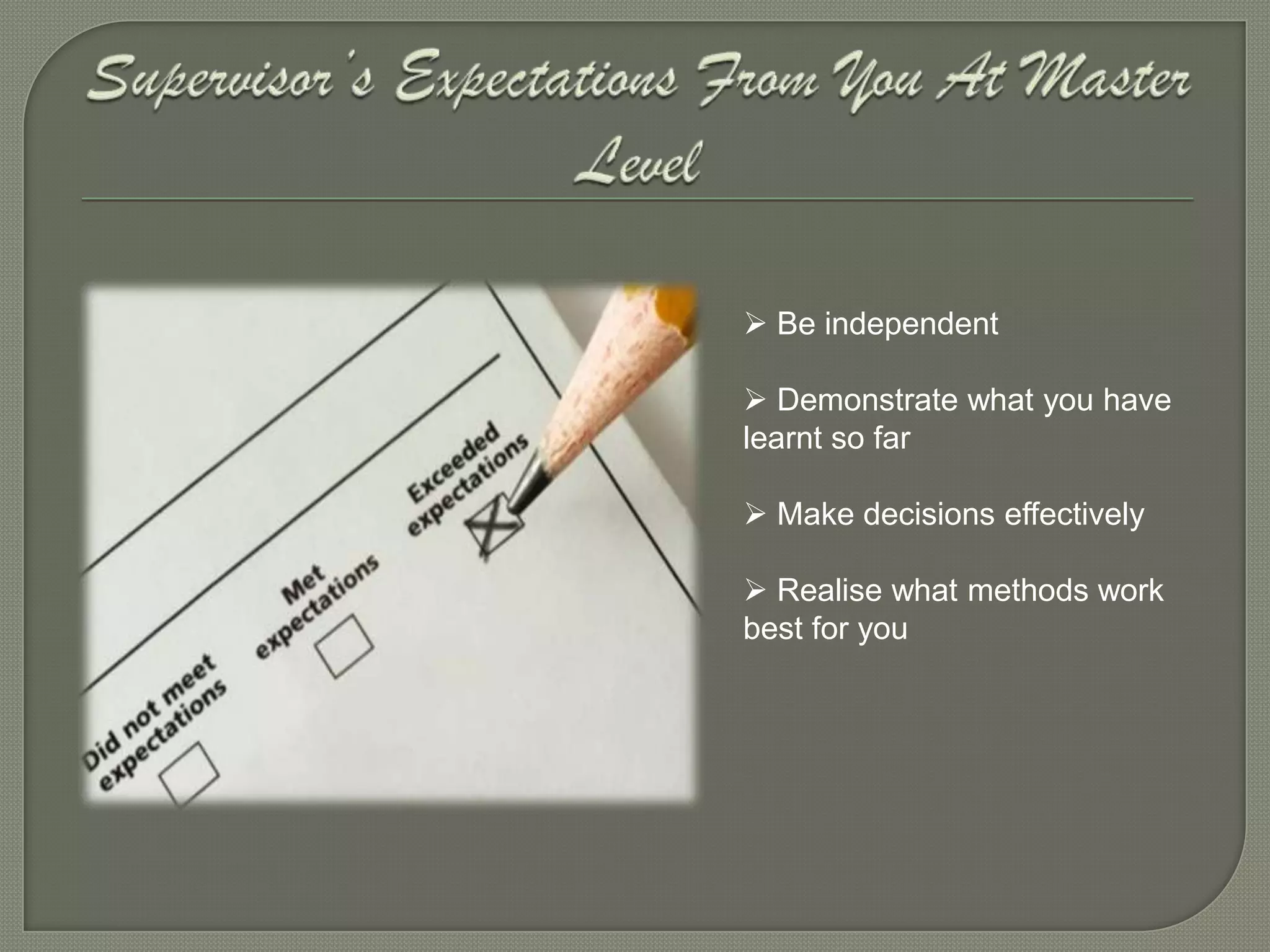
 Be independent

 Demonstrate what you have
learnt so far

 Make decisions effectively

 Realise what methods work
best for you
 Selecting an Intriguing
Research Question

 Coming up with a catchy title

 Understanding formatting style

 Identifying genuine research
resources

 Understanding citation style
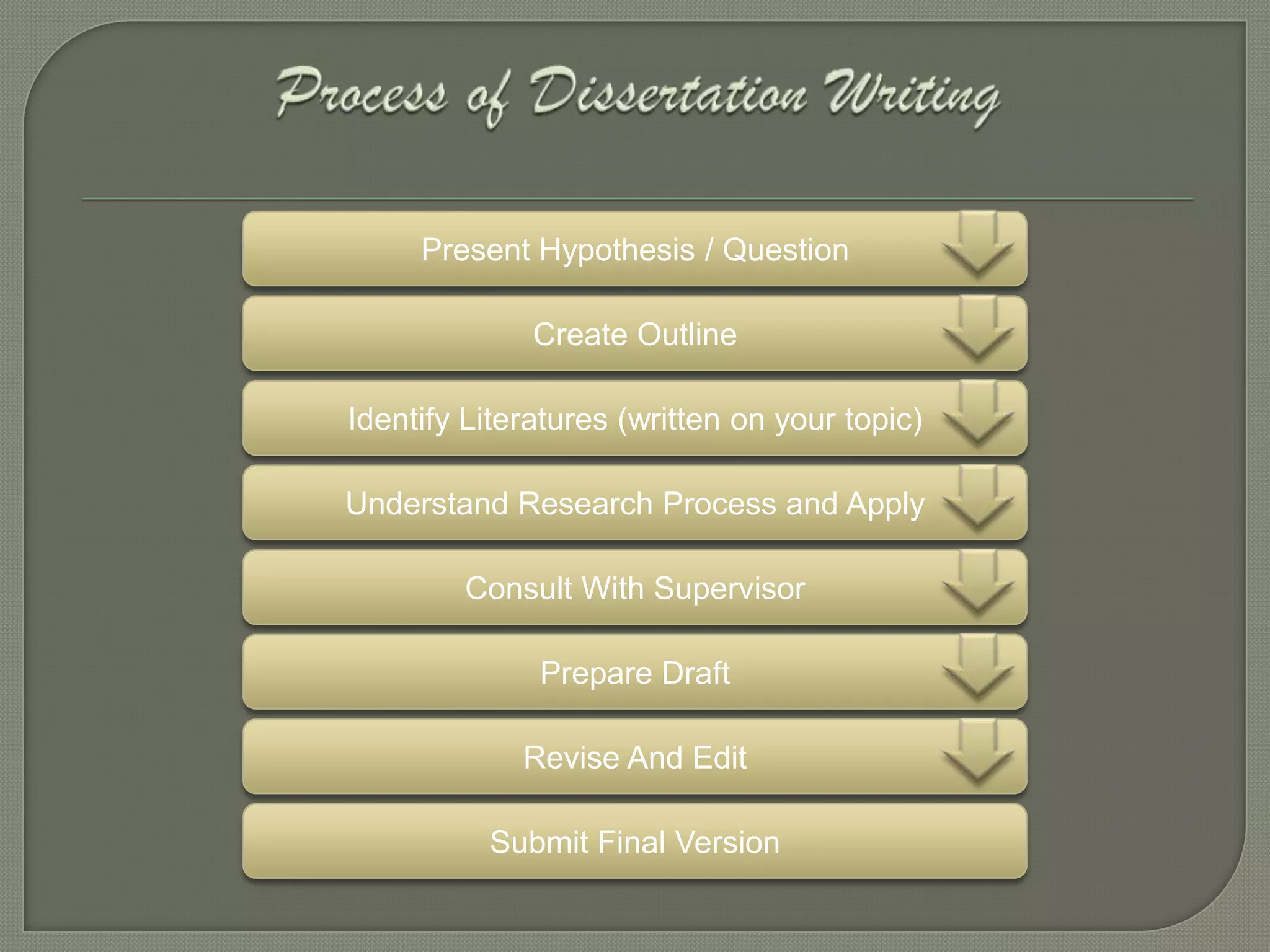
Present Hypothesis / Question

              Create Outline

Identify Literatures (written on your topic)

Understand Research Process and Apply

        Consult With Supervisor

              Prepare Draft

             Revise And Edit

          Submit Final Version
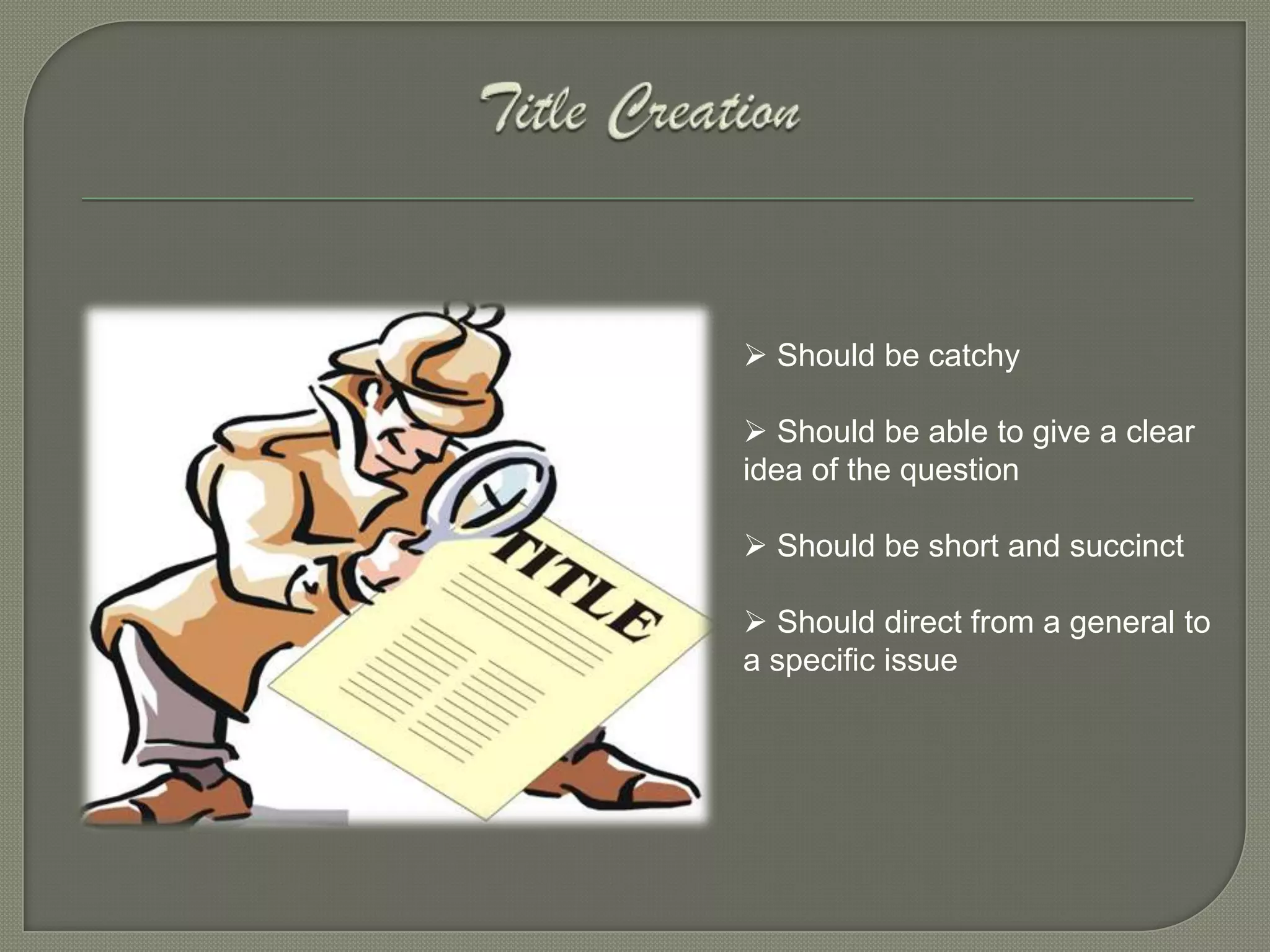
 Should be catchy

 Should be able to give a clear
idea of the question

 Should be short and succinct

 Should direct from a general to
a specific issue
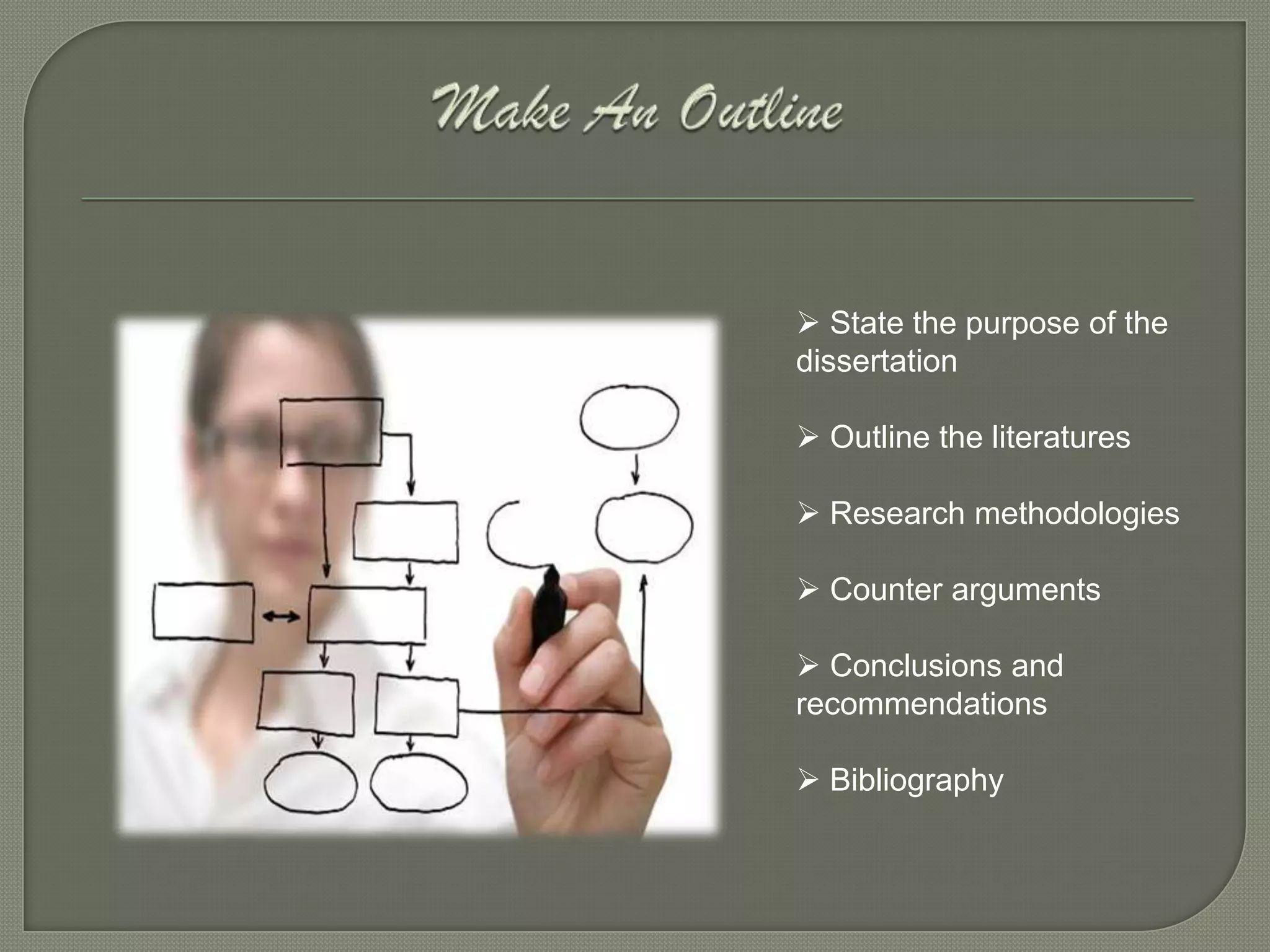
 State the purpose of the
dissertation

 Outline the literatures

 Research methodologies

 Counter arguments

 Conclusions and
recommendations

 Bibliography
 Find authoritative sources

 Identify current/recent
publications

 Take precise references

 Skim through the whole
literature thoroughly

 Review each chapter
attentively

 See where you two collide or
concur
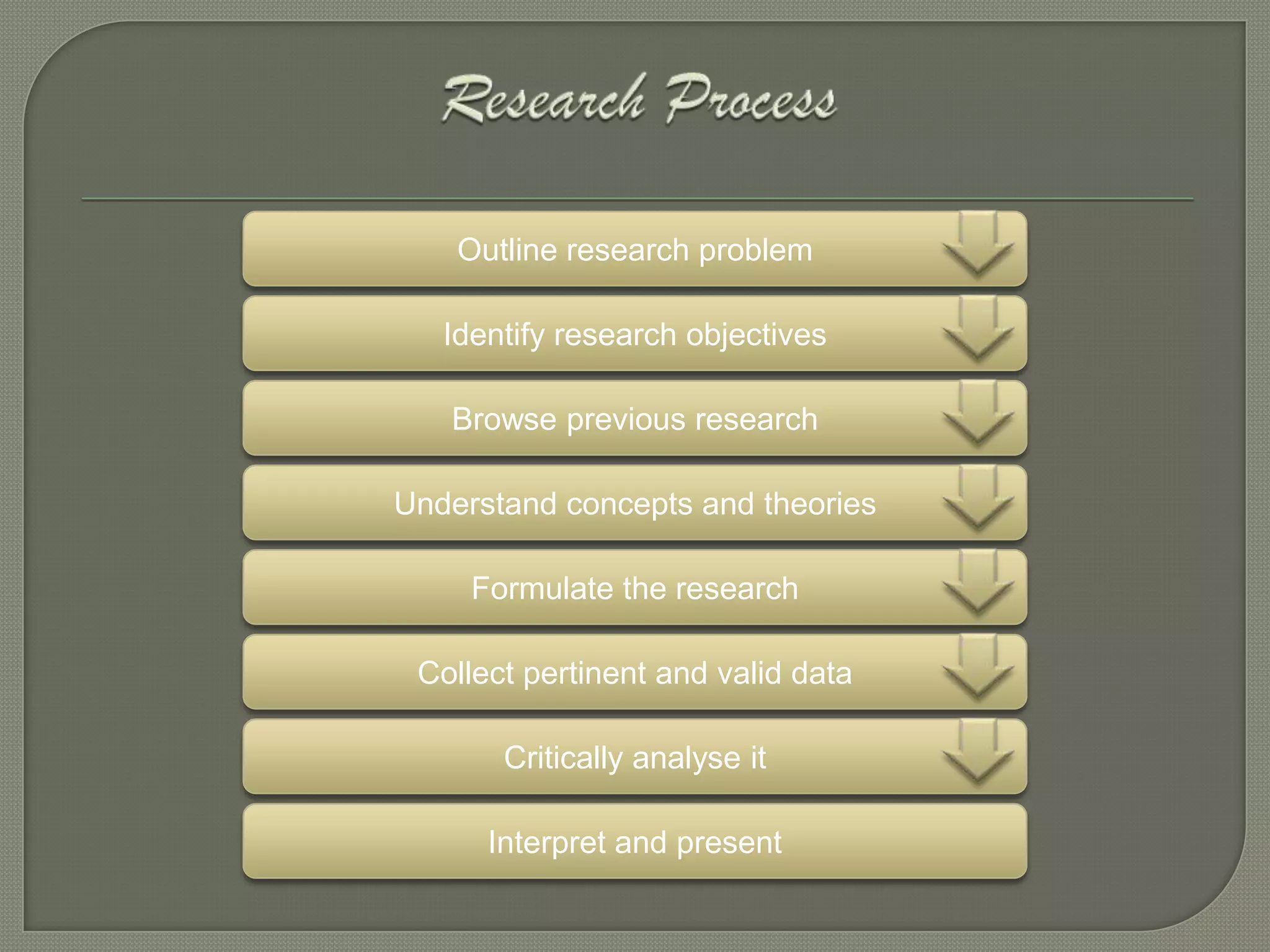
Outline research problem

   Identify research objectives

   Browse previous research

Understand concepts and theories

     Formulate the research

 Collect pertinent and valid data

       Critically analyse it

      Interpret and present
Contemplate and Analyse

 Are these details needed?

 Are they enough to establish your
arguments and endorse them

 Do you have sufficient facts and
figures to backup your claims

 Do you have sufficient anecdotes
that can go along with the arguments
For effective referencing, note down

 Author’s / Editor’s name

 Page number

 Date of publication

 Name of Book or Title of
publication
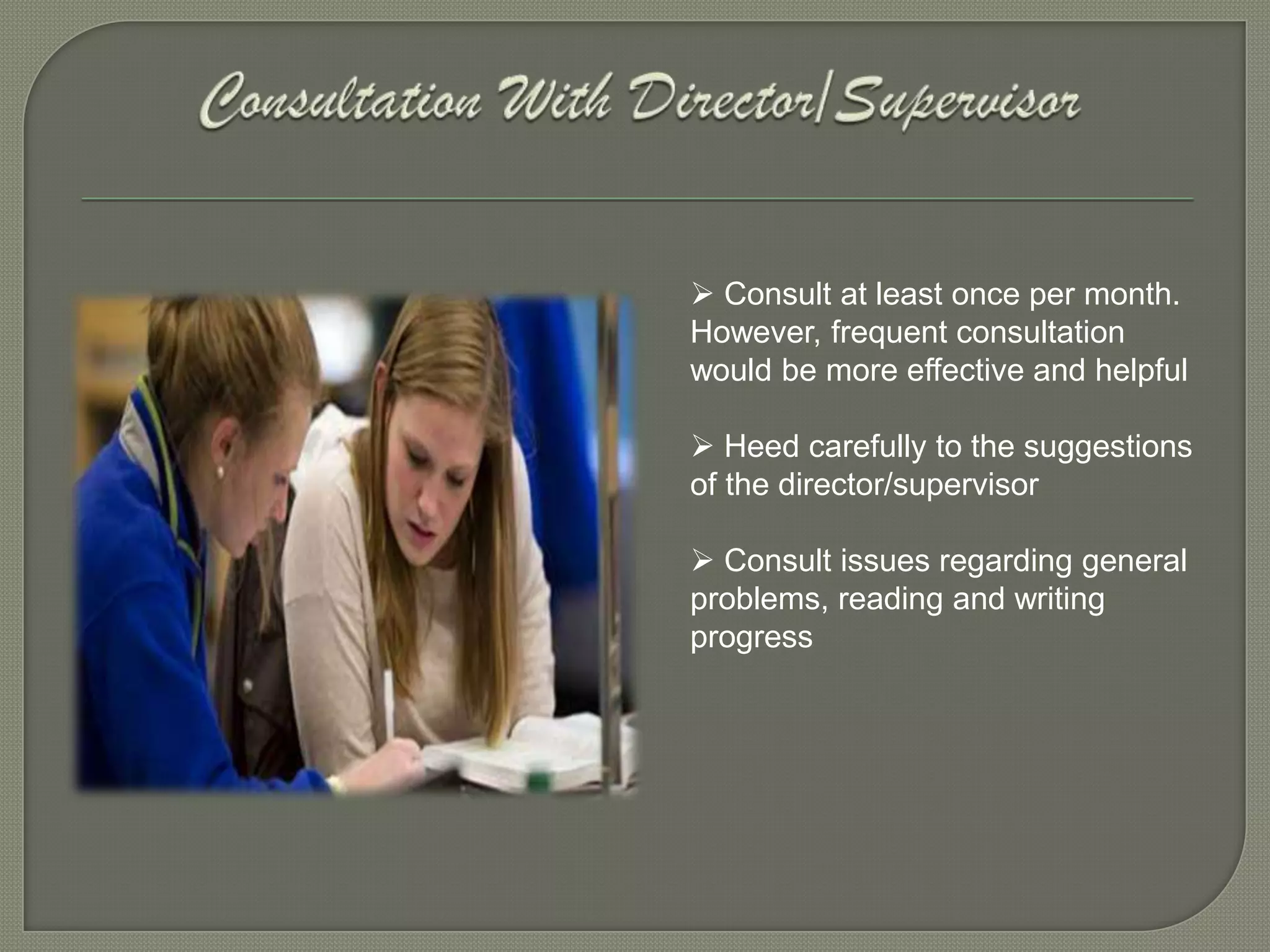
 Consult at least once per month.
However, frequent consultation
would be more effective and helpful

 Heed carefully to the suggestions
of the director/supervisor

 Consult issues regarding general
problems, reading and writing
progress
 Start drafting when you realise that
all the needed information or material
is gathered

 Keep the content easy-to-
understand

 Explain jargons

 Keep the arguments to the point

 Keep tabs on your content’s flow
 Read it Out Aloud

 Identify typos, grammatical errors
and wrong sentence structures

 Check any disruption in the
content’s flow

 Check gaps in the
information/research/arguments

 Polish it to perfection
 Attractive Titles                     Rationale and Balance Research

 Compelling Introduction               Arguments Well-Established and
                                       Supported
Intriguing Main Points of the
Research                                Effective Conclusions /
                                       Suggestions
 Flawlessly Written
                                        Remarkably Presented
 Demonstrate the prove of effective
reading and analysis                    Neat Bibliography and Appendices

 Contain precise references and
quotations
Write a winning master’s dissertation

Write a winning master’s dissertation

  • 1.
  • 2.
     Be independent Demonstrate what you have learnt so far  Make decisions effectively  Realise what methods work best for you
  • 3.
     Selecting anIntriguing Research Question  Coming up with a catchy title  Understanding formatting style  Identifying genuine research resources  Understanding citation style
  • 4.
    Present Hypothesis /Question Create Outline Identify Literatures (written on your topic) Understand Research Process and Apply Consult With Supervisor Prepare Draft Revise And Edit Submit Final Version
  • 5.
     Should becatchy  Should be able to give a clear idea of the question  Should be short and succinct  Should direct from a general to a specific issue
  • 6.
     State thepurpose of the dissertation  Outline the literatures  Research methodologies  Counter arguments  Conclusions and recommendations  Bibliography
  • 7.
     Find authoritativesources  Identify current/recent publications  Take precise references  Skim through the whole literature thoroughly  Review each chapter attentively  See where you two collide or concur
  • 8.
    Outline research problem Identify research objectives Browse previous research Understand concepts and theories Formulate the research Collect pertinent and valid data Critically analyse it Interpret and present
  • 9.
    Contemplate and Analyse Are these details needed?  Are they enough to establish your arguments and endorse them  Do you have sufficient facts and figures to backup your claims  Do you have sufficient anecdotes that can go along with the arguments
  • 10.
    For effective referencing,note down  Author’s / Editor’s name  Page number  Date of publication  Name of Book or Title of publication
  • 11.
     Consult atleast once per month. However, frequent consultation would be more effective and helpful  Heed carefully to the suggestions of the director/supervisor  Consult issues regarding general problems, reading and writing progress
  • 12.
     Start draftingwhen you realise that all the needed information or material is gathered  Keep the content easy-to- understand  Explain jargons  Keep the arguments to the point  Keep tabs on your content’s flow
  • 13.
     Read itOut Aloud  Identify typos, grammatical errors and wrong sentence structures  Check any disruption in the content’s flow  Check gaps in the information/research/arguments  Polish it to perfection
  • 15.
     Attractive Titles  Rationale and Balance Research  Compelling Introduction  Arguments Well-Established and Supported Intriguing Main Points of the Research  Effective Conclusions / Suggestions  Flawlessly Written  Remarkably Presented  Demonstrate the prove of effective reading and analysis  Neat Bibliography and Appendices  Contain precise references and quotations