WRI’s Measurement and
Performance Tracking
A new initiative, supported by:
Jennifer Morgan
World Resources Institute
June 11, 2011
Opportunity
• Major emerging economies
are undertaking mitigation
actions
• International rules for MRV
are being negotiated
Measurement and performance
tracking is essential both
internationally & domestically.
But policy, technical and political
hurdles must be addressed.
The Measurement & Performance
Tracking (MAPT) Initiative Objectives
National: Target countries design and implement in-
country measurement and performance tracking
systems and standards across different levels to
meet domestic goals and are “ready” to implement
international rules when finalized.international rules when finalized.
International: The lessons learned, strengths and
weaknesses of domestic measurement and
performance tracking systems are taken stock of by
other developing countries and the international
climate process to design a robust and effective
MRV system.
Guiding Principles
• Work in partnership with national actors
• Draw from GHG Protocol and other international
measurement standards and practices
• Build on existing in-country methodologies and
systemssystems
• Ensure metrics/guidelines are policy-neutral
• Engage a broad range of relevant stakeholders
including government agencies, business, and
civil society organizations
Convened in 1998 by
A multi-stakeholder
partnership of businesses,
Greenhouse Gas Protocol
NGOs, governments and
others
Mission: Develop
internationally accepted
GHG accounting and
reporting standards and to
promote their use worldwide
Key Programs Based on or Informed by GHG
Protocol
• Brazil GHG Protocol Program
• China Cement & Power Sectors Programs
• India GHG Inventorization Program
• Carbon Disclosure Project (CDP)
• The Climate Registry
• California Climate Action Registry
• Chicago Climate Exchange
• Dow Jones Sustainability Index
• EU Emissions Trading Scheme
• French REGES Protocol
6
• French REGES Protocol
• Global Reporting Initiative
• METI, Japan
• Mexico GHG Program
• Respect Europe Business Leaders Initiative for
Climate Change (BLICC)
• International Trade Associations (Aluminum,
IPIECA, ICFPA, Cement, Iron and Steel)
• UK DEFRA Corporate Reporting Program
• U.S. EPA Climate Leaders Initiative
• World Wildlife Fund Climate Savers
• ISO 14064 Part 1
• U.S. Department of Energy (1605b)
• US Federal Executive Order
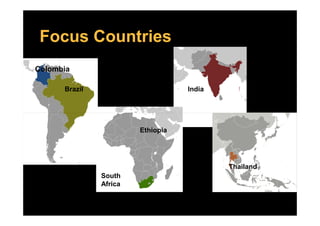
Focus Countries
Colombia
Brazil India
South
Africa
Thailand
Ethiopia
Project Components
Guidelines,
Methods &Tools
Development
Scoping/Capacity Mapping and Partner IdentificationScoping/Capacity Mapping and Partner Identification
National Inventories
Institutions
Policy Accounting&
Translating
Results
Internationally
Awareness &
Capacity
Building
Policy Accounting&
Performance Tracking
Business engagement
CSO engagement
• New guidance on accounting for GHG impact of
policies/mitigation actions
• Voluntary, policy-neutral, internationally applicable
• For government and civil society
Policy Accounting Guidance
• For government and civil society
• Methods for monitoring GHG policy impacts,
projecting future policy impacts
• First step: Scoping to establish need and content of
new guidance
Performance tracking and
accounting guidance benefits
• Can allow governments (across national,
state, city levels) and other users (e.g.,
development banks, industry, NGOs) to
quantify GHG reductions and assess the
potential of policies, based on an ex-antepotential of policies, based on an ex-ante
estimation of GHG impact
• Can support domestic decision making (to
evaluate and compare actions/policies)
• Can promote more consistency and
transparency in reported results
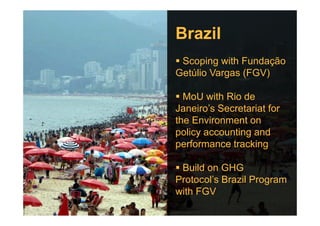
Brazil
Scoping with Fundação
Getúlio Vargas (FGV)
MoU with Rio de
Janeiro’s Secretariat forJaneiro’s Secretariat for
the Environment on
policy accounting and
performance tracking
Build on GHG
Protocol’s Brazil Program
with FGV
Target 36-39% by 2020
12 sectoral plans will be
implemented by the end of 2011 that
India
Scoping with ABPS Inc.
MoU with the Ministry
of Environment and
Forestsimplemented by the end of 2011 that
include specific targets for emissions
reductions
Subnational and city plans
Forests
GHG Protocol working
with TERI on industry
component
South Africa
Scoping with University
of Cape Town’s Energy
Research Centre
MoU with theMoU with the
Department of
Environmental Affairs
GHG Protocol working
with the National
Business Initiative on
business component
Colombia
MoU with Vice-ministry
of Environment
GHG Protocol
Workshops withWorkshops with
CECODES and utility
networks
Policy Systems
mapping
Global standards to account for policies
and track performance
…
And national support and systems in place to
implement

WRI's Measurement and Performance Tracking

  • 1.
    WRI’s Measurement and PerformanceTracking A new initiative, supported by: Jennifer Morgan World Resources Institute June 11, 2011
  • 2.
    Opportunity • Major emergingeconomies are undertaking mitigation actions • International rules for MRV are being negotiated Measurement and performance tracking is essential both internationally & domestically. But policy, technical and political hurdles must be addressed.
  • 3.
    The Measurement &Performance Tracking (MAPT) Initiative Objectives National: Target countries design and implement in- country measurement and performance tracking systems and standards across different levels to meet domestic goals and are “ready” to implement international rules when finalized.international rules when finalized. International: The lessons learned, strengths and weaknesses of domestic measurement and performance tracking systems are taken stock of by other developing countries and the international climate process to design a robust and effective MRV system.
  • 4.
    Guiding Principles • Workin partnership with national actors • Draw from GHG Protocol and other international measurement standards and practices • Build on existing in-country methodologies and systemssystems • Ensure metrics/guidelines are policy-neutral • Engage a broad range of relevant stakeholders including government agencies, business, and civil society organizations
  • 5.
    Convened in 1998by A multi-stakeholder partnership of businesses, Greenhouse Gas Protocol NGOs, governments and others Mission: Develop internationally accepted GHG accounting and reporting standards and to promote their use worldwide
  • 6.
    Key Programs Basedon or Informed by GHG Protocol • Brazil GHG Protocol Program • China Cement & Power Sectors Programs • India GHG Inventorization Program • Carbon Disclosure Project (CDP) • The Climate Registry • California Climate Action Registry • Chicago Climate Exchange • Dow Jones Sustainability Index • EU Emissions Trading Scheme • French REGES Protocol 6 • French REGES Protocol • Global Reporting Initiative • METI, Japan • Mexico GHG Program • Respect Europe Business Leaders Initiative for Climate Change (BLICC) • International Trade Associations (Aluminum, IPIECA, ICFPA, Cement, Iron and Steel) • UK DEFRA Corporate Reporting Program • U.S. EPA Climate Leaders Initiative • World Wildlife Fund Climate Savers • ISO 14064 Part 1 • U.S. Department of Energy (1605b) • US Federal Executive Order
  • 7.
  • 8.
    Project Components Guidelines, Methods &Tools Development Scoping/CapacityMapping and Partner IdentificationScoping/Capacity Mapping and Partner Identification National Inventories Institutions Policy Accounting& Translating Results Internationally Awareness & Capacity Building Policy Accounting& Performance Tracking Business engagement CSO engagement
  • 9.
    • New guidanceon accounting for GHG impact of policies/mitigation actions • Voluntary, policy-neutral, internationally applicable • For government and civil society Policy Accounting Guidance • For government and civil society • Methods for monitoring GHG policy impacts, projecting future policy impacts • First step: Scoping to establish need and content of new guidance
  • 10.
    Performance tracking and accountingguidance benefits • Can allow governments (across national, state, city levels) and other users (e.g., development banks, industry, NGOs) to quantify GHG reductions and assess the potential of policies, based on an ex-antepotential of policies, based on an ex-ante estimation of GHG impact • Can support domestic decision making (to evaluate and compare actions/policies) • Can promote more consistency and transparency in reported results
  • 11.
    Brazil Scoping with Fundação GetúlioVargas (FGV) MoU with Rio de Janeiro’s Secretariat forJaneiro’s Secretariat for the Environment on policy accounting and performance tracking Build on GHG Protocol’s Brazil Program with FGV
  • 12.
    Target 36-39% by2020 12 sectoral plans will be implemented by the end of 2011 that India Scoping with ABPS Inc. MoU with the Ministry of Environment and Forestsimplemented by the end of 2011 that include specific targets for emissions reductions Subnational and city plans Forests GHG Protocol working with TERI on industry component
  • 13.
    South Africa Scoping withUniversity of Cape Town’s Energy Research Centre MoU with theMoU with the Department of Environmental Affairs GHG Protocol working with the National Business Initiative on business component
  • 14.
    Colombia MoU with Vice-ministry ofEnvironment GHG Protocol Workshops withWorkshops with CECODES and utility networks Policy Systems mapping
  • 15.
    Global standards toaccount for policies and track performance … And national support and systems in place to implement