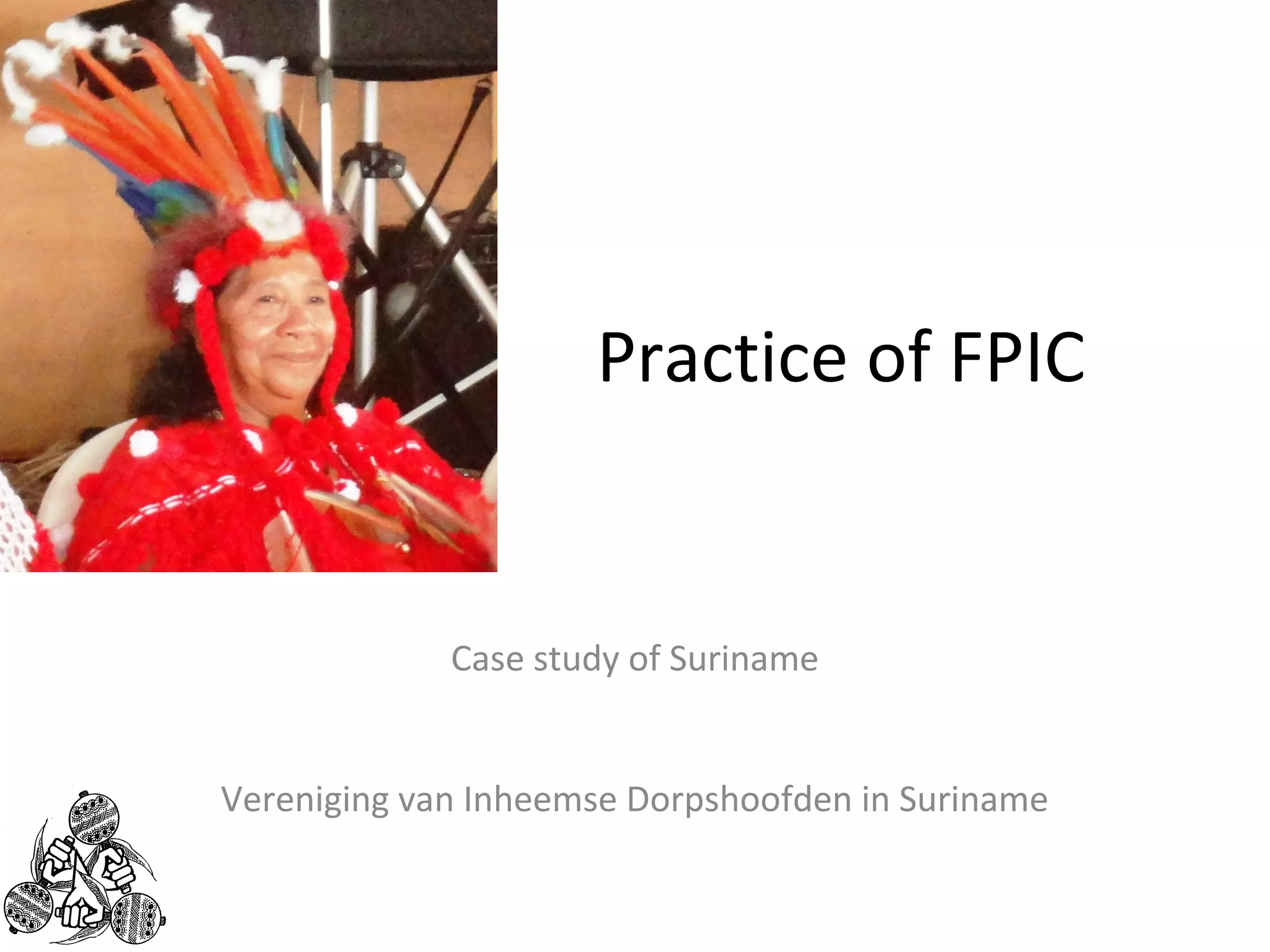
Practice of FPIC 
Case study of Suriname 
Vereniging van Inheemse Dorpshoofden in Suriname
What if ... 
• This institution approach you as IPO and ask 
you to do consultation rounds with IP; 
• This institutions explain IP should contribute 
to content of a project but this project is 
already drafted and approved; 
• The goal of the project is to strengthen the 
capacity of Government to better the 
engagement process with IP and make FPIC an 
instrument used by the Government;
What if .... 
• This institution is an environmental 
organization; 
• This institution will make you partly 
responsible of the outcomes of their project;
What if ... 
• The IPO has no good experiences with this 
institution, in particularly some individuals; 
• The IPO is worried about the political position 
of the institute esp. the relation between 
environment and IP territories; 
• The IPO stressed that capacity building of 
Government by IPO should be part of the 
implementation of R-PP.
Process of engagement 
• Why were IP not approached when Project 
was still an idea? 
• Why were other (inter) national multilateral 
institutions partners from start? 
• Why would this institution work on Capacity 
Strengthening in Government re IP rights?
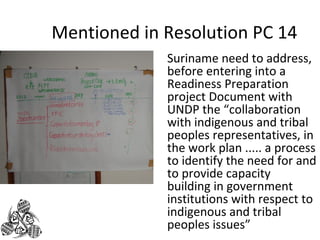
Mentioned in Resolution PC 14 
Suriname need to address, 
before entering into a 
Readiness Preparation 
project Document with 
UNDP the “collaboration 
with indigenous and tribal 
peoples representatives, in 
the work plan ..... a process 
to identify the need for and 
to provide capacity 
building in government 
institutions with respect to 
indigenous and tribal 
peoples issues”
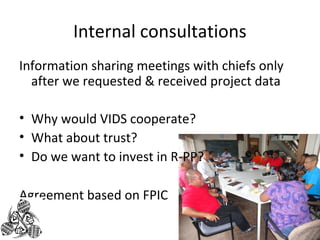
Internal consultations 
Information sharing meetings with chiefs only 
after we requested & received project data 
• Why would VIDS cooperate? 
• What about trust? 
• Do we want to invest in R-PP? 
Agreement based on FPIC
2nd process phase 
Contract signing: 
• Institution’s headquarter new only 2 kinds of 
contracts, and works only with consultants; 
• IPO’s cannot / difficult to operate as 
consultant; 
• IPO is representing a collective group and has 
no authorization to give away collective 
owned materials and non-materials 
(traditional communication systems)
• Long process with lawyers from headquarter; 
• VIDS still mentioned as consultant; 
• New wordings re ownership of institution: “...... 
however that any and all Indigenous and Tribal 
Peoples’ IP Works and Works incorporating 
Indigenous and Tribal Peoples’ IP Works will state 
that the ownership of, and all rights over 
Indigenous and Tribal Peoples’ intellectual 
property described and/or elaborated on therein 
belong to the respective Indigenous and Tribal 
Peoples
Implemention phase 
• Still need for trust building between 
institution and VIDS – both ways – 
• Limited budget to implement consultations 
• Time constraints 
• lawyers of institution created now a 3rd 
option to sign contract (UNDRIP)
(PRE) conditions 
• Invest in engagement processes; 
• Probably means invest in internal re-organization; 
• Eliminate Budget & time limitations; 
• Use UNDRIP in implementation & need for 
lawyer
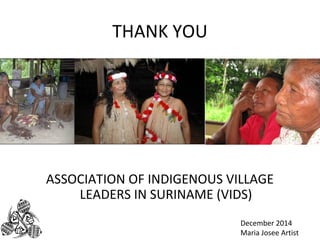
THANK YOU 
ASSOCIATION OF INDIGENOUS VILLAGE 
LEADERS IN SURINAME (VIDS) 
December 2014 
Maria Josee Artist

Practice of FPIC

  • 1.
    Practice of FPIC Case study of Suriname Vereniging van Inheemse Dorpshoofden in Suriname
  • 2.
    What if ... • This institution approach you as IPO and ask you to do consultation rounds with IP; • This institutions explain IP should contribute to content of a project but this project is already drafted and approved; • The goal of the project is to strengthen the capacity of Government to better the engagement process with IP and make FPIC an instrument used by the Government;
  • 3.
    What if .... • This institution is an environmental organization; • This institution will make you partly responsible of the outcomes of their project;
  • 4.
    What if ... • The IPO has no good experiences with this institution, in particularly some individuals; • The IPO is worried about the political position of the institute esp. the relation between environment and IP territories; • The IPO stressed that capacity building of Government by IPO should be part of the implementation of R-PP.
  • 5.
    Process of engagement • Why were IP not approached when Project was still an idea? • Why were other (inter) national multilateral institutions partners from start? • Why would this institution work on Capacity Strengthening in Government re IP rights?
  • 6.
    Mentioned in ResolutionPC 14 Suriname need to address, before entering into a Readiness Preparation project Document with UNDP the “collaboration with indigenous and tribal peoples representatives, in the work plan ..... a process to identify the need for and to provide capacity building in government institutions with respect to indigenous and tribal peoples issues”
  • 7.
    Internal consultations Informationsharing meetings with chiefs only after we requested & received project data • Why would VIDS cooperate? • What about trust? • Do we want to invest in R-PP? Agreement based on FPIC
  • 8.
    2nd process phase Contract signing: • Institution’s headquarter new only 2 kinds of contracts, and works only with consultants; • IPO’s cannot / difficult to operate as consultant; • IPO is representing a collective group and has no authorization to give away collective owned materials and non-materials (traditional communication systems)
  • 9.
    • Long processwith lawyers from headquarter; • VIDS still mentioned as consultant; • New wordings re ownership of institution: “...... however that any and all Indigenous and Tribal Peoples’ IP Works and Works incorporating Indigenous and Tribal Peoples’ IP Works will state that the ownership of, and all rights over Indigenous and Tribal Peoples’ intellectual property described and/or elaborated on therein belong to the respective Indigenous and Tribal Peoples
  • 10.
    Implemention phase •Still need for trust building between institution and VIDS – both ways – • Limited budget to implement consultations • Time constraints • lawyers of institution created now a 3rd option to sign contract (UNDRIP)
  • 11.
    (PRE) conditions •Invest in engagement processes; • Probably means invest in internal re-organization; • Eliminate Budget & time limitations; • Use UNDRIP in implementation & need for lawyer
  • 12.
    THANK YOU ASSOCIATIONOF INDIGENOUS VILLAGE LEADERS IN SURINAME (VIDS) December 2014 Maria Josee Artist