Ermete.mariani@planetnext.net

NEW MEDIA AND OLD REVOLUTIONS...
THE CHALLENGE OF THE WEB 2.0
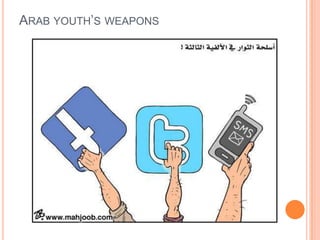
ARAB YOUTH’S WEAPONS
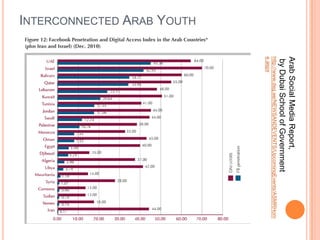
INTERCONNECTED ARAB YOUTH

Arab Social Media Report,
by Dubai School of Government
http://www.dsg.ae/NEWSANDEVENTS/UpcomingEvents/ASMRHom
e.aspx
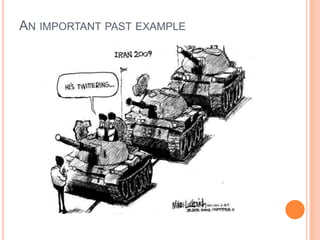
AN IMPORTANT PAST EXAMPLE
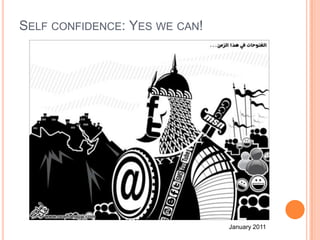
SELF CONFIDENCE: YES WE CAN!

January 2011
NEW MEDIA PLAYED A KEY ROLE IN
Connectingthe movement with the outside world
notwithstanding the censorship and occasional
shutdowns >international coverage
 Mobilisingmasses: rally points and manifestation
were ALSO set and communicated on-line
 Reinforcing the contagiousnessof the uprisings


Common background (cultural and linguistic)
 Common problems and frustration: unemployment, lack
of freedom of expression and difficulties in doing
business




Transnational public sphere: social media and
Internet at large make ideas spread more quickly
and people feel the ownership of causes
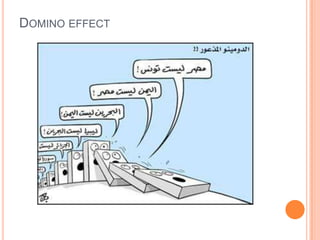
DOMINO EFFECT
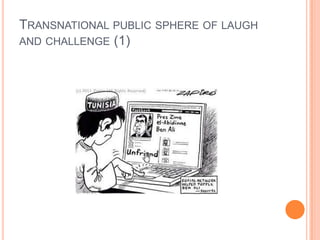
TRANSNATIONAL PUBLIC SPHERE OF LAUGH
AND CHALLENGE (1)
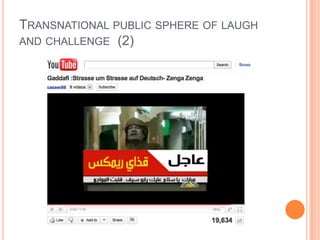
TRANSNATIONAL PUBLIC SPHERE OF LAUGH
AND CHALLENGE (2)
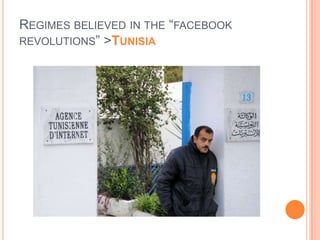
REGIMES BELIEVED IN THE “FACEBOOK
REVOLUTIONS” >TUNISIA
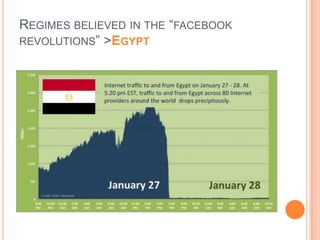
REGIMES BELIEVED IN THE “FACEBOOK
REVOLUTIONS” >EGYPT
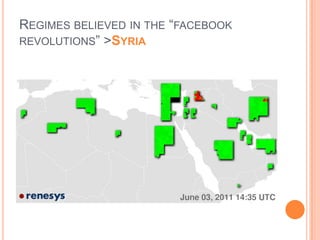
REGIMES BELIEVED IN THE “FACEBOOK
REVOLUTIONS” >SYRIA
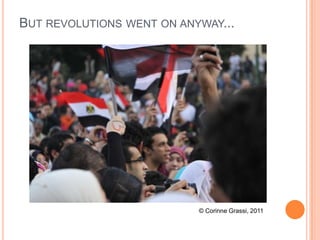
BUT REVOLUTIONS WENT ON ANYWAY...

© Corinne Grassi, 2011
NEGATIVE CONSEQUENCES...


Clash of narratives not dialogues:


“Through the way social media operate, by aggregating
people with the same values and the same opinions,
they end up reinforcing differences rather than building
bridges. As a result, social media can create obstacles
when it comes to negotiating solutions andfinding
common ground between different opinions." Alec J.
Ross, the advisor of Hillary Clinton on “network
diplomacy”
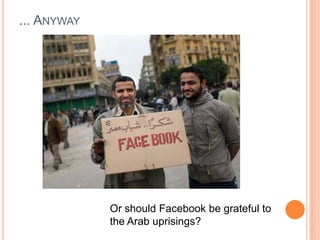
... ANYWAY

Or should Facebook be grateful to
the Arab uprisings?
LESSONS LEARNED


Arab youths are:
Vocal and determined in asking for inclusion,
participation and freedom
 Interconnected (also through the Web 2.0)
 Globalised but with local focus




The role of new media:




They have empowered Arab youths
Aggregate people who share values, views and a
common destiny
BUT they can also reinforce the clash of narratives
and confusion rather than promoting dialogue
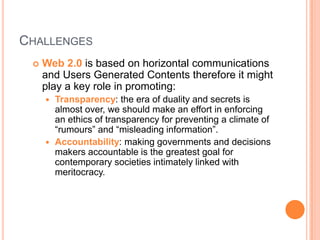
CHALLENGES


Web 2.0 is based on horizontal communications
and Users Generated Contents therefore it might
play a key role in promoting:
Transparency: the era of duality and secrets is
almost over, we should make an effort in enforcing
an ethics of transparency for preventing a climate of
“rumours” and “misleading information”.
 Accountability: making governments and decisions
makers accountable is the greatest goal for
contemporary societies intimately linked with
meritocracy.

Ermete.mariani@planetnext.net
www.planetnext.net

Worldbank facebook revolution

  • 1.
    Ermete.mariani@planetnext.net NEW MEDIA ANDOLD REVOLUTIONS... THE CHALLENGE OF THE WEB 2.0
  • 2.
  • 3.
    INTERCONNECTED ARAB YOUTH ArabSocial Media Report, by Dubai School of Government http://www.dsg.ae/NEWSANDEVENTS/UpcomingEvents/ASMRHom e.aspx
  • 4.
  • 5.
    SELF CONFIDENCE: YESWE CAN! January 2011
  • 6.
    NEW MEDIA PLAYEDA KEY ROLE IN Connectingthe movement with the outside world notwithstanding the censorship and occasional shutdowns >international coverage  Mobilisingmasses: rally points and manifestation were ALSO set and communicated on-line  Reinforcing the contagiousnessof the uprisings  Common background (cultural and linguistic)  Common problems and frustration: unemployment, lack of freedom of expression and difficulties in doing business   Transnational public sphere: social media and Internet at large make ideas spread more quickly and people feel the ownership of causes
  • 7.
  • 8.
    TRANSNATIONAL PUBLIC SPHEREOF LAUGH AND CHALLENGE (1)
  • 9.
    TRANSNATIONAL PUBLIC SPHEREOF LAUGH AND CHALLENGE (2)
  • 10.
    REGIMES BELIEVED INTHE “FACEBOOK REVOLUTIONS” >TUNISIA
  • 11.
    REGIMES BELIEVED INTHE “FACEBOOK REVOLUTIONS” >EGYPT
  • 12.
    REGIMES BELIEVED INTHE “FACEBOOK REVOLUTIONS” >SYRIA
  • 13.
    BUT REVOLUTIONS WENTON ANYWAY... © Corinne Grassi, 2011
  • 14.
    NEGATIVE CONSEQUENCES...  Clash ofnarratives not dialogues:  “Through the way social media operate, by aggregating people with the same values and the same opinions, they end up reinforcing differences rather than building bridges. As a result, social media can create obstacles when it comes to negotiating solutions andfinding common ground between different opinions." Alec J. Ross, the advisor of Hillary Clinton on “network diplomacy”
  • 15.
    ... ANYWAY Or shouldFacebook be grateful to the Arab uprisings?
  • 16.
    LESSONS LEARNED  Arab youthsare: Vocal and determined in asking for inclusion, participation and freedom  Interconnected (also through the Web 2.0)  Globalised but with local focus   The role of new media:    They have empowered Arab youths Aggregate people who share values, views and a common destiny BUT they can also reinforce the clash of narratives and confusion rather than promoting dialogue
  • 17.
    CHALLENGES  Web 2.0 isbased on horizontal communications and Users Generated Contents therefore it might play a key role in promoting: Transparency: the era of duality and secrets is almost over, we should make an effort in enforcing an ethics of transparency for preventing a climate of “rumours” and “misleading information”.  Accountability: making governments and decisions makers accountable is the greatest goal for contemporary societies intimately linked with meritocracy. 
  • 18.