COVID-19 Pandemic
COVID‑19, short for
“coronavirus disease 2019”, is a
disease spreading around the
world caused by infection with
a new strain of coronavirus
(SARS-CoV-2). Patients with
symptoms are very contagious,
but even those with mild or
no symptoms can still infect
others. A vaccine against
COVID‑19 is not yet available.
SARS-CoV-2 mostly spreads
from person to person through
droplets suspended in the
air when an infected person
coughs or sneezes.
Diagnosing COVID-19
The diagnosis of COVID-19 is
made by finding SARS-CoV-2
virus in samples taken from
swabbing the nose or throat,
or more recently from saliva.
Because of transmission
through droplets, the best way
to reduce spread is to keep
people physically distanced,
test widely, and use personal
protective equipment for health
care workers and cloth masks
for the public.
Children and COVID-19
Children get SARS-CoV-2
infection but a much milder
disease generally. Children
can still pass on infection to
others even when they seem
completely well. The elderly and
people of all ages with severe
chronic conditions seem to
be at higher risk of developing
serious COVID-19.
Understanding COVID-19
Disclaimer: Do not consider this information to
be medical advice. Consult your physician about
COVID-19 as well as allergic disease, asthma, or any
health matters. This information is current as of 29 May
2020. Stay updated, because experts are still learning
about SARS-CoV-2 and COVID-19.
Always take care of your allergies and asthma –
with or without a pandemic.
Symptom similarity between allergies and COVID-19
can be confusing. Your allergist will help identify
the differences.
While remembering to avoid COVID-19, also
remember to avoid your allergens.
Do not stop your prescribed allergy or
asthma medications.
Controlling your allergy could help you better
defend yourself against the virus.
Ease your anxieties about your healthcare during a
pandemic by staying in contact with your allergist.
Ask for clear, up-to-date information about
COVID-19 and ways it might affect your allergies
or asthma.
Get the care you need while limiting exposure to
the virus, such as consultations by telephone or
Internet for non-emergencies
If you do need to seek health care in person,
remember to maintain social distance, wear a mask,
and wash hands frequently and thoroughly. Avoid
touching high-use surfaces in public spaces.
Inform your doctors of any changes in
your health status.
If infected with COVID-19, your allergy care might
change. Ask your allergist for an assessment.
Your allergies and
health care needs
during COVID-19
Refer to: World Allergy Week 2020 “General Information” at
www.WorldAllergyWeek.org
World Allergy Organization (WAO) | June 2020
World Health Organization
(WHO).
https://www.who.int/
emergencies/diseases/novel-
coronavirus-2019/advice-for-
public
World Health Organization
(WHO). WHO statement:
Tobacco use and COVID-19.
May 11, 2020.
https://www.who.int/news-
room/detail/11-05-2020-who-
statement-tobacco-use-and-
covid-19.
U.S. Centers for Disease
Control and Infection.
https://www.cdc.gov/
coronavirus/2019-ncov/index.
html
Mayo Clinic.
https://www.mayoclinic.org/
coronavirus-covid-19/public-
guidance
CDC Apple Screening Tool.
About COVID‑19.
https://www.apple.com/covid19
Also check the websites
of your state, county, and
city health departments.
COVID-19
Resources

World Allergy Week 2020 Infographic

  • 1.
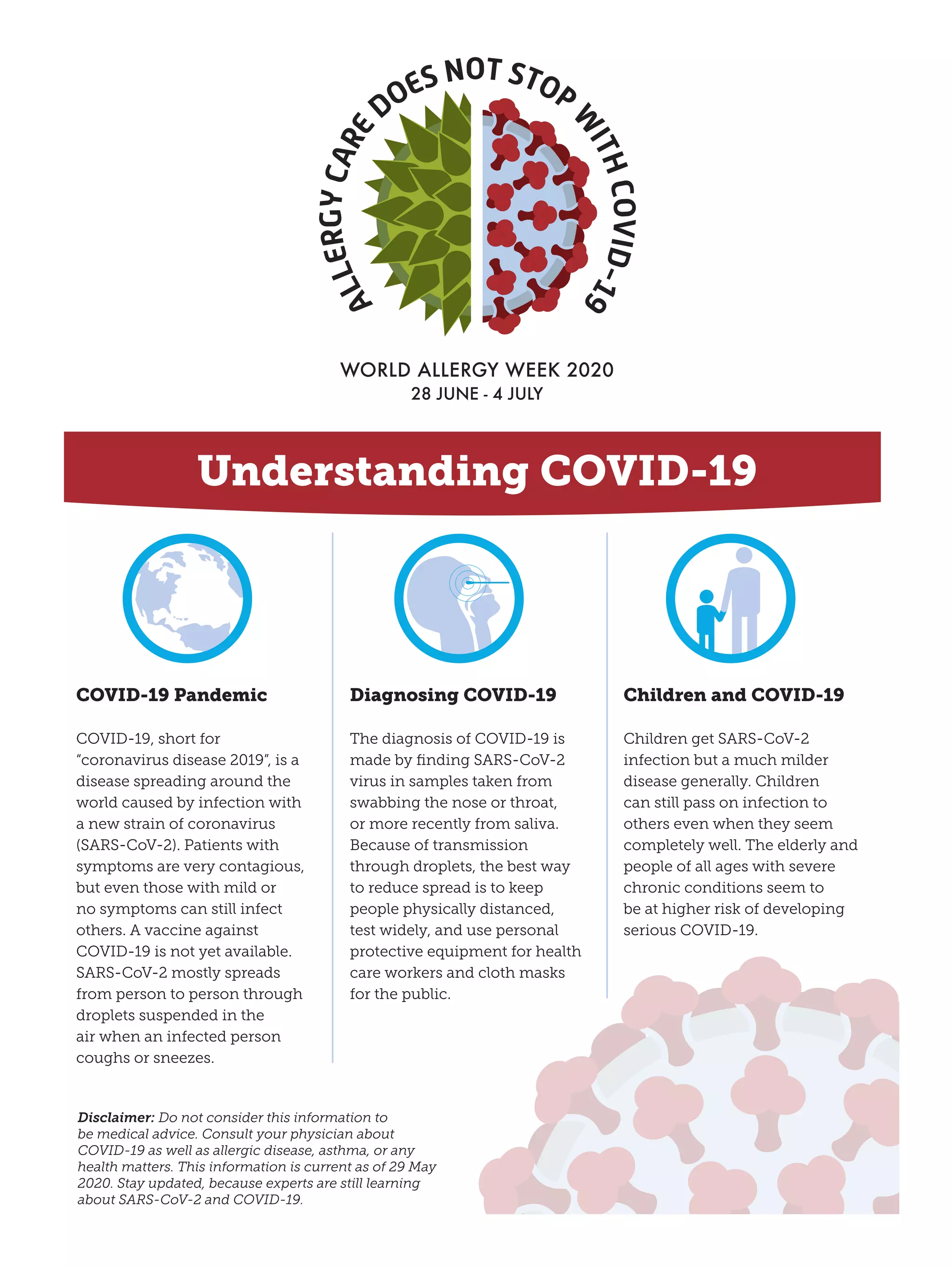
    COVID-19 Pandemic COVID‑19, shortfor “coronavirus disease 2019”, is a disease spreading around the world caused by infection with a new strain of coronavirus (SARS-CoV-2). Patients with symptoms are very contagious, but even those with mild or no symptoms can still infect others. A vaccine against COVID‑19 is not yet available. SARS-CoV-2 mostly spreads from person to person through droplets suspended in the air when an infected person coughs or sneezes. Diagnosing COVID-19 The diagnosis of COVID-19 is made by finding SARS-CoV-2 virus in samples taken from swabbing the nose or throat, or more recently from saliva. Because of transmission through droplets, the best way to reduce spread is to keep people physically distanced, test widely, and use personal protective equipment for health care workers and cloth masks for the public. Children and COVID-19 Children get SARS-CoV-2 infection but a much milder disease generally. Children can still pass on infection to others even when they seem completely well. The elderly and people of all ages with severe chronic conditions seem to be at higher risk of developing serious COVID-19. Understanding COVID-19 Disclaimer: Do not consider this information to be medical advice. Consult your physician about COVID-19 as well as allergic disease, asthma, or any health matters. This information is current as of 29 May 2020. Stay updated, because experts are still learning about SARS-CoV-2 and COVID-19.
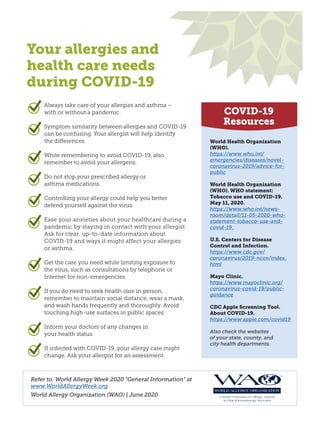
  • 2.
    Always take careof your allergies and asthma – with or without a pandemic. Symptom similarity between allergies and COVID-19 can be confusing. Your allergist will help identify the differences. While remembering to avoid COVID-19, also remember to avoid your allergens. Do not stop your prescribed allergy or asthma medications. Controlling your allergy could help you better defend yourself against the virus. Ease your anxieties about your healthcare during a pandemic by staying in contact with your allergist. Ask for clear, up-to-date information about COVID-19 and ways it might affect your allergies or asthma. Get the care you need while limiting exposure to the virus, such as consultations by telephone or Internet for non-emergencies If you do need to seek health care in person, remember to maintain social distance, wear a mask, and wash hands frequently and thoroughly. Avoid touching high-use surfaces in public spaces. Inform your doctors of any changes in your health status. If infected with COVID-19, your allergy care might change. Ask your allergist for an assessment. Your allergies and health care needs during COVID-19 Refer to: World Allergy Week 2020 “General Information” at www.WorldAllergyWeek.org World Allergy Organization (WAO) | June 2020 World Health Organization (WHO). https://www.who.int/ emergencies/diseases/novel- coronavirus-2019/advice-for- public World Health Organization (WHO). WHO statement: Tobacco use and COVID-19. May 11, 2020. https://www.who.int/news- room/detail/11-05-2020-who- statement-tobacco-use-and- covid-19. U.S. Centers for Disease Control and Infection. https://www.cdc.gov/ coronavirus/2019-ncov/index. html Mayo Clinic. https://www.mayoclinic.org/ coronavirus-covid-19/public- guidance CDC Apple Screening Tool. About COVID‑19. https://www.apple.com/covid19 Also check the websites of your state, county, and city health departments. COVID-19 Resources