Combining working and caring 
at mid-life: an empty nest or 
new care duties? 
Kaisa Kauppinen, Research professor, FIOH 
International Conference on Care and Work-Care 
Reconciliation 
12 – 13 August 2013 University of Leeds
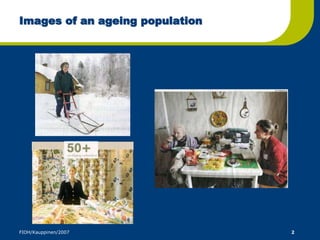
Images of an ageing population 
FIOH/Kauppinen/2007 2
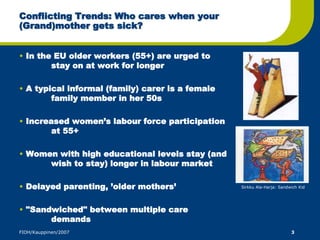
Conflicting Trends: Who cares when your 
(Grand)mother gets sick? 
• In the EU older workers (55+) are urged to 
stay on at work for longer 
• A typical informal (family) carer is a female 
family member in her 50s 
• Increased women’s labour force participation 
at 55+ 
• Women with high educational levels stay (and 
wish to stay) longer in labour market 
• Delayed parenting, ’older mothers’ 
• "Sandwiched" between multiple care 
demands 
Sirkku Ala-Harja: Sandwich Kid 
FIOH/Kauppinen/2007 3
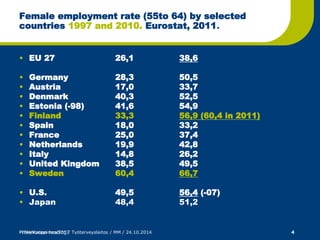
Female employment rate (55to 64) by selected 
countries 1997 and 2010. Eurostat, 2011. 
• EU 27 26,1 38,6 
• Germany 28,3 50,5 
• Austria 17,0 33,7 
• Denmark 40,3 52,5 
• Estonia (-98) 41,6 54,9 
• Finland 33,3 56,9 (60,4 in 2011) 
• Spain 18,0 33,2 
• France 25,0 37,4 
• Netherlands 19,9 42,8 
• Italy 14,8 26,2 
• United Kingdom 38,5 49,5 
• Sweden 60,4 66,7 
• U.S. 49,5 56,4 (-07) 
• Japan 48,4 51,2 
Presentation heading / Työterveyslaitos FIOH/Kauppinen/2007 / MM / 24.10.2014 4
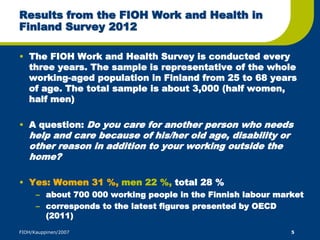
Results from the FIOH Work and Health in 
Finland Survey 2012 
• The FIOH Work and Health Survey is conducted every 
three years. The sample is representative of the whole 
working-aged population in Finland from 25 to 68 years 
of age. The total sample is about 3,000 (half women, 
half men) 
• A question: Do you care for another person who needs 
help and care because of his/her old age, disability or 
other reason in addition to your working outside the 
home? 
• Yes: Women 31 %, men 22 %, total 28 % 
– about 700 000 working people in the Finnish labour market 
– corresponds to the latest figures presented by OECD 
(2011) 
FIOH/Kauppinen/2007 5
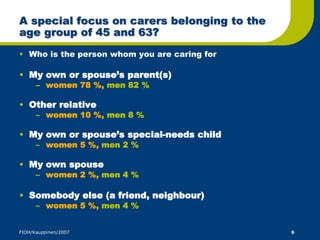
A special focus on carers belonging to the 
age group of 45 and 63? 
• Who is the person whom you are caring for 
• My own or spouse’s parent(s) 
– women 78 %, men 82 % 
• Other relative 
– women 10 %, men 8 % 
• My own or spouse’s special-needs child 
– women 5 %, men 2 % 
• My own spouse 
– women 2 %, men 4 % 
• Somebody else (a friend, neighbour) 
– women 5 %, men 4 % 
FIOH/Kauppinen/2007 6
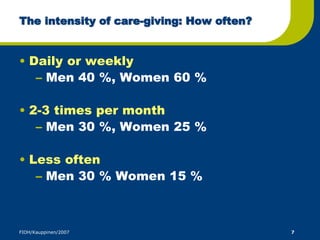
The intensity of care-giving: How often? 
• Daily or weekly 
– Men 40 %, Women 60 % 
• 2-3 times per month 
– Men 30 %, Women 25 % 
• Less often 
– Men 30 % Women 15 % 
FIOH/Kauppinen/2007 7
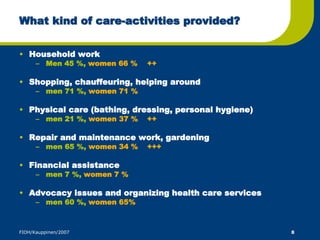
What kind of care-activities provided? 
• Household work 
– Men 45 %, women 66 % ++ 
• Shopping, chauffeuring, helping around 
– men 71 %, women 71 % 
• Physical care (bathing, dressing, personal hygiene) 
– men 21 %, women 37 % ++ 
• Repair and maintenance work, gardening 
– men 65 %, women 34 % +++ 
• Financial assistance 
– men 7 %, women 7 % 
• Advocacy issues and organizing health care services 
– men 60 %, women 65% 
FIOH/Kauppinen/2007 8
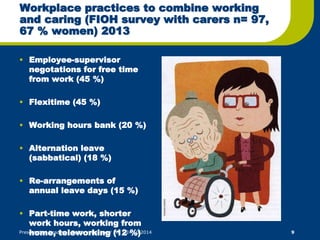
Workplace practices to combine working 
and caring (FIOH survey with carers n= 97, 
67 % women) 2013 
• Employee-supervisor 
negotations for free time 
from work (45 %) 
• Flexitime (45 %) 
• Working hours bank (20 %) 
• Alternation leave 
(sabbatical) (18 %) 
• Re-arrangements of 
annual leave days (15 %) 
• Part-time work, shorter 
work hours, working from 
home, teleworking (12 %) 
Presentation heading / Työterveyslaitos / MM / 24.10.2014 9
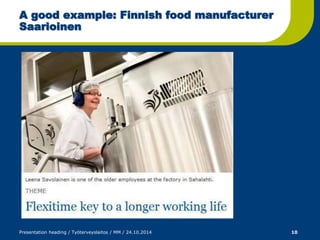
A good example: Finnish food manufacturer 
Saarioinen 
Presentation heading / Työterveyslaitos / MM / 24.10.2014 10
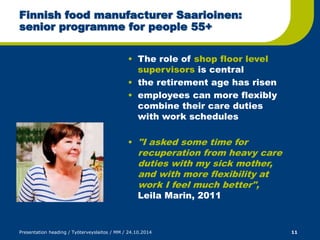
Finnish food manufacturer Saarioinen: 
senior programme for people 55+ 
• The role of shop floor level 
supervisors is central 
• the retirement age has risen 
• employees can more flexibly 
combine their care duties 
with work schedules 
• "I asked some time for 
recuperation from heavy care 
duties with my sick mother, 
and with more flexibility at 
work I feel much better", 
Leila Marin, 2011 
Presentation heading / Työterveyslaitos / MM / 24.10.2014 11
Sensitive age management policies can be 
good for your business 
Thank you! 
www.ttl.fi 
Presentation heading / Työterveyslaitos / MM / 24.10.2014 12

Workshop B Prof.Kaisa Kauppinen Workign adn Caring for an Older Person in Finland

  • 1.
    Combining working andcaring at mid-life: an empty nest or new care duties? Kaisa Kauppinen, Research professor, FIOH International Conference on Care and Work-Care Reconciliation 12 – 13 August 2013 University of Leeds
  • 2.
    Images of anageing population FIOH/Kauppinen/2007 2
  • 3.
    Conflicting Trends: Whocares when your (Grand)mother gets sick? • In the EU older workers (55+) are urged to stay on at work for longer • A typical informal (family) carer is a female family member in her 50s • Increased women’s labour force participation at 55+ • Women with high educational levels stay (and wish to stay) longer in labour market • Delayed parenting, ’older mothers’ • "Sandwiched" between multiple care demands Sirkku Ala-Harja: Sandwich Kid FIOH/Kauppinen/2007 3
  • 4.
    Female employment rate(55to 64) by selected countries 1997 and 2010. Eurostat, 2011. • EU 27 26,1 38,6 • Germany 28,3 50,5 • Austria 17,0 33,7 • Denmark 40,3 52,5 • Estonia (-98) 41,6 54,9 • Finland 33,3 56,9 (60,4 in 2011) • Spain 18,0 33,2 • France 25,0 37,4 • Netherlands 19,9 42,8 • Italy 14,8 26,2 • United Kingdom 38,5 49,5 • Sweden 60,4 66,7 • U.S. 49,5 56,4 (-07) • Japan 48,4 51,2 Presentation heading / Työterveyslaitos FIOH/Kauppinen/2007 / MM / 24.10.2014 4
  • 5.
    Results from theFIOH Work and Health in Finland Survey 2012 • The FIOH Work and Health Survey is conducted every three years. The sample is representative of the whole working-aged population in Finland from 25 to 68 years of age. The total sample is about 3,000 (half women, half men) • A question: Do you care for another person who needs help and care because of his/her old age, disability or other reason in addition to your working outside the home? • Yes: Women 31 %, men 22 %, total 28 % – about 700 000 working people in the Finnish labour market – corresponds to the latest figures presented by OECD (2011) FIOH/Kauppinen/2007 5
  • 6.
    A special focuson carers belonging to the age group of 45 and 63? • Who is the person whom you are caring for • My own or spouse’s parent(s) – women 78 %, men 82 % • Other relative – women 10 %, men 8 % • My own or spouse’s special-needs child – women 5 %, men 2 % • My own spouse – women 2 %, men 4 % • Somebody else (a friend, neighbour) – women 5 %, men 4 % FIOH/Kauppinen/2007 6
  • 7.
    The intensity ofcare-giving: How often? • Daily or weekly – Men 40 %, Women 60 % • 2-3 times per month – Men 30 %, Women 25 % • Less often – Men 30 % Women 15 % FIOH/Kauppinen/2007 7
  • 8.
    What kind ofcare-activities provided? • Household work – Men 45 %, women 66 % ++ • Shopping, chauffeuring, helping around – men 71 %, women 71 % • Physical care (bathing, dressing, personal hygiene) – men 21 %, women 37 % ++ • Repair and maintenance work, gardening – men 65 %, women 34 % +++ • Financial assistance – men 7 %, women 7 % • Advocacy issues and organizing health care services – men 60 %, women 65% FIOH/Kauppinen/2007 8
  • 9.
    Workplace practices tocombine working and caring (FIOH survey with carers n= 97, 67 % women) 2013 • Employee-supervisor negotations for free time from work (45 %) • Flexitime (45 %) • Working hours bank (20 %) • Alternation leave (sabbatical) (18 %) • Re-arrangements of annual leave days (15 %) • Part-time work, shorter work hours, working from home, teleworking (12 %) Presentation heading / Työterveyslaitos / MM / 24.10.2014 9
  • 10.
    A good example:Finnish food manufacturer Saarioinen Presentation heading / Työterveyslaitos / MM / 24.10.2014 10
  • 11.
    Finnish food manufacturerSaarioinen: senior programme for people 55+ • The role of shop floor level supervisors is central • the retirement age has risen • employees can more flexibly combine their care duties with work schedules • "I asked some time for recuperation from heavy care duties with my sick mother, and with more flexibility at work I feel much better", Leila Marin, 2011 Presentation heading / Työterveyslaitos / MM / 24.10.2014 11
  • 12.
    Sensitive age managementpolicies can be good for your business Thank you! www.ttl.fi Presentation heading / Työterveyslaitos / MM / 24.10.2014 12