“I Don’t Like You, but I Have to
Work with You”
WORKING WITH
DIFFICULT PEOPLE
OBJECTIVES
1. Identify different personality types.
2. Learn skills to address various personality
types.
3. Master skills to deal with difficult, angry,
and unmotivated co-workers.
4. Learn tips for better communication.
5. Know the expectations of yourself and co-
workers.
The way you see people is the way
you treat them, and the way you
treat them is the way they
become.
Understanding Emotions in
Communication
 All communications contain some emotion or a
mix of emotions
 Emotions can confuse the message one is
sending
 Emotions are vital to happiness because they
promote action
 Negative emotions can drain your energy and
everyone else's
 Positive emotions promote positive
communication
Myths Regarding
Personality Types
Only 10% of the population is difficult to work
with.
People demonstrate differences based on
needs and desires to get what they need.
Abnormal behavior is normal to difficult
people.
Your reaction to their abnormal behavior is
normal to them as you play their game.
Top Energy Slayers
 The Exploder
 The Cry baby
 The Gossip
 The Sniper
 The Time sucker
 The Tank
 The Beggar
 The Victim
 The Bully
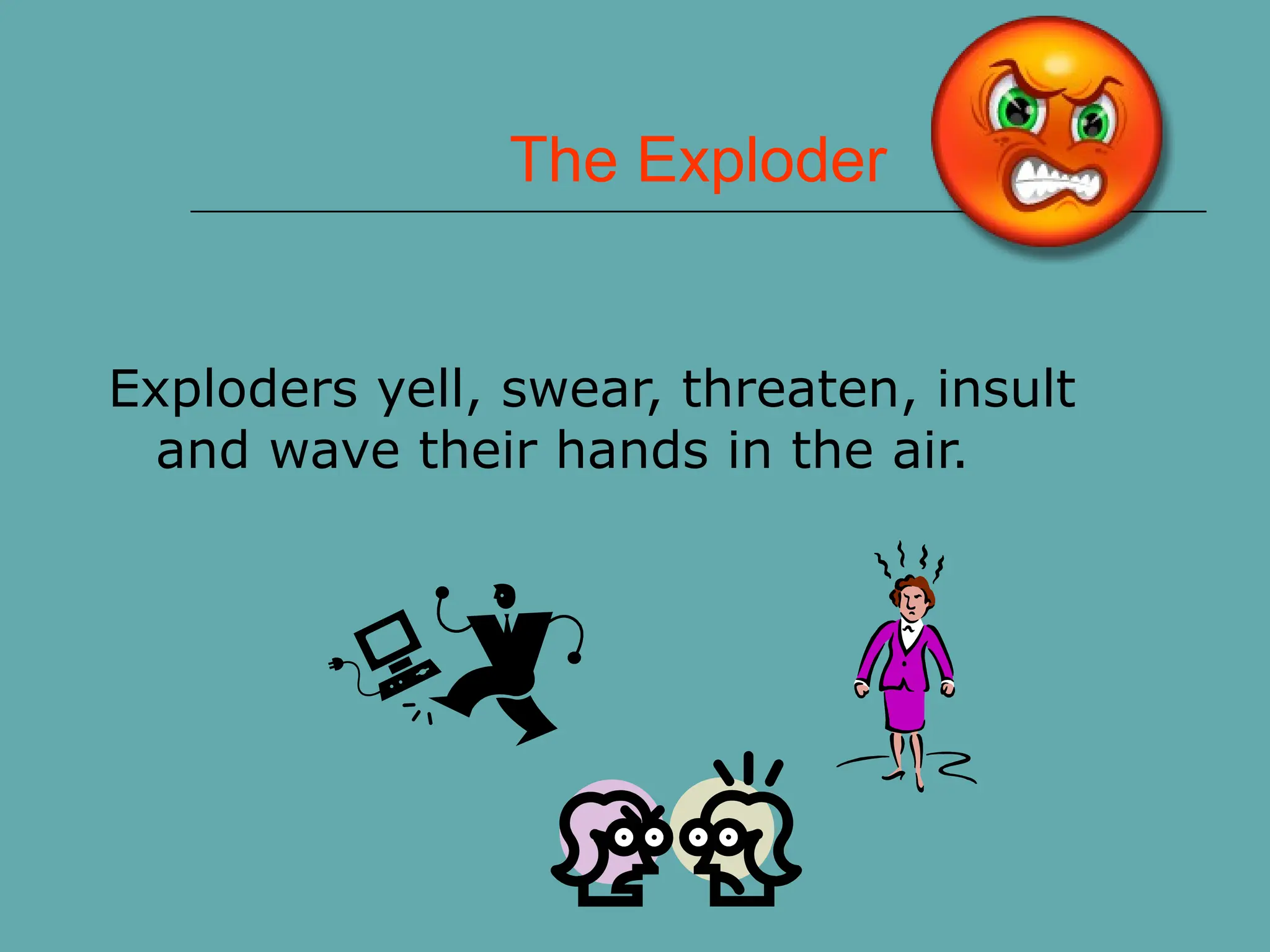
The Exploder
Exploders yell, swear, threaten, insult
and wave their hands in the air.
The Exploder rewards
They want to engage you. They feel
bad and out of control and want you
to feel bad and out of control as
well. They are also seeking an
excuse to explode. Looking for a
dramatic reaction to their dramatic
behavior.
How to Treat an Exploder
 Listen to and speak to the
emotional side. Try to match their
emotional side.
 Validate, compliment, agree and
transition with permission.
Don’t challenge or engage; don’t
take the bait
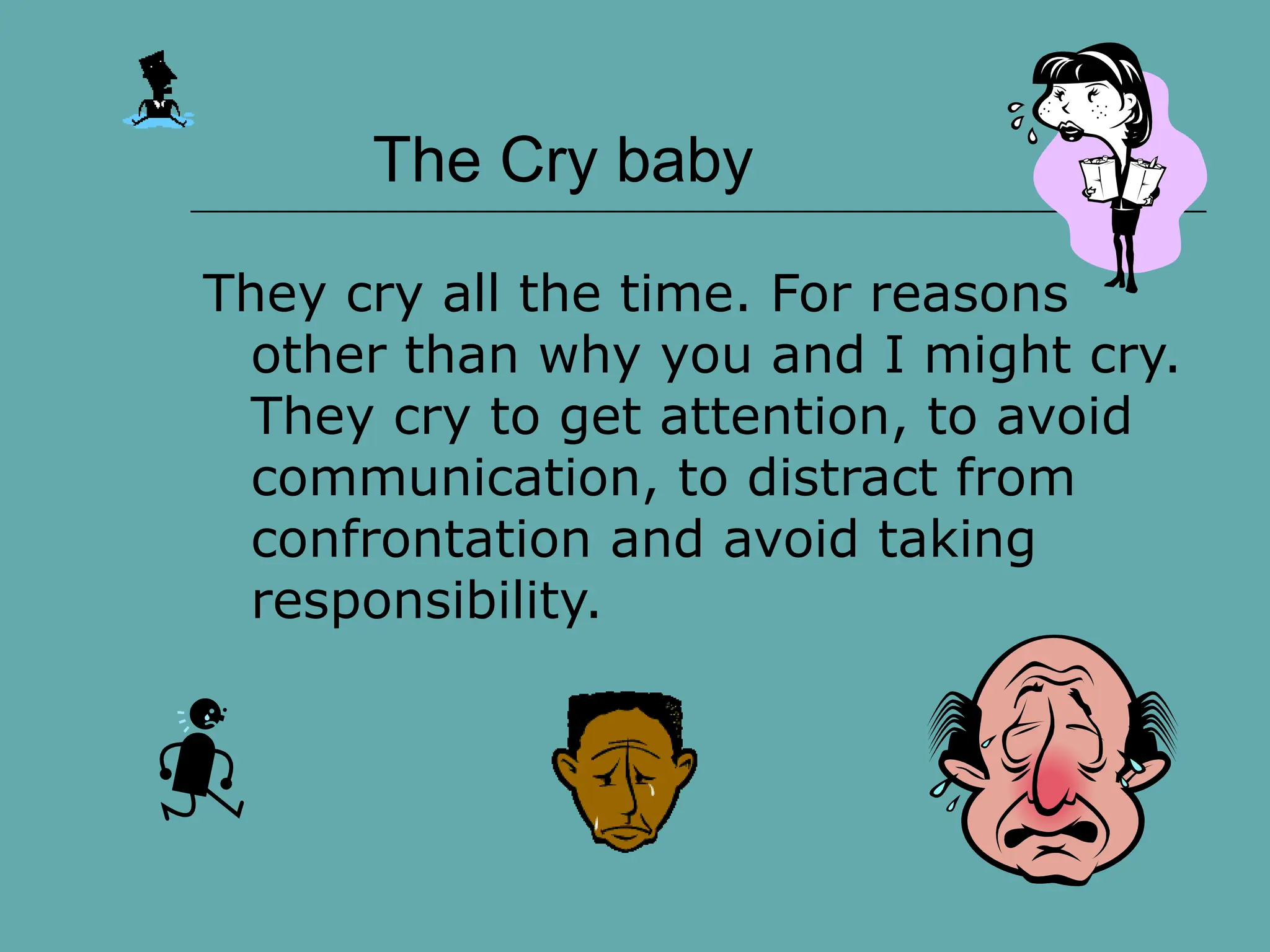
The Cry baby
They cry all the time. For reasons
other than why you and I might cry.
They cry to get attention, to avoid
communication, to distract from
confrontation and avoid taking
responsibility.
The Cry baby Rewards
Looking to distract you from the real
issue, distract you from the truth,
distract you from someone else, or
distract you from their wrong doing.
How to treat a Cry baby
 Stay on the message disconnection
is the key. Keep repeating the same
closed ended questions. Lock them
down let them know that this is
going to happen and going to
happen now.
 Don’t get hooked in, don't engage,
don’t comfort in anyway.
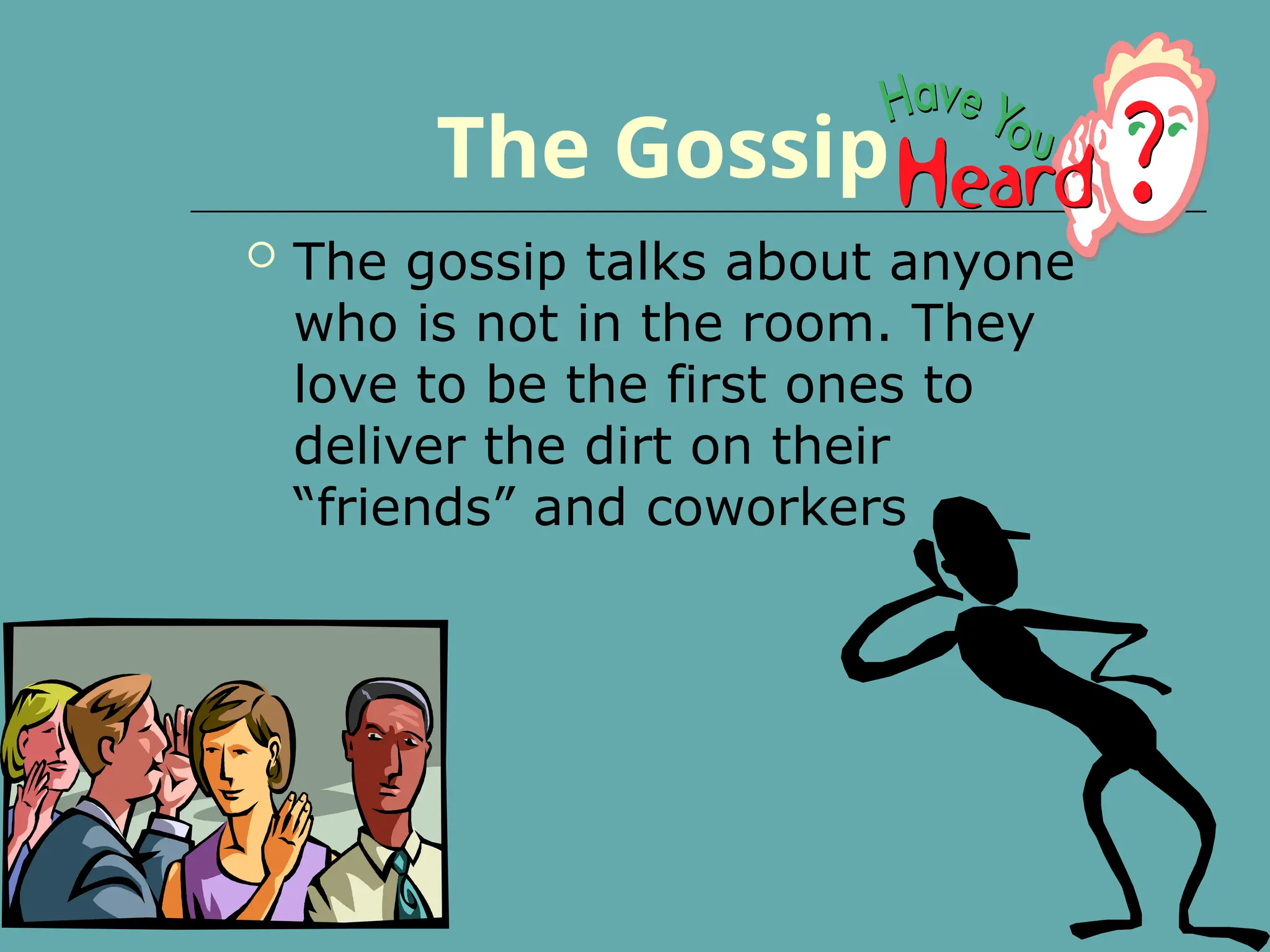
The Gossip
 The gossip talks about anyone
who is not in the room. They
love to be the first ones to
deliver the dirt on their
“friends” and coworkers
The Gossip’s rewards
1. Gathering information from you.
2. Deliver information to you; to
achieve the ultimate reward.
3. Bonding with you.
How To Treat a gossip
 Stop participating in the gossip. Stop
listening. Take yourself out of the loop.
 Introduce
 Criticized
 Revealed
Don’t blind side them. Let them
know you are no longer going to
gossip
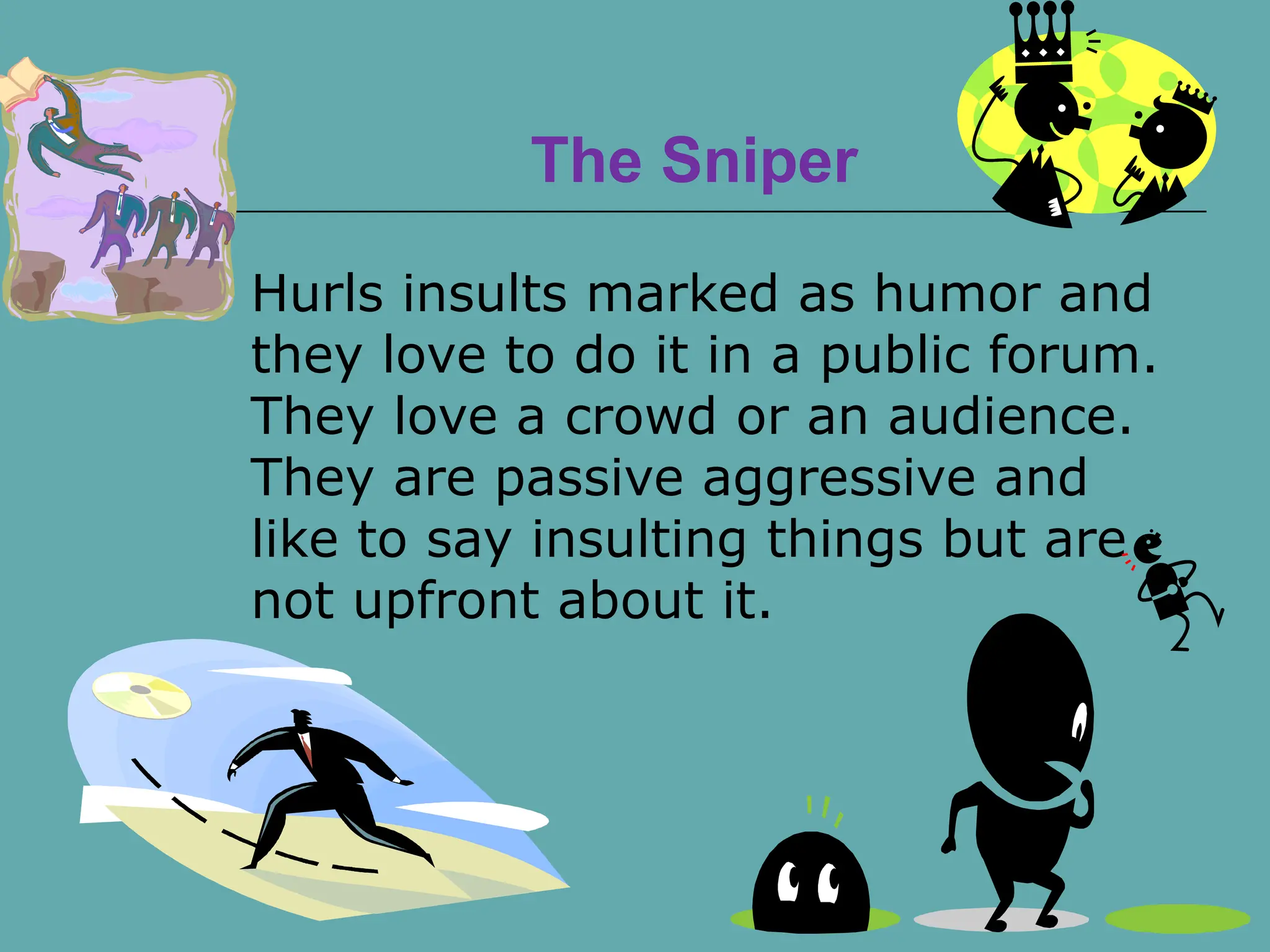
The Sniper
 Hurls insults marked as humor and
they love to do it in a public forum.
They love a crowd or an audience.
They are passive aggressive and
like to say insulting things but are
not upfront about it.
Sniper rewards
 Looking for a laugh at your expense
with no immediate, personal price
to pay. They love it when people
snipe back. They assume no one
will call them on their behavior
because people almost never do.
How to treat a Sniper
 Call them on their behavior be calm,
direct and assertive not aggressive.
 Don’t engage in a battle if wits with
a sniper. Show no weakness.
The Time sucker
 They come into your space at work
and just goof off. They do not care
that your are serious about your
work. They will often encourage you
to take a “break” with them
because they “are bored”.
Time sucker reward’s
 Looking for a distraction, a
confidant or a playmate. They want
your time. They may be simply
unaware of proper etiquette and
boundaries
How to treat a time sucker
 Set boundaries, be very assertive
and give them clear instructions
train them how you want to spend
your time.
 Don’t allow someone to steal
your time just because you feel
uncomfortable
The Tank
 Instead of losing control they
appear to be in control as the run
right over you with their aggressive
style of communication. It is difficult
to interrupt them. They are very
directed, targeted and difficult to
stop. The go on and on and on.
The Tank’s rewards
1. They want a verbal war
2. They want something specific and
they’ll tell you what it is.
They want to win and enjoy the spoils
and they want to think they won
because they are powerful. Looking
for you to surrender, to agree, or
just give them what they want.
How to treat a Tank
 Let them win. Let them be right and
agree with them
Don’t stand there and be attacked
move away
The Beggar
 They want your time and your
money. They sell candy, raffle
tickets or are putting together a
party. They are just maybe a “little
short” of cash for lunch. They won’t
take no for an answer
Beggars rewards
 They will tell you what they want
hoping to appeal to your generosity
or guilt.
How to treat a Beggar
 Say no and stick to it. Sympathize,
say no, say why, suggest
alternatives and repeat.
 Remember all beggars can make
you look bad to others if you are
the only one saying no.
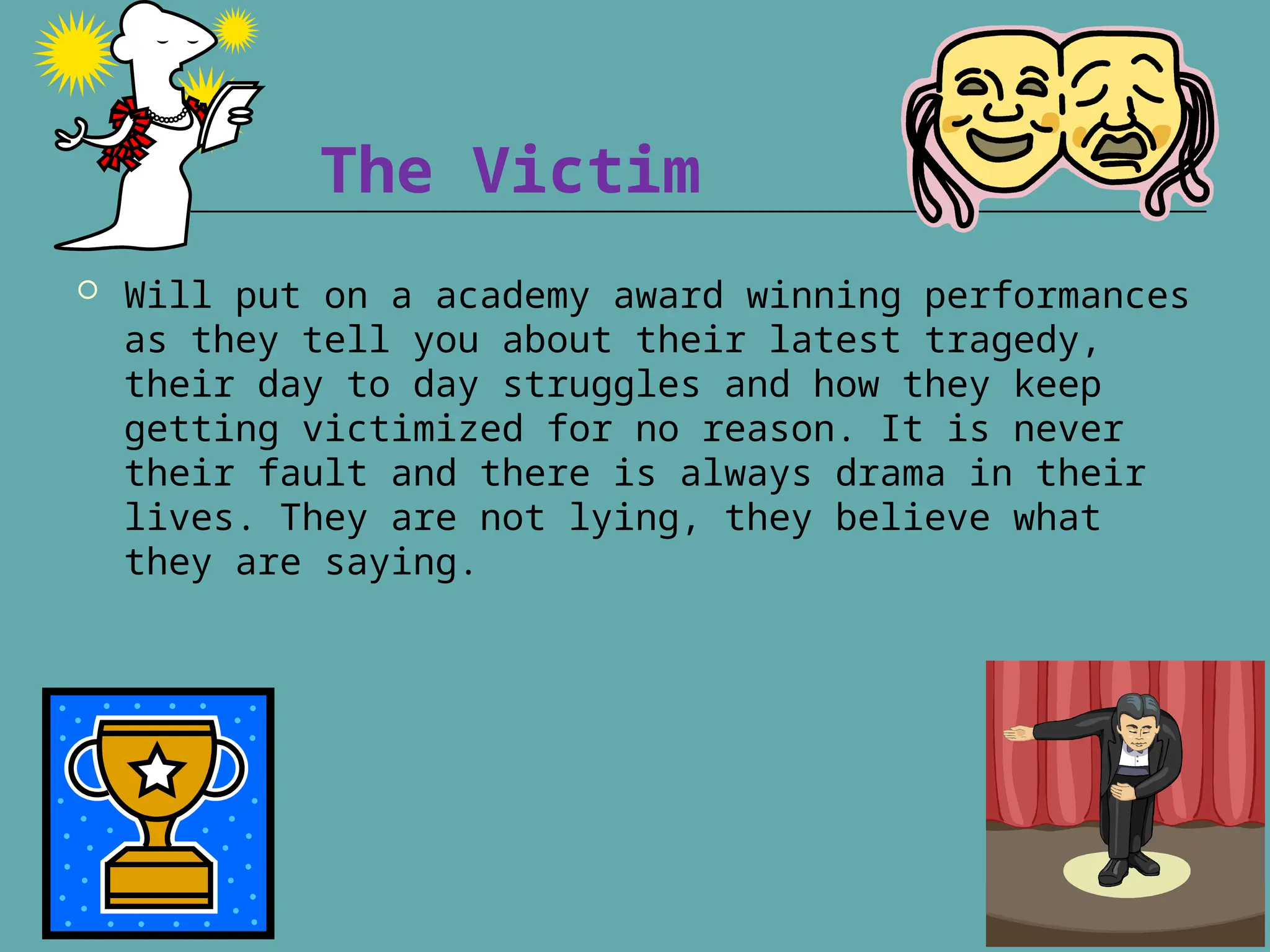
The Victim
 Will put on a academy award winning performances
as they tell you about their latest tragedy,
their day to day struggles and how they keep
getting victimized for no reason. It is never
their fault and there is always drama in their
lives. They are not lying, they believe what
they are saying.
Victim’s rewards
 Looking for someone to listen
to their stories, believe
them, validate them and
sympathize with them. They
want to bond with you and drag
you into their Lifetime Sunday
night special of the week.
They are clingy and love when
you are clingy.
How to treat a victim
 They are easy to retrain how to
follow you. “I need your help” and
“Can I count on you”
 Don’t challenge or try to “catch”
them in a lie or exaggeration. This
rewards them and gives them a
chance to prove something to you.
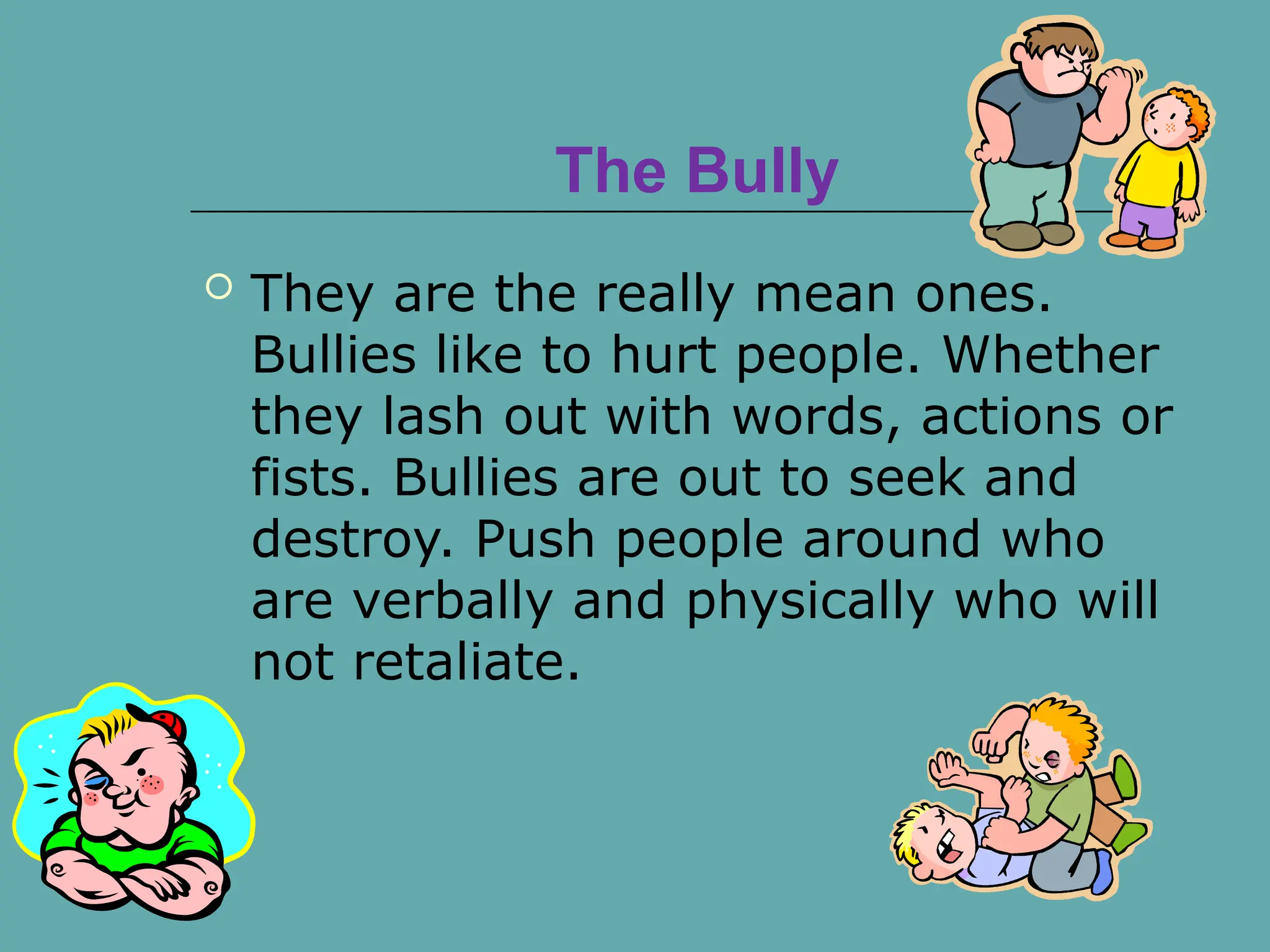
The Bully
 They are the really mean ones.
Bullies like to hurt people. Whether
they lash out with words, actions or
fists. Bullies are out to seek and
destroy. Push people around who
are verbally and physically who will
not retaliate.
Bully rewards
 Bullies are seeking an outlet and
will not stop until their quota has
been made. They enjoy a challenge
and it’s a reward if you think you
can teach them a lesson.
How to treat a Bully
 The more ego driven you are the more
you will try to challenge the bully. Deny
access or contact, be assertive not
aggressive
 Don’t try teach a bully a lesson or
prove anything to the bully. Egos can
get caught up in the mind games and
trying to win wars against the bully is
not the best way to work with them.
Five Basic Principles
1. Express empathy;
2. Develop discrepancy;
3. Avoid argumentation;
4. Roll with resistance;
5. Support self worth.
Express Empathy
 Convey a
feeling that
their behavior
makes sense
given the
context and
current way of
thinking about
them
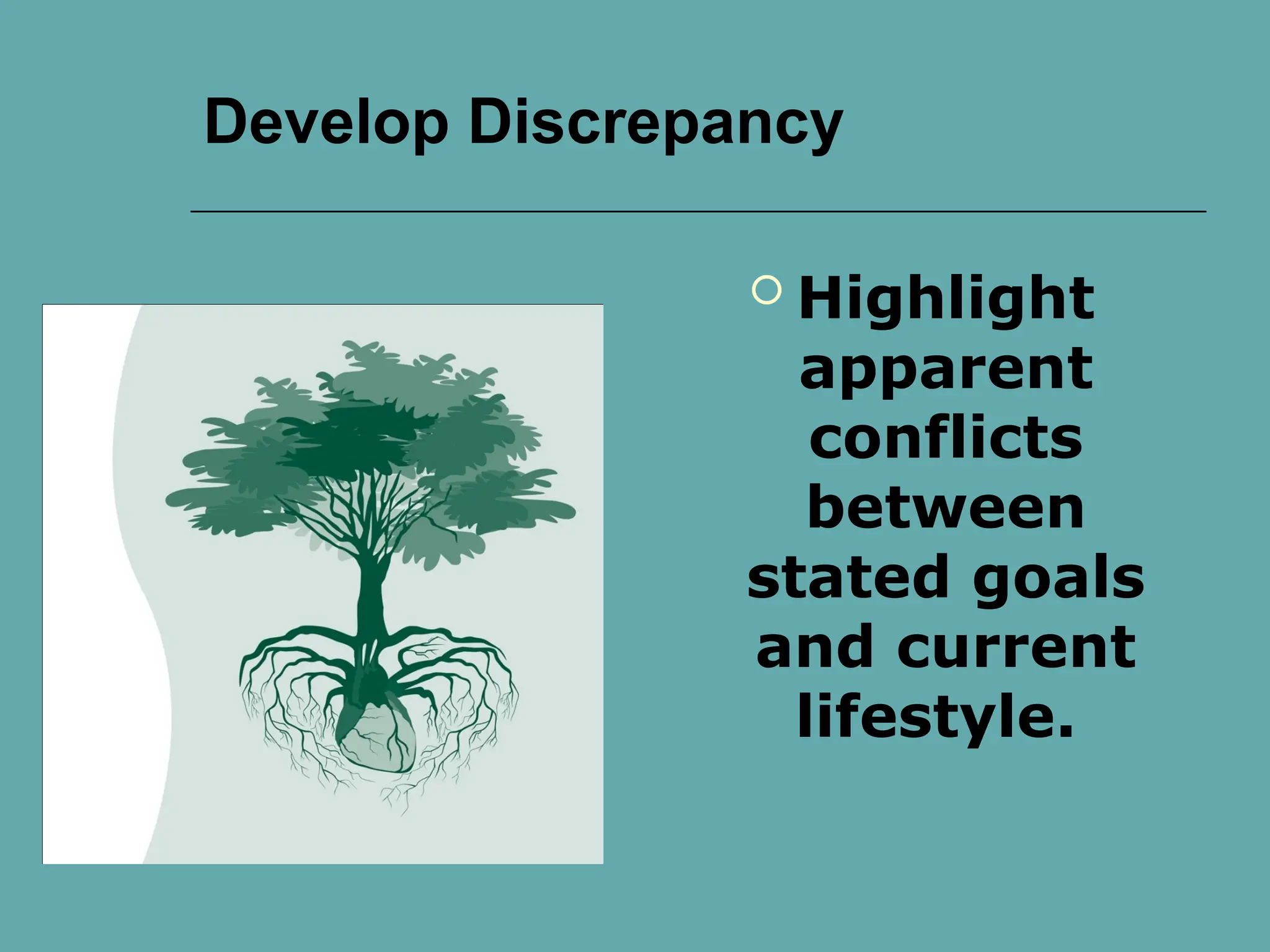
Develop Discrepancy
 Highlight
apparent
conflicts
between
stated goals
and current
lifestyle.
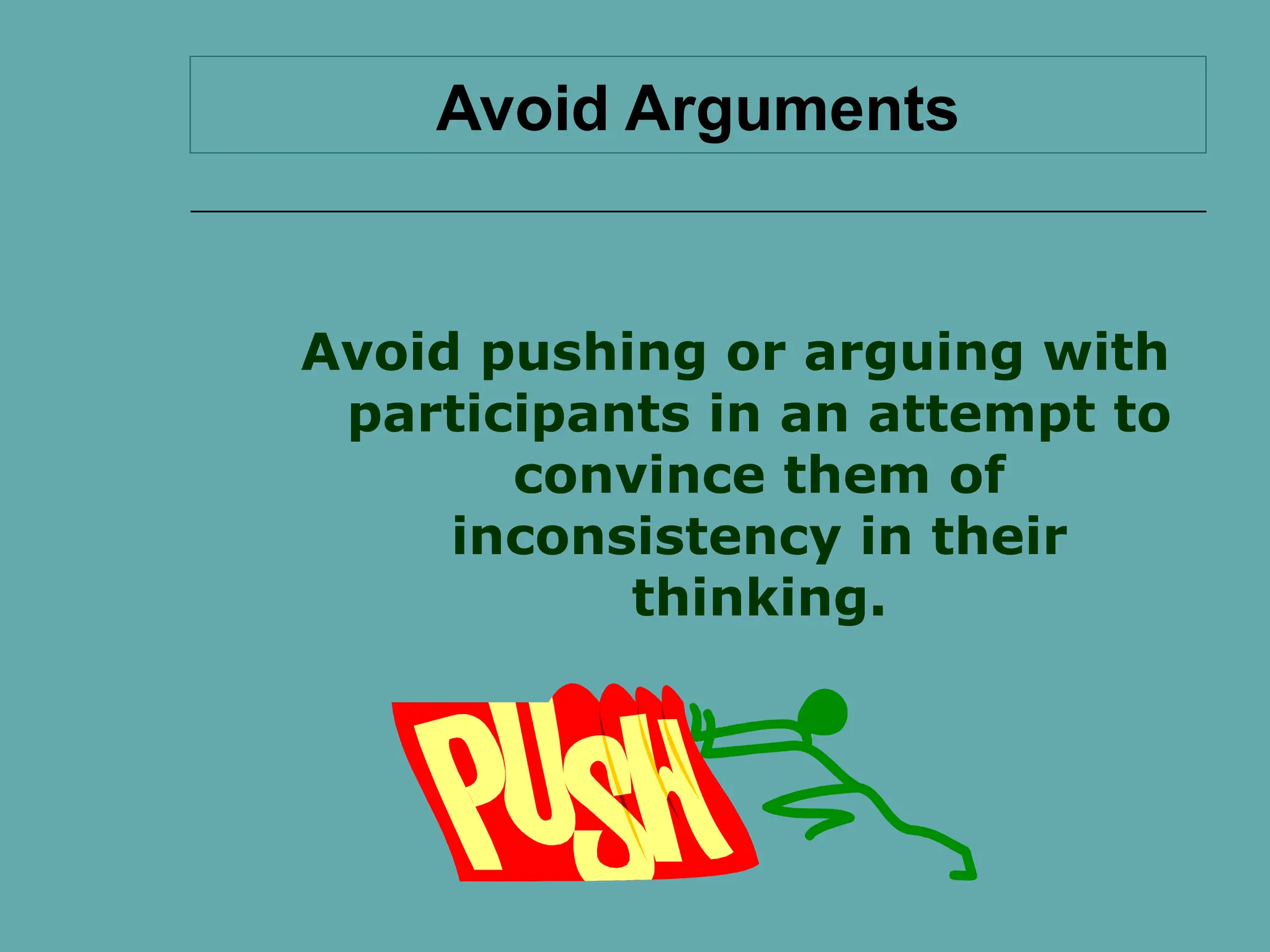
Avoid Arguments
Avoid pushing or arguing with
participants in an attempt to
convince them of
inconsistency in their
thinking.
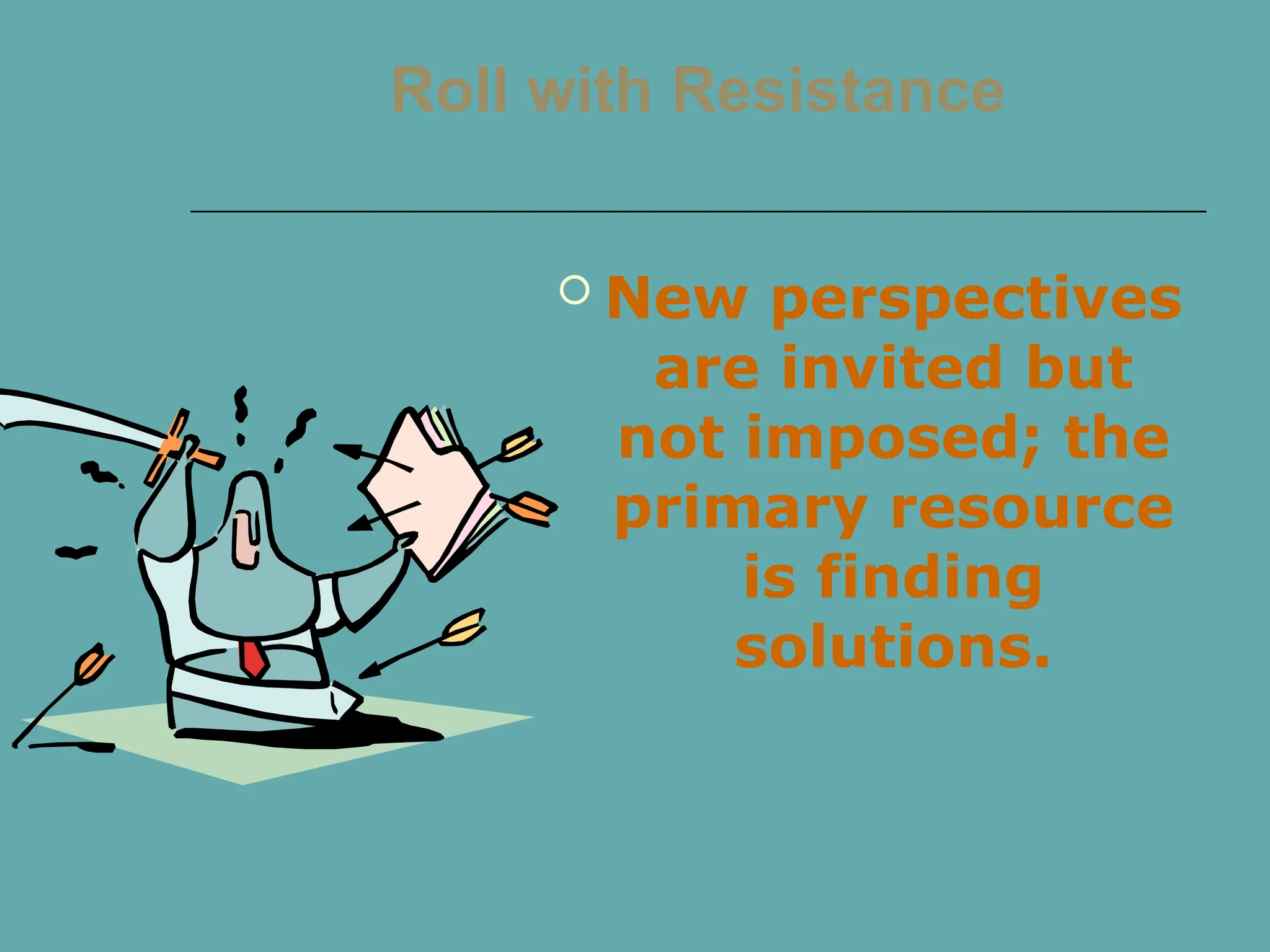
Roll with Resistance
 New perspectives
are invited but
not imposed; the
primary resource
is finding
solutions.
Support Self-Worth
Encourage
even the
smallest
attempts to
change.
Team Moral
 Empathy
 Conscience
 Self Control
 Respect
 Kindness
 Tolerance
 Fairness
REMEMBER
 Keep your word
 Be sure to follow through
 Refrain from gossip
 Be a friend
 Give a compliment
 Be enthusiastic and positive
 View everything you do from the
other side.
Develop Your Own Self Care Plan
1. Spend plenty of quiet time alone
2. Recharge your batteries daily
3. Hold one focused, connected and
meaningful conversation each day
Working-with-Difficult-People Working-with-Difficult-People

  • 1.
    “I Don’t LikeYou, but I Have to Work with You” WORKING WITH DIFFICULT PEOPLE
  • 2.
    OBJECTIVES 1. Identify differentpersonality types. 2. Learn skills to address various personality types. 3. Master skills to deal with difficult, angry, and unmotivated co-workers. 4. Learn tips for better communication. 5. Know the expectations of yourself and co- workers.
  • 3.
    The way yousee people is the way you treat them, and the way you treat them is the way they become.
  • 4.
    Understanding Emotions in Communication All communications contain some emotion or a mix of emotions  Emotions can confuse the message one is sending  Emotions are vital to happiness because they promote action  Negative emotions can drain your energy and everyone else's  Positive emotions promote positive communication
  • 5.
    Myths Regarding Personality Types Only10% of the population is difficult to work with. People demonstrate differences based on needs and desires to get what they need. Abnormal behavior is normal to difficult people. Your reaction to their abnormal behavior is normal to them as you play their game.
  • 6.
    Top Energy Slayers The Exploder  The Cry baby  The Gossip  The Sniper  The Time sucker  The Tank  The Beggar  The Victim  The Bully
  • 7.
    The Exploder Exploders yell,swear, threaten, insult and wave their hands in the air.
  • 8.
    The Exploder rewards Theywant to engage you. They feel bad and out of control and want you to feel bad and out of control as well. They are also seeking an excuse to explode. Looking for a dramatic reaction to their dramatic behavior.
  • 9.
    How to Treatan Exploder  Listen to and speak to the emotional side. Try to match their emotional side.  Validate, compliment, agree and transition with permission. Don’t challenge or engage; don’t take the bait
  • 10.
    The Cry baby Theycry all the time. For reasons other than why you and I might cry. They cry to get attention, to avoid communication, to distract from confrontation and avoid taking responsibility.
  • 11.
    The Cry babyRewards Looking to distract you from the real issue, distract you from the truth, distract you from someone else, or distract you from their wrong doing.
  • 12.
    How to treata Cry baby  Stay on the message disconnection is the key. Keep repeating the same closed ended questions. Lock them down let them know that this is going to happen and going to happen now.  Don’t get hooked in, don't engage, don’t comfort in anyway.
  • 13.
    The Gossip  Thegossip talks about anyone who is not in the room. They love to be the first ones to deliver the dirt on their “friends” and coworkers
  • 14.
    The Gossip’s rewards 1.Gathering information from you. 2. Deliver information to you; to achieve the ultimate reward. 3. Bonding with you.
  • 15.
    How To Treata gossip  Stop participating in the gossip. Stop listening. Take yourself out of the loop.  Introduce  Criticized  Revealed Don’t blind side them. Let them know you are no longer going to gossip
  • 16.
    The Sniper  Hurlsinsults marked as humor and they love to do it in a public forum. They love a crowd or an audience. They are passive aggressive and like to say insulting things but are not upfront about it.
  • 17.
    Sniper rewards  Lookingfor a laugh at your expense with no immediate, personal price to pay. They love it when people snipe back. They assume no one will call them on their behavior because people almost never do.
  • 18.
    How to treata Sniper  Call them on their behavior be calm, direct and assertive not aggressive.  Don’t engage in a battle if wits with a sniper. Show no weakness.
  • 19.
    The Time sucker They come into your space at work and just goof off. They do not care that your are serious about your work. They will often encourage you to take a “break” with them because they “are bored”.
  • 20.
    Time sucker reward’s Looking for a distraction, a confidant or a playmate. They want your time. They may be simply unaware of proper etiquette and boundaries
  • 21.
    How to treata time sucker  Set boundaries, be very assertive and give them clear instructions train them how you want to spend your time.  Don’t allow someone to steal your time just because you feel uncomfortable
  • 22.
    The Tank  Insteadof losing control they appear to be in control as the run right over you with their aggressive style of communication. It is difficult to interrupt them. They are very directed, targeted and difficult to stop. The go on and on and on.
  • 23.
    The Tank’s rewards 1.They want a verbal war 2. They want something specific and they’ll tell you what it is. They want to win and enjoy the spoils and they want to think they won because they are powerful. Looking for you to surrender, to agree, or just give them what they want.
  • 24.
    How to treata Tank  Let them win. Let them be right and agree with them Don’t stand there and be attacked move away
  • 25.
    The Beggar  Theywant your time and your money. They sell candy, raffle tickets or are putting together a party. They are just maybe a “little short” of cash for lunch. They won’t take no for an answer
  • 26.
    Beggars rewards  Theywill tell you what they want hoping to appeal to your generosity or guilt.
  • 27.
    How to treata Beggar  Say no and stick to it. Sympathize, say no, say why, suggest alternatives and repeat.  Remember all beggars can make you look bad to others if you are the only one saying no.
  • 28.
    The Victim  Willput on a academy award winning performances as they tell you about their latest tragedy, their day to day struggles and how they keep getting victimized for no reason. It is never their fault and there is always drama in their lives. They are not lying, they believe what they are saying.
  • 29.
    Victim’s rewards  Lookingfor someone to listen to their stories, believe them, validate them and sympathize with them. They want to bond with you and drag you into their Lifetime Sunday night special of the week. They are clingy and love when you are clingy.
  • 30.
    How to treata victim  They are easy to retrain how to follow you. “I need your help” and “Can I count on you”  Don’t challenge or try to “catch” them in a lie or exaggeration. This rewards them and gives them a chance to prove something to you.
  • 31.
    The Bully  Theyare the really mean ones. Bullies like to hurt people. Whether they lash out with words, actions or fists. Bullies are out to seek and destroy. Push people around who are verbally and physically who will not retaliate.
  • 32.
    Bully rewards  Bulliesare seeking an outlet and will not stop until their quota has been made. They enjoy a challenge and it’s a reward if you think you can teach them a lesson.
  • 33.
    How to treata Bully  The more ego driven you are the more you will try to challenge the bully. Deny access or contact, be assertive not aggressive  Don’t try teach a bully a lesson or prove anything to the bully. Egos can get caught up in the mind games and trying to win wars against the bully is not the best way to work with them.
  • 34.
    Five Basic Principles 1.Express empathy; 2. Develop discrepancy; 3. Avoid argumentation; 4. Roll with resistance; 5. Support self worth.
  • 35.
    Express Empathy  Conveya feeling that their behavior makes sense given the context and current way of thinking about them
  • 36.
  • 37.
    Avoid Arguments Avoid pushingor arguing with participants in an attempt to convince them of inconsistency in their thinking.
  • 38.
    Roll with Resistance New perspectives are invited but not imposed; the primary resource is finding solutions.
  • 39.
  • 40.
    Team Moral  Empathy Conscience  Self Control  Respect  Kindness  Tolerance  Fairness
  • 41.
    REMEMBER  Keep yourword  Be sure to follow through  Refrain from gossip  Be a friend  Give a compliment  Be enthusiastic and positive  View everything you do from the other side.
  • 42.
    Develop Your OwnSelf Care Plan 1. Spend plenty of quiet time alone 2. Recharge your batteries daily 3. Hold one focused, connected and meaningful conversation each day