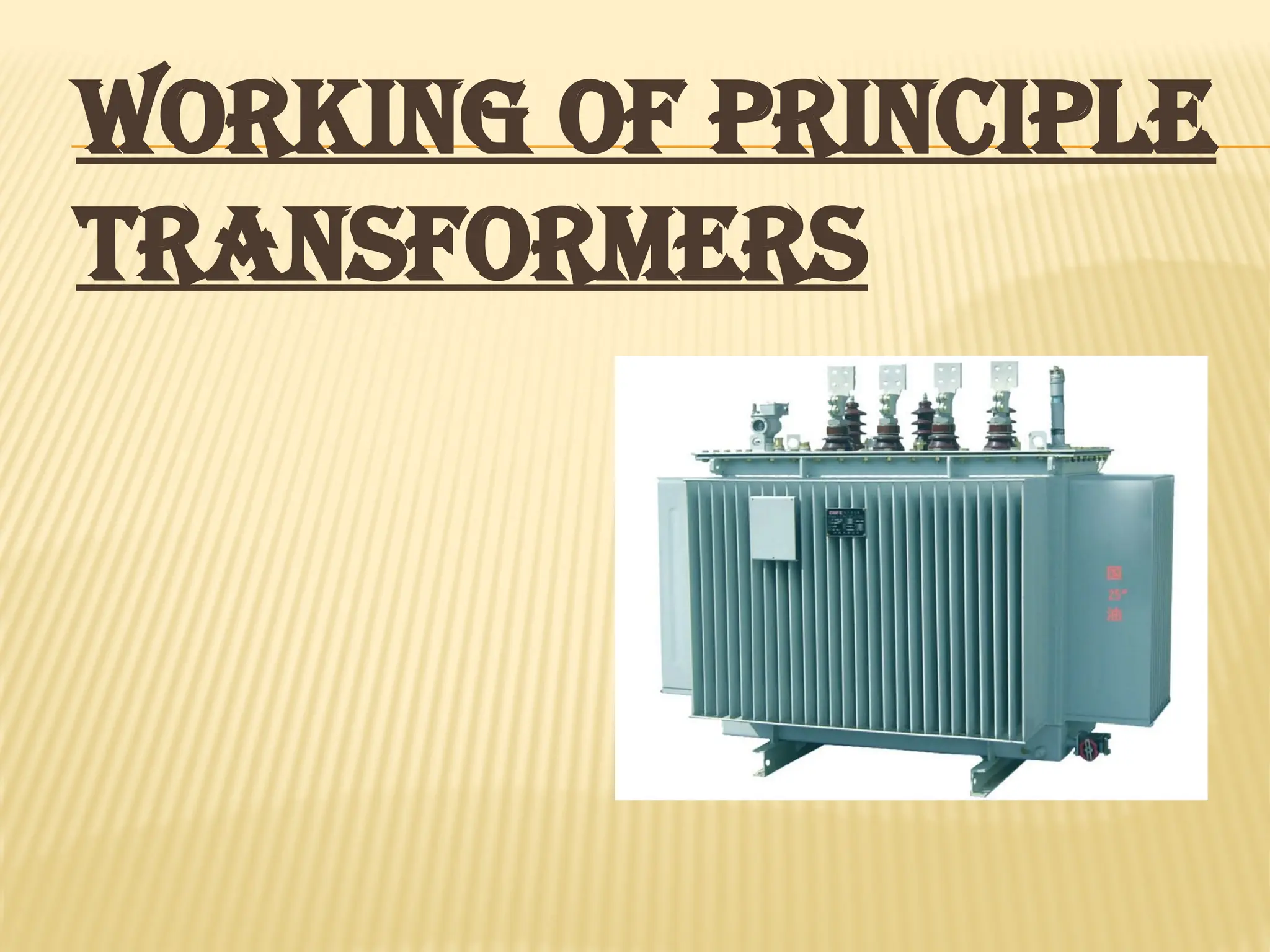
WORKING OF PRINCIPLE
TRANSFORMERS
CONTENT
 What is transformer.
 Structure of Transformer.
 Working principal of transformer.
 Overall Operations of Transformer.
 Uses and application of transformer
TRANSFORMER
 A transformer is a static device and used to transfer the
alternating power from one electric circuit to another electric
circuit.
 The process of transferring power is done without any
rotating part.
 In construction of the transformer, all parts are static.
 There is no electrical contact between them
 The desire change in voltage or current without any change
in frequency
STRUCTURE OF TRANSFORMER
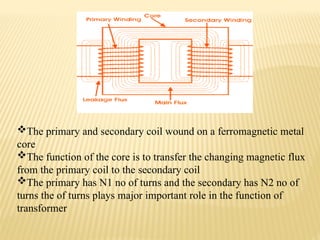
 The transformer two inductive coils ,these are electrical separated
but linked through a common magnetic current circuit
 These two coils have a high mutual induction
 One of the two coils is connected of alternating voltage .this coil
in which electrical energy is fed with the help of source called
primary winding (P) shown in fig.
 The other winding is connected to a load the electrical energy is
transformed to this winding drawn out to the load .this winding is
called secondary winding(S) shown in fig.
The primary and secondary coil wound on a ferromagnetic metal
core
The function of the core is to transfer the changing magnetic flux
from the primary coil to the secondary coil
The primary has N1 no of turns and the secondary has N2 no of
turns the of turns plays major important role in the function of
transformer
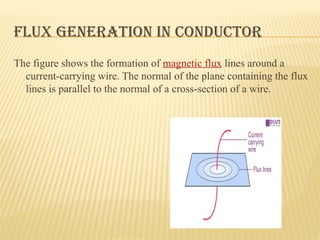
FLUX GENERATION IN CONDUCTOR
The figure shows the formation of magnetic flux lines around a
current-carrying wire. The normal of the plane containing the flux
lines is parallel to the normal of a cross-section of a wire.
WORKING PRINCIPLE
 The transformer works in the principle of mutual induction
“The principle of mutual induction states that when the two
coils are inductively coupled and if the current in coil change
uniformly then the e.m.f. induced in the other coils. This e.m.f
can drive a current when a closed path is provide to it.”
 When the alternating current flows in the primary coils, a
changing magnetic flux is generated around the primary coil.
 The changing magnetic flux is transferred to the secondary coil
through the iron core
 The changing magnetic flux is cut by the secondary coil, hence
induces an e.m.f in the secondary coil
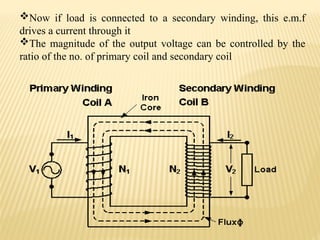
Now if load is connected to a secondary winding, this e.m.f
drives a current through it
The magnitude of the output voltage can be controlled by the
ratio of the no. of primary coil and secondary coil
OVERALL OPERATIONS OF
TRANSFORMER
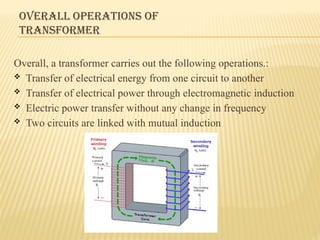
Overall, a transformer carries out the following operations.:
 Transfer of electrical energy from one circuit to another
 Transfer of electrical power through electromagnetic induction
 Electric power transfer without any change in frequency
 Two circuits are linked with mutual induction
APPLICATION OF A TRANSFORMER
 Power Transformers.
 Distribution Transformers.
 Measurement Transformers.
 Indoor Transformers.
 Outdoor Transformers.
SUMMARIZATION
 What is Transformer.
 Working Principle of transformer.
 Overall operations of transformer.
ASSIGNMENT
 Draw the diagram of transformer.
THANK YOU…

Working of principle TRANSFORMERss.pptx 1

  • 1.
  • 2.
    CONTENT  What istransformer.  Structure of Transformer.  Working principal of transformer.  Overall Operations of Transformer.  Uses and application of transformer
  • 3.
    TRANSFORMER  A transformeris a static device and used to transfer the alternating power from one electric circuit to another electric circuit.  The process of transferring power is done without any rotating part.  In construction of the transformer, all parts are static.  There is no electrical contact between them  The desire change in voltage or current without any change in frequency
  • 5.
    STRUCTURE OF TRANSFORMER The transformer two inductive coils ,these are electrical separated but linked through a common magnetic current circuit  These two coils have a high mutual induction  One of the two coils is connected of alternating voltage .this coil in which electrical energy is fed with the help of source called primary winding (P) shown in fig.  The other winding is connected to a load the electrical energy is transformed to this winding drawn out to the load .this winding is called secondary winding(S) shown in fig.
  • 6.
    The primary andsecondary coil wound on a ferromagnetic metal core The function of the core is to transfer the changing magnetic flux from the primary coil to the secondary coil The primary has N1 no of turns and the secondary has N2 no of turns the of turns plays major important role in the function of transformer
  • 7.
    FLUX GENERATION INCONDUCTOR The figure shows the formation of magnetic flux lines around a current-carrying wire. The normal of the plane containing the flux lines is parallel to the normal of a cross-section of a wire.
  • 8.
    WORKING PRINCIPLE  Thetransformer works in the principle of mutual induction “The principle of mutual induction states that when the two coils are inductively coupled and if the current in coil change uniformly then the e.m.f. induced in the other coils. This e.m.f can drive a current when a closed path is provide to it.”  When the alternating current flows in the primary coils, a changing magnetic flux is generated around the primary coil.  The changing magnetic flux is transferred to the secondary coil through the iron core  The changing magnetic flux is cut by the secondary coil, hence induces an e.m.f in the secondary coil
  • 9.
    Now if loadis connected to a secondary winding, this e.m.f drives a current through it The magnitude of the output voltage can be controlled by the ratio of the no. of primary coil and secondary coil
  • 10.
    OVERALL OPERATIONS OF TRANSFORMER Overall,a transformer carries out the following operations.:  Transfer of electrical energy from one circuit to another  Transfer of electrical power through electromagnetic induction  Electric power transfer without any change in frequency  Two circuits are linked with mutual induction
  • 11.
    APPLICATION OF ATRANSFORMER  Power Transformers.  Distribution Transformers.  Measurement Transformers.  Indoor Transformers.  Outdoor Transformers.
  • 12.
    SUMMARIZATION  What isTransformer.  Working Principle of transformer.  Overall operations of transformer.
  • 13.
    ASSIGNMENT  Draw thediagram of transformer.
  • 14.