












The Work Sampling System: 
An Overview 
SSaammuueell JJ.. MMeeiisseellss 
ssmmeeiisseellss@@eerriikkssoonn..eedduu
Performance Assessment 
Methods that enable children 
to demonstrate their knowledge, skills, 
and personality through performing 
tasks that are part of their daily 
experience.
The best way to evaluate 
a child’s performance is 
to study performance, 
not something else.
Curriculum-Embedded 
Assessments 
Assessments based on 
students’ typical classroom 
performance.
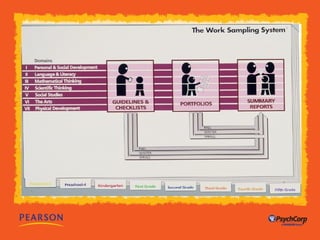
The Work Sampling System 
A continuous progress, instructional assessment 
that uses: 
• Guidelines and Checklists, 
• Portfolios, and 
• Summary Reports 
To help teachers document and assess 
children’s skills, knowledge, behaviors, and 
academic achievements from preschool (3- year 
olds) to Grade 6.
Purpose of a 
Performance-Based Checklist 
Helps teachers: 
• Observe and document children’s skills and 
accomplishments, 
• Keep track of what individual children know 
and can do, 
• Plan developmentally-appropriate classroom 
experiences throughout the year.
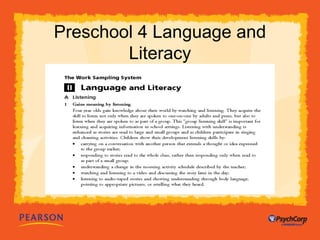
Language & Literacy 
• Listening 
• Speaking 
• Reading 
• Writing 
• Research
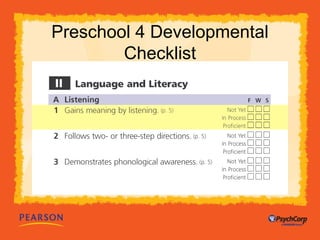
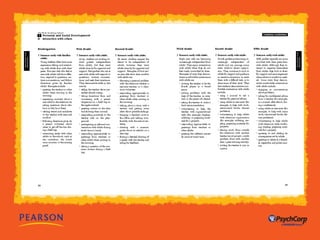
Preschool 4 Developmental 
Checklist
Preschool 4 Language and 
Literacy
Portfolios 
A purposeful collection of 
students’ work
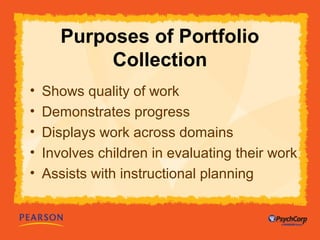
Purposes of Portfolio 
Collection 
• Shows quality of work 
• Demonstrates progress 
• Displays work across domains 
• Involves children in evaluating their work 
• Assists with instructional planning
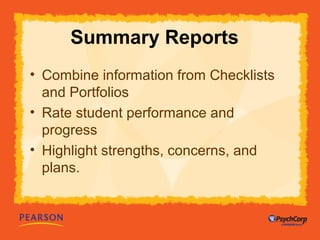
Summary Reports 
• Combine information from Checklists 
and Portfolios 
• Rate student performance and 
progress 
• Highlight strengths, concerns, and 
plans.
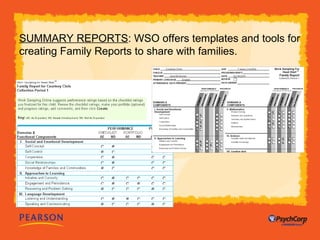
SUMMARY REPORTS: WSO offers templates and tools for 
creating Family Reports to share with families.
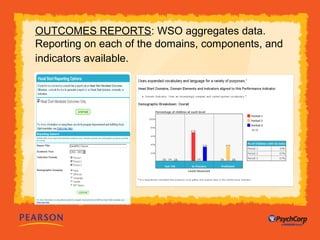
OUTCOMES REPORTS: WSO aggregates data. 
Reporting on each of the domains, components, and 
indicators available.
CCaann WWee TTrruusstt 
TTeeaacchheerrss’’ JJuuddggmmeennttss??
Purpose of Study 
To evaluate the validity of 
the Work Sampling System 
(WSS) as a measure of children’s 
learning and academic 
achievement.
Principal Study Questions 
• Is WSS a valid means of evaluating student 
achievement and progress? 
• What is the impact of WSS on families? 
• What is the impact of WSS on student learning?
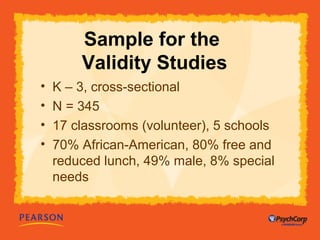
Sample for the 
Validity Studies 
• K – 3, cross-sectional 
• N = 345 
• 17 classrooms (volunteer), 5 schools 
• 70% African-American, 80% free and 
reduced lunch, 49% male, 8% special 
needs
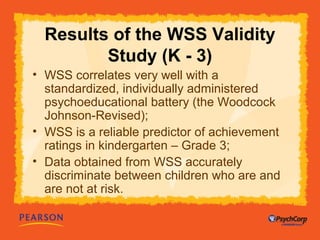
Results of the WSS Validity 
Study (K - 3) 
• WSS correlates very well with a 
standardized, individually administered 
psychoeducational battery (the Woodcock 
Johnson-Revised); 
• WSS is a reliable predictor of achievement 
ratings in kindergarten – Grade 3; 
• Data obtained from WSS accurately 
discriminate between children who are and 
are not at risk.
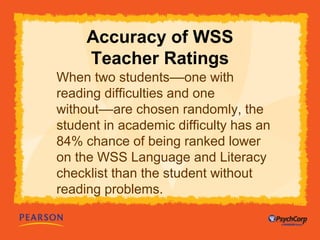
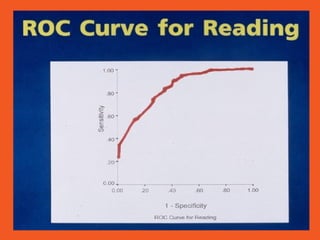
Accuracy of WSS 
Teacher Ratings 
When two students––one with 
reading difficulties and one 
without––are chosen randomly, the 
student in academic difficulty has an 
84% chance of being ranked lower 
on the WSS Language and Literacy 
checklist than the student without 
reading problems.
Parental Reactions to 
Work Sampling 
Parents in this study (N = 246; 70% return rate): 
• Hold positive attitudes toward WSS 
• Believe that WSS is beneficial 
• Prefer WSS summary reports to conventional 
report cards 
• Want their children to continue participating in 
WSS classrooms
How Parental Reactions Are 
Formed 
• Parents’ perceptions of teachers’ 
willingness to use WSS. 
• Teachers’ availability to answer parents’ 
questions about WSS.
DDooeess IInnssttrruuccttiioonnaall 
AAsssseessssmmeenntt IImmppaacctt 
CChhiillddrreenn’’ss LLeeaarrnniinngg??
Impact on 
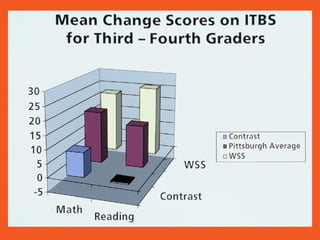
Achievement Test Scores 
WSS, low-income, urban, minority third 
and fourth grade students’ (N=96) 
performance on the ITBS exceeds the 
scores of a matched contrast group 
(N=116), and those of other students in 
the district (N=2922).
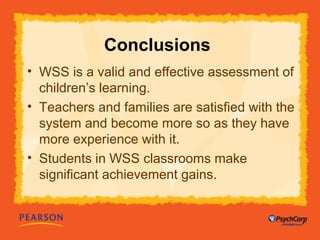
Conclusions 
• WSS is a valid and effective assessment of 
children’s learning. 
• Teachers and families are satisfied with the 
system and become more so as they have 
more experience with it. 
• Students in WSS classrooms make 
significant achievement gains.
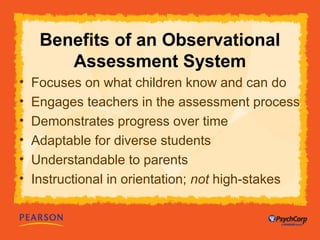
Benefits of an Observational 
Assessment System 
• Focuses on what children know and can do 
• Engages teachers in the assessment process 
• Demonstrates progress over time 
• Adaptable for diverse students 
• Understandable to parents 
• Instructional in orientation; not high-stakes
TThhee bbeesstt wwaayy ttoo 
iimmpprroovvee aa cchhiilldd’’ss 
ppeerrffoorrmmaannccee iiss ttoo 
tteeaacchh tthhee cchhiilldd,, nnoott 
tteesstt tthhee cchhiilldd..
Work Sampling System in Early Childhood Education

Work Sampling System in Early Childhood Education

  • 1.
    The Work SamplingSystem: An Overview SSaammuueell JJ.. MMeeiisseellss ssmmeeiisseellss@@eerriikkssoonn..eedduu
  • 3.
    Performance Assessment Methodsthat enable children to demonstrate their knowledge, skills, and personality through performing tasks that are part of their daily experience.
  • 4.
    The best wayto evaluate a child’s performance is to study performance, not something else.
  • 6.
    Curriculum-Embedded Assessments Assessmentsbased on students’ typical classroom performance.
  • 7.
    The Work SamplingSystem A continuous progress, instructional assessment that uses: • Guidelines and Checklists, • Portfolios, and • Summary Reports To help teachers document and assess children’s skills, knowledge, behaviors, and academic achievements from preschool (3- year olds) to Grade 6.
  • 9.
    Purpose of a Performance-Based Checklist Helps teachers: • Observe and document children’s skills and accomplishments, • Keep track of what individual children know and can do, • Plan developmentally-appropriate classroom experiences throughout the year.
  • 10.
    Language & Literacy • Listening • Speaking • Reading • Writing • Research
  • 11.
  • 12.
  • 15.
    Portfolios A purposefulcollection of students’ work
  • 16.
    Purposes of Portfolio Collection • Shows quality of work • Demonstrates progress • Displays work across domains • Involves children in evaluating their work • Assists with instructional planning
  • 23.
    Summary Reports •Combine information from Checklists and Portfolios • Rate student performance and progress • Highlight strengths, concerns, and plans.
  • 24.
    SUMMARY REPORTS: WSOoffers templates and tools for creating Family Reports to share with families.
  • 25.
    OUTCOMES REPORTS: WSOaggregates data. Reporting on each of the domains, components, and indicators available.
  • 26.
    CCaann WWee TTrruusstt TTeeaacchheerrss’’ JJuuddggmmeennttss??
  • 27.
    Purpose of Study To evaluate the validity of the Work Sampling System (WSS) as a measure of children’s learning and academic achievement.
  • 28.
    Principal Study Questions • Is WSS a valid means of evaluating student achievement and progress? • What is the impact of WSS on families? • What is the impact of WSS on student learning?
  • 29.
    Sample for the Validity Studies • K – 3, cross-sectional • N = 345 • 17 classrooms (volunteer), 5 schools • 70% African-American, 80% free and reduced lunch, 49% male, 8% special needs
  • 30.
    Results of theWSS Validity Study (K - 3) • WSS correlates very well with a standardized, individually administered psychoeducational battery (the Woodcock Johnson-Revised); • WSS is a reliable predictor of achievement ratings in kindergarten – Grade 3; • Data obtained from WSS accurately discriminate between children who are and are not at risk.
  • 31.
    Accuracy of WSS Teacher Ratings When two students––one with reading difficulties and one without––are chosen randomly, the student in academic difficulty has an 84% chance of being ranked lower on the WSS Language and Literacy checklist than the student without reading problems.
  • 33.
    Parental Reactions to Work Sampling Parents in this study (N = 246; 70% return rate): • Hold positive attitudes toward WSS • Believe that WSS is beneficial • Prefer WSS summary reports to conventional report cards • Want their children to continue participating in WSS classrooms
  • 34.
    How Parental ReactionsAre Formed • Parents’ perceptions of teachers’ willingness to use WSS. • Teachers’ availability to answer parents’ questions about WSS.
  • 35.
    DDooeess IInnssttrruuccttiioonnaall AAsssseessssmmeennttIImmppaacctt CChhiillddrreenn’’ss LLeeaarrnniinngg??
  • 36.
    Impact on AchievementTest Scores WSS, low-income, urban, minority third and fourth grade students’ (N=96) performance on the ITBS exceeds the scores of a matched contrast group (N=116), and those of other students in the district (N=2922).
  • 38.
    Conclusions • WSSis a valid and effective assessment of children’s learning. • Teachers and families are satisfied with the system and become more so as they have more experience with it. • Students in WSS classrooms make significant achievement gains.
  • 39.
    Benefits of anObservational Assessment System • Focuses on what children know and can do • Engages teachers in the assessment process • Demonstrates progress over time • Adaptable for diverse students • Understandable to parents • Instructional in orientation; not high-stakes
  • 40.
    TThhee bbeesstt wwaayyttoo iimmpprroovvee aa cchhiilldd’’ss ppeerrffoorrmmaannccee iiss ttoo tteeaacchh tthhee cchhiilldd,, nnoott tteesstt tthhee cchhiilldd..