Chemical Safety
Chemical Safety
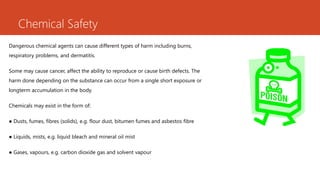
Dangerous chemical agents can cause different types of harm including burns,
respiratory problems, and dermatitis.
Some may cause cancer, affect the ability to reproduce or cause birth defects. The
harm done depending on the substance can occur from a single short exposure or
longterm accumulation in the body.
Chemicals may exist in the form of:
● Dusts, fumes, fibres (solids), e.g. flour dust, bitumen fumes and asbestos fibre
● Liquids, mists, e.g. liquid bleach and mineral oil mist
● Gases, vapours, e.g. carbon dioxide gas and solvent vapour
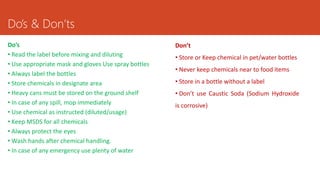
Do’s
• Read the label before mixing and diluting
• Use appropriate mask and gloves Use spray bottles
• Always label the bottles
• Store chemicals in designate area
• Heavy cans must be stored on the ground shelf
• In case of any spill, mop immediately
• Use chemical as instructed (diluted/usage)
• Keep MSDS for all chemicals
• Always protect the eyes
• Wash hands after chemical handling.
• In case of any emergency use plenty of water
Don’t
• Store or Keep chemical in pet/water bottles
• Never keep chemicals near to food items
• Store in a bottle without a label
• Don’t use Caustic Soda (Sodium Hydroxide
is corrosive)
Do’s & Don’ts
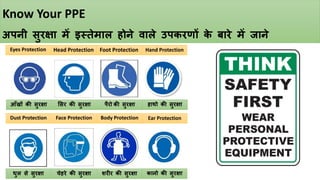
Know Your PPE
अपनी सुरक्षा में इस्तेमाल होने वाले उपकरणों क
े बारे में जाने
Eyes Protection
Face Protection Body Protection Ear Protection
Hand Protection
Foot Protection
Head Protection
Dust Protection
चेहरे की सुरक्षा शरीर की सुरक्षा कानो की सुरक्षा
धुल से सुरक्षा
ससर की सुरक्षा पैरो की सुरक्षा हाथो की सुरक्षा
आँखों की सुरक्षा
EYES
IMMEDIATELY irrigate with running cold water for 15 minutes minimum – seek medical attention after irrigating
SKIN
Remove contaminated clothing, and wash body thoroughly with hot soapy water, rinse with clean water, dry off, and wear
clean non contaminated clothing.
INHALATION
Move to well ventilated area, perform required first aid & where necessary seek medical attention.
Work safety - Chemical Safety

Work safety - Chemical Safety

  • 1.
  • 2.
    Chemical Safety Dangerous chemicalagents can cause different types of harm including burns, respiratory problems, and dermatitis. Some may cause cancer, affect the ability to reproduce or cause birth defects. The harm done depending on the substance can occur from a single short exposure or longterm accumulation in the body. Chemicals may exist in the form of: ● Dusts, fumes, fibres (solids), e.g. flour dust, bitumen fumes and asbestos fibre ● Liquids, mists, e.g. liquid bleach and mineral oil mist ● Gases, vapours, e.g. carbon dioxide gas and solvent vapour
  • 3.
    Do’s • Read thelabel before mixing and diluting • Use appropriate mask and gloves Use spray bottles • Always label the bottles • Store chemicals in designate area • Heavy cans must be stored on the ground shelf • In case of any spill, mop immediately • Use chemical as instructed (diluted/usage) • Keep MSDS for all chemicals • Always protect the eyes • Wash hands after chemical handling. • In case of any emergency use plenty of water Don’t • Store or Keep chemical in pet/water bottles • Never keep chemicals near to food items • Store in a bottle without a label • Don’t use Caustic Soda (Sodium Hydroxide is corrosive) Do’s & Don’ts
  • 4.
    Know Your PPE अपनीसुरक्षा में इस्तेमाल होने वाले उपकरणों क े बारे में जाने Eyes Protection Face Protection Body Protection Ear Protection Hand Protection Foot Protection Head Protection Dust Protection चेहरे की सुरक्षा शरीर की सुरक्षा कानो की सुरक्षा धुल से सुरक्षा ससर की सुरक्षा पैरो की सुरक्षा हाथो की सुरक्षा आँखों की सुरक्षा
  • 5.
    EYES IMMEDIATELY irrigate withrunning cold water for 15 minutes minimum – seek medical attention after irrigating SKIN Remove contaminated clothing, and wash body thoroughly with hot soapy water, rinse with clean water, dry off, and wear clean non contaminated clothing. INHALATION Move to well ventilated area, perform required first aid & where necessary seek medical attention.

Editor's Notes

  • #7 In Slide Show mode, click the arrow to enter the PowerPoint Getting Started Center.