@charlieykim@meghanmess
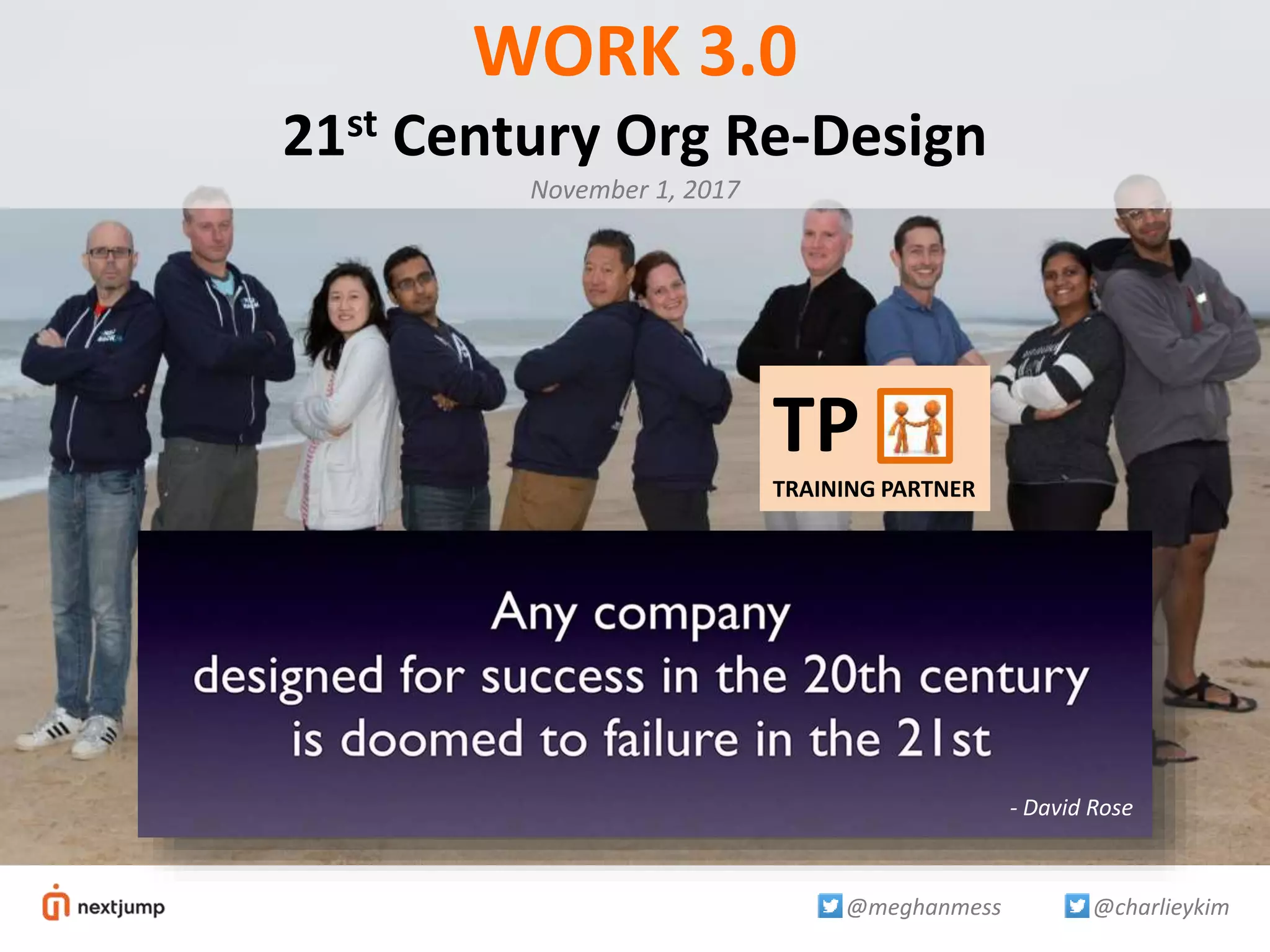
WORK 3.0
21st Century Org Re-Design
November 1, 2017
- David Rose
TP
TRAINING PARTNER
2
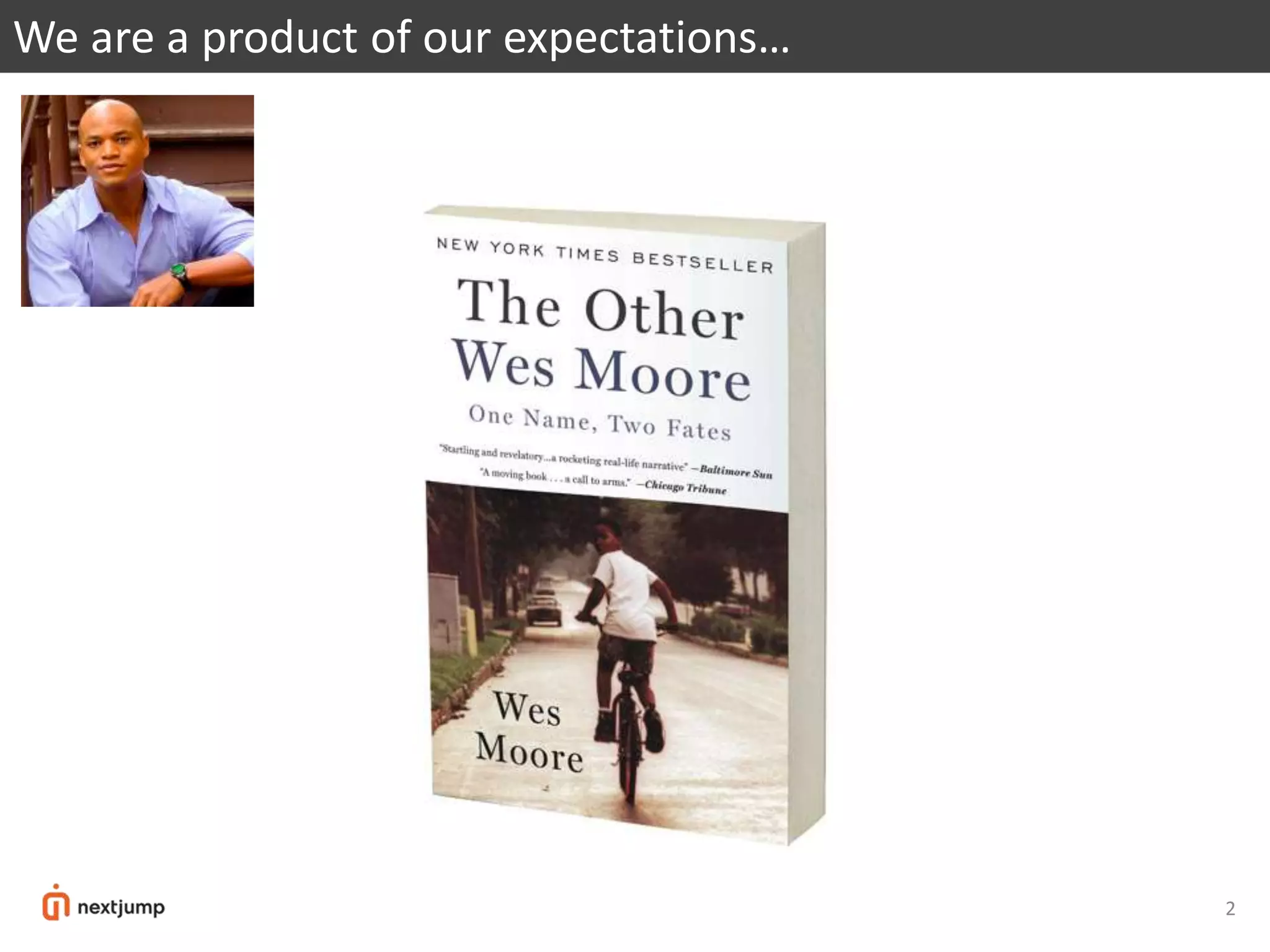
We are a product of our expectations…
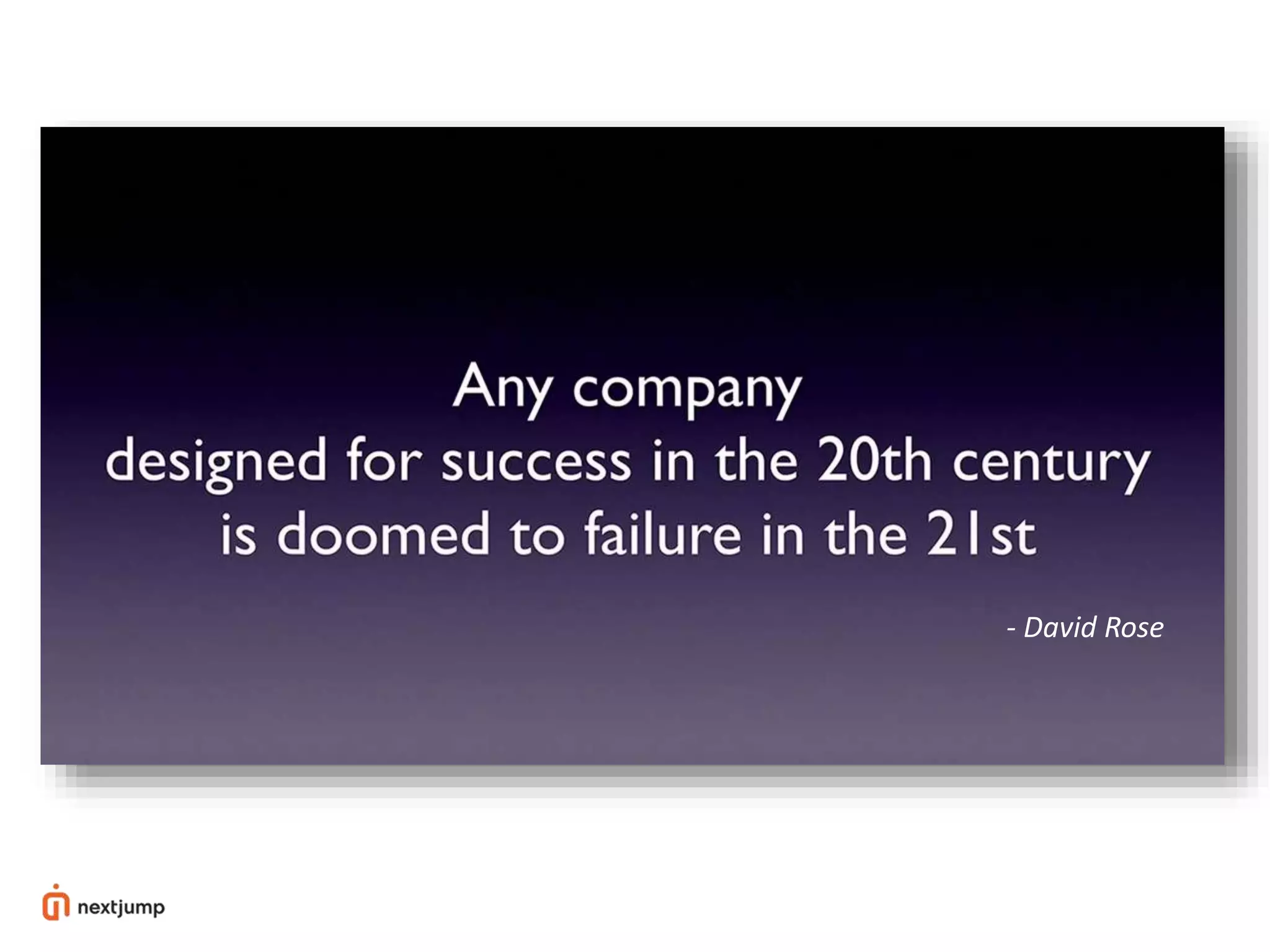
- David Rose
4
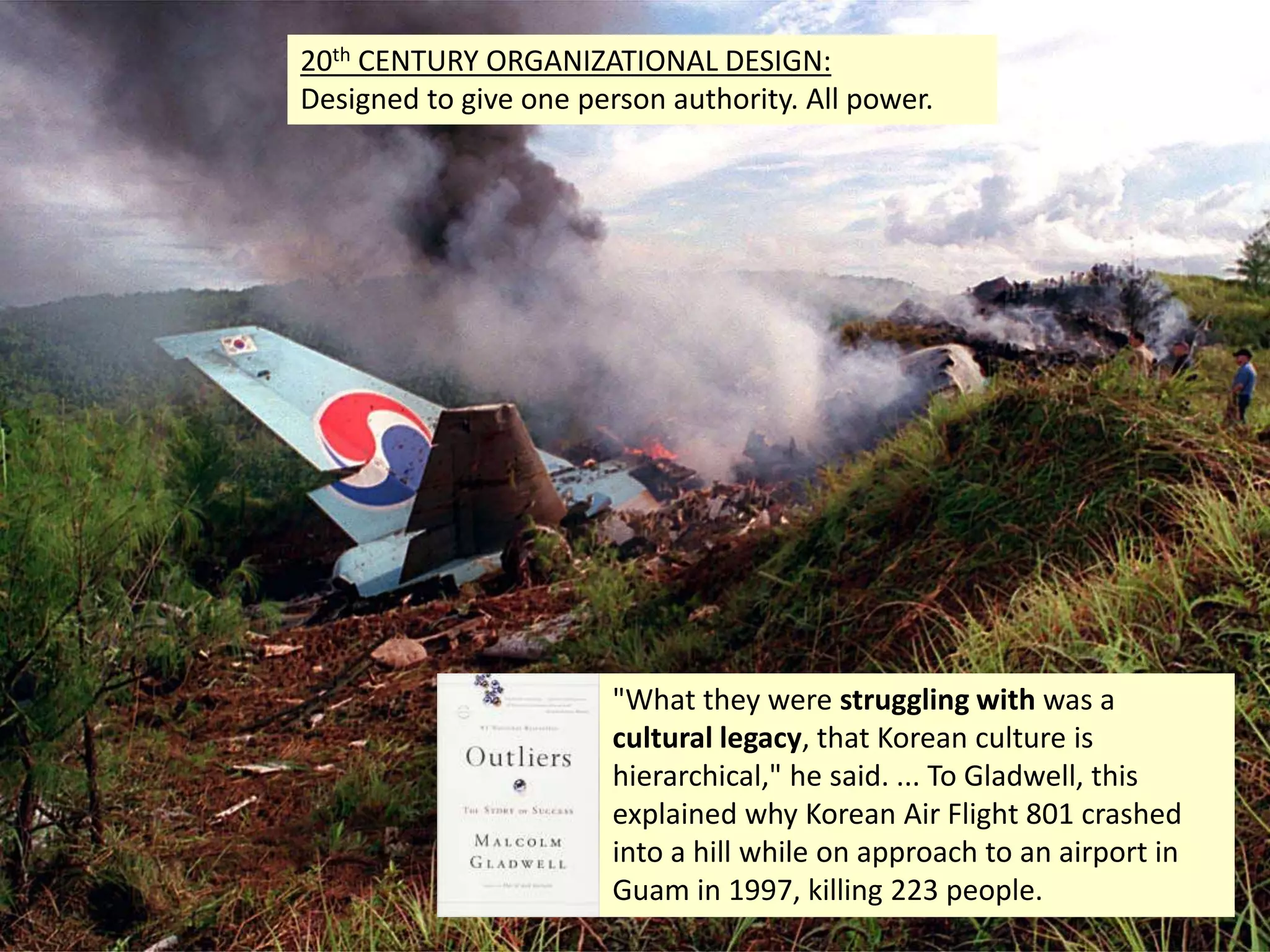
"What they were struggling with was a
cultural legacy, that Korean culture is
hierarchical," he said. ... To Gladwell, this
explained why Korean Air Flight 801 crashed
into a hill while on approach to an airport in
Guam in 1997, killing 223 people.
20th CENTURY ORGANIZATIONAL DESIGN:
Designed to give one person authority. All power.
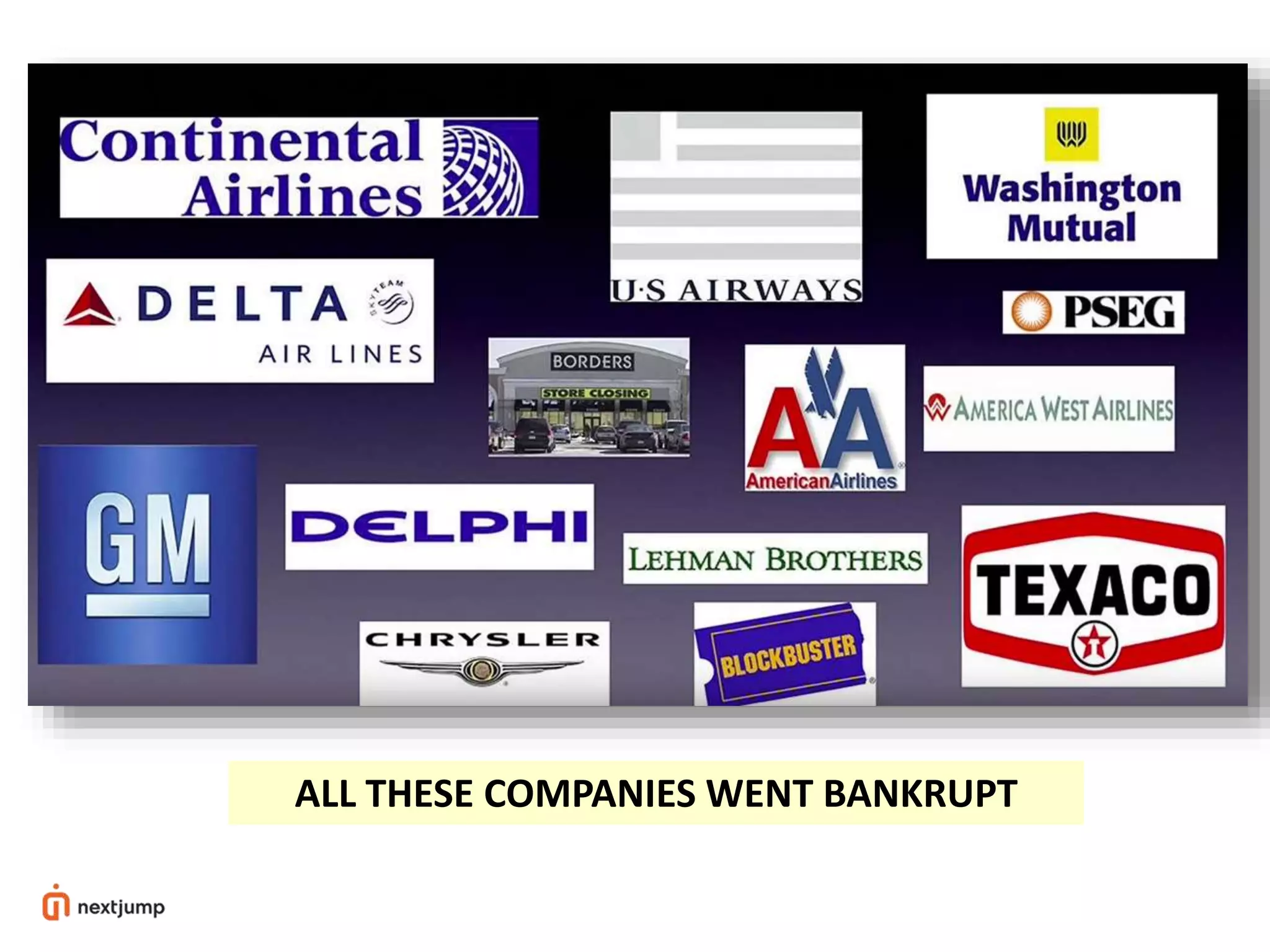
ALL THESE COMPANIES WENT BANKRUPT
6
CIA HEAD OF STRATEGY:
“The greatest challenge we are facing as a business, frankly, is
that our business environment is changing much more rapidly
than our ability to adapt. In nature, this sort of thing leads to
extinction.” [we need ADAPTIVE LEARNING TEAMS]
7
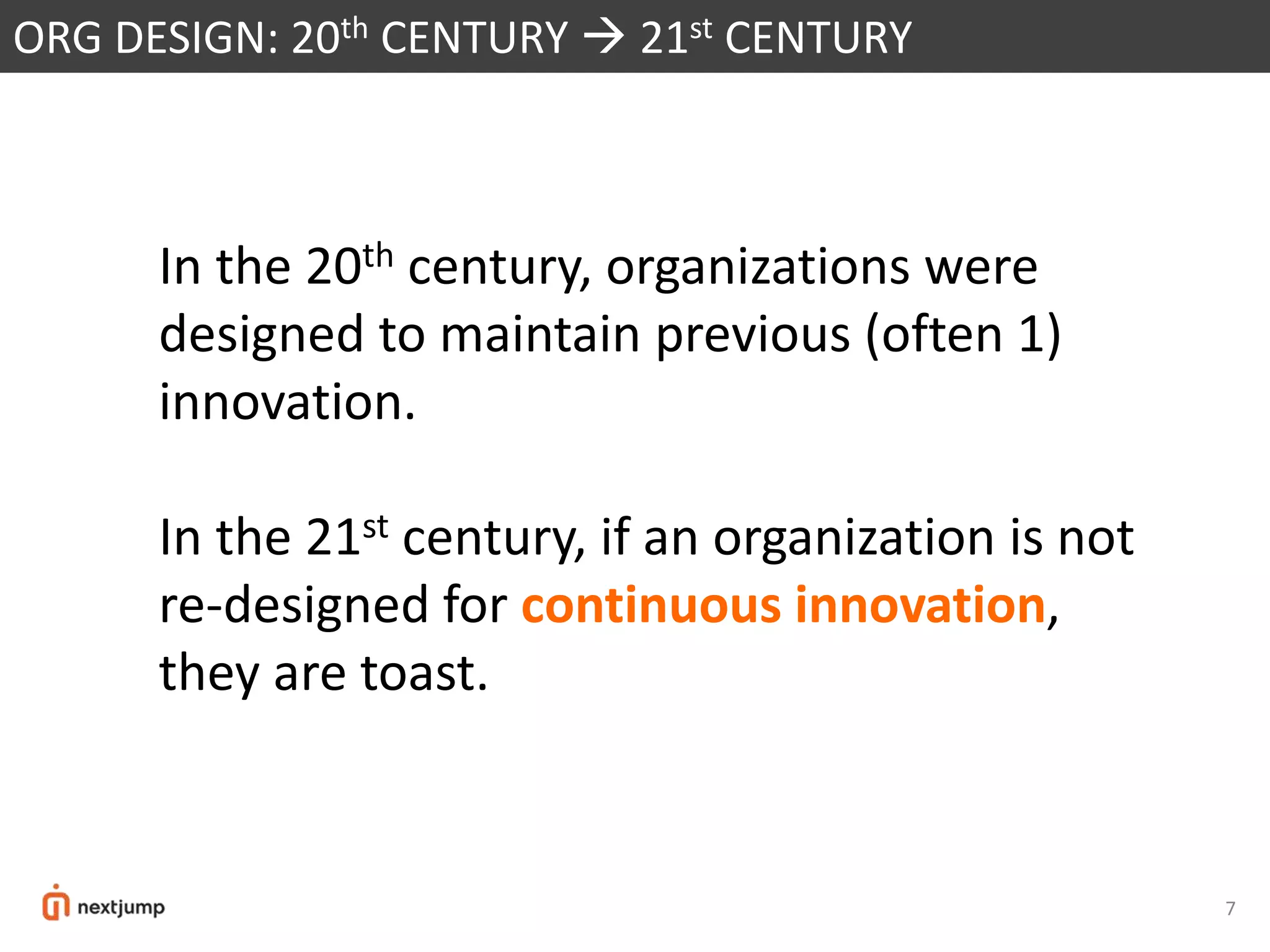
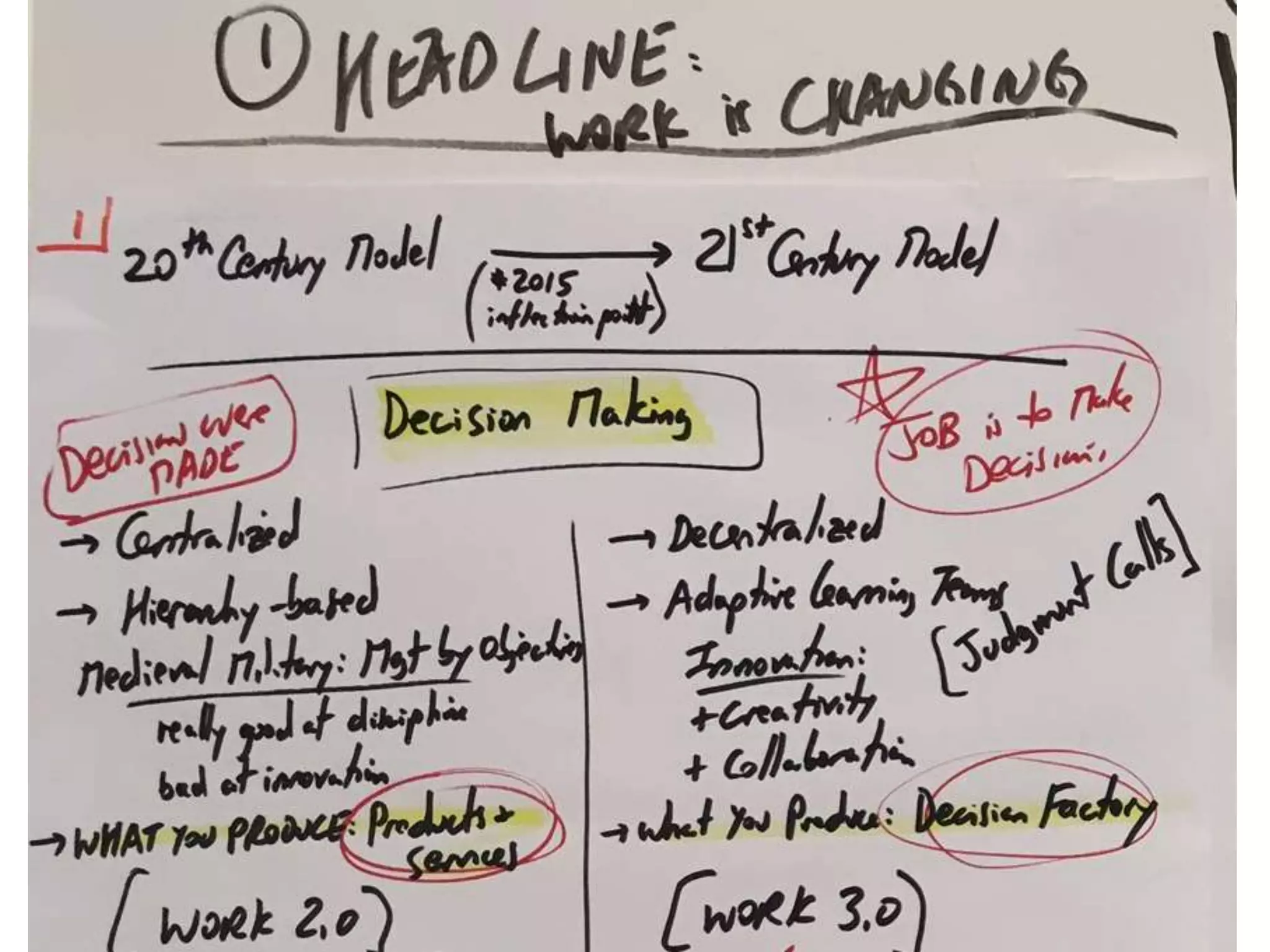
ORG DESIGN: 20th CENTURY  21st CENTURY
In the 20th century, organizations were
designed to maintain previous (often 1)
innovation.
In the 21st century, if an organization is not
re-designed for continuous innovation,
they are toast.
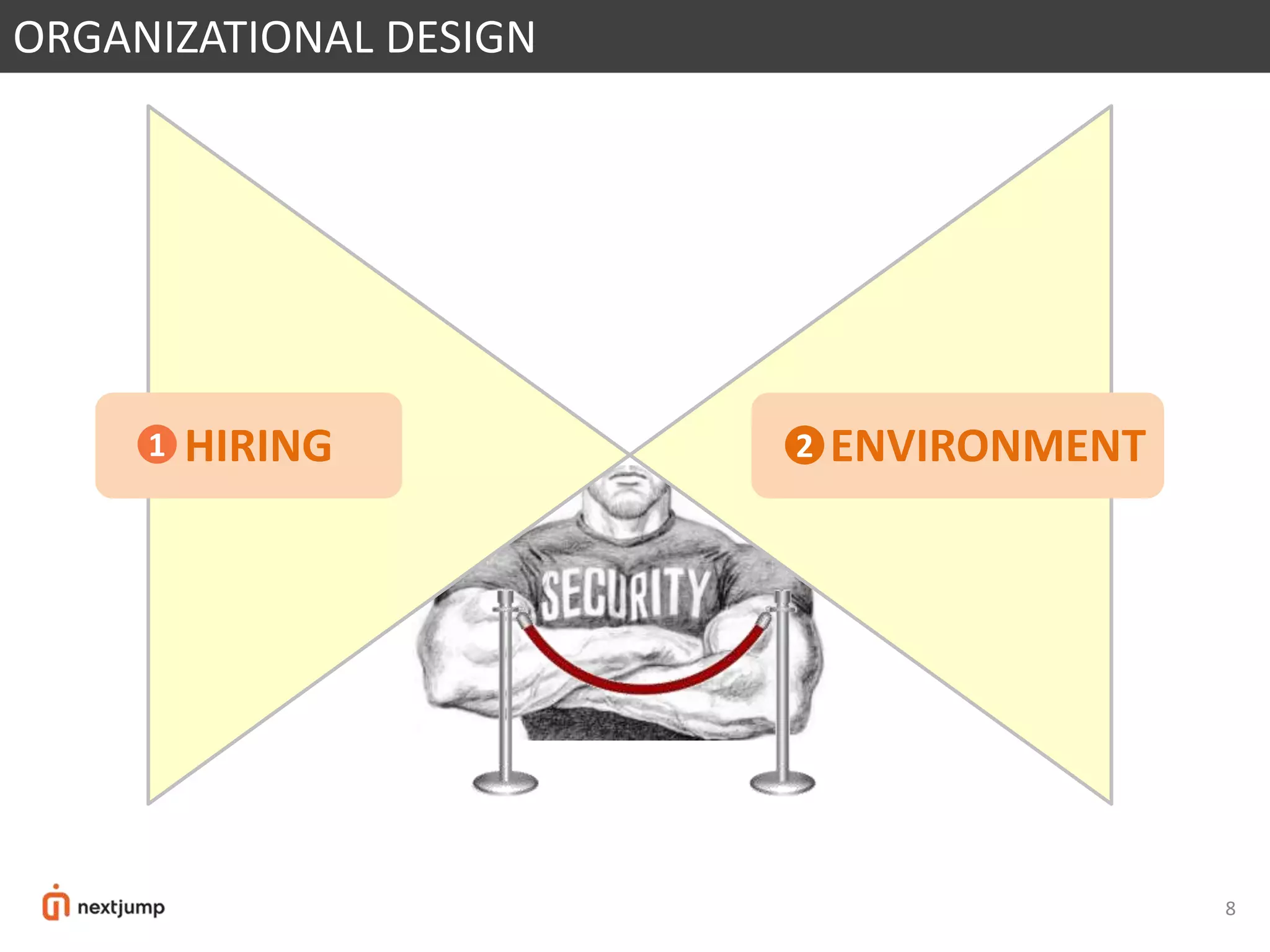
HIRING 2 ENVIRONMENT1
ORGANIZATIONAL DESIGN
8
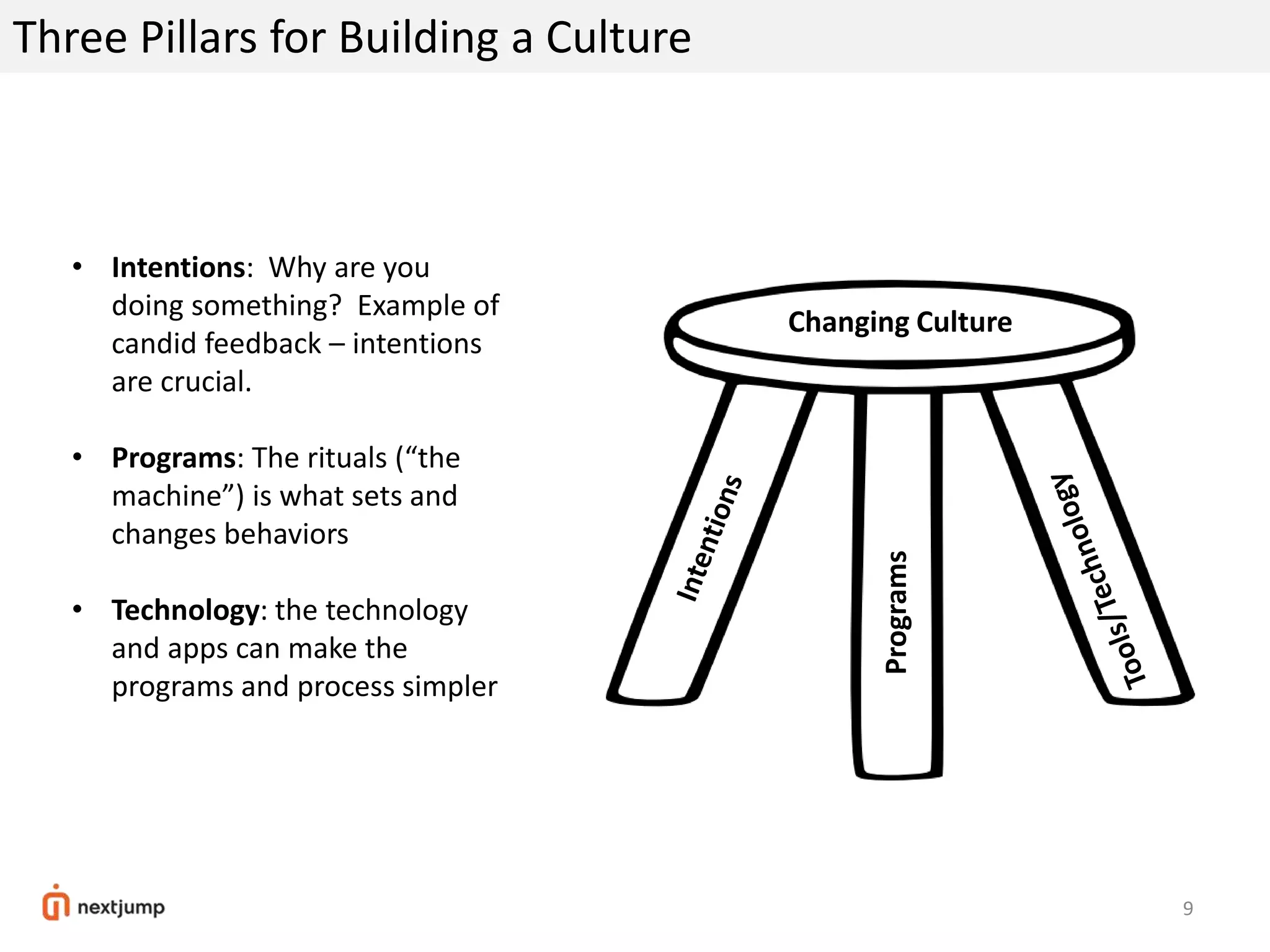
Three Pillars for Building a Culture
9Programs
Changing Culture
• Intentions: Why are you
doing something? Example of
candid feedback – intentions
are crucial.
• Programs: The rituals (“the
machine”) is what sets and
changes behaviors
• Technology: the technology
and apps can make the
programs and process simpler
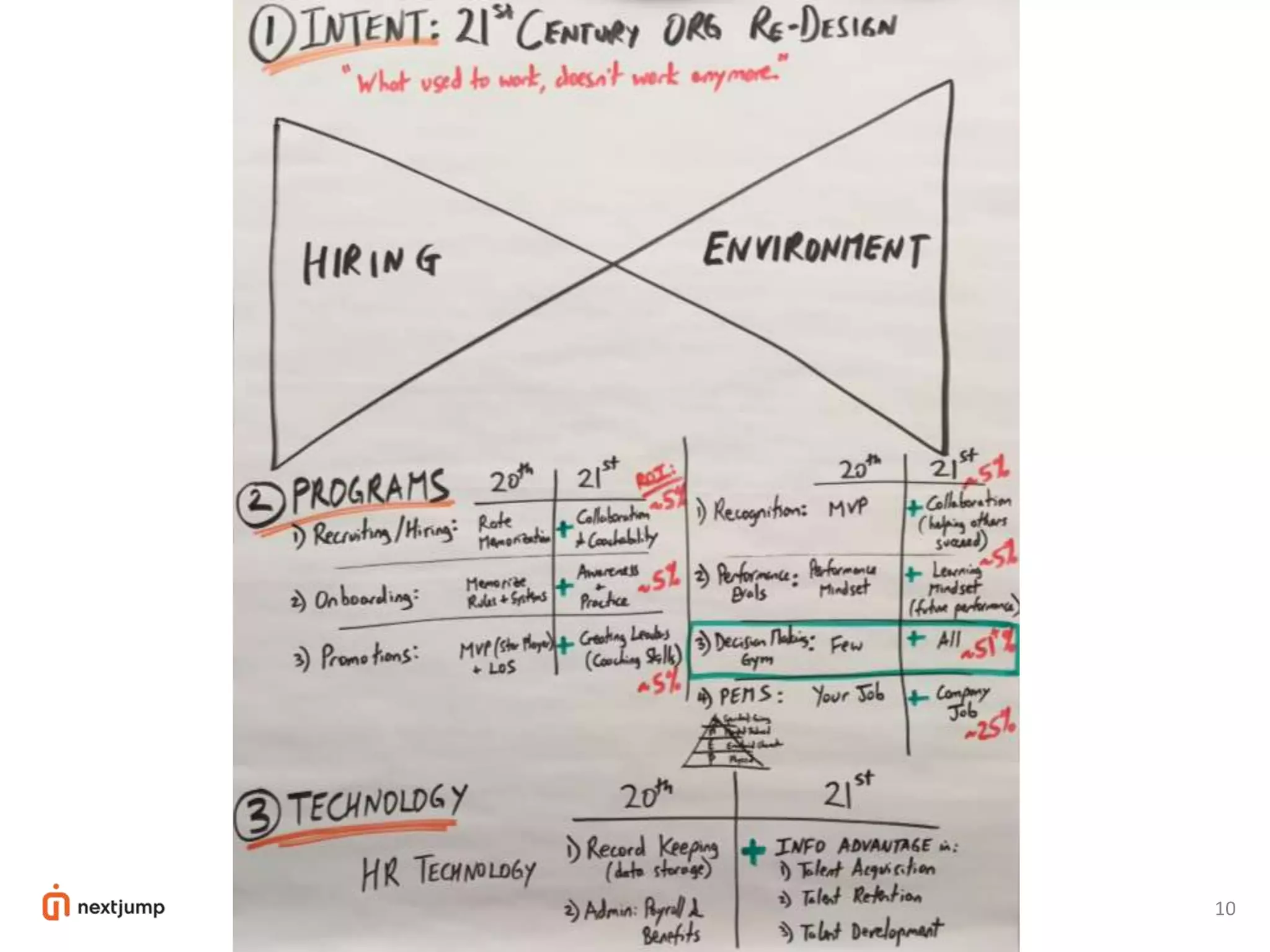
10
11
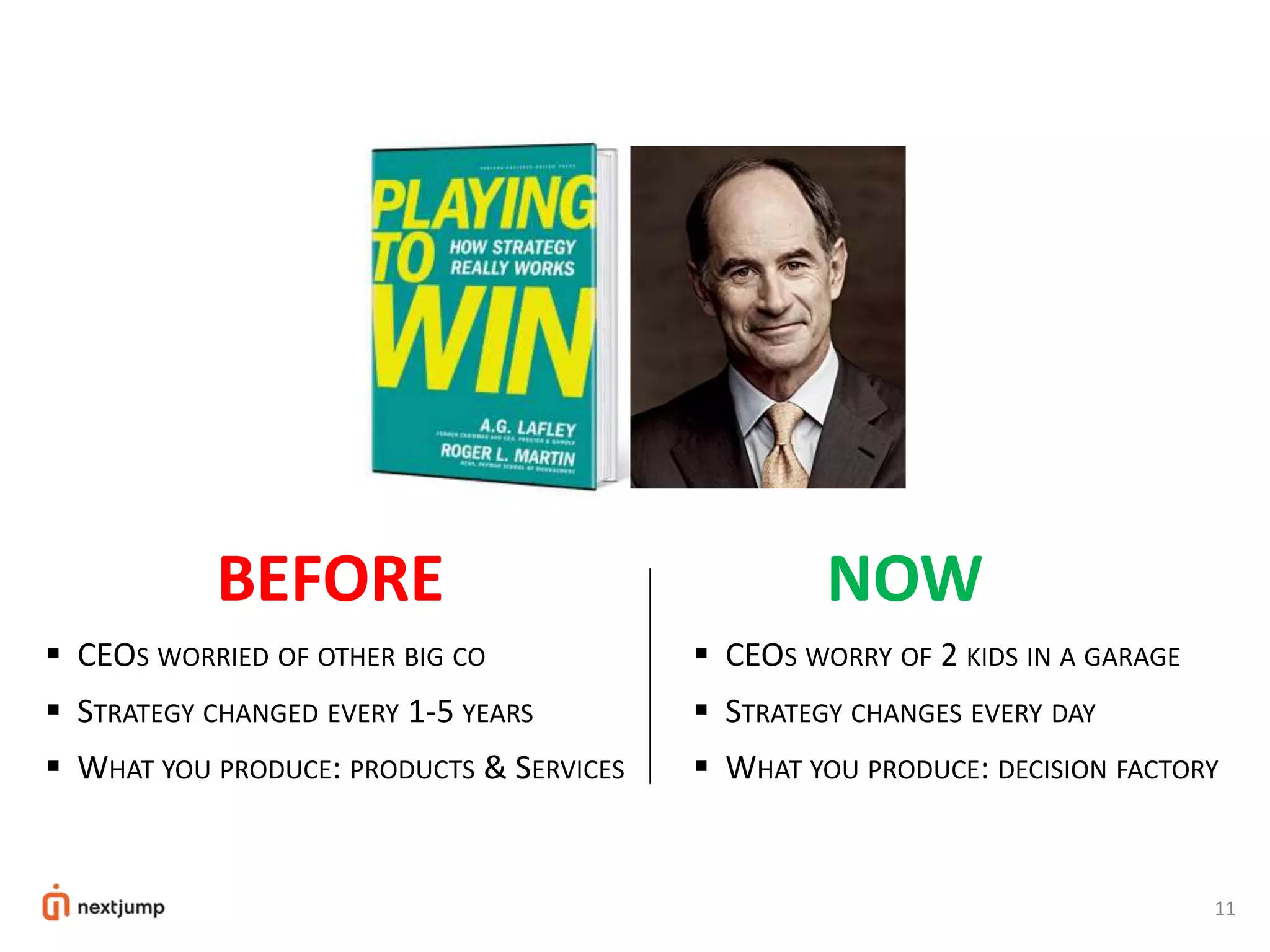
 CEOS WORRIED OF OTHER BIG CO
 STRATEGY CHANGED EVERY 1-5 YEARS
 WHAT YOU PRODUCE: PRODUCTS & SERVICES
NOWBEFORE
 CEOS WORRY OF 2 KIDS IN A GARAGE
 STRATEGY CHANGES EVERY DAY
 WHAT YOU PRODUCE: DECISION FACTORY
12
EDUCATION 1.0
 ISOLATION
 FEAR
WORK 1.0
SUBJECTS
[SERVE THE KING]
WORK 2.0
FOLLOWERS
[ASSEMBLY LINE WORKERS]
WORK 3.0
DECISION MAKERS
[ADAPTIVE LEARNING TEAMS]
EDUCATION 2.0
 COMPLIANCE
 UNIFORMITY
EDUCATION 3.0
 CREATIVITY
 COLLABORATION
1750 KING FREDERICK THE GREAT 21ST CENTURY: INFO AGE1920 CUBBERLEY: FACTORY MODEL
ORIGINS of EDUCATION = ORIGINS of WORK
13
CONCEPT of
DECISION MAKING
in the 21st century
15
Gladwell says that, though plane crashes are often
portrayed in movies as the results of a single catastrophic
event, in reality they occur because of the accumulation
of many small problems. Bad weather, tired pilots, new or
unfamiliar airports, crew members who have only
recently started to work together—it often takes all of
these things to add up to disaster. “The typical accident
involves seven consecutive human errors.”
ACCIDENTS  INNOVATION
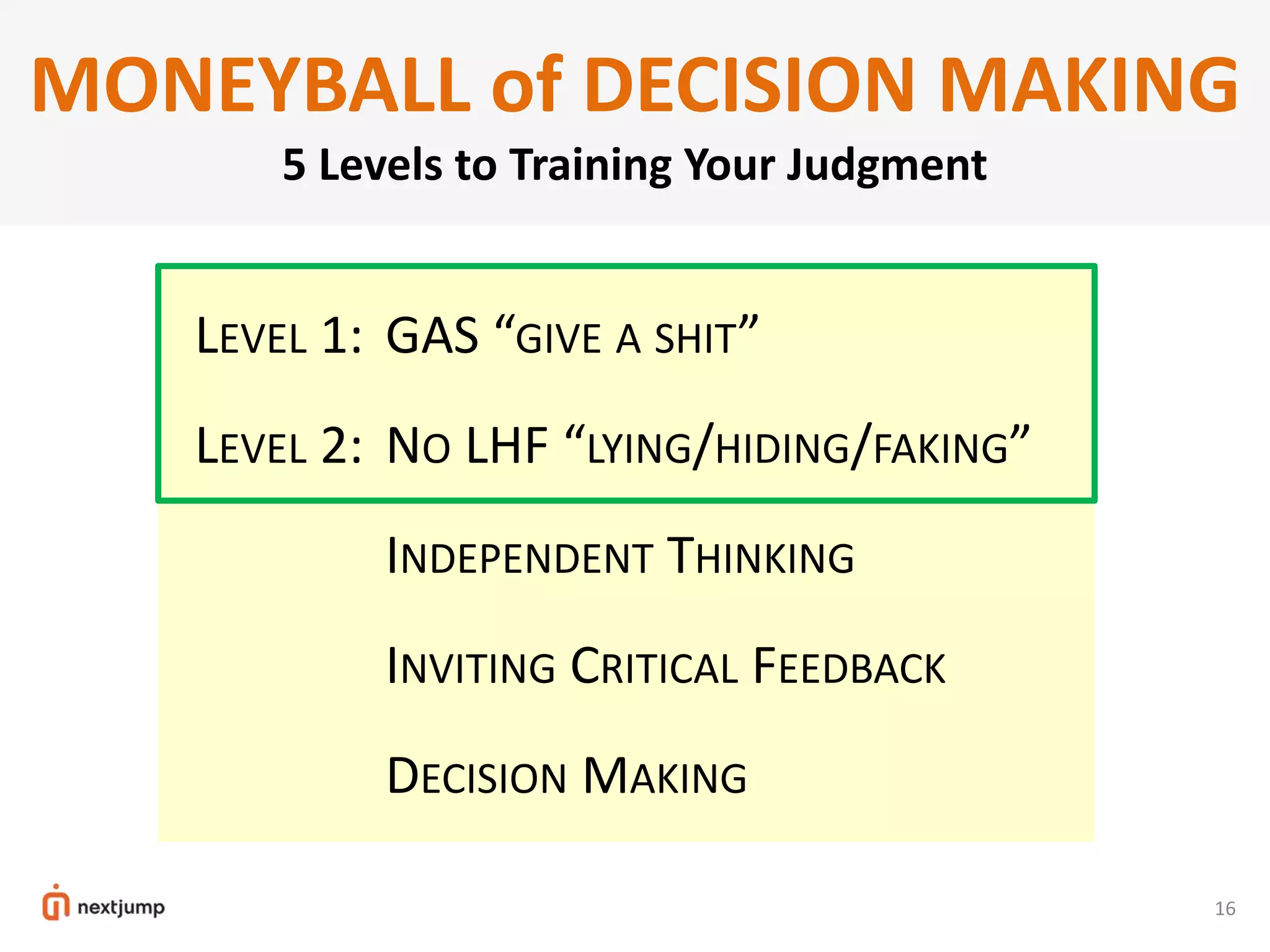
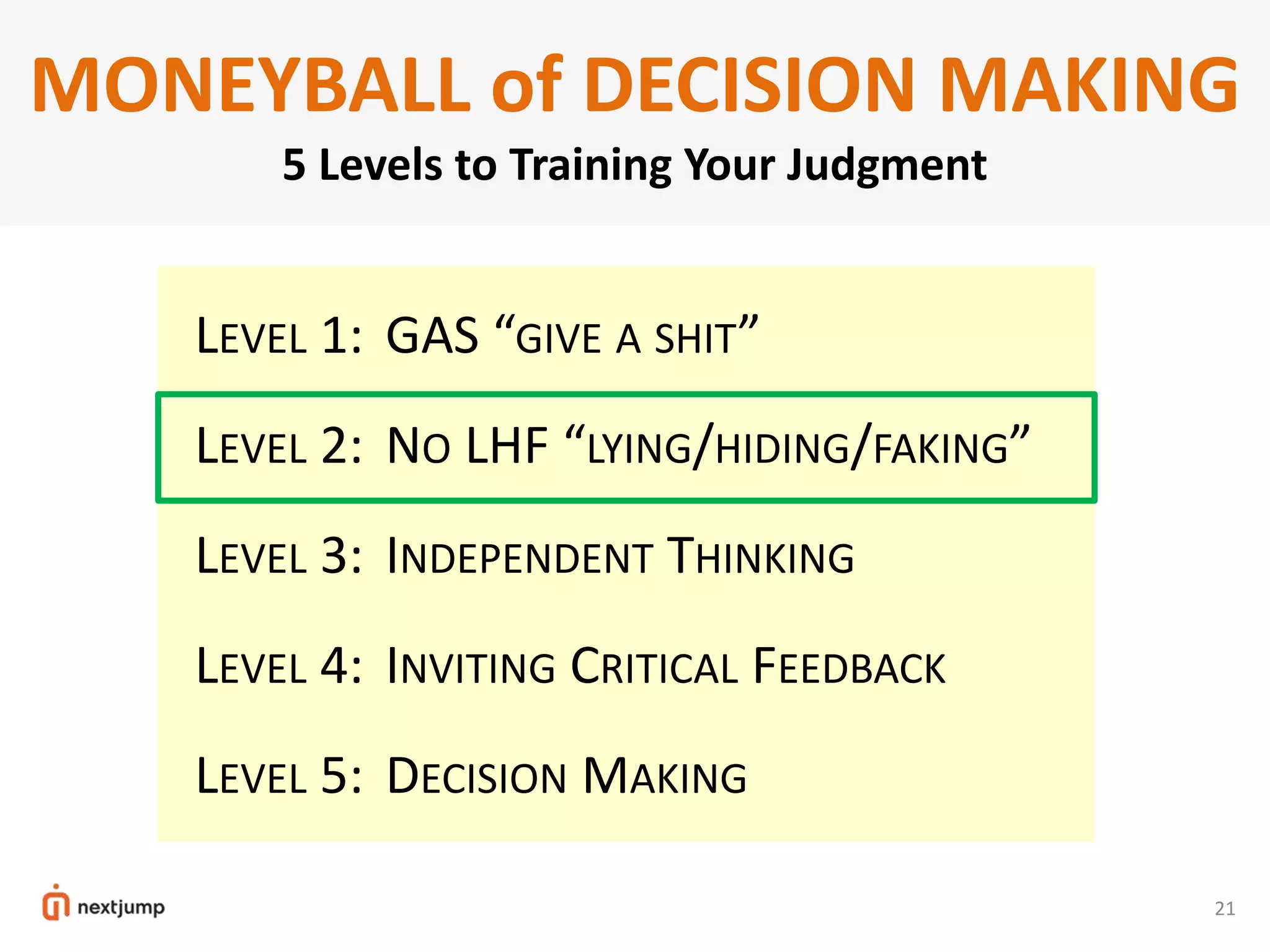
LEVEL 1: GAS “GIVE A SHIT”
LEVEL 2: NO LHF “LYING/HIDING/FAKING”
LEVEL 3: INDEPENDENT THINKING
LEVEL 4: INVITING CRITICAL FEEDBACK
LEVEL 5: DECISION MAKING
16
MONEYBALL of DECISION MAKING
5 Levels to Training Your Judgment
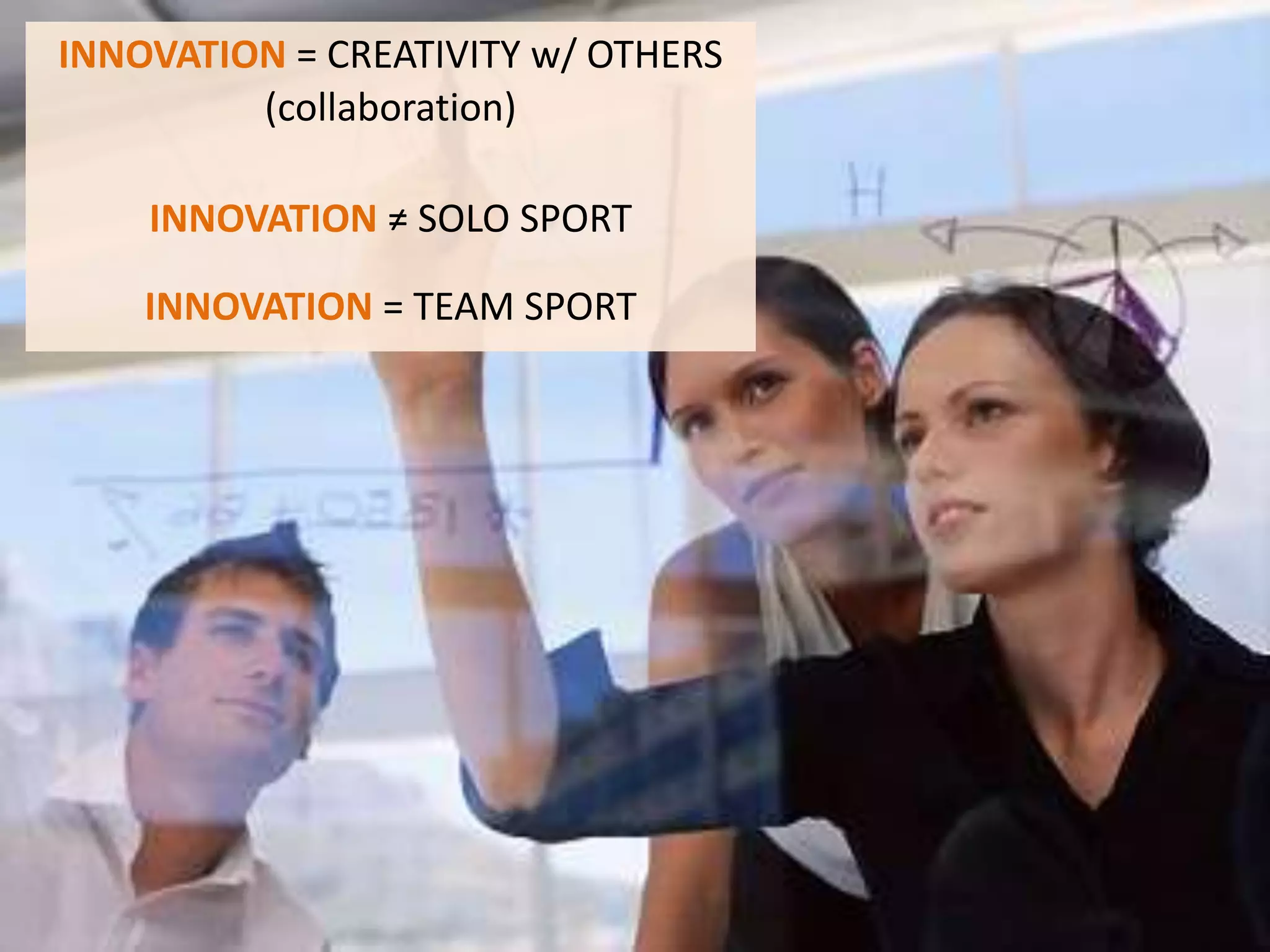
INNOVATION = CREATIVITY w/ OTHERS
(collaboration)
INNOVATION ≠ SOLO SPORT
INNOVATION = TEAM SPORT
18
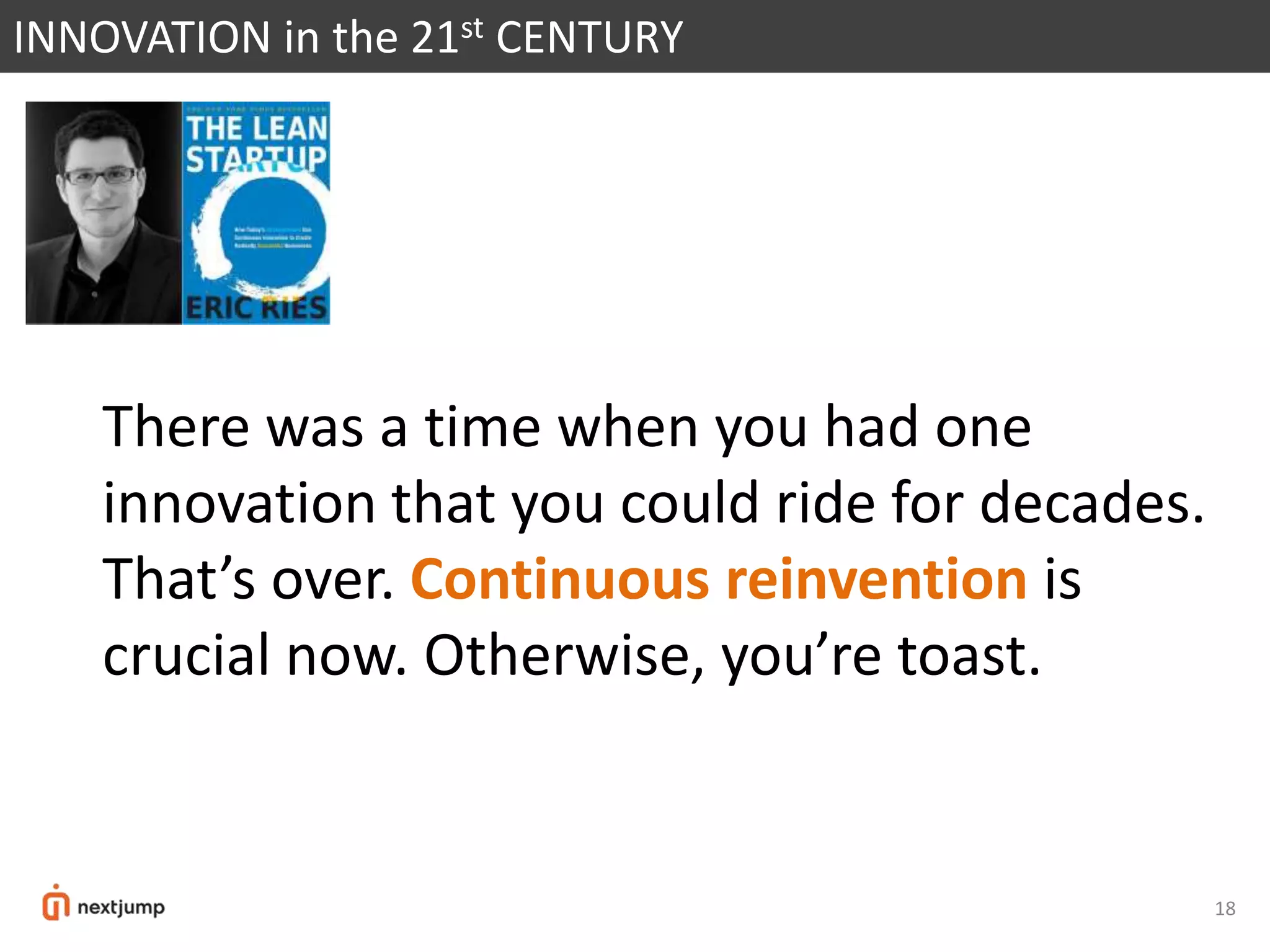
INNOVATION in the 21st CENTURY
There was a time when you had one
innovation that you could ride for decades.
That’s over. Continuous reinvention is
crucial now. Otherwise, you’re toast.
JEFF BEZOS ON BEING DISRUPTED OR BEING A DISRUPTOR
WHO IS GOING TO KILL ME, IF WE DON’T MOVE?
I GOTTA KILL MYSELF BEFORE THEY KILL ME.
LEVEL 1: GAS “GIVE A SHIT”
LEVEL 2: NO LHF “LYING/HIDING/FAKING”
LEVEL 3: INDEPENDENT THINKING
LEVEL 4: INVITING CRITICAL FEEDBACK
LEVEL 5: DECISION MAKING
21
MONEYBALL of DECISION MAKING
5 Levels to Training Your Judgment
DECISION MAKING
“HOW IT FAILS”
in the 21st century
WHAT is No LHF
TRUTH, AUTHENTICITY, LEAVING NOTHING UNSAID
FACTS, MY THINKING, MY ASSUMPTIONS, GUT/INTUITION, WHAT YOU’RE FEELING
[HIGHEST FORM OF TRANSPARENCY]
24
Dr. Jim Fadigan
The brain wants to be right. When it’s not, it withdraws.
 If you ever played politics and it worked for you…
 If you ever played dumb and it worked for you…
 If you ever told the truth and you got dinged for it…
We build “bad brain habits”.
The 2nd Job
In an ordinary organization, most people are doing a
second job no one is paying them for.
In businesses large and small; in government
agencies, schools, and hospitals; in for-profits and
non-profits and in any country in the world,
most people are spending time and energy covering
up their weaknesses, managing other people’s
impressions of them, showing themselves to their
best advantage, playing politics, hiding their
inadequacies, hiding their uncertainties, hiding their
limitations. Hiding.
We regard this as the single biggest loss of resources
that organizations suffer everyday.
25
26
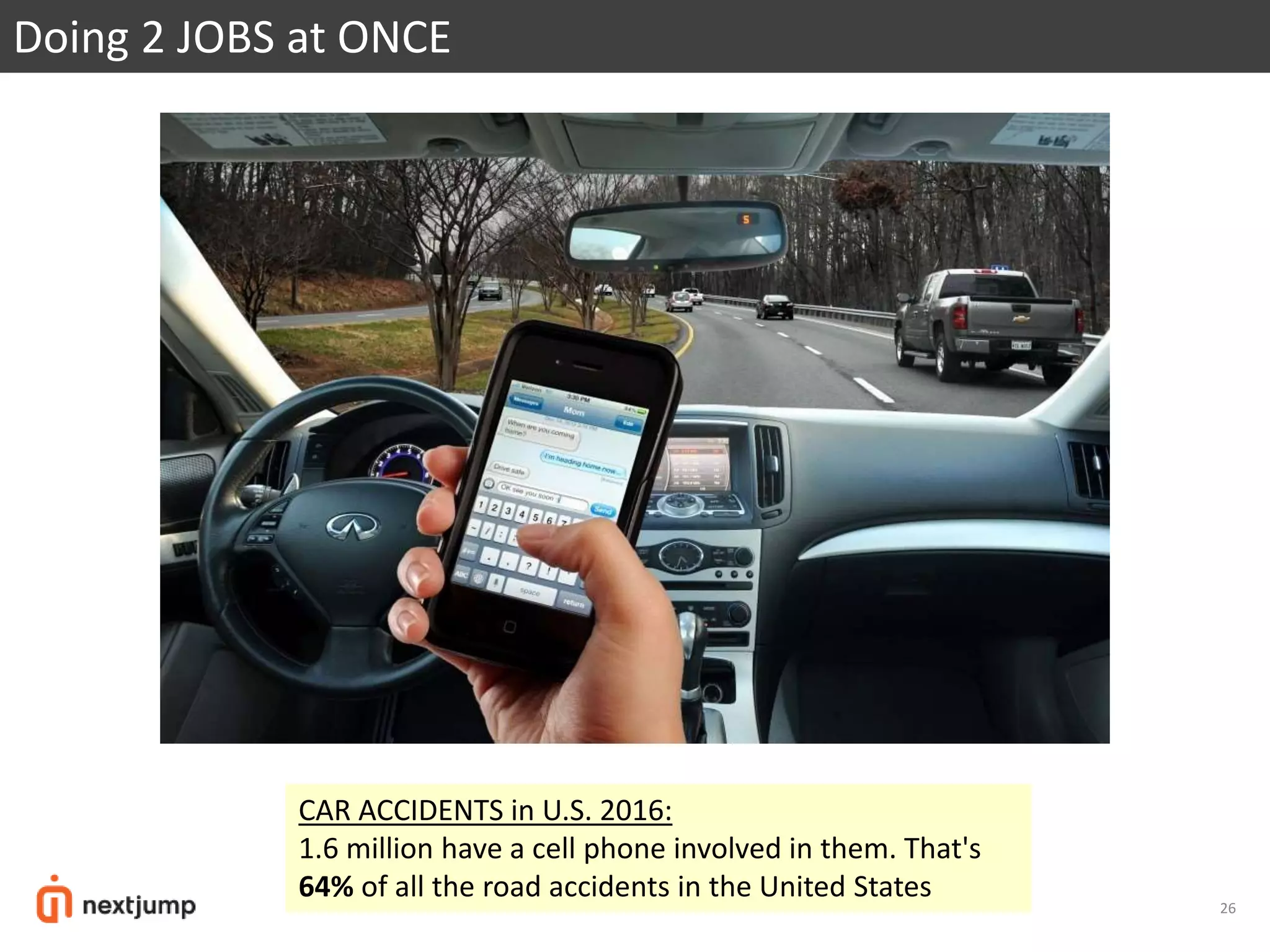
Doing 2 JOBS at ONCE
CAR ACCIDENTS in U.S. 2016:
1.6 million have a cell phone involved in them. That's
64% of all the road accidents in the United States
27
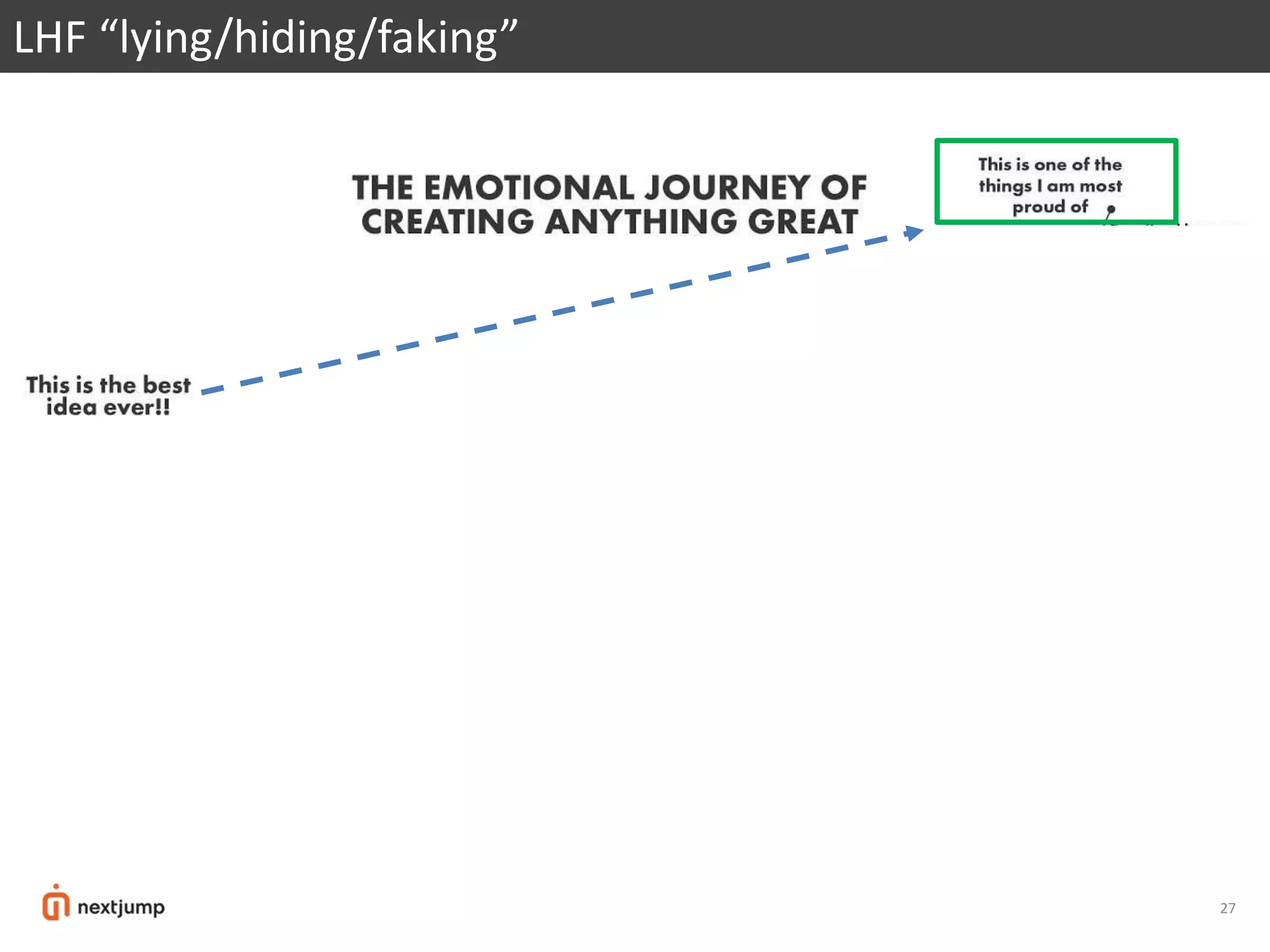
LHF “lying/hiding/faking”



LHF
28
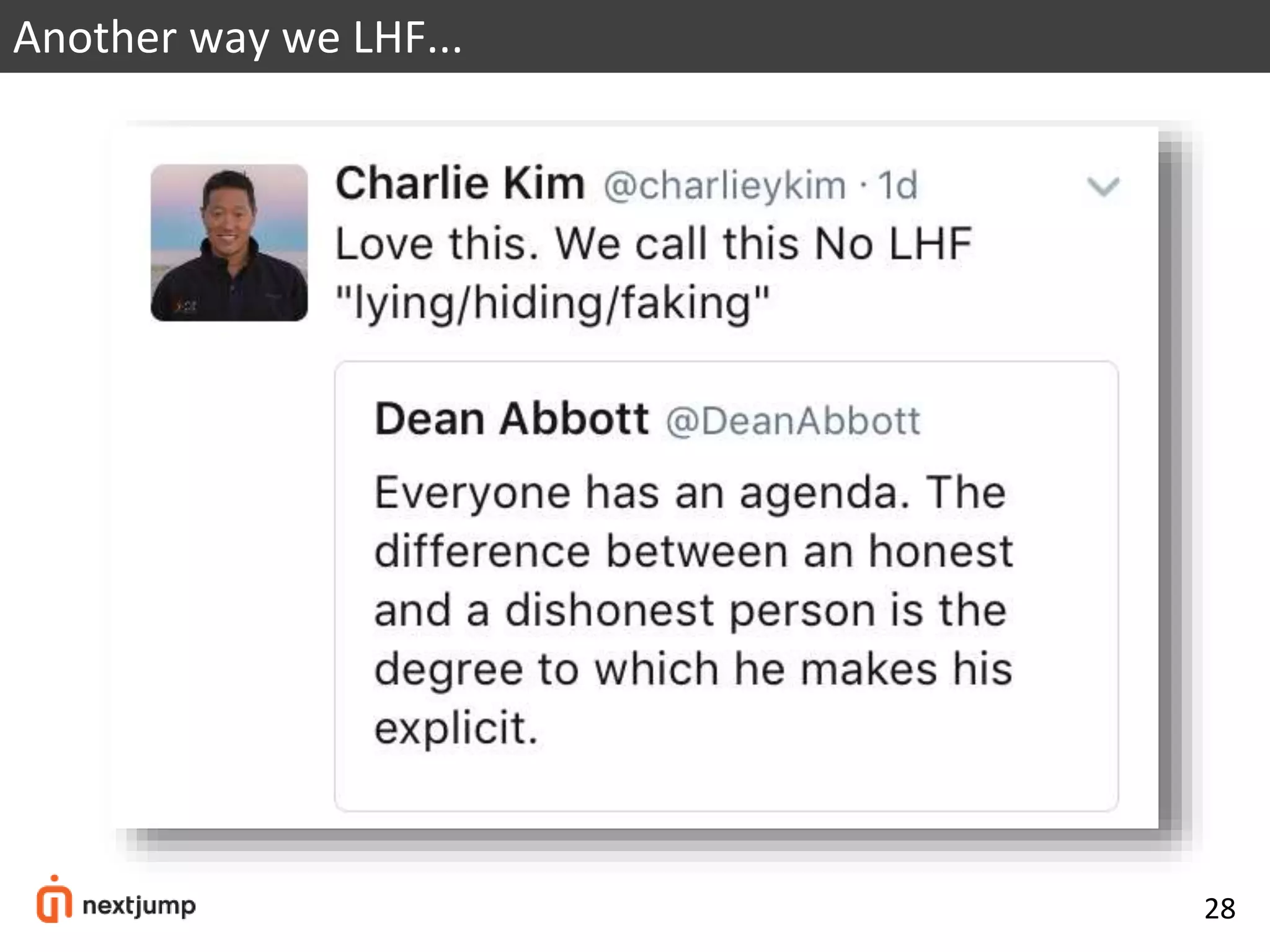
Another way we LHF...
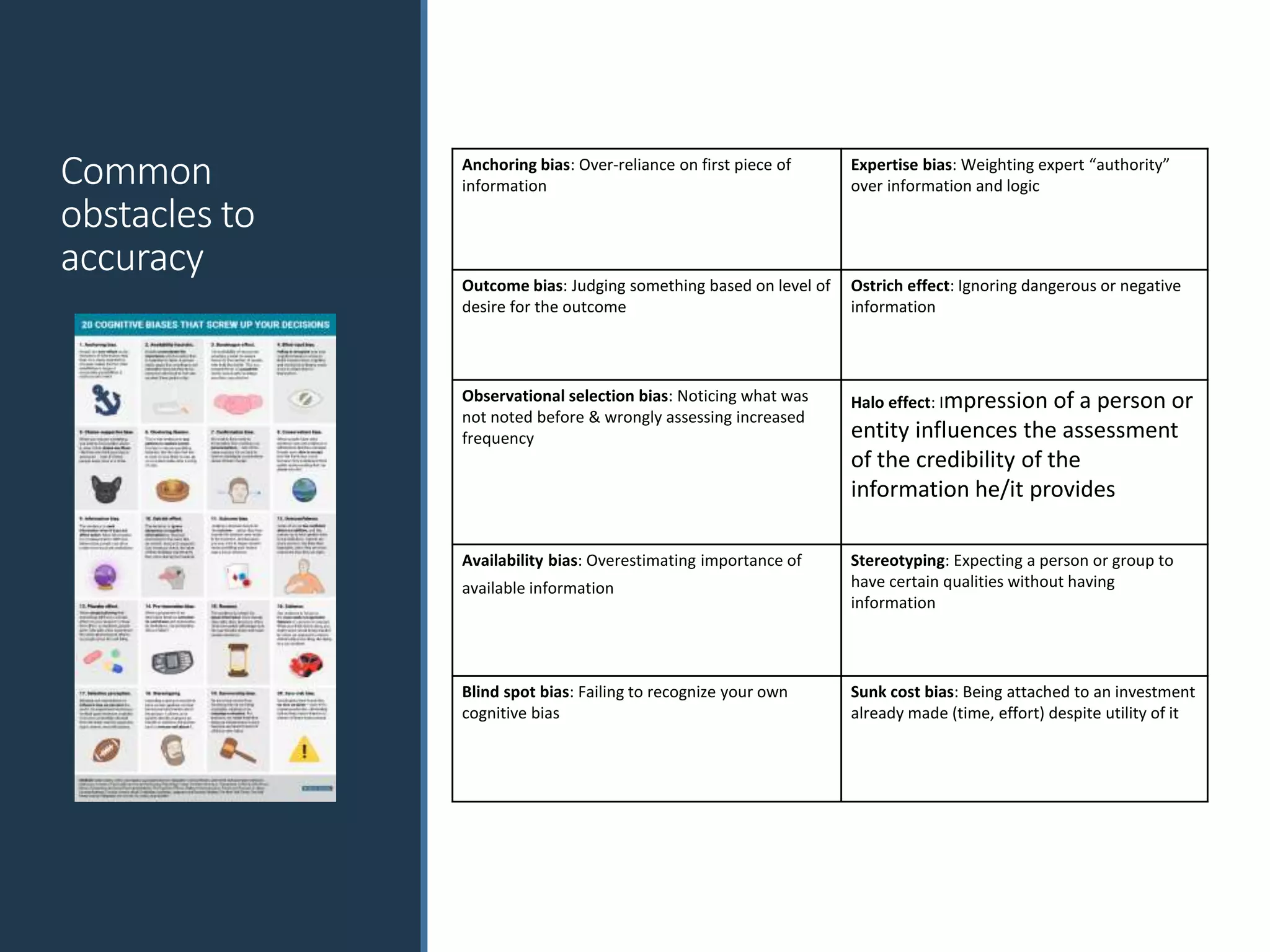
Common
obstacles to
accuracy
Anchoring bias: Over-reliance on first piece of
information
Expertise bias: Weighting expert “authority”
over information and logic
Outcome bias: Judging something based on level of
desire for the outcome
Ostrich effect: Ignoring dangerous or negative
information
Observational selection bias: Noticing what was
not noted before & wrongly assessing increased
frequency
Halo effect: Impression of a person or
entity influences the assessment
of the credibility of the
information he/it provides
Availability bias: Overestimating importance of
available information
Stereotyping: Expecting a person or group to
have certain qualities without having
information
Blind spot bias: Failing to recognize your own
cognitive bias
Sunk cost bias: Being attached to an investment
already made (time, effort) despite utility of it
UNCLASSIFIED//FOUO
UNCLASSIFIED//FOUO
Greatest threat to objectivity
31
THE GOAL: to reduce LHF, then more goes into Job 1
HOW to BUILD a
DECISION MAKING GYM
33
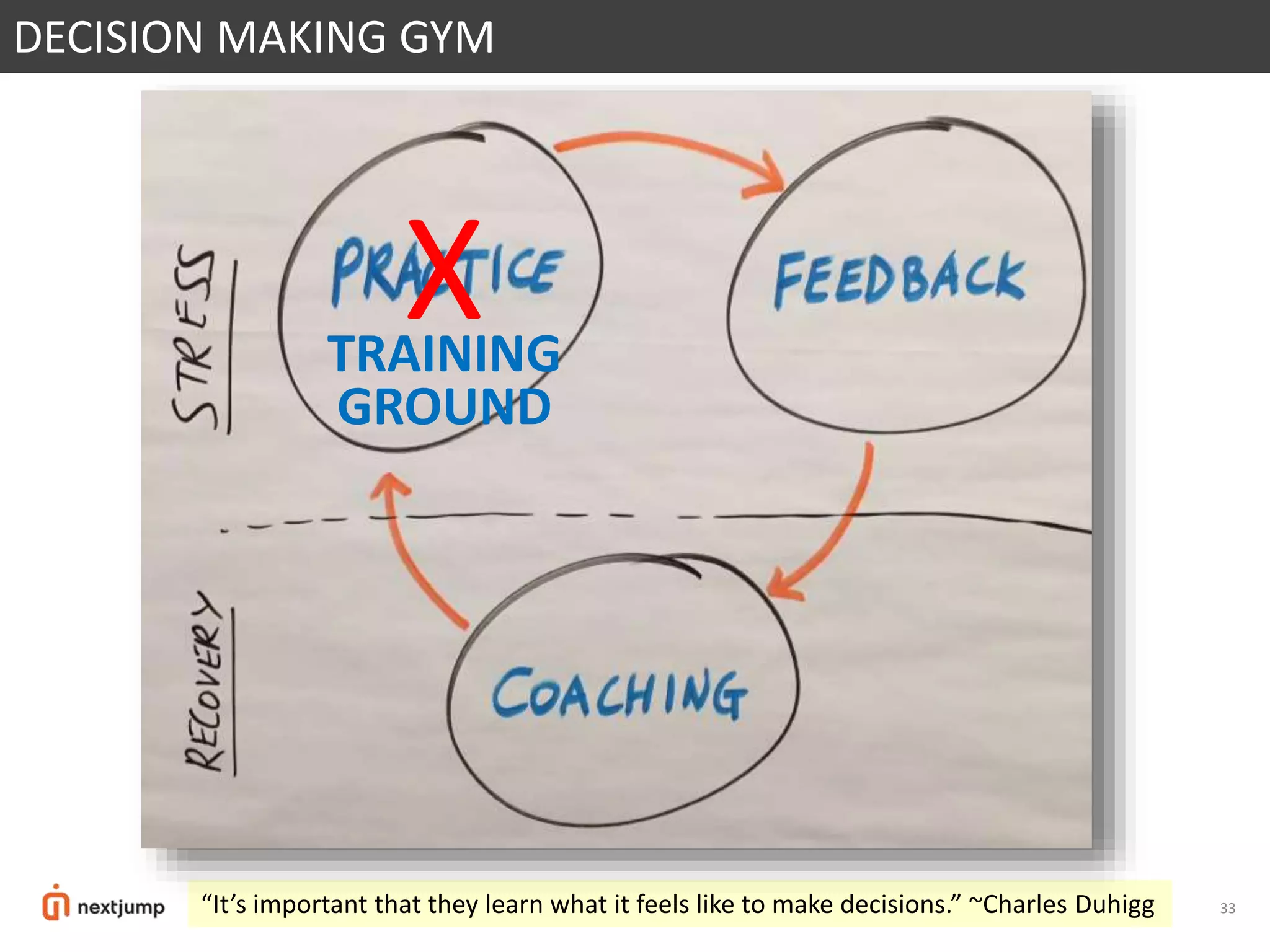
DECISION MAKING GYM
“It’s important that they learn what it feels like to make decisions.” ~Charles Duhigg
XTRAINING
GROUND
34
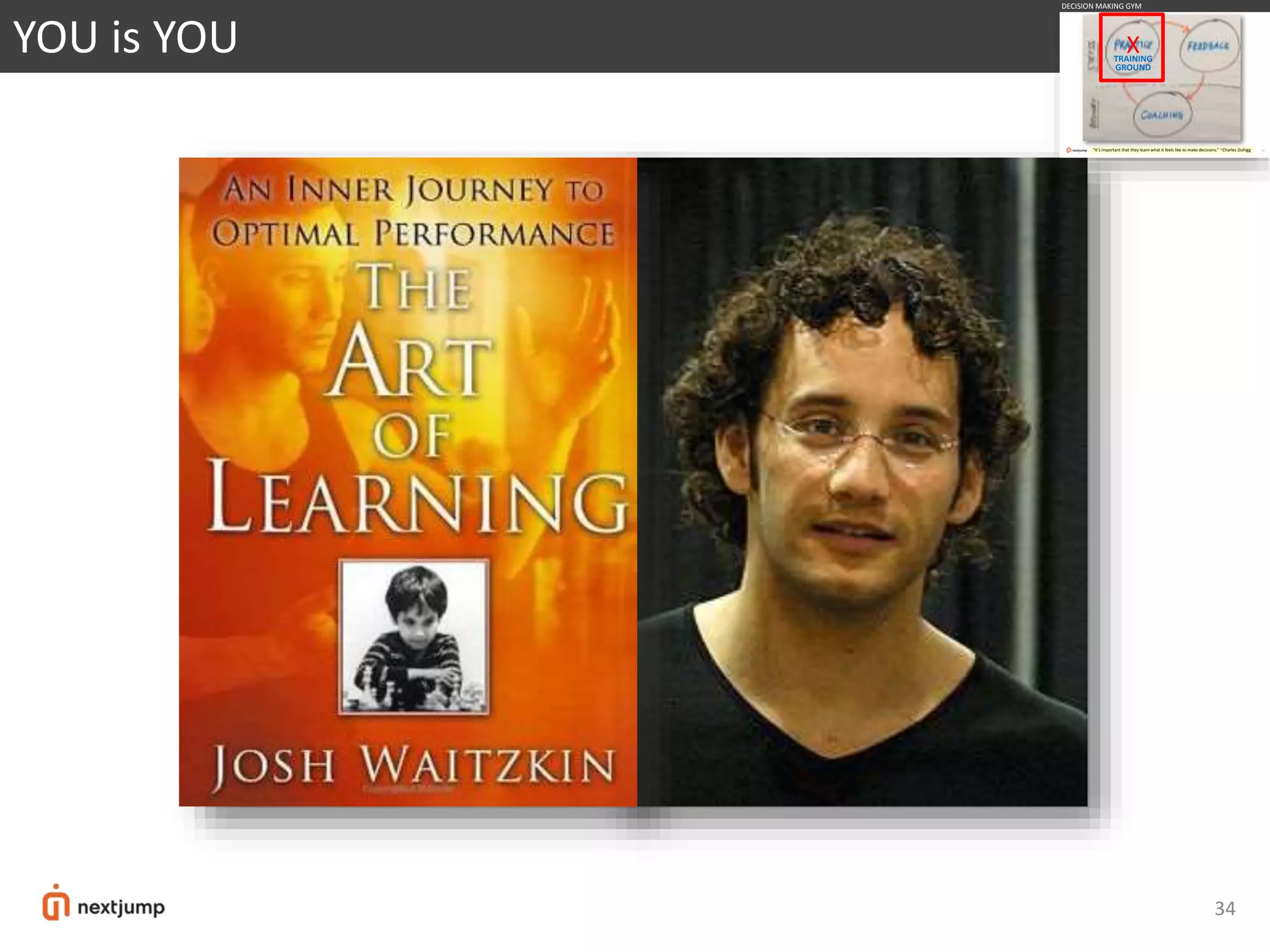
YOU is YOU
33
DECISION MAKING GYM
“It’s important that they learn what it feels like to make decisions.” ~Charles Duhigg
XTRAINING
GROUND
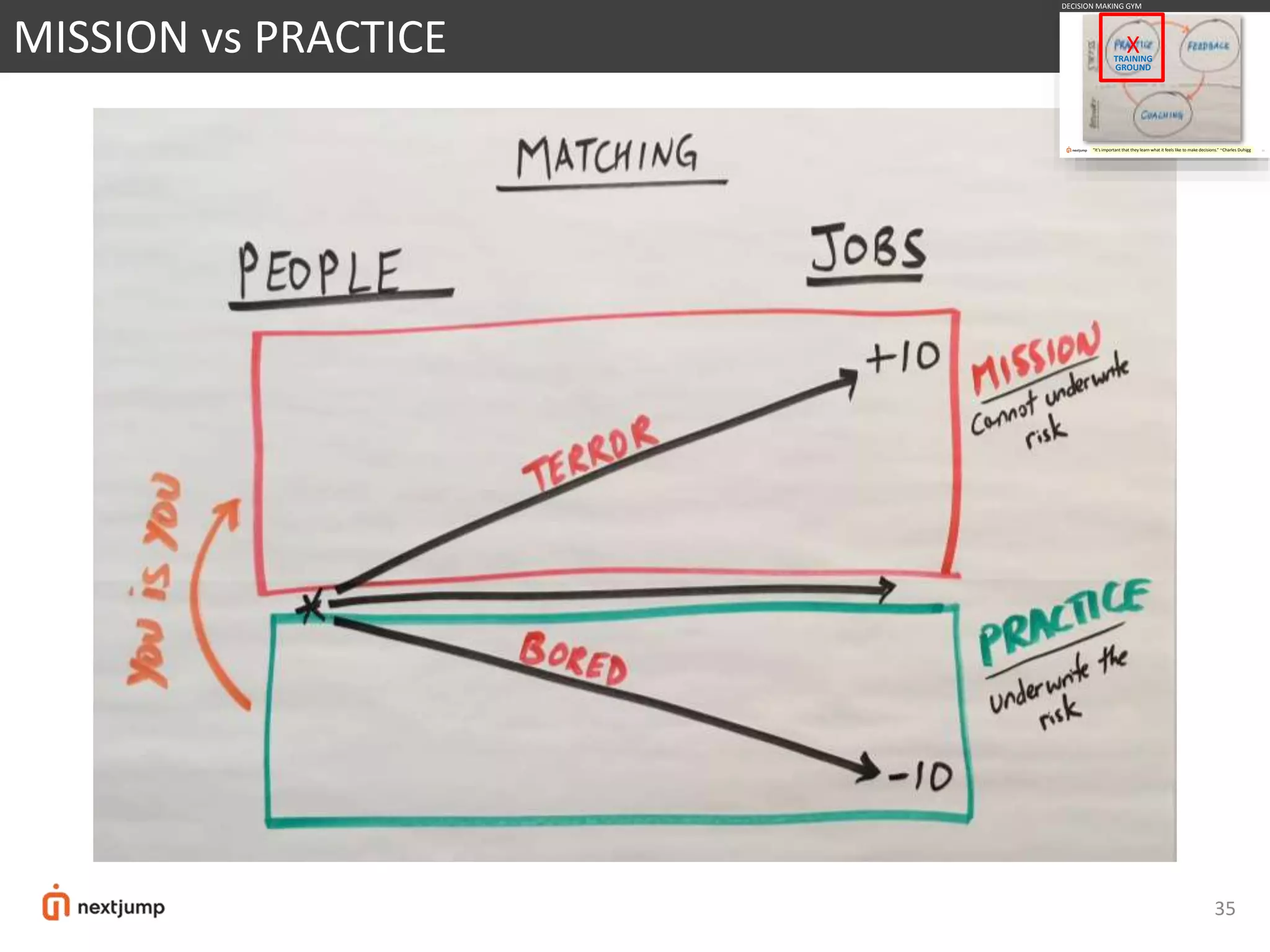
35
MISSION vs PRACTICE
33
DECISION MAKING GYM
“It’s important that they learn what it feels like to make decisions.” ~Charles Duhigg
XTRAINING
GROUND
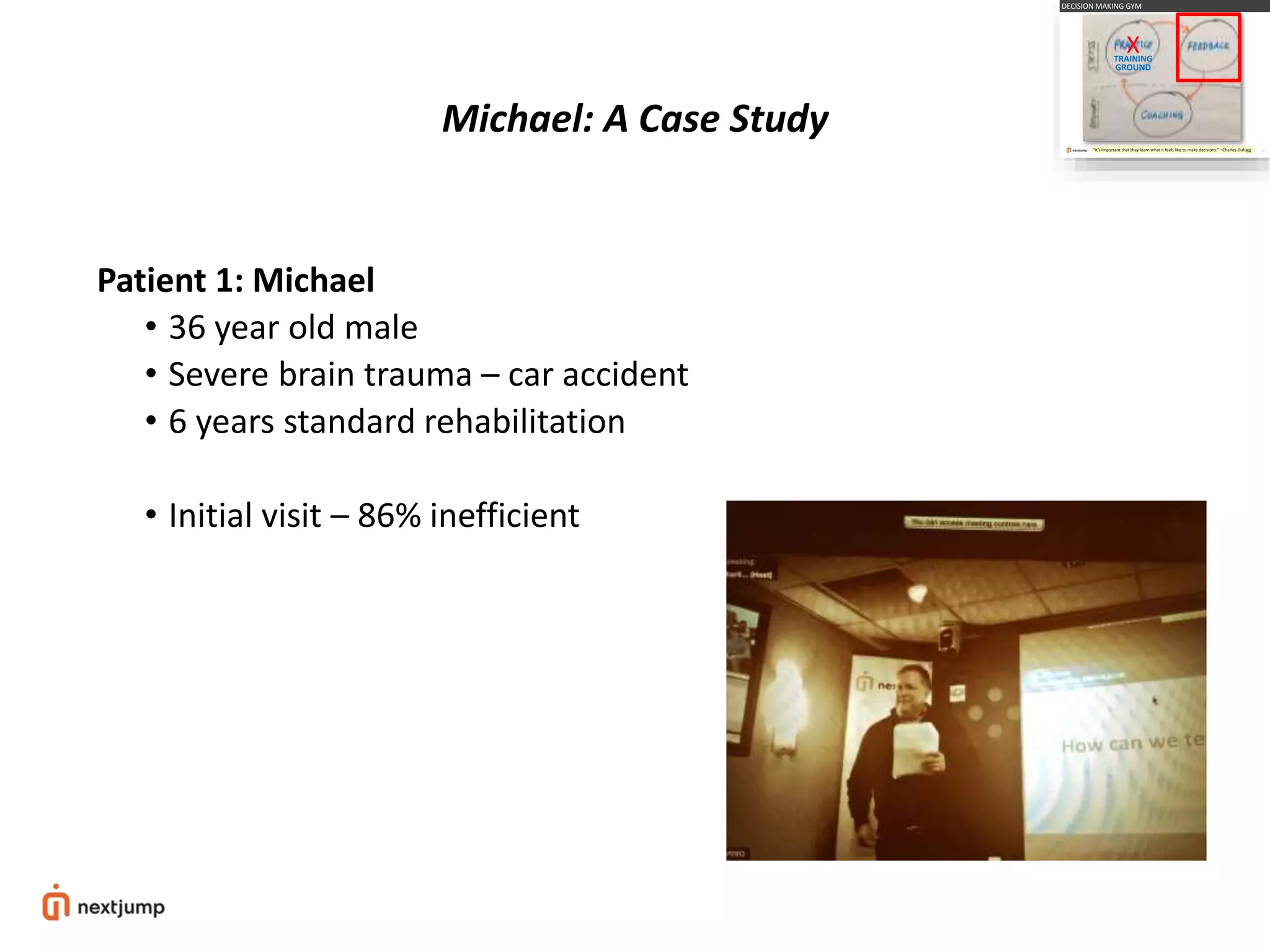
Michael: A Case Study
Patient 1: Michael
• 36 year old male
• Severe brain trauma – car accident
• 6 years standard rehabilitation
• Initial visit – 86% inefficient
33
DECISION MAKING GYM
“It’s important that they learn what it feels like to make decisions.” ~Charles Duhigg
XTRAINING
GROUND
Michael: A Case Study
Inefficiencies decreased to
3% within 3 months
KEY INSIGHT:
People are wired to do the right thing. But we often
don’t know what is right and what is wrong.
33
DECISION MAKING GYM
“It’s important that they learn what it feels like to make decisions.” ~Charles Duhigg
XTRAINING
GROUND
38
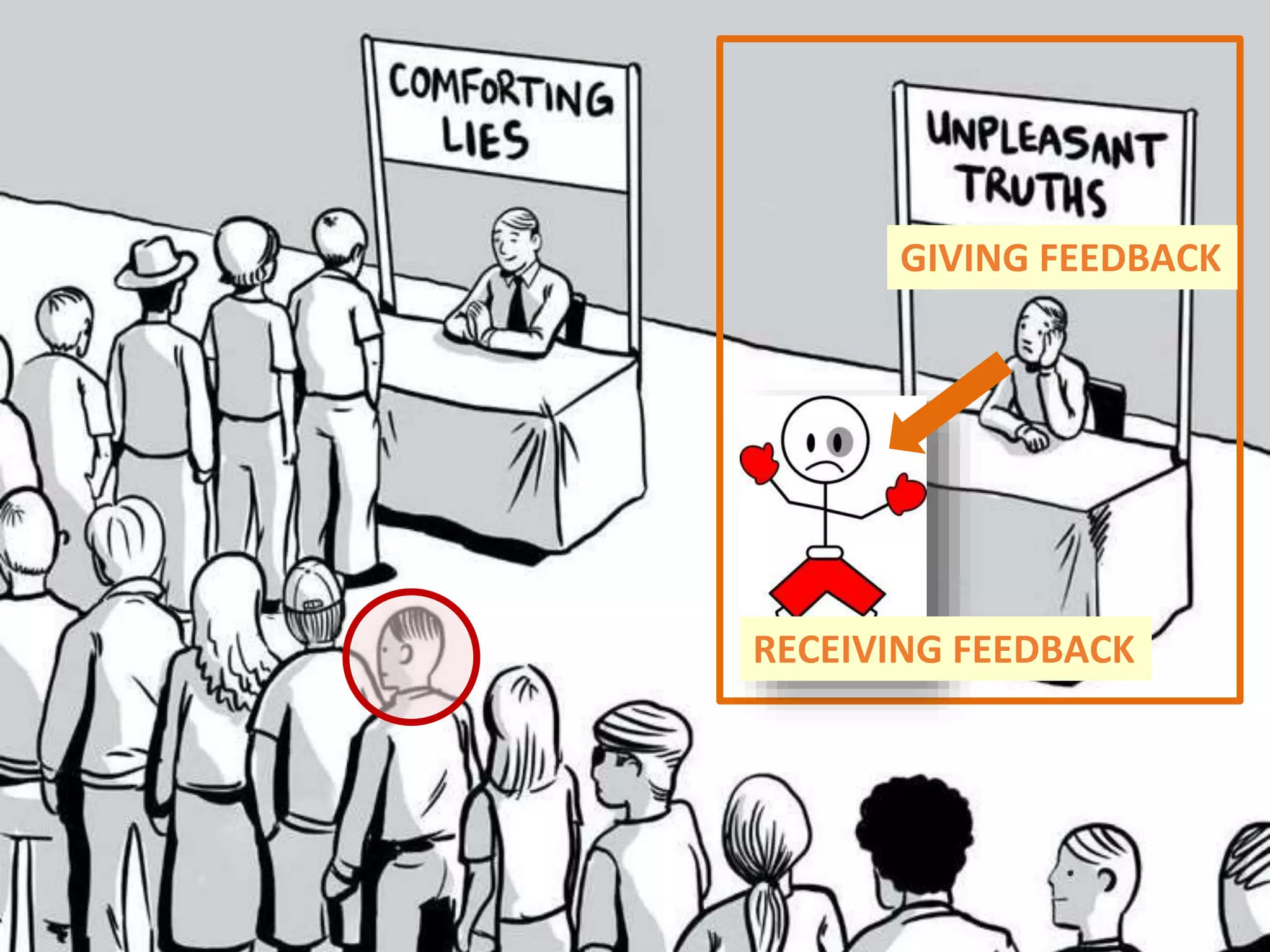
GIVING FEEDBACK
RECEIVING FEEDBACK
39
YOU
BEST FEEDBACK: (1) known group + (2) anonymous
2
We are a product of our expectations…
TP: TRAINING PARTNER
33
DECISION MAKING GYM
“It’s important that they learn what it feels like to make decisions.” ~Charles Duhigg
XTRAINING
GROUND
Feedback is data from other
human beings.
Data that can inform your
decision making.
KEY INSIGHT
Thank You
meghan@nextjump.com
twitter: @meghanmess
charlie@nextjump.com
twitter: @charlieykim

Work 3.0 21st Century Org Re-Design

  • 1.
    @charlieykim@meghanmess WORK 3.0 21st CenturyOrg Re-Design November 1, 2017 - David Rose TP TRAINING PARTNER
  • 2.
    2 We are aproduct of our expectations…
  • 3.
  • 4.
    4 "What they werestruggling with was a cultural legacy, that Korean culture is hierarchical," he said. ... To Gladwell, this explained why Korean Air Flight 801 crashed into a hill while on approach to an airport in Guam in 1997, killing 223 people. 20th CENTURY ORGANIZATIONAL DESIGN: Designed to give one person authority. All power.
  • 5.
    ALL THESE COMPANIESWENT BANKRUPT
  • 6.
    6 CIA HEAD OFSTRATEGY: “The greatest challenge we are facing as a business, frankly, is that our business environment is changing much more rapidly than our ability to adapt. In nature, this sort of thing leads to extinction.” [we need ADAPTIVE LEARNING TEAMS]
  • 7.
    7 ORG DESIGN: 20thCENTURY  21st CENTURY In the 20th century, organizations were designed to maintain previous (often 1) innovation. In the 21st century, if an organization is not re-designed for continuous innovation, they are toast.
  • 8.
  • 9.
    Three Pillars forBuilding a Culture 9Programs Changing Culture • Intentions: Why are you doing something? Example of candid feedback – intentions are crucial. • Programs: The rituals (“the machine”) is what sets and changes behaviors • Technology: the technology and apps can make the programs and process simpler
  • 10.
  • 11.
    11  CEOS WORRIEDOF OTHER BIG CO  STRATEGY CHANGED EVERY 1-5 YEARS  WHAT YOU PRODUCE: PRODUCTS & SERVICES NOWBEFORE  CEOS WORRY OF 2 KIDS IN A GARAGE  STRATEGY CHANGES EVERY DAY  WHAT YOU PRODUCE: DECISION FACTORY
  • 12.
    12 EDUCATION 1.0  ISOLATION FEAR WORK 1.0 SUBJECTS [SERVE THE KING] WORK 2.0 FOLLOWERS [ASSEMBLY LINE WORKERS] WORK 3.0 DECISION MAKERS [ADAPTIVE LEARNING TEAMS] EDUCATION 2.0  COMPLIANCE  UNIFORMITY EDUCATION 3.0  CREATIVITY  COLLABORATION 1750 KING FREDERICK THE GREAT 21ST CENTURY: INFO AGE1920 CUBBERLEY: FACTORY MODEL ORIGINS of EDUCATION = ORIGINS of WORK
  • 13.
  • 14.
  • 15.
    15 Gladwell says that,though plane crashes are often portrayed in movies as the results of a single catastrophic event, in reality they occur because of the accumulation of many small problems. Bad weather, tired pilots, new or unfamiliar airports, crew members who have only recently started to work together—it often takes all of these things to add up to disaster. “The typical accident involves seven consecutive human errors.” ACCIDENTS  INNOVATION
  • 16.
    LEVEL 1: GAS“GIVE A SHIT” LEVEL 2: NO LHF “LYING/HIDING/FAKING” LEVEL 3: INDEPENDENT THINKING LEVEL 4: INVITING CRITICAL FEEDBACK LEVEL 5: DECISION MAKING 16 MONEYBALL of DECISION MAKING 5 Levels to Training Your Judgment
  • 17.
    INNOVATION = CREATIVITYw/ OTHERS (collaboration) INNOVATION ≠ SOLO SPORT INNOVATION = TEAM SPORT
  • 18.
    18 INNOVATION in the21st CENTURY There was a time when you had one innovation that you could ride for decades. That’s over. Continuous reinvention is crucial now. Otherwise, you’re toast.
  • 20.
    JEFF BEZOS ONBEING DISRUPTED OR BEING A DISRUPTOR WHO IS GOING TO KILL ME, IF WE DON’T MOVE? I GOTTA KILL MYSELF BEFORE THEY KILL ME.
  • 21.
    LEVEL 1: GAS“GIVE A SHIT” LEVEL 2: NO LHF “LYING/HIDING/FAKING” LEVEL 3: INDEPENDENT THINKING LEVEL 4: INVITING CRITICAL FEEDBACK LEVEL 5: DECISION MAKING 21 MONEYBALL of DECISION MAKING 5 Levels to Training Your Judgment
  • 22.
    DECISION MAKING “HOW ITFAILS” in the 21st century
  • 23.
    WHAT is NoLHF TRUTH, AUTHENTICITY, LEAVING NOTHING UNSAID FACTS, MY THINKING, MY ASSUMPTIONS, GUT/INTUITION, WHAT YOU’RE FEELING [HIGHEST FORM OF TRANSPARENCY]
  • 24.
    24 Dr. Jim Fadigan Thebrain wants to be right. When it’s not, it withdraws.  If you ever played politics and it worked for you…  If you ever played dumb and it worked for you…  If you ever told the truth and you got dinged for it… We build “bad brain habits”.
  • 25.
    The 2nd Job Inan ordinary organization, most people are doing a second job no one is paying them for. In businesses large and small; in government agencies, schools, and hospitals; in for-profits and non-profits and in any country in the world, most people are spending time and energy covering up their weaknesses, managing other people’s impressions of them, showing themselves to their best advantage, playing politics, hiding their inadequacies, hiding their uncertainties, hiding their limitations. Hiding. We regard this as the single biggest loss of resources that organizations suffer everyday. 25
  • 26.
    26 Doing 2 JOBSat ONCE CAR ACCIDENTS in U.S. 2016: 1.6 million have a cell phone involved in them. That's 64% of all the road accidents in the United States
  • 27.
  • 28.
  • 29.
    Common obstacles to accuracy Anchoring bias:Over-reliance on first piece of information Expertise bias: Weighting expert “authority” over information and logic Outcome bias: Judging something based on level of desire for the outcome Ostrich effect: Ignoring dangerous or negative information Observational selection bias: Noticing what was not noted before & wrongly assessing increased frequency Halo effect: Impression of a person or entity influences the assessment of the credibility of the information he/it provides Availability bias: Overestimating importance of available information Stereotyping: Expecting a person or group to have certain qualities without having information Blind spot bias: Failing to recognize your own cognitive bias Sunk cost bias: Being attached to an investment already made (time, effort) despite utility of it
  • 30.
  • 31.
    31 THE GOAL: toreduce LHF, then more goes into Job 1
  • 32.
    HOW to BUILDa DECISION MAKING GYM
  • 33.
    33 DECISION MAKING GYM “It’simportant that they learn what it feels like to make decisions.” ~Charles Duhigg XTRAINING GROUND
  • 34.
    34 YOU is YOU 33 DECISIONMAKING GYM “It’s important that they learn what it feels like to make decisions.” ~Charles Duhigg XTRAINING GROUND
  • 35.
    35 MISSION vs PRACTICE 33 DECISIONMAKING GYM “It’s important that they learn what it feels like to make decisions.” ~Charles Duhigg XTRAINING GROUND
  • 36.
    Michael: A CaseStudy Patient 1: Michael • 36 year old male • Severe brain trauma – car accident • 6 years standard rehabilitation • Initial visit – 86% inefficient 33 DECISION MAKING GYM “It’s important that they learn what it feels like to make decisions.” ~Charles Duhigg XTRAINING GROUND
  • 37.
    Michael: A CaseStudy Inefficiencies decreased to 3% within 3 months KEY INSIGHT: People are wired to do the right thing. But we often don’t know what is right and what is wrong. 33 DECISION MAKING GYM “It’s important that they learn what it feels like to make decisions.” ~Charles Duhigg XTRAINING GROUND
  • 38.
  • 39.
    39 YOU BEST FEEDBACK: (1)known group + (2) anonymous 2 We are a product of our expectations… TP: TRAINING PARTNER 33 DECISION MAKING GYM “It’s important that they learn what it feels like to make decisions.” ~Charles Duhigg XTRAINING GROUND
  • 40.
    Feedback is datafrom other human beings. Data that can inform your decision making. KEY INSIGHT
  • 41.

Editor's Notes

  • #9 2 most important investments in building a high performance culture….
  • #13 EDU 1.0 – how do you control the masses of people w/out using a gun. Kindergarten: garden the children so they will serve the king. Isolation – rows, can’t talk to each other, teachers isolation in classrooms Fear – everyone afraid of the next level, kids, teachers, principals, superintendents Do what you’re told. Every semester new teacher, can’t collaborate b/c new teacher King Frederick's system was designed to teach obedience to solidify his control of the country EDU 2.0 – industrial schools, no collaboration, children move along like widgets on assembly line: math, science, etc. key characteristics of factory model education are top-down management, emphasis on management, centralized planning, standardization, efficiency in producing results typified by efficiency and uniformity, often resembling a factory building. system has been described as being "designed to create docile subjects and factory workers Cubberley described "schools as, in a sense, factories in which the raw products (children) are to be shaped and fashioned into products to meet the various demands of life.” Factory model schools employ direct instruction methods: a teacher drilled information into the class in "assembly line fashion",[6] the students learn by rote copying and memorization, and they are then tested on the information presented to them factory model method also features depersonalization, strict hierarchy of authority, uniformity over innovation, process and procedure, and standardization of curriculum, testing, class sizes, time periods, and learning rates EDU 3.0 – preschools, charter schools, school for autism, training former prisoners
  • #17 Highest form of radical transparency is NO LHF. You can be transparent to the question I ask but if I don’t ask it… Best diligence question ever – “What am I not asking you that I should be asking…”
  • #21 15 years to build amazon book business. He built Kindle ebook in 2 years.
  • #22 Highest form of radical transparency is NO LHF. You can be transparent to the question I ask but if I don’t ask it… Best diligence question ever – “What am I not asking you that I should be asking…”
  • #26 The book NxJ was recently case studied in: An Everyone Culture, talks about the 2nd Job. The very first lines go like this…
  • #30 Titantic  Bin Laden
  • #37 Talk about car accident and needing two people to help support him to walk normally
  • #39 By default you will get comforting lies