Women’s Rights
Presented By:
Sameer Chaudhari
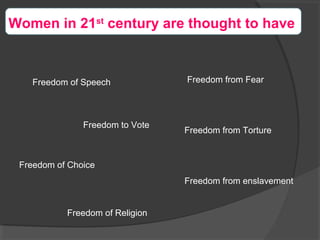
Freedom from Fear
Freedom to Vote
Freedom of Speech
Freedom from Torture
Freedom of Choice
Freedom of Religion
Freedom from enslavement
Women in 21st
century are thought to have
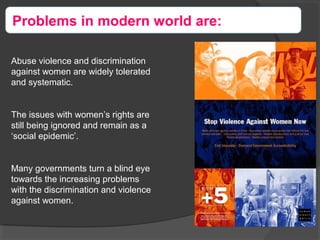
Abuse violence and discrimination
against women are widely tolerated
and systematic.
The issues with women’s rights are
still being ignored and remain as a
‘social epidemic’.
Many governments turn a blind eye
towards the increasing problems
with the discrimination and violence
against women.
Problems in modern world are:

Global feminism movements span across multiple nations and
have at their core the belief that women are entitled to the
same rights as men, regardless of where the women live, their
ethnicity and their social class.

Global feminism recognizes diversity & acknowledges that
there are diverse meanings of feminism, each responsive to
the needs and issues of women in different regions, societies
and times.
Transnational feminism:

Unequal status of women & abuses against women

are viewed as human rights violations.
 UNHRC declares, freedom from torture & slavery as basic
human rights. Therefore, domestic violence is a human
rights violation.
 Sexual assault is a form of terrorism
 and rape is a form of torture
 Female infanticide & neglect
 are forms of female genocide

Global feminists work to ensure that human rights
instruments and mechanisms provide avenues for
challenging the systemic abuse of women.
Women’s Rights as Human Rights
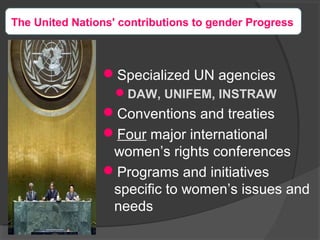
Specialized UN agencies
DAW, UNIFEM, INSTRAW
Conventions and treaties
Four major international
women’s rights conferences
Programs and initiatives
specific to women’s issues and
needs
The United Nations' contributions to gender Progress
The Commission on the Status of Women

Established in 1946

Monitors the Situation of Women

Promotes Women’s Rights

Sets Universal Standards Regarding the Status
of Women

Has a leading Role in Bringing Women’s
Concerns to the Attention of the UN Specialized
Agencies

1975-1985

The Creation of National and International
Forums

Gathering Data about Women

Holding Three World Women’s Conferences
The Decade for Women:

Publicized the low status and power of women
 This led to increased grassroots activism

Encouraged national commitment to increase
the status of women through:
 Development of women’s bureaus and
commissions
 Legal changes
UN World Conferences on Women
Important Outcomes:

International attention and commitment to
women’s rights and status

The growth of the NGO forums

Transnational feminist movement
The UN Women’s Conferences:

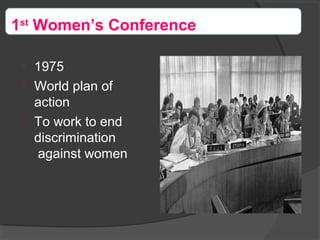
1975

World plan of
action

To work to end
discrimination
against women
1st
Women’s Conference
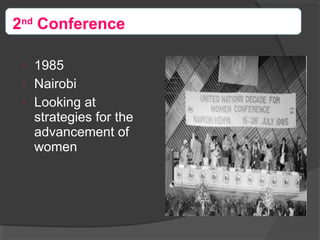
 1985
 Nairobi
 Looking at
strategies for the
advancement of
women
2nd
Conference

1995 Beijing

The Platform For Action
 For each critical area of concern, it specifies
strategic objectives and actions to be undertaken by
governments
○ Identifies critical areas of concern
 The feminization of poverty
 Inequalities in education, politics, the economy
 Violence against women
 Persistent discrimination against and violation of the rights of
the girl child
3rd
Conference

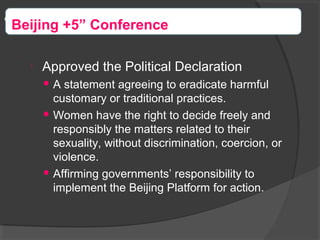
Approved the Political Declaration
 A statement agreeing to eradicate harmful
customary or traditional practices.
 Women have the right to decide freely and
responsibly the matters related to their
sexuality, without discrimination, coercion, or
violence.
 Affirming governments’ responsibility to
implement the Beijing Platform for action.
“Beijing +5” Conference

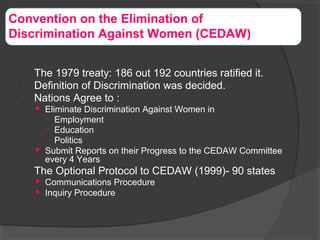
The 1979 treaty: 186 out 192 countries ratified it.

Definition of Discrimination was decided.

Nations Agree to :
 Eliminate Discrimination Against Women in
○ Employment
○ Education
○ Politics
 Submit Reports on their Progress to the CEDAW Committee
every 4 Years

The Optional Protocol to CEDAW (1999)- 90 states
 Communications Procedure
 Inquiry Procedure
Convention on the Elimination of
Discrimination Against Women (CEDAW)

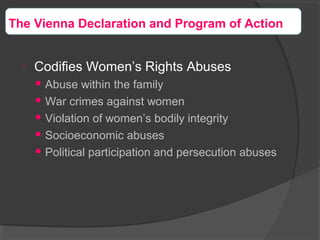
Codifies Women’s Rights Abuses
 Abuse within the family
 War crimes against women
 Violation of women’s bodily integrity
 Socioeconomic abuses
 Political participation and persecution abuses
The Vienna Declaration and Program of Action
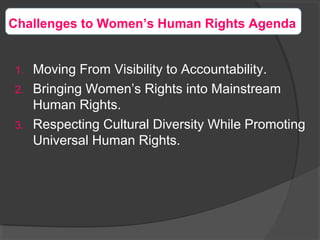
1. Moving From Visibility to Accountability.
2. Bringing Women’s Rights into Mainstream
Human Rights.
3. Respecting Cultural Diversity While Promoting
Universal Human Rights.
Challenges to Women’s Human Rights Agenda

A lack of proper implementation machinery.

Lack of women’s awareness of that machinery that
would empower them.

CEDAW committee monitors compliance with the
conventions.

But has not yet declared any government in violation
of women’s human rights.

Very little litigation Nationally & internationally
concerning the violation of women’s human rights.
1. Moving From Visibility to Accountability

The long-term male domination of all-powerful
political bodies nationally and internationally
means that issues of concern to men are seen
as general human concern.

The creation of specialized bodies for addressing
women’s issues within the UN has contributed to
their marginalization.

The specialized bodies are under funded.
2.Bringing Women’s Rights into
Mainstream Human Rights

Claims for universality are rejected as imperialistic & a
way to uphold Western economic interests.

Cultural diversity and human rights must be balanced.

Cultural relativism is the notion that rights and wrong are
determined culturally.

When pressured about international HR, repressive
government often hide behind insincere claim of Cultural
relativism as a way to remove the pressure.
3.Respecting Cultural Diversity While
Promoting Universal Human Rights
Thank You

Womens rights

  • 1.
  • 2.
    Freedom from Fear Freedomto Vote Freedom of Speech Freedom from Torture Freedom of Choice Freedom of Religion Freedom from enslavement Women in 21st century are thought to have
  • 3.
    Abuse violence anddiscrimination against women are widely tolerated and systematic. The issues with women’s rights are still being ignored and remain as a ‘social epidemic’. Many governments turn a blind eye towards the increasing problems with the discrimination and violence against women. Problems in modern world are:
  • 4.
     Global feminism movementsspan across multiple nations and have at their core the belief that women are entitled to the same rights as men, regardless of where the women live, their ethnicity and their social class.  Global feminism recognizes diversity & acknowledges that there are diverse meanings of feminism, each responsive to the needs and issues of women in different regions, societies and times. Transnational feminism:
  • 5.
     Unequal status ofwomen & abuses against women  are viewed as human rights violations.  UNHRC declares, freedom from torture & slavery as basic human rights. Therefore, domestic violence is a human rights violation.  Sexual assault is a form of terrorism  and rape is a form of torture  Female infanticide & neglect  are forms of female genocide  Global feminists work to ensure that human rights instruments and mechanisms provide avenues for challenging the systemic abuse of women. Women’s Rights as Human Rights
  • 6.
    Specialized UN agencies DAW,UNIFEM, INSTRAW Conventions and treaties Four major international women’s rights conferences Programs and initiatives specific to women’s issues and needs The United Nations' contributions to gender Progress
  • 7.
    The Commission onthe Status of Women  Established in 1946  Monitors the Situation of Women  Promotes Women’s Rights  Sets Universal Standards Regarding the Status of Women  Has a leading Role in Bringing Women’s Concerns to the Attention of the UN Specialized Agencies
  • 8.
     1975-1985  The Creation ofNational and International Forums  Gathering Data about Women  Holding Three World Women’s Conferences The Decade for Women:
  • 9.
     Publicized the lowstatus and power of women  This led to increased grassroots activism  Encouraged national commitment to increase the status of women through:  Development of women’s bureaus and commissions  Legal changes UN World Conferences on Women
  • 10.
    Important Outcomes:  International attentionand commitment to women’s rights and status  The growth of the NGO forums  Transnational feminist movement The UN Women’s Conferences:
  • 11.
     1975  World plan of action  Towork to end discrimination against women 1st Women’s Conference
  • 12.
     1985  Nairobi Looking at strategies for the advancement of women 2nd Conference
  • 13.
     1995 Beijing  The PlatformFor Action  For each critical area of concern, it specifies strategic objectives and actions to be undertaken by governments ○ Identifies critical areas of concern  The feminization of poverty  Inequalities in education, politics, the economy  Violence against women  Persistent discrimination against and violation of the rights of the girl child 3rd Conference
  • 14.
     Approved the PoliticalDeclaration  A statement agreeing to eradicate harmful customary or traditional practices.  Women have the right to decide freely and responsibly the matters related to their sexuality, without discrimination, coercion, or violence.  Affirming governments’ responsibility to implement the Beijing Platform for action. “Beijing +5” Conference
  • 15.
     The 1979 treaty:186 out 192 countries ratified it.  Definition of Discrimination was decided.  Nations Agree to :  Eliminate Discrimination Against Women in ○ Employment ○ Education ○ Politics  Submit Reports on their Progress to the CEDAW Committee every 4 Years  The Optional Protocol to CEDAW (1999)- 90 states  Communications Procedure  Inquiry Procedure Convention on the Elimination of Discrimination Against Women (CEDAW)
  • 16.
     Codifies Women’s RightsAbuses  Abuse within the family  War crimes against women  Violation of women’s bodily integrity  Socioeconomic abuses  Political participation and persecution abuses The Vienna Declaration and Program of Action
  • 17.
    1. Moving FromVisibility to Accountability. 2. Bringing Women’s Rights into Mainstream Human Rights. 3. Respecting Cultural Diversity While Promoting Universal Human Rights. Challenges to Women’s Human Rights Agenda
  • 18.
     A lack ofproper implementation machinery.  Lack of women’s awareness of that machinery that would empower them.  CEDAW committee monitors compliance with the conventions.  But has not yet declared any government in violation of women’s human rights.  Very little litigation Nationally & internationally concerning the violation of women’s human rights. 1. Moving From Visibility to Accountability
  • 19.
     The long-term maledomination of all-powerful political bodies nationally and internationally means that issues of concern to men are seen as general human concern.  The creation of specialized bodies for addressing women’s issues within the UN has contributed to their marginalization.  The specialized bodies are under funded. 2.Bringing Women’s Rights into Mainstream Human Rights
  • 20.
     Claims for universalityare rejected as imperialistic & a way to uphold Western economic interests.  Cultural diversity and human rights must be balanced.  Cultural relativism is the notion that rights and wrong are determined culturally.  When pressured about international HR, repressive government often hide behind insincere claim of Cultural relativism as a way to remove the pressure. 3.Respecting Cultural Diversity While Promoting Universal Human Rights
  • 21.