“Developing
Basic Digital
Skills”
As teachers adjust their teaching
to effectively match the new
digital world of information
technology (ICT), they must be
clear on what basic knowledge,
skills and values need to be
developed by digital learners.
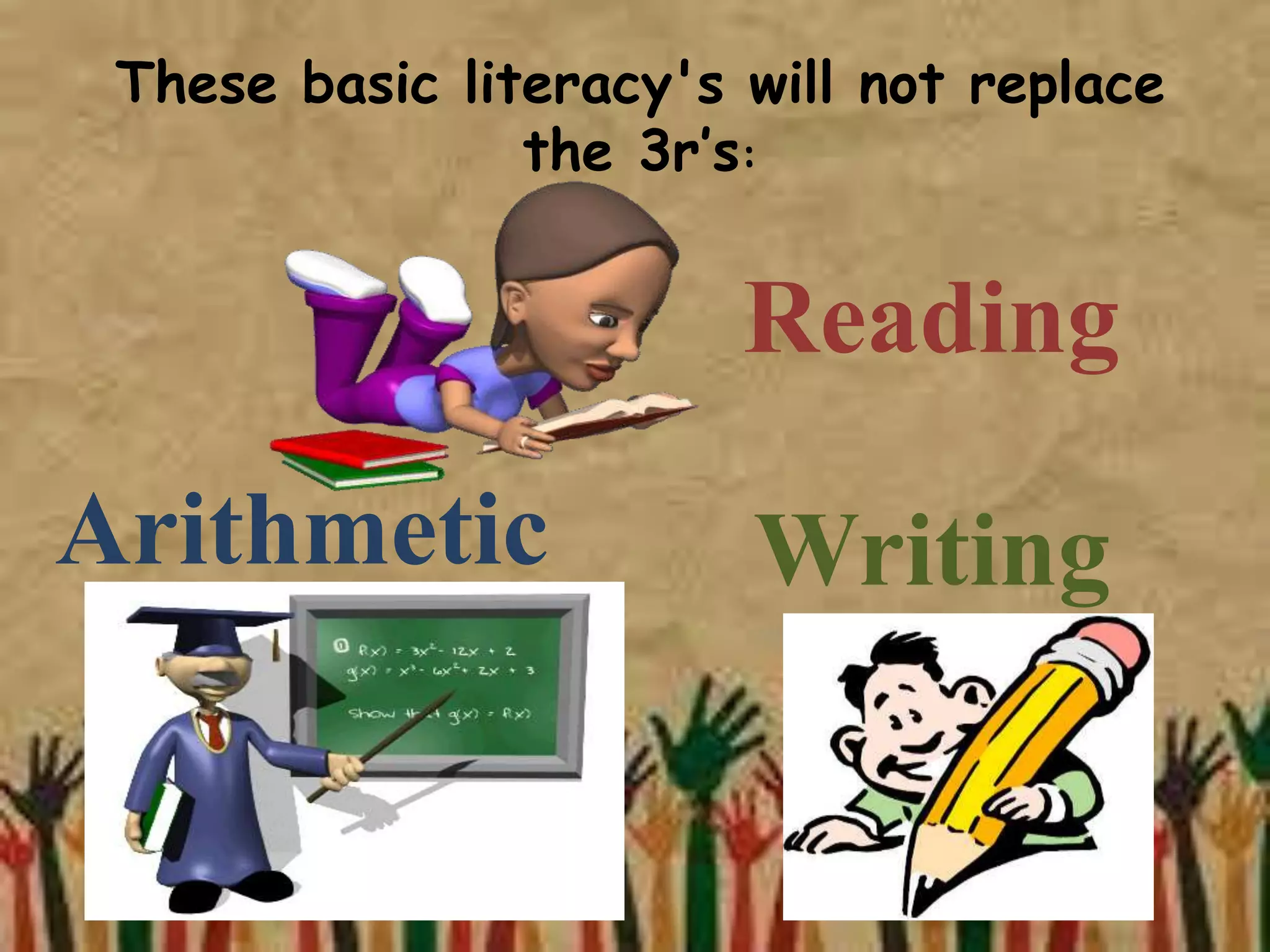
These basic literacy's will not replace
the 3r’s:
Reading
WritingArithmetic
Six (6)
Essentials to
Equip Students
for Success
Solution
Fluency
This refers to the capacity and
creativity in problem solving.
It requires whole brain thinking
executed when students define a
problem, design the appropriate
solution, apply the solution, and
assess the process and result.
This involves 3 subjects of skills:
a.) An ability to access information.
Access may involve not only of the internet,
but either sources like CD-ROM software.
b.)An ability to retrieve information.
May includes not only texts
but images, sound and video.
c.) An ability to reflect on,
assess and rewrite for instructive
information packages.
Information
Fluency
Collaboration
Fluency
To teamwork with virtual or real
partners in the online environment,
there is a virtual interaction in social
networking and online gaming
domains.
Media Fluency
Refers to channels of mass communication
(radio, television, magazine, advertising,
graphic arts) or Digital sources.
There is a need for an analytical mind to
evaluate the message in a chosen media,
as well as creative ability to publish
digital messages.
Creativity
Fluency
Adds meaning by way of design, art,
and the story –telling to package a
message.
Templates for ppt. and blogs are
available for free access in the internet
Font, color, patterns are elements to a
creative fluency
Digital Ethics
Guided by principles of leadership,
global responsibility, environmental
awareness, global citizens and
personal accountability.
By : BEED 3   
“Education is not filling of a pail,
but the lighting of a fire.”
-William Butler Yeats

With effects

  • 1.
  • 2.
    As teachers adjusttheir teaching to effectively match the new digital world of information technology (ICT), they must be clear on what basic knowledge, skills and values need to be developed by digital learners.
  • 3.
    These basic literacy'swill not replace the 3r’s: Reading WritingArithmetic
  • 4.
    Six (6) Essentials to EquipStudents for Success
  • 5.
    Solution Fluency This refers tothe capacity and creativity in problem solving. It requires whole brain thinking executed when students define a problem, design the appropriate solution, apply the solution, and assess the process and result.
  • 6.
    This involves 3subjects of skills: a.) An ability to access information. Access may involve not only of the internet, but either sources like CD-ROM software. b.)An ability to retrieve information. May includes not only texts but images, sound and video. c.) An ability to reflect on, assess and rewrite for instructive information packages. Information Fluency
  • 7.
    Collaboration Fluency To teamwork withvirtual or real partners in the online environment, there is a virtual interaction in social networking and online gaming domains.
  • 8.
    Media Fluency Refers tochannels of mass communication (radio, television, magazine, advertising, graphic arts) or Digital sources. There is a need for an analytical mind to evaluate the message in a chosen media, as well as creative ability to publish digital messages.
  • 9.
    Creativity Fluency Adds meaning byway of design, art, and the story –telling to package a message. Templates for ppt. and blogs are available for free access in the internet Font, color, patterns are elements to a creative fluency
  • 10.
    Digital Ethics Guided byprinciples of leadership, global responsibility, environmental awareness, global citizens and personal accountability.
  • 11.
    By : BEED3    “Education is not filling of a pail, but the lighting of a fire.” -William Butler Yeats