Designing Learning Spaces in Physical and Virtual Settings Alyssa Wise  Assistant Professor of Education Educational Technology & Learning Design Program Simon Fraser University Justin Marples Director of Classroom Services University of British Columbia Fall 2009 Workshop
 
Overview Definitions  Analysis of Learning Spaces Activity  Key Questions  Design Principles with Physical & Virtual Examples Take-Aways & Looking Forward
Definitions: What Does it Mean to Design "Spaces" For Learning? Creating an environment  or setting in which learning interactions will occur Different kinds of spaces facilitate certain kinds of interactions and hinder others
Analysis of Learning Spaces
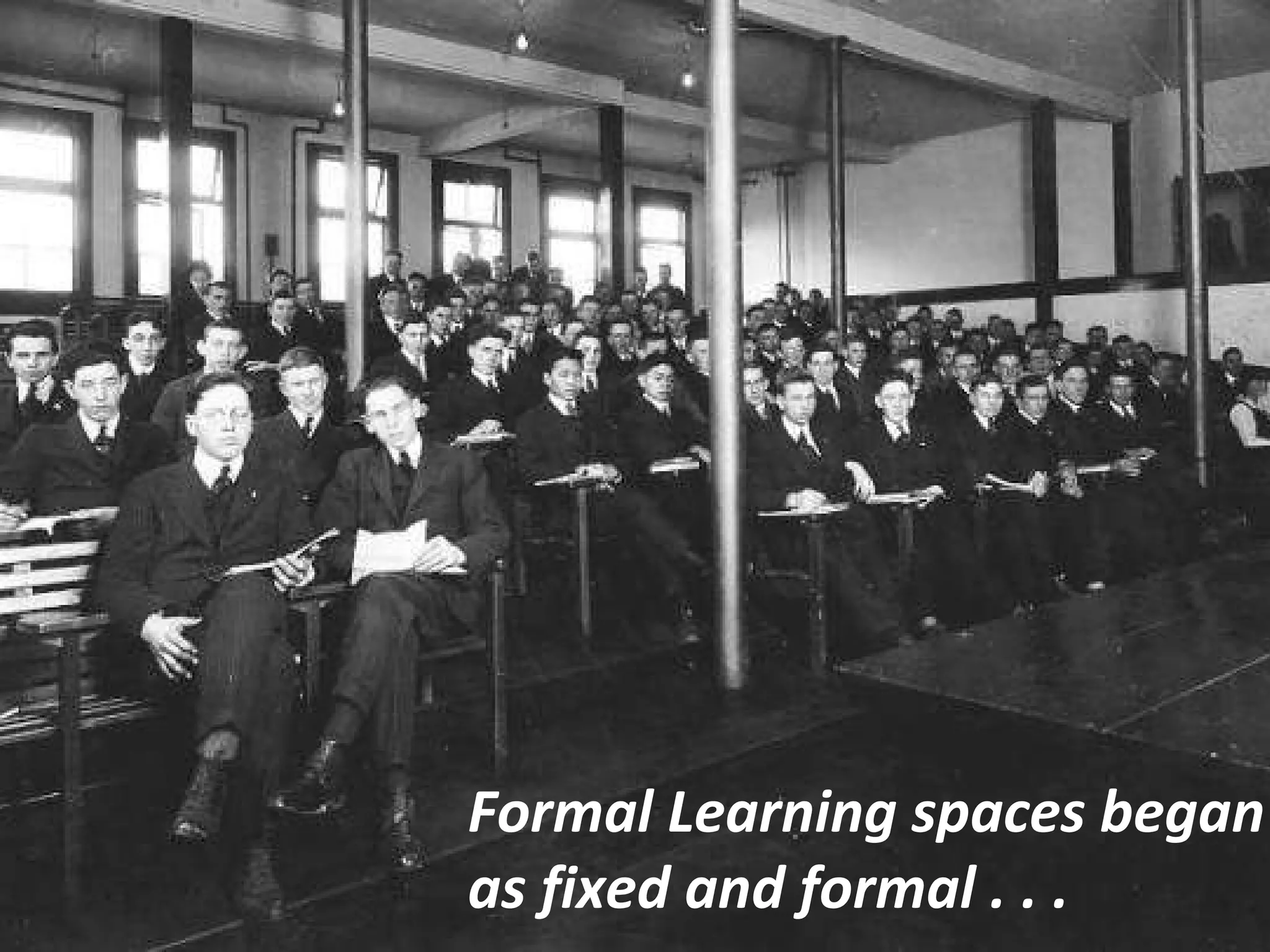
Formal Learning spaces began as fixed and formal . . .
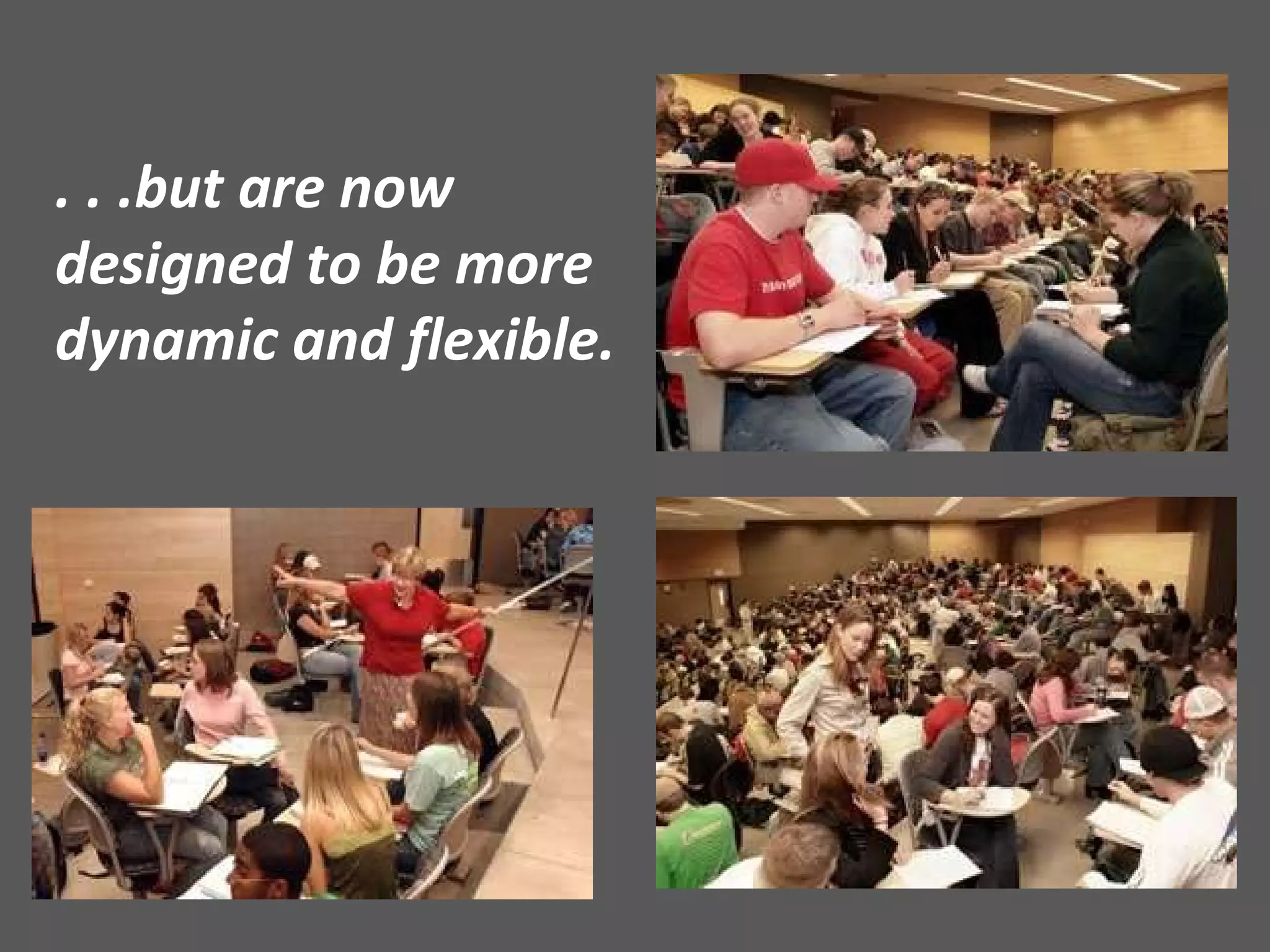
. . .but are now designed to be more dynamic and flexible.
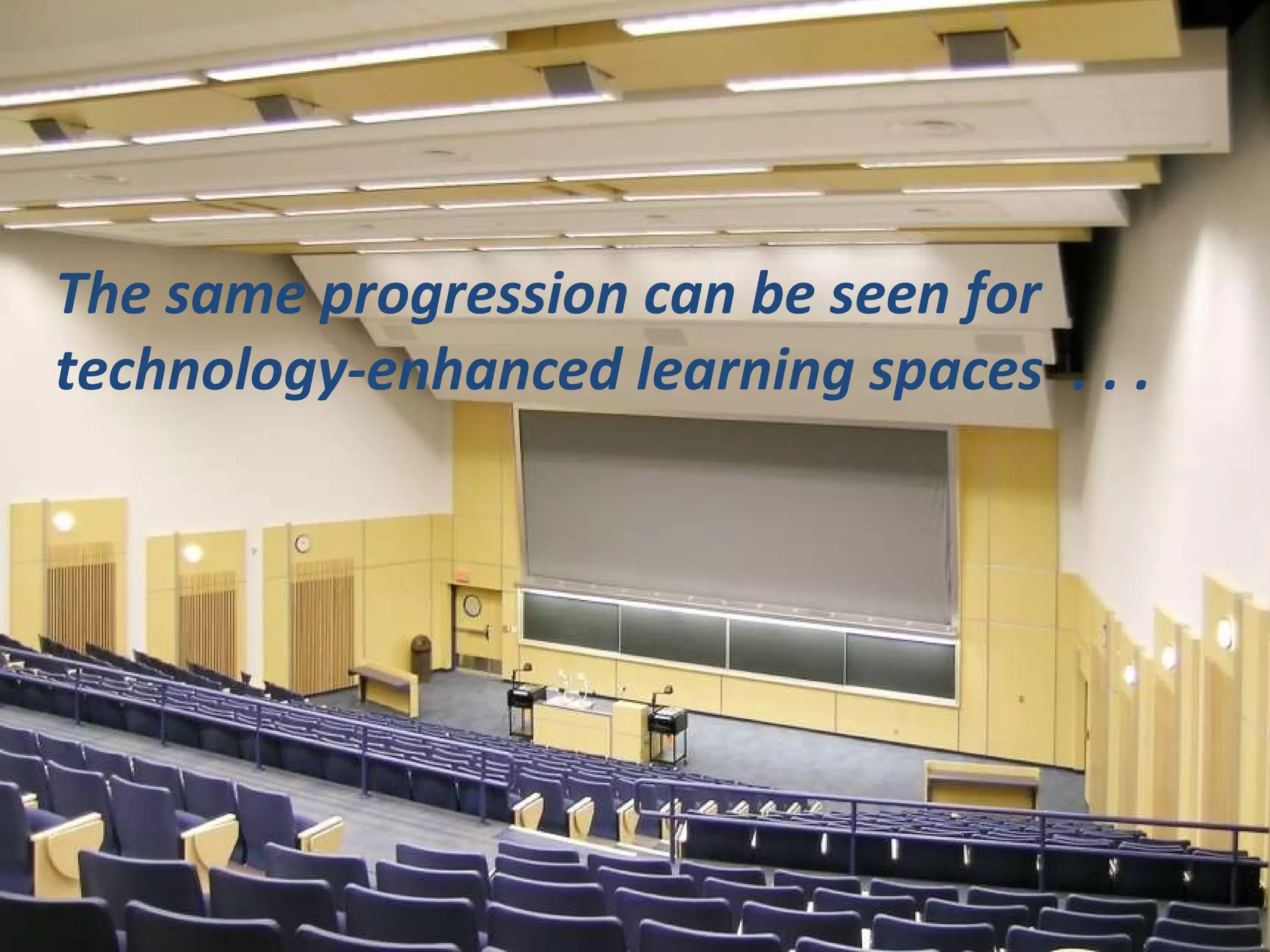
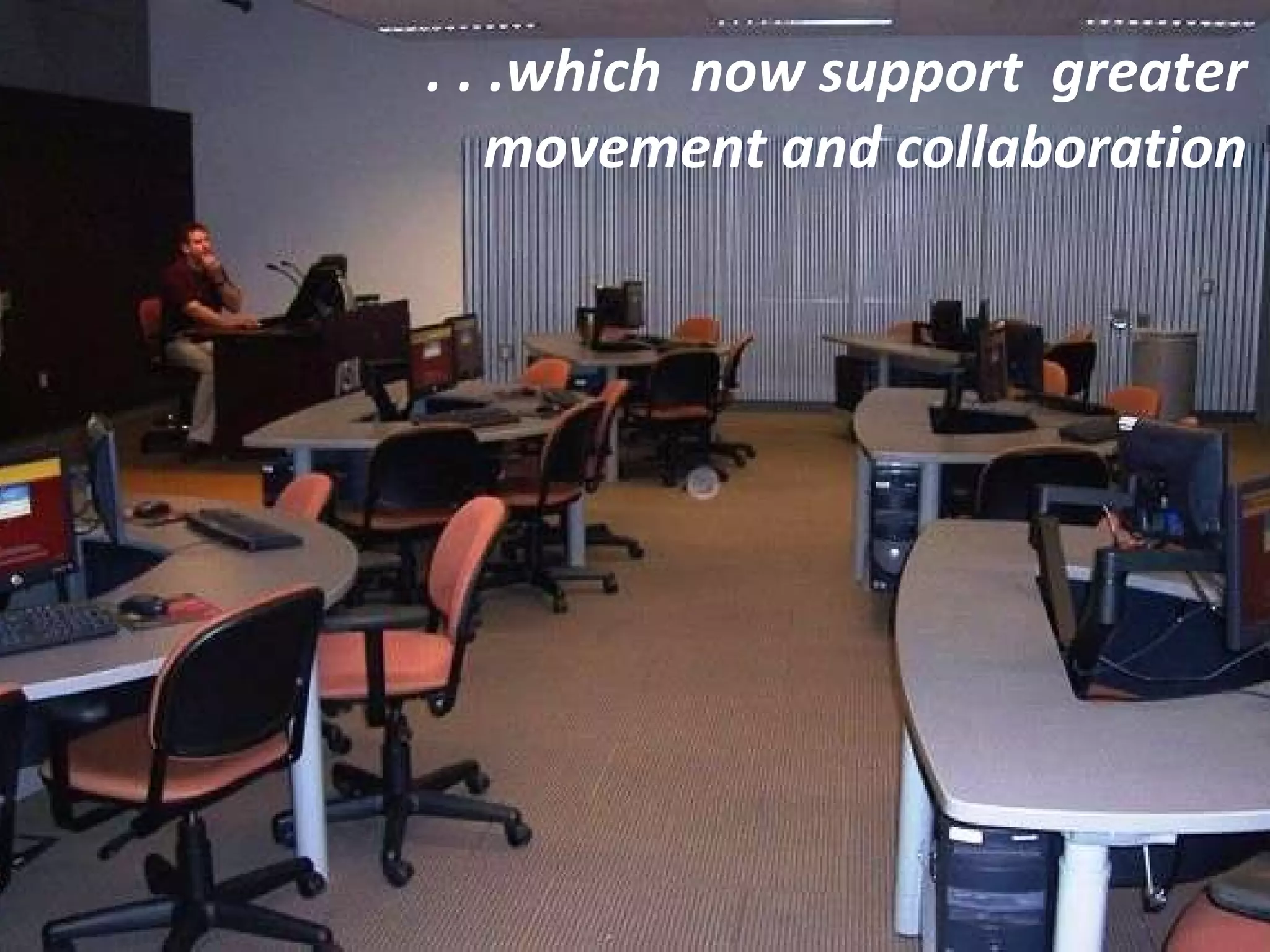
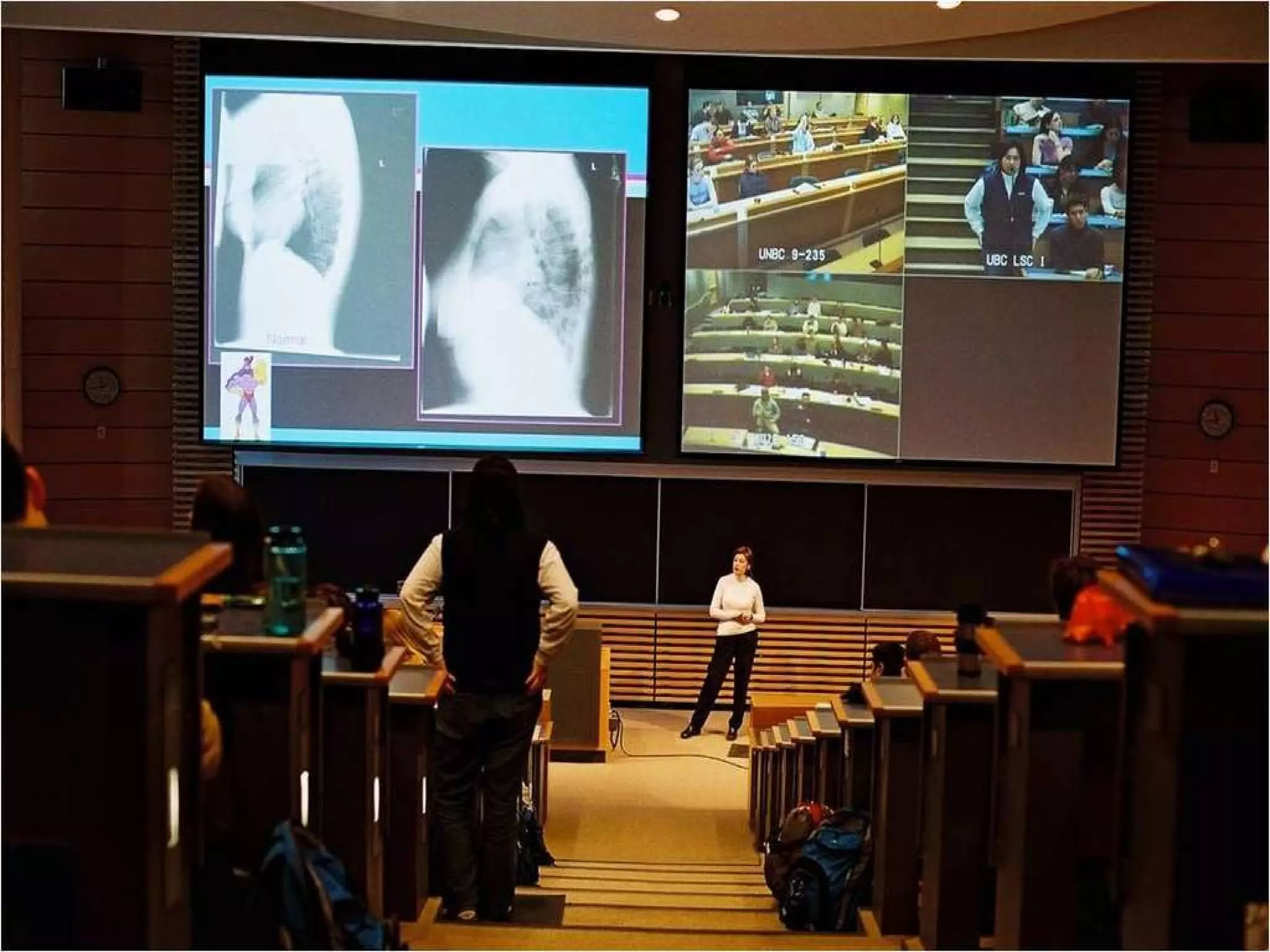
The same progression can be seen for technology-enhanced learning spaces  . . .
. . .which  now support  greater movement and collaboration
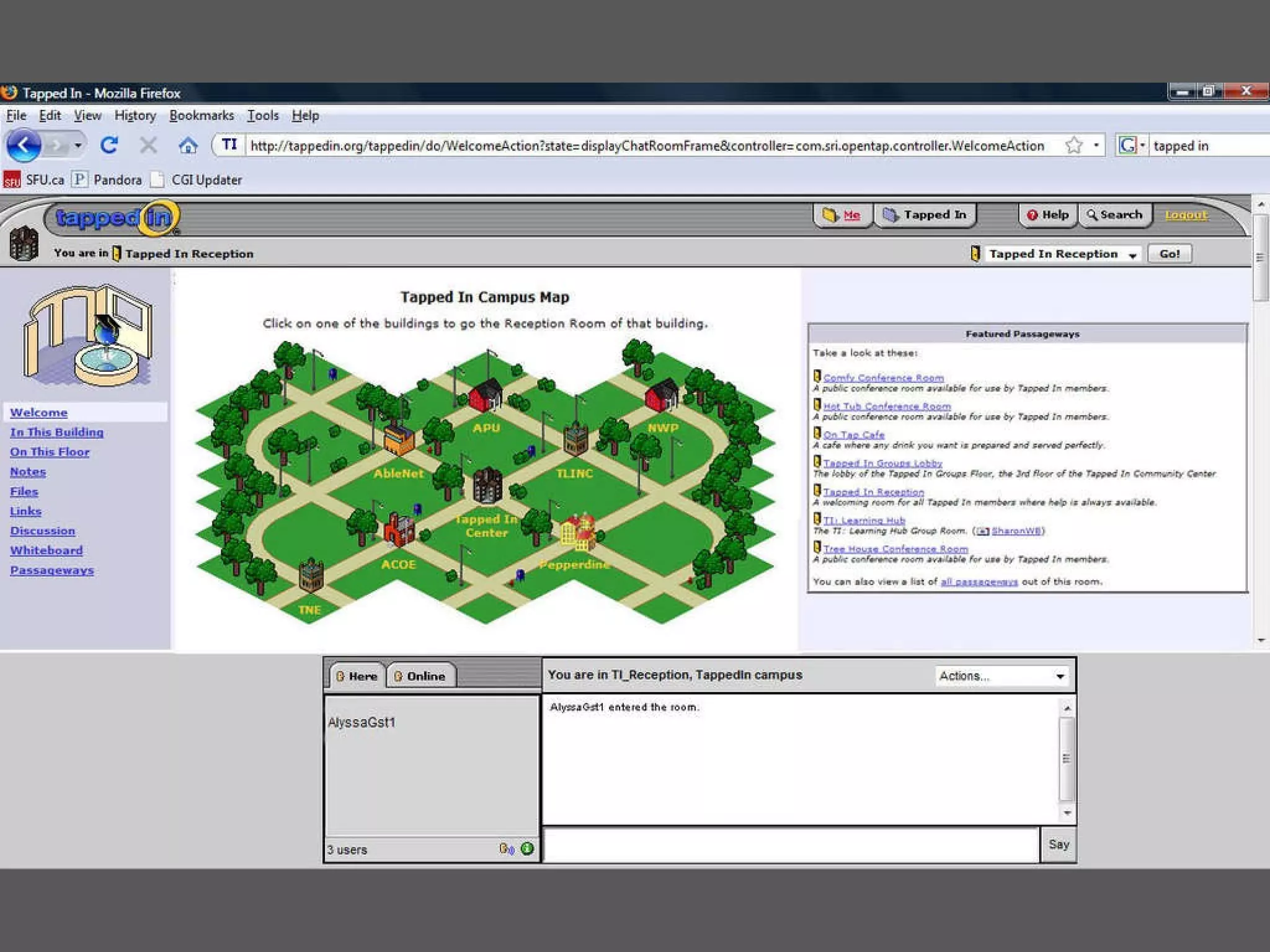
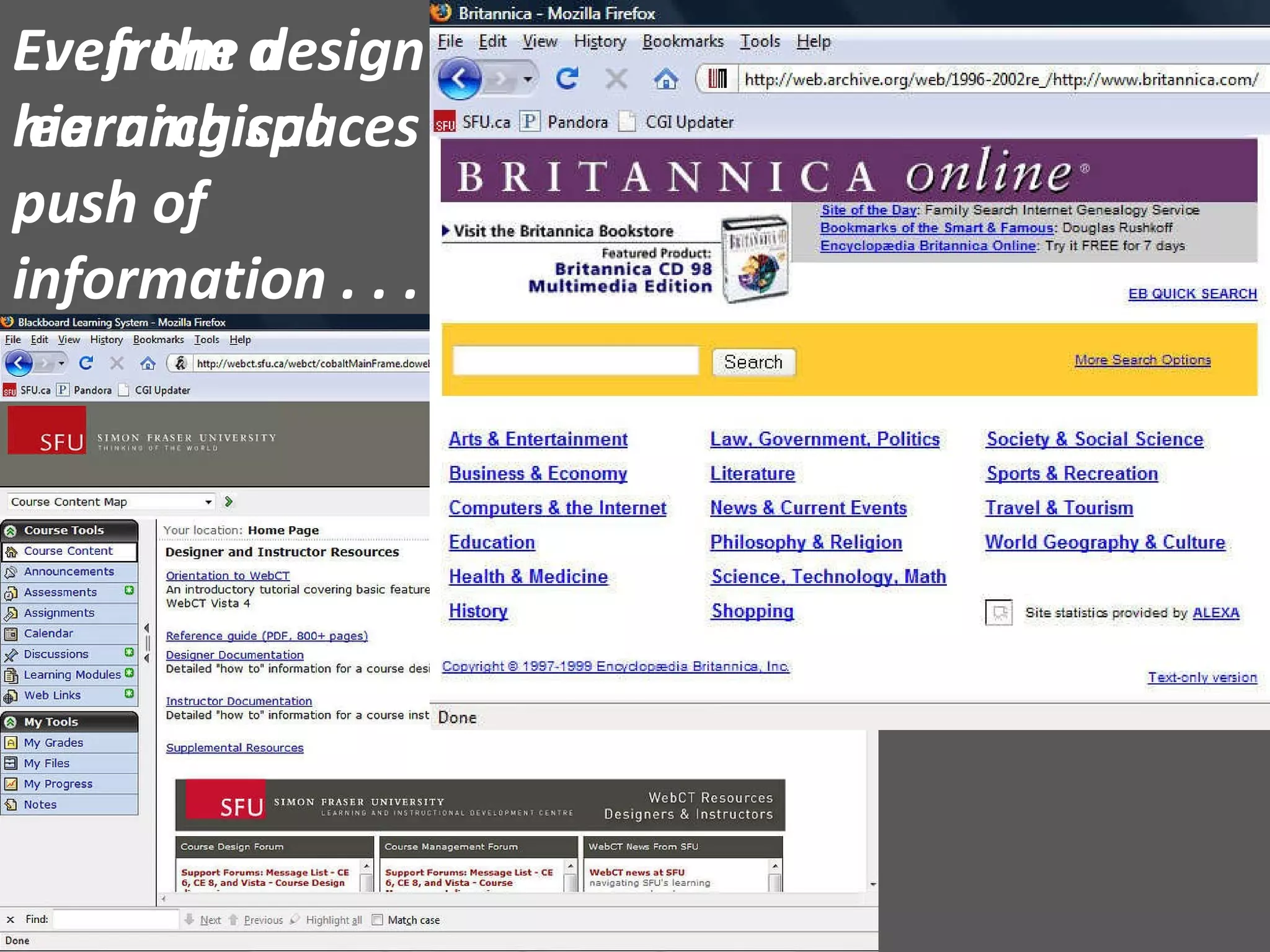
Even the design of virtual learning spaces is changing. . . . . . from a hierarchical push of information . . .
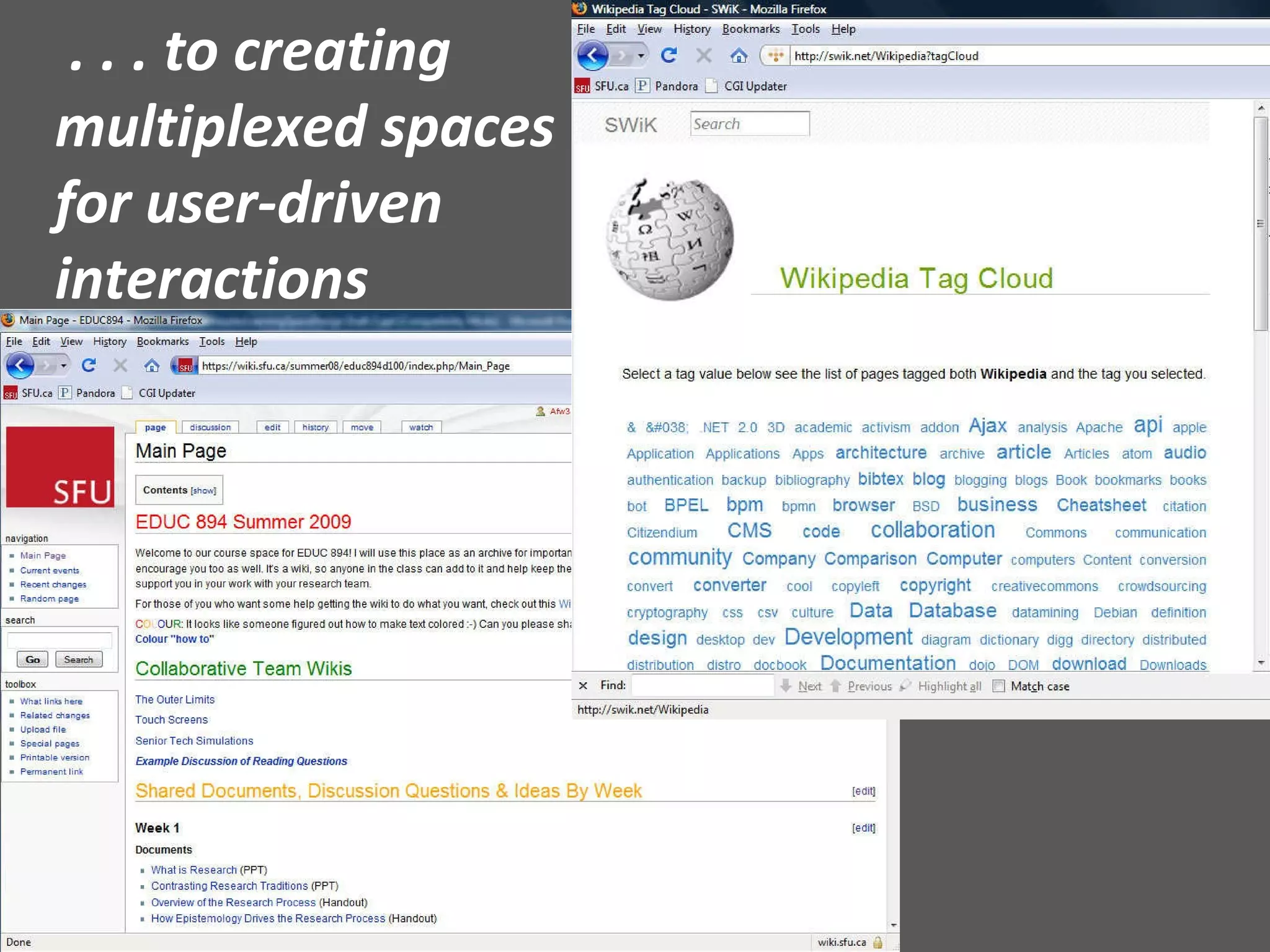
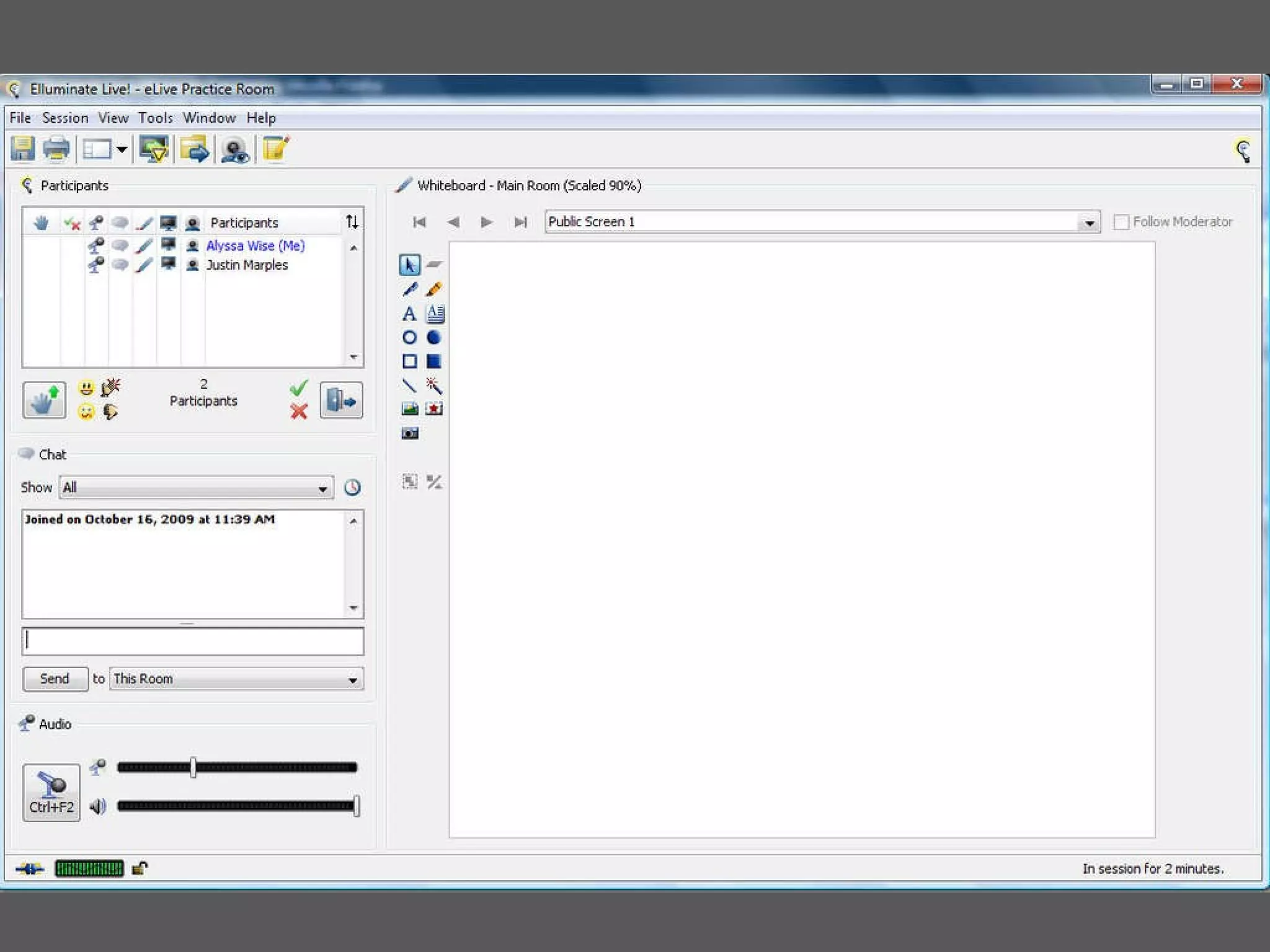
. . . to creating multiplexed spaces for user-driven interactions
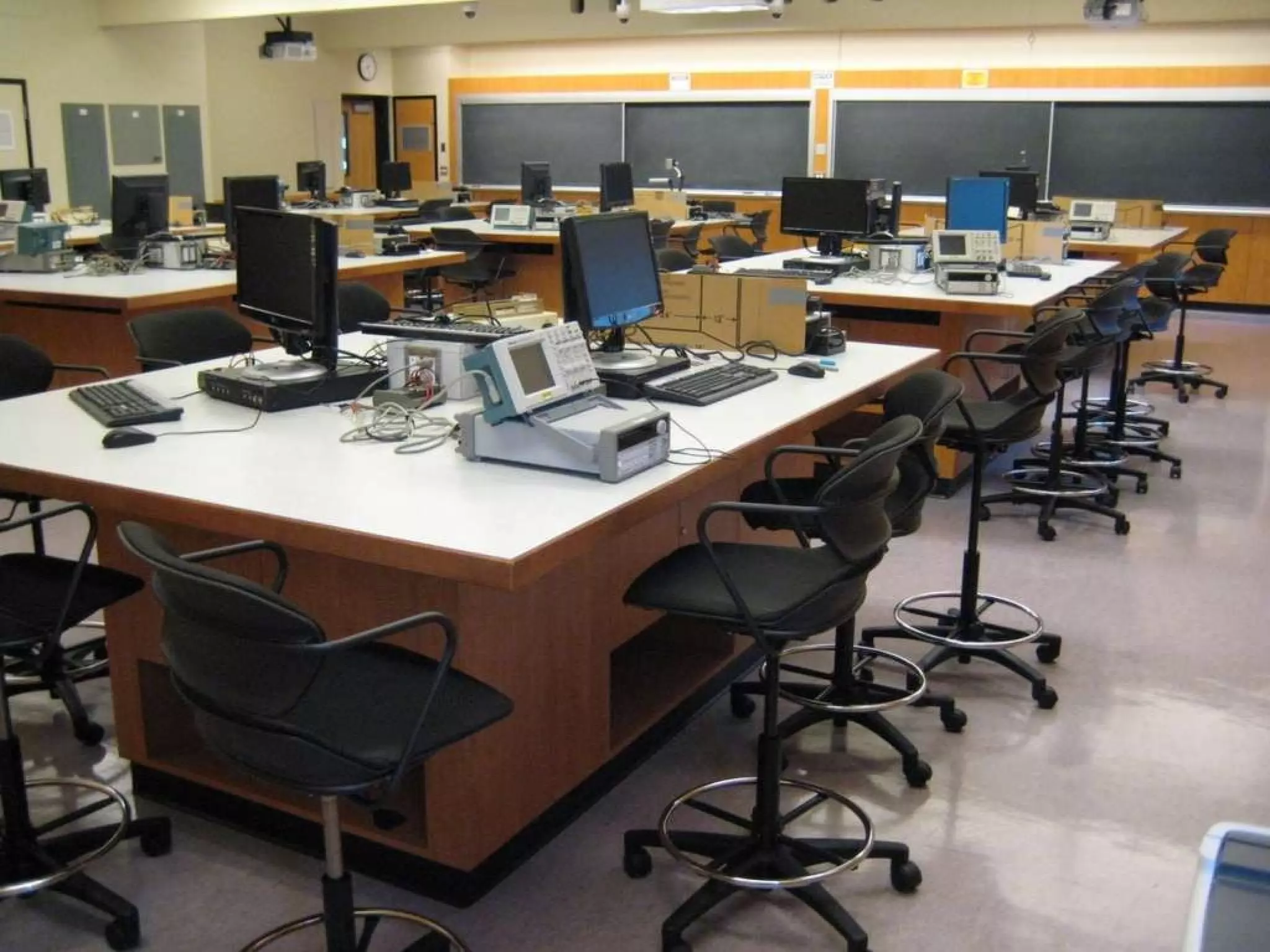
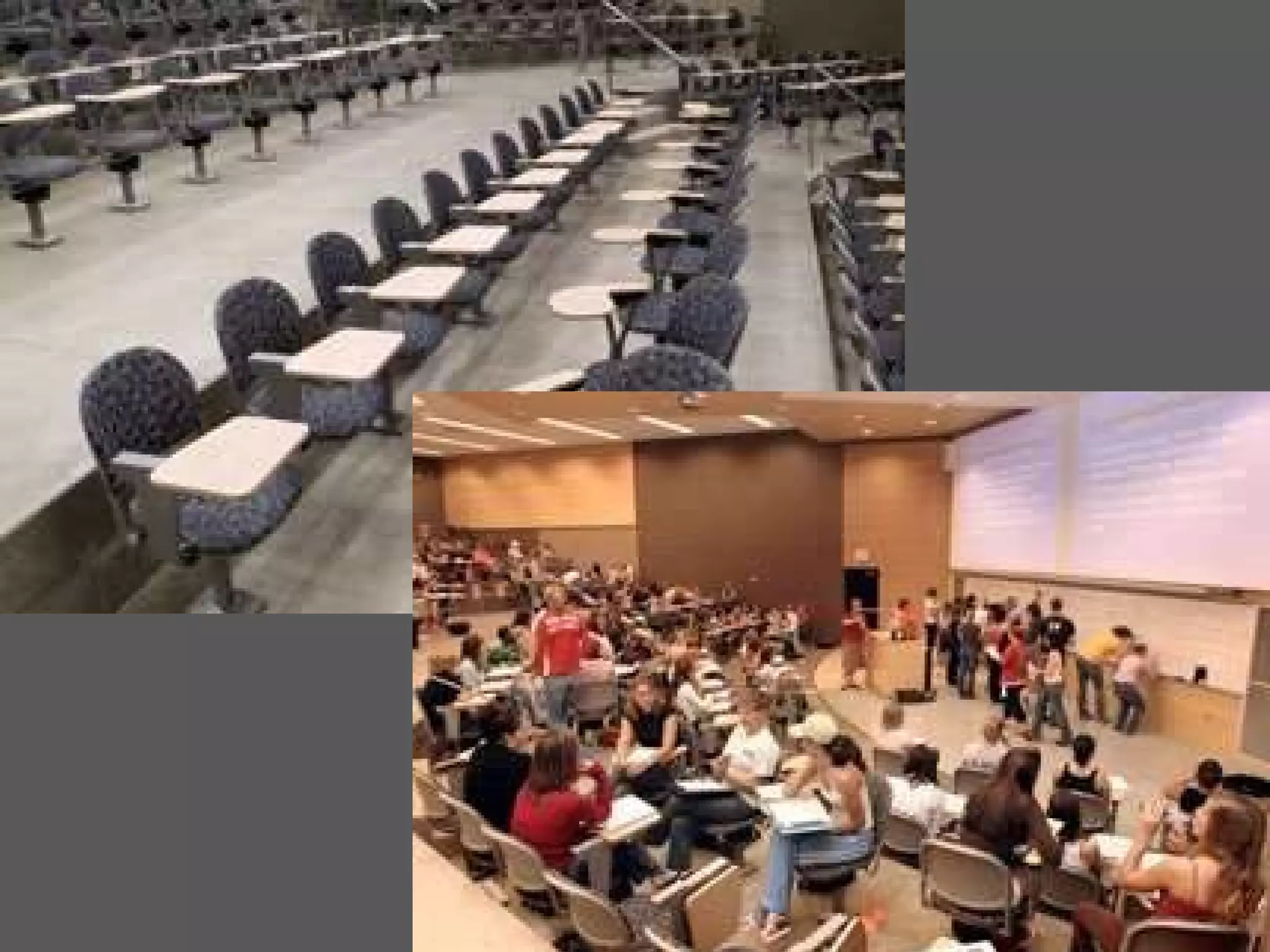
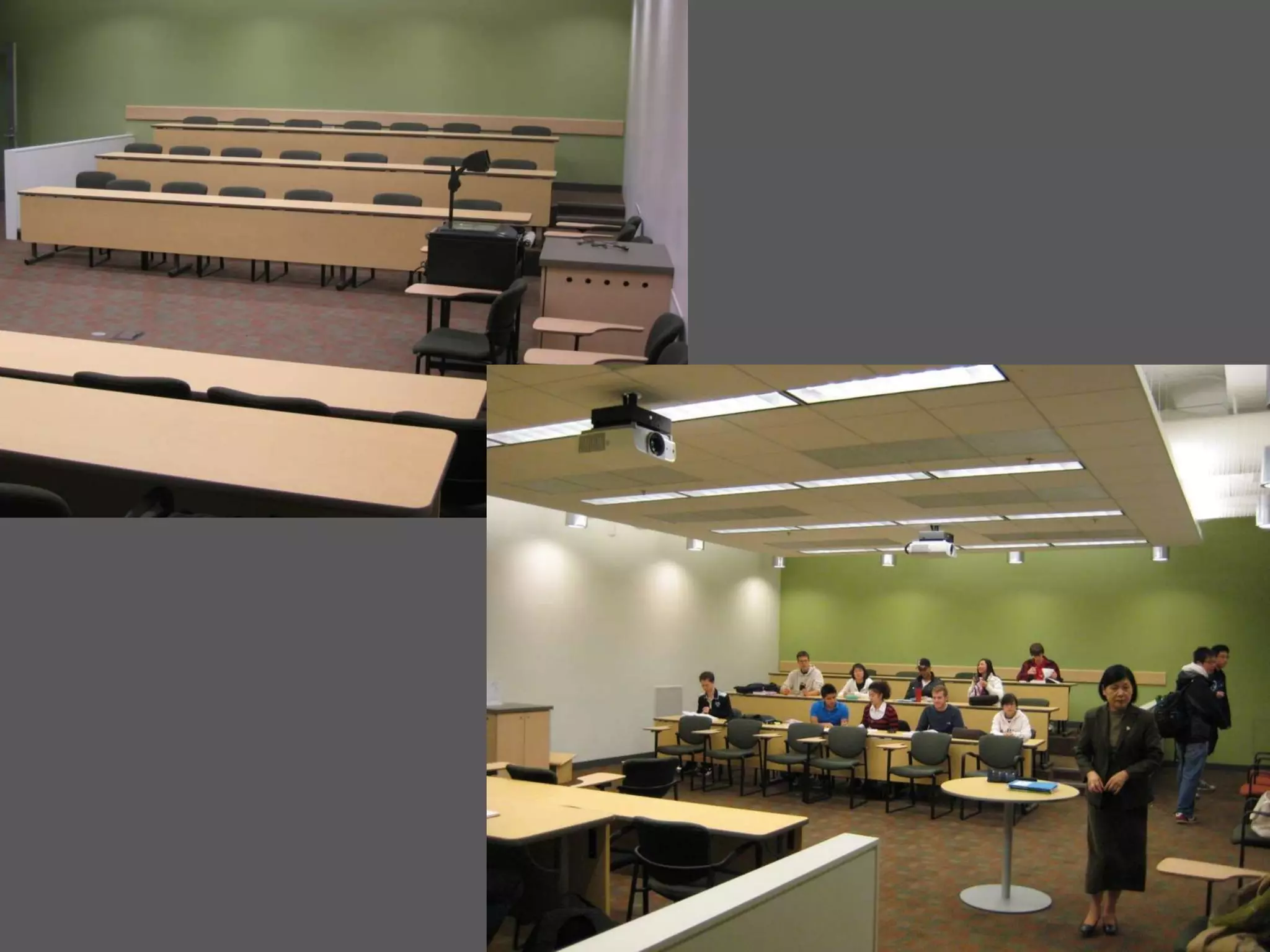
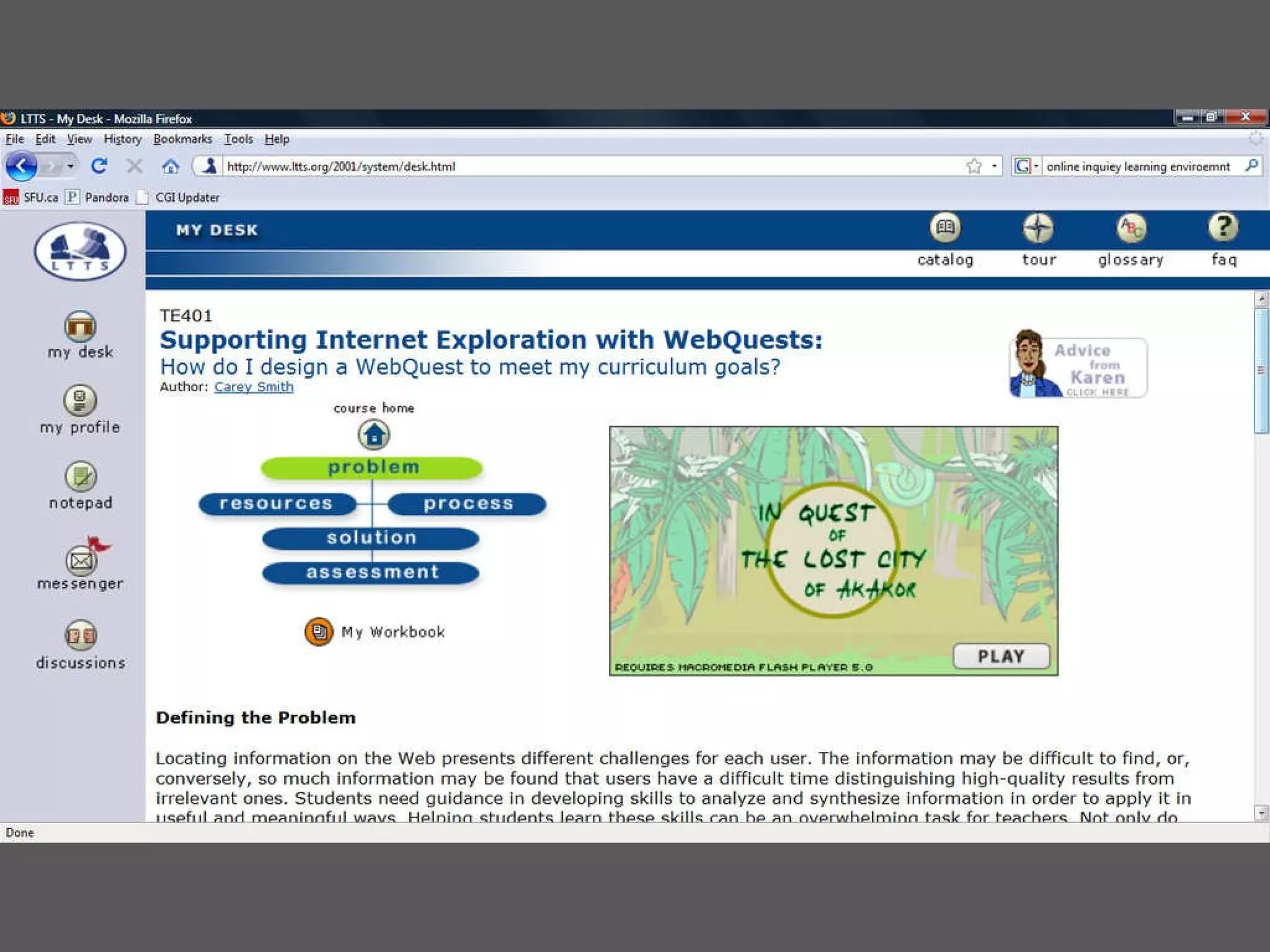
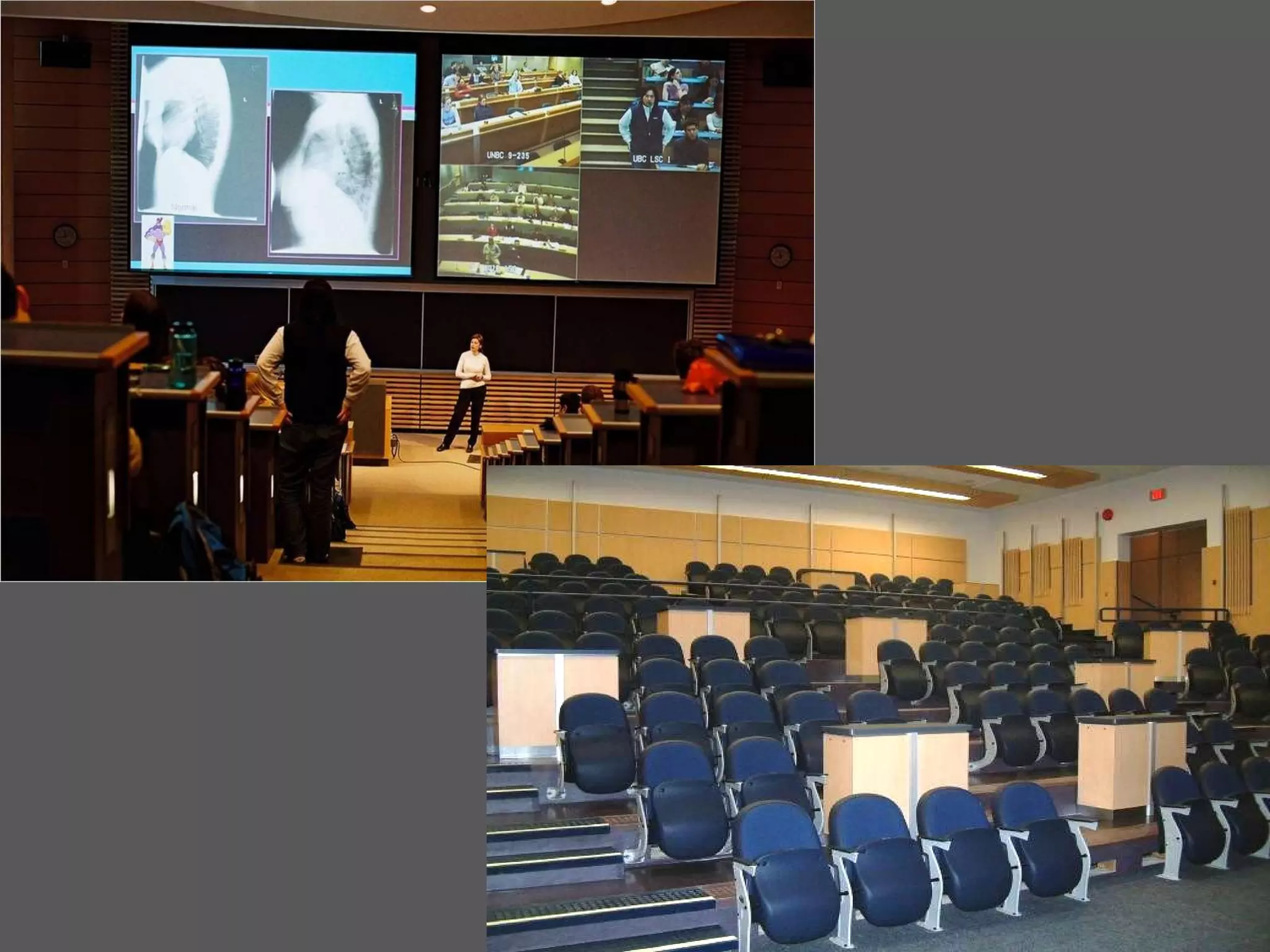
Activity:  Analysis of Learning Spaces Take a look at the two images of learning spaces. What specific kinds of interactions are  promoted  by the design of the learning spaces? What specific kinds of interactions are  inhibited  by the design of the learning spaces?
 
 
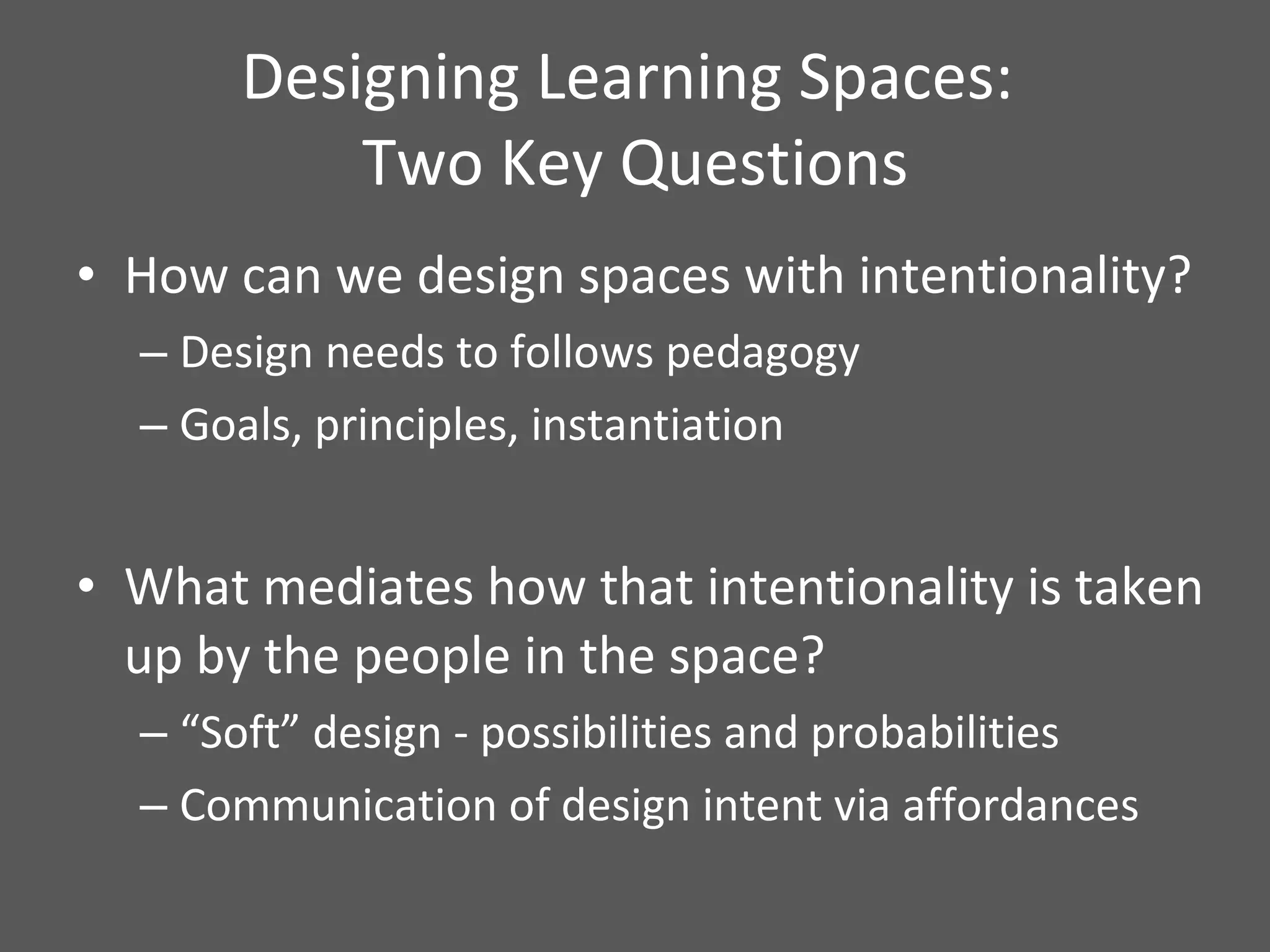
Designing Learning Spaces:  Two Key Questions How can we design spaces with intentionality? Design needs to follows pedagogy  Goals, principles, instantiation What mediates how that intentionality is taken up by the people in the space? “ Soft” design - possibilities and probabilities Communication of design intent via affordances
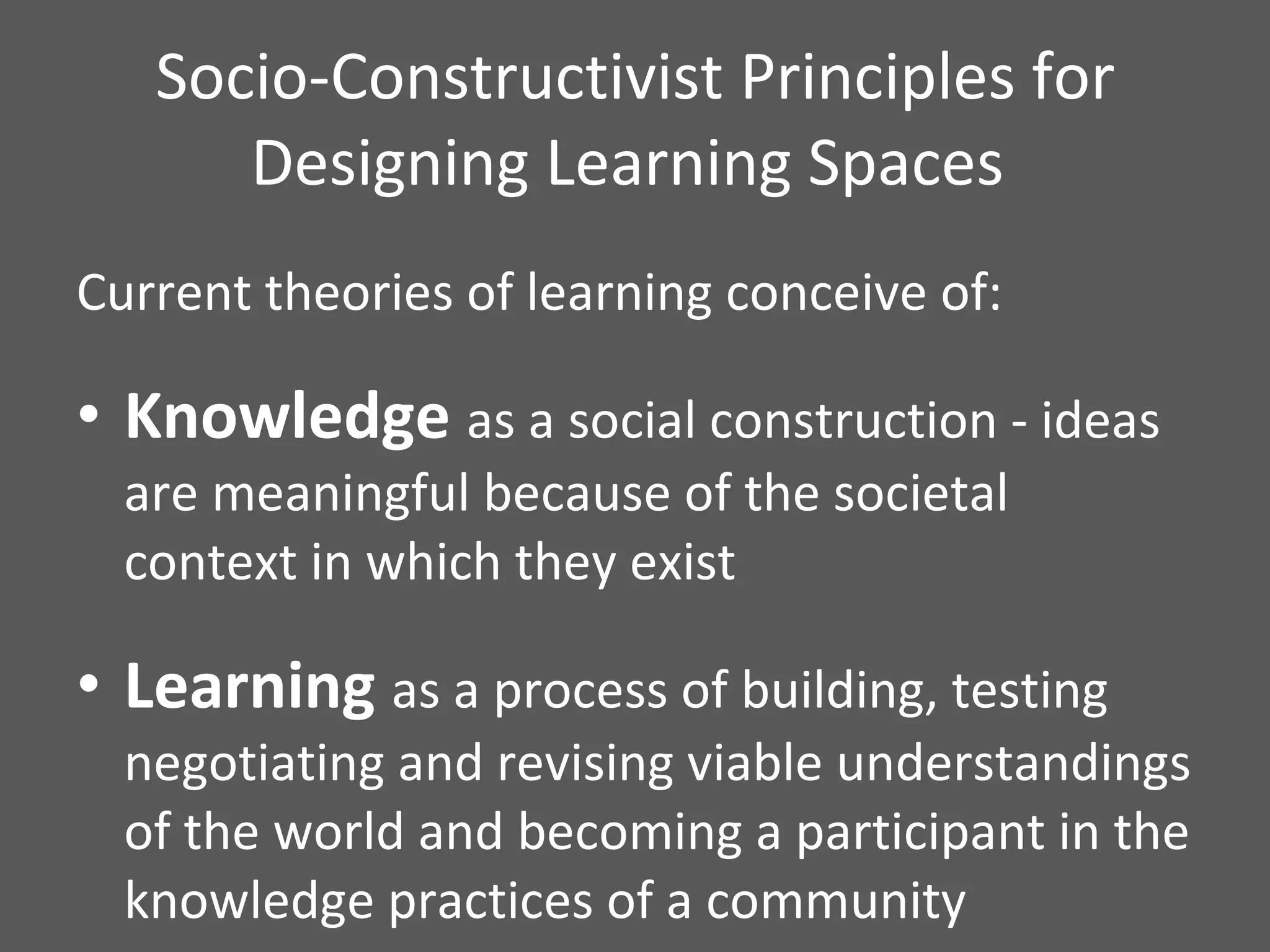
Socio-Constructivist Principles for Designing Learning Spaces  Current theories of learning conceive of: Knowledge  as a social construction - ideas are meaningful because of the societal context in which they exist Learning  as a process of building, testing negotiating and revising viable understandings of the world and becoming a participant in the knowledge practices of a community
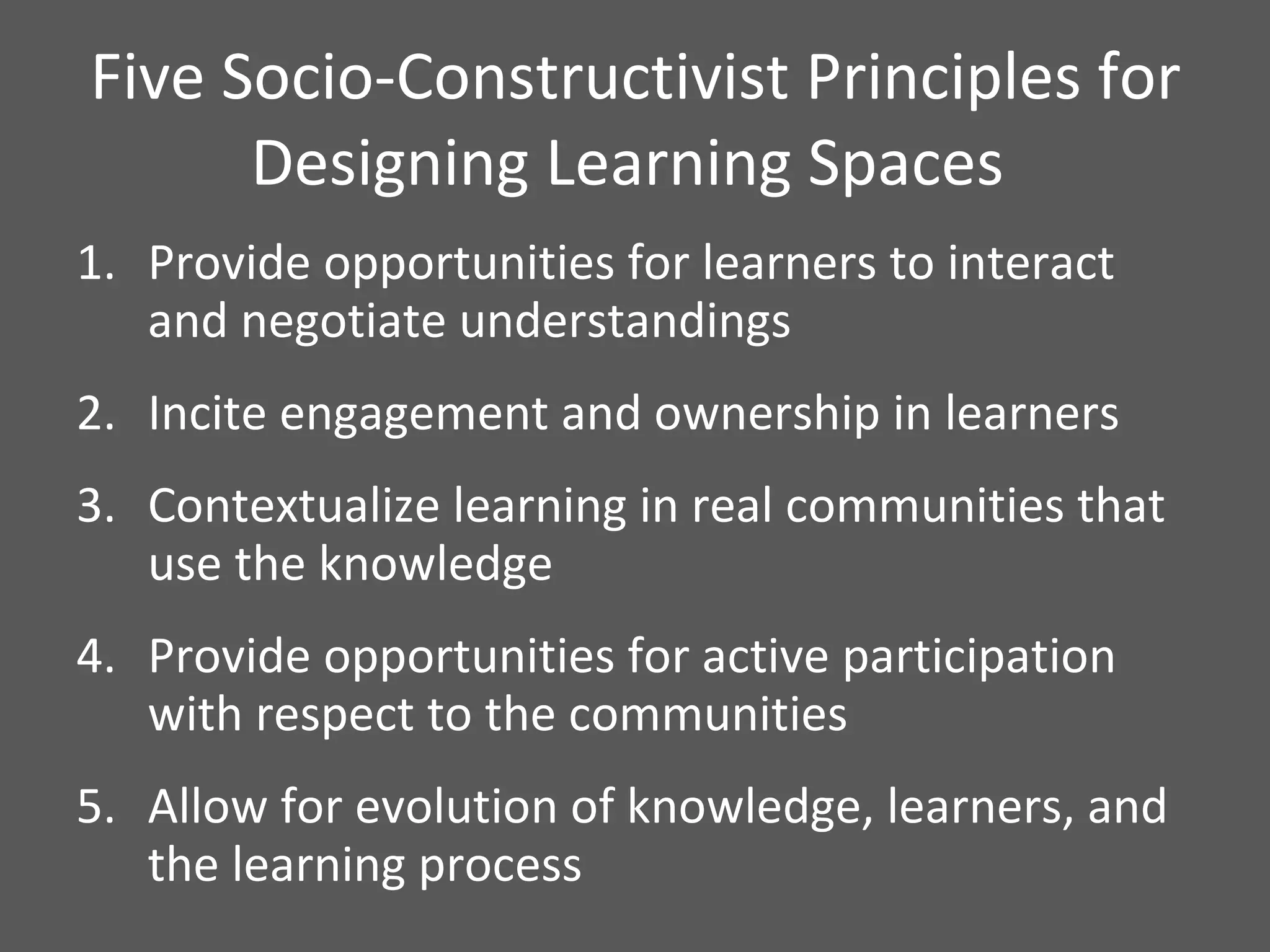
Five Socio-Constructivist Principles for Designing Learning Spaces  Provide opportunities for learners to interact and negotiate understandings Incite engagement and ownership in learners Contextualize learning in real communities that use the knowledge Provide opportunities for active participation with respect to the communities  Allow for evolution of knowledge, learners, and the learning process
PRINCIPLE 1: PROVIDE OPPORTUNITIES FOR LEARNERS TO INTERACT AND NEGOTIATE UNDERSTANDINGS
 
 
PRINCIPLE 2: INCITE ENGAGEMENT AND OWNERSHIP IN LEARNERS
 
 
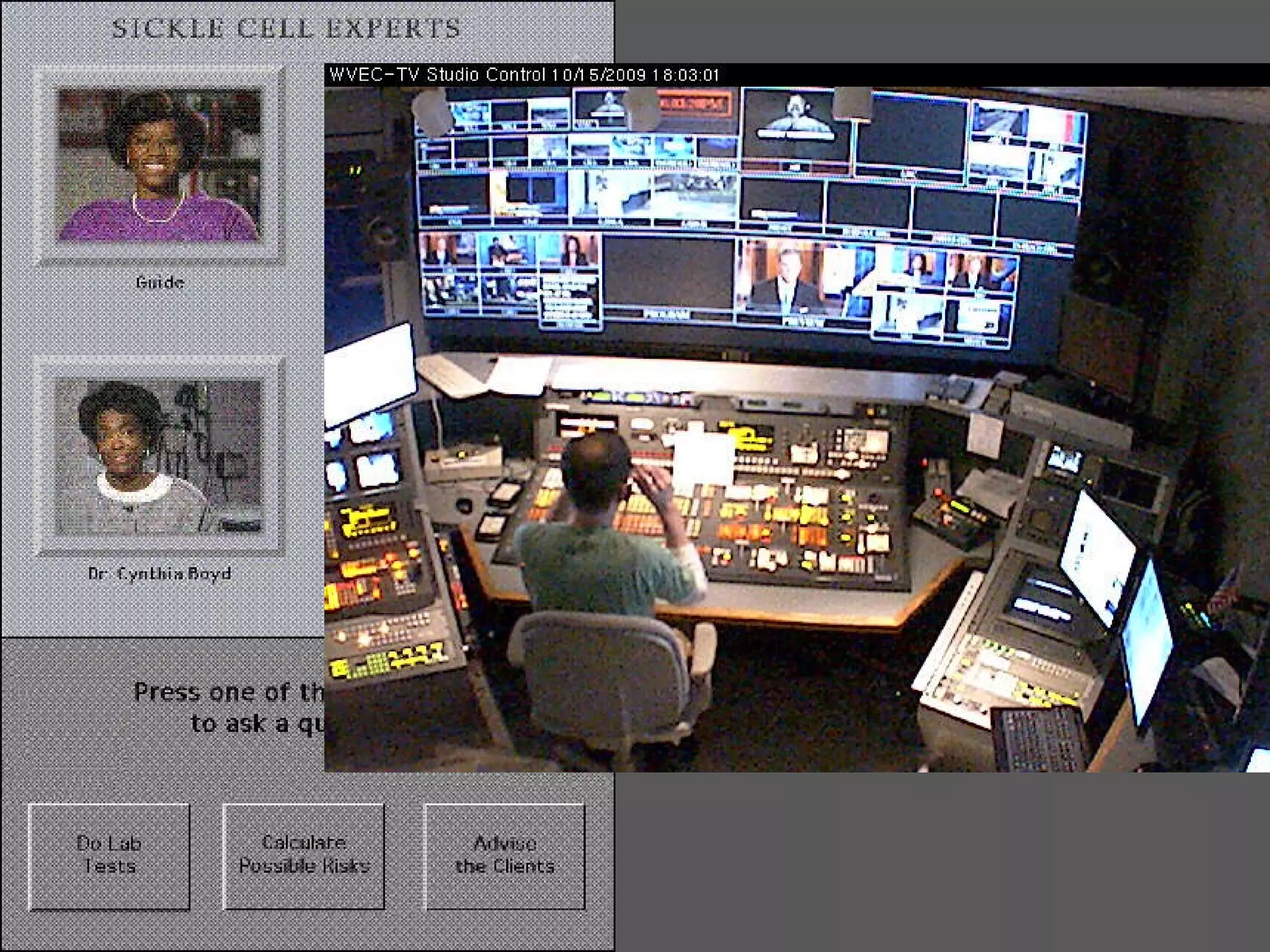
PRINCIPLE 3: CONTEXTUALIZE LEARNING IN REAL COMMUNITIES THAT USE THE KNOWLEDGE
 
 
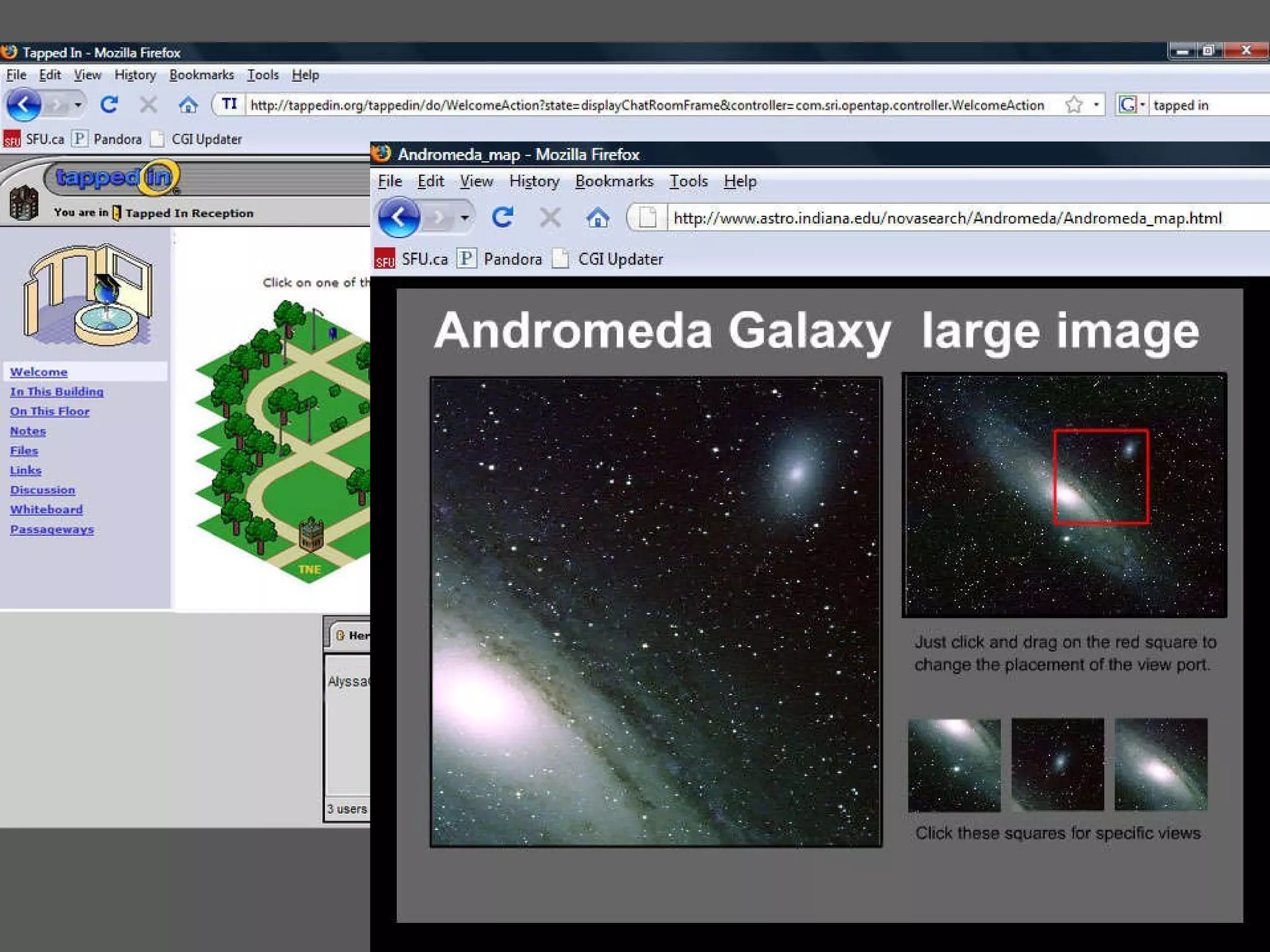
PRINCIPLE 4: PROVIDE OPPORTUNITIES FOR ACTIVE PARTICIPATION WITH RESPECT TO THE COMMUNITIES
 
 
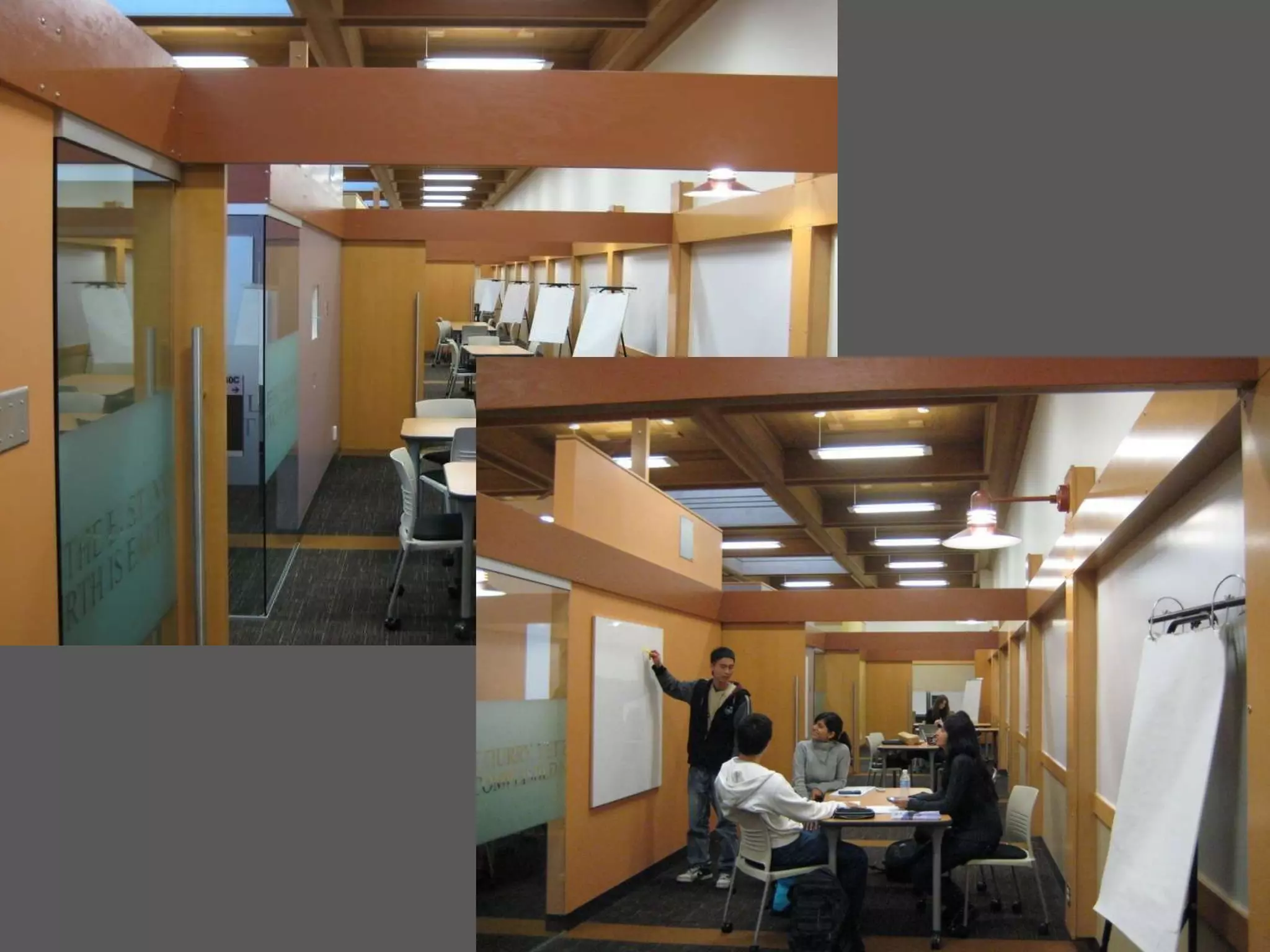
PRINCIPLE 5: ALLOW FOR EVOLUTION OF KNOWLEDGE, LEARNERS, AND THE LEARNING PROCESS
 
 
Key Takeaways Designing a learning space means to create an environment  that facilitates pedagogically-valued interactions Spaces should be designed for: Interaction Engagement Real-life Connections Authentic Participation Evolution
Pushing Forward How can we integrate the design of Physical and Virtual learning spaces to support each other?
Educational Technology &  Learning Design  Masters Degree Programs  at http://www.SFUedtech.ca

Wise and Marples - Learning Space Design - ETUG Fall Workshop 2009

  • 1.
    Designing Learning Spacesin Physical and Virtual Settings Alyssa Wise Assistant Professor of Education Educational Technology & Learning Design Program Simon Fraser University Justin Marples Director of Classroom Services University of British Columbia Fall 2009 Workshop
  • 2.
  • 3.
    Overview Definitions Analysis of Learning Spaces Activity Key Questions Design Principles with Physical & Virtual Examples Take-Aways & Looking Forward
  • 4.
    Definitions: What Doesit Mean to Design "Spaces" For Learning? Creating an environment or setting in which learning interactions will occur Different kinds of spaces facilitate certain kinds of interactions and hinder others
  • 5.
  • 6.
    Formal Learning spacesbegan as fixed and formal . . .
  • 7.
    . . .butare now designed to be more dynamic and flexible.
  • 8.
    The same progressioncan be seen for technology-enhanced learning spaces . . .
  • 9.
    . . .which now support greater movement and collaboration
  • 10.
    Even the designof virtual learning spaces is changing. . . . . . from a hierarchical push of information . . .
  • 11.
    . . .to creating multiplexed spaces for user-driven interactions
  • 12.
    Activity: Analysisof Learning Spaces Take a look at the two images of learning spaces. What specific kinds of interactions are promoted by the design of the learning spaces? What specific kinds of interactions are inhibited by the design of the learning spaces?
  • 13.
  • 14.
  • 15.
    Designing Learning Spaces: Two Key Questions How can we design spaces with intentionality? Design needs to follows pedagogy Goals, principles, instantiation What mediates how that intentionality is taken up by the people in the space? “ Soft” design - possibilities and probabilities Communication of design intent via affordances
  • 16.
    Socio-Constructivist Principles forDesigning Learning Spaces Current theories of learning conceive of: Knowledge as a social construction - ideas are meaningful because of the societal context in which they exist Learning as a process of building, testing negotiating and revising viable understandings of the world and becoming a participant in the knowledge practices of a community
  • 17.
    Five Socio-Constructivist Principlesfor Designing Learning Spaces Provide opportunities for learners to interact and negotiate understandings Incite engagement and ownership in learners Contextualize learning in real communities that use the knowledge Provide opportunities for active participation with respect to the communities Allow for evolution of knowledge, learners, and the learning process
  • 18.
    PRINCIPLE 1: PROVIDEOPPORTUNITIES FOR LEARNERS TO INTERACT AND NEGOTIATE UNDERSTANDINGS
  • 19.
  • 20.
  • 21.
    PRINCIPLE 2: INCITEENGAGEMENT AND OWNERSHIP IN LEARNERS
  • 22.
  • 23.
  • 24.
    PRINCIPLE 3: CONTEXTUALIZELEARNING IN REAL COMMUNITIES THAT USE THE KNOWLEDGE
  • 25.
  • 26.
  • 27.
    PRINCIPLE 4: PROVIDEOPPORTUNITIES FOR ACTIVE PARTICIPATION WITH RESPECT TO THE COMMUNITIES
  • 28.
  • 29.
  • 30.
    PRINCIPLE 5: ALLOWFOR EVOLUTION OF KNOWLEDGE, LEARNERS, AND THE LEARNING PROCESS
  • 31.
  • 32.
  • 33.
    Key Takeaways Designinga learning space means to create an environment that facilitates pedagogically-valued interactions Spaces should be designed for: Interaction Engagement Real-life Connections Authentic Participation Evolution
  • 34.
    Pushing Forward Howcan we integrate the design of Physical and Virtual learning spaces to support each other?
  • 35.
    Educational Technology & Learning Design Masters Degree Programs at http://www.SFUedtech.ca