Dom brial Wine tour
      January 9th, 2012
A visit to dom brial

On the 9th of January 2012 the European section from
the vocational part of Lycée Maillol went to visit a
vineyard in the nearby town of Baixas.

We were showed the entire process of wine making,
from the harvest to the finished product.

We would like to share with you some photos from the
visit and tell you what we learned.
Harvesting
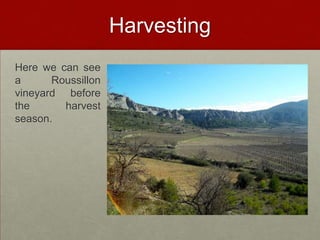
Here we can see
a      Roussillon
vineyard before
the      harvest
season.
Harvesting

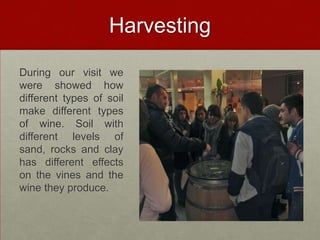
During our visit we
were showed how
different types of soil
make different types
of wine. Soil with
different levels of
sand, rocks and clay
has different effects
on the vines and the
wine they produce.
Harvesting

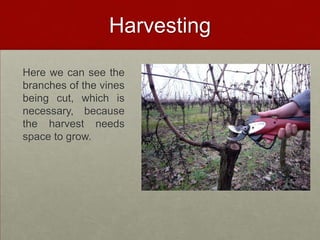
Here we can see the
branches of the vines
being cut, which is
necessary, because
the harvest needs
space to grow.
Harvesting


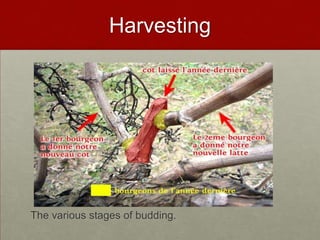
The various stages of budding.
Harvesting

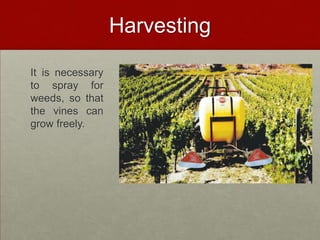
It is necessary
to spray for
weeds, so that
the vines can
grow freely.
HArvesting


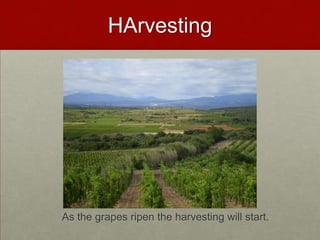
As the grapes ripen the harvesting will start.
Harvesting

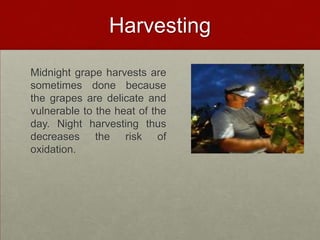
Midnight grape harvests are
sometimes done because
the grapes are delicate and
vulnerable to the heat of the
day. Night harvesting thus
decreases the risk of
oxidation.
Wine making process
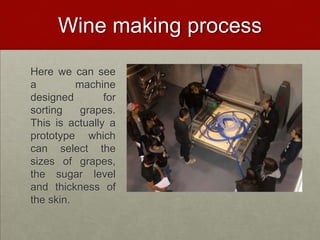
Here we can see
a         machine
designed        for
sorting    grapes.
This is actually a
prototype which
can select the
sizes of grapes,
the sugar level
and thickness of
the skin.
Wine making process

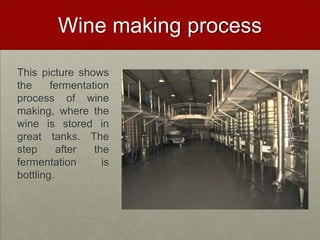
This picture shows
the     fermentation
process of wine
making, where the
wine is stored in
great tanks. The
step      after  the
fermentation       is
bottling.
Wine making process

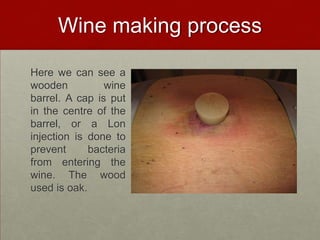
Here we can see a
wooden          wine
barrel. A cap is put
in the centre of the
barrel, or a Lon
injection is done to
prevent      bacteria
from entering the
wine. The wood
used is oak.
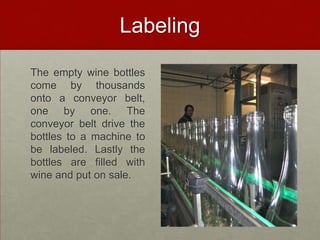
Labeling

The empty wine bottles
come by thousands
onto a conveyor belt,
one by one. The
conveyor belt drive the
bottles to a machine to
be labeled. Lastly the
bottles are filled with
wine and put on sale.
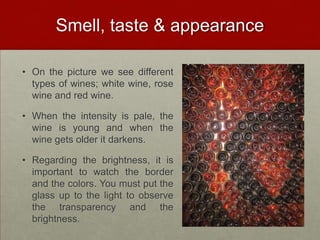
Smell, taste & appearance

• On the picture we see different
  types of wines; white wine, rose
  wine and red wine.

• When the intensity is pale, the
  wine is young and when the
  wine gets older it darkens.

• Regarding the brightness, it is
  important to watch the border
  and the colors. You must put the
  glass up to the light to observe
  the transparency and the
  brightness.
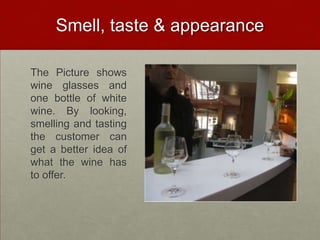
Smell, taste & appearance

The Picture shows
wine glasses and
one bottle of white
wine. By looking,
smelling and tasting
the customer can
get a better idea of
what the wine has
to offer.
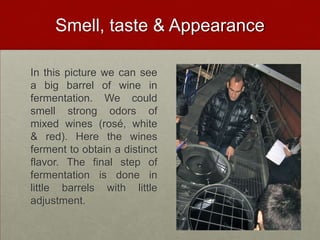
Smell, taste & Appearance

In this picture we can see
a big barrel of wine in
fermentation. We could
smell strong odors of
mixed wines (rosé, white
& red). Here the wines
ferment to obtain a distinct
flavor. The final step of
fermentation is done in
little barrels with little
adjustment.
Smell, taste & Appearance

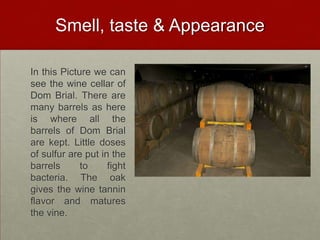
In this Picture we can
see the wine cellar of
Dom Brial. There are
many barrels as here
is where all the
barrels of Dom Brial
are kept. Little doses
of sulfur are put in the
barrels      to     fight
bacteria. The oak
gives the wine tannin
flavor and matures
the vine.
Presentation
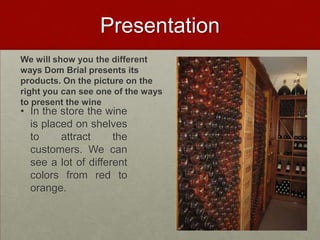
We will show you the different
ways Dom Brial presents its
products. On the picture on the
right you can see one of the ways
to present the wine
• In the store the wine
  is placed on shelves
  to     attract     the
  customers. We can
  see a lot of different
  colors from red to
  orange.
Presentation
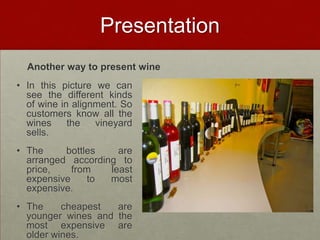
  Another way to present wine
• In this picture we can
  see the different kinds
  of wine in alignment. So
  customers know all the
  wines     the   vineyard
  sells.
• The     bottles    are
  arranged according to
  price,    from   least
  expensive    to  most
  expensive.
• The     cheapest  are
  younger wines and the
  most expensive are
  older wines.
Presentation

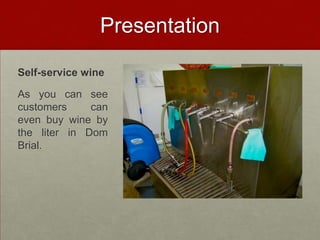
Self-service wine

As you can see
customers     can
even buy wine by
the liter in Dom
Brial.
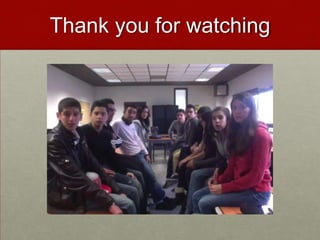
Thank you for watching

Wine tour presentation

  • 1.
    Dom brial Winetour January 9th, 2012
  • 2.
    A visit todom brial On the 9th of January 2012 the European section from the vocational part of Lycée Maillol went to visit a vineyard in the nearby town of Baixas. We were showed the entire process of wine making, from the harvest to the finished product. We would like to share with you some photos from the visit and tell you what we learned.
  • 3.
    Harvesting Here we cansee a Roussillon vineyard before the harvest season.
  • 4.
    Harvesting During our visitwe were showed how different types of soil make different types of wine. Soil with different levels of sand, rocks and clay has different effects on the vines and the wine they produce.
  • 5.
    Harvesting Here we cansee the branches of the vines being cut, which is necessary, because the harvest needs space to grow.
  • 6.
  • 7.
    Harvesting It is necessary tospray for weeds, so that the vines can grow freely.
  • 8.
    HArvesting As the grapesripen the harvesting will start.
  • 9.
    Harvesting Midnight grape harvestsare sometimes done because the grapes are delicate and vulnerable to the heat of the day. Night harvesting thus decreases the risk of oxidation.
  • 10.
    Wine making process Herewe can see a machine designed for sorting grapes. This is actually a prototype which can select the sizes of grapes, the sugar level and thickness of the skin.
  • 11.
    Wine making process Thispicture shows the fermentation process of wine making, where the wine is stored in great tanks. The step after the fermentation is bottling.
  • 12.
    Wine making process Herewe can see a wooden wine barrel. A cap is put in the centre of the barrel, or a Lon injection is done to prevent bacteria from entering the wine. The wood used is oak.
  • 13.
    Labeling The empty winebottles come by thousands onto a conveyor belt, one by one. The conveyor belt drive the bottles to a machine to be labeled. Lastly the bottles are filled with wine and put on sale.
  • 14.
    Smell, taste &appearance • On the picture we see different types of wines; white wine, rose wine and red wine. • When the intensity is pale, the wine is young and when the wine gets older it darkens. • Regarding the brightness, it is important to watch the border and the colors. You must put the glass up to the light to observe the transparency and the brightness.
  • 15.
    Smell, taste &appearance The Picture shows wine glasses and one bottle of white wine. By looking, smelling and tasting the customer can get a better idea of what the wine has to offer.
  • 16.
    Smell, taste &Appearance In this picture we can see a big barrel of wine in fermentation. We could smell strong odors of mixed wines (rosé, white & red). Here the wines ferment to obtain a distinct flavor. The final step of fermentation is done in little barrels with little adjustment.
  • 17.
    Smell, taste &Appearance In this Picture we can see the wine cellar of Dom Brial. There are many barrels as here is where all the barrels of Dom Brial are kept. Little doses of sulfur are put in the barrels to fight bacteria. The oak gives the wine tannin flavor and matures the vine.
  • 18.
    Presentation We will showyou the different ways Dom Brial presents its products. On the picture on the right you can see one of the ways to present the wine • In the store the wine is placed on shelves to attract the customers. We can see a lot of different colors from red to orange.
  • 19.
    Presentation Anotherway to present wine • In this picture we can see the different kinds of wine in alignment. So customers know all the wines the vineyard sells. • The bottles are arranged according to price, from least expensive to most expensive. • The cheapest are younger wines and the most expensive are older wines.
  • 20.
    Presentation Self-service wine As youcan see customers can even buy wine by the liter in Dom Brial.
  • 21.
    Thank you forwatching