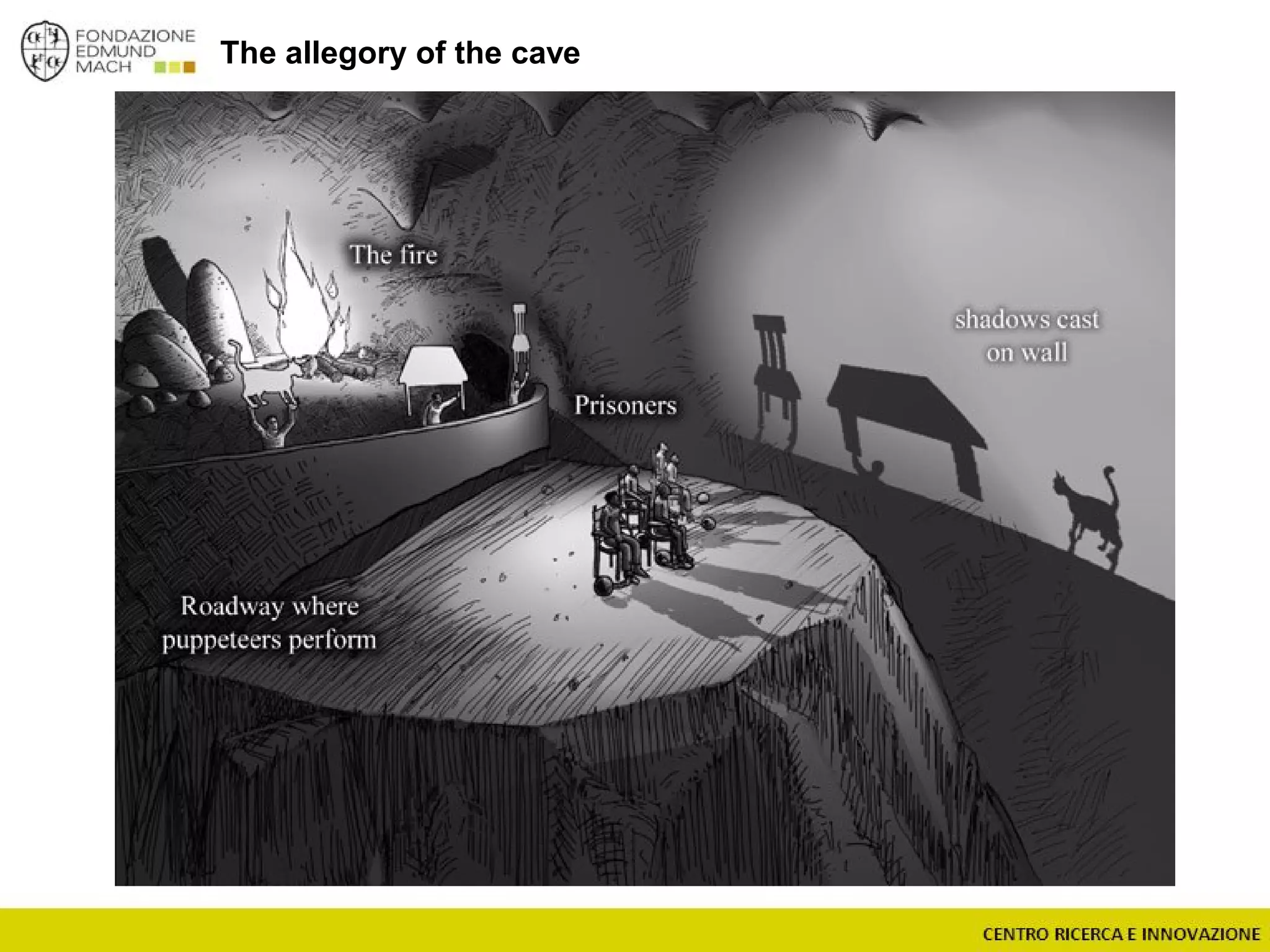
The allegory of the cave
What do you aspect from this module?
C3A
Applied Metabolomics
in oenology and viticulture
Semester II
Year III
Hours 30
English
Objects
This module will introduce the students into the untargeted metabolomics concept and its
applications in the field of oenology and viticulture.
Learning outcomes:
1. Understand and learn the wine metabolome terminology/ontology.
2. Account for methods, the techniques and the instruments used in untargeted metabolomics.
3. Be familiar with the workflow of the untargeted metabolomics studies.
4. Account for applications for untargeted metabolomics in enology and viticulture.
5. Learn to think in holistic way as far as the wine metabolome.
+ get familiar with the English oenological terminology
C3A
Applied Metabolomics
in oenology and viticulture
Semester II
Year III
Hours 30
English
Description
This 30 hours module includes:
- Lectures (general theory and published applications).
- Interactive classroom exercises (computer tools, software, databases) (optional)
- Group exercises in the laboratory (optional)
Moreover, will be proposed to the students material and resources (publications, books, websites)
to explore the topics of the course in depth. Be aware that the material in Italian is poor. Is strongly
advised to participate to the frontal lessons.
Prerequisites
For the most profitable attendance of the course, the student should have preferably completed the
exams of English; Mathematic and statistics, General Chemistry; Organic chemistry; Wine
chemistry and microbiology; and Enology 1.
C3A
Applied Metabolomics
in oenology and viticulture
Semester II
Year III
Hours 30
English
Final exam
The final exam consists of a written test (compulsory), and a possible oral exam that could include
a group oral presentation based on the carried out activities.
The exam will investigate the student's ability to demonstrate theoretical and practical knowledge
on the topics of metabolomics applied in vine-oenology, including the proposed teaching material.
C3A
Applied Metabolomics
in oenology and viticulture
Calendar
MON TUE WED THU FRI SAT SUN MON TUE WED THU FRI SAT SUN
1 2 3 1 2 3 4 5
4 5 6 7 8 9 10 6 7 8 9 10 11 12
11 12 13 14 15 16 17 13 14 15 16 17 18 19
18 19 20 21 22 23 24 20 21 22 23 24 25 26
25 26 27 28 29 30 31 27 28 29 30 31
MON TUE WED THU FRI SAT SUN MON TUE WED THU FRI SAT SUN
1 2 3 4 5 6 7 1 2
8 9 10 11 12 13 14 3 4 5 6 7 8 9
15 16 17 18 19 20 21 10 11 12 13 14 15 16
22 23 24 25 26 27 28
29 30
MARCH
APRIL
MAY
JUNE
What is important to know before to enter in Wine Metabolomics
 What is metabolomics?
 What is metabolite?
 How do we measure the metabolites?
Prerequisites – first step
The first part of the module will focus in three subjects:
 Wine organic chemistry – Wine metabolome
 Basic knowledge about Chromatography and Mass Spectrometry
 Basic statistic knowledge
1. INTRODUCTION
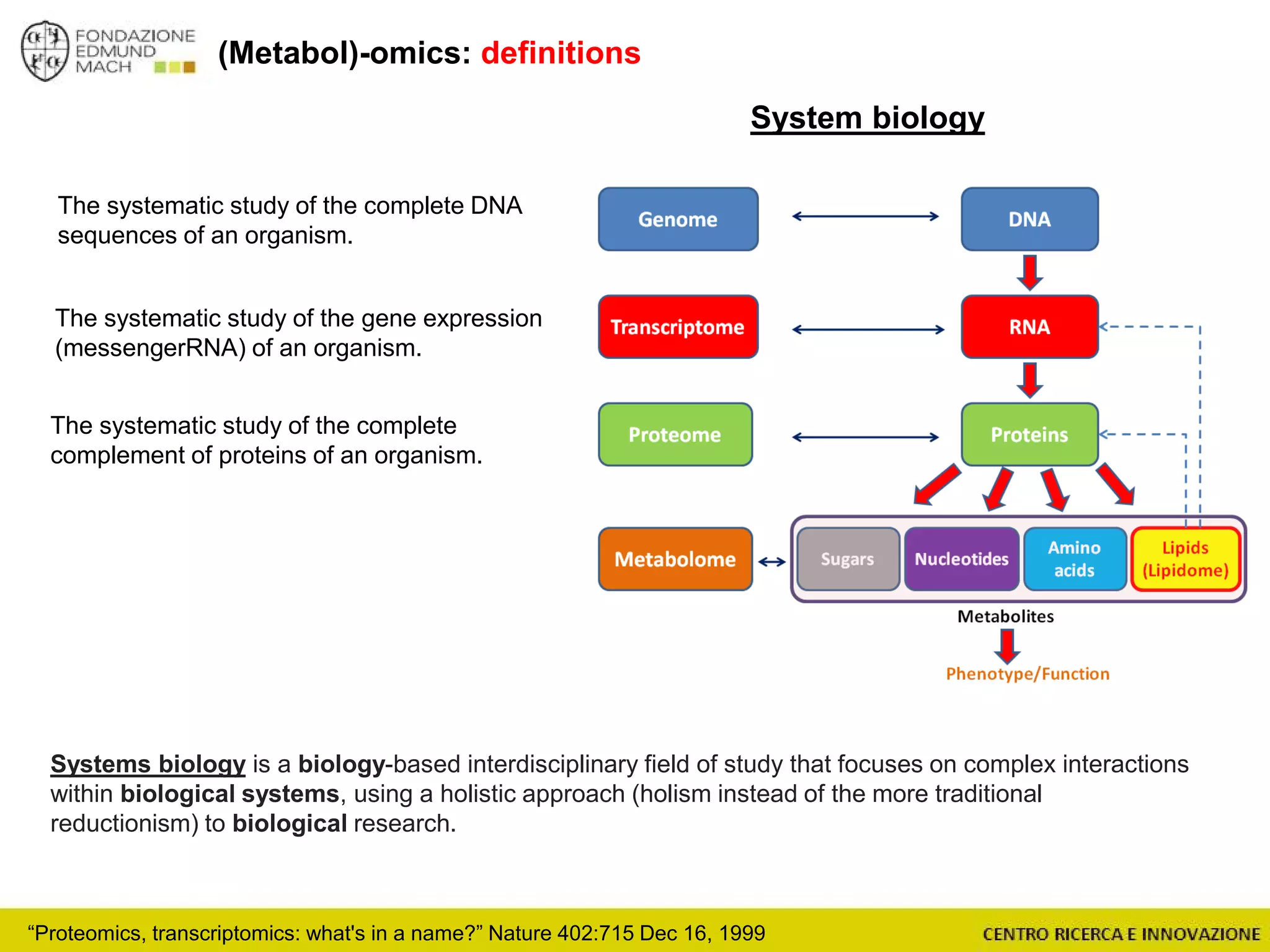
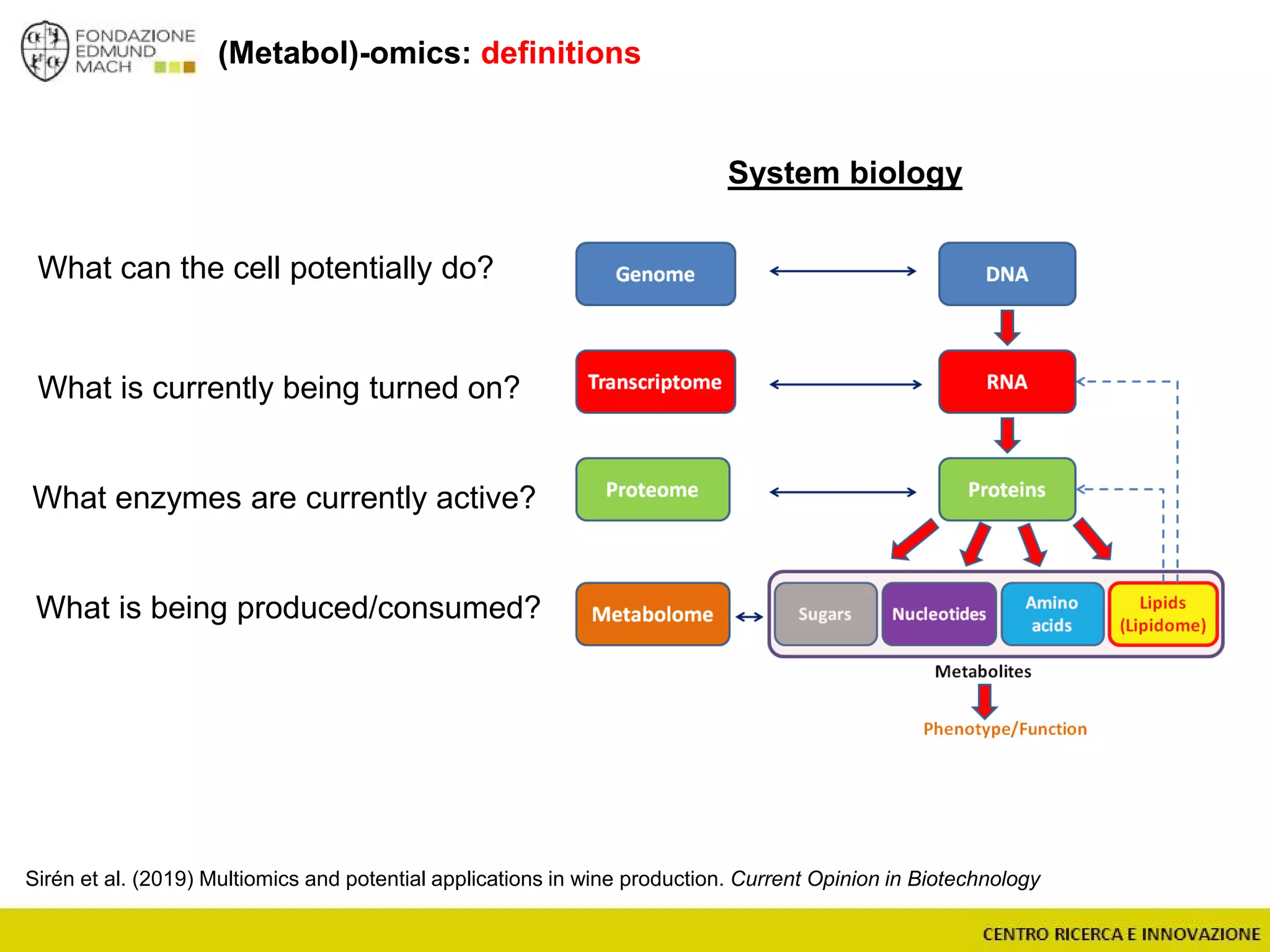
(Metabol)-omics: definitions
System biology
Systems biology is a biology-based interdisciplinary field of study that focuses on complex interactions
within biological systems, using a holistic approach (holism instead of the more traditional
reductionism) to biological research.
The systematic study of the complete DNA
sequences of an organism.
The systematic study of the complete
complement of proteins of an organism.
The systematic study of the gene expression
(messengerRNA) of an organism.
“Proteomics, transcriptomics: what's in a name?” Nature 402:715 Dec 16, 1999
(Metabol)-omics: definitions
What can the cell potentially do?
What is currently being turned on?
What enzymes are currently active?
What is being produced/consumed?
System biology
Sirén et al. (2019) Multiomics and potential applications in wine production. Current Opinion in Biotechnology
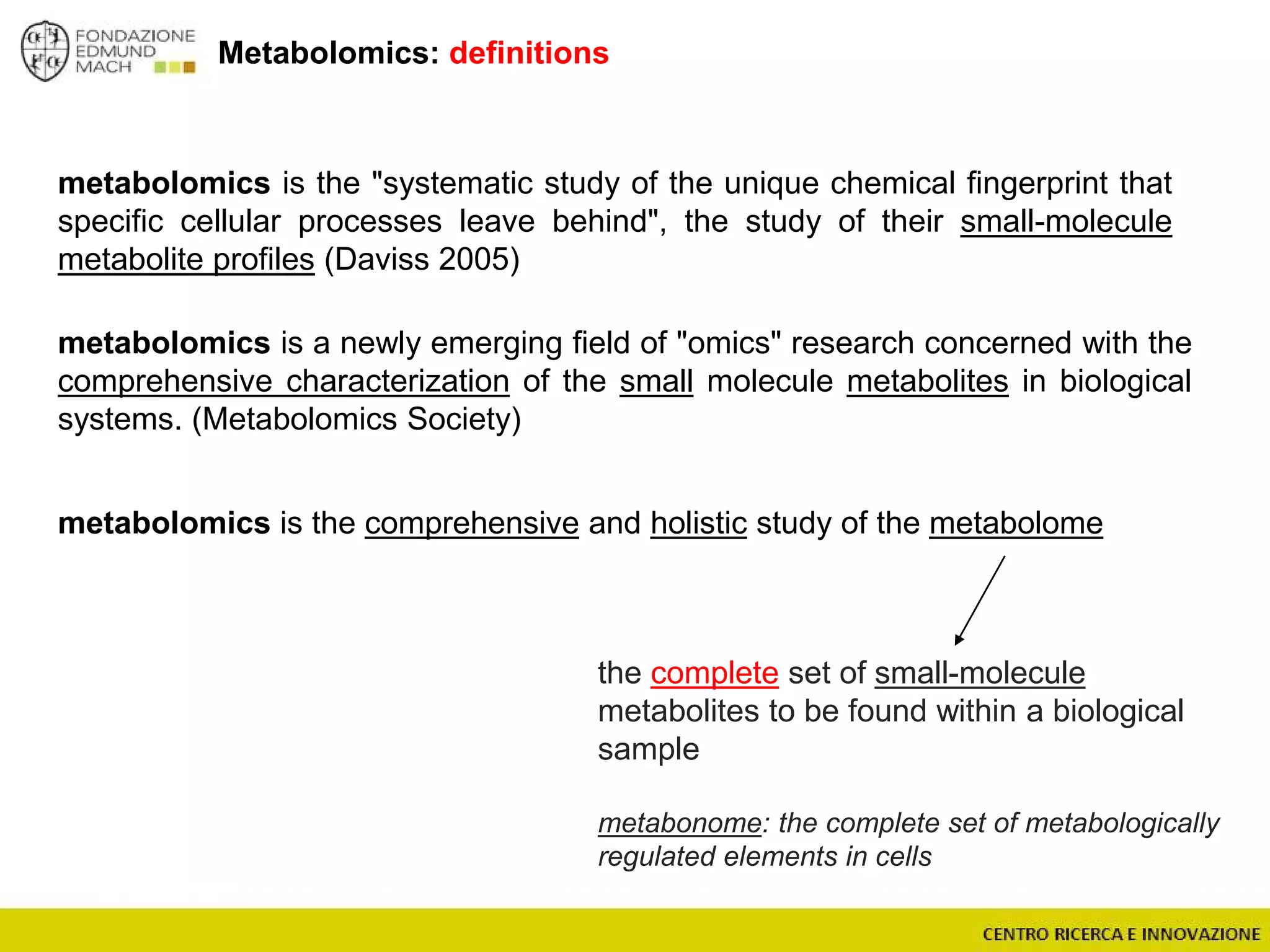
Metabolomics: definitions
metabolomics is the "systematic study of the unique chemical fingerprint that
specific cellular processes leave behind", the study of their small-molecule
metabolite profiles (Daviss 2005)
metabolomics is a newly emerging field of "omics" research concerned with the
comprehensive characterization of the small molecule metabolites in biological
systems. (Metabolomics Society)
metabolomics is the comprehensive and holistic study of the metabolome
the complete set of small-molecule
metabolites to be found within a biological
sample
metabonome: the complete set of metabologically
regulated elements in cells
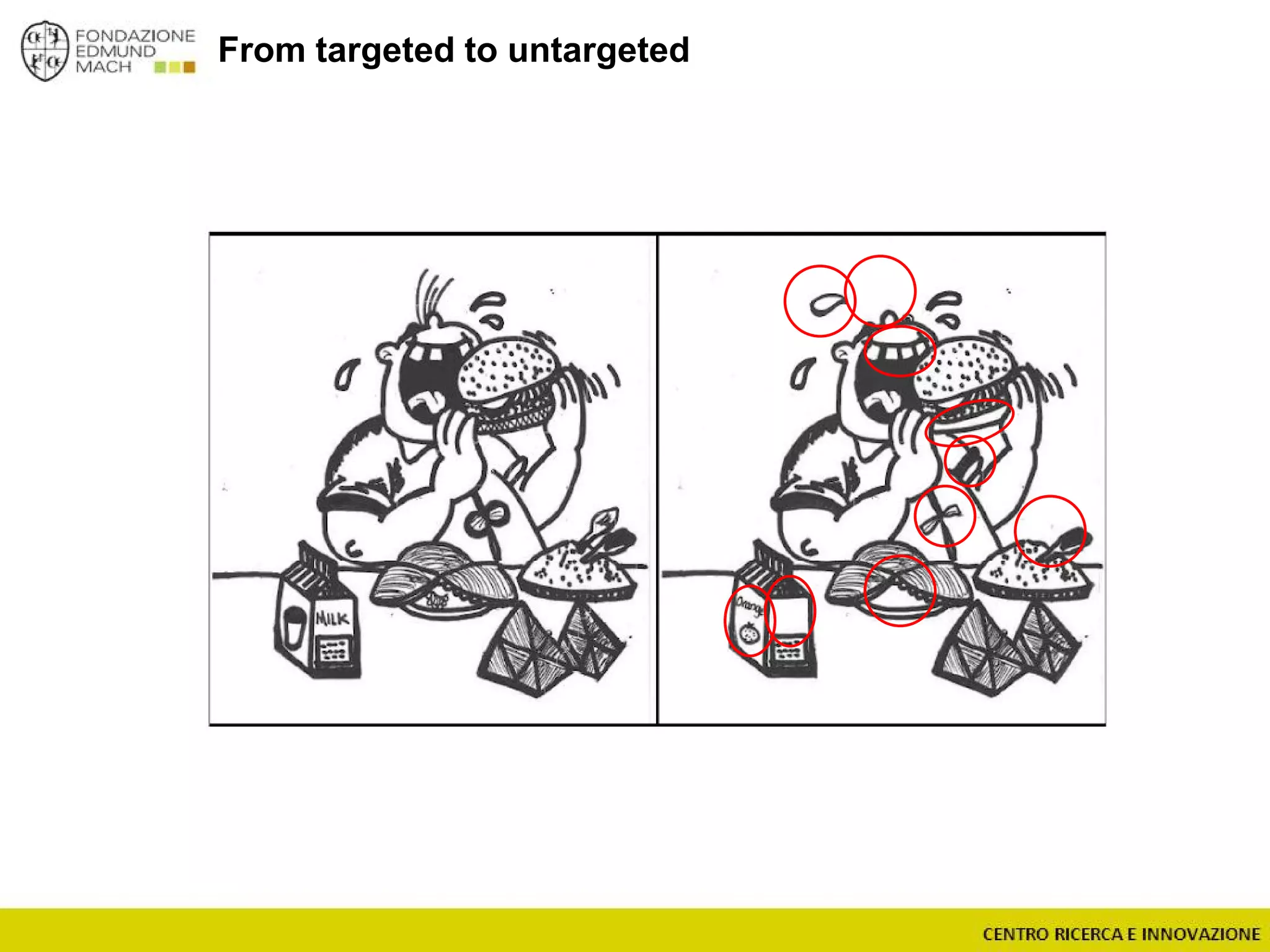
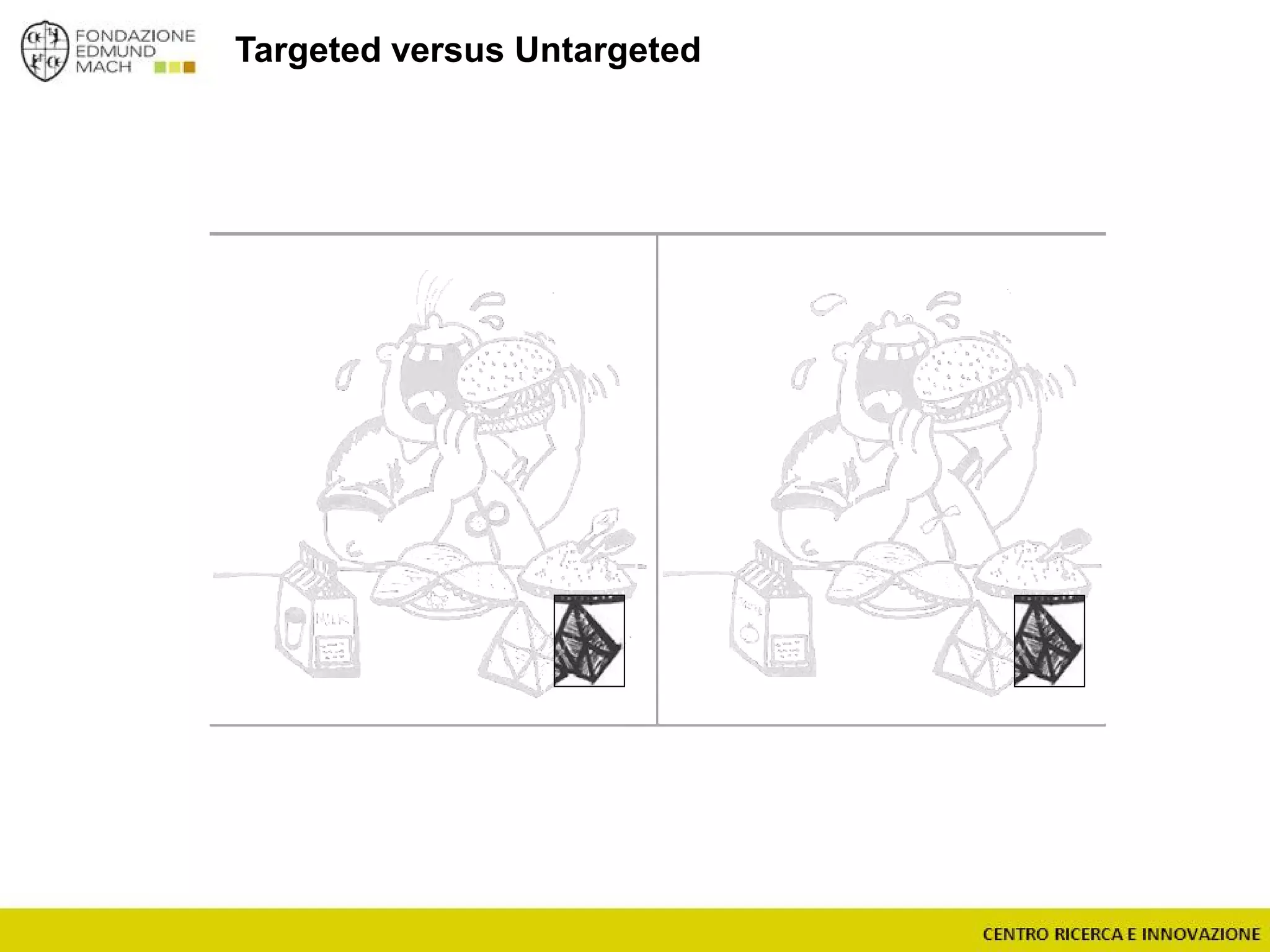
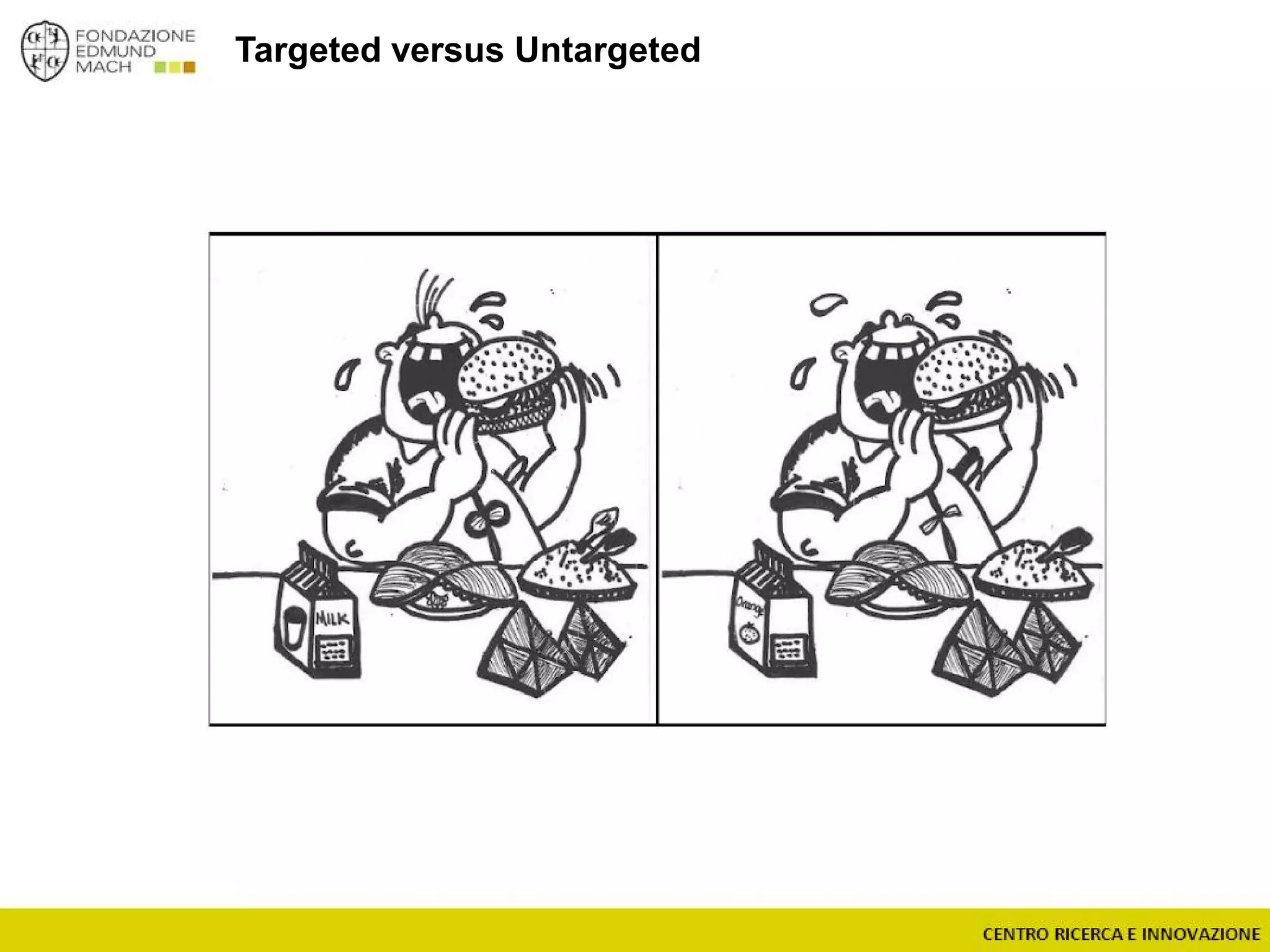
From targeted to untargeted
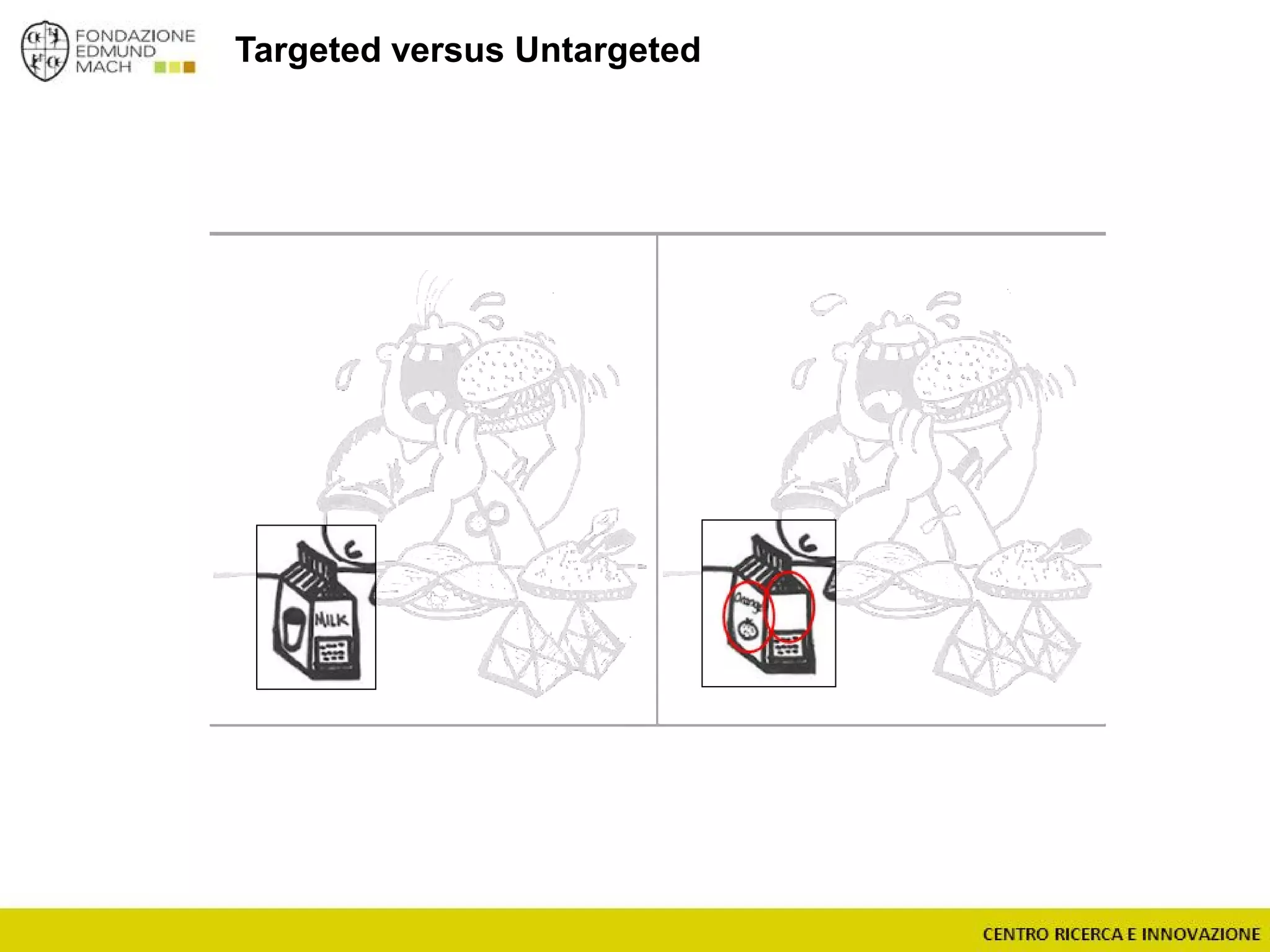
Targeted versus Untargeted
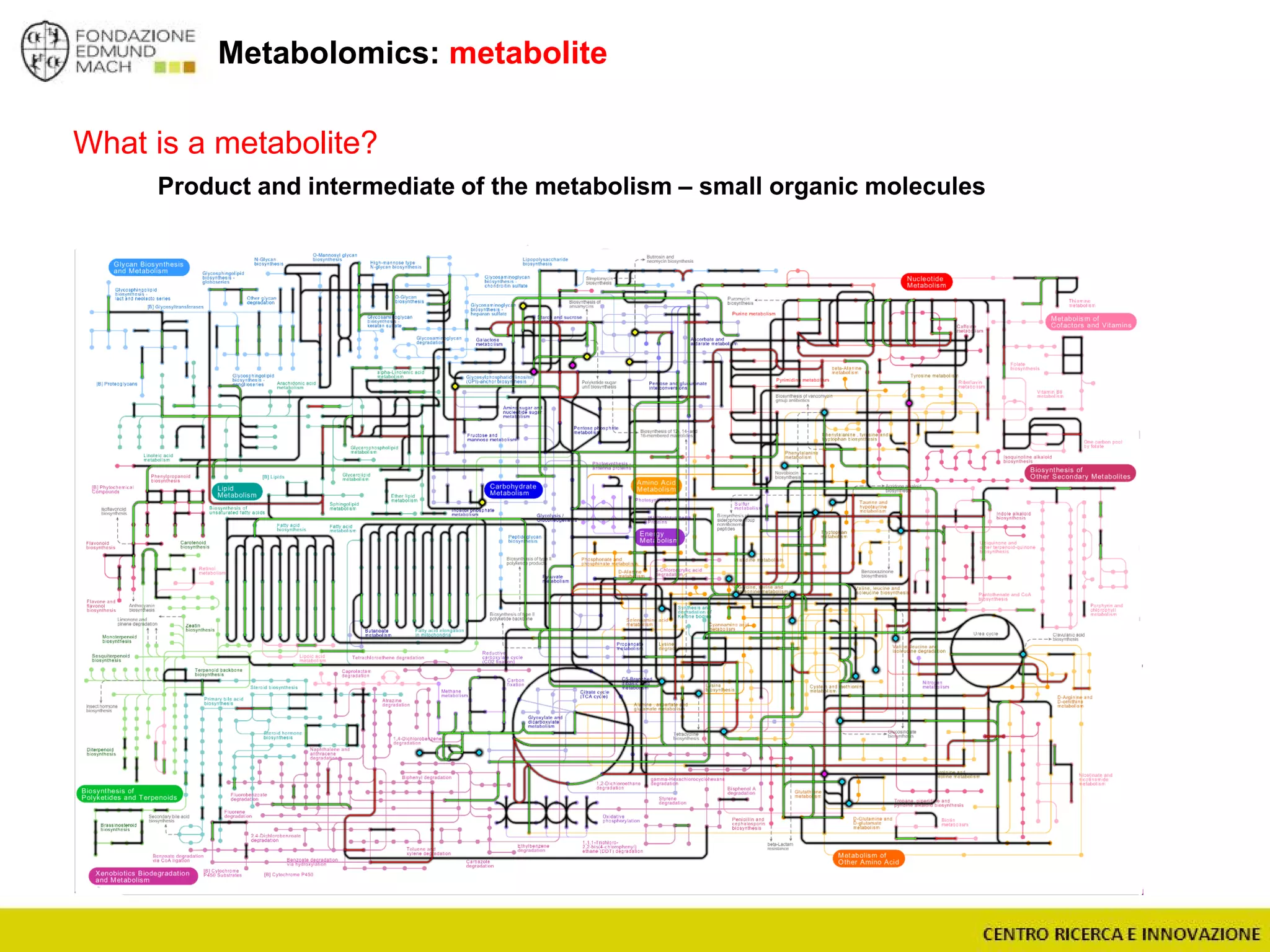
Metabolomics: metabolite
What is a metabolite?
Product and intermediate of the metabolism – small organic molecules
2. Grape/Wine Metabolome
Wine Chemistry – Wine Composition
How big is the grape/wine metabolome?
Metabolomic: what is and what is not
How big is the metabolome?
Sigma-Aldrich has ~55K commercial available chemicals
Kegg contains 18K metabolites
HMDB is based in ~42K metabolites
Plant metabolome is estimated to cover 200K metabolites
PubChem ID contains more than 10M entries
CAS contains over 90M unique organic
and inorganic chemicals
ChemSpider contains over 57M
compounds from 530 data sources
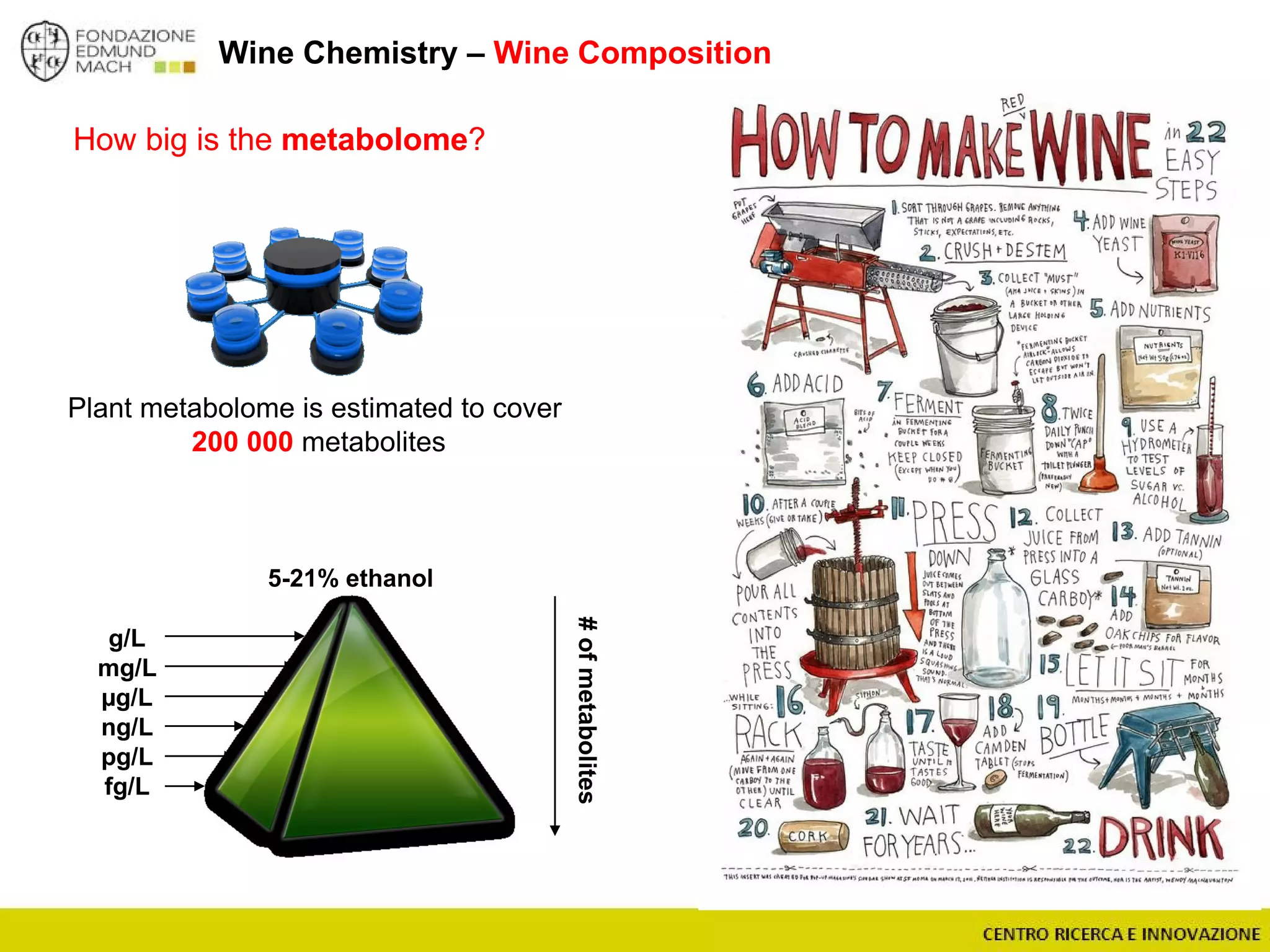
Plant metabolome is estimated to cover
200 000 metabolites
#ofmetabolites5-21% ethanol
g/L
mg/L
µg/L
ng/L
pg/L
fg/L
How big is the metabolome?
Wine Chemistry – Wine Composition
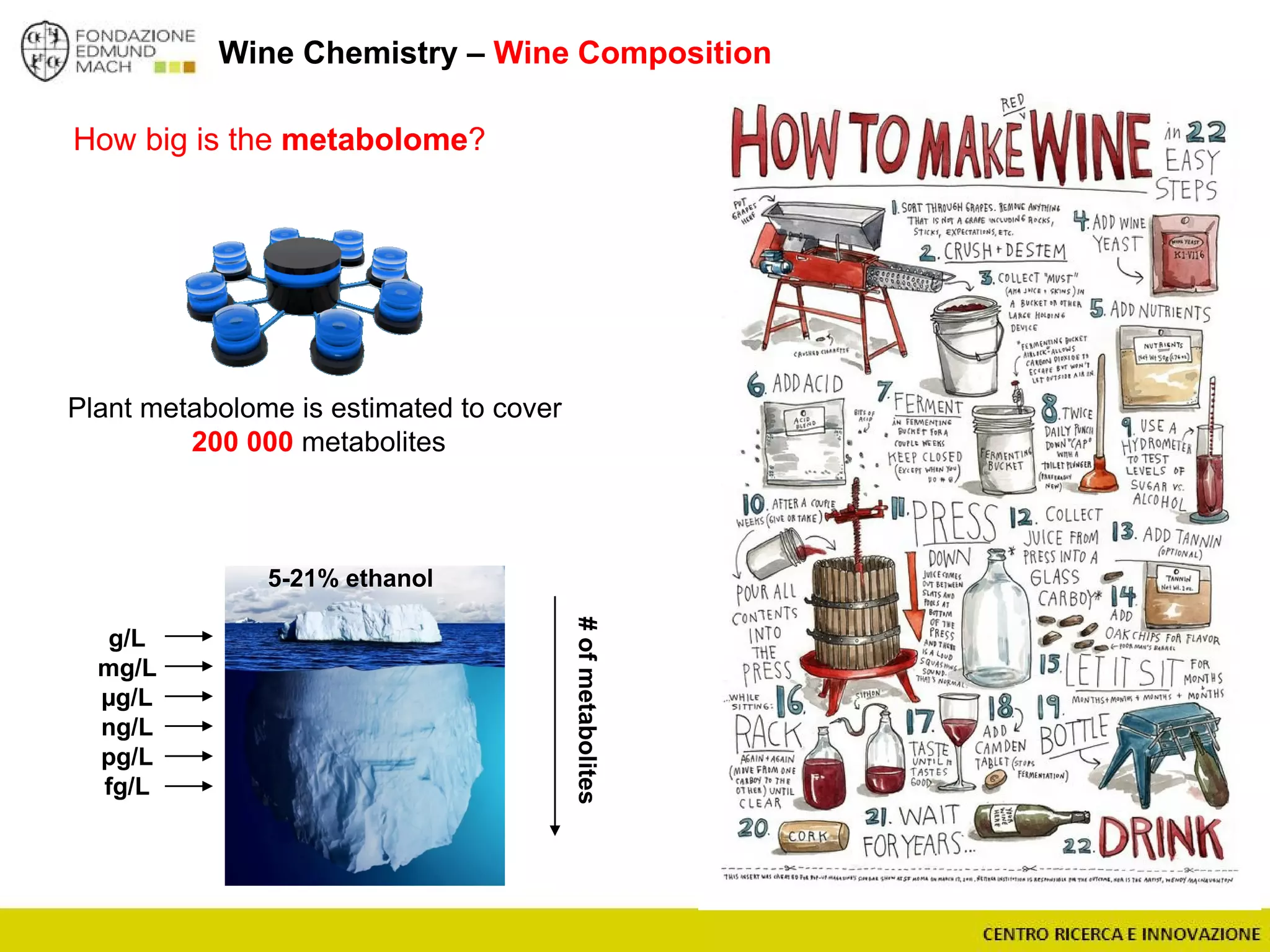
#ofmetabolites5-21% ethanol
g/L
mg/L
µg/L
ng/L
pg/L
fg/L
Plant metabolome is estimated to cover
200 000 metabolites
How big is the metabolome?
Wine Chemistry – Wine Composition
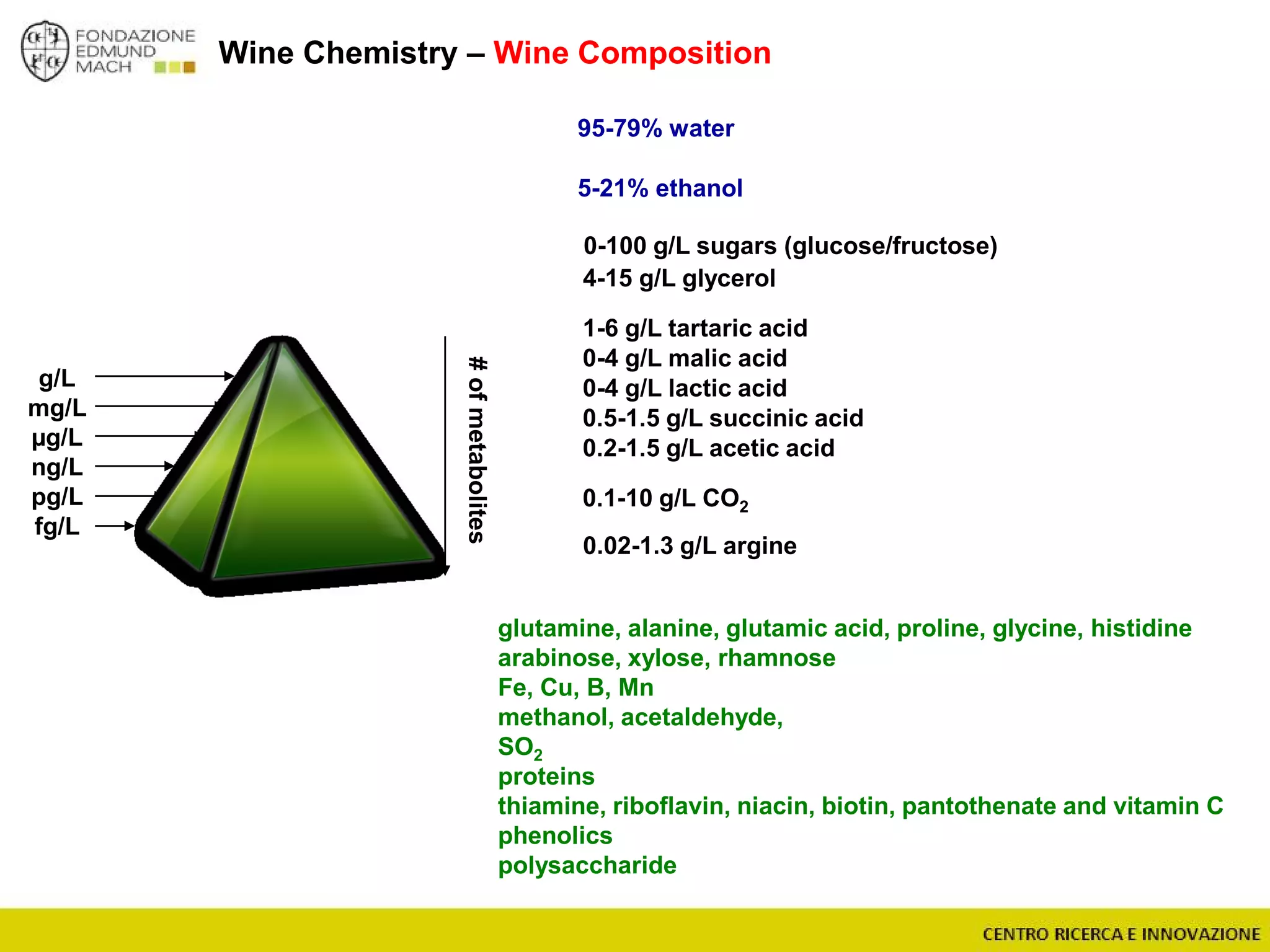
#ofmetabolites
g/L
mg/L
µg/L
ng/L
pg/L
fg/L
95-79% water
5-21% ethanol
0-100 g/L sugars (glucose/fructose)
1-6 g/L tartaric acid
0-4 g/L malic acid
0-4 g/L lactic acid
0.5-1.5 g/L succinic acid
0.2-1.5 g/L acetic acid
4-15 g/L glycerol
0.1-10 g/L CO2
0.02-1.3 g/L argine
glutamine, alanine, glutamic acid, proline, glycine, histidine
arabinose, xylose, rhamnose
Fe, Cu, B, Mn
methanol, acetaldehyde,
SO2
proteins
thiamine, riboflavin, niacin, biotin, pantothenate and vitamin C
phenolics
polysaccharide
Wine Chemistry – Wine Composition
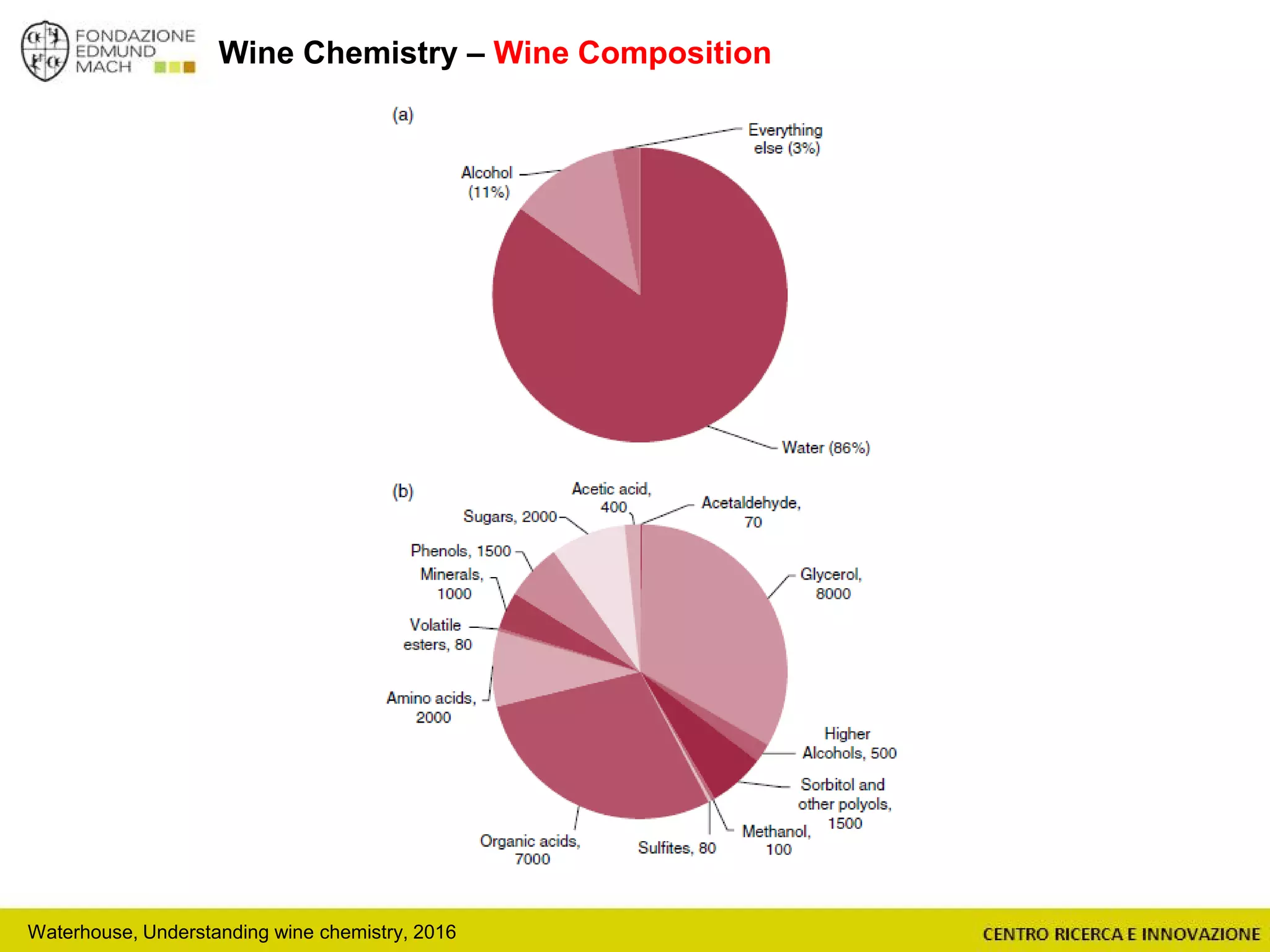
Waterhouse, Understanding wine chemistry, 2016
Grape/Wine Chemistry
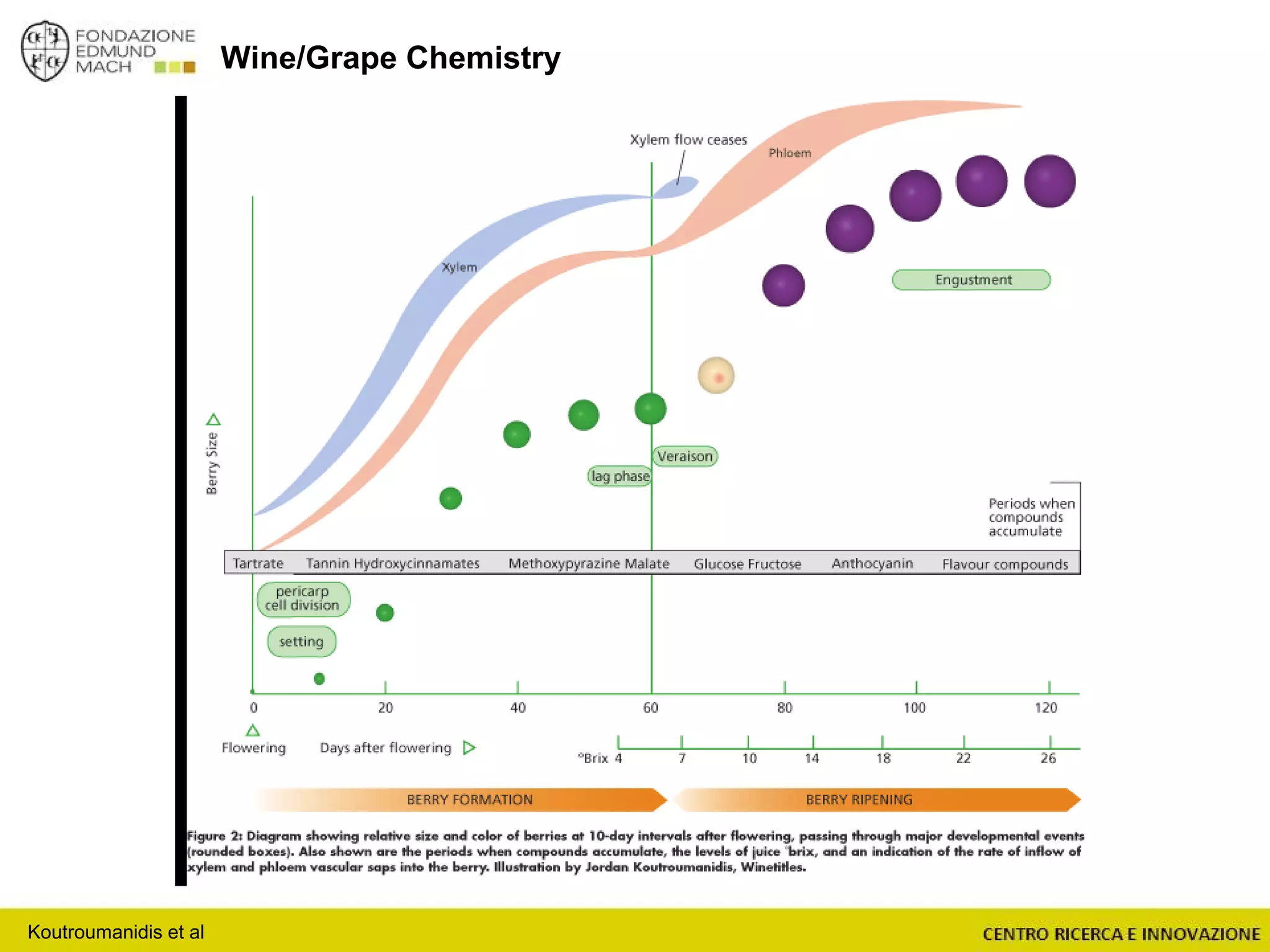
Wine/Grape Chemistry
Koutroumanidis et al
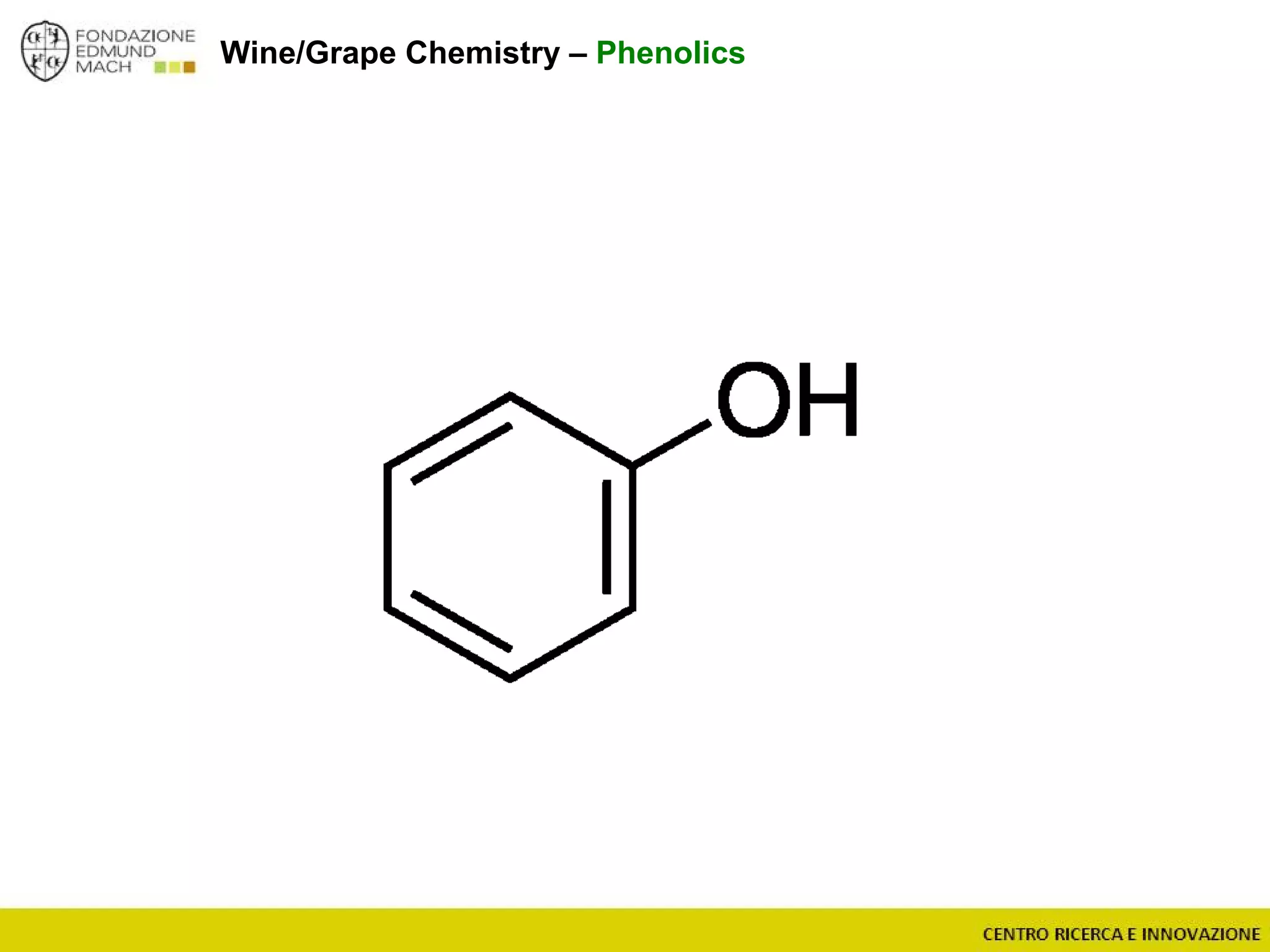
Wine/Grape Chemistry – Phenolics
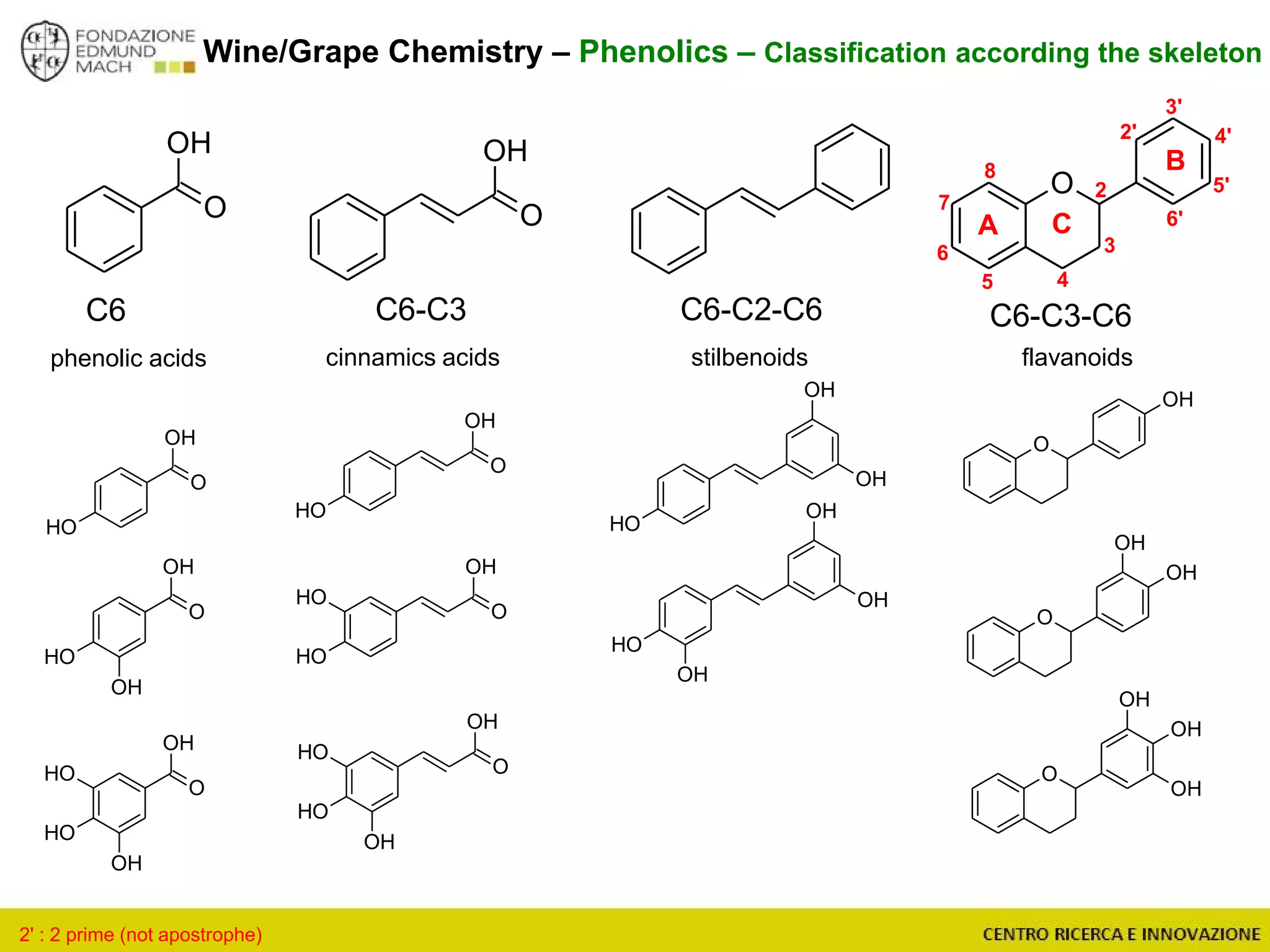
Wine/Grape Chemistry – Phenolics – Classification according the skeleton
C6 C6-C3 C6-C3-C6
O
OH
O
OH
C6-C2-C6
phenolic acids cinnamics acids stilbenoids flavanoids
O
OH
OH
O
OH
OH
OH
O
OH
OH
OH
OH
OH
OH
OH
O
OH
OH
OH
O
OH
OH
O
OH
OH
OH
OH
OH
OH
OH
OH
O
OH
OH
OH
O
OH
OH
O
OH
O
A C
B
7
2
3
45
6
2'
8
3'
4'
5'
6'
2' : 2 prime (not apostrophe)
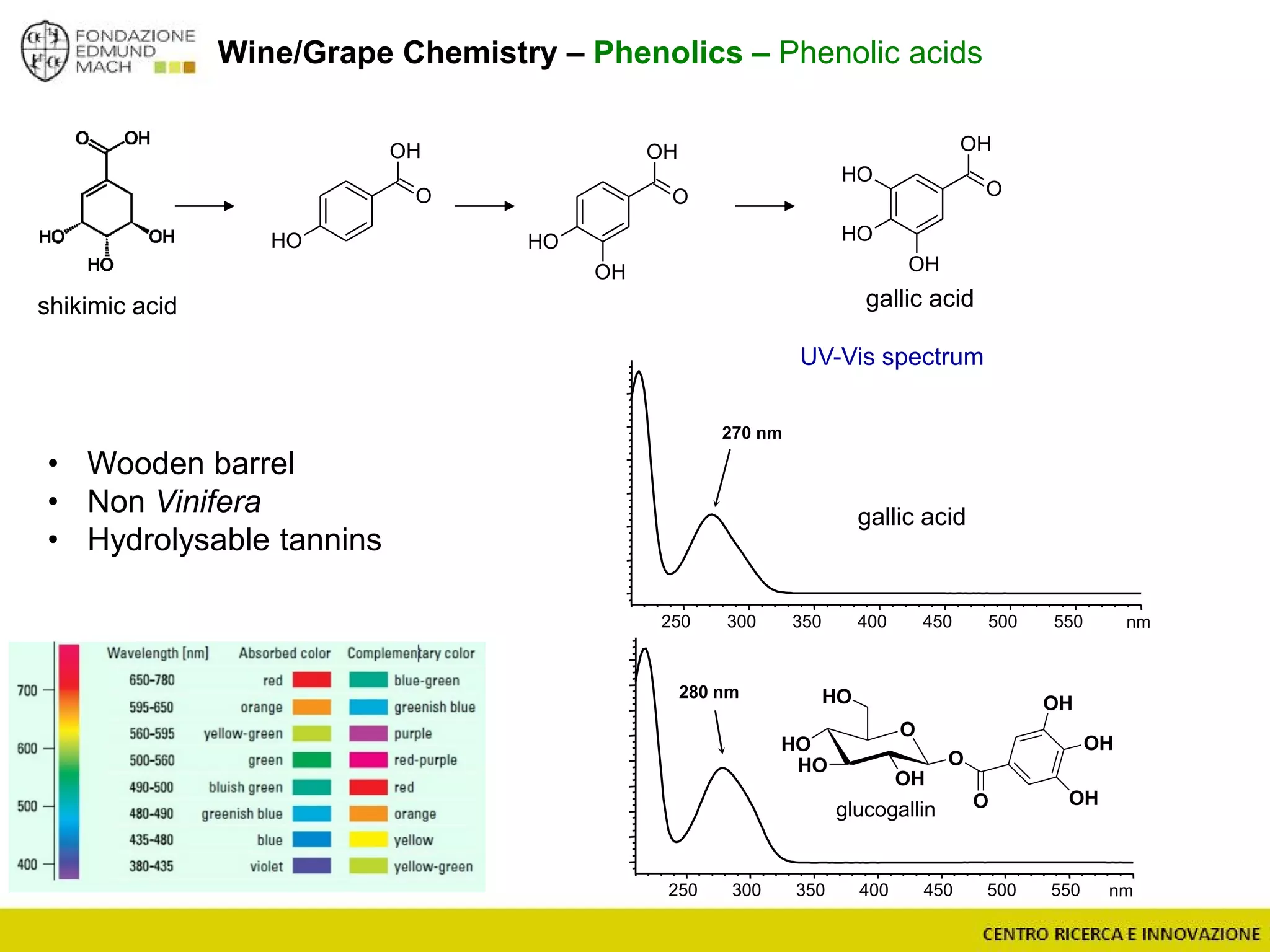
Wine/Grape Chemistry – Phenolics – Phenolic acids
shikimic acid
O
OH
OH
O
OH
OH
OH
O
OH
OH
OH
OH
gallic acid
UV-Vis spectrum
nm250 300 350 400 450 500 550
270 nm
nm250 300 350 400 450 500 550
280 nm
• Wooden barrel
• Non Vinifera
• Hydrolysable tannins
gallic acid
O
HO
HO
OH
O
HO
O
OH
OH
OH
glucogallin
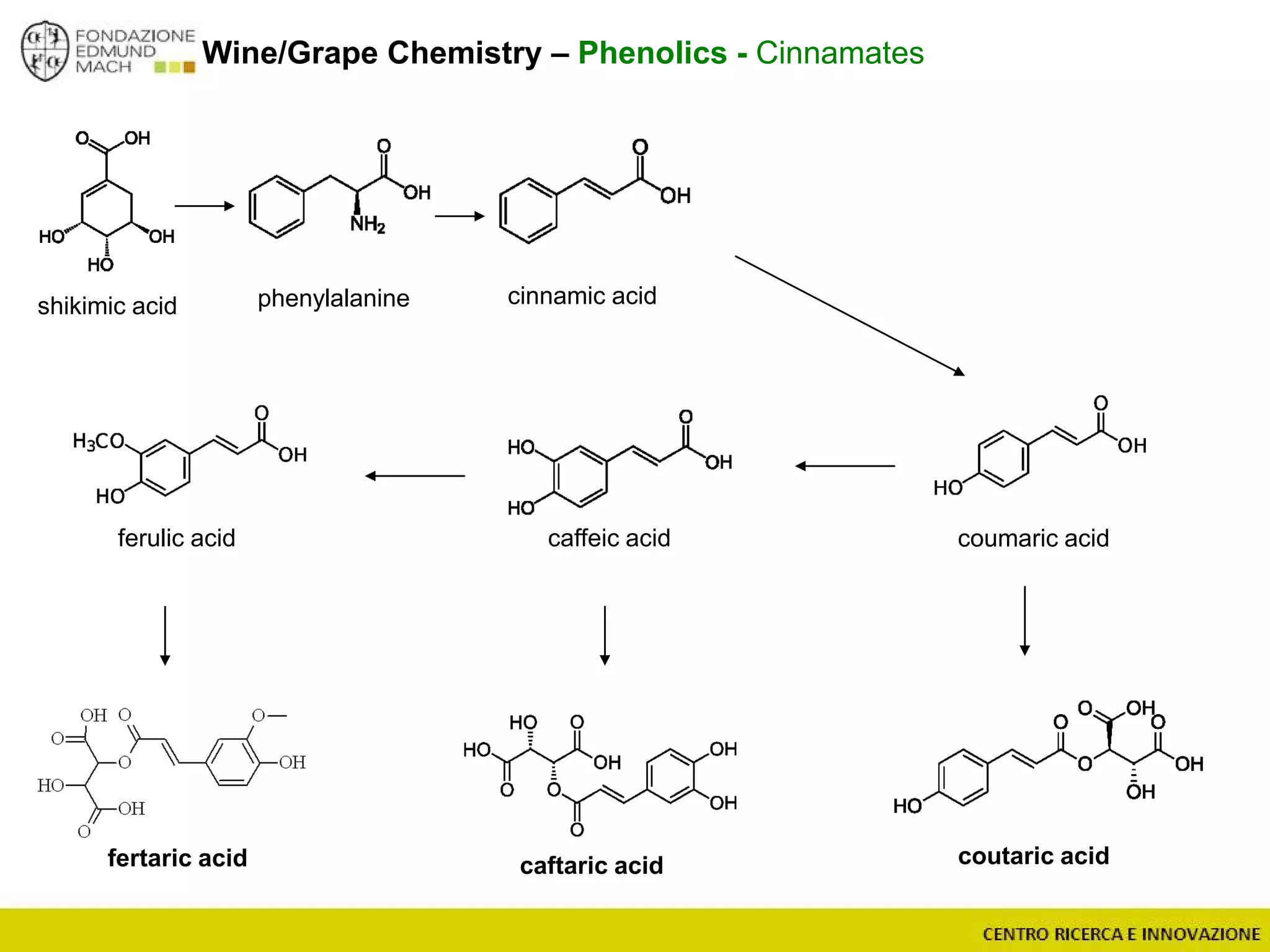
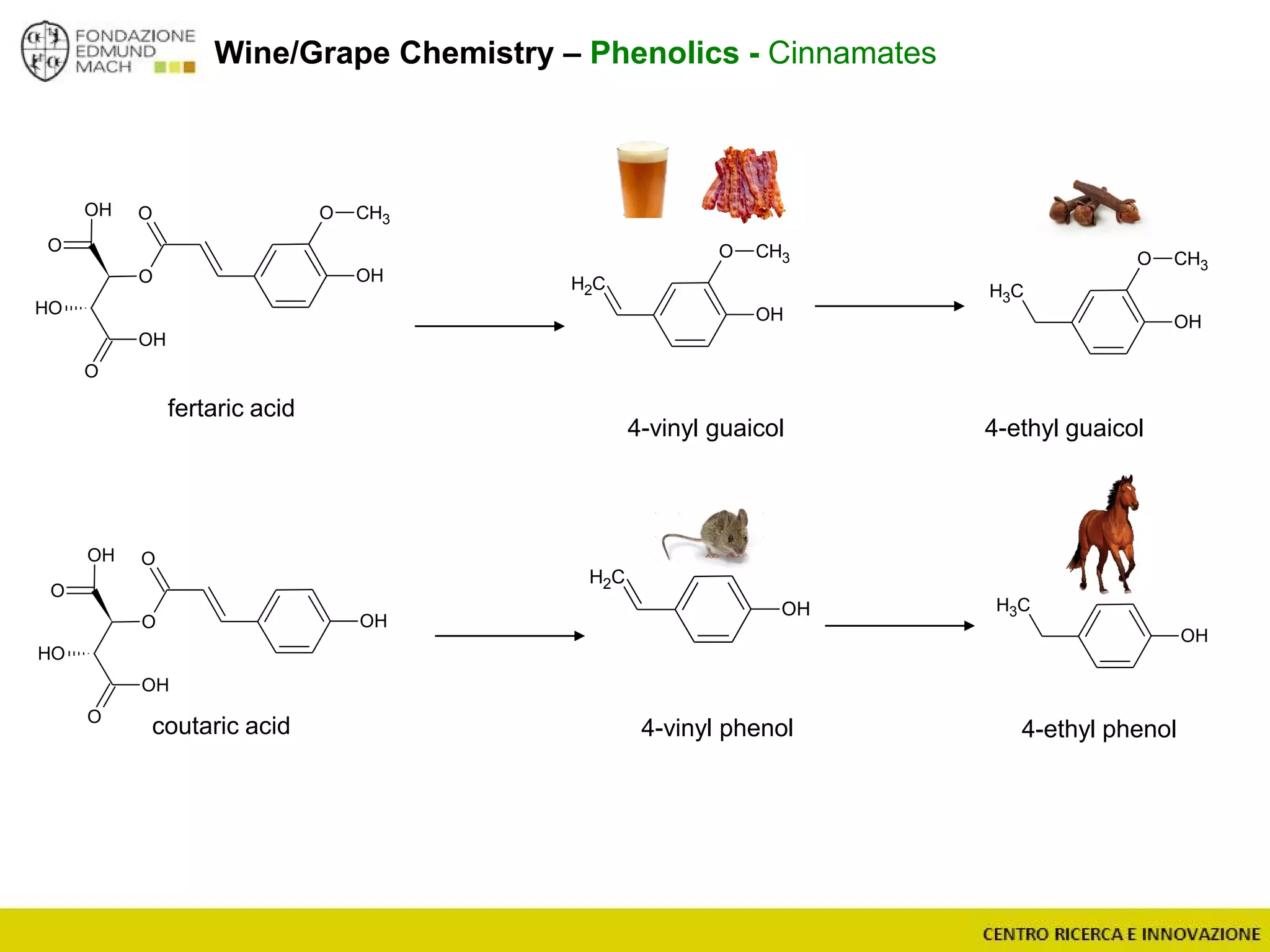
Wine/Grape Chemistry – Phenolics - Cinnamates
shikimic acid phenylalanine cinnamic acid
coumaric acid
coutaric acidfertaric acid caftaric acid
caffeic acidferulic acid
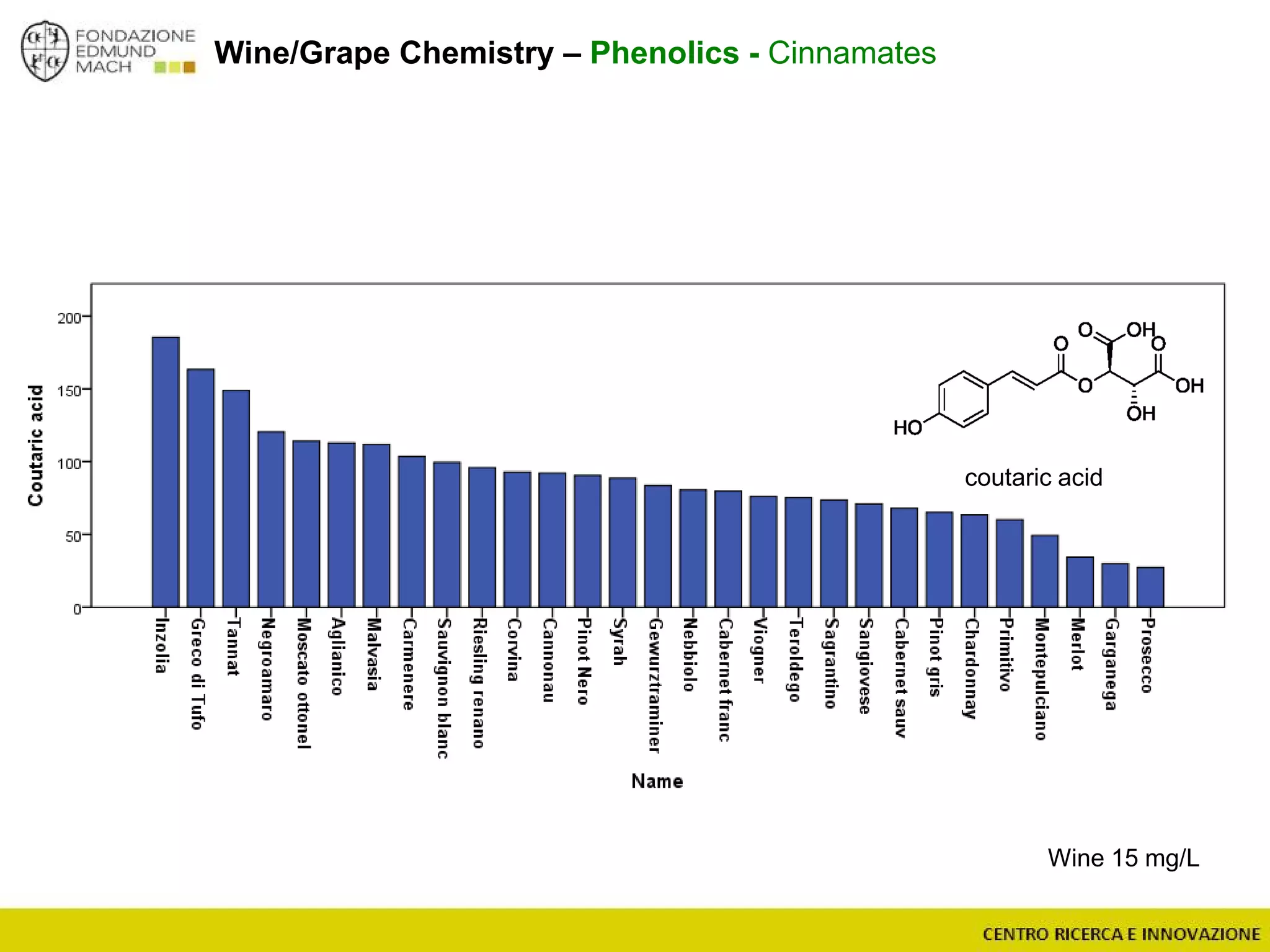
Wine/Grape Chemistry – Phenolics - Cinnamates
coutaric acid
Wine 15 mg/L
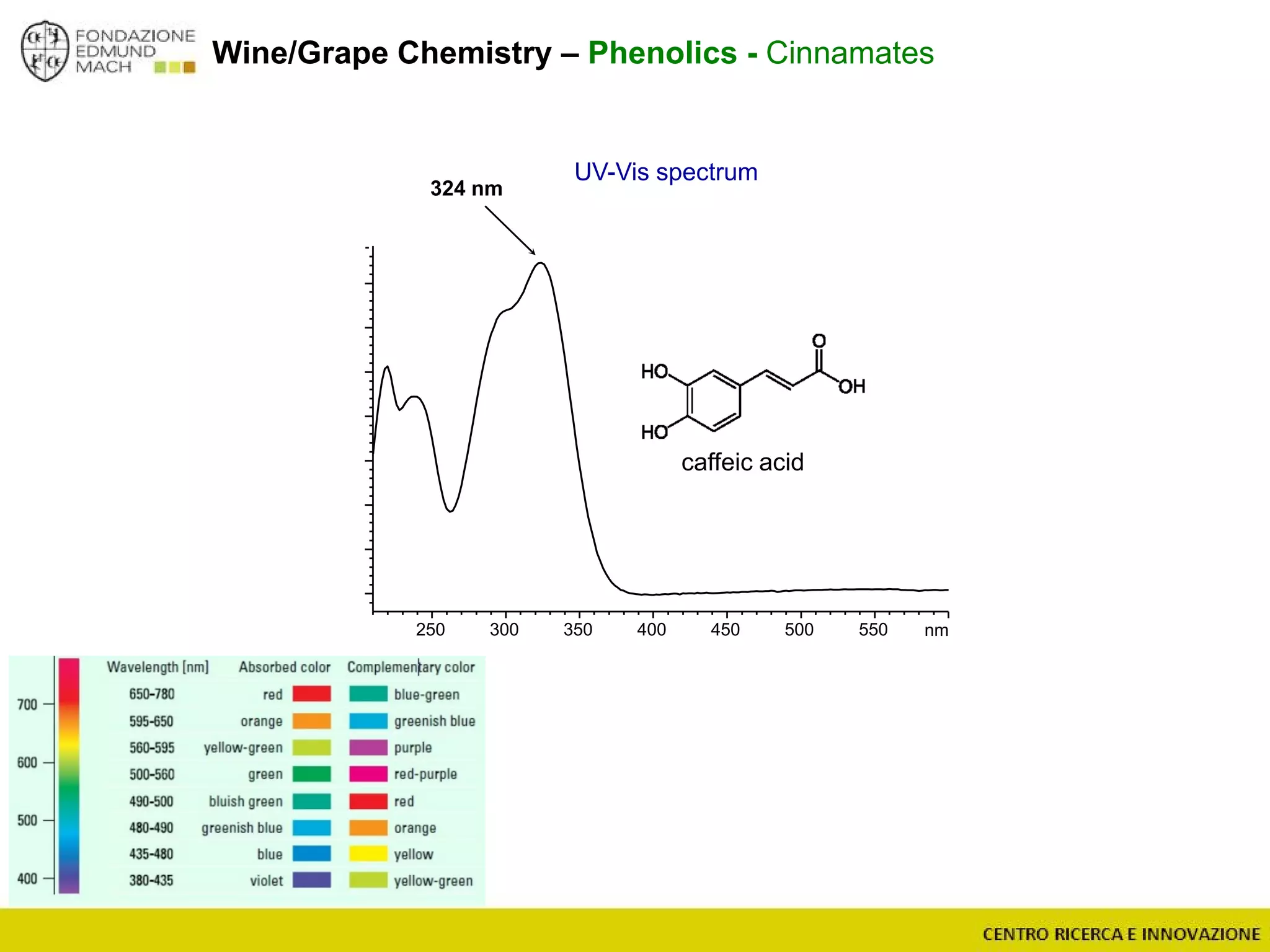
Wine/Grape Chemistry – Phenolics - Cinnamates
nm250 300 350 400 450 500 550
caffeic acid
UV-Vis spectrum
324 nm
fertaric acid
Wine/Grape Chemistry – Phenolics - Cinnamates
coutaric acid 4-vinyl phenol
4-vinyl guaicol 4-ethyl guaicol
4-ethyl phenol
OH
O
O
OH
O
OH
OH
O
OH
O
O
OH
O
OH
OH
O
O CH3
OH
CH2
O CH3
OH
CH3
O CH3
OH
CH3OH
CH2
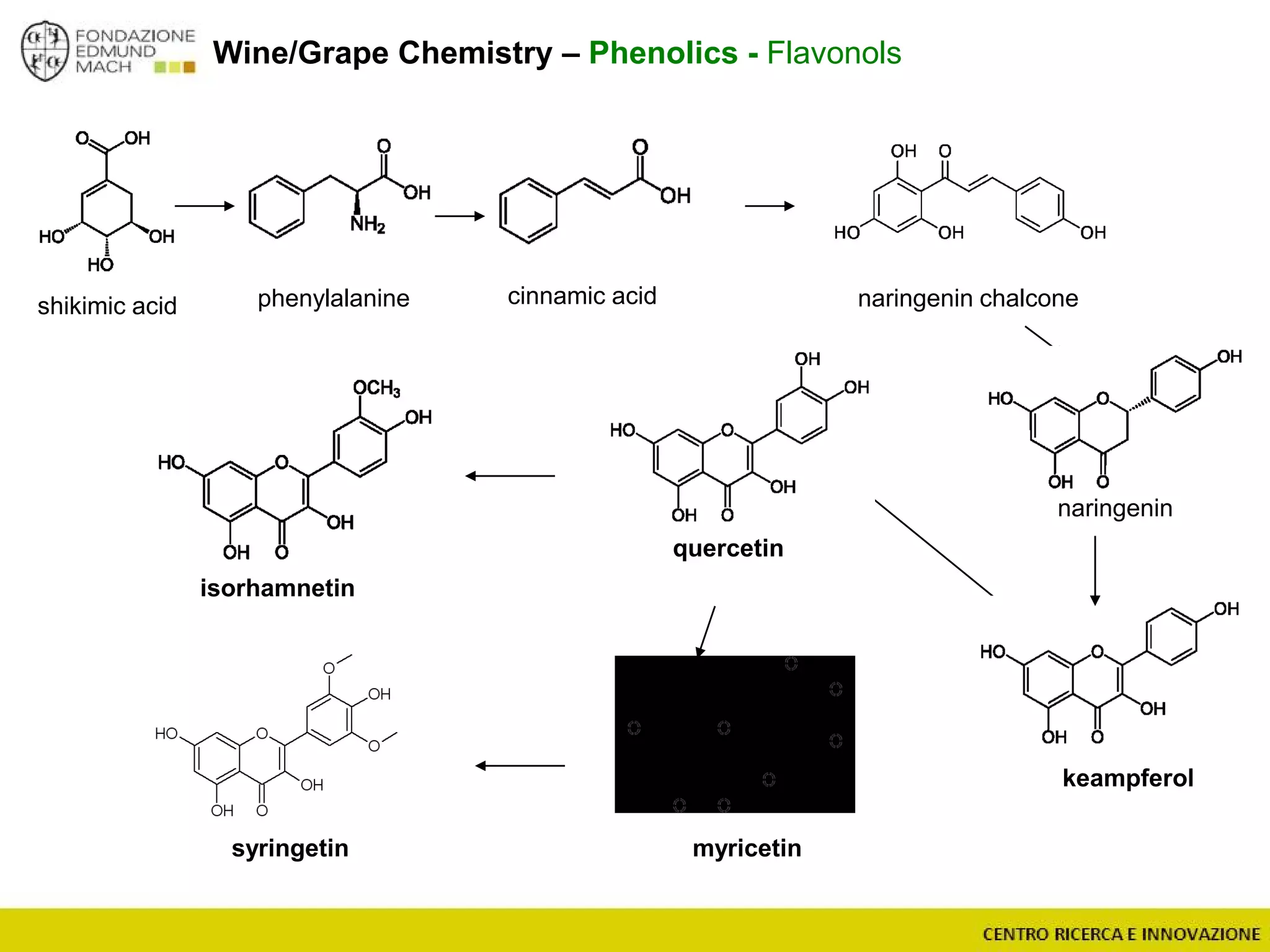
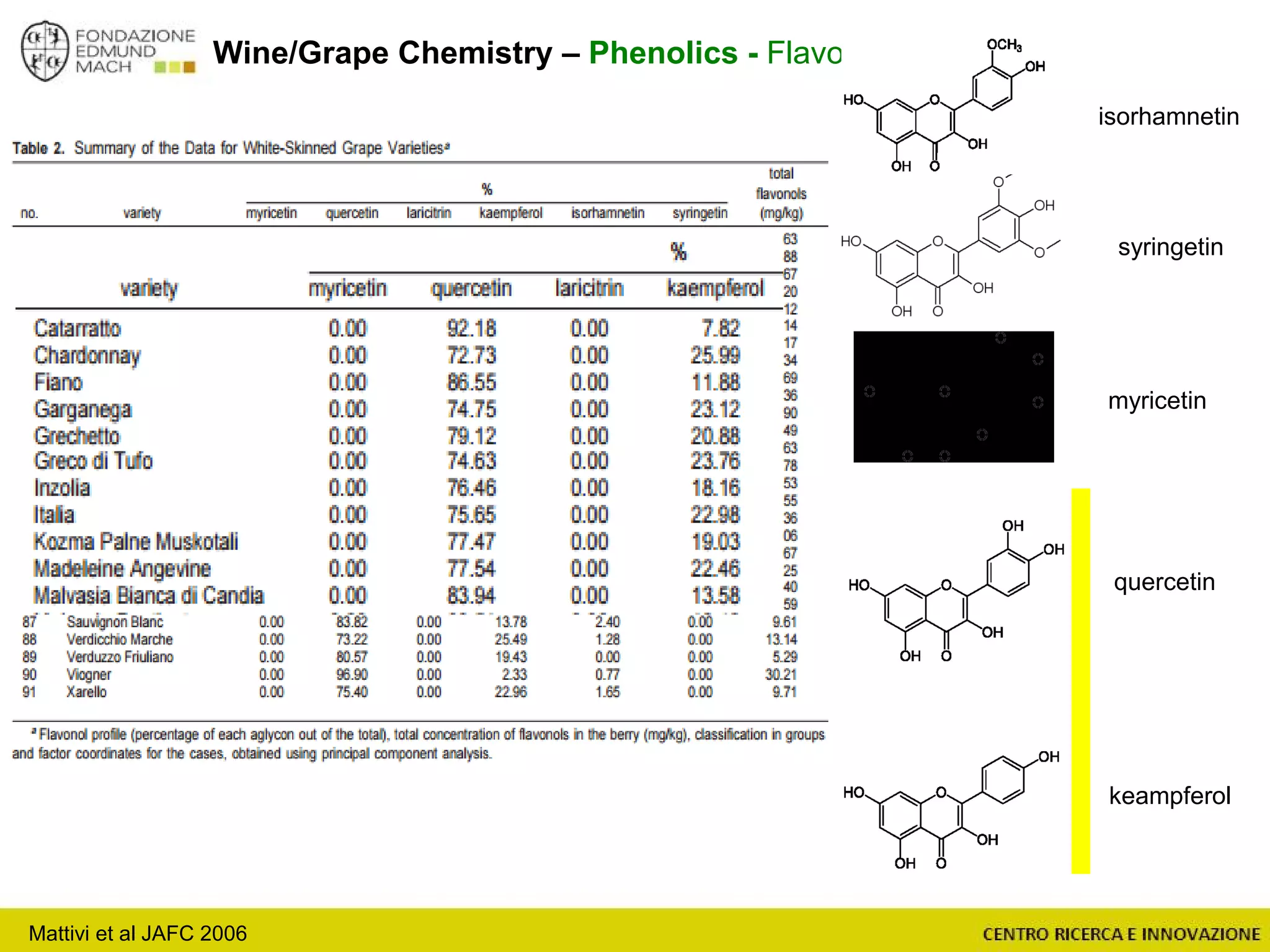
Wine/Grape Chemistry – Phenolics - Flavonols
shikimic acid phenylalanine cinnamic acid
naringenin
myricetinsyringetin
quercetin
keampferol
isorhamnetin
naringenin chalcone
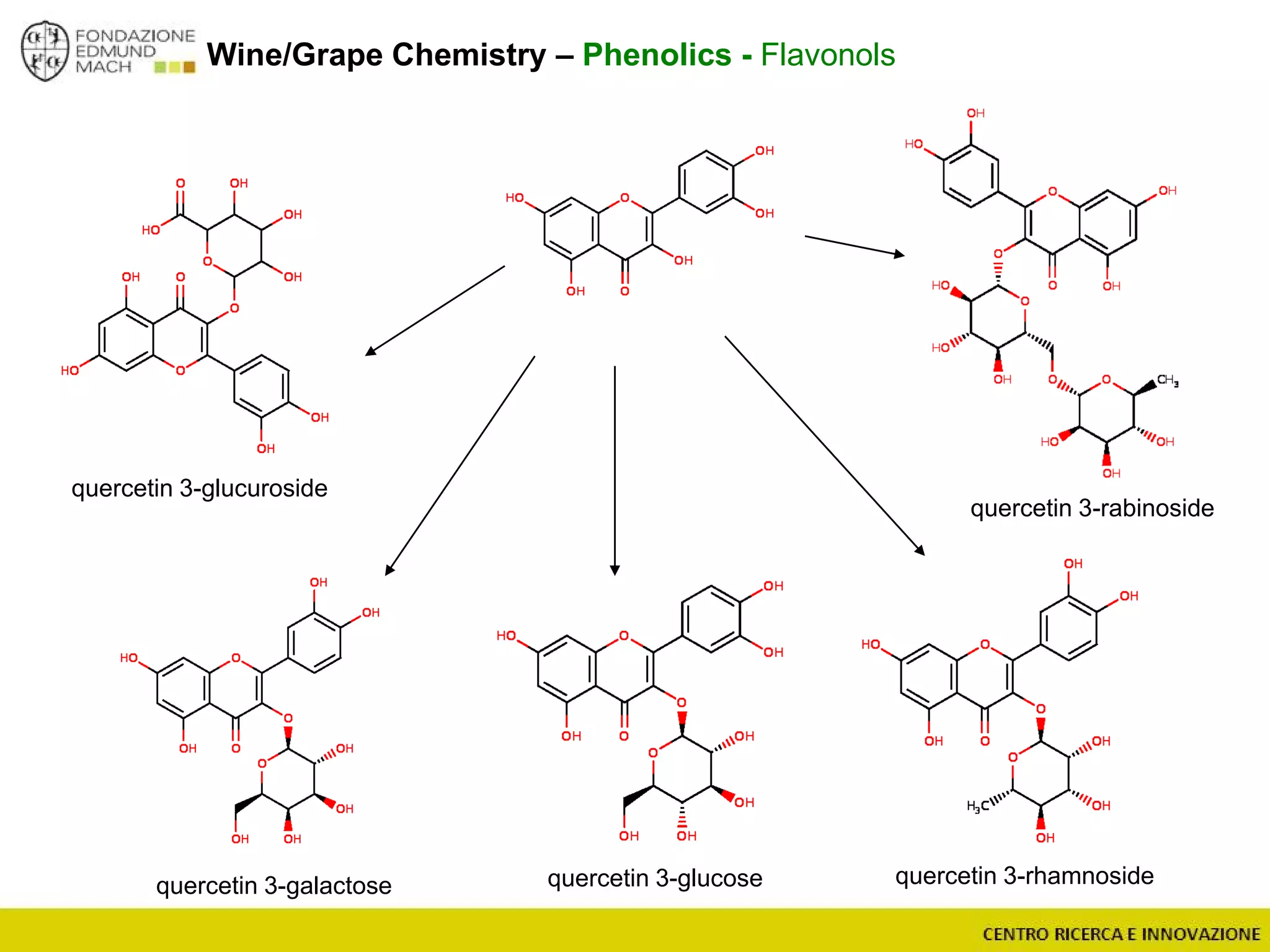
Wine/Grape Chemistry – Phenolics - Flavonols
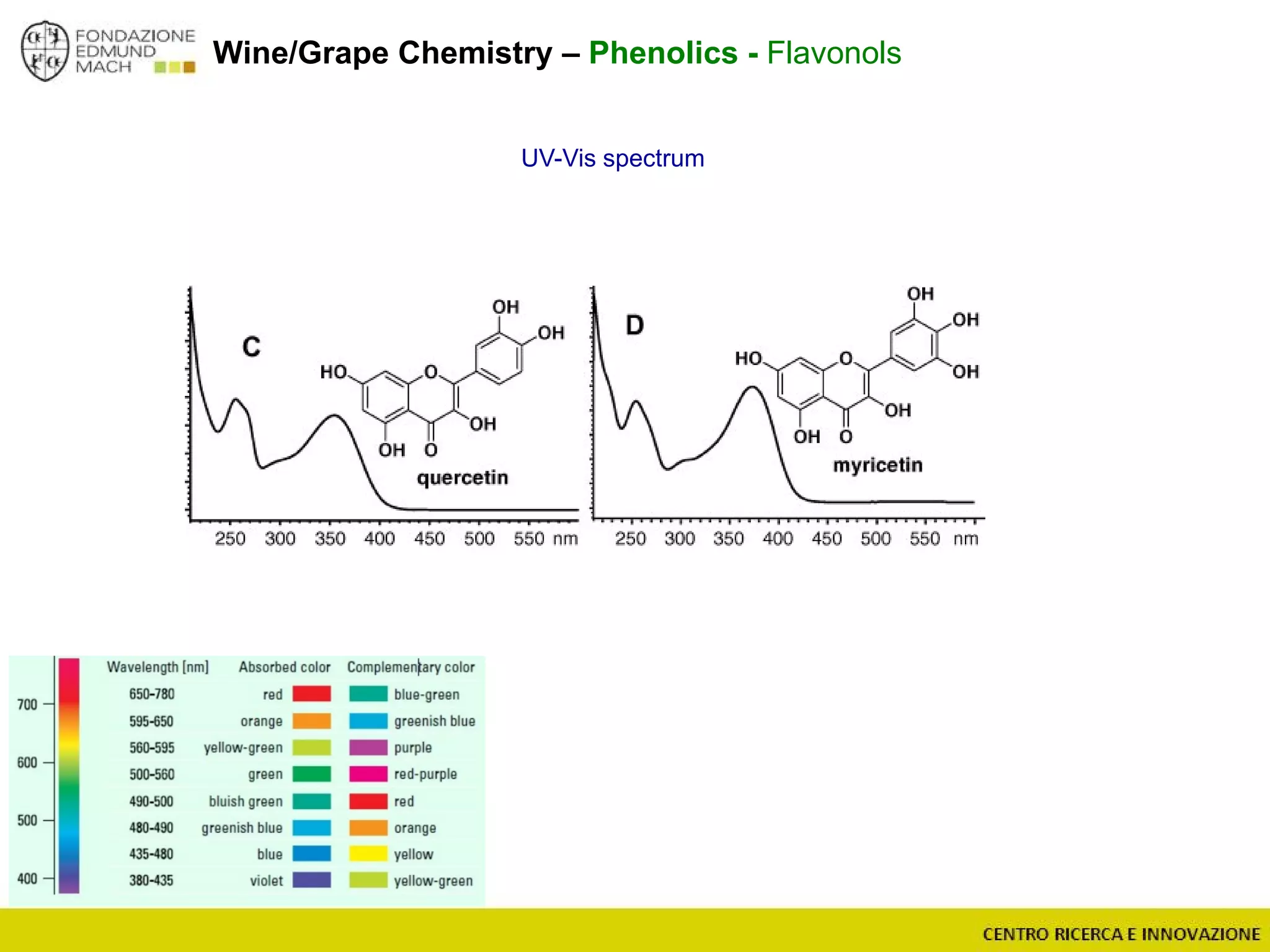
quercetin
quercetin 3-rabinoside
quercetin 3-glucuroside
quercetin 3-galactose quercetin 3-rhamnosidequercetin 3-glucose
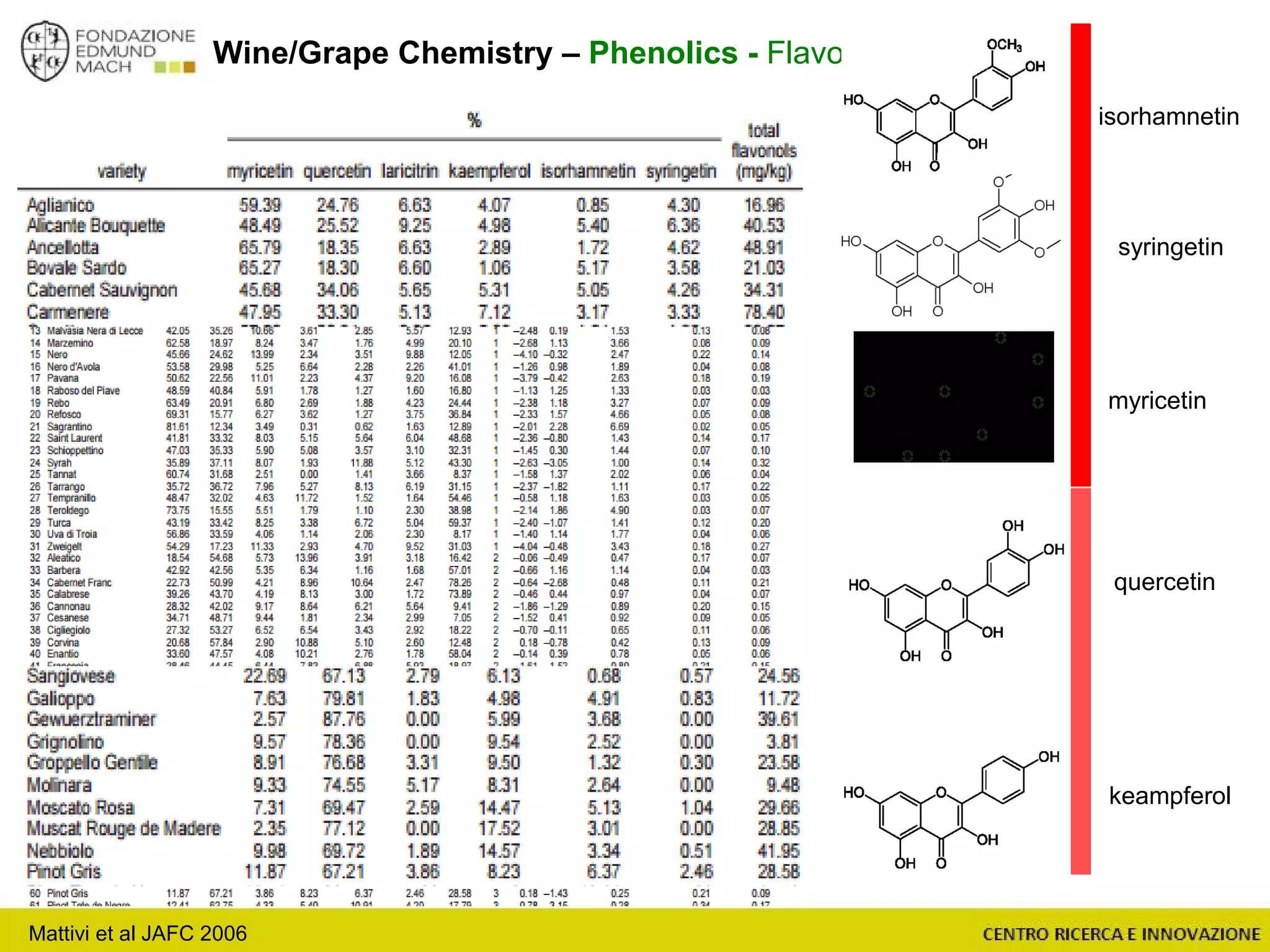
Wine/Grape Chemistry – Phenolics - Flavonols
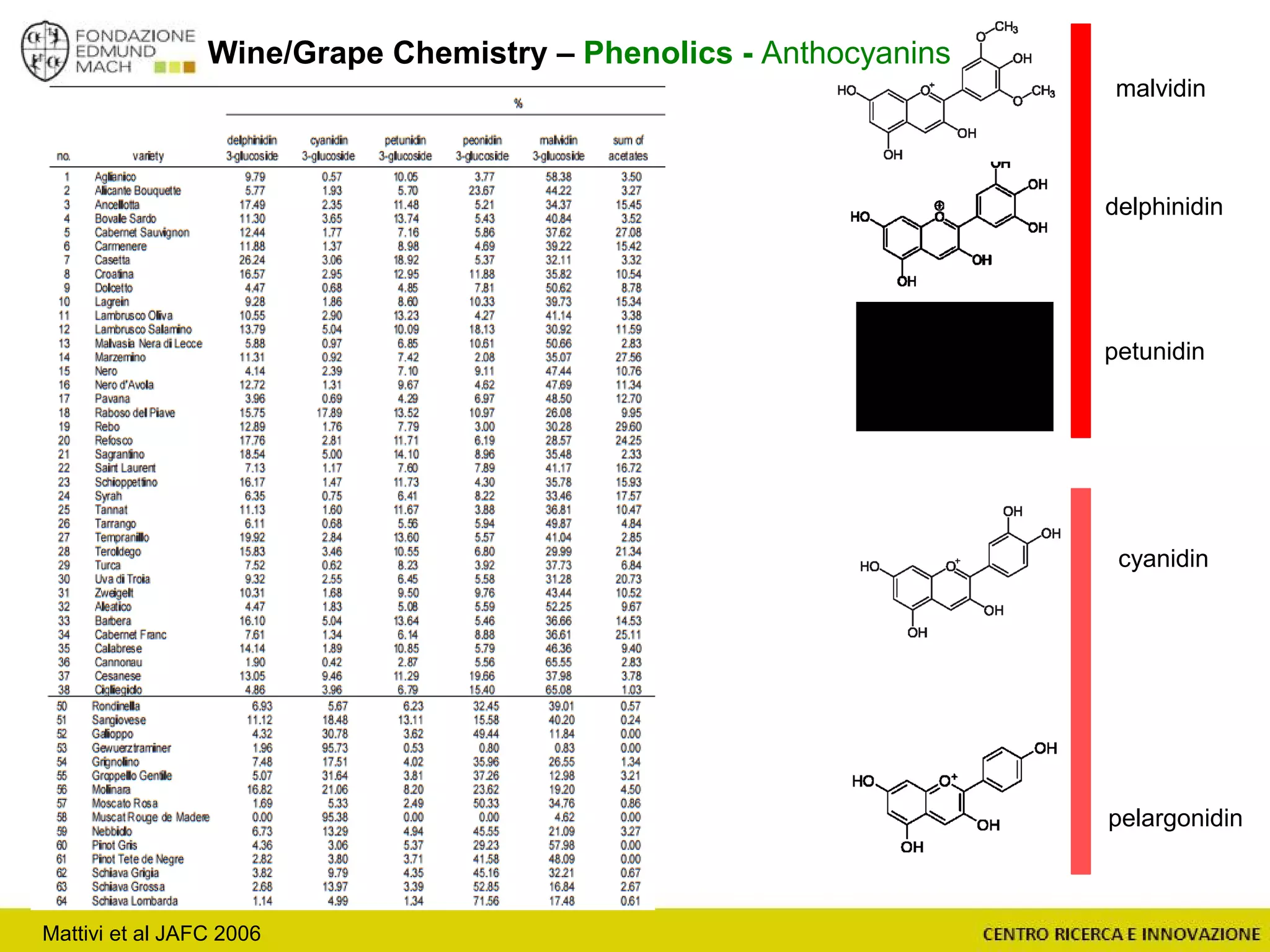
Mattivi et al JAFC 2006
myricetin
syringetin
quercetin
keampferol
isorhamnetin
Wine/Grape Chemistry – Phenolics - Flavonols
Mattivi et al JAFC 2006
myricetin
syringetin
quercetin
keampferol
isorhamnetin
Wine/Grape Chemistry – Phenolics - Flavonols
UV-Vis spectrum
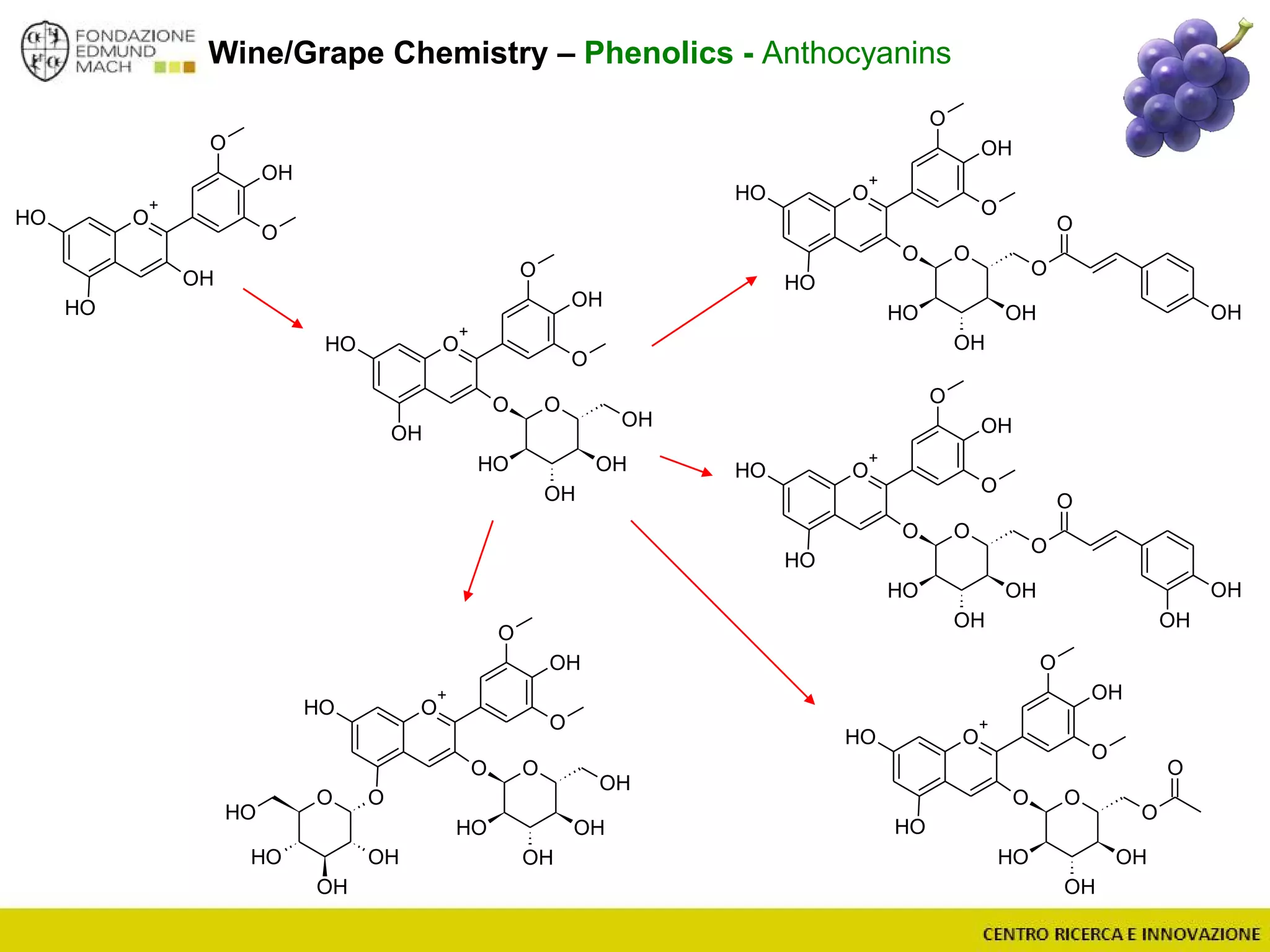
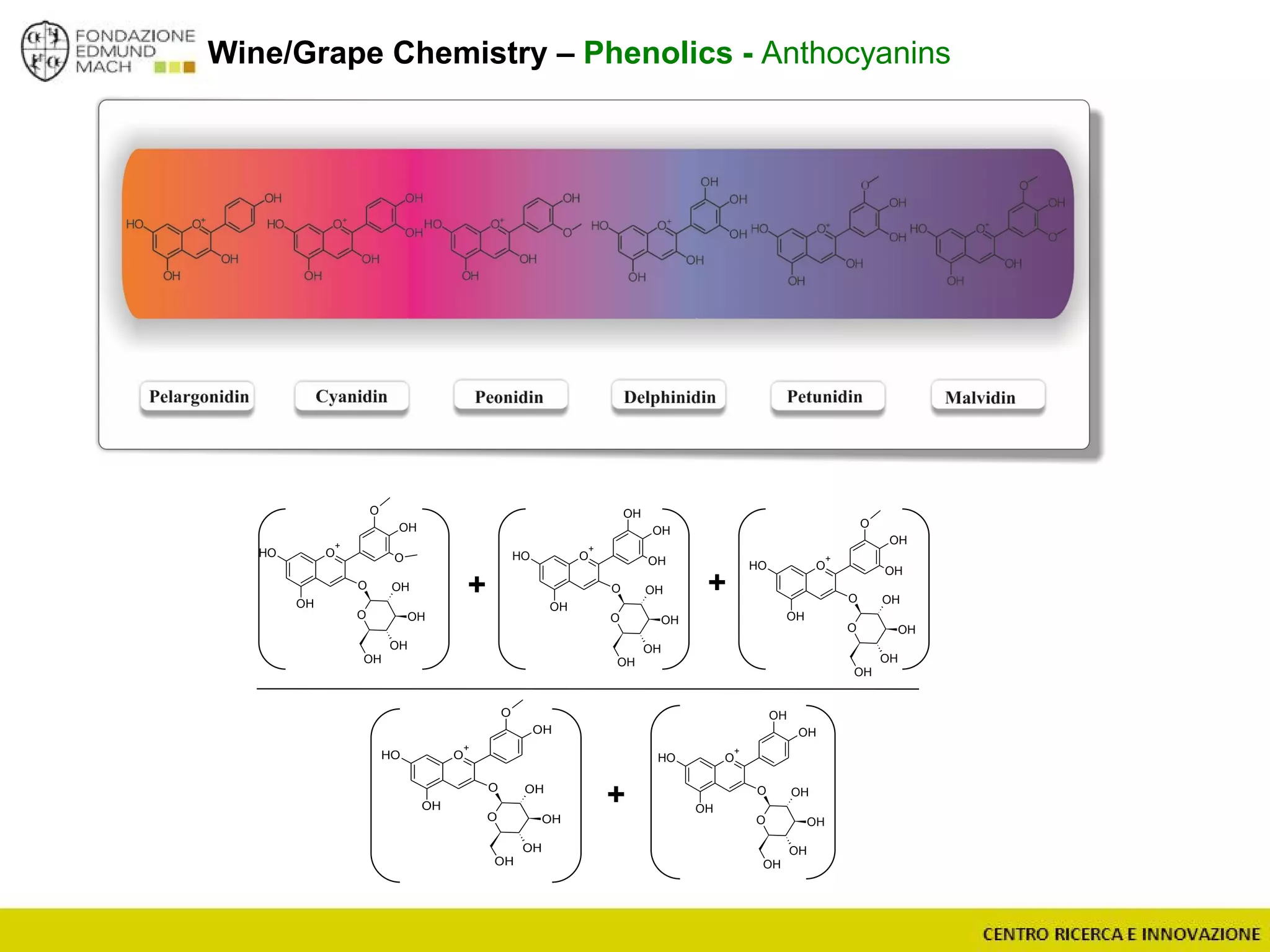
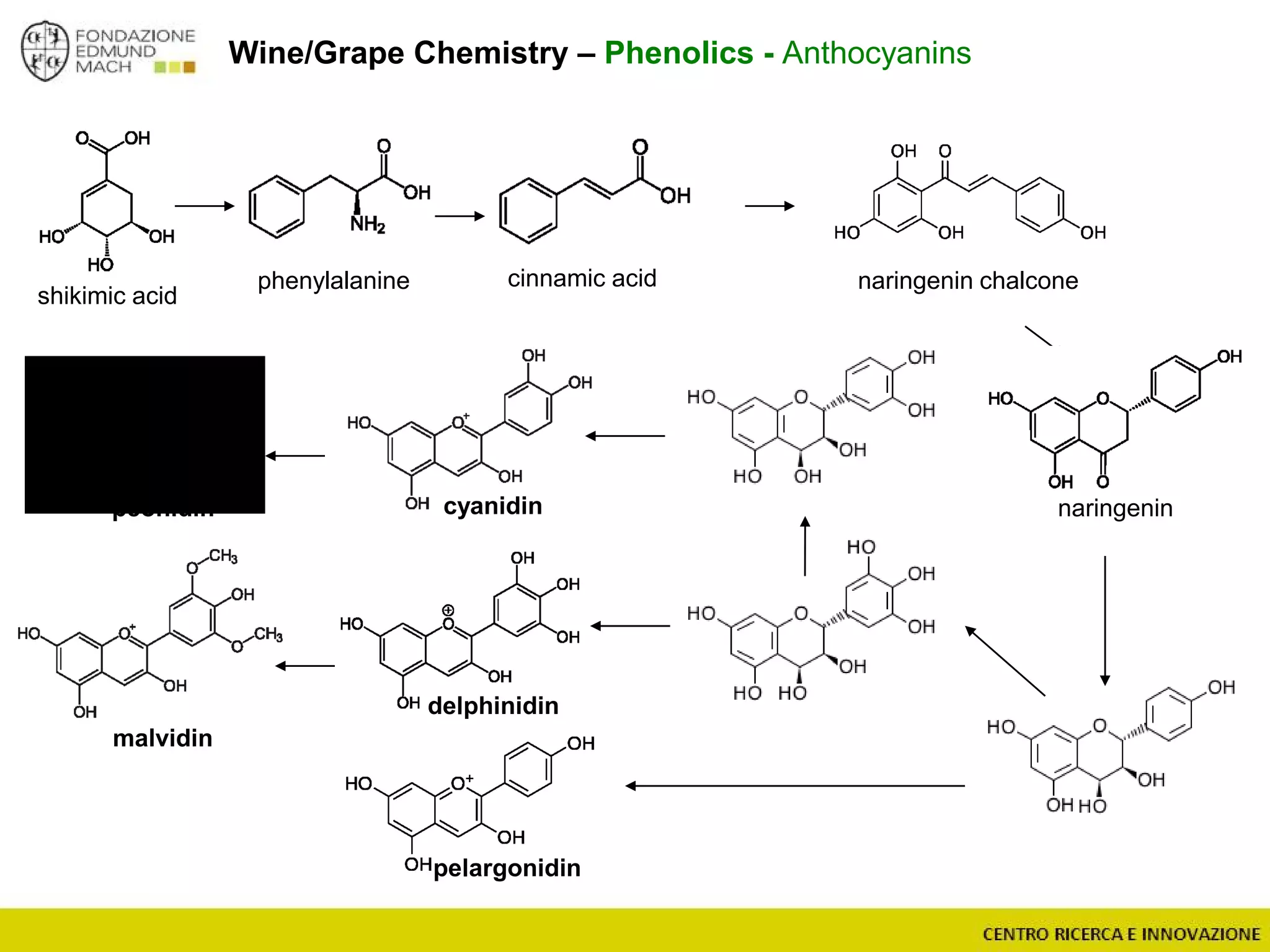
Wine/Grape Chemistry – Phenolics - Anthocyanins
shikimic acid
phenylalanine cinnamic acid
naringenin
naringenin chalcone
cyanidin
delphinidin
pelargonidin
malvidin
peonidin
Wine/Grape Chemistry – Phenolics - Anthocyanins
O
+
OH
OH
O
OH
O
OO
OH
OH
OH
OH
O O
OH
OH
OH
OH
O
+
OH
O
OH
O
OO
OH
OH
OH
OH
OH
O
+
OH
O
OH
O
OO
OH
OH
OH
O
O
OH
OH
O
+
OH
O
OH
O
OO
OH
OH
OH
O
O
OH
OH
OH
O
+
OH
O
OH
O
OO
OH
OH
OH
O
O
OH
O
+
OH
O
OH
O
OH
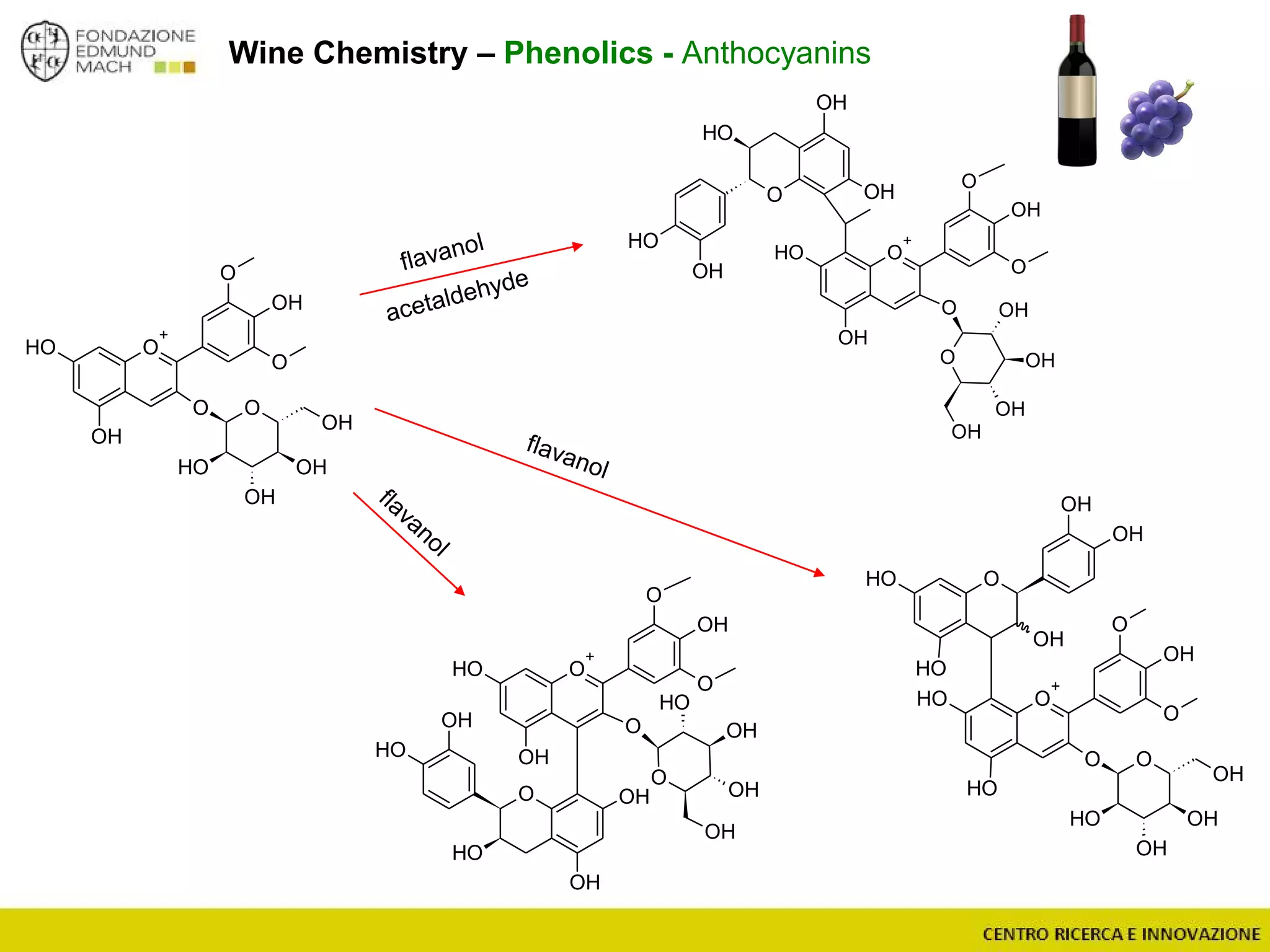
Wine Chemistry – Phenolics - Anthocyanins
OH
OOH
OH
OH
OH
OH
O
+
OH
O
OH
O
OO
OH
OH
OH
OH
O
+
O
OH
OH
O
O OH
OH
OH
OH
OH
O
OH
O
OH
OH
OH
OH
O
+
O
OH
OH
O
O
OH
OH
OH
OH
O
OH
OH
O
OH
OH
OH
OH
O
+
OH
OH
O
OH
O
OO
OH
OH
OH
OH
Wine Chemistry – Phenolics - Anthocyanins
O
+
OH
OH
O
OH
O
OO
OH
OH
OH
OH
O
+
O
OH
OH
O
O OH
OH
OH
OH
O
O
O
+
O
OH
OH
O
O OH
OH
OH
OH
O
O OH
O
O
+
OH
O
OH
O
OO
OH
OH
OH
OH
OH
p-coumaric acid
Wine/Grape Chemistry – Phenolics - Anthocyanins
UV-Vis spectrum
nm250 300 350 400 450 500 550
O
OH
HO
OH
OH
OH
cyanidin
Wine Chemistry – Phenolics - Anthocyanins
Bobeica et al Frontiers 2016
Mattivi et al JAFC 2006
cyanidin
delphinidin
pelargonidin
malvidin
petunidin
Wine/Grape Chemistry – Phenolics - Anthocyanins
O
+
O
OH
OH
OH
O
O OH
OH
OH
OH
O O
+
OH
OH
OH
OH
O
O OH
OH
OH
OH
OH
O
+
O
OH
OH
OH
O
O OH
OH
OH
OH
O
+
OH
OH
OH
OH
O
O OH
OH
OH
OH
O
+
O
OH
OH
OH
O
O OH
OH
OH
OH
OH
+
+ +
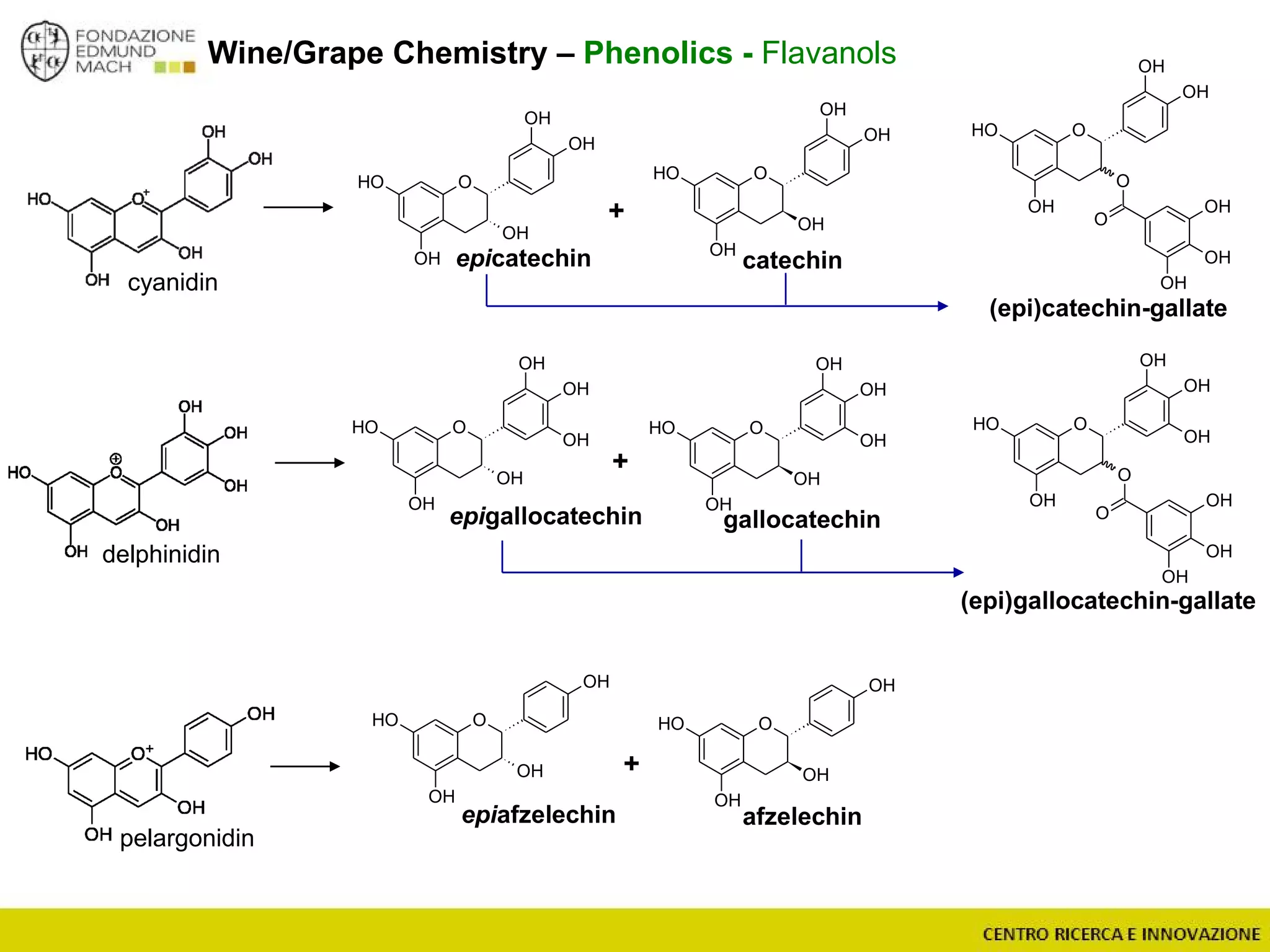
Wine/Grape Chemistry – Phenolics - Flavanols
cyanidin
delphinidin
pelargonidin
OOH
OH
OH
OH
OH
OOH
OH
OH
OH
OH
OOH
OH
OH
OH
OH
OH
OOH
OH
OH
OH
OH
OH
OOH
OH
OH
OH
OOH
OH
OH
OH
+
+
+
epicatechin catechin
epigallocatechin gallocatechin
epiafzelechin afzelechin
OOH
OH
O
OH
O
OH
OH
OH
OH
OOH
OH
O
OH
O
OH
OH
OH
OH
OH
(epi)catechin-gallate
(epi)gallocatechin-gallate
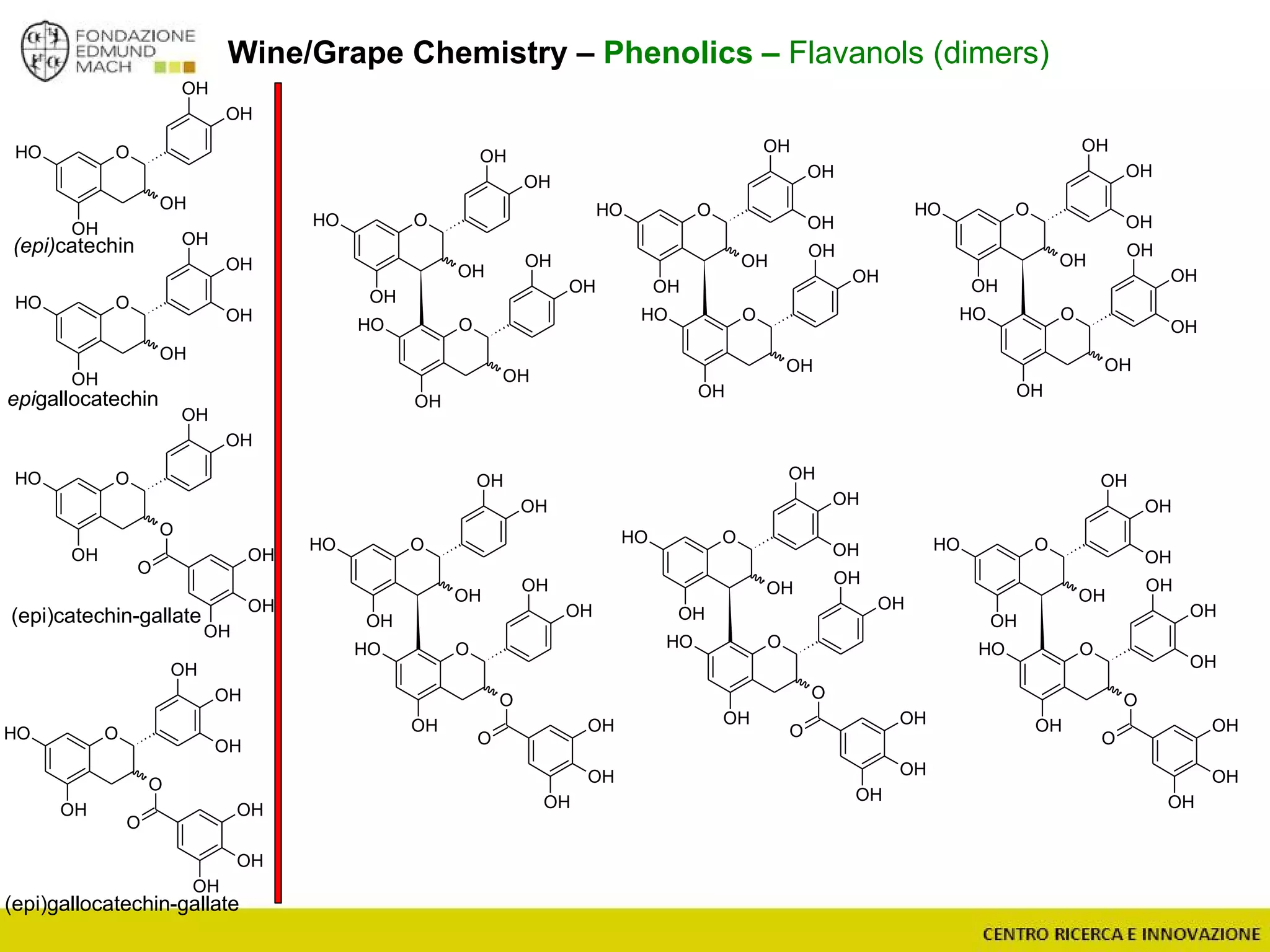
Wine/Grape Chemistry – Phenolics – Flavanols (dimers)
(epi)catechin
epigallocatechin
OOH
OH
O
OH
O
OH
OH
OH
OH
OOH
OH
O
OH
O
OH
OH
OH
OH
OH
(epi)catechin-gallate
(epi)gallocatechin-gallate
OOH
OH
OH
OH
OH
OH
OOH
OH
OH
OH
OH
OOH
OH
OH
OH
OH
OOH
OH
OH
OH
OH
OOH
OH
OH
OH
OH
OOH
OH
OH
OH
OH
OH
OOH
OH
OH
OH
OH
OOH
OH
OH
OH
OH
OH
OH
OOH
OH
OH
OH
OH
OOH
OH
O
OH
OH
OH
OH
O
OH
OH
OH
OOH
OH
OH
OH
OH
OOH
OH
O
OH
OH
O
OH
OH
OH
OOH
OH
OH
OH
OH
OOH
OH
O
OH
OH
OH
O
OH
OH
OH
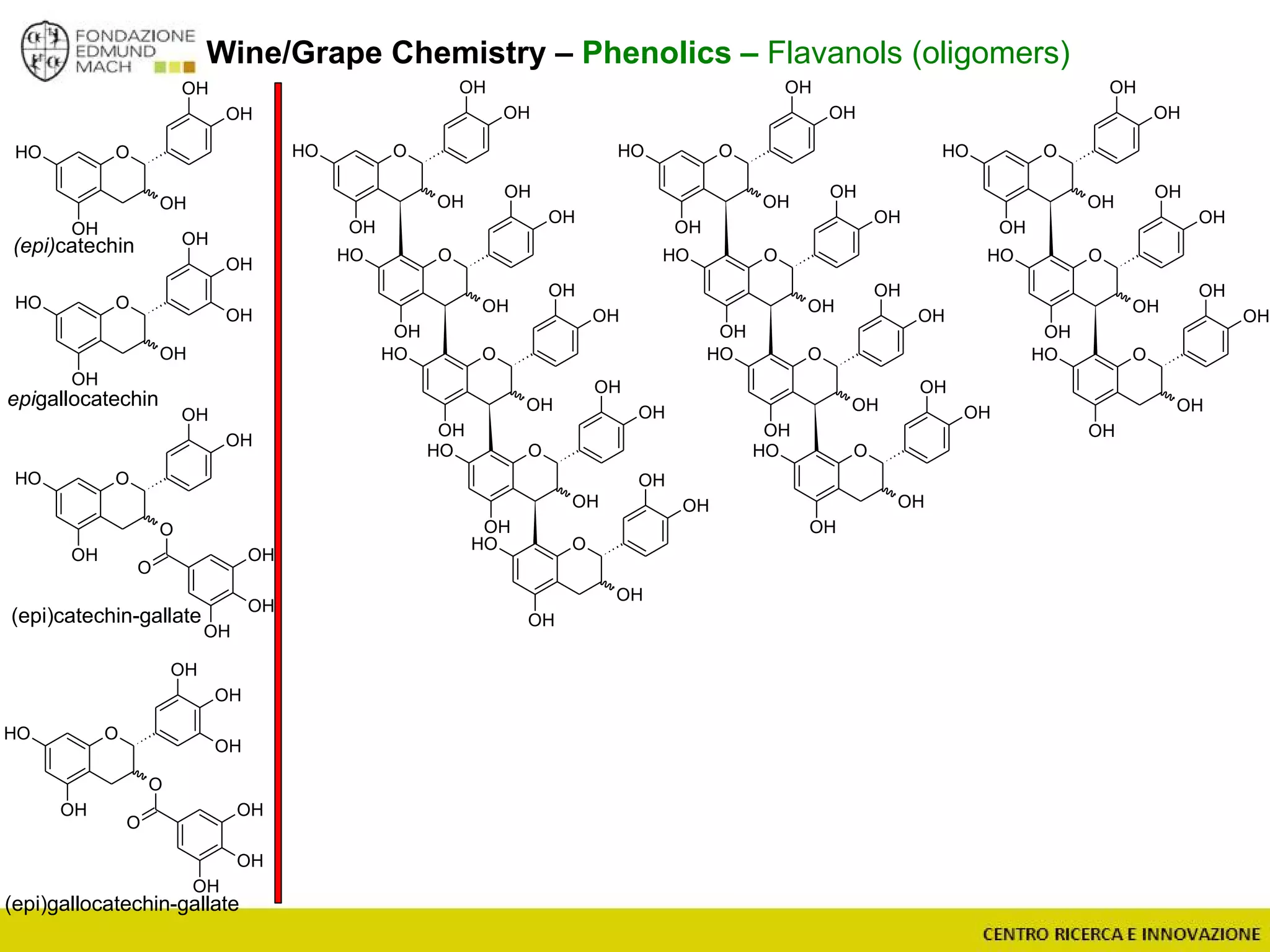
Wine/Grape Chemistry – Phenolics – Flavanols (oligomers)
(epi)catechin
epigallocatechin
OOH
OH
O
OH
O
OH
OH
OH
OH
OOH
OH
O
OH
O
OH
OH
OH
OH
OH
(epi)catechin-gallate
(epi)gallocatechin-gallate
OOH
OH
OH
OH
OH
OH
OOH
OH
OH
OH
OH
OOH
OH
OH
OH
OH
OOH
OH
OH
OH
OH
OOH
OH
OH
OH
OH
OOH
OH
OH
OH
OH
OOH
OH
OH
OH
OH
OOH
OH
OH
OH
OH
OOH
OH
OH
OH
OH
OOH
OH
OH
OH
OH
OOH
OH
OH
OH
OH
OOH
OH
OH
OH
OH
OOH
OH
OH
OH
OH
OOH
OH
OH
OH
OH
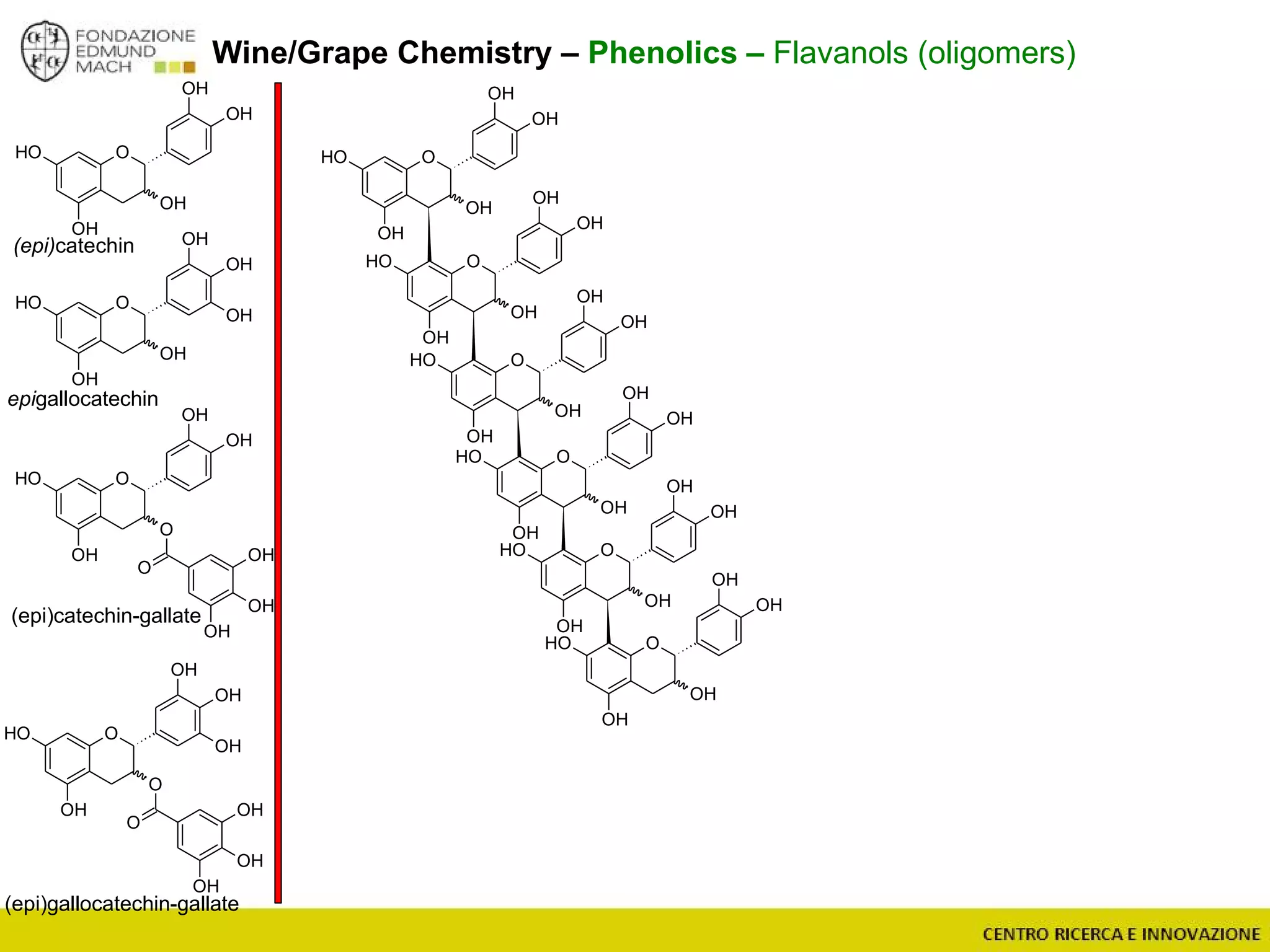
Wine/Grape Chemistry – Phenolics – Flavanols (oligomers)
(epi)catechin
epigallocatechin
OOH
OH
O
OH
O
OH
OH
OH
OH
OOH
OH
O
OH
O
OH
OH
OH
OH
OH
(epi)catechin-gallate
(epi)gallocatechin-gallate
OOH
OH
OH
OH
OH
OH
OOH
OH
OH
OH
OH
OOH
OH
OH
OH
OH
OOH
OH
OH
OH
OH
OOH
OH
OH
OH
OH
OOH
OH
OH
OH
OH
OOH
OH
OH
OH
OH
OOH
OH
OH
OH
OH
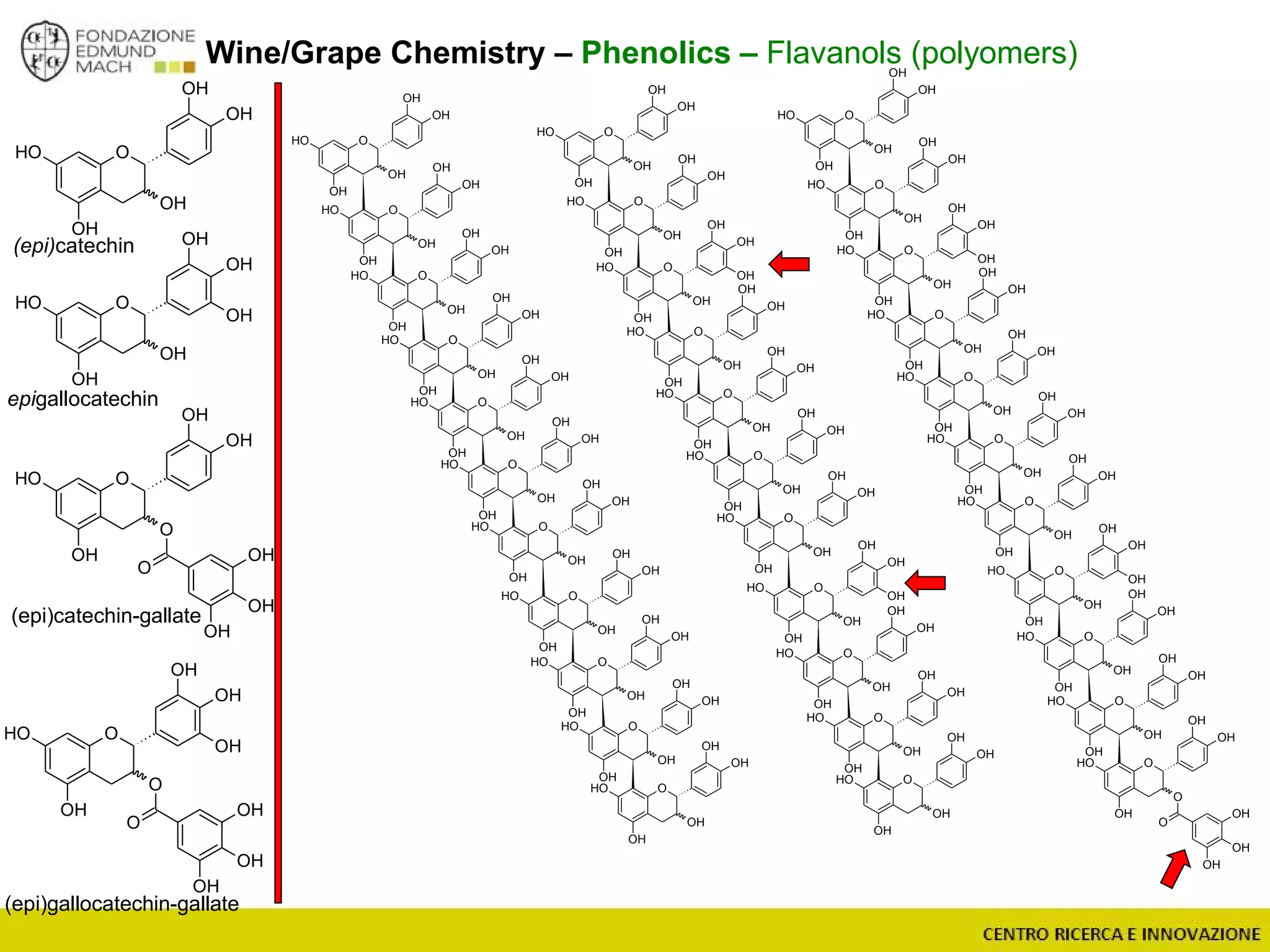
Wine/Grape Chemistry – Phenolics – Flavanols (polyomers)
(epi)catechin
epigallocatechin
OOH
OH
O
OH
O
OH
OH
OH
OH
OOH
OH
O
OH
O
OH
OH
OH
OH
OH
(epi)catechin-gallate
(epi)gallocatechin-gallate
OOH
OH
OH
OH
OH
OH
OOH
OH
OH
OH
OH
OOH
OH
OH
OH
OH
OOH
OH
OH
OH
OH
OOH
OH
OH
OH
OH
OOH
OH
OH
OH
OH
OOH
OH
OH
OH
OH
OOH
OH
OH
OH
OH
OOH
OH
OH
OH
OH
OOH
OH
OH
OH
OH
OOH
OH
OH
OH
OH
OOH
OH
OH
OH
OH
OOH
OH
OH
OH
OH
OOH
OH
OH
OH
OH
OOH
OH
OH
OH
OH
OOH
OH
OH
OH
OH
OOH
OH
OH
OH
OH
OOH
OH
OH
OH
OH
OOH
OH
OH
OH
OH
OOH
OH
OH
OH
OH
OOH
OH
OH
OH
OH
OOH
OH
OH
OH
OH
OOH
OH
OH
OH
OH
OOH
OH
OH
OH
OH
OH
OH
OOH
OH
OH
OH
OH
OOH
OH
OH
OH
OH
OOH
OH
OH
OH
OH
OOH
OH
OH
OH
OH
OOH
OH
OH
OH
OH
OOH
OH
OH
OH
OH
OOH
OH
OH
OH
OH
OOH
OH
OH
OH
OH
OOH
OH
OH
OH
OH
OOH
OH
OH
OH
OH
OOH
OH
O
OH
OH
OH
OH
O
OH
OH
OH
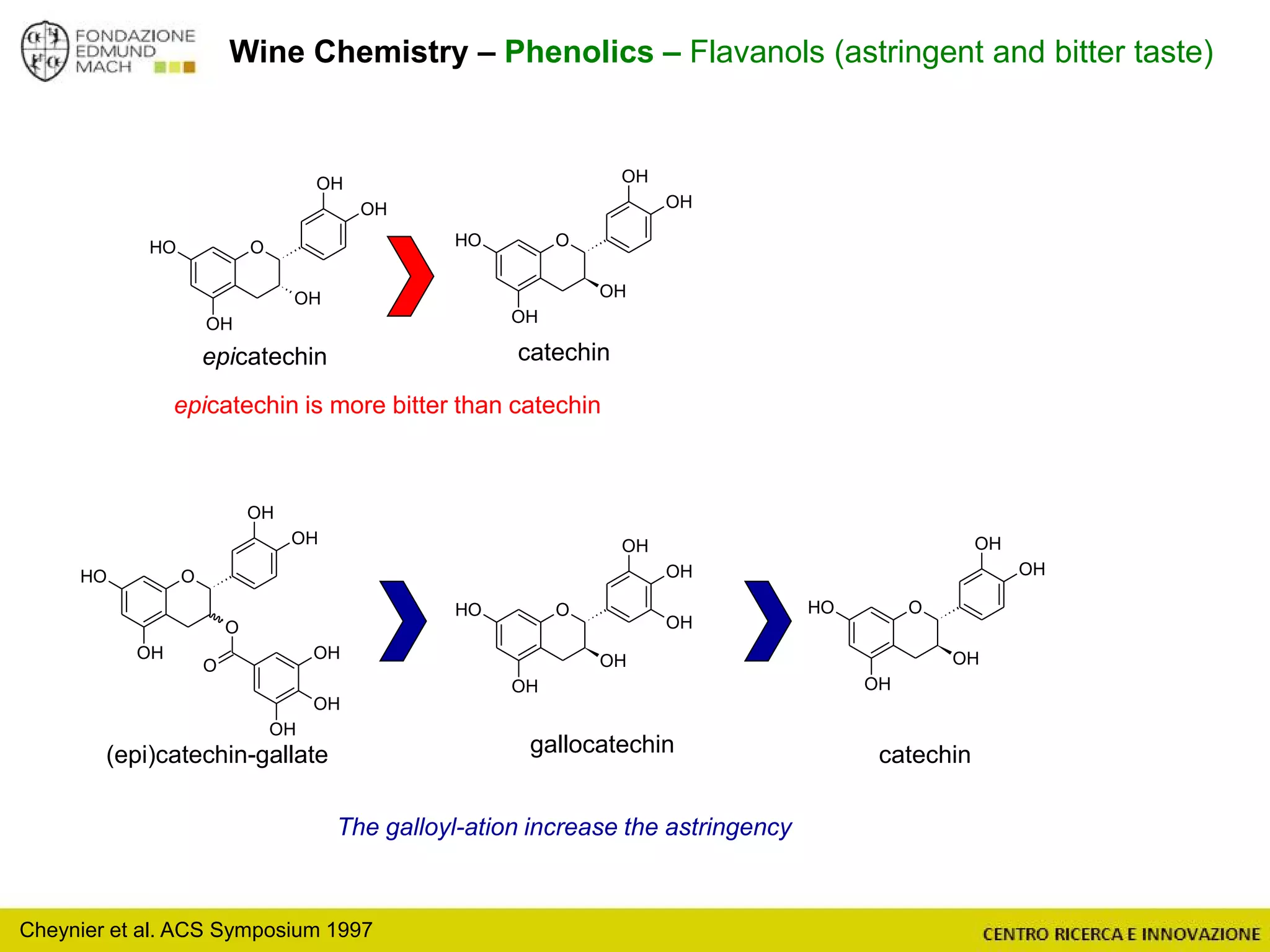
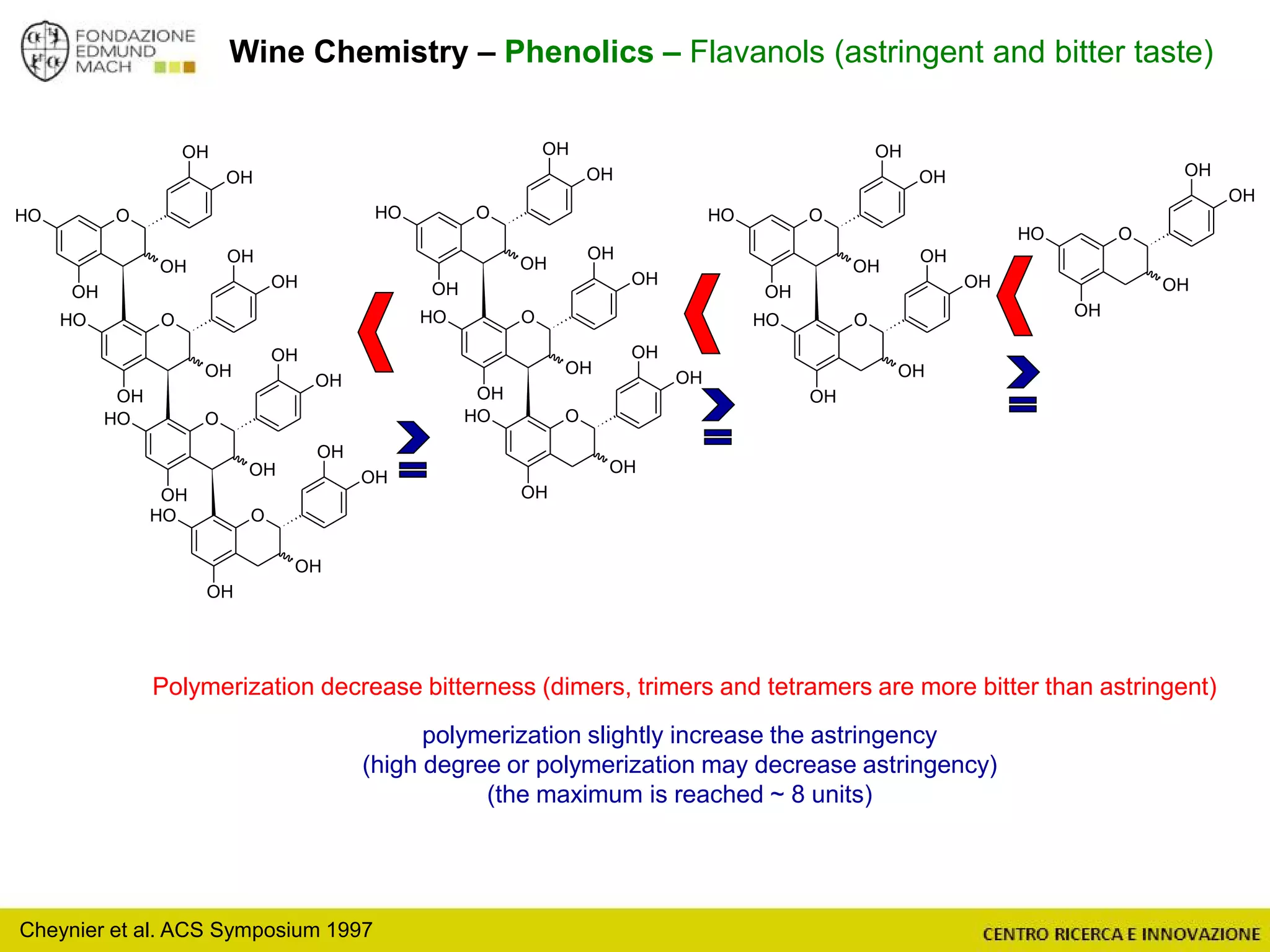
Wine Chemistry – Phenolics – Flavanols (astringent and bitter taste)
OOH
OH
OH
OH
OH
OOH
OH
OH
OH
OH
OOH
OH
OH
OH
OH
OH
epicatechin catechin
gallocatechin
OOH
OH
O
OH
O
OH
OH
OH
OH
(epi)catechin-gallate
epicatechin is more bitter than catechin
OOH
OH
OH
OH
OH
catechin
The galloyl-ation increase the astringency
Cheynier et al. ACS Symposium 1997
Wine Chemistry – Phenolics – Flavanols (astringent and bitter taste)
Polymerization decrease bitterness (dimers, trimers and tetramers are more bitter than astringent)
polymerization slightly increase the astringency
(high degree or polymerization may decrease astringency)
(the maximum is reached ~ 8 units)
Cheynier et al. ACS Symposium 1997
OOH
OH
OH
OH
OH
OOH
OH
OH
OH
OH
OOH
OH
OH
OH
OH
OOH
OH
OH
OH
OH
OOH
OH
OH
OH
OH
OOH
OH
OH
OH
OH
OOH
OH
OH
OH
OH
OOH
OH
OH
OH
OH
OOH
OH
OH
OH
OH
OOH
OH
OH
OH
OH
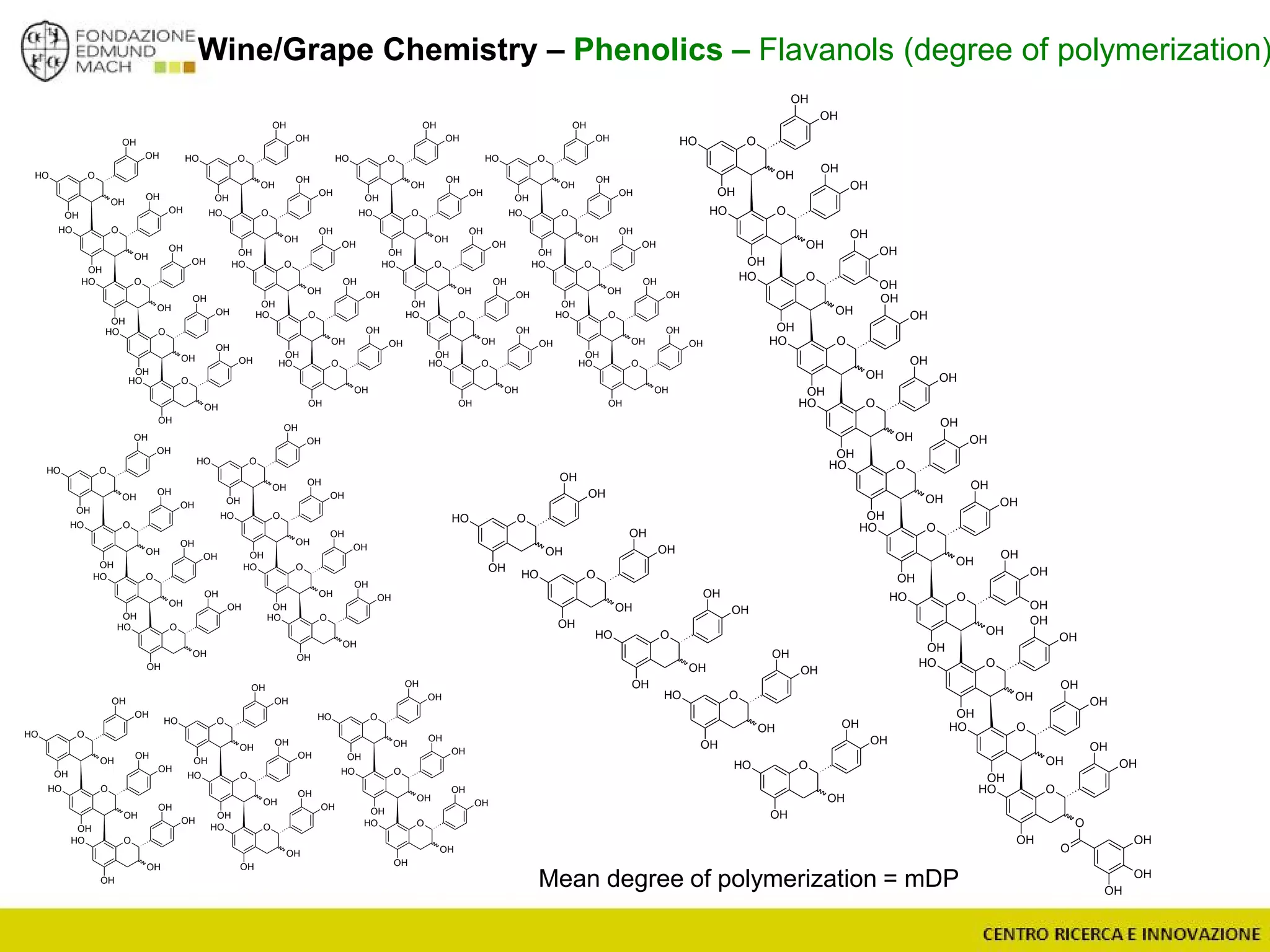
Wine/Grape Chemistry – Phenolics – Flavanols (degree of polymerization)
OOH
OH
OH
OH
OH
OOH
OH
OH
OH
OH
OOH
OH
OH
OH
OH
OOH
OH
OH
OH
OH
OOH
OH
OH
OH
OH
OOH
OH
OH
OH
OH
OOH
OH
OH
OH
OH
OOH
OH
OH
OH
OH
OOH
OH
OH
OH
OH
OOH
OH
OH
OH
OH
OOH
OH
OH
OH
OH
OOH
OH
OH
OH
OH
OOH
OH
OH
OH
OH
OOH
OH
OH
OH
OH
OOH
OH
OH
OH
OH
OOH
OH
OH
OH
OH
OOH
OH
OH
OH
OH
OOH
OH
OH
OH
OH
OOH
OH
OH
OH
OH
OOH
OH
OH
OH
OH
OOH
OH
OH
OH
OH
OOH
OH
OH
OH
OH
OOH
OH
OH
OH
OH
OOH
OH
OH
OH
OH
OOH
OH
OH
OH
OH
OOH
OH
OH
OH
OH
OOH
OH
OH
OH
OH
OOH
OH
OH
OH
OH
OOH
OH
OH
OH
OH
OOH
OH
OH
OH
OH
OOH
OH
OH
OH
OH
OOH
OH
OH
OH
OH
OOH
OH
OH
OH
OH
OOH
OH
OH
OH
OH
OOH
OH
OH
OH
OH
OOH
OH
OH
OH
OH
OOH
OH
OH
OH
OH
OOH
OH
OH
OH
OH
OOH
OH
OH
OH
OH
OOH
OH
OH
OH
OH
OOH
OH
OH
OH
OH
OOH
OH
OH
OH
OH
OOH
OH
OH
OH
OH
OOH
OH
OH
OH
OH
OOH
OH
OH
OH
OH
OOH
OH
OH
OH
OH
OOH
OH
OH
OH
OH
OOH
OH
O
OH
OH
OH
OH
O
OH
OH
OH
O
OH
OH
OH
OH
OH
O
OH
OH
OH
OH
OH
O
OH
OH
OH
OH
OH
O
OH
OH
OH
OH
OH
Mean degree of polymerization = mDP
O
OH
OH
OH
OH
OH
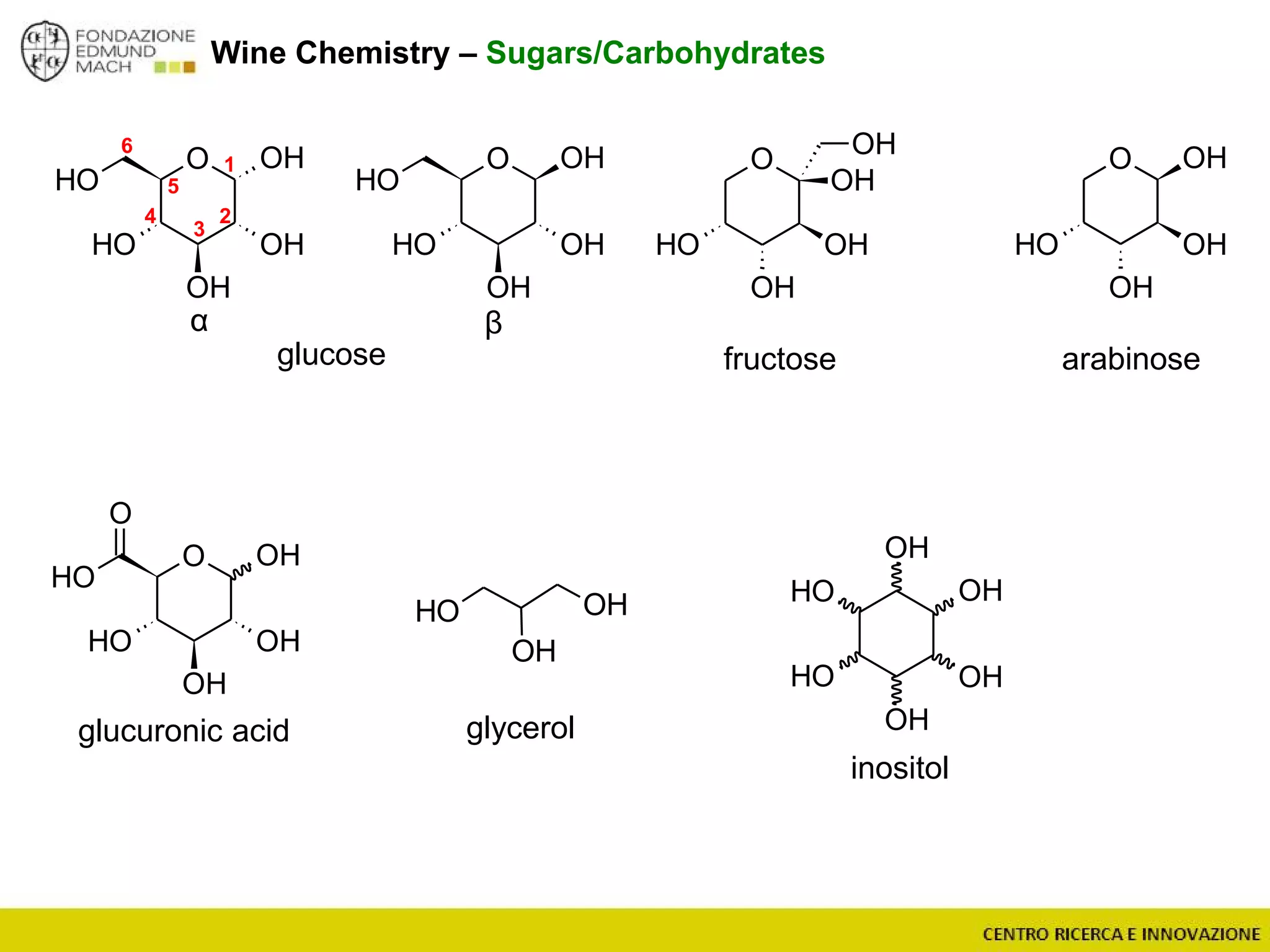
Wine Chemistry – Sugars/Carbohydrates
O OH
OH
OH
OH
OH
O OH
OH
OH
OH
OH
glucose
O
OH
OH
OH
OH
OH
fructose
O OH
OH
OH
OH
arabinose
OH
OH
OH
OH
OH
OH
OH OH
OH
O OH
OH
OH
OH
OH
O
α β
glucuronic acid glycerol
inositol
1
2
3
4
5
6
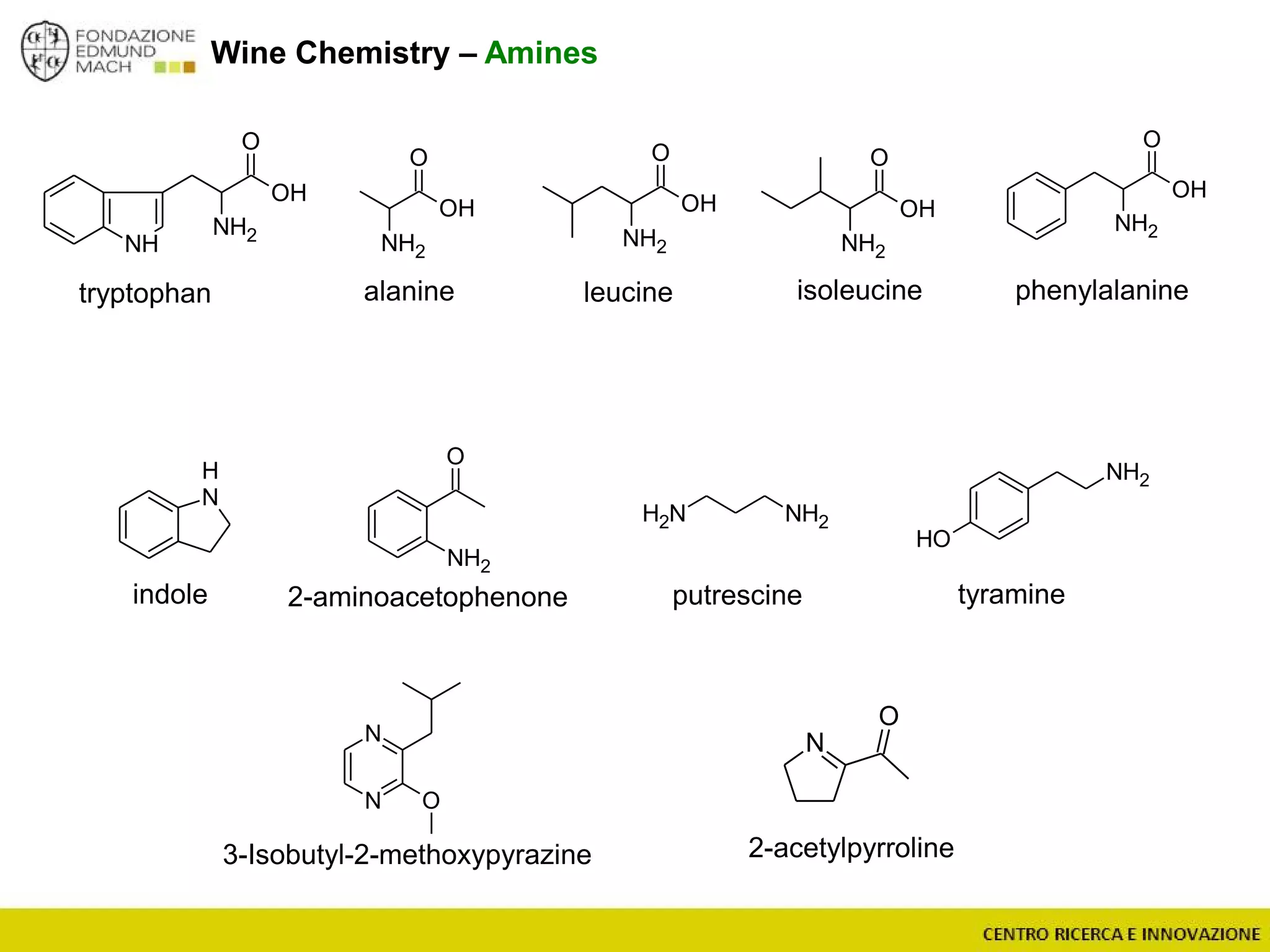
Wine Chemistry – Amines
O
NH2
OH
O
NH2
NH
OH
O
NH2
OH
O
NH2
OH
tryptophan phenylalanineleucine isoleucinealanine
N
H
O
NH2
NH2 NH2
OH
NH2
N
N O
3-Isobutyl-2-methoxypyrazine
indole putrescine tyramine2-aminoacetophenone
N
O
2-acetylpyrroline
O
NH2
OH
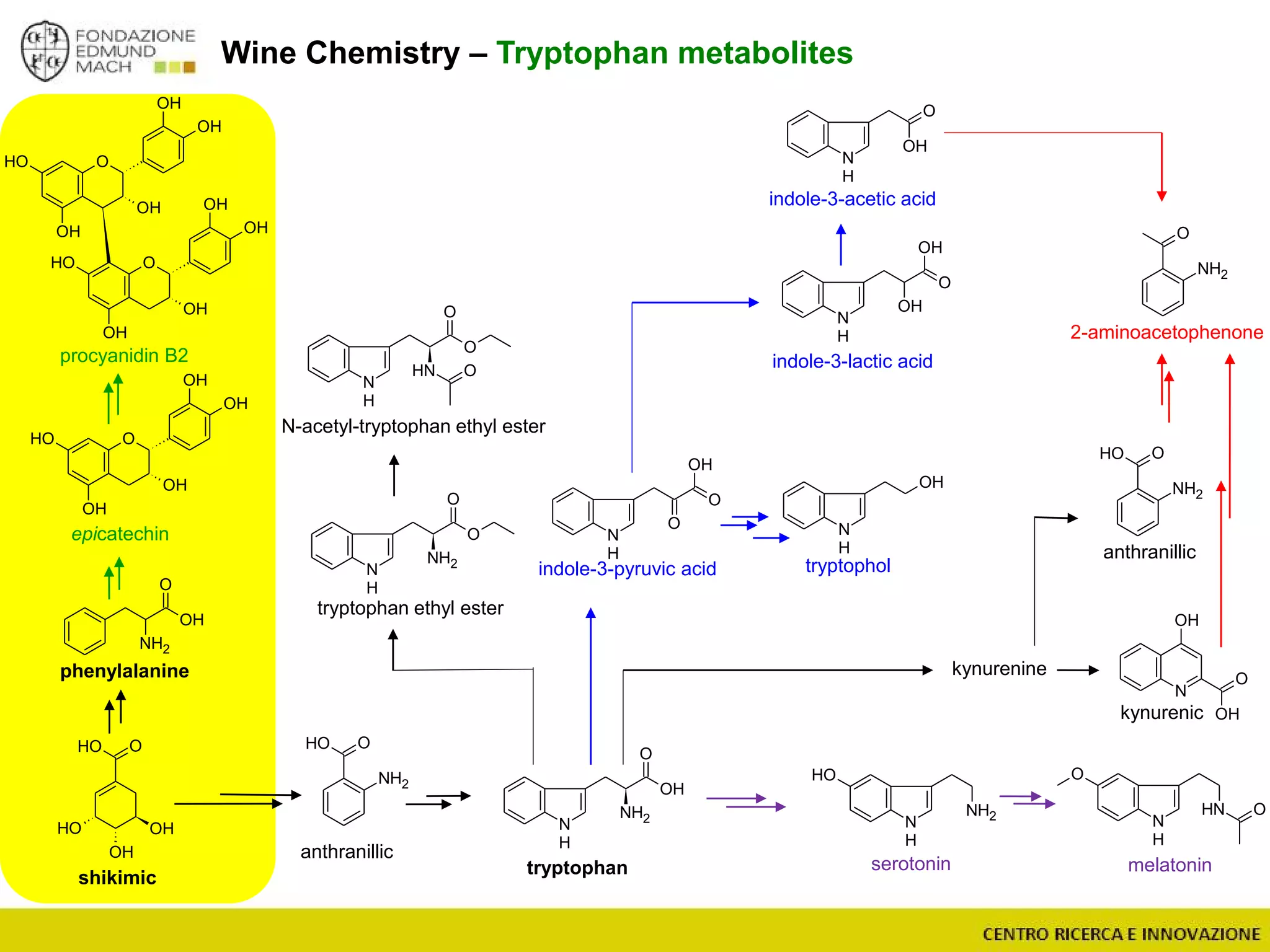
Wine Chemistry – Tryptophan metabolites
OH
NH2
N
H
O
O
NH2
OH
O
OH
N
H
OH
O
OH
N
H
OH
N
H
TOL
N
OH
O
OH
N
H
O
NH O
N
H
OH
NH2
shikimic
OH
OH
OH
OOH
OOH
NH2
O
NH2
O
O
N
H
OH
O
OH
OH
OH
OH
OH
O
OH
OH
OH
OH
OH
O
OH
OH
OH
OH
OH
O
NH
N
H
O
O
O
NH2
N
H
O
epicatechin
procyanidin B2
phenylalanine
tryptophan melatoninserotonin
tryptophan ethyl ester
N-acetyl-tryptophan ethyl ester
kynurenic
anthranillic
kynurenine
indole-3-pyruvic acid
indole-3-lactic acid
indole-3-acetic acid
tryptophol
2-aminoacetophenone
OOH
NH2
anthranillic
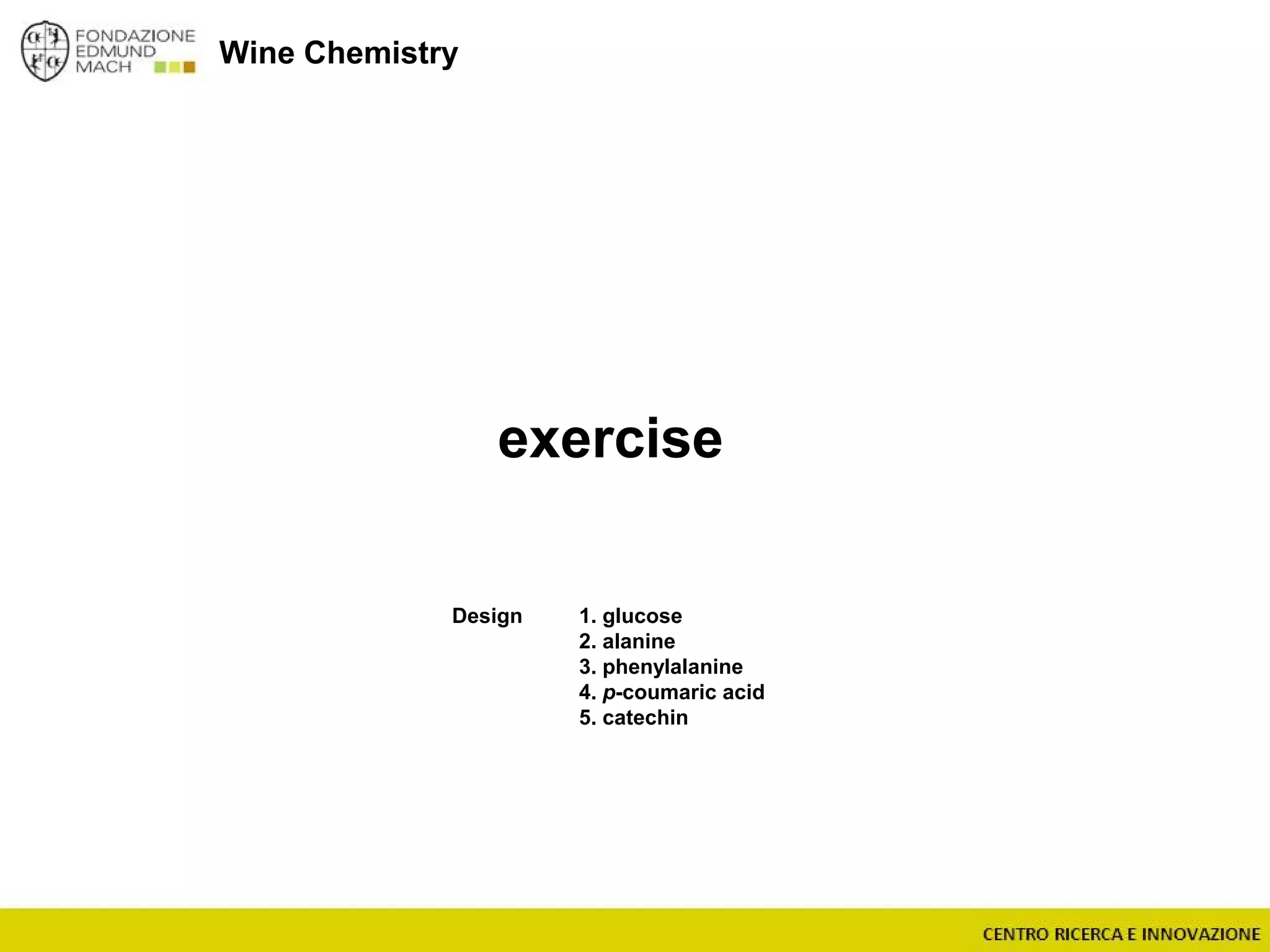
Wine Chemistry
exercise
Design 1. glucose
2. alanine
3. phenylalanine
4. p-coumaric acid
5. catechin
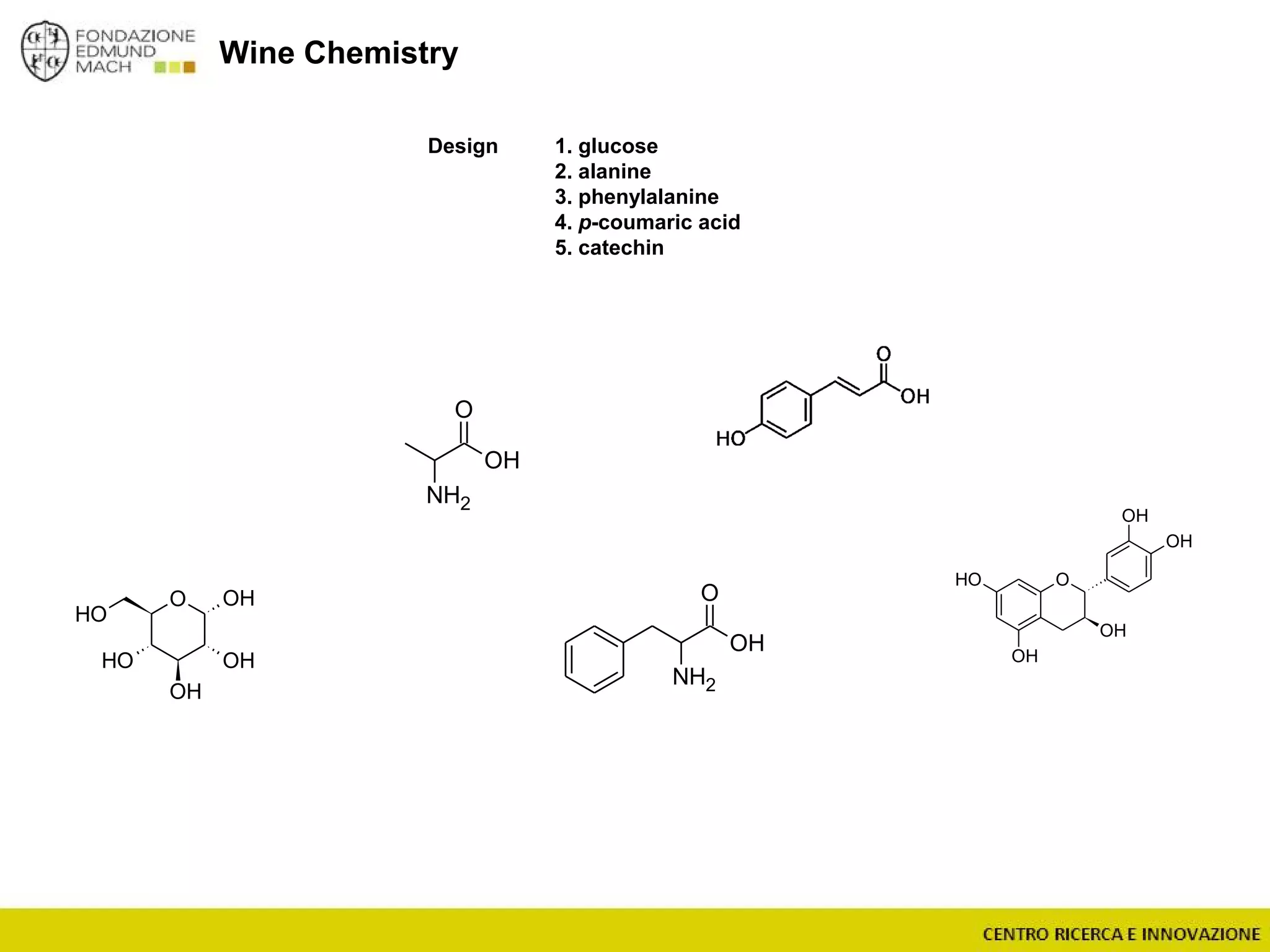
Wine Chemistry
Design 1. glucose
2. alanine
3. phenylalanine
4. p-coumaric acid
5. catechin
OOH
OH
OH
OH
OH
O
NH2
OH
O OH
OH
OH
OH
OH
O
NH2
OH
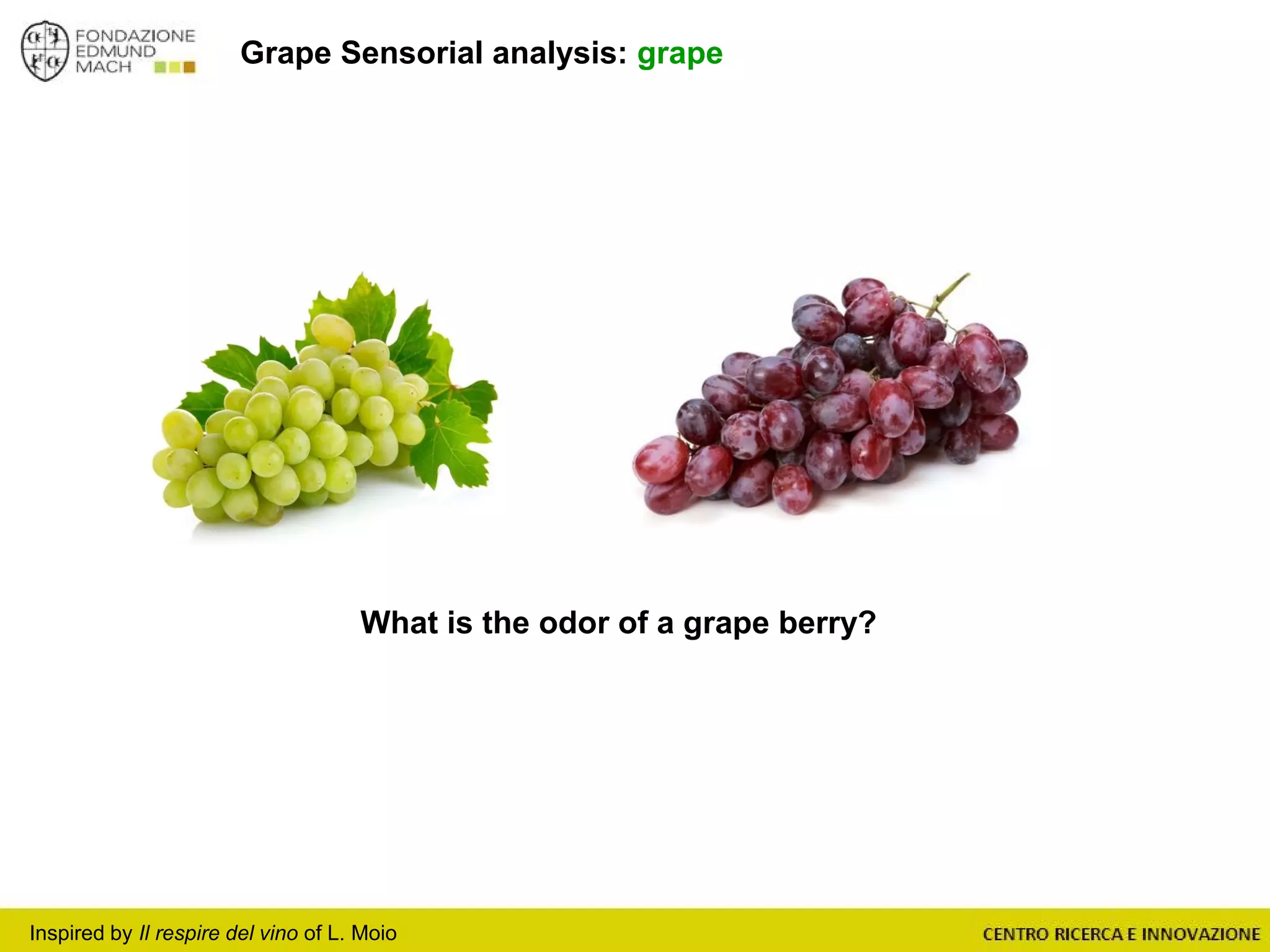
Grape Sensorial analysis: grape
What is the odor of a grape berry?
Inspired by Il respire del vino of L. Moio
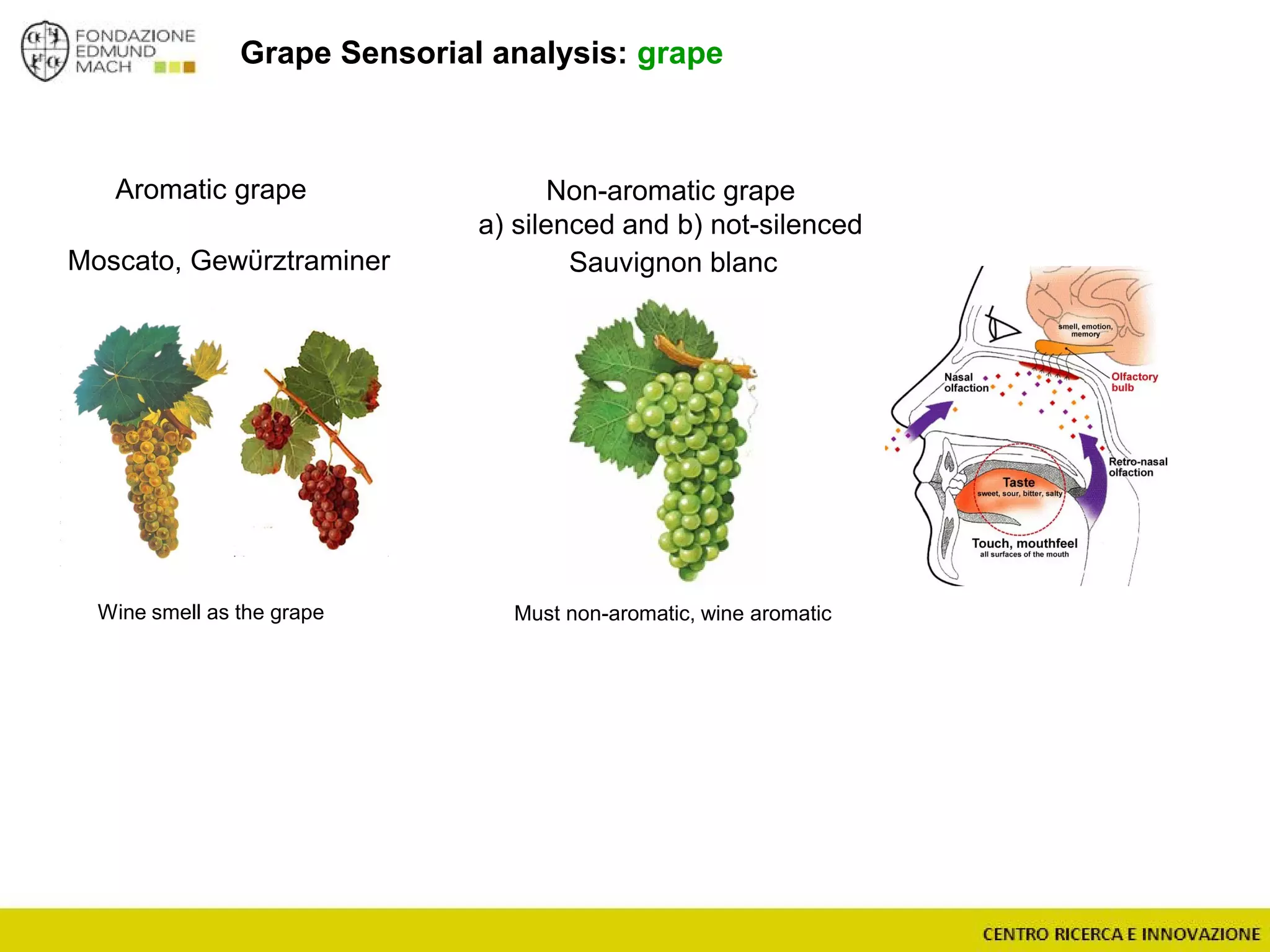
Grape Sensorial analysis: grape
Aromatic grape
Moscato, Gewϋrztraminer
Wine smell as the grape
Non-aromatic grape
a) silenced and b) not-silenced
Sauvignon blanc
Must non-aromatic, wine aromatic
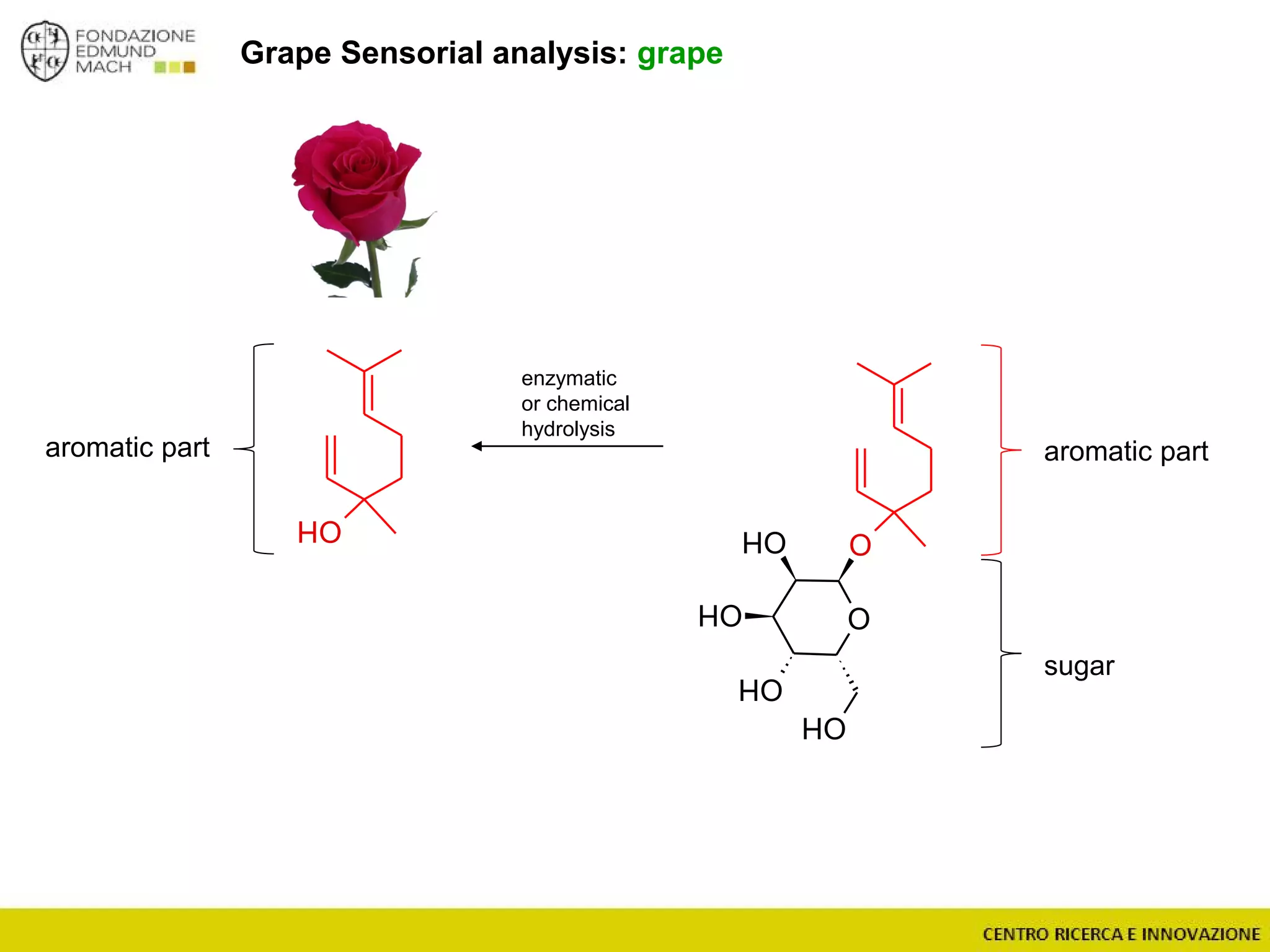
Grape Sensorial analysis: grape
aromatic part aromatic part
sugar
O
OOH
OH
OH
OH
OH
enzymatic
or chemical
hydrolysis
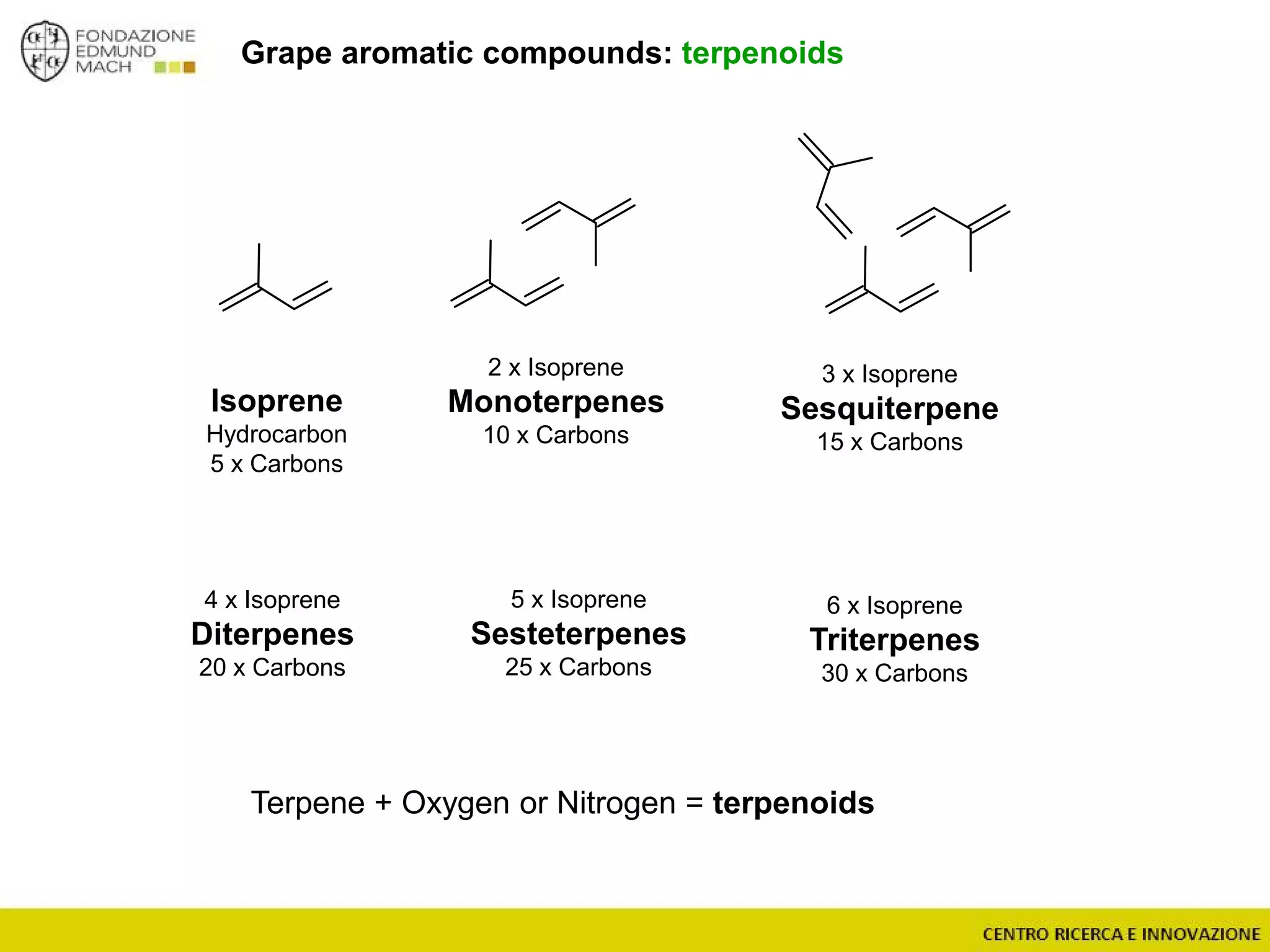
Grape aromatic compounds: terpenoids
Isoprene
Hydrocarbon
5 x Carbons
2 x Isoprene
Monoterpenes
10 x Carbons
3 x Isoprene
Sesquiterpene
15 x Carbons
4 x Isoprene
Diterpenes
20 x Carbons
5 x Isoprene
Sesteterpenes
25 x Carbons
6 x Isoprene
Triterpenes
30 x Carbons
Terpene + Oxygen or Nitrogen = terpenoids
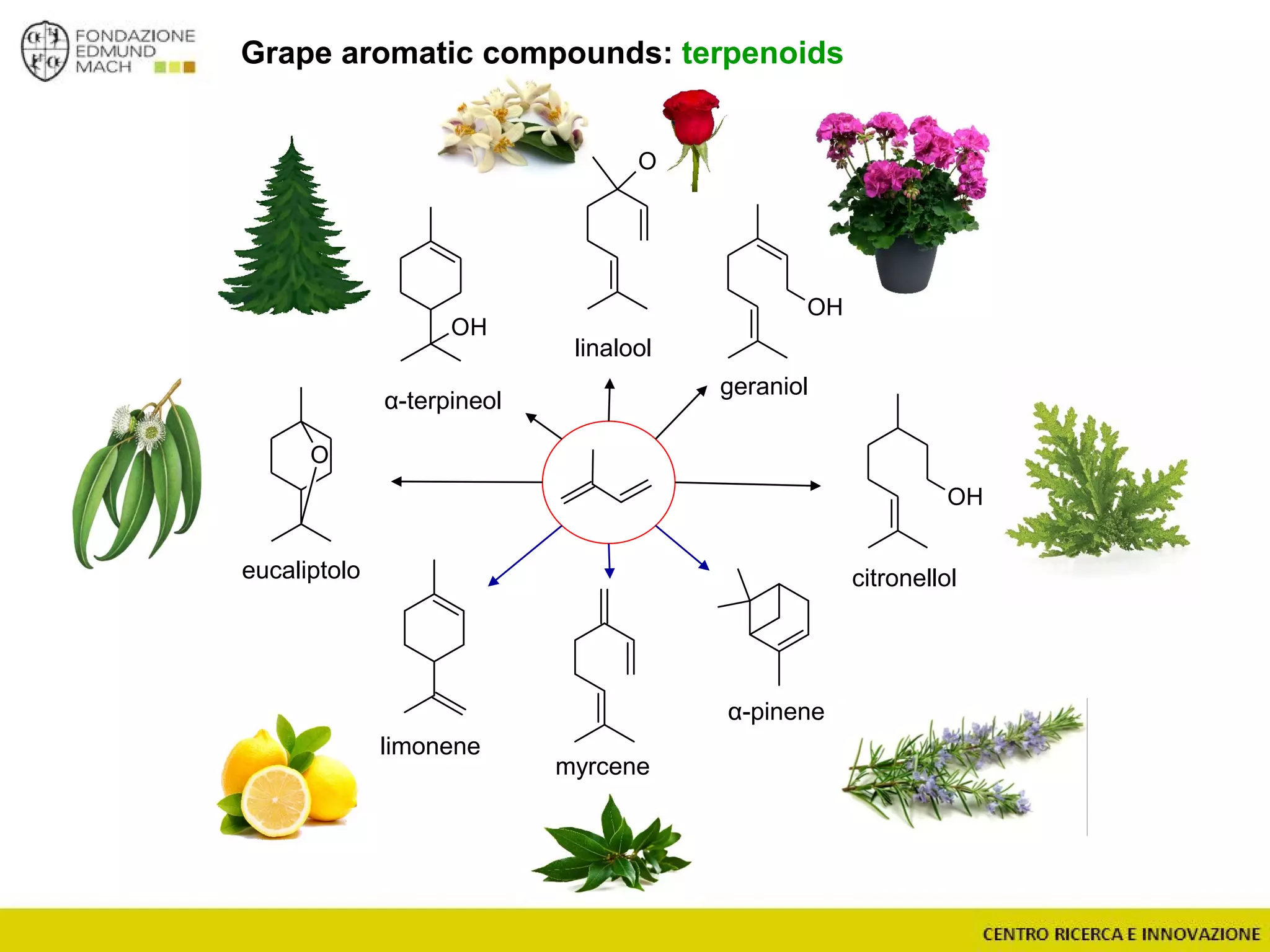
OH
α-terpineol
linalool
OH
geraniol
OH
OH
citronellol
myrcene
limonene
O
eucaliptolo
α-pinene
Grape aromatic compounds: terpenoids
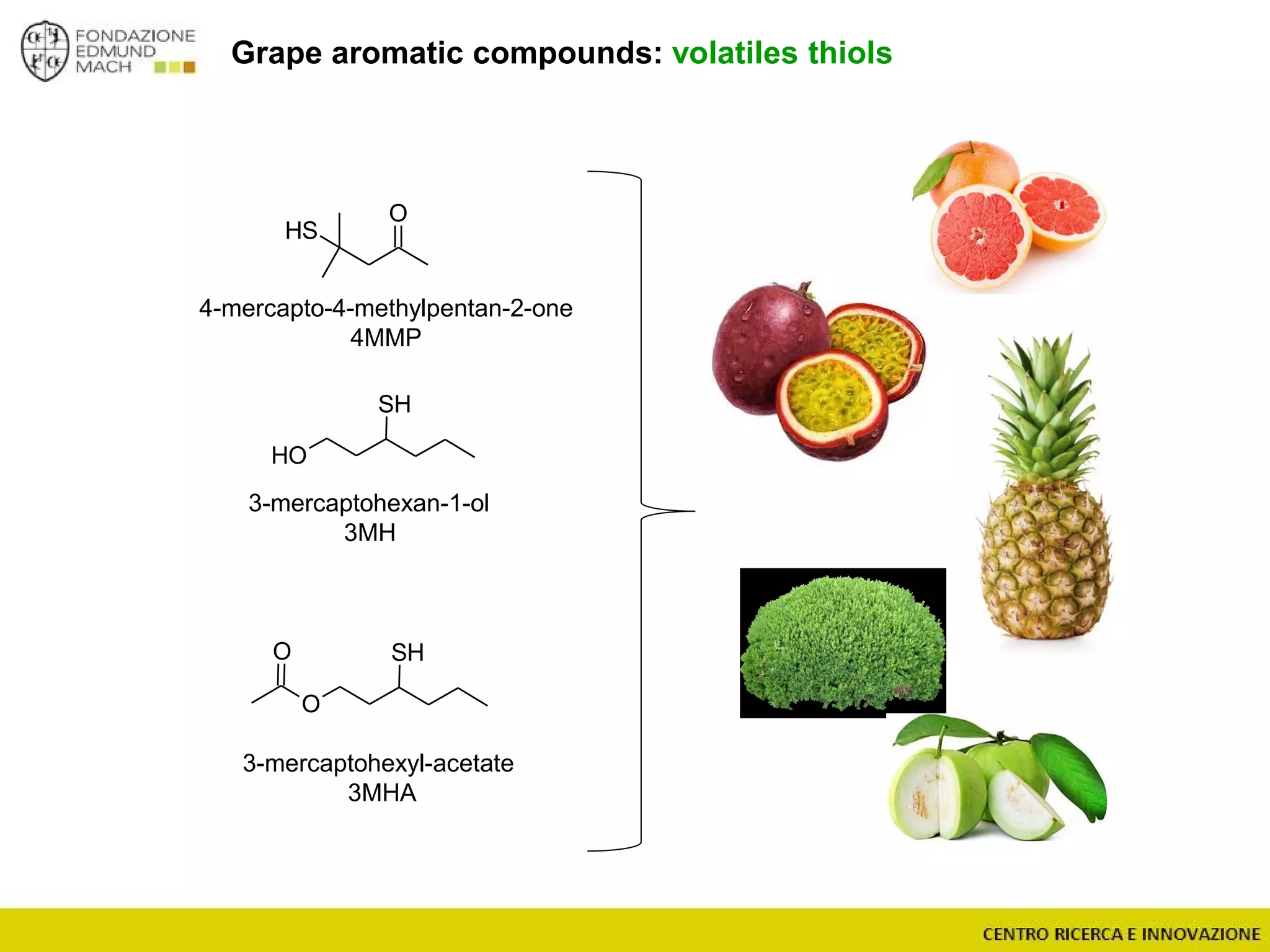
Grape aromatic compounds: volatiles thiols
O
SH
OH
SH
O
SHO
4-mercapto-4-methylpentan-2-one
4MMP
3-mercaptohexan-1-ol
3MH
3-mercaptohexyl-acetate
3MHA
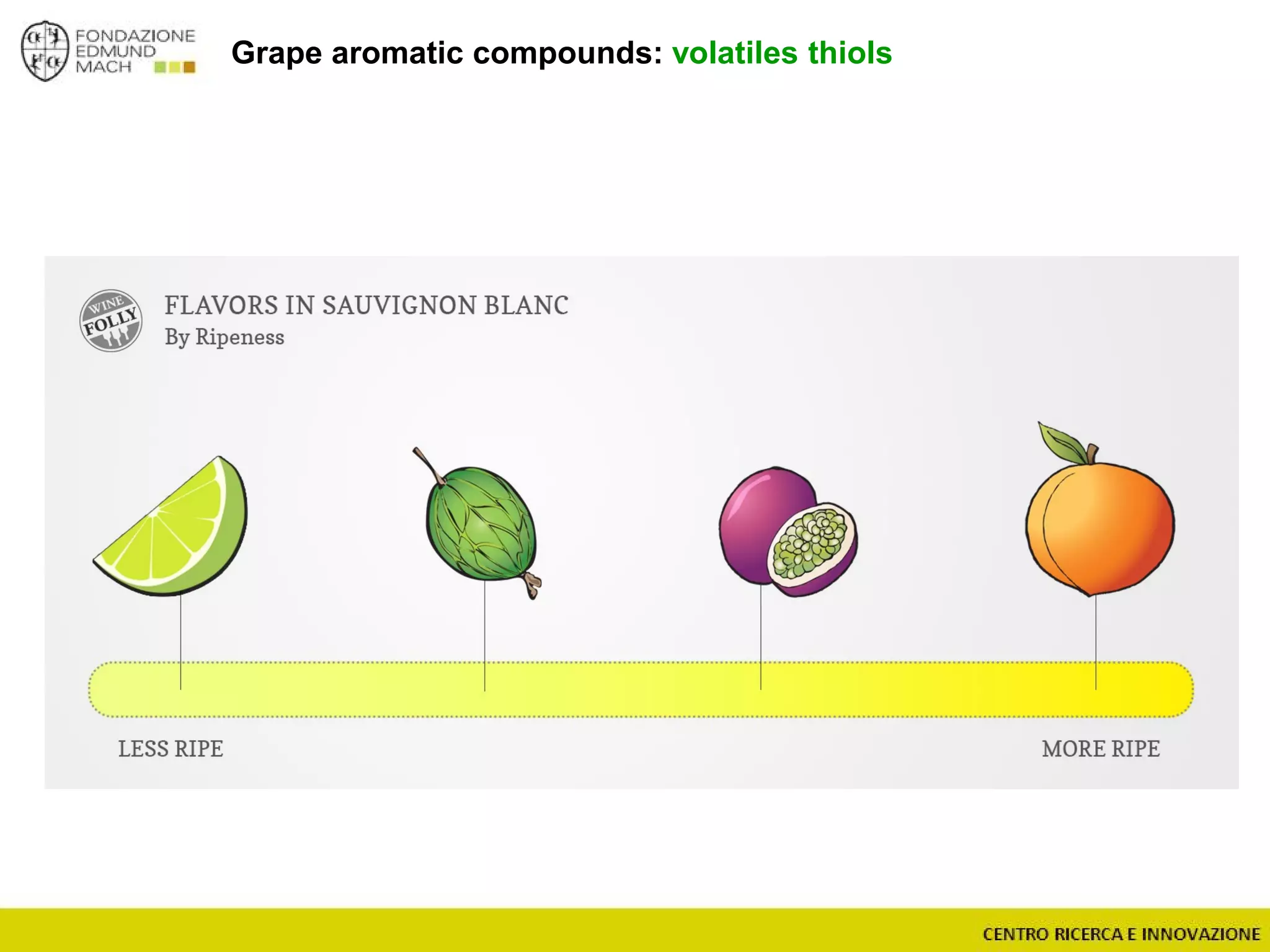
Grape aromatic compounds: volatiles thiols
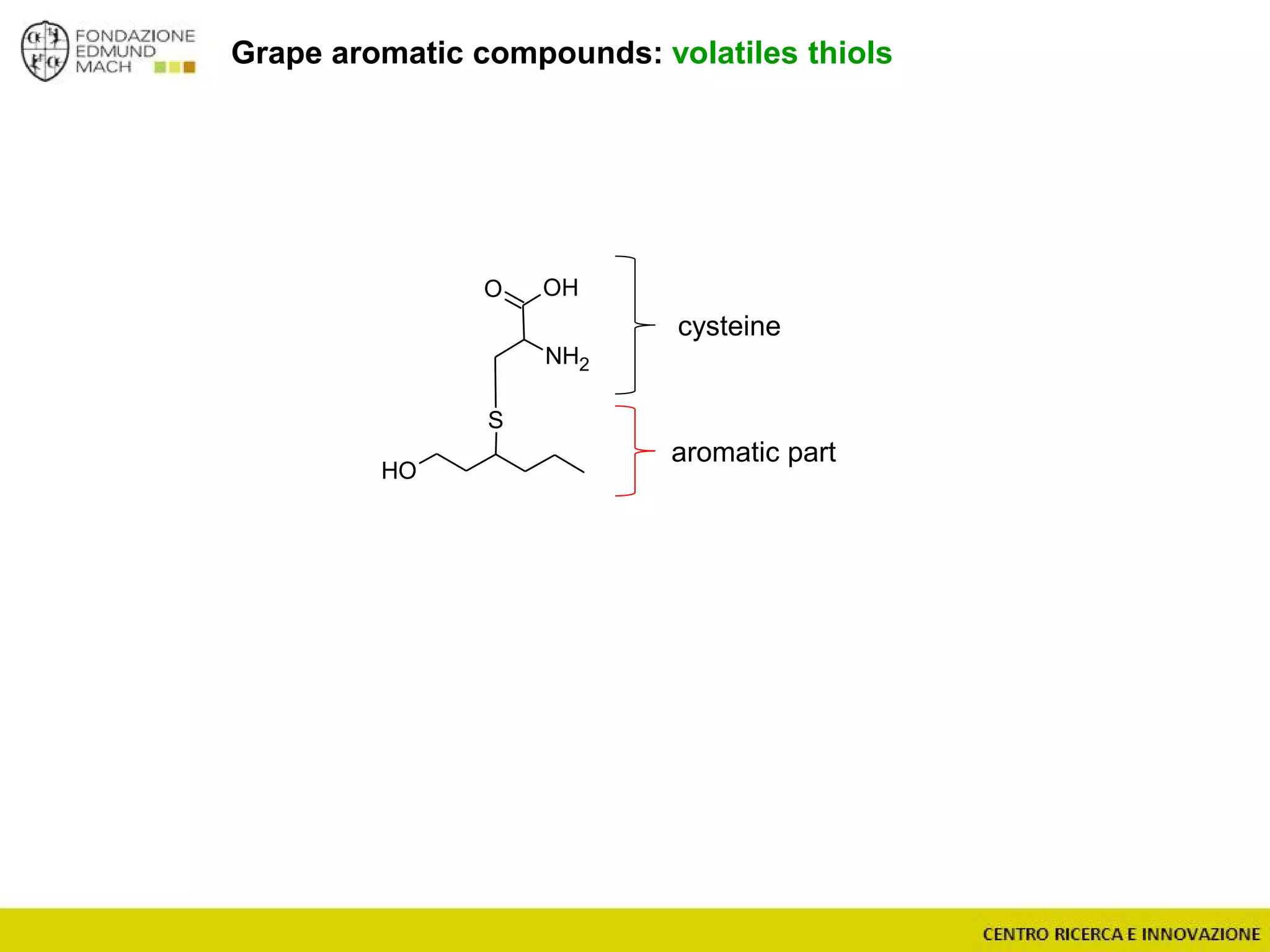
OH
S
O
NH2
OH
Grape aromatic compounds: volatiles thiols
aromatic part
cysteine
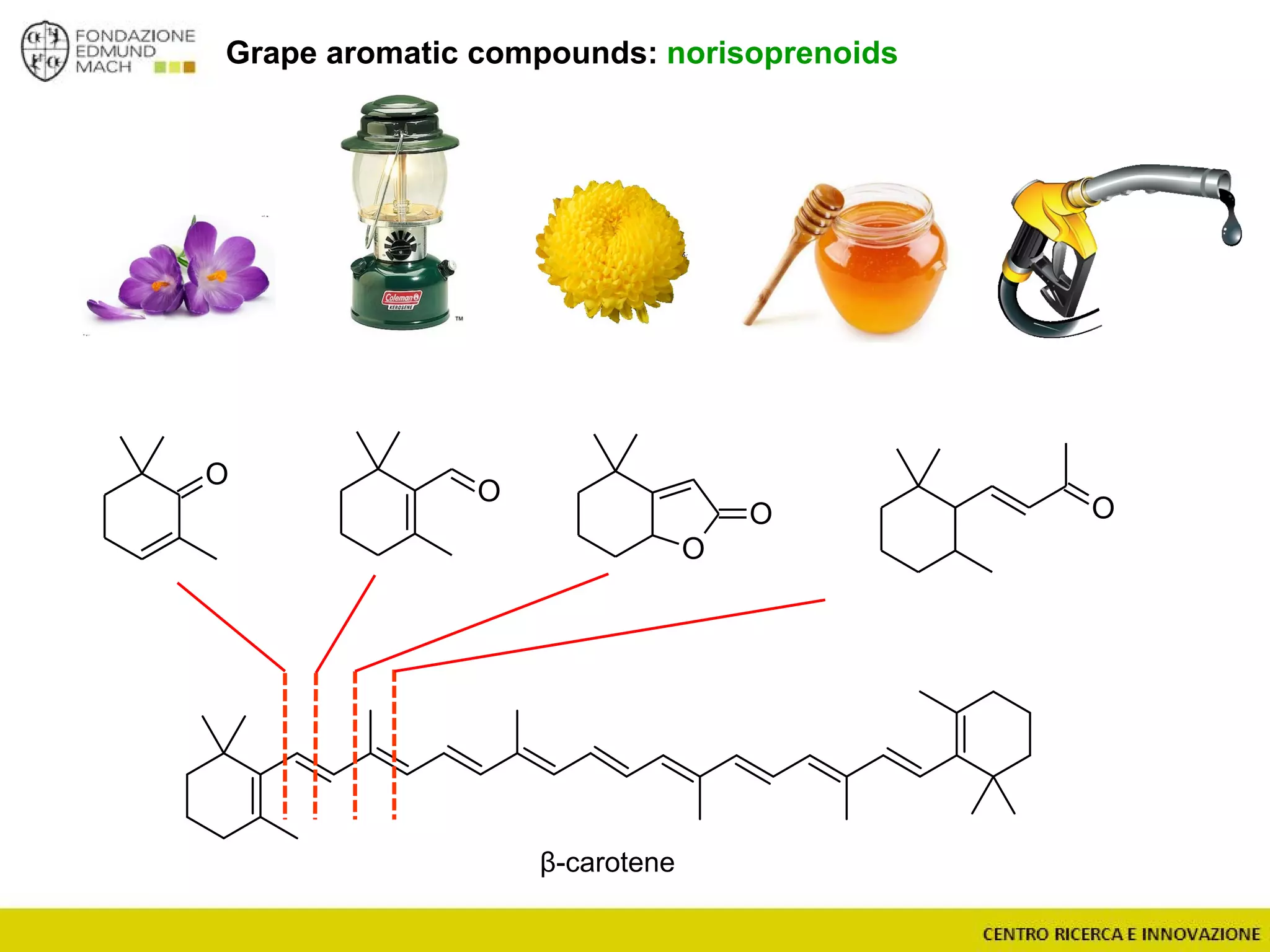
β-carotene
O
O
O
O
O
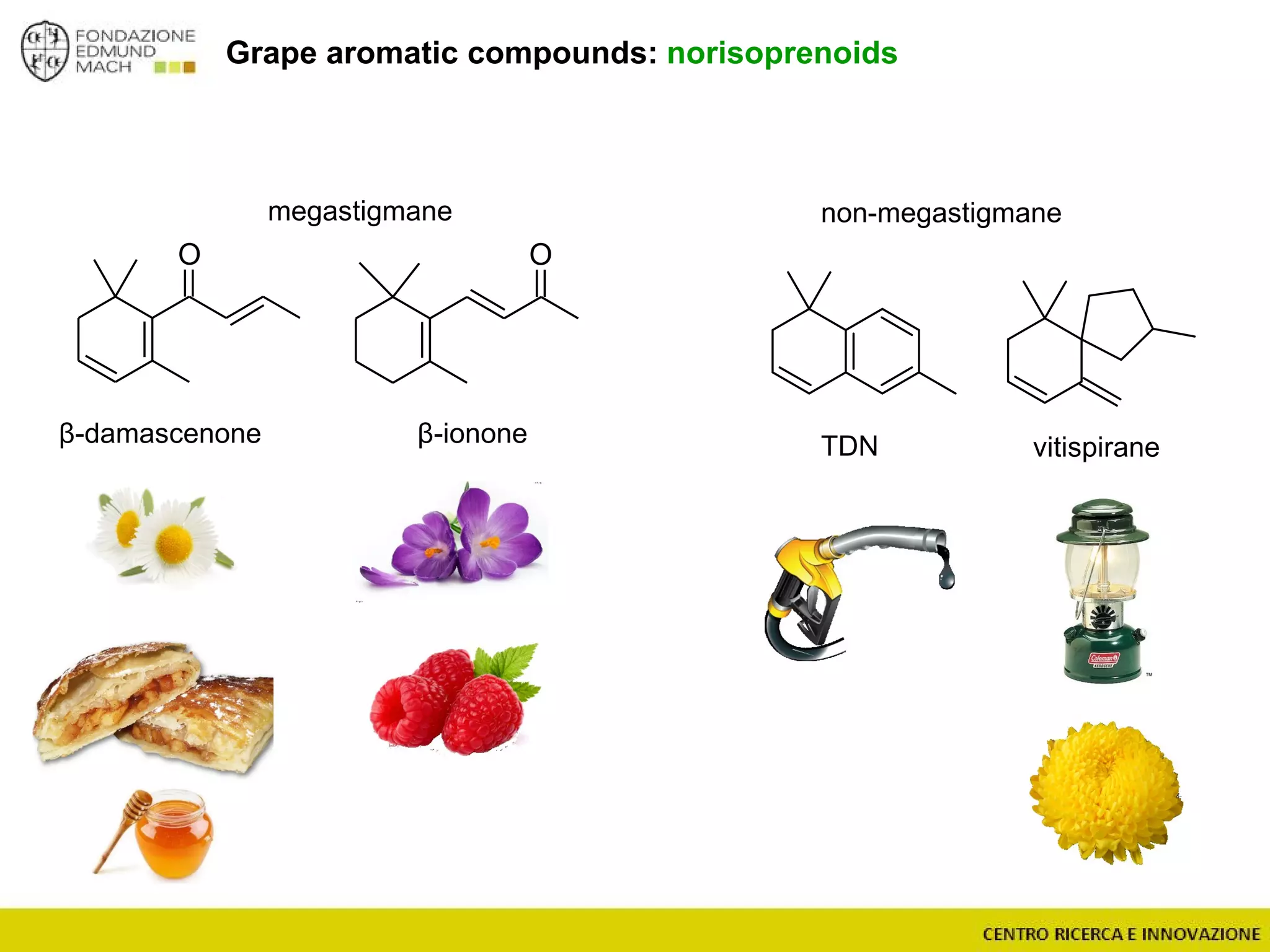
Grape aromatic compounds: norisoprenoids
O
Grape aromatic compounds: norisoprenoids
megastigmane non-megastigmane
TDNβ-damascenone vitispirane
O
β-ionone
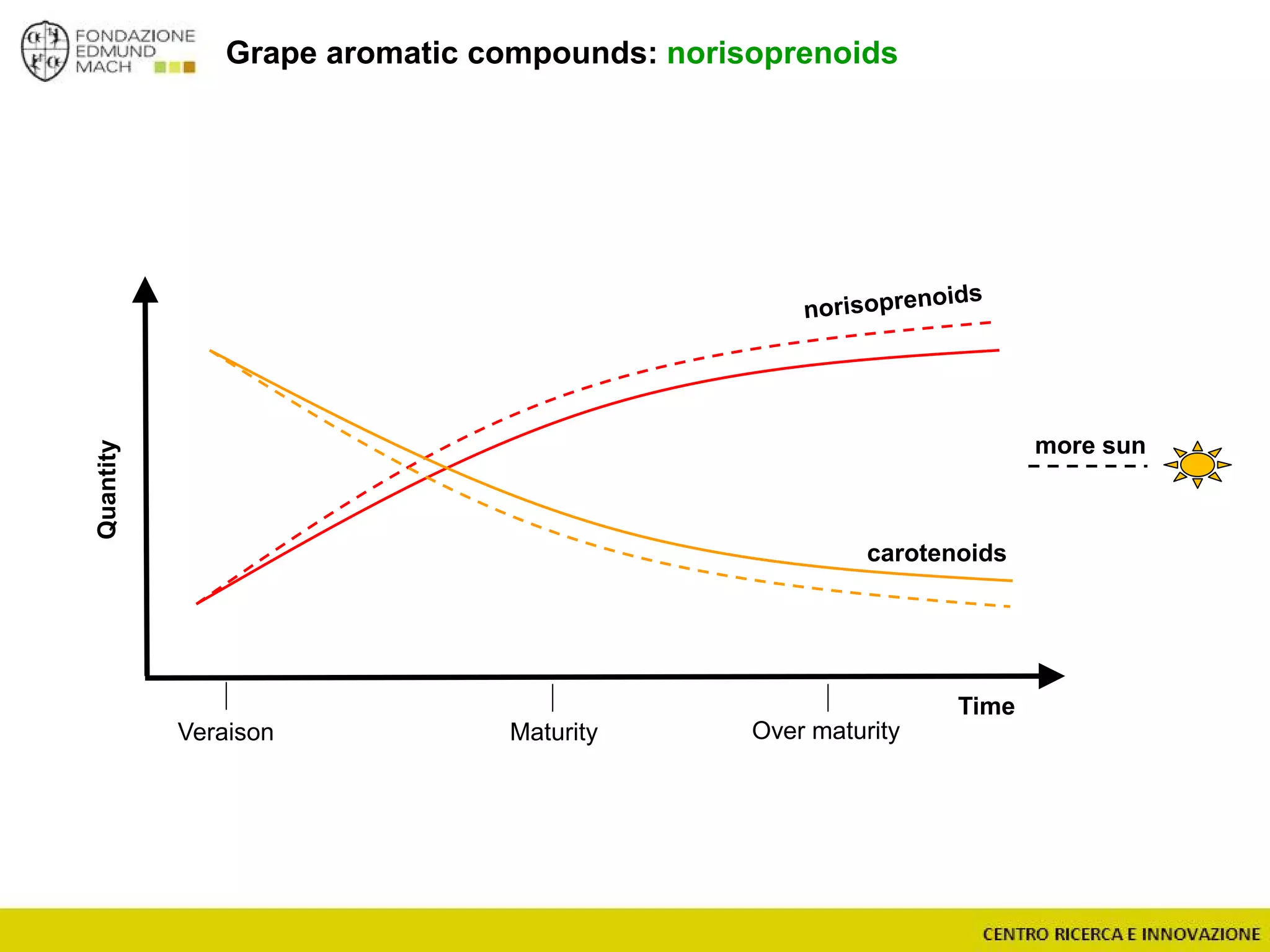
Grape aromatic compounds: norisoprenoids
Time
Quantity
carotenoids
more sun
Veraison Maturity Over maturity
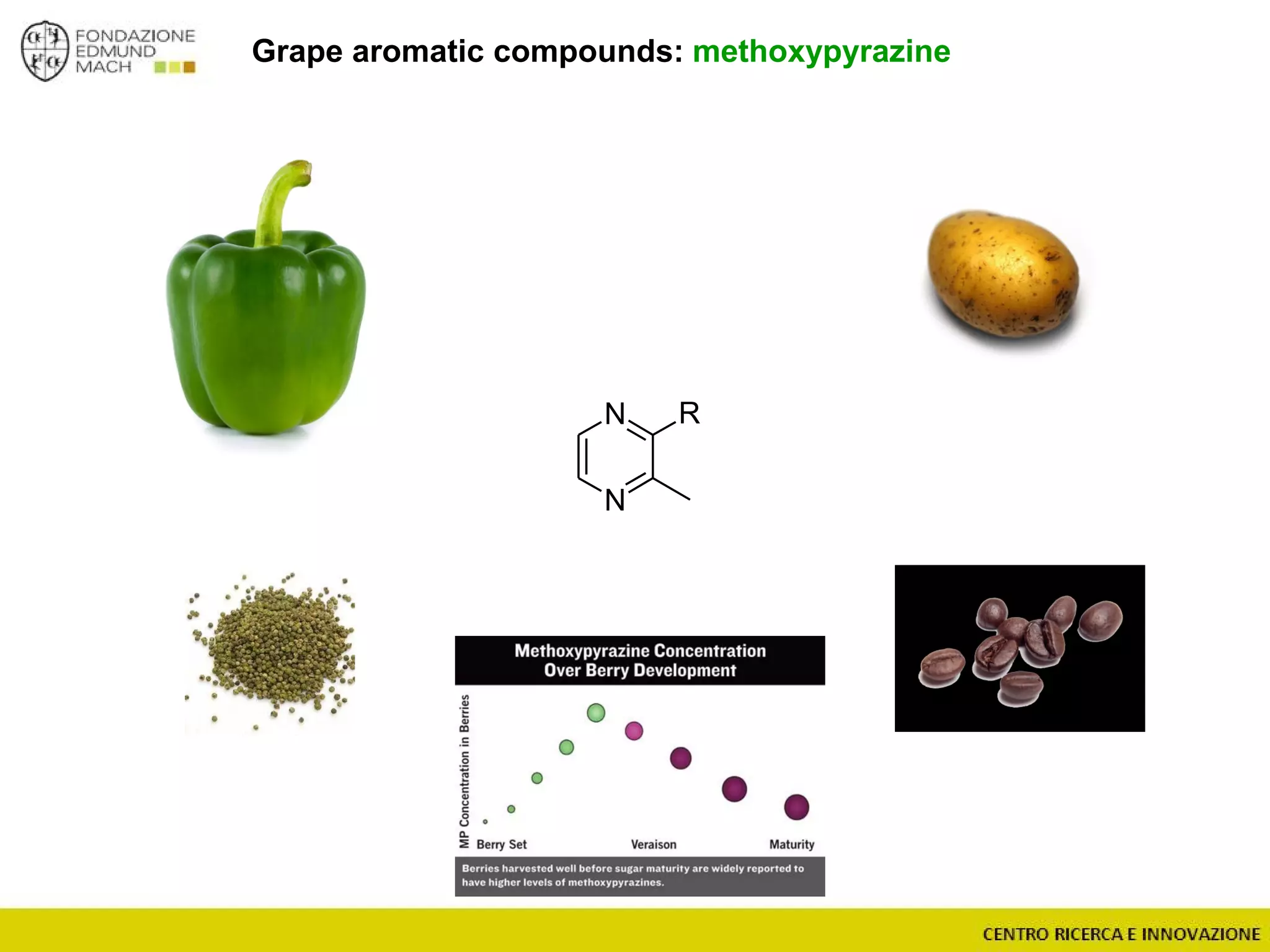
Grape aromatic compounds: methoxypyrazine
N
N
R
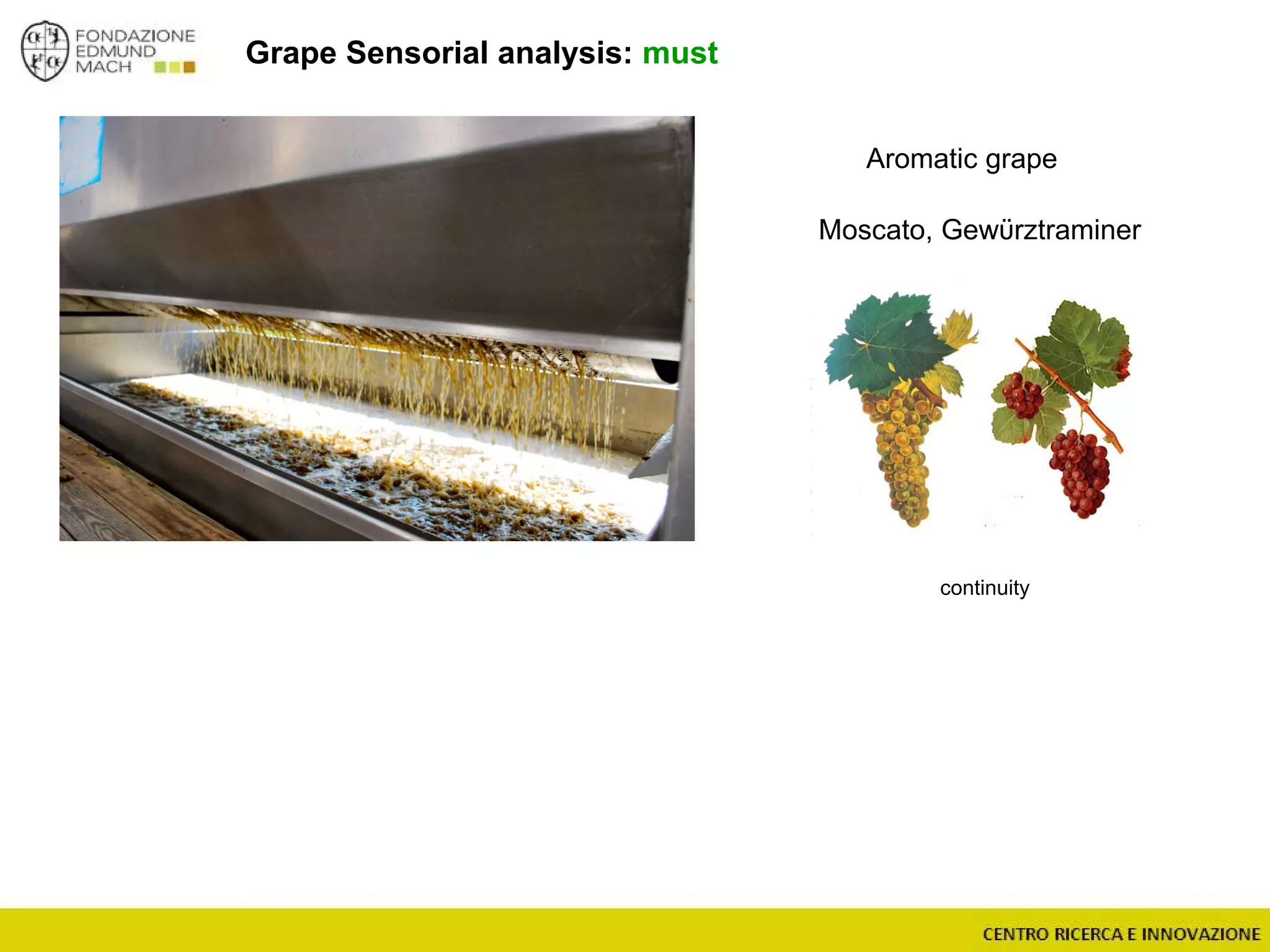
Grape Sensorial analysis: must
Aromatic grape
Moscato, Gewϋrztraminer
continuity
Grape Sensorial analysis: must
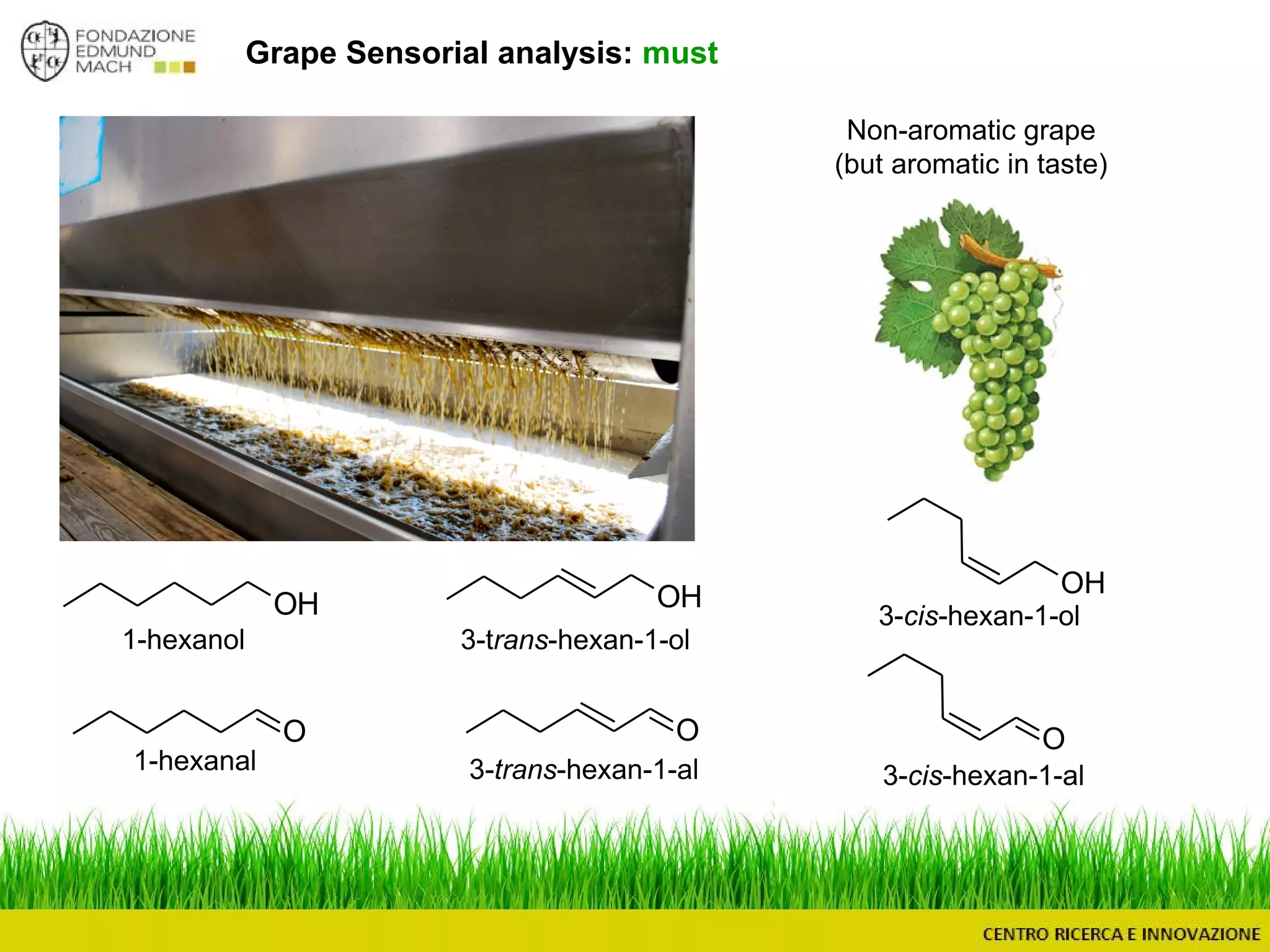
O
1-hexanol
OH OH OH
OO
Non-aromatic grape
(but aromatic in taste)
1-hexanal
3-trans-hexan-1-ol
3-trans-hexan-1-al
3-cis-hexan-1-ol
3-cis-hexan-1-al
Grape Sensorial analysis: must
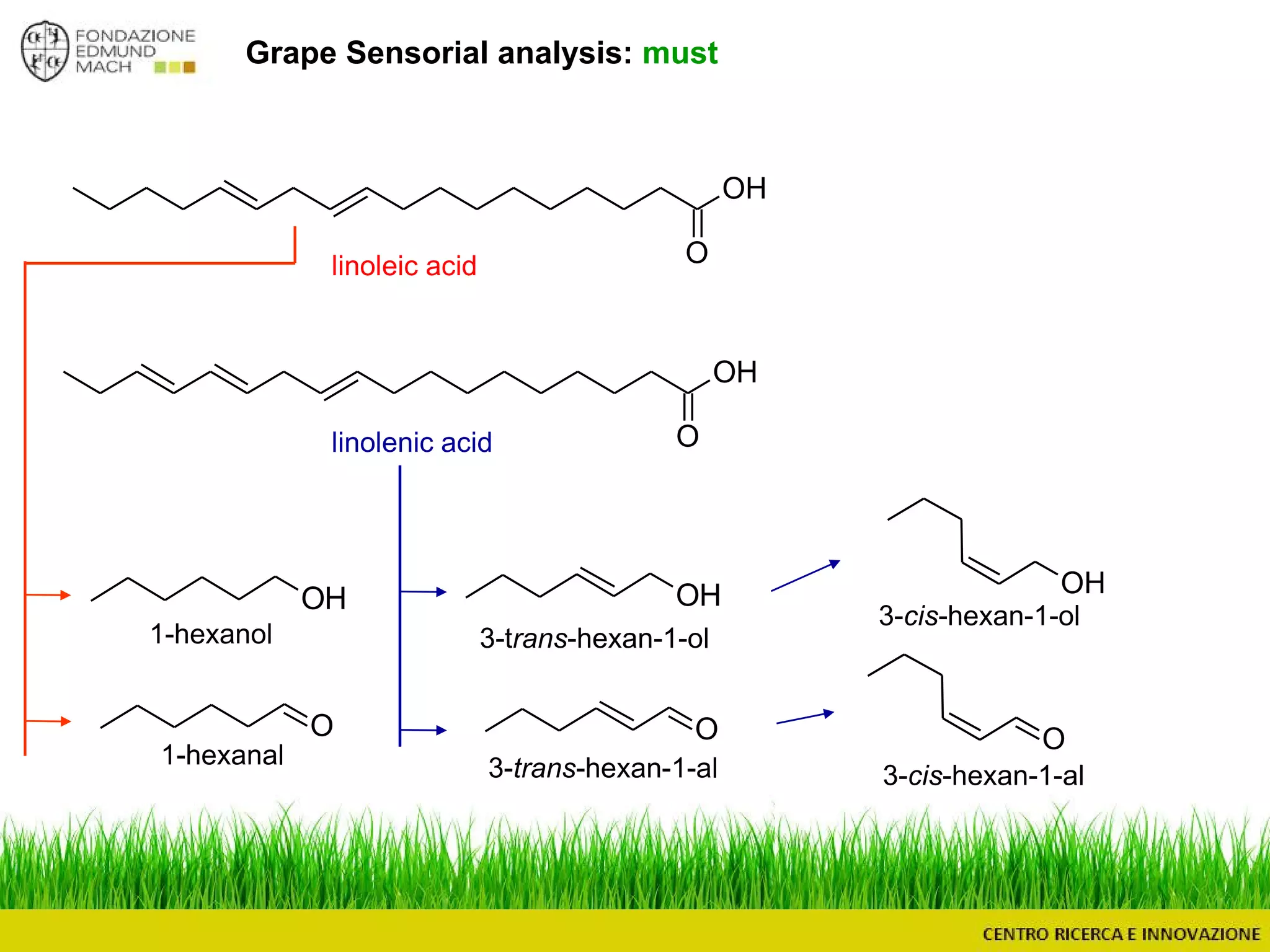
O
1-hexanol
OH OH OH
OO
1-hexanal
3-trans-hexan-1-ol
3-trans-hexan-1-al
3-cis-hexan-1-ol
3-cis-hexan-1-al
O
OH
O
OH
linoleic acid
linolenic acid
Grape Sensorial analysis: must
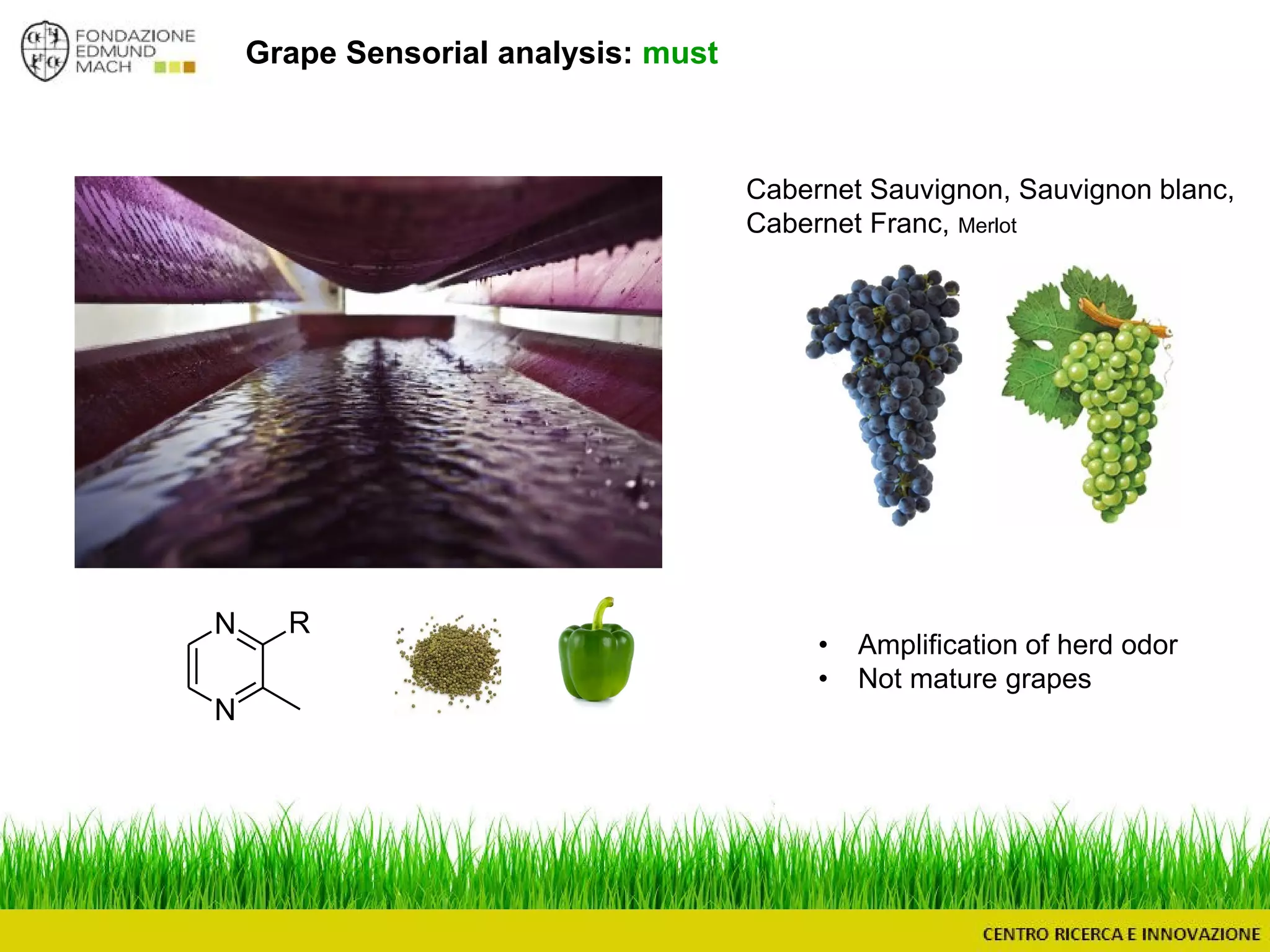
Cabernet Sauvignon, Sauvignon blanc,
Cabernet Franc, Merlot
N
N
R
• Amplification of herd odor
• Not mature grapes
Grape Sensorial analysis: must
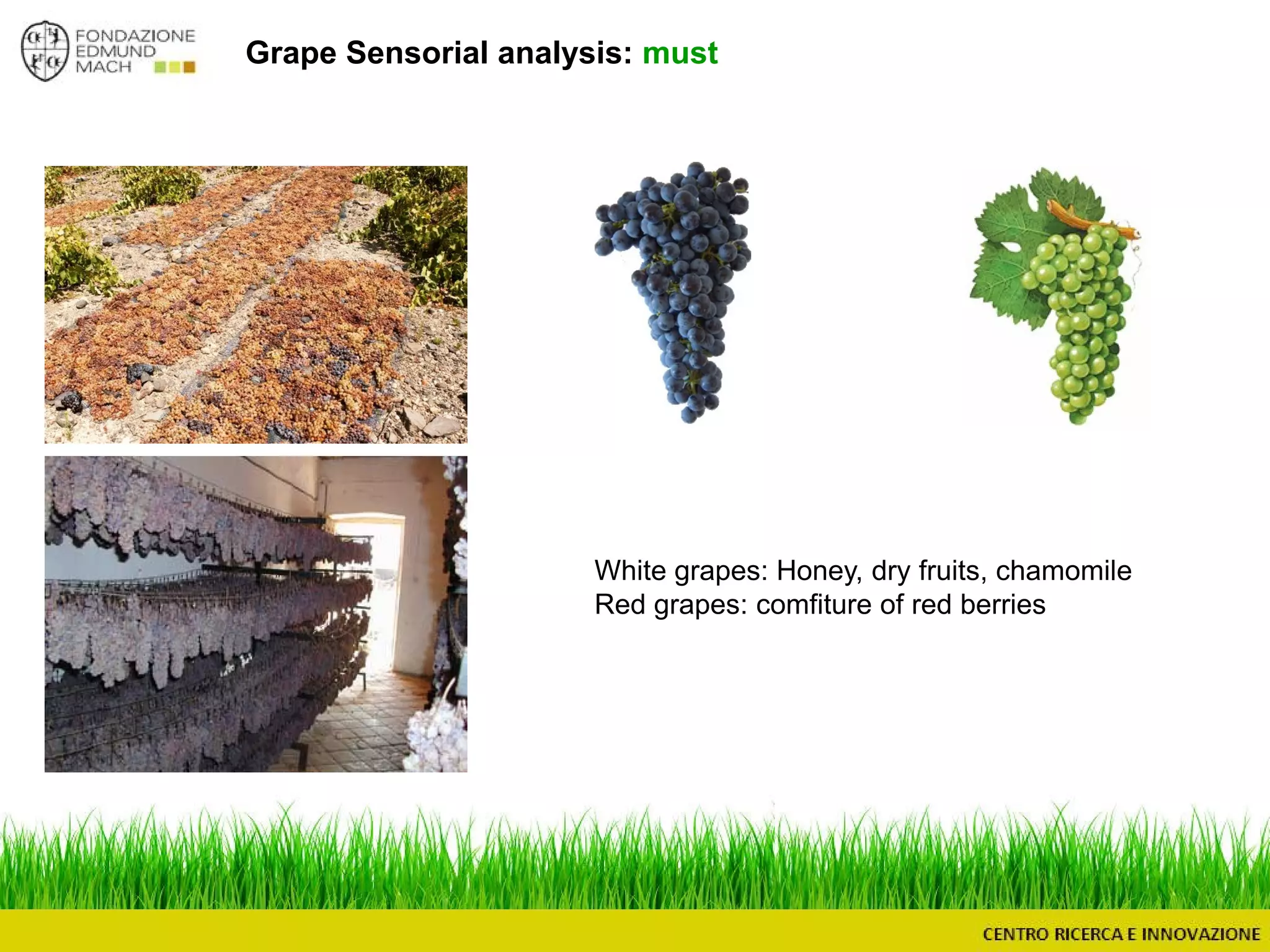
White grapes: Honey, dry fruits, chamomile
Red grapes: comfiture of red berries
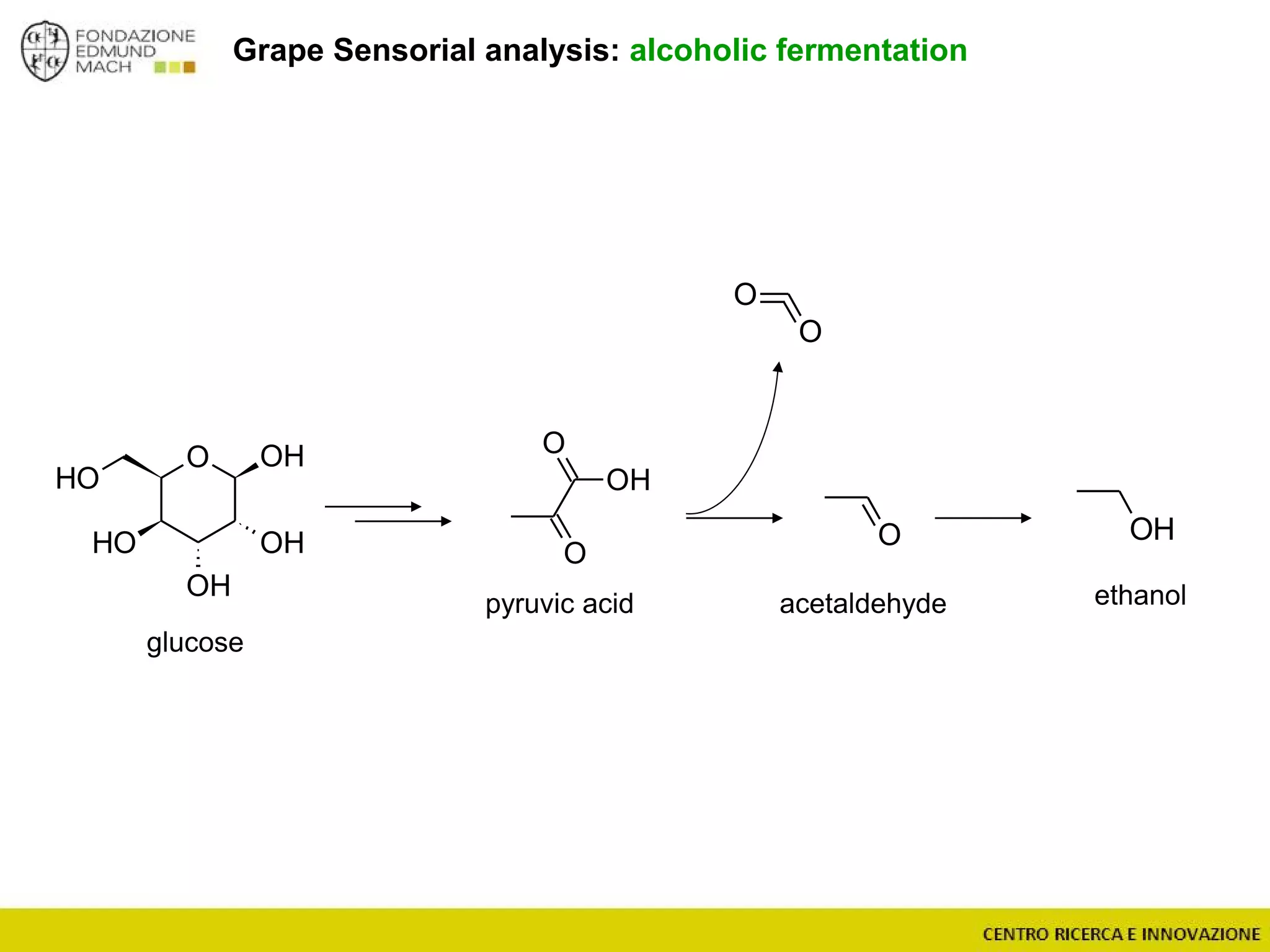
Grape Sensorial analysis: alcoholic fermentation
OH
O
O
O OH
OH
OH
OH
OH
O
O
OH
O
glucose
pyruvic acid acetaldehyde ethanol
O
NH2
OH
O
NH2
R
OH
O
O
R
OH
O
R
OH
R
O
NH2
NH
OH
O
NH2
OH
O
NH2
OH
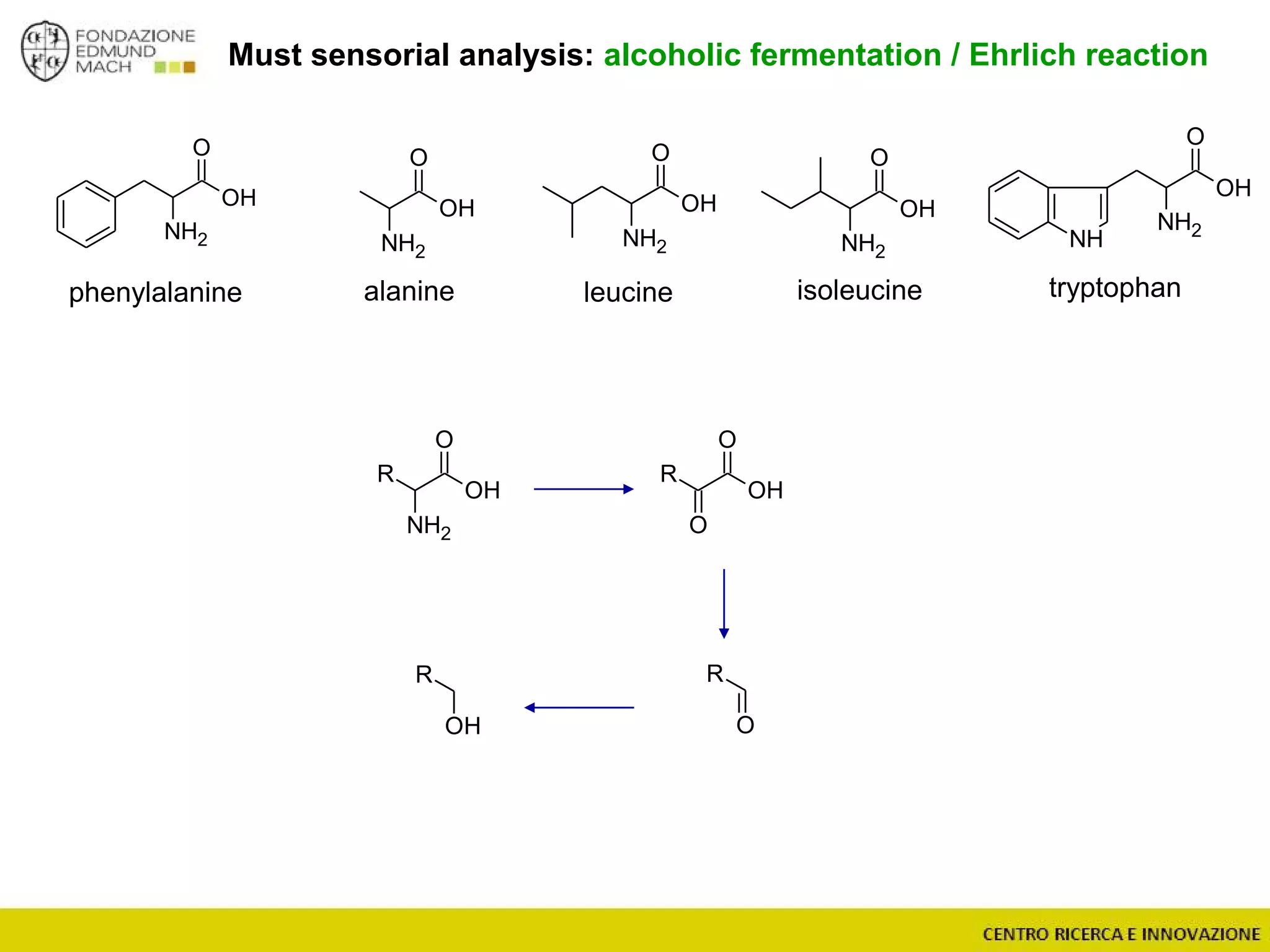
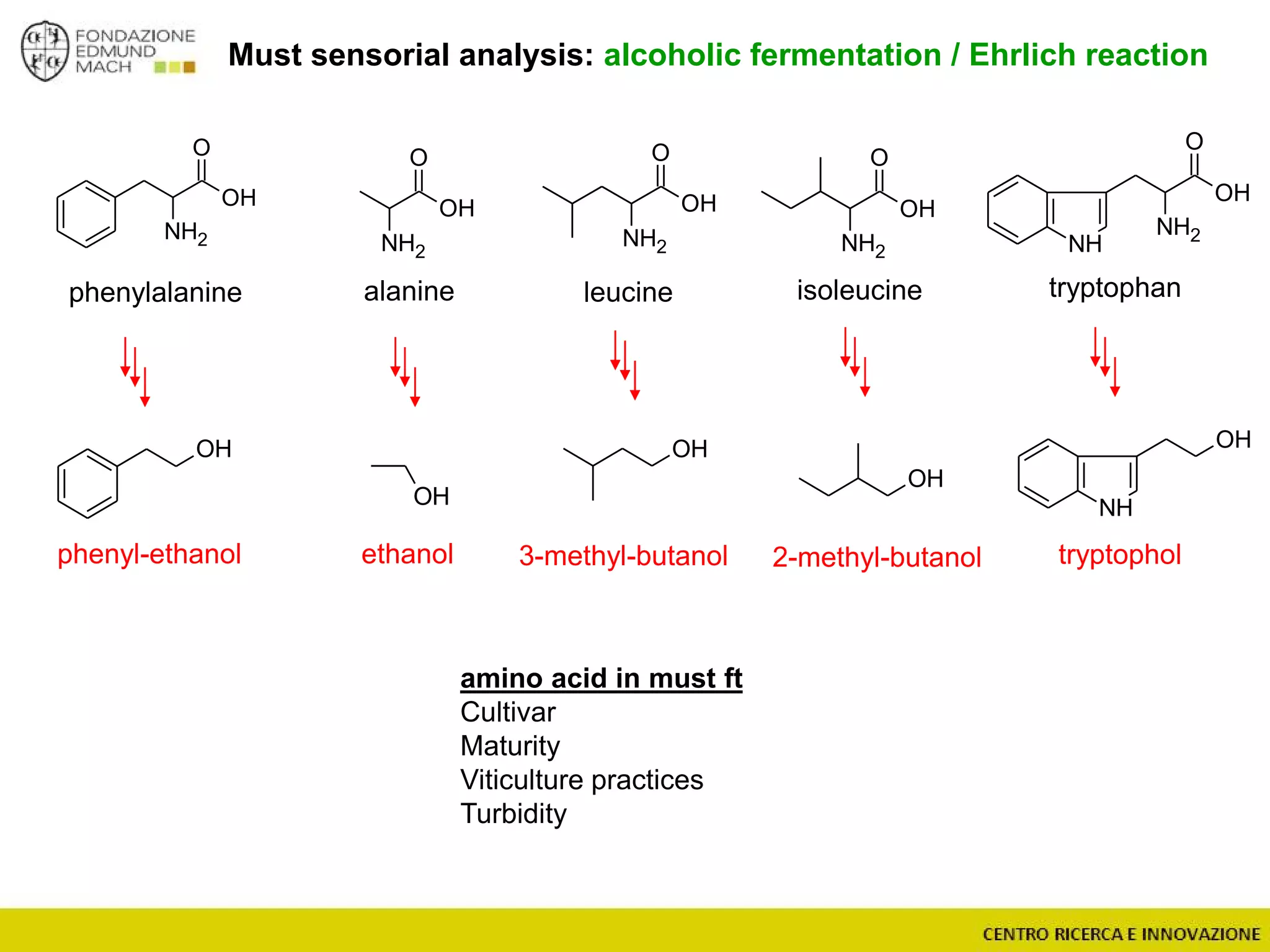
Must sensorial analysis: alcoholic fermentation / Ehrlich reaction
tryptophanphenylalanine leucine isoleucinealanine
O
NH2
OH
O
NH2
OH
O
NH2
R
OH
OH
R
O
NH2
OH
O
NH2
OH
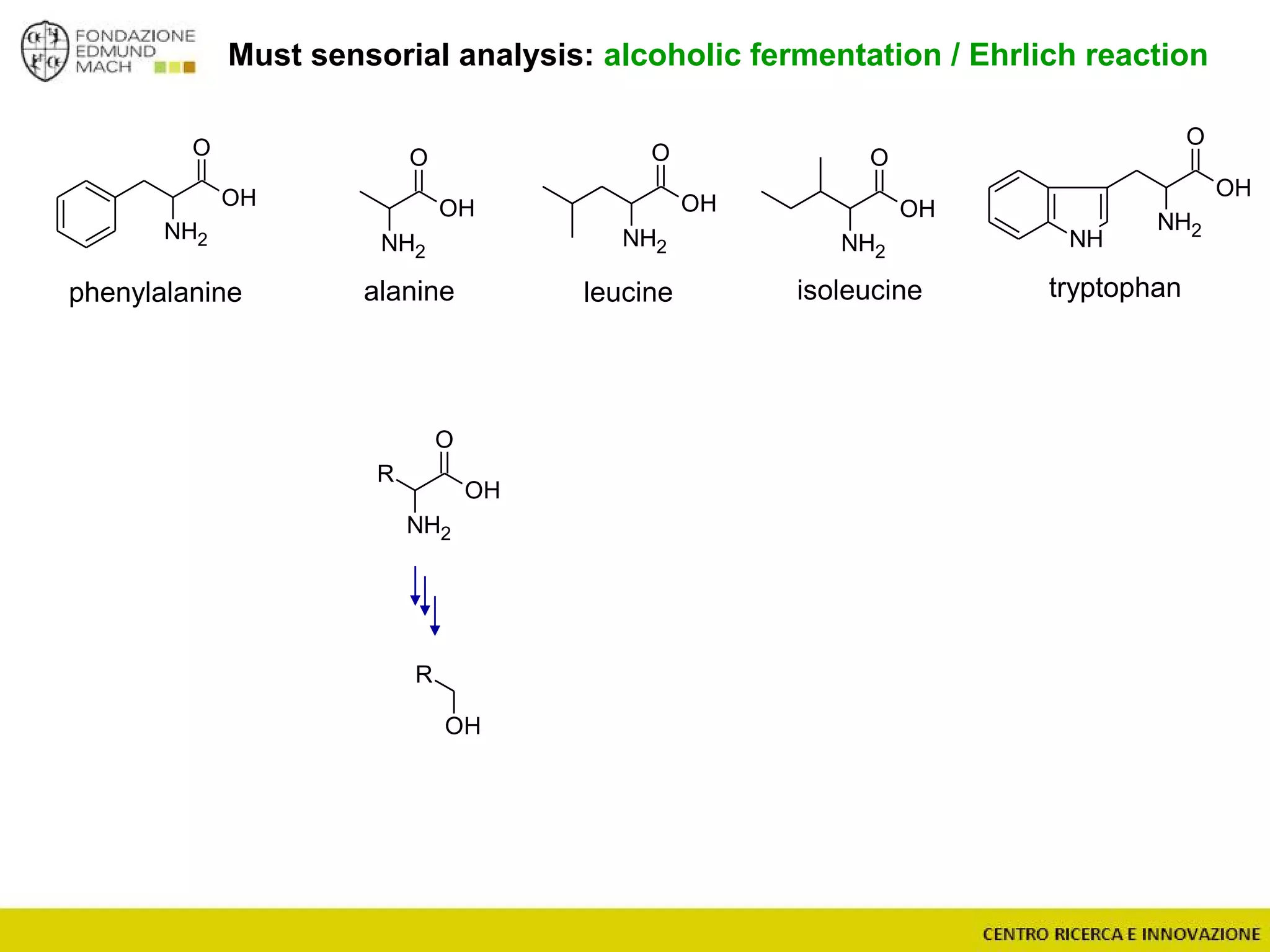
Must sensorial analysis: alcoholic fermentation / Ehrlich reaction
tryptophanphenylalanine leucine isoleucinealanine
O
NH2
NH
OH
O
NH2
OH
OH
O
NH2
OH
O
NH2
NH
OH
OH
NH
O
NH2
OH
O
NH2
OH
OH
OH
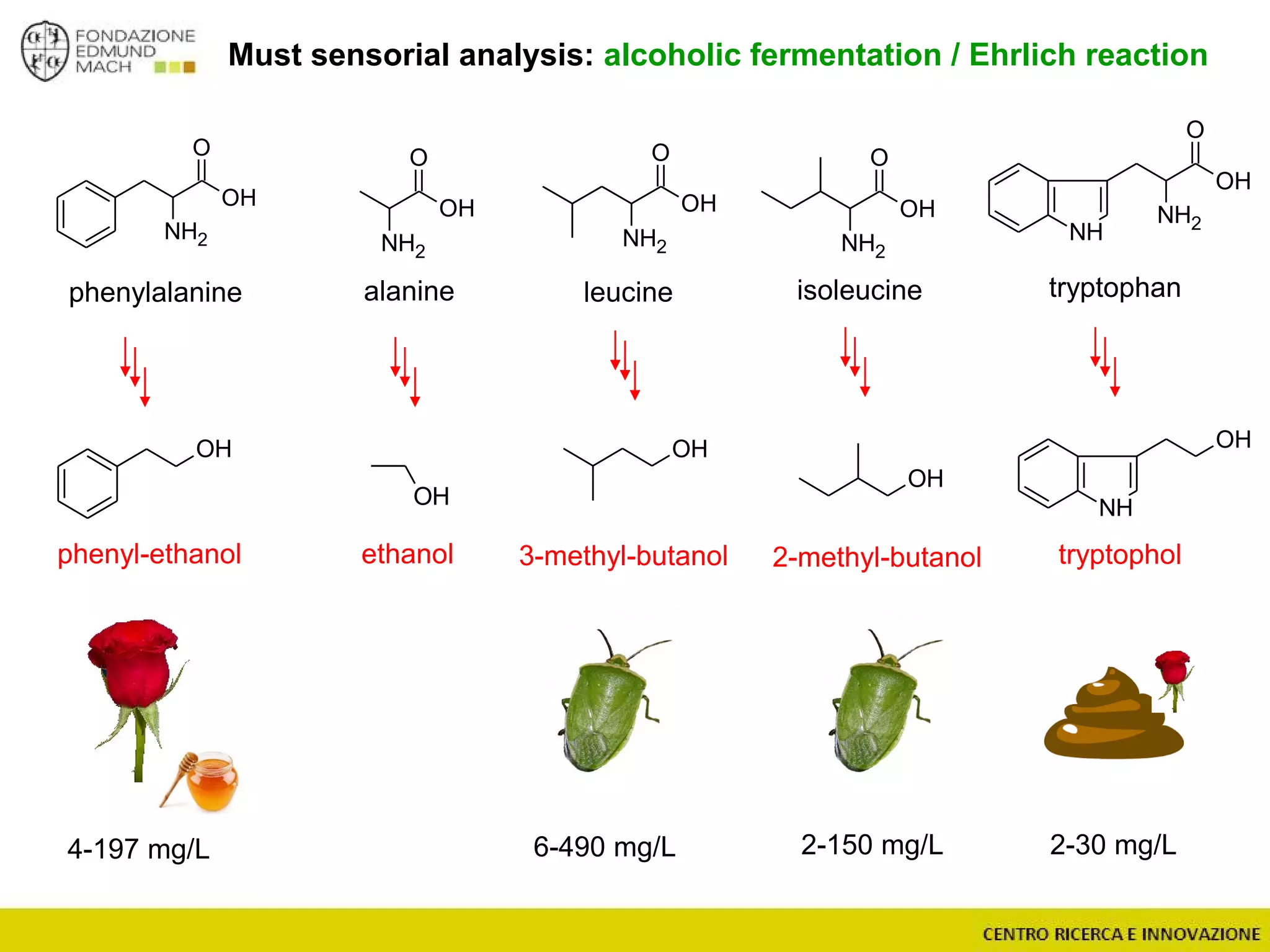
Must sensorial analysis: alcoholic fermentation / Ehrlich reaction
tryptophanphenylalanine leucine isoleucinealanine
OH
phenyl-ethanol ethanol 3-methyl-butanol tryptophol2-methyl-butanol
4-197 mg/L 6-490 mg/L 2-150 mg/L 2-30 mg/L
O
NH2
OH
O
NH2
OH
O
NH2
NH
OH
OH
NH
O
NH2
OH
O
NH2
OH
OH
OH
Must sensorial analysis: alcoholic fermentation / Ehrlich reaction
tryptophanphenylalanine leucine isoleucinealanine
OH
phenyl-ethanol ethanol 3-methyl-butanol tryptophol2-methyl-butanol
amino acid in must ft
Cultivar
Maturity
Viticulture practices
Turbidity
O
NH2
OH
OH
OH
OH
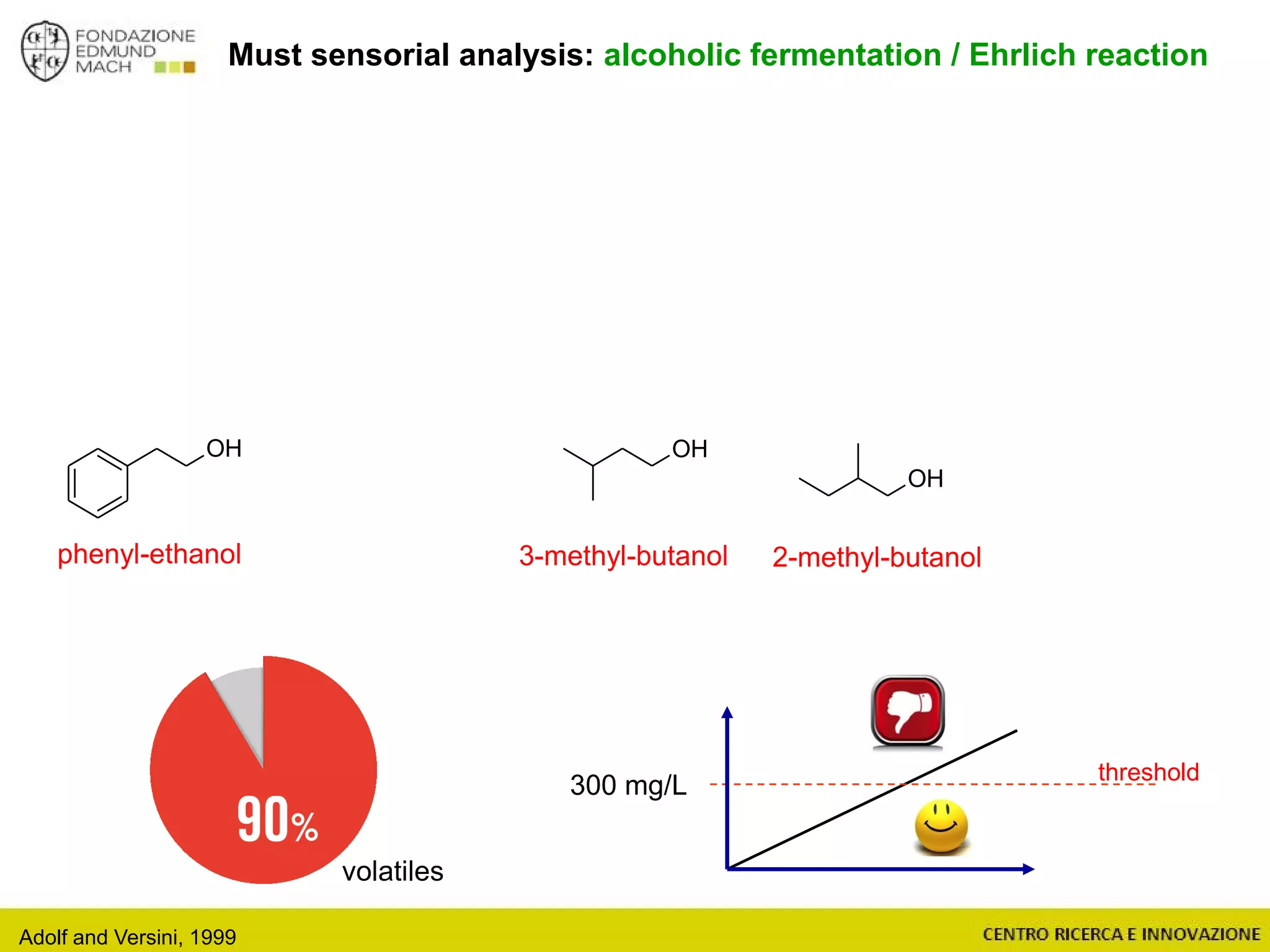
Must sensorial analysis: alcoholic fermentation / Ehrlich reaction
phenyl-ethanol 3-methyl-butanol 2-methyl-butanol
volatiles
threshold
300 mg/L
Adolf and Versini, 1999
OH
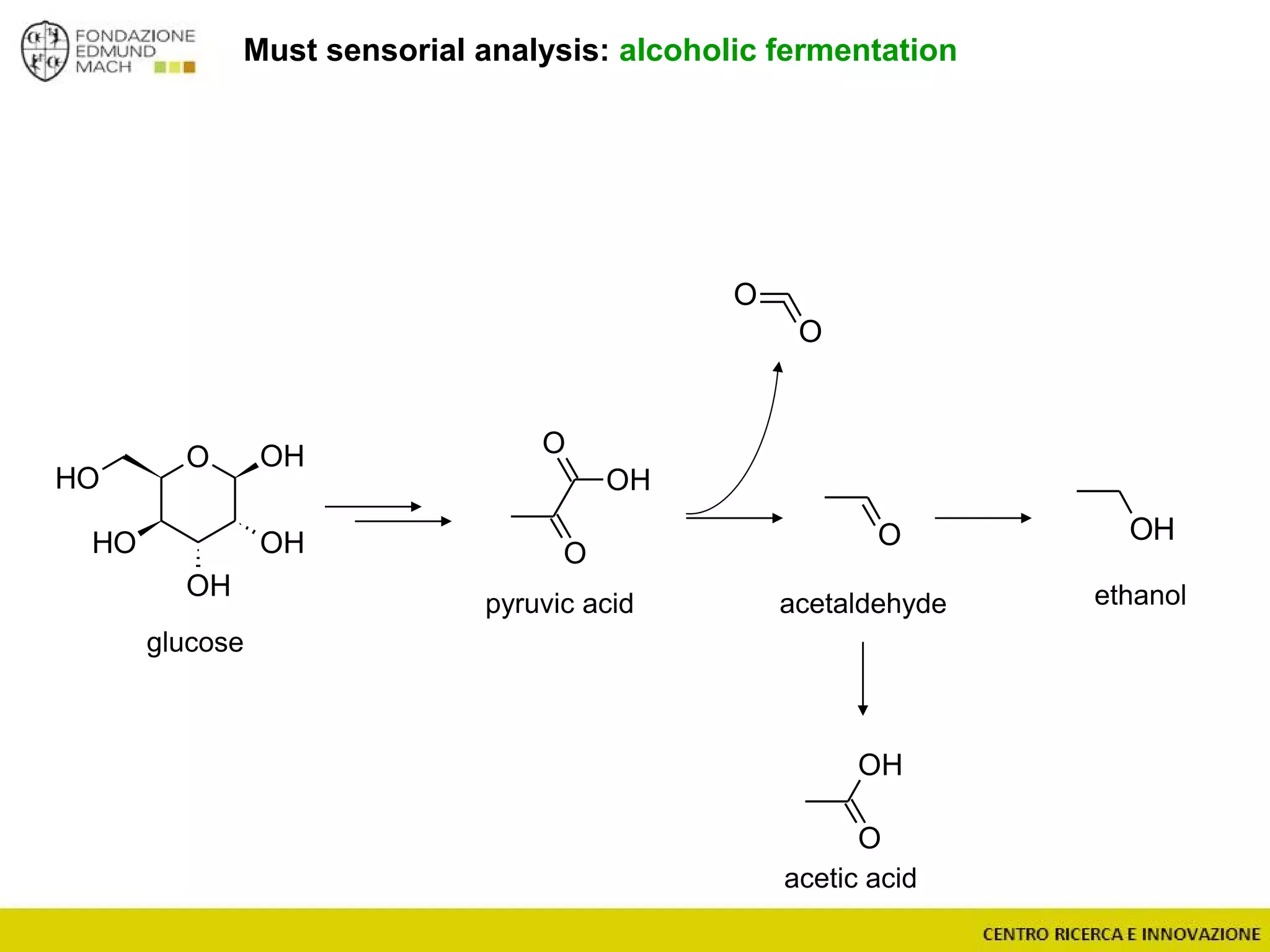
Must sensorial analysis: alcoholic fermentation
OH
O
O
O OH
OH
OH
OH
OH
O
O
OH
O
glucose
pyruvic acid acetaldehyde ethanol
O
OH
acetic acid
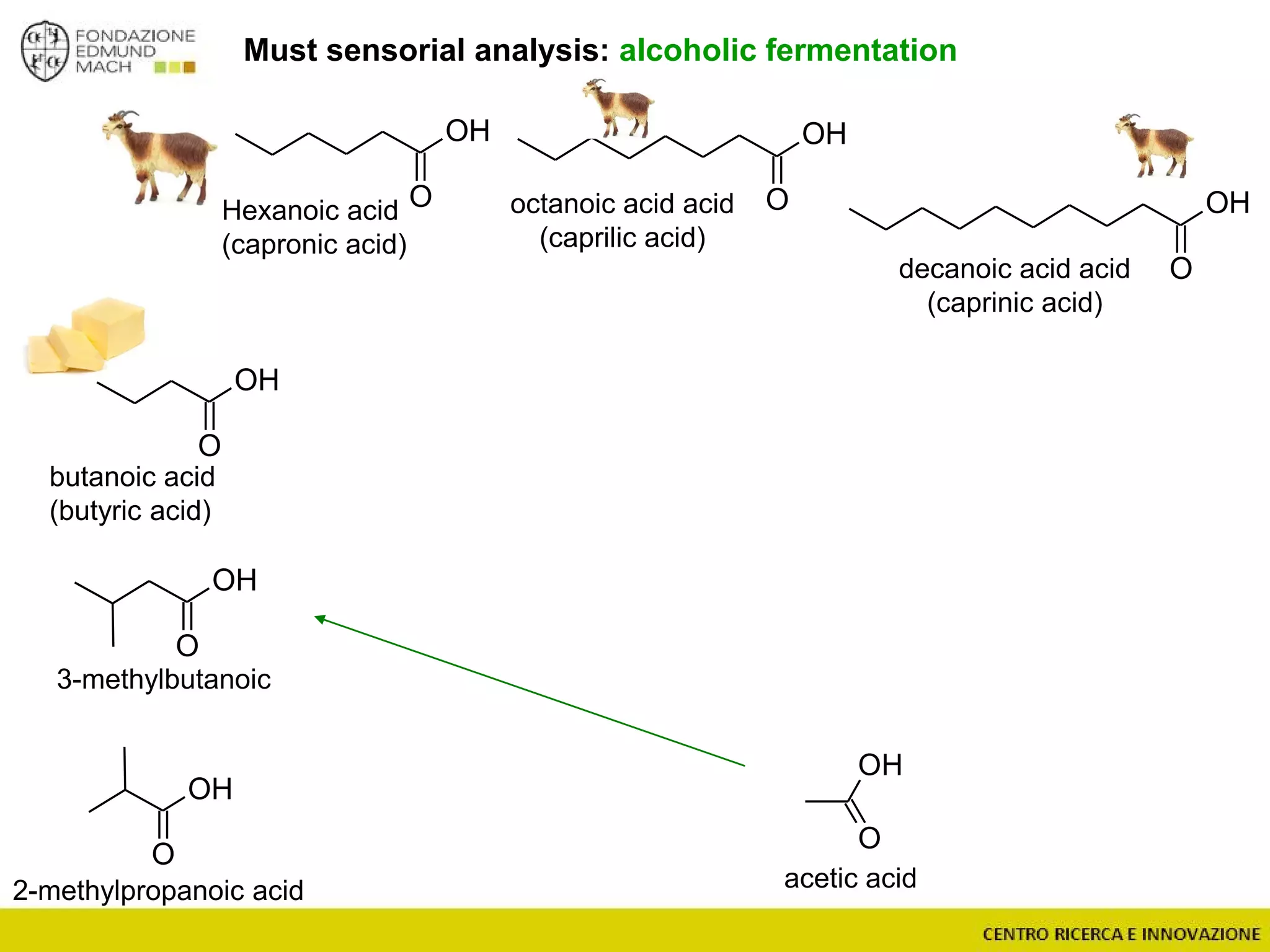
Must sensorial analysis: alcoholic fermentation
O
OH
acetic acid
OH
O
OH
O
OH
O
OH
O
OH
O
2-methylpropanoic acid
3-methylbutanoic
octanoic acid acid
(caprilic acid)
Hexanoic acid
(capronic acid)
butanoic acid
(butyric acid)
OH
Odecanoic acid acid
(caprinic acid)
Must sensorial analysis: alcoholic fermentation / half time
OH
O
OH
O
OH
O
OH
O
3-methylbutanoic
octanoic acid acid
(caprilic acid)
Hexanoic acid
(capronic acid)
butanoic acid
(butyric acid)
O
O
O
O
O
O
O
O
isoamyl acetate
ethyl butanoate
ethyl hexanoate
ethyl octanoate
Wine sensorial analysis: the first battle
O
O
O
O
O
O
ethyl butanoate
ethyl hexanoate
ethyl octanoate
O
O
isoamyl acetate
OH
OH
phenyl-ethanol
3-methyl-butanol
2-methyl-butanol
superior alcohol versus esters
OH
Wine sensorial analysis: the first battle
O
O
O
O
O
O
ethyl butanoate
ethyl hexanoate
ethyl octanoate
O
O
isoamyl acetate
OH
OH
phenyl-ethanol
3-methyl-butanol
2-methyl-butanol
superior alcohol versus esters
OH
Wine sensorial analysis: the first battle
O
O
O
O
O
O
ethyl butanoate
ethyl hexanoate
ethyl octanoate
O
O
isoamyl acetate
OH
OH
phenyl-ethanol
3-methyl-butanol
2-methyl-butanol
superior alcohol versus esters
OH
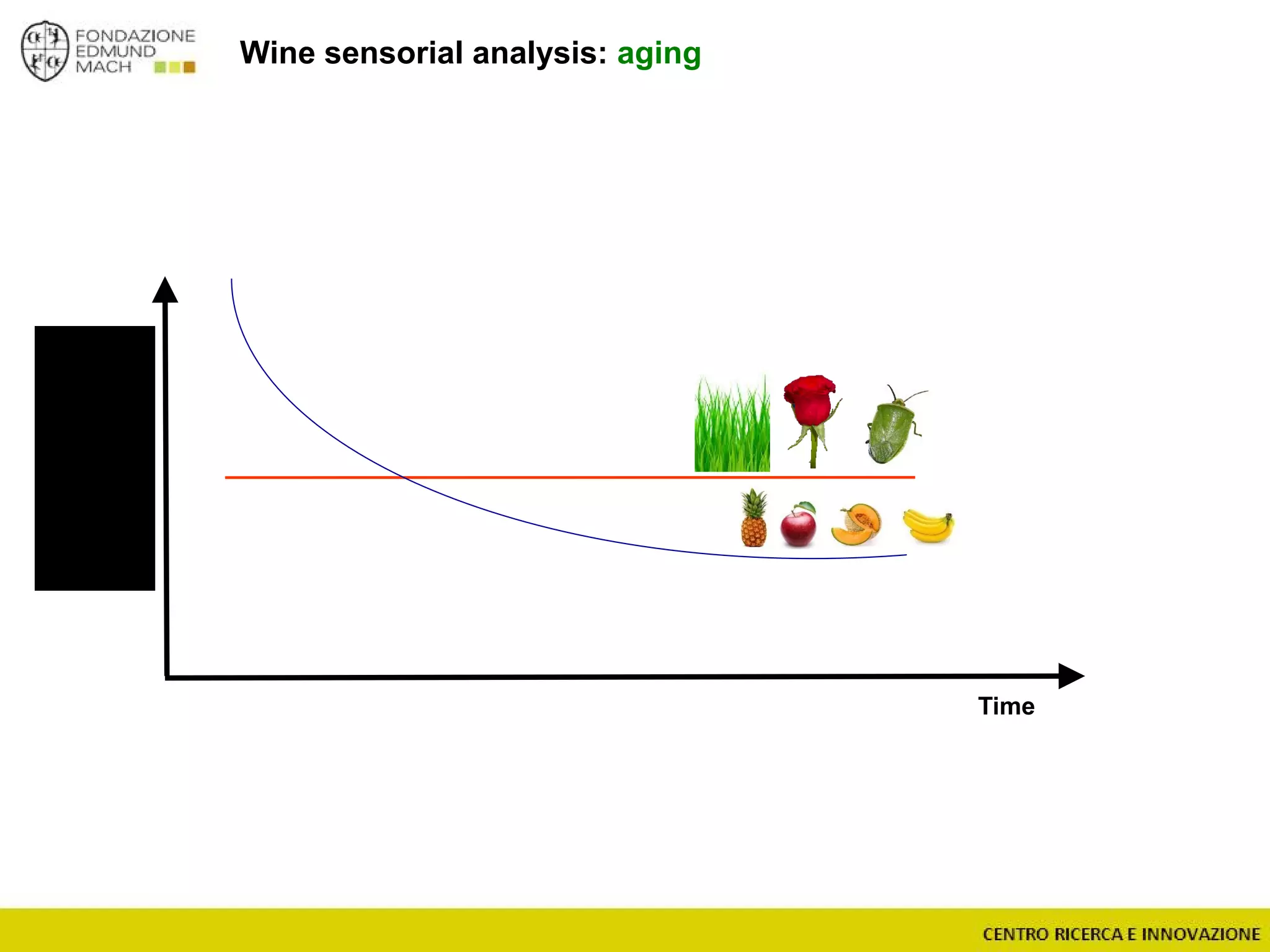
Wine sensorial analysis: aging
Time
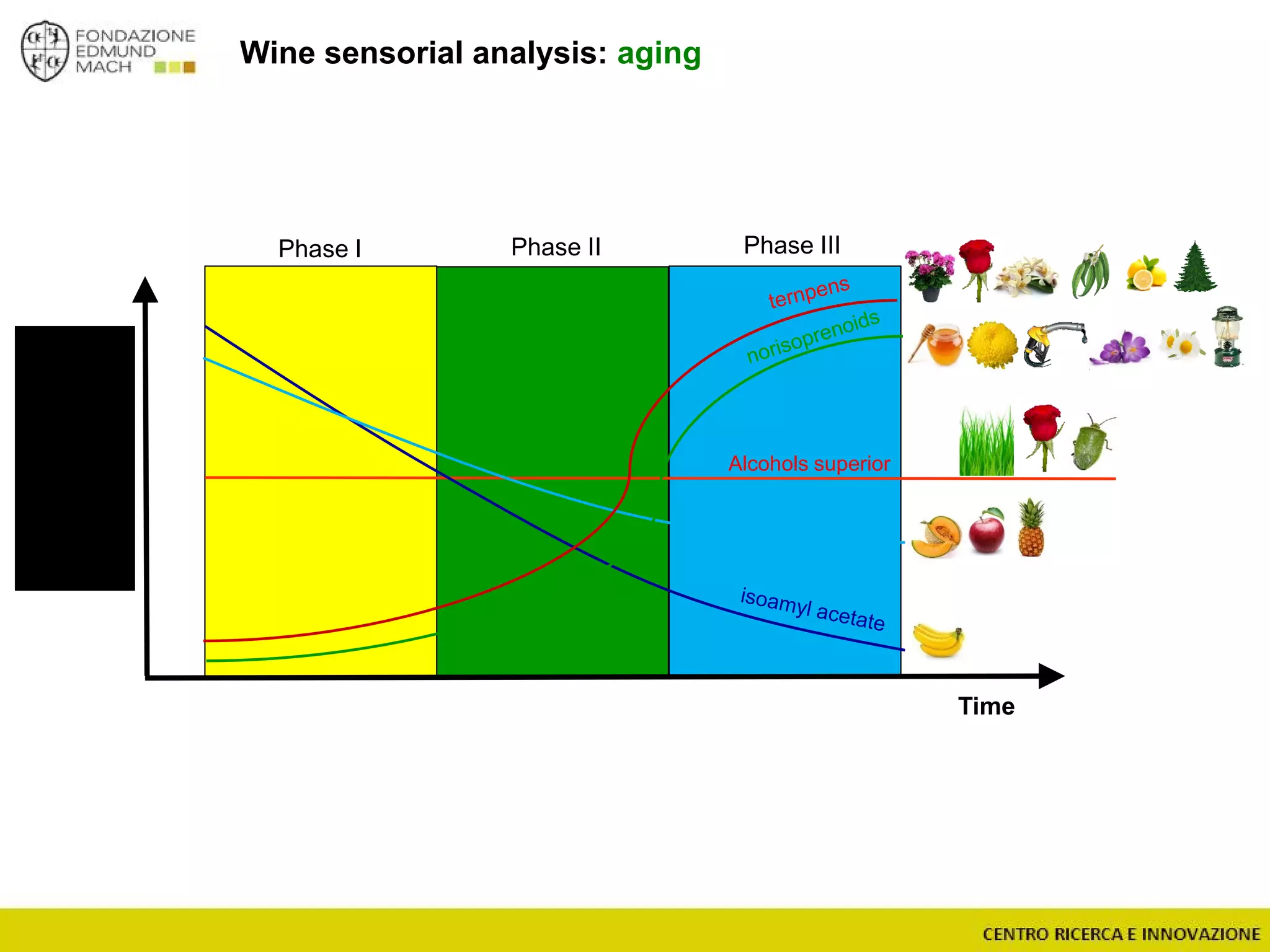
Wine sensorial analysis: aging
Time
ethyl esters
Alcohols superior
Phase I Phase II Phase III
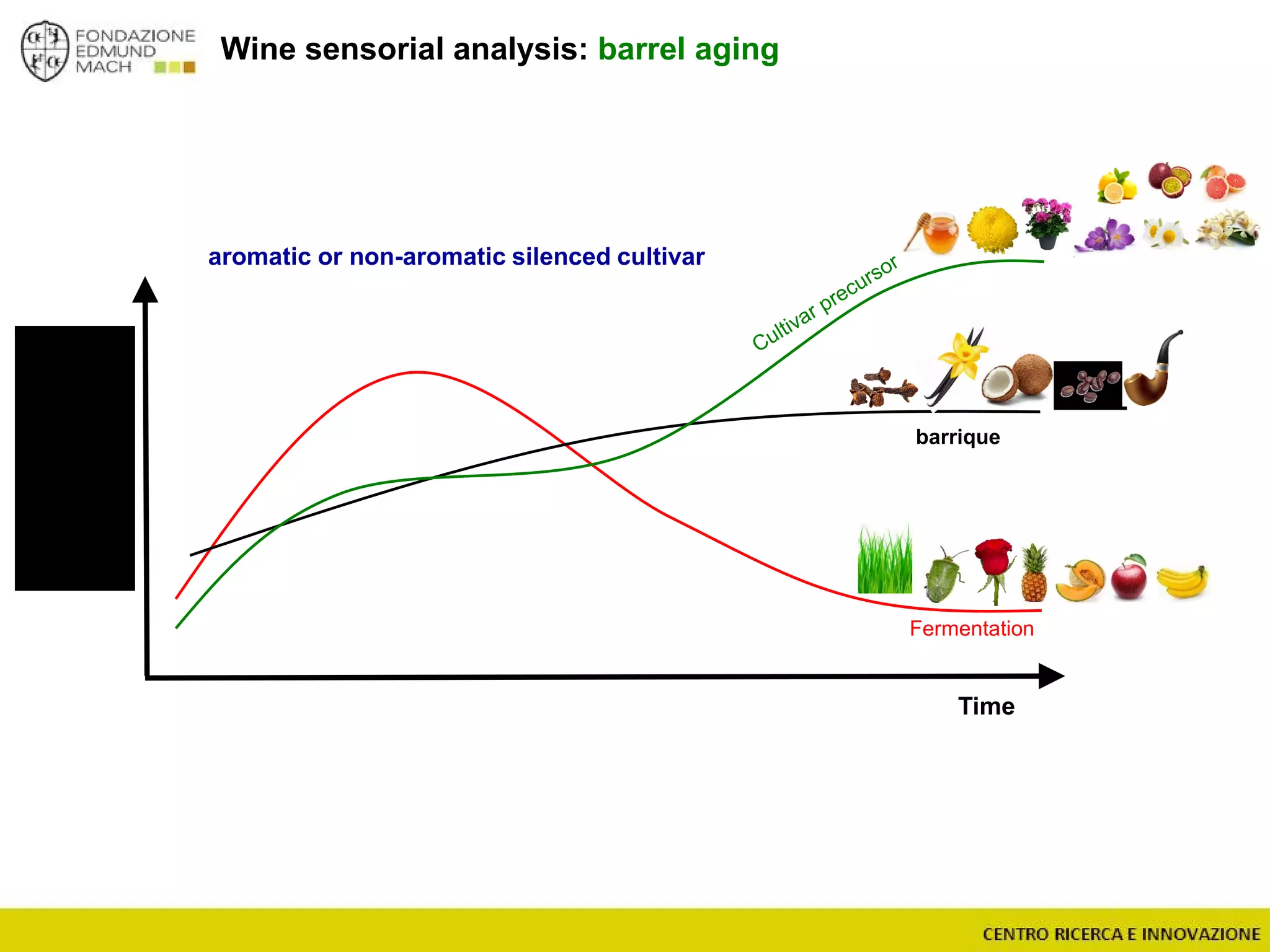
Wine sensorial analysis: barrel aging
Time
Fermentation
barrique
aromatic or non-aromatic silenced cultivar
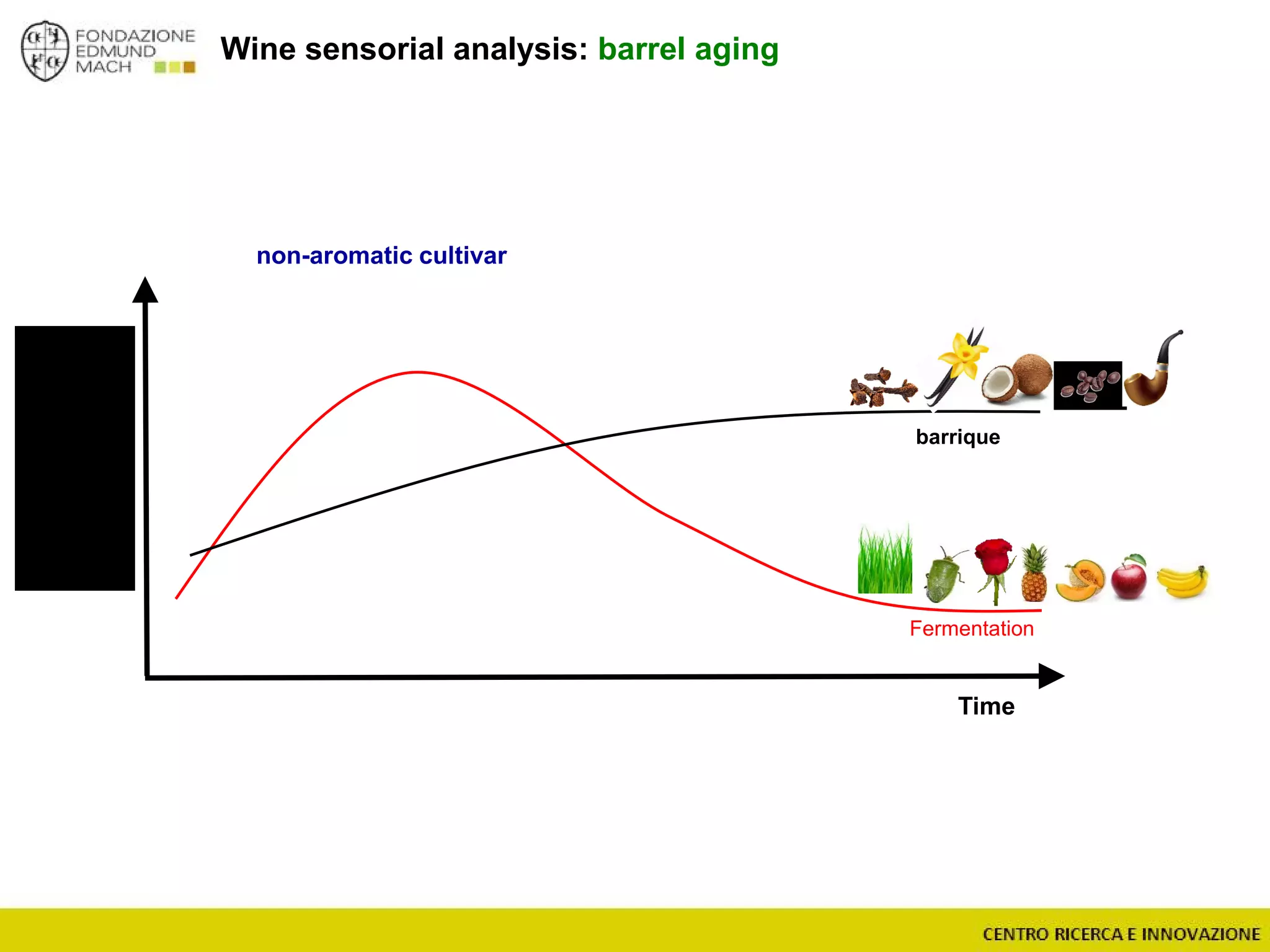
Wine sensorial analysis: barrel aging
Time
Fermentation
barrique
non-aromatic cultivar
Wine Chemistry
exercises
Wine Chemistry
Design 1. linalool
2. pheyl-ethanol
3. isoamyl acetate
4 3-mercaptohexan-1-ol
5. β-damascenone
linalool
OH
OH
SH
3-mercaptohexan-1-ol
3MH
phenyl-ethanol
O
O
isoamyl acetate
O
β-damascenone
OH

Wine and grape Metabolomics Chapters 1-2

  • 2.
  • 3.
    What do youaspect from this module?
  • 4.
    C3A Applied Metabolomics in oenologyand viticulture Semester II Year III Hours 30 English Objects This module will introduce the students into the untargeted metabolomics concept and its applications in the field of oenology and viticulture. Learning outcomes: 1. Understand and learn the wine metabolome terminology/ontology. 2. Account for methods, the techniques and the instruments used in untargeted metabolomics. 3. Be familiar with the workflow of the untargeted metabolomics studies. 4. Account for applications for untargeted metabolomics in enology and viticulture. 5. Learn to think in holistic way as far as the wine metabolome. + get familiar with the English oenological terminology
  • 5.
    C3A Applied Metabolomics in oenologyand viticulture Semester II Year III Hours 30 English Description This 30 hours module includes: - Lectures (general theory and published applications). - Interactive classroom exercises (computer tools, software, databases) (optional) - Group exercises in the laboratory (optional) Moreover, will be proposed to the students material and resources (publications, books, websites) to explore the topics of the course in depth. Be aware that the material in Italian is poor. Is strongly advised to participate to the frontal lessons. Prerequisites For the most profitable attendance of the course, the student should have preferably completed the exams of English; Mathematic and statistics, General Chemistry; Organic chemistry; Wine chemistry and microbiology; and Enology 1.
  • 6.
    C3A Applied Metabolomics in oenologyand viticulture Semester II Year III Hours 30 English Final exam The final exam consists of a written test (compulsory), and a possible oral exam that could include a group oral presentation based on the carried out activities. The exam will investigate the student's ability to demonstrate theoretical and practical knowledge on the topics of metabolomics applied in vine-oenology, including the proposed teaching material.
  • 7.
    C3A Applied Metabolomics in oenologyand viticulture Calendar MON TUE WED THU FRI SAT SUN MON TUE WED THU FRI SAT SUN 1 2 3 1 2 3 4 5 4 5 6 7 8 9 10 6 7 8 9 10 11 12 11 12 13 14 15 16 17 13 14 15 16 17 18 19 18 19 20 21 22 23 24 20 21 22 23 24 25 26 25 26 27 28 29 30 31 27 28 29 30 31 MON TUE WED THU FRI SAT SUN MON TUE WED THU FRI SAT SUN 1 2 3 4 5 6 7 1 2 8 9 10 11 12 13 14 3 4 5 6 7 8 9 15 16 17 18 19 20 21 10 11 12 13 14 15 16 22 23 24 25 26 27 28 29 30 MARCH APRIL MAY JUNE
  • 8.
    What is importantto know before to enter in Wine Metabolomics  What is metabolomics?  What is metabolite?  How do we measure the metabolites? Prerequisites – first step The first part of the module will focus in three subjects:  Wine organic chemistry – Wine metabolome  Basic knowledge about Chromatography and Mass Spectrometry  Basic statistic knowledge
  • 9.
  • 10.
    (Metabol)-omics: definitions System biology Systemsbiology is a biology-based interdisciplinary field of study that focuses on complex interactions within biological systems, using a holistic approach (holism instead of the more traditional reductionism) to biological research. The systematic study of the complete DNA sequences of an organism. The systematic study of the complete complement of proteins of an organism. The systematic study of the gene expression (messengerRNA) of an organism. “Proteomics, transcriptomics: what's in a name?” Nature 402:715 Dec 16, 1999
  • 11.
    (Metabol)-omics: definitions What canthe cell potentially do? What is currently being turned on? What enzymes are currently active? What is being produced/consumed? System biology Sirén et al. (2019) Multiomics and potential applications in wine production. Current Opinion in Biotechnology
  • 12.
    Metabolomics: definitions metabolomics isthe "systematic study of the unique chemical fingerprint that specific cellular processes leave behind", the study of their small-molecule metabolite profiles (Daviss 2005) metabolomics is a newly emerging field of "omics" research concerned with the comprehensive characterization of the small molecule metabolites in biological systems. (Metabolomics Society) metabolomics is the comprehensive and holistic study of the metabolome the complete set of small-molecule metabolites to be found within a biological sample metabonome: the complete set of metabologically regulated elements in cells
  • 13.
    From targeted tountargeted
  • 14.
  • 15.
  • 16.
  • 17.
    Metabolomics: metabolite What isa metabolite? Product and intermediate of the metabolism – small organic molecules
  • 18.
  • 19.
    Wine Chemistry –Wine Composition How big is the grape/wine metabolome?
  • 20.
    Metabolomic: what isand what is not How big is the metabolome? Sigma-Aldrich has ~55K commercial available chemicals Kegg contains 18K metabolites HMDB is based in ~42K metabolites Plant metabolome is estimated to cover 200K metabolites PubChem ID contains more than 10M entries CAS contains over 90M unique organic and inorganic chemicals ChemSpider contains over 57M compounds from 530 data sources
  • 21.
    Plant metabolome isestimated to cover 200 000 metabolites #ofmetabolites5-21% ethanol g/L mg/L µg/L ng/L pg/L fg/L How big is the metabolome? Wine Chemistry – Wine Composition
  • 22.
    #ofmetabolites5-21% ethanol g/L mg/L µg/L ng/L pg/L fg/L Plant metabolomeis estimated to cover 200 000 metabolites How big is the metabolome? Wine Chemistry – Wine Composition
  • 23.
    Wine Chemistry –Wine Composition #ofmetabolites g/L mg/L µg/L ng/L pg/L fg/L 95-79% water 5-21% ethanol 0-100 g/L sugars (glucose/fructose) 1-6 g/L tartaric acid 0-4 g/L malic acid 0-4 g/L lactic acid 0.5-1.5 g/L succinic acid 0.2-1.5 g/L acetic acid 4-15 g/L glycerol 0.1-10 g/L CO2 0.02-1.3 g/L argine glutamine, alanine, glutamic acid, proline, glycine, histidine arabinose, xylose, rhamnose Fe, Cu, B, Mn methanol, acetaldehyde, SO2 proteins thiamine, riboflavin, niacin, biotin, pantothenate and vitamin C phenolics polysaccharide
  • 24.
    Wine Chemistry –Wine Composition Waterhouse, Understanding wine chemistry, 2016
  • 25.
  • 26.
  • 27.
  • 28.
    Wine/Grape Chemistry –Phenolics – Classification according the skeleton C6 C6-C3 C6-C3-C6 O OH O OH C6-C2-C6 phenolic acids cinnamics acids stilbenoids flavanoids O OH OH O OH OH OH O OH OH OH OH OH OH OH O OH OH OH O OH OH O OH OH OH OH OH OH OH OH O OH OH OH O OH OH O OH O A C B 7 2 3 45 6 2' 8 3' 4' 5' 6' 2' : 2 prime (not apostrophe)
  • 29.
    Wine/Grape Chemistry –Phenolics – Phenolic acids shikimic acid O OH OH O OH OH OH O OH OH OH OH gallic acid UV-Vis spectrum nm250 300 350 400 450 500 550 270 nm nm250 300 350 400 450 500 550 280 nm • Wooden barrel • Non Vinifera • Hydrolysable tannins gallic acid O HO HO OH O HO O OH OH OH glucogallin
  • 30.
    Wine/Grape Chemistry –Phenolics - Cinnamates shikimic acid phenylalanine cinnamic acid coumaric acid coutaric acidfertaric acid caftaric acid caffeic acidferulic acid
  • 31.
    Wine/Grape Chemistry –Phenolics - Cinnamates coutaric acid Wine 15 mg/L
  • 32.
    Wine/Grape Chemistry –Phenolics - Cinnamates nm250 300 350 400 450 500 550 caffeic acid UV-Vis spectrum 324 nm
  • 33.
    fertaric acid Wine/Grape Chemistry– Phenolics - Cinnamates coutaric acid 4-vinyl phenol 4-vinyl guaicol 4-ethyl guaicol 4-ethyl phenol OH O O OH O OH OH O OH O O OH O OH OH O O CH3 OH CH2 O CH3 OH CH3 O CH3 OH CH3OH CH2
  • 34.
    Wine/Grape Chemistry –Phenolics - Flavonols shikimic acid phenylalanine cinnamic acid naringenin myricetinsyringetin quercetin keampferol isorhamnetin naringenin chalcone
  • 35.
    Wine/Grape Chemistry –Phenolics - Flavonols quercetin quercetin 3-rabinoside quercetin 3-glucuroside quercetin 3-galactose quercetin 3-rhamnosidequercetin 3-glucose
  • 36.
    Wine/Grape Chemistry –Phenolics - Flavonols Mattivi et al JAFC 2006 myricetin syringetin quercetin keampferol isorhamnetin
  • 37.
    Wine/Grape Chemistry –Phenolics - Flavonols Mattivi et al JAFC 2006 myricetin syringetin quercetin keampferol isorhamnetin
  • 38.
    Wine/Grape Chemistry –Phenolics - Flavonols UV-Vis spectrum
  • 39.
    Wine/Grape Chemistry –Phenolics - Anthocyanins shikimic acid phenylalanine cinnamic acid naringenin naringenin chalcone cyanidin delphinidin pelargonidin malvidin peonidin
  • 40.
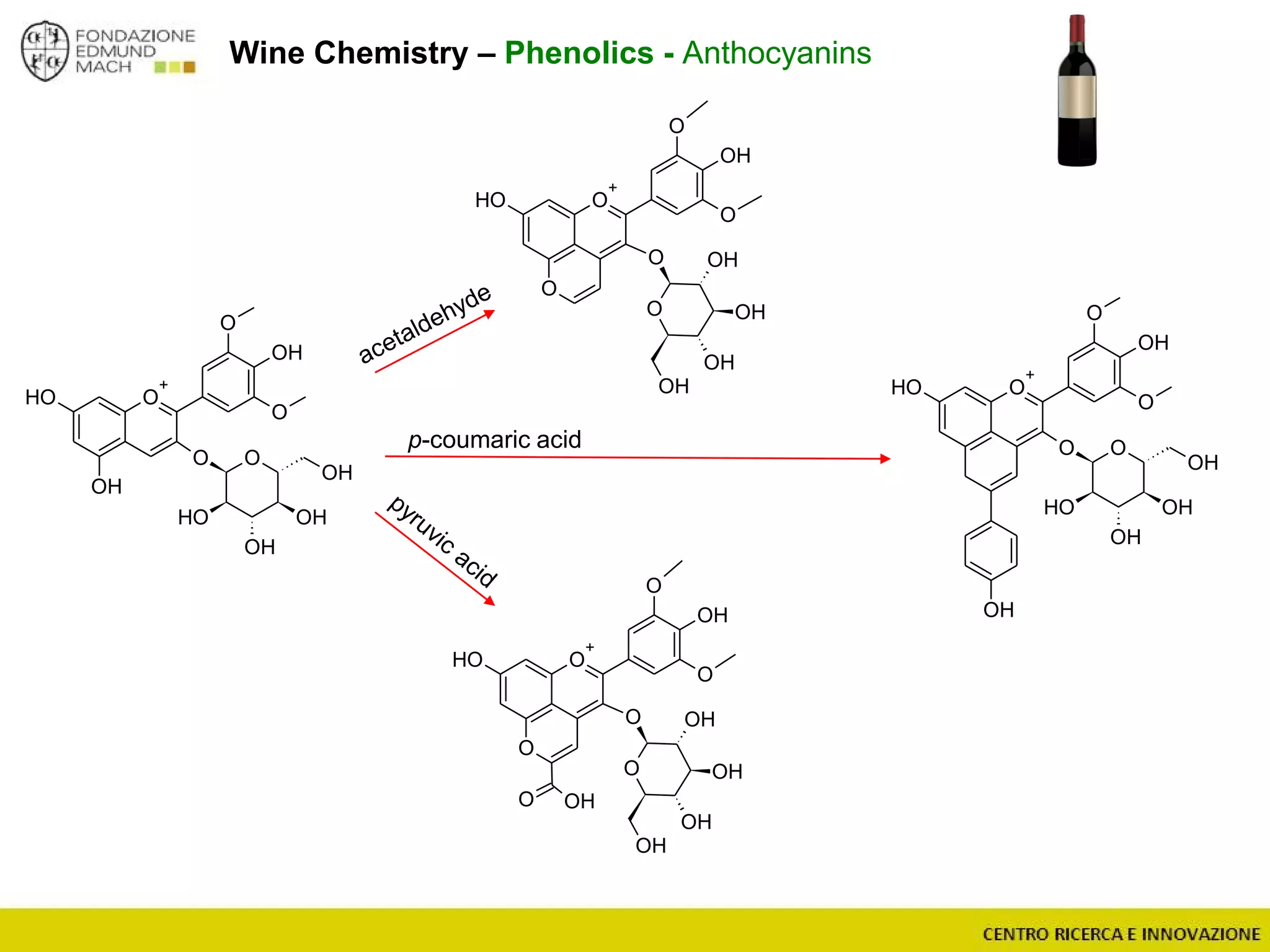
    Wine/Grape Chemistry –Phenolics - Anthocyanins O + OH OH O OH O OO OH OH OH OH O O OH OH OH OH O + OH O OH O OO OH OH OH OH OH O + OH O OH O OO OH OH OH O O OH OH O + OH O OH O OO OH OH OH O O OH OH OH O + OH O OH O OO OH OH OH O O OH O + OH O OH O OH
  • 41.
    Wine Chemistry –Phenolics - Anthocyanins OH OOH OH OH OH OH O + OH O OH O OO OH OH OH OH O + O OH OH O O OH OH OH OH OH O OH O OH OH OH OH O + O OH OH O O OH OH OH OH O OH OH O OH OH OH OH O + OH OH O OH O OO OH OH OH OH
  • 42.
    Wine Chemistry –Phenolics - Anthocyanins O + OH OH O OH O OO OH OH OH OH O + O OH OH O O OH OH OH OH O O O + O OH OH O O OH OH OH OH O O OH O O + OH O OH O OO OH OH OH OH OH p-coumaric acid
  • 43.
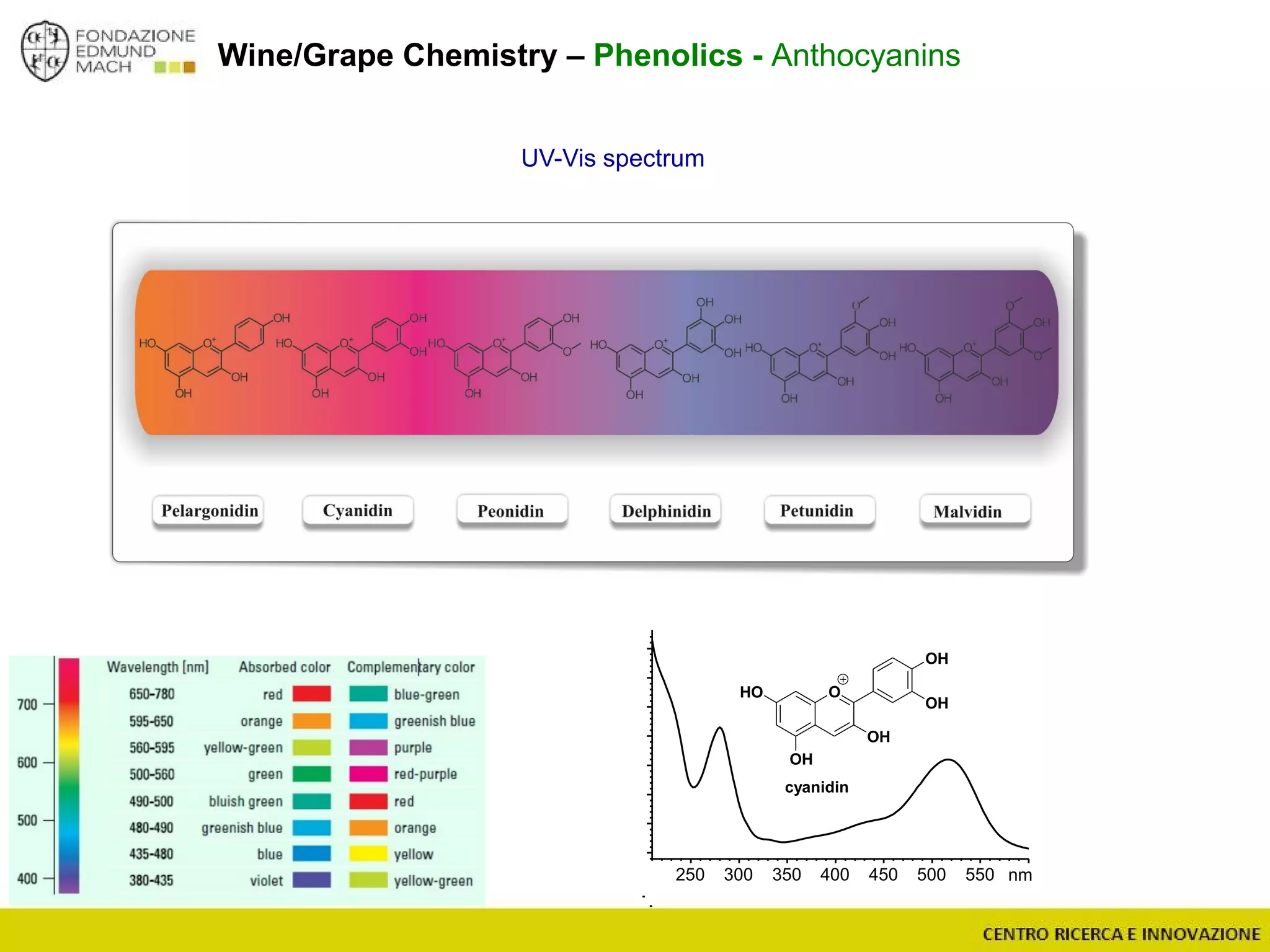
    Wine/Grape Chemistry –Phenolics - Anthocyanins UV-Vis spectrum nm250 300 350 400 450 500 550 O OH HO OH OH OH cyanidin
  • 44.
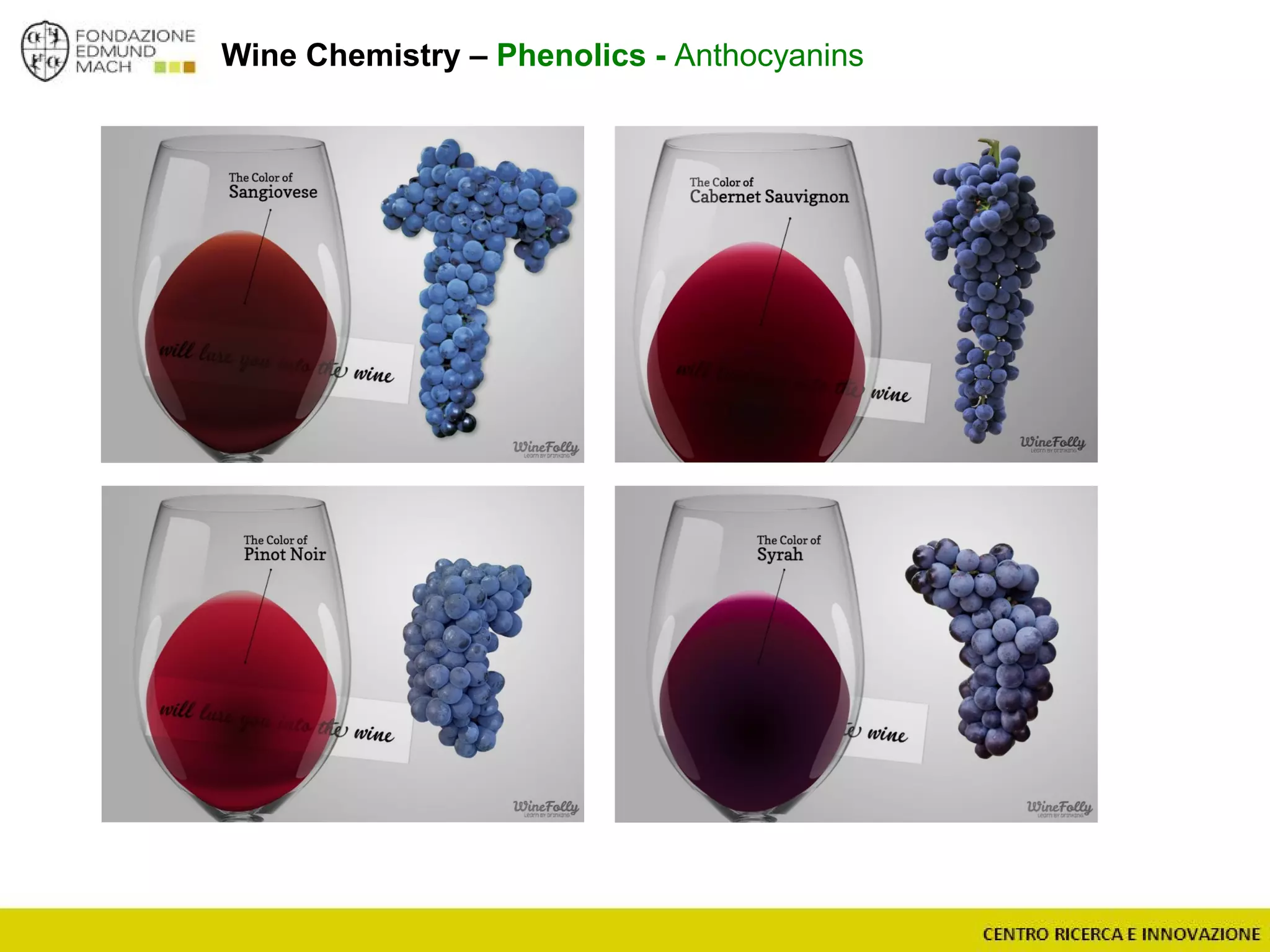
    Wine Chemistry –Phenolics - Anthocyanins
  • 45.
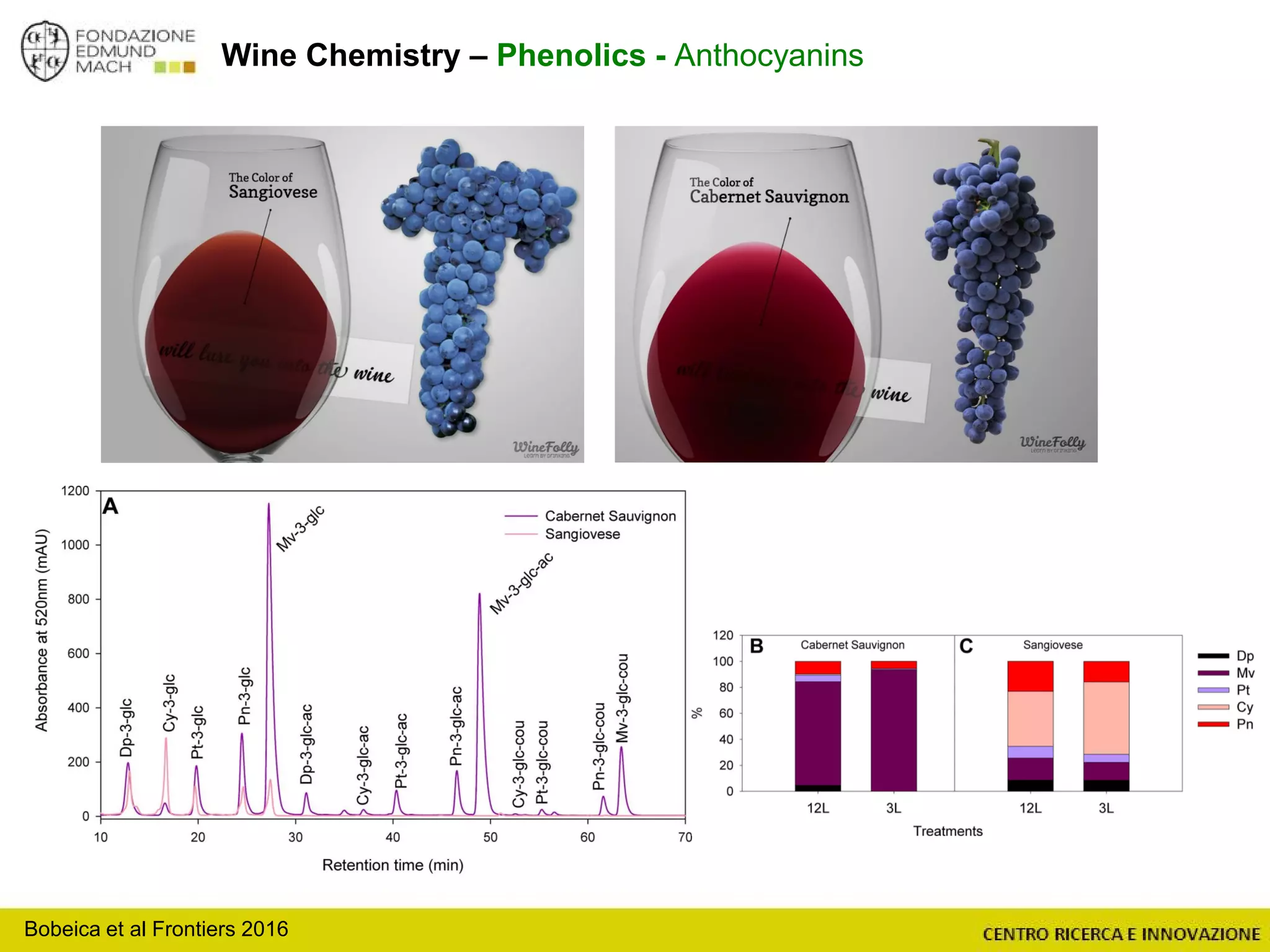
    Wine Chemistry –Phenolics - Anthocyanins Bobeica et al Frontiers 2016
  • 46.
    Mattivi et alJAFC 2006 cyanidin delphinidin pelargonidin malvidin petunidin Wine/Grape Chemistry – Phenolics - Anthocyanins
  • 47.
    Wine/Grape Chemistry –Phenolics - Anthocyanins O + O OH OH OH O O OH OH OH OH O O + OH OH OH OH O O OH OH OH OH OH O + O OH OH OH O O OH OH OH OH O + OH OH OH OH O O OH OH OH OH O + O OH OH OH O O OH OH OH OH OH + + +
  • 48.
    Wine/Grape Chemistry –Phenolics - Flavanols cyanidin delphinidin pelargonidin OOH OH OH OH OH OOH OH OH OH OH OOH OH OH OH OH OH OOH OH OH OH OH OH OOH OH OH OH OOH OH OH OH + + + epicatechin catechin epigallocatechin gallocatechin epiafzelechin afzelechin OOH OH O OH O OH OH OH OH OOH OH O OH O OH OH OH OH OH (epi)catechin-gallate (epi)gallocatechin-gallate
  • 49.
    Wine/Grape Chemistry –Phenolics – Flavanols (dimers) (epi)catechin epigallocatechin OOH OH O OH O OH OH OH OH OOH OH O OH O OH OH OH OH OH (epi)catechin-gallate (epi)gallocatechin-gallate OOH OH OH OH OH OH OOH OH OH OH OH OOH OH OH OH OH OOH OH OH OH OH OOH OH OH OH OH OOH OH OH OH OH OH OOH OH OH OH OH OOH OH OH OH OH OH OH OOH OH OH OH OH OOH OH O OH OH OH OH O OH OH OH OOH OH OH OH OH OOH OH O OH OH O OH OH OH OOH OH OH OH OH OOH OH O OH OH OH O OH OH OH
  • 50.
    Wine/Grape Chemistry –Phenolics – Flavanols (oligomers) (epi)catechin epigallocatechin OOH OH O OH O OH OH OH OH OOH OH O OH O OH OH OH OH OH (epi)catechin-gallate (epi)gallocatechin-gallate OOH OH OH OH OH OH OOH OH OH OH OH OOH OH OH OH OH OOH OH OH OH OH OOH OH OH OH OH OOH OH OH OH OH OOH OH OH OH OH OOH OH OH OH OH OOH OH OH OH OH OOH OH OH OH OH OOH OH OH OH OH OOH OH OH OH OH OOH OH OH OH OH OOH OH OH OH OH
  • 51.
    Wine/Grape Chemistry –Phenolics – Flavanols (oligomers) (epi)catechin epigallocatechin OOH OH O OH O OH OH OH OH OOH OH O OH O OH OH OH OH OH (epi)catechin-gallate (epi)gallocatechin-gallate OOH OH OH OH OH OH OOH OH OH OH OH OOH OH OH OH OH OOH OH OH OH OH OOH OH OH OH OH OOH OH OH OH OH OOH OH OH OH OH OOH OH OH OH OH
  • 52.
    Wine/Grape Chemistry –Phenolics – Flavanols (polyomers) (epi)catechin epigallocatechin OOH OH O OH O OH OH OH OH OOH OH O OH O OH OH OH OH OH (epi)catechin-gallate (epi)gallocatechin-gallate OOH OH OH OH OH OH OOH OH OH OH OH OOH OH OH OH OH OOH OH OH OH OH OOH OH OH OH OH OOH OH OH OH OH OOH OH OH OH OH OOH OH OH OH OH OOH OH OH OH OH OOH OH OH OH OH OOH OH OH OH OH OOH OH OH OH OH OOH OH OH OH OH OOH OH OH OH OH OOH OH OH OH OH OOH OH OH OH OH OOH OH OH OH OH OOH OH OH OH OH OOH OH OH OH OH OOH OH OH OH OH OOH OH OH OH OH OOH OH OH OH OH OOH OH OH OH OH OOH OH OH OH OH OH OH OOH OH OH OH OH OOH OH OH OH OH OOH OH OH OH OH OOH OH OH OH OH OOH OH OH OH OH OOH OH OH OH OH OOH OH OH OH OH OOH OH OH OH OH OOH OH OH OH OH OOH OH OH OH OH OOH OH O OH OH OH OH O OH OH OH
  • 53.
    Wine Chemistry –Phenolics – Flavanols (astringent and bitter taste) OOH OH OH OH OH OOH OH OH OH OH OOH OH OH OH OH OH epicatechin catechin gallocatechin OOH OH O OH O OH OH OH OH (epi)catechin-gallate epicatechin is more bitter than catechin OOH OH OH OH OH catechin The galloyl-ation increase the astringency Cheynier et al. ACS Symposium 1997
  • 54.
    Wine Chemistry –Phenolics – Flavanols (astringent and bitter taste) Polymerization decrease bitterness (dimers, trimers and tetramers are more bitter than astringent) polymerization slightly increase the astringency (high degree or polymerization may decrease astringency) (the maximum is reached ~ 8 units) Cheynier et al. ACS Symposium 1997 OOH OH OH OH OH OOH OH OH OH OH OOH OH OH OH OH OOH OH OH OH OH OOH OH OH OH OH OOH OH OH OH OH OOH OH OH OH OH OOH OH OH OH OH OOH OH OH OH OH OOH OH OH OH OH
  • 55.
    Wine/Grape Chemistry –Phenolics – Flavanols (degree of polymerization) OOH OH OH OH OH OOH OH OH OH OH OOH OH OH OH OH OOH OH OH OH OH OOH OH OH OH OH OOH OH OH OH OH OOH OH OH OH OH OOH OH OH OH OH OOH OH OH OH OH OOH OH OH OH OH OOH OH OH OH OH OOH OH OH OH OH OOH OH OH OH OH OOH OH OH OH OH OOH OH OH OH OH OOH OH OH OH OH OOH OH OH OH OH OOH OH OH OH OH OOH OH OH OH OH OOH OH OH OH OH OOH OH OH OH OH OOH OH OH OH OH OOH OH OH OH OH OOH OH OH OH OH OOH OH OH OH OH OOH OH OH OH OH OOH OH OH OH OH OOH OH OH OH OH OOH OH OH OH OH OOH OH OH OH OH OOH OH OH OH OH OOH OH OH OH OH OOH OH OH OH OH OOH OH OH OH OH OOH OH OH OH OH OOH OH OH OH OH OOH OH OH OH OH OOH OH OH OH OH OOH OH OH OH OH OOH OH OH OH OH OOH OH OH OH OH OOH OH OH OH OH OOH OH OH OH OH OOH OH OH OH OH OOH OH OH OH OH OOH OH OH OH OH OOH OH OH OH OH OOH OH O OH OH OH OH O OH OH OH O OH OH OH OH OH O OH OH OH OH OH O OH OH OH OH OH O OH OH OH OH OH Mean degree of polymerization = mDP O OH OH OH OH OH
  • 56.
    Wine Chemistry –Sugars/Carbohydrates O OH OH OH OH OH O OH OH OH OH OH glucose O OH OH OH OH OH fructose O OH OH OH OH arabinose OH OH OH OH OH OH OH OH OH O OH OH OH OH OH O α β glucuronic acid glycerol inositol 1 2 3 4 5 6
  • 57.
    Wine Chemistry –Amines O NH2 OH O NH2 NH OH O NH2 OH O NH2 OH tryptophan phenylalanineleucine isoleucinealanine N H O NH2 NH2 NH2 OH NH2 N N O 3-Isobutyl-2-methoxypyrazine indole putrescine tyramine2-aminoacetophenone N O 2-acetylpyrroline O NH2 OH
  • 58.
    Wine Chemistry –Tryptophan metabolites OH NH2 N H O O NH2 OH O OH N H OH O OH N H OH N H TOL N OH O OH N H O NH O N H OH NH2 shikimic OH OH OH OOH OOH NH2 O NH2 O O N H OH O OH OH OH OH OH O OH OH OH OH OH O OH OH OH OH OH O NH N H O O O NH2 N H O epicatechin procyanidin B2 phenylalanine tryptophan melatoninserotonin tryptophan ethyl ester N-acetyl-tryptophan ethyl ester kynurenic anthranillic kynurenine indole-3-pyruvic acid indole-3-lactic acid indole-3-acetic acid tryptophol 2-aminoacetophenone OOH NH2 anthranillic
  • 59.
    Wine Chemistry exercise Design 1.glucose 2. alanine 3. phenylalanine 4. p-coumaric acid 5. catechin
  • 60.
    Wine Chemistry Design 1.glucose 2. alanine 3. phenylalanine 4. p-coumaric acid 5. catechin OOH OH OH OH OH O NH2 OH O OH OH OH OH OH O NH2 OH
  • 61.
    Grape Sensorial analysis:grape What is the odor of a grape berry? Inspired by Il respire del vino of L. Moio
  • 62.
    Grape Sensorial analysis:grape Aromatic grape Moscato, Gewϋrztraminer Wine smell as the grape Non-aromatic grape a) silenced and b) not-silenced Sauvignon blanc Must non-aromatic, wine aromatic
  • 63.
    Grape Sensorial analysis:grape aromatic part aromatic part sugar O OOH OH OH OH OH enzymatic or chemical hydrolysis
  • 64.
    Grape aromatic compounds:terpenoids Isoprene Hydrocarbon 5 x Carbons 2 x Isoprene Monoterpenes 10 x Carbons 3 x Isoprene Sesquiterpene 15 x Carbons 4 x Isoprene Diterpenes 20 x Carbons 5 x Isoprene Sesteterpenes 25 x Carbons 6 x Isoprene Triterpenes 30 x Carbons Terpene + Oxygen or Nitrogen = terpenoids
  • 65.
  • 66.
    Grape aromatic compounds:volatiles thiols O SH OH SH O SHO 4-mercapto-4-methylpentan-2-one 4MMP 3-mercaptohexan-1-ol 3MH 3-mercaptohexyl-acetate 3MHA
  • 67.
    Grape aromatic compounds:volatiles thiols
  • 68.
    OH S O NH2 OH Grape aromatic compounds:volatiles thiols aromatic part cysteine
  • 69.
  • 70.
    O Grape aromatic compounds:norisoprenoids megastigmane non-megastigmane TDNβ-damascenone vitispirane O β-ionone
  • 71.
    Grape aromatic compounds:norisoprenoids Time Quantity carotenoids more sun Veraison Maturity Over maturity
  • 72.
    Grape aromatic compounds:methoxypyrazine N N R
  • 73.
    Grape Sensorial analysis:must Aromatic grape Moscato, Gewϋrztraminer continuity
  • 74.
    Grape Sensorial analysis:must O 1-hexanol OH OH OH OO Non-aromatic grape (but aromatic in taste) 1-hexanal 3-trans-hexan-1-ol 3-trans-hexan-1-al 3-cis-hexan-1-ol 3-cis-hexan-1-al
  • 75.
    Grape Sensorial analysis:must O 1-hexanol OH OH OH OO 1-hexanal 3-trans-hexan-1-ol 3-trans-hexan-1-al 3-cis-hexan-1-ol 3-cis-hexan-1-al O OH O OH linoleic acid linolenic acid
  • 76.
    Grape Sensorial analysis:must Cabernet Sauvignon, Sauvignon blanc, Cabernet Franc, Merlot N N R • Amplification of herd odor • Not mature grapes
  • 77.
    Grape Sensorial analysis:must White grapes: Honey, dry fruits, chamomile Red grapes: comfiture of red berries
  • 78.
    Grape Sensorial analysis:alcoholic fermentation OH O O O OH OH OH OH OH O O OH O glucose pyruvic acid acetaldehyde ethanol
  • 79.
    O NH2 OH O NH2 R OH O O R OH O R OH R O NH2 NH OH O NH2 OH O NH2 OH Must sensorial analysis:alcoholic fermentation / Ehrlich reaction tryptophanphenylalanine leucine isoleucinealanine O NH2 OH
  • 80.
    O NH2 OH O NH2 R OH OH R O NH2 OH O NH2 OH Must sensorial analysis:alcoholic fermentation / Ehrlich reaction tryptophanphenylalanine leucine isoleucinealanine O NH2 NH OH O NH2 OH
  • 81.
    OH O NH2 OH O NH2 NH OH OH NH O NH2 OH O NH2 OH OH OH Must sensorial analysis:alcoholic fermentation / Ehrlich reaction tryptophanphenylalanine leucine isoleucinealanine OH phenyl-ethanol ethanol 3-methyl-butanol tryptophol2-methyl-butanol 4-197 mg/L 6-490 mg/L 2-150 mg/L 2-30 mg/L O NH2 OH
  • 82.
    O NH2 OH O NH2 NH OH OH NH O NH2 OH O NH2 OH OH OH Must sensorial analysis:alcoholic fermentation / Ehrlich reaction tryptophanphenylalanine leucine isoleucinealanine OH phenyl-ethanol ethanol 3-methyl-butanol tryptophol2-methyl-butanol amino acid in must ft Cultivar Maturity Viticulture practices Turbidity O NH2 OH OH
  • 83.
    OH OH Must sensorial analysis:alcoholic fermentation / Ehrlich reaction phenyl-ethanol 3-methyl-butanol 2-methyl-butanol volatiles threshold 300 mg/L Adolf and Versini, 1999 OH
  • 84.
    Must sensorial analysis:alcoholic fermentation OH O O O OH OH OH OH OH O O OH O glucose pyruvic acid acetaldehyde ethanol O OH acetic acid
  • 85.
    Must sensorial analysis:alcoholic fermentation O OH acetic acid OH O OH O OH O OH O OH O 2-methylpropanoic acid 3-methylbutanoic octanoic acid acid (caprilic acid) Hexanoic acid (capronic acid) butanoic acid (butyric acid) OH Odecanoic acid acid (caprinic acid)
  • 86.
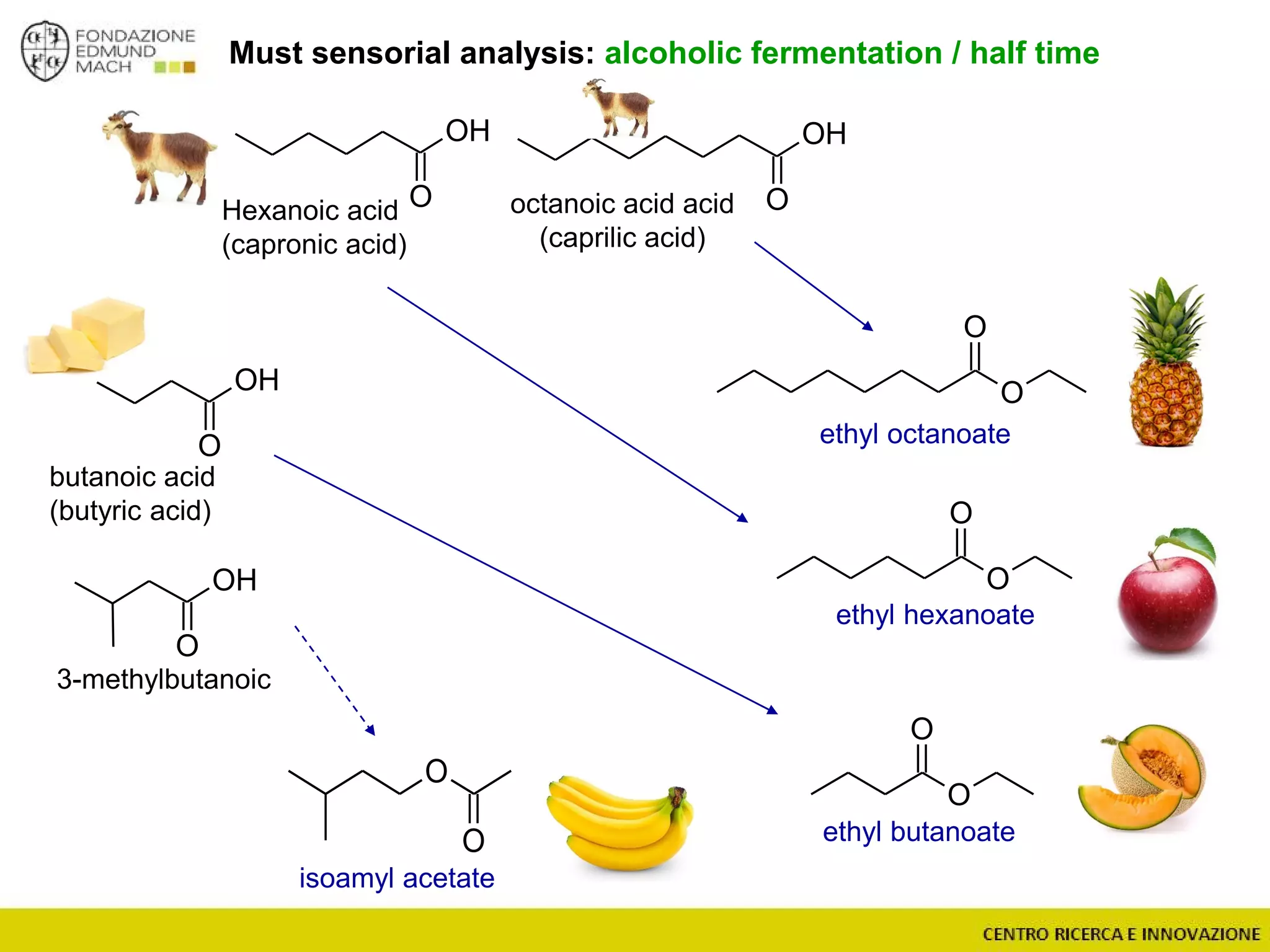
    Must sensorial analysis:alcoholic fermentation / half time OH O OH O OH O OH O 3-methylbutanoic octanoic acid acid (caprilic acid) Hexanoic acid (capronic acid) butanoic acid (butyric acid) O O O O O O O O isoamyl acetate ethyl butanoate ethyl hexanoate ethyl octanoate
  • 87.
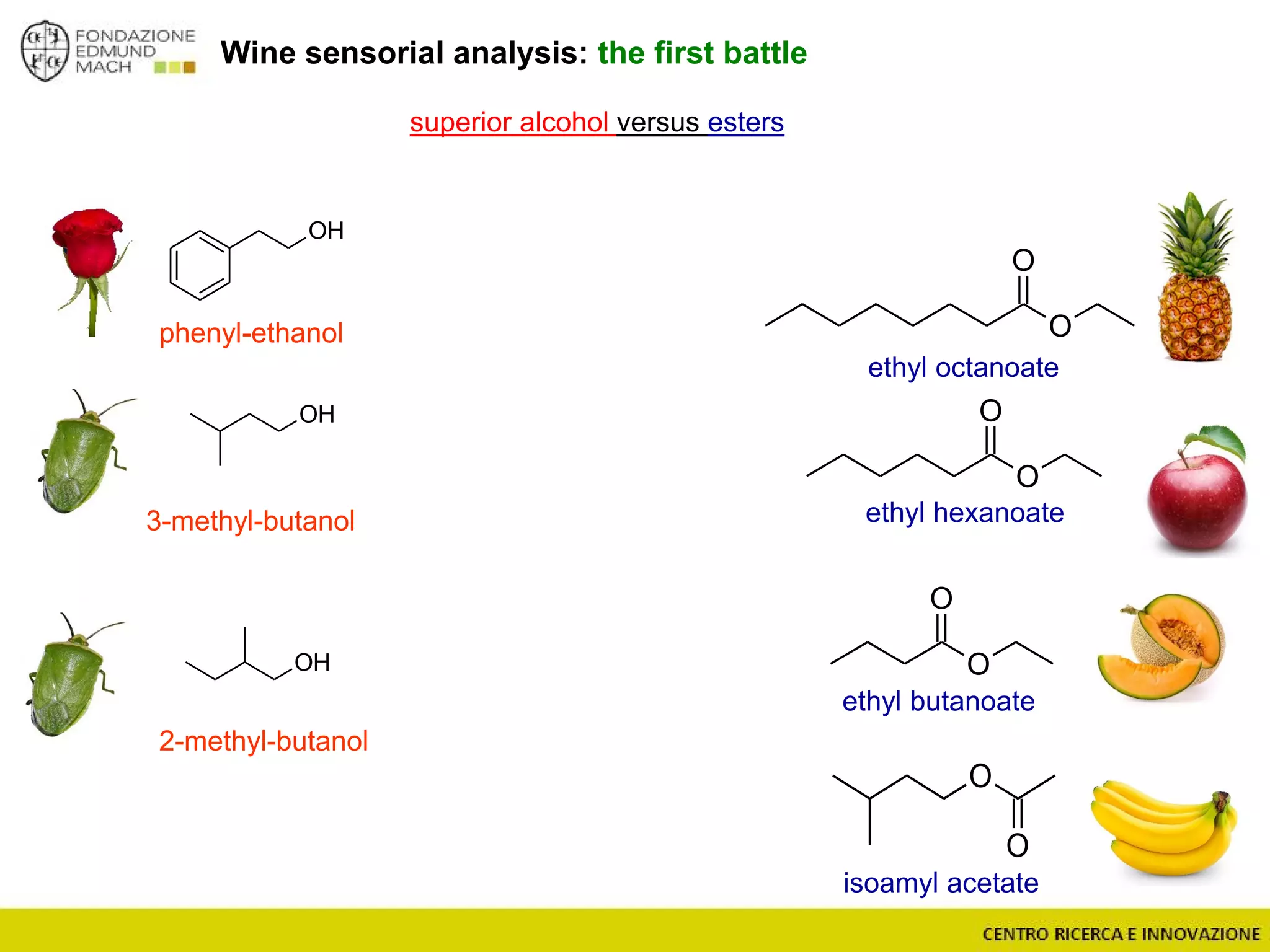
    Wine sensorial analysis:the first battle O O O O O O ethyl butanoate ethyl hexanoate ethyl octanoate O O isoamyl acetate OH OH phenyl-ethanol 3-methyl-butanol 2-methyl-butanol superior alcohol versus esters OH
  • 88.
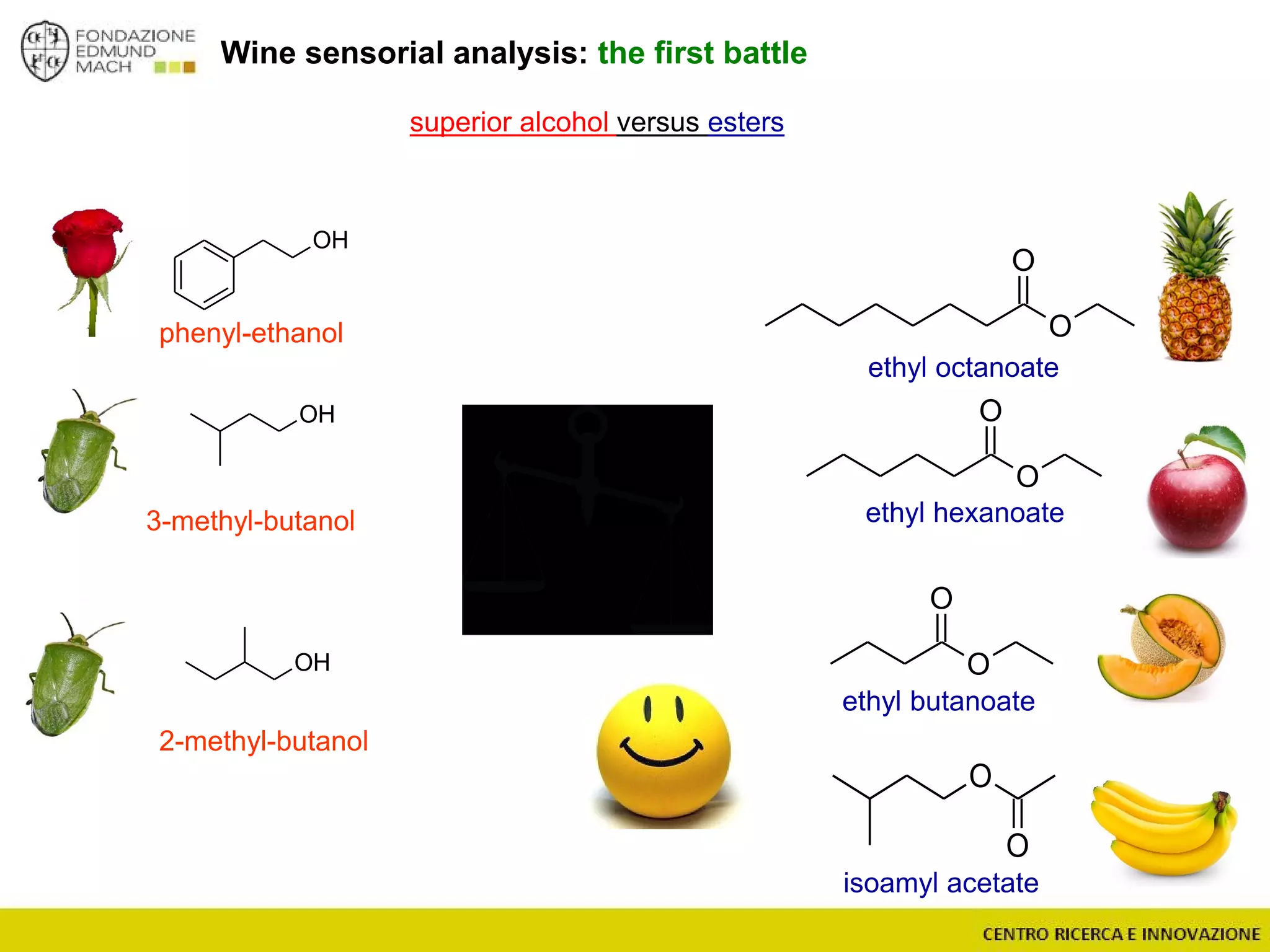
    Wine sensorial analysis:the first battle O O O O O O ethyl butanoate ethyl hexanoate ethyl octanoate O O isoamyl acetate OH OH phenyl-ethanol 3-methyl-butanol 2-methyl-butanol superior alcohol versus esters OH
  • 89.
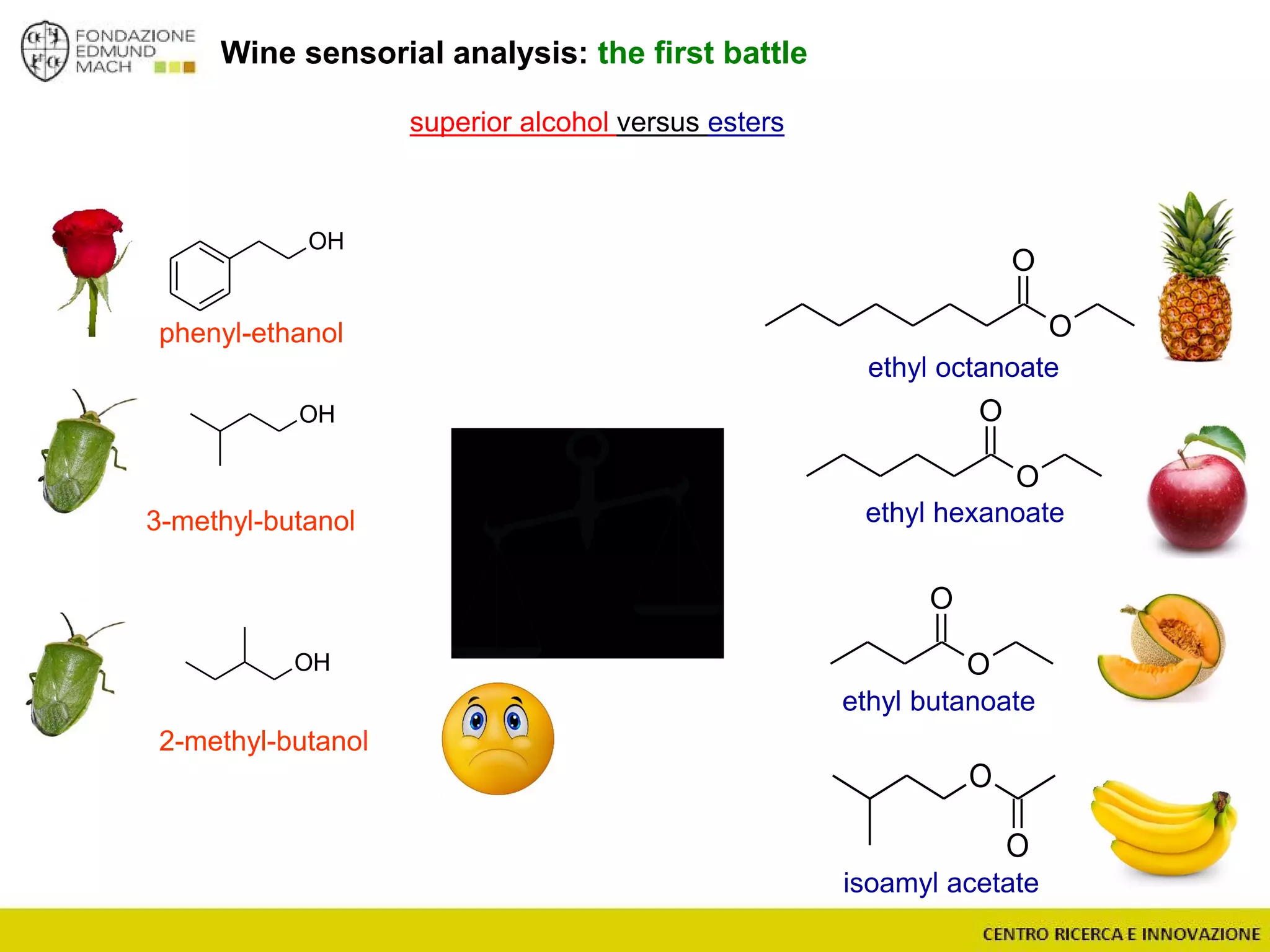
    Wine sensorial analysis:the first battle O O O O O O ethyl butanoate ethyl hexanoate ethyl octanoate O O isoamyl acetate OH OH phenyl-ethanol 3-methyl-butanol 2-methyl-butanol superior alcohol versus esters OH
  • 90.
  • 91.
    Wine sensorial analysis:aging Time ethyl esters Alcohols superior Phase I Phase II Phase III
  • 92.
    Wine sensorial analysis:barrel aging Time Fermentation barrique aromatic or non-aromatic silenced cultivar
  • 93.
    Wine sensorial analysis:barrel aging Time Fermentation barrique non-aromatic cultivar
  • 94.
  • 95.
    Wine Chemistry Design 1.linalool 2. pheyl-ethanol 3. isoamyl acetate 4 3-mercaptohexan-1-ol 5. β-damascenone linalool OH OH SH 3-mercaptohexan-1-ol 3MH phenyl-ethanol O O isoamyl acetate O β-damascenone OH