User-Centred Design in
                               Agile Development
                               Addressing user experience
2 March 2010


William Hudson
Principal Consultant
Syntagm Ltd

william.hudson@syntagm.co.uk
The case for user-centred design
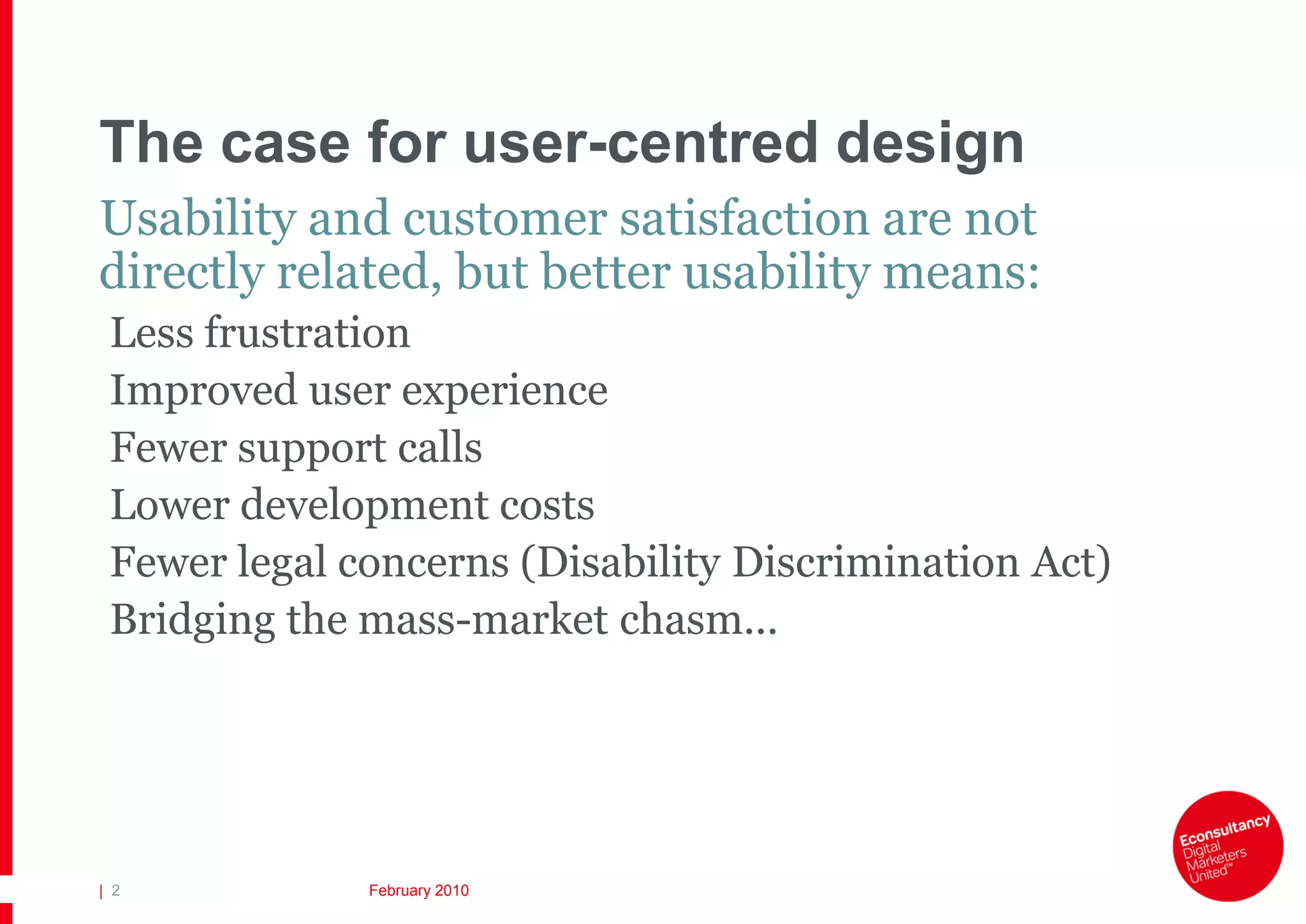
Usability and customer satisfaction are not
directly related, but better usability means:
 Less frustration
 Improved user experience
 Fewer support calls
 Lower development costs
 Fewer legal concerns (Disability Discrimination Act)
 Bridging the mass-market chasm...


| 2           February 2010
The case for user-centred design
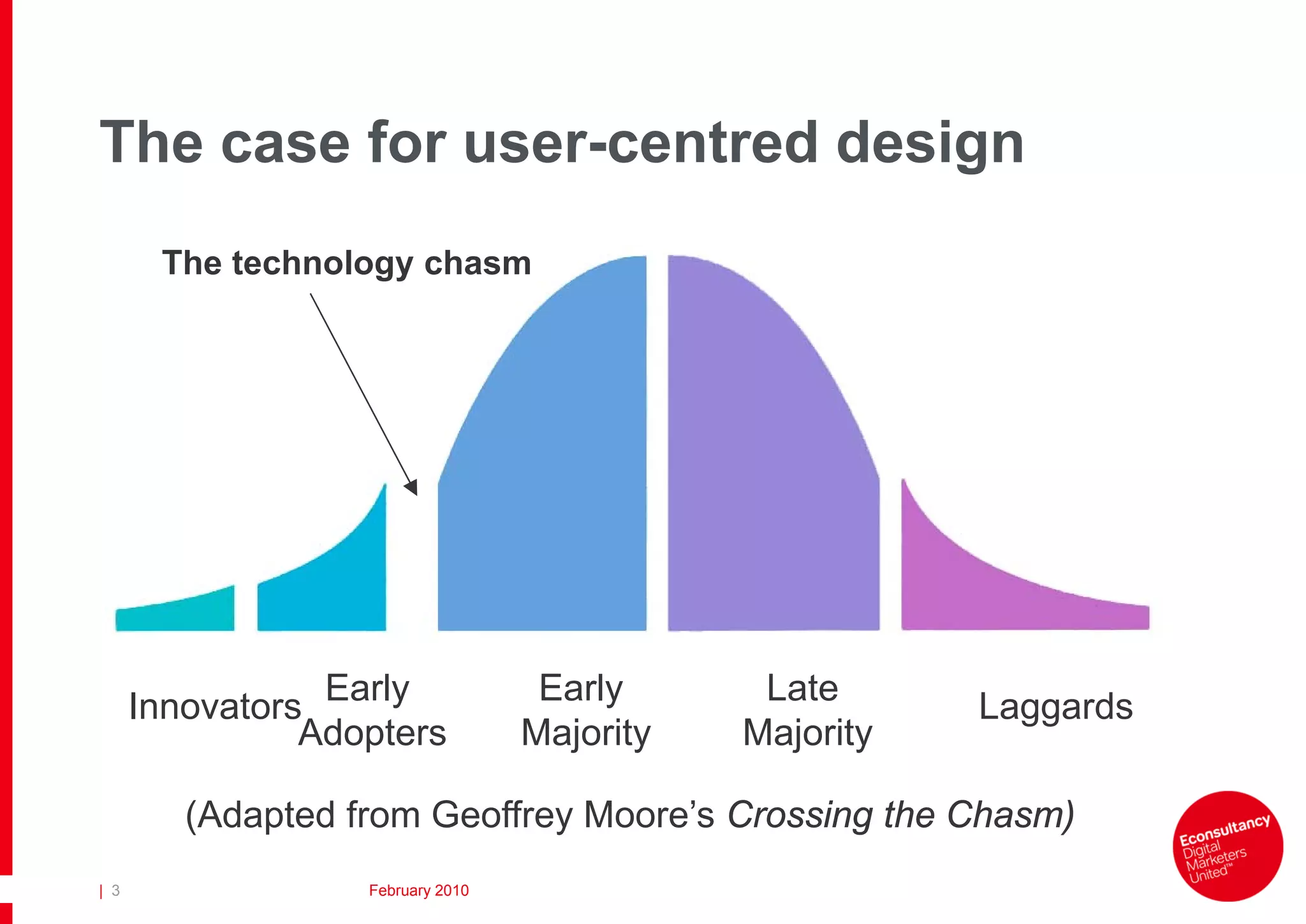
       The technology chasm


      Innovators Early              Early      Late      Laggards
                Adopters           Majority   Majority

         (Adapted from Geoffrey Moore’s Crossing the Chasm)
| 3                February 2010
Key features of user-centred design
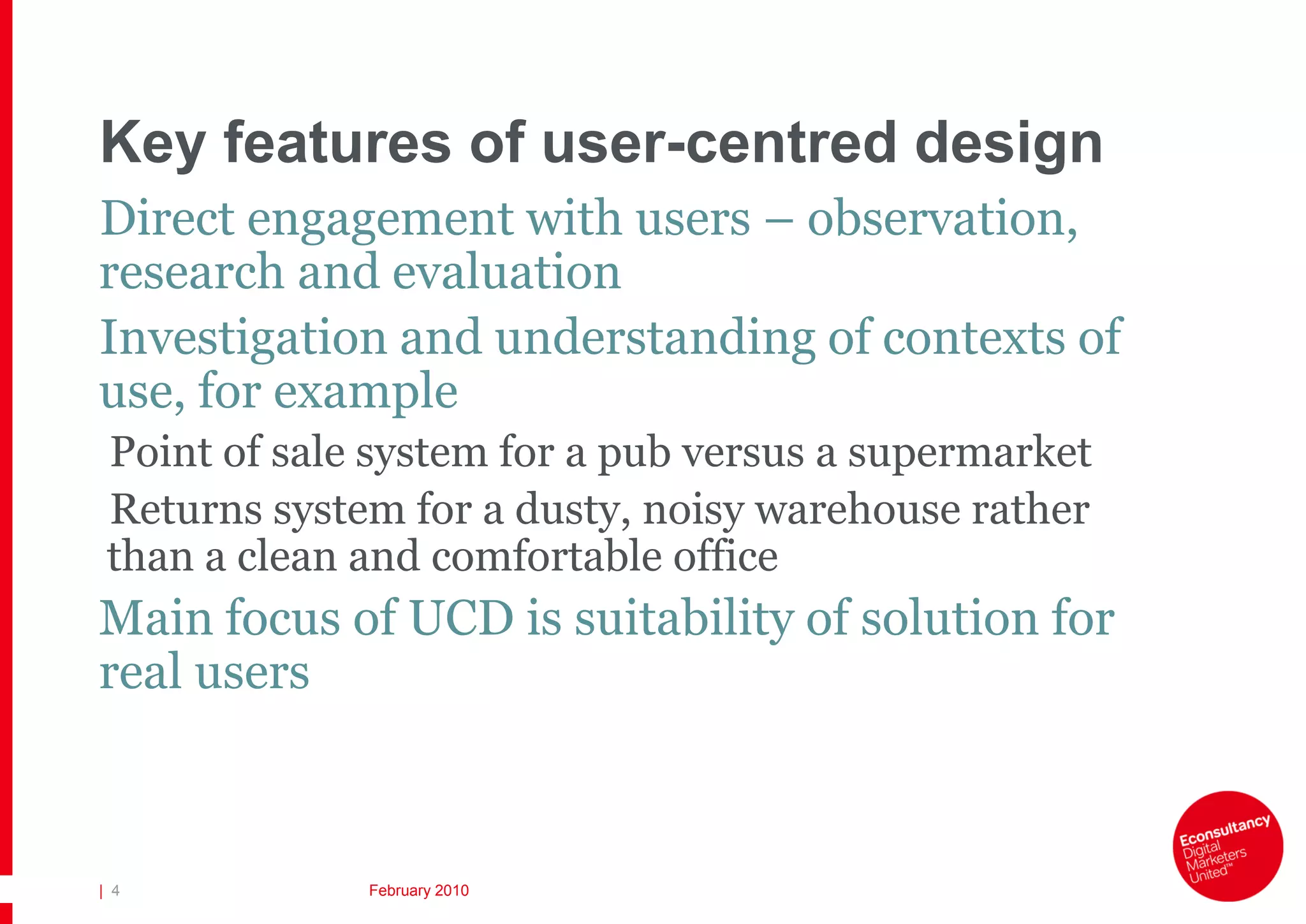
Direct engagement with users – observation,
research and evaluation
Investigation and understanding of contexts of
use, for example
 Point of sale system for a pub versus a supermarket
 Returns system for a dusty, noisy warehouse rather
 than a clean and comfortable office
Main focus of UCD is suitability of solution for
real users


| 4           February 2010
Key features of Agile
Small teams
Close quarters
Low process overheads
Focus on team motivation and working code

There are some side-effects though...


| 5         February 2010
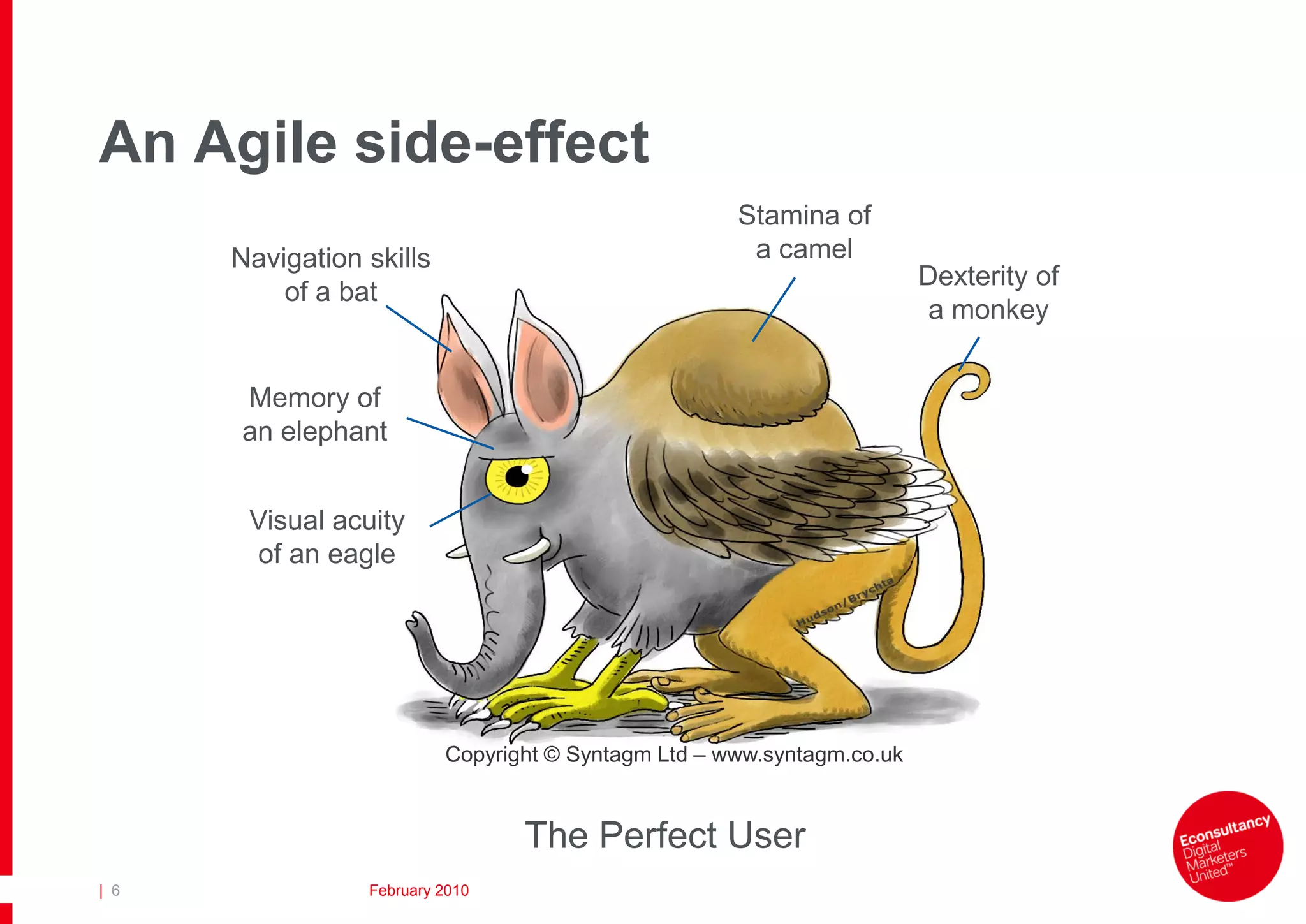
An Agile side-effect
                                                     Stamina of
      Navigation skills                               a camel
                                                                        Dexterity of
          of a bat
                                                                         a monkey


      Memory of
      an elephant


       Visual acuity
       of an eagle


                          Copyright © Syntagm Ltd – www.syntagm.co.uk


                                 The Perfect User
| 6              February 2010
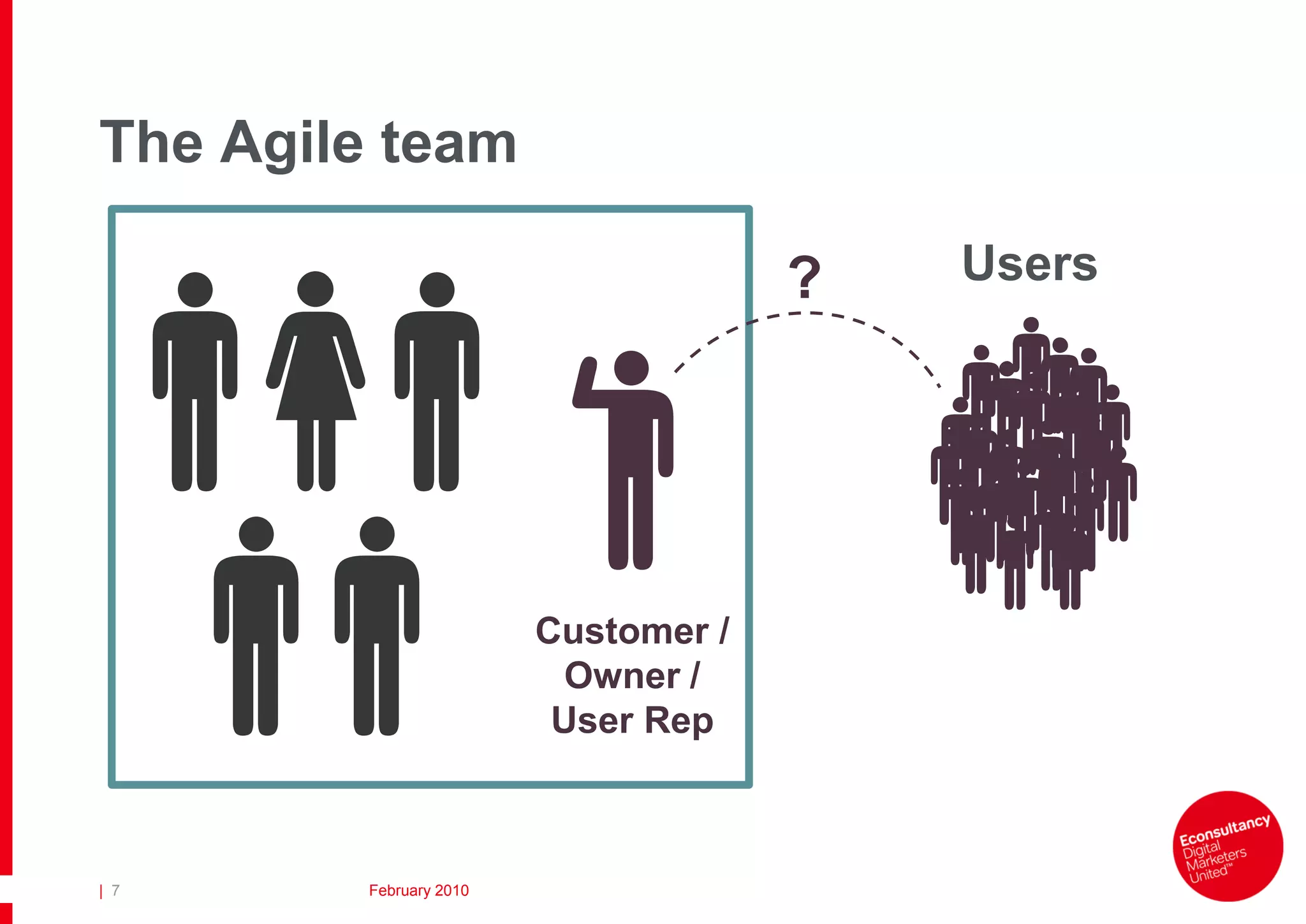
The Agile team

                                      ?   Users


                         Customer /
                           Owner /
                          User Rep


| 7      February 2010
The Agile-to-user relationship
Two main problems:
 1) No one person can represent or fully understand the
 needs of users in isolation
 Consider this actual user quotation:
 “What do you want to talk about, what we really do or
 what we’re supposed to do?”

 2) Developers find it hard to appreciate – and
 sometimes to understand – user-related issues such as
 usability


| 8           February 2010
Empathizing-
Systemizing theory


| 9     February 2010
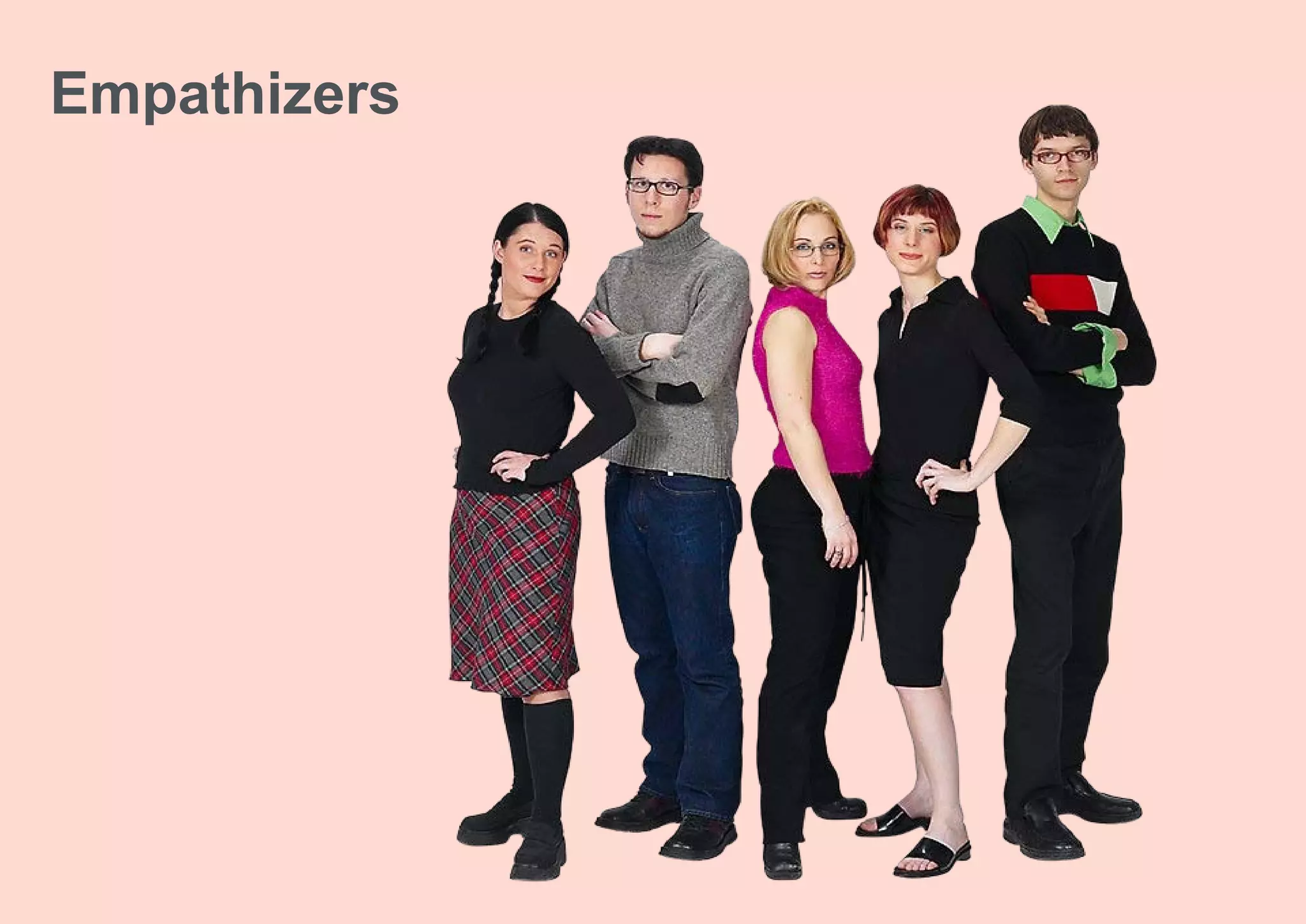
Empathizers
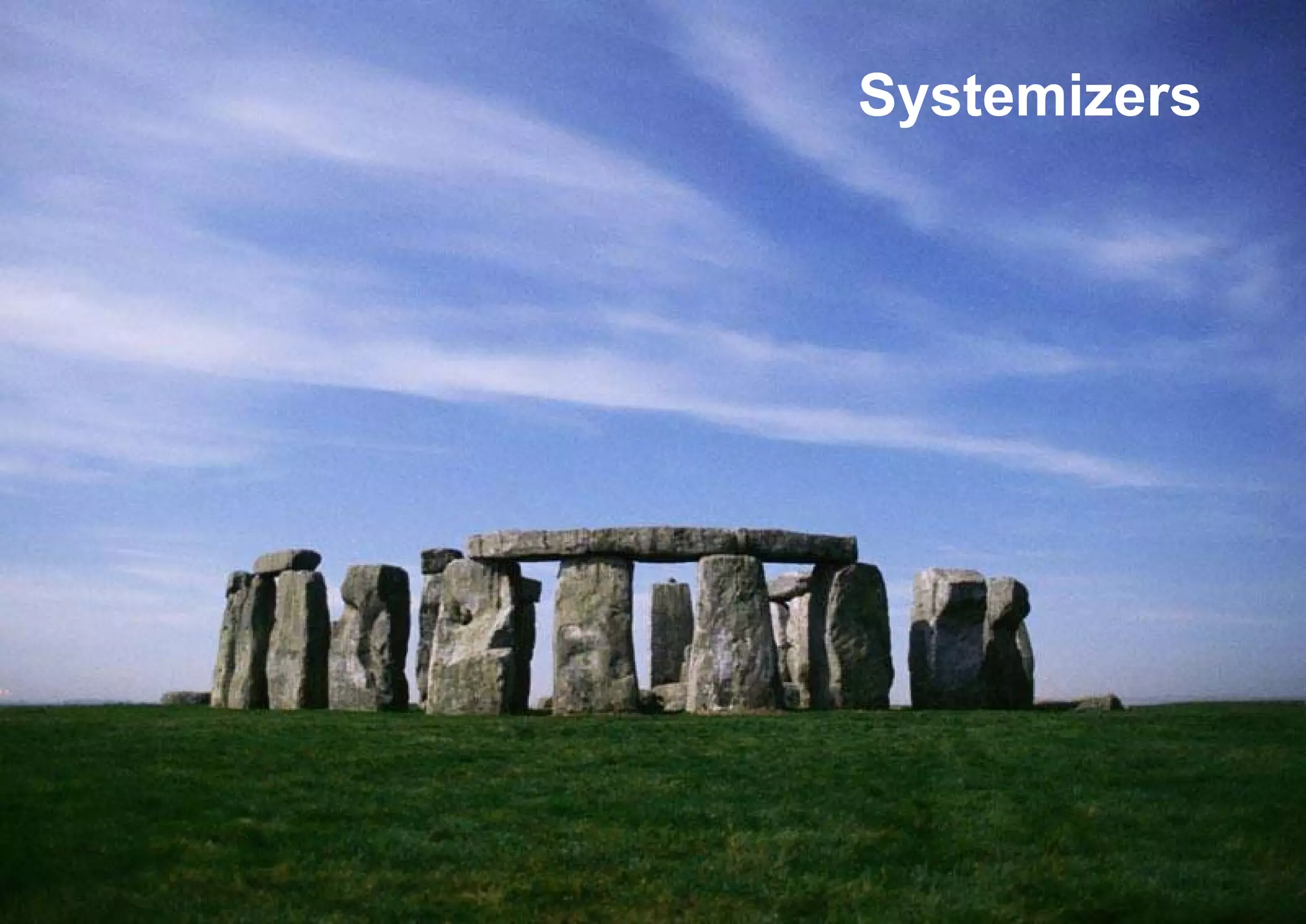
Systemizers
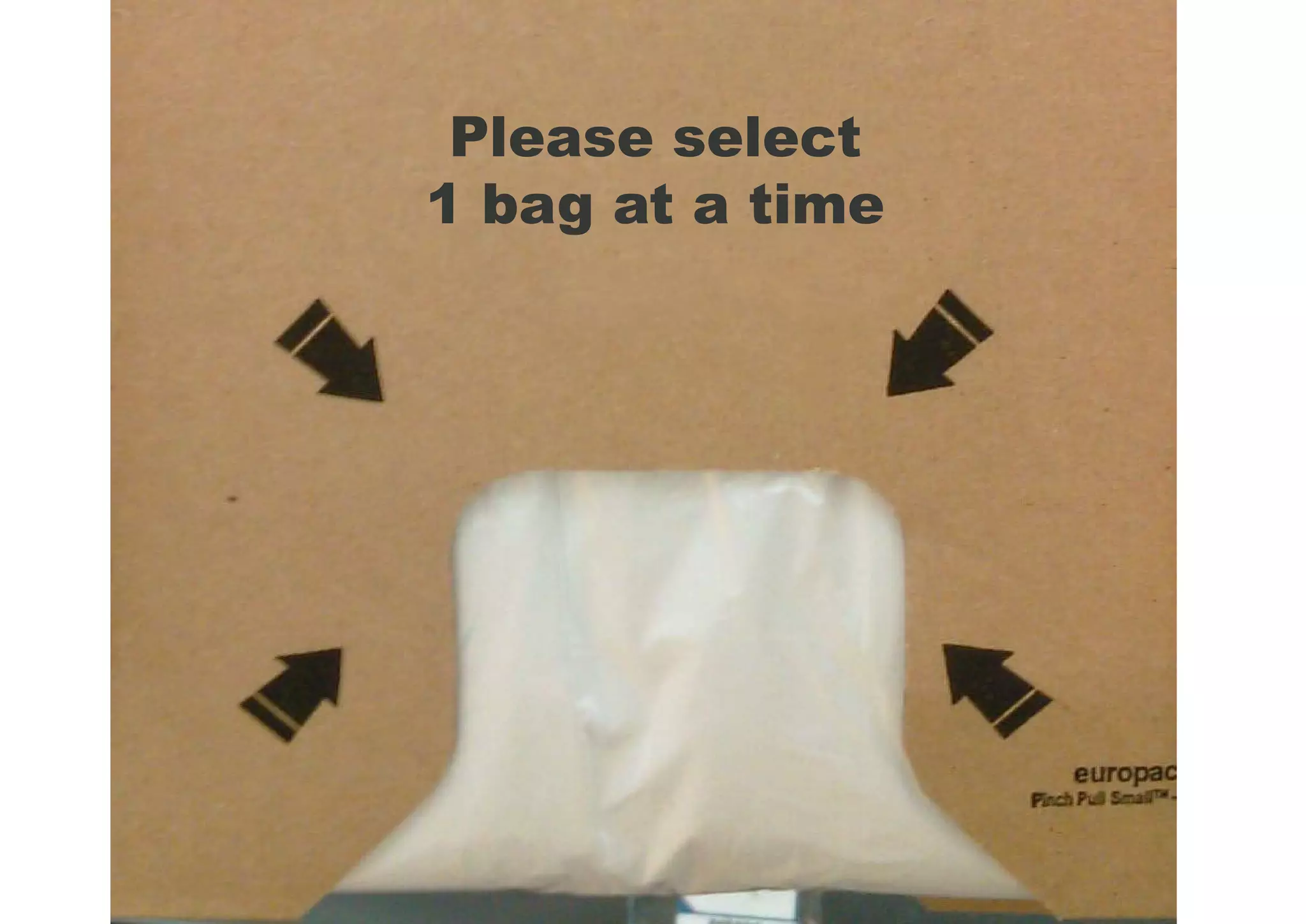
Please select
1 bag at a time
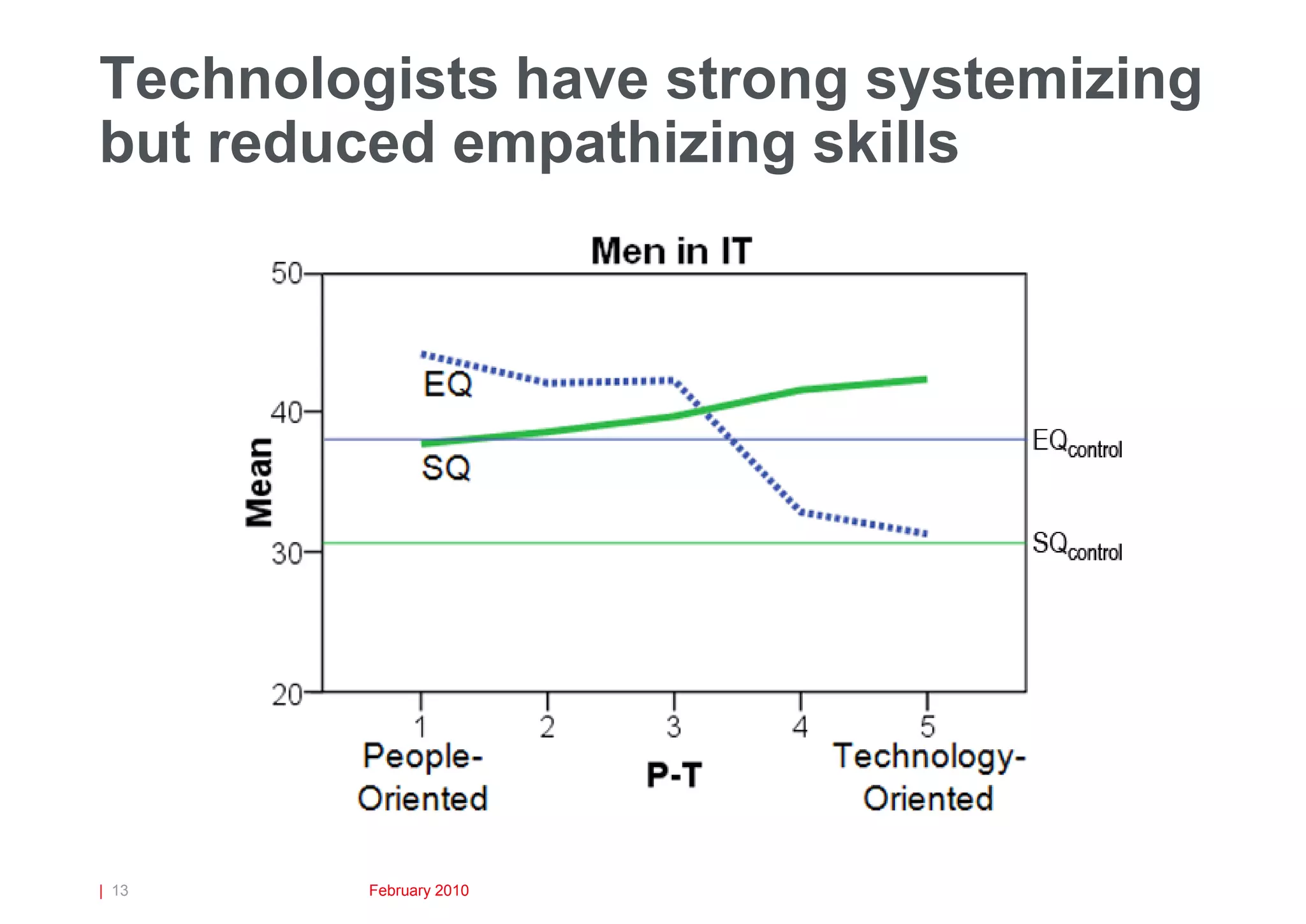
Technologists have strong systemizing
but reduced empathizing skills


| 13     February 2010
RTFM
| 14   February 2010
Empathetic design


| 15    February 2010
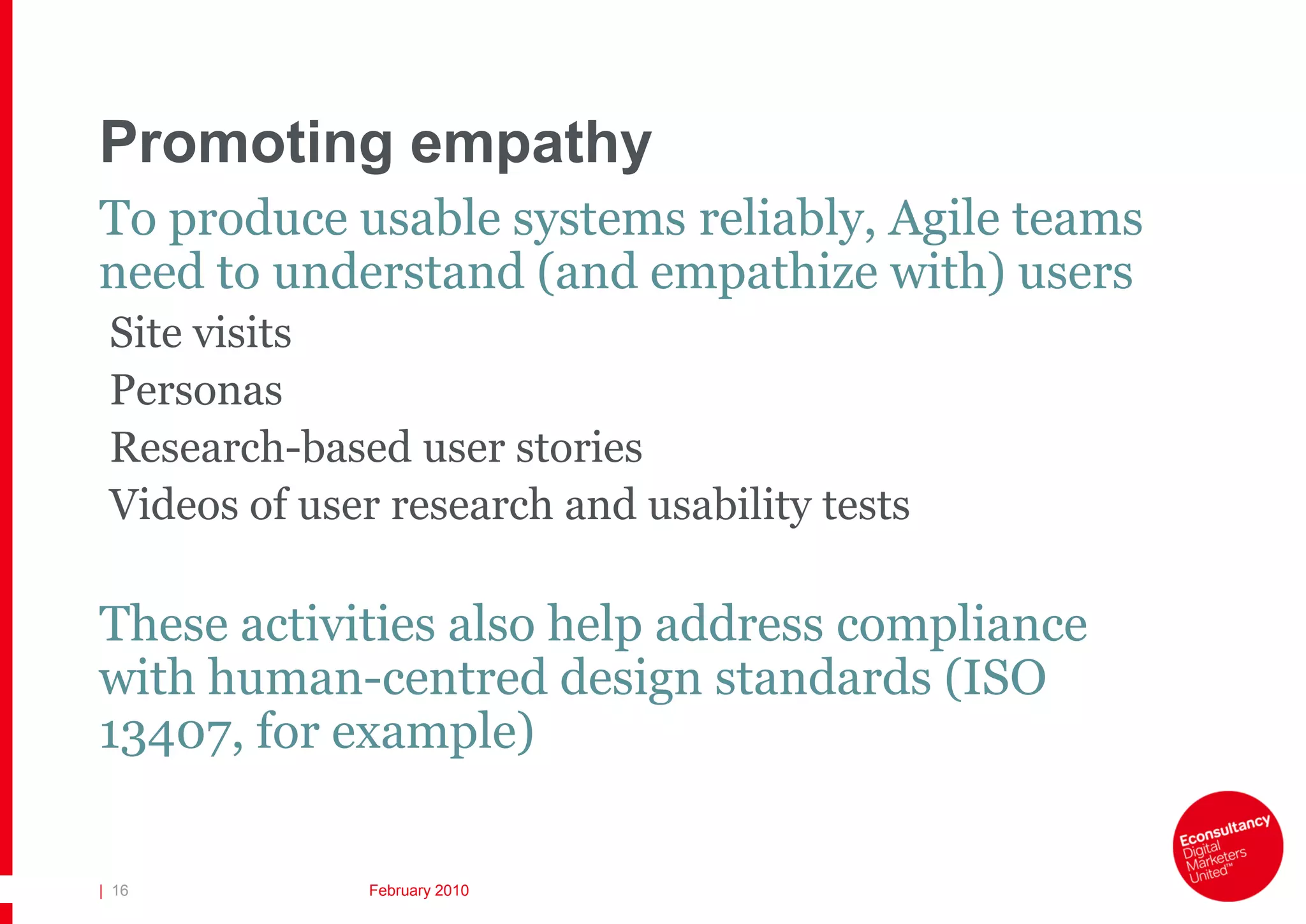
Promoting empathy
To produce usable systems reliably, Agile teams
need to understand (and empathize with) users
 Site visits
 Personas
 Research-based user stories
 Videos of user research and usability tests

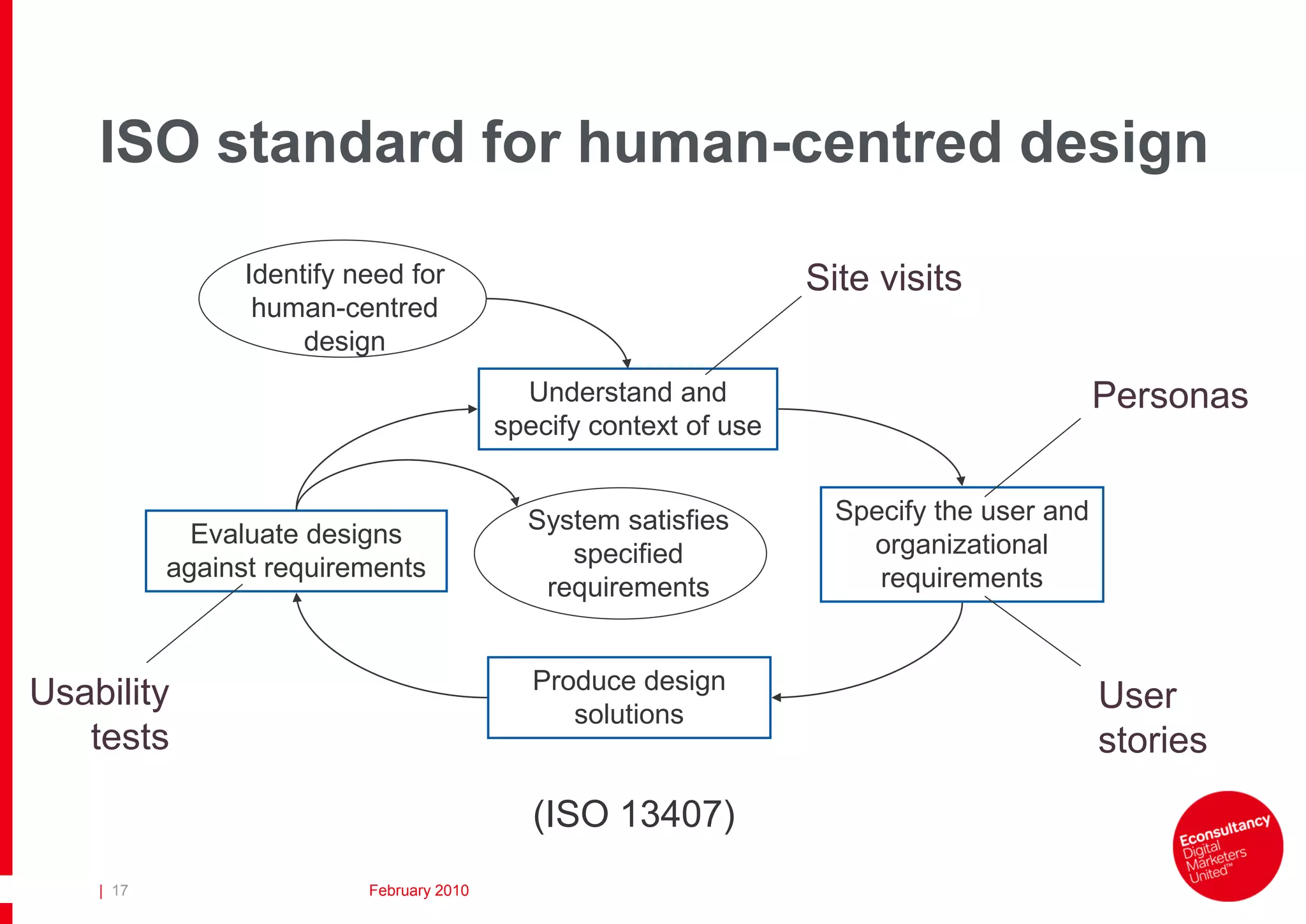
These activities also help address compliance
with human-centred design standards (ISO
13407, for example)

| 16          February 2010
ISO standard for human-centred design

                 Identify need for                                  Site visits
                  human-centred
                      design
                                             Understand and                                  Personas
                                           specify context of use


                                             System satisfies         Specify the user and
             Evaluate designs                                           organizational
                                                specified
           against requirements                                          requirements
                                              requirements


                                              Produce design
Usability                                                                                    User
                                                 solutions
   tests                                                                                     stories
                                              (ISO 13407)
    | 17                   February 2010
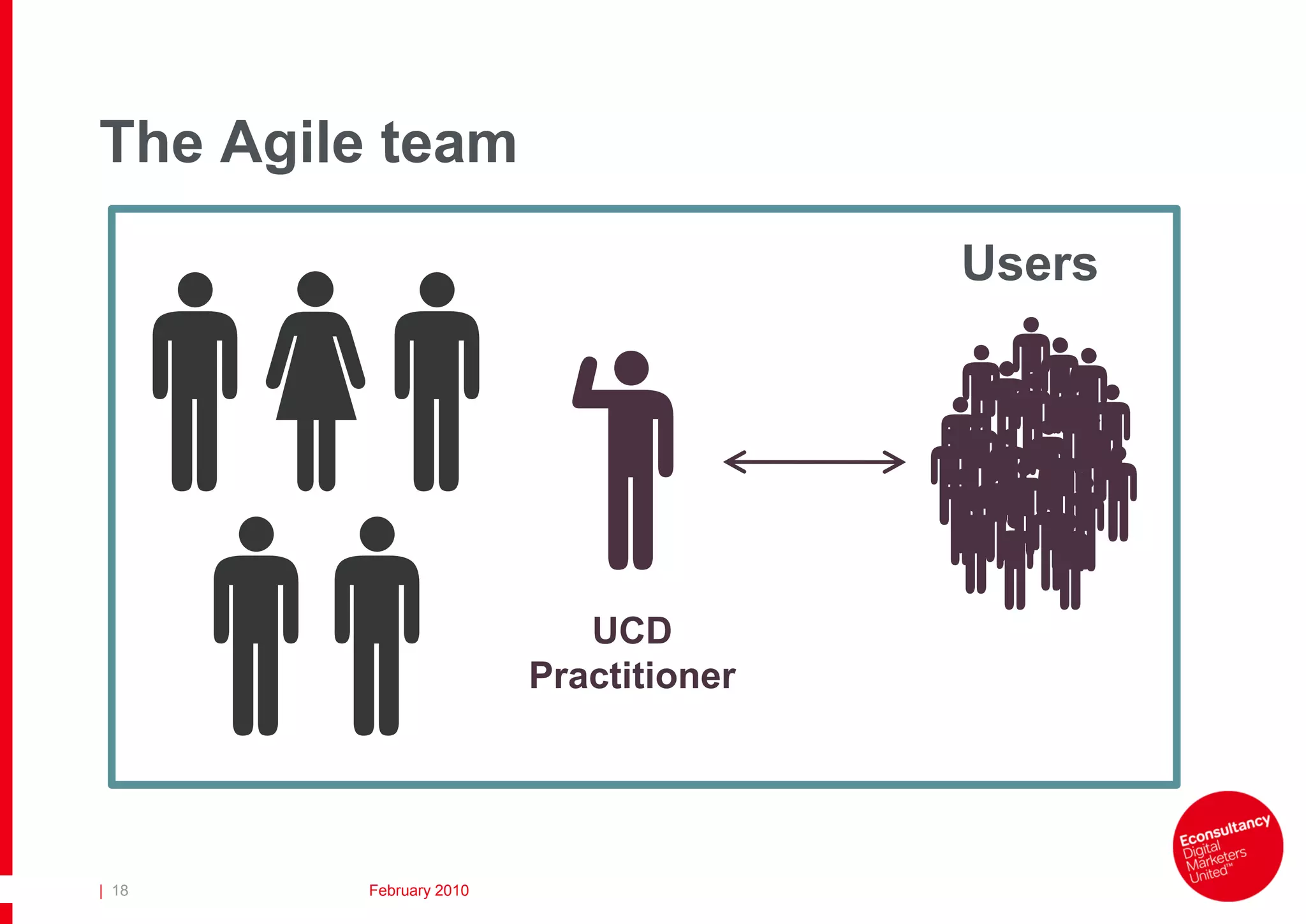
The Agile team
                                        Users


                            UCD
                         Practitioner


| 18     February 2010
Personas are a key focal point
People are much more positive towards
individuals than groups
Personas are fictitious (but credible) individuals
who represent the main users of a solution
Must be developed and agreed by the team – you
cannot promote empathy by forcing solutions on
key players
Personas form the basis of all discussions about
features and user stories


| 19        February 2010
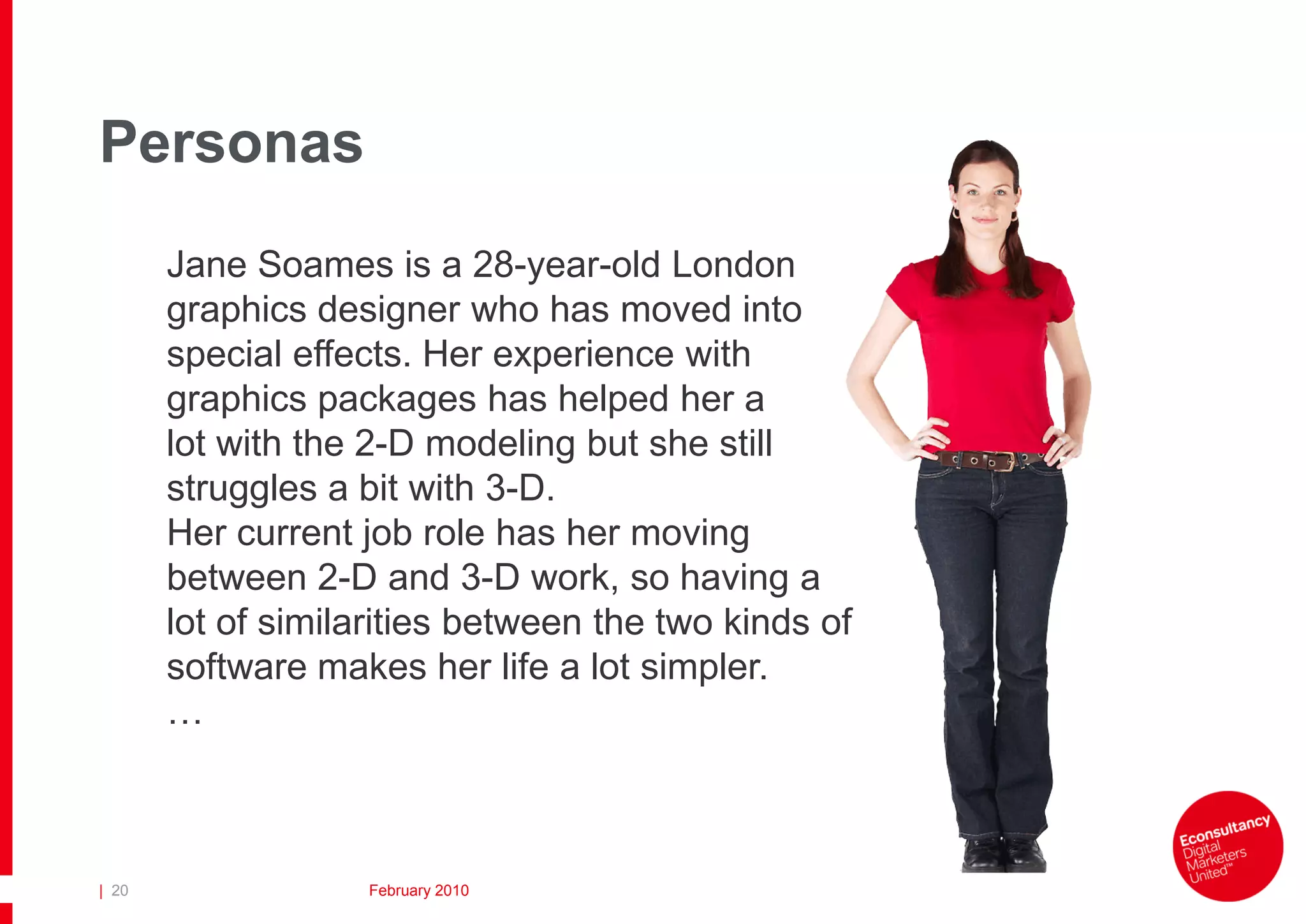
Personas
       Jane Soames is a 28-year-old London
       graphics designer who has moved into
       special effects. Her experience with
       graphics packages has helped her a
       lot with the 2-D modeling but she still
       struggles a bit with 3-D.
       Her current job role has her moving
       between 2-D and 3-D work, so having a
       lot of similarities between the two kinds of
       software makes her life a lot simpler.
       …


| 20                February 2010
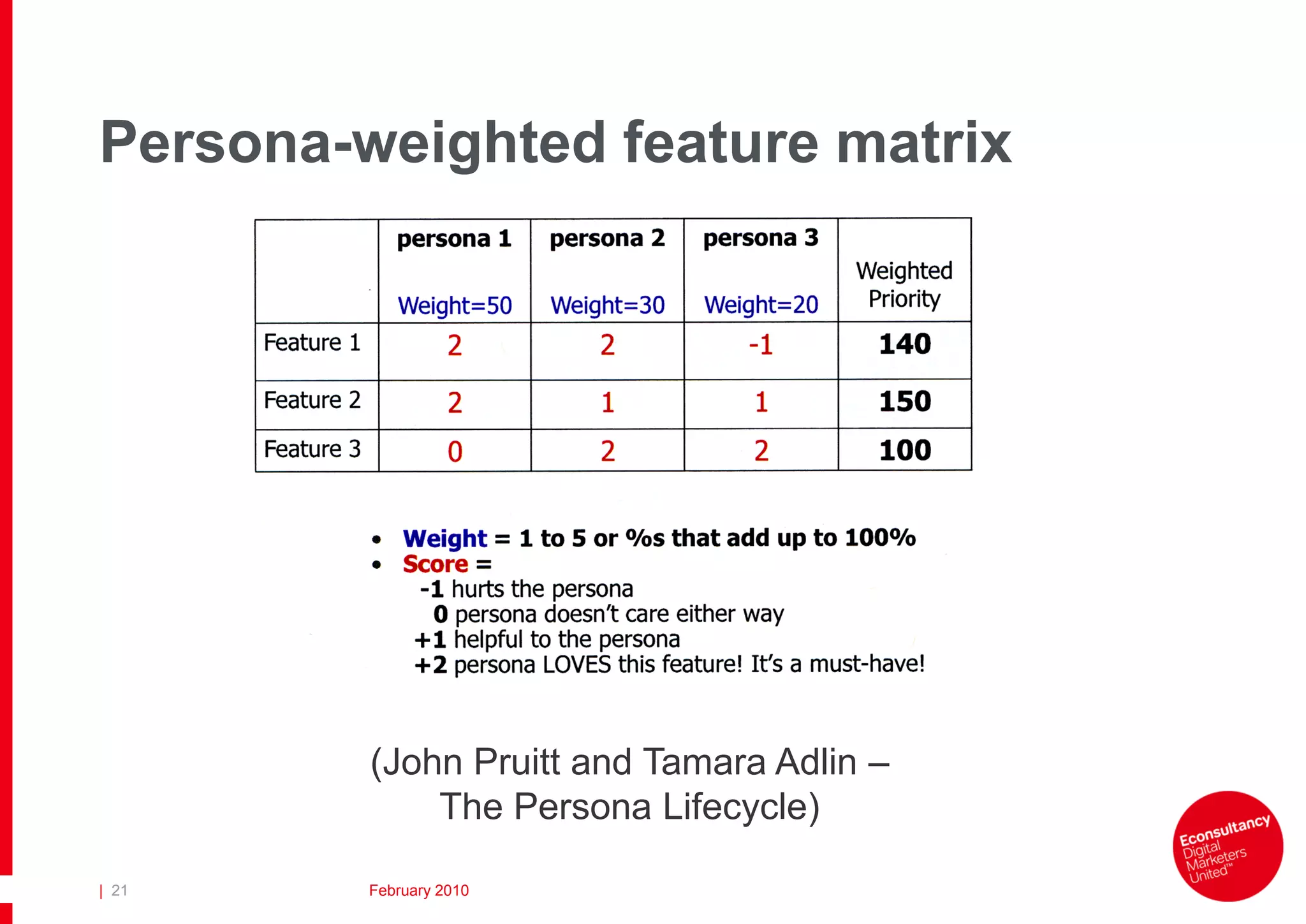
Persona-weighted feature matrix


         (John Pruitt and Tamara Adlin –
             The Persona Lifecycle)

| 21     February 2010
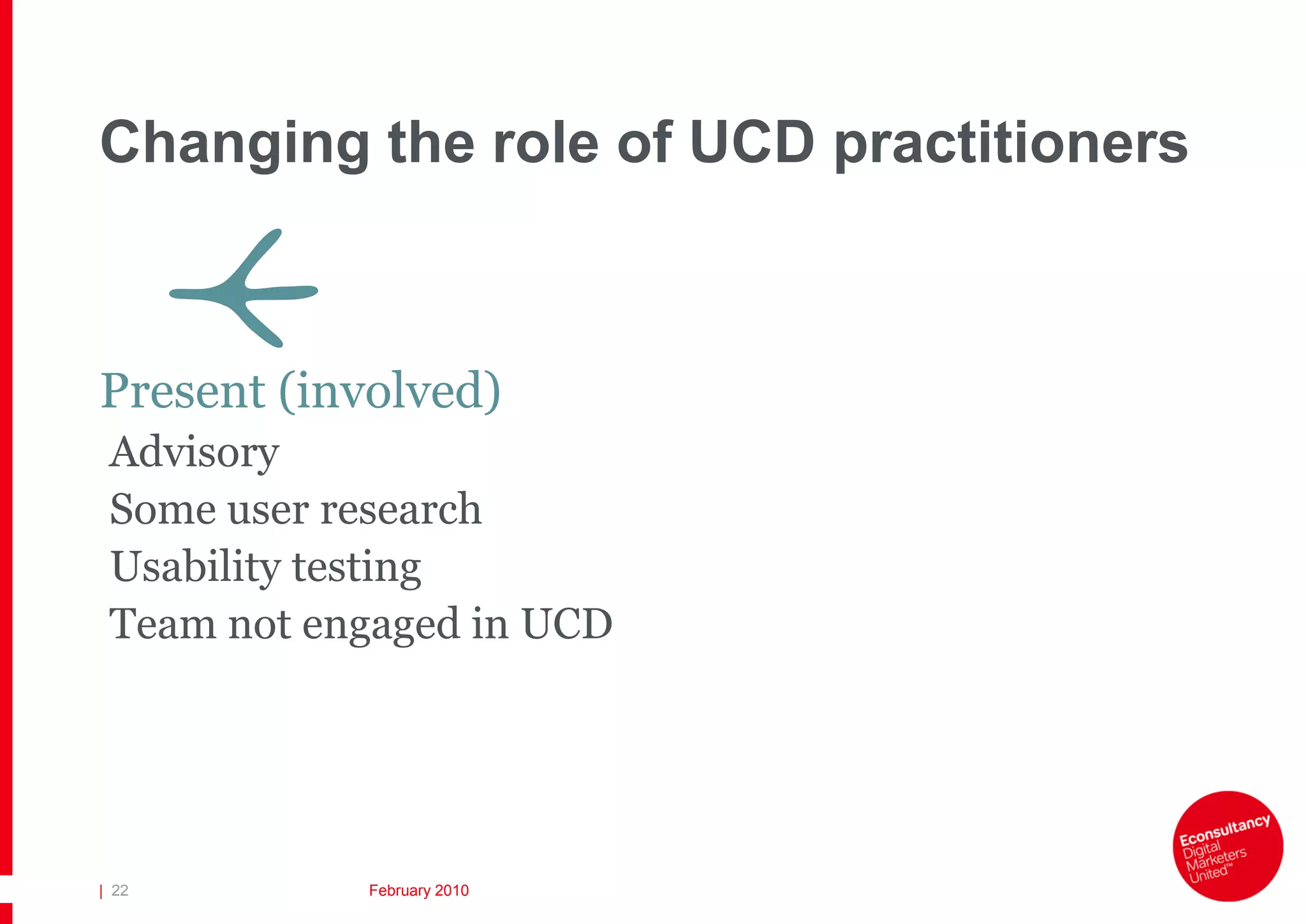
Changing the role of UCD practitioners

       V
Present (involved)
 Advisory
 Some user research
 Usability testing
 Team not engaged in UCD


| 22        February 2010
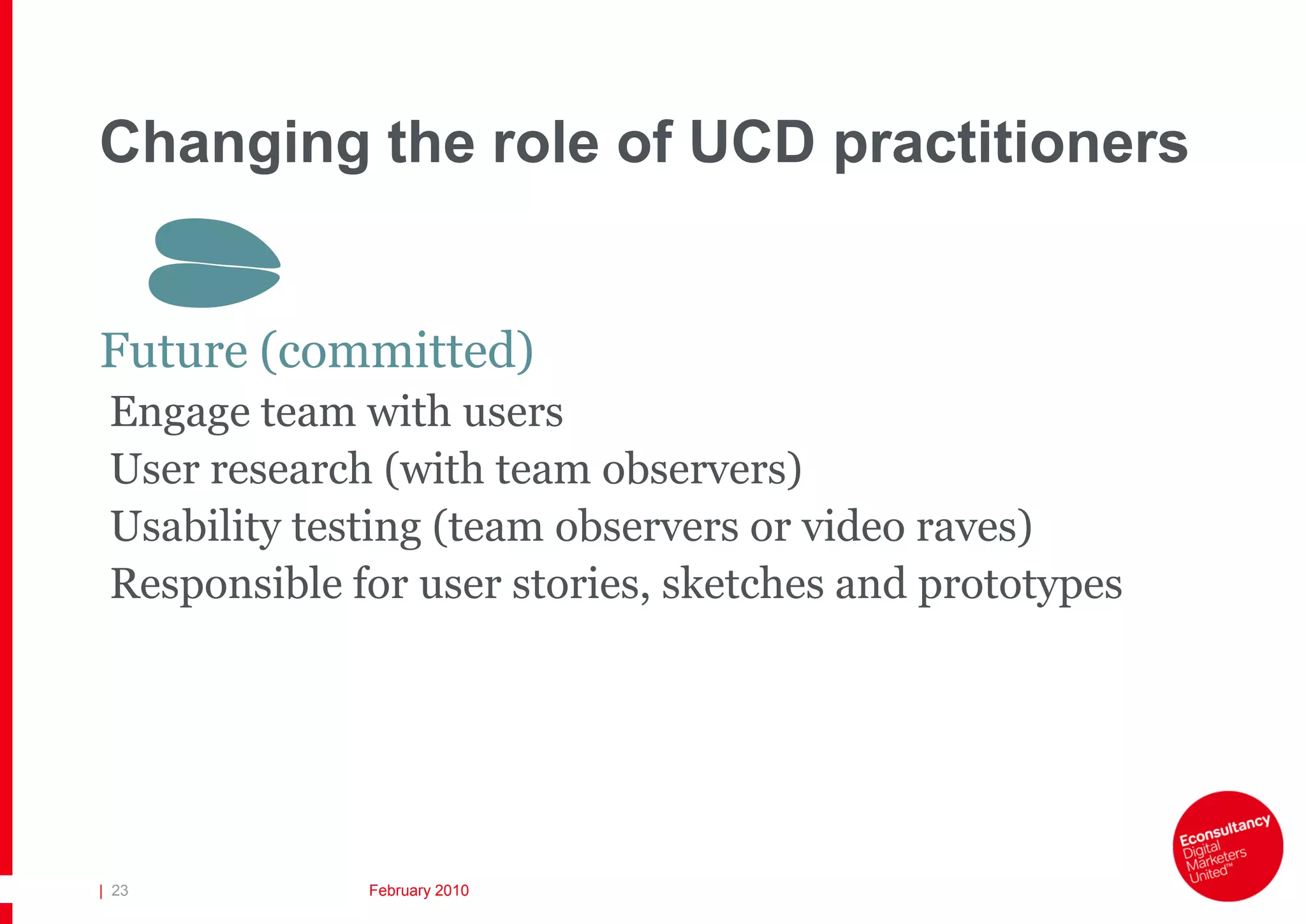
Changing the role of UCD practitioners

       S
Future (committed)
 Engage team with users
 User research (with team observers)
 Usability testing (team observers or video raves)
 Responsible for user stories, sketches and prototypes


| 23          February 2010
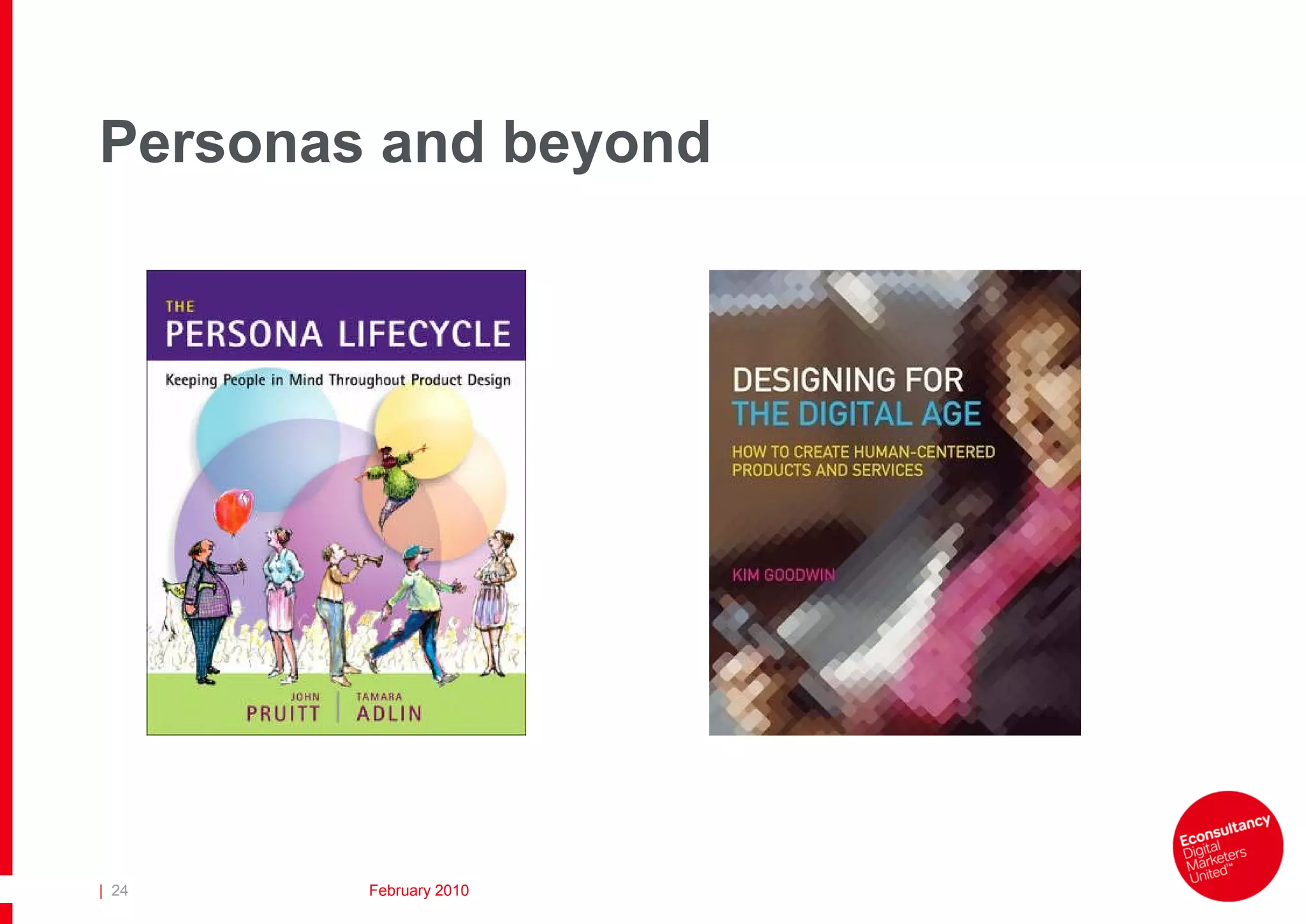
Personas and beyond


| 24    February 2010
Thanks for your time
  Econsultancy is a global independent community-based
  publisher, focused on best practice digital marketing and
  ecommerce. Our hub has 80,000+ members worldwide from
  clients, agencies and suppliers alike with over 90% member
  retention rate. We help our members build their internal
  capabilities via a combination of research reports and how-to
  guides, training and development, face-to-face conferences,
  forums and professional networking.
  For the last 10 years, our resources have helped members learn,
  make better decisions, build business cases, find the best
  suppliers, accelerate their careers and lead the way in best
  practices and innovation.

  Join Econsultancy today at http://econsultancy.com.
All rights reserved. No part of this presentation may be reproduced or transmitted in any form or by any
means, electronic or mechanical, including photocopy, recording or any information storage and retrieval
system, without prior permission in writing from the publisher. Copyright © Econsulancy.com Ltd 2009.


| 25                            February 2010

William Hudson Econsultancy Agile User centred design

  • 1.
    User-Centred Design in Agile Development Addressing user experience 2 March 2010 William Hudson Principal Consultant Syntagm Ltd william.hudson@syntagm.co.uk
  • 2.
    The case foruser-centred design Usability and customer satisfaction are not directly related, but better usability means: Less frustration Improved user experience Fewer support calls Lower development costs Fewer legal concerns (Disability Discrimination Act) Bridging the mass-market chasm... | 2 February 2010
  • 3.
    The case foruser-centred design The technology chasm Innovators Early Early Late Laggards Adopters Majority Majority (Adapted from Geoffrey Moore’s Crossing the Chasm) | 3 February 2010
  • 4.
    Key features ofuser-centred design Direct engagement with users – observation, research and evaluation Investigation and understanding of contexts of use, for example Point of sale system for a pub versus a supermarket Returns system for a dusty, noisy warehouse rather than a clean and comfortable office Main focus of UCD is suitability of solution for real users | 4 February 2010
  • 5.
    Key features ofAgile Small teams Close quarters Low process overheads Focus on team motivation and working code There are some side-effects though... | 5 February 2010
  • 6.
    An Agile side-effect Stamina of Navigation skills a camel Dexterity of of a bat a monkey Memory of an elephant Visual acuity of an eagle Copyright © Syntagm Ltd – www.syntagm.co.uk The Perfect User | 6 February 2010
  • 7.
    The Agile team ? Users Customer / Owner / User Rep | 7 February 2010
  • 8.
    The Agile-to-user relationship Twomain problems: 1) No one person can represent or fully understand the needs of users in isolation Consider this actual user quotation: “What do you want to talk about, what we really do or what we’re supposed to do?” 2) Developers find it hard to appreciate – and sometimes to understand – user-related issues such as usability | 8 February 2010
  • 9.
  • 10.
  • 11.
  • 12.
  • 13.
    Technologists have strongsystemizing but reduced empathizing skills | 13 February 2010
  • 14.
    RTFM | 14 February 2010
  • 15.
    Empathetic design | 15 February 2010
  • 16.
    Promoting empathy To produceusable systems reliably, Agile teams need to understand (and empathize with) users Site visits Personas Research-based user stories Videos of user research and usability tests These activities also help address compliance with human-centred design standards (ISO 13407, for example) | 16 February 2010
  • 17.
    ISO standard forhuman-centred design Identify need for Site visits human-centred design Understand and Personas specify context of use System satisfies Specify the user and Evaluate designs organizational specified against requirements requirements requirements Produce design Usability User solutions tests stories (ISO 13407) | 17 February 2010
  • 18.
    The Agile team Users UCD Practitioner | 18 February 2010
  • 19.
    Personas are akey focal point People are much more positive towards individuals than groups Personas are fictitious (but credible) individuals who represent the main users of a solution Must be developed and agreed by the team – you cannot promote empathy by forcing solutions on key players Personas form the basis of all discussions about features and user stories | 19 February 2010
  • 20.
    Personas Jane Soames is a 28-year-old London graphics designer who has moved into special effects. Her experience with graphics packages has helped her a lot with the 2-D modeling but she still struggles a bit with 3-D. Her current job role has her moving between 2-D and 3-D work, so having a lot of similarities between the two kinds of software makes her life a lot simpler. … | 20 February 2010
  • 21.
    Persona-weighted feature matrix (John Pruitt and Tamara Adlin – The Persona Lifecycle) | 21 February 2010
  • 22.
    Changing the roleof UCD practitioners V Present (involved) Advisory Some user research Usability testing Team not engaged in UCD | 22 February 2010
  • 23.
    Changing the roleof UCD practitioners S Future (committed) Engage team with users User research (with team observers) Usability testing (team observers or video raves) Responsible for user stories, sketches and prototypes | 23 February 2010
  • 24.
    Personas and beyond |24 February 2010
  • 25.
    Thanks for yourtime Econsultancy is a global independent community-based publisher, focused on best practice digital marketing and ecommerce. Our hub has 80,000+ members worldwide from clients, agencies and suppliers alike with over 90% member retention rate. We help our members build their internal capabilities via a combination of research reports and how-to guides, training and development, face-to-face conferences, forums and professional networking. For the last 10 years, our resources have helped members learn, make better decisions, build business cases, find the best suppliers, accelerate their careers and lead the way in best practices and innovation. Join Econsultancy today at http://econsultancy.com. All rights reserved. No part of this presentation may be reproduced or transmitted in any form or by any means, electronic or mechanical, including photocopy, recording or any information storage and retrieval system, without prior permission in writing from the publisher. Copyright © Econsulancy.com Ltd 2009. | 25 February 2010