Wikis in the Classroom

Presentors
Tammy Gillmore
Rachel Newell
Drew Nolley
JimBob Turner
Introduction to Topic:
What is a Wiki?
➢

A website that allows collaborative editing of
its content and structure by its users

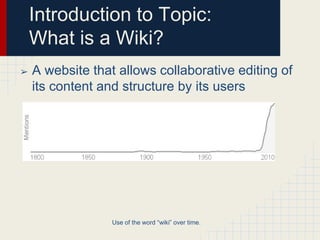
Use of the word “wiki” over time.
Creating the Wiki:
The Birth
➢ “WikiWikiWeb,” 1994, 1995 -- Ward
Cunningham
➢ c2.com (Cunningham’s company website): first
true wiki
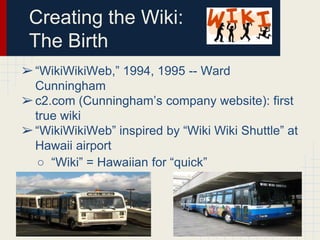
➢ “WikiWikiWeb” inspired by “Wiki Wiki Shuttle” at
Hawaii airport
○ “Wiki” = Hawaiian for “quick”
Top 10 Wiki Sites
1. Wikispaces
2. PBworks
3. Wetpaint
4. Zoho Wiki
5. FreedomShare
6. Wikia
7. Wikispot
8. Wiki-Site
9. Weebly
10.Google Sites
Why We Distrust(ed) Them:
The Teenage Years
➢Unreliable -- anyone can edit them
○ EX: Wikipedia
➢2005 study by Denning, et al.: Problem
areas
1. Accuracy: Not knowing which content is accurate; often
exacerbated by lack of references.
2. Motives: Not knowing the motives of editors, who may
be biased for various reasons.
3. Expertise: Not knowing the expertise of editors.
4. Stability: Not knowing the stability of an article and how
much it has changed since the last viewing.
5. Coverage: Spotty coverage of topics.
6. Sources: Cited information may come from hidden or non-independent
source
Why We CAN Trust Them:
The 20s/Adulthood
➢Fairly strictly monitored

➢Most wikis will tell you when a text was last
edited
➢A lot of the information is fairly accurate
➢Most wikis have privacy settings
○ Blocks outside users
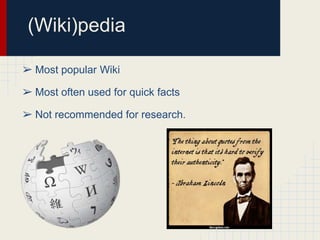
(Wiki)pedia
➢ Most popular Wiki

➢ Most often used for quick facts
➢ Not recommended for research.
As a Think Tank...in class
•
•

•

Wiki pages become a powerful tool in the classroom as think tanks.
o This method allows students to take ownership of the wiki and interact
in class with other students.
A teacher will set up a wiki page and allow the students to access the page
and contribute to the wiki.
o Each student can have their own page on the wiki to put material and
allow other students to comment on it.
o There is also a discussion tab available and this allows the teacher (or
a student) to start a discussion.
 Material can move from just the
classroom to the web.
It is also a way to make the quiet students
vocal and gather valuable ideas.
o It is easier for some to voice opinions
on the web rather than in the classroom.
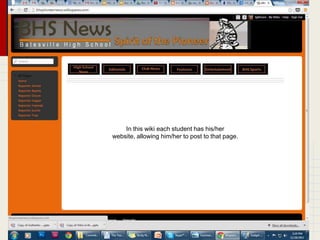
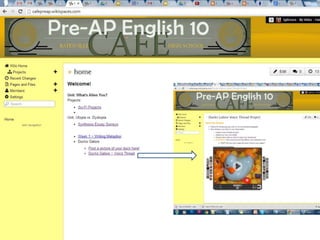
In this wiki each student has his/her
website, allowing him/her to post to that page.
As a Website
•
•
•
•
•

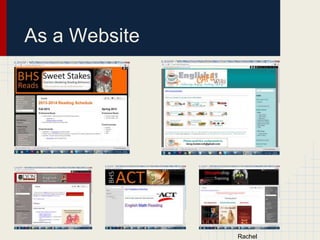
Websites are expensive to create and maintain; wikis are not!
They are very similar to blogs, but provide a more efficient way to organize
information.
o See a blog example here.
They are easy to update

You can store and organize information easily
You can use them to collaborate with other people on projects
o See a wiki example here.
As a Website
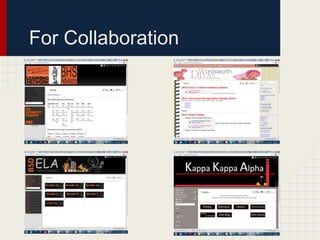
For Collaboration
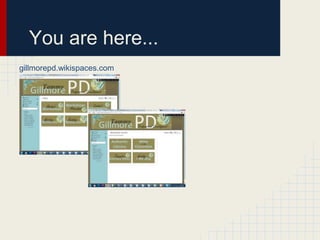
You are here...
gillmorepd.wikispaces.com
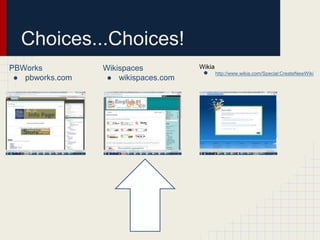
Choices...Choices!
PBWorks
● pbworks.com

Wikispaces
● wikispaces.com

Wikia

●

http://www.wikia.com/Special:CreateNewWiki
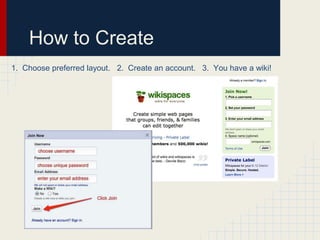
How to Create
1. Choose preferred layout. 2. Create an account. 3. You have a wiki!
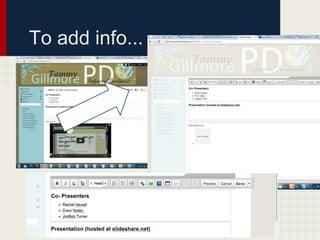
To add info...
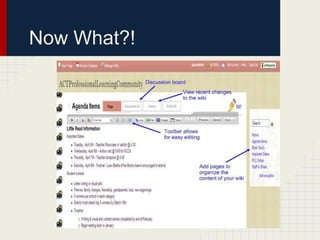
Now What?!
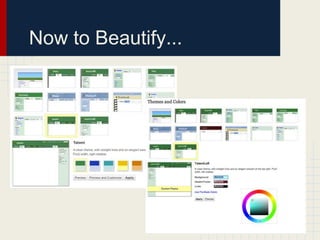
Now to Beautify...
Questions?
Works Cited
“Can You Ever Trust a Wiki? ImpactingPerceived Trustworthiness in
Wikipedia” 12 Nov. 2008. Web.

Google. Definitions.https://www.google.com/search?q=definition+of+wiki&oq=definition+of+w&sour
ceid=chrome&espv=210&es_sm=93&ie=UTF-8

History of Wikis. http://wikis.wikia.com/wiki/History_of_wikis
Kapuler, David. “Top 10 Sites for Creating a Wiki.
http://www.techlearning.com/default.aspx?tabid=67&entryid=583
“The Teachers’ Guide to Wikipedia in the Classroom.” Teach Thought. 9 Oct.
2013. Nov. 2013. http://www.teachthought.com/technology/teachers-guide-wikipedia-classroom/

Wikis in the classroom

  • 1.
    Wikis in theClassroom Presentors Tammy Gillmore Rachel Newell Drew Nolley JimBob Turner
  • 2.
    Introduction to Topic: Whatis a Wiki? ➢ A website that allows collaborative editing of its content and structure by its users Use of the word “wiki” over time.
  • 3.
    Creating the Wiki: TheBirth ➢ “WikiWikiWeb,” 1994, 1995 -- Ward Cunningham ➢ c2.com (Cunningham’s company website): first true wiki ➢ “WikiWikiWeb” inspired by “Wiki Wiki Shuttle” at Hawaii airport ○ “Wiki” = Hawaiian for “quick”
  • 4.
    Top 10 WikiSites 1. Wikispaces 2. PBworks 3. Wetpaint 4. Zoho Wiki 5. FreedomShare 6. Wikia 7. Wikispot 8. Wiki-Site 9. Weebly 10.Google Sites
  • 5.
    Why We Distrust(ed)Them: The Teenage Years ➢Unreliable -- anyone can edit them ○ EX: Wikipedia ➢2005 study by Denning, et al.: Problem areas 1. Accuracy: Not knowing which content is accurate; often exacerbated by lack of references. 2. Motives: Not knowing the motives of editors, who may be biased for various reasons. 3. Expertise: Not knowing the expertise of editors. 4. Stability: Not knowing the stability of an article and how much it has changed since the last viewing. 5. Coverage: Spotty coverage of topics. 6. Sources: Cited information may come from hidden or non-independent source
  • 6.
    Why We CANTrust Them: The 20s/Adulthood ➢Fairly strictly monitored ➢Most wikis will tell you when a text was last edited ➢A lot of the information is fairly accurate ➢Most wikis have privacy settings ○ Blocks outside users
  • 7.
    (Wiki)pedia ➢ Most popularWiki ➢ Most often used for quick facts ➢ Not recommended for research.
  • 8.
    As a ThinkTank...in class • • • Wiki pages become a powerful tool in the classroom as think tanks. o This method allows students to take ownership of the wiki and interact in class with other students. A teacher will set up a wiki page and allow the students to access the page and contribute to the wiki. o Each student can have their own page on the wiki to put material and allow other students to comment on it. o There is also a discussion tab available and this allows the teacher (or a student) to start a discussion.  Material can move from just the classroom to the web. It is also a way to make the quiet students vocal and gather valuable ideas. o It is easier for some to voice opinions on the web rather than in the classroom.
  • 9.
    In this wikieach student has his/her website, allowing him/her to post to that page.
  • 11.
    As a Website • • • • • Websitesare expensive to create and maintain; wikis are not! They are very similar to blogs, but provide a more efficient way to organize information. o See a blog example here. They are easy to update You can store and organize information easily You can use them to collaborate with other people on projects o See a wiki example here.
  • 12.
  • 13.
  • 14.
  • 15.
  • 16.
    How to Create 1.Choose preferred layout. 2. Create an account. 3. You have a wiki!
  • 17.
  • 18.
  • 19.
  • 20.
  • 21.
    Works Cited “Can YouEver Trust a Wiki? ImpactingPerceived Trustworthiness in Wikipedia” 12 Nov. 2008. Web. Google. Definitions.https://www.google.com/search?q=definition+of+wiki&oq=definition+of+w&sour ceid=chrome&espv=210&es_sm=93&ie=UTF-8 History of Wikis. http://wikis.wikia.com/wiki/History_of_wikis Kapuler, David. “Top 10 Sites for Creating a Wiki. http://www.techlearning.com/default.aspx?tabid=67&entryid=583 “The Teachers’ Guide to Wikipedia in the Classroom.” Teach Thought. 9 Oct. 2013. Nov. 2013. http://www.teachthought.com/technology/teachers-guide-wikipedia-classroom/