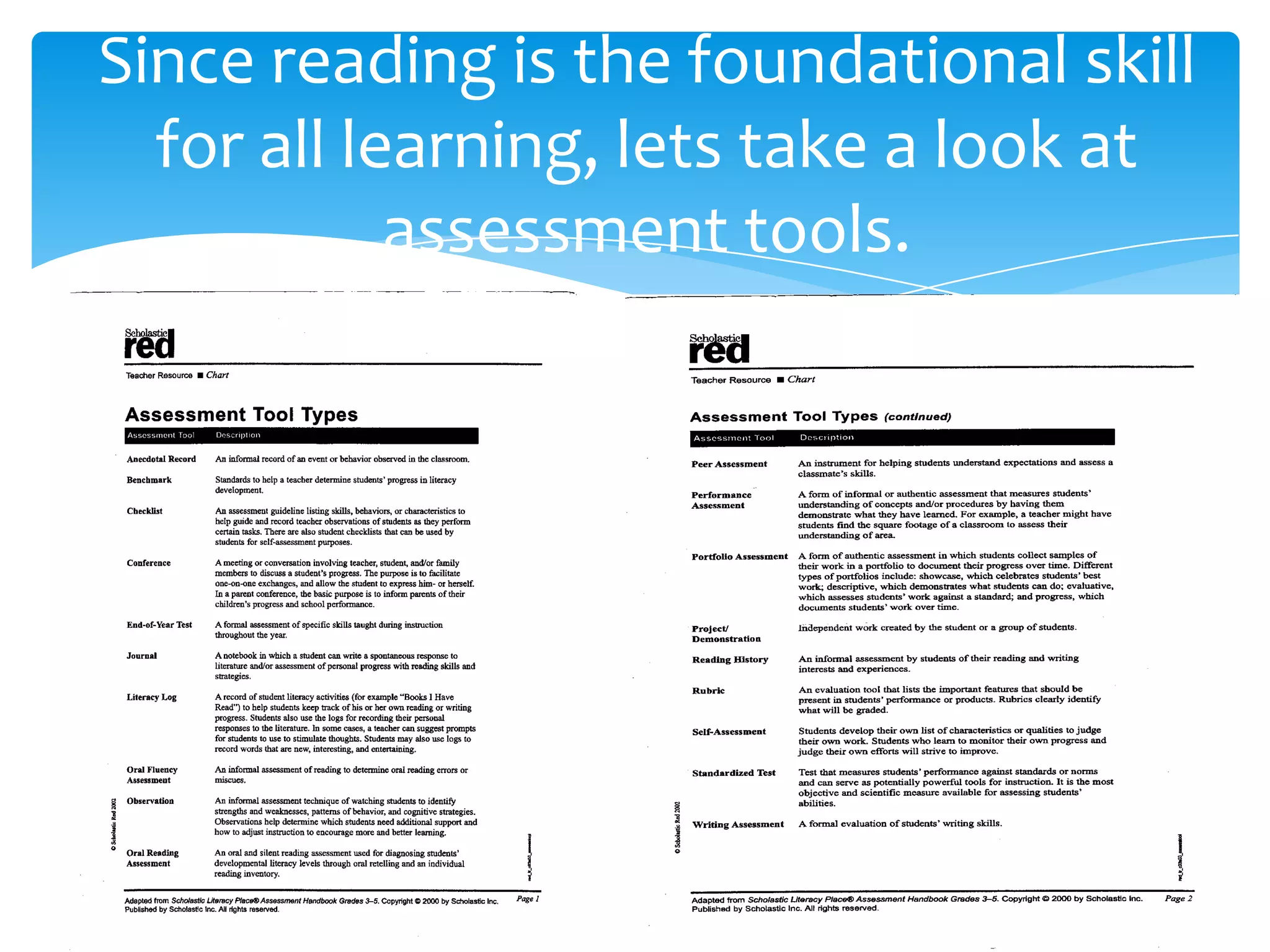
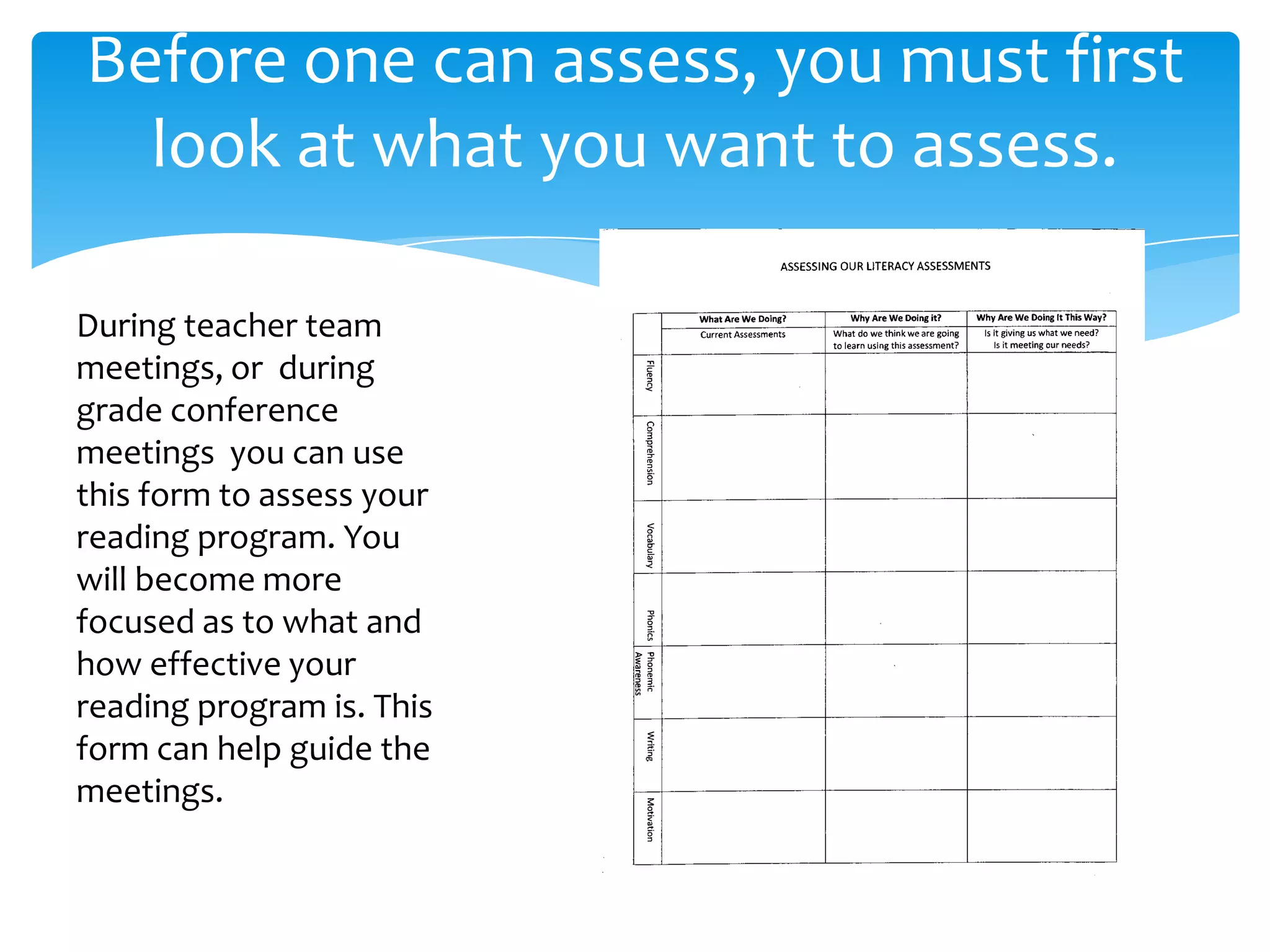
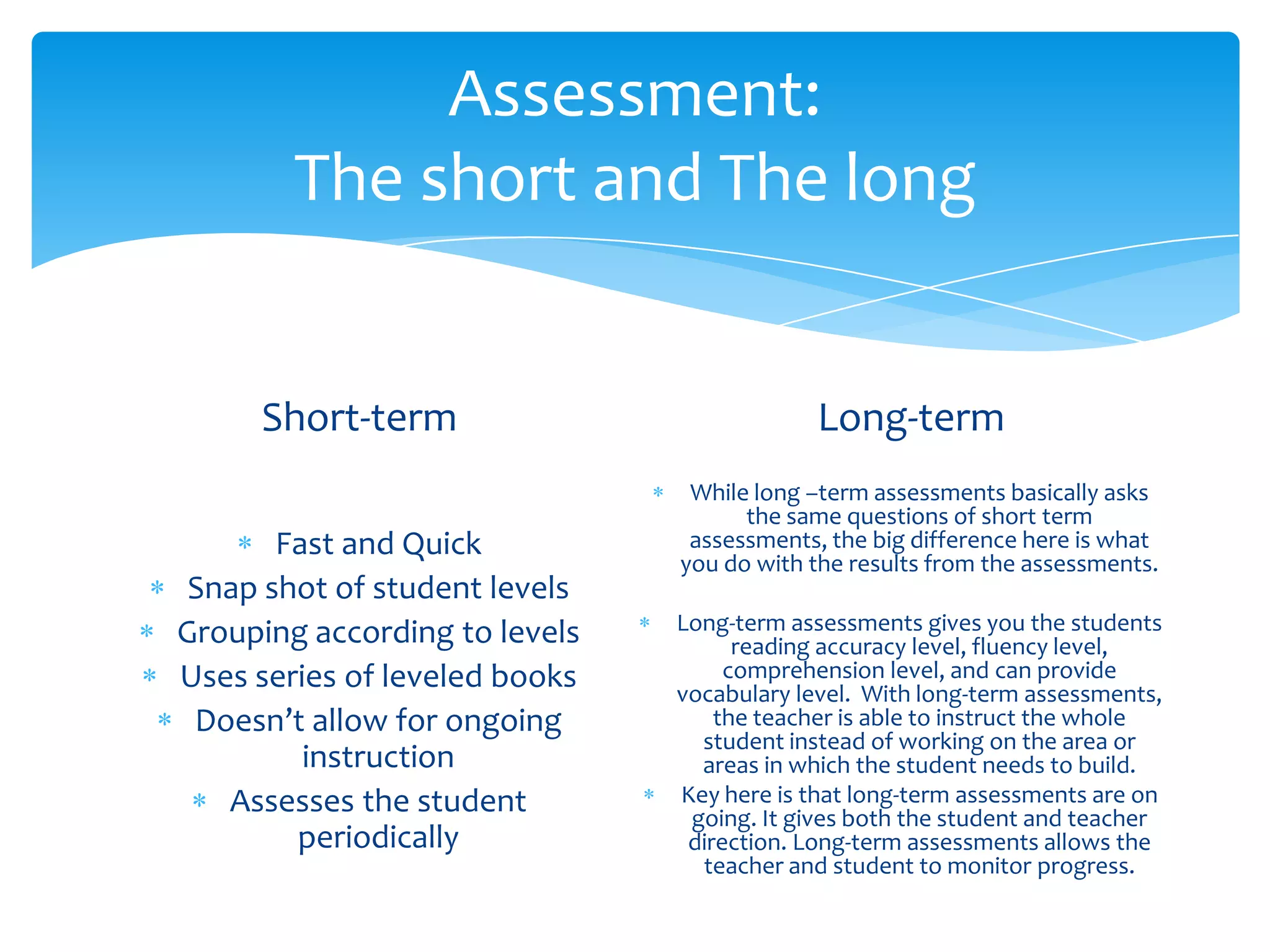
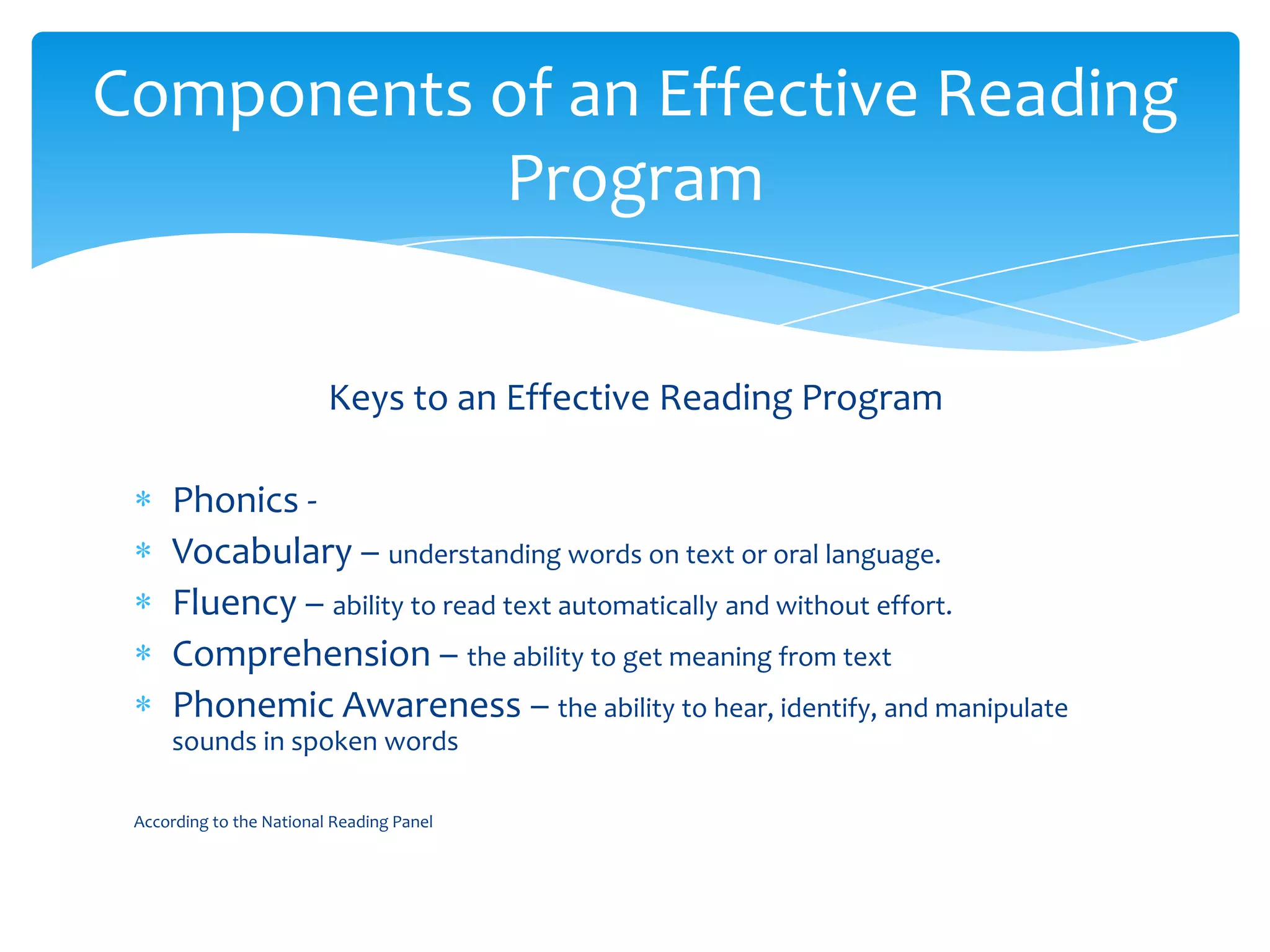
The document discusses education law and reading assessments. It notes that the No Child Left Behind Act mandated closing the achievement gap for all students, including those with disabilities. Effective reading instruction and targeted assessments are important to address core weaknesses, especially in foundational reading skills. Both formal and informal assessments provide teachers information to guide reading instruction. Long-term assessments allow ongoing monitoring of student progress and whole-student instruction, while short-term assessments provide periodic snapshots of reading levels to group students. Key components of an effective reading program include phonics, vocabulary, fluency, comprehension, and phonemic awareness.


![TYPES-OF-ASSESMENT-TOOLS_-report [Autosaved].pptx](https://cdn.slidesharecdn.com/ss_thumbnails/types-of-assesment-tools-reportautosaved-230522011550-a1c7b332-thumbnail.jpg?width=640&height=640&fit=bounds)


