Presented by
Silvia Hagen
silvia.hagen@sun
ny.ch
Szabolcs Emich
sz@bolcs.hu
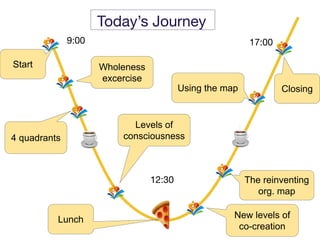
Lunch
Closing
12:30
9:00 17:00
Start Wholeness
excercise
4 quadrants
Levels of
consciousness
New levels of
co-creation
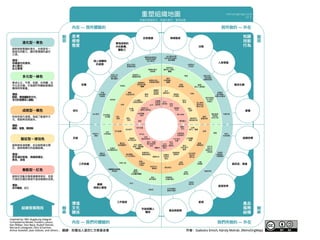
The reinventing
org. map
Using the map
Today’s Journey
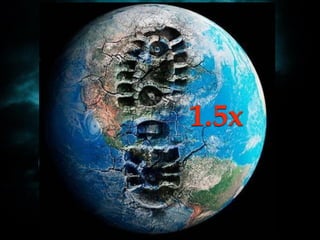
1.5x
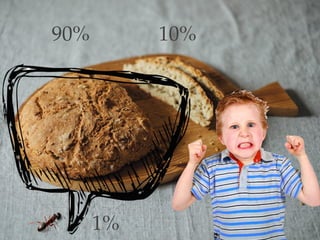
90% 10%
1%
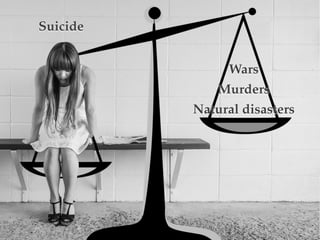
Natural disasters
Murders
Wars
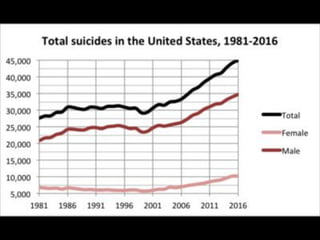
Suicide
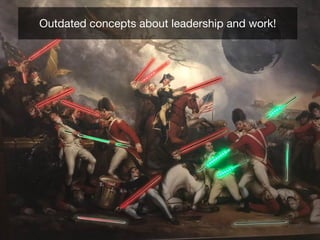
Outdated concepts about leadership and work!
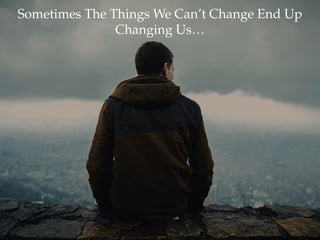
Sometimes The Things We Can’t Change End Up
Changing Us…
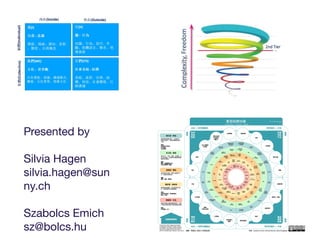
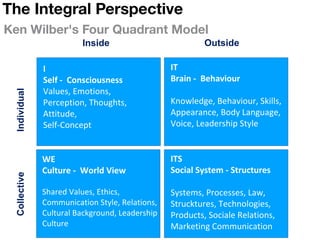
Inside Outside
IndividualCollective
I
Self - Consciousness
Values, Emotions,
Perception, Thoughts,
Attitude,
Self-Concept
IT
Brain - Behaviour
Knowledge, Behaviour, Skills,
Appearance, Body Language,
Voice, Leadership Style
WE
Culture - World View
Shared Values, Ethics,
Communication Style, Relations,
Cultural Background, Leadership
Culture
ITS
Social System - Structures
Systems, Processes, Law,
Strucktures, Technologies,
Products, Sociale Relations,
Marketing Communication
The Integral Perspective
Ken Wilber's Four Quadrant Model
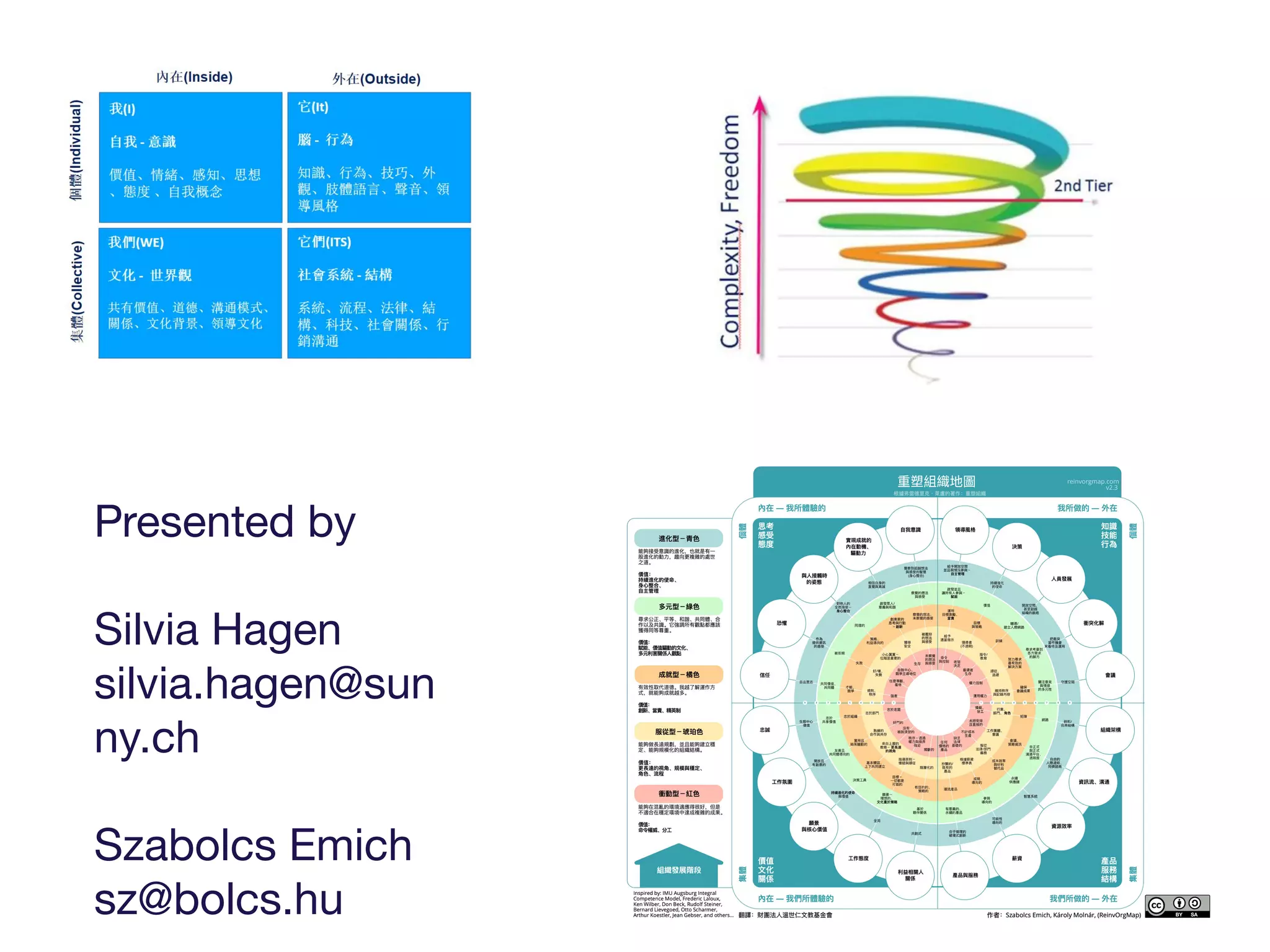
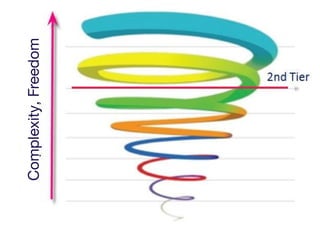
Complexity,Freedom
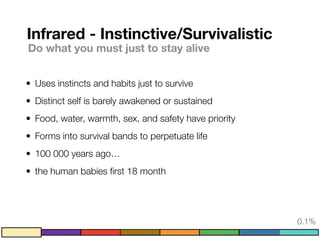
Infrared - Instinctive/Survivalistic
Do what you must just to stay alive
• Uses instincts and habits just to survive
• Distinct self is barely awakened or sustained
• Food, water, warmth, sex, and safety have priority
• Forms into survival bands to perpetuate life
• 100 000 years ago…
• the human babies first 18 month
0.1%
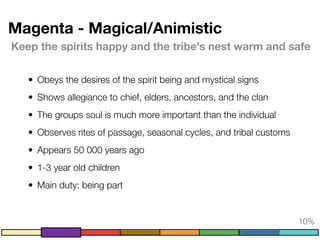
Magenta - Magical/Animistic
Keep the spirits happy and the tribe’s nest warm and safe
• Obeys the desires of the spirit being and mystical signs
• Shows allegiance to chief, elders, ancestors, and the clan
• The groups soul is much more important than the individual
• Observes rites of passage, seasonal cycles, and tribal customs
• Appears 50 000 years ago
• 1-3 year old children
• Main duty: being part
10%
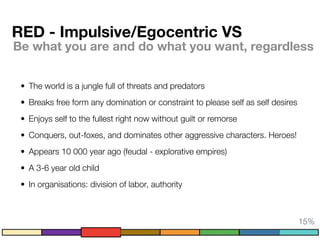
RED - Impulsive/Egocentric VS
Be what you are and do what you want, regardless
• The world is a jungle full of threats and predators
• Breaks free form any domination or constraint to please self as self desires
• Enjoys self to the fullest right now without guilt or remorse
• Conquers, out-foxes, and dominates other aggressive characters. Heroes!
• Appears 10 000 year ago (feudal - explorative empires)
• A 3-6 year old child
• In organisations: division of labor, authority
15%
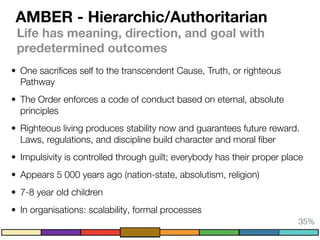
AMBER - Hierarchic/Authoritarian
Life has meaning, direction, and goal with
predetermined outcomes
• One sacrifices self to the transcendent Cause, Truth, or righteous
Pathway
• The Order enforces a code of conduct based on eternal, absolute
principles
• Righteous living produces stability now and guarantees future reward.
Laws, regulations, and discipline build character and moral fiber
• Impulsivity is controlled through guilt; everybody has their proper place
• Appears 5 000 years ago (nation-state, absolutism, religion)
• 7-8 year old children
• In organisations: scalability, formal processes
35%
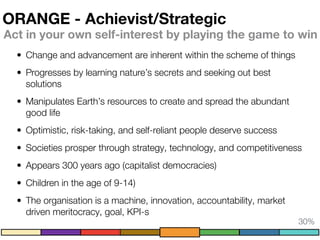
ORANGE - Achievist/Strategic
Act in your own self-interest by playing the game to win
• Change and advancement are inherent within the scheme of things
• Progresses by learning nature’s secrets and seeking out best
solutions
• Manipulates Earth’s resources to create and spread the abundant
good life
• Optimistic, risk-taking, and self-reliant people deserve success
• Societies prosper through strategy, technology, and competitiveness
• Appears 300 years ago (capitalist democracies)
• Children in the age of 9-14)
• The organisation is a machine, innovation, accountability, market
driven meritocracy, goal, KPI-s
30%
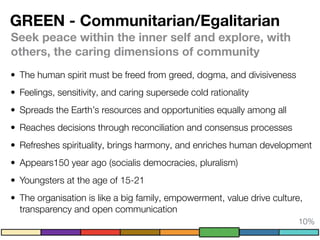
GREEN - Communitarian/Egalitarian
Seek peace within the inner self and explore, with
others, the caring dimensions of community
• The human spirit must be freed from greed, dogma, and divisiveness
• Feelings, sensitivity, and caring supersede cold rationality
• Spreads the Earth’s resources and opportunities equally among all
• Reaches decisions through reconciliation and consensus processes
• Refreshes spirituality, brings harmony, and enriches human development
• Appears150 year ago (socialis democracies, pluralism)
• Youngsters at the age of 15-21
• The organisation is like a big family, empowerment, value drive culture,
transparency and open communication
10%
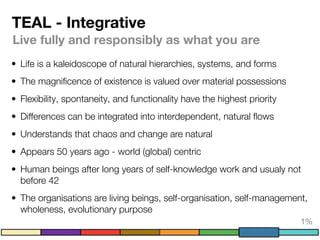
TEAL - Integrative
Live fully and responsibly as what you are
• Life is a kaleidoscope of natural hierarchies, systems, and forms
• The magnificence of existence is valued over material possessions
• Flexibility, spontaneity, and functionality have the highest priority
• Differences can be integrated into interdependent, natural flows
• Understands that chaos and change are natural
• Appears 50 years ago - world (global) centric
• Human beings after long years of self-knowledge work and usualy not
before 42
• The organisations are living beings, self-organisation, self-management,
wholeness, evolutionary purpose
1%
SDI is a development model
and describes stages of
evolvement
What SDI is NOT:
no behavioral typology,
not static model,
acts dynamically and
simultaneously on several
levels
Dr. Clare Graves (1914 - 1986)
● We do not speak of types OF people,
but of types IN people.
● All levels make their unique and
important contribution to evolution and
deserve full appreciation. (No Rating)
● To identify from which level someone
operates:
○ HOW people think is more important
than WHAT they think.
○ WHY they do something is more
important than WHAT they do.
Core
Principles
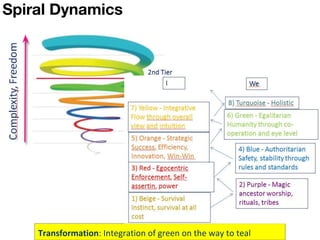
Transformation: Integration of green on the way to teal
Spiral Dynamics
Vertical and horizontal Development
From blue to orange to green
Vertical development
Introduction of
readiness for change to
readiness for development
From unhealthy orange to healthy orange
Horizontal development
Micromanagement
Innovation
Management by Objectives
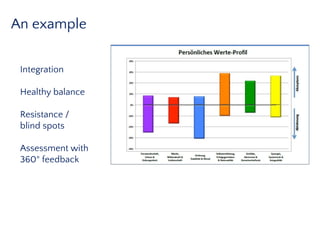
An example
Integration
Healthy balance
Resistance /
blind spots
Assessment with
360° feedback
 
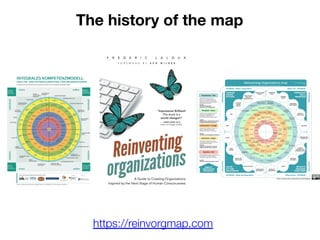
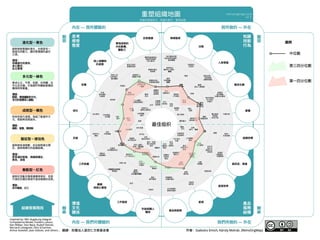
The history of the map
https://reinvorgmap.com
 
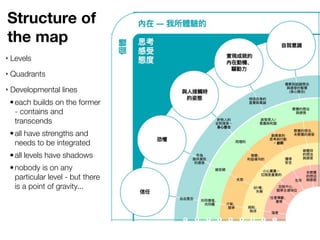
Structure of
the map
‣ Levels
‣ Quadrants
‣ Developmental lines
•each builds on the former
- contains and
transcends
•all have strengths and
needs to be integrated
•all levels have shadows
•nobody is on any
particular level - but there
is a point of gravity...
 
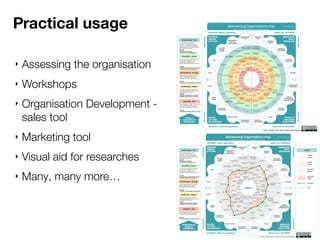
‣ Assessing the organisation
‣ Workshops
‣ Organisation Development -
sales tool
‣ Marketing tool
‣ Visual aid for researches
‣ Many, many more…
Practical usage
 
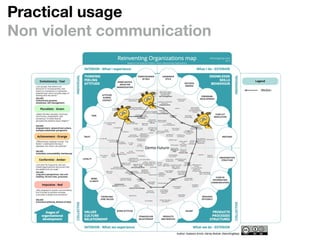
Practical usage
Non violent communication
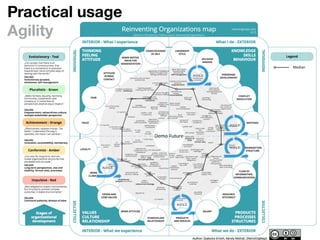
Practical usage
Agility
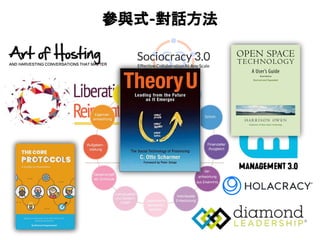
參與式-對話方法
Mixing different dialogic methods

Why we need to Reinvent Organisations?

  • 1.
  • 2.
    Lunch Closing 12:30 9:00 17:00 Start Wholeness excercise 4quadrants Levels of consciousness New levels of co-creation The reinventing org. map Using the map Today’s Journey
  • 5.
  • 6.
  • 7.
  • 10.
    Outdated concepts aboutleadership and work!
  • 11.
    Sometimes The ThingsWe Can’t Change End Up Changing Us…
  • 12.
    Inside Outside IndividualCollective I Self -Consciousness Values, Emotions, Perception, Thoughts, Attitude, Self-Concept IT Brain - Behaviour Knowledge, Behaviour, Skills, Appearance, Body Language, Voice, Leadership Style WE Culture - World View Shared Values, Ethics, Communication Style, Relations, Cultural Background, Leadership Culture ITS Social System - Structures Systems, Processes, Law, Strucktures, Technologies, Products, Sociale Relations, Marketing Communication The Integral Perspective Ken Wilber's Four Quadrant Model
  • 13.
  • 14.
    Infrared - Instinctive/Survivalistic Dowhat you must just to stay alive • Uses instincts and habits just to survive • Distinct self is barely awakened or sustained • Food, water, warmth, sex, and safety have priority • Forms into survival bands to perpetuate life • 100 000 years ago… • the human babies first 18 month 0.1%
  • 15.
    Magenta - Magical/Animistic Keepthe spirits happy and the tribe’s nest warm and safe • Obeys the desires of the spirit being and mystical signs • Shows allegiance to chief, elders, ancestors, and the clan • The groups soul is much more important than the individual • Observes rites of passage, seasonal cycles, and tribal customs • Appears 50 000 years ago • 1-3 year old children • Main duty: being part 10%
  • 16.
    RED - Impulsive/EgocentricVS Be what you are and do what you want, regardless • The world is a jungle full of threats and predators • Breaks free form any domination or constraint to please self as self desires • Enjoys self to the fullest right now without guilt or remorse • Conquers, out-foxes, and dominates other aggressive characters. Heroes! • Appears 10 000 year ago (feudal - explorative empires) • A 3-6 year old child • In organisations: division of labor, authority 15%
  • 17.
    AMBER - Hierarchic/Authoritarian Lifehas meaning, direction, and goal with predetermined outcomes • One sacrifices self to the transcendent Cause, Truth, or righteous Pathway • The Order enforces a code of conduct based on eternal, absolute principles • Righteous living produces stability now and guarantees future reward. Laws, regulations, and discipline build character and moral fiber • Impulsivity is controlled through guilt; everybody has their proper place • Appears 5 000 years ago (nation-state, absolutism, religion) • 7-8 year old children • In organisations: scalability, formal processes 35%
  • 18.
    ORANGE - Achievist/Strategic Actin your own self-interest by playing the game to win • Change and advancement are inherent within the scheme of things • Progresses by learning nature’s secrets and seeking out best solutions • Manipulates Earth’s resources to create and spread the abundant good life • Optimistic, risk-taking, and self-reliant people deserve success • Societies prosper through strategy, technology, and competitiveness • Appears 300 years ago (capitalist democracies) • Children in the age of 9-14) • The organisation is a machine, innovation, accountability, market driven meritocracy, goal, KPI-s 30%
  • 19.
    GREEN - Communitarian/Egalitarian Seekpeace within the inner self and explore, with others, the caring dimensions of community • The human spirit must be freed from greed, dogma, and divisiveness • Feelings, sensitivity, and caring supersede cold rationality • Spreads the Earth’s resources and opportunities equally among all • Reaches decisions through reconciliation and consensus processes • Refreshes spirituality, brings harmony, and enriches human development • Appears150 year ago (socialis democracies, pluralism) • Youngsters at the age of 15-21 • The organisation is like a big family, empowerment, value drive culture, transparency and open communication 10%
  • 20.
    TEAL - Integrative Livefully and responsibly as what you are • Life is a kaleidoscope of natural hierarchies, systems, and forms • The magnificence of existence is valued over material possessions • Flexibility, spontaneity, and functionality have the highest priority • Differences can be integrated into interdependent, natural flows • Understands that chaos and change are natural • Appears 50 years ago - world (global) centric • Human beings after long years of self-knowledge work and usualy not before 42 • The organisations are living beings, self-organisation, self-management, wholeness, evolutionary purpose 1%
  • 21.
    SDI is adevelopment model and describes stages of evolvement What SDI is NOT: no behavioral typology, not static model, acts dynamically and simultaneously on several levels Dr. Clare Graves (1914 - 1986)
  • 22.
    ● We donot speak of types OF people, but of types IN people. ● All levels make their unique and important contribution to evolution and deserve full appreciation. (No Rating) ● To identify from which level someone operates: ○ HOW people think is more important than WHAT they think. ○ WHY they do something is more important than WHAT they do. Core Principles
  • 23.
    Transformation: Integration ofgreen on the way to teal Spiral Dynamics
  • 24.
    Vertical and horizontalDevelopment From blue to orange to green Vertical development Introduction of readiness for change to readiness for development From unhealthy orange to healthy orange Horizontal development Micromanagement Innovation Management by Objectives
  • 25.
    An example Integration Healthy balance Resistance/ blind spots Assessment with 360° feedback
  • 26.
      The history ofthe map https://reinvorgmap.com
  • 27.
      Structure of the map ‣Levels ‣ Quadrants ‣ Developmental lines •each builds on the former - contains and transcends •all have strengths and needs to be integrated •all levels have shadows •nobody is on any particular level - but there is a point of gravity...
  • 30.
      ‣ Assessing theorganisation ‣ Workshops ‣ Organisation Development - sales tool ‣ Marketing tool ‣ Visual aid for researches ‣ Many, many more… Practical usage
  • 31.
  • 32.
  • 33.
  • 34.