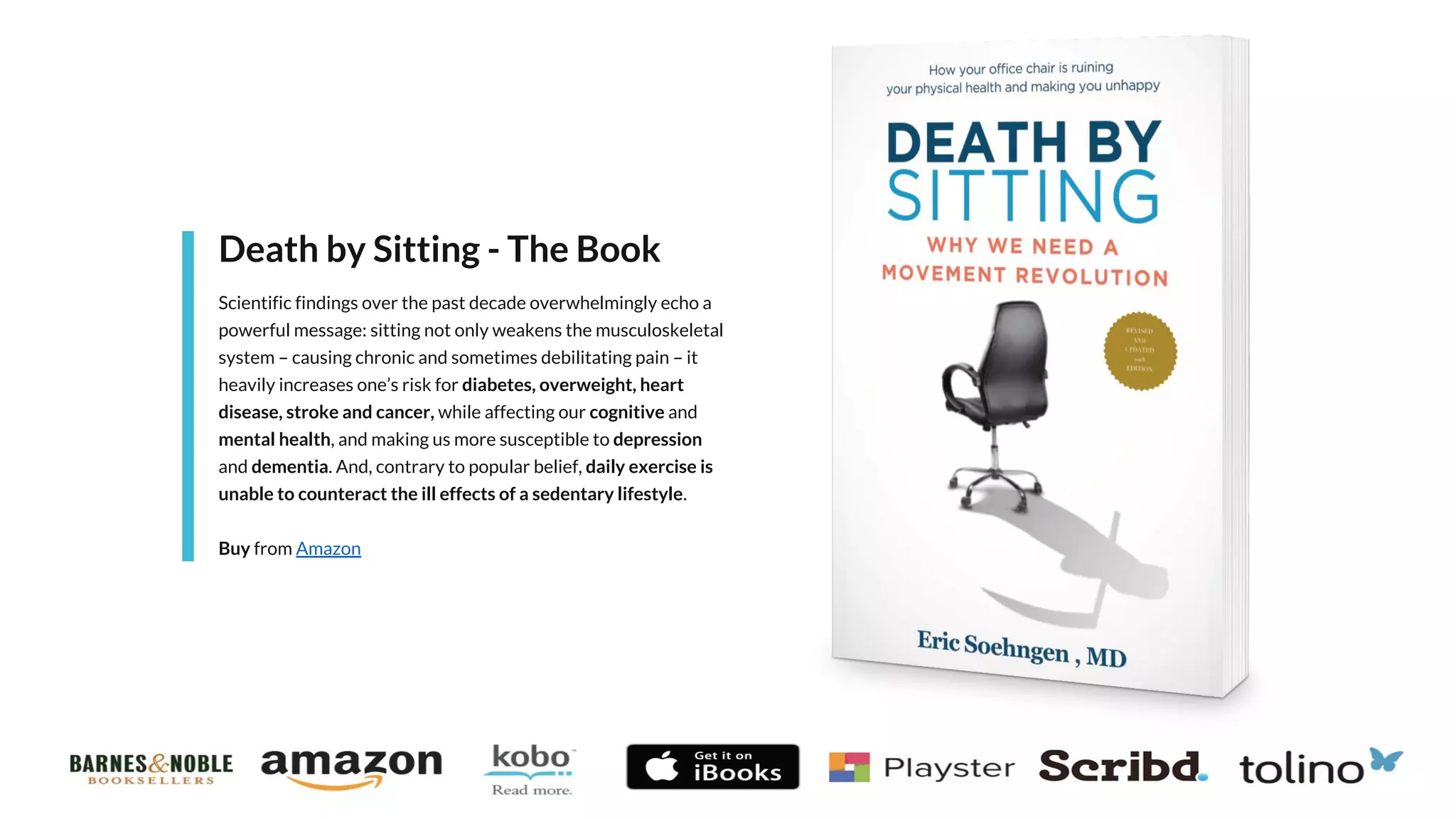
Death by Sitting - The Book
Scientific findings over the past decade overwhelmingly echo a
powerful message: sitting not only weakens the musculoskeletal
system – causing chronic and sometimes debilitating pain – it
heavily increases one’s risk for diabetes, overweight, heart
disease, stroke and cancer, while affecting our cognitive and
mental health, and making us more susceptible to depression
and dementia. And, contrary to popular belief, daily exercise is
unable to counteract the ill effects of a sedentary lifestyle.
Buy from Amazon
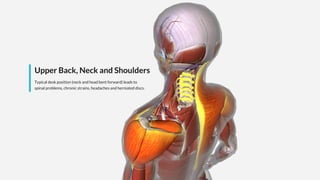
Upper Back, Neck and Shoulders
Typical desk position (neck and head bent forward) leads to
spinal problems, chronic strains, headaches and herniated discs.
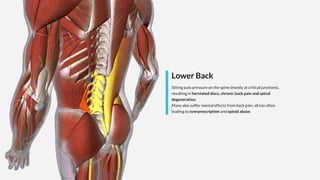
Lower Back
Sitting puts pressure on the spine (mostly at critical junctions),
resulting in herniated discs, chronic back pain and spinal
degeneration.
Many also suffer mental effects from back pain, all too often
leading to overprescription and opioid abuse.
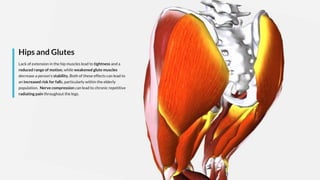
Hips and Glutes
Lack of extension in the hip muscles lead to tightness and a
reduced range of motion, while weakened glute muscles
decrease a person’s stability. Both of these effects can lead to
an increased risk for falls, particularly within the elderly
population. Nerve compression can lead to chronic repetitive
radiating pain throughout the legs.
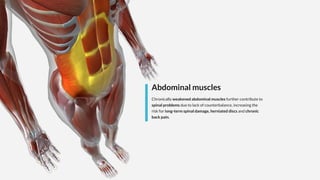
Abdominal muscles
Chronically weakened abdominal muscles further contribute to
spinal problems due to lack of counterbalance, increasing the
risk for long-term spinal damage, herniated discs and chronic
back pain.
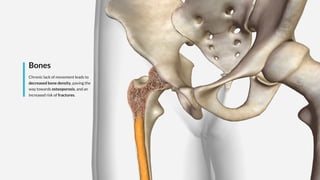
Bones
Chronic lack of movement leads to
decreased bone density, paving the
way towards osteoporosis, and an
increased risk of fractures.
Pancreas and Glucose Metabolism
The body’s ability to effectively respond to sugar intake is
profoundly affected by prolonged sitting, leading to insulin
resistance and diabetes. Long-term increased blood sugar
levels give rise to cardiovascular disease, stroke, kidney
failure, nerve damage, blindness and limb amputations.
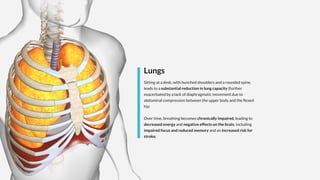
Lungs
Sitting at a desk, with hunched shoulders and a rounded spine,
leads to a substantial reduction in lung capacity (further
exacerbated by a lack of diaphragmatic movement due to
abdominal compression between the upper body and the flexed
hip.
Over time, breathing becomes chronically impaired, leading to
decreased energy and negative effects on the brain, including
impaired focus and reduced memory and an increased risk for
stroke.
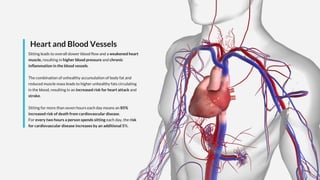
Heart and Blood Vessels
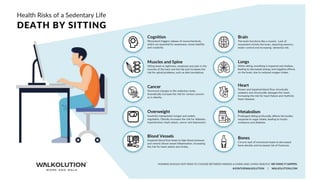
Sitting leads to overall slower blood flow and a weakened heart
muscle, resulting in higher blood pressure and chronic
inflammation in the blood vessels.
The combination of unhealthy accumulation of body fat and
reduced muscle mass leads to higher unhealthy fats circulating
in the blood, resulting in an increased risk for heart attack and
stroke.
Sitting for more than seven hours each day means an 85%
increased risk of death from cardiovascular disease.
For every two hours a person spends sitting each day, the risk
for cardiovascular disease increases by an additional 5%.
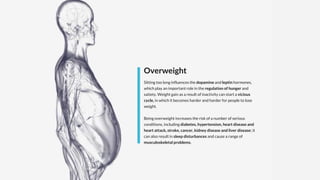
Overweight
Sitting too long influences the dopamine and leptin hormones,
which play an important role in the regulation of hunger and
satiety. Weight gain as a result of inactivity can start a vicious
cycle, in which it becomes harder and harder for people to lose
weight.
Being overweight increases the risk of a number of serious
conditions, including diabetes, hypertension, heart disease and
heart attack, stroke, cancer, kidney disease and liver disease; it
can also result in sleep disturbances and cause a range of
musculoskeletal problems.
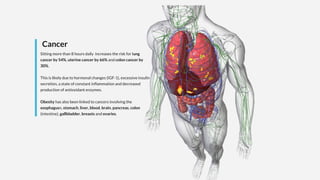
Cancer
Sitting more than 8 hours daily increases the risk for lung
cancer by 54%, uterine cancer by 66% and colon cancer by
30%.
This is likely due to hormonal changes (IGF-1), excessive insulin
secretion, a state of constant inflammation and decreased
production of antioxidant enzymes.
Obesity has also been linked to cancers involving the
esophagusn, stomach, liver, blood, brain, pancreas, colon
(intestine), gallbladder, breasts and ovaries.
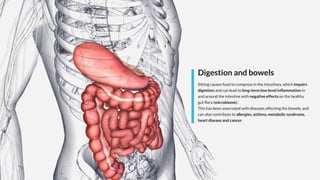
Digestion and bowels
Sitting causes food to compress in the intestines, which impairs
digestion and can lead to long-term low level inflammation in
and around the intestine with negative effects on the healthy
gut flora (microbiome).
This has been associated with diseases affecting the bowels, and
can also contribute to allergies, asthma, metabolic syndrome,
heart disease and cancer.
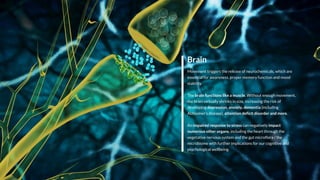
Brain
Movement triggers the release of neurochemicals, which are
essential for awareness, proper memory function and mood
stability.
The brain functions like a muscle. Without enough movement,
the brain virtually shrinks in size, increasing the risk of
developing depression, anxiety, dementia (including
Alzheimer’s disease), attention deficit disorder and more.
An impaired response to stress can negatively impact
numerous other organs, including the heart through the
vegetative nervous system and the gut microflora / the
microbiome with further implications for our cognitive and
psychological wellbeing.

Why We Need A Movement Revolution

  • 1.
    Death by Sitting- The Book Scientific findings over the past decade overwhelmingly echo a powerful message: sitting not only weakens the musculoskeletal system – causing chronic and sometimes debilitating pain – it heavily increases one’s risk for diabetes, overweight, heart disease, stroke and cancer, while affecting our cognitive and mental health, and making us more susceptible to depression and dementia. And, contrary to popular belief, daily exercise is unable to counteract the ill effects of a sedentary lifestyle. Buy from Amazon
  • 3.
    Upper Back, Neckand Shoulders Typical desk position (neck and head bent forward) leads to spinal problems, chronic strains, headaches and herniated discs.
  • 4.
    Lower Back Sitting putspressure on the spine (mostly at critical junctions), resulting in herniated discs, chronic back pain and spinal degeneration. Many also suffer mental effects from back pain, all too often leading to overprescription and opioid abuse.
  • 5.
    Hips and Glutes Lackof extension in the hip muscles lead to tightness and a reduced range of motion, while weakened glute muscles decrease a person’s stability. Both of these effects can lead to an increased risk for falls, particularly within the elderly population. Nerve compression can lead to chronic repetitive radiating pain throughout the legs.
  • 6.
    Abdominal muscles Chronically weakenedabdominal muscles further contribute to spinal problems due to lack of counterbalance, increasing the risk for long-term spinal damage, herniated discs and chronic back pain.
  • 7.
    Bones Chronic lack ofmovement leads to decreased bone density, paving the way towards osteoporosis, and an increased risk of fractures.
  • 8.
    Pancreas and GlucoseMetabolism The body’s ability to effectively respond to sugar intake is profoundly affected by prolonged sitting, leading to insulin resistance and diabetes. Long-term increased blood sugar levels give rise to cardiovascular disease, stroke, kidney failure, nerve damage, blindness and limb amputations.
  • 9.
    Lungs Sitting at adesk, with hunched shoulders and a rounded spine, leads to a substantial reduction in lung capacity (further exacerbated by a lack of diaphragmatic movement due to abdominal compression between the upper body and the flexed hip. Over time, breathing becomes chronically impaired, leading to decreased energy and negative effects on the brain, including impaired focus and reduced memory and an increased risk for stroke.
  • 10.
    Heart and BloodVessels Sitting leads to overall slower blood flow and a weakened heart muscle, resulting in higher blood pressure and chronic inflammation in the blood vessels. The combination of unhealthy accumulation of body fat and reduced muscle mass leads to higher unhealthy fats circulating in the blood, resulting in an increased risk for heart attack and stroke. Sitting for more than seven hours each day means an 85% increased risk of death from cardiovascular disease. For every two hours a person spends sitting each day, the risk for cardiovascular disease increases by an additional 5%.
  • 11.
    Overweight Sitting too longinfluences the dopamine and leptin hormones, which play an important role in the regulation of hunger and satiety. Weight gain as a result of inactivity can start a vicious cycle, in which it becomes harder and harder for people to lose weight. Being overweight increases the risk of a number of serious conditions, including diabetes, hypertension, heart disease and heart attack, stroke, cancer, kidney disease and liver disease; it can also result in sleep disturbances and cause a range of musculoskeletal problems.
  • 12.
    Cancer Sitting more than8 hours daily increases the risk for lung cancer by 54%, uterine cancer by 66% and colon cancer by 30%. This is likely due to hormonal changes (IGF-1), excessive insulin secretion, a state of constant inflammation and decreased production of antioxidant enzymes. Obesity has also been linked to cancers involving the esophagusn, stomach, liver, blood, brain, pancreas, colon (intestine), gallbladder, breasts and ovaries.
  • 13.
    Digestion and bowels Sittingcauses food to compress in the intestines, which impairs digestion and can lead to long-term low level inflammation in and around the intestine with negative effects on the healthy gut flora (microbiome). This has been associated with diseases affecting the bowels, and can also contribute to allergies, asthma, metabolic syndrome, heart disease and cancer.
  • 14.
    Brain Movement triggers therelease of neurochemicals, which are essential for awareness, proper memory function and mood stability. The brain functions like a muscle. Without enough movement, the brain virtually shrinks in size, increasing the risk of developing depression, anxiety, dementia (including Alzheimer’s disease), attention deficit disorder and more. An impaired response to stress can negatively impact numerous other organs, including the heart through the vegetative nervous system and the gut microflora / the microbiome with further implications for our cognitive and psychological wellbeing.