High-rate
composting
A better way to manage organic waste from America’s cities
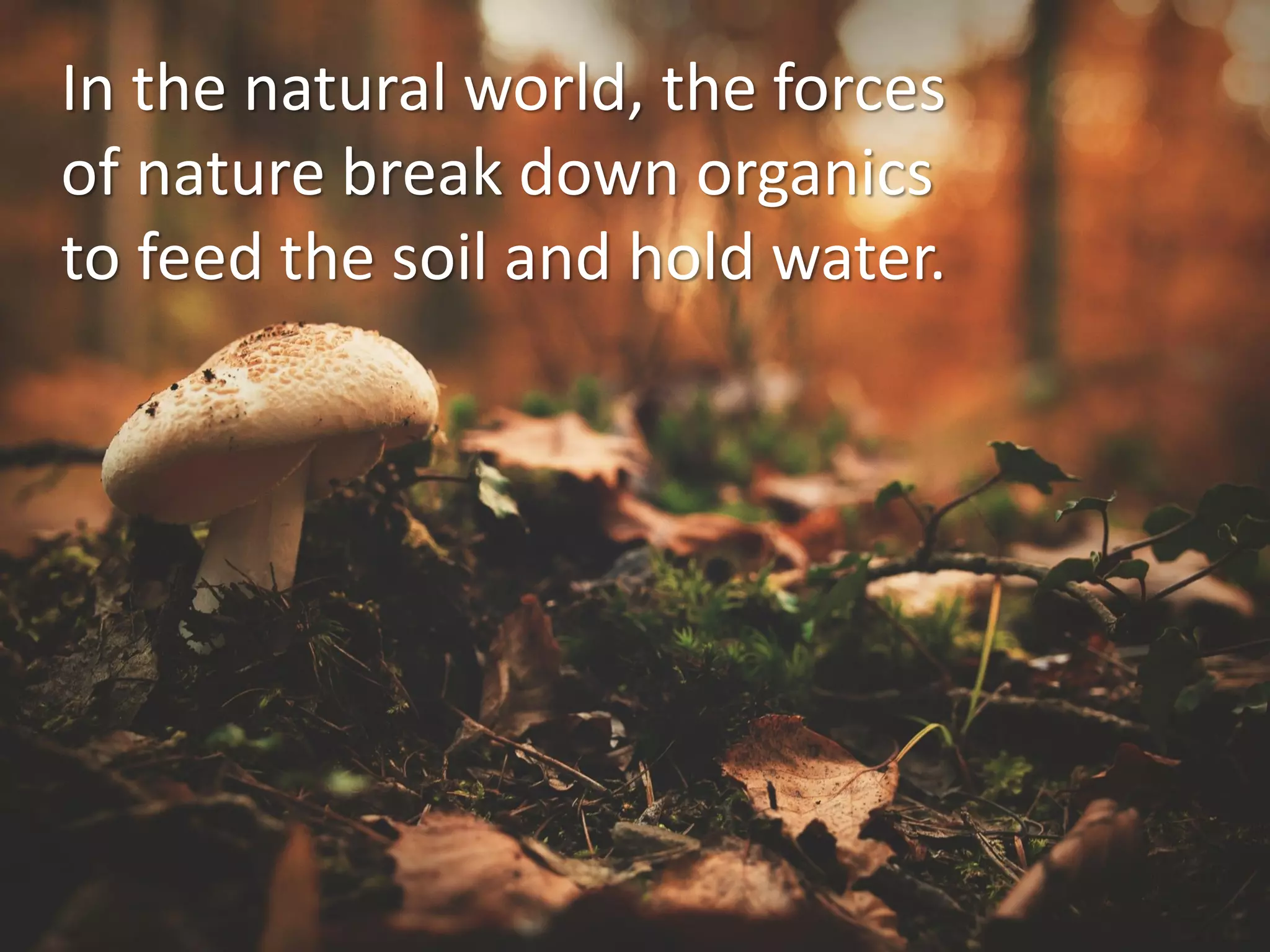
In the natural world, the forces
of nature break down organics
to feed the soil and hold water.
But it can take a long, long time.
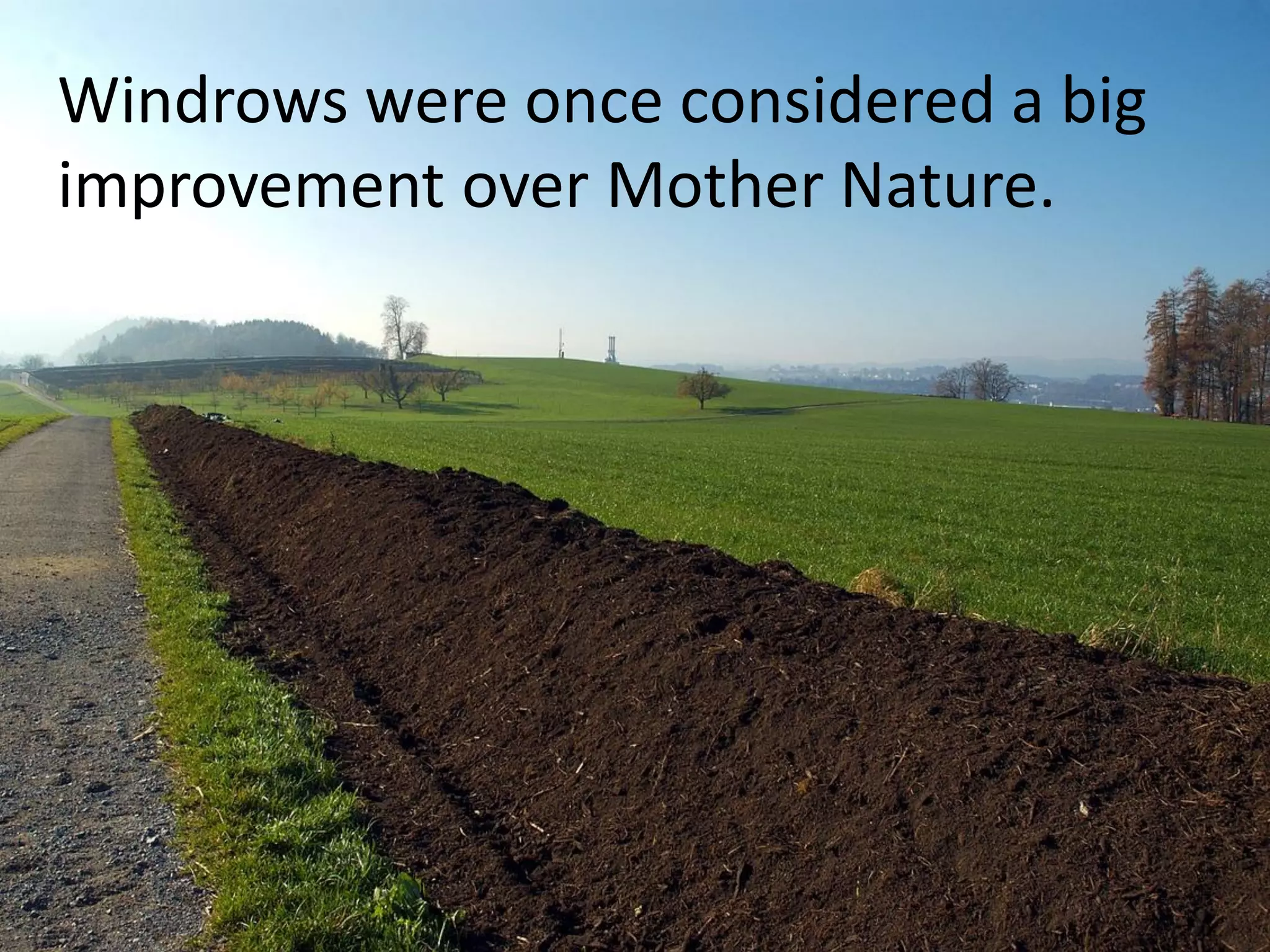
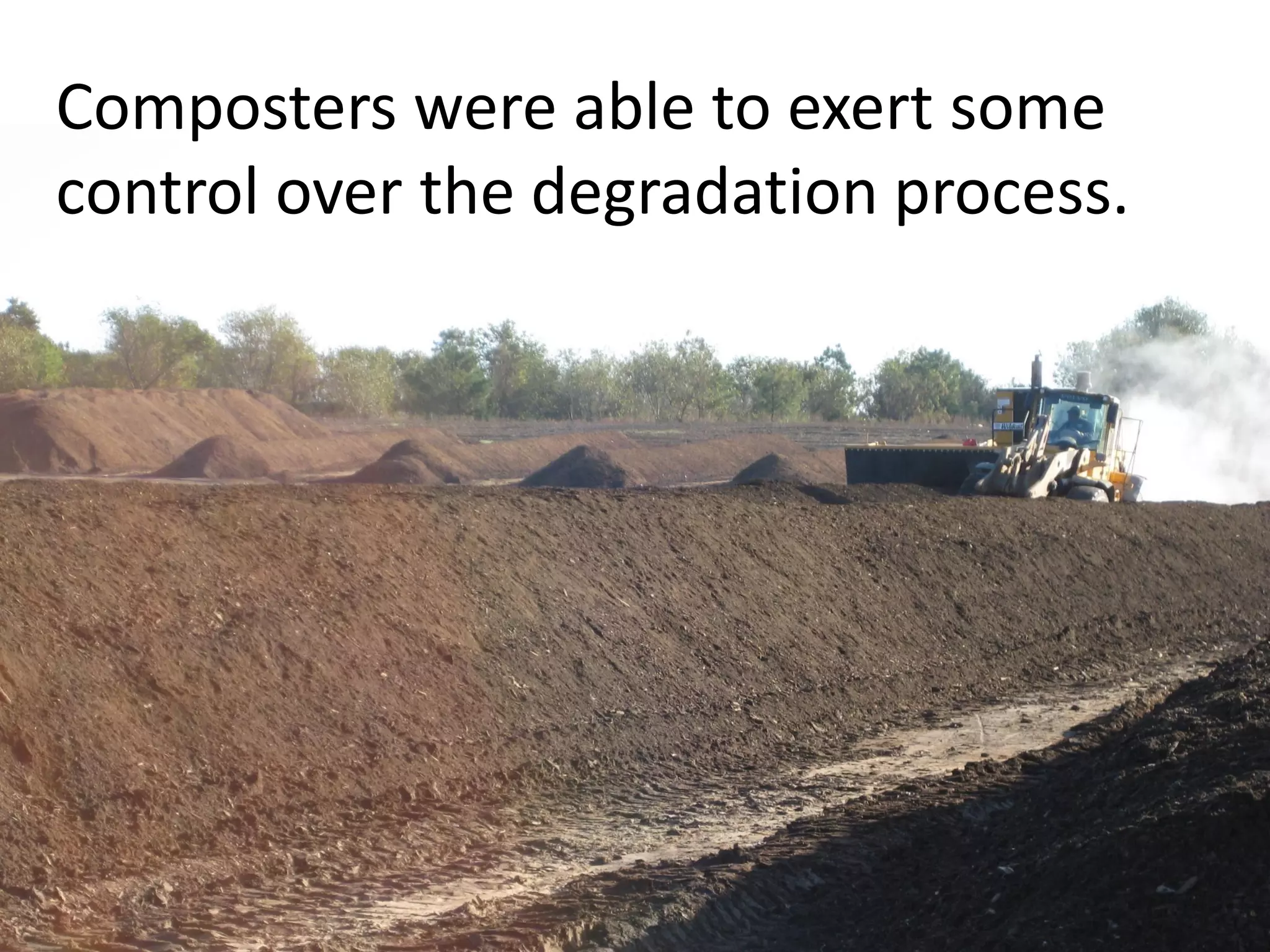
Windrows were once considered a big
improvement over Mother Nature.
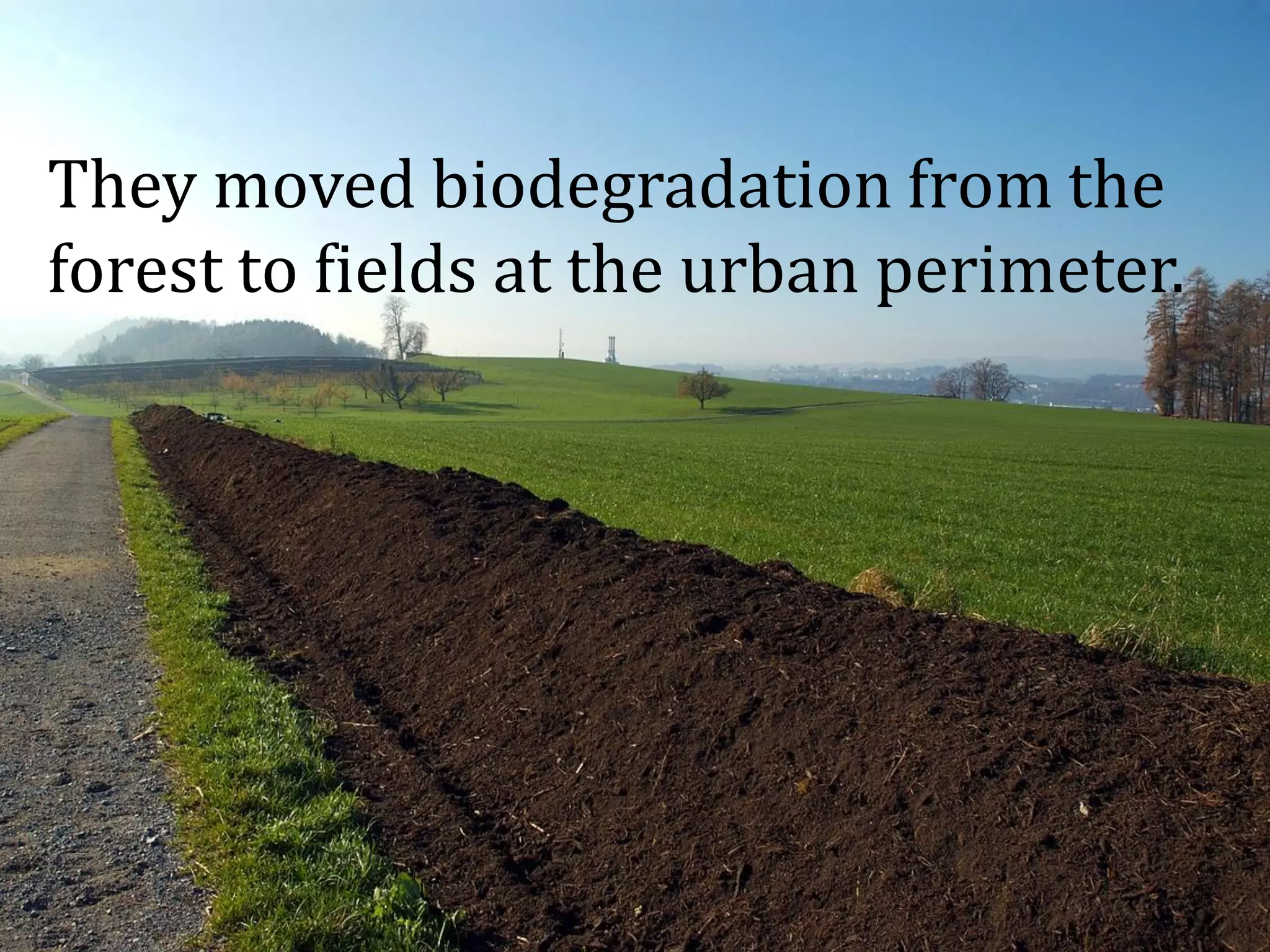
They moved biodegradation from the
forest to fields at the urban perimeter.
Composters were able to exert some
control over the degradation process.
But windrow composting
was not without its
problems.
Weather exposure
made the process
unpredictable and
unreliable.
This resulted in major
headaches like odors,
leachate and poor
quality product.
A more contained, robust composting
method was required to economically
manage and recycle the high volumes
of putrescible wastes
generated by cities.
Composting evolved.
Scientifically-enhanced,
high-rate composting
entered the waste
management mainstream.
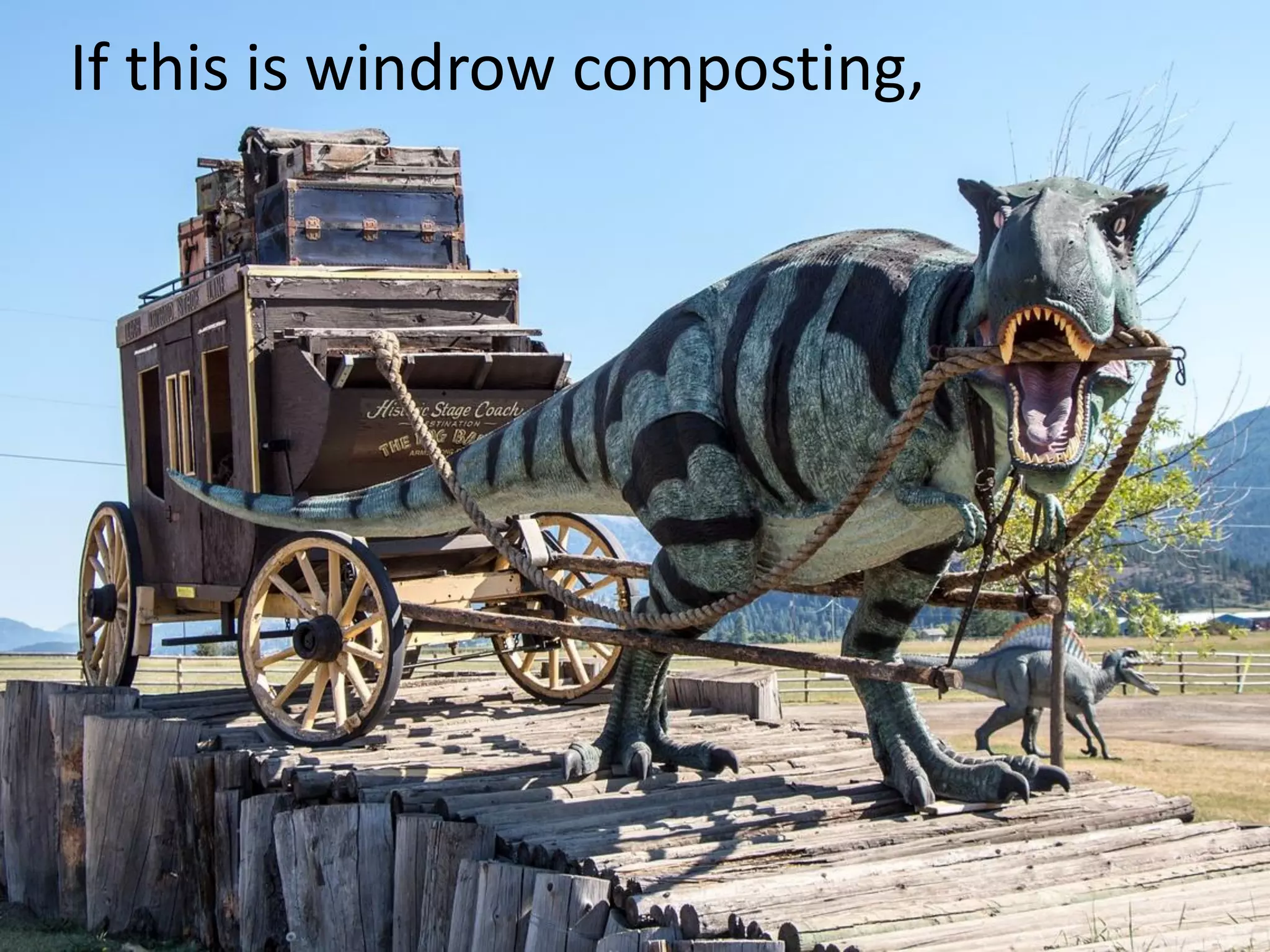
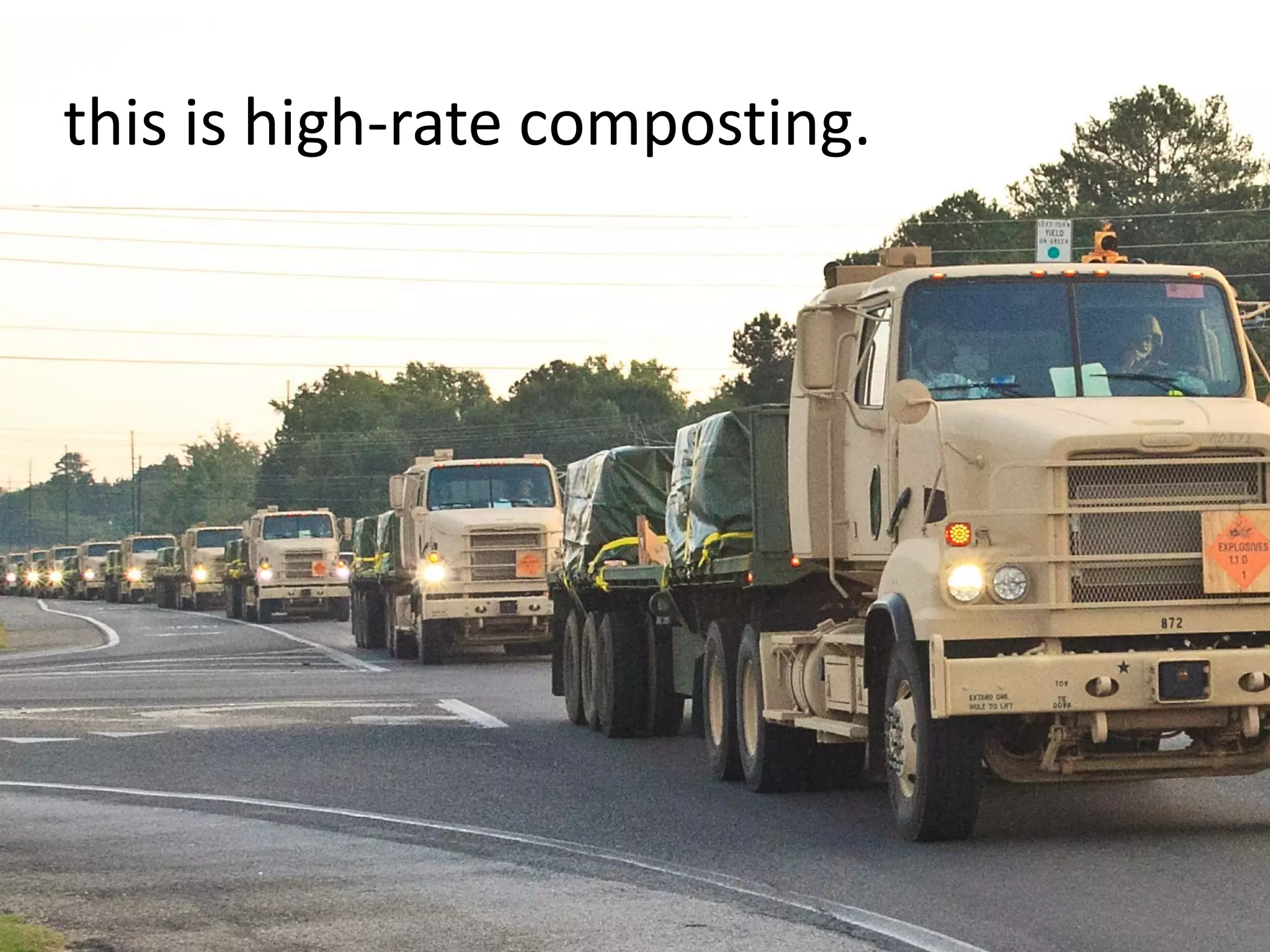
If this is windrow composting,
this is high-rate composting.
Faster.
More efficient.
Processing 10x the volume
of a windrow operation
in the same footprint.
How does high-rate
composting work?
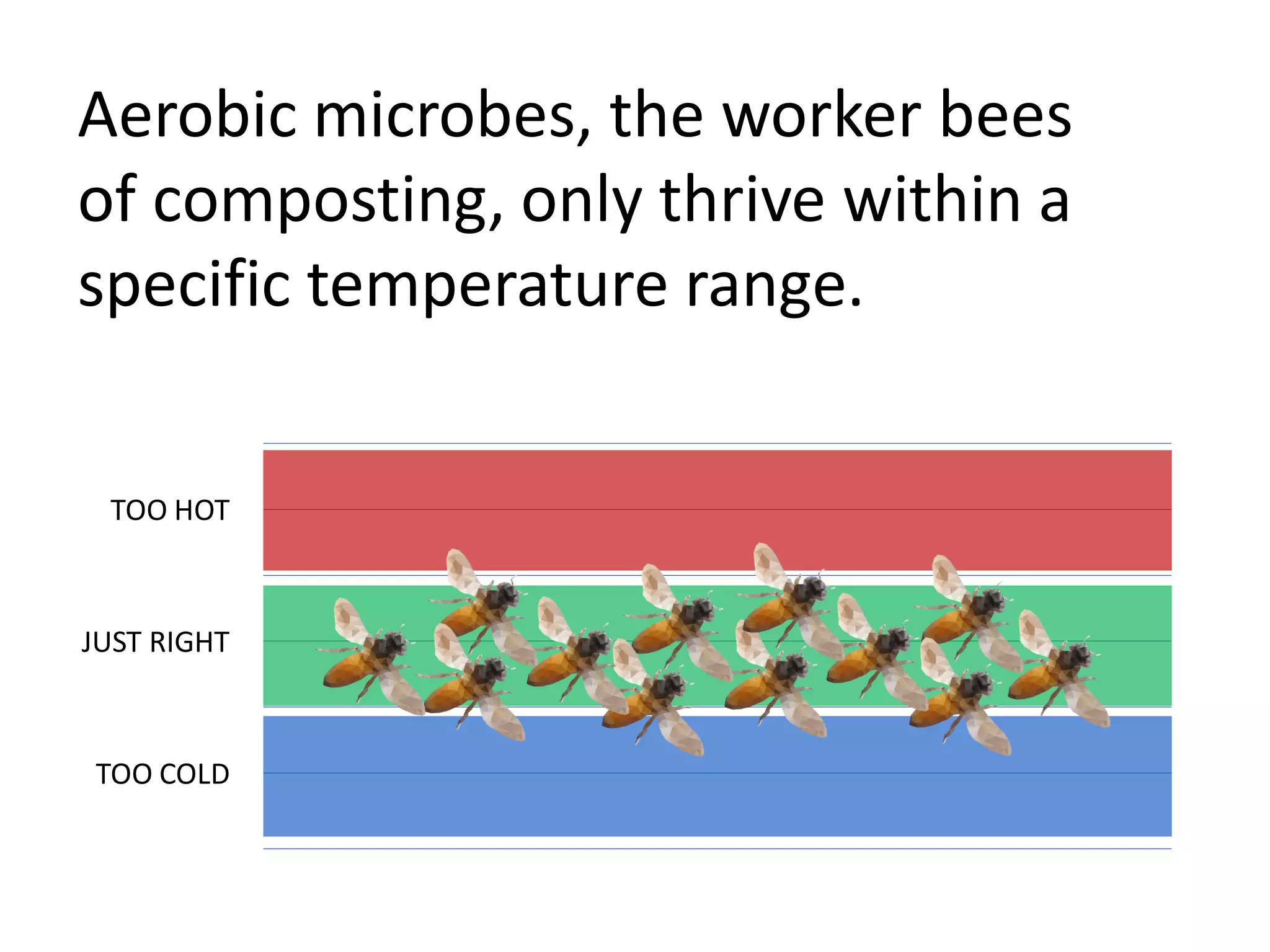
Aerobic microbes, the worker bees
of composting, only thrive within a
specific temperature range.
JUST RIGHT
TOO HOT
TOO COLD
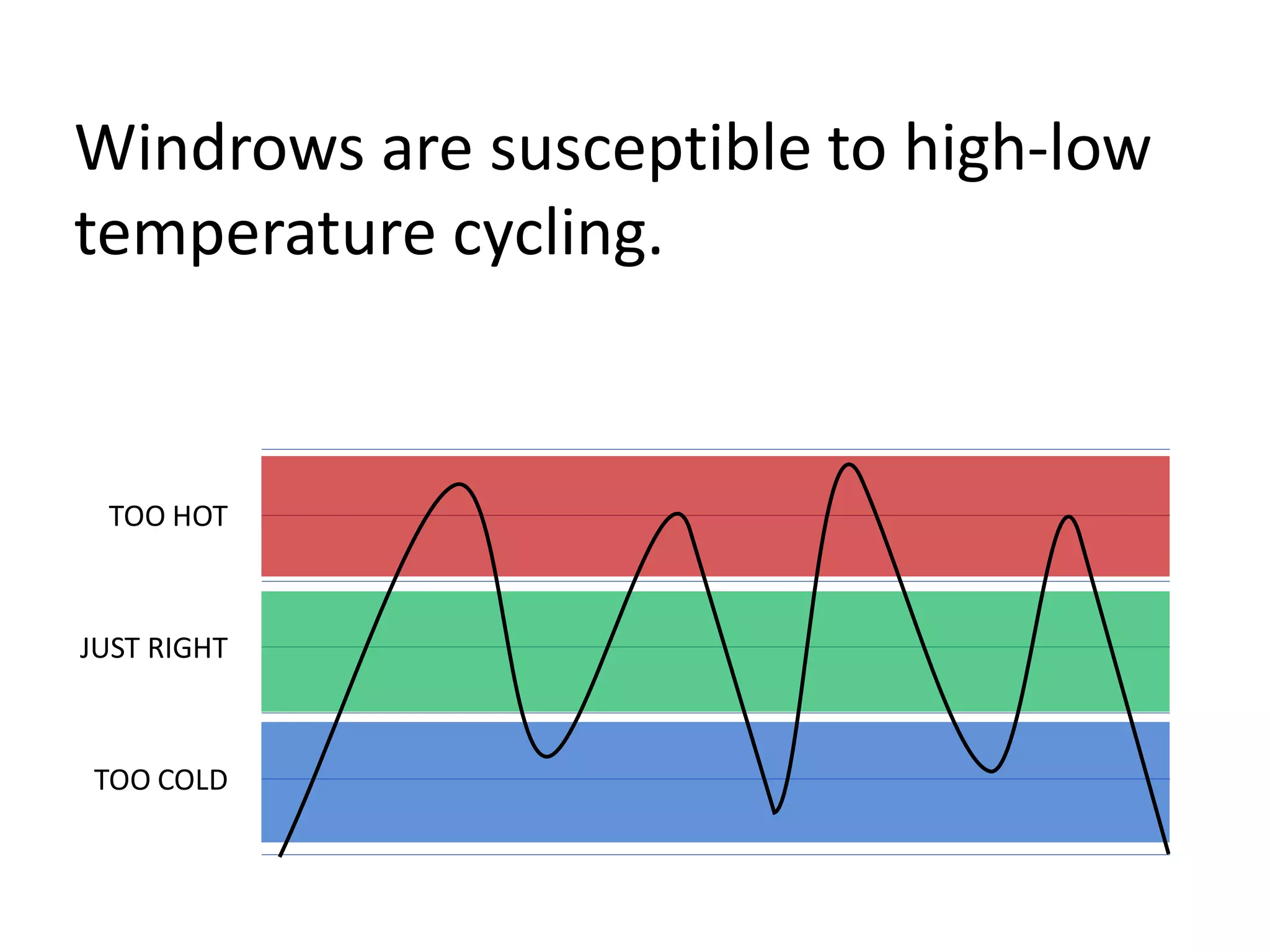
Windrows are susceptible to high-low
temperature cycling.
JUST RIGHT
TOO HOT
TOO COLD
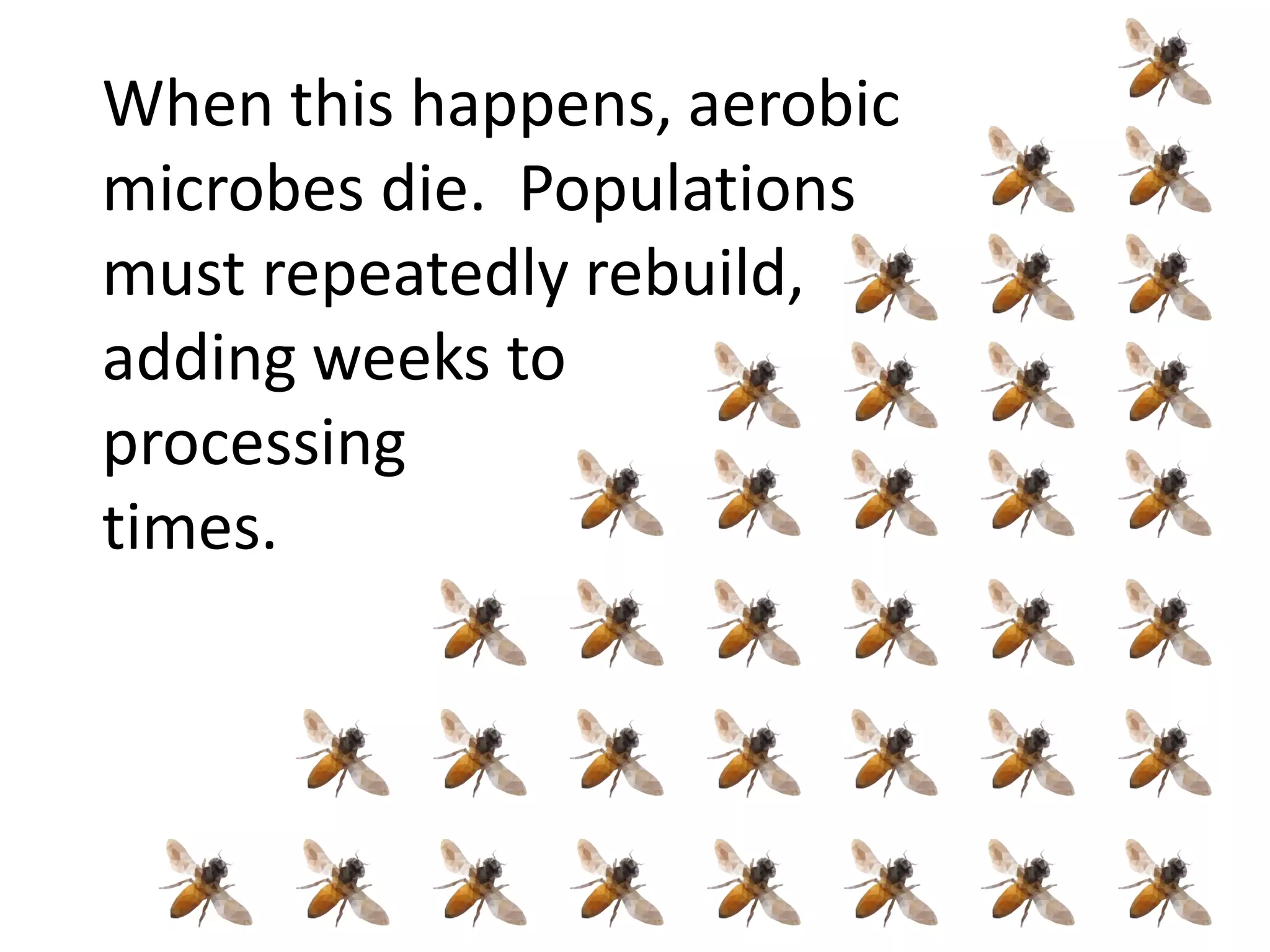
When this happens, aerobic
microbes die. Populations
must repeatedly rebuild,
adding weeks to
processing
times.
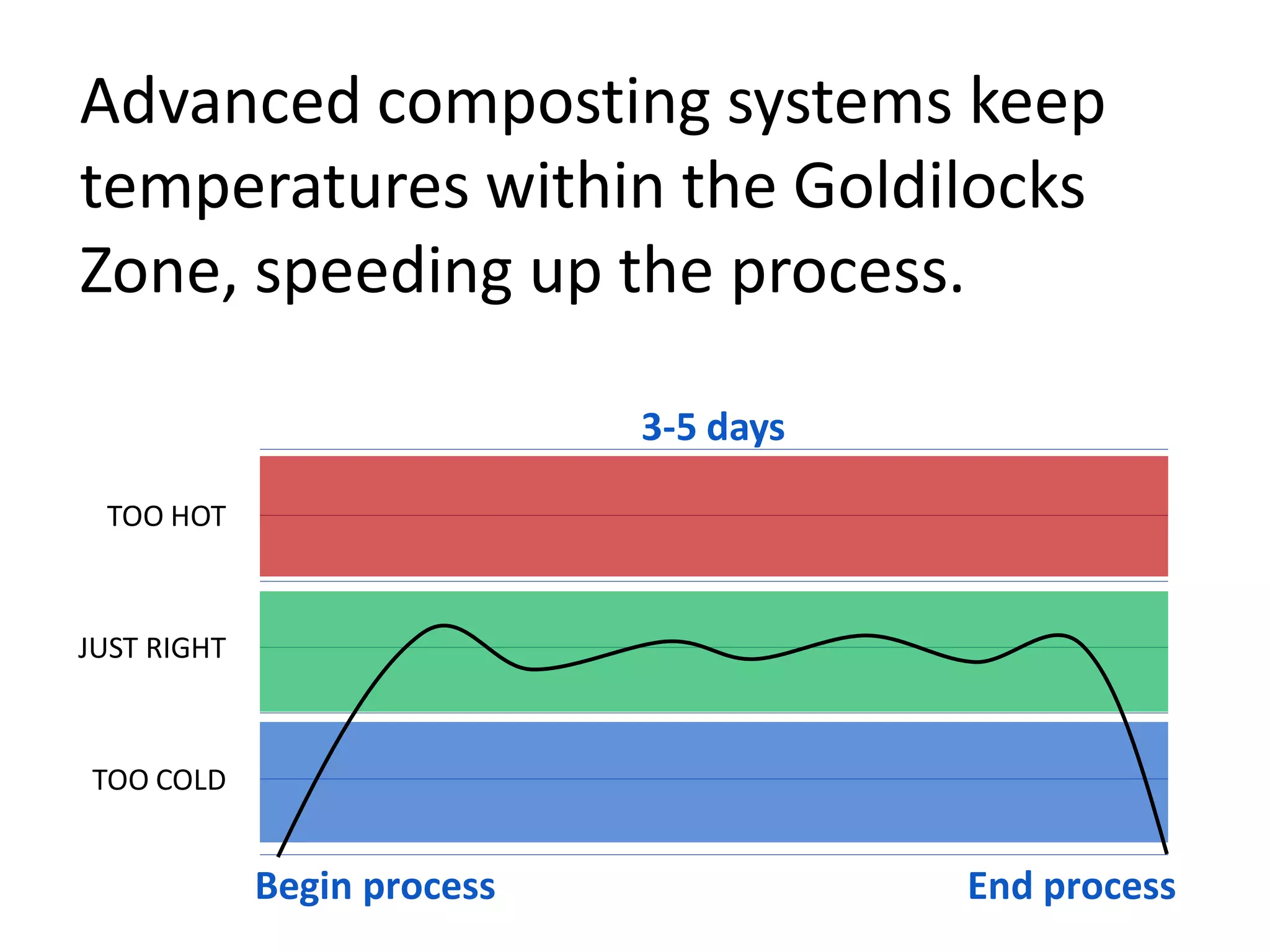
Advanced composting systems keep
temperatures within the Goldilocks
Zone, speeding up the process.
JUST RIGHT
TOO HOT
TOO COLD
3-5 days
Begin process End process
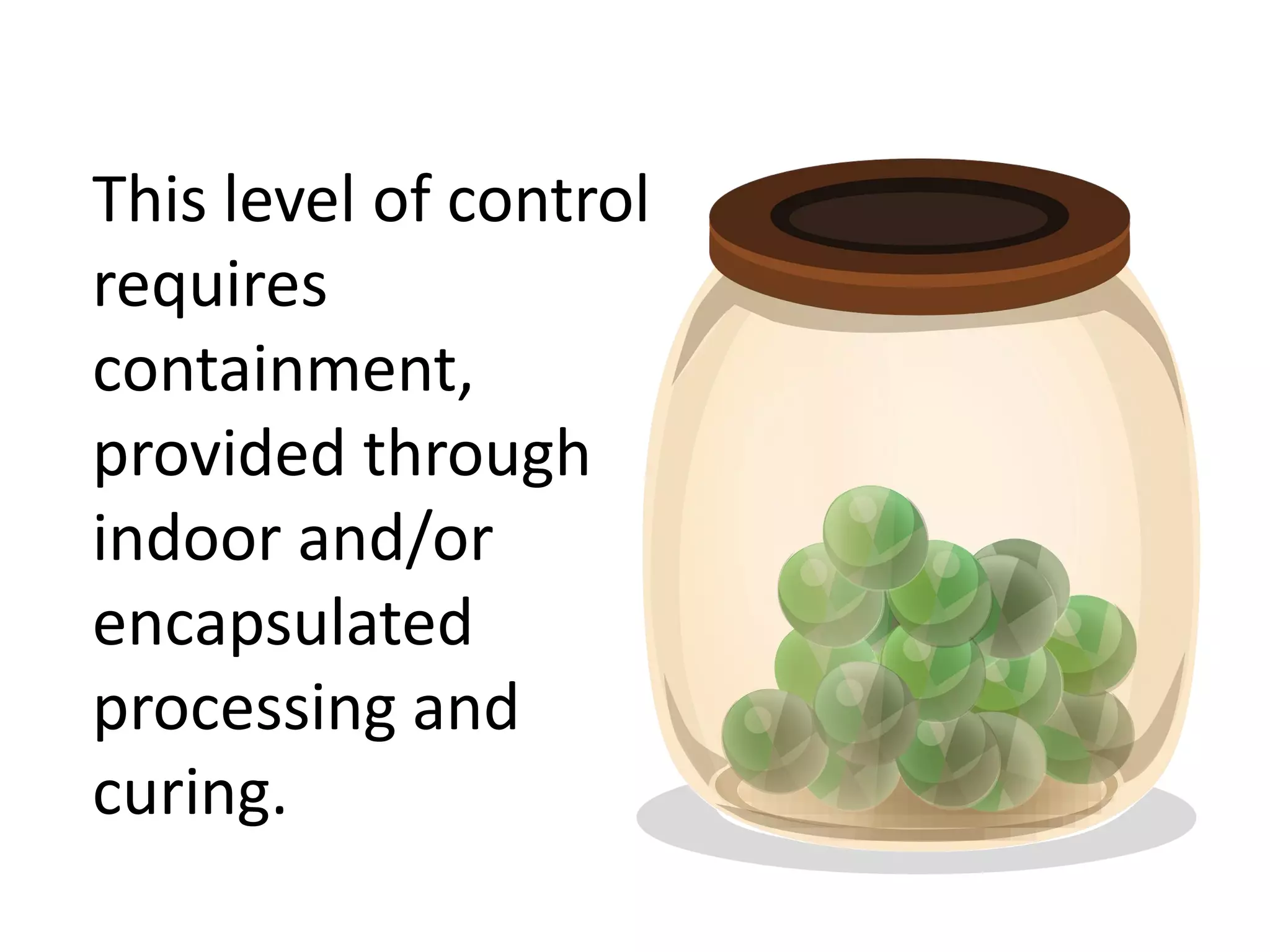
This level of control
requires
containment,
provided through
indoor and/or
encapsulated
processing and
curing.
Precise, continuous temperature
control is provided by a
computerized air delivery and
extraction system operating
365/24/7.
This accelerates
the process and
offers ...
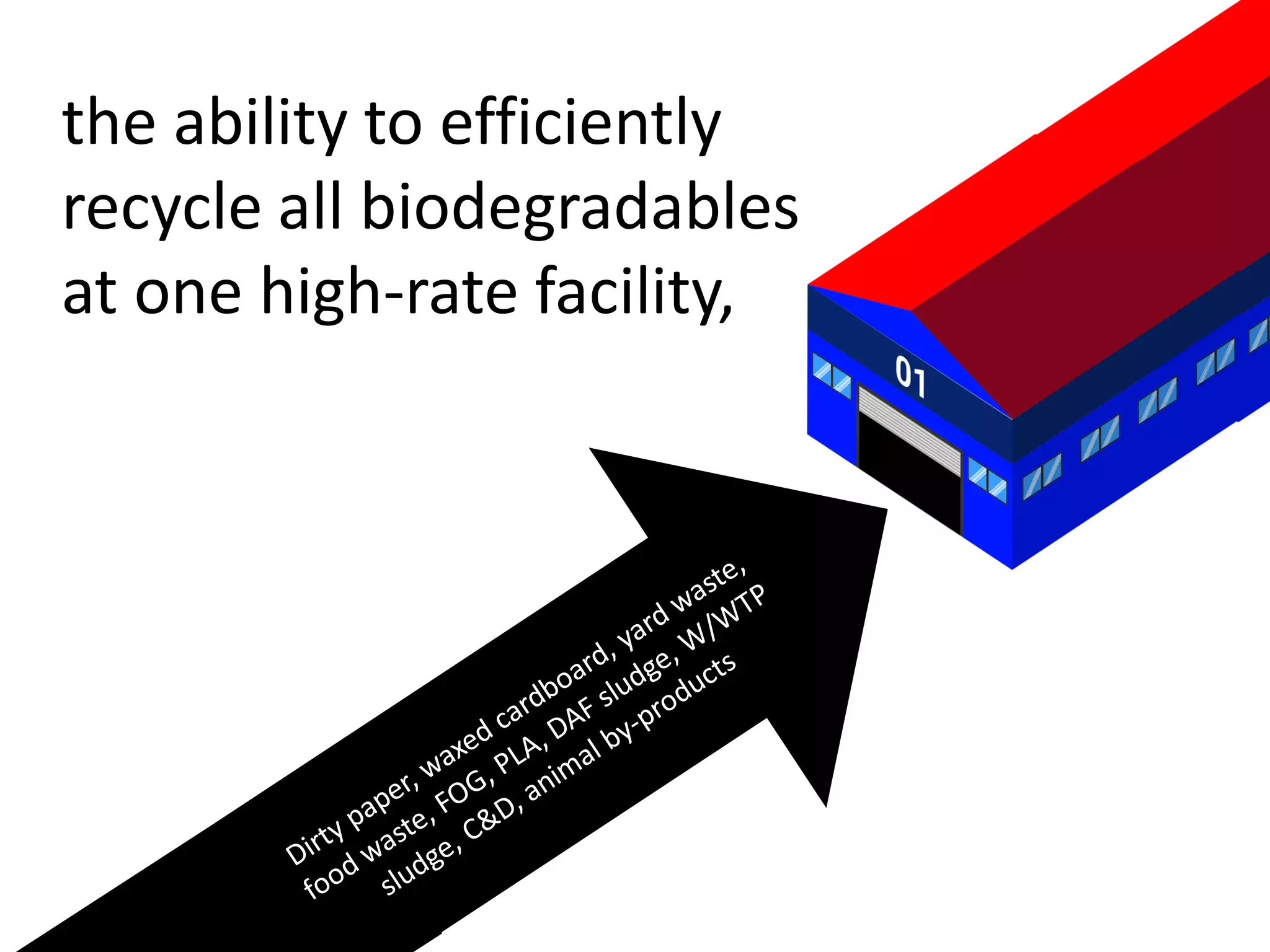
the ability to efficiently
recycle all biodegradables
at one high-rate facility,
near-invisible operations,
• Odor mitigation using
air extraction and
biofiltration
• Significant reductions
in dust, flies, leachate
and noise
Out of sight, out of mind.
and the manufacture high-quality
compost products.
Safe and inconspicuous use by anyone, anytime, anywhere
Modern, industrial composting
technologies meet expectations of
regulators, the host community
and the marketplace.
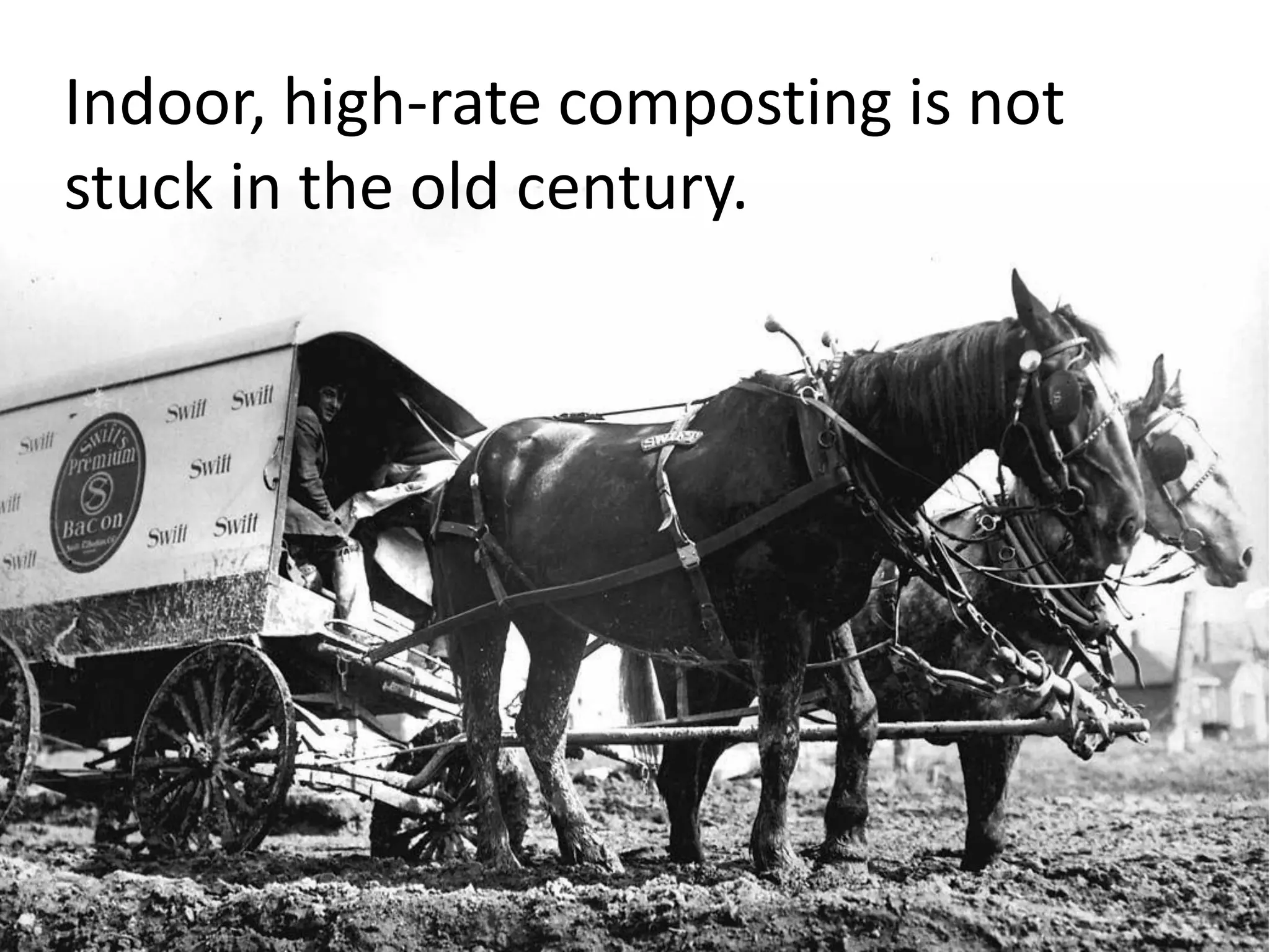
Indoor, high-rate composting is not
stuck in the old century.
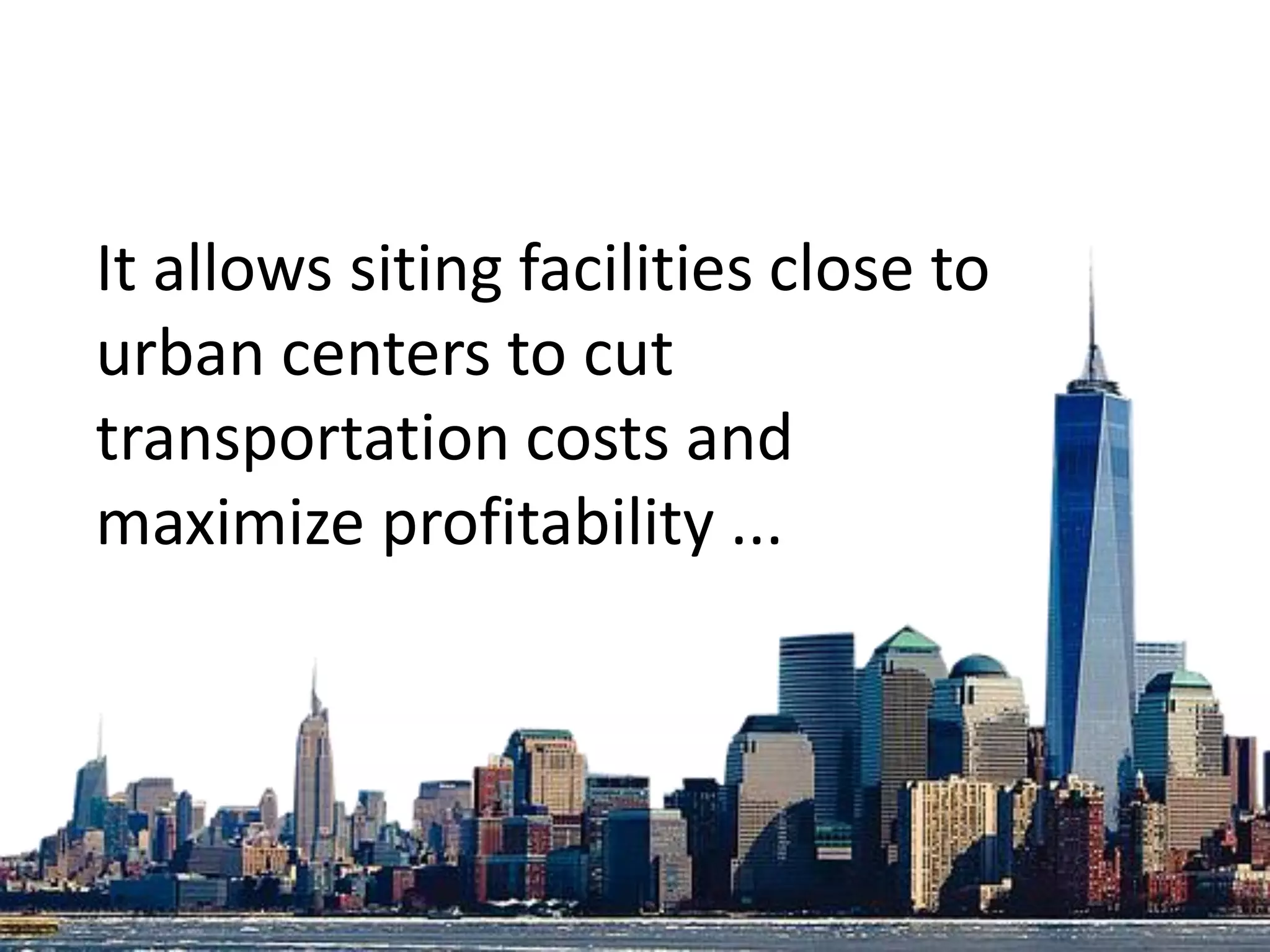
It allows siting facilities close to
urban centers to cut
transportation costs and
maximize profitability ...
when combined with the use
of preemptive site selection
strategies ...
• Industrial zoning
• Greater distances between the
facility and residences, churches,
schools, shopping districts
• Truck routes that avoid sensitive
neighborhoods
and using higher design, technology
and operating standards than
currently required by regulations.
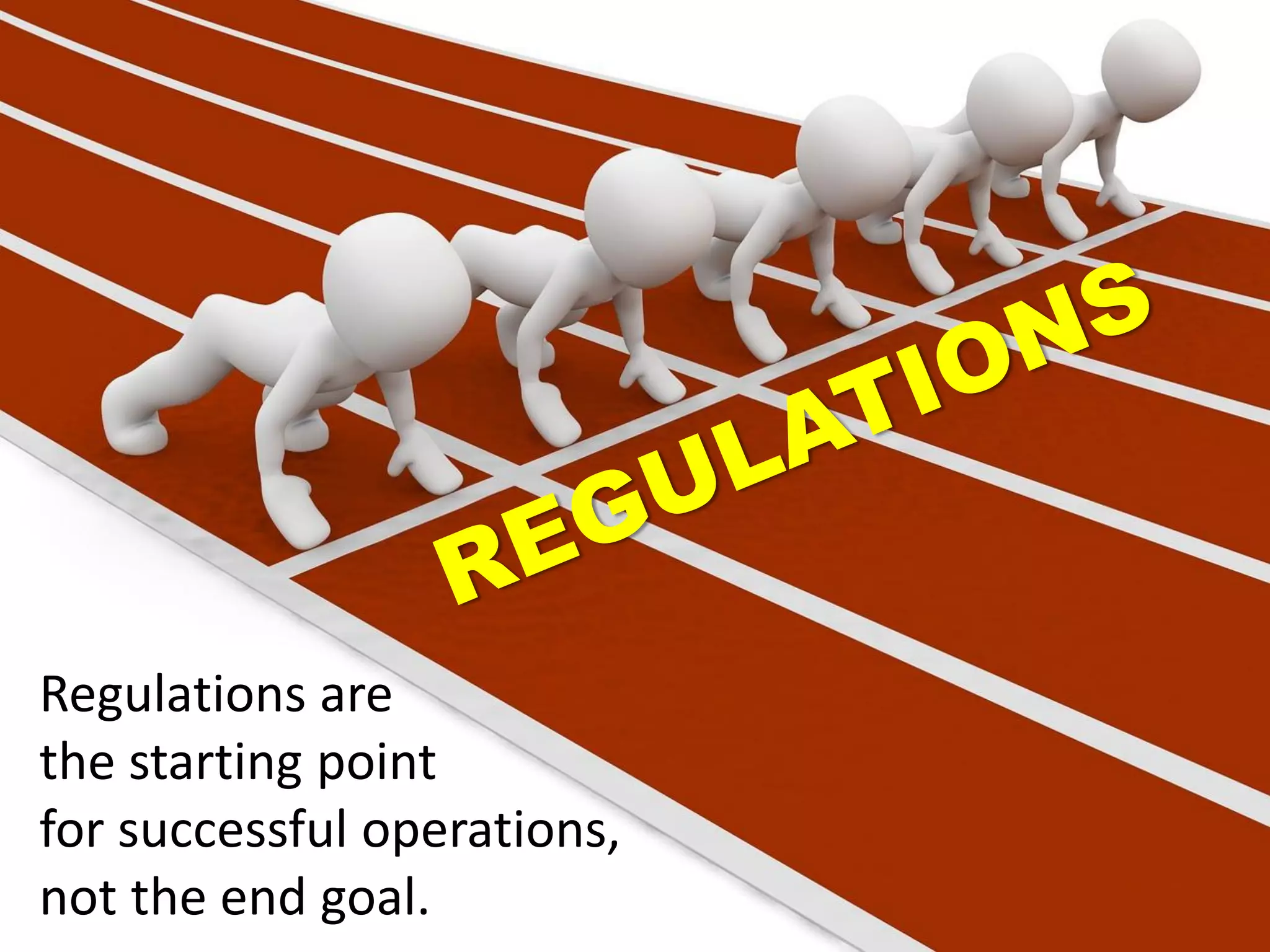
Regulations are
the starting point
for successful operations,
not the end goal.
Professional marketing and sales
programs are also a must.
What does the industry
get for this investment?
Freedom from nuisance
complaints and
regulatory fines,
process
predictability,
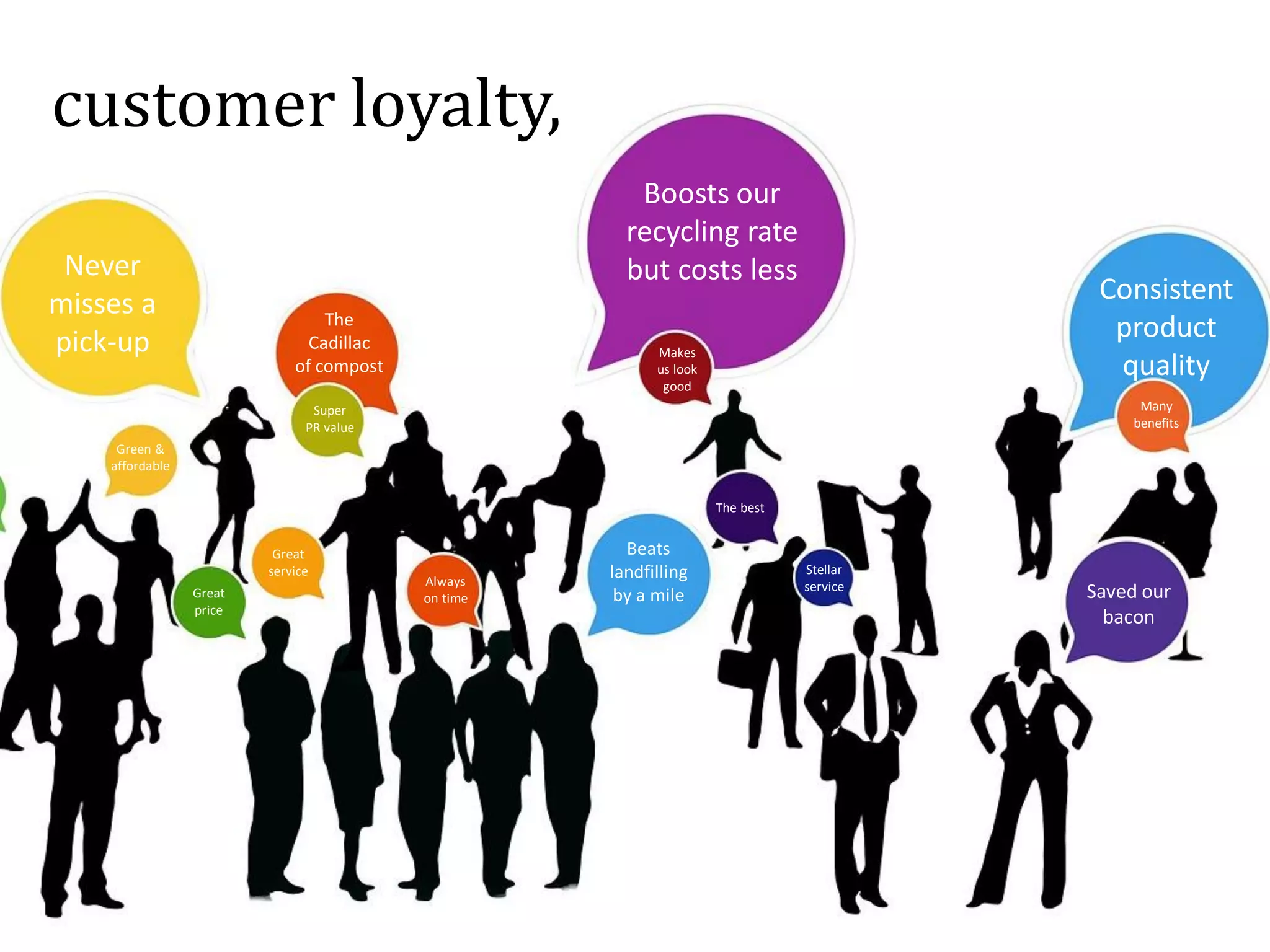
customer loyalty,
Consistent
product
quality
Boosts our
recycling rate
but costs lessNever
misses a
pick-up
Saved our
bacon
Beats
landfilling
by a mile
The
Cadillac
of compost
Great
price
Makes
us look
good
Many
benefits
The best
Stellar
serviceAlways
on time
Super
PR value
Great
service
Green &
affordable
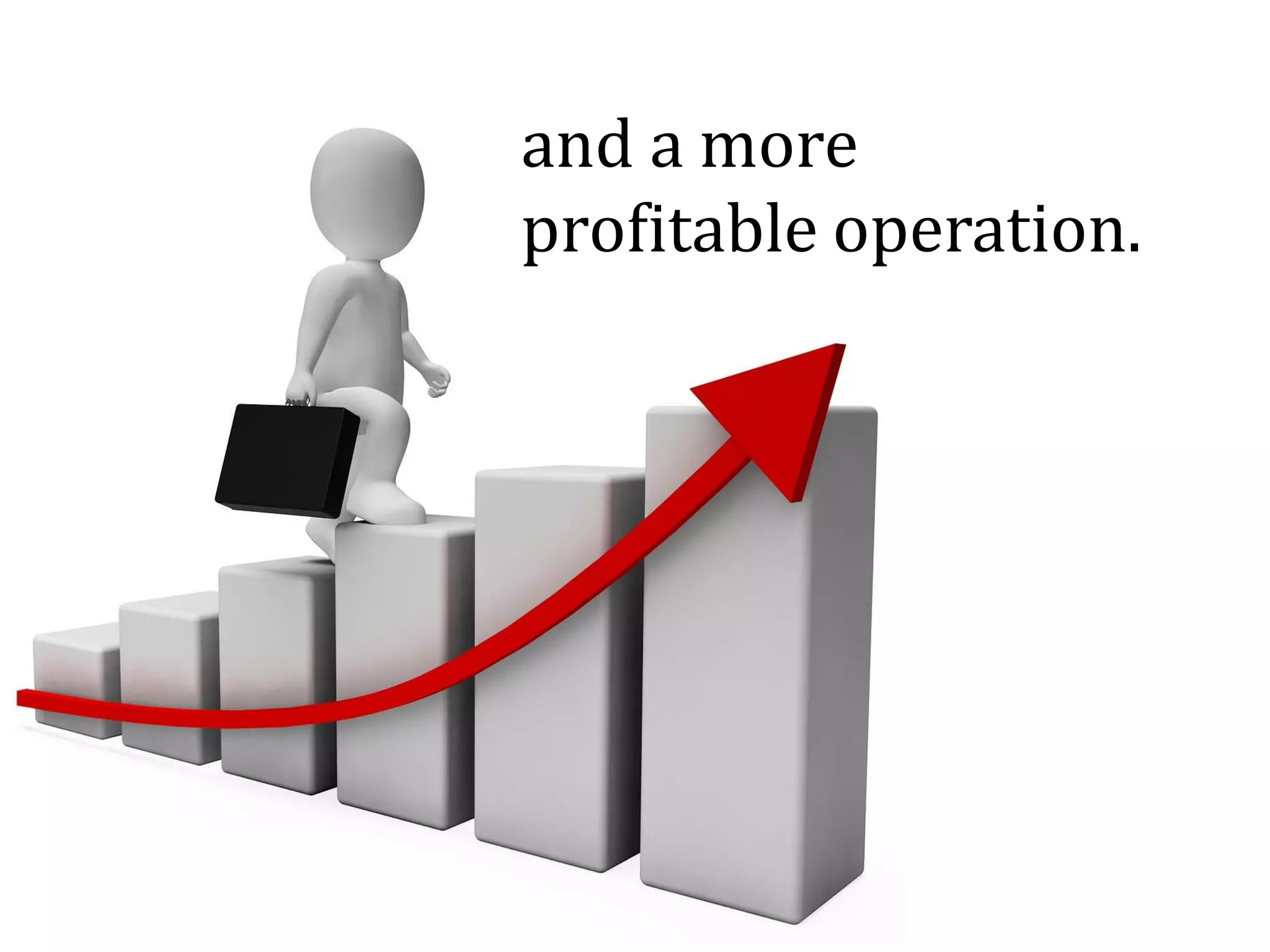
a healthy revenue stream
from the sale
of quality
compost
products,
and a more
profitable operation.
Plus, everyone gets cleaner air
and water as a bonus.
High-rate composting gives organics
recycling a cost-effective future.
Read more about the benefits
of high-rate composting for
urban organics.
CREDITS
Production costs for this title were underwritten
by McGill. Its use is permitted for educational
purposes if presented in its entirety and without
editing or other alteration. ©McGill
Environmental Systems of N.C. Inc. Questions?
Call McGill HQ at 919-362-1161 or use a contact
form at www.mcgillcompost.com.

Why high-rate composting for urban organics?