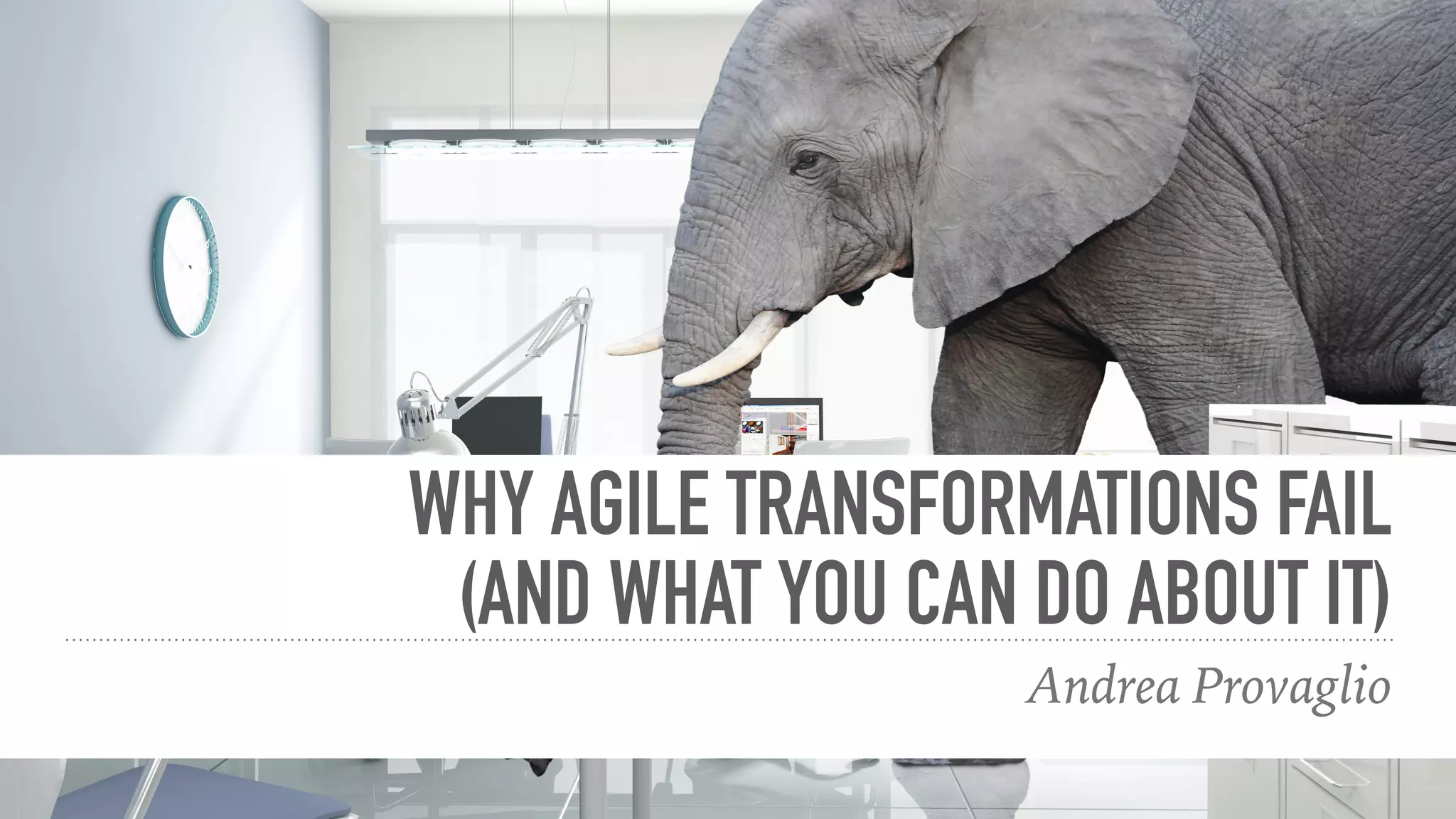







WHY AGILE TRANSFORMATIONS FAIL
(AND WHAT YOU CAN DO ABOUT IT)
Andrea Provaglio
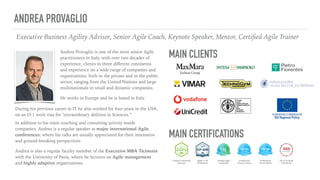
ANDREA PROVAGLIO
Andrea Provaglio is one of the most senior Agile
practitioners in Italy, with over two decades of
experience, clients in three di
ff
erent continents
and experience on a wide range of companies and
organisations, both in the private and in the public
sector, ranging from the United Nations and large
multinationals to small and dynamic companies.
He works in Europe and he is based in Italy.
Executive Business Agility Advisor, Senior Agile Coach, Keynote Speaker, Mentor, Certi
fi
ed Agile Trainer
In addition to his main coaching and consulting activity inside
companies, Andrea is a regular speaker at major international Agile
conferences, where his talks are usually appreciated for their innovative
and ground-breaking perspectives.
Andrea is also a regular faculty member of the Executive MBA Ticinenis
with the University of Pavia, where he lectures on Agile management
and highly adaptive organizations.
ICAgile’s Authorized
Instructor
Professional
Scrum Master
Professional
Product Owner
Certi
fi
ed Agile
Leadership
Agility in HR
Professional
MAIN CERTIFICATIONS
Scrum at Scale
Practitioner
MAIN CLIENTS
During his previous career in IT he also worked for four years in the USA,
on an O-1 work visa for "extraordinary abilities in Sciences.”
AN OPEN SECRET
IN THE TRADE
Quite a few Agile “transformations” fail
— sometimes spectacularly
HOW DOES A FAILED
TRANSFORMATION LOOK LIKE?
LIKE THIS
Australia and New Zealand Bank
Agile “New Way of Working”
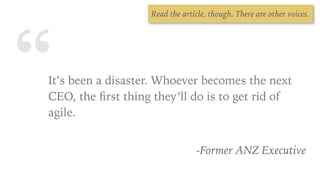
“It’s been a disaster. Whoever becomes the next
CEO, the
fi
rst thing they’ll do is to get rid of
agile.
-Former ANZ Executive
Read the article, though. There are other voices.
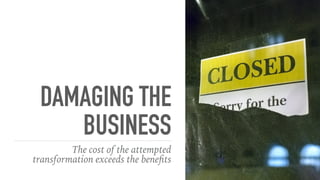
DAMAGING THE
BUSINESS
The cost of the attempted
transformation exceeds the bene
fi
ts
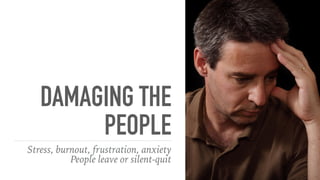
DAMAGING THE
PEOPLE
Stress, burnout, frustration, anxiety
People leave or silent-quit
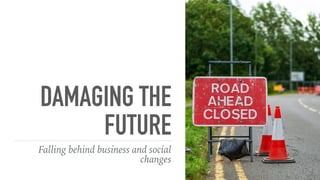
DAMAGING THE
FUTURE
Falling behind business and social
changes
WHAT MAKES A
TRANSFORMATION FAIL
Disclaimer: these are a few personal observations, reality is more complex
NO CULPRIT
Multiple interrelated causes
IT’S HARD TO
UNDERSTAND
WHAT AGILE
REALLY IS
Born in a highly technical industry that sells
products made 100% of intellectual work
https://flic.kr/p/2mb6vET
ORGANIZATIONS ARE
IMPLICITLY OPTIMIZED TO
AVOID CHANGING THE
STATUS QUO MIDDLE- AND
FIRST-LEVEL MANAGER AND
“SPECIALIST” POSITIONS &
POWER STRUCTURES
— Craig Larman
https://flic.kr/p/AEyVHF
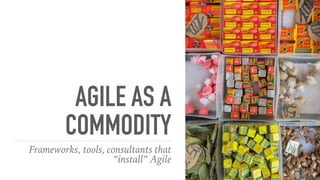
AGILE AS A
COMMODITY
Frameworks, tools, consultants that
“install” Agile
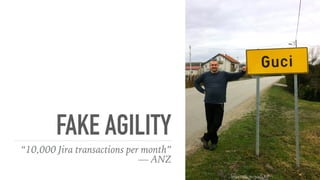
FAKE AGILITY
“10,000 Jira transactions per month”
— ANZ
https://flic.kr/p/e2cXrf
SHALLOW AGILE
Just process, missing the real potential
INEXPERIENCED
COACHES
You need the scars, not just badges
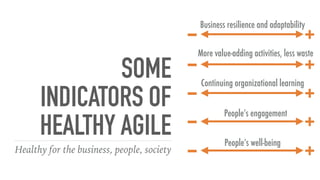
SOME
INDICATORS OF
HEALTHY AGILE
Healthy for the business, people, society – +
People’s well-being
– +
People’s engagement
– +
Business resilience and adaptability
– +
More value-adding activities, less waste
– +
Continuing organizational learning
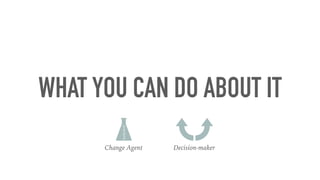
WHAT YOU CAN DO ABOUT IT
Change Agent Decision-maker
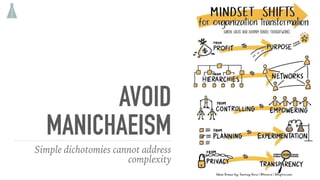
AVOID
MANICHAEISM
Simple dichotomies cannot address
complexity
AVOID HOLY
CRUSADES
In the name of your own idea of Agile
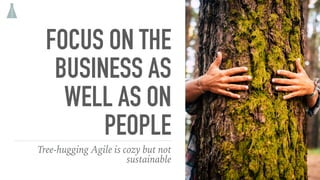
FOCUS ON THE
BUSINESS AS
WELL AS ON
PEOPLE
Tree-hugging Agile is cozy but not
sustainable
LEARN, THINK,
DECIDE
Study, discuss, understand Agile
Simple notions are dangerous
Photo by Evan Bench from paris, france, CC BY 2.0
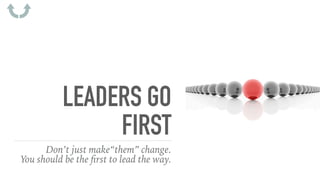
LEADERS GO
FIRST
Don’t just make“them” change.
You should be the
fi
rst to lead the way.
MAKE YOUR
VALUE STREAM
AGILE
END-TO-END
Using Agile for “production” only is
pointless
OWN YOUR
AGILITY
Don’t externalize your evolution
REFERENCES
https://bit.ly/provaglio-iad22
LET’S CONNECT
ANDREA PROVAGLIO
http://andreaprovaglio.com
https://linkedin.com/in/provaglio

Why Agile Transformations Fail (and what you can do about it)