Waterfall to Agile
How does a QA Team team transition
Ponni A
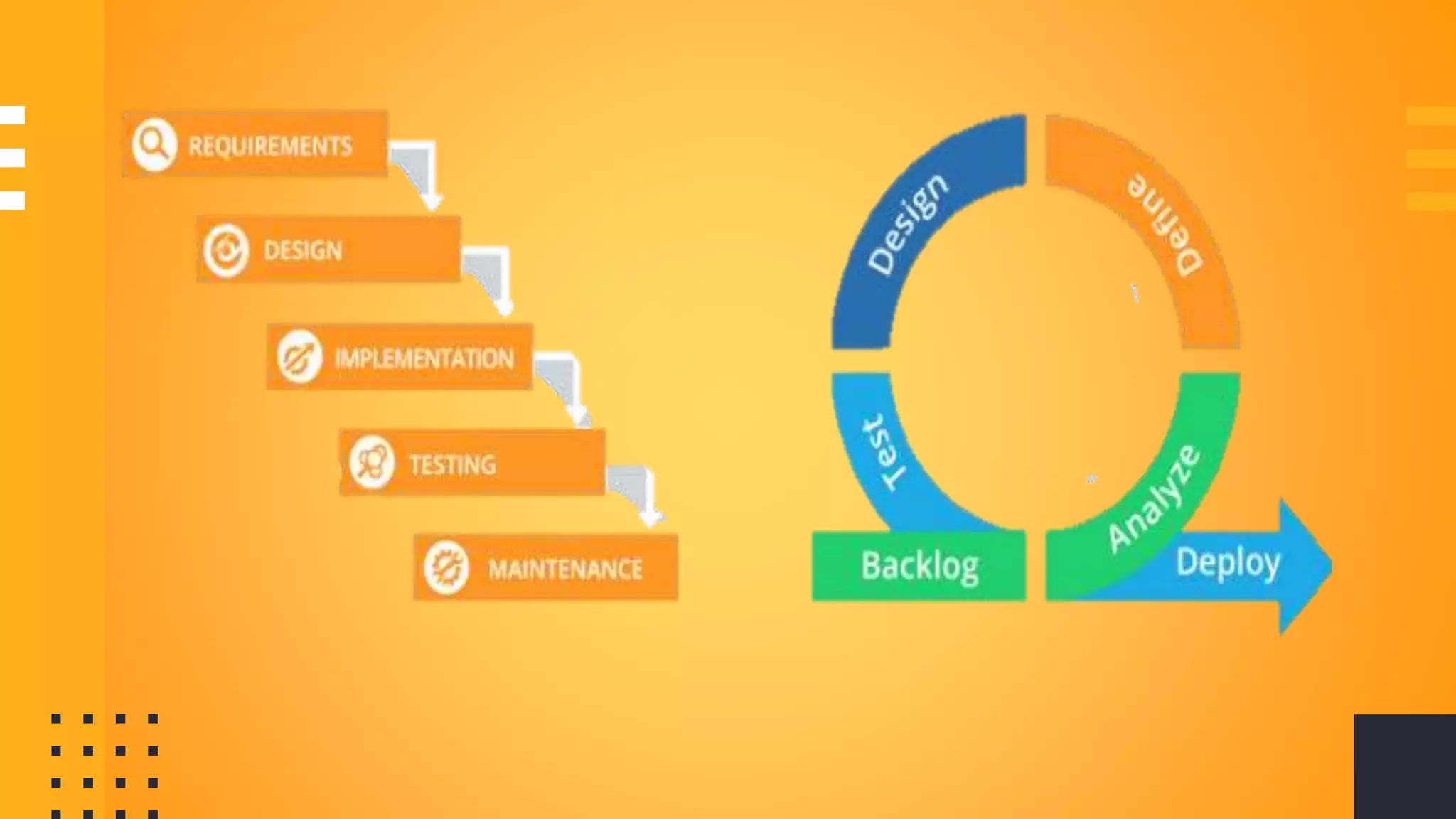
WATERFALL MODEL
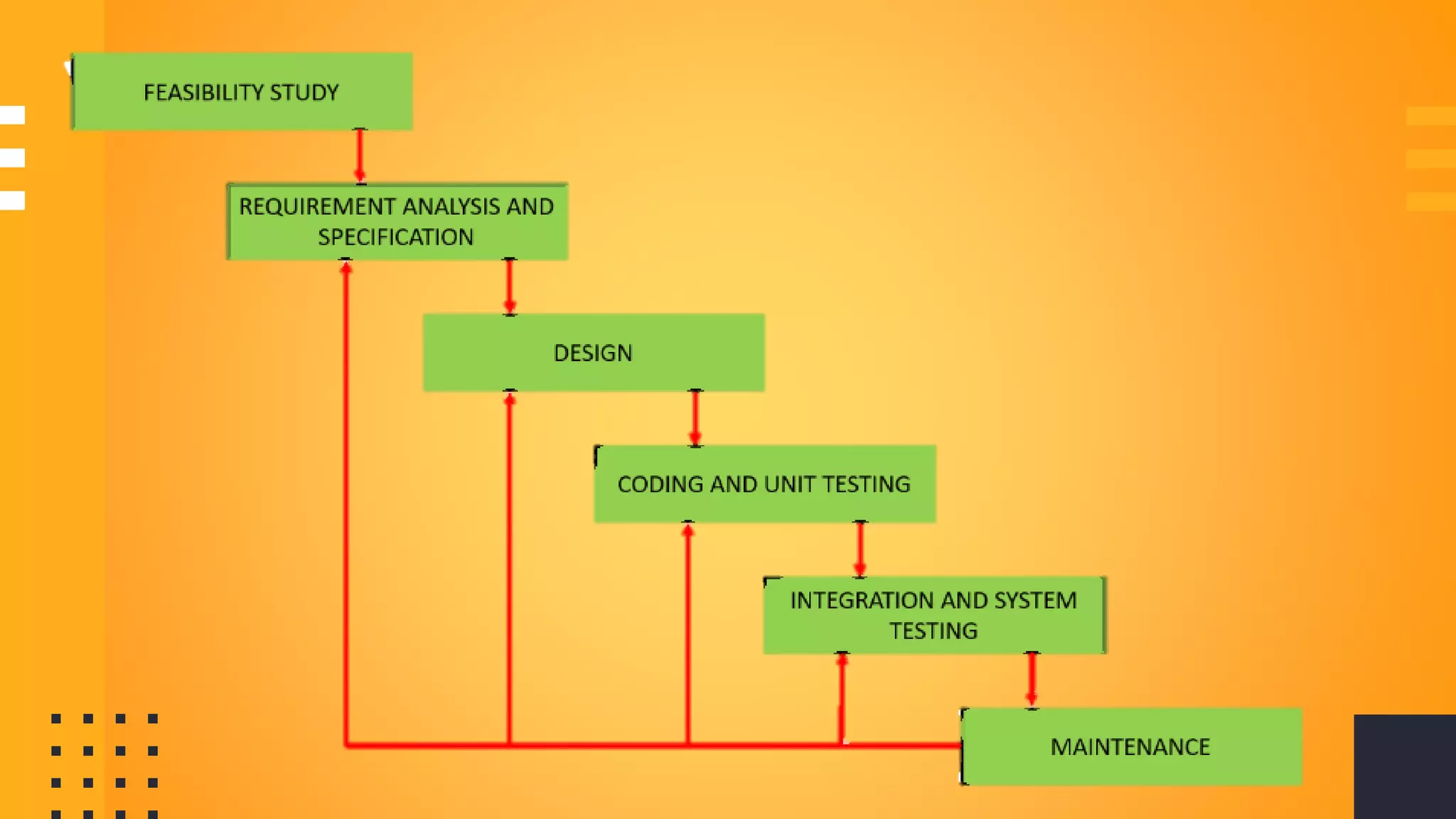
The iterative waterfall model
provides feedback paths from
every phase to its preceding
phases, which is the main
difference from the classical
waterfall model.
When it comes to managing
complex projects, many
companies still employ a rigid,
top-down process known as
“waterfall”.
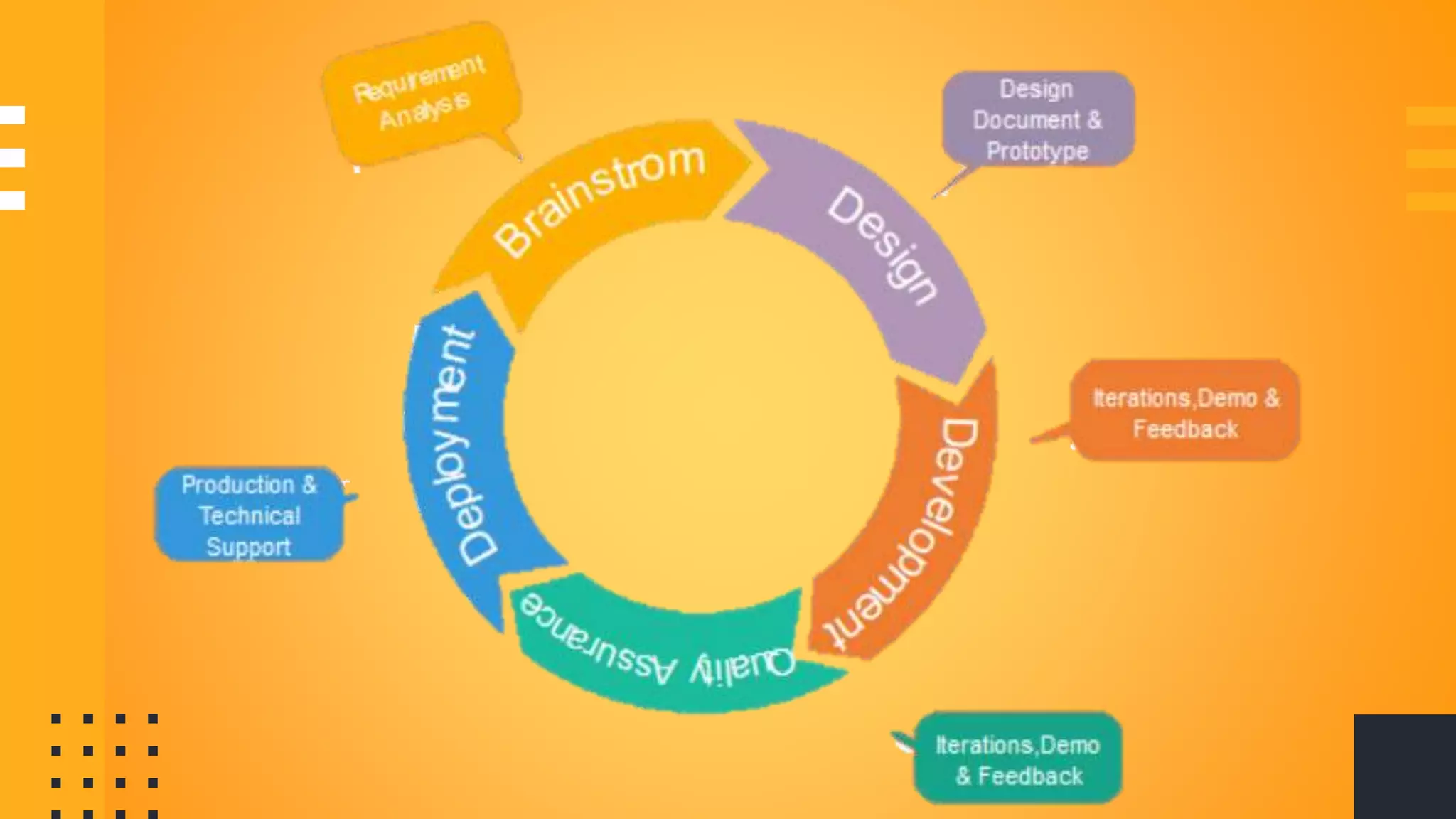
AGILE MODEL
Agile methods break tasks into
smaller iterations, or parts do
not directly involve long term
planning.
The meaning of Agile is swift or
versatile."Agile process model"
refers to a software
development approach based
on iterative development.
Each iteration is considered as a short time "frame" in the Agile process
model, which typically lasts from one to four weeks.
The Problem With Waterfall Methods
▪ First, it’s impossible to predict every potential outcome
with a rigid set of project requirements created up front.
▪ Waterfall’s rigid framework doesn’t allow you to course
correct based on learning that occurs throughout any
project.
▪ The Cone of Uncertainty can make it really difficult to
accurately estimate and plan waterfall projects. This is
also why RFPs can be so problematic.
“ 8 ways to ease
the transition
from waterfall to
agile
1. Train staff
Team Capacity: Figure out what
your total team capacity is. This is
the total number of billable hours
per week for your team.
Few things to try that can help get your team ready
Sprint length: Sprints are
typically two weeks long, but
this may not work for your
team’s capacity or the project
they’re on.
Estimating: A key part of
successful sprint planning is
estimating task difficulty. Start
first by using hours as your scale
of difficulty
Individual Capacity: Plan each
person’s workload individually
rather than planning workloads
by team.
2. Leverage Automation
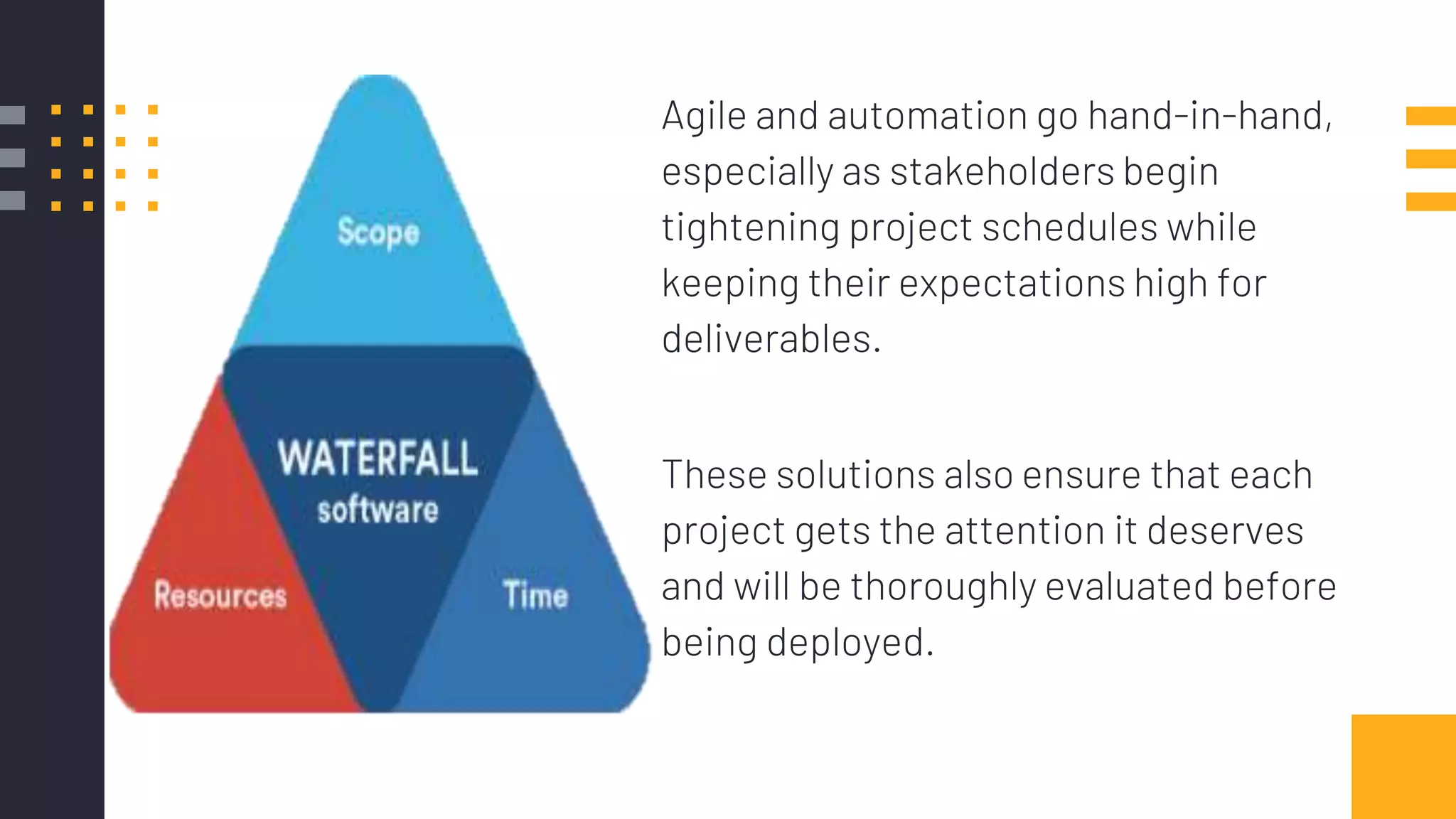
Agile and automation go hand-in-hand,
especially as stakeholders begin
tightening project schedules while
keeping their expectations high for
deliverables.
These solutions also ensure that each
project gets the attention it deserves
and will be thoroughly evaluated before
being deployed.
3. Emphasize change of
thinking
Emphasize change of thinking
Hanging onto legacy
approaches can be the death
of agile transitions.
While organizations
can utilize traditional
examples to help staff
make sense of their
new practices, their
old ways of completing
tasks should ultimately
be abandoned for
complete agile
operations.
Being involved in excessive procedure upon
transitioning to Agile is a common, and can
quagmire the Agile process
One declarative of the
Agile Manifesto
is people over process.
4. Communicate regularly
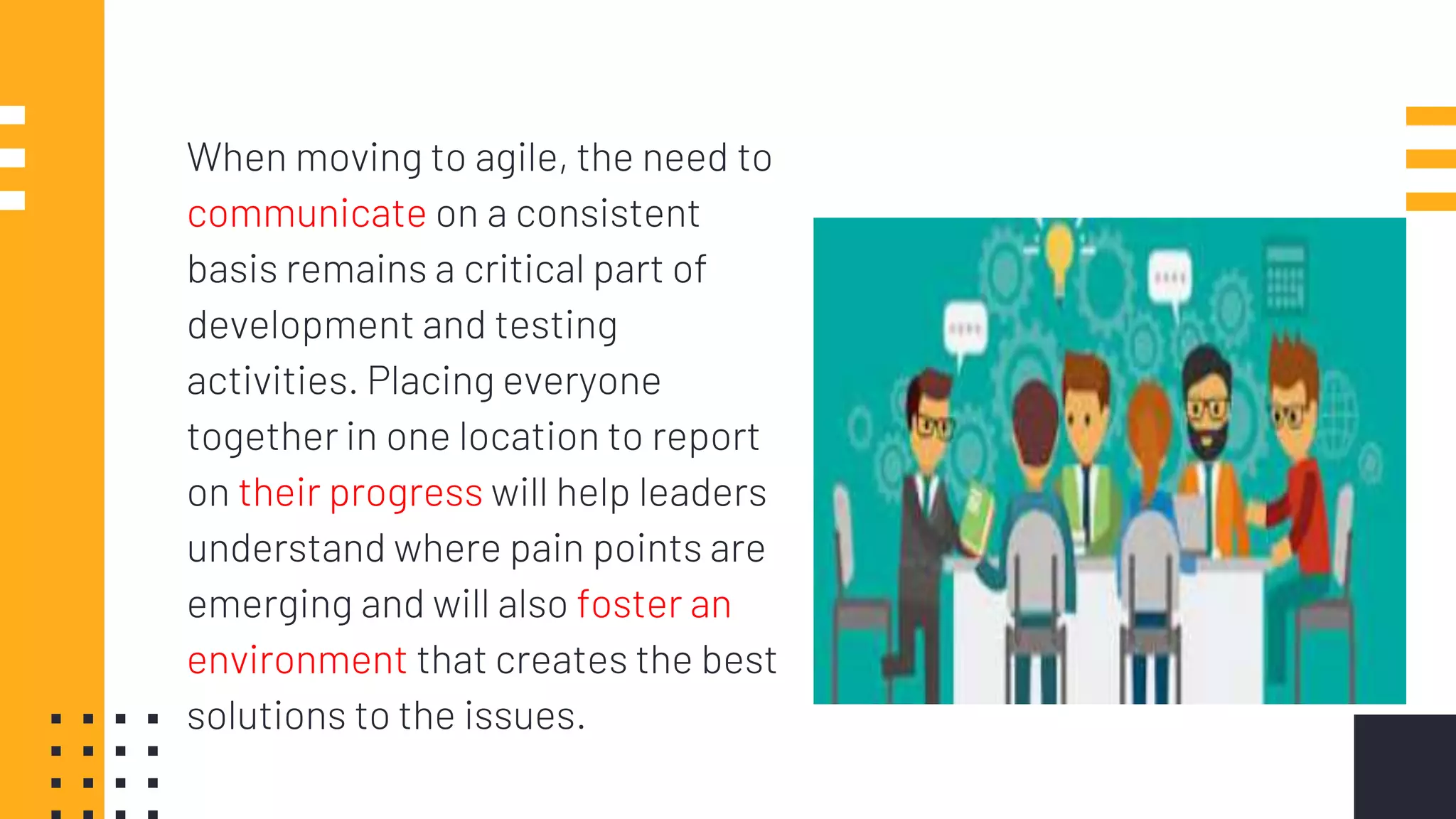
When moving to agile, the need to
communicate on a consistent
basis remains a critical part of
development and testing
activities. Placing everyone
together in one location to report
on their progress will help leaders
understand where pain points are
emerging and will also foster an
environment that creates the best
solutions to the issues.
5. Foster collaboration
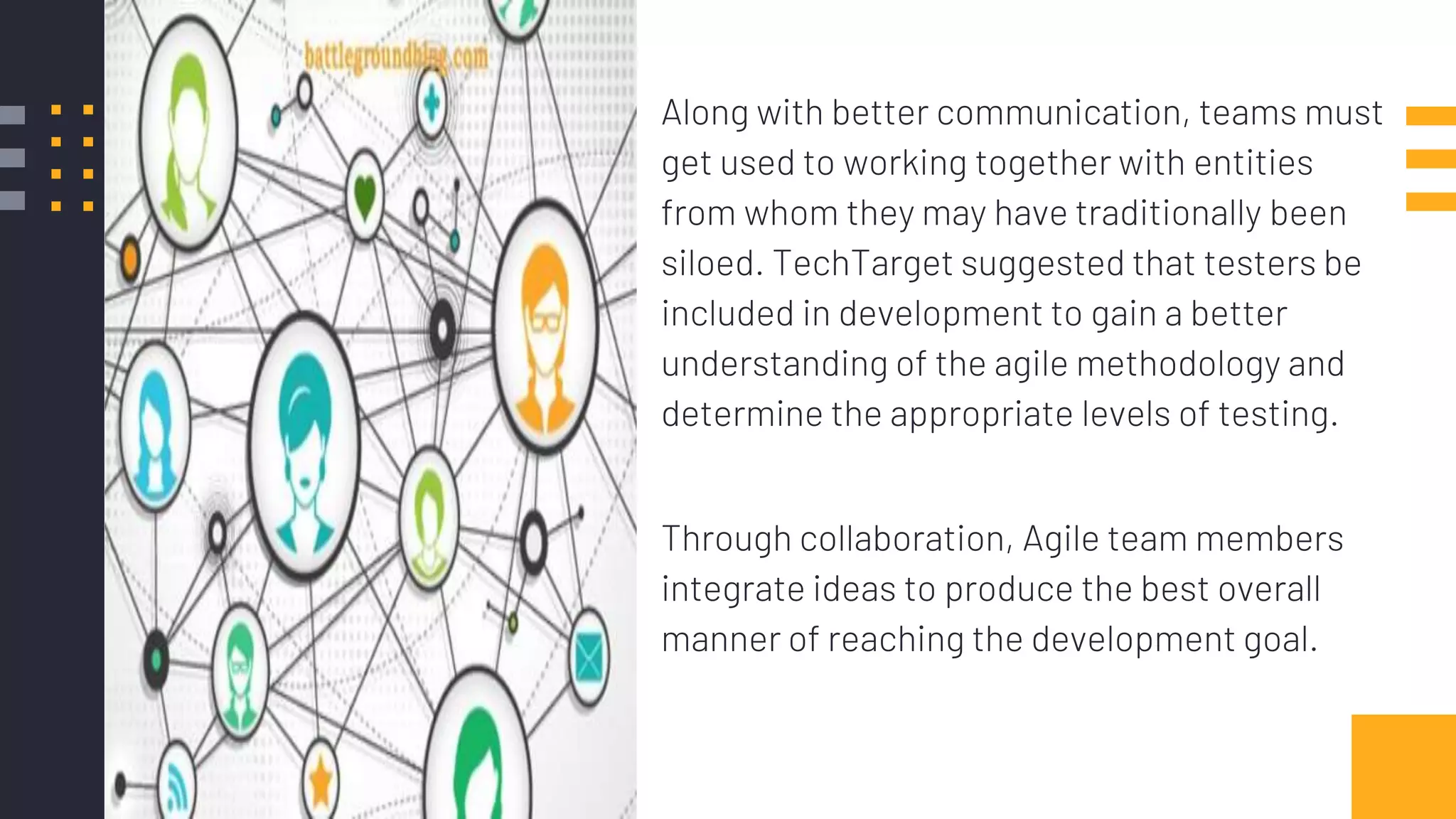
Along with better communication, teams must
get used to working together with entities
from whom they may have traditionally been
siloed. TechTarget suggested that testers be
included in development to gain a better
understanding of the agile methodology and
determine the appropriate levels of testing.
Through collaboration, Agile team members
integrate ideas to produce the best overall
manner of reaching the development goal.
6. Integrate tools
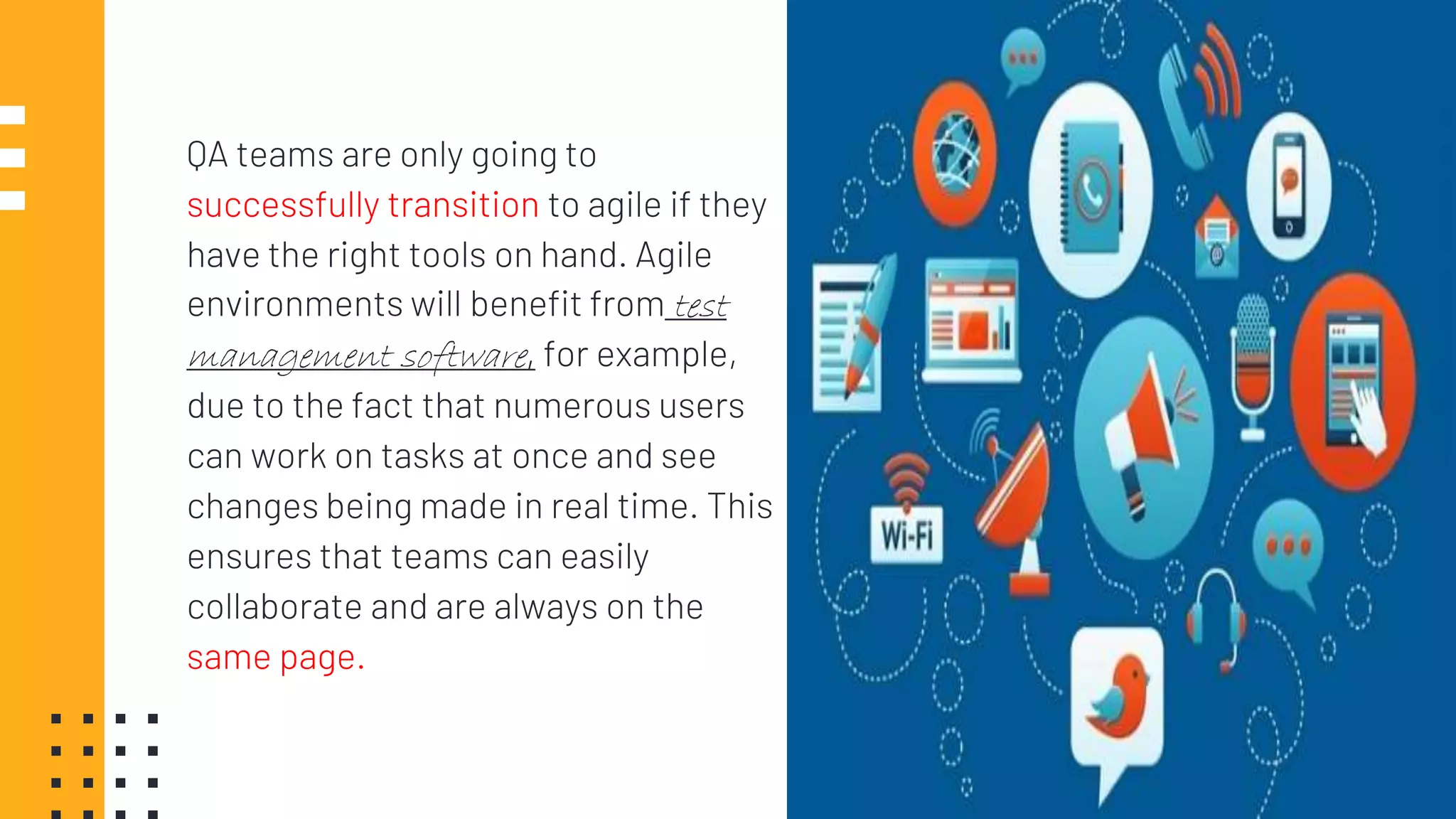
QA teams are only going to
successfully transition to agile if they
have the right tools on hand. Agile
environments will benefit from test
management software, for example,
due to the fact that numerous users
can work on tasks at once and see
changes being made in real time. This
ensures that teams can easily
collaborate and are always on the
same page.
21
7. Stay Flexible
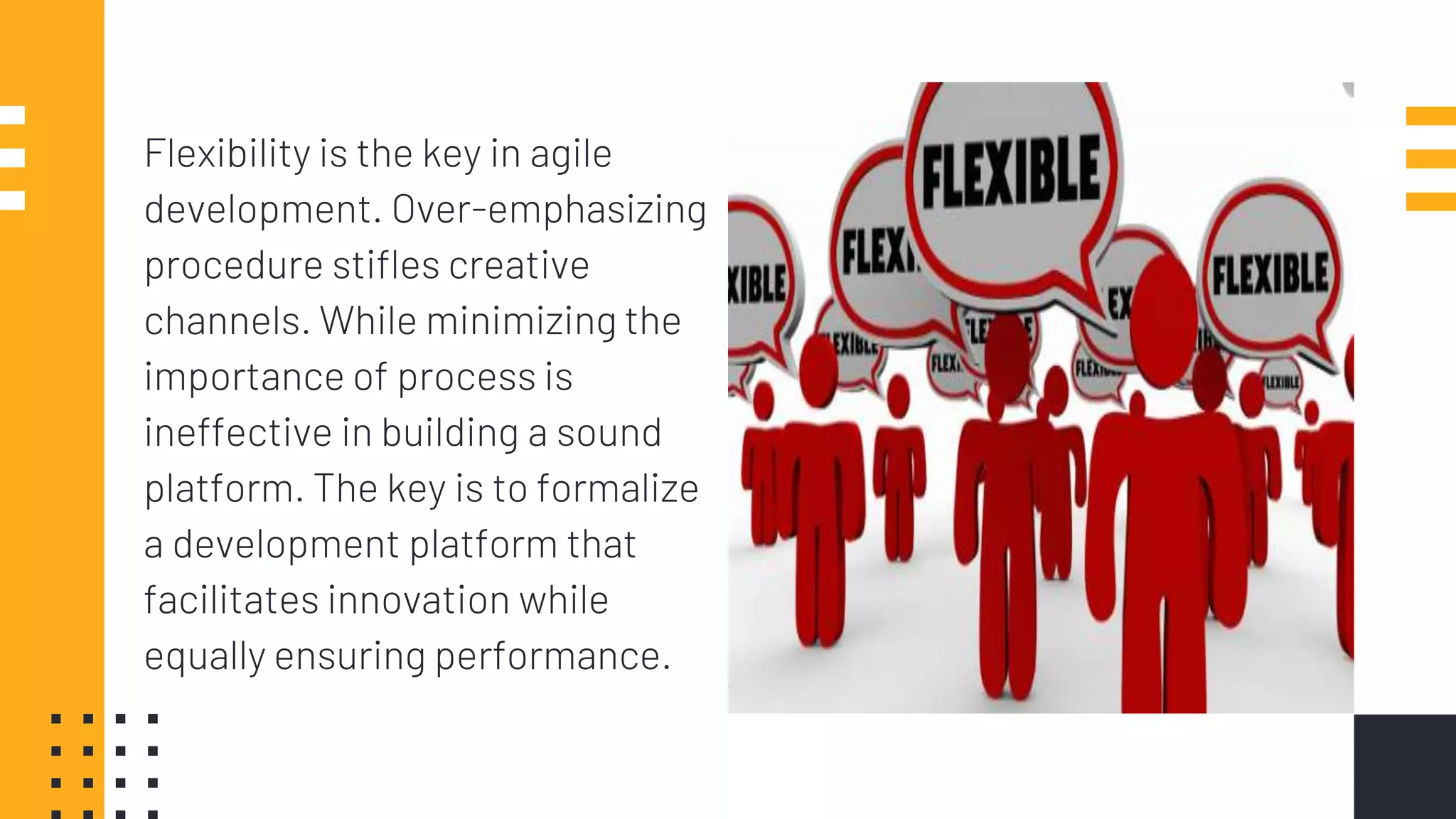
Flexibility is the key in agile
development. Over-emphasizing
procedure stifles creative
channels. While minimizing the
importance of process is
ineffective in building a sound
platform. The key is to formalize
a development platform that
facilitates innovation while
equally ensuring performance.
8. Concentrate on the End-
Product
END PRODUCT
At times, we all get distracted with
recurrent deliverables, such as
completing in-house ticket requests.
While incremental obligations must be
completed, the measure of completing
them should be accommodated in a
manner as to avoid delaying the
software build.
25
“ THANK YOU!

Waterfall to agile transition

  • 1.
    Waterfall to Agile Howdoes a QA Team team transition Ponni A
  • 2.
    WATERFALL MODEL The iterativewaterfall model provides feedback paths from every phase to its preceding phases, which is the main difference from the classical waterfall model. When it comes to managing complex projects, many companies still employ a rigid, top-down process known as “waterfall”.
  • 4.
    AGILE MODEL Agile methodsbreak tasks into smaller iterations, or parts do not directly involve long term planning. The meaning of Agile is swift or versatile."Agile process model" refers to a software development approach based on iterative development. Each iteration is considered as a short time "frame" in the Agile process model, which typically lasts from one to four weeks.
  • 7.
    The Problem WithWaterfall Methods ▪ First, it’s impossible to predict every potential outcome with a rigid set of project requirements created up front. ▪ Waterfall’s rigid framework doesn’t allow you to course correct based on learning that occurs throughout any project. ▪ The Cone of Uncertainty can make it really difficult to accurately estimate and plan waterfall projects. This is also why RFPs can be so problematic.
  • 9.
    “ 8 waysto ease the transition from waterfall to agile
  • 10.
  • 11.
    Team Capacity: Figureout what your total team capacity is. This is the total number of billable hours per week for your team. Few things to try that can help get your team ready Sprint length: Sprints are typically two weeks long, but this may not work for your team’s capacity or the project they’re on. Estimating: A key part of successful sprint planning is estimating task difficulty. Start first by using hours as your scale of difficulty Individual Capacity: Plan each person’s workload individually rather than planning workloads by team.
  • 12.
  • 13.
    Agile and automationgo hand-in-hand, especially as stakeholders begin tightening project schedules while keeping their expectations high for deliverables. These solutions also ensure that each project gets the attention it deserves and will be thoroughly evaluated before being deployed.
  • 14.
  • 15.
    Emphasize change ofthinking Hanging onto legacy approaches can be the death of agile transitions. While organizations can utilize traditional examples to help staff make sense of their new practices, their old ways of completing tasks should ultimately be abandoned for complete agile operations. Being involved in excessive procedure upon transitioning to Agile is a common, and can quagmire the Agile process One declarative of the Agile Manifesto is people over process.
  • 16.
  • 17.
    When moving toagile, the need to communicate on a consistent basis remains a critical part of development and testing activities. Placing everyone together in one location to report on their progress will help leaders understand where pain points are emerging and will also foster an environment that creates the best solutions to the issues.
  • 18.
  • 19.
    Along with bettercommunication, teams must get used to working together with entities from whom they may have traditionally been siloed. TechTarget suggested that testers be included in development to gain a better understanding of the agile methodology and determine the appropriate levels of testing. Through collaboration, Agile team members integrate ideas to produce the best overall manner of reaching the development goal.
  • 20.
  • 21.
    QA teams areonly going to successfully transition to agile if they have the right tools on hand. Agile environments will benefit from test management software, for example, due to the fact that numerous users can work on tasks at once and see changes being made in real time. This ensures that teams can easily collaborate and are always on the same page. 21
  • 22.
  • 23.
    Flexibility is thekey in agile development. Over-emphasizing procedure stifles creative channels. While minimizing the importance of process is ineffective in building a sound platform. The key is to formalize a development platform that facilitates innovation while equally ensuring performance.
  • 24.
    8. Concentrate onthe End- Product
  • 25.
    END PRODUCT At times,we all get distracted with recurrent deliverables, such as completing in-house ticket requests. While incremental obligations must be completed, the measure of completing them should be accommodated in a manner as to avoid delaying the software build. 25
  • 26.