

























When Training Smells
Let’s face it. We’ve all taken bad training.
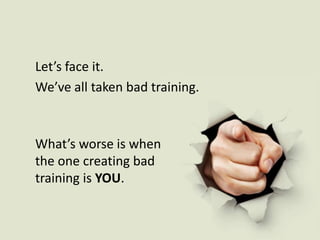
Let’s face it. We’ve all taken bad training.What’s worse is when the one creating bad training is YOU.
No matter how hard you work at it –Haphazardly piling courses, information, tools and resources together does not equal training.
Maybe it’s time to rethink your approach.
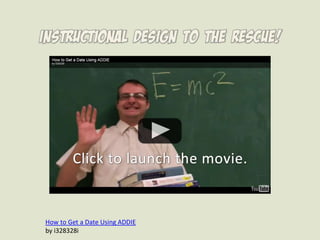
How to Get a Date Using ADDIE by i328328i
“Traditional ways of   training are obsolete.”~ The Peanut Gallery
“Traditional ways of   training are obsolete.”~ The Peanut Gallery Well, you can’t relycompletely on informallearning either.
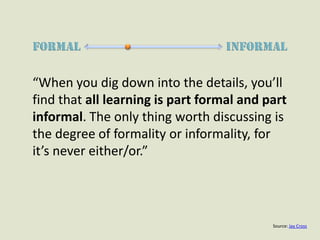
FormalInFormal“When you dig down into the details, you’ll find that all learning is part formal and part informal. The only thing worth discussing is the degree of formality or informality, for it’s never either/or.”Source: Jay Cross
You’ll find lots of information available from experts in the field.But to get you started, here are the…
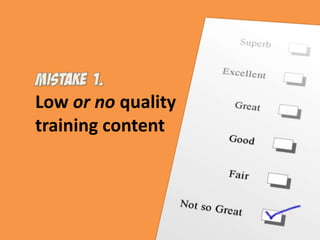
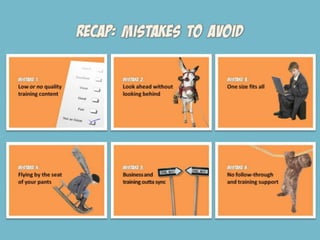
Low or no quality training content
If you’re a slave to the latest fashions in technology and design or you’re simply impressed more with quantity over quality in your efforts to build training, you need to stop what you’re doing and step away from the computer right now.
Offering loads of random, outdated training content (even if it’s stylish) STINKS.
Instead, you must target, target, target:The objectivesThe audienceThe needs
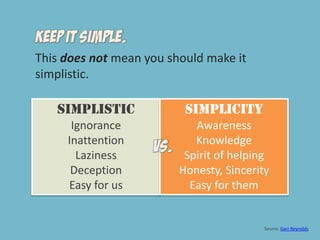
This does not mean you should make it simplistic.SimplisticIgnoranceInattentionLazinessDeceptionEasy for usSIMPLICITYAwarenessKnowledgeSpirit of helpingHonesty, SincerityEasy for themSource: Garr Reynolds
“Just say No!” to tired training. Solid training programs are key to company performance.
“Just say No!” to tired training. Solid training programs are key to company performance.Studies show companies that choose to make larger investments in their employees have higher customer retention rates and are better positioned for success.Source: Laurie Bassihttp://www.mcbassi.com
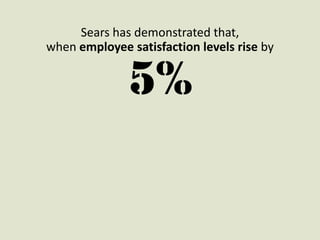
Sears has demonstrated that, when employee satisfaction levels rise by 5%
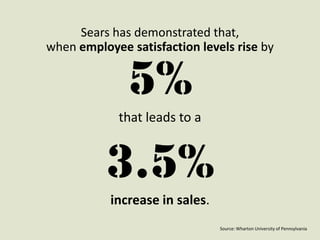
Sears has demonstrated that, when employee satisfaction levels rise by 5%that leads to a 3.5% increase in sales.Source: Wharton University of Pennsylvania
Look ahead without looking behind
Acknowledge their knowledge.
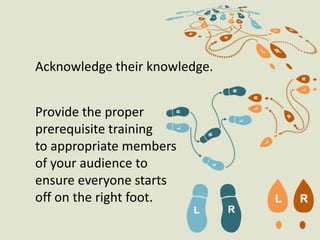
Acknowledge their knowledge. Provide the proper prerequisite training to appropriate members of your audience to ensure everyone starts off on the right foot.
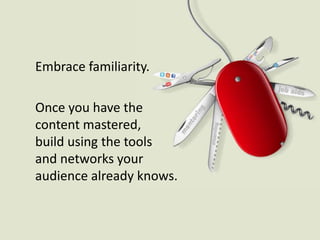
Embrace familiarity.Once you have the content mastered, build using the tools and networks your audience already knows.
Learners must know how to walk before they can run.
One size fits all
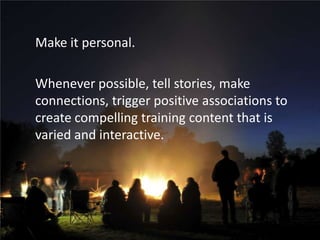
Make it personal.Whenever possible, tell stories, make connections, trigger positive associations to create compelling training content that is varied and interactive.
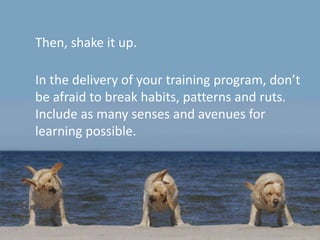
Then, shake it up.
Then, shake it up. In the delivery of your training program, don’t be afraid to break habits, patterns and ruts. Include as many senses and avenues for learning possible.
Variety is the spice of life!Consider what learning styles your audience has and offer training that meets their needs.Assess learning styles with this free test.Memletics Learning Styles Inventory Quiz
Flying by the seat of your pants
Don’t touch anything until you know where it’s been – or where it’s going.
Don’t touch anything until you know where it’s been – or where it’s going. In other words…
Plan ahead.Well-designed training is much more efficient to develop, implement and managefor the long term.
No time? No resources? No budget?
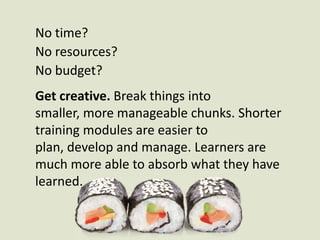
No time? No resources? No budget?Get creative. Break things into smaller, more manageable chunks. Shorter training modules are easier to plan, develop and manage. Learners are much more able to absorb what they have learned.
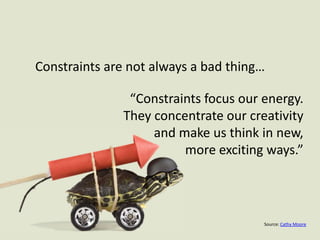
Constraints are not always a bad thing…“Constraints focus our energy. They concentrate our creativity and make us think in new, more exciting ways.”Source: Cathy Moore
Business and training outta sync
Keep the bigger picture in sight. Ooh, this is a tough one. But it can and must be done to ensure a rewarding training program.
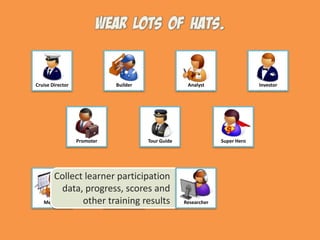
Ensure all of the right people are onboardCruise Director
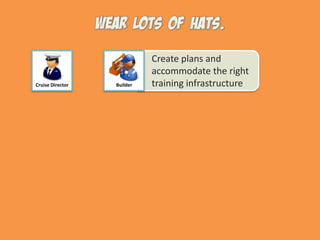
Create plans and accommodate the right training infrastructureBuilderCruise Director
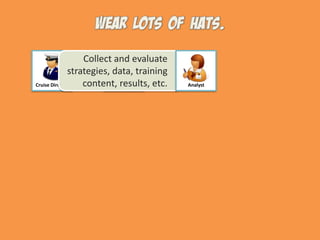
Collect and evaluate strategies, data, training content, results, etc.BuilderAnalystCruise Director
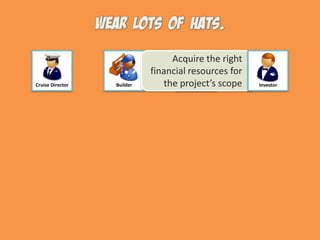
Acquire the right financial resources for the project’s scopeBuilderAnalystCruise DirectorInvestor
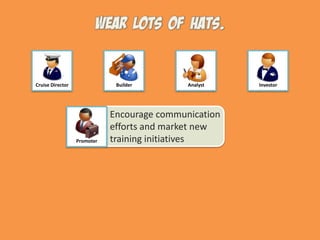
Encourage communication efforts and market new training initiativesBuilderAnalystCruise DirectorInvestorPromoter
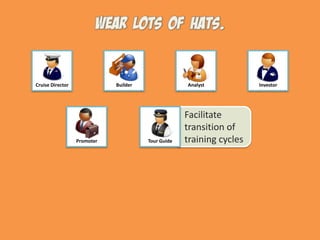
Facilitate transition of training cyclesBuilderAnalystCruise DirectorInvestorPromoterTour Guide
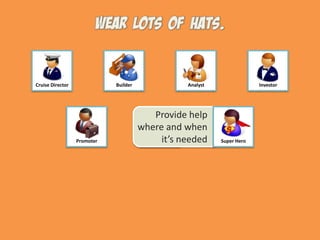
Provide help where and when it’s neededBuilderAnalystCruise DirectorInvestorPromoterSuper HeroTour Guide
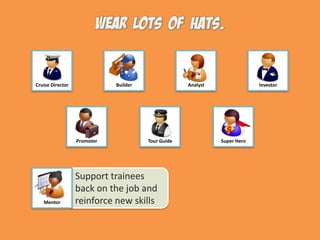
Support trainees back on the job and reinforce new skillsBuilderAnalystCruise DirectorInvestorPromoterSuper HeroMentorTour Guide
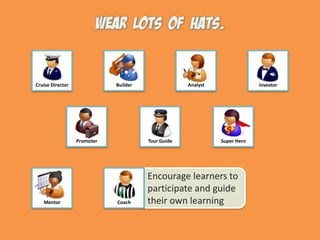
Encourage learners to participate and guide their own learningBuilderAnalystCruise DirectorInvestorPromoterCoachSuper HeroMentorTour Guide
Collect learner participation data, progress, scores and other training resultsBuilderAnalystCruise DirectorInvestorPromoterCoachSuper HeroMentorResearcherTour Guide
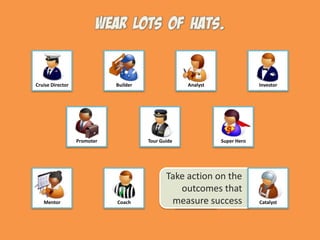
Take action on the outcomes that measure successBuilderAnalystCruise DirectorInvestorPromoterCoachSuper HeroMentorResearcherCatalystTour Guide
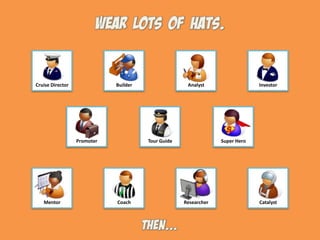
BuilderAnalystCruise DirectorInvestorPromoterCoachSuper HeroMentorResearcherCatalystTour Guide
Remember, failure is always an option.Learn to be flexible. If the training fails, tweak it. Re-evaluate the strategy and don’t be afraid to change it up.
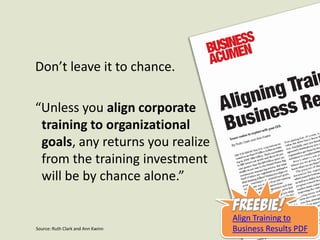
Don’t leave it to chance. “Unless you align corporate   training to organizational   goals, any returns you realize   from the training investment   will be by chance alone.”Align Training to Business Results PDFSource: Ruth Clark and Ann Kwinn
No follow-through and training support
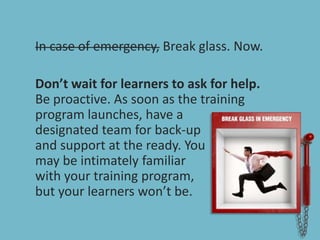
In case of emergency, Break glass. Now.Don’t wait for learners to ask for help.Be proactive. As soon as the training program launches, have a designated team for back-up and support at the ready. You may be intimately familiar with your training program, but your learners won’t be.
All done. So what’s next?
All done. So what’s next?Be attentive. Learners will likely need ongoing feedback after training as they apply their new skills.
Huzzah!Evaluate results, acknowledge team efforts and reward each learner’s new level of comprehension.
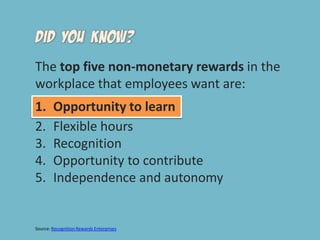
The top five non-monetary rewards in the workplace that employees want are: Opportunity to learn Flexible hoursRecognitionOpportunity to contributeIndependence and autonomySource: Recognition Rewards Enterprises
For more resources on creating great training check out:
Post this to your blog, Twitter™, LinkedIn® or Delicious™ accounts or email this to someone who might enjoy it.ShareRemixAttributeShare Alike11639 E. Wethersfield Road, Scottsdale, AZ 85259 USAwww.mnalearning.com            Toll-free: 877-614-8440 © 2011by Michaels & Associates Docntrain, Ltd.dba Michaels & AssociatesCopyright holder is licensing this under the Creative Commons License, Attribution-Share Alike 3.0. For more information, check out http://creativecommons.org/licenses/by-sa/3.0/us/

When Training Smells

  • 1.
  • 2.
    Let’s face it.We’ve all taken bad training.
  • 3.
    Let’s face it.We’ve all taken bad training.What’s worse is when the one creating bad training is YOU.
  • 4.
    No matter howhard you work at it –Haphazardly piling courses, information, tools and resources together does not equal training.
  • 5.
    Maybe it’s timeto rethink your approach.
  • 6.
    How to Geta Date Using ADDIE by i328328i
  • 7.
    “Traditional ways of training are obsolete.”~ The Peanut Gallery
  • 8.
    “Traditional ways of training are obsolete.”~ The Peanut Gallery Well, you can’t relycompletely on informallearning either.
  • 9.
    FormalInFormal“When you digdown into the details, you’ll find that all learning is part formal and part informal. The only thing worth discussing is the degree of formality or informality, for it’s never either/or.”Source: Jay Cross
  • 10.
    You’ll find lotsof information available from experts in the field.But to get you started, here are the…
  • 12.
    Low or noquality training content
  • 13.
    If you’re aslave to the latest fashions in technology and design or you’re simply impressed more with quantity over quality in your efforts to build training, you need to stop what you’re doing and step away from the computer right now.
  • 14.
    Offering loads ofrandom, outdated training content (even if it’s stylish) STINKS.
  • 15.
    Instead, you musttarget, target, target:The objectivesThe audienceThe needs
  • 16.
    This does notmean you should make it simplistic.SimplisticIgnoranceInattentionLazinessDeceptionEasy for usSIMPLICITYAwarenessKnowledgeSpirit of helpingHonesty, SincerityEasy for themSource: Garr Reynolds
  • 17.
    “Just say No!”to tired training. Solid training programs are key to company performance.
  • 18.
    “Just say No!”to tired training. Solid training programs are key to company performance.Studies show companies that choose to make larger investments in their employees have higher customer retention rates and are better positioned for success.Source: Laurie Bassihttp://www.mcbassi.com
  • 19.
    Sears has demonstratedthat, when employee satisfaction levels rise by 5%
  • 20.
    Sears has demonstratedthat, when employee satisfaction levels rise by 5%that leads to a 3.5% increase in sales.Source: Wharton University of Pennsylvania
  • 21.
    Look ahead withoutlooking behind
  • 22.
  • 23.
    Acknowledge their knowledge.Provide the proper prerequisite training to appropriate members of your audience to ensure everyone starts off on the right foot.
  • 24.
    Embrace familiarity.Once youhave the content mastered, build using the tools and networks your audience already knows.
  • 25.
    Learners must knowhow to walk before they can run.
  • 26.
  • 27.
    Make it personal.Wheneverpossible, tell stories, make connections, trigger positive associations to create compelling training content that is varied and interactive.
  • 28.
  • 29.
    Then, shake itup. In the delivery of your training program, don’t be afraid to break habits, patterns and ruts. Include as many senses and avenues for learning possible.
  • 30.
    Variety is thespice of life!Consider what learning styles your audience has and offer training that meets their needs.Assess learning styles with this free test.Memletics Learning Styles Inventory Quiz
  • 31.
    Flying by theseat of your pants
  • 32.
    Don’t touch anythinguntil you know where it’s been – or where it’s going.
  • 33.
    Don’t touch anythinguntil you know where it’s been – or where it’s going. In other words…
  • 34.
    Plan ahead.Well-designed trainingis much more efficient to develop, implement and managefor the long term.
  • 35.
    No time? Noresources? No budget?
  • 36.
    No time? Noresources? No budget?Get creative. Break things into smaller, more manageable chunks. Shorter training modules are easier to plan, develop and manage. Learners are much more able to absorb what they have learned.
  • 37.
    Constraints are notalways a bad thing…“Constraints focus our energy. They concentrate our creativity and make us think in new, more exciting ways.”Source: Cathy Moore
  • 39.
  • 40.
    Keep the biggerpicture in sight. Ooh, this is a tough one. But it can and must be done to ensure a rewarding training program.
  • 42.
    Ensure all ofthe right people are onboardCruise Director
  • 43.
    Create plans andaccommodate the right training infrastructureBuilderCruise Director
  • 44.
    Collect and evaluatestrategies, data, training content, results, etc.BuilderAnalystCruise Director
  • 45.
    Acquire the rightfinancial resources for the project’s scopeBuilderAnalystCruise DirectorInvestor
  • 46.
    Encourage communication effortsand market new training initiativesBuilderAnalystCruise DirectorInvestorPromoter
  • 47.
    Facilitate transition oftraining cyclesBuilderAnalystCruise DirectorInvestorPromoterTour Guide
  • 48.
    Provide help whereand when it’s neededBuilderAnalystCruise DirectorInvestorPromoterSuper HeroTour Guide
  • 49.
    Support trainees backon the job and reinforce new skillsBuilderAnalystCruise DirectorInvestorPromoterSuper HeroMentorTour Guide
  • 50.
    Encourage learners toparticipate and guide their own learningBuilderAnalystCruise DirectorInvestorPromoterCoachSuper HeroMentorTour Guide
  • 51.
    Collect learner participationdata, progress, scores and other training resultsBuilderAnalystCruise DirectorInvestorPromoterCoachSuper HeroMentorResearcherTour Guide
  • 52.
    Take action onthe outcomes that measure successBuilderAnalystCruise DirectorInvestorPromoterCoachSuper HeroMentorResearcherCatalystTour Guide
  • 53.
  • 55.
    Remember, failure isalways an option.Learn to be flexible. If the training fails, tweak it. Re-evaluate the strategy and don’t be afraid to change it up.
  • 56.
    Don’t leave itto chance. “Unless you align corporate training to organizational goals, any returns you realize from the training investment will be by chance alone.”Align Training to Business Results PDFSource: Ruth Clark and Ann Kwinn
  • 57.
    No follow-through andtraining support
  • 58.
    In case ofemergency, Break glass. Now.Don’t wait for learners to ask for help.Be proactive. As soon as the training program launches, have a designated team for back-up and support at the ready. You may be intimately familiar with your training program, but your learners won’t be.
  • 59.
    All done. Sowhat’s next?
  • 60.
    All done. Sowhat’s next?Be attentive. Learners will likely need ongoing feedback after training as they apply their new skills.
  • 61.
    Huzzah!Evaluate results, acknowledgeteam efforts and reward each learner’s new level of comprehension.
  • 62.
    The top fivenon-monetary rewards in the workplace that employees want are: Opportunity to learn Flexible hoursRecognitionOpportunity to contributeIndependence and autonomySource: Recognition Rewards Enterprises
  • 64.
    For more resourceson creating great training check out:
  • 65.
    Post this toyour blog, Twitter™, LinkedIn® or Delicious™ accounts or email this to someone who might enjoy it.ShareRemixAttributeShare Alike11639 E. Wethersfield Road, Scottsdale, AZ 85259 USAwww.mnalearning.com Toll-free: 877-614-8440 © 2011by Michaels & Associates Docntrain, Ltd.dba Michaels & AssociatesCopyright holder is licensing this under the Creative Commons License, Attribution-Share Alike 3.0. For more information, check out http://creativecommons.org/licenses/by-sa/3.0/us/