Wheatstone Bridge
Principles and Applications
Introduction to Wheatstone Bridge
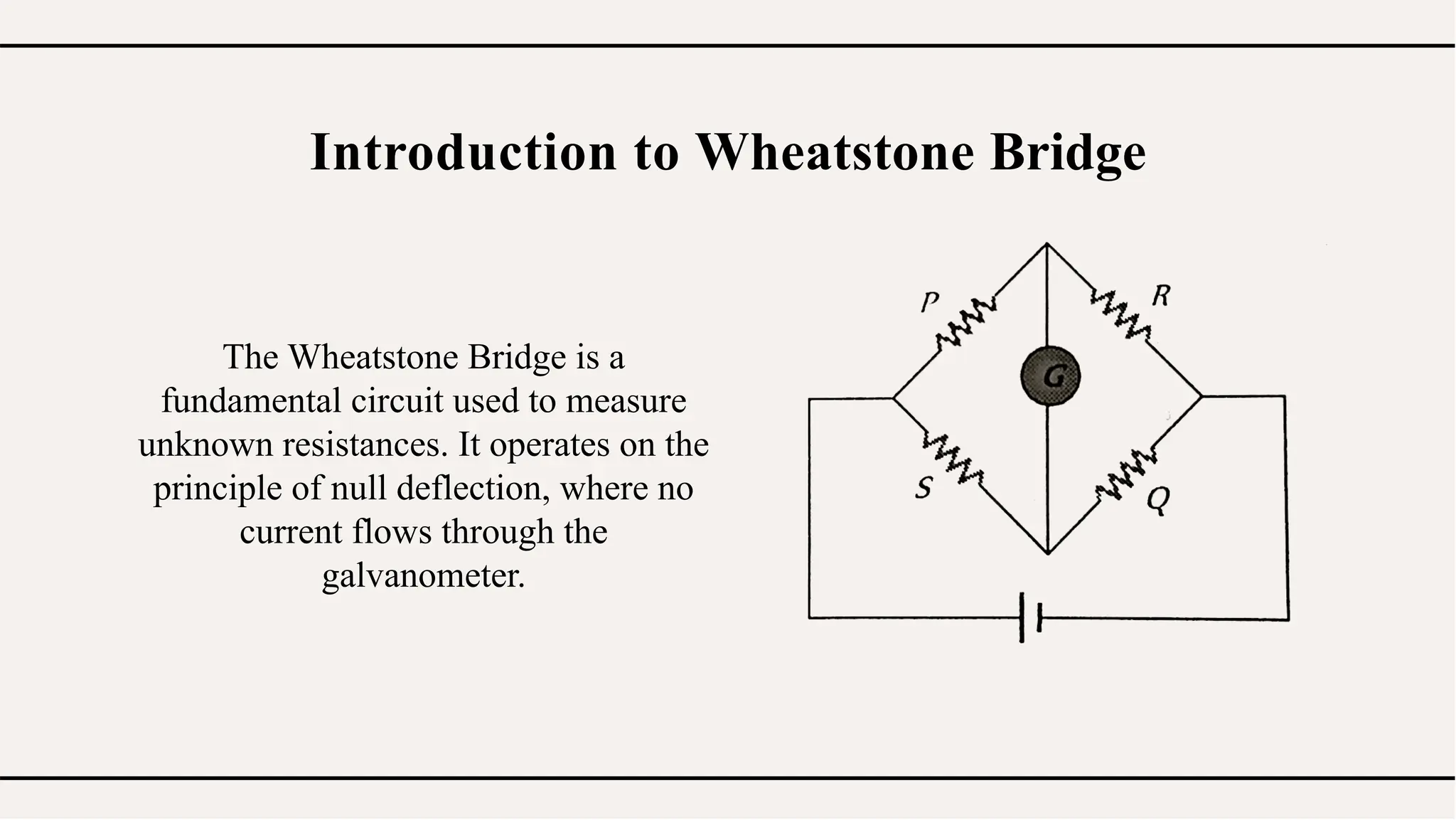
The Wheatstone Bridge is a
fundamental circuit used to measure
unknown resistances. It operates on the
principle of null deflection, where no
current flows through the
galvanometer.
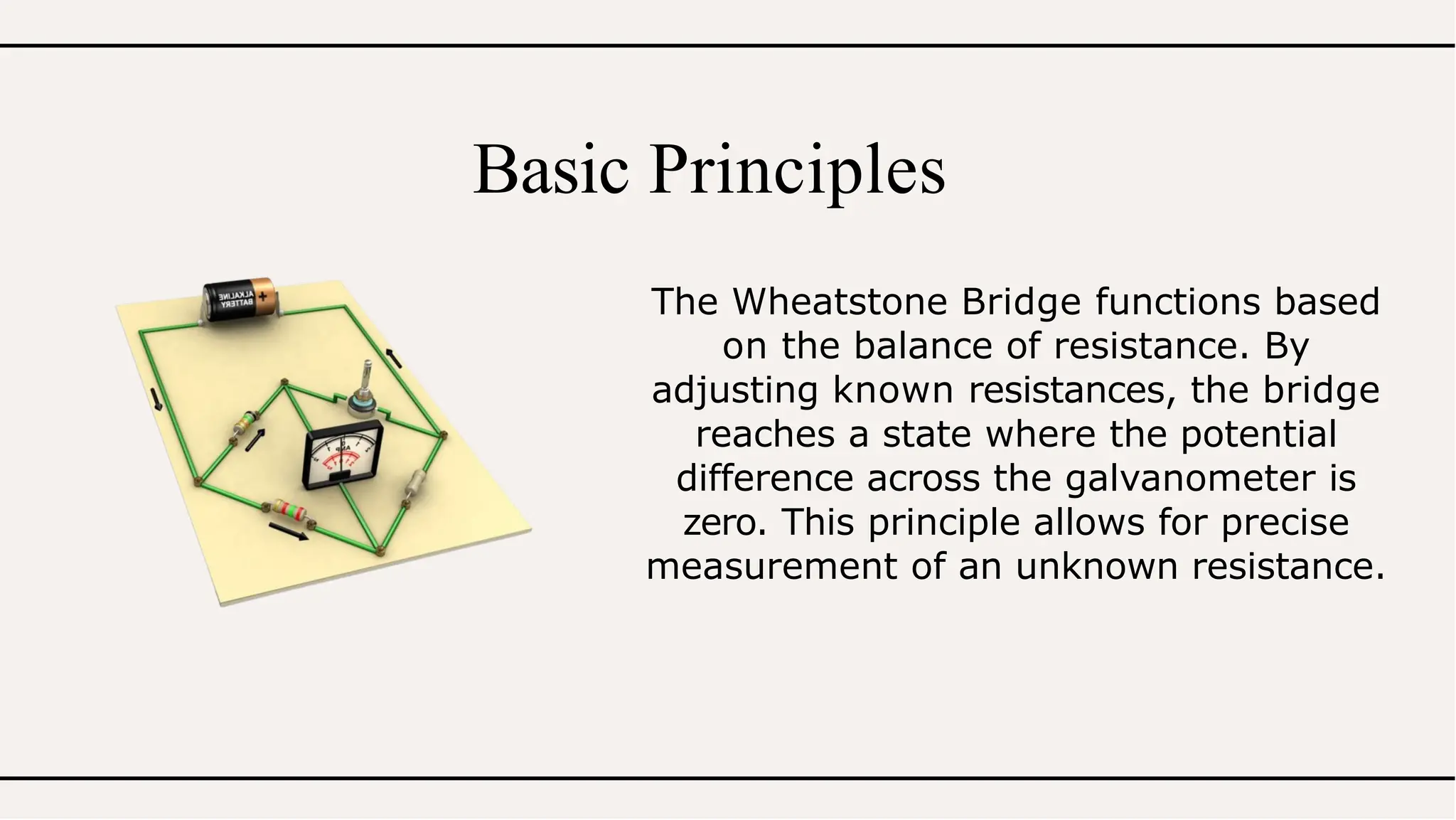
The Wheatstone Bridge functions based
on the balance of resistance. By
adjusting known resistances, the bridge
reaches a state where the potential
difference across the galvanometer is
zero. This principle allows for precise
measurement of an unknown resistance.
Basic Principles
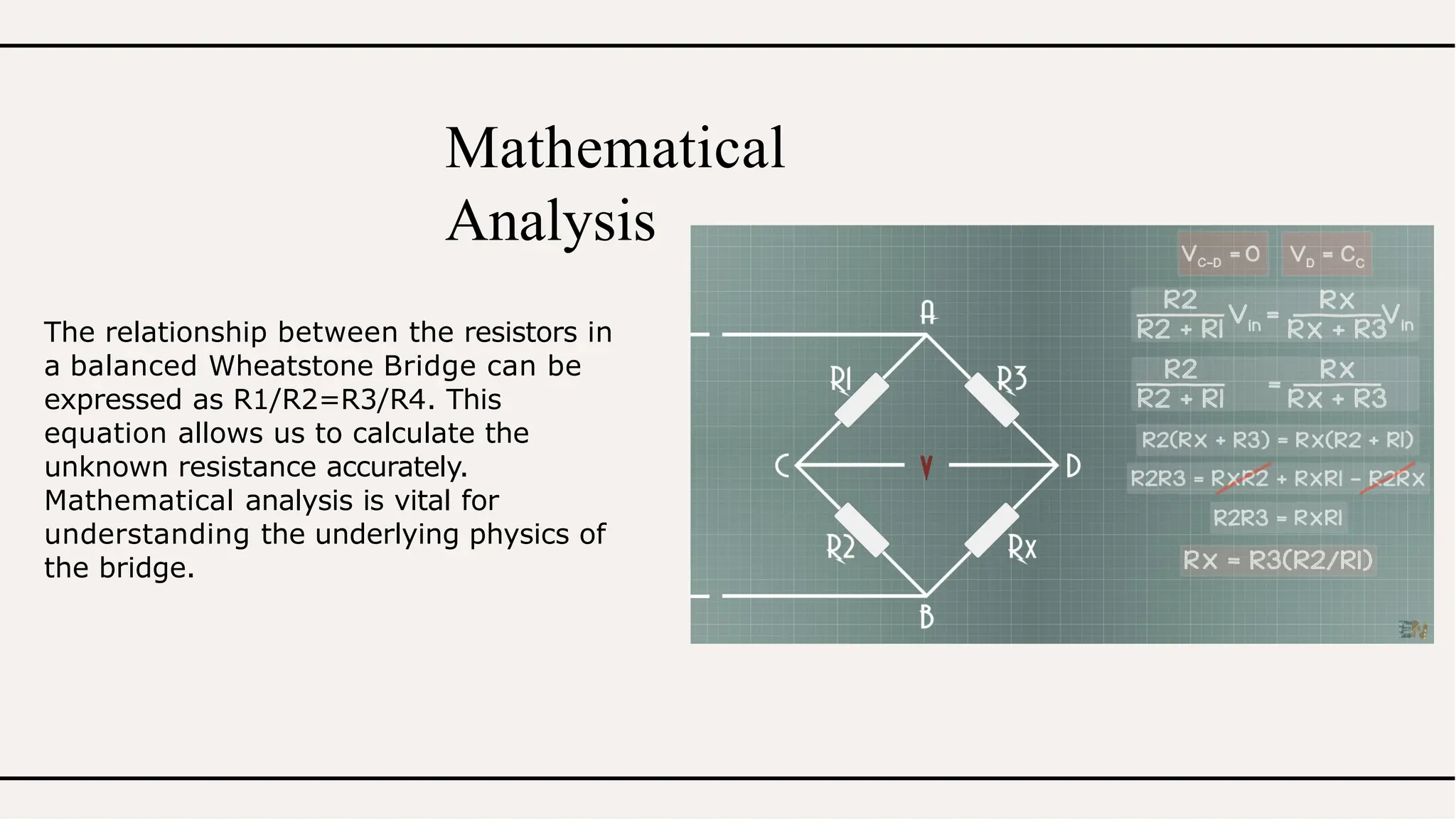
The relationship between the resistors in
a balanced Wheatstone Bridge can be
expressed as R1/R2=R3/R4. This
equation allows us to calculate the
unknown resistance accurately.
Mathematical analysis is vital for
understanding the underlying physics of
the bridge.
Mathematical
Analysis
Despite its advantages, the Wheatstone Bridge has
some limitations.
It requires a stable power supply and is less effective
for very low or very high resistances.
Understanding these limitations helps in selecting the
right method for measurement of resistance.
Limitations of the Wheatstone Bridge
In real-world applications, the Wheatstone
Bridge is used in strain gauges,
temperature sensors, and more. These
examples demonstrate its versatility and
importance in engineering and
technology. Understanding these
applications bridges theory and practical
use.
Real-World Examples
In conclusion, the Wheatstone Bridge is
a
crucial tool in physics for measuring
resistances accurately. Its principles,
components, and applications provide a
strong foundation for students. Mastering
this concept is essential for further
studies in electrical engineering and
related fields.
Conclusion
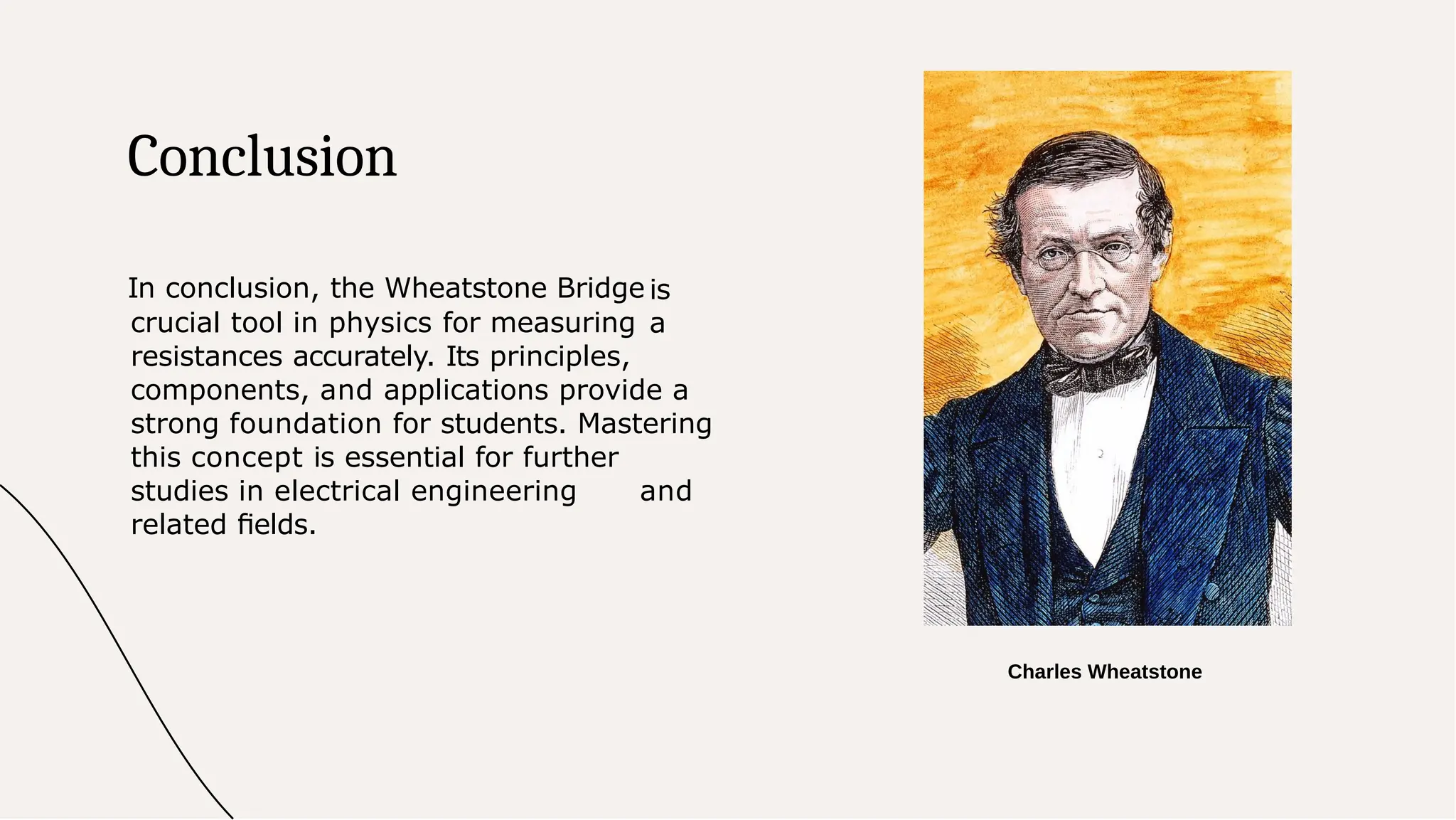
Charles Wheatstone

Wheatstone Bridge CLASS 12 Physics PPT

  • 1.
  • 2.
    Introduction to WheatstoneBridge The Wheatstone Bridge is a fundamental circuit used to measure unknown resistances. It operates on the principle of null deflection, where no current flows through the galvanometer.
  • 3.
    The Wheatstone Bridgefunctions based on the balance of resistance. By adjusting known resistances, the bridge reaches a state where the potential difference across the galvanometer is zero. This principle allows for precise measurement of an unknown resistance. Basic Principles
  • 4.
    The relationship betweenthe resistors in a balanced Wheatstone Bridge can be expressed as R1/R2=R3/R4. This equation allows us to calculate the unknown resistance accurately. Mathematical analysis is vital for understanding the underlying physics of the bridge. Mathematical Analysis
  • 5.
    Despite its advantages,the Wheatstone Bridge has some limitations. It requires a stable power supply and is less effective for very low or very high resistances. Understanding these limitations helps in selecting the right method for measurement of resistance. Limitations of the Wheatstone Bridge
  • 6.
    In real-world applications,the Wheatstone Bridge is used in strain gauges, temperature sensors, and more. These examples demonstrate its versatility and importance in engineering and technology. Understanding these applications bridges theory and practical use. Real-World Examples
  • 7.
    In conclusion, theWheatstone Bridge is a crucial tool in physics for measuring resistances accurately. Its principles, components, and applications provide a strong foundation for students. Mastering this concept is essential for further studies in electrical engineering and related fields. Conclusion Charles Wheatstone