Universitatea de Știin e Agronomiceț și Medicină Veterinară
București
Facultatea de Management, Inginerie În Agricultura și
Dezvoltare Rurală
Specializarea: Inginerie Economică în Agricultură
Coordonator: Frumușelu Mihai
Student: Dusmanu Florin
Grupa: 8201
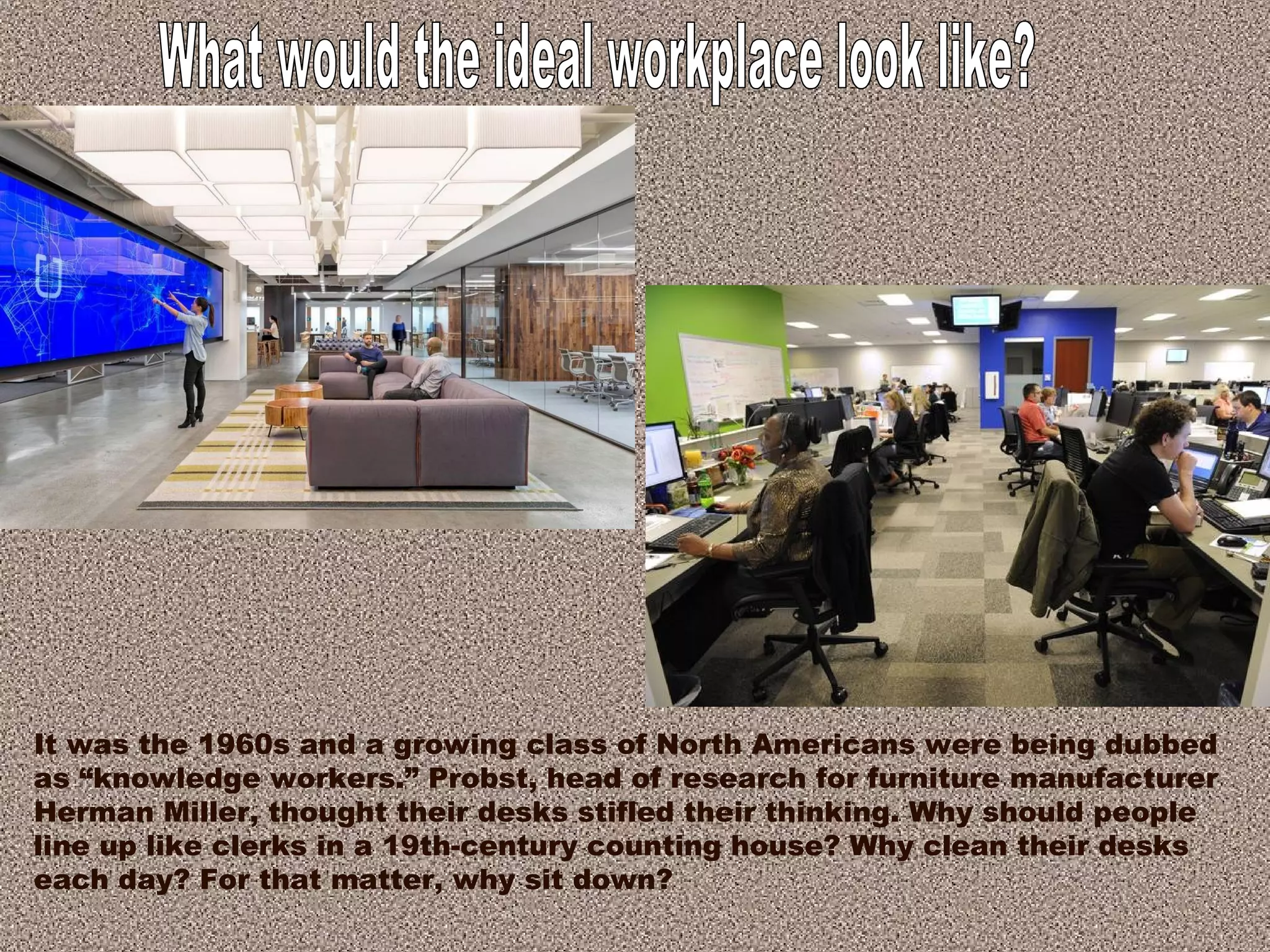
It was the 1960s and a growing class of North Americans were being dubbed
as “knowledge workers.” Probst, head of research for furniture manufacturer
Herman Miller, thought their desks stifled their thinking. Why should people
line up like clerks in a 19th-century counting house? Why clean their desks
each day? For that matter, why sit down?
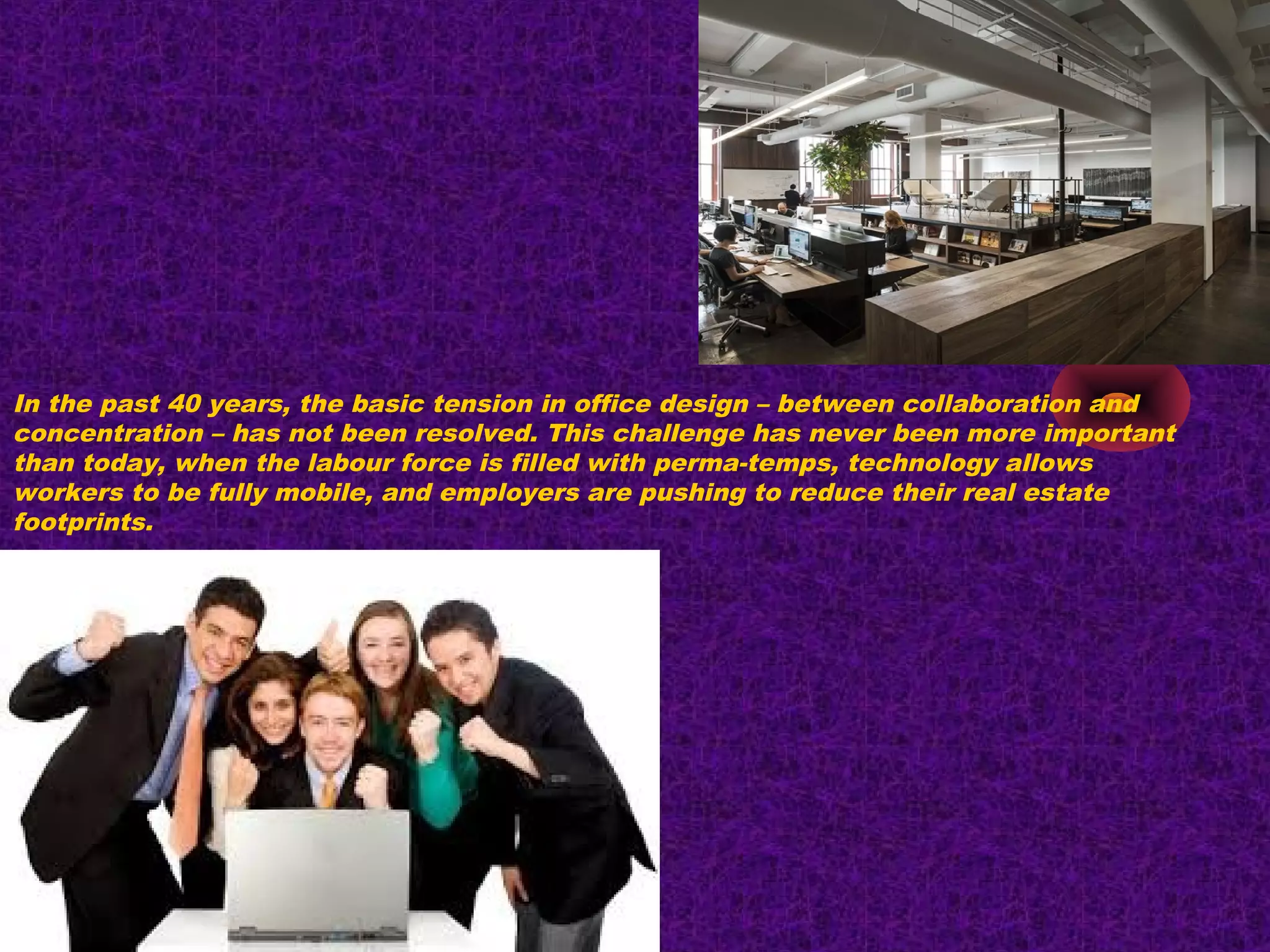
In the past 40 years, the basic tension in office design – between collaboration and
concentration – has not been resolved. This challenge has never been more important
than today, when the labour force is filled with perma-temps, technology allows
workers to be fully mobile, and employers are pushing to reduce their real estate
footprints.
At the same time, the Uber office includes “work caves,” upholstered niches
where employees can work on solitary projects without closing a door on
their colleagues. The goal is to balance space for individual tasks with room
for collaboration. “We know there are issues with the open office,” Cherry
continues. “Introverts can’t focus the way they need to.”
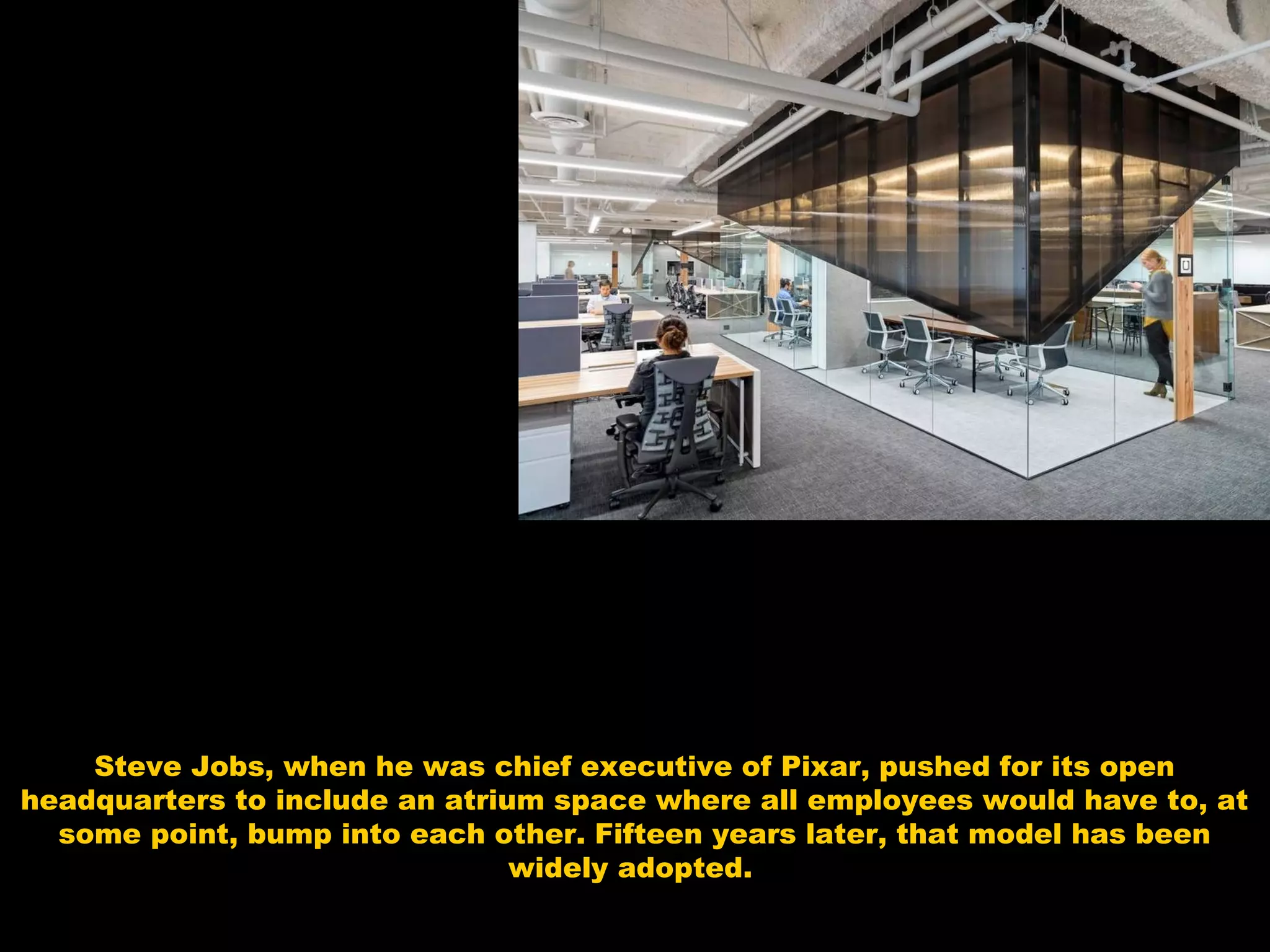
Steve Jobs, when he was chief executive of Pixar, pushed for its open
headquarters to include an atrium space where all employees would have to, at
some point, bump into each other. Fifteen years later, that model has been
widely adopted.
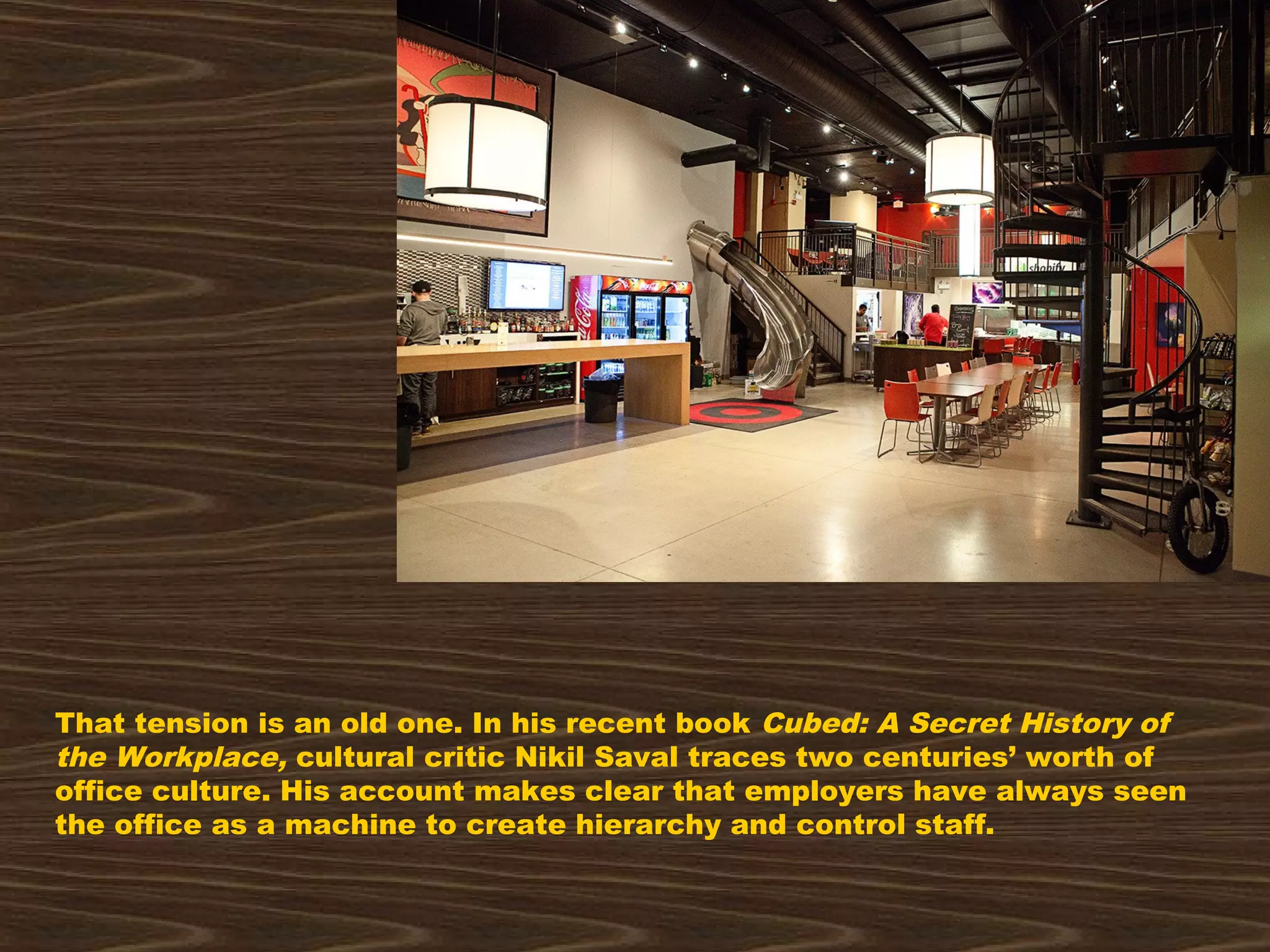
That tension is an old one. In his recent book Cubed: A Secret History of
the Workplace, cultural critic Nikil Saval traces two centuries’ worth of
office culture. His account makes clear that employers have always seen
the office as a machine to create hierarchy and control staff.
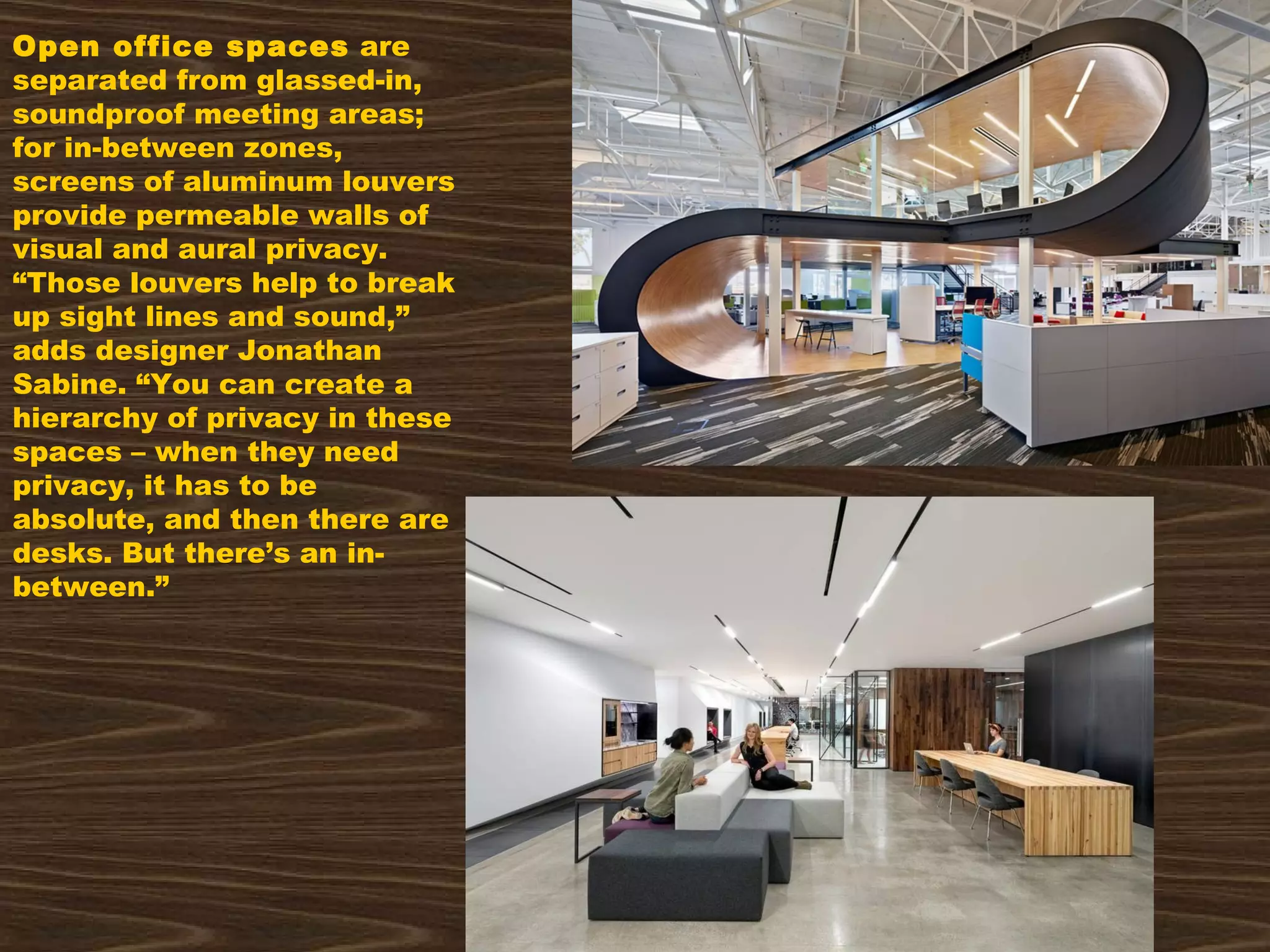
Open office spaces are
separated from glassed-in,
soundproof meeting areas;
for in-between zones,
screens of aluminum louvers
provide permeable walls of
visual and aural privacy.
“Those louvers help to break
up sight lines and sound,”
adds designer Jonathan
Sabine. “You can create a
hierarchy of privacy in these
spaces – when they need
privacy, it has to be
absolute, and then there are
desks. But there’s an in-
between.”
Bibliografie: http://www.theglobeandmail.com/

What would the ideal workplace look

  • 1.
    Universitatea de Știine Agronomiceț și Medicină Veterinară București Facultatea de Management, Inginerie În Agricultura și Dezvoltare Rurală Specializarea: Inginerie Economică în Agricultură Coordonator: Frumușelu Mihai Student: Dusmanu Florin Grupa: 8201
  • 2.
    It was the1960s and a growing class of North Americans were being dubbed as “knowledge workers.” Probst, head of research for furniture manufacturer Herman Miller, thought their desks stifled their thinking. Why should people line up like clerks in a 19th-century counting house? Why clean their desks each day? For that matter, why sit down?
  • 3.
    In the past40 years, the basic tension in office design – between collaboration and concentration – has not been resolved. This challenge has never been more important than today, when the labour force is filled with perma-temps, technology allows workers to be fully mobile, and employers are pushing to reduce their real estate footprints.
  • 4.
    At the sametime, the Uber office includes “work caves,” upholstered niches where employees can work on solitary projects without closing a door on their colleagues. The goal is to balance space for individual tasks with room for collaboration. “We know there are issues with the open office,” Cherry continues. “Introverts can’t focus the way they need to.”
  • 5.
    Steve Jobs, whenhe was chief executive of Pixar, pushed for its open headquarters to include an atrium space where all employees would have to, at some point, bump into each other. Fifteen years later, that model has been widely adopted.
  • 6.
    That tension isan old one. In his recent book Cubed: A Secret History of the Workplace, cultural critic Nikil Saval traces two centuries’ worth of office culture. His account makes clear that employers have always seen the office as a machine to create hierarchy and control staff.
  • 7.
    Open office spacesare separated from glassed-in, soundproof meeting areas; for in-between zones, screens of aluminum louvers provide permeable walls of visual and aural privacy. “Those louvers help to break up sight lines and sound,” adds designer Jonathan Sabine. “You can create a hierarchy of privacy in these spaces – when they need privacy, it has to be absolute, and then there are desks. But there’s an in- between.”
  • 8.