What happens next?  Life after 2.0-training in academic libraries   Karen J. Buset and Mariann Løkse  NTNU / University of Tromsø   EMTACL10 - 28.04.2010
Contents 2.0 learning programs in libraries Tromsø Trondheim Attitudes to 2.0  Presentation of web survey  What next?
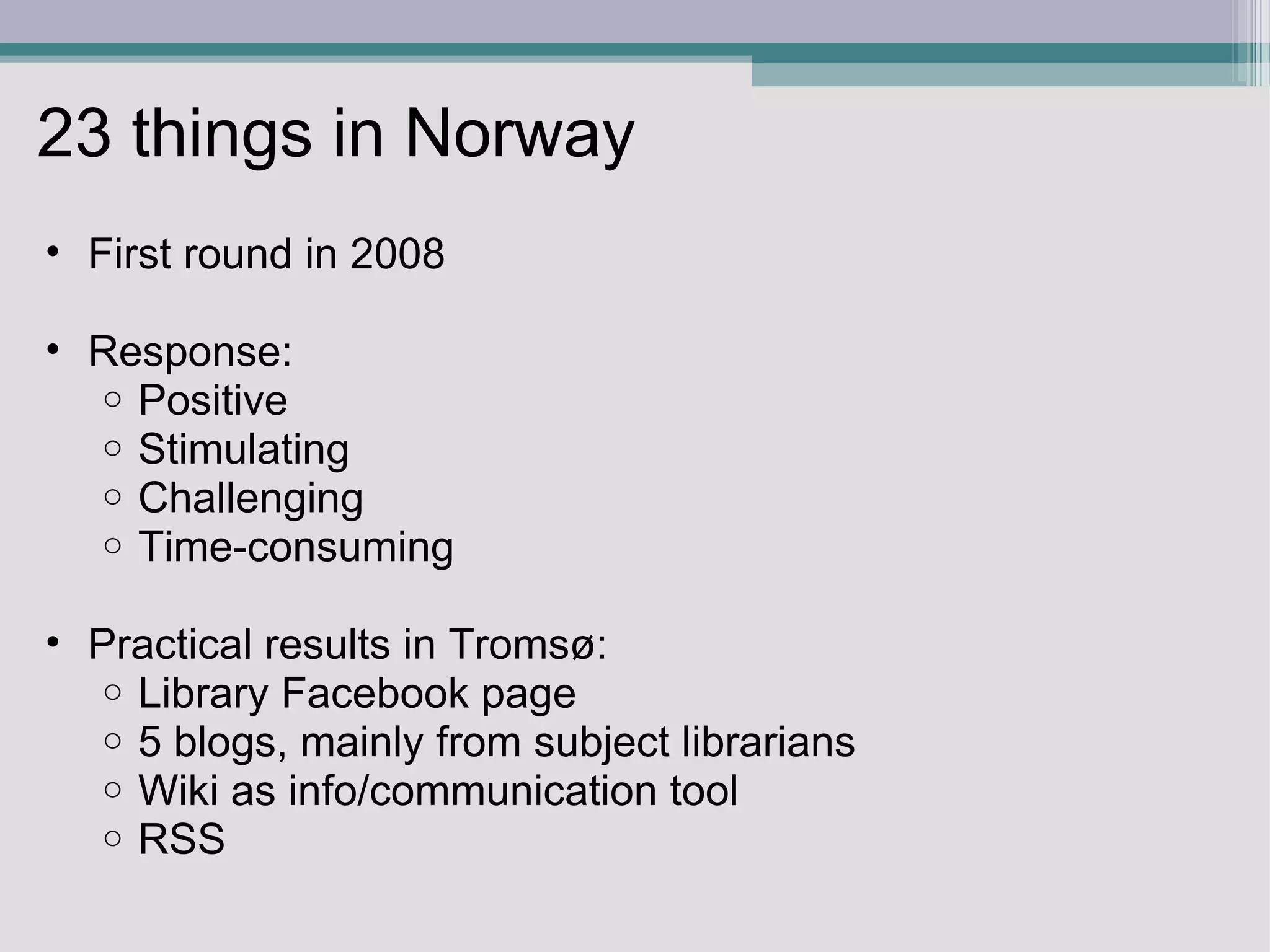
23 things in Norway First round in 2008   Response: Positive Stimulating Challenging Time-consuming Practical results in Tromsø:  Library Facebook page 5 blogs, mainly from subject librarians Wiki as info/communication tool RSS
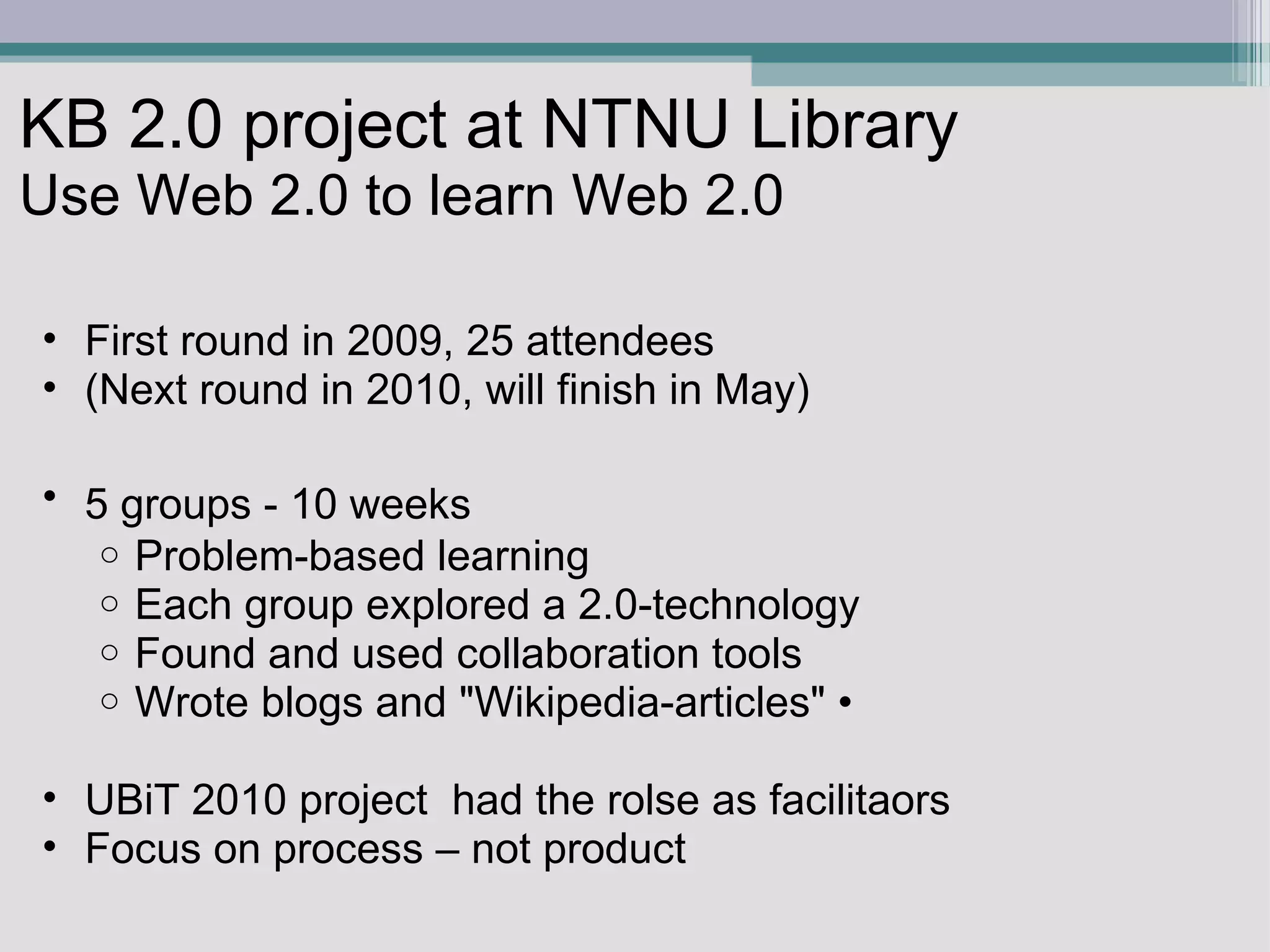
KB 2.0 project at NTNU Library Use Web 2.0 to learn Web 2.0  First round in 2009, 25 attendees  (Next round in 2010, will finish in May) 5 groups - 10 weeks      Problem-based learning Each group explored a 2.0-technology Found and used collaboration tools Wrote blogs and "Wikipedia-articles" •  UBiT 2010 project  had the rolse as facilitaors Focus on process – not product
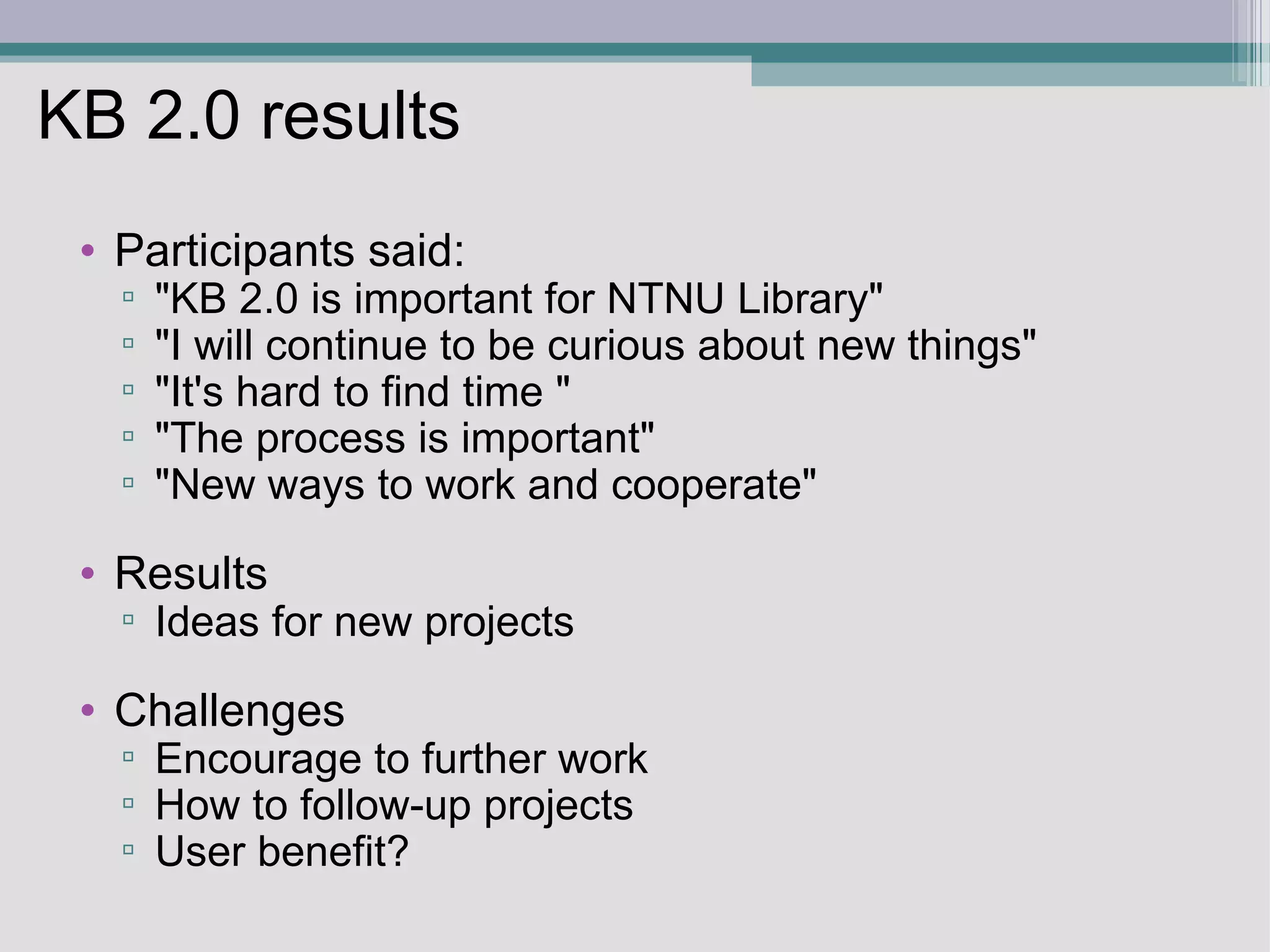
KB 2.0 results Participants said: "KB 2.0 is important for NTNU Library" "I will continue to be curious about new things"  "It's hard to find time " "The process is important" "New ways to work and cooperate"  Results Ideas for new projects   Challenges Encourage to further work  How to follow-up projects  User benefit?
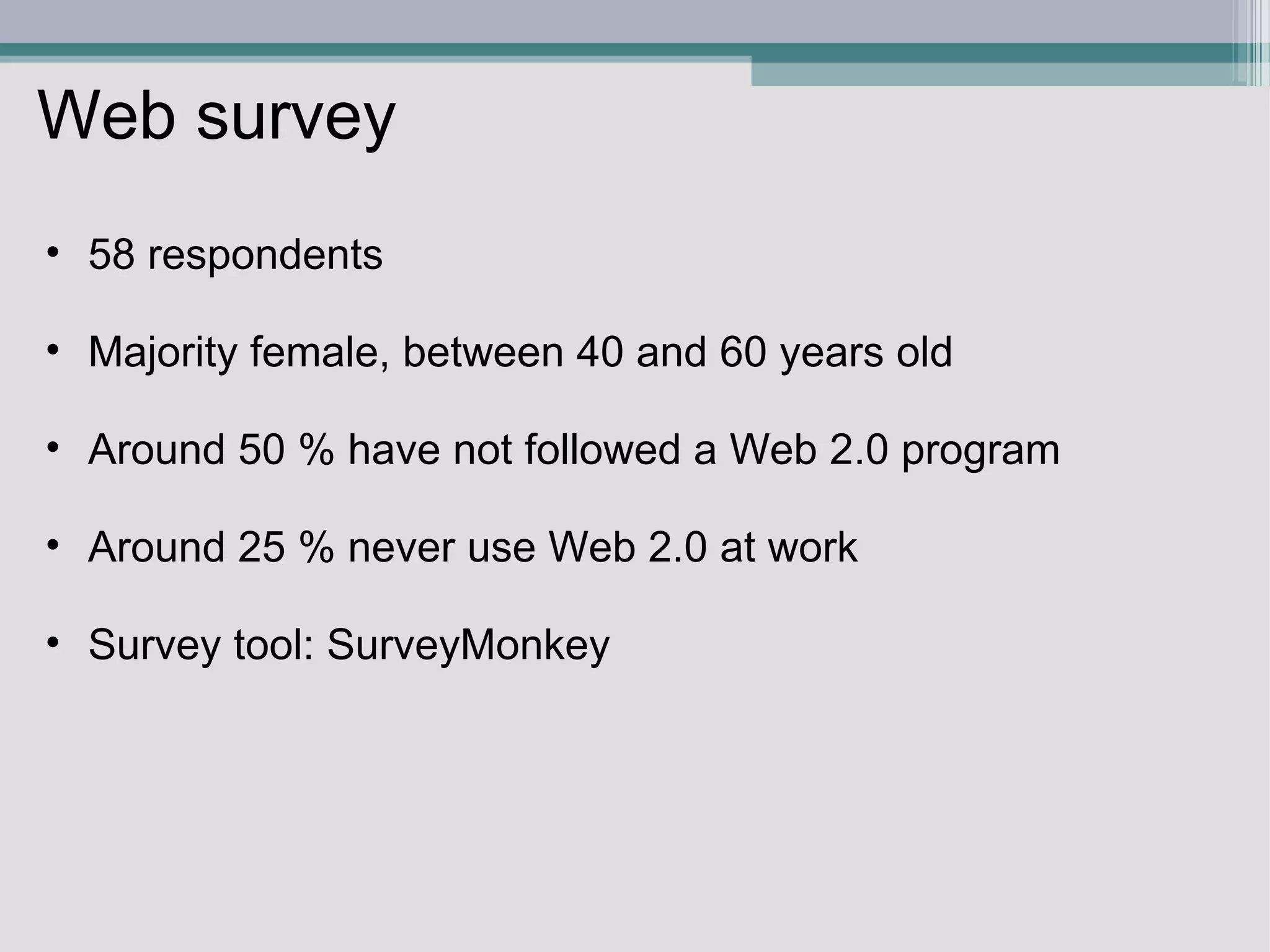
Web survey 58 respondents   Majority female, between 40 and 60 years old   Around 50 % have not followed a Web 2.0 program    Around 25 % never use Web 2.0 at work   Survey tool: SurveyMonkey   
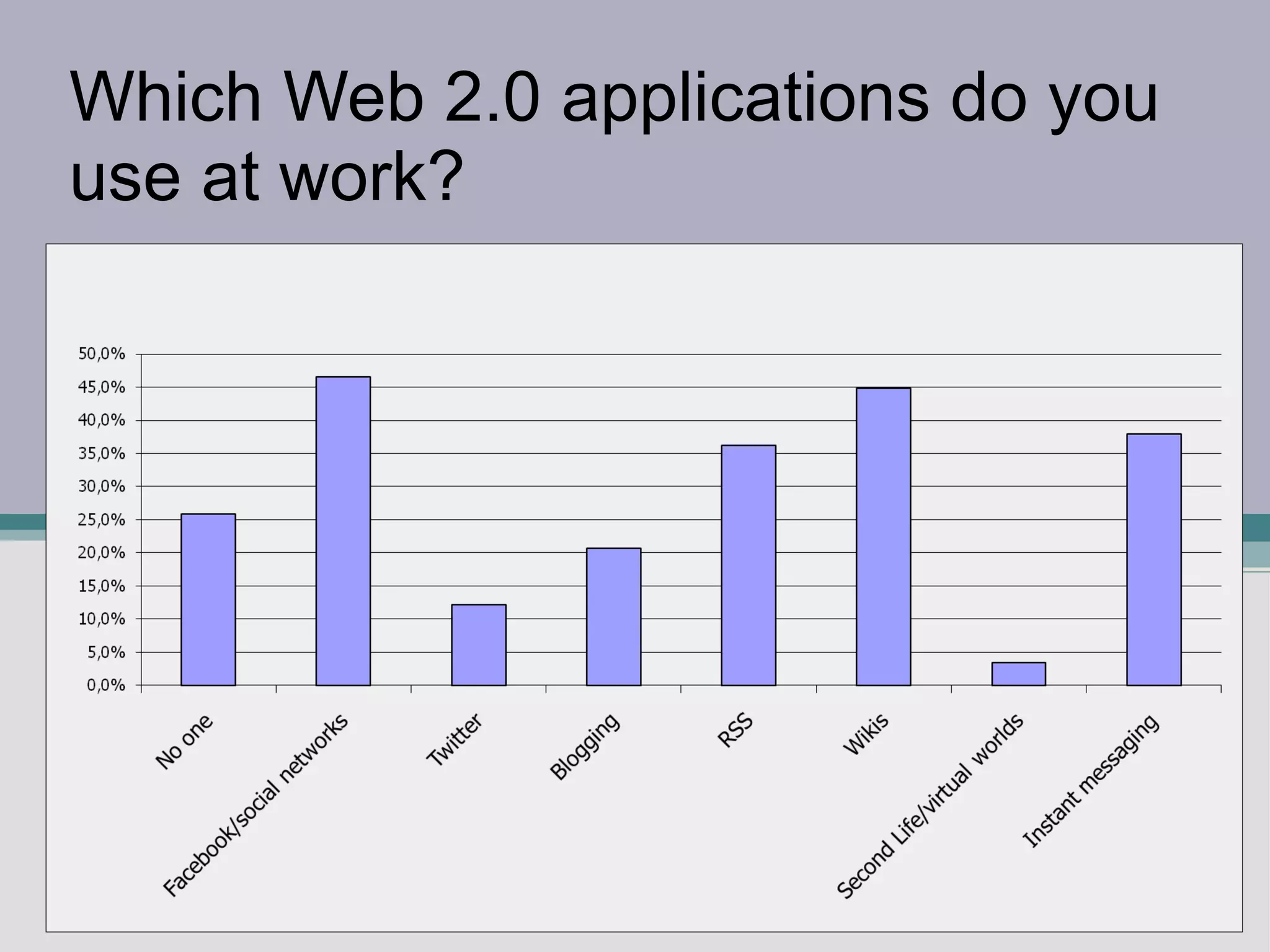
Which Web 2.0 applications do you use at work?
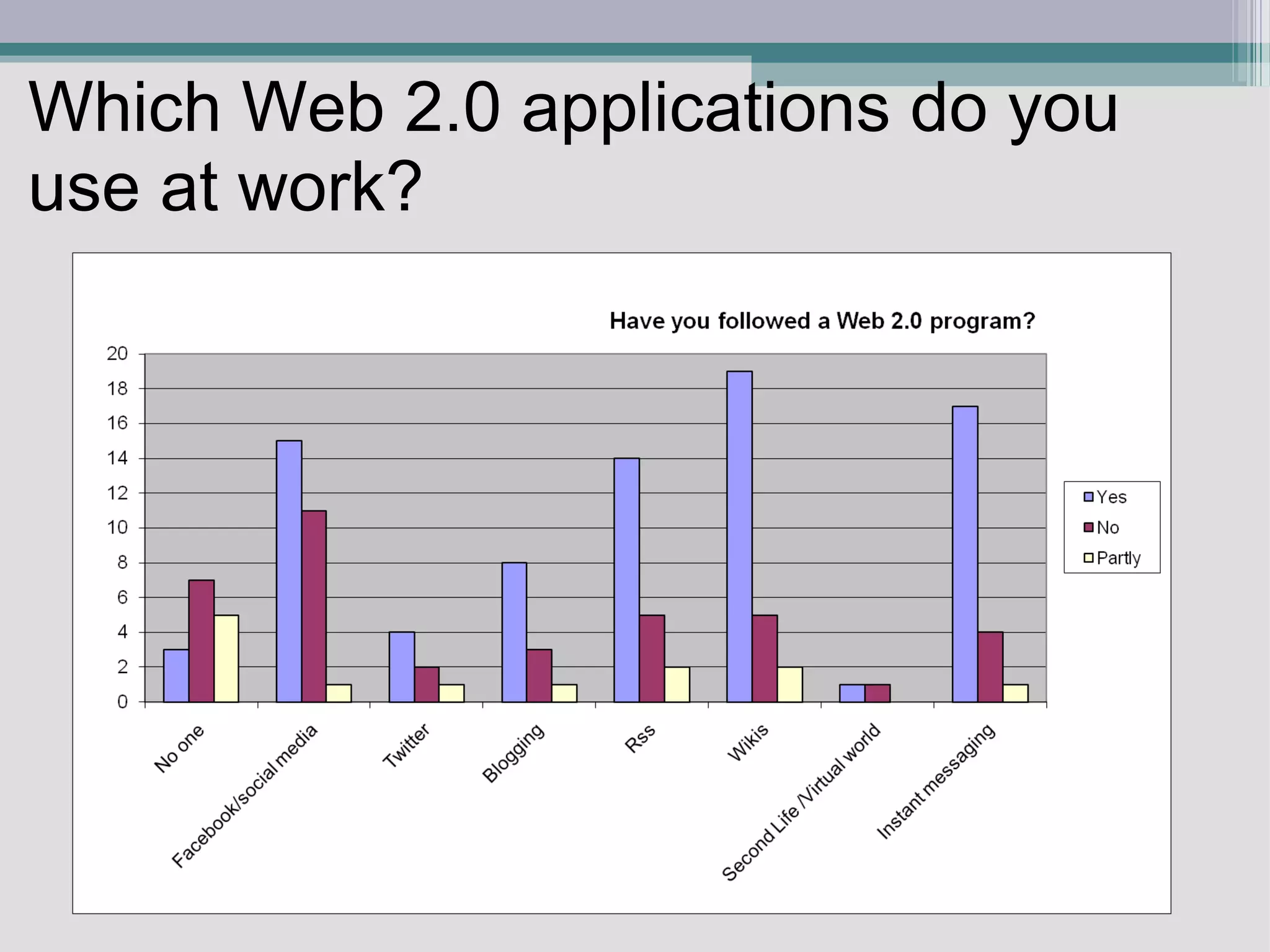
Which Web 2.0 applications do you use at work?   
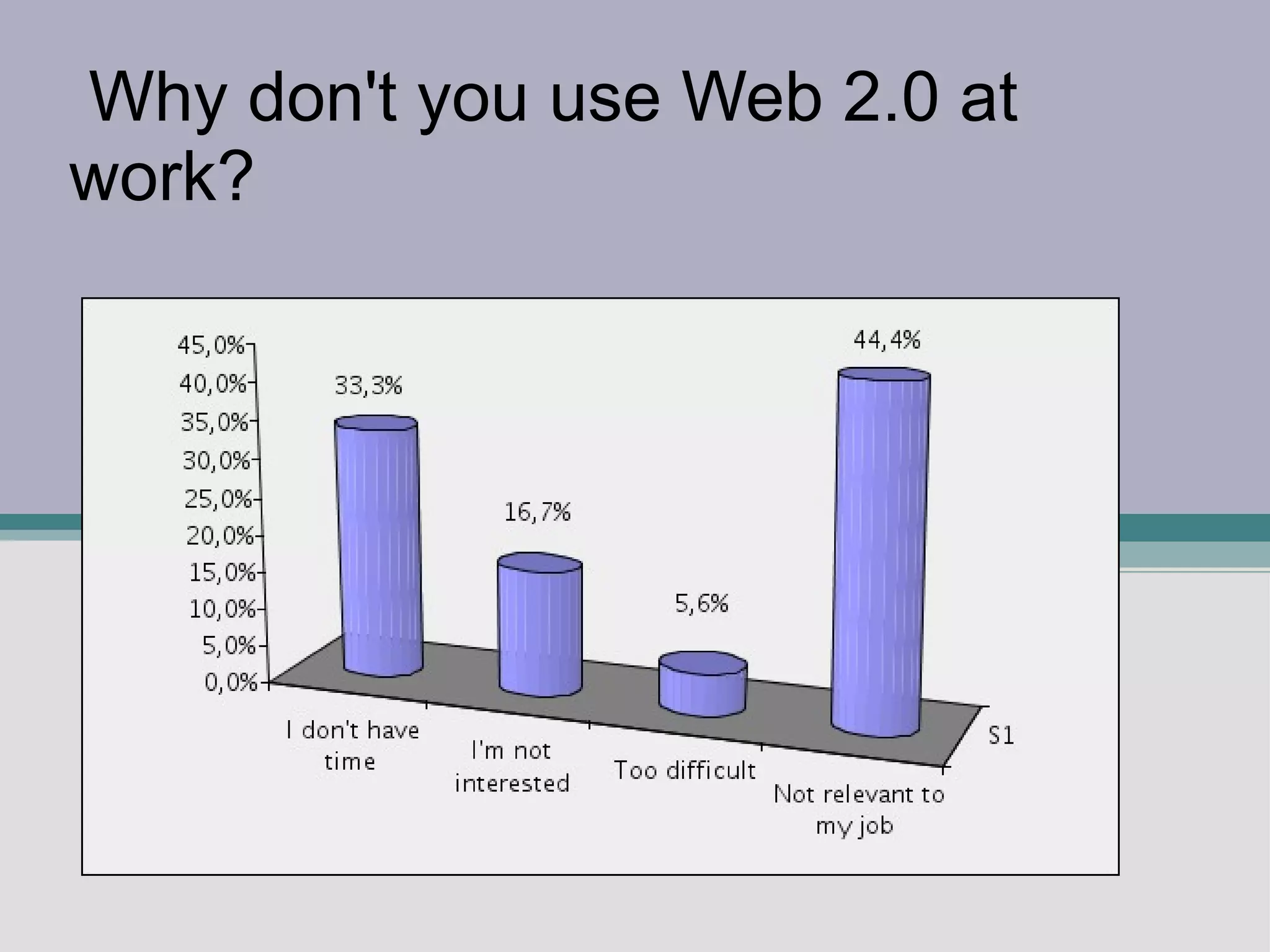
  Why don't you use Web 2.0 at work?
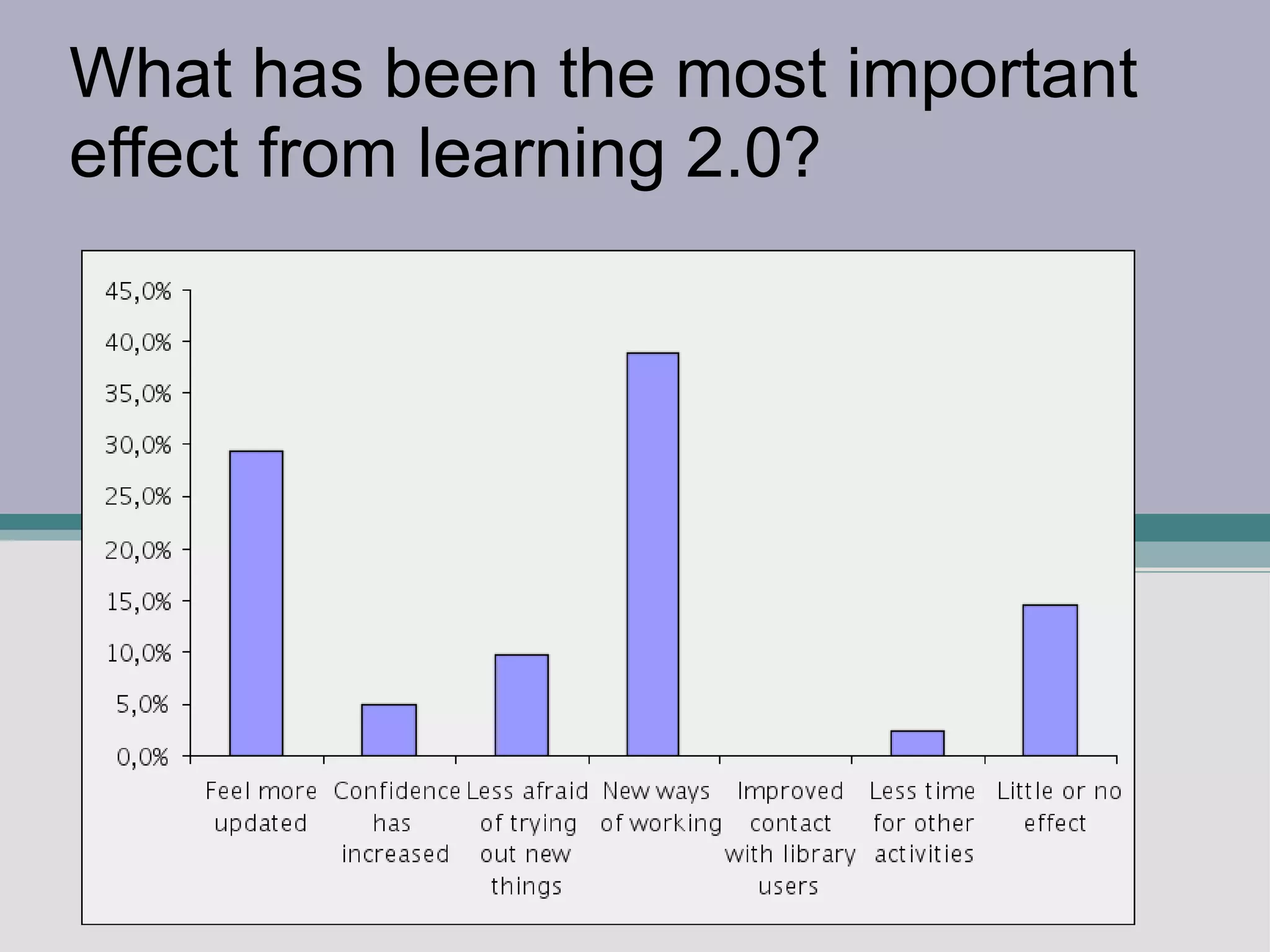
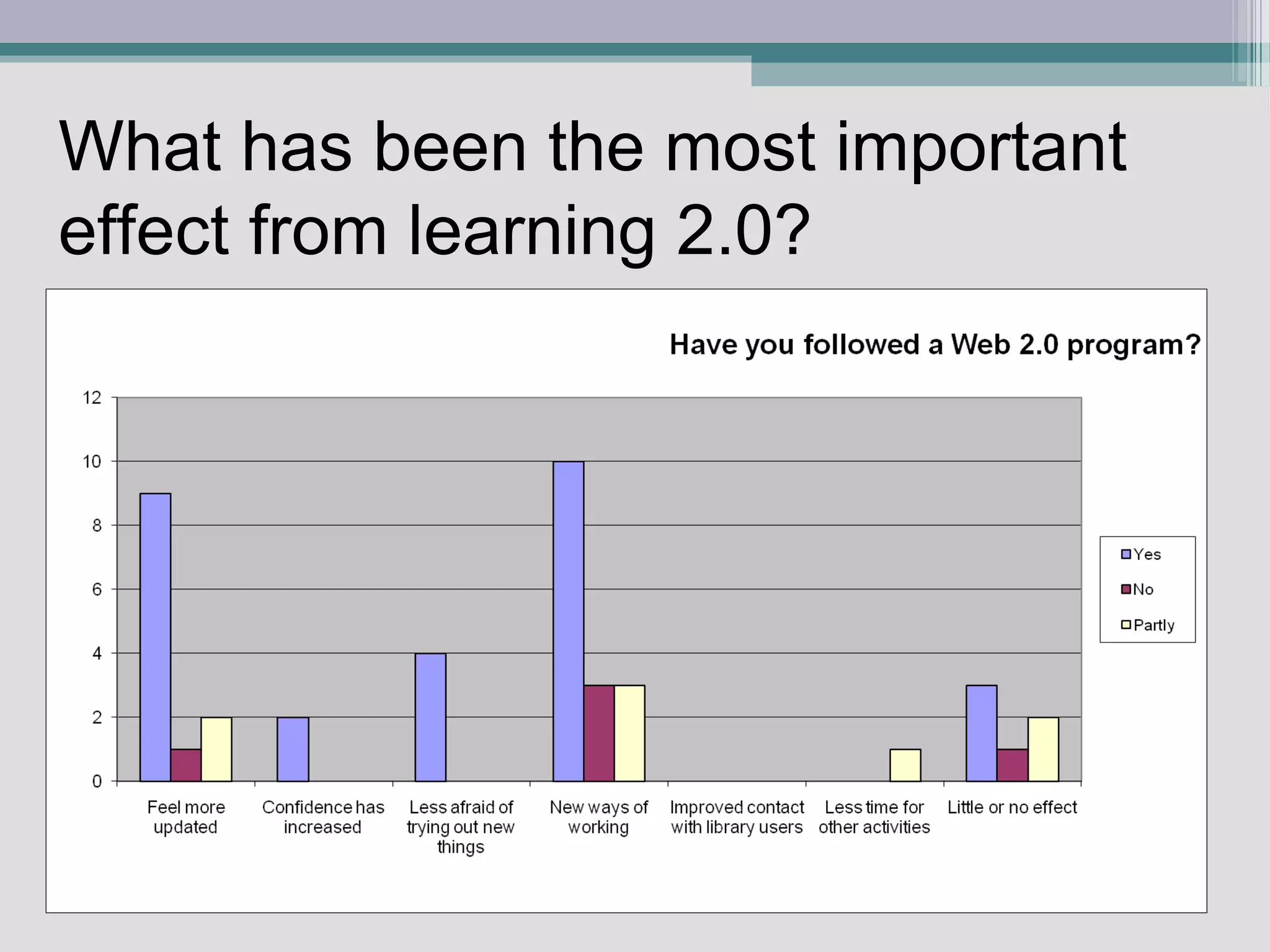
What has been the most important effect from learning 2.0?
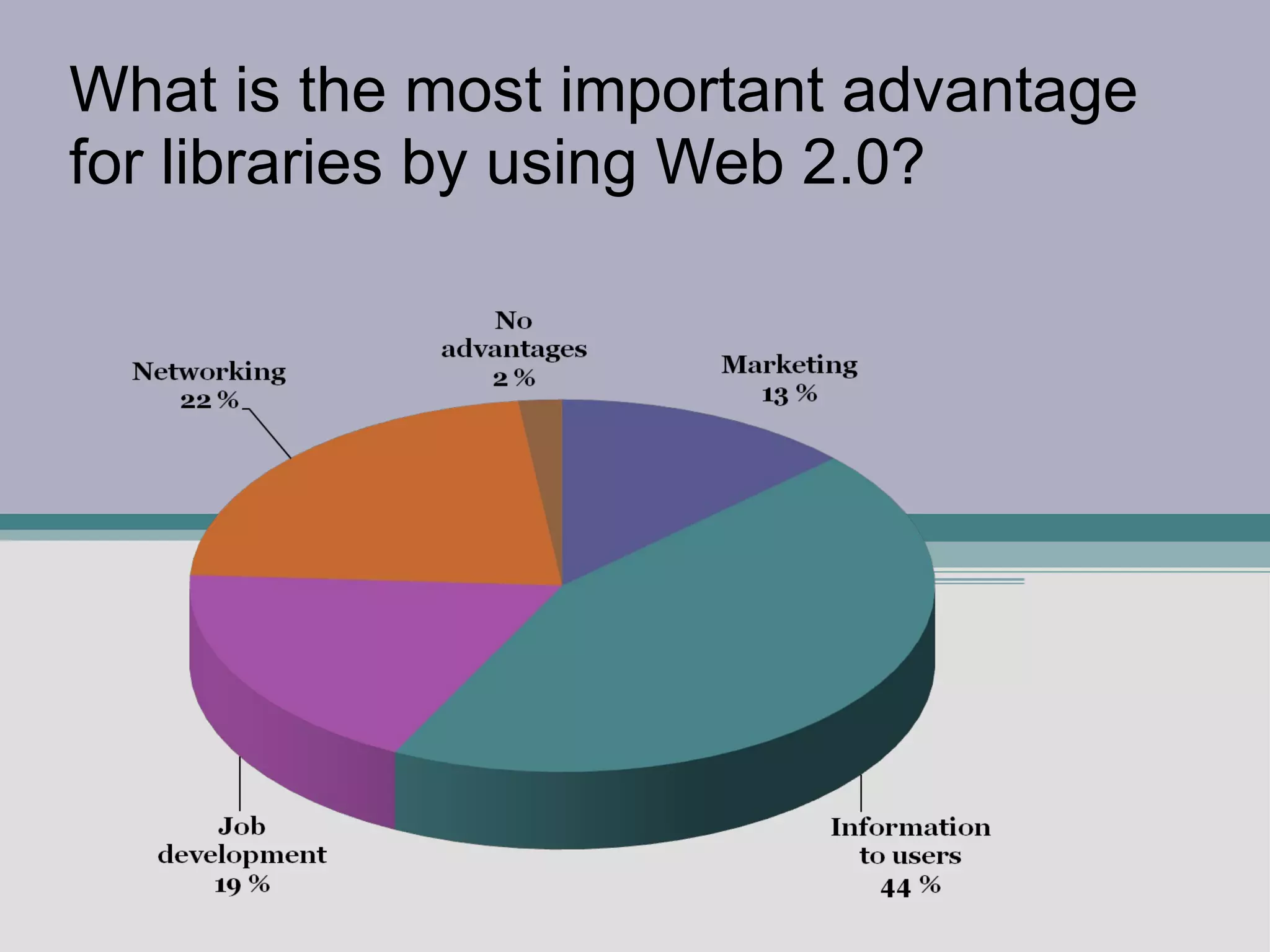
What is the most important advantage for libraries by using Web 2.0?
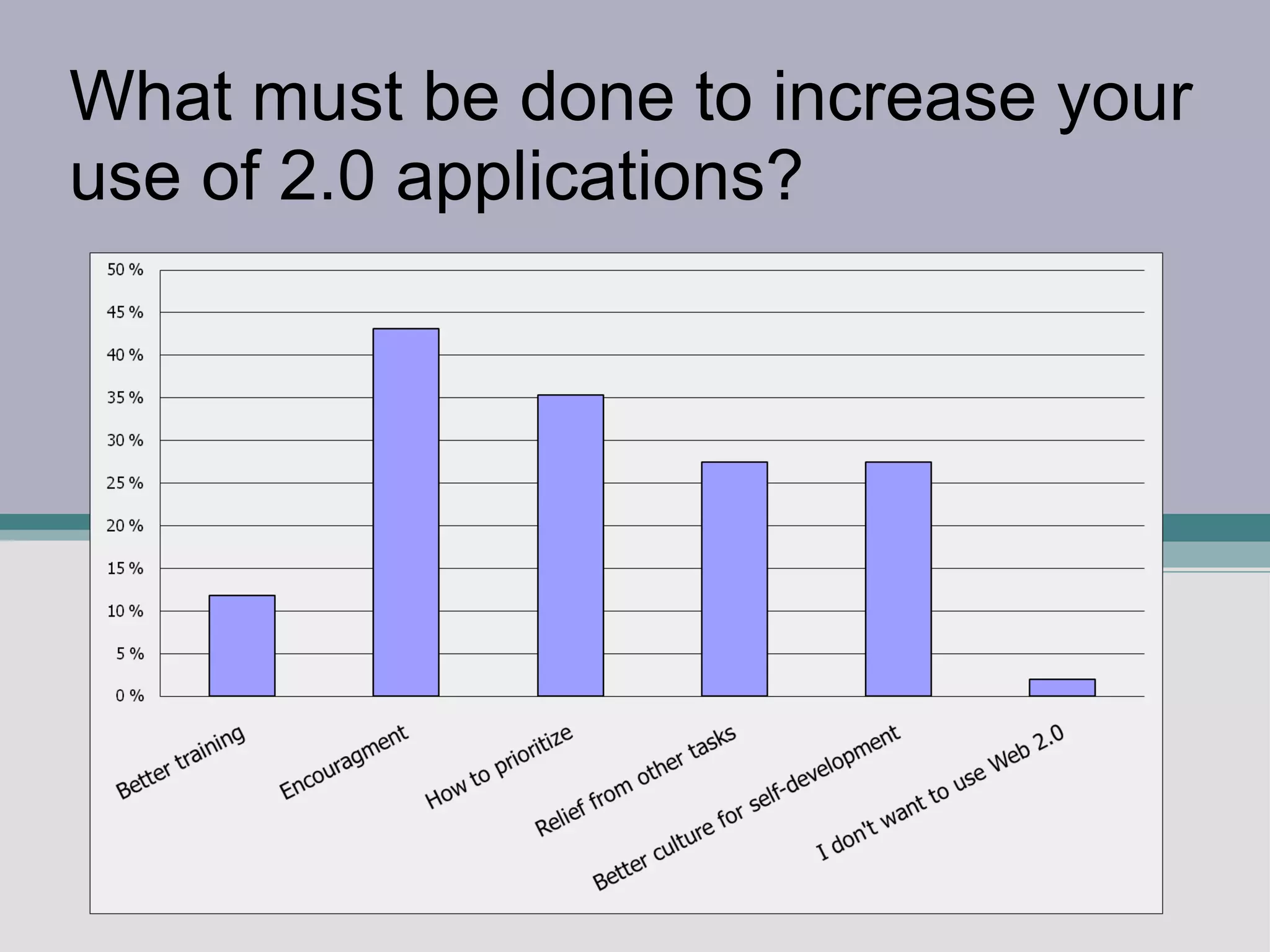
What must be done to increase your use of 2.0 applications?
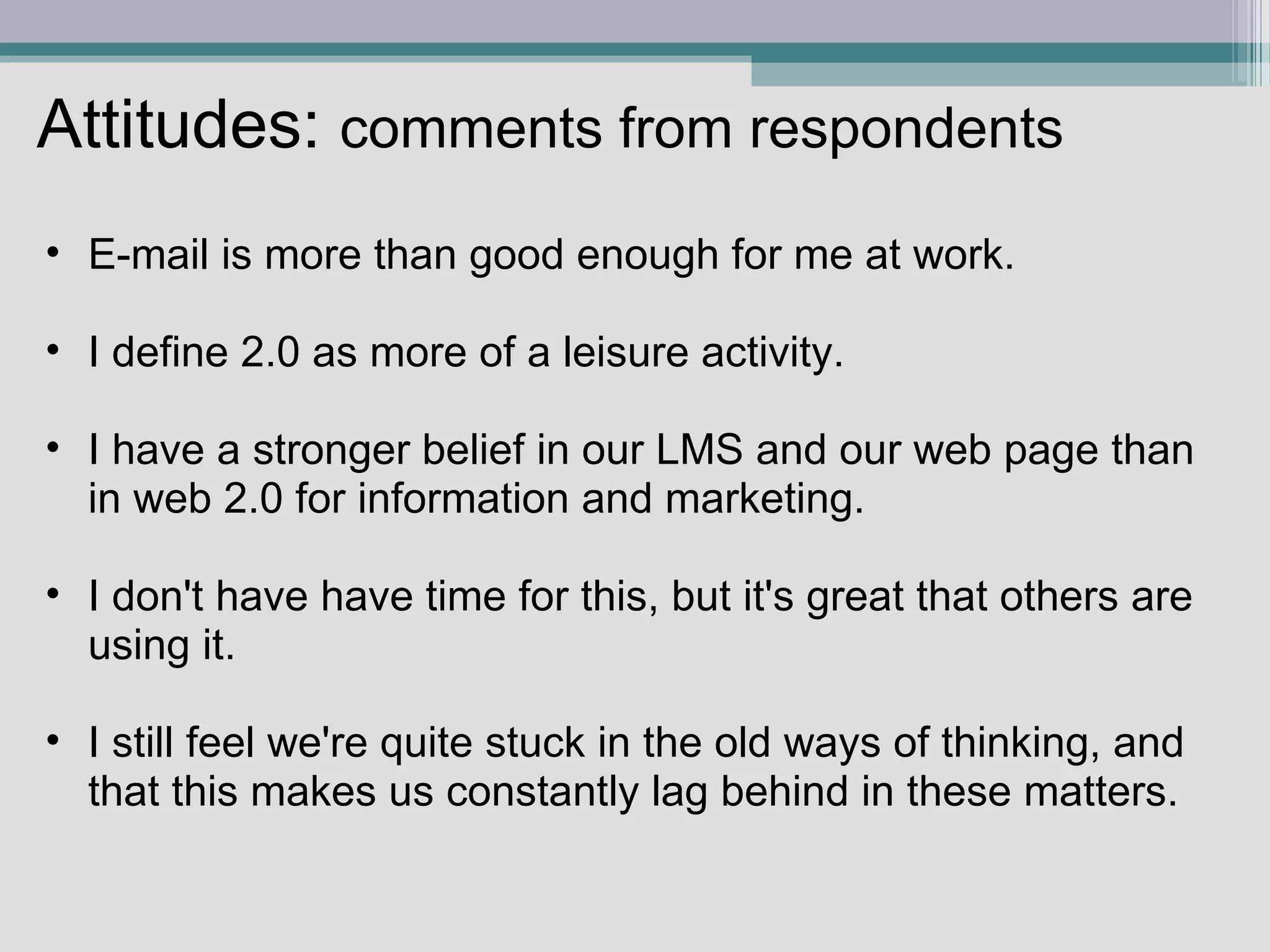
Attitudes:  comments from respondents E-mail is more than good enough for me at work.    I define 2.0 as more of a leisure activity.   I have a stronger belief in our LMS and our web page than in web 2.0 for information and marketing.   I don't have have time for this, but it's great that others are using it.   I still feel we're quite stuck in the old ways of thinking, and that this makes us constantly lag behind in these matters.
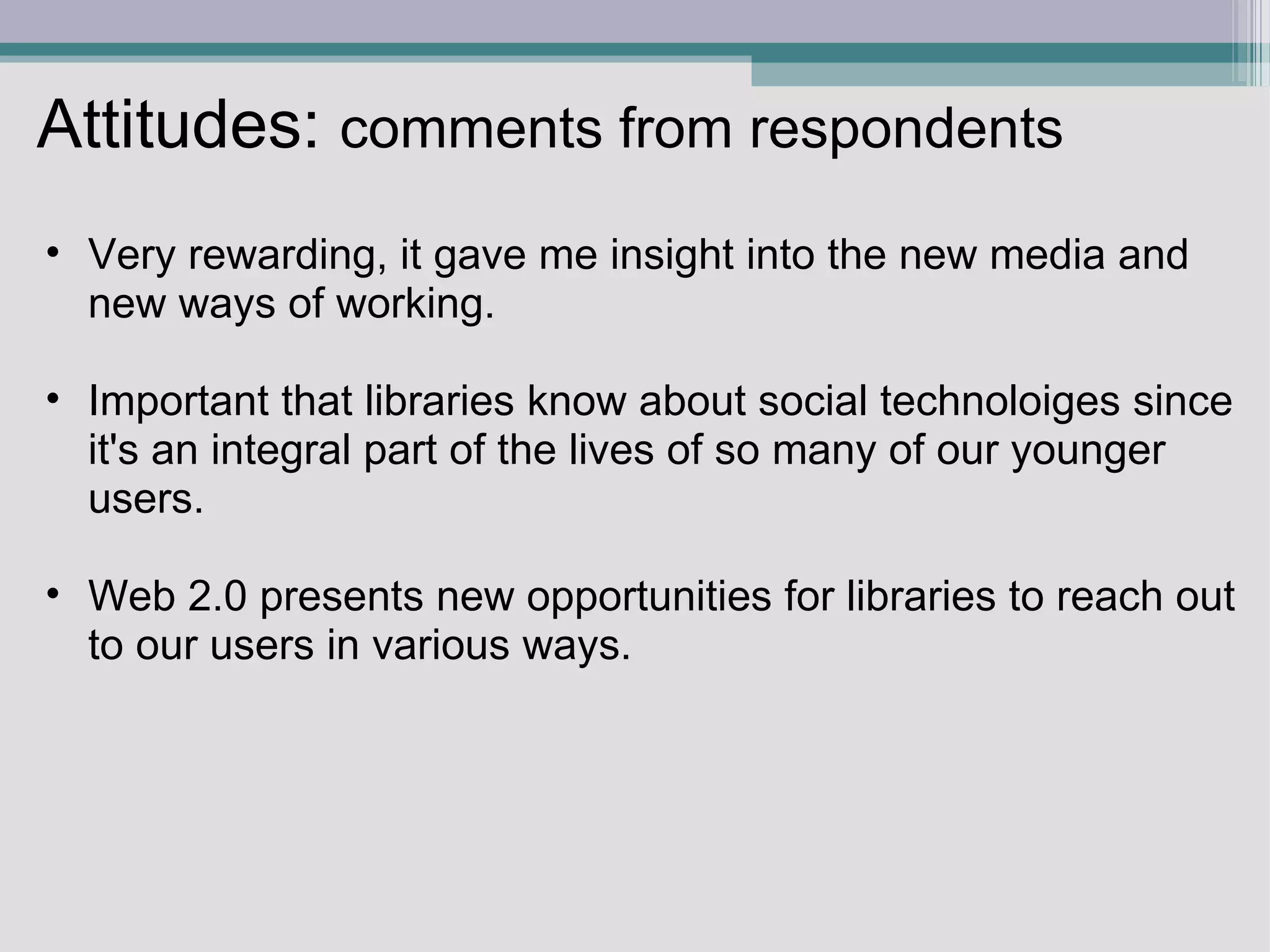
Attitudes:  comments from respondents Very rewarding, it gave me insight into the new media and new ways of working.    Important that libraries know about social technoloiges since it's an integral part of the lives of so many of our younger users.   Web 2.0 presents new opportunities for libraries to reach out to our users in various ways.
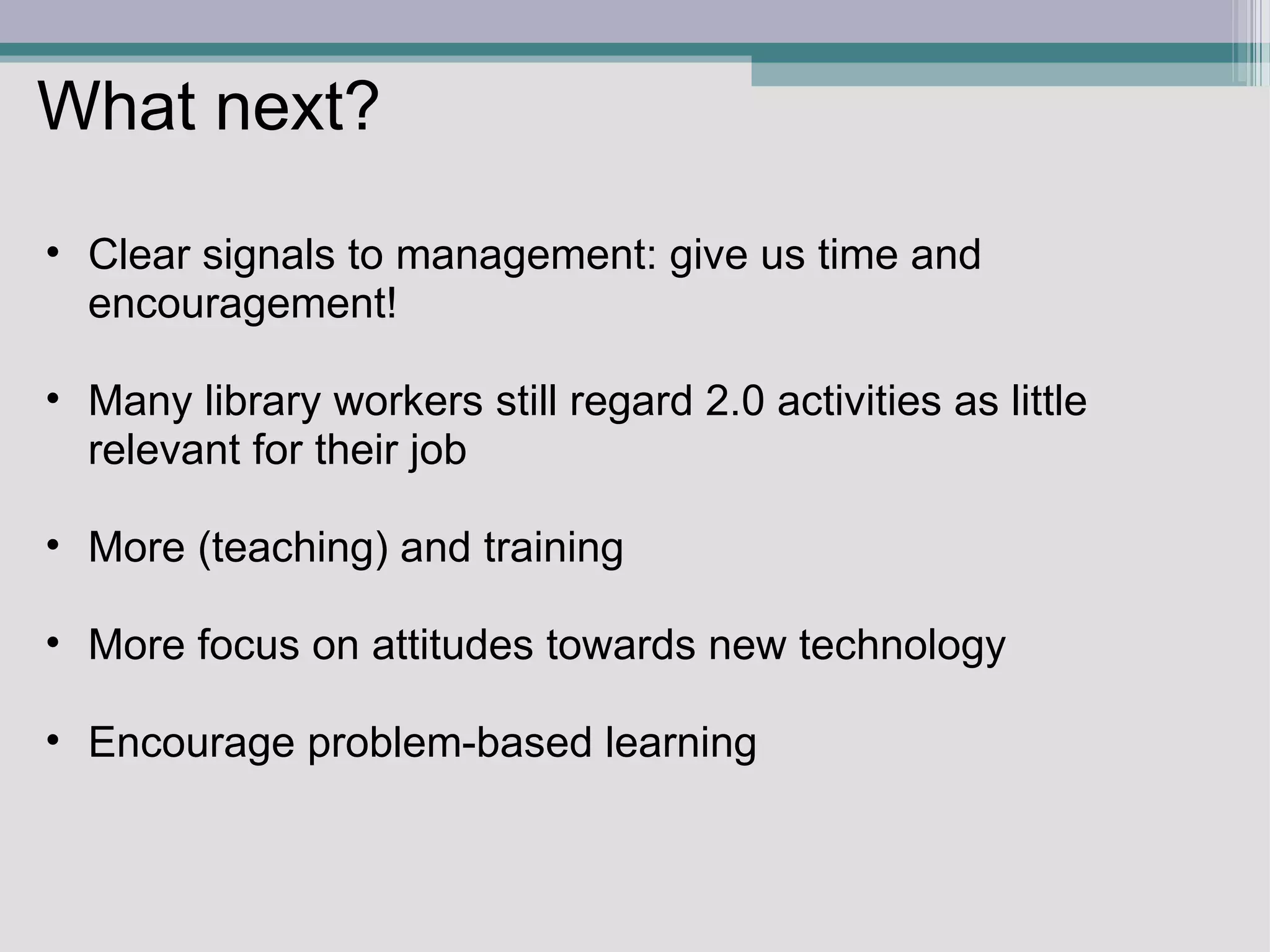
What next? Clear signals to management: give us time and encouragement!    Many library workers still regard 2.0 activities as little relevant for their job   More (teaching) and training   More focus on attitudes towards new technology    Encourage problem-based learning   
  Thank you for listening!       Questions?            [email_address]     mariann.lokse@uit.no

What happens next? Life after 2.0-training in academic libraries

  • 1.
    What happens next? Life after 2.0-training in academic libraries Karen J. Buset and Mariann Løkse NTNU / University of Tromsø   EMTACL10 - 28.04.2010
  • 2.
    Contents 2.0 learningprograms in libraries Tromsø Trondheim Attitudes to 2.0  Presentation of web survey What next?
  • 3.
    23 things inNorway First round in 2008   Response: Positive Stimulating Challenging Time-consuming Practical results in Tromsø:  Library Facebook page 5 blogs, mainly from subject librarians Wiki as info/communication tool RSS
  • 4.
    KB 2.0 projectat NTNU Library Use Web 2.0 to learn Web 2.0 First round in 2009, 25 attendees (Next round in 2010, will finish in May) 5 groups - 10 weeks    Problem-based learning Each group explored a 2.0-technology Found and used collaboration tools Wrote blogs and "Wikipedia-articles" •  UBiT 2010 project had the rolse as facilitaors Focus on process – not product
  • 5.
    KB 2.0 resultsParticipants said: "KB 2.0 is important for NTNU Library" "I will continue to be curious about new things"  "It's hard to find time " "The process is important" "New ways to work and cooperate" Results Ideas for new projects   Challenges Encourage to further work  How to follow-up projects  User benefit?
  • 6.
    Web survey 58respondents   Majority female, between 40 and 60 years old   Around 50 % have not followed a Web 2.0 program    Around 25 % never use Web 2.0 at work   Survey tool: SurveyMonkey  
  • 7.
    Which Web 2.0applications do you use at work?
  • 8.
    Which Web 2.0applications do you use at work?  
  • 9.
      Why don'tyou use Web 2.0 at work?
  • 10.
    What has beenthe most important effect from learning 2.0?
  • 11.
    What has beenthe most important effect from learning 2.0?
  • 12.
    What is themost important advantage for libraries by using Web 2.0?
  • 13.
    What must bedone to increase your use of 2.0 applications?
  • 14.
    Attitudes: commentsfrom respondents E-mail is more than good enough for me at work.    I define 2.0 as more of a leisure activity.   I have a stronger belief in our LMS and our web page than in web 2.0 for information and marketing.   I don't have have time for this, but it's great that others are using it.   I still feel we're quite stuck in the old ways of thinking, and that this makes us constantly lag behind in these matters.
  • 15.
    Attitudes: commentsfrom respondents Very rewarding, it gave me insight into the new media and new ways of working.   Important that libraries know about social technoloiges since it's an integral part of the lives of so many of our younger users.   Web 2.0 presents new opportunities for libraries to reach out to our users in various ways.
  • 16.
    What next? Clearsignals to management: give us time and encouragement!    Many library workers still regard 2.0 activities as little relevant for their job   More (teaching) and training   More focus on attitudes towards new technology   Encourage problem-based learning  
  • 17.
      Thank youfor listening!       Questions?           [email_address]     mariann.lokse@uit.no