What is Universal Design for
     Learning (UDL)?


      By: Scott Schumacher
(UDL) Universal Design for
Learning
  Is an approach to designing
  course instruction, materials,
  and content so that all learning
  styles will learn. Universal
  design provides equal access to
  learning, not simply equal
  access to information.
Architecture Influence
 Stairs
 Barrier for handicapped
  individuals
 Made Ramps and Elevators
 Braille
Educations Benefits


  Provides Alternatives so all
   students can learn
  Build Flexibility in teaching
  Gives Maximum opportunity to
   learn
Three Principals of UDL
 Recognition Networks
 Strategic Networks
 Affective Networks


http://www.cast.org/udl/
Recognition Network
 What we hear and see
 How we process patterns
 Examples
 Deaf = Sign language
 Blind = Braille
 Visual = Large letters
Strategic Network
 Plans about a topic
 Examples:
 Vocabulary with pictures
 Journals
 KWL Charts
 Double Column Notes
Affective Networks
 Student Interest
 Incorporate student interest into
  lessons
 Examples
  Surveys -
  http://www.surveymonkey.com/s/N
  NWPQML
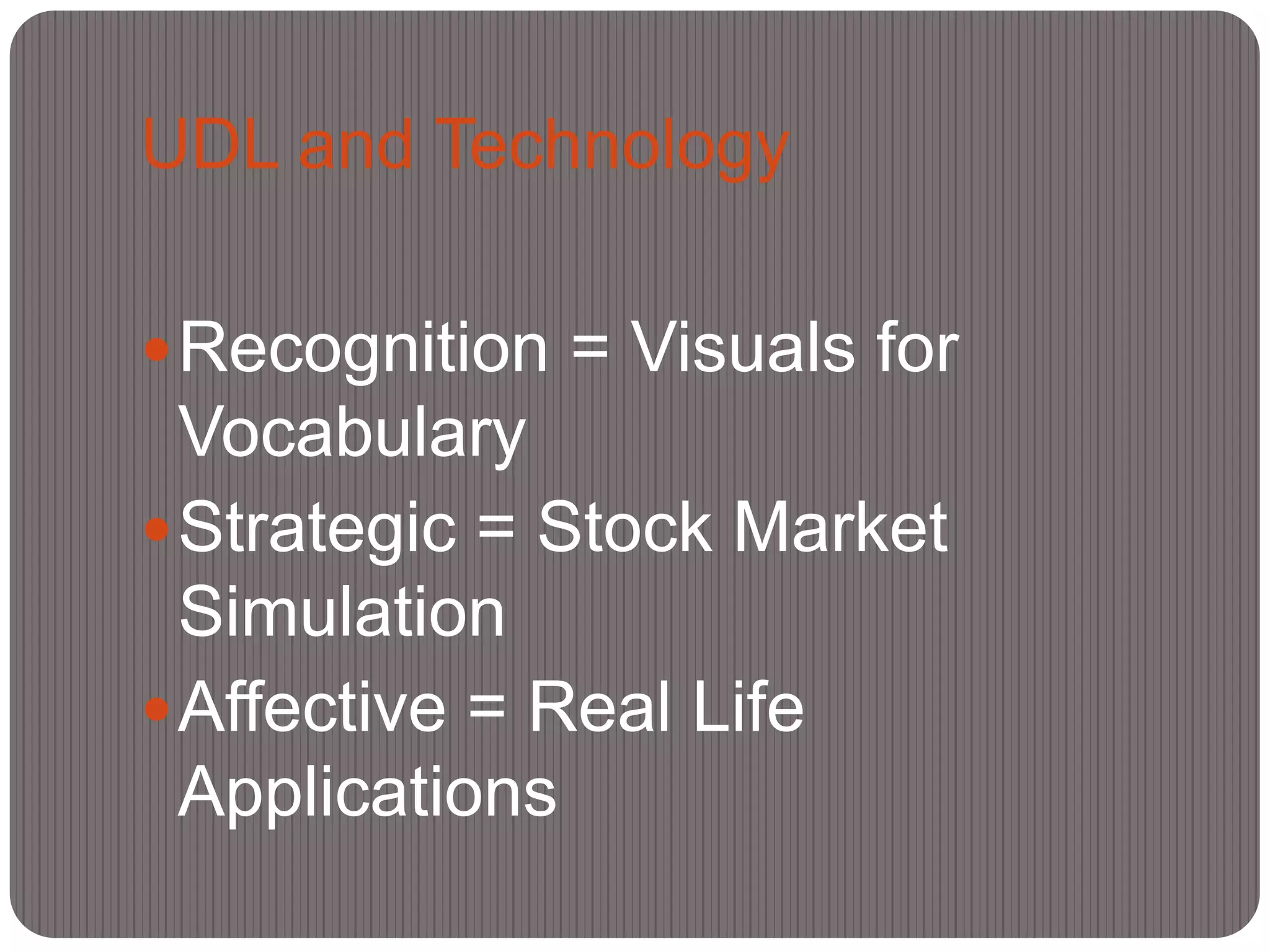
UDL and Technology

 Recognition = Visuals for
  Vocabulary
 Strategic = Stock Market
  Simulation
 Affective = Real Life
  Applications
Why UDL?
 Differentiation
 Build flexibility
 Max opportunity to learn
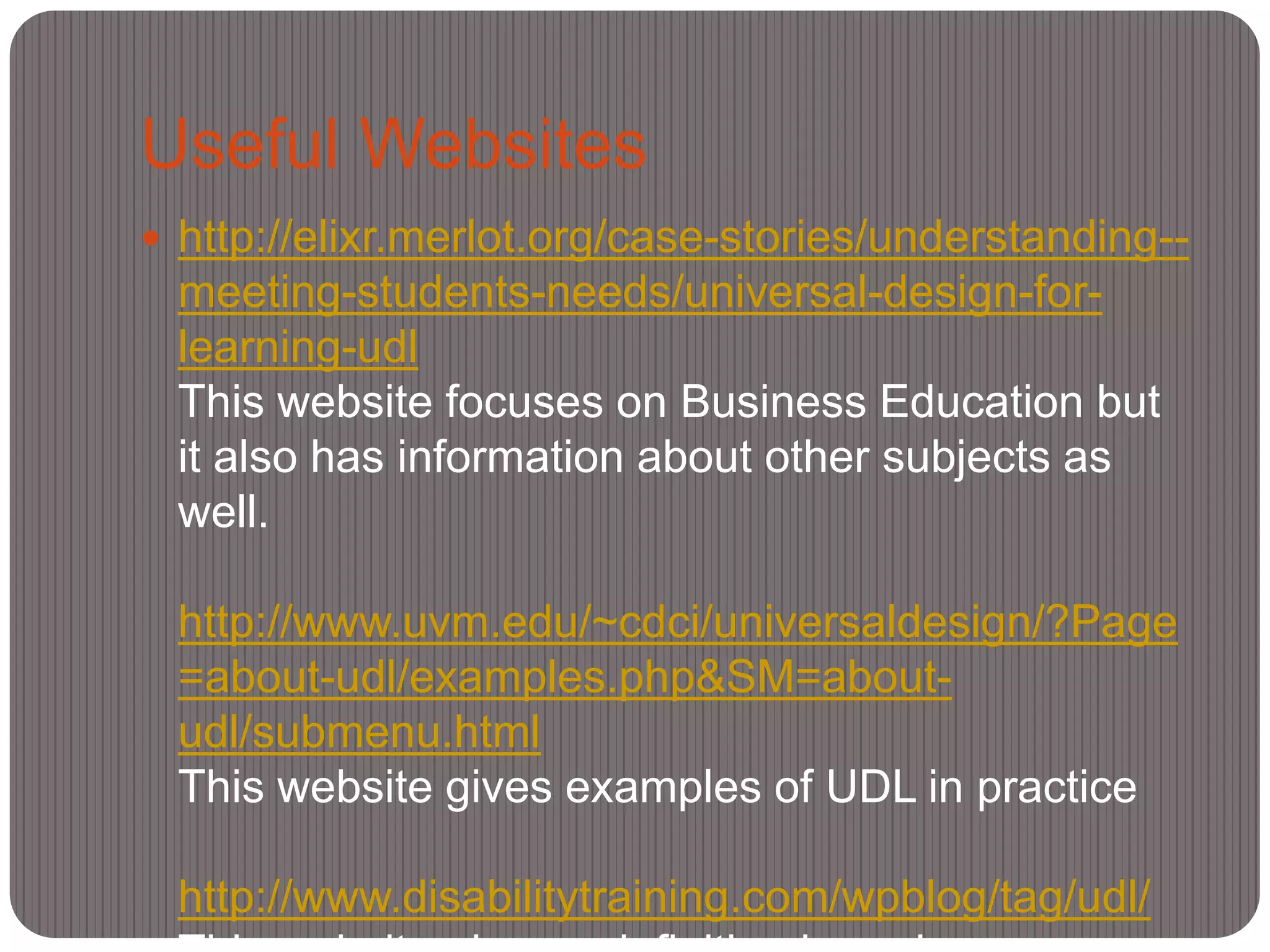
Useful Websites
 http://elixr.merlot.org/case-stories/understanding--
 meeting-students-needs/universal-design-for-
 learning-udl
 This website focuses on Business Education but
 it also has information about other subjects as
 well.

 http://www.uvm.edu/~cdci/universaldesign/?Page
 =about-udl/examples.php&SM=about-
 udl/submenu.html
 This website gives examples of UDL in practice

 http://www.disabilitytraining.com/wpblog/tag/udl/
References


     http://ada.osu.edu/resources/fastfact
     s/Universal-Design-FF.pdf

What is universal design for learning (udl

  • 1.
    What is UniversalDesign for Learning (UDL)? By: Scott Schumacher
  • 2.
    (UDL) Universal Designfor Learning Is an approach to designing course instruction, materials, and content so that all learning styles will learn. Universal design provides equal access to learning, not simply equal access to information.
  • 3.
    Architecture Influence  Stairs Barrier for handicapped individuals Made Ramps and Elevators  Braille
  • 4.
    Educations Benefits Provides Alternatives so all students can learn  Build Flexibility in teaching  Gives Maximum opportunity to learn
  • 5.
    Three Principals ofUDL  Recognition Networks  Strategic Networks  Affective Networks http://www.cast.org/udl/
  • 6.
    Recognition Network  Whatwe hear and see  How we process patterns  Examples Deaf = Sign language Blind = Braille Visual = Large letters
  • 7.
    Strategic Network  Plansabout a topic  Examples: Vocabulary with pictures Journals KWL Charts Double Column Notes
  • 8.
    Affective Networks  StudentInterest  Incorporate student interest into lessons  Examples  Surveys - http://www.surveymonkey.com/s/N NWPQML
  • 9.
    UDL and Technology Recognition = Visuals for Vocabulary  Strategic = Stock Market Simulation  Affective = Real Life Applications
  • 10.
    Why UDL?  Differentiation Build flexibility  Max opportunity to learn
  • 11.
    Useful Websites  http://elixr.merlot.org/case-stories/understanding-- meeting-students-needs/universal-design-for- learning-udl This website focuses on Business Education but it also has information about other subjects as well. http://www.uvm.edu/~cdci/universaldesign/?Page =about-udl/examples.php&SM=about- udl/submenu.html This website gives examples of UDL in practice http://www.disabilitytraining.com/wpblog/tag/udl/
  • 12.
    References http://ada.osu.edu/resources/fastfact s/Universal-Design-FF.pdf