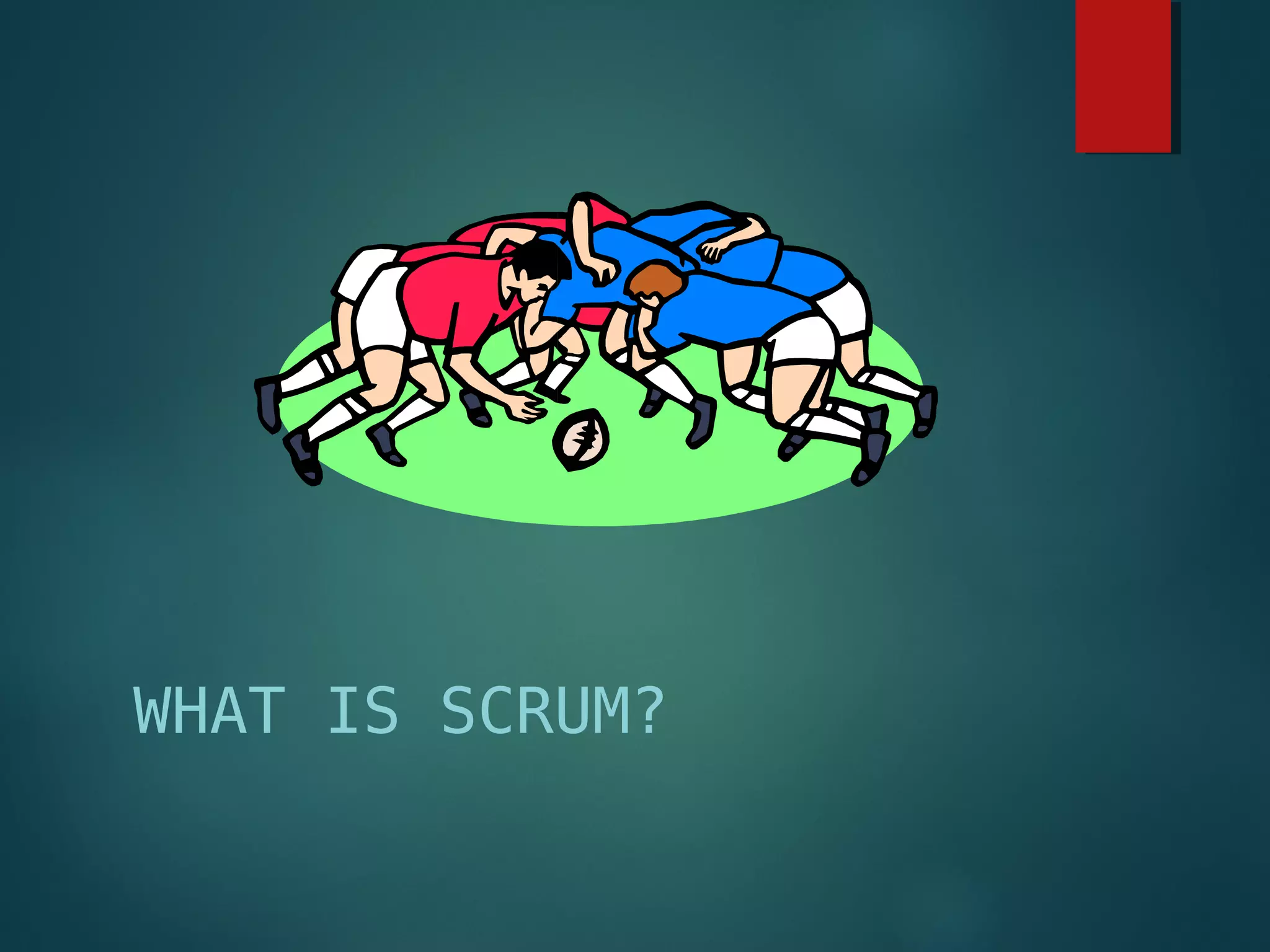

WHAT IS SCRUM?
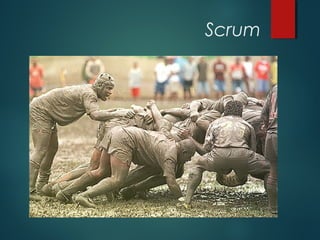
Scrum
Scrum in 100 words
Scrum is an agile process that allows us to focus on
delivering the highest business value in the
shortest time.
It allows us to rapidly and repeatedly inspect actual
working software (every two weeks to one
month).
The business sets the priorities. Our teams self-
manage to determine the best way to deliver the
highest priority features.
Every two weeks to a month anyone can see real
working software and decide to release it as is or
continue to enhance for another iteration.
Characteristics
 Self-organizing teams
 Product progresses in a series of month-long
“sprints”
 Requirements are captured as items in a list of
“product backlog”
 No specific engineering practices prescribed
 Uses generative rules to create an agile
environment for delivering projects
 One of the “agile processes”
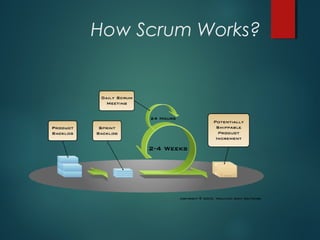
How Scrum Works?
Sprints
 Scrum projects make progress in a series of
“sprints”
 Analogous to XP iterations
 Target duration is one month
 +/- a week or two
 But, a constant duration leads to a better rhythm
 Product is designed, coded, and tested during
the sprint
Scrum Framework
 Roles : Product Owner, ScrumMaster, Team
 Ceremonies : Sprint Planning, Sprint Review, Sprint
Retrospective, & Daily Scrum Meeting
 Artifacts : Product Backlog, Sprint Backlog, and
Burndown Chart
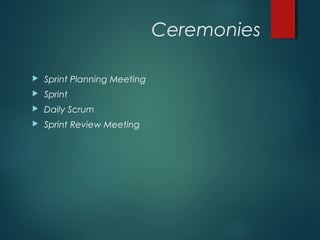
Ceremonies
 Sprint Planning Meeting
 Sprint
 Daily Scrum
 Sprint Review Meeting
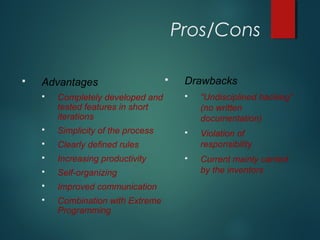
Pros/Cons
 Advantages
 Completely developed and
tested features in short
iterations
 Simplicity of the process
 Clearly defined rules
 Increasing productivity
 Self-organizing
 Improved communication
 Combination with Extreme
Programming
 Drawbacks
 “Undisciplined hacking”
(no written
documentation)
 Violation of
responsibility
 Current mainly carried
by the inventors
What is scrum in Agile methodology?

What is scrum in Agile methodology?

  • 1.
  • 2.
  • 3.
    Scrum in 100words Scrum is an agile process that allows us to focus on delivering the highest business value in the shortest time. It allows us to rapidly and repeatedly inspect actual working software (every two weeks to one month). The business sets the priorities. Our teams self- manage to determine the best way to deliver the highest priority features. Every two weeks to a month anyone can see real working software and decide to release it as is or continue to enhance for another iteration.
  • 4.
    Characteristics  Self-organizing teams Product progresses in a series of month-long “sprints”  Requirements are captured as items in a list of “product backlog”  No specific engineering practices prescribed  Uses generative rules to create an agile environment for delivering projects  One of the “agile processes”
  • 5.
  • 6.
    Sprints  Scrum projectsmake progress in a series of “sprints”  Analogous to XP iterations  Target duration is one month  +/- a week or two  But, a constant duration leads to a better rhythm  Product is designed, coded, and tested during the sprint
  • 7.
    Scrum Framework  Roles: Product Owner, ScrumMaster, Team  Ceremonies : Sprint Planning, Sprint Review, Sprint Retrospective, & Daily Scrum Meeting  Artifacts : Product Backlog, Sprint Backlog, and Burndown Chart
  • 8.
    Ceremonies  Sprint PlanningMeeting  Sprint  Daily Scrum  Sprint Review Meeting
  • 9.
    Pros/Cons  Advantages  Completelydeveloped and tested features in short iterations  Simplicity of the process  Clearly defined rules  Increasing productivity  Self-organizing  Improved communication  Combination with Extreme Programming  Drawbacks  “Undisciplined hacking” (no written documentation)  Violation of responsibility  Current mainly carried by the inventors

Editor's Notes

  • #6 From the Product Backlog Product Owner decides which stories will be part of the Sprint. After that team make a commitment to develop all the stories of the Sprint Backlog