How do we know what we know about times long past?

A good historian knows that information comes from a
variety of source.
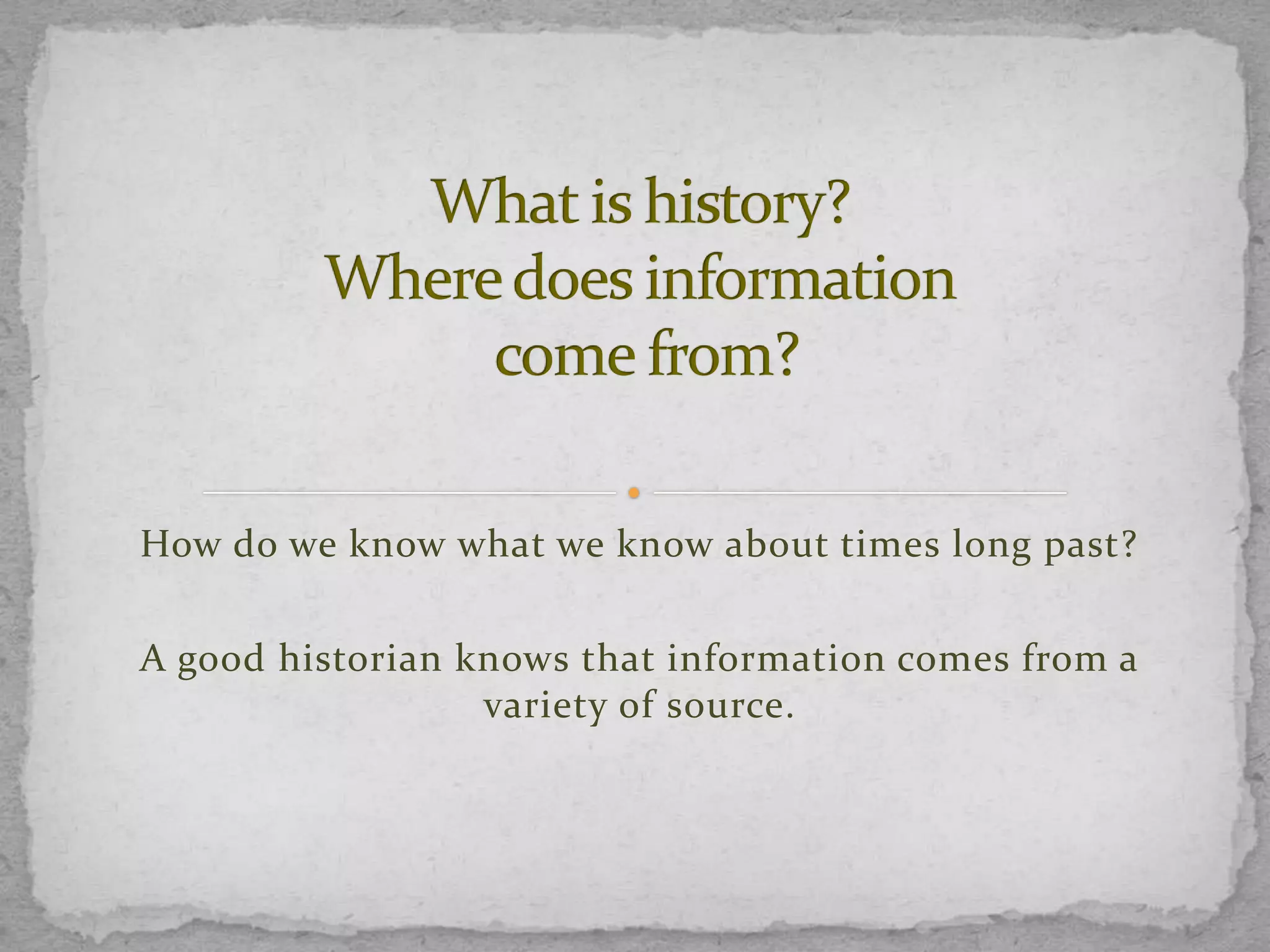
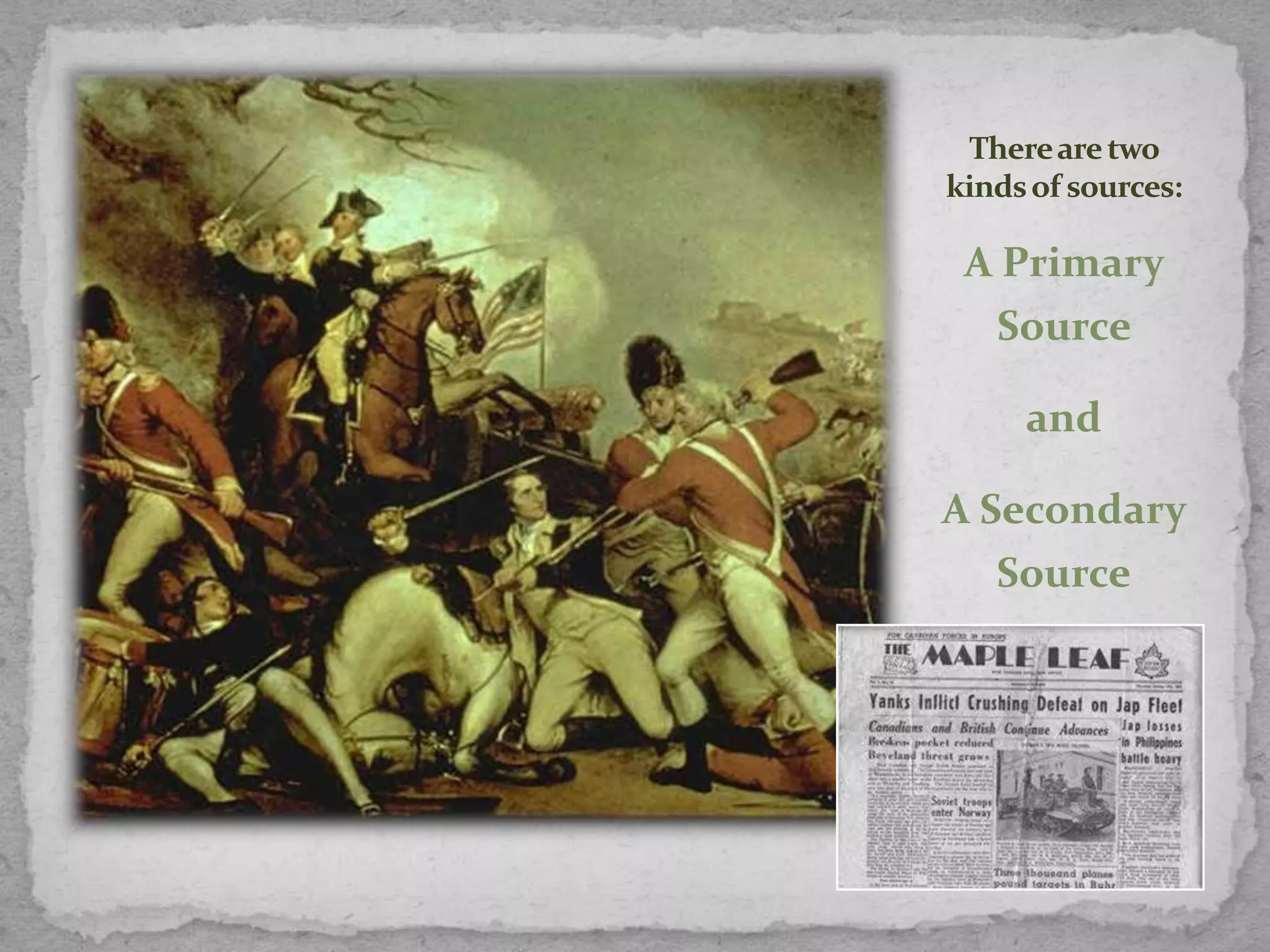
There are two
kinds of sources:

A Primary

Source
and
A Secondary
Source
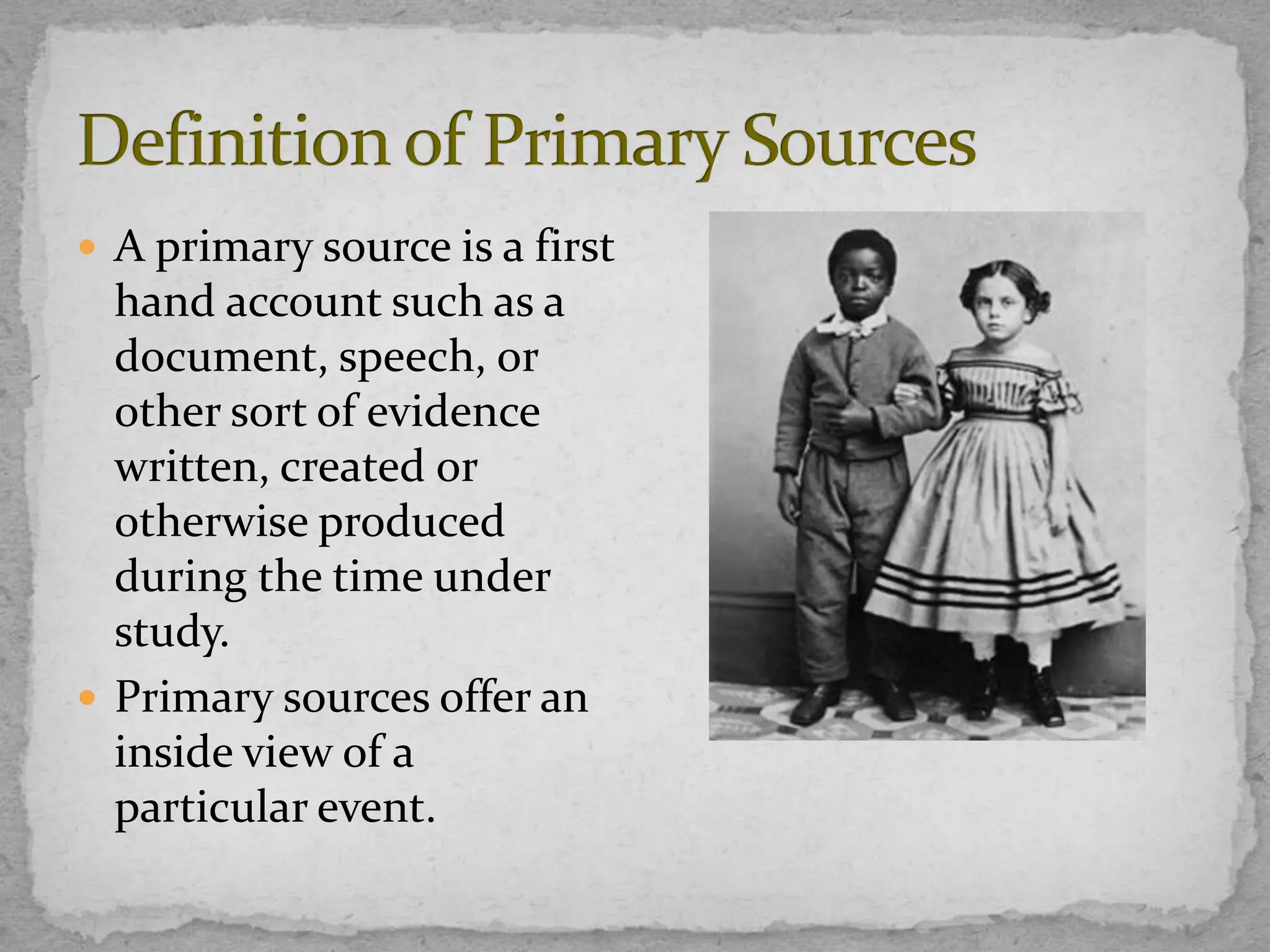
 A primary source is a first

hand account such as a
document, speech, or
other sort of evidence
written, created or
otherwise produced
during the time under
study.
 Primary sources offer an
inside view of a
particular event.
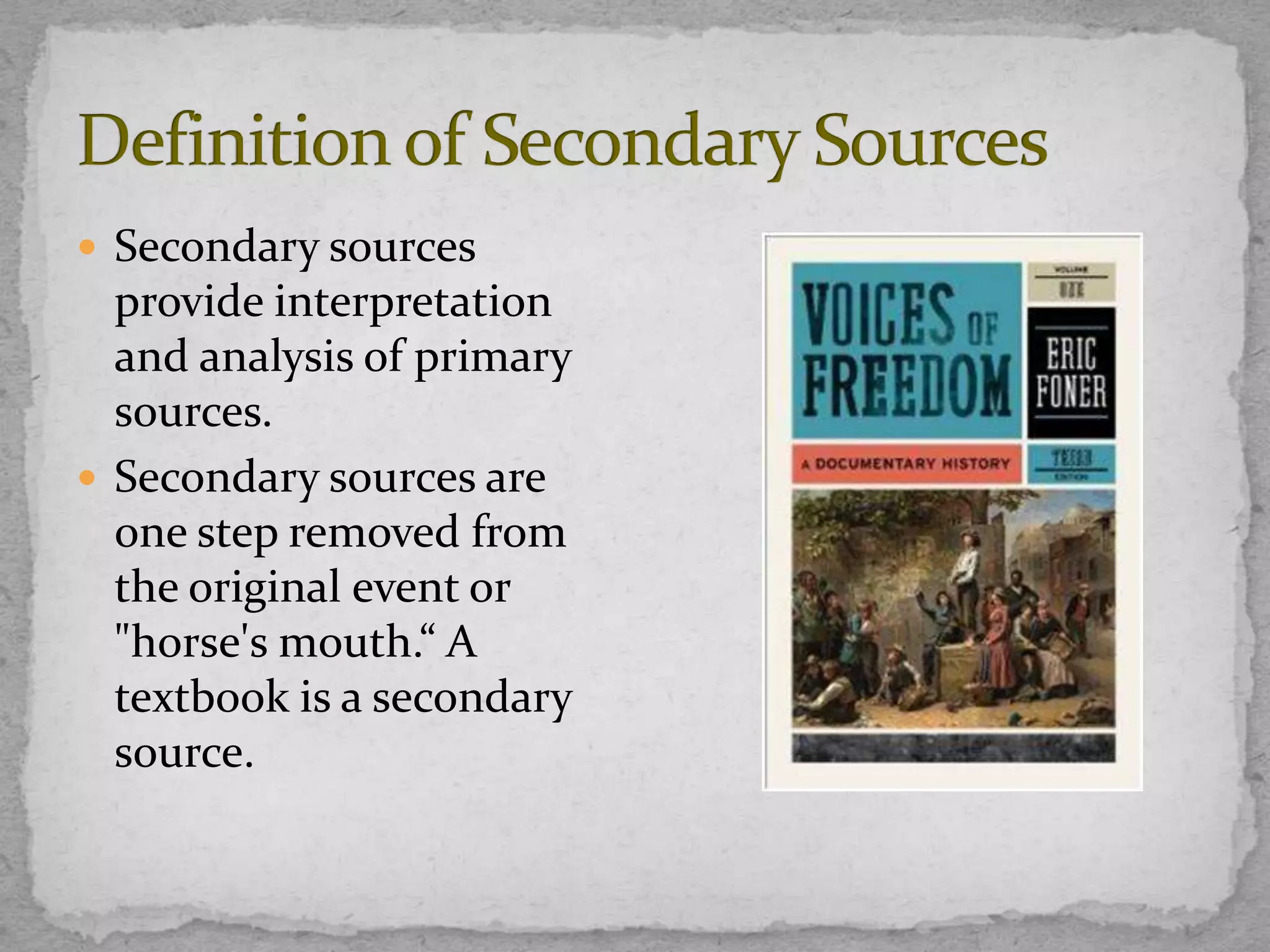
 Secondary sources

provide interpretation
and analysis of primary
sources.
 Secondary sources are
one step removed from
the original event or
"horse's mouth.“ A
textbook is a secondary
source.
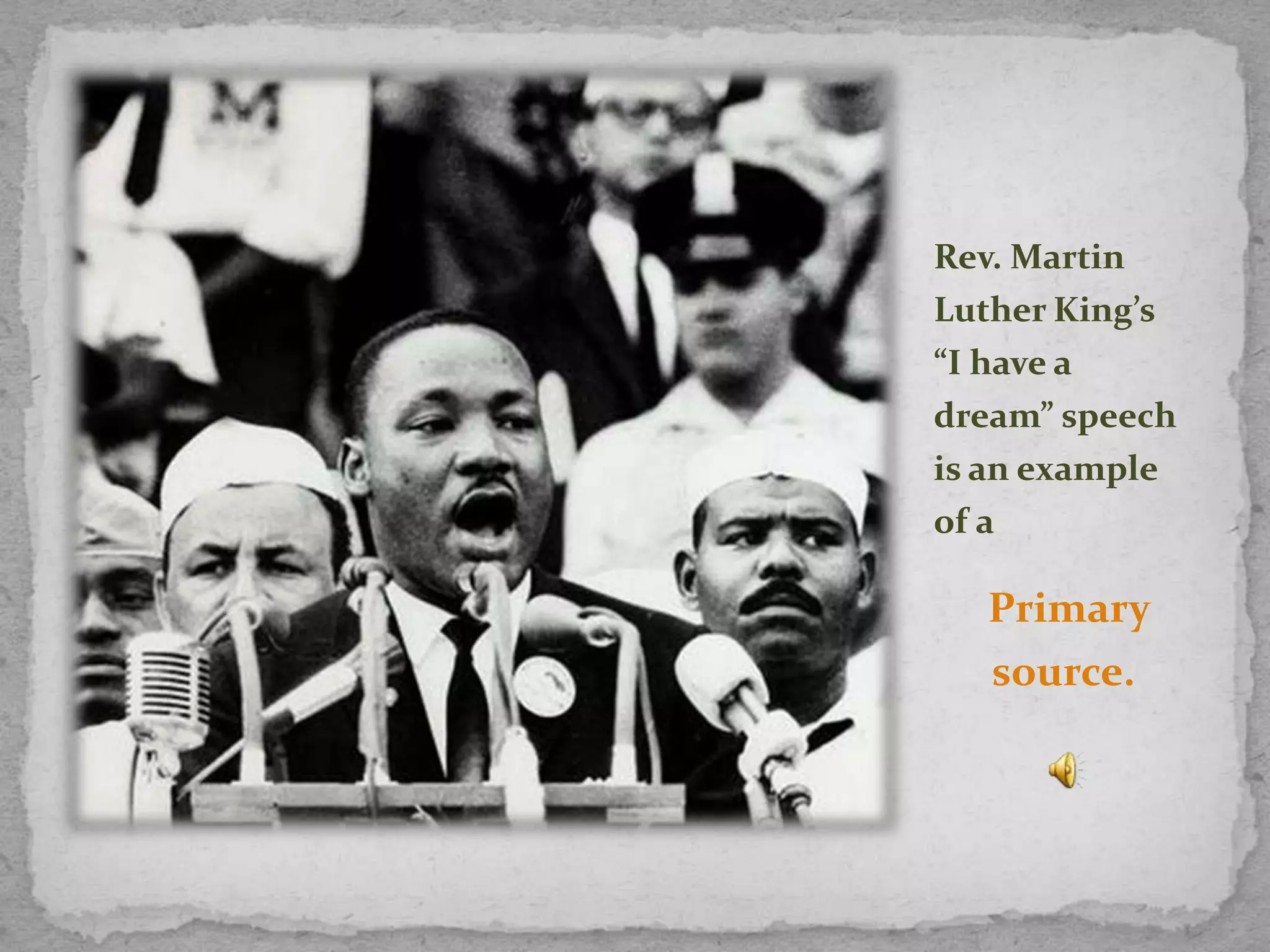
Rev. Martin
Luther King’s
“I have a
dream” speech
is an example
of a

Primary
source.
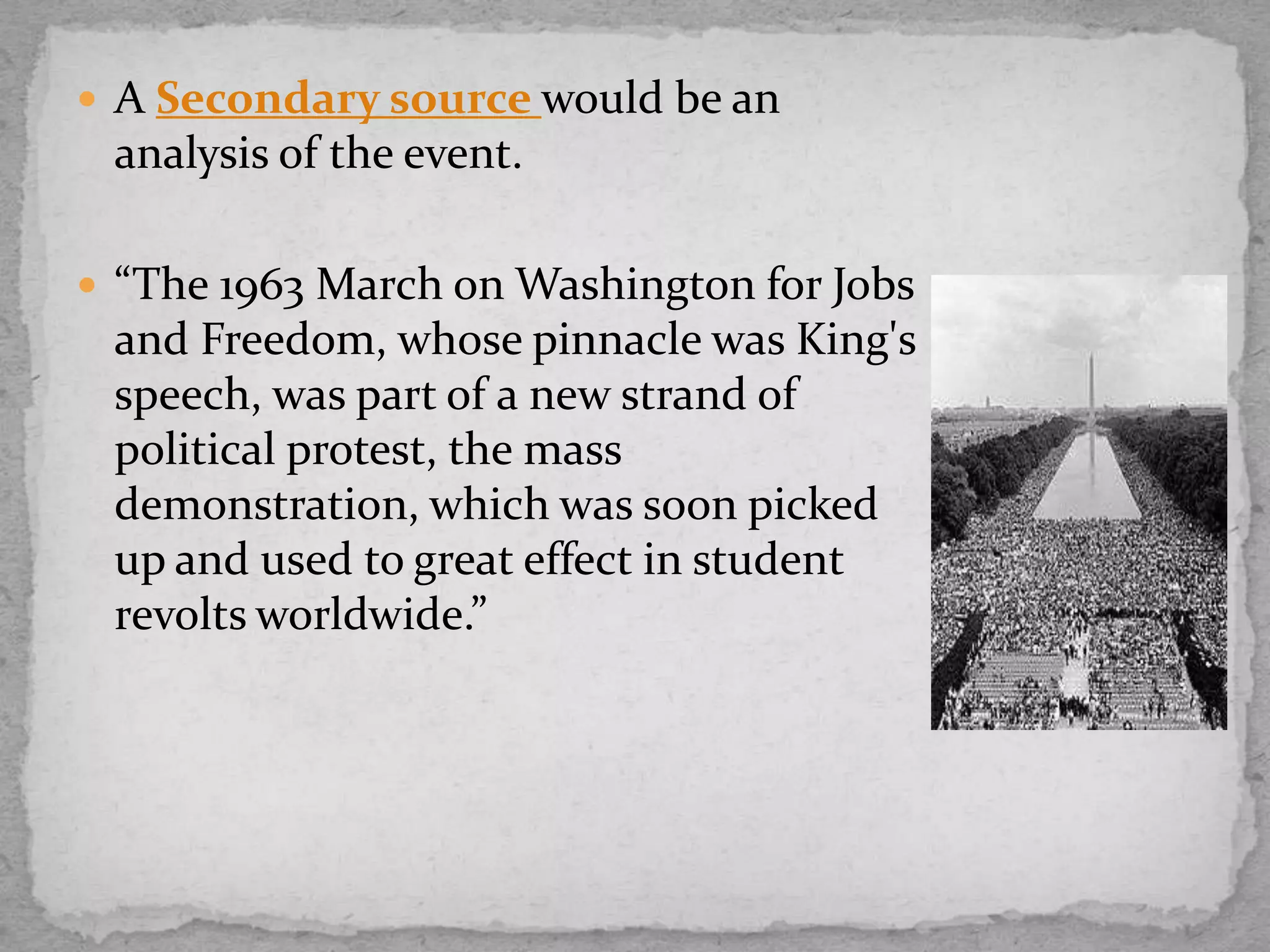
 A Secondary source would be an

analysis of the event.
 “The 1963 March on Washington for Jobs

and Freedom, whose pinnacle was King's
speech, was part of a new strand of
political protest, the mass
demonstration, which was soon picked
up and used to great effect in student
revolts worldwide.”
Thanks!

What is history pp for edu

  • 1.
    How do weknow what we know about times long past? A good historian knows that information comes from a variety of source.
  • 2.
    There are two kindsof sources: A Primary Source and A Secondary Source
  • 3.
     A primarysource is a first hand account such as a document, speech, or other sort of evidence written, created or otherwise produced during the time under study.  Primary sources offer an inside view of a particular event.
  • 4.
     Secondary sources provideinterpretation and analysis of primary sources.  Secondary sources are one step removed from the original event or "horse's mouth.“ A textbook is a secondary source.
  • 5.
    Rev. Martin Luther King’s “Ihave a dream” speech is an example of a Primary source.
  • 6.
     A Secondarysource would be an analysis of the event.  “The 1963 March on Washington for Jobs and Freedom, whose pinnacle was King's speech, was part of a new strand of political protest, the mass demonstration, which was soon picked up and used to great effect in student revolts worldwide.”
  • 7.